
What Your Team Is Thankful For: San Jose Sharks
We’ve now made it past the holiday season but there is still plenty to be thankful for. Like the last few years, PHR will take a look at what teams are thankful for but this year comes with a bit of a change. Normally teams would have an idea of where their season was heading, coming up on the one-quarter mark with mountains of statistics to analyze. Instead, in this unprecedented year, things are just getting underway. We’ll still take a look at what each group is excited about and what they could hope for with the calendar having now flipped to 2021.
What are the Sharks most thankful for?
Last season, San Jose finished dead last in the Pacific Division but while most teams in that situation could at least take solace in knowing that such a performance would yield a high draft pick, that wasn’t the case as Ottawa held their first-round pick from the Erik Karlsson trade, using it on Tim Stutzle. This season, they’re not off to the best of starts either (currently sitting in last place in the West Division) but they at least have their first-round selection this time. After underachieving last year and getting off to a sluggish start this season, there isn’t much to be thankful for in terms of on-ice success but at least they have their top pick in their pocket this time around.
Who are the Sharks most thankful for?
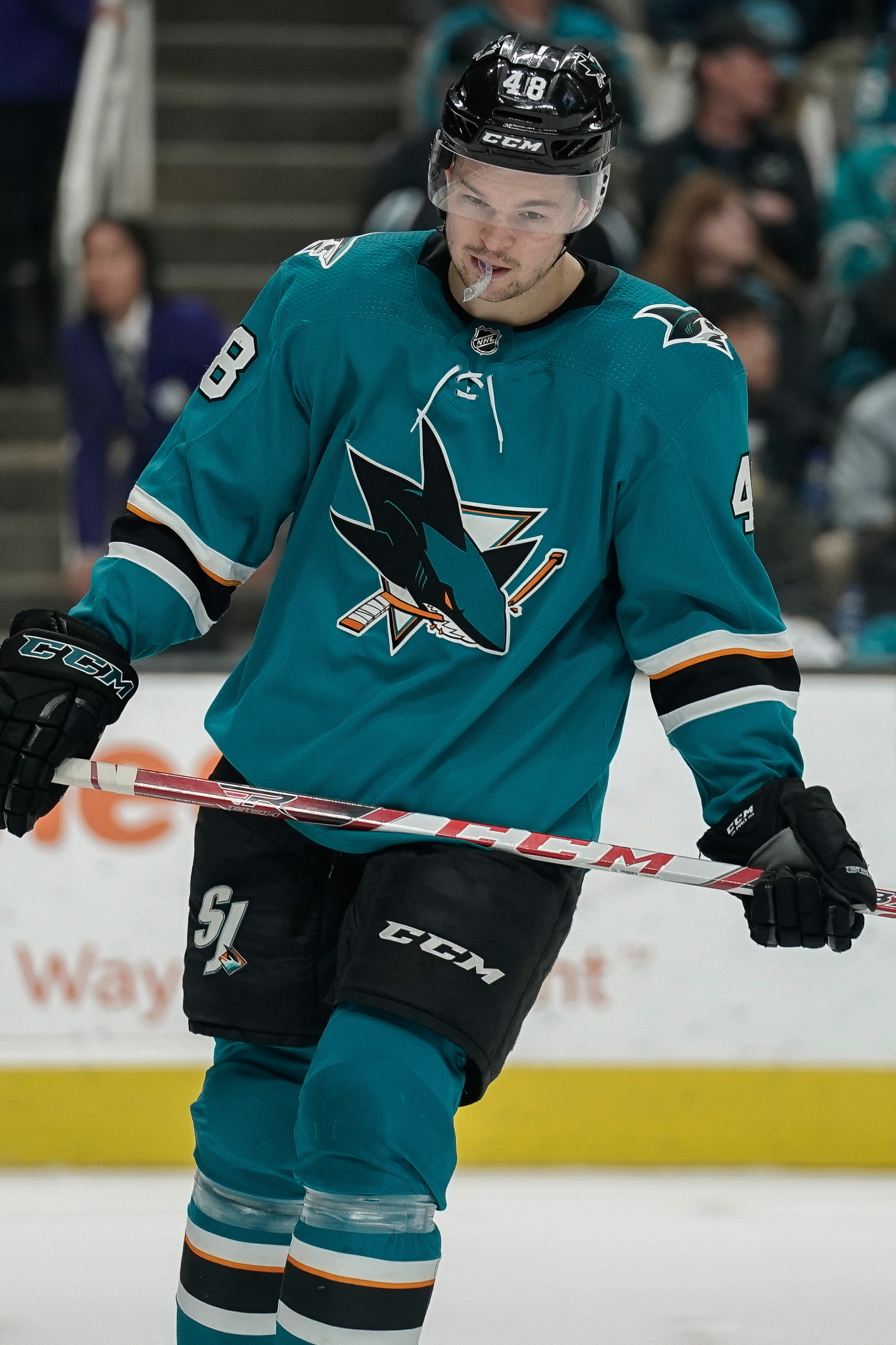 While many of San Jose’s players have underachieved lately, that can’t be said for Tomas Hertl. After leading all of their forwards in scoring in 2018-19, he produced at a rate that would have been good enough for the team lead had it not been for a knee injury last season. He has returned without any lingering issues and currently leads the Sharks in scoring in the early going this year. After starting his career on the wing, Hertl has also successfully transitioned to a full-time center role, giving them a second homegrown fit down the middle with Logan Couture. Hertl still has this year and next left on what has become a below-market contract with a $5.625MM AAV and will likely be looking for a deal around Couture’s price tag ($8MM) in 2022.
What would the Sharks be even more thankful for?
Karlsson providing a better return for their investment, both in terms of price paid to get him and his contract. The pick used on Stutzle and Joshua Norris have given Ottawa two potential franchise cornerstones (not to mention the other players they parted with including Chris Tierney and Dylan DeMelo) while Karlsson hasn’t come close to living up to expectations. His point-per-game average has dipped each year since 2015-16 which is concerning for an offense-first defenseman and he has managed just nine goals in a San Jose uniform. With a record-setting $11.5MM AAV through 2026-27, the Sharks need a whole lot more from Karlsson than they’ve received so far.
What should be on the Sharks’ wish list?
Two areas come to mind with one being a lot more attainable than the other. The realistic one is trying to add scoring help; the Sharks are averaging just 2.75 goals per game and no one has more than three with Brent Burns being the only defender to get on the board (this despite having the priciest back end in the league). They are pegged to finish more than $4MM under the cap, per CapFriendly which is quite important in this environment where so many teams are capped out. If they can hang around the playoff race, they could put themselves in a spot to add.
The less likely one is getting a reliable goaltender. The Sharks added Devan Dubnyk in the hopes that a change of scenery could spark him after a tough showing with Minnesota last year while also giving Martin Jones a bit of a reprieve to help him improve. Neither have happened. Jones has been pulled twice already and is narrowly allowing less than four goals per game while Dubnyk has just a .902 SV%. However, while getting a steadier option would certainly help, given the difficulty in acquiring any sort of goaltending help this season, it’s unlikely they’ll be able to adequately address this area.
Photo courtesy of USA Today Sports Images.
Salary Cap Deep Dive: Tampa Bay Lightning
Navigating the salary cap is one of the more important tasks for any GM. Teams that can avert total cap chaos by walking the tightrope of inking players to deals that match their value (or compensate for future value without breaking the bank) remain successful. Those that don’t see struggles and front office changes.
PHR will look at every NHL team and give a thorough look at their cap situation for the 2020-21 season. This will focus more on players who are regulars on the roster versus those who may find themselves shuttling between the AHL and NHL. All cap figures are courtesy of CapFriendly.
Tampa Bay Lightning
Current Cap Hit: $98,785,916 (over the $81.5MM Upper Limit)
Entry-Level Contracts
D Callan Foote (one year, $925K)
Potential Bonuses
Foote: $500K
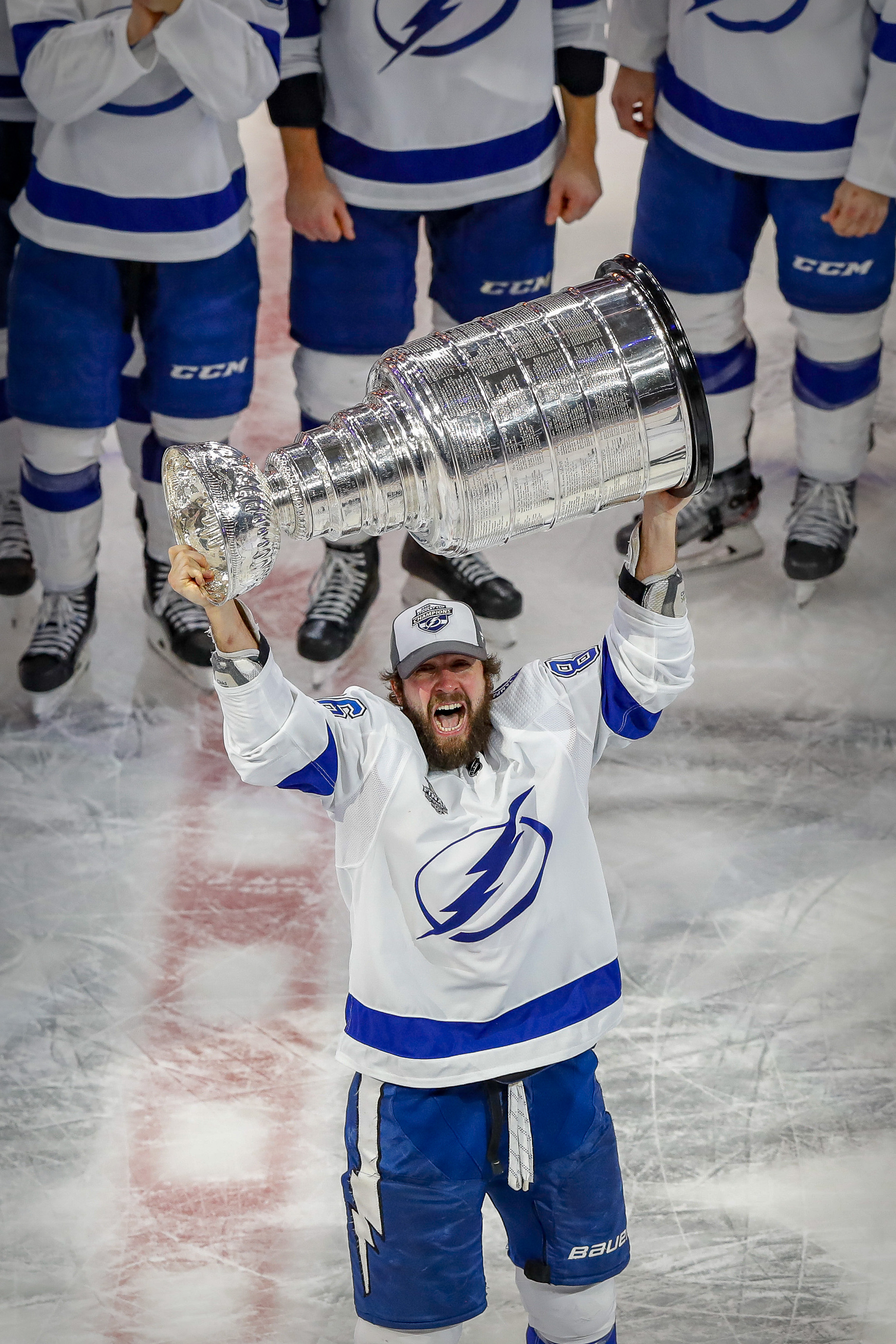
Championship teams often don’t have many entry-level contracts and the Tampa Bay Lightning are no different. The team does have Foote ready to step into the lineup after the team moved on from Brayden Coburn and the rookie has taken a third-pairing role for the team and likely will play sheltered minutes for most of the season even if he did already score a goal in just four games this season.
One Year Remaining, Non-Entry-Level
F Marian Gaborik ($4.88MM, UFA)
G Anders Nilsson ($2.6MM, UFA)
F Blake Coleman ($1.8MM, UFA)
G Curtis McElhinney ($1.3MM, UFA)
F Barclay Goodrow ($925K, UFA)
D Luke Schenn ($800K, UFA)
F Alexander Volkov ($700K, RFA)
F Gemel Smith ($700K, UFA)
D Andreas Borgman ($700K, RFA)
The Lightning is using its cap space wisely, taking advantage of several injured players and going out and acquiring several other contracts of players on LTIR to maximize their cap space. The contracts of Gaborik and Nilsson will help the team for cap purposes, but will also expire next season for the team. The Lightning also made a couple savvy deals at the trade deadline last year when acquiring Coleman and Goodrow in separate deals. Not only did each player make big contributions during the team’s championship run, but both are still on affordable contracts for this year. The question will be whether Tampa Bay can bring one or both of them back for next season.
The team also has 37-year-old backup netminder in McElhinney. The veteran has been out for the start of the season, but it is believed he’ll be back soon and should be quite reliable. McElhinney had a .906 save percentage in 18 games and should help the team for this year. The team may opt to go in a different direction for 2021-22. Schenn is another key depth piece for the Lightning.
Two Years Remaining
F Brayden Point ($6.75MM, RFA)
F Ondrej Palat ($5.3MM, UFA)
D Jan Rutta ($1.3MM, UFA)
F Pat Maroon ($900K, UFA)
F Mathieu Joseph ($738K, RFA)
F Mitchell Stephens ($738K, RFA)
The team has a number of players signed long-term, but the team has a few other key players they might want to lock up. One player will be Point who has taken his game to a whole new level in the last couple of years. The 24-year-old scored 32 goals in 2017-18; 41 in 2018-19; 25 in 66 games last year and has established himself as a first-line player. He will be eligible for an extension at the end of this season and it will be interesting if Tampa Bay gives him a long-term deal then.
While Palat’s contract looked questionable a year ago when injuries were significant issues, Palat had an impressive year last year, putting up 17 goals and 41 points and was an essential top-six player for him. Maroon and Rutta both have been essential depth options for the Lightning, while Joseph and Stephens have taken significant roles on their fourth-line after splitting time between the AHL and NHL last year.
Three Years Remaining
F Anthony Cirelli ($4.8MM, RFA)
D Mikhail Sergachev ($4.8MM, RFA)
F Alex Killorn ($4.45MM, UFA)
D Erik Cernak ($2.95MM, RFA)
With three key restricted free agents during the offseason, Tampa Bay finally was able to get all three under contract, signing them to three-year bridge deals. Cirelli, Sergachev and Cernak are critical players to the team and the team can get three years out of them before having to figure out the complexities of their cap situation at that point. The 23-year-old Cirelli had 16 goals and a career-high 28 assists in 68 games last season. The 22-year-old Sergachev worked his way into the team’s top-four on defense and had a career-high 10 goals last season. Cernak, 23, had a second straight solid season as a top-four defenseman, including 172 hits last year. The Lightning might be forced to move one of them down the road, but they are certainly locked in for the near future.
Killorn is the only player who will be an unrestricted free agent in three years. The 31-year-old had a breakout season last year with career highs in goals (26) and points (49).Read more
What Your Team Is Thankful For: Pittsburgh Penguins
We’ve now made it past the holiday season but there is still plenty to be thankful for. Like the last few years, PHR will take a look at what teams are thankful for but this year comes with a bit of a change. Normally teams would have an idea of where their season was heading, coming up on the one-quarter mark with mountains of statistics to analyze. Instead, in this unprecedented year, things are just getting underway. We’ll still take a look at what each group is excited about and what they could hope for with the calendar having now flipped to 2021.
What are the Penguins most thankful for?
Their dynamic duo down the middle.
Yes, Sidney Crosby and Evgeni Malkin aren’t in the primes of their careers anymore but they still form one of the more formidable one-two punches at center. Both are sure-fire future Hall of Famers and in Crosby’s case, he still has five years left on a contract that has wound up being a team-friendly one. Malkin’s deal is up after next season but it’s safe to say there will be interest in keeping him in the fold. Both players are off to a bit of a quieter start than usual this year but while there are some valid question marks surrounding other elements of the team, Pittsburgh fans should be quite confident in believing that those two will be able to produce more in the near future.
Who are the Penguins most thankful for?
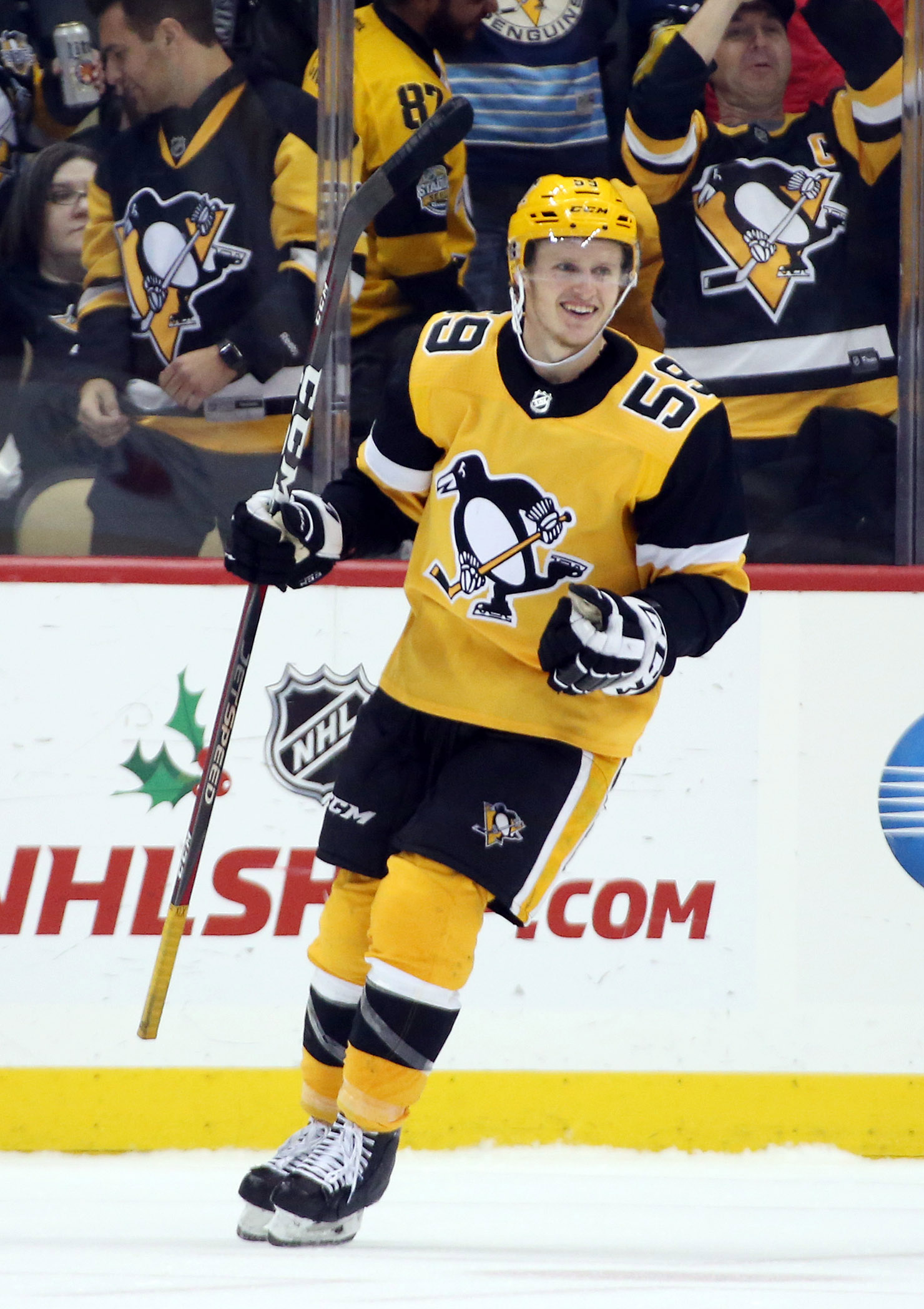 It would be easy to pick Crosby – too easy perhaps – so let’s go with Jake Guentzel instead. When he signed his five-year, $30MM contract, it was a deal that carried some risk given that he had only been a full-time NHL player for one season. However, he has produced just under a point per game since the day the contract was signed. In this environment, a $6MM price tag for a point per game front-line player is a bargain. Pittsburgh’s veteran core has turned over considerably in recent years and there will likely still be some changes to come but Guentzel should be around through that and then some with three years left on a below-market contract still to go.
What would the Penguins be even more thankful for?
A return to form from Tristan Jarry.
After being on the trade block at the start of last season, Jarry got off to a great start, earning an All-Star Game nod and outperformed Matt Murray. With their cap situation, they were only going to be able to afford to keep one of the two and opted for the cheaper one in Jarry, a decision that was certainly the expected outcome but one that carried risk given his inexperience. They’re currently seeing the downside of that right now as the 25-year-old has struggled considerably in his first six starts this season. That cap situation also limited them to having Casey DeSmith as the backup, someone who is relatively unproven. They need Jarry to turn his performance around if they want to be battling for top spot in the East.
What should be on the Penguins’ wish list?
Before their rash of injuries, they could have benefitted from some defensive upgrades. Now, with multiple injuries, they really need some defensive upgrades and more depth on top of it as they’ve had to go ten-deep on the back end already. Can they really afford an impact upgrade? Not really and the fact they’ve had to dip into LTIR already is eating into the limited cap room they do have. Low-priced depth additions like Yannick Weber’s recent signing is more of what they’re going to be able to do so interim GM Patrik Allvin is going to be working the phones if he hasn’t been already since taking over for Jim Rutherford to try to get something done on that front sooner than later.
Photo courtesy of USA Today Sports Images.
Salary Cap Deep Dive: Ottawa Senators
Navigating the salary cap is one of the more important tasks for any GM. Teams that can avert total cap chaos by walking the tightrope of inking players to deals that match their value (or compensate for future value without breaking the bank) remain successful. Those that don’t see struggles and front office changes.
PHR will look at every NHL team and give a thorough look at their cap situation for the 2020-21 season. This will focus more on players who are regulars on the roster versus those who may find themselves shuttling between the AHL and NHL. All cap figures are courtesy of CapFriendly.
Ottawa Senators
Current Cap Hit: $70,678,775 (under the $81.5MM Upper Limit)
Entry-Level Contracts
F Drake Batherson (one year, $736K)
D Erik Brannstrom (two years, $863K)
F Logan Brown (one year, $863K
F Joshua Norris (two years, $925K)
F Tim Stutzle (three years, $925K)
F Brady Tkachuk (one year, $925K)
Potential Bonuses
Batherson: $20K
Brannstrom: $450K
Brown: $710K
Norris: $850K
Stutzle: $2.5MM
Tkachuk: $2.5MM
Total: $7.03MM
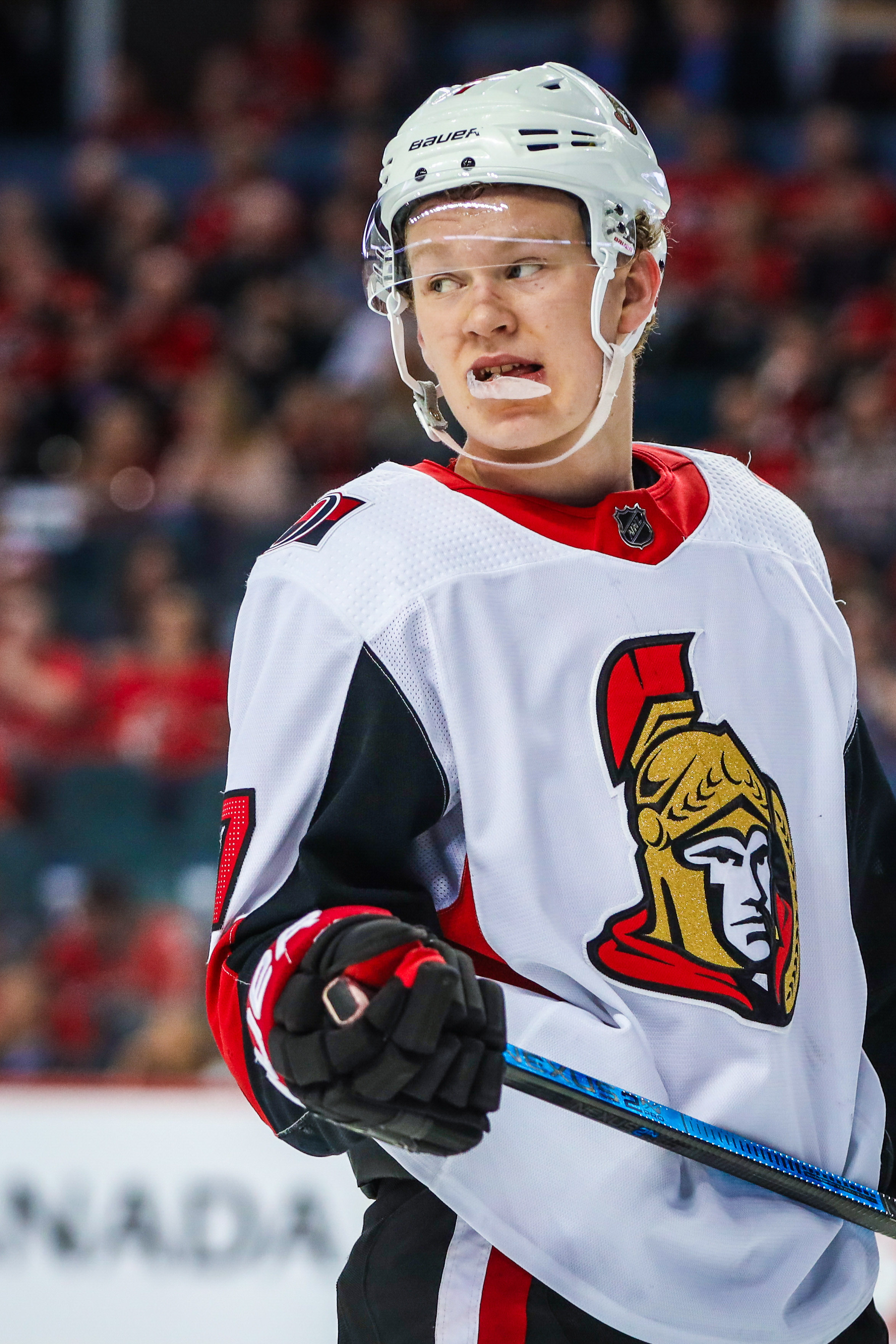 The way Ottawa’s cap situation is structured, there is going to be a prominent player coming off an ELC on an annual basis which, from a long-term planning standpoint, is a good way to stagger things. Tkachuk then becomes the one to watch for in the coming months as he’s eligible for an extension now. He’s not near the top of the scoring charts but power forwards tend to get paid quickly which makes his case intriguing. The Sens have tried to bypass bridge contracts with the players they perceive to be long-term core assets and Tkachuk is certainly in that category but unless he has a breakout year offensively, it may be in his best interest to go the more traditional route and take a short-term pact with the hopes of cashing in with a higher payday down the road.
Stutzle is one of just two players from October’s draft class to make the jump to the NHL and the early returns have been promising. While he’s just three games into his NHL career, it seems likely that Ottawa’s intent will be to lock him up long-term as soon as his deal expires. Norris dominated in the AHL last season and has gotten off to a good start this year with the Sens so again, he’s one that they will likely try to sign to a long-term deal. While this is still a couple of years away (and three for Stutzle), their ability (or inability) to get these long-term pacts done will greatly affect their plans for eventually bolstering their roster with impactful veterans. As for Batherson, he looks like he has made it as a regular for now but it’s hard to see them going long-term with him just yet. Instead, a one-year deal around double his AAV or a two-year pact at a bit more makes more sense. Brown and Brannstrom haven’t seen NHL action yet this season but that should change. They’ll need to see if Brown is a part of that future core while Brannstrom is one of the defensemen they’re intending to build around.
One Year Remaining, Non-Entry-Level
F Artem Anisimov ($4.55MM, UFA)
D Braydon Coburn ($1.7MM, UFA)
F Alex Galchenyuk ($1.05MM, UFA)
D Erik Gudbranson ($4MM, UFA)
G Marcus Hogberg ($700K, RFA)
F Cedric Paquette ($1.65MM, UFA)
D Mike Reilly ($1.5MM, UFA)
F Derek Stepan ($6.5MM, UFA)
D Christian Wolanin ($900K, RFA)
Stepan’s acquisition in training camp was curious, both in the sense that Ottawa didn’t necessarily need a veteran while they gave up a second-round pick and alleviated Arizona’s cap concerns. He’s not an impact player at this stage of his career although he can still play in the middle six. At this point, he seems like a good trade candidate with some cap hit retention but he may be hard-pressed to get half of his AAV on the open market this summer. Anisimov was another cap dump and has a limited role with the Sens. Again, he’s a trade candidate if Ottawa is willing to eat money and his next contract in free agency will be a lot less than this one. Paquette was yet another pickup from a team clearing money and his price tag is a bit high for a fourth liner but even so, he should have enough interest on the open market to come close to his current deal. Galchenyuk was signed as a reclamation project and while it made a lot of sense at the time, he has struggled to get in the lineup so far which isn’t a great start.
Three of the four defensemen on this list were also brought in through teams freeing up cap room. Gudbranson, an Ottawa native, can still hold his own in a limited role but he’s being paid top-four money. Something around half the price tag (or perhaps a bit more) should be doable in free agency. Coburn’s role has lessened in recent years and he is best served as a sixth or seventh defender. He’ll be eligible for an incentive-laden deal in July but will need to take a low base salary. Reilly has shown flashes of upside going back to his time with Minnesota but he hasn’t been able to establish himself as a regular. If that continues, he will likely be facing a small dip as well. Wolanin, the lone home-grown blueliner in this section, is a player who has basically been on the fringes in recent years and as such, can’t be expected to command much more than his qualifying offer.
Hogberg is in his first full NHL season so he won’t have a long enough record to command a long-term deal. Having said that, this is his final RFA-eligible campaign so a two-year deal with an AAV around the $1.75MM range is one that could make some sense for both sides, assuming he plays well this year.
Two Years Remaining
D Josh Brown ($1.2MM, UFA)
F Nick Paul ($1.35MM, UFA)
F Chris Tierney ($3.5MM, UFA)
Tierney was more of a throw-in in the Erik Karlsson trade but responded with two strong seasons with Ottawa, earning himself a raise this summer. He almost certainly isn’t in their long-term plans but this is a fair price tag for a middle-six center who has hovered near the 0.5 point per game mark in each of the last three seasons. Paul worked his way into a regular role last season and earned himself a bit of security as a result. If he’s a late-bloomer, this could wind up being a team-friendly contract but even if not, he won’t need to produce a whole lot to live up to it. Given his physicality, he could be highly sought after if his output continues to improve.
Brown was brought in from Florida as Ottawa looked to reshape their defensive depth. He’s still a number six option most nights and while the Senators can afford to pay him that right now, that’s a position that they will need to go cheaper on as some of their entry-level players land richer second contracts.
Three Years Remaining
F Connor Brown ($3.6MM, UFA)
F Evgenii Dadonov ($5MM, UFA)
F Austin Watson ($1.5MM, UFA)
While most wingers were hit hard in free agency, Dadonov did pretty well for himself, earning a $1MM increase in his AAV while getting three years when multiple options wound up settling for just one. His role should decrease as their youngsters improve but even so, they should get good value out of this deal. Brown has been the beneficiary of a lack of depth on the wing, permitting him to have a career year last season despite it being shortened. It’s unlikely he’ll get back to those offensive levels again (in part thanks to Dadonov) but he does enough other things that should help offset a drop in production. Watson was brought in to give them a boost physically but he has shown some flashes of offensive upside in the past. He might have a hard time getting this on the open market next summer if he was a free agent but it’s not much of an overpriced contract either way.
What Your Team Is Thankful For: Philadelphia Flyers
We’ve now made it past the holiday season but there is still plenty to be thankful. Like the last few years, PHR will take a look at what teams are thankful for but this year comes with a bit of a change. Normally teams would have an idea of where their season was heading, coming up on the one-quarter mark with mountains of statistics to analyze. Instead, in this unprecedented year, things are just getting underway. We’ll still take a look at what each group is excited about and what they could hope for with the calendar having now flipped to 2021.
What are the Flyers most thankful for?
A group of young impact players changing the look of the team.
It’s taken a few years, but the team is suddenly loaded with young talent that is contributing in a major way for the team. Just a few years ago, the team brought in players like Travis Konecny, Ivan Provorov, Travis Sanheim and goaltender Carter Hart to name a few. Those players have established themselves as elite players on a playoff team that is hoping to now take that next step. Other younger players have more recently stepped in as well, including Joel Farabee, Morgan Frost, Philippe Myers, etc. The hope is the next wave can also take the next step.
Who are the Flyers most thankful for?
Their veteran forwards.
The team may have quite a few young players they can count on for support, but the team continues to be held together by their veteran depth. The team still has their top three long-time forwards, Sean Courturier (the 2020 Selke winner), Jacob Voracek and Claude Giroux, but have also gotten great contributions from Kevin Hayes, who has looked outstanding in his one-plus year with the team, even posting eight points in six games with the team so far this year. Even James van Riemsdyk has posted solid numbers this season, giving the offense a solid core presence.
What would the Flyers be even more thankful for?
Rebound seasons for Oskar Lindblom and Nolan Patrick.
 The Flyers lost a pair of impressive young players for the season last year. Lindblom was diagnosed with Ewing’s Sarcoma, a form of cancer and spent the season receiving treatment. He was cleared of the cancer late in the year and even made the trip with the team into the playoff bubble, although he didn’t play. Regardless, now healthy, the team hopes that Lindblom can pick up where he left off, which was producing at a high level. So far, he has spent quite a bit of time on the first line.
Patrick, on the other hand, missed the entire 2019-20 season due to concussion issues with plenty of questions on whether he would be back when the season started. However, Patrick is back, centering the third line and looking sharp, perhaps sharper than he has ever played before, giving hope to the Flyers future.
What should be on the Flyers’ wish list?
Improved defense.
The loss of Matt Niskanen has had quite an impact. The veteran blue liner announced his retirement during the offseason, something the team hadn’t planned on. The Flyers did go out and re-sign veteran Justin Braun, but the team has put a lot of pressure on their young defense this year and it has showed so far. The team could really use a veteran, perhaps at the trade deadline, to bolster their defense if they want to make any type of run in a shortened season and in a challenging division this year.
Photo courtesy of USA Today Sports Images.
Salary Cap Deep Dive: Montreal Canadiens
Navigating the salary cap is one of the more important tasks for any GM. Teams that can avert total cap chaos by walking the tightrope of inking players to deals that match their value (or compensate for future value without breaking the bank) remain successful. Those that don’t see struggles and front office changes.
PHR will look at every NHL team and give a thorough look at their cap situation for the 2020-21 season. This will focus more on players who are regulars on the roster versus those who may find themselves shuttling between the AHL and NHL. All cap figures are courtesy of CapFriendly.
Montreal Canadiens
Current Cap Hit: $81,454,506 (under the $81.5MM Upper Limit)
Entry-Level Contracts
F Jesperi Kotkaniemi (one year, $925K)
F Ryan Poehling (one year, $925K)
D Alexander Romanov (two years, $894K)
F Nick Suzuki (two years, $863K)
F Cale Fleury (one year, $772K)
Potential Bonuses
Kotkaniemi: $2.5MM
Poehling $850K
Suzuki: $425K
Romanov: $213K
Fleury: $20K
What makes the Canadiens team so strong is the impressive play down the middle from two top young players in Suzuki and Kotkaniemi who are both expected to play big roles this season. The 21-year-old Suzuki had an impressive rookie season, scoring 13 goals and 41 points and more importantly four goals in 10 playoff games last year. He has picked up where he left off, posting six points in six games early this season. Kotkaniemi did struggle last year in his sophomore campaign, but looked more impressive in the playoffs with four goals in 10 games. He has three points in six games so far this year, but both look to have bright futures in Montreal.
The team also looks to have drafted a gem in Romanov, who was a second-round pick in 2018. The 20-year-old looks like an impact player already after just six games on the ice and looks to play a big part in the future of Montreal’s defense. Poehling and Fleury are still trying to establish themselves in Montreal’s lineup, but should have a role down the road.
One Year Remaining, Non-Entry-Level
F Tomas Tatar ($4.8MM, UFA)
F Phillip Danault ($3.08MM, UFA)
F Joel Armia ($2.6MM, UFA)
F Artturi Lehkonen ($2.4MM, RFA)
F Jordan Weal ($1.4MM, UFA)
F Corey Perry ($750K, UFA)
F Michael Frolik ($750K, UFA)
D Victor Mete ($735K, RFA)
The team will have to make a decision on Tatar, who has scored 50 goals in two-plus seasons since being acquired from Vegas in the Max Pacioretty deal (Suzuki was also part of that deal too). The 30-year-old will see his contract expire and the Canadiens will have to decide on whether they want to extend him for a few more seasons or let him go. However, after posting a 22-goal, 61-point season last year, the team may not want to allow him to leave.
Montreal will also have to make similar decisions on several other forwards, including Danault and Armia. All three have been quite useful to the team over the years, but must prove their worth this season. Despite being a valuable middle-six center, the team hasn’t begun discussing any extension with the 27-year-old center, especially with the emergence of both Suzuki and Kotkaniemi. Armia could be primed for a big year despite struggling with injuries the last few seasons.
Lehkonen and Mete will both be restricted free agents next year and should receive extensions.
Two Years Remaining
D Ben Chiarot ($3.5MM, UFA)
D Brett Kulak ($1.85MM, UFA)
F Jake Evans ($750K, RFA)
Many people seemed surprised when Montreal grabbed Chiarot off of the free-agent market after the 2018-19 season and handed him a three-year, $10.5MM deal. The blueliner had been a third-pairing piece in Winnipeg, but has blossomed into a solid top-four defenseman, who is averaging more than 20 minutes per game. Evans has slowly forced his way into the lineup as a solid bottom-six player, who can provide some physicality and a little offense and should become a regular for the team over the next few years.
Three Years Remaining
F Jonathan Drouin ($5.5MM, UFA)
F Paul Byron ($3.4MM, UFA)
G Jake Allen ($2.88MM, UFA)
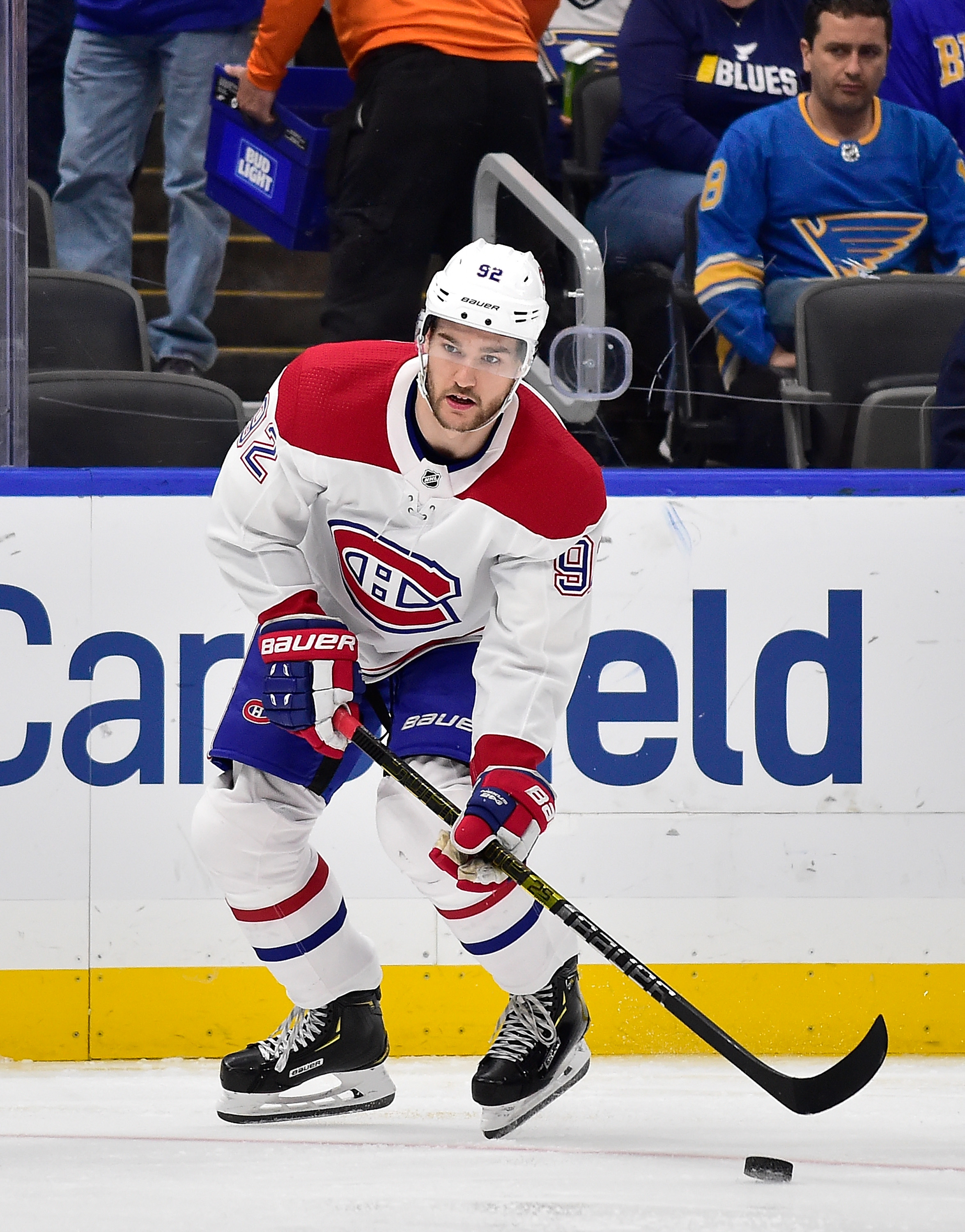 Drouin was brought in three years ago to be the team’s leading scorer and maybe even the face of the franchise. Despite being one of the top young forwards in the game, his numbers haven’t translated very well as he’s never duplicated the 21-goal season he had in Tampa Bay back in 2016-17. Of course, injuries have been one of the biggest culprits, but Drouin is only 25 and can still be an impact player. So far, he has six points in his first six games, so the team has to hope that the long-term deal they gave him might still pay off down the road.
Byron has been one of the biggest disappointments as injuries have played a major role in his availability over the last two seasons. The 31-year-old has missed 79 games over the previous two seasons and a player who looked to be a solid 20-goal scorer when he signed his four-year, $13.6MM deal back in 2018, has scored 19 goals since signing that contract and still has two more years after this year at a $3.4MM AAV. Allen is another interesting player, who looks to be the perfect complimentary backup netminder as the Canadiens have to start thinking about spreading out the goaltending workload.
What Your Team Is Thankful For: Ottawa Senators
We’ve now made it past the holiday season but there is still plenty to be thankful. Like the last few years, PHR will take a look at what teams are thankful for but this year comes with a bit of a change. Normally teams would have an idea of where their season was heading, coming up on the one-quarter mark with mountains of statistics to analyze. Instead, in this unprecedented year, things are just getting underway. We’ll still take a look at what each group is excited about and what they could hope for with the calendar having now flipped to 2021.
What are the Senators most thankful for?
Their very promising young core.
There has been pain – plenty of it – in recent years but the rewards are coming. Brady Tkachuk and Tim Stutzle give them two top wingers to build around while Josh Norris is a key piece down the middle. Thomas Chabot is already a star on the back end while they have several prospects that are a little further away. Is there a true superstar among the bunch? They’re hopeful Stutzle can get there but even not, there is enough high-quality prospect talent to do some damage. If they’re able to spread out their arrival to the NHL over a few years, it will help them be able to afford to keep their core in place as well.
Who are the Senators most thankful for?
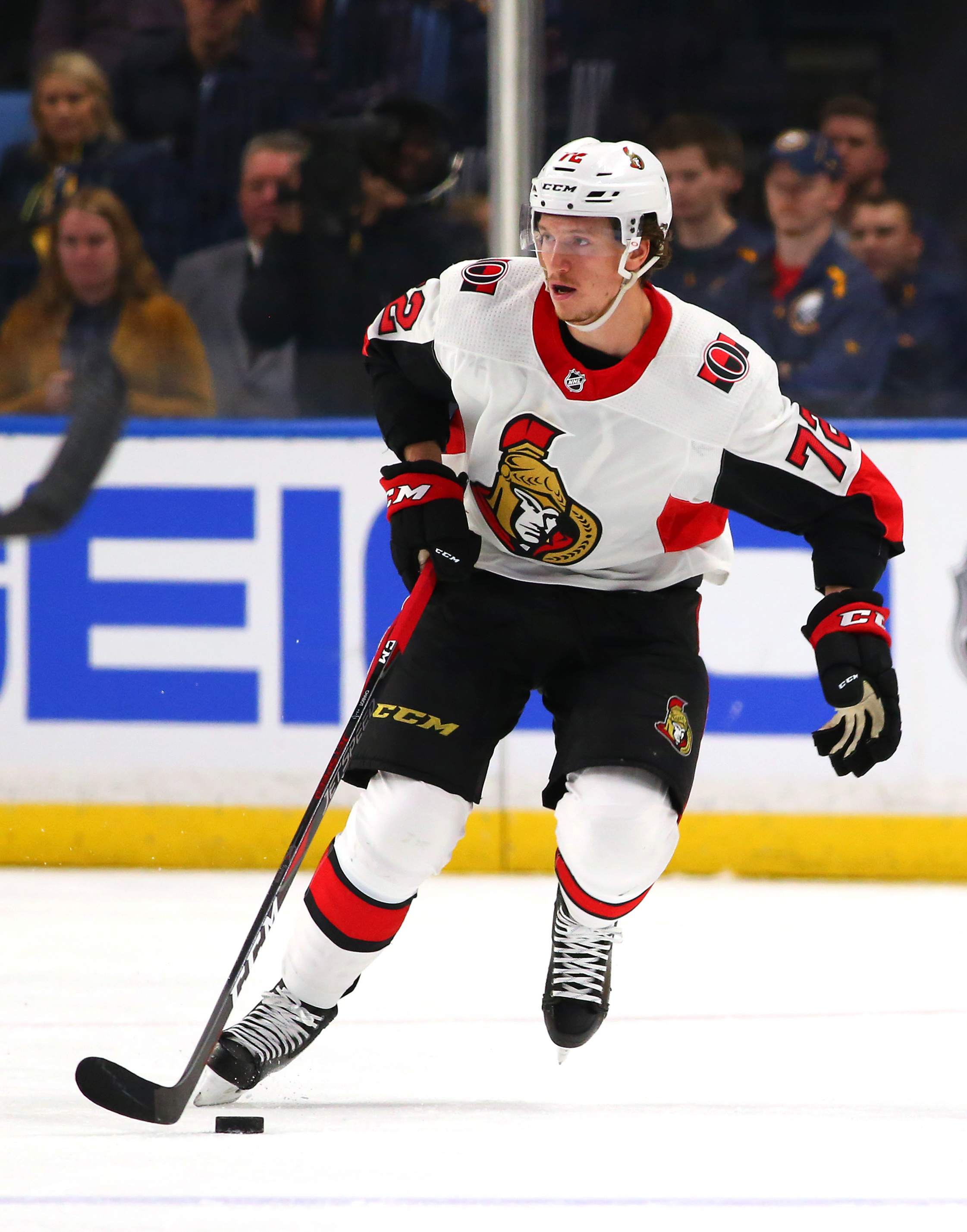 A franchise center and a franchise defenseman are hard to come by. Ottawa doesn’t have the former just yet but they do have the latter in Chabot. The 18th-overall pick in 2015 took a couple of years to get to the NHL but since then, he has taken off. There is still room for growth and as their prospect core graduates to Ottawa and upgrades their back end, it can only be good for Chabot.
He’s also the first player out of their new young core to sign a long-term deal. Instead of taking a bridge contract, he made a max-term eight-year commitment back in 2019 for an $8MM AAV. He has been a fixture on their back end since 2017 and will be through 2028 at least. On the franchise building scorecard, the number one defender spot can be checked off for a long time.
What would the Senators be even more thankful for?
A return to form for Colin White.
Two seasons ago, it appeared as if he was going to be part of that young core up front to build around. He was coming off of a 41-point effort in 2018-19 and signed a six-year, $28.5MM contract that summer, buying up his remaining RFA years plus two years of UFA eligibility. Even if he wasn’t their future number one center, he was on his way to being a good second-liner.
Last year, however, he struggled considerably and it has been even worse this season as he has already been scratched twice. All of a sudden, his contract looks like a considerable overpay. With their self-imposed financial limitations, they can’t afford to have long-term contracts that they’re not getting any sort of return on. If White can first work his way back into the lineup and then back into a role of some significance, it would at least allow them to get some value out of this deal and make trading him a somewhat-viable option.
What should be on the Senators’ wish list?
As things stand, Ottawa at least on paper looks to be a team that’s probably going to be selling again. They have several expiring contracts that they’ve absorbed in recent trades including Derek Stepan, Erik Gudbranson, and Artem Anisimov (acquired back in 2019). If they wind up going that route, adding more picks and prospects to an already-deep cupboard will be on GM Pierre Dorion’s wish list. Not every prospect pans out and there will come a time where some will need to be moved for win-now players (similar to what they did with the Matt Murray acquisition). They’re close to being at a spot where they can transition out of the rebuild but while they’re still in it, they may as well keep adding young assets.
Photo courtesy of USA Today Sports Images.
Salary Cap Deep Dive: Florida Panthers
Navigating the salary cap is one of the more important tasks for any GM. Teams that can avert total cap chaos by walking the tightrope of inking players to deals that match their value (or compensate for future value without breaking the bank) remain successful. Those that don’t see struggles and front office changes.
PHR will look at every NHL team and give a thorough look at their cap situation for the 2020-21 season. This will focus more on players who are regulars on the roster versus those who may find themselves shuttling between the AHL and NHL. All cap figures are courtesy of CapFriendly.
Florida Panthers
Current Cap Hit: $78,081,662 (under the $81.5MM Upper Limit)
Entry-Level Contracts
F Eetu Luostarinen (two years, $898K)
D Riley Stillman (one year, $773K)
F Owen Tippett (two years, $863K)
Potential Bonuses
Tippett: $850K
Luostarinen somewhat surprisingly made the team out of training camp and has made an early impact on the third line. If he’s able to hold down that spot for this season and into next, he’ll be in a good spot for a small raise but it’s far too early to forecast that. Tippett had a decent first pro season, one that was mostly spent in the minors. Like Luostarinen, there’s a definite path to a raise at the end of his deal but he will need to show that he’s capable of being a full-time player first.
Stillman established himself as a regular in the second half of last season but some of the defensive additions and his waiver exemption could work against him. If he winds up being shuffled to and from the taxi squad (where he currently sits), he’ll go from someone that could get a two-year deal at a small raise to one that will likely be settling for close to his qualifying offer.
One Year Remaining, Non-Entry-Level
G Chris Driedger ($850K, UFA)
F Anthony Duclair ($1.7MM, RFA)
D Gustav Forsling ($700K, RFA)
F Vinnie Hinostroza ($1MM, UFA)
D Noah Juulsen ($700K, RFA)
F Alexander Wennberg ($2.25MM, UFA)
Wennberg was bought out by Columbus after a third straight tough season with Columbus but did relatively well for himself on the open market compared to others who suffered a similar fate. He’s still young enough where a bounce-back season could help position him for a multi-year deal with a raise – likely not as much as he was getting on his last deal ($4.9MM) but an increase nonetheless. Duclair leaving Ottawa was one of the bigger surprises after the Sens didn’t want to risk an arbitration hearing. The winger had to settle for less than expected and with him being arbitration-eligible again, he may be more inclined to agree to a deal to avoid unrestricted free agency next summer. Hinostroza showed flashes of offensive upside with Arizona but his arbitration eligibility hurt him as he was instead non-tendered in October. He’s in a spot where if he can work his way up the lineup a bit, he’ll position himself for a small increase but otherwise, he’ll stay around this salary level.
Forsling and Juulsen were both added off waivers in training camp. While Forsling has a reasonable amount of NHL experience, he’s someone that is going to hang around the minimum salary until he can establish himself as a regular. As for Juulsen, injuries have cost him nearly two years of development. It will be hard for him to step into a regular role which will have him in line for a minimal raise at most this summer.
Driedger had been a career minor leaguer until last year where he played quite well, albeit in a limited sample size of just a dozen appearances. That gave him the backup spot heading into this season, his first real opportunity. Even in a shortened year, a decent showing could have him double his AAV given the higher demand for backups in recent seasons.
Two Years Remaining
F Noel Acciari ($1.67MM, UFA)
F Aleksander Barkov ($5.9MM, UFA)
F Ryan Lomberg ($725K, UFA)
D Markus Nutivaara ($2.7MM, UFA)
D Anton Stralman ($5.5MM, UFA)
F Frank Vatrano ($2.533MM, UFA)
F Carter Verhaeghe ($1MM, UFA)
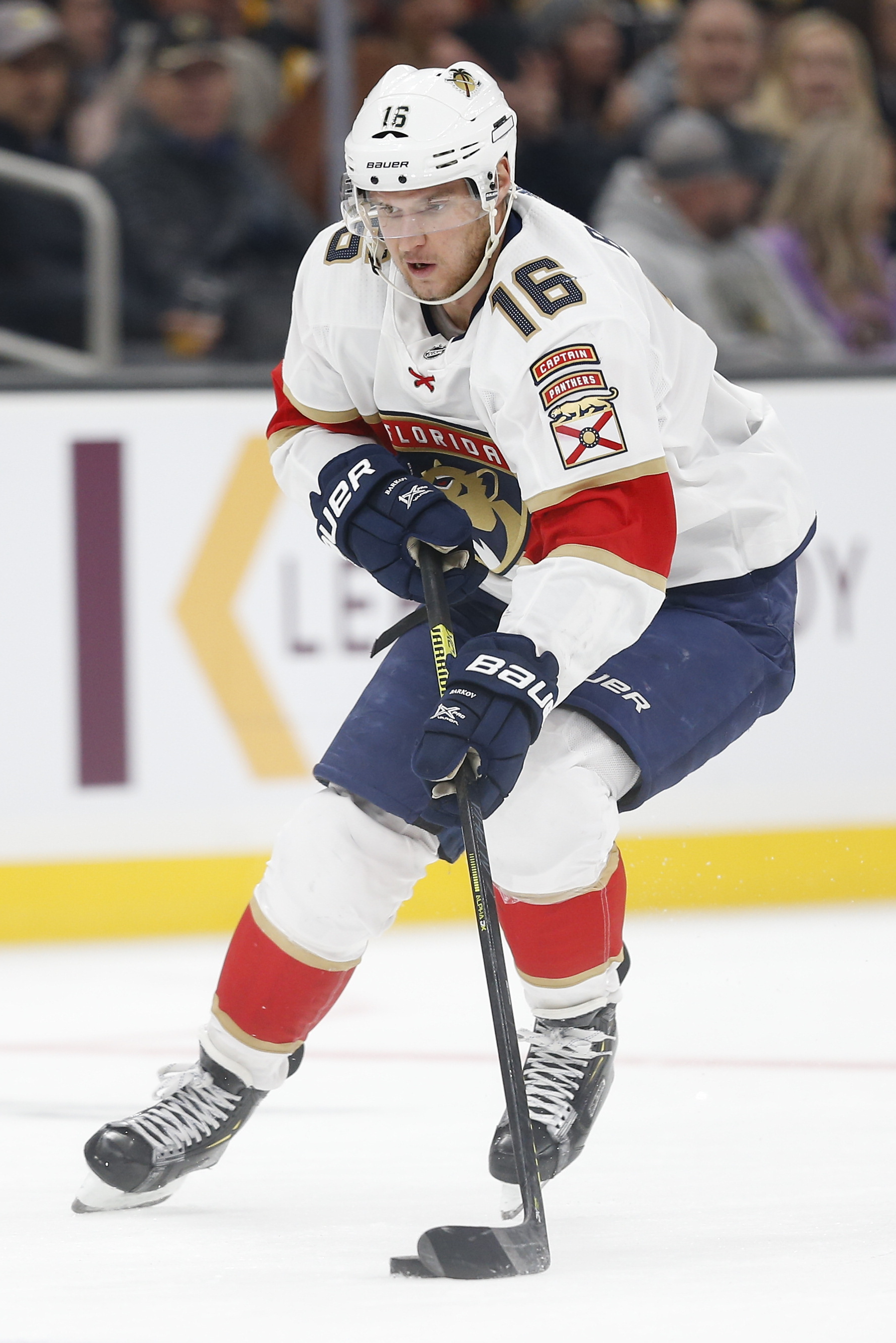 Barkov’s situation has come in recent days when it was revealed that teams were calling to inquire if he may be available; those were quickly rebuffed by GM Bill Zito. Still, it suggested that the perception around the league may be that they think it’s unlikely that Florida’s franchise center will opt to sign an extension when this deal expires. The Panthers have benefitted from being at a well below-market rate for several years now and it stands to reason that he’ll jump past the $10MM mark on his next contract given his elite two-way game and the fact he’d be hitting the open market at the age of 26 in the prime of his career. He’ll immediately jump to the top of the UFA class for 2022 if he makes it that far.
Vatrano had a career year in his first full season with Florida after coming over from Boston, allowing him to get this deal which nearly tripled his previous AAV. He followed that up with an improved 2019-20 campaign and while that normally would mean another raise would be in his future, what happened to middle-six wingers in free agency makes that outcome a bit less likely. Even with a deflated market, a dip would be minimal though. Acciari was one of the more surprising 20-goal scorers last season (his first after joining them from the Bruins) as he’d had just 18 in his entire career before then. If it is indeed a sign of things to come, he’ll be well-positioned in free agency as the fact he can play down the middle would bolster his value. If he goes back to being more of a checker though, he could be looking at a small cut. Verhaeghe is an interesting pickup. He has played heavy minutes in the early going and done well. It’s obviously still early but Florida is hoping it could be another Jonathan Marchessault situation where the player leaves Tampa Bay and with a bigger opportunity, becomes a key player. Verhaeghe, meanwhile, is hoping such a scenario would lead to a top-six payday, much like Marchessault got. Lomberg is filling a depth role, one that should stay at a similar price point down the road.
Stralman was brought in to try to solidify Florida’s defense a year ago and that simply didn’t happen. He didn’t have an overly poor season but it was a quiet year and their defensive issues persisted. His next deal will carry 35-plus caveats so he’ll likely be going year-to-year moving forward, likely at a considerably lower salary as well. Nutivaara was brought in from Columbus to bolster their third pairing. He has a high price tag for someone that’s ideally a number six option though with their cap room, it’s a premium they can easily afford.
Three Years Remaining
F Brett Connolly ($3.5MM, UFA)
D Radko Gudas ($2.5MM, UFA)
F Patric Hornqvist ($5.3MM, UFA)
F Jonathan Huberdeau ($5.9MM, UFA)
D MacKenzie Weegar ($3.25MM, UFA)
D Keith Yandle ($6.35MM, UFA)
Huberdeau has turned into another bargain for the Panthers, providing top-line production for a second-line price tag. Free agency wasn’t kind to wingers this offseason but that should change by the time he hits the open market which should have him in a spot to add another couple of million to his AAV. Hornqvist was brought in to give them some more grit up front but he’s on the downswing of his career (despite the hot start this season) and his style of play has left him susceptible to injuries in recent years. That combination makes it likely that his next deal (which also will be a 35-plus pact) will be a much smaller one. Connolly did relatively well in his first season with Florida with 33 points. It’s an above-market contract based on the most recent free agent market but they should still get a good return if he can stay around that point range.
Yandle’s situation has been well-documented. After it looked like he’d be a healthy scratch, he has played in both games so far, albeit in a more limited role and actually has recorded points in each of them. Nevertheless, it’s clear that it’s a contract they wouldn’t mind not having on the books but in this market, finding a taker will be tricky. Weegar has worked his way up from a role player to a top-four piece and that price tag for that role is a below-market one. Is he a top-four option if he wasn’t in Florida? That is debatable but as long as their back end stays as is, they’ll get a good return on this contract. Gudas was also brought in to reshape their third pairing with Florida paying a premium in terms of salary and probably term as well for his physicality.
PHR Live Chat Transcript: 01/21/21
Click here to read a transcript of this week’s live chat with PHR’s Gavin Lee.
What Your Team Is Thankful For: New York Rangers
We’ve now made it past the holiday season but there is still plenty to be thankful. Like the last few years, PHR will take a look at what teams are thankful for but this year comes with a bit of a change. Normally teams would have an idea of where their season was heading, coming up on the one-quarter mark with mountains of statistics to analyze. Instead, in this unprecedented year, the season hasn’t even begun. We’ll still take a look at what each group is excited about and what they could hope for with the calendar having now flipped to 2021.
What are the Rangers most thankful for?
The first-overall pick in the 2020 draft.
The New York Rangers hadn’t picked in the top three since 1966 when they received the second-overall pick in 2019 and drafted Kaapo Kakko. Then suddenly (a team that did get to appear in the opening round of the playoffs this year) found a way to beat the odds and win the first-overall pick in the 2020 draft in Alexis Lafreniere, giving the team two superstar youngsters who they can form their team around.
Like Kaapo, Lafreniere immediately made the team and should develop nicely over the next few years, giving that rebuild quite a boost — and probably making the franchise one of the luckiest in the league in the last couple of years.
Who are the Rangers most thankful for?
Two core players posting big numbers.
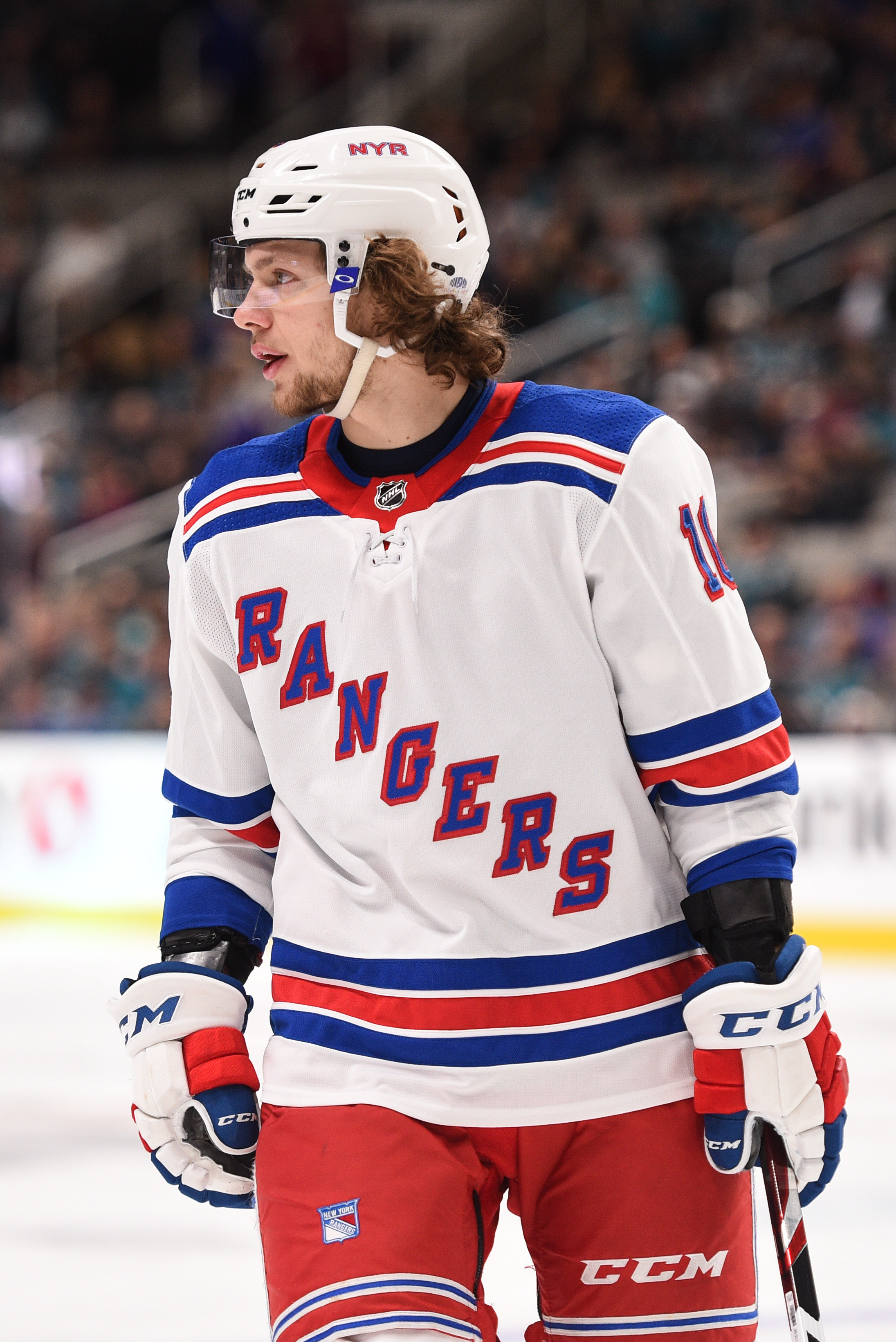 The team was able to sign Artemi Panarin last offseason and what a difference he made. Not only did Panarin put up career highs in his first year in New York — 32 goals and 95 points — the forward boosted everyone else around him as well. Mika Zibanejad had a breakout year as well, posting 41 goals and 75 points last year and showing that he was a top-line center when many were beginning to doubt he was. That core made it much easier to slowly integrate Kappo into the lineup and not needing to thrust him into the top six right away, allowing him the time he needed to earn his way there. The same will happen to Lafreniere as well this year. Having some top veterans only will make things easier for the team’s youth movement.
What would the Rangers be even more thankful for?
Continued development of their youngsters.
The team got some impressive performances last year from players like Anthony DeAngelo, Igor Shesterkin, Adam Fox, Ryan Lindgren, Filip Chytil and Brett Howden in which they all made significant contributions to the team. That development, including Kakko, must continue to improve this year. The team has to hope that many of their young players can take that next step and become highly productive players this year.
On top of that, the team will have a number of new players ready to step in, including Lafreniere, K’Andre Miller and Julien Gauthier, who all need to take that next step as well.
What should be on the Rangers’ wish list?
Another top-four defenseman.
Of course cap space could keep that from happening, but the team is relying quite a bit on a young defense. Jacob Trouba is solid, while Lindgren and Fox are developing, but what the Rangers really need is a reliable veteran that can help solidify the team’s defense. Whether the team can find a way to pick up a player at the trade deadline (assuming they are playoff bound), the team could use more help on their blueline.
Photo courtesy of USA Today Sports Images.