
Trade Deadline Primer: Chicago Blackhawks
Although we’re just two months into the season, the trade deadline is just over a month away. Where does each team stand and what moves should they be looking to make? We continue our look around the league with the Chicago Blackhawks.
No one expected anything for the Blackhawks this season. They were going into the year with an unproven goaltending tandem and their two most dynamic centers have been unavailable the whole year. But with an outstanding rookie in net and a Hart Trophy-level performance from Patrick Kane, they’re right in the thick of the playoff race in the Central Division.
Record
13-9-5, 4th in Central Division
Deadline Status
Opportunistic buyer
Deadline Cap Space
No base cap room, $22.09MM in full-season space using LTIR, 2/3 retention slots used, 48/50 contracts used per CapFriendly.
(The LTIR room that Chicago is using this season includes Jonathan Toews‘ $10.5MM cap hit. If Toews is going to come back this season, it would drastically reduce the amount of cap they have to work with at the deadline.)
 Upcoming Draft Picks

2021: CHI 1st, CHI 2nd, CHI 4th, CHI 5th, CHI 6th, CHI 7th
2022: CHI 1st, CHi 2nd, CHI 3rd, CHI 4th, CHI 5th, CHI 6th, CHI 7th
Trade Chips
If the Blackhawks lose any ground in the next couple of weeks, their feel-good start won’t matter much in the eyes of GM Stan Bowman. The team was starting a mini rebuild and that shouldn’t be abandoned because of a strong two dozen games. Still, what the team has done this season without Toews or top prospect Kirby Dach is encouraging and will make them have to consider any names that hit the market with some term attached.
One Chicago player that has been in the rumor mill is Dylan Strome, who has just one more year on his contract before restricted free agency. When Toews and Dach are healthy, Strome isn’t a great fit for the third line and he has been passed over by lesser-known names this season. With just eight points in 19 games and a recent concussion on his medical chart, Strome certainly wouldn’t be at peak value. Still, if there is a deal to be had, he is a piece they could part with.
Carl Soderberg also sticks out as a player that has been a nice surprise this year but won’t be involved the next time Chicago is really contending. The 35-year-old forward has 11 points in 22 appearances and could be a nice depth addition for a relatively low cost. Soderberg carries just a $1MM cap hit and is an easy sell if someone like Dach (who has resumed skating recently) comes back into the lineup.
Mattias Janmark could basically have the same thing written about him, though the 28-year-old has been good enough to perhaps deserve another go-round with Chicago next year. He’ll be an unrestricted free agent this summer and carries a $2.25MM cap hit but has nine goals and 15 points in 27 games.
Others to Watch For: D Calvin de Haan ($4.55MM UFA 2022)
Team Needs
1) Depth on the wing – It doesn’t seem like it even needs to be a prospect that the Blackhawks would have to target this year, given the little boost they have had in performance. Adding a reclamation project or middle-six option with some team control could be a useful piece for the end of this season and next—as long as it comes cheap (both in salary and assets).
2) NHL-ready prospects – With Kane still providing MVP-level play, there’s no way Chicago will strip it down to the bolts. A draft pick is nice, but a player ready to make an impact next season would be even nicer. If they do something like move Strome, it won’t likely be for just picks.
Photo courtesy of USA Today Sports Images
Trade Deadline Primer: Carolina Hurricanes
Although we’re not even two months into the season, the trade deadline is just over a month away. Where does each team stand and what moves should they be looking to make? We continue our look around the league with the Carolina Hurricanes.
Florida. Boston. Carolina. Those are the only three teams in the entire NHL who are currently in a playoff spot and also have over $2MM in projected year-end cap space – which prorates to eight-figure cap space at the deadline. In a buyer’s market, the Hurricanes are one of an elite trio who have the means to make a major splash. Additionally, sharing a division with one of the others – the Panthers – as well as the reigning Stanley Cup champion Tampa Bay Lightning and Western Conference champion Dallas Stars, gives Carolina even more motivation to load up before the deadline. A top-three team in points percentage, goals for per game, and power play efficiency and a top-ten team in goals against per game and penalty kill efficiency, the Hurricanes are truly elite this season and don’t have many holes. Yet, when you’re this close to a title and are one of the few teams who can do serious damage on the trade market, you pull the trigger.
Record
18-6-1, .740, 2nd in Central Division
Deadline Status
Buyer
Deadline Cap Space
$2.608MM in full-season space ($11.635MM at the trade deadline), 0/3 retention slots used, 45/50 contracts used per CapFriendly.
Only includes 21 players. Frequent recalls Jake Bean, Morgan Geekie, Alex Nedeljkovic currently on taxi squad.
Upcoming Draft Picks
2021: CAR 1st, CAR 2nd, CAR 3rd, CAR 4th, CAR 6th, CAR 7th, LAK 7th, STL 7th
2022: CAR 1st, CAR 2nd, CAR 3rd, CAR 4th, CAR 5th, CAR 6th, CAR 7th, CLB 7th
Trade Chips
Most years, having one of the deepest blue lines in the NHL has no downside. In an Expansion Draft year, however, it’s problematic. Even with star defenseman Dougie Hamilton slated for free agency and not requiring expansion protection (unless he’s re-signed early), the Hurricanes still face a conundrum. Jaccob Slavin, Brett Pesce, Brady Skjei, Jake Gardiner, Haydn Fleury, and RFA Jake Bean are all eligible to be selected by the Seattle Kraken and, due to a number of valuable forwards as well, Carolina can only protect three. Career ‘Canes Slavin and Pesce seem like a lock, while veterans Skjei and Gardiner appear unlikely to be protected. Between their two young rearguards, Bean has shown much more upside this season than Fleury and is the more likely to be protected. Yet, that’s not to say that Fleury does not still have value around the league. At full strength, the Hurricanes have seven legitimate defensemen; while depth is important in the playoffs, could they consider moving one of the aforementioned before the deadline rather than losing them in expansion? With a more affordable contract and less experience compared to a Skjei or Gardiner, Fleury could be made available in a trade, especially if the Hurricanes are able to add a veteran rental defender as part of the return package. With term and even further team control remaining, the 24-year-old Fleury could command a nice market if the Hurricanes make him available, although his complete lack of offense this season does raise some concern.
Outside of Fleury, the ‘Canes seem unlikely to move anyone off their NHL roster. But does that include Morgan Geekie? Geekie has played in nine games for Carolina this season, but due in part to poor play but mostly to his contract flexibility and a lack of a concrete role at the top level, Geekie has spent time on the taxi squad and in the AHL this season. The talented 22-year-old is still young and could find a full-time spot in Raleigh in the next year or two. However, if the right deal rolls around, the team could give up a future piece for help in the present. There are other impressive young forwards pushing to take his “next man up” title anyhow.
The same logic could apply to Alex Nedeljkovic. The young goaltender, who in retrospect should not have cleared waivers earlier this season, has performed very well this season, outplaying veteran James Reimer with starter Petr Mrazek sidelined. However, the Hurricanes have previously refrained from handing Nedeljkovic an NHL job even when a spot was available. Even with Mrazek and Reimer headed for free agency and Nedeljkovic able to be protected in expansion, if the Hurricanes don’t believe that he will be part of their NHL tandem next season, they could move him to acquire a goaltender that will be.
Others to Watch For: F David Cotton ($859K, RFA 2022), D Joey Keane ($859K, RFA 2022), G Jack LaFontaine (Draft Rights)
Team Needs
1) Starting Goaltender – When he was healthy earlier this season, Mrazek was phenomenal. He posted a stunning .955 save percentage and 0.99 GAA in his first four game. Then he got hurt and he hasn’t been seen yet. If the Hurricanes had a healthy, confident Mrazek ready to go at the deadline, perhaps they would stand pat in goal. At this point, that seems unlikely to occur. With Mrazek’s health as an unknown, Reimer playing just okay, and Nedeljkovic playing well but lacking NHL experience nevertheless playoff experience, some peace of mind in goal is the top priority for the ‘Canes. Carolina could target a rental, but the pickings are slim. Jonathan Bernier and Antti Raanta could provide some stability, but they might not be enough of an upgrade and Linus Ullmark carries the same injury concerns as Mrazek. The more bold move, especially with contracts expiring for their current trio of keepers, would be to add a goalie with term. John Gibson and Darcy Kuemper are the biggest names on the rumor mill, but the Hurricanes could also try to break up the Rangers’ or Blue Jackets’ young tandems or target a dark horse name like Tristan Jarry or Thatcher Demko. A long-term starter would be a major addition for Carolina and make sense before the deadline, even if such moves usually take place in the off-season
2) Top-Nine Forward – What the Hurricanes actually lack are reliable depth options up front beyond their starting 12 or 13 forwards. However, when you have cap space and no one else does, you don’t aim to add depth, you aim to add players who push your players into depth roles. Even with solid starting depth and Teuvo Teravainen coming back from injury, Carolina could still stand to add another established top-nine forward that could push the likes of Jesper Fast or Warren Foegele for their spot who would in turn bump fourth liners like Cedric Paquette and Steven Lorentz to either play better or take a seat. Battles for play time and improved depth are hallmarks of a true contender.
3) Even if the Hurricanes don’t move Fleury or another NHL defenseman at the deadline, they could still stand to add another body. As it stands now, the team is without Gardiner due to injury and are just one more blue line injury away from Joakim Ryan becoming a starter. Behind him, you have veteran AHLer David Warsofsky, newcomer Maxime Lajoie, and the untested Keane. It’s not the worst depth, but it also doesn’t scream fool-proof. With the means to load up, the Hurricanes may as well add an experienced rental No. 8 defenseman who is a more reliable option to step in the case of injury or poor play than is Ryan or anyone on the Chicago Wolves.
Trade Deadline Primer: Calgary Flames
Although we’re not even two months into the season, the trade deadline is just over a month away. Where does each team stand and what moves should they be looking to make? We continue our look around the league with the Calgary Flames.
Expectations were high in Calgary heading into the season. Goaltending was a concern last year so they went and got the best one on the market in Jacob Markstrom. T.J. Brodie moved on to Toronto in free agency but Chris Tanev was brought in. The offense largely remained intact and while they underachieved a bit last season, the talent is there for improvement. But the results haven’t met the expectations. One big change was already made behind the bench but GM Brad Treliving will have to decide over the next several weeks if more moves need to happen.
Record
11-12-3, 6th in North Division
Deadline Status
Buyer
Deadline Cap Space
$1.890MM in full-season space ($4.435MM at the trade deadline), 0/3 retention slots used, 46/50 contracts used per CapFriendly.
(This number fluctuates considerably with Derek Ryan being recalled or sent to the taxi squad on a near-daily basis. The above amount is with Ryan on the taxi squad, not the active roster.)
Upcoming Draft Picks
2021: CGY 1st, CGY 2nd, CGY 3rd, EDM 3rd, CGY 5th, CGY 6th, CGY 7th
2022: CGY 1st, CGY 2nd, CGY 3rd, CGY 4th, CGY 5th, CGY 6th, CGY 7th
Trade Chips
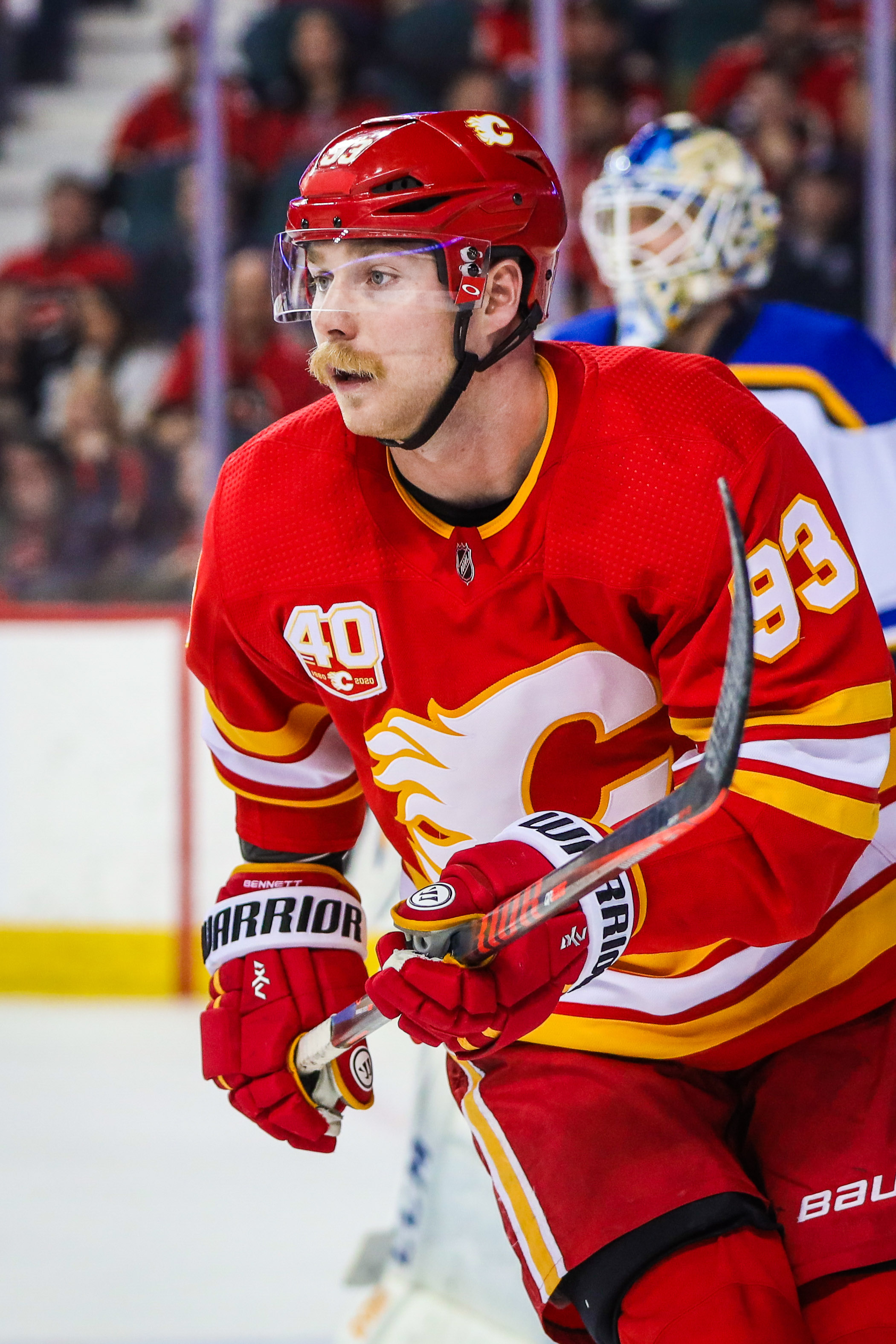 Sam Bennett’s desire to play elsewhere is well-known after his agent, Quartexx’s Darren Ferris, made that request public late in January. Since then, he has basically been everywhere from the front line to the press box. Accordingly, it’s hard to imagine his name not being in play over the next month. However, the recent coaching change that brought Darryl Sutter throws a wrinkle into things. The veteran bench boss encourages a grittier style of play, one that would seemingly benefit Bennett more than most on that roster. Accordingly, it’s not easy to see the 24-year-old stepping up over the next few weeks, potentially taking his name out of consideration in the process. If not, the pending restricted free agent – who carries a $2.55MM AAV and needs a qualifying offer at that rate this summer – is going to be in plenty of speculation between now and April 12th.
Oliver Kylington has been an interesting player on Calgary’s back end. After he somewhat shockingly slipped to the end of the second round in 2015 going 60th overall, it was a slow climb to the NHL but he looked to have the inside track for a spot on the third pairing after playing 48 games last season. However, he cleared waivers back in January, has been sent down to the taxi squad a dozen times, and has played in just three games this season. Still just 23 and carrying a cap hit of just below $788K, Kylington is a prime candidate to be moved to a team that may be rebuilding and would have more of a willingness to live with the ups and downs of his performance.
Dominik Simon looked like a quality pickup for the league minimum back in October. After recording 22 and 28 points over his previous two seasons with Pittsburgh, the 26-year-old seemed like a good addition to their fourth line while being someone that could move up if needed. Instead, he has hardly played, suiting up in only nine games and clearing waivers earlier this month. He doesn’t have the potential upside that Kylington does but the winger is the type of affordable depth that teams often try to add closer to the trade deadline on the cheap. The fact he can now be assigned to the taxi squad actually makes him more valuable than he was just a week ago when he was on waivers.
Others to Watch For: F Josh Leivo ($875K, UFA), F Matthew Phillips ($733K, RFA), D Alexander Yelesin ($925K, RFA)
Team Needs
1) Scoring help – Calgary sits 23rd in the NHL in goals per game, a number that stands out even more considering how high-scoring the North Division is; four of the top nine teams in the league in that department are from there. Johnny Gaudreau is their only double-digit scorer and only four players have 15 points or more on the season. In a division where many of the teams are high-scoring, the Flames will need to outscore their way out of trouble, not just rely on Markstrom. A top-six forward would go a long way towards accomplishing that.
2) End of roster depth – Simon and Leivo were among those that Calgary brought in to give themselves some extra depth and be able to roll four lines. Unfortunately, it hasn’t worked to the point where they’ve rotated several players into that role with Leivo being the only one logging more than 10 minutes a night. Recent recalls have been in the five-to-eight-minute range. More is needed from their bottom few forwards. On the back end, Nikita Nesterov has seemingly won the battle for the sixth spot but hasn’t provided much at either end. Upgrading on him would also be a boost; a reunion with former Calgary defender Travis Hamonic – a pending UFA – would make some sense but an upgrade in general on the right side would be worthwhile.
Photo courtesy of USA Today Sports Images.
Trade Deadline Primer: Buffalo Sabres
Although we’re not even two months into the season, the trade deadline is just over a month away. Where does each team stand and what moves should they be looking to make? We continue our look around the league with the Buffalo Sabres.
No team has received more media scrutiny this season than the Buffalo Sabres. The team is floundering yet again despite adding the top free agent forward in Taylor Hall and acquiring veteran center Eric Staal. Not only have Hall and Staal disappointed, but very few members of the team have exceeded or even met expectations this season. With failing veterans, stalled youngsters, and a number of expiring contracts, the Sabres are stuck and appear primed for a fire sale and resumed focus on rebuilding.
According to a number of sources, almost anyone on the Sabres could be made available. Sportsnet’s Elliotte Friedman reports that Buffalo is “wide open” for business and The Athletic included four Sabres on their Trade Deadline Big Board. It all sounds very exciting to the other 30 teams and their fans, doesn’t it? Well, don’t get your hopes too high for major moves by Buffalo. Given the constraints of an NHL trade market impacted by a flat salary cap as well as real-life financial struggles, not to mention the restrictions on Canadian teams due to COVID-19 border policies, making trades this year is no easy feat. Trading a player like Jack Eichel in-season seems nearly impossible, even if the Sabres wanted to move him which is unlikely. Add in that rookie GM Kevyn Adams is new to the job and trying to build connections in a quiet market while trying to avoid being taken advantage of, and the Sabres suddenly look like a team that might end up playing it safe. Does Adams really want to move the likes of Sam Reinhart and Victor Olofsson, both of whom are among the productive minority in Buffalo, when the odds of winning such a move seem slim? Does he want to potentially overreact to the frustrations of Jeff Skinner and give away major assets to move his contract? Adams has a number of contracts expiring after this year and next that he can move without much risk of it coming back to bite him. Expect that “wide open” means he’s willing to move any amount of those players, but won’t be too keen to touch anyone else who the team may still be able to build around.
Record
6-14-3, .326, 8th in East Division
Deadline Status
Seller
Deadline Cap Space
$410,962 in full-season cap space, 0/3 retention slots used, 44/50 contracts used per CapFriendly.
Upcoming Draft Picks
2021: BUF 1st, BUF 2nd, BUF 4th, BUF 6th, BUF 7th
2022: BUF 1st, BUF 2nd, BUF 3rd, BUF 4th, BUF 6th, BUF 7th
Trade Chips
Hall of course stands out as the top trade chip for the Sabres if you assume that the likes of Eichel, Reinhart, Olofsson, and Rasmus Dahlin are not going anywhere (a safe assumption despite the whispers). The former Hart Trophy winner may not be enjoying a strong season, but he is a known commodity who can play a top-six role for any team in the league. Hall has expressed some interest in re-signing with Buffalo, but without any evidence that he is a fit and with a ways to go in their rebuild, retaining the 29-year-old Hall on a heavy price tag makes little sense. The trouble with trading him though is a potential lack of suitors who can actually afford his $8MM cap hit. A lack of demand could impact what Buffalo is able to receive in a deal, but they should still end up with a nice package. Anything is better than letting him walk for free this summer.
Staal too could see his time in Buffalo come to a quick end. The veteran center is well-respected across the league and brings solid two-way play and postseason experience. While he has lost a step, that won’t stop contenders from seeing him as a worthwhile depth addition.
On defense, Brandon Montour is absolutely on the block. The puck-moving defenseman is headed for free agency and the Sabres have made it known that they are open to renting him out. Montour has not produced as they had hoped and is no longer in their long-term plans, so Buffalo has no reason not to trade the 26-year-old defenseman. Given his offensive upside, his ability to play either side of the blue line, and his palatable $3.85MM cap hit, Montour should be easy to move. Sadly, Jake McCabe also would have been easy to move and would have returned a prime package as arguably the best left-handed defenseman on a trade deadline seller. However, his season is over due to injury and the Sabres will lose out on his trade value.
Even with Montour and McCabe out of the way this off-season, the Sabres still face a potential expansion conundrum on defense. Should Buffalo choose to protect seven forwards and three defensemen, Dahlin is a lock but it leaves only two spots to split between top-four blue liners Rasmus Ristolainen and Colin Miller and young Henri Jokiharju. The Sabres could choose to move one of the three rather than lose them for nothing to the Seattle Kraken. Ristolainen had long been a fixture on the rumor mill, but those talks have cooled significantly since last season. Do the Sabres finally move the talented defenseman, especially as his stock has risen this season? Ristolainen only has one season remaining on his contract and could be tempted to pursue a more talented team in free agency after playing exclusively for Buffalo thus far in his pro career. Miller also has just one year remaining on his deal and comes with a lesser price tag than Ristolainen, albeit with a less complete game as well. Jokijarju, 21, is not necessarily safe either; the young rearguard has not met expectations thus far in his time with the Sabres but he does have impressive upside.
In net, Buffalo will see both members of their NHL tandem hit the open market this summer barring an extension. The Sabres may be well-served to extend 27-year-old Linus Ullmark, but if the feeling isn’t mutual then they should move the net minder while he can still return value. If Ullmark is healthy, he could be a major trade chip for the Sabres. Veteran Carter Hutton is less likely to move given his struggles and his $2.75MM cap hit, but Buffalo will certainly make him available.
Others to Watch For: F Curtis Lazar ($800K, one year remaining), F Tobias Rieder ($700K, UFA), F Riley Sheahan ($700K, UFA), D Matt Irwin ($700K, UFA)
Team Needs
1) Draft Picks – Sabres fans rightfully want their team to be better and they want them to be better sooner rather than later. However, that isn’t easy to do. A rookie GM with few impact players and little cap space doesn’t have the means to immediately upgrade his roster. This team is headed toward a long, arduous rebuild. What makes accepting that reality even more difficult is that the Sabres do not even have their full complement of draft picks to build upon. Missing a third and a fifth this year and a fifth next year, Buffalo is in the unfortunate position of needing to add talent to their pipeline and don’t even have the complete means to do so. The goal for Adams and company at the deadline should be not only to recoup their missing picks but to add other high-value picks as well.
2) Prospects – If the Sabres are unable to add valuable future prospects in the form of high draft picks, they need to target current top prospects instead. The Athletic’s Scott Wheeler recently ranked Buffalo’s pipeline as 15th-best in the NHL, an unacceptable position for a team that is supposed to be rebuilding. The Sabres need to move from middle-of-the-pack toward the top of the NHL’s prospect rankings if they want to speed up their rebuild. A projected top-four defenseman and center depth should be the specific targets of their aim to add youth.
Trade Deadline Primer: Boston Bruins
Although we’re not even two months into the season, the trade deadline is just over a month away. Where does each team stand and what moves should they be looking to make? We continue our look around the league with the Boston Bruins.
The Boston Bruins are a team that fell just short of a Stanley Cup Championship two years ago and the franchise is eager to get back and try to win it again this year. While the team has an interesting mixture of veterans and youth, many of Boston’s top players are getting older and time is slowly running out for them to earn themselves another title. Regardless, to compete at that top level, the Bruins will have to address some holes in their lineup.
Record
13-5-3, 3rd in East Division
Deadline Status
Buyers
Deadline Cap Space
$2,893,498 in full-season cap space, 1/3 retention slots used, 46/50 contracts used per CapFriendly.
Upcoming Draft Picks
2021: BOS 1st, BOS 2nd, BOS 3rd, BOS 4th, BOS 5th, BOS 6th, BOS 7th, TOR 7th
2022: BOS 1st, BOS 2nd, BOS 3rd, BOS 4th, BOS 5th, BOS 6th, BOS 7th
Trade Chips
The most likely common trade chip for the Bruins is their first-round pick. The team has picked just once in the last three years as they have moved their 2018 first-rounder to the New York Rangers in a package for Rick Nash. The team also sent their 2020 first-rounder to Anaheim along with the contract of David Backes to get forward Ondrej Kase. The team has that option again as they will likely draft late, although considering the draft is considered weaker than most, that pick may not be worth as much either.
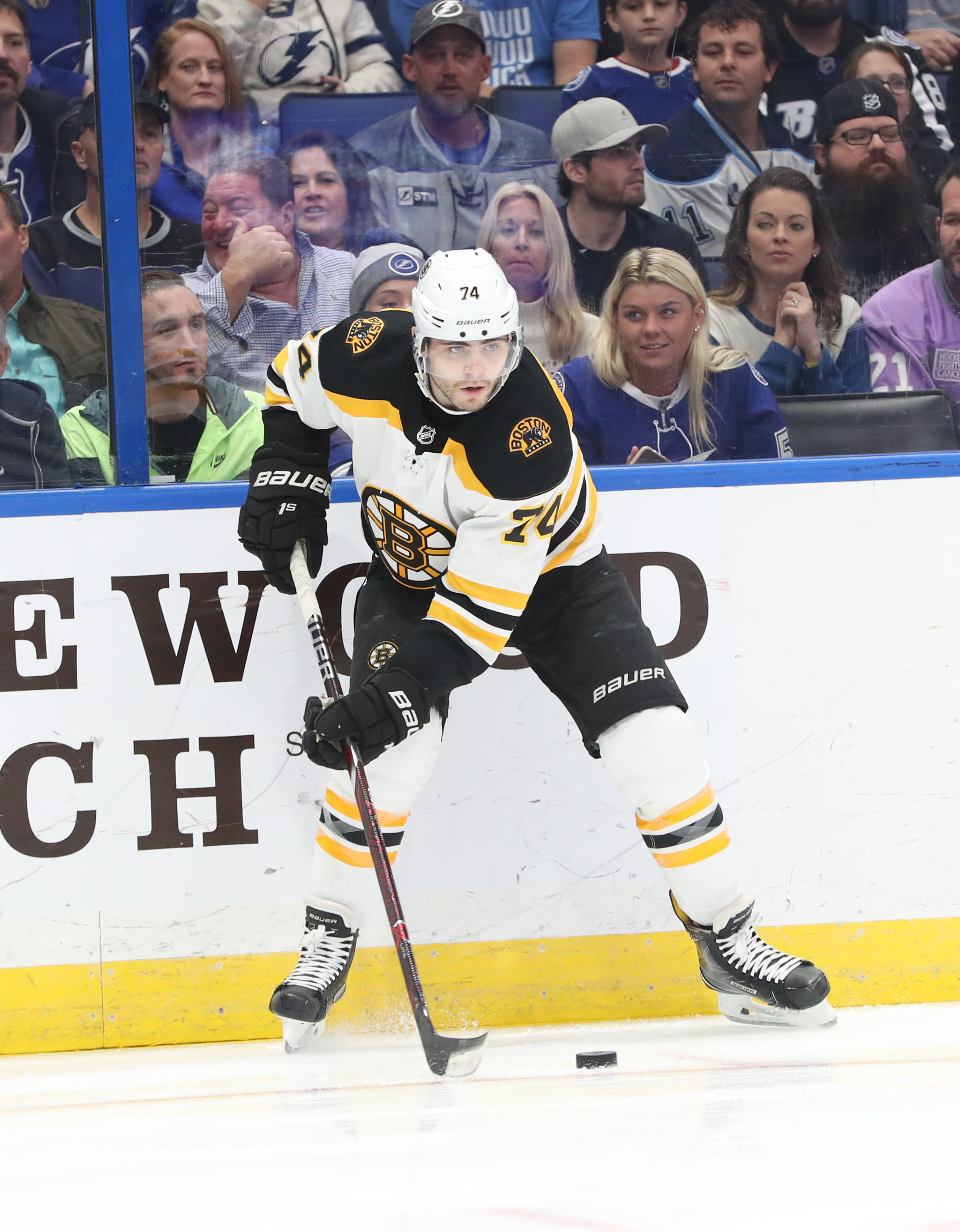 One possibility is the status of Jake Debrusk, who has struggled this year, could find himself on the trade market as someone who could be swapped for another forward. Debrusk, who scored 27 goals in 2018-19 and 19 goals in a shortened 2019-20, has just one goal and five points in 16 games, emphasizing his struggles. However, the problem is that teams won’t be trading top value for the 24-year-old, which could be an issue for the team depending on offers. On top of that, Debrusk will be making $4.85MM in base salary next season, another thing few playoff teams may be willing to deal with. However, Debrusk could be a big piece if the team hopes to make a big trade before the deadline.
One other possibility, though the Bruins would probably prefer to avoid it, but Trent Frederic could be a potential trade chip as well. The young forward has fared well in his rookie campaign and added some grit to Boston’s lineup. Of course, the offense may take more time to develop as he has just three goals this season. However, while Boston would prefer to hang on to him, Boston could be forced to include the young center if they team is trying to pry away a big name.
Others to watch for: F John Beecher, F Ondrej Kase.
Team Needs
1) Top-four defenseman – The Bruins have been ravaged by injury to their blueline with Kevan Miller and Jeremy Lauzon on injured reserve. Brandon Carlo is out week-to-week after taking a massive hit from Washington’s Tom Wilson. Zdeno Chara is now in Washington and the team is left with some questionable options on defense. At the moment, the team is using Jarred Tinordi and Urho Vaakanainen as their third pairing, which is something they weren’t anticipating at the beginning of the year. Don’t be surprised if the team looks at some of the big defensive names on the trade market.
2) More scoring — One of the biggest trouble the Bruins have had over the years is getting production out of their middle-six as those lines have struggled and little has changed. Nick Ritchie leads that middle six with eight goals this year, followed by five for Charlie Coyle and four for Craig Smith. No one else has more than three goals. That’s something the team may want to add if the team has the cap space and the assets to pull that off.
Photo courtesy of USA Today Sports Images
Trade Deadline Primer: Arizona Coyotes
Although we’re not even two months into the season, the trade deadline is just over a month away. Where does each team stand and what moves should they be looking to make? We begin our look around the league with the Arizona Coyotes.
Despite the Arizona front office creating headlines for all the wrong reasons, the Coyotes have been competitive all season long. A recent slide has put them four points out of a playoff spot in the West, but there have been enough bright spots to make many believe they can contend for the postseason once again this year. The next few weeks will be crucial in deciding their deadline stance.
Record
10-10-3, 6th in West Division
Deadline Status
Likely sellers
Deadline Cap Space
$7,546,715 in full-season cap space, 0/3 retention slots used, 46/50 contracts used per CapFriendly.
Upcoming Draft Picks
2021: ARI 2nd, CBJ 2nd, ARI 4th, PIT 4th, ARI 5th, ARI 6th
2022: ARI 1st, ARI 2nd, ARI 3rd, ARI 4th, ARI 5th, ARI 6th, ARI 7th
Trade Chips
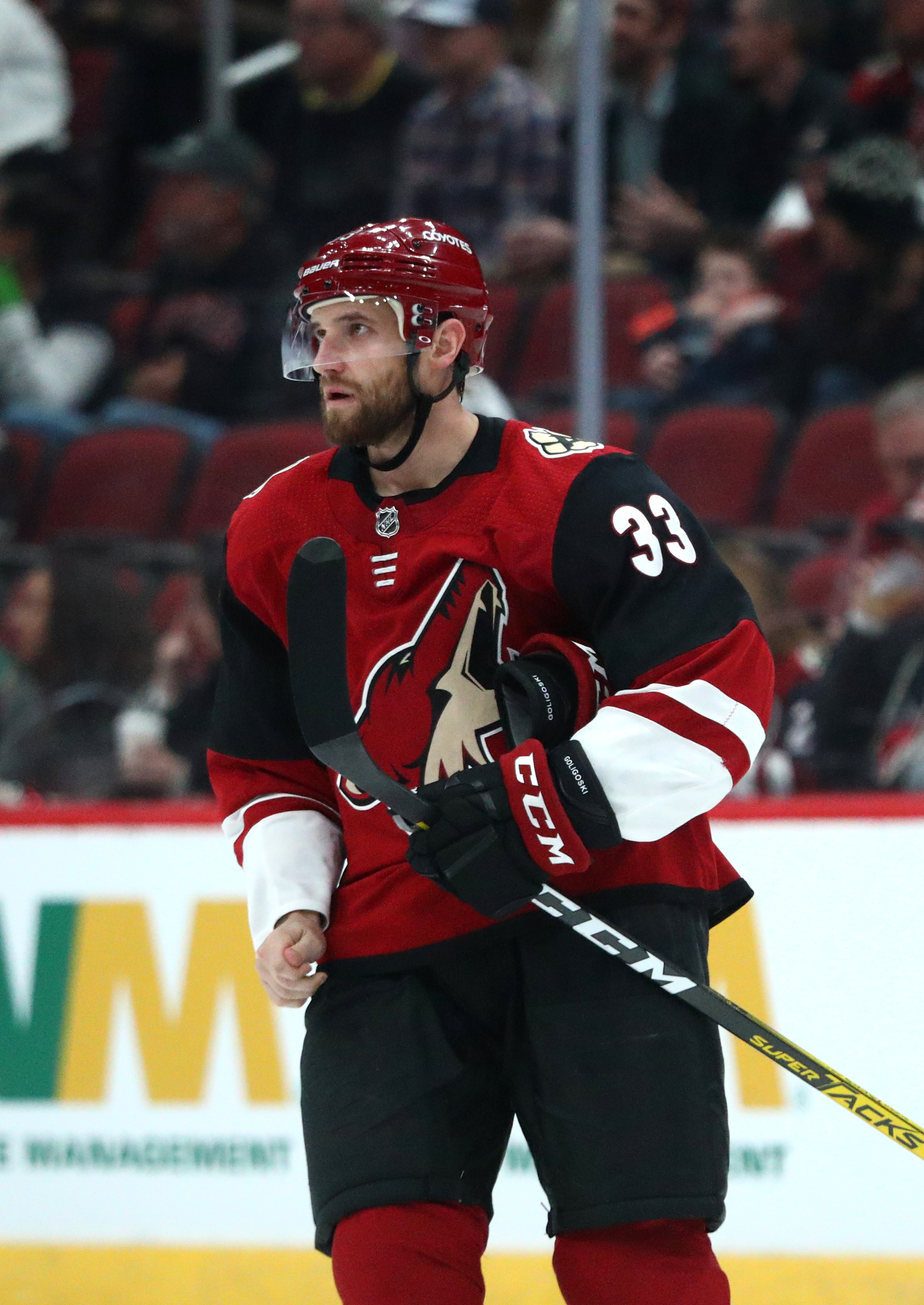 If the Coyotes decide to sell, they’ll have a huge number of veteran players available for contenders around the league. Even if they find themselves in the playoff mix, Alex Goligoski may be approaching the end of his time in the desert. The Coyotes are already listening to offers on the 35-year-old defenseman, knowing they can cash in before he hits unrestricted free agency in the summer. Goligoski has been a rock for Arizona since the 2016-17 season, recording at least 27 points in each of the last four years. He has just a single assist this year though, a dramatic decline after losing his powerplay spot.
It’s not just Goligoski on the blueline though. Niklas Hjalmarsson, Jason Demers, Jordan Oesterle, and Ilya Lyubushkin are all on expiring deals and set to hit the open market after the season is over. Though it seems unlikely that all of them will be gone, the Coyotes do have pieces to sell if they decide to.
Perhaps the most interesting chip though is Clayton Keller, who was recently listed at No. 6 on The Athletic’s Trade Deadline Big Board. The 2016 seventh-overall pick has never become the dominant offensive force that many expected, failing to even crack 20 goals or 50 points since his rookie season. If the Coyotes decide to rebuild the draft pipeline and shed salary, trading Keller could be the easiest to pull off. His eight-year $57.2MM contract is just starting and the no-trade clause doesn’t kick in until 2024-25. Even though he may be available, it does seem more like an offseason trade than a deadline one.
Others to watch for: G Darcy Kuemper, G Antti Raanta, F Derick Brassard, F Lawson Crouse
Team Needs
1) Draft picks – The Coyotes had to wait and watch other teams make 110 selections in the 2020 draft before they got involved, and when they did they picked controversial prospect Mitchell Miller, who they have since renounced the rights to. That means their 2020 draft class consists of Carson Bantle (142nd overall), Filip Barklund (173rd), Elliot Ekefjard (192nd), and Ben McCartney (204). It’s entirely possible that the team never gets a single NHL game out of that group, meaning it was a lost year entirely. They already don’t have a first-round pick for the 2021 draft, meaning they’ll need to refill the system in one way or another at some point.
2) Young(ish) defense – Even if they move some of those expiring contracts, it doesn’t mean the Coyotes are completely giving up. There may be an appetite to add some defensemen in the 22-26 range that can step into the vacant spots and help the team right away. Names like Brandon Montour that need a fresh start or even someone like Jake Bean who is blocked in a deeper system could certainly be attractive to a team like Arizona, though how they would afford them (asset-wise) isn’t really clear.
Photo courtesy of USA Today Sports Images
PHR Mailbag: Flames, DeBrusk, Devils, Trade Deadline, Sabres, Mayhew, Bednar, Goalies
Topics in this edition of the PHR Mailbag include what’s next for the Flames, an underachieving winger in Boston, rebuilding New Jersey, projecting the most prominent player moved at the trade deadline, the futures of Ralph Krueger and Jared Bednar, thoughts a Minnesota forward who has produced in the minors yet hasn’t had much of an opportunity, looking at the free agent goalie market, and a first in the history of this mailbag column (spanning more than four years). If your question doesn’t appear here, watch for it in next weekend’s piece.
MoneyBallJustWorks: What do you do if you’re the Flames? I know the Markstrom injury is unfortunate but this season must be a disappointment as of now.
Clearly, this question came before Thursday night’s coaching change but I can safely say my answer wouldn’t have been hiring Darryl Sutter on a three-year contract though his style may wind up being the kick that the team ultimately needs. But with that having now been done, let’s look ahead past that.
I’d like to see their top four defensemen get a bit more playing time; they don’t have anyone at 22 minutes a game. Having some balance isn’t necessarily a bad thing but I don’t think giving Nikita Nesterov 16 minutes a game is the best usage for him, especially with his struggles in his own end. On the flip side, the fourth line has been underused; bringing Glenn Gawdin in to play less than six minutes a game is really pointless. The fourth line can’t be that much of a liability nowadays.
Unfortunately, this is not a season where Canadian teams will be able to trade their way out of their troubles. The two-week quarantine for players coming from the other 24 teams is going to act as more of a deterrent now than it did earlier in the year and while it doesn’t make a trade impossible, it doesn’t make one likely. What they have now is what they’re going to need to work with moving forward but if they can make a small move, I’d look for a third-pairing blueliner and some upgraded forward depth by the deadline.
I’m intrigued to see how Sam Bennett fares under Sutter; I think he will benefit a lot from the change. They’ll play with more of an edge now and I think that will suit Bennett just fine. Jacob Markstrom returning will certainly help as well. This isn’t a year where Calgary is going to contend but at the same time, they’re within striking distance of a playoff spot and the teams directly ahead of them have their own flaws. After this coaching change, it’ll just be small tweaks and that may very well be enough to get in.
@jrice521: I don’t see how the Bruins keep DeBrusk at the trade deadline. His production is virtually nothing. One goal to date on the season. Shouldn’t they try to pry Virtanen out of Vancouver? They probably both need a change of scenery!
There’s no denying that Jake DeBrusk is having a tough year and he is definitely a change of scenery candidate as a result. So too is Jake Virtanen and in theory, the idea has a bit of merit.
From Boston’s perspective, Virtanen has the weaker track record and a lengthier history of inconsistent play so there is some risk. But they also would benefit from the cheaper cap hit in terms of freeing up a bit more flexibility to add another piece and also would appreciate the cheaper qualifying offer in the 2022 offseason.
However, that same reason is why Vancouver doesn’t do the deal. Virtanen’s $3.4MM price tag next season (in terms of salary plus signing bonus) was a big reason the trade talks with Anaheim didn’t go anywhere and DeBrusk’s pay checks in at $4.85MM next year. I suspect Vancouver’s interest in Danton Heinen was more centered around the expiring contract where he could be non-tendered with the team then getting out of that final year of Virtanen’s obligation. While DeBrusk is the more proven player, that extra cost in terms of real money and cap space isn’t going to go over well, especially since big-ticket deals for Elias Pettersson and Quinn Hughes are on the immediate horizon.
This is a season where quite a few of the trades made in the coming weeks will likely involve swapping change of scenery players so this type of move makes some sense on paper but the economic element probably stops it from happening, at least straight up.
SpeakOfTheDevil: What sort of adjustments do the Devils need to make to finally get out of this ongoing rebuild? I honestly want to know how you would make this team better.
Most teams in the league have some sort of identity. Some are defense-first that rely on the goaltending, others have high-end offenses. Some really like to push the pace. I honestly have no idea what New Jersey’s identity is. They’ve been trying to make incremental upgrades to deepen their roster which is an okay starting spot but at some point, you have to pick a direction and build around that. They seem to want to build around their attack so I’ll make my plan based on that.
Goaltending – There isn’t much I’d do here. I liked the Corey Crawford signing to give Mackenzie Blackwood some insurance and it’s not New Jersey’s fault that Crawford had a last-minute change of heart. Adding another similar veteran next year would be ideal.
Defense – Having puck-movers that can accelerate the attack is all well and good but they need someone who can actually defend in their own end as well. I liked the Ryan Murray addition for that reason and leveraging their cap room to do something like that again would work. Will Butcher is an expensive extraneous piece right now; if they’re content with their puck-movers, try to flip him for a more stable defensive defender. Their atrocious penalty kill (which sits at 62.5% heading into Saturday’s game) will improve as a result.
Forwards – Sell out for high-end skill on the wing. It’s great to have seven or eight wingers capable of scoring double-digit goals. But those players shouldn’t be on the top two lines. Unfortunately, their only true top-six winger is Kyle Palmieri, a pending UFA. They’re set down the middle with Jack Hughes, Nico Hischier, and Pavel Zacha. But for them to truly reach their ceiling, they need wingers that are capable of producing consistently and they don’t have that. I recognize that they’re not a free agent destination but in this cap environment, them having more cap room than most counts for a lot. And if they can’t add an impact UFA, then leverage that cap space into adding an impact player; don’t settle for another Andreas Johnsson.
There’s a decent young core foundation in place with their centers, Blackwood, and Ty Smith. That’s a good start but until they can supplement them with impact wingers and not just above-average role players, they’re going to spin their tires. Unfortunately for GM Tom Fitzgerald, accomplishing that is something that’s easier said than done but they can’t have another offseason of incremental upgrades if they want to take that next step.
DarkSide830: Biggest name dealt at the deadline?
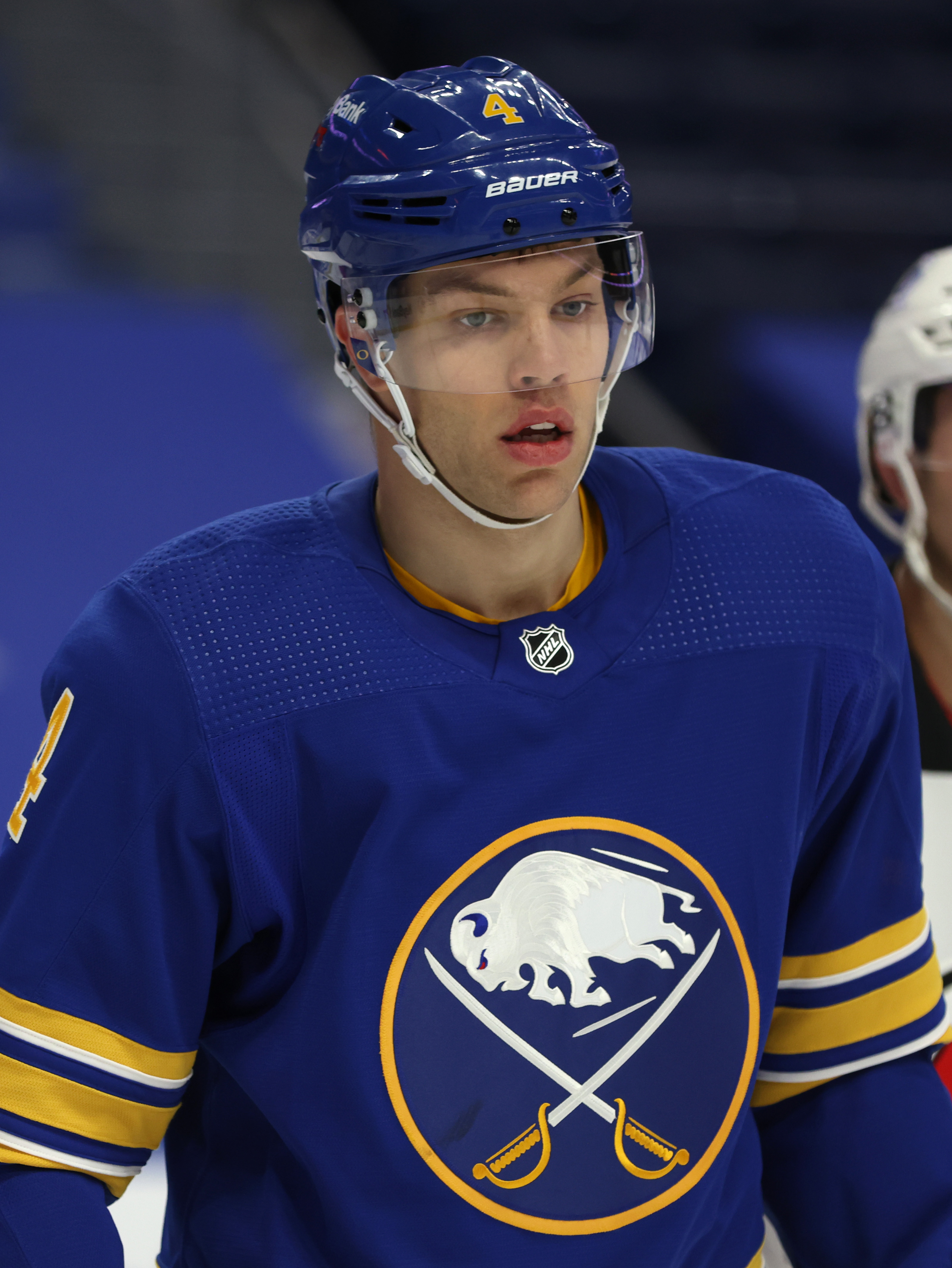 I know Taylor Hall is open to staying in Buffalo and the Sabres would like to have him back but I think it’s Hall that will be the biggest name moved. Given how much the 29-year-old has struggled this season, it’s hard to see the two sides agreeing on a price point for a long-term extension that both sides will be happy with. Hall went to the Sabres in part to try to prove that he’s still a top-line player with an eye on securing the lucrative long-term contract he couldn’t get in October. Now, he needs to get out of Buffalo to accomplish the very thing he signed there to do.
From Buffalo’s perspective, they’re almost certainly missing the playoffs again so there’s no reason to hold onto him if there’s no extension in place. If they’re willing to retain, they should be able to land a decent return (not quite what the Devils got a year ago, however) as $4MM for a second-liner which is more of where he should be valued isn’t impossible. The Sabres will need to take a contract back but there’s a suitable trade to be made.
LarryJ4: Does it look as clear to you as it does to me that the Sabres GM Kevyn Adams is completely handcuffed by Pegula when it comes to Krueger? If you had to choose between the next coach for Buffalo, who would it be? I’m hearing more Gallant than Boudreau but I think with the mix we have Boudreau would be better. Oh, and a goalie is needed as a stop-gap?
I don’t think Adams is being handcuffed by ownership when it comes to Krueger. Adams has been on the job for all of 22 games and doesn’t have the prior front office experience to have a better feel for things. When you’re wading through your first experiences, the logical step is to ere on the side of caution. In this case, it’s keeping Krueger around and trying to be patient. He can wait to make the move in the offseason if he needs to where he’d have a slightly better foundation to draw from or if things keep going off the rails, sometime between now and then.
I’m not sure Gerard Gallant takes the Buffalo job if it was to be offered to him. This is not a situation that looks overly desirable from the outside given the turnover they’ve had and the fact they’re perpetually not improving. He can afford to be selective. Bruce Boudreau does make some sense though. This team can’t score and he has been known to get his teams to at least average in that regard. Even that would be an improvement. Is Boudreau the coach to take Buffalo back to the promised land? No, but he’d lay a better foundation for whoever comes after him. If the Sabres were to make a coaching move, he would make some sense.
If Adams thinks they can stay in the playoff race, then yes, a stopgap goalie needs to be added. I was shocked that they passed on Alex Stalock as he felt like the perfect fit though given what he just went through, maybe there were some lingering health concerns on Buffalo’s end. But if they’re going to throw in the towel and sell, I’d give Jonas Johansson a longer look. Can he be the future backup? Now is as good a time as any to try and find out.
Trade Deadline Primer: Anaheim Ducks
Although we’re not even two months into the season, the trade deadline is just over a month away. Where does each team stand and what moves should they be looking to make? We begin our look around the league with the Anaheim Ducks.
It has not been a fun season for Anaheim, to put it lightly. While they are still in the middle of transitioning to a younger roster, there was some hope that they’d be able to hang around the playoff race with the re-aligned divisions for this season. That hasn’t happened. Instead, the struggles from the last few seasons continue to plague them, highlighted by a complete inability to score as they are averaging just over two goals per game this season. That has put extra pressure on the goaltending and the results haven’t been there which has them squarely in the basement in the West Division.
Record
6-12-5, 8th in West Division
Deadline Status
Seller
Deadline Cap Space
No base cap room, $5.47MM in full-season space using LTIR, 0/3 retention slots used, 50/50 contracts used per CapFriendly.
Upcoming Draft Picks
2021: ANA 1st, ANA 2nd, ANA 3rd, ANA 4th, ANA 5th, EDM 5th, ANA 6th
2022: ANA 1st, ANA 2nd, ANA 3rd, ANA 4th, ANA 5th, ANA 6th, ANA 7th*
*- This pick technically belongs to Edmonton until the end of the season as part of a 2020 trade involving defenseman Joel Persson. The Oilers get to keep the pick if Persson plays in 25 NHL games this season but with Persson in the SHL and not on an NHL contract, that won’t happen. However, the pick remains encumbered for now and while the Ducks will get it back, it cannot be dealt at this time.
Trade Chips
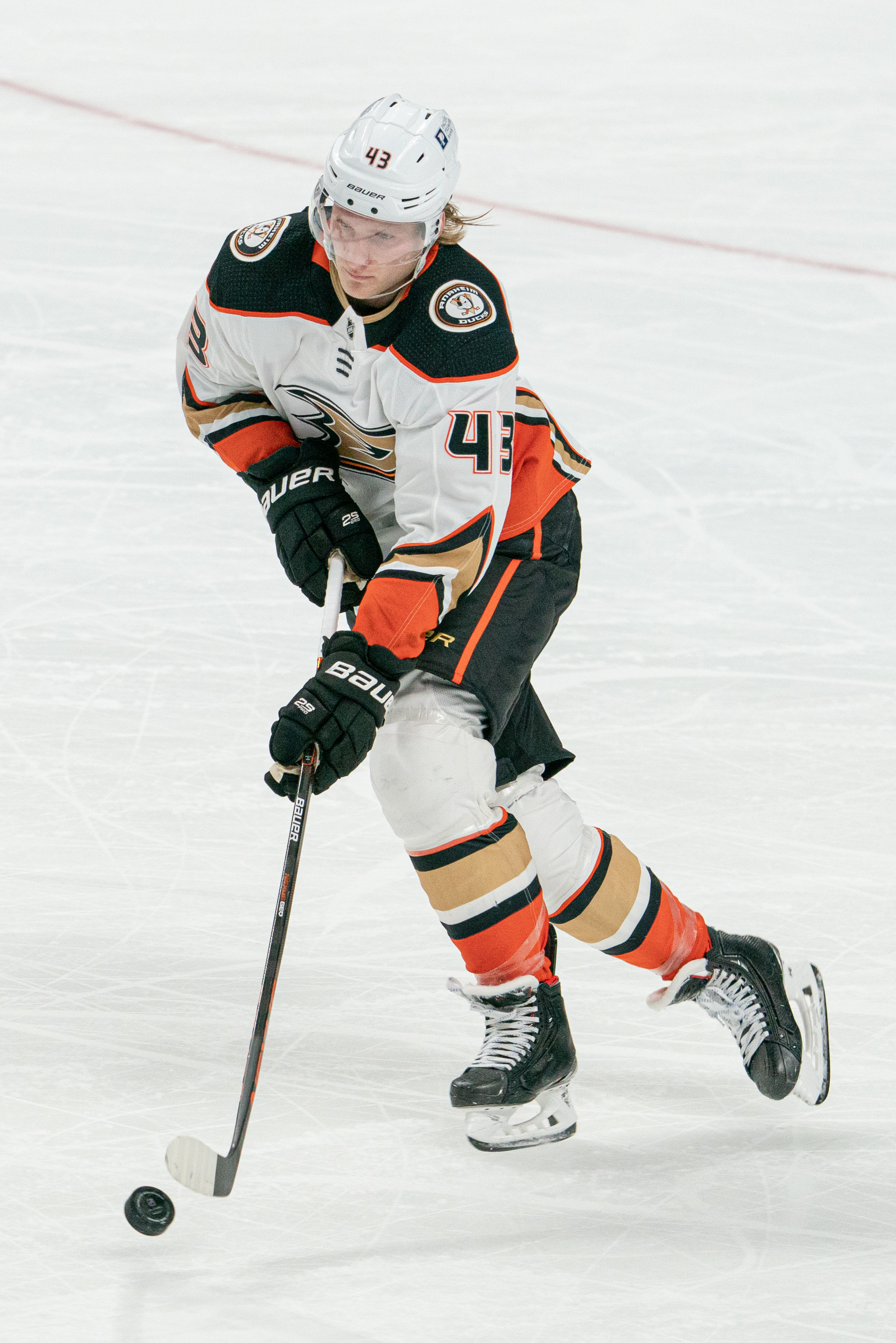 Danton Heinen’s name came up in recent discussions with Vancouver in a deal that ultimately didn’t make it to the finish line for financial reasons, a particular caveat that is basically going to be the focal point of every trade that does or doesn’t get made over the next five-plus weeks. The change of scenery last year from Boston was supposed to spark him offensively but that hasn’t happened as he has just six goals and four assists in 27 games with Anaheim including last season, making him a candidate for another change of scenery. The 25-year-old is a pending restricted free agent with arbitration rights and is owed a $2.775MM qualifying offer (just below his $2.8MM AAV) and at this point, he looks like a non-tender candidate. Whether it’s moving him for another player making similar money or, frankly, for anything of value, Heinen is someone that should be on the move.
Ryan Getzlaf highlights their list of pending unrestricted free agents but it’s hard to see him moving. First, making the money work due to his $8.25MM AAV would be tricky and the veteran doesn’t seem to have much interest in leaving at this point. Ben Hutton ($950K) could be someone to watch for though. He has just one assist in 17 games this season but is logging more than 18 minutes a night on the back end and could be an affordable addition for a playoff-bound team that’s looking to add some injury insurance. If he’s able to return by the deadline, Carter Rowney ($1.133MM) could be a fourth line upgrade for a team as well.
One wildcard in this market has to be Rickard Rakell. A few years ago, the 27-year-old looked like he was on a steal of a deal with an AAV of just $3.789MM. However, his production has tailed off sharply since his 2017-18 69-point campaign and has dipped even farther this year with just three goals in 23 games. They wouldn’t be moving him from a position of strength by any stretch but it’s now fair to wonder if he’s in the long-term plans. With one year left on his contract, his value probably isn’t going to be much higher in the summer and we saw with the failed Heinen trade that GM Bob Murray is open to a player-for-player swap. Rakell is the type of player that several teams are likely to kick the tires on.
Others to Watch For: F David Backes ($4.5MM, UFA), D Jani Hakanpaa ($750K, UFA)
Team Needs
1) Offensive upgrades – Anaheim has a total of two players that have at least five goals this season and one of them (Isac Lundestrom) barely got there after getting a hat trick on Monday. Even though they’re in a rebuild/transition stage, they need some veteran offensive production and if they move players like Heinen or Rakell, it will probably be for veterans making similar money and not futures.
2) Unsigned assets – If the Ducks want to get a longer look at top prospects Trevor Zegras and Jamie Drysdale, it means they’ll be activating the first year of their contracts, giving them no flexibility with regards to the 50-contract limit. The college free agent market figures to be more intriguing this year with players getting a shot at playing for six weeks or so compared to the handful of games that they typically get. It’s a good year for Anaheim to shop in that market but they need to have some available contract slots to be able to do so. Moving signed players like Hutton or Hakanpaa for a pick or unsigned prospect would certainly help in that regard.
Photo courtesy of USA Today Sports Images.
What Your Team Is Thankful For: Winnipeg Jets
We’ve made it past the holiday season but there is still plenty to be thankful for. Like the last few years, PHR will take a look at what teams are thankful for but this season comes with a bit of a change. Typically at this time of the calendar year, the trade deadline is fast approaching but now, we’re only at the one-quarter mark. Still, we’ll analyze what they’re happy about so far and what they can be hoping for in the months to come.
What are the Jets most thankful for?
For years, Winnipeg has been looking to improve their depth down the middle which resulted in several trades for rental players including adding Paul Stastny for the second time last fall. With Mark Scheifele established as a legitimate number one center, Stastny gave them a bit of insurance with Bryan Little out for the season. That’s good but not great.
That changed with last month’s acquisition of Pierre-Luc Dubois from Columbus. Dubois, who was the top pivot with the Blue Jackets, gives Winnipeg a second high-quality option down the middle. Perhaps more importantly, Dubois is team-controllable for three more years which lines him up with Scheifele. There are some strong one-two center punches in the North Division and Winnipeg now has one of them and will have them in place for a while yet once Dubois moves to the middle (he has started on the wing for the time being).
Who are the Jets most thankful for?
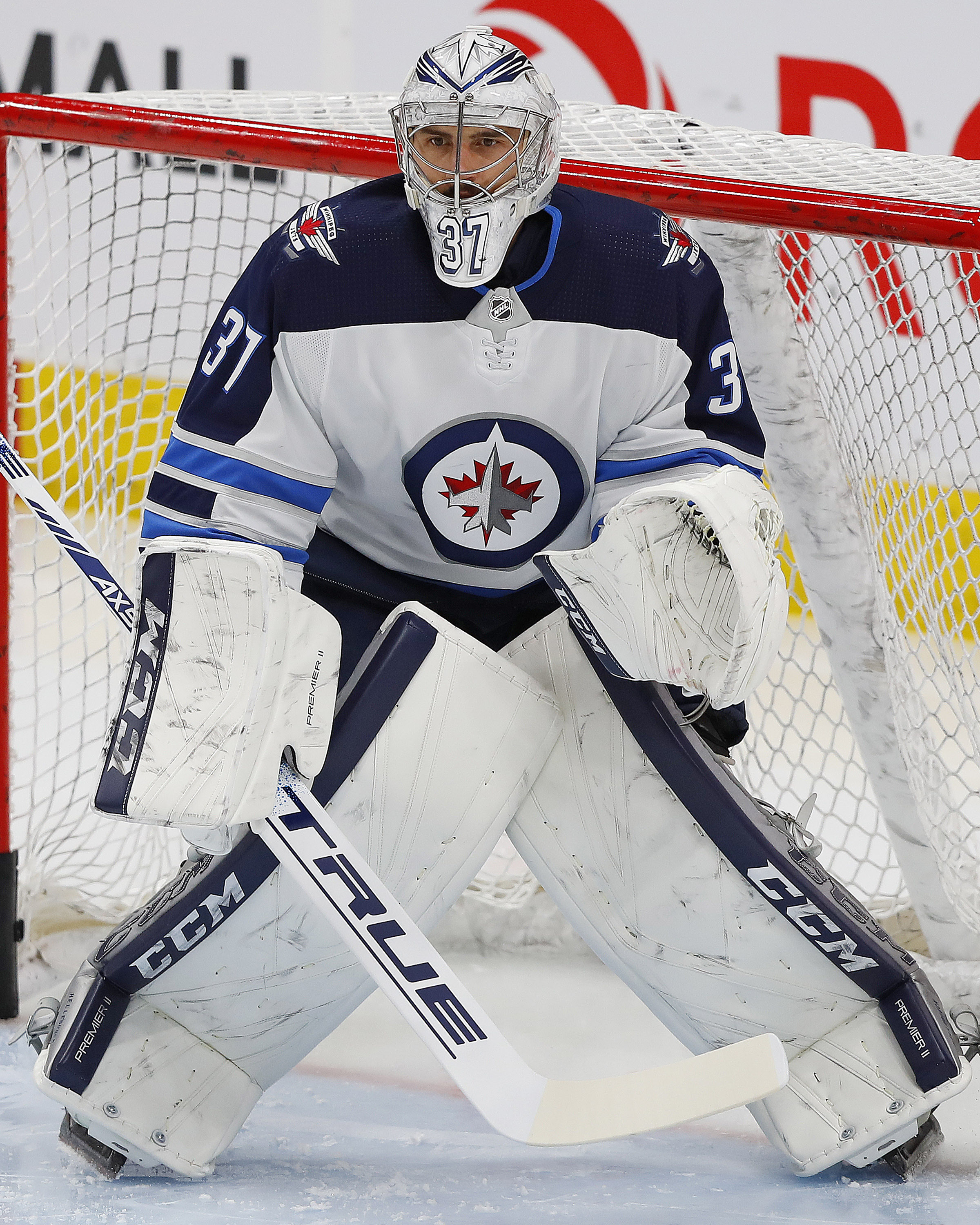 Connor Hellebuyck. Last year’s Vezina-winning goaltender hasn’t had the best of defenses playing in front of him (more on that shortly) and with some inconsistent performances from his backups, he has had to log a heavy workload, leading all netminders in games played in two of the last three seasons and facing the most shots in each of the last two years. Despite that, Hellebuyck has been able to provide the Jets with steady, above-average goaltending on a regular basis for a reasonable price; his $6.167MM AAV is eighth in the league and is only about $1MM higher than the median price tag among starters. He’s still signed for three more years after this one so Winnipeg doesn’t have to worry about their goaltending anytime soon.
What would the Jets be even more thankful for?
One of their young defensemen stepping into a top-four role. Josh Morrissey is a capable core blueliner and Neal Pionk has thrived since coming over from the Jacob Trouba trade. After that, the depth starts to go down in a hurry. Dylan DeMelo is a capable third-pairing option which is nice to have but right now, Derek Forbort is logging more than 21 minutes a night just one season removed from being limited to all of 20 games, most of which were on the third pairing. He’s a serviceable blueliner but in an ideal world, he’s not playing anywhere near that much.
Meanwhile, Winnipeg has several young defenders with some upside in Tucker Poolman, Sami Niku, Logan Stanley, and Ville Heinola that have all seen NHL action this season. The latter two were both first-round selections and are key cogs of their back end of the future but haven’t shown that they’re ready yet for a top-four spot; Heinola also has contract considerations in terms of extending team control to factor in. Unless they’re able to add someone via trade over the next six weeks, the improvement is going to have to come from within. One of these four stepping up would give them a huge boost heading into the playoff push.
What should be on the Jets’ wish list?
Let’s stick with the defense. A top-four blueliner is a piece that would really elevate the Jets to another level for the stretch run. They do have some LTIR space at their disposal – about $2.8MM worth – and with Little out for the year, they can safely spend without having to plan about getting into compliance. It’s not a situation where it will increase in value on a daily basis like regular cap room so if GM Kevin Cheveldayoff finds the right fit, he can pull the trigger sooner than later.
Photo courtesy of USA Today Sports Images.
This Day In Transactions History: The Eventful 2008 Trade Deadline
This is typically the time of year where trade activity picks up around the league with the trade deadline immediately on the horizon. Of course, this season is different and we’re still six weeks away from reaching that point. So instead of looking ahead to what will be coming on the trade front, let’s instead take a look back at one of the busiest trade deadlines in recent memory in the 2008 trade deadline, held 13 years ago today.
There were a total of 24 trades made that day which, in itself, isn’t a particularly high number. However, it’s who was dealt that made this one more memorable. Here’s a look back at some of the more notable moves. (A full listing of the trades can be found here.)
Capitals Add Veterans
Where did Sergei Fedorov finish his Hall of Fame career? While he was in Detroit for the majority of it, he actually finished up with Washington as the Caps acquired the center as a rental player in exchange for defenseman Theo Ruth, a college prospect at the time that ultimately never made it past the AHL level. Fedorov made an impact down the stretch and was one of their better performers in what turned out to be an abbreviated playoff run, earning himself another year with the Capitals in the process.
Washington also took the rare step of acquiring a starting goaltender, bringing in Cristobal Huet from Montreal for a second-round pick (which was later dealt and was used to pick Jeremy Morin who had a brief NHL career). Huet was blocking the pathway to playing time for their goalie of the future in Carey Price and he was nothing short of dominant after being acquired, posting a 1.63 GAA with a .936 SV% following the move. Unfortunately for him and the Capitals, he faltered in the playoffs as Philadelphia knocked out the Southeast champs in the opening round and Huet moved on to Chicago in free agency. What made this trade even more unique was that the Canadiens weren’t a typical seller as they wound up the number one seed in the Eastern Conference that year.
Foote Returns To Colorado
The Adam Foote era in Columbus didn’t last particularly long. Less than three years after leaving the Avalanche via free agency, Colorado opted to re-acquire him as a rental player, sending a first-round pick and a fourth-rounder to the Blue Jackets to bring back the then-36-year-old. Foote logged more than 20 minutes a night both in the regular season and playoffs and went on to sign to play three more years with them, albeit in a much more limited capacity. Meanwhile, the two picks the Avs gave up turned into Luca Sbisa and David Savard, both of which are still in the NHL today with Savard still being in Columbus where he’s a fixture in their top-four.
The Hossa Trade
The big prize on the rental market was Marian Hossa. Atlanta was going to move him, it was just a matter of where and for how much. Pittsburgh wound up being the destination as they acquired Hossa along with Pascal Dupuis in exchange for Colby Armstrong, Erik Christensen, the rights to Angelo Esposito, and their first-round pick. At the time, this seemed like a sizable return for the Thrashers, effectively acquiring three first-rounders (Armstrong and Esposito were picked in the first round) plus a promising center for a pair of rentals.
But things didn’t go as well as planned for Atlanta. Christensen struggled and was eventually moved for a minimal return while Armstrong left in free agency two years later. Esposito, a high-scoring junior star, struggled mightily in the minors and never made it to the NHL while they used the first-round pick on Daultan Leveille, a player they didn’t even wind up signing, opting instead for a compensation selection in 2013 at the 59th spot which was used on Eric Comrie who has been bouncing around on waivers in recent years. What was supposed to be a haul of assets to give the Thrashers a boost for the future turned into next to nothing.
On Pittsburgh’s end, Hossa didn’t quite lead them to the Stanley Cup but he led the team in goals in the postseason and was one goal and point shy of grabbing a share of the league lead in those categories. Of course, he then moved on to Detroit in free agency, the team that beat them for the title. As for Dupuis, he decided to stay with the Penguins and spent eight more years with them, becoming a fixture in their middle-six. In the end, even with Hossa ultimately leaving, they still wound up with the better of the trade.
Richards To Dallas
This wasn’t a deadline where just premium rental players were on the move. How about someone on a max contract? Back when the salary cap was instituted, the 20% max AAV was $7.8MM which a handful of players had, including Brad Richards. With three full years left on his contract, the Lightning decided to part ways with Richards along with goaltender Johan Holmqvist to the Stars for winger Jussi Jokinen, center Jeff Halpern, goaltender Mike Smith, and a fourth-round pick (Kyle Bigos who never signed).
In Richards, Dallas got a premier center that, statistically speaking, was at his best with them as he averaged more than a point per game over parts of four seasons with the team before moving on to the Rangers in free agency. Holmqvist hardly played but Marty Turco was entrenched as the starter so it didn’t matter much.
Tampa Bay was hoping that Smith could become their starter of the future but while he played relatively well – albeit inconsistent at times – it didn’t come to fruition and he left for Phoenix in 2011. Jokinen was gone less than a year later for a package of depth players while Halpern moved on two years later in another late-season trade. While it wasn’t the most impressive of returns, the Lightning did manage to get some much-needed cap space; yes, even then they were looking for more money. Most of their savings went to Vincent Lecavalier’s 11-year, $85MM contract that summer.
Swapping Youngsters
Every good trade deadline needs a ‘pure hockey trade’, one that isn’t primarily fueled by a losing team selling assets or a cap-strapped team moving a player primarily to free up some cap space. There was one of those at this deadline when Carolina dealt winger Andrew Ladd to Chicago for winger Tuomo Ruutu in a one-for-one swap. Both teams were playoff-bound but the Hurricanes wanted a bit more grit and sacrificed some offensive upside to do it.
The deal worked out a bit better for Carolina with Ruutu ultimately spending parts of five more years with them, putting up a pair of 50-plus-point seasons along the way. Ladd, meanwhile, was only with the Blackhawks before being moved to Atlanta in 2010 when they knew they weren’t going to be able to afford to re-sign him as a restricted free agent. He briefly returned as a trade deadline rental in 2016 before becoming a member of the ill-fated UFA class that summer that several teams are really regretting right about now.
Campbell To San Jose
The Sharks decided to make a run at a long playoff run when they acquired blueliner Brian Campbell (along with a seventh-rounder) from Buffalo in exchange for promising winger Steve Bernier and a first-round pick (used on Tyler Ennis who is still in the league today). Campbell was great in a San Jose uniform, picking up 19 points in 20 games following the move although he managed just a single goal in 13 playoff games before leaving for Chicago in free agency. As for Bernier, he wasn’t in Buffalo for long as he was flipped to Vancouver for a 2009 third-round pick (which turned into Brayden McNabb) and a 2010 second-round selection which they then later traded.
Other veterans of some note that were on the move that day were defensemen Brad Stuart (Detroit), Ruslan Salei (Colorado), and Hal Gill (Pittsburgh) while Matt Cooke (Washington) and Frederik Sjostrom (NY Rangers) were among the forwards moved.
No one really knows what this year’s trade deadline is going to be like with it being a shortened season with only divisional play, a tight salary cap, and various quarantine restrictions. It’s safe to imagine it won’t be quite as busy as the 2008 deadline was but if it comes anywhere close to this, it would certainly make for an exciting one.