
Trade Deadline Primer: Florida Panthers
Although we’re just two months into the season, the trade deadline is already less than a month away. Where does each team stand and what moves should they be looking to make? We continue our look around the league with the Florida Panthers.
The Florida Panthers are in an unusual position. Usually a team that is either standing pat or selling, the team has taken a whole new level under head coach Joel Quenneville, becoming a dominant team in the East as they sit just two points behind first-place Tampa Bay with the Carolina Hurricanes just one point behind them. However, no other team is particularly close behind those three teams, practically guaranteeing them a playoff spot. The question is, however, can they get out of the East?
Record
20-6-4, 44 points, 2nd in Central Division
Deadline Status
Buyer
Deadline Cap Space
$8.48MM in full-season space ($15.98MM at the trade deadline), 1/3 retention slots used, 45/50 contracts used per CapFriendly
Upcoming Draft Picks
2021: FLR 1st, FLR 2nd, FLR 3rd, FLR 4th, FLR 5th, FLR 6th, FLR 7th, WIN 7th
2022: FLR 1st, FLR 2nd, FLR 3rd, FLR 4th, FLR 5th, FLR 6th, FLR 7th
Trade Chips
The Panthers best asset is someone who isn’t even signed to a contract. The team let forward Henrik Borgstrom leave for the Liiga this offseason, but still retain the restricted free agent’s rights. The once-highly touted prospect has struggled in the Panthers organization despite his incredible success in two years at the University of Denver. Borgstrom played in 50 games for Florida during the 2018-19 season, playing mostly a third-line role, scoring eight goals and 18 points. The belief last year was that Borgstrom would move up into the lineup and improve on those numbers. Instead, he spent most of the season with the Springfield Thunderbirds of the AHL, where he struggled and was rumored to be unhappy with his role. Regardless, he is still a player that has value and could be a valuable chip for a rebuilding team that could use a player that could immediately step into an NHL lineup. With HIFK Helsinki in the Liiga, the 23-year-old Borgstrom has 11 goals and 19 points in 27 games.
Florida also has a full complement of draft picks over the next two years, another way to pry a veteran player loose from selling teams. The team has drafted in the late lottery in the past few years, but now will be drafting much later. That makes those picks much more tradeable with many teams eager to get their hands on any first-rounder.
Others to Watch For: F Brett Connolly ($2.43MM, 2023 UFA); F Aleksi Heponiemi ($925K, 2022 RFA); D Keith Yandle ($6.35MM, 2023 UFA)
Team Needs
1) Top-Six Forward – The Panthers have been quite successful this season and have done it with a number of players who normally wouldn’t have been considered top-six players a year ago, including Patric Hornqvist and Alexander Wennberg. The team could use a big boost if they could add a significant piece to their top-six, which would allow either Hornqvist or Wennberg to move a line back and fortify the team’s depth. The team could definitely use more experience up front, pushing one of those two down to the third line. Of course, Hornqvist has been thriving this year with 11 goals and 24 points in 30 games, suggesting the team might be better off looking to add a center instead, but the team could certainly look to add more offense, no matter what it adds.
2) Top-Four Defenseman – The Panthers might want to make a play for a top-four defenseman who can play next to Aaron Ekblad. There are rumors that the team is looking at young players like Vince Dunn and Dante Fabbro as potential long-term pieces to the franchise. Florida does have a significant number of prospects, if they are willing to move them, to acquire a core piece and give the team extra defensive depth, even if they are 11th in the NHL in goals allowed.
Trade Deadline Primer: Edmonton Oilers
Although we’re just two months into the season, the trade deadline is already less than a month away. Where does each team stand and what moves should they be looking to make? We continue our look around the league with the Edmonton Oilers.
Perhaps the biggest obstacle standing between the Edmonton Oilers and their longest playoff run in the Connor McDavid/Leon Draisaitl era is not their North Division competition, but their lack of cap space. The Oilers are ready to be all-out buyers and compete for a Stanley Cup, but they lack the cap space to do much at all. They are already using Long Term Injured Reserve space and even most of that is already chewed up. Any trade will either have to see salary go the other way or be paired with another transaction to shed salary.
The Oilers have been bold in their waivers decisions this year, placing the likes of James Neal, Alex Chiasson, and Jujhar Khaira among others on the wire. Neal will require waivers again after two more games played, but is not a realistic waiver claim candidate anyhow. Plus, Neal’s off-roster status is currently reflected in their still-lacking cap space. Chiasson and Khaira though would require waivers again to be moved off the roster and there is reason to be believe that the Oilers may not risk it a second time. Could Zack Kassian be the next name they take a chance with? Signed to a long-term contract with a significant amount of salary, Kassian is probably unlikely to be claimed and could open up some space. He appears to have lost his top-six role and may be worth the risk.
The fact that a contender must consider risking their starting players on waivers to open up enough space to add different starting players just shows the dire cap situation in Edmonton. Add in the team’s lack of 2021 draft picks and an organizational philosophy that has been opposed to trading top prospects and it may be difficult for the Oilers to make a big move. With that said, they will find a way to make some sort of addition or two.
Record
20-13-0, .606, 3rd in North Division
Deadline Status
Buyer
Deadline Cap Space
$0MM in full-season space (LTIR), 1/3 retention slots used, 48/50 contracts used per CapFriendly
Upcoming Draft Picks
2021: EDM 1st, EDM 4th, EDM 6th, PIT 6th, EDM 7th
2022: EDM 1st, EDM 2nd, EDM 3rd, EDM 4th, EDM 5th, EDM 6th, EDM 7th
Trade Chips
The Oilers’ best chance at adding an impact forward to their roster is by moving out salary to offset the addition. Although the Edmonton blue line may not seem like a top unit in the NHL, they are very deep which could make a roster defenseman expendable. Especially considering the impending Expansion Draft, which could cost the Oilers a young roster defenseman anyhow, there is some added incentive to deal from the blue line. 23-year-old Ethan Bear, who was trending upward heading into this season, has hit a wall in his development instead, recording just three points thus far, seeing a career low in ice time, and even sitting a few games as a healthy scratch. Bear still undoubtedly has value and could be the Oilers’ top trade chip, if they’re willing to move him. Competing for the No. 6 defenseman role for Edmonton this year has been William Lagesson, 25, and Caleb Jones, 23, who like Bear will each be restricted free agents after the 2021-22 season and are eligible for selection in the Expansion Draft. While Jones may have more upside, Lagesson has been the preferred player of the coaching staff due to his superior defense, even recently playing a top-four role. Jones’ contract is also slightly more expensive, which could be considered. Assuming the Oilers use the 7-3 protection scheme in the Expansion Draft and Darnell Nurse and Oscar Klefbom (though not a lock) are protected, only one of these three young defensemen can join them. However, only one can be selected as well. That works out to one of the trio being expendable in a deadline move, especially with top prospects like Evan Bouchard and Philip Broberg pushing up the pipeline as well.
The Oilers don’t have the same depth up front, but as previously mentioned have been willing to take risks on waivers this season to gain cap flexibility. If they feel Chiasson or Kassian are unlikely to clear waivers, they could shop either one to open up space or potentially in a swap. They could also look at moving some of their fringe forward to teams with a greater need for depth beyond their starting group.
Either as a sweetener to move another contract or as part of a return if they’re able to open up cap space, the Oilers will also have to consider moving some of their prospects. Tyler Benson, who has been more talk than walk as a pro prospect for Edmonton, may need a change of scenery after years of being unable to earn a full-time role with the NHL club. Cooper Marody, tearing up the AHL this year and having earned some NHL experience last year, could also be an attractive name. While Bouchard, Broberg, and Dylan Holloway are likely untouchable, would Edmonton consider moving other top prospects like Raphael Lavoie, Ryan McLeod, or Matej Blumel? Would they dip into their deep group of young goaltenders, such as Stuart Skinner, Dylan Wells, Olivier Rodrigue, or Ilya Konovalov?
Others to Watch For: D Dmitri Samorukov ($825K, 2022 RFA), D Markus Niemelainen ($817.5K, 2022 RFA), F Gaetan Haas ($915K, UFA), F Patrick Russell ($700K, UFA)
Team Needs
1) Affordable Top-Six Forward – It may seem strange for the Oilers’ biggest need to be at forward. Edmonton is a top-ten team in goals per game, shots per game, and power play efficiency – arguably a top-five offense in hockey. Yet, that offensive production is heavily skewed towards just two players: McDavid and Draisaitl. A quick look at the depth chart also clearly shows that the team lacks quality top-six wingers, with players who should be above-average bottom-six players instead slotted as below-average top-six forwards. McDavid and Draisaitl deserve to have more talent around them, a need that has plagued the Oilers for years. Additionally, Edmonton faces a path to the NHL’s final four this season that goes through Winnipeg, a team with defensive issues, and Toronto, a team with goaltending issues. In a battle of three elite offenses, the North Division is likely to go to the team that can simply outscore the others. Right now, that isn’t Edmonton, but it wouldn’t take much to shift the scales.
The caveat of course is that without some cap gymnastics, the Oilers cannot be players for any of the high-priced forwards on the rental market (or any market for that matter). The focus must be on bargain buys, adding players who can produce at a high level while being paid at a low level. Among rentals, Bobby Ryan, Erik Haula, Carl Soderberg, or old friend Sam Gagner (yet again) could all fit the bill. Among players with an additional year of term, possibly more attractive anyway, Vladislav Namestnikov, Calle Jarnkrok, Rocco Grimaldi, Curtis Lazar, and Colin Blackwell are all intriguing options. If available, L.A.’s Alex Iafallo is likely the very best value addition.
2) Depth Forward – On the off chance that Edmonton has the cap space and a contract slot left, they could make another move and it should again be up front. Depth is key in the postseason and the Oilers simply don’t have it at forward. They could stand to add some playoff experience, defensive ability, and if possible top-six upside in an established veteran forward. While goaltending continues to be a major long-term need of the Oilers, solving that problem in-season given all of the factors working against such deal make it extremely unlikely.
Trade Candidate: Erik Haula
With the trade deadline quickly approaching, we continue our closer look at some of the players who have a good chance of being on the move between now and April 12th.
The last 13 months have been a bit of a roller coaster for Erik Haula. Last season, he was doing a nice job with Carolina on their third line before he was somewhat surprisingly traded at the deadline a year ago in the Vincent Trocheck deal. He played out the stretch with Florida and then entered free agency as one of the top options on the market in what was a weak center free agent class.
However, it took quite a while for him to find a place to play, eventually signing in late December with Nashville on what looked a well below-market contract. Things haven’t gone particularly well for him this season – something that can be said for a lot of the Predators’ players – and as a result, it looks like Haula will be on the move before the trade deadline once again.
Contract
Haula is on a one-year, $1.75MM contract and will be an unrestricted free agent this summer. His deal does not contain any trade protection.
2020-21
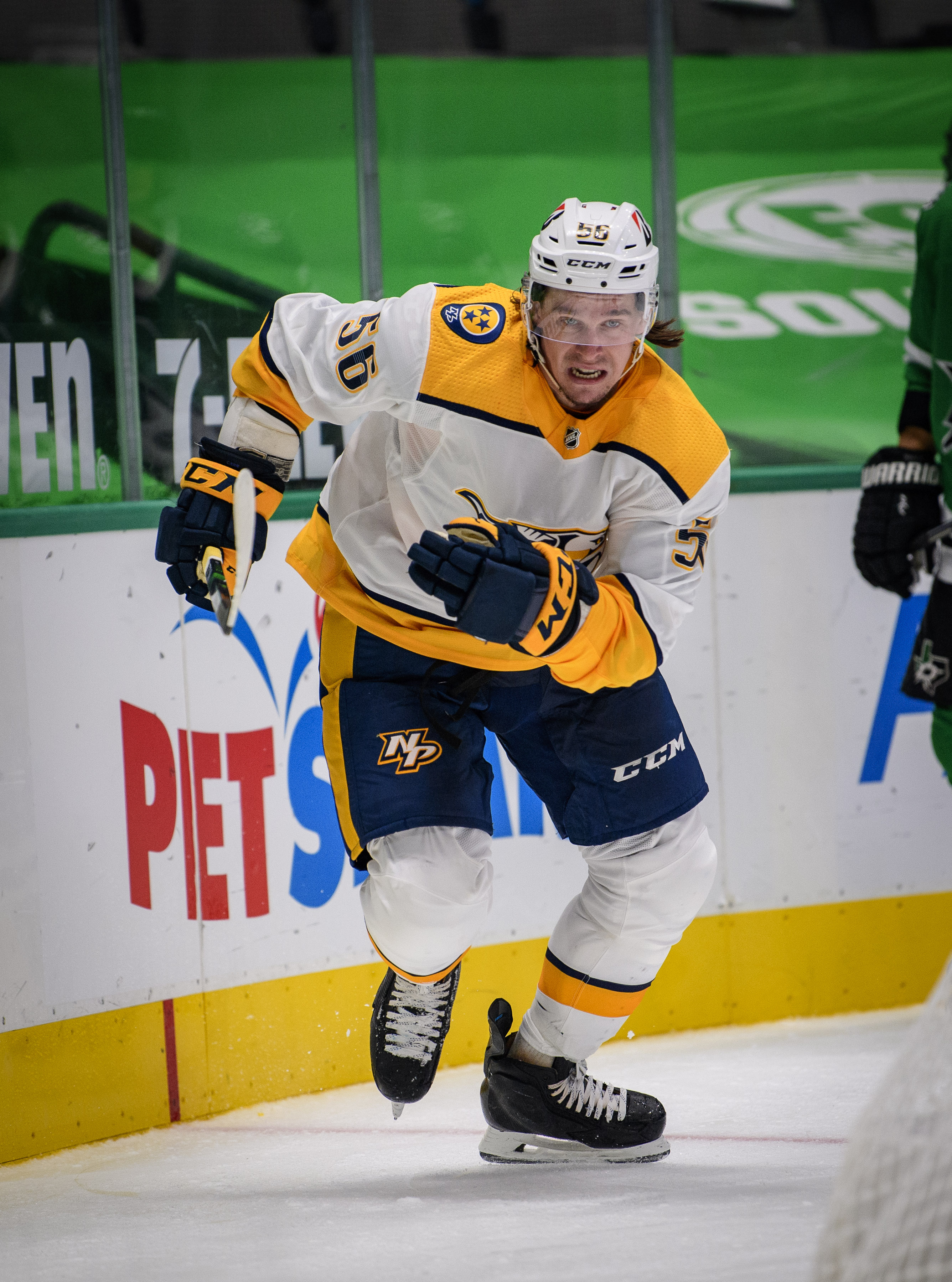 Haula came into the season looking like he’d be a fixture on Nashville’s third line behind Ryan Johansen and Matt Duchene. That’s mostly been the case but it’s also not a good thing. Johansen and Duchene have both missed time due to injury and have struggled mightily and yet Haula hasn’t been able to take advantage of it with Mikael Granlund instead being moved down the middle.
It’s not as if Haula’s ice time has been limited by the lack of top-six opportunities at five-on-five either; he’s a regular on both the penalty kill and power play and actually sits sixth in ATOI among forwards but with three goals, the production simply hasn’t been there. One thing working in his favor is that he’s still winning faceoffs at an above-average clip but that in itself won’t be enough to garner a more favorable market this summer.
Right now, he may be viewed around the league as a fourth-line upgrade over someone that can be on a third line. A change of scenery would give him a chance to potentially rebuild some value by working his way up the lineup and with Nashville on the outside looking in at a playoff spot, it’s an opportunity he likely wouldn’t mind getting.
Season Stats
26 GP, 3 goals, 6 assists, 9 points, -5 rating, 8 PIMS, 34 shots, 56.3% faceoff wins, 15:35 TOI, 48.4 CF%
Potential Suitors
Searching for affordable bottom-six upgrades is an annual tradition heading into the trade deadline and with so many teams being cap-strapped, there could be even more emphasis than usual on making low-cost incremental upgrades.
In the Central, Florida is a logical landing spot for the second straight year. Their third and fourth-line centers are still quite unproven at the NHL level and Haula would have the benefit of some familiarity with Joel Quenneville’s system from his brief time there a year ago. The Panthers also have the cap space to absorb the contract without any sort of salary offset which is something that can’t be said for some other potentially interested teams. If Columbus hangs in the playoff race and opts not to sell, Haula would make sense there as well with a fairly weak center group in general.
In the East, the continually-long list of injuries in Pittsburgh makes them a team likely to look for some depth upgrades that can play a bigger role in the short-term and Haula could conceivably slide onto their third line with Evgeni Malkin out week-to-week. The finances would be a bit tricky, however, with most of their cap room derived from Jason Zucker’s LTIR placement but he is expected back before the end of the regular season. Nashville would need to retain or Pittsburgh would have to send a player back to make the money work.
As for the North Division, Montreal has already been linked to one similarly-priced rental center as they could stand to upgrade on the fourth line while their top two young centers have had some ups and downs this season. As is the case with Pittsburgh, however, they can’t afford him straight up and would need retention to facilitate a move. Unlike others on this list, there’s also the two-week quarantine period to contend with.
In the West, Tyson Jost and J.T. Compher’s struggles this season should have Colorado looking for a short-term upgrade. Knowing the contracts that are coming due for next season, any addition would need to be a rental which Haula is and while he hasn’t been much better than those two, it stands to reason that a change of scenery to an expected contender may help elevate his game. In terms of cap affordability, a lot depends on the status of Erik Johnson and Pavel Francouz, both of whom are on LTIR with no certainty for when or if they’ll be able to return during the regular season.
Likelihood Of A Trade
With Nashville technically only six points out of the final spot in the Central Division, it can’t entirely be ruled out that they opt not to sell in which case Haula will probably stick around. However, if they continue to be on the outside looking in over the next few weeks, he’s a strong candidate to be moved considering his struggles so far while still having a good enough recent track record to make him fit on several playoff-contending teams.
Photo courtesy of USA Today Sports Images.
Trade Deadline Primer: Detroit Red Wings
Although we’re now just two months into the season, the trade deadline is less than a month away. Where does each team stand and what moves should they be looking to make? We continue our look around the league with the Detroit Red Wings.
A new division hasn’t yielded new results for the Red Wings as a year after finishing last in the Atlantic Division, they sit last in the Central with no real hope at a playoff spot. It has been a tough rebuild for Detroit over the past few years and coming into next month’s deadline, GM Steve Yzerman’s focus will undoubtedly be on adding more future assets to the organization. Their time to return to postseason contention will come but it won’t be this season.
Record
9-17-4, 8th in Central Division
Deadline Status
Seller
Deadline Cap Space
$19.59MM in full-season space ($39.19MM at the trade deadline), 0/3 retention slots used, 46/50 contracts used per CapFriendly.
Upcoming Draft Picks
2021: DET 1st, DET 2nd, EDM 2nd, NYR 2nd, DET 3rd, VGK 3rd, DET 4th, DET 5th, DET 6th
2022: DET 1st, DET 2nd, DET 3rd, DET 4th, VGK 4th, DET 5th, DET 6th, DET 7th
Trade Chips
 Jonathan Bernier has been a decent goaltender for Detroit over the past few seasons. While the overall defensive numbers haven’t been pretty, the 32-year-old has more than held his own between the pipes and actually had a save percentage above the league average heading into play on Thursday. Goaltenders don’t typically move at this time of year but there are a handful of teams that could certainly benefit from an upgraded second option and Bernier may very well be at the top of the wish list. His $3MM cap hit may be a bit tricky to navigate for some of those teams but with no retention slots used yet, Yzerman could pay the contract down to facilitate a move. This is, of course, assuming his lower-body injury sustained in tonight’s game against Dallas isn’t too serious.
While goalies aren’t often in demand, one position that teams always look to upgrade on is the fourth line center. The goal is to get someone who can help the penalty kill and win faceoffs. That’s the basic description of Luke Glendening right there; he doesn’t bring much more than those two elements but is good enough at what he does (including leading the league in faceoff percentage) to carve out a lineup spot. He’s a bit pricey for that role at $1.8MM but again, Detroit can pay up to half of that and there should be several teams interested in his services.
Marc Staal had been viewed as a contract that would be tough to get out of; the Rangers had to part with their second-rounder this year to get the Red Wings to take him on. But he is still a decent defender in his own end and is someone that would fit much better on a contender on the third pairing than he does with Detroit. At $5.7MM, no one will bite but if they retain and/or take a sizable expiring contract back, there should be some interest. Patrik Nemeth ($3MM) also falls into this category for teams that don’t have as much financial wiggle room to work with.
It hasn’t quite been the offensive resurgence that he was hoping for but Bobby Ryan has showed some good moments this season while playing in Detroit’s top six. With 13 points in 27 games, he’d represent an upgrade for some teams in their bottom six and at a $1MM price tag, he’s certainly affordable as well; this isn’t a contract that they should need to provide some sort of salary offset for.
Others to Watch For: F Adam Erne (997K, RFA), F Sam Gagner ($850K, UFA), F Vladislav Namestnikov ($2MM through 2021-22)
Team Needs
1) Picks and Prospects – Yzerman doesn’t necessarily need to overthink things here. The Red Wings have several veteran players who can fill small roles on contenders but none of the players mentioned above are going to bring back significant assets. Instead, they can simply stockpile draft picks and prospects. With this year’s draft not being moved and being such a wild card in terms of some prospects hardly playing, 2021 selections represent intriguing lottery chips; later selections (which is what most of the veterans would bring back) might be a bit more valuable as a result.
2) Core Players – There are some building blocks in place (though some of those have struggled considerably this season) but for a team that isn’t going anywhere, it’s a bit of an older group. Some of those veterans will be replaced by prospects but with the cap room that Detroit has, there’s room to try to add a couple of core players that can be around long enough to help shepherd them through the tough times and into the playoffs. The time for those types of moves may very well be the offseason but given the financial pressures some teams have now, Yzerman would be wise to see if there’s an opportunity to pounce before then.
Photo courtesy of USA Today Sports Images.
Trade Deadline Primer: Dallas Stars
Although we’re just two months into the season, the trade deadline is already less than a month away. Where does each team stand and what moves should they be looking to make? We continue our look around the league with the Dallas Stars.
The simple truth is that the Dallas Stars cannot be true buyers at the deadline. Yes, the team currently has $4MM in unused LTIR space, but that will disappear when starting goalie Ben Bishop returns to action. Without any cap space, any trade that the team makes will have to be a hockey deal with a salary going out in order to bring a salary in. With those types of deals more unlikely this season than in most years, the Stars might not have much choice at the deadline.
True, they are within reach of a playoff spot and could certainly stand to improve their roster. However, this is a team that just won the Western Conference last season and hopes to have Tyler Seguin and Bishop back this year. Those internal additions may be enough to get them to the postseason and make them a potential threat. Even then, the Stars likely face a Stanley Cup rematch with the Tampa Bay Lightning right away. There simply isn’t enough upside to be buyers, even if there was flexibility.
Could they be sellers? Possibly, but they don’t have much to offer. The team would likely gain more from keeping their roster together in hopes of making the playoffs and even re-signing some of their impending free agents rather than dealing them for minor returns. Again, Dallas could try to peddle some of their impending UFA’s in order to clear space for an addition, but most teams aren’t looking to add salary this year unless it is attached to a top quality player. Those are in short supply among the Stars’ expiring contracts.
They likely won’t touch their term contracts, either. This is a team that found success in the postseason last year and returned virtually the same roster this year and will be back together again next year. Injuries and a start slowed by COVID Protocol has impacted Dallas this season and, while their team isn’t perfect, they could be an off-season piece or two away from getting back to Stanley Cup Final in no time.
So for now, they should probably just stand pat.
Record
9-9-7, .500, 4th in Central Division
Deadline Status
Stand Pat
Deadline Cap Space
$0MM in full-season space (LTIR), 0/3 retention slots used, 44/50 contracts used per CapFriendly.
Upcoming Draft Picks
2021: DAL 1st, DAL 2nd, DAL 3rd, DAL 4th, DAL 5th, DAL 6th, DAL 7th
2022: DAL 1st, DAL 2nd, DAL 3rd, DAL 4th, DAL 5th, DAL 6th, DAL 7th
Trade Chips
In deciding whether or not to move players off of their current roster, the Stars have options but lack upside. With only a handful of impending free agents, most of whom are merely bottom of the lineup players at best, Dallas may be better off keeping their group together and hoping to sneak into the playoffs.
If Dallas does decide to sell, their most valuable piece will be defenseman Jamie Oleksiak. A big, physical defender – the team’s current hits leader – who skates well and can play big minutes, Oleksiak is a solid addition to any team looking to stabilize their blue line with a strong defensive presence. In a rental market that is severely lacking in defensive talent, Oleksiak could return a nice package, especially given his reasonable price tag. The caveat though is that Dallas has traded Oleksiak once before, only to bring him back and have both sides realize that he is a great fit as a reliable defensive complement to the Stars’ offensive-minded blue line. If there is mutual interest in an extension and Dallas remains close to a playoff spot, they likely hold on to Oleksiak.
Versatile defenseman Mark Pysyk makes more sense to move. In his first season in Dallas on a one-year “show me” deal, Pysyk has failed to do just that. The Stars’ No. 6 defenseman spot has been split between Pysyk and Hanley this season, with neither doing enough to seize the consistent role. Both have been unproductive on offensive and largely invisible on defense while playing minimal minutes. Pysyk at least brings more experience playing in a regular role and has also experimented with lining up at forward, which could be especially valuable to teams down the stretch and in the postseason who want to avoid depth issues caused by possible COVID-19 restrictions. At $750K, Pysyk is affordable in cap terms and should be cheap to acquire as well.
Up front, the Stars may be willing to part with veterans Andrew Cogliano and Blake Comeau, but there may not be much interest in the duo. Both have been consistent and dependable two-way players throughout their careers, but their play this season has lacked offensive upside. The pair have totaled just four goals and 13 points in 46 combined games. In a cap-strapped climate, Cogliano’s $3.25MM and even Comeau’s $2.4MM may be too rich for players that would have to fight for top-nine jobs on a contender. They are more likely to move if Dallas is just swapping contracts to bring in new blood for the stretch run.
Given that Dallas was a Stanley Cup finalist just last year, the team is unlikely to make any drastic moves this season with their core players, all of whom have term remaining on their respective comments. Names like John Klingberg and Alexander Radulov are occasionally bandied about, but trading either in-season is both unlikely and ill-advised for the Stars. If they were to make a surprise move, it could be in goal. With young Jake Oettinger holding his own in net, the Stars could decide to move current starter Anton Khudobin if actual starter Bishop is healthy before the deadline. Khudobin is set to be exposed in this summer’s Expansion Draft and should be a strong candidate for selection. With both Landon Bow and Colton Point satisfying the goalie exposure requirement, the Stars could instead trade Khudobin to a team with needs in net this season rather than potentially lose him for nothing in expansion. A healthy Bishop backed up by Oettinger should be enough for the Stars the rest of the way this season and moving forward.
Others to Watch For: D Joel Hanley ($700K, UFA), D Taylor Fedun ($737.5K, UFA), F Tanner Kero ($762.5K, UFA), F Justin Dowling ($750K, UFA)
Team Needs
1) Defenseman – If the Stars can find a way to move contracts around and open up cap space, it will likely leave room for just one acquisition. While they are only middle-of-the-road when it comes to scoring and could use a spark up front, that might come in the form of a healthy Seguin. There is no one coming to take over their No. 6 defenseman role, a spot where Dallas has received no production from this season. A reliable blue liner to improve the starting defensive corps would be a key addition. If they can find a defenseman with some offensive upside and power play experience, that would be even better.
2) Term Forward – While it would again require shuffling salaries, which may make it a more likely move in the early off-season, the Stars at some point could look to add a forward who they can expose in the upcoming Expansion Draft. Currently, with the assumed protection scheme, the Stars are short both forwards that meet the games played and term requirements that the expansion quota demands. Their options to fill those spots internally are to re-sign UFA’s Cogliano and Comeau (unlikely) or RFA Jason Dickinson. RFA Nick Caamano will also be eligible with eight more games played. However, extending Dickinson or Caamano will only make them more attractive to the Seattle Kraken. Either of the players, the arbitration-eligible Dickinson specifically, may also not want to rush into an extension before the drat. As a result, the Stars could choose instead to add another eligible forward to expose.
PHR Mailbag: Blackhawks, Sharks, Maple Leafs, Hamilton, Red Wings, Predictions, Bruins, Rutherford, Blue Jackets
Topics in this edition of the PHR Mailbag include Chicago’s surprising first half, San Jose’s trade deadline plans, an emerging line for Toronto, Carolina’s top pending UFA, trade options for Detroit, goaltending forecasts, Boston’s potential for a big addition, what’s next for Jim Rutherford, and Columbus’ never-ending quest for help down the middle. If your question doesn’t appear here, check back in last weekend’s mailbag.
parx: What is to be made of the Blackhawks? I honestly thought they would be awful but I’m enjoying this season more than past few, are they good or decent? Is this a mirage? What the hell is going on?
I think decent is the right word here. They’ve had a few things go their way including Patrick Kane stepping up his game to another level, Kevin Lankinen at least temporarily solving the goaltending question, and some unheralded newcomers (Pius Suter, Philipp Kurashev, and even Mattias Janmark) all probably exceeding expectations. Give GM Stan Bowman some credit, these under-the-radar moves have all worked out.
But at the same time, I have trouble thinking that Chicago is a top-ten team offensively over a full season (they currently sit seventh). Lankinen has tailed off a bit lately and Malcolm Subban isn’t the solution in that number one role. They’re also benefiting from Columbus underachieving, Nashville falling off the proverbial cliff, and Dallas scuffling with their injuries plus the starts and stops to their season. A lot has gone better than expected.
The good news is that they’re somewhat comfortably in a playoff spot without a lot of pressure at the moment. Kirby Dach is skating and should be back before the season is out which would be a nice addition up front. It’s definitely a positive season for them but I’d caution against elevating expectations too much or thinking that their plans have been accelerated. They’re on the rise but I wouldn’t call them good just yet.
mz90gu: The Sharks almost always make trades at the deadline. They do have some cap space; do you see them as buyer/seller maybe take on a contract for an additional pick?
It’s hard to see them being a buyer in the traditional sense given that they are nine points out of a playoff spot with three teams to leapfrog in the West Division. But it wouldn’t surprise me to see them add a veteran player.
Cap space is at a premium this season and as you rightly note, that’s something they have a lot of. As things stand, they could add nearly $9MM on deadline day, per CapFriendly. While they probably shouldn’t be adding to try to make a failed run, how valuable is that space to other teams? Taking on a contract to pick up an extra draft pick or prospect makes a lot of sense for San Jose whose system isn’t exactly the strongest. Even acting as a third-party retainer in a trade while adding another asset (much like Toronto did in the Robin Lehner trade at the deadline last year) would be useful as long as it’s an expiring contract.
Of course, in a year like this, there are budgetary considerations at play and majority owner Hasso Plattner may not be thrilled about the idea of spending more money in a year where they’re probably not making the playoffs. But if he’s okay with it, I think San Jose would be wise to add a player or two but more importantly, pick up the younger assets that would go along with facilitating the opportunity to help another team make a move. Having said that, I wouldn’t be shocked if they look to move out a pending UFA or two as well.
MoneyBallJustWorks: Thoughts on the Maple Leafs’ new MEH line. Mikheyev, Engvall and Hyman?
I’ll resist the temptation to say the obvious but that line has been quite strong since it has been put together though it’s not one that is always together from shift to shift. Zach Hyman, in particular, is having another strong season to the point where he may very well be playing his way off the team in that he’ll be too expensive to keep around.
This is what Toronto needed with their collection of lower-salaried players. They need a few of them to develop some chemistry to create a reliable unit that’s greater than the sum of its individual parts. This line does that.
I’d caution to enjoy it while it lasts, however. At some point, Hyman will spend more time on the top line than with these two (yesterday’s game had him back with Auston Matthews and Mitch Marner) and when Wayne Simmonds returns, I’m not sure they’ll be able to afford to carry Pierre Engvall on the roster anymore. Simmonds is on LTIR and right now, Toronto isn’t in cap compliance to be able to activate him. They have no regulars that are waiver exempt so someone is getting exposed and with most of Engvall’s $1.25MM price tag being able to come off the books if he was to clear, he may wind up being the casualty.
mikedickinson: Dougie Hamilton. What do the Canes pay their third-best defenseman, especially with how well Jake Bean is playing?
 This is going to be an interesting case. Hamilton has been great for Carolina and even with his offensive numbers taking a dip relative to last year, he’s still playing at a 63-point pace over a full 82-game season (compared to a 70-point pace last year). His minutes are still that of a top-pairing player which is how his agent J.P. Barry will undoubtedly try to market him. That Carolina plays others ahead of him and has Bean having a good season is largely irrelevant to Hamilton’s case. His numbers show he’s a top-pairing defenseman which are hard to come by, he’s in the prime of his career at 27, and is a right-shot player (the harder to get side). If the Hurricanes want to pay him relative to his role on the depth chart, a deal probably doesn’t get done.
Last week when word came out that talks between the two sides had stalled, Alex Pietrangelo ($8.8MM) and Torey Krug ($6.5MM) were suggested as the potential targets for each side. I think the likeliest outcome is a bit lower than the midpoint, something around $7.4MM to $7.5MM. We saw in October’s free agent market that top blueliners still got paid so even with a flattened salary cap, Hamilton will get a big raise from his $5.75MM price tag. Can GM Don Waddell justify that price tag with nearly $20MM in commitments to defense already for next season and several other key pieces needing new contracts? I think it should be. Their success comes from having an elite back end and Hamilton is a big part of it. Re-signing him may force them to part with Brady Skjei or try to entice a taker for Jake Gardiner’s deal but it’d be awfully tough to let a top-quality blueliner walk for free in a few months.
tigers22: Which Red Wings player would bring back the biggest return at the trade deadline and what kind of package would they get Mantha or Bertuzzi?
Anthony Mantha’s value this year has taken a tumble. Last season, a reasonable asking price would have been a first-round pick, a high-quality prospect, and probably some sort of cap filler. But this season has been a struggle and that’s putting it lightly. His point per game production is at the lowest rate of his career (beyond his rookie year where he played in just 10 games) and his trade value is probably at its lowest point. With three years left after this at a $5.7MM cap hit, the teams that would be calling GM Steve Yzerman at this point would be ones looking to swap similarly underachieving $5MM-plus forwards. That wouldn’t make any sense for Detroit.
So by default, the answer here would be Tyler Bertuzzi even though he hasn’t played a game since the end of January due to an upper-body injury. He’s a bit cheaper and the injury is going to limit his earning ceiling through arbitration this summer so that’s at least somewhat palatable to some teams. But no one is giving up any sort of top-end value for someone who hasn’t played in six weeks and doesn’t appear to be anywhere near close to returning so Yzerman has no reason to even consider a Bertuzzi trade at this time. If he was inclined to move him for whatever reason, the offseason would be the time.
In terms of who actually fetches the best return for Detroit between now and next month’s trade deadline, I think it’s Luke Glendening. He has been in deadline speculation for a few years now but with his contract expiring, this is the time to make a move. He’s still elite at the faceoff dot and there will be contenders willing to pay for that while his $1.8MM AAV will be easier to work in to a cap-strapped roster than someone like Mantha. It won’t be a package of high picks and prospects (a second-rounder is about the top end of what they could try to ask for) but they can still add more assets.
The Duke: Any Crystal Ball visions for Jamie Drysdale, Rasmus Sandin and Arizona’s, Winnipeg’s and Nashville’s goaltending into the next few seasons?
Drysdale: Let me first say that I like that Anaheim is holding him in the minors and not bringing him up. Could he help the Ducks now? Sure, but I don’t want to burn an entry-level year in a season where they’re not going anywhere. The AHL is still a good level to develop at and if they hold him down there long enough, they could conceivably recall him to the NHL roster if and when the OHL starts without being on the roster (active or healthy scratch) for enough games to accrue a season of service time. He will be a top-pairing defender in the near future but while he may get there quicker if he was up now, he’ll be well worth the wait.
Sandin: This season is quickly turning into a write-off after he suffered a foot injury in his first AHL contest of the year. This will slow his development but it shouldn’t hurt too much in the long run. Toronto’s cap situation could force Sandin onto their roster next season anyway but he’s someone that will need to be developed a bit slower than Drysdale as Sandin doesn’t have the all-around game that the Anaheim blueliner does. I don’t think he has top-pairing upside but if he became a 20-minute per game player with some offensive punch, the Maple Leafs would be quite pleased with that outcome.
Coyotes: The goaltending is a bit concerning beyond next season. It’s hard to imagine Antti Raanta (UFA this summer) returns next season while Adin Hill (pending RFA) could be a backup but isn’t going to push for the number one role. That leaves Darcy Kuemper as the only other and he’s just signed through 2021-22 and given his injury trouble, it’s hard to see him being the long-term starter though they’d probably like to have him as a 1B option. I expect they will be shopping on the 2021-22 market for their longer-term option.
Jets: Connor Hellebuyck has three years left on his deal at a more than fair $6.167MM AAV and at this point, I see no reason to think why they wouldn’t offer an extension. Of the three goalies they have on NHL deals in the system, I don’t see an NHL option out of any of them so they’ll be playing the UFA roulette market for backups. Laurent Brossoit is doing well enough to earn another contract but given his inconsistency year-to-year, I wouldn’t go more than a year at a time with him.
Predators: Long term, Yaroslav Askarov is their guy, at least they hope he is but he’s a few years away. Juuse Saros’ season has not been one to inspire confidence that he can be the full-fledged starter next year so I believe they’ll inquire if Pekka Rinne wants to retire or perhaps push that back a year. Failing that, a short-term veteran platoon goalie (Raanta, Jonathan Bernier, or even David Rittich if they want a bit of upside) would be a likely target in July.
Trade Deadline Primer: Columbus Blue Jackets
Although we’re just two months into the season, the trade deadline is already a month away. Where does each team stand and what moves should they be looking to make? We continue our look around the league with the Columbus Blue Jackets.
The Columbus Blue Jackets franchise is nothing if not hopeful. After 17 years of remaining faithful, the team finally won a playoff series in 2019 and then won another in 2020. Even though their play this season has been disappointing at times, they are still in the running for the fourth and final playoff spot in the Central Division and have a non-zero chance of catching the upstart Chicago Blackhawks and holding off the Dallas Stars.
With that said, this Blue Jackets team is in the bottom third of the league in goals for per game, goals against per game, power play, and penalty kill. Even if they sneak into the playoffs, even if they again wondrously upset the Tampa Bay Lightning, this is not a team with title hopes this year. This is not a team buying at the deadline.
Besides, the Blue Jackets already made their big move this season: the acquisition of two new core pieces in Patrik Laine and Jack Roslovic. Columbus may not be playing up to their expectations this season, but it has been an odd year – and for this team in particular – and the Blue Jackets are probably best served to just take it easy at the trade deadline. Just as this is not a contending roster, it is equally not a roster in need of a rebuild. Columbus should stay the course. If they receive outstanding offers for their impending free agents or term depth players, they should consider. If they are faced with the opportunity to add a term depth player of their own, they should consider. By and large though, the Blue Jackets should focus on the group they currently have and see if they can sneak into the postseason. This is not a year for Columbus to do anything drastic.
Record
11-12-6, .483, 5th in Central Division
Deadline Status
Opportunistic Seller
Deadline Cap Space
$1.571MM in full-season space ($7.01MM at the trade deadline), 0/3 retention slots used, 43/50 contracts used per CapFriendly.
Upcoming Draft Picks
2021: CLB 1st, CLB 3rd, CLB 4th, CLB 5th, NJD 5th, CLB 6th, CLB 7th
2022: CLB 1st, CLB 2nd, CLB 4th, CLB 6th, ANA 7th
Trade Chips
The Blue Jackets are sitting on a pair of prime time impending free agents, but unlike 2019, when Columbus couldn’t bear to let Artemi Panarin and Sergei Bobrovsky go without loading up and going for a run, the team has a different reason this time around to think twice about parting ways with their most valuable pieces. Nick Foligno and David Savard bleed Jackets blue. The former is the captain and the latter is a career Blue Jacket and the longest tenured player on the team. There is certainly some discussion in the front office about whether it is really worth it to part with either player. Of course, much of that also revolves around extension talks. If this is the end of Foligno and/or Savard in Columbus anyway, then the team should trade them. However, if either one wants to remain with the club in the future, likely re-signing after expansion, it could be better for all parties if they held on to them. Foligno especially, as the locker room leader for a team that is still within reach of a playoff spot, has value on the team this season, perhaps more than he would to any other team in the league. Foligno is also having a down year offensively and may not command a great return. Savard, on the other hand, is extremely valuable to a great many teams as an experienced shutdown defender on the right side. Yet, he also fits perfectly as a complement to the Blue Jackets’ more offensive-minded, puck-moving top pair and the team surely hopes that he wishes to remain in that role moving forward.
Fortunately for Columbus, they aren’t without other valuable rentals if Foligno and Savard stay put, albeit to a lesser extent. First-time Blue Jackets Michael Del Zotto and Mikhail Grigorenko could be nice depth additions for contenders, as could bottom-six center Riley Nash. None of them have had especially noteworthy seasons, but are useful additions nonetheless. Del Zotto especially is affordable and experienced – a nice acquisition for a cap-strapped team in need of skill on the blue line.
Among term players, there are certainly already some calling for the trade of Max Domi. The off-season acquisition, who signed a two-year extension with the team, has been nothing short of underwhelming this season. However, is there any upside to trading him now? Domi, who already has a reputation for not lasting long with teams, may be at the lowest point in trade value in his career. Especially in a cap-strapped climate, the Blue Jackets would almost certainly not get back fair value. The optics would also be bad, as counterpart Josh Anderson has found immediate success with the Montreal Canadiens. Columbus would be much better off to hold on to Domi and see if he can improve next season before making a decision on his future. Unless, of course, someone blows them away with an offer. Domi was expected to fill a hole down the middle for Columbus, so any deal to move him out right now should aim to bring another talented center in.
Despite a recent extension in February, there is a more logical reason to potentially move defenseman Dean Kukan. Kukan has missed some time this season, but has played well when healthy. As one of the top candidates to be selected by the Seattle Kraken in the 2021 NHL Expansion Draft, the Blue Jackets may choose instead to get value back for the blue liner if there is interest. Of course, they may also just hold out hope that Seattle goes in a different direction.
Of course, the big move that Columbus could make is to break up their young goalie tandem. With both Joonas Korpisalo and Elvis Merzlikins set to hit free agency after next season, there is some question as to the viability of retaining both beyond that point. Either one would certainly draw interest on the trade market, though a deal is more likely in the off-season. Specifically, when it comes to Korpisalo, there may be limited demand around the league for adding an eligible goalie prior to the expansion draft rather than after. His market would likely be improved in the summer. If the Blue Jackets decide to make a big change in net at the deadline rather than waiting for the summer, it is more likely to be Merzlikins on the move.
Others to Watch For: D Scott Harrington ($1.633M, UFA 2022), D Gabriel Carlsson ($725K, RFA 2022), D Adam Clendening ($700K, UFA), F Ryan MacInnis ($700K, Group 6 UFA)
Team Needs
1) Draft Picks and Prospects – Unfortunately, the Blue Jackets are still feeling the effects of their all-out approach at the 2019 trade deadline, as well as some other moves they have made. They have not had many high-value picks over the past two years and are still without some key selections moving forward, including a second-rounder this year and a third-rounder in 2022. With many of their top prospects having graduated to the pros as well, Columbus has a young NHL roster, but a lacking pipeline. In fact, The Athletic’s Scott Wheeler ranked it 27th overall in the league, which would be easier to swallow if the team was performing better. Whether by picks or by prospects, the Blue Jackets need to try to replenish the system.
2) A Term Forward – The shrewd GM that he is, don’t be surprised to see Jarmo Kekalainen try to address the Expansion Draft ahead of the deadline. Assuming their most likely protection scheme and choices, the Blue Jackets are currently short one forward to meet the exposure quota that the draft demands, unless they re-sign Nash or Grigorenko, UFA’s they could instead trade, or Kevin Stenlund, who would also need to play regularly down the stretch to meet the games played criteria. Those options aren’t ideal and the Blue Jackets could just as easily find a player to trade for at a low price who covers them for expansion, but could also play a role next season if not selected. Although Columbus shouldn’t be a typical buyer at the deadline, an additional forward could also help in their continued pursuit of a playoff spot, especially if they move one or more of their impending free agents up front. Again, center is the team’s biggest positional need, but not necessarily the priority here in adding a player they plan to expose in expansion.
Trade Candidate: Brandon Montour
With the trade deadline quickly approaching, we begin our closer look at some of the players who have a good chance of being on the move between now and April 12th.
Just two years ago, it looked like Buffalo had brought in a core piece to their back end. Even though they were out of playoff contention, they shipped a late first-round pick and prospect Brendan Guhle to Anaheim to bring in Brandon Montour. Montour, then 24, was in the midst of a career season and while he was a bit of a late-bloomer, it looked as if the Sabres had a top-four defender in place for the foreseeable future.
Since then, things have spiralled in the wrong direction. Montour has gone from a potential core player to a non-tender candidate last offseason to one that doesn’t appear to have a future with Buffalo. He fit with the Ducks and clearly, under multiple coaches now since joining them, he doesn’t fit with the Sabres and as a result, is quite likely to be dealt having been made available for a couple of weeks already.
Contract
Montour is on a one-year, $3.85MM contract and will be an unrestricted free agent this summer. His deal does not contain any trade protection.
2020-21
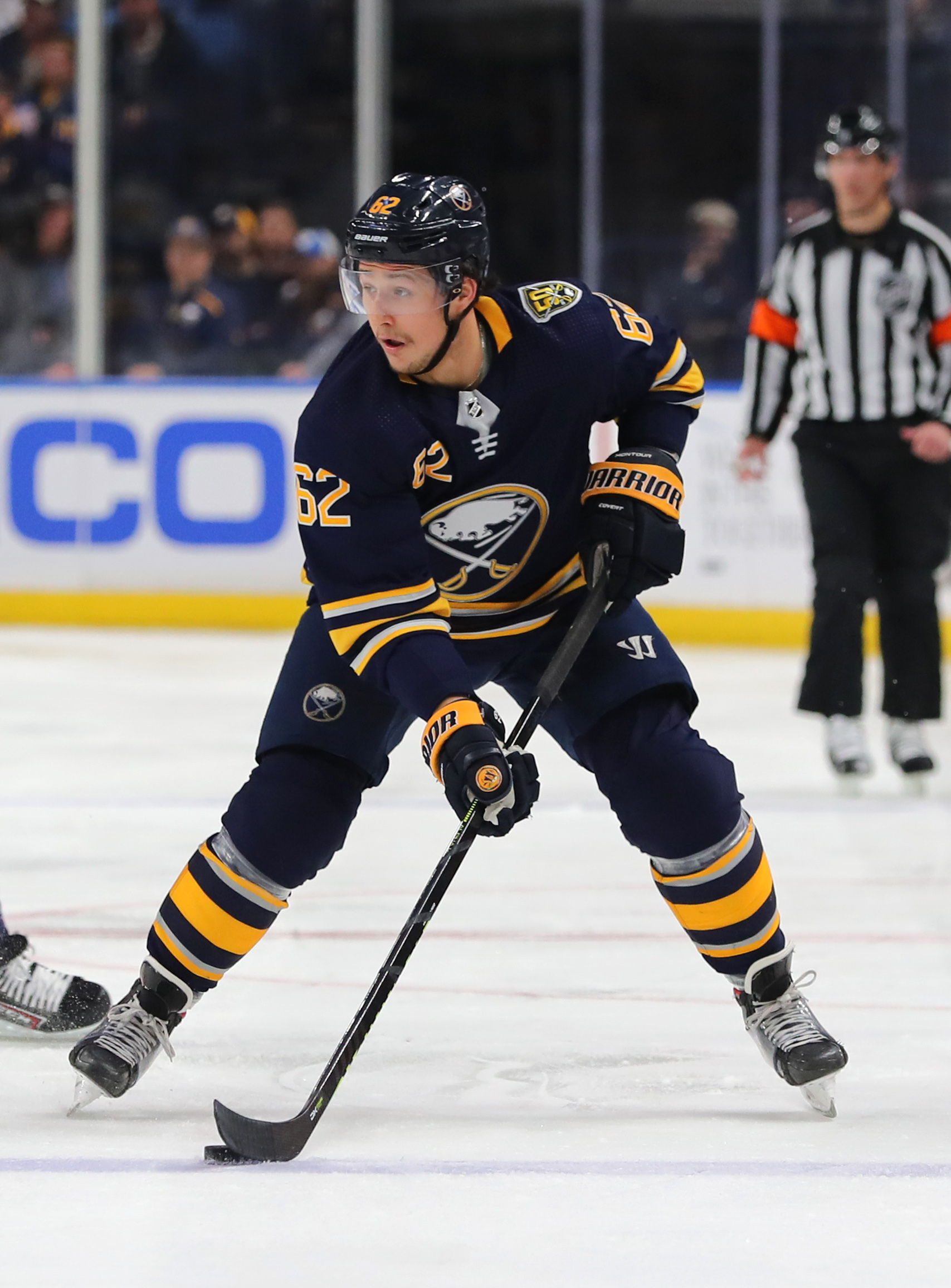 On the one hand, Montour – an offensive defenseman in Anaheim – has just one goal and four assists in 23 games this season. That’s not exactly high-level offensive production (or even average). He’s below the team average in possession stats and while this could be said about just about everyone in Buffalo’s back end this season, his play in his own zone has been spotty at times.
On the other hand, Montour is still a right-shot defender that averages more than 20 minutes a game and takes a regular turn on the penalty kill. This is not a commodity that is easy to get around the trade deadline. His offensive downturn can also in part be explained by the fact he does not see any regular time on the man advantage.
Is Montour a true top-four defender on a contender? Probably not but there will be teams viewing him as a third-pairing upgrade with the ability to move up in certain matchups or when injuries arise. Despite the negativity surrounding him – and there has been plenty of it – this is still a profile of a fairly useful player and he should be viewed as such around the league.
Season Stats
23 GP, 1 goal, 4 assists, 5 points, -11 rating, 14 PIMS, 41 shots, 20:54 TOI, 47.3 CF%
Potential Suitors
The majority of the league can’t afford to take on Montour’s salary outright and would require some sort of offset either by retention or taking another contract back (or even both). He’s hardly the only player who will be in this situation though.
Chicago is one of the teams that can afford him due to their huge LTIR pool and considering they’re seven points up on a playoff spot, adding to their group would certainly help. They’ve used several young defensemen this season with varying degrees of success but there’s a difference between finding playing time for someone in the regular season versus being in that spot in the playoffs. Montour would slide in onto their third pairing and give them some insurance while still being young enough where a good showing could put him in the mix to stick around as well.
Philadelphia hasn’t really replaced Matt Niskanen with their offseason signing of Erik Gustafsson not really covering that role. A cap offset would be needed but Montour would definitely boost their third pairing and he could conceivably fit in the top four given their shallower depth on the right side.
Winnipeg has a bit more right-side depth than Philadelphia but still has a void to fill defensively. They’re in a spot where their LTIR-created cap room is fixed (it doesn’t bank like regular cap space) so unlike teams that may want to wait until closer to the deadline for additional flexibility, the Jets could pull a deal quicker but would also need an offset of some sort. Calgary also has a need for a bottom-pairing upgrade but the offset would need to be significant given their lack of cap space; someone like Derek Ryan ($3.125MM, UFA) would likely need to be involved.
In the West, the Coyotes already have five pending UFAs on the roster but Montour would at least slide in ahead of a couple of them. They’re on the outside looking in at a playoff spot but only by a handful of points so if they hang around the race over the next few weeks, they could be an option and have the cap space. If they falter though, they’d be off the table.
Likelihood Of A Trade
In this financial environment, it’s hard to say anyone costing nearly $4MM has a high chance to be dealt due to cap and budgetary restrictions. But the odds of Montour being moved are still high. There are always teams looking for help on the back end and the Sabres have enough LTIR flexibility with Jake McCabe and Zemgus Girgensons out for the year to be creative in terms of retaining money and/or taking back expiring contracts. They’re not going to get back what they gave up but there should be enough of a market to net GM Kevyn Adams a decent pick or prospect as the rebuilding continues in Buffalo.
Photo courtesy of USA Today Sports Images.
Trade Deadline Primer: Colorado Avalanche
Although we’re now just two months into the season, the trade deadline is only a month away. Where does each team stand and what moves should they be looking to make? We continue our look around the league with the Colorado Avalanche.
It has been a trying year for Colorado so far, one that saw them head into the season as a perceived Stanley Cup contender. They’ve been hit hard by injuries as well as a COVID-19 outbreak and the end result has them in fourth in the West Division although they’re still within striking distance of first-place Vegas. With some big-ticket raises on the horizon and several pending free agents of note, this could be their best shot to truly contend. Accordingly, expect GM Joe Sakic to be active in terms of trying to add to the roster over the coming weeks.
Record
14-8-2, 4th in West Division
Deadline Status
Buyer
Deadline Cap Space
$582Kin full-season space ($1.299MM at the trade deadline), $7.4175MM in LTIR room*, 1/3 retention slots used, 43/50 contracts used per CapFriendly.
* – The majority of this space comes from Erik Johnson ($6MM). He was transferred to LTIR this week but if Colorado believes that he will return this season, they won’t be able to use this room at the trade deadline.
Upcoming Draft Picks
2021: COL 1st, COL 3rd, COL 5th, COL 6th, COL 7th
2022: COL 1st, COL 3rd, COL 4th, COL 5th, COL 6th, COL 7th
Trade Chips
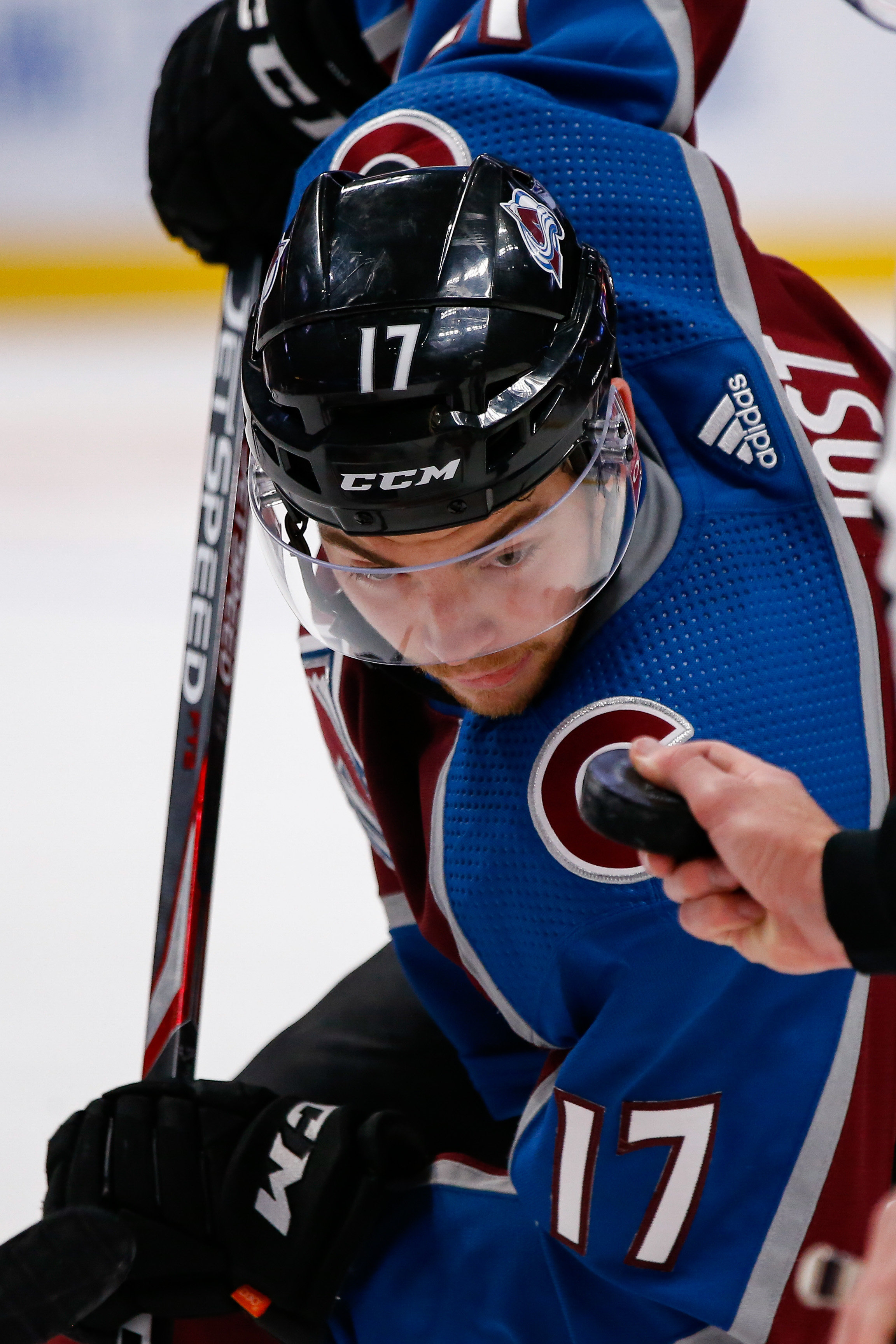 Last offseason, Tyson Jost wound up accepting his qualifying offer worth just over $874K, a deal that basically took advantage of him having minimal leverage coming off of a tough season without arbitration eligibility. It felt like a make-or-break year as a result. Unfortunately for both him and the Avs, this season has leaned towards the latter for the 2016 tenth-overall selection. Jost has just a goal and two assists in 22 games despite averaging nearly 14 minutes per night. It’s just not working for him right now. As a result, this feels like a prime change of scenery situation. He’s still just 22 which should be appealing to a selling team as adding him would give them a look to see if a new situation can help unlock some potential. If it doesn’t happen, he’s still a cost-effective player for the rest of the year.
In 2019, Colorado signed Joonas Donskoi to a four-year deal with a $3.9MM AAV, a contract that raised eyebrows given his limited track record. He isn’t a top-six player and that price tag is high for a third liner. By no means is Donskoi necessarily playing poorly but staring down new contracts for Gabriel Landeskog (UFA) and Cale Makar (RFA) among others, this is an above-market deal that will hinder them this summer. Of course, the two years remaining will make it challenging to move but knowing what’s coming, Sakic should be sufficiently motivated to find a way to move him. J.T. Compher (two years remaining, $3.5MM AAV) could fall in this particular cap-clearing category.
Greg Pateryn has already cleared waivers and been traded this season while spending more time in the AHL than the AHL. He also has a $2.25MM AAV. Normally, this wouldn’t be someone to list as a trade chip but the 30-year-old would appear to be a strong candidate to move if Colorado needs to offset some money in an acquisition. Pateryn is an unrestricted free agent so there wouldn’t be any long-term ramifications for whoever was to take him on.
Others to Watch For: Pierre-Edouard Bellemare ($1.8MM, UFA)
Team Needs
1) Backup goaltender – Pavel Francouz has yet to play this season due to a lower-body injury and there is no timeframe for his return; he’s the other player joining Johnson on LTIR. That has forced Philipp Grubauer to take on the bulk of the workload with the relatively untested Hunter Miska serving as the backup. Grubauer isn’t accustomed to playing this much and as last postseason showed, injuries can happen. A more proven NHL netminder would go a long way but even if they don’t aim that high, a player to fill the role Michael Hutchinson did last season could also be useful with their current minor league options not yet NHL ready.
2) Defensive depth – The state of Colorado’s back end isn’t the greatest right now but to be fair, they’re missing four players right now. Not many teams can comfortably withstand that but as a result, the Avalanche have been icing several minor leaguers. Considering they’re only in fourth in the division, it’s a group that can’t afford to take another hit and could stand to be bolstered.
3) Scoring help – Part of this is due to all of the injuries but the Avs somewhat surprisingly have had trouble scoring this season, sitting 21st in the league heading into play on Friday night. Mikko Rantanen is their only double-digit goal scorer and only five players have more than five. A middle-six winger with some offensive ability would help lengthen the lineup and give the top unit some extra support which would go a long way in the postseason.
Photo courtesy of USA Today Sports Images.
Poll: Who Is The Top Rental This Season?
The trade deadline is coming quickly, with just a month left before teams are locked for their postseason run. Clubs like the Nashville Predators, Buffalo Sabres, and Detroit Red Wings seem to already have for sale signs up outside the front office, with speculation pouring out all over the hockey world. Like every year, there is a group of players on expiring contracts that will be front and center in the next few weeks, as contenders can acquire them without committing to anything past this season.
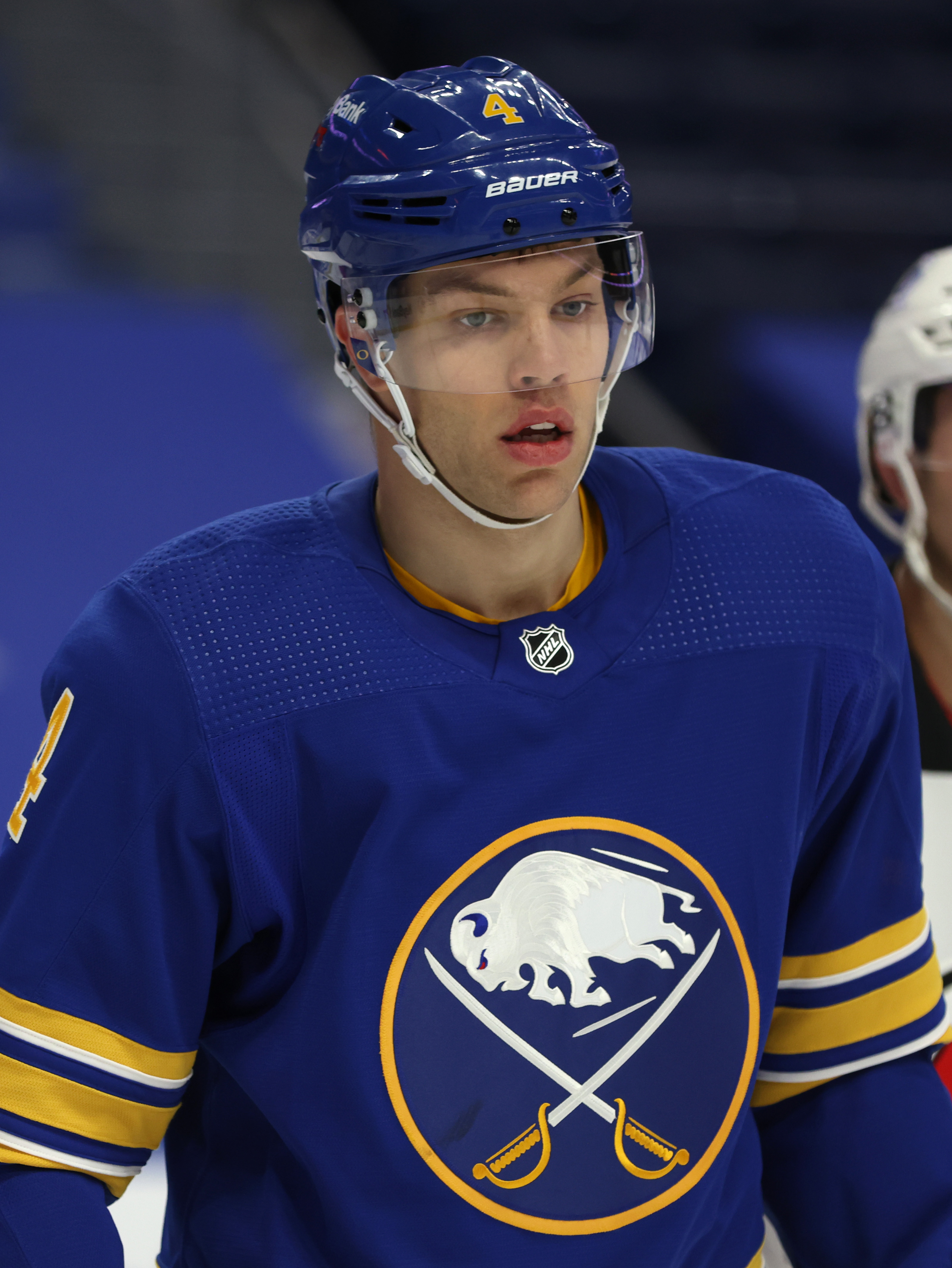 Last season Taylor Hall was one of those rentals. The 2018 Hart Trophy winner was on a struggling New Jersey Devils team and seemed destined to hit the free agent market regardless of where he ended up. The Arizona Coyotes, with their eyes set on the postseason, decided to strike well before the deadline and shipped out a big package for Hall in mid-December. The hope was that with the added time they would be able to convince him to stay, but stay he did not. Instead, Hall is now on the rental shelf again after signing a one-year deal with the Buffalo Sabres.
But this year if he is sold, it won’t be for nearly as much as the Coyotes paid. Not only has Hall struggled to provide any offense for the Sabres this season—he has just two goals, one at even-strength—but he also carries a higher cap hit ($8MM to last year’s $6MM) and has a full no-movement clause, meaning he has to be involved in whatever trade is presented. All of that will limit Buffalo’s market, meaning Hall may not be the easy choice as this year’s top rental.
In fact, the Sabres might even have a more attractive option further down the lineup. Eric Staal comes with a championship pedigree and, perhaps more importantly, a cap hit of just $3.25MM. He can play center or the wing and has provided nearly as much offense as Hall (in fact, Staal has three goals this season). Already, one of his former teams has discussed a reunion.
But the names found in Buffalo aren’t the only rentals that will be drawing interest.
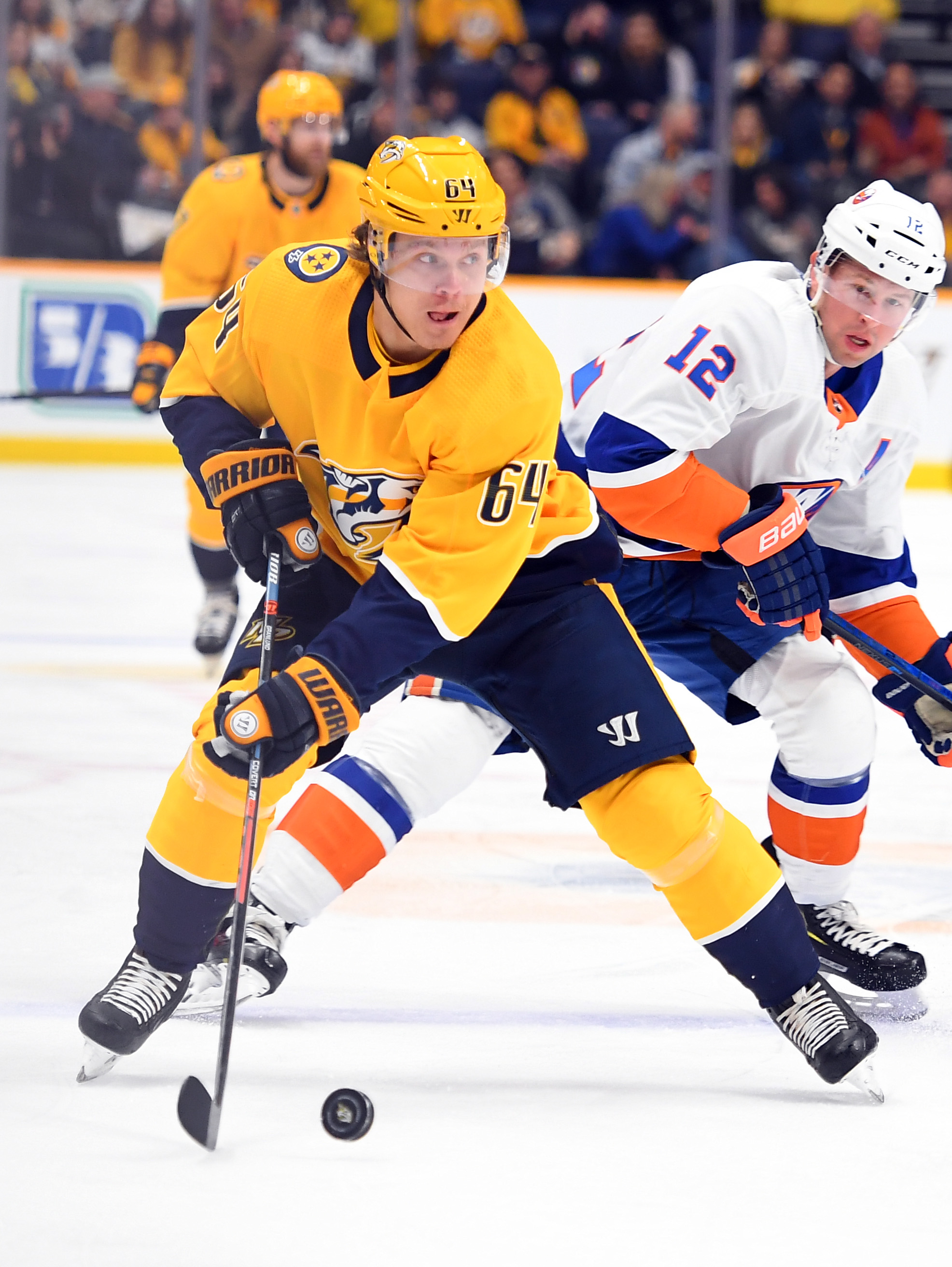 In Detroit, Bobby Ryan has scored six goals and 13 points in 27 games and comes with just a $1MM cap hit. One of the most well-liked teammates in the league, Ryan went to Detroit to try and rebuild his career after some trying years in Ottawa. He could likely be had for nothing more than a mid-round pick if the fit is right. Another Staal, this time Marc, is also a potential rental in Detroit, though his $5.7MM cap hit would have to be sorted out for any real contender. The veteran defenseman could provide some depth on the back end for one playoff run, without a commitment that extends down the line.
Mikael Granlund is the name that many come back to, though he’s not alone in Nashville. Erik Haula is another rental that could be easily flipped, given his versatility and relatively low cap hit. The Devils have more rentals again this year, with names like Sami Vatanen and Kyle Palmieri both leading the way. The latter is a candidate to be retained in New Jersey, but if he were to be put on the market, likely more than a handful of teams would show interest.
So who is the best rental? We’ve included some of the top names on the teams already out of the playoff race, but be sure to give your thoughts in the comments if you think it will be someone else!
Who is the most interesting rental?
-
Taylor Hall (BUF) 30% (299)
-
Bobby Ryan (DET) 14% (140)
-
Eric Staal (BUF) 14% (133)
-
Kyle Palmieri (NJD) 13% (132)
-
Mikael Granlund (NSH) 8% (74)
-
David Savard (CBJ) 5% (49)
-
Patrick Marleau (SJS) 2% (22)
-
Ryan Miller (ANA) 2% (21)
-
Ryan Dzingel (OTT) 2% (18)
-
Other (leave in comments) 2% (17)
-
Sami Vatanen (NJD) 2% (15)
-
Erik Gudbranson (OTT) 1% (13)
-
Erik Haula (NSH) 1% (12)
-
Travis Zajac (NJD) 1% (11)
-
Nikita Gusev (NJD) 1% (11)
-
Ryan Murray (NJD) 1% (10)
-
Brandon Montour (BUF) 1% (8)
Total votes: 985
[Mobile users click here to vote]
Photos courtesy of USA Today Sports Images