
Trade Deadline Primer: Dallas Stars
As we enter the middle of March, the trade deadline is inching closer. Where does each team stand and what moves should they be looking to make? We continue our look around the league with the Dallas Stars.
The Dallas Stars’ ability to make a splash at the upcoming trade deadline is a question of both “can” and “should”, to which the answer is the same for both: no. The Stars are currently utilizing the Long-Term Injured Reserve and are not accruing any cap space. As of today, they have practically no cap space and any trade would have to be dollar-for-dollar in terms of full-year cap hit. While small roster tweaks like demoting third goalie Adam Scheel or young defenseman Thomas Harley or waiving recent claim Marian Studenic could open up marginal space for an acquisition, anything more than a low-salary addition will be impossible without sending a regular roster piece the other way. The Stars have put together a deep, diverse roster and should not be disassembling it this season, either as a seller or in a bid to to make a major move as a buyer. While the pursuit of a playoff spot is important (and the Stars currently hold the final wild card spot in the West), a first-round match-up with the Colorado Avalanche likely awaits. Dallas fans should not be fooled by an unlikely run to the Stanley Cup two years ago; the best move this season is to be cautious and conservative rather than overreact one way or the other. The Stars have already extended Joe Pavelski and seem likely to retain John Klingberg as an internal rental – that could very well be the extent of their deadline plans.
Record
32-22-3 (.588), fifth in Central Division
Deadline Status
Stand Pat
Deadline Cap Space
$50,000 today (LTIR), $50,000 in full-season space, 0/3 retention slots used, 46/50 contracts used per CapFriendly
Upcoming Draft Picks
2022: DAL 1st, DAL 2nd, DAL 3rd, DAL 4th, DAL 5th, DAL 6th, DAL 7th
2023: DAL 1st, DAL 2nd, DAL 3rd, DAL 4th, DAL 5th, DAL 6th, DAL 7th
Trade Chips
The most talked-about trade chip in Dallas will of course be Klingberg. However, recent reports suggest that he may not be on the move after all. While Klingberg seems destined to play elsewhere next season, the Stars’ playoff position combined with Miro Heiskanen‘s recent mononucleosis diagnosis makes Klingberg far more likely to stay on as an internal rental rather than be dealt. The Stars are able to largely stand pat because their current group has put them in playoff position. If Klingberg was traded, Dallas would have to replace him if they hoped to hold on to that position, likely making retaining Klingberg more valuable than the return they would receive for him.
As for other roster players that could be on the move, it is hard to say who Dallas could move. They would probably like to move Alexander Radulov or Radek Faksa, both of whom have had very poor years relative to their lofty contracts. However, for that same reason neither is likely to move at the deadline. The up-and-down play of Denis Gurianov can be frustrating, but the Stars are unlikely to move him just yet. The same can be said for Joel Kiviranta, who has fallen very short of expectations this season but still has upside. Barring a godfather offer, the two young forwards are likely safe for now.
The roster position to watch is likely in net. Jake Oettinger has established himself as the proven, long-term starter this season. If the Stars are willing to bet on the young keeper to lead them through the stretch run and into the postseason, they could move on from impending UFA Braden Holtby, who has drawn interest from other contenders. Holtby’s current injury situation complicates the matter, but shouldn’t rule out a trade completely. If Holtby is dealt, the team would look to Anton Khudobin to return to the NHL roster as backup. If Holtby stays, the Stars will continue to look for a new home for Khudobin.
Assuming that the Stars keep things quiet at the deadline, it is likely that none of these aforementioned players are traded. It also would imply that their top picks and prospects are safe. Dallas is more likely to peddle mid- to late-round draft picks, older prospects, or lower-level prospects in order as a means to add depth players. Members of AHL Texas who have yet to carve out an NHL role in Dallas but could contribute more to a seller include forwards Riley Tufte and Nicholas Caamano and defensemen Ben Gleason and Ryan Shea.
Others To Watch For: F Jordan Kawaguchi, F Fredrik Karlstrom, D Samuel Sjolund, G Colton Point
Team Needs
1) Affordable Secondary Scoring – On paper, it would seem that the Stars are well off at forward. The team has skill on every line, with at least one recognizable (and well-paid) anchor, not to mention a blend of experience and youth. Yet, it hasn’t gone as planned this season. Dallas is in the lower half of the league in scoring despite their considerable talent and depth, as many players have struggled with inconsistency and underperformance in general. While it may not be clear exactly where in the lineup an additional forward may fit, there is room to improve. If the Stars felt that the unproven Studenic could help, then there is a need. Of course, the problem is that the Stars will have no more than $1.75MM or so to add – and that is if they budget for only one acquisition. Dallas will have to target affordable contracts given their cap space.
2) Defensive Depth – Even if Klingberg stays and Heiskanen is healthy sooner rather than later, an extra body on defense certainty wouldn’t hurt the Stars chances. The Dallas top four is strong, but the depth falls off after that. Jani Hakanpaa is one-dimensional, Andrej Sekera is well past his prime, Joel Hanley plays a limited role, and the capable Harley is nonetheless an inexperienced rookie. Again, this will have to be a bargain addition, but there are options available that could prove to be an upgrade
Trade Deadline Primer: Colorado Avalanche
As we enter the middle of March, the trade deadline is inching closer. Where does each team stand and what moves should they be looking to make? We continue our look around the league with the Colorado Avalanche.
Avalanche general manager Joe Sakic is widely heralded as one of the best in the league, and it’s easy to see why. His squad is once again in contention for a President’s Trophy and/or deep Stanley Cup Playoffs run despite some tough injury luck throughout the season. He truly hit it out of the park again this offseason, signing franchise cornerstones Gabriel Landeskog and Cale Makar to cap-friendly long-term contracts (and, while the cost of acquisition was steep, the Darcy Kuemper trade is starting to pay off). With a tad more salary-cap flexibility than some other contenders, Sakic has the chance now to add another player to the mix to push the squad over the top. After that point, though, it’s up to head coach Jared Bednar and the players to ensure the Avalanche get past the second round for the first time in 20 years.
Record
41-13-5, 1st in the Central
Deadline Status
Buyers
Deadline Cap Space
$3.17MM today, $3.89MM in full-season space by the deadline, 0/3 retention slots used, 45/50 contracts used per CapFriendly
Upcoming Draft Picks
2022: COL 3rd, COL 5th, COL 6th, COL 7th
2023: COL 1st, COL 2nd, COL 3rd, COL 5th, COL 6th, COL 7th
Trade Chips
Building an elite team doesn’t come cheap. That’s evidenced by an empty cupboard of upcoming draft picks, especially in the upcoming 2022 NHL Draft with just four selections. The asset pool Colorado has to deal from likely revolves mainly around their prospect pool in order to keep their active roster intact.
That doesn’t mean the team couldn’t look to deal from their 2023 cupboard, however. Their 2023 first-round selection could absolutely be on the trade block, especially if the organization decides to go all-in on a big-name acquisition. While the organization is certainly about to feel the effects of a lack of draft picks in recent seasons, the time to win in Denver is now. Only three forwards (Mikko Rantanen, Gabriel Landeskog, Logan O’Connor) are under contract past 2023, and the team is likely in the most favorable salary-cap position they’ll see for quite some time. Despite a deep class in 2023, the team shouldn’t have too much hesitation about moving their first-round choice at this year’s Deadline.
Contenders don’t love to deal players off their active roster if they can help it, and since Colorado has some salary-cap flexibility, they likely won’t need to. That means that top youngsters Alex Newhook and Bowen Byram are unlikely to depart the organization this month. That doesn’t mean, though, that there aren’t some other players in the Avs organization of interest to other teams.
For trade partners looking to add to their defense pool, there’s Justin Barron. The skilled two-way defenseman was selected 25th overall in 2020 and made his NHL debut this season, getting two games with the big club in his first full professional season. After captaining the QMJHL’s Halifax Mooseheads and representing Canada at the IIHF World Junior Championships last season, he’s notched five goals and 14 assists for 19 points in 40 AHL games with the Colorado Eagles. A safe bet to grow into a dependable top-four defenseman, he likely carries the most trade value of any Avalanche prospect heading into the Deadline.
Another name to watch, and perhaps the most likely to be dealt, is forward Martin Kaut. The 22-year-old, who Colorado drafted 16th overall in 2018, has seen NHL action in each of the past three seasons, especially looking promising with three points in nine games back in 2019-20. In 11 NHL games since then, though, he’s been held pointless, and his production at the AHL level this season has somewhat stagnated with 11 goals and 18 points in 30 games. While he most definitely still has top-nine upside, it’s possible that his value to the organization’s likelihood of winning a Stanley Cup is higher in a trade than in keeping him around.
Others To Watch For: F Shane Bowers, F Sampo Ranta, F Oskar Olausson, F Alex Beaucage, G Justus Annunen
Team Needs
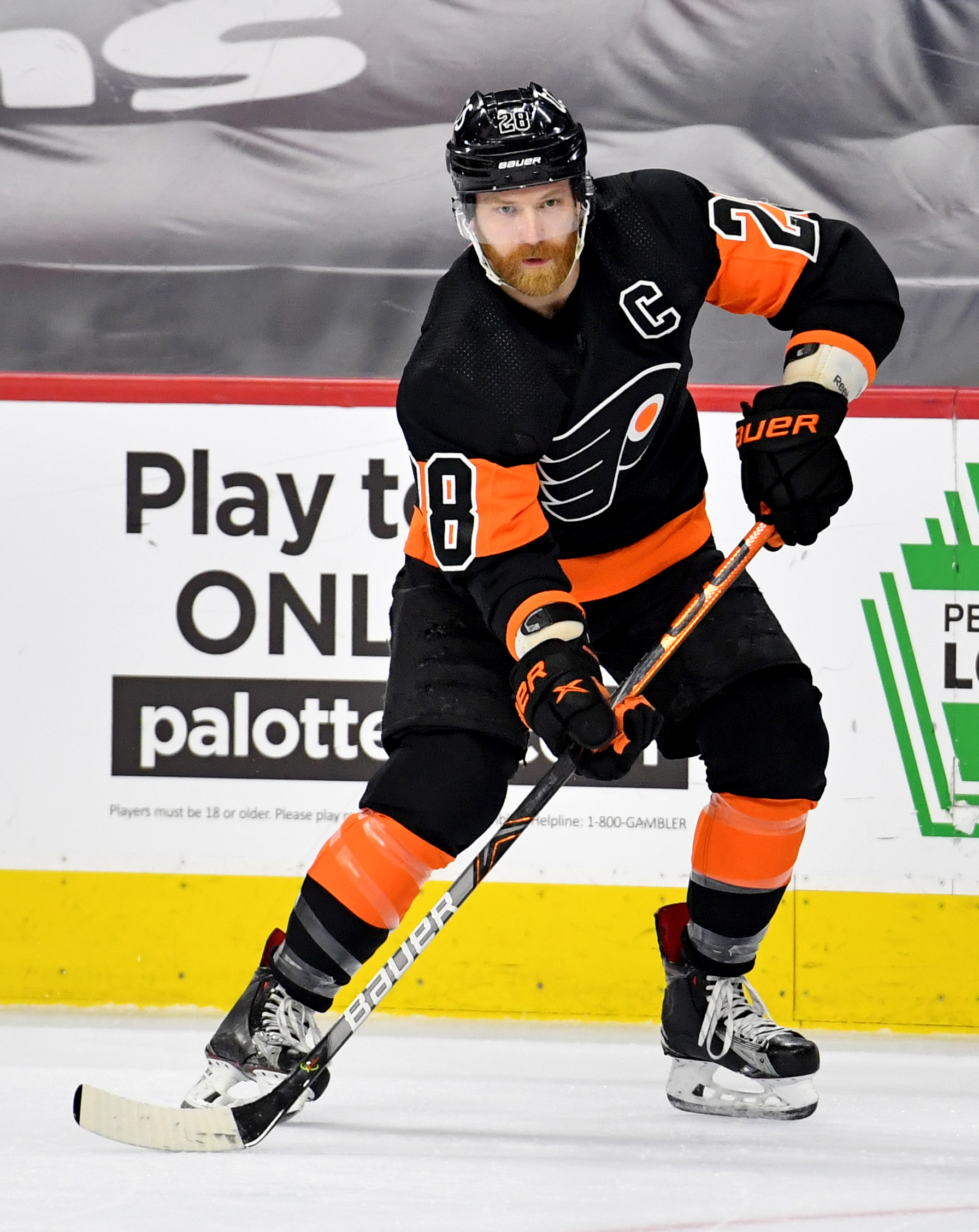 1) Bottom-Six Forward — The Avalanche would love a little more offensive production out of their bottom-six forward group. How they go about getting that at the Deadline, though, could either be through simply a depth acquisition or a trickle-down effect from a bigger name. If Colorado does go out and acquire Claude Giroux, as has been rumored for weeks now, then a fully healthy Avalanche squad would likely see Valeri Nichushkin, who has 31 points in 41 games, pushed back down to a bottom-six role. One of the most underrated two-way wingers in the game, he’d help create matchup nightmares for opposing coaches in the playoffs.
2) Depth Defenseman — Concussion symptoms have likely taken the young Byram out of the picture for the remainder of the year, and with Samuel Girard struggling at times this season, Colorado has had to rely on players like Jack Johnson and Kurtis MacDermid probably more than they’d like to. While Erik Johnson has been a huge boost this year, overcoming past health issues to play in all 59 of the team’s games this season, his luck with injuries (especially in the playoffs) is also a concern. A high-end third-pair defenseman would be the ideal security blanket for this Colorado defense in case of injury or poor play.
Photo courtesy of USA Today Sports Images
Trade Deadline Primer: Arizona Coyotes
As we enter the middle of March, the trade deadline is inching closer. Where does each team stand and what moves should they be looking to make? We continue our look around the league with the Arizona Coyotes.
Bill Armstrong has been general manager of the Coyotes for one year, five months, and 22 days. In that time, he has already made 15 trades, changing the look of his roster dramatically. Derek Stepan, Adin Hill, Oliver Ekman-Larsson, Conor Garland, Darcy Kuemper, Christian Dvorak, Ryan Dzingel, Ilya Lyubushkin–all out. Andrew Ladd, Shayne Gostisbehere, Loui Eriksson, Antoine Roussel, Jay Beagle, Anton Stralman, Nick Ritchie–all in. It’s easy to spot the way that Armstrong is approaching his full-scale rebuild, by sending out anyone that carries value, and bringing back contracts that teams don’t want. It’ll be the exact same strategy at this deadline, which opens up a whole number of possibilities for the suddenly-hot Coyotes.
Record
18-35-4, 8th in the Central
Deadline Status
Seller/Broker
Deadline Cap Space
$26.02MM today, $32.53MM in full-season space by the deadline, 2/3 retention slots used, 44/50 contracts used per CapFriendly
Upcoming Draft Picks
2022: ARI 1st, MON/CAR 1st*, COL 1st^, ARI 2nd, NYI 2nd, PHI 2nd, SJS 2nd, VAN 2nd, ARI 3rd, ARI 4th, ARI 5th, ARI 6th
2023: ARI 1st, ARI 2nd, ARI 3rd, NYI 3rd**, ARI 4th, ARI 5th, ARI 6th, VAN 7th
*As per the terms of the offseason Dvorak trade, Montreal will give Arizona the better of Montreal/Carolina’s first-round picks, unless either or both are inside the top-10, in which case Montreal will receive the better of the two picks.
^If Colorado’s pick is in the top-10, the Avalanche will send their 2023 pick instead.
**Pick not transferred if Ladd plays in any professional games in 2022-23 while under his current contract, or retires prior to the conclusion of the 2022-23 regular season.
Trade Chips
 If the Coyotes wanted to, they have the draft capital to acquire just about any player on the market. Their three first-round picks and five second-round picks will make them a frequent flyer to the podium in Montreal this summer, adding a huge amount of talent to the prospect pool. Giving up those draft picks at this point isn’t the strategy though, as Arizona is still in tear-down mode wherever possible.
No one represents that strategy more than Jakob Chychrun, who has been on the market all season despite being just 23 and under a relatively inexpensive contract for another three years. If the Coyotes are willing to trade Chychrun, they’re not even considering a quick rebuild with the assets they’ve already acquired. Among those things they could move at the deadline, the young defenseman is obviously the most attractive and could bring back a package that includes multiple high-end assets. Still, they likely will be targeting prospects that still have years left on their entry-level contracts (or perhaps those who haven’t even signed yet) instead of struggling first-round picks that are already around Chychrun’s age, meaning this is a hard trade for many teams in the league to actually accomplish. If he is moved before the deadline, it will be a blockbuster deal.
Beyond Chychrun there is still lots left on the Coyotes’ roster that could be of interest. Phil Kessel, finally in the last season of that eight-year, $64MM contract signed with Toronto in 2013, is a potential target for teams looking to upgrade their second or third line. Whatever you think of Kessel, he’s still an incredibly dangerous forward off the rush and has 78 points in 113 games since the beginning of last season, while playing on a bad Coyotes team. Kessel’s contract already has some salary retention from when the Maple Leafs traded it, meaning it couldn’t go through the double-retention that some other big names will this spring. A single contract can only be retained on twice, meaning the lowest his cap hit can go from this point is $3.4MM.
Speaking of salary retention, that would normally be a perfect option for the Coyotes, but they’ve already used two of their three slots. They’ll have to be quite picky about where that last one is used at the deadline in order to maximize the return. Gostisbehere, for instance, could be an option after he has rediscovered his game in the desert. The 28-year-old defenseman cost Philadelphia two draft picks to get rid of in the summer, but after 36 points in 57 games perhaps there will be another team interested–especially if he comes at just a $2.25MM cap hit through next season, should Arizona retain 50 percent.
Karel Vejmelka is another one of the interesting names to watch, should the goaltending market continue to improve in the next ten days. The 25-year-old netminder has been a revelation this season but is also just a year away from unrestricted free agency. Just yesterday his name was brought up by Chris Johnston of TSN, who opined that if the two sides couldn’t work out an extension, the Coyotes could potentially move on from the goaltender before the deadline.
Others To Watch For: F Johan Larsson (IR), G Scott Wedgewood
Team Needs
1) Draft Picks: It’s simple, the Coyotes are trying to build through the draft. A 22-year-old player that’s headed for restricted free agency soon might be attractive to most teams, but for one that’s about to slash revenues by moving into a tiny building and isn’t expected to really compete for the playoffs in the next few years, a prospect that will head back to junior, college, or overseas is actually the better route. The Coyotes have a ton for this season and for 2024 but note that they have only two selections in the first two rounds of 2023–a draft that has some exceptional talent. Don’t be surprised to see them add to their 2023 collection so that the wave of prospects doesn’t have a gap.
2) Flippable Contracts: It’s not out of the realm of possibility that the Coyotes flip players like Gostisbehere and Ritchie after building them back up with prime deployment. It’s a great strategy for a team that doesn’t really care about wins and losses, and one that has worked well for other franchises in the past. Just yesterday, the idea of acquiring Andreas Johnsson was brought up by Darren Dreger of TSN because of how front-loaded his contract is. The Coyotes could nab a player like that, pay him for 12 months (while giving him powerplay and top-six time) and then flip him for even more next deadline when every team in the league can afford the decreased cap hit. While some might say that the New Jersey Devils aren’t the team to target with that kind of a strategy, there are plenty of other opportunities just like it out there.
Photo courtesy of USA Today Sports Images
Trade Candidate: Braden Holtby
With the trade deadline now a few weeks away, we continue our look at some of the players who have a good chance of being on the move between now and March 21st.
Braden Holtby‘s first season away from the Washington Capitals, the only team he had ever known, the team he backstopped to a Stanley Cup in 2018, did not go well. Holtby signed a two-year contract worth $4.3MM per year with the Vancouver Canucks, and the team was optimistic that he would replace Jacob Markstrom‘s starts and help ease Thatcher Demko into his role as a starting goaltender. Holtby’s play was far poorer than those expectations demanded, and he was eventually bought out by the team after only one season, a season where he posted a .889 save percentage and an eye-popping 3.67 goals against average in 21 games. But this season, Holtby has been impressive for the Dallas Stars, and he owns a .913 save percentage in 24 games as the Stars battle for position in the Western Conference’s playoff race.
Contract
Holtby is in the lone season of his one-year $2MM contract with the Stars. His entire contract is in base salary, no signing bonus, and he will be an unrestricted free agent in July. He has no protection against trades in his contract.
2021-22
Holtby began the season brilliantly, with save percentages between .926 and .964 in his first four starts, with the Stars winning three out of those four. Holtby’s numbers came down to earth a bit after that, but overall he has remained steadily above .910 as a whole for his season’s numbers. Holtby faced a minor lower-body injury in early February and largely has ceded the starting role to Jake Oettinger, but despite those two factors he has still provided the Stars with excellent value for the contract they signed. Holtby’s season represents his first venture above the .900 mark in save percentage since 2018-19, and the Stars have to be satisfied with the performance he has given them so far this season.
Looking a bit deeper into his numbers, Holtby has a .922 even-strength save percentage, higher than many goalies considered to be quality starters such as John Gibson, Robin Lehner, Marc-Andre Fleury, and Connor Hellebuyck. But his save percentage on the penalty kill of .827 is one of the lower marks in the league and brings down his save percentage as a whole. The Stars do not have a great penalty kill, ranked 19th in the NHL at 78.9%, so one has to wonder if Holtby’s numbers could be even better on a team that is stronger in that area.
Season Stats
22 games started, 10-10-1 record, .913 save percentage, 2.78 goals against average, 3.0 goals saved above expected.
Potential Suitors
Goaltending is an interesting situation when it comes to the trade deadline, because it can be far easier to determine a team’s need in that position compared to others. That being said, so much of successful goaltending is mental, so much relies on a goalie’s confidence and belief in himself. So acquiring a goalie at the deadline can be tricky. High-profile goaltending trades at deadlines have sometimes borne fruit, like when the Vegas Golden Knights acquired their current starting goalie in Lehner, but it has also backfired in the past, like when the Los Angeles Kings traded Erik Cernak, among other assets, to acquire Ben Bishop from the Tampa Bay Lightning. It’s a mixed bag, so historically speaking acquiring Holtby has some risk. But looking across the league, there are definitely teams in need of goaltending.
The team getting the most attention surrounding its goaltending right now is the Toronto Maple Leafs. The Leafs are a star-studded team and are in a market that desperately wants to see them make their first playoff run with this core of players. It was believed that Jack Campbell would be the guy to get them there, and Campbell is truly a beloved player in Toronto, but his play recently has not been inspiring. Nor has the play all season of backup Petr Mrazek, who has an .890 save percentage. For a team that so badly needs to make noise in the playoffs, adding a Stanley Cup-winning goalie could be the move they need to shore up the side of the game that has decided many a playoff series on its own.
Another potential suitor for Holtby is one that would excite many fans of the team and neutral observers alike- the Washington Capitals. Vitek Vanecek has been brilliant this season, to the tune of a .921 save percentage, but the team has also started Ilya Samsonov in 28 games and gotten a .901 save percentage from him. For a team that expects to make the playoffs, that won’t cut it. The Capitals should be comfortable with Vanecek starting in the playoffs, but uncomfortable at the prospect of Samsonov playing should Vanecek be unavailable, as he was in the team’s playoff loss to the Bruins last season. So what better player to cure the Capitals’ discomfort than Holtby, the goalie who in 2018 cured their longstanding discomfort over having never won a Stanley Cup?
One clear potential suitor for Holtby is the Edmonton Oilers. Much has been made about the struggles of their goaltending, and for good reason. They have a team with high-quality players but no goalie to give them the saves they need to win. They don’t have much room to work with under the cap, but with retention they could definitely fit Holtby in. He would be a major upgrade over both of the incumbent goalies in Edmonton and would also provide them with much-needed playoff experience. It’s a match that makes a lot of sense, and the acquisition cost should definitely fit GM Ken Holland’s desire to retain his team’s first round pick.
A final potential suitor for Holtby may come as a surprise: the New York Rangers. It may surprise a few readers because the Rangers are currently backstopped by a Hart Trophy candidate in Igor Shesterkin. But the move could make sense. The team’s backup, Alexandar Georgiev, owns a .897 save percentage this season. He is simply not a viable insurance policy to a Shesterkin injury come the playoffs. The Rangers have had too strong of a season to lose it all if Shesterkin goes down. Adding Holtby at a price that would not be unreasonable (goalies rarely get traded for significant assets, especially at the deadline) could be a smart bit of business for GM Chris Drury.
Likelihood of a Trade
The Stars are still in the mix for a playoff spot, so potentially subtracting a goalie like Holtby would in theory hurt their odds of making it. But the team seems set on Oettinger as their number-one goaltender, and they have Anton Khudobin waiting in the wings to take Holtby’s role as a backup in case of a trade. Khudobin hasn’t been great this season, but he’s an experienced player who the Stars would trust as a backup, given their prior commitments to him. Holtby isn’t an overwhelmingly likely candidate to be traded, like the Montreal Canadiens’ Ben Chiarot is, but it’s not difficult to see why he could be on the move
PHR Mailbag: Devils, McDavid, Giroux, Atkinson, Namestnikov, Rakell, Predators, Kings, Foote
Topics in this edition of the PHR Mailbag primarily focus on the upcoming trade deadline with trade scenarios and team needs being discussed. If your question doesn’t appear here, watch for it in next weekend’s edition.
SpeakOfTheDevil: What do the Devils do on or before the deadline? Who do you see us bringing in/shipping out?
I don’t expect a whole lot from New Jersey. We know they’re looking for a veteran goalie just to allow Nico Daws to go back to Utica and I expect they’ll find a way to accomplish that. They could look to do like Montreal did with Andrew Hammond and bring in a third-string option (if Jake Allen returns in the next couple of weeks, I could see a scenario where Hammond moves again). If Marc-Andre Fleury stays in Chicago, someone like Collin Delia makes sense as a target. I could even see someone like Jaroslav Halak if they want someone a little more proven. If he decides he’s open to a move and just wants to get some playing time in the hopes of landing a contract for next season, New Jersey makes sense. They won’t make the playoffs but playing time wouldn’t be hard to come by.
I believe they’ll work to find a spot for P.K. Subban as a rental although it’s a move that likely requires double retention so that the acquiring team is only on the hook for $2.25MM. That might net the Devils a mid-round pick. He’s the only pending UFA who realistically has a chance to be moved.
One other player that wouldn’t surprise me if he was moved was Pavel Zacha. He’s a pending RFA but has just one year of team control left with a qualifying offer of $3MM. Jack Hughes and Nico Hischier are entrenched as their top two centers of the present and future. Is there a team that still thinks he could be a second liner or a high-end third liner? If so, maybe he gets dealt. Since he’s younger, it’s not just playoff-bound teams that could be interested which expands the options. As for a return, I could see a couple of different scenarios – a third liner under team control for longer than Zacha or a similar-aged defenseman. This one doesn’t need to be a swap that brings in futures. Beyond these, I think it’ll be a pretty quiet deadline for the Devils.
pawtucket: With Edmonton once again struggling…even if they make the playoffs, they are likely facing the Avalanche who are incredible at home and far deeper than them…will McDavid be happy being bounced in the first round? (That is if they MAKE the playoffs!).
Could he demand a trade this offseason?
Never say never, I suppose, but I don’t sense that McDavid is the type of player who is going to make that request. I share your skepticism in terms of them being able to go far in the playoffs and Colorado certainly isn’t an ideal matchup for them. But from a long-term perspective, I don’t think they’re that far away from really contending either. They need a legitimate starting goalie and if they can get one, they can do some damage. McDavid knows that.
What could happen that may be more realistic is that McDavid goes to GM Ken Holland and states his preference to see a core shakeup that sees a higher-priced player moved out in order to acquire that goaltender. That type of discussion would happen entirely behind the scenes and might not even leak out publicly. That’s more in line with the more reserved type of player that McDavid is over flat out requesting a trade if things don’t go well this year.
rdiddy75: What would a trade with Giroux going to the Avalanche look like? Any chance the Flyers can get Barron and Behrens in that deal? That would help their blue line for years.
@IWTFWC: Chances that Avalanche acquire Claude Giroux and if so, what will it cost? (1st rd pick, Tyson Jost and Justin Barron?) Also, chances Avalanche acquire Cal Clutterbuck? Or someone else to help the PK/GET PHYSICAL?
Giroux to Colorado has been out there as a speculative destination for a while and at this point, it certainly sounds like they’re a contender (if not the contender) for his services. I’ve mentioned in the last mailbag that my expected price point for him was a first-round pick, a prospect, and salary filler with the Flyers retaining half of Giroux’s $8.275MM AAV.
I think we have the foundation of what a deal would look like from these questions – the first-rounder (which will need to be 2023 as 2022’s is already gone) and defensive prospect Justin Barron. (I don’t think Sean Behrens will be in there unless the formula changes to two prospects plus a roster player.) I like the idea of Jost in principle as a younger player that could benefit from a change of scenery. Part of me wonders if they’d prefer to move J.T. Compher instead who’s a little better but costs $1.5MM more against the cap this season and next. That would give them some extra wiggle room to add a secondary piece now and more space for next year.
Colorado has scouted the Islanders lately and they could benefit from a physical winger for the playoffs. I’m just not certain that Clutterbuck is the right fit for them. They play an up-tempo style and Clutterbuck is not an up-tempo player. I know things slow down in the playoffs and maybe he could fit on the fourth line but he’s expensive for that role ($3.5MM) and if they were to add Giroux, I don’t know if they’d have enough money left to add someone at that price point, even if New York retained. I’m not going to put odds on it but I wouldn’t be surprised if they wind up with someone that plays a similar role and is cheaper over getting Clutterbuck himself.
jdgoat: Could Cam Atkinson be on the move this deadline?
I wouldn’t count on that happening. While it periodically happens, players with multiple years left on their contracts at big money (Atkinson has three more years at $5.875MM) don’t tend to move at the deadline. There’s an expectation that the Flyers aren’t interested in rebuilding and will instead do another shakeup of their core. That happened last summer and that’s when I think they’ll make those types of moves. That’s when more teams will be willing to shake things up compared to now when buyers are simply looking to add to their rosters, not mess around with their core.
Atkinson has actually had a nice season for the Flyers with 39 points in 54 games heading into today’s game against Chicago which is good for second on the team in scoring (just one point behind Giroux). I don’t get the sense that he’s going to be the player that moves as a result. If they believe they’re closer to the playoffs than their record indicates, Atkinson is the type of player to keep, not move out.
Johnny Z: Where might Namestnikov be traded to and for what?
Let’s answer the second half first. There are two options for a return that are pretty similar – a mid-round pick or a mid-round pick plus salary ballast. Where the pick falls depends on retention (if any) and how much the player coming back in the second scenario makes. (There’s going to be a math component involved in pretty much every trade being made, it’s just the reality of the cap situation for many contenders around the league.)
As for where he goes, there are two types of teams where I think he fits. One is capped-out teams getting 50% retention making him an affordable upgrade on a fourth liner and the other is a team that may want to add to their roster but doesn’t want to move much of their future. In the first group, Dallas and Washington come to mind as options. In the second, Nashville, Los Angeles, and maybe Anaheim if they can hang around the race a little longer.
skidrowe: Rickard Rakell to the Bruins…what would it take?
 First, extension talks would need to go nowhere. Second, Anaheim would need to fall out of the playoff race enough to justify selling. I can see a scenario where an unsigned Rakell stays, to be honest, if they’re still in the playoff picture even with GM Pat Verbeek’s recent comments. I doubt they’d hold onto blueliners Hampus Lindholm and Josh Manson without extensions but there’s less risk of doing that with Rakell since quality wingers are easier to replace on the open market than quality defensemen.
But that’s probably not what you’re wanting to hear, you’re wanting a rough trade proposal. Rakell is tricky in the sense that he’s probably not worth a first-round pick or an ‘A’ prospect but a second-rounder or a ‘B’ prospect alone isn’t going to cut it either. The prospect that comes to mind is defenseman Urho Vaakanainen. Anaheim’s back end has been weakened over the years and while the 23-year-old may not be a top-four player, he could be a quality piece on the third pairing for a while. The Ducks haven’t had a lot of success filling those spots lately which would be appealing.
I could see Verbeek asking for a second-rounder on top of that which may be a bit high for his Boston counterpart in Don Sweeney. However, if Anaheim agrees to take Chris Wagner’s contract ($1.35MM in the minors), maybe that helps. That would give Boston $225K of cap relief for next season (the rest of the cap hit comes off when he’s in the minors) and clear up a contract slot. That said, the Ducks are a budget team and might want to part with the final year of Kodie Curran’s contract ($1MM one-way) to offset part of Wagner’s deal in that scenario. Is that a proposal that could land Rakell? Perhaps, although I’m still leaning towards them keeping him unless things go off the rails over the next few weeks.
Trade Candidate: Max Domi
With the trade deadline now less than a month away, we continue our look at some of the players who have a good chance of being on the move between now and March 21st.
Last season wasn’t a great one for Max Domi. He struggled to fit in with the Blue Jackets in his first year with the team and certainly didn’t live up to his contract. Then he suffered a long-term injury and the combination of that was enough to cause Seattle to pass on him for free in expansion (where they instead picked someone that went back to Columbus days later as a free agent). However, this season has gone a bit better for him which may be enough to help him land a new home with a playoff-bound team in the near future.
Contract
Domi is in the final season of a contract that carries a $5.3MM AAV. He has a $6MM salary and will be an unrestricted free agent in July. As his deal only covered RFA-eligible years, he wasn’t eligible for any type of trade protection.
2021-22
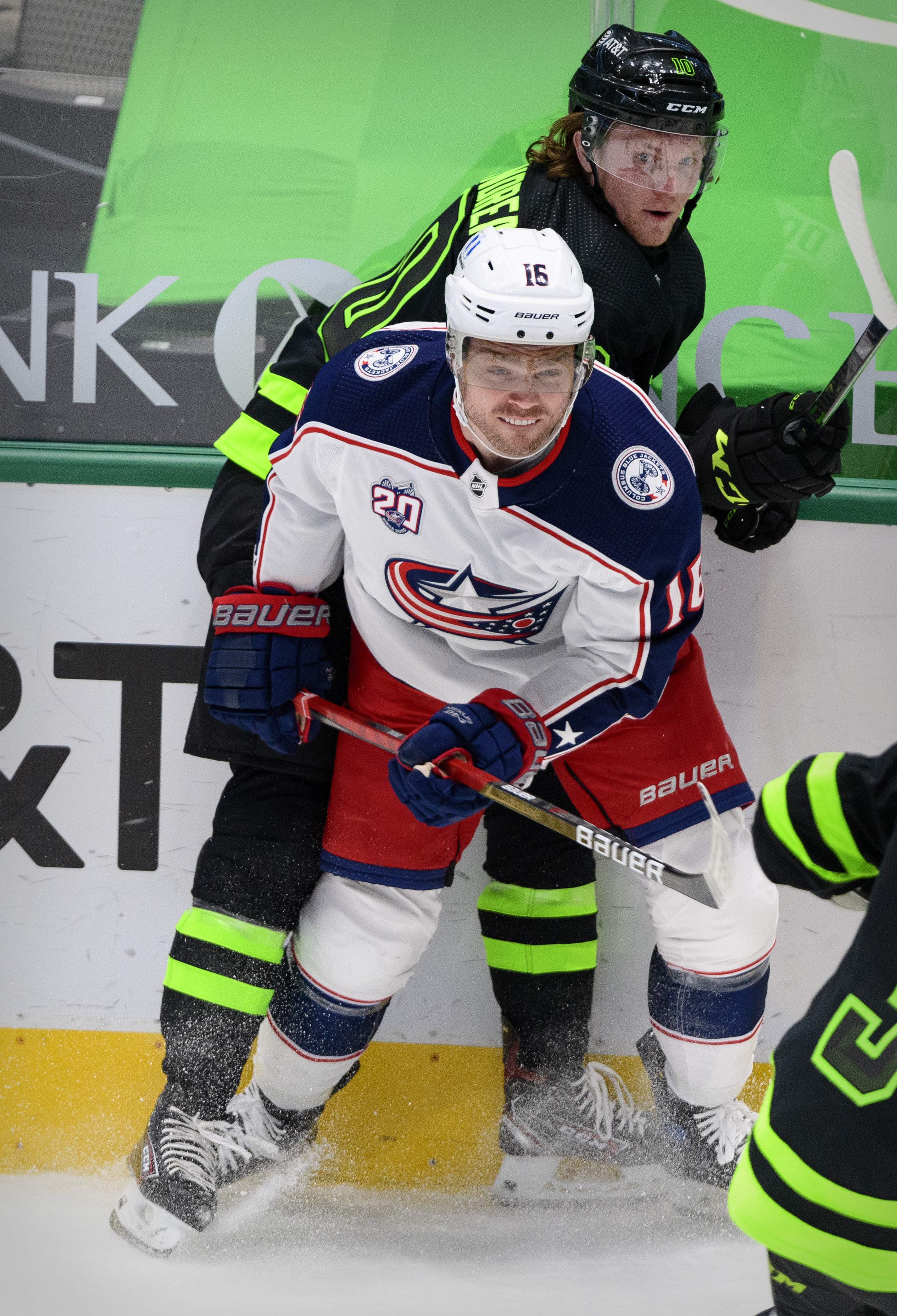 Domi went through a bit of a roller coaster in the early going this season. He came back from shoulder surgery much earlier than expected and was in the lineup on opening night, collecting three points. Then he had a fractured rib and soon after returning from that, he landed in COVID protocol, missing another three weeks.
Since then, Domi has managed to stay in the lineup, albeit not quite in the role GM Jarmo Kekalainen envisioned when he acquired the 27-year-old from Montreal in 2020. He has played exclusively on the wing this season instead of filling a spot down the middle as originally planned. Domi has also spent time on all four lines without really being able to settle into one spot.
Domi has also been very unproductive on the power play. He has played over 56 minutes on the man advantage this season and has one assist to show for it. That’s the negative slant. The positive slant is that all but one of his points have come at five-on-five and the role that contending teams will want him to fill is one that even strength production is more important than producing on the power play.
Season Stats
44 GP, 9 goals, 16 assists, 25 points, -1 rating, 30 PIMS, 65 shots, 13:24 TOI, 47.4 CF%
Potential Suitors
While Domi can play in the top six if needed (he has at times throughout his career), that’s not the role teams should be eyeing him to play. With that in mind, his suitors should be those that want him for more of a depth spot in their lineup. That said, Domi’s price tag for that role will limit the number of teams who could realistically fit him in without having to move a roster player the other way.
In the East, I had the Bruins pegged as a possible suitor for Domi at the beginning of the season where his positional flexibility can be useful. He won’t be their top target but he would add some scoring to their bottom six. The same can basically be said for the Panthers if some of their stronger targets go elsewhere. The Rangers have the cap room to add a few pieces and they’re a team that would benefit from adding some offensive skill to their bottom six while still trying to fill other areas. The Maple Leafs have come up as a speculative fit as of late but depth scoring isn’t their top need; they’d need to strike out on filling those and have Jake Muzzin stay on LTIR for the rest of the season for that to really be an option.
Out West, the Kings may be more inclined to do a smaller deal or two that doesn’t involve giving up any longer-term assets and play it safe. That’s more of the range that Domi should fit in as he won’t command a significant price in return. The Predators also have ample cap space and could stand to upgrade their bottom six. They’re another team where it doesn’t seem likely that they’ll make a big splash so some smaller, safer moves like this may be more in their wheelhouse.
Likelihood Of A Trade
At this point, it doesn’t seem like Domi is a strong candidate to return to the Blue Jackets. While Columbus has been on a bit of a nice run as of late, they’re still longshots to reach the playoffs. As long as they’re willing to retain on the contract, there’s a very good chance that Domi is in another uniform after the deadline.
Photo courtesy of USA Today Sports Images.
Submit Your Questions For The #PHRMailbag
The NHL trade deadline is now three weeks away, meaning the playoffs are starting to crest over the horizon. Five teams in the league have already reached the 55-game mark, and only the New York Islanders have yet to play 50. Trades have started, sort of, with Tyler Toffoli easily the biggest name dealt so far. But that won’t last long, as things are heating up all around the league as teams realize whether they’re really in the playoff hunt or just pretending at this point.
With that in mind, it’s time to run another edition of the PHR Mailbag. If you missed the last one, it was broken into two parts. In the first, our Brian La Rose examined the surging Los Angeles Kings, how the Boston Bruins might approach the trade deadline, and New Jersey’s goaltending situation moving forward. In the second, the New York Rangers’ deadline plans were discussed, along with the Philadelphia Flyers players that are pending free agents.
You can submit a question by using #PHRMailbag on Twitter or by leaving a comment down below. The mailbag will run on the weekend and answer as many questions as possible.
Trade Deadline Primer: Montreal Canadiens
As the calendar turns to March, the trade deadline is inching closer. Where does each team stand and what moves should they be looking to make? We continue our look around the league with the Montreal Canadiens.
The Montreal Canadiens enjoyed a dream run to cap off what had been an inconsistent 2020-2021 season, defeating three strong playoff teams before eventually falling to the Tampa Bay Lightning in the Stanley Cup Final. That dream run stands in great contrast to how the team began their 2021-2022 season. The Canadiens collapsed, falling to the bottom of the NHL standings. These results led to an organizational overhaul. Out was longtime GM Marc Bergevin, in was former Rangers GM Jeff Gorton in a role overseeing hockey operations along with former agent Kent Hughes as GM. Hughes and Gorton dismissed incumbent head coach Dominique Ducharme, replacing him with Hall-of-Fame player Martin St. Louis, who now has the Canadiens surging with five straight wins. Despite the team’s turnaround under St. Louis, the Canadiens still figure to be sellers at the deadline, as they indicated with the trade of Tyler Toffoli to Calgary.
Record
13-33-7, 8th in the Atlantic
Deadline Status
Seller
Deadline Cap Space
$9.41MM today, $9.41MM in full-season space, 0/3 retention slots used, 48/50 contracts used per CapFriendly.
Upcoming Draft Picks
2022: MTL/CAR 1st,* CGY 1st,^ MTL 2nd, MTL 3rd, ANA 3rd, CAR 3rd, MTL 4th, TBL 4th, MTL 5th, MTL 6th, MTL 7th, STL 7th
2023: MTL 1st, MTL 2nd, MTL 3rd, MTL 4th, MTL 5th, CGY 5th, MTL 6th, MTL 7th
*As per the terms of the offseason Christian Dvorak trade, Montreal will give Arizona the better of Montreal/Carolina’s first-round picks, unless either or both are inside the top-10, in which case Montreal will receive the better of the two picks.
^If Calgary’s pick is inside the top-10 the Flames have the option to trade Montreal their 2023 1st instead, and if they do so Montreal will also receive Calgary’s 2024 4th.
Trade Chips
Despite languishing at the bottom of the standings, the Montreal Canadiens still have a solid amount of desirable trade chips on their roster. The Canadiens player getting perhaps the most attention in trade speculation is defender Ben Chiarot. Chiarot, 30, is a pending UFA on a $3.5MM cap hit that is relatively easy for many contenders to absorb. Chiarot is a bit of a divisive player, with many disagreeing on his true value, but what is clear is that he plays the kind of playoff-oriented game that NHL decision-makers covet. Chiarot’s best asset is his physicality, his rugged style that wears down opposing players, especially in front of the net. He is not an offensive player, and his 12 points in 48 games show that, but he is still a good enough skater to handle himself in transition. More analytically-inclined observers might scoff at the idea of Chiarot returning the Canadiens any assets of significance, and that would not be an unreasonable stance to take given Chiarot’s place as a high-minute defenseman on one of the league’s worst teams. But even with that in mind, it is undeniable is that Chiarot is exactly the kind of player coaches and executives want to have in their uniform when playoff hockey begins.
Beyond Chiarot, the Canadiens have another player who many coaches and GMs will seek: Artturi Lehkonen. Like Chiarot, Lehkonen also saw his profile raised leaguewide during the team’s playoff run. Lehkonen helped linemates Phillip Danault and Brendan Gallagher take on the team’s toughest matchups, and their success in shutting down scorers like Mark Stone, Mitch Marner, Auston Matthews (among others) was crucial to the Canadiens being able to go as far as they did. Lehkonen is a relentless forechecker who can fit on a contending team’s penalty kill as well as any of their four lines. He also brings an underrated offensive element to his game, with nine goals and 22 points in 50 games so far this season without much powerplay usage. Lehkonen offers an extra year of team control as an RFA after this season when his $2.3MM cap hit expires. His versatility, relentless two-way game, and an extra year of team control should make him a hot commodity on the trade market, especially given the trade interest a comparable player like Barclay Goodrow, for example, received a few years ago.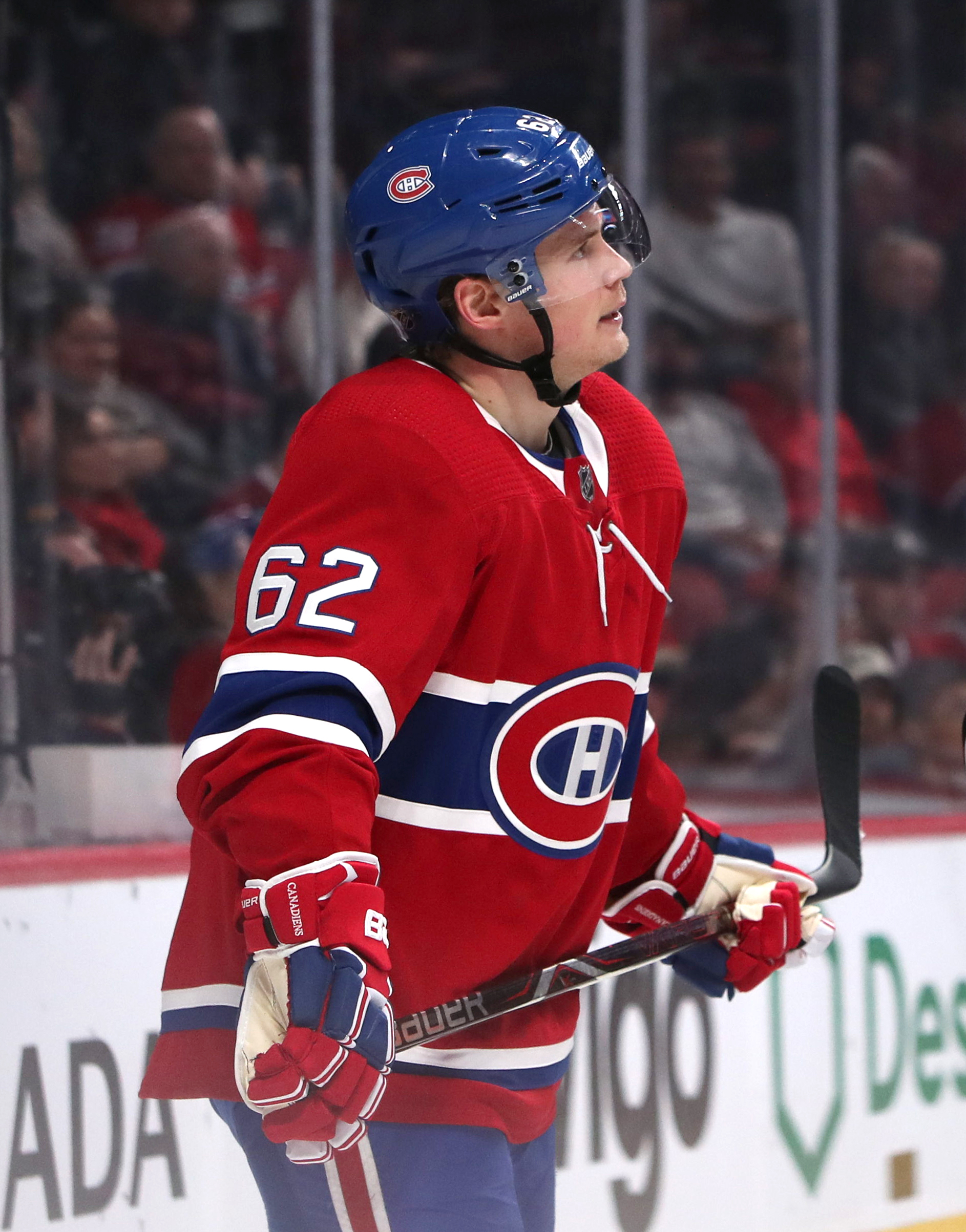
While Chiarot and Lehkonen figure to be largely in-demand assets on the trade market, the same cannot be said for defenseman Brett Kulak. Kulak, 28, is a bottom-pairing defenseman on an expiring $1.85MM deal. After struggling to establish himself as an NHL player as part of the Flames’ organization, Kulak arrived in Montreal and became a relatively regular NHL fixture. He is now a veteran of over 300 NHL games and can offer a team some stability and skating on their bottom pairing. A team shouldn’t expect a player who can handle intense special teams work or shelter an inexperienced defenseman, but that being said a team could do a lot worse than Kulak as a depth blueliner. He shouldn’t be prohibitively expensive to acquire, either.
Other Potential Trade Chips: F Cedric Paquette ($950k through 2021-2022), F Mathieu Perreault ($950k through 2021-2022), F Joel Armia ($3.4MM through 2024-2025)
Team Needs:
1) Skilled Prospects
New GM Hughes made it clear when he was first introduced to Montreal media that he did not envision the team undergoing the sort of long-term, scorched-earth rebuild other franchises have undertaken. With those marching orders in mind, it is likely that Hughes’ plan to get the Canadiens back on track will center around already-drafted prospects and young players rather than draft picks to be used on players further away from the NHL.
2) Cap Flexibility
Despite the Canadiens’ struggles this season, the team is deep into LTIR spending and has some significant contracts on the books. It’s not as if the roster has been stripped bare and has no veterans commanding significant salaries. In fact, the roster has quite a few of them. Pierre LeBrun of TSN reported that the Canadiens’ long-term plan could include adding a “significant” free agent, but for that to be the case the team would likely need to improve its cap flexibility from its current point.
3) Draft Picks
While Hughes has made it clear that he would ideally rebuild the Canadiens on an accelerated timeline, the fact remains that draft picks are crucial to building any successful NHL franchise. The Canadiens have a few extra picks moving forward thanks to trades, but still could use some more selections in the coming drafts to help re-stock their prospect cupboards.
Photo courtesy of USA Today Sports Images
Trade Deadline Primer: Tampa Bay Lightning
With the All-Star break now behind us, the trade deadline looms large and is now less than a month away. Where does each team stand and what moves should they be looking to make? We continue our look around the league with the Tampa Bay Lightning.
Aspirations of a three-peat are still alive and well in Tampa Bay, where the Lightning are once again thriving in a tough division despite facing a variety of injuries all year. They’ll undoubtedly be one of the top three teams in the Atlantic Division at the season’s end, but with increasingly tough competition, more fortification to the lineup wouldn’t hurt to help their chances at a Cup in 2022.
Record
34-11-6, 2nd in Atlantic
Deadline Status
Buyer
Deadline Cap Space
$100,000 today, $100,000 in full-season space, 0/3 retention slots used, 49/50 contracts used per CapFriendly
Upcoming Draft Picks
2022: TBL 1st, TBL 5th, TBL 6th, DET 6th, TBL 7th, NYR 7th
2023: TBL 1st, TBL 3rd, TBL 4th, TBL 5th, TBL 6th, TBL 7th, ANA 7th
Trade Chips
One of the handicaps of being back-to-back Stanley Cup champions is having to pay up when players’ contracts expire. That’s impacted the Lightning greatly, forcing them to jettison their now-famed third line of Yanni Gourde, Barclay Goodrow, and Blake Coleman this offseason as well as acquire Brent Seabrook‘s contract for long-term injured reserve relief. Even with all that, they’re within thousands of dollars of the salary cap, and any trade deadline deal will likely need to be a money-in, money-out sort of swap.
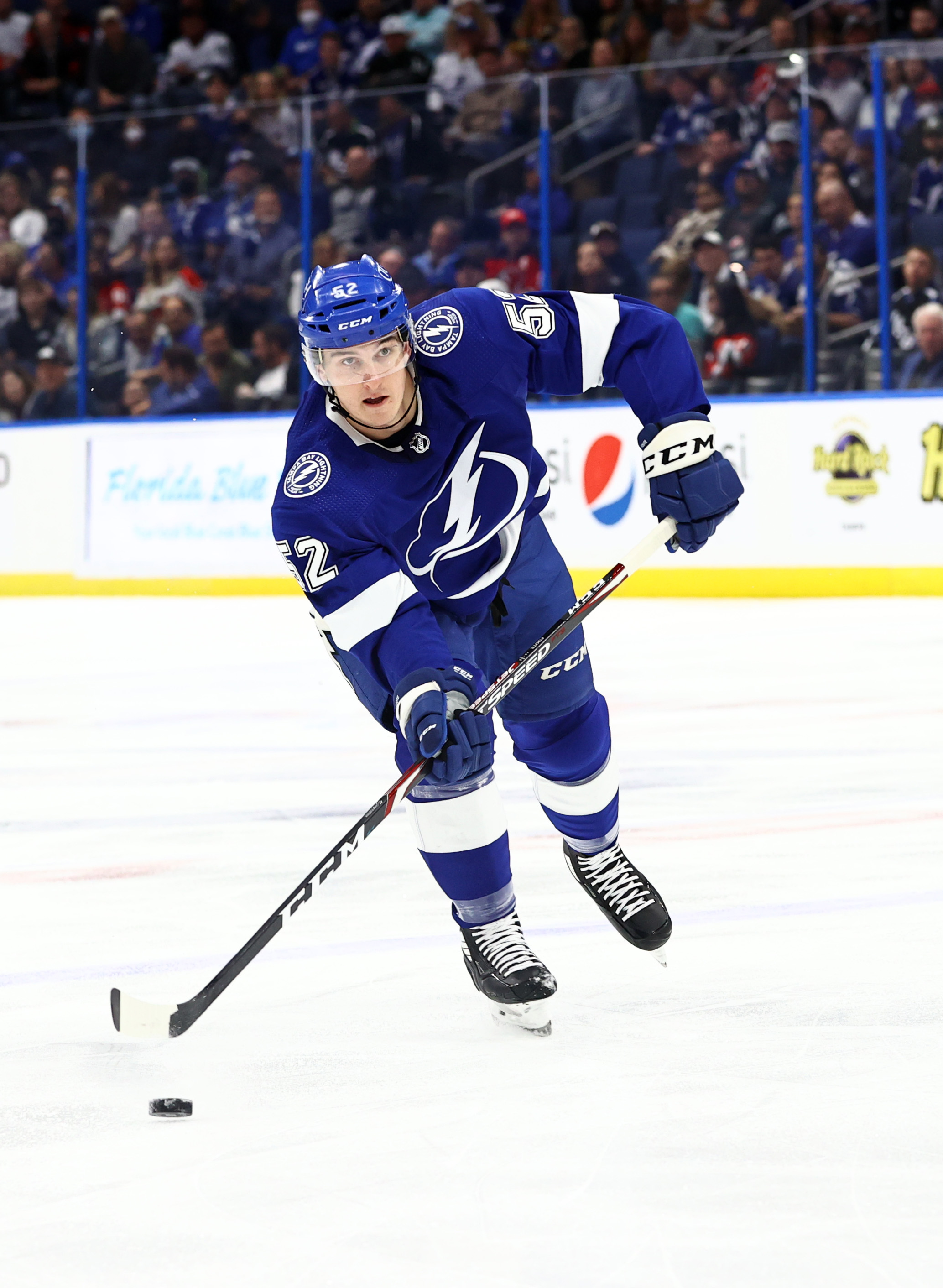 It would be fair to argue that it would serve Tampa better to just stand pat, considering how strong their team has been all season. But if they do opt to move out a roster player for a win-now upgrade, defenseman Cal Foote immediately jumps off the page. It’s certainly not time to give up on him yet, but in his second full-time season, he’s got just five points in 37 games and has been sparingly used in the lineup, averaging just 13:35 per game. He’s also the weakest analytical link on the Tampa Bay blue line. In fact, given Foote’s youth and ceiling, general manager Julien BriseBois could likely recoup an asset or two from another team along with a more experienced, veteran defenseman.
If a different deal comes along, the Bolts do still have a closet of later-round picks to deal from in the 2023 Draft. With just six picks remaining in 2022, it’s reasonable to expect that they’d prefer to hold onto those for the time being.
Others To Watch For: F Alex Barre-Boulet ($758k through 2024), F Gabriel Fortier ($792k through 2023), G Hugo Alnefelt ($851k through 2023)
Team Needs
1) Depth Defenseman – It’s poetic that one of the few transactions that makes sense for such a cap-strapped team also fills likely their biggest need in the lineup. Behind Foote on the depth chart is Zach Bogosian, who’s struggled with injury all season, and Andrej Sustr, a European re-entry player this year who’s gotten into just 13 games with one point. Another body would be good insurance for Tampa, especially another left-shot man for the third pairing that would allow them to more comfortably use Mikhail Sergachev up alongside Victor Hedman, where he’s found a good home this season.
2) More Draft Picks – The prospect cupboard is beginning to empty for Tampa, who has drafted very efficiently in recent years to maintain their success. Getting some more mid- to late-round picks in the fold in the right trade could once again pan out to be a star for the Lightning’s stellar scouting group.
Photo courtesy of USA Today Sports Images
Trade Deadline Primer: Detroit Red Wings
With the All-Star break now behind us, the trade deadline looms large and is now less than a month away. Where does each team stand and what moves should they be looking to make? We continue our look around the league with the Detroit Red Wings.
The Detroit Red Wings have impressed this season, enjoying growth all around from their young core and gigantic rookie performances from Lucas Raymond and Moritz Seider. With the playoff picture in the Eastern Conference virtually set in stone, though, any playoff aspirations for Detroit at this point are ill-advised, but that doesn’t take away from the extremely solid stepping-stone season Detroit and general manager Steve Yzerman have built to help set up the future.
Record
23-24-6, 5th in the Atlantic
Deadline Status
Seller
Deadline Cap Space
$35.80MM today, $55.49MM in full-season space, 1/3 retention slots used, 43/50 contracts used per CapFriendly
Upcoming Draft Picks
2022: DET 1st, DET 2nd, WSH 2nd, DET 3rd, DET 4th, COL 4th, VGK 4th, DET 5th, DET 7th
2023: DET 1st, DET 2nd, DET 3rd, DET 4th, DET 5th, DET 6th, DET 7th
Trade Chips
Detroit’s on the emerging end of a rebuild, so any decent player with term for the Wings is likely safe from trade speculation. However, there’s a decent amount of pending unrestricted free agents for whom Detroit would love to retain assets.
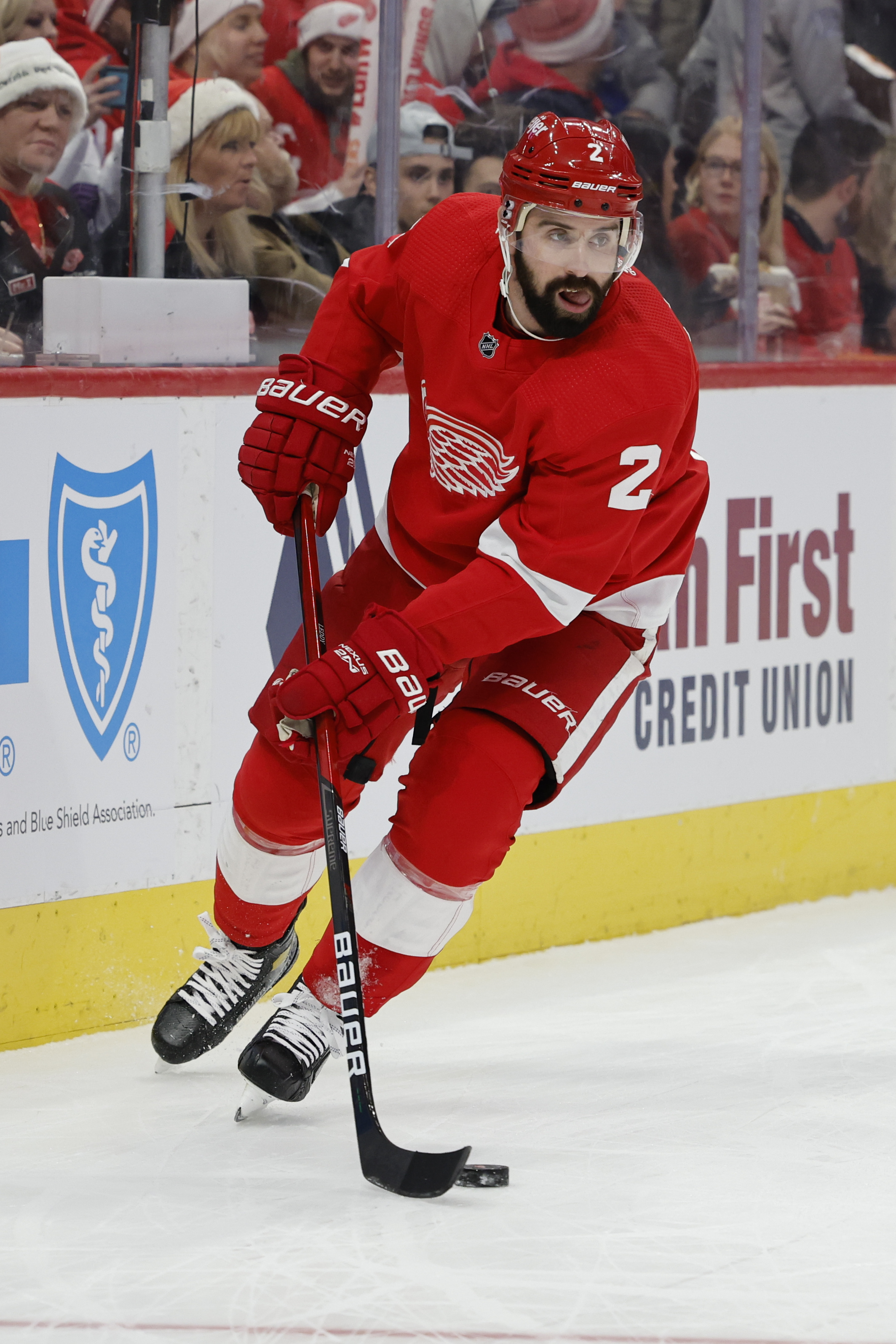 The highest-caliber of these Detroit pending free agents is undoubtedly defenseman Nick Leddy. The long-time New York Islander was shipped to Detroit this past offseason in a salary-clearing move, with Detroit yielding a second-round pick to acquire his services. The 30-year-old has 12 points in 48 games this year and is still capable of logging top-four minutes, meaning that Yzerman should be able to at least recoup similar value for Leddy on the trade market. Leddy has struggled defensively, often being outshined by his partner Seider, but could benefit from facing lesser competition on a better team.
Marc Staal is another left-shot veteran defenseman on an expiring deal that could make some sense for teams. He’s having his best season in recent memory, rebounding with some solid two-way play after being an analytical nightmare for the past few years. His +12 rating is the only positive rating among active Detroit defensemen, and with a reasonable $2MM cap hit, many contenders could work him into a third-pairing/seventh man role with ease. He does have a no-movement clause, however, meaning he’d need to accept any trade in order for it to clear.
On offense, there’s Vladislav Namestnikov. Fifth on the team in goals with 13, he’s having a much better season than his first year in Detroit. He’s a good two-way presence capable of logging middle-six minutes, and his versatility among forward positions makes him an attractive option to have in the lineup when injury strikes. He could likely command a third- or fourth-round pick on the trade market, perhaps more.
Others To Watch For: F Sam Gagner ($850K, pending UFA), D Troy Stecher ($1.7M, pending UFA), G Thomas Greiss ($3.6MM, pending UFA)
Team Needs
1) 2023 Draft Picks — Detroit already has considerable pick depth in 2022 with an additional second-round choice and two extra fourth-round picks, but they’re lacking any additional selections in 2023. With that 2023 Draft class shaping up to be one of the overall highest-quality ones in recent memory, it would be wiser to load up the following year rather than trading for more 2022 selections. It could also give Detroit additional trade chip material at the 2023 Trade Deadline if the team finds itself in playoff contention.
2) Forward Prospects — While the Red Wings have an incredibly bright and deep future on defense, the Red Wings are now lacking many high-end forward prospects in the team’s development system after players like Lucas Raymond and Joe Veleno have graduated to full-time NHL roles. Additional depth there would be a nice get for Detroit.
Photo courtesy of USA Today Sports Images