
Avalanche Re-Sign Brent Burns, Brett Kulak
The Colorado Avalanche have re-signed defensemen Brent Burns and Brett Kulak, according to a pair of team announcements. Kulak’s extension is a five-year pact, while Burns’ deal is for one year.
The financial terms of the deals were not disclosed, but Elliotte Friedman of Sportsnet has reported Kulak’s deal carries a $4.5MM AAV. Pierre LeBrun of The Athletic reported Burns’ deal carries a league-minimum $850K base salary, but he can earn “over $2MM more” in performance bonuses.
In re-signing this pair of veteran defensemen, the Avalanche have prevented losing two of their six regular blueliners in free agency next week. Kulak, 32, was acquired from the Pittsburgh Penguins in a February deal that included Stanley Cup champion Samuel Girard. Kulak, who has been to the Stanley Cup Final three times in his 663-game NHL career, was a solid fit in Colorado.
While he only scored three points in 27 regular-season games, he really made his mark in the playoffs. Kulak scored five points in 13 games, and his lone goal of the postseason was an overtime marker that sent the Avalanche to the Western Conference Final.
Kulak quickly earned the trust of head coach Jared Bednar, averaging 19:08 time on ice per game, which ranked No. 3 among all Avalanche blueliners with at least 20 games played. In the playoffs, his usage ticked up to 20:37 per game. In both the regular season and playoffs, Kulak capably handled 90 seconds of ice time on the penalty kill per game.
While this deal has some downside risk as it carries Kulak to the age of 37, his re-signing will certainly help the Avalanche in the immediate term as they chase another Stanley Cup title. Kulak himself has been to the Stanley Cup Final on three occasions, but lost each time. (2021 Montreal Canadiens, 2024 and 2025 Edmonton Oilers)
While Kulak will almost certainly not have a spot on Colorado’s top pairing (the place alongside Cale Makar belongs to Devon Toews), he could fit into the team’s top-four next to Josh Manson or Sam Malinski.
Kulak could also end up paired with Burns, who will turn 42 before today’s extension runs to its end.
A potential future Hall of Fame inductee, Burns is continuing his legendary NHL career for another campaign as he chases the Stanley Cup ring that has thus far eluded him. Burns had a strong season in Colorado, scoring 12 goals and 35 points in 82 games.
That represented a step up from his production in 2024-25, when he had just 29 points.
While Burns is not the offensive force he once was, he showed last season he can still be productive in the NHL, and provides the team with some cover in case they lose Makar, their top power play quarterback, to an injury. The Avalanche also utilized Burns as a regular penalty killer, with his 2:12 short-handed time on ice per game ranking second on the team.
While defensive prowess has not been Burns’ calling card throughout his NHL career, becoming a regular penalty killer in Colorado is an interesting wrinkle he’s added to his game. With a cost centered around performance bonuses, there is a real avenue for Burns to provide Colorado with surplus value as he plays out this contract.
Photos courtesy of Jayne Kamin-Oncea-Imagn Images
Assessing The Oilers Options For Tristan Jarry
Heading into the summer of 2025, many hockey pundits and commentators were discussing the Pittsburgh Penguins’ options for goaltender Tristan Jarry. For his part, Jarry had just cleared waivers in early 2025, and it appeared the Penguins would be boxed into the remaining three years of his contract, which carried a $5.375MM cap hit. He seemed unmovable, and the Penguins were more than willing to move him, offering him to the entire league for nothing on multiple occasions. This wasn’t the first season in which the chatter around Jarry was negative, as the sentiment to move him was the same at the start of the 2024-25 season. Now, the Jarry problem has become an Edmonton Oilers problem after the team paid a premium in December for a trade that was disastrous, to put it generously. The Oilers need better goaltending, but they have a massive black cloud in Jarry’s contract, which remains nearly unmovable. The team needs to find a path forward for Jarry, but their options are limited.
The first option is a buyout, which, according to PuckPedia, would save Edmonton $666,667 this season and $1,166,667 next season, followed by a $458K cap penalty over the next two seasons. Effectively, the Oilers would still carry a $4.7MM cap hit this year and a $4.2MM cap hit next season, making a buyout a silly proposition and one Edmonton is unlikely to use.
The team would be better served by simply burying Jarry in the AHL for the season, which would provide more relief. The formula next season would be the NHL league minimum ($850K) plus $375K, resulting in $1.225MM in cap relief for the Oilers, a better number than a buyout, which would carry an additional two years of cap penalty. Pittsburgh used this tactic on multiple occasions, with Jarry playing 12 AHL games during the 2024-25 season.
Then there is the trade option, which at this point doesn’t look like an option at all. Stranger things have happened, and no one expected Jarry to be moved this past year. Jarry started last season fairly well in Pittsburgh, giving the Penguins 14 games of above-average goaltending before GM Kyle Dubas leveraged that to send Jarry to the Oilers in a trade. Edmonton sent Stuart Skinner, Brett Kulak and a 2029 second-round draft pick back to Pittsburgh in return for the 31-year-old Jarry in what was a heavility criticized transaction from the Oilers perspective. There isn’t a trade like that out there for the Oilers, and even if Jarry were to start hot again this season, too many teams have seen this movie before, as it’s been common for Jarry to start seasons well and end them poorly. After all, Jarry is a two-time all-star and has even garnered Vezina Trophy talk in some seasons prior to the Christmas break, but it’s almost an annual occurrence for him to fall apart in the second half, which is alarming to put it mildly.
If Edmonton wants to trade for Jarry, it will need to pursue one of two strategies. It will either need to move Jarry for an equally undesirable contract, of which there are a lot, or attach assets to Jarry and move him in a trade package, similar to the way the Dallas Stars traded defenseman Matt Dumba to Pittsburgh last summer. The Penguins received a second-round pick for their troubles, a steep price for Dallas to pay to rid itself of one season of Dumba’s $3.75MM cap hit. In another transaction the year prior, the Blues paid Pittsburgh a second-round pick to take on the final two years of forward Kevin Hayes’s contract, which carried a cap hit of $3.571MM.
Now, the salary cap environment has changed dramatically in recent seasons, meaning that teams have more cap space and more teams might be willing to take on a contract like Jarry’s, which could bring the price down. However, one of the teams with ample cap space is Pittsburgh, and they probably aren’t keen to bring him back into the fold, even if they are compensated to do so. Jarry also has a 12-team no-trade list, which will further complicate things, but it does leave 18 teams available to work with if Edmonton is willing to part with some assets to move him. Jarry makes quite a chunk of money for a player who might not be NHL caliber anymore, meaning that if Edmonton wants to dump his contract, they might have to pay a second-round pick or more. There is also the issue of Edmonton’s desperation, which could drive the price even higher if they paint themselves into a corner and have no choice but to get him off their books.
The other strategy mentioned earlier might be the best for the Oilers: trading Jarry for another bad NHL contract. Would Pittsburgh consider taking back Jarry if it meant they could send Ryan Graves to Edmonton? Unlikely, but there are plenty of Graves-type contracts around the league, and plenty of teams motivated to get out from under them.
An option could be to move Columbus netminder Elvis Merzlikins, who has one year left on his deal and a cap hit near Jarry’s ($5.4MM). Merzlikins hasn’t been an average goaltender for nearly five years and was below average again this year, posting a -7.3 goals saved above expected (as per MoneyPuck). Acquiring him would shorten the window during which Edmonton is on the hook for a high-priced, below-average goaltender, although Columbus might ask for a small asset to take on the extra year on Jarry’s contract.
There is also a possibility that Jarry is packaged with another bad contract on the Oilers, such as Trent Frederic or Darnell Nurse, to facilitate a swap for a higher-priced bad contract from another team. At some point, one of those swaps is going to take place, given the sheer volume of NHL teams carrying high-priced, bonus-laden, unmovable contracts.
Penguins Acquire Samuel Girard From Avalanche
The Penguins acquired left-shot blue-liner Samuel Girard and a 2028 second-round pick from the Avalanche in exchange for defenseman Brett Kulak, both teams announced Tuesday.
Girard has been in the rumor mill for what seems like years. Colorado hoped to make him a future top-four anchor behind Cale Makar and Devon Toews – he actually predates both of them and was the Avs’ longest-tenured defenseman – when they acquired him from the Predators in 2017. After the puck-mover impressed and sniffed 20 minutes per game of ice time in his first full season in Colorado, the Avs inked him to a seven-year, $35MM extension.
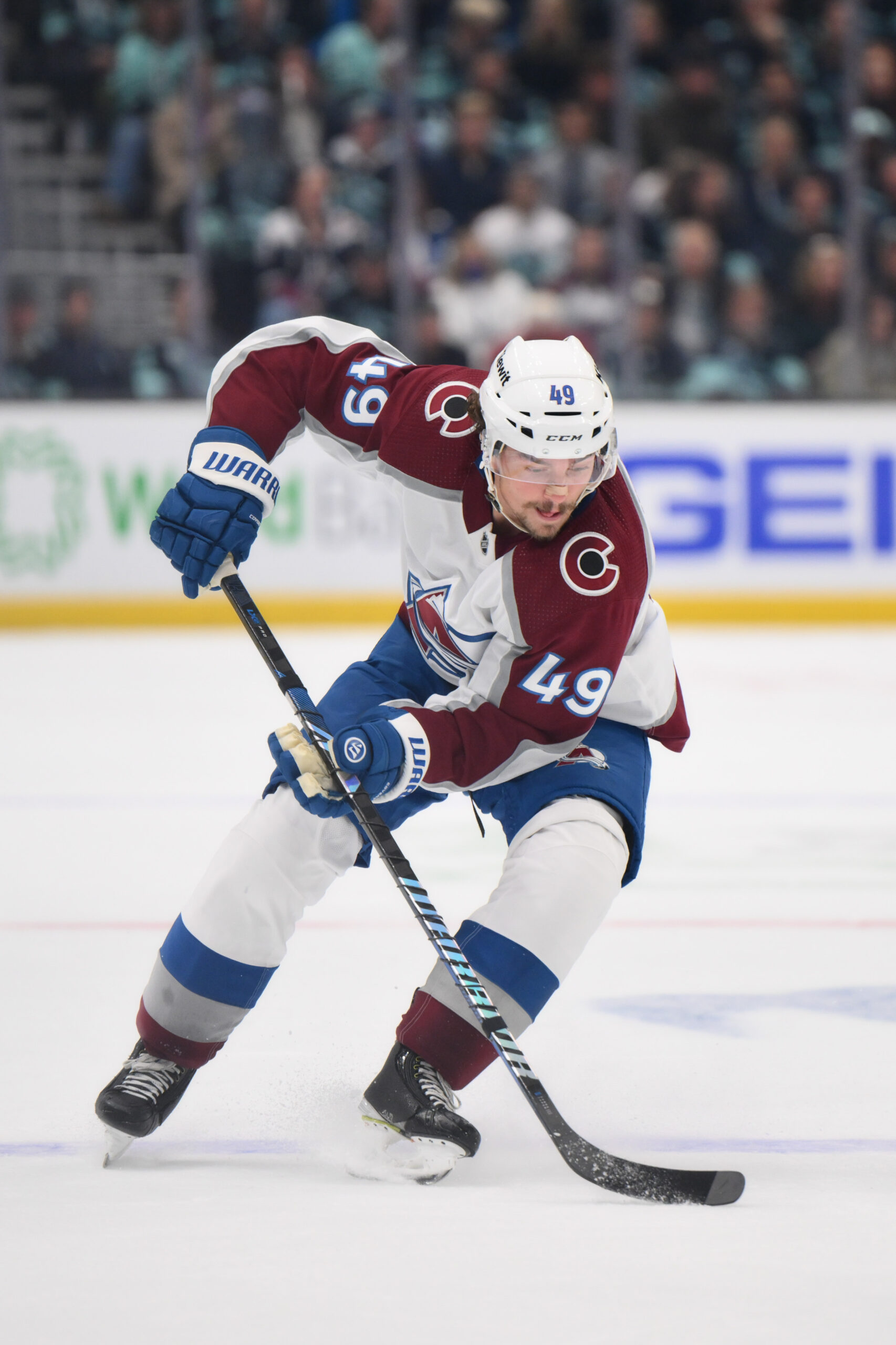 Some warned the commitment was premature. Now, in the penultimate season of the contract, they’d be right, at least based on his recent play. Girard’s performance back in the pandemic-shortened 2021 campaign made it look like he’d be the final piece of a true three-headed monster behind Makar and Toews, rattling off 32 points and a +15 rating in 58 games. His trajectory has been largely downhill from there. His minutes were steadily reduced from the 23-plus minutes he logged that year, his playoff performances were negligible, and he never churned out the same level of two-way play. He’s topped 30 points just once since then and has had negative relative Corsi impacts three times in the last five seasons at 5-on-5.
Still, Girard remained Colorado’s clear-cut No. 2 left-shot option behind Toews, especially after the Avs jettisoned Bowen Byram at the 2024 trade deadline. Then came this season. Girard sustained an upper-body injury in Colorado’s second game of the season that left him on the shelf for a month. During that time, veteran righty Brent Burns got the bump up to second-pairing minutes with Josh Manson moving to his offside in lieu of Girard. That duo, with over 2,200 combined games of NHL experience, has put up fantastic results – even posting better possession numbers than Makar and Toews have with a 56.8 xGF%, per MoneyPuck.
That pushed Girard down to a third-pairing role along with Sam Malinski, averaging only 17:41 of ice time per game. Even there, Malinski’s 25-point, +30 breakout through 55 games had rendered Girard as something of an expensive depth redundancy, especially with Malinski now extended through 2029-30 and Girard costing $5MM against the cap.
That cap impact, in a season where the Avs are the top Cup favorites by a significant margin, is why general manager Chris McFarland was willing to offload a second-round pick to get out of the last year and a half of his deal – especially if they’re receiving a much cheaper third-pairing option in Kulak in return, who’s having a strong season. Swapping out Girard for the pending UFA Kulak, who costs only $2.75MM, now leaves the Avs with a projected $10.82MM in cap space on deadline day, per PuckPedia. They’ve also given themselves $13MM even in cap space for next season, up from just $8MM to fill seven spots before the deal.
Kulak’s time in Pittsburgh ends after 25 games. It’s his second time being traded this season, having been acquired from the Oilers in December as part of the Tristan Jarry/Stuart Skinner swap. During that time, he’d gotten a bump in minutes alongside Kris Letang in top-four deployment and showed he was up to the task. He’s having a tough season offensively, even by his limited standards as a shutdown bottom-four piece, but managed seven points with a +2 rating while playing almost exclusively with Letang. That duo controlled 52.2% of expected goals as well, per MoneyPuck.
Given how both players grade out this season, it’s likely a lateral move at worst for both clubs. It’s a bit more of a long-term focused move for the Pens, though. They have little to no long-term security in their top four. Parker Wotherspoon has impressed this season, elevated as a top-pairing shutdown partner for Erik Karlsson, although he’s been a career third-pairing option and, at age 28, the prospects for regression next season are bright. Ryan Shea is, like Kulak, a pending UFA. Their veteran depth options are uninspiring, and it’s questionable if 2022 first-rounder Owen Pickering will be ready to log NHL minutes next season.
They now have a year and change of a 27-year-old Girard, plus the ability to discuss an extension with him starting July 1. He immediately becomes their most offensively dynamic threat on the left side and becomes the youngest name in Pittsburgh’s aging top-four group. They’re banking on Girard, who has 12 points in 40 outings this season, to return to his 30-plus point form back in expanded minutes, but considering he’s averaged over 20 minutes per game for his career, it’ll be a familiar situation for him.
Elliotte Friedman of Sportsnet was first to report the trade.
Image courtesy of Steven Bisig-Imagn Images.
Morning Notes: Kulak, Chernyshov, Blue Jackets
The Pittsburgh Penguins acquired veteran defenseman Brett Kulak from the Edmonton Oilers as part of the trade between the two clubs that swapped netminder Tristan Jarry for Stuart Skinner. While Kulak adds a level of experience to Pittsburgh’s back end that could be valuable, the club only recently ended an eight-game losing streak that raised significant questions about their ability to compete for a playoff spot this season. That losing streak raised a few questions as to whether the Penguins are best served keeping Kulak for the rest of the year (his $2.75MM AAV deal expires at the end of the season) or if they would benefit from trading him to another team.
Sportsnet’s Elliotte Friedman reported that before Kulak was traded to Pittsburgh, “there were teams interested” in acquiring him from the Oilers, but a trade never materialized largely for salary cap reasons. Friedman cited the Penguins’ trade of Luke Schenn to the Winnipeg Jets, very shortly after acquiring him from the Nashville Predators, as a notable precedent here that the team set regarding its willingness to quickly flip a veteran blueliner. While there has not been any concrete indication that Pittsburgh is actively exploring this route with Kulak, Friedman’s reporting indicates it’s something to keep in mind at the very least.
Other notes from around the NHL:
- While the injury suffered by San Jose Sharks forward Will Smith was certainly not something the Sharks have benefited from, the opportunity provided by his absence in the lineup has at least been something other young players have so far been able to take advantage of. 2024 second-round pick Igor Chernyshov has played in the first three NHL games of his career, landing on franchise pivot Macklin Celebrini‘s wing as a result of Smith’s absence. He’s managed three assists in his first three games, playing at an impressive level for a player with no prior experience at the NHL level. That has raised questions as to whether the Sharks would benefit from keeping Chernyshov in the NHL, even after Smith returns, and per San Jose Hockey Now’s Sheng Peng, Sharks head coach Ryan Warsofsky admitted the team “didn’t think he was gonna be this quick to help us,” and added that Chernyshov has far exceeded expectations thus far in the NHL.
- New Buffalo Sabres GM Jarmo Kekäläinen brought one of his former longtime lieutenants, Columbus Blue Jackets assistant GM Josh Flynn, to Buffalo this week in order to fill the same role but for the Sabres. In the aftermath of that move, The Athletic’s Aaron Portzline wrote today regarding which other Blue Jackets hockey operations staff might join Flynn in heading to Buffalo. Portzline specifically cited Blue Jackets director of pro scouting Basil McRae, who was formerly an assistant GM before shifting titles after the arrival of current Columbus GM Don Waddell, as a possibility. He also named director of amateur scouting Ville Sirén and goaltending coach Nicklas Backstrom as two other names who Kekäläinen might look to add to his staff in Buffalo.
Penguins Recall Sergei Murashov On An Emergency Basis
Dec. 15th: According to a team announcement, Skinner and Kulak have made it through the immigration process and have been added to the Penguins’ active roster. After doing that, Pittsburgh was able to assign Murashov back to AHL Wilkes-Barre/Scranton from his emergency recall.
Dec. 13th: While Pittsburgh has a new netminder, they’ll have to wait a bit for his debut with the team. The Penguins announced (Twitter link) that both Stuart Skinner and defenseman Brett Kulak have been granted non-roster status while going through the immigration process. With the team needing a second goalie for tonight’s game against San Jose, Sergei Murashov has been recalled from AHL Wilkes-Barre/Scranton.
Murashov was a fourth-round pick by the Penguins back in 2022 and he is in his second full season in North America. Last year, he split time between Wilkes-Barre/Scranton and ECHL Wheeling, doing well at both levels, including a .922 SV% in 26 games with the latter.
That moved him up the depth chart this season and earned him his first NHL action earlier on this season. Murashov has played in four games with Pittsburgh, posting a 1-1-1 record with his win being a shutout. He has a solid 1.90 GAA and .913 SV% in those outings which is certainly worthy of a longer look. However, with two other goalies on their roster, they’ve prioritized maximizing Murashov’s playing time in the minors. In 11 outings with Wilkes-Barre/Scranton, he has been elite, compiling a 1.56 GAA and a .943 SV%.
It can take several days for a player to go through the immigration process and with applications typically not getting processed on weekends, it might take a few games before Skinner and Kulak get the green light to make their Penguins debuts.
Oilers Acquire Tristan Jarry, Spencer Stastney
9:45 a.m.: All three teams have confirmed the trades. The Penguins confirmed that the draft pick acquired from the Oilers will be Edmonton’s 2029 second-round pick. No salary was retained in either deal.
9:02 a.m.: The Edmonton Oilers are reportedly close to making a pair of significant trades today. According to Sportsnet’s Elliotte Friedman, the Oilers are working to acquire netminder Tristan Jarry from the Pittsburgh Penguins and defenseman Spencer Stastney from the Nashville Predators. Shortly thereafter, TSN’s Pierre LeBrun confirmed that Jarry is heading to Edmonton.
As trade details continue to trickle in, LeBrun reported that Stastney will cost Edmonton their 2027 third-round pick. Meanwhile, insider Frank Seravalli suggests that Stuart Skinner and another player are a part of the package going to Pittsburgh for Jarry. ESPN’s Kevin Weekes added that defenseman Brett Kulak and a draft pick are also going to Pittsburgh, while former first-round pick Samuel Poulin is headed to Alberta.
Edmonton’s interest in Jarry has been well-known for the last few weeks. A day before American Thanksgiving, Weekes reported that Jarry had been generating trade interest from around the league and that the Oilers were far and away the most interested — for good reason. Given the tight salary cap situation for the Oilers, it’s likely that trade conversations between Edmonton and Pittsburgh have been going on for the last several weeks.
After playing relatively well for the Oilers throughout their first run to the Stanley Cup Final in 2024, Edmonton returned to the Cup Final last season despite Skinner’s performance. He didn’t play in all the potential games throughout last year’s push, but he finished with a .889 SV% in 15 contests, including a more than disappointing .861 SV% in five games against the Florida Panthers.
The situation has worsened this season, and obviously reached a boiling point for the Oilers’ front office. Through Edmonton’s first 33 games, the duo of Skinner and Calvin Pickard has combined for a .879 SV%. There was no help available via recall either, as third-string netminder Connor Ingram owns a .868 mark with the AHL’s Bakersfield Condors.
If Jarry continues his current resurgence, the Oilers should have some newfound stability in the crease. In 13 starts this season, Jarry has a 9-3-1 record with a .909 SV% and 2.66 GAA. According to MoneyPuck, for netminders that have played in 10 or more games, Jarry is ranked 22nd in the league for Goals Saved Above Expected this season. He’s by no means the best netminder in the league this season, though he’s performing much better than Skinner and Pickard, who are ranked 32nd and 52nd, respectively.
Still, Jarry has been volatile in his own right. Last season, in what was the worst performance of his professional career, Jarry finished with a .892 SV% and 3.12 GAA, ranking 33rd in GSAx. If he reverts to that form as he finishes out the remaining three years of his five-year, $28.66MM contract, the Oilers will be in a world of trouble.
At any rate, while they acquired a pair of pending unrestricted free agents in Skinner and Kulak, it’s nothing but a win for the Penguins to receive a second-round pick for Jarry’s services. One year ago, Pittsburgh placed Jarry on the waiver wire, meaning the Oilers could have had him for free had they been able to make the money work. The fact that the Penguins were able to get actual assets for Jarry a year later is a testament to their patience.
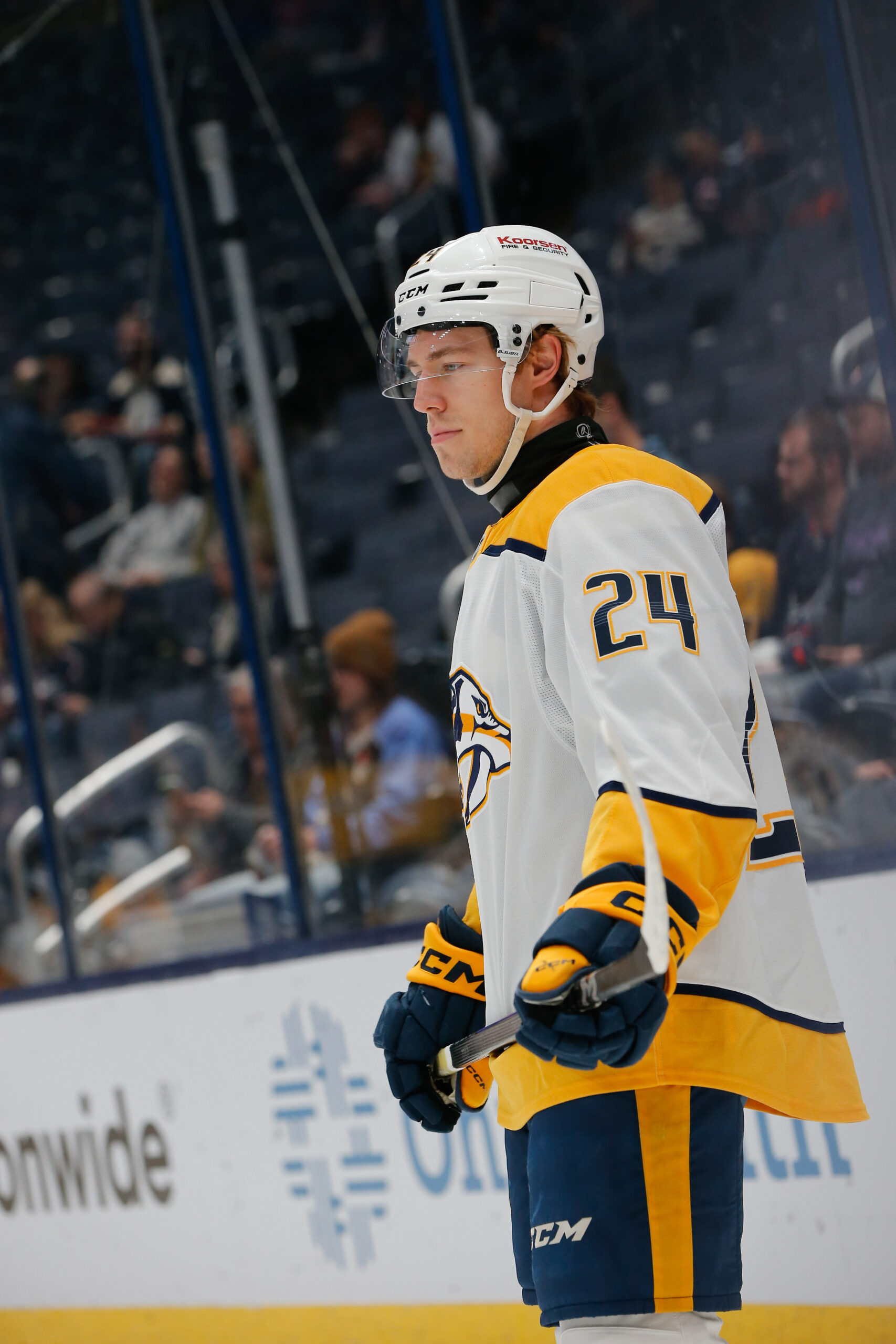 Meanwhile, the Oilers have swapped Kulak’s $2.75MM cap hit with Stastney’s $825K. Despite finishing with the highest point production of his career last season, Kulak has struggled through the first few months of the 2025-26 campaign.
Registering only two assists in 31 games, it became apparent that Kulak’s time with the Oilers may be coming to an end. Typically reliable on the defensive side of the puck, Kulak’s 87.0% on-ice save percentage at even strength was troubling considering that he had never finished with lower than an 89.0% mark throughout his 12-year career.
Stastney, 25, offers more on the offensive side of the puck and is actually performing better on the defensive side of the puck compared to Kulak this season. The pending restricted free agent blueliner has scored one goal and nine points in 30 games this season for the Predators, averaging a 90.0% on-ice save percentage.
Lastly, as a part of the Jarry trade, the Penguins have finally moved on from Poulin. The 24-year-old had appeared in a few games for the Penguins this season, but failed to do much with his opportunity despite being given middle-six minutes. Still, he’s been on a tear in the AHL, scoring nine goals and 20 points in 22 games. He’ll likely report directly to the Oilers, considering the number of injuries they’ve had to their depth forwards this season.
Photo courtesy of Russell LaBounty-Imagn Images.
Oilers Have Held Extension Talks With Brett Kulak
It has been a busy week for the Oilers on the extension front as they’ve signed center Connor McDavid along with defensemen Jake Walman and Mattias Ekholm to contract extensions. If they have their way, there’s at least one more to come.
TSN’s Ryan Rishaug recently reported (Twitter link) that Edmonton has engaged in extension talks for pending UFA defenseman Brett Kulak. However, unlike those other players, nothing appears to be imminent at this time.
The 31-year-old is in the final season of a four-year, $11MM contract and he is slated to become an unrestricted free agent in July if a new deal can’t be reached by then. At times, Kulak’s contract has been high enough to lead to trade speculation when the Oilers needed to free up some cap space but each time, they’ve found a way to open up the cap room while keeping him around.
This is Kulak’s fifth season in Edmonton after being acquired from Montreal in 2022 for blueliner William Lagesson and a pair of draft picks (one of which was used to select Lane Hutson a few months later). Early in his tenure with the team, he was used in more of a third-pairing role which made the price point a bit of a premium for that role.
However, head coach Kris Knoblauch leaned on Kulak a lot more last season as his ATOI jumped by more than five minutes a night from 15:23 per game to 20:32. That jumped even higher in the playoffs to 23:25, second among all Edmonton defenders.
That usage will make locking down an early extension a little trickier. Edmonton’s preference would likely be to keep paying him in that number five range with a price tag that should slot in around the $3.5MM mark. On the other hand, Kulak’s camp will probably be seeking a deal more commensurate with a number four defender, something around a million or so more per season.
As things stand, the Oilers have around $17.7MM in cap space for next season, per PuckPedia, based on the original salary cap projection of $104.5MM for 2026-27. However, they still have half a dozen or so roster spots to fill with that money, including a goalie tandem. As the market for netminders continues to go up, it’s possible that they’ll need to spend half of their cap room or more on that position which would make it difficult to fit Kulak back onto their books if his next contract is around a quarter of that cap space.
Accordingly, it’s not too surprising that talks haven’t progressed quickly as it makes sense for both sides to see what type of role Kulak will have this season while also seeing if one of their goaltenders will be worth keeping for 2026-27 and beyond. But at this point, it’s clear that GM Stan Bowman wants to keep the veteran in the fold for a little while longer. It just might take a while for it to happen.
Oilers Have Received Some Interest In Cody Ceci And Brett Kulak
With the Blues tendering offer sheets to defenseman Philip Broberg and forward Dylan Holloway, the Oilers now have to decide if they’re going to match those offers, even though it would put them more than $7MM over the salary cap. While Evander Kane’s expected presence on LTIR would mitigate that in the short term, it’s fair to say that Edmonton will need to create some cap space at some point. With several veterans on pricey long-term agreements who are unlikely to be moved, free agents who just signed, or players on low-cost contracts, there aren’t many viable candidates to make that happen.
Of the ones who potentially could be moved, Postmedia’s Bruce Garrioch reports that the Oilers are trying to get the contracts of blueliners Cody Ceci and Brett Kulak off their books. Combined, the two carry a $6MM cap charge which still wouldn’t be enough to get cap-compliant when Kane is able to play but moving those two would at least get them compliant to start the season in conjunction with Kane’s $5.25MM AAV landing on LTIR.
Ceci has one year left on his contract with a $3.25MM price tag. The 30-year-old has spent the last three seasons in Edmonton, playing in their top four with an ATOI of more than 20 minutes each year. Last season, Ceci had five goals and 20 assists in 79 games while chipping in with five points in 22 playoff contests as the Oilers made it to the Stanley Cup Final. As an expiring deal and being a right-shot defender, he might be the easier of the two to move even with the slightly higher cap hit and he does not have any trade protection on his deal.
Kulak, meanwhile, checks in at a $2.75MM AAV for the next two seasons. Acquired at the 2022 trade deadline from Montreal, the 30-year-old has settled in nicely on Edmonton’s third pairing. Last season, Kulak had three goals and 13 assists in 82 games while averaging 15:23 per night. His playing time went up a bit in the postseason to 16:30 per contest while adding eight points in 25 appearances. However, that price point for a third-pairing defender is on the high side which isn’t ideal in terms of trying to get top value for his services. Kulak also does not have any trade protection in his contract.
To that end, while Garrioch relays that teams have shown interest in both players, it comes at a cost. Not to the potential acquiring team, however. Instead, he notes that with teams knowing that the Oilers are in a bind as a result of these offer sheets, they’re going to want compensation to be sent with the player to incentivize them to bail Edmonton out. Garrioch suggests that the price tag to take a player on in both scenarios could be a first-round pick or a second-round selection. Worth noting is that the Oilers don’t have either of those for the 2025 draft but do for 2026 and if they match the offer sheets, they won’t be getting any compensation from St. Louis.
Edmonton has seven days to make a decision on matching the offers to Broberg ($4.58MM) and Holloway ($2.29MM). There’s a good chance that their ability (or lack thereof) to find a satisfactory trade for one or both of Ceci or Kulak will play a big role in the decisions on their two youngsters.
Pacific Notes: Hertl, Danault, Kulak, Ceci, Fleury
Top trade deadline pickup Tomáš Hertl took a major step toward making his Golden Knights debut Monday, practicing with the team in a non-contact jersey for the first time. The 30-year-old is on long-term injured reserve but is eligible to come off at any time. He had been on standard IR since being acquired from the Sharks on March 8 but was moved to LTIR last week to afford Vegas the cap space necessary to recall goaltender Jiří Patera from the minors with Adin Hill injured. With Patera returned to Henderson as of last night, the Golden Knights have enough cap space to activate Hertl’s $6.75MM cap hit whenever he’s ready to go. He’s expected to suit up for Vegas before the regular season draws to a close. The 11-year vet underwent knee surgery after representing San Jose at the 2024 All-Star Game and hasn’t played since late January. He remains week-to-week, but skating today is a strong indication he’ll be upgraded to day-to-day in the near future.
Other updates from the Pacific Division:
- Kings center Phillip Danault will be a game-time decision with his upper-body injury ahead of tonight’s matchup with the Jets, interim head coach Jim Hiller told reporters (via Ken Wiebe of The Winnipeg Free Press). Danault, 31, missed Saturday’s 4-2 loss to the Flames with the injury. The 2011 first-round pick is well on his way to earning Selke Trophy votes for the sixth straight season, although he’s yet to be a nominee. He has 17 goals and 42 points in 72 games this season, in line with his production since joining the Kings on a six-year, $33MM deal in 2021. His +14.5 expected rating this season is the second-highest of his career, and his 56.1 CF% at even strength is fifth among qualified Kings skaters despite receiving difficult defensive minutes. If Danault cannot play, 24-year-old Akil Thomas is expected to make his NHL debut after being recalled yesterday.
- Oilers defenseman Brett Kulak is expected to suit up Monday against the Blues, while Cody Ceci sits due to illness, per NHL.com. Kulak’s status for tonight’s game was uncertain after taking a puck to the head during his first shift against the Ducks on Saturday, ending his game prematurely. The 30-year-old has been decent in bottom-pairing usage for the Oilers this season, scoring three goals and adding 10 assists in 72 games. His ice time has dipped to 15:09 per game, the lowest of his Oilers tenure, but he’s controlled possession well with a +10.3 expected rating and a 52.9 CF% at even strength in his relatively easy minutes.
- The Kraken brought defenseman Cale Fleury back up from AHL Coachella Valley after sending him down yesterday, per a team announcement. Fleury has been summoned multiple times over the past few weeks for injury insurance while star blue-liner Vince Dunn remains sidelined with an upper-body injury. He hasn’t seen any game action, though, serving as a healthy scratch in the two games he’s been rostered for. On the farm, the 25-year-old has 32 points in 60 games, leading Coachella Valley defensemen. He signed a two-year, $1.6MM contract to remain in the Seattle organization last summer after reaching restricted free agency.
Edmonton Oilers Rank Last In Salary Cap Rankings
Daily Faceoff has ranked the Edmonton Oilers last in salary cap efficiency. This comes as no surprise after the website began its annual salary cap rankings list and after a deep dive into the numbers determined that there isn’t a team in a worse situation financially than the Oilers. It isn’t a shock given the Oilers current salary cap woes. The team finds itself with just 21 players on the roster and only $382,499 in cap space. Though finishing dead last on the list is new, Edmonton ranked second last in last year’s version of the list.
Daily Faceoff’s ranking system looks at no-move clauses, dead cap space, the quality of long-term contracts, bargain contracts, and the good deals versus the bad ones. Unfortunately, based on those criteria, it is easy to see why the Oilers find themselves at the bottom of that list. Edmonton has several problematic contracts on their books, and while they have some bargains like Leon Draisaitl, Connor McDavid, and Ryan Nugent-Hopkins. The bad deals outweigh the great ones.
Darnell Nurse is a really good defenseman; he eats a ton of minutes for the Oilers and plays a lot of tough situations. However, he does suffer a lot of mental lapses, and at $9.25 million a season, he just doesn’t bring the offensive upside you would like to see in a defenseman making that kind of money. Nurse is also likely to wear down as the miles pile up on his body. Those difficult minutes require that he play with a ton of physicality. It could take its toll on the 28-year-old when he gets on the wrong side of 30.
Some of the other bad contracts on the Oilers are goaltender Jack Campbell at $5MM per season as well as third-line winger Warren Foegele and third-pairing defenceman Brett Kulak at $2.75 million each. The contracts come in addition to the nearly $2MM per year the Oilers are still paying on the James Neal buyout.
On the surface, these contracts don’t look like outrageous overpayments because all the players listed above are still functional NHLers. However, in the flat cap era Campbell, Foegele, and Kulak are all replacement-level NHLers who could have been replaced by other players on contracts of less than $1MM per season. Couple that with the mishandling of Nurse’s previous bridge deals and it all amounts to around $10MM in inefficient salary cap spending that could lead to big problems for the Oilers down the road when they need to offer extensions to McDavid, Draisaitl, and Evan Bouchard.