
Summer Synopsis: Nashville Predators
For the last quarter century, the Nashville Predators had been carefully constructed by General Manager David Poile, who has just recently passed the reins to former head coach of the Predators, Barry Trotz. In a new transitionary period for the organization, Trotz will look to build the club from the ground up, trying to reach the elusive Stanley Cup, an award that Poile was never able to earn during his tenure in Nashville.
At last year’s trade deadline, the Predators were able to move out some prominent players such as Mattias Ekholm and Mikael Granlund. In the offseason, Nashville once again made some moves to rid themselves of a couple of higher-priced contracts but also made some interesting moves in what seems like an attempt to remain competitive in a free-for-all Western Conference playoff picture.
Draft
1-15: F Matthew Wood, Connecticut (NCAA)
1-24: D Tanner Molendyk, Saskatoon (WHL)
2-43: F Felix Nilsson, Rögle (J20 Nationell)
2-46: F Kalan Lind, Red Deer (WHL)
3-68: F Jesse Kiiskinen, Pelicans (U20 SM-Sarja)
3-83: D Dylan MacKinnon, Halifax (QMJHL)
4-111: F Joey Willis, Saginaw (OHL)
4-121: G Juha Jatkola, KalPa (Liiga)
5-143: F Sutter Muzzatti, RPI (NCAA)
6-175: F Austin Roest, Everett (WHL)
7-218: F Aiden Fink, Brooks (AJHL)
In the 2023 NHL Draft, the Predators had a plethora of selections, deepening their prospect pool for the foreseeable future. Not only was Nashville able to make 11 selections in this draft, but already has another 11 picks for the 2024 NHL Draft if they choose to hold on to them all.
To describe their first overall pick this year in one word: goals. During the 2022-23 season, the Predators finished 28th in goal-scoring across the league, with their team-leading total only being 22 goals on the year. In his freshman season at the University of Connecticut, Wood was able to score 11 goals and 23 assists in 35 games. He has the ability to shoot in motion, off both feet, and has some considerable quickness giving him the ability to create more scoring opportunities for himself. It’s going to be highly unlikely to see Wood in the NHL this year, but he should be a surefire bet to make Nashville’s roster for the 2024-25 season.
An under-the-radar selection they likely went overlooked due to the sheer number of selections made by the Predators at the draft would be Willis out of the Saginaw Spirit organization in the OHL. He does need a bit of work with his confidence with the puck, as well as finishing off scoring opportunities, but his major asset, his hockey intelligence, should make him a great foundation to build on for Nashville.
Key UFA Signings
F Anthony Angello (two years, $1.55MM)*
G Troy Grosenick (one year, $775K)*
F Denis Gurianov (one year, $850K)
F Gustav Nyquist (two years, $6.37MM)
F Ryan O’Reilly (four years, $18MM)
D Luke Schenn (three years, $8.25MM)
F Jasper Weatherby (one year, $775K)*
To be honest, it is incredibly difficult to decipher exactly what Nashville was trying to accomplish with their free agent class this offseason. Given the team’s movement in the months prior, all signs pointed to this team going the route of the rebuild, or at the very least a lengthy retool. However, handing out multi-year deals to three players over the age of 31 indicates that they are attempting to make the playoffs as soon as next season. 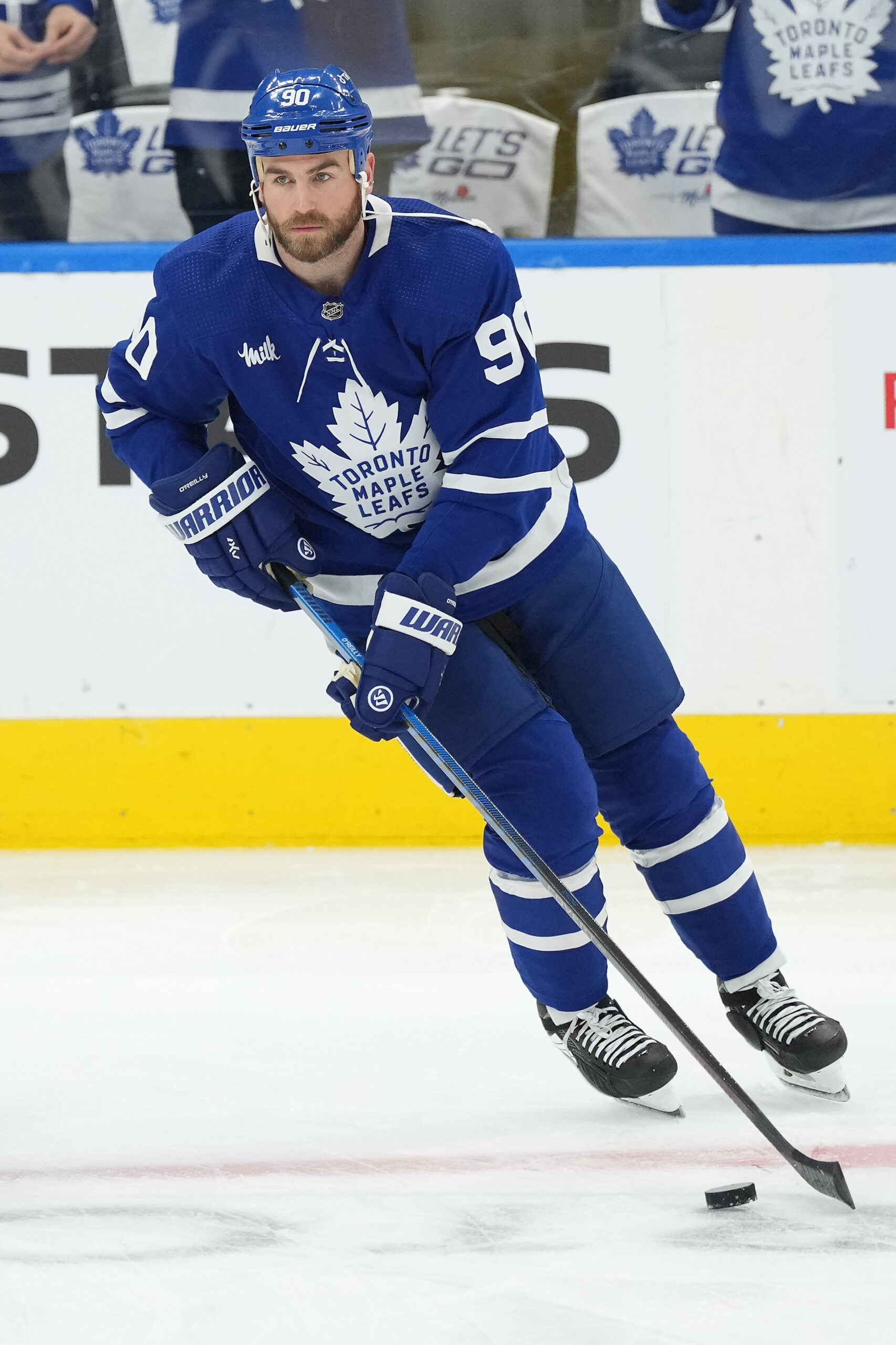
This is not to say that the Predators couldn’t make the playoffs as currently constructed, but they do not have enough high-level forwards to give this team the ability to really make some noise. Being a team with money to spend this summer, Nashville certainly could have done worse than this group, but it will likely take some time to determine exactly what direction the Predators believe they are headed.
Key Departures
F Ryan Johansen (traded to Colorado)
F Matt Duchene (Dallas, one year, $3MM)
F Zach Sanford (Arizona, one year, $800K)
F Rasmus Asplund (Florida, one year, $775K)
F John Leonard (Arizona, one year, $775K)
G Devin Cooley (Buffalo, one year, $775K)
A few weeks prior to the beginning of the offseason on July 1st, it wasn’t expected that Nashville would move two of its best forwards. Not only did both players have forgettable seasons last year, but both players were making $8MM a year, and their contracts seemed confidently immovable.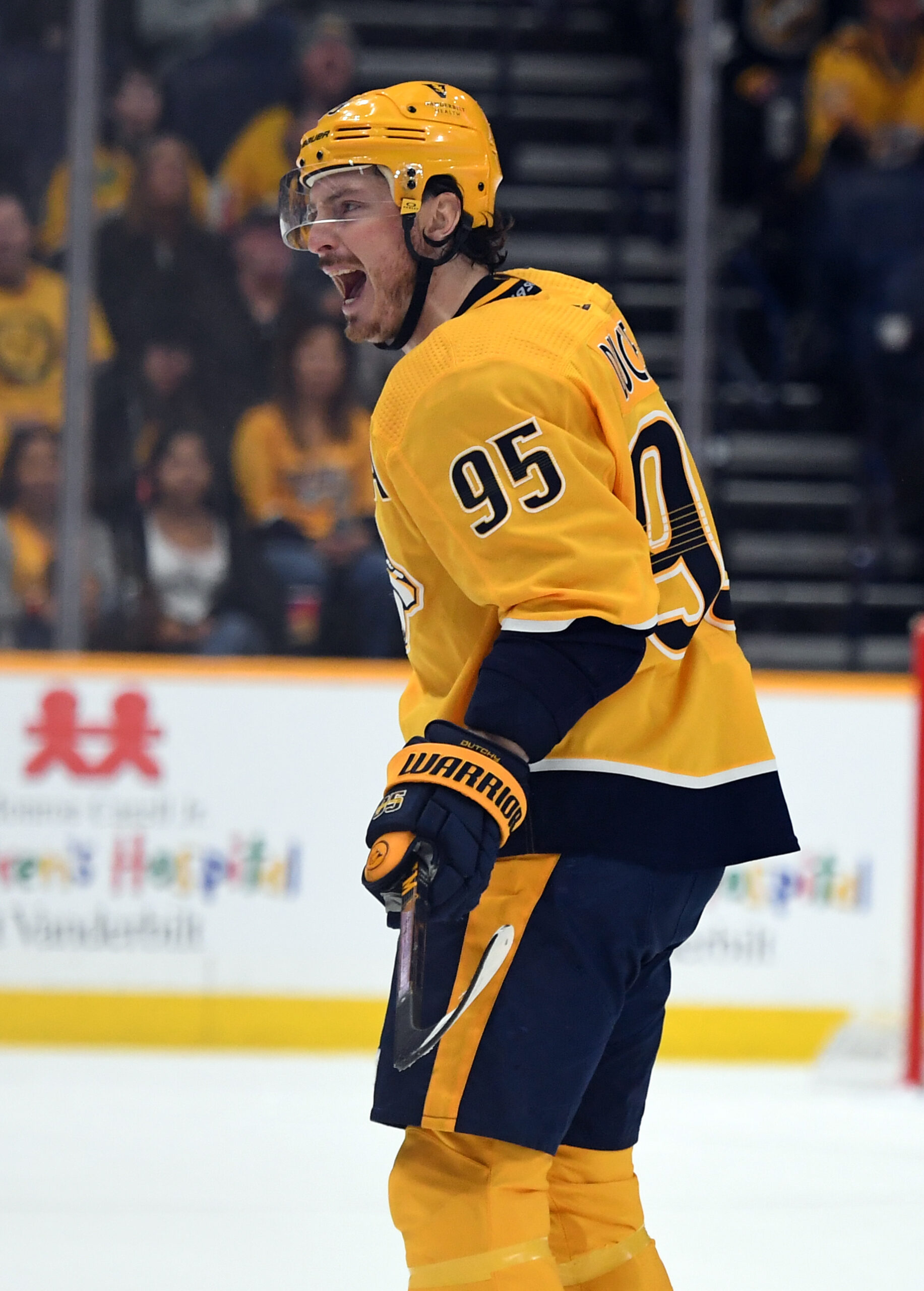
Nevertheless, in two separate staunch transactions, Trotz was able to move Johansen (after retaining 50% of his contract), and then proceeded to buy out the remaining three years on Duchene’s contract. Both players will join division rivals for the Predators; Johansen to Colorado and Duchene to Dallas, but Nashville was able to remove a bulk of their cap hits from their roster which will give them a lot of flexibility moving forward.
With O’Reilly now in the mix, and forward Cody Glass making a real name for himself last year, the Predators have an adequate duo down the middle to lead their offensive group. One of the main problems with their departures, if Johansen and Duchene are able to rebound nicely with their new organizations, it may be a tough pill to swallow for Nashville, knowing they likely could have gotten more for the two forwards.
Salary Cap Outlook
Thanks to the departures of Johansen and Duchene, as well as some other trades throughout the last year-and-a-half, the Predators will have just under $8MM in cap space heading into the 2023-24 NHL season. There will come a time in the next couple of years when young players such as Philip Tomasino, Luke Evangelista, and Juuso Parssinen will need new deals, and there is the looming end of Juuse Saros‘ very team-friendly deal in two seasons.
As far as long-term contracts go, the team only has seven players signed until the 2025-26 season, and only three of those players are signed until 2026-27. As Nashville continues to allocate talent and continues to improve its cap flexibility after each year, Trotz should have no financial issues in building the team that he wants to see in Nashville.
Key Questions
Are They Done Trading? As mentioned above, the Predators were aggressive in ridding themselves of higher-salaried players and even made the decision to part with Tanner Jeannot in their pursuit of acquiring all 224 selections in the 2023 NHL Draft. All jokes aside, there are some legitimate questions as to whether or not Nashville is done in that aspect. It would be hard to envision the team parting with players such as Roman Josi or Filip Forsberg, but with players such as Ryan McDonagh, Colton Sissons, as well as Saros, being some of the highest-paid players in the league, they could find themselves on the outside looking in for the future of this franchise.
What Is The Direction They Are Going To Take? Although it would have taken an improbable losing effort, given their team needs and the direction they appeared to be headed in at the trade deadline last year, the 2022-23 NHL season would have been a perfect year for the Predators to tear it all down. There’s no surefire way they would have landed Connor Bedard at the top of the draft, but they certainly would have increased their chances of getting Leo Carlsson or Adam Fantilli. The player they did select at 15th overall, Matthew Wood, is going to be a solid NHL contributor, but does not forecast as the face of the franchise player. Although having a generational talent in Josi, this team has all the makings of an organization that could use a young-talented center with the capabilities of being a superstar in the league. As their roster is currently constructed, they are far too good to find themselves at the bottom of the standings, and not quite good enough to be a legitimate playoff contender.
Photos courtesy of USA Today Sports Images.
Summer Synopsis: Montreal Canadiens
Montreal finished the 2022-23 season fifth-to-last in the league and if you asked them, they might say it was all according to plan. Kent Hughes and his team have used the 2023 summer to its fullest, clearing out numerous veteran names to make space for U24 talent gathered through trades, RFA signings, and savvy UFA pickups. The Montreal rebuild is fully underway and the team seems poised for a very exciting 2023-24 campaign, even if it may not directly mean success on the scoresheet. The road ahead seems like it stretches for a few more seasons but with a wave of health and emerging new faces, Montreal will undoubtedly be worth following.
Draft
1-5: D David Reinbacher, Kloten (Swiss NL)
3-69: G Jacob Fowler, Youngstown (USHL)
4-101: F Florian Xhekaj, Brantford (OHL)
4-110: D Bogdan Konyushkov, Torpedo (KHL)
4-128: G Quentin Miller, Quebec (QMJHL)
5-133: F Sam Harris, Sioux Falls (USHL)
5-144: G Yevgeni Volokhin, Mamonty (MHL)
6-165: F Filip Eriksson, Vaxjo (Sweden U20)
7-197: D Luke Mittelstadt, Lincoln (USHL)
Montreal became the talk of the draft very quickly, with the controversial selection of David Reinbacher over more publicly-lauded players like Matvei Michkov or Ryan Leonard. But with the selection, Montreal gets a top-end right-hand defender to match with the talent they’re building on the left-side, through the likes of Adam Engstrom, Lane Hutson, and William Trudeau. And the team is clearly confident in the defender, already signing him to his entry-level contract (three years, $6.4MM) only a couple of weeks after the draft.
After their stunner, Montreal receded to a very calm draft focused primarily on finding their next netminder. The Habs took reigning Clark Cup MVP Jacob Fowler; local talent Quentin Miller; and Russia’s Yevgeni Volokhin, who was popular among goalie scouts for much of the year. The trio joins a goalie room already comprised of Jakub Dobes and Cayden Primeau, creating a clear focus for the Montreal development staff. They complemented their goalie haul with a string of savvy picks, including the undersized but dynamic Sammy Harris, hefty two-way defender Luke Mittelstadt, and Florian Xhekaj, younger brother of current Habs defender Arber Xhekaj. It was an admirable draft class for a team in the midst of a classic rebuild.
Trade Acquisitions
F Alex Newhook (Colorado)
G Casey DeSmith (Pittsburgh)
D Gustav Lindstrom (Detroit)
Montreal jumped on the Alex Newhook rumors, dealing Gianni Fairbrother and a first and second round pick in the 2023 NHL Draft to Colorado for the centerman. Newhook, 22, has not kicked off his NHL career in the way many expected. But he hasn’t been entirely unproductive either. Playing primarily down the middle – although it’s been more a 60/40 split than a defined center role – Newhook has recorded 27 goals and 66 points through 159 career games. Those aren’t terrible numbers for a young player that still looks like they’re adjusting a bit. There’s reason to be optimistic about the stylistic match between Newhook and Habs head coach Martin St. Louis, but if that will result in a rebound for him is yet to be seen.
Casey DeSmith also joins Montreal via trade, presenting as the team’s reward for middle-manning Pittsburgh’s acquisition of Erik Karlsson. DeSmith will enters the season at 32, only one year younger than Montreal’s Jake Allen. And maybe because of his older age, Montreal is now looking to flip DeSmith. There will likely be no shortage of suiters, looking to acquire DeSmith’s career .912 save percentage and team-friendly cap-hit of $1.8MM. If they do flip DeSmith, Montreal will enter the 2023-24 season with a duo of Allen and Sam Montembeault once again, unless one of their younger names can make a case at training camp.
The Habs also acquired Gustav Lindstrom when they flipped Jeff Petry from Pittsburgh to his hometown Detroit Red Wings. Lindstrom has struggled to stay fully healthy in recent years but offers good, rangy play when he is on the ice. The Canadiens defense was one of their glaring holes last season, and at only 24, Lindstrom helps them patch that hole while still staying young.
UFA Signings
D Brady Keeper (one year, $775K)*
F Phillipe Maillet (one year, $775K)*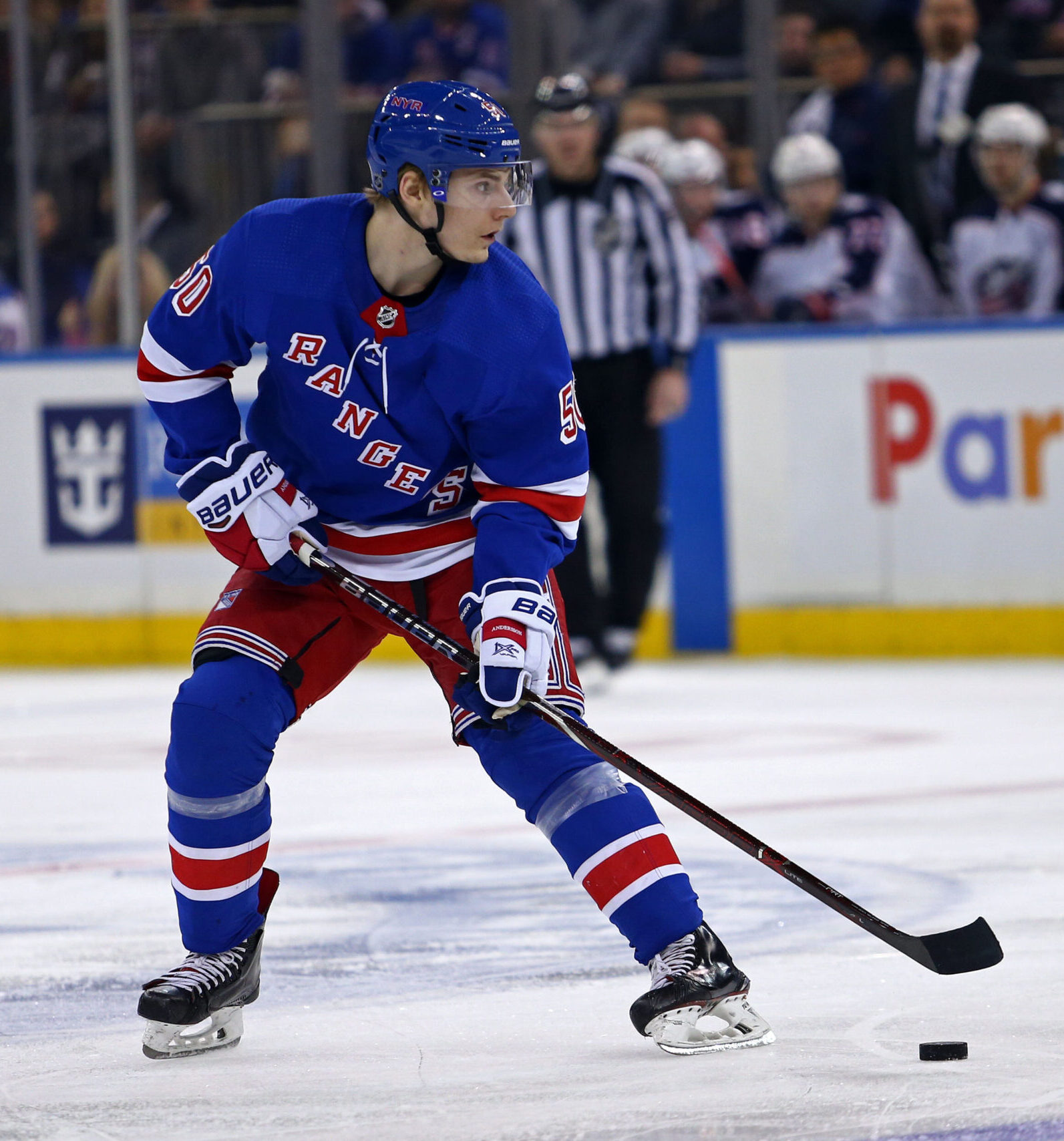
F Lias Andersson (one year, $775K)*
*-denotes two-way contract
For a team in Montreal’s position, a quiet UFA signing season isn’t much of a surprise. Montreal isn’t fighting to rank among the league’s best next season – they’re focused on building out a young core that cna compete for years to come. However, they did reel in the 2017 NHL Draft’s seventh-overall selection, Lias Andersson, who has struggled to find his footing in any seemingly any North American league. But with 31 goals and 59 points in 67 AHL games last season, Andersson is finally showing a flash of both high scoring and consistency that’s been missed from his game in recent years. Andersson has 110 NHL games under his belt and only 17 points to show for it, so fans shouldn’t expect the world from him in Montreal. But at 24 years old, and on a league-minimum deal, there’s very little risk involved. And while we haven’t seen it yet, there will always be glimmers of upside in former top-10 picks. If all goes right, there’s a chance that Kent Hughes found his sleeper talent in Andersson.
RFA Re-Signings
F Michael Pezzetta (two years, $1.6MM)
F Cole Caufield (eights years, $62.8MM)
F Sean Monahan (one year, $2MM)
F Rafael Harvey-Pinard (two years, $2.2MM)
F Mitchell Stephens (one year, $775K)*
F Alex Newhook (four years, $11.6MM)
F Lucas Condotta (two years, $1.6MM)*
D Nicolas Beaudin (one year, $775K)*
F Jesse Ylonen (one year, $775K)*
*-denotes two-way contract
Montreal saved their big splash for the RFA group – effectively building out their forward group through RFA-signings. This includes giving Cole Caufield his first major contract extension. The deal will take Caufield to his age-29 season and carries an annual cap hit of $7.85MM, a figure that could look like an absolute steal for the winger when he enters his prime. Caufield has been lights-out under St. Louis’ leadership, recording 48 goals and 71 points in 83 games under the new head coach. This includes 26 goals and 36 points in the 46 games he appeared in  last season, before a shoulder injury ended his campaign.
The Canadiens also rounded out their bottom-six, signing Monahan, Pezzetta, Harvey-Pinard, and Newhook to one-way deals that should mean a roster spot for the coming season. Harvey-Pinard’s deal is especially interesting – with a cap hit over $1MM-per-season, after the winger torched the league with 14 goals and 20 points in only 34 games last season. His 24.1 percent shooting percentage is very likely unsustainable but Montreal is letting Harvey-Pinard prove his worth with the new deal. The same can be said about Sean Monahan, who is fighting to find his footing after a shaky last few years with the Calgary Flames. Monahan recorded 17 points in 25 games with Montreal last season.
Fans can gather a strong, general look at who the Habs think will be fighting for a roster spot at training camp through their RFA signings. But, outside of Caufield, there’s not too much certainty in how the list will perform once they’re on the ice. How Montreal can build out their core group through RFA signings will be an interesting storyline as the new season begins.
Departures
F Denis Gurianov (Nashville, one year, $850K)
F Joel Teasdale (unsigned UFA)
F Alex Belzile (New York Rangers, two years, $1.55MM)
F Chris Tierney (New Jersey, one year, $775K)*
F Jonathan Drouin (Colorado, one year, $825K)
D Madison Bowey (Dinamo, KHL)
F Paul Byron (Retired)
D Joel Edmundson (trade with Washington)
F Mike Hoffman (trade with San Jose)
F Rem Pitlick (trade with Pittsburgh)
*-denotes two-way contract
The Habs survived the off-season without any unexpected losses. Joel Edmundson was popular in trade rumors for much of the year and finally got his swap, getting sent to the Capitals for draft picks. Jonathon Drouin also found his long-anticipated departure form the Canadiens, entering free agency before getting picked up by the Colorado Avalanche on a cheap deal.
Denis Gurianov is perhaps the most notable loss. Montreal acquired Gurianov partway through the 2022-23 campaign, sending Evgenii Dadonov to the Dallas Stars in return. Gurianov appeared in 23 games with Montreal, recording a meager eight points. That must’ve been enough viewing for Montreal, who failed to qualify the winger, sending him to free agency.
Also noteworthy is the one-way deal the New York Rangers provided to Alex Belzile. Belzile is a 32-year-old minor-leaguer that played his unofficial rookie season last year, playing in 31 NHL games and recording 14 points. But he appeared in just as many AHL games, signaling where his value may be the strongest. That’s a claim the Rangers will put to the test, though, providing him a contract that should warrant at least some level of NHL consideration. If Belzile is set on an NHL role, or if this deal is just a friendly nod to a 300-game AHL veteran will be a small-but-interesting story to follow.
But like many of their departures, the loss of Gurianov and Belzile doesn’t leave much wake. The Canadiens retooled nicely this summer, clearing out plenty of space on the NHL roster for their RFA signings and young prospects.
Salary Cap Outlook
The Canadiens are up against the cap as of early-September. But they’ll gain roughly $5.77MM in cap space when they’re able to put Carey Price back on LTIR, per CapFriendly. The team doesn’t have any unsigned free agents, so that money could be used creatively to bolster their top-end. Or maybe the Habs will hang on to their ample cap space. There’s no denying the value of flexibility in the modern NHL and teams like Arizona have found ways to turn open cap space into high-end draft picks and prospects.
Key Questions
What Can Juraj Slafkovsky Become? The Canadiens shocked the world by taking Juraj Slafkovsky ahead of Shane Wright, Logan Cooley, and Simon Nemec in the 2022 NHL Draft. And while he still hadn’t fully adjusted, Slafkovsky was made the pick look honorable by appearing in 39 NHL games last season. But he suffered a lower-body injury in January of 2023, effectively holding him out for the rest of the season. With nearly-40 NHL games under his belt, Slafkovsky should have a better sense of what to prepare for in the upcoming campaign. But Montreal will need the most out of their first-overall selection if they want to really speed up their rebuild.
Can Alex Newhook Breakout? Alex Newhook did not look particularly great during his time in Colorado. But his woes can be chalked up, in part, to a mismatch with the Avalanche’s dump-and-chase system. The Canadiens must think so – paying handsomely for him in both trade and contract negotiations. Newhook plays a possession-based, speedy style that could make Martin St. Louis a bit nostalgic. To say that St. Louis has had a special impact on some of Montreal’s brightest stars would be an understatement. Cole Caufield has become a near point-per-game player under St. Louis’ encouragement. It would be unfair to expect a similar breakout from Newhook but he’s only 22 years old, meaning there’s plenty of time for him to find his way on a new roster. If Montreal can get the most out of Newhook, they could add a really effective layer to an already-exciting top-nine.
Which Bottom-Six Studs Will Stick? Rafael Harvey-Pinard headlines what was a really exciting stretch from Montreal’s bottom-six. Along with Harvey-Pinard, Jesse Ylonen and Michael Pezzetta proved their case for roster spots. Montreal rewarded the trio with new contracts this off-season, giving them all good opportunity to really lock in their spot on the Habs lineup. But if they’ll actually earn their spot is yet to be seen. Maybe more important will be the answer to what Montreal will do if any of the three can’t stick. They should have exciting players like Filip Mesar, Sean Farrell, and Emil Heineman available for call-ups if they need to fill a roster spot. Seeing which of their young prospects are up next, or if the aforementioned trio can stick, should help answer how Montreal will be approaching the next few years.
Photos courtesy of USA Today Sports Images.
Summer Synopsis: Minnesota Wild
In 10 out of the last 11 years, the Stanley Cup playoffs have featured the Minnesota Wild. Unfortunately for the Wild, the playoffs have not featured them for very long, as the team has been unable to appear in the Western Conference Finals since the 2003 Stanley Cup playoffs.
Still dealing with the financial ramifications of buying out both Ryan Suter and Zach Parise, Minnesota has had little cap space to work with, but General Manager Bill Guerin has done some solid work doing the best with what he has. After the 2024-25 season, the team will be off the hook for most of the financial penalty caused by the buyouts, and they are hoping to tread water with this team until then.
However, with the team continuing to age, especially the defensive core, it may prove to be a bit difficult for the Wild to become one of the top teams in the Western Conference. The team did well in retaining some key players this summer but mostly nibbled around the edges in terms of the free agent and trade markets.
Draft
1-21: F Charlie Stramel, Wisconsin (NCAA)
2-53: F Rasmus Kumpulainen, Pelicans (U20 SM-Sarja)
2-64: F Riley Heidt, Prince George (WHL)
5-149: D Aaron Pionk, Waterloo (USHL)
6-181: D Kalem Parker, Victoria (WHL)
7-213: F James Clark, Green Bay (USHL)
In their first-round selection in Stramel, the Wild have found a player with a similar frame to Marcus Foligno, with a higher ceiling. Stramel is a solid player in the tight areas of the game, proving an ability to battle and score goals in front of the net. In his first season playing for the University of Wisconsin last year, Stramel played in 33 games, scoring seven goals and five assists. There are some concerns about Stramel, however; as many scouts have noted that his early growth spurt may have caused him to look more talented than he actually was at the time, noting that his development pace has slowed in recent years.
The team’s second-round pick, Kumpulainen, appears to be a bit of a reach. In last year’s U18 World Juniors Championships, he was a big part of Team Finland, scoring five points in five games, and playing in nearly all situations for the team. However, although he is incredibly competitive, meaning he could certainly will his way to the NHL level, his raw talent doesn’t strike much confidence in his development. It will be very difficult for the Minnesota development coaches to grow his skating ability to a professional standard, and that may prove too difficult to overcome.
Trade Acquisitions
F Pat Maroon (from Tampa Bay)
F Maxim Cajkovic (from Tampa Bay)
Acquired in the same trade from the Tampa Bay Lightning back in July, the move to acquire Maroon is likely to replace the void left in the absence of Ryan Reaves. After being acquired from the New York Rangers in late November, Reaves provided a lot of energy and fire into the Wild lineup and became a solid leader for the club. Much like Reaves, Maroon should slot into the bottom six of the Minnesota forward group, and provide the same leadership and physical presence as he did with the Lightning.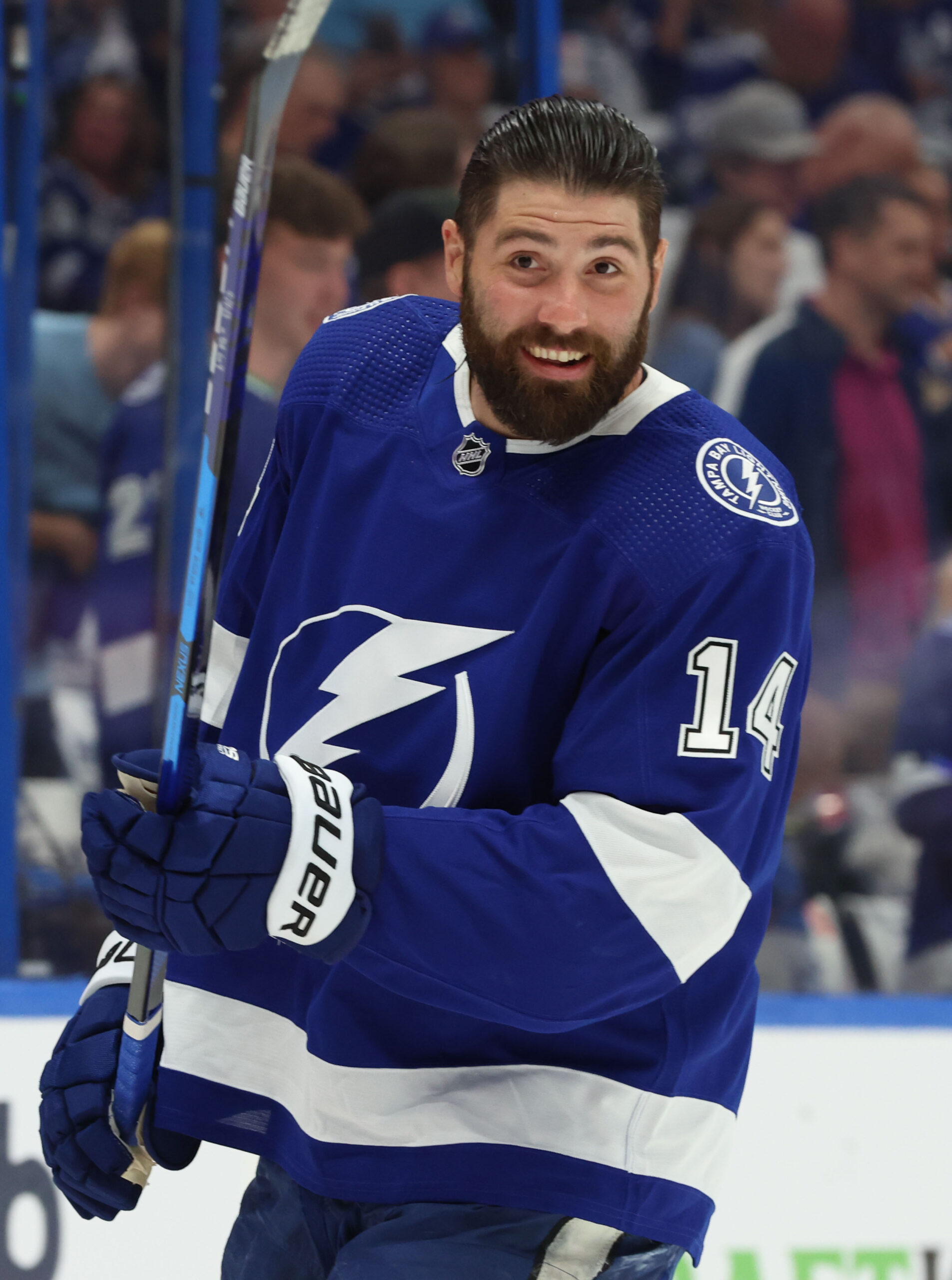
A throw-in player for the most part, Cajkovic has split the past two seasons between the AHL and the ECHL. A third-round pick for Tampa Bay back in the 2019 NHL Draft, Cajkovic spent the majority of last season with the Orlando Solar Bears, scoring 10 goals and 17 assists in 41 games. There is a chance that he could earn a spot on the Iowa Wild’s roster next year, but his most likely landing spot will be with the Iowa Heartlanders of the ECHL.
Key UFA Signings
F Vinni Lettieri (two years, $1.55MM)*
F Jacob Lucchini (one year, $775K)*
* denotes two-way contract
This summer, most of Minnesota’s available cap space was reinvested back into the team, locking in players such as Brandon Duhaime and Filip Gustavsson, as well as seeing a big contract extension kick in for forward Matt Boldy. Keeping that in mind, it was no surprise to see the Wild only make a pair of two-way signings.
Both Lettieri and Luccini will spend the majority of next season in the AHL, and assuming the health of the Wild this year, may not see NHL minutes at all.
Key Departures
D Matt Dumba (Arizona, one year, $3.9MM)
D John Klingberg (Toronto, one year, $4.15MM)
F Gustav Nyquist (Nashville, two years, $6.37MM)
F Ryan Reaves (Toronto, three years, $4.05MM)
F Sam Steel (Dallas, one year, $800K)
F Oskar Sundqvist (St.Louis, one year, $775K)
Fortunately for Minnesota, most of this group were trade deadline acquisitions, meaning they did survive for much of last season without much of this group. However, it is a lot of NHL talent to see walk away from your team over a summer. Due to the $14MM of dead cap on their books for the next two seasons, there was just no possible reality in which the Wild could retain most of this group. Because Minnesota did lose so much talent and failed to replace them in any meaningful way, it is tough to say the Wild got better this offseason.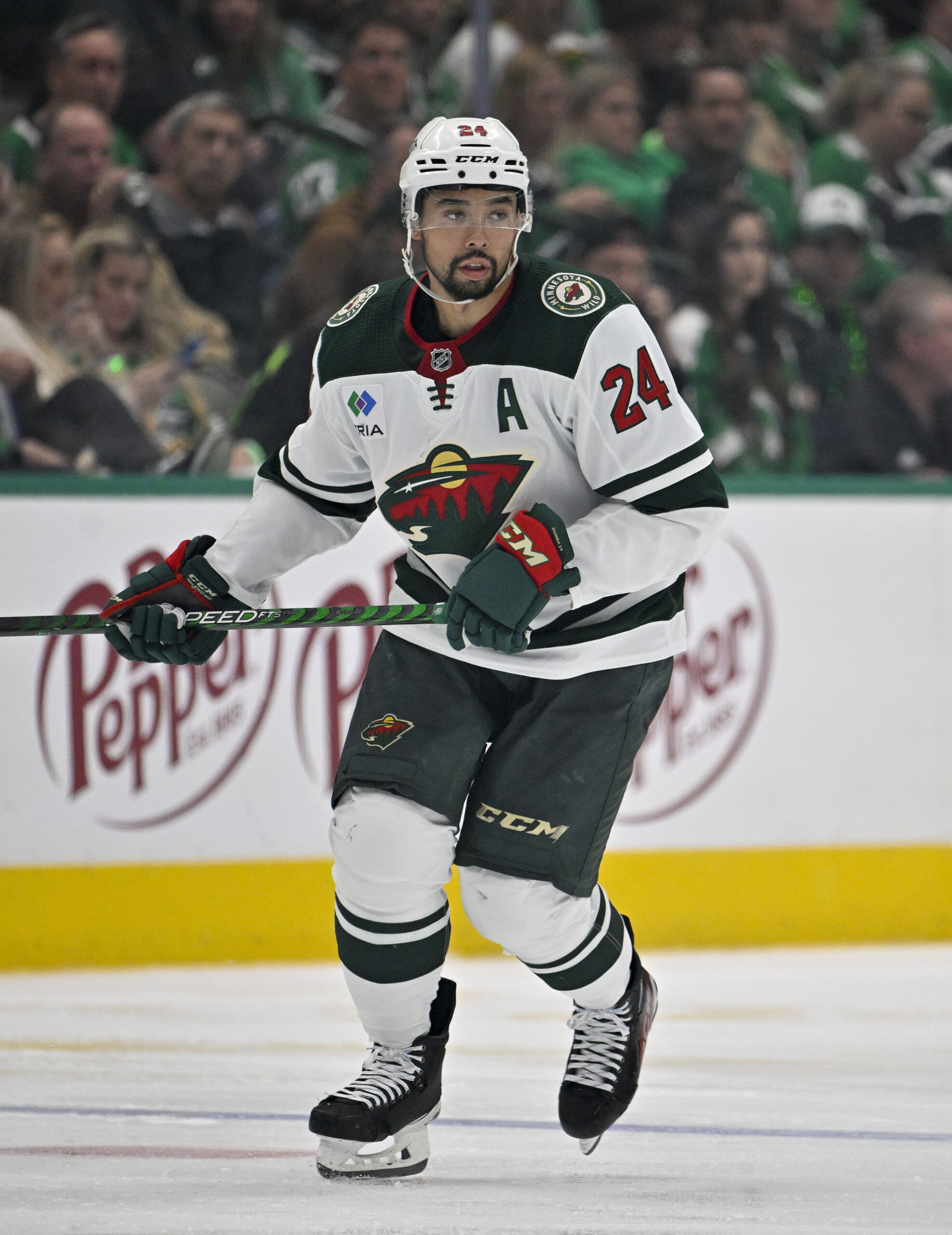
Dumba and Reaves will make up the largest holes for the team to fill in terms of leadership. Dumba had spent the last decade making up a significant part of Minnesota’s defensive core, and although his offensive numbers took a significant dip along the way, his presence will surely be missed by the Wild.
Salary Cap Outlook
Over the next seasons, given their financial circumstances due to the Parise and Suter buyouts, the Wild will merely have to try and survive in a competitive Western Conference. In a top-heavy Central Division, there is a pathway for them to clinch a playoff spot as a third seed, but they are simply not improving enough to be considered a legitimate playoff threat.
Going into this year, the Wild have a touch over $1.6MM available to them in cap space, and much like they did last year, should spend a good chunk of that at next year’s deadline. They will have a bit of breathing room next summer, as the cap is expected to increase by a more favorable margin for them, but with Foligno and Mats Zuccarello scheduled to hit the unrestricted free agent market next offseason, there may be another repeat of some notable players walking out of the door.
Key Question
What Is This Team Missing? To put it into perspective, last year, the Wild had a 40-goal scorer star in Kirill Kaprizov, a formidable defensive unit (especially post-trade deadline), and a goalie with a SV% above .930. On the other hand, the eventual Stanley Cup Champions, the Vegas Golden Knights, only had one of those things during the regular season. Yet, once again, the Wild were simply outmatched in the first round of the playoffs, losing in six games to the Dallas Stars. Because the organization has put together some solid teams and continues to lose early in the playoffs, it has become difficult to point the finger at any individual part of the lineup.
Photos courtesy of USA Today Sports Images.
PHR Live Chat Transcript: 09/07/23
Click here to read the transcript of this week’s live chat with PHR’s Josh Erickson.
2009 NHL Draft Take Two: Eleventh Overall Pick
Hindsight is an amazing thing, and allows us to look back and wonder “what could have been.” Though perfection is attempted, scouting and draft selection is far from an exact science and sometimes, it doesn’t work out the way teams – or players – intended. For every Patrick Kane, there is a Patrik Stefan.
We’re looking back at the 2009 NHL Entry Draft and asking how it would shake out knowing what we do now. Will the first round remain the same, or will some late-round picks jump up to the top of the board?
The results of our redraft so far are as follows, with their original draft position in parentheses:
1st Overall: Victor Hedman, New York Islanders (2)
2nd Overall: John Tavares, Tampa Bay Lightning (1)
3rd Overall: Ryan O’Reilly, Colorado Avalanche (33)
4th Overall: Matt Duchene, Atlanta Thrashers (3)
5th Overall: Chris Kreider, Los Angeles Kings (19)
6th Overall: Nazem Kadri, Phoenix Coyotes (7)
7th Overall: Mattias Ekholm, Toronto Maple Leafs (102)
8th Overall: Evander Kane, Dallas Stars (4)
9th Overall: Brayden Schenn, Ottawa Senators (5)
10th Overall: Oliver Ekman-Larsson, Edmonton Oilers (6)
PHR readers have opted to give the Oilers an addition on defense rather than offense with the 10th overall pick this time around, awarding them Ekman-Larsson with 30% of the vote. In doing so, the original top seven selections are now off the board, with Kane and Ekman-Larsson, our biggest fallers so far, dropping four selections each.
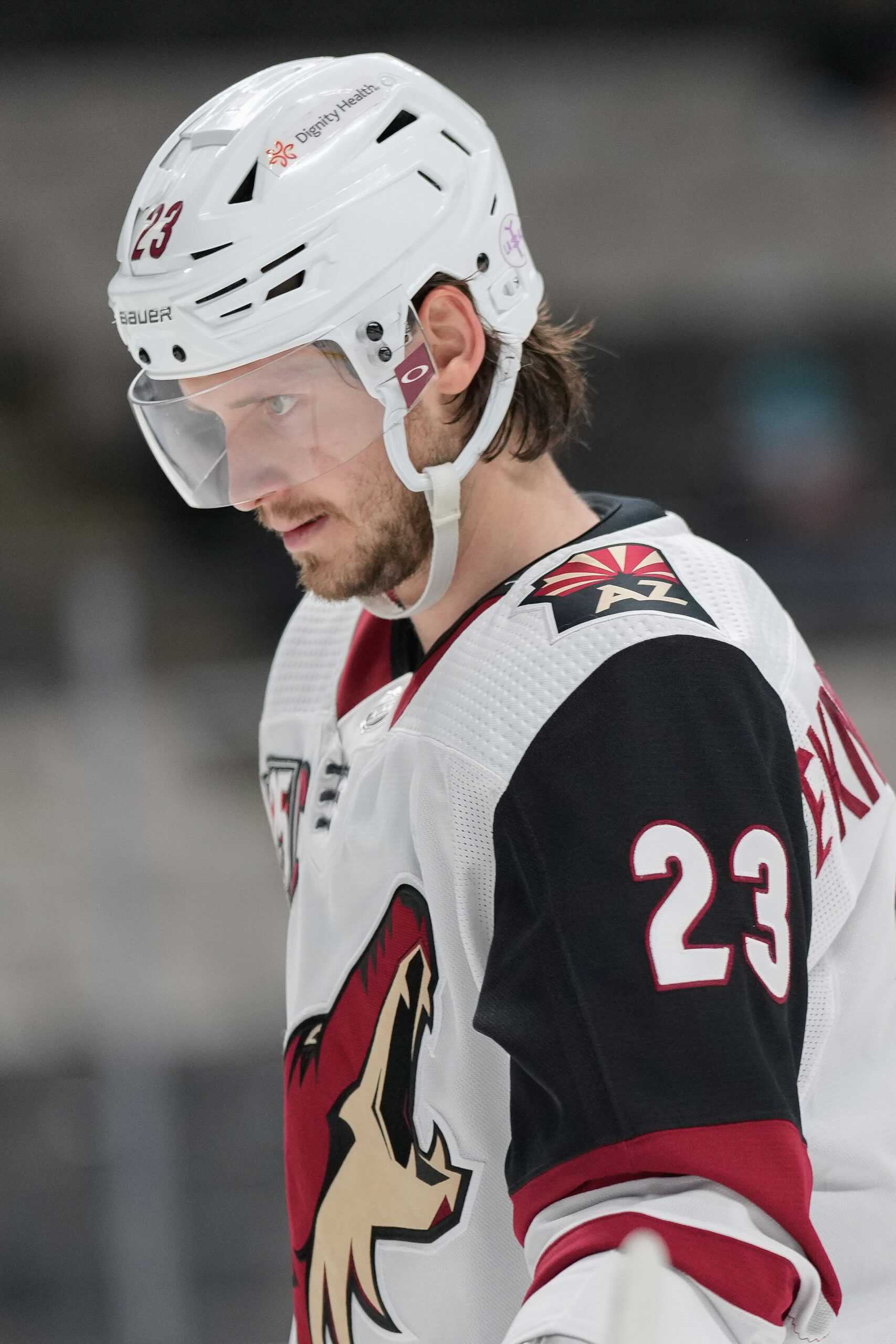 Unlike many other defenders, Ekman-Larsson’s development was not a slow burn. His best seasons came before his 25th birthday, consistently earning Norris Trophy consideration while holding down a top-pair role for the Phoenix/Arizona Coyotes. He had captured a top-four role before his 21st birthday, playing in all 82 games during his sophomore 2011-12 season and posting 32 points while averaging over 22 minutes per game.
However, after four more seasons of producing like a top-flight defender, Ekman-Larsson began to show signs of decline. His point production waned slightly, and while his combined -53 rating between the 2016-17 and 2017-18 seasons is much more a reflection of the team around him, his possession numbers were not nearly up to par with the more dominant two-way play he’d displayed in the years prior. The Coyotes named him captain in 2018 after the retirement of Shane Doan, but his play continued to slowly dwindle until the organization cut ties in 2021, dealing him, along with Conor Garland and other ancillary pieces, to the Vancouver Canucks. The Canucks bought out the remainder of his eight-year, $66MM extension signed with Arizona in 2018 this summer, resulting in the largest non-compliance buyout in league history.
The 32-year-old defender will now try and turn things around nearly as far away from Vancouver as you can get in the NHL, signing a one-year, $2.25MM deal with the Florida Panthers in free agency. He recorded two goals and 22 points in 54 games for the Canucks last season, alongside a -24 rating and a career-worst -3% relative Corsi For at even strength.
Despite his downfall, Ekman-Larsson’s peak years with the Coyotes were much better than any defender the Oilers had to offer at the time, and drafting him could have easily changed the team’s trajectory throughout the early 2010s. Of course, that would mean losing out on Connor McDavid and the first-overall pick in 2015.
Now, we move to the 11th overall selection in 2009: the Nashville Predators. They’re likely happy with their original choice, Ryan Ellis, as he contributed in a top-four role for the better part of 562 games with the franchise before a psoas muscle injury cut his career short after a deal to the Philadelphia Flyers in 2021. However, do you think there’s a better player not yet taken in our series? Vote in the poll below:
2009 Redraft: Eleventh Overall
-
Ryan Ellis 23% (136)
-
Dmitry Orlov 22% (134)
-
Anders Lee 18% (105)
-
Tyson Barrie 7% (40)
-
Reilly Smith 5% (31)
-
Darcy Kuemper 5% (28)
-
Tomas Tatar 4% (23)
-
Mike Hoffman 2% (13)
-
Marcus Foligno 2% (11)
-
Nick Leddy 2% (11)
-
Kyle Palmieri 2% (9)
-
Robin Lehner 1% (8)
-
Jakob Silfverberg 1% (8)
-
Marcus Johansson 1% (6)
-
David Savard 1% (5)
-
Sami Vatanen 1% (5)
-
Kyle Clifford 1% (4)
-
Calvin de Haan 1% (4)
-
Brian Dumoulin 1% (4)
-
Brayden McNabb 1% (4)
-
Erik Haula 1% (3)
-
Casey Cizikas 0% (2)
-
Mikko Koskinen 0% (2)
-
Dmitry Kulikov 0% (2)
-
Nick Jensen 0% (1)
-
Craig Smith 0% (0)
Total votes: 599
If you can’t access the poll above, you can click here to vote.
Photo courtesy of USA Today Sports Images.
Who Will Be The NHL’s Next Highest Paid Player?
Auston Matthews recent extension with the Toronto Maple Leafs has earned him the title of highest-paid player in the NHL. His new deal doesn’t kick in until 2024-25, but at that point, he will make an average annual salary of $13.25MM (CapFriendly) per season for four years. Prior to his new deal, Matthews was the fourth highest-paid player in the game behind Nathan MacKinnon, Connor McDavid and Artemi Panarin.
MacKinnon’s new eight-year $100.8MM deal kicks in this season which will make him the highest-paid player in the league at $12.6MM for this year. His actual salary is much higher than his cap hit at $16.5MM, but the final four years of his deal will back-dive to $9.9MM in salary. McDavid has three years left on his current deal with a cap hit of $12.5MM while Panarin’s deal also concludes in three seasons and pays him $11.642MM annually.
With Matthews having topped MacKinnon’s new extension by over $600K annually the question now becomes, who will be the NHL’s next highest-paid player?
Connor McDavid – McDavid is the obvious answer. He is arguably the best player in the game and undoubtedly the best player in the world with the puck on his stick. The Richmond Hill, Ontario native will be 29 years old when he reaches unrestricted free agency and could essentially ask teams for a blank check and fill in the maximum salary under the salary cap. That is if he remains the best player in the world. While it seems hard to believe there is a world in which McDavid isn’t the game’s most explosive player, three years is a long time, and in hockey, it can be an eternity. There is also another Connor who could be the one to top Matthews’ extension.
Connor Bedard – It seems crazy that Bedard has yet to play a minute in the NHL and he could conceivably be the next highest-paid player in the NHL. But it could happen. Bedard signed his three-year entry-level contract with the Chicago Blackhawks on July 17th and should be a lock to make their opening night lineup. He will become a restricted free agent in 2026, the same time that McDavid becomes a UFA. It is fair to wonder how Bedard will produce once he is playing against men in the NHL, especially given that he will be playing on a bad Blackhawks team that will have its struggles. But he dominated the WHL with 71 goals and 72 assists in 57 games and obliterated the competition at the World Junior Championships with nine goals and 14 assists in 7 games. He’s a phenom, and in three years he could be paid like one.
Leon Draisaitl – Draisaitl has been one of the best bargains in the NHL since signing his eight-year $68MM contract back in August of 2017. All he has done during his six years under this contract is score 50+ goals three times, top 100 points four times, and win a Hart Trophy as well as an Art Ross Trophy. At 27-years-old Draisaitl is coming off the best season of his career having posted 52 goals and 76 assists in 80 games.
All things considered, it seems likely that Draisaitl will top Matthews’ contract two seasons from now when he becomes an unrestricted free agent. The native of Cologne, Germany will be 29 years old, and the salary cap should go up substantially between now and then positioning him to cash in big with any team of his choosing. Draisaitl will likely hold onto that distinction for just one season as McDavid and Bedard will be following right behind him and could top Draisaitl to earn the title of the highest-paid player in the NHL.
Salary Cap Deep Dive: Dallas Stars
Navigating the salary cap is one of the more important tasks for any GM. Teams that can avoid total cap chaos by walking the tightrope of inking players to deals that match their value (or compensate for future value without breaking the bank) remain successful. Those that don’t see struggles and front office changes.
PHR will look at every NHL team and give a thorough look at their cap situation heading into the 2023-24 season. This will focus more on players who are regulars on the roster versus those who may find themselves shuttling between the AHL and NHL. All cap figures are courtesy of CapFriendly.
Dallas Stars
Current Cap Hit: $83,817,829 (over the $83.5MM Upper Limit)
Entry-Level Contracts
D Thomas Harley (one year, $863K)
F Wyatt Johnston (two years, $894K)
D Nils Lundkvist (one year, $925K)
Potential Bonuses
Lundkvist: $850K
Harley: $637.5K
Total: $1.4875MM
Johnston could have gone back to junior last season but it’s safe to say that Dallas made the right call with him as he potted 24 goals in his age-19 campaign. If he can stick in their top six and take a step or two forward offensively, he’s a strong candidate to bypass a bridge deal, especially with a big-ticket one coming off the books at the same time that he needs his second contract.
Dallas paid a high price to get Lundkvist from the Rangers last season but he wound up only playing a limited role. They’re banking on him taking a step forward but even so, he’s a strong candidate for a short-term second contract, one that could check in around the $1.5MM range. At this point, it doesn’t seem too likely that he’ll hit his four ‘A’ bonuses. The Stars are banking on Harley to make the jump full-time this season after being a regular in the playoffs. With some good numbers in the minors, he could reach one or two of his three ‘A’ bonuses but from a contract standpoint, like Lundkvist, he’s likely heading for a bridge deal as well.
Signed Through 2023-24, Non-Entry-Level
D Gavin Bayreuther ($775K, UFA)
F Ty Dellandrea ($900K, RFA)
F Matt Duchene ($3MM, UFA)
D Jani Hakanpaa ($1.5MM, UFA)
F Joe Pavelski ($3.5MM, UFA)
F Craig Smith ($1MM, UFA)
F Sam Steel ($850K, RFA)
G Scott Wedgewood ($1MM, UFA)
Potential Bonuses
Pavelski: $2MM
Duchene was a late entrant to the market which likely didn’t help his cause but he landed in a good spot here. In a more secondary role, he could thrive and in doing so, give the Stars some surplus value while better positioning himself for a longer-term agreement next summer. Smith struggled last season between Boston and Washington, even clearing waivers at one point in December thanks to his contract. He’s an interesting fit in the sense that he’s not a prototypical bottom-six forward but will be in that role here. A bounce-back showing could give him a small bump next summer but not to the level of the $3.25MM he made before.
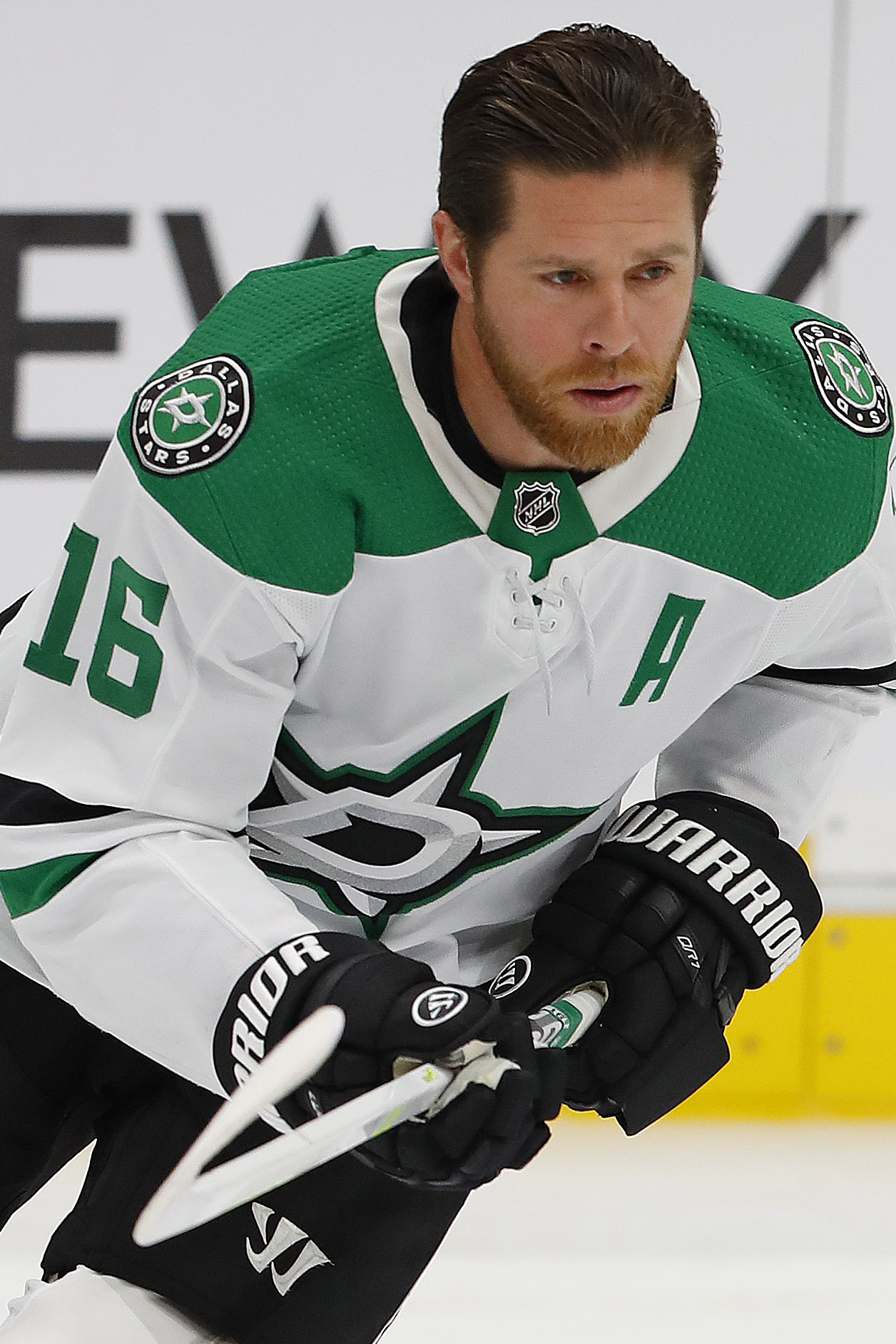 Pavelski’s fourth season with the Stars was almost as good as his third, one that saw him set career highs in assists and points. He came up a bit shy of the point total but still finished third in scoring in a year that saw him turn 39. Pavelski almost certainly left money on the table to sign what should be a team-friendly extension back in January as let’s face it, the market for a center producing close to a point per game is much higher than his guaranteed salary. The structure of this agreement is notable as the bonuses are very easy to achieve – $1MM at 10 games played and another $1MM at 20. Doing it that way allows Dallas to squeak him in on the books this year with his base salary but it’s safe to say they’re heading for an overage penalty.
Dallas basically had to push Dellandrea to take a one-year deal to make things work cap-wise. He’ll have arbitration rights next summer though and if he progresses as expected, his AAV should shoot past the $2MM mark. Steel has been non-tendered for two straight years now but gives Dallas some extra depth down the middle. However, it’s clear he’ll need to find another gear offensively if he wants a shot at a seven-figure deal as his market value the last two summers hasn’t been strong.
Hakanpaa is the type of physical depth defender many teams covet and it doesn’t hurt that he’s a right-hand shot. Dallas actually used him on the second pairing with some regularity last season and if he’s in that role again, doubling his current price tag won’t be out of the question, especially after seeing Radko Gudas get three years at $4MM per season earlier this summer. Bayruether returns after spending a few years with Columbus and will push for the seventh spot on the depth chart. This is a spot on their salary hierarchy that will need to stay near the minimum moving forward.
Wedgewood had his best season, albeit in a relatively limited role for a backup by current standards as he made just 21 appearances. His track record isn’t strong (or long) enough to command the type of money that top backups on the open market get but another showing like last year could push him closer to the $2MM mark if he looks for top dollar. Staying in Dallas, however, would likely mean needing to leave some money on the table.
Signed Through 2024-25
F Jamie Benn ($9.5MM, UFA)
F Evgenii Dadonov ($2.25MM, UFA)
F Radek Faksa ($3.25MM, UFA)
D Joel Hanley ($787.5K, UFA)
D Esa Lindell ($5.8MM, UFA)
G Jake Oettinger ($4MM, RFA)
D Ryan Suter ($3.65MM, UFA)
After seeing his production drop sharply over the last three years, Benn had a resurgent campaign, finishing second on the team in scoring. It wouldn’t be fair to expect that to happen again – and the deal is still very much above-market – but it’s not quite the anchor it was long ago. Faksa’s offense just hasn’t come around. He’s a strong defensive center that’s above average at the faceoff dot but someone in that type of role should be making about a million less. Gone are the days of the argument of offensive potential so it’s tough to see him beating this contract in 2025. Dadonov did well after coming over in a late-season trade but his struggles with Montreal hurt his value, allowing the Stars to sneak in with a deal that’s more than reasonable for a middle-six option.
Lindell is another player whose scoring didn’t come around quite as much as Dallas would have hoped for. He’s still capable of logging big minutes and anchoring the penalty kill so they’re still getting a reasonable return but they’re probably expecting a bit more from him and he’ll need to produce more if he wants to land a big pay increase two years from now. They also were probably expecting a bit more from Suter, a player who shouldn’t be logging 20 minutes a night at this stage of his career but was pressed into that spot frequently. It’s hard to see him signing another contract at this point – he’ll be 40 when this deal is up – but if he does, it should be for considerably less. Hanley has been a depth defender for the last few years and will continue to hover around the NHL minimum moving forward unless he can establish himself as a full-time third-pairing player.
Oettinger’s bridge contract already looks like a bargain as he was one of the top goalies in the league last season. The backloaded structure guarantees an increase to $4.8MM for his qualifying offer (which also carries arbitration eligibility) but if he has two more years like this, he’ll be well-positioned to become one of the top-paid netminders in the league.
Signed Through 2025-26
F Mason Marchment ($4.5MM, UFA)
F Jason Robertson ($7.75MM, RFA)
Robertson is on the non-traditional bridge contract, a four-year agreement that bought out only RFA years while still having team control when it expires. At that point, it’s going to take a substantial offer to get him on a long-term agreement. Robertson will be owed a $9.3MM qualifying offer (plus arbitration eligibility) but it will take a million or two more if he continues on his current trajectory. Marchment, a late-bloomer, took a step back last season while dealing with injuries once again. There’s a power forward premium in his deal but they’d still like to see him closer to the 40-point mark to get a good return on this deal and set him up for a similar-sized agreement in 2026.
Analyzing Detroit’s Options At Defense
Much like they did last summer, the Detroit Red Wings put some money into their defensive core in an attempt to get this team back into the postseason. In free agency, the organization brought in Shayne Gostisbehere and Justin Holl and acquired Jeff Petry at a discount a few months later in a trade with the Montreal Canadiens.
According to CapFriendly, the team currently projects to have eight defensemen on their opening night roster, with prospects Simon Edvinsson and William Wallinder waiting in the wings. Edvinsson won’t be ready for the beginning of the season due to an offseason shoulder surgery, but the Red Wings are getting into a territory where they will have to thin out their defensive core at some point.
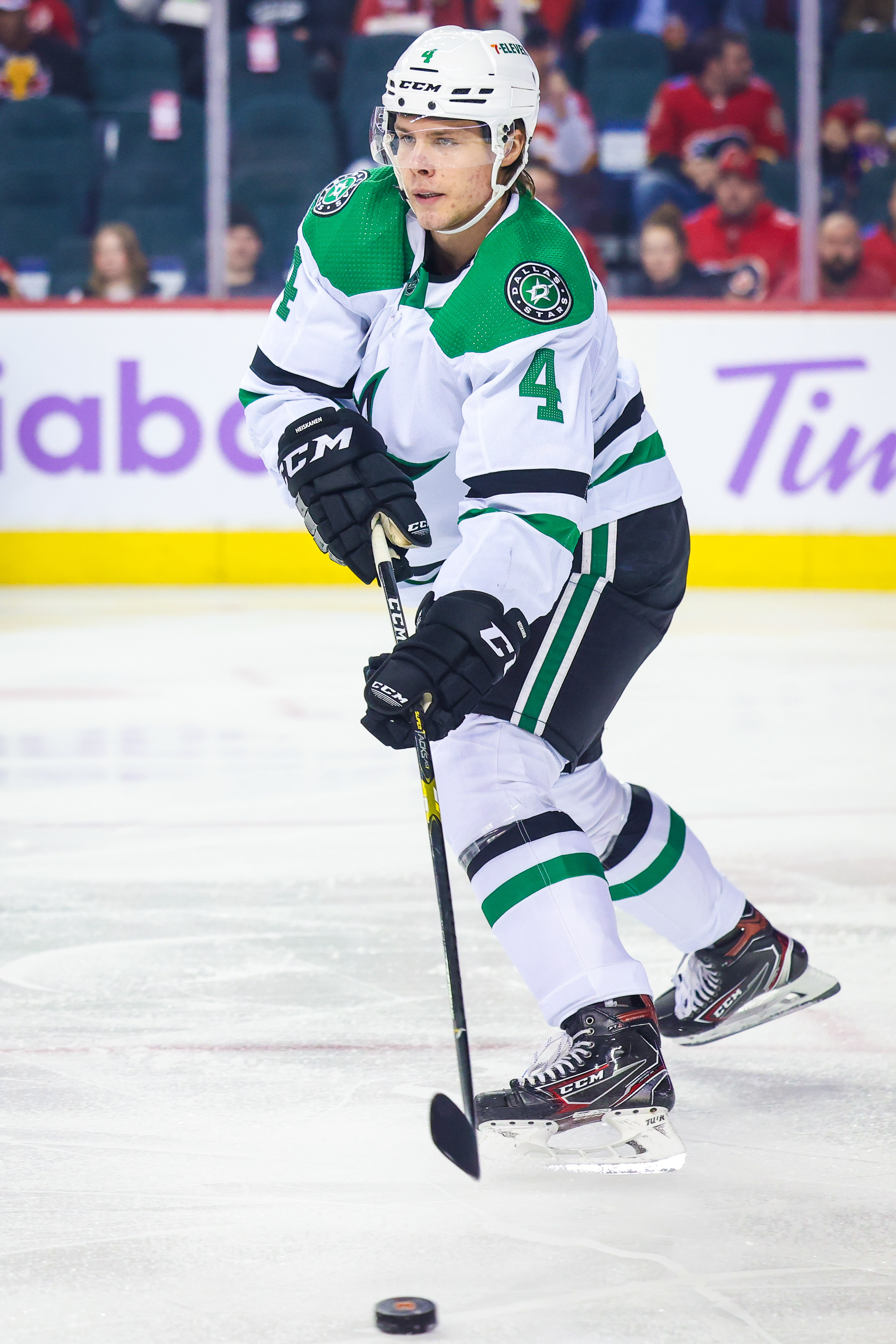
In the most likely scenario, the team will start with a top pairing of Jake Walman and Moritz Seider, a duo that finished the 2022-23 season on a high note. The second defensive pair will probably feature Gostisbehere and Petry, and the final pair will consist of Holl and Olli Maatta. Aside from Seider, it does not scream of a defensive unit well-built to get this team into the playoffs, but a strong showing from key players could conceivably turn the tide.
Unfortunately for the team, after committing to a four-year, $19MM contract with him last offseason, it does not appear that Ben Chiarot will crack the opening night lineup for this team. Last season, Detroit made an attempt to pair Chiarot with Seider on the top defensive pairing, an experiment that would not work out well for the club. Although a $4.75MM cap hit is an expensive sunk cost for most teams to eat, the Red Wings’ available cap space makes it much more palatable. 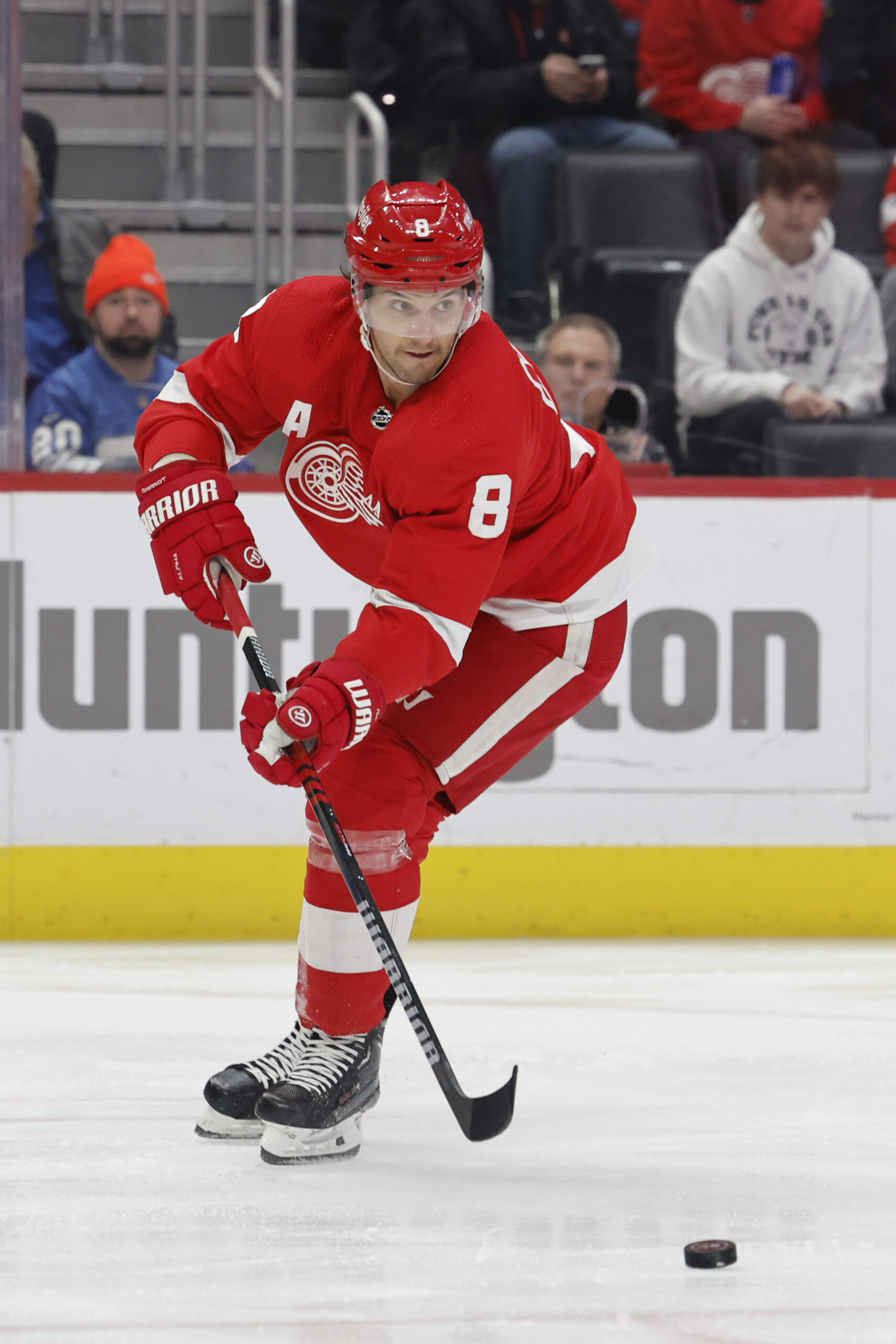
Last season, in his first year wearing the ‘Winged Wheel’, Chiarot would score five goals and 14 assists in 76 games played, posting a horrendous -31 rating. Given the lack of depth on the roster, Chariot was able to average more than 20 minutes of ice time per night, which does not appear to be a scenario that Detroit can let happen again.
Complicating the issue with Chiarot is that last year, the Red Wings dolled out a three-year extension for Walman, a two-year extension for Maatta, and gave Holl a three-year contract this offseason. Assuming that the team does ink Seider to a long-term extension next summer, that will give Detroit six defensemen signed until the 2024-25 NHL season. In all likelihood, the team will sit Chiarot for much of this year, use a buyout next offseason, and only be on the hook for an average of $1.58MM the next four seasons.
Next, if the team allows Gostisbehere to walk at the conclusion of his one-year deal, this should create a solid opening for Edvinsson and Wallinder to make the opening night lineup for the 2024-25 NHL season, giving the team some more flexibility moving forward.
At that time, the team could create a projected solid long-term top duo of Edvinsson and Seider, allowing Wallinder to play with Petry for one year before his contract expires, and carry an above-average bottom-pairing of Walman and Holl. It is only conjecture at this point, but there may be a pathway to an impressive defensive core, even after several confusing signings from General Manager Steve Yzerman over the last two summers.
Summer Synopsis: Los Angeles Kings
Not that long ago, the Los Angeles Kings were locked in a battle almost every year with the Chicago Blackhawks as the top team in the Western Conference, sharing five Stanley Cups between the two teams in a six-year span. Los Angeles still has Anze Kopitar and Drew Doughty from those dynastic teams in the early 2010s but has also engaged in a remarkable re-tool under General Manager, Rob Blake, once again becoming a contending team in the Western Conference.
After missing the playoffs in three consecutive seasons, the Kings have made the playoffs in back-to-back years, losing in the first round to the Edmonton Oilers each time. In a wide-open Western Conference playoff picture, Los Angeles is knocking on the door to get their aging veterans one more run. This offseason, the Kings made some prudent moves to put themselves over the top, but still have some questions surrounding their roster.
Draft
2-54: D Jakub Dvorak, Bílí Tygři (Czechia)
3-78: F Koehn Ziemmer, Prince George (WHL)
4-118: G Hampton Slukynsky, Warroad High (USHS-MN)
5-150: D Matthew Mania, Sudbury (OHL)
6-182: F Ryan Conmy, Sioux City (USHL)
With an eye on the long-term, it was all but certain that the Kings were going to use their first selection in the 2023 NHL Draft on a defenseman. They already have a decent amount of offensively talented defensemen in their system, so selecting a shut-down defenseman such as Dvorak makes a lot of sense. In 24 games for Bílí Tygři last season, Dvorak would only tally two assists, however; it is very clear from watching him play that he is extremely effective in using his body to knock opposing players off of the puck.
Although Dvorak was a solid choice for the long-term, Ziemmer could potentially be the Kings’ best player coming out of this draft. There are some serious concerns with his skating ability, and that could lead to the reason he fell so far in the draft, but Ziemmer has an undeniable ability to score. Playing on a solid Prince George team in the WHL last year, Ziemmer put up 41 goals and 48 assists in 68 games, also tallying three goals and four assists in 10 playoff games.
Trade Acquisitions
F Pierre-Luc Dubois (from Winnipeg)
Executing one of the biggest trades of the offseason, the Kings were able to bring in an excellent second-line center without surrendering a first-round pick in the deal. Shortly before the deal, in what would become a sign-and-trade acquisition, Dubois signed an eight-year, $68MM contract with the Winnipeg Jets, which should hopefully keep him in Los Angeles for quite some time.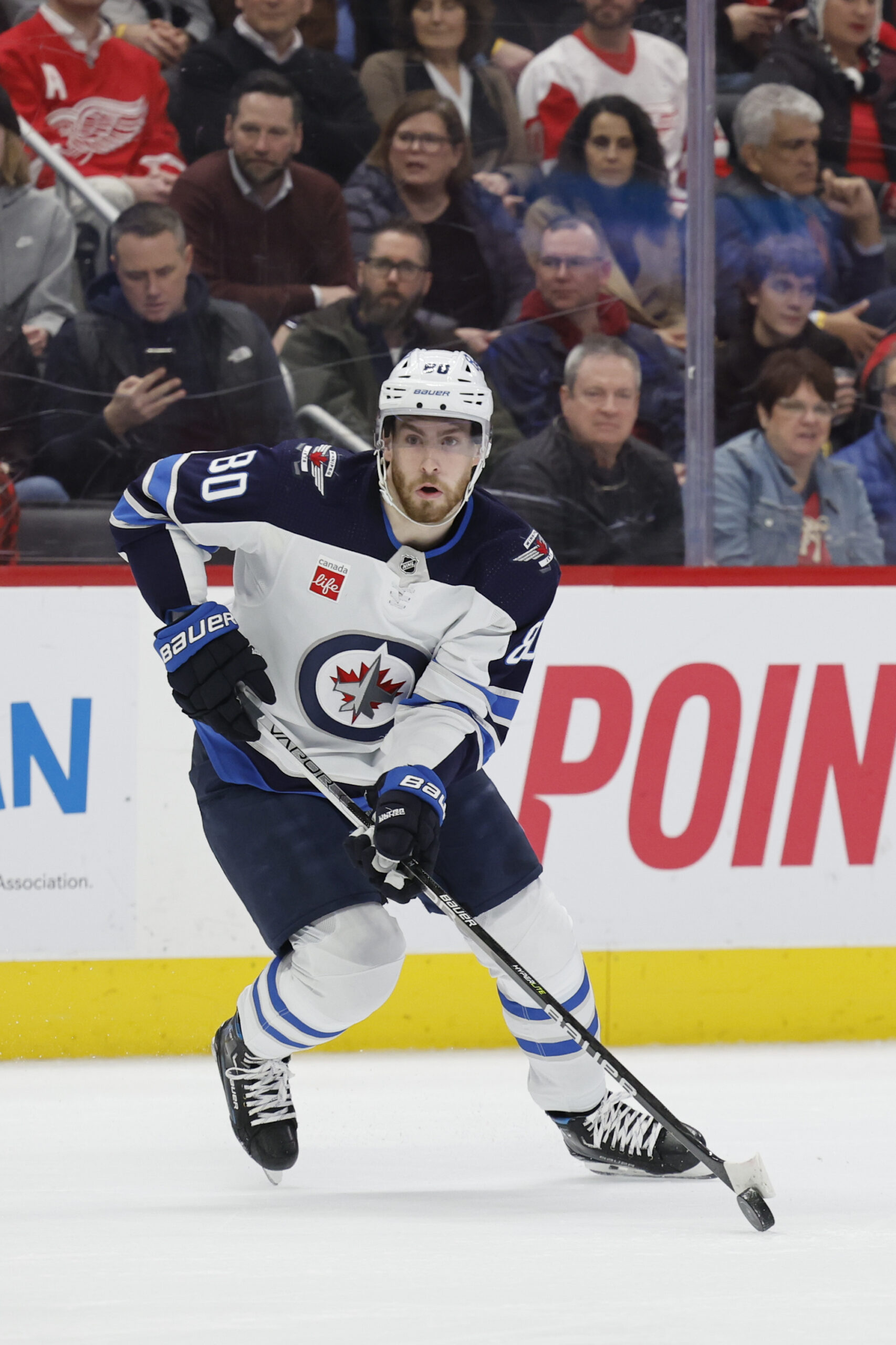
There are clear concerns with Dubois, as both his exit from the Columbus Blue Jackets and again in Winnipeg were surrounded by drama. Historically, throughout his career, Dubois has never seemed content with where he is playing. However, with a long-term deal in place, the expectation should be that Dubois commits to that contract, and spends the next eight seasons with the Kings.
Regardless of the controversy that has surrounded his career up to this point, Dubois is coming off two solid seasons with the Jets. Over the last two years, Dubois has played in 154 games, scoring 55 goals and 68 assists, showing that he can be a very reliable second-line center. He also provides a physical presence given his large frame and has carried substantial possession numbers as well. Given his style of play, and the players he will be joining in Los Angeles, Dubois projects as an above-average pickup for the Kings.
Key UFA Signings
D Andreas Englund (two years, $2MM)
D Joe Hicketts (one year, $775K)*
F Trevor Lewis (one year, $775K)
F Mikhail Maltsev (one year, $775K)*
G David Rittich (one year, $875K)
D Steven Santini (one year, $800K)*
G Cam Talbot (one year, $1MM)
* denotes two-way contract
Seeing most of their cap space eaten up after the contract given to Dubois, the Kings primarily spent the offseason nibbling around the edges in the free-agent market. They were able to iron out their depth at all positions, bringing back Lewis as well as bringing in Englund to beef up the bottom pairing of their defensive core.
After seeing Joonas Korpisalo depart after a shaky performance in the 2023 Stanley Cup playoffs, the team brought in Talbot to shore up their goaltending depth, but the acquisition seemingly has brought up more questions than answers. In the team’s defense, their rival, the Vegas Golden Knights, just won the Stanley Cup from an unlikely performance out of goaltender Adin Hill, but a tandem of Pheonix Copley and Talbot doesn’t appear as a strength to the team.
Getting an honorable mention is the team’s ability to retain defenseman Vladislav Gavrikov with a two-year, $11.75MM contract. Technically not a UFA signing given that the contract was signed well before July 1st, it was a prudent move by Blake to strengthen the team’s blue line. After being acquired at last year’s trade deadline, Gavrikov was exactly what Los Angeles needed, providing valuable minutes of shut-down defense.
Key Departures
F Lias Andersson (Montreal, one-year, $775K)
F Alex Iafallo (traded to Winnipeg)
G Joonas Korpisalo (Ottawa, five years, $20MM)
F Rasmus Kupari (traded to Winnipeg)
F Zack MacEwen (Ottawa, three years, $2.33MM)
F Gabriel Vilardi (traded to Winnipeg)
Luckily, the Kings didn’t stand to lose much in free agency. Their major loss is Korpisalo in net, as besides the playoffs last year, gave the Kings a 7-3-1 record down the stretch, earning a .921 SV% and a 2.13 GAA in 11 starts. Given the contract that Korpisalo signed with the Senators, Los Angeles was simply priced out of his market, even if they did want to retain him. 
Their most significant departures come via the Dubois trade. Acquiring a player of Dubois’ ability, the team had to depart with a trio of solid forwards in Iafallo, Kupari, and Vilardi. Last season, in somewhat of a breakout season, Vilardi scored 23 goals and 18 assists in 63 games played, and should be able to improve on those numbers in Winnipeg with more access to playing time. As for Iafallo, after signing a four-year, $16MM extension with the Kings back in 2021, has not been able to live up to his cap hit since then. Lastly, although he was a first-round selection of the Kings back in 2018, Kupari still has much to prove in the NHL.
Salary Cap Outlook
If the roster enters the season completely healthy, Los Angeles will be very limited this season to make acquisitions to improve their team. According to CapFriendly, the team has a bit over $120K in salary cap space, meaning they will likely have to move salary out if they do make an in-season trade.
Next offseason, the Kings currently have approximately $61MM in committed contracts, and will also carry the $2.025MM of retained salary for the next two years in the deal they facilitated to land Ivan Provorov in Columbus. If the salary cap ceiling increases to the degree that it is currently projected next year, Los Angeles should have a bit more breathing room to continue to improve their roster.
Key Questions
Will The Goaltending Hold Up? As mentioned previously, far and away the biggest question surrounding the Kings is their goaltending. Copley did well last year holding down the fort until the team’s acquisition of Korpisalo at the deadline, but it is difficult to expect a repeat performance of that degree. For Talbot, he famously struggled down the stretch for the Senators last season, souring all chances of the team making the playoffs. Los Angeles does have a solid defensive core, which may mask any inefficiencies coming from between the pipes for the most part, but the Kings will more than likely have to procure another goaltender at the 2024 trade deadline.
How Long Is This Team’s Window? Still being the top two players on the team after so many years, Los Angeles is inching closer and closer to facing a hard truth in regards to both Doughty and Kopitar. Both players are extended until at least the 2025-26 NHL season, but at 33 and 36 years old respectively, the Kings cannot afford a situation similar to what the Boston Bruins have had this summer. With their play, neither player has given any indication they won’t be top performers for the next several years, but Los Angeles may want to start preparing now for the inevitable departure of Doughty and Kopitar to retirement in the near future.
Photos courtesy of USA Today Sports Images.
List Of NHL-Affiliated Prospects Expected To Play In The OHL This Season
As games across the world begin to kick off the 2023-24 season, we’re looking at either notable former NHLers or future NHLers taking part in league play outside of the NHL. After looking at which drafted prospects are expected to play in the WHL a few days ago, we’re continuing to examine the Canadian major junior circuit with NHL-drafted prospects slated to play for OHL squads during the upcoming year.
The Chicago Blackhawks lead the way with five drafted prospects slated to suit up in the league in 2023-24, and all of them were selected within the first 100 picks of the 2022 and 2023 drafts. Montreal also has five players on this list, including 2022 first-round pick Filip Mesar, while the Ducks, Kraken and Blues also have a strong presence with four players each. Only the Arizona Coyotes and Calgary Flames do not have any players on their reserve list expected to play in the OHL next season.
Anaheim Ducks
D Rodwin Dionicio (Windsor Spitfires) – 2023 fifth round, 129th overall
F Coulson Pitre (Flint Firebirds) – 2023 third round, 65th overall
D Konnor Smith (Peterborough Petes) – 2023 fourth round, 97th overall
F Carey Terrance (Erie Otters) – 2023 second round, 59th overall
Boston Bruins
D Jackson Edward (London Knights) – 2022 seventh round, 200th overall
F Matthew Poitras (Guelph Storm) – 2022 second round, 54th overall
Buffalo Sabres
F Ethan Miedema (Kingston Frontenacs) – 2023 fourth round, 109th overall
Carolina Hurricanes
G Jakub Vondras (Sudbury Wolves) – 2022 sixth round, 171st overall
Chicago Blackhawks
F Gavin Hayes (Flint Firebirds) – 2022 third round, 66th overall
F Nick Lardis (Brantford Bulldogs) – 2023 third round, 67th overall
F Paul Ludwinski (Kingston Frontenacs) – 2022 second round, 39th overall
F Martin Misiak (Erie Otters) – 2023 second round, 55th overall
F Alex Pharand (Sudbury Wolves) – 2023 fourth round, 99th overall
Colorado Avalanche
F Calum Ritchie (Oshawa Generals) – 2023 first round, 27th overall
Columbus Blue Jackets
F Luca Pinelli (Ottawa 67’s) – 2023 fourth round, 114th overall
Dallas Stars
D Tristan Bertucci (Flint Firebirds) – 2023 second round, 61st overall
F Brad Gardiner (Ottawa 67’s) – 2023 third round, 79th overall
F Angus MacDonell (Mississauga Steelheads) – 2023 sixth round, 189th overall
Detroit Red Wings
D Andrew Gibson (Soo Greyhounds) – 2023 second round, 42nd overall
D Tnias Mathurin (North Bay Battalion) – 2022 fifth round, 137th overall
Edmonton Oilers
D Beau Akey (Barrie Colts) – 2023 second round, 56th overall
G Nathaniel Day (Flint Firebirds) – 2023 sixth round, 184th overall
Florida Panthers
F Liam Arnsby (North Bay Battalion) – 2022 seventh round, 214th overall
F Sandis Vilmanis (Sarnia Sting) – 2022 fifth round, 157th overall
Los Angeles Kings
F Kaleb Lawrence (Owen Sound Attack) – 2022 seventh round, 215th overall
D Matthew Mania (Sudbury Wolves) – 2023 fifth round, 150th overall
Minnesota Wild
F Hunter Haight (Saginaw Spirit) – 2022 second round, 47th overall
F Rasmus Kumpulainen (Oshawa Generals) – 2023 second round, 53rd overall
F Servác Petrovský (Owen Sound Attack) – 2022 sixth round, 185th overall
Montreal Canadiens
F Owen Beck (Peterborough Petes) – 2022 second round, 33rd overall
F Cedrick Guindon (Owen Sound Attack) – 2022 fourth round, 127th overall
F Filip Mesar (Kitchener Rangers) – 2022 first round, 26th overall
D Daniil Sobolev (Niagara IceDogs) – 2021 fifth round, 142nd overall
F Florian Xhekaj (Brantford Bulldogs) – 2023 fourth round, 101st overall
Nashville Predators
F Joseph Willis (Saginaw Spirit) – 2023 fourth round, 111th overall
New Jersey Devils
F Cole Brown (Brantford Bulldogs) – 2023 sixth round, 164th overall
New York Islanders
D Isaiah George (London Knights) – 2022 fourth round, 98th overall
New York Rangers
F Bryce McConnell-Barker (Soo Greyhounds) – 2022 third round, 97th overall
F Dylan Roobroeck (Oshawa Generals) – 2023 sixth round, 178th overall
Ottawa Senators
D Matthew Andonovski (Kitchener Rangers) – 2023 fifth round, 140th overall
D Jorian Donovan (Brantford Bulldogs) – 2022 fifth round, 136th overall
D Tomas Hamara (Kitchener Rangers) – 2022 third round, 87th overall
Philadelphia Flyers
F Denver Barkey (London Knights) – 2023 third round, 95th overall
D Oliver Bonk (London Knights) – 2023 first round, 22nd overall
Pittsburgh Penguins
D Nolan Collins (Sudbury Wolves) – 2022 sixth round, 167th overall
F Cooper Foster (Ottawa 67’s) – 2023 sixth round, 174th overall
San Jose Sharks
F Kasper Halttunen (London Knights) – 2023 second round, 36th overall
F Quentin Musty (Sudbury Wolves) – 2023 first round, 26th overall
Seattle Kraken
F David Goyette (Sudbury Wolves) – 2022 second round, 61st overall
D Ty Nelson (North Bay Battalion) – 2022 third round, 68th overall
F Carson Rehkopf (Kitchener Rangers) – 2023 second round, 50th overall
F Eduard Sale (Barrie Colts) – 2023 first round, 20th overall
St. Louis Blues
D Michael Buchinger (Guelph Storm) – 2022 third round, 88th overall
D Quinton Burns (Kingston Frontenacs) – 2023 third round, 74th overall
D Matthew Mayich (Ottawa 67’s) – 2023 sixth round, 170th overall
F Landon Sim (London Knights) – 2022 sixth round, 184th overall
Tampa Bay Lightning
F Ethan Hay (Flint Firebirds) – 2023 seventh round, 211th overall
Toronto Maple Leafs
F Easton Cowan (London Knights) – 2023 first round, 28th overall
Vancouver Canucks
F Vilmer Alriksson (Guelph Storm) – 2023 fourth round, 107th overall
D Hunter Brzustewicz (Kitchener Rangers) – 2023 third round, 75th overall
D Kirill Kudryavtsev (Soo Greyhounds) – 2022 seventh round, 208th overall
Vegas Golden Knights
D Arttu Kärki (Soo Greyhounds) – 2023 third round, 96th overall
F Matyas Sapovaliv (Saginaw Spirit) – 2022 second round, 48th overall
F Tuomas Uronen (Ottawa 67’s) – 2023 sixth round, 192nd overall
Washington Capitals
D Cameron Allen (Guelph Storm) – 2023 fifth round, 136th overall
F Jake Karabela (Guelph Storm) – 2022 fifth round, 149th overall
F Patrick Thomas (Brantford Bulldogs) – 2023 fourth round, 104th overall
Winnipeg Jets
F Colby Barlow (Owen Sound Attack) – 2023 first round, 18th overall
G Domenic DiVincentiis (North Bay Battalion) – 2022 seventh round, 207th overall
F Jacob Julien (London Knights) – 2023 fifth round, 146th overall