
2027 NHL Free Agents
Pro Hockey Rumors’ up-to-date list of 2027 free agents is below. These are players who are eligible for restricted or unrestricted free agency after the 2026-27 season. The player’s 2027 age is in parentheses.
Players who are currently free agents or on our 2026 free agent list are not shown here. Players who have team or player options for the 2026/27 season aren’t listed below, but will be added to this list eventually if they remain on their current contracts.
This list will be continually updated. You’ll be able to access it anytime under the “Pro Hockey Rumors Features” menu on the right sidebar on our desktop site, or under the Flame icon on our mobile menu. If you have any corrections or omissions, please get in touch with us.
Updated Jan. 15, 2025 (11:12 a.m. CT)
Unrestricted Free Agents
Centers
- Morgan Barron (28)
- Nick Bjugstad (34)
- Jesper Boqvist (28)
- Sam Carrick (35)
- Filip Chytil (27)
- Casey Cizikas (36)
- Andrew Copp (32)
- Sidney Crosby (39)
- Phillip Danault (34)
- Nic Dowd (37)
- Michael Eyssimont (30)
- Morgan Frost (28)
- Adam Gaudette (30)
- Cody Glass (28)
- Barclay Goodrow (34)
- Filip Hallander (27)
- Ryan Hartman (32)
- Nico Hischier (28)
- Pontus Holmberg (28)
- William Karlsson (34)
- Sean Kuraly (34)
- Isac Lundeström (27)
- Kyle MacLean (28)
- Casey Mittelstadt (28)
- Vladislav Namestnikov (34)
- Thomas Novak (30)
- Ryan O’Reilly (36)
- Nicolas Roy (30)
- Tyler Seguin (35)
- Jordan Staal (38)
- Sam Steel (29)
- Ryan Strome (33)
- Nico Sturm (32)
- Pius Suter (31)
- Dominic Toninato (33)
- Pavel Zacha (30)
Left Wingers
- Oskar Back (27)
- Anthony Beauvillier (30)
- André Burakovsky (32)
- Blake Coleman (35)
- Ross Colton (30)
- Angus Crookshank (27)
- Lawson Crouse (30)
- Alex DeBrincat (29)
- Jonathan Drouin (32)
- Warren Foegele (31)
- Zemgus Girgensons (33)
- Jordan Greenway (30)
- Mattias Janmark (34)
- Chris Kreider (36)
- Artturi Lehkonen (31)
- Eetu Luostarinen (28)
- Kurtis MacDermid (33)
- Andrew Mangiapane (31)
- Jordan Martinook (34)
- Jared McCann (31)
- Nino Niederreiter (34)
- Liam O’Brien (32)
- Drew O’Connor (29)
- Ondřej Palát (36)
- Cole Reinhardt (27)
- Teuvo Teräväinen (32)
- Maxim Tsyplakov (28)
- Jason Zucker (35)
Right Wingers
- Michael Amadio (31)
- Josh Anderson (33)
- Mason Appleton (31)
- Joel Armia (34)
- Drake Batherson (29)
- Colin Blackwell (34)
- Justin Brazeau (29)
- Justin Danforth (34)
- Brendan Gallagher (35)
- Garnet Hathaway (35)
- Alex Killorn (37)
- Nikita Kucherov (34)
- Stefan Noesen (34)
- Kyle Palmieri (36)
- Tyler Pitlick (35)
- Taylor Raddysh (29)
- Evan Rodrigues (33)
- Mark Stone (35)
Left-Shot Defensemen
- Simon Benoit (28)
- Bowen Byram (26)
- Declan Chisholm (27)
- Jake Christiansen (27)
- Charle-Edouard D’Astous (29)
- Brenden Dillon (36)
- Vince Dunn (30)
- Haydn Fleury (30)
- Samuel Girard (29)
- Shayne Gostisbehere (34)
- Joel Hanley (36)
- Quinn Hughes (27)
- Caleb Jones (30)
- Matt Kiersted (29)
- Josh Mahura (29)
- Dakota Mermis (33)
- Dmitry Orlov (35)
- Riley Stillman (29)
- Tyler Tucker (27)
- Urho Vaakanainen (28)
- Parker Wotherspoon (29)
Right-Shot Defensemen
- Brandon Carlo (30)
- Alexandre Carrier (30)
- Jalen Chatfield (31)
- Drew Doughty (37)
- Ty Emberson (27)
- Justin Faulk (35)
- Cale Fleury (28)
- Erik Karlsson (37)
- Ilya Lyubushkin (33)
- Cale Makar (28)
- John Marino (30)
- Nikolas Matinpalo (28)
- Dylan McIlrath (35)
- Zach Metsa (28)
- Philippe Myers (30)
- Tyler Myers (37)
- Brayden Pachal (27)
- Nicklaus Perbix (29)
- Rasmus Ristolainen (32)
- Jared Spurgeon (37)
- Jack St. Ivany (27)
- Conor Timmins (28)
- Artem Zub (31)
Goaltenders
- Jordan Binnington (33)
- Casey DeSmith (35)
- Anton Forsberg (34)
- John Gibson (33)
- Philipp Grubauer (35)
- Carter Hart (28)
- Jonas Johansson (31)
- Pyotr Kochetkov (28)
- Darcy Kuemper (37)
- Alex Lyon (34)
- Elvis Merzļikins (33)
- Sam Montembeault (30)
- Arvid Söderblom (27)
- Semyon Varlamov (39)
- Daniel Vladař (29)
- Scott Wedgewood (34)
Restricted Free Agents
Centers
- Owen Beck (23)
- Macklin Celebrini (21)
- Ryan Greene (23)
- Dominic James (24)
- Oliver Kapanen (23)
- Marco Kasper (23)
- Marat Khusnutdinov (24)
- Jiri Kulich (23)
- Noah Laba (23)
- Dawson Mercer (25)
- Fraser Minten (22)
- Oliver Moore (22)
- Nikita Nesterenko (25)
- Alex Newhook (26)
- Noah Ostlund (23)
- Aatu Räty (24)
- Alex Turcotte (26)
- Shane Wright (23)
Left Wingers
- William Cuylle (25)
- Adam Edstrom (26)
- Tyson Foerster (25)
- Gage Goncalves (26)
- Emil Heineman (25)
- Kent Johnson (24)
- Tye Kartye (26)
- Rutger McGroarty (23)
- Matvei Michkov (22)
- Bradly Nadeau (22)
- Jake Neighbours (25)
- Liam Ohgren (23)
- Reid Schaefer (23)
- Elmer Söderblom (25)
- Dmitri Voronkov (26)
- Matthew Wood (22)
Right Wingers
- Braeden Bowman (24)
- Ivan Demidov (21)
- Luke Evangelista (25)
- Simon Holmström (26)
- Alexander Holtz (25)
- Adam Klapka (26)
- Ryan Leonard (22)
- Kirill Marchenko (26)
- Jani Nyman (22)
- Gabriel Perreault (22)
- Jack Quinn (25)
- Matt Rempe (25)
- Matthew Savoie (23)
- Will Smith (22)
- Jimmy Snuggerud (23)
- Justin Sourdif (25)
- Ozzy Wiesblatt (25)
Left-Shot Defensemen
- Lian Bichsel (23)
- Zeev Buium (21)
- Adam Engstrom (23)
- Ryker Evans (25)
- Albert Johansson (26)
- Wyatt Kaiser (24)
- Tyler Kleven (25)
- Yan Kuznetsov (25)
- Emil Martinsen Lilleberg (26)
- Mason Lohrei (26)
- Denton Mateychuk (22)
- Elias N. Pettersson (23)
- Matthew Robertson (26)
- Jayden Struble (25)
- Adam Wilsby (26)
Right-Shot Defensemen
- Hunter Brzustewicz (22)
- Louis Crevier (26)
- Drew Helleson (26)
- Charles-Alexis Legault (23)
- Artyom Levshunov (21)
- Logan Mailloux (24)
- Alec Regula (26)
Goaltenders
- Yaroslav Askarov (25)
- Jakub Dobes (26)
- Colten Ellis (26)
- Joel Hofer (26)
- Jesper Wallstedt (24)
Assessing The Kraken’s Goaltending Situation
The Kraken entered the break on a strong note with three straight wins, but they’ve only won four of their last 14 games. Thanks to many of their tweener companions in the West struggling, they’re only three points out of a playoff spot with four games in hand on the Mammoth.
Seattle isn’t a surefire playoff team by any stretch at a record of 15-14-6, but given the level of goaltending they’ve received thus far from Joey Daccord, Philipp Grubauer and Matt Murray, they should be able to at least stay in the mix until the trade deadline. Seattle’s issue has clearly been its offense this year, which ranks third-last in the league at 2.54 goals per game. On the defensive side, Seattle’s 2.97 goals against per game rank 13th.
Earlier in 2025, two NHL contracts that seemed unmovable were those of Grubauer and Tristan Jarry. Jarry was dealt to the Oilers earlier this month after passing through waivers a year ago. However, his play this year opened the door for the Penguins to move him and his entire $5.375MM cap hit, even though it had another two years after this one.
Something that seemed impossible a year ago happened, and the Penguins netted two roster players and a second-round pick. The trade highlighted the limited goaltending options available across the NHL, which brings us to the Kraken and, specifically, Grubauer.
The 34-year-old has been a disaster since signing with Seattle as a free agent in 2021. The Stanley Cup winner signed a six-year deal worth $5.9MM annually, and he has never been able to give the Kraken anything close to the goaltending he provided to the Avalanche in his few seasons as their starter.
Grubauer was a Vezina Trophy finalist in his platform season, finishing third, and posted a 30-9-1 record with a .922 SV% and a 1.95 GAA. As impressive as those numbers were, his underlying numbers painted a clearer picture, minimizing Grubauer’s overall impact and suggesting a goaltender playing behind an excellent team. Grubauer still had to stop the saveable pucks and avoid the bad goals, and that’s precisely what he did, but he only registered 5.2 goals saved above expected (as per MoneyPuck), 11th in the league.
Fast-forward to that summer, when Seattle thought they were getting a netminder capable of backstopping them on deep playoff runs. Now, his contract has become one of, if not the, least movable agreements in the NHL, until perhaps this season.
Grubauer has started the season well, even though traditional metrics don’t necessarily reflect it. He has played 11 games this season, going 5-3-1 with a .911 SV% and a 2.59 GAA. Those numbers are nothing to write home about, but a deeper dive shows that Grubauer has 7.1 goals saved above expected on the year – the best figure on the Kraken.
That great start to the season could give Seattle the chance to move him, if he agrees. Grubauer has a modified no-trade clause in his contract, which further complicates a trade even if Seattle were able to find a dance partner.
To add to an already complicated dynamic, the third-string Murray is injured. Unfortunately, injuries have derailed a career that once looked incredibly bright. That said, when Murray returns to the lineup, the Kraken will presumably have three capable NHL goaltenders and will need to move one or assign one to the AHL.
This is where it gets really complicated. Losing Grubauer for Murray is a lateral move at this point, but is Seattle really willing to roll the dice with Murray as the backup? Hard to say, but talent-wise, Murray is more than capable, and the risk of moving Grubauer might just be worth it if it means shedding his massive contract, especially if the Kraken remain out of the playoff picture.
It’s not dissimilar to what the Penguins had to do to shed Jarry’s contract. They took back Stuart Skinner and are rolling with him and Arturs Silovs, but the big win is not having Jarry’s money on the books, which opens the door for Pittsburgh to do a lot next summer. Seattle could put itself in a similar spot if it moved all of Grubauer’s deal, which would bring it to $40MM in available cap room for 2026-27 with just six players to sign (as per PuckPedia)
Seattle has already begun selling off free agents, as evidenced by the Mason Marchment trade to the Blue Jackets, and is signalling that it plans to punt on this season. Murray is a pending free agent, but even if Seattle were to trade the two-time Stanley Cup Champion, it wouldn’t get much for him given his play in previous seasons and his long injury history. The Kraken’s best course of action is to try to move Grubauer for something, anything really, to clear the books and make some bigger moves next summer.
Now, teams are obviously desperate for goaltending, but that doesn’t mean Seattle can move all of Grubauer’s contract. They should be able to move half or more, but they have to do it soon, so his play doesn’t fall back to the level it was at in the last few seasons. They also need to be concerned that a team like Pittsburgh tries to move Skinner, which would further diminish Seattle’s trading partners.
2026 NHL Free Agents By Team
Pro Hockey Rumors’ up-to-date list of 2026 free agents by team is below. These are players who are eligible for restricted or unrestricted free agency after the 2025-26 season.
Restricted free agents are marked with (RFA). Potential Group VI unrestricted free agents are marked with the games played total they need to reach to be eligible for RFA status, if attainable. Players not currently on a team’s active roster, injured reserve, non-roster list, or buried list are not listed.
This list will continue to be updated throughout the 2025-26 season, so be sure to use it and our list of 2026 free agents by position/type as points of reference. Players are ordered by expiry status and cap hit.
Both lists can be found anytime under “Pro Hockey Rumors Features” on the right-hand sidebar of our desktop site, or under the Flame icon on our mobile menu. If you have any corrections or omissions, please contact us.
Updated March 6, 2026 (10:09 a.m. CT)
Anaheim Ducks
- D Jacob Trouba
- G Petr Mrázek
- D Radko Gudas
- LW Ross Johnston
- C Jansen Harkins
- LW Jeffrey Viel
- LW Cutter Gauthier (RFA)
- C Leo Carlsson (RFA)
- D Ian Moore (RFA)
- D Pavel Mintyukov (RFA)
- D Olen Zellweger (RFA)
Boston Bruins
- RW Viktor Arvidsson
- D Andrew Peeke
- LW Matěj Blümel (Group VI)
- D Michael Callahan (Group VI)
- D Jordan Harris (RFA)
Buffalo Sabres
- RW Alex Tuch
- LW Beck Malenstyn
- D Jacob Bryson
- C Joshua Dunne
- C Peyton Krebs (RFA)
- D Michael Kesselring (RFA)
- LW Zach Benson (RFA)
- LW Isak Rosen (RFA)
Calgary Flames
- D Rasmus Andersson
- LW Ryan Lomberg
- D Jake Bean
- C Justin Kirkland
- D Daniil Miromanov
- C John Beecher (RFA)
Carolina Hurricanes
- G Frederik Andersen
- D Mike Reilly
- C Mark Jankowski
- D Alexander Nikishin (RFA)
Chicago Blackhawks
- D Shea Weber
- LW Nick Foligno
- D Connor Murphy
- C Jason Dickinson
- RW Ilya Mikheyev
- G Laurent Brossoit
- RW Sam Lafferty
- D Matt Grzelcyk
- C Connor Bedard (RFA)
- D Ethan Del Mastro (RFA)
- LW Colton Dach (RFA)
Colorado Avalanche
- LW Victor Olofsson
- LW Joel Kiviranta
- D Brent Burns
- D Ilya Solovyov (Group VI)
- C Jack Drury (RFA)
- C Zakhar Bardakov (RFA)
Columbus Blue Jackets
- C Charlie Coyle
- LW Mason Marchment
- D Erik Gudbranson
- C Boone Jenner
- G Ivan Fedotov
- D Brendan Smith
- LW Zach Aston-Reese
- C Brendan Gaunce
- C Cole Sillinger (RFA)
- LW Yegor Chinakhov (RFA)
- C Adam Fantilli (RFA)
- G Jet Greaves (RFA)
Dallas Stars
- LW Jamie Benn
- RW Nathan Bastian
- D Kyle Capobianco
- LW Adam Erne
- D Alexander Petrovic
- LW Jason Robertson (RFA)
- D Nils Lundkvist (RFA)
- C Mavrik Bourque (RFA)
- D Vladislav Kolyachonok (RFA)
Detroit Red Wings
- RW Patrick Kane
- G Cam Talbot
- D Justin Holl
- D Travis Hamonic
- LW James van Riemsdyk
- D Erik Gustafsson
- LW John Leonard
- D Simon Edvinsson (RFA)
- D Jacob Bernard-Docker (RFA)
Edmonton Oilers
- C Adam Henrique
- RW Jack Roslovic
- RW Kasperi Kapanen
- C David Tomasek
- G Connor Ingram
- LW Max Jones
- G Calvin Pickard
- C Curtis Lazar
- C Noah Philp
- D Spencer Stastney (RFA)
Florida Panthers
- G Sergei Bobrovsky
- G Daniil Tarasov
- LW A.J. Greer
- D Jeff Petry
- RW Luke Kunin
- C Tomáš Nosek
- LW Noah Gregor
- C Jack Studnicka
- RW Cole Schwindt (Group VI – needs 33 GP this season for RFA)
- RW Mackie Samoskevich (RFA)
- D Donovan Sebrango (RFA)
Los Angeles Kings
- C Anže Kopitar
- LW Andrei Kuzmenko
- RW Corey Perry
- G Pheonix Copley
- D Jacob Moverare
- LW Jeff Malott
- D Brandt Clarke (RFA)
Minnesota Wild
- RW Vladimir Tarasenko
- RW Mats Zuccarello
- D Zach Bogosian
- LW Marcus Johansson
- RW Vinnie Hinostroza
- D David Jiříček (RFA)
- D Daemon Hunt (RFA)
Montreal Canadiens
- LW Patrik Laine
- LW Sammy Blais
- C Kirby Dach (RFA)
- D Arber Xhekaj (RFA)
- C Joe Veleno (RFA)
- RW Zachary Bolduc (RFA)
Nashville Predators
- LW Michael Bunting
- C Erik Haula
- LW Cole Smith
- C Michael McCarron
- D Nick Blankenburg
- LW Tyson Jost
- D Justin Barron (RFA)
- C Fedor Svechkov (RFA)
New Jersey Devils
- RW Evgenii Dadonov
- C Juho Lammikko
- D Dennis Cholowski
- C Luke Glendening
- RW Zack MacEwen
- D Colton White
- LW Arseny Gritsyuk (RFA)
- D Simon Nemec (RFA)
- LW Paul Cotter (RFA)
New York Islanders
- LW Anders Lee
- C Jean-Gabriel Pageau
- D Carson Soucy
- D Tony DeAngelo
- G David Rittich
- RW Max Shabanov (RFA)
- C Marc Gatcomb (RFA)
- D Adam Boqvist (RFA)
- D Marshall Warren (RFA)
New York Rangers
- G Jonathan Quick
- RW Jonny Brodzinski
- LW Conor Sheary
- D Braden Schneider (RFA)
- D Scott Morrow (RFA)
- LW Brett Berard (RFA)
- LW Brennan Othmann (RFA)
- D Vincent Iorio (RFA)
Ottawa Senators
- D Nick Jensen
- LW David Perron
- RW Claude Giroux
- C Lars Eller
- LW Nick Cousins
- G James Reimer
- D Jordan Spence (RFA)
- G Leevi Merilainen (RFA)
- C Stephen Halliday (RFA)
Philadelphia Flyers
- LW Carl Grundström
- LW Nicolas Deslauriers
- D Noah Juulsen
- C Rodrigo Abols
- C Trevor Zegras (RFA)
- D Jamie Drysdale (RFA)
- RW Bobby Brink (RFA)
- G Samuel Ersson (RFA)
- D Emil Andrae (RFA)
- LW Nikita Grebenkin (RFA)
- RW Philip Tomasino (RFA)
Pittsburgh Penguins
- C Evgeni Malkin
- C Kevin Hayes
- D Connor Clifton
- D Brett Kulak
- LW Anthony Mantha
- G Stuart Skinner
- D Mathew Dumba
- LW Danton Heinen
- C Noel Acciari
- C Connor Dewar
- D Ryan Shea
- G Arturs Silovs (RFA)
- LW Ville Koivunen (RFA)
- D Egor Zamula (RFA)
San Jose Sharks
- G Carey Price
- D John Klingberg
- D Nick Leddy
- D Mario Ferraro
- D Timothy Liljegren
- D Vincent Desharnais
- RW Ryan Reaves
- C Ty Dellandrea (RFA)
- RW Philipp Kurashev (RFA)
- D Shakir Mukhamadullin (RFA)
- RW Collin Graf (RFA)
- C Zack Ostapchuk (RFA)
Seattle Kraken
- LW Jaden Schwartz
- RW Jordan Eberle
- D Jamie Oleksiak
- LW Eeli Tolvanen
- G Matt Murray
- C Ben Meyers
- RW Ryan Winterton (RFA)
- RW Jacob Melanson (RFA)
St. Louis Blues
- RW Mathieu Joseph
- C Oskar Sundqvist
- LW Robby Fabbri
- LW Dylan Holloway (RFA)
- RW Jonatan Berggren (RFA)
- D Matthew Kessel (RFA)
Tampa Bay Lightning
- RW Oliver Bjorkstrand
- D Darren Raddysh
- D Declan Carlile (Group VI)
- C Curtis Douglas (Group VI)
Toronto Maple Leafs
- LW Calle Järnkrok
- C Scott Laughton
- LW Bobby McMann
- D Troy Stecher
- D Matt Benning
- LW Matias Maccelli (RFA)
- LW Nicholas Robertson (RFA)
- D Henry Thrun (RFA)
Utah Mammoth
- RW Nick Schmaltz
- LW Alexander Kerfoot
- D Ian Cole
- C Kevin Stenlund
- D Juuso Välimäki
- G Vítek Vaněček
- D Nick DeSimone
- LW Michael Carcone
- RW Kailer Yamamoto
- C Barrett Hayton (RFA)
Vancouver Canucks
- LW Evander Kane
- D Derek Forbort
- C Teddy Blueger
- C David Kämpf
- D Pierre-Olivier Joseph (RFA)
- C Lukas Reichel (RFA)
Vegas Golden Knights
- D Jeremy Lauzon
- LW Brandon Saad
- RW Reilly Smith
- C Colton Sissons
- D Ben Hutton
- LW Pavel Dorofeyev (RFA)
- G Akira Schmid (RFA)
Washington Capitals
- LW Alex Ovechkin
- D John Carlson
- D Trevor van Riemsdyk
- LW Sonny Milano
- LW Brandon Duhaime
- C Connor McMichael (RFA)
- C Hendrix Lapierre (RFA)
Winnipeg Jets
- RW Gustav Nyquist
- D Luke Schenn
- C Jonathan Toews
- D Colin Miller
- D Logan Stanley
- LW Tanner Pearson
- LW Cole Koepke
- G Eric Comrie
- RW Cole Perfetti (RFA)
Salary Cap Deep Dive: Florida Panthers
Navigating the salary cap is one of the most important tasks for a front office. Teams that can avoid total cap chaos by walking the tightrope of inking players to deals that match their value (or compensate for future value without breaking the bank) remain successful. Those who don’t often see struggles and front office changes.
PHR will look at every NHL team and give a thorough look at their cap situation for the 2025-26 season. This will focus more on players who are regulars on the roster versus those who may find themselves shuttling between the AHL and NHL. All cap figures are courtesy of PuckPedia. We’re currently covering the Atlantic Division, next up are the Panthers.
Florida Panthers
Current Cap Hit: $103,050,261 (above the $95.5MM Upper Limit)
Entry-Level Contracts
None who are on the active roster on a full-time basis.
Signed Through 2025-26, Non-Entry-Level
D Uvis Balinskis ($850K, UFA)
G Sergei Bobrovsky ($10MM, UFA)
F A.J. Greer ($850K, UFA)
F Noah Gregor ($775K, UFA)
F Luke Kunin ($775K, UFA)
F Tomas Nosek ($775K, UFA)
D Jeff Petry ($775K, UFA)
F Mackie Samoskevich ($775K, RFA)
D Donovan Sebrango ($775K, RFA)
F Cole Schwindt ($825K, UFA)
G Daniil Tarasov ($1.05MM, UFA)
Potential Bonuses
Petry: $250K
Greer has found a nice role in Florida, setting a career high offensively last season while more than doubling his career high in hits as well. This season, he’s off to an even better start. Given his role and Florida’s top-heavy salary structure though, they may not be able to afford to keep him if his price tag pushes towards the $1.5MM mark. Schwindt was a waiver claim from Vegas last month but played sparingly (before being injured earlier this month) after being in and out of the lineup last season. Unless his role changes considerably, he’s probably going to be capped at the league minimum on his next deal. Realistically, the same can be said for any of Nosek, Kunin, and Gregor.
However, Samoskevich is a much different situation. He accepted a one-way deal this past summer, taking less than his qualifying offer to get the guaranteed salary. In doing so, he’s setting himself up to have salary arbitration rights next summer. If he plays the middle-six role he currently has all season and beats his 31 points from a year ago, he should easily triple this price tag at a minimum; quadrupling it isn’t unrealistic if he has a big second half.
Balinskis performed well last season in his first full year on the third pairing and is being deployed similarly in the early going this year. As is the case with Greer, he’d need to stay around the minimum to stay in Florida while his market value might be more in the $1.5MM range.
Petry had a tough year with Detroit last season which certainly hurt his market. At 37, he’s best served as a third pairing or depth defender and this price tag reflects that. He has four $50K bonuses tied to games played that are achievable if he stays healthy while the other $50K is dependent on a Stanley Cup victory. There’s a good chance he stays near the minimum if he keeps playing beyond this season. Sebrango was claimed off waivers with Florida dealing with injuries. He’s just looking to get established as an NHL regular at this point but his arbitration eligibility could work against him if Florida thinks that filing for a hearing could push him into seven figures, a risk they might not want to take as he should also stay at the minimum.
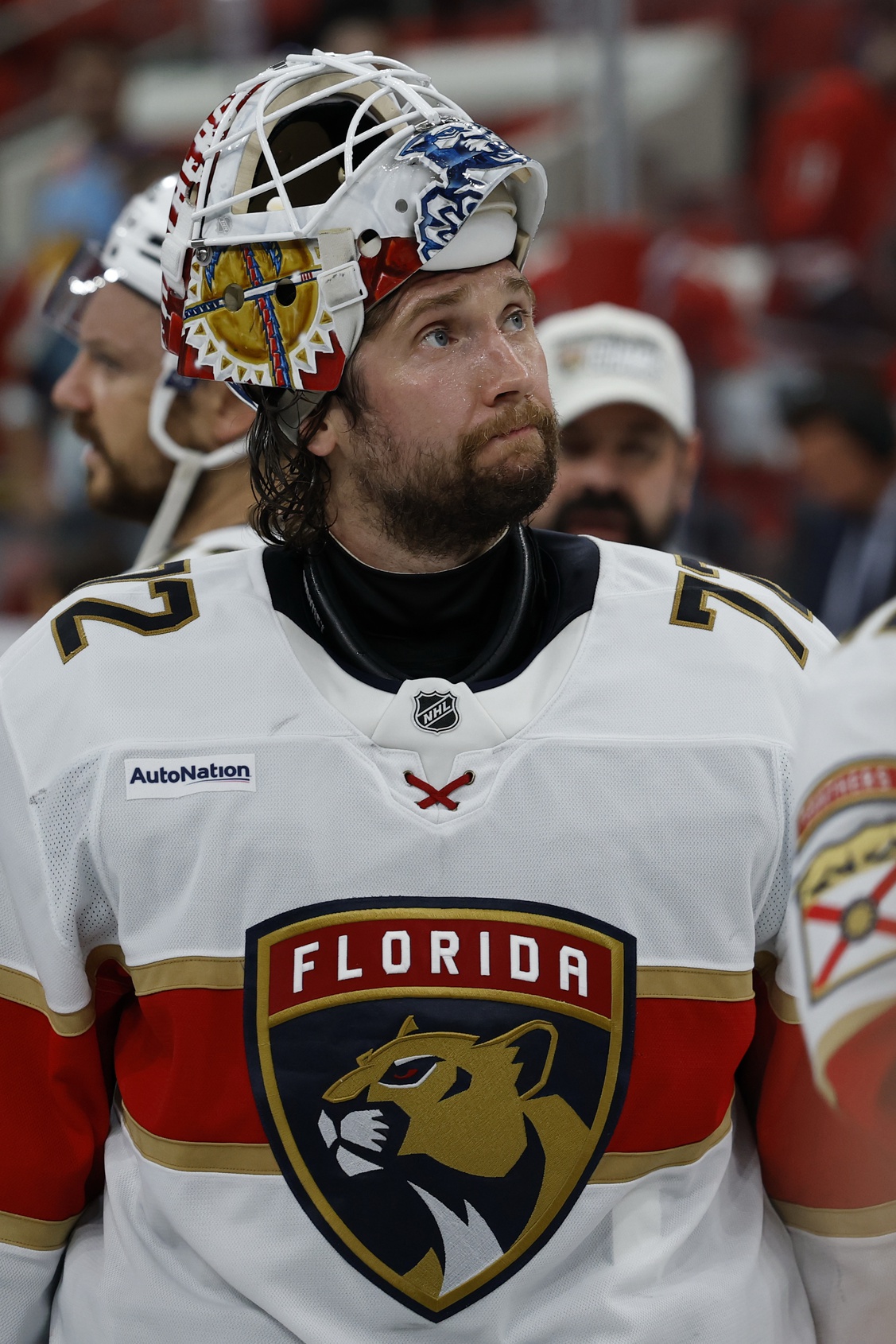 There were times in this contract that Bobrovsky’s contract looked like a complete anchor on the books. However, he has become a bit more consistent in recent years and when Florida traded Spencer Knight at the trade deadline last season, it suggested that their plan is to stick with Bobrovsky beyond this deal as they don’t have anyone else in their system that’s ready. He’ll be entering his age-38 season in 2026-27 so a long-term deal isn’t likely. However, a two-year pact could be doable, one that might land closer to half this amount. Alternatively, if they were to go with a one-year offer, he’d be eligible for performance incentives which could give Florida some shorter-term wiggle room next season.
Tarasov had a rough year in Columbus, ultimately finishing as the third-string goaltender and getting moved for cheap in the summer. If he can re-establish himself to the level he was at in 2023-24, he could make a case to land closer to $1.75MM or so on his next contract although that’s a price tag Florida likely can’t afford.
Signed Through 2026-27
F Jesper Boqvist ($1.5MM, UFA)
F Eetu Luostarinen ($3MM, UFA)
F Evan Rodrigues ($3MM, UFA)
Free agency hasn’t been kind to Rodrigues which helped explain why he signed a four-year deal for this price tag, a contract that had a chance to become team-friendly pretty quickly. So far, so good on that front. As a player who consistently passes 30 points and can play down the middle in a pinch, he should be able to land something in the $4MM range on his next contract.
Luostarinen has been a player who has produced a point total in the 20s in three of the last four seasons. The production he had last playoffs (19 points in 23 games) was the outlier but for the most part, he has been a third liner making third-line money. With his production generally being more limited, he might not be able to land as much as Rodrigues next time out. Boqvist signed this deal near the trade deadline last season and he might have done better than he would have on the open market where he didn’t have a lot of luck in 2024. As a fourth liner with a bit of versatility, his value should hover somewhere around this mark two years from now.
Signed Through 2027-28
F Jonah Gadjovich ($775K in 2025-26, $905K after)
D Dmitry Kulikov ($1.15MM, UFA)
Gadjovich hasn’t played a lot since joining Florida in 2023 but he has been a serviceable fourth liner who fits the physical style they want to play. As a 13th forward in an ideal situation, keeping him at just over the minimum salary starting next season isn’t a bad deal for them.
The fact Kulikov received a four-year deal last summer was a surprise but he also left a fair bit of money on the table had he opted to go with shorter-term contracts. The end result is that he gets a bit of security while the Panthers get a bargain deal for someone who, when healthy (which he currently isn’t), is still a pretty dependable third-pairing defenseman at this point.
The Flyers Need To Add A Goalie To Stay In The Hunt
As we push into the second half of the NHL season, we’ve seen more chatter about goaltending and the rare in-season goalie trade involving the Oilers and Penguins. While Edmonton is still in the hunt for a new backup option after acquiring Tristan Jarry, they likely aren’t the only ones looking to add depth. One team that should consider a goaltending acquisition is the Philadelphia Flyers.
At first glance, you might ask yourself why the Flyers need help. They are currently seventh-best in the NHL at limiting goals against, thanks mainly to the unbelievable play of Daniel Vladar.
He entered the holiday break with a 13-5-3 record, a .910 SV% and a 2.39 GAA. Vladar’s underlying numbers look even better, as he’s 10th in the league with 14.6 goals saved above expected (per MoneyPuck). These numbers are terrific, but there are concerns about Vladar’s longevity as he tracks to eclipse 30 starts in a season for the first time in his career.
He could surpass that mark before the end of January, starting 21 of 36 so far. The 28-year-old Vladar had been a career backup with the Flames and Bruins before this season.
He wasn’t a particularly good No. 2 option either, posting below-average numbers in almost every season of his career. He signed a somewhat surprising two-year contract with the Flyers this past summer worth $3.35MM per season. No one could have expected him to perform the way he has, which has to make one wonder whether he can carry this play throughout the season, or whether he has simply started the year on an extended heater.
The Flyers haven’t played playoff hockey since the bubble in 2020 and haven’t hosted a home playoff game since Jake Guentzel put up a four-spot against them in Game 6 of the first round in 2018. They are due for playoff action in Philadelphia, and it would be a disaster to let goaltending be their downfall, as it has been so many times before. Their hot start has them second in the Eastern Conference with a .625 points percentage, fueled by some of the league’s best defensive results at 5-on-5.
Outside of the team defense and Vladar, the bright spots are limited. Their offense ranks 24th in the NHL in goals scored. On top of that, Philadelphia doesn’t have a reliable goaltending option outside of Vladar to lean on.
Sure, Samuel Ersson has shown glimpses before. This year, in 14 games, he’s been middling with a 6-4-4 record, an .872 SV%, and a 2.96 GAA. Ersson’s numbers don’t tell the whole story, as he hasn’t played as poorly as those traditional numbers would suggest, but the Flyers need better goaltending than that if they hope to make a playoff push.
Behind Vladar and Ersson is Aleksei Kolosov, who has seen limited NHL action this season, playing just two games. Only one of those appearances was a start, and Kolosov lost it. Still, he played well overall, posting a .929 SV% and a 1.62 GAA.
It’s tough to get overly excited about Kolosov’s play, given his more conservative .900 SV% in the AHL this season. The 2021 third-rounder is still just 23 years old and has room to grow, but for a team with legitimate postseason aspirations, there isn’t a slot for him as a legitimate backup option with a starter as historically untested as Vladar.
All of that to say, the Flyers have to look outside the organization for one of two options. The first option would be to find a tandem goaltender to pair with Vladar and deploy a platoon. The other option would be to find a higher-ceiling traditional backup to play behind Vladar. This is where it could get complicated for Philadelphia, as goalie trades are notoriously tricky in-season. Still, they can be done, as evidenced by the recent Stuart Skinner-for-Jarry swap.
As for available options, there are few. If Philadelphia wants a platoon option, the only choices truly in the rumor mill have been Jordan Binnington of the St. Louis Blues or Skinner. Skinner is a less likely candidate given that the Flyers and Penguins rarely trade with one another, but moving Skinner to Philly could be a win/win for both teams.
There are some outside-the-box options for the Flyers, however. Cam Talbot of the Detroit Red Wings has been phenomenal this year, posting better numbers than partner John Gibson. But Talbot is a UFA this summer, and with Sebastian Cossa waiting in the wings, Detroit could look to move Talbot for the right price. A similar situation is unfolding in Carolina, where Brandon Bussi has effectively taken over for veteran Frederik Andersen. Depending on how generous the Flyers are willing to be in their trade offer, they could potentially pry one of those two away.
That being said, the tightness of the playoff picture in the East still makes it conceivable they’ll fall out of it entirely. They might not want to blow many future assets on a veteran netminder this year. They could look at lower-tier options as well, such as David Rittich of the New York Islanders, Elvis Merzlikins of the Columbus Blue Jackets, or even one of the Seattle Kraken’s backups, Matt Murray or Philipp Grubauer.
Merzlikins and Grubauer are two massive gambles, with term left on their contracts beyond this season, but the Flyers have cap space and could gamble on one of them returning to the form they showed earlier in their careers. While those moves might give the Philadelphia more depth, it’s probably not the best course of action for a team chasing a playoff spot. Murray could be the best fit of the bunch, but with his injury history, it would be hard to count on him regularly.
What Will Quinn Hughes’ Next Contract Look Like?
Now that the dust has settled on the Quinn Hughes trade to the Minnesota Wild and the superstar defenseman has settled into the Twin Cities, it’s fair to speculate about his future and whether it will include the Wild. Hughes is a little over 18 months away from becoming an unrestricted free agent. At a time when many superstars are taking the guaranteed money and staying put, it will be interesting to see whether he forgoes the free market for stability with the Wild. Hughes’ free agency case could be a landmark one, with so few players going to UFA and a salary cap soaring.
 While the 27-year-old is a UFA on July 1, 2027, he can sign an extension in about six months. With the new CBA rules that cap the term at seven years instead of the previous eight, it could impact the term that Hughes will take. Does he lock in for the seven years early with his current team – or still eight if he signs before Sep. 15 – or will the allure of going to market convince him to accept a six-year term? The money will be there for Hughes either way, as will the term, but whether he wants to leave money on the table will be up to him.
In early October, Matt Sekeres and Blake Price discussed with Daily Faceoff’s Jeff Marek the potential for Hughes to become the NHL’s first $20MM player. Marek didn’t outright say he believed Hughes could become that player. Still, he did discuss the cascading effect of other players around the NHL coming to terms on lucrative deals, which will no doubt impact Hughes’ negotiations.
Many wondered if Connor McDavid could become the NHL’s first $20MM man, but he punted that opportunity and opted to remain in Edmonton at his current rate of $12.5MM. Hughes could make a similar move to McDavid and take a short-term deal at a discounted rate, but given that he was just traded, one has to think he won’t feel the same loyalty to the Wild that McDavid showed to the Oilers. Another wrinkle for Minnesota in getting Hughes to sign for a discount is that the Wild has already demonstrated they will pay a superstar’s market value to retain them, as they did with Kirill Kaprizov when they signed him to his massive record-setting extension earlier this year.
Given that the cascading effect is in play, there’s no greater impact than looking over at a talented teammate who got every cent they wanted and believing you should get it too. No one knows whether Hughes feels that way except himself, but with the allure of the free market and the temptation of playing with his brothers on a talented team in New Jersey, it’s hard to believe Hughes is going to leave money on the table to sign with the Wild.
That’s what makes the possibility of Hughes hitting a $20MM AAV all the more likely. The Wild gave up a ton to get the defenseman and aren’t going to let him walk for nothing. So, they have one of two choices: pay him what he wants or trade him after this season.
But who are Hughes’s comparables, and what kind of money is realistic on a long-term contract? The best comparable to Hughes is fellow defenseman Cale Makar of the Colorado Avalanche. Hughes and Makar have flipped the Norris Trophy in recent seasons as the league’s top defenseman. At this point, Makar is a step or two ahead of Hughes in terms of numbers and hardware. Makar has 470 points in 431 games, along with two Norris Trophies and a Calder Trophy, while Hughes has a single Norris Trophy and 435 points in 464 games. This also doesn’t factor in Makar’s Stanley Cup ring or his 4 Nations win this past year. Both men are slated to become free agents at the same time, which should make the parallel negotiations fascinating to watch. Outside of Makar and Hughes, there really is no comparable from a contract standpoint.
Thomas Harley of the Dallas Stars is a possibility after signing a long-term extension two months ago. Still, he isn’t nearly the contributor Hughes is and was only a restricted free agent next summer. Harley does have youth on his side, as he is just 24, but he doesn’t have a resume close to Hughes’ and isn’t in the same stratosphere offensively with just 117 points in 223 career NHL games. Harley is still a terrific player, but his $10.587MM cap hit isn’t remotely close to the number Hughes should command.
Odds are, Makar will ink his deal first, as he is pretty comfortable in Colorado and they have the cap space to make him a top offer, which should eclipse Kaprizov’s $17MM AAV if he goes for full value. As Tyler Yaremchuk and Carter Hutton discussed on DFO Live back in October, the escalating cap is going to allow guys like Makar to call their shots on their next deals. Still, there is no way to gauge whether money will be the driving force for Makar, or for Hughes, for that matter.
While Makar and Hughes will be linked by their free agency timelines and play, the similarities taper off after that. Hughes has family dynamics at play and no personal connection to his team yet. Those dynamics will be primary considerations for both players and could change the money they are ultimately willing to play for. Makar has been part of a winning environment for quite some time, while Hughes has two brothers playing on the same team and a potential path to join them in New Jersey. Makar has better career numbers than Hughes, but as we saw with Connor McDavid, loyalty, fit, family, and friendship can shave millions off a player’s cap hit. In the case of Hughes and Makar, time will tell if that happens.
Image courtesy of Matt Blewett-Imagn Images.
The Penguins Should Look Into Moving Some Veterans
The Pittsburgh Penguins are currently spiralling in freefall after the past two weeks and have gone from a comfortable playoff spot to the bottom of the Metropolitan Division. The Penguins have exhibited much of the same behaviours over the past couple of weeks that were on full display in the previous three seasons, when they missed the postseason, and they might not be ready to compete for the playoffs just yet. The difference this season in Pittsburgh is that the organization has hope in their young prospects and a ton of cap space available next summer.
The Penguins talked in the summer about going young, but in the past few weeks, they’ve injected a few veterans in favor of their young players, and the results haven’t been pretty. Pittsburgh also has several veterans on expiring contracts who don’t figure into the team’s long-term future, and given their recent stretch of play, they should begin unloading some of those veterans to bring in more young talent for their surging cupboard of futures.
Some might assume a headline like that means moving Bryan Rust, Rickard Rakell or Erik Karlsson, but quite the opposite is true. The Penguins have many capable veterans who can play in the NHL, but their age and contracts make their prospects in Pittsburgh very murky. The likes of Noel Acciari, Connor Clifton, Brett Kulak, Stuart Skinner and Anthony Mantha are five players Pittsburgh should be actively shopping to acquire assets and move a few young players up from the AHL.
That list could be much longer, as Pittsburgh has several other UFAs they could move, such as Matt Dumba, Danton Heinen, Connor Dewar, Kevin Hayes, and Ryan Shea. Dewar and Shea are likely candidates to receive extensions or, at the very least, be offered contracts to remain in Pittsburgh, as they both seem to be favorites of Penguins general manager Kyle Dubas. By contrast, Heinen and Hayes hold little to no trade value at their current levels of play. Depending on how things go for Pittsburgh and the trade market, Hayes and Heinen could find a small trade market close to the deadline.
Back to the other four players: their trade value varies widely, and, to be perfectly honest, none of them is going to carry a high price tag. But that doesn’t mean they don’t have any value. Mantha, for example, has 22 points in 33 games and has been a great offensive piece for the Penguins. He, along with Justin Brazeau and Evgeni Malkin, formed a formidable second line in Pittsburgh and was lights out when all three were healthy. That trifecta was short-lived, however, as both Brazeau and Malkin were injured for a significant stretch, and Mantha bounced between linemates. Speaking of injuries, Mantha has dealt with them in the past, including last season, when he played only a handful of games and missed much of the year. If the Penguins want to maximize the asset that is Mantha, they would be wise to move him early in the new year, unless they go on a heater over the next couple of weeks.
Mantha is 6’5” and 240 lbs, but he plays smaller than his size and has never been overly physical for a big man. He skates well for a bigger player and produces offense at a solid clip, particularly when he has skilled linemates. There should be a market for his services if the Penguins decide to move him, especially for teams that want a capable top-six forward without giving up a ton of assets.
Acciari is another forward the Penguins should seriously consider moving, as he is in the final year of his contract and carries a $2MM cap hit. Acciari has been a good soldier for the Penguins, but has been handed ridiculous deployment over his three seasons, starting nearly 90% of his shifts in the defensive zone this season. As you can imagine, his offensive numbers aren’t good, with just 25 points in 154 games as a member of the Penguins. Credit to the 34-year-old, he continues to play hard-nosed hockey and should net the Penguins a late-round pick. In 20 games this season, Acciari has a goal and five assists and has 27 hits, but he can kill penalties and provide leadership as a fourth liner on a playoff-bound team. Acciari isn’t part of the Penguins’ plans, and at this point, the Penguins might be wise to get out in front of the trade market so they aren’t left holding players after the deadline, as they were last year when they couldn’t move Matt Grzelcyk.
Kulak has been a member of the Penguins for only over a week, having arrived in the Jarry trade to make the cap hits work. He likely isn’t destined to remain in Pittsburgh, and it makes little sense for either side to reach terms on an extension. Kulak is serviceable and was actually quite good in the playoffs last year for the Edmonton Oilers. Still, the Penguins already have a ton of defense at or around Kulak’s skill level, and there was reportedly interest in him before he was traded. With the Penguins eyeing a youth movement and Kulak approaching the end of his career, the Penguins should move him and get what they can. If the goal is still to go young and build for the future, hanging onto Kulak makes little sense, especially with the team plummeting down the standings.
Then there is Skinner, who also came over in the Jarry trade from Edmonton. It’s hard to pin down what Skinner is because of his inconsistency in the NHL. People might forget, but the 27-year-old was a runner-up for the Calder Trophy in 2022-23 and was fantastic that season, but has been all over the map over the last two and a half years, which is why he was dealt from a Stanley Cup contender to a rebuilding club. He has a fantastic regular-season win-loss record (109-63-18), but his playoff numbers leave a lot to be desired (26-22). Unfortunately for him, he has been prone to gaffes and meltdowns at the worst possible times.
Now, in Pittsburgh, there doesn’t appear to be a fit, at least not on the surface. Skinner is approaching free agency, and the Penguins already have their goalie of the future in Sergey Murashov. However, the backup position is a bit of a question mark, as Arturs Silovs has struggled in his last dozen starts and may not be an NHL netminder. Pittsburgh also has youngster Joel Blomqvist waiting in the AHL, so they appear to be set for the near future.
Skinner could also have some value on the trade market, as teams are always desperate for netminding near the playoffs. Skinner has a minimal cap hit of just $2.6MM this season, which should be manageable for just about every team in the league should they want to add him. With Skinner, a lot is riding on his playing well the rest of this year. AFP Analytics projected earlier in the year that Skinner could get four years at $6.14MM per season, which seems wildly inflated after his start to the season. But being a UFA should give Skinner plenty of motivation to prove his detractors wrong, which is likely what Pittsburgh is hoping for over the next few months before the NHL Trade Deadline.
Regardless of how they do it, the Penguins can’t keep trotting out old, expensive depth players if they want to turn the corner in the rebuild. They should by no means tear down the whole roster. Still, any veteran on an expiring deal who isn’t Malkin, Dewar or Shea should be moved out for future assets so the Penguins can finally find younger, hungrier, faster depth players.
Canadiens Win Big In Re-Acquisition Of Phillip Danault
The hockey world was graced with a mini Trade Deadline in the late hours of Friday, the eve of a one-week trade freeze that went into effect on Saturday. There were only two moves, both swapping draft picks for roster players, but for the Montreal Canadiens this mini Deadline could be one to remember. They won a sweepstakes for Los Angeles Kings center Phillip Danault – a strong, veteran center who they were able to land at a fairly negligible price.
The Canadiens only gave up a 2026 second-round pick in exchange for Danault. It was one of two second-rounders Montreal held in next year’s draft. The other originally belonged to the Columbus Blue Jackets, who sit dead last in the Metropolitan Division through the first two months of the season. Their pick could end up close to the first round – unless their Friday trade turns things around – while Montreal’s own pick could land near the other end of the second-round.
Another pick moved will mean just a bit more space for Montreal’s current prospects to find their ways. The Canadiens sit in playoff position despite carrying the youngest roster in the league this season. They’ve received major impacts from young players like Lane Hutson, Ivan Demidov, and Oliver Kapanen. Rookies Jacob Fowler, Adam Engstrom, Owen Beck, and Florian Xhekaj; with even more top prospects, like Michael Hage and Alexander Zharovsky, soon behind them. The Canadiens won’t have the space to continue adding multiple top draft picks to the shelves every season.
Instead, Canadiens general manager Kent Hughes leveraged the surplus value to acquire what should be a great lineup piece. Danault has struggled to score this season. He scored five points, all assists, in 30 games on a Kings offense that has scored the second-fewest goals in the league so far. But the 32-year-old centerman has managed back-to-back seasons with 22 goals over the last two years. He boasts a career-high of 54 points, set in the 2022-23 season, his second year with the Kings. On top of commendable scoring, Danault posted a positive plus-minus in four of his five years in Los Angeles – fortifying a reputation as one of the league’s better, and more reliable, defensive-centers.
Before his veteran days in L.A., Danault carved out his first NHL roles in the Canadiens’ roster. He was originally a first-round pick to the Chicago Blackhawks but joined Montreal in a move that worked out tremendously well for the Canadiens. They acquired Danault and the draft pick used to select Alexander Romanov in exchange for sending Tomas Fleischmann and Dale Weise to the Blackhakws. Danault was an immediate impact for Montreal, scoring 40 points and playing in all 82 games during his rookie season in 2016-17. He averaged third-line minutes in his first year and grew into a stout second-line role over the next four seasons.
Danault ended his first tenure with the Canadiens with a top-10 finish in Selke Trophy voting in three consecutive seasons. He had one more top-10 finish, and two more seasons receiving votes, in five years with the Kings.
 Reliable defensive-centers often have a more level aging curve than their high-scoring counterparts. Danault has struggled to find his offense in L.A. but should look much more at home in a Canadiens’ offense that plays with much more pace. Montreal already wields a Selke Trophy-hopeful in top-line center Nick Suzuki. Now, they’ll fortify their two-way game even more with Danault, which should provide a stable backing for Demidov and Juraj Slafkovsky to focus on their scoring, and rookie Kapanen to continue easing into a role.
More than the stability, and surefire penalty killing role, that he’ll offer the lineup – Danault could be invaluable as Montreal looks to promote more star prospects to the NHL. University of Michigan star Hage has improved in every season and seems close to breaking into the pro flight, but there’s no doubt that he’ll face a tough physical challenge once he gets there.
With Danault’s addition, Montreal can be confident in their depth down the middle for the foreseeable future. Suzuki will continue in his top role, while a mix of Kapanen and Danault hold down the middle lines, until Hage, Beck, and Aatos Koivu are ready to carry on the next era of Canadiens hockey. Montreal was able to secure that short-and-long-term security at the cost of their third-most valuable pick next year. It’s a shrewd acquisition that could prove to be an X-factor as Montreal chases their second-straight postseason berth.
Photo courtesy of Jean-Yves Ahern-USA TODAY Sports.
Assessing Potential Under-The-Radar Trade Candidates
After two major trades last week involving players like Quinn Hughes, Marco Rossi, Tristan Jarry, and Stuart Skinner, the trade bait boards in the media have removed several names from the potential trade list. There are still many clear candidates available for trade, including Ryan O’Reilly, Rasmus Andersson, Alex Tuch, and Yegor Chinakhov. However, beyond that initial group of obvious options, there are less obvious, under-the-radar players who might come into play as the next few months unfold.
We start with a couple of Jets players who are near the bottom of the NHL standings and have been a colossal disappointment this season. Much of their struggles are due to three-time Vezina Trophy winner (and last season’s Hart Trophy winner) Connor Hellebuyck missing three weeks after an arthroscopic knee procedure on Nov. 21.
If this slow start persists, the Jets have two veterans, Gustav Nyquist and Jonathan Toews, who could be trade targets if Winnipeg decides to punt on this season. With just six assists in 24 games, Nyquist hasn’t been a fit in Winnipeg. The 36-year-old is on a one-year deal worth $3.25MM that he signed on July 1 and is only two years removed from posting 75 points in 81 games with the Predators.
Should Winnipeg make Nyquist available, he will attract significant interest due to his veteran experience and passing skills. Make no mistake, Nyquist is somewhat one-dimensional at this stage in his career, but he can also contribute on the penalty kill and occasionally score. Last year at the trade deadline, Nashville traded Nyquist to the Wild for a second-round pick; however, his performance this season (and last year) makes that return unlikely. Nyquist doesn’t have trade protection on his current deal.
Initially, Toews’ story was an incredible demonstration of perseverance and grit in getting back to the NHL. The Jets took a chance on Toews, hoping he could regain his spot as an NHL center in their top six, or at least their top nine. That hasn’t happened so far, as Toews has struggled to keep up with today’s NHL pace, which is understandable given his health issues and the time he was away from the game.
Winnipeg misjudged how effective Toews would be, and they are now paying the price in the standings because of a significant gap in their forward group. That said, they are still in the playoff hunt, and with an intense stretch of play, they could contend again. However, if they stumble, they might consider moving Toews if he’s willing to waive his no-move clause. Since he returned home to play for the Jets, it’s unlikely they will trade him or that he will accept a deal, but if Winnipeg’s struggles persist, it could become a real possibility.
Toews has been moved to the fourth line (along with Nyquist) and has scored just three goals and six assists in 33 games this season with a -13 rating while averaging 15:33 of ice time per game. Those stats mark the worst production of Toews’ career. He’s appeared slow this year, and Winnipeg seems like a team playing in slow motion when he is on the ice. It raises the question of whether they can continue to include him in the lineup.
The Jets signed Toews to make a substantial impact in the playoffs, but if the playoffs look unlikely, it makes sense to see if they can find him a team that will qualify and receive a small return. That is, if he wishes to play elsewhere.
Sticking with the Western Conference, the Blues have also disappointed this season, after pushing the Jets to the very limit in last year’s playoffs. St. Louis is a team caught between being a playoff contender and an up-and-coming squad, and it’s fair to wonder how many veterans they might move this season. Much has been said about Jordan Kyrou, Jordan Binnington, and Brayden Schenn, all of whom are on many trade candidate lists, but one name that isn’t talked about often is forward Mathieu Joseph.
Joseph is a Stanley Cup champion who could be a reliable addition to a contending team looking to strengthen its depth. The 28-year-old has a good shot, can kill penalties, and plays with a lot of speed. He is carrying a $2.95MM cap hit in the final year of a four-year deal and won’t cost a fortune for any team aiming to improve their lineup. Joseph would also bring a bit of physicality to the bottom of a forward group, making him a strong candidate for a trade.
Switching over to the Eastern Conference, a name that emerges as a somewhat under-the-radar trade candidate is defenseman Ryan Shea. The Penguins signed Shea to a one-year NHL contract in the summer of 2023 that included a $775K guarantee, despite him having never played an NHL game up to that point.
Shea had spent three seasons in the Stars’ minor league system after captaining Northeastern University in the NCAA. The 28-year-old is once again heading for free agency next summer and was earlier projected by AFP Analytics to receive a one-year deal worth just over $1MM.
However, his performance this season (two goals and 11 assists in 33 games) has raised his value, and he could be eyeing a multi-year contract considering his age and recent form. The Penguins have over $54MM in cap space for next season (as per PuckPedia) and could easily re-sign him, but it remains uncertain whether he fits into their long-term plans given their projected window of contention. If they see him as part of their top-six forward group, he will sign and stay; if not, he should be an available trade asset before the deadline due to his $900K cap hit.
Lastly, we have Teddy Blueger of the Canucks. Blueger has played just two games this season due to a lower-body injury, but is expected to return after Christmas, making him a likely trade candidate given his upcoming free agency next summer.
Blueger is a dependable pro and a consistent presence; he is a fourth-line center, no more, no less. The 31-year-old is in the final season of a two-year deal paying him $1.8MM and is likely to get a raise if he can return to the lineup and perform at his best. Blueger has been remarkably consistent throughout his career, peaking at 28 points in a season, a number he has reached multiple times.
Blueger isn’t overly big or fast, but he is an excellent forechecker and has some offensive skills beyond goal scoring, which he isn’t particularly good at. He is a smart player both offensively and defensively, especially on the penalty kill, where he has been excellent historically.
All these factors make Blueger a prime candidate to be moved before the deadline, given his timeline and the Canucks’ plans. Vancouver is about as unpredictable as any team can be right now, but Blueger has a Stanley Cup on his resume and will be sought after by playoff-bound teams, which Vancouver is not.
The CBA Change That Makes The Holiday Roster Freeze More Significant
While the official trade deadline in the NHL isn’t until March 6th, there is an earlier trade deadline of sorts with the annual holiday roster freeze. During that time, while a limited number of NHL-AHL roster moves can be made, trades are a no-go from December 20th through December 27th. While this can spur the odd move including last season, it typically comes and goes without much fanfare.
But things are a little different this time around. In the new CBA, there are restrictions on teams retaining salary on a player whose salary has already been retained on. Put in the new CBA to seemingly quash the three-team double-retention trades that became quite commonplace in recent years, a player must spend 75 in-season days on a roster before they can be moved with retention again.
While most of the CBA won’t come into effect until mid-September when the current agreement officially ends, this is one of the elements that was brought into play a year early. As a result, if a team wants to acquire a player with salary retention and still be able to move that player with retention before the trade deadline, they have to get the deal done before the 20th. Otherwise, while the acquiring team can still flip that player before March 6th, they won’t be able to retain salary to facilitate that move.
While there aren’t a lot of defined sellers at the moment, there could be some potential buying teams out there who might be interested in taking a look at a player while leaving themselves some flexibility to move the player later on if he’s not a fit or they fall out of the playoff race. Having the ability to retain in that scenario would make the player more valuable so it wouldn’t be surprising to see an uptick in trade talks as a result.
Last year, there were a trio of trades made before the roster freeze, headlined by the Kaapo Kakko trade to Seattle, but none of them involved salary retention. We’ll soon see if this rule change spurs on a more active trade period by Friday or if it will come and go more quietly as it often does.