
Offseason Keys: Philadelphia Flyers
The offseason has arrived for most squads. Having covered the teams that weren’t a part of the NHL’s return and the ones ousted in the Qualifying Round and official first round, we shift our focus to the ones that were eliminated in the second round. Next up is a look at Philadelphia.
The Flyers were a playoff team for most of the season but really found their stride down the stretch and pushed themselves into the seeding games for the playoffs and avoided the Qualifying Round. From there, they jumped to the top spot and were able to get by Montreal in the first round before their offensive struggles were too much to overcome against the Islanders. Despite the weakened production, Philadelphia was one of the better offensive teams during the regular season so GM Chuck Fletcher may opt to not do too much there. Instead, the things on their to-do list this offseason revolve around the back end and between the pipes and largely involve small tweaks at most instead of big changes.
Re-Sign Myers
There aren’t many restricted free agents of note in Philadelphia, particularly with Nolan Patrick missing all of this season with lingering migraine issues. (While the team is optimistic he’ll play next season, he’ll almost certainly wind up with a cheap one-year deal.) But defenseman Philippe Myers is one whose case carries some importance.
The 23-year-old still hasn’t played a full season with the Flyers but he appears to be on his way towards becoming an important piece of their defensive core. He played in 50 NHL games this season, picking up a respectable 16 points while averaging 17 minutes a night. His workload increased in the playoffs, however, as he was bumped up to more than 20 minutes per game and into a spot in their top four. Myers even chipped in with three goals in those 16 contests.
While it’s a small sample size, it’s likely that Myers is back in that role for next season, especially with Justin Braun set to become an unrestricted free agent next week. A short-term contract would be easy enough to do and should come in fairly cheap given that he has less than 90 games of experience but if he plays well, the price of a long-term deal would go up considerably. As a result, Fletcher may want to kick the tires on what a longer pact would cost; even if it was a slight overpayment in the short term, it would have the potential to be a bargain down the road. That makes this case a bit more important than it might seem at first.
Move Gostisbehere
For a while now, it has seemed like an eventuality that defenseman Shayne Gostisbehere would be made available. That is now indeed the case as just a few days ago, it was reported that they are willing to move the 27-year-old.
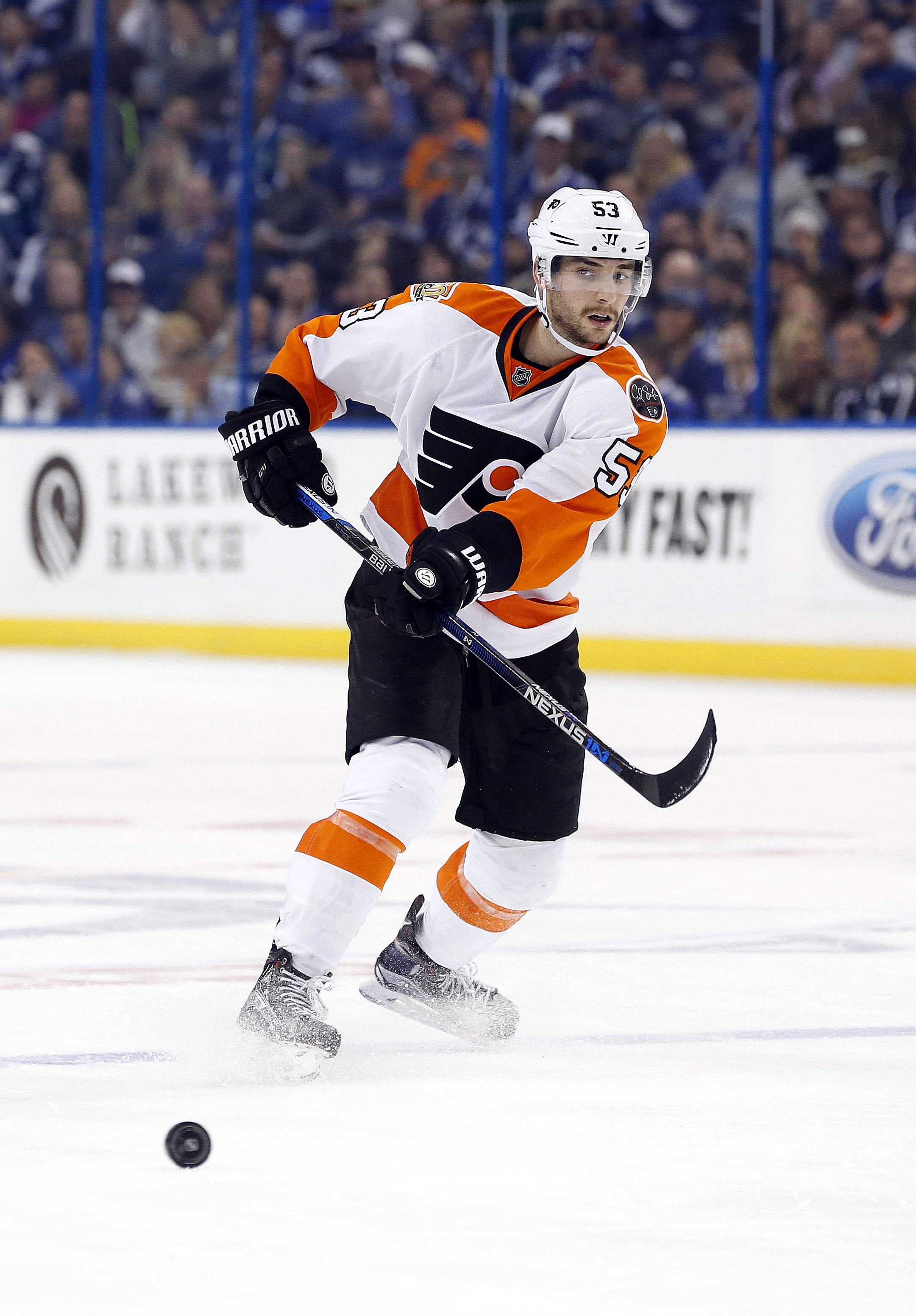 Gostisbehere is only two years removed from a breakout 65-point season that made it appear as if he was on his way to becoming a top-notch offensive defender, Even though he’s not the best defender, that type of production would make up for it. Even the years that sandwiched that 2017-18 showing weren’t bad either with outputs of 39 and 37 points. Those certainly weren’t as good but that’s still well above average for a defenseman. Had 2019-20 even come close to that, this probably wouldn’t even be close to being considered at this point. But with only a dozen points in 42 games that saw him scratched down the stretch in the regular season and for most of the playoffs, his value has cratered quite quickly.
Further complicating things is his contract which has three years left at a $4.5MM price tag. That’s justifiable if he can get back to the mid-to-high 30s in points in a normal cap environment but his ability to bounce back is going to be in question and this is anything but a normal cap environment. If Fletcher can find a taker for Gostisbehere, he’s going to have to consider it. Selling low is never ideal but moving him out would at least give them some cap space to work with if they want to try to add to their forward group this offseason. It’s quite the fall from grace for Gostisbehere and it just goes to show how quickly things can change.
Pick A Backup Goalie
The Flyers are among the many teams that have a vacancy to fill between the pipes with Brian Elliott being eligible for unrestricted free agency next week. The team could opt to bring him back in a familiar mentoring role for Carter Hart while Alex Lyon waits in the wings as a cheap option as well but is almost certainly better off as a third-string option. There are plenty of options in free agency and the trade market, however, that will also be worth considering.
There are a couple of questions that Fletcher will need to answer in order to determine which goalie he wants to sign: How comfortable is he with Hart playing back-to-backs and how much do they want to spend in that spot?
While next to nothing is known about the schedule for next season, the current expectation is that the schedule will be somewhat compressed in an effort to get as many games in as possible. Having starting goalies play in both ends of a back-to-back is something that teams have been shying away from doing in recent years and while Hart is young enough that he could probably handle the role, it’s worth noting that he only has 88 career games under his belt (regular season and playoffs combined). Adding the extra pressure of frequently playing back-to-backs is something that they may not want to do.
That will take a bargain-priced goalie off the table which helps shape the answer to that second question. Even so, there is still a sizable gap price-wise between someone like Elliott and the top backup options available. They have a bit of cap room but most of that will go to Myers, Patrick, and rounding out the roster. If they want an upgrade at backup, they probably would need to free up a bit of cap room first.
As things stand, it certainly seems like re-signing Elliott would make the most sense. While his days of being one of the better backups may be gone, he’s someone that accepts his role and works well with Hart. He also won’t need a multi-year commitment in a marketplace where quite a few backups should get an extra year to satisfy expansion exposure requirements. Philadelphia shouldn’t be in that situation as they could qualify Felix Sandstrom and expose him next offseason. Fletcher has a bit of time to think about this but the annual game of musical chairs in free agency often doesn’t last more than a couple of days so, within the next seven-to-ten days, he’ll need to make a decision on this situation.
Photo courtesy of USA Today Sports Images.
Offseason Keys: Vancouver Canucks
The offseason has arrived for most squads. Having covered the teams that weren’t a part of the NHL’s return and the ones ousted in the Qualifying Round and official first round, we shift our focus to the ones that were eliminated in the second round. Next up is a look at Vancouver.
After a relatively quiet 2018-19 season, expectations weren’t that high for the Canucks heading into this year. They were a team that was definitely in the mix for a Wild Card spot but not many were expecting them to do a lot of damage. Then came the bubble where Vancouver was one of the bigger surprises. Following their victory over Minnesota in the Qualifying Round, they ousted the defending Stanley Cup champions in the first round and took Vegas all the way to seven games before they were eliminated. Now, GM Jim Benning’s key goals for this summer will be helping the team take that next step forward. However, accomplishing that primarily means taking care of some of their own.
Clear Contracts
The list of notable free agents is fairly long and their cap situation, while not entirely dire, isn’t good enough for them to keep everyone that they want to. Yes, they have about $14MM to spend but need to sign a starting goalie, two defensemen, and three forwards with a pair of notable skaters in defenseman Chris Tanev and winger Tyler Toffoli among those that are slated to hit the open market next month. There’s enough room to keep some but certainly not enough to keep everyone.
That makes freeing up cap space extremely crucial for Benning. While he has stated on multiple occasions that he doesn’t want to part with future assets to free up cap space, he may have to do so as if he doesn’t, an impact player is probably going to leave.
Who could they try to move to free up that space? There are plenty of options. Loui Eriksson has two years left at a $6MM AAV (tied for the highest on the team) but only $5MM left in money owing with his signing bonus already paid for next season. Brandon Sutter is entering his final year with a $4.375MM price tag on the cap and $3.5MM in salary still owed. Both players can still play in the NHL, albeit in limited roles.
A little farther down the list are winger Antoine Roussel and center Jay Beagle who both signed four-year, $12MM contracts just two summers ago. They had the cap room to make those veteran additions now but shedding one of those deals would also give them a bit of flexibility. Beagle is primarily a faceoff specialist at this point while Roussel, if healthy, can be an effective energy player in a bottom six.
At this point, it probably doesn’t matter which one of those veterans gets moved out to give them some extra wiggle room to keep their core players. The priority simply has to be freeing up cap space. It may not be something that Benning wants to do but he likely will have to bite the proverbial bullet here.
Goaltending Decision
Toffoli and Tanev aren’t the only UFAs of note that the Canucks have to contend with as starting goalie Jacob Markstrom is also less than two weeks away from hitting the open market. While it has taken some time going back to his days with Florida, the 30-year-old has blossomed into a capable number one netminder and will be entering the market as one of the top options available.
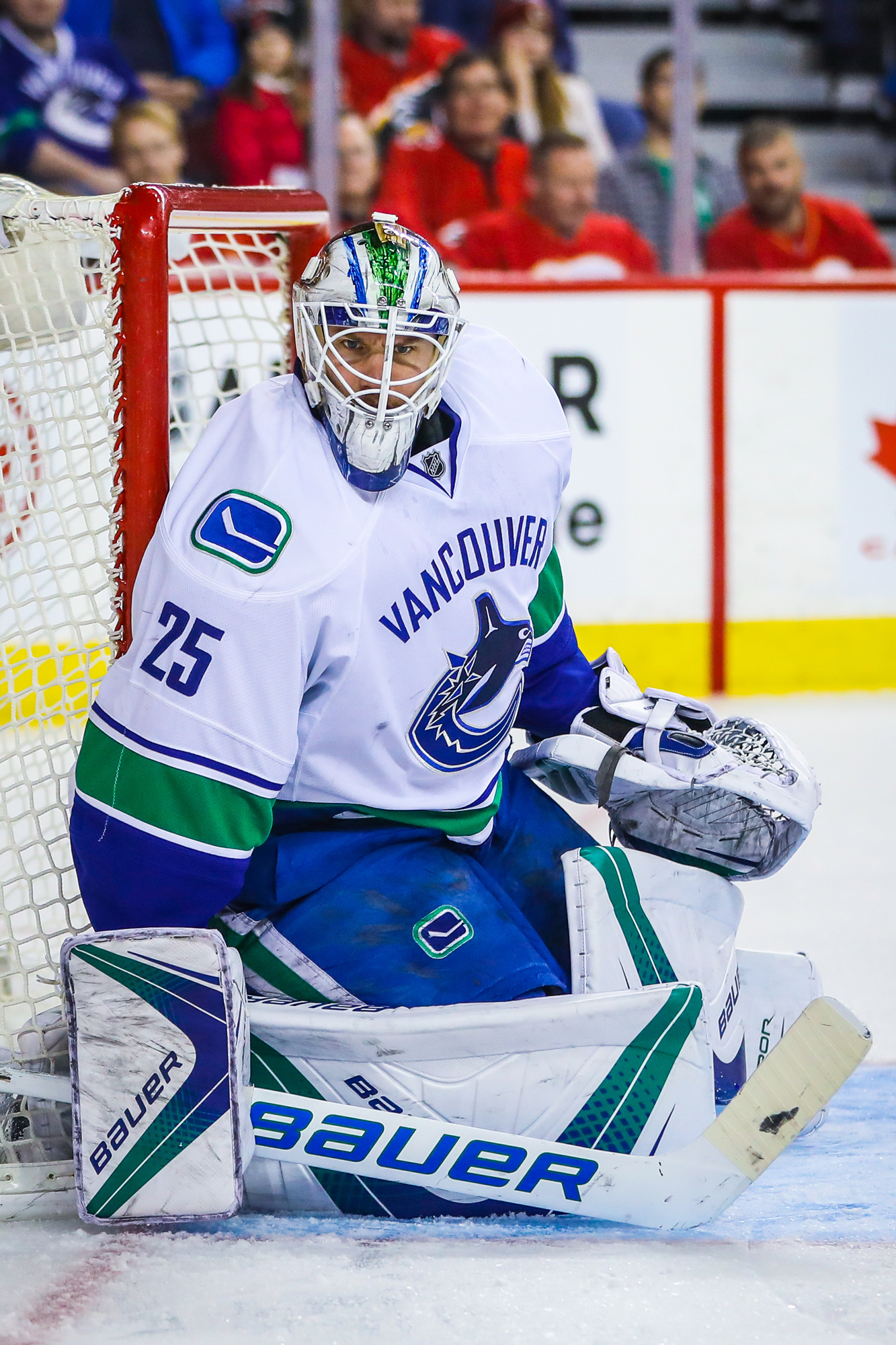 While he wasn’t able to get to 60 games for the third straight season due to the pandemic and a knee injury, Markstrom still managed to put up a .918 SV% which was the highest of his career. He did a bit better in the playoffs with a .919 mark in 14 games before a groin injury took him out and put Thatcher Demko into the starting role.
Demko was nothing short of spectacular and nearly single-handedly dragged Vancouver past Vegas before the Golden Knights edged them in that seventh game. That presents a bit of a question for Benning. Demko has long been viewed as their goalie of the future and might be ready for a bigger workload which is something that can’t happen as long as Markstrom is in the fold. And while it may be a bit early for teams to really be worrying too much about the expansion draft for the Kraken next year, Vancouver can only protect one goalie. If Markstrom re-signs, it puts them in a likely situation of losing one of them for nothing a year from now.
While Markstrom won’t be commanding the money that Sergei Bobrovsky did a year ago (seven years, $70MM), he should still be in line for a sizable raise on the $3.67MM AAV he had on this most recent deal. It’s possible that he could command somewhere between $5.5MM and $7MM which would take up a big chunk of that remaining cap room. Benning will have to decide in the very near future if Demko is ready to be the starter and if not, he’ll have to re-sign or replace Markstrom.
Extension Talks
The window to sign players to contract extensions has opened up and Vancouver has a pair of young stars that are a year away from needing new deals. With how well both have performed already, there’s certainly a case to be made that Benning should be looking to get deals done with defenseman Quinn Hughes and center Elias Pettersson before the price tag gets even potentially higher next offseason. Doing so would also give them a better idea of their long-term financial picture which could come in handy when it comes to forecasting what they can spend on their current pending UFAs.
Hughes had a phenomenal rookie campaign and finished tied for fourth overall in league scoring by defensemen and was just two points behind Norris finalist Victor Hedman for the third spot. That performance helped him finished second in Calder Trophy voting and he was even better in the playoffs when he finished third in scoring with 16 points (2-14-16) in 17 games. Hughes isn’t eligible for an offer sheet but that shouldn’t affect things much. On his next deal, he’ll be setting the new benchmark for Vancouver’s defensemen as he’ll come in well ahead of Tyler Myers and Alexander Edler ($6MM each).
As for Pettersson, he has back-to-back 66-point seasons to start his career and has established himself as a capable front liner. He has split time between center and the wing and that versatility will only make him more valuable down the road. He may still have another level to get to offensively and it’s safe to say he will be a forward that they will build around. Like Hughes, he’ll undoubtedly be setting the new high point for Vancouver’s forwards as he’ll surpass Eriksson’s $6MM price tag.
Both players are franchise cornerstones so locking them up is going to be high on Benning’s to-do list even though they don’t necessarily have to sign new deals until 2021.
Photo courtesy of USA Today Sports Images.
Free Agent Focus: San Jose Sharks
With free agency now less than a month away, many teams are already looking ahead to when it opens up. There will be several prominent players set to hit the open market while many teams have key restricted free agents to re-sign. While cap space remains an issue in San Jose, this is not the year that their free agents are likely to break them. The team does have a key restricted free agent to sign, but the team must decide what unrestricted free agents they want to bring back after a disappointing 2019-20.
Key Restricted Free Agents
F Kevin Labanc – The only significant restricted free agent the team needs to sign is Labanc, who surprised quite a few people when he signed a one-year, $1MM bargain contract last offseason with many expecting he took a low deal with the assumption he would be rewarded with a long-term deal the following year. We’ll see if that’s the case, but Labanc’s production didn’t jump off the charts like many had hoped. In fact, the 24-year-old finished with a disappointing 2019-20 season, posting just 14 goals and 33 points in 70 games, significantly less than the 56 points he produced the previous year. What type of contract Labanc receives will be interesting to see, but the forward is still considered to be a significant piece to their core and must return to his 2018-19 form if the team hopes to improve on its dismal season last year.
F Antti Suomela – The Sharks are hoping to bring back the 26-year-old back as a potential fourth-line center, but the Finnish center spent most of his season in the press box in San Jose as the team’s extra forward. He managed to appear in 20 games with one goal and seven points, serving mainly as the team’s fourth-line center. With plenty of questions marks down the team’s middle, Suomela has every chance to prove he deserves a more significant role.
Other RFAs: F Jonathan Dahlen, F Jayden Halbgewachs, F Maxim Letunov, D Nicolas Meloche, D Jacob Middleton, D Jeremy Roy, G Andrew Shortridge, D Tony Sund, F Manuel Wiederer.
Key Unrestricted Free Agents
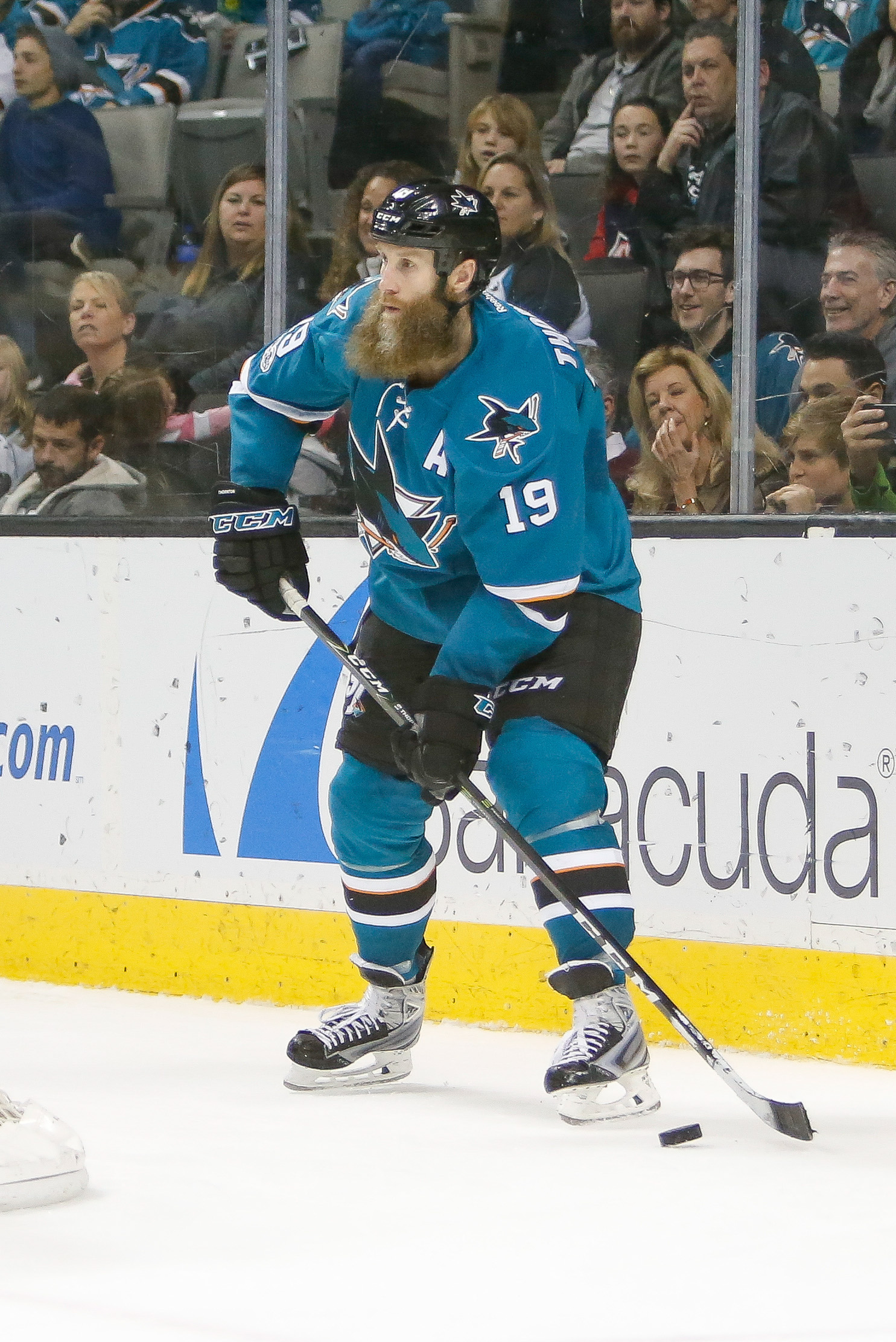 F Joe Thornton – The Sharks have made it quite clear that if Thornton wants to return next season, he’s welcome to. So, the question isn’t whether the Sharks want him, but whether Thornton wants to return. The 41-year-old made it clear at the end of the season that he would like to have a chance to win a Stanley Cup before his career ends. That seems unlikely to happen, which could suggest that Thornton may be more interested in joining a legitimate cup candidate for 2020-21. He was hoping to be traded to a contender at the trade deadline, but the team wasn’t able to find the right trade partner. Regardless, with the questions up the middle, the Sharks wouldn’t mind bringing back their heart and soul of the team despite his declining production. He did remain healthy all season, but produced one of his lowest totals since his rookie campaign in Boston back in 1997-98 with just 31 points.
F Melker Karlsson – The long-time bottom-six forward could be looking for another team as the Sharks must decided whether Karlsson’s lack of numbers is worth holding onto. Solid on the penalty kill, Karlsson’s three-year $6MM contract is now up and it’s likely the team might be ready to move on from him after scoring just six goals last season, his lowest numbers ever. Even his hits saw a major decline. If they do bring him back, expect it to be at a much lower AAV.
G Aaron Dell – After two impressive years in net in San Jose, the next two seasons have been less impressive. It’s likely that Dell will be asked to move on as the team attempts to find a better tandem fit with Martin Jones now that they announced the will not buy him out. Dell got more appearances this year with a career-high 33, but a 3.01 GAA and a .907 save percentage wasn’t what the team was looking for while Jones’ struggled. Expect Dell to find a backup job elsewhere in the league.
Other UFAs: F Jonny Brodzinski, D Brandon Davidson, F Anthony Greco, F Stefan Noesen, D Dalton Prout.
Projected Cap Space
Unfortunately for the Sharks, the team doesn’t have some of the cap advantages that other lottery teams possess (or the lottery pick, for that matter). The team has about $67.4MM committed to just 16 players, so there isn’t too much money remaining for the team to fill the rest of its roster spots. Regardless, they will likely dip into the free-agency pool a little bit to bolster a depleted roster, but will most likely have to focus on improving their defense and adding a more reliable goaltender who take take some of the pressure off of Jones.
Photo courtesy of USA Today Sports Images.
Free Agent Focus: Columbus Blue Jackets
With free agency now just a couple weeks away, teams are looking ahead to when it opens up. There will be several prominent players set to hit the open market while many teams have key restricted free agents to re-sign. While the Columbus Blue Jackets have no UFA’s of note, they still have their work cut out for them with a laundry list of RFA’s, including several core players.
Key Restricted Free Agents
F Pierre-Luc Dubois – Getting Dubois, 22, locked up long-term is the core objective of the Blue Jackets’ off-season. Over the three seasons of his entry-level contract, Dubois totaled 158 points in 234 games, including a 61-point campaign in 2018-19 and a 57-point pace this season. He also wrapped up his contract on a high note, recording ten points in ten playoff games this year. For a team that is lacking in center depth and elite scoring talent, Dubois is critical to the short-term and long-term success of the Blue Jackets.
The problem is balancing Dubois’ long-term potential and dollar value with the team’s limited cap space for next season With no unrestricted free agents departing the lineup, the Blue Jackets have limited funds to work with against the flat cap. Yet, they also don’t want to settle for a more affordable short-term contract and risk Dubois continuing to improve and increasing his price on a new contract. Negotiations are already underway and the goal stated by both sides is to stick with a lengthy term and to get the deal done before free agency opens to provide the club with some cap clarity.
If a long-term extension can be reached, don’t be surprised to see an AAV of upwards of $8MM or more. If the two sides instead opt for a short-term deal given the fiscal constraints of the current NHL economy, Dubois is still likely set to make $6.5MM or more against the cap on his next deal.
F Josh Anderson – It’s difficult to know where the status quo lies between the Blue Jackets and Anderson. The last time that these two sides sat down to negotiate a contract, it was a contentious affair that ended in a late-summer, below-market contract that left Anderson unhappy and fueled trade rumors. Those flames were stoked by a 27-goal, 47-point season for Andersson in 2018-19 in which the young power forward greatly outplayed his contract. Yet, the tables turned again this season, as Anderson missed much of the year due to injury and was unproductive even when active. The season tanked Anderson’s trade value and at least some of his bargaining power and left his future with Columbus up in the air.
The latest twist in this saga was Anderson’s recent proclamation that he hopes to sign long-term in Columbus. This runs counter to his previous sentiment, but could end up working in the Blue Jackets’ favor. Given their cap crunch this off-season, the team could benefit from deflating the AAV on an Andersson extension by extending the term. Anderson could also return to form and again be a bargain for the club. The risk of course is that his injury troubles persist or he is unable to rediscover his scoring touch. Given the uncertainty of this off-season and Andersson’s health and performance, this seems like a case that is more likely to be settled in salary arbitration than with a long-term deal. While a one-year arbitrator’s decision might risk Andersson leaving as an unrestricted free agent next summer, the Blue Jackets would likely be happy to get an affordable deal done for Anderson and to have another year to consider whether they want to re-sign or trade the big winger.
D Vladislav Gavrikov – Since joining Columbus in the 2019 playoffs, Gavrikov has done nothing but prove that he is a solid two-way defenseman. While his lack of NHL experience makes it difficult to project his long-term value, Gavrikov has at least earned a raise and some security in his next contract. It’s unclear what the expectations are for Gavrikov’s new deal, but the Blue Jackets have all of the leverage. Due to his limited experience, Gavrikov falls under Section 10.2(c) of the CBA as a restricted free agent who is not eligible to sign an offer sheet. Barring a trade, Columbus is the only NHL team that Gavrikov can play for and they can more or less dictate the terms of the next contract. With that said, Gavrikov has proven to be a reliable top-four defenseman and the Blue Jackets are not going to play games. Expect the team to work out a short-term deal with Gavrikov and potentially trade one of their other seven one-way defensemen to cement his role as a core piece on the blue line.
Other RFAs: F Paul Bittner, F Marko Dano, F Maxime Fortier, F Jakob Lilja, F Ryan MacInnis, F Justin Scott, F Devin Shore, F Kole Sherwood, F Calvin Thurkauf, D Gabriel Carlsson, D Ryan Collins, D Michael Prapavessis, G Matiss Kivlenieks
UFAs: D Dillon Simpson, D Doyle Somerby
Projected Cap Space
CapFriendly lists the Blue Jackets as having 22 of 23 roster spots already filled for next season, including 19 one-way contracts. As a result, it should not be a surprise that their cap space is limited, with CapFriendly projecting just over $7MM to spare. The concern though is that Dubois and Gavrikov – at the very least – will be on the roster and should combine for well over $7MM. And that is not even including any free agent or trade additions for a team that has vowed to be active on the forward market. Fortunately, the team will get a bit of a break in the form of Brandon Dubinsky, who is not healthy enough to play again. Dubinsky’s $5.85MM cap hit will be wiped out, bringing Columbus’ true cap space total to around $13MM. While most of that will still be taken up by RFA signings, it will give the club some more flexibility to change up the roster if they so desire.
Offseason Keys: Colorado Avalanche
The offseason has arrived for most squads. Having covered the teams that weren’t a part of the NHL’s return and the ones ousted in the Qualifying Round and official first round, we shift our focus to the ones that were eliminated in the second round. Next up is a look at Colorado.
Things were looking up for Colorado for most of the year. They had a strong regular season and were dominant against Arizona in the first round. However, by the time they got through the second round against Dallas who eventually eliminated them, they were down to their third-string goalie and had several other injuries which ended their year on a sour note. Still, they’re a team that’s largely viewed as being on the rise and as a result, GM Joe Sakic’s list of tasks this offseason has almost as much to do with the long-term outlook of the team as it does building for 2020-21.
Add Short-Term Help
As far as contenders go, Colorado is in great shape salary cap-wise for next season. While they do have several regulars to re-sign, they have more than $22MM in cap room at the moment and won’t come close to using all of it to re-sign their restricted free agents. However, with some prominent players in need of new deals the following year (more on them momentarily), Sakic should be looking to prioritize adding expiring contracts to augment his roster for 2020-21.
That doesn’t present a great situation when it comes to attracting free agents as most impact players won’t want to sign a one-year deal and forego the stability that comes with a long-term contract even with it being a depressed marketplace. In order to lure someone on a one-year pact, they’d likely have to pay higher than market value to bring that player in which is something they should be able to afford.
However, they may be better off taking advantage of the teams that need to clear out money and look to acquire a veteran or two with an expiring deal for a cheap return. Colorado already has a top-five offense and defense based on goals scored and allowed so there aren’t any glaring holes to try to fill. Instead, shoring up their depth to better insulate them against another rash of injuries may be the smarter play. If Sakic wants to go that direction, there should be some quality players available for bargain prices which would make an already strong team even better for next season.
Work On Long-Term Extensions
There are two top-end players for the Avalanche that will be entering the final year of their respective contracts next season in winger Gabriel Landeskog and defenseman Cale Makar. Getting a deal done with one or both of them would give Sakic some much-needed certainty when it comes to planning for 2021-22 and if he can get one done in the next couple of weeks, it would even give him a bit more clarity as to whether or not he could try to add someone on a multi-year deal this offseason.
Landeskog saw his production dip this season although injuries and the pandemic certainly played a role in that. Even so, he managed to put 21 goals and 23 assists in just 54 games which would put him at a 67-point pace over a full 82-game campaign. Although he probably won’t command as much as linemate Mikko Rantanen ($9.25MM), Landeskog still should get a sizable bump on his current $5.571MM price tag. He’s also still only 27 years old despite the fact that he already has nine NHL seasons under his belt so a max-term contract (eight years) is certainly a possibility. It’s going to cost a lot to keep that top line intact (which also features Nathan MacKinnon) but it’s a price that they should want to pay to keep one of the best trios in the league around.
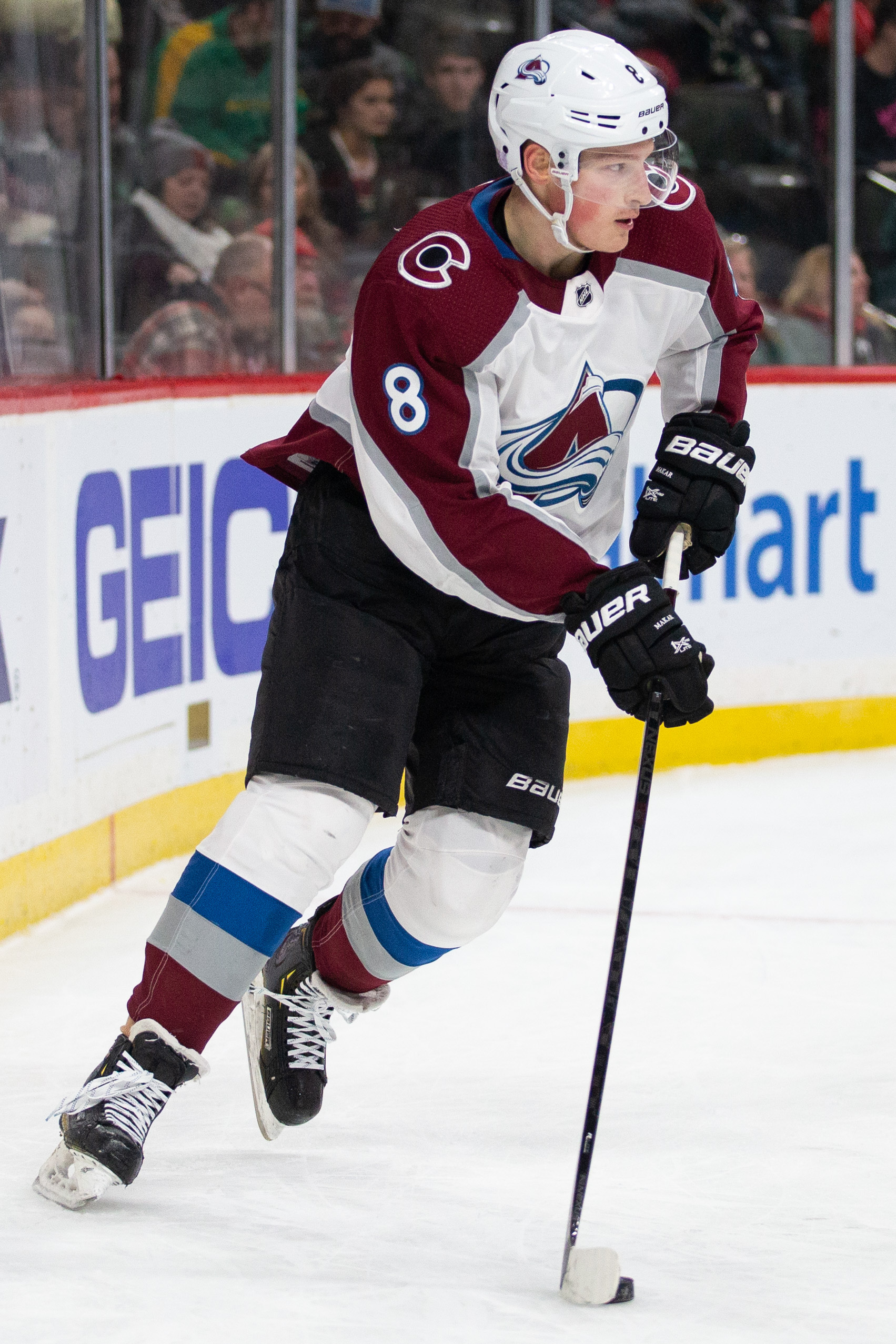 As for Makar, he’s already entering the final year of his deal with only one season under his belt; the first season was burned in the 2019 playoffs when he got into ten games. The Calder Trophy winner has very quickly become a significant part of their back end and with 50 points in 57 games this season, the offensive potential is quite tantalizing while he has the mobility to lead the rush at any time. The 21-year-old certainly looks that the type of defenseman that franchises will want to build around so a long-term contract will certainly be the priority. It might be a bit cheaper to sign it now as if his sophomore campaign sees him take a big step forward like many think he can, the price tag will only be higher next summer.
Goaltending Decision
On a team that allowed the fifth-fewest goals in the league this season, it’s hard to say that there are questions regarding Colorado’s goaltending but there are. Philipp Grubauer set a new career high in starts this season but still only played in 36 games which is the workload of a platoon goalie on most teams, not a starter. Pavel Francouz had a strong year but looked to wear down at times when he was asked to shoulder the lion’s share of the workload. Both are more than capable netminders but is this a tandem that can take them all the way?
There isn’t much more time to find out either. Grubauer is another player that’s eligible for unrestricted free agency in 2021 and even though he hasn’t quite cemented himself as a starter, he’s probably going to be looking for a raise on his $3.33MM price tag. Francouz, meanwhile, is only signed for one more year than Grubauer and will be unrestricted in 2022. Internally, there isn’t anyone that’s expected to be an NHL starter within two years to plausibly fill one of those spots. They have high hopes for Justus Annunen but he’s a few years away from being ready.
This offseason has the feeling of musical chairs when it comes to the goaltending market. There are free agents that will be changing teams while some teams have a netminder to trade. If an opportunity to upgrade presents itself (or least provide a bit more long-term stability from a contractual standpoint), it may be wise for the Avalanche to get involved. It would mean more money committed for 2021-22 when Makar and Landeskog’s new deals will come into play but it would also give them some more stability at a position that has been somewhat in flux lately. It’s not something that has to be done but even with how well Grubauer and Francouz did this season, those questions about whether they can go deep in the playoffs with that tandem will only persist.
Photo courtesy of USA Today Sports Images.
PHR Mailbag: Zadorov, Hall, Panthers, Rangers, Detroit’s Rebuild, Next Season
Topics in this edition of PHR Mailbag include Nikita Zadorov’s future in Colorado, Taylor Hall’s next deal, a struggling Panthers back end, the defensive situation for the Rangers, Detroit’s rebuild, and the uncertainty of next season. If your question doesn’t appear here, check back in last weekend’s mailbag.
M34: What’s the future look like for Nikita Zadorov?
This feels like it’s an almost annual question as Zadorov has seemingly been on thin ice in Colorado for a while. Yet, each time, he winds up staying with the Avs in the same role that he has basically had since he got there – splitting time between a fourth and fifth defensive spot. This time, it at least feels a bit different.
For starters, Ryan Graves has established himself as a good partner with Cale Makar. Ian Cole is still signed and Bowen Byram is likely to push for a full-time spot as well. Those are three left-shot blueliners like Zadorov. Graves and Cole are clearly ahead of Zadorov on the depth chart and while Byram could start in the minors which would keep Zadorov’s spot on the third pairing open, they probably won’t want to be in a situation where Zadorov winds up starting as the seventh defender either.
The 25-year-old is owed a $3.2MM qualifying offer which is a bit pricey for someone in his role and in this marketplace. But at the same time, it’s one that they can afford to tender for this season as they have plenty of short-term cap room so I think that option is unlikely. They’re not in a spot where they have to trade Zadorov but if Byram beats him out for a spot in the lineup in training camp, it’ll be a lot harder to move him then than it is now. And one year from now with Makar and Gabriel Landeskog needing new deals, Zadorov will become a luxury that they can’t afford. Accordingly, between that and a relatively soft UFA crop of left-shot defenders, the time is right for Colorado to try to move him out and I wouldn’t be surprised to see him somewhere else when the puck drops on 2020-21.
aloop: It’s highly doubtful that Hall winds up in Arizona, with the internal cap + the Yotes current cap issues. Do you think Hall takes a lower one year salary to join a contender in hopes of a deep playoff run and winning a cup? Or does he sign a longer contract with a team on the rise in hopes that they can make the playoffs consistently and win the Cup during the duration of his contract?
A top free agent (and Hall is the top forward available) rarely signs a short-term contract so I’d put the odds on that happening as fairly low. But there certainly is a case to be made that Hall could go that route, especially with his comments about how a winning environment will be quite important to him. If it was to happen though, I could see him signing with a team like Colorado with a higher AAV than he’d get on a long-term deal as there has to be some sort of trade-off for foregoing the job security that a long-term contract would provide.
It’s worth noting that Hall’s value has taken a hit lately as well. He’s only two years removed from his Hart Trophy in 2017-18 but those two seasons have been underwhelming and the change of scenery from New Jersey to Arizona didn’t exactly give him a boost either.
Let’s say he does the one-year deal with a contender and he winds up in the 50-60 point range again. Now, Hall enters the 2021 market heading into his age-30 year with three straight seasons of fringe front line production. The salary cap will still probably be $81.5MM and more teams will be in cap trouble than there are now. The earnings potential in that situation will be quite a bit lower than it is now so there would certainly be some risk by going that route. On the other hand, a stronger season with a contender could restore some value so there is a potential benefit to that approach as well.
In the end, it’s hard to pass up the type of security that a long-term deal can provide. Hall can probably get a max-term deal next month at a rate that’s still a lot higher than the $6MM he had as a cap hit for the past seven years, even in this marketplace. Maybe he takes a bit less than top dollar to land in a more competitive environment but that’s about the only ‘cut’ he’ll take in free agency.
The Mistake of Giving Eugene Melnyk a Liver Transplant: What is up with Florida’s defense; on paper it seems like they should be at least average. Is this a problem where each individual part does not fit well together or are there more factors at play?
I’ve wondered that myself for a while now and look no further than the recently-traded Mike Matheson. At one point, he looked like a long-term fixture on their second pairing but he wound up being used on the wing at times this season and was even healthy scratched to the point where they had to trade him in a swap of cap dumps.
It’s hardly just him either. Aaron Ekblad is a solid blueliner but hasn’t ascended to that true number one defenseman role that his draft status (first overall in 2014) suggested he’d become. He’s a top-pairing player but in an ideal situation, he’s more of a number two than a number one. Keith Yandle remains strong offensively but his play in his own end has always been shaky while Anton Stralman made some sense as someone that could try to stabilize things but that didn’t exactly happen. The parts are there but it feels like adding one good complementary player could make a huge difference.
Of course, they’re hardly the only team that would want to do something like that this offseason and amidst rumors that the team is trying to cut payroll, acquiring that particular piece could be tricky for new GM Bill Zito. But if the Panthers want to get out of the middle zone where they’re not good enough yet to contend, they’re going to need to find a way to get that done.
pitmanrich: How do you see Jacques Martin doing as an assistant coach for the defense on the Rangers? Lindy Ruff got a lot of stick but most of their talented d-men are young offensive players plus Staal and Smith’s best days are long gone. Do they need to sign a veteran stay at home d-man to help suppress the number of shots they give up which surely played a part in Lundqvist’s dramatic loss of form over the last 18 months?
When it comes to assistant coaches, I don’t think they move the needle all that much unless there’s a drastic system change that accompanies it. Ruff’s departure came from him leaving to take the New Jersey job and not as an overhaul of New York’s coaching staff. David Quinn is still calling the shots so their system probably isn’t going to change enough for Martin to have any significant effect on them one way or the other.
Are the Rangers ready to push themselves back into legitimate playoff contention now? That’s the question that needs to be answered to answer the second part of your query. If they think their time is now, the answer is yes, they should be looking to add a veteran that can shore up their top four. Staal is better in a limited role and Smith is a possible buyout candidate to free up a bit of cap space this offseason. Getting someone capable of logging 20 or more minutes a night on the left side would be a huge boost to their playoff chances.
But if the answer is no and they think they’re still a year away with top youngsters Igor Shesterkin, Kaapo Kakko, and Alexis Lafreniere (it’s pretty safe to slot him in here even though he won’t be a Ranger for another week and a half) needing some more development before contention, then I wouldn’t add a veteran defender. Use next season to get a better read on Ryan Lindgren’s upside as well as K’Andre Miller, Yegor Rekov, and Libor Hajek. Over the long haul, they’d be better off for it.
CoachWall: Do the Rangers trade high on Anthony DeAngelo? He will cost some big bucks and is blocking younger players. They have so much young talent on defense, they could turn him into a number two center.
Last offseason, the Rangers held all the cards with DeAngelo and basically forced him into taking just above his qualifying offer. A 53-point season was quite a response and with salary arbitration eligibility now, he has put himself in a great situation to land a pricey contract that New York may have difficulty fitting into their current salary structure. Trading high would make some sense but I’m not sure the market for him is going to be all that strong.
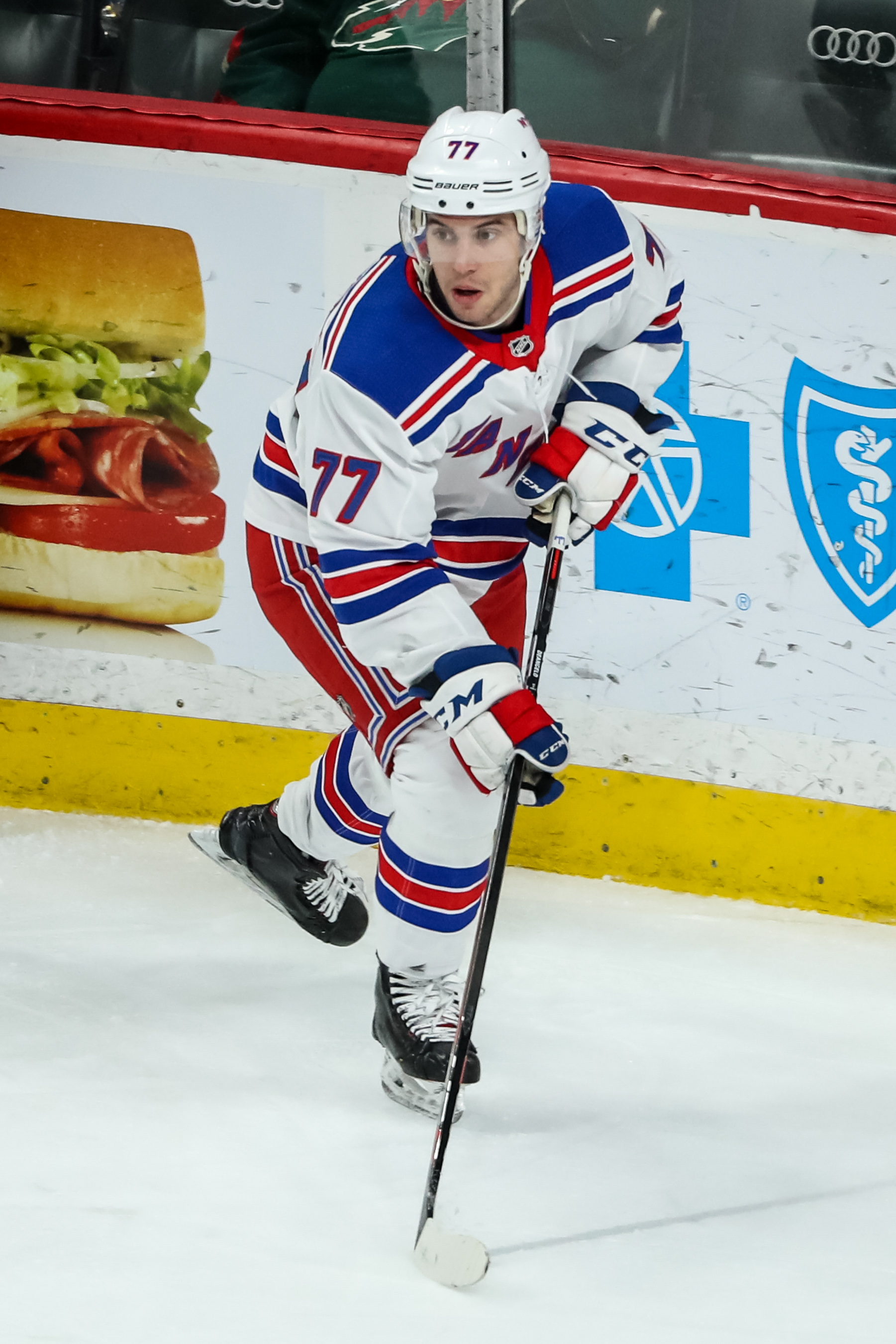 Was his season a sign of things to come or a situation where everything broke his way and his production will dip closer to his 30-point year in 2018-19? That may give some teams some pause. He’s also someone that two other teams had already given up on him (Tampa Bay and Arizona) which will have some teams wondering what happened. That’s not to say that a deal won’t happen and there will be some interest but his market might be as robust as it might seem. At the very least, DeAngelo’s fate will probably have to be decided after Minnesota makes as a decision on Mathew Dumba. With the longer track record and his ability to play a bit higher in the lineup than DeAngelo, he will be the prime target for teams looking to upgrade the right side of their defense.
I’m also not certain that he’s blocking anyone at the moment. While the Rangers have Miller, Rekov, and Hajek that could make a push for playing time next season, they’re all left-shot defenders so DeAngelo’s presence shouldn’t necessarily affect them too much. Yes, Nils Lundkvist is in the system as well but he’s staying there for the upcoming season. Once he signs, then DeAngelo may be blocking him (with Jacob Trouba and Adam Fox being the other righties) but we’re at least a year away from that happening.
There isn’t a pressing need to move DeAngelo but if they can use him to fill their second center spot, it would probably be a deal worth making for GM Jeff Gorton.
tigers22: Would a trade of Montreal’s #1 draft pick to Detroit for Anthony Mantha work for both teams? Give Montreal another scorer and Detroit another draft pick for the rebuild.
I like the deal from Montreal’s perspective but I don’t see a great case from Detroit’s point of view unless Mantha’s asking price is way too high. The Canadiens briefly held the ninth-overall pick but that’s no longer the case. Instead, they’re picking 16th having upset Pittsburgh in the Qualifying Round.
Mantha’s free agent case is a bit of a tricky one considering he has missed a lot of time due to injury over the last two seasons. He has been quite productive when healthy but making a long-term commitment to someone that has missed a fair bit of time lately does carry some risk. And while the 26-year-old produced like a top liner this season, his numbers have been closer to that of a second liner.
So let’s put Mantha in a 45-60 point range to allow for a bit of improvement still if he stays healthy (he played at a 72-point pace this season so the top end may even be a bit low). Is Detroit going to get someone better than that with the 16th pick? Chances are that a player or two picked after that will get to that level but the odds of getting a top-six forward in the middle of the first round aren’t great. Now if you’re Detroit, you’re looking at a talent downgrade which isn’t ideal.
Mantha’s still young enough to be part of Detroit’s core group when they come out of this rebuilding phase so he’s someone they should be building around, not sending away for a lottery ticket that will be a long away from getting to Mantha’s level.
Free Agent Focus: St. Louis Blues
With free agency now less than a month away, many teams are already looking ahead to when it opens up. There will be several prominent players set to hit the open market while many teams have key restricted free agents to re-sign. While St. Louis doesn’t have much to do up front, there is certainly some work that needs to be done on their back end.
Key Restricted Free Agents
D Vince Dunn – The 23-year-old was a popular pick to take another step forward offensively this season after putting up 35 points in 78 games in his sophomore year. That didn’t happen. Instead, while Dunn was their only blueliner to play in all 71 of their regular season games, his production dipped to just nine goals and 14 assists. Those numbers are still pretty good for a defenseman but it’s also telling that his playing time was also cut to just 16:16 per night which was fifth on the team.
On the surface, a short-term deal would seem like the likely way to go. They don’t have a lot of cap room and there is a more prominent defenseman that they want to keep around. However, if that doesn’t happen, Dunn should be in line for a bigger role on the power play and with that, a boost in points would almost certainly follow which would inevitably drive up the price tag down the road when he’ll have arbitration eligibility. With that in mind, the time may be right to pursue a long-term deal although that would have to wait until free agency starts and more is known about the fate of their captain.
D Derrick Pouliot – While he spent most of this season in the minors, the 26-year-old had been a full-time NHL blueliner for the two previous years in Vancouver. Pouliot was one of the higher-scoring defensemen in the AHL this year with 39 points in just 58 games and the limited NHL action this season negates his arbitration eligibility. After being non-tendered in two straight years, it’s certainly possible that Pouliot is brought back as insurance.
Other RFAs: D Jake Dotchin, F Austin Poganski, D Mitch Reinke, F Nolan Stevens, D Jake Walman
Key Unrestricted Free Agents
D Alex Pietrangelo – It’s very rare that a defenseman of his caliber hits the open market but as things stand, it appears that where Pietrangelo is headed after word leaked that he had been advised to test free agency by the team when contract talks weren’t producing any progress. The 30-year-old is a number one defenseman and has played in all situations for St. Louis for the last decade. It’s not a matter of the Blues not wanting him back either but rather a reality of their cap situation; they just can’t afford to pay him top dollar at this time.
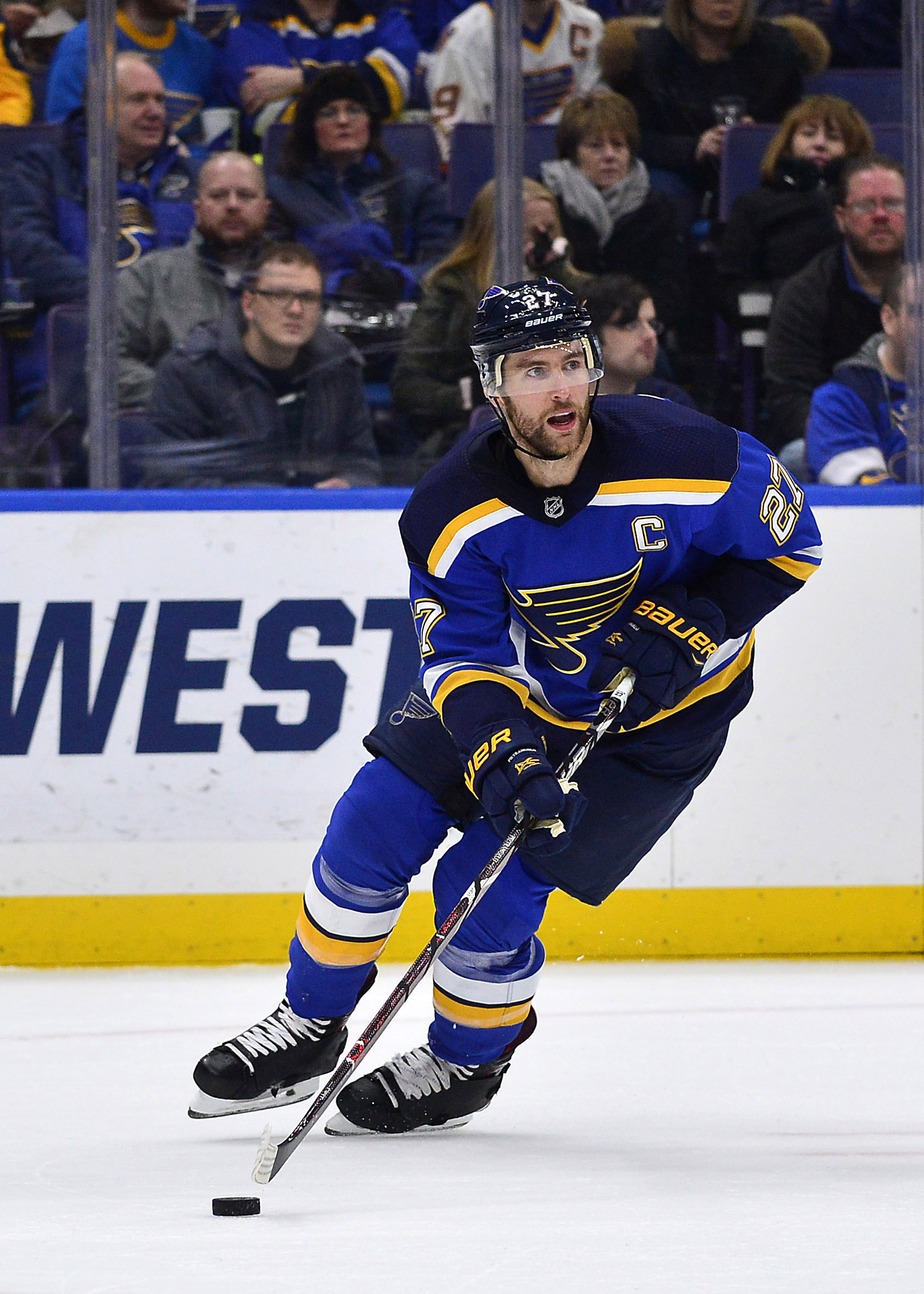 While the flattened salary cap will certainly have a substantial impact on the free agent marketplace, that shouldn’t extend to Pietrangelo. Top players are still going to get paid top dollar and he’s certainly a top player. He has had at least 48 points in each of the last four seasons while logging at least 24 minutes a night. There should be many teams salivating at the chance to have that on their back end, even if they can’t afford it on their salary cap right away. Pietrangelo should have a chance at commanding top-five money for players at his position which would put him at an AAV of $8.25MM at a minimum (it should check in a bit higher than that). The only way he could get an eighth year on his deal is if he signs before the market opens up, either by re-signing or doing a sign-and-trade. Accordingly, there should be more news on his fate before too long.
F Troy Brouwer – The Blues signed him in late November to provide them with some veteran depth but while he was up with them for most of the time after that, he didn’t get much playing time as he played in just 13 regular season games. However, he got into four postseason contests and scored on his only shot. At this point, his upside is as a 13th or 14th forward that can be trusted to play eight minutes a night so his market should be limited until closer to training camp where he may have to settle for a PTO.
Other UFAs: D Andreas Borgman, F Nick Lappin, D/F Joey LaLeggia, F Jordan Nolan, F Mike Vecchione
Projected Cap Space
While they already have 22 players under contract, St. Louis also has over $76MM in commitments for next season, per CapFriendly. With the Upper Limit of the salary cap remaining at $81.5MM, that’s enough to re-sign Dunn but nowhere near enough to keep (or replace) Pietrangelo. Accordingly, GM Doug Armstrong will be among the many teams that will be looking to free up some cap room in the coming weeks.
Photo courtesy of USA Today Sports Images.
Offseason Keys: Boston Bruins
The offseason has arrived for most squads. Having covered the teams that weren’t a part of the NHL’s return and the ones ousted in the Qualifying Round and official first round, we shift our focus to the ones that were eliminated in the second round. Next up is a look at Boston.
Things didn’t go according to plan for the Bruins this season. While they were the team to beat for most of the year before the pandemic hit, they never really found their stride after that. They scuffled through the seeding games and while they were able to beat an upstart Carolina team in the first round, they were eliminated somewhat quickly by Tampa Bay in the second. To be fair, they were without Tuukka Rask as he left the bubble early so GM Don Sweeney shouldn’t be looking at any big shakeups but there are a few things he should be looking to accomplish in the coming weeks and months.
Shore Up The Left Side
There have been two fixtures at the top of the pecking order on the left side of Boston’s back end for the past several years. Torey Krug has been in that role for seven years while Zdeno Chara has spent the last 14 years in a Bruins sweater. That consistency is about to change, however. At this point, Krug is likely to test free agency where he’ll be the top left-shot blueliner available and will garner plenty of interest with his offensive consistency. Meanwhile, a return for Chara certainly isn’t ruled out but he’s 43 years old and his days of being a full-time player in the top four are over. There’s still a role that he can play in an NHL lineup but he’s probably best utilized on the third pairing.
There aren’t really any internal candidates that they should feel comfortable about when it comes to filling a high-minute role. Matt Grzelcyk is serviceable and may be able to take on a slightly bigger workload but he’s not going from 18 minutes a night to a top-pairing spot. John Moore still has three years left on his contract but he hasn’t been able to lock down a regular spot in the lineup since joining them two summers ago. Urho Vaakanainen and Jakub Zboril were first-round picks but neither of them has been able to crack the NHL roster on a full-time basis so asking them to step into a big role isn’t ideal either.
This is an area that will need to be addressed but free agent options are limited. There are only six left-shot defenders that averaged over 20 minutes a night this season that will become unrestricted free agents and of those, Chara and Krug rank first and third on that list respectively in terms of ATOI. Of the other four, two are role players in Ron Hainsey and Dmitry Kulikov. Erik Gustafsson has shown some offensive prowess over the last two seasons but his output dipped sharply relatively to his 2018-19 campaign. T.J. Brodie is the other one in that group and while he’ll undoubtedly garner interest from Boston (and plenty of other teams), he has spent a lot of time lately on the right side of the back end. Washington’s Brenden Dillon just missed out on that minutes cutoff but he’ll get consideration as well. Beyond those players though, pickings are slim. As a result, Sweeney may have to turn to the trade market to fill at least one of these two potential spots.
New Deal For DeBrusk
Winger Jake DeBrusk is Boston’s most notable restricted free agent and also happens to be one of the more intriguing ones out of this class. Statistically, his point total has dropped with each season from 43 points to 42 to 35 this year where his point-per-game average was the lowest of his three NHL seasons. That’s one way of looking at it. The other is that he stepped into an NHL lineup at 20 and has scored at least 16 goals every year despite not seeing time on the front line. There’s a case to be made that the best is yet to come given his age and consistency; give him better linemates and the production should improve. On the other hand, 200-plus games of statistically similar production is a notable sample size. Management could certainly argue that he’s shown that he’s a capable secondary scorer but at this point, he’s not worth getting paid more than that.
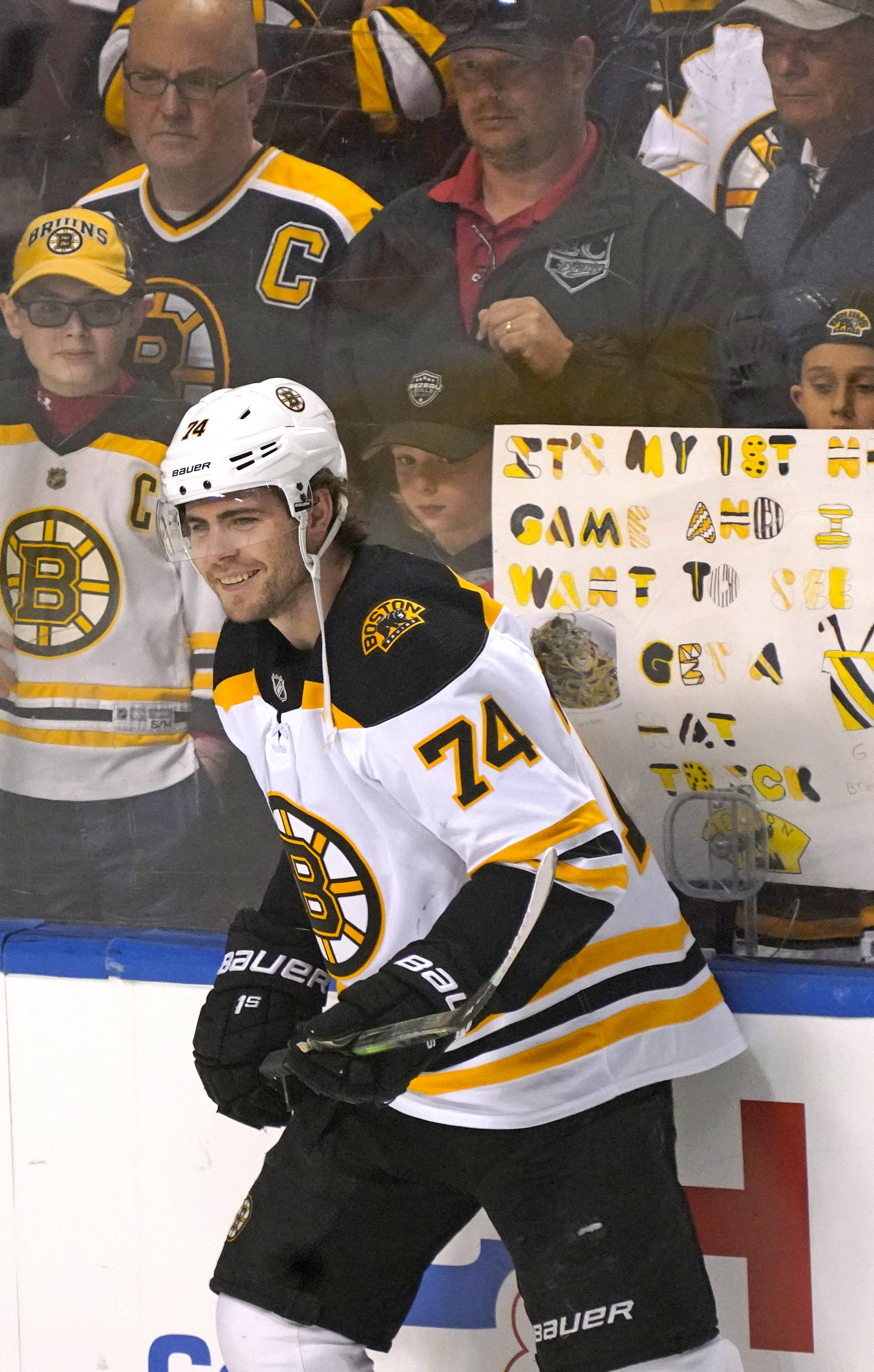 DeBrusk’s agent has made it known that his client has no interest in taking any sort of hometown discount but this isn’t really a situation where Boston is likely to look for one. If they have eyes on making a big addition (or finding a way to get something done with Krug), they’ll have to push for a short-term deal. DeBrusk doesn’t have arbitration rights so that’s one piece of leverage that the team has. On the other hand, if they think that he’s a part of their long-term future, a small overpayment based on his current numbers to get him to buy out some UFA years could be justified if they think he can get to another level.
There is one other option, of course. A 23-year-old with his offensive track record should catch the eyes of some teams looking to add to their depth up front. With Boston’s veteran core unlikely to be changed beyond their situation on defense, it’s plausible to think that DeBrusk could wind up being one of their best trade chips (if not their biggest one) if Sweeney opts to go in that direction. Over the next few weeks, the GM will have to figure out what he wants to do with his young winger.
Improve Secondary Scoring
This one has been pretty much an annual fixture on their to-do list but it isn’t for a lack of trying. In recent years, they’ve brought in Charlie Coyle, Nick Ritchie, and Ondrej Kase who all remain on the roster. Before landing more controllable players, they tried Rick Nash, Marcus Johansson, and Drew Stafford as rental players near the trade deadline. All have had varying degrees of success but the need persists.
Three forwards had at least 20 goals this season. Those same three were the only ones to have more than 50 points. They’ve been first through third in team scoring in each of the last three years. Yes, Brad Marchand, David Pastrnak, and Patrice Bergeron have been quite good for quite a while but they were responsible for over 47% of Boston’s goals this past season. That’s certainly an impressive performance on their part but it underscores the lack of secondary scoring.
Kase and Ritchie didn’t exactly light it up upon being acquired but given that they were transitioning to a new team and had a lengthy stoppage in between, it wouldn’t be fair to infer that they won’t be able to produce once they’ve had a full training camp under their belts. But at the same time, they can’t be counted on to fill that void either. The good news is that there are more of those types of forwards available than there are impact defensemen so this is something that Sweeney will have more options to address. Getting a blueliner has to take top priority but adding more scoring depth up front is something else he should be trying to do before the puck drops on 2020-21.
Photo courtesy of USA Today Sports Images.
Free Agent Focus: Colorado Avalanche
With free agency now just a few weeks away, many teams are already looking ahead to when it opens up. There will be several prominent players set to hit the open market while many teams have key restricted free agents to re-sign. While their top performers may still be locked up, Colorado has a ton of work to do on their depth pieces.
Key Restricted Free Agents
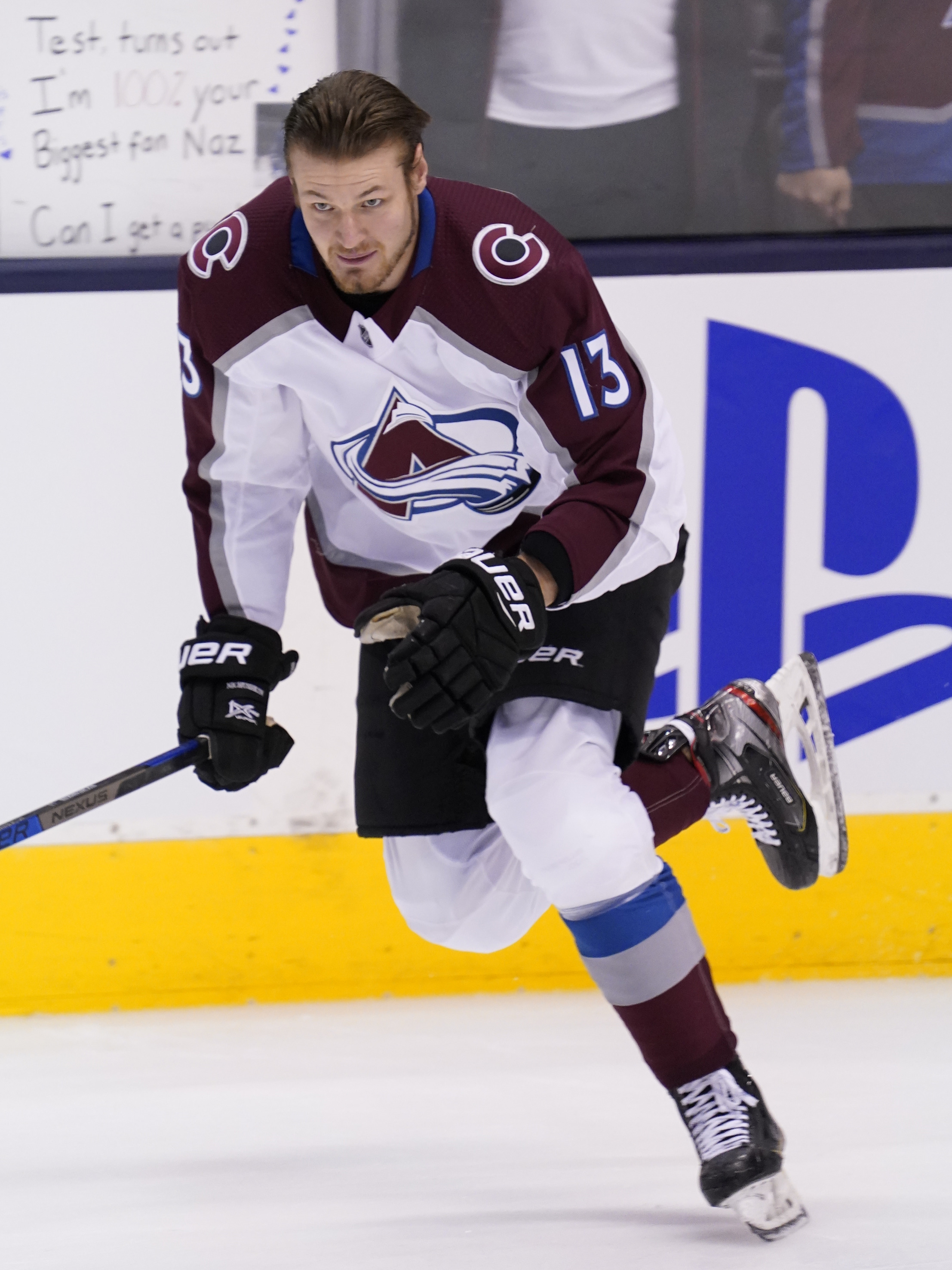 F Valeri Nichushkin – After a season that saw him score exactly zero goals in 57 games following several years in the KHL, it looked like Nichushkin’s NHL career might be over after the 2018-19 campaign ended. He was bought out by the Dallas Stars in June and could have easily decided to go back to Russia and continue his career there. Not so fast, said the Avalanche, who signed Nichushkin to a one-year, $850K deal that gave him another chance in the NHL. After scoring 13 goals and 27 points in 65 games while being one of the best defensive wingers in the entire league—he finished eighth in Selke Trophy voting—the 25-year-old Russian has probably earned himself a multi-year extension with Colorado.
F Andre Burakovsky – Quick, after Nathan MacKinnon and Cale Makar, who was the leading scorer on the Avalanche this season? Gabriel Landeskog? Mikko Rantanen? Nazem Kadri? No, it was Burakovsky, whose 45 points were a career-high despite the shortened season. In just 58 games he scored 20 goals for the first time in his career, finally getting the opportunity to play big minutes and rewarding the Avalanche by fulfilling the huge potential he had shown as a young player. Importantly, Burakovsky has already played six full seasons in the NHL despite being just 25, meaning he could become an unrestricted free agent next offseason. Waiting for a one-year arbitration award would get him there, meaning the Avalanche will have to try and work out a multi-year deal in the coming weeks if they want to lock him up.
D Nikita Zadorov – For all the frustration at the fact that Zadorov still hasn’t grown into that minute-munching two-way star that fans have been dreaming off since he came into the league as a teenager, he has already logged nearly 400 games in his NHL career and only turned 25 a few months ago. He’ll never be the leader of the Colorado blueline, but he still represents a valuable asset that they’ll have to make a decision on this summer. Like Burakovsky, Zadorov already has six NHL seasons under his belt and could use an arbitration award to get to unrestricted free agency at 26 next offseason. Unlike Burakovsky, the Avalanche might be okay with that outcome given the pipeline of defensemen they’ve created over the last few years.
Other RFAs: F Tyson Jost, F Vladislav Kamenev, D Ryan Graves, F A.J. Greer, F Sheldon Dries, G Hunter Miska
Key Unrestricted Free Agents
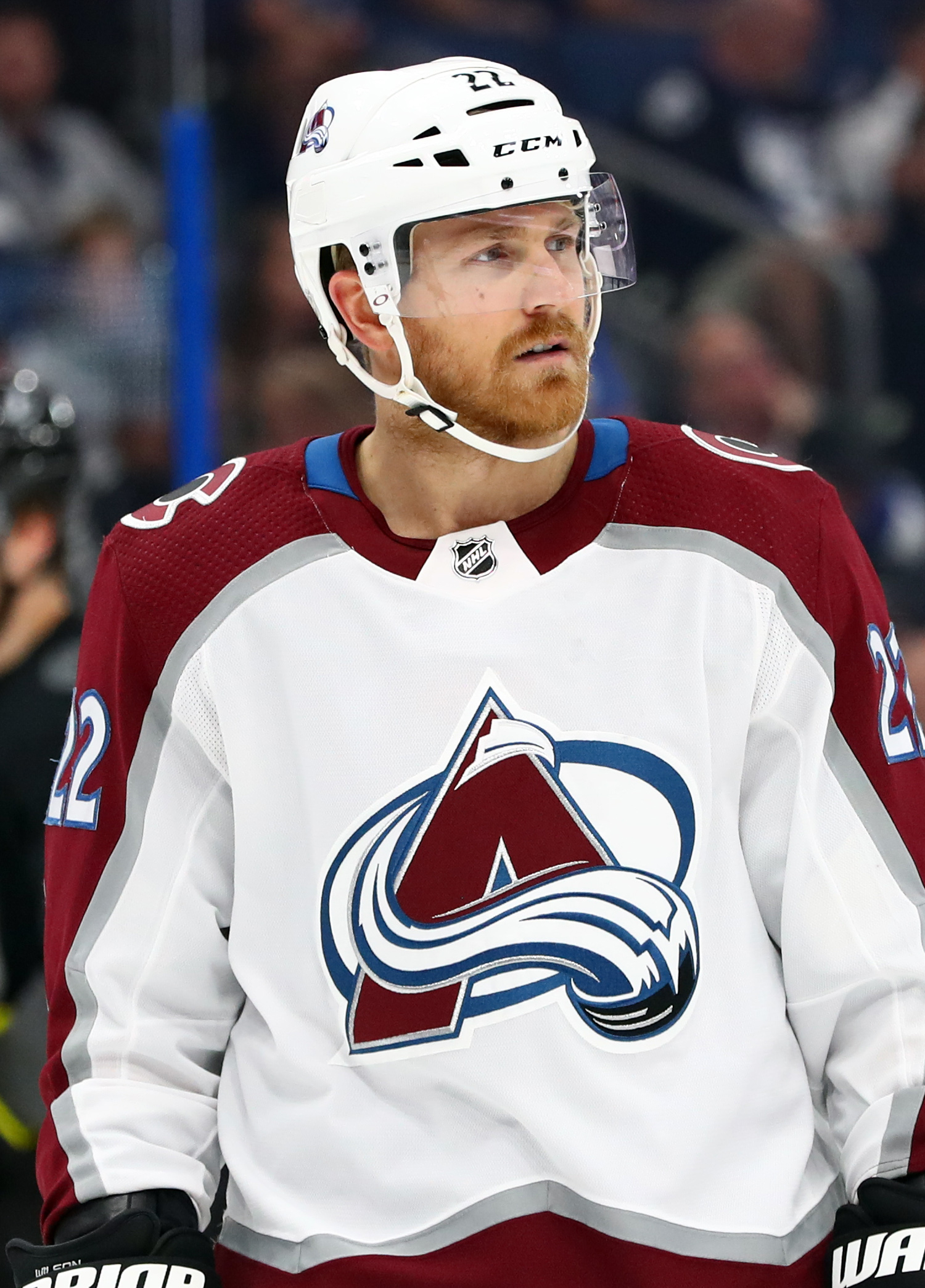 F Colin Wilson – When the 2018-19 season came to an end, the Avalanche decided that Wilson was worthy of a $2.6MM contract. They waited until July 1 to do it, but they obviously felt it was acceptable after his 12-goal, 27-point campaign. He was an option on the powerplay and a depth piece for a team that looked like they were gearing up for a real Stanley Cup run. Unfortunately, that $2.6MM resulted in just four points and nine games. Wilson suffered a (somewhat mysterious) injury in October and never returned, opening the door for other players to take his opportunities. If he’s healthy, perhaps the Avalanche bring him back. But with so much firepower ahead of him on the depth chart, it might be wise for Wilson to go somewhere else to build his value back up.
F Vladislav Namestnikov – If a trade deadline pickup ends up playing just nine regular season games for your team, it usually means the transaction was a mistake. Not so with Namestnikov, who scored four goals for the Avalanche before the shutdown and then added another four in their 12-game postseason. You can bet the team is wondering what kind of a resurgence they could milk out of the 27-year-old Russian forward, given he has shown an ability to score in bunches, but there simply might not be enough to go around. If the team is set on bringing back all of their restricted free agents, Namestnikov may be better served looking for a free agent landing spot.
F Matt Nieto – What can you say about Nieto? A few years ago he was lining up beside some of the very best players on the Colorado roster, but even after being dropped out of that group has still performed relatively well. 21 points in 70 games are nothing to sneeze at, especially when it comes in just over 11 minutes of even-strength ice time a night. Nieto was Colorado’s top penalty-killing forward this season and will be missed if the team is forced to let him reach free agency. There’s not always enough money to go around, especially if Nieto’s versatility and consistency end up drawing a crowd when the market opens.
Other UFAs: D Kevin Connauton, G Michael Hutchinson, F Jayson Megna, D Mark Alt, G Antoine Bibeau
Projected Cap Space
The $22.4MM in cap space Colorado has this offseason is a testament to the way GM Joe Sakic has built his squad, but it doesn’t mean they can take endless shots at high-priced free agents. The team has to consider their own core first, with Makar and Landeskog both heading into their final season under contract. MacKinnon will be up two years after that, with Kadri due for a new deal in the middle. No, they’re not in cap trouble, but they could be if they lean in and spend all of their room this offseason trying to chase a Stanley Cup right away.
Photos courtesy of USA Today Sports Images
Offseason Keys: St. Louis Blues
As teams are eliminated from the playoffs, it means that the offseason has arrived for several more squads. Having covered the teams that weren’t a part of the NHL’s return and the ones ousted in the Qualifying Round, we shift our focus to the ones that were eliminated in the official first round. Next up is a look at St. Louis.
During the regular season, it looked like the Blues were in good shape to repeat their Stanley Cup title as they were first in the Western Conference (second in the whole league) before the pandemic hit. However, they scuffled during the seeding games and wound up facing off against Vancouver who upset them in seven games with Jordan Binnington having a rough showing in the postseason. Most of their team is already signed for next season but there are still a few things that GM Doug Armstrong needs to accomplish.
Clear Out Contracts
St. Louis was a team that was hit hard by the pandemic causing the salary cap to flatten out. All of a sudden, instead of either trying to add to their roster or at least keep it intact, they’ve already had to move out one veteran on the cheap after sending Jake Allen to Montreal for a relatively low return of a third-round pick. In doing so, they’ve handed the keys between the pipes to Binnington and will quite likely have a rookie as his backup in Ville Husso who is 25 and has yet to play in an NHL game. That was the easy move as Allen did well enough this season to at least have some positive value. The other cost-cutting moves may be a bit more challenging.
At the top of this list has to be Alex Steen. He has been with the team for 12 years and has been productive for about 10 of those. The last two are the ones where he hasn’t been. Instead, his role has diminished considerably and for a $5.75MM price tag, that’s not good. It’s difficult to part with someone that has been around that long and is as well-respected as he is (and optically, paying him to not play via a buyout or trading an incentive to get out of the contract stings) but it’s a move they’re going to have to make if they want some flexibility this offseason.
Tyler Bozak is another pricey player on an expiring contract that isn’t providing full value. He’s still capable of winning faceoffs and providing some offense and with the center market being limited in free agency, they should have some interest in him but it will still likely require an inducement of sorts to get out of his $5MM price tag. Until they find a taker for him or Steen, they’re going to be quite limited in what they can try to do in the coming months.
Re-Sign Pietrangelo
I know things aren’t looking good on this front right now. When reports surface that talks have broken off and the team has advised him to hit the open market, it’s hard to be optimistic about a deal getting done. But finding a way to get a contract in place with their captain still has to be their top priority and is the key to having a successful offseason or not.
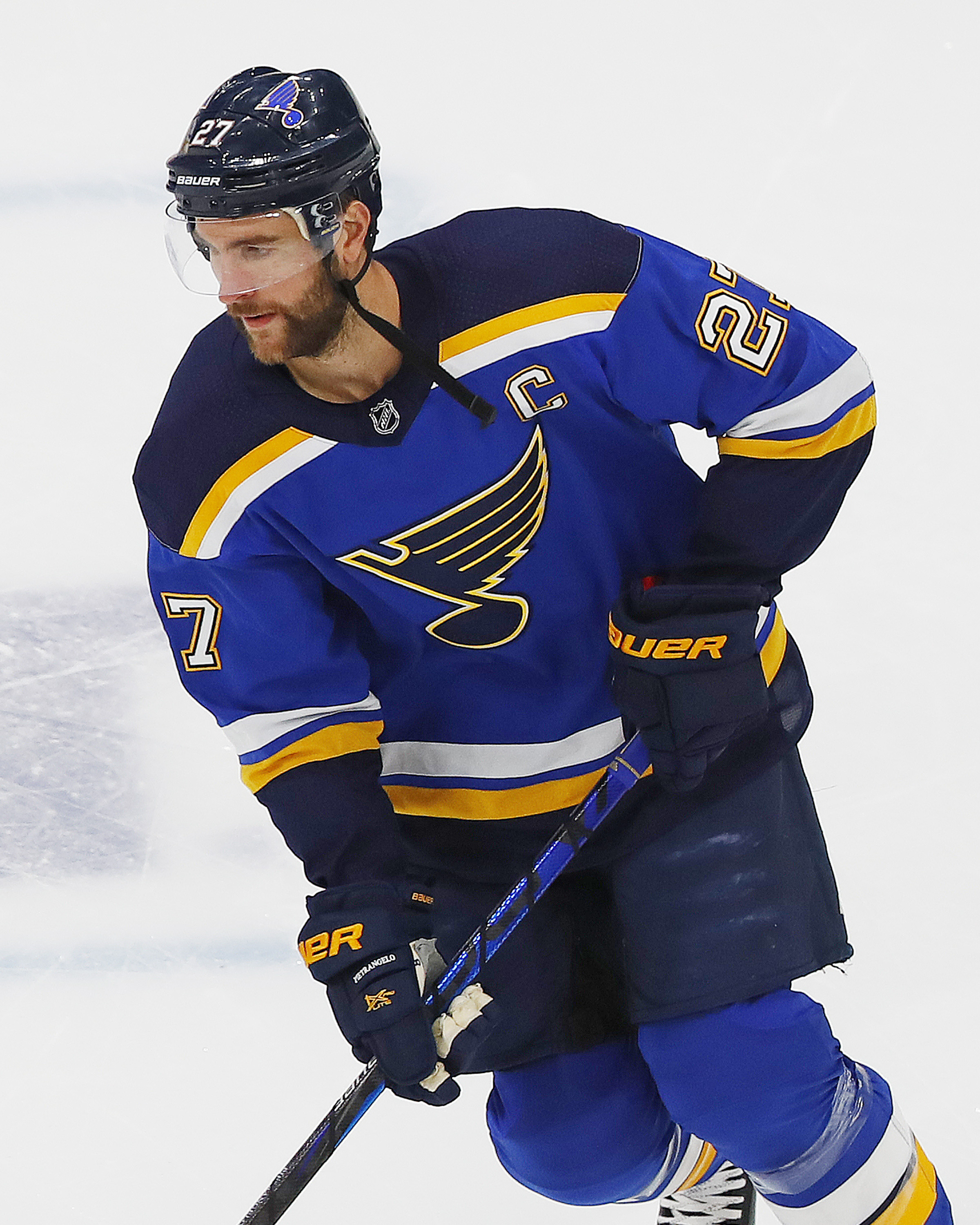 They don’t have enough cap space to do so at the moment (more than $76MM in commitments already) so some work needs to be done (such as moving out another contract) but they do have the ability to go over the cap by 10% during the summer so there are ways they can get this done.
Beyond the AAV of the contract, the structure will play a big role in whether or not something can get done. While the team has shown a willingness to frontload deals, they have avoided handing out signing bonuses in any pact that they’ve made with a player. That’s a big carrot for players and an unwillingness to offer that to Pietrangelo won’t help their chances of signing him.
Yes, the free agent market is likely to be deflated with the salary cap flattening out at $81.5MM. Many teams are like the Blues in that they need to free up some money but in spite of that, there will be enough teams with cap room (or the willingness to go over to get Pietrangelo and figure it out after) that it shouldn’t drastically affect what he’ll get.
Pietrangelo has worked his way into being a capable number one defenseman in a league that isn’t exactly loaded with them. To lose a player like that for nothing would be a huge blow even though they have Justin Faulk that is capable of taking on a bigger role than he had with St. Louis this past season. Somehow, someway, Armstrong needs to find a way to get something done.
Re-Sign Dunn
While Pietrangelo gets all of the attention, there is another defenseman that needs to be re-signed and that’s Vince Dunn. After a strong sophomore year offensively, his numbers took a step back as he dipped from 35 points in 78 games to just 23 in 71 while his ice time was the lowest of any of his three NHL seasons. That doesn’t give him the best case to work with while he’s not eligible for arbitration either.
However, he still has himself in line for a decent raise on his $775K salary from this season. Even with the lowered offensive numbers, he could triple that amount without too much difficulty. But as things stand, he’d be looking at a short-term contract to help keep the AAV down. That could change depending on what happens with Pietrangelo. If they don’t re-sign him and are able to clear out at least one of their bigger deals, then it may make sense to try to lock Dunn up on a longer-term deal, one that may be a little high in the early going but provide some value on the back end.
Given the dominoes that have to fall one way or the other – Pietrangelo’s fate has to be determined first as well as seeing what other money Armstrong can free up – this is something that shouldn’t be on the front burner. Without arbitration, this is a contract that should be able to be pushed aside until later this fall but it is something that they will need to accomplish before 2020-21 begins, likely at some point in December.
Photo courtesy of USA Today Sports Images.