
What Your Team Is Thankful For: New York Rangers
In the spirit of the holiday season, PHR will take a look at what teams are thankful for as the season passes the one-quarter mark. There also might be a few things your team would like down the road. We’ll examine what’s gone well in the early going and what could improve as the season rolls on for the New York Rangers.
What are the Rangers thankful for?
Youth.
The Rangers are a legitimate playoff contender this season, sitting in third place in the Metropolitan Division but just one point behind the two teams ahead of them. They may not be considered a Stanley Cup favorite by many, but given how young their core still is that could change quickly. On defense, 27-year-old Jacob Trouba is the old hand, leading a group that includes Adam Fox (23), Ryan Lindgren (23), K’Andre Miller (21), and Nils Lundkvist (21). Even Patrik Nemeth, considered a grandfather by Rangers standards, is only 29.
Upfront, the ancient Chris Kreider will turn 31 in April and Artemi Panarin will do the same a few months after that. Otherwise, the only other regular who has crossed the 30-year-old threshold is Ryan Reaves, a player who averages only barely over 10 minutes a night anyway.
While not every player develops at the same rate, there’s a good chance that this group will be even better in a year or two without making any substantial changes. The rebuild that was committed to by management with that infamous 2018 letter seems to be coming together quite nicely.
 Who are the Rangers thankful for?
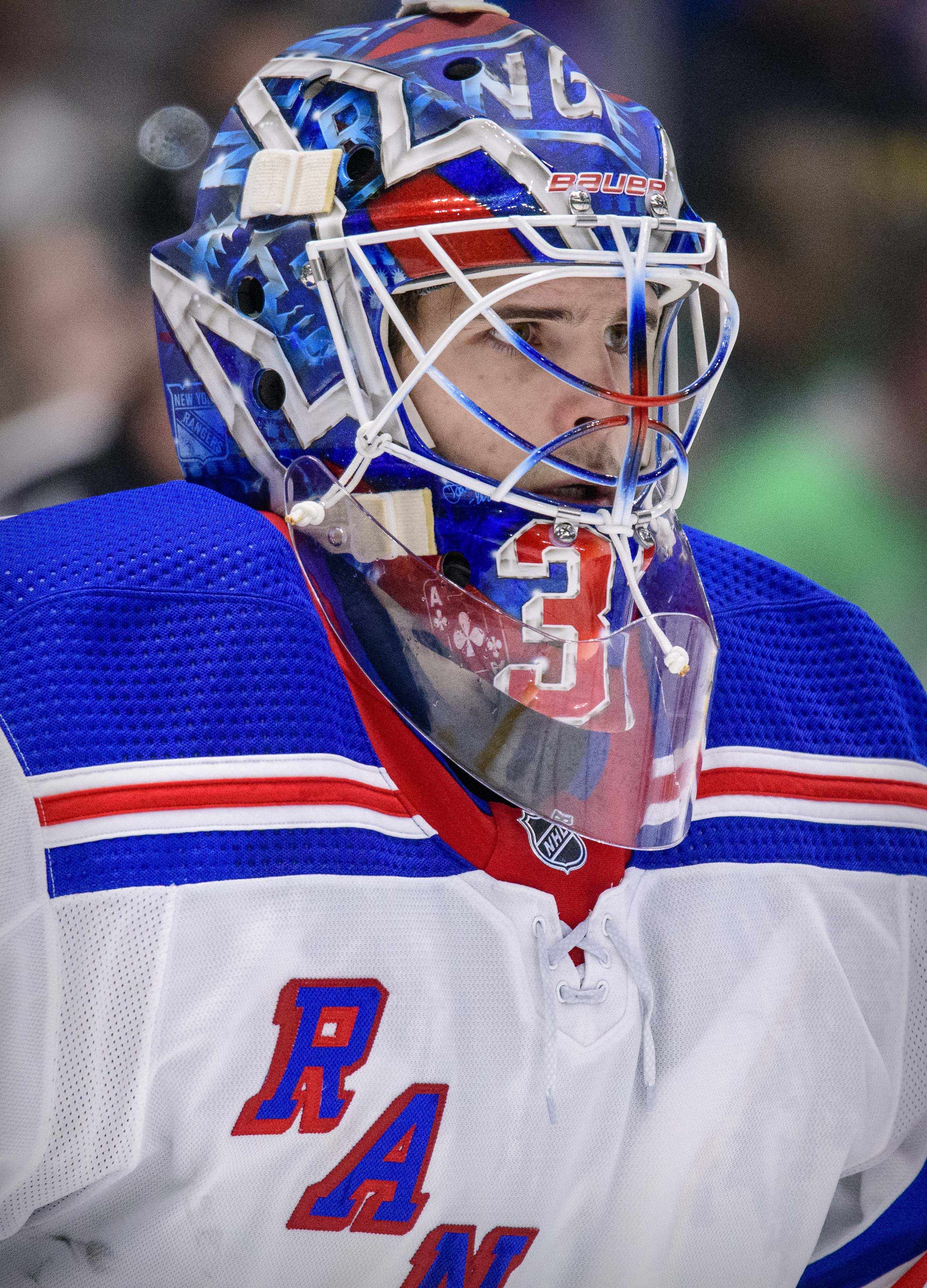
Even though there are great signs of development all throughout the roster, there’s been one player more responsible than any other for the Rangers’ current success. The 25-year-old Shesterkin has an eye-popping .937 save percentage through 18 games this season, which is tied with Jack Campbell for the league lead. It puts him squarely in the Vezina Trophy race and makes that four-year, $22.67MM contract extension–one that was the largest second contract ever signed by a goaltender–look like a bargain at this point.
This shouldn’t be that surprising, given his history. In each of his three full KHL seasons, Shesterkin posted a save percentage of at least .933. In his final year, he went 24-4 with a .953, allowing just 31 goals in 28 games. When he arrived in North America, things barely changed, as Shesterkin put up a .934 in 25 games with the Hartford Wolf Pack. In fact, among goaltenders with at least 50 appearances at the NHL level, his .925 career save percentage is the best in history.
What would the Rangers be even more thankful for?
The emergence of Kaapo Kakko or Alexis Lafreniere.
There have been flashes, including a stretch of solid play earlier this month by the former, but Kakko and Lafreniere have still not lived up to their draft status. The fact that Barclay Goodrow, an undrafted depth player with a career-high of 24 points has outscored both young players this season is a problem, regardless of the difference in ice time or linemates. Lafreniere and Kakko have combined for only 11 goals and 18 points in 56 appearances, numbers that aren’t indicative of the first and second overall picks that the team used on them.
These are two 20-year-old players, meaning it’s far from time to label them a bust or give up on their development, but if the Rangers want to take the next step from playoff team to Stanley Cup favorite, this is where it will come from. In fact, the Rangers being as good as they are without Kakko or Lafreniere developing into star players is a testament to how successful the rest of the build has gone.
What should be on the Rangers’ Holiday Wish list?
A Ryan Strome extension (or trade).
Trading a top-six center that has obvious chemistry with your best forward is certainly not what any contending team is usually considering, but if the Rangers can’t get close to an extension with Strome they will have to. The 28-year-old is scheduled to become an unrestricted free agent in the offseason and it is still too early in the rebuild for the team to watch him walk for nothing. An extension should be first on the to-do list, but if it looks like it will be impossible to complete before the deadline or too cost-prohibitive moving forward, trading him for other assets would be prudent.
Strome has developed into a heck of a player in New York after some early-career inconsistency. Over his last three seasons he has 129 points in 152 games while averaging nearly 19 minutes a night. That’s a player a lot of teams would want to add, especially if they’re trying to contend for a Stanley Cup this spring, and it could result in even more talent that can grow with the young New York core.
Photo courtesy of USA Today Sports Images
Salary Cap Deep Dive: Chicago Blackhawks
Navigating the salary cap is one of the more important tasks for any GM. Teams that can avoid total cap chaos by walking the tightrope of inking players to deals that match their value (or compensate for future value without breaking the bank) remain successful. Those that don’t see struggles and front office changes.
PHR will look at every NHL team and give a thorough look at their cap situation for the 2021-22 season and beyond. This will focus more on players who are regulars on the roster versus those who may find themselves shuttling between the AHL and NHL. All cap figures are courtesy of CapFriendly.
Chicago Blackhawks
Current Cap Hit: $84,388,897 (over the $81.5MM Upper Limit)
Entry-Level Contracts
F Kirby Dach (one year, $925K)
F Reese Johnson (one year, $881K)
F Philipp Kurashev (one year, $843K)
Potential Bonuses
Dach: $2.5MM
Entwistle: $32.5K
Kurashev: $32.5K
Total: $2.565MM
Dach hasn’t progressed as much as anyone in the Chicago organization had hoped. At 20, he’s still certainly young enough to be a long-term fixture for them but he’s not there yet. As a result, a bridge deal is quite likely and he’ll have to pick up his play to have a shot at any of his four ‘A’ bonuses worth $212.5K each. Kurashev has been a useful player that has moved up and down the lineup but his production has been limited each season. He should be able to get a small raise but it won’t be on a long-term deal. Johnson has spent most of the season on the big club in a limited role and seems like a good candidate to take a minimum NHL salary next summer in exchange for a higher AHL salary.
One Year Remaining, Non-Entry-Level
F Ryan Carpenter ($1MM, UFA)
G Marc-Andre Fleury ($7MM, UFA)
D Calvin de Haan ($4.55MM, UFA)
F Kurtis Gabriel ($750K, UFA)
D Erik Gustafsson ($850K, UFA)
D Caleb Jones ($850K, RFA)
F Dominik Kubalik ($3.7MM, RFA)
G Kevin Lankinen ($800K, UFA)
F Andrew Shaw ($3.9MM, UFA)
F Dylan Strome ($3MM, RFA)
Shaw has been on LTIR all season and won’t return but his cap relief will keep Chicago in compliance to the salary cap. Kubalik’s third NHL campaign hasn’t gone anywhere as well as his first two as he has been more of a depth scorer this season. He’s owed a $4MM qualifying offer in the summer and that might be too pricey for the Blackhawks to afford which would put him on the open market in a spot to take a pay cut. They’re in a similar situation with Strome who has struggled to even crack the lineup this season. A $3.6MM qualifier is what is required and it seems quite unlikely that will be tendered. Instead, something closer to $2MM on the open market may be doable. Carpenter is a capable checker but as someone that’s best suited for the fourth line, he’ll be hard-pressed to get much more than that on the open market. Gabriel was just acquired from Toronto and after clearing waivers at the start of the season, it’s safe to suggest he’ll be capped at a minimum deal next year.
In his prime, de Haan was a quality shutdown defender but he hasn’t been that player for the last few seasons. He can still kill penalties and play on the third pairing but with no offense to speak of, he’s someone that should be landing closer to $1MM on the open market in the summer. Jones has been limited due to injury this season which doesn’t help his free agent case. A small raise beyond the required 5% in his qualifying offer is reasonable but he’s not going to break the bank and a long-term contract makes no sense for him. Gustafsson caught on with Chicago late in training camp and has been better in his own end although that has coincided with a drop-off in production. For a player known for his production, that’s not ideal. It’s hard to see him doing better in free agency in July as a result.
Now 37, Fleury is clearly nearing the end of his career. He’s having an okay season but he’s going to have a hard time selling himself as a sure-fire starter in the summer. A one-year deal around half of his current price tag – still in that higher tier for a platoon goalie – may be a more reasonable target if he wants to play another year. Lankinen is having a tough year compared to his rookie season which isn’t going to help his case in free agency. He’ll be able to land a raise based on that first year but he looks likelier to settle for something in the lower end of the backup market in the $1.25MM to $1.75MM range.
Two Years Remaining
F Henrik Borgstrom ($1MM, RFA)
F Brett Connolly ($3.5MM, UFA)
F Alex DeBrincat ($6.4MM, RFA)
F Patrick Kane ($10.5MM, UFA)
F Jujhar Khaira ($975K, UFA)
F Jonathan Toews ($10.5MM, UFA)
Kane and Toews have been linked together for well over a decade now and are on their second set of identical contracts. That won’t happen again two years from now, however. Kane continues to produce at a top-line rate and while that could change between now and then, there still should be enough interest in him on a medium-term deal for him to remain one of the higher-paid wingers in the league. That shouldn’t be the case for Toews. He has struggled considerably this season after missing all of last year due to illness. Aside from an outlier in 2018-19, he hasn’t produced at a top center level in a while. If he can turn it around and still produce like a second liner, he could land a deal around half of his current price tag. But if his current struggles are a sign of things to come, that price tag will be going down even further.
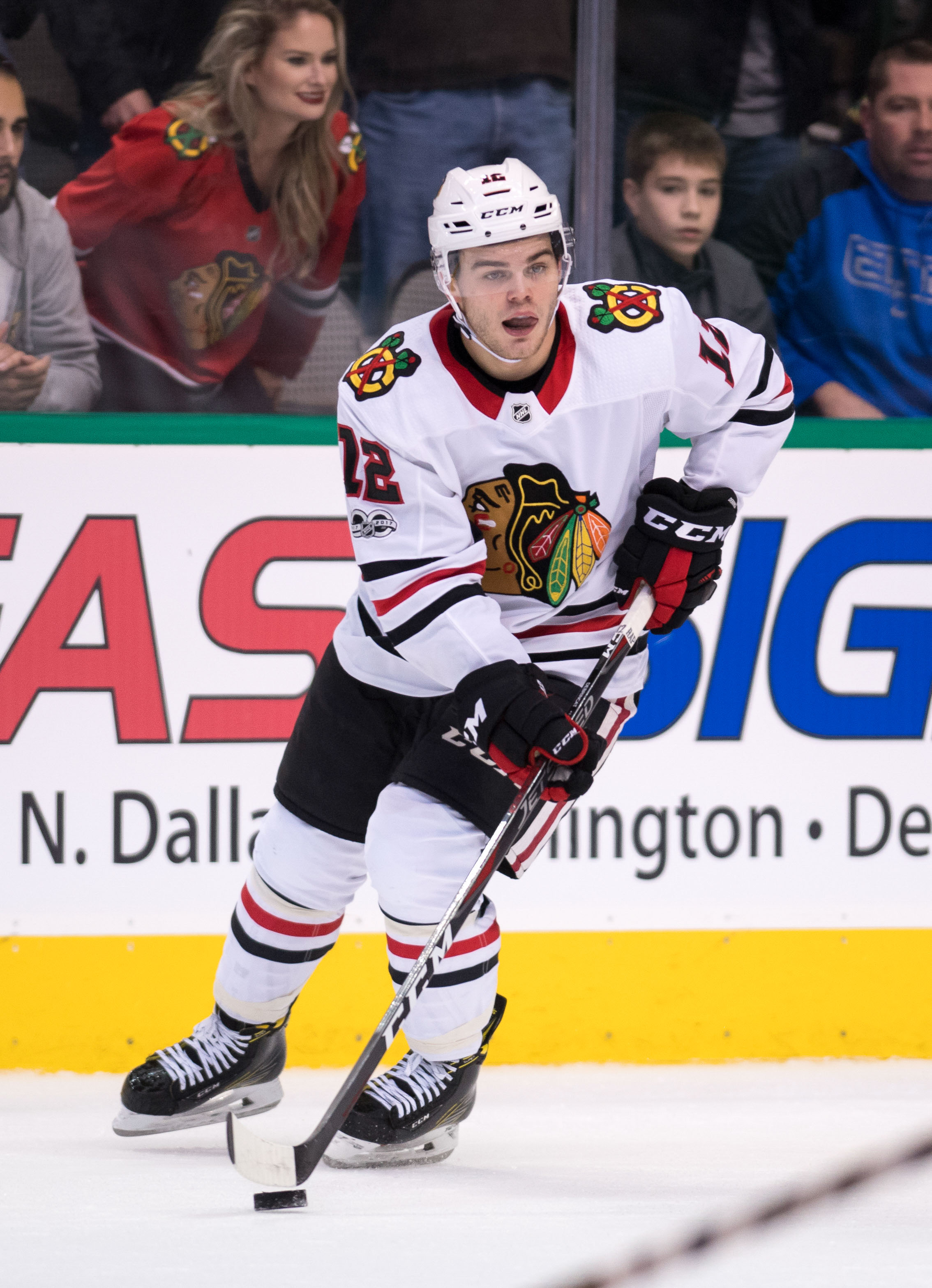 DeBrincat is a particularly interesting RFA case in 2023. His contract, although it kicked in after the rule change for the qualifying offer, still goes by the old rules since it was signed early. That means his qualifying offer is $9MM instead of 120% of his AAV. Right now, there are 19 forwards in the league at that price tag or more and quite a few are centers. DeBrincat is scoring like a high-end winger but his size is always going to give some teams pause. It’d be difficult to envision Chicago non-tendering him unless his production falls off a cliff next season but will they be ready to hand him a Kane-like contract to buy out the remaining prime years of his career? The Blackhawks can offer less but with DeBrincat being a year away from UFA eligibility, he could simply accept the qualifier. Whoever is at the helm next summer – either interim GM Kyle Davidson or someone else – this is a file that they’ll want to try to address.
Borgstrom’s return to North America hasn’t gone well as he has had a limited role when he has been in the lineup and hasn’t done much with it. If that continues, he’ll be a non-tender candidate even at a $1.1MM qualifying offer due to his arbitration eligibility. Connolly is who they took on to add Borgstrom plus some other pieces. He’s an NHL-caliber player but is making much more than he should. He’s someone that should be closer to $1MM on the open market and he could get there this summer if Chicago needs to free up some short-term cap room. Khaira is a capable checker but nothing much has changed for him since he hit the market last summer after being non-tendered. Accordingly, it’s reasonable to project his next contract should check in close to this one.
Three Years Remaining
F Mackenzie Entwistle ($812K this season, $800K through 2023-24, RFA)
F Brandon Hagel ($1.5MM, RFA)
F Mike Hardman ($913K this season, $800K through 2023-24, RFA)
D Riley Stillman ($1.35MM, RFA)
F Tyler Johnson ($5MM, UFA)
Johnson was acquired from Tampa Bay over the summer to give them some extra center depth while adding a second-round pick in exchange for a player who won’t play again (Brent Seabrook). There’s some value in what they got but it remains an above-market contract and as tight as they are to the cap ceiling, it’s fair to wonder if that was the best utilization of that money. Hagel has turned into a reliable secondary scorer and was a good undrafted free agent pickup. As long as he can even hold his own on the third line (and he’s doing better than that now), they’ll get a nice return on their deals. Entwistle and Hardman are currently on entry-level deals but signed cheap one-way extensions that can be cleared off the cap entirely if they lose their spot. Otherwise, they’re decent depth pieces for just above the league minimum.
Stillman was the other player of note brought on when they took on Connolly’s contract. He’s not playing heavy minutes but he’s a regular part of Chicago’s back end. Assuming he can hold down that sixth spot moving forward, they’ll get okay value at least on this contract but they’re certainly hoping he’ll be able to take on a bigger role down the road.
What Your Team Is Thankful For: New York Islanders
In the spirit of the holiday season, PHR will take a look at what teams are thankful for as the season passes the one-quarter mark. There also might be a few things your team would like down the road. We’ll examine what’s gone well in the early going and what could improve as the season rolls on for the New York Islanders.
What are the Islanders thankful for?
A stingy defense corps.
Yes, part of their success is due to Barry Trotz’s system but the Islanders boast a group of blueliners that is still relatively unheralded. Ryan Pulock and Adam Pelech are both quality rearguards locked up on long-term deals that could wind up being team-friendly by the end; Pulock’s extension carries a $6.15MM AAV through 2030 that kicks in next season while Pelech checks in at $5.75MM through 2029. That’s a quality duo on the back end to build around for a long time. Noah Dobson will also be part of that long-term future while Scott Mayfield’s contract continues to be one of the better bargains in the league for at least one more year after this one.
Individually, none of these players brings a ‘wow’ factor to the table but as a group, it’s a good enough unit to help keep them close most nights even when the offense struggles. If they’re going to claw their way back into the playoff picture, this group will be a big part of it (especially with Pulock set to return soon).
Who are the Islanders thankful for?
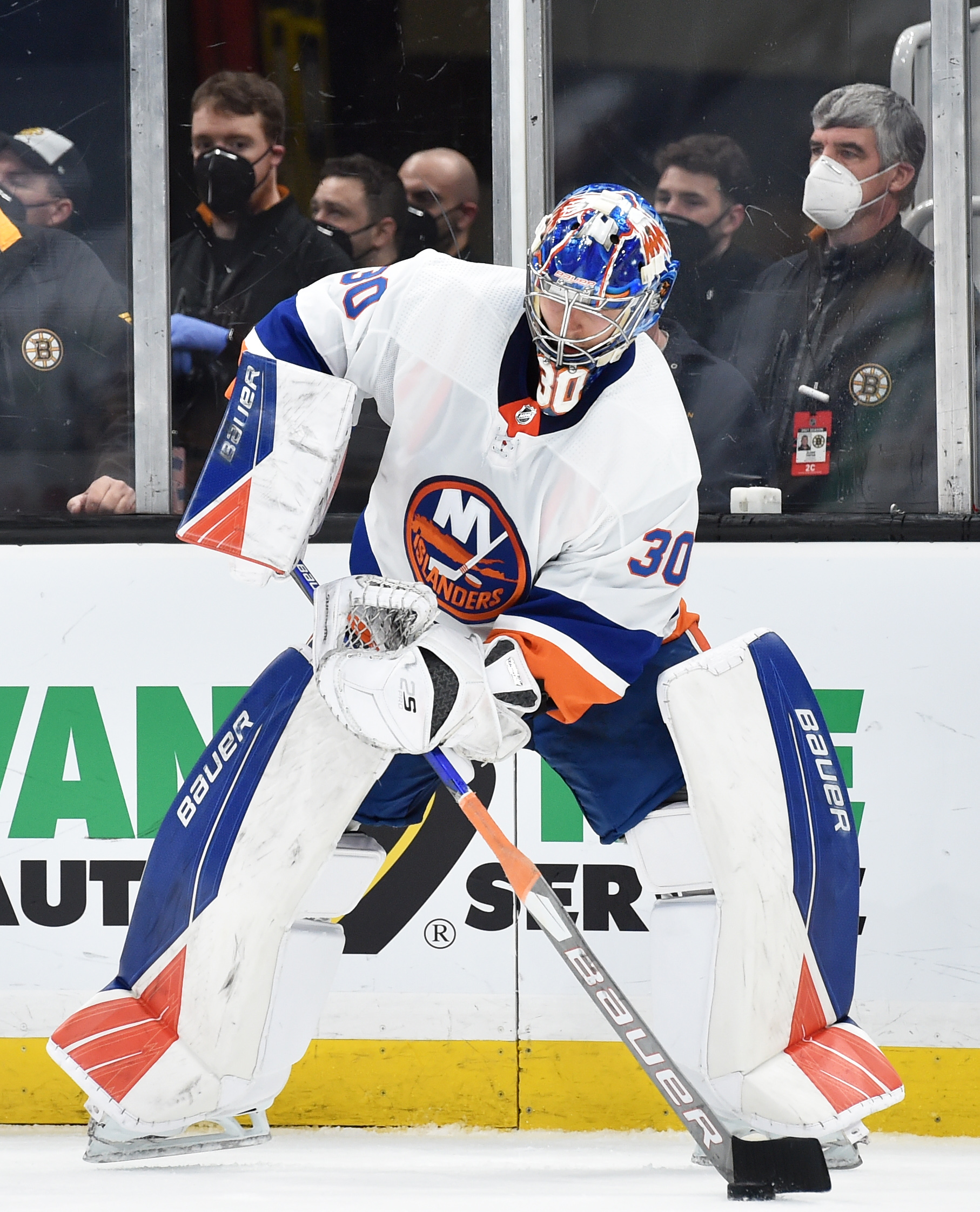 For years, Sorokin has been touted as their goalie of the future. After finally coming to North America and playing last season, he was the backup to Semyon Varlamov. It’s time to consider the torch as passed. This season, the 26-year-old has been one of the better goalies in the league, posting a .926 SV% which puts him in the top ten league-wide in that category. He also has made over 70% of the starts this season. Part of that is due to an early injury to Semyon Varlamov but Sorokin has also outplayed Varlamov considerably as well. There was some risk to Sorokin’s three-year, $12MM contract considering he had played all of 22 regular season games heading into this season but all of a sudden, he’s one of the better bargains for goaltenders around the league.
What would the Islanders be even more thankful for?
Offense. Not just depth scoring or secondary scoring, or offense from the defense. The Islanders need production, period. Mathew Barzal is their star center but he only has five goals this season (which still puts him in a tie for fourth on the team). Kyle Palmieri, Josh Bailey, and Zach Parise are all capable veteran players and they’re all stuck at a single goal. Casey Cizikas and Matt Martin are big pieces of their fourth line on above-market contracts and they’ve failed to light the lamp in 39 combined games. The defense as a whole has just five tallies on the season. You get the point.
With even an average offense and some better luck on the COVID front, this is a team that could be right in the playoff mix as things stand. If they’re going to get back into postseason contention with the struggles they’ve had early on, they’re going to need a lot of players to rediscover their scoring touch over the holiday break.
What should be on the Islanders’ Holiday Wish List?
Beyond adding scoring, more defensive depth would go a long way towards helping their chances of climbing back into the race in terms of giving them some injury insurance (and we know GM Lou Lamoriello isn’t throwing in the towel just yet).
But the biggest thing on their wish list both now and in the future is cap space. They don’t have it and they need it in a big way. The Isles were forced to bridge their young stars to merely stay cap-compliant now so it’s a longer-term concern. If they want to add now, they need to free up cap room first and if they want to keep their core intact, they need to free up cap room. Accordingly, that is going to be the biggest wish in the coming weeks, months, and years for the Isles.
Photo courtesy of USA Today Sports Images.
What Your Team Is Thankful For: New Jersey Devils
As the holiday season approaches, PHR will take a look at what teams are thankful for as the season passes the one-quarter mark. There also might be a few things your team would like down the road. We’ll examine what’s gone well in the early going and what could improve as the season rolls on for the New Jersey Devils.
What are the Devils thankful for?
The World Junior Championship.
Look, it’s not very pretty watching Devils games right now. The team has lost six in a row, nine of their last ten, and now own the worst goal differential in the Metropolitan Division. In a season where they were supposed to be at least competitive, things have gone downhill, fast.
So around the holidays, what better way to soothe that ache than watching some of the Devils’ top prospects do battle on the international stage. Fans got an up-close look at Alexander Holtz when he played six NHL games earlier this season, but he’s now back with Team Sweden at his third WJC tournament. Shakir Mukhamadullin is one of the leaders of the Russian team and looks like he’ll be in the NHL in no time. Perhaps the most exciting is Luke Hughes, that fourth-overall pick and key building block who is suiting up for the U.S.
Of all the prospects in the Devils system, those three are arguably the most important. You can watch them all battle when the event kicks off tomorrow.
Who are the Devils thankful for?
If there’s one player that has been anything but disappointing this season it’s Mercer, who only turned 20 in October but is already handling NHL minutes with aplomb. Another one of those first-round picks, Mercer has 16 points in 30 games, strong possession numbers, and is averaging more than 16 minutes a night. Sure, he’s been completely outclassed in the faceoff dot and still has plenty of work to do to polish his overall game, but there have been so many brilliant moments that his ceiling looks higher than expected and his absolute floor has risen to that of an NHL middle-six player.
It’s hard to see why there would ever be a time moving forward that the Devils don’t pencil Mercer into the lineup and that’s a huge step forward for an organization that needed to build out support for Jack Hughes and Nico Hischier. It looks like there will be more pain this season, but things are trending in the right direction, at least in terms of development.
What would the Devils be even more thankful for?

A healthy Hughes.
It was supposed to go so differently. This was the year that Hughes was supposed to take a big step forward and establish himself as a true top-line player in the league. He looked stronger in the offseason and things got off to a great start. In his first game, he scored twice, including a brilliant overtime winner that showed just how much confidence he had entered the season with. He had an assist in the first period of his next game before a hit from Seattle’s Jeremy Lauzon resulted in a dislocated shoulder for Hughes and a recovery period of six weeks.
While he avoided surgery, it immediately stole all of that offseason momentum for the young forward and forced him to–as Ray Ferraro of ESPN often says–jump on a moving train when he was ready to return. He’s done fine since rejoining the club, registering three goals and five points in 11 games, but is still missing some of that swagger from the start of the year. If Hughes can stay healthy for the rest of the season and get that back, perhaps the team can do a little more damage in the second half.
What should be on the Devils’ Holiday Wish List?
A Jesper Bratt extension.
The Devils don’t need to sell at the deadline this year. They likely will, if they can find a taker and add a few draft picks, but they’re past the hoarding section of the rebuild. Now they need to lock in these good young players and find a way to put together a competitive roster.
If Mercer’s development is the best thing from the team this season, Bratt’s play isn’t far behind. The 23-year-old forward has been the most reliable player on the roster from the start and is scoring at a career-best pace. His 24 points in 29 games lead the club and almost all of that damage has been done at even strength. If the Devils’ powerplay could improve–it’s currently clicking at just 12.9%–there’s a real chance Bratt could put up a 60 or even 70-point season at this rate.
While that’s a wonderful threshold to break for the young forward, it would also come with a cost for the Devils. Bratt will be a restricted free agent again this offseason and this time he’s eligible for arbitration. That kind of production would put him in the driver’s seat in terms of arbitration leverage, meaning a big ask would be on the table. An extension now at a more reasonable price might be prudent, if GM Tom Fitzgerald can get his representatives to the table.
Photo courtesy of USA Today Sports Images
What Your Team Is Thankful For: Nashville Predators
As the holiday season approaches, PHR will take a look at what teams are thankful for as the season passes the one-quarter mark. There also might be a few things your team would like down the road. We’ll examine what’s gone well in the early going and what could improve as the season rolls on for the Nashville Predators.
What are the Predators thankful for?
A return to form for two veteran forwards.
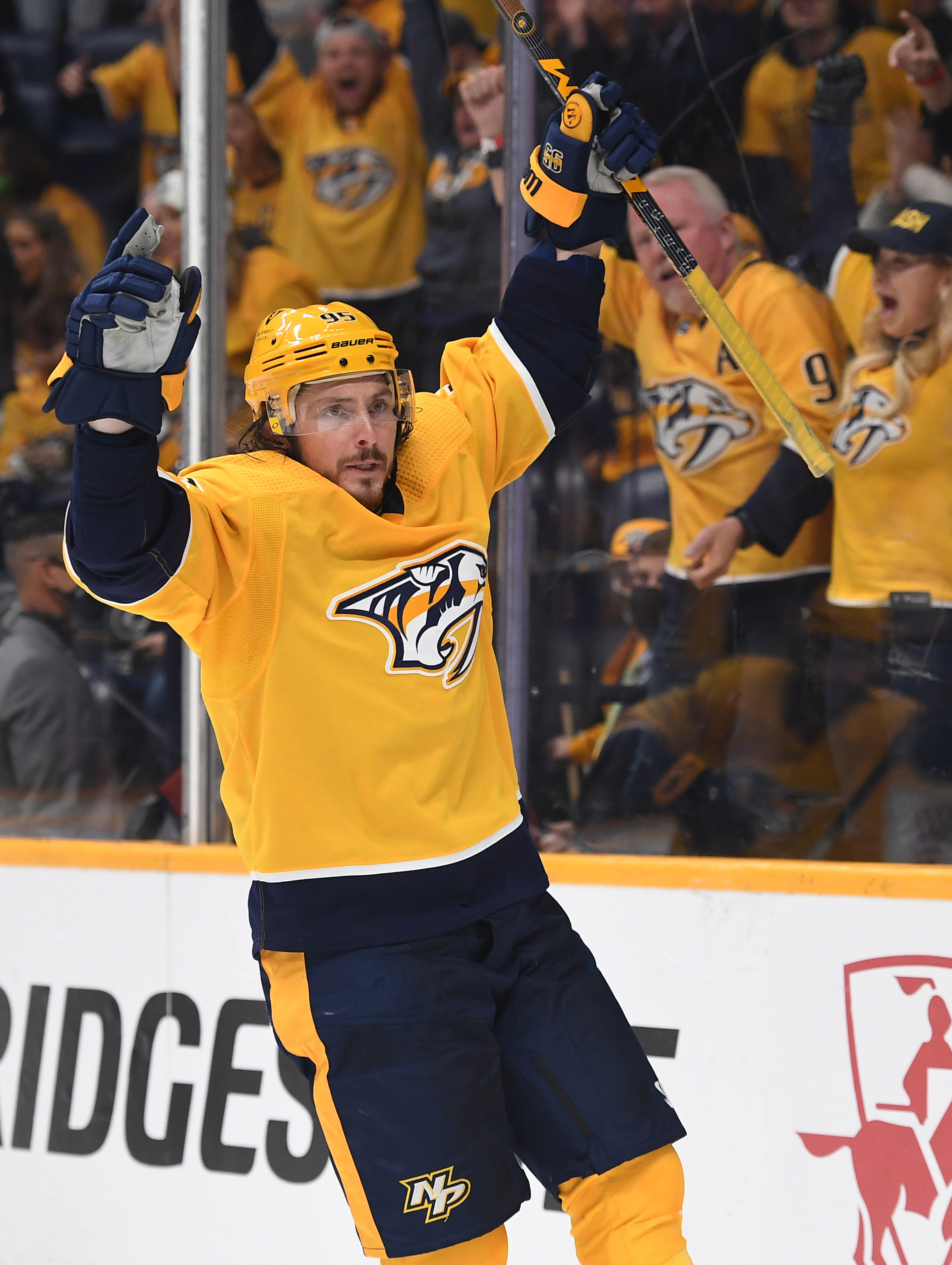 The Nashville Predators have just four forwards that carry higher cap hits than Colton Sissons‘ $2.86MM. If any of those four struggle, the offensive attack can become predictable and inconsistent. Filip Forsberg has been as reliable as any and Mikael Granlund has developed a never-stop work ethic, but the two at the very top of the salary chart had been brutal in recent years.
Matt Duchene and Ryan Johansen combined for just 13 goals last season. Duchene has already matched that total in 26 contests this time around. Both players are playing at an entirely new level and now have 49 points combined through the first part of the season. Without them, the team was still going to be a middle-of-the-pack group on the playoff bubble. With them playing like this, Nashville is sitting in second place in the Central Division. Duchene has missed a couple of games with an upper-body injury and Johansen is in the COVID protocol, so their continued success is still something to monitor.
Who are the Predators thankful for?
John Hynes.
It didn’t look like this at first, but Hynes has secured buy-in from his group and has the Predators playing better than most expected. The team is on a seven-game winning streak at the moment and would never be mistaken for a club that is easy to play against (Tanner Jeannot and Mark Borowiecki will see to that).
In fact, Hynes is likely in the mix for the Jack Adams award if this continues. His overall record in Nashville is now 66-44-4, but that winning percentage is only going up as he navigates the 2021-22 campaign.
What would the Predators be even more thankful for?
A real breakout from one of the high picks.
Philip Tomasino is only 20 years old, so it’s hard to expect more than he’s giving the team right now. But his nine points in 26 games isn’t exactly what fans were hoping for from the player that dominated the AHL as a teenager last season. The same could be said about Cody Glass, a sixth-overall pick brought in during the offseason. Glass has spent nearly the entire year in the minor leagues and while he’s played well, that’s not helping the Predators right now.
The one that could realistically breakout this season? Eeli Tolvanen, who still hasn’t been able to produce big offensive numbers despite his peripheral numbers suggesting he will eventually. Tolvanen has been eating up easier matchups and offensive deployment to rack up shots but has just five goals on the year. That 6.5 shooting percentage isn’t going to last forever though, especially not with a player that is known for his ability to beat goaltenders from distance.
There’s no guarantee that he will break out, but Tolvanen certainly has the talent and is creating enough opportunities that it could come at any time. If they get some improved secondary scoring from their 22-year-old Finn–while Duchene and Johansen continue to succeed–watch out.
What should be on the Predators’ Holiday Wish List?
An upgrade on the third pair.
The top two pairs in Nashville have been set for almost the entire season. Roman Josi skates beside Dante Fabbro, while Alexandre Carrier has turned into a reliable partner for Mattias Ekholm. But beyond that, it’s been a little shakier. Nashville has leaned heavily on their top-four for years, but the idea of Borowiecki, Matt Benning, or Philippe Myers moving up the lineup due to injury is certainly not one that inspires visions of a Stanley Cup.
Acquiring a defenseman who was in the top-four somewhere else and has proven he can do that on a regular basis would set the Predators up for a long postseason run. It doesn’t need to be a star or a top-pairing guy, but an upgrade on Benning would certainly be a positive addition.
Photo courtesy of USA Today Sports Images
What Your Team Is Thankful For: Montreal Canadiens
As the holiday season approaches, PHR will take a look at what teams are thankful for as the season passes the one-quarter mark. There also might be a few things your team would like down the road. We’ll examine what’s gone well in the early going and what could improve as the season rolls on for the Montreal Canadiens (when it eventually resumes).
What are the Canadiens thankful for?
Carolina’s playoff position.
There’s no getting around it, the Canadiens and Hurricanes have beef (manufactured for social media or not). After Montreal signed Sebastian Aho to an offer sheet in the summer of 2019, Carolina came back two years later and signed Jesperi Kotkaniemi to an outlandish offer that the Canadiens simply couldn’t afford to match. The Hurricanes didn’t make any attempt to hide the fact that it was a revenge play, even including the same verbiage Marc Bergevin had used initially in Don Waddell‘s press release and adding a $20 signing bonus (an homage to Aho’s jersey number) in the Kotkaniemi contract.
It’s ironic then, that the Canadiens have so much riding on Carolina’s performance this season.
When Montreal traded for Christian Dvorak almost immediately after declining to match the Kotkaneimi offer sheet, they included a first-round pick in the package sent to the Arizona Coyotes. The Coyotes will receive the better of the two picks Montreal owns–their original selection and the one received from Carolina in compensation. That is of course unless one or both of the picks end up in the top-10, in which case the Coyotes will receive the worse of the two. Montreal looks destined to have a pick in the top-10 after this dreadful season, meaning it’s Carolina’s pick that will eventually transfer to Arizona. But there’s no additional protection involved; if Carolina somehow slipped out of the playoff race and fell down the standings, there’s a chance Montreal could be giving up quite the pick. Remember, the new lottery rules come into effect this year, meaning that teams outside the playoffs can only jump up a maximum of ten spots, but it would still be quite the nervous night if the Hurricanes managed to miss the postseason somehow.
Who are the Canadiens thankful for?

There hasn’t been much to celebrate in Montreal this season. Cole Caufield, the odds-on favorite to win the Calder Trophy according to many before the season, has just a single goal and six points in 23 games. Mike Hoffman, brought in to provide some offensive firepower has been injured, sick or ineffective and has just eight points so far. David Savard, brought in to stabilize the defense in Shea Weber‘s absence, has been brutal and his four-year deal looks like a massive mistake.
Even Suzuki, the brightest star in a sea of dim light, has been underwhelming. He leads the team with 18 points through 31 games, but it’s his long-term contract that is something to look forward to in Montreal. Even if the team goes through a rebuild, they will know exactly how much their top center costs and how long they have him. Suzuki is signed through the 2029-30 and invested in the Canadiens success. Sure, had they waited until after this poor season to sign him it may have been a bit cheaper, but who knows if he commits to eight years after this dreadful campaign.
A comparison could be made to Dylan Larkin, who made it through the bad years in Detroit only to return to his explosive self this season when given some more talent to work with. Larkin hit a career-low of 23 points in 2020-21 and has 29 already this year. Even if it’s a forgettable year in Montreal and for Suzuki, he’s too good to be kept that way forever.
What would the Canadiens be even more thankful for?
A lottery win.
Listen, players like Matthew Savoie, Logan Cooley, and Danila Yurov are great talents and should have long productive NHL careers. But there’s a reason why all 10 scouts surveyed by Bob McKenzie of TSN put Shane Wright at the top of their board for 2022. The Kingston center was in a tier by himself in Corey Pronman’s rankings for The Athletic and colleague Scott Wheeler wrote that he is “not worried about his place at the top of this draft class” despite a rather pedestrian start by his standards (30 points in 22 games).
With the Canadiens now in 31st place, just a few points ahead of the Coyotes for last in the NHL, that first-overall pick is a legitimate possibility in 2022. Selecting second or third would certainly still help the rebuild, but nabbing Wright would lock in another top-six, two-way center that could give Montreal a considerable duo down the middle for 2022 and years to come.
What should be on the Canadiens’ Holiday Wish List?
Stalled young players.
While the Canadiens could and should target draft picks at the upcoming deadline, the team already does have quite a few to work with this year. They’ll pick seven times in the first four rounds even if they don’t make a single move, adding quite a few prospects to the pipeline. A more interesting strategy might be going after some of the young players around the league who have stalled in their development or need fresh starts.
Again, an example in Detroit could be of use here. The Red Wings acquired Robby Fabbri in 2019 for Jacob de La Rose, a player that now finds himself playing in Sweden. Fabbri had been a highly-touted youngster, but major knee injuries had stalled his career in St. Louis. Snatched for almost nothing, he rebuilt himself in Detroit by receiving top-six playing time that he wasn’t likely to get elsewhere and recently signed a new three-year, $12MM contract extension. If the Canadiens are going to clear some of the veteran names off the books, there will be opportunities in the lineup for young players to get back on track.
Photo courtesy of USA Today Sports Images
Salary Cap Deep Dive: Colorado Avalanche
Navigating the salary cap is one of the more important tasks for any GM. Teams that can avoid total cap chaos by walking the tightrope of inking players to deals that match their value (or compensate for future value without breaking the bank) remain successful. Those that don’t see struggles and front office changes.
PHR will look at every NHL team and give a thorough look at their cap situation for the 2021-22 season and beyond. This will focus more on players who are regulars on the roster versus those who may find themselves shuttling between the AHL and NHL. All cap figures are courtesy of CapFriendly.
Colorado Avalanche
Current Cap Hit: $81,972,800 (over the $81.5MM Upper Limit)
Entry-Level Contracts
D Bowen Byram (two years, $894K)
F Alex Newhook (two years, $908K)
Potential Bonuses
Byram: $2.5MM
Newhook: $850K
Total: $3.35MM
Newhook got a taste of NHL action last season in a limited role but spent most of the early part of this year back in the minors. However, he has been quite productive since being recalled and is staking a claim to a full-time spot which would give him a chance of hitting at least a couple of his ‘A’ bonuses at just over $212K apiece. Even with that, however, a bridge contract seems likely in order to preserve some space for the bigger ticket expiring deals at that time.
The same reasoning is likely to be applied to Byram as well. He is a bit more established than Newhook but his concussion trouble is going to create some hesitance on GM Joe Sakic’s part to commit to a big-money, long-term contract. If he can stay healthy for a few years, such a move would be more likely but they’re not going to get to that point in 2023. As for his bonus situation, if he’s able to get cleared to return and can stay in the lineup for a while, he has a chance of meeting the four ‘A’ bonuses, earning $850K of his potential bonuses; the rest are unlikely.
One Year Remaining, Non-Entry-Level
F Nicolas Aube-Kubel ($1.075MM, RFA)
F Andre Burakovsky ($4.9MM, UFA)
G Pavel Francouz ($2MM, UFA)
F Darren Helm ($1MM, UFA)
D Jack Johnson ($750K, UFA)
F Nazem Kadri ($4.5MM, UFA)
G Darcy Kuemper ($3.5MM, UFA)
D Kurtis MacDermid ($875K, UFA)
D Ryan Murray ($2MM, UFA)
F Valeri Nichushkin ($2.5MM, UFA)
When Colorado acquired Burakovsky, he had shown flashes of top-six ability but he was also quite inconsistent. The flashes are still there and they are much more frequent now as his production has risen significantly. He isn’t at a level where he can necessarily command top dollar for wingers but he could jump past the $6MM mark. Kadri is having quite the contract year and is in the top five in league scoring. That won’t set him up to get elite center money on the open market – especially with his past – but good centers are always in high demand and short supply. If he continues at this pace, surpassing $7MM on a long-term deal is a definite possibility.
Nichushkin has been particularly strong in limited action this season but his history since being with the Avs is that he works as a middle-six winger. The market was a lot better for those players over the summer so a raise into the mid-to-high $3MM range should be doable for him. Aube-Kubel and Helm could feel the squeeze of a tight cap situation as those spots will probably need to go to players making closer to the minimum next season. Both could have a case for receiving similar money to what they’re getting now but they may have to go elsewhere to do so; arbitration eligibility could make Aube-Kubel a non-tender candidate.
Murray’s market didn’t really materialize so he opted for a bit of a pillow situation to try to showcase his value on a good team. It hasn’t gone quite as planned as he has had a limited role when he’s in the lineup and as has been the case for most of his career, staying healthy has been a challenge. On reputation alone, he could still land somewhere near this price on a one-year deal next summer but it’s hard to see a multi-year commitment heading his way unless the second half goes a lot better than the first. MacDermid brings plenty of physicality but is best utilized in a depth role which will cap his earnings upside at a level not much higher than it is now. As for Johnson, he has been a nice bargain pickup for the Avs. Given his past, however, it’s hard to see him going more than year-to-year at this point although he could land a small raise next summer.
The Avs paid a high price tag to get the final year of Kuemper’s deal and the results have been mixed so far. Based on his numbers with Arizona, he’s someone worthy of passing $5MM per season. With Colorado? Not so much. A big second half and playoff run can change things but as of right now, he’s someone who could land about $1MM more with teams being hesitant to go past that with him only passing the 30-game mark twice in his career. Francouz has yet to play an NHL game on this contract which started last season due to injury. That doesn’t bode well for his future earnings and a cheap one-year deal may be all he can manage.
Two Years Remaining
F J.T. Compher ($3.5MM, UFA)
D Erik Johnson ($6MM, UFA)
F Tyson Jost ($2MM, RFA)
F Nathan MacKinnon ($6.3MM, UFA)
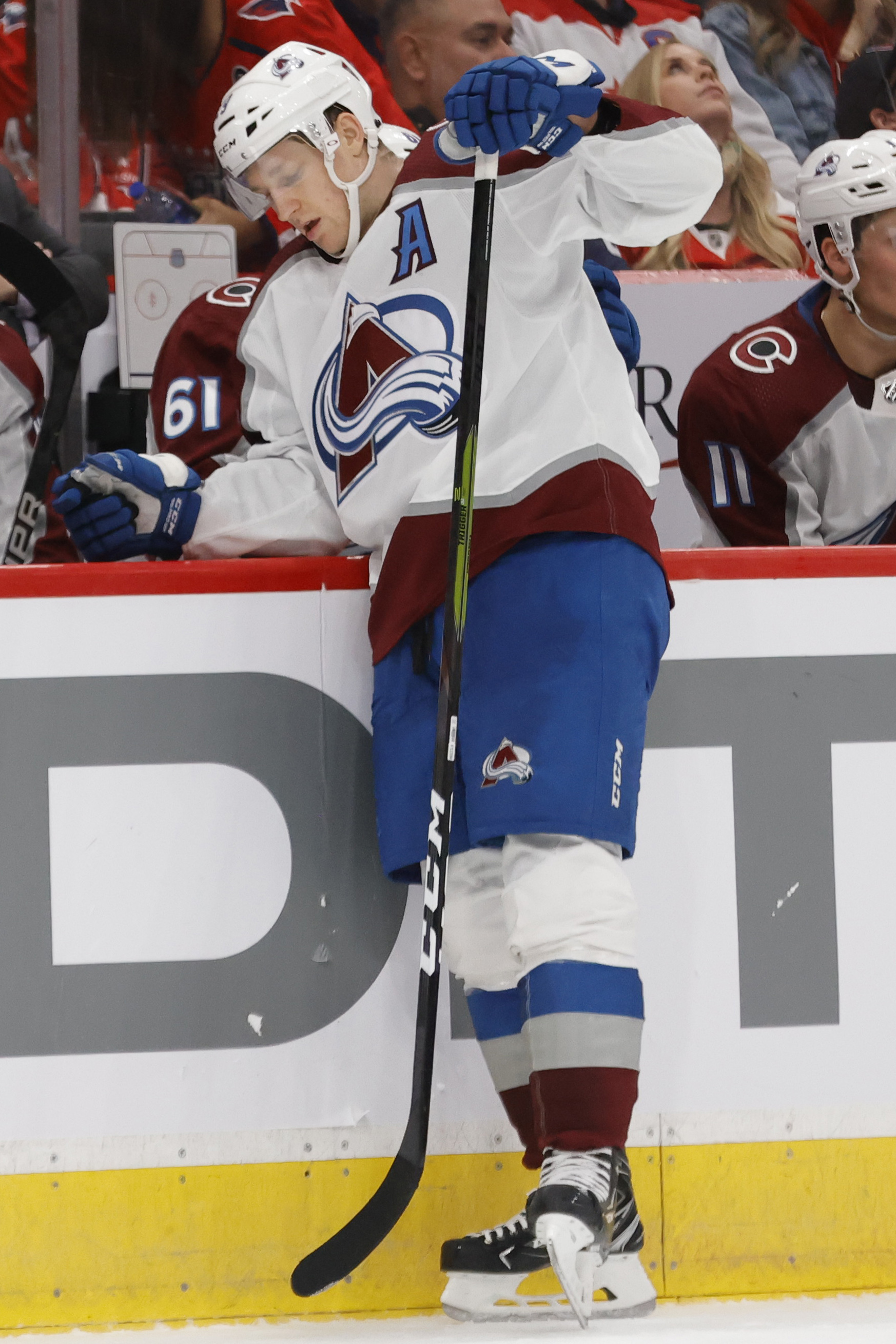 It’s MacKinnon’s contract situation that will make long-term commitments hard to hand out between now and then. Over the past five years, two players have recorded more points than he has (and they both play for Edmonton). If there’s anyone that can challenge Connor McDavid for the highest AAV in NHL history, it may very well be MacKinnon. He’ll hit the open market at 28 so a max-term contract is all but a given (eight years from Colorado, seven from anyone else). Even if he doesn’t pass the $12.5MM mark, he should come close which would add upwards of $6MM to their payroll. Until they have a sense of what they can do with their star center, Sakic should be looking at short-term options to ensure they have the flexibility to keep MacKinnon in the fold.
Compher did well in MacKinnon’s absence earlier this season which bolsters his case that he’s capable of being a regular top-six player. When everyone is healthy for the Avs, however, he isn’t in that situation. Unless something changes (such as Kadri moving on and Compher moving up a notch on the depth chart), he’ll be hard-pressed to get much more than what he’s making now. Jost has been a little better this season but is still underwhelming relative to his draft stock. He’s not consistent enough to be a top-six player and pure bottom-six players without a particular specialty don’t often get big deals. He’s owed a $2.25MM qualifying offer in 2023 and depending on what happens with MacKinnon, that may be too rich for them.
A few years ago at the start of this contract, Johnson was seeing plenty of time on the top pairing and playing a prominent role. Now he’s 33 and missed almost all of last season due to injury. His days of being a fixture on the top pair are over and he’s more of a role player. He’s actually off to a nice start to his season, showing he has something left in the tank, albeit not at a $6MM level. If he stays healthy, he could drop to the high-$3MM range or perhaps a bit less if someone wants to give him a longer-term contract, a risk as he’ll be subject to 35+ rules (unless the contract is structured uniformly).
Three Years Remaining
D Devon Toews ($4.1MM, UFA)
A tough cap situation for the Islanders was great news for Colorado as they were able to add Toews for a pair of second-round picks and sign him to a deal that he is outperforming significantly. He’s up over a point per game this season after notching a career-best 31 last year and is logging nearly 25 minutes a night again. As a result, Toews is providing top-pairing production while getting paid less than what some teams are paying their third blueliner. If he continues on this trajectory, doubling his current AAV could be attainable.
What Your Team Is Thankful For: Minnesota Wild
As the holiday season approaches, PHR will take a look at what teams are thankful for as the season passes the one-quarter mark. There also might be a few things your team would like down the road. We’ll examine what’s gone well in the early going and what could improve as the season rolls on for the Minnesota Wild (when it eventually resumes).
What is Minnesota thankful for?
Finally having a true star to market.
Throughout the history of the Minnesota Wild, there have been some excellent players. Marian Gaborik, the team’s first-ever draft pick, stepped into the spotlight as a teenager and scored 30 goals in his sophomore season. He would hit a career-high 42 in his last full, healthy season with the Wild, but was never really even close to any individual awards. Mikko Koivu was picked sixth overall in 2001, but it took him several years to reach the NHL and when he did, his two-way ability was probably never appreciated as much as it should have been. He was a Selke finalist once in a long career, but never received a single vote for any other individual award–not exactly a superstar, even if he was the heart and soul of the franchise.
In 2012, Ryan Suter and Zach Parise put the Wild on the NHL map by signing massive free agent contracts to head back to the State of Hockey, but even they blended into a mediocre team that would make the playoffs on a yearly basis without ever really contending.
Now things have changed, with their marketable, dynamic star forward Kirill Kaprizov. There’s no doubt that signing Kaprizov to a five-year, $45MM contract this offseason was a risk; after all, he had played just 55 regular season games to that point. But there was no doubting Kaprizov’s obviously ability, not only to put the puck in the net but also to invigorate the Minnesota market. Kaprizov was called “the most exciting player in franchise history” almost from the moment he arrived, and with 36 points in 30 games, he’s on pace to set a team record in just his second year. Only one player in Wild history has registered more than 80 points–Gaborik, exactly once. Kaprizov looks like that won’t be much of a problem for him should he stay healthy throughout this contract.
 Who is Minnesota thankful for?
There’s no doubt that Kaprizov is the most marketable, and arguably the most important player on the team. That doesn’t, however, mean that the team is most thankful for him in particular. For that, we come to Hartman, who has figured it out at age-27 and now looks like one of the most incredible bargains in the league.
After two mediocre seasons with Minnesota, Hartman actually accepted a three-year contract that saw his cap hit go down this offseason, dropping from $1.9MM to $1.7MM. He’ll carry that number through 2023-24 and actually earns just $1.1MM in actual salary this season. What do you get for $1.1MM? How about 14 goals and 26 points through 30 games, all while driving possession and contributing defensively. If plus-minus is more your thing, Hartman leads the entire league at +22 to this point and has done nearly all of his damage at even strength. It’s an impressive accomplishment for a player that is on his fourth team and has a career-high of 31 points. If this is what Minnesota is going to get from Hartman moving forward, he’ll be one of the most valuable contracts out there.
What would Minnesota be even more thankful for?
A consistent Kevin Fiala.
Make no mistake, when at his best, Fiala is one of the most dynamic offensive players in the entire league. There’s good reason to believe that he could have become that marketable star that Minnesota longed for, had he been able to find any level of consistency to this point. But it just hasn’t been there for him this season, as he struggles to find the back of the net despite plenty of good chances.
It’s not that Fiala is having a terrible year–20 points in 30 games is certainly nothing to turn your nose up at–but it’s those flashes of superstardom that leave fans wanting so much more out of the 25-year-old forward. Decision time is coming quickly as Fiala is a restricted free agent after the season, owed a qualifying offer that would open up a potential arbitration award even higher than his current $5.1MM salary. With whispers about his future in the organization (or lack thereof) coming out earlier this year, a more consistent performance over the second half of the year would go a long way to securing the next stage of his career.
What should be on Minnesota’s Holiday Wish List?
More center depth.
While this may actually come from an internal source, if the Wild decide that Marco Rossi is ready for the NHL, there’s little doubt that the center ice position is still an area of weakness for Minnesota. Joel Eriksson Ek‘s upcoming diagnosis after leaving with injury last night will likely decide what kind of player the Wild need to target on the trade market, but a center of some level is needed even if he’s healthy enough to quickly return to action.
The clock has struck midnight on Victor Rask‘s 2020-21 performance, with the veteran center now receiving just around 10 minutes a night when he’s even in the lineup, Nick Bjugstad is basically a fourth-line winger at this point, and the combination of Nico Sturm and Frederick Gaudreau doesn’t inspire a ton of confidence when it comes to long playoff runs. If Eriksson Ek is out long-term, the team will desperately need to add a top-six center to the mix at some point. If he’s coming back, some extra depth will still be required.
Photo courtesy of USA Today Sports Images
What Your Team Is Thankful For: Los Angeles Kings
As the holiday season approaches, PHR will take a look at what teams are thankful for as the season passes the one-quarter mark. There also might be a few things your team would like down the road. We’ll examine what’s gone well in the early going and what could improve as the season rolls on for the Los Angeles Kings.
What are the Kings thankful for?
Jonathan Quick playing like the Jonathan Quick of old.
Ten years ago, Quick, then in his prime, was an elite goaltender in the NHL. He led the league in shutouts, had a save percentage of .929 (his career high), and of course then helped lead Los Angeles to the Stanley Cup. However, the last few years, he has battled injuries and poor performance with a save percentage that started with an eight in two of the last three seasons which is at the lower end for a backup let alone a starter. That played a role in Cal Petersen getting a three-year, $15MM extension at the start of the season, giving them some insurance for a declining Quick.
Except Quick isn’t in decline this season. In fact, he has gone back to being one of the elite goalies in the NHL with a save percentage that’s slightly better than the mark he put up a decade ago. That has been the primary reason that the Kings have allowed the seventh-fewest goals in the NHL despite Petersen struggling and Los Angeles being hit hard at times with injuries on the back end. Quick may not be in his prime anymore but he’s certainly playing like he still is.
Who are the Kings thankful for?
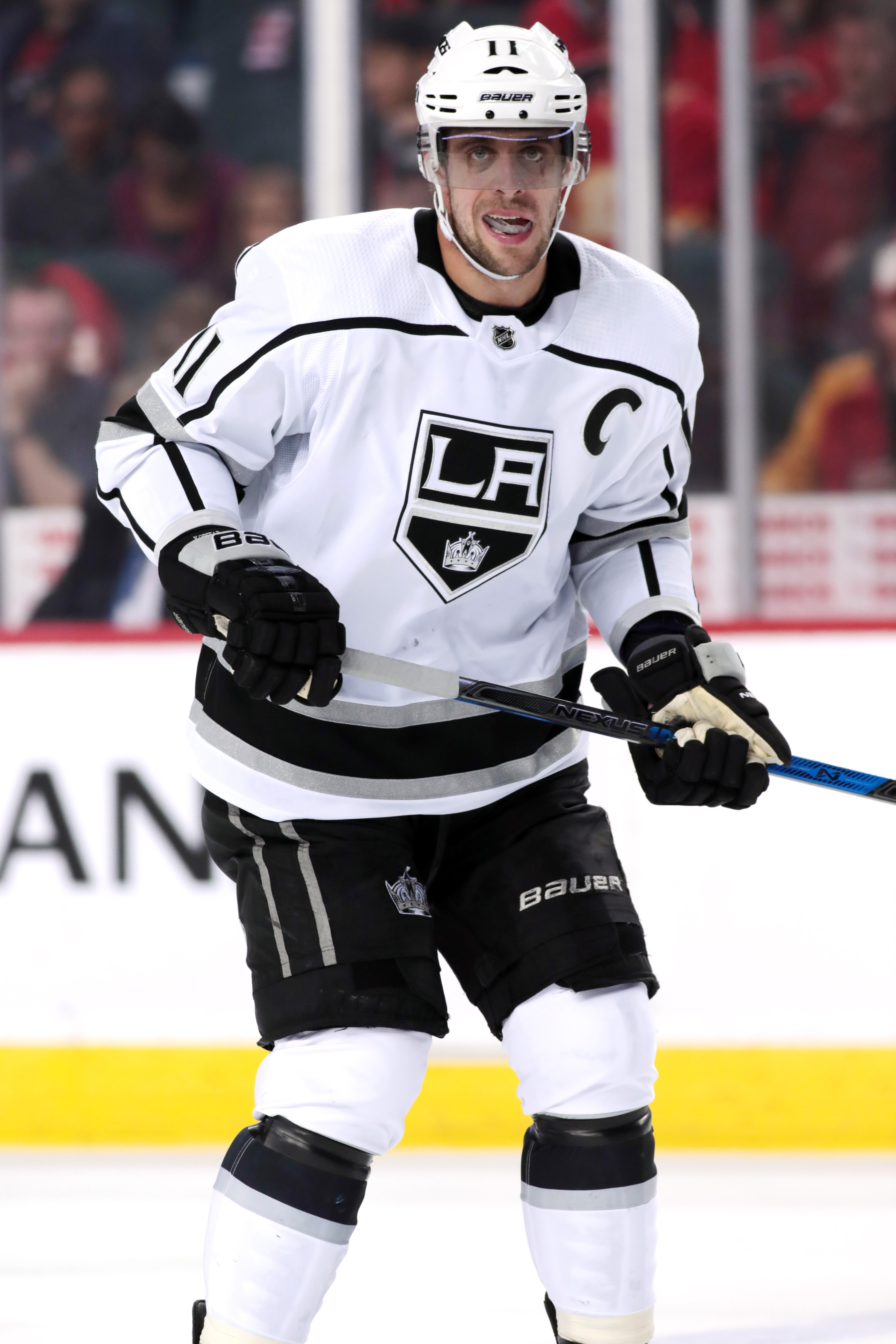 Through the good times of a decade ago and the not-so-good times that the last few seasons have been, Kopitar has been his usual reliable self. He produces plenty of points, takes plenty of faceoffs, and often faces top opponents while doing that (although Phillip Danault has taken some of the pressure off of him this season). The captain just does it all for Los Angeles. As the Kings look to stay in the thick of the playoff race in the Pacific Division – they’re five points out at the moment – they’ll need Kopitar to help lead what’s still a fairly young roster. There’s no reason to think he won’t be able to do just that in the second half of the season.
What would the Kings be even more thankful for?
Defensive production. The Kings have just six goals from their defensemen this season, three of which have come from Drew Doughty who has been limited to just 11 games this season due to an early injury and a stint in COVID protocol. The forward group isn’t the strongest in terms of proven NHL talent (more on that shortly) but this is a back end that has the potential to produce more than they have so far. Michael Anderson was productive in college but has just one point this season. Matt Roy was above average in terms of AHL production but he’s still chasing down his first goal of the season. Kale Clague has their third-highest point per game average among blueliners but he’s in Montreal now with Sean Durzi producing at a similar clip since being brought up. There is some room for improvement from their blueliners and that could go a long way towards helping them close the gap in the division.
What should be on the Kings’ Holiday Wish List?
Scoring upgrades. If Los Angeles is going to hang around the playoff picture, they need to score more. Only three players have scored more than six goals so far and only one (Adrian Kempe) has hit the double-digit mark. It’s hard to have much success when a team is only scoring 2.62 goals per game. A top-six winger that can give the Kings a second capable scoring line would be a big addition and could allow them to move Dustin Brown into a more optimal role. With Sean Walker on LTIR for the rest of the year, they have a bit of flexibility to try to add and as LTIR room doesn’t bank like regular cap space does, it’s a need they can try to fill before the trade deadline.
A depth defenseman could also be a worthwhile addition but with Doughty now recovered from his injury, that’s less of a need than it was a month ago. A top-four pickup would go a long way but there aren’t really (if any) available at the price point that they can afford on the cap.
Photo courtesy of USA Today Sports Images.
What Your Team Is Thankful For: Florida Panthers
As the holiday season approaches, PHR will take a look at what teams are thankful for as the season passes the one-quarter mark. There also might be a few things your team would like down the road. We’ll examine what’s gone well in the early going and what could improve as the season rolls on for the Florida Panthers (when it eventually resumes).
 What are the Panthers thankful for?
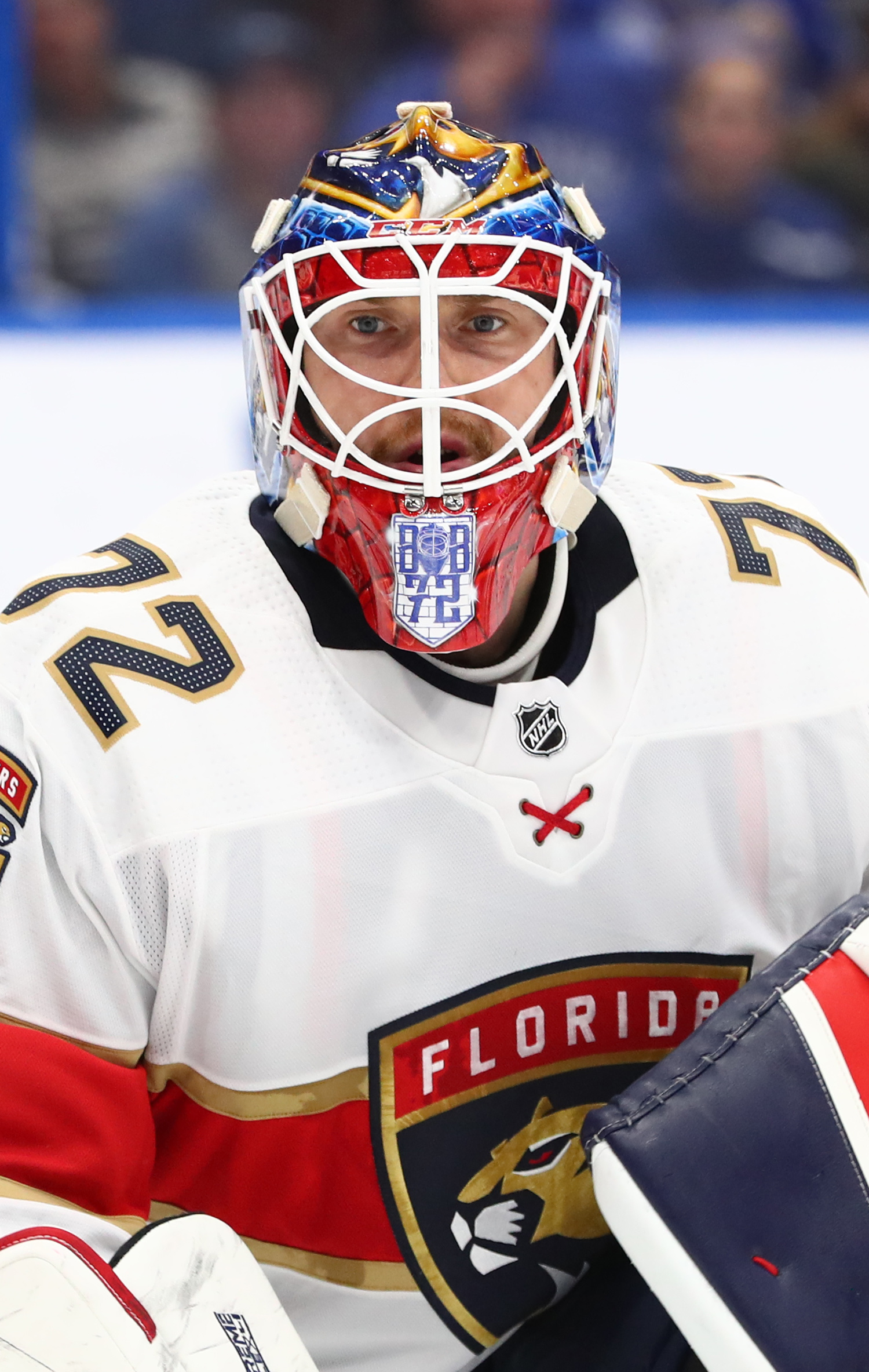
A resurgent Sergei Bobrovsky.
No team in the league can get by with a player making over $10MM and performing the way Bobrovsky did the last two seasons. He’s being paid like one of the best goaltenders in the league, and he posted a .902 save percentage over his first 81 games with the team.
It’s not that Bobrovsky is competing for the Vezina this year–his numbers aren’t that good–but a .917 has been good enough behind a powerful Florida lineup to result in a 12-3-2 record. Given Spencer Knight‘s struggles in his first full season, it was absolutely imperative to have Bobrovsky take the net back.
Who are the Panthers thankful for?
Bill Zito.
Since Zito has arrived in Sunrise just over a year ago, the Panthers have, among other things:
- Added Patric Hornqvist, while moving out Mike Matheson‘s contract in the process.
- Added Markus Nutivaara for a player that’s now in the KHL.
- Added Lucas Carlsson, while moving out Brett Connolly‘s contract in the process.
- Added and extended Brandon Montour for a third-round pick.
- Added and extended Sam Bennett for a second-round pick and Emil Heineman.
- Added and extended Sam Reinhart for a first-round pick and Devon Levi.
- Cleared Anton Stralman‘s contract from the books.
- Signed Spencer Knight, Anton Lundell, Maxim Mamin, Matt Kiersted, and other prospects.
- Extended Carter Verhaeghe, Anthony Duclair, and Aleksander Barkov.
- Won 55 of their 85 regular season games.
It’s been a pretty successful tenure for the former player agent and Columbus Blue Jackets assistant GM in his first go-round as the boss. The Panthers look like they’re set up for long-term success while also being a contender right now.
What would the Panthers be even more thankful for?
A healthy return for Barkov.
It was a brilliant start for the 26-year-old Finn. Barkov had five points in his first three games, 17 in his first 15. But then Scott Mayfield of the New York Islanders caught him with a knee-on-knee collision and things abruptly came to a halt. Barkov would return for one game, but end up back on injured reserve.
Now, as the Panthers are put on hold over the Christmas break due to COVID, Barkov has just played in just 16 of Florida’s 29 games. He doesn’t necessarily need to rush back, the team is good enough to stay in a playoff position without him. But for the Panthers to go on a deep postseason run, they’ll need their big center to be at full strength.
What should be on the Panthers’ Holiday Wish List?
Defensive depth.
There actually may be a case to be made for a better backup goaltender, given the team is currently going with Jonas Johansson behind Bobrovsky at the NHL level. But with Nutivaara on long-term injured reserve without a clear return, the defense could use a boost as well. The top three are locked. Aaron Ekblad, MacKenzie Weegar, and Gustav Forsling are going to continue to log huge minutes for the team when healthy. But Montour’s role has been diminished this year, Radko Gudas is probably playing more than he should, and beyond that, it’s a mix of inexperienced young players.
The idea of adding another legitimate top-four option, someone who can play in all situations and elevate the entire group, could make the Panthers one of the most deadly opponents in the league. A player like Jakob Chychrun–if he’s truly available–would be perfect, but even a lesser name like Ben Chiarot could potentially allow everyone to slot in a little better come playoff time.
Photo courtesy of USA Today Sports Images