
Where Does Alexis Lafreniere Fit In The Rangers’ Lineup?
The New York Rangers selected Kaapo Kakko and Alexis Lafreniere with back-to-back top-two picks in the 2019 and 2020 NHL Drafts, offering the team some key pieces to a short rebuild and a quick turnaround after the Ryan McDonagh and Henrik Lundqvist era of contending teams drew to a close. Things haven’t gone quite as planned for Kakko and Lafreniere individually since then, however.
Lafreniere now sits as the only remaining Ranger RFA left unsigned this offseason, and he needs a new deal in the next few weeks if he’s to be with the team on the first day of training camp. The team has the cap space to get it done with $2.278MM given a 22-player roster, per CapFriendly, but it’ll be a tight fit. Surely one thing Lafreniere is trying to flesh out is the role he’ll have on the team given a new coach behind the bench – Peter Laviolette. Some would say the outgoing head coach, Gerard Gallant, didn’t utilize Lafreniere as much as he should. Others would say Lafreniere hasn’t done enough to earn a bump in ice time.
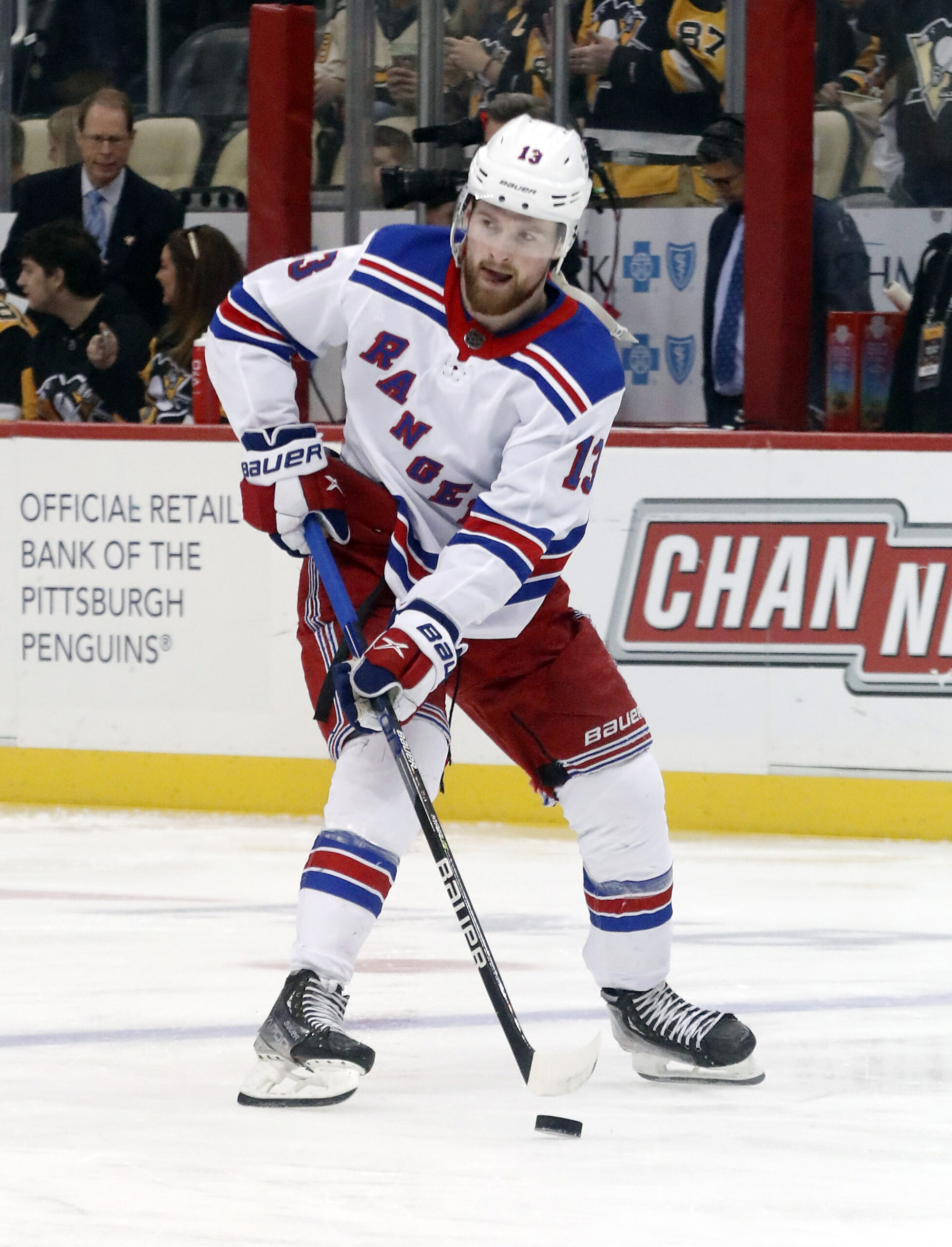 He hasn’t hit the potential he showed in his 112-point draft-year season with the QMJHL’s Rimouski Océanic, but he’s been a capable depth scorer who’s put up double-digit goal totals in each of his three NHL seasons so far. In 2020-21, his rookie campaign, he notched 12 goals, nine assists and 21 points while playing in all 56 games in a third-line role during the COVID-shortened season. He didn’t receive any ice time increase in his sophomore campaign, though, likely the biggest offense that those not fond of Gallant’s handling of the young prospect will point to. His production didn’t see a jump as a result, and he posted just 31 points in 79 games. He saw a small uptick last season, finishing with 16 goals, 23 points and 39 points in 81 games.
It’s easy to worry about time running out for Lafreniere thanks to three years of relative stagnation. However, he jumped into the league straight from juniors at 18 years old, meaning he’s still just 21 – there’s still another three or four seasons before he truly enters his prime. While it’s rare to see a non-linear path toward stardom, especially for highly-touted prospects, it’s not unheard of. While New Jersey Devils captain Nico Hischier put up solid two-way results since Day 1, it took a solid three or four years for his offensive production to jump to the near point-per-game we expect from him today.
While it isn’t time to give up hope on Lafreniere entirely, we still are approaching make-or-break territory over the next two seasons. Potentially in an unfortunate turn of events for Lafreniere’s development, the Rangers are now fully in contending mode. Will they be willing to spend the resources and make the adjustments necessary for Lafreniere’s individual growth? Given the age of some of their core players, it seems prudent to make all efforts to help Lafreniere approach bonafide top-six territory in hopes of him helping extend their contention window.
That starts now under the Laviolette regime. Is the veteran coach prepared to give Lafreniere a top-six role by moving him to his off-wing? Blake Wheeler was brought in this offseason and has a long history of playing a top-six role for the Winnipeg Jets, but at his age, he’s shown he’s primarily a playmaking specialist over the past few seasons and is entering defensive liability territory if he wasn’t there already. You could argue there isn’t room for a player with as many holes in his game as Wheeler in the top six of a team looking to lift the Stanley Cup.
Lafreniere may not have the point totals, but today, he’s a better finisher than Wheeler, with less to worry about defensively. It could warrant a bump in ice time alongside Artemi Panarin and Vincent Trocheck or Chris Kreider and Mika Zibanejad, assuming Laviolette keeps those combinations together from last season.
Kakko looks to have a more solid grip on a top-six role after spending a decent chunk of last season on the right wing with Kreider and Zibanejad. That line dominated possession for the Rangers, posting the highest expected goals share of any three-man line with more than 100 minutes together for New York last season, according to MoneyPuck. It would be prudent for Laviolette not to mess with a good thing.
Another thing to consider – could the Rangers shuffle Trocheck in their middle-six and pair Lafreniere and Panarin with Filip Chytil down the middle? The latter broke out for 22 goals in 74 games last season and is entering the first year of a four-year, $17.75MM extension he signed in March. If the team is looking for their young talent to gain experience in tougher roles when the guard eventually changes to them, it could be a move worth thinking about.
Photo courtesy of USA Today Sports Images.
Extension Candidate: William Nylander
The Toronto Maple Leafs currently stand with the most to lose entering the 2024 UFA market. A pair of star forwards, Auston Matthews and William Nylander, remain without contracts past next season, although the level of optimism surrounding extensions for each seems to be increasingly farther apart.
In actuality, rumors regarding extensions for both have been quiet over the last few weeks. But where we left off on Nylander wasn’t exactly on a positive note. Most recently, Sportsnet’s Elliotte Friedman reported in mid-July that negotiations were at a standstill. Chris Johnston of NorthStar Bets and SDPN also believed the gap between the two parties was between $1MM and $2MM, with Nylander desiring around a $10MM AAV and the Leafs countering with an AAV between $8MM and $9MM. Nylander also had a rather strong relationship with former Leafs GM Kyle Dubas, whose contract was not renewed earlier this offseason and Brad Treliving is now in his place.
There is still quite a lot of time between now and July 1, 2024, though – ten and a half months, to be exact. If the Leafs and Nylander can reconcile and work out a new deal, what could the final product be?
2022-23
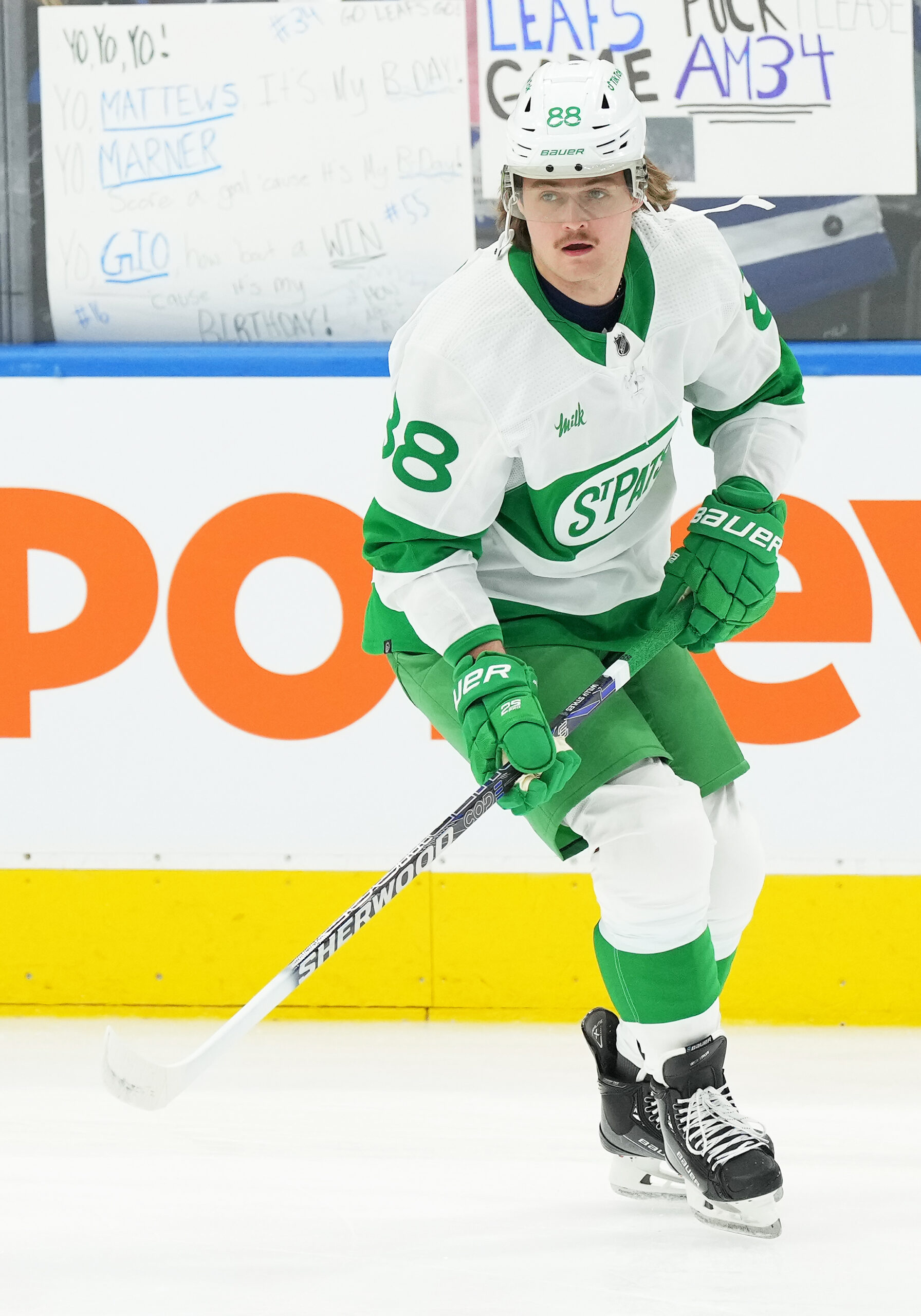 The 2014 eighth-overall pick silenced most doubters last season with a career-best regular season and equally impressive playoff performance. He surpassed the 40-goal mark for the first time in his NHL career and tied for second on the team in playoff scoring with four goals. Despite a subpar reputation defensively in one-on-one situations, he’s consistently maintained strong face value and relative possession numbers, a trend that held true in 2022-23. It’s fair to say what we’re seeing now is peak Nylander, as the winger is now 27 years old and has eight seasons and over 500 games of experience under his belt. After back-to-back 80-plus point years, he’s cemented his status as a first-line caliber winger stuck at second on his team’s depth chart behind Mitch Marner.
Statistics
2022-23: 82 GP, 40 G, 47 A, 87 pts, +10 rating, 28 PIMs, 293 shots, 18:33 ATOI, 52.5% CF
Career: 521 GP, 177 G, 253 A, 430 pts, +23 rating, 134 PIMs, 1,441 shots, 17:10 ATOI, 53.8% CF
The Market
With Matthews and Tampa Bay Lightning center Steven Stamkos surely set to extend with their current teams, Nylander has a legitimate claim to the title of best pending UFA with a real potential of hitting the market. That’s something he’s sure to use to his advantage in extension talks with Toronto, and with this being his big opportunity to cash in, he has no intentions of accepting a discount on a long-term deal. What Toronto won’t give him, he’ll try to find somewhere else.
It sets him up well to earn the eight-figure deal he desires, whether in Canada’s largest city or with another team. He’s likely to be money in the bank for at least 30 goals and 80 points for at least the next five to six years, assuming he stays healthy, and a rich deal like this has the rare potential to be a bargain halfway through with the pace the salary cap’s Upper Limit is expected to rise. The latter factor is one that may influence Treliving to become comfortable with the idea of committing $10MM to a fourth player in 2024-25, although it’ll still be an incredibly difficult fit under the cap expected to rise to $87.5MM. That being said, John Tavares‘ $11MM AAV deal expires in 2025, which will make it a one-season crunch if they do opt for an extension.
Comparable Contracts
Filip Forsberg (Nashville) – signed an eight-year deal worth $68MM ($8.5MM AAV) just a few days before the free agent market opened last season. It worked out to 10.3% of the salary cap at that time, which would translate to a $9MM cap hit for Nylander assuming an Upper Limit of $87.5MM when the extension kicks in. This will be Toronto’s biggest sticking point in negotiations – Forsberg was coming off an even better season than Nylander at the time (42 goals, 84 points in 69 games), had more games played than Nylander, and had scored with more consistency throughout his career. Like Nylander, Forsberg could have likely gotten more on the open market at the time.
David Pastrnak (Boston) – signed an eight-year, $90MM contract extension ($11.25MM AAV) with the Bruins amidst a 2022-23 season that saw him finish with a career-high 61 goals and 113 points, becoming the first 60-goal scorer not to win the league’s goal-scoring title since Jaromir Jagr in 1995-96. They’re totals he won’t likely replicate, but he’d still shown flashes of a higher offensive ceiling than Nylander, as evidenced during his 48-goal, 95-point 2019-20 campaign, which was curtailed thanks to COVID in March. There is a sizable gap between his and Nylander’s market value, and given the recency of the extension, Pastrnak’s deal likely sets Nylander’s market cap around the $10MM he’s pushing for.
Projected Contract
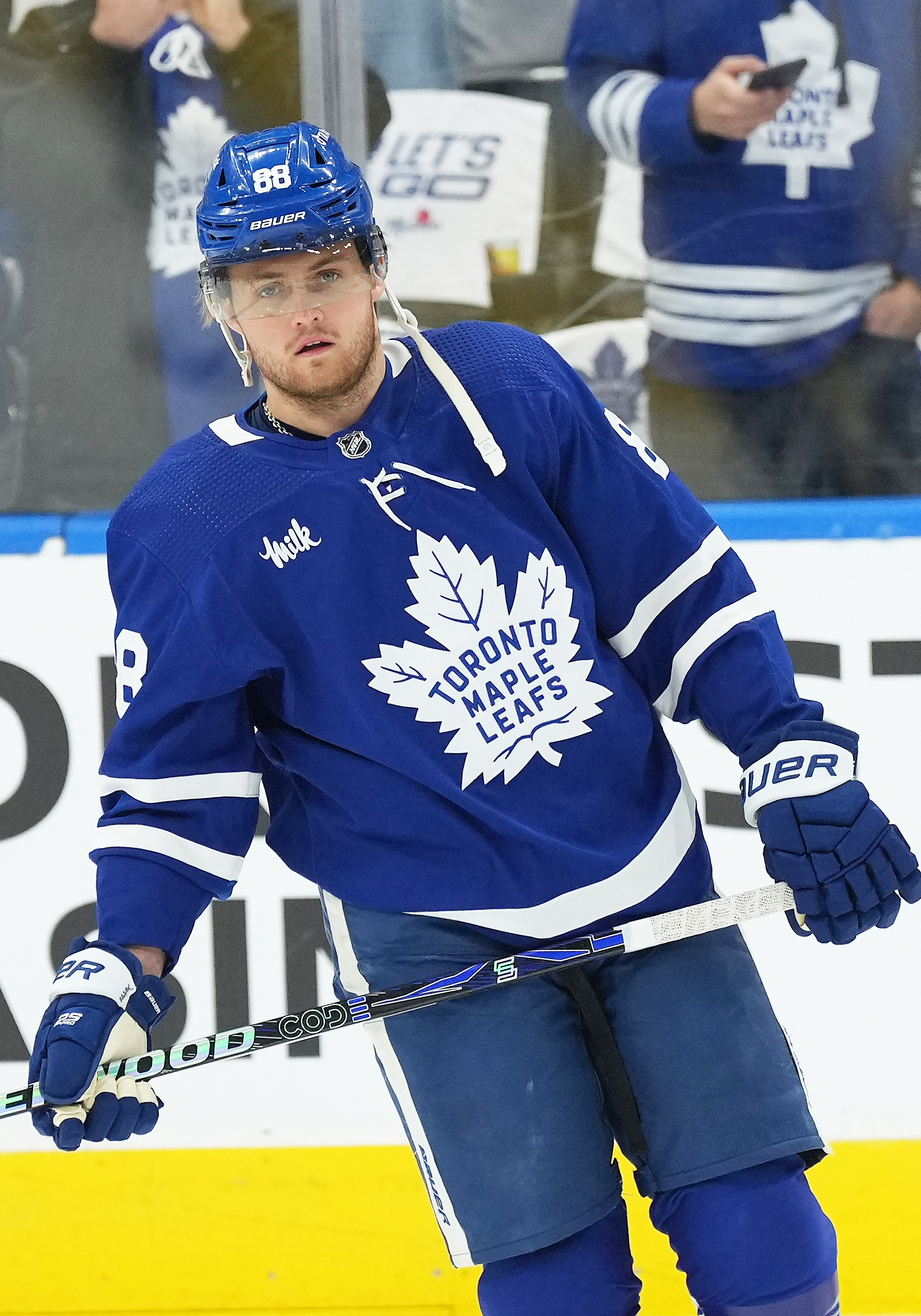 Given the above comparables, there’s a fair argument to be made that Nylander won’t quite net $10MM on a seven-year deal if he becomes a free agent next summer. That’s not to say the Leafs will get what they desire on an extension, though.
In all likelihood, Nylander’s number on a max-term deal will start with a nine, which is above Toronto’s currently reported range of $8MM-$9MM. Unfortunately, meeting in the middle is not always commonplace for UFA negotiations, especially with a player on the age precipice of Nylander, who likely won’t have the opportunity for another high-paying, long-term deal after this one. He won’t have permission to speak to other teams about a deal, though. If Toronto does up their offer to something in the $9MM range, and Nylander rejects it in hopes of getting eight figures per year on the open market, it could be a decision he regrets, especially considering he’s forfeiting a year of term by signing with another team.
Treliving does have to balance this with Matthews’ pending extension and an extension for Marner before the 2024-25 season draws to a close, although Tavares’ deal expiring alongside Marner’s will give Toronto some flexibility they haven’t had for a few summers now. Nylander will also likely be eyeing Pittsburgh Penguins forward Jake Guentzel‘s extension situation as a more current/direct comparison for his own deal.
Photos courtesy of USA Today Sports.
2009 NHL Draft Take Two: Third Overall Pick
Hindsight is an amazing thing, and allows us to look back and wonder “what could have been.” Though perfection is attempted, scouting and draft selection is far from an exact science and sometimes, it doesn’t work out the way teams – or players – intended. For every Patrick Kane, there is a Patrik Stefan.
We’re looking back at the 2009 NHL Entry Draft and asking how it would shake out knowing what we do now. Will the first round remain the same, or will some late-round picks jump up to the top of the board?
The results of our redraft so far are as follows, with their original draft position in parentheses:
1st Overall: Victor Hedman, New York Islanders (2)
2nd Overall: John Tavares, Tampa Bay Lightning (1)
Unsurprisingly, the top two selections from the 2009 crop are gone by the time we reach third overall. However, Hedman did leapfrog Tavares for the number one spot in our PHR polling, although it was much closer than in years past, with Hedman capturing just 53% of the vote. Tavares’ win was much more squarely in landslide territory at second overall, however, earning over 75% of the vote with no real challengers other than Ryan O’Reilly, who received 8%. With Tavares producing at one of the more consistent clips over the past decade and a half, it’s no surprise he didn’t fall any further than he did.
Now on the clock at third overall is the Colorado Avalanche, who are coming off their worst season in 15 years and look to be entering a full-scale rebuild with longtime captain Joe Sakic announcing his retirement shortly after the 2009 Draft.
This was a rather consequential pick for the Avs franchise, who hadn’t picked in the top ten since the Quebec Nordiques took netminder Jocelyn Thibault at tenth overall in 1993 (followed by future Avalanche cult legend Adam Deadmarsh at #14). With it, they selected the second center (and second OHLer) of the top three in Matt Duchene, coming off a 79-point season with the Brampton Battalion. He immediately looked like an incredible selection – Duchene stepped into a top-six role as a 19-year-old the following season, scoring 55 points in 81 games and helping the Avalanche return to a playoff spot in 2010. After building on it with 27 goals and 67 points in his sophomore season, Duchene looked like a potential Sakic replacement if his development stayed linear.
It wasn’t to be, however. His third season was a write-off, partially thanks to knee and ankle injuries which cost him 24 games. He quickly rebounded, though, clicking near a point per game in 2012-13 and 2013-14, but his offense soon fell to second-line caliber numbers, and he was eventually dealt to the Ottawa Senators early in the 2017-18 campaign. It started a run of four teams in three seasons for Duchene, who also had a brief pit stop with the Columbus Blue Jackets before signing a massive seven-year, $56MM contract with the Nashville Predators in free agency after he rebounded for 70 points in 73 games in 2018-19.
His tenure in Nashville was equally inconsistent. While he did have a career season in 2021-22, scoring 43 goals and 86 points, both his offense and defense took a step back last season, and the Predators bought out the final three seasons of his contract. Set to suit up for the Dallas Stars next season, Duchene does remain a serviceable (at worst) top-six piece as he enters his early/mid-30s.
While he wasn’t the standout, everyday first-liner he looked to be during his early days with Colorado, Duchene has still had quite a fruitful career. He hasn’t won any major awards but sits second in goals and points among the 2009 class behind Tavares. However, Colorado’s second-round pick this year, O’Reilly, has finished in the first spot behind Hedman and Tavares in both of our polls so far.
Given the polling and career resume, one of Duchene or O’Reilly will likely remain with the Avs in our Take Two series. Was Duchene the better Av out of this class, or has O’Reilly’s career (or someone else) eclipsed him? Make your voice heard in the poll below:
2009 Redraft: Third Overall
-
Ryan O'Reilly 48% (644)
-
Matt Duchene 13% (172)
-
Chris Kreider 9% (126)
-
Mattias Ekholm 7% (89)
-
Nazem Kadri 6% (84)
-
Evander Kane 3% (47)
-
Oliver Ekman-Larsson 3% (42)
-
Ryan Ellis 2% (30)
-
Dmitry Orlov 2% (21)
-
Anders Lee 1% (18)
-
Brayden Schenn 1% (15)
-
Tomas Tatar 1% (10)
-
Reilly Smith 1% (9)
-
Tyson Barrie 1% (7)
-
Calvin de Haan 0% (4)
-
Kyle Palmieri 0% (4)
-
Craig Smith 0% (4)
-
Darcy Kuemper 0% (3)
-
Brayden McNabb 0% (3)
-
Jakob Silfverberg 0% (3)
-
Nick Leddy 0% (2)
-
Robin Lehner 0% (2)
-
David Savard 0% (2)
-
Mike Hoffman 0% (1)
-
Marcus Johansson 0% (1)
-
Dmitry Kulikov 0% (0)
Total votes: 1,343
If you can’t access the poll above, click here to vote.
PHR Mailbag: Bruins, Sharks, Flames, Fedotov, Blue Jackets
Topics in this edition of the PHR Mailbag include what’s next for Boston, the state of San Jose’s rebuild, and more. As we’ve done with the last few mailbag submissions, we’ll break it up into three separate columns so if your question doesn’t appear here, check back for it in one of the next two.
SkidRowe: How will the Bruins fare this year? The reigning Presidents Trophy winners are returning with virtually the same defense and goaltending as last year but lost almost a third of their offense due to the departures of Bergeron, Krejci, Hall, Bertuzzi, etc.
I’ll qualify this by saying that I’m not convinced the roster they have today in mid-August is the one we’ll see when the puck drops in October. I think they have a move coming to help up front. Not a high-end one with a big-name player but I expect them to upgrade their secondary scoring at some point. If they do more than I think they will, this prediction could change as a result.
But for now, I have them just missing. (Which is where I had them last year and look how accurate that prediction turned out…) Offensively, they’ve taken a couple of steps back which could put them back closer to the middle of the pack. Not that they needed to outscore a lot of problems last season but a more average attack will take some wins off the board.
Without as much puck control, I’m also a bit concerned about their goaltending. It would be unrealistic to expect both Linus Ullmark and Jeremy Swayman to have career years again in general but without an offense as dominant, that will also put more pressure on the netminders. I expect them to still be above average but nowhere near the extent they were last season. That will take some more wins off the board unless they find a way to play at the same level.
Boston’s roster is still decent, all things considered. But with Toronto, Florida, and Tampa Bay in the picture, decent isn’t good enough to leapfrog those teams. I think this could be the year Buffalo puts it together long enough to squeak in and with the depth in the Metropolitan Division, the Atlantic isn’t getting both Wild Card spots. It wouldn’t shock me if the Bruins found a way to get in but right now, I have them just on the outside looking in.
PyramidHeadcrab: What do you think of the Sharks’ roster after the Karlsson trade, and their future roadmap now that his salary is (mostly) clear?
In terms of what their roster looks like now, my thought is that it’s a roster designed with the intention to try to bottom out. There’s no way a team is going to improve after losing Brent Burns, Timo Meier, and Erik Karlsson in the span of 13 months. The fact they opted to move the two veterans in a marketplace that wasn’t exactly favorable for high-priced contracts only cemented the fact that they weren’t looking for a short-term turnaround.
They’re going to struggle to score even with some of the additions they’ve made up front; I think Mikael Granlund could rebound relatively well there but this is still a group that should be at the bottom of the pack offensively. Defensively, they’re in big trouble as a few of the options on their projected roster are either fringe pieces or overpaid veterans struggling to hang onto a spot. It wouldn’t surprise me to see the speculated trade with Vancouver happen closer to training camp which would add Tyler Myers but that still wouldn’t move the needle much. There are questions with both goaltenders as well (although there is also some possible upside) and the end result is a forecast for a painful season.
In terms of a future roadmap, however, it’s relatively clean. They only have three contracts above $5MM left and around 40% of their roster is on an expiring contract next summer. That will give GM Mike Grier some flexibility to perhaps get involved as a third-party facilitator in the future to try to restock the prospect cupboards more quickly while flipping some of those expiring deals in the meantime. The next few years are going to be rough but it’s pretty clear what the plan is. Getting to this point is the easy part, however. Building it back up will take some patience and skill to get and develop the right pieces.
Jasen: I am curious about the Flames this year… My gut feeling is that both Lindholm and Backlund will re-sign. My other gut feeling is that Hanifin will be traded. I am thinking a one-for-one for Carolina’s Pesce. Thoughts?
I am also not sold on a bounce-back season from Markstrom. Sure, his stats do demonstrate that he did come back from a bad season before, but I’m still not sold. Markstrom, so I’d ship him to WPG for Hellebuyck. Problem is that we are light on 1st rounders. So Markstrom, 2025 2nd & prospect Zary for Hellebuyck. Thoughts?
I’m with you on Elias Lindholm eventually re-signing. Mikael Backlund is more of a maybe but I expect an in-season decision on that front. I also agree that it looks unlikely that Noah Hanifin will be back.
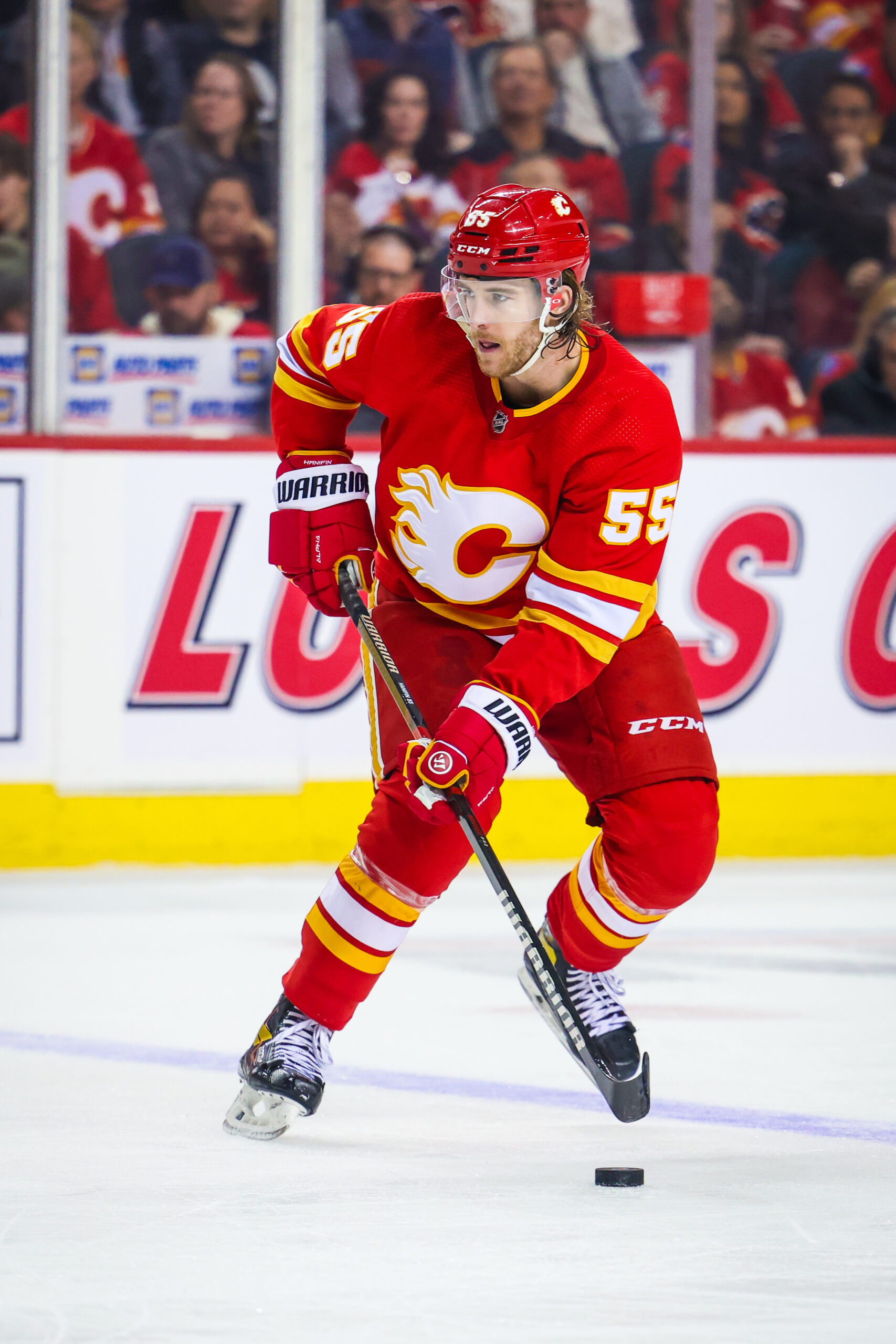 That said, I’m not sure I agree with the proposed trade. Carolina has a bit of a surplus on the back end so they may not want to take a defender back for whichever one they moved (Brett Pesce or Brady Skjei). Meanwhile, the impetus for moving Hanifin now would be the contract situation; GM Craig Conroy has said he doesn’t want to run the risk of letting a player go for nothing. Trading for Pesce doesn’t fix that since he’s on an expiring deal too. Now, if Pesce comes with a new contract, then sure, this makes more sense for Calgary. But otherwise, it feels like they need to get an asset back that’s likely to still be there a year from now.
The same concern comes up for your Connor Hellebuyck proposal. If he isn’t willing to sign an extension, you’ve now moved a quality goalie and a first-round prospect in Connor Zary for a short-term rental. Perhaps more importantly, you’ve moved those pieces for a rental that might not be enough of a difference-maker to get Calgary back into the playoffs. What you’ve proposed might be enough on Winnipeg’s end (especially since they’re hoping to avoid a full-scale rebuild) I don’t think the value is there for the Flames. Sure, there’s an eventual pathway to Dustin Wolf getting a full-time job but there are better ways to accomplish that than this.
I’m more confident than you seem to be about Markstrom bouncing back. The track record is there and this is a team that still has a pretty good back end as things stand. If they decide to move him down the road to make room for Wolf, that’s an easier move to make next summer off an improved showing than it is now.
Black Ace57: With the whole ordeal with Ivan Fedotov I was wondering what powers the IIHF has in this dispute and any future disputes between the NHL and KHL until an agreement between the leagues is made again.
I have to admit, I’m a bit unsure about this one as we’re wading in uncharted waters here. The IIHF is a neutral third party here and since they’re the governing body for most leagues internationally, I suspect there’s some sort of dispute resolution rights within their charter that gives them the authority to do this.
I’m more intrigued to see what happens if the ruling goes in Philadelphia’s favor. Considering that Russia hasn’t been granted the right to return to international competition, some are already calling for the federation to withdraw from the IIHF. An unfavorable ruling here could only cement that mindset. If that happens and the KHL tries to operate independently of everything, let’s just say that could be really interesting to follow.
While we’re on the Fedotov matter, I’m at least a little surprised the Flyers are doing this. Fedotov is going straight to unrestricted free agency when his tolled deal is played out. At this point, it seems reasonable to think his intention is to stay in the KHL which would make him a one-and-done player. Wouldn’t they be better off with his one-and-done cost-controlled year coming when they’re trying to be more competitive?
They already have Carter Hart in place. The extension they gave to Samuel Ersson (which seemed a bit pricey and a bit too early) suggests they have NHL plans for him next season. If Fedotov winds up with Philadelphia, now he’s backing up Hart and Ersson is in the minors, putting him on an above-market bridge deal the next year. There’s sticking up for the principle of the matter but from a team value perspective, they might be better off with a ruling that says he has to play out the KHL deal first and then must fulfill the NHL agreement.
Yzerplan19: Thoughts on what impact Babcock can have on the Blue Jackets? They have a new D group, and some talented players, with a good system could they be in the Wild Card conversation this year? Or next?
I covered Columbus and Babcock a bit in a recent mailbag so I’ll piggyback off those thoughts. They’ll be better but I don’t see them being in the playoff mix next season. The Metropolitan is pretty deep as it is and I have a hard time seeing them get around 35 more points than last season.
I’m even a bit iffy on their fortunes for 2024-25. There is a good young nucleus in place but they’re not near their primes just yet. I think 2025-26 is the year for them to really turn it around. By then, that young core will be more established and will have gone through enough of the early growing pains that many young teams face which will have them well-positioned to make a push.
I actually don’t mind the Mike Babcock hire. Last season was ugly and they need some structure. Yes, his last few seasons behind an NHL bench weren’t great but he was widely considered a top coach in the past. A good system, and perhaps more importantly, good structure, should aid in the development of some of their core youngsters. That should help them improve in the standings and give GM Jarmo Kekalainen a better assessment of what they have and what they still need which is quite important. But even with the pickups they made on the back end, I don’t see that getting them to the postseason.
Photo courtesy of USA Today Sports Images.
Submit Your Questions For The #PHRMailbag
It has been a busy offseason so far for many NHL teams, punctuated by one of the bigger trades we’ve seen in a while which occurred over the weekend. Meanwhile, there are a handful of notable names still unsigned so there’s some hope that there could be more activity to come before training camps get underway in about six weeks.
With that in mind, it’s a good time to run our next mailbag. Our last one ran in three parts. The first segment looked back at the draft, what should be expected from the Flyers next season, and the Kings’ aggression in recent years. The second discussed Boston’s center situation, Robby Fabbri’s future with Detroit, and expectations for Columbus in 2023-24. Meanwhile, the third one examined the recent inactivity from Calgary and Winnipeg with some of their veterans, Ty Smith’s first season with Pittsburgh, and big names that could be on the move next.
You can submit a question by using #PHRMailbag on Twitter or by leaving a comment down below. The mailbag will run on the weekend.
Debating Extensions For The Calgary Flames’ Pending UFAs
The Calgary Flames have been one of the most talked-about teams this offseason, but not necessarily for the moves they’ve made now. Calgary has multiple core players set to hit unrestricted free agency in 2024, and they’ll be faced with multiple decisions on whether to extend or trade certain players before next season’s trade deadline. New GM Craig Conroy already made one decision, shipping out right winger Tyler Toffoli to the New Jersey Devils after he set career highs in goals, assists and points last season. Forwards Mikael Backlund and Elias Lindholm and defenseman Noah Hanifin and Chris Tanev headline the remainder of Flames players set to hit the open market next summer, with valuable depth defenders Oliver Kylington and Nikita Zadorov also slated for unrestricted free agency.
Conroy has made it clear Calgary won’t lose out on these players for no return after the organization let star left winger Johnny Gaudreau walk in free agency to the Columbus Blue Jackets last summer. If they do end up trading the lion’s share of their pending UFAs, they should be able to reform the roster and stay in playoff contention, as there looks to be a strong pool of other UFAs to choose from next summer. However, many of the players listed above have played quite well for the Flames and are even core pieces of their leadership group, and Conroy will surely attempt to extend most of them.
One of their desired extension candidates is Lindholm and for good reason. He’s developed into a bonafide top-six two-way center during his time in Alberta and is normally a solid bet to churn out nearly a point-per-game pace. Reporting this summer has indicated he’s been back-and-forth on whether he’s willing to extend in Calgary, but the pendulum swung back toward an extension a few days ago with The Fourth Period’s David Pagnotta reporting Lindholm was “well into discussions” with the Flames on an eight-year extension. Getting him under contract until age 37 likely won’t pan out well for Calgary near the end of the deal, but such is the price of retaining pending UFAs. He’s played 369 games for the Flames since they acquired and extended him on a six-year deal in 2018, scoring 139 goals, 186 assists and 325 points while averaging over 19 minutes per game. He finished second in Selke Trophy voting in 2022 and has accumulated a +99 rating in Calgary, although most of that comes from his standout defensive seasons in 2018-19 and 2021-22. His 56% Corsi For at even strength last season suggests his rather pedestrian +6 rating was tanked by the team’s subpar goaltending.
And that’s where it gets tricky – while there are a lot of solid free-agent pickups available next summer, most of them are on the wing. The only center who could hit the open market conceivably as either an upgrade or lateral move for Lindholm is Winnipeg Jets pivot Mark Scheifele, who could very well be taken off the UFA market via a sign-and-trade deal next season (much like Lindholm if talks fall through with Calgary).
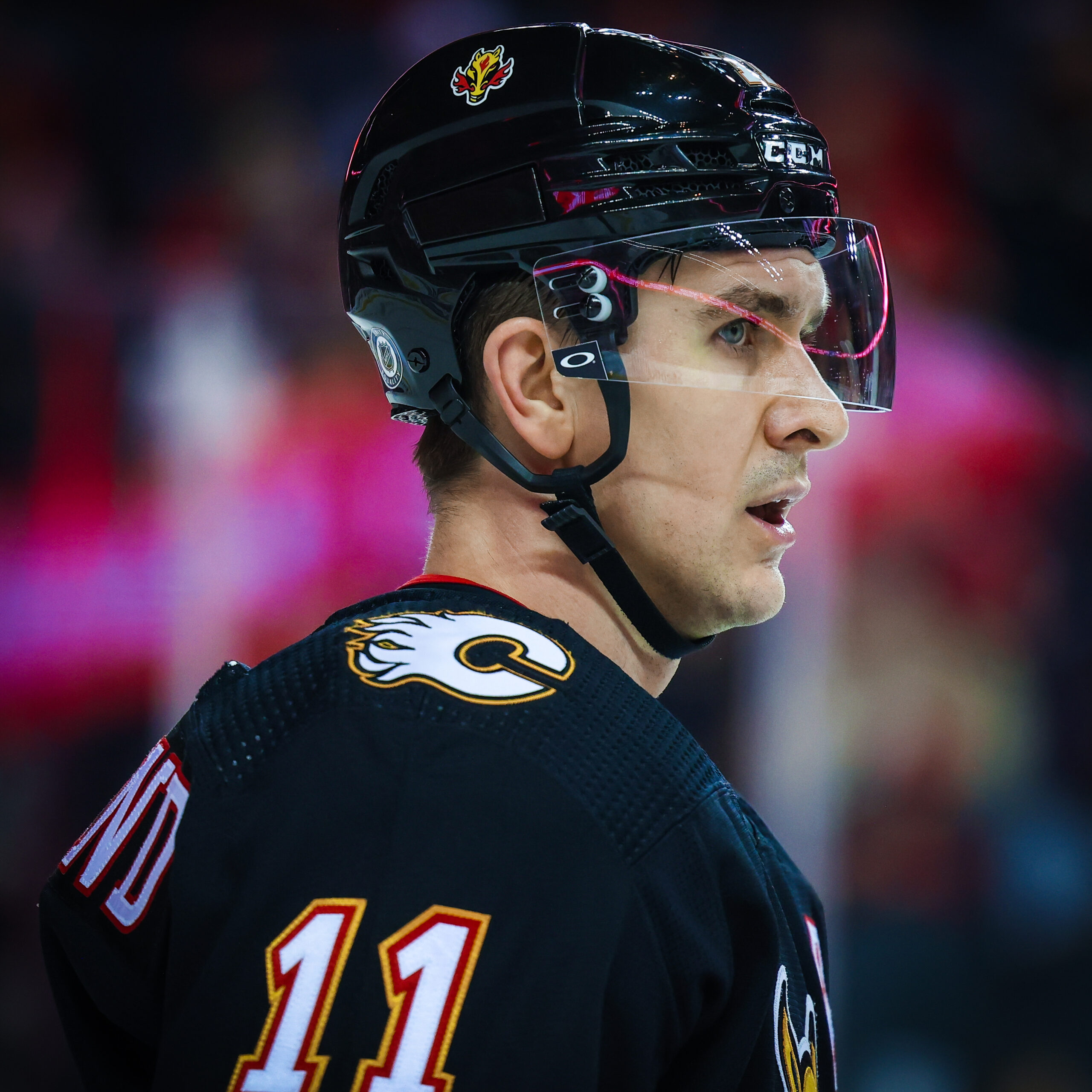 Backlund is also a tough piece to part with. The standout shutdown center has appeared in 15 seasons for Calgary, accumulating 908 games as a Flame. However, he seems an unlikelier bet to sign an extension with Lindholm at this point in time, admitting to Swedish outlet SportExpressen earlier this summer that his willingness to remain in Calgary will depend on the team’s performance in 2023-24. He may not have Lindholm’s offensive upside and minute-munching capabilities, but he is one of the most consistent defensive presences in the league and is showing no signs of slowing down as he enters his mid-30s. Some would argue it’s borderline surprising he hasn’t received the captaincy yet, potentially another reason why he hasn’t committed to extending in Calgary. He’s not likely to command much of an increase on his current AAV of $5.35MM given his age, either, and he should remain a priority for Calgary to keep in the fold for the next few seasons if they truly do intend on remaining competitive.
One player who they’ll likely attempt to shop is Hanifin, who was reportedly unwilling to sign an extension with the team earlier in the summer and has already been mentioned in specific trade rumors with teams such as the Florida Panthers. That was all before free agency opened, however, and a trade still hasn’t happened. It might be Calgary will look to have Hanifin boost his stock with a strong start to the season before moving him, or they’re hoping a reversal in the team’s fortunes would persuade him to stay. He’s certainly the most replaceable of their big-ticket pending UFAs – assuming they pursue extensions hard with Tanev, Zadorov and Kylington, they’d be able to replace Hanifin by committee (along with Rasmus Andersson) if Conroy doesn’t net a direct replacement for him via trade.
Conroy will need to be careful in how he manages the salary cap with the moves he makes, however, especially if he is intent on extending Lindholm. That extension would require a rather substantial raise on his current $4.85MM cap hit, something the team doesn’t have room for right now as it would take nearly all of the cap space afforded to them by 2024’s expected $4MM jump in the Upper Limit from $83.5MM to $87.5MM. If he moves out backup netminder Daniel Vladar and his $2.2MM cap hit to pave the way for top prospect Dustin Wolf to assume an NHL role, that should give him some breathing room. It won’t be much if Wolf has a strong season, though, as he’s a restricted free agent in 2024 and will surely require a new seven-figure deal if he puts up good numbers.
Photo courtesy of USA Today Sports.
2009 NHL Draft Take Two: Second Overall Pick
Hindsight is an amazing thing, and allows us to look back and wonder “what could have been.” Though perfection is attempted, scouting and draft selection is far from an exact science and sometimes, it doesn’t work out the way teams – or players – intended. For every Patrick Kane, there is a Patrik Stefan.
We’re looking back at the 2009 NHL Entry Draft and asking how it would shake out knowing what we do now. Will the first round remain the same, or will some late-round picks jump up to the top of the board?
Earlier in the week, we kicked off the 2009 Take Two series by polling PHR readers on their pick for first overall with the benefit of hindsight. Defenseman Victor Hedman jumped up to claim the number-one spot by a comparatively slim margin, capturing 53% of the vote. In past years, the choice has been rather clear, with PHR voters settling on the draft class’ best player by scores of 70% or more.
Now with Hedman off the board to the New York Islanders at first overall, John Tavares remains on the board, with the Tampa Bay Lightning picking at number two. At the time of the draft, there was no question about whether Tavares would fall. He was one of the few players granted exceptional status into the OHL as a 15-year-old and, given he was only five days away from being eligible for the 2008 draft, Tavares already had four full seasons of junior hockey under his belt with two 100-plus point seasons to show for it.
While the circumstances of Tavares’ departure in free agency from the Islanders for the Toronto Maple Leafs in 2018 have soured the fanbase’s opinion on his time with the team, he’s inarguably one of the most talented players in team history and was the cornerstone behind their first-round playoff win in 2016, ending a decades-long streak without a series victory. The team’s captain for five seasons ended up with 621 points in 669 games as an Islander and ranks fifth in team history in Hockey Reference’s point shares system.
Among his 2009 peers, he currently sits as the all-time leader in goals, assists and points and is the only one with more than 1,000 career NHL games under his belt. Despite that, Tavares hasn’t taken home any major awards like Hedman – although Tavares was a Hart Trophy finalist in 2013 and 2015 at just 22 and 24 years old. If he had fallen to Tampa for whatever reason, may they have won more Stanley Cups with this core with Tavares in the fold along with Steven Stamkos?
That’s what we’re asking you today, PHR readers. Will Tavares fall yet another spot in your hindsight-influenced 2009 draft ranking, or will the Lightning select a second franchise center to complement Stamkos, who they selected first overall just one year prior? Vote in the poll below:
2009 Redraft: Second Overall
-
John Tavares 77% (1,150)
-
Ryan O'Reilly 8% (127)
-
Chris Kreider 2% (37)
-
Matt Duchene 2% (31)
-
Mattias Ekholm 2% (27)
-
Evander Kane 1% (14)
-
Nazem Kadri 1% (13)
-
Dmitry Orlov 1% (12)
-
Brayden Schenn 1% (11)
-
Oliver Ekman-Larsson 1% (10)
-
Ryan Ellis 1% (9)
-
Anders Lee 0% (7)
-
Tomas Tatar 0% (7)
-
Calvin de Haan 0% (6)
-
Jakob Silfverberg 0% (6)
-
Reilly Smith 0% (6)
-
David Savard 0% (5)
-
Tyson Barrie 0% (4)
-
Nick Leddy 0% (3)
-
Robin Lehner 0% (3)
-
Kyle Palmieri 0% (3)
-
Craig Smith 0% (3)
-
Mike Hoffman 0% (2)
-
Marcus Johansson 0% (2)
-
Darcy Kuemper 0% (2)
-
Dmitry Kulikov 0% (1)
Total votes: 1,501
Click here to vote if the poll doesn’t display.
Previewing The Top 2024 Restricted Free Agent Class
Similarly to the exciting talent that is currently projected to hit the open market next summer, the restricted free-agent market carries some big names as well. This summer alone, even with a relatively flat salary cap increase, we have seen the likes of Cole Caufield, Jesper Bratt, Pierre-Luc Dubois, Timo Meier, and Troy Terry all sign extensions for seven-plus years, all with AAV’s of $7MM or more.
Next offseason, the NHL salary cap is reportedly projected to increase by $4MM or more, paving the way for more young players to get locked up by their current clubs. Although arbitration rights give the player a bit more control of their financial future, it has not prohibited younger players from securing long-term high-salary deals. We will take a look at some of the best restricted free agents available, whether or not they have arbitration rights and some incredibly early theories on their next contract.
F Elias Pettersson (Vancouver Canucks) – The unquestionable future of the Canucks, Pettersson has set himself up for a record contract extension. Only a week ago, Pettersson’s agent, J.P. France, believes that extension talks won’t begin with Vancouver until the end of the season. This year, Pettersson will be entering the final year of a three-year, $22.05MM contract signed with Vancouver shortly before the start of the 2021-22 regular season, and will surely get a healthy raise from his current $7.35MM AAV. Garnering the best individual output of his five-year career,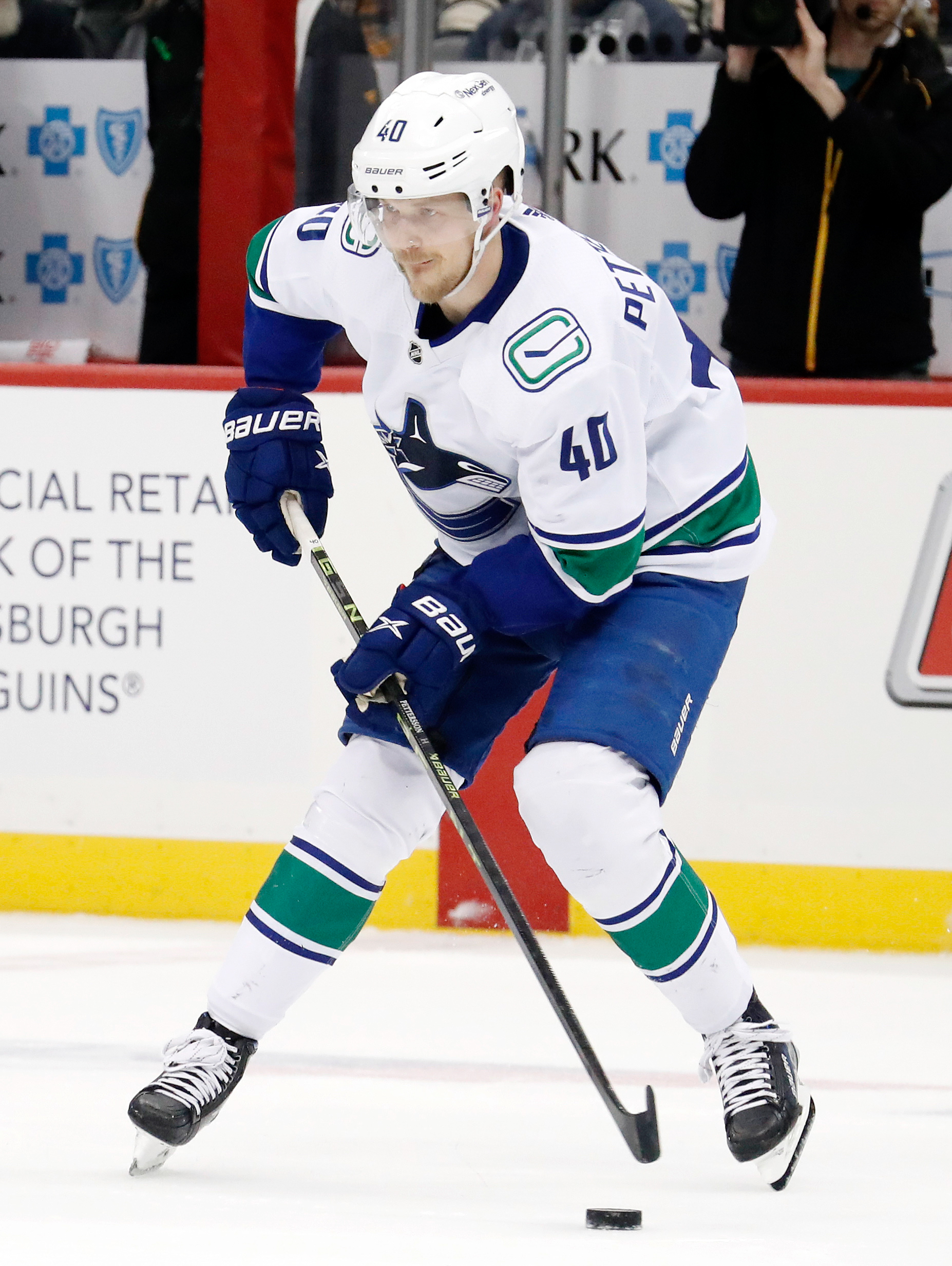 Pettersson scored 39 goals and 63 assists last year, good for 10th in the league, also earning Hart Memorial Trophy votes as well. If the Canucks are serious about committing to Pettersson as their franchise player, and with only $48.6MM currently on their books for the 2024-25 NHL season, Pettersson will get one of the largest contracts in NHL history with his next deal.
Arbitration Rights: Yes
Projected Contract: Eight years, $92MM ($11.5MM AAV)
F Matthew Beniers (Seattle Kraken) – The first-ever selection made by the Kraken back in the 2021 NHL Draft, Beniers has quickly become the top center in Seattle. Jumping from the NCAA to a full NHL season, Beniers did appear to slow down a bit towards the end of the season but still had an impressive year nonetheless, winning the Calder Memorial Trophy. In 80 games played, Beniers scored 24 goals and 33 assists, also chipping in seven points in 14 playoff games. If there is any knock on Beniers from last season, his faceoff percentage left a lot to be desired, but with only 36.7% of his draws taken in the defensive zone, the Kraken are not utilizing Beniers in a manner that faceoff percentages will be a major drawback long-term. A group of misfits similar to the original group of the Vegas Golden Knights, Seattle could make a strong statement committing to Beniers long-term as the face of their franchise.
Arbitration Rights: No
Projected Contract: Eight years, $74MM ($9.25MM AAV)
D Rasmus Dahlin (Buffalo Sabres) – A consistently solid offensive weapon from the blue line for the Sabres since his first year in the league back in 2018-19, Dahlin has shored up his defensive metrics to an impressive degree as well. Last year, topically speaking, Dahlin set career highs in goals, assists, plus/minus, blocks, hits, and takeaways. Looking at even deeper stats, his 56.4% CF% was higher than his career average, and his PDO in All Situations was also a career-high at 101.4. Buffalo has already locked up his defensive partner, Mattias Samuelsson, to a long-term contract, and for the most part, Buffalo has done a fantastic job over the past several years getting their younger players locked up to very affordable long-term deals and the same should be expected for Dahlin.
Arbitration Rights: Yes
Projected Contract: Six years, $55.5MM ($9.25 MM AAV)
D Moritz Seider (Detroit Red Wings) – The former-sixth overall pick of the 2019 NHL Draft, Seider was the first surprise off the board, going 15-17 picks ahead of predicted. The Red Wings’ confidence in their selection paid off, as Seider took off for 50 points in his first season, winning the Calder Memorial Trophy as the top rookie in the NHL. Last year, Seider appeared to be experiencing a ‘sophomore slump’ in the first half but still finished with a respectable 43 points, as well as increasing total blocked shots and hits. Taking into account his size, skating ability, and vision on the ice, Seider is surely becoming a franchise defenseman for Detroit, if he hasn’t cemented himself in that role already. An extension shouldn’t be on anybody’s radar until next summer given the operating record of General Manager Steve Yzerman, but with an ample amount of cap space, expect the Red Wings to continue to invest heavily in their future.
Arbitration Rights: No
Projected Contract: Eight years, $67.2MM ($8.4MM AAV)
F Martin Necas (Carolina Hurricanes) – A potential trade candidate only one summer ago, Necas quieted all doubters this year, scoring 28 goals and 43 assists in 82 games, leading the Hurricanes in scoring. In a team lacking in total scoring, Necas has become a player that Carolina must hold on to if they wish to remain a regular Stanley Cup contender. At the end of last month, the Hurricanes committed to his teammate, Sebastian Aho, to an eight-year, $78MM contract, becoming the highest-paid player in franchise history. Given the team’s hierarchy, it is doubtful the team would be willing to pay a player more than Aho, but Necas should check in close to that number when all is said and done.
Arbitration Rights: Yes
Projected Contract: Eight years, $66MM ($8.25MM AAV)
Analyzing Colorado’s Middle Six Options
A season removed from winning the Stanley Cup, a major theme for the Colorado Avalanche last year was the apparent lack of depth on the roster. Due to a large amount of injuries sustained throughout the entirety of the regular season, the Avalanche used a total of 39 skaters, and five goalies, far more than most teams had to use.
This offseason, Colorado was aggressive in correcting this issue, adding Ryan Johansen, Ross Colton, Miles Wood, Jonathan Drouin, and Fredrik Olofsson to an already playoff-caliber roster. Even after adding all these assets, there does seem to be a bit of a hole in the top six, largely due to the long-standing injury of captain Gabriel Landeskog.
It is all but certain that Johansen will take on the role of second-line center, but outside of Nathan MacKinnon, Valeri Nichushkin, Mikko Rantanen, and Artturi Lehkonen, will the Avalanche trust a mixture of Drouin, Colton, and Wood to carry them to the Stanley Cup title in 2024? Much like they did with Alex Newhook last season, Colorado will likely experiment with those three, seeing if any of the trio will have staying power in the top six for the regular season and playoffs.
Although the Avalanche dealt with plenty of injuries last year, they still finished top in their division with 109 points, also tying for second atop the Western Conference. Much like they were last season, the Dallas Stars once again project to be a threat to the division crown, but Colorado is largely expected to once again qualify for the playoffs.
In the best-case-scenario for the Avalanche, either Drouin rekindles the magic he had in the QMJHL with MacKinnon, or perhaps Colton becomes a 60-point player instead of a 30-point player, but if that doesn’t work out, there will still be options available to the team. Now that it is certain Landeskog will be on LTIR all season, Colorado is heading into the season with a little over $2MM in cap space.
An obvious choice, and an oft-rumored potential landing spot for the forward at last year’s trade deadline, would be veteran Patrick Kane. Back in July, Greg Wyshynski of ESPN reported that Kane is expected to wait out the first couple weeks of the regular season before finally making a decision on his destination. It is understandable that in the twilight years of his career, Kane would now be looking to cap it off with one more ring.
Kane is not the MVP-caliber star that he used to be in the mid-2010s but showed with the New York Rangers last year that he can still be a threat during crunch time and the playoffs. Although losing to the New Jersey Devils in seven games, Kane still put up one goal and five assists, finishing third on the team in points for the postseason.
There is always fine-tuning that is needed for most Stanley Cup contenders during the regular season, and the Avalanche are no different. After already addressing much of their need for increased depth, one more big move may put them over the top as odds-on favorites for Lord Stanley’s trophy.
2009 NHL Draft Take Two: First Overall Pick
Hindsight is fantastic, allowing us to look back and wonder “what could have been.” Though perfection is attempted, scouting and draft selection is far from an exact science, and sometimes, it doesn’t work out the way teams – or players – intended. For every Patrick Kane, there is a Patrik Stefan.
As we find ourselves amidst the summer lull, it’s the perfect time to reflect on times gone by – the strategies that bore fruit and those that missed the mark. This sentiment resonates even with draft picks – where some early selections have blossomed into the cornerstones of their respective franchises, while others fell short of the lofty expectations. Having delved into the drafts of 2006, 2007, and 2008 in the past, it’s now an opportune moment to embark on a similar journey through a new NHL redraft series, focusing on the class of 2009.
The draft pool from this year stands out as notably robust, featuring an impressive tally of 39 players (and the count is ongoing) who have graced the NHL ice for a minimum of 500 games. Within this assembly, one can spot All-Star performers and, potentially, a small handful of players destined for the esteemed corridors of the Hall of Fame in the years to come. Conversely, a less fortunate facet also emerges, as five first-rounders failed to hit the century mark, keeping them out of the picture in the forthcoming series.
During the upcoming weeks, as we anticipate the commencement of training camps, we will delve into the 2009 NHL Entry Draft. In this quest, we invite the PHR community to make their choices, armed with the hindsight of each player’s career trajectory. A roster of players will be presented, and we will continuously update the first round as the selection process unfolds.
In the 2009 draft, the New York Islanders retained the first overall pick through a lottery win, granting them the privilege of making the top selection. At this pivotal juncture, the team confronted a crucial decision: opt for a cornerstone center or a cornerstone defenseman, much like the Tampa Bay Lightning the year prior. John Tavares and Victor Hedman emerged as the consensus top two prospects, with general manager Garth Snow looking to get the team back to relevance as quickly as possible after finishing last in their division for two consecutive seasons. Ultimately, the Islanders chose the former, and Tavares certainly became a cornerstone piece for them, leading the draft in games played (1,029) and in all major scoring categories. It’s worth noting that Hedman, though, would’ve been a very fair pick with hindsight in mind, as he’s manned a formidable Lightning blueline to four Stanley Cup Finals throughout his tenure and leads all 2009-drafted defenders in scoring by a wide margin. Armed with retrospective wisdom, the question arises: Did the Islanders’ decision to take Tavares give them the best shot at success before he departed for the Toronto Maple Leafs in free agency in 2018, or would Hedman get the team closer to a championship by now?
With the first pick of the 2009 NHL Entry Draft, who should the New York Islanders select? Make your voice heard below.
2009 Redraft: First Overall
-
Victor Hedman 53% (1,101)
-
John Tavares 38% (791)
-
Ryan O'Reilly 3% (58)
-
Matt Duchene 1% (21)
-
Chris Kreider 1% (18)
-
Evander Kane 1% (17)
-
Mattias Ekholm 0% (8)
-
Dmitry Orlov 0% (7)
-
Oliver Ekman-Larsson 0% (6)
-
Mike Hoffman 0% (6)
-
Nazem Kadri 0% (6)
-
Tomas Tatar 0% (6)
-
Calvin de Haan 0% (5)
-
Dmitry Kulikov 0% (5)
-
Robin Lehner 0% (5)
-
Reilly Smith 0% (5)
-
Tyson Barrie 0% (4)
-
Ryan Ellis 0% (4)
-
Craig Smith 0% (4)
-
Kyle Palmieri 0% (3)
-
Anders Lee 0% (2)
-
David Savard 0% (2)
-
Marcus Johansson 0% (1)
-
Darcy Kuemper 0% (1)
-
Brayden Schenn 0% (1)
-
Nick Leddy 0% (0)
Total votes: 2,087
App users, click here to vote.