
Examining An Upcoming New York Rangers Roster Crunch
The New York Rangers are intent on earnestly competing for the team’s first Stanley Cup championship since 1994 next season. With precious little cap space to augment their roster this summer, the team made the decision to focus on signing an experienced group of players to occupy roles lower in their lineup and bolster the organization’s depth.
Although the Rangers’ 2023 free agent class is headlined by a star winger in Blake Wheeler, it is populated mostly with players likely to win jobs in the team’s third or fourth forward line and third defensive pairing. The structure of the Rangers’ cap sheet warrants these kinds of signings, as the team has most of its available cap space locked away in its impressive core of star players, such as Adam Fox, Artemi Panarin, and Mika Zibanejad.
Understanding that the team wouldn’t be able to invest much money to sign top-of-the-line role players (especially seeing as the team already did exactly that in the summer of 2022, signing Barclay Goodrow to a $3.6MM AAV deal), Rangers GM Chris Drury seems to have bought into the idea that assembling a group of experienced depth players who will have to compete with one another for the few open NHL jobs available on the team is the best way for his Rangers club to build impressive lineup depth.
As we approach Rangers training camp next month, these free agent signings have set the stage for what will likely be some intense, highly competitive battles for the few roster spots up for grabs on new head coach Peter Laviolette’s opening-night roster. One of the most important spots set to be fought over in camp and the preseason is on the team’s defense, where a spot on the third pairing next to 2020 first-rounder Braden Schneider as well as the role as the team’s seventh defenseman needs to be filled. 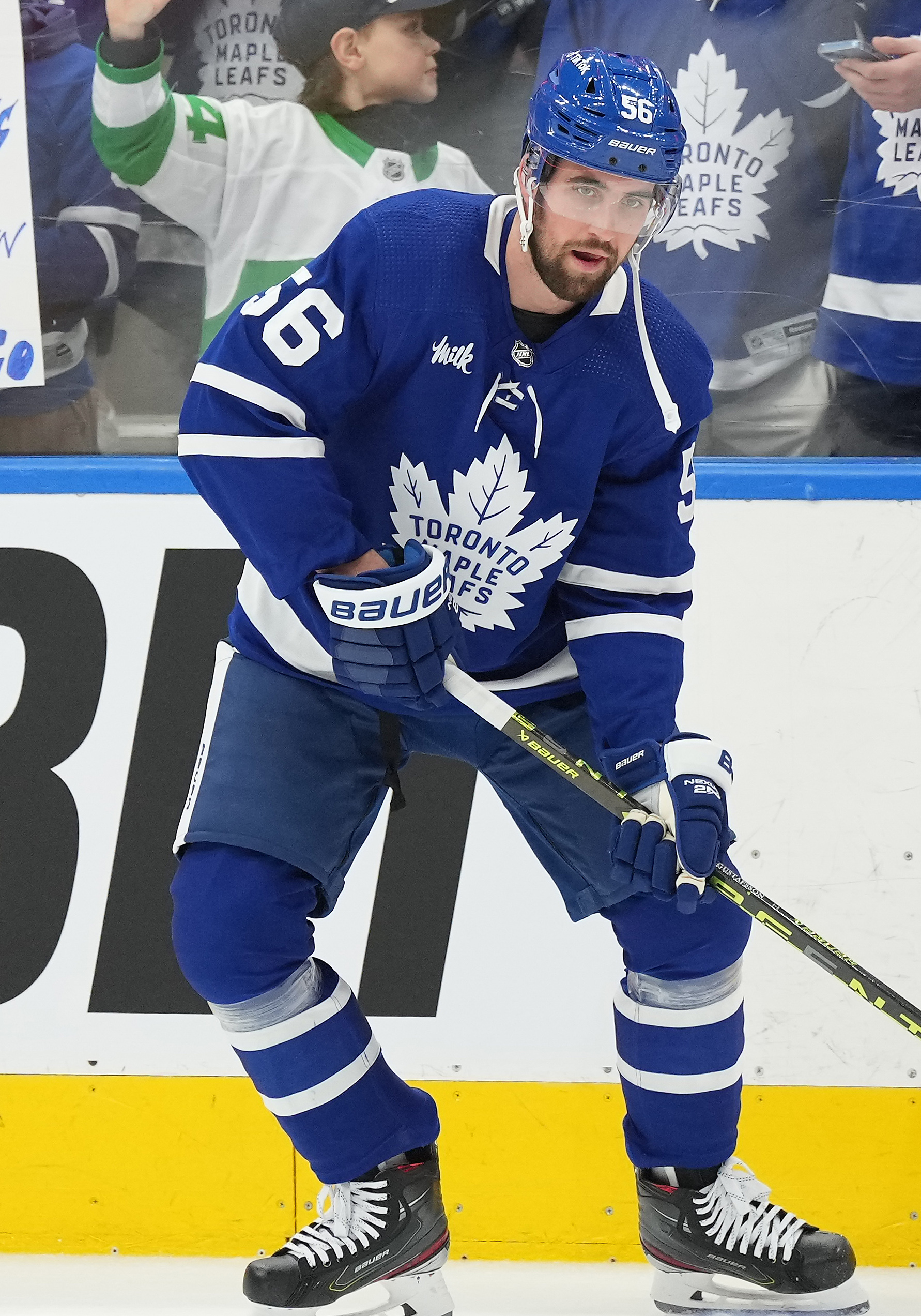
Looking at the Rangers’ defensive depth chart, offseason signing Erik Gustafsson likely enters the preseason with the best chance of securing the third-pairing role next to Schneider.
The 31-year-old Swede is an offensive defenseman who played under Laviolette with the Washington Capitals last season. He scored a total of 42 points in 70 games last season, and it was a surprise to see him receive only a $825k guarantee from the Rangers earlier this summer.
Experienced 42-point defensemen who also have a 60-point season on their resume typically go at far higher prices, but it’s likely that the bouts of inconsistency Gustafsson has had throughout his career have lowered his price tag. In 2021-22, Gustafsson only managed 18 points in 59 games for the Chicago Blackhawks and even began the season on a PTO with the New York Islanders.
His stock leaguewide has fluctuated to an extreme degree since he arrived in North America from the SHL’s Frölunda HC nearly a decade ago, so while Gustafsson likely has the early lead for a regular role next to Schneider, he’s far from a certainty to ultimately see his name listed on the Rangers’ opening-night lineup.
Gustafsson will have to compete with a group of other blueliners for one of those roster spots, including 22-year-old 2019 third-round pick Zac Jones. Jones has been a difference-maker at the AHL level (31 points in 54 games last season) but hasn’t quite made his mark in the NHL.
He’s no longer waiver-exempt and would be a likely candidate to get claimed on season-opening waivers, so the Rangers will have to factor that into their roster-making calculus and that could give him a leg up over other, more experienced players.
Earlier this month, we covered how Jones could be a preseason trade candidate if he falls behind in the training camp battle against the Rangers’ other defensemen, so in the mix of all of the Rangers’ new arrivals on their blueline as well as incumbent players Jones could be the name to watch.
The Rangers also signed 26-year-old Connor Mackey, a player who got the most extensive NHL look in his pro career down the stretch with the Arizona Coyotes last season. Arizona head coach André Tourigny played Mackey an average of nearly 16 minutes of ice time per night last season, including nearly two minutes per night on his penalty kill.
While Mackey has far from an extensive NHL track record, he offers a more well-rounded set of tools than Gustafsson and quite a bit more size than Jones, potentially making him the safest choice to play next to Schneider should those two struggle in the preseason.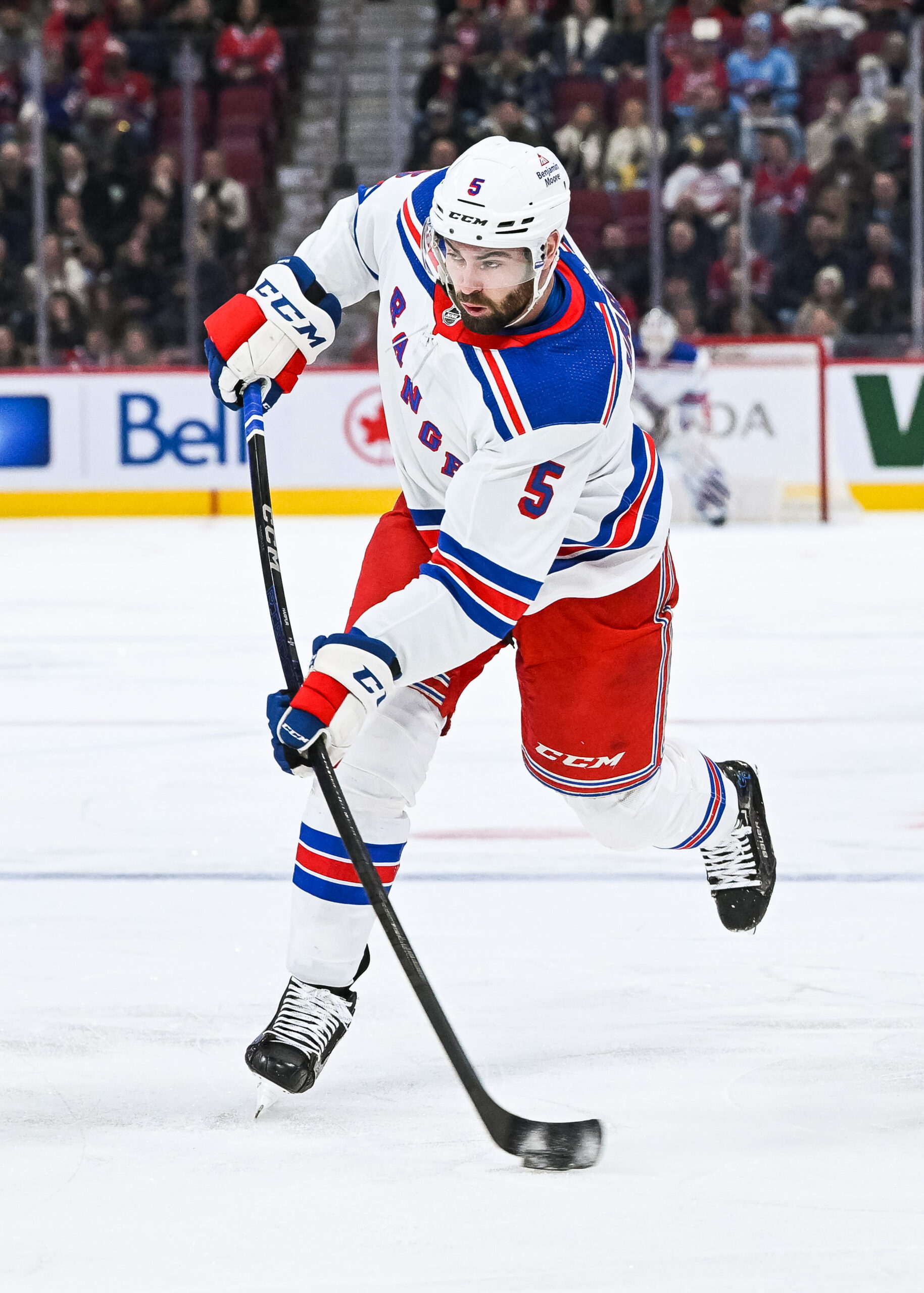
198-game NHL veteran Ben Harpur is also in the mix for one of the likely two open roster spots on the Rangers blueline. A combination of factors, namely his service to the team last season, his $787.5k contract for the next two campaigns, and his measurables (six-foot-six, 231 pounds) give him a healthy shot to win a roster spot.
As the Rangers struggled with injuries to their defense and a lack of cap space after their acquisition of Patrick Kane last season, Harpur stepped up and weathered some difficult minutes for the team, including a late February contest that saw him register 28:04 time on ice.
If the Rangers want a physical, stay-at-home presence in their opening-night lineup, among this group of depth defensemen Harpur likely best fits that profile. But seeing as Harpur’s toolkit is relatively limited (he’s a big, physical stay-at-home defenseman) and he offers little in the way of puck-moving utility or two-way value, he does seem to be a more likely candidate to hit the waiver wire and begin the season with the AHL’s Hartford Wolf Pack.
In any case, with these players each waiver-eligible, it’s likely that, barring a Jones trade the Rangers will have to expose at least two competent, NHL-relevant defensemen to the league’s 31 other clubs before opening night.
While the many long-term deals on the Rangers’ books dictate that most of the roster Laviolette inherits from former coach Gerard Gallant is set in stone, the leeway Drury’s extensive group of depth signings has afforded his new coach to construct the lower parts of the Rangers’ lineup should make for an intriguing storyline to track in the NHL preseason.
Photos courtesy of USA Today Sports Images.
Free Agent Profile: Max Comtois
Two years ago, it seemed unfathomable that Max Comtois would be an unsigned free agent in late August. But it is 2023 and that’s where the former second-round pick finds himself after being non-tendered a qualifying offer by the Anaheim Ducks. Comtois had a terrific pandemic shortened 2020-21 in which he posted 16 goals and 17 assists in 55 games. At the time he appeared to be on the verge of becoming a complete winger who could be counted on to provide solid secondary scoring and strong play in all three zones. The Ducks promptly signed Comtois to a two-year deal that carried an annual cap hit just north of $2MM.
After signing his bridge deal things quickly began to go south for the Longueuil, Quebec native. In 2021-22, the 24-year-old began the season with just a single assist in his first 13 games and then missed 16 games with a hand injury that required him to have surgery. Upon his return, he played better but couldn’t recapture his scoring touch as he put up just six goals and nine assists in his final 39 games.
With the Ducks firmly in a rebuild, Comtois continued to struggle offensively this past season and missed significant time with several upper and lower body ailments. Comtois was out for 14 games due to injuries and when he was in the lineup he produced just nine goals and 10 assists in 64 games.
While he has battled injuries and inconsistency over the past few years, it is still surprising to see a young forward with a recent track record of success remain unsigned. It truly speaks to the flat-cap environment that teams find themselves in. Despite the disappointment of possibly being forced to sign a professional tryout, I do think that Comtois will sign an NHL contract for next season. He may just need to prove himself first to do so.
Stats
2022-23: 64 GP, 9-10-19, -20 rating, 76 PIMS, 89 shots, 52.3% faceoffs, 42.2% CF, 13:49 ATOI
Career: 210 GP, 38-48-86, -35 rating, 193 PIMS, 296 shots, 41.7% faceoffs, 45.4% CF, 14:23 ATOI
Potential Suitors
Comtois is unlikely to be picky at this point in the summer, he is just looking to remain in the league and show what he can do. He is from the Quebec area but given that the Montreal Canadiens have been trying to move out forwards, they are unlikely to be interested in Comtois, even if his youth does fit the timeline of their future competitive window.
Let’s start in the East. The Pittsburgh Penguins have been rumored to have interest in Tomas Tatar as they look to add some depth scoring to their bottom six. The Penguins would like to bring Tatar in on a PTO to see if he fits. However, if the former Devils forward can lock on to a team with guaranteed money that could open the door for Pittsburgh to look elsewhere. Possibly to Comtois. It’s no secret that general manager Kyle Dubas loves to have a lot of depth forwards to provide for call-ups and to keep the club’s AHL affiliate competitive. Should he sign with Pittsburgh, Comtois would be in a serious battle for a spot on the Penguins bottom two lines, but he would certainly be in the mix. He could also fill in for Jake Guentzel during his early season absence on the Penguins top line next to Sidney Crosby.
Staying in the East, the Ottawa Senators could really use some help in their bottom six forward group. Outside of Pittsburgh, it’s hard to find a team who leaned more heavily on their top six forwards last year. And given the look of the Senators current bottom six, it could be more of the same this year. The Senators are entering the season with playoff aspirations but are looking at having several rookies on their third and fourth lines which could lead to a lot of growing pains early in the season. Comtois has had his struggles, but if they were to acquire him, they would have another known entity to insert onto their third or fourth line.
Out West, it was rumored earlier in the summer that the Vancouver Canucks had interest in Comtois, but a deal never came to fruition. Vancouver has a bit of a logjam right now, both up against the cap and with the number of bodies they currently have in the forward group who are going to require NHL minutes. However, a forward like Dakota Joshua could become a casualty should Vancouver opt to sign Comtois. The other option for the Canucks would be to try a jettison a higher-priced forward to become cap compliant, and then sign Comtois as their replacement. Comtois could bring a lot to the Canucks as he does play with an edge and can play in all three zones and provide depth scoring. The worst-case scenario for Vancouver would be to bury Comtois and his cap hit in the minors if he didn’t work out with the NHL group.
Projected Contract
Barring a dramatic turn of events, Comtois is likely going to have to take a rather large pay cut for the upcoming season from the $2.5MM he made last year. It is still possible he could hit a seven-figure salary but given how little cap space is available around the NHL he is unlikely to exceed more than $1MM on a one-year deal. There are several talented forwards who remain unsigned which has led to Comtois becoming a bit of an afterthought. But given his youth there will likely be a team out there willing to roll the dice on a player who has shown promise recently. However, I think teams will want to have a look at Comtois before offering a guaranteed contract just to make sure he is a fit in their bottom six, and to allow for maximum flexibility.
Photo courtesy of USA Today Sports Images.
2009 NHL Draft Take Two: Sixth Overall Pick
Hindsight is an amazing thing, and allows us to look back and wonder “what could have been.” Though perfection is attempted, scouting and draft selection is far from an exact science and sometimes, it doesn’t work out the way teams – or players – intended. For every Patrick Kane, there is a Patrik Stefan.
We’re looking back at the 2009 NHL Entry Draft and asking how it would shake out knowing what we do now. Will the first round remain the same, or will some late-round picks jump up to the top of the board?
The results of our redraft so far are as follows, with their original draft position in parentheses:
1st Overall: Victor Hedman, New York Islanders (2)
2nd Overall: John Tavares, Tampa Bay Lightning (1)
3rd Overall: Ryan O’Reilly, Colorado Avalanche (33)
4th Overall: Matt Duchene, Atlanta Thrashers (3)
5th Overall: Chris Kreider, Los Angeles Kings (19)
At fifth overall, PHR voters elected to take one of the draft’s better goal-scoring specialists in Kreider, who received 25% of the total votes. Selected straight out of high school, Kreider was drafted as a center but would end up on the wing for the New York Rangers, who took him in the mid-first round. It took him a few years to make the NHL, but he quickly became a dependable middle-six winger once he did, posting solid two-way numbers and routinely scoring over 20 goals. The last two seasons have done wonders for Kreider’s legacy, though, posting 88 markers over 160 games.
Coming up to the podium at sixth overall is the Phoenix Coyotes. The era of Wayne Gretzky behind the bench is now over after four underwhelming seasons, and the franchise is still looking to return to postseason play for just the third time since the year 2000.
They selected Swedish defenseman Oliver Ekman-Larsson, who had spent the entire 2008-09 campaign playing pro hockey with Leksands IF in the Swedish second-tier HockeyAllsvenskan. He posted a massive two-way season there, recording 17 points in 39 games and a +44 rating. Few argued with the pick at the time, and given his peak with the Coyotes, it’s hard to argue they truly made the wrong selection.
He played one more season in Sweden before coming over to the Coyotes in 2010, splitting his rookie year between the NHL and AHL but getting decent NHL action with 48 games, albeit in a bottom-pairing role. He broke into a top-four role during his sophomore season and never looked back, routinely earning Norris Trophy votes and was eventually named the team’s captain in 2018 after the retirement of Shane Doan.
His all-around game began to decline significantly beginning with the 2019-20 season, though, and in the summer of 2021, the Coyotes were able to offload his contract on the Vancouver Canucks in a deal that’s turned out quite well for Arizona, in retrospect. That doesn’t change the fact he provided the Coyotes with solid top-pairing performance for the better part of a decade, however, finishing his stint in the desert with 388 points and averaging 23:26 per game across 769 games.
He didn’t last particularly long in Vancouver, either, and the Canucks executed the largest non-compliance buyout in NHL history this summer to get out of the remaining four years of his massive eight-year, $66MM extension signed with the Coyotes that kicked in just as his decline began in 2019. He’ll suit up for the Florida Panthers next season, looking to prove he can turn things around on a one-year deal.
Ekman-Larsson trails only Hedman and Nick Leddy in total games played for a defenseman from the 2009 class with 902, and he’s third in career points behind Hedman and Tyson Barrie with 439. Despite his solid tenure as a member of the Coyotes, though, should the team have gone in a different direction? Let us know who you think the Coyotes should have selected below:
2009 Redraft: Sixth Overall
-
Nazem Kadri 29% (216)
-
Mattias Ekholm 21% (157)
-
Evander Kane 10% (76)
-
Oliver Ekman-Larsson 10% (72)
-
Brayden Schenn 8% (61)
-
Dmitry Orlov 5% (39)
-
Anders Lee 5% (38)
-
Ryan Ellis 4% (28)
-
Tyson Barrie 1% (11)
-
Reilly Smith 1% (11)
-
Nick Leddy 1% (6)
-
Tomas Tatar 1% (6)
-
Brian Dumoulin 1% (5)
-
Kyle Palmieri 1% (5)
-
Darcy Kuemper 1% (4)
-
Erik Haula 0% (3)
-
Mike Hoffman 0% (3)
-
David Savard 0% (3)
-
Calvin de Haan 0% (2)
-
Marcus Johansson 0% (2)
-
Dmitry Kulikov 0% (2)
-
Jakob Silfverberg 0% (2)
-
Sami Vatanen 0% (2)
-
Robin Lehner 0% (1)
-
Brayden McNabb 0% (1)
-
Craig Smith 0% (1)
Total votes: 757
If you can’t access the poll above, click here to vote.
PHR Mailbag: Value Trades, Surprising Summers, Stars, Salary Cap, Draft, Golden Knights
Topics in this edition of the PHR Mailbag include a look at some value trades from last season, when the salary cap might start to go up quicker, the 2024 draft class, and more. If your question doesn’t appear here, check back in our last two mailbag columns.
DevilShark: Wondering about your perspective on the top few value trades from the past season now with some hindsight. I’m talking about outperforming their cost – irrespective of their teams’ place in the standings (so not the traditional thing where we look at who helped their team win the cup). Which team made out with great value in the margins?
For a full listing of the trades from the 2022-23 league year, click here. This is the list I’m working off of for this question but I’ll cut it off at any moves made this offseason.
One that came to mind quickly was Montreal acquiring Sean Monahan and the world’s most confusingly-protected first-round pick from Calgary for free. Monahan showed for a couple of months that he’s still an above-average player and while they weren’t able to flip him as planned at the deadline, things went well enough that he signed for a much more reasonable $2MM. They should get more value out of him next season and could flip him for another asset or two in-season. No matter what, they still eventually get the first-round pick as well. That’s a very good return on a cost of nothing.
Similarly, Carolina using their cap space to pick up Brent Burns with some retention (and Lane Pederson) for Steven Lorentz, Eetu Makiniemi, and a third-round pick is fantastic value. Burns is still a top-pairing defender and the Hurricanes got him for a depth forward, an okay goalie prospect at a position they had some surplus, and a mid-round pick. The Hurricanes made out extremely well here. I’d also like to put Adin Hill for a 2024 fourth-rounder here but by following the rules of your question, I can’t really do that.
In terms of an in-season move, Dallas buying low on Evgenii Dadonov worked out quite well. They expected he’d bounce back under a familiar head coach in Peter DeBoer and guessed correctly as he became a key secondary contributor both down the stretch and in the playoffs. The Stars then leveraged his struggles with Montreal into getting Dadonov to take a pretty cheap two-year deal ($2.25MM AAV) that’s $650K lower than what it would have taken to qualify the underperforming forward they traded for him in the first place (Denis Gurianov, who eventually went non-tendered anyway). They got the short-term upgrade and at least a medium-term one for very little return.
St. Louis getting Jakub Vrana is another under-the-radar one I think warrants a mention. They picked up him with Detroit retaining 50% of his $5.25MM AAV for last season and next for a seventh-round pick and a minor leaguer. Vrana scored 10 goals in 20 games down the stretch. If he even comes close to that type of production next season, the Blues should be able to flip him for much more than that if they find themselves out of the playoff picture. And if they are in the mix, he should be an important contributor that was acquired for very little.
aka.nda: Which team(s) summer moves have you scratching your head? What do you think those moves suggest about what that team is hoping or expecting to happen? Is there anything they could do on the market that would inspire more confidence?
A couple of Eastern Conference teams come to mind. Detroit had money to spend and spent it patching a lot of depth holes with the exception of J.T. Compher whose five-year, $25.5MM contract seems overly optimistic that he can produce at the level he did with Colorado last year when injuries pushed him onto the top line. They went from being a non-playoff team to a better non-playoff team. To GM Steve Yzerman’s credit, he did well on the Alex DeBrincat and Jeff Petry acquisitions from a value perspective but I still don’t think those move the needle to make them a playoff team. They’ve spent a lot of money to possibly finish sixth in the division even though their actions think they’re a playoff-caliber squad. To be fair, I don’t think there’s much they can do either other than bide their time for the top teams to start to lose some of their top talent.
I also wasn’t a big fan of the Islanders’ moves. Seven years for Pierre Engvall and Scott Mayfield is nothing short of nonsensical, even if it does keep the cap hits at a reasonable amount (and that is an important consideration). Four years for a 35-year-old backup goalie also falls in that category even if that backup is a pretty good one. They took a core that squeaked into a playoff spot and didn’t do anything to improve the roster. They have no cap flexibility to speak of to try to improve. Sure, they’ll be in the Wild Card mix again but was locking up secondary players to long-term deals really the best course of direction? Why not concentrate some of Mayfield and Engvall’s money to go after an offensive upgrade that actually addresses a big area of weakness? GM Lou Lamoriello clearly feels this core is good enough to get in and the team plays a style that can do some damage in the playoffs. I’m not sure they get there at this point.
jacl: is Benn good for a point per game this year? Ever think we’ll get Seguin back to his old self? it’s been years since he’s been any good and when centering his own line, it never produces.
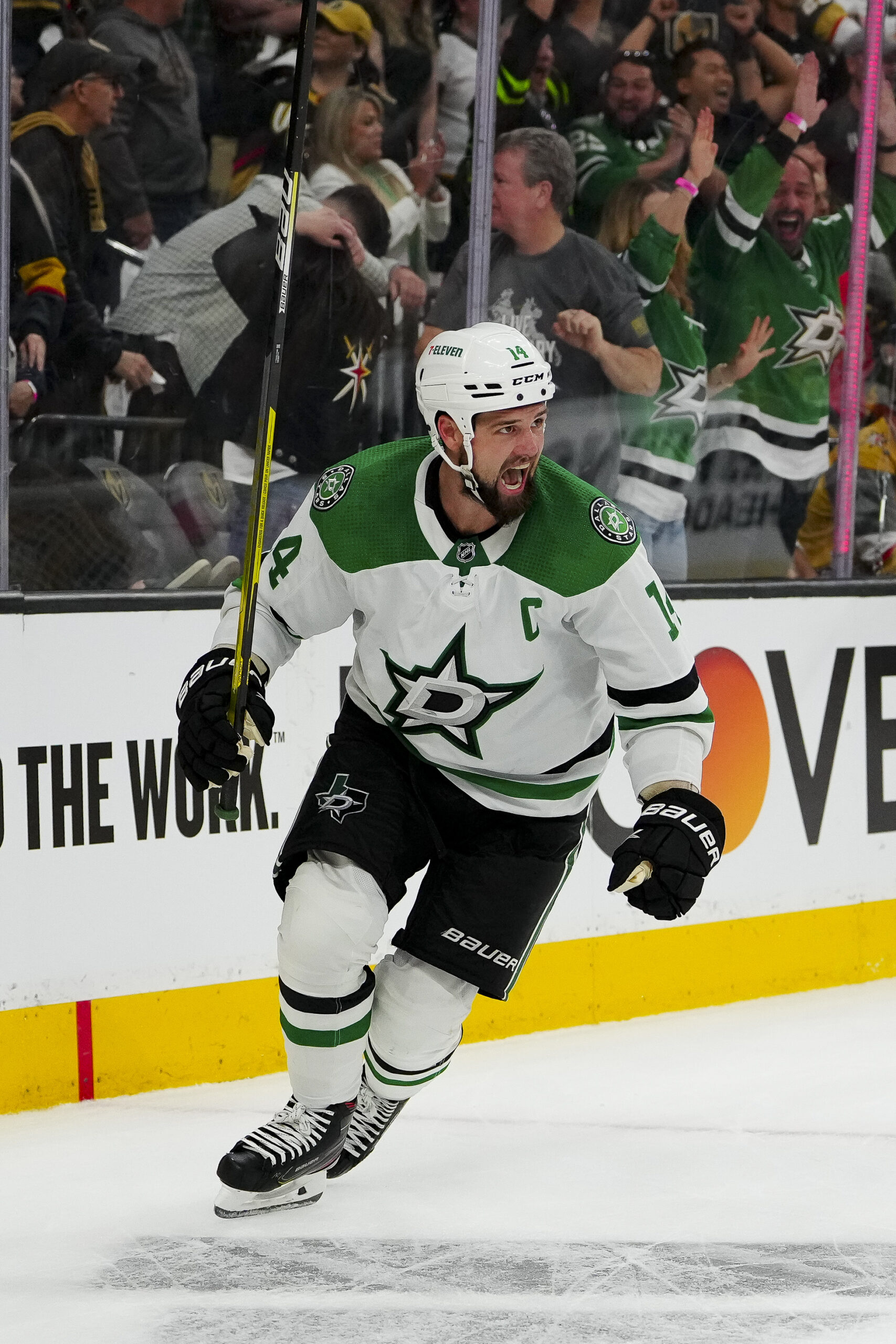 Generally, players in their 30s don’t have resurgent seasons. Jamie Benn bucked that trend, going from 46 points in 2021-22 to 78 points last year. Fewer players in this situation go on to then improve upon those numbers the following year. I don’t think Benn will be an exception to that idea either. His 17.2 shooting percentage was among the tops in the league last season and is at a rate that many would qualify as unsustainable. That means his 33-goal total is probably going down and with Wyatt Johnston set to push for more minutes as well as newcomer Matt Duchene, I expect Benn’s 45 assists to also go down. I could see him in the 50-point range which would still be an improvement over his post-pandemic numbers. That wouldn’t be a great return on his contract but he’d still be an important part of their attack.
As for Tyler Seguin, I don’t see him getting back to the days of him hovering around the point-per-game mark. He was a top-line fixture at that point in his career. He isn’t now and the Stars are probably hoping they’re not in a situation where he’s pressed into that duty. Seguin is a secondary part of their attack now and those players typically don’t light up the scoresheet. If he continues to produce around the 50-point mark in a middle-six role within the framework of a deep attack, they should be fine.
Unclemike1526: I know the Cap only went up about $1 million this year. I also keep hearing the Cap is going to rise quite a bit in the near future according to the owners. About how much are they saying it’s supposed to go up and when? I think it’s time Hockey joined the ranks of other Pro sports. I just want to know what they’re saying, so I’ll know just how much I’ll be disappointed when it doesn’t happen. Thanks!
The drag in the growth of the Upper Limit of the salary cap in recent years is tied to the pandemic. That shortened season, the players received their full salaries but with games being canceled and restrictions on attendance, revenues plummeted. In the CBA is a rule that says players and owners have a 50/50 split of Hockey Related Revenue (HRR) and that season, it wasn’t even close. That created a ‘debt’ to be repaid to the owners, a clawback of sorts to eventually get the split from that season back to 50/50.
In the 2020 CBA extension, it was agreed that the cap would only go up by $1MM until that debt was repaid. As of today, that debt is not entirely repaid which is why the cap only moved from $82.5MM to $83.5MM for 2023-24. However, they’re really close to paying that off which should come this coming season. At that point, there is a minimum increase to the cap defined as follows from the 2020 NHL CBA Memorandum of Understanding:
Except for the 2026-27 League Year, minimum year-over-year increase in the Upper Limit is the lesser of 2.5% and the trailing two-year average HRR growth percentage. (measured using Final HRR from the League Year four years prior, Final HRR from the League Year three years prior, and Preliminary HRR from two years prior and after taking into account any FX impact adjustments).
For simplicity, let’s use the 2.5% number which would take the cap up to a minimum of $85.59MM in 2024-25 and $87.73MM in 2025-26. Any further jumps would be tied to increases in HRR which is harder to forecast. I don’t anticipate a massive jump for 2024-25 as with quite a few teams in a tough spot with their regional rights, they’re either losing their deals altogether to move to an in-house production or will be negotiating cheaper contracts. That won’t spin HRR in a negative direction but I think it will slow the anticipated growth.
The NHL won’t be getting to the cap levels of the NBA or NFL, however. Those leagues have TV contracts worth more than the NHL’s entire revenue stream combined and I don’t sense a significant growth in TV ratings down the road that could allow the NHL to get that type of lucrative TV money. The cap will be going up more than $1MM per year moving forward but it’s still going to check in well below those other leagues.
Emoney123: Who are the watch candidates in the 2024 draft for Flyers since it appears likely another rough season with a potential top-5 pick as well the 1st-round pick from Florida and 2nd-round picks from Columbus and LA? Celebrini seems headed towards #1, who could be other options? Hopefully the light at the end of the tunnel is not a train.
Right now, Macklin Celebrini seems to be the early consensus first pick. He’s going to be challenged by Cole Eiserman, a high-end goal-scoring threat. Ivan Demidov is an early wild card, a player who set the MHL (Russian junior league) record for most points as a 17-year-old. But as we all know, Russian-born players have slipped at times in recent years. On the back end, Artyom Levshunov and Sam Dickenson are the two top early candidates in a class that is expected to feature more blueliners than usual going within the lottery. While it’s way too early to start ranking players, these five seem to be close to the consensus top five.
Generally speaking, this is not perceived as a particularly strong draft class compared to the 2023 one and some scouts appear to prefer the 2025 class. Again, though, this can all certainly change. If Philadelphia winds up with a high selection in June, they’re going to get a quality player, perhaps just not the franchise type of player that Chicago just selected.
Justajaysfan: How do you think Vegas will do this season? Is Adin Hill able to carry his success from last year’s playoffs into this season and be able to perform like a number 1?
I’m going to flip the order of these and talk about Hill first. I’m not particularly bullish on him being a true number one goaltender but his career-high in regular season games played is 27. Yes, he carried a starting workload for a good chunk of the playoffs but there’s a difference between that and being a six-month starter. I don’t think he’ll be able to play at his playoff level (.932 SV%) over a full season, however. The good news is that he shouldn’t have to.
Lost in the talk about Hill and his eventual re-signing is that the starting goalie from last season (Logan Thompson) is now healthy so they don’t need Hill to play at that level. If the two play like they did a year ago when they each posted a .915 SV% during the regular season, the Golden Knights should once again be a contender for a top spot in the West.
Vegas is bringing back the majority of its Cup-winning group with Reilly Smith being the notable exception so they should be well-positioned to try to contend. Edmonton could give them a run for their money (especially if they can find a way to get even a bit better of a performance between the pipes) and if Los Angeles gets better goaltending than I think they have, they could get in the mix as well. I’m not going to predict a Stanley Cup repeat – it is still the summer with moves left to be made – but they should be in contention once again.
Photo courtesy of USA Today Sports Images.
Summer Synopsis: Anaheim Ducks
Last season was a tough one for Anaheim in the standings. With the team squarely in a rebuild, they struggled considerably at both ends of the ice, allowing the most goals in the league while scoring the second-fewest. That resulted in head coach Dallas Eakins being let go with Greg Cronin, a long-time coach at lower levels, getting his first opportunity to run an NHL bench. However, based on what has been a quiet summer, expectations for 2023-24 should be similar to how last season went as this is a team that remains in transition.
Draft
1-2: F Leo Carlsson, Orebro (SHL)
2-33: F Nico Myatovic, Seattle (WHL)
2-59: F Carey Terrance, Erie (OHL)
2-60: G Damian Clara, Farjestad (Sweden U20)
3-65: F Coulson Pitre, Flint (OHL)
3-85: F Yegor Sidorov, Saskatoon (WHL)
4-97: D Konnor Smith, Peterborough (OHL)
5-129: D Rodwin Dionicio, Windsor (OHL)
6-161: D Vojtech Port, Edmonton (WHL)
While Anaheim finished last in the league, they weren’t able to win the lottery for the top pick, sliding to second. GM Pat Verbeek then surprised some with the selection of Carlsson over the consensus second choice (Adam Fantilli). Carlsson gives the Ducks a third center with early first-round pedigree and the hope is that he along with Trevor Zegras and Mason McTavish will allow them to eventually be a dominant team down the middle. Carlsson has already signed his entry-level deal but could be loaned to the AHL or back to the SHL if he doesn’t crack the roster.
Myatovic was a bit of a surprise selection as the top pick on the second day of the draft but he rose up draft boards all season long and should be in line for a much bigger role with the Thunderbirds this coming season. Terrance tripled his goal total from his rookie OHL season to become one of the better draft-eligible scorers in that league while finishing strong at the World Under-18s. Clara also was picked well before his consensus rankings but was one of the tallest goalies in this draft class. Anaheim hopes the Italian netminder will one day push for NHL playing time but is a longer-term project.
Trade Acquisitions
F Andrew Agozzino (San Jose)
D Ilya Lyubushkin (Buffalo)
Agozzino was acquired the day before the draft in a swap of veterans that spent most of last season in the minors. The 32-year-old was productive in limited NHL duty last season, recording three points in four games while averaging nearly a point per game in 63 AHL contests. Agozzino will get a chance to crack Anaheim’s roster in training camp but is likely ticketed for AHL San Diego.
Lyubushkin was recently acquired from Buffalo for a fourth-round pick. The 29-year-old will bring some physicality to their third pairing and with him being on an expiring contract, he becomes a strong candidate to be flipped at the trade deadline with some salary retention.
UFA Signings
D Trevor Carrick (one year, $775K)*
D Radko Gudas (three years, $12MM)
D Robert Hagg (one year, $775K)
F Alex Killorn (four years, $25MM)
G Alex Stalock (one year, $800K)
*-denotes two-way contract
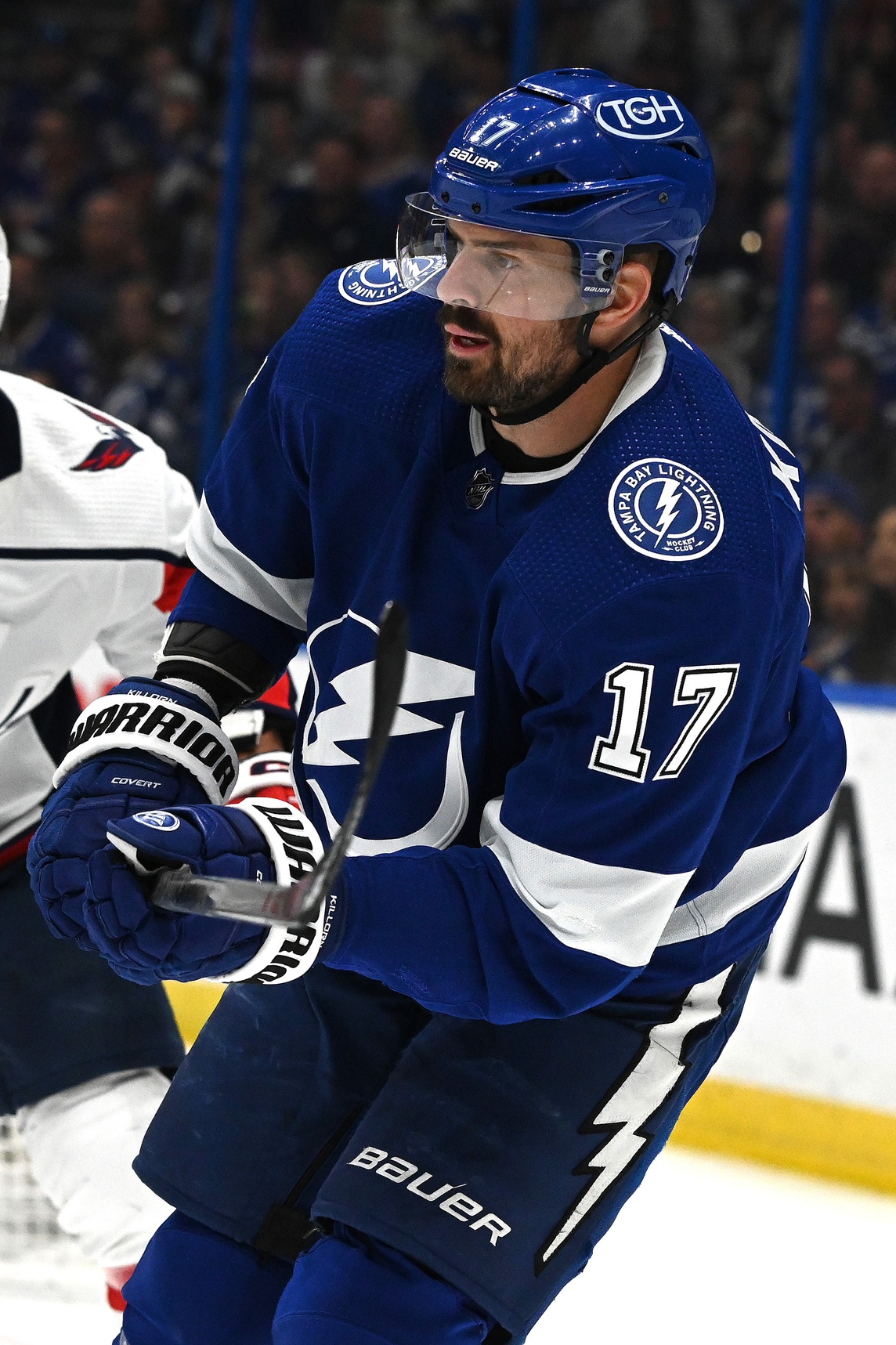 Killorn’s AAV wound up being the most expensive of any forward in this UFA class, a distinction few would have expected heading into the open market. He also received a full no-trade clause in the first two seasons of the deal plus a partial no-trade in the final two years. For a player best utilized as a second-line winger, it’s definitely an overpayment from Anaheim’s perspective but it’s clear that Verbeek is placing a high level of importance on what he also brings off the ice to help what is a very young core. The 33-year-old is coming off his two best seasons offensively and has hit the 25-goal mark in three of the last four years. It will be interesting to see how close he can get to that going from one of the strongest offensive teams to one of the weakest.
Gudas certainly bolstered his value with a good playoff showing for Florida in their run to the Stanley Cup Final, providing plenty of snarl and physicality on the third pairing. He’ll likely be asked a more prominent role with Anaheim with many of their strong blueline prospects still a year or two away from making a serious push for playing time. Hagg is best known for, you guessed it, his physicality on the back end. Injuries limited him last season in Detroit and he’ll be trying to lock down a regular spot on the blueline to help rebuild some value. Carrick is a strong offensive blueliner at the AHL level and should be a key piece for San Diego next season. The move reunites him with his brother Sam who played in 52 games for the Ducks last season.
Stalock was one of the feel-good stories in the NHL in 2022-23. Battling through myocarditis the previous two years, the veteran had only made one NHL appearance in those two campaigns combined. He wound up making 27 appearances in Chicago, posting a .908 SV% that was above the league average despite being on a rebuilding team that had only one more point than the Ducks in the standings. He’ll battle prospect Lukas Dostal for the second-string position between the pipes.
RFA Re-Signings
G Lukas Dostal (two years, $1.625MM)*
F Benoit-Olivier Groulx (one year, $775K)*
F Troy Terry (seven years, $49MM)
*-denotes two-way contract
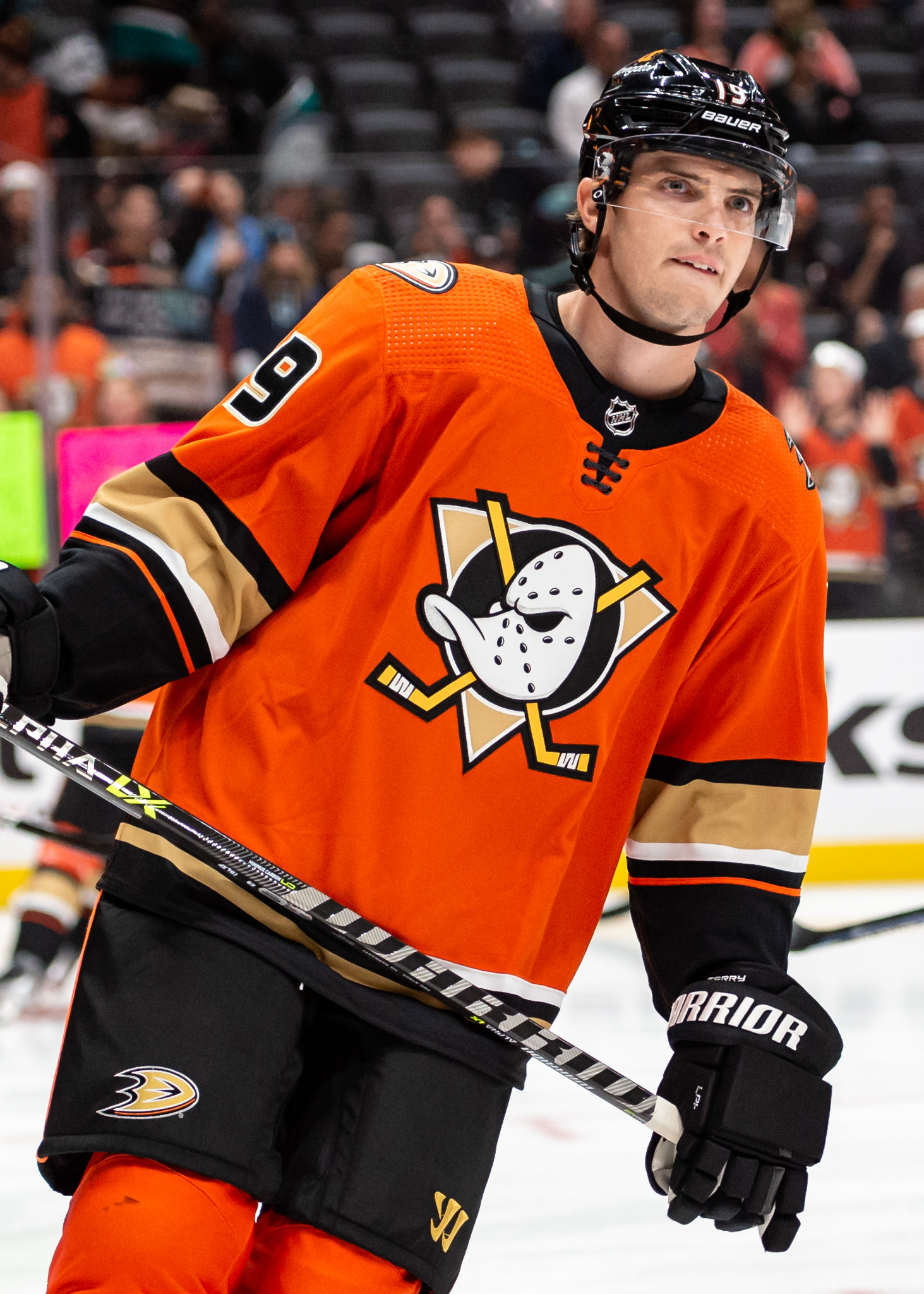 Terry is an example of how a bridge contract can work out well for a player in the end. It took him a while to make an impact in the NHL which led to his second contract being a three-year bridge. In the second season of that deal, his production took off as he recorded 67 points and then followed it up with a 61-point showing last season despite missing a dozen games. In doing so, he showed that he is a capable top-line weapon for the Ducks and he should be a focal part of the attack for years to come to work with their young middlemen. This deal took until just before a scheduled arbitration hearing to get done where the two sides were well apart in their filings but it should work out well for both sides.
Groulx has seen NHL action in each of the last two seasons, totaling 20 appearances. He will be waiver-eligible for the first time this fall and isn’t a lock to get through unclaimed. The long-term Achilles injury to Isac Lundestrom could open up a spot for him to break camp with Anaheim if he has a strong training camp.
Dostal held his own in 19 appearances with the Ducks last season but took a bit of a step back with the Gulls in the minors, seeing his GAA go up from 2.60 to 2.97 while losing four points off his save percentage (to .912). Even so, he’s viewed as a possible goalie of the future for Anaheim and so even with Stalock in the fold, it’s likely that Dostal will see at least some NHL action this season.
Departures
D Nathan Beaulieu (unsigned UFA)
D Simon Benoit (unsigned UFA)
F Max Comtois (unsigned UFA)
F Derek Grant (Zurich, NLA)
D Scott Harrington (unsigned UFA)
F Justin Kirkland (Arizona, one year, $775K)*
F Jayson Megna (Boston, one year, $775K)*
D John Moore (unsigned UFA)
D Chase Priskie (Washington, one year, $775K)*
D Kevin Shattenkirk (Boston, one year, $1.05MM)
F Josiah Slavin (Toronto, AHL)
G Anthony Stolarz (Florida, one year, $1.1MM)
D Andrej Sustr (trade with San Jose)
Up front, Comtois is the most notable loss. A couple of years ago, he looked like a middle-six fixture of the future but struggled considerably since then resulting in a mutual non-tender. Grant has had three stints with the Ducks and had a career year in 2021-22 but was limited to just five goals in 48 games last season. Rather than seek a PTO, he decided to try his hand overseas where he’ll have a more offensive role. Megna played in 55 NHL games last season between Colorado and Anaheim in a fourth-line role that can be replaced from within while Kirkland and Slavin were regulars with the Gulls.
There has been considerably more turnover on the back end. Shattenkirk was second on the Ducks in points by a defender last season, a role that isn’t going to be filled from their external acquisitions. RFA Jamie Drysdale, on the other hand, seems poised to assume that role. Benoit very quietly logged over 19 minutes a night on the back end and held his own, making him one of the more intriguing options left on a thinned-out UFA market.
Beaulieu was supposed to be a blueliner with some upside when he came into the league but has seen his production crater in recent years; he hasn’t scored a goal in the last three seasons. He’ll likely need to go the PTO route to have a shot at making a roster in October. Harrington is in a similar situation. He has been a seventh defender in recent seasons and is serviceable in that role but it’s not one that will have teams offering up guaranteed money at this point of the summer. Sustr and Priskie were AHL regulars last season while Moore missed the entire season dealing with lingering concussion symptoms.
Stolarz battled injury trouble last season, costing him 39 games in total and perhaps a shot at landing a likelier backup spot along the way. He struggled in 2022-23 with a save percentage of just .874 in 19 games but in his first three seasons with Anaheim, he had a .920 mark in 37 contests. He’ll battle for the number two role in Florida but is likely ticketed to be a high-paid insurance option in the minors.
Salary Cap Outlook
Few teams have as much cap space as the Ducks do as they have roughly $16.6MM in flexibility, per CapFriendly. That number will certainly go down once Zegras and Drysdale – their two remaining restricted free agents – sign new contracts but Anaheim has ample cap space at their disposal both for the upcoming season and the foreseeable future.
Key Questions
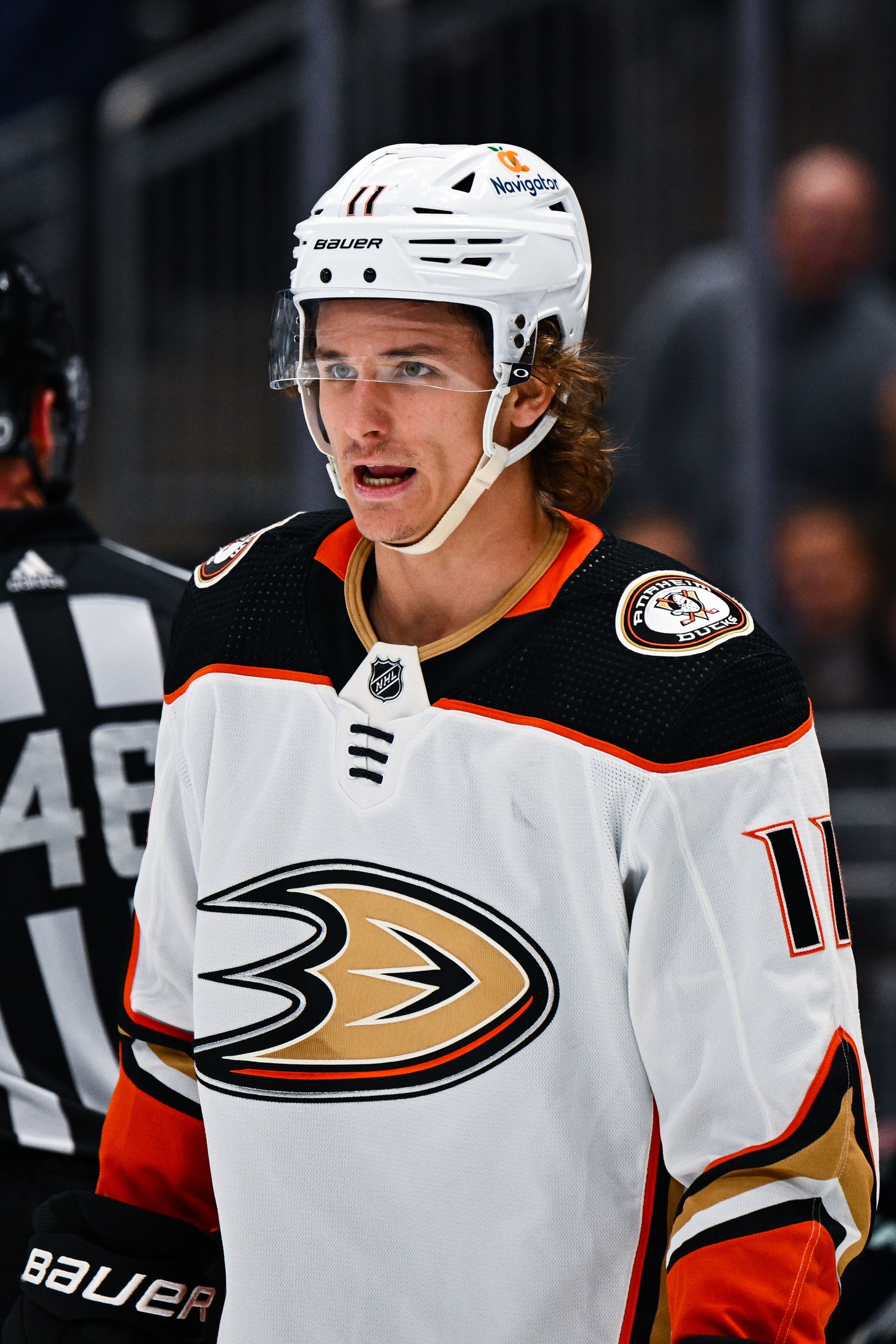 To Bridge Or Not To Bridge: Zegras has been a productive center over the last two seasons, notching 23 goals in both campaigns while improving his point total from 61 to 65 in 2022-23. The market for these types of players is well-defined; a max-term contract should cost somewhere around the $8MM mark which would move him ahead of Terry. Is that a price tag Verbeek is willing to pay or would he prefer to see if Zegras has another gear he can get to first? A bridge contract should be more in the $5MM range but could push his next contract into the $10MM range if he has another level to get to offensively. Verbeek has suggested that if Carlsson is able to make the team at center, it could be Zegras who is shifted to the wing which could also affect his value moving forward.
Will Gibson Move? There has been no shortage of trade speculation involving veteran goaltender John Gibson this summer. It got to the point where there were reports of a trade demand although those have been denied. That said, it wouldn’t be shocking if the 30-year-old would want a change of scenery as he’s under contract for four more years and let’s face it, the Ducks aren’t exactly close to challenging for a playoff spot. A $6.4MM cap charge will make getting commensurate value very difficult in this marketplace but if a team runs into goalie trouble early in the year, Gibson could be an intriguing target.
Defensive Youth Movement? There are definitely some placeholders on Anaheim’s back end right now as only Cam Fowler and Radko Gudas are signed for more than one year with Drysdale likely to add to that list (even on a bridge contract). Meanwhile, the Ducks are loaded in defensive prospects with the top rearguards in the WHL (Olen Zellweger), OHL (Pavel Mintyukov), and QMJHL (Tristan Luneau) with Jackson LaCombe and Drew Helleson already having gotten their feet wet at the NHL level. Zellweger and Mintyukov can start their pro careers this season with the Gulls and if they can push for playing time quickly along with LaCombe and Helleson, the blueline that ends the season could look a whole lot different than the one that starts the year while giving the team (and fans) a glimpse of what’s to come.
Photos courtesy of USA Today Sports Images.
PHR Mailbag: Goaltending, Surprise Impact Player, Dubois, Central, Stars, Cristall
Topics in this edition of the PHR Mailbag include the increasing willingness to have a three-goalie system, how the Central Division could shake out this coming season, and more. If your question doesn’t appear here, check back in last weekend’s mailbag or watch for it in our final one from this set of questions.
Grocery stick: How do teams see the goalie situation right now? We’ve seen the Golden Knights win the Stanley Cup with Hill, Brossoit, and Thompson. The Panthers also relied on three different goalies in different stages of the season, reaching the Final.
Are teams trying to re-create a three-goalie situation on purpose now? How does a #3 goalkeeper stay match ready if he is not waivers exempt? Do teams need “timely” injuries to make a three-goalie rotation work? And what teams could go for a three-goalie rotation this season?
I don’t think teams are necessarily aiming for a three-goalie rotation by design. Vegas was forced into that with injuries while Florida got to that point with Spencer Knight needing to take a leave of absence (and Sergei Bobrovsky really struggling for a time). Truly, neither of those teams really had a three-man rotation either; only two were healthy and/or available for the majority of the season.
You note the issue with keeping that third-stringer fresh which is why most teams don’t see it as a viable long-term option. After a few weeks, they’re asking that goalie to take a conditioning assignment to the AHL to stay fresh. But that can only be done twice in a season and not all players agree to the request. If a team tries to play three goalies more evenly, no one will be happy with their playing time. As you termed it, timely injuries is the way to really make it work.
I think what we’ve seen over the last couple of years is teams placing a higher level of importance on who their third-stringer is. Now, it’s not just a long-time AHL veteran that’s content to come up and sit on the bench for a few weeks if someone goes down; teams are looking for someone that can come in and play. I wouldn’t necessarily classify that as a true three-goalie situation though.
One team that I think will go that route is Carolina. Pyotr Kochetkov is still waiver-exempt for one more year and I think the Hurricanes will try to give him a bunch of starts in the AHL and then spot him some NHL action when they have an open roster spot and want to give one of Frederik Andersen or Antti Raanta a night off. (Although, with their injury history, there may very well be other opportunities on top of that.)
If Philadelphia starts Samuel Ersson in the minors, they could be another team in that situation. Maybe Dustin Wolf gets some spot starts here and there in Calgary and if Alex Stalock beats out Lukas Dostal in Anaheim, Dostal could still see some NHL appearances spotted in. In each of these situations, it’s a waiver-exempt goalie that’s part of the future in that situation, not a proven veteran. That’s where the three-goalie structure by design makes the most sense.
Nha Trang: Heh, it’s time for my annual question now: who’s the guy who comes from out of nowhere to be a serious impact player this season?
Well, last year’s pick didn’t go quite as well as my one from the year before (Tage Thompson) although Taylor Raddysh hit 20 goals with Chicago in 2022-23 which isn’t bad for someone who had a sparing role with Tampa Bay for most of 2021-22.
Last year, I put in a self-imposed criterion that a player couldn’t be in the top 300 in scoring. Otherwise, that player wouldn’t exactly be coming out of nowhere. That takes some viable candidates off the table and certainly increases the level of difficulty of this question.
I’m going to go with Boston’s Morgan Geekie. Here’s a player that only has 22 career goals to his name over parts of four NHL seasons although only two of those have been in a regular role. Both of those campaigns were with Seattle where he spent a lot of time on the fourth line. That shouldn’t be the case in Boston.
Due to the retirements of Patrice Bergeron and David Krejci, the Bruins don’t exactly have great depth down the middle. At the moment, Geekie projects as their third-line center which is already a step up. He was a scorer in the WHL. He has 93 points in 130 AHL games which isn’t too shabby by any stretch. I could see him making a push for 20 goals next season which would be great production from someone in the bottom six that has yet to reach the double-digit mark in a single season. Couple that with him generally being on the happy side of 50% at the faceoff dot and him showing last year that he can cover some time on the penalty kill and Geekie could wind up being a pretty impactful player for Boston.
If you want a couple of real longshot wild cards, I’ll suggest San Jose’s Jacob Peterson and Arizona’s Michael Carcone. Peterson didn’t look out of place in a top-six role with the Sharks down the stretch after spending most of the year in the minors. If he makes the team in that role, he could surprise. Carcone, meanwhile, has lit it up in the AHL but a strong showing at the Worlds with Canada earned him a two-year, one-way deal. I’m not sure he’s going to score enough to really qualify as a good answer for this question but he could become a capable bottom-six winger at the age of 27 and many years in the minors.
Weasel 3: Honest evaluation of PLD’s chances providing any surplus value on his extension please.
In the short term, I don’t see much of a window for that to happen. He’s likely to be on the second line for a year or two and those players generally don’t produce enough to provide surplus value on a contract worth $8.5MM per season. That isn’t to say he won’t have an impact – Dubois definitely will – but I don’t think anyone will be calling his deal a bargain.
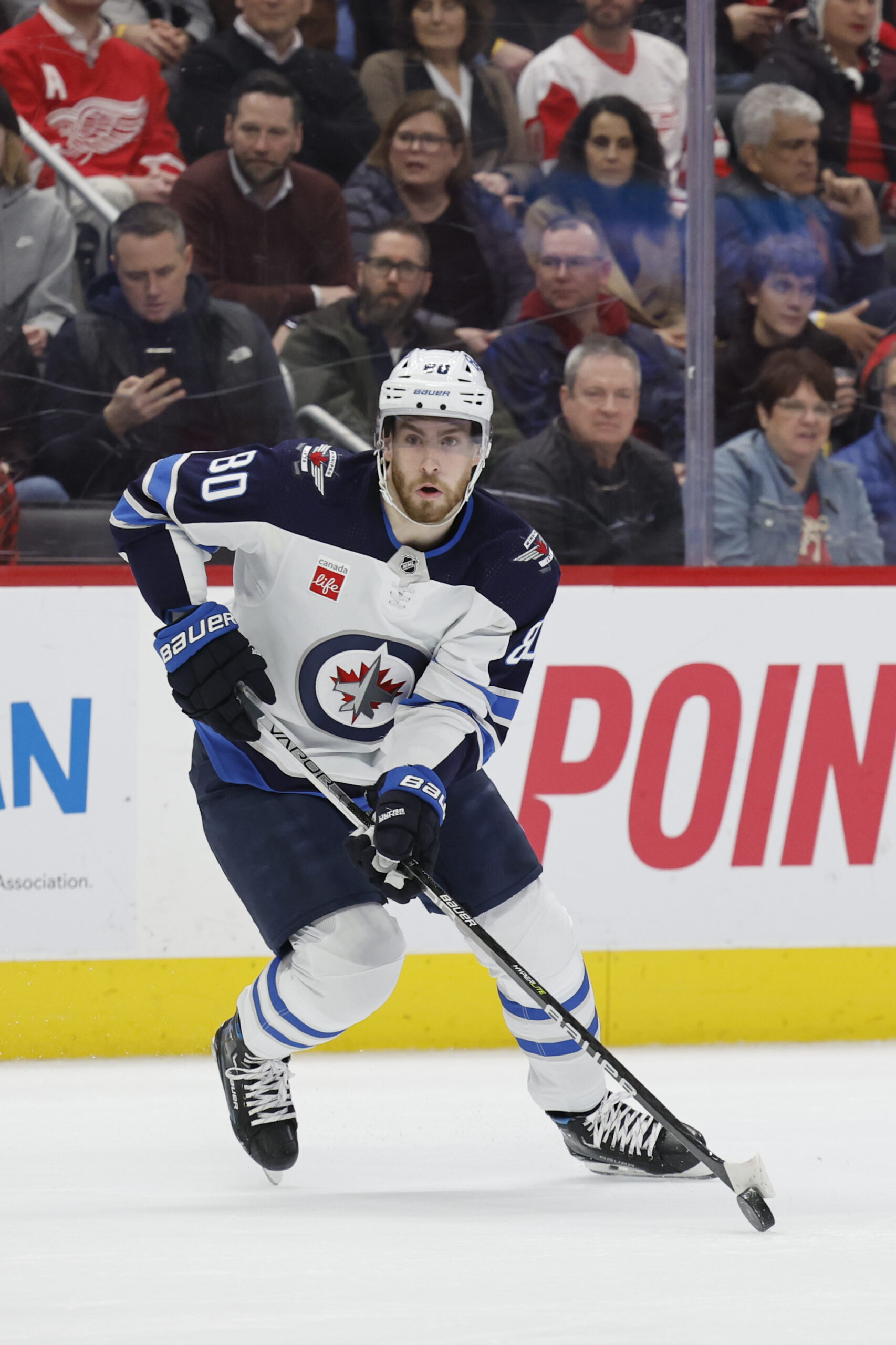 Longer term, however, I can see a pathway to surplus value. If he can up his production to a point per game level while asserting himself more physically, now we’re talking about a center in or around the top 20 at his position with an element that few other middlemen provide. He’d be a power forward getting paid market value, not the typical premium that power forwards get. In that sense, then, he’d be providing some surplus value.
The other option to getting positive value on Dubois’ contract is if the Upper Limit really starts to rise. If we see a few jumps in the cap, salaries around the league will only go up. If those increases push 60 and 70-point players up to this price point, Dubois could provide some surplus value assuming his production improves following the swap.
At this point, I’m not sure I’d qualify the idea of Dubois providing surplus value to the Kings as probable. But there are a couple of plausible ways that it could happen. I don’t think Los Angeles is really expecting that to happen. If he gives them 60-70 points per season, they’ll be pleased with the contract, even if it is one that winds up being a little overpriced in the end.
blues1967: How do you see the Central shaking out? I think Colorado and Dallas are clear front runners, Arizona and Chicago bring up the rear, and the other four will battle it out in the middle. Not sure who has the advantage between the Blues, Wild, Preds and Jets.
Dallas and Colorado are certainly the class of the division. Colorado won the division by a point last season but at this point, I’m inclined to hand the early edge to the Stars with the Avs in second. I don’t expect there to be a third team in that group like Minnesota was last season.
I do, however, lean toward the Wild being the third seed still. I expect their goaltending to take a step back but I think their offense will be a bit more successful than a year ago when they were 22nd. That should offset some of the goaltending give-back and keep them in.
As for who the top Wild Card contender might be, I’d go with St. Louis. I think Jordan Binnington will be better and if not, Joel Hofer can push for more playing time. Their offensive depth is better than it might seem at first glance and they have one of the better defense groups still. They could surprise some teams.
Nashville and Winnipeg have definitely taken steps back. On paper, the Jets could very well push for the third seed still but with a pair of core veterans on expiring deals, it’s hardly a guarantee they’re there for the entire season. Meanwhile, I expect that the Predators are going to struggle to score in a big way. Right now, I could be convinced to put Arizona ahead of them and then Chicago will likely be at the bottom even with Connor Bedard in the fold.
jacl: The Stars win the Stanley Cup this year. Am I right or am I right? I think Johnston gets 35 goals easily. They have a lot of good young talent that should be ready for a role on the team.
Generally speaking, with questions about a team or the field, I’ll go with the field. But Dallas is a legitimate contender, I’ll go that far. Their attack is quite deep (deep enough that makes me think Wyatt Johnston isn’t going to check in quite that high in goals in his sophomore season) so they should be near the top of the conference in that department. Jake Oettinger is a high-end goaltender. That’s two of the three they’re in really good shape in.
The back end is where I’m still concerned, however. It was a weak spot at times last year and they’ve done nothing of much consequence. Gavin Bayreuther replaced Colin Miller and well, that’s it. They’re clearly banking on Thomas Harley stepping into a key full-time role and Nils Lundkvist taking a big step forward. It’s possible that both happen but that’s certainly on the optimistic side.
The reality is that behind Miro Heiskanen and Esa Lindell, things thin out quickly. It was a problem in the playoffs when Ryan Suter was asked to play big minutes, a role he’s not suited for at the age of 38. If GM Jim Nill can find a way to add an impact top-four defender, that just might be the final piece of the puzzle to give a real shot at going all the way. With their cap situation, that move won’t be coming for a while.
KRB: The Capitals may have got the steal of the draft in #40 pick Andrew Cristall. And I’ll guess that he plays in the NHL sooner, rather than later. The reason why is because at the start of the 2024-25 season, he’ll be 19, too young for the AHL, but probably too good for the WHL. So he’s a Cap then. Thoughts?
I was surprised to see Cristall slip that deep in the draft as he felt like a worthwhile gamble in the 20s for a team looking to take a big swing on a player who, if all pans out, could be a quality top-six NHL winger. I liked that pick for them a lot. But he’s undersized and there are questions about how his game will translate to the pros. Some smaller players find a way to make a mark but a lot don’t.
I get your point about Washington possibly not wanting to send Cristall back for his 19-year-old season as he won’t have much left to show at the major junior level. But is he going to be able to hold down at least a third-line spot with the Capitals that season? (I wouldn’t want any junior-aged prospect toiling away on the fourth line from a development standpoint.) That I’m not so sure about. I think they will want his defensive game to get a lot better so that Cristall isn’t exploited in that regard in the NHL. Can that level of improvement happen in the WHL? It’s possible but not probable as Kelowna will be wanting him to focus on his offense, not so much the defense.
There isn’t a great solution. Washington I’m sure would love to send Cristall to the AHL in 2024-25 but the CHL agreement isn’t going away anytime soon. Between the NHL and WHL, I think they’ll play it safe and ultimately send him back down and then get him to Hershey the following year.
Photo courtesy of USA Today Sports Images.
Examining The Philadelphia Flyers’ Goalie Depth
The Philadelphia Flyers have had their moments over the past decade-plus, but even throughout their periods of championship contention recently, the team has lacked an elite, long-term starting netminder. Steve Mason, who played just four full seasons in a Flyers uniform from 2013 to 2017, was the closest thing they had to one since the new millennium.
Even during their most recent Stanley Cup Final appearance in 2010, goaltending was their major weakness. They were backstopped by a tandem of Brian Boucher and Michael Leighton, neither of whom had any recent or successful experience as a true starter. They’ve likely found their next one in 25-year-old Carter Hart, who already sits ninth all-time in wins in franchise history despite playing just five seasons for the Flyers during a period of mediocrity.
Behind Hart, though, new general manager Daniel Brière has made a number of interesting moves to fill out the team’s goalie depth. They arguably have a four-way battle for the backup job heading into next season, although some options are likelier than others. Two players split the backup role for them last season – Felix Sandström and Samuel Ersson, the latter of whom played less but posted far better numbers with a 6-3-0 record and .899 save percentage compared to Sandström’s abysmal .880 mark.
The Flyers are just a handful of years removed from the 2018-19 campaign, where they set an NHL record for most goalies used in a season with eight. Hart, Brian Elliott, Anthony Stolarz, Calvin Pickard, Cam Talbot, Michal Neuvirth, Mike McKenna, and Alex Lyon all got some action in the crease in a Philadelphia jersey that season. Next season, they hope someone impresses enough (and stays healthy enough) to break out and bring that number back down to two.
Now, it’s time to see who exactly that could be:
Samuel Ersson
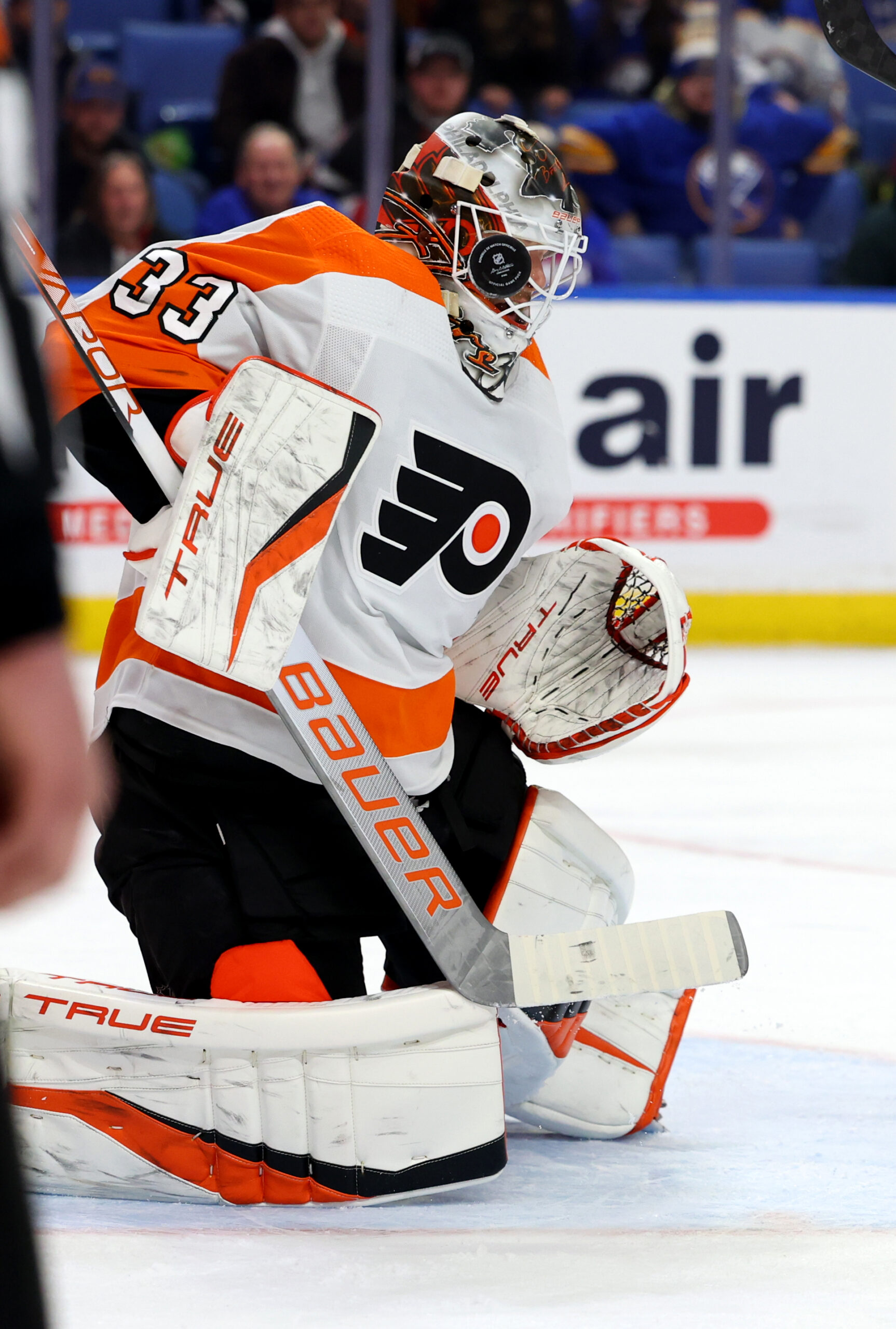 The Flyers think (hope?) they have a late-round gem in Ersson, who they selected 143rd overall in the 2018 NHL Draft. The 23-year-old made his NHL debut just last season and also took over the starting role for the AHL’s Lehigh Valley Phantoms, recording a .900 save percentage and 2.87 goals-against average in 42 games. It was a huge rebound campaign for him after injuries limited him to just five appearances with Lehigh Valley in 2021-22. The team obviously believes in him, handing him a two-year, $2.9MM extension earlier this month set to start in the 2024-25 season.
Of all the names here, Ersson’s the one the Flyers hope commands the backup role come opening night and, ideally, remains in the NHL by the time the 2023-24 season draws to a close. He is still waiver-exempt and isn’t terribly close to requiring them, either. He needs to play 48 more NHL games (or two more NHL seasons, whichever comes first) before he’ll need to clear waivers to head to the minors, per CapFriendly. That being said, from an asset management standpoint, Sandström does require waivers and is a potential claim candidate. Ersson will need to clearly demonstrate Sandström is potentially expendable from the organization with a strong camp.
Ivan Fedotov
There is a fair amount of intrigue in Fedotov’s on-ice potential. The question looms, however, if he’ll actually be at training camp. The IIHF sided with Philadelphia regarding a contract dispute between them, Fedotov and KHL club CSKA Moskva after Fedotov had two technically active contracts for 2023-24. CSKA and the KHL are likely to appeal the ruling, however, and it’s unclear whether Fedotov will travel to the United States and suit up for the Flyers.
Fedotov didn’t play at all last season after completing required military service in Russia, an unforeseen complication that occurred after the Flyers had signed him to an entry-level contract and penciled him into their backup role last season. Given the murky contractual situation and the breakout of Ersson, however, he’s lost the edge on the role. There’s no denying he’s the highest-ceiling option available, however. The 26-year-old stands at an absolutely massive 6-foot-8 and 212 pounds and won the KHL’s Best Goaltender award, an All-Star team nod, a Gagarin Cup championship, and an Olympic silver medal – all during the 2021-22 season. The year prior, he still posted spectacular numbers, recording a .925 save percentage in 26 games with CSKA.
Cal Petersen
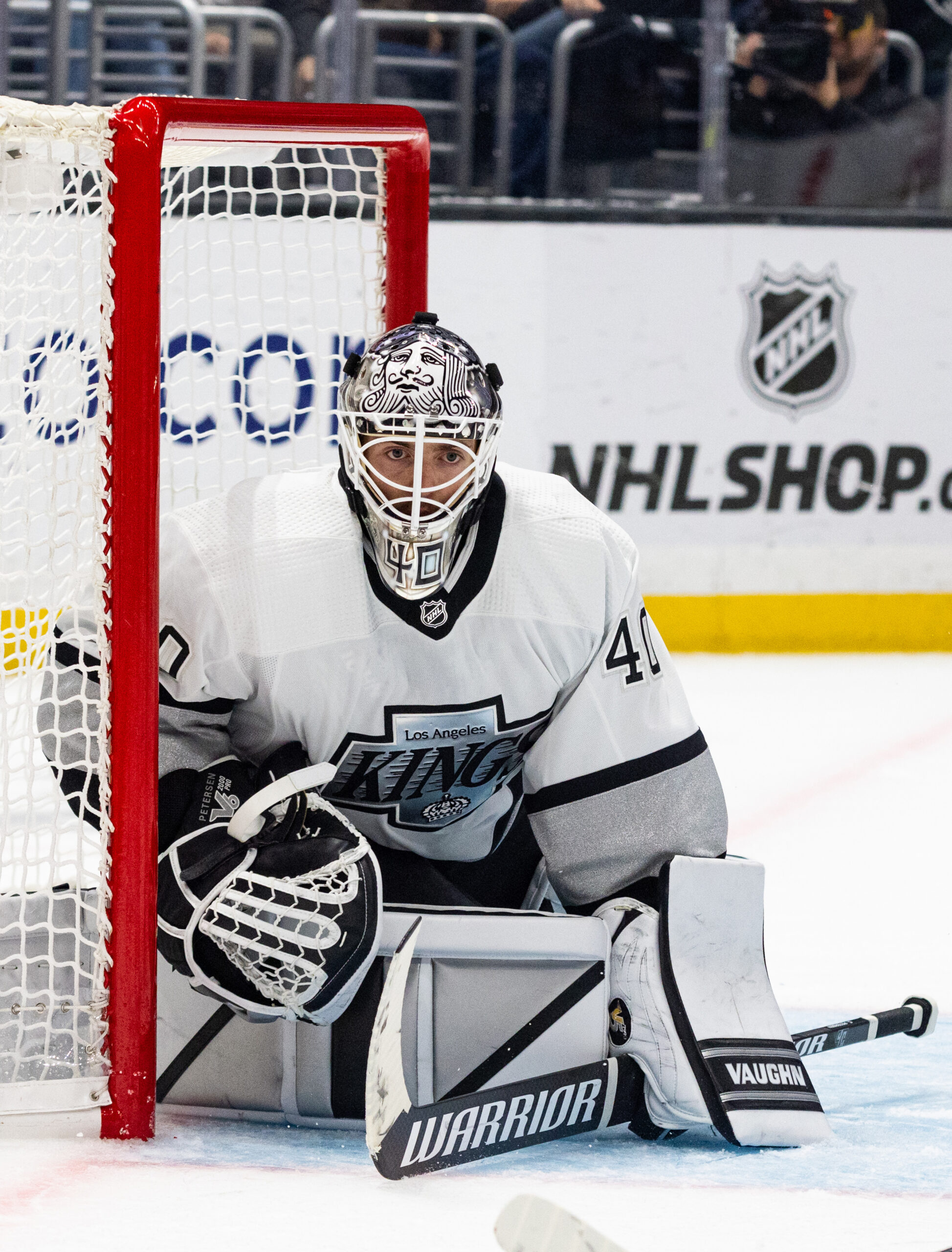 The Flyers acquired Petersen, 28, via trade from the Los Angeles Kings to provide some cap relief in the three-way deal that sent Ivan Provorov to Columbus. Briefly viewed as Los Angeles’ long-term goalie option post-Jonathan Quick, Petersen had a disastrous 2022-23 campaign which saw him post a .868 save percentage in nine starts before the Kings waived him (and his $5MM cap hit) and assigned him to the AHL.
With two years remaining on his deal, Petersen hasn’t looked like himself since posting a 9-18-5 record but a sparkling .911 save percentage and 2.89 goals-against average for the Kings in 2020-21. He’s the most experienced option available to the Flyers for the backup role with 94 NHL starts under his belt, and he may enter next season with some renewed confidence after a strong performance for the United States at the World Championships. That being said, he’s a non-candidate to get claimed on waivers given his albatross contract, and he’ll need to significantly outplay the trio of younger, higher-upside netminders here in order to return to a full-time NHL role in a Flyers uniform.
Felix Sandström
Selected 70th overall in 2015, Sandström didn’t take the step forward that Philadelphia wished he would have last season. The 26-year-old started the season as Hart’s backup but won just three out of 18 starts, posting poor advanced and standard stats in the process. He has posted good enough numbers when given the chance in the minors, but he hasn’t shown anything at the NHL level to suggest it can translate.
That being said, he’s still relatively young in goalie years at 26, and if he shows enough strides in camp, it could be enough to earn him the nod over Ersson (or Fedotov) to avoid exposing him to waivers or to make the Flyers consider carrying three netminders. Either way, he likely won’t receive more than the 20 games he played overall for the Flyers last season, save for a significant injury to Hart.
Photos courtesy of USA Today Sports Images.
2009 NHL Draft Take Two: Fifth Overall Pick
Hindsight is an amazing thing, and allows us to look back and wonder “what could have been.” Though perfection is attempted, scouting and draft selection is far from an exact science and sometimes, it doesn’t work out the way teams – or players – intended. For every Patrick Kane, there is a Patrik Stefan.
We’re looking back at the 2009 NHL Entry Draft and asking how it would shake out knowing what we do now. Will the first round remain the same, or will some late-round picks jump up to the top of the board?
The results of our redraft so far are as follows, with their original draft position in parentheses:
1st Overall: Victor Hedman, New York Islanders (2)
2nd Overall: John Tavares, Tampa Bay Lightning (1)
3rd Overall: Ryan O’Reilly, Colorado Avalanche (33)
4th Overall: Matt Duchene, Atlanta Thrashers (3)
Duchene doesn’t fall more than one spot past his original selection, winning the PHR reader poll by the slimmest margin thus far with only 29% of the total votes. Still, it’s hard to argue with the selection – Duchene remains a top-six threat and, despite his overall inconsistency, has scored upwards of 30 goals and 70 points on multiple occasions. In terms of career totals, he’s played in 123 more games than Evander Kane, Atlanta’s original pick at fourth overall, scored 14 more goals, and added a whopping 157 more assists.
The Los Angeles Kings are now on the clock at fifth overall in our 2009 redraft series. Things are looking up for the team after drafting names like Drew Doughty, Anze Kopitar, Dustin Brown and Wayne Simmonds in recent years, but they’ve now missed the playoffs for six straight years and are feeling the pressure to exit their rebuild in the post-Luc Robitaille era.
With their third-straight top-five pick, they selected center Brayden Schenn from the WHL’s Brandon Wheat Kings. The burgeoning two-way talent had solid name recognition, and the Kings had passed on his older brother, defenseman Luke Schenn, the year prior. Luke went fifth overall to the Toronto Maple Leafs after the Kings selected Thomas Hickey with the fourth overall pick.
While Schenn developed into an established top-six force in the NHL with a fruitful career, it wasn’t with the team that drafted him. He played just nine games with the Kings in the following two seasons after the draft before they traded him (along with Simmonds) to the Philadelphia Flyers in a package for center Mike Richards in 2011. With the Flyers, it didn’t take Schenn terribly long to become a strong middle-six center, eventually earning more chances higher in the lineup once moved to the wing. He tallied 20-plus goals three times in a Philadelphia jersey and had some solid possession metrics, although he never received any Selke Trophy consideration.
His career truly took off in 2017 after another trade, this time to the St. Louis Blues. He immediately posted the best season of his career, scoring a career-high 28 goals and 70 points in 2017-18 and playing nearly 20 minutes per game. He took a small step back in 2018-19, but you won’t hear any Blues fans complaining about that – he would go on to record 12 points in 26 playoff games as the Blues won the Stanley Cup for the first time in franchise history.
Set to turn 32 in a few days, Schenn is actually posting the most consistently high offensive totals of his career, combining for 123 points in 144 games over the past two seasons. His two-way game is starting to decline, but nonetheless, he’s given his two longtime NHL homes some solid hockey over the past decade-plus.
That being said, is Schenn the best player left on the board, or are there other options that would have better served the Kings? Make your voice heard in the poll below:
2009 Redraft: Fifth Overall
-
Chris Kreider 25% (227)
-
Nazem Kadri 17% (152)
-
Mattias Ekholm 15% (139)
-
Evander Kane 11% (100)
-
Brayden Schenn 9% (78)
-
Oliver Ekman-Larsson 6% (55)
-
Dmitry Orlov 3% (28)
-
Ryan Ellis 3% (23)
-
Anders Lee 2% (21)
-
Reilly Smith 1% (12)
-
Tomas Tatar 1% (9)
-
Mike Hoffman 1% (8)
-
Tyson Barrie 1% (7)
-
Marcus Johansson 1% (7)
-
Brian Dumoulin 1% (5)
-
Jakob Silfverberg 1% (5)
-
Darcy Kuemper 0% (4)
-
Dmitry Kulikov 0% (3)
-
Nick Leddy 0% (3)
-
Kyle Palmieri 0% (3)
-
Sami Vatanen 0% (3)
-
Calvin de Haan 0% (2)
-
Robin Lehner 0% (2)
-
Brayden McNabb 0% (2)
-
David Savard 0% (1)
-
Craig Smith 0% (0)
Total votes: 899
If you can’t access the poll above, click here to vote!
2009 NHL Draft Take Two: Fourth Overall Pick
Hindsight is an amazing thing, and allows us to look back and wonder “what could have been.” Though perfection is attempted, scouting and draft selection is far from an exact science and sometimes, it doesn’t work out the way teams – or players – intended. For every Patrick Kane, there is a Patrik Stefan.
We’re looking back at the 2009 NHL Entry Draft and asking how it would shake out knowing what we do now. Will the first round remain the same, or will some late-round picks jump up to the top of the board?
The results of our redraft so far are as follows, with their original draft position in parentheses:
1st Overall: Victor Hedman, New York Islanders (2)
2nd Overall: John Tavares, Tampa Bay Lightning (1)
3rd Overall: Ryan O’Reilly, Colorado Avalanche (33)
The Conn Smythe winner with the 2019 Stanley Cup champion St. Louis Blues is off the board at third overall, becoming the first player taken outside of the first round to appear in our redraft. Notably, he does stay with the team that took him on Day 2 of the 2009 NHL Draft – the Colorado Avalanche, who used their second pick of the draft on O’Reilly after selecting Matt Duchene with the third overall pick. Both players have gone on to produce good offensive totals near the top of the class, although O’Reilly’s taken home more in terms of award hardware with a championship, a Conn Smythe and a Selke Trophy all under his belt. O’Reilly won with 48% of our polling, while Duchene finished second in third-overall voting with just 13% of the vote.
Next up on the draft board is the Atlanta Thrashers at fourth overall. This was their second straight top-five selection after using the third overall pick on defenseman Zach Bogosian in 2008.
This year, however, their big prospect add was forward Evander Kane out of the WHL’s Vancouver Giants. While it wasn’t a bad pick at all if you look at his point production throughout his career and his ability to consistently play a top-six role, Kane has had a multitude of off-ice incidents throughout his career, including having his contract terminated by the San Jose Sharks in 2022 for breaching COVID protocols.
Nonetheless, Kane was a solid player for the Thrashers (and Winnipeg Jets) for parts of six seasons until he was moved to the Buffalo Sabres in 2015. He was widely viewed as the best pick available at the time – after all, he had just posted 96 points in 61 games with the Giants while recording 89 penalty minutes to boot, and he’d recorded six points in six games for Canada at that year’s World Junior Championships.
He signed his entry-level contract with Atlanta just weeks after the draft and made the NHL full-time out of the gate in a middle-six role. As an 18-year-old, he recorded 14 goals and 12 assists for 26 points in 66 games, finishing tied in Calder Trophy voting with Hedman that year. By the time the 2012-13 partial lockout rolled around, Kane had a 30-goal season under his belt and was averaging over 20 minutes per game.
After later career stops with the Sabres, Sharks and now Edmonton Oilers, Kane has some well-documented defensive weaknesses but still brings an intriguing blend of shooting ability and physicality to the table. In 853 games, he’s scored 302 goals – third among the 2009 class behind Tavares and Duchene. His 573 career points are sixth in the class.
There’s an argument to be made that the Thrashers made the right pick, but Duchene could have also been a more intriguing option had he been available for the Thrashers to select at fourth overall. They don’t have very long to decide, though, as Atlanta is now on the clock – who should they select with the fourth-overall pick in the 2009 NHL Draft? Make your voice heard below:
2009 Redraft: Fourth Overall
-
Matt Duchene 30% (247)
-
Chris Kreider 15% (126)
-
Nazem Kadri 14% (116)
-
Mattias Ekholm 12% (100)
-
Evander Kane 8% (68)
-
Oliver Ekman-Larsson 4% (35)
-
Dmitry Orlov 4% (30)
-
Brayden Schenn 3% (26)
-
Ryan Ellis 3% (25)
-
Anders Lee 2% (13)
-
Reilly Smith 1% (7)
-
Darcy Kuemper 1% (5)
-
Robin Lehner 1% (5)
-
Mike Hoffman 0% (4)
-
Tomas Tatar 0% (4)
-
Tyson Barrie 0% (3)
-
Marcus Johansson 0% (3)
-
Dmitry Kulikov 0% (3)
-
Brayden McNabb 0% (3)
-
Calvin de Haan 0% (2)
-
Nick Leddy 0% (2)
-
Sami Vatanen 0% (2)
-
Kyle Palmieri 0% (1)
-
David Savard 0% (1)
-
Jakob Silfverberg 0% (1)
-
Craig Smith 0% (1)
Total votes: 833
If you can’t access the built-in poll, click here to vote.
August Free Agency Update: Atlantic Division
As even most mid-tier free agents are now off the market, it’s a good time to look at how each team has fared on the free agent market this offseason. We’re publishing a list of one-way signings (i.e., likelier to start the season on the NHL roster) by team, per division, to keep you updated on NHL player movement since the new league year began on July 1.
Asterisked players denote a restricted free agent. Double-asterisked players denote the contract starts in the 2024-25 season. First up is the Atlantic Division:
Boston Bruins
*G Jeremy Swayman (one year, $3.475MM cap hit)
*F Trent Frederic (two years, $2.3MM cap hit)
F Morgan Geekie (two years, $2MM cap hit)
D Kevin Shattenkirk (one year, $1.05MM cap hit)
F James van Riemsdyk (one year, $1MM cap hit)
F Milan Lucic (one year, 35+ contract, $1MM cap hit)
F Patrick Brown (two years, $800K cap hit)
*D Ian Mitchell (one year, $775K cap hit)
F Jesper Boqvist (one year, $775K cap hit)
Buffalo Sabres
D Connor Clifton (three years, $3.333MM cap hit)
D Erik Johnson (one year, 35+ contract, $3.25MM cap hit)
F Tyson Jost (one year, $2MM cap hit)
Detroit Red Wings
*F Alex DeBrincat (four years, $7.875MM cap hit)
F J.T. Compher (five years, $5.1MM cap hit)
D Shayne Gostisbehere (one year, $4.125MM cap hit)
D Justin Holl (three years, $3.4MM cap hit)
F Klim Kostin (two years, $2MM cap hit)
F Daniel Sprong (one year, $2MM cap hit)
G James Reimer (one year, 35+ contract, $1.5MM cap hit)
F Christian Fischer (one year, $1.125MM cap hit)
D Gustav Lindström (one year, $950K cap hit)
G Alex Lyon (two years, $900K cap hit)
Florida Panthers
F Evan Rodrigues (four years, $3MM cap hit)
**F Eetu Luostarinen (three years, $3MM cap hit)
D Niko Mikkola (three years, $2.5MM cap hit)
D Oliver Ekman-Larsson (one year, $2.25MM cap hit)
G Anthony Stolarz (one year, $1.1MM cap hit)
D Mike Reilly (one year, $1MM cap hit)
D Dmitry Kulikov (one year, $1MM cap hit)
F Kevin Stenlund (one year, $1MM cap hit)
*F Grigori Denisenko (two years, $775K cap hit)
Montreal Canadiens
*F Alex Newhook (four years, $2.9MM cap hit)
*F Rafaël Harvey-Pinard (two years, $1.1MM cap hit)
Ottawa Senators
F Vladimir Tarasenko (one year, $5MM cap hit)
G Joonas Korpisalo (five years, $4MM cap hit)
*D Erik Brännström (one year, $2MM cap hit)
D Travis Hamonic (two years, $1.1MM cap hit)
*D Jacob Bernard-Docker (two years, $805K cap hit)
F Zack MacEwen (three years, $775K cap hit)
Tampa Bay Lightning
*F Tanner Jeannot (two years, $2.665MM cap hit)
F Conor Sheary (three years, $2MM cap hit)
F Josh Archibald (two years, $800K cap hit)
F Luke Glendening (two years, $800K cap hit)
G Jonas Johansson (two years, $775K cap hit)
D Calvin de Haan (one year, $775K cap hit)
Toronto Maple Leafs
F Tyler Bertuzzi (one year, $5.5MM cap hit)
D John Klingberg (one year, $4.15MM cap hit)
*G Ilya Samsonov (one year, $3.55MM cap hit)
F Max Domi (one year, $3MM cap hit)
F Ryan Reaves (three years, 35+ contract, $1.35MM cap hit)
G Martin Jones (one year, $875K cap hit)
F Dylan Gambrell (one year, $775K cap hit)
Contract information courtesy of CapFriendly