
Salary Cap Deep Dive: Carolina Hurricanes
Navigating the salary cap is one of the more important tasks for any GM. Teams that can avoid total cap chaos by walking the tightrope of inking players to deals that match their value (or compensate for future value without breaking the bank) remain successful. Those that don’t see struggles and front office changes.
PHR will look at every NHL team and give a thorough look at their cap situation for the 2023-24 season. This will focus more on players who are regulars on the roster versus those who may find themselves shuttling between the AHL and NHL. All cap figures are courtesy of CapFriendly.
Carolina Hurricanes
Current Cap Hit: $81,694,391 (under the $83.5MM Upper Limit)
Entry-Level Contracts
F Jack Drury (one year, $925K)
F Seth Jarvis (one year, $894K)
Potential Bonuses
Jarvis: $500K
Jarvis had an impressive rookie season before stagnating a bit last year. However, he is off to a big start this season, flirting with the point-per-game mark early on. That has him well on his way toward hitting his bonuses at a minimum while he’s the type of player that it wouldn’t be surprising to see Carolina try to work out a long-term deal with. A bridge contract likely checks in around the $4MM mark while a longer-term pact could push closer to $6.5 to $7MM. Drury has carved out a regular role this season, albeit on the fourth line. If he holds onto that for the full season, he could push for a small raise on a short-term bridge contract.
Signed Through 2023-24, Non-Entry-Level
D Jalen Chatfield ($762.5K, UFA)
D Tony DeAngelo ($1.65MM, UFA)
F Brendan Lemieux ($800K, UFA)
F Jordan Martinook ($1.8MM, UFA)
F Martin Necas ($3MM, RFA)
F Stefan Noesen ($762.5K, UFA)
D Brett Pesce ($4.025MM, UFA)
G Antti Raanta ($1.5MM, UFA)
D Brady Skjei ($5.25MM, UFA)
F Teuvo Teravainen ($5.4MM, UFA)
Teravainen has reached 63 points or more in three of the last five seasons but is also coming off a down year that saw him score just 12 times in 68 games, making this a key platform year. He’s off to a nice start and is near that goal total from 2022-23 already. If he can get back to even the 50-point mark, he could have a shot at landing a small raise on another long-term agreement. Martinook had a career year offensively last season with 34 points but is still looking for his first goal this year despite logging nearly 15 minutes a night. His typical offensive profile is one that should see him signing for a bit less than this, especially if he’s able to secure another multi-year agreement.
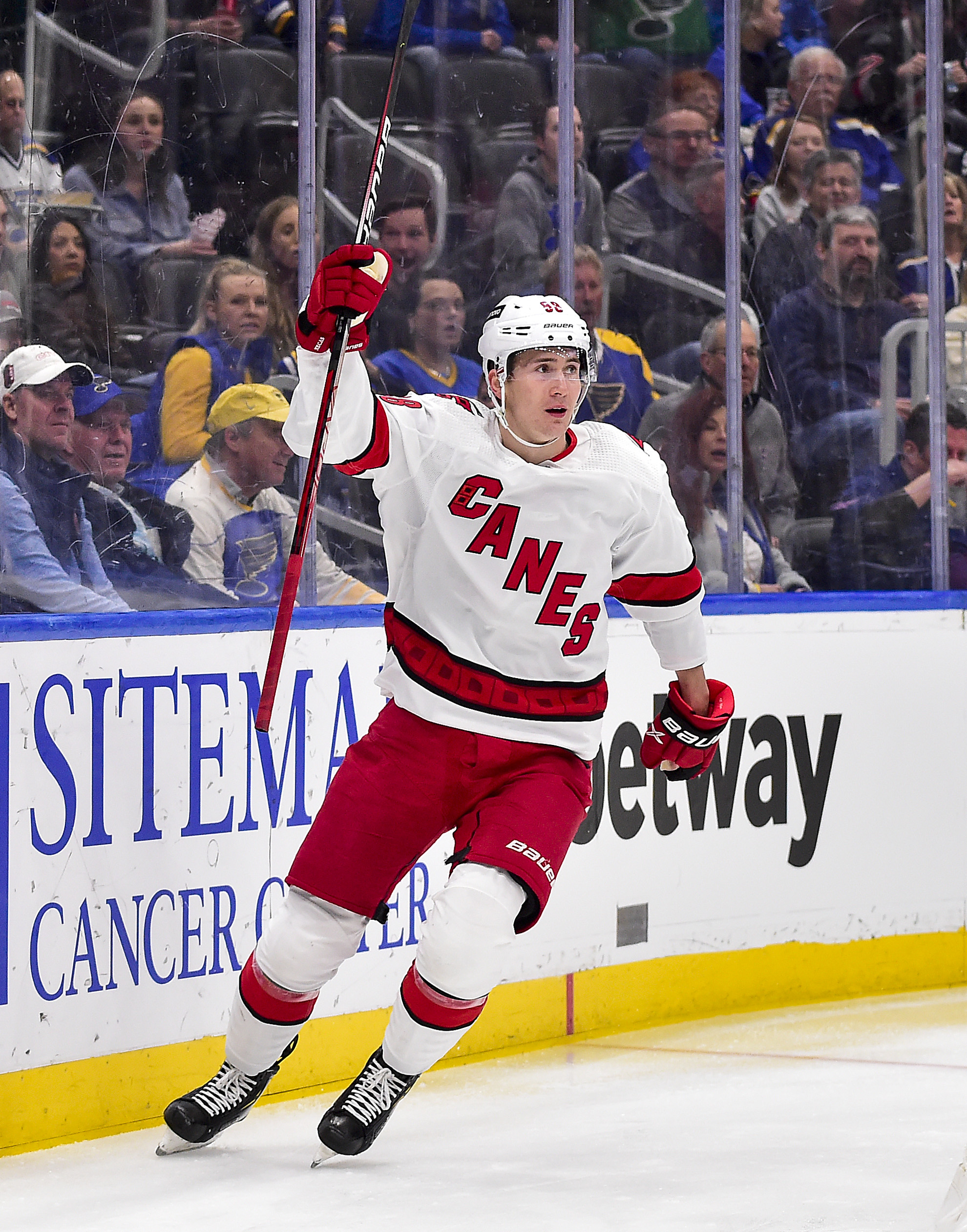 Necas is going to be a particularly interesting case to follow. He had a breakout 71-point performance last season, providing impressive value on the first year of his bridge deal. He also spent some time at center, his natural position but one he hasn’t played a ton in the NHL. At this point, Necas has established himself as a full-time top-six forward and will have arbitration eligibility for the first time this summer. His qualifying offer is $3.5MM but that’s well below what he’ll get on his next deal. His camp would probably like to see Necas deployed more down the middle to bolster his value but that might be injury-dependent. If Carolina wants to lock him up long-term, they’ll need to at least double his current AAV.
Lemieux had to take a $550K pay cut in free agency this past summer and has found himself out of the lineup more often than not this year which doesn’t bode well for his next contract. He’s going to wind up close to the minimum salary once again and even a one-way deal might not be guaranteed. Noesen has been one of the top under-the-radar bargains after putting up 36 points on a minimum-salary contract; he’s on pace for more than that this year with the AAV now below the minimum. His journeyman track record will work against him here (is it a late breakout for the 30-year-old or is he just the right system fit?) but even so, he should push for closer to $2MM on the open market. If enough teams think it’s a late breakout, that number will go higher.
Skjei had never reached the 10-goal mark until last season when he broke out with an 18-goal campaign. He has consistently been a strong third option on the back end and should be in a position to land at least a small raise and, at 30, close to a max-term agreement if he wants to pursue that long of a contract. Pesce has been in trade speculation dating back to the summer as many suspect the Hurricanes won’t be able to keep him in the fold. Like Skjei, he’s a reliable second pairing player but has a better defensive game but a weaker offensive one. The fact he’s also a right-hand shot will also help his market. Both players should land somewhere in the $6MM range.
DeAngelo was a late entrant into free agency after being bought out by the Flyers after a planned trade to the Hurricanes didn’t go through quite as planned. Unfortunately, the reunion hasn’t been great so far as playing time has been hard to come by and he has struggled. Nonetheless, a contract similar to this one could still be doable from a team looking to add some offensive upside on the back end at a lower cost. Chatfield has worked his way up to being a reliable sixth defender with very strong possession numbers. He’s the type of player that a team or two might believe is capable of a bigger role which could drive his price tag past the $2MM mark.
Raanta acknowledged that he left money on the table to remain with Carolina over the summer. That might wind up biting him a bit in the end as he has struggled considerably this season which won’t help his marketability this summer. That said, if he can turn things around, something in this range should still be doable, perhaps with the Hurricanes if they want to keep the extra depth.
Signed Through 2024-25
G Frederik Andersen ($3.4MM, UFA)
D Brent Burns ($5.28MM, UFA)*
F Jesper Fast ($2.4MM, UFA)
D Dmitry Orlov ($7.75MM, UFA)
D Jaccob Slavin ($5.3MM, UFA)
*-San Jose is retaining an additional $2.72MM on Burns’ contract.
Fast has been a capable depth scorer for most of his career while also being an effective penalty killer. Assuming that holds up over these last two years – he’s off to a bit of a slow start this season – there’s little reason to think he could land another two or three seasons around this price point. It’s worth noting he’ll be 34 at that time, however, which may restrict his market a bit.
Orlov surprised many by signing the priciest deal in free agency in terms of AAV, electing to take a short-term inflated contract with the hopes of landing another one in a more favorable marketplace two years from now. It was also surprising that Carolina was the one to give it to him with the depth they had on the back end plus them needing to re-sign or replace Skjei and Pesce a year from now. The move hasn’t worked out the greatest so far although there’s lots of time to turn it around. He’ll also be 34 when it’s time to sign his next contract so it’d be difficult to expect he’d land this much, even with the projected raise in the cap. But if it came in starting with a six on a three-year deal (or even four) if he’s able to turn his play around, going this route could ultimately work out well for him.
Slavin hasn’t been asked to play true number one minutes recently but that doesn’t mean he can’t handle them; he’ll almost be certainly valued as someone who can in free agency. He’s not a top point producer but he has shown progress on that front as well while being a stalwart in his own end. Accordingly, he could be pushing for $8MM or more on a max-term agreement, even though he’ll be 31 at that time. Burns has fit in quite well with Carolina while still playing a big role. However, he’ll be entering free agency at age 40. Will he even want to sign another deal? If he does, it’ll almost certainly be a one-year agreement, setting up the ability for a team to make some of it bonus-based for additional cap flexibility.
Andersen also took a pay cut to remain with Carolina over the summer and he was also off to a rough start to his season. However, he’s now out indefinitely with blood clots and it wouldn’t be fair to speculate on his next deal until he’s able to return.
Signed Through 2025-26
F Michael Bunting ($4.5MM, UFA)
Bunting went from being a fringe piece with Arizona to an integral part of Toronto’s top six over the last two seasons, making him one of the more intriguing players to hit the market over the summer. He didn’t quite wind up with a long-term deal but this one should hold up pretty well if he can provide around 45 points a year on the second line. If he does, he’ll have a much more favorable market next time around having proven he can produce outside of Toronto.
What Your Team Is Thankful For: Dallas Stars
As the holiday season approaches, PHR will be taking a look at what teams are thankful for in 2023-24. There also might be a few things your team would like down the road. We’ll examine what’s gone well in the early going and what could improve as the season rolls on for the Dallas Stars.
Who are the Stars thankful for?
There were a number of different ways that we could have gone here, but it is hard to dismiss the agelessness of 39-year-old Joe Pavelski.
Many pundits thought the Dallas Stars had made a big miscalculation back in July 2019 when the club signed a then 34-year-old Pavelski to a three-year $21MM contract just ten days before his 35th birthday. And one season into the deal, it sure looked like the pundits were right. Pavelski looked lost and tired as he suffered through one of the worst seasons of his NHL career. But since that first year, he has registered 91 goals and 142 assists in 242 games.
Now part of those numbers are because Pavelski is playing fewer minutes than his career average, and he is also playing with very skilled teammates, but it is hard to discount all the intangibles Pavelski has brought to the Stars dressing room on top of being a bonafide top-6 forward. Pavelski hasn’t had to sacrifice any of his attention to detail when it comes to his defensive responsibilities and continues to remain in the conversation when it comes to Selke Trophy considerations year after year. All of this in his 18th NHL season, while he continues to play under a very team-friendly cap hit making just $3.5MM this season (plus $2MM in bonuses).
Pavelski might not be the biggest star in Dallas, but his reliability at both ends of the ice, and his ability to make everyone around him better continue to impress as he pushes towards his 40th birthday.
What are the Stars thankful for?
Their scouting staff.
Very few teams have hit on late first-round picks and second-round picks the way the Dallas Stars have over the last decade. The Stars were fortunate to pick the likes of Miro Heiskanen third overall. But most of their depth was built off smart picks later in the draft. All-star goaltender Jake Oettinger was a late first-round pick 26th overall in the 2017 NHL entry draft, Jason Robertson was selected 13 spots later at 39th overall and has emerged as a top-flight offensive talent. Roope Hintz was a late second-round pick in the 2015 draft while Wyatt Johnston was selected 23rd overall in 2021. The list goes on and it goes to show just how Dallas has built a team that can contend year in and year out.
The stars currently boast some of the best depth in the NHL evidenced by Johnston centering a third line that features Jamie Benn. They haven’t just hit on draft picks as they’ve also been able to make smart free-agent signings (see Pavelski above) and craft trades along the way. The scouts in Dallas at both the amateur and pro level have done a commendable job identifying available talent that other NHL clubs are undervaluing.
What would the Stars be even more thankful for?
Ryan Suter dialing it back.
At 39 years old it is unlikely that Ryan Suter is going to find another gear suddenly. The 11-time all-star defenseman has seen his offensive game fall into a decline since 2020, while his defensive game has been slipping away since 2015. Suter was once considered one of the top two-way defensemen in the NHL, but time has caught up to the Madison, Wisconsin native.
In Dallas, Suter has been thrust into a role that is probably outside of his current skillset as he has played significant minutes with Miro Heiskanen. Suter is averaging over 20 minutes a night, and while that is a steep decline from last season, it is still a rather large number for one of the oldest defensemen in the NHL.
The drop-in ice time has mostly come from Suter being removed from the Stars’ power play. With his speed and footwork in decline, the Stars have made the call to primarily use Suter at even strength on their top pairing. The good news for Suter is that he is partnered up with Heiskanen and can benefit from the youngster’s strong skillset. Suter hasn’t been terrible this year and has mostly been fine, but given the Stars’ Stanley Cup aspirations, it will be important that Suter finds another gear, or the Stars look for someone who can better log Suter’s minutes and perhaps bump him down the depth chart.
What should be on the Stars holiday wish list?
A defenseman.
As mentioned above, Suter could probably benefit from a more sheltered role in the Stars’ defense core. Esa Lindell could also use some help as well as he too has had his struggles. All this points to the Stars needing to shop for another defender.
Dallas is in the fortunate position to have a decent farm system from which they could trade, and also have some young roster players that could entice teams to part with a defenseman. Although I would avoid trading Johnston if possible.
The Stars could benefit from a right-side defenseman, and while it wouldn’t improve Suter’s position on the depth chart, it would allow Jani Hakanpää to slide down into the bottom pairing. Hakanpää has had a rough start to the season and would likely welcome some sheltered minutes on a 5-6 pairing.
If Dallas opts to trade for right-shot defensemen there will certainly be options available to them. Tyson Barrie of the Nashville Predators is out there, as is Chris Tanev of the Calgary Flames. If the Stars wanted to be bolder, they could take a run at Noah Hanifin as he would slot in beautifully on their top pair next to Heiskanen.
Cap space will be an issue for the Stars, but as we inch closer and closer to the trade deadline it will become less of an issue. Dallas is on the cusp of breaking through in the playoffs and one more defenseman could be just the thing that gets them over the hump and back to the Stanley Cup finals.
Big Hype Prospects: Bains, Fowler, Sandin-Pellikka, Atanasov, Buium
Welcome to PHR’s Big Hype Prospects series. Like the MLB Trade Rumors series of the same name, we’re taking a look at the performances of top prospects from across the hockey world. We’ll look at drafted prospects who are rising, others who are struggling, and prospects for the upcoming draft who are notable.
Five Big Hype Prospects
Arshdeep Bains, LW, Vancouver Canucks (Abbotsford Canucks, AHL)
17GP 3G 18A 21pts
With 21 points in just 17 games this season, the 22-year-old Bains is shaping up to be a developmental success story for the Canucks. As trades and poor drafting has dried the team’s pipeline of young talent, the organization has relied on signings of high-scoring WHL products. Tristen Nielsen, who scored 41 points for Abbotsford last season, is also an example of this but the true gem signing thusfar has been Bains.
A five-year WHLer with the Red Deer Rebels, Bains only truly broke out in his overage season in the WHL. Before that point, his career-high was 18 goals and 51 points in 63 games. Then in 2021-22 he put together a stunning season with 43 goals and 112 points in 68 games.
That campaign earned Bains an entry-level contract with the Canucks, who put him in their middle-six in the AHL for the following season. He had a solid rookie year but not a dominant one, scoring 13 goals and 38 points.
So far this season, Bains has been one of the best scorers in the entire AHL, and he’s currently on pace to score 86 points over the course of a full season. Of course, he could very well end up in the NHL before he gets the chance to put together a potentially MVP-winning AHL season.
Many high-scoring overagers from the CHL struggle to translate their offense to a more demanding pro-environment. That hasn’t been a problem for Bains thus far this year.
Jacob Fowler, G, Montreal Canadiens (Boston College, NCAA)
12-3-1 2.04 GAA .929 sv%
Despite posting an 8-1 record and .952 save percentage in the USHL playoffs en route to a Clark Cup Championship, Fowler did not hear his name called until the third round of the 2023 NHL draft, after several goalies had already been selected.
Concerns over Fowler’s fitness from scouts led to many teams opting for more athletic prospects such as Adam Gajan or Michael Hrabal, but so far this season Fowler has arguably performed the best out of any of 2023’s goalies.
Playing for a Boston College program that could very well compete for a national championship, Fowler has started 16 games and gone 12-3-1. Almost every one of his starts has been a quality one, and he currently has a .929 save percentage and just a 2.04 goals-against-average.
Perhaps more importantly, Fowler has addressed concerns regarding his fitness. According to Radio Canada’s Marc-Antoine Godin, Fowler has cut his weight down from 220 pounds at the time of the draft to 200 pounds now, crediting both time in the gym as well as a “serious change in his nutrition.”
Not only has Fowler had no issue carrying over his USHL brilliance to the college level, he now seems to have seriously addressed one of the most significant question marks surrounding his NHL projection.
Although the Canadiens drafted three goalies in 2023, the early portion of this season has indicated that it’s Fowler who is most likely to end up the Canadiens “goalie of the future.”
Moving forward, all eyes will be on whether Fowler is able to unseat Michigan State starter Trey Augustine as the expected number-one goalie for Team USA at the upcoming World Junior Championships.
Axel Sandin-Pellikka, RHD, Detroit Red Wings (Skellefteå AIK, SHL)
23GP 8G 4A 12pts
One of the most talented offensive defensemen in the 2023 draft class, the early returns on Sandin-Pellikka have been strong. The right-shot blueliner has firmly established himself as an SHL-caliber player after playing in just 22 league games last season, and he has excelled in multiple areas.
Not only is he playing a heavy dose of minutes (he gets legitimate top-four ice time) but he’s also scoring goals at a far higher rate than is typically expected of a defenseman, let alone an 18-year-old one. Sandin-Pellikka is on pace to score 18 goals in a 52-game season, assuming he can keep this pace up.
The Red Wings selected Sandin-Pellkka 17th overall at the 2023 draft in large part due to confidence that his tantalizing offensive tools would translate into meaningful production at higher levels of hockey.
Although it’s still early, the Red Wings have to be encouraged by how well his dynamic, pace-pushing game has adjusted to one of the top leagues in the world.
Vasili Atanasov, C, Free Agent (Nizhny Novgorod Torpedo, KHL)
35GP 17G 15A 32pts
One of the most challenging things any prospect faces is making the adjustment from playing against one’s peers in a junior league to playing against men in a professional environment. Many players fail in that environment, unable to translate what made them so successful at lower levels to a heightened level of competition.
For Atanasov, a 21-year-old undrafted forward, that adjustment has finally come in 2023-24. A former top scorer at Russia’s junior level, Atanasov has taken the reins of head coach Igor Larianov’s Torpedo squad and is now on pace to score 32 goals and 60 points.
Atanasov possesses a similar physical profile to Canucks star Andrei Kuzmenko, who did not become a point-per-game KHL scorer until his mid-twenties. Atanasov could very well be at that point at 21 years old, which would bode well for his NHL projection should he have any interest in crossing the Atlantic.
Seeing as Kuzmenko turned a 53-point KHL campaign into a 39-goal, 74-point NHL rookie season the following year, if Atanasov can keep up his scoring pace he’ll likely be a highly in-demand free agent the moment he offers his services to NHL clubs.
Zeev Buium, LHD, 2024 Draft Prospect (University of Denver, NCAA)
16GP 5G 16A 21pts
With Russian “unicorn”Anton Silayev soaking up early-season headlines with his breakout rookie KHL season, other defensemen in the 2024 draft class have gotten less attention than they might otherwise have received. One of those blueliners deserving of more hype is Buium, a leading freshman for the Denver Pioneers.
A U.S. National Team Development Program product, Buium is the brother of one of the Red Wings’ best defensive prospects, Shai Buium. The younger Buium has more of an offensive touch than his older brother, and has a similar physical profile, listed now as six-foot-two on Denver’s team website.
Despite the fact that he is a draft-eligible prospect, Buium has firmly placed himself in the conversation for the upcoming World Junior Championships. He’s scored 21 points in his first 16 NCAA games, and could very well end the campaign with one of the best pre-draft college hockey seasons by any defenseman in recent memory.
A well-rounded player with strong skating and a good mind for the game, Buium has already risen sharply on NHL draft boards, and at this point it would be a surprise if he did not hear his name called in the draft’s first round.
What Your Team Is Thankful For: Columbus Blue Jackets
As Thanksgiving and the holiday season approaches, PHR will be taking a look at what teams are thankful for in 2023-24. There also might be a few things your team would like down the road. We’ll examine what’s gone well in the early going and what could improve as the season rolls on for the Columbus Blue Jackets.
Who are the Blue Jackets thankful for?
Not only is the team captain first among the team in goal-scoring, but he is first in scoring among all Columbus forwards. If Jenner is set to continue his offensive pace for the rest of the season, he is set to clear his career record in both goals and points.
While high-priced players such as Johnny Gaudreau and Patrik Laine continue to struggle early in the season, Jenner is picking up their offensive slack in a big way. Not only has Jenner been getting it done on the offensive end, but his defensive play has been solid this year as well.
Currently sitting at 56.1% faceoff percentage in nearly 500 draws, Jenner also carries at 51.0% Corsi For percentage, as well as a 91.0% On Ice SV%, both of which sit higher than his career averages. It has been a tough start to the year for the Blue Jackets in the standings, but their team captain is by far and away their most stable and consistent player each night.
What are the Blue Jackets thankful for?
An improved defensive core.
After finishing last season at 31st in the NHL in terms of GA/G, the General Manager of Columbus, Jarmo Kekäläinen, swung two big trades to dramatically improve the defensive depth for the Blue Jackets. In only three days, Columbus acquired Damon Severson from the New Jersey Devils in a sign-and-trade, while also acquiring Ivan Provorov from the Philadelphia Flyers in a three-team deal.
There is still a lot of time left in the season, but in the same GA/G statistic, the Blue Jackets have managed to jump up nine spots, allowing goaltender Elvis Merzlikins to play more comfortably between the pipes. Not only has their defense improved, but Provorov, along with defenseman Zach Werenski, sits third and first on the team in scoring, respectively.
Unfortunately, Severson will find himself on the team’s injured reserve for a total of six weeks due to an oblique injury, and rookie defenseman David Jiricek is experiencing some growing pains in his first full season with the team. Nevertheless, thanks to the big moves made to upgrade the blueline last offseason, the Blue Jackets defensive core is much improved from where it was just a season ago.
What would the Blue Jackets be even more thankful for?
More production from their star players.
This season, one of the most glaring issues in Columbus is the lack of production from both Gaudreau and Laine, who are making a combined $18.45MM until the 2026-27 season. As we are now in December, the two have only combined for eight goals and 20 points, much lower than what should be expected out of both of them.
Gaudreau, for his part, has managed five points in his last five games but only scored eight points in his first 20 games before that. Laine, who is one of the more natural goal-scorers in the NHL, has scored three points in his last five games, only managing a total of four points in his previous 10 games. The Head Coach of the Blue Jackets, Pascal Vincent, sent a serious message to Laine only a few weeks ago, making him a healthy scratch for the first time in his career. 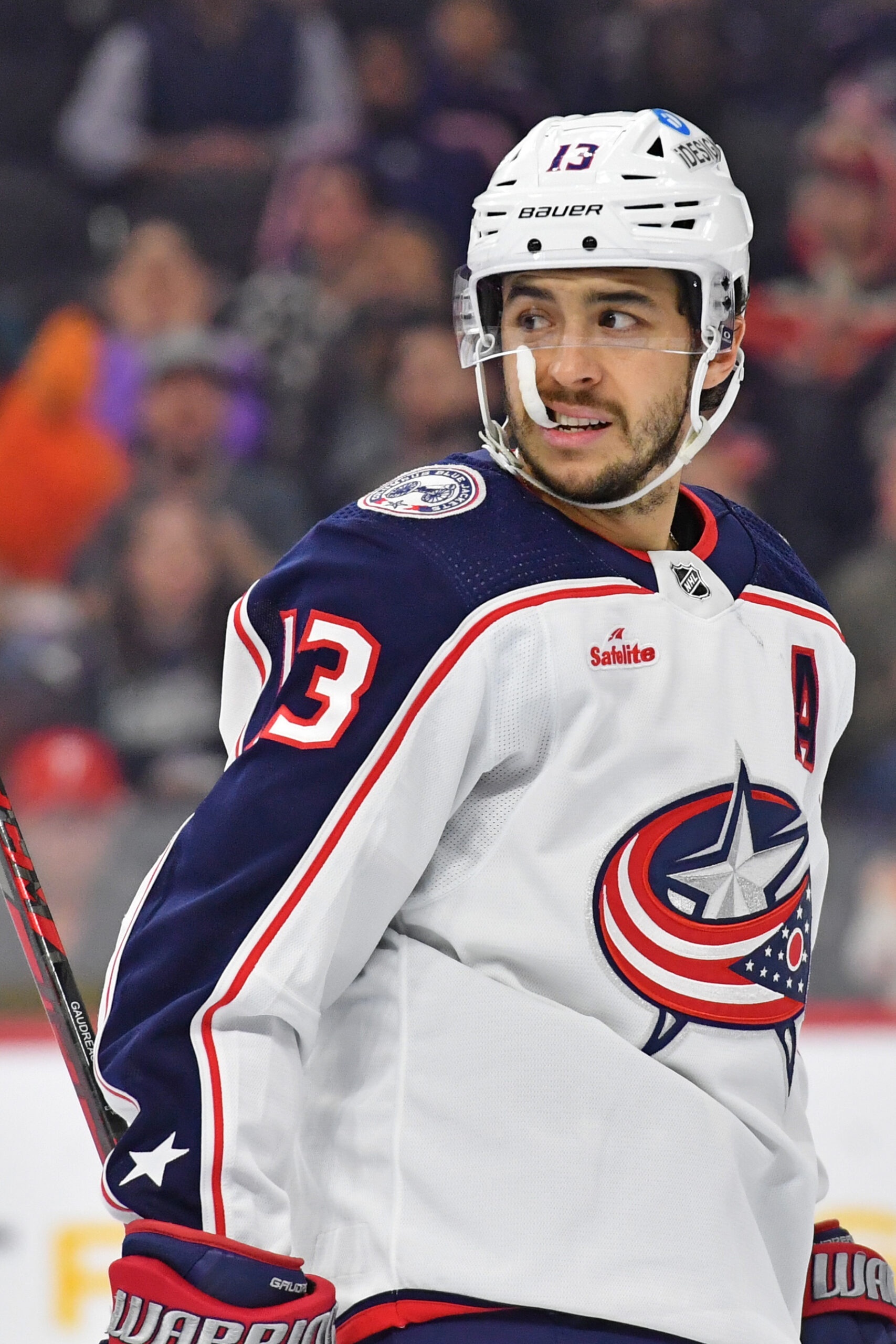
Now playing in their 22nd season as a franchise, the Blue Jackets only playoff series victory came back in the 2019 Stanley Cup playoffs, where the team relied heavily on star talent such as Artemi Panarin and Pierre-Luc Dubois. If Columbus is hoping to return to contention, although it will likely not be this year, their star players must lead the way.
What should be on the Blue Jackets holiday wish list?
More draft picks.
On paper, if the Blue Jackets can get their star players clicking again, this team has the depth to compete in the Eastern Conference playoff race as soon as next year. Unfortunately, aside from Gaudreau, Columbus has historically had a difficult time recruiting free-agent talent, meaning they will have to improve this team via trades and the NHL Draft.
Last year, given the strength at the top of the draft, the Blue Jackets “settled” for Adam Fantilli with the third overall selection, who otherwise would have been the top player available in several other drafts. At this year’s draft, there is similar talent at the top of the class, and Columbus looks poised to once again have a top-10 pick.
Sitting at 27th place in the league and last place in the Metropolitan Division, the Blue Jackets should be one of the featured sellers at this year’s trade deadline, with plenty of teams looking to improve their lineup. Columbus will almost certainly look to move out at least one defenseman and could look to seriously thin out their surplus of bodies in the forward core as well.
Photo courtesy of USA Today Sports Images.
Salary Cap Deep Dive: Vegas Golden Knights
Navigating the salary cap is one of the more important tasks for any GM. Teams that can avoid total cap chaos by walking the tightrope of inking players to deals that match their value (or compensate for future value without breaking the bank) remain successful. Those that don’t see struggles and front office changes.
PHR will look at every NHL team and give a thorough look at their cap situation for the 2023-24 season. This will focus more on players who are regulars on the roster versus those who may find themselves shuttling between the AHL and NHL. All cap figures are courtesy of CapFriendly.
Vegas Golden Knights
Current Cap Hit: $89,210,531 (over the $83.5MM Upper Limit)
Entry-Level Contracts
D Kaedan Korczak (one year, $789.1K)
Potential Bonuses
Korczak: $82.5K
Korczak has bounced back and forth between Vegas and AHL Henderson this season and that will likely continue. He’s someone who could be a candidate for taking less than his qualifying offer in exchange for a one-way salary. Meanwhile, his bonuses are games played-based and while it’s unlikely he’ll top out, he should reach at least some of that amount which, thanks to them being in LTIR, will result in a bonus carryover penalty for next season.
Signed Through 2023-24, Non-Entry-Level
F Michael Amadio ($762.5K, UFA)
F William Carrier ($1.4MM, UFA)
F Pavel Dorofeyev ($825K, RFA)
D Ben Hutton ($850K, UFA)
F Jonathan Marchessault ($5MM, UFA)
D Alec Martinez ($5.25MM, UFA)
D Daniil Miromanov ($762.5K, RFA)
F Chandler Stephenson ($2.75MM, UFA)
 Marchessault had a strong showing last year with 57 points and followed that up with a Smythe-winning performance to help Vegas win the Stanley Cup. Accordingly, some expected that he’d be a strong candidate for an early extension but the veteran acknowledged that there weren’t talks in the summer as GM Kelly McCrimmon tends to wait before handing out new deals. That hesitation might be wise on the part of the Golden Knights as the 32-year-old is off to a slower start. He’s still in line to get a multi-year deal but it might wind up coming closer to this AAV in the end whereas in the summer, he likely could have pushed for $6MM or more on a long-term agreement.
Stephenson has been one of the better bargains around the NHL in recent years; his trade from Washington certainly sparked his offense, making him a quality two-way center. He’s also off to a quieter start this season but his recent track record will be good enough for some teams to view him as a second-line fit. Accordingly, he should reach (or even surpass) the $5MM mark on the open market. Carrier, one of the few remaining original expansion picks, hasn’t really moved up the depth chart over his now seven seasons in Vegas but remains an every-game fourth liner that brings plenty of physicality. The open market isn’t always great for players in that role but after his good playoff showing, he could be one of the exceptions and push for closer to $2MM.
Dorofeyev is in his first full season with Vegas although a good chunk of that has been in a reserve role. While he’s arbitration-eligible next summer, he also doesn’t have enough of an NHL track record to command much more than his $866K qualifying offer. As for Amadio, he has become one of the better recent waiver claims around the league, going from a fringe player to a full-time bottom-six piece who has produced at a pretty good rate after notching 16 goals last season. If he stays on the pace he’s on now for this year, he could easily double this AAV on the open market.
At the time Martinez’s deal was signed, the belief was that the final season could be a bit of a drag for the Golden Knights. Unfortunately, injuries struck in the first year and since then, his minutes have been closer to the 19-minute mark compared to the 21 or 22 minutes he has been at in the past. Effectively, he has gone from being a number two blueliner to a fourth option. Given his age (36), that’s not entirely surprising. His next deal, if there is one, is likely to be a one-year agreement closer to half this price point and could also contain some games played incentives.
Hutton is a serviceable seventh defender who can hold his own on the third pairing when needed. It’s hard to see him commanding much more than this on the open market while the Golden Knights need to keep this roster spot as close to the league minimum as possible. Miromanov lands on here due to his LTIR presence as he has yet to play this season. When healthy, he’ll likely return to AHL Henderson and is another candidate to sign for less than his qualifier in exchange for a one-way deal in the summer.
Signed Through 2024-25
D Nicolas Hague ($2.294MM, RFA)
G Adin Hill ($4.9MM, UFA)
F Brett Howden ($1.9MM, UFA)
F Keegan Kolesar ($1.4MM, UFA)
G Robin Lehner ($5MM, UFA)
D Brayden McNabb ($2.85MM, UFA)
D Brayden Pachal ($775K, RFA)
D Shea Theodore ($5.2MM, UFA)
G Logan Thompson ($766.7K, UFA)
Howden wound up accepting what amounts to a third bridge deal over the summer, settling after filing for arbitration. His production dropped last season and is at a similar clip this year although he plays an important role on the defensive side of things. That said, unless his offense comes around, he’ll be in tough to get much more than this in free agency, even as a 27-year-old at that time. Kolesar is in a similar situation as Carrier, just without quite as long of a track record. He’s a true fourth liner which limits his earnings upside but some team is going to look at him playing a regular role in the playoffs last year and use that to justify an above-market offer that could also push him into the $2MM range.
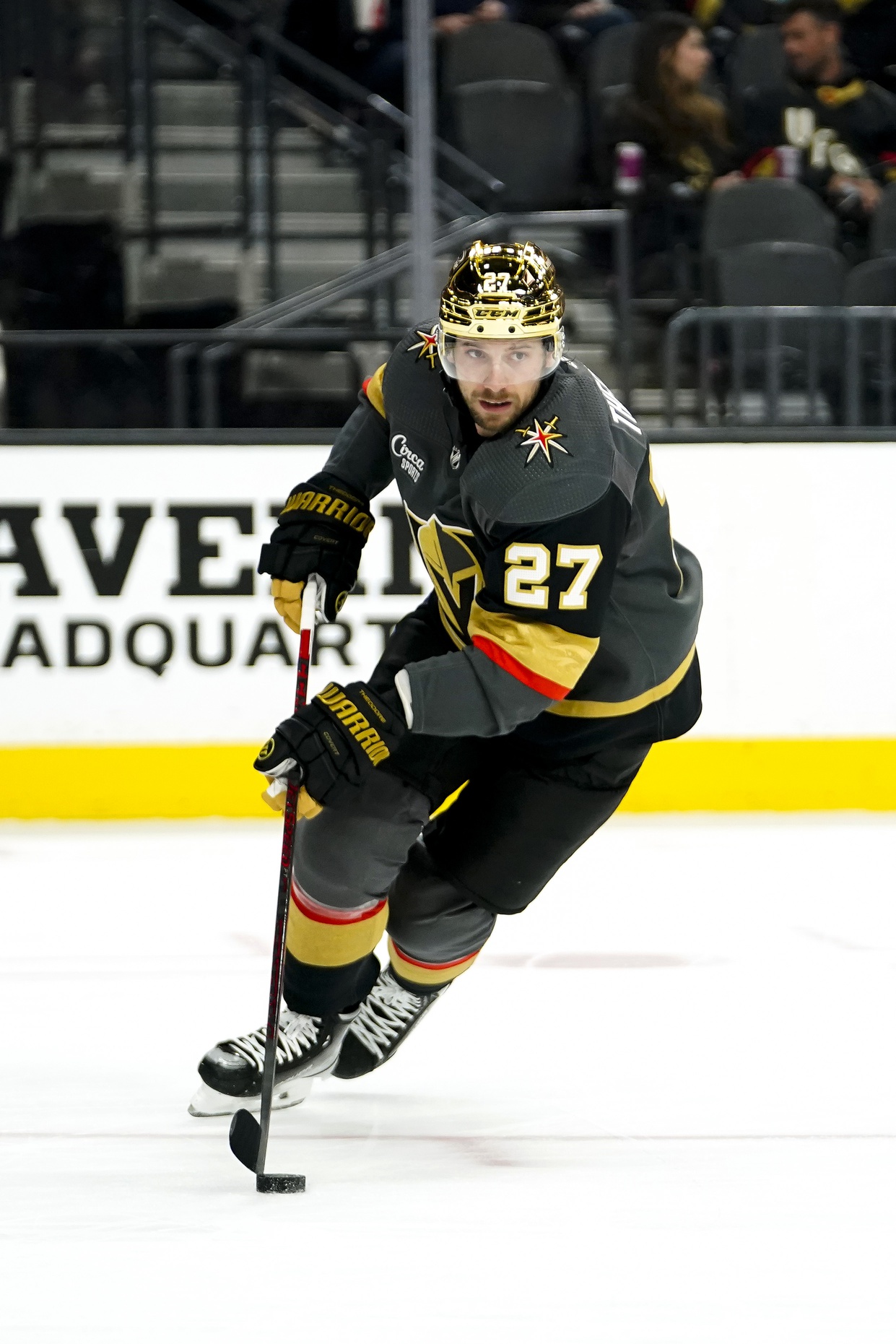 Theodore showed plenty of promise but was a little inconsistent early in his time with the Golden Knights, understandable given his age at the time. That has changed now as he has become an all-around all-situations player who can log big minutes on the top pairing. His offensive game has blossomed to the point where he could make a case for number one money if he gets to the open market. Not to the top-end level, mind you, but a long-term deal in the $9MM range could be doable. It might be tough for Vegas to match that price point, however, so if he wants to stay with them, Theodore might have to leave a bit of money on the table to do so.
McNabb has turned into a reliable second-pairing shutdown defender over his tenure with Vegas. He’s being paid at the level of a higher-end depth piece so this contract has certainly worked in their favor. The offense is limited which hurts to an extent but we’ve seen shutdown blueliners go well past $4MM in recent years. It seems reasonable to think McNabb will land there as well.
Hague was basically limited to a bridge deal in 2022 with Vegas not having enough cap room to entertain a longer-term agreement. However, his play has largely leveled out since then, slotting in as a fourth or fifth defender most nights. This is still a good value contract but perhaps a long-term next summer might cost less than it could have if Vegas had the ability to offer one last time out. He’ll be owed a $2.7MM qualifier and should land more than that with arbitration rights but his cap might be in the $4MM range if he stays at this level. Pachal is waiver-eligible this season which has helped keep him on the NHL roster. He’s in a depth role at the moment and until he can lock down a full-time spot on the third pairing, it’s hard to see him getting much more than this even with arbitration rights.
Lehner missed all of last season after undergoing hip surgery and remains on LTIR now. At this point, it’s reasonable to suggest that he might be on there for all of next season as well, especially based on what they did with Hill this summer.
Speaking of Hill, he certainly benefitted from his strong playoff performance, earning a deal that few would have seen coming just a few months earlier. It’s a deal they could afford thanks to Lehner’s LTIR. So far, he has been even better this season. It’s early but if he can maintain that level, he could push closer to the $6MM range on a long-term agreement. If he goes back to his level of play before his time in Vegas, he’s still on the upper end for platoon players so he could still come close to this contract.
As for Thompson, his first full season was quite good, earning an All-Star nod while finishing second on the All-Rookie team. Hill’s playoff run largely took away from that but Thompson remains an above-average NHL netminder with a cap hit below the league minimum, making him one of the top bargain deals in the league (and one I missed in a recent mailbag when discussing value deals). Even if he stays in a platoon through the end of this contract, he could also push past the $4MM mark, especially if multiple teams see him as a true starter. If that happens, $5MM or more becomes doable.
Signed Through 2025-26
F Paul Cotter ($775K, RFA)
F Jack Eichel ($10MM, UFA)
Vegas landed their long-coveted top center when they acquired Eichel and while no one can say that his contract is well below market value, they’re getting a decent return value-wise. Last season, he was close to a point-per-game player and is near that mark again this year. Accordingly, given the demand for centers, if he was on the open market today, he’d get pretty close to this, perhaps even a bit more. He’ll be 30 when he hits free agency and while there could be a cheaper year or two at the end on a max-term agreement, a small raise could still be doable. Cotter has become a quality fourth liner who can move up in a pinch. Three years for that at the minimum is a nice piece of business. If he can stay as a regular throughout the deal, he could have a shot at doubling this in free agency.
What Your Team Is Thankful For: Colorado Avalanche
As Thanksgiving and the holiday season approaches, PHR will be taking a look at what teams are thankful for in 2023-24. There also might be a few things your team would like down the road. We’ll examine what’s gone well in the early going and what could improve as the season rolls on for the Colorado Avalanche.
Who are the Avalanche thankful for?
Although Nathan MacKinnon and Mikko Rantanen are MVP-caliber players in their own right, it is difficult to imagine a successful Avalanche team without defenseman Cale Makar on the blue line. Not only is Makar one of the best offensive defensemen in the entire league, there is an argument to be made that he is the best all-around player in the league, given his ability to shut down other team’s best players.
Through 21 games so far this season, Makar has six goals and 26 assists, which would put him on pace for a 125-point season, which would be one of the best seasons put together since the days of Paul Coffey and even Bobby Orr. On the defensive side of the puck, Makar holds an impressive +20 rating, a 55.5% CF%, and a career-best 92.1% oiSV%, all while averaging over 24 minutes of ice time per night.
Even at $9MM per year for this season and the following three, the contract that Makar is under is beginning to look like one of the bigger steals in the league today. With a Calder Trophy, Norris Trophy, Conn Smythe Trophy, and a Stanley Cup ring all in his collection before the age of 26, Makar is on pace to be one of, if not the best defenseman who has ever played in the NHL.
What are the Avalanche thankful for?
Improved depth.
Last season, in an attempt to repeat as Stanley Cup champions, the Avalanche were severely knocked by injuries, using a total of 27 forwards, 11 defensemen, and five goaltenders. With a decent amount of cap space this past summer, Colorado used a majority of that to improve the depth of their team, bringing in Ryan Johansen, Ross Colton, Miles Wood, Tomas Tatar, Jonathan Drouin, Joel Kiviranta, Fredrik Olofsson, and Ivan Prosvetov.
From the forwards that were brought in, the Avalanche have gotten 25 goals, and 23 assists, allowing forwards such as MacKinnon and Rantanen to not carry such a burden on their shoulders. Although team captain Gabriel Landeskog still finds himself on LTIR, as well as the relatively recent placement of Artturi Lehkonen, Colorado has still maintained a 15-6-0 record, sitting in third place in the Western Conference.
As seen in the team’s playoff loss to the Seattle Kraken in the first round of last year’s playoffs, depth is an important part of any successful team, and up to this point, it has paid off well for the Avalanche. 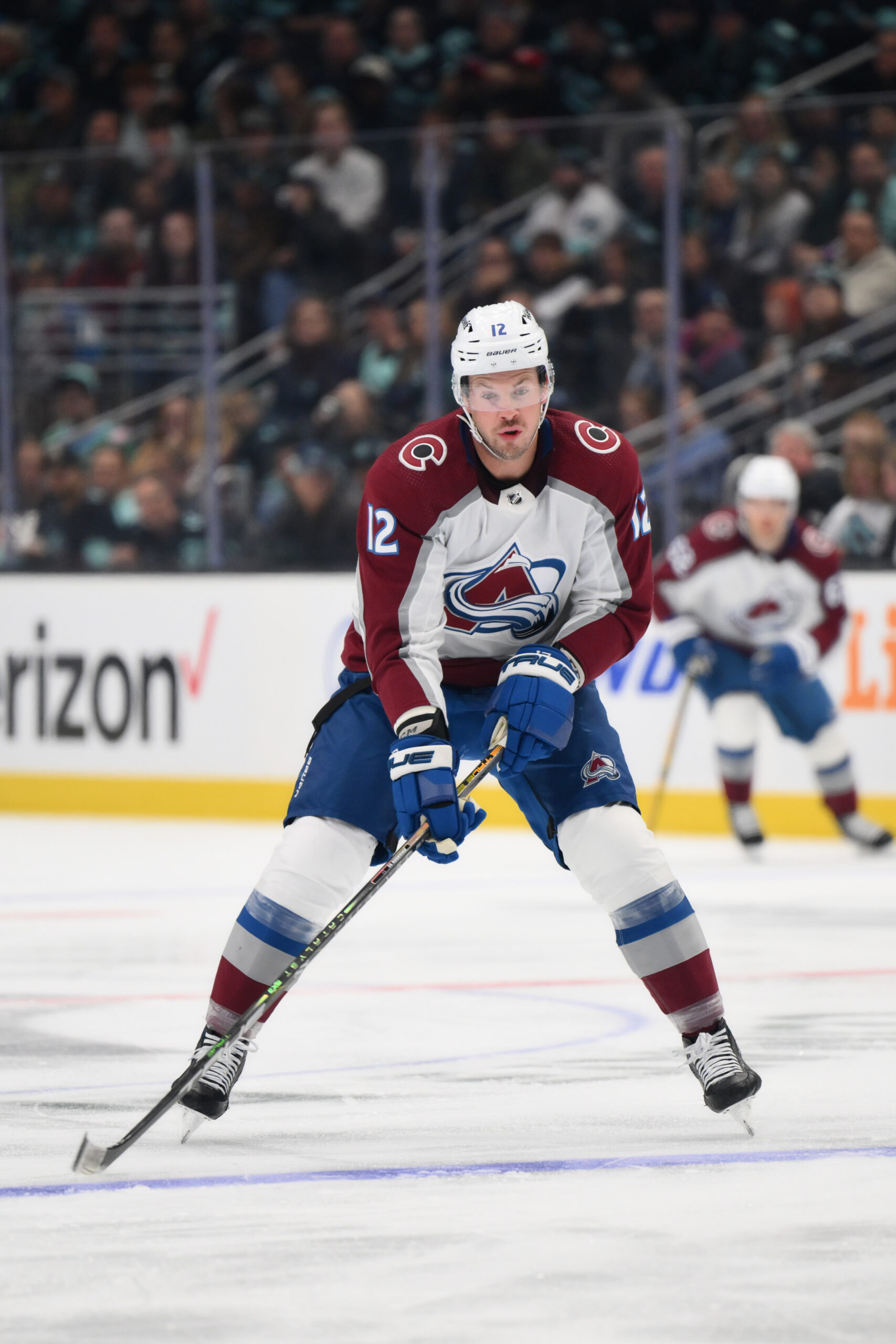
What would the Avalanche be even more thankful for?
More stability in the net.
Last season, his first with the team, Alexandar Georgiev started in 62 games, winning 40 of them, while posting a .918 SV% and a 2.53 GAA. Although the wins are largely a team statistic, Georgiev still placed in the top 10 for Vezina Trophy voting after spending much of his career as a backup for the New York Rangers.
Once again leading the league in wins for goaltenders with 13, Georgiev is not producing the same way he did last season. Through 18 starts, he holds a .898 SV% and a 44.4% quality start percentage according to Hockey Reference’s analysis, a 21.7% drop from last season.
Thankfully, the defense playing in front of him has shored up a lot of his shortcomings through the season so far, but as any Stanley Cup winning can attest to, once in the playoffs, a team will rely on their goaltender to steal a game or two. Georgiev has been solid in his last three starts, but Colorado will need him to play with more consistency between the pipes going forward if they are to compete for the Stanley Cup again this spring.
What should be on the Avalanche holiday wish list?
One more goal-scorer.
As of right now, Colorado sits second in the league in goals, but due to their improved depth, Rantanen and Valeri Nichushkin are the only two players on the team with double-digit goals. Especially on the powerplay, as the Avalanche are currently sitting in 18th place in the league with a 19.77% completion rate, another goal-scorer could turn this team into a monster come playoff time.
Although plenty could change leading up to the deadline, Colorado may look for buy-low short-term options to improve their goal-scoring capabilities, as Mike Hoffman of the San Jose Sharks could be a potential fit in the next several weeks. However, given the current state of the standings in the Eastern Conference, and a potential inability to keep him on a long-term deal next offseason, there may be a winger playing for the Pittsburgh Penguins that could be up for grabs.
Currently, on the last year of a five-year, $30MM contract, there is a possibility that the Penguins will make Jake Guentzel available at the deadline if they do not climb the standings in the next couple of weeks. Hitting 40 goals twice in his career up to this point, it would be a near-perfect addition to the Avalanche, who should be looking for a winger to complete their top-six heading into the playoff season.
Photo courtesy of USA Today Sports Images.
What Your Team Is Thankful For: Chicago Blackhawks
As Thanksgiving and the holiday season approaches, PHR will be taking a look at what teams are thankful for in 2023-24. There also might be a few things your team would like down the road. We’ll examine what’s gone well in the early going and what could improve as the season rolls on for the Chicago Blackhawks.
Who are the Blackhawks thankful for?
Is there any debate here? Bedard represents the highlight of the Blackhawks’ roster for both the present and future. The 18-year-old leading the way with ten goals and seven assists in 20 games – on pace for 41 goals and 70 points – will be a repeated refrain throughout the next decade-plus. The team has struggled by design, not quite ready to emerge from their rebuild. Some veterans have stepped up to the plate to complement their star teenager. However, the leading point producer among those veterans, Corey Perry, is no longer a member of the organization after a workplace incident earlier this month resulted in the termination of his contract.
GM Kyle Davidson is a close second here. A strong performance at the 2023 NHL Draft in the later rounds has positioned the Blackhawks’ prospect pool even more robust than it already was. But make no mistake – this season is going exactly as planned. They currently rank last in the Central Division, remain in contention for a lottery pick in 2024, and have the rookie performance from Bedard that everyone expected.
Bedard’s strong play also serves the same role Patrick Kane had the past few seasons. His strong point production is boosting the numbers of the Blackhawks’ pending free agents, making players like Nick Foligno and Tyler Johnson likely to fetch better returns at the 2024 Trade Deadline. Jason Dickinson, also a pending UFA, may have the most value with 12 points through 20 games and a +4 rating, but he hasn’t seen much time with Bedard as a fellow centerman.
What are the Blackhawks thankful for?
A strong goalie trade market.
Multiple teams will be looking for help in the crease on the trade market. The Oilers’ need is the most publicized, but tandems for the Devils, Hurricanes and Wild have also stuttered. Those teams could look to make a short-term upgrade.
Luckily, the Blackhawks have one of the more appealing options in Petr Mrázek. While injuries and inconsistency have plagued him throughout his career, he has shown the ability to be a high-end tandem option in a good year. 2023-24 looks like one of those seasons.
With Mrázek in the crease, the Blackhawks’ record is 5-6-0 – much higher than it should be. He’s got a .906 SV% that remains above league average on a porous defensive team and has posted eight quality starts in 11 tries, according to Hockey Reference’s determination. He’s also a pending unrestricted free agent with a cap hit of $3.8MM that can easily be reduced via salary retention. There should be callers here. If the Blackhawks retain 50% of his contract to make his AAV $1.9MM for an acquiring team, they should be able to fetch a second-round pick. That would be quite the return on their investment after the Maple Leafs paid the Blackhawks to take on Mrázek’s contract by moving down 13 slots in the 2022 draft.
What would the Blackhawks be even more thankful for?
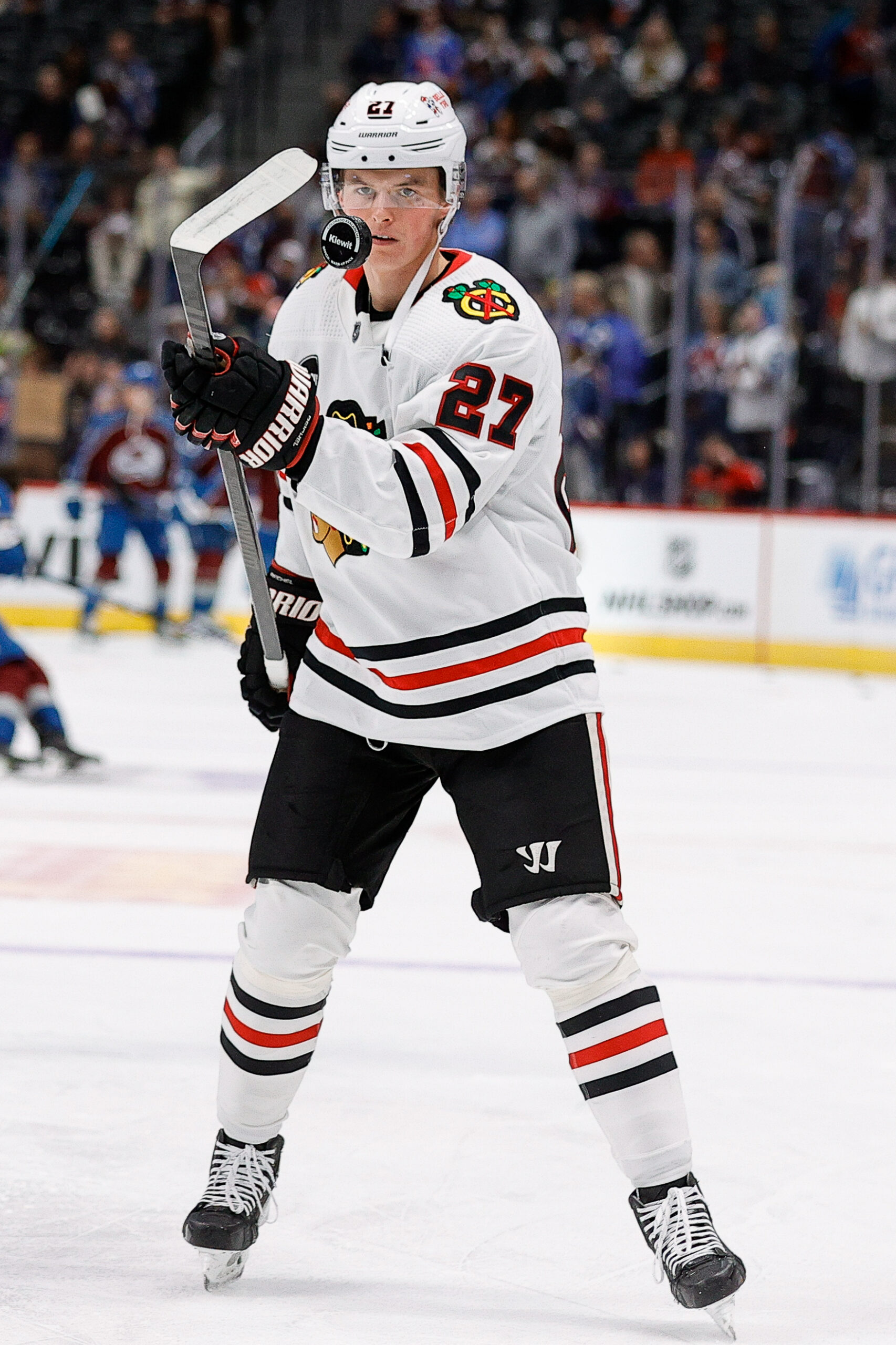 Signs of life from Lukas Reichel.
This season, the Blackhawks expected big things from Reichel, their 17th-overall selection in 2020. Behind Bedard, Reichel was supposed to anchor the team’s second line and build on last year’s strong showing, during which he notched 15 points in 23 games and put up nearly a point per game in the minors.
Unfortunately, the trains on the Reichel track have all come to a screeching halt. The German-born center/winger has scored just once in 20 games this season and has only five points overall, having a team-worst -15 rating and a 43.1% Corsi share at even strength that ranks near the bottom of the team.
The goal of this season is still development. With that in mind, it’s a bit confusing why there have been no reports of the Blackhawks considering assigning Reichel to the minors, especially given he still carries waiver-exempt status.
For now, it would make sense to keep him on the NHL roster on a performance basis. He’s one of the higher-ceiling players available to the team, and they’re in desperate need of secondary scoring after losing Taylor Hall for the rest of the season with a knee injury. However, given their place in their rebuild, that shouldn’t be the Blackhawks’ frame of thinking. Reichel’s development into a bonafide top-six forward needs to resume without haste. It would greatly relieve the organization if he could get things going one way or another as the calendar shifts to 2024.
What should be on the Blackhawks’ holiday wish list?
A clear, long-term linemate for Bedard coming into view.
Hall was supposed to be the solution to the above question. When the Blackhawks acquired him from the Bruins last summer, he had two years remaining on his contract and was likely to partner with Bedard for almost all of the 164 games he’d play in Chicago on that deal.
Injuries limited (and will limit) Hall to just ten games this season, after which he’ll be a pending UFA and is only signed through 2025.
Bedard is flanked by Foligno and Philipp Kurashev, the latter of whom has produced 12 points in 14 games. However, Kurashev is likely not a long-term top-line option, leaving the Blackhawks with more questions than answers about how they’ll fill out their top unit as they turn the corner to contention.
Could that linemate come in the form of U.S. National Team winger Cole Eiserman, a remarkable goal-scoring threat (25 in 19 games this season) expected to go second overall in 2024? Could it be more playmaking-inclined threats expected to go in the top ten of the 2024 draft, like Finn Konsta Helenius? WHL Spokane forward Berkly Catton? The options will be there for Davidson and company on draft day.
The only other internal option who’s a wing and carries a potential long-term first-line ceiling is University of Michigan winger Frank Nazar, who has 17 points in 16 contests this year after the Blackhawks selected him 13th overall in 2022. It’s important not to rule him out just yet.
Photo courtesy of USA Today Sports Images.
PHR Mailbag: Blue Jackets, Gaudreau, Kane, Rasmussen, Oilers, Hockey Canada
Topics in this edition of the PHR Mailbag include the rough start to the season for the Blue Jackets, how the Oilers could get out of their slump, and much more. If your question doesn’t appear here, check back in next weekend’s mailbag.
Black Ace57: What does Columbus do going forward if their high-paid stars keep struggling? They looked like a team that could compete this year, but if their top guys keep struggling it looks more like a team in need of a retool or short rebuild.
I wasn’t sold on the Blue Jackets being a playoff team this season but I was expecting them to be more competitive than they have been so far. In theory, I agree with you that a retool would help but the problem is who do they retool with? Selling low on Patrik Laine isn’t wise. Same for Johnny Gaudreau. I don’t think they’re moving Boone Jenner either. So, aside from the currently injured Jack Roslovic, the forwards they’d move don’t have a particularly significant track record; they aren’t players that will bring impact pieces in return.
On defense, Andrew Peeke and Adam Boqvist have some value but they’ve been on the block for most of the season now. Clearly, the offers haven’t been great as otherwise, they’d have been moved already. Erik Gudbranson doesn’t have a trade market and the other veterans are players they probably don’t want to trade.
If they can find a taker for Merzlikins, they can try the lateral goalie swap and hope the change of scenery works for each player. With his contract ($5.4MM through 2026-27), that’s easier said than done.
They’ve changed the coach multiple times now. They’ve changed the goalie coach. Pulling those levers again isn’t going to change much. So my recommendation to them would be to play the youngsters as much as possible and hope that the veterans find their footing. If they don’t, at least the development of their young core players gets advanced. That’s a small win but with their current situation, that might be the best-case scenario aside from moving out some rentals closer to the trade deadline if they’re out of it by then.
Pyramid Headcrab: Any insight on Johnny Gaudreau? His scoring has completely fallen off a cliff, and his play does not inspire confidence. Can you think of any other players who have had such a precipitous drop after signing a new contract?
And more vitally, is this a case of a guy completely phoning it in after getting a big paycheque, or is this a case of a player not fitting in a new system?
The player who replaced Gaudreau in Calgary comes to mind, Jonathan Huberdeau. He gets acquired, signs the long-term extension, and falls off a cliff, notching 60 fewer points compared to 2021-22. This season, he’s on pace for even less. Jeff Skinner also fits the bill. After a 40-goal year in his first season with Buffalo, he followed that up with 23 points followed by 14, making his deal one of the worst in the league. Fortunately for the Sabres, he turned it around and while his contract isn’t a bargain, it looks a lot better now.
Gaudreau will get an opportunity to do like Skinner and play his way out of this. There is no trade market for him at the moment. In a perfect world, Adam Fantilli becomes the top-line center they think he can be, giving Gaudreau a higher-end linemate that he hasn’t had with the Blue Jackets so far. If that happens, I think he can rebound somewhat. Not to the point where $9.5MM is viewed as a bargain but also not among the worst in the league either.
I also don’t think this is a case of Gaudreau cashing in and checking out, so to speak. I suspect this is more just him not fitting into the current system and lacking that impact center to play with. Granted, at $9.5MM, it should be Gaudreau helping elevate a linemate, not him needing a better linemate to bring out the best in him. It hasn’t gone well for him in Columbus so far but I think he can turn it around.
Winter in Colorado: What’s your take on Patrick Kane’s return? Every talking head out there thinks he’ll come back and be fine. No player has ever returned successfully from hip resurfacing surgery. It’s entirely possible Kane will be the next Nicklas Backstrom. Yet, I haven’t heard this from any hockey media. It really doesn’t matter what team or contract Patrick Kane wants if he can’t play.
This is a great point and frankly, it wasn’t even one I was really considering too much but you’re absolutely right, it does have to be factored in. Ed Jovanovski didn’t come back for too long when he had it. Ryan Kesler had it done and never played again. Backstrom wasn’t bad last season after coming back but now, it’s fair to wonder if his playing days are done. If I’m a GM, this should be something to consider.
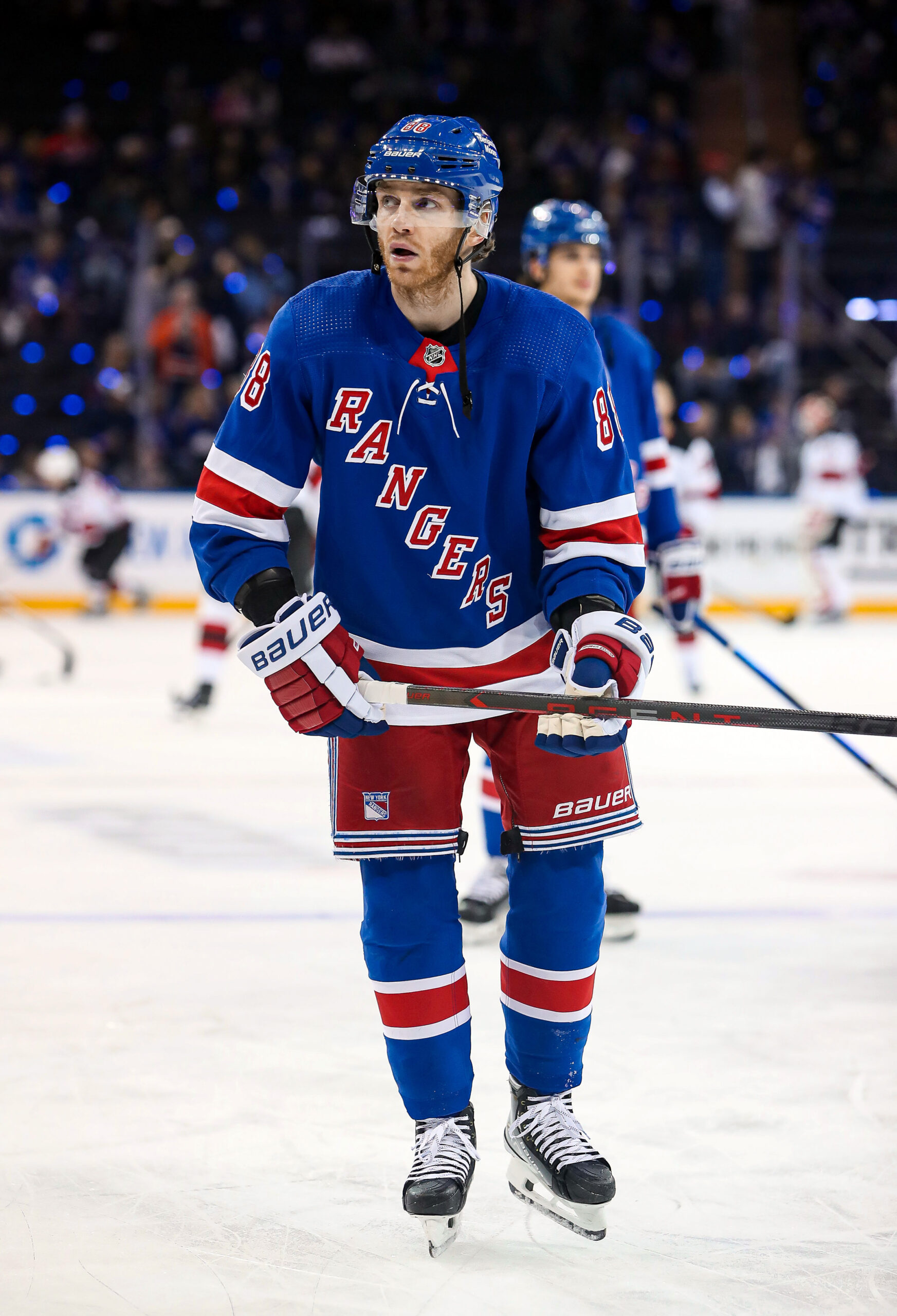 I wonder if Backstrom’s situation could make Kane’s camp lean toward pursuing a multi-year deal. While it’s possible he leaves money on the table if he is able to buck the trend, locking in guaranteed money with injury concerns can rarely be called a good idea.
Here’s what I keep coming back to with Kane. The contending teams that want him are almost all in cap trouble. Their preference is undoubtedly going to be Kane taking a cheap deal that doesn’t require them to turn around and move out another player, possibly with an incentive added with so few teams being able and willing to take on money.
Kane is going to have to pick between trying to ring chase now (and perhaps land in a spot where he can be insulated a bit which helps from a health standpoint) or going for one last big financial score. I lean toward him taking the former (perhaps not by choice; the big-money deals are going to be tough to get at this point of the year) as that’s where his best options for short-term success will be.
Binnie: Two questions to ask. The first one is which team has the best chance of signing Patrick Kane. The second is about Michael Rasmussen contract extension, how long are the terms and average salary per offered if true.
There seems to be some speculation that his preference would be to stay in the East after finishing up last season with the Rangers, a team that it doesn’t look like he’ll be returning to. Florida doesn’t have a lot of cap space but there seems to be considerable mutual interest and frankly, of the Eastern contender teams that could have a realistic shot at trying to afford him, they might be the best fit.
Buffalo is out there both for the fact he’s a local and the sense he’d help give them a boost in a season that they’re supposed to emerge from their rebuild. Detroit is believed to be in the mix as they’re looking to get out of missing the playoffs as well. Both of them can afford pricier long-term deals. If Kane wants one of those, I’d lean to Buffalo. If he’s willing to take the one-year deal, Florida is my pick for where he signs.
As for Rasmussen, I’m sure Detroit GM Steve Yzerman is at least kicking the tires. The center is a pending RFA so a deal will have to get done at some point. It’s safe to say that he’ll get more than his $1.72MM qualifier, especially with arbitration rights. But I don’t think Rasmussen has shown enough to receive a long-term extension, the types that are often done in-season. Barring injury, he’d have gotten there last year but he doesn’t have a 30-point season under his belt and he’s at a lower pace offensively so far this season.
Honestly, I think the best play for both sides here is a one-year pact, another bridge deal if you will. If I’m Detroit, I’d be leery about going higher than a low $3MM offer on a multi-year agreement (three or more seasons). If I’m Rasmussen, why am I locking in long-term for that when I can get $2MM or more on a one-year deal and ideally have a better platform year? Those would be my picks for a new contract for Rasmussen which is why I don’t think the two sides will get one done.
Nha Trang: Alright, how’s this for a deadly hypothetical? Congratulations, Brian! You’ve just been drafted to be the new GM of the Oilers, a team in the dumps, with over half of their cap space tied up in just six players (each and every one of them with NMCs), you’re projected to have only $10MM of cap space NEXT season, and you’ve got a goalie in the minors with a no-trade clause and a nearly $4MM cap hit himself. What’s your turnaround strategy, beyond fleeing screaming for Tahiti? (That, or coming to Massachusetts to clock me upside the head with a goalie stick for making the suggestion.)
My strategy is probably pretty similar to the one they’ve probably been looking into. In net, I’m looking for change-of-scenery players that wouldn’t necessarily require a huge inducement to take on Campbell’s deal. I’m looking at Columbus and Elvis Merzlikins or Seattle and Philipp Grubauer. Both netminders are signed for as long as Campbell and their AAV’s are less than $1MM apart. With Columbus, perhaps add in Cody Ceci and Andrew Peeke to make the money come close to matching and with Seattle, Ceci and William Borgen for the same purpose. That’s probably not the exact trade when all is said and done, that’s the core of the swap.
If those don’t work, I think I might make a bigger offer for Arizona’s Karel Vejmelka. (The problem is they won’t take Campbell back.) The Coyotes don’t seem to be locked in with having him as their long-term starter and if I can get two years at $2.75MM to pair with Stuart Skinner, that’s worth pursuing. Kulak is probably the money matcher and as much as I wouldn’t want to do it, I could be persuaded to put Xavier Bourgault, one of their top prospects, in the offer. This isn’t a viable situation for a rebuild, not with their core. Selling is not an option so the swing is defensible.
Failing that, Montreal’s Sam Montembeault would be my next target since his contract is a lot easier to fit into the current salary structure; he could be added without subtracting anyone of consequence off their current roster. A first-round pick is off the table but if they accepted a package headlined by a second-rounder, that would be worth pursuing. That’s not going to be a big upgrade in terms of getting a new starter but that at least shores up the backup spot, increasing the chances of getting points from those games which will help as they look to get back into a playoff spot.
I’d also look at shaking up the back end. Between Ceci, Brett Kulak, Evan Bouchard, and Philip Broberg, they have a lot of defenders who are mobile but not particularly good in their own end. One or two of those is manageable, four out of seven on the roster is an issue. Moving Kulak and/or Ceci for different-styled players making similar money (Peeke and Borgen are examples from the earlier goalie offers) would be useful. Getting more defensive structure and stability should help solve some of the goaltending struggles and with the remaining puck-movers plus Darnell Nurse and Mattias Ekholm, their offensive game shouldn’t take much of a hit.
Up front, I don’t think I’d change a whole lot. What I would do is waive one of Adam Erne or Sam Gagner to make them waiver-exempt and shuffle one of them back and forth (down on off days) along with James Hamblin. (Not at the same time as they need 12 forwards though.) The idea would be to dip out of LTIR on those days and bank a tiny bit of cap space which might come in handy at the deadline. Ideally, it’d be nice to get a penalty kill specialist into Gagner’s spot and a more skilled fourth line grit player into Erne’s but given their weaker prospect pool, I wouldn’t be trading much for those. Rather, I’d watch the waiver wire for more optimal fits.
Otherwise, this is a good forward group and I expect they’ll turn it around on their own. That coupled with better defense and possibly better goaltending should get them into the playoffs at least.
What Your Team Is Thankful For: Carolina Hurricanes
As Thanksgiving and the holiday season approaches, PHR will be taking a look at what teams are thankful for in 2023-24. There also might be a few things your team would like down the road. We’ll examine what’s gone well in the early going and what could improve as the season rolls on for the Carolina Hurricanes
Who are the Hurricanes Thankful For?
Of all the Hurricanes players, so far this season Jarvis has been the most impressive and taken the biggest step forward. 2018 third-overall pick Jesperi Kotkaniemi was a contender for this title until the calendar flipped to November and his hot start faded quickly.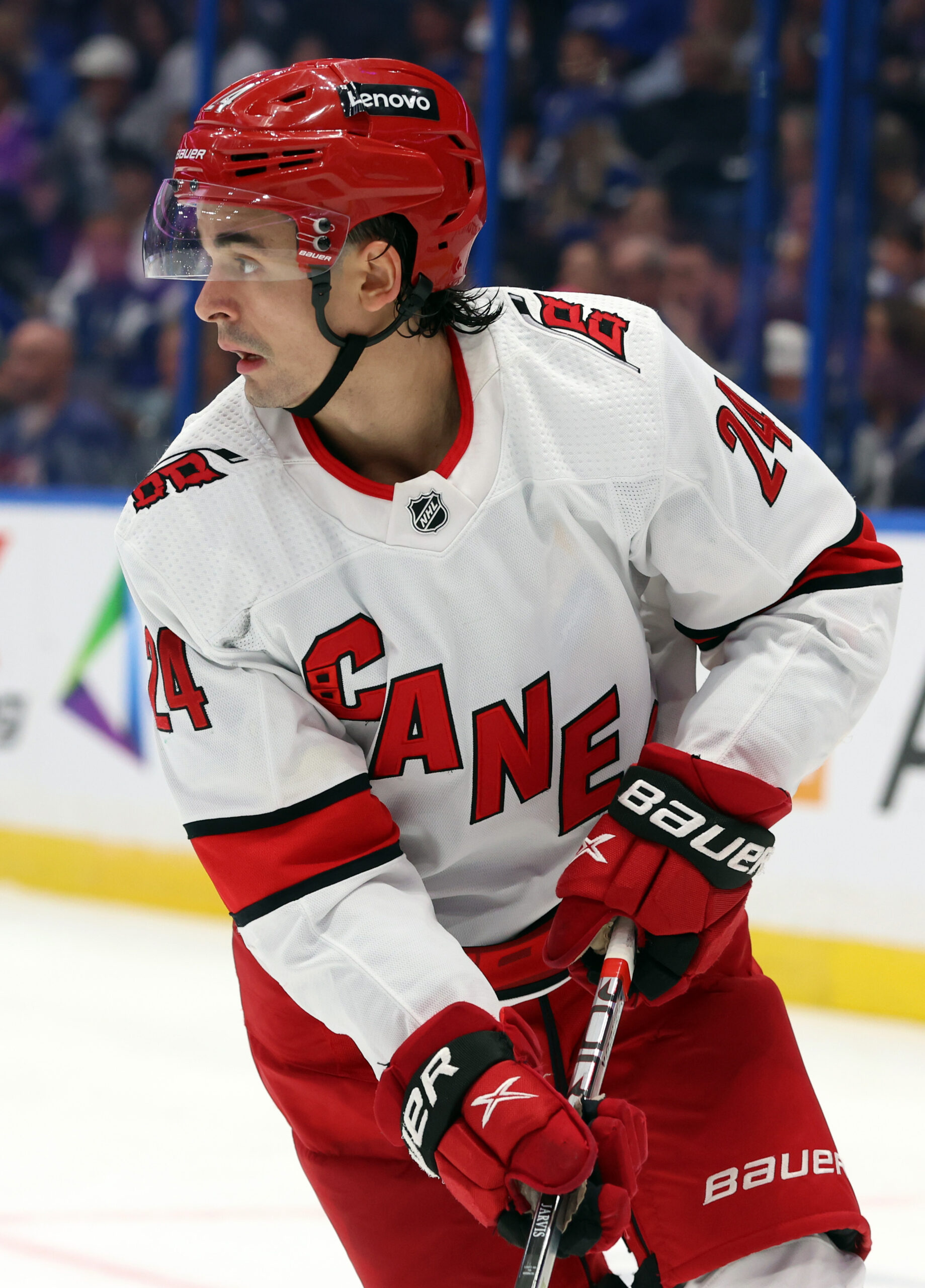
While Kotkaniemi still appears on track to have the best season of his NHL career, it’s Jarvis who has stood out the most.
At the moment, Jarvis is only behind franchise pivot Sebastian Aho on the team’s scoring leaderboard and is on pace to register 35 goals and 65 points by the end of the season. But based on how he has been performing, there is a distinct possibility that Jarvis’ pace even increases over the course of the season.
A player who is defined by his aggressive and fearless approach to creating offense, Jarvis stands just five-foot-ten and yet is an extremely difficult player to win battles against.
The Athletic’s Cory Lavalette reported that Jarvis added eight pounds of muscle this offseason, and his diligent preparation for 2023-24 stands in contrast to how he began last season. Hurricanes head strength and conditioning coach Bill Burniston told Lavalette that last season, Jarvis “really wasn’t where we thought he should be or could be” in terms of his preparedness to handle the rigors of the NHL season. (subscription link)
That’s changed in 2023-24, and the Hurricanes are reaping the benefits on an almost nightly basis.
What are the Hurricanes Thankful For?
The struggles of several of their Metropolitan Division rivals.
Entering the season, most neutral observers viewed the Metropolitan Division as easily the NHL’s most cutthroat collection of teams. The division boasted three clear-cut Stanley Cup contenders in Carolina, the New York Rangers, and the New Jersey Devils, while fans were also optimistic that both Sidney Crosby and Alex Ovechkin would lead their teams to bounce-back campaigns.
In addition, aggressive offseason additions made by the Columbus Blue Jackets, the returns of Sean Couturier and Cam Atkinson to the Philadelphia Flyers, and the presence of elite netminder Ilya Sorokin between the pipes for the Islanders meant that the entire Metropolitan division could conceivably have entered the season with legitimate hopes of making the postseason.
So far, things haven’t shaken out quite as expected in the Metro. The Rangers have clearly separated themselves and the Washington Capitals are close to doing the same after a slow start, but otherwise, each team in the division has had its fair share of struggles.
So while the Hurricanes have had a less-than-ideal start to their season, they still find themselves firmly in the mix for a playoff spot due to similarly uneven starts from expected contenders.
The Devils, for example, are currently second-to-last in the division. The Penguins are at the moment sitting on a flat .500 record with 10 wins and 10 losses, while the Islanders have not been able to carve out any sort of consistency under head coach Lane Lambert, whose seat may be starting to warm.
In prior seasons, the Hurricanes’ slow start could very well have doomed them in such a competitive division. This year, the Hurricanes remain firmly in the playoff picture thanks to many division rivals also struggling. That’s definitely something for the franchise to be thankful for in a Stanley Cup-or-bust season.
What Would the Hurricanes be Even More Thankful For?
An improved penalty kill.
When looking for explanations as to why the Hurricanes are currently 11-8-0 and a point behind the still-rebuilding Philadelphia Flyers, the penalty kill might be one of the most obvious choices. Under head coach Rod Brind’Amour, Hurricanes fans have grown accustomed to having among the best short-handed units in the entire NHL.
From 2018-19, Brind’Amour’s first season as the bench boss in Carolina, through 2022-23, the Hurricanes rank a clear first place in the NHL in penalty kill percentage. Their 84.7% kill rate stands a full percentage point above the next-best team, and has been a clear driver of team success throughout the club’s entire Brind’Amour era.
That longstanding track record of success short-handed makes this season’s immense struggles all the more confusing. The team currently ranks eighth-worst in the NHL in penalty killing with a 74.6% kill rate, a far lower number than any years prior. There do not appear to be major structural differences driving this decline, as NHL Edge indicates that the Hurricanes are actually spending even less time in their defensive zone while short-handed than they did last year.
So why has their penalty kill been so uncharacteristically bad? The answer could lie in goaltending. Last year, according to MoneyPuck, Carolina saved 88.24% of its shots on goal while on a four-on-five penalty kill. This season, that number has crashed all the way to 75%, which is by far the lowest mark in the NHL. To put it simply: Hurricanes goalies are not making the saves while short-handed that they once made.
The Hurricanes’ penalty kill, for the entirety of Brind’Amour’s tenure as coach, had served as the bedrock for the team’s exceptional team play. That team play, in turn, translated into success in the standings and multiple deep playoff runs. So far this season, that bedrock has eroded and the penalty kill has dropped to the league’s basement. So the number-one thing that the Hurricanes would be even more thankful for would likely be a return to form for its short-handed units.
What Should Be On the Hurricanes Holiday List?
Potential reinforcements in net.
Expected number-one netminder Frederik Andersen is out indefinitely with a blood-clotting issue. As a result, the Hurricanes have relied more heavily upon a tandem of Antti Raanta and Pyotr Kochetkov, and that tandem has appeared to be a major weakness so far this season.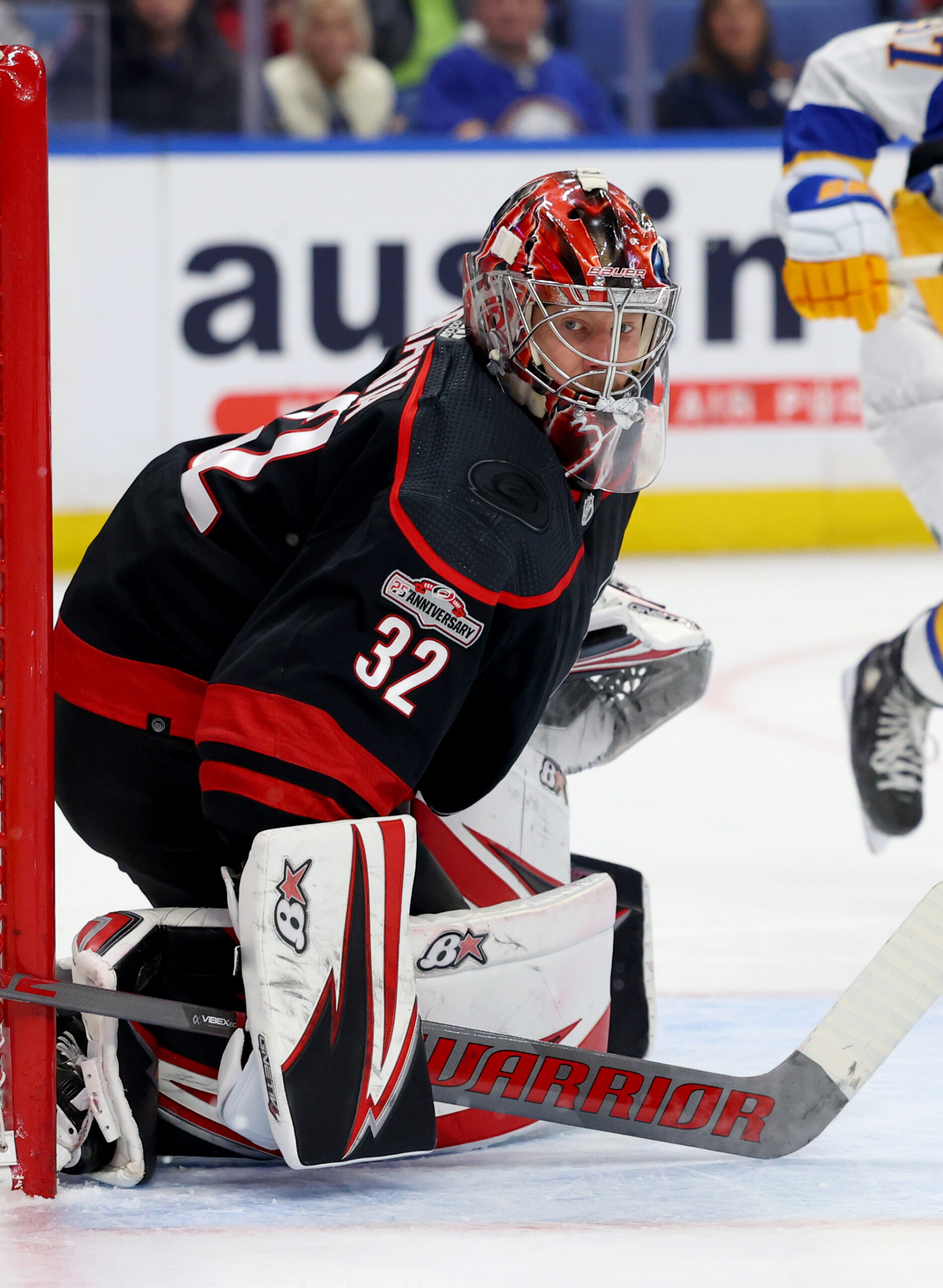
According to MoneyPuck, Raanta currently ranks fourth-worst in the NHL in goals-saved-above-expected. Kochetkov, in just six games played, has also posted a below-expected mark.
Using more traditional numbers, both Raanta and Kochetkov have posted disastrous save percentages. Kochetkov has a grisly .874 mark, while Raanta’s .854 save percentage through ten games is a glaring issue.
Although the Hurricanes have found ways to win despite Raanta’s struggles (he has a 6-3-1 record) the veteran netminder will be 35 years old come the postseason and looks far worse than last season, when he posted a respectable .910 save percentage.
Moreover, Raanta’s tendency to run into injury trouble throughout his professional career raises questions as to whether the Hurricanes can rely on him to endure the rigors of being an NHL starting goalie. With each day that passes, it appears more and more necessary for Carolina to seek outside help between the pipes. They already did so in the form of signing veteran Jaroslav Halak to a PTO, but that tryout was relatively short-lived.
Moving into the Holiday season, the Hurricanes should be scouring the goalie market to find a netminder capable of leading them to a Stanley Cup championship. Should contract talks between 27-year-old Sam Montembeault and the Montreal Canadiens end without an extension in place, he could be the kind of goalie the Hurricanes target.
Montembeault ranked as one of the league’s better goalies by goals-saved-above-expected last season and has excelled for the Canadiens so far this season. It’s possible that in an environment where his club is likely entering almost every game with a talent advantage, Montembeault could post even greater numbers, just as he did for Canada at the recent IIHF Men’s World Championships. (6-1-0, 1.42 GAA .939 save percentage)
Regardless of if it’s Montembeault or someone else, the Hurricanes should be looking for external help between the pipes. Raanta has simply played too poorly and proven himself to be too injury-prone for the Hurricanes to count on him as their number-one goalie this season, a year where the team is looking to win the Stanley Cup. Entering the Holiday season, a talented goalie should be number one on the team’s wish list.
Photos courtesy of USA Today Sports Images.
What Your Team Is Thankful For: Calgary Flames
As Thanksgiving and the holiday season approaches, PHR will be taking a look at what teams are thankful for in 2023-24. There also might be a few things your team would like down the road. We’ll examine what’s gone well in the early going and what could improve as the season rolls on for the Calgary Flames.
Who are the Flames Thankful For?
After being the de facto captain for the last few years, Backlund was officially awarded the letter prior to this season, and he’s taken it on in stride. Calgary is by no means off to the start that they would have hoped for but Backlund has remained poised and in control of his team. That includes when he had to handle the curt trade request that Nikita Zadorov issued following the conclusion of an 0-1 shootout loss. Sportsnet’s Eric Francis spoke to the captain about that incident, sharing that Backlund spoke one-on-one with Zadorov before the defenseman spoke to the whole team, in an effort to make sure that no unnecessary tensions were created. New general manager Craig Conroy was impressed by the situation, telling Francis, “He’s taking charge and that’s what the captain has to do. You’d like to not have to do that, but there are things that come up that need to be addressed, and he hasn’t been shy to do that.” That kind of leadership is exactly what a struggling contender like the Flames needs – and it’s a pleasant boost after the team went two seasons without a captain.
What are the Flames Thankful For?
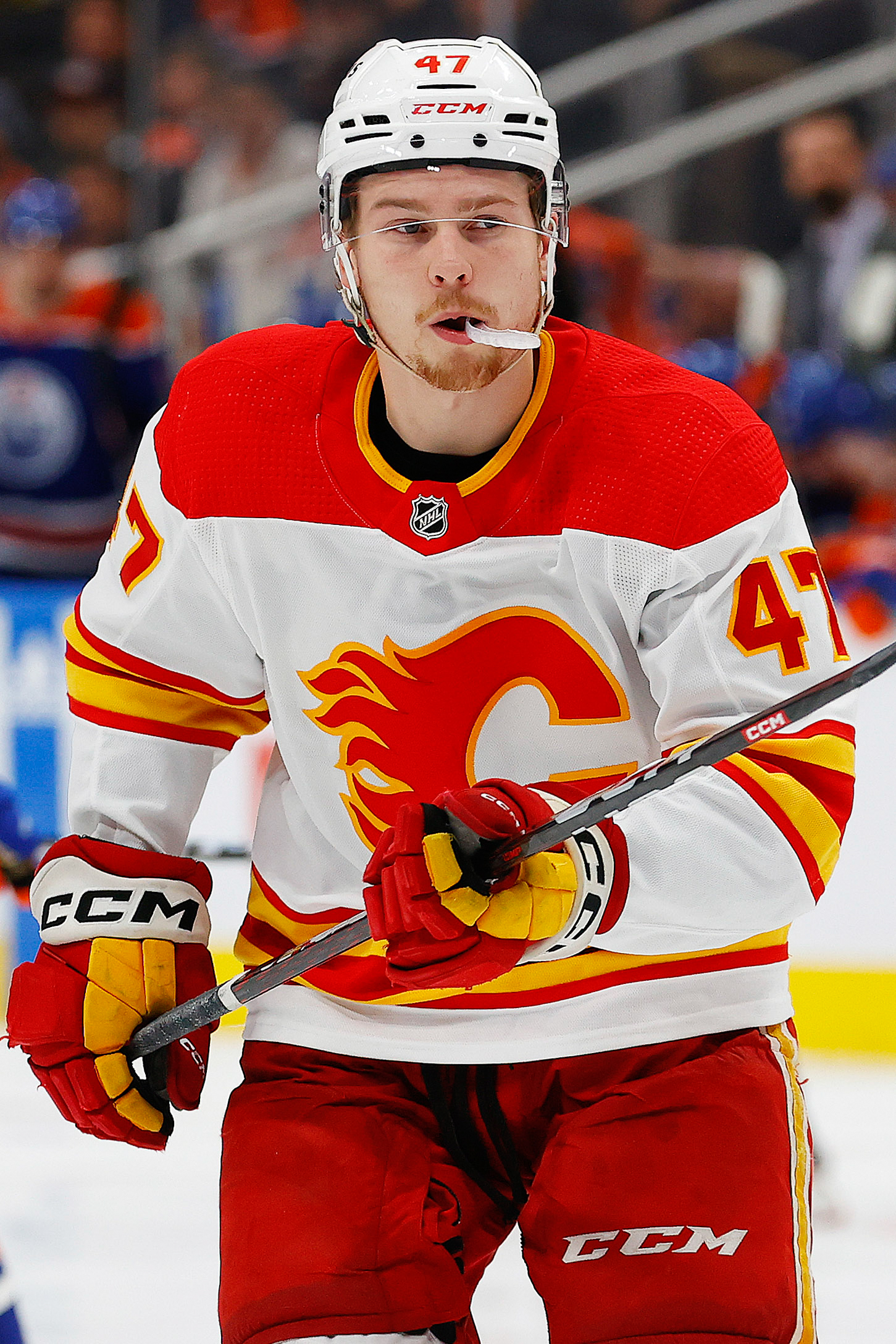 Their youngsters
In a year of challenges, the Flames can at least be impressed with the performances their prospects have brought to the top stage. Connor Zary looks tremendous in his first NHL season, currently carrying eight points through his first nine NHL games. He’s managed this performance after starting the year with 10 points in six AHL games, clearly proving that he deserved a spot with the top club. Zary is averaging the fourth-most minutes of any Flames forward and isn’t showing any signs of slowing down. Much of the same can be said about Martin Pospisil, who scored his first NHL goal in his first NHL game and has since gone on to net six points in nine games on the year. Pospisil is the second-youngest player on the starting lineup, at 24, and earned an NHL recall after scoring six points in six AHL games.
Former first-round pick Matthew Coronato has also held onto a strong season, despite losing his NHL role after 10 games. He’s managed 11 points in 10 AHL games, good for third in scoring on the AHL’s Calgary Wranglers.
What Would the Flames be Even More Thankful For?
Top-End Scoring
There are a lot of little things that could improve the Flames early season. But with Jacob Markstrom taking a serviceable step forward – albeit an improvement from a .892 save percentage to a .904 – it seems only right to say the Flames are more in need of an X-factor skater than anything. Jonathan Huberdeau has continued to struggle with Calgary, after scoring 115 points in his last year with the Florida Panthers, and with no Matthew Tkachuk or Johnny Gaudreau, the Flames are left wondering who their big difference-maker can be. The team is currently led in scoring by Elias Lindholm, who has 13 points in 19 games. He’s paced by Huberdeau and Nazem Kadri, who both have 12 points in as many outings. That’s certainly serviceable scoring but it’s not enough to takeover games, and has the Flames sat with the sixth-fewest goals in the league.
But it’s not all bad. Despite the low scoring, the Flames still roster three players that have scored 80-or-more points in a season before, and they have averaged 3.4 goals-per-game over their last five games, after averaging 2.6 through their first 14 games. That’s a healthy boost and has earned the Flames three wins, one loss, and one shootout loss in the five game stretch. Noah Hanifin has spearheaded the effort, scoring four points in his last five games. If they can maintain this offense, Calgary could find a way to make up for their lack of a true top-end scorer.
What Should Be On the Flames Holiday List?
A Lavish Trade Partner
The Flames are reportedly shopping around a slew of players, including top defender Hanifin, shutdown defenseman Chris Tanev, and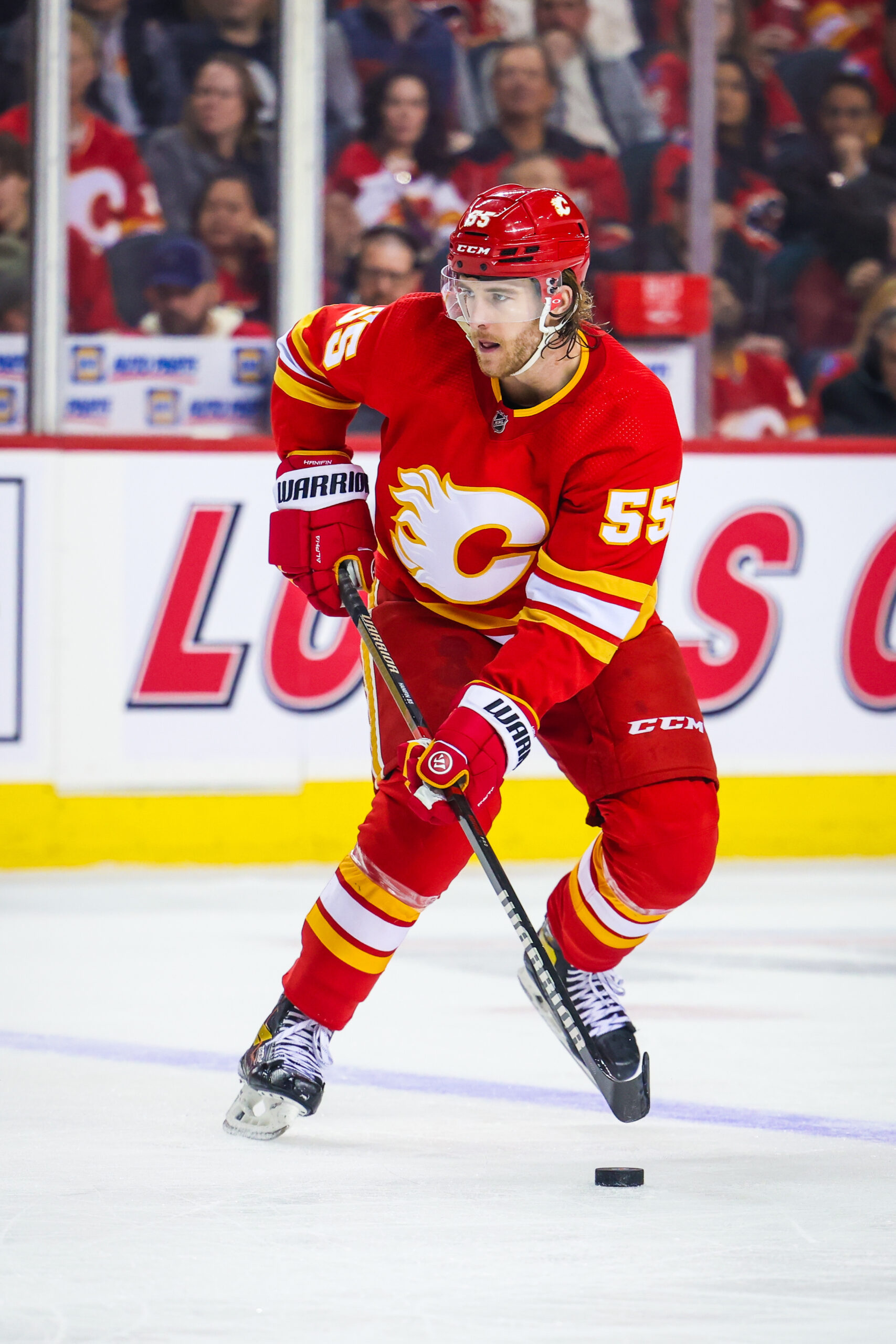 even top-scorer Lindholm at points. They’ve also received a trade request from Zadorov. Each of these players could warrant a hefty trade return, in a vaccuum. But the cheapest cap hit of the trio is Zadorov’s $3.75MM and Tanev’s $4.5MM, which is still a hefty amount for many teams to take on.
Still, there is no shortage of teams that could benefit from a deal with Calgary. Vancouver’s right-defense is still a weakness, and upgrading it could be a big boost to their thriving offense. The Toronto Maple Leafs recently placed John Klingberg on long-term injured reserve and are reportedly interested in Zadorov. And with Calgary boasting Dustin Wolf as their third-string goalie, making backup Daniel Vladar theoretically expendable, they may even garner trade interest from a team like the Edmonton Oilers, who are in need of any kind of help after their 6-12-1 start to the year.
It seems to be a buyer’s market and the Flames have no shortage of pieces that they could move. If they can’t get a spark on the ice, a flashy trade return could help a team with thriving stars hedge their future bets.