
Assessing The Oilers Options For Tristan Jarry
Heading into the summer of 2025, many hockey pundits and commentators were discussing the Pittsburgh Penguins’ options for goaltender Tristan Jarry. For his part, Jarry had just cleared waivers in early 2025, and it appeared the Penguins would be boxed into the remaining three years of his contract, which carried a $5.375MM cap hit. He seemed unmovable, and the Penguins were more than willing to move him, offering him to the entire league for nothing on multiple occasions. This wasn’t the first season in which the chatter around Jarry was negative, as the sentiment to move him was the same at the start of the 2024-25 season. Now, the Jarry problem has become an Edmonton Oilers problem after the team paid a premium in December for a trade that was disastrous, to put it generously. The Oilers need better goaltending, but they have a massive black cloud in Jarry’s contract, which remains nearly unmovable. The team needs to find a path forward for Jarry, but their options are limited.
The first option is a buyout, which, according to PuckPedia, would save Edmonton $666,667 this season and $1,166,667 next season, followed by a $458K cap penalty over the next two seasons. Effectively, the Oilers would still carry a $4.7MM cap hit this year and a $4.2MM cap hit next season, making a buyout a silly proposition and one Edmonton is unlikely to use.
The team would be better served by simply burying Jarry in the AHL for the season, which would provide more relief. The formula next season would be the NHL league minimum ($850K) plus $375K, resulting in $1.225MM in cap relief for the Oilers, a better number than a buyout, which would carry an additional two years of cap penalty. Pittsburgh used this tactic on multiple occasions, with Jarry playing 12 AHL games during the 2024-25 season.
Then there is the trade option, which at this point doesn’t look like an option at all. Stranger things have happened, and no one expected Jarry to be moved this past year. Jarry started last season fairly well in Pittsburgh, giving the Penguins 14 games of above-average goaltending before GM Kyle Dubas leveraged that to send Jarry to the Oilers in a trade. Edmonton sent Stuart Skinner, Brett Kulak and a 2029 second-round draft pick back to Pittsburgh in return for the 31-year-old Jarry in what was a heavility criticized transaction from the Oilers perspective. There isn’t a trade like that out there for the Oilers, and even if Jarry were to start hot again this season, too many teams have seen this movie before, as it’s been common for Jarry to start seasons well and end them poorly. After all, Jarry is a two-time all-star and has even garnered Vezina Trophy talk in some seasons prior to the Christmas break, but it’s almost an annual occurrence for him to fall apart in the second half, which is alarming to put it mildly.
If Edmonton wants to trade for Jarry, it will need to pursue one of two strategies. It will either need to move Jarry for an equally undesirable contract, of which there are a lot, or attach assets to Jarry and move him in a trade package, similar to the way the Dallas Stars traded defenseman Matt Dumba to Pittsburgh last summer. The Penguins received a second-round pick for their troubles, a steep price for Dallas to pay to rid itself of one season of Dumba’s $3.75MM cap hit. In another transaction the year prior, the Blues paid Pittsburgh a second-round pick to take on the final two years of forward Kevin Hayes’s contract, which carried a cap hit of $3.571MM.
Now, the salary cap environment has changed dramatically in recent seasons, meaning that teams have more cap space and more teams might be willing to take on a contract like Jarry’s, which could bring the price down. However, one of the teams with ample cap space is Pittsburgh, and they probably aren’t keen to bring him back into the fold, even if they are compensated to do so. Jarry also has a 12-team no-trade list, which will further complicate things, but it does leave 18 teams available to work with if Edmonton is willing to part with some assets to move him. Jarry makes quite a chunk of money for a player who might not be NHL caliber anymore, meaning that if Edmonton wants to dump his contract, they might have to pay a second-round pick or more. There is also the issue of Edmonton’s desperation, which could drive the price even higher if they paint themselves into a corner and have no choice but to get him off their books.
The other strategy mentioned earlier might be the best for the Oilers: trading Jarry for another bad NHL contract. Would Pittsburgh consider taking back Jarry if it meant they could send Ryan Graves to Edmonton? Unlikely, but there are plenty of Graves-type contracts around the league, and plenty of teams motivated to get out from under them.
An option could be to move Columbus netminder Elvis Merzlikins, who has one year left on his deal and a cap hit near Jarry’s ($5.4MM). Merzlikins hasn’t been an average goaltender for nearly five years and was below average again this year, posting a -7.3 goals saved above expected (as per MoneyPuck). Acquiring him would shorten the window during which Edmonton is on the hook for a high-priced, below-average goaltender, although Columbus might ask for a small asset to take on the extra year on Jarry’s contract.
There is also a possibility that Jarry is packaged with another bad contract on the Oilers, such as Trent Frederic or Darnell Nurse, to facilitate a swap for a higher-priced bad contract from another team. At some point, one of those swaps is going to take place, given the sheer volume of NHL teams carrying high-priced, bonus-laden, unmovable contracts.
Penguins Goalie Update, Future With Skinner, Silovs, Murashov
The Penguins do not have a goalie for the 2026-27 season…yet.
They do, actually, but regarding the two NHL goaltenders that finished this past NHL season for them, both aren’t under contract, and that could be the case moving forward. According to Josh Yohe of The Athletic, Pittsburgh is weighing a few of its options in the crease at PPG Paints Arena for next year. Stuart Skinner appears to be on his way to free agency when July 1 comes around, but that isn’t the Penguins’ only path, per Yohe.
The 27-year-old Skinner is an unrestricted free agent, coming off a 27-game stint in Pittsburgh, having posted a 2.99 goals against average and an .885 save percentage in black and gold. Among goaltenders with three playoff games, he finished 15th out of 18 goalies in goals against average (3.08) and second-last in save percentage (.873).
His Penguins stretch came in the latter half of his 2025-26 season. Prior to the Oilers trading him with Brett Kulak in December of 2025 for Tristan Jarry and Samuel Poulin, he had a 2.83 GAA and an .891 SV% in Edmonton. He also amassed 8.3 goals saved above expected, which was nearly ten stops higher than his -1.5 GSAx tally in 51 games with the Oilers last season.
Pittsburgh leadership loved Skinner as a locker room presence and considered him good enough for his performance; however, one should consider the future in two ways. Yes, Skinner brought major playoff experience to a team that is trying to maximize its elder core of Sidney Crosby, Evgeni Malkin, Kris Letang, and Erik Karlsson, but it’s doubtful he’ll settle for his previous cap hit of $2.6MM from his four-year contract with Edmonton signed back in 2022 on the open market.

The other goalie to consider is pending restricted free agent Arturs Silovs. The 25-year-old Latvian is coming off a two-year deal at $1.7MM ($850K AAV) and saw 39 games in 2025-26. He averaged a 3.07 goals against and an .888 save percentage, adding on a -11.9 goals saved above expected (89th in 2025-26), which is not the most attractive stat line. However, Silovs rebounded in the playoffs with a 1.52 GAA (2nd in postseason) and a .939 SV%, salvaging two wins for the Penguins before the Flyers’ lone goal in Game 6 ended the season for Pittsburgh.
One certainty seems to ring true with the Penguins: Sergei Murashov is ready for the NHL next season. The 22-year old spent the majority of his year with the AHL Wilkes-Barre/Scranton club, but also saw five NHL games with Pittsburgh. He ended the regular season with a 24-9-4 record, a 2.20 goals against average, and a .919 save percentage (both 3rd in AHL). The AHL Penguins are currently in the midst of the Eastern Conference Finals against the Toronto Marlies, and Murashov has averaged below two goals against a game and, through 12 contests, has posted a .936 SV%.
Murashov is set to end 2026-27 as a restricted free agent, which will be after the third season of his entry-level contract signed back in 2024. The Yaroslavl, Russia native has been under the Penguins organization since they drafted him in the 2022 fourth round at 118th overall. The Penguins have liked his development since he crossed the pond, and according to Yohe, he is on pace to be in between the pipes next season.
So, do you trade Silovs’ rights while the value is high and the NHL is in a window where goaltending is a need for teams? Do you let Skinner go to free agency and re-sign Silovs for less money? Do you keep Skinner, raising the annual number on his paycheck with a lengthy extension to tandem with the young rookie? Kyle Dubas has a load of cap space, around $37.8MM to work with, and a goalie room that shows promise, but how will he play it as the summer progresses?
Photo Credit: Charles LeClaire-Imagn Images
Senators Eyeing External Backup Goaltender Acquisition
While free agency is still more than a month away, that isn’t stopping teams from starting to put together their offseason wish lists. To that end, an upgrade at the backup goalie position is an obvious item for the Senators. Leevi Merilainen (a pending restricted free agent) struggled mightily early on in the season and while James Reimer (a pending unrestricted free agent) was a serviceable midseason replacement, they should be setting their sights higher heading into the summer.
With that in mind, Postmedia’s Bruce Garrioch relays that one of the netminders they’re expected to consider is pending UFA goaltender Stuart Skinner. He added that there is a belief that the veteran will be one of their top targets in free agency, especially with the expectation that he won’t return to Pittsburgh.
Skinner had established himself as the starting goaltender for several years, at least for most of that stretch. He was surpassed at times when he struggled but found his way back before long to the number one role. The 27-year-old helped lead the Oilers to back-to-back Stanley Cup Final appearances, although they lost both times.
Edmonton opted to keep their goalie tandem intact from last spring, a decision that ultimately didn’t work out. Skinner was inconsistent to start the season and was ultimately moved to Pittsburgh with the hopes that Tristan Jarry would be an upgrade. (That wound up not being the case.) Meanwhile, following the swap, he held his own in the back half of the year with the Penguins, posting a 2.99 GAA with a .885 SV% in 27 starts and played the first three games of their first-round loss to Philadelphia.
Skinner certainly isn’t going to be entering the UFA market as a sure-fire starting goaltender but the fact he has logged starter’s minutes would be appealing to a team like Ottawa. While the Sens have a number one in Linus Ullmark, he has never played 50 games in a season before. That makes getting someone capable of making 30-plus starts more important so Skinner would fit the bill.
It appears Ottawa GM Steve Staios isn’t just considering free agent options, however. ESPN’s Kevin Weekes reports (Twitter link) that Sabres goaltender Devon Levi is a name of interest for the Senators.
Levi was once viewed as Buffalo’s goalie of the future, especially after a strong showing in college and a 2023 debut that nearly led the Sabres to a playoff spot. But things haven’t gone well since then with the team ultimately deciding the following two years that more time in the minors would be beneficial. Coming into this season, the 24-year-old had a 3.29 GAA and a .894 SV% in 39 career NHL appearances.
He didn’t add to those totals in 2025-26. In his final year of waiver exemption, Levi played exclusively with AHL Rochester, posting a 2.83 GAA and a .904 SV% in 52 games. The 24-year-old is signed for next season already with his $812.5K AAV checking in below the minimum salary which will make him appealing.
With Buffalo already having Ukko-Pekka Luukkonen, Alex Lyon, and Colten Ellis all under contract, there really isn’t room for Levi on the NHL roster next season. And if they believe that they won’t be able to get Levi through waivers, looking to move him for some value in the coming weeks makes sense for them.
Levi would certainly represent a riskier pickup for Ottawa, however. They hoped that they had a young goalie ready for the role in Merilainen this season but that didn’t work out. Levi is only eight months older and while he has a bit more of a track record, he has yet to make it through a full NHL season yet. There would be some upside for sure but the risk would be higher as well.
Staios will undoubtedly have other external pickups on his wish list heading into the annual offseason carousel of backups. These are two of the younger players who could be in play; it will be interesting to see if they’ll consider some older shorter-term options as well or if their preference will be to aim for someone who could be in that spot for a few years.
The Oilers Are Stuck In A Cycle Self-Correction
It’s no secret that the Edmonton Oilers are in win-now mode, and that mode has shifted to pure desperation as they enter the final two years of superstar captain Connor McDavid’s current contract. It’s completely understandable that the Oilers have spent years sacrificing future assets to win now, given the window they are in with the best player in the world on their roster. However, that desperation to win now has led Oilers management to make aggressive moves, many of which have been disasters. Their desperation has often forced them into awful trades or signings, sometimes to undo ill-advised moves or simply because they thought they had to fix a roster hole. This line of thinking has painted the Oilers into the corner they currently find themselves in, out of the playoffs in the first round, with an unhappy superstar and a fanbase left shaking their heads.
Edmonton has repeatedly paid a premium to plug holes in the lineup or to undo prior mistakes in player acquisition. This has been especially true for the Oilers’ depth, defensive reliability, and secondary scoring, where they’ve either ignored the problem or acquired players who created a hole. From the outside, it feels as though Edmonton is constantly chasing fixes, reacting to structural roster issues rather than building a roster with any semblance of a long-term plan. As mentioned, the Oilers sacrificed future assets to win now, but they’ve also repeatedly spent additional assets to fix the holes their prior aggressive moves often created. This type of thinking is often called the sunk cost fallacy, in which someone doubles down on a bad decision because too much has already been invested.
There are few better examples of Edmonton’s reactionary thinking than the Jason Dickinson trade with the Chicago Blackhawks prior to this year’s NHL Trade Deadline. The Oilers released a video of the team’s management group discussing the potential trade for Dickinson. Although the clips were just 2 minutes, they painted a picture of a management group with a relatively shallow, short-sighted understanding of the trade they were trying to make. Effectively, Oilers general manager Stan Bowman was trying to plug a hole on his roster that he thought he’d filled at last year’s trade deadline with the trade for Trent Frederic, only to see Frederic implode this season after signing an eight-year extension last summer. Simply put, the trade felt like damage control stemming from previous poor decisions with Frederic and the free-agent signing of Andrew Mangiapane, who was included in the Dickinson trade as a salary dump after a poor showing in Edmonton.
Mangiapane is a clear example of Edmonton’s mismanagement and inability to find the right pieces for the right roles. Signed to a two-year, $7.2MM deal, the Oilers hoped that playing alongside their skilled players would reignite the offensive side of Mangiapane’s game; however, that did not happen, and he was traded to the Chicago Blackhawks less than one year into the deal.
As good an example as Mangiapane is, there is no better example than goaltender Tristan Jarry. Jarry was acquired from the Pittsburgh Penguins in December, when the Oilers were in desperate need of better goaltending. The trade came less than three months after Bowman had stated that he “Liked where Stuart Skinner’s game was.” Bowman’s comments came on the heels of a summer with no movement in the Oilers’ crease, despite it being a clear area of weakness.
Skinner began the season with the Oilers, going 11-8-4 with an .891 SV% and a 2.83 GAA. At the time of the trade, Skinner was ranked 32nd in Goals Saved Above Expected, while Jarry was 22nd. Edmonton hoped that moving Skinner for Jarry would be a massive upgrade and even included defenseman Brett Kulak and a second-round pick.
The trade was a colossal disaster for the Oilers, as Jarry reverted to his recent form, going 9-6-2 in 19 games with Edmonton, posting an .857 SV% and a 3.86 GAA. Jarry wasn’t just bad in Edmonton; he was among the worst netminders in the league after the trade.
Had Edmonton management simply addressed the issue last summer, they likely would have avoided a trade for Jarry, which will have repercussions for years, as Jarry has two years left on his contract, a deal that is effectively buyout-proof.
The Oilers’ asset recycling continued with the Jarry trade and has become an alarming trend for a team that is shutting its own contention window with each passing season. The Oilers had a clear need to upgrade their roster construction last summer, particularly their goaltending and defense. Instead, they prioritized adding toughness, veterans, and depth scoring, and the results this past season speak for themselves.
The team clearly (and correctly) has a mandate to win now because of the presence of McDavid and Leon Draisaitl, but that urgency has distorted management’s decision-making, prompting panic move after panic move in hopes of catching lightning in a bottle. Management often overvalues urgency and undervalues patience, particularly in player development and salary-cap management.
A persistent narrative in Oilers fandom is that the team is one piece away, but for a team that constantly patches holes mid-season, that logic seems flawed and generally indicates poor organizational planning. You could certainly point to trades and moves in a vacuum and say they worked, but when you zoom out and look at the broader picture, a pattern starts to emerge.
The pattern is that the Oilers have rarely built forward and have spent most of the McDavid/Draisaitl era trying to escape the consequences of their past bets. If the Oilers want to finally bring a Stanley Cup back to Northern Alberta, some hard conversations need to be had among management to break this cycle.
Penguins Reassign Sergei Murashov
April 9: The Penguins will be returning Murashov to Wilkes-Barre/Scranton today, head coach Dan Muse told reporters (including Josh Getzoff of SportsNet Pittsburgh). He didn’t end up dressing for the club as Skinner was cleared to return to action this morning, so the latter will get the start against New Jersey.
April 7: The Penguins announced Tuesday that they’ve formalized goaltender Sergei Murashov‘s recall from AHL Wilkes-Barre/Scranton. Fellow netminder Taylor Gauthier was returned to ECHL Wheeling in the corresponding move after he was called up at the last minute to serve as Arturs Silovs‘ backup for Sunday’s win over the Panthers.
Murashov’s recall indicates that Stuart Skinner will remain unavailable as the Penguins return to action against the Devils on Thursday. He took a puck to the eye while on the bench backing up Silovs during the first half of Pittsburgh’s weekend back-to-back with Florida, forcing the latter to make two starts within 24 hours. They weren’t able to get Murashov to Pittsburgh in time for puck drop for Sunday’s game, forcing Gauthier to get the nod, but they will now work their third-stringer and top prospect between the pipes back into an NHL role before Skinner is ready to return.
Murashov, 22, was a fourth-round pick in 2022 but is tracking more like a first-rounder. The 6’2″ Russian has posted spectacular numbers at every level in Russia and now the North American minors as he climbs the latter, fully taking over as Wilkes-Barre/Scranton’s #1 option this season. In 35 AHL games, he has a .922 SV%, 2.13 GAA, three shutouts, and a 23-8-3 record. He got his first five NHL appearances over a pair of recalls in November and December, logging a more measured .897 SV% and 2.56 GAA. He still managed to record his first big-league shutout, a 21-save win over the Predators back on Nov. 16.
Skinner will almost certainly be Pittsburgh’s Game 1 starter in the first round later this month if he’s healthy. They haven’t quite clinched a playoff berth yet, but need just one more win to do so and could get some outside help before that’s necessary. As such, there likely won’t be much consideration of resting Silovs to keep him fresh for the postseason. There’s still home-ice advantage on the line. They do have a back-to-back this weekend against the Capitals, though, so it stands to reason Murashov should get one of those starts if Skinner isn’t back by then.
Meanwhile, Gauthier could be back up in a few weeks’ time to serve as Pittsburgh’s emergency backup in the playoffs. Wilkes-Barre/Scranton has clinched an AHL postseason berth, and the Penguins would certainly prefer Murashov getting high-intensity action there. Gauthier, 25, was on a minor-league deal for most of the season after Pittsburgh non-tendered him last year, but they brought him back on a two-way deal at the trade deadline to make him eligible for a recall. In 33 games with Wheeling, he’s looking to take home his second career ECHL Goalie of the Year award with a .932 SV%, 2.00 GAA, and 20-7-5 record.
Penguins’ Stuart Skinner Out With Upper-Body Injury
The Penguins announced this afternoon that they’ve recalled winger Avery Hayes from AHL Wilkes-Barre/Scranton and goaltender Taylor Gauthier from ECHL Wheeling. Gauthier is dressing as Arturs Silovs‘ backup this afternoon against the Panthers, as Stuart Skinner is unable to dress because of an upper-body injury.
Skinner was healthy enough to dress as Silovs’ backup in a scheduled start for the latter yesterday, so it’s unclear what’s causing him to have to stay off the ice today. That’ll also mean back-to-back starts for Silovs in under 24 hours against Florida after he allowed four goals on 23 shots yesterday. Luckily, he got nine goals’ worth of support from Pittsburgh’s offense to record his 18th win of the season.
For whatever reason, the Penguins weren’t going to be able to get either of their highly-touted AHL netminders, Sergey Murashov or Joel Blomqvist, to Pittsburgh in time for today’s 2:00 p.m. Central puck drop. It’ll be Gauthier, the #5 on Pittsburgh’s goaltending depth chart, getting the bump for now as a result. Josh Yohe of The Athletic reports that the Pens will recall Murashov later in the week if Skinner needs to miss multiple games, though.
Gauthier, 25, initially signed with the Pens as an undrafted free agent out of the WHL’s Portland Winterhawks back in 2022. They opted not to issue him a qualifying offer when his entry-level contract expired last summer, but he returned to the organization on a one-year minor-league contract anyway. The ECHL’s Goalie of the Year back in 2023-24, he’s had another spectacular season in Wheeling with a .932 SV%, 2.00 GAA, three shutouts, and a 20-7-5 record in 33 games. That was enough to earn him a two-way deal from Pittsburgh at the trade deadline, making him eligible to join the club as an emergency backup option for the playoffs.
As the Penguins continue to jockey for playoff positioning in the Metropolitan Division, they’ll have to do so without Skinner for now. He had been emerging as their likely Game 1 starter. Head coach Dan Muse had been quite strict in a nightly rotation with Skinner and Silovs since the former’s acquisition from the Oilers in December, but Skinner had started four out of five leading into yesterday’s win over Florida and was expected to make it five of seven today.
Skinner’s .886 SV% and 11-8-5 record in 24 games since his acquisition aren’t much to write home about, but he’s been steadily improving while Silovs has hit a rough patch. Over each netminder’s last 10 games, Skinner has saved 1.4 goals above expected while Silovs has a gnarly -6.4 GSAx, per MoneyPuck.
The Penguins have all but clinched a playoff spot, entering today’s schedule with a 99.2% chance at a postseason berth. There’s now a five-point gap between them and the Islanders for second place in the Metro, with the Pens having five games left and New York having four.
As for Hayes, he was technically rostered for yesterday’s game as well as a scratch, so this morning’s announcement is overdue. He was just sent down to WBS on Friday but played for them that night, making him eligible to come back up to the NHL roster right away. He didn’t draw into the lineup for today’s game either but now has three goals through his first 13 NHL games, all this season.
Breaking Down The Future Of The Penguins’ Goaltending
Penguins general manager Kyle Dubas faced a major challenge last year, juggling two inconsistent yet talented goaltenders on his roster while desperately needing stability. He knew he had a promising prospect in Sergey Murashov, but the young player needed time in the minors to develop, which meant Dubas had to rely on temporary solutions.
Those stopgaps have become Stuart Skinner and Arturs Silovs, who have formed a tandem that isn’t spectacular but has been enough to keep the Penguins in the playoff hunt despite some bumps in the road. As both contribute fairly evenly, with a rookie netminder waiting in the wings, this has created an interesting dynamic in the Penguins’ crease, potentially leading to some roster moves this summer.
One year ago, the Penguins had Tristan Jarry and Alex Nedeljkovic as their goaltenders, earning a combined $7.875MM per season. Jarry, in particular, was earning $5.375MM and had three years remaining on his contract.
Dubas started the summer by trading Nedeljkovic to the Sharks for a third-round pick on July 1. Many questioned whether Pittsburgh believed that another goalie prospect, Joel Blomqvist, was ready to be an NHL backup, but Dubas quickly dismissed this idea by acquiring Silovs from the Canucks for a fourth-round pick and a prospect. Since Silovs had to clear waivers in Vancouver, they would have to let him go for free, effectively making it a discount. The trade meant Pittsburgh would begin the season with Jarry as the starter and Silovs as the backup.
Jarry actually started the season quite well for Pittsburgh, posting a 9-3-1 record with a .909 SV% and a 2.66 GAA. This beginning had Penguins fans calling for Dubas to act and trade Jarry to another team, even though his play was decent.
Dubas did just that, trading Jarry and his overpriced contract to the Oilers in exchange for Stuart Skinner, Brett Kulak, and a second-round pick. The move was a surprising development since Pittsburgh retained none of Jarry’s contract, and it involved moving a player who had been on waivers the previous year.
It marked a turning point for Pittsburgh, as they effectively moved on from the volatility of Jarry and Nedeljkovic in favor of what amounts to average goaltending. Now, the Penguins face some decisions heading into the summer, as Skinner is a UFA on July 1 and Silovs is an RFA. It’s almost certain that Pittsburgh will retain Silovs and keep him in the fold, but Skinner is far less of a certainty.
AFP Analytics is projecting a two-year deal for the 27-year-old Skinner worth $3.86MM per season, but given the thin free-agent market and the lack of potential starters, that projection and term seem quite light. At $3.86MM, Pittsburgh would likely be in line to retain him and let Murashov develop in the AHL, but it’s unlikely Skinner would accept that deal now, considering he has plenty of leverage.
That’s where it gets interesting for the Penguins: if they let Skinner walk, they have his potential replacement waiting in the wings. But do they need to wait for Murashov, or is he the guy next year?
If the Penguins decide to make Murashov a full-time NHL player next season, do they trust that Silovs can step up and handle most of the starts? The 25-year-old Silovs has a projected AAV of $2.033MM on a one-year deal, which makes sense since he has shown he can play in the NHL this season, but he hasn’t proven he can be a consistent starter.
Silovs is 16-10-8 this year with an .890 SV% and a 2.98 GAA. Those stats don’t exactly scream consistency, but they are a noticeable improvement over his numbers with Vancouver when he was with the Canucks, and given his age, he can still improve.
Still, can the Penguins rely on him to be a full-time NHL backup behind an inexperienced rookie next season? It’s hard to say for certain, but Silovs’ underlying numbers don’t exactly indicate he’s a sure thing as a starter, and there’s no guarantee Murashov can play 50 games next season — in fact, there’s a good chance he won’t.
So, should Pittsburgh keep Skinner and Silovs and retain Murashov in the AHL? In an ideal world, yes, they’d hold onto both netminders for the next year or two, with Murashov excelling in the AHL, and then the Penguins would promote Murashov full-time.
However, Skinner will likely seek every year and dollar he can get, considering his career has been quite unstable so far, and it might be his best shot at becoming a very wealthy man. This means Pittsburgh has to decide if it’s Murashov or someone else.
It’s not ideal for the Penguins, as they probably don’t have a clear sense if Murashov’s ready to be the guy yet, and they aren’t likely to commit to anyone in free agency, nor could they even if they wanted to give the poor free agent market for goaltenders, so it really comes down to Murashov or Skinner being the guy next season with Silovs as their backup.
The most likely scenario is that Pittsburgh will offer Skinner a short-term deal to bridge the gap until Murashov becomes a full-time NHL player, while allowing both players to share duties in the NHL if Murashov is set to play full-time. Contractually, this would likely be a short-term deal in the $4MM–$5MM a year range.
Would this be enough to persuade Skinner to forgo free agency? Not likely, but if Skinner enters the market and doesn’t receive the salary he’s hoping for, he and the Penguins could revisit negotiations. However, he might also receive a lucrative offer from another NHL team, leading him to leave Pittsburgh, which could put Dubas in a tough spot.
The Danger Of Signing Goalies To Lucrative Contracts
The New York Rangers and Vancouver Canucks are two of the NHL’s worst teams this season and are both on the verge of massive roster changes. While both teams face unique challenges, one parallel is that they’ve made a mess of their goaltending finances with pricey extensions that were miscalculations.
The Rangers and Canucks are far from alone in this predicament. High-priced extensions have also burned several other teams at the bottom of the standings, leaving them with goaltenders who had been performing well but whose play fell off a cliff after signing their new deals.
That isn’t necessarily the case for Shesterkin, however, it is the case for Linus Ullmark of the Ottawa Senators, Juuse Saros of the Nashville Predators, and Jacob Markstrom of the New Jersey Devils, who are all making big money on recent contract extensions, with no guarantees their play will turn around. This has left three teams with win-now rosters featuring goaltenders who are vastly overpaid.
It’s become a trend over the past five-plus years that teams signing goaltenders to expensive deals must be seriously concerned about their performance throughout the term of the agreement.
There is concern about every player’s performance after they sign a lucrative long-term deal. However, goaltenders have become a unique cause for concern lately, and it’s hard to say why.
In the late 1990s and throughout the 2000s, many veteran goaltenders on the wrong side of 30 would sign expensive long-term deals without so much as a second thought from their new teams. In July 2002, for example, goalie Curtis Joseph signed a three-year, $24MM contract with the Detroit Red Wings, even though it wasn’t the best offer on the table.
Joseph had a three-year $26MM offer from the Toronto Maple Leafs but opted to move to Detroit. Toronto then pivoted and signed Ed Belfour to a two-year, $13.5MM deal.
By today’s standards, those contracts aren’t eye-popping, and the term is relatively short. But Belfour and Joseph were 37 and 35, respectively, and there was a chance their play would drop off significantly during the brief time they were signed.
Nowadays, it’s hard to imagine a team giving $8MM a season to a 35-year-old goaltender, and Joseph’s deal was inked 23 and a half years ago. The Senators gave Ullmark four years and $8.25MM annually just last year, but he had just turned 32 and was two seasons removed from a Vezina Trophy as the league’s top goaltender.
It was a pricey gamble for Ottawa and hasn’t looked like good value this season, but Ullmark has been dealing with personal issues, so it’s hard to project how the deal will work out long-term.
Circling back to the Rangers and Canucks, they are a tale of two teams whose expensive goaltending has led to team-wide issues, but for wildly different reasons. In Vancouver, Thatcher Demko was signed to a lucrative three-year deal at the start of free agency, worth $8.5MM annually.
It was a gamble by Vancouver, as they hoped the former Vezina Trophy finalist could bounce back from a poor showing last season. Had Demko had a good year, he would have been a candidate to get $9MM or more on a new contract, but Vancouver thought it was wise to jump the queue. It has not turned out well.
If Demko had played well, Vancouver likely would have paid him an AAV slightly higher than the $8.5MM they gave him, but would’ve been on the hook for more term, which would’ve been riskier. Instead, Vancouver made a different bet and is now on the hook for more term than Demko would’ve received in free agency. But hindsight is 20/20, and for the Canucks, they are stuck with the Demko deal, one they’d love to have back.
In New York, it was a different calculation. Rangers’ general manager Chris Drury believed he had a Stanley Cup contender on his hands, which meant doing everything he could to retain his Vezina Trophy-winning goaltender, Igor Shesterkin. Drury moved out his captain, Jacob Trouba, to open up space to sign Shesterkin to a record-breaking eight-year, $92MM contract.
While it was the right on-ice move given Trouba’s cap hit relative to his play, the Rangers have never been the same since the trade. New York fell off a cliff last season and has remained at the bottom of the league this year, despite Shesterkin being good.
But that is the issue: Shesterkin has only been good. In the years leading up to his extension, Shesterkin was elite.
His play in those seasons masked many of the Rangers’ problems and led Drury and New York management to think the team was much better than it actually was. Shesterkin’s goaltending was a mask, hiding the fact that Drury had built a fatally flawed roster that relied too much on out-of-this-world netminding, which was clearly unsustainable.
While the Rangers, Canucks, Devils and Predators aren’t the only teams with pricey goaltending, they are the most apparent examples of paying a premium for goaltending. But even middle-of-the-pack teams can run into issues where their extensions turn into disasters.
There are good examples in Washington: a few years ago, with Darcy Kuemper, who had just won a Stanley Cup, and Philipp Grubauer, who had been solid for years before signing as a free agent with Seattle and becoming unplayable in the NHL. Matt Murray in Ottawa was the same story, but none is more egregious and obvious than Tristan Jarry in Pittsburgh, who was recently dealt.
Pittsburgh is a relevant example because of Stuart Skinner, who has been a revelation with the Penguins but is a UFA at the end of the season. Pittsburgh already has its goalie of the future in tow in Sergey Murashov, and the Penguins would be wise to ride Skinner into the playoffs and then let him walk in the offseason if his salary demands exceed $5MM annually, which they surely will. It should be interesting to see the Skinner story unfold, but there is plenty of evidence that the Penguins would be wise to avoid giving term to a netminder who is unpredictable.
Penguins Recall Sergei Murashov On An Emergency Basis
Dec. 15th: According to a team announcement, Skinner and Kulak have made it through the immigration process and have been added to the Penguins’ active roster. After doing that, Pittsburgh was able to assign Murashov back to AHL Wilkes-Barre/Scranton from his emergency recall.
Dec. 13th: While Pittsburgh has a new netminder, they’ll have to wait a bit for his debut with the team. The Penguins announced (Twitter link) that both Stuart Skinner and defenseman Brett Kulak have been granted non-roster status while going through the immigration process. With the team needing a second goalie for tonight’s game against San Jose, Sergei Murashov has been recalled from AHL Wilkes-Barre/Scranton.
Murashov was a fourth-round pick by the Penguins back in 2022 and he is in his second full season in North America. Last year, he split time between Wilkes-Barre/Scranton and ECHL Wheeling, doing well at both levels, including a .922 SV% in 26 games with the latter.
That moved him up the depth chart this season and earned him his first NHL action earlier on this season. Murashov has played in four games with Pittsburgh, posting a 1-1-1 record with his win being a shutout. He has a solid 1.90 GAA and .913 SV% in those outings which is certainly worthy of a longer look. However, with two other goalies on their roster, they’ve prioritized maximizing Murashov’s playing time in the minors. In 11 outings with Wilkes-Barre/Scranton, he has been elite, compiling a 1.56 GAA and a .943 SV%.
It can take several days for a player to go through the immigration process and with applications typically not getting processed on weekends, it might take a few games before Skinner and Kulak get the green light to make their Penguins debuts.
Oilers Acquire Tristan Jarry, Spencer Stastney
9:45 a.m.: All three teams have confirmed the trades. The Penguins confirmed that the draft pick acquired from the Oilers will be Edmonton’s 2029 second-round pick. No salary was retained in either deal.
9:02 a.m.: The Edmonton Oilers are reportedly close to making a pair of significant trades today. According to Sportsnet’s Elliotte Friedman, the Oilers are working to acquire netminder Tristan Jarry from the Pittsburgh Penguins and defenseman Spencer Stastney from the Nashville Predators. Shortly thereafter, TSN’s Pierre LeBrun confirmed that Jarry is heading to Edmonton.
As trade details continue to trickle in, LeBrun reported that Stastney will cost Edmonton their 2027 third-round pick. Meanwhile, insider Frank Seravalli suggests that Stuart Skinner and another player are a part of the package going to Pittsburgh for Jarry. ESPN’s Kevin Weekes added that defenseman Brett Kulak and a draft pick are also going to Pittsburgh, while former first-round pick Samuel Poulin is headed to Alberta.
Edmonton’s interest in Jarry has been well-known for the last few weeks. A day before American Thanksgiving, Weekes reported that Jarry had been generating trade interest from around the league and that the Oilers were far and away the most interested — for good reason. Given the tight salary cap situation for the Oilers, it’s likely that trade conversations between Edmonton and Pittsburgh have been going on for the last several weeks.
After playing relatively well for the Oilers throughout their first run to the Stanley Cup Final in 2024, Edmonton returned to the Cup Final last season despite Skinner’s performance. He didn’t play in all the potential games throughout last year’s push, but he finished with a .889 SV% in 15 contests, including a more than disappointing .861 SV% in five games against the Florida Panthers.
The situation has worsened this season, and obviously reached a boiling point for the Oilers’ front office. Through Edmonton’s first 33 games, the duo of Skinner and Calvin Pickard has combined for a .879 SV%. There was no help available via recall either, as third-string netminder Connor Ingram owns a .868 mark with the AHL’s Bakersfield Condors.
If Jarry continues his current resurgence, the Oilers should have some newfound stability in the crease. In 13 starts this season, Jarry has a 9-3-1 record with a .909 SV% and 2.66 GAA. According to MoneyPuck, for netminders that have played in 10 or more games, Jarry is ranked 22nd in the league for Goals Saved Above Expected this season. He’s by no means the best netminder in the league this season, though he’s performing much better than Skinner and Pickard, who are ranked 32nd and 52nd, respectively.
Still, Jarry has been volatile in his own right. Last season, in what was the worst performance of his professional career, Jarry finished with a .892 SV% and 3.12 GAA, ranking 33rd in GSAx. If he reverts to that form as he finishes out the remaining three years of his five-year, $28.66MM contract, the Oilers will be in a world of trouble.
At any rate, while they acquired a pair of pending unrestricted free agents in Skinner and Kulak, it’s nothing but a win for the Penguins to receive a second-round pick for Jarry’s services. One year ago, Pittsburgh placed Jarry on the waiver wire, meaning the Oilers could have had him for free had they been able to make the money work. The fact that the Penguins were able to get actual assets for Jarry a year later is a testament to their patience.
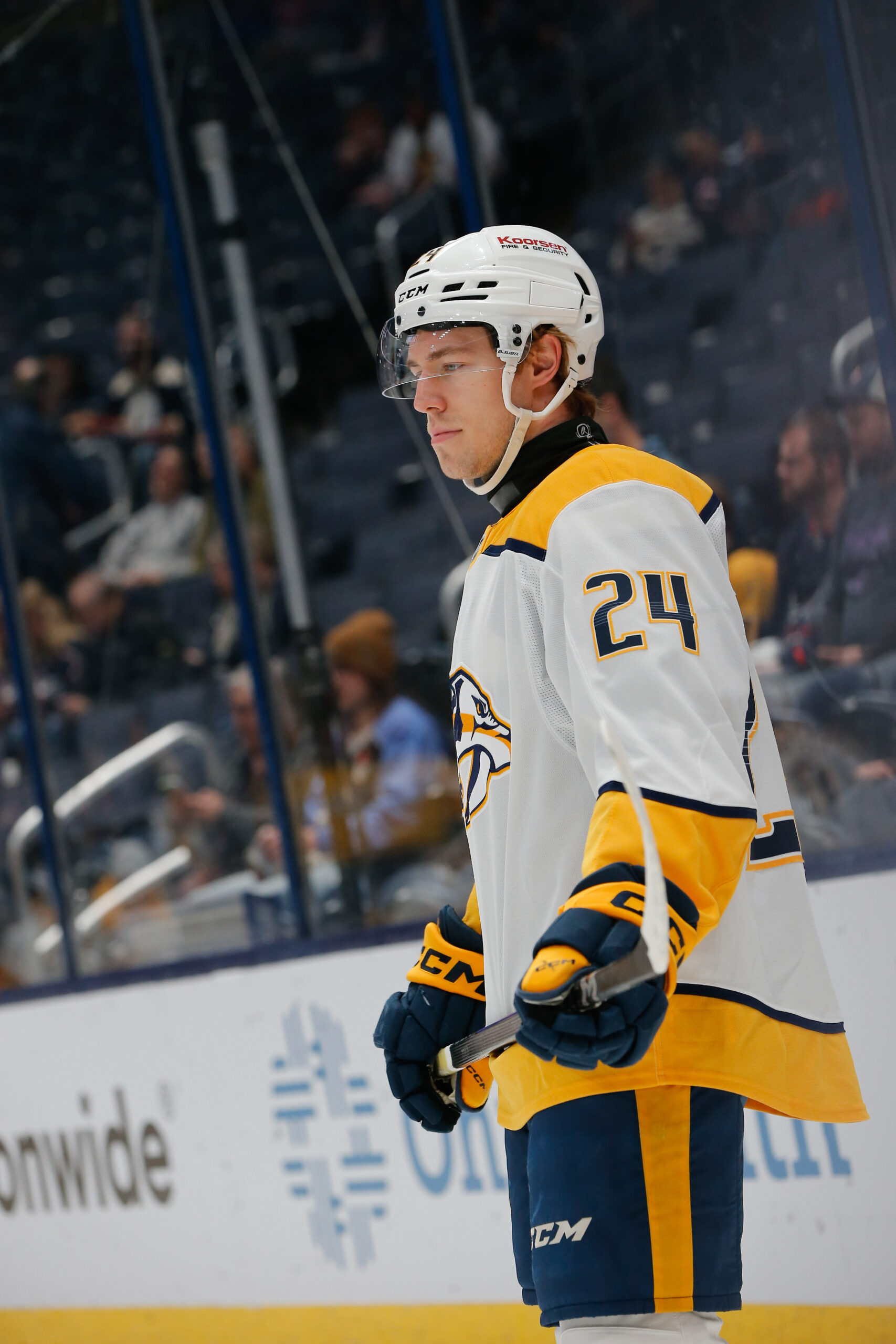 Meanwhile, the Oilers have swapped Kulak’s $2.75MM cap hit with Stastney’s $825K. Despite finishing with the highest point production of his career last season, Kulak has struggled through the first few months of the 2025-26 campaign.
Registering only two assists in 31 games, it became apparent that Kulak’s time with the Oilers may be coming to an end. Typically reliable on the defensive side of the puck, Kulak’s 87.0% on-ice save percentage at even strength was troubling considering that he had never finished with lower than an 89.0% mark throughout his 12-year career.
Stastney, 25, offers more on the offensive side of the puck and is actually performing better on the defensive side of the puck compared to Kulak this season. The pending restricted free agent blueliner has scored one goal and nine points in 30 games this season for the Predators, averaging a 90.0% on-ice save percentage.
Lastly, as a part of the Jarry trade, the Penguins have finally moved on from Poulin. The 24-year-old had appeared in a few games for the Penguins this season, but failed to do much with his opportunity despite being given middle-six minutes. Still, he’s been on a tear in the AHL, scoring nine goals and 20 points in 22 games. He’ll likely report directly to the Oilers, considering the number of injuries they’ve had to their depth forwards this season.
Photo courtesy of Russell LaBounty-Imagn Images.