
Salary Cap Deep Dive: Philadelphia Flyers
Navigating the salary cap is one of the more important tasks for any GM. Teams that can avert total cap chaos by walking the tightrope of inking players to deals that match their value (or compensate for future value without breaking the bank) remain successful. Those that don’t see struggles and front office changes.
PHR will look at every NHL team and give a thorough look at their cap situation heading into the 2020-21 season. This will focus more on players who are regulars on the roster versus those who may find themselves shuttling between the AHL and NHL. All cap figures are courtesy of CapFriendly.
Philadelphia Flyers
Current Cap Hit: $79,238,852 (under the $81.5MM Upper Limit)
Entry-Level Contracts
F Joel Farabee (two years, $925K)
F German Rubtsov (one year, $894K)
F Morgan Frost (two years, $863K)
G Carter Hart (one year, $731K)
Potential Bonuses
Farabee: $500K
Rubtsov: $425K
Hart: 83K
Total: $1.1MM
One thing the Philadelphia Flyers have a lot of is balance, which includes quite a few impressive young players on entry-level deals. While he may not be paid the most of the entry-level players, the guy that is likely next to cash in is goaltender Carter Hart. Just 22, the young netminder has been impressive in two seasons. Perhaps the statistic that stands out the most is his numbers when at home. Hart posted a dominant 20-3-2 record at home with a 1.63 GAA and a .943 GAA. Unfortunately his road record wasn’t as good with a 3.04 GAA and a .896 save percentage — something he must work on. Regardless, he will likely command quite a bit when the Flyers try to lock him up to an extension.
Farabee and Frost are two young prospects who could make their impact known as soon as next season. Farabee played in 52 games last year for Philadelphia, scoring eight goals and 21 points, but he could be primed for a breakout season. Frost is the next prospect up. He appeared in 20 games last year, scoring two goals and seven points, but should see more regular time in Philadelphia’s lineup this season and could be a significant contributor down the road.
One Year Remaining, Non-Entry-Level
D Travis Sanheim ($3.25MM, RFA)
D Erik Gustafsson ($3MM, UFA)
F Scott Laughton ($2.3MM, UFA)
F Michael Raffl ($1.6MM, UFA)
G Brian Elliott ($1.5MM, UFA)
F Nolan Patrick ($874K, RFA)
D Samuel Morin ($700K, RFA)
Sanheim has established himself as a top-four defender on a very young defense and should continue to get better. With the loss of defenseman Matt Niskanen to retirement, Sanheim will be expected to take that next step and become a dominant defeneman for the Flyers. He scored eight goals and 25 points last season, but could be primed for a bigger year. Gustafsson was brought in to fill in the holes on the team’s defense. The 28-year-old was coming off a 60-point season in 2018-19, but failed to duplicate that with either with the Blackhawks or the Flames after he was traded at the deadline.
Laughton has been a useful bottom-six player over the last few years. The 26-year-old provides the team a combination of some offense and some physicality, something the team needs. Laughton finished last season with 13 goals and 27 points in 49 games last season as well as 109 hits, but more importantly stepped up in the playoffs, putting up five goals and nine points in 15 games. The 32-year-old Raffl is much the same, putting up eight goals and 20 points in 58 games with 96 hits.
The most interesting name might be Patrick, who missed the entire 2019-20 season with a migraine disorder. The Flyers hope that the No. 2 overall pick in 2017 can pick up where he left off and eventually become the dominant player he once was despite struggling through a myriad of injuries in the past. When healthy, Patrick can be a dominating, playmaking center. The team hopes to insert him into the lineup as the team’s third-line center to start and see where he goes from there.
Elliott, who has been mentoring Hart ever since Hart arrived, struggled last year and the team hopes the 35-year-old can find his game this season. If not, the team will likely move on from him in a year.
Two Years Remaining
F Claude Giroux ($8.25MM, UFA)
F Sean Couturier ($4.33MM, UFA)
D Justin Braun ($1.8MM, UFA)
D Robert Hagg ($1.6MM, UFA)
F Nicolas Aube-Kubel ($1.08MM, RFA)
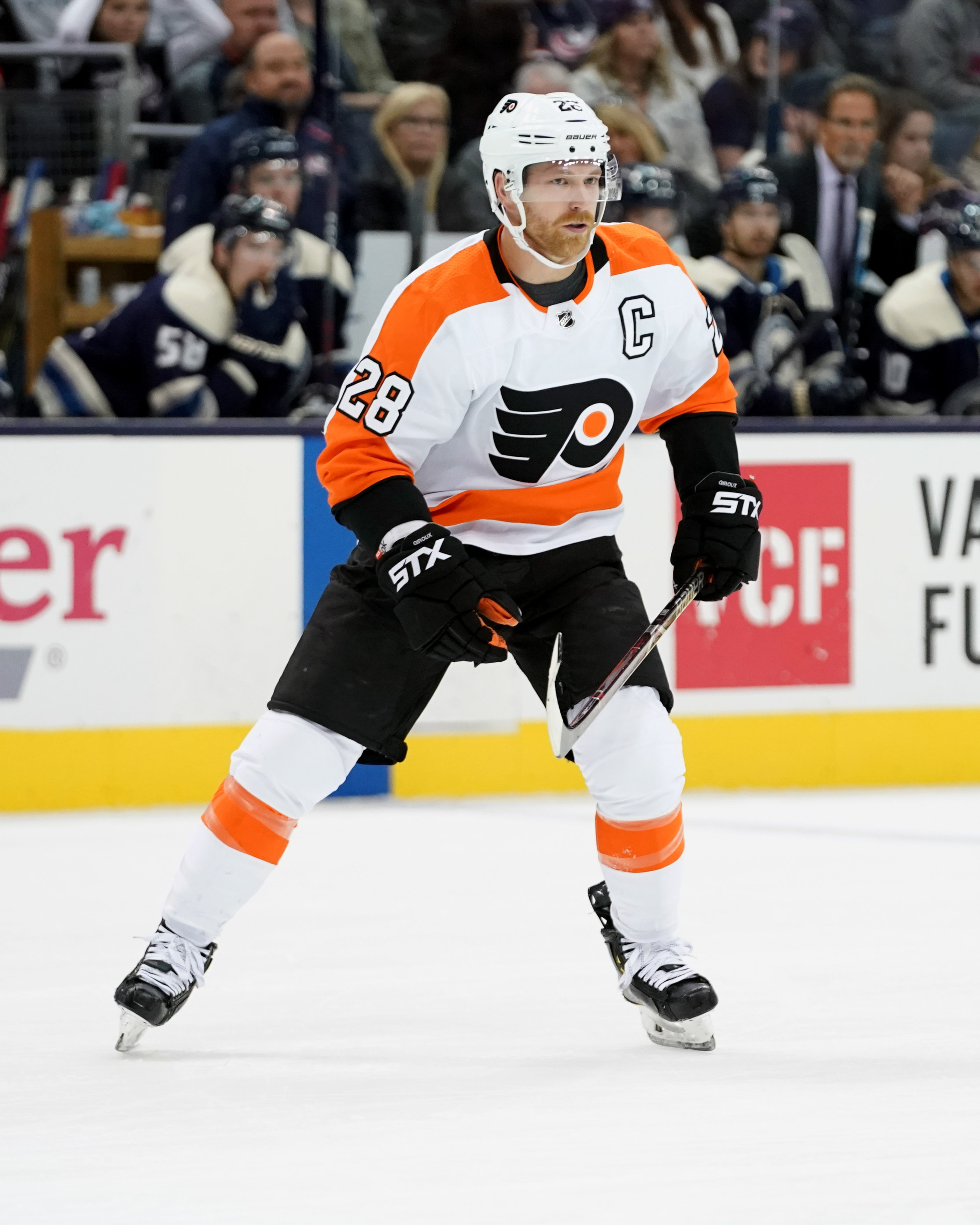 Giroux has been one of the most dominant Flyers players in their history with 257 goals and 810 points over his career. He put up 21 goals last year in just 69 games, but did see a decline in his overall points as his point totals went from 85 to 53. At 32 years of age, it’s likely that we’ll see the start of a decline in the next few years, but with two years remaining on his contract, the team does have some relief coming down the road. If Giroux can bounce back this year, he’ll remain a viable player for a few more years and can eventually be signed to a cheaper deal as he reaches his mid-30’s.
Couturier, on the other hand, is also coming off a disappointing season. After two straight 30-goal seasons, he struggled with just 22 goals in 69 games. Of course, had he played the entire 82 games, he may have come close to those goal-scoring numbers, but the 28-year-old should continue to post good numbers for the next few years and his contract looks like a value deal if he can get back to 30 goals once again.
Braun provides some much-needed veteran depth on the blueline after the Flyers traded a second and third-round pick to acquire him last offseason. They still get two more years out of him. Hagg also provides key depth despite an injury plagued 2019-20.
Who Your Team Is Thankful For: Edmonton Oilers
We’ve now made it past Thanksgiving and the holiday season is right around the corner. Like the last few years, PHR will take a look at what teams are thankful for but this year comes with a bit of a change. Normally teams would have an idea of where their season was heading, coming up on the one-quarter mark with mountains of statistics to analyze. Instead, in this unprecedented year, the season hasn’t even begun. We’ll still take a look at what each group is excited about and what they could hope for once the calendar turns to 2021.
What are the Oilers most thankful for?
A team that looks to be deep enough to compete near the top.
The team may have two of the best players in the league (see below), but the biggest problem the team has dealt with over the past few years was their lack of top-six and even top-nine depth to assist those two players. However, while the the Oilers have always had Ryan Nugent-Hopkins, he has finally found a place next to Leon Draisaitl and Kailer Yamamoto on the second line. That trio was dominant in the second half of the season once the line was put together.
Edmonton also added several veterans to the roster, adding James Neal a year ago, who showed he wasn’t done yet. They then added Tyler Ennis at the trade deadline and signed Kyle Turris this offseason, giving the team quite a bit of veteran depth to fill in gaps in the middle six.
Perhaps the most interesting player to keep an eye on will be former top prospect Jesse Puljujarvi, who finally returned to Edmonton after playing last year in the Liiga after he left the team due to his lack of playing time. The fourth-overall pick from the 2016 draft hasn’t panned out yet, but is only 22 years old and returns to the NHL with plenty of confidence after being one of the top scorers in Finland’s top pro league.
Who are the Oilers most thankful for?
Two Hart Trophy winners in Connor McDavid and now Draisaitl.
Few teams can boast they have one Hart Trophy winner, let alone two and both McDavid and Draisaitl are still so young that they can still get better. McDavid had put together three straight 100-point seasons and would have done that last year (he had 97 points), but the pandemic stopped that streak. Nevertheless, he is one of the best, if not the best player in the NHL.
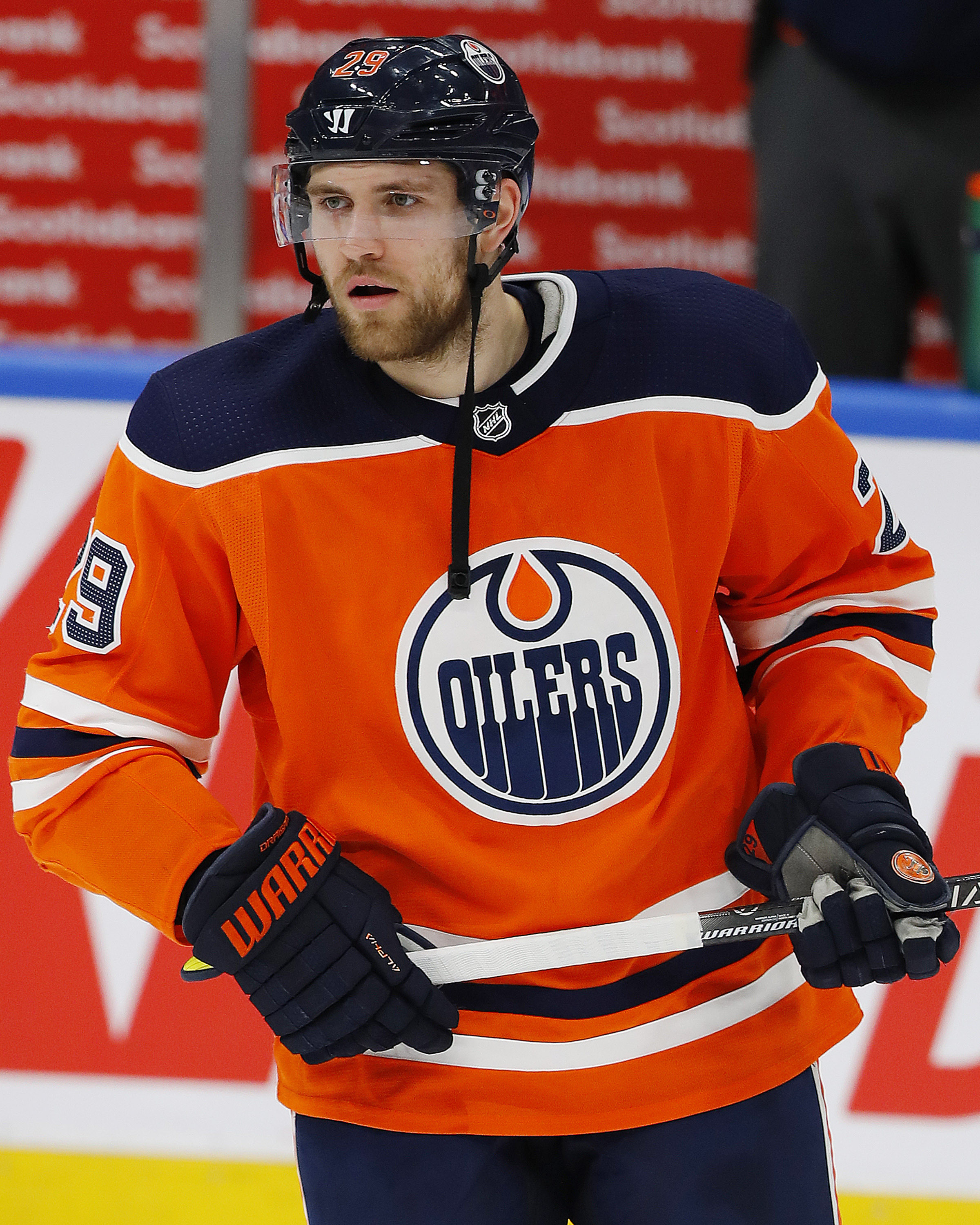 Now Draisaitl, who dominated in 2018-19 with a 50-goal, 105-point season, posted another impressive year, scoring 45 and leading the league with 110 points in just 71 games. The two finally were split onto separate lines on even strength, but still dominated together on the power play, giving the team the top-ranked power play in the league by a whopping 29.5 percent, more than four percent better than the second place power play team.
Those two players only make it easier for general manager Ken Holland to build a solid team around sooner than later.
What would the Oilers be even more thankful for?
A return to form of Tyson Barrie.
With an injury to Oscar Klefbom that could keep him out for the entirety of the 2020-21 season, Holland went out and inked Barrie to a one-year deal after the once highly-touted blueliner suffered through a disastrous season with the Toronto Maple Leafs a year ago. Toronto brought in Barrie via trade in hopes of shoring up their deficient defense, but the offensive-minded defenseman never fit into the Maple Leafs’ system and even saw his offensive numbers drop like a stone. Barrie was coming off two straight 14-goal, 50+ point seasons in Colorado, but managed just five goals and 39 points.
However, in Edmonton with a prove-it deal in hand (as well as no Klefbom to take away power play minutes), Barrie should get every opportunity to find his game and return his status as a top offensive defenseman.
What should be on the Oilers holiday wish list?
A goalie upgrade.
If there is one area of weakness in Edmonton, it’s in net. The team is hamstrung under Mikko Koskinen, who is being paid as a starter, but is a tandem goalie at best. The team had hoped to pry Jacob Markstrom away from Vancouver in free agency, but were outbid by the Calgary Flames. Instead of grabbing at another free-agent, the team opted to sign Mike Smith to another one-year deal. However, the team might be better off searching the trade market at some point and fixing that goaltending situation later in the season, depending on the team’s success this year.
Photo courtesy of USA Today Sports Images
Salary Cap Deep Dive: New York Rangers
Navigating the salary cap is one of the more important tasks for any GM. Teams that can avert total cap chaos by walking the tightrope of inking players to deals that match their value (or compensate for future value without breaking the bank) remain successful. Those that don’t see struggles and front office changes.
PHR will look at every NHL team and give a thorough look at their cap situation heading into the 2020-21 season. This will focus more on players who are regulars on the roster versus those who may find themselves shuttling between the AHL and NHL. All cap figures are courtesy of CapFriendly.
New York Rangers
Current Cap Hit: $76,670,633 (under the $81.5MM Upper Limit)
Entry-Level Contracts
F Filip Chytil (one year, $894K)
D Adam Fox (two years, $925K)
F Julien Gauthier (one year, $863K)
F Brett Howden (one year, $863K)
F Kaapo Kakko (two years, $925K)
F Alexis Lafreniere (three years, $925K)
D Ryan Lindgren (one year, $925K)
G Igor Shesterkin (one year, $925K)
Potential Bonuses
Chytil: $350K
Fox: $850K
Gauthier: $300K
Kakko: $2.65MM
Lafreniere: $2.85MM
Lindgren: $212.5K
Shesterkin: $2.85MM
Total: $10.0625MM
It’s not very often that a team basically has more than a third of their roster on entry-level deals but that’s the case here. The total bonuses actually exceed the 7.5% bonus cushion so there is a dead cap charge of $3.95MM on the books as things stand and it’s extremely rare for a team to be in that situation but that just shows how many talented youngsters the Rangers have.
Lafreniere was the top pick of the draft back in October and is expected to step into a top-six role right away (or very soon after). As someone that should make a sizable impact right away, he could easily jump into the $7MM or more range on his next contract. Kakko, the second-overall pick in 2019, had a difficult rookie season. That could play a role in talks for his next deal depending on how 2020-21 goes. If he takes off, then like Lafreniere, he could bypass the bridge contract altogether and go straight to top money. If he doesn’t, then the likelihood of a short-term second deal becomes much stronger.
Chytil could be their second center of the future but it will take a couple more years for him to have a shot at jumping into that role. It’s difficult to envision them paying him top-six money before he really establishes himself so a bridge deal is likely. The same can be said for Howden who established himself as a regular in their bottom six but he’s unlikely to command a significant raise if his production is similar this year. Gauthier was brought in from Carolina in a late-season trade but has been a fourth liner almost exclusively in his limited NHL action. He’s in the type of situation where a small dip in pay to get a one-way deal or a higher AHL salary is the standard unless he plays himself into a more prominent role. Vitali Kravtsov (two years, $925K plus $850K in bonuses) will stay in the KHL through the end of their season but is an option to be recalled once that season comes to an end though their bonus situation may affect those plans.
Fox had an impressive rookie season and narrowly missed out on being a finalist for the Calder Trophy. 42 points from a defenseman is impressive in any year and even if he ‘only’ produces around that mark the next couple of years instead of increasing his point-per-game output, he’s a safe bet for a sizable raise already. Lindgren has a limited ceiling but fits in well on the third pairing. Another season in a regular role should give him a bit of a raise but without arbitration rights, he’ll be limited in what he can get next summer. K’Andre Miller (three years, $925K plus $300K in bonuses) could also play himself into the mix at some point.
Shesterkin still has very limited NHL experience (just a dozen games) but he enters 2020-21 as the presumptive starter. He made an immediate impact to help carry New York down the stretch last season and if he picks up where he left off, GM Jeff Gorton may try to work out a long-term pact. If not, a one or two-year deal that allows him to further establish himself before trying to command number one money makes sense.
One Year Remaining, Non-Entry-Level
F Pavel Buchnevich ($3.25MM, RFA)
D Jack Johnson ($1.15MM, UFA)
D Brendan Smith ($4.35MM, UFA)
Buchnevich has shown flashes of top-end offensive play throughout his career but inconsistency has been an issue although he did improve on that last year while setting a new benchmark in points with 46. Assuming he produces at a similar per-game rate this season, the Rangers shouldn’t have much issue tendering a $3MM qualifying offer although in this market, he may not be in great shape to get much more than that.
Smith’s contract has been burdensome for New York basically ever since he signed it as in the first year, he was sent to the minors. He has done well to carve out a small niche role as a blueliner that can also hold his own on the wing but while that might help him earn another contract, it would be for about a quarter of what he’s making now. Johnson was bought out by Pittsburgh this offseason and quickly signed with the Rangers. He’s likely to have a limited role and even if he does rebuild his value a little bit, he shouldn’t be able to command much more a year from now.
Two Years Remaining
D Anthony Bitetto ($737.5K, UFA)
D Anthony DeAngelo ($4.8MM, RFA)
G Alexandar Georgiev ($2.425MM, RFA)
F Brendan Lemieux ($1.55MM, RFA)
F Kevin Rooney ($750K, UFA)
F Ryan Strome ($4.5MM, UFA)
F Mika Zibanejad ($5.35MM, UFA)
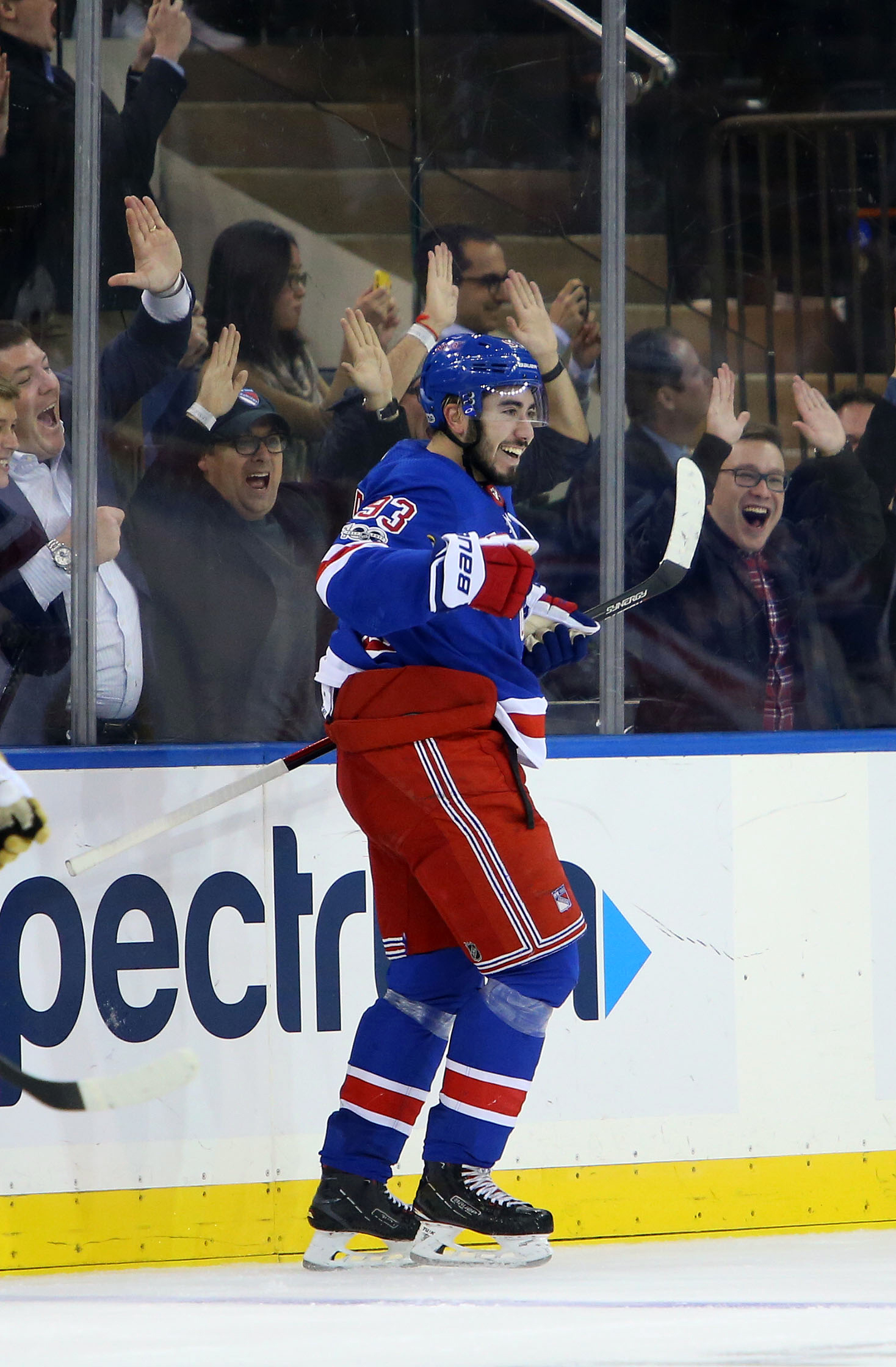 It took a bit of time but Zibanejad has emerged as a legitimate number one center and actually beat his 2018-19 point total (74) despite playing in 27 fewer games last season. While he has eight full NHL seasons under his belt already, he’s still just 27 and will hit the open market at 29 if the two sides can’t agree on an extension by then. The financial situation league-wide probably won’t have fully recovered by then but at the same time, top centers rarely become available. If Zibanejad, a top defensive forward on top of his newly-found offensive prowess, can hover around a 70-point pace for these next two years, he could add $3MM to $4MM to his AAV on his next deal. Without a top option in the system, this will be a priority case for Gorton when he’s eligible for an extension next season.
Strome is coming off of a career year but even that wasn’t enough to guarantee him a qualifying offer as a decision came down to the final few minutes before it was tendered. They settled on this contract to avoid arbitration and add a year of team control which gives Chytil more time to develop. Given that he has struggled offensively with two previous teams, he’ll need to show this was more than a one-time bump in output to have a shot at besting this contract two years from now. Lemieux doesn’t have the offensive upside to play in the top six but he has been an effective physical player which earned him a two-year deal this offseason. Until he produces more consistently though, his earnings upside will be limited to not much higher than this. Rooney was brought in from rival New Jersey in free agency and should battle for a spot on the fourth line. That’s a roster spot that will need to stay at or close to the minimum in future years.
DeAngelo didn’t have much leverage a year ago when he basically had to sign a one-year, show-me deal. He showed the Rangers and the rest of the league plenty as he was among the top offensive blueliners in the league, earning himself nearly a $4MM raise in the process. He has played his way into a core role on the team and should be well-positioned for another notable jump if he performs at a similar level the next two seasons as he’ll be a year out from UFA eligibility when his next contract begins. Bitetto is the favorite for the seventh spot on the back end and like Rooney’s situation, it’s a roster slot that will need to remain at a similar price tag whether it’s him or someone else in that role.
Georgiev has done enough to show that there’s still some upside but it’s fair to wonder if he is viewed as a number one goalie elsewhere. He’s going to have a hard time commanding number one money if he’s behind Shesterkin but the good news is that top backups can still push for a deal around $1MM higher than his current one. Assuming their goaltending situation goes according to plan, that’s what Georgiev’s next contract target should be.
What Your Team Is Thankful For: Detroit Red Wings
We’ve now made it past Thanksgiving and the holiday season is right around the corner. Like the last few years, PHR will take a look at what teams are thankful for but this year comes with a bit of a change. Normally teams would have an idea of where their season was heading, coming up on the one-quarter mark with mountains of statistics to analyze. Instead, in this unprecedented year, the season hasn’t even begun. We’ll still take a look at what each group is excited about and what they could hope for once the calendar turns to 2021.
What are the Red Wings most thankful for?
Sweden’s development system.
Detroit as an organization has always been known for its willingness to look outside of North America to find the best players in the world, and while that certainly is no longer an attribute limited to just them, it continues to this day in the team’s drafting strategy. Sweden, in particular, has stood out as a proving ground for the Red Wings eventual picks, with four players picked directly from the Frolunda organization over just the past two years.
That group is led of course by fourth-overall pick Lucas Raymond, who likely won’t be in Sweden much longer, but also includes Theodor Niederbach, Elmer Soderblom, and Gustav Berglund. Other Swedes picked in recent years include William Wallinder, Albert Johansson, and Albin Grewe, all selected with picks in the top 66. When the World Juniors hits the screen later this month, don’t be surprised if you hear “Red Wings draft pick” often when watching a Sweden game.
 Who are the Red Wings most thankful for?
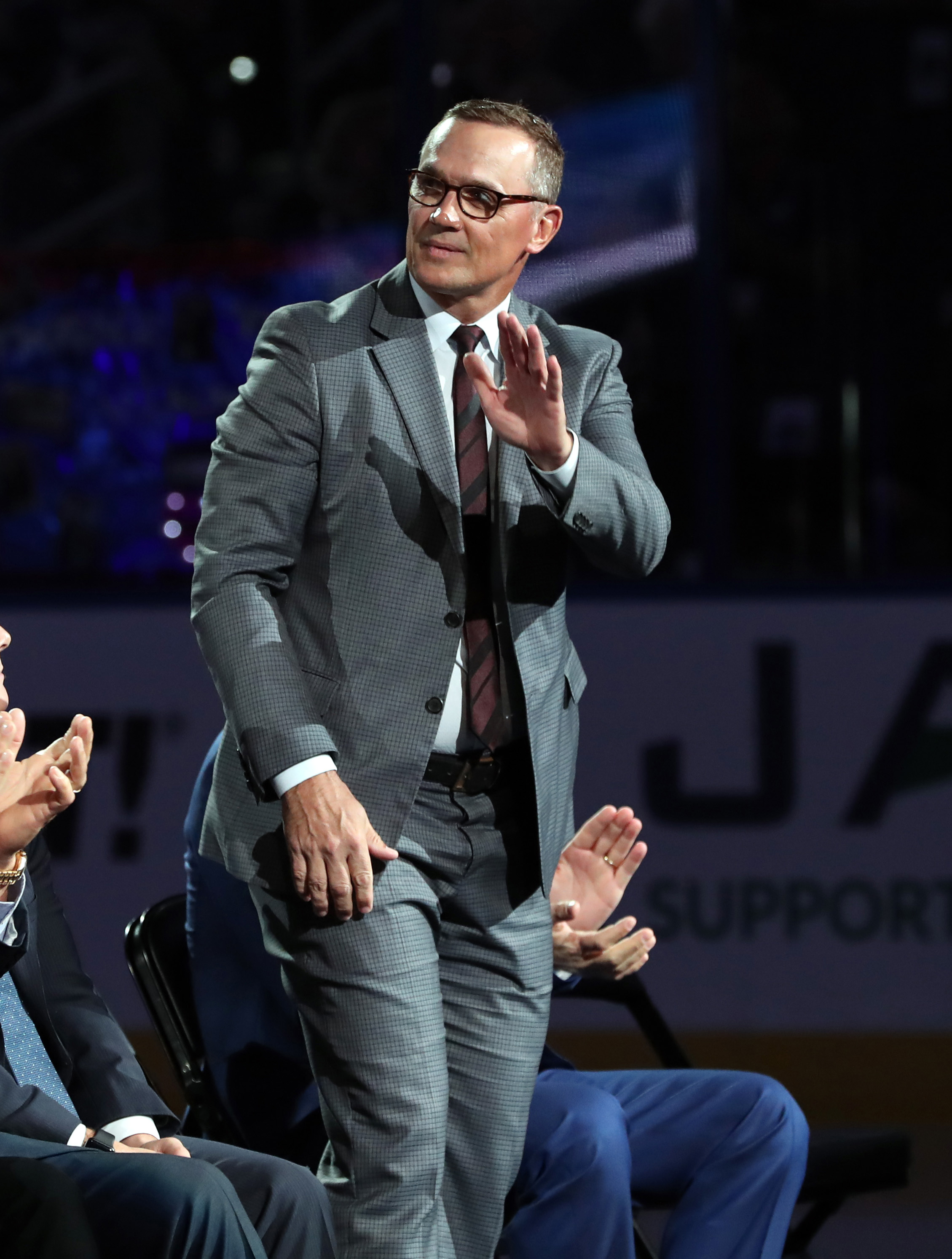
At the head of that draft strategy is Yzerman, who has experienced first hand throughout his playing and managing career the kind of impact international players can have. Though the team hasn’t experienced much on-ice success since he took over from Ken Holland in 2019, it’s hard to argue with the job he’s done so far in the rebuild.
The Red Wings prospect system is packed with high-end talent, they have another six picks in the first three rounds of 2021 and the roster is unencumbered by any expensive, long-term deals. In fact, only Anthony Mantha, who received a new deal last month, is signed through the 2023-24 season. Yzerman can form this roster in whichever direction he chooses, but names like Raymond and Moritz Seider are a great place to start.
What would the Red Wings be even more thankful for?
A breakout from one of their older prospects.
There was talent in the system even before Yzerman arrived, too. It’s hard to know where 21-year-old Michael Rasmussen‘s career trajectory is pointed at this juncture after a somewhat disappointing first few years, but if he ever did reach his ceiling (or perhaps break through it with his 6’6″ frame) he could be a dynamic presence in the middle of the lineup.
So too could Filip Zadina and Joe Veleno, the two players Detroit selected in the first round of 2018. Both have immense upside as a top-end sniper and two-way center respectively, but neither has quite followed through on that potential just yet. It’s certainly not time to give up on either one, but if there is a breakout coming the Detroit rebuild could be accelerated considerably.
What should be on the Red Wings holiday wish list?
Even more draft picks.
This train is headed in the right direction, but there might be one last year of pain for the Red Wings with the roster as currently presented, meaning one last collection of picks would do the team good. Darren Helm, Valtteri Filppula, Luke Glendening, Bobby Ryan, Sam Gagner, Marc Staal, Patrik Nemeth, Jon Merrill, Alex Biega, and Jonathan Bernier are all scheduled to be unrestricted free agents after this season—you can bet a good number of them won’t finish the year in Detroit.
It’s not that these kinds of players will bring back a huge package of assets, but every third or fourth-round pick they land for an aging-but-capable veteran means another lottery ticket that could turn into something great. (Don’t look now, but Frans Nielsen, Robby Fabbri, Vladislav Namestnikov, Danny DeKeyser, Troy Stecher, and Thomas Greiss will all be UFAs in 2022 and could face similar fates.)
Photo courtesy of USA Today Sports Images
Salary Cap Deep Dive: New York Islanders
Navigating the salary cap is one of the more important tasks for any GM. Teams that can avert total cap chaos by walking the tightrope of inking players to deals that match their value (or compensate for future value without breaking the bank) remain successful. Those that don’t see struggles and front office changes.
PHR will look at every NHL team and give a thorough look at their cap situation heading into the 2020-21 season. This will focus more on players who are regulars on the roster versus those who may find themselves shuttling between the AHL and NHL. All cap figures are courtesy of CapFriendly.
New York Islanders
Current Cap Hit: $77,594,163 (under the $81.5MM Upper Limit)
Entry-Level Contracts
D Noah Dobson (two years, $894K)
Potential Bonuses
Dobson: $537.5K
Dobson was a victim of the NHL-CHL agreement that prevented him from being eligible to play in the AHL. He clearly had done all he needed to at the major junior level but he also wasn’t quite ready for primetime duty in the top league either. That might actually help the Islanders when it comes to his second deal as while he burned the first season of his contract, he wasn’t an impact player by any stretch. He’s undoubtedly a big part of their future plans but he’s unlikely to break the bank with his next contract as things stand.
One Year Remaining, Non-Entry-Level
F Anthony Beauvillier ($2.1MM, RFA)
F Casey Cizikas ($3.35MM, UFA)
F Michael Dal Colle ($700K, RFA)
D Adam Pelech ($1.6MM, RFA)
G Ilya Sorokin ($2MM, RFA)
Cizikas has been a very effective energy player for several years. However, this is a hefty price tag for a player that still spends some time on the fourth line and rarely sees action in the top six. These types of players – while still effective – are going to feel the squeeze of the flattened Upper Limit so it’s hard to see him coming close to what he’s making now on his next deal let alone a raise. Beauvillier had a career year last season and has become a consistent secondary scorer. Between that and arbitration rights, he could have a shot at doubling that price tag if he takes another step forward in 2021-22. Dal Colle had a limited role last year which only earned him a one-way contract. He’ll be owed a minimum-salary raise at a minimum next offseason but unless he plays his way into a bigger role, he probably won’t get much more than that.
Pelech is coming off an injury-plagued year but emerged as an under-the-radar top-four defenseman. If he maintains that role, he’ll be well-positioned to earn a decent raise and with him being one year away from UFA eligibility, GM Lou Lamoriello will likely be looking to buy out a UFA-eligible season or two as well.
Sorokin has yet to play in the NHL but managed to get this high of a salary after burning his entry-level contract while being ineligible to play in the postseason bubble. He enters this season as the backup which may limit his short-term earnings upside but at the same time, he’s their goalie of the future and is only two years away from being eligible for unrestricted free agency. He could be one of the more interesting RFA cases next summer as a result.
Two Years Remaining
D Johnny Boychuk ($6MM, UFA)
F Cal Clutterbuck ($3.5MM, UFA)
D Thomas Hickey ($2.5MM, UFA)
F Ross Johnston ($1MM, UFA)
F Leo Komarov ($3MM, UFA)
D Nick Leddy ($5.5MM, UFA)
D Ryan Pulock ($5MM, UFA)
At one point, Clutterbuck was part of New York’s vaunted fourth line, a unit that is now more overpaid than it is vaunted. They’re still effective but this is another overpayment in their bottom six. So too is Komarov who isn’t able to hold his own in bigger minutes like he was while playing for Lamoriello in Toronto. Neither player should come close to matching their current contracts on the open market two years from now. Johnston isn’t an every-game player but his price tag is at least more appropriate for someone in that role.
While Boychuk’s playing days are over, he’ll remain on the books until his contract expires. He’s eligible for LTIR and the Islanders will need it to be cap-compliant once everyone is signed. Leddy’s deal seemed like a bargain early after he was acquired from Chicago but as his production has dipped the last couple of years, that isn’t the case as much now. It’s not a massive overpayment either as he’s still a top-four option but barring him rediscovering his offensive touch, he is another veteran eyeing a dip in pay. That will also be the case for Hickey who spent last year in the minors and only is being mentioned here since they’ll still face a sizable cap charge if he’s sent back down this season.
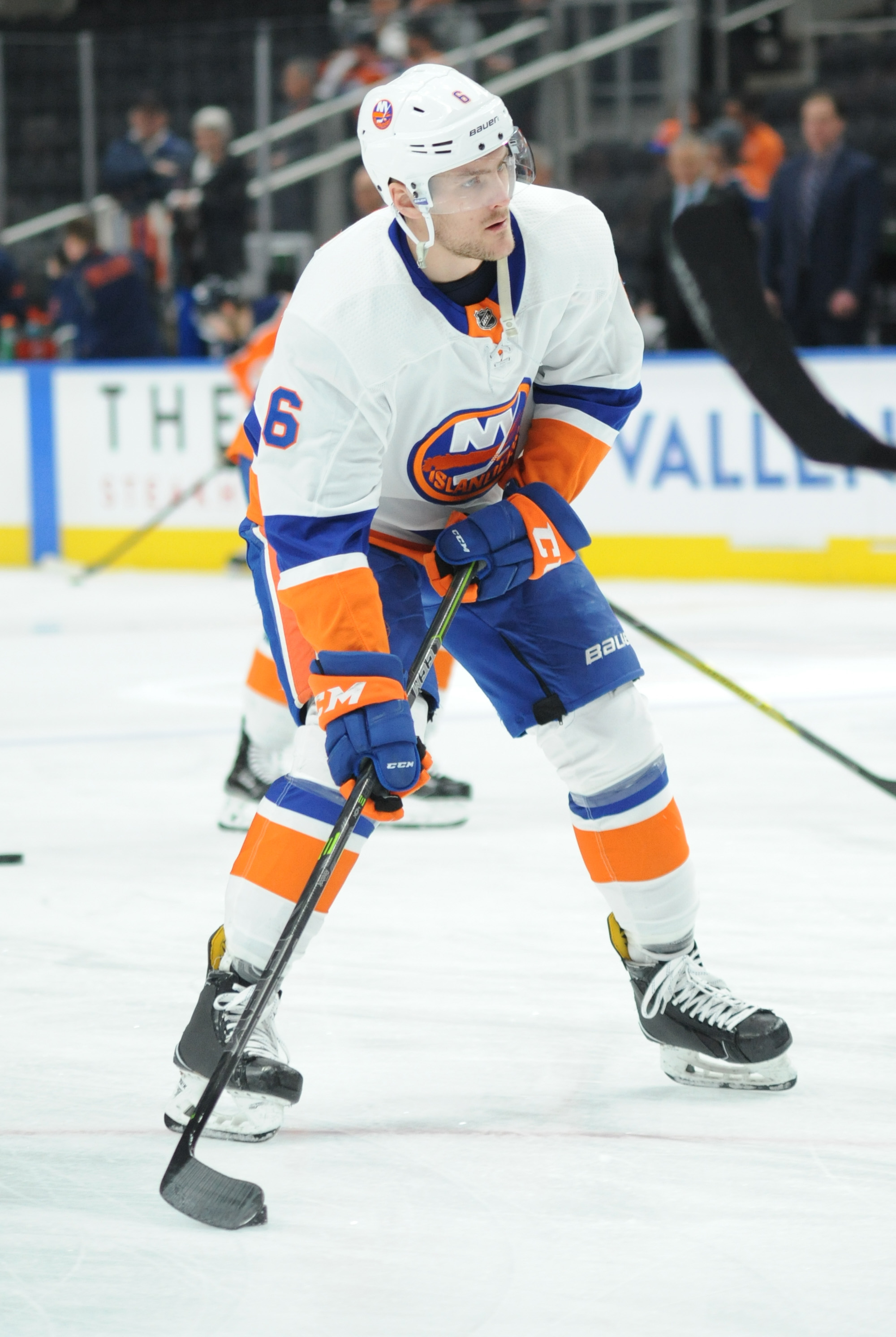 The same can’t be said for Pulock. The two-year term on his most recent deal certainly raised some eyebrows as it walks him straight to unrestricted free agency in the prime of his career. He very quietly has established himself as their top defenseman and assuming he continues on his current trajectory, it’s quite possible that he adds another couple of million per year to his next cap hit. That the Isles opted for this contract shouldn’t be perceived as an indictment on Pulock but rather a reality of who still needs a contract (more on him later). This was the cheapest way to get him signed and while they’ll benefit from it for the next two years, they’ll pay for it in 2022 when he’ll cost a fair bit more to re-sign.
Three Years Remaining
F Andrew Ladd ($5.5MM, UFA)
D Scott Mayfield ($1.45MM, UFA)
G Semyon Varlamov ($5MM, UFA)
Ladd is yet another of the terrible 2016 UFA contracts that were handed out. While he was a top-six forward when the deal was signed, he isn’t now and spent most of last season in the minors. That may be the case again next season and to make matters worse, the structure of the deal makes it virtually buyout-proof.
Mayfield’s five-year extension came with some risk considering he didn’t have even one year’s worth of NHL experience under his belt but it has proven to be a prudent move as he has since established himself as a capable regular. His offensive production (or lack of) will limit his earnings upside but he should still get a fair-sized raise in his first crack at the open market.
Varlamov had a good first season with the Islanders and eventually wrestled away the number one job. However, Sorokin is their goalie of the future and the expectation is that he’ll eventually take over the top role from Varlamov. As a result, it’s fair to wonder if he finishes this team with them; if he does, he’ll probably have a hard time commanding similar money from a 1B or backup role.
What Your Team Is Thankful For: Dallas Stars
We’ve now made it past Thanksgiving and the holiday season is right around the corner. Like the last few years, PHR will take a look at what teams are thankful for but this year comes with a bit of a change. Normally teams would have an idea of where their season was heading, coming up on the one-quarter mark with mountains of statistics to analyze. Instead, in this unprecedented year, the season hasn’t even begun. We’ll still take a look at what each group is excited about and what they could hope for once the calendar turns to 2021.
What are the Stars most thankful for?
Last season’s Western Conference title.
Yes, ultimately losing in the Stanley Cup Final typically isn’t something to be thankful about but it has changed the perspective of their program in its entirety. This was a team that had been viewed by many as potentially vulnerable, offensively deficient heading into the bubble with a veteran core that didn’t exactly have a good regular season. Were they on the way down?
Clearly, the answer was no. Instead, those players produced at better rates than they did during the regular season when a lot of times, the opposite occurred. Anton Khudobin stepped up in Ben Bishop’s absence, showing that they have one of the top tandems in the league (another thing they’re certainly thankful for). Now weeks away from the anticipated start of training camp, the Stars are viewed as a team that’s capable of winning now. Not many were saying that during the pandemic-induced layoff; their run to the Final shows that this core still has something left in the tank.
Who are the Stars most thankful for?
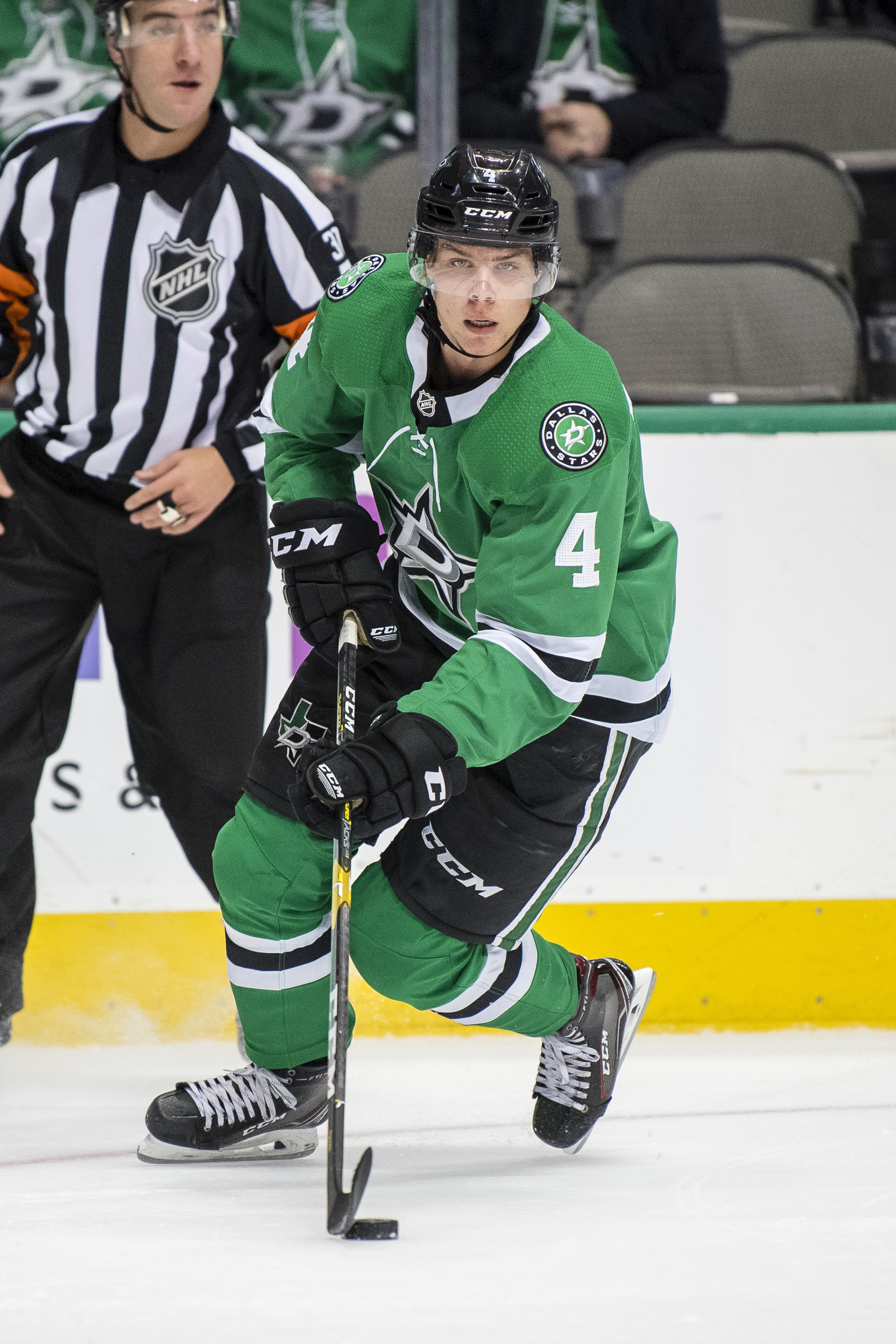 Naturally, after speaking positively about their veteran core, let’s now go in the exact opposite direction and look at their youngest player in Miro Heiskanen. There are young defensemen that teams hope can one day ascend to that number one role. The 21-year-old is two years into his career and is already at that level. He’s coming off of a stellar postseason where he led the team in scoring and the sky is seemingly the limit.
Dallas is also certainly thankful that he’s still on his entry-level contract that restricts him to a base salary of $925K (including his signing bonus). It’s rare to have a number one blueliner making less than a million dollars in base pay and it’s the type of high-value contract that has allowed them to keep the core of the team intact for another run in the postseason. That will soon change as that deal is up at the end of the season but for now, their best defenseman just happens to be their lowest-paid regular.
What would the Stars be even more thankful for?
Further delaying the start to next season. That may sound crazy but they are down their starting goaltender in Bishop and their top center in Tyler Seguin with both players expected to be out into March at a minimum. The fewer games they play without those two, the better off they should be in the standings, especially with Khudobin having relatively limited experience as an every-game starter.
What should be on the Stars’ holiday wish list?
More scoring depth.
One way of looking at things is that they scored enough to make their way through the Western Conference in the playoffs. The glass half-empty viewpoint mentions that they were 28th in the league in offense last season with their goaltending allowing the second-fewest goals that helped keep them in the top half of the conference. It’s true that they’ve been able to keep their core intact but at the same time, they didn’t really add to it. There’s room for optimism for some of their younger players to take steps forward and grab a bigger share of the offensive pie but they’d undoubtedly love to add another veteran with a track record of consistent production.
They’ll have LTIR space to play with early on due to the injuries of Bishop and Seguin while Stephen Johns’ availability is uncertain but their cap room when everyone is healthy is minimal so GM Jim Nill will have his work cut out for him to try to add to their attack. It’d go a long way if he could find a way to do so.
Photo courtesy of USA Today Sports Images.
Salary Cap Deep Dive: New Jersey Devils
Navigating the salary cap is one of the more important tasks for any GM. Teams that can avert total cap chaos by walking the tightrope of inking players to deals that match their value (or compensate for future value without breaking the bank) remain successful. Those that don’t see struggles and front office changes.
PHR will look at every NHL team and give a thorough look at their cap situation heading into the 2020-21 season. This will focus more on players who are regulars on the roster versus those who may find themselves shuttling between the AHL and NHL. All cap figures are courtesy of CapFriendly.
New Jersey Devils
Current Cap Hit: $64,304,999 (under the $81.5MM Upper Limit)
Entry-Level Contracts
F Jesper Boqvist (two years, $925K)
F Jack Hughes (two years, $925K)
F Janne Kuokkanen (one year, $812K)
F Michael McLeod (one year, $863K)
Potential Bonuses
Hughes: $2.85MM
Kuokkanen: $32.5K
McLeod: $500K
Total: $3.3825MM
Hughes, the top pick from the 2019 draft, didn’t have a great rookie season but was also making the jump from the USHL which was basically uncharted waters. A lot can change over the next couple of years and if he takes the big step forward offensively that many expect him to, he’ll be able to bypass a bridge deal and get a long-term, big-money deal. Boqvist split last season between the Devils and AHL Binghamton which should have him in the mix for a spot on the fourth line but his offensive numbers will need to improve if he wants to make what he’s getting now on his second deal. McLeod, a 2016 first-round pick, has struggled over his first two professional seasons but with the AHL likely to have an even shorter year than the NHL, keeping him up for an extended look may be best for his development. Kuokkanen was an important part of the Sami Vatanen deal back at the deadline and it’s possible he’s in the mix for a spot at the end of the roster as well.
One Year Remaining, Non-Entry-Level
D Connor Carrick ($1.5MM, UFA)
F Nikita Gusev ($4.5MM, UFA)
D Dmitry Kulikov ($1.15MM, UFA)
D Ryan Murray ($4.6MM, UFA)
F Kyle Palmieri ($4.65MM, UFA)
F Travis Zajac ($5.75MM, UFA)
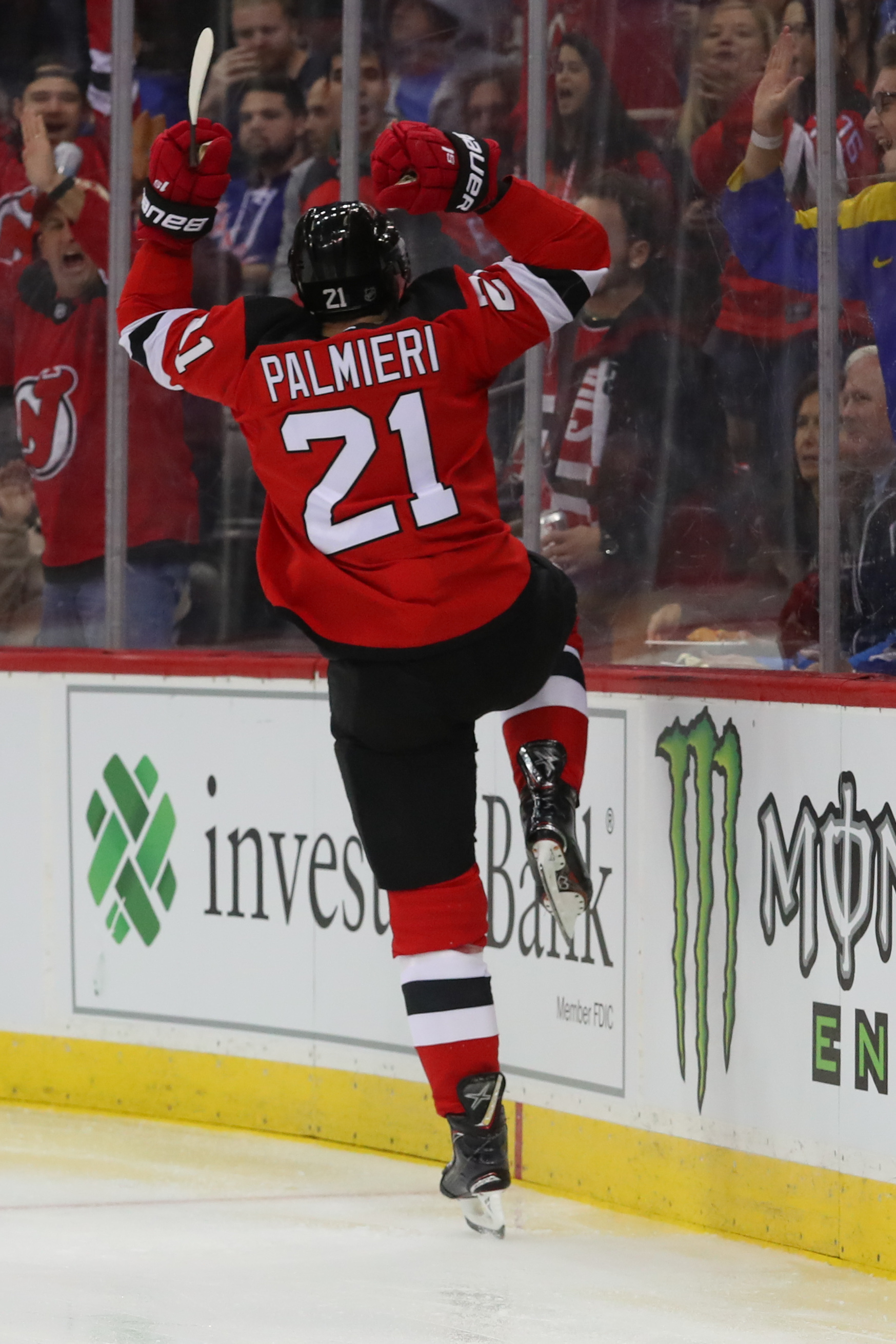 While Palmieri isn’t the highest-paid player on this list, that won’t be the case for much longer. Since joining the Devils, he has emerged as a consistent goal scorer, potting between 24 and 30 goals over his five seasons with the team. While the current free agent market hasn’t been particularly kind to wingers this offseason, New Jersey is in a position where they can afford to pay above market value to ensure they keep him around and not lose a big part of their attack to free agency. If he does make it to the open market though, he should have no shortage of suitors though how many will be able to afford him (a standard caveat that is going to apply for a few years for any UFA of note) remains to be seen.
Zajac has been a fixture in New Jersey’s lineup for the past 14 seasons but his time as a top-six center has come and gone. With an abundance of younger options down the middle, it wouldn’t be surprising if he finds himself elsewhere in 2021-22 at about a third of what he costs now although GM Tom Fitzgerald could try to keep Zajac around in a mentor role as well. Gusev had a bit of a shaky start to his NHL career last season but eventually became a productive player in their top six. Given his limited track record, predicting his next contract is a bit trickier but he’ll need to improve on his offensive numbers to have a shot at a raise.
Murray was brought in as a cap dump from Columbus and lands in a good spot where he’ll help stabilize their top four, provided he can stay healthy. That’s a huge if based on his career and even if he stays healthy this season, his history of being injured will certainly limit his market although Chris Tanev, an oft-injured blueliner, was able to still land a four-year, $18MM deal this offseason. As things stand, that’s around what he should be targeting as things stand. Carrick has had a limited role since joining the Devils and will likely be the sixth or seventh defender again. That’s a high price tag for that spot on the depth chart and he’ll be hard-pressed to land that on his next deal. Kulikov was overpaid with Winnipeg but he did log 20 minutes a game and hold his own last season. This was a decent under the radar move for the Devils and he could have an opportunity to rebuild his value with them this coming season.
Two Years Remaining
D Will Butcher ($3.733MM, UFA)
G Corey Crawford ($3.9MM, UFA)
D P.K. Subban ($9MM, UFA)
F Miles Wood ($2.75MM, RFA)
F Pavel Zacha ($2.25MM, RFA)
Wood has seen his production taper off slightly the last couple of years and instead of looking like a possible top-six winger, he’s settled in as more of a third liner. He’s still an effective player and is one of the quicker players in the league but he’s owed a $3.5MM qualifying offer when this deal is up and that price tag is looking a little high as things stand. Zacha hasn’t lived up to his draft billing yet (sixth overall in 2015) but he has taken some small steps forward the last couple of years. Long term, he probably profiles no higher than a third-line center at this point and a $3MM qualifier for someone in that role is justifiable although he probably doesn’t stand to make much more than that on his next deal.
Subban was brought in last offseason from Nashville as the Predators were looking to free up salary and his return to the Eastern Conference wasn’t the greatest. He struggled to the worst offensive season of his career while he actually saw less ice time than he was getting with the Preds on a team where the expectation was that he’d be their top defender. It’s a bad-value contract but one that they can afford. He’s looking at a sizable dip in pay on his next contract. Butcher also had a tough year offensively, putting up career-low numbers which isn’t ideal for someone billed as an offensive defenseman. Getting back to his rookie production (44 points) is what he’ll need if he wants a shot at cashing in on a long-term deal.
Crawford signed with New Jersey in free agency after he and Chicago weren’t able to come to terms on a new deal with term being a sticking point. At this point, he’s a short-term bridge goalie and a bit above-average for that role. His contract reflects both of those factors and is a pretty good deal for the Devils.
Three Years Remaining
F Andreas Johnsson ($3.4MM, UFA)
D Damon Severson ($4.17MM, UFA)
Johnsson was also brought in as a cap casualty as Toronto needed to free up room this offseason. He is coming off an injury-riddled season but has a 20-goal year under his belt. Based on the market last offseason, he’s on a fair-market deal.
Severson’s contract is slowly turning into a bargain as he has settled in nicely on their top pairing and led the team in ATOI last season. While his offensive game may not get to that next tier, it doesn’t need to in order to justify that price tag. A top-pairing player making number four money is nice value even if he should be in a lower spot on the depth chart.
What Your Team Is Thankful For: Columbus Blue Jackets
We’ve now made it past Thanksgiving and the holiday season is right around the corner. Like the last few years, PHR will take a look at what teams are thankful for but this year comes with a bit of a change. Normally teams would have an idea of where their season was heading, coming up on the one-quarter mark with mountains of statistics to analyze. Instead, in this unprecedented year, the season hasn’t even begun. We’ll still take a look at what each group is excited about and what they could hope for once the calendar turns to 2021.
What are the Blue Jackets most thankful for?
Strong management and coaching.
If someone were to try and choose the best general manager/head coach tandem in the league to build a franchise around, the Blue Jackets duo of Jarmo Kekalainen and John Tortorella may be right up near the top. When Kekalainen took over in February of 2013, the Blue Jackets had experienced just a single winning season in their history. 2009 was their only time in the playoffs and they were swept out of the first round without winning a game.
In his seven full seasons running the front office, the team has put up six winning seasons and reached the playoffs five times. It’s no coincidence that four of those appearances have been since Tortorella took over partway through the 2015-16 season. Time and again when the rest of the hockey world zigs, Kekalainen zags, usually to strong results. Though the duo hasn’t been able to take Columbus to the promised land: “in Jarmo we trust.”
 Who are the Blue Jackets most thankful for?
While acquiring Seth Jones in 2016 still may be Kekalainen’s most important move, the selection of Dubois later that year may be his most impressive. After Auston Matthews and Patrik Laine were off the board, everyone was expecting the Blue Jackets to select Jesse Puljujarvi with the third selection in the NHL entry draft. Puljujarvi was a consensus top prospect that was supposed to become a premier power forward in the league and to boot, he was Finnish just like Kekalainen. When the Blue Jackets GM strode to the podium and proudly selected Dubois instead, perhaps the hockey world should have been tipped off to what was coming for the eventual Edmonton Oilers forward.
Puljujarvi has struggled and fought his way to 37 points in 139 NHL games, while Dubois has become a legitimate first-line center in Columbus. While his offensive production still lags behind Matthew Tkachuk (selected sixth) and Alex DeBrincat (39th), there’s little doubt that Dubois is one of the most valuable players available from the 2016 draft and was a homerun selection for Kekalainen. The 22-year-old forward is still awaiting his next contract, but he showed exactly the type of player he could be this summer when he led Columbus with 10 points in 10 postseason games while averaging nearly 23 minutes a night.
What would the Blue Jackets be even more thankful for?
A commitment to Columbus.
Quite dramatically in the summer of 2019, the Blue Jackets were forced to say goodbye to Artemi Panarin, Sergei Bobrovsky, Matt Duchene, Ryan Dzingel, and others in free agency. Though the team is still strong and several of the deals signed by those players look troublesome, it still would have been huge for them to sell Panarin on the city of Columbus. It’s not that the Hart Trophy candidate ever spoke badly of the market, but when the bright lights of New York came calling, he left.
After being eliminated from the postseason that year, Kekalainen spoke to reporters including Michael Arace of the Columbus Dispatch about what he wanted, something that some could argue he still hasn’t found:
I think it’s important moving forward that we’re going to have guys that are proud to be Blue Jackets and proud to be living in Columbus and loving it here. That’s really important — that they bleed blue, or whatever you want to call it.
Yeah. The guys that want to be here are going to be here and the guys that don’t want to be here, good luck.
That commitment will be tested soon. After the 2021-22 season, Jones will be an unrestricted free agent and likely the most sought-after commodity on the market if he gets there. Max Domi, Boone Jenner, Dean Kukan, Elvis Merzlikins, and Joonas Korpisalo are all scheduled to hit the market at the same time. Zach Werenski will be an RFA. Will they decide they want to be in Columbus, or will Kekalainen be wishing more good luck?
What should be on the Blue Jackets’ holiday wish list?
Another weapon.
Just over a month ago, Gustav Nyquist underwent shoulder surgery and was given a five-to-six month recovery timeline. That means he won’t be available for a good chunk of this season, taking away Columbus’ second-highest scorer. Sure, Oliver Bjorkstrand looks like he’ll quickly take over that role (if not pass Dubois entirely) but the Blue Jackets need more at the offensive end of the rink.
Specifically, there’s no reason a team that boasts powerplay quarterbacks like Jones and Werenski should be near the bottom of the league in conversion. The Blue Jackets scored on just 16.4% of their man-advantage situations last season, fifth-worst in the league and unacceptable for a team looking to contend in the playoffs. They need to find a go-to option when a penalty is put on the board and there are still some available on the open market (cough–Mike Hoffman–cough). It doesn’t necessarily need to be a UFA mercenary, but something has to be added.
Photo courtesy of USA Today Sports Images
Salary Cap Deep Dive: Columbus Blue Jackets
Navigating the salary cap is one of the more important tasks for any GM. Teams that can avert total cap chaos by walking the tightrope of inking players to deals that match their value (or compensate for future value without breaking the bank) remain successful. Those that don’t see struggles and front office changes.
PHR will look at every NHL team and give a thorough look at their cap situation heading into the 2020-21 season. This will focus more on players who are regulars on the roster versus those who may find themselves shuttling between the AHL and NHL. All cap figures are courtesy of CapFriendly.
Columbus Blue Jackets
Current Cap Hit: $72,274,125 (under the $81.5MM Upper Limit)
Entry-Level Contracts
F Emil Bemstrom (two years, $925K)
D Andrew Peeke (one year, $917K)
F Alexandre Texier (one year, $898K)
F Liam Foudy (two years, $894K)
Potential Bonuses
Bemstrom: $850K
Peeke: $850K
Foudy: $375K
Total: $2.08MM
Despite not having brought in much young talent the past few years in the draft, the Blue Jackets do still have a number of young players who could make a quick impact on their franchise. Bemstrom, a fourth-round pick from 2017, came over from Sweden last year at the age of 20 and played in 56 games, scoring 10 goals in his rookie season. He should continue to force his way into the more and more minutes and the speedy forward could eventually develop into a 25-goal scorer. Texier is another quick-moving forward who could develop into a future core piece of the team. Despite dealing with a back injury, Texier scored six goals in 36 games as a 20-year-old. Foudy played most of last season in the OHL, but did get a chance to appear in two games for Columbus, but the 2018 first-rounder is also a candidate to challenge for playing time with the Blue Jackets next season.
Peeke, on the other hand, looks to already be penciled into the Blue Jackets’ blueline. With the departures of Ryan Murray and Markus Nutivaara, Peeke will get every opportunity to claim one of the third pairing openings. The 22-year-old looked impressive in 22 appearances last year and could eventually work his way towards a top-four spot.
One Year Remaining, Non-Entry-Level
F Brandon Dubinsky ($5.85MM, UFA)
F Nick Foligno ($5.5MM, UFA)
D David Savard ($4.25MM, UFA)
F Riley Nash ($2.75MM, UFA)
F Oliver Bjorkstrand ($2.5MM, RFA)
F Mikko Koivu ($1.5MM, UFA)
F Mikhail Grigorenko ($1.2MM, UFA)
F Kevin Stenlund ($874K, RFA)
The Blue Jackets have quite a bit of salary coming off the books next season. First off the list will be Dubinsky who has scored just 12 goals since the 2017 season as he has been dealing with a wrist injury and recently general manager Jarmo Kekalainen said he wasn’t likely to ever play professional hockey again. That frees up a lot of cap room. Foligno is a different matter, however, as the 33-year-old may have seen a slight decline in his play recently, but the team will likely do what it can to retain their captain, who has been a key figure for the team both on and off the ice, even if he may be moving to the bottom-six of the lineup in the near future.
The team will also have to make a decision on Savard, who is one of the team’s top defensive players. The 30-year-old doesn’t help much offensively, but is a minutes eater who has been a key piece to the team’s top-four.
On the restricted front, the team’s top RFA next offseason will be Bjorkstrand, who has scored 20 or more goals for two straight seasons and is starting to come into his own. The 25-year-old posted 21 goals in 49 games last year, on pace for a potential 35-goal season had an ankle injury and the pandemic not cut into a chunk of his season.
Kekalainen also took a couple fliers, signing veteran Koivu and KHL star Grigorenko to one-year deals. Koivu should provide the team with key leadership and be able to help out the team’s bottom-six and penalty kill, while the Blue Jackets are hoping that Grigorenko, a former lottery pick in 2012, might be able to make it work in North America on his second attempt. The Russian, now 26, could never find his niche in the NHL and returned to the KHL, where he tallied 38 goals and 93 points combined in his last two seasons for CSKA Moscow.
Two Years Remaining
D Seth Jones ($5.4MM, UFA)
F Max Domi ($5.3MM, UFA)
D Zach Werenski ($5MM, UFA)
G Elvis Merzlikins ($4MM, UFA)
F Boone Jenner ($3.75MM, UFA)
G Joonas Korpisalo ($2.8MM, UFA)
D Dean Kukan ($1.65MM, UFA)
D Scott Harrington ($1.63MM, UFA)
F Eric Robinson ($975K, UFA)
F Nathan Gerbe ($750K, UFA)
D Gabriel Carlsson ($725K, RFA)
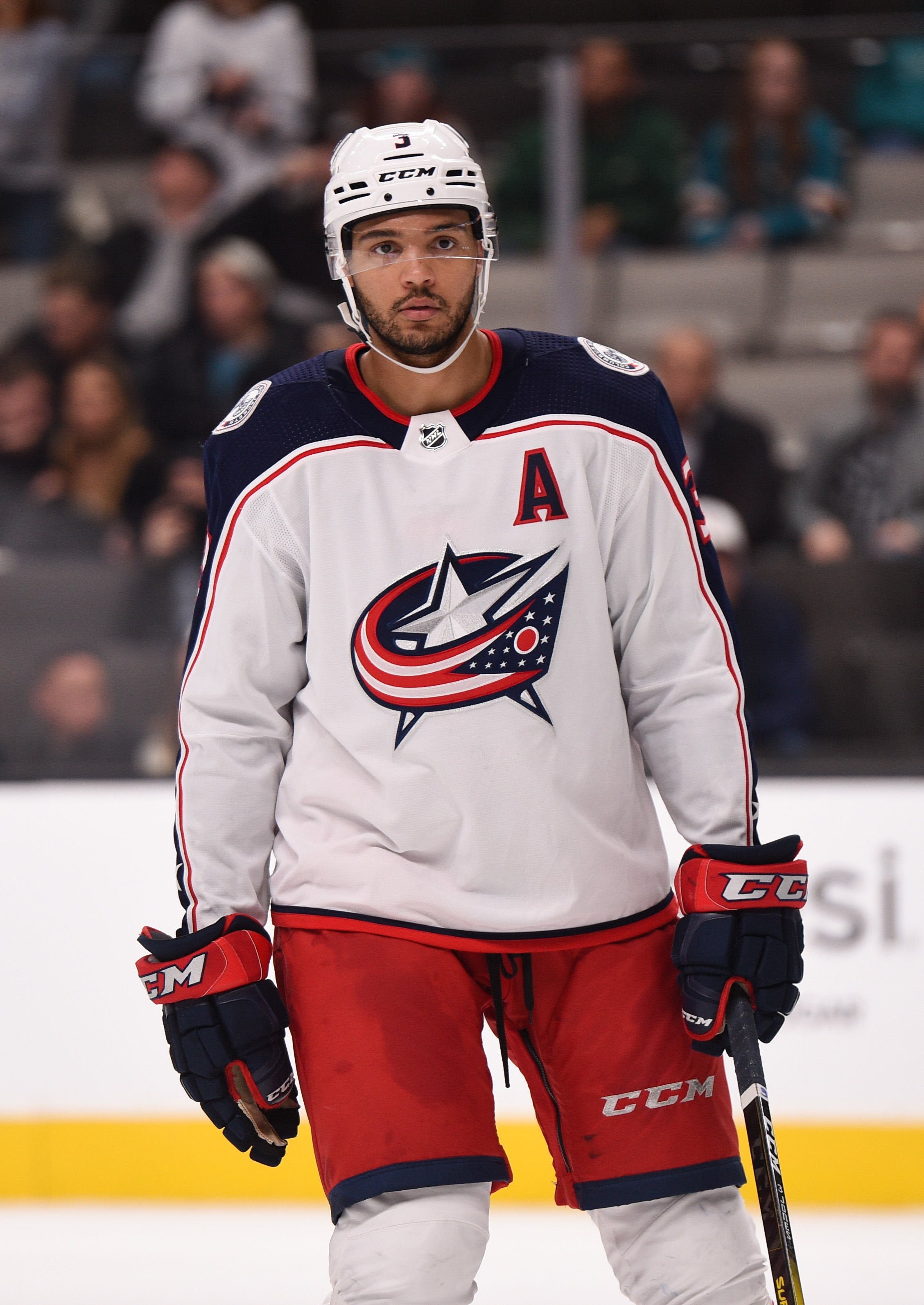 The Blue Jackets have quite a few key players hitting unrestricted free agency in a couple of years and will have to find a way to sign some of them to long-term deals. At the top of that list are their two star defensemen in Jones and Werenski. Jones has been one of the most dominant players on the team’s stifling defense and plays quite a key role on offense as well. The blueliner scored six goals and 30 points in just 56 games, but was sorely missed when he went down with an ankle injury in February. His partner, Werenski stepped it up, especially on offense last year, breaking the 20-goal mark for the first time and in just 63 games last year. The two together form one of the top defensive lines in hockey. Both will require quite a large sum of money to re-sign, but the Blue Jackets look like they should have money to spare to sign both of them.
Columbus also acquired Domi from the Montreal Canadiens in exchange for disgruntled forward Josh Anderson and now have two years to decide if the 25-year-old forward can make the most of the next two seasons. Domi scored 18 goals with Arizona in his rookie year, but then failed to break 10 goals for the next two seasons. Then he was traded to Montreal where he put up 28 goals in his first season there only to post 17 goals the following season and fall out of favor. Now on his third team, the Blue Jackets hope that Domi can put it all together and be the team’s No. 2 center long-term. The team will also have to decide whether Jenner is worth holding onto. After scoring 30 goals in the 2015-16 season, the 27-year-old has seen his offense decline almost every year as he posted just 11 goals last year.
The team may also be forced to make a decision in net in two years as well. The Blue Jackets got a real boost when both Korpisalo, the previous year’s backup, and Merzlikins, the team’s top goalie prospect took over for Sergei Bobrovsky only to watch both flourish. With both locked in for another two years, the team has time to decide which one to keep as neither are making too much money. Although there was talk during the season that Columbus might be willing to move one of its netminders for some offense.
Three Years Remaining
F Gustav Nyquist ($5.5MM, UFA)
D Vladislav Gavrikov ($2.8MM, UFA)
Nyquist was brought in last offseason to offset the losses of Artemi Panarin, Matt Duchene and Ryan Dzingel. The 31-year-old put up 15 goals and 42 points in 70 games last season, which is solid for a middle-six forward, but the team is hoping that can be on pace for better numbers next season. Kekalainen brought in Gavrikov last year on a one-year entry-level deal and that paid off as he quickly earned a bottom pairing role for the season, using his size and defensive abilities to his advantage. He fared well when pressed into a top-four role and was rewarded in the offseason with a three-year extension and likely will take a bigger role next year with Murray gone. Read more
Salary Cap Deep Dive: Carolina Hurricanes
Navigating the salary cap is one of the more important tasks for any GM. Teams that can avert total cap chaos by walking the tightrope of inking players to deals that match their value (or compensate for future value without breaking the bank) remain successful. Those that don’t see struggles and front office changes.
PHR will look at every NHL team and give a thorough look at their cap situation heading into the 2020-21 season. This will focus more on players who are regulars on the roster versus those who may find themselves shuttling between the AHL and NHL. All cap figures are courtesy of CapFriendly.
Carolina Hurricanes
Current Cap Hit: $80,567,739 (under the $81.5MM Upper Limit)
Entry-Level Contracts
F Martin Necas (two years, $863K)
F Andrei Svechnikov (one year, $925K)
Potential Bonuses
Necas: $537.5K
Svechnikov: $2.65MM
Total: $3.1875MM
Svechnikov didn’t waste much time becoming an integral part of Carolina’s attack to the point where GM Don Waddell said one of his top priorities this offseason would be trying to sign the winger to an extension. It would come with a significant price tag as he’d undoubtedly be looking for $7MM or more on a long-term deal to sign now, even in this marketplace. It’s hard to see both sides hitting a number they like and accordingly, a bridge contract may be the end result, something Waddell has previously suggested. Necas was eased in much slower than Svechnikov (he became a regular in his third professional season with the first two sliding) and the patience the Hurricanes showed was certainly wise as he was a capable middle-six forward in his first full campaign. If he can emerge as a full-time option in their top six, he could be a candidate to bypass a bridge contract although what happens with other players on their current roster could force their hand.
One Year Remaining, Non-Entry-Level
F Ryan Dzingel ($3.375MM, UFA)
F Warren Foegele ($2.15MM, RFA)
D Dougie Hamilton ($5.75MM, UFA)
F Jordan Martinook ($2MM, UFA)
F Brock McGinn ($2.1MM, UFA)
G Petr Mrazek ($3.4MM, UFA)
G James Reimer ($3.125MM, UFA)
D Joakim Ryan ($700K, UFA)
Dzingel was brought in to be a capable secondary scorer and wound up signing what looked like a good value contract at the time. What a difference a year can make. He struggled to find his footing offensively and it got to the point where he started out the playoffs as a healthy scratch. With minimal roster turnover, he may not have a better opportunity this coming season so he appears to be a candidate that will be taking a sizable cut in pay. McGinn and Martinook are quality defensive forwards but consistent offense isn’t their calling card. These types of role players have been hit hard this offseason and it wouldn’t be surprising to see both of them have to take a dip as well to stick around. Foegele took a step forward in his production last season though his physical play took a step backwards. If he can bring that element back and maintain his output, he becomes the type of power forward that demand always outweighs supply and players like that often do well in arbitration which he’ll be eligible for.
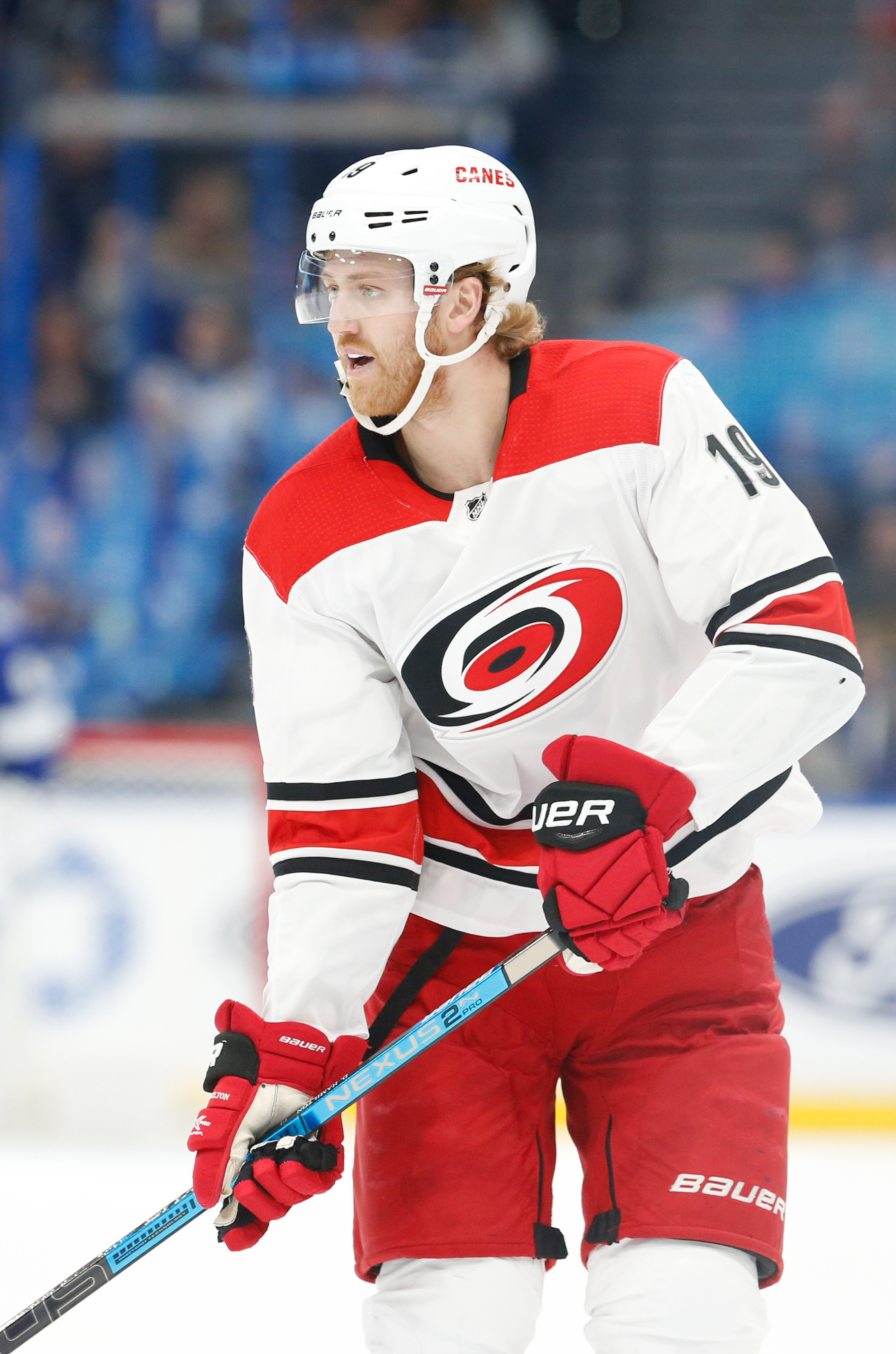 Hamilton is the other big offseason priority that Waddell has frequently spoken about and for good reason. For years, he has shown flashes of dominance but the consistency wasn’t always there. Last season, it was and he appeared to be on his way towards a Norris-caliber season before a broken fibula ended his season prematurely and to make matters worse, a summer training injury stopped him from being ready for the start of the playoffs although he did eventually make it back. When he’s on, he has played like a number one defender and he’ll want to be paid like one to sign now. Alex Pietrangelo’s $8.8MM price tag is the new benchmark in this market and while Hamilton won’t be able to get quite that much, something around $1MM lower is achievable. Ryan logged more than 19 minutes a game in limited action with Los Angeles a year ago but is likely to be the seventh defender, a position that Carolina will likely look to keep as cheap as possible with some big-ticket contracts on the horizon.
The Hurricanes have faced plenty of questions with their choice to go with the tandem of Mrazek and Reimer instead of a more proven option but they received a decent performance from the pair a year ago and with the quality of their back end, not bringing in a high-priced starter makes some sense. Neither netminder has made a strong case for a big raise on their next contracts, nor are they facing a big hit in pay either. As a result, with Carolina’s financial structure, it seems quite possible that the two could be brought back a year from now at a similar price if they can’t land a more proven starter.
Two Years Remaining
D Haydn Fleury ($1.3MM, RFA)
F Nino Niederreiter ($5.25MM, UFA)
F Vincent Trocheck ($4.75MM, UFA)
Niederreiter was a great fit in his part season with Carolina after being acquired from Minnesota in 2019 but his first full year didn’t go as well. He’s a middle-six winger on this team and that’s a bit of a high price tag for someone in that role. However, as he showed after being traded, he is capable of reaching top-line production at times. Trocheck’s acquisition from Florida was largely surprising in that the cost to get him was low. He’s coming off of a couple of quieter years but if they want to continue to ease Necas in and have him on the wing Trocheck could slot in on the second line to start the season and would represent good value in that spot.
Fleury hasn’t quite lived up to his draft billing yet (seventh overall in 2014) but he spent all of last season with the Hurricanes, albeit in a limited role. However, when the playoffs came, he was a regular in the lineup. That helped earn him another short-term contract and if he can work his way into a full-time spot in the lineup, he’ll be in good shape for a small raise two years from now. Having said that, his earnings upside will be limited since he’s going to have a hard time moving any higher than third on the depth chart on the left side of their back end.
Three Years Remaining
F Jesper Fast ($2MM, UFA)
D Jake Gardiner ($4.05MM, UFA)
F Jordan Staal ($6MM, UFA)
Staal’s offensive production has dipped sharply the last couple of seasons to the point where he is best utilized as a checker in the bottom six. That puts his price tag on the high side and he’ll be hard-pressed to come close to that rate when he hits the open market at 35. Fast was one of the better bargains from this free agent class. He’s a good fit on the third line but can move up when needed and getting that for the price that they’re paying fourth liners was some nice work by Waddell.
Gardiner’s deal looked like a possible steal when he signed it last year but no one is calling it that now. He struggled considerably in the early going with the Hurricanes last season and didn’t put up his usual level of production to help offset some of his defensive struggles. The end result was him being on the third pairing and more or less right on the fringe of being a healthy scratch. This is a contract they’d undoubtedly like to move (which would open up a spot for promising youngster Jake Bean) but they’ll have quite a difficult time doing so.