
What Your Team Is Thankful For: Nashville Predators
We’ve now made it past Thanksgiving and are firmly in the holiday season. Like the last few years, PHR will take a look at what teams are thankful for but this year comes with a bit of a change. Normally teams would have an idea of where their season was heading, coming up on the one-quarter mark with mountains of statistics to analyze. Instead, in this unprecedented year, the season hasn’t even begun. We’ll still take a look at what each group is excited about and what they could hope for once the calendar turns to 2021.
What are the Predators most thankful for?
A depressed free agent market.
When the offseason began, it seemed clear that the Predators would be saying goodbye to Mikael Granlund, one of the best forwards available. The team grabbed a few depth players like Brad Richardson, Nick Cousins, and Mark Borowiecki, but looked like they would be mostly relying on internal growth for any improvement next season. Instead, over the last few weeks, the team has been able to re-sign Granlund and add Erik Haula for a grand total of $5.5MM. The no-risk one-year deals are excellent assets for the club whether they have success or not this season. The fact that both players will be motivated to improve their stock is even better.
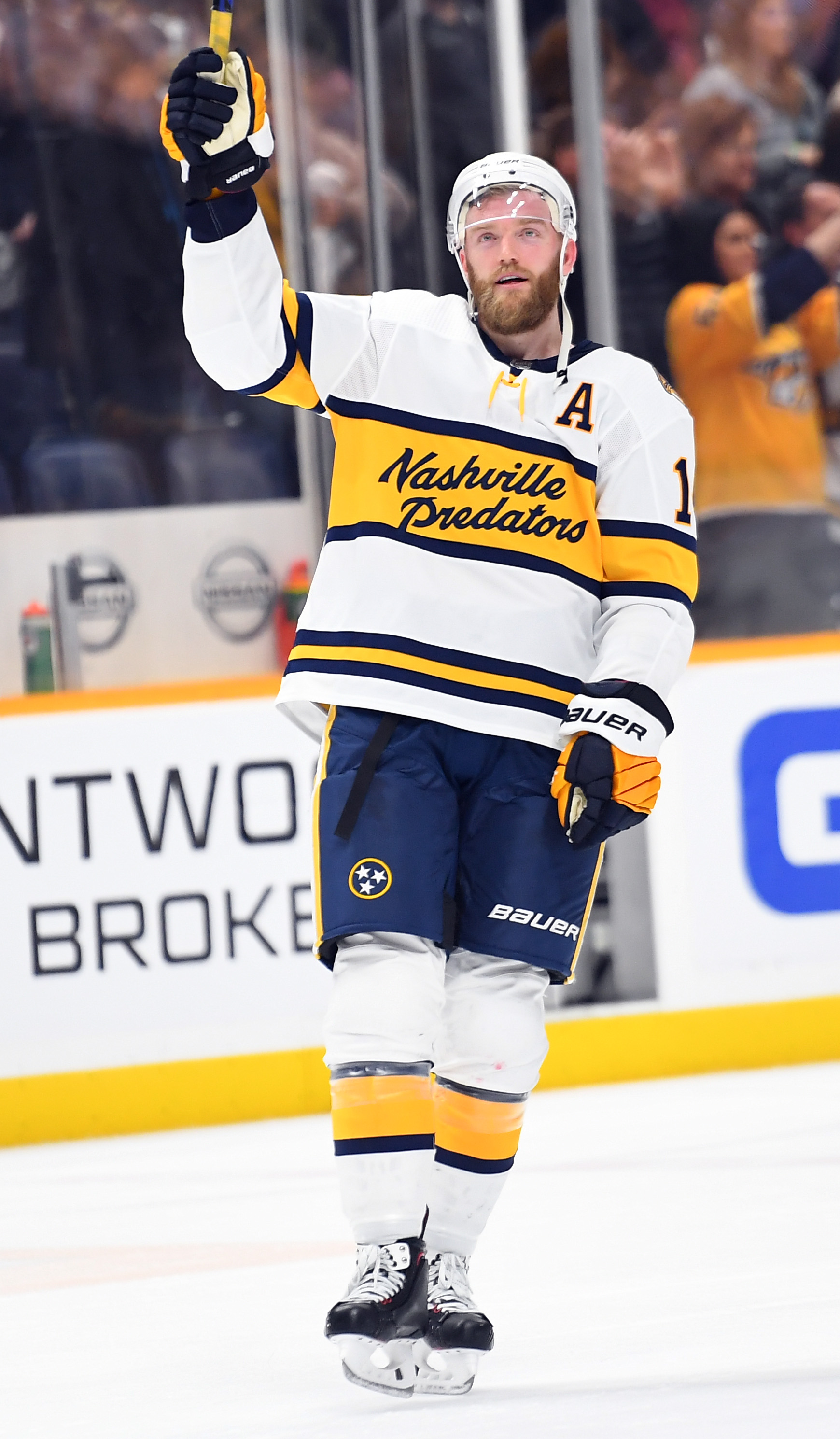 Who are the Predators most thankful for?
A year ago, when he was still earning just $4MM per season, this answer was easily Roman Josi. The Predators captain had one of the most team-friendly deals in the entire league, but that has now disappeared as Josi will carry a cap hit just over $9MM through 2027-28. Sure, he’s still one of the best two-way defensemen in the league and just took home the Norris Trophy after an incredible season, but the excess value he provides has now been slashed dramatically, if not removed entirely.
Ryan Ellis may still provide some with his $6.25MM hit, but it’s Ekholm that really makes the Predators’ cap work at this point. The 30-year-old defenseman will earn just $3.75MM for each of the next two seasons despite still being an upper-echelon option on the back end. Ekholm recorded 33 points in 68 games last season, an 82-game pace that would have given him a shot at his second straight 40+ point season to go along with strong play in his own end. There isn’t a team in the league who wouldn’t take him at his current price, especially given the deal will expire just after he turns 32 and the decline phase really kicks in. Whether the Predators decide to extend Ekholm is a decision for down the line, but right now his might be the most important contract on the books.
What would the Predators be even more thankful for?
A few more goals from the top of the roster.
13 goals. 14 goals. 15 goals. Those are the 2019-20 totals for Matt Duchene, Ryan Johansen, and Viktor Arvidsson, three players that need to be better for the Predators this season. The first two are both carrying long-term cap hits of $8MM per season, making them some of the most expensive forwards in the entire league. 27 goals and 78 points between them is unacceptable and must change for the team to have any real chance of competing for a Stanley Cup. Arvidsson on the other hand is a bit cheaper at $4.25MM, but that’s what made him so valuable in the past when he was posting goal totals of 31, 29, and 34 (in just 58 games!) prior to last year. Now 27, Arvidsson’s return to the 30-goal mark would be a huge boost in Nashville’s quest for a playoff spot in the new Central Division.
What should be on the Predators’ holiday wish list?
Another depth defenseman.
Honestly, even with the top three soaking up so many minutes and Dante Fabbro taking many of the rest, there should be some concern in Nashville about the Predators’ defensive depth. Borowiecki is a beloved teammate and a warrior on the penalty kill, but he’s proven before that he can’t step into a top-four role with any sort of real effectiveness. Matt Benning and Jarred Tinordi don’t offer much upside either, meaning the Predators are just one injury (or, in today’s world, illness) away from having a problem.
There are still some names on the free agent market that could help. Even beyond Sami Vatanen and Travis Hamonic, who seem unlikely fits for one reason or another, veterans like Ron Hainsey or Ben Hutton could make sense. There are certainly others on the trade market that could be acquired, depending on price, but the Predators are toeing a thin line with the group they have right now, even if it is loaded at the top.
Photo courtesy of USA Today Sports Images
What Your Team Is Thankful For: Montreal Canadiens
We’ve now made it past Thanksgiving and the holiday season is now upon us. Like the last few years, PHR will take a look at what teams are thankful for but this year comes with a bit of a change. Normally teams would have an idea of where their season was heading, coming up on the one-quarter mark with mountains of statistics to analyze. Instead, in this unprecedented year, the season hasn’t even begun. We’ll still take a look at what each group is excited about and what they could hope for once the calendar turns to 2021.
What are the Canadiens most thankful for?
An outlook of a team that is ready to compete for the playoffs for the next few years.
Montreal has been a team that has struggled for the last few years, looking like a team in the middle of a rebuild with struggling players and few young players to put into their lineup. Fast forward to today and the team suddenly is loaded with young talent and suddenly looks like a team ready to compete day in and day out with an eye on the playoffs. The team added some offensive talent in the offseason with the acquisitions of Tyler Toffoli and Josh Anderson to bolster their forward lines.
On top of all of that, the Canadiens showed fans some hope with a solid playoff performance in the bubble during the summer, which included wiping out the Pittsburgh Penguins in the qualifying round and giving the red-hot Philadelphia Flyers a solid run in the first round. All that adds to the belief that the Canadiens are on their way back.
Who are the Canadiens most thankful for?
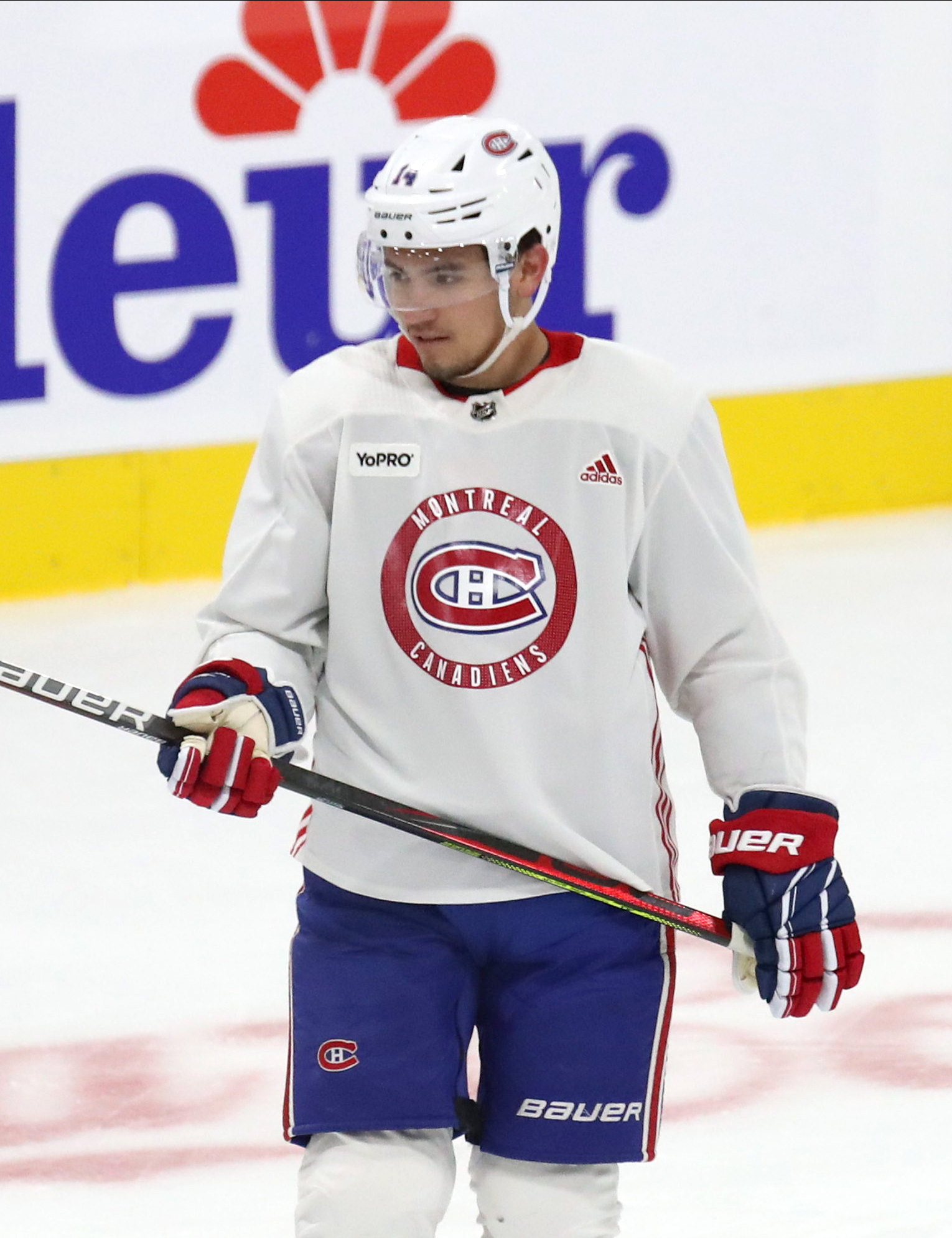 One of Montreal’s biggest weaknesses was up the middle with little to no quality at the center position with much of the brunt of the load falling on the shoulders of Phillip Danault and now departed Max Domi to control the middle of the ice. However, one reason for optimism was the play of youngsters Nick Suzuki and Jesperi Kotkaniemi in the playoffs. Suzuki had a solid rookie campaign in 2019-20, scoring 13 goals and 41 points, but took his game up a notch during their 10-game playoff run with four goals and seven points, showing he is ready for a full-time role in the top-six next season.
On the other hand, Kotkaniemi, who struggled during the regular season and even found himself demoted to Laval at one point, looked like a different player in the playoffs. The 20-year-old scored just eight points in 36 regular season contests, but scored four goals in the 10-game playoff and showed more confidence and skill. After dominating the Liiga while on loan this season, the center might be ready to take a permanent step into the top-six as well.
What would the Canadiens be even more thankful for?
A return to form of Jonathan Drouin.
It’s been three years now since the 25-year-old was brought in at great cost (Mikhail Sergachev) as Drouin was billed as the future of the team, a first-line scorer who would hopefully become the face of the franchise. The then 22-year-old was coming off a 21-goal, 53-point performance and ready to breakout into one of the league’s top players.
Instead, Drouin has struggled in Montreal. While his numbers have been slightly down with a 46-point performance in 2017-18 and a 53-point showing in 2018-19, Drouin hasn’t been able to build on his former success. Last year, things only got worse with wrist and ankle injuries that held him to just 27 games last season. He did return for the playoffs with a goal and seven points in 10 games. The team has to hope that Drouin, who is still young enough, can find his game and become the top-line player the team was hoping for when they traded for him in the first place.
What should be on the Canadiens’ holiday wish list?
Offense.
The team is positioned to have a much-improved season this year and did acquire players like Toffoli and Anderson in the offseason, but the team still has to hope that their offense can prove to be productive. In fact, the offense has quite a few questions.
Can Anderson, who scored just one goal in 26 games last year due to injury, return to form? Can Tomas Tatar and Brendan Gallagher keep posting solid numbers? Can Drouin take the next step? Will Toffoli fit into the Canadiens’ offense easily? Can Kotkaniemi and Suzuki become top-six players immediately? If all that happens, will the third line become more dangerous now?
Montreal looks ready to compete, but despite solid goaltending and an improving blueline, the offense will be the determining factor on how far they can go.
Photo courtesy of USA Today Sports Images.
PHR Mailbag: Realignment, Traded Players, Ovechkin, Projections, Fans, Bruins, Gogolev
Topics in this edition of the PHR Mailbag include the winners and losers of the NHL’s realignment, players that benefitted the most from offseason trades, Alex Ovechkin’s pursuit of Wayne Gretzky’s scoring record, predictions for several players and the potential for fans to be allowed in arenas this season, what’s next for Boston’s back end, and how one of the top-scoring OHL players last season went undrafted. If your question doesn’t appear here, check back in last weekend’s mailbag.
acarneglia: Biggest winners and losers of proposed 2021 divisions?
St. Louis and Colorado find themselves in a nice spot in the West Division. While they now have to contend with Vegas, that’s the only other team in that group that was in the top eight in the Western Conference. The battle for the top two spots and home ice in the first round will be tight but there are more games against weaker opponents than there would be with the normal alignment. I’d also put Columbus and Carolina in the winner category as they get to avoid the gauntlet that is the East Division and move into a group that has more weaker opponents. Tampa Bay and Dallas are there too but those last two spots should be easier to get than had they been assigned with the other teams in the East.
As for teams that aren’t so fortunate, I have to put Buffalo at the top of the list. They added Taylor Hall and Eric Staal and while their team has improved, they get to play most of the top teams from the Metropolitan and don’t get to escape Boston while they’re at it. The three Canadian teams from the Pacific Division lose the opportunity to play against some of the rebuilding and likely less competitive teams and now get to face a potent Toronto team, Montreal who improved considerably, and Winnipeg who is always in the playoff mix instead while playing a higher percentage of games outside of their time zone. (Even Ottawa has shown improvement although their playoff hopes took a hit with this format as well.)
Eaton Harass: Which player do you feel will benefit most since changing teams this offseason? And how many times do you think Devon Toews said “thank you God” after his trade to the Avs?
I’d go with Max Domi. He leaves a situation in Montreal where he was being squeezed out of his preferred position to one where it looks as if he’ll have a defined role as their second-line center in Columbus behind Pierre-Luc Dubois. I could see his ice time moving up to a new career-high as well and he should get plenty of power play time. On top of that, he wound up signing what amounts to a second bridge deal, one that walks him to unrestricted free agency two years from now. Assuming he can improve upon his performance with the Canadiens last season (and he’ll have ample opportunity to do so), he should be able to position himself quite nicely for an even bigger payday two years from now. He probably wouldn’t have had that chance with Montreal.
I’ll toss out a couple of under the radar names as well. Minnesota’s addition of Nick Bjugstad for next to nothing didn’t garner much attention but he’s going to go from a situation where he would have had a limited role to probably being a middle-six center. If he can stay healthy and produce, he should be able to restore some value quickly. The other is Pittsburgh’s pickup of Mike Matheson. I think moving to a winning environment will help as well as lower expectations. They can also afford to work him in slowly on the third pairing. I expect that he should benefit a fair bit from that particular combination.
As for Toews, there are definitely worse situations to be traded to but it’s not like he was leaving a terrible one with the Islanders. He had just emerged as an impact defender with them and may have even had a bigger role this coming season. They’ve also been quite competitive despite a roster that isn’t the strongest on paper so it’s not as if he’s leaving a perennial non-playoff team either. It worked out well for him in the end – he got a long-term deal from a top team – but I think he’d have been just fine sticking around where he was had they been able to afford him cap-wise.
2012orioles: Will Ovechkin lose his chance to catch Gretzky with another shortened season?
It certainly doesn’t help his odds. He sits 188 away from matching the record so 189 is the target. Here’s some quick math to come up with some projections.
Ovechkin is averaging 0.61 goals per game in his career and while that has dipped slightly over the last four years, it has only gone down to 0.58 goals per game which still represents a 47-goal pace over a full 82-game season. He’s going to slow down at some point but that time isn’t now and even when he eventually does slow down, he’ll still be producing at a pretty good clip.
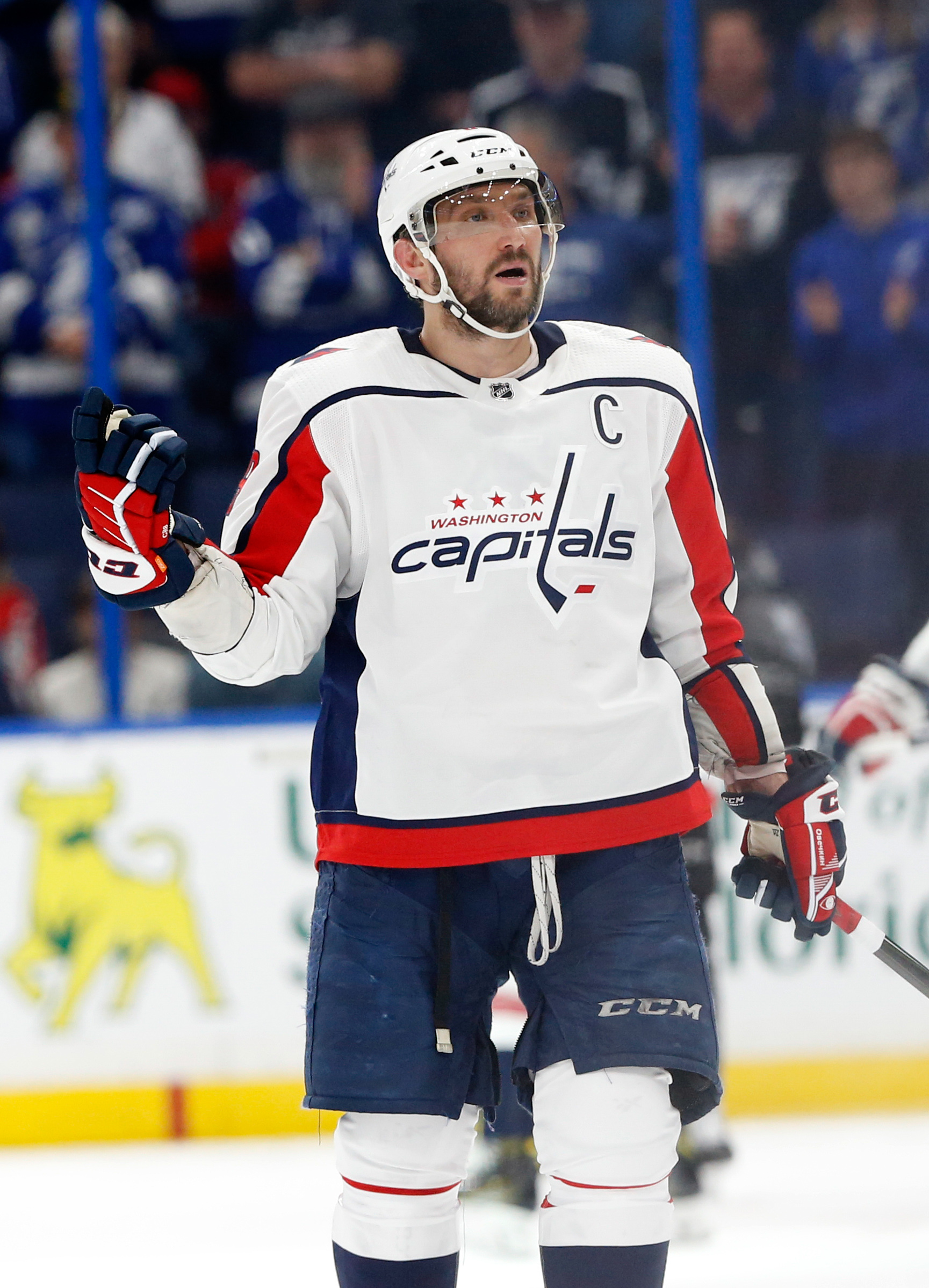 Let’s forecast his goal per game average at 0.5 for this next four-year stint (assuming his next deal runs that long considering he has made it clear that he intends to play in Russia again before his career is over). That’s a bigger drop-off than before but I don’t think that’s unrealistic as he’s still a top scorer. Assuming the NHL gets back to an 82-game schedule after 2020-21, that would give him 302 games to work with, or 151 goals. That’s assuming he stays healthy but it’s worth noting that he has only missed six games over the last six years combined and not all of those were due to injuries. As far as players go, Ovechkin is quite durable.
That would put him around 35-40 goals behind Gretzky and at that point of his career, it may take two years to get there. Had 2020-21 been a full season, that target could be shaved by 10-15 goals which could have shortened the number of years to catch him by one which is significant.
For me, it all depends on Ovechkin’s desire to get the record. If he wants it, he’ll stick around long enough to get it, even if it means him staying with Washington for an extra year than it may have taken otherwise. But if he wants to go back to the KHL before he’s in his early 40s, then this abbreviated campaign could be the difference. I don’t think it will be though – Ovechkin will either get it or be more than 10-15 goals behind Gretzky when he decides that his time in North America has come to an end.
The Duke: Crystal Ball Scoutings (e.g., annual goals/points; PP unit; top- or bottom-6, etc.) please for Mssrs. Veleno, Lindblom, Tolvanen, Zadina, Rasmus Sandin & Adin Hill. Thanks in advance.
Joe Veleno: I know he was a prolific scorer in the QMJHL but I don’t see him being a big point producer in the NHL. Detroit would be happy with him cracking the second line but I like him more as a two-way third-line center with secondary special teams time. He should be a valuable player for them but that won’t necessarily translate to a ton of production – maybe 15 goals, 35 points per season. He’s a couple of years from being in that role, however.
Oskar Lindblom: Assuming he is able to get back to the level he was at before his cancer diagnosis (and the contract he got from the Flyers suggests they believe he can), he should settle in around the 20-25 goal mark and around 40-45 points. (He was on pace for more than that last season but that shooting percentage probably wasn’t sustainable.) I’m not sure he’ll be able to get number one minutes (which could also push him to the second power play unit more often than not) but he should quickly work his way back onto the second line.
Eeli Tolvanen – I thought he was a sure-fire top-six player when he was drafted but I’m not as sure now after his first two seasons with AHL Milwaukee. Maybe he’s someone that ultimately plays a lot better with more talented players but at this stage, it’s hard to forecast a top-six role down the road. He’ll be eased in when he gets to Nashville full time so it’ll be a while yet before he reaches his ceiling. Right now, 10-15 goals and 25-30 points with secondary power play time would be my projection.
Filip Zadina – Can he drive a line or is he more of a complementary scorer? That’s the big question and there are two different statlines depending on the answer. One is a 30-plus goal-getter with consistency, the other is closer to 20-25 per year that could get to 30 once or twice if all goes well. I’m leaning towards the latter category but he’ll see plenty of top-six minutes and top unit power play time either way.
Rasmus Sandin – A lot depends on Morgan Rielly’s future. If Toronto can’t afford to re-sign him, Sandin could very well become the lynchpin to their offense from the back end. That would mean plenty of power play time and with the firepower they have, 45-50 points (10 or so goals) wouldn’t be out of the question. If Rielly re-signs, however, Sandin becomes more of a secondary power play threat which could dip him more towards the 30-35-point territory.
Adin Hill – He should get his first real NHL opportunity in 2021-22 once Antti Raanta likely moves elsewhere in free agency but I’m not sure he’s a starter down the road. I’d have him around the 25-30 start mark as his ceiling as a result.
Baji Kimran: What are the chances fans will be allowed in the arenas this season? I’m a full season ticket holder for the Columbus Blue Jackets and I’m starting to think I’ll be watching all the games on television. I’m hoping you’ll tell me I’m wrong.
I’d put the odds at 100% that fans will be allowed in some arenas this season as there are a handful of teams that will have limited capacity to start the season. A lot will depend on how things go with the virus over the next few months. Will the number of positive tests start to decrease sharply; how quickly will vaccinations make a difference? And, of course, each jurisdiction’s respective health authorities have various levels of tolerance for risk; what one city thinks is risky could be considered acceptable in others.
I’m not as bullish that things are going to drastically change in the next couple of months. While there’s a light at the end of the tunnel, progress is still going to be gradual. As a result, I expect quite a few teams will ultimately go without fans for the entire year. And if Columbus happens to be a state that allows some fans, I imagine it would be with limited capacity and with it, perhaps some sort of lottery to determine which season ticket holders get to attend which games. You could get a chance at watching a handful in-person if all goes well but I suspect you’ll be watching most of the games on television.
VonBrewski: I hear the Bruins are not taking Chara back. So, what does Boston do on the left-side D?
I wouldn’t rule out Zdeno Chara returning to Boston just yet. While team president Cam Neely has spoken about the desire to get a look at some of their younger options, they haven’t ruled out the veteran returning yet. Earlier this week, his agent also indicated that Chara’s focus at this time is returning to the Bruins although other teams have reached out as well.
But let’s assume he doesn’t come back for the purpose of this question. I expected someone to be brought in to try to replace Torey Krug but that clearly hasn’t happened and with less than $3MM in cap room, there isn’t a top-four option available. I expect Matt Grzelcyk will be tasked with taking on a bigger role and after hovering between 18-19 minutes a night the last two years, he’ll probably come in closer to 22 minutes per game or so. They’ll also hope that John Moore can hold down a regular spot in the lineup after playing a sparing role last season.
After that, youngsters like Urho Vaakanainen and Jakub Zboril are likely to get a long look with the hopes that one of them can take hold of a regular spot. It also wouldn’t be shocking for one of their right-shot options to be asked to change sides and a lefty or two could be brought in on a PTO (they were linked to Karl Alzner a couple of months ago) to give them some more options. It’d be a patchwork fix no matter what though which is why I don’t think they’ve entirely closed the door on Chara just yet. While he’s not the top-pairing player he once was, he’s still better than some of the options here.
bigalval: Pavel Gogolev was not drafted again and had to sign overseas. I don’t get this because his stats a were great in the OHL. Why did no one draft him or sign him as a player who was not drafted, I watched a lot of video on this kid, he could be a steal. Could have signed him for next to nothing. Any ideas?
There’s no denying that Gogolev’s numbers were quite impressive last season – 45 goals and 51 assists in 63 games with Guelph, good for sixth in league scoring. But there are a few factors that I think contributed to him being passed on again, aside from simply being Russian which still tends to scare some teams off (even though he moved to Canada early on).
As you alluded to, it wasn’t Gogolev’s first draft-eligible year and his performance in his prior years of eligibility weren’t particularly strong. Was his jump in production due to him putting everything together, simply being a year older and stronger, or due to chemistry with a particular linemate? The last two are almost certainly factors and that would have worked against him.
Gogolev has shown that he can score at the junior level but players with that type of production that get passed up on are often viewed as highly flawed in other areas. It’s safe to infer that the fact he went unpicked again means that teams have similar concerns here. Yegor Sokolov, another 2000-born prospect, had a similar jump in the QMJHL last year and was picked in the second round by Ottawa. It’s the all-around game that was the difference.
It’s worth noting that while he has been passed up again in the draft, he did spend time at camps in Detroit and Vegas in the past so he is on the NHL radar for some teams and perhaps down the road he’ll be able to land an entry-level deal as an undrafted free agent.
Interestingly enough, Gogolev was able to find a place to play just yesterday as Vasby of the Allsvenskan in Sweden announced that they’ve signed him. A good showing there would certainly bolster his value around the NHL.
Photo courtesy of USA Today Sports Images.
What Your Team Is Thankful For: Minnesota Wild
We’ve now made it past Thanksgiving and the holiday season is now upon us. Like the last few years, PHR will take a look at what teams are thankful for but this year comes with a bit of a change. Normally teams would have an idea of where their season was heading, coming up on the one-quarter mark with mountains of statistics to analyze. Instead, in this unprecedented year, the season hasn’t even begun. We’ll still take a look at what each group is excited about and what they could hope for once the calendar turns to 2021.
What are the Wild most thankful for?
Their talented and deep defense corps.
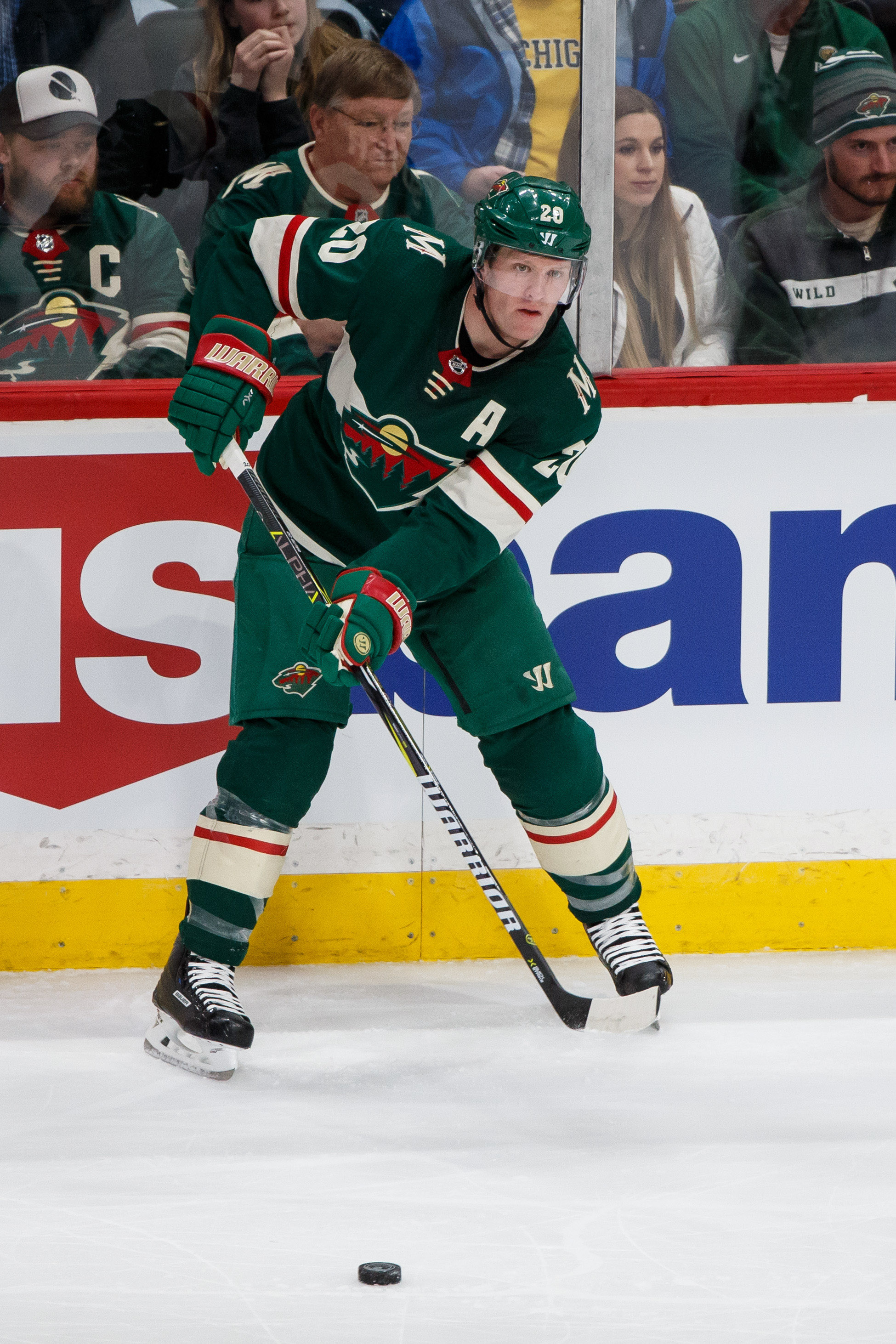 While Mathew Dumba has been in trade speculation dating back to before the entry draft in large part to the looming expansion draft, he remains with Minnesota. Ryan Suter remains a top-pairing blueliner while Jared Spurgeon and Jonas Brodin round out their top four. With the exception of Dumba, they’re all signed for at least the next five years as well. Carson Soucy established himself as a regular last season as well while Greg Pateryn and Brad Hunt have had successful stints in the NHL in recent years as well.
Of course, having as strong of a back end as they do comes at a price as their $30.98MM combined cap hit is the highest of any defense corps in the league. But it’s high-priced for a reason as very quietly, Minnesota’s blueline group is among the strongest in the league and will be a big factor in whether they make the playoffs in the West Division.
Who are the Wild most thankful for?
Yes, he hasn’t even played a single game for them yet but he’s listed here for two reasons. First, they’re likely thrilled that the courting to lure him to North America (a process that began before this site even launched which was back in the 2016 offseason) is finally done after he signed his entry-level deal just before the playoffs began back in the summer. Second, he has the potential to become one of their top players right away. Kaprizov has been one of the top players in the KHL the last four years and could very well slide onto Minnesota’s top line almost immediately. They’ll only get the one cheap year out of him having burned the first season of his entry-level deal in the bubble but at this point, they’re just thankful that after years of waiting, he’s under contract and will be able to make an immediate impact when the season starts next month.
What would the Wild be even more thankful for?
Cam Talbot retaining his form from last season. After struggling in Edmonton as the starter, he was much better in Calgary as the 1B option behind David Rittich; he remained in that role for most of the year despite outperforming Rittich during the year. But when it mattered most, the Flames turned to him in the playoffs where he continued to play well, helping to land him a three-year deal back in October.
After Devan Dubnyk’s recent struggles, Wild GM Bill Guerin clearly believes that Talbot is the short-term solution to get things back on track between the pipes. Unfortunately, the pressure will be a little higher at the beginning of the year with Alex Stalock (who quietly had a strong season as Minnesota’s backup in 2019-20) out indefinitely due to an upper-body injury. That pushes youngster Kaapo Kahkonen into the backup role but he has a total of five NHL games under his belt. As a result, a lot will be riding on Talbot’s shoulders early and they will need him to play like he did for Calgary last season.
What should be on the Wild’s holiday wish list?
More scoring help. While Minnesota was a middle of the pack team in terms of scoring last season, three of their top-eight scorers aren’t there anymore (Eric Staal, Kevin Fiala, and Jason Zucker) while Ryan Donato, who was tied for sixth in goals, is now in San Jose. In terms of newcomers being added to fold, Marcus Johansson, Nick Bonino, and Nick Bjugstad are all coming off of underwhelming seasons offensively. On paper, even if Kaprizov lives up to the hype, getting consistent goal production could be a challenge.
The good news for Guerin and the Wild is that they’re one of the few teams that still has some cap room to work with. While it may not be enough to make a splash (such as going after Mike Hoffman) right away, if they’re able to bank that space early on, they’ll be well-positioned to afford to add a higher-priced addition midseason. That’s something that can’t be said for many of their divisional counterparts.
Photo courtesy of USA Today Sports Images.
Salary Cap Deep Dive: Colorado Avalanche
Navigating the salary cap is one of the more important tasks for any GM. Teams that can avert total cap chaos by walking the tightrope of inking players to deals that match their value (or compensate for future value without breaking the bank) remain successful. Those that don’t see struggles and front office changes.
PHR will look at every NHL team and give a thorough look at their cap situation heading into the 2020-21 season. This will focus more on players who are regulars on the roster versus those who may find themselves shuttling between the AHL and NHL. All cap figures are courtesy of CapFriendly.
Colorado Avalanche
Current Cap Hit: $79,676,386 (under the $81.5MM Upper Limit)
Entry-Level Contracts
D Cale Makar (one year, $880K)
Potential Bonuses
Makar: $2.5MM
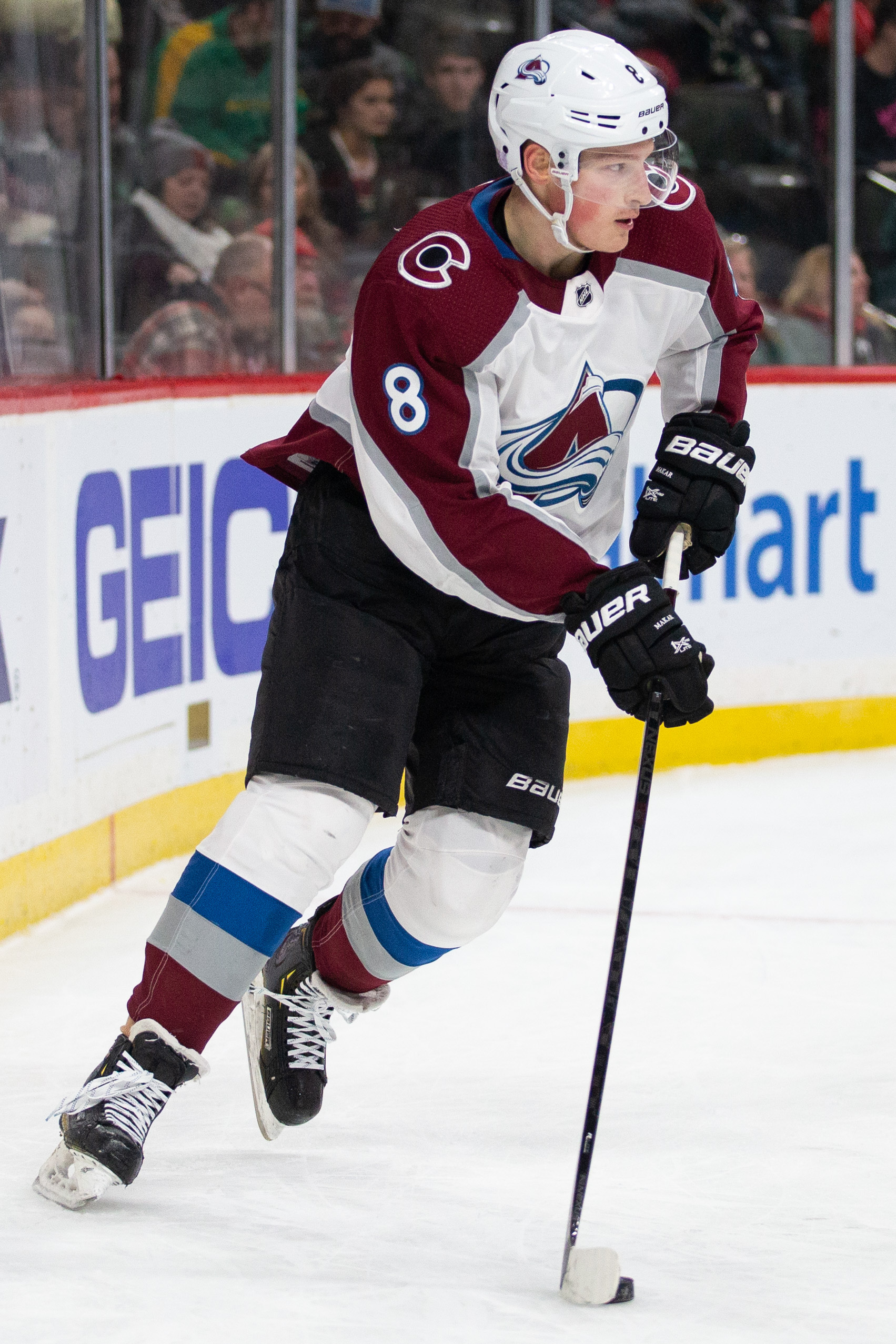 Makar’s rookie season was nothing short of dominant as he took home the Calder Trophy for the top rookie while finishing in the top-10 of Norris voting for the top defenseman in the league. He finished second on the team in scoring and logged over 21 minutes a night. Better still, he played even better in the playoffs. He looks like a franchise blueliner already and is going to command a substantial raise next offseason, even without arbitration eligibility. The fact they burned a year of his entry-level deal in the 2019 playoffs might help keep the AAV down slightly (he’ll have less than two full seasons of games under his belt) but if his sophomore campaign is anything like 2019-20, that shouldn’t make much of a difference. Makar may not get the top cap hit of $9.25MM but he should come fairly close to that mark.
One Year Remaining, Non-Entry-Level
F Pierre-Edouard Bellemare ($1.8MM, UFA)
F Matt Calvert ($2.85MM, UFA)
D Ian Cole ($4.25MM, UFA)
G Philipp Grubauer ($3.33MM, UFA)
F Tyson Jost ($874K, RFA)
F Gabriel Landeskog ($5.571MM, UFA)
F Brandon Saad* ($5MM, UFA)
*- Chicago is paying an additional $1MM on Saad’s contract.
Landeskog hasn’t been able to get to the lofty offensive levels of his linemates but the captain has nonetheless been an integral part of their forward group for the last nine years. He’s only 28 and should be able to get close to a max-term deal on the open market if he gets that far. Even with the UFA market being unkind to most wingers this year, Landeskog should be able to buck that trend and pick up a million or so on his AAV on his next contract. That may not be doable for Saad, however. His second go-around with Chicago was not as productive as his first and he is viewed as more of a middle-six player than a top liner. The latter are still going to get paid but the former will feel the squeeze so he has a lot at stake with his new team this season to restore some value. Calvert and Bellemare are useful role players but with the cap staying flat, they are in spots that will need to be replaced by cheaper options in Colorado and with other teams feeling the crunch as well, both will almost certainly have to take a less-expensive deal next summer. Jost accepted his qualifying offer after three relatively quiet seasons. He’s too young to write off but they’re expecting him to take a step forward and play his way into a bigger deal. A repeat performance may not be enough for a non-tender but his value around the league will take another dip if he doesn’t show some offensive improvement.
Cole has been an effective veteran on the third pairing and he’ll be asked to play that role again this season. It’s a premium price for the role but it’s one they can afford for now. That won’t be the case next year as he’ll almost certainly be replaced by Conor Timmins or Bowen Byram, players that likely won’t see much NHL action this season but should be ready for a full-time spot in 2021-22. Cole, meanwhile, could see his price tag cut in half if not more with teams looking to go cheaper on the third pairing.
Grubauer was brought in to be the goalie of the future but even after Semyon Varlamov left to join the Islanders, he wasn’t able to really step into that number one role. Injuries certainly played a role in that, including in the postseason as well. He certainly hasn’t been bad by any stretch in his two seasons with the Avs but he has yet to establish himself as a full-time starter either. If he can do that this year, he could add a couple million to his price tag but if not, he may not be able to command much more than he’s getting now.
Two Years Remaining
F Andre Burakovsky ($4.9MM, UFA)
G Pavel Francouz ($2MM, UFA)
F Nazem Kadri ($4.5MM, UFA)
F Valeri Nichushkin ($2.5MM, UFA)
Burakovsky struggled with consistency in Washington but things certainly came together in Colorado as he had a career year offensively by a significant margin despite the pandemic cutting things short plus missing another 13 games due to injury. The fact that he signed what amounted to another bridge contract coming off of that signifies that neither side is entirely convinced about what his offensive ceiling may be. If he reverts back to his previous level of production, he’ll be looking at a big pay cut two years from now but continuing at that pace should have him in line for at least a small raise and perhaps more importantly, a long-term deal. Kadri is another player that did well following his change of scenery. While his output didn’t jump like Burakovsky’s, he had a key role on the second line and played extremely well in the playoffs. Impact centers are always in high demand and low supply so even in a deflated marketplace, Kadri should be able to land a decent-sized raise two years from now. Nichushkin’s return to the NHL was a successful one as he was a capable secondary scorer as the change of scenery certainly worked for him as well. Given his relative inexperience, Colorado is certainly hoping that he can still take another step forward offensively. If he doesn’t, it’s hard to see him getting much more than this on his next deal.
Francouz’s first full NHL season was a strong one as he actually outperformed Grubauer from a statistical standpoint (2.41 GAA, .923 SV% compared to 2.63 and .916) with a similar workload. Things weren’t as good for him in the playoffs before injuries forced him out of the lineup as well. His inexperience didn’t give him much leverage in talks but if he performs even close to this level for the next two years, he’ll be well-positioned for another million or more on his next contract.
Three Years Remaining
F J.T. Compher ($3.5MM, UFA)
F Joonas Donskoi ($3.9MM, UFA)
D Ryan Graves ($3.167MM, UFA)
D Erik Johnson ($6MM, UFA)
F Nathan MacKinnon ($6.3MM, UFA)
MacKinnon’s contract has turned into one of the biggest bargains in the NHL in recent years with three straight seasons of more than 90 points under his belt. As things stand, he should be in a position to command more than $10MM per year on his next deal and considering he’ll still only be 28 at that time, he’s a near-lock for a max-term contract as well (eight years with Colorado, seven years if he goes elsewhere). GM Joe Sakic will certainly be planning around what this deal will cost as he continues to shape his roster. Donskoi’s contract seemed a bit pricey when he signed it although he hit a new career best in points per game last year. Nonetheless, it’s still a bit on the high side and it wouldn’t be too surprising if he would be a player that gets dangled if they want to free up some cap flexibility over the next three years. Compher’s offensive numbers have been relatively consistent over his three full NHL campaigns where he has produced like a third-line center. However, the fact he can play down the middle certainly boosts his value. He’ll need to get into the 40 or more point range to have a chance at landing a bigger deal on the open market.
Johnson’s contract held up better a few years ago than it does now. He once was their top defender but his ice time has been reduced the last couple of seasons while staying healthy has been a challenge. With a no-move clause and an 11-team no-trade clause, this could be a difficult deal to try to get out of, especially as their younger defenders move up the depth chart. Graves fit in well alongside Makar, earning him a big raise after spending the previous two seasons on one-year, two-way contracts. If he can hold down a top-four role, they’ll get a good return on this deal but given his relative inexperience, it does come with some risk as well.
PHR Mailbag: Rangers, Lightning, Ducks, Barkov, World Juniors, Steen, Trades
Topics in this edition of the PHR Mailbag include the Rangers’ chances of contention, Tampa Bay’s cap situation, Anaheim’s future, fits for Aleksander Barkov if he wants to leave Florida, World Juniors predictions, who could replace Alex Steen in St. Louis, and what the trade market may look like in this unique season. If your question doesn’t appear here, watch for it in next weekend’s mailbag.
gg24: Are the Rangers a true contender?
This season? I’d say no. The short-term divisional realignment does not work in their favor. Boston should still contend while Pittsburgh and Washington always seem to get near the top of the division as well. Philadelphia is certainly a team on the rise and their fellow New York rivals in the Islanders have shown that even without an overly strong roster on paper, they’ll be in the mix as well. The Rangers would have to jump two of those teams simply to make the playoffs (assuming they use divisional playoffs without a Wild Card system which would be needed due to the Canadian division). Then they’d need to knock out two more to get to the final four which would be contender status for this season. I don’t see that happening.
As much as they surpassed expectations last season, it’s important to remember that a lot of their core is still young and some have very little experience. A lot went right down the stretch last year but a step back for some of their players isn’t entirely unrealistic. There is a core in place that eventually should be able to get them to take another step or two forward (if they can keep them all in place as the players on entry-level deals sign richer second contracts) to get to that potential contender status. But with everything mentioned here, I have a hard time thinking that they get to that tier this season.
decaghuard: Zetterberg contract to Tampa Bay rumor: if true, would this help Tampa Bay gain cap space?
First, a bit of background on where this is coming from for those that aren’t aware of it. Sportsnet’s Elliotte Friedman cited it on a Sportsnet 960 appearance (audio link), noting that it came from Europe and that the speculation is that Tyler Johnson would be involved. I’ll add that a one-for-one swap of those two contracts doesn’t make any sense for Detroit so I would expect the Lightning to have to add to do that deal.
To answer your question, yes, it effectively would give them some extra cap flexibility eventually, even with adding a little over $1MM in a cap hit with Henrik Zetterberg being on the books for $6.083MM while Johnson is at $5MM. The kicker is that they still would need to move out another contract of note to try to avoid having to into offseason LTIR. A deal like this would put them about $3MM over the Upper Limit and that’s why Alex Killorn’s name has been out there in trade speculation for most of the offseason. If they can move him out and get back into compliance, they can then put Zetterberg on LTIR and have up to $6.083MM to use there. (Their LTIR space would be that amount less whatever existing cap room they have at the time; they don’t automatically get the full amount.)
That money might be enough to get short-term deals for Anthony Cirelli and Erik Cernak done which would solve the cap problem for this season. Of course, moving money at this time has proven to be difficult so even with that possible road map, it’s still much easier said than done.
JustPete: The Anaheim Ducks appear to be a mess this year. Over the cap, lacking a backup goalie, need help on offense and defense, facing the upcoming expansion draft – and the bright spots they do have are young and at least a year or two away.
Is it time for a new GM to lead the team into and out of the seemingly inevitable rebuilding year(s)?
I’m not too worried about Anaheim’s salary cap situation. Yes, they’re a bit over but they can cut down some roster spots with waiver-exempt players at the start of the season, have Anthony Stolarz as a short-term backup, and then transfer Ryan Kesler to LTIR to free up cap room to bring in a better backup. At least, that’s the ideal plan although at this point, there aren’t a whole lot of quality backups available; re-signing Ryan Miller may actually be their best option at this point. There should be enough money left over to add help up front or on the back end as well (but not both).
Clearly, Anaheim’s ownership is content with the state of their retooling at this point considering things are where they are now so I don’t foresee Bob Murray being let go. But if they decide to change their mind, this season would be the time to do so.
Ryan Getzlaf and David Backes will be unrestricted free agents next offseason while Corey Perry’s buyout cap hit drops back down. Between those three, that’s over $17MM in savings and there aren’t any pending restricted free agents that will be looking at a big raise that year either. That will give them ample cap space at a time where few teams have cap room. They’re well-positioned to try to address some of those issues at that time so there is light at the end of the tunnel. Between that and their younger players continuing to progress, there’s a path towards getting back to at least playoff contention.
Eaton Harass: Which team is the best fit for Barkov once he inevitably wants out of South Florida?
I certainly don’t expect Aleksander Barkov to ask for a trade even if the Panthers have a tough season. His contract is up in 2022 and he’ll be eligible for unrestricted free agency at that time so if he wants a change of scenery, he could very well wait to hit the open market and take his pick from what would certainly be no shortage of suitors. Teams will be in a bit better shape cap-wise by that time and even if they’re not, adding a player of his caliber in free agency is worth the risk of going over in the summer and figuring out how to make it work later.
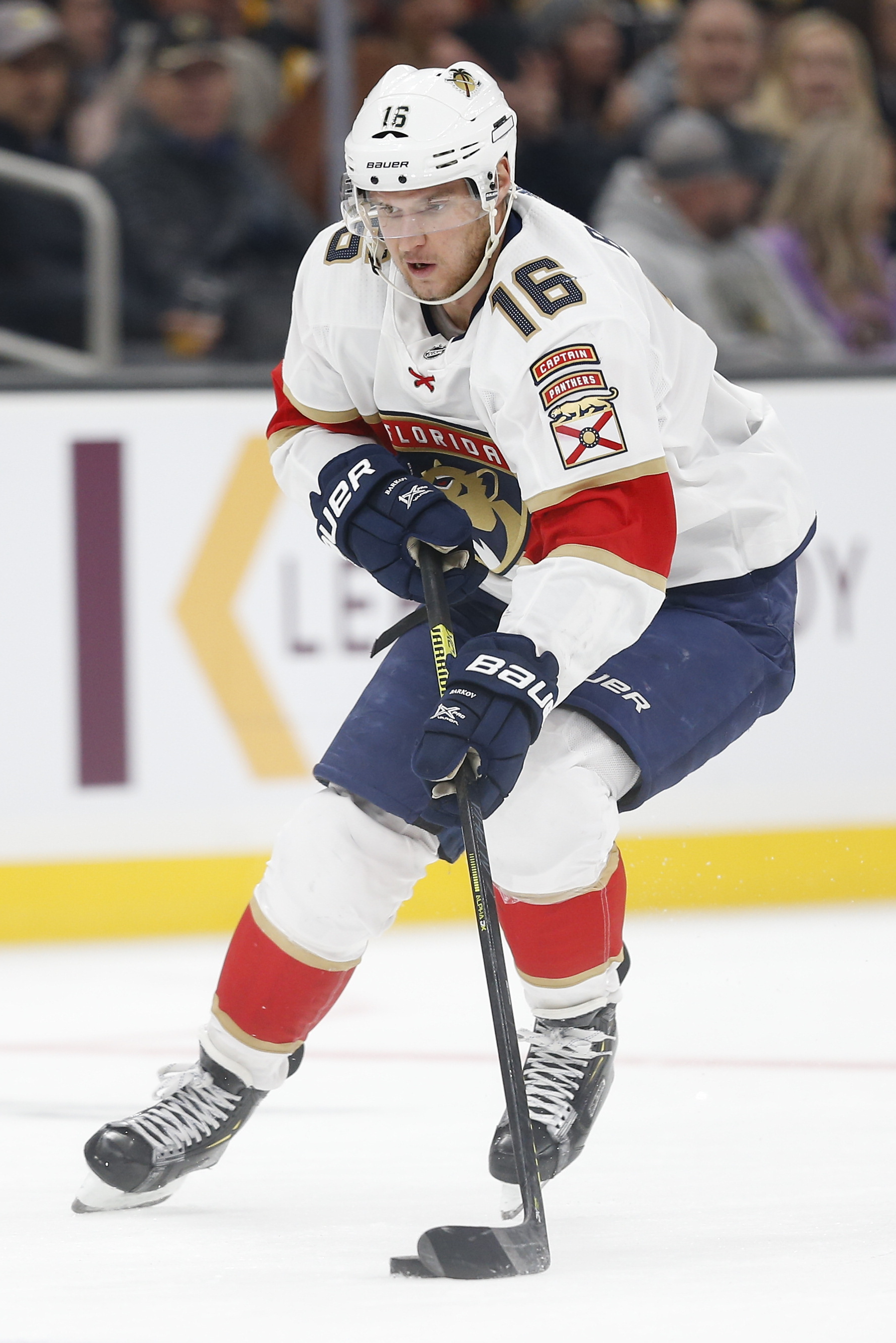 Of the 32 teams in the league at that time, there are only a handful that wouldn’t be a good fit. The only ones that wouldn’t are teams that have a lot of spending down the middle with one of the top centers in the league (or two higher-priced ones on long-term contracts).
In the West, Calgary comes to mind. Johnny Gaudreau (UFA), Mark Giordano (UFA), and Matthew Tkachuk (RFA) are among the expiring contracts at that time with Sean Monahan a year away from UFA eligibility. Barkov would be a big upgrade down the middle and would allow them to potentially flip Monahan for a good return with Mikael Backlund remaining on the second line and Elias Lindholm staying on the wing. The 2022 offseason figures to be when that roster undergoes that big change and adding an elite center would certainly bolster their future.
As for the East, my initial thought was Philadelphia with Claude Giroux and Sean Couturier among the pending UFAs that summer but if those two re-sign, it probably takes them out of the market. Instead, I’ll say Detroit. By then, their young core will be more ready to make an impact and while they’ve added some decent young pivots in Michael Rasmussen and Joe Veleno, they won’t be top-tier centers in the NHL. A true number one is one of the big holes they still need to fill. Adding Barkov would certainly accomplish that.
Barkov, a high-end two-way center, is the type of player that would fit in extremely well just about anywhere though so there may not be a true ‘best’ fit but rather a whole lot of great ones.
@bk656: Who do you think is going to win the 2021 World Junior Championships (assuming there are no issues with players testing positive or anything like that)?
Well, that second part didn’t even hold up long enough for me to attempt to comment on it. The IIHF revealed yesterday that eight players from Germany tested positive which has forced them into quarantine until the day before the tournament begins. But with due respect to them, that shouldn’t have any sort of significant effect on the outcome of the tournament.
On paper, it’s hard to go against Canada’s roster which is loaded with a whopping 20 first-round picks among their 22 skaters. That’s unheard of in this tournament. There are a couple of concerns, however. A lot of their players haven’t played in a competitive setting at all this season and their goaltending isn’t the strongest on paper. But if their defense is as good as it is on paper, they shouldn’t be relying on their goalies to win.
I’m intrigued by Russia. I expect Yaroslav Askarov to be the best goalie in the tournament and they have some firepower up front, led by Rodion Amirov and Vasili Podkolzin. The fact that their players have been playing for months now might also help give them a boost early on and offset their typical slow start.
Sweden has been hit by positive tests but they still have a very strong back end. Their attack isn’t as deep as it could have been and that could hurt them while the USA is down a couple of important forwards that they were hoping to have available. Both of those teams are still good enough to contend even without their full complement of top players but assuming Canada isn’t hurt by being off as long as they have been, I think it’s their tournament to lose.
Salary Cap Deep Dive: Washington Capitals
Navigating the salary cap is one of the more important tasks for any GM. Teams that can avert total cap chaos by walking the tightrope of inking players to deals that match their value (or compensate for future value without breaking the bank) remain successful. Those that don’t see struggles and front office changes.
PHR will look at every NHL team and give a thorough look at their cap situation heading into the 2020-21 season. This will focus more on players who are regulars on the roster versus those who may find themselves shuttling between the AHL and NHL. All cap figures are courtesy of CapFriendly.
Washington Capitals
Current Cap Hit: $82,524,877 (over the $81.5MM Upper Limit)
Entry-Level Contracts
G Ilya Samsonov (one year, $925K)
Potential Bonuses
Samsonov: $600K
Samsonov lived up to the hype relatively well in his rookie season although injuries and the early shutdown limited him to 26 games and he was unable to participate in the playoffs. A lot will be riding on him for the upcoming season where he stands as the likely starter despite the inexperience. With 2020-21 being another shortened year, he probably won’t have a long enough track record to command a long-term contract and given Washington’s salary cap situation anyway, a two-or-three-year second deal may be better for both sides.
One Year Remaining, Non-Entry-Level
G Henrik Lundqvist ($1.5MM, UFA)
F Alex Ovechkin ($9.538MM, UFA)
D Jonas Siegenthaler ($800K, UFA)
D Trevor van Riemsdyk ($800K, UFA)
F Jakub Vrana ($3.35MM, RFA)
Ovechkin’s situation is well-known at this point. He isn’t hiding the fact that he intends to stay with Washington and basically, the only questions are for how many years and how much? His next deal will have a 35-plus classification but that shouldn’t be much concern. While there is an expectation that his production will eventually decline, he still should be able to command a similar price tag to what he’s making now. Vrana continues to improve each season and has firmly established himself as a top-six fixture. He will have two RFA-eligible years remaining after 2020-21 and with his bridge deal expiring, he’ll be looking for a long-term pact. In a normal market, something in the $6MM range would make sense and there are enough comparables to make that case in arbitration.
Siegenthaler played a limited role last season but figures to be a part of their longer-term plans. However, he’ll still be line for third-pairing minutes so while he’ll be arbitration-eligible next offseason (something that wasn’t the case this time around), he still is only going to be able to command a small raise. As for van Riemsdyk, he’s looking to restore some value after taking a $1.7MM pay cut from his 2019-20 salary. If he can lock down a regular spot, this could be a nice situation for him to earn closer to double that amount next offseason.
As for Lundqvist, he was signed to be a veteran mentor to Samsonov but that is off the table now following today’s news that he will miss all of 2020-21 due to a heart condition. He will be eligible to be placed on LTIR as a result but with his low base salary, they won’t have much extra flexibility left by the time they replace him on the roster.
Two Years Remaining
G Pheonix Copley ($1.1MM, UFA)
F Nic Dowd ($750K, UFA)
D Michal Kempny ($2.5MM, UFA)
D Justin Schultz ($4MM, UFA)
G Vitek Vanecek ($717K, RFA)
Dowd saw his output dip slightly last season but for a player making close to the league minimum, expectations weren’t particularly high anyway. He’s a serviceable fourth center in a roster spot that will need to be kept at that minimum price point for the foreseeable future.
Kempny had emerged as a capable top-four option on the back end but it’s unlikely he’ll play this season after suffering a torn Achilles tendon while training in the days leading up to free agency. That injury carries a six-to-eight-month recovery timeline which means a lot will be riding on his 2021-22 performance to show that he can still play in that role and be worth a raise that offseason. His absence helped opened up a spot for Schultz who still landed a strong contract despite a tough season with Pittsburgh. Clearly, the expectation is that he will be able to get back to his previous offensive levels. If that doesn’t happen, he won’t be able to command this deal next time around.
Copley and Vanecek will now battle for the number two job behind Samsonov. The former has limited NHL experience as a backup in Washington and will carry a $25K cap hit if demoted to the AHL. Vanecek, meanwhile, was Braden Holtby’s backup in the bubble with Samsonov out and may be the early favorite for the role. Unless one gets into a platoon situation, neither will be able to command top backup money, especially if Samsonov winds up on a bridge deal of his own.
Three Years Remaining
F Lars Eller ($3.5MM, UFA)
F Carl Hagelin ($2.75MM, UFA)
F Garnet Hathaway ($1.5MM, UFA)
D Nick Jensen ($2.5MM, UFA)
D Dmitry Orlov ($5.1MM, UFA)
F Richard Panik ($2.75MM, UFA)
Eller has fit in quite well as Washington’s third center, one that can play up the lineup when need be. While bottom-six players could see their earnings upside limited due to the pandemic, this should still hold up as a decent value contract in the current marketplace. Hagelin isn’t able to put up consistent secondary production at this point of his career so while he’s an effective penalty killer and a speedster still, it’s a bit of an expensive deal for his role. Panik logged just 11 minutes a game last season as he didn’t fit in as well as anyone would have hoped in his first season with the Caps and it’s a deal that they’d probably like to get out of. Hathaway is a pure fourth liner most nights and this contract is an overpayment as well for someone in that role, though not as significant of one as Panik who was often his linemate down the stretch.
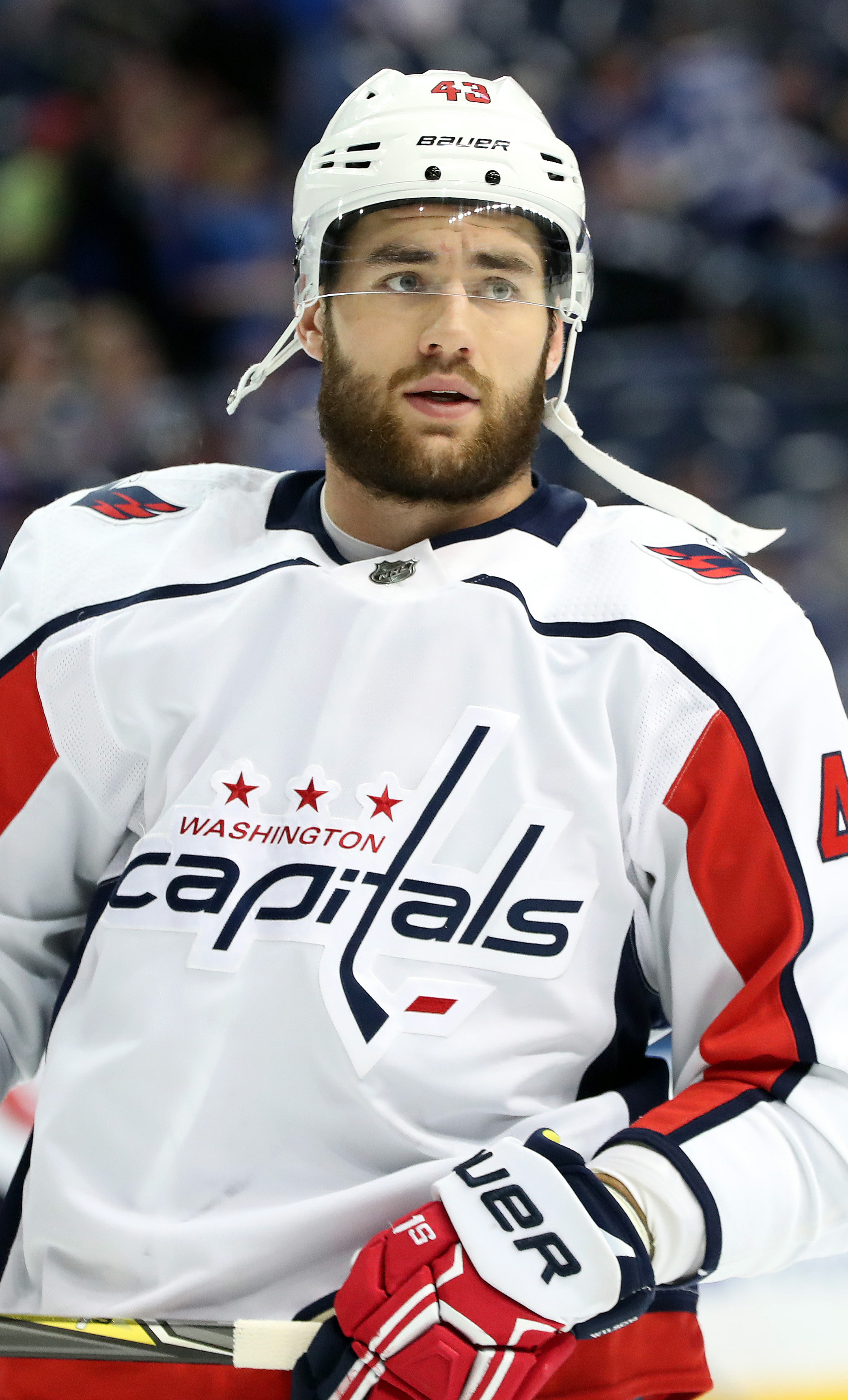
At one point, it looked like Orlov’s offensive production was going to find another level and that, coupled with his all-around play, would make his deal a major bargain. However, his goal total has dipped from ten goals in 2017-18 to just three and four over the past two years. But having said that, he’s still a big part of their back end and while the contract may not be the big bargain they had hoped for, they’ve still had a good return on it. That can’t be said for Jensen though. His extension that he signed upon being acquired hasn’t panned out well and is a contract they would certainly like to get out of, especially with a capable replacement in van Riemsdyk making a third of that amount. But with so many teams against the cap ceiling, moving him will be easier said than done.
What Your Team Is Thankful For: Los Angeles Kings
We’ve now made it past Thanksgiving and the holiday season is right around the corner. Like the last few years, PHR will take a look at what teams are thankful for but this year comes with a bit of a change. Normally teams would have an idea of where their season was heading, coming up on the one-quarter mark with mountains of statistics to analyze. Instead, in this unprecedented year, the season hasn’t even begun. We’ll still take a look at what each group is excited about and what they could hope for once the calendar turns to 2021.
What are the Kings most thankful for?
The draft lottery.
Everyone was obviously focused on the New York Rangers at the 2020 draft lottery, who moved up from the qualification round group all the way to first overall and earned the right to pick Alexis Lafreniere. But there was another winner that night (well, multiple nights), and that was the Los Angeles Kings. The Kings had just the fourth-highest chance at the top pick going into the lottery but managed to move up a few spots into the second slot and had their choice of the field. Though there were some last-minute rumors that they may choose German forward Tim Stuetzle, the Kings eventually settled on the other top Canadian prospect, Quinton Byfield.
Sure, there are still questions that the 6’4″ center needs to answer—he’ll get the chance at the upcoming World Junior tournament—but there is no one that doubts his raw ability. Powerful, dynamic, and with a nose for the back of the net, Byfield reminds many of a player like Evgeni Malkin when he is at his best. While asking for a future Hall of Famer may be a bit much, the Kings are obviously leaping for joy at the thought of penciling Byfield into the lineup for the next decade-plus.
Who are the Kings most thankful for?
Mark Yannetti.
Who? Casual fans may not have heard Yannetti’s name very often (if at all), but he’s been one of the most important people in the Kings organization the last several years. The director of amateur scouting, he has been responsible for turning the Kings prospect pipeline into one of the league’s best, loaded with blue-chippers that will be impact players in the NHL for years to come. Sure, it may be easy to select someone like Byfield with the second pick, but the Kings look like they’ve hit on several other picks further down the draft board.
Kale Clague. Gabriel Vilardi. Jaret Anderson-Dolan. Michael Anderson. Aidan Dudas. Akil Thomas. Rasmus Kupari. Alex Turcotte. Tobias Bjornfot. Arthur Kaliyev. Samuel Fagemo. The list of players that have either already made their NHL debut or look poised to do so before long goes on and on for the Kings. Yannetti—especially now that the Kings parted ways with former AGM Mike Futa, who was also a considerable part of the draft process—is behind it all and will need to continue his work to get Los Angeles back to contender status.
 What would the Kings be even more thankful for?
A desperate contender.
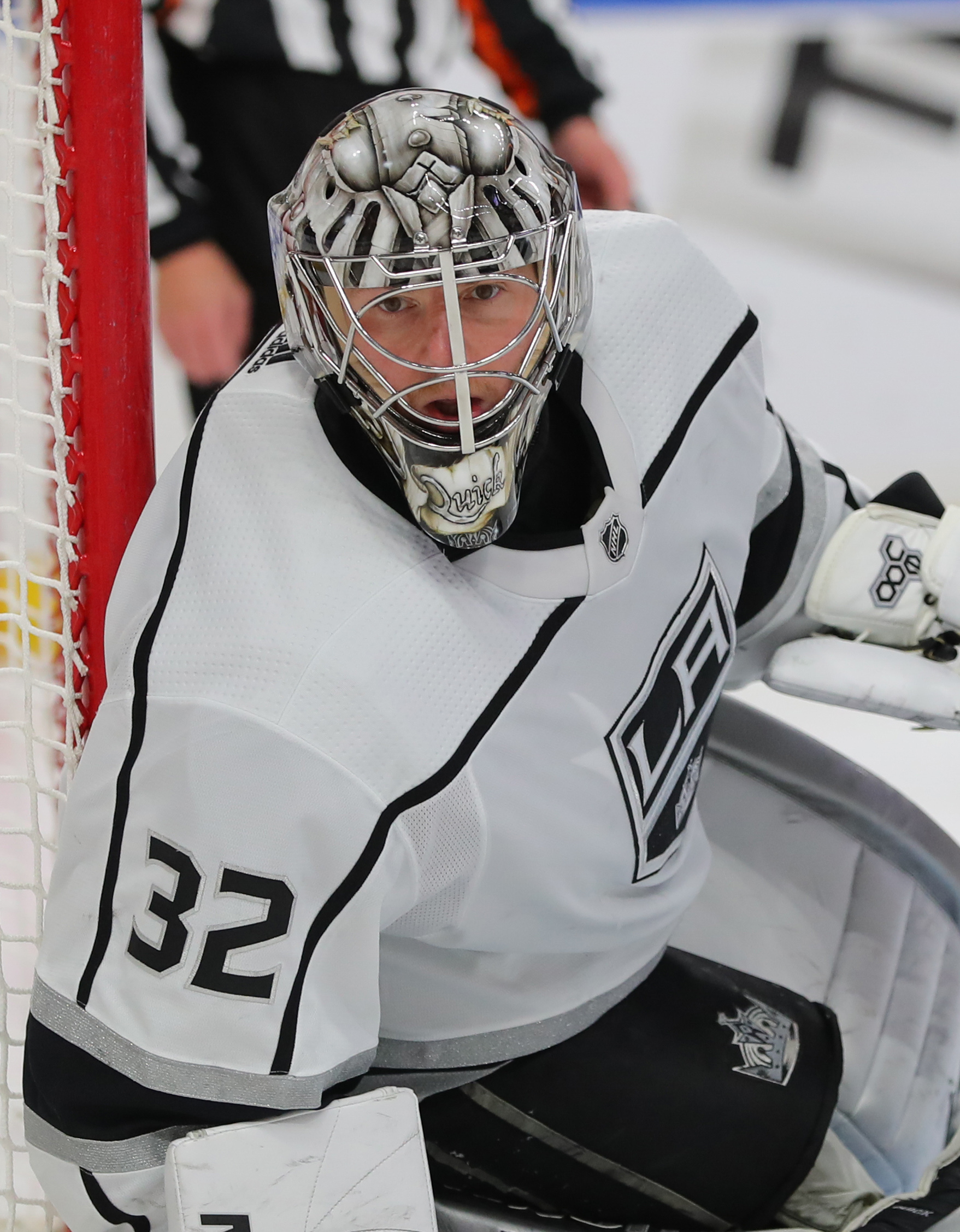
There’s a ton of talent coming for the Kings, but the NHL roster is still littered with aging, expensive veterans. In particular, the cap hits of Dustin Brown, Jeff Carter, and Jonathan Quick, which each extend past the upcoming season (Quick through 2022-23), are tough pills to work around even if they are all some of the most celebrated players the franchise has known. All three have been thrown around in trade speculation the last few years, but at this point it would likely take a desperate contender to actually eat one of the deals. The asset they’d need to include for another rebuilding team wouldn’t be worth the cap relief at this point, meaning the Kings might just have to wait it out.
Even those three may not be the worst of the worst. Anze Kopitar and Drew Doughty, even for all that they’ve meant to the franchise, are set to carry a combined cap hit of $21MM through the 2023-24 season, with Doughty’s contract extending three more years after that. They’re both legends, but you have to wonder if at some point the team will try to get out from under those contracts and hand the reins to their next wave of talent.
What should be on the Kings’ holiday wish list?
2022 draft picks.
The Kings could surprise some this season, but it’s hard to name them a contender at this point. That means they could be destined for a middling draft pick slot, reducing the chance for another real franchise-changing talent. By 2022, when the draft is absolutely loaded at the top, they could very well be out of the basement entirely. Getting some 2022 picks now might be an interesting strategy for a team that is still several years away from real contention. Like we’ve seen with the San Jose Sharks and Ottawa Senators in recent years, sometimes giving up a future pick can come back to really bite you when it ends up in the lottery.
Photo courtesy of USA Today Sports Images
Salary Cap Deep Dive: Pittsburgh Penguins
Navigating the salary cap is one of the more important tasks for any GM. Teams that can avert total cap chaos by walking the tightrope of inking players to deals that match their value (or compensate for future value without breaking the bank) remain successful. Those that don’t see struggles and front office changes.
PHR will look at every NHL team and give a thorough look at their cap situation heading into the 2020-21 season. This will focus more on players who are regulars on the roster versus those who may find themselves shuttling between the AHL and NHL. All cap figures are courtesy of CapFriendly.
Pittsburgh Penguins
Current Cap Hit: $80,181,842 (under the $81.5MM Upper Limit)
Entry-Level Contracts
D John Marino (one year, $925K)
Potential Bonuses
Marino: $850K
Marino’s rookie season was a strong one as he quickly worked his way into a spot in Pittsburgh’s top four, logging over 20 minutes a game while finishing second in team scoring among defensemen. If he even simply repeats that performance, he could easily double his base salary next offseason and if he takes a step forward, this deal could get pricey in a hurry.
One Year Remaining, Non-Entry-Level
F Zach Aston-Reese ($1MM, RFA)
F Teddy Blueger ($750K, RFA)
D Cody Ceci ($1.25MMMM, UFA)
F Mark Jankowski ($700K, RFA)
F Evan Rodrigues ($700K, UFA)
F Colton Sceviour ($1.2MM, UFA)
Sceviour was the secondary part of the trade that sent Patric Hornqvist to Florida this offseason. His output has dipped in recent years and while he’s an effective enough player to earn another deal beyond this one, he may have to take a small dip as the depth players get squeezed more and more in this cap environment. Aston-Reese had a quiet year despite an uptick in ice time. His role could be lessened this season and if that happens, his arbitration eligibility could wind up working against him if he doesn’t sign early. Blueger’s first full NHL season was a good one and he played his way into a role beyond the fourth line fairly quickly. Unless his offensive game improves significantly, he won’t be in a position to land a big raise but he could come close to doubling his current rate. Jankowski and Rodrigues both were non-tendered by Calgary and Toronto respectively and will look to rebuild some value after having limited interest on the open market. Both have earned bigger deals in the past but will need to find that form again if they want to get anything beyond a minimum contract or close to it a year from now.
Ceci is coming off of a tough season with Toronto which saw him take more than a $3MM pay cut. Expectations will be lower here and he’ll be in a role that’s a better fit for him. It wouldn’t be surprising to see him earn a bit of a raise on his next contract but it won’t come close to what he has made in recent years with AAV’s over $4MM.
Two Years Remaining
G Casey DeSmith ($1.25MM, UFA)
F Kasperi Kapanen ($3.2MM, RFA)
F Sam Lafferty ($750K, UFA)
D Kris Letang ($7.25MM, UFA)
F Evgeni Malkin ($9.5MM, UFA)
F Jared McCann ($2.94MM, RFA)
D Juuso Riikola ($1.15MM, UFA)
F Bryan Rust ($3.5MM, UFA)
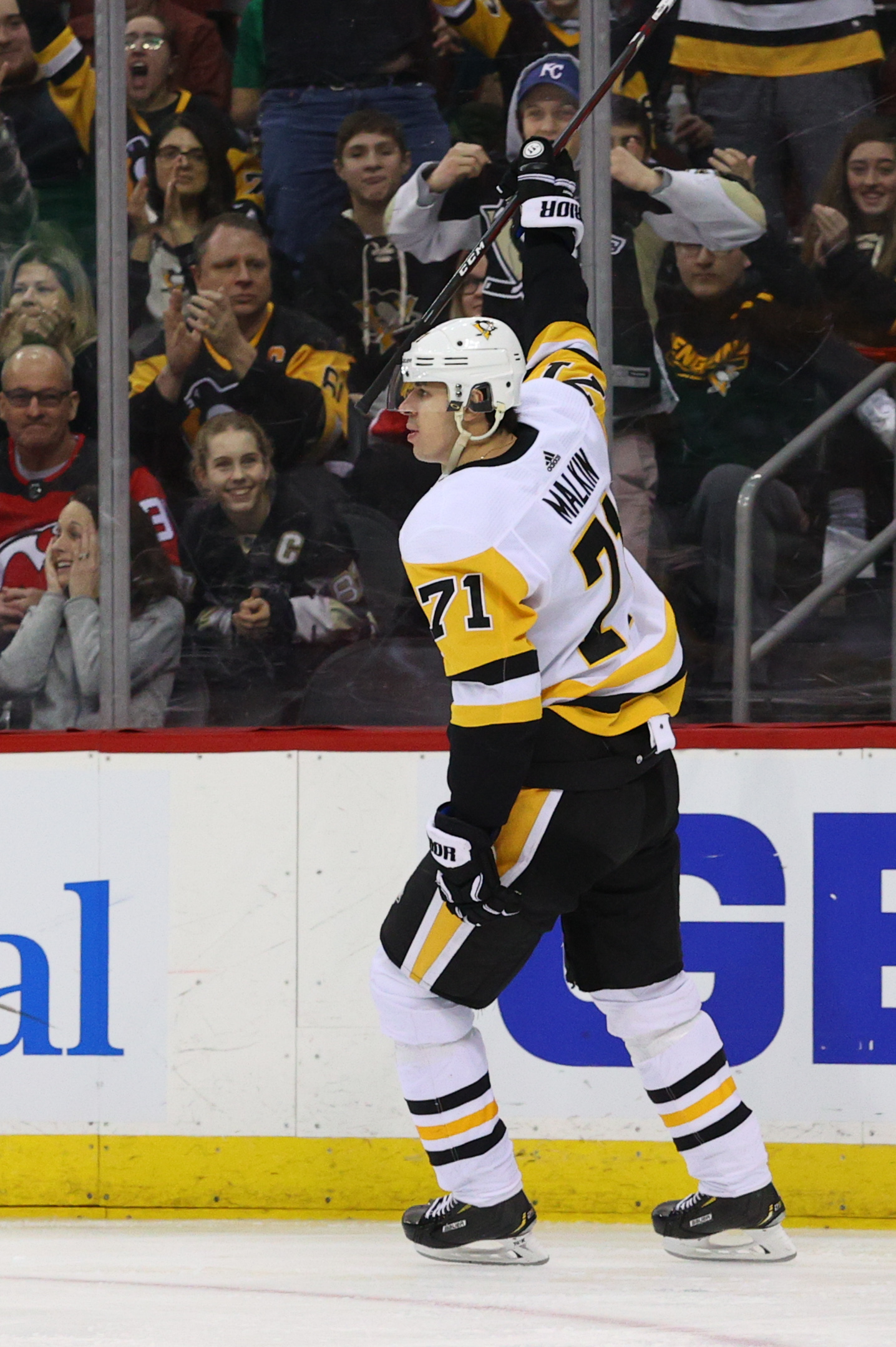 Malkin’s name is certainly the headliner among the forwards in this group. He has shown himself to be capable of being a number one center but hasn’t had the opportunity to play in that role very often for obvious reasons. If he wanted to go somewhere where he could have that role, he could probably get a multi-year deal close to his current rate, even with the 35-plus designation which carries some extra risks for teams. However, if he wants to remain with the Penguins (and at this point, that seems like a relatively safe bet), they will almost certainly ask him to take at least a small dip in pay in an effort to try to keep as much of their core together as possible.
GM Jim Rutherford paid a fairly steep price to bring Kapanen back into the fold and the early indication is that he will have a much bigger role than he did with Toronto. If he succeeds in that spot, he could push for a $5MM or more contract, especially being a year away from UFA eligibility at that time. Rust very quietly had a career year last season. After hovering around the 30-point mark the previous three seasons, he averaged more than a point per game and finished second on the team in scoring behind Malkin. If he reverts back to being the secondary scorer he had been, he’ll be in tough to match his current rate but if his 2019-20 production was a sign of things to come, then he’ll be adding a couple of million per season. McCann wound up being scratched at one point in the postseason which gives you an idea of how his year ended. If they wind up keeping Malkin around, his $3.38MM qualifying offer might be too rich for Pittsburgh. Lafferty figures to play a limited role and they’ll be looking to keep that roster spot close to the league minimum down the road.
Letang has been a fixture on their back end for 13 seasons and can still put up the points at a high-end rate. However, staying healthy has been an issue and he’ll also carry the 35-plus designation on his next deal. As a result, it’s hard to see him coming in higher than this rate on his next contract. If injuries are an issue between now and then, he’s a candidate to go year-to-year with bonuses but a multi-year pact at a slightly lower cap hit could also be appealing. Rikkola has been a depth option the last couple of years (even spending some time on the wing) and if he stays in that role for the next two, he won’t be in a spot to command a raise.
DeSmith was supposed to be the backup last season but plans changed quickly and instead he spent the year in the minors. With Matt Murray now gone, he’ll return to the number two role. As we’ve seen with backups in recent years, those that are above average can still land a pretty good contract and that will certainly be his target if he gets the opportunity to play more than a handful of games here and there.
Three Years Remaining
D Brian Dumoulin ($4.1MM, UFA)
G Tristan Jarry ($3.5MM, UFA)
F Jason Zucker ($5.5MM, UFA)
Zucker was brought in to add another scoring weapon on the wing although the pandemic and quick exit in the bubble means he hasn’t had much of a chance to establish himself. He did well in limited action and will need to be around the 25-30-goal mark to have a shot at a raise on his next deal.
Dumoulin has never been a big point-producer but has been a key anchor in the defensive end. However, the willingness to pay a high price for that type of player isn’t as high now in this environment so while he’s undoubtedly a big part of their back end, it’s hard to see him getting any significant boost on his next contract.
Jarry went from being available in a trade last year to their sure-fire starter this season after a strong 2019-20 campaign. He’s still inexperienced which is why they basically opted for a second bridge deal and by the time this contract is up, they’ll know if he’s their goalie of the long-term future that will earn a somewhat substantial raise closer to the $6MM mark or so or if he’s better off in a lesser (and lower-priced) spot.
What Your Team Is Thankful For: Florida Panthers
We’ve now made it past Thanksgiving and the holiday season is right around the corner. Like the last few years, PHR will take a look at what teams are thankful for but this year comes with a bit of a change. Normally teams would have an idea of where their season was heading, coming up on the one-quarter mark with mountains of statistics to analyze. Instead, in this unprecedented year, the season hasn’t even begun. We’ll still take a look at what each group is excited about and what they could hope for once the calendar turns to 2021.
What are the Panthers most thankful for?
The Pittsburgh Penguins front office.
Getting Patric Hornqvist is nice, but the real magic this offseason for Florida was ridding themselves of Mike Matheson‘s contract without having to really sweeten the pot. The team moved Matheson and his huge contract up to Pittsburgh after his play had fallen off a cliff, meaning their salary commitments past the 2022-23 season now lie only with Aaron Ekblad and Sergei Bobrovsky. Sure, Matheson might somehow turn his career around, but he is still set to carry a cap hit of $4.875MM through the 2025-26 season, one of the worst anchors in the league at the moment. Even at his best, that deal provides no room for excess value, meaning it’s deadly for a team like the Panthers who are still trying to push into a contention window.
Who are the Panthers most thankful for?
GM Bill Zito.
So far, so good for the new general manager, who has rid the books of some unhealthy cap and landed a few nice short-term bargains over the last few months. Alexander Wennberg agreed to sign a one-year deal in Florida while the team also landed Markus Nutivaara for almost nothing in a trade with his old team. There is certainly a lot more work to be done, but Zito appears to be turning things in the right direction.
The next big test for the executive will come quickly, as after this season Aleksander Barkov is eligible for an extension. With his bargain deal coming to an end after the 2021-22 season, leaving him an unrestricted free agent, Zito has to get to work on a new contract as soon as possible. The face of the franchise, Barkov will still be only 26 when he could potentially hit the market and a target for every team in the league.
What would the Panthers be even more thankful for?
The return of Bobrovsky.
There is not a single thing that could help the Panthers more than a return to form for Bobrovsky, who posted just a .900 in 50 appearances last season. That’s completely unacceptable for a goaltender making $10MM per season, even if the defense in front of him was not up to snuff. That defense should be improved (somewhat), so the excuses will start to run out for the 32-year-old superstar this season if he can’t get back to at least acceptable levels. One of only 22 goaltenders to ever win the Vezina Trophy more than once, Bobrovsky only has himself to blame if that save percentage doesn’t rebound.
If it does though and Bobrovsky can get anywhere close to the .931 that won him the award in 2017, the Panthers would suddenly become a real contender in the new makeshift divisions. Sure, they still have to deal with their state rival in the Tampa Bay Lightning, but perhaps getting away from the other top Atlantic Division teams for a few months will do them some good.
What should be on the Panthers’ holiday wish list?
Goal scoring.
Wennberg is a fine player to bring in as a reclamation project, and Hornqvist will likely improve their net-front powerplay presence, but it’s hard to really expect either player to fill the shoes of Mike Hoffman and Evgenii Dadonov. The team’s two top goal scorers in 2019-20 became unrestricted free agents and though Hoffman hasn’t actually signed yet, Dadonov inked a deal in Ottawa already. Pulling ~60 goals out of the lineup all at once can be devastating and the Panthers will need to find them elsewhere if they want to compete. Remember the team also traded away Vincent Trocheck at the deadline, removing another one of their best offensive weapons.
Perhaps they can still look outside the organization for a mercenary or two, but the offensive development may have to come from internal sources. There will be more than enough opportunity for a young player like Owen Tippett to show he can fill that goal-scoring role, but nothing is guaranteed at this point. Henrik Borgstrom, another top Panthers prospect, doesn’t even have a contract for the upcoming season yet and is currently in Finland playing with HIFK (or, waiting for the Liiga season to resume, more accurately). If the team doesn’t add firepower and doesn’t get a return to form from Bobrovsky, it could be a long season even with the additions on defense.
Photo courtesy of USA Today Sports Images