
Offseason Checklist: Minnesota Wild
The offseason has arrived for all but two teams now with the playoffs nearing an end. Accordingly, it’s time to examine what they will need to accomplish over the coming weeks with free agency fast approaching. Next up is a look at Minnesota.
This season saw some ups and downs for Minnesota. They had some injuries to key players while some other core pieces took steps back. But in the end, they were able to lock down a playoff spot despite their offensive struggles and gave Vegas a good run in the first round before falling in six. GM Bill Guerin now has much more cap flexibility moving forward; putting that to good use is a big chunk of their checklist for this offseason.
Pick A Direction With Rossi
For a team that has had challenges developing centers, it feels like Marco Rossi has perpetually been on thin ice with the Wild. Yes, at 5’9, he’s undersized for the position but he was the ninth-overall pick back in 2020 and despite a health scare soon after, he has become a legitimate middleman at the top level.
Rossi became a full-time NHL player in 2023-24 and had a solid rookie campaign with 21 goals and 40 points, earning him some down-ballot Calder Trophy votes. He was even better this season, tallying 24 goals and 60 points, good for second in points on the team. However, part of the current question stems from his usage in the playoffs when he went down to just 12 minutes a night after averaging 18:15 per contest during the regular season.
On the contract side, various reports have suggested that Rossi’s camp is using teammate Matt Boldy as a desired comparable in negotiations at seven years and $7MM per season. Meanwhile, Guerin is believed to have offered five years at $5MM in-season, an offer that was rejected. Notably, that would have set Rossi up to hit the open market heading into his age-29 season. A bridge proposal is believed to have been pitched as well but with his playoff usage, finding a number that works for both sides will be tough.
There are two ways the Wild can go here. The first is that they can work out a long-term deal to the satisfaction of both sides. With a bridge agreement looking unlikely, the second is that they find a suitable trade. It’s not often that young centers with his pedigree become available and with many teams – rebuilders and contenders alike – needing help down the middle, Rossi should command a strong return if that’s the route they choose.
However, it would also open up another spot at center to try to fill in a summer that should already see Guerin looking to add an impact middleman even if Rossi stays. Landing one isn’t easy; landing two would be that much harder, even with nearly $16MM in cap space, per PuckPedia. While restricted free agents can drag out negotiations, this feels like a situation that needs to come to a head before July 1st comes around.
Work On Kaprizov Extension
For a couple of years now, extension discussions with Kirill Kaprizov have been a key point of speculation. When the time comes, will he be willing to commit to a long-term agreement or would he look to hit the open market and perhaps move to a bigger market? Those questions have come even with Kaprizov consistently saying he wants to stay; including after the playoffs last month when he stated that “I love everything here. It should be all good.” Well, come July, we’ll start to get a first sense of where things could go as that’s when he becomes eligible to sign a contract extension.
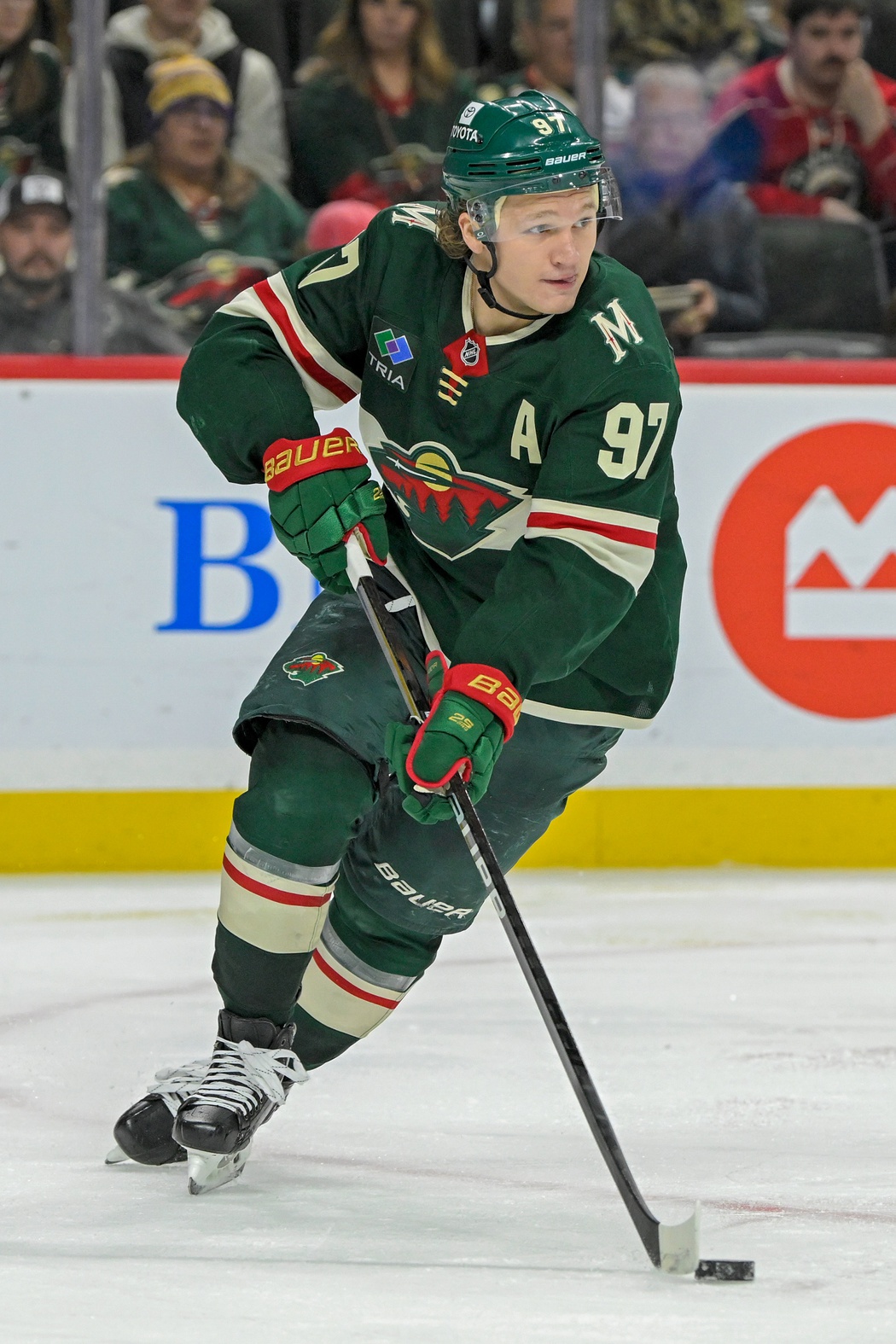 The 28-year-old has been one of the most productive players in the NHL on a per-game basis over the past four years (1.27 points per game in 264 outings) although he has only had one season with more than 80 games in that stretch. This season, he missed half the games but still managed an impressive 56 points in 41 outings. He’s a premier winger in the NHL, as long as he’s healthy enough to stay in the lineup. But while the track record of injuries is worth noting, it’s unlikely to materially affect any extension talks.
For one more year, Kaprizov will make $9MM but his next contract will almost certainly blow past that by a significant margin. With the projected growth of the salary cap and the potential for a record-setting contract coming to a winger this summer (Mitch Marner), finding comparables is a bit tricky. Marner’s next deal seems likely to check in somewhere between 14% and 15% of the Upper Limit, a number that checks in above Artemi Panarin (the current record-holder for richest winger deal). David Pastrnak and William Nylander are over $11MM apiece but in the old salary cap environment, they don’t hold up as well but their cap percentages start with a 13.
With the 2026-27 cap being projected to land around $104MM, we can start to come up with a framework for Kaprizov’s next contract. At 13%, a new deal would be $13.52MM per season. Speculatively, that feels low, especially with the expectation that Marner could beat that this summer. At 14%, the cost jumps to $14.56MM and at 15%, $15.6MM, a number that feels on the high side, especially for an early extension. $15MM (14.4% of the cap) has been speculated as a reasonable middle ground, an increase of $6MM per season. That would be the richest deal in NHL history but if Minnesota is hesitant to give it to him, his camp knows someone else will later on. Are both sides prepared to work something out around that price point? We’ll find out this summer.
Add Scoring Help
Scoring has been an issue for Minnesota in recent years. They haven’t been in the top 20 league-wide in goals scored for the last three seasons while they saw their goal output drop from 248 in 2023-24 to just 225 this season. Most of the time, that firepower isn’t good enough to get into the playoffs. While Kaprizov missing half the season contributed to some of that drop, they’re still a below-average team in that regard.
With Zeev Buium joining the Wild full-time next season, they probably don’t need to do much on the back end. They may try to re-sign RFA Declan Chisholm but that’s about it. That means the bulk of that cap space can be spent up front. If Rossi re-signs for something close to his asking price, that should still leave enough for an impactful top-six addition. Again, ideally that’s a center but they’re not in a spot where they can be too choosy. Even if it’s a winger, an improvement would be great. And if Rossi does wind up moving, they’d need a couple of top-six pickups.
This season, Minnesota had just four players reach the 40-point mark after having seven get there the year before. In a perfect world, there’s some internal improvement from some of their underachievers; deepening their forward group could help in that regard. Now that they have some long-desired flexibility cap-wise, they need to spend it on adding some offensive firepower.
Look Into Goaltending Insurance
When the Wild brought back Marc-Andre Fleury for one more season, the plan was clear. Jesper Wallstedt would get one more year in the minors and then move up. The two-year, $4.4MM contract they handed him soon after only cemented that. That contract was a head-scratcher then (following the one Yaroslav Askarov got from San Jose which was also a puzzling one) and it looks much worse now as Wallstedt struggled mightily with AHL Iowa this season, posting a 3.59 GAA and a .879 SV% in 27 games in the minors. Had they waited to sign him until now, the cost would have been a lot lower.
Is Guerin comfortable with promoting Wallstedt to the full-time backup spot behind Filip Gustavsson coming off the year he just had? Given his draft stock as a first-round pick back in 2021, it’s fair to say he’s still envisioned as someone in the long-term plans for Minnesota between the pipes. In that lens, it’d be reasonable to think they would want to give him the first crack at the spot. If that’s the case, then the goaltending depth they’d need would be a veteran AHL starter who could come up in a pinch with their other two signed netminders (Samuel Hlavaj and Riley Mercer) not quite NHL-ready.
But it’s worth noting that Wallstedt is still waiver-exempt for next season. In theory, they could send him down to Iowa again, lowering his cap charge in the process to $1.05MM. That would then allow them to try to pursue a more proven option. That would mean spending less on the forward position but would allow them to have a bit more piece of mind at the backup spot while giving Wallstedt a chance to bounce back from his tough year in Iowa. Either way, they’re likely to add another netminder in the coming weeks.
Photo courtesy of Nick Wosika-Imagn Images.
Free Agent Focus: Los Angeles Kings
Free agency is now under a month away, and teams are looking ahead to when it opens. There will be several impact players set to hit the open market in July, while many teams also have key restricted free agents to re-sign. We continue our look around the NHL with an overview of the free agent situation for the Kings.
Key Restricted Free Agents
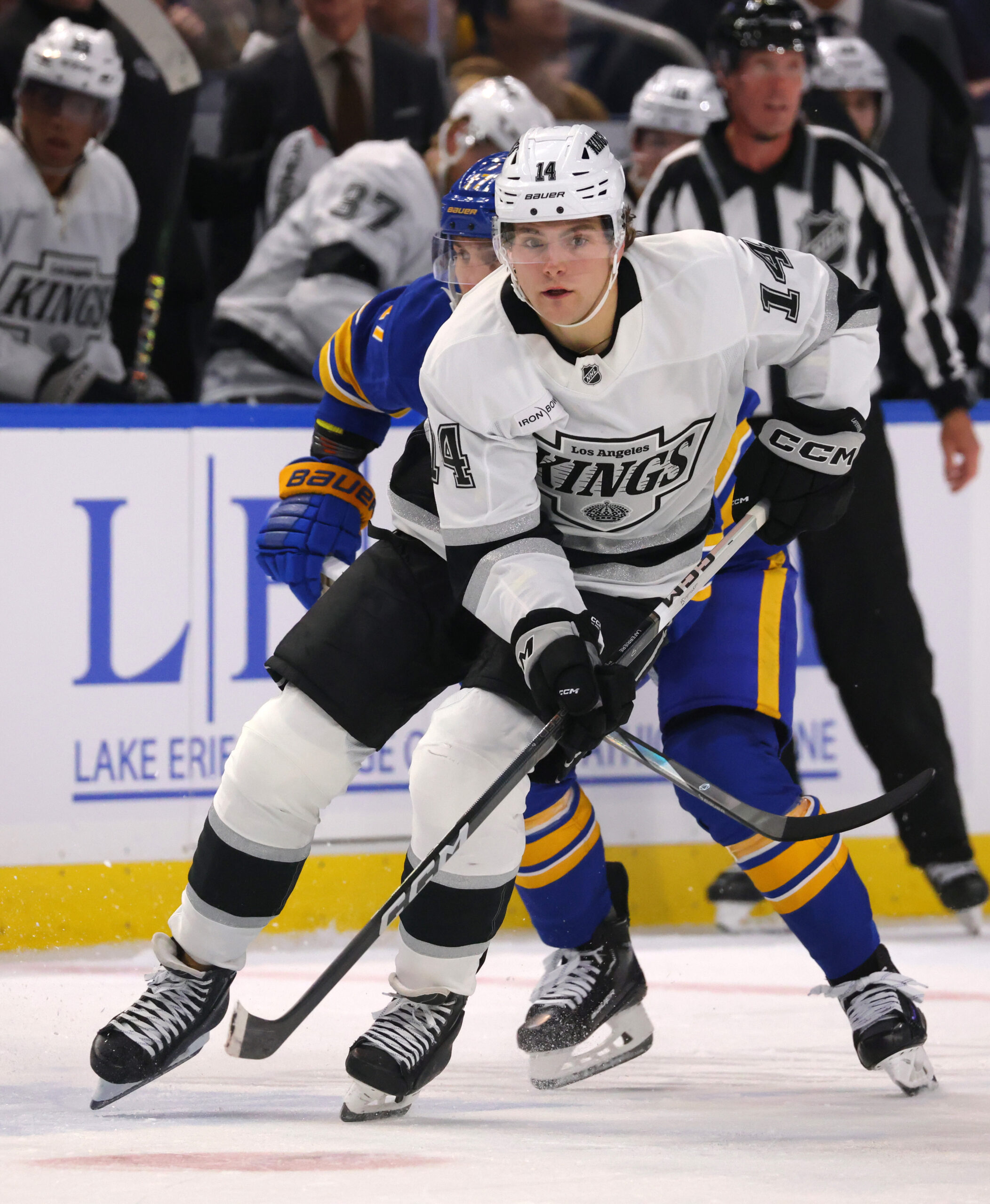 F Alex Laferriere – Not only has Laferriere arrived as a full-time piece for the Kings earlier than expected, but he’s likely been pencilled in as a future top-six piece long term. The 23-year-old cooled off down the stretch after a torrid start, but still saw a 25% increase in average ice time from his rookie season.
He’s shown immense promise as a playmaking right-winger, putting together a 19-23–42 scoring line in 77 games with a +22 rating in his sophomore outing. At Laferriere’s age, there’s still some room to grow, especially after seeing his points per game output jump from 0.28 to 0.55 in his rookie and sophomore seasons.
He’s owed a qualifying offer of $826,875 coming off his entry-level deal that he’ll obviously exceed, and it’s worth noting he’s a 10.2(c) RFA who’s ineligible to receive an offer sheet because he lacks the required professional experience. While he’ll obviously land a seven-figure extension, the question is if the Kings opt for a bridge deal to reserve more cap space for this summer or aim to get him signed long-term now.
Considering they have a few high-cost UFAs to retain, it might make more sense to go for a bridge deal in the $3MM-$4MM range.
Other RFAs: F Jack Studnicka, D Cole Krygier
Key Unrestricted Free Agents
 D Vladislav Gavrikov – The Kings needed Gavrikov to play like a true top-pairing defenseman to begin the season with Drew Doughty on the shelf, and he delivered in spades. Less fortunately for them, Gavrikov’s career-best campaign came in a contract year.
The 29-year-old Russian fell just short of his career high in points but was a dominant two-way force, finishing the year with a 5-25–30 scoring line, a +26 rating, and 140 blocks while averaging a career-high 23:05 per game. Despite seeing the most defensive-zone-oriented deployment among L.A. defenders, the Kings averaged just 1.64 goals against per 60 minutes with Gavrikov on the ice at 5-on-5.
He’s the top shutdown defenseman still set to hit the market this summer and will command well north of $7MM on a max-term contract. The Kings can bring down the cap hit slightly by offering him a comparable total-value deal with an eighth year of term, something they’d likely take advantage of.
With Doughty aging and only having two years left on his contract, the Kings can ill-afford to lose Gavrikov and will likely be willing to shell out the cash they need to keep him.
F Andrei Kuzmenko – A notoriously hot-and-cold scorer over his three years in the league, Kuzmenko has already been traded three times since his arrival in the NHL in 2022, including twice this season. Los Angeles got the Dr. Jekyll version of Kuzmenko after acquiring him from the Flyers for a third-round pick.
The 29-year-old fit seamlessly on Anže Kopitar‘s wing and was a lethal power-play weapon, totaling 17 points in 22 regular-season games before going point-per-game in L.A.’s first-round loss to the Oilers. Still, Kuzmenko has spent stretches in the press box during recent stops with the Canucks and Flames and shot just 13.3% this season after a raucous 27.3% finishing rate in his rookie year.
He’ll almost certainly be taking a pay cut on his previous $5.5MM cap hit as a result, but he likely boosted himself back into the $4MM range on a mid-term deal with his finish to the season. At that price, the Kings would be smart to pounce on an extension unless they feel they can confidently replace his top-line role with a big-ticket external signing.
F Tanner Jeannot – The Kings paid a second and fourth-round pick to acquire Jeannot from the Lightning last summer, just over a year after Tampa essentially gave up an entire draft class’ worth of picks to acquire the energy winger from the Predators in one of the more puzzling swaps in recent memory. The 28-year-old has scored just 20 goals in 198 games over the last three seasons following his 24-goal rookie campaign with Nashville in 2021-22, which is now a distant memory.
He’s still an incredibly physical fourth-line piece, albeit with underwhelming possession impacts, but can be a fine fit in limited minutes with some limited scoring upside. There should be some interest in his services league-wide, but it would be surprising to see him match or beat his expiring $2.665MM cap hit.
G David Rittich – Rittich’s past few seasons have been mired in inconsistency. After being one of the best backups in the league for L.A. last season, he regressed heavily to a .886 SV% in an increased workload (31 starts, three relief appearances).
His -11.4 goals saved above expected was seventh-worst in the league, according to MoneyPuck, and fourth-worst among goalies with at least 30 appearances. While he’s had good showings in limited deployment, the 32-year-old isn’t realistically a reliable tandem option, but his value this summer could be helped by a weak goalie market.
It might still make sense for L.A. to pursue a reunion given his 2023-24 performance, though, especially since prospect Erik Portillo isn’t quite ready for full-time NHL minutes after a disappointing AHL campaign.
F Trevor Lewis – The two-time Stanley Cup champion with the Kings returned for his second stint in L.A. two summers ago after three years away. He fell out of a full-time role this season, logging 60 appearances after playing in all 82 regular-season games the year before, but still managed 12 points and 100 hits while averaging 10:13 per game.
He’s played the last two years on one-way deals at or a shade above league minimum, a trend that could continue if the Kings want a familiar face to slot into the lineup if needed.
Other UFAs: F Samuel Fagemo (Group VI), F Taylor Ward, D Joseph Cecconi, D Caleb Jones, D Reilly Walsh (Group VI), G Pheonix Copley
Projected Cap Space
The Kings have just over $21.7MM in space below the $95.5MM Upper Limit, and with just a few roster spots to fill, they should be able to re-sign all of their pending free agents. If they plan to keep both Gavrikov and Kuzmenko around, though, they’ll need to make sure they go short-term with Laferriere to keep themselves in contention for some top UFA wingers like Brock Boeser and Nikolaj Ehlers. Signing Mitch Marner could still be realistic, but not with Kuzmenko taking up the chunk of change he’s projected to receive.
Image courtesy of Timothy T. Ludwig-Imagn Images (Laferriere) and Walter Tychnowicz-Imagn Images (Gavrikov). Contract information courtesy of PuckPedia.
Why The Hurricanes Can’t Get Over The Hump
The Hurricanes have been near the top of the NHL standings for the bulk of the last decade. They’ve made several deep playoff runs during that time.
Despite being an analytically advanced and disciplined club, the team has just been unable to advance past the Eastern Conference Finals and fell once again this year in the third round of the playoffs. The Hurricanes are close and have been close for a while, but every year, something has been missing. The team hasn’t been able to put it all together.
Just what those missing links are has been hotly debated. One certainty is that a lack of elite finishing talent has been something that has eluded the Hurricanes for quite some time.
Carolina generates a heavy number of shots and scoring opportunities, but doesn’t have an elite 40-plus goal talent that can break games open on their own. The Hurricanes have brought those players into the fold, but they haven’t been able to keep them.
Last year at the trade deadline, the Canes acquired Jake Guentzel from the Penguins only to lose him after 28 games (17 regular season and 11 playoffs). This season, they traded for Mikko Rantanen in late January, only to trade him away after 13 games, after a disappointing stretch of play and lack of extension talks.
It’s not as though Carolina struggles to score as a team. They finished ninth in goals scored this season.
However, when the games tighten up in the playoffs and goals become more challenging to come by, the Hurricanes struggle to capitalize on the chances they generate. That’s never been more evident than in this year’s series against the Panthers, when they posted just 10 goals in five games.
Carolina has nearly $28.5MM in available cap space and just three roster spots to fill for next season, according to PuckPedia. That puts them in a very advantageous position if they want to go big game hunting in free agency and take a run at Mitch Marner or Nikolaj Ehlers.
The issue here is that Marner and Ehlers aren’t exactly snipers, so they might not be the right target for Carolina. However, on the RFA market, JJ Peterka of the Sabres could be available, and at age 23, he is coming off 28 and 27-goal seasons.
Another issue that has plagued Carolina is that their goaltending has been solid but unspectacular. Frederik Andersen, Antti Raanta and Pyotr Kochetkov have been a formidable platoon over the last few years, but have been unable to steal a series when they’ve been deep in the playoffs.
It wouldn’t be fair to place blame on the goaltending. However, in the third round, teams need their goaltender to steal them a game or two if they hope to advance to the Stanley Cup Finals.
It’s unlikely that the Hurricanes make a change next season as they have both Andersen and Kochetkov signed to deals at an affordable combined rate of $4.75MM. The old cliché that ‘if it isn’t broke, don’t fix it’ applies here, as it’s hard to fault the goaltending. However, Carolina shouldn’t expect their current platoon to steal them many games later in the playoffs, given that they haven’t been able to do so in the past.
In previous years, the Hurricanes have dealt with injuries to key players during the playoffs, such as Andrei Svechnikov and Teuvo Teräväinen. This year, their stars were healthy, but they still dealt with a pair of injuries to right-shot defenseman Sean Walker and Jalen Chatfield. Rookies Scott Morrow and Alexander Nikishin had to make their postseason debuts in their absence, and the former looked especially overmatched.
The Canes have been blessed for years with an incredible amount of depth and have been able to overcome injuries to their key players. However, when a star like Svechnikov goes down, there is no way to overcome it without more high-level finishing talent.
Even championship teams can fall in the playoffs if they lose a top-six winger or top-four defenseman. Pittsburgh dealt with this on several occasions during the primes of Sidney Crosby and Evgeni Malkin when they lost multiple top-end pieces.
In 2011, the Penguins were a Stanley Cup favorite until both stars went down to injury, and the Penguins fell in the first round to Tampa Bay. In 2015, it was their defense that took a beating as the Penguins lost three of their top four defensemen, and again, Pittsburgh was bounced in the first round.
However, in 2016 and 2017, Pittsburgh overcame injuries to Marc-André Fleury and Kris Letang to win back-to-back Cups, eventually dispelling the injury excuse and achieving success despite not having full use of their roster. If Carolina wants to take the next step, they will need to do the same and overcome the adversity of losing essential pieces if and when it happens.
The Penguins teams of 2016 and 2017 relied heavily on their star power to overcome the injuries and obstacles. At some point, the Hurricanes will need the same if they hope to take the next step.
You can’t fault the stars for Carolina’s losses, as Sebastian Aho has been nearly a point-a-game player in his playoff career, and Svechnikov has been good in the last two playoffs. It comes back to the issue of not having enough firepower to help the stars that are there. Unless Carolina can add some elite scoring, as well as have their goalies steal some games in the latter stages of the playoffs, they might end up back here again next year.
Perhaps the tweak doesn’t need to be as dramatic as adding high-end forwards, but rather prioritizing the finding of players who can capitalize on the many high-danger chances they generate. The Hurricanes had just two players (who played more than 20 games) who shot over 15% last year, while a team like the lowly Sabres had five players do so.
Finding players who can capitalize on scoring opportunities won’t come easily, but there are a few players out there that Carolina could target. The aforementioned Rust and Rakell both shot north of 15%, as did Peterka.
Vancouver’s Brock Boeser is another player who has shot the lights out over the last two seasons, firing at a rate of 19.6% during 2023-24 and 17.2% this past season. Matt Duchene would be another potential target after shooting 19.7% this past year. Both are pending unrestricted free agents
The issue with targeting players who have a high shooting percentage is that there can be significant fluctuations in the numbers, and those players tend to have inflated perceived value, which can drive up the cost to acquire them. If the Hurricanes wanted to go cheaper, there are plenty of options available who can shoot with precision.
Washington’s Andrew Mangiapane is a career 14.4% shooter and will be an unrestricted free agent this summer; his value declined this past year after he posted just 28 points (14 goals and 14 assists) in 81 games. Jonathan Toews could be another target if he does indeed return. Toews hasn’t played since the 2022-23 season, but he is a career 13.8% shooter and shot 17.2% in his final season two years ago.
Photo by Charles LeClaire-USA TODAY Sports
Offseason Checklist: Ottawa Senators
The offseason has arrived for all but two teams now with the playoffs nearing an end. Accordingly, it’s time to examine what they will need to accomplish over the coming months. Next up is a look at Ottawa.
This year was a much-needed breakthrough for the Senators. Major offseason trades saw Jakob Chychrun and Joonas Korpisalo shipped out the door for Nick Jensen and Linus Ullmark, while names like Michael Amadio and David Perron were picked up in free agency to complement their young forward corps. That, along with a coaching change, was enough to get Ottawa over the hump and into the postseason for the first time since 2017. After a first-round loss to the Maple Leafs, general manager Steve Staios now has his heights set even higher for 2025-26.
Land A Needle-Moving Winger
Most of Ottawa’s jump in the standings this year can be attributed to improved team defense and vastly upgraded goaltending. Their offensive output improved by a minimal amount and remains an area of concern as the Senators look to become a consistent postseason contender.
Matters in 2024-25 weren’t helped by a down season from captain Brady Tkachuk, whose 29 goals and 55 points were his lowest totals since the shortened 2021 season. Outside of him, though, the Senators simply weren’t a good offensive team. They weren’t bad – just slightly below average by most available metrics, and an area in which they’ll need to add an impact piece to have any legitimate championship aspirations with their current core group.
This season, Ottawa ranked 18th in the league in goals, 21st in 5-on-5 shot attempts, 22nd in 5-on-5 expected goals, and an eye-popping 31st in actual goals at 5-on-5. Their 139 goals at standard play were nine ahead of the last-place Predators. They were helped by being the league’s best team at drawing penalties, receiving 269 power-play opportunities with an 11th-place 23.8% conversion rate for 64 power-play goals tied for the league lead.
While they’ve built out enough scoring depth to have an effective group of middle-six forwards behind their anchors in Tkachuk and Tim Stützle, they don’t have another player on the club with a surefire shot at 75-80 points in a season. That’s why they’ve reportedly made the dependable Drake Batherson available in trade talks. They’re looking for a right-winger with a higher production ceiling to slot into his top-six minutes.
They don’t have enough cap space this summer, either. While the organization has reportedly made it a priority to add a right-shot defenseman (more on that later), they’re perhaps better off spending the bulk of it on pursuing one of the better UFA wingers out there in Nikolaj Ehlers or leveraging their current spending flexibility on the trade market.
Make A Call On Giroux
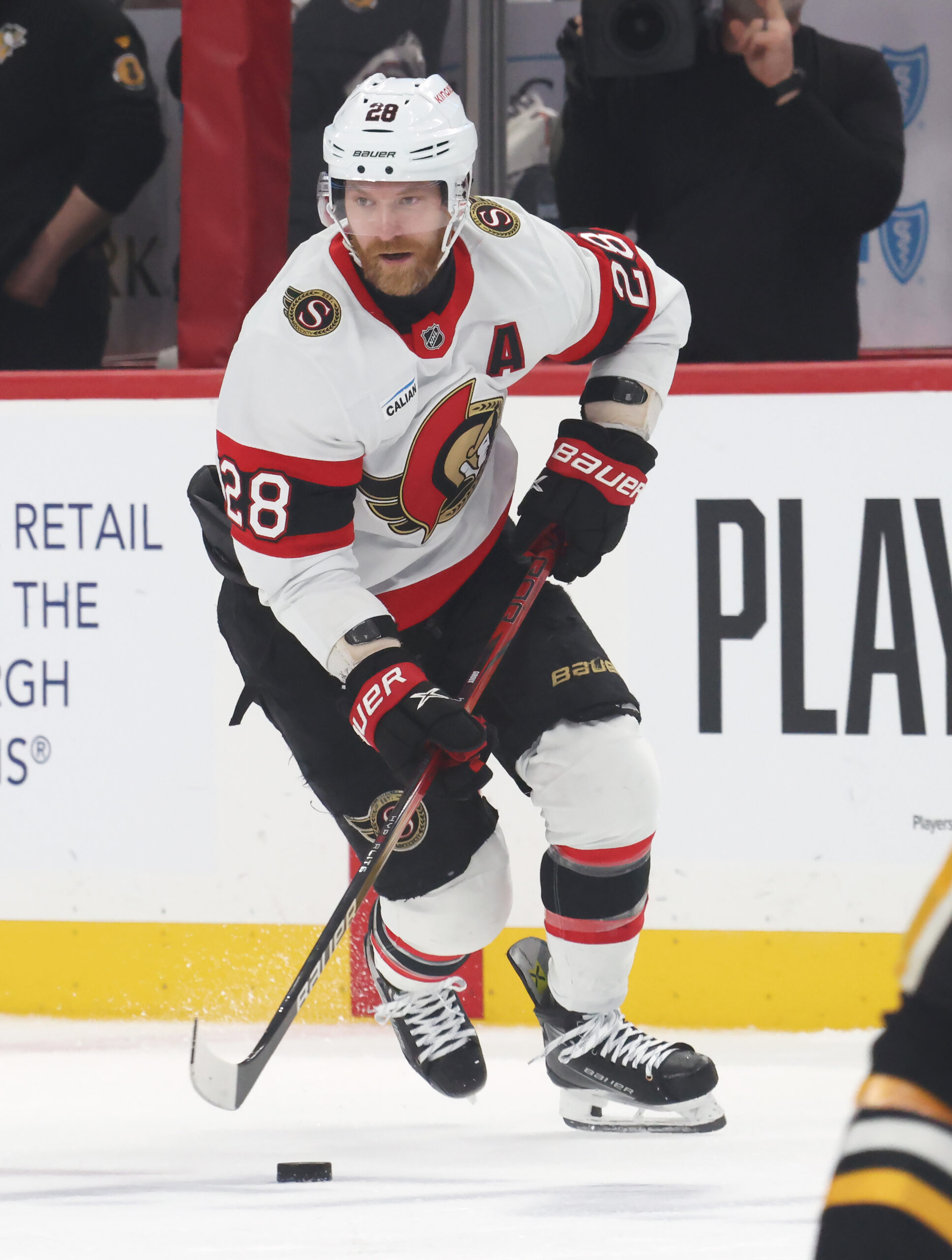 There’s only one uber-notable pending UFA for Staios to contend with this summer. That’s hometown vet Claude Giroux, who’s wrapping up the three-year, $19.5MM deal he signed to join Ottawa in free agency in 2022. There’s mutual interest in extending the relationship. How much of a discount he’ll be willing to take from his current $6.5MM cap hit, especially with his open market value still above the $5MM line (per AFP Analytics), remains to be seen.
If Giroux holds firm to an ask in the $5MM range, the Senators might do well to counter with a one-year offer that includes performance bonuses to get him to that number and lower the initial cap hit of the deal. He’s now 37 and has seen a steady production drop over his three years in the Canadian capital. His 15 goals and 50 points in 81 games this year worked out to his lowest per-game outputs since the 2009-10 season. His points-per-game rate has dropped linearly since his arrival, and if the trend continues, he’s tracking to score just 37 points in a full 82-game schedule next year.
Getting an early indication of Giroux’s salary floor in negotiations will help Staios decide whether to continue pursuing an extension or cut bait early and earmark that cap space for another task. Letting him walk could expand the case for keeping the younger Batherson, an established 60-point scorer at a team-friendly cap hit of $4.975MM through 2027. For a team with semi-limited maneuverability this summer, that’s not a deal they should be actively looking to shed.
Sign Cost-Effective Fourth-Liners
This checklist item could be accomplished by retaining some of the pieces Ottawa is currently willing to lose, but they might do better to look for six-figure bargains in free agency. The Sens struck gold last year with the pickup of Adam Gaudette on a two-way deal. He scored a career-high 19 goals while averaging just 10:25 per game, 16 of which came at even strength.
As such, he may have priced himself out of an extension with the Sens’ priorities set more on bigger moves on offense. The reality stands that Ottawa only has eight NHL forwards under contract for 2025-26, although pending RFA Fabian Zetterlund at least gives them nine under team control. They need bodies, especially without a surplus of high-end AHLers ready to jump to NHL minutes.
There should be many high-ceiling rebound options available for at or under $1MM on a one-year deal for the Sens to replace or even add upon Gaudette’s production level. One name that immediately jumps out is Michael Carcone, who’s already made it clear he doesn’t intend to sign a new deal with the Mammoth and will hit the open market. He previously spent the 2019-20 campaign in the Sens organization but played entirely in the minors. Between then and now, he had a 21-goal campaign for the Coyotes one year ago under eerily similar circumstances to Gaudette’s breakout this year. This year was a more trying campaign for Carcone, who lost a regular spot in the lineup and was limited to seven tallies in 53 appearances. Still, there’s certainly 15-20 goal potential without inserting him into extended minutes.
They’ll also need to re-sign or replace Nick Cousins and Matthew Highmore with low-cost checking options, although that should be a fairly easy task. They can spend an average of $2.14MM on their seven open roster spots with their current projected cap space, enough to fill out their roster with six-figure depth pieces after one or two more notable signings.
Strengthen Depth Defense
While parting ways with Chychrun limited Ottawa’s puck-moving arsenal on the blue line, bringing in the right-shot Jensen as a stay-at-home partner for Thomas Chabot worked wonders chemistry-wise. His +18 rating was the highest on the team. Unfortunately, his status to begin next season is uncertain following lower-body surgery, and they don’t have any legitimate NHL right-shot options behind him on the depth chart outside of Nikolas Matinpalo.
That’s led them to explore outside help, but they risk making too big of a move here with Jensen not expected to miss the entire campaign and young righty Carter Yakemchuk on the way as one of their top prospects. Adding a cheaper name with a history of reliably flexing into second-pairing minutes should still be a checklist item, but it doesn’t need to be a big splash.
Matinpalo isn’t a real internal answer outside of short-term promotions, and bringing back struggling veterans on expiring contracts like Travis Hamonic is a worst-case scenario option compared to finding more cost-efficient players on the open market. Someone like Henri Jokiharju or Jan Rutta can be had without breaking the bank and keeps Matinpalo in the mix as a good extra option when Jensen makes his return.
Image courtesy of Charles LeClaire-Imagn Images.
NHL Coaching Staff Directory
Below is Pro Hockey Rumors’ directory of NHL bench coaching staffs, pieced together from team websites and credible reports. Active vacancies compared to clubs’ 2024-25 staffing numbers are noted.
Updated 9/2/25.
Anaheim Ducks
Head coach: Joel Quenneville
Assistant coaches: Tim Army, Jay Woodcroft
Goalie coach: Peter Budaj
Boston Bruins
Head coach: Marco Sturm
Assistant coaches: Chris Kelly, Jay Leach, Steve Spott
Goalie coach: Bob Essensa
Buffalo Sabres
Head coach: Lindy Ruff
Assistant coaches: Seth Appert, Matt Ellis, Marty Wilford
Goalie coach: Mike Bales
Calgary Flames
Head coach: Ryan Huska
Assistant coaches: Trent Cull, Dave Lowry, Cail MacLean
Goalie coach: Jason LaBarbera
Carolina Hurricanes
Head coach: Rod Brind’Amour
Assistant coaches: Jeff Daniels, Tim Gleason
Goalie coach: Paul Schonfelder
Chicago Blackhawks
Head coach: Jeff Blashill
Assistant coaches: Michael Peca, Anders Sorensen, Mike Vellucci
Goalie coach: Jimmy Waite
Colorado Avalanche
Head coach: Jared Bednar
Assistant coaches: Nolan Pratt, Dave Hakstol
Goalie coach: Jussi Parkkila
Columbus Blue Jackets
Head coach: Dean Evason
Assistant coaches: Jared Boll, Scott Ford, Mike Haviland, Steve McCarthy
Goalie coach: Niklas Bäckström
Dallas Stars
Head coach: Glen Gulutzan
Assistant coaches: Alain Nasreddine, Neil Graham, (vacant)
Goalie coach: Jeff Reese
Detroit Red Wings
Head coach: Todd McLellan
Assistant coaches: Alex Tanguay, Trent Yawney, (vacant)
Goalie coach: Michael Leighton
Edmonton Oilers
Head coach: Kris Knoblauch
Assistant coaches: Paul McFarland, Glen Gulutzan, Mark Stuart
Goalie coach: Peter Aubry
Florida Panthers
Head coach: Paul Maurice
Assistant coaches: Myles Fee, Jamie Kompon, Sylvain Lefebvre, Tuomo Ruutu
Goalie coach: Robbie Tallas
Los Angeles Kings
Head coach: Jim Hiller
Assistant coaches: Newell Brown, Derik Johnson, D.J. Smith
Goalie coach: Mike Buckley
Minnesota Wild
Head coach: John Hynes
Assistant coaches: Jack Capuano, Patrick Dwyer, Jason King
Goalie coach: Frederic Chabot
Montreal Canadiens
Head coach: Martin St. Louis
Assistant coaches: Trevor Letowski, Stéphane Robidas
Goalie coach: Eric Raymond
Nashville Predators
Head coach: Andrew Brunette
Assistant coaches: Darby Hendrickson, Derek MacKenzie, Todd Richards
Goalie coach: Ben Vanderklok
New Jersey Devils
Head coach: Sheldon Keefe
Assistant coaches: Sergei Brylin, Jeremy Colliton, Brad Shaw
Goalie coach: Dave Rogalski
New York Islanders
Head coach: Patrick Roy
Assistant coaches: Ray Bennett, Bob Boughner, Benoit Desrosiers
Goalie coach: Piero Greco
New York Rangers
Head coach: Mike Sullivan
Assistant coaches: Ty Hennes, David Quinn, Joe Sacco
Goalie coach: Jeff Malcolm
Ottawa Senators
Head coach: Travis Green
Assistant coaches: Daniel Alfredsson, Nolan Baumgartner, Dan Sexton, Mike Yeo
Goalie coach: Justin Peters
Philadelphia Flyers
Head coach: Rick Tocchet
Assistant coaches: Todd Reirden, Yogi Svejkovský, Jay Varady
Goalie coach: Kim Dillabaugh
Pittsburgh Penguins
Head coach: Dan Muse
Assistant coaches: Nick Bonino, Rich Clune, Todd Nelson, Mike Stothers
Goalie coach: Andy Chiodo
San Jose Sharks
Head coach: Ryan Warsofsky
Assistant coaches: Doug Houda, Jeff Ulmer, Brian Wiseman
Goalie coach: Thomas Speer
Seattle Kraken
Head coach: Lane Lambert
Assistant coaches: Jessica Campbell, Aaron Schneekloth, Chris Taylor
Goalie coach: Colin Zulianello
St. Louis Blues
Head coach: Jim Montgomery
Assistant coaches: Claude Julien, Steve Ott, Mike Weber
Goalie coach: David Alexander
Tampa Bay Lightning
Head coach: Jon Cooper
Assistant coaches: Jeff Halpern, Dan Hinote, Rob Zettler
Goalie coach: Frantz Jean
Toronto Maple Leafs
Head coach: Craig Berube
Assistant coaches: Derek Lalonde, Marc Savard, Mike Van Ryn
Goalie coach: Curtis Sanford
Utah Mammoth
Head coach: André Tourigny
Assistant coaches: Mario Duhamel, Blaine Forsythe, John Madden
Goalie coach: Corey Schwab
Vancouver Canucks
Head coach: Adam Foote
Assistant coaches: Kevin Dean, Brett McLean, Scott Young
Goalie coach: Marko Torenius
Vegas Golden Knights
Head coach: Bruce Cassidy
Assistant coaches: Dominique Ducharme, John Stevens, Joel Ward
Goalie coach: Sean Burke
Washington Capitals
Head coach: Spencer Carbery
Assistant coaches: Scott Allen, Mitch Love, Kenny McCudden, Kirk Muller
Goalie coach: Scott Murray
Winnipeg Jets
Head coach: Scott Arniel
Assistant coaches: Dean Chynoweth, Marty Johnston, Davis Payne
Goalie coach: Wade Flaherty
How The Jets Can Replace Nikolaj Ehlers If He Leaves
The Winnipeg Jets are in a pretty enviable position heading into this summer. They are coming off a Presidents’ Trophy and have 16 players signed for next season with nearly $26.5MM in available cap space (as per PuckPedia). Sure, they fell short of expectations in the playoffs, but overall, they are in good shape. That second-round playoff loss to the Dallas Stars isn’t the only somber moment the Jets could go through during the offseason, though, as forward Nikolaj Ehlers is set to hit unrestricted free agency. The Jets could afford to keep Ehlers in the fold and appear interested in doing so, but negotiations have been quiet, and the signs point to him leaving. If he does, Winnipeg will have to figure out a way to replace his production.
Replacing Ehlers’ contributions with one player will be nearly impossible for the Jets, as they aren’t likely to land a Mitch Marner-type player in free agency and will be very hard-pressed to find a comparable on the trade market. Ehlers’ speed and puck skills are tricky to replicate, particularly his contributions to Winnipeg’s transition game. Ehlers’ defensive play isn’t anything to write home about, but on offence, he is the complete package, possessing a heavy shot, excellent passing, and he can play with almost anyone. Outside of his poor defensive play, the big knock is that he can’t stay healthy, and that will undoubtedly be a concern for teams that are lining up to sign him this summer.
There is little doubt that the Jets will look far and wide to replace Ehlers and will likely look both internally and externally to try and navigate the loss. Internally, they could look to a Cole Perfetti, Nikita Chibrikov, and Brad Lambert as candidates who could step into more elevated roles in the Jets lineup. However, they would be hard-pressed to replace Ehlers’ numbers, and it would put a lot of pressure on some young players if they were tasked with replacing Ehlers’ production. Relying on young players to replace Ehlers is a risk, and it’s one that Winnipeg might want to avoid as they head into the summer.
If the Jets did want to swing for the fences and try to acquire one player to replace Ehlers, they could look to Buffalo and forward JJ Peterka. The 23-year-old is an RFA and should land a big contract this summer. The Jets probably couldn’t offer-sheet him, given that they traded away their second-round pick next year to the Pittsburgh Penguins in the Luke Schenn trade, and Peterka would most likely fall in the $7,020,113 to $9,360,153 range on a contract going forward. That range for an offer sheet requires a first, second, and third-round pick as compensation, which is something Winnipeg simply can’t do.
They could look to re-acquire the pick, which is precisely what the St. Louis Blues did last summer with Pittsburgh after they had traded it along with Kevin Hayes in a salary dump. St. Louis made the trade so they could facilitate two offer sheets for defenseman Philip Broberg and forward Dylan Holloway. Given that Kyle Dubas is still the general manager in Pittsburgh and appears to be looking at the future, there is no doubt that Winnipeg could re-acquire their pick (for a cost) to make the move for Peterka. Nothing suggests they will do this, but these are the types of things the Jets will need to look at to replace Ehlers.
Suppose the Jets want to explore a trade for Peterka, which is the likelier route, then they might be in tough to top some of the other offers Buffalo would be fielding. Winnipeg has a middle-of-the-pack prospect system (ranked 15th in the NHL by Scott Wheeler of The Athletic) and probably couldn’t match what other teams offer. The Jets could trade Brayden Yager or Lambert as part of a package and do have their first-round pick for the next few years, but as mentioned earlier, they are lacking second-round picks in the subsequent three drafts.
The likeliest option for the Jets is to acquire another winger who may not possess the same level of skill as Ehlers but can fill the void at a lower cost, allowing the Jets to use the savings to address other areas. Bryan Rust in Pittsburgh would be an excellent fit for the Jets and will no longer have an NMC as of July 1. Rust is coming off a career year and would be a great leader for the Jets to add to their roster. Rust posted 31 goals and 34 assists in 71 games this past season and has two Stanley Cups to his name, as well as many moments of coming up big when games mattered the most. As far as concession plans, you can’t do much better than Rust.
Another Penguins forward who could be a fit is Rickard Rakell. The 32-year-old also had a career year, tallying 35 goals and 35 assists in 81 games. The Penguins like Rakell and were reportedly asking for quite a haul for him at the NHL Trade Deadline. If the Jets were able to pluck him or Rust from Pittsburgh, they would have done well to fill the void left by Ehlers’ departure.
Ultimately, whatever the Jets decide to do, it will likely involve acquiring another player and then hoping that several of their younger players can take the next step. The Jets are in a good spot to absorb the loss of a long-time player should it happen, and could look around the league to find a less skilled winger to fill in the void. Drake Batherson of the Ottawa Senators is another name that is out there, and he, too, would be a good fit for the Jets if they are looking at a trade.
Photo by James Carey Lauder-USA TODAY Sports
Free Agent Focus: Detroit Red Wings
Free agency is now under a month away, and teams are looking ahead to when it opens. There will be several impact players set to hit the open market in July, while many teams also have key restricted free agents to re-sign. We continue our look around the NHL with an overview of the free agent situation for the Red Wings.
Key Restricted Free Agents
F Jonatan Berggren – After spending much of the 2023-24 season with Detroit’s AHL affiliate, the Grand Rapids Griffins, Berggren earned another full-time opportunity with the Red Wings in 2024-25. His scoring output was depressed compared to his performance in the 2022-23 season, as he scored 12 goals and 24 points in 75 games, averaging 12:59 of ice time per night. Still, Berggren’s biggest improvements came on the defensive side of the puck, where he achieved an on-ice save percentage of 91.1% at even strength, far and away the best output of his young career. He’ll earn a raise on his $825K salary this summer, but it shouldn’t be by much, especially if Detroit has begun considering him a bottom-six defensive forward.
F Elmer Söderblom – The 6’8′ Swede brought a lot of punch to Detroit’s lineup when he was recalled in late January of the 2024-25 campaign. Söderblom finished the year with four goals and 11 points in 26 games, with 43 hits while averaging 13:22 of ice time per night. Similarly to Berggren, Söderblom offered more defensive help to the Red Wings lineup than expected, and that could be where he finds his home on the team longer-term. Expect Detroit to retain Söderblom on a one-year deal with a slight bump on his $878K salary while staying below $1MM.
D Albert Johansson – Requiring waivers for another demotion to the AHL, the Red Wings chose to keep Johansson on their active roster out of training camp. It took some time for Johansson to play regularly, but after trading Olli Määttä to the then-named Utah Hockey Club, Detroit found more opportunity for ‘AlJo’. Unfortunately, he’s put himself in a situation where the Red Wings could conceivably non-tender him this summer. Despite starting a majority of his shifts in the offensive zone, Johansson ranked as one of the worst players on the team in Expected +/- according to Hockey Reference, and on-ice goals % according to MoneyPuck.
Other RFAs: F Cross Hanas, D Antti Tuomisto, D Eemil Viro, G Gage Alexander
Key Unrestricted Free Agents
F Patrick Kane – Despite a visible and significant drop-off in foot speed, Kane continues to produce for Detroit. The 36-year-old three-time Stanley Cup champion and former-MVP ranked fourth on the team in points this season with 21 goals and 59 points in 72 games in a second-line role. General Manager Steve Yzerman has already expressed confidence that Kane will return to the Red Wings for the 2025-26 season, although no contract has been agreed to yet. If Kane decides to remain in Detroit, his upcoming contract should resemble this year’s deal, which includes a base salary of $4MM and the potential to earn an additional $2.5MM in performance bonuses. These bonuses are primarily dependent on the Red Wings qualifying for the postseason. 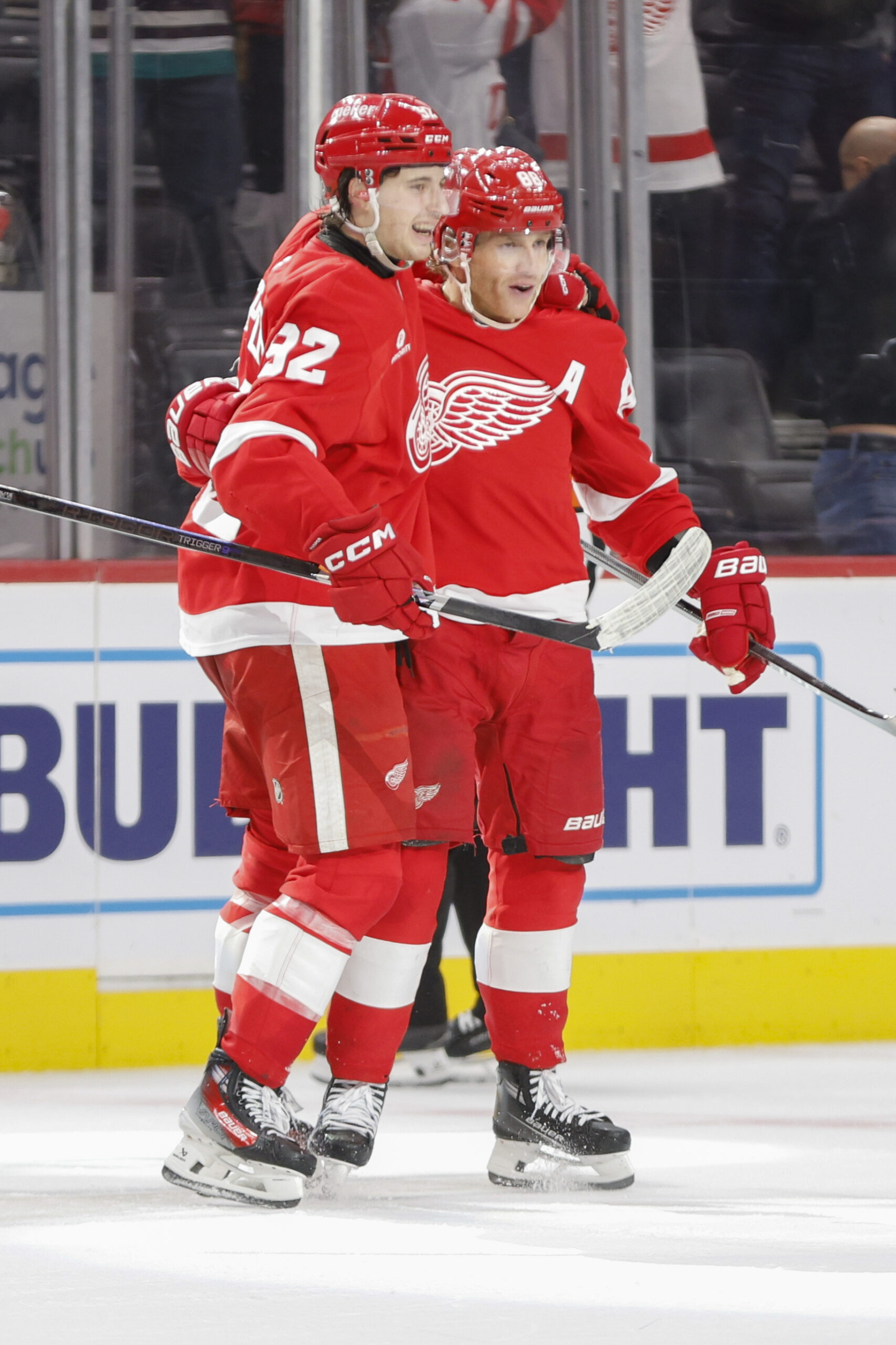
D Jeff Petry – What a difference a year can make. After finishing the 2023-24 season with three goals and 24 points in 73 games, Petry finished the 2024-25 campaign with one goal and eight points in 44 contests, even while averaging more ice time. Petry finished last place among Detroit blue liners (with 41 or more games played) in CorsiFor%, and second-to-last in Expected +/-. Despite earning a modest $2.34MM salary this past season thanks to the Pittsburgh Penguins and Montreal Canadiens retaining a portion of his salary, it’s unlikely Petry will wear a winged wheel on his jersey next year. He may have to settle for a one-year, league minimum on his new deal or earn his way from a professional tryout agreement.
G Alex Lyon – Petry wasn’t the only pending unrestricted free agent who had a significant drop-off in the 2024-25 season. After managing a 21-18-5 record in 43 starts in the 2023-24 campaign, Lyon posted a 14-9-1 record in 26 starts this past year, with an eight-point drop in his SV% and a 3.6 drop in his Goals Saved Above Average. After adding several netminders last offseason and another at the trade deadline, the Red Wings are in dire need of contracting their goaltending situation, making Lyon an obvious candidate to leave this summer.
Other UFAs: F Craig Smith, F Tyler Motte, D William Lagesson, F Timothy Gettinger, F Joe Snively, D Brogan Rafferty, G Jack Campbell
Projected Cap Space
Thankfully for Detroit, the Red Wings will have a healthy salary cap situation heading into the offseason. PuckPedia lists the Red Wings as having $21.337MM in cap space, while already having 10 forwards, five defensemen, and two netminders signed for next season. Assuming Detroit re-signs Kane on a similar deal, and giving Berggren and Söderblom a generous salary of $1MM, that’ll give the Red Wings more than $15MM to work with. There should be competition for open spots on the roster from Nate Danielson, Jesse Kiiskinen, and Axel Sandin-Pellikka during next year’s training camp, so Detroit has the financial flexibility to be aggressive this summer.
Contract info courtesy of PuckPedia.
Photo courtesy of Brian Bradshaw Sevald-Imagn Images.
Examining The Penguins’ Options For Erik Karlsson
Frank Seravalli of Daily Faceoff speculated on a potential Pittsburgh Penguins trade for defenseman Erik Karlsson. The hypothetical trade involved the Toronto Maple Leafs. It was all speculation and fodder, but it made for an interesting conversation about a player who will likely find a new team this summer. Karlsson has two years remaining on his contract with an AAV of $10MM, and at 34 years of age, he will not be easy to move despite being a three-time Norris Trophy winner. Karlsson’s best years are behind him, but he remains a gifted skater and playmaker who struggles on the defensive side of the game. Given Karlsson’s unique skillset, it’s fair to wonder what the Penguins’ options are for him if they do indeed plan to move him.
Seravalli’s conversation led to him discussing a one-for-one trade between Toronto and Pittsburgh that would see Karlsson and Morgan Rielly swap teams. Now, a trade like that is highly unlikely to happen, given that Reilly has a no-move clause and isn’t likely to go to a team in Pittsburgh’s position. Also, from Pittsburgh’s perspective, they probably wouldn’t have an interest in Reilly despite general manager Kyle Dubas’ previous ties to Toronto.
All of that to say, is there a realistic one-for-one trade out there for the Pittsburgh Penguins to move Erik Karlsson? The answer is probably no; although it’s not impossible, it’s hard to find an option around the league in which Pittsburgh could flip Karlsson for a single piece and to be perfectly honest, the Penguins likely don’t want to do that. Any Karlsson trade that involves roster pieces will likely mean that overpaid veterans are coming back to Pittsburgh as part of the deal, along with futures, or the Penguins are swallowing a significant chunk of Karlsson’s cap hit and receiving back a good young roster player and maybe one or two extra pieces. A trade like that could look similar to the Seth Jones trade to Florida. So, what would some potential trades look like?
A good framework for the first option would be with the Detroit Red Wings. Detroit has several undesirable contracts on its books and could put together a package that mirrors the one the Penguins used to acquire Karlsson in the first place (albeit one of lesser quality). Detroit would probably love to move on from Justin Holl and perhaps Vladimir Tarasenko, and would free up roughly $8.15MM by doing so. If they were included in the swap, the Penguins would only need to eat those deals for one year and could clear Karlsson’s entire cap hit. Now, in a trade like that, the Penguins would likely need to be rewarded with additional assets, but it’s not an impossible framework for the two sides to work under.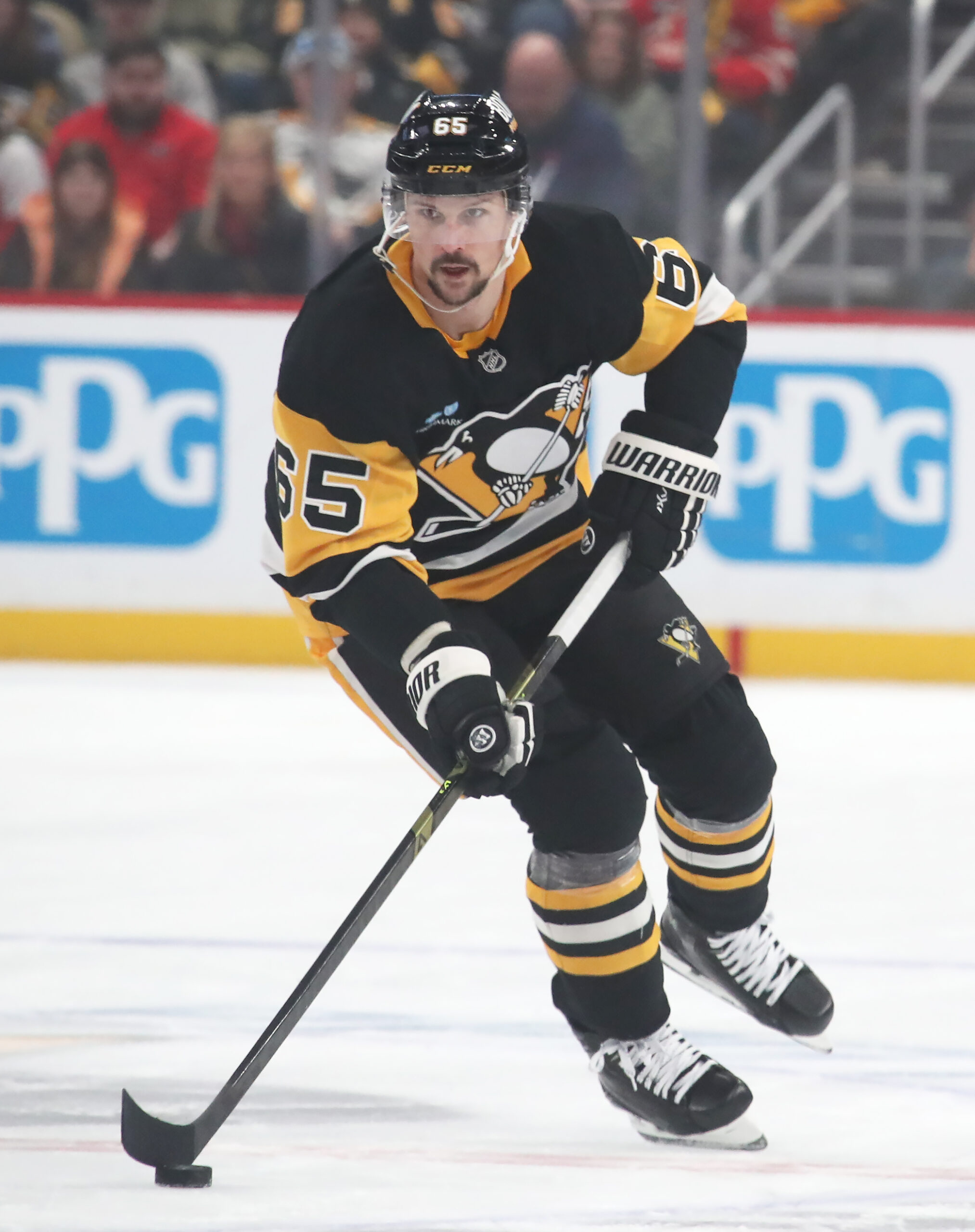
Using the retained salary framework, Pittsburgh could keep in the range of $3MM on Karlsson’s AAV, which would get him down to $7MM in each of the final two years of his contract. That number is much more appealing and could likely yield the Penguins a couple of future assets, possibly even a young roster player. If the Penguins went closer to a 50% retention, they could cash in, but they probably don’t want to do that, given that they reportedly view the summer of 2026 as their time to make moves to contend (as per Josh Yohe of The Athletic).
So, what could the Penguins fetch with Karlsson at $7MM? Again, using Detroit as a framework, as well as the recent Seth Jones trade, Pittsburgh could likely acquire a young roster player and a draft pick that would likely be a second or third-round pick. Penguins fans might jump at the idea of obtaining a forward like Marco Kasper in the trade, but that seems lofty for Karlsson, and Detroit would likely scoff at the notion. The 15th overall pick in the 2024 NHL Entry Draft, forward Michael Brandsegg-Nygard, could be an option, but he would probably be the only piece coming back to Pittsburgh in a trade like that.
The last option for the Penguins, and the one that Seravalli is hinting at, is a good old-fashioned hockey trade that isn’t a one-for-one. The complicated nature of Karlsson’s contract, mixed with his age and unique skillset, makes him hard to trade under any circumstances, particularly in a hockey trade. But nothing is impossible, and Dubas is about as creative as they come and has targeted young players who haven’t lived up to their perceived potential. Enter the Carolina Hurricanes and Jesperi Kotkaniemi.
Now, I won’t be the first person to float the idea of a Kotkaniemi to Pittsburgh trade for Karlsson, as Dan Kingerski of Pittsburgh Hockey Now did so in March. The idea seemed unlikely at the time, but given the new ecosystem teams are in with the cap going up, it’s not a crazy idea. Carolina might lose Brent Burns in free agency, and has had a hard time keeping offensive players in Carolina for various reasons. Perhaps Karlsson could help ignite the offense and could play a more structured game in Carolina’s disciplined system.
On the flip side, the Penguins could roll the dice on Kotkaniemi, who is just 24 but is significantly overpaid at $4.82MM annually. Kotkaniemi has five years left on his deal and could use a fresh start in a new system. He might get one after he was a healthy scratch in the playoffs and took a disastrous penalty in Game 3 of the Eastern Conference Finals against Florida. Kotkaniemi likely has more to give and could perhaps be given more of an offensive role on a Penguins team that simply doesn’t have the same depth as the Hurricanes.
In that scenario, both teams would be taking a massive gamble, but it might make sense, given the current state of each team. Pittsburgh gets to take a chance on a younger player who has fallen below expectations, and the Hurricanes get a veteran that might be able to add to their offense as they try to get over the hump in the Eastern Conference. Weirder things have happened, but the Penguins have plenty of options for trading Karlsson and given all that has gone on in his two years in Pittsburgh, they probably should move him as they continue to embark on reshaping their roster.
Photo by Charles LeClaire-Imagn Images
Free Agent Focus: Dallas Stars
Free agency is now under a month away, and teams are looking ahead to when it opens. There will be several impact players set to hit the open market in July, while many teams also have key restricted free agents to re-sign. We continue our look around the NHL with an overview of the free agent situation for the Stars.
Key Restricted Free Agents
F Mavrik Bourque – The Stars don’t have many restricted free agents, but one forward they may want to retain long-term is Bourque. The 23-year-old Quebec native enjoyed a solid rookie showing in 2024-25, posting 11 goals and 24 points in a bottom-six role. However, while he suited up in 73 games during the regular season, he only saw action in three playoff contests, with no points to show for it. Still, the arrow seems to be pointing up for the team’s 2020 first-round selection. Bourque has excelled in the AHL, posting 47 goals and 129 points in 147 games for the Texas Stars, and has the potential to make an impact in the NHL. For a team with limited cap space, signing a young forward with high upside makes sense.
D Nils Lundkvist– For a team that has five defenders set to make more than $3MM next season, the Stars may not want to shell out much more cap space to blueliners. With that said, the team should have some interest in retaining Lundkvist, a former first-round selection of the New York Rangers. The 24-year-old skated in 39 games this past season, posting five assists, a plus-four rating, 34 blocked shots, and 23 hits. Although his offensive output declined from the 2023–24 season, in which he tallied 19 points and a plus-13 rating, Lundkvist saw an increase in average ice time, rising to 15:01 from 14:06 per game. With only six defensemen under contract for next season (excluding non-rostered players), re-signing Lundkvist could be a cost-effective option for the team’s third pairing.
Other RFAs: F Antonio Stranges, G Remi Poirier, G Benjamin Kraws
Key Unrestricted Free Agents
F Jamie Benn – The team’s most notable pending unrestricted free agent, at least from a nostalgic point of view, is longtime captain Jamie Benn. For the first time in his career, Benn is heading for the open market. Benn has played all 1,192 of his games in Dallas, and the soon-to-be 36-year-old ranks second only to franchise legend Mike Modano in several key categories, including games played, points, goals, and shots on goal. Benn also recently discussed his desire to re-sign with Dallas. This past season, Benn showed he can still be productive in a bottom-six role, finishing with a solid 16 goals and 49 points. And while the Stars may have a mutual desire to retain their captain, the issue now may be the team’s limited cap space. Should the team resign Benn or use this opportunity to get younger?
F Matt Duchene – Duchene showed last season that he can still perform at a high level, finishing with an impressive 30–52–82 stat line in 82 games. However, the well dried up for the 34-year-old in the playoffs, where he posted just one goal and six points in 18 games. That reality may leave a sour taste for GM Jim Nill and the front office as they consider whether to re-sign Duchene. Either way, Duchene’s strong regular season may generate enough interest on the open market to price him out of Dallas. He will certainly see a sizeable raise on his previous $3MM AAV deal.
F Evgenii Dadonov – Like Duchene, Dadonov is coming off a resurgent season that will likely lead to a pay raise in free agency. While he didn’t share the statistical success of Duchene, Dadonov posted 20 goals and 40 points on the year, his most points since the 2021-22 season. However, Dadonov also struggled in the playoffs, posting four points and a minus-three rating in 13 games. Still, 20-goal scorers don’t grow on trees and Dadonov is sure to draw interest from teams seeking depth scoring.
F Mikael Granlund – Perhaps no pending free agent’s market is harder to gauge than Granlund’s, who has been a wildly inconsistent contributor throughout his career. Still, he appeared to find instant success after being traded to Dallas last season, posting 21 points in 31 games. He finished the year with 66 points between San Jose and Dallas, his most since the 2017-18 season. He also posted a solid 10 points in 18 playoff games. The pass-first forward just turned 33 and may be seeking one more significant contract on the open market.
D Cody Ceci – One of the more unusual stats from the 2024–25 season was that Cody Ceci appeared in 85 regular season games — 54 with the Sharks and 31 with the Stars. He tallied 24 points overall, including nine assists during his time in Dallas. Ceci also logged a notable 20:14 of ice time per game with the Stars, a number that increased to 21:31 in the playoffs. The Stars are sure to have interest in retaining Ceci’s services, but the veteran of 871 career games will have plenty of suitors if he reaches the open market. Like Granlund, Ceci may be looking for one final large, multi-year agreement.
Other UFAs: D Brendan Smith, G Magnus Hellberg, F Colin Blackwell, F Cameron Hughes, F Kole Lind (UFA-Group6), F Emilio Pettersen (UFA-Group6), F Matej Blumel (UFA-Group6)
Projected Cap Space
Nill and the front office will have to get creative if they want to make any sort of waves in free agency, or even to simply retain a few of their pending free agents. According to PuckPedia, the team currently has just south of $5 million in cap space. With over $60 million committed to their top seven players, the team is top-heavy with contracts and faces tough decisions regarding the future of their pending free agents, including Benn.
Contract info courtesy of PuckPedia.
Free Agent Focus: Columbus Blue Jackets
Free agency is now under a month away, and teams are looking ahead to when it opens. There will be several impact players set to hit the open market in July, while many teams also have key restricted free agents to re-sign. We continue our look around the NHL with an overview of the free agent situation for the Blue Jackets.
Key Restricted Free Agents
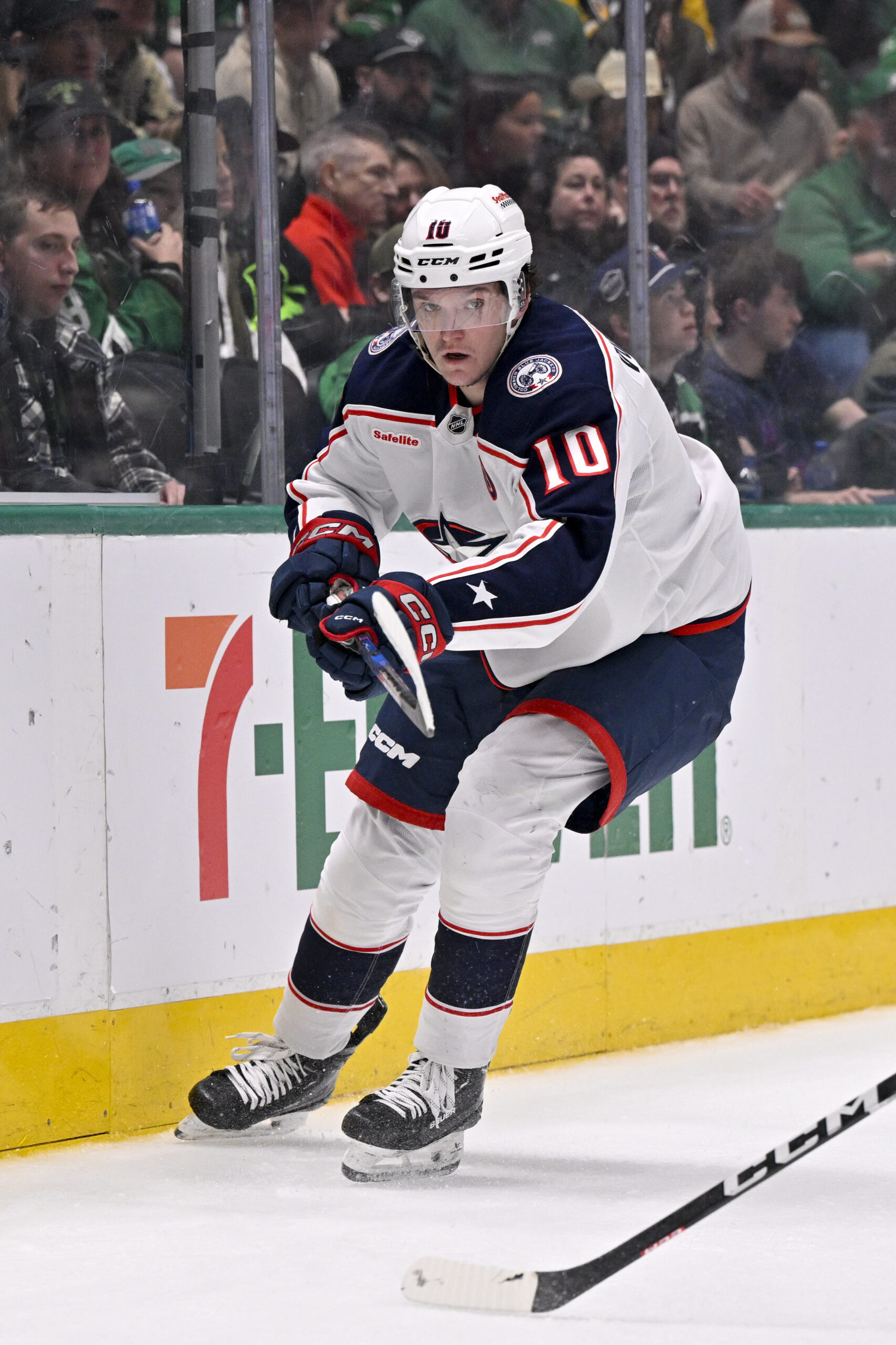 F Dmitri Voronkov – A number of players had breakout campaigns for the Jackets in 2024-25. Voronkov wasn’t chief among them, but he was up there. After a strong rookie campaign last year, the 24-year-old received loads of top-line deployment at even strength with Kirill Marchenko on his opposite wing and either Adam Fantilli or Sean Monahan down the middle. His 23 goals and 47 points didn’t explode off the page, but it’s still serviceable top-six output and a steady improvement on 2023-24’s 18-16–34 scoring line in two more appearances. Voronkov averaged 16:47 per game, a figure that shouldn’t see much variation heading into next year. The 6’5″, 227-lb winger also played as you’d expect given his frame – 71 hits and quite good defensive impacts. With some room to grow, Columbus is likely looking at a long-term deal in the $6MM range annually. A bridge deal, if they go that route, should be more attainable in the high $3MMs or low $4MMs in terms of AAV.
D Jordan Harris – Harris was picked up from the Canadiens in last summer’s Patrik Laine trade. He’d become a fine bottom-pairing and even fringe top-four option with Montreal last year, but the 24-year-old spent most of the year as the odd man out on the Columbus blue line, even with Erik Gudbranson missing most of the season. After posting just five points and a minus-one rating in 33 games while averaging a minuscule 11:23 per game, there’s reason to believe the Blue Jackets don’t have an appetite to issue him his $1.4MM qualifying offer. The 2018 third-round pick could be on the open market this summer as a result.
G Daniil Tarasov – Like Harris, Tarasov is a non-tender candidate later this month. The 26-year-old Russian could still have some untapped upside, but a roster crunch in net likely means he won’t discover it in Columbus. He was superseded as a top-two option for the Jackets down the stretch by the younger Jet Greaves, who looks to serve in tandem with Elvis Merzlikins next year. He struggled when given the chance to start in 2024-25, posting a 7-10-2 record, .881 SV%, and 3.54 GAA in 20 appearances. He’s also due a seven-figure qualifying offer ($1.26MM) and has arbitration rights, neither of which work in his favor for being retained as a No. 3 option.
Other RFAs: F Hunter McKown, F Mikael Pyyhtia, D Ole Julian Bjorgvik-Holm, D Cole Clayton, D Daemon Hunt, D Samuel Knazko
Key Unrestricted Free Agents
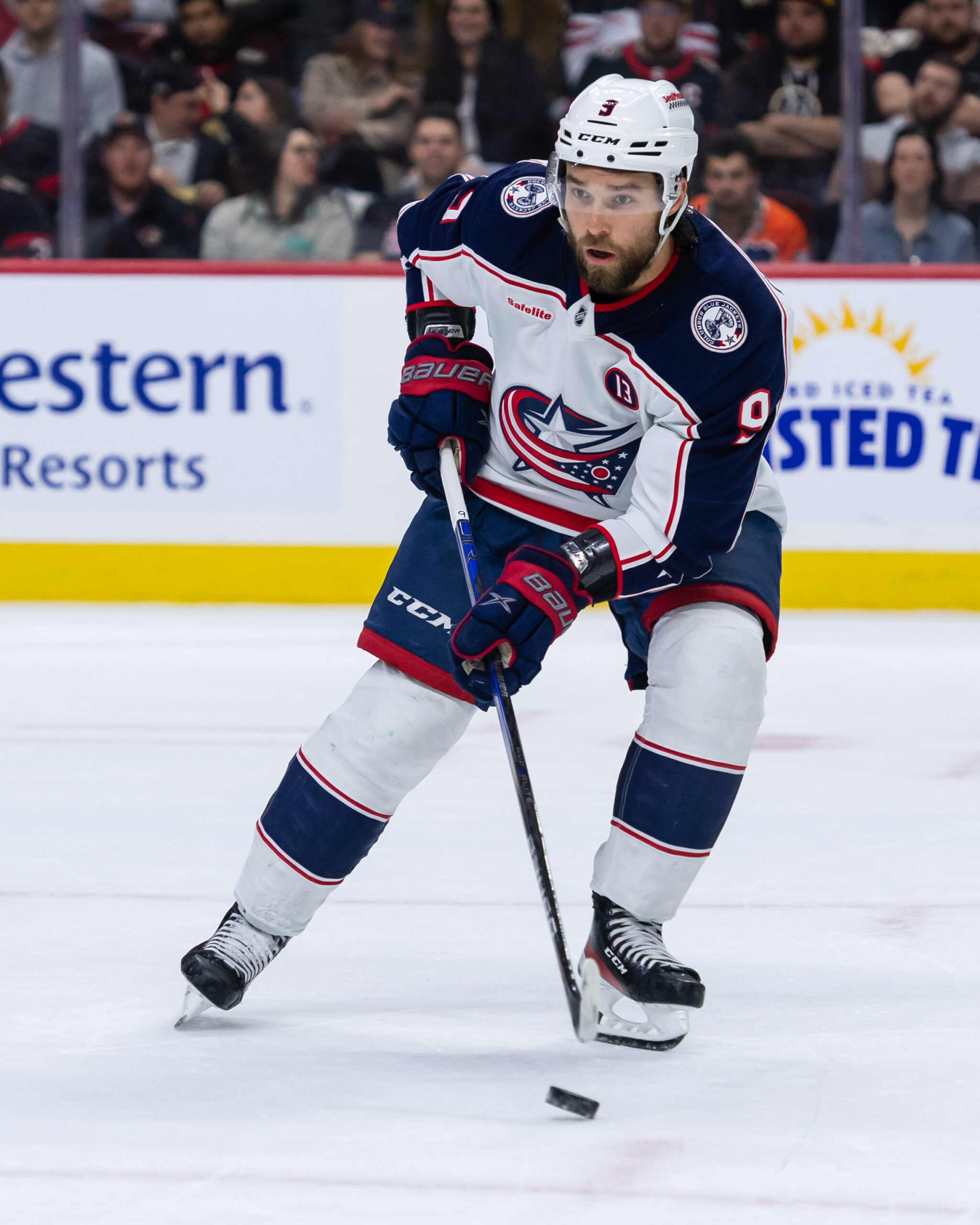 D Ivan Provorov – Some extensions in the back half of the season vaulted Provorov into being the consensus No. 3 UFA available this summer on the blue line behind Aaron Ekblad and former Blue Jacket Vladislav Gavrikov. The 28-year-old has been a fine fit in Columbus since his acquisition two years ago, though, and there could still be a long-term fit on the left side behind Zach Werenski, even with top prospect Denton Mateychuk emerging as an NHL option. He managed a +11 rating and 33 points in 82 games this year, his first time in the black since 2020-21, but his possession metrics (47.9 CF%, 45.6 xGF% at even strength) are still lacking for someone logging over 23 minutes per game. Regardless, a weak UFA market on defense and his usability in heavy minutes likely mean the Jackets will need to offer a long-term deal in the $7MM range per season to keep him around.
D Dante Fabbro – Provorov isn’t the only core member of the Jackets’ top four at risk of hitting the open market. Claimed off waivers from the Predators early in the season, Fabbro was a revelation and quickly stapled himself alongside Werenski in top-pairing duties. It wouldn’t be particularly surprising to see Columbus pour more resources into re-upping Fabbro, who’s their best right-shot option at present ahead of Gudbranson and Damon Severson, than Provorov. His brief track record in extended usage will likely limit his value to under $5MM annually. After the waiver claim, Fabbro had 26 points and a +23 rating in 62 games for the Jackets while controlling 54.4% of expected goals alongside Werenski, per MoneyPuck.
F Sean Kuraly – The Ohio native came home on a four-year, $10MM contract in free agency in 2021. He responded with a career-high 30 points in 77 games, but the checking center’s offense has steadily dwindled since then. While still an alternate captain, his average ice time of 11:46 in 2024-25 was the lowest of his NHL career in a full season. He still managed 17 points and a respectable minus-four rating in heavy defensive deployment, though, and he finished third on the team with 163 hits. The 32-year-old remains a good fourth-line piece and could find a shorter-term deal to stay in Columbus at a slight discount on his current $2.5MM cap hit.
F Justin Danforth – After spending most of his pro career in the minors or overseas, Danforth made his NHL debut with the Jackets in his age-28 season four years ago. Now 32, the diminutive but physical forward posted a 9-12–21 scoring line in 61 games last year while averaging a career-high 14:23 per game. He’s primarily a winger but can flex in at center. Still, he’s the most expendable among their more pertinent UFAs and could be the one out the door to make roster space for a big splash or an up-and-coming prospect making the jump. He’s likely in the market for a multi-year but sub-$2MM cap hit contract this summer.
Other UFAs: F Christian Fischer, F Trey Fix-Wolansky, F Dylan Gambrell, F Luke Kunin, F Kevin Labanc, F Joseph LaBate, F Owen Sillinger, F James van Riemsdyk, D Jack Johnson, G Zachary Sawchenko
Projected Cap Space
Only the Sharks have more cap space for 2025-26 at present than the Blue Jackets. They’ve got $40.4MM to work with despite already having 18 roster players inked for next year, per PuckPedia. Cap space won’t be an obstacle for re-signing anybody with mutual interest in an extension or making competitive offers for some of the top players available on the open market.
Images courtesy of Jerome Miron-Imagn Images (Voronkov) and Marc DesRosiers-Imagn Images (Provorov). Contract info courtesy of PuckPedia.