
Re-Examining The Conference Finalists’ Trade Deadline Acquisitions
The trade deadline is always an interesting time to reflect on with the benefit of hindsight. Several massive trades were made leading up to it, including two trades involving star forward Mikko Rantanen. With the playoffs down to just two teams, and a bit of a break coming, an opportunity has presented itself to re-examine the deadline and look back at some winners and losers, some two months later.
Looking back at the biggest deal between the Dallas Stars and Carolina Hurricanes, it is interesting in retrospect, given that both teams lost in their respective Conference Finals. The deal involved Rantanen going to Dallas in return for Logan Stankoven, a 2026 first-round pick, a 2026 third-round pick, a 2027 third-round pick, and a 2028 first-round pick. Rantanen was later signed to an eight-year $96MM contract extension by the Stars, and now it looks like an absolute win for Dallas. Rantanen had come as advertised, posting nine goals and 13 assists in 18 games during the NHL Playoffs, with no games bigger than Game 7 of the first round when the 28-year-old had a hat trick to knock out his former team, Colorado. The trade for Rantanen solidified the Stars’ forward group. It gave them another high-impact forward to position them as a top Stanley Cup contender for the foreseeable future.
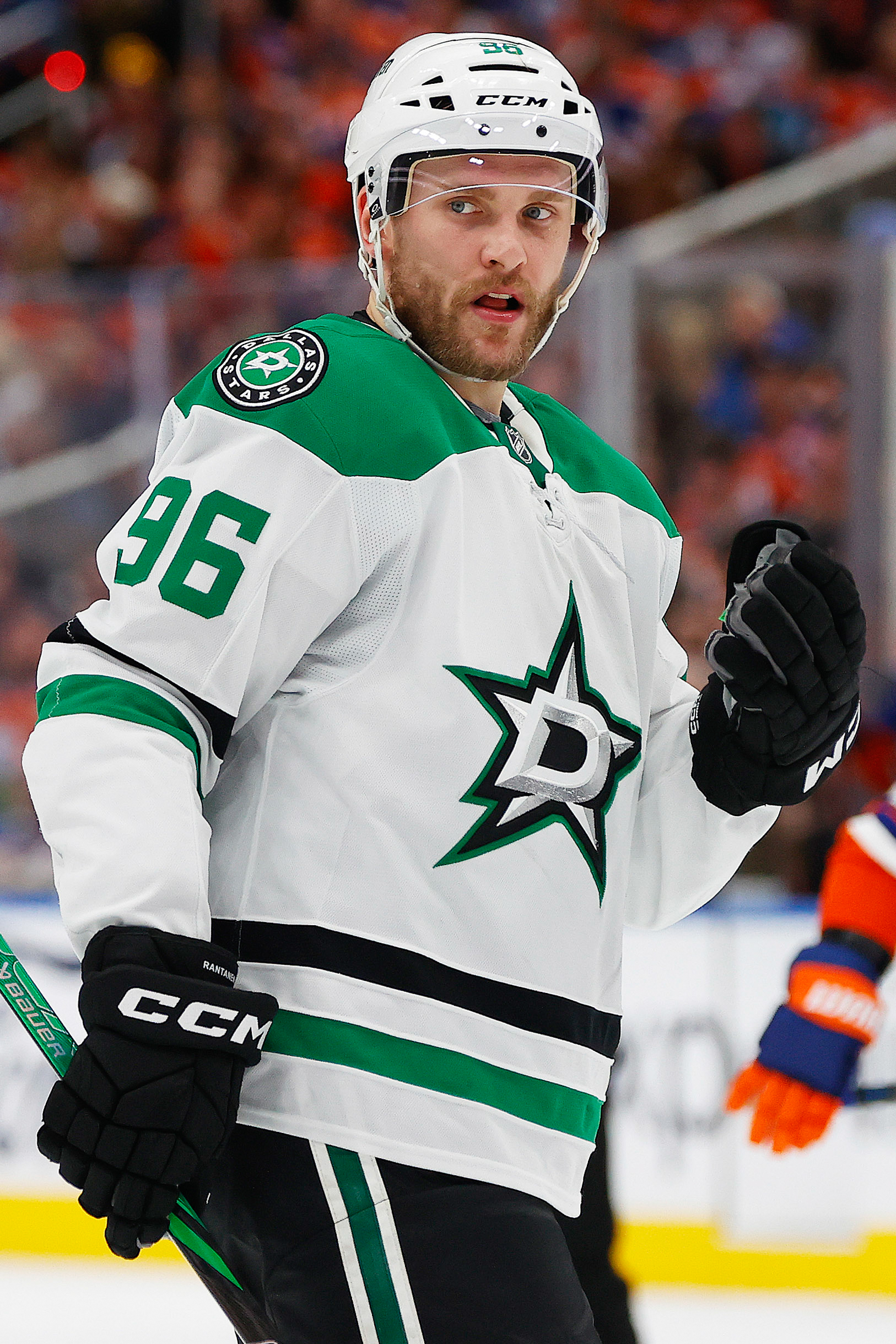 It’s hard to call Carolina a loser in the deal, given the haul that they got for Rantanen. Still, looking at their roster, they certainly lacked a gamebreaker in these playoffs and could have used Rantanen in the Conference Finals. Carolina fans will wonder what could have been had Rantanen stuck around. Still, Carolina probably did the right thing by recouping assets for Rantanen rather than letting him walk for nothing.
Dallas addressed other key areas at the Trade Deadline by acquiring forward Mikael Granlund and defenseman Cody Ceci from the San Jose Sharks for a first-round pick and a conditional third-round pick in 2025. Granlund provided some offense, but his skating was an issue at times against some of the quicker Edmonton Oilers players, and defensive issues have also been a problem. Granlund did have five goals and five assists in 18 games during the playoffs, but that is off the offensive pace he set in the regular season, and he has benefited from good deployment and a solid PDO.
Ceci, on the other hand, hasn’t been great, as his underlying numbers are arguably the worst of any of the Stars’ regulars. Ceci’s acquisition was a bit of a headscratcher at the time, but Dallas has used him heavily (probably too much) in the playoffs, playing him over 21 minutes a night. Ceci had three assists in 18 games, but to his credit, he had some of the most challenging assignments nightly, contributing to his poor analytics.
Ceci’s former team, the Edmonton Oilers, didn’t have the capabilities of making a big splash at the deadline. Still, they did make a handful of acquisitions that have solidified key positions in their march to the Stanley Cup Finals. The Oilers’ big moves were for forward Trent Frederic and defenseman Jake Walman.
Frederic was acquired to provide some sandpaper in the bottom six and chip in the occasional goal. It took a while for him to get going, thanks to a high ankle sprain, but he seemed to hit his stride in the second round against Vegas. Frederic hasn’t provided much offense, with just a goal and three assists in 16 playoff games, but he has been a physical threat anytime he’s on the ice, with 59 hits thus far. Frederic’s underlying numbers aren’t good, but he has been handed complex deployments and tough matchups as a member of the Oilers’ bottom six.
The Walman acquisition by Edmonton was a tidy piece of business, as the 29-year-old has helped stabilize the Oilers’ bottom pairing and has chipped in some offence as well. Walman has been given a very favourable deployment, which has allowed him to use his puck-moving ability and skating to contribute to Edmonton’s playoff success. Edmonton paid San Jose a steep price to acquire Walman, and while his results have been okay, it does feel like an overpay for what he brings.
The Florida Panthers were another team that was busy around the Trade Deadline, making a massive trade for defenseman Seth Jones on March 1st. The Panthers sent goaltender Spencer Knight and a conditional first-round pick in the 2026 NHL Draft for Jones, who also came to Florida along with a fourth-round pick in 2026. Jones was dramatically overpaid in Chicago at $9.5MM annually, but with retained salary, is at a $7MM cap hit with Florida, which is much more in line with his play. Jones has been great since coming over to Florida, eating up a ton of minutes and providing above-average play in almost every aspect of the game. Jones struggled at times with the speed of the game, but has been an overwhelmingly positive presence for the Panthers; his acquisition has given Florida a very formidable defensive core that has brought them to a second straight Stanley Cup Final.
Jones wasn’t the only splash that Panthers general manager Bill Zito made at the Trade Deadline, as he also acquired forward Brad Marchand from the Boston Bruins. Marchand has been everything the Panthers were hoping he could be and more, playing a pivotal role in the series against the Toronto Maple Leafs with three goals and five assists in seven games. Marchand’s acquisition cost Florida a conditional second-round pick in 2027 that has now become a first-rounder. Still, given his impact, Florida would likely pay it again if given the choice.
Lastly, we look at the moves the now-eliminated Carolina Hurricanes made at the Trade Deadline. As part of the Rantanen trade, Carolina was able to acquire forward Taylor Hall, who is no longer a Hart Trophy contender but remains a good player. The 33-year-old was the first overall pick in 2010 and had a decent offensive season this year with 18 goals and 24 assists in a bounce-back year after he was injured for most of the previous season. While Hall was a good acquisition for Carolina, it wasn’t enough to move the needle, and ultimately, their lack of meaningful additions cost them, as they didn’t have the horses necessary to get by the Panthers.
Outside of the trades involving Hall and Rantanen, the Hurricanes’ acquisition of Stankoven was a tidy little move that should pay dividends long term, as the 22-year-old was a steady point producer down the stretch with five goals and four assists in 19 games with Carolina. Despite being undersized, the Kamloops, British Columbia native also had a good playoff showing, with five goals and three assists in 15 games and should be a key contributor for the Hurricanes for a long time. His presence won’t lessen the sting of not being able to keep Rantanen in Carolina, but the Hurricanes didn’t walk away empty-handed and will have some other pieces of that trade in the fold very soon.
All that being said, the lack of a game-breaker badly hurt the Hurricanes, and they may look back on the move to trade Rantanen with a bit of regret, given that they lacked that player who could take over a game in the Florida series. Carolina continues to struggle to overcome the hump that is the Eastern Conference and probably should have been more aggressive at the Deadline given the state of their roster and their position in their competitive window.
Carolina made one other move for depth center Mark Jankowski. The 30-year-old finished the regular season strong with eight goals in his final 19 games but was used sparingly in the playoffs as he dressed in just seven games and had a single point. His move offered some depth, but it just wasn’t what Carolina needed to take down the formidable Panthers.
Image courtesy of Perry Nelson-Imagn Images.
Offseason Checklist: Tampa Bay Lightning
The offseason has arrived for all but two teams now with the playoffs nearing an end. Accordingly, it’s time to examine what they will need to accomplish over the coming months. Next up is a look at Tampa Bay.
The Lightning have been consistently strong for more than a decade now and this season was no exception with a solid third-place finish in the Eastern Conference. However, they were ousted in the first round of the playoffs for the third straight year. GM Julien BriseBois now has some work to do to reshape his roster but with very limited salary cap flexibility, their checklist is focused more on the back half of the roster.
Clear Sheary’s Contract
Finding cap space has long been an issue for the Lightning and today’s six-year, $14MM extension given to Yanni Gourde only further cements that although it also took the biggest to-do item off the original version of this list. Now, the team has less than $3.5MM in flexibility, per PuckPedia, the lowest amount of cap space of any team in the league. With multiple roster spots to fill and a likely desire to keep at least a little bit of flexibility for in-season roster movement or injury insurance, they don’t have a lot of wiggle room to work with.
One thing that BriseBois could try to do to create a bit of spending space revolves around Conor Sheary. Signed to a three-year, $6MM contract two years ago, that deal simply hasn’t worked out as planned. After scoring just four goals in 57 games in his first season with the Lightning, the 32-year-old cleared waivers and spent all but five games this year with AHL Syracuse. While he was better than a point per game player there, that’s not a great return on a $2MM AAV overall.
Sheary has one year left on his contract at that price tag and at this point, he feels like a speculative candidate to be sent back to the Crunch if he’s still on the roster come training camp. Doing that would clear $1.15MM off their books. When you consider that $775K of that (at a minimum) would need to be spent on a replacement player on the roster, that wouldn’t save them much. Meanwhile, a buyout would cost $1MM this season and $500K in 2026-27. Again, by the time you factor in a replacement player, the savings are minimal at best. Trading with retention doesn’t open up a lot of room either.
However, if they could find a way to clear the contract outright, that would free up much more money, even accounting for a minimum-salaried replacement player. Doing that would give the Lightning an extra $1.225MM in space. They’d still have the lowest cap space in the league but at least a little more flexibility. Of course, that would require parting with an asset on a team that’s not exactly flush with draft picks and prospects to get a team to take on that final year but with them being this limited cap-wise, it’s a move they’d be wise to make.
Find A Howard Trade
What a difference a few months can make sometimes. In the case of prospect Isaac Howard, the difference was quite substantial. A 2022 first-round pick, he didn’t get off to the best start to his college career but after transferring to Michigan State, things started looking up. And then he found an entirely new gear offensively this season, notching 26 goals and 26 assists in just 37 games, good for fifth overall in Division I scoring, earning him the Hobey Baker Award along the way. All season long, the expectation was that he’d wrap up his college career early and sign with the Lightning to play down the stretch and potentially in the playoffs.
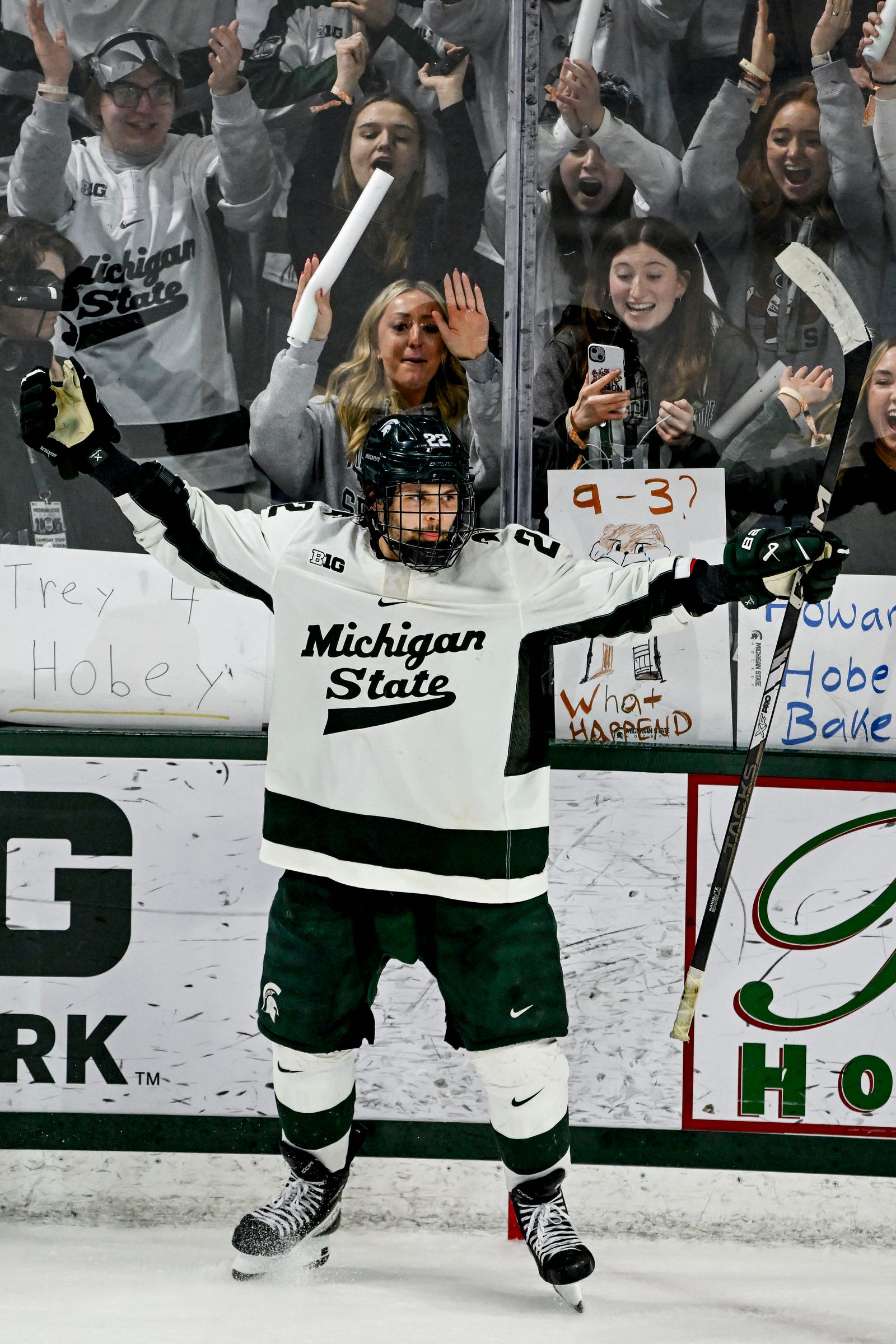 However, as his college season came to an end, there was no contract in place for Howard. Part of that was Tampa Bay’s cap situation as their deadline activity left it to the point where they’d only be able to sign him with a couple of days left in the season. Before it got to that point, he indicated he’d be returning for his senior year, a move that few saw coming. By the end of the playoffs, BriseBois all but confirmed that they won’t be able to sign Howard.
As a result, he instantly becomes Tampa Bay’s most prominent trade chip this offseason. They don’t necessarily have to move him as in theory, he could have a change of heart over the next year although that doesn’t seem likely at this point. They could also opt not to move him and accept the compensatory pick for not signing him, which would be the 31st pick of the second round in 2027 (63rd overall). But that doesn’t seem like a fair return for one of the top players in the NCAA, making the possibility of a trade more likely.
Assuming that the acquiring team wants to get him to reverse his commitment to return for his senior year, that means that finding a trade this offseason makes the most sense. The Lightning could go in any direction with a move – look for a piece that helps them now, a prospect closer to being NHL-ready that has plenty of team control, or even draft picks and unsigned prospects to keep or use as trade chips down the road. Whichever one they pick, it feels like that move should be coming relatively soon.
Add Defensive Depth
Considering the dearth of right-shot defense options available in free agency this summer, it feels like close to a foregone conclusion that Nick Perbix is going to price himself out of what Tampa Bay can afford to pay him unless he takes less than market value or BriseBois is able to open up some flexibility somewhere. That means at least one spot on the roster is up for grabs.
Internally, there are a couple of options for the Lightning. Maxwell Crozier has seen a bit of NHL action the last couple of years and had a strong showing with Syracuse this season and could be in line for a more permanent promotion. Alternatively, offseason signing Charle-Edouard D’Astous has had two strong years offensively overseas so it wouldn’t be surprising to see the 27-year-old get at least a look in training camp.
But that’s not a lot of depth to work with. At a minimum, they’ll want to bring in a couple of veterans for the Crunch with some NHL experience in case injuries arise. As things stand, both Derrick Pouliot and Steven Santini are set to become unrestricted free agents next month so they’ll need to be re-signed or replaced. But finding a blueliner or two willing to sign for the league minimum with a shot at battling for a seventh spot on the roster would be their best option.
Upgrade Bottom Six Depth
One thing the Lightning have had to do in recent years is sign several veteran forwards on minimum-salary contracts. It was borne out of necessity with their top-heavy spending and they did the best they could out of the players willing to take early deals at a $775K (or close) price tag. Zemgus Girgensons, Luke Glendening, and Cam Atkinson are recent examples of those. It’s likely they’ll try to get pending RFA Gage Goncalves signed in around that range as well.
While those players were all serviceable to varying degrees, there was a reason that Tampa Bay was often a two-line team with a third line that could chip in from time to time; the fourth line was largely there to try to play to a scoreless draw when they were on the ice. It’s an easier said than done idea but upgrading on that level of talent on the open market would certainly help the cause. In particular, finding some extra grit in one or two of those signings would probably be worthwhile.
BriseBois has tried to work early in free agency with these types of pickups. While it would be riskier, waiting until closer to training camp when the asking prices of some unsigned players might come down might be able to net them a better caliber of signing. It’s picking at the margins here but with most of the heavy lifting done already, working on the margins might be all that’s realistically left for Tampa Bay in the coming weeks.
Photo courtesy of Nick King/Lansing State Journal.
Offseason Checklist: Montreal Canadiens
The offseason has arrived for all but two teams now with the playoffs nearing an end. Accordingly, it’s time to examine what they will need to accomplish over the coming months. Next up is a look at Montreal.
After three straight seasons of being near the basement in the standings, the expectation was that the Canadiens would take a step forward in 2024-25. Instead, they may have taken more of a jump than expected as they ultimately secured the final playoff spot in the East before losing in five to Washington in the first round. Now, GM Kent Hughes has some work to do this summer to help his young group take another step forward next season or at least to keep them in the middle of the pack once more.
Move Price’s Contract
While it might seem odd to start this piece with a discussion of a player who hasn’t played since 2022, Carey Price has been making an impact on this group since then and his contract hasn’t helped things. He has been on LTIR for the last three years with a knee injury that he won’t be able to return from. The Canadiens have had to dip into using LTIR every season since then.
When the team wasn’t too worried about wins and losses as they went through the tougher early stages of their rebuild, this wasn’t too big of a deal. They had enough flexibility to recall players when needed and although there were bonus overage penalties, it didn’t matter much. But now they enter next season with the second-highest carryover penalty in the league at over $1.75MM per PuckPedia and it’s a number that could go higher for 2025-26 depending on bonuses reached.
If Montreal can offload Price’s contract to a team looking to just get over the spending floor as has happened in the past with long-term LTIR players, the Canadiens could go back to banking in-season cap space and eliminate the potential for a carryover penalty. It would also increase their regular spending room from around $8MM to $18MM, giving Hughes the ability to try to add a piece or two without having to worry about triggering going into LTIR once more.
But this is one of those files that needs to be figured out early and dealt with later. Price has a $5.5MM signing bonus due that teams are going to want the Canadiens to pay. But unlike most bonuses which are paid on July 1st, his is owed on September 1st. After that, he has a $2MM base salary that insurance will cover the bulk of, making a trade much more palatable at that time.
That said, in order to add when most of the free agent signings and trades are made, Montreal would need to know by then if they have a deal in place to help shape their player movement. Basically, they’ll be looking to reach an agreement on a deal in principle and then shelve it for at least two months. If a move is agreed on, that would make it one of the first things they do this offseason and likely their last at the same time.
Work On Hutson Extension
Last summer, Montreal worked quickly to get contract extensions done with two of its core players, signing winger Juraj Slafkovsky (eight years, $7.6MM AAV) and defenseman Kaiden Guhle (six years, $5.55MM AAV). In doing so, they kept their internal cap intact with both players signing for less than team captain Nick Suzuki ($7.875MM AAV). Accomplishing that with their extension-eligible core piece this summer will be trickier with defenseman Lane Hutson eligible for a new contract as of July 1st.
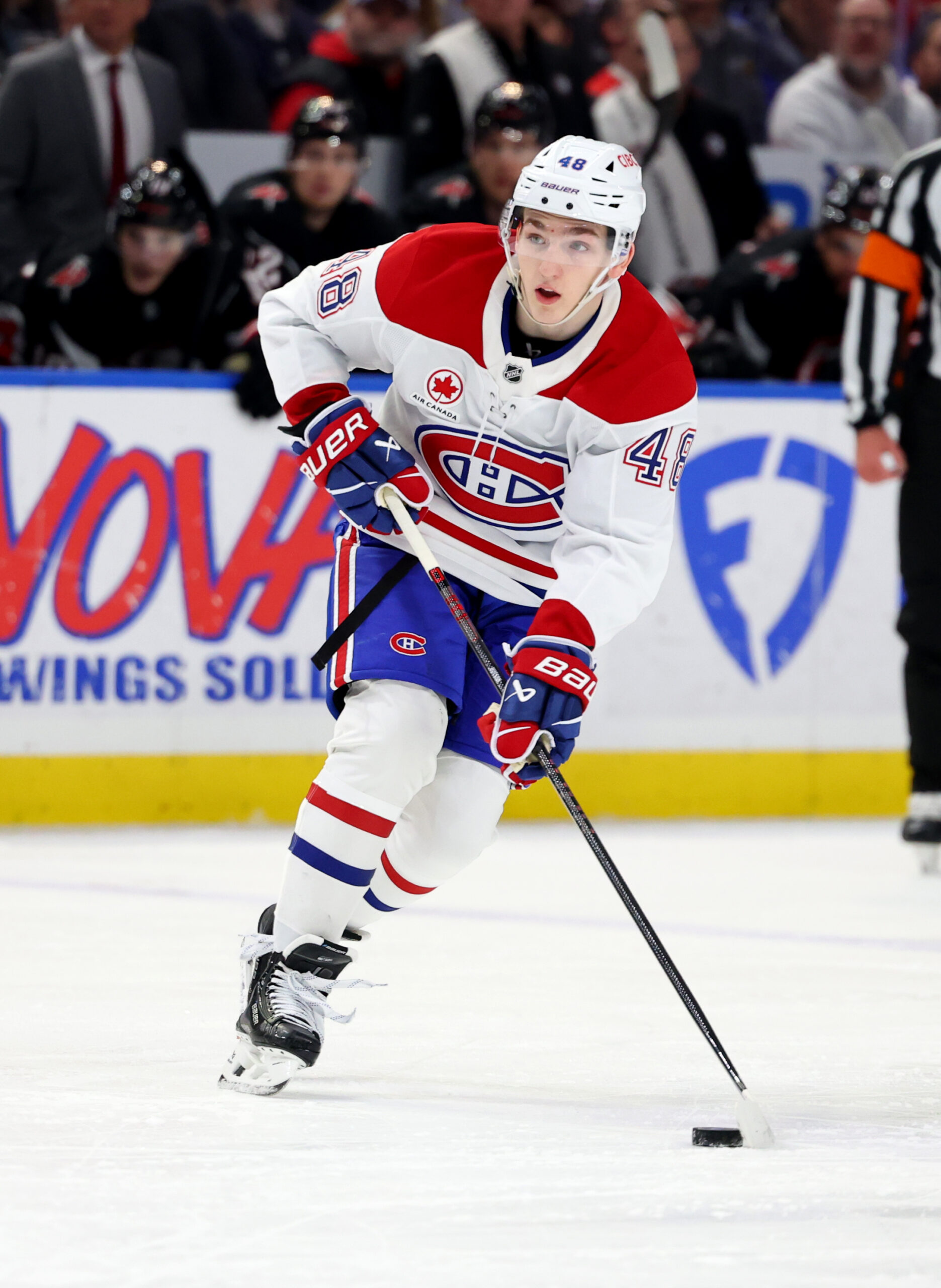 Hutson’s first full NHL season was certainly a strong one. He played in all 82 games and recorded six goals and 60 assists while logging a little under 23 minutes a night of ice time. With 66 points, he finished tied with Winnipeg’s Josh Morrissey for sixth in that category among blueliners league-wide. In assists, he was tied with Quinn Hughes for second, only behind Cale Makar. These are some of the top offensive blueliners in the league, players who received pretty substantial second contracts. Meanwhile, he also led all NHL rookies in points, three ahead of Matvei Michkov and Macklin Celebrini.
There are some recent comparables to work with here. Brock Faber (eight years, $8.5MM) and Owen Power (seven years, $8.35MM) come to mind while the second contracts to Makar (six years, $9MM) and Hughes (seven years, $7.85MM), while older, are probably worth noting as well. The cap hit percentage of those deals ranges from 8.9% to 11%. Knowing that the projected Upper Limit of the Salary Cap for 2026-27 is $104MM, that would approximate Hutson’s price tag between $9.256MM and $11.44MM.
Is that a price Montreal is willing to pay right now? Would they be better waiting and seeing how things go next season? It’s worth noting he won’t be eligible for an offer sheet which at least mitigates a bit of the risk of waiting. Or, is Hughes able to find a lower-cost price tag that both sides are comfortable with now?
Add Second Center
Finding a reliable second-line center has been an issue for Montreal for several years now, dating back to before the current management regime. And while Hughes has made a few attempts to solve that issue, none have managed to stick just yet.
First, Kirby Dach was brought in from Chicago with the hopes that a change of scenery could help him live up to his high draft billing. Instead, he has dealt with significant injuries in all three years, missing more games than he has played in. Alex Newhook was also acquired but he hasn’t been able to lock down a full-time spot down the middle yet and hasn’t produced enough to be a full-timer in the top six. They also had Sean Monahan for a stretch but used him as a trade chip, acquiring a first-round pick to take him on and then dealt him for a first-round pick the following season. While that was a tidy piece of business, it means that second pivot is still needed.
Internally, Jake Evans is more of a checker while prospects Oliver Kapanen and Owen Beck aren’t going to be ready to play in a top-six role next season, at least at the NHL level. And while they have hopes that Dach can bounce back, depending on a healthy and productive season shouldn’t be their preferred option at this point; they’d be wise to try to address this externally.
The free agent market has several veterans that could fill a short-term stopgap type of role, including Matt Duchene, Mikael Granlund, John Tavares, and Claude Giroux if he doesn’t re-sign with Ottawa. They’d undoubtedly inquire on Sam Bennett if he makes it to free agency as well. Failing that, Hughes will have to turn to trying to fill that spot via the trade route once again.
Add Veteran Right-Shot Defenseman
David Savard wasted little time ending any speculation about his future plans when he announced before the playoffs that he’d be retiring. That opens up one spot on Montreal’s back end to fill. Notably, his departure means that midseason acquisition Alexandre Carrier is the only right-shot defender on their roster at the moment. While teams can get away with having two instead of three, only having one is a little more difficult to navigate.
It’s worth noting that Montreal’s top two defensive prospects, David Reinbacher and Logan Mailloux, are both right-shot players. Mailloux saw a handful of NHL games this season while Reinbacher was injured for most of it but is playing a big role with AHL Laval in the playoffs. It’s possible that management envisions one of them filling in Savard’s role and leaving it at that.
However, that would mean going with just two defensemen above the age of 25 to start next season. That’s fine when you’re rebuilding but a lot riskier when you’re trying to push for a playoff spot. Accordingly, it wouldn’t be a bad idea to find a short-term veteran who could fill a similar role to Savard while also hedging against Mailloux and Reinbacher needing more development time. Ideally, that player would be a strong penalty killer as Savard logged more than three minutes per game shorthanded this season.
It’s not a great UFA class for right-shot, low-term veterans so this is also something they may want to look at the trade market for if they think one of Mailloux or Reinbacher will be ready soon. Alternatively, they can go for someone on a two-year or a three-year deal and shuffle things around if and when the youngsters are ready. Regardless of what route they take, adding at least a short-term stopgap on the right side of the back end is something they should be looking to do.
Photo courtesy of Timothy T. Ludwig-Imagn Images.
Free Agent Focus: Colorado Avalanche
Free agency is just over a month away, and teams are looking ahead to when it opens. There will be several impact players set to hit the open market in July, while many teams also have key restricted free agents to re-sign. We continue our look around the NHL with an overview of the free agent situation for the Colorado Avalanche.
Key Restricted Free Agents
D Sam Malinski – Malinski is Colorado’s only RFA to play considerable NHL time this season. It was his rookie year in the league, and Colorado opted to strap Malinski to the third-pair for nearly the whole year. He handled the role well, netting 15 points and a plus-eight in 76 games despite averaging just 16 minutes of ice time. He also ranked third in blocked shots, behind top defenders Cale Makar and Samuel Girard. That’s an impressive stat line for the young Malinski, and one that maintained his momentum after posting 10 points and a plus-three in 23 games last season. He’ll be a must-sign option for the Avalanche, even if it’s only to continue forward in a quaint role. Malinski should only come at the cost of a few years in term and a few million in salary.
D John Ludvig – Ludvig only appeared in eight NHL games this season, and his two assists and minus-four won’t be marks to remember. The rest of his season was spent in a top-four role with the AHL’s Colorado Eagles, where he posted 12 points and a plus-five in 31 regular season games – then stepped up with four points in nine postseason games. He’s a lumbering defender who supports all three lanes well enough. Those traits earned him 33 games on the Pittsburgh Penguins roster last season – but on an Avalanche team with a higher demand, it’s unclear exactly where Ludvig’s upside falls. Colorado will get a chance to declare their faith in him this summer, while also shoring up their left-defense depth at a cheap cost.
Other RFAs: F Sampo Ranta, F Matthew Stienburg, F Jean-Luc Foudy, F William Dufour, F Jason Polin, D Sergei Boikov, G Kevin Mandolese, G Trent Miner
Key Unrestricted Free Agents
F Brock Nelson – The Avalanche’s off-season could be based around their ability to re-sign veteran Brock Nelson. The team traded a king’s ransom for the 12-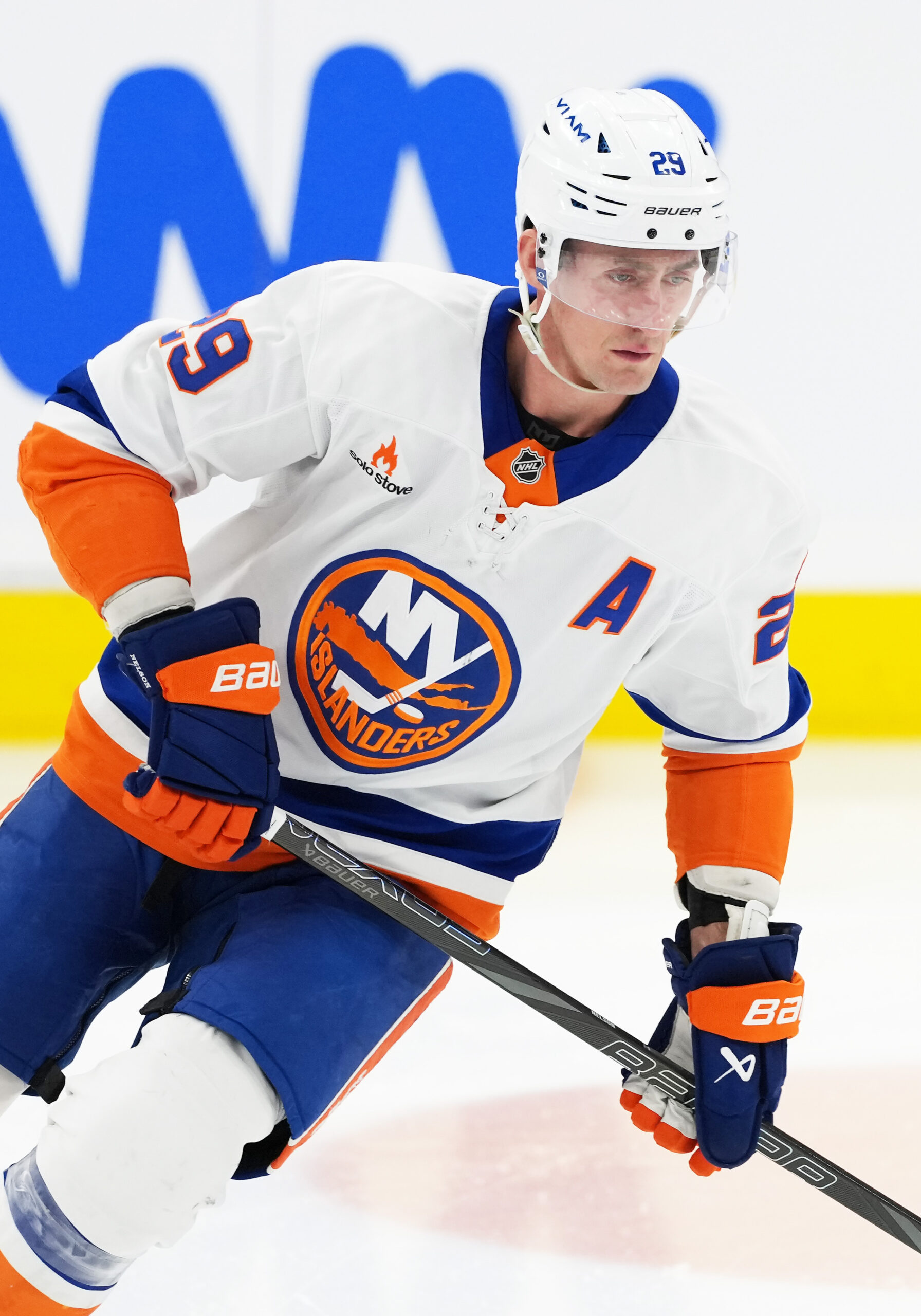 year pro at the Trade Deadline, and seemed to land a strong return when he scored 13 points in 19 regular season games. But Nelson managed just four assists in Colorado’s seven playoff games. He didn’t shine in the bright lights, and rumors in weeks since have swung both ways on his potential to re-sign. It seems mutual interest in staying with the Avalanche is growing, though it might cost the team the bulk of their remaining cap space. Nelson did finish the year with a stout 26 goals and 56 points in 80 games, and managed seasons above 30 goals and 60 points in each of the last three years. A full year in Colorado could bring out that high-end scoring once again, and make a lofty deal worth the price.
D Ryan Lindgren – Views were mixed when Lindgren came over from the New York Rangers at the Trade Deadline. He stepped up as another shutdown option near the bottom of Colorado’s depth chart, and fluctuated between as little as 16 minutes and as much as 23 minutes per game depending on game flow. But he finished his first stint in Colorado with just three points and a minus-one in 18 games. Lindgern did step up in the playoffs – with three points and a plus-five in seven games – but the sentiment on whether he should stick around could still swing either way. He’s a defense-first role player who can be trusted to block shots and throw hits. That’s a strong style to fold into the lineup – but too high of an asking price could lead to a split between Lindgren and the Avalanche this summer.
F Jonathan Drouin – Drouin has 30 goals and 93 points in 122 games with the Avalanche, spanning the last two seasons. That’s an 82-game average of 20 goals and 63 points, which would surpass any stat lines he’s posted so far. Drouin belongs in Colorado, and saw his production soar from 29 points to a career-high 56 points when he moved from the Canadiens to the Avalanche in 2023. But his season this year was marred by injury, holding Drouin to 37 points in 43 games. That’s still a productive year, and should be enough to earn a new deal – especially as Colorado looks to shore up their left-wing depth behind the uncertain Gabriel Landeskog.
F Jimmy Vesey – Colorado acquired Vesey and defender Ryan Lindgren from the New York Rangers at the Trade Deadline. Vesey quickly fell into the rut of healthy scratches in the Western Conference, and managed just two points in 10 games with the Avalanche before the end of the season. He wasn’t tapped at all in the playoffs, and posted minimal stats across the board in the minutes he did play. Vesey finished the year with a combined eight points in 43 games, far below the 26 points he scored in 80 games last year. He’s fallen into the hole of fourth-line forward – but could still have a glimmer of scoring upside. That could be enough to entice a team on the open market, but it doesn’t seem that team will be Colorado.
F Joel Kiviranta – Kiviranta received the most complete NHL role of his career this season. Despite tons of flux in Colorado’s top-end, their bottom-six wasn’t disturbed all too much – and Kiviranta was left to perform as the scorer on the team’s fourth-line. He fit the role well, netting 16 goals and 23 points in 79 games – all career-highs – despite averaging third-line minutes and no special teams. But he also shot at a 19-percent success rate – a drastic spike after his last three seasons fell below 10-percent. It’s clear by now that Kiviranta is a shooting-dependent scorer who can’t be tasked with much role. With the first double-digit goal-scoring of his career, he could convince the Avalanche to maintain him in their bottom-six on a cheap deal – but they run the risk of ending up with a forward they’ll soon need to swap out.
D Erik Johnson – Johnson learned that there’s no place like home this season. After three years in the Eastern Conference – one in Buffalo and two in Philadelphia – Johnson was eagerly dealt back to the Avalanche at the Trade Deadline. The move allowed the veteran to pursue one more Stanley Cup run with the team he’s spent 14 years with – but their hopes fell short at the hands of the Dallas Stars in the second round. Now, it’s the offseason, and Johnson must face the question of retirement after contributing just five points in 36 total games this season. He’s freshly 37 years old and seems to have a bright future in NHL coaching or management at the ready. This could be the summer that the 2006 first-overall selection opts to hang them up. If not, he’ll likely return on a league-minimum deal and continue to handle shutdown roles in Colorado.
Other UFAs: D Tucker Poolman, F Chris Wagner, F TJ Tynan, F Matthew Phillips, F Jere Innala, D Calle Rosen, D Jack Ahcan, G Adam Scheel (Group-6 UFA)
Projected Cap Space
Colorado is entering the off-season with just $8.7MM in projected cap space. That is peanuts in the NHL, and could be eaten up very quick by the mix of Malinski, Lindgren, and Drouin re-signing. Colorado could also opt to spent the bulk of it on locking down Nelson, though they’d be left at an impasse with many of their remaining free agents. Pending a major cap-clearing trade, Colorado is in store for a summer of budgeting – though a few lucrative signings is all they need to return for another strong season.
Photo courtesy of Nick Turchiaro-Imagn Images. Contract information courtesy of PuckPedia.
PHR Mailbag: Avalanche, Devils, Marner, Canadiens, Flyers, Offseason
Topics in this edition of the PHR Mailbag include an assessment of the Avalanche, several questions about the Canadiens, and much more. If your question doesn’t appear here, check back in last weekend’s column while we have one more coming from our most recent call for questions.
Pearlo: Do we have a Colorado team spiraling towards a rebuild? No draft picks in first three rounds of the next draft, a very poor prospect pool, a very inconsistent Necas and a questionably effective Landeskog with no second line capable center in their top six as well as a fair top off after Girard with their defense with only $8MM in cap space to fill holes. Seems to me they are skating on pretty thin ice. What say you?
It’s safe to say you’re not in the glass-full camp. There will come a time when the Avs need to flip the switch and think about the future. I don’t think they’re there yet. After all, they weren’t that far off getting through Dallas in the opening round in a matchup that wouldn’t have happened had it not been for a playoff format that is starting to lose its luster, no matter what the league wants to say.
This is a team that still has one of the top forwards in the league in Nathan MacKinnon. They have one of the top blueliners in Cale Makar. Those are two premier building blocks signed for at least the next two years; Makar will need a new contract in 2027 (and, barring injury, that will undoubtedly be setting a new NHL record for defensemen at that time). When you have those pieces in place, it’s hard to say it’s time to take a step back even though your correct assessment of their pick and prospect cupboard suggests it’s an option that should be considered.
I expect Martin Necas will be better next season. He’s going to have a lot to play for and a full training camp should help after being brought in midseason. He won’t produce at the same level as Mikko Rantanen but I think he can produce like a top-liner. On defense, I wouldn’t be surprised if GM Chris MacFarland looks into moving one of Samuel Girard or Josh Manson which could allow the back end to be reshaped a bit and add some cap space potentially.
A lot is going to hinge on if they can address the second center spot. Whether that’s re-signing Brock Nelson, finding someone externally, or even giving Necas an extended look there, filling that position would really solidify them having two strong scoring lines. Even with all the question marks (and I’d put goaltending in there as well), that should be more than enough for them to safely be a playoff team. There will come a time to rebuild. I don’t think that’s coming for a while yet though.
SpeakofTheDevils: What does a Devils dream offseason look like? Trades? Free Agency? Etc.
First, getting Luke Hughes signed to a long-term deal. I know the bridge pact would make things a lot easier for GM Tom Fitzgerald in terms of utilizing cap space but if the team feels he’s the high-end defender it looks like he can be, that’s someone you sign now before it gets a whole lot more expensive after a bridge deal.
I wrestled with putting this in their Offseason Checklist earlier this week but finding a way to offload at least most of Ondrej Palat’s contract would go a long way toward giving them some cap space. I think they’re at a spot where trading with 50% retention is preferable to a buyout but the latter shouldn’t be ruled out. Palat’s a serviceable player but that’s one spot they can upgrade.
They need to improve on their third center after a tough year from Erik Haula. They were believed to be looking for that leading into the trade deadline but they might be able to get that in free agency. They also could use a fourth-line pivot.
Adding a top-six winger would also be a big help. For them to barely crack the top 20 in goals scored with the roster they have is a problem. They’re better than that and a key addition should put them back in the top half. In an ideal world, they land one of the better wingers available.
On defense, I don’t want to say they have an embarrassment of riches but they have a lot of depth and two promising youngsters in the pipeline in Simon Nemec and Seamus Casey. Can one of those – maybe Jonas Siegenthaler – be packaged with someone like Haula to add a $6MM or so piece to further add on the wing?
And while we’re at it, a veteran goalie that’s a bit more reliable than Nico Daws would be nice too.
I’m sure you were hoping for some names but with how long that list is and their cap situation (barely $12MM in space per PuckPedia), they’re not going to get to all of those without some other moves being made first and I’d simply be guessing on those which doesn’t add much value to the discussion. Realistically, if they got half or more of these done, it would be a solid offseason. The dream one might have to wait at least one more year.
Unclemike1526: Since my other question basically was answered, would you please tell me if you’ve ever read anywhere that Mitch Marner won’t play for a rebuilding club?
If it makes you feel any better, the only assistant coach in Chicago I’d have predicted correctly was Anders Sorensen. Keeping him around would be a good reward for coming up and struggling through the rest of this season so I felt confident about that. I’d have been hypothesizing Jeff Blashill going after some assistants he had with Detroit had that situation not largely been finalized by last weekend.
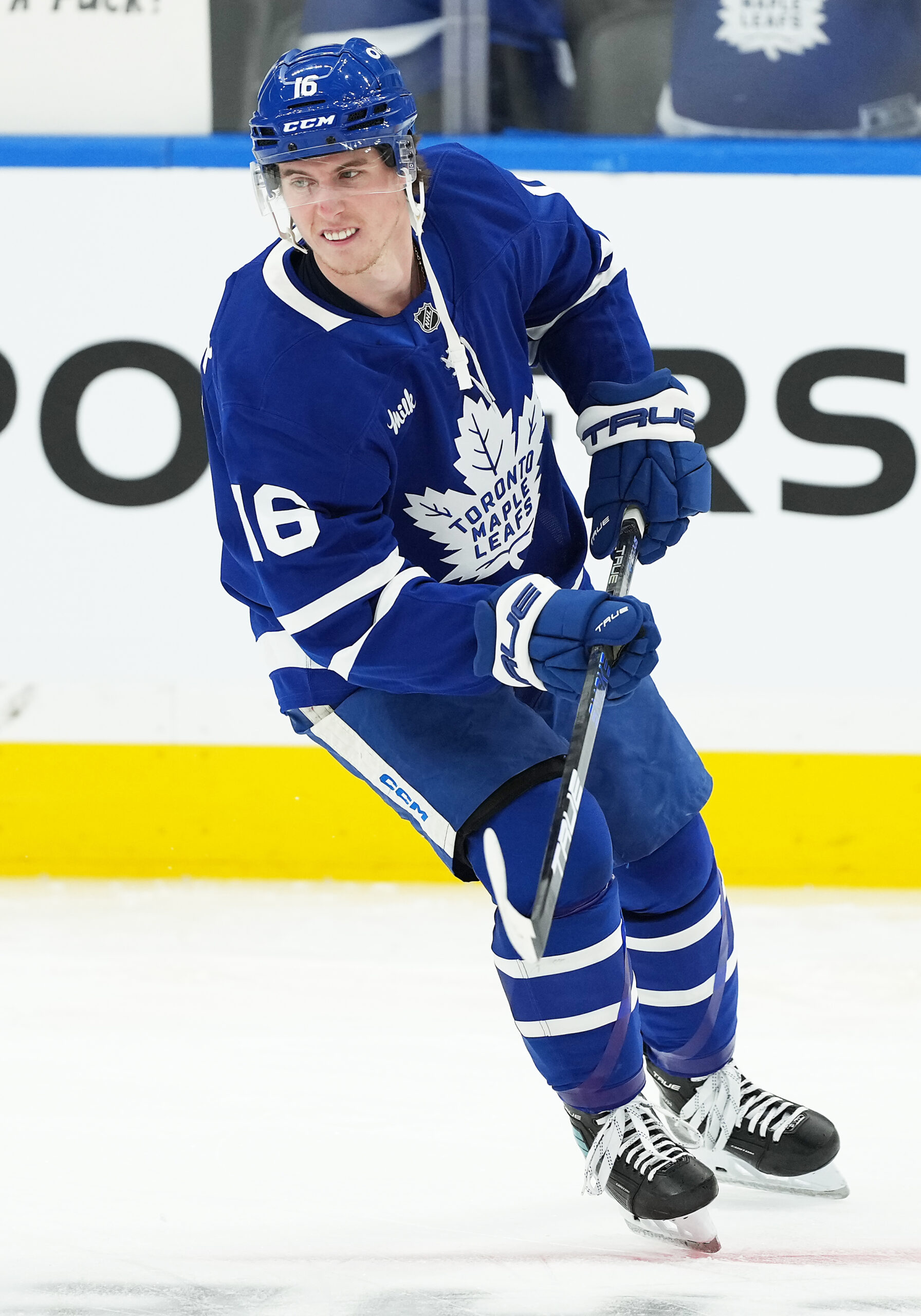 As for Marner, I’ve not seen anything credible that says he wouldn’t play for a rebuilding club. At this point, it feels like his intention is going to be that he’s going to go to the open market and see what’s out there. If you’re taking that approach, you’re probably not going to rule out a bunch of options off the bat by saying he won’t go to a rebuilding club.
What is Marner’s priority? Is it to go to a contender? Not a lot of those have the type of money that he’ll be commanding. Beyond re-signing with Toronto, Carolina would and, well, that’s about it. Vegas is being suggested as a speculative link but that would require a lot of money being moved out first although their penchant for big swings means it can’t be ruled out.
But if his priority is top dollar, it might come from a non-contender. Chicago should be aiming higher this summer. Utah has an owner willing to spend, a team on the rise, and a lot of cap space. Anaheim has a promising young core and the purse strings have been loosened a bit. Columbus nearly made the playoffs with their group and might want to swing big as well. There’s a compelling case to be made for any of those teams.
In a perfect world, Marner, or any other top free agent really, would get his cake and eat it too by finding a legitimate contender that has a lot of cap space. He’ll have to figure out what level of importance to place on either of those options. He has another month to do so before anything probably truly gets ruled out.
frozenaquatic: The NHL has about 10 Kershaws through history. Marner, Matthews, Panarin, Hellebuyck now. Historically, Yashin, Rick Nash, Todd Bertuzzi, Joe Thornton — even Marcel Dionne — were known to disappear come May. Stammer was accused of being a regular-season merchant for a while, but busted the reputation during the Covid Cup Dynasty. What do you think it takes to coach a guy to play with more intensity, take hits, block shots, not make east-west passes, go to the net, and find shooting lanes — to do the things necessary to play good playoff hockey? Who would even want Marner at $12 – 14 million if he has this reputation?
I don’t think there’s a coach out there who’s going to drastically change Marner’s style of play. Over 700 games into his career (regular season and playoffs), he is who he is at this point. If there wasn’t a material change under a coach with a tougher reputation in Craig Berube, I don’t think there’s necessarily a coach out there who is going to make him change the way he plays to do the things you listed on a full-time basis.
But what Marner is at this stage of his career is still a really good player. He’s a premier playmaker, is pretty consistent offensively year-to-year, and his defensive game often goes under the radar. There’s a reason he’s being projected to sign a record-breaking contract and that’s because of all of the positives he brings to the table. The playoff performance doesn’t help his cause but it doesn’t materially cripple his value either.
As for who would want him? The list of who wouldn’t is probably longer than the list of who would. I expect any team that has that much money to at least kick the tires with probably six to eight teams making him their top target. Players of his skill level are rarely available ‘for free’ on the open market. His playoff reputation won’t be scaring many teams off. Those teams’ coaches will be saying that they can make it work with Marner being exactly who he is.
Jaysen: Let’s say every player is available. What are your top 3 targets for 2C position if you are Kent Hughes? And what do you think is the value of Logan Mailloux in a trade? Not really overly impressed with him but I do know that defensemen take longer to develop.
Finally, Fowler seems like the real deal. I expect Dobes to back up Montembeault this year but next year? If Fowler develops the way he is supposed to, what do you do? Trade Dobes? Or do you go for the big decision and trade Montembeault do let Dobes and Fowler tend the twine??
The qualifier that everyone is available makes this a little unrealistic but I’ll play along and give you a couple more than three. Anaheim’s Mason McTavish fits the age of Montreal’s core group and feels like someone they’d acquire and then sign long-term. I don’t see the Ducks moving him though. I’d throw Quinton Byfield (Los Angeles) and Matty Beniers (Seattle) in there as well but again, I don’t see them being available. Maybe Barrett Hayton in Utah if they wound up taking a big swing at adding a center in free agency but that’s from a guarantee. If Florida re-signs Sam Bennett and Aaron Ekblad and makes Anton Lundell available, he’d be on the list too but that’s three ifs. The key elements are they’re young, have upside, and several years of team control or contract remaining. But there’s a reason they’re so hard to come by.
Mailloux is a hard player to evaluate. He’s still very raw and underdeveloped after his OHL career consisted of just 75 games or barely a single season so he’s behind on the development curve, so to speak. Offensively, he can probably play at the NHL level now. Defensively, he has shown flashes of being NHL-level there but at other times, he has struggled. That’s not uncommon for young blueliners as you note but that type of inconsistency will give some teams pause.
As a young, right-shot blueliner with enough raw skills to play in the top four, there’s a lot to like. But with how things have gone to this point, there will be some who shy away or come in low with offers knowing there’s some risk in acquiring him. Other teams will probably feel that their coaches can get those fundamentals in place more frequently, making him a top-four option. His trade value revolves around how he’s perceived. If it’s a team that is hesitant, they’re probably going no higher than a second-round pick. If it’s the latter category, a first-round value isn’t off the table. I don’t think Mailloux is the centerpiece of a big trade this summer but if they find a team that believes in the upside, he could be a key component of one.
Goalie coaches have said in the past that they generally want a goalie to get at least 100 starts in the AHL. I’ve seen some say 150. Jacob Fowler is at all of eight at the moment. Accordingly, I don’t think he’s even in the equation for full-time NHL duty for at least two more years at which time Sam Montembeault’s deal is up. To be honest, I’m not even fully certain that Jakub Dobes is the full-time backup in Montreal next season as he’s only at 65 AHL games. I could see Montreal signing a veteran third-stringer and then calling that goalie up periodically to give Dobes some games in Laval and a higher workload than he’d get as the permanent backup in Montreal. If all goes well, they’ll have to make room for Fowler eventually but they’re probably not giving that serious thought for another 24 months or so.
Free Agent Focus: Carolina Hurricanes
Free agency is just over a month away, and teams are looking ahead to when it opens. There will be several impact players set to hit the open market in July, while many teams also have key restricted free agents to re-sign. We continue our look around the NHL with an overview of the free agent situation for the Hurricanes.
Key Restricted Free Agents
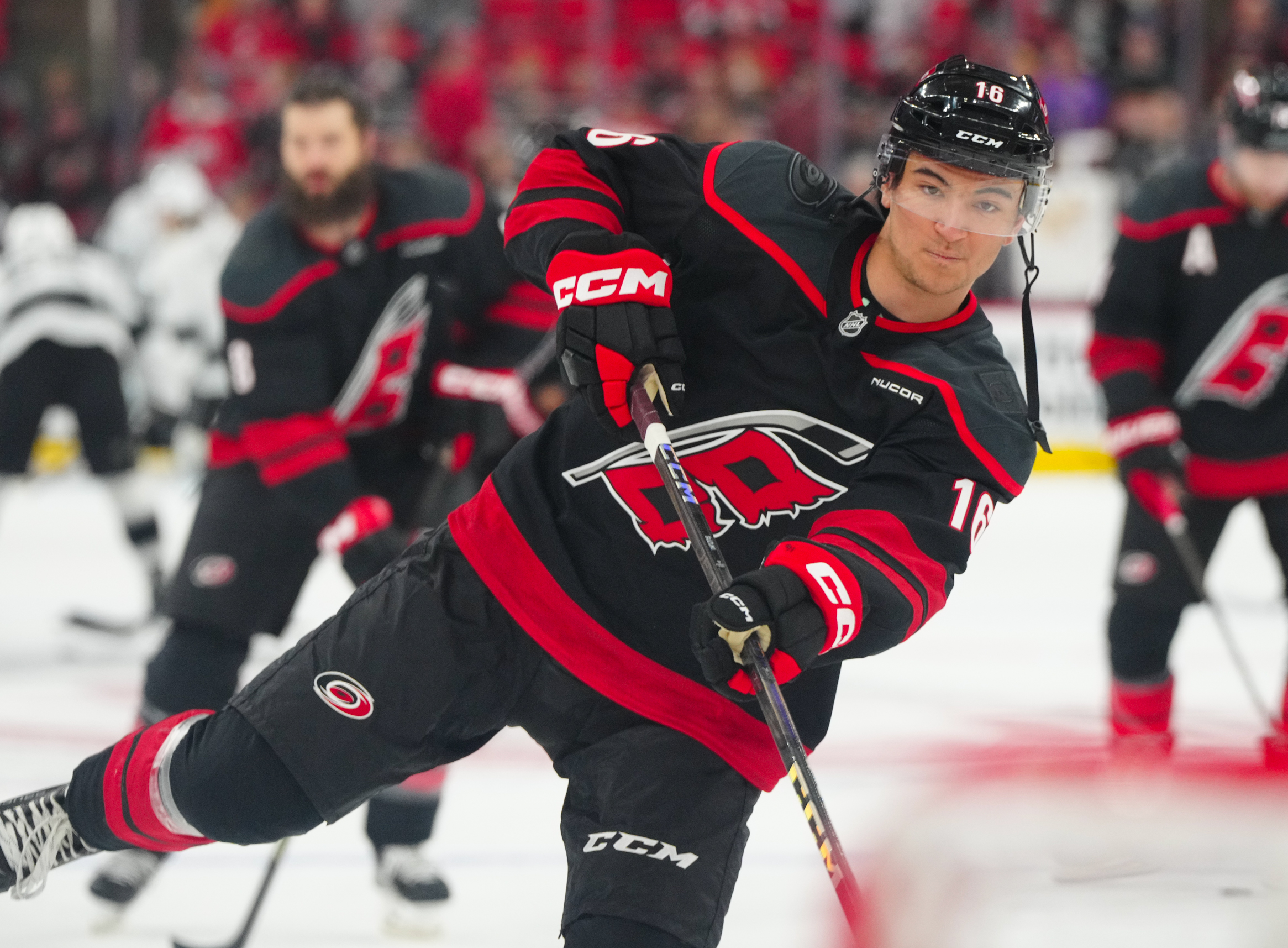 F Ryan Suzuki – The Hurricanes are a rare bird this summer. After needing to deal with high-profile RFAs in the 2024 offseason in Seth Jarvis and Martin Nečas, Carolina didn’t even have a single pending RFA on the active roster to end the season. We’ll look at the most intriguing non-roster RFA at each position instead, starting with Suzuki. The 2019 first-round pick needed to have a big 2024-25 campaign to maintain a role in the organization after some underwhelming AHL performance over the last few years, and he delivered. The 24-year-old recorded a career-high 59 points (12 G, 47 A) in 69 games for the Chicago Wolves, leading the club in assists and points. Suzuki landed his NHL debut amid that surge, recording a plus-one rating but no points in a pair of outings in January and February. He’ll likely just end up accepting his $813,750 qualifying offer, but it was uncertain whether he’d secure one at all when looking at his track record a season ago.
D Ty Smith – The 2021 All-Rookie defenseman did log some NHL time for Carolina this year, posting a goal and an assist in eight games as a frequent call-up option from the Wolves. It was his first NHL action since January 2023, as the 2018 first-round pick has failed to hold onto an everyday role after aggressively sliding down the Devils’ depth chart following his promising first-year showing four years ago. He did manage 28 points and a plus-four rating on a defensively challenged AHL Chicago team in 36 games, though. While that may not be enough to secure him a qualifying offer from a Hurricanes organization with brighter defense prospects to insert into next season’s lineup, it could be enough to convince an NHL team in need of an offensive rearguard to give him a more extended look next fall.
G Yaniv Perets – A 2023 NCAA national championship with Quinnipiac, Perets hits RFA status following his second professional season. The 25-year-old played mostly in the ECHL with the Bloomington Bison but was exceptional there, recording a .921 SV%, 2.59 GAA, and three shutouts with a 12-12-1 record. That was a huge step up over last year’s .889 SV% in the ECHL and could be enough to earn him a qualifying offer, although Carolina already has two young minor-league goalies under contract for 2025-26 and might prefer a more veteran option to complement the depth chart as a No. 3 option rather than using a contract slot on Perets.
Other RFAs: F Skyler Brind’Amour, F Noel Gunler, D Domenick Fensore, D Anttoni Honka, D Ronan Seeley
Key Unrestricted Free Agents
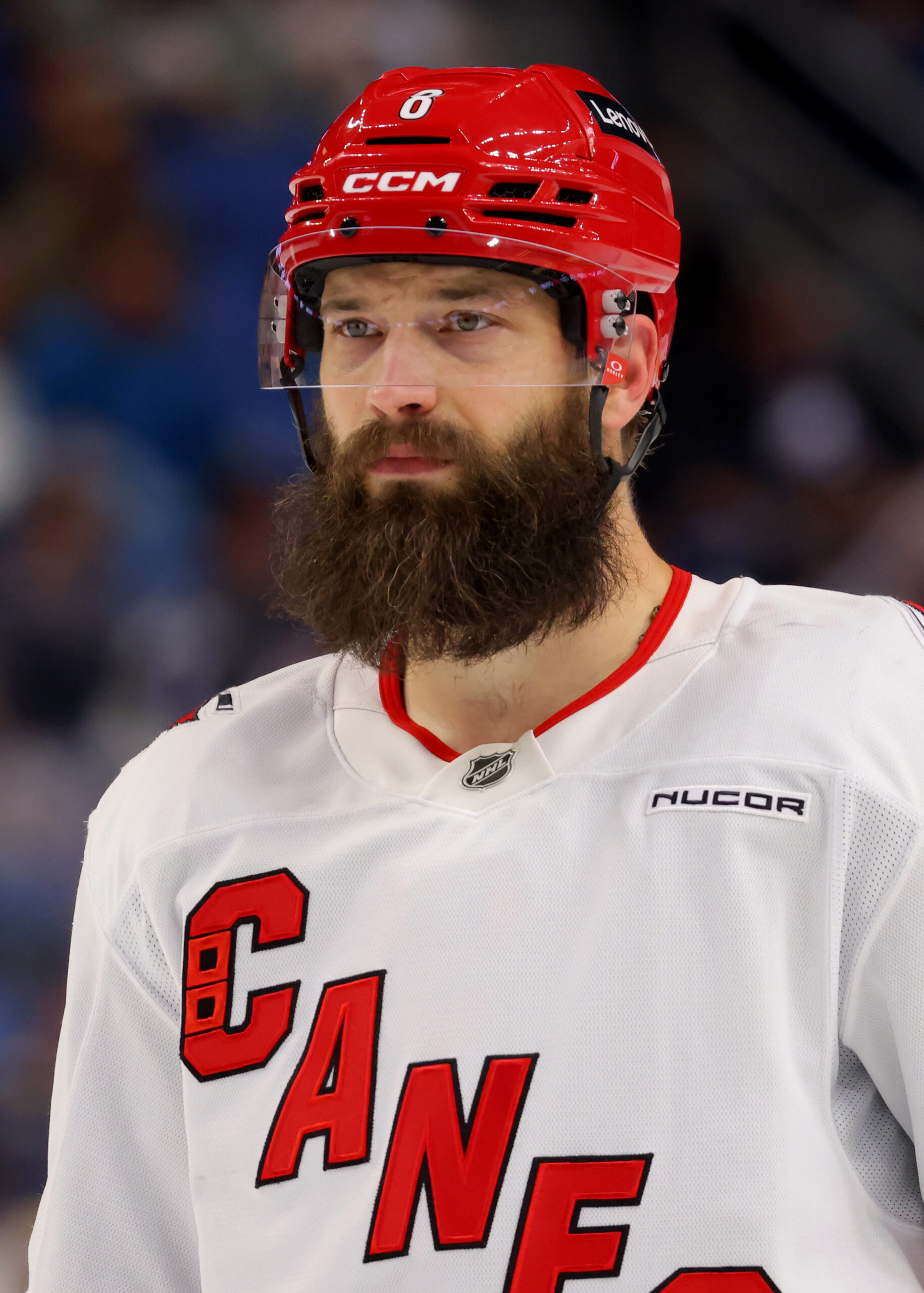 D Brent Burns – Burns, 40, finally got caught by Father Time in 2024-25. While he remained in a top-pairing role alongside Jaccob Slavin, his offensive production took a sizable hit compared to the up-and-down point totals he’d posted over the last few years. His 29 points in 82 games were the fourth-worst points per game pace of his 21-year career and his lowest since his first three years in the NHL. His 20:57 average time on ice was also its lowest since then, not including the two years he primarily played right wing with the Sharks. Once a physical force, he wasn’t nearly as involved along the wall or stepping up against forwards as he once was. Burns had just 11 hits all year. It wouldn’t be surprising to see Carolina let Burns walk and deploy younger righty Scott Morrow in his role next season. If he extends his career in Carolina or elsewhere, he’s looking at a one-year deal at likely no more than half of his previous $8MM cap hit.
D Dmitry Orlov – Orlov hasn’t been the best fit with the Canes after signing a two-year, $15.5MM deal in free agency in 2023. He was the top prize of that year’s weak UFA class, but the lefty got thrust into sheltered minutes last year on the left side behind Slavin and Brady Skjei, averaging just 17:19 per game after seeing over 22 minutes per night the year prior. Orlov got increased deployment this year after Skjei left in free agency, logging 20 minutes per game and posting 28 points with a +16 rating in 76 appearances. He remains an extremely serviceable top-four piece with historically strong possession impacts, but the 33-year-old will almost surely hit the open market with the higher-upside Alexander Nikishin set to replace his role in 2025-26. While Orlov’s poor postseason showing may sour some teams on the open market, he again benefits from a weaker market and should again land north of $5MM per season on a short-term deal.
F Jack Roslovic – Roslovic was a pleasant surprise for the Canes, who picked him up for cheap last summer to help soften the blow of losing multiple scoring forwards in free agency. The 28-year-old rewarded their $2.8MM investment by tying his career-high 22 goals, totaling 39 points in 81 games to sit sixth on the Canes in scoring. He can play both center and wing, a valuable factor for a Hurricanes team that’s thin down the middle. It would be surprising not to see them try to retain his services before he hits the open market on July 1, but it’ll likely take something in the $4MM range on a multi-year commitment to help dissuade other offers.
F Eric Robinson – Robinson, 30 next month, also punched far above his weight class offensively for what the Canes paid for him last summer ($950K) to help add some bottom-six depth. The longtime Blue Jackets winger answered the bell with a 14-18–32 scoring line in 82 games, averaging 12:16 per game while placing fourth on the club with 123 hits. He’s also presumably someone the club wants to keep around. Will they be willing to triple his salary to do so?
F Tyson Jost – 2024-25 was an important campaign for Jost, who re-established himself as a fine fourth-line/press box option after spending a significant chunk of last season in the AHL. He still saw some brief minor-league assignments this year but injuries paved the way for him to make 39 appearances, scoring nine points and a plus-two rating while averaging 10:22 per game. He had a stellar 60.3% share of shot attempts at even strength, and it stands to reason both parties could be interested in extending his stay in Raleigh as a 12th/13th forward.
Other UFAs: F Jesper Fast, F Juha Jaaska, D Joakim Ryan, D Riley Stillman, G Spencer Martin, G Dustin Tokarski
Projected Cap Space
After dealing with a cap crunch last summer, general manager Eric Tulsky will have much more flexibility in his second offseason at the helm. Burns’ and Orlov’s deals expiring, plus young players on entry-level deals ready to step into their roles, means they can be among the top players in free agency with $28.4MM in space. They’ll have the flexibility to retain whoever they want from the list above, plus pursue some of the top-notch prizes available on the open market.
Image courtesy of James Guillory-Imagn Images (Suzuki) and Timothy T. Ludwig-Imagn Images (Burns). Contract info courtesy of PuckPedia.
Free Agent Focus: Calgary Flames
Free agency is just over a month away, and teams are looking ahead to when it opens. There will be several impact players set to hit the open market in July, while many teams also have key restricted free agents to re-sign. We start our look around the NHL with an overview of the free agent situation for the Calgary Flames.
Key Restricted Free Agents
F Connor Zary – With Matthew Coronato signed to a six-year extension, the Flames will enter the off-season with two free agents demanding particularly close attention. The first is young center Connor Zary, who caught a strong wind with 14 goals, 34 points, and a plus-12 in 63 games last season. He seemed on track to top those numbers this year – netting 13 goals and 27 points in 54 games – but routine injuries forced Zary to miss most of January and shut down for the season before the end of March. He had three points in his final five games of the year, and was receiving upwards of 22 minutes of ice time each night. Those are lofty totals for a player who has paced for 40 points in back-to-back seasons. It’s clear that Calgary sees a future top-six center in Zary, but without reaching 70 games in a single NHL season, his upside is hard to project. He’ll likely be a candidate for a bridge deal this summer, and hopefully a much larger deal after a few healthy seasons.
D Kevin Bahl – Joining Zary at the top of Calgary’s list is defender Kevin Bahl, who the Flames acquired in their shipping of Jacob Markstrom to the New Jersey Devils last summer. Bahl was a revelation for a gutted blue-line, that lost the likes of Noah Hanifin, Chris Tanev, and Nikita Zadorov last season alone. The 24-year-old Bahl quickly took to playing north of 20-minutes a night and posted a career-high 20 points in 73 games this season. He’s 6-foot-6 and looked plenty comfortable playing opposite of Calgary’s top right-defenders, like MacKenzie Weegar and Rasmus Andersson. Calgary doesn’t have much in the way of competition for Bahl’s role as the top left-defense. Unless that changes with a big signing this summer, it’d be hard to think Bahl won’t land a deal that will carry him into his 30s.
F Morgan Frost – Frost is another trade acquisition who’s matched the bill in Calgary. He was acquired mid-season alongside Joel Farabee, in a deal that sent Andrei Kuzmenko and Jakob Pelletier the other way. Frost quickly stepped into a middle-six center role with the Flames, but found his way into boosted minutes when Zary fell to injury. The results were simply fine – 12 points and a minus-six in 32 games, but never any egregious moments of poor play. Frost combined for 37 points in 81 games this season, just shy of the 41 points he scored last year; and the career-high 46 points he managed in 2022-23. He has tepid upside at the age of 26, but could be a reasonably-priced option as Calgary looks to build out their center depth. Given his mid-season move, Frost seems to be a strong candidate to re-sign.
F Adam Klapka – Klapka played in the most NHL games of his career this season when he made 31 appearances in Calgary’s bottom-six. He performed alright in the role – netting 10 points, 29 penalty minutes, and a minus-three. He also confidently led the Flames in hits-per-60, recording a whopping 108 hits despite averaging just 9:39 in ice time each game. His 21.65 hits-per-60 is over five hits more than the 16.14 hits-per-60 averaged by Martin Pospisil in second place. Simply put, hard hitting, 6-foot-8 wingers don’t grow on trees. Even in his modest role, Klapka has emerged as a legitimate piece for an undrafted player. He should continue to offer Calgary the services of an imposing forward, and could even have scoring upside ahead – evidence by his 26 points in 33 AHL games this year. This should be a cheap and promising re-signing for the Flames.
F Rory Kerins – Flames fans kicked down doors to try and earn Kerins a hardy NHL chance this season. The 23-year-old centerman led the AHL’s Calgary Wranglers in scoring for much of the year, and finished the season with a whopping 33 goals and 61 points in 63 games. He continued to perform in his brief view of the NHL, recording four assists and a plus-three in what were the first five games of his NHL career. After such a red-hot season, Kerins seems like a strong bet to make the Flames’ roster out of training camp next season – even if it’d require some additional padding to house his small frame. Kerins isn’t at the point of a hefty contract yet, but could earn good money and a few years to prove he can continue his hot play into the NHL.
Other RFAs: F Eetu Tuulola, F Sam Morton, D Carl-Johan Lerby, D Nikita Okhotyuk, D Yan Kuznetsov, D Jeremie Poirier, G Waltteri Ignatjew, G Connor Murphy
Key Unrestricted Free Agents
F Anthony Mantha – Mantha suffered an ACL injury on November 5th, less than one month into the regular season. The injury immediately ended his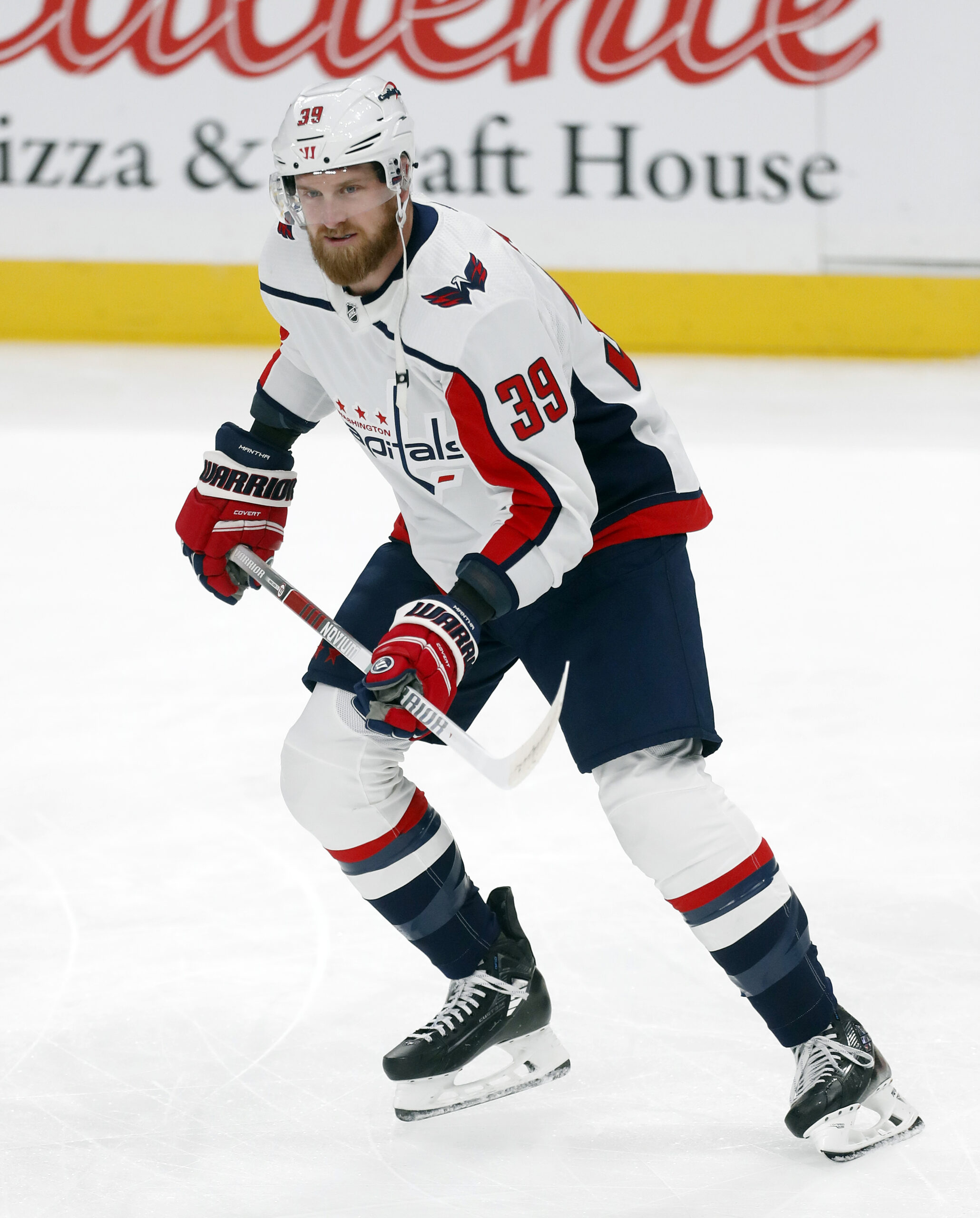 season, cutting things short after he posted an impressive seven points and plus-six in the first 13 games of the year. Mantha continued to perform into his age-30 season, and is only one season removed from posting 23 goals and 44 points in 74 games. He’s a hard bet to make coming off such a tough injury. That could push him out of favor for a Flames group with players earning roles. But on the open market, Mantha shouldn’t have too much trouble finding a cheap, prove-it deal.
F Justin Kirkland – Less than three full weeks after Mantha’s injury, bottom-line forward Justin Kirkland also suffered a season-ending ACL injury. The blow took out what was set to be Kirkland’s first full year in the NHL. He looked strong to start the campaign, managing eight points and a plus-six through 21 appearances despite a low-grade role. But instead, Kirkland has spent the last few months recovering, and could face an uncertain future as a result. He’s a hard-working, bottom-end centerman who’s grown to an NHL role after multiple strong seasons in the minors. But he’s also coming off a difficult injury and facing competition from Calgary’s many emerging prospects. He could be on the cutting block in Calgary, and may have to rediscover his NHL hopes somewhere new.
F Kevin Rooney – Rooney was the beneficiary of injuries up the depth chart. He stuck into Calgary’s bottom-six for the entirety of the season, and scored a modest 10 points, split evenly, in 70 games. Rooney has now rotated onto the Flames roster in each of the last three seasons, and went on long campaigns with the New Jersey Devils and New York Rangers in four seasons before joining Calgary. He’s up to 60 points in 330 career games in the NHL. Those numbers won’t jump off the page for a Flames team close to the playoffs, but Rooney will offer cheap veteran upside.
D Joel Hanley – Among the unheralded this season is depth defenseman Joel Hanley, who seemed to grow as a shutdown option operating behind Bahl on the depth chart. Hanley posted a career-high nine points in 53 games this season, while adding 21 penalty minutes and a plus-12. He didn’t push the boundaries in any one way, but boasted a style that was well-rounded enough to stick. Calgary will need left-shot defenders this summer, and Hanley should be a cheap way to pad their depth.
G Daniel Vladar – Behind the glimmer of Dustin Wolf‘s star rookie season, Daniel Vladar appeared in 30 NHL games for the first time in his career. He handled the growing backup role just fine – setting a 12-11-6 record and .898 save percentage. Those numbers – like many of Calgary’s UFAs – don’t jump off the page. But the Flames will continue to need a backup they can count on behind their top-notch starter. Vladar has served in that role for the last four years, and it’d be tough to see the organization let him go without a clear option to replace him.
D Tyson Barrie – Barrie signed a one-year, $1.2MM contract with the Flames in October, but wasn’t able to carve out much of any role in the daily lineup. He posted three points in 13 games with Calgary before being waived and assigned to the minors in February. Barrie didn’t find much spark in the AHL either, though – with just five points and a minus-five through 11 appearances. He’ll be a hard bet to earn a new contract this summer, unless it’s a league-minimum price or two-way deal. One silver lining – Barrie has 508 points in 822 career games in the NHL.
Other UFAs: F Dryden Hunt, F Martin Frk, F Clark Bishop, D Jarred Tinordi, D Jonathan Aspirot
Projected Cap Space
The Flames are entering the summer with $28.15MM in projected cap space. That should be more than enough to lock-up the must-sign options on this list – Zary, Bahl, and Frost – and other upside bets like Klapka, Kerins, or Dryden Hunt shouldn’t come at too much additional premium. All of that should set Calgary up for an aggressive summer. They finished the 2024-25 season with the most points ever from a team that missed the playoffs – and a couple of impactful free agent moves could be what pushes the Flames back into Spring hockey.
Photo courtesy of Charles LeClaire-USA TODAY Sports. Contract information courtesy of PuckPedia.
Offseason Checklist: New Jersey Devils
The offseason has arrived for half of the league’s teams that aren’t taking part in the playoffs plus those already eliminated through the first couple of rounds. Accordingly, it’s time to examine what they will need to accomplish over the coming months. Next up is a look at New Jersey.
Over the first half of the season, the Devils looked like a potential contender before injuries to several key players dropped them in the standings. While they managed to hold onto a playoff spot, they were eliminated quickly by Carolina. While GM Tom Fitzgerald has suggested he’d like to take some big swings this summer, this checklist is if they opt to take a more measured approach if those bigger moves don’t pan out.
Look For Center Help
This was an area that the Devils were believed to be looking into during the season but once Jack Hughes went down with his shoulder injury that required surgery right before the trade deadline, those plans were understandably shelved. After all, when you’re missing multiple key pieces, pushing in some prominent trade chips for short-term help might not be the best way to go.
Between Hughes and Nico Hischier, New Jersey’s top two middlemen are in place for at least a couple more years until Hischier’s deal comes to an end; Hughes is signed through 2030 so he’s around for a while yet. After that, things get a bit murkier.
The hope was that Erik Haula would be the right fit for the third line but while he started off pretty well in his tenure with the Devils three seasons ago, this was a particularly rough year for him. His point-per-game average dropped to the lowest it has been (0.30) since his sophomore year back in 2013-14 when he spent a lot of time on Minnesota’s fourth line as he was getting acclimated to the NHL. He has one year left on his deal at a $3.15MM price tag and is the type of player who could plausibly be added to a trade to help match money. Alternatively, if they were to add another center and keep Haula, he’d fit in well on the left wing, a position he has plenty of experience at.
Another internal option that has run hot or cold is Dawson Mercer. After putting up 56 points in his sophomore year, he has managed just 33 and 36 the last two seasons. Meanwhile, he hasn’t fared particularly well when asked to play down the middle. He has two years left on his deal at a $4MM cap charge and he’ll still be RFA-eligible at its expiration. Not surprisingly, he could be someone that Fitzgerald is open to moving to shake up his roster. In terms of being a solution at the 3C spot, he’s probably only a stopgap one whenever injuries arise. If he and Haula aren’t deemed ideal for the role, they’ll have to look externally. They may not have much to spend on it, however, as we’ll get into over the next couple of sections.
Before moving on, it’s also worth noting that Curtis Lazar, who has often anchored the fourth line when healthy in recent years, is also an unrestricted free agent. So too is Justin Dowling who spent a lot of time with the Devils this season. Paul Cotter has played a few games down the middle over his career but is a better fit on the wing so this is another spot they’ll need to fill this offseason.
Re-Sign The Other Hughes
While one Hughes brother is signed for several more years, the other isn’t. Defenseman Luke Hughes will be a restricted free agent this summer after completing the first year of his entry-level contract. While he won’t be eligible for an offer sheet (he didn’t play enough to accrue a season in the first year of his deal), he’s still going to be in line for a significant raise after putting up 91 points in 153 games over the last two seasons, especially with the big jump coming to the salary cap.
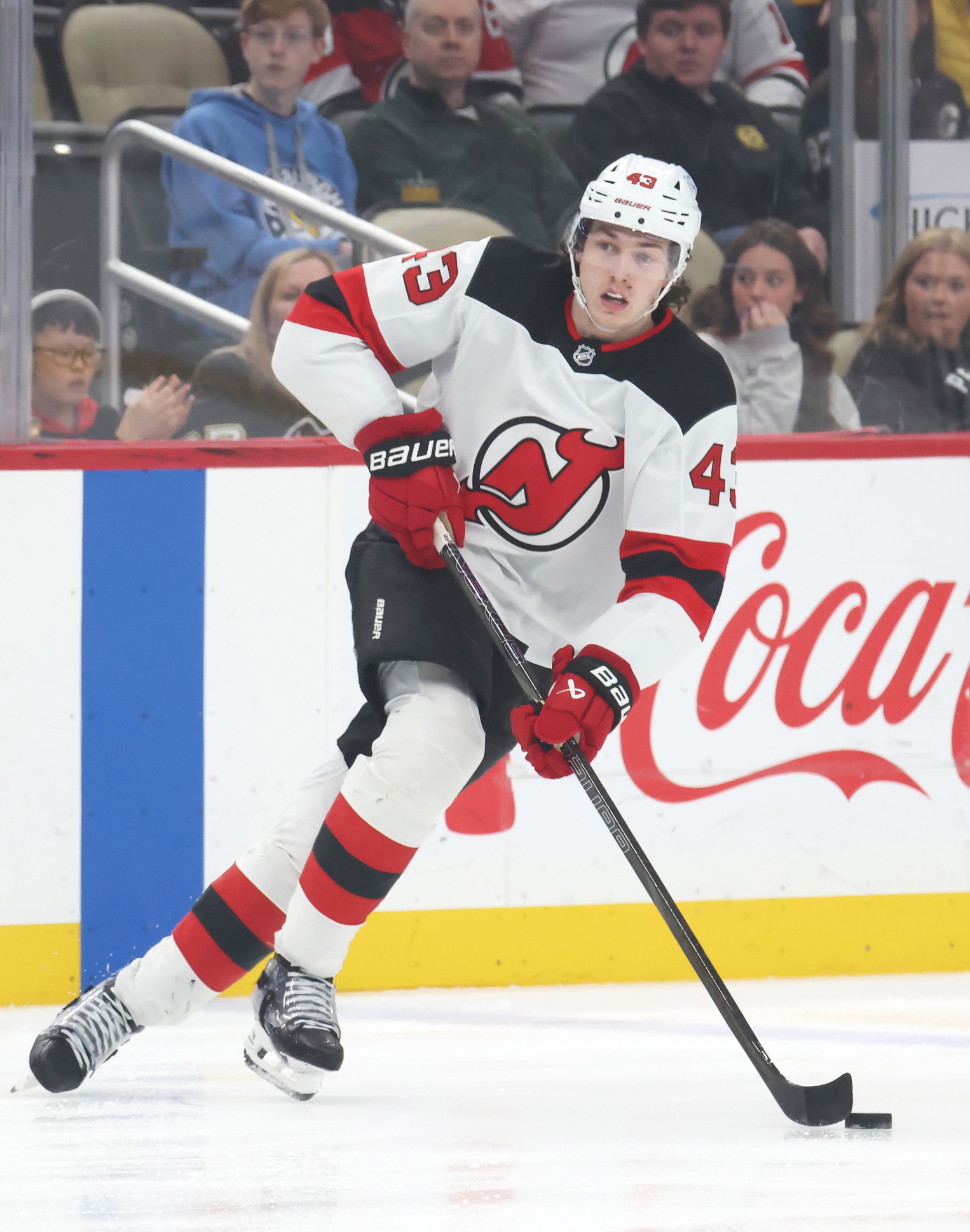 Before getting into the bridge versus long-term debate, this is a good time to mention their cap situation. Per PuckPedia, the Devils have roughly $12MM in cap space at their disposal with a few forward spots to fill (including those center positions), a new deal for Hughes, and one other possible opening in the next section. On top of that, they likely want to leave themselves some in-season wiggle room so not all of that may be spendable.
While there’s enough of a track record to make a long-term deal feasible, New Jersey’s cap situation might dictate they go with a short-term pact, allowing for some extra flexibility, especially if Fitzgerald is able to make a big swing or two as he’s hoping for. Notably, Hughes has five years of club control remaining, giving them a few more options on a short-term agreement as a bridge deal could conceivably be four years long with him still being restricted at the end of it. A two-year agreement could land around the $5MM range while a four-year pact likely could push past $6MM per season.
On the flip side, Hughes could be viewed as the top priority of the offseason which could allow the two sides to work out a longer-term pact up to the maximum of eight years. There are recent comparables to work with in Owen Power (seven years, $8.35MM per season) and Brock Faber (eight years, $8.5MM per season) although those were obviously signed before the projection of a faster-escalating cap came into play. But New Jersey should know that if they want to go long-term with Hughes, the price tag likely starts with an eight.
With no arbitration or offer sheet rights, this is one of those cases that could linger toward training camp. But with the Devils needing to know what money they have available to fill their other holes on the roster, this is something that they’re going to want to get done sooner than later.
Look For Goalie Insurance
Starting goaltender Jacob Markstrom has just one year left on his contract before being eligible for unrestricted free agency. Jake Allen is set to hit the open market this summer and profiles as one of the top netminders available in a particularly thin class. This season, their goaltending position was one of strength but it’s already looking a little shallower.
Yes, Nico Daws is already under contract at a cap hit that’s less than $40K above the league minimum. While that’s ideal from a cap standpoint, he’s coming off a particularly rough year with AHL Utica that saw him put up a 3.16 GAA and a .893 SV% in 34 games. Meanwhile, while he fared much better in six NHL games, his career numbers in 54 outings aren’t the strongest. It’s possible that the plan is to give him a shot at being the full-time backup and if that’s the case, they’re going to want some insurance, either as someone who could battle with Daws for the number two spot or come up if he struggles.
Alternatively, they could look for a more proven second option with an eye on starting Daws in the minors again, pending waiver clearance. Markstrom’s former Calgary teammate Daniel Vladar could be an option, as could Ilya Samsonov if he leaves Vegas. Allen realistically shouldn’t be ruled out either after a relatively solid first full season with them. Of course, those options cost more and would cut into what they can spend for help down the middle or when working out a deal with Hughes. Some of those players might require more than one year which would at least give them one proven option under contract beyond 2025-26 as well.
Utilize Defensive Depth
New Jersey has put together a solid defensive group with two promising youngsters behind them in Simon Nemec and Seamus Casey. As things stand, they have more than $27MM committed to their blueliners, a cost that’s only going to go up considerably once Hughes signs. It’s not out of the realm of possibility that their back end will be the most expensive in the league, costing more than 35% of the salary cap in the process.
Once Hughes signs, their lowest-paid defenders will be Jonas Siegenthaler ($3.4MM) along with Johnathan Kovacevic and Brenden Dillon ($4MM apiece). Individually, these aren’t bad value contracts but with that much tied up in their top six and Nemec and Casey in the wings, there’s a case to be made that they might be better off dealing from their surplus of veterans, a move that would open up a spot for one of the youngsters and potentially some additional cap flexibility.
The challenge here revolves around handedness and it’s not necessarily the normal one. Both youngsters are right-shot players as are veterans Dougie Hamilton, Brett Pesce, and Kovacevic. At a $9MM price tag for three more years, Hamilton will be difficult to move, at least without considerable retention. Pesce just signed last summer and has a full no-trade clause while Kovacevic only signed his extension less than three months ago so he’s probably safe as well.
Speculatively, Siegenthaler would be the likeliest to move if the Devils do deal from their depth. Being the cheapest player helps but he has primarily played top-four minutes over the last four years and with three years left on a reasonable contract, he would yield a solid return. That would put them in a rare spot of having more right-shot options than lefties but that would help open up some options for Fitzgerald to try to make a splash this summer.
Photo courtesy of Charles LeClaire-Imagn Images.
Examining The Lowest-Value Contracts In The NHL
In about a month, NHL teams will enter a free agency period with extra money to play with, thanks to an increased salary cap. While teams will welcome the additional financial wiggle room, general managers will make more mistakes on July 1st than on any other day of the year, and the likelihood of regrettable contracts getting dished out is high. Teams that feel close to Stanley Cup contention will happily roll the dice and hope that the contracts they sign work out, but that is often not the case, as the NHL is littered with low-value contracts for big money. These contracts can usually be moved out for a cost; still, for teams that accumulate poor-value agreements, it can lead to problems retaining effective players and even building depth, especially in a salary-cap league.
To examine the NHL’s worst contracts, some context is needed to lay out what makes a contract “bad.” For this exercise, we will consider the years remaining on the contract, the Average Annual Value (AAV), any trade protection, a decline in playing time, and the player’s age. Let’s look at some of the most burdensome contracts in today’s NHL.
Sharks defenseman Marc-Édouard Vlasic is an obvious candidate for the worst value contract in the NHL. He is entering the final year of a disastrous eight-year, $56MM extension he signed with San Jose in July 2017. The 38-year-old was once a decorated defensive defenseman a decade ago and was an absolute beast when the Sharks marched to the Stanley Cup Finals in 2016, only to fall to the Pittsburgh Penguins. During the 2013-14 season, Vlasic had the three highest expected goals percentages in the league with three different defensive partners (as per MoneyPuck). He was elite.
But a decade later, the Montreal native has fallen on hard times and can barely crack one of the worst lineups in the NHL. It is a sad end for a player who has seen Father Time erode the skills that made him great. Vlasic could be bought out this summer, but if he isn’t, it’s hard to see him playing in the NHL beyond next season.

Sticking with the Western Conference, next up is forward Jonathan Huberdeau of the Calgary Flames, who many may argue has the most significant albatross contract in the NHL due to the sheer amount of runway left on the deal. Huberdeau signed his eight-year, $84MM extension back in August of 2022, and to call it a disaster would be an understatement. The Saint-Jerome, Quebec native finished the 2021-22 season in Florida with 30 goals and 85 assists in 80 games and was traded to Calgary by Florida as part of the ill-fated Matthew Tkachuk package. Since the trade to Alberta, the 31-year-old has tallied just 55 goals and 114 assists in 241 games.
It’s not all bad, though; this past year, Huberdeau was quite a bit better for the Flames, developing more of a defensive element to his game and finding more offensive success with 28 goals and 34 assists in 81 games. While it’s a far cry from 115 points, it is an improvement and could give some hope to Flames fans that there might be more to his game. It’s difficult to project as Huberdeau’s skating is likely going to continue to slide as he moves further along into his 30s, and it wasn’t perfect to begin with. Even with a better player, Calgary is still unlikely to extract value from the deal, and with six years left on the contract, it will likely become a complete disaster in the final years.
We will remain in Western Canada for the next contract, which is that of Edmonton Oilers defenseman Darnell Nurse. Now, Nurse deserves credit for his patience during his prior contract negotiations. He opted for two-year deals on two different occasions rather than jumping into a long-term contract. Nurse signed a two-year deal worth $6.4MM back in September 2018 and did so again in February 2020 during a time when the Oilers were hard-pressed for cap space. Now, whether or not this was up to Nurse’s own volition is irrelevant, but it sure has worked out great for the 30-year-old who is in the third year of an eight-year deal that pays him an average of $9.25MM per season. The contract hasn’t been a total disaster, as Nurse is still an effective player, but it is safe to say that Nurse is being dramatically overpaid for what he brings to the team.
Nurse draws a lot of criticism primarily due to the gap between his salary and his play, and would likely draw far less criticism if he were paid closer to the $6MM to $7MM per season. However, his contract is his contract, and he hasn’t played up to what he is being paid, and he probably never will. That being said, Nurse still puts up points and has a real snarl to his game, but his defensive presence, positioning and gap control off the rush leave a lot to be desired.
Another defenseman who cashed in at the right time was Florida defenseman Seth Jones. Jones signed his extension with the Chicago Blackhawks immediately following a trade from the Columbus Blue Jackets, and it was met with a lukewarm reception almost immediately. The eight-year, $76MM contract became so problematic for the Blackhawks that they traded Jones to the Panthers this season and ate 26.32% of the remaining five years on the deal, which means that Chicago will carry a $2.5MM retained salary charge until 2030.
Jones’ contract pays him like one of the best defensemen in the league, but unfortunately, he has never been close to actually being a top defenseman. He signed the deal at 26 years of age at a time when he had never even sniffed a Norris Trophy nomination, and had finished in the top eight just once during the 2017-18 season, in which he benefited from having Artemi Panarin on the powerplay with him. Many of the contract projections had Jones getting a contract in the $7MM to $8MM range, but his actual deal blew those out of the water. The on-ice results weren’t horrible for Jones. Still, they certainly weren’t anything close to what you would expect out of a $9.5MM defenseman, and for that, Jones was moved and now finds himself in a much better situation on a far superior team with a much lower cap hit.
Finally, we have Pittsburgh Penguins defenseman Ryan Graves. For those folks clamouring for an Elias Pettersson section, we will have honourable mentions at the end. Graves has been almost unplayable in Pittsburgh, serving as a healthy scratch on arguably the worst defensive unit in the NHL this past season. The 30-year-old signed his six-year contract two years ago in free agency, and with four years remaining at a $4.5MM cap hit, he might end up playing out the deal in the AHL.
Graves was better last season for the Penguins, but he still wasn’t good despite benefiting from sheltered minutes and much easier assignments. When the Penguins signed Graves, the thought was that he could replace the departing Brian Dumoulin on the Penguins’ top defensive pairing next to Kris Letang. Still, less than halfway into the contract, he might not even serve on the top pairing of the Wilkes-Barre/Scranton Penguins. Pittsburgh will likely let Graves try to play out of his funk and won’t want to waste resources to rid themselves of the contract (at least not yet). But the likelihood of him figuring it out remains slim as he is on the wrong side of 30 and will be hard-pressed to rediscover his game.
As was mentioned earlier, several players could have been included in this list, including Pettersson. It’s hard to gauge Pettersson’s deal as he is just a year removed from an 89-point season and dealt with a personal issue with J.T. Miller this season, which no doubt impacted his play. He has plenty of time to turn things around, so it might be premature to call his contract one of the worst in the NHL.
A few other bad contracts worth mentioning are goaltenders Tristan Jarry and Philipp Grubauer, who were both sent to the AHL last season despite having cap hits north of $5MM. Grubauer’s contract and play have been very problematic for the Seattle Kraken, and he is likely to get bought out this summer. Speaking of potential buyouts, forward Chandler Stephenson won’t face a buyout anytime soon, but his seven-year, $43.75MM contract could become problematic in the next few years. The 31-year-old was perfectly fine last season, registering 13 goals and 38 assists in 78 games. Still, at $6.25MM annually, he isn’t going to provide more value than he did this past season, especially as he ages and has to make concessions to his game.
The teams that win the Stanley Cup often do so by extracting maximum value from their players while avoiding the dreaded bad contract. A team can overcome a bad deal, but it certainly makes it more difficult to retain talent. Some contracts are bad the day they are signed, while others don’t become problematic until later. It’s always difficult to project the direction a player’s career will go, but pro scouting departments are paid to do just that. The contracts listed above are all problematic for the teams that agreed to take them on, and while there are always options for moving on, teams will likely not like their choices.
Photo by Sergei Belski-Imagn Images
Free Agent Focus: Buffalo Sabres
Free agency is just over a month away, and teams are looking ahead to when it opens. There will be several impact players set to hit the open market in July, while many teams also have key restricted free agents to re-sign. We continue our look around the NHL with an overview of the free agent situation for the Sabres.
Key Restricted Free Agents
 D Bowen Byram – The Sabres were hoping the 2019 fourth overall pick would fully establish himself as a top-pairing option in 2024-25 after acquiring him from the Avalanche at last year’s trade deadline. On most fronts, that’s what happened. After struggling through injuries in the early seasons of his career, he played a full 82 games for the first time and averaged a career-high 22:42 per game despite not receiving much power-play time. That also means 35 of his career-high 38 points came at even strength, tied for 15th in the league among defensemen. But with poor advanced metrics when lower in the lineup away from Rasmus Dahlin and a highly unbalanced ratio of lefties to righties on Buffalo’s blue line, they’ve been looking at possible trade options. Whether it’s in western New York or elsewhere, a long-term deal this summer for Byram should land him north of $7MM per season.
F JJ Peterka – In his first three seasons, Peterka has steadily upped his offensive output to an impressive 27-41–68 scoring line in 77 games in his first contract year. He did so primarily in top-line deployment with Tage Thompson. Yet with the Sabres still unable to find a postseason-caliber formula and Peterka in line for a huge raise this summer, he also finds himself in some trade speculation. A long-term deal for him will, like Byram’s, at least start at $7MM and could inch closer to $8MM per season given how consistently the 23-year-old has developed offensively thus far.
F Ryan McLeod – After the Sabres gave up high-end center prospect Matthew Savoie to acquire McLeod from the Oilers last summer, he justified Buffalo’s faith in him with a 20-goal, 53-point breakout in 79 games. Nearly all of that production came at even strength, too. He barely saw power-play time but was arguably the Sabres’ best two-way center in 2024-25, posting a +13 rating to rank second on the team while seeing significant penalty kill deployment. Given his all-around impact, he’ll likely land at least double his $2.1MM qualifying offer and could realistically approach the $5MM mark. With Dylan Cozens and Casey Mittelstadt gone in trades over the past few years and Thompson seeing increased time on the wing, they can’t afford to lose McLeod at center.
F Jack Quinn – The 2020 No. 8 pick was looking to get his feet back under him after Achilles surgery and a lower-body injury robbed him of most of his 2023-24 season. It didn’t pan out that way as a slow start led to a string of healthy scratches, but he did heat up with a 6-13–19 scoring line in 27 games after the 4 Nations Face-Off. That should at least help his case to earn another contract in Buffalo and get another chance at being part of the long-term future. Still, with how inconsistent he’s been thus far in his career, he likely isn’t in a position to command much more than $2MM per season on what could be as short as a one-year prove-it deal.
D Jacob Bernard-Docker – Acquired from the Senators in the Cozens/Joshua Norris deadline deal, the 2018 first-rounder looked to establish himself as an everyday lineup option down the stretch after a high ankle sprain derailed the first half of his season in Ottawa. He received strict third-pairing minutes but was quite effective in them, posting four points and a plus-three rating in 15 games for the Sabres with strong relative possession metrics (48.3 CF%, 57.9 xGF%, per Hockey Reference). He’s untested in top-four minutes, but he’s a big, defensively responsible righty the team sorely needed in their system. Expect Buffalo to try to negotiate a mid-term deal as a result, and pay a bit more to do so, potentially upward of the $2MM mark.
Other RFAs: D Erik Brännström, D Ryan Johnson, F Alexander Kisakov, F Tyson Kozak, G Devon Levi, F Bennett MacArthur, F Tyler Tullio
Key Unrestricted Free Agents
 G James Reimer – The 37-year-old is the only pending unrestricted free agent who saw anything resembling consistent NHL minutes in 2024-25. After signing a one-year deal over the summer and briefly being lost on waivers to the Ducks for the first month of the season, he spent most of the season as Ukko-Pekka Luukkonen‘s backup with the younger Levi struggling in his NHL chances. He made good on the Sabres’ $1MM bet, saving eight goals above expected in 24 appearances, per MoneyPuck. His .899 SV% and 2.90 GAA were far better than either Luukkonen’s or Levi’s numbers, and he was the only Buffalo goalie with a points percentage north of .500 with a 10-8-2 record. There might not be a role for him next year with Levi having another excellent AHL season, but it wouldn’t be surprising if the Sabres wanted to bring him back as insurance.
Other UFAs: D Kale Clague, F Mason Jobst, F Brett Murray (Group VI), D Jack Rathbone (Group VI), F Lukas Rousek (Group VI), G Felix Sandstrom
Projected Cap Space
For the first time in a while, the Sabres don’t have virtually unlimited cap space to work with. Handing out long-term deals to players they hoped would be long-term core pieces over the last few years is starting to take effect. While they do have $23.2MM in flexibility for next season and seven roster spots to fill, nearly all of that could be taken up by deals for Byram, Peterka, and McLeod if they opt to keep the first two and go long-term with both.
Photos courtesy of Timothy T. Ludwig-Imagn Images. Cap information courtesy of PuckPedia.