
Offseason Keys: New Jersey Devils
The offseason has arrived for at least seven teams that were not invited to take part in the play-in round that’s slated to begin in early August. With that in mind, it’s time to kick off our Offseason Keys series. There was one team that wasn’t covered in our Stretch Run Storylines series as New Jersey had already been ruled out of returning to play. Accordingly, let’s begin this series with a closer look at the Devils.
After finishing last in the Metropolitan Division in 2018-19, the hope in New Jersey was that they’d start to turn things around. They added P.K. Subban and Wayne Simmonds to give them a boost and a good finish to that year from Cory Schneider was cause for optimism that he had fully recovered from his lingering injury woes. That didn’t happen. Schneider struggled as did just about everyone else and as a result, New Jersey finds themselves in the same spot now as they were a year ago – hoping things can only go up from here. Here’s what to watch for them this offseason.
Determine Coach And GM
New Jersey has been taking advantage of this extended time off to do a thorough coaching search. On the surface, this makes a lot of sense but interim GM Tom Fitzgerald is heading that up while ownership has been interviewing candidates for Fitzgerald’s role. Normally, it would make sense to have a permanent GM in place before deciding on the coach but it seems like the opposite may happen here which suggests that even if Fitzgerald isn’t the GM when all is said and done, he’ll still have a prominent front role in the front office.
That certainly wouldn’t be a bad idea on their part. He has certainly worked his way up the ranks slowly but surely and has been an assistant GM since 2009 so he has paid his dues. On top of that, he has navigated the trade market well, garnering an impressive return for Blake Coleman (essentially two first-round picks) that few saw coming.
As for their coaching situation, they are down to five candidates including interim bench boss Alain Nasreddine who the team performed reasonably well in front of (19-16-8) after he took over compared to their start to the season. Veterans Gerard Gallant, Peter Laviolette, Lindy Ruff, and John Stevens are believed to be the others in the mix.
They have plenty of time as we’re still basically three months away from free agency so this isn’t a situation that needs to be rushed. They’re effectively the only team with a vacancy although, at the end of the day, it’s quite possible that there winds up being no vacancy at all if the team decides to stick with their current options in the end.
Palmieri Resolution
Since joining New Jersey, winger Kyle Palmieri has blossomed into an underrated consistent scoring threat, tallying at least 24 goals in each of his five seasons with the team. The Devils have been benefitting from one of the more under the radar bargains over that time as he has carried a $4.65MM AAV over the past four seasons and will for 2020-21 as well whenever it gets up and running. However, next season will be the final year of his contract and he’ll be slated for unrestricted free agency after that.
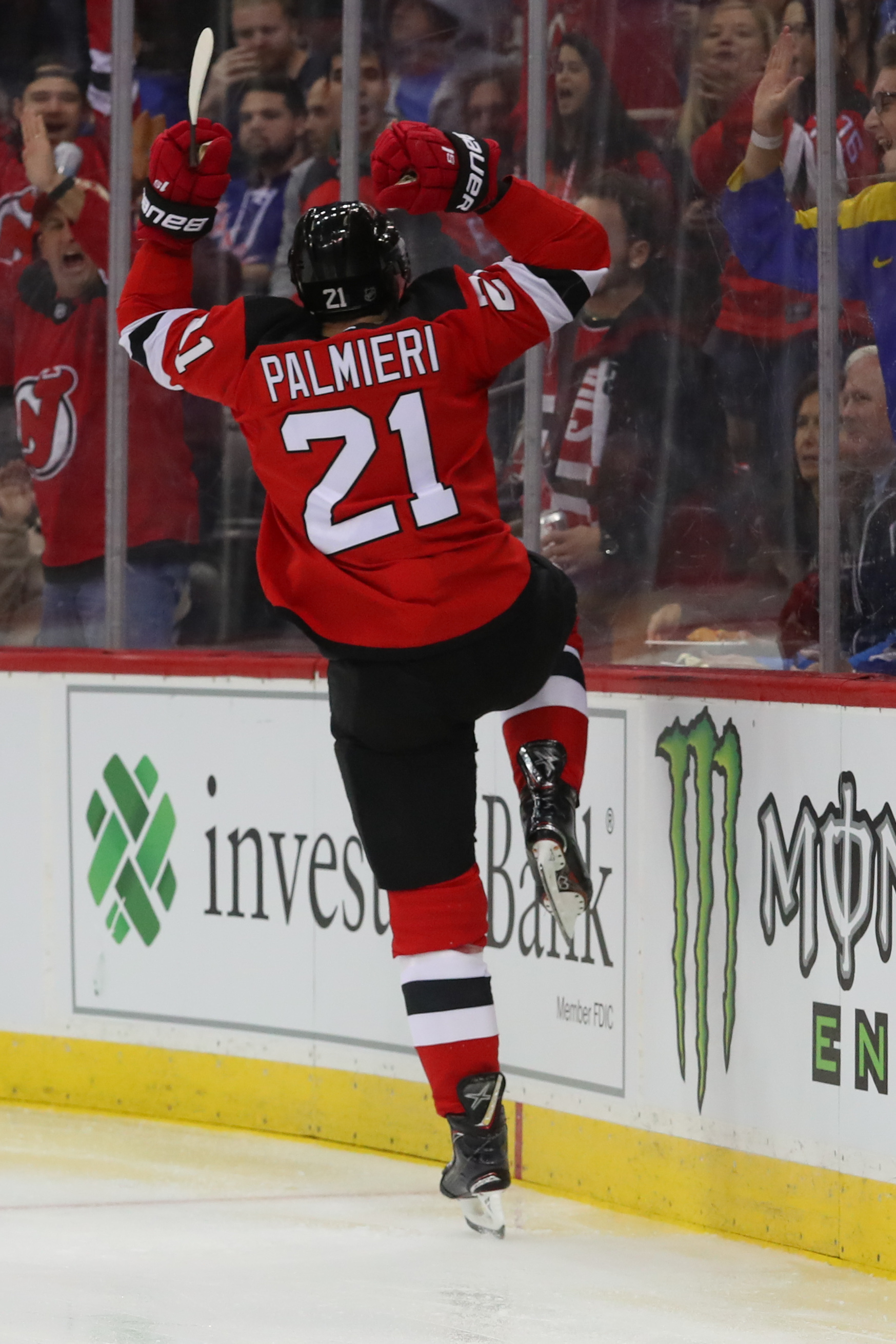 It usually takes until players are officially in the final league year of their contracts to be able to sign an extension. Normally, by now, we’re in that situation but that has changed due to the pandemic. However, instead of making those players wait until November (the projected start of the 2020-21 league year), players like Palmieri will be in a position where they can officially sign an extension as early as next week. Accordingly, contract talks should soon be on the horizon.
The Devils shouldn’t put themselves into a position where Palmieri’s fate is unknown heading into next season. Barring a seismic turnaround of fortunes, they seem likely to be outside the playoff picture again next season which presents a potential trade as a rental situation. However, the tightening salary cap picture is going to make it even more difficult than usual to move money in-season. Normally, Palmieri would garner a significant return as a rental player but so many teams are going to be cap-strapped next year to the point where attempting to go that way will be risky. Plan A from New Jersey’s standpoint should be an extension. If they can’t agree on one in the coming months though, Plan B – a trade – should get early consideration as well.
Utilize Cap Space
The salary cap first came to the NHL back in 2005. Since then, there has been an annually-increasing usage of the phrase ‘cap space is a weapon’ or something similar to that. Prepare to see it a lot more over the coming months as more teams than ever will be in situations where they need to clear out money in a hurry. For teams that have cap room and are willing to spend it, they’ll be in great shape.
It just so happens that New Jersey has cap space. Plenty of it. They’ve also shown a willingness to try to spend in past years but haven’t had a lot of success trying to lure players on the open market. The stretch between mid-October and the beginning of November presents them with a terrific opportunity to leverage that room to add some players that can help now and add assets for down the road.
Just how much space do the Devils have? They have just over $55MM in commitments for next season, per CapFriendly with 13 players signed. There are no prominent players in need of a new deal – RFA defenseman Mirco Mueller has the biggest qualifying offer at just $1.4MM while goalie Mackenzie Blackwood is arguably the most notable. That leaves them some space to add some impact players.
Even if the trade market falls short, they should have more success in free agency this time around as the big-money deals are going to be few and far between beyond the top players at each position. A one-year pillow contract similar to the one that Simmonds signed last summer is something that more players may be considering this time around. Fortunately for New Jersey, if that’s what it comes to, they’re in the best position to hand them out and whoever is the one signing the deals – Fitzgerald or someone else – will be poised to benefit.
Photo courtesy of USA Today Sports Images.
July 1st Retrospective: 2019
July 1st is typically filled with hundreds of millions committed to contracts signed in the early hours of free agency. However, this is no ordinary year and as a result, the UFA market is on hold for a while yet with the Stanley Cup on pace to be awarded sometime in October with the official offseason expected to start in November. So instead of there being plenty of new deals to talk about, let’s take a look back at the free agent frenzy from recent years. Last up in our series is 2019 with 2017 and 2018 being covered earlier in the week.
The previous two openings of the free agent period featured a lot of prominent re-signings without a big flurry of notable players heading elsewhere; there were a few but only a few. That changed last summer as several significant players opted to head for new teams.
For the purpose of this exercise, we’re limiting our scope to the deals handed out on July 1st itself which means players like Jake Gardiner and Marcus Johansson who were in the top-15 of our UFA list but signed later are not considered here.
Key Re-Signings
Anders Lee (NYI) – 7 years, $49MM – While not the biggest point producer, Lee had 104 goals to his name over the past three seasons which helped him garner considerable interest around the league but his focus was staying in New York and remaining as their captain. His numbers this season weren’t terrible but he was at his lowest goal-per-game pace since 2015-16 when the pandemic hit while he was hovering around a 50-point pace as well. They need more than that from Lee to get good value on this deal.
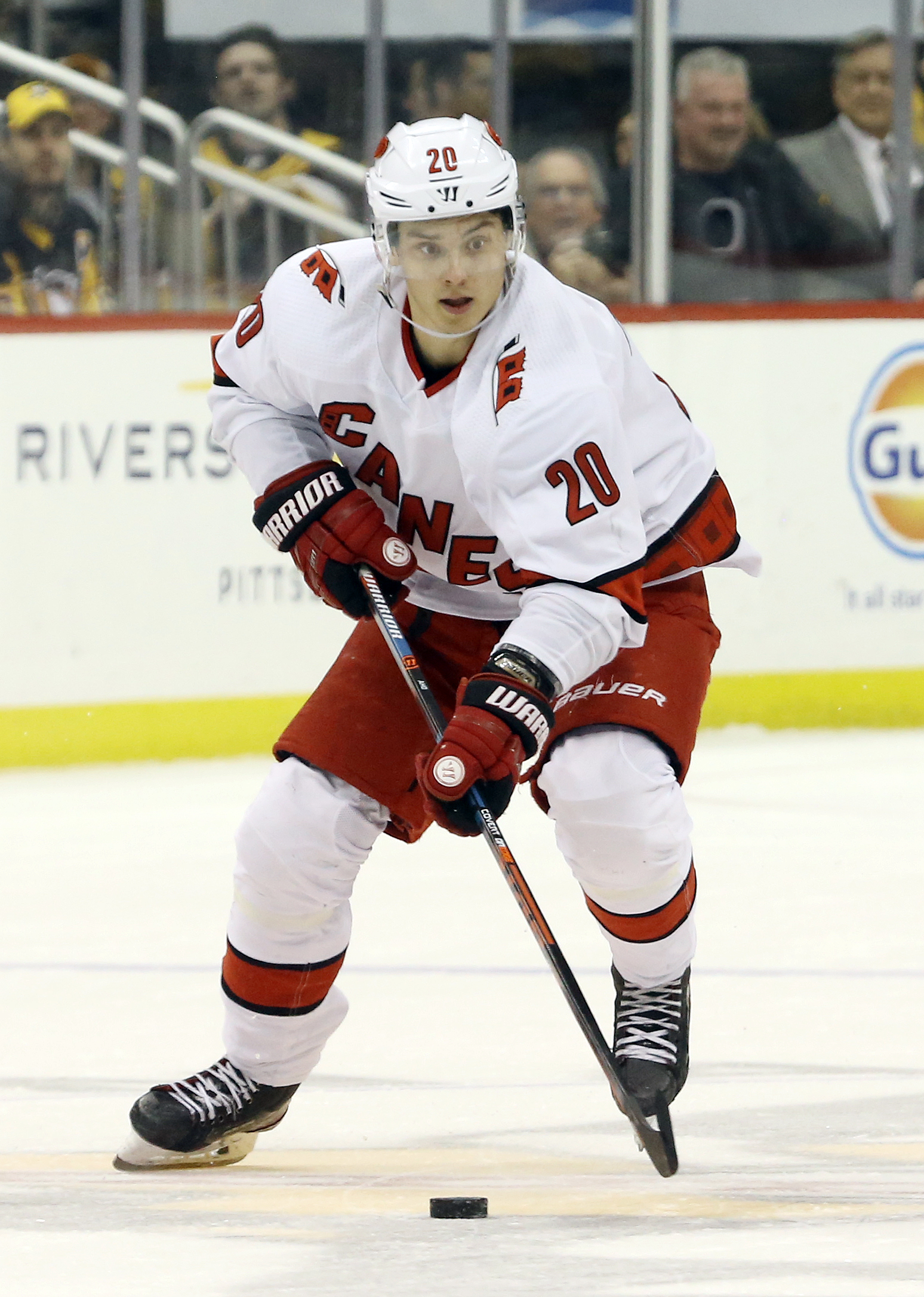 Sebastian Aho (CAR) – 5 years, $42.27MM – Okay, technically, this wasn’t a re-signing as the Canadiens tendered him an offer sheet to get to this point. But it may as well have been as the potential compensation to the Hurricanes wasn’t enough to give them any pause to match it. While being more of a playmaker early in his career, Aho showed his scoring touch more often this season, finishing tied for sixth in the league in that department while averaging nearly a point per game. He looks like he’ll live up to the deal without any issue but this contract does take him to UFA eligibility while he’s in the prime of his career and by the time he hits the open market, the current salary cap concerns should largely be mitigated.
Timo Meier (SJ) – 4 years, $24MM – This one makes it on here for the structure of the deal. The fourth and final season of the contract carries a $10MM salary which then represents his required qualifying offer in June of 2023 which, given the new salary cap picture, looks potentially even more worrisome. Meier’s performance this year was lower than 2018-19 but that’s something that could be said for just about everyone in San Jose. He should provide some value on his current $6MM AAV but that qualifying offer already looms large.
Top AAV Free Agent Signings
(Players changing teams)
Artemi Panarin (NYR) – 7 years, $81.5MM – Everyone knew Panarin was heading for a big payday and yet this deal still raised some eyebrows as it made him the highest-paid winger in NHL history. Accordingly, at no point will this be viewed as a bargain contract but he lived up to it this season, finishing tied for third in team scoring with 95 points and was only behind Edmonton’s Connor McDavid and Leon Draisaitl in assists with 63. That’s pretty good company to be in.
Sergei Bobrovsky (FLA) – 7 years, $70MM – He was handed the richest deal ever given to a goalie on the open market (Carey Price’s contract with Montreal was an early extension, not a free agent deal) and the results were anything but pretty. Bobrovsky struggled pretty much all season long and posted a GAA of 3.23 and a .900 SV%, numbers that aren’t good for a backup let alone a starter. His contract means he’ll be afforded plenty of opportunities to turn things around but this could be a real problem down the road.
Matt Duchene (NSH) – 7 years, $56MM – His offensive struggles with Columbus after being acquired from Ottawa wound up being a precursor to this season as things did not go well for him this season. His 13 goals were the lowest of his career while 42 points in 66 games is not the type of production that an $8MM price tag should yield. The Predators have done plenty to add to their center depth in recent years with the addition of Duchene, Kyle Turris, and Nick Bonino. Despite all of the money invested in them, it’s still a weak spot.
Joe Pavelski (DAL) – 3 years, $21MM – It came as a bit of a shock that he was willing to leave San Jose after 14 seasons with the team but getting three guaranteed years just 10 days before turning 35 was pretty good on his end. Unfortunately, the Stars haven’t got much of a reward for that deal just yet as Pavelski turned in basically the worst offensive season of his career in 2019-20 with just 14 goals and 17 assists in 67 games. There was a risk that he wouldn’t be a top line player by the time the deal was done but not many expected that to happen within the first few months of the contract.
Ones To Forget
Tyler Myers (VAN) – 5 years, $30MM – For all of the flak he takes, Myers has carved out a solid 11-year career so far. But $6MM for a player that is best used as a fourth defender or lower isn’t a great deal, nor was the five-year term that takes him into his mid-30s. His point per game average (0.31) was his lowest since his age-22 season in Buffalo in 2012-13. It’s an overpay in both money and term and that’s not an ideal combination.
Mats Zuccarello (MIN) – 5 years, $30MM – Over the last four years, Zuccarello had reached the 50-point mark three times and played at a 68-point pace in the one he didn’t get there due to injury. That made him seem like a relatively safe bet on the open market as someone that could come in and provide Minnesota with some consistent production from the second line. It didn’t happen this season, however, as he had just 15 goals and 22 assists in 65 games while seeing his ice time drop from nearly 20 minutes a night the year before to not even 16 per game in 2019-20.
Anton Stralman (FLA) – 3 years, $16.5MM – While Stralman was brought in to provide some much-needed stability to Florida’s defense (which he did), this was still a hefty price to pay for a veteran boost on the second pairing. The Panthers found themselves in cost-cutting mode towards the end of the season and a big part of that was this deal along with Bobrovsky’s. The shorter term makes this a little more palatable but it’s still a big overpayment in terms of AAV.
Wayne Simmonds (NJ) – 1 year, $5MM – After a tough showing in 2018-19 including a poor performance in Nashville, Simmonds opted for a pillow contract with the hopes of cashing in this coming offseason instead. It’s safe to say that’s not going to happen. The veteran struggled mightily on a bad New Jersey team and didn’t look much better in Buffalo either where the Devils had to retain half of the remainder of the contract simply to get a 2021 fifth-round pick.
Bargains
Tyler Ennis (OTT) – 1 year, $800K – After having a minimal role with Toronto the year before, Ennis signed with the Senators in the hopes of getting more of an opportunity to play in an offensive role and he responded with 33 points in 61 games before being moved to Calgary at the trade deadline. He was relatively productive with the Flames as well. Overall, getting 16 goals and 21 assists for just over the league minimum in a shortened season is one of the better UFA bargains in recent years.
Joakim Ryan (LA) – 1 year, $725K – After playing a limited role in San Jose, Ryan sought a bigger opportunity when he signed with the Kings. He certainly got that as his average ice time went up by more than six minutes a game while he wound up being voted as the team’s best defenseman and Unsung Hero. While that is partially an indictment on how much Los Angeles struggled this season, it’s also a sign that Ryan has taken a step forward in his development. To get that for barely over the minimum was a nice piece of business by GM Rob Blake even if it went under the radar.
Jason Spezza (TOR) – 1 year, $700K – No, Spezza isn’t the player he was in his prime but his true value on the open market was for more than the minimum salary. However, he wanted to play in his hometown which the Maple Leafs used to their advantage. To his credit, while his ice time dipped considerably (from 13:16 per game to 10:50), his point per game average was actually higher than his final two seasons in Dallas while he was once again strong at the faceoff dot. Playing at a 35-point pace from the fourth line is something a lot of players can’t do, let alone ones at the absolute bottom of the salary scale.
Photo courtesy of USA Today Sports Images.
Vancouver’s Looming Cap Crunch
When you think of teams that are going to be hit hard by the anticipated flattening of the salary cap, Toronto and Tampa Bay typically come to mind and justifiably so. They have top-heavy rosters and are going to have to clear some salary in the near future. If St. Louis re-signs Alex Pietrangelo, they’ll be in that mix as well.
One team that doesn’t come to mind as quickly is Vancouver. But the recent reports that the salary cap will remain unchanged for the next two seasons at $81.5MM is going to cause some problems for them both in the short term and long term.
On the surface, things don’t look too bad. Per CapFriendly, they have nearly $63.5MM in commitments for next season to 14 players. Having roughly $18MM left to fill out the roster isn’t great but it’s not terrible either.
But let’s chip away at that a little. By virtue of needing LTIR for basically the entire season, they ended the season with minimal cap space which means any achieved bonuses from this season will be charged against the 2020-21 cap. Postmedia’s Patrick Johnston provides some details about what was reached in that regard this season. Elias Pettersson and Quinn Hughes both hit all of their $850K in ‘A’ bonuses so there’s an extra $1.7MM right there. Now that cap space is down to $16.3MM.
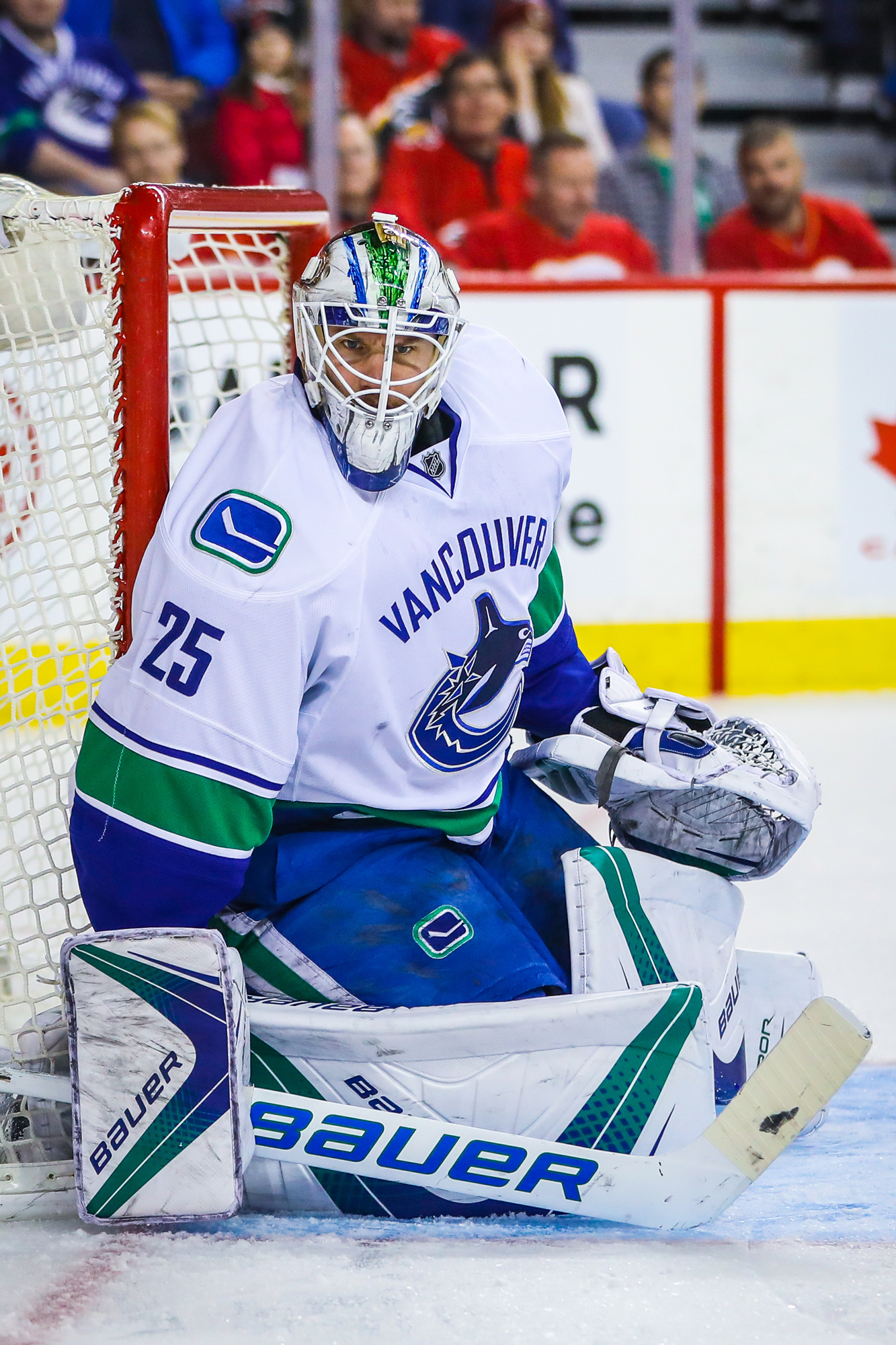 The Canucks have three prominent unrestricted free agents this offseason that they’ll be looking to retain or replace. Chief among those is Jacob Markstrom who has established himself as a capable starting goalie by making 160 starts over the past three seasons, compiling a 2.74 GAA with a ..914 save percentage over that span. Accordingly, he’s going to get a raise on his current $3.67MM price tag even in this depressed marketplace whether it’s with Vancouver or another team on the lookout for a new starting netminder. If they don’t re-sign him, they’ll still have to spend a similar amount to replace him with another starter so it’s safe to budget a sizable amount of their cap room for Markstrom or someone else.
Chris Tanev is a key part of Vancouver’s back end after spending the last decade there. Given his injury history and limited production, he may not be able to get his current $4.45MM AAV on his next deal but it will take a few million to re-sign him as well. Tyler Toffoli fit in quite well after being acquired from the Kings and they’d love to keep him around but with it not being the deepest of UFA classes up front, he may command at or more than his $4.6MM cap hit on his next deal.
Without even getting into their class of RFAs (highlighted by Jake Virtanen), the Canucks may have to chip away from their roster just to keep their team intact. But that will be easier said than done. With a lot of teams wanting or needing to do the same, the price to offload a contract should be steep and in Vancouver’s case, the deals they’d want to peddle (Sven Baertschi, Jay Beagle, Loui Eriksson, and Brandon Sutter) are ones that likely already carry negative value. Micheal Ferland doesn’t have much value either after concussions cost him most of the season and if he’s healthy, they won’t have the ability to put him on LTIR. They’re also not able to trade off their salary cap recapture penalty on Roberto Luongo’s deal which runs through 2021-22 at a tick over $3MM per year.
Fast forward to the 2021 offseason. Pettersson and Hughes will be at the end of their entry-level deals and both project to land substantial raises based on how they’ve performed so far. That will eat up the savings from their expiring contracts (headlined by Alex Edler, Sutter, and Tanner Pearson) quite quickly before even factoring in what it will cost to retain or replace the others. That will have to be in the back of GM Jim Benning’s mind as he tries to navigate through the November free agent period and decide who to keep or let go from his current group.
Many teams are going to face some tough decisions as a result of this new marketplace but while Vancouver may not be the first team that comes to mind when you think of teams that may be in cap trouble soon, they’re certainly about to be a part of that group.
Photo courtesy of USA Today Sports Images.
July 1st Retrospective: 2018
July 1st is typically filled with hundreds of millions committed to contracts signed in the early hours of free agency. However, this is no ordinary year and as a result, the UFA market is on hold for a while yet with the Stanley Cup on pace to be awarded sometime in October with the official offseason beginning after that. So instead of there being plenty of new deals to talk about, let’s take a look back at the free agent frenzy from recent years. Next up is 2018 while 2019 will run on Friday. Click here for the 2017 retrospective.
Once again, the biggest deals of the day were contract extensions with the majority of the UFA market being three years or lower. However, there were a handful of longer-term deals handed out with the results being somewhat of a mixed bag.
For the purpose of this exercise, we’re limiting our scope to the deals handed out on July 1st itself which means players like James Neal and Calvin de Haan who were in the top-10 of our UFA list but signed later are not considered here.
Key Re-Signings
Drew Doughty (LA) – 8 years, $88MM – Doughty’s signing had been speculated for a few days prior to this but July 1st was when it was made official, making him the highest-paid defenseman in NHL history at the time. Doughty had plenty of leverage as he was going to be one of the top UFAs a year later and was coming off a career year but the early returns haven’t been great. His production dipped in 2018-19 and again this season to his lowest point per game average since 2013-14 while struggling a bit more than usual at the defensive end.
Oliver Ekman-Larsson (ARI) – 8 years, $66MM – This was another move that had been rumored for quite a while but the Coyotes had to wait until this time to extend their captain to the richest deal in team history. Like Doughty, there was no denying that he was one of the top players that could have potentially hit the open market a year later and while it’s a bit on the expensive side, losing him would have been disastrous. Ekman-Larsson is coming off of a bit of a down year but he’s young enough that there are still several strong years left in him.
Logan Couture (SJ) – 8 year, $64MM – Yet another deal that was reported a few days beforehand but couldn’t be made official until the turning of the NHL calendar, Couture’s contract seemed a bit pricey at the time but it has held up well so far. He was coming off of one of his better offensive years at the time and since then, he had a career season in 2018-19 before injuries derailed his 2019-20 campaign. However, with six years left on the deal, he may very well slow down towards the end of it.
Ryan McDonagh (TB) – 7 years, $47.25MM – Several Tampa Bay players have taken a bit less than market value to stick around and McDonagh continued that trend as a $6.75MM AAV for someone that was a top-pairing defender at the time was cheaper than expected. However, the seven-year term came as a surprise and could present some problems before too long as the 31-year-old had his worst offensive year since his rookie campaign while his ATOI has dropped nearly four minutes a night from three years ago.
Top AAV Free Agent Signings
(Players changing teams)
 John Tavares (TOR) – 7 years, $77MM – This one came as a bit of a surprise given what Toronto had on the horizon for signing their top young stars but they still managed to find a way to bring him in. At an $11MM AAV, the contract was never going to be a bargain at any stage but he has averaged over a point per game over his two years with the team while taking over as team captain. He’s providing them with what they expected – a legitimate top center – but with the cap crunch coming as a result of the COVID-19 pandemic, this deal along with those handed to their top youngsters could soon paint the Maple Leafs into a bit of a corner when it comes to trying to keep the core together; Morgan Rielly and Frederik Andersen aren’t that far away from being UFA-eligible themselves.
James van Riemsdyk (PHI) – 5 years, $35MM – Who says you can’t go back to a former team? He did just that by signing with Philadelphia who initially drafted him second overall back in 2007. He gave up a bit of term to take a bit higher of a salary relative to expectation and while he hasn’t quite produced at a $7MM level, he has been reasonably productive, tallying 46 goals over his first two years despite a dip in ice time compared to his average over his time with Toronto. One area of some concern is van Riemsdyk’s drop in power play production – he had 39 points (17-22-39) with the man advantage over his last two seasons with Toronto but just 22 (12-10-22) with the Flyers.
Paul Stastny (VGK) – 3 years, $19.5MM – A late effort by Winnipeg to free up money to sign Stastny proved unfruitful as he moved on to Vegas where his production has taken a dip. Injuries limited him to just 50 games over his first season while this year, he had the lowest point per game average of his career (0.54) over his 71 games. The shorter term is certainly beneficial though; as much as the $6.5MM AAV isn’t an ideal price tag, they’ll be out of the contract a year from now while he still provides them with some quality depth down the middle.
Ones To Forget
Ilya Kovalchuk (LA) – 3 years, $18.75MM – Kovalchuk’s return to the NHL from Russia cost more than expected, especially for someone on a 35-plus contract. The early returns were good too as he had 14 points over his first 14 games with the Kings before things went completely off the rails. His ice time dropped quickly and he was told late in the year that he could skate with the team if he wanted to but wouldn’t play. It didn’t get any better this year and he was eventually sent home to await a contract termination once a signing bonus instalment was paid. Kovalchuk wound up with Montreal before he was shipped to Washington near the trade deadline while Los Angeles now has $6.25MM in dead cap space for next season because of the 35-plus distinction.
Jack Johnson (PIT) – 5 years, $16.25MM – Handing a 32-year old player that many viewed as a third pairing option a five-year deal raised a lot of eyebrows. Johnson’s no longer the top pairing player he was in his prime but he’s still decent in a limited role. However, for a team that’s cap-strapped as often as Pittsburgh is, having a player costing $3.25MM against the cap that is down to that type of role isn’t ideal. It’s not a massive price tag but with the salary cap now flattening out, this could cause some problems in the near future.
John Moore (BOS) – 5 years, $13.75MM – The $2.75MM isn’t a terrible price tag on its own but the five-year term didn’t make much sense then and less now. Yes, injuries cost him 30 games this season but he was still scratched on several occasions while his ice time dipped to 16:33 per night. It’s fair to suggest he’s not a part of their top six now and with some youngsters on the cusp of making it, Moore may not make back into that group either.
Jay Beagle (VAN) – 4 years, $12MM – For years, Beagle has filled a specific role and done it well – he wins faceoffs and logs a lot of ice time shorthanded. That role carries some value on a lot of teams but it doesn’t change the fact that he’s a fourth liner. Giving a fourth liner $3MM per year carries some risk, especially for four years and even more so knowing that he was 33 in his first season with the Canucks. Beagle still wins draws and kills penalties but he struggled considerably outside of those situations and two more years of that deal on the books isn’t ideal.
Leo Komarov (NYI) – 4 years, $12MM – Komarov’s at his best in a limited role where his physicality can make a difference. The Islanders had several of those players when they signed him – they still do – and his effectiveness has waned over the first two years to the point where he was in the press box as a scratch on multiple occasions. At $1MM, he would provide some value still but at three times that, it may become a problem deal over the next couple of years.
Bargains
David Perron (STL) – 4 years, $16MM – Going back to a former team isn’t rare but it’s still relatively uncommon. Going back for a third stint with the same team is much rarer but that’s what happened here. Perron had a career year in Vegas with 66 points so this was somewhat of a below-market deal and he has played quite well on it. While his point per game average with Vegas was the best of his career, these last two seasons were his second and third highest. $4MM doesn’t always get you a lot on the open market but a capable top-six forward is certainly better than most.
Jonathan Bernier (DET) – 3 years, $9MM – This begins the run on goalies as basically every other bargain deal was signed by a netminder. Bernier essentially took over as the starter for the Red Wings this season while faring okay in the first year while in a platoon role. The overall numbers don’t look great but considering how much Detroit has struggled, they weren’t going to be great. If he winds up being the starter again this season, the value will go up even more.
Jaroslav Halak (BOS) – 2 years, $5.5MM – Getting someone who had started as much as Halak had for this price was impressive enough. But the value he has given Boston is more than that as they have been able to lighten Tuukka Rask’s workload and the benefits have been significant as they’ve been among the top goaltending tandems in the league since then. Halak has embraced the role and already has signed an extension for next season.
Anton Khudobin (DAL) – 2 years, $5MM – Rask’s old partner with Boston moved on to the Stars and the results were similar to Halak with the Bruins. He picked up a significant share of the workload which helped keep Ben Bishop rested and both netminders responded with strong performances. With more teams starting to see the value of a platoon, Khudobin should be well-positioned to earn a raise on the open market this summer even with it not being a great time to hit free agency. Dallas will certainly make an effort to keep him as well.
Petr Mrazek (CAR) – 1 year, $1.5MM – After a rough 2017-18 campaign, Mrazek’s market was minimal so he joined the Hurricanes with the hopes of bouncing back. He did exactly that, posting a 2.39 GAA with a .914 SV% during the regular season which helped propel the Hurricanes to a surprising Eastern Conference Final appearance. At a time where the good backups were signing for a fair bit more than $1.5MM, they got someone who basically did just as well for a fraction of the price. Mrazek was able to parlay that strong performance into some job security as he landed a two-year, $6.25MM deal last July.
Photo courtesy of USA Today Sports Images.
One Trade The Maple Leafs Would Like To Have Back
In the summer of 2006, the Toronto Maple Leafs decided not to pick up a contract option on 41-year-old Ed Belfour. Totaling three seasons as resident netminder in Toronto, Belfour spent much of his final season in Toronto hampered by a balky back. He was limited to 49 games in 2005-2006 and a substandard .892 save percentage. GM-at-the-time John Ferguson Jr. probably made the right call moving on from Belfour (though Belfour would bounceback somewhat in his one and only season with the Florida Panthers before retiring) – where Ferguson and the Maple Leafs erred was in choosing Belfour’s successor.
Looking ahead, the Maple Leafs had two goalie prospects to dream on: Tuukka Rask and Justin Pogge. Unfortunately, neither Rask, 19, nor Pogge, 20, were ready to step between the pipes. Thus, Ferguson Jr. moved to deal from a position of future depth to secure a near-term solution. Toronto traded Rask to the Boston Bruins in a straight-up swap for 26-year-old goaltender Andrew Raycroft.
On its face, the deal made some sense for both sides: Rask had been a recent first-round pick, #21 overall of the 2005 NHL Entry Draft, while Raycroft came to Toronto decorated as the 2003-2004 Calder Trophy winner as the league’s top rookie. The Bruins were run at the time by interim General Manager Jeff Gorton (now the GM of the New York Rangers), who said this of the deal: “We had an opportunity, with three good, solid goaltenders who are all number one goalies in the NHL, and they couldn’t all play for us. Andrew had some value and we were able to move him for a player we really like, who is along the lines of Hannu Toivonen.”
Of course, Toivonen would be traded to St. Louis the following season for Carl Soderberg. He’d start 17 games for the Blues in 2007-2008 and never again appear in the NHL. So while the comparison wasn’t as apt as Gorton intended, his point was clear. Nevermind that it’s a little curious for Gorton to trade for a player in Rask whom he would describe as being, essentially, “similar to the other guy we already have,” so it’s possible Gorton knew more about the organization’s future intentions than he let on at the time.
More to the point, perhaps, was that the Bruins had made their choice about their starting goalie. A month before the Rask/Raycroft swap, Boston extended Tim Thomas with a three-year deal. The late-blossoming Thomas was primed to take over after 38 games and 2.77 GAA in 2005-2006.
Thomas was the Bruins’ chosen goalie moving forward, and he would take the heft of the timeshare as Rask came of age through the 2011-2012 season. Thomas was a four-time All-Star and two-time Vezina Trophy winner, including in 2011, when he took two-thirds of the timeshare en route to a Stanley Cup. Rask played a key role in getting that Bruins team through the regular season, but it was Thomas who steered the ship to the Cup. He took home the Conny Smythe Trophy as the oldest player ever to win the playoff MVP award. Unfortunately, his political views became a distraction in the following seasons – but Gorton’s trade with the Maple Leafs in the summer of 2006 provided Thomas’ heir apparent.
Rask took over as the primary goalie in 2013-2014, leading the league in shutouts and winning the Vezina Trophy. He’s been one of the top goaltenders in the league ever since. Fourteen years later, Rask and Jaroslav Halak will share the Jennings Trophy this year, combining to allow just 2.24 GAA for the Presidents’ Trophy-winning Bruins. Rask has been a huge part of the Bruins’ success over the years in keeping Boston competitive. He put up a .934 save percentage in the postseason last year, helping the Bruins to the Stanley Cup Final. Rask has twice gotten the Bruins to the Stanley Cup since taking over as the primary goaltender, losing to the Blackhawks in 2013 and the Blues in 2019.
Back in Toronto, it’s been a long and winding road to current netminder Frederik Andersen. Andersen has settled in for Toronto, making his first all-star team in 2019-2020, his fourth season in Toronto. But even Andersen came at a cost: a 1st and 2nd round pick to Anaheim in the summer of 2016.
Raycroft, meanwhile, served up a league-high 205 goals in the 2006-2007 season for the Maple Leafs. His numbers would only get worse the year after, 3.92 GAA and a .876 save percentage. He left Toronto after a season and a half with a .890 save percentage and a 39-34-14 record. Pogge never developed to take the throne either. Six starts during the 2007-2008 season make up the entirety of his NHL career. He’d bounce around the AHL for a couple of seasons but never make it back to the NHL.
In the interim between Belfour and Andersen, the Leafs cycled through a number of unspectacular puck-stoppers: Jonas Gustavsson, Raycroft, Jean-Sebastien Giguere, Vesa Toskala, Garret Sparks, and Ben Scrivens each took a turn, but James Reimer and Jonathan Bernier had the most successful runs. Bernier made 140 mostly forgettable starts with a .915 save percentage from 2013 to 2016, and Reimer – who helped end Toronto’s playoff drought in 2012-2013 – took his office hours in the Toronto net for 196 starts and a .914 save percentage from 2011 to 2016.
But none quite rises to the level of Rask, who has stabilized the Boston goal for an entire era of Bruins’ hockey. For the Bruins, dealing for Rask was one of their better deals of the last twenty years. For the Maple Leafs, they’d probably like to have this one back.
That said, John Ferguson Jr., the GM who made the deal for Toronto, has probably made his peace with the deal: he’s currently the Executive Director of Player Personnel for – you guessed it – the Boston Bruins.
July 1st Retrospective: 2017
It’s July 1st which means today should be filled with hundreds of millions committed to contracts signed in the early hours of free agency. However, this is no ordinary year and as a result, the UFA market is on hold for a while yet with the Stanley Cup on pace to be awarded sometime in October with the official offseason beginning after that. So instead of there being plenty of new deals to talk about, let’s take a look back at the frenzy from recent years. We begin with 2017; 2018 will appear on Thursday and 2019 on Friday.
This group of free agents wasn’t the strongest overall and teams were showing a bit more restraint after a dreadful 2016 UFA market that saw quite a few brutal contracts handed out. Nevertheless, there were still some notable deals handed out including several that haven’t worked out as well as intended.
For the purpose of this exercise, we’re limiting our scope to the deals handed out on July 1st itself which means players like Alexander Radulov and Patrick Marleau who signed soon after are not considered here.
Key Re-Signings
Cam Fowler (ANA) – 8 years, $52MM – Fowler signed this extension coming off of what was his best offensive showing since his rookie season while logging nearly 25 minutes a night. A $6.5MM cap hit for a potential top pairing defenseman was reasonable and while injuries have hit him every year since then, it’s still not a bad deal for someone that has settled in as their second or third defender most nights. All in all, the deal has held up pretty well.
Justin Schultz (PIT) – 3 years, $16.5MM – Schultz’s first full season with the Penguins was the best of his career as he looked as if he had finally lived up to his potential as a highly-touted blueliner. The deal represented a reasonable price tag for a capable top-four defender with some offensive upside while allowing him another opportunity to hit the open market while still somewhat in his prime. Instead, injuries have been an issue each year and while he had 51 points in 2016-17, he was only able to muster up that many points combined on this contract.
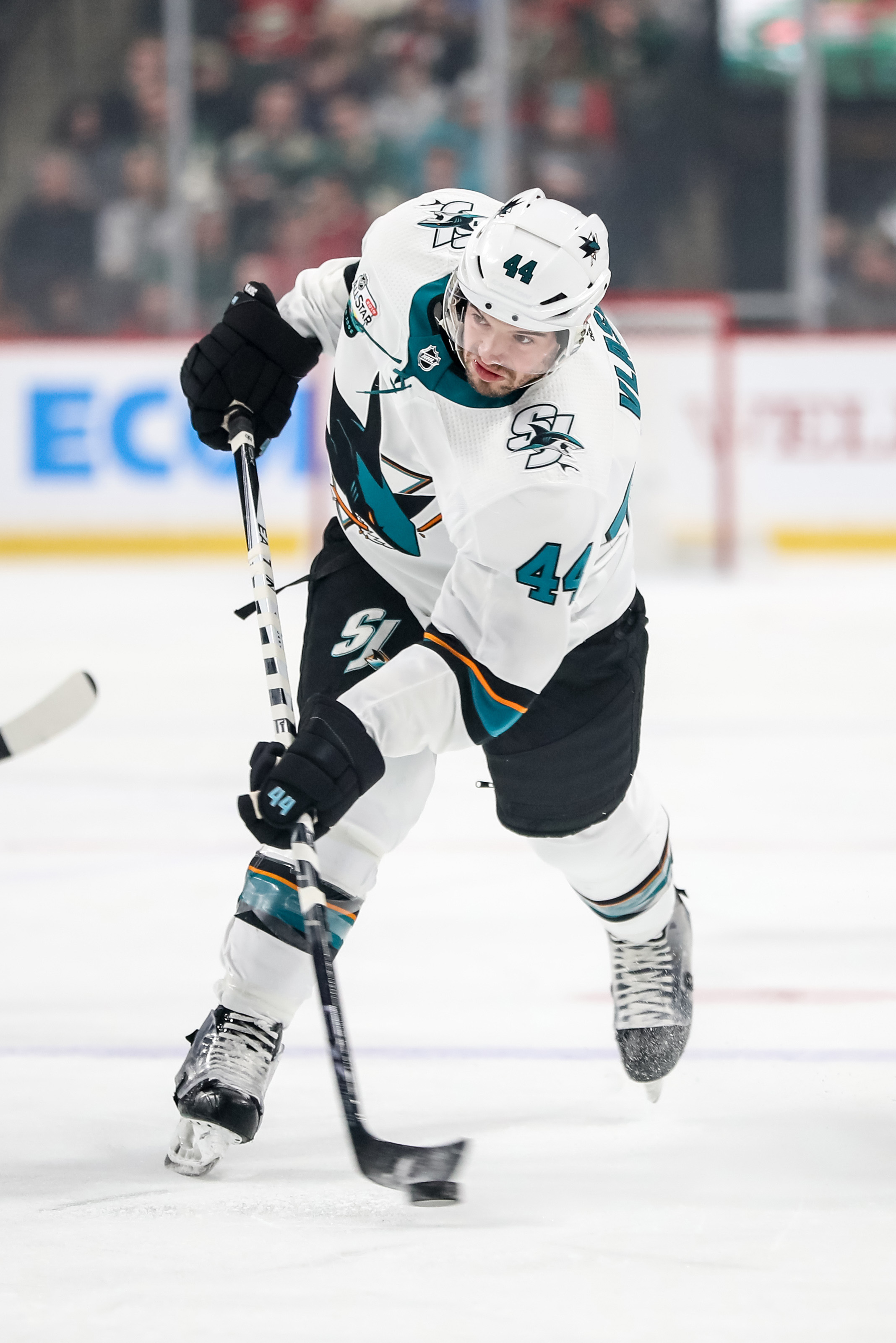 Sharks – San Jose gets their own section here. Marc-Edouard Vlasic (8 years, $56MM) inked an extension that looked pricey at the time and even worse now. He has slowed down considerably over the last couple of years and still has six seasons left on his deal. Martin Jones’ (6 years, $34.5MM) extension hasn’t looked great either. He has posted .896 save percentages in each of the two years of the contract, numbers that are below average for a backup let alone a starter. Both of those contracts are hurting their salary structure and will be tough to get out from under. Meanwhile, Joe Thornton agreed to another one-year extension worth $6.5MM. Injuries limited him to just 47 games that year but he still managed 36 points.
Top AAV Free Agent Signings
(Players changing teams)
Kevin Shattenkirk (NYR) – 4 years, $26.6MM – Shattenkirk was the top prize to get to the open market. It was known that he wanted to go to the Rangers and there were bigger deals that he left on the table to sign with New York. At the time, it seemed like a fortunate turn of events for the Rangers. It wasn’t. He struggled considerably in his two seasons with the team before being bought out where they will incur a $6.083MM cap charge next season for having done so.
Karl Alzner (MTL) – 5 years, $23.125MM – This was the longest contract handed out to a free agent changing teams on day one of free agency in 2017. It looked questionable at the time and worse now. After holding down a regular role with the Canadiens in his first year with them, he has spent the majority of his time since then in the minors. If he’s not bought out this offseason, he’ll likely be back there next season as well.
Justin Williams (CAR) – 2 years, $9MM – While he was 36 in his first season back with the team, the multi-year pact was a good one for both sides. Williams had 51 and 53 points over his two seasons on that deal and served as their captain in 2018-19. That performance wasn’t a huge bargain but as far as comparing it to the other notable deals signed on this day three years ago, it was one of the better contracts signed.
Ones To Forget
Martin Hanzal (DAL) – 3 years, $14.25MM – On the surface, this seemed a little pricey but not too much. At the time, Hanzal was a capable third line center that could move up when injuries arose and overpaying for that was understandable. Unfortunately, back issues have basically made the last two years a write-off (seven games last year, zero this season) while he missed more than half of 2017-18 as well. In the end, they got six goals and six assists out of him for their money.
Dmitry Kulikov (WPG) – 3 years, $13MM – Kulikov’s 2016-17 season was a disaster, to put it gently. Despite that, the Jets went off of his reputation from his time in Florida and handed him a three-year deal that didn’t make any sense from the moment it was signed. Injuries were an issue in the first two years while being in a sheltered role when he did play. Injuries were also a problem this season but he was better, logging 20 minutes a night for the first time with them. The deal ends on a better note than it started but it was still a bad one.
Sam Gagner (VAN) – 3 years, $9.45MM – Gagner had a career year with Columbus heading into free agency with 50 points so from an AAV perspective, this didn’t seem excessive. He was passable in his first year with the Canucks but then spent most of the second season of the deal in the minors. He was dealt to Edmonton during that second season and hung around on the NHL roster for most of it this year but the output was minimal; all told, he had a combined 26 points over the final two seasons which is far from a good return.
Steve Mason (WPG) – 2 years, $8.2MM – He was brought in to mentor/push youngster Connor Hellebuyck but only played in 13 games in the first season of the contract and didn’t fare all that well. With the Jets in a cap crunch the following summer, they had to part with Joel Armia to offload Mason’s contract on Montreal (and they immediately bought him out). The deal worked out well for Mason as he made nearly $7MM to play those 13 games but it’s one to forget for Winnipeg.
Bargains
Evgenii Dadonov (FLA) – 3 years, $12MM – This deal carried plenty of risk since Dadonov’s first tour through the NHL (with the Panthers, no less) wasn’t good. But he lit up the KHL to earn a second chance and has made the most of it, posting 81 goals and 101 assists over the life of the deal in 225 games. He’s shaping up to be one of the more coveted wingers in the upcoming free agent class and even in a weaker market, he’s looking at a nice raise.
There really isn’t another big bargain out of this class as a lot of the signings early on were short-term deals for veterans or role players/minor leaguers signing quickly to get some certainty for the upcoming year. Here are a couple of the veteran deals that panned out relatively well at least.
Ron Hainsey (TOR) – 2 years, $6MM – He wore down towards the end of the contract but he gave the Maple Leafs a little more than 21 minutes a night over the two years while chipping in with a respectable 46 points. The team also praised the impact of his leadership at several times throughout his stint as well. Paying $3MM a year for someone that spent a lot of time on the top pairing is a pretty good return even if he struggled by the end of it.
Ryan Miller (ANA) – 2 years, $4MM – Brought in to be an insurance policy for John Gibson, Miller wound up finishing fifth in the NHL in save percentage (.928) in his first season while posting a Goals Saved Above Average rate of 11.86 in just 28 games, his best mark in nearly a decade. Miller’s performance was more average in his second season but with the backup goalie market going up considerably in price over the last few years, he still gave Anaheim some extra value overall.
Photo courtesy of USA Today Sports Images.
Poll: Who Do You Least Want To See Win The No. 1 Pick?
If Deputy Commissioner Bill Daly’s face didn’t give it away during Friday night’s NHL Draft Lottery, this result was not what the league was expecting or hoping for. In a season when a decorated Original Six franchise, the Detroit Red Wings, had one of the worst campaigns of all-time and the league’s most downtrodden franchise, the Ottawa Senators, had not one but two high-percentage chances of winning the top pick, the No. 1 overall selection will instead go to a to-be-determined “playoff” team.
With the league expanding the postseason field to 24 teams this season as a result of COVID-19 cutting the regular season short, 16 teams will vie for a chance to move through a “knockout round” onto a more standard version of the NHL playoffs. However, now those same 16 teams, all of whom finished above .500 this season, will also be in the running to win the top overall pick and the right to select a generational talent in forward Alexis Lafreniere. All eight losers of the qualifying round will have even odds in a second running of the lottery and one lucky team will get playoff experience and an elite young player this season. No one is going to be truly happy with the result (apart from the lottery winner and their fans of course) but who would you least like to see win the top overall pick?
The Pittsburgh Penguins might be at the top of many peoples’ lists. The franchise has won three Stanley Cups in the last decade and no one would be surprised to see them win again this year, especially given the fact that they finished the regular season in seventh league-wide in points percentage. The Penguins are the best team slated to play in the knockout round, but if by some chance they lose to the Montreal Canadiens, Lafreniere could potentially join Sidney Crosby, Evgeni Malkin, and company in a move that could extend the dynasty for years still to come. The thought of the talented young winger playing beside either of those superstars would be daunting to every other team in the league.
Finishing just behind Pittsburgh with the ninth-best points percentage in the league this year were the Carolina Hurricanes. The club has quietly accumulated a deep, talented roster including a number of elite young players. Carolina is set to contend for titles for many years to come, but Lafreniere would make them truly dangerous. Like the Penguins, the Hurricanes simply do not need the best player in the draft. Keep in mind that they were also one of just two teams to vote against the expanded postseason model, making it especially twisted if they were to reap the benefits of this one-off lottery structure. As good as the Hurricanes were at times this season, they are a popular upset pick in the qualifying round against the New York Rangers and could wind up in the lottery.
The New York Islanders finished just outside the top-ten in points percentage this season and have a deep, experienced team. They also play a sound defensive system. While it works to win games, it isn’t the most exciting strategy and could limit the upside of an explosive offensive talent like Lafreniere. On top of that, the Isles don’t even know where they will be playing their home games next season and have suffered from poor attendance in recent years. It doesn’t exactly sound like an ideal landing spot for an exciting top prospect. Fortunately, the Islanders drew a plus matchup against the Florida Panthers and should advance past the knockout round if they can stick to their smothering defensive game.
Given their luck in the draft lottery over the past decade, it’s pretty gross to think about the Edmonton Oilers being in the running for another No. 1 pick. Likely soon to be the home of two MVP’s in Connor McDavid and Leon Draisaitl, the Oilers landing Lafreniere as their fifth first overall pick and ninth top-ten pick since 2010 would really be something. With an improved NHL roster and a strong pipeline of talent, the Oilers are finally starting to be self-sufficient and don’t need Lafreniere like they might have in recent year. However, if the team can’t hold off a poor Chicago Blackhawks club in the knockout round, maybe they do need the pick.
The Toronto Maple Leafs are another team that is chock full of young talent and it would be an embarrassment of riches (and embarrassing for the league) to see them land Lafreniere. While the team would be in prime shape to finally snap their Stanley Cup drought with the addition, the Leafs are already well on their way and will be contenders for years and years to come even without the top pick. Additionally, should Toronto win the lottery, there would certainly be those that would cry foul about the whole situation. The Maple Leafs face the Columbus Blue Jackets in the qualifying round in one of the more evenly matched of the upcoming series. Toronto is likely the slight favorite, but could just as easily wind up in the lottery.
The current iteration of the Chicago Blackhawks is not good. However, they are also the most dominant franchise of this decade with three Stanley Cups. It’s not east to find many outside of Chicago who have pity for the current Blackhawks given their sustained success of late. With some of those core players still in place and some exciting young pieces starting to build up, the Blackhawks may already be back on the rebound without the assistance of Lafreniere. If they make it a series with the star-studded Oilers, it will be even more evident that they don’t need a top pick to stay relevant. Like the Maple Leafs, some will also be outraged if the Blackhawks win the lottery due to the perceived favoritism shown by the league on a number of occasions in recent years.
If you really want to hear conspiracy theories though, look no further than the possibility of the Montreal Canadiens winding up with No. 1 overall. Yes, the Canadiens have no business in a playoff series and would have been in the standard draft lottery anyway, but there will be plenty who think that it is far too convenient if the Habs win the top pick when a Francophone and Quebec native is the best player on the board. It used to be that Montreal – who don’t forget have more Stanley Cups than any NHL franchise – was able to claim the best French Canadian players in the draft regardless of draft order. If that opportunity should inadvertently occur once again, plenty of people might get upset at the league despite the fact that Montreal technically is the most deserving (read: worst) of the qualifying round teams. The NHL does not want that drama right now and its most decorated club frankly does not need special treatment, perceived or otherwise.
As for the remaining teams, the Winnipeg Jets, New York Rangers, and Vancouver Canucks were all better than their records implied this season and already have elite young players, the Florida Panthers and Arizona Coyotes may not have the fan bases to support a young star like Lafreniere, and I’m sure there are reasons to root against the Nashville Predators, Calgary Flames, and Minnesota Wild as well. If you can think of a valid reason why the Columbus Blue Jackets, who have one playoff series win in franchise history, don’t deserve a stroke of good luck, that’s fine too.
What do you think? Which team do you absolutely not want to see Lafreniere go to, either because of existing talent or complaints of foul play or for any other reason? The reality is that one of these 16 will end up with the best player on the board, which in many ways is already a loss for the league, but it can get much worse from here.
Who Do You Least Want To See Win The No. 1 Pick?
-
Penguins 23% (960)
-
Oilers 20% (819)
-
Maple Leafs 19% (814)
-
Canadiens 9% (362)
-
Blackhawks 6% (253)
-
Rangers 5% (229)
-
Islanders 3% (123)
-
Flames 2% (103)
-
Wild 2% (103)
-
Canucks 2% (79)
-
Predators 2% (67)
-
Coyotes 1% (62)
-
Blue Jackets 1% (61)
-
Jets 1% (60)
-
Hurricanes 1% (42)
-
Panthers 1% (40)
Total votes: 4,177
One Trade The Blackhawks Would Like To Have Back
After decades of fostering a reputation as one of the NHL’s premiere tortured franchises, the Chicago Blackhawks recast their reputation when Jonathan Toews, Patrick Kane, Duncan Keith, and company won the Stanley Cup in 2010. In the decade since, there have been two faces to the Chicago franchise: cup contention on the one hand, and salary cap concessions on the other.
Stanley Cup Championships in 2010, 2013, and 2015 put Captain Serious and the Blackhawks in contention for the franchise of the decade. But the core that helped the Hawks to nine consecutive playoff appearances was costly to keep together. The resultant sell-off of quality players became the other trademark of the 2010s-era Blackhawks. Quality rotations players were sent packing in an effort to manage the salary cap: Dustin Byfuglien, Brandon Saad, Andrew Ladd, Brent Sopel, Nick Leddy, Antti Raanta, Robin Lehner, Andrew Shaw, Artem Anisimov, Artemi Panarin, Kris Versteeg, Niklas Hjalmarsson, Patrick Sharp, Teuvo Teravainen, Bryan Bickell, Troy Brouwer, and the beat goes on. Basically, when all these guys get together at the annual meetup for players traded away from the Blackhawks, they require a larger space than the visiting locker room.
Of course, as a group, they’re still pretty well connected in Chicago. A surprising number of the players GM Stan Bowman has traded away have at some point found their way back to Chicago (Saad, Ladd, Versteeg, Shaw, Oduya, etc.). So before Bowman trades for Nick Leddy again, let’s take a look at the deal that sent the defenseman packing.
The deal – reported here by Chris Kuc of the Chicago Tribune – sent blueliner Nick Leddy (and minor league goalie Kent Simpson) to the New York Islanders after the 2013-2014 season for T.J. Brennan, Ville Pokka, and goaltender Anders Nilsson. Like many of Bowman’s trades post-2010, this one was necessitated by a contract sheet bursting at the seams. Three months prior, Bowman locked Toews and Kane into dueling 10-year deals, and two days after that, the salary cap figure came in from the league for the 2014-2015 season at about $2MM less than expected.
Leddy carried a $2.7MM cap hit at the time with one season before restricted free agency. He would become the first – if much-anticipated – collateral damage of locking their two superstars into long-term deals. He was, by then, a fixture in Chicago, having won the cup in 2013 while serving on the third line of defenders and on the power play for the Hawks. They had to make a move to get under the cap, and with Leddy’s impending restricted free agency, it made a certain amount of sense that he’d be the fall guy.
Assume Bowman figured to move a defender. They could have broken up their second defensive pairing, as both Hjalmarsson and Oduya carried larger cap hits ($4.1MM and $3.375MM, respectively). Both were older than Leddy, considerably so for Oduya (entering his age-32 season). That might have played into Bowman’s thinking, as Oduya wasn’t likely to command as much future salary as Leddy. Hjalmarsson had signed a five-year extension the summer prior, and he routinely put his body on the line to defend the net. He was, if not inner circle in Chicago, then the first guy knocking on the door.
By moving Leddy, Chicago kept their top-two blueline pairings intact. Given Leddy’s youth, there’s an argument to be made that he was the right piece to move because of the value he could return.
That’s where this particular trade falls apart. Goaltender Anders Nilsson signed with Kazan of the KHL the following May, never to play for the Blackhawks. Defender T.J. Brennan barely spent the night in-pocket: Bowman traded him to Toronto a couple of months later for Spencer Abbott. Brennan didn’t accomplish a ton in the league, but he lasted longer than Abbott, who appeared in exactly one game for the Blackhawks. Pokka was the other defender in the deal, and at 26-years-old, he has yet to make an appearance for Chicago, spending the last two seasons in the KHL. Abbott’s 8 minutes and 34 seconds of ice time from January of 2017 – his one shot on goal – make up the entirety of the production received from the Leddy trade.
Granted, Leddy isn’t an all-world defender, but he became a top-pair defender in New York. He can hit the back of the net and bring some punch to the backline, even if his plus/minus scores leave something to be desired. He signed a 7-year, $38.5MM deal that the Blackhawks weren’t likely able to afford – which really puts him on par financially with, say, Brent Seabrook. If keeping Leddy meant trading Seabrook, well, maybe this deal was bound to happen. But again, the real issue with this deal isn’t losing Leddy. It’s that despite the volume return, those pieces added essentially zero long-or-short-term value to the Blackhawks’ roster.
Maybe the deal had to happen to duck the salary cap, and maybe given another chance, Bowman would make the decision to move Leddy again, but one thing is for certain, the Blackhawks would like to have this trade back – even just to try their hand at trading him again. He wouldn’t be the first guy to get traded away from Chicago more than once.
Metropolitan Storylines: New York Rangers
While the stretch run is officially over with the NHL’s declaration that the play-in games won’t be part of the regular season, we still have one division left to get to in our Stretch Run Storylines series. Our focus has been shifted to the Metropolitan Division with an eye on things to watch for in the postseason. Next up is a look at the New York Rangers.
This season, the Rangers were expected to take a step towards moving out of their rebuild, especially after they added winger Artemi Panarin via the richest AAV handed to a winger in league history and picked up blueliner Jacob Trouba from Winnipeg in a trade. However, they were struggling through the first half of the season before a midseason recall helped change their fortunes. Whether or not that recall gets a chance to play in their play-in series against Carolina is among the things to watch for from New York when play resumes.
Zibanejad’s Momentum
Over the final six weeks of the season, who was the top scorer in the NHL? It wasn’t Edmonton’s Leon Draisaitl who was on a tear of his own and may be the Hart Trophy winner. It wasn’t Panarin who had a career year and finished tied for third in the league in scoring. Instead, it was his linemate in center Mika Zibanejad. Over his last 21 games from February 1st to the suspension of the schedule, he had 22 goals and 11 assists. Yes, better than a goal per game pace. (He also led in points per game if you want to look at the stat that way to balance out the differences in games played.)
Zibanejad and Panarin were dominant for large parts of what amounted to the stretch run. While Panarin played at that level for basically most of the year, Zibanejad’s top gear was something that he hadn’t shown with any sort of regularity in the past. While the Rangers are a deep enough team offensively to withstand Zibanejad reverting closer to his normal form (which is still a strong two-way pivot), they’re much more dangerous with that duo lighting it up. In a short series as the play-in round is, that could make or break New York’s fortunes.
Who Starts?
For the first half of the season, New York’s goaltending tandem was Henrik Lundqvist and Alexandar Georgiev. On paper, it wasn’t a bad duo – a proven veteran and a young goalie that has shown flashes of upside in his early career. That didn’t translate to much in the way of success, however, which necessitated the recall of Igor Shesterkin from AHL Hartford. He made an immediate impact and ran with the number one job until the pandemic hit three months ago.
Now, David Quinn has a decision to make on who to start against Carolina. On the surface, Shesterkin would make sense as he had the hot hand before but more than three months have passed since then and it’ll be another month before games resume. He’s still relatively untested in North America with only a dozen NHL games under his belt so putting him into a must-win series does carry some risk.
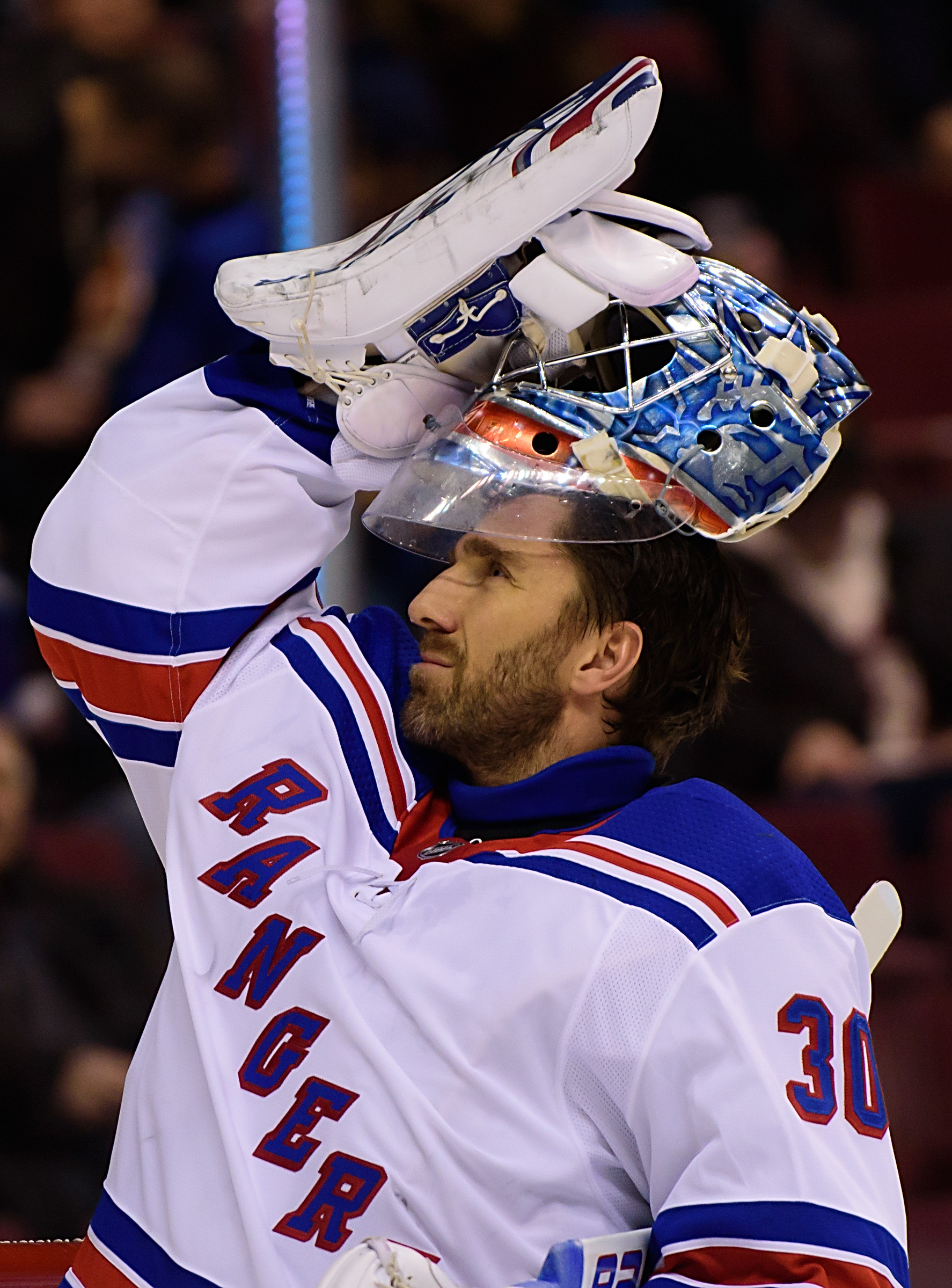 On the other hand, the other options carry some risk as well. Lundqvist came into this season having posted the worst numbers of his career in 2018-19. His numbers were slightly worse this year and he wound up as the third-string option frequently once Shesterkin was recalled. The rest may help the 38-year-old in terms of being rested and ready to play though and he has a very strong track record of success in the postseason. There are also questions about whether there’s a spot for him next season with the two younger goalies likely to be around so giving Lundqvist the first shot would be a nice nod to a well-respected franchise mainstay. But is there room for sentimentality in a short series?
As for Georgiev, he was consistently inconsistent while posting a dip in his save percentage from last season. Having said that, he stole some games for the Rangers and if he’s on, he could be the difference in this series. On the flip side, the risk factor of playing Georgiev is high since if he’s not at the top of his game, he struggles.
There is no simple answer here as all have arguments for and against playing them. As a result, Quinn will certainly be keeping a close tab on his three netminders during training camp. With a limited exhibition schedule, how each performs in practice may very well play a role in determining who starts against the Hurricanes.
RFA Watch
Salary cap space was an issue for the Rangers heading into the year as they more or less forced winger Brendan Lemieux and defenseman Anthony DeAngelo into taking cheap one-year deals. That has worked out quite well for DeAngelo who had a career year offensively with 15 goals and 38 assists in 68 games. A strong showing in the postseason will only his bolster his arbitration case which he is now eligible for.
Then there’s Ryan Strome. The center also had a career season with 18 goals and 41 helpers in 70 contests and will be a restricted free agent with arbitration eligibility. He went into the season viewed as a possible non-tender candidate because of his required $3.2MM qualifying offer. He has outperformed that rate but his future with the team still feels a little bit tenuous but a good performance here could help solidify his fate in New York.
For perspective, the Rangers have more than $67MM committed to 15 players for next season with DeAngelo, Strome, Georgiev and Lemieux all in need of new contracts. With the expectation that next year’s Upper Limit will be at or around the current $81.5MM mark, it will be a tight squeeze to keep all of them, fill out the rest of the roster, and remain under that threshold. That means there may a bit more at stake for those players in this postseason.
Photo courtesy of USA Today Sports Images.
2000 Expansion Draft Retrospective: How Columbus And Minnesota Fared (Poorly) Versus Vegas
Twenty years ago yesterday, the Columbus Blue Jackets and Minnesota Wild were taking their first official steps as NHL teams, engaging in the 2000 NHL Expansion Draft. Yet the additions of the 29th and 30th NHL teams goes down as an utterly forgettable event in the annals of NHL history, given just how poor the results were. Fast-forward 17 years and the NHL finally adds team No. 31, the Vegas Golden Knights. Recency bias aside, the 2017 NHL Expansion Draft and especially the season that followed will have a firm foothold on their place in league history. The vast differences between these two drafts, both in format and outside factors, help to explain why the infant Golden Knights already seem to be more established in year three than the Blue Jackets and Wild, facing down their twentieth seasons in 2020-21.
Entry Fee
Columbus and Minnesota: $80,000,000
Vegas: $500,000,000
Like most things in pro sports, this story starts with money. The Blue Jackets and Wild paid just $80MM in 2000 to enter the NHL, not exactly a premium price even 20 years ago. As a result, their introduction to the league was never intended to be smooth. The odds were stacked against them in their inaugural seasons and beyond as they had to fight hard for their place in the league. The Knights on the other hand paid over six times that amount and the 2021 Seattle expansion team is set to pay even more, a record $650MM. With that comes more cushy conditions upon entry, allowing for immediate success to be more realistic.
Recent Expansion
Columbus and Minnesota: Nashville Predators (1998), Atlanta Thrashers (1999)
Vegas: None
The Blue Jackets and Wild also entered the league during a frenzy of expansion. The NHL added nine teams between 1990 and 2000 and Columbus and Minnesota were the unfortunate pair to bring up the rear. Talent was spread thinner than it ever had been before and Nashville and Atlanta, added in the previous two years, were completely exempt from the Expansion Draft. The expansion team thus drafted 26-man rosters. In contrast, when Vegas entered the league the NHL had not seen expansion in the better part of two decades. No one was exempt and talent had been replenished across the league, with Vegan able to pick from each of the 30 teams. Talent level continues to not be a concern approaching the 2021 Expansion Draft, in which Seattle will also have 30 teams to choose from other than Vegas, who also won’t receive a share of their entry fee.
Protection Schemes
Columbus and Minnesota: Nine forwards, five defensemen, and one goalie or seven forwards, three defensemen, and two goalies
Vegas: Seven forwards, three defensemen, and one goalie or eight skaters and a goalie
Nine forwards, five defenseman, and a goalie?! It’s no wonder that most people can’t remember the players selected by the Wild or Blue Jackets. They were either fourth-liners, bottom-pair defensemen, or minor leaguers. On top of that, the team were also competing with one another for these scraps. The secondary option in 2000 became the primary option for Vegas in 2017 minus a second goalie. This guaranteed that nearly every team would expose a top-nine forward, a top-four defenseman, and an experienced goalie.
Results
Columbus: G – Frederic Chabot, Dwayne Roloson, Rick Tabaracci; D – Radim Bicanek, Jonas Junkka, Lyle Odelein, Jamie Pushor, Tommi Rajamaki, Bert Robertsson, Mathieu Schneider, Mattias Timander; F – Kevyn Adams, Kevin Dineen, Dallas Drake, Ted Drury, Bruce Gardiner, Steve Heinze, Robert Kron, Sergei Luchinkin, Barrie Moore, Geoff Sanderson, Turner Stevenson, Martin Streit, Dmitri Subbotin, Jeff Williams, Tyler Wright
Minnesota: G – Zac Bierk, Jamie McLennan, Chris Terreri, Mike Vernon; D – Artem Anisimov, Chris Armstrong, Ladislav Benysek, Ian Herbers, Filip Kuba, Curtis Leschyshyn, Sean O’Donnell, Oleg Orekhovsky; F – Michal Bros, Jeff Daw, Jim Dowd, Darby Hendrickson, Joe Juneau, Sergei Krivokrasov, Darryl Laplante, Steve McKenna, Jeff Nielsen, Stefan Nilsson, Jeff Odgers, Scott Pellerin, Stacy Roest, Cam Stewart
Vegas: G – Jean-Francois Berube, Marc-Andre Fleury, Calvin Pickard; D – Alexei Emelin, Deryk Engelland, Jason Garrison, Brayden McNabb, Jon Merrill, Marc Methot, Colin Miller, Griffin Reinhart, Luca Sbisa, David Schlemko, Nate Schmidt, Clayton Stoner, Trevor van Riemsdyk; F – Pierre-Edouard Bellemare, Connor Brickley, William Carrier, Cody Eakin, Erik Haula, William Karlsson, Brendan Leipsic, Oscar Lindberg, Jonathan Marchessault, James Neal, Tomas Nosek, David Perron, Teemu Pulkkinen, Chris Thorburn
Kinda one-sided isn’t it? Sean O’Donnell, Filip Kuba, and Darby Hendrickson were some of the best players available to Columbus and Minnesota, while the vast majority of Vegas’ roster was at the very least as accomplished as that trio when they were selected. No one taken in the 2000 Draft can even be remotely compared to established players in their prime like Neal, Perron, and Fleury, young scoring forwards like Marchessault and Karlsson, or up-and-coming defensemen like Schmidt and Miller. The Knights’ entire draft roster also had NHL experience or earned it in their first two seasons, while a number of Blue Jacket and Wild picks never even saw the light of day.or
Draftees To Play With Team
Columbus and Minnesota: 11 apiece
Vegas: 19
To make matters worse, some of the most well-known players selected by the Blue Jackets and Wild – Mathieu Schneider, Mike Vernon, Dallas Drake – never played a game for the franchise. This was by design, as the teams opted to take the select players specifically to allow them to walk as free agents and recoup the compensatory picks, but it sill added to the overwhelming lack of player value selected in 2000. In 2017, the Golden Knights managed to retain more than half of a 30-man roster that was far too large to ever retain completely. In fact, the only player who did not join Vegas in their inaugural season or was not traded away was goalie JF Berube.
First Playoff Appearance
Columbus: 2009
Minnesota: 2003
Vegas: 2018
So how did these drastically uneven expansion results play out? The Wild made their first playoff appearance in their third season with some holdovers from the draft and even made it to the Western Conference Final. However, they finished last in the Northwest Division in the two seasons prior and subsequent to this underdog run. The Blue Jackets did not make the playoffs for the first time until 2009, nearly a decade into their existence. By then, there was no trace of their bleak expansion draft roster. The franchise has just six playoff series appearances in their history, with their first win coming just last season. Vegas on the other hand turned the expansion trope on its head with an incredible run in 2018, fueled almost entirely by draft selections. The team then qualified for the playoffs again last season and are a top-four seed in the West in the upcoming expanded postseason.
First Stanley Cup Final Appearance
Columbus and Minnesota: None
Vegas: 2018
The Golden Knights made it as far as any team can go without winning the Stanley Cup in their very first season. It was unheard of success for an expansion team in any sport and the structure and surrounding of the 2017 Expansion Draft played a major role. The Blue Jackets and Wild, limited for years by their own expansion restrictions, have never made the Stanley Cup Final and entering their twentieth season in 2020-21 don’t look particularly likely to do so next year either. These is a very strong likelihood that Vegas returns to the Final and possibly wins a Stanley Cup before Columbus or Minnesota and Seattle may very well share those same odds.
Twenty years later, the Blue Jackets and Wild are still struggling to establish themselves as top teams in the NHL and their struggles can be traced all the way back to the 2000 Expansion Draft. So while the anniversary can be celebrated for the formal additions of the franchises to the NHL – bringing pro hockey back to Minnesota and spreading the game to a market that has wholly embraced it in Columbus – it should also be remembered as the poorly-constructed entry device that limited these teams from the get go. The 2000 Expansion Draft will never be remembered for any individual players that were selected, but instead the complete lack of impact players selected and the factors that contributed to that result.