
Offseason Keys: New York Rangers
As teams are eliminated from the Qualifying Round, it means that the offseason has arrived for several more squads. Having covered the teams that weren’t a part of the NHL’s return, we shift our focus to the ones that have been ousted. Next up is a look at the Rangers.
It was a year of mixed expectations for New York. Even with the additions of Artemi Panarin and Jacob Trouba over the summer, the belief was that they still weren’t quite ready to contend yet. Most of the regular season played out like that but the recall of Igor Shesterkin got them rolling to the point where they were a popular pick to make some noise in the playoffs. However, it didn’t play out like that as they were swept handily by Carolina. At the end of the day, the result was close to their preseason expectations but their year certainly ended on a sour note. Here is what GM Jeff Gorton will be looking to accomplish over the next few months.
Add An Impact Left Defenseman
The Rangers are fortunate to have considerable depth on the right side of their back end which is usually the tougher of the two sides to try to fill. Unfortunately for them, their depth on the left side isn’t as sharp. Over their series against Carolina, their left side defenders were Marc Staal, Ryan Lindgren, and Brendan Smith. Staal has been a speculative buyout candidate for a couple of years now, Lindgren is a rookie, and Smith is another frequent buyout option that happened to be playing on his off-side. Of those, Lindgren is the only one that is part of the long-term future.
There are some prospects on the horizon. 2018 first-round pick K’Andre Miller has turned pro while Libor Hajek got into 28 games this season, albeit in a limited role. But neither of them are ready to jump into a big minute role just yet and in a perfect world, none of the ones they used against the Hurricanes would be getting heavy minutes as well.
Their salary cap situation (more than $68MM in commitments already with a few notable RFAs of note) is going to make adding anyone of significance particularly challenging this offseason but this is an area that Gorton is going to want to address. They can hope all they want that their youngsters can eventually play into those roles but it may be a few years before they develop enough to be ready to play heavy minutes in the NHL. They need someone to bridge that gap between now and then, especially if they intend to get back into playoff contention for next season so even though it will be tough to accomplish, this is a hole that needs to be filled.
Solve The Goalie Logjam
There’s nothing wrong with having goalie depth but carrying three goaltenders on an NHL roster is a tricky field to navigate for any extended period of time. Once Shesterkin was recalled, that’s the situation they were in which meant one of Henrik Lundqvist or Alexandar Georgiev had to be a healthy scratch. Shesterkin and Lundqvist are signed for next season already while Georgiev is a restricted free agent. Keeping all three of them would be great from a depth perspective but it may be a luxury that they simply cannot afford.
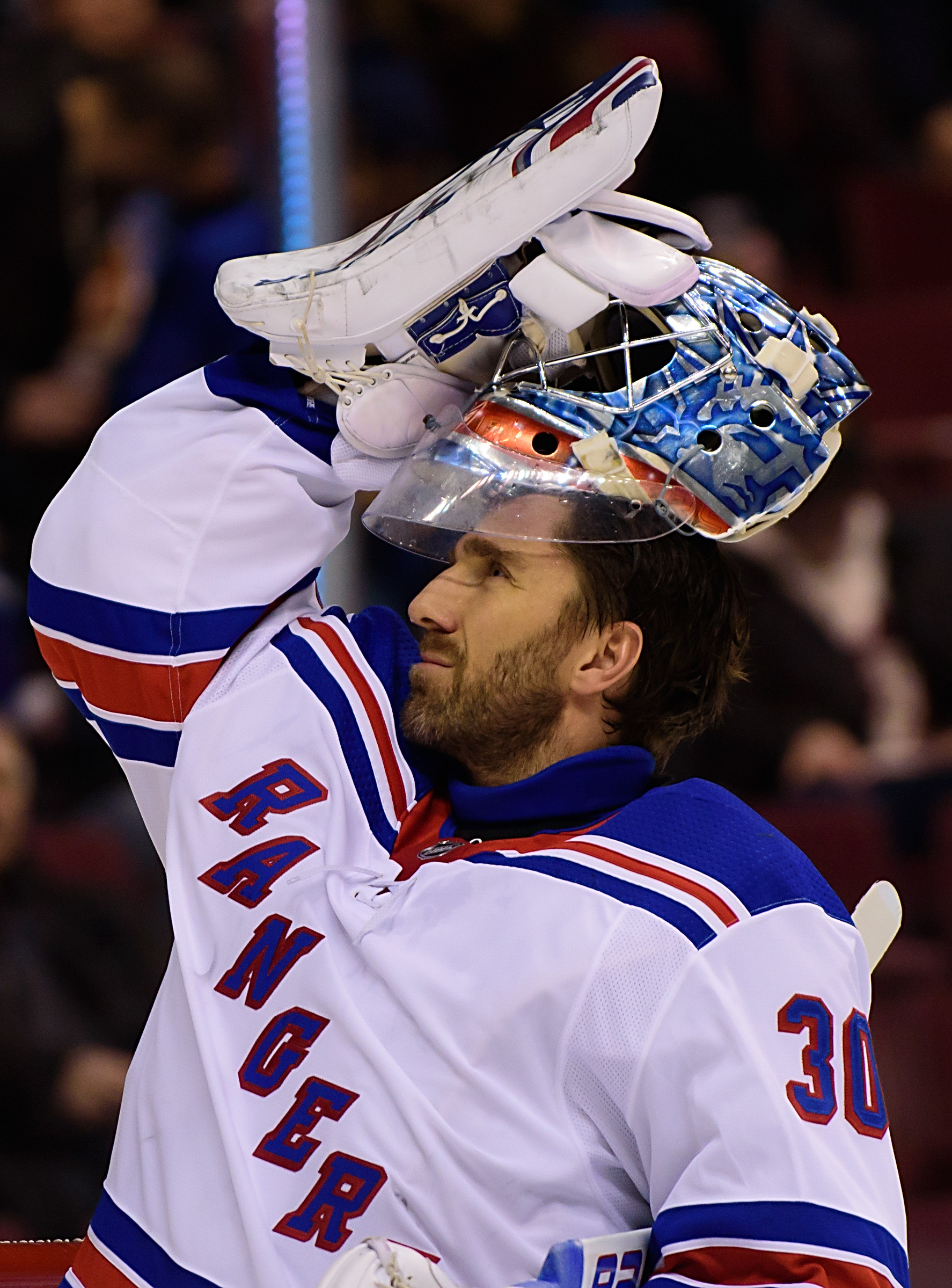 So, which one moves on? It’s safe to say that Shesterkin is staying put so that leaves Lundqvist and Georgiev. Lundqvist has been a fixture in New York for the last decade and a half and is their franchise leader in games played, wins, and saves. He also has a cap hit of $8.5MM which is on the high side for a starter, let alone a backup. The 38-year-old has declined a chance to be traded in the past and has said he wants to wrap up his career with the Rangers. However, with their cap situation, can they justify keeping him? A buyout wouldn’t save a ton of cap space next season (he’d still carry a $5.5MM cap charge for 2020-21 and a $1.5MM hit for 2021-22) but $3MM would give them a bit of wiggle room at a time where financial flexibility is a premium. But is that how they want to part ways with a franchise icon?
The other option is trading Georgiev. His entry-level deal is coming to an end and he’ll be looking for a sizable raise on his current sub-$800K AAV with 77 NHL games under his belt already. There are teams that will be looking for a young goaltender with some upside and there won’t be many of them available on the trade market so Gorton could get a reasonable return for him. On the other hand, if they move Georgiev now, then they’ll be looking for a new backup in 2021 once Lundqvist’s deal expires. If New York is content with a Shesterkin-Georgiev tandem for the long-term future though, this wouldn’t the most desirable of routes to take.
On the surface, it certainly appears as if Lundqvist’s time with New York is coming to an end as carrying three goalies for all of next season doesn’t appear to be something that they’ll be able to justify doing.
Determine Core RFA Plans
A pair of Rangers had career years at ideal times as they head into restricted free agency with a chance at getting a big raise, even in the current salary cap landscape. However, there are questions surrounding both of them as well.
Ryan Strome found some early chemistry with Panarin and rode it to a stellar year, one that saw him collect 59 points and log an impressive 19:35 per night of ice time. At 27, he’s a year away from UFA eligibility which complicates things somewhat. Is this a sign of this to come or a mirage? Is it worth signing him long-term if they believe Filip Chytil is ready to move up into the second center role behind Mika Zibanejad? If they have hesitations about his long-term future with the team, a trade may make more sense as a short-term contract that allows him to get to unrestricted free agency in the next year or two that sees him walk for nothing isn’t ideal. Having said that, his history of up and down production may limit the number of potential suitors.
Then there’s Anthony DeAngelo. Last offseason, the Rangers held the hammer when it came to signing him as the defenseman didn’t have arbitration rights and a limited track record. That yielded a one-year, $925K contract. This season, he put up an eye-popping 53 points while logging over 19 minutes per game. That alone is worth a huge raise and now, he can file for arbitration. All of a sudden, he holds the hammer. How much will his new deal cost? And with Trouba signed long-term and Adam Fox (both right-shot defenders) under team control through 2024-25, do they want to make that commitment or would they be better off moving him to fill a hole on their roster (such as their LD vacancy)?
If they do wind up re-signing both of them, their cap space will largely be eliminated which will all but guarantee that they will have to make some deletions from their roster. Both Strome and DeAngelo were core players for New York this season but when it comes to them, there is still plenty of uncertainty which makes their cases worth keeping an eye on as the decisions that are made will ultimately shape their offseason plans.
Photo courtesy of USA Today Sports Images.
Offseason Keys: Buffalo Sabres
The offseason has arrived for at least seven teams that were not invited to take part in the Qualifying Round that has now started. With that in mind, our Offseason Keys series is underway for the teams that are on the outside looking in. Next up is a look at Buffalo.
This season was certainly a disappointing one for the Sabres. After bringing in a new head coach and bolstering their depth, the results weren’t much different than in previous years with another playoff miss. After originally giving Jason Botterill a public vote of confidence, ownership decided to make a change at GM, promoting Kevyn Adams to the role despite minimal front office experience. The team has already made significant cuts to its front office and while making some moves to replace those that were let go (such as a new AHL coaching staff), Adams will have several things surrounding the Sabres on his plate this summer.
Looking Forward
Generally speaking, new general managers don’t often get the cleanest of canvasses to work with as they look to put their stamp on the team. Adams is in somewhat of a unique situation when it comes to his forward group as Buffalo has just four regulars signed for next season in Jack Eichel, Jeff Skinner, Marcus Johansson, and Kyle Okposo, the latter of which is likely earmarked for a fourth line or reserve role.
This isn’t just a case of having a bunch of restricted free agents either as they have more unrestricted free agents than restricted free agents. It’s a safe bet that three of those RFAs will be brought back in Sam Reinhart (whose post-bridge contract is going to be one of the more interesting ones of the offseason), Victor Olofsson, and Dominik Kahun. But even with them eventually getting signed, that’s only seven forwards under contract which leaves up to seven roster spots available.
Of their unrestricted free agents, there aren’t any must-sign players although if the price is right, they’ll likely look at what it would cost to keep Zemgus Girgensons and Johan Larsson around. Having said that, losing one or both of them won’t drastically change their fortunes either.
Some of those open spots will likely be earmarked for youngsters. Casey Mittelstadt will assuredly get another look while their top 2019 pick in Dylan Cozens may get a shot as well. But even if those two make the team, there will be room to add.
Buffalo has less than $50MM in commitments for next season and even when they re-sign all of their restricted free agents, they will have a fair bit of room to play with in an offseason where cap space is going to be at a premium. The Sabres will be well-positioned to try to add an impact forward or two via free agency and if that falls through, they should be able to take advantage on the trade market. Many new general managers are hamstrung with limited flexibility when they take over but Adams will be the exception and will have a good chance to change up their forwards pretty quickly.
Determine Ullmark’s Future
Last summer, Buffalo decided to kick the can on deciding Linus Ullmark’s long-term future with the team down the road, inking him to what amounted to a second bridge deal, a one-year pact worth $1.325MM. Given that he only had one full year of NHL experience under his belt, the decision was certainly justifiable.
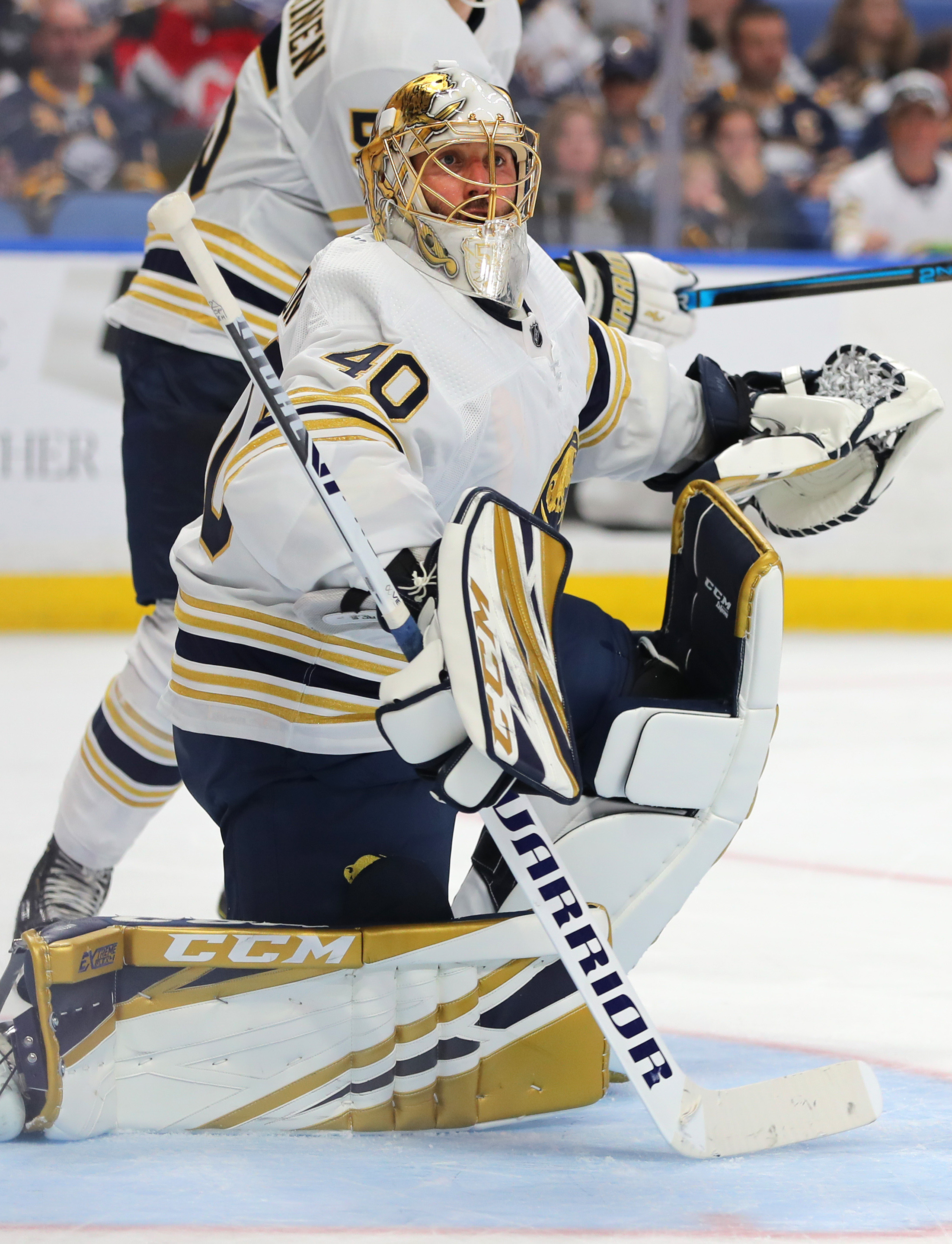 Punting that call again is no longer an option though. The netminder is now one year away from UFA eligibility so another one-year deal just sets him up to walk away. Adams is going to have to decide if Ullmark is a goalie that they want to build around pretty quickly.
Given his limited NHL track record (97 games over parts of five seasons), it would be difficult to make the case that he has shown enough to be their undisputed starter of the future. On the other hand, Ullmark posted a more than respectable .915 SV% with a 2.69 GAA in 34 games this season. On a non-playoff team, that’s pretty good. At a minimum, those are pretty good numbers for someone in a platoon role which is basically the role he has held the last two years.
At 27, is that a role that Ullmark wants to lock himself into for several more seasons, even with Carter Hutton only a year away from free agency of his own? If he envisions himself as a starter, he may prefer another short-term deal to let him test the open market quicker. On the other hand, with less than 100 games of experience, a multi-year commitment at a decent-sized raise on his deal from this season would give him some security that he hasn’t had before.
The Sabres have a promising young goalie in the system in Ukko-Pekka Luukkonen but he’s still two or three years away from being ready for the NHL. Is Ullmark the right one to bridge the gap? Adams will have to decide that over the next few months.
Dahlin Extension
Based on the new salary cap situation, it’s not shaping up to be a fun offseason for many pending free agents. But what about those who will be entering the final year of their deals and are now eligible for a contract extension? It certainly stands to reason that teams may not be as willing to hand out a big-ticket contract to players in those situations as well.
Rasmus Dahlin appears to be a particularly interesting case study for players that can sign an extension. The 2018 top pick actually saw his ice time scaled back this season under Ralph Krueger by nearly two minutes per game but it appeared to work for him as he nearly matched his rookie point total this season despite playing in 23 fewer games.
Between that and the expectations of him continuing to develop into an eventual franchise defenseman, this would normally be the recipe for a long-term deal getting done relatively quickly as other number one picks have done. But that was then and this is now. Is Buffalo going to be as willing to hand him a mammoth contract? Will Dahlin prefer a bridge deal in the hopes that the cap picture will be improved once the next television contract is completed? That’s a path that a lot of players will likely take in the coming months.
One element that Buffalo has that many other teams don’t is cap space. They have the ability to ink Dahlin to a long-term deal now without it really creating a huge impact on their long-term cap picture. Presumably, it will take more than what Florida gave Aaron Ekblad, a former top pick himself; the 24-year-old signed an eight-year, $60MM deal after his sophomore season which is where Dahlin is now. (Based on Ekblad’s cap percentage at the time the deal was signed, an equivalent rate would be roughly $8.7MM per season instead of $7.5MM.) There’s a roadmap to getting a contract extension done with Dahlin but will the new marketplace give one or both sides pause? We’ll find out soon enough.
Photo courtesy of USA Today Sports Images.
Offseason Keys: Anaheim Ducks
The offseason has arrived for at least seven teams that were not invited to take part in the Qualifying Round that has now started. With that in mind, our Offseason Keys series is underway for the teams that are on the outside looking in. Next up is a look at Anaheim.
This season was supposed to be somewhat of a transition year for the Ducks. More roster spots were earmarked for younger players while Dallas Eakins, their AHL coach, was brought in behind the bench. In that sense, the end result (a sixth place finish in the Pacific Division) wasn’t too surprising. GM Bob Murray has some work to do to reshape this roster but there are some challenges that lie ahead. Here is a look at what they’ll be looking to accomplish this offseason.
Add Scoring Help
Let’s dive right into their biggest problem in recent years. Anaheim simply has a hard time getting pucks in the net. While there’s some hope that youngsters like Troy Terry, Sam Steel, Max Jones, and Max Comtois will be able to be reliable producers, they combined for 23 goals in 200 games this season. They have hopes for the recently-extended Sonny Milano and in-season pickup Danton Heinen but both of them have been hit or miss offensively over their young careers as well. There is some upside out of this group but none of them are really going to be able to shoulder the load; they’re more complementary players.
The problem for the Ducks is that their veterans can also be placed in that category. Adam Henrique, Rickard Rakell, Ryan Getzlaf, and Jakob Silfverberg were their top four scorers this season but the highest point total out of that group was 43. Granted, the early shutdown makes that number look a little worse than it otherwise would have been but Henrique didn’t crack the top 100 in points league-wide. It’s hard to have success when your top players are producing at a second line rate at best.
Murray needs to be on the lookout for scoring help and could stand to add multiple upgrades to his top six. Unfortunately, accomplishing that feat is going to be quite tricky. Anaheim already has nearly $79MM in commitments to 18 players for next season with Corey Perry’s buyout costing them a whopping $6.625MM on the books. With a flat $81.5MM salary cap, that doesn’t give them much room to work with. Yes, Ryan Kesler’s $6.875MM will be heading for LTIR which gives them some wiggle room but they’ll be dipping into that simply to fill out their roster let alone add any upgrades. They’re not in as dire straits as some teams are when it comes to the cap but finding a way to add an impact threat is going to be a challenge but it’s one that needs to be met.
Getzlaf Extension Talks
Teams are now allowed to work on extensions for players whose deals are expiring in 2021 and Anaheim has a prominent one of those in Getzlaf. His agent Gerry Johansson acknowledged last month that his focus at this point is working on extensions over deals for players on expiring contracts. With Getzlaf stating before the trade deadline that he had no desire to chase a Stanley Cup elsewhere, this would seem like a perfect opportunity to try to get a new contract done.
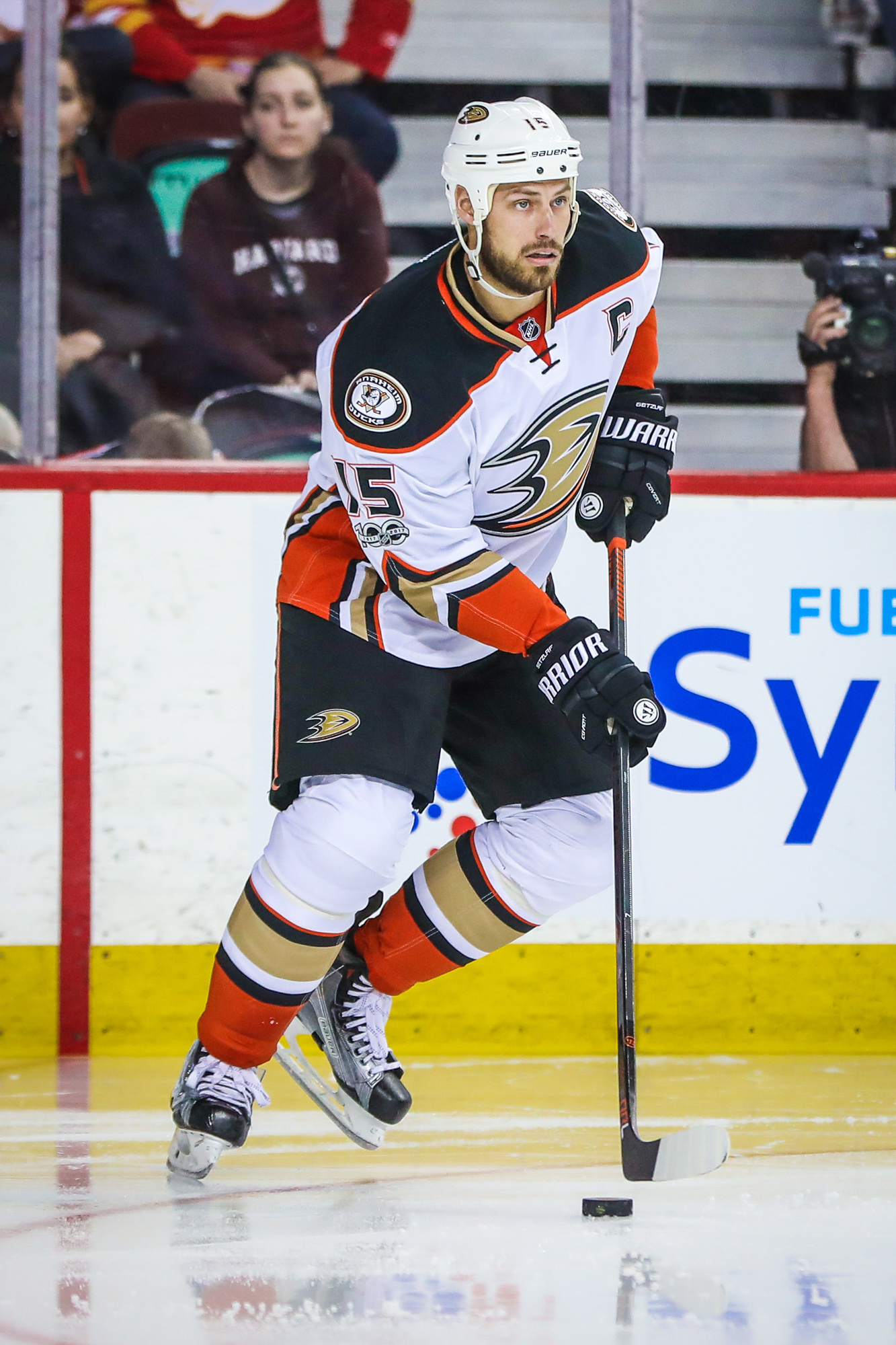 The question will be what the right deal will be. In his prime, Getzlaf was living up to his $8.25MM cap hit but his numbers have dipped the past two years. His days of being an ideal number one center are over so a notable dip in pay is forthcoming, one that is exacerbated with the Upper Limit of the salary not expected to move up much over the next few years.
Considering Getzlaf will be 36 when his new deal begins, term will also be a big factor. It’s reasonable to think that he’ll want this to be his last contract so he’ll be looking for a multi-year pact. 35-plus deals carry some extra risk (unless they’re structured equally in terms of salary each year, a new CBA wrinkle) so that’s something that Anaheim will be keeping in the back of their mind as well.
Getting a deal with their captain done sooner than later would also give them some more certainty when it comes to their future spending and remove any possible distraction around Getzlaf getting asked about the possibility of moving on. It certainly appears as if there’s going to be mutual interest in getting something done so with there being another three months before they’ll have a shot at game action again, this seems like a good time to try to hammer out a deal.
Find A Backup Goalie
Regardless of what they try to do to upgrade up front, Murray will have to leave some money set aside for a backup goalie as veteran Ryan Miller is slated to become an unrestricted free agent in October. At the age of 40, it’s far from a guarantee that he’ll want to return and with the year he had (his .907 SV% was the lowest of his career over a full season), the Ducks may want to turn their focus elsewhere. Internally, Anthony Stolarz is an option but he is probably best served as a third-string option at this stage of his career.
There’s also the Seattle expansion consideration. Right now, the only goalie under contract that’s eligible for exposure is John Gibson and it’s safe to say that they’re going to want to protect him.
Accordingly, they may be among the teams that look to sign a goalie to a two-year (or longer) deal in order to satisfy the mandatory exposure requirement which likely takes Miller out of consideration. That’s not a great market to be in, however, as quite a few teams are in that situation and it stands to reason that Anaheim won’t want to spend much money on a number two option given that Gibson is their surefire starter and that their cap space is limited. After having Gibson and Miller as a tandem for the last three years, a change to that is probably on the horizon.
Photo courtesy of USA Today Sports Images.
Offseason Keys: Los Angeles Kings
The offseason has arrived for at least seven teams that were not invited to take part in the Qualifying Round that’s slated to begin in early August. With that in mind, our Offseason Keys series is underway for the teams that are on the outside looking in. Next up is a look at Los Angeles.
Things didn’t go well for the Kings in 2018-19 so they made another coaching change before the start of this past season as they brought in veteran Todd McLellan to try to steer them in the right direction. It didn’t happen. While they managed to avoid finishing last (by a single point), they still had significant scoring problems and there are plenty of areas to try to improve on this offseason. Here is an overview of what GM Rob Blake should be looking to accomplish.
Add Scoring Help
Given that they finished 30th in the league in scoring for the second straight season, this seems like a good place to start. Los Angeles was hoping for their high-priced veterans to carry the load but it didn’t happen. Anze Kopitar barely broke 20 goals, Dustin Brown’s output dipped for the second straight season following his career year in 2017-18, and Jeff Carter has tailed off considerably in recent years. Ilya Kovalchuk was supposed to help in that regard but he didn’t even make it to midseason before his contract was terminated outright, leaving a $6.25MM dead cap charge on the books for next year. Tyler Toffoli had a bit of a rebound season before being traded to Vancouver near the trade deadline.
Of their full-timers, their lone pleasant surprise up front was Alex Iafallo who built off of his sophomore campaign to post career numbers. However, he also averaged nearly 19 minutes a night but in a perfect world, he’s more of a secondary option over a top liner. His playing time was a microcosm of their situation up from though – there just weren’t really any other options for that spot.
That’s something that needs to change. Yes, there are some promising prospects in the system and they’ll wind up with another one with the number two pick in October’s draft but none of their youngsters are ready for top six duty right away. By the time they are, Kopitar will need a lighter workload. Accordingly, they need to add a player or two that’s capable of helping out not only in the short term but a few years down the road as well. Whether that comes via free agency or trade, that’s something Blake should be looking to bring in, even if he feels they’re not quite ready to push for a playoff spot right away.
Rebuild The Back End
It was only the 2017-18 season when the Kings were the stingiest team in hockey. The goaltending was sharp and it had the benefit of playing in front of a deep defensive corps. Today, only one player from their top four that season remains and that’s Drew Doughty. Meanwhile, Jake Muzzin, Alec Martinez, and Derek Forbort have all been moved in trades for prospects and draft picks.
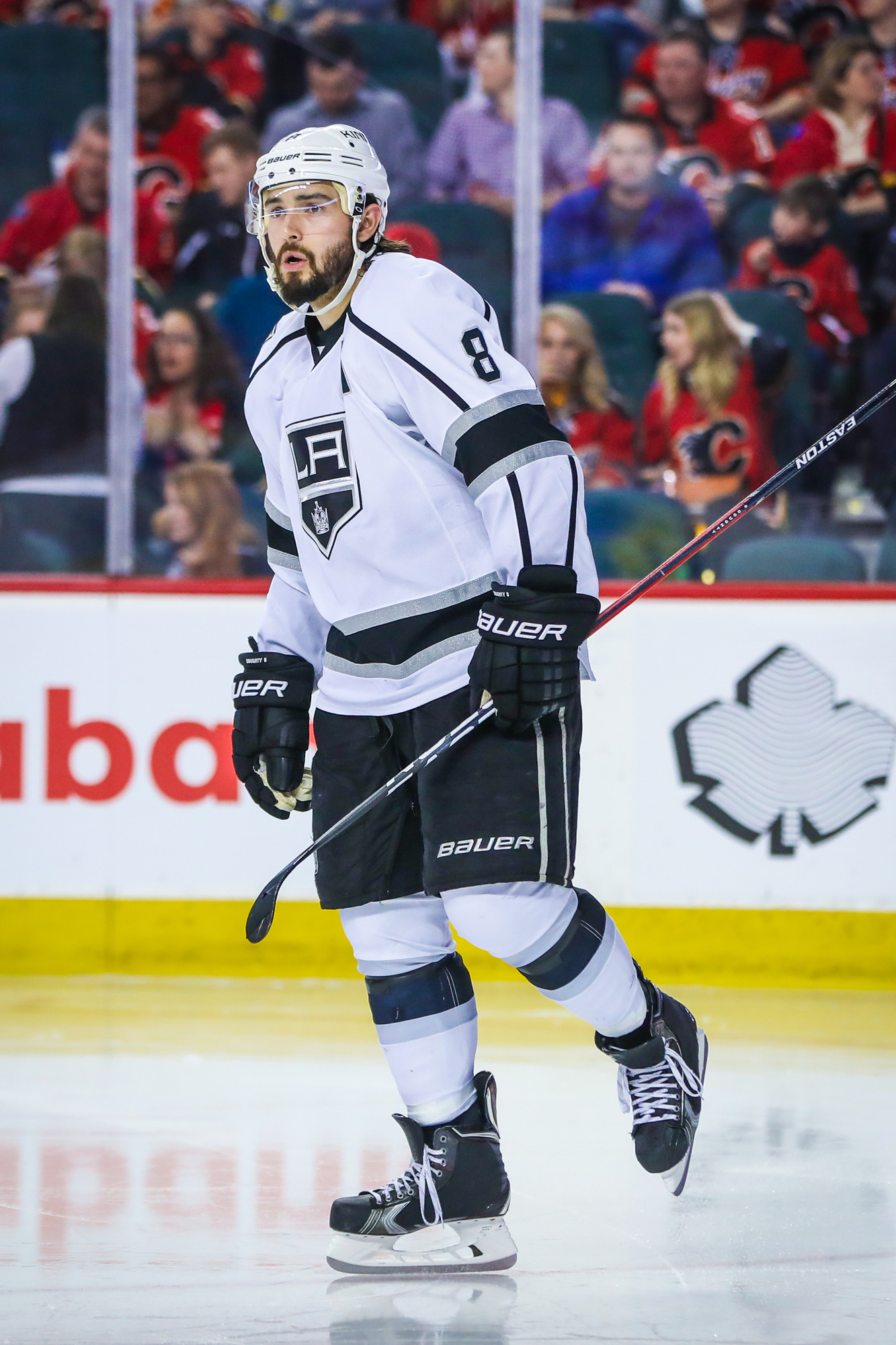 Not surprisingly, the defense corps that finished the season isn’t the most recognizable. Joakim Ryan, Sean Walker, Matt Roy, Ben Hutton, and Kurtis MacDermid were the other blueliners to play at least 10 games for Los Angeles this year and while they all have shown enough to warrant a spot on other back ends around the league, they’re all suited for roles that are lower on the depth chart, not one that sees one of them partnering with Doughty on the top pairing.
The good news is that there is some help in the system – Tobias Bjornfot, Kale Clague, and Michael Anderson have all shown some promise in their limited NHL action this season. Eventually, the Kings should get some help from that group. The bad news is that they’re still a little while away from being NHL-ready. There is a distinct need to add a capable veteran (if not more than one) to allow the youngsters to avoid being thrown to the wolves and to help stabilize the back end. The emphasis should be adding someone on the left side, in particular. Rebuilding or not, that’s still a need that should be filled.
Utilize Cap Room
Even with Kovalchuk’s dead money on the books, the Kings have a fair bit of money to work with as they sit nearly $21MM under next year’s cap with 16 players already under contracts. There are no major players in need of a new contract so Los Angeles has some cap space to use. Of course, they have several notable holes to fill with that money.
The cap space should have them in the mix for players like Taylor Hall, Alex Pietrangelo, or Torey Krug if they make it to the open market although with many teams likely looking to shed payroll over the coming months, Blake could opt to try to go that route as well. Adding more quality prospects and draft picks is never a bad thing for a rebuilding team while the veterans they bring in would likely still represent an upgrade. Better still, any player brought in via that route would basically be a bridge player to allow some of their prospects to stay in the minors and develop a little while longer (assuming there is hockey at the lower levels next season).
Cap space is going to be more valuable than ever this offseason (and likely for a year or two beyond as well). Los Angeles has plenty of it which puts them in a good spot to take advantage of the more restricted market. With several holes to fill on their roster, the timing couldn’t be much better.
Photo courtesy of USA Today Sports Images.
PHR Mailbag: Team Finances, Senators, Playoff Upsets, Draft
Topics in this edition of the PHR Mailbag include financial sustainability during the pandemic, what Ottawa might do with their multitude of draft picks, potential upsets in during the NHL’s return, and the top offensive threat beyond the potential top two picks in the draft. If your question doesn’t appear here, look back at last weekend’s mailbag.
Gbear: How long can the NHL realistically stay financially viable in all of its markets if fans cannot attend games in person even heading into the 20/21 season and thus not able to provide NHL teams with gate revenues?
I think we’re a while away from teams starting to show significant financial cracks. While the NHL has shown a willingness to get back to playing now without fans, there’s a big difference between biting the bullet to finish the season and award the Stanley Cup and starting up 2020-21 without fans. I don’t sense there’s a willingness from a lot of owners to try to get next season going in front of empty buildings. That’s not viable for even the teams with the best financial backing.
If there aren’t any games for a while, the payroll costs are naturally going to be significantly reduced. As part of the new CBA Memorandum of Understanding, teams will be required to pay 8.1% (15/186ths) of a players’ salary by the end of October if there aren’t any games scheduled before November 15th and it appears we’re heading in that direction. But until there are games to play, that’s it for player payroll which is by far the steepest cost.
This situation is far from sustainable and is hardly ideal which is why this postseason is going to be a one-off, not a sign of things to come. Once it finishes, I wouldn’t expect NHL play to resume until at least some fans are allowed in the building. With that will come some revenues to offset the payroll expenses and teams should be able to scrape by until then. They have early access to this season’s escrow to help bridge the two gaps in the meantime. It won’t be pretty for a while but the viability of franchises shouldn’t be in jeopardy for a little while yet.
MoneyBallJustWorks: Do you see the Sens making any draft day trades with their draft capital? I know many are hoping for 3&5 to be packaged for #1 which I don’t see but could they move the Islanders pick (assuming it ends up being this year’s) for a roster player? With the cap crunch, that or one of their many 2nd’s could land them a decent roster piece.
When it comes to their top couple of picks, I don’t see Ottawa doing anything with those. They didn’t get the lucky draw in the lottery but two top-five picks is still quite good. They’re going to land two core pieces to their promising crop of youngsters and with them focusing on the long-term picture, doing anything to try to shortcut that isn’t a great idea.
The Sens are in a position where they can leverage their cap room to add other assets but with 13 picks in the draft, they can also part with some to add younger players that fit better with their core. I wouldn’t entirely rule out the Islanders pick being moved in the right trade like I would their other two firsts but I suspect GM Pierre Dorion would like to hold onto that as well.
However, they have four second-round picks and it’s hard to see them using them all. Perhaps they package two to move up to the back of the first round and land someone that’s high on their list but sliding. It’s possible that they trade out with one although it’s worth noting they already have three second-rounders next year which lessens that likelihood a bit.
But even more likely would be using one of those as part of a deal to land a player. While the speculative focus of cap casualties is on the higher-priced players now, there are likely to be others moved for what seems like below-market value because of a potential cap crunch down the road, because they can’t move out a high-priced player, or even expansion planning a year from now. Second-round picks seem like a good currency for those moving in that situation and four of them gives the Sens plenty of ammunition if they want to try to make that type of move.
acarneglia: What teams should be on upset watch?
In terms of the Qualifying Round matchups, there aren’t many that would be truly considered as upsets if the underdog won. Nonetheless, I think Nashville is vulnerable in the West in their matchup against Arizona. The Coyotes are a strong team defensively and the Predators’ offense has been hit or miss this season. Arizona also has the edge in goal and with the benefit of rest and the abbreviated training camp, Taylor Hall may be able to produce closer to expectations; with him, Phil Kessel, and Clayton Keller, they have enough firepower to do some damage.
Out East, I’ve talked about the Rangers being a threat before which would make Carolina vulnerable. Having covered that a few times recently, let’s look at the 7-10 matchup between the Islanders and Panthers. On paper, Florida should have been a lot better than they were this season and Sergei Bobrovsky showed a year ago that he’s capable of stepping up and playing well in a series. If he can do that here, New York could be in some trouble, even if their defensive structure can keep Florida’s attack largely at bay.
In terms of top-four seeds that will be playing round-robin games to determine their positioning for the postseason, Dallas could be a team that is ripe for an upset depending on the matchup. Their offense is talented on paper but struggled mightily during the regular season. Their goaltending was good enough to keep the Stars at the top end of the conference during the year but in a short series, continued sluggish performances from their top scorers could be problematic in a hurry.
Pieters: For our dynasty league I have the misfortune of having the 4th pick. One through three are expected to be Lafreniere, Askarov (goalies are gold) and Byfield. Scoring cats for skaters are Goals (G), Assists (A), Points (P), Plus/Minus (+/-), Penalty Minutes (PIM), Powerplay Points (PPP), Shots on Goal (SOG), Hits (HIT). Trying to figure out which of the following would be best at 4th, Marco Rossi, Lucas Raymond, Tim Stutzle, or Alexander Holtz? All of the top prospects from previous drafts were picked up. The only one that might be worth considering is Victor Soderstrom.
First, let’s rule Soderstrom out of consideration. While he showed a bit more offensive upside with Brynas this season, he’s not going to be a big point producer in the NHL and hits alone won’t be enough to offset that.
Rossi may very well wind up with the most points out of the four draft-eligibles you listed but there are some drawbacks to consider. He’s not the most physical of players and he’s a pure playmaker which will keep his shot total a little lower. Raymond may not have quite the upside in terms of overall points that Rossi might but he’s a more gifted shooter although again, he’s on the smaller size which limits the hit potential. Holtz is a little bigger but the overall upside isn’t as high as those two so I’d take him out of the mix.
That leaves Stutzle. Like Rossi, he’s more of a playmaker for now but he has the frame to put on enough extra strength to make his shot more of a weapon and he has shown no hesitance shooting in the DEL. I also think he’s more likely to be deployed in all top offensive situations unlike someone like Byfield who may be most valuable as an all-around player which isn’t as important in most fantasy leagues. I’d go with Stutzle in this situation as he is going to get to the NHL quickly and should pad plenty of stat categories when he gets there.
Offseason Keys: San Jose Sharks
The offseason has arrived for at least seven teams that were not invited to take part in the play-in round that’s slated to begin in early August. With that in mind, our Offseason Keys series is underway for the teams that are on the outside looking in. Next up is a look at San Jose.
There was some cause for optimism for the Sharks heading into the season. They were coming off an appearance in the Western Conference Final and managed to keep Erik Karlsson in the fold. Things seemed to be looking up. Things didn’t play out as they expected and that would be putting it lightly. Pretty much every player struggled while an in-season coaching change didn’t move the needle and the end result was narrowly avoiding 30th overall. And of course, they don’t have their first-rounder this year to make matters worse as that went to Ottawa in the Karlsson trade. Their salary cap situation doesn’t give them a lot of wiggle room but here are some of the things San Jose needs to take care of this summer.
Coaching Decision
After they got off to a 15-16-2 start under Peter DeBoer, GM Doug Wilson decided to make a change behind the bench. Bob Boughner, who had just been brought back for a second stint as an assistant coach, was promoted to the top job on an interim basis. Things didn’t get much better on his watch as they limped to a 14-20-3 record before the pandemic scrapped the rest of the season.
Now, Wilson needs to make a decision on Boughner to either lift the interim tag or bring someone else in to take over. Three months ago, Wilson stated that there would be a thorough review and that Boughner had the upper hand in the process at the time. Is more than 14 weeks enough to conduct that review and make a decision? For a moment, it seemed like they were leaning towards keeping the status quo but Wilson poured cold water on that on Thursday, telling Curtis Pashelka of The Mercury News that no decisions have been made yet.
Fortunately for the Sharks, they’re not really competing against anyone for coaches at the moment. All other head coaching jobs are either filled or held by teams that are still playing which gives them even more time to work with. There are several veteran candidates out there that are worthy of consideration in Gerard Gallant, Peter Laviolette, Mike Babcock, and John Stevens so there are plenty of options to choose from if they decide to go in another direction.
Is Boughner the right one for the job? Eventually, Wilson will need to answer that question but at this point, it certainly seems like the answer is going to be yes.
Fix The Goaltending Situation
Despite getting as deep as they did in the playoffs, goaltending was a concern for San Jose for most of the year. Martin Jones was coming off the worst season of his career as was Aaron Dell. Nevertheless, the duo remained intact for 2019-20 and the results between the pipes weren’t much better. Jones posted a save percentage of just .896 for the second straight season, a mark that backups need to be better than let alone starters. Dell didn’t play at the level he had in his first two years but at least was a bit better although still below average. This is why only a handful of teams allowed more goals before the season was shut down.
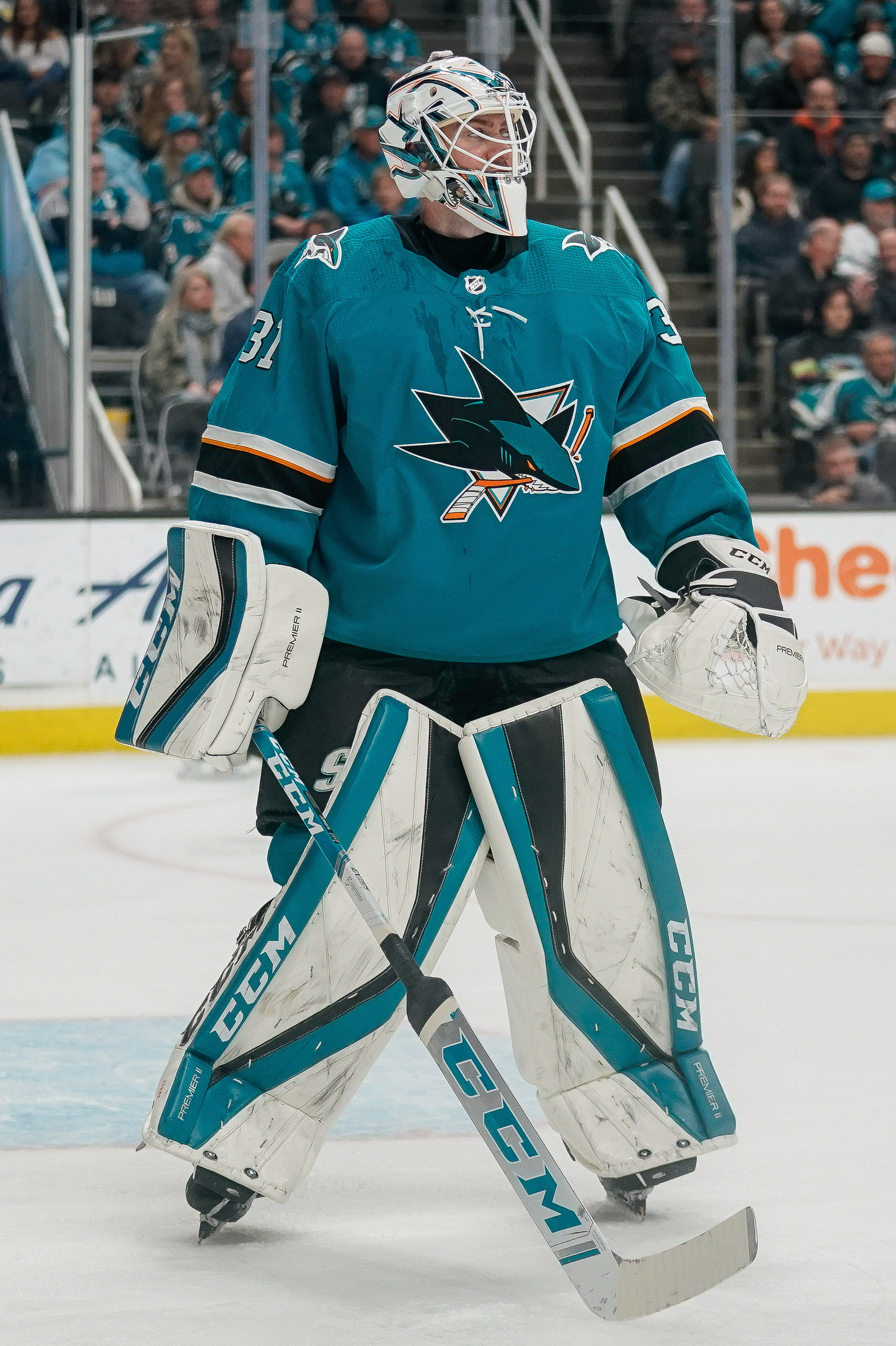 Needless to say, improvements need to be made. The big question is how? Jones still has five years left on his contract with a $5.75MM AAV. At the time the deal was signed, it had a chance to be bargain but now it’s a problem. With the flattened salary cap, finding a team to take that deal on is going to be tricky without taking another big contract back. Unless that big contract is another goalie though, there isn’t a feasible trade option out there as a high-priced skater in return for Jones would price them out of the starting goalie market. A buyout doesn’t seem likely either.
As for Dell, he’s slated to become an unrestricted free agent but he was only making $1.9MM on his expiring deal. That’s enough to shop around for a veteran replacement but the top backups are going to be commanding more than that and they already have more than $66MM in commitments to just 13 players for next season, per CapFriendly. A higher-end backup, while ideal, may be a luxury they simply can’t afford. San Jose has high hopes for undrafted free agent Alexei Melnichuk but asking him to step in and play a big role right away would be risky despite his impressive showing in limited KHL action.
Their cap situation is going to make things tricky but if the Sharks plan on turning things around, Wilson is going to need to find a way to swap out starters or, at the very least, bring in a more prominent backup that can compete for more playing time.
Bank For Labanc
Last offseason, Labanc decided to take a team-friendly one-year, $1MM deal with the hopes that there would be more wiggle room next summer at a time where he’d have arbitration rights and ideally more leverage as a result. For a variety of reasons, that plan hasn’t exactly worked out.
Labanc’s numbers dipped considerably this season to just 14 goals and 19 assists in 70 games. For context, he had more assists (39) one year ago than he had points (33) in 2019-20. Granted, pretty much everyone had a down year but that’s not a winning argument in an arbitration hearing.
The 24-year-old still should be in for a decent-sized raise but the change in salary cap projections due to the pandemic is going to hurt. There was a case to be made that he’d be looking for a deal that might seem pricey now but more reasonable after a few more cap increases; lots of teams have done those in recent years and enough have worked out to make it a reasonable strategy. But that’s off the table now as any increases over the next few years are going to be incremental at best.
At this point, another short-term deal (perhaps even another one-year pact) makes the most sense. It gives Labanc a chance to rebuild his value and it would save them a bit of cap room in the interim. The latter element was also a factor a year ago but at that time, he was looking to boost his value, not build it back up. From San Jose’s perspective, as much as they like him, committing a long-term deal now may price them out of filling other holes so they’ll have that to consider as they map out their offseason plans.
It’s safe to say that Labanc’s plan last offseason didn’t quite work out as planned but unfortunately for him, the solution may be to try the same thing again.
Photo courtesy of USA Today Sports Images.
PHR Mailbag: Blackhawks-Oilers, Eichel, TV, Ruff
Topics in this edition of the PHR Mailbag include the Chicago-Edmonton series, Jack Eichel’s future in Buffalo, forecasting the television picture for the NHL’s Return to Play, and Lindy Ruff’s hiring in New Jersey. If your question doesn’t appear here, watch for it in next week’s mailbag.
Mark L: When play stopped, the Oilers offense was looking very strong while the Blackhawks defense was a mess. Because of the long suspension of play, Chicago will have Calvin de Haan back for sure and could have Brent Seabrook back as well.
They also have some younger, talented players who won’t have played a gruelling campaign before jumping into a playoff. If Corey Crawford can stay healthy and in net, what are the chances this is a more competitive series, perhaps one Chicago can steal, than it looks to be at first glance?
With teams being off for as long as they have been, every series has a chance to be more competitive than it may seem on paper. Good teams can come out of the gate slow in the regular season and this is a longer layoff than a typical summer so there are bound to be some surprises along the way.
It’s interesting that you mention Crawford as I think goaltending will be a huge part of this series but it’s Edmonton’s goaltending that could very well dictate the outcome. When he’s on his game, Mikko Koskinen can be a real difference-maker. On the flip side, when he’s off, he’s really off. If he’s not sharp out of the gate, that’s one area that Chicago can exploit. Mike Smith is a capable backup that can steady things in that instance but he’s probably not going to steal games at this point of his career.
Crawford’s top level isn’t as good as Koskinen’s but the inconsistency isn’t as sharp either (which is good as turning to Malcolm Subban wouldn’t be ideal given the year he had). If Chicago can get the better goaltending, they’ll have a decent chance in this series unless Connor McDavid and Leon Draisaitl steal the show and with how they performed during the regular season, they can win games on their own even if Crawford outperforms Koskinen.
Getting de Haan back will certainly help defensively and on the penalty kill but I don’t know if they’d want to risk putting Seabrook back in. He’s just starting to skate now after being off since mid-December and he was struggling before being taken out. Even if Seabrook does play, it’s hard to see him getting more than a spot on the third pairing which will limit his chances of making any sort of tangible impact in this series.
Baji Kimran: Do you think Buffalo is considering moving Jack Eichel? If so, what would they want in return, High-end talent that is already in the NHL or a slew of draft picks (#1’s, #2’s)? Finally, if they were open to moving Eichel, don’t you think the team that wins the Alexis Lafreniere sweepstakes would be smart to try to acquire Eichel?
Eichel’s comments back in May where he indicated that he is “fed up with losing” certainly raised some eyebrows around the league and evidently caught the attention of Sabres ownership as they decided to change course with the firing of Jason Botterill as GM with Kevyn Adams taking over as his replacement. I think Adams’ mandate is now to change things up while still building around Eichel, not moving him out though.
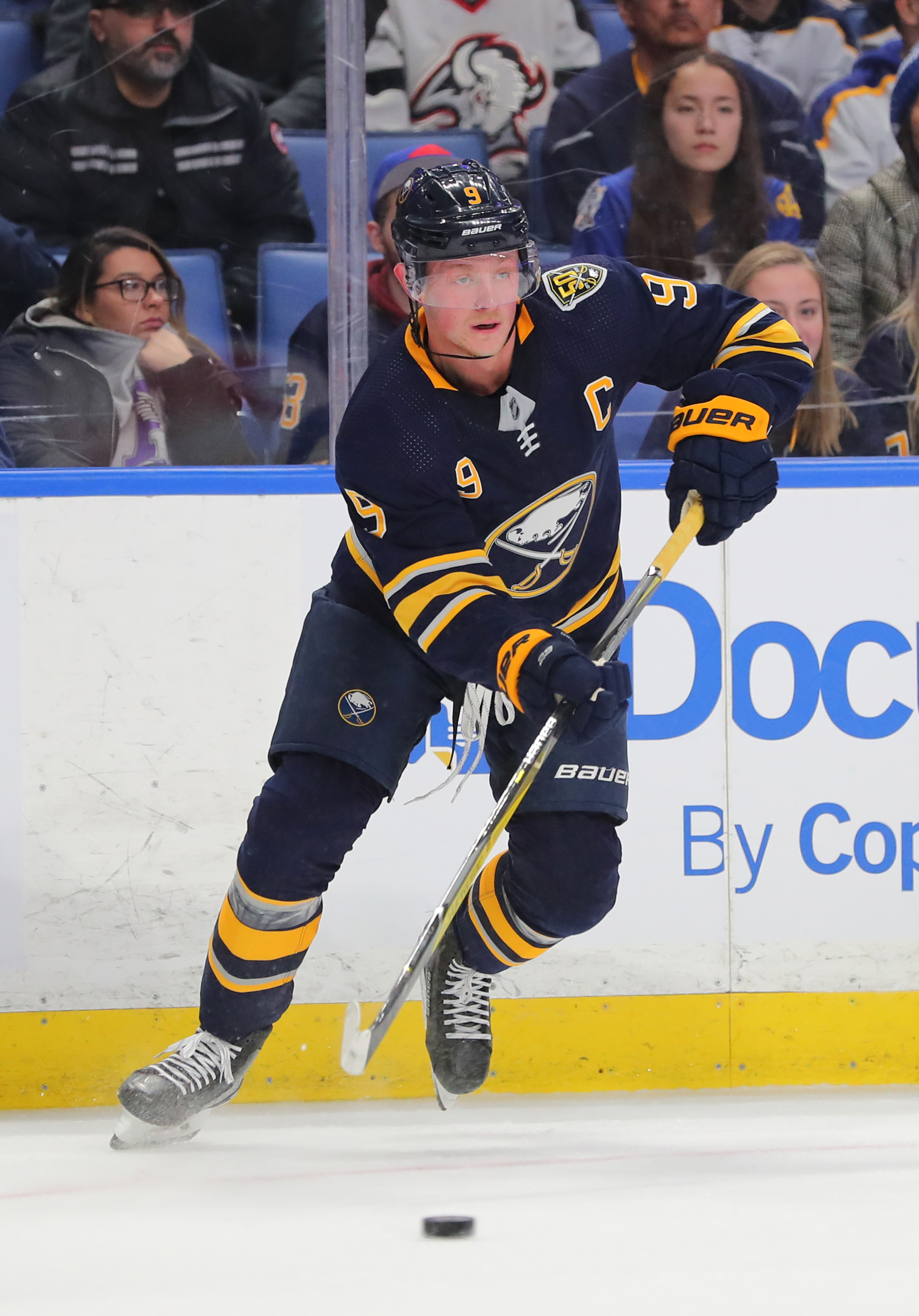 With all due respect to Adams who has clearly done enough to impress ownership to give him the nod, this will be his first crack at being a part of management. Having a raw rookie in the GM role is risky enough let alone asking him to try to find the right trade for your franchise player, disgruntled as he may be at the moment. It’s not a good time to move him, especially with his AAV of $10MM being near the top of the league at a time where teams are going to be in tough for cap space.
But for the sake of discussion, let’s say Adams was considering it. Moving him for another established top talent doesn’t really move the needle much – now you’d have a different top player with a supporting cast that still needs some work. So about the only way moving Eichel would make some sense is if Buffalo decided to do yet another rebuild with the target return being two or three core assets (top draft pick, top prospects, or young NHL players with top-half potential) plus some veteran salary ballast similar to what Patrik Berglund and Vladimir Sobotka were in the Ryan O’Reilly trade with St. Louis. That doesn’t seem like a particularly appealing route for the Sabres to take at the moment so I’d be very surprised if Eichel is on the move.
M34: Are all the remaining games going to be nationally televised?
This is something that is being discussed now that the ratification is done with a schedule being set and an answer is expected in the very near future. So with the risk of this being proven incorrect in a hurry, here is my prediction.
Exhibition games, the play-in round, and the round-robin games for the top four teams in each conference will be shown regionally with national networks being allowed to convert a handful to the wider coverage level. The league has gone out of its way to call these games non-playoff contests and I suspect part of the reason is that they want to use this for inventory for regional sports networks to make up for some of the lost games as a result of the effective cancellation of the rest of the regular season. (Of course, the stats are counting as playoff stats which goes against their long-stated assertion that these aren’t playoff games but let’s play along with the league here anyway.)
I also wouldn’t be shocked if some RSNs will get the ability to show games in the first round to also help make up the lost game inventory. I could also see those games getting national coverage and while that seems somewhat redundant, it wouldn’t be that hard to do. A world feed will be produced with individual networks doing their own graphics. Accordingly, it would be easy enough for NBC (in the United States) or Sportsnet (in Canada) to have their own commentators doing the game nationally while the RSN has the same video feed but with the local broadcast team. It’s a bit of a compromise and there has been plenty of that lately with the CBA MOU and Return to Play protocols getting finalized.
MoneyBallJustWorks: Thoughts on the Lindy Ruff signing by NJ and where do you think some of the more prominent names could end up going?
I was a bit surprised by the hire as I figured he’d be behind some of the more prominent names but I don’t mind it. Ruff is not the long-term coach that’s going to steer New Jersey out of their rebuild, into contention, and onto a Stanley Cup championship. Instead, he’s what I call a ‘transitional coach’.
Ruff’s reputation is that he gets the best offensively out of teams although the defensive play leaves something to be desired. But right now, that’s okay. I’d rather have that than the opposite even though that would normally be the smarter route for a team in their situation.
The strong point of this roster is their offense. They have a pair of top picks in Nico Hischier and Jack Hughes who have plenty of skill but have been hit or miss at times in their early NHL careers. Their top priority in a coaching search should have been finding someone who is best equipped to help these two develop. Ruff should be able to help do that.
Are they going to struggle defensively? Sure. But that was going to be the case no matter who they installed as head coach unless they went to a pure trapping system and tried to win games 2-1. That wouldn’t have been ideal for their two hopeful franchise cornerstones though. The Devils have some talent on their back end but some of those defenders are more offensive-minded than defensive-minded so a change to a more up-tempo style may benefit them as well.
A few years from now, Hughes and Hischier have established themselves as offensive stars in an ideal world and the focus can then shift towards really shoring up the back end. (By then, they’ll also hope to have their goaltending situation figured out as either Mackenzie Blackwood has established himself as a starter or someone else will be in that role.) By then, they should be back in the mix for a playoff spot and will probably have made it once or twice. That will be the time to look for the longer-term coaching option but by then, Ruff should have helped steer the franchise in the right direction.
It’s difficult to forecast where some of the other prominent names will end up as right now, there aren’t any vacancies. With cash flows being much more limited in the short term, it’s quite possible that there aren’t any openings for coaches like Gerard Gallant, Mike Babcock, and Peter Laviolette to pursue until sometime in 2021.
Photo courtesy of USA Today Sports Images.
Offseason Keys: Ottawa Senators
The offseason has arrived for at least seven teams that were not invited to take part in the play-in round that’s slated to begin in early August. With that in mind, our Offseason Keys series is underway for the teams that are on the outside looking in. Next up is a look at Ottawa.
The Senators committed to a full-scale rebuild over the last couple of years when they dealt away the majority of their top players. Not surprisingly, the corresponding performance this season wasn’t particularly strong. The good news is that they have built up a strong prospect pool and are set to add to that with two picks in the top five in October. But hitting on those two selections is only a small part of what they will be looking to do this offseason.
Spend, Spend, Spend
For a team that, let’s face it, has shown a reluctance to spend towards the Upper Limit of the salary cap, this may seem like a strange header. In normal times, they likely wouldn’t be going out of their way to take on contracts but this isn’t anywhere close to being normal times. The cap isn’t going up and that means there are going to be plenty more motivated sellers this offseason than we’ve been accustomed to seeing.
Ottawa has a strong stockpile of picks and prospects already but there is always room for more at this stage of their rebuilding phase. The more options they have, the better. Those will likely be the currency getting used to make those deals and GM Pierre Dorion should be quite interested as a result.
The Senators would likely be shopping at a different end of the market though and it actually may wind up being to their advantage. While higher-spending teams will be shopping for the best talent available and trying to drive a hard bargain to get the best deal possible, Ottawa’s previous willingness to take on high AAV deals that carry a lower salary is going to be appealing to teams looking to cut money. (Their past trades for Marian Gaborik and Ryan Callahan – both injured players – provide another pathway to pursue if it’s a short-term deal as well.) Rather than lose an impact player, parting with a decent sweetener to pawn off an inflated AAV is a much better alternative and Dorion should be poised to take advantage of that, perhaps better than any other team.
Duclair Deal
Last summer, the Senators played it safe with Anthony Duclair, a move that was certainly understandable given his past performance. Instead of looking for a long-term deal, they opted for a one-year, $1.65MM pact which the winger certainly lived up to and then some this year. While his production was still streaky at times, he finished up his year with 23 goals (a career high) and 40 points while his point-per-game rate of 0.61 was better than any other season in his career.
 With salary arbitration rights, Duclair is looking at a nice raise this offseason even with the salary cap flattening out. But will it be a long-term contract this time around or a short-term one? He’s two years away from UFA eligibility so it’s at the typical point where the bridge contract is now done and a long-term deal is worked out.
That still doesn’t seem like an automatic outcome here, however. As some of Ottawa’s prospects work their way up the system, is there going to be a spot for Duclair in their top six a few years from now? If they think the answer is yes, then this is probably the best spot to buy out a UFA year or two at the very least. But if not, another short-term pact (perhaps even another one-year contract) may be the better way to go even though it runs the risk of getting him to a point next summer where he opts for a one-year arbitration award to expedite a shot at the open market (for the second time after he was non-tendered in 2018). This will be one of the trickier decisions that Dorion will have to contend with in the coming months.
Add A Top-Six Center
Part of the reason that Jean-Gabriel Pageau was in the middle of a career year before being shipped out at the trade deadline was that he was effectively Ottawa’s number one center by default which allowed him to average more than 19 minutes per game. That’s not an ideal amount of ice time for him but in head coach D.J. Smith’s defense, he didn’t really have any other options. Colin White struggled mightily in the first year of his new deal, Chris Tierney is best used on the third line, while Artem Anisimov and Nick Paul should be in even lesser roles. It got to the point where Brady Tkachuk was tried in the middle at times and while he held his own, his willingness and ability to engage physically makes him a better candidate to stay on the wing.
Granted, Ottawa does have high hopes for Josh Norris but despite a stellar rookie campaign in the minors, he’s not stepping into that role right away. Neither is Logan Brown, a player who hasn’t been able to put it all together just yet. There’s a good chance that they’ll wind up with at least one center with one of those early selections but throwing them to the wolves right away with a spot on the number one line is asking for trouble.
It’s not an area that Ottawa is realistically going to be able to address in free agency as quite frankly, the UFA market for centers isn’t the greatest. It’s also unlikely that they’d be the top bidder if there was one out there. Instead, this is one spot they’ll likely have to make a trade to improve. A number one pivot is doubtful but as teams are looking to free up money, some quality second liners should be out there. Even that would represent a considerable upgrade on what their current options are and would allow their up-and-coming youngsters to ease into their roles which, from a long-term development perspective, would be ideal. Someone with three or four years left on their contract would fit in relatively well and would be a nice addition for Dorion to make.
Photo courtesy of USA Today Sports Images.
Pro Hockey Rumors Commenting Policy
Thank you for participating in the Pro Hockey Rumors commenting community. If you’re new to the site, register to comment here! Remember to confirm your email address before attempting to leave a comment.
When leaving a comment at PHR, we ask that you avoid the following:
- Attacks or insults toward other commenters, the PHR staff, journalists, team personnel, players, or agents.
- Otherwise harassing other commenters in any way.
- Unnecessary political discussion. While sports and politics regularly intersect, we ask that you refrain from using the PHR comment section to discuss elections, politicians, political parties, or political beliefs. We aim to limit the PHR comment section to the hockey topics covered in the post.
- Inappropriate language, including swearing and related censor bypass attempts, lewdness, insults, and crude terms for body parts, bodily functions, and physical acts.
- Inappropriate avatars or images.
- Spam links or self-promotion.
- Personal contact information in the comments section.
If you see comments that violate our policy, please flag them and/or contact us! Please do not otherwise attempt to police the comments – we’d prefer you to ignore any offenders until we are able to act. Our staff will be increasing enforcement efforts.
Corrections for errors by the authors of our posts are welcome and appreciated.
Offseason Keys: Detroit Red Wings
The offseason has arrived for at least seven teams that were not invited to take part in the play-in round that’s slated to begin in early August. With that in mind, it’s time to kick off our Offseason Keys series for the teams that are on the outside looking in. Next up is a look at Detroit.
It hasn’t been a good last twelve months for the Red Wings. After finishing 28th in points in 2018-19, they took a step backwards and had a terrible season, one that saw them allow the most goals and score the fewest. Not surprisingly, that particular combination saw them in last place when the regular season was called. Things weren’t better in the Draft Lottery either as they fell as far as they were allowed to, dropping from first to fourth in the order. With that negativity out of the way, here is what Detroit will need to accomplish to have a successful offseason.
Find A Long-Term Goaltending Solution
For years, Jimmy Howard has been entrenched between the pipes in Detroit. But that time has all but certainly come to an end after posting a 4.20 GAA with a .882 SV% in 27 starts this season. He lost all but two of those games. If that type of performance somehow isn’t enough to scare GM Steve Yzerman off, Howard is also now 36. On a rebuilding team, a goalie that age can’t be part of the long-term solution.
Neither can Jonathan Bernier even though he had a pretty good year all things considered with a 2.95 GAA and a .907 SV% in his 46 appearances. Those numbers aren’t great but given the team in front of him, he did okay. He’ll turn 32 next month and while he’s signed for next season to fill part of their goaltending tandem, he is more of a platoon option at this stage of his career instead of a full-time starter. He can be a piece of the puzzle but not the key one.
There are going to be a handful of starting goalies that hit the open market in November, barring any extensions to stick around. Yzerman has ample cap space at his disposal with just over $46MM in commitments for next season to 11 players so there is plenty of wiggle room to work with. They should be showing considerable interest in each of those options.
Detroit could also take a look at Yaroslav Askarov in the draft in October. He’s widely considered to be the top goalie available and one of the better ones to be available for a while. However, drafting goalies early is often considered a risk and selecting him fourth would be well above where his rankings suggest he should go. However, the Red Wings went ‘off the board’ a bit last year with defenseman Moritz Seider so taking their guy earlier than expected is something they could certainly do which would free them up to look a veteran platoon option to hold things down while Askarov works his way into being NHL-ready.
New Deal For Mantha
Two years ago, Anthony Mantha signed a bridge contract coming off his entry-level deal. The decision made sense as he hadn’t quite established himself as a consistent top liner. There were flashes of him living up to his potential but other times where he wasn’t making a big impact.
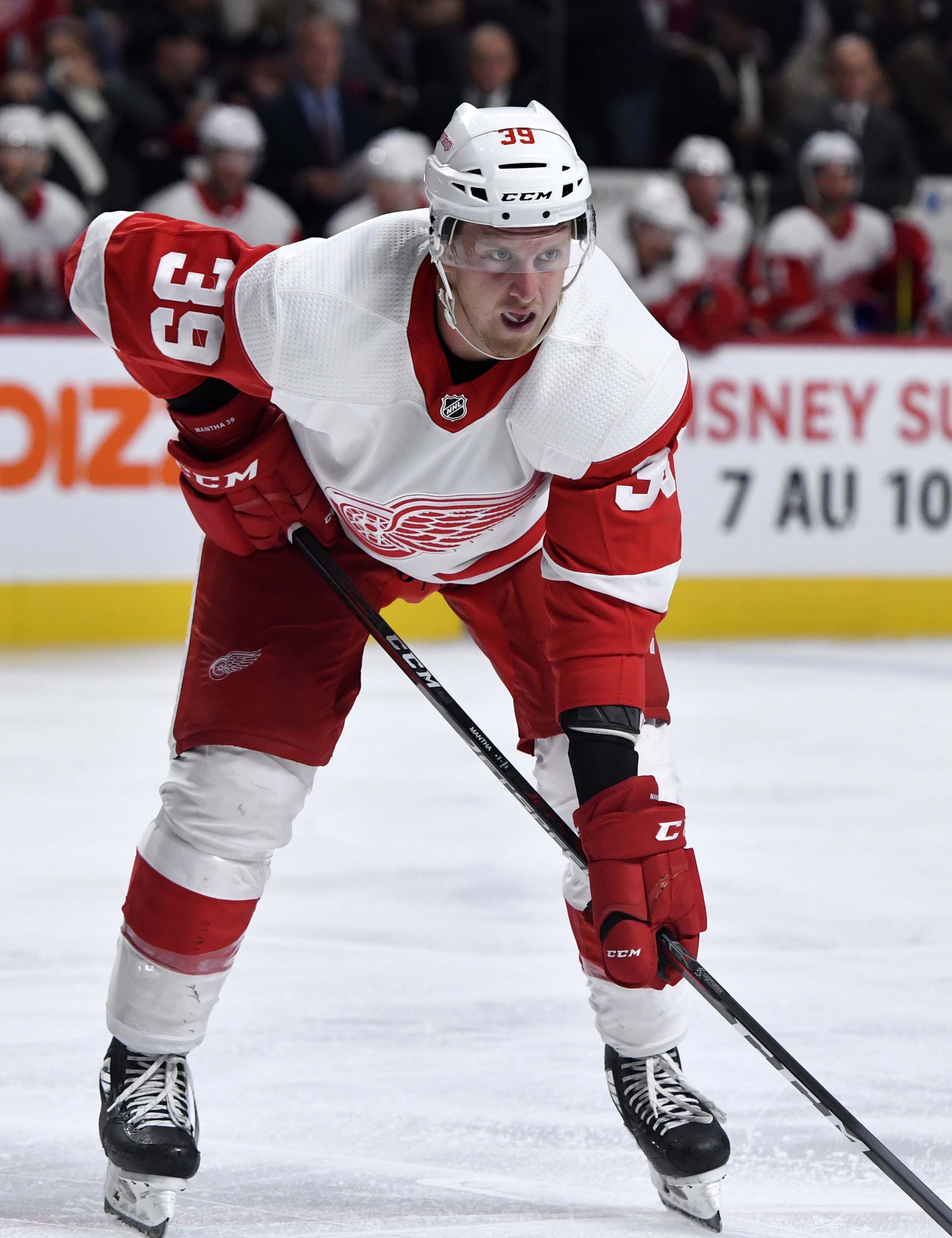 That started to change last season as he became a bigger threat, matching his career high offensively from the season before despite missing 15 games due to injury. He was on pace for an even better performance this season except that knee and lung issues limited him to just 43 games before the pandemic hit. That’s not the best leverage heading into talks for his next deal even with salary arbitration rights.
The salary landscape certainly doesn’t help either. The freezing of the salary cap is not conducive to handing out the big-money deal that Mantha was certainly hoping to get and with his platform year being basically cut in half, this feels like a situation where there is a lot of work to do.
From Mantha’s standpoint, another short-term deal may be desired. If he does that, stays healthy, and is able to continue his offensive improvement, he’ll be well-positioned a year from now to cash in, even with the cap limitations still in effect. In the end, he’d probably come out with more money than he’d get by signing a long-term deal now. Of course, a deal that buys out several UFA-eligible years is certainly Yzerman’s preference to help ensure that one of their pillars will stick around. Getting this done should be at the top of his to-do list in the coming months.
Rebuild The Back End
Of the eight defensemen that were on Detroit’s roster to end the season, three are unrestricted free agents that almost certainly won’t be back in Jonathan Ericsson, Trevor Daley, and Cody Goloubef (who was added on waivers less than three weeks before their season ended). Mike Green (traded to Edmonton) is already gone. Needless to say, there are some vacancies that need to be filled.
Filip Hronek looks like a long-term piece and Seider, though not yet ready to play in their top four, should get there eventually as well. After that, there are some question marks. Dennis Cholowski and Gustav Lindstrom have shown some promise but aren’t ready to take on a big role yet either while projected returnees Patrik Nemeth, Alex Biega, and Madison Bowey (RFA) are role players, not impact ones either. There are some other prospects on the horizon but none that are ready to step in and play right away.
As a result, there are a few spots up for grabs and they can’t all be filled internally. Whether it’s the free agent market, trades, or both, the Red Wings need to make a splash or two to give their defense corps a significant boost. If they can’t accomplish that, it may not matter who they have between the pipes in the end.
Photo courtesy of USA Today Sports Images.