
Offseason Keys: Toronto Maple Leafs
As teams are eliminated from the playoffs, it means that the offseason has arrived for several more squads. Having covered the teams that weren’t a part of the NHL’s return, we shift our focus to the ones that have been ousted. Next up is a look at Toronto.
After being ousted by Boston in the playoffs last year, the Maple Leafs made one big trade but largely brought back the same roster for this season. After scuffling out of the gate, they made a coaching change, bringing in Sheldon Keefe to replace Mike Babcock. However, they were on the playoff bubble before the pandemic hit and they wound up falling to Columbus in the Qualifying Round. GM Kyle Dubas has already made one move of note with the Kasperi Kapanen to Pittsburgh trade to free up some cap space but there is still some work to be done. Here’s an overview of what they’ll likely be looking to tackle.
Reshape The Back End
Toronto’s big four up front are well-known as is their cost as they take up a little more than half of the $81.5MM Upper Limit. Not surprisingly, to be able to afford them, they’ve had to cut back at other positions, particularly defense. As things stand, the discrepancy between spending up front and on the back end is likely to increase with veterans Cody Ceci and Tyson Barrie slated to be unrestricted free agents this offseason and are likely to be replaced with cheaper options.
Fortunately for the Leafs, they have some players on entry-level contracts that can step into a bigger role for next season. Rasmus Sandin acquitted himself well in his first taste of NHL action while Mikko Lehtonen had a dominant season in the KHL to get him on the NHL radar. Timothy Liljegren is also in the mix. However, for a team that has eyes on contending, shuffling them in without adding more proven help would be risky.
An impact top-four option (what Barrie was supposed to be) would be ideal to take some pressure off Morgan Rielly and Jake Muzzin. In particular, finding a right-shot defender to play alongside Rielly would be particularly beneficial as Justin Holl, not too far removed from being a seventh defenseman, is probably not an ideal long-term fit on that top pairing.
Of course, it’s one thing to want to add proven blueliners but it’s another to be able to afford it. Even with the Kapanen trade, they don’t project to have much in the way of cap space when they re-signing their pending free agents and fill out the roster. They may have a bit of room but hardly enough to add the type of player they need. It may take moving out another mid-tier forward to do so (even if it takes away more depth, something Dubas indicated he was concerned with doing) but it’s a price they’re going to have to be willing to pay to shore this position up.
Make A Goaltending Decision
Frederik Andersen has been the undisputed starter for Toronto for the past four years since they acquired him in 2016. Over that time, he has been consistently inconsistent. There have been moments where he has simply been dominant despite facing a barrage of shots and others where he has struggled considerably. In the end though, there hasn’t been much in the way of variation in his numbers with his GAA ranging from 2.67 to 2.85 while before this season, his save percentage had been .917 or .918 each year. (This season, it dipped to .908.)
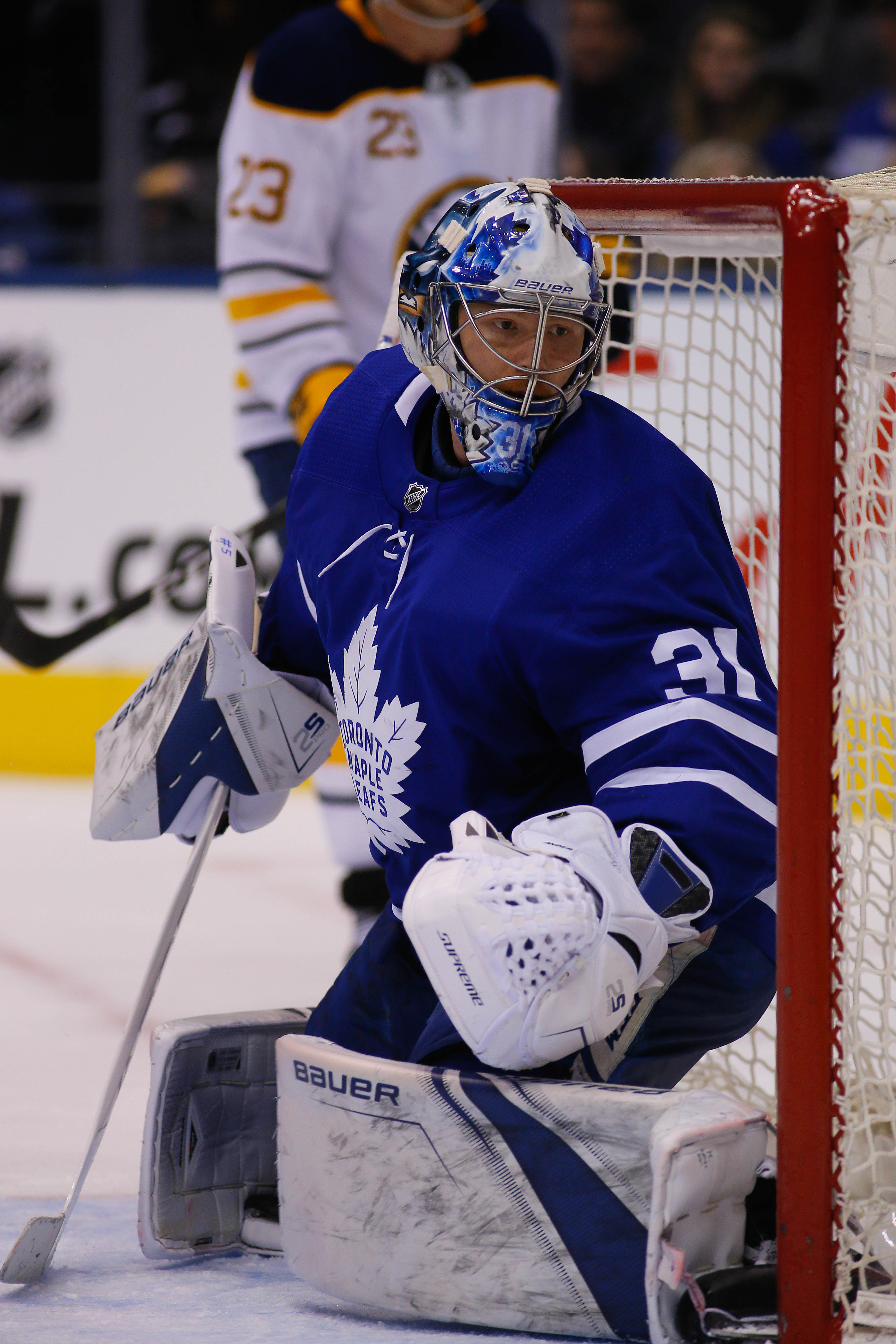 The 30-year-old has been on somewhat of a below-market deal since coming to Toronto as a $5MM AAV is on the low side for a guaranteed starting goalie. However, that contract is up a year from now which means they’ll soon have a decision to make. He’s eligible for an extension although his agent Claude Lemieux told Postmedia’s Terry Koshan that there have been no discussions to that end yet. As things stand, it appears as if the Maple Leafs are kicking the tires on a possible trade but if that doesn’t materialize, they’ll have to decide if they want to pursue an extension or let him enter his walk year.
Part of the challenge for Toronto, naturally, is their cap situation. With so much money committed up front, they’re not going to be able to contend for a top-end starter on the open market. They’re going to have to go with someone that’s a tier below and Andersen, at a similar price to what he’s making now, could certainly be in that mix. If they decide that they want to move on, dealing him before free agency opens up would allow them to get involved there although it’s not the deepest of free agent classes.
They will at least have some stability at the backup position with Jack Campbell’s new two-year deal set to kick in. But for the first time in a while, their starting goalie situation doesn’t seem as secure.
Add Grit
Dubas hasn’t hidden the fact that his plan has been to load Toronto up with as much raw talent as possible in an effort to maximize their scoring opportunities. Given their lack of playoff success, that plan hasn’t quite worked out as intended and he has made a bit of an effort to add some size and grit to their roster with the pickup of Muzzin a year ago and Kyle Clifford as part of the Campbell acquisition.
Clifford’s future with the team is uncertain at this point – while he fit in well after being acquired, their cap limitations make it unlikely that they’ll be able to retain the pending free agent at his $1.6MM price tag (the Kings retained half of that in the trade). He’s someone they may look to replace if they can’t keep him but finding some that adds that element can play higher in the lineup would be more beneficial as would adding another defenseman that can play that way.
Dubas has suggested with some recent comments that he has a better understanding of the usefulness of having some grit on the roster, joking at his conference call recently that he’d like to add another player like Muzzin. That may not be possible but finding other players who can bring an edge to the table would still make a difference.
Photo courtesy of USA Today Sports Images.
Free Agent Focus: Winnipeg Jets
While the official start date of free agency remains in flux depending on when the playoffs end (the later of October 9th or a week after the completion of the Stanley Cup Final), many teams are already looking ahead to when it opens up. There will be several prominent players set to hit the open market while many teams have key restricted free agents to re-sign. Winnipeg doesn’t have a top-end player that’s in need of a new deal but quite a few regulars will need to be re-signed or replaced.
Key Restricted Free Agents
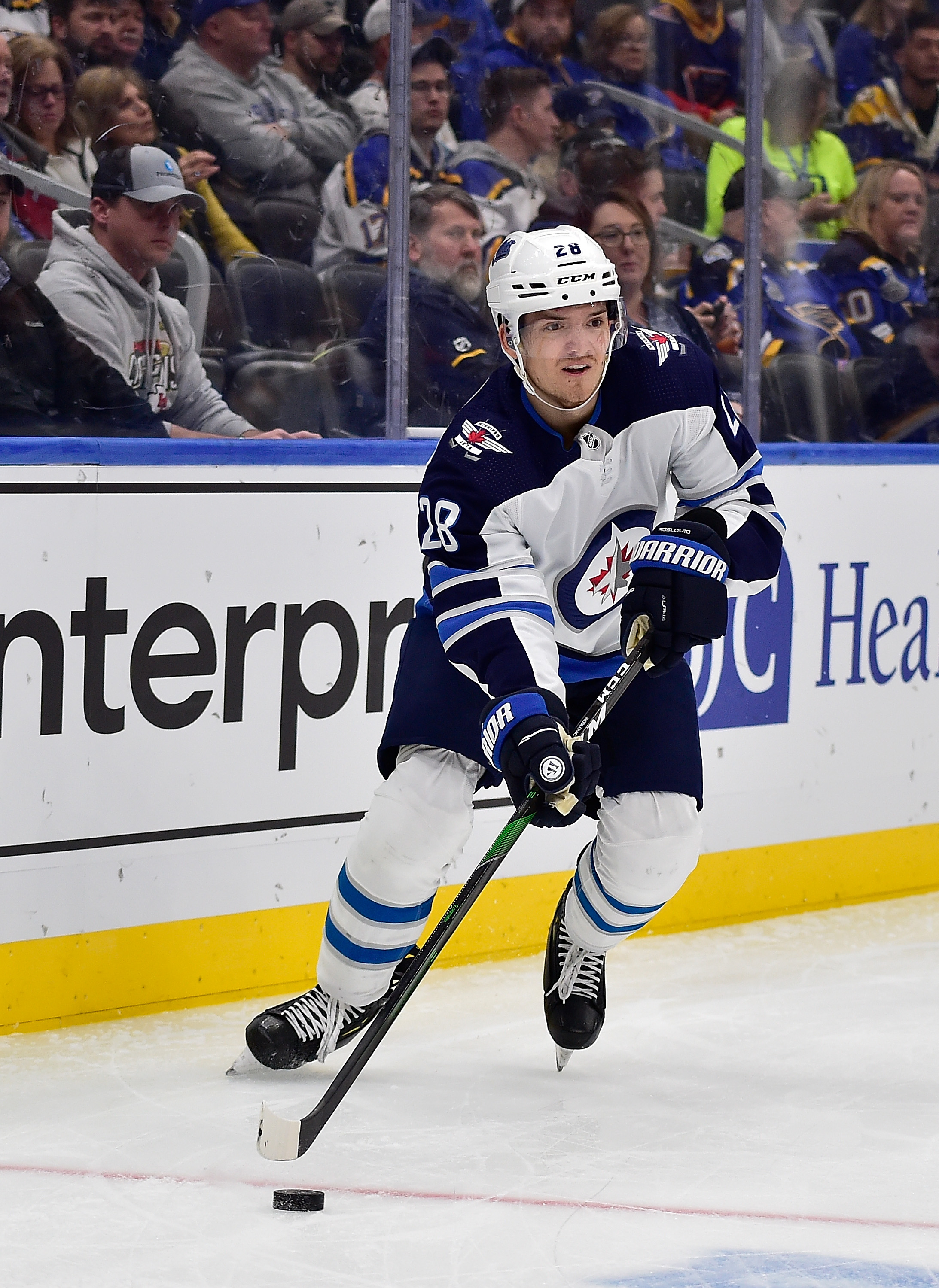 F Jack Roslovic – The shine has come off of the 23-year-old a little bit over the last couple of years but he is still a useful forward for the Jets. Once viewed as their second-line center of the future, Roslovic has spent the majority of the last two seasons on the left wing. He set career highs offensively this season with 12 goals and 17 assists in 71 games while seeing his ice time jump up to just below 15 minutes per night during the regular season. It’s still possible that he has a future down the middle though, especially with some of the uncertainty surrounding Bryan Little. At the very least, with the slow but steady offensive improvement and his future role still undefined, Roslovic isn’t an ideal candidate for a long-term contract and will likely sign a short-term bridge deal.
D Sami Niku – For the last couple of years, Niku has seemingly been on the cusp of becoming a regular on Winnipeg’s back end but despite all of the turnover and injury trouble he had this season, it didn’t happen. The 23-year-old has been quite productive at the minor league level with Manitoba but it hasn’t translated to much production at the NHL level as he has just 10 points in 48 career games with Winnipeg. He’ll be waiver-eligible next season and figures to at least be a regular on the roster which presents a situation where he could take less than his qualifying offer to secure a one-way deal.
Other RFAs: F Mason Appleton, F Jansen Harkins, D Nelson Nogier, F C.J. Suess
Key Unrestricted Free Agents
D Dylan DeMelo – Initially regarded as a throw-in player as part of the trade that sent Erik Karlsson to San Jose, DeMelo has certainly boosted his value over the last couple of years. This season, he spent a lot of time in Ottawa’s top four before being moved to Winnipeg just before the trade deadline. The 27-year-old fit in perfectly with his new team and spent a fair bit of time with top defenders Josh Morrissey and Neal Pionk. As a right-shot player that has shown he can play on the top two pairings, DeMelo is well-positioned to land a sizable raise on his $900K AAV. Cap-strapped teams (and there will be plenty of them) will certainly be kicking the tires if he can’t agree to a new deal before free agency.
F Cody Eakin – Another trade deadline acquisition, Eakin is coming off of a down year offensively. After picking up a career-high 41 points in 2018-19, his output dipped to just 15 this season although injuries and the pandemic skew that point total a little bit. While he isn’t an option for the top six, he is a capable defensive forward and logged nearly 17 minutes per game for the Jets in the playoffs. In a quiet center free agent market, he should have several suitors although he’ll likely be facing a pay cut from the $3.85MM AAV he had this season.
D Dmitry Kulikov – This was a bit of a bounce-back season for the veteran. Yes, his $4.333MM AAV was still wildly overpriced but he managed to hold his own logging 20 minutes a night on the back end. His days of being a fixture in the top four have been over for a while now but a year ago, it looked like he’d likely have to go overseas when this deal expired. Now, there should be some interest around the league for him to play on a third pairing next season, albeit at a largely-reduced price tag.
Other UFAs: D Nathan Beaulieu, D Anthony Bitetto, F Gabriel Bourque, G Laurent Brossoit, F Seth Griffith, F Mark Letestu, D Luca Sbisa, D Cameron Schilling, F Logan Shaw, F Nick Shore
Projected Cap Space
With Morrissey’s extension kicking in for next season, Winnipeg is up to nearly $66MM in commitments to just 13 players, per CapFriendly. With roughly $15MM in cap space to fill out their roster with another eight to ten players, it’s unlikely that the Jets will be able to afford another big-ticket contract. The good news is that with a light crop of restricted free agents, they should still have some flexibility to work with on the open market as they look to retain or retool their back end.
Photo courtesy of USA Today Sports Images.
Offseason Keys: Minnesota Wild
As teams are eliminated from the playoffs, it means that the offseason has arrived for several more squads. Having covered the teams that weren’t a part of the NHL’s return, we shift our focus to the ones that have been ousted. Next up is a look at Minnesota.
This season was another one that could be classified as same old, same old for the Wild. They weren’t bad enough to be in the lottery nor were they good enough to be in the playoffs under the normal format. They ended their regular season on a better note following the coaching change from Bruce Boudreau to Dean Evason but it didn’t translate to much success in the play-in against Vancouver. GM Bill Guerin certainly has some work to do over the coming months which will include these key items.
Add An Impact Center
This one has been at the top of their to-do list for a while now and unfortunately for Minnesota, this isn’t the best year to try to get one. The UFA market is bereft of top pivots and trading for a top liner is probably something they’re not going to be able to do either.
But even at this point, a capable second liner would be an improvement on their current situation. Mikko Koivu has seen better days and is a pending unrestricted free agent. Even if he returns, he’s better suited for a bottom-six role. Alex Galchenyuk, who has spent a lot of time on the wing and was included as salary ballast in a trade in February, is one of the better centers in this UFA class which says everything you need to know about that group of free agents. He had some good moments after joining the Wild and it’s possible that he could return. But given how his last couple of years have gone, that can’t be the only move they make at that position.
On top of that, Eric Staal is only a year away from UFA eligibility. He’ll be 37 early in the 2021-22 campaign so he’s not going to be in the picture for long, even if he’s brought back.
This will be an interesting situation to follow. The Wild simply have to make a move (or two) to shore up this position. Their hand is being forced by their free agent situation and realistically, their only option is to trade for one and other general managers won’t be lining up to throw Guerin a lifeline. But one way or the other, they need to add at least one notable center in the coming months.
Determine Brodin’s Future
Jonas Brodin has been a key cog on Minnesota’s back end for his entire eight-year NHL career. However, he has frequently been involved in trade speculation for the last few years. Minnesota has been looking to shake things up for a while now and an impact defenseman would certainly do that although any move would definitely leave a hole on their back end as well.
 The 27-year-old has one year left on his contract which has opened the window for contract extension talks. Although his offensive numbers typically aren’t the highest (though he had 28 points this season, a new career best), his defensive play and ability to log heavy minutes will have him in line to earn a nice raise on his $4.167MM AAV.
However, the Wild have three blueliners locked up on long-term deals already with Jared Spurgeon and Ryan Suter both making a little over $7.5MM while Mathew Dumba checks in at $6MM. Can they afford to add a fourth defender at or around that price point?
If the answer is no or they at least can’t agree to terms on a new deal, the time may be right to move Brodin after all. His below-market deal will be appealing to teams that are looking to make a splash but have limited cap room to work with. An in-season trade would be harder to pull off with many teams likely to be capped out by then so if there’s no momentum on an extension, a move may be in his future. That would be one way to try to fill their void down the middle.
Add Goalie Help
A year ago, it seemed unlikely that this would be on Minnesota’s needs list at this time. Devan Dubnyk was coming off of a solid season and Alex Stalock’s three-year deal was set to kick in. How quickly things can change. Dubnyk’s campaign was nothing short of a disaster to the point where a buyout or a trade with considerable salary retention (the maximum is 50%) both have to be on the table. Stalock did well as a backup but when he was put into the number one role, he faltered a bit. He’s fine as the second option but bringing Dubnyk back would be risky.
The Wild have Kaapo Kahkonen in the system who is coming off of an outstanding season with AHL Iowa. However, even though he’s already 24, he only has a couple of years in North America under his belt and is still exempt from waivers. Another year in the minors to give him some extra development time certainly wouldn’t hurt while handing him the starting role in Minnesota would also be quite risky.
Whether it’s a platoon goalie off the free agent market or someone via trade, it’s hard to envision Minnesota trying to contend next season while returning their same goalie tandem from this season. Dubnyk’s deal only has one more year left on it anyway so this was something that was going to have to be addressed in the near future. That time has come a year earlier than expected.
Photo courtesy of USA Today Sports Images.
PHR Mailbag: Cup Contenders, Hurricanes, Overtime, Cap Space, Blues, Key NHL Events, Free Agency
After last week’s mailbag focused on the Rangers, topics in this edition include postseason contenders, the Hurricanes, playoff overtime, Ottawa’s cap space, the captaincy in St. Louis, Detroit’s willingness to leverage their cap room, the short-term future of the NHL’s signature in-season events, and free agency.
DarkSide830: Cup favorite as things now stand?
Whoever comes out of the West. I have concerns about each team in the East – Boston for their goaltending with Tuukka Rask gone, Philadelphia for their struggles against Montreal, the Islanders for their lack of firepower, and Tampa Bay for how things went last year. Don’t get me wrong, they’re all strong teams but I don’t think they match up as well against the top two teams in the West in Vegas and Colorado.
The Golden Knights don’t have many weaknesses. Robin Lehner and Marc-Andre Fleury are a solid goaltending tandem, their back end was very quietly bolstered at the trade deadline with Alec Martinez. They still don’t have that elite scorer but they have multiple lines that are strong offensive threats at all times. That was a recipe for success just two years ago and they’re better now than they were then so they should get by Vancouver this round.
As for the Avalanche, their goalies (Philipp Grubauer and Pavel Francouz) aren’t as well-known but are solid while they also have a strong back end. They have the top-end firepower while Nazem Kadri has been quite sharp so far to deepen their attack. Dallas might be able to slow them down for a bit like Arizona did but as they did against the Coyotes, their offense will come around and take over.
That would set up a very interesting Western Conference Final with the winner being my pick for the Stanley Cup favorite. Right now, I’d give a slim edge to Vegas but both would be justifiable contenders.
mikedickinson: The Canes now pick 13th thanks to the Patrick Marleau trade. Do they trade that for an established guy? Gotta figure Justin Williams will retire and will need to be replaced.
I don’t see them trading that pick. They’ve already moved their own first-round pick this season to pick up Brady Skjei at the trade deadline and he’s an established player. If they still had both picks, I’d think that one would be in play but I suspect the Skjei trade was done knowing that they’d have another first-rounder at their disposal to use at the draft table. (They probably didn’t think it’d be as early as 13th though.)
If Williams retires (a reasonable expectation), they don’t have to get a top forward to replace him. Instead, they can look to the open market and go bargain shopping. The 30-35-point players that bounce between the second and third lines could be squeezed out as teams look to sign/keep their top players and fill out of the rest of their roster with cheaper options. That could push the price tag of those depth wingers down and present a chance for Carolina to nab one at a reasonable rate and get a replacement for Williams at a reasonable price. Failing that, Ryan Dzingel would get a chance to earn back his full-time spot in the lineup.
crosseyedlemon: Could anything be more idiotic than having teams play 3 or more OT periods in early playoff rounds? One OT period followed by a shootout should be the format for every round with the exception of the championship finals.
I understand where this is coming from given how crazy the Tampa Bay-Columbus game was and how it postponed Carolina-Boston. If there was ever a year to do such a proposal, it was this one given the constraints of only using one arena per conference. It wouldn’t have been a popular choice but it would have been understandable.
Personally speaking, I don’t ever want to see a shootout in the playoffs. I could do without them in the regular season, to be honest. A quick skills competition should not be dictating the outcome of a game, especially when the stakes are higher in the playoffs. If teams have to drag it out for multiple overtimes, it’s their own fault for not scoring earlier. From a fairness perspective, it’s the same teams that are punished; it’s not like it hurts one more than the other.
I should mention that I enjoy the games that drag on and on. As a baseball game gets deeper and deeper into extra innings, I’m hooked. If a basketball game gets to multiple OT’s, sign me up. They occur rarely enough that they’re special when they happen. That’s to be celebrated, not legislated out of the game by bringing the shootout into the playoffs.
JDGoat: Does Ottawa use their cap space to bring in other teams RFA’s or do they just look to bring in bad contracts with assets attached? What could some targets be for these scenarios?
I don’t see them targeting restricted free agents via offer sheet or trade unless they’re getting someone that they think can be a part of their long-term core. They know their crop of young players and prospects are going to get expensive fairly quickly so adding another potentially expensive player to the mix for the long haul may not be the best move. They need to see how the likes of Erik Brannstrom, Josh Norris, and company pan out and they’re a couple of years away from getting a legitimate read on those players.
I think the better target for the Sens is transition players. Adding a veteran or two that can work with their young core in the short term and can be eventually flipped is probably the better way to go. The prospects that are on the cusp get some more time with AHL Belleville (assuming the AHL gets up and running) and the veterans, while likely overpaid, can still contribute.
Loui Eriksson in Vancouver is a logical target. His salary is lower than his cap hit (which is notable given their payroll parameters) and the Canucks will be motivated sellers. He’s not worth his $6MM AAV but he can still kill penalties and chip in a bit offensively, especially if he gets a bit more playing time. If Anaheim needs to part with David Backes ($4.5MM with Boston retaining $1.5MM) to free up money, he’d give them some extra grit and would only be a one-year commitment.
Of course, the intention here is that the assets to take on those contracts is the key to the trade, not the veterans themselves. If Ottawa can pick up a key pick or prospect for doing so and then potentially flip the veteran down the road for a small something, that would be a good use of their cap room.
vincent k. mcmahon: If Petro doesn’t resign with the Blues who do see being the next captain? Or do you think they would roll with 3 assistant captains?
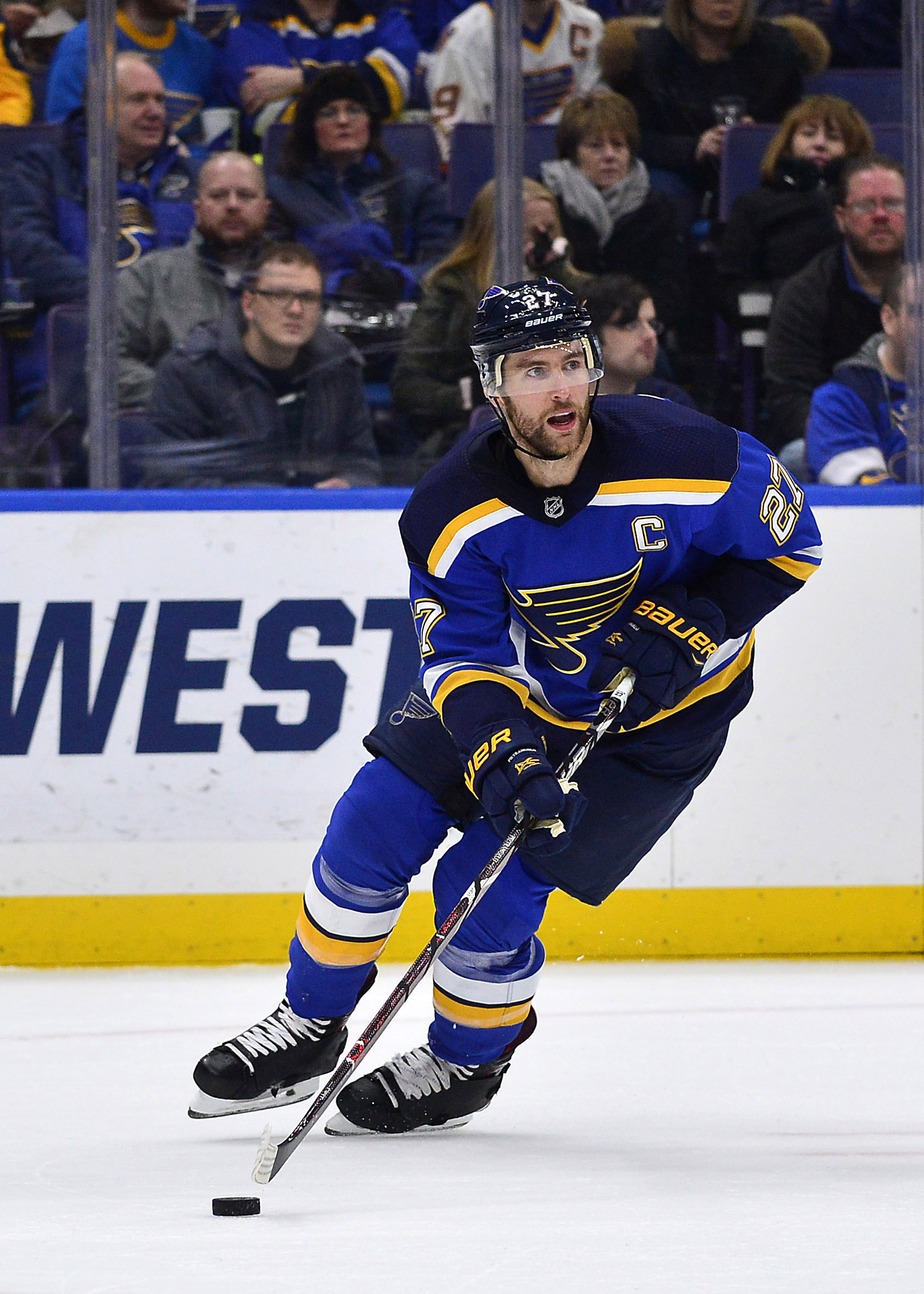 It’s certainly going to be difficult for St. Louis to re-sign Alex Pietrangelo. Yes, the flattening of the salary cap may ultimately limit the number of suitors that can go after him in free agency but it’s also going to make it even harder for the Blues to free up the cap space to sign him. I expect there will be mutual interest in getting something done but they will have to part with a couple of regulars to do so. With a lot of teams looking to shed salary, it may be tough to get value for whoever they part with. While it doesn’t seem possible on the surface, I have a hunch they’ll find a way to get something done which would make the question moot.
However, if Pietrangelo does move on, Ryan O’Reilly makes sense as a logical replacement. Looking at their other two alternates, Vladimir Tarasenko’s future seems to be in question with his recurring shoulder issues while Alex Steen is a candidate to be one of the veterans getting moved out to free up cap space. Meanwhile, O’Reilly still has three years left on his deal and has fit in seamlessly over his two years with St. Louis. I think they’d be comfortable bestowing the ‘C’ on him if they wind up having to make a captaincy change.
Offseason Keys: Edmonton Oilers
As teams are eliminated from the Qualifying Round, it means that the offseason has arrived for several more squads. Having covered the teams that weren’t a part of the NHL’s return, we shift our focus to the ones that have been ousted. Next up is a look at Edmonton.
With the top two scorers in the NHL on their roster, the Oilers were a popular pick to do some damage in the playoffs. Instead, they were ousted by Chicago (the 12th seed) rather handily in the Qualifying Round. The needs in Edmonton have been the same for a while which means GM Ken Holland’s to-do list may look a little familiar. However, with minimal cap space to work with, finding a way to address everything could be somewhat of a challenge.
Add Proven Scoring Wingers
Draisaitl (110 points) and McDavid (97 points) led the way offensively this season while Ryan Nugent-Hopkins was third with 61. They all have one thing in common – they’re all natural centers. While it’s great to have that type of depth down the middle, an extreme lack of production from the wing often forced the Oilers to shift Draisaitl and Nugent-Hopkins to the wing in an effort to jumpstart their offense. To put into perspective how little scoring from the wing they had, Zack Kassian had the most points of any natural winger with 34 which is basically third line production.
There are internal options but they all have flaws. Kailer Yamamoto showed some chemistry with Draisaitl in the second half of the season but was shut down easily against the Blackhawks. James Neal had 19 goals but struggled at times to the point where his role had to be limited at times. Andreas Athanasiou (more on him later) was hit or miss after being acquired while Alex Chiasson unsurprisingly wasn’t able to duplicate his 22-goal campaign from a year ago. All of these players have a spot on an NHL roster but none of them are impact scorers and only Yamamoto has a shot at getting there.
Of course, Edmonton has another early draft pick in their system in Jesse Puljujarvi. While he’s already signed for next season in Finland, that deal has an NHL out clause and as Mark Spector of Sportsnet noted earlier this week, talks between his camp and Holland continue to the point where Spector believes that Puljujarvi will indeed sign with the Oilers for next season. There could be some upside there or he could be more of a tertiary option as he was in his first stint with them. They need to add someone more proven than him.
Cheap options and marginal upside plays are quite important in a salary cap environment and they will be even more important now with the Upper Limit flattening out. However, even with $70MM committed already, Holland needs to bring in at least one legitimate consistent offensive threat on the wing; the centers can’t do it all on their own.
Decide Athanasiou’s Future
Just before the trade deadline, Holland made a move to try to bring in scoring help on the wing when he picked up Athanasiou from Detroit in exchange for a pair of second-round picks. A year removed from a 30-goal season, the move made some sense, even though he was in the midst of a down season. Played with McDavid or Draisaitl would surely get him going. Or so they thought.
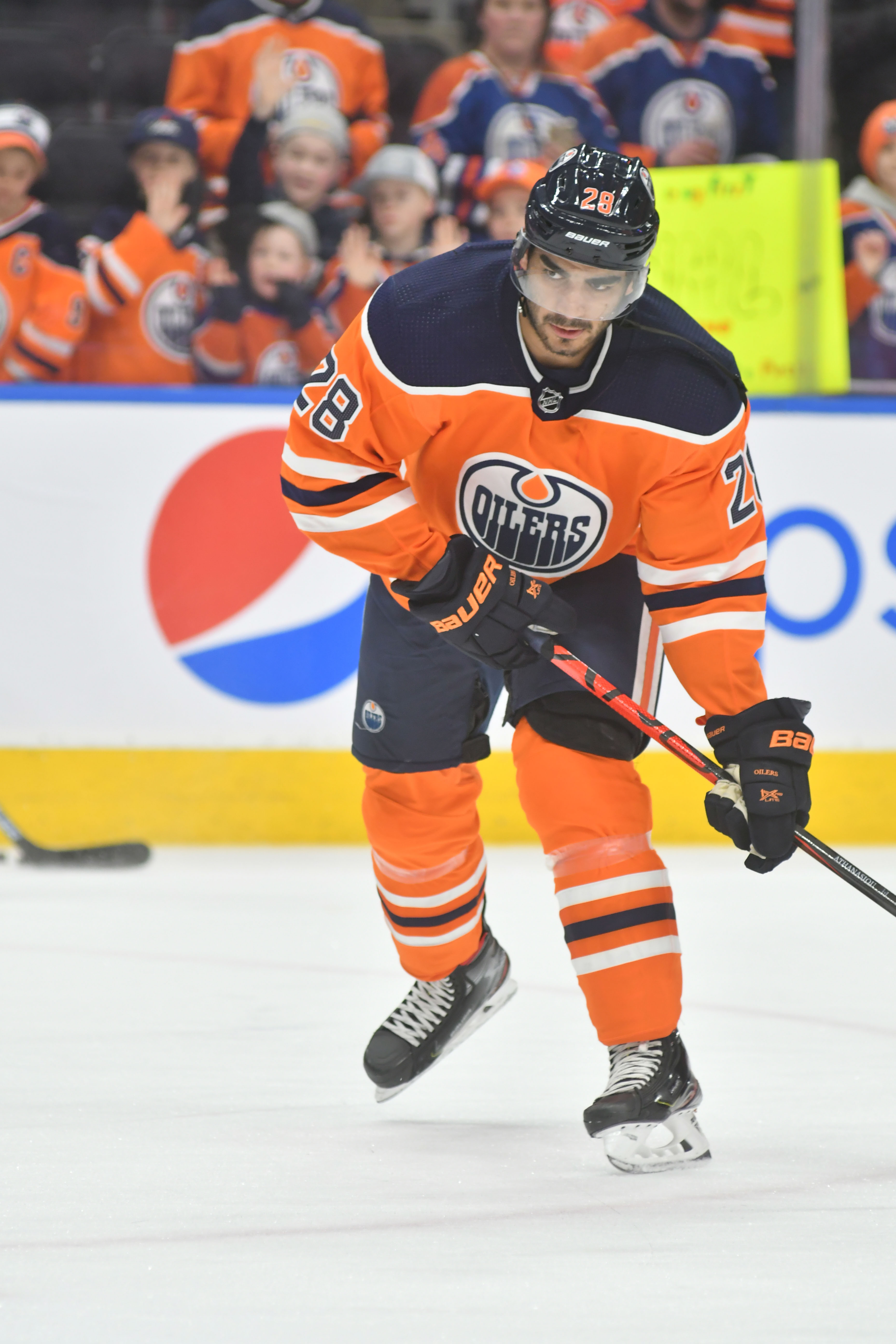 Instead of playing and producing more, the opposite happened. He had just a goal and an assist in nine regular season games before the pandemic while he played just over 12 minutes a game. In the playoffs, he was held off the scoresheet entirely while logging even less ice time at 10:58 per game. Stylistically speaking, Athanasiou’s speed makes him an ideal fit for an Edmonton team that’s trying to play at a high tempo but the early results weren’t encouraging.
Part of the season that Edmonton surrendered two high draft picks to get him was the fact that he still has two more years of team control; he isn’t eligible for unrestricted free agency until 2022. While his $3MM cap hit was a bit high for his production this season, the expected increase in the Upper Limit made him an affordable option. But then the pandemic threw a wrench into all of that. Now, a $3MM qualifying offer may be too pricey for them to afford. Yes, it’s possible that he signs for less than that amount but he’d need some incentive to do so and that’s tricky to offer at this time. It would be a tough outcome if they wind up non-tendering someone that they dealt two good draft picks for just months ago but it is a real option here. That decision will need to be made fairly quickly as they’ll need to know whether they need to save $3MM from their other planned spending before they can start trying to address some of their other needs.
Find A Second Goalie
Last summer, Edmonton brought in Mike Smith to give them another option behind Mikko Koskinen. The intrigue with Smith was that he could log more than a typical backup should the unproven Koskinen struggle.
From that standpoint, Smith’s addition was a success. He actually wound up making more starts than Koskinen (37-33) and it was telling that he got the nod to start against Chicago. However, the end results weren’t as strong. Smith had a 2.95 GAA which was 20 points higher than Koskinen while his .902 SV% was 15 points lower. Edmonton fans certainly don’t want a reminder of Smith’s numbers against Chicago where he was yanked after coughing up five goals in less than half a period. All of a sudden, it’s fair to question whether the 38-year-old pending unrestricted free agent should be part of the picture again next season or whether they should go in another direction.
Internally, Stuart Skinner and Olivier Rodrigue have some upside but neither is ready for NHL duty just yet so if they do go in another direction, the new goalie will have to come from outside the organization.
The big question is going to be what type of second goalie are they seeking? Are they looking for a starter that would push Koskinen into a lesser role? Do they want a platoon mate, similar to what Smith was for them this season? Or do they think Koskinen is ready for the number one job where they can go for a cheaper backup?
Presumably, the second one is the likeliest target given Koskinen’s inconsistency; having another goalie that can shoulder the starting workload for bits and pieces of the season would be wise. Fortunately, there are several of those available in free agency although the best ones will cost more than the $2MM plus games played bonuses that Smith received this season which could limit what they spend to fill other areas.
Photo courtesy of USA Today Sports Images.
Offseason Keys: Pittsburgh Penguins
As teams are eliminated from the Qualifying Round, it means that the offseason has arrived for several more squads. Having covered the teams that weren’t a part of the NHL’s return, we shift our focus to the ones that have been ousted. Next up is a look at Pittsburgh.
For the better part of the season, the Penguins looked to be a legitimate contender. Augmented by the addition of Jason Zucker, things appeared to be looking up for them. However, a slump just before the pandemic hit forced them out of the seeding round robin and into the Qualifying Round where they were upset by Montreal in four games. All of a sudden, there are questions abound and GM Jim Rutherford has promised changes. Here’s what Pittsburgh should be looking to do this offseason.
Shake Up The Forward Core
On paper, there aren’t many teams that have as strong of a forward group as Pittsburgh does. Sidney Crosby and Evgeni Malkin remain a strong core down the middle while Jake Guentzel is a year removed from a 76-point season and was on pace to beat that before being injured this season. Zucker is a capable top-six forward while Bryan Rust was tied for 50th in scoring league-wide. Veterans Patric Hornqvist and Nick Bjugstad had tough years but have been impact players in the past. That’s enough firepower to be a contender but they have come up short the last couple of postseasons.
Rutherford tried to shake things up last year by moving Phil Kessel to Arizona and then ultimately tried to replace him with Zucker before the trade deadline, a player he had been targeting last summer. Evidently, that wasn’t enough to move the needle.
With Rutherford saying changes were going to be made (and it’s reasonable to assume he wasn’t just talking about the three assistant coaches who won’t be returning), it seems like he’s intending to make another notable swap. The question becomes who moves though. The list of those that Pittsburgh would be willing to move that would bring back a notable return is rather small. On top of that, Rob Rossi and Josh Yohe of The Athletic report (subscription required) that the team is looking to shed some payroll and start next season in the low-to-mid $70MM range. At a time where many teams will be looking to do the same, finding new homes for some of their underachieving core players is going to be even more difficult.
Rutherford hasn’t been shy about changing things up in the past and he’ll certainly be trying to do so again. However, he may find more difficulty trying to do so this time around.
Make A Goalie Choice
With Tristan Jarry establishing himself as a capable NHL goaltender (just months after it was believed he was available in trade talks), Pittsburgh actually had a pretty strong tandem between him and Matt Murray and they were in the bottom ten in goals allowed during the regular season. However, both are eligible for restricted free agency with arbitration eligibility. Even if they don’t clear out salary this offseason, it’s hard to envision them keeping both around when they already have more than $68MM in commitments to just 15 players for next season. But who do they keep?
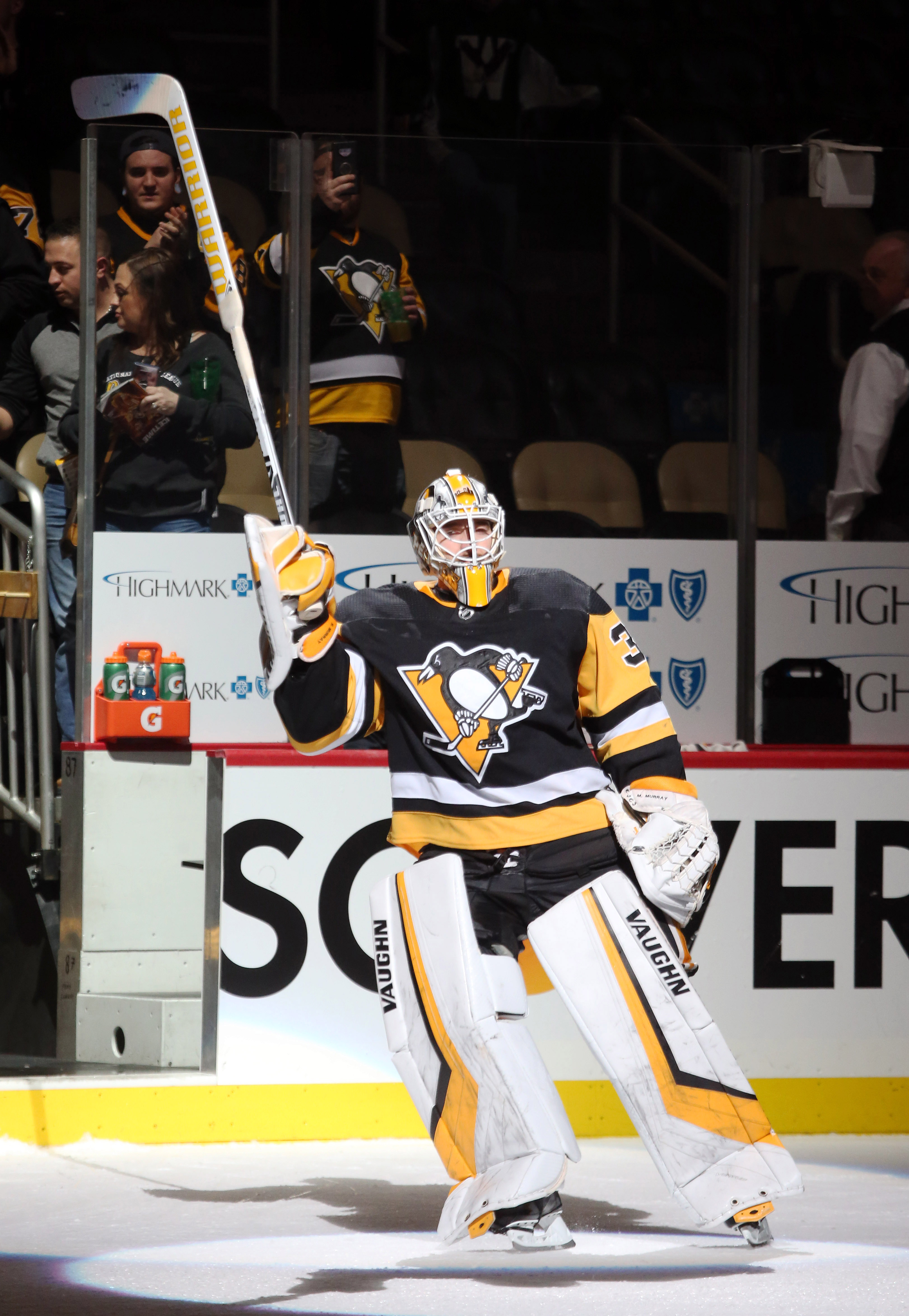 Murray got the nod in their series against Montreal but was eventually replaced. That’s similar to the regular season where he was the starter before Jarry started cutting into his playing time. With a save percentage of just .899, he shouldn’t be in line for too much of a raise on his $3.75MM qualifying offer. Worth monitoring here is that he’s a year away from UFA eligibility so it’s possible that Murray opts to take a one-year deal (with or without arbitration). While that would set him up to hit the open market, it would certainly negatively affect any possible trade value so it seems unlikely that Pittsburgh would let it come to that.
As for Jarry, he wound up being a huge bargain for them this season with a cap hit that was $25K below the league minimum. It’s safe to say that he’ll be in line for a significant raise but a lack of an NHL track record (just 62 career regular season games) will limit his earnings ceiling. Accordingly, a short-term deal would make sense but he’s only two years away from UFA eligibility himself. Presumably, that means a one-year deal could be on the table but if not, a deal that buys an extra year or two of team control would likely be the way they’d prefer to go if they’re confident that he can be their starter moving forward.
If Rutherford has an eye on keeping both beyond next season, the expansion draft for the Kraken could help push him in the other direction. Both Murray and Jarry would be eligible for selection and Pittsburgh could only protect one. Losing one for nothing isn’t an ideal scenario, even if it mirrors what happened with Vegas just three years ago.
It’s shaping up to be an intriguing offseason on the goalie front with it appearing as if there will likely be some activity on the trade front at that position. It wouldn’t be surprising to see the Penguins involved at some point.
Add Defensive Upgrades
Quietly, Pittsburgh has added a pair of capable young defenders in recent years that has their back end in better shape than it projected to be not long ago as John Marino and Marcus Pettersson have both filled important roles quickly. However, the back end of their blueline has been an area of concern and is something that needs to be addressed.
Justin Schultz had a tough year and it seems like he’s unlikely to return, especially with Rutherford publicly criticizing him following their loss to Montreal. Jack Johnson has a long list of detractors but the GM isn’t one of them. Even without the public vote of confidence, his contract which has three more years at $3.25MM makes it likely he’s sticking around. Meanwhile, Chad Ruhwedel and Juuso Riikola both held their own at times but are best served being in depth or reserve roles. In the system, Pierre-Olivier Joseph has some upside but isn’t ready for NHL duty just yet.
That means that at the very least, one defensive addition is needed. In an ideal world, a top-four option that could push one of their youngsters onto Johnson’s pairing to help balance things out would be a good pickup but there aren’t many of those available. Instead, they may have to settle for trying to find a steadying presence for the third pairing and follow that up with an extra depth option or two as it’s hard to see them signing two new third pairing players and pushing Johnson into the reserve role. Their ability (or lack thereof) to clear out a high-priced veteran up front will likely ultimately decide which route they wind up taking here.
Photo courtesy of USA Today Sports Images.
Offseason Keys: Nashville Predators
As teams are eliminated from the Qualifying Round, it means that the offseason has arrived for several more squads. Having covered the teams that weren’t a part of the NHL’s return, we shift our focus to the ones that have been ousted. Next up is a look at Nashville.
After a disappointing finish to what was a strong 2018-19 season when they were ousted by Dallas in the first round, the Predators opted to spend less on their back end and attempted to bolster their offense with the addition of Matt Duchene. The results didn’t go as planned. Instead, Nashville once again featured a middling attack and the change behind the bench to John Hynes instead of Peter Laviolette didn’t change much. When the pandemic hit, they were battling for the final Wild Card spot in the West and they didn’t perform particularly well in their Qualifying Round loss to Arizona. Now three seasons removed from their appearance in the 2017 Stanley Cup Final, GM David Poile has some work to do.
Make Way For Youth
If it seems like the Predators have been a veteran-laden squad lately, it’s because they have been. Even as core veterans have been moved out, they’ve been replaced by other high-priced veterans. As a result, they were one of the oldest teams in the league this season and when the play-in round hit, only one regular under the age of 25 was in their lineup and that was defenseman Dante Fabbro. At a time where the league is getting younger and quicker, Nashville has been heading in the opposite direction.
That’s something that Poile seems to be acutely aware of as during his end of season availability from the Predators’ team site (video link), he mentioned half a dozen prospects that he expects to push for a roster spot next season, highlighted by Eeli Tolvanen up front and Alexandre Carrier on defense.
However, of their 12 forwards they used in the playoffs, 10 are already signed for next season and the two that are set to be unrestricted free agents (more on them shortly) will either need to be retained or replaced. Poile may need to turn to the trade market to move out some of his forward depth and open up a spot or two for those youngsters to contend for.
Shake Up The Top Six
Poile has made no shortage of attempts to try to bolster his forward group in recent years. Duchene was added last summer, Mikael Granlund at the 2019 trade deadline, plus Kyle Turris in a 2017 swap and Nick Bonino months before that in free agency. Ryan Johansen in 2016 was the biggest one of all in what was a big one-for-one swap with Seth Jones going the other way. Every move made some sense at the time but it’s safe to say that none of them have panned out as intended.
All of these additions were only good enough to get the Predators to 17th in the league in scoring this season with only a couple of tenths of a goal more per game than 2018-19. Clearly, more work is needed.
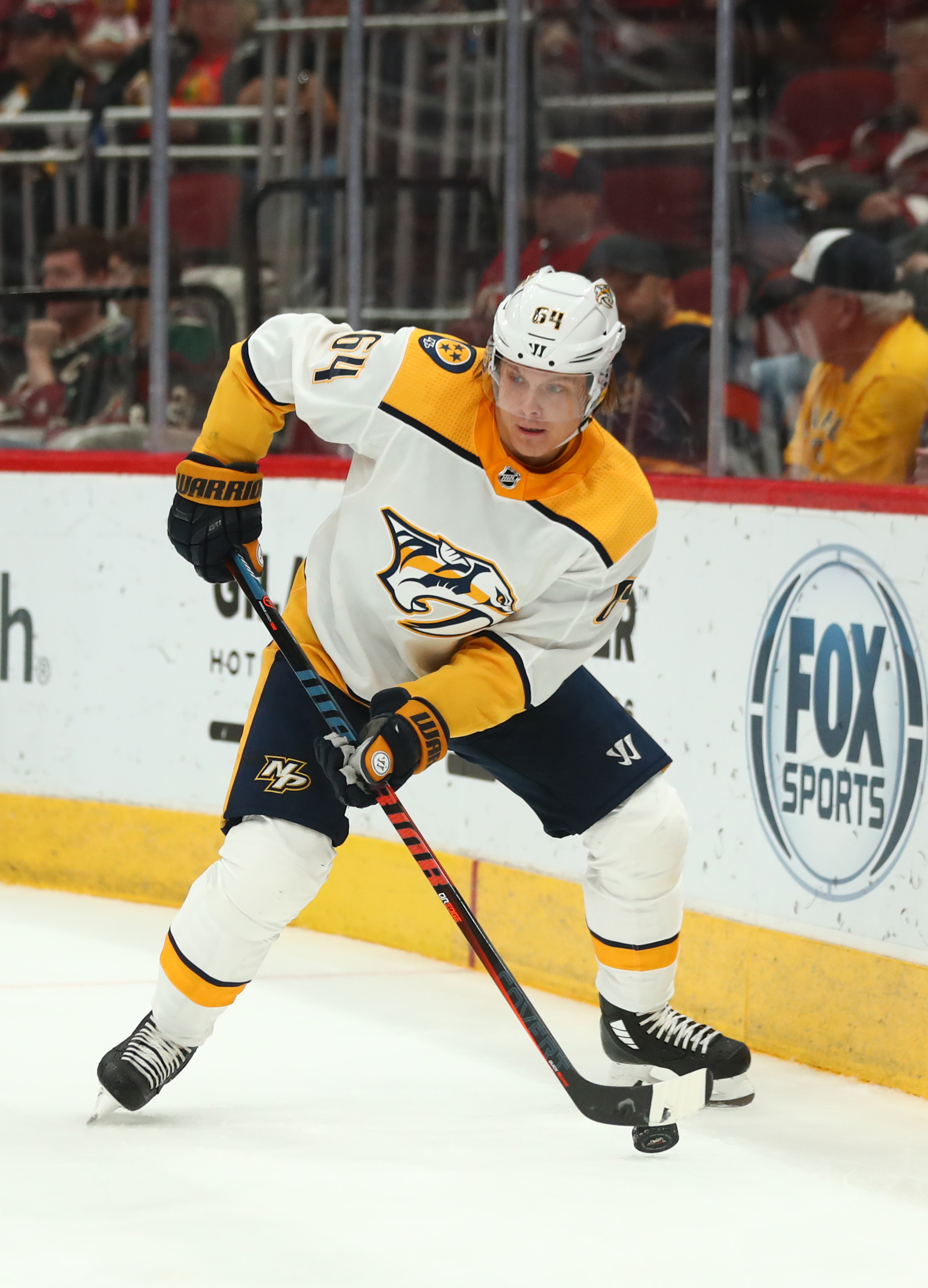 Nashville has a pair of notable unrestricted free agents to deal with in Granlund and Craig Smith. Granlund played a bit better under Hynes with 11 of his 17 goals coming after the coaching change. He had a bigger role, logging over 19 minutes a game over that stretch so it’s possible that he could be part of the solution moving forward. Smith, meanwhile, has been inconsistent over his career. At times, he has been able to play like a front liner but in others, he has struggled considerably. The two carried a combined $10MM cap hit and that money will need to be spent either re-signing or replacing both players.
If they re-sign one or both of them, Poile would still benefit from doing something to shake up the composition of their top six. There’s an argument to make that every one of their top forwards underachieved offensively this season. It’s possible (if not probable) that some will rebound next year but finding a different player or two that better meshes with the returning core could help unlock the offensive potential that this group has which is something they need to have happen if they want to get back into contention.
Add Proven Defensive Depth
For the last few years, Nashville has been forced to fill out the last few spots on their back end with veterans that have notable limitations. The priority had been getting players at or around the league minimum salary such as Yannick Weber, Matt Irwin, and Anthony Bitetto (before being lost to waivers in 2018-19). While they saved cap space which was important, those players were only able to log a few minutes.
It seems like they’re heading in that direction again. Jarred Tinordi had been a minor league regular for more than three years but suited up for them in the playoffs is already signed for next season. Ben Harpur, acquired from Toronto near the deadline, is another one with recent minor league time and is also signed. Steven Santini, part of the P.K. Subban trade last summer, is under contract for one more year but spent most of the season in the minors. These are players that are best served as injury recall depth, not regulars on the third pairing.
Even if someone like Carrier proves to be worthy of a spot, he may not be ready for more than a limited role. If he isn’t ready, he may still get a spot thanks to his low cap hit.
While Nashville needs to make some room up front for younger players, they need to find a way to have a third pairing that can log more than 11-14 minutes per game. Ideally, they’d be able to kill penalties, an area that was a problem for the Predators this year as they were last in the West with a 76.06% success rate. If the league intends to play 82 games next season, it stands to reason that the schedule may be a bit more compressed than usual which will make a more capable third pairing that much more important. Limited finances or not (depending on what happens up front), shoring up their defensive depth is something they should be looking to accomplish.
Photo courtesy of USA Today Sports Images.
PHR Mailbag: New York Rangers Edition
Our latest call for questions for the PHR Mailbag featured plenty of questions about the New York Rangers. They were quickly eliminated by Carolina in the Qualifying Round although they wound up with quite the consolation prize. With that in mind, the Rangers get the focus of this edition of the mailbag with any non-New York questions being tackled next weekend.
pitmanrich: With the number one pick, the Rangers look set at left wing for the next few years. Do they look to accelerate the rebuild next season by trading for a 1st line d-man to play with Trouba and a quality center to play on the 2nd line if Strome leaves or wait 12 months until Hank’s contract is up and the salary cap is looking better for them and then go for it?
The Rangers seem to be falling over themselves to say that getting the top selection isn’t going to do anything in terms of changing their rebuilding timeline. It’s the right call to make too as with as many youngsters as they have, throwing them to the wolves with a win-now expectation is risky.
They also simply don’t have the cap space to attempt those moves right now. As things stand, New York is going to be hard-pressed to simply retain their roster that finished up the season with Ryan Strome and Anthony DeAngelo headlining a notable group of restricted free agents.
On top of that, Alexis Lafreniere (assuming he’s the top pick as expected) is also going to complicate their cap situation. Yes, he’ll have his base salary capped at $925K but he’s a lock to get a max bonus contract which features up to $850K in ‘A’ bonuses that are certainly achievable plus another $2MM in ‘B’ bonuses. Yes, the bonus overages can be rolled over to the following year but that would only delay the cap challenges. GM Jeff Gorton may want to leave himself some financial wiggle room to at least keep some of those bonuses in 2020-21 which means even if he wanted to splurge and spend to fill their vacancies, he couldn’t. Their roster upgrades in the short term will have to come from internal improvement.
acarneglia: With the Rangers winning the Draft Lottery, what does the near- and long-term future look like for the team?
As I noted above, this shouldn’t have much of an impact in the short term as they don’t have the cap space to fill their bigger roles while keeping the rest of the roster intact. Yes, adding Lafreniere will help while a full season from Igor Shesterkin should certainly improve their record as well so New York will be better but they’re not going to go from a bubble team to a contender right away.
Their long-term prospects are certainly promising though. Lafreniere and Kaapo Kakko give them two players that should be high-end snipers and both will be around for a while. Artemi Panarin will be around for a while yet he’s certainly no slouch offensively either. They should be able to have the firepower to contend for a while although they will need to shore up their back end over the next few years which should represent their window with their young stars still under team control.
MZ311: Now that the Rangers have locked up the #1 pick, do they take Lafreniere, trade the pick, or take the top center on the board?
If Lafreniere wasn’t in a tier of his own in this draft class, I could at least entertain the idea of going with Quinton Byfield. But there is a sizable gap between the two and when you’re dealing with top-end talent, passing up on one for a better positional fit is the type of decision that could come back to haunt them down the road. Get the best player and then work out the fit afterwards.
As for the idea of trading the pick, I wouldn’t say no outright to that. Lafreniere isn’t a generational talent by any stretch, he just projects to be a high-scoring winger (which is still quite good). He’s someone that every team would want in the right fit and if there’s a team willing to part with a young center with a front line ceiling to get him, then it’s something that would need to be considered. Otherwise, they should make the safe and obvious play and select Lafreniere.
met man: What are the chances that Lundqvist hangs up his skates? Love the guy, but can’t see him happy being the #3 goalie on the Rangers.
I can think of $5.5MM reasons why Henrik Lundqvist won’t retire. I’m sure he’s not thrilled about his role down the stretch and where he likely sits on the depth chart but that’s a lot of money (a $1MM signing bonus and $4.5MM of salary) to leave on the table willingly.
 If he’s thinking that he only wants to play for the Rangers in his NHL career, there are two more realistic options at play. One is that he’s bought out, resulting in a $5.5MM cap hit for 2020-21 ($3MM in savings) and $1.5MM in 2021-22. He gets most of the money that’s owed to him and then he retires or opts to go play overseas if the itch to play is still there. The other is that they find some sort of lingering issue that makes him eligible for LTIR. He stays on the books but New York could spend over the cap by up to his $8.5MM AAV, alleviating their cap concerns. There is a significant downside to that approach though as any achieved bonuses from Lafreniere, Kakko, or Shesterkin, would roll over to 2021-22. Shesterkin’s on a max-bonus deal (Lafreniere will be too) and Kakko is just below that so that’s a big risk to take, especially with other youngsters such as Adam Fox likely to hit some of their lower ones as well.
I wouldn’t be surprised if Lundqvist’s time with the Rangers has come to an end but I would be surprised if he’s the one that initiates the separation by calling it a career and leaving that much money on the table.
CoachWall: If Henrik decides to stay, what might Georgie bring back in a trade?
The goalie trade market is always tough to predict. For starters, it often seems to be underwhelming although this offseason presents a whole new set of salary cap challenges which may make more cap-strapped teams desperate. While Alexandar Georgiev is a restricted free agent with arbitration eligibility, he’s not going to be getting number one money. A one-year or two-year bridge deal is the likely outcome and that’s going to be affordable for most teams.
Georgiev’s trade value is ultimately going to be decided by whether or not there are teams that think he’s a future starter in this league. There are games where he looks like he will be but others where he has struggled considerably.
I see some parallels to another Ranger goalie who was in that situation a while ago and that’s Cam Talbot. He was stuck behind a long-term starter (Lundqvist) and had some flashes of dominance and others where he didn’t look so good. He ultimately went for second and third-round picks and I’d peg a baseline return around there unless there are several teams that view him as a starter of the future. If they stick with Lundqvist as Shesterkin’s backup, I think they’d prefer the picks or a prospect to avoid adding any more salary to the books. It may not be an overwhelming return but let’s face it, goalies rarely bring back a big package in a trade.
Eaton Harass: Who should the Rangers be targeting for a 2nd line center?
That’s certainly a void they’d like to have filled by a more proven option but I don’t think their best-case scenario sees them making a move to get one. It seems fair to infer that Strome is not the long-term solution at that position but spending big on an upgrade may not be the best idea considering their cap situation and the fact that Mika Zibanejad is only a couple of years away from UFA eligibility where he’ll be in line for a huge raise on his $5.35MM price tag if continues to play like he did this year. They’ll have to spend big on him and their wingers so a more cost-effective second center will be needed.
They may have that already in Filip Chytil. His performance the last couple of seasons has been a bit underwhelming but he has produced in the minors. The 20-year-old also hasn’t had a lot of ice time in the top six either. Strome’s career year had a lot to do with that but from a development perspective, they’d be wise to try to give Chytil a bigger role next season to better assess if he can hold his own as a capable second option or if they’ll eventually have to go outside the organization to fill that role and so much can change between now and next offseason to speculate on who could be feasible targets.
Impact top-six centers are hard to get and when you have limited money to spend on that spot, they’re even harder to acquire. In a perfect world, they’re targeting Chytil to be the guy behind Zibanejad and skipping the trade route and free agent market altogether.
Photo courtesy of USA Today Sports Images.
Offseason Keys: Florida Panthers
As teams are eliminated from the Qualifying Round, it means that the offseason has arrived for several more squads. Having covered the teams that weren’t a part of the NHL’s return, we shift our focus to the ones that have been ousted. Next up is a look at Florida.
While they missed the playoffs a year ago, expectations were justifiably high for the Panthers coming into the season. They made a big splash behind the bench with the hiring of Joel Quenneville, added a big-name goalie in Sergei Bobrovsky along with some other capable veterans. That was supposed to be enough to give them a big boost. It didn’t happen. Instead, Bobrovsky struggled and they continued to be on the playoff bubble in the East. They didn’t fare particularly well in the Qualifying Round against the Islanders which has them looking to shake things up again. Here’s what they’ll be looking to accomplish.
Find New GM
First things first. After officially letting Dale Tallon go early this week (via a non-renewal of his contract), the Panthers need to decide who will be making the decisions. Tallon had been in the role for most of the last decade with Tom Rowe briefly holding the position for less than a year.
Considering that they already made one cost-cutting move before the pandemic hit when they shipped Vincent Trocheck to Carolina, it will be interesting to see if they look for a more under the radar candidate with an eye on trying to save some money, especially in the face of an expected decline in revenues for another couple of years after this.
It will also be worth watching to see if they revert back to the mindset that saw Rowe put in the role back in 2016 when the team looked to go in a more analytically-minded direction. Tallon has the reputation for being more of an old-school general manager so a shift towards a more analytics-driven approach is something that could certainly be on the table.
The search is still in the early stages as the Panthers look to get permission to speak to candidates. Montreal assistant GM Scott Mellanby is one of the known scheduled interviews while Pierre LeBrun of TSN and The Athletic adds former Kings executive Mike Futa to that list; there will be several others considered as well. Florida will have some work to do in the coming months but they can’t do much until they determine who Tallon’s replacement will be.
Who Stays, Who Goes?
Taylor Hall, Alex Pietrangelo, and Torey Krug stand at the top of the upcoming UFA class but they’re sandwiched in the top five in scoring by a pair of Florida wingers in Mike Hoffman and Evgenii Dadonov. At this point, it seems unlikely that the team will be able to afford to re-sign both of them while filling their other areas of need and staying within budget so it seems as if they’ll have to pick which one they want to try to keep.
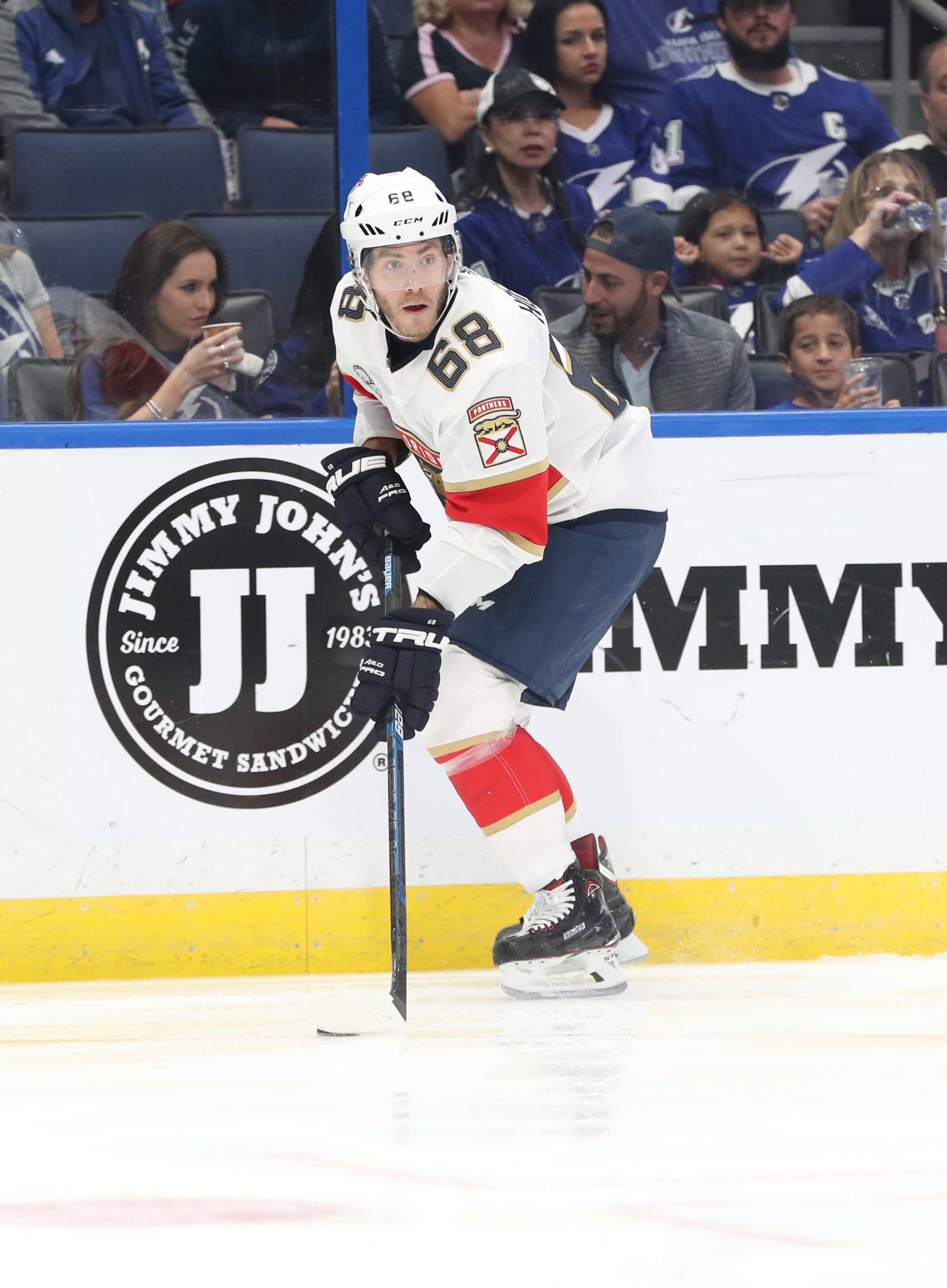 Hoffman has the longer track record of success at the NHL level. He led the team in goals this season with 29 and his point per game average was 0.86, a career high that had him playing just above a 70-point pace. He’s also a significant threat on the man advantage, averaging nearly 12 power play goals per year over the past five seasons. Even though his all-around game isn’t the strongest, being that type of scoring threat is going to draw a lot of attention on the open market, even with the salary cap challenges that the pandemic has presented. Hoffman had a cap hit of just under $5.2MM on his soon-ending contract and he should be in line for a raise on that mark this offseason.
As for Dadonov, his point per game rate dipped a bit this season although he was on pace to match the 28 goals he put up in each of his first two years back with the Panthers. After a stint in the KHL, his second go-round with Florida has been much more productive and since his return, he has been a capable top-six forward at a minimum; his first two years back saw him put up top line numbers. The lighter track record may lower his market a little bit and while he’s looking at a nice pay bump on his $4MM AAV, he should come in a little bit cheaper than Hoffman.
Both players will be entering their age-31 year and it appears that their best-case scenario is that one will stay and one will go.
Add Defensive Help
Florida has spent a lot of money trying to shore things up defensively in recent years. Aaron Ekblad is making $7.5MM per year. They handed Keith Yandle $6.35MM per season and felt that Michael Matheson was a core cog, giving him $4.875MM. That wasn’t enough so last summer, they added Anton Stralman for $5.5MM per year while inking what appeared to be a significant upgrade between the pipes in Bobrovsky with the second-richest cap hit for a goaltender in NHL history.
Those moves were supposed to propel them out of 28th in the league in goals allowed. Instead, after the extra money invested in preventing goals, they still wound up in 28th place.
Evidently, spending roughly half of the salary cap on defense and goaltending isn’t enough to move the needle. They don’t want to invest more between the pipes given how much they’re spending on Bobrovsky so trying to add another blueliner will be what the new GM needs to do. Mark Pysyk is a pending unrestricted free agent (and at this point, may be a better winger than a defenseman anyway) while Josh Brown is best utilized as a seventh defender so there is a vacancy that can be filled. They may not be able to throw much more money at that position so whoever gets the GM job will need to spend wisely to help bolster their back end and give Bobrovsky some much-needed help in the process.
Photo courtesy of USA Today Sports Images.
Offseason Keys: Winnipeg Jets
As teams are eliminated from the Qualifying Round, it means that the offseason has arrived for several more squads. Having covered the teams that weren’t a part of the NHL’s return, we shift our focus to the ones that have been ousted. Next up is a look at Winnipeg.
This season was expected to be one where the Jets took a bit of a step back. While they were only a year removed from nearly winning the Central Division, their back end underwent quite the overhaul as several regulars moved on with minimal replacements added for cap reasons while another didn’t play for them at all before his contract was terminated in-season. They used a hot streak down the stretch to have themselves in the battle for a playoff spot before the pandemic hit before being ousted by Calgary in the play-in series. Now, GM Kevin Cheveldayoff has some flexibility to work with this offseason (but a lot of roster spots to fill). Here is what he should be looking to accomplish.
Restock The D
No team took as big of a hit on their back end as Winnipeg did between last season and this one. Ben Chiarot and Tyler Myers moved on via free agency, Jacob Trouba was traded, and Dustin Byfuglien briefly reported to camp, left, and didn’t come back. The only current NHL asset they received for any of those defenders was Neal Pionk. While the 25-year-old had a career year for the Jets, this was still a significant step backwards. The team had to turn to the waiver wire to stay afloat and the results were predictable as Connor Hellebuyck faced the most shots of any goaltender in the league this season.
Only three regulars are signed for next season and one of those (Tucker Poolman) played a limited role this year. Cheveldayoff will need to work to add at least one top-four option to take some pressure off Pionk and Josh Morrissey. Youngster Ville Heinola showed some promise in an early-season look but while he has the upside to get to that level down the road, that won’t come in 2020-21.
If they’re unable to afford a blueliner of that quality, then restocking the cupboards with quality depth options is a good way to go. Dylan DeMelo made an impact in limited action after being acquired at the trade deadline from Ottawa and they’ll likely look to retain him although DeMelo is in line for a decent raise on his $900K AAV. Nathan Beaulieu is another pending unrestricted free agent that could be retained at the right price. But after them, the depth falls off quickly. Bringing in a capable veteran or two that can log some minutes would be a useful backup plan; while it wouldn’t add to their top pairing, adding players that can log more minutes than a usual third pairing would still help. Relying on the waiver wire for reinforcements didn’t work too well this season and that’s not a viable approach to reshaping their defense corps.
Acquire A Second Line Center
Finding a second line center has proven to be a bit of a challenge for Cheveldayoff. In recent years, they’ve added Paul Stastny and Kevin Hayes as rentals at the trade deadline but they weren’t able to re-sign either one. That’s left Bryan Little reprising that role but his season ended early due to a perforated eardrum. They had some challenges filling that spot. Jack Roslovic hasn’t developed as hoped and seems to be better on the wing at this stage. Andrew Copp and Adam Lowry are effective players but they’re at their best in more limited roles.
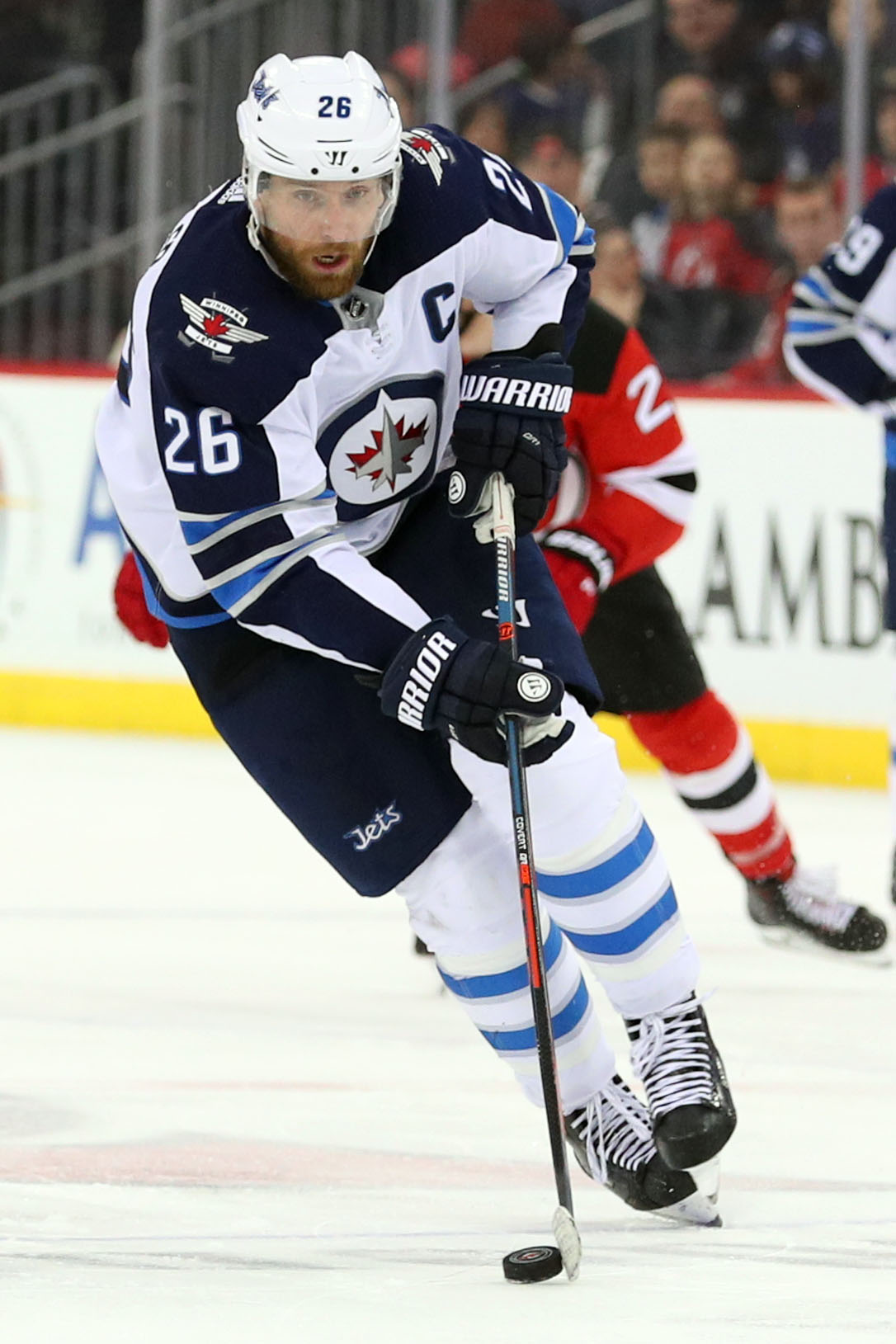 That forced Blake Wheeler into playing down the middle for a large portion of the season. He’s certainly capable of playing in that role but it takes him away from playing on the top line with Mark Scheifele holding down that number one spot. That’s a nice fallback option to have but they shouldn’t be relying on that as their primary plan to fill the role next season.
In a perfect world, this is something that could be filled via unrestricted free agency but there’s a strong case to be made that there isn’t a top-six center available on the open market. That means they’ll have to turn to the trade market to try to add one. If they can get one over the coming months, it’ll stop them from having to part with more draft picks and/or prospects to try to add one as a rental closer to the trade deadline.
Add A Better Backup
Laurent Brossoit’s first season in Winnipeg was a strong one and he earned the one-year, $1.225MM extension that he played under this year. However, 2019-20 wasn’t anywhere near as strong. As a result, Hellebuyck led the league in starts for the second time in three years and while he played well enough to earn a Vezina nomination, asking him to regularly log as many minutes as he has isn’t ideal. With a 3.28 GAA and a .895 SV%, it’s likely the end of Brossoit’s tenure with the team.
While they were eventually able to get Eric Comrie back (following stints in Arizona and Detroit), he’s probably better off as their third option once again. He has been around long enough that he can serve as their mandatory exposure to Seattle in expansion (as long as he’s tendered a qualifying offer next offseason).
That could take Winnipeg out of the market of teams that will be seeking someone on a multi-year contract which will give them a few more options. Ultimately, who they target will likely be determined by whether or not they’re able to improve down the middle and on defense as those are justifiably their top priorities but a better backup for Hellebuyck is something that Cheveldayoff will need to look for as well. With 2020-21 likely to feature somewhat of a compressed schedule, those second options are going to be even more important so a more proven backup becomes that much more critical.
Photo courtesy of USA Today Sports Images.