
Salary Cap Deep Dive: Buffalo Sabres
Navigating the salary cap is one of the more important tasks for any GM. Teams that can avert total cap chaos by walking the tightrope of inking players to deals that match their value (or compensate for future value without breaking the bank) remain successful. Those that don’t see struggles and front office changes.
PHR will look at every NHL team and give a thorough look at their cap situation for the 2020-21 season. This will focus more on players who are regulars on the roster versus those who may find themselves shuttling between the AHL and NHL. All cap figures are courtesy of CapFriendly.
Buffalo Sabres
Current Cap Hit: $79,614,282 (under the $81.5MM Upper Limit)
Entry-Level Contracts
F Dylan Cozens (three years, $894K)
D Rasmus Dahlin (one year, $925K)
D Henri Jokiharju (one year, $925K)
Potential Bonuses
Cozens: $850K
Dahlin: $2.85MM
Jokiharju: $637.5K
Total: $4.3375MM
Cozens made the team despite a shortened training camp due to him playing at the World Juniors where he was one of the top performers in the tournament. He isn’t eligible to play in the AHL whenever the WHL gets underway so a decision will have to be made in a few weeks as to whether or not to burn the first year of his entry-level deal. The threshold has been cut to seven games meaning that if Cozens plays in that seventh contest, his contract officially burns a year.
Dahlin hasn’t been the flashiest player since being taken first overall in 2018 but he has already established himself as an important part of their back end and a player they’ll want to build around. Discussions surrounding a long-term deal would likely use Florida’s Aaron Ekblad ($7.5MM AAV for eight years) as a potential comparable and with the flexibility that they’re about to have on the cap, they can easily afford to go that route if they want. As for Jokiharju, he played a regular role on the third pairing after being acquired from Chicago. Unless he’s able to jump into their top four though, a short-term contract makes the most sense and without arbitration eligibility, he shouldn’t be able to command a sizable raise.
One Year Remaining, Non-Entry-Level
F Taylor Hall ($8MM, UFA)
G Carter Hutton ($2.75MM, UFA)
D Matt Irwin ($700K, UFA)
D Jake McCabe ($2.85MM, UFA)
D Brandon Montour ($3.85MM, UFA)
F Sam Reinhart ($5.2MM, RFA)
F Tobias Rieder ($700K, UFA)
F Riley Sheahan ($700K, UFA)
F Eric Staal ($3.25MM, UFA)
G Linus Ullmark ($2.6MM, UFA)
The Sabres made a big splash in free agency by getting Hall to sign with them. It was a surprise on multiple fronts in that a non-playoff team landed him and that it was just for one year although the state of the UFA market helped push his fate in that direction fairly quickly. He’ll get a chance to rebuild his value a little bit in the hopes of getting a similar price tag on a long-term deal this summer but with many teams trending to tight to the cap for next year as well, a contract similar to this one can’t be ruled out either. Staal was brought in from Minnesota in the offseason and is coming off a solid season. He’s slowing down but as long as he can produce like a second-liner, there’s a spot for him around his current price tag. Rieder and Sheahan are both depth players and will either be retained or replaced by others making the minimum.
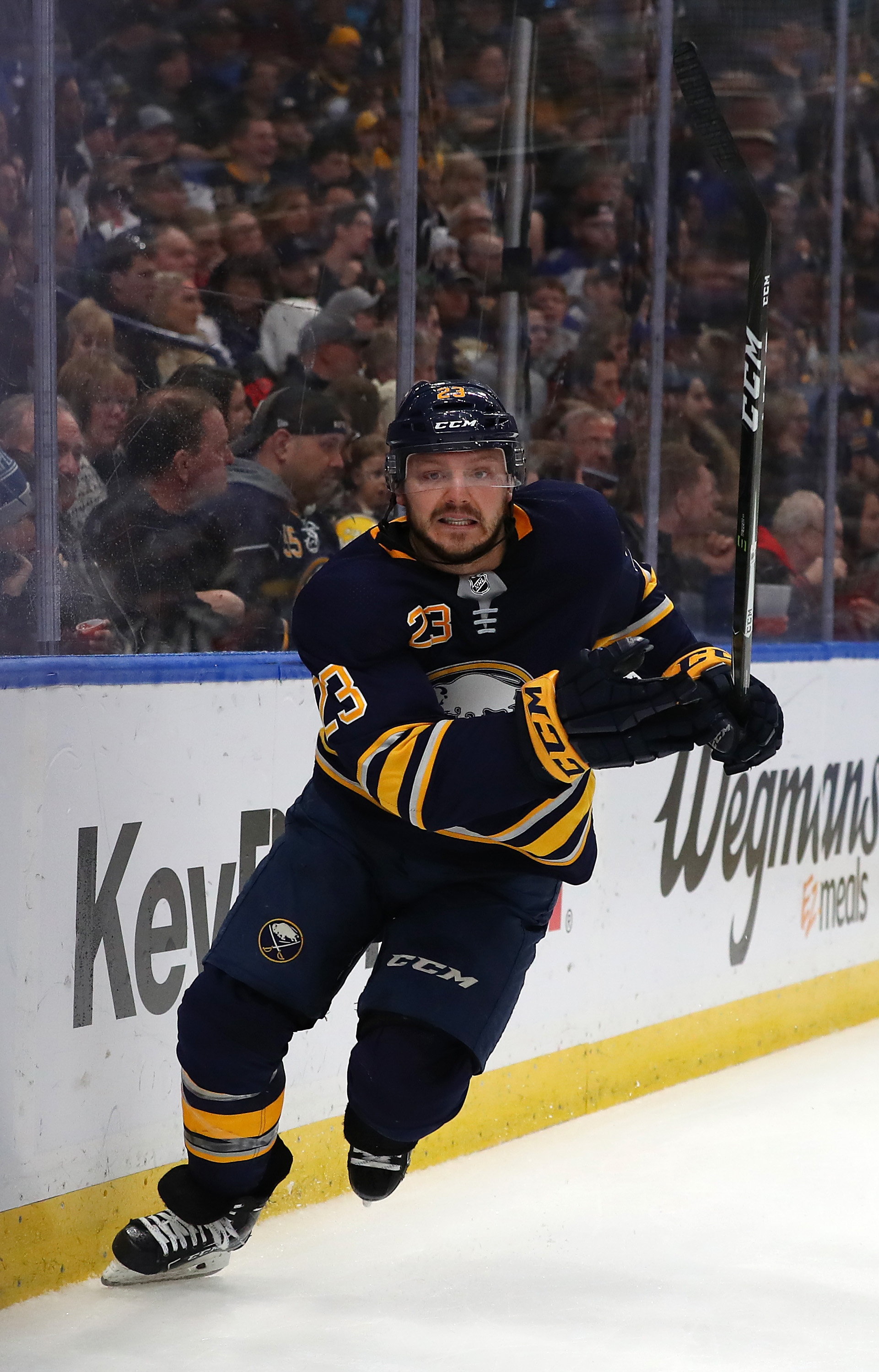 Reinhart’s situation largely has flown under the radar due to Hall but it’s reaching the point where a decision is going to need to be made. Instead of inking a long-term deal this past offseason, Reinhart and the Sabres opted for a one-year deal, giving him another crack at restricted free agency with arbitration eligibility in the summer. However, he’s now only one year away from UFA eligibility so if talks on a long-term deal don’t go well, he can easily just file for arbitration, get his one-year contract, and hit the open market in the prime of his career. They’ve kicked the can as far as they can and GM Kevyn Adams will need to get a long-term agreement in place with Reinhart this offseason.
Montour was a speculative non-tender candidate after a tough first full season with the Sabres although he wound up accepting a small raise that walks him to UFA eligibility. But if he doesn’t show the promise that he did in his time with Anaheim, he’ll be hard-pressed to receive his current salary on the open market. McCabe has seen a lot of second pairing playing time in recent years and has held his own although he’s better used as a fifth option. While he doesn’t produce much offensively, he’s still fairly young and it wouldn’t be surprising if he winds up with a deal around what Joel Edmundson signed to avoid hitting the open market with Montreal, a multi-year deal in the $3.5MM range. Irwin has been at or near the minimum for a few years now and that’s unlikely to change.
Ullmark was expected to be part of the long-term solution for Buffalo between the pipes and while that’s still possible, the fact that he only received a one-year deal to get him to UFA eligibility means that the Sabres aren’t yet sold on that possibility. While he should be able to do enough to earn a small raise at a minimum given the recent demand for quality backups, he’ll need a big year to have a shot at starter money. Hutton is coming off of a tough season and will need a bounce-back year to garner some interest. At the very least, he’ll be going year-to-year moving forward as any future contracts will have 35-plus rules attached to them.
Two Years Remaining
F Cody Eakin ($2.25MM, UFA)
F Curtis Lazar ($800K, UFA)
D Colin Miller ($3.875MM, UFA)
F Victor Olofsson ($3.05MM, RFA)
D Rasmus Ristolainen ($5.4MM, UFA)
Olofsson was one of the pleasant surprises in what was a tough season for the Sabres as he was one of the top-scoring rookies in the league before a lower-body injury derailed his momentum. A bridge deal made a lot of sense for both sides given how his production caught many off guard but if he picks up where he left off and scores at a 20-goal or more pace, he could easily add another million or two to his price tag. Eakin was brought in as an unrestricted free agent to give them some veteran depth down the middle although the price tag was on the high side given what other role players had to sign for. Lazar hasn’t lived up to his first-round draft billing but he’s affordable depth that will either be replaced or retained at that price tag.
Ristolainen continues to be one of the more polarizing blueliners in the league. There’s no denying that he has a strong offensive game but his play in his own end isn’t graded anywhere near as favorably. Still, he will enter the market at 27 in the prime of his career and is a right-shot player, the side where supply is much shallower than demand. A small raise, even in this marketplace, is a definite possibility. After being a key part of the back end in Vegas, Miller didn’t fare anywhere near as well with Buffalo and his ice time has been cut further in the early going this year. He will need to establish himself as a viable top-four option if he wants to have a chance at getting something close to his current AAV in 2022.
Three Years Remaining
F Zemgus Girgensons ($2.2MM, UFA)
F Kyle Okposo ($6MM, UFA)
F Tage Thompson ($1.4MM, RFA)
Okposo is now officially in the back half of the deal he signed in the ill-fated 2016 offseason. His days of being an impact player have come and gone but he’s still serviceable in a bottom-six role. It’s too bad for the Sabres that he’s paid way too much for that particular role though. Girgensons also got an above-market deal for a depth player and it’s certainly not off to a good start as he’s already out for the season. Thompson is the lone player left from the Ryan O’Reilly deal to St. Louis and battled injury troubles last year. He accepted a bit of security by taking the three-year agreement and it shouldn’t take much for Buffalo to get a good return on it but he’ll need to establish himself as a top-six forward to have a shot at a significant raise in 2023.
PHR Live Chat Transcript: 01/14/21
The NHL is back and so are PHR Live Chats! Click here to read a transcript of this week’s chat with Gavin Lee.
Salary Cap Deep Dive: Boston Bruins
Navigating the salary cap is one of the more important tasks for any GM. Teams that can avert total cap chaos by walking the tightrope of inking players to deals that match their value (or compensate for future value without breaking the bank) remain successful. Those that don’t see struggles and front office changes.
PHR will look at every NHL team and give a thorough look at their cap situation heading into the 2020-21 season. This will focus more on players who are regulars on the roster versus those who may find themselves shuttling between the AHL and NHL. All cap figures are courtesy of CapFriendly.
Boston Bruins
Current Cap Hit: $78,517,314 (under the $81.5MM Upper Limit)
Entry-Level Contracts
F Trent Frederic (one year, $925K)
D Urho Vaakanainen (two years, $894K)
F Jack Studnicka (two years, $769K)
Potential Bonuses:
Vaakanainen: $425K
Frederic: $300K
Studnicka: $108K
Young players on entry-level deals are hard to find, but the team does have three prospects drafted high back in 2016 and 2017 who look to be ready to step into the Bruins’ lineup or at least should find their way onto the taxi squad at the very least in Frederic, Studnicka and Vaakanainen. Frederic and Studnicka are battling for middle-six roles, while Vaakanainen is fighting for one of the third pairing roles available on the defense. All have the potential to be solid role players for the team down the role. The question is, when will that happen?
One Year Remaining, Non-Entry-Level
F David Krejci ($7.25MM, UFA)
G Tuukka Rask ($7MM, UFA)
D Brandon Carlo ($2.85MM, RFA)
F Ondrej Kase ($2.6MM, RFA)
G Jaroslav Halak ($2.25MM, UFA)
F Nick Ritchie ($1.5MM, RFA)
F Sean Kuraly ($1.28MM, UFA)
D Kevan Miller ($1.25MM, UFA)
F Par Lindholm ($850K, UFA)
D Steven Kampfer ($800K, UFA)
F Greg McKegg ($700K, UFA)
F Anton Blidh ($700K, RFA)
 Quite a few names are on their final year and Boston will have to make some key decisions with the flat salary cap likely remaining the same for the moment. At the top of the list, is their goaltending situation with both netminders, Rask and Halak, ready to hit unrestricted free agency. Rask has said recently that he would like to remain with the Bruins for the rest of his career, but there also has been questions on how much longer the 33-year-old wants to play as retirement has been an option too. Rask was dominant last year during the regular season with a 2.12 GAA and a .929 save percentage. Unfortunately he opted to leave the bubble during the playoffs due to concerns to tend to a family emergency. A long-term deal wouldn’t make sense, but the team could offer him a three-year pact, if he’s willing to take it. Halak is in a similar situation and was solid with a 2.39 GAA and a .919 save percentage and also could see a similar extension.
Krejci is another veteran the team will have to make a decision on. The veteran is completing a six-year, $43.5MM contract. The belief is that the two sides are expected to begin talks of a potential extension, likely less years and less money, considering he’ll be 35 when his contract expires. However, he has been a solid second-line center for years, although he only scored 13 goals last season, a disappointing season for him. Carlo, however, could see a significant raise next year as the blueliner has developed into a solid top-four pairing defenseman over the last few years.
Two other key decisions will be Kase and Ritchie, both acquired from Anaheim before the trade deadline last season. The speedy Kase struggled once he got to Boston, and didn’t register a goal in six regular season and 11 playoff games. Ritchie was brought in to add some muscle to their bottom-six, but he also hasn’t stood out yet. Both will get long looks this season before the team decides whether to offer them new contracts.
Two Years Remaining
F Patrice Bergeron ($6.88MM, UFA)
D Charlie McAvoy ($4.9MM, RFA)
F Jake Debrusk ($3.68MM, RFA)
D Jeremy Lauzon ($850K, RFA)
F Karson Kuhlman ($725K, RFA)
The Bruins’ first line has been dominant for years and Bergeron’s contract will be the first to expire. The 35-year-old veteran hardly plays his age, but will be 37 years old when his deal expires. He continues to dominate, scoring 31 goals in 61 games last year and doesn’t look like he’s slowing down, but the team will have no choice but to wait and see how he progresses over the final two years in his deal.
The team likely will have to pay up in a couple years for two of their restricted free agents as both McAvoy and Debrusk will likely be taking on bigger roles this season and could take that next step, which suggests that much of their available cap room at this point will be going to both these players. McAvoy had 32 points in 67 games last year, but will likely become the key to the first power play with Torey Krug gone and could see a big jump in his offensive numbers. Lauzon is an interesting name as he currently is playing next to McAvoy on the first pairing, although that may not remain that way. Regardless, he’s pushed his way into what looks like a top-four pairing role and could be a valuable commodity down the road.
Three Years Remaining
F David Pastrnak ($6.67MM, UFA)
F Craig Smith ($3.1MM, UFA)
D John Moore ($2.75MM, UFA)
F Anders Bjork ($1.6MM, RFA)
F Chris Wagner ($1.35MM, UFA)
D Connor Clifton ($1MM, UFA)
Pastrnak is likely to get a long-term deal in three years. He’ll be 27 and an unrestricted free agent, meaning it could cost the Bruins a great deal to lock him up to a long-term deal considering other teams could bid on him too at that time. The team has to hope they can sign him to an extension before he hits UFA status in 2023. Regardless, he has developed into one of the top scorers in the league, posting 48 goals and 95 points in 70 games. Of course, he is currently out of the lineup after he underwent a right hip arthroscopy and labral repair on September 16. He should return at some point in the season, but no word yet on his return.
Smith was brought in this offseason on a reasonable three-year deal in hopes of adding some scoring to their third line, something that has been a trouble-spot for the team in recent years. He tallied 18 goals last season and has scored 64 goals over the past three seasons with Nashville. Bjork has struggled with injuries over the years, but looks ready to contribute this year. He finally played a full season, scoring nine goals in a bottom-six role and should get more opportunities this year.
Of course, the five-year, $13.75MM deal handed to Moore continues to look bad. The veteran blueliner has struggled earning a full-time role on defense and currently looks like the team’s seventh defenseman when the third pairing role is completely in the air.
Four Years Remaining
D Matt Grzelcyk ($3.69MM, UFA)
Grzelcyk’s role with the team has been a diminished one as the defenseman mainly has seen third-pairing minutes. However, with Krug gone, many of those minutes will be given to Grzelcyk, including some power play time, suggesting this could be a big season for him. The team anticipated that and rewarded his hard work with a four-year deal and believe that he will take off, especially offensively this year and be a big contributor for many years, which could make his contract look like a bargain if he does take that next step.Read more
Salary Cap Deep Dive: Winnipeg Jets
Navigating the salary cap is one of the more important tasks for any GM. Teams that can avert total cap chaos by walking the tightrope of inking players to deals that match their value (or compensate for future value without breaking the bank) remain successful. Those that don’t see struggles and front office changes.
PHR will look at every NHL team and give a thorough look at their cap situation heading into the 2020-21 season. This will focus more on players who are regulars on the roster versus those who may find themselves shuttling between the AHL and NHL. All cap figures are courtesy of CapFriendly.
Winnipeg Jets
Current Cap Hit: $83,015,356 (over the $81.5MM Upper Limit)
Entry-Level Contracts
David Gustafsson (two years, $818K)
Potential Bonuses:
Gustafsson: $132.5K
The 20-year-old made the team out of camp last year as a fourth liner but was eventually moved to the minors. He’s probably in a similar situation this season and shouldn’t be looking at a costly second deal. Kristian Vesalainen (two years, $894K plus $850K per year in bonuses) could also be heard from at some point but he may be more of a midseason recall.
One Year Remaining, Non-Entry-Level
G Laurent Brossoit ($1.5MM, UFA)
F Andrew Copp ($2.24MM, RFA)
D Derek Forbort ($1MM, UFA)
F Patrik Laine ($6.75MM, RFA)
F Adam Lowry ($2.916MM, UFA)
F Mathieu Perreault ($4.125MM, UFA)
D Neal Pionk ($3MM, RFA)
D Tucker Poolman ($775K, UFA)
D Luca Sbisa ($800K, UFA)
F Paul Stastny ($6.5MM, UFA)
F Nate Thompson ($750K, UFA)
F Dominic Toninato ($700K, UFA)
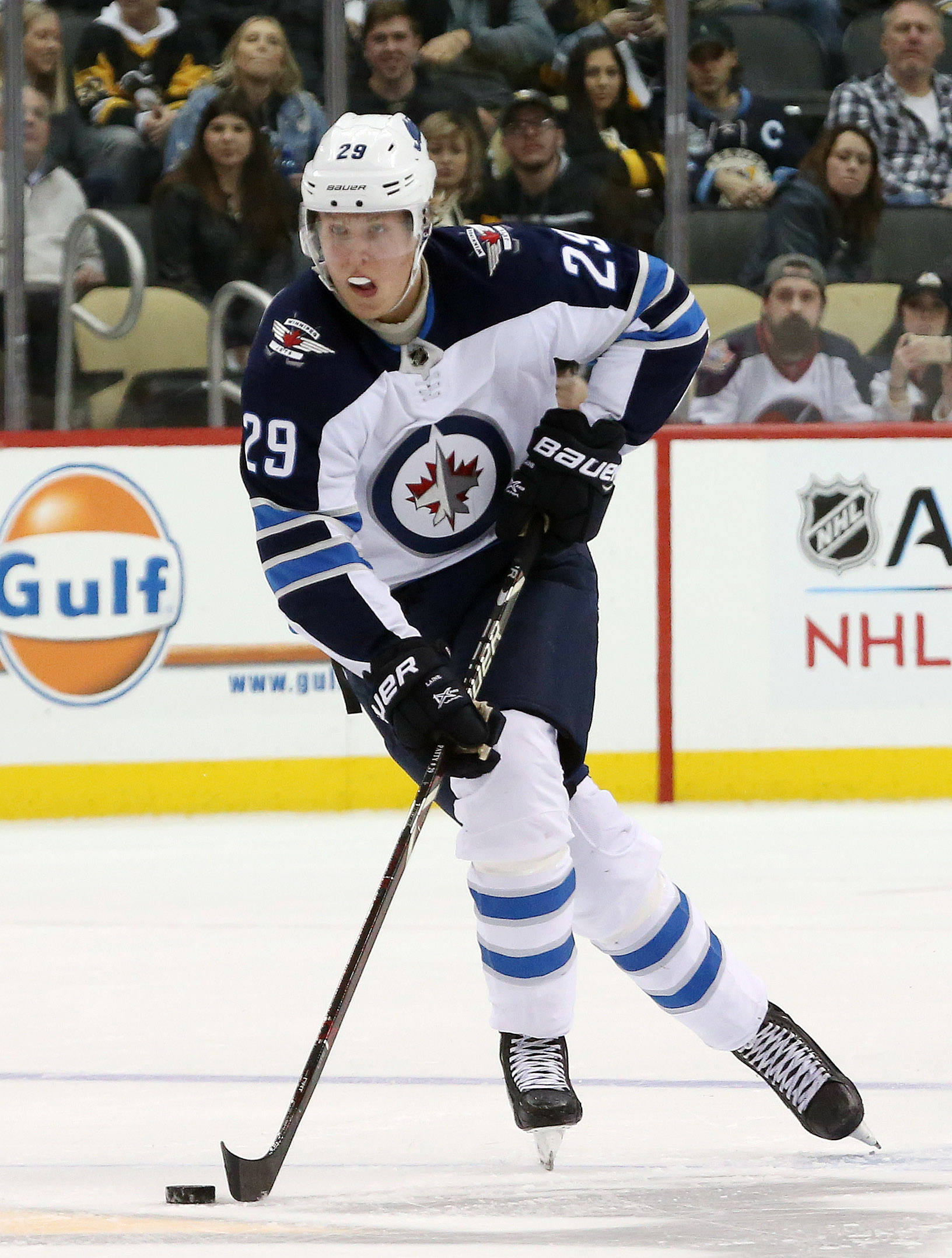 Let’s start with the biggest name on the list in Laine. His preference for a trade doesn’t matter a whole lot for this exercise and knowing it’s a contract year with plenty on the line, even if he isn’t thrilled about his situation, it shouldn’t affect his play. There’s no denying that he is one of the better pure goal-scorers in the league but there’s also no denying that he’s one of the streakiest scorers in the league either. With a $7.5MM qualifying offer on the horizon, Laine will need to improve on his consistency if he wants to land more than a nominal bump on that if it goes to arbitration. A long-term deal may not be as lucrative as it could have been a couple of years ago given the current financial landscape but Laine should be one of the highest-paid wingers in the league next year if one can be reached – with Winnipeg or someone else.
Stastny was brought in as a cap dump from Vegas but this is a good landing spot for him. He’s familiar with the system and could see a small uptick in minutes. While he’ll re-enter the market subject to 35+ caveats in July, he’s still a capable middle-six center and should be able to command longer than a one-year deal although it will have to come with a notable dip in pay. Perreault is still a serviceable player that can move up and down the lineup but someone with that skillset should be making about half of what he currently is and that should be his market rate this summer.
Lowry is a player who could very well be hit hard by the current financial situation. The hope that he’d be able to provide more offense has largely faded and instead, he’s someone that should be between 20-25 points in a normal year while winning a fair share of faceoffs and providing some physicality. That’s definitely an effective role player but teams will be trying to squeeze their lower-line options for financial savings which doesn’t bode well for his chances of a raise. Copp saw a lot of time in the top six last season and the offensive results weren’t really there. He’ll need to be better at that end if he wants to get much more than his $2.3MM qualifying offer. Thompson and Toninato were brought in for extra depth down the middle and their spots will be filled by similarly-priced depth players if they don’t re-sign for next season; neither should be expected to command much more than the minimum on the open market.
On the back end, Pionk vastly exceeded expectations in his first season in Winnipeg and appears to be well-positioned to land a long-term deal this offseason and if his point per game rate this season is similar to 2019-20, doubling his AAV isn’t out of the question. Forbort had a rough year injury-wise a year ago which cratered his market this fall but before that, he was a 20-minute per game player. He should have the opportunity for similar ice time and if he can stay healthy, he could re-enter free agency in July with a considerably larger number of suitors. Poolman’s progression has been slow and steady so far. He already has shown himself to be capable of handling a third-pairing workload which on its own should help earn him a small raise. If he can work his way into number four minutes though, he could be one of the more intriguing unheralded options in free agency next summer. Sbisa was an effective depth player last season but it’s hard to anticipate his market growing substantially after having to wait until 2019-20 started before he could get a deal last season.
Brossoit’s second year with the Jets wasn’t anywhere near as good as his first as he went from high-end backup numbers to low-end. Nevertheless, he got a small raise but will need to be closer to his 2018-19 numbers for that to happen again next offseason.
Two Years Remaining
F Mason Appleton ($900K, RFA)
D Nathan Beaulieu ($1.25MM, UFA)
F Jansen Harkins ($725K, RFA)
Appleton has been in and out of Winnipeg’s lineup the last couple of years in a limited role. If he remains primarily a fourth liner, he won’t have much leverage in securing a bigger deal two years from now with his arbitration eligibility potentially working against him at that time. Harkins made his NHL debut last season and did enough to convince the Jets to give him a one-way deal at the minimum for both seasons. He’ll need to work his way into a regular role for his arbitration eligibility to work in his favor in 2022.
Beaulieu hasn’t lived up to his first-round draft billing but since joining the Jets, he has been a serviceable option on the third pairing. That earned him this two-year guarantee but it’s unlikely he’ll be able to land much more than that on the open market unless he can step into a spot inside their top four.
Three Years Remaining
The Jets don’t have anyone on their roster whose contract expires in 2023.
Four Years Remaining
D Dylan DeMelo ($3MM, UFA)
G Connor Hellebuyck ($6.166MM, UFA)
F Bryan Little ($5.292MM, UFA)
F Mark Scheifele ($6.25MM, UFA)
F Blake Wheeler ($8.25MM, UFA)
Wheeler has been one of the faces of the franchise since the team moved from Atlanta and was recognized for it by this deal, one that takes him through his age-37 season. There is definitely some risk in the last year or two but he is still a top-line player and even acquitted himself well having to play down the middle for extended periods last season. Scheifele’s deal seemed like a bit of a risk at the time considering that he only had one 20-goal campaign under his belt at the time it was signed but it has turned into one of the better bargains in the league as he has emerged as a legitimate front-line center. Little, another long-time Jet, played just seven games last season and has been ruled out for the season as he continues to recover from a perforated eardrum after taking a shot to the head. He’ll be eligible for LTIR which will get Winnipeg into cap compliance.
DeMelo has certainly seen his stock rise. He was only two years removed from a non-tender by San Jose, only to re-sign for $900K a week into free agency. He hit his stride after being traded to Ottawa and fit in quite well with Winnipeg after they acquired him before the deadline. This was certainly a big raise but he’s worth the price if he plays at a similar level throughout this contract.
Hellebuyck has had a heavy workload the past three seasons and has held up quite well overall, even taking home the Vezina Trophy in 2019-20. Without a top goalie prospect in the system, this is going to be his spot to hold for a while and at a price tag that’s barely $1MM above the median above starting goaltenders, this has become another bargain for GM Kevin Cheveldayoff.
What Your Team Is Thankful For: New York Islanders
We’ve now made it past the holiday season but there is still plenty to be thankful. Like the last few years, PHR will take a look at what teams are thankful for but this year comes with a bit of a change. Normally teams would have an idea of where their season was heading, coming up on the one-quarter mark with mountains of statistics to analyze. Instead, in this unprecedented year, the season hasn’t even begun. We’ll still take a look at what each group is excited about and what they could hope for with the calendar having now flipped to 2021.
What are the Islanders most thankful for?
Some goaltending stability.
When Jaroslav Halak started to falter towards the end of his tenure with New York (one that had him buried in the minors at one point), there were some patchwork replacements added in Thomas Greiss and Robin Lehner (for one year) but neither were viewed as long-term starting options. Then came Semyon Varlamov in the 2019 offseason on a four-year deal, providing some stability at the position.
They’re certainly also thankful that they were finally able to lure Ilya Sorokin to North America, using the ability to burn his one-year entry-level deal in the bubble to do so. The 25-year-old has long been viewed as one of the best goalies outside the league and if he lives up to his potential, he could be pushing Varlamov for playing time before long. All of a sudden, things appear to be set between the pipes.
Who are the Islanders most thankful for?
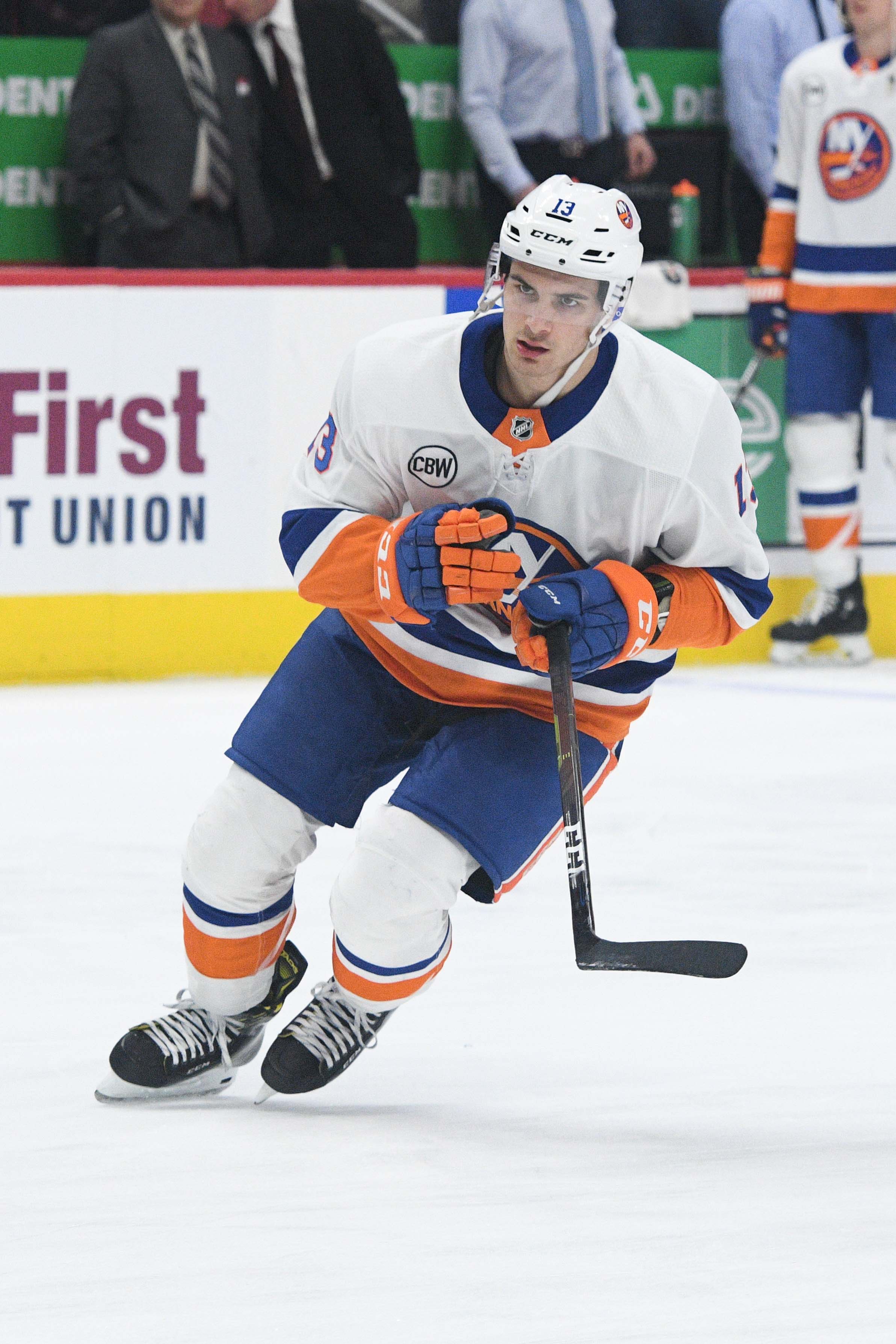 Center Mathew Barzal. How could it not be him? He has been in the league for three years and has led the team in points all three times. The 23-year-old has quickly become one of the better playmakers in the league despite playing for a team that isn’t exactly an offensive juggernaut. Getting a player like that in the middle of the first round is a great return on their investment, one that hasn’t cost them a lot financially so far. That will soon change whenever his next contract gets signed. While a long-term deal would be desirable from GM Lou Lamoriello’s standpoint, their cap situation would make doing so quite difficult. Nevertheless, even a bridge deal will cost a pretty penny but the price will be well worth it.
What would the Islanders be even more thankful for?
Beyond getting a contract for Barzal in place? The Islanders would be thrilled if they could get a similar performance from their back end this season as they did last year but that will be tricky without Devon Toews (a cap casualty that was traded to Colorado) and the injured Johnny Boychuk. That will put a lot of pressure on youngster Noah Dobson, in particular, for the upcoming season. He was certainly eased in last year but that is a luxury they can’t afford now; instead, they’re likely hoping for top-four minutes from him most nights. Barzal adapted quickly to the NHL and became a star almost overnight. Dobson is taking the slower approach but they’d be quite thankful for Dobson taking more than a step or two forward in his development in 2020-21.
What should be on the Islanders’ wish list?
Cap space. They need some flexibility even with Boychuk’s eventual LTIR placement and with many teams either capped out or facing budgetary restrictions, this is hardly an ideal market to try and shed salary. The Isles have several higher-priced veterans that have underperformed since signing their contracts so Lamoriello is going to have to be creative in order to make that happen. There are plenty of dominoes to fall still (including Barzal’s contract and several PTOs being converted into NHL contracts) so this is certainly something that needs to be addressed quickly.
Photo courtesy of USA Today Sports Images.
Salary Cap Deep Dive: St. Louis Blues
Navigating the salary cap is one of the more important tasks for any GM. Teams that can avert total cap chaos by walking the tightrope of inking players to deals that match their value (or compensate for future value without breaking the bank) remain successful. Those that don’t see struggles and front office changes.
PHR will look at every NHL team and give a thorough look at their cap situation heading into the 2020-21 season. This will focus more on players who are regulars on the roster versus those who may find themselves shuttling between the AHL and NHL. All cap figures are courtesy of CapFriendly.
St. Louis Blues
Current Cap Hit: $84,550,315 (over the $81.5MM Upper Limit)
Entry-Level Contracts
Jordan Kyrou (one year, $758K)
Robert Thomas (one year, $894K)
Potential Bonuses
Thomas: $425K
Despite not always seeing minutes in the top six, Thomas has quickly established himself as a reliable secondary scorer and had a shot at a 50-point year last season had it not been for the pandemic. Assuming he’s able to produce at a similar level in 2020-21, he should have enough of a track record to make a long-term deal at least possible. Having said that, their cap situation may force them into a bridge pact, one that will cost at least three times as much as his current contract. Kyrou has yet to establish himself as a regular and while he should have the opportunity to do so this season, a one-year deal close to his $874K qualifying offer may make the most sense for both sides unless he has a breakout year.
One Year Remaining, Non-Entry-Level
F Ivan Barbashev ($1.475MM, RFA)
G Jordan Binnington ($4.4MM, UFA)
F Tyler Bozak ($5MM, UFA)
F Jacob de la Rose ($700K, RFA)
D Vince Dunn ($1.875MM, RFA)
D Carl Gunnarsson ($1.75MM, UFA)
F Zach Sanford ($1.5MM, RFA)
F Jaden Schwartz ($5.35MM, UFA)
F Alex Steen ($5.75MM, UFA)
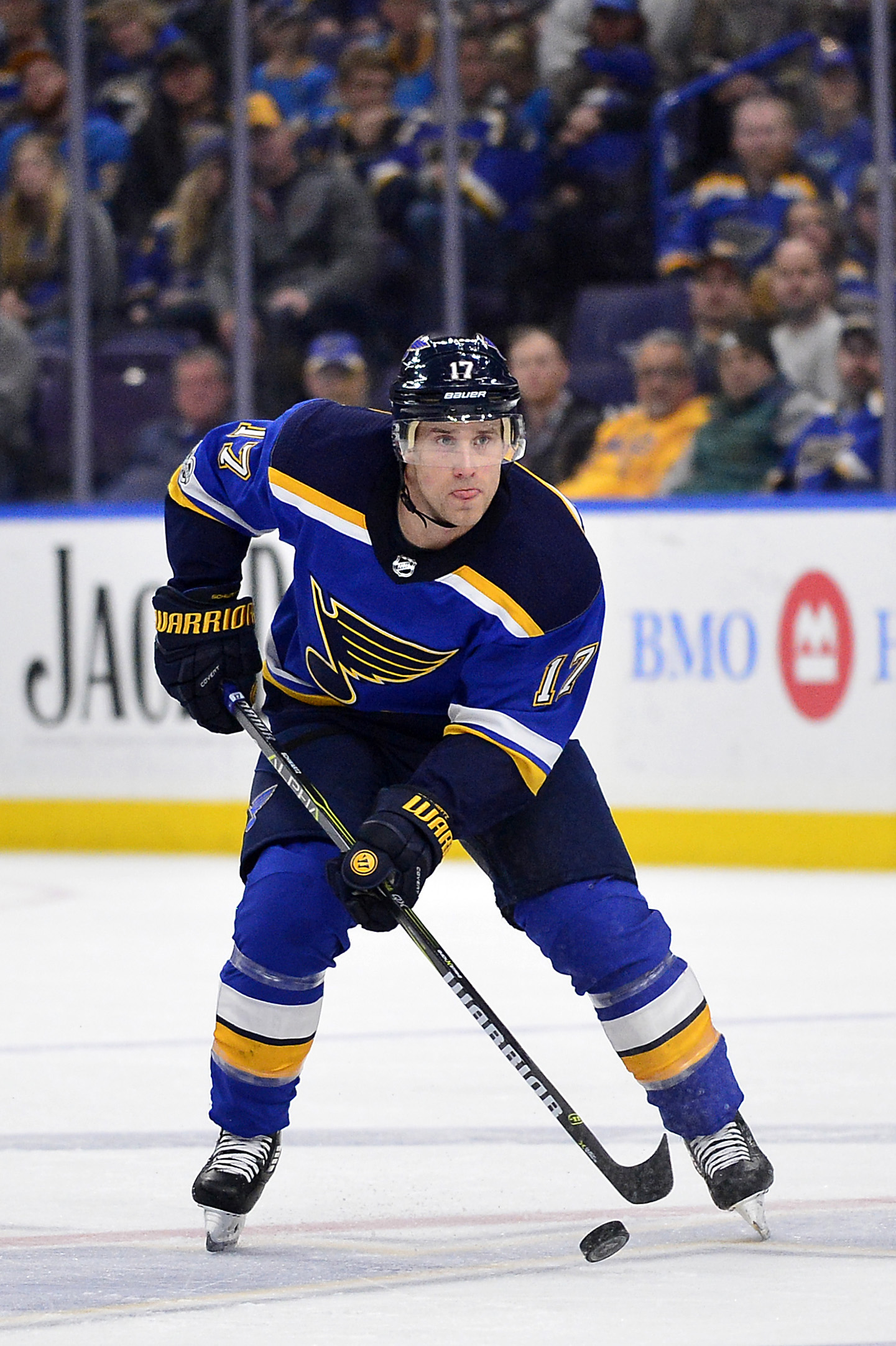 Schwartz is one of the more intriguing potential unrestricted free agents in the class of 2021. He has put up at least 55 points in five of the last seven seasons and one of the two he didn’t was an injury-shortened 2015-16 where he missed 42 games. But the other was just two years ago where he struggled mightily which may still be fresh in the minds of general managers. In a normal free agent market, the 28-year-old would be a safe bet for a contract of anywhere from five-to-seven years with an AAV somewhere in the $6.5MM range. But we saw the UFA market really hit wingers hard back in October and with the financial environment likely to be the same this summer, we could be looking at a similar trend. On the other hand, that could work well for the Blues in their efforts to re-sign him.
Steen’s playing days have come to an end but he won’t collect his salary if he retires so instead, he’ll be heading for LTIR with the team eventually using that money to formally sign Mike Hoffman next week. Bozak is someone who had been in trade speculation for most of the offseason given his contract and declining role but he remains and will likely once again serve as the number three center. He’ll be 35 on this next deal so a 50% pay cut seems probable given his drop in offensive production but his ability at the faceoff dot should help his market. Sanford has emerged as a capable third liner which should allow him to get a decent raise despite the market for bottom-six forwards taking a hit lately and Barbashev is in a similar situation although he may start on the fourth line. As for de la Rose, he’s a capable filler but they’ll need to keep that roster spot for someone at the league minimum whether it’s him or someone else down the road.
Dunn just recently signed his deal and did relatively well given that he’s coming off of his quietest offensive season yet and didn’t have a whole lot of leverage. With the expiring contracts coming off the books up front, it wouldn’t be surprising if he is one of the first players that the Blues try to lock up, perhaps as soon as March 12th (this year’s equivalent of the usual January 1st threshold for players on one-year deals being eligible for extensions). With him being arbitration-eligible now, his price tag should double at the very least. Gunnarsson is a bit expensive for the reserve defender that he now is. That’s a spot they’ll be looking to spend about half of that spot on for next year and that’s about what his ceiling will be on his next deal.
Binnington is another particularly interesting pending UFA. His track record isn’t the longest at just two NHL seasons, one that was elite and one that was decent. Because of the lack of experience, how he fares in this shortened campaign where he’s in a situation where it shouldn’t be a platoon will really go a long way in determining if he adds a couple million to his price tag or it stays close to where it currently is.
Two Years Remaining
F Sammy Blais ($1.5MM, RFA)
D Robert Bortuzzo ($1.375MM, UFA)
F Kyle Clifford ($1MM, UFA)
G Ville Husso ($750K, UFA)
F Mackenzie MacEachern ($900K, UFA)
D Colton Parayko ($5.5MM, UFA)
F David Perron ($4MM, UFA)
Perron has been quite the bargain since rejoining the Blues and has provided above-average production inside their top six for a price that typically is below market value (this past offseason being the exception). Even with the market being what it is, if he hovers around a 50-point pace the next two years, he should still be able to get a deal around this price tag. Blais’ contract felt a little high at the time and the deflated market for physical forwards only cemented that. St. Louis feels that he has some offensive upside but he’ll need to put up more than a handful of goals if he wants to be qualified at $1.6MM in 2022. Clifford came over in free agency, taking a fairly significant dip in pay along the way while MacEachern landed a small raise. Both are on market value deals for 12th and 13th forwards.
Parayko is the most notable player out of this group. The departure of Alex Pietrangelo should pave the way to step into an even bigger role that could approach the 25-minute mark. An uptick in offense has been expected for a while but if that doesn’t come, his pay bump could be limited a bit as a result. But if he can establish himself as a 40-point player or more and become that high-end all-around blueliner, he could command something around the $8.8MM that Pietrangelo received from Vegas. Bortuzzo is a capable sixth defender although the contract may be a small overpayment given some of the recent deals that have been signed. This is a spot that’s likely to be filled by a prospect when the deal is up.
Husso has long been billed as a goalie of the future for the Blues and was ahead of Binnington on the depth chart not that long ago. However, he’s 25 and has yet to make his NHL debut. He’s going to have an opportunity to at least show that he’s an NHL-caliber goaltender over these next two years but unless Binnington falters or is injured, Husso shouldn’t be in a spot to really cash in on the open market at the price point that other top backups have received in the $3.5MM range.
Three Years Remaining
F Ryan O’Reilly ($7.5MM, UFA)
F Oskar Sundqvist ($2.75MM, UFA)
F Vladimir Tarasenko ($7.5MM, UFA)
O’Reilly, the new captain, has fit in quite well since joining the Blues. He’s never going to contend for a scoring title but he’s quite strong in his own end and remains one of the top faceoff players in the league, especially among top-liners. He’ll be 33 when this deal is up and while that might hurt his market, it’s quite possible that his next contract comes in at a similar amount. Tarasenko didn’t hide his feelings about wanting the captaincy but his recurring shoulder troubles certainly didn’t help his candidacy (nor does it help his odds of a similar-priced deal three years from now). He will miss a good chunk of the season which makes him LTIR-eligible although if they believe he’ll be back at some point (which seems to be the indication), they’ll only be able to fill his absence internally. Sundqvist stepped into a bigger role in 2018-19 which earned him this contract but he still primarily is in the bottom six which makes this contract one that’s above market value.
Salary Cap Deep Dive: Nashville Predators
Navigating the salary cap is one of the more important tasks for any GM. Teams that can avert total cap chaos by walking the tightrope of inking players to deals that match their value (or compensate for future value without breaking the bank) remain successful. Those that don’t see struggles and front office changes.
PHR will look at every NHL team and give a thorough look at their cap situation heading into the 2020-21 season. This will focus more on players who are regulars on the roster versus those who may find themselves shuttling between the AHL and NHL. All cap figures are courtesy of CapFriendly.
Nashville Predators
Current Cap Hit: $74,057,810 (under the $81.5MM Upper Limit)
Entry-Level Contracts
D Dante Fabbro (one year, $925K)
F Eeli Tolvanen (one year, $894K)
Potential Bonuses
Tolvanen: $2.85MM
Fabbro: $850K
Tolvanen has received quite a bit of press over the past two years after posted 19 goals and 36 points in the KHL as an 18-year-old. However, now 21, Tolvanen might be ready for the NHL despite struggling since coming over to North America. The 2017 first-round pick struggled in his first year in the AHL, but looked better in his second year there. However, he was on loan with his old KHL team so far this season and hasn’t been as dominant as that 18-year-old season. So, the question is, will he be ready to take the next step into the NHL lineup? That’s a legitimate possibility or he could find himself on the taxi squad, easing into the league.
Fabbro was also highly-touted coming into last season after spending three years at Boston University. While he held onto the team’s fourth defenseman, he still issues acclimating himself to the NHL. The blueliner scored just five goals and 11 points in 64 games, while averaging 19:01 of ice time. He should continue to improve as the team’s fourth defenseman this year.
One Year Remaining, Non-Entry-Level
G Pekka Rinne ($5MM, UFA)
G Juuse Saros ($1.5MM, RFA)
F Mikael Granlund ($3.75MM, UFA)
F Erik Haula ($1.75MM, UFA)
F Brad Richardson ($1MM, UFA)
D Jarred Tinordi ($700K, UFA)
While the team is quite balanced in terms of contracts, it does have to figure out its goaltending situation next season. Rinne, who has been the team’s star netminder for years, will be 39 years old at the start of the 2021-22 season and could be done. His 2019-20 season wasn’t particularly impressive with a .895 save percentage in 36 games. Saros does look ready to take the No. 1 spot. The 25-year-old was much more impressive with a .914 save percentage in 40 appearances and should continue to take the bulk of the starts this coming season. Saros should get quite the pay raise for next year, while Rinne’s status is a question mark. Is he ready to retire or could he bounce back and hold on for a few more years?
With forward depth being a big need this season, the Predators brought back Granlund despite his struggles since being acquired from Minnesota at the trade deadline in 2019. He didn’t fare well in his short tenure with the team after the trade and while posting 17 goals last year, Granlund wasn’t the dominant forward that the team thought they traded for when they sent young Kevin Fiala off. With Fiala having an impressive season in Minnesota last year, the team has to hope they can get Granlund back to his 20-goal scoring ways. The team also brought in Haula to help out as a middle-six center. The injury-prone forward had one dominant season in Vegas, but since then is now on his third team, hoping to find his game.
Two Years Remaining
F Filip Forsberg ($6MM, UFA)
D Mattias Ekholm ($3.75MM, UFA)
F Rocco Grimaldi ($2MM, UFA)
F Calle Jarnkrok ($2MM, UFA)
D Mark Borowiecki ($2MM, UFA)
F Nick Cousins ($1.5MM, UFA)
F Matt Benning ($1MM, UFA)
F Yakov Trenin ($750K, RFA)
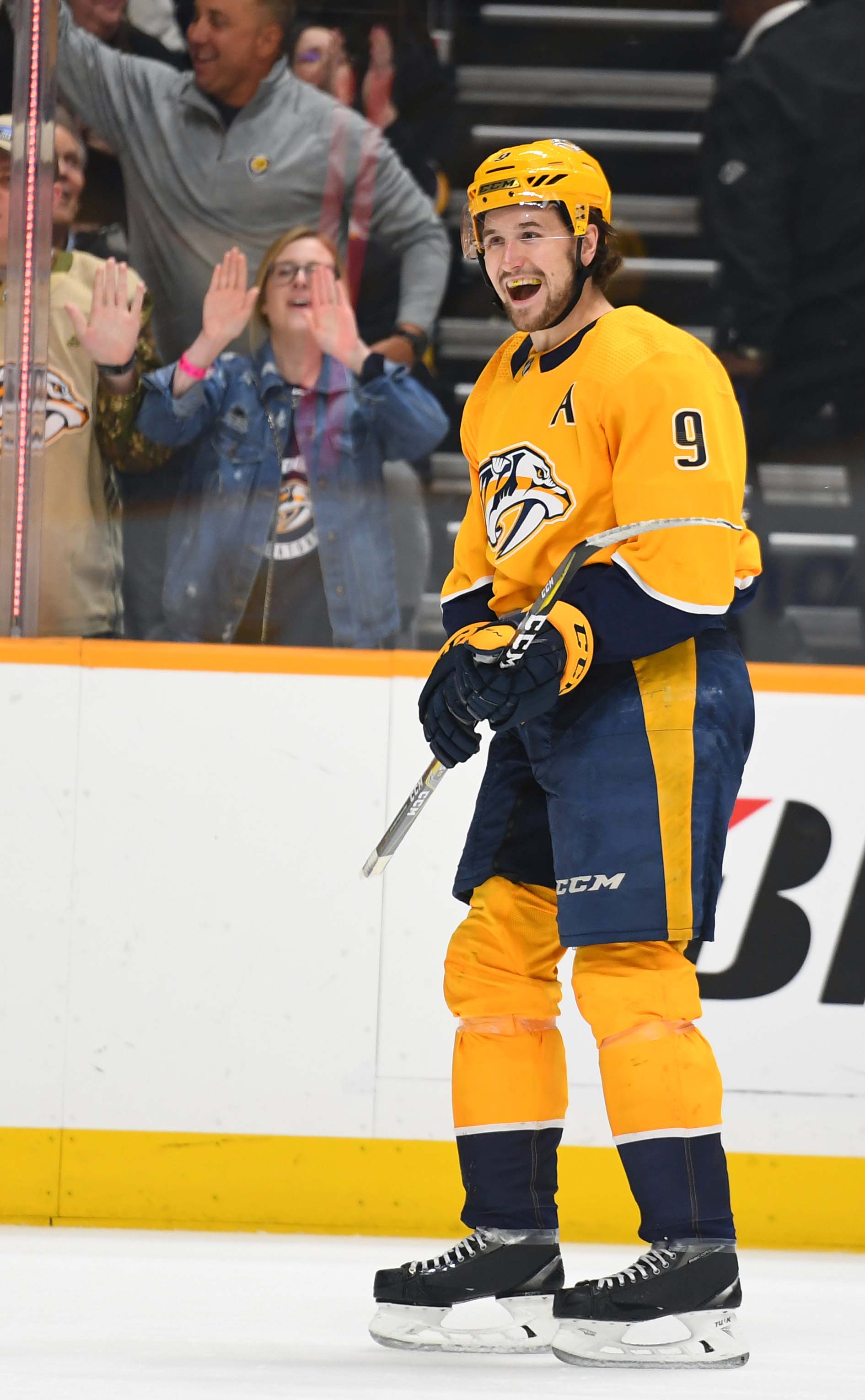 Many people believe that when Forsberg signed his six-year, $36MM contract back in 2016, that they had a superstar winger on their hands. He was coming off his first 30-goal season, scoring 33 goals and then followed that up with 31 goals the next year. However, those numbers have declined steadily the last few years although minor injuries have been part of that decline. Forsberg scored just 21 goals last season in 63 games and needs to find his game over the next two years if he wants to re-establish himself as one of the top wingers in the game, which at the moment, he isn’t.
Ekholm, on the other hand, continues to be one of the best deals for the next two years. The blueliner averaged more than 23 minutes of ATOI for the fourth straight years and has been a solid impact player for the team, even if his plus/minus dropped into the negative for the first time in years. He could be in line for a big extension similar to what Ellis received recently.
Jarnkrok continues to put up decent middle-six numbers after scoring 15 goals last season. He has two years left on the six-year, $12MM pact he signed in 2016. The Predators have quite a few depth players on two-year deals as well, including Grimaldi, Trenin and newly signed Cousins as well as defensemen Borowiecki and Benning. The hope is this depth should help solidify the team’s bottom-six, which struggled last season.
Three Years Remaining
None
What Your Team Is Thankful For: New Jersey Devils
We’ve now made it past Thanksgiving and are firmly in the holiday season. Like the last few years, PHR will take a look at what teams are thankful for but this year comes with a bit of a change. Normally teams would have an idea of where their season was heading, coming up on the one-quarter mark with mountains of statistics to analyze. Instead, in this unprecedented year, the season hasn’t even begun. We’ll still take a look at what each group is excited about and what they could hope for as the calendar turns to 2021.
What are the Devils most thankful for?
The future down the middle.
While they don’t have the best of rosters on paper and are faced with playing a season in the extremely deep East Division, there is cause for optimism in New Jersey. Nico Hischier has had some ups and downs but the 2017 top pick is a core piece that’s locked up for the long haul. Jack Hughes’ rookie season wasn’t the greatest but the expectation remains that he’ll rebound and give them a potent one-two punch that many teams would love to have if they can both reach their potential. Pavel Zacha continues to show gradual improvement while Michael McLeod has shown flashes of upside in his first NHL stints. An entirely homegrown center group (all of first-round picks, no less) is something that is rare to see but
Who are the Devils most thankful for?
Given that Hischier and Hughes are their building blocks of the future, either one of them would be a logical choice but that’s too simple. Goaltender Mackenzie Blackwood was a full-time NHL player for the first time last season and the results were certainly encouraging. He posted a goals against average (2.77) and save percentage (.915) that were above the NHL average despite the fact that the Devils allowed the third-most goals in the league and finished in last in the Metropolitan Division by a notable margin. With Cory Schneider not panning out (and ultimately being bought out), Blackwood gives New Jersey hope that he can be the long-term goalie of the present and future and be another of those core building blocks.
What would the Devils be even more thankful for?
A contract extension for Kyle Palmieri.
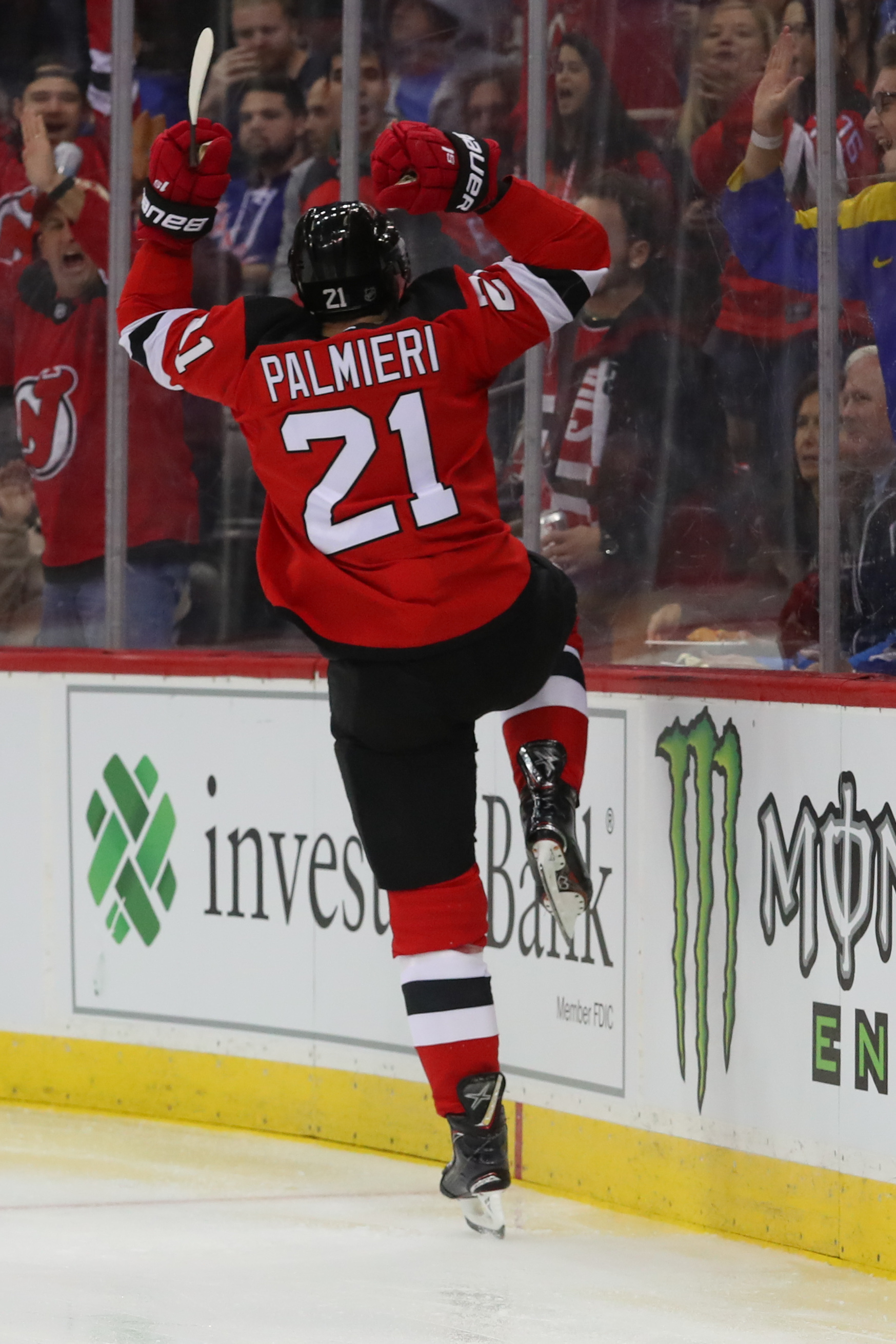 While the focus is justifiably on the future, the present still matters and the veteran is one of the more consistent scoring wingers in the league, ranging from 24 to 30 goals in each of the last five seasons. While the UFA market wasn’t too kind to wingers this year, consistency still matters which will certainly bolster his value if he happens to make it there. The 29-year-old is in the final season of his deal which carries a $4.65MM AAV and while it’s doubtful that he could command a max-term extension of eight years, he should still be in line for a decent-sized raise. If this isn’t at the top of the priority list for GM Tom Fitzgerald, it will need to be as if they can’t come to terms on a new deal in the next few months, Palmieri will almost certainly be among the most sought-after players by the trade deadline.
What should be on the Devils’ holiday wish list?
Everything but goaltending which is set with Blackwood and veteran Corey Crawford. Fitzgerald has added to his back end over the offseason with the pickups of Ryan Murray and Dmitry Kulikov but it’s still a group that could stand to be improved both in terms of adding a top-four option and overall depth.
Up front, New Jersey was just outside of the bottom five in goals scored last season and haven’t done much to improve on that front with the addition of middle-six winger Andreas Johnsson in a cap dump from Toronto. While this is shaping up to be a season to evaluate some of their younger players, adding a veteran or two to help ease the prospects into those regular roles certainly wouldn’t hurt.
Photo courtesy of USA Today Sports Images.
Salary Cap Deep Dive: Minnesota Wild
Navigating the salary cap is one of the more important tasks for any GM. Teams that can avert total cap chaos by walking the tightrope of inking players to deals that match their value (or compensate for future value without breaking the bank) remain successful. Those that don’t see struggles and front office changes.
PHR will look at every NHL team and give a thorough look at their cap situation heading into the 2020-21 season. This will focus more on players who are regulars on the roster versus those who may find themselves shuttling between the AHL and NHL. All cap figures are courtesy of CapFriendly.
Minnesota Wild
Current Cap Hit: $78,799,421 (under the $81.5MM Upper Limit)
Entry-Level Contracts
F Kirill Kaprizov (one year, $925K)
Potential Bonuses
Kaprizov: $925K
After years of trying to get him to North America, Minnesota was finally successful in convincing Kaprizov to do so although they had to burn one of his two cheap entry-level years last season when he wasn’t eligible to play to get him to sign. Given his success in the KHL, he should jump into an impact role right away and if he’s able to produce as they expect he can, he should hit his bonuses without much trouble and position himself for a big-money deal next offseason.
One Year Remaining, Non-Entry-Level
F Nick Bjugstad ($2.05MM, UFA)*
F Nick Bonino ($4.1MM, UFA)
F Joel Eriksson Ek ($1.488MM, RFA)
F Kevin Fiala ($3MM, RFA)
F Marcus Foligno ($2.875MM, UFA)
F Ryan Hartman ($1.9MM, RFA)
D Brad Hunt ($700K, UFA)
F Marcus Johansson ($4.5MM, UFA)
D Greg Pateryn ($2.25MM, UFA)
*-Pittsburgh retained $2.05MM on Bjugstad’s deal in a trade this offseason.
Among the restricted free agent forwards, Fiala’s deal is the most pressing one. After struggling following his trade from Nashville, his first full season went much better while he led the team in scoring. If he’s able to pick up where he left off and show that he’s a capable front-line player, he’ll be well-positioned to at least double his current AAV. Hartman came to Minnesota by way of a non-tender as Nashville opted to avoid arbitration back when his price tag wasn’t half of this. Unless he can improve his offensive numbers and move into a more prominent role, another non-tender is certainly on the table, especially with bottom-six forwards feeling the squeeze more than usual in the current cap environment. Eriksson Ek had a career year offensively last season and could push for more top-six minutes this season. Unless his offensive production really spikes, he shouldn’t be able to command a huge raise but he could still double his current price tag.
As for the UFA forwards, it’s largely a collection of role players. Johansson may get an opportunity to play down the middle which would certainly help his cause in free agency but he didn’t have a huge market last time around and he’s coming off a tough year. It’d be surprising if he came close to $4.5MM on his next deal. Bonino was brought in from Nashville this offseason in a draft-day trade and with their lack of depth down the middle, he’ll get a bigger role than he would have had with the Predators. Having said that, even if he gets top-six minutes, he is more of a third liner at this stage of his career. Those centers can still carry some value but he’ll be facing a small dip at the very least. Bjugstad was a cap dump from Pittsburgh after an injury-riddled campaign and he should have an opportunity to restore some value. But even if he has a big season, it’d be hard to imagine that he’d get close to his $4.1MM combined current cost because of the injuries. Foligno is a popular player who plays an energy role but those players didn’t fare well in free agency last year and with the cap not expected to rise, they won’t do well next offseason so a decrease in salary for him seems like a near-certainty.
Pateryn’s time with the Wild hasn’t gone well. He was actively shopped last summer and then missed 44 games this season due to core muscle surgery and then had back surgery back in June. He’s likely going to battle for number six minutes on the back end and players in that role should be closer to half of his price tag. If he can stay healthy, that’s about what he’d be able to command next summer. Hunt isn’t the strongest in his own end but he is a threat with his point shot as well which has allowed him to hang around the last few years on minimum contracts. He played more of a regular role last season and if he can stay in that sixth spot this season, he could push for a bit more of a raise than the pending jump in the league minimum.
Two Years Remaining
F Jordan Greenway ($2.1MM, RFA)
G Kaapo Kahkonen ($725K, RFA)
F Victor Rask ($4MM, UFA)
G Alex Stalock ($785K, UFA)
F Nico Sturm ($725K, UFA)
Rask’s acquisition by then-GM Paul Fenton was a headscratcher and not much has changed in that regard as Rask has struggled mightily with his new team, spending a lot of time as a healthy scratch. In the right situation, he could still play but that’s with a cap hit of under $1MM, not $4MM. Greenway has put up decent numbers the last two seasons despite not seeking a lot of top-six minutes. He should get that opportunity during this deal which will dictate whether he’s a core piece that should get a long-term deal or someone who goes short term again. Sturm, an undrafted college free agent signing, is an option for the fourth line or taxi squad but will need to establish himself as a regular to have a chance to earn more on his next contract.
Stalock received his deal to give him some stability and Minnesota someone to expose in expansion. However, it’s proving to be quite the bargain after he vastly outperformed Devan Dubnyk last season. If he can repeat that performance moving forward, he could easily double that price tag. Unfortunately for him and Minnesota, he’s out indefinitely with an upper-body injury which means Kahkonen could break camp with the Wild. He’s their goalie of the future – it’s no coincidence that his contract expires at the same time as Stalock’s – but a one-year deal two summers from now is most likely as he won’t have the NHL track record to justify a long-term contract.
Three Years Remaining
D Mathew Dumba ($6MM, UFA)
D Carson Soucy ($2.75MM, UFA)
G Cam Talbot ($3.67MM, UFA)
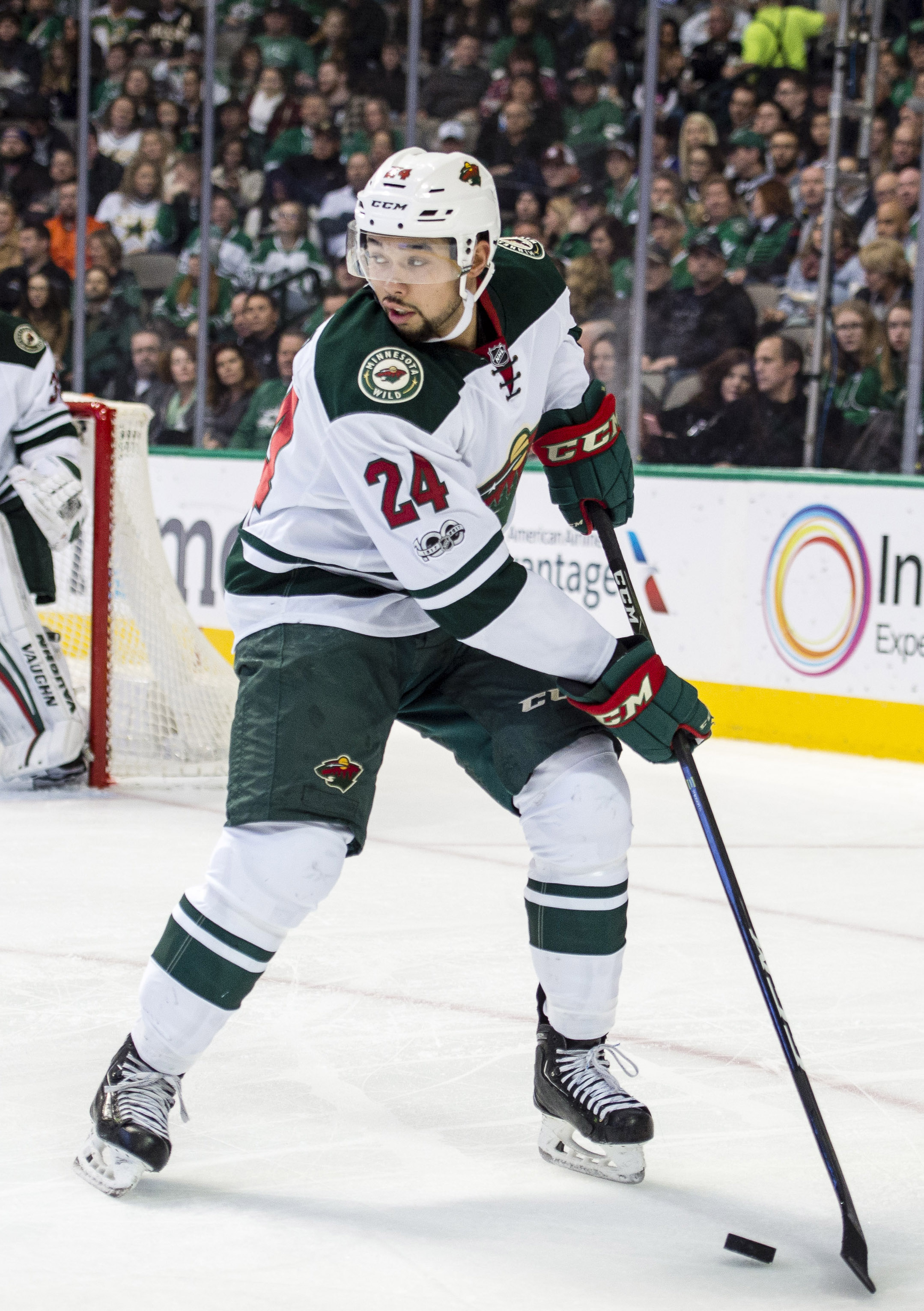 Dumba has long been the subject of trade speculation and that isn’t likely to change anytime soon, especially with expansion looming and three other blueliners on long-term deals carrying no-move clauses. Although he’s coming off a quiet year offensively compared to his previous few seasons, he’s still a right-shot defender that’s capable of logging heavy minutes. Those players still carry a lot of value and impact defensemen still got paid this offseason despite the cap constraints. Dumba will be 29 when he hits unrestricted free agency and if his production rebounds over the next few years, he should be able to command close to a max-term contract with a bit of a raise.
Soucy is one of the rare players that was able to get a sizable contract despite a limited track record this offseason. He was a regular for most of the year but still qualified for Group VI free agency, allowing him to hit the open market early and GM Bill Guerin paid a pretty penny given his role. Clearly, they think he can get to another level by the time the contract is up.
Talbot had a nice rebound season with Calgary which allowed him to fare much better in free agency this time around than a year ago. He enters as the undisputed starter for now but could very well be splitting time with Kakhonen by the end. He’ll also be over 35 for his next contract so Talbot will likely have to go year-to-year from here.
What Your Team Is Thankful For: Nashville Predators
We’ve now made it past Thanksgiving and are firmly in the holiday season. Like the last few years, PHR will take a look at what teams are thankful for but this year comes with a bit of a change. Normally teams would have an idea of where their season was heading, coming up on the one-quarter mark with mountains of statistics to analyze. Instead, in this unprecedented year, the season hasn’t even begun. We’ll still take a look at what each group is excited about and what they could hope for once the calendar turns to 2021.
What are the Predators most thankful for?
A depressed free agent market.
When the offseason began, it seemed clear that the Predators would be saying goodbye to Mikael Granlund, one of the best forwards available. The team grabbed a few depth players like Brad Richardson, Nick Cousins, and Mark Borowiecki, but looked like they would be mostly relying on internal growth for any improvement next season. Instead, over the last few weeks, the team has been able to re-sign Granlund and add Erik Haula for a grand total of $5.5MM. The no-risk one-year deals are excellent assets for the club whether they have success or not this season. The fact that both players will be motivated to improve their stock is even better.
 Who are the Predators most thankful for?
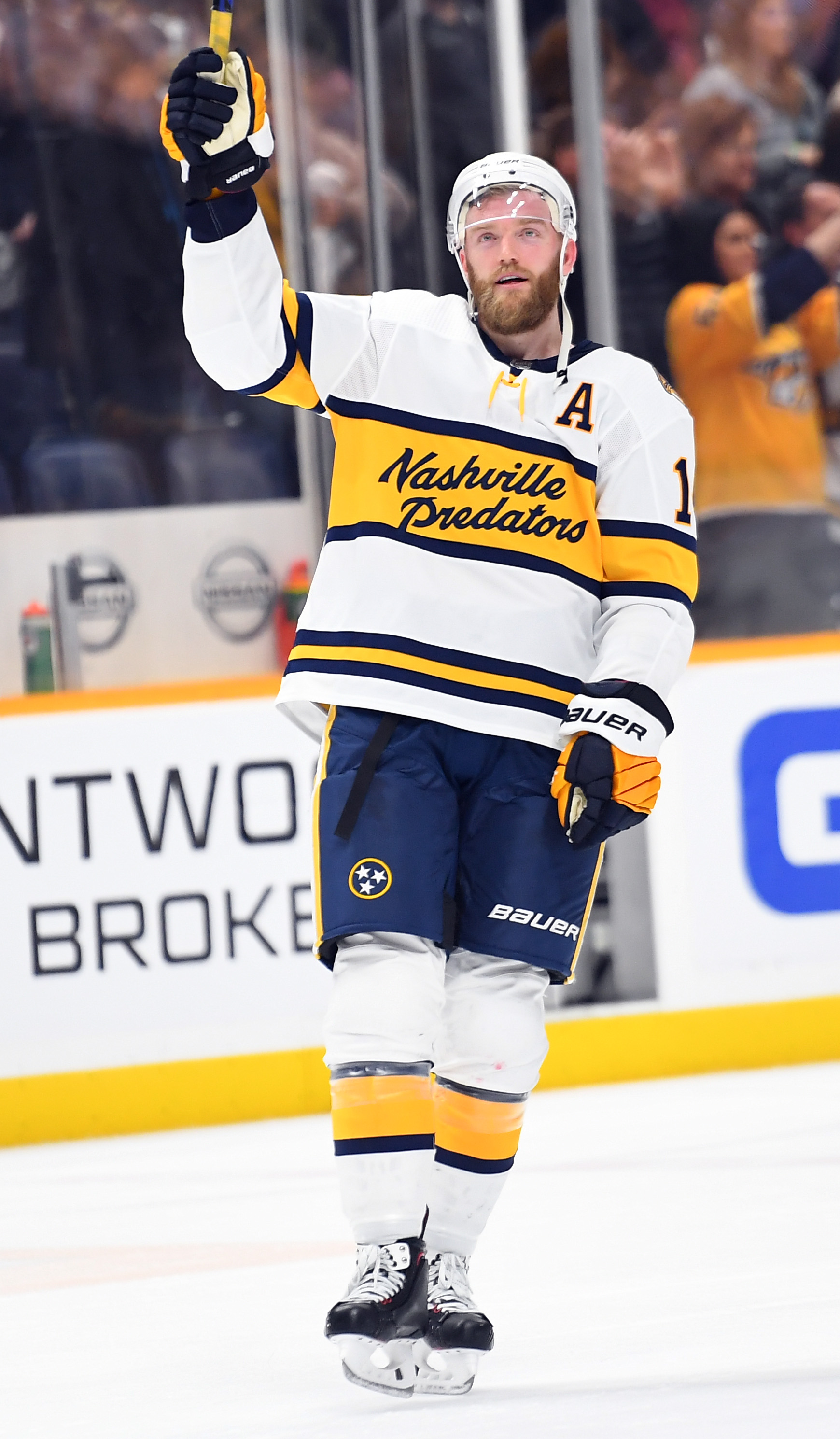
A year ago, when he was still earning just $4MM per season, this answer was easily Roman Josi. The Predators captain had one of the most team-friendly deals in the entire league, but that has now disappeared as Josi will carry a cap hit just over $9MM through 2027-28. Sure, he’s still one of the best two-way defensemen in the league and just took home the Norris Trophy after an incredible season, but the excess value he provides has now been slashed dramatically, if not removed entirely.
Ryan Ellis may still provide some with his $6.25MM hit, but it’s Ekholm that really makes the Predators’ cap work at this point. The 30-year-old defenseman will earn just $3.75MM for each of the next two seasons despite still being an upper-echelon option on the back end. Ekholm recorded 33 points in 68 games last season, an 82-game pace that would have given him a shot at his second straight 40+ point season to go along with strong play in his own end. There isn’t a team in the league who wouldn’t take him at his current price, especially given the deal will expire just after he turns 32 and the decline phase really kicks in. Whether the Predators decide to extend Ekholm is a decision for down the line, but right now his might be the most important contract on the books.
What would the Predators be even more thankful for?
A few more goals from the top of the roster.
13 goals. 14 goals. 15 goals. Those are the 2019-20 totals for Matt Duchene, Ryan Johansen, and Viktor Arvidsson, three players that need to be better for the Predators this season. The first two are both carrying long-term cap hits of $8MM per season, making them some of the most expensive forwards in the entire league. 27 goals and 78 points between them is unacceptable and must change for the team to have any real chance of competing for a Stanley Cup. Arvidsson on the other hand is a bit cheaper at $4.25MM, but that’s what made him so valuable in the past when he was posting goal totals of 31, 29, and 34 (in just 58 games!) prior to last year. Now 27, Arvidsson’s return to the 30-goal mark would be a huge boost in Nashville’s quest for a playoff spot in the new Central Division.
What should be on the Predators’ holiday wish list?
Another depth defenseman.
Honestly, even with the top three soaking up so many minutes and Dante Fabbro taking many of the rest, there should be some concern in Nashville about the Predators’ defensive depth. Borowiecki is a beloved teammate and a warrior on the penalty kill, but he’s proven before that he can’t step into a top-four role with any sort of real effectiveness. Matt Benning and Jarred Tinordi don’t offer much upside either, meaning the Predators are just one injury (or, in today’s world, illness) away from having a problem.
There are still some names on the free agent market that could help. Even beyond Sami Vatanen and Travis Hamonic, who seem unlikely fits for one reason or another, veterans like Ron Hainsey or Ben Hutton could make sense. There are certainly others on the trade market that could be acquired, depending on price, but the Predators are toeing a thin line with the group they have right now, even if it is loaded at the top.
Photo courtesy of USA Today Sports Images