
Maksim Sushko Signs In KHL
Though it went under the radar earlier this month, the Philadelphia Flyers have one less restricted free agent to sign this offseason. Maksim Sushko, a young forward coming off his entry-level contract, has signed with Dynamo Moscow in the KHL.
Sushko, 23, was a fourth-round pick of the Flyers in 2017 and made his NHL debut in the 2020-21 season, playing two games with the big club. After spending all of 2021-22 in the minor leagues, it appears as though he’ll pursue a career overseas instead. Though Sushko spent half a season in the KHL while COVID restrictions were keeping the AHL dark, it isn’t like he is unfamiliar with North American hockey.
The Belarusian forward came over to play in the OHL in 2016 and spent three years with the Owen Sound Attack before jumping directly to the AHL. In fact, this will be the first Russian team he plays for, making this a new experience altogether.
Signed to a two-year deal, he’ll still be young enough to return in 2024 if the Flyers choose to issue him a qualifying offer this summer. That will allow them to retain his exclusive rights as a restricted free agent and potentially allow them to bring him back after receiving playing time in the KHL.
Five Key Stories: 5/23/22 – 5/29/22
As the playoffs continue on, there was plenty of notable news away from the ice which gets the spotlight in our key stories.
Agent Change: Generally speaking, a player changing agents isn’t big news. But when it’s a prominent player making the switch just before extension talks are set to begin as Red Wings center Dylan Larkin did, it’s newsworthy. His former agency at KO Sports indicated in a statement that extensive work had already been done on preparations to begin extension talks so Detroit fans should be pleased that there appears to be a willingness on his end to extend his stay with his hometown team. Larkin will now be represented by CAA and agents Matt Williams and Pat Brisson. He will have a $6.1MM AAV next season and is well-positioned for a nice raise on that for his next contract.
Marchand To Miss Extended Time: The Bruins will be without a star winger when the puck drops on the 2022-23 season as Brad Marchand underwent successful hip arthroscopy and labral repair on both of his hips. The procedure carries a recovery time of roughly six months which means he is likely to miss at least the first month of next season. His absence will certainly be a significant blow for Boston as the 34-year-old has been a consistent high-end scoring threat, averaging over a point per game in six straight seasons, including notching 80 points in 70 contests this season. Impressively, he picked up 11 points in seven playoff contests as well while trying to play through the injury.
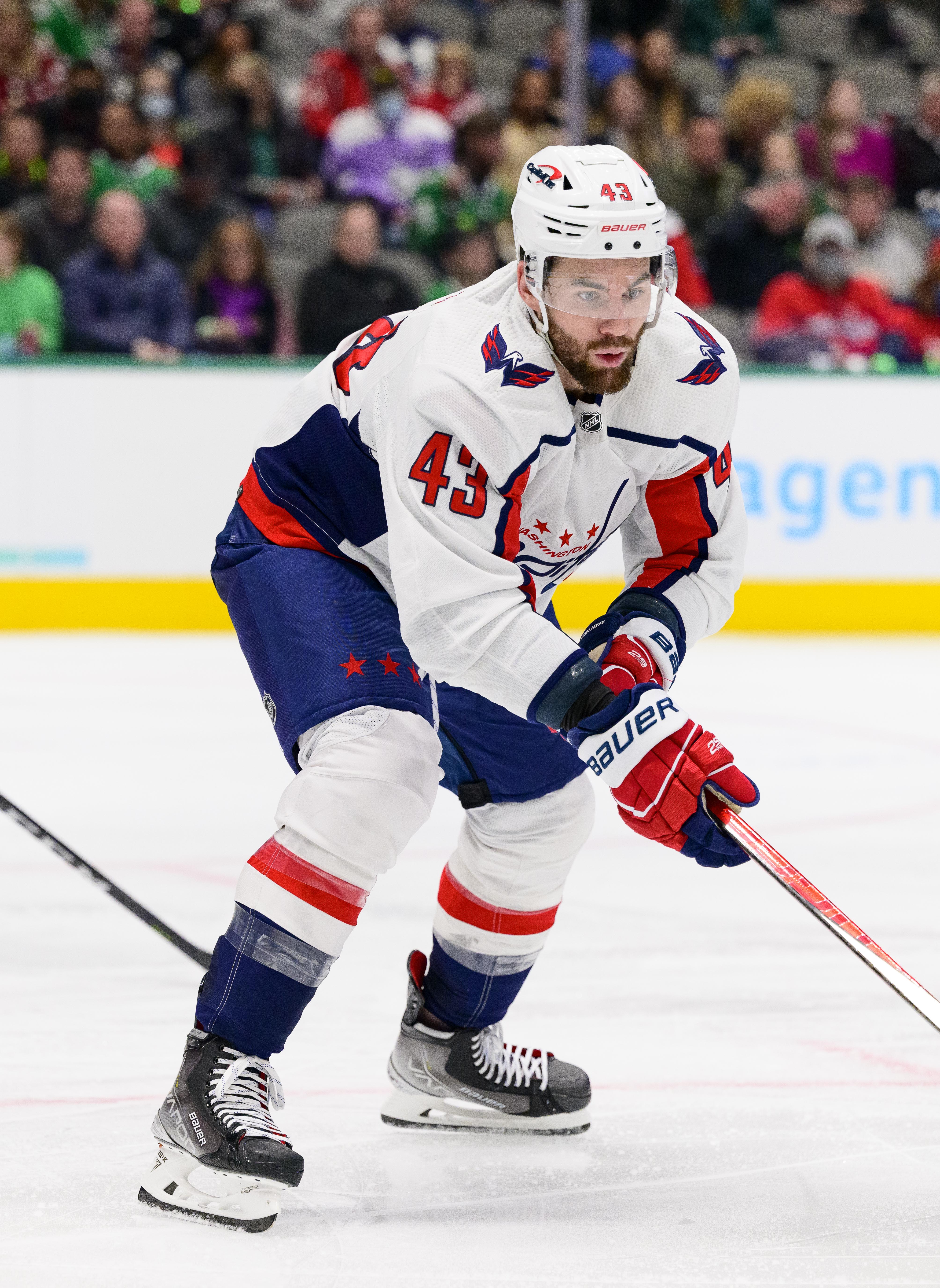 Wilson Out Too: The Capitals will also be missing a key winger to start next season as winger Tom Wilson had surgery to repair a torn ACL. The expected recovery timeline is six to eight months so the 28-year-old will miss the first month at an absolute minimum and could be out until close to midseason if it takes the full time to recover. While Wilson is best known for his physicality and run-ins with the Department of Player Safety, he has also become a key offensive threat for them and is coming off a career year with 24 goals and 28 assists in 78 games. With Nicklas Backstrom’s hip issues not getting any better, Washington is facing a situation where they are likely to be without a pair of top-six forwards when the puck drops on the 2022-23 season.
Calling It A Career: After spending the last three seasons with Toronto on minimum-salary contracts, veteran Jason Spezza has hung up his skates, announcing his retirement at the age of 38. Spezza had made it clear that he wouldn’t go elsewhere this summer and presumably, the Maple Leafs had decided not to bring him back, at least in an on-ice capacity; Spezza has joined their front office as a special assistant to the GM. His playing days end with 1,248 games played between Ottawa, Dallas, and Toronto while he winds up just five points shy of becoming the 94th player in NHL history to reach the 1,000-point plateau.
Flyers Interview Tortorella: The Flyers are casting a wide net as they continue their search for their next head coach. It was revealed that they interviewed ESPN analyst John Tortorella for their vacancy. The 63-year-old has coached 1,383 career regular season contests and sits 14th all-time in victories. He has plenty of familiarity with the division having coached with the Rangers and Blue Jackets and would fit Philadelphia’s desire to find a coach that can help them win now. Others that have already been interviewed or are believed to be in the mix include Barry Trotz, Jim Montgomery, Kirk Muller, and Mike Vellucci.
Photo courtesy of USA Today Sports Images.
PHR Mailbag: Senators, Dumba, Rangers, Underrated Players, Kraken, Bruins, Kings, Penguins Coaching Staff
Topics in this edition of the PHR Mailbag include Mathew Dumba and Minnesota’s cap crunch, the Rangers’ center situation beyond this season, Seattle’s underwhelming year, and much more. If your question doesn’t appear here, check back for it in last weekend’s mailbag.
MoneyBallJustWorks: What is the next step for the Sens. The team has stockpiled a good core of youth (especially on the blue line) but what do they have to do this offseason to take the next step?
The young nucleus for the Senators is pretty strong between Brady Tkachuk, Joshua Norris, Tim Stutzle, and Drake Batherson up front plus Thomas Chabot and Jake Sanderson on the back end. Now, they need to upgrade the supporting cast, so to speak.
Defensively, they need a top-four, all situations type of player. Players like Nick Holden, Nikita Zaitsev, and even trade deadline acquisition Travis Hamonic are serviceable veterans that can raise the floor of their defense corps. While that’s useful, now GM Pierre Dorion needs to raise the ceiling for this group to take a step forward. Chabot and Sanderson plus Artem Zub and Erik Brannstrom have some room to grow but with the right veterans, they’ll get there faster.
Up front, the top line is pretty much set with Tkachuk, Norris, and Batherson. But Stutzle’s linemates aren’t as consistent or anywhere near as good. Connor Brown is a good veteran but he’s not a big scorer while Alex Formenton’s speed is high-end but his scoring isn’t. Upgrading one (or if you want to aim big, both) of those spots would really deepen the offense.
On top of that, a goalie upgrade would help them take a step forward. Anton Forsberg isn’t a true starter, Matt Murray has underachieved, and Filip Gustavsson may not be ready for a full-time NHL roster spot (although waiver eligibility will probably keep him up).
That’s a huge wish list but adding any of those elements will help them get back to at least realistically battling for a playoff spot next season. That would be a good next step for Ottawa who isn’t really in a position to go from a bottom-feeder to a contender overnight unless Dorion manages to have the offseason of a lifetime and hit on all of these areas.
DarkSide830: With his name in past rumors and MIN needing to make a move, I wonder, can PHI make a move for Dumba? They need to get better on the back end and he could be available for 80 cents on the dollar with MIN’s crunch. I presume they need to move out a JVR then. Can they move enough of JVR’s cap without having to give someone a pick with it so they can reasonably fit Dumba in?
While I agree that Minnesota has a cap crunch, I disagree that they will make someone like Dumba available for 80 cents on the dollar. Yes, everyone knows they need to clear money but whoever goes – Dumba or Kevin Fiala (who’d fit one of those holes in Ottawa we just went over) – there will be enough demand that they’ll be able to get full value. Let’s say it’s Dumba. The UFA market for impact defensemen isn’t the deepest and Dumba’s cap hit is lower than what players like Kris Letang and John Klingberg are going to get. That bodes well for maximizing trade value, even with their hand being forced.
As for James van Riemsdyk, they’re not going to get much cap relief in a trade unless they send a pick with him. If I was an acquiring team, I’m pointing at the Patrick Marleau to Carolina trade as a benchmark; that move cost Toronto a first-rounder. Is it possible that they flip him for another underachieving veteran that makes a little less? Sure. That is definitely a plausible option. But will they save enough to fit Dumba’s $6MM in? Nope. Frankly, I’m not sure they’d save more on the cap next season than if they bought him out ($4.33MM cap charge) with a trade.
And if I’m Philadelphia GM Chuck Fletcher, notwithstanding the van Riemsdyk thing, do I really want to part with the first-round pick and/or a top young asset that it will probably take to get into the bidding to acquire Dumba? That’s not a smart strategy for a non-playoff team, even if it’s a core he thinks is better than it has shown. Once you do factor in the likely cost to offload van Riemsdyk’s contract for cap relief on top of the acquisition cost, the price for Dumba is one they shouldn’t be willing to pay.
Bill Blueshirt: The NYR need a 2C next year while being in a cap squeeze. Strome seems unaffordable. Do they a) sign Copp, b) go with Chytil and backfill at 3C, c) trade some of their many prospects for a C (and who would that be), or d) ???
I’m not convinced the bidding for Ryan Strome is going to be super high this summer. Yes, he has put up impressive numbers the last couple of seasons but he was doing that with Artemi Panarin on the wing a good chunk of the time. But his history before getting to New York was spotty at best and I’m confident there are general managers out there who will be hesitant to commit a big contract to him this summer.
I’m not saying there won’t be a good market for him but I wouldn’t be shocked if his AAV winds up being close to where Andrew Copp’s lands. If that’s the case, I don’t think Strome re-signing can easily be ruled out.
Do they need to free up some money? Probably. I wonder if they try to find a taker for Patrik Nemeth and take a cheaper player back to give them some wiggle room. But if they go with some cheap end-of-roster options and make a small cap-clearing move or two (Alexandar Georgiev being another one), I think they can cobble enough together to make an intermediate type of offer that could be enough to keep one of Copp or Strome in the fold. So, to answer your question, I’ll pick either a or d.
FearTheWilson: In your opinion who are the most underrated players in the league?
This is always a hard question to answer as underrated can be interpreted in a few different contexts. I could rhyme off some names that some of you may not be familiar with that are actually important players and that would qualify as underrated. But I suspect you’re looking for more prominent names so I’ll go with those.
Quick, think of an impact center on the Blues. No, not Ryan O’Reilly. Not Brayden Schenn either who, for many, would be the second one that comes to mind with his contract. Meanwhile, all Robert Thomas did this season was lead their centers in scoring while logging nearly 19 minutes a night. He was an impact offensive player in junior and while it has taken a few years for him to truly become an impact player in the NHL, he’s there, even if he doesn’t immediately come to mind when St. Louis centers are being discussed.
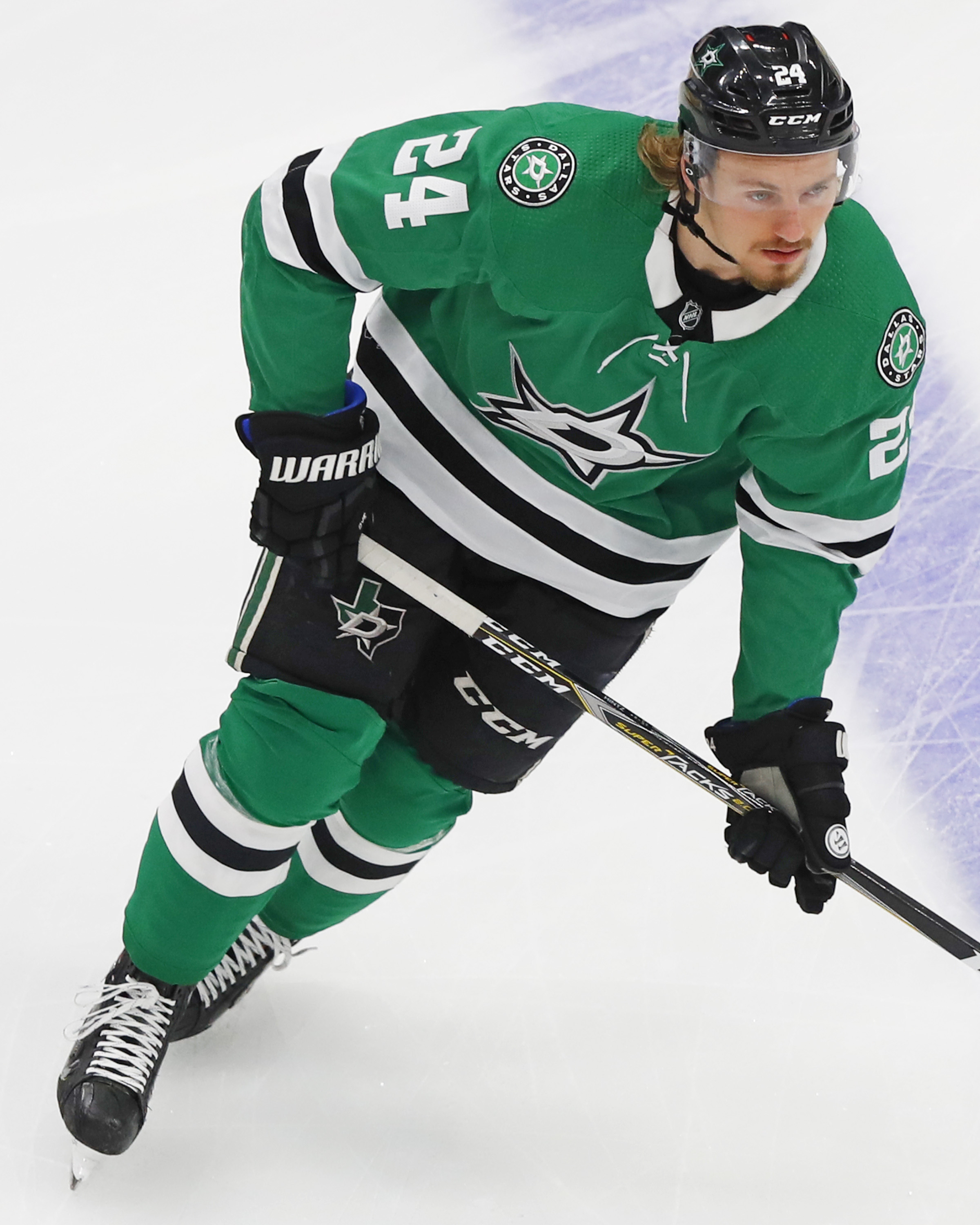 Roope Hintz is a player that many are familiar with. If you were thinking to yourself that he’s a good secondary scorer, it’d certainly be understandable. When digging into this question, that’s where I was leaning. But he averaged over a point per game last year and followed that up with 37 goals and 35 assists this season, finishing tied for 20th in the league in goals. That’s not a good secondary scorer, that’s a higher-end primary player who, by the way, spends a lot of time at center after coming up as a winger a few years ago. He definitely fits the bill of being underrated.
As for a defenseman, the first one that came to mind was Calgary’s Rasmus Andersson. He showed flashes of offensive upside over his first few NHL seasons but found another gear this season as he very quickly reached the 50-point mark. But he isn’t just a slick-skating, offensive defender. He takes a regular turn on the penalty kill and is trusted in all situations while leading the Flames in ice time. Despite all of that, if I ran a poll of what type of blueliner he is, I think a ‘good number four’ would probably win out. He’s much more than that; Andersson is quietly pushing for lower-end number one territory.
I’ll add a goalie to the list as well in Islanders netminder Ilya Sorokin. His delayed arrival in North America has resulted in limited exposure; he has played in just 74 career NHL games. On top of that, New York had a season to forget as they were out of contention early. But Sorokin very quietly was second in the league in save percentage this season (.925) and fourth in goals against average (2.40), impressive numbers for a non-playoff team. If he puts up similar numbers next season and the Isles rebound in the standings, Sorokin will be in the discussion for the Vezina Trophy. But when it comes to thinking of top NHL goaltenders, his name often doesn’t come up.
trak2k: If the Kraken do not “do anything” in free agency and or struggle at the beginning of next season do they fire the GM?
I don’t think there’s any chance of a GM change in Seattle within the next year. When the Kraken chose their roster in expansion, it became more than evident that they were planning a longer-scale build. In other words, they were going to have the development curve of a traditional expansion team. That results in losing seasons early on.
Don’t get me wrong, I don’t think Ron Francis did a particularly good job in assembling his roster in expansion and even their coaching choice was underwhelming. But he got the green light to build this way. To turn around and go back on that this early doesn’t seem like a likely outcome.
If I was Francis, I wouldn’t be overly active in free agency this summer. With so many teams in cap trouble, they’re ripe for the picking in terms of adding extra picks and prospects in exchange for taking on an unwanted contract or two, improving their future, and probably helping the current team in the process. Basically, do what they didn’t do a year ago.
Offseason Checklist: Anaheim Ducks
The offseason has arrived for half of the league’s teams that weren’t playoff-bound plus those who were eliminated early in the postseason. It’s time to examine what they will need to accomplish over the coming months. Next up is a look at Anaheim.
The Ducks got off to a good start this season which had them in the thick of the playoff race for most of the year before slowing down late in the year which helped lead to a significant sale at the trade deadline. GM Pat Verbeek now has a largely clean slate to work with as he enters his first summer at the helm but has some work to do.
Leverage Cap Space
At the moment, Anaheim has over $39MM in cap space with their most prominent restricted free agents being forwards Sonny Milano, Isac Lundestrom, and Sam Steel. They’re all capable young players but none of them are going to break the bank and significantly cut into that spending room. If Verbeek has the green light to go to the $82.5MM Upper Limit, he could be a big player in the summer spending around the league.
The big question is what is the best way to spend that money? They could try to go for the quick fix and look to add several impact veterans which would help replace the exodus of veterans at the trade deadline. At a time when many teams will have to show restraint in free agency, the Ducks could splurge. That said, with what’s coming down the pipeline a year from now (more on that shortly), is that the best route for them to take? And is the rebuild ready to be over or does more work need to be done? If the answer is the latter, spending big now makes less sense.
If they’re not ready to spend big just yet, then leveraging that cap space in trade talks might be the better way for Anaheim to go. They should be able to get some future assets in exchange for acquiring an above-market contract with the approach that Arizona has taken recently. Those contracts will often be shorter in length compared to what they’d be handing out to free agents in July which would preserve their flexibility when their young core is closer to being ready to try to contend. Retaining salary in a trade (or being a third-party facilitator) to add extra assets is another option as well. One way or the other, Verbeek will need to take advantage of the opportunity he has with the scarcity of cap space around the league.
Determine Gibson’s Future
Few players have been with the Ducks as long as John Gibson has. Along the way, the 28-year-old has seen his fair share of ups and downs, both in terms of Anaheim’s performance and his own. Back at training camp, however, he voiced his frustration with the team shifting towards a rebuild, indicating he was tired of losing. That has resulted in plenty of speculation about his future with the team.
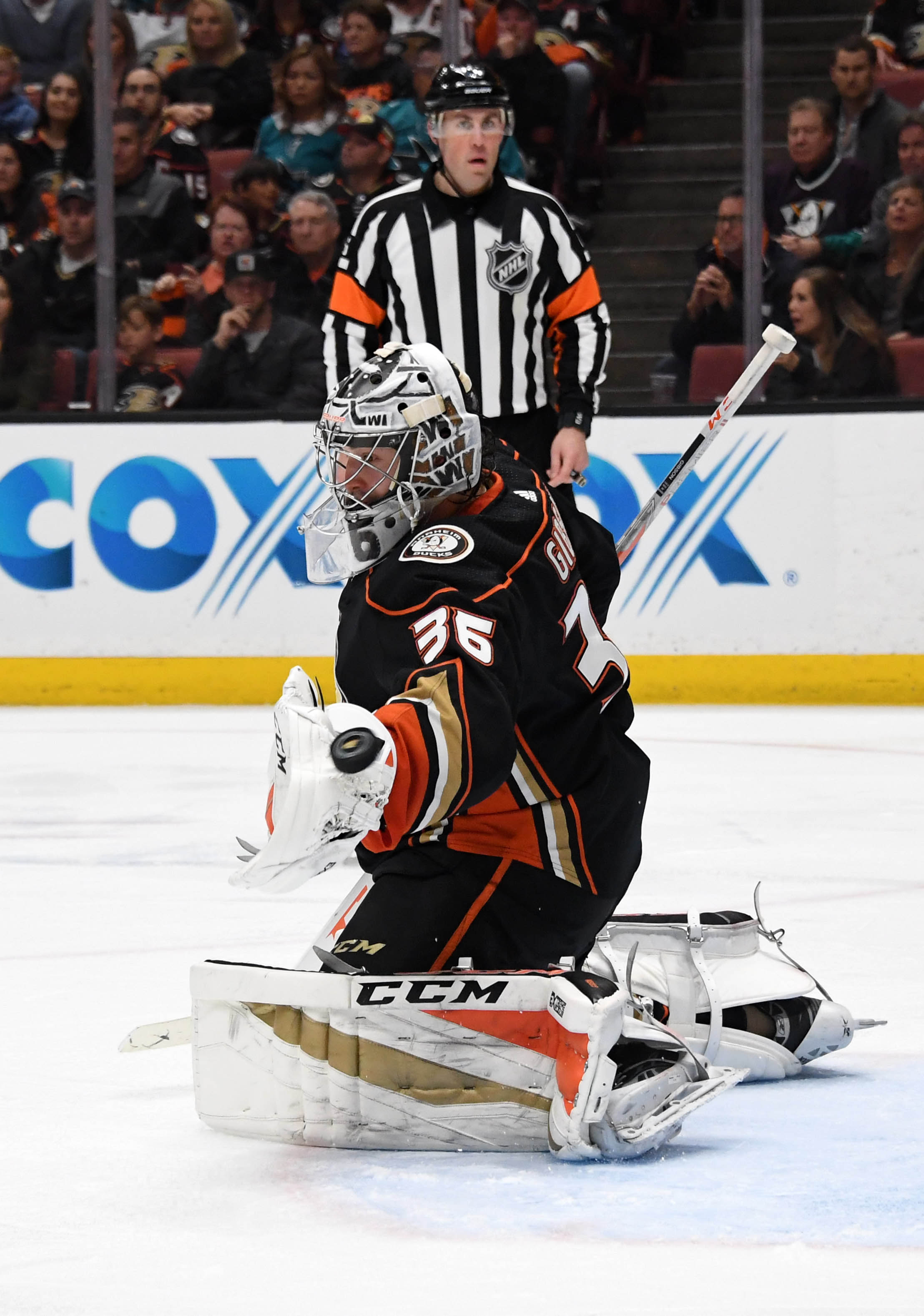 This isn’t a situation where Gibson is on an expiring contract and a decision of either extend or trade needs to happen. With five years left on his deal, they’re not going to be in that situation anytime soon. But with Gibson’s discontentment about where Anaheim has been from a competitive standpoint, they will have to consider whether or not to move him, especially if Verbeek intends to extend the rebuild for another year or two. Keeping a player who is clearly going to be frustrated with that situation isn’t ideal.
That said, it’s not as if his trade market is particularly strong. His .904 SV% was below the NHL average this season while a 3.19 GAA isn’t overly impressive either. Part of that is playing behind a team that had a lot of inexperienced players but that’s only part of it; Gibson wasn’t particularly sharp as well. For perspective, his save percentage has hovered around that mark for the last three seasons. A netminder with those numbers that has another half of a decade left on his contract at a $6.4MM AAV isn’t going to carry a lot of trade value. In general, starting goalies don’t carry great value in the first place but certainly, ones that have underachieved as Gibson has aren’t going to have a lot of suitors.
Are they better selling low and taking a run at a replacement goalie in free agency to partner with Anthony Stolarz next season or do they hold onto one of their longest-tenured players even with him being unhappy about rebuilding? Neither scenario is great but it’s something that will need to be looked at this summer.
Extension Talks
Right now, cap space is plentiful but that is going to change next summer when three of their top young players are all in need of new contracts.
Troy Terry had a breakout year, leading the Ducks in scoring with 37 goals and 30 assists in 75 games after putting up just 48 points in his first 129 career contests. The low output led to a bridge contract which he has clearly outperformed already. Since he’s on his second contract already, the 24-year-old will be arbitration-eligible next summer where he’ll be two years away from UFA eligibility and anything close to a repeat season would push his asking price into the $7MM or more range on a long-term deal while giving him a strong arbitration case if got that far. If Verbeek is convinced that Terry’s production wasn’t a one-off but rather a sign of things to come, it would make sense for him to try to work out an extension now.
Meanwhile, Trevor Zegras and Jamie Drysdale will be in the final year of their entry-level deals next season and are also extension-eligible in mid-July. Both players will have five years of team control left next summer and won’t be able to file for arbitration. Zegras didn’t look out of place as their top center last season and with Ryan Getzlaf gone, he will be carrying a bigger workload as well which could result in a jump from the 61 points he had this season. Drysdale, meanwhile, averaged nearly 20 minutes per game in his first NHL campaign while chipping in with 32 points, numbers that should only go up in 2022-23. Many teams often try to work out an early extension over running the risk of an extended negotiation the following summer and Verbeek will certainly want to do that here.
Getting these extensions worked out early would give the Ducks a much better overview of what their salary cap picture will look like in 2023 and beyond. Three long-term contracts will take a big chunk out of their spending room but if the two sides are too far apart in negotiations to the point where a shorter-term deal makes sense (more for Drysdale and Zegras than Terry), that would then open up some extra spending room for a couple of years. The sooner they know what they have to work with, the better.
Coaching Decisions
Verbeek opted to pick up the team option on Dallas Eakins’ deal, ensuring he’ll return for his fourth season behind Anaheim’s bench. But teams often don’t like their head coaches heading into ‘lame-duck’ situations so this might not be desirable for the team. In those instances, a one-year or two-year extension could be on the table, one that takes away any short-term uncertainty but also doesn’t carry a significant commitment if things go sideways and Verbeek decides he wants to make a change.
There is also some work to do at the AHL level as a full coaching staff is required for the second straight summer. Joel Bouchard along with assistants Daniel Jacob and Max Talbot were somewhat surprisingly let go after their first season following San Diego being eliminated in the play-in round for the playoffs. AHL coaching staffs don’t have to be in place at the start of free agency but if they want to try to go after some free agents that are ticketed for the Gulls, it would be useful for them to have their staff in place by then to avoid any uncertainty as those free agents will likely want to know who is coaching before they sign.
Photo courtesy of USA Today Sports Images. Contract information courtesy of CapFriendly.
Looking At Phil Kessel’s Impending Free Agency
The 2022 NHL free agent class includes a generous helping of veteran NHL stars who may, or may not, be looking to continue their NHL careers and pursue their first, or simply one more, Stanley Cup. That class includes the likes of Patrice Bergeron, P.K. Subban, Claude Giroux, and four members of the 2016 and 2017 Stanley Cup Champion Pittsburgh Penguins: Evgeni Malkin, Kris Letang, Marc-Andre Fleury, and Phil Kessel.
After beginning his career with the Boston Bruins and being traded to the Toronto Maple Leafs, Kessel had an impressive run in Toronto before again being traded to the Pittsburgh Penguins in 2015. The acquisition of Kessel appeared to be just the thing the Penguins needed to be put over the top, winning Stanley Cups in each of Kessel’s first two years with the team. The star forward would put up 59 and 70 points in his first two seasons, and as impressive as those numbers were, he found a new gear in the postseason, boasting 22 points in 24 playoff games in the 2016 Cup run, and 23 points in 25 games in the 2017 Cup run. The Penguins would not find the same success after 2017, but Kessel would continue to up his game, turning in 34 goals and 58 assists for a career-best 92 points in 2017-18. He’d follow that season up with his second-highest single-season point total for his career with 82 in 2018-19 before Pittsburgh dealt him to Arizona in the summer of 2019.
Since the trade to Arizona, Kessel has not seen the same level of production as he did in Toronto and Pittsburgh, but he has continued to be a consistent, valuable performer for the struggling Coyotes. Kessel’s name had been in discussion as a possible trade chip ahead of this year’s trade deadline, but with his $8MM cap hit and his struggles to find the back of the net this season, a trade seemed difficult even if Arizona was to retain a portion of Kessel’s cap hit.
Predicting the star forward’s next contract may prove to be a very difficult task. On one hand, while he was far from a poor performer in Arizona, he is not the player he once was. He turned in a very respectable 52-point season in 2021-22, however just eight of his 52 points were goals. Looking deeper at that number, Kessel’s ice-time was the lowest it has been since 2008-09, however his average of 16:41 was not much lower than the 17:05 he averaged last season, where he scored 20 goals in just 56 games. The most concerning metric of Kessel’s is his shooting percentage, which sits at 10.8% for his career, but dipped to an eye-popping 4.6% this season.
Worrisome as his goal-scoring woes this year are, Kessel’s consistent point-production for his career has actually been combined with some slight inconsistencies when it comes to his goal scoring and shooting percentage. Notably, his shooting percentage dropped to as low as 8.9% in 2014-15, when he scored 25 goals. Also on a positive note, the highest shooting percentage of Kessel’s career came in 2020-21, when it reached a remarkable 17.4%.
It seems like just yesterday that a 19-year-old rookie Phil Kessel beat cancer midseason and won the Masterton Trophy in the 2006-07 season, however now Kessel will turn 35 just before opening night of the 2022-23 season. Despite his age, Kessel does offer reliability; the knowledge that he will be in the lineup every single night. Currently, he owns the longest active ironman streak in the NHL, playing 982 consecutive games. The longest streak in NHL history belongs to Keith Yandle, who’s record of 989 consecutive games was secured, and snapped, earlier this season.
Not the player he once was, but still effective and a bona-fide playoff ace, the veteran Kessel should have his pick of teams to go to in order to provide depth scoring, leadership, and experience to chase another Stanley Cup if he wishes. Having just finished an eight-year, $64MM contract, Kessel will certainly not be seeing that term or AAV again, but given where his game currently stands, he may be able to have his pick depending on his priorities.
One option could be to take a team-friendly contract in hopes of filling a role on one more Stanley Cup winning team, such as Corey Perry is attempting with the Tampa Bay Lightning and the recently-retired Jason Spezza had been attempting with Toronto. Another option would be to maximize his value and his role with a team, though he may have to look for an organization with some salary cap flexibility, which may not be as likely of a Cup-contender as other options. Either way, though another $64MM is unrealistic, his consistent production, brought every single night should be enough to afford Kessel with a number of options to pick from, an ideal situation for most veteran athletes.
Finland Wins 2022 IIHF World Championship
After an exciting Gold Medal game that saw Finland and Canada battle into overtime, Team Finland was able to pull away with the win and the Gold Medal on home ice at this year’s IIHF World Championship. Forward Sakari Manninen scored the golden goal winner on the powerplay in the first overtime period. Finland’s victory was not without drama, however, as several officiating decisions were called into question, chief among them was an apparent phantom high-sticking penalty on Team Canada’s Cole Sillinger in the third period. After the call on Sillinger, Finland was put on a 5-on-3 powerplay, where they would score twice, taking a 3-1 lead. Canada would come back however, tying the game at three and forcing overtime.
Goaltender Jussi Olkinuora of Finalnd was named the tournament’s MVP following the game. The entire Tournament All Star Team, as selected by the media, includes: Olkinuora (G, FIN), Seth Jones (D, USA), Mikko Lehtonen (D, FIN), Pierre-Luc Dubois (F, CAN), Roman Cervenka (F, CZE), and Manninen (F, FIN).
Also medaling was team Czechia, who took Bronze, defeating the United States handedly earlier today 8-4, highlighted by a David Pastrnak hat trick. Leading the way for Czechia, and the entire tournament, was Cervenka, who’s 17 points lead the entire tournament.
Several high-profile prospects in the 2022 NHL Entry Draft also represented their countries in the tournament, most notably Austria’s Marco Kasper, Czechia’s David Jiricek, and a haul of prospect talent from Slovakia, including Simon Nemec, Juraj Slafkovsky, and Adam Sykora. Perhaps the most standout among them was Slafkovsky, a projected top pick in the draft, who continued his Olympic dominance into the IIHF tournament, where he posted nine points over eight games, an impressive mark for an 18-year-old playing amongst men, many of whom are NHL veterans.
Another milestone was notched with Finland securing Gold, as Valtteri Filppula became the first Finnish player to join the triple-Gold club, including a Stanley Cup, an Olympic Gold Medal, and an IIHF World Championship Gold Medal.
Jason Spezza Announces Retirement
Maple Leafs forward Jason Spezza has announced his retirement today, ending an NHL career that lasted over 1,200 games. As part of the announcement, it was revealed that Spezza will be joining Toronto’s front office as special assistant to GM Kyle Dubas. Spezza gave a statement regarding his decision, saying:
Hockey has been my life’s work and to be able to come home to Toronto and bookend my playing career where it started was incredible. To the fans – in Ottawa, Dallas, Toronto and across the league – your impact on the game is immeasurable. I’ll never be able to replicate that feeling of stepping onto the ice to the roar of the crowd, but it is something I’ll always remember. Thank you.
Spezza’s full statement can be read as part of the Maple Leafs’ announcement. While Spezza ends his career without any major NHL awards or his name on the Stanley Cup, he hangs up his skates with something arguably far more valuable: the respect and adoration of the entire hockey world.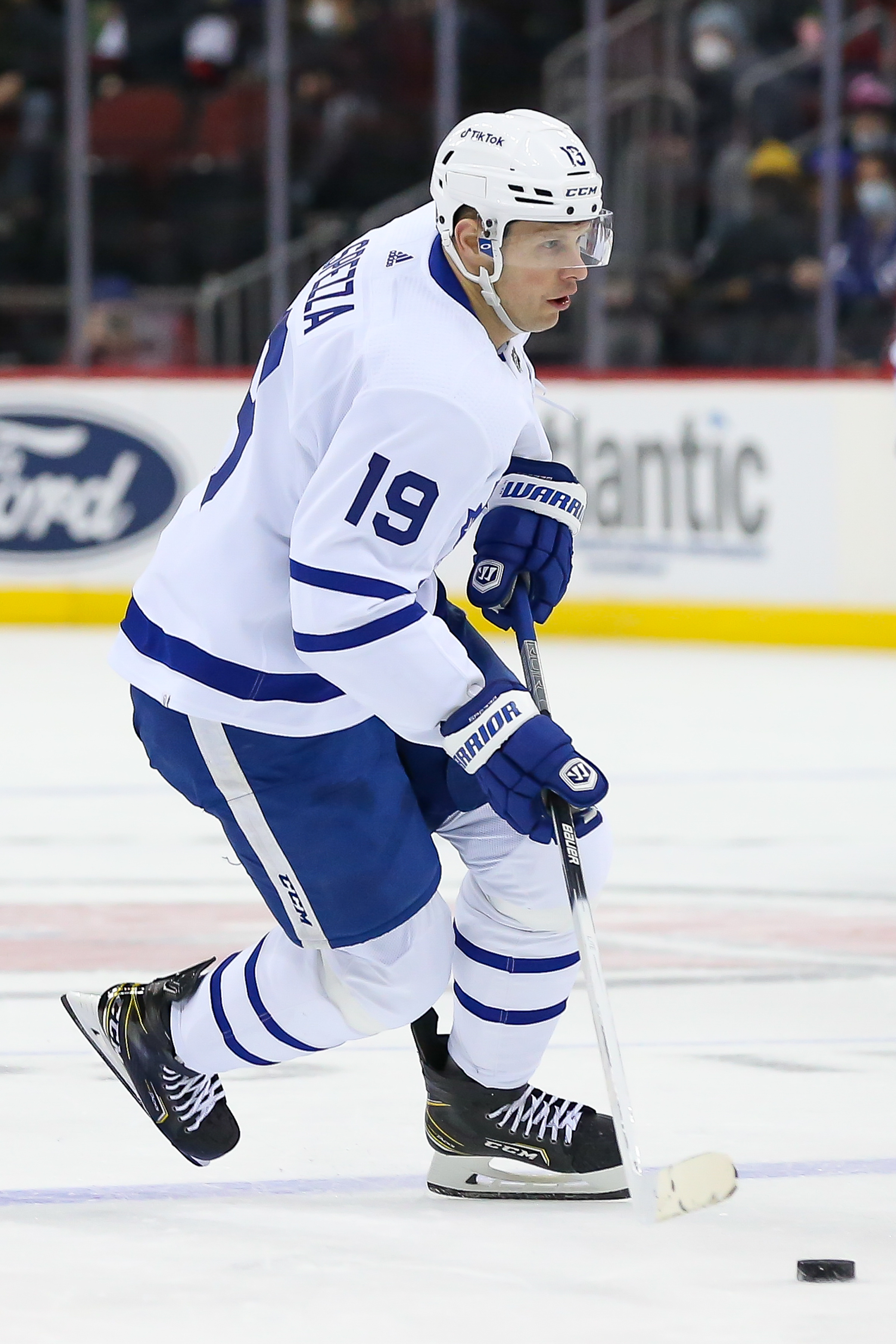
Dubas spoke to that as part of the Maple Leafs’ announcement, stating: “It is difficult to describe just how much of a lasting and positive impact that Jason Spezza made in his three seasons with the Maple Leafs.” Similar comments have begun flowing in from across the hockey world. TSN’s Chris Johnston spoke to Spezza’s unwavering professionalism despite declining ice time and production, TSN’s James Duthie called him a “pure class guy from start to finish,” and Sportsnet’s Eric Engels put it simply: “great guy, great player.”
Engels’ statement is one that best describes the impact Spezza has had on hockey throughout his 20-year professional career. He could do it all on the ice: he led the Ottawa Senators to some of the best seasons in their franchise’s history and was among the NHL’s most talented scorers for that stretch. He dazzled with his offense and helped the NHL game transition to the more skill-based brand of hockey we are now accustomed to.
But even beyond Spezza’s incredible impact on the ice has been the things he’s done off it. Spezza has been involved in numerous philanthropic causes over the course of his career and has often led the charge in those efforts, using the valuable platform his skills gave him to do good. Whether it was in Ottawa, Dallas, or Toronto, Spezza always went above and beyond to be a player his city could be proud of, regardless of how he was performing on the ice.
In terms of his new role, Dubas said Spezza will begin immediately, starting with this year’s NHL Entry draft and free agency, and will primarily be observing and learning at this point (link). Dubas added that Spezza will be given the next year or so to experience the entire front office picture before determining where he is best suited in his management career (link). Of course not sure yet, Dubas predicted player evaluation and management would be where his former player would end up.
While a potential Hall of Fame debate and heated discussions about his ultimate on-ice legacy are sure to come, the impact Spezza leaves on this era of hockey and the teams he played for is undeniable. If Spezza’s career as a Maple Leafs executive is anything like his playing career, fans in Toronto should be extremely excited.
Photo courtesy of USA Today Sports Images
Looking At A Pair Of Intriguing Colorado Avalanche UFAs
With the Colorado Avalanche headed to their first Conference Finals in 20 years and vying for their first Stanley Cup Championship since 2001, much has been made about their impending UFAs and their ability to re-sign them. The bulk of that discussion has centered around star center Nazem Kadri and starting goaltender Darcy Kuemper, both of whom were brought in to take Colorado to the next level as a playoff team, and the noise surrounding them has been more than justified. Kuemper posted another strong season, his first in Colorado, with a .921 save-percentage and 2.54 goals-against average. Kadri, already a strong performer, had nothing short of a sensational breakout year, with 28 goals and 59 assists in 71 games. Not surprisingly, both have carried their production over to the playoffs. If and when Kadri or Kuemper hit the UFA market in July, they will have plenty of interest.
As much as the chatter around those two is justified, there are two key pieces of the Avalanche also on the heels of breakout seasons, headed for free agency, who appear to have considerably less buzz. Despite the lack of hype, or maybe being overshadowed on a star-studded team, forwards Valeri Nichushkin and Andre Burakovsky will hit free agency with, one would expect, strong markets for their services.
Burakovsky’s production is not exactly a new phenomenon, as the winger has averaged 0.79 points-per-game over his three seasons in Colorado, his 61 points in 2021-22 actually representing a (very small) step down at 0.76 points-per-game, but is a major step-up from the 0.44 points-per-game he averaged with the Washington Capitals previously. For the most part, COVID-19’s schedule disruptions are responsible for Burakovsky’s lower point totals in the two seasons prior to this one, however this season represent’s Burakovsky’s ability to produce at this rate not over 50-60 games, but over a full NHL season. Although Burakovsky has amassed his numbers on an incredible offensive team like Colorado, during a period of increased scoring league-wide, he has shown the ability to stay in the lineup and produce consistently, and at just 27 years of age, he appears ripe for a longer-term contract.
Unlike Burakovsky, Nichuskin had a true breakout season, setting a career-high with 52 points, 18 more than his previous career-high of 34 set in his rookie season in 2013-14 with the Dallas Stars. After three seasons with Dallas, Nichushkin left the NHL to play with CSKA Moscow of the KHL, but returned for the 2018-19 season, where he struggled to just 10 assists in 57 games for Dallas. He would leave Dallas for Colorado, where he would find consistent production before a strong 2021-22 season. Though Nichushkin does not have Burakovsky’s consistency, he has shown his ability to adapt and produce throughout his career, entering the league as an 18-year-old, where he put up 34 points. He has shown an ability to produce in the NHL since then, and while his production back home in the KHL was no more impressive than his NHL production to date, he proved he could take his game from one league and one side of the globe to another and produce, then back once again. Nichushkin also has a factor in his game that cannot be taught or taken away: his size. Listed at 6’4 and 210 pounds, Nichushkin is able to use his body to impose himself and create space for him and his teammates.
Nichushkin may have trouble finding the term that Burakovsky might be able to, however his unique skillset and his recent production should be enough to land him a contract with a strong AAV, and at just 27 years old, if he can continue to match his 2021-22 production over the life of a shorter contract, perhaps two or three years, he could be in line for a long-term deal in the future.
Looking at the market for these two certainly does not mean that Colorado will not be able to retain one or both of them, however the organization does have several questions to ask. First and foremost among them is how do they fit along with trying to re-sign the aforementioned Kadri and Kuemper? After letting goaltender Philipp Grubauer sign in Seattle, replacing him with Kuemper, Colorado will likely push to retain Kuemper. As brilliant as Kadri was this season, he is likely headed for a long-term deal with a reasonably high AAV this offseason, and at 32 years of age on opening night, it might not be the most prudent investment for Colorado, especially if they can, instead, re-sign both Nichushkin and Burakovsky.
With $26.485MM in projected cap space this offseason, Colorado could, in theory, bring all four back, leaving things a bit tight cap-wise (and would likely necessitate Josh Manson leaving via free agency). However, issues then arise after next season, when Nathan MacKinnon becomes a UFA, and would require a significant raise over his current, team-friendly $6.3MM cap hit. Defenseman Erik Johnson’s $6MM cap hit would also expire, and while he might take a reduced salary to stick around, it would probably not be enough to balance out MacKinnon’s raise, all of this before considering J.T. Compher‘s UFA status, and the expiration of Bowen Byram and Alex Newhook‘s ELCs. As much as some of these things seem like future problems for Colorado, the questions they pose back up into now, and how the organization could approach this upcoming offseason with four of their key pieces set to become UFAs.
Snapshots: Flames Negotiations, Wright, Brossoit
The Flames’ season may be over, but the work for their front office is only just beginning. Not only is the beating heart of their franchise, Johnny Gaudreau, a pending unrestricted free agent, but they also have potential future captain Matthew Tkachuk as an arbitration-eligible restricted free agent who is inching closer to his own unrestricted free agency. The next month is set to be one full of crucial negotiations for the Flames, and according to Sportsnet’s Elliotte Friedman, the team would like to begin those as soon as possible.
Friedman reports that the Flames will move “aggressively” to extend those two players, in order to have a quick understanding of “what the landscape is” in terms of their futures. The Flames can hardly be blamed for their urgency, given the importance of both Gaudreau and Tkachuk to everything they have been building. Flames GM Brad Treliving has previously said that he would “move heaven and earth” to retain Gaudreau, and one has to assume he will carry that same attitude towards retaining Tkachuk. But as is the case with most contract negotiations in the NHL, Treliving’s “heaven and earth” will likely take a backseat to the most important factor: dollars and cents.
Now, for some other bits of news from across the NHL:
- Before free agency can begin, there is another major event on the NHL’s calendar that will need to be completed: the entry draft. We previously covered how it’s not a guarantee that Kingston Frontenacs center Shane Wright will go first overall to the Montreal Canadiens, and there is now another development regarding that connection. Friedman reported yesterday that the Canadiens’ brass led by Jeff Gorton and Kent Hughes will meet face-to-face with Wright at the NHL combine. Just as making the first overall selection comes with a lot of opportunity so comes a lot of responsibility, and the interactions between the Canadiens and Wright could go a long way towards making the team feel more comfortable in his projection if he does end up the number-one pick.
- Injuries proved fatal for the Golden Knights this past season, as the team missed the playoffs for the first time in their franchise’s history. One of the Golden Knights still dealing with an injury is goaltender Laurent Brossoit. Sportsnet’s Jeff Marek reports that Brossoit had hip surgery and that the team is “hoping” that he will be available for the start of next season. With starter Robin Lehner already recovering from his own surgery and the late-season breakout of Logan Thompson in mind, it’s clear that Vegas’ future in net is anything but settled.
Update On Barry Trotz
Barry Trotz, a coach widely regarded to be among the best in hockey, is currently on the open market and entertaining offers for his next job. He has a multitude of suitors, and fans of the teams actively courting him could not be blamed for being nervous about his upcoming decision. His choice could be the sort of one that can reverse the fortunes of a franchise, and his hire likely set the tone of the offseason for whatever team he joins. But according to Elliotte Friedman of Sportsnet, we may have to wait a bit for that choice to actually come.
Friedman reports that the coaching cycle has “ground to a bit of a halt” as a result of teams awaiting Trotz’s decision. Friedman relays that Trotz has “let it be known” to teams interested in his services that he’s “not in a hurry to make his choice” and that won’t make his decision until he’s absolutely certain that it’s the right one for himself and his family.
While that is obviously a very reasonable stance for Trotz to take towards his decision, his patience does have wider implications for the league as a whole. There are numerous coaching vacancies across the NHL, and as Friedman notes, many teams are waiting for Trotz to make a decision before truly ramping up their pursuits of other candidates.
Fans of teams with a coaching vacancy may want to see movement from their team on that front sooner rather than later, but the state of the coaching market is such that these searches could drag on through the playoffs and potentially beyond their conclusion. That potentially long wait on Trotz’s choice could have the effect of raising the stakes of his decision as well. For the teams that are fully invested in securing his services but end up ultimately missing out, they could potentially see their second-choice candidate be snapped up by another team less involved in the Trotz sweepstakes.
Regardless of where Trotz ends up coaching next season, it’s clear that his decision will likely have a ripple effect that alters the offseasons of quite a few teams.