
PHR Mailbag: Keller, Salary Cap, Free Agents, Josi, Konecny, Draft, Rulebook
Topics in this edition of the PHR Mailbag include a discussion about the impending spending frenzy, Roman Josi’s future in Nashville, next week’s draft, and more. If your question doesn’t appear here, check back in last weekend’s mailbag. We also have one more to run from the most recent call for questions so it might be in there too.
jason830: Is Clayton Keller an option for the Blackhawks to trade for if he is available? Also, would pick 19 plus some prospects entice the Coyotes to trade him?
It’s fair to wonder if Arizona might be inclined to move Keller. GM Bill Armstrong has said previously that he envisions the team being about halfway through the rebuild. In other words, they’re a few years away from trying to contend. Keller has five years left on his contract so three more non-playoff seasons would mean they’d be holding onto him for two years of hopeful contention. Logically, you could sway me on moving him for someone that better fits their timeline.
That said, they wouldn’t be looking for draft picks to trade for him. If they were, I expect they’d be aiming considerably higher. Remember the Alex DeBrincat move from the draft last year? I fully expect they’d be asking for more than that if they were moving Keller.
Chicago isn’t at the point yet where it’s time for them to start moving draft picks and trying to contend. That’s the time for them to go after someone like Keller. Arizona, meanwhile, is probably looking for players more than picks so I don’t think there’s a mutual fit for a trade.
NSco1996: Do you think the NHL will address the LTIR/No Salary Cap loophole to add better quality/more expensive depth at the deadline for the future playoffs? As a Blackhawks fan, it more notably seemed to have started with them in 2015 with Kane, 2021 Kucherov and Stamkos, 2023 Mark Stone. All three teams added good quality depth that they otherwise couldn’t afford with their high-price star not counting against the cap.
First, this isn’t just an NHL decision. The salary cap and the rules that pertain to it are collectively bargained between the league and the NHLPA so any changes would need joint approval. At first glance, I don’t think this a topic that’s going to be remotely near the top of the list for new Executive Director Marty Walsh to look at. Frankly, I don’t think they’re upset about the loophole either as it allows players to go to a Cup contender that wouldn’t be able to otherwise which some would be quite happy about.
I also don’t think there’s much of an appetite from the teams to do something about it. Yes, it’s a tiny loophole (which isn’t so small now as it has been exploited enough that you can drive an 18-wheeler through it) but at a time when many teams are cap-strapped, they’re probably not going to want to close something that they might need to rely on depending how their injury situation goes. So if the league isn’t getting pushed to look at it and the NHLPA isn’t inclined to change it, it’s not going to get addressed.
For fun, though, let’s say they’re open to the idea. How do you do it? Do you put a rule in that says if a player is on LTIR after the trade deadline, they have to miss a certain number of playoff games? That might seem like the easiest way to do it but what about the player who legitimately suffers a two-month injury right before the trade deadline, lining them up for a first-round return? Such a rule might help eliminate some of the more overt exploitation but it might punish the teams who are legitimately in that situation with a valid injury timeline that matches the start of the postseason. That probably isn’t going to get the support from NHL teams at the least. As far as fixing it goes, it’s easier said than done.
WilfPaiement: Why do GMs continue to be their own worst enemy when it comes to a player’s worth? The latest example would potentially be Tyler Bertuzzi who reportedly is looking for term and $7 million a season. His resume thus far tells me he would be 3 at 3 at best. Anything after that is just plain dumb!!!!! Don Waddell recently stated he’s not against bringing back Pacioretty, just ridiculous. What kind of bad money will they throw at Toews and Kane?
This is pretty commonplace around professional sports. Managers want to improve their team and when you have the same teams bidding for the same impact players, dumb moves are going to happen. Add that to the expectation of a higher salary cap in the near future and it’s a guarantee that there are bad signings on their way next weekend.
As for Bertuzzi, your valuation of him would actually represent a cut in pay compared to what he has made in the past three seasons. That’s probably not going to happen. Yes, injuries are a valid concern and that will probably prevent him from getting what he’s asking. But he’s asking for a contract that’s high enough to justify him not seeing what’s on the open market (where he’ll be one of the more sought-after players, no less). He’s not taking himself off the free agent list for an underpayment; he might not even do it for a fair-market deal. I don’t think there’s any chance he gets $7MM and I’m skeptical that he gets max term. But right now, why not see if Boston is willing to play ball on one of those ends? There isn’t much risk to doing so.
I have no problem with Waddell saying he’d be open to bringing back Max Pacioretty. He didn’t say he’s open to bringing him back at $7MM again, just that they won’t close the door. If Pacioretty winds up signing a one-year, bonus-laden contract, Carolina is a team that makes a lot of sense for him with the short-term cap space they have before so many regulars are up heading into 2023-24. For the right price, that might be worth pursuing.
I don’t expect Toews to get a big-ticket contract. If he decides to play next season, I think it will be a situational choice, one that allows him to play closer to home or try to chase one more Stanley Cup. Those situations lend themselves toward a cheaper contract. As for Kane, we’re in the middle of finalizing our upcoming Top 50 UFA list and while I won’t spoil the final number, I suspect you’ll find it above the value you think he should get.
GBear: If the Preds are going in a rebuild phase, doesn’t it make sense to move Josi? He’ll be on the downside of his career once the team becomes above average again, so why waste his prime years in a rebuild when you could get a huge return for him now?
Not every rebuild has to be a strip-it-down one with an extended buildup after that. Going the route of trading Roman Josi would be the Predators tearing it down and starting a long-term rebuild. Is that really what Barry Trotz signed up for when he takes over as GM next weekend? I don’t know about that. I’m not even certain that today’s trade is a sign in that direction; they might just be opening up flexibility to make a splash on the trade front at their hometown draft.
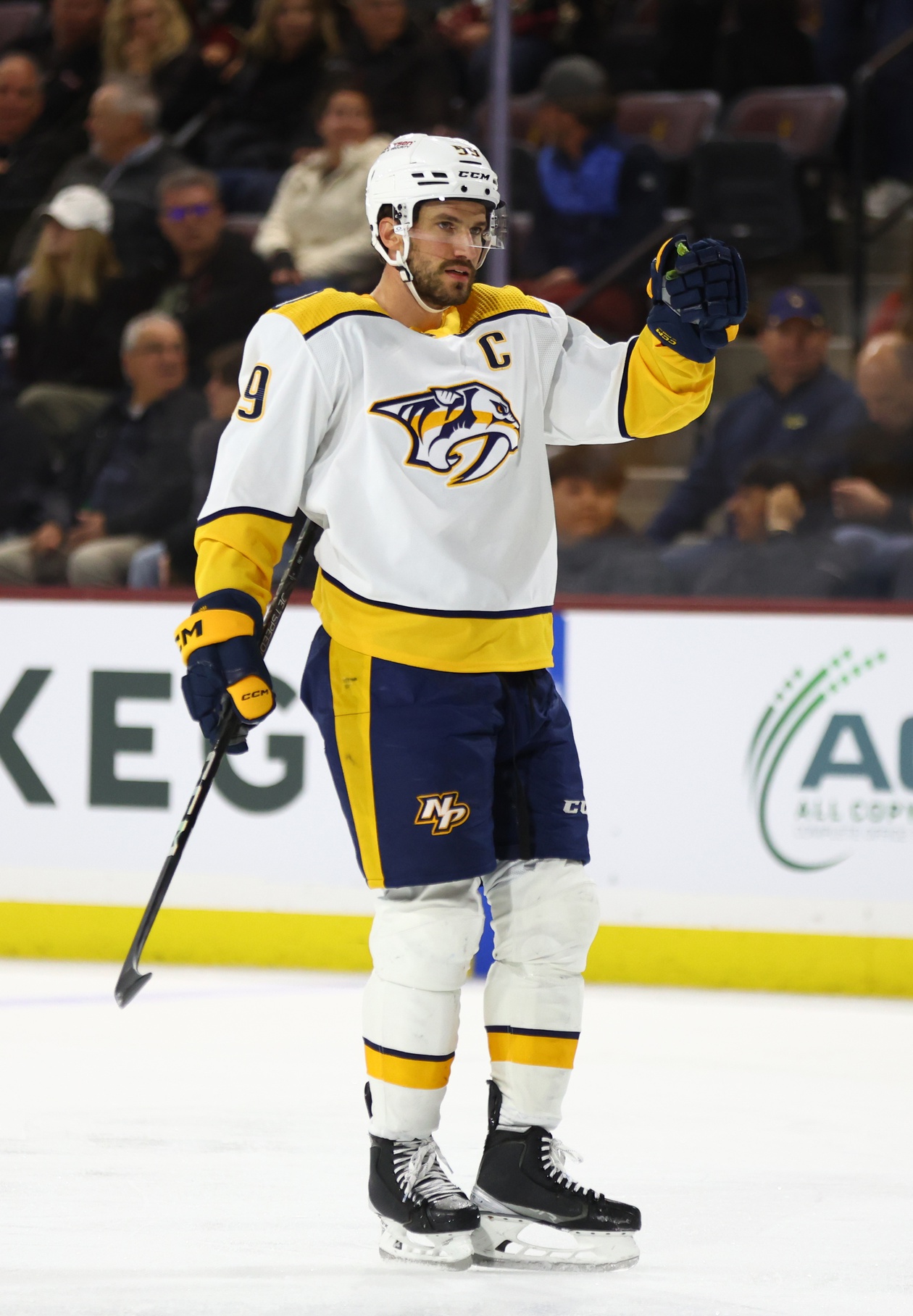 I’m also not convinced that the return would be as high as you might think it would be. Look at San Jose and Erik Karlsson. They’re the same age (born one day apart), are the top-scoring blueliners from the last two seasons, and are on long-term contracts. And yet, what is the scuttlebutt around Karlsson? To move him, the Sharks will need to retain a significant chunk of the deal and probably settle for an underwhelming return.
Yes, Karlsson makes roughly $2.5MM more but Josi has one more year left on his contract which doesn’t help his trade value. If Nashville was going to consider seriously moving him, they’d be asked to retain a sizable chunk. Even at $2MM per, that’s $10MM they’re paying for him not to play for the Preds. Are they going to want to do that and tie up another retention slot long-term? I’m not sure about that. Even if they were, I think they’d get better offers than San Jose is for Karlsson but this is not a cap environment to move big money for big value.
If you’re moving big-ticket contracts right now, the cap space is a big part of the return, likely bigger than the asset value you’re getting back. And if that’s all you’re going to get for Josi, holding onto him might be the smarter play. There are only so many teams that can afford to be in on Karlsson and when goes, that list will get even smaller. Accordingly, this might not be the best spot to move him.
Schwa: With speculation of Konecny being moved by Flyers, and it seeming like they are willing to retain salary, could you see the Rangers making an offer here/the teams working out an in-division move? Konecny plays a scrappy two-way game and is a solidified top-6 RW. Seems to fit Rangers’ needs if he can be had for the right price. 1st and a prospect for Konecny with 30% retained by PHI? Thanks!
I don’t think Philadelphia is in a spot to turn down better offers just to avoid moving him to a division rival, especially if they’re looking to bottom out for the remaining term of Travis Konecny’s contract. If the Rangers were to make an offer and it was the best one, they’d do it.
Having said that, I’m not sure that New York would make a legitimate offer for him. They have around $11.7MM to work with right now, per CapFriendly. With that, they need to re-sign Alexis Lafreniere and K’Andre Miller, sign a backup goalie, and probably another defenseman and at least three more forwards. As it is, they probably need to try to offload Barclay Goodrow just to accomplish that, let alone add Konecny, even at a reduced rate. (And no, putting Goodrow into the trade won’t solve that problem as the Rangers would need to incentivize the Flyers to take that deal on.)
As for your proposal, it depends on the prospect. From Philadelphia’s perspective, if they’re retaining 30% for two years, it better be an ‘A’ player, one of New York’s best. Otherwise, they’re probably going to pass on an offer like that in search of a stronger one.
Offseason Checklist: Dallas Stars
The offseason is now fully underway after Vegas took home the Stanley Cup which means that it’s time to examine what each team will need to accomplish over the coming months. Next up is a look at Dallas.
2022-23 was a season of considerable improvement for the Stars. They picked up an extra ten points during the regular season, moving them from a Wild Card seed to having home ice in the first round. In the postseason, they won a pair of series and gave the Golden Knights a decent challenge in the Western Conference Final. As a result, GM Jim Nill doesn’t have a particularly long list of things to try to accomplish this summer but here are some items on their to-do list over the coming weeks.
Add Defensive Help
This is the big one for Dallas this summer. With Miro Heiskanen and Esa Lindell in the fold, the Stars have quality blueliners in the fold. However, things start to unravel from there. Ryan Suter shouldn’t be logging heavy minutes at this stage of his career but played more than 20 a night in the regular season; that number jumped to more than 23 in the playoffs. The bigger workload was problematic for him but the options behind him on the depth chart weren’t any better.
Colin Miller was brought in as a reclamation piece last summer and while he did well in a limited role, he’s not a top-four option. Neither is the rugged Jani Hakanpaa. Nill paid a high price to acquire Nils Lundkvist from the Rangers but he, too, was only able to hold down a limited role during the regular season but was out of the lineup in the playoffs. Thomas Harley has shown some promise but he’s not ready for top-four duty either while Joel Hanley is more of a seventh defender than an every-game one.
All but Hanley are signed for next season but while this group was good enough to have some success, the playoffs showed that another top-four option is needed for them to take that next step. Fitting one in cap-wise could be a challenge as they have around $7MM to work with, per CapFriendly, and several forward spots to try to fill. It might take some creativity to fill this opening as a result but one more impact defender would put the Stars in much better shape for next season.
Re-Sign Or Replace Domi
Dallas wasn’t overly active at the trade deadline but they did make a late move to add Max Domi as a rental from Chicago. There weren’t immediate dividends as he managed just seven points in 20 games down the stretch but was more productive in the playoffs, picking up 13 points in 19 contests. The lineup was deeper with Domi in there and finding a way to keep him would extend that boost over a full season.
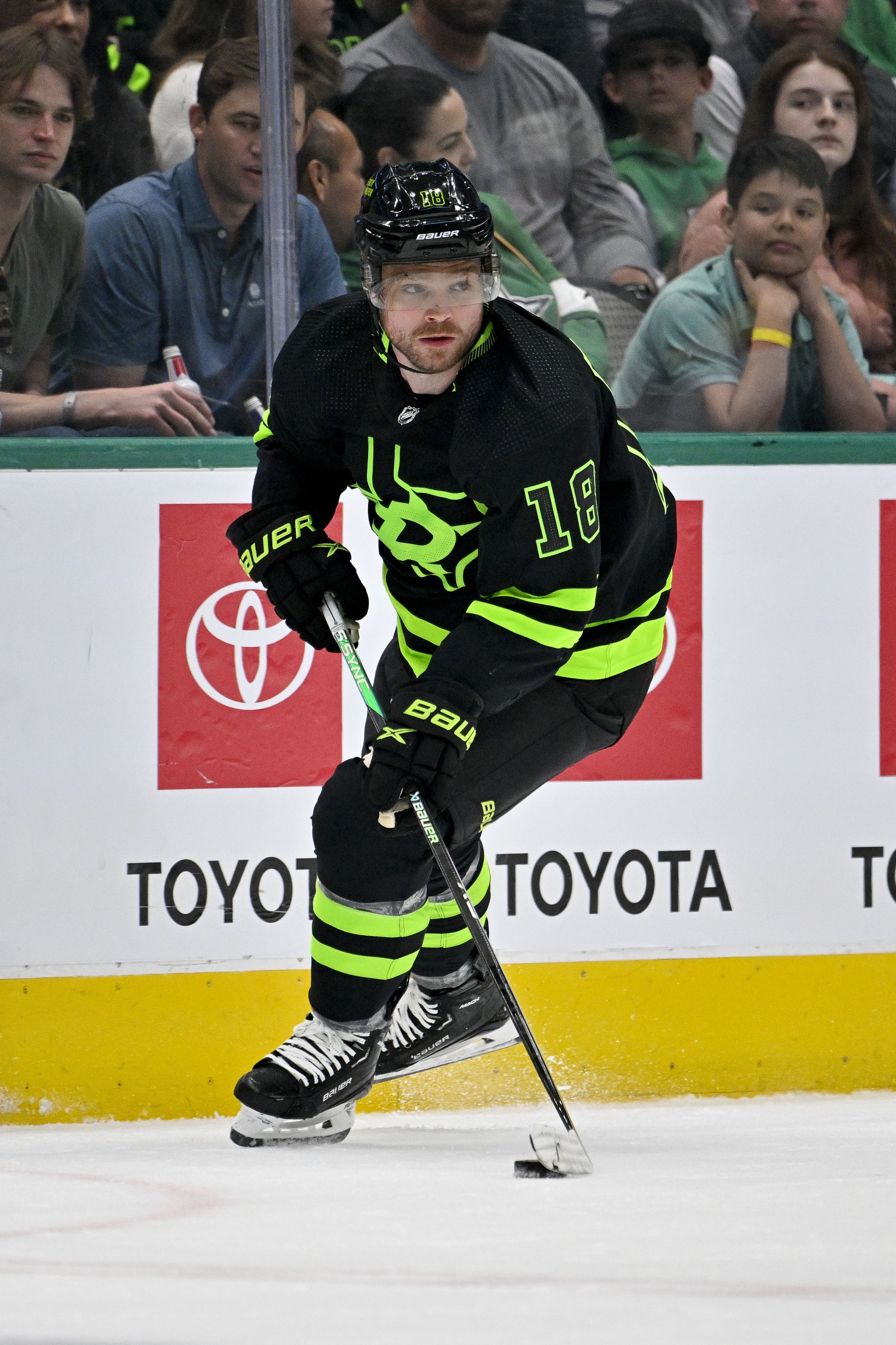 Of course, this is again easier said than done, especially if they opt to prioritize adding on the back end. On top of that, Domi is set to benefit from what is a very thin free agent center market. Taking out Boston’s two veterans that are likely to either re-sign or retire, Domi is one of the top few middlemen available. In a position that is always in short supply and high demand, the 28-year-old is well-positioned to land a raise on the $3MM he made this past season. Perhaps more importantly, Domi should finally be able to land some long-desired stability; he hasn’t signed a contract longer than two seasons since his entry-level deal.
It will take more than half of Dallas’ existing cap space to get something done. But if they can’t land a defenseman and shore up a weakness, shoring up a strong spot is the next best thing. Keeping Domi around to deepen the attack – or signing someone else to take that spot – is certainly a workable Plan B.
Bridge Deal For Dellandrea
Dallas only has one regular player set to reach restricted free agency this summer, forward Ty Dellandrea. The 22-year-old played his first full NHL campaign in 2022-23 and acquitted himself well, picking up 28 points in 82 games while getting into 15 of their playoff contests where he notched three goals. Certainly not a bad first taste of full-time action for the 2018 first-round pick.
However, with his games this past season comprising the bulk of his experience thus far, Dellandrea certainly isn’t in a position to command a long-term contract. Nor should the Stars be inclined to hand him one. As a result, he’s a lock to sign a short-term bridge deal.
Dellandrea isn’t eligible for salary arbitration and it’s post-entry-level players that often take time to sign but he shouldn’t be in that situation. Instead, a two-year deal around $1.5MM should be workable for both sides. Getting that deal done sooner than later would also be beneficial, allowing Nill to know exactly what he’ll have to work with this summer rather than working off a range estimate. It’s not a top priority necessarily but it’d help if they could get this done over the next week or so.
Rebuild Forward Depth
On top of Domi, Dallas has three more forwards heading for unrestricted free agency – wingers Evgenii Dadonov and Joel Kiviranta plus center Luke Glendening. If those players aren’t re-signed, they’re going to have to be replaced which is also going to cut into that $7MM in cap flexibility.
If the Stars want to fill internally, they could look to wingers Mavrik Bourque and Logan Stankoven. Bourque, a 2020 first-round pick, was actually up with Dallas late in the playoffs although he didn’t see any game action. The 21-year-old had 47 points in 70 games with AHL Texas and could hold down a bottom-six spot next season. As for Stankoven, a 2021 second-rounder, he averaged more than two points per game during the regular season with WHL Kamloops (and somehow bested that in the playoffs). If he’s ready to make the jump like Wyatt Johnston was this past season, he could give the offense a boost and perhaps fill the role Domi held. Most importantly, Bourque and Stankoven have cap hits under $900K; their presence on the opening roster would give Nill a bit more wiggle room to work with.
While Glendening doesn’t provide much offensively, he can kill penalties and win faceoffs at a well above-average rate so Dallas will need to find a player to fill that role while Kiviranta provided some physicality from the fourth line. These are spots that can be filled in free agency but they’ll be shopping at the bargain bin like many other teams. With that many veterans possibly leaving on the open market, Nill will be rebuilding the bottom end of his forward group over the next few weeks.
Photo courtesy of USA Today Sports Images.
PHR’s 2023 NHL Mock Draft
The 2023 NHL Draft will take place next week in Nashville, and it’s shaping up to be a special night both from the intriguing storylines emerging at the top of the draft order as well as the abundance of high-end prospects available to be selected. Even beyond generational talent Connor Bedard,this class boasts a deep, impressive group of emerging hockey players.
In this mock draft, we’ll examine which player each team might pick at their draft position, building a roadmap for how the draft might play out. We’re taking into consideration a team’s needs and the currently available media reports indicating which players a team might be interested in. To be clear, this is not an exercise in picking players based on any personal evaluations of the prospects in question, but rather a look at the current landscape of the draft as well as the current standing of each team’s prospect pool.
1. Chicago Blackhawks — Connor Bedard, C, Regina Pats
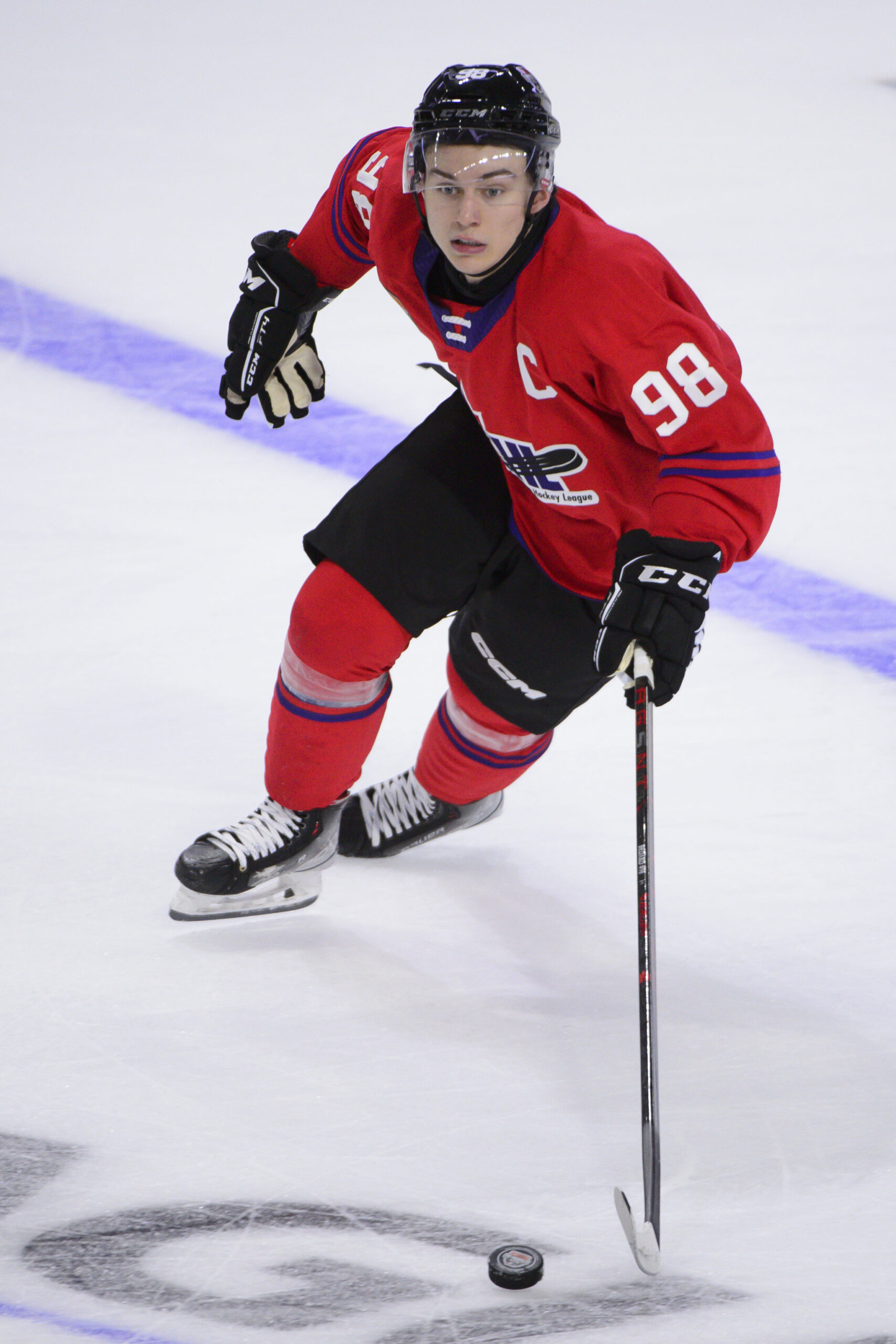
This is the easiest draft pick any NHL team has had to make since the Edmonton Oilers selected Connor McDavid first overall at the 2015 draft. Bedard possesses an elite shot, an elite mind for the game, and exceptional all-around talent.
The Blackhawks can’t outright say they’re selecting Bedard before they’re on stage at the draft in Nashville.
But it’s been obvious who they’d be taking since the moment their logo appeared on the number-one draft card in NHL Deputy Commissioner Bill Daly’s hands during the draft lottery.
2. Anaheim Ducks — Adam Fantilli, C, University of Michigan
This is where some more intrigue has emerged. For a while it had been assumed that Fantilli would be a sort of “automatic” number-two pick the way Jack Eichel was to McDavid at the 2015 draft, especially after Fantilli had an Eichel-like rookie season at Michigan and took home the Hobey Baker award. But, it could be that something different could play out next week.
The Athletic’s Corey Pronman wrote in a recent mock draft that “half the league thinks” the Ducks will take Swedish center Leo Carlsson, while “Half the people in the NHL think it will be Fantilli.” (subscription link)
John Hoven of Mayor’s Manor tweeted yesterday that he’s “continuing to hear Anaheim Ducks will take Leo Carlsson at No. 2,” and on the 32 Thoughts podcast Sportsnet’s Jeff Marek brought up the possibility that the Ducks could take Russian winger Matvei Michkov. Although he stressed him bringing that possibility up was not a concrete report on the Ducks’ preferences. Clearly, who GM Pat Verbeek will draft is far more of a mystery than it may have seemed a few weeks ago.
With all that said, though, it still seems as though Fantilli is where the team ends up. The Ducks already have Mason McTavish projected as one of their top-six centers going into their next competitive phase and they have star forwards Trevor Zegras and Troy Terry in the mix as well. With just how deep the Ducks’ pipeline of defensive talent is, it seems they’re best served taking the best forward available. Fantilli’s play both in the NCAA and at the IIHF Men’s World Championships served as a convincing case for why that player is him.
3. Columbus Blue Jackets — Leo Carlsson, C, Orebro HK
The Athletic’s Aaron Portzline addressed the Blue Jackets’ thought process with their top pick quite simply, writing that the “Blue Jackets will spend the No. 3 pick on a center.” (subscription link) Who that center is likely depends on what Anaheim does with their pick. While the U.S. National Team Development Program’s Will Smith has tantalizing skill, the Blue Jackets drafted a similar player in Kent Johnson with the number-five pick at the 2021 draft.
Both Carlsson and Fantilli offer more well-rounded skillsets at the current moment, and given each has experience playing against men (Carlsson from the SHL and IIHF Worlds, and Fantilli from World’s) they’re likely to be a bit closer to NHL-ready than Smith, who is headed to Boston College for next season.
The Blue Jackets have been aggressive in upgrading their team in advance of officially hiring Mike Babcock as head coach, so either Fantilli or Carlsson seems the most likely pick here. Since the Ducks took Fantilli second overall here, the Blue Jackets are thrilled to land Carlsson.
4. San Jose Sharks — Will Smith, C, U.S. National Team Development Program
The Sharks are building for the future, and we previously covered reports that San Jose is targeting defensemen and goaltenders as their priority for this class. Austrian blueliner David Reinbacher is the top defenseman in this class and could be under consideration here. But the Sharks have a second first-round pick and quite a few more selections, so they shouldn’t feel forced to spend this pick to fill their wider organizational need.
Yes, the Sharks have centers Tomas Hertl and Logan Couture locked into long-term contracts. But it’s going to be a few years at the earliest until the Sharks are ready to return to competing for Stanley Cups, and it’s an open question where either player’s abilities will be at that stage of their careers. Smith is an exceptionally skilled pivot who plays on one of the best lines in junior hockey. He adds a level of dynamic skill to a San Jose prospect pool that already boasts 2021 seventh pick William Eklund, and although some question whether he’ll be a center at the NHL level he’s the best chance the Sharks have at landing a first-line center with this draft selection.
5. Montreal Canadiens — Ryan Leonard, RW, U.S. National Team Development Program
This Canadiens front office has repeatedly emphasized how much they value seeing high compete levels in prospects, and that’s something Leonard has in spades. While Michkov is still on the board, we’ve covered reports indicating the Canadiens don’t “seem very likely” to take a shot at the electric Russian winger. That same report indicated the Canadiens are zeroing in on Reinbacher and Leonard for their pick. It is worth noting that Sportsnet’s Elliotte Friedman said on 32 Thoughts that “there’s a lot of teams that think” the Canadiens are “taking Reinbacher” if Smith isn’t available, meaning he’s also a very strong possibility.
6. Arizona Coyotes — David Reinbacher, RHD, EHC Kloten
Michkov remains on the board here, but the Coyotes have spent top-ten picks in the last two drafts on forwards. There’s also the uncertainty of the Coyotes’ long-term future in Arizona, which certainly can’t help their efforts to lure Michkov out of the KHL, where he’s under contract for the next three seasons. The Coyotes don’t yet have the type of player in their organization who profiles as an all-situations NHL number-one defenseman, not since they traded Jakob Chychrun to the Ottawa Senators. So, they can use this pick to add the draft’s top blueliner in Reinbacher.
7. Philadelphia Flyers — Matvei Michkov, RW, SKA St. Petersburg
Michkov’s wait to see which team will own his NHL rights is over, though the Flyers’ wait has just begun. The Flyers are in a prime position to take a shot at Michkov, a player some would argue has the highest offensive upside in this draft class — Bedard included. A report today indicated that the Flyers were interested in selecting Michkov, and Philadelphia as a landing spot would make sense. New GM Daniel Briere has a long runway to execute his rebuild plan, so the wait for Michkov wouldn’t be as big of a hurdle as it may be for other clubs.
The Flyers have some talent in their system and on their NHL roster but badly need to inject some offensive star power into their organization since they said goodbye to Claude Giroux last season. Michkov is the best chance they have to do so of the players still on the board.
8. Washington Capitals — Dalibor Dvorsky, C, AIK
The Capitals can’t be thrilled to have Michkov go one pick before theirs, let alone to a division rival. Their reported interest in Michkov means they’re likely to attempt to trade up in the draft, likely with the hope of leap-frogging Philadelphia in order to secure the rights to the Russian winger. But in this scenario where they’re unable to do so, Dvorsky is a sound pick in his own right.
Capitals Assistant General Manager Ross Mahoney told The Athletic’s Tarik El-Bashir that the Capitals “this year, we’re gonna take the best player,” regardless of the organization’s larger positional needs. (subscription link)
Dvorsky’s ability to play down the middle would certainly help the Capitals, though, as Evgeny Kuznetsov‘s contract expires in two years, so other than Dylan Strome the Capitals don’t have many players who confidently project to become top-six pivots. Dvorsky is exactly that, a potential top-six center with experience already playing against men in Sweden’s HockeyAllsvenskan.
9. Detroit Red Wings — Samuel Honzek, LW, Vancouver Giants
According to Steve Ewen of The Province, Detroit Red Wings GM Steve Yzerman personally scouted Honzek’s playoff games against the Kamloops Blazers in April. At the NHL Combine in Buffalo, Honzek told the media “Detroit was one of the, I would say the best meeting I’ve ever had here.” While the rankings from the draft media sphere might indicate that Honzek could be available for the Red Wings to pick at 17th overall, his impressive physical testing and tantalizing physical tools make him a defensible selection inside the top ten.
The six-foot-four Slovak winger scored 56 points in 43 games in the WHL and has some believing he can play center at the next level, which only enhances his value going into the draft next week.
10. St. Louis Blues — Tom Willander, RHD, Rogle BK
Willander, a smooth-skating Swedish blueliner, has been a fast riser during the draft process since his season ended with Rogle. He’s committed to play for Boston University next fall, meaning the Blues could keep tabs on him without needing to cross an ocean.
The last time the Blues selected a blueliner in the first round was Jordan Schmaltz over a decade ago at the 2012 draft. Willander makes a lot of sense as a pick to help the team infuse some high-end talent into a blueline that has gone a bit stale at the NHL level.
11. Vancouver Canucks — Nate Danielson, C, Brandon Wheat Kings
The Canucks’ Patrik Allvin has told the media that he’s looking at options to trade up in the draft, but if a trade-up scenario never materializes Danielson is the type of pick that would help their organization. The Athletic’s Thomas Drance reported that Danielson was among the players the Canucks are most interested in selecting with their top pick, (subscription link) and he could fit in their long-term plans as a number-two center behind Elias Pettersson. That would allow J.T. Miller to shift to playing as a winger, where he may be most suited to play long-term.
12. Arizona Coyotes — Zach Benson, LW, Winnipeg Ice
After the Coyotes passed on Michkov to select Reinbacher with the sixth pick, Arizona gets incredibly fortunate here and has Benson, a widely respected WHL winger, still on the board. This Coyotes front office has spent high picks on forwards with size in the past, such as Dylan Guenther, Josh Doan, and Conor Geekie. With Logan Cooley on the way, Arizona takes another somewhat undersized forward in Benson, who happens to be oozing offensive skill and all-around creativity.
13. Buffalo Sabres — Dmitry Simashev, LHD, Lokomotiv Yaroslavl
The Sabres are so well-stocked with young talent that they’re in a uniquely strong position to roll the dice on one of the draft’s more intriguing talents: Simashev. The Sabres are widely rumored to be seeking help on defense this offseason, and after drafting forwards with all three first-round picks in their possession last season the Sabres now take a rangy six-foot-four Russian blueliner who has reportedly drawn quite a bit of leaguewide attention.
14. Pittsburgh Penguins — Matthew Wood, RW, University of Connecticut
The leader of Pittsburgh’s hockey operations, Kyle Dubas, said today that he’d likely be retaining the Penguins’ top pick, their highest selection over a decade. They’ve had one of the NHL’s weaker prospect pools in recent years, and their need for quality scoring forwards has resulted in trades that have been widely panned, such as the team’s acquisition of Mikael Granlund at the trade deadline a few months ago. Adding an offensive talent like Wood, who scored at a nearly point-per-game rate as the youngest player in college hockey would be a huge boost to their organization’s future. If he can improve his skating, the six-foot-four forward can be a true difference-maker.
15. Nashville Predators — Quentin Musty, LW, Sudbury Wolves
New Predators general manager Barry Trotz has an identity in mind for his Predators club: a fast, skilled, high-octane offensive team. He’s tasked his scouts with taking “swings” at the draft on offensive upside, so a player like Musty could be a fit for this pick as a result. In his age-17 season, Musty scored 78 points in 53 games in the OHL and offers a combination of six-foot-two size and high skill level that many NHL teams covet.
16. Calgary Flames — Oliver Moore, C, U.S. National Team Development Program
The consensus best skater in this draft class, Moore is the top center prospect still on the board. While Moore might not end up a first-line center in the NHL he drove play as a second-line center at the NTDP and his skating provides some hope that there’s even more offensive upside to be unlocked in his game. With incumbent first-line center Elias Lindholm looking likelier than ever to depart Calgary at the expiry of his contract (or before) the priority in Calgary has to be adding more talent down the middle to their prospect pipeline, and drafting Moore achieves that.
17. Detroit Red Wings — Axel Sandin Pellikka, RHD, Skelleftea
The Red Wings have a bit of a logjam of blueliners in their system shaping up, but that shouldn’t stop them from taking a swing on Sandin Pellikka, who is arguably the most skilled defenseman in this draft class.
18. Winnipeg Jets — Brayden Yager, C, Moose Jaw Warriors
Winnipeg is set to potentially lose both of its top-six centers in the same offseason, with Pierre-Luc Dubois a near certainty to be traded and Mark Scheifele in the final year of his contract. With Danielson and Moore gone, it’s not an ideal scenario for the Jets to be in but Yager remains a quality consolation prize. He didn’t quite meet lofty expectations this past year but with Brad Lambert and Chaz Lucius already in the system Yager can add to their wave of young pivots who will replace the outgoing ones.
19. Chicago Blackhawks — Daniil But, LW, Lokomotiv Yaroslavl
The Blackhawks landed Bedard, so regardless of how they spend the rest of their stockpile of draft picks this year will be considered a success. This gives GM Kyle Davidson the type of room to take risks other GMs might not have, and as a result, he gambles on talent here by taking But, a big Russian winger.
Like most teenage prospects But didn’t play or score much in the KHL but was more dominant against his peers and offers the type of size and skill combination not even Bedard can offer.
20. Seattle Kraken — Colby Barlow, RW, Owen Sound Attack
There isn’t a large sample size of Seattle draft classes to work off of.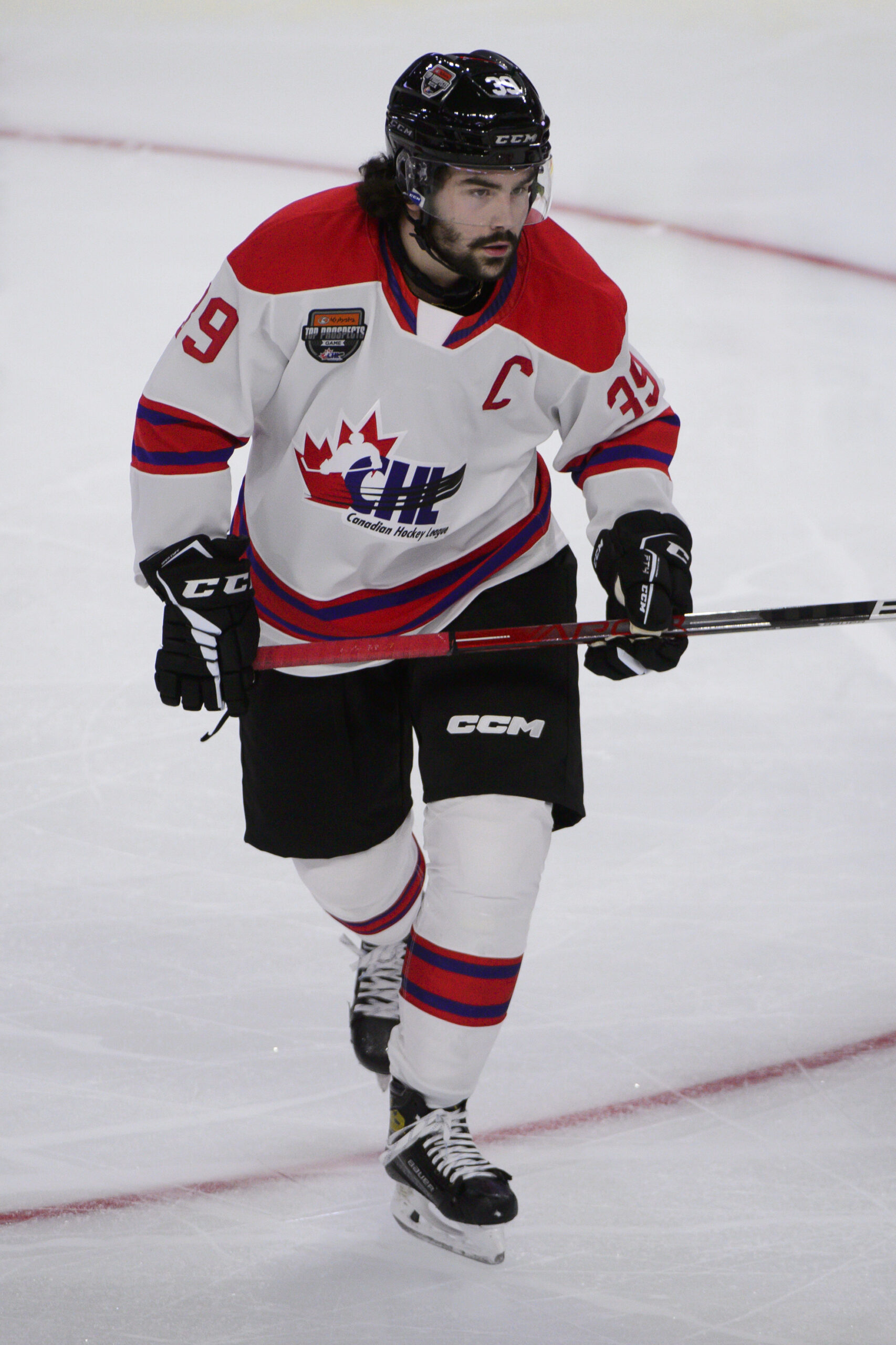
But, their picks of Ty Nelson, David Goyette, Jagger Firkus, Ryker Evans, and Ryan Winterton in the last two drafts indicate a willingness for the team to nab top-end CHL talents who might have fallen a little bit farther than they might have expected.
Barlow is exactly that, a potential lottery pick who slid right into GM Ron Francis‘ hands.
The Kraken already spent two high picks on right-wingers last class with Firkus and Jani Nyman but Barlow is firmly in the “best player available” argument at this slot and that’s the philosophy most NHL teams draft under.
21. Minnesota Wild — Eduard Sale, LW, Brno Kometa
The Athletic’s Michael Russo and Joe Smith asked Judd Brackett, who runs the Wild’s drafts, about the possibility of selecting Sale at 21, and he had the following to say: (subscription link)
When you talk about Ed Sale, you’re talking about a guy at 6-2 who can skate, has terrific hands, a prolific scorer. He’s done it in his draft minus one year as good as anyone, and playing against men this year. We want goal scoring, and that’s what he brings.
While there are other possibilities on the board and the Wild’s overarching organizational need for centers may force their hand, Sale seems like a strong possibility here.
22. Philadelphia Flyers — Oliver Bonk, RHD, London Knights
After making the choice to invest the seventh overall pick in Michkov, a decision some would deem to be highly risky, the Flyers could opt to make a safer bet with their second first-rounder. Drafting Bonk, the son of former NHLer Radek Bonk would add a valuable right-shot all-around blueliner to a defensive prospect pool lacking those. He could even end up competing for an NHL spot sooner than some realize, which would certainly soften the blow of waiting for Michkov.
23. New York Rangers — Gabriel Perreault, LW, U.S. National Team Development Program
The Rangers have a quality NHL team well-stocked with players in their prime and ready to contribute. As a result, they’re able to draft players with less regard given to their current NHL needs, and that allows them here to roll the dice on the offensive upside by drafting Perreault. While Perreault’s linemates both went inside the top five picks, the son of former NHLer Yanic Perreault was far from a third wheel. He led the trio in scoring and offers the type of playmaking ability and hockey IQ that’s rare to find at this stage of the draft, something the Rangers could definitely use in their system.
24. Nashville Predators — Gavin Brindley, RW, University of Michigan
Standing just five-foot-nine, Brindley would represent perhaps an even greater home-run swing than Musty and fit Trotz’s requests of his scouts. He scored 38 points in 41 games in his first year of college hockey, an extremely impressive total, and while some might say his numbers were inflated by playing with Fantilli he is a quality offensive player in his own right. Brindley fits what the Predators are looking to achieve in this draft and would be a solid complement to their earlier pick of Musty.
25. St. Louis Blues — Calum Ritchie, C, Oshawa Generals
The Blues addressed a top priority of their offseason, adding quality defensive prospects, and with this pick, they check another significant box: adding center talent to their system. Ritchie’s numbers may not jump off the page but like two of the last Blues CHL first-rounders, Jake Neighbours and Zachary Bolduc, Ritchie was a counted-upon team leader.
26. San Jose Sharks — Michael Hrabal, G, Omaha Lancers
Reports cited earlier in the mock draft indicated that the Sharks are highly interested in adding goalie talent to their system this offseason, and with their second first-round pick they select arguably the top goalie prospect in this class. Hrabal’s numbers declined a little from early in the season when they were elite, but standing at six-foot-seven the UMass commit offers the combination of size and athleticism NHL teams want to see from top-end goalie prospects.
27. Colorado Avalanche — Ethan Gauthier, RW, Sherbrooke Phoenix
Colorado had just two picks at last year’s draft, and their first came 193rd overall. They of course won the Stanley Cup, so it’s hard to imagine their scouts were complaining, but with their first-rounder this year they need to repair the pipeline of young talent graduating to their NHL roster. They intend on competing for Stanley Cups into the future and teams with elite talent that do so typically need a consistent stream of young players to occupy roles on their roster at entry-level prices.
Gauthier isn’t the best offensive player left on the board but he’s the soundest balance between offensive upside and likelihood of making an NHL impact. That’s the sort of investment the Avalanche need to make.
28. Toronto Maple Leafs — Mikhail Gulyayev, LHD, Avangard Omsk
Excluding size, Gulyayev has just about everything one could want from a defensive prospect. Toronto has not hesitated to draft talented Russian players in previous drafts which leads one to believe their scouts won’t hesitate yet again, even though they have changed general managers. Gulyayev would instantly become the Maple Leafs’ best defensive prospect and bolster a left side of their blueline in need of some more young options after the Rasmus Sandin trade.
29. St. Louis Blues — Andrew Cristall, LW, Kelowna Rockets
The Blues drafted two relatively safe players with their last two picks, and in the unlikely scenario, they make all three of their first-round picks taking a major swing on offensive upside could be in order. Cristall is an extremely divisive player whose stunning flashes of skill have drawn him many admirers and his low moments, such as in the WHL playoffs, have earned him quite a few detractors.
There has been an exodus of talent along the wings in St. Louis recently, with David Perron, Vladimir Tarasenko, and Ivan Barbashev all now playing for different teams. If Cristall hits, he’d go a long way toward fixing that.
30. Carolina Hurricanes — Bradly Nadeau, LW, Penticton Vees
The Hurricanes are among the NHL’s best teams at mining upside at the draft from situations where most teams struggle to find high-end talent. They found one of the best hockey players not yet in the NHL, Alexander Nikishin, in the third round in 2020 and rolled the dice on offensive upside with Gleb Trikozov as their top pick last year. Nadeau ripped the BCHL apart with Penticton and if he can do it again at a heightened level of competition in the NCAA next year the Hurricanes could quickly have another steal on their hands.
31. Montreal Canadiens — Tanner Molendyk, LHD, Saskatoon Blades
After selecting Leonard the Canadiens double-down on traits that project well to the NHL game by selecting Molendyk. Molendyk is a premier rush defender who both skates and competes extremely well, and while the team already has quite a few young left-shot blueliners to work with (Jordan Harris, Kaiden Guhle, Lane Hutson to name a few) Molendyk is arguably the best player remaining and fits what the organization is targeting at their draft table.
32. Vegas Golden Knights — Etienne Morin, LHD, Moncton Wildcats
The Golden Knights won the Stanley Cup with a defense that combined size and offensive ability in many areas. While they have one of the NHL’s best bluelines their group isn’t getting any younger. Adding Morin, who scored 21 goals and 72 points in the QMJHL, would give the Golden Knights a potential successor to one of their current blueliners and someone who would give them a chance to maintain their current ability to generate offense from the blueline.
Photos courtesy of USA Today Sports Images
Offseason Checklist: Carolina Hurricanes
The offseason is now fully underway after Vegas took home the Stanley Cup which means that it’s time to examine what each team will need to accomplish over the coming months. Next up is a look at Carolina.
No one would have faulted the Carolina Hurricanes for a second-round exit after losing Andrei Svechnikov, Max Pacioretty, and Teuvo Teravainen to injuries. Instead, some miracle performances from depth players vaulted them into the Eastern Conference Final – before promptly getting swept by the Florida Panthers. While they were up against a Vezina-caliber netminder in Sergei Bobrovsky playing some of the best hockey in his life, the Hurricanes still scored just six goals in four Conference Final games, igniting an all-too-familiar refrain among their recent playoff exits. General manager Don Waddell enters the offseason with a crystal-clear priority: improve the team’s scoring ability. They have the cap space to do so.
Sign A Second-Line Center
Let’s make one thing clear – this is not a knock on Jesperi Kotkaniemi.
He produced the way a player getting paid his $4.82MM cap hit should. The 22-year-old Finn still has some room to grow and notched a career-high 18 goals and 43 points while putting together some solid defensive hockey. He looked overmatched at times during the postseason, though, and perhaps he’s best slotted in the Hurricanes lineup as a high-end third-line center, allowing them to bump competent veteran Jordan Staal down to fourth-line minutes. With a solid top-four wing core of Svechinkov, Teravainen, Martin Necas, and Seth Jarvis, the most glaring hole in terms of offense on the team’s top two lines is at center.
There are a handful of solid options in free agency that provide a bit more offensive ceiling, especially if they’re playing with Necas. Carolina has $24MM in cap space this offseason, per CapFriendly, a number that should be around $15-18MM after figuring out their goalie situation (more on that later). Throw in another $10MM to replace (or re-sign) players like Staal and Jesper Fast, and the team should be able to throw around at least $5MM per season to a second-line center.
Could Ryan O’Reilly provide a veteran presence and added offensive punch with a speedy Necas? What about the minute-munching J.T. Compher if he doesn’t reach an extension with the Colorado Avalanche? Max Domi could be a solid option, too, although he’s less of a sure thing given his offensive inconsistencies throughout his career.
Trade Or Extend Pesce
The Hurricanes have a pair of key unrestricted free agents up in front in 2024 in Teravainen and Sebastian Aho, but there’s not much concern about the team’s ability to get them locked into extensions. On defense, though, their second pairing of Brady Skjei and Brett Pesce are both destined for UFA status a year from now, and rumors have been churning about Carolina’s ability to get Pesce locked down to a long-term deal.
If they get through the next few weeks without much confidence in getting Pesce extended, he’ll likely be moved. There’s been a fair bit of trade chatter already, but with former teammate Noah Hanifin likely also on the trade block, Pesce’s value will likely only rise as teams look for an elite right-shot shutdown defender on the open market. The 28-year-old averaged 22 minutes a game this season against tough competition and still managed to produce well on the scoresheet, too, recording 30 points in all 82 games.
He would net Carolina a first-round pick at minimum, adding to a prospect pool that’s already much stronger than it should be, thanks to a large amount of high-value picks in recent years from Waddell. Trading him would also free up some more cap space to add on offense while still permitting them to sign a decent replacement for Pesce on the open market.
That’s not to say Carolina shouldn’t make any effort to get a deal done here – he’s a spectacular player who’s been a large part of their success in recent seasons. If there just isn’t anything to be had there, though, it’s not the end of the world.
 Re-Sign Netminders
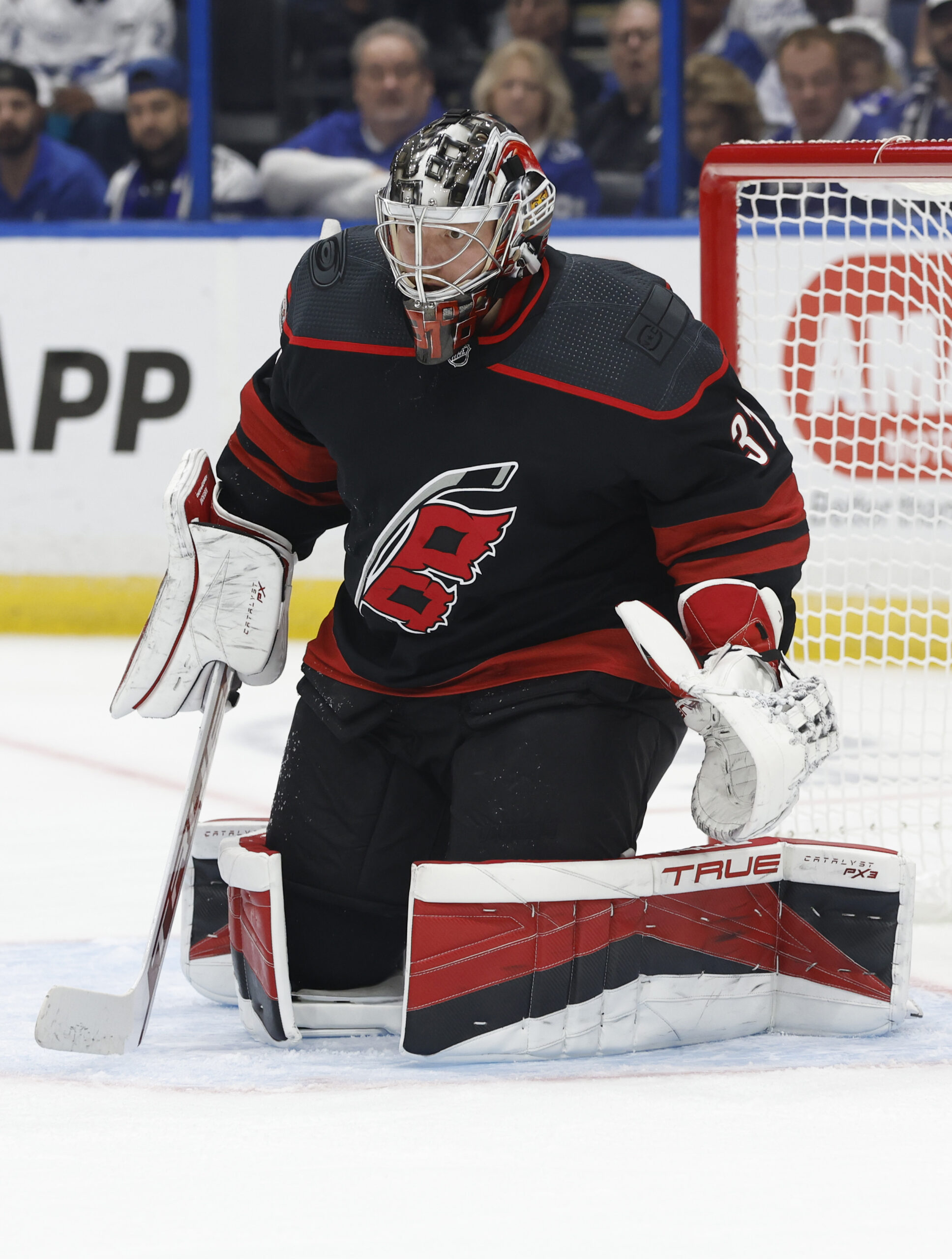
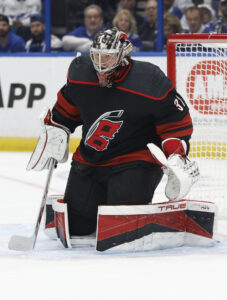
Collectively, Frederik Andersen and Antti Raanta didn’t have the best regular seasons. Andersen’s save percentage dipped to .903 after recording a .922 mark in 2021-22, while Raanta’s decline was much less exaggerated (.912 in 2021-22, .910 in 2022-23).
Andersen put all that behind him in the playoffs, though, recording a .927 save percentage in nine starts, outmatched only by Bobrovsky in the Eastern Conference. The 33-year-old should be a top priority for the Hurricanes to be back, even with young Pyotr Kochetkov waiting in the wings and vying for a full-time NHL spot.
Both he and Raanta are quite injury-prone, and it’s something that’s handcuffed the team at times. Luckily for them, Kochetkov has come in handy – and it’s why the three-goalie model should be used for another season. Re-signing both Andersen and Raanta gives Carolina perhaps the best goaltending safety net in the league, ensuring they’ll have a quality option with NHL experience ready to go, especially if both Andersen and Raanta are unavailable at times heading into the postseason.
Getting the two netminders locked up to short-term deals shouldn’t cost more than a total of around $8MM, something the Hurricanes can easily accommodate with their current cap structure.
Depth Decisions
The Hurricanes have many expiring contracts at the bottom of their lineup – namely Fast and Staal, who both played key roles for the team down the stretch and in the playoffs. Derek Stepan, Mackenzie MacEachern, and Paul Stastny all saw ice too, and Carolina will need to decide which veterans to re-sign and which to cut ties with.
Getting some younger blood in the lineup via free agency in exchange for Stepan and Stastny is likely a wise choice, but Fast and Staal have proven themselves invaluable in depth roles. Without a cap crunch to deal with, the team can (and should) get them signed to mid-length deals, although maybe just two or three years for the 34-year-old Staal.
There’s also the matter of whether or not to qualify Jesse Puljujarvi, their only restricted free agent forward at the NHL level. The 25-year-old can, unfortunately, be declared a bust at this point, registering just three points in 24 combined regular-season and playoff games after a trade from the Edmonton Oilers. He’s due a qualifying offer of $3MM, well above his market value, considering his production last season. Cutting ties is the likely route here.
Photo courtesy of USA Today Sports Images.
Offseason Checklist: Seattle Kraken
The offseason is now fully underway after Vegas took home the Stanley Cup which means that it’s time to examine what each team will need to accomplish over the coming months. Next up is a look at Seattle.
2022-23 was a storybook campaign for the fresh-off-expansion Seattle Kraken. The team set the record for improvement in the standings from year one to year two of an expansion franchise, at least since the Original Six era. Their 100 points were only good enough for a Wild Card spot in a tight Pacific Division race, though it didn’t matter – they knocked off the defending Stanley Cup champion Colorado Avalanche in a seven-game First Round battle. After nearly vindicating the Dallas Stars, losing 2-1 in Game 7 of the Second Round, Kraken general manager Ron Francis needs to push the right buttons to keep the team’s momentum in a decidedly forward direction.
Solidify The Crease
Seattle got vintage Philipp Grubauer in the postseason, although his .903 save percentage and 2.99 goals-against average were both still the worst marks of his four playoff runs as his team’s full-time starter. Inconsistency and truthfully horrid play between the pipes at times has been the franchise’s largest weakness over the past 24 months, although the team’s depth has developed to a point where it can largely mask that shortcoming. In 94 games as a Kraken, Grubauer’s regular-season record is much less kind – a .891 save percentage and 3.04 goals-against average are simply not good enough for a team to contend for a championship. That’s nearly 35 more goals conceded than an average netminder given the same workload. Pending UFA Martin Jones posted a sparkling 27-13-3 record when in net for Seattle this season but had just a .886 save percentage, getting plenty of goal support.
The team has some flexibility with Jones surely headed to the open market, but Grubauer is locked in at a $5.9MM cap hit through 2026-27. Moving on from him likely isn’t realistic this summer – he’s still shown flashes of solid play and is a well-liked teammate in the room. If they were to trade him, though, the time is now after a temporary boost in stock from his playoff performance.
Seattle isn’t too pressed for cap space, although much of their projected $20MM of availability (CapFriendly) will go to a new deal for defenseman Vince Dunn. Could the team go internal for Grubauer’s partner, possibly Joey Daccord? They’ll need to re-sign him, as the 26-year-old is a pending Group VI UFA, but he rode a .926 save percentage in 26 playoff games for the AHL’s Coachella Valley Firebirds in their first season before bowing out in the final. The team is sure to move out Chris Driedger and his $3.5MM cap hit, as the 29-year-old didn’t play in the NHL this season after being sidelined due to injury to start the season and then slipping to the AHL behind Jones, Grubauer, and later Daccord. Among goalie options on the open market, there are certainly a few with more experience than Daccord that could be had for Driedger’s money (or less).
Long-Term Deal For Dunn
Seattle’s success came by committee this season – especially among their offense, where all of their top 12 forwards contributed between 0.4 and 0.9 points per game. The 26-year-old Dunn (mentioned earlier) was absolutely a standout among his defensive counterparts, though, recording team-highs in assists (50), time on ice (23:40), and plus-minus (+28). He notched a career-high 64 points on the whole, spectacular value for just a $4MM cap hit.
A restricted free agent with arbitration rights, he’s due a sharp raise this offseason – one Seattle absolutely has the cap room to accommodate. Advanced metrics have hinted at a Dunn breakout for many years, although maybe not one of this scale.
He’s of the perfect age to sign a longer-term deal. While the maximum eight years may be a little much, given he’d be 34 when the contract expires, it wouldn’t last too far into his decline (if at all). He may not be a perennial elite defender (and shouldn’t get paid like one), but he’s shown he can be a bonafide top-pairing player.
 Start Extension Talks With Beniers
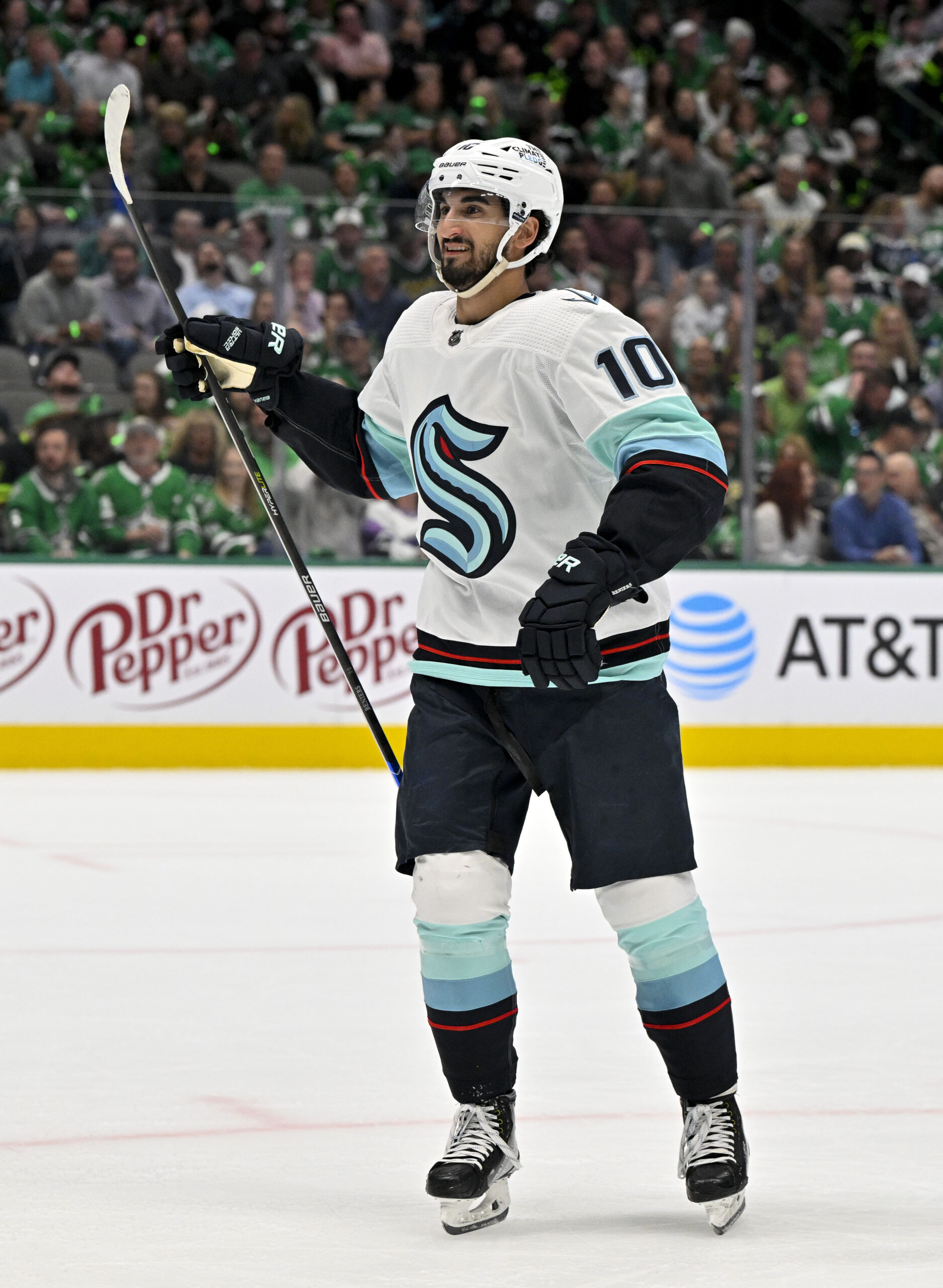
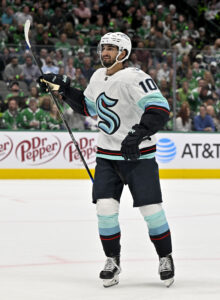
The Kraken don’t have much in the way of true star power, but they’re only a season or two away from having one. 20-year-old Matthew Beniers is a surefire bet to take home the Calder Trophy next week, and he’s grown into the team’s de facto number-one center after just 90 career games. He struggled in the faceoff circle heavily this year, but other than that, he scored 24 goals and 57 points in 80 games and took just one minor penalty all season.
That being said, he’s entering the final season of his entry-level deal. The Kraken would be wise to negotiate an extension with him as soon as possible, trying their best to keep Beniers’ cap hit down on a long-term agreement – if Beniers is willing to discuss one.
The 6-foot-2 Massachusetts product excelled defensively in his rookie year, showing he’s on track to become the two-way force the Kraken thought they were getting when they selected him second overall in 2021. This much offense so soon in his development bodes well for him to become one of the more complete centers in the NHL in a few years’ time – the type of player they’d need to pay an extreme premium for at the end of a bridge deal.
Add On Defense
The Kraken are more than apt on offense, with youngsters like Shane Wright and Tye Kartye already on the outside looking in when it comes to the team’s opening night depth chart. The team will have some cap space to utilize after signing Dunn to an extension and rectifying their goalie situation, though, and they’ll be able to use it to pursue a right-shot defender on the open market to complete their top four.
Justin Schultz is a spectacular power-play quarterback but best suited for third-pairing usage at even strength. With Dunn, Adam Larsson, and Jamie Oleksiak comprising the trio of the most oft-used Kraken defenders, the team’s obvious hole is a more skilled partner for the hulking Oleksiak.
William Borgen has turned into a full-time NHLer, but for a team on the upswing and looking at Stanley Cup contention in a few years, he’s not the best fit in a top four. Could they pursue a Matt Dumba, Radko Gudas, or Scott Mayfield type to fill out their only depth weakness? A potential Oleksiak-Gudas pairing would be more than enough for Pacific Division rivals to approach the offensive zone with fear.
Photo courtesy of USA Today Sports Images.
Offseason Checklist: Edmonton Oilers
The offseason is now fully underway after Vegas took home the Stanley Cup which means that it’s time to examine what each team will need to accomplish over the coming months. Next up is a look at Edmonton.
As expected, the Oilers featured a high-powered offense this past season but goaltending concerns once again crept up at an inopportune time which played a role in their exit at the hands of the Golden Knights in the second round. GM Ken Holland has two years left with both Connor McDavid and Leon Draisaitl under contract which could represent the remaining length of their competitive window. However, while they would certainly love to add, their salary cap situation will see them needing to take away from their roster; this is a key element of their checklist this summer as a result.
Yamamoto Decision
We took a closer look at Yamamoto’s specific situation over the weekend which basically amounts to Edmonton having some less-than-desirable options when it comes to their 2017 first-round pick.
The 24-year-old made a big impact early in his career, picking up 26 points in 27 games after being a late-season recall in 2019-20 before stalling out briefly. Then, it looked as if he was back on track following a 20-goal campaign in 2021-22, earning himself a two-year, $6.2MM contract, but again, he stalled out this past season. At the moment, the Oilers have around $5MM to spend, per CapFriendly, with their pending restricted free agents set to cost considerably more than that. Someone has to go.
Yamamoto is young enough that his buyout would only cost one-third instead of the standard two-thirds. That means that if they went that route, they’d free up over $2.6MM for next season while adding $533K in dead cap for 2024-25. That could give them enough flexibility to re-sign their pending restricted free agents.
Alternatively, they could see if there’s a trade market for Yamamoto. There are a handful of teams that are willing to take on money this summer, perhaps one would be interested in a younger player with the hope of trying to rebuild his value. But those teams might prefer the incentives they’d receive for taking on a pricier veteran. If Edmonton is able to move him this way, they’ll save a bit more cap space but the return is almost certain to be underwhelming.
The buyout deadline is June 30th so there is a fixed timeline for a decision to be made on what they’re doing with Yamamoto unless they can find a way to keep him around. Assuming that doesn’t happen, they’ll be adding a cheap middle-six winger to their shopping list in the coming weeks.
Move Mid-Tier Money
It probably isn’t just Yamamoto that Holland will be making available around the league. In an effort to open up cap space but not take away from their core pieces, they will likely look to move at least one other middle-tier player. On the Oilers, those players would be winger Warren Foegele (one year, $2.75MM) plus defensemen Brett Kulak (three years, $2.75MM) and Cody Ceci (two years, $3.25MM).
It’s not that Edmonton should be particularly displeased with how any of these players performed this past season. However, on the back end, Phillip Broberg is ready for full-time duty and is on a contract less than $100K above the league minimum. Moving one of Ceci or Kulak would open up more ice time for the promising youngster while opening up more cap flexibility. Similarly, while the Oilers like Foegele’s energy in the bottom six, would they be better off moving him, bringing back someone like Nick Bjugstad for less, and pocketing the savings?
Of course, this particular concept isn’t unique to the Oilers; more than half the league will be trying to do exactly something like this over the next couple of weeks. As a result, they’re unlikely going to land a sizable return for any of these players. But a move like that is necessary to give themselves a chance at keeping their restricted free agents while trying to add a piece or two to give them a boost (or at least replace Yamamoto).
Re-Sign Bouchard
When the Oilers acquired Mattias Ekholm from Nashville at the trade deadline, the veteran defender really helped to shore up Edmonton’s back end. But the swap had another benefit as Evan Bouchard took a huge step forward. Partnered with the steady Ekholm, Bouchard’s confidence soared. And with power play specialist Tyson Barrie going the other way in the swap, the chance to load up the points was there for the taking.
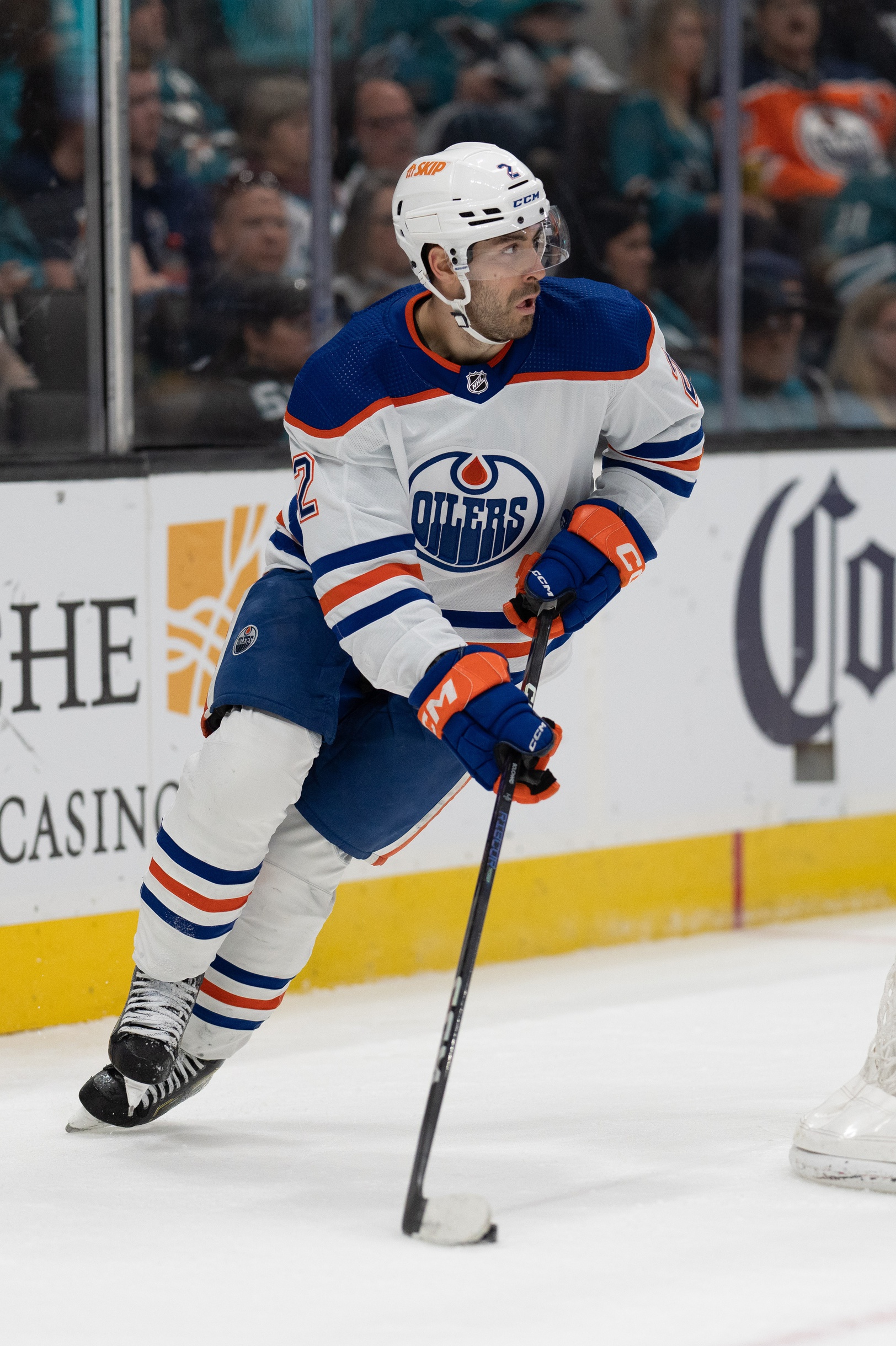 Let’s just say he took advantage of it. Following the trade, Bouchard picked up an impressive 19 points in 21 games, heading into the playoffs on a high note. The 23-year-old then found another gear in the postseason, notching 17 points in a dozen games, leading all blueliners in playoff points despite only playing in two rounds. That’s one way to hit restricted free agency on a high note.
Bouchard’s entry-level contract is set to come to an end on July 1st. He won’t have arbitration eligibility but he’ll still be in line for a significant raise. He has two full NHL seasons under his belt, both of them generating at least 40 points which should push a two-year bridge deal past the $3MM mark. A one-year deal might get it a bit lower but would hand him arbitration eligibility the following summer. That doesn’t seem like a wise move for the Oilers. On the other hand, locking in long-term probably isn’t a wise move for Bouchard’s camp, nor is it an option that Edmonton can reasonably afford as things stand.
If you’re a fan of strategic offer sheets, this is a spot for one. If a team got Bouchard to sign a one-year, $4.29MM offer sheet, the compensation would only be a second-round pick. Edmonton would surely match but that price point would be problematic from a roster-building standpoint while, again, it gives him arbitration rights the following year. Is such a scenario likely? Probably not, especially in an era where offer sheets are few and far between. But if Holland thinks a team might try it just to mess up their cap structure, it would behoove him to try to get Bouchard’s two-year bridge pact locked in sooner than later.
Avoid Arbitration
The Oilers have indicated that they will be qualifying all but one of their restricted free agents. Among those that will be (or have been) tendered offers are forwards Klim Kostin and Ryan McLeod. Both players had nice seasons, notching 11 goals in 57 games apiece. McLeod worked his way into a more prominent spot on the depth chart as the season went on while Kostin, who started in the minors after clearing waivers, was mostly on the fourth line, delivering strong results.
However, both players are eligible for salary arbitration for the first time. By tendering them their qualifiers, both McLeod and Kostin have the right to file for a hearing. That’s the scenario that Edmonton would like to avoid.
Would either player break the bank? Probably not but there are plenty of comparable players that would be in their favor which could help push their awards higher than Edmonton wants to pay. They also won’t have a walkaway option on either player as PuckPedia reported last week (Twitter link) that the threshold for that remains where it has been since 2019-20 at $4.539MM. Neither player is coming close to that; combined, they might not even get there.
But it’s certainly in Edmonton’s best interest to try to get these contracts done quickly. They’ll both be short-term agreements again to keep the cap hit down. Kostin’s should come in around $1.25MM or so while McLeod’s should be about $500K higher. Getting those locked in over running the risk of an award adding a few extra hundred thousand per player would help from a flexibility standpoint.
Perhaps more importantly, it would also give them some certainty about what they can do this summer. This whole column has been about internal focuses over external ones because of their cap situation. They want to add but to do that, they need to move out roster players, creating more holes in the process while needing to leave room to re-sign Bouchard, Kostin, and McLeod (and perhaps try to keep Bjugstad).
Getting as many of these done as possible before July 1st becomes quite important as a result so they know what they can, or can’t afford to do on the open market. While some teams will be doing their heavy lifting once free agency opens up, Edmonton should be hoping that most of theirs will already be done by then.
Photo courtesy of USA Today Sports Images.
Offseason Checklist: Toronto Maple Leafs
The offseason is now fully underway after Vegas took home the Stanley Cup which means that it’s time to examine what each team will need to accomplish over the coming months. Next up is a look at Toronto.
It was another successful regular season for the Maple Leafs who finished in the bottom five in goals allowed while locking down the second seed in a tough Atlantic Division. They even exorcised their first-round playoff demon, knocking out Tampa Bay. However, that momentum was sapped quickly as Florida quickly dispatched them in the second round. Now, after a peculiar sequence of events that resulted in Brad Treliving taking over as GM, he’s now tasked with deciding whether to make a significant core shakeup or to keep tinkering with the secondary group. Early suggestions are that it could be the latter so their checklist is structured accordingly.
Coaching Hires
At this point, it seems like Sheldon Keefe is going to remain behind the bench following a recent report that he and Treliving are actively working on finding a replacement for assistant coach Spencer Carbery who left to take over behind the bench in Washington. Keefe wouldn’t be involved in those talks if he wasn’t sticking around. Based on that assumption, the only decision that Treliving needs to make around Keefe is whether he’s going to extend him now or have him enter next season on the final year of his contract.
Could that uncertainty help determine which way they go for Carbery’s replacement? They’ll be hiring for the top assistant role so will they look to another up-and-comer like Carbery was or a more experienced option that could step in if Treliving decides to make an in-season change? Either way, whoever they hire will need to have some power play pedigree with Carbery playing an important part in Toronto’s success with the man advantage over the last couple of seasons.
Additionally, Toronto needs to hire a new AHL staff after it was decided following their exit against Rochester in mid-May that head coach Greg Moore plus assistants A.J. MacLean and John Snowden. This isn’t something that necessarily has to be completed before July 1st but this is an organization that typically is active in minor league free agency. Having at least a head coach in place by then would help to avoid any uncertainty, especially with how quickly players sign within the first 24-48 hours after the market opens up.
Extension Talks
The Maple Leafs have two members of their ‘Core Four’ that are eligible for unrestricted free agency in 2024. Accordingly, they’re eligible to sign contract extensions as of July 1st. Considering both Auston Matthews and William Nylander are set to land sizable raises, getting these done sooner than later would go a long way toward helping Treliving’s roster planning.
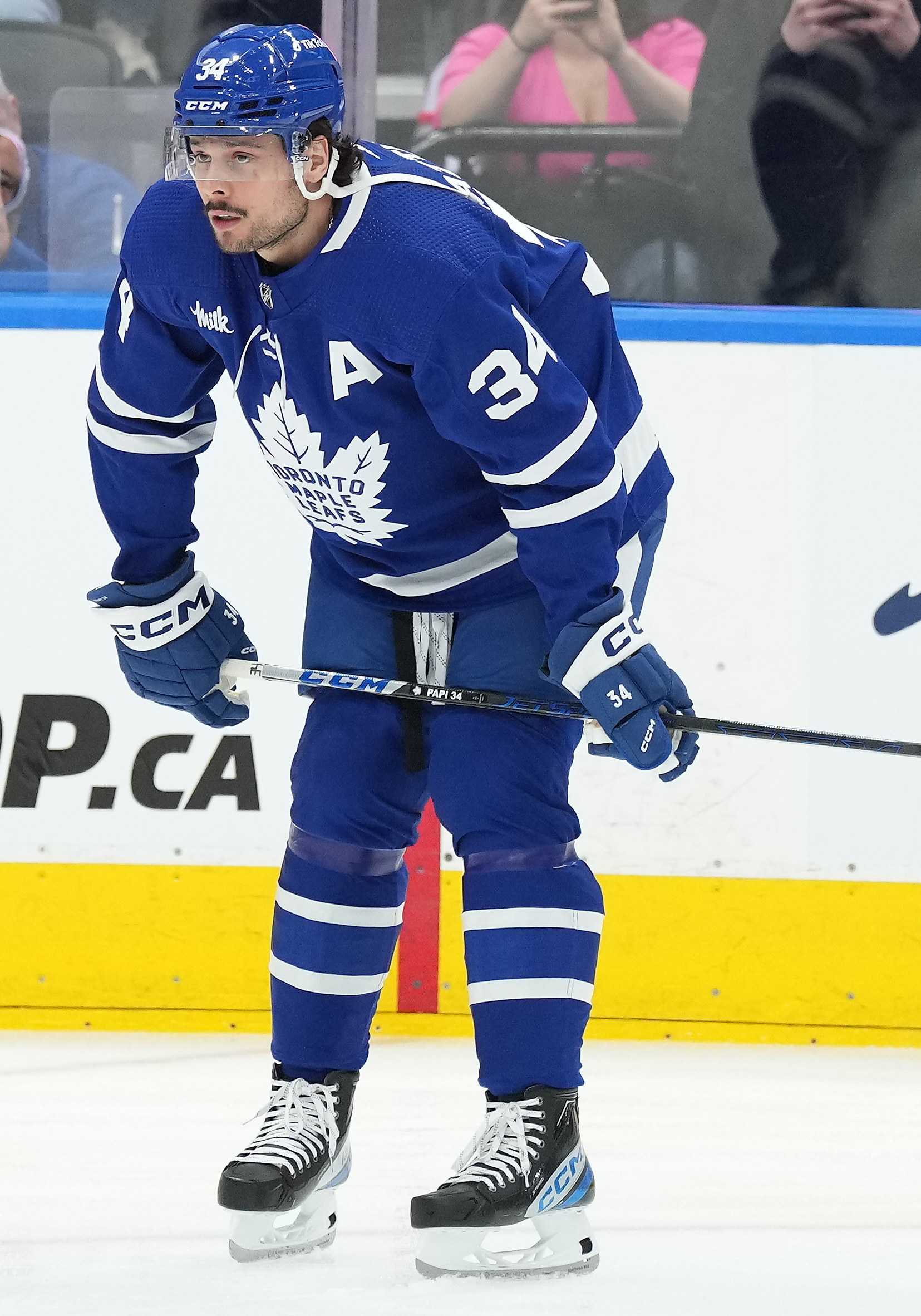 Matthews is coming off a quiet year by his standards but he still averaged well over a point per game while picking up 40 goals. Still not too shabby overall. Before that, the 25-year-old led the league in goals for two straight seasons, picking up the Hart Trophy for his efforts. He’s above average at the faceoff dot. He receives Selke votes annually as the best defensive forward. Basically, Matthews is a true number one center. There aren’t many at his level around the league and they get paid. At this point, the expectation is that he will set the new benchmark as the highest-paid player in the league, surpassing Colorado’s Nathan MacKinnon ($12.6MM). The questions are how much will he pass MacKinnon by and for how long?
Matthews didn’t sign a max-term agreement coming off his entry-level contract and it’s reasonable to think he could try a similar approach here, working out a medium-term agreement that might keep the AAV slightly lower while setting him up for what would likely be another raise down the road where he could once again try to set the new AAV record.
While some have suggested that July 1st represents a key deadline in discussions, that isn’t really the case. At that point, Matthews picks up a full no-move clause and becomes harder to trade. But if preliminary talks between his camp and Treliving have gone well and it seems like a matter of when and not if he signs an extension, Matthews having the NMC doesn’t really move the needle much. It might not get done the first day possible but this should get done this summer.
As for Nylander, the 27-year-old followed up a career-best 80 points in 2021-22 with an even better showing this past season, tallying 40 goals for the first time along with 47 assists, also a new personal best. He’s in the top 15 for points by a winger over the last three seasons, cementing himself as a true top-line winger in the process. Others in that top 15 that have signed recently are Minnesota’s Kirill Kaprizov ($9MM), Florida’s Matthew Tkachuk ($9.5MM), and Columbus’ Johnny Gaudreau ($9.75MM). It’s safe to suggest that Nylander’s next contract should fall somewhere within that range, especially with the expectation that the cap will rise more next summer.
Can Toronto afford extensions for both players? That will be hard to do but it would also be very tough to part ways with one of those core pieces and maximize their value in return. With that in mind, it might be a situation where the Maple Leafs extend both and then try to figure out how to fit them in on the books for 2024-25 and beyond later on.
Add An Impact Defenseman
Despite the fact that Toronto was one of the stingier teams in the league in goals allowed, there’s a well-defined hole on the back end to try to fill. At the moment, the Maple Leafs have six blueliners under contract already for next season which isn’t bad. However, three of them have question marks.
Mark Giordano was solid for most of the season but started to wear down toward the end and into the playoffs. He’ll be 40 on opening night and is likely best utilized on the third pairing next season. Timothy Liljegren hasn’t spent a lot of time in the top four, nor has Conor Timmins who has all of 66 games under his belt, most of which came with limited ice time. It’s believed they’d like to bring Luke Schenn back but even he’s more of a role piece, not an impact one.
Morgan Rielly, T.J. Brodie, and Jake McCabe are a decent core group in their top four but there is a definite need to add someone that can play 20 minutes a game and kill penalties. Basically, fill the role that Jake Muzzin was supposed to but with there being questions about his playing future, they can’t rely on hoping that he’s able to come back in prime form (if he’s able to come back at all). In a perfect world, that player would be a right-shot blueliner but those are always in short supply and high demand. Either way, a stable second-pairing defender would go a long way toward helping keep this team battling for the top of the division.
Goaltending Decisions
Last summer, former GM Kyle Dubas opted to make a pair of moves to overhaul Toronto’s goaltending. One worked well, the other not so much. Treliving now faces decisions on what to do with both of those netminders.
First, the good. Ilya Samsonov was somewhat surprisingly non-tendered by Washington as they chose to go a different direction with Darcy Kuemper coming over in free agency. Samsonov wound up on a one-year, $1.8MM deal and became one of the better bargains in goal around the league. His market value now with a strong season under his belt starts to creep up into the $4.5MM to $5MM range. Giving him that price tag on a multi-year deal would shore up the goaltending position for a few seasons but it would also cut into Treliving’s spending options for this summer.
Then there’s Matt Murray. He had some good moments and some bad ones but most of all, he had plenty of times when he was injured. By the time he was cleared to return for the playoffs, he was relegated to third-string duty behind Joseph Woll. He has one year left on his contract with Toronto’s portion being $4.6785MM. Having him and Samsonov (likely at a similar price tag) on the books is an option they probably can’t afford, especially with a now waiver-eligible Woll waiting in the wings on a contract that’s below the league minimum for the next two years.
Murray’s contract is one that won’t be easy to offload; it would require an incentive and the Maple Leafs don’t exactly have a surplus of draft picks and prospects at their disposal to help make that happen. Alternatively, they can choose to buy out the final year of Murray’s deal. Doing that would save $4MM on the books for next season. However, it would also add $2MM in dead cap space for 2024-25 at a time when they’ll need every penny to afford the new deals for Matthews and Nylander. The other option would be to bury him in the minors, a move that would save $1.15MM in space for next season with no cap charges for 2024-25.
With Samsonov, the choice is fairly simple – how long of a contract do they want to do? For Murray, it’s a much different case, deciding which of three bad options is the least painful route to take.
Photo courtesy of USA Today Sports Images.
Free Agent Focus: Winnipeg Jets
Free agency is just around the corner and teams are looking ahead to when it opens. There will be several impact players set to hit the open market in July while many teams have key restricted free agents to re-sign as well. We continue our look around the NHL with an overview of the free agent situation for the Winnipeg Jets.
Key Restricted Free Agents
F Pierre-Luc Dubois – Whether the Jets like it or not, Dubois is going to be the pending free agent set to have the most consequence on the Jets’ offseason. One year away from hitting unrestricted free agency, the soon-to-be 25-year-old center had a solid season in Winnipeg and has continued to establish himself as a top-six center who plays a valuable, powerful game.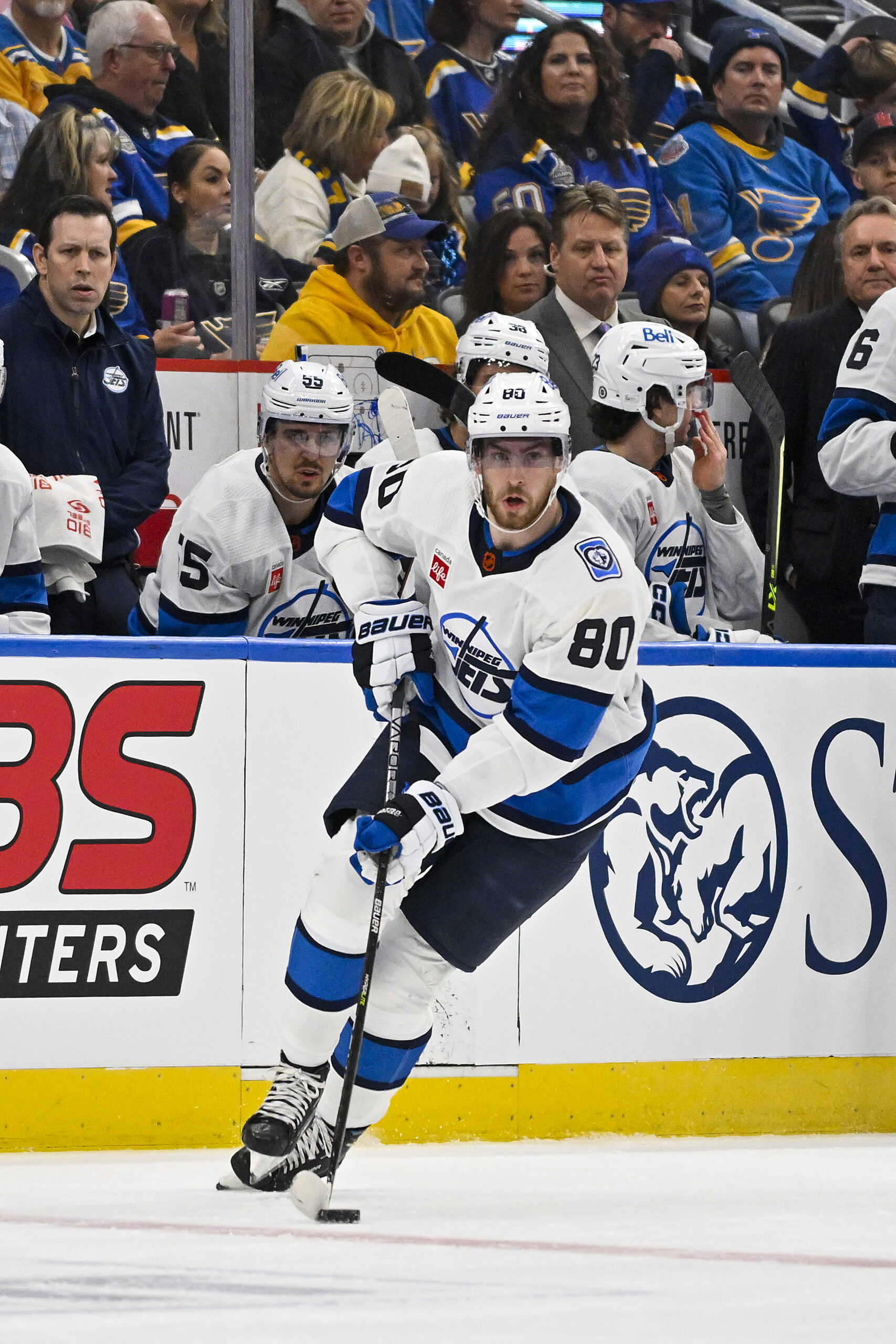
Does he have the profile of a top-of-the-lineup, face-of-the-franchise first-line center? Maybe not, although he has shown the ability to play like one at certain moments, such as the 2019-20 Stanley Cup playoffs.
He’ll certainly get paid like a top-of-the-lineup first-line center, though, with media reports indicating that he’s seeking a long-term deal around the $9MM range.
The issue for Winnipeg is that Dubois has no interest in signing that type of contract for the Jets.
As a result, he’s pretty much guaranteed to be traded this summer. As they have one year of team control over Dubois, the Jets have reduced leverage in any trade negotiation. So, it’s unlikely GM Kevin Cheveldayoff is going to be able to get the type of high-end young player in return for Dubois similar to what he surrendered to acquire him. (He sent Patrik Laine and Jack Roslovic to the Winnipeg Jets in his original Dubois trade)
That being said, the scarcity of quality top-six centers across the NHL dictates that the Jets still should get a solid return for Dubois, especially if they can sign him to an eight-year extension and then trade him, similar to what the Calgary Flames did last year with Matthew Tkachuk. In any case, it seems the 2016 third-overall pick’s time in Winnipeg is coming to an end.
F Morgan Barron – While Dubois’ maneuvering to work his way out of Winnipeg has soured his reputation among Jets fans, Barron is a player who became more and more of a fan favorite over the course of his rookie NHL season this past year. Now 24 years old, Barron was a trade acquisition from the New York Rangers as part of the Andrew Copp deadline deal last season, and he’s settled in nicely on the Jets.
The former Cornell star has shown himself to be a top-six caliber player in the AHL and this past season moved past that level to spend most of the year as a bottom-six NHLer. He scored 21 points in 70 games and skated over a minute-and-a-half per game on the team’s penalty kill. He’s unlikely to receive any sort of massive pay raise over the $925k cap hit he played on this past year, though it would be no surprise to see him hit or cross the $1MM mark.
While a long-term bet is certainly possible, he’ll likely receive a shorter-term deal with the hope that he can continue to develop his game and unlock some of the promise in his six-foot-four frame.
D Logan Stanley – A hulking six-foot-seven blueliner, Stanley is someone who hasn’t quite unlocked the promise many have projected he’d have due to his combination of size and strength.
The Jets drafted Stanley 18th overall at the 2016 draft and took a patient approach to his development. He first reached the NHL in 2020-21, and has now played a total of 114 games at the NHL level.
While he has had a few promising moments at the game’s highest level, he took a step back this past year, skating in just 19 games and seeing his average ice time decline from 15:39 to 13:43. He’s still not an expensive proposition and unlikely to be in the immediate future, but with promising young left-shot blueliners such as Samberg, Chisholm, and Ville Heinola in their pipeline, one wonders if Stanley has a future in Winnipeg.
D Dylan Samberg – The 24-year-old Samberg concluded his first season as a full-time NHLer in 2022-23, skating in 63 games with an average ice time just a shade under 15 minutes.
Samberg was a regular face on the Jets’ penalty kill and is a well-rounded defense-first defenseman offering size and stability from the back end. He impressed for Team USA at the IIHF Men’s World Championships last month and is likely to remain a regular part of the Jets’ defensive lineup.
If they believe in Samberg’s promise as a long-term NHL blueliner, the Jets could always seek out a long-term pact with Samberg this summer, though it does seem more likely that a shorter-term deal would be the more palatable route in order for Samberg to put another season or more on his NHL resume before really looking to cash in.
Other RFAs: F Kevin Stenlund, F Alex Limoges, D Declan Chisholm, D Leon Gawanke (signed a four-year contract with DEL’s Adler Mannheim), G Arvid Holm.
Key Unrestricted Free Agents
G David Rittich – Rittich has been a well-traveled backup goalie for the past few seasons, dressing for four teams in three seasons. Now 30 years old, he’s seemingly declined since his early days as a tandem leader for the Calgary Flames, though he did have a bit of a bounce-back season in Winnipeg.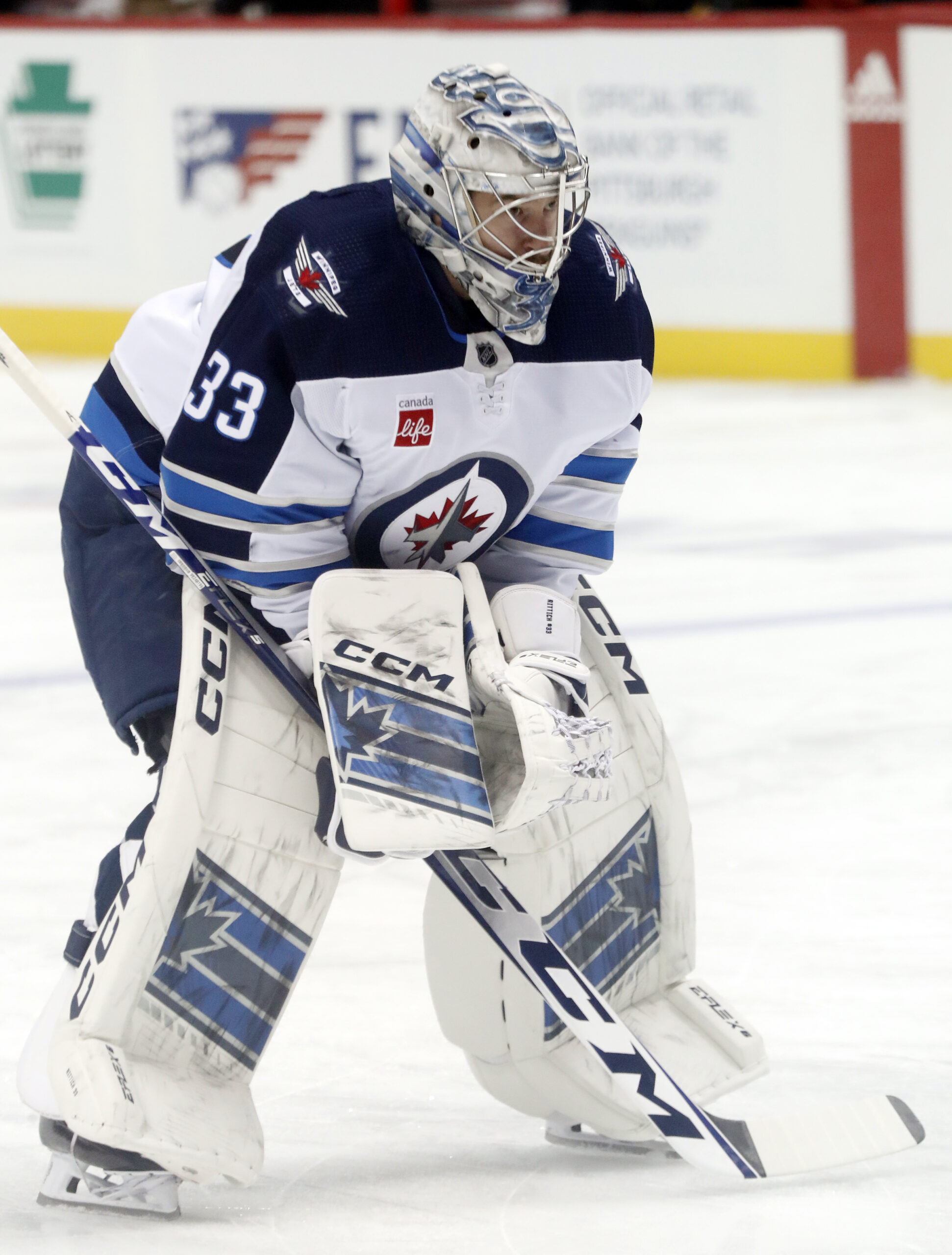
He acquitted himself well on a team used to playing in front of one of the best goalies in the NHL, posting a 2.67 goals-against-average and a .901 save percentage.
Rittich’s advanced metrics were a little bit below average but he went 9-8-1 and is capable of surprises, such as during his run of games to start 2023 where he won three straight starts including an impressive 4-1 road victory in Pittsburgh.
There is some concern to the fact that Rittich lost his final five starts, but at a $900k price tag he provided solid value to the Jets. He provides some degree of insurance thanks to the years on his resume of playing over 40 games, and while he has never quite been a leader on the stat sheet there are far worse backup options to have than Rittich.
He may not receive the $1.25MM he made as a member of the Nashville Predators last year, but another deal around what he made this past season would be a reasonable investment for a team looking for an affordable, experienced option in net.
With Arvid Holm fresh off of an impressive season with the AHL’s Manitoba Moose and still not waiver eligible for another season, perhaps Rittich spends another year with the Jets.
F Vladislav Namestnikov – A mid-season trade acquisition by Winnipeg, Namestnikov provided secondary scoring, versatility, and valuable veteran experience to the Jets’ lineup. He finished with 10 points in 20 games for the Jets, with nine of those points coming at even strength despite Namestnikov frequently playing on the team’s power play.
If one includes his totals with the Tampa Bay Lightning, Namestnikov had 25 points in 77 games, a totally respectable number for a versatile veteran forward. His improved play as a member of the Jets has likely helped his standing heading into the open market, though even with that improvement in form he could have a difficult path to matching the $2.5MM he earned in 2022-23.
Other UFAs: F Sam Gagner, F Axel Jonsson-Fjallby, F Karson Kuhlman, F Saku Maenalanen, D Ashton Sautner, G Mikhail Berdin, G Evan Cormier
Projected Cap Space
The Jets are currently projected to have nearly $13MM in cap space, but that’s not a truly relevant number at this time. That’s because the Jets are widely expected to deal Dubois as well as netminder Connor Hellebuyck, and other highly-priced veterans such as Blake Wheeler could be traded as well. So the financial wiggle room the Jets have is dependent on who they manage to move out and what sort of money Winnipeg takes on as part of those trades.
The Jets have some contracts that lag behind in terms of efficiency, such as the $5.95MM they’re paying Nate Schmidt for the next two seasons, though the inefficiency of the Schmidt deal is somewhat balanced out by the fact that the team is paying point-per-game number-one blueliner Josh Morrissey just $6.25MM on a long-term deal.
Morrissey is actually the only Jet signed beyond 2025-26 season, meaning there’s quite a bit of long-term financial space in Winnipeg. The question of this offseason is whether the Jets will be in a position to devote any of that space to valuable, motivated players who want to commit to Winnipeg for a significant chunk of their playing career.
Photos courtesy of USA Today Sports Images. Contract information courtesy of CapFriendly.
Free Agent Focus: Washington Capitals
Free agency is less than a month away and teams are looking ahead to when it opens. There will be several impact players set to hit the open market in July while many teams have key restricted free agents to re-sign as well. We continue our look around the NHL with an overview of the free agent situation for the Washington Capitals.
Key Restricted Free Agents
D Martin Fehervary – Besides missing some time due to an injury in December of this season, Fehervary still had a decent year with the Capitals. Primarily focused on the defensive side of the puck, Fehervary scored six goals and 10 assists in 67 games for Washington this season.
He repeated his physical campaign from last year, blocking 128 shots and throwing 217 hits from the back end. Even though the Capitals are likely to re-tool their team this upcoming offseason, Fehervary still factors into Washington’s blue-line top six.
Fehervary is likely to factor more into the penalty-kill during the 2023-24 season, after already averaging 20 minutes a night with the Capitals this past year. For a player that does not accrue very many penalty minutes himself, Fehervary is turning himself into a stable defensive defenseman for Washington.
Other RFAs: F Kody Clark, F Henrik Borgstrom, F Riley Sutter, D Gabriel Carlsson
Key Unrestricted Free Agents
F Conor Sheary – During the 2020-21 offseason, Sheary surprisingly was unable to find a guaranteed contract. It wasn’t until December 2020 that the Capitals were one of the only teams to give Sheary another shot at NHL minutes. Sheary rewarded them in kind and was able to sign a two-year, $3MM contract extension with Washington before his first season with the team was even finished.
For the last two years, Sheary has become one of the better depth scorers in the NHL, scoring 43 points during the 2021-22 campaign, and following that up with 37 points this season. Seemingly destined for the third line on most competitive teams, Sheary could become a sneaky buy-low candidate this summer.
Throughout his career, Sheary has always been a plus forward when it comes to puck possession and has always shown flashes of being a 20-goal scorer. He is in a good position to secure a multi-year deal this offseason, but his playing time over the next few years will likely finish below 15 minutes a game.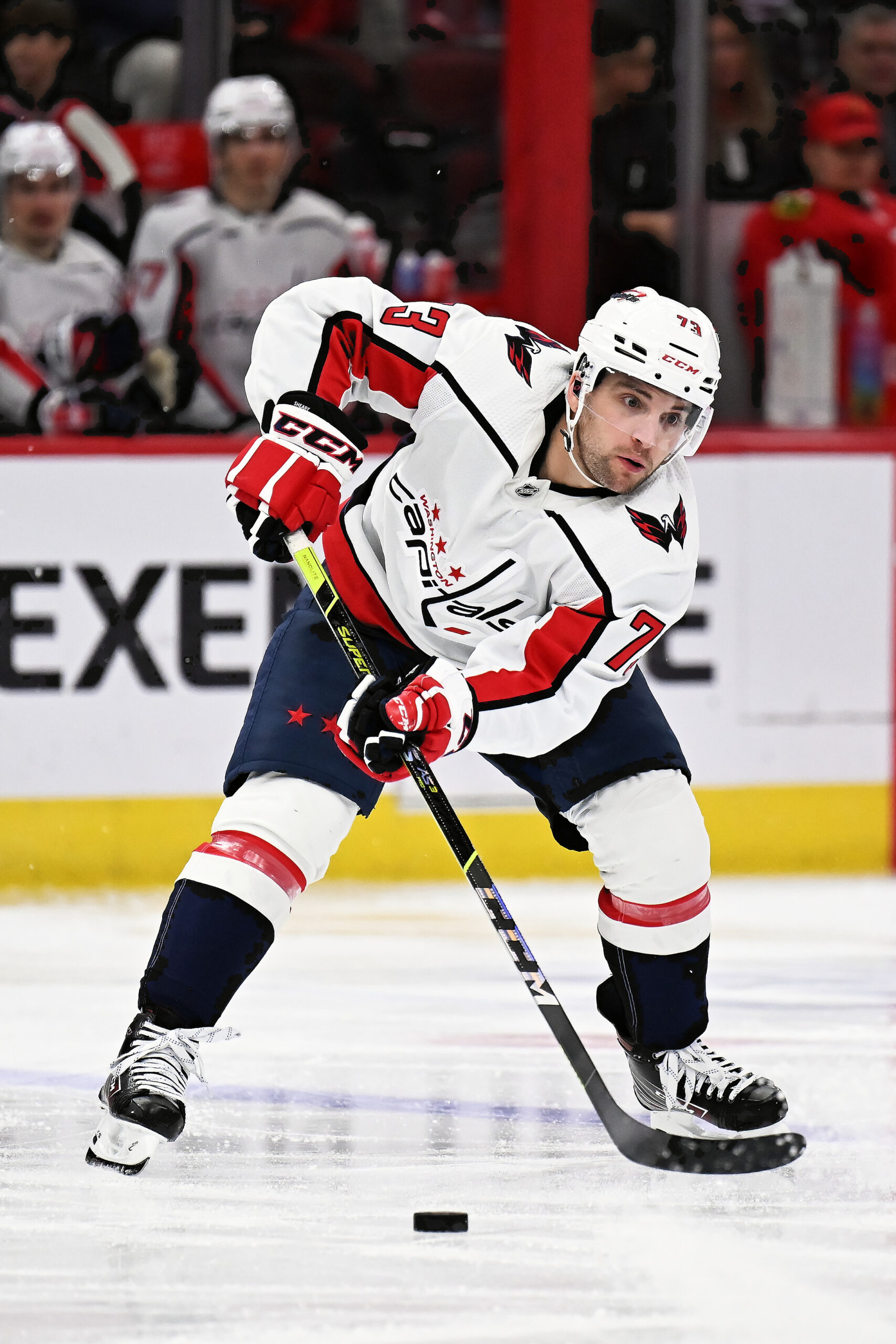
F Connor Brown – Acquired last summer from the Ottawa Senators for a second-round pick in the 2024 NHL Draft, Brown was set to factor into Washington’s top-six forward group. Unfortunately, due to an ACL injury early on in the season, Brown was only able to play four games.
In the past, both with the Toronto Maple Leafs and Senators, Brown has shown the ability to score 20 goals a season, doing so during the 2016-17 and 2020-21 seasons. However, he has been wholly unable to play a complete season since his time with the Maple Leafs.
Benefiting tremendously from playing on the same line as Connor McDavid during his time in the OHL for the Erie Otters, Brown has not been the difference maker that he was expected to be. Fortunately for the Capitals, who are, when healthy, one of the better offensive teams, should have the talent around Brown to aid in his success if they wish to give him another shot.
Other UFAs: F Craig Smith, D Matt Irwin, F Carl Hagelin, F Garrett Pilon, F Mike Vecchione, D Dylan McIlrath, D Bobby Nardella, G Zachary Fucale, G Hunter Shepard
Projected Cap Space
Given recent reporting, the Capitals’ cap space is more than likely to expand before the beginning of the 2023-24 offseason. As of right now, Washington only has around $7.3MM to work with, quite a low number for a team in need of big changes.
Long-time Capital forward Evgeny Kuznetsov and his $7.8MM cap hit are likely to be moved this summer, as well as forward Anthony Mantha along with the one-year, $5.7MM remaining on his deal.
Being a bona fide 2C in the NHL, Kuznetsov will surely be easier to move for Washington, but both players will likely find their exit in some form or another this offseason. Given that Alex Ovechkin, Nicklas Backstrom, and John Carlson are all in the back half of 30 years old, Washington will have quite the task ahead to get younger this summer.
Photos courtesy of USA Today Sports Images. Contract information courtesy of CapFriendly.
PHR Mailbag: Flyers, Rangers, Golden Knights, Ullmark, Draft, UFA Leverage
Topics in this edition of the PHR Mailbag include finding a way for Vegas to try to re-sign Ivan Barbashev, goalies to watch for in the upcoming draft, and much more. With so many questions being submitted (thanks, as always, for sending them in), we’ll run two more mailbags from our recent callout. They’ll be run between now and the end of next weekend so if your question doesn’t appear here, be sure to check those ones when they come out.
Emoney123: Petersen making $5MM as a backup to Hart’s $3MM? Two #1 picks this year and next with Gauthier, Brink, Foerster hopefully coming up and a relatively young roster, are brighter days right around the corner? Flyers back in the Playoffs next season!
I’m intrigued to see if Cal Petersen gets a real shot to be Carter Hart’s backup or if they’ll treat him as a sunk cost and bury him in Lehigh Valley. I think he can be a lot better than he was this past season and if they are able to get him performing at the NHL level next season, perhaps there’s a chance to salvage a bit of value from him in 2024-25.
Are brighter days ahead? Sure. Their prospect pool is improving and as you noted, they’re getting two more first-rounders in a week and a half that’s going to make it stronger. If they choose correctly with those selections, they could have a good foundation to work off of in a few years.
But making the playoffs next season feels like a bit of a pipe dream. They just moved one of their better defensemen in Ivan Provorov for futures. By all accounts, Travis Konecny is in play, their leading scorer. Kevin Hayes seems like a strong trade candidate. Hart has been drawing interest. These are not statements that should be associated with a team looking to make the playoffs next season. These are statements about a team that’s looking to finish at or near the bottom of the standings.
jchancel: Given the NY Rangers’ cap issues, what are the alternatives? Give up Goodrow, Mikkola, Motte. Keeping one of Kane or Tarasenko?
Promote Othmann and Cullye? Does that alleviate some of the problem?
I mentioned the importance of moving Barclay Goodrow in their recent Offseason Checklist. It’s not that he’s a bad player, he’s just a luxury they can no longer afford at just over $3.64MM for the next four seasons. They have around $11.7MM in cap space per CapFriendly but more than half of that is going to be allocated to re-signing Alexis Lafreniere and K’Andre Miller. That leaves enough to sign a bunch of players for close to the minimum to round out the roster but that is also going to result in a significant talent drain.
Among the UFAs, I expect Niko Mikkola will go elsewhere to a team that will be able to afford him. I’m not certain Tyler Motte walks though. His market wasn’t great last summer which frankly surprised me. His performance this past season wasn’t significantly better either so it stands to reason his market won’t be the strongest this time either. If that’s the case, would he accept a multi-year deal around the $1MM range, getting some stability after being on the move a lot in recent years? I think New York could find a way to make that work. I’d be stunned if either of Patrick Kane or Vladimir Tarasenko return unless a significant contract is on the way out.
I do expect both Brennan Othmann and William Cullye to see regular action next season. Othmann had a nice playoff and Memorial Cup run and plays a rugged style that makes him work in the bottom six to start, allowing him to potentially ease into a more important role over time. Cullye had a fine rookie year in Hartford and also fits nicely into a bottom six group that I anticipate will have a physical edge to it. Perhaps they’re not full-timers (especially if GM Chris Drury wants them to see some time in scoring roles) but they’ll be factors on the roster next season.
@HolgerStolzen1: Hey Brian,
I’m trying to figure out a way for the Golden Knights to re-sign Ivan Barbashev in the off-season, but not sure it’s possible. I’m already going with the assumption that they re-sign Adin Hill and find a way to move out Lehner. Any chance we can bring back Barbashev?
Hey Holger, always nice to hear from a former PHR teammate.
Let’s dig into those assumptions first. Adin Hill’s strong playoff run is going to earn him a nice raise. Let’s peg him at $4MM. I’m not as optimistic as you are that they’ll find a way to move Robin Lehner but I’ll play along. Him coming off the books saves them $5MM which gives them a little over $4MM in cap room, per CapFriendly’s numbers. That’s not going to be enough to keep Ivan Barbashev.
However, there are two options where they can trim payroll. The first is trying to incentivize a team to take on Alec Martinez’s contract. The 35-year-old can still play but his days as a core blueliner are probably done. His trade protection dips to eight teams on July 1st so there might be a move to be made on that front. That would more than free up enough cap space to re-sign Barbashev and pending RFA Brett Howden between his $5MM and their existing space. That’s Plan A.
Plan B might come as a bit of a surprise but I’d kick the tires on the trade market for Nicolas Roy. $3MM for a third center isn’t bad by any stretch but it is a luxury in this cap environment. Some teams can afford it and with the market for middlemen not being great, I think Vegas would get a good return in a trade. Take half of that money added to their cap room and that might get Barbashev done. The other half goes to Howden with Ben Hutton being waived in training camp to make up the rest of Howden’s money. Kaedan Korzcak then near-daily appearances on this site in shuffles to and from Henderson to bank some cap space and give them a bit of in-season room. They’d be carrying a minimum-sized roster, however, though they’re certainly used to that.
So, yeah, I think there’s a chance they can bring him back and the fact they can offer an eighth year certainly helps on that front. I’m not sure I’d predict that particular outcome but there’s a pathway to do it.
aka.nda: Semi-related.. thinking about Logan Thompson.. // Brossoit.. Hill. What’s Vegas gonna do with their goalie situation?
Let’s do the easy ones first. Logan Thompson stays. He’s on a contract that’s below the league minimum AAV making him arguably the best bargain contract for any NHL goalie next season. They’re not moving him. As for Laurent Brossoit, I don’t think he comes back. Has he really helped his value since joining them two years ago? I don’t think so. There are teams that will view him more as a third-string option and while he might get a one-way deal backing up somewhere, I think Vegas needs someone more capable of playing a heavier workload.
Let’s talk about the one not on this list, Lehner. If he’s going to be ruled healthy to play next season, I think he stays in Vegas and that his trade market would be next to non-existent. Generally speaking, if a goalie misses the entire year and is suddenly declared healthy, I think teams are going to react one way – ‘prove it’. To have trade value, he needs to play and if he’s on their active roster, there’s no possible way that they can afford to bring Hill back. At that point, you’re pivoting to an above-average third-stringer and paying him $1MM to start in Henderson and be available in case Lehner isn’t healthy.
But if Lehner can’t recover and is heading for LTIR, then I suspect the Golden Knights will take a serious run at trying to keep Hill. I mentioned $4MM as a rough price point in the previous question so I’ll stick with that here. Maybe three years at that cost gets it done? With just 101 regular season games under his belt, he doesn’t have a long-term track record that will push him into true number one money and that deal feels like a reasonable one for both sides. It would give Hill some stability while allowing Vegas to keep their goalie costs in check knowing that Chandler Stephenson is heading for a big-ticket deal next summer while Thompson will need a new contract as well.
SkidRowe: What could the Bruins get for Linus Ullmark? A soon to be 30 yo Vezina trophy winner signed for 2 more years at a reasonable $5 million?
The additions of Connor Hellebuyck and even John Gibson to the trade market don’t help Boston here if this is the route they’re going to go. Ullmark had a great year, no question and is absolutely well-deserving of the Vezina should he get it as expected. But will teams call his performance a byproduct of their system? If so, he won’t be viewed as highly.
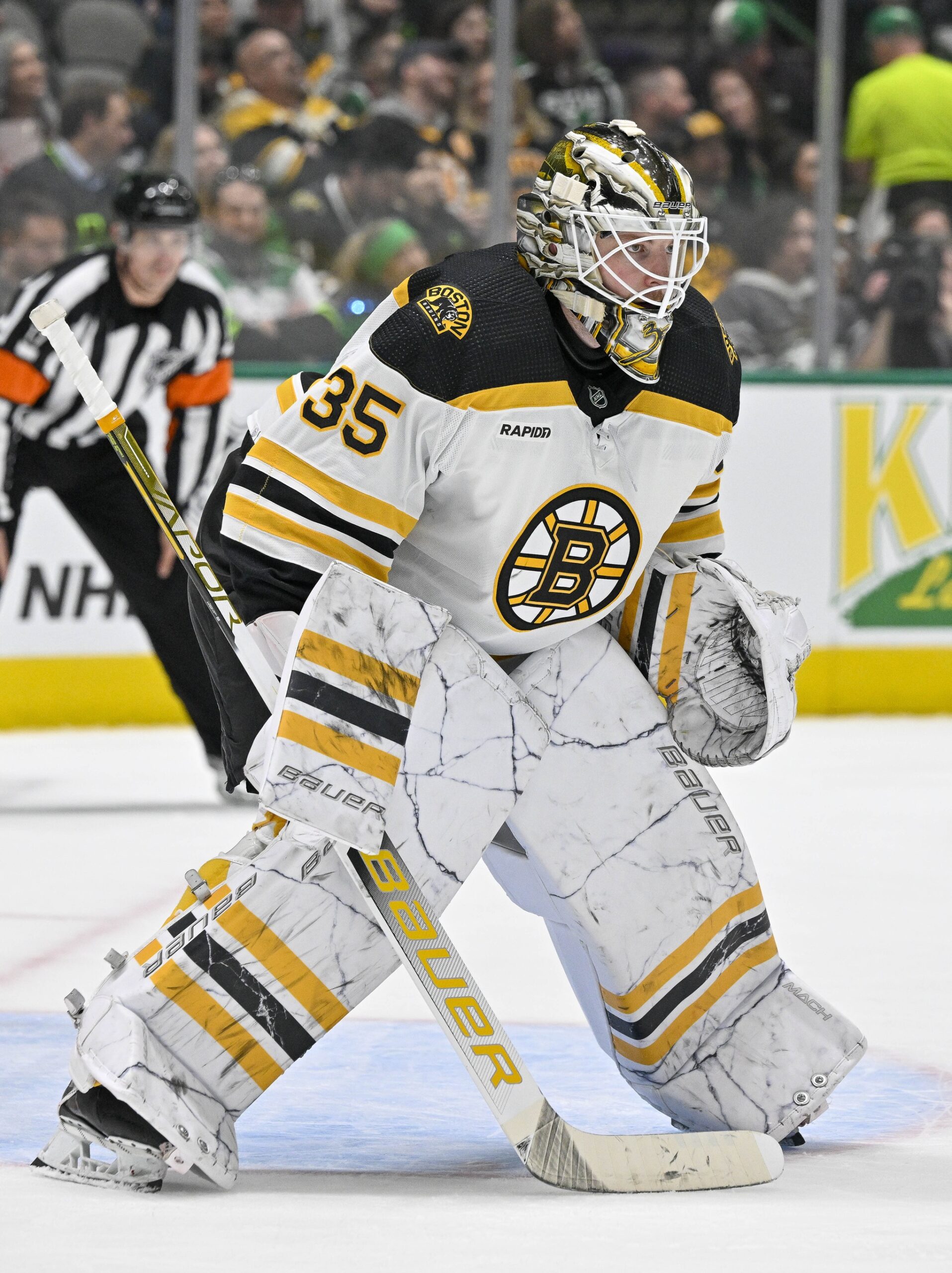 Will teams view Ullmark as a top-ten goalie in their system? I’m not certain they will and the offers will be lower accordingly. Could they get a first-round pick for him? Possibly, but it would be at the back of the first round. Not a lot of netminders have fetched first-round picks recently. They’d probably need to take a goalie back which would limit the cap savings. Maybe there’s a prospect involved but it wouldn’t be an ‘A’ player.
In a follow-up comment, you noted you wouldn’t move him unless you were getting a pair of first-rounders or a young top-six center. As well as Ullmark played this season, I don’t think he gets that. I don’t think Jeremy Swayman would yield a pair of first-rounders either (and I feel he’d have the higher trade value being younger with more years of team control). I don’t expect an extended Hellebuyck to bring that type of return and even though his cap hit will be higher, his track record would look better in the eyes of interested teams which might make him more sought-after than Ullmark.
I like the player and I like the contract. But it has been a long time since a goalie has yielded a return that makes people go ‘wow’ in terms of the haul being significantly strong. I don’t think Ullmark will buck that trend if he’s made available.
joebad34: Who are the next potential goalies coming into this year’s draft that may be targeted as a future starter?
Let’s get this out of the way first. I’m not a particularly strong scout when it comes to watching skaters. When it comes to goalies, it’s even worse. Just keep that in mind as you read this answer.
I’m not sure there is a true number one goalie in this draft class. By number one goalie, I mean a 50-plus game starter year after year that is the undisputed go-to guy in the playoffs. But, frankly, how many of those are around nowadays? As teams gravitate more toward platoons as cost-saving options, they will find value in those netminders. And I think there are certainly a few of those platoon/1B players in this draft.
At the top, there’s Michael Hrabal, a very tall goalie, one element scouts really love in their netminders. His stock has steadily been on the rise but I think his development path will be a bit slower than others on this list. Adam Gajan is a re-entry player that hasn’t gone a traditional route but I really liked him at the World Juniors and I could see him having some pro success. Trey Augustine is on the smaller side for a goalie (6’1) but based on how he has fared in the US NTDP, I see no reason to think he can’t succeed in the NHL. Carson Bjarnason is probably the top option from Canada after a decent showing in his first season as a full-fledged starter.
Hrabal, Augustine, and Bjarnason should all go in the second round; I’ve seen some speculate that Hrabal could crack the late first round. Gajan is a bit of a wild card given his second-time status but he should go fairly early among the goalies. I’m curious to see where Scott Ratzlaff goes, he wound up as the backup in WHL Seattle this season behind Thomas Milic (a third-year eligible who’s also on the smaller side for a goalie) but I could see him being a value pick as Ratzlaff will take over as the starter next season on a team that’s likely to allow a lot of shots as a lot of their Memorial Cup roster will move on. but I think he could be one of the better goalies from this class even though he’s not among the top few options on most lists.