
Offseason Checklist: New Jersey Devils
The offseason is now fully underway after Vegas took home the Stanley Cup which means that it’s time to examine what each team will need to accomplish over the coming months. Next up is a look at New Jersey.
It was an interesting season for the Devils. There were calls to fire head coach Lindy Ruff, followed by apologies from those same fans as the team embarked on a 13-game winning streak which propelled them into a battle for the top seed in the Metropolitan Division and had them making one of the biggest splashes of the trade deadline. They made it to the second round before Carolina eliminated them but it was still a season that exceeded the expectations of many. Now, GM Tom Fitzgerald faces a busy summer with over a third of the team needing a new contract for next season even after re-signing Jesper Bratt earlier this week; those situations feature prominently in their checklist as a result.
Goaltending Decisions
New Jersey has a couple of calls to make between the pipes. The first involves Mackenzie Blackwood. Just a few years ago, he was viewed as the goalie of the future for the Devils. Things haven’t gone as well since then, however. Injuries limited him in each of the last two seasons and when he has been in the lineup, he has struggled, posting a 3.30 GAA with a .893 SV% in that stretch. Those are numbers that are certainly below the NHL average. He’s owed a $3.36MM qualifying offer and while they can certainly hope that the 26-year-old will rebound, that’s a pricey gamble to take.
First things first, they need to decide if they’re going to tender that offer. Assuming they don’t, then a decision needs to be made about potentially trying to sign him for less money.
Then, if that doesn’t happen and they cut bait, then a call needs to be made about potentially trying to add an upgrade at the position. Vitek Vanecek had a solid regular season but struggled in the playoffs, paving the way for Akira Schmid to step in. Schmid may very well be the next goalie of the future but he’s still on his entry-level contract; would they be better off having him play more regularly with AHL Utica for one more season? The goalie market generally moves quickly in the summer so these are questions that Fitzgerald will need to answer within the next couple of weeks.
Re-Sign Or Move Meier
One big item was checked off when Bratt signed on Thursday but there is still one remaining restricted free agent of significance to deal with in Timo Meier. Owed a $10MM qualifying offer, the Devils got out in front of that one on Thursday by opting for club-elected salary arbitration. The move gives them a chance to file as low as $8.5MM but isn’t without risk as, in theory, Meier could simply accept the hearing, get what he gets, and head for unrestricted free agency next July.
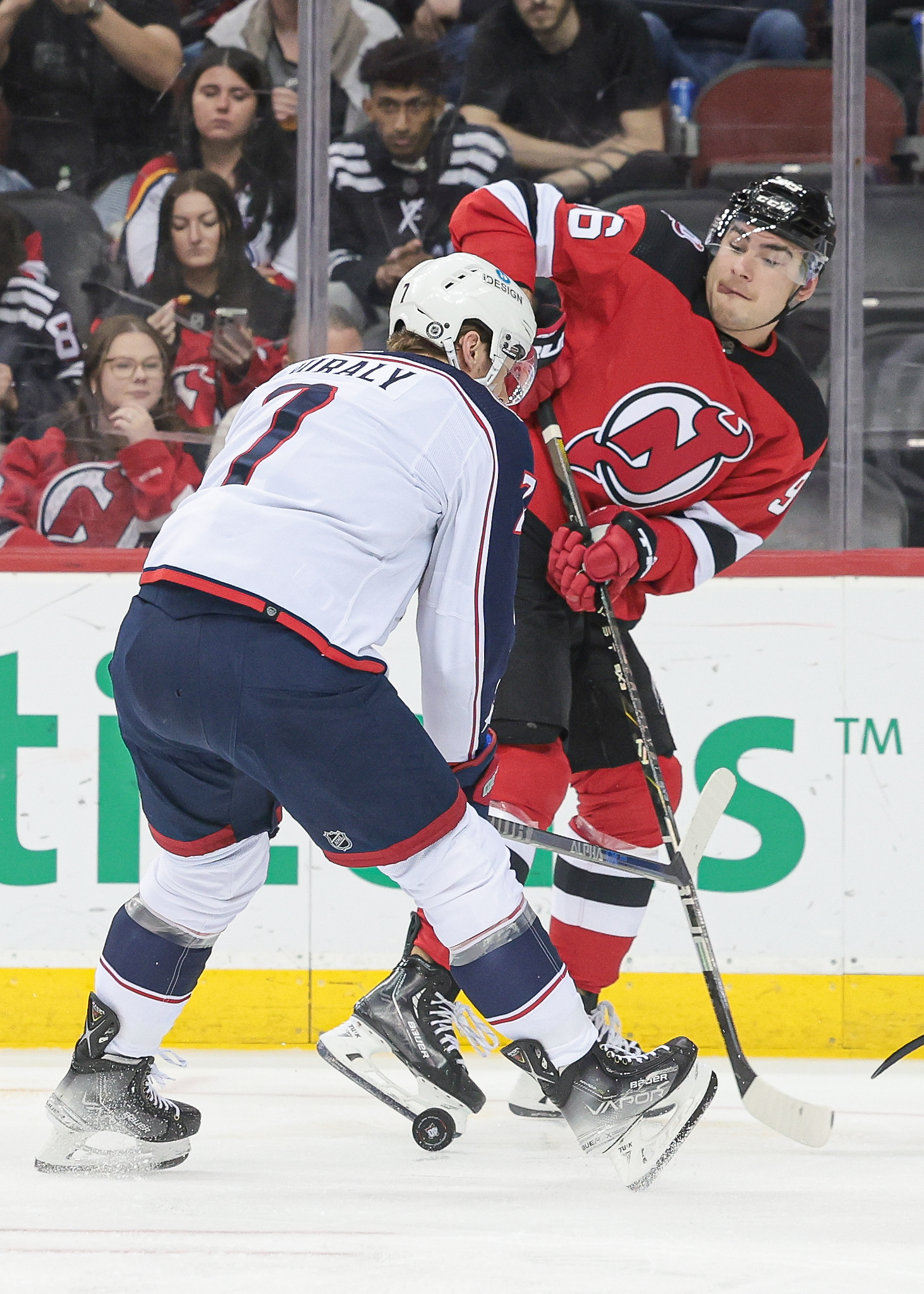 The filing sets a firmer timeline for signing him. Arbitration hearings are held between July 20th and August 4th with awards typically coming a couple of days after the hearing if no agreement is reached by then. Instead of allowing for the potential for a later agreement, the filing locks in his contract timing by the first week of August. Fitzgerald indicated yesterday that Meier has a desire to sign a max-term deal and they’ll have basically a month and a half to get one done, less if he winds up going early on the hearing schedule.
How much might that deal cost? Certainly more than Bratt’s $7.875MM. He scored 40 goals this season after putting up 35 the year before and scoring prowess certainly matters in these talks. He’s a power forward and those players tend to wind up with contracts that seem above market value relative strictly to their production. The track record isn’t there for a deal that’s at or past the $10MM mark – few wingers have reached that threshold – but it would be surprising to see him lock in for anything below $9MM per year.
New Jersey will need to come to the table with an offer that’s good enough to make Meier forego the right to arbitration where he could legitimately wind up with an award close to $9MM on its own for one season. In a contract market that’s expected to start inflating once again if the Upper Limit starts to go up quicker than it has in recent years, the price tag will only go higher if he makes it to unrestricted free agency. There’s room to make it work on the books but he will quite likely become their highest-paid player in the process, surpassing Dougie Hamilton’s $9MM AAV.
Mercer Extension Talks
Dawson Mercer has certainly had a nice start to his NHL career, quickly earning a spot in the top-six. His sophomore year was a strong one, notching 27 goals and 29 assists while playing all 82 games for the second straight year. Going back to that idea of a bigger cap increase in 2024-25, it stands to reason that it would be in New Jersey’s best interest to try to get him locked up now.
Mercer will have four seasons of RFA eligibility remaining when his contract expires in 2024 so the two viable options are either a short-term bridge deal or a long-term one that buys some extra years of team control. Once in a while, a team will do an early bridge extension but that doesn’t feel like the type of move that makes a lot of sense for the Devils right now so let’s look at the longer-term options.
With a max-term agreement, the AAV is probably going to come in higher than his current value now with both sides forecasting an improvement in his production. That, coupled with the expectation of a higher cap, could push the AAV well past the $6MM mark. The other option is a six-year contract that provides some extra club control but would set him up for another long-term contract entering his age-30 campaign. The price tag would be a bit lower as a result, potentially in the mid-$5.5MM area and could be a reasonable compromise considering the big tickets they already have on the books (plus potentially another to come with Meier).
The Devils historically have tried to sign some of their core young players to early extensions. It wouldn’t be surprising to see Fitzgerald continue that trend with Mercer in the coming months.
Re-Sign Or Replace Haula
When the Devils moved out Pavel Zacha last summer, they picked up Erik Haula in a swap of players that both teams felt the newcomers would fit in better than they were on their old squad. Zacha certainly did, eventually signing a long-term extension with Boston. Haula also fared well, notching at least 40 points for the second straight year and only the third time in his 10-year career. He’s set to hit the open market this summer and while he isn’t a high-end producer, he’s still one of the better options available in what is a fairly thin class.
At a minimum, the 32-year-old is in for a nice raise on the $2.375MM AAV he had this past season. Haula should be in line to land a contract of at least three years if not four (which would be the longest of his career). With Jack Hughes and Nico Hischier entrenched as the top two middlemen for the long haul, Haula’s role is pretty much set as a third-line center with the Devils. Is that a role they want to lock in for that long at a price tag that’s going to check in somewhere around the $3.5MM mark? Haula has made it clear that he wants to stay in New Jersey but as the roster becomes more top-heavy in terms of salaries, it becomes harder to fit a mid-tier player on the books.
Internally, after a season that saw him score just four goals, Michael McLeod isn’t quite ready yet to step into Haula’s spot on the depth chart so they’d likely have to turn outside the roster to fill that spot, preferably on a short-term agreement. That’s easier said than done in this free agent class. Sometimes, it’s better to go with the devil you know and that could be the case here for Fitzgerald. Accordingly, expect talks to pick up in the coming days on this front to try to keep Haula from hitting the open market.
Photo courtesy of USA Today Sports Images.
Free Agent Focus: Vegas Golden Knights
Free agency is less than a month away and teams are looking ahead to when it opens. There will be several impact players set to hit the open market in July while many teams have key restricted free agents to re-sign as well. We continue our look around the NHL with an overview of the free agent situation for the Golden Knights.
Key Restricted Free Agents
F Nolan Patrick – Patrick missed the entire 2022-23 season as the former second overall pick has dealt with multiple injuries during his short career that date all the back to his junior hockey days. It was the second full season Patrick has missed as he also missed the 2019-20 season with a migraine disorder.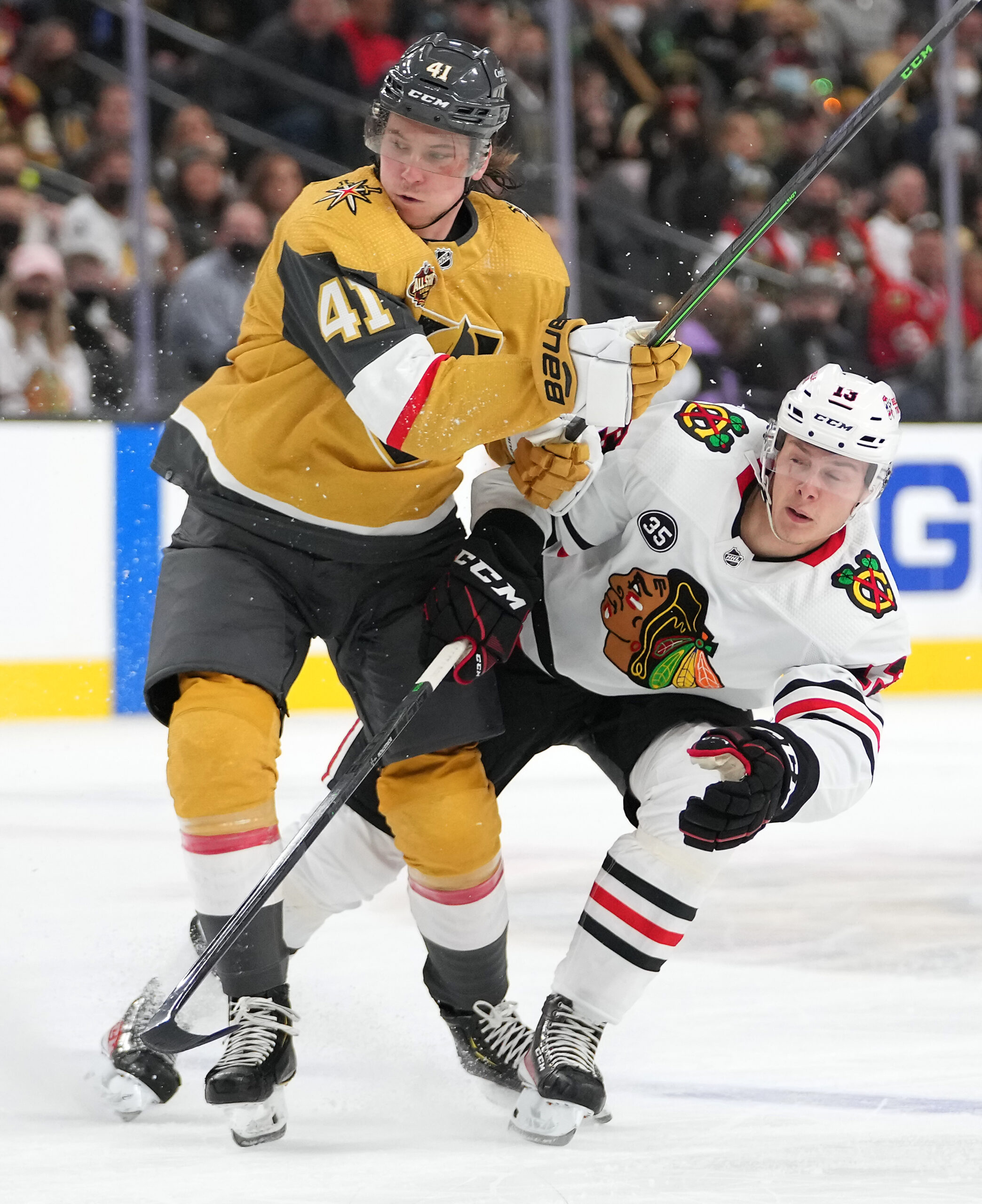
Patrick came over to Vegas from the Nashville Predators in a trade for Cody Glass back in July 2021 and has played just 25 games for them putting up two goals and five assists. It seems likely that Patrick will be non-tendered by the Golden Knights making him an unrestricted free agent. Should this happen it’s hard to predict what would be the next step for the 24-year-old Winnipeg native.
When healthy, Patrick was a very productive third line center who could play with some edge. But given the litany of health issues he has dealt with the past few seasons it could be possible that he elects to retire or to try and continue his career outside of the NHL. If he chooses to hang up his skates it would be a sad ending for a player who showed a lot of promise as a 19 and 20-year-old with the Philadelphia Flyers.
F Brett Howden – Howden’s regular season was a disappointment as he produced just six goals and seven assists in 54 games and spent most of the time buried in his own end. He was fortunate that during his time on the ice his goaltenders bailed he and his linemates out with an on-ice save percentage of 93.3%. His playoff performance however was a completely different story. Howden found his offensive game and was able to almost replicate his regular season numbers as he had five goals and five assists in 22 playoff games.
At this point in his career, it is hard to pin down what Howden is. His season was the tale of two different performances and its almost a microcosm of the 25-year-old’s career thus far. He’s shown glimpses of being an effective fourth line center, but he has also had stretches where he doesn’t look like he belongs in the league. Vegas will have a tough decision on their hands with Howden and may elect to bring him back short term once again. Last summer Howden signed a one-year deal for $1.5MM and I would expect something in the same ballpark again this summer.
Other RFAs: D Connor Corcoran, F Pavel Dorofeyev, F Maxim Marushev, D Brayden Pachal, G Jiri Patera
Key Unrestricted Free Agents
G Adin Hill – Hill had a wild journey to becoming the starting netminder for a Stanley Cup champion. He became an afterthought in San Jose last season and was dealt in August 2022 for a fourth-round pick in 2024. He then found himself caught up in a numbers game and was stuck behind Logan Thompson and eventually Laurent Brossoit. Hill went two full months without playing until he was called upon in the second round. He came in cold to help the Golden Knights dispatch of the Edmonton Oilers and from there it became his crease. Hill went on to post an 11-4 record in the playoffs with a .932 save percentage and a 2.17 goals-against average.
His playoff numbers this year were dominant, however throughout Hill’s career he has struggled to find consistency. Coming into this year Hill had posted several seasons of average or below average production. If you take a deeper dive into Hill’s numbers and look at his goals saved above expected, he has posted a -7 since 2017-18. While the number is one of many that can be used to demonstrate value, it does show that Hill has been slightly below average for most of his career.
This will make for a very interesting negotiation. Hill will be looking to cash in on his run with a long-term big money deal. It’s unclear what Vegas will be looking to do; they have several other netminders in their system and do have to consider signing some other pieces. They may elect to go short term with Hill to see if he is in fact their goaltender of the future. I would expect Hill to be looking for a salary in the range for $4MM-$5MM annually on his next contract.
F Ivan Barbashev – Barbashev is now a two-time Stanley Cup champion having won his first title back in 2019 with the St. Louis Blues. Barbashev was a big part of this year’s title with Vegas as he put up seven goals and 11 assists in 22 playoff games after posting 16 goals and 29 assists in 82 regular season games. Although his regular season numbers represented a drop from his 60 points last season with the Blues, the 27-year-old was able to find another gear when the games mattered the most. Barbashev has improved in every season since entering the NHL as he started his career slow and looked like he might never find his offensive touch.
While he was a big part of Vegas’ most effective line in the playoffs, it does look like Barbashev may be squeezed out by cap constraints. With a weak free agent market and multiple teams interested in his services, Barbashev is very likely to test the free agency waters and maximize his income. He made $2.25MM last season and should be able to double his salary on a long-term deal. There was a lot of interest in his services when St. Louis was dangling him at the trade deadline and with another Stanley Cup on his resume that interest has only grown.
G Laurent Brossoit – Brossoit was terrific in the regular season for Vegas but couldn’t keep himself in the net in the playoffs as he fell apart during the second round series against the Edmonton Oilers. Brossoit posted a 7-0-3 record in the regular season with a 2.17 goals against average and a .927 save percentage. While those numbers are terrific, he was only able to dress in 11 regular season games. In the playoffs his play was far less impressive as he went 5-2 with a 3.18 goals against average and a .894 save percentage.
Brossoit is coming off a two-year deal that paid him $2.325MM in each of the last two years and figures to get something similar in free agency. Pittsburgh Penguins backup Casey DeSmith received a two-year contract for $1.8MM per last offseason and Brossoit should be able to top that given that he is a more capable backup and someone who can operate as a 1B option in a pinch.
Other UFAs: F Teddy Blueger, F Phil Kessel, F Spencer Foo,
Projected Cap Space
Just days after winning the Stanley Cup the Vegas Golden Knights management will have a quick turnaround to try and prepare for what should be a busy offseason. The Golden Knights are currently just $3.5MM under the salary cap for next season with some key pieces left to sign from their cup winning group. The good news for Vegas is that they have 21 players already signed for next season including many of the key pieces that brought them a title this season.
The situation for the Golden Knights is not unlike the 2016-17 Pittsburgh Penguins who were able to capture the 2016 Stanley Cup and bring almost their entire group back for a sequel in 2017. Vegas could be in position to do the same.
The biggest hurdle that Vegas will face is in the crease. After missing the entire season with an injury Robin Lehner is not guaranteed to return. He has been rehabbing but will all the injuries and off ice issues he has had to endure Vegas may buyout the veteran if he isn’t a candidate to stay on LTIR. Lehner has two more seasons left on his contract at a cap hit of $5MM, which could be a comparable to what netminder Adin Hill would fetch on the open market as an unrestricted free agent.
Photos courtesy of USA Today Sports Images. Contract information courtesy of CapFriendly.
Offseason Checklist: New York Rangers
The offseason is now fully underway after Vegas took home the Stanley Cup which means that it’s time to examine what each team will need to accomplish over the coming months. Next up is a look at the Rangers.
Expectations were high for New York heading into the playoffs. They had a solid regular season and loaded up for the playoffs, adding wingers Vladimir Tarasenko and Patrick Kane while also getting Niko Mikkola to help on the back end. Instead of their firepower carrying the day though, they struggled to score with consistency which played a big role in their early exit at the hand of New Jersey. One big change has already been made behind the bench but GM Chris Drury still has some work cut out for him in the coming weeks.
Finalize Coaching Staff
After a long search, the Rangers have figured out who their head coach is going to be following yesterday’s hiring of Peter Laviolette on a three-year deal worth just under $5MM per season. Now, the team will need to finalize the rest of their staff. Mike Kelly and Jim Midgley were let go last month along with former bench boss Gerard Gallant while Gord Murphy will now also not return. That means the only holdover from last year’s staff is goalie coach Benoit Allaire.
It’s not entirely uncommon for a head coach to come in with a clean slate. Two of Laviolette’s assistants from last season in Washington, Kevin McCarthy and Blaine Forsythe, also departed the Capitals and possibly resurface in similar roles with the Rangers. It’s also possible that AHL Hartford head coach Kris Knoblauch could be promoted after four years with the Wolf Pack. He does have two seasons as an NHL assistant under his belt in 2017-18 and 2018-19 with Philadelphia.
Having the assistants in place by free agency isn’t a necessity since Laviolette is in place but it wouldn’t be surprising to see this one get checked off within the next couple of weeks.
Clear Cap Space
At first glance, New York’s cap situation doesn’t look terrible as they project to have a little over $11.7MM in space, per CapFriendly. However, when you consider that they have to sign eight or nine players with that money, including second contracts for a pair of core youngsters, it doesn’t take long to realize that this is going to be a problem. They need to open up some cap room which isn’t necessarily going to be easy in an environment where many others will be looking to do the same.
At first glance, forward Barclay Goodrow seems like a possible cap casualty. The 30-year-old has certainly come as advertised in his first two seasons with the team, providing his two best offensive seasons while still providing the grit and defensive play that endeared him to Drury in the first place. The problem is that he carries a cap hit of just over $3.64MM. For a bottom-six forward, that’s an above-market rate and one they can’t afford. On top of that, he has four years left on his contract. That will make it difficult to move him but he’s the logical one to try to trade.
If a trade involving him can’t be reached, then it gets tough. Defenseman Ryan Lindgren and forward Filip Chytil are on either side of Goodrow on New York’s salary scale but both are important parts of their younger core. Moving anyone making less than that isn’t going to move the needle much in terms of cap savings and going above Chytil’s contract lands you with six skaters that have full no-move clauses.
There are definitely things that are easier said than done and when it comes to opening up cap room, this is certainly one of those for the Rangers. However, they’re going to have to bite the bullet at some point over the next few weeks; whether it’s the one they likely want to move (Goodrow) or one they don’t remains to be seen.
Re-Sign Key RFAs
A good chunk of the cap space that they have is going to go to two of their prominent restricted free agents, players that are pegged to be significant pieces of both the present roster and the future one. Accordingly, the Rangers would like to avoid having to move either defenseman K’Andre Miller or forward Alexis Lafreniere to alleviate their cap challenges.
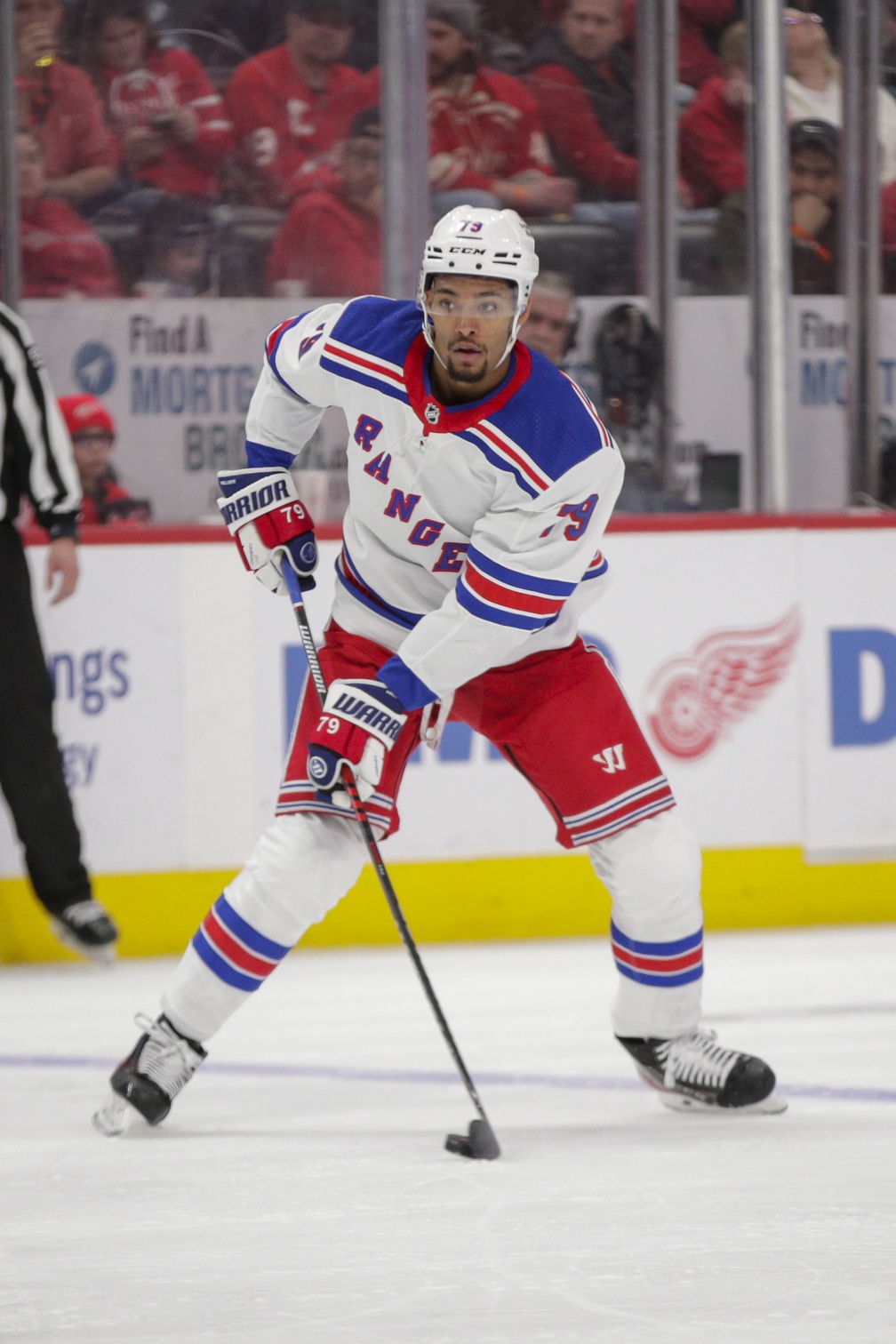 Miller has the better track record of the two and established himself as a fixture in the top four in his sophomore year. This season, he was even better, more than doubling his point total from 20 to 43 while taking a bigger role in the lineup, finishing second to only Adam Fox in ice time. As a result, even a short-term bridge contract is going to be on the pricey side, likely somewhere in the $3.5MM to $4MM range. Meanwhile, a longer-term agreement that buys out some UFA time is likely to creep past the $6MM mark based on the year he just had. The Rangers would undoubtedly love to give Miller that long-term contract but unless they find a way to free up significant cap room (by moving one of those six high-paid players with NMCs), they’ll be forced to go the bridge route with him, giving them some short-term flexibility with a higher price point to come when it’s up.
As for Lafreniere, the 2020 first-overall pick has yet to become a top offensive threat. However, his production has increased over the last couple of years and with it, his playing time. Still just 21, there’s still plenty of time to live up to his potential or at least carve out a bigger role in the lineup. The fact that he has underachieved so far along with their cap situation completely takes a long-term contract off the table. Lafreniere will be getting a short-term bridge deal, an arrangement both sides will be content with. A two-year deal should check in around the $2.75MM mark while a three-year pact would push his AAV past $3MM. It could also be suggested that if they can’t move Goodrow or clear out salary otherwise, it’s not outside the realm of possibility that Lafreniere could become a cap casualty although that clearly wouldn’t be their preference.
Sign A Backup Goalie
Last summer, the Rangers decided to cut some costs in goal, moving out Alexandar Georgiev to Colorado for a trio of draft picks and signing Jaroslav Halak for less than half of what Georgiev received from the Avs. The decision was certainly understandable; with one of the top starters in the league in Igor Shesterkin (coming off a Vezina-winning campaign) and a tight salary cap picture, going cheaper on a second-stringer made sense.
Halak worked out reasonably well for New York, posting a 2.73 GAA with a .903 SV% in 25 games and in a year that saw goal rates go up, his numbers wound up being a bit better than league average. In the end, they got good value on their $1.5MM investment.
But Halak is 38, making him one of the oldest goaltenders in the league. Does he have another season like that in him? Do they want to look at other options, perhaps ones that are a bit cheaper to try to free up more room? Internally, veteran third-stringer Louis Domingue is in the fold and is signed for the league minimum which would help from a cap standpoint but the 31-year-old hasn’t had double-digit NHL appearances since 2019-20. The goalie market moves fast in free agency with the annual game of musical chairs often starting and ending on July 1st so Drury has a few weeks to figure out his plan and wish list on this front.
Photo courtesy of USA Today Sports Images.
Free Agent Focus: Florida Panthers
Free agency is less than a month away and teams are looking ahead to when it opens. There will be several impact players set to hit the open market in July while many teams have key restricted free agents to re-sign as well. We continue our look around the NHL with an overview of the free agent situation for the Florida Panthers.
Key Restricted Free Agents
F Colin White – After a myriad of injuries plaguing his tenure with the Ottawa Senators, White, a former 21st overall selection of the Senators back in 2015, was not issued a qualifying offer by the team last summer. Towards mid-July, White signed on with the Panthers, inking a one-year, $1.2MM contract for the 2022-23 season.
Unfortunately, once again, White seems to be a strong candidate for a non-tender this offseason. A healthy scratch for several games, White accrued 68 games played this year, only scoring eight goals and seven assists. Failing to receive any additional time with special teams, the Panthers only give White a little under 10 minutes of ice time per night.
In White’s defense, he was dressed for 21 games during Florida’s recent run to the Stanley Cup Finals, helping the team out with two assists in the process. Using White every game in an impressive run may indicate that the Panthers do have intentions of keeping the forward around, however; most signs point to White and Florida heading in different directions this offseason.
Other RFAs: F Givani Smith, F Grigori Denisenko, F Aleksi Heponiemi, F Logan Hutsko, F Serron Noel, D Max Gildon, D John Ludvig
Key Unrestricted Free Agents
D Radko Gudas – To keep it plain, every team in the NHL knows what kind of player they’re getting in Gudas. An old-school stay-at-home defenseman, willing to sacrifice seemingly every part of his body for the betterment of his team. This year, Gudas kept to his ways, blocking 124 shots, and also throwing a whopping 312 hits in 72 games played.
During the Panthers’ run to the Stanley Cup Final, it was much of the same, as Gudas threw 91 hits in 21 playoff games for Florida. On the offensive side of his game, Gudas was able to produce a respectable two goals and 15 assists throughout the year.
As much value as Gudas may provide to every team across the league, it would be incredibly surprising if he was not still with the Panthers next season. Throughout the playoffs, it was clear that Gudas was a focal point in the Florida locker room, and had the respect of his teammates and coaching staff.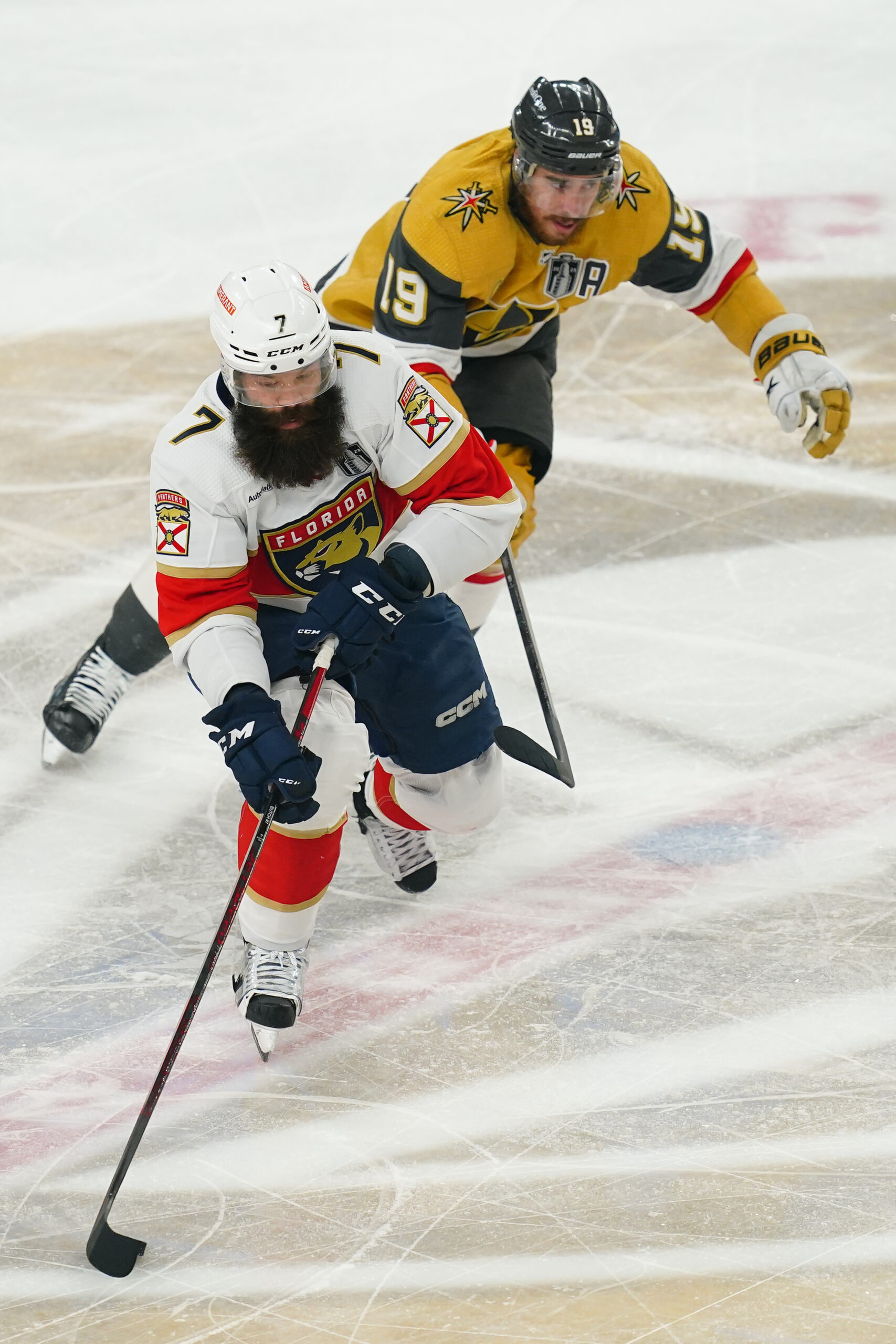
D Marc Staal – Signed last offseason to a one-year, $750K contract, the Panthers certainly got a positive return on investment with Staal this season. Playing in all 82 games, Staal scored three goals and 12 assists, averaging just over 18 minutes of ice time per night.
Similar to Gudas, but not to the same degree, Staal was stellar on the defensive side of the puck, blocking 122 shots and garnering 14 takeaways. Not only were the topical defensive statistics in his favor, but Staal also finished this season with a 3.1 Defensive Point Shares. He should have plenty of suitors as a stable sixth or seventh defenseman, especially if he is once again only seeking a minimum salary for next season.
G Alex Lyon – Although regular starting goaltender Sergei Bobrovsky backed the Panthers to the Stanley Cup Final, Lyon is one of the primary reasons that Florida made it to the playoffs in the first place. After taking over the crease in late March, Lyon finished his last nine games with a 6-2-1 record, posting an incredible .930 SV%.
The playoffs were not as impressive for Lyon, as his only starts came in the Panthers’ first-round matchup against the President’s Trophy-winning Boston Bruins. In those three starts, Lyon held a record of 1-2-0, only accruing a .902 SV% before finally ceding the net to Bobrovsky.
After his playoff performance, Florida will almost certainly be starting with Bobrovsky in net as the 2023-24 season gets underway, but Lyon may still have a spot in this lineup. As Spencer Knight remains in the NHLPA Player Assistance Program, the Panthers may like to keep Lyon as an insurance option.
Other UFAs: F Eric Staal, D Lucas Carlsson, D Casey Fitzgerald, G Evan Fitzpatrick, F Patric Hornqvist, F Henry Bowlby, F Connor Bunnaman, F Gerald Mayhew, D Anthony Bitetto, G Jean-Francois Berube
Projected Cap Space
As the most recent Eastern Conference Champions, the Panthers’ cap situation isn’t as concerning as some might expect. With Hornqvist’s $5.3MM salary coming off the books, Florida will have around $10.3MM to spend this offseason.
The Panthers do have a high quantity of both UFA’s and RFA’s this summer, but the quality of the players should prohibit Florida from losing too much cap space if they do plan to retain a majority of them.
Already a team built to contend for the Stanley Cup, Florida could use much of its cap space to find players that are larger and more physically imposing, as this is what held them back during their first trip to the Cup Final since 1996. If they do plan to run back a similar team for the 2023-24 season, the Panthers will need to work out extensions for both forward Sam Reinhart and defenseman, Brandon Montour.
Photos courtesy of USA Today Sports Images. Contract information courtesy of CapFriendly.
Free Agent Focus: Vancouver Canucks
Free agency is less than a month away and teams are looking ahead to when it opens. There will be several impact players set to hit the open market in July while many teams have key restricted free agents to re-sign as well. We continue our look around the NHL with an overview of the free agent situation for the Canucks.
Key Restricted Free Agents
D Ethan Bear – Bear was traded from Carolina to Vancouver and was one of the Canucks better defensemen last season. While he only played 61 games for the club, he showed that he was one of their few mobile defensemen. At 25-years of age Bear is due a qualifying offer of $2.2MM and could walk for nothing if the team decides not to qualify him. Bear put up three goals and 16 assists while showing dependability in a middle six pairing and although he will never turn into an offensive star, he can give you a solid 18 minutes a night and provide good support on a penalty kill.
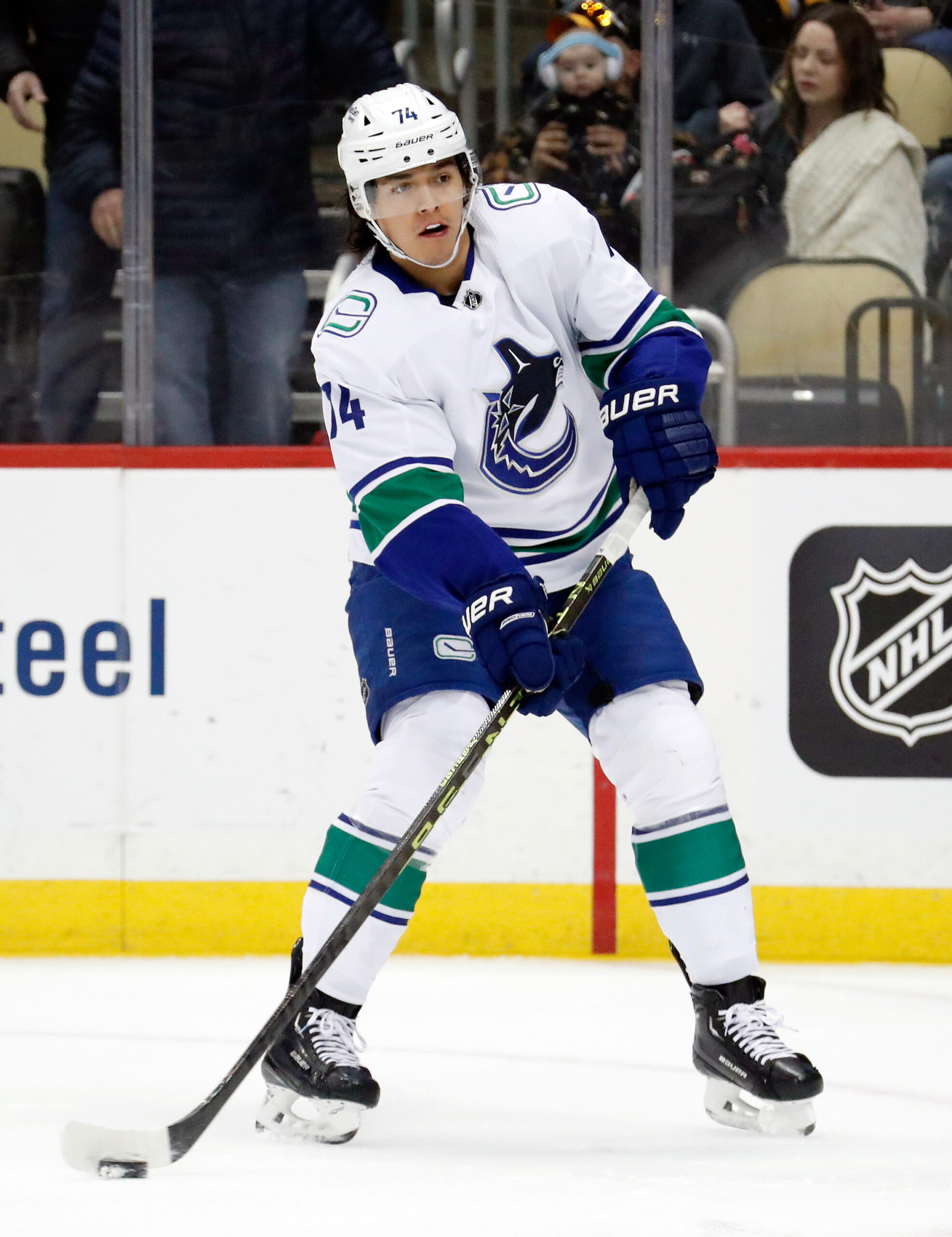
Bear is just a year away from unrestricted free agency and after bouncing around a few teams he will likely be looking for some stability on his next contract. Vancouver may want to see more of Bear before they commit to him long-term, making a one year deal the likeliest outcome. Vancouver has Tyler Myers coming off the books next summer and could simply commit some of his money to Bear should the former fifth round pick show that he is a capable replacement.
D Travis Dermott – Dermott’s stay with the Canucks has been largely disrupted by concussions that have kept him out of the lineup for several extended periods of time. When he was able to get into the lineup, he clearly wasn’t 100% evidenced by his inability to get back to the level of played he showed when he was a Toronto Maple Leaf. Dermott saw several stints in the Leafs top-4 during his five seasons with the club but could never stay in Vancouver’s lineup long enough to earn that kind of promotion.
It’s a sad situation for the Newmarket native as at one point he did look like a capable two-way defender who could chip in 20-25 points on the back end. But in two seasons with Vancouver Dermott has only been able to put up two goals and a single assist in 28 games while playing sheltered minutes. Even more alarming was that Vancouver controlled just 40% of the scoring chances with Dermott on the ice despite him playing almost exclusively against bottom six competition.
At this point it seems likely that Vancouver will not qualify Dermott at his $1.75MM salary and he will become an unrestricted free agent. He should be able to get another crack at an NHL job, although it will likely come on a one-year deal for league minimum.
Other RFAs: F Carson Focht, D Akito Hirose, F Nils Hoglander, F Vitali Kravtsov
Key Unrestricted Free Agents
D Kyle Burroughs – Burroughs played a career high 48 games this past season for his hometown Canucks and put up two goals and three assists while averaging just over 17 minutes a night in ice time. He is best suited for a role as a seventh defenseman and can fill in on a third pairing in a pinch. The soon to be 28-year-old became a bit of a cult hero in Vancouver as his dependable defensive play and physicality made him a fan favourite. Burroughs fits in with the culture that head coach Rick Tocchet is trying to cultivate and likely wouldn’t cost more than league minimum on a two-year contract. It makes sense from both the players side and the Canucks side, however there could be a few obstacles to a deal getting done.
Cap issues could hinder any attempts to sign the depth defenseman and given that the Canucks already have several depth defensemen signed for next season they could view a Jack Rathbone or a Christian Wolanin as a similar option to Burroughs. Regardless of what happens Burroughs has likely earned himself a bit of short-term security either with Vancouver or another NHL team that values what he brings to the table.
G Collin Delia – Delia played a career high 20 games this past season for Vancouver, and while he set a new benchmark for games played, they weren’t particularly good ones. Delia posted a 10-6-2 record with a save percentage of .882 and a goals against of 3.28. The California native battled hard in the net for the Canucks, unfortunately his goals saved above expected was -4.3, putting him in the negative for the fifth straight year. While even the best goaltenders can have a stretch where they give up goals on saveable shots, a five year stretch likely shows the Delia is not an NHL caliber backup.
Vancouver has several options in their pipeline that are already signed to contracts, including Spencer Martin who also struggled in net for the Canucks last season. Martin probably isn’t a better option than Delia, but Vancouver could easily find a more suitable backup in free agency should they prioritize finding some dependable relief for starter Thatcher Demko.
Other UFAs: F Justin Dowling, D Noah Juulsen, D Brady Keeper, F John Stevens
Projected Cap Space
The Vancouver Canucks are currently the only team that is projected to be over the salary cap for the 2023-24 season with just 18 players signed. To put it bluntly, their salary cap is a mess. Much of it was inherited by the current management group but they have done little to alleviate any of the stress on their bottom line.
The good news for Vancouver is that they don’t have any expensive free agents to sign and should be able to free up cap space by putting Tanner Pearson and Tucker Poolman on LTIR when the season begins. If they do this it will allow them to fill out their roster and dress a full lineup on opening night. Although, this likely won’t be good enough for the current management group. Vancouver is caught in the middle; they don’t have enough talent to be a cup contender and they have too many overpriced contracts. They also likely can’t sell another rebuild to their fans as they are supposed to be currently enjoying the fruits of their last rebuild.
It should be a busy summer for the Canucks, they have a lot of pieces they would like to move, and a management group led by Jim Rutherford who is perhaps the most aggressive executive in the NHL today. The Canucks could look wildly different come training camp in September.
Photos courtesy of USA Today Sports Images. Contract information courtesy of CapFriendly.
Free Agent Focus: Toronto Maple Leafs
Free agency is less than a month away and teams are looking ahead to when it opens. There will be several impact players set to hit the open market in July while many teams have key restricted free agents to re-sign as well. We continue our look around the NHL with an overview of the free agent situation for the Toronto Maple Leafs.
Key Restricted Free Agents
G Ilya Samsonov – The Maple Leafs took a significant risk on Samsonov, trusting him to potentially be their number-one goalie in a season where enormous pressure was placed on the team to finally go on an extended playoff run. Samsonov, now 26, had been exiled from the Washington Capitals after a disappointing 2021-22 season that included some major errors in some high-leverage moments.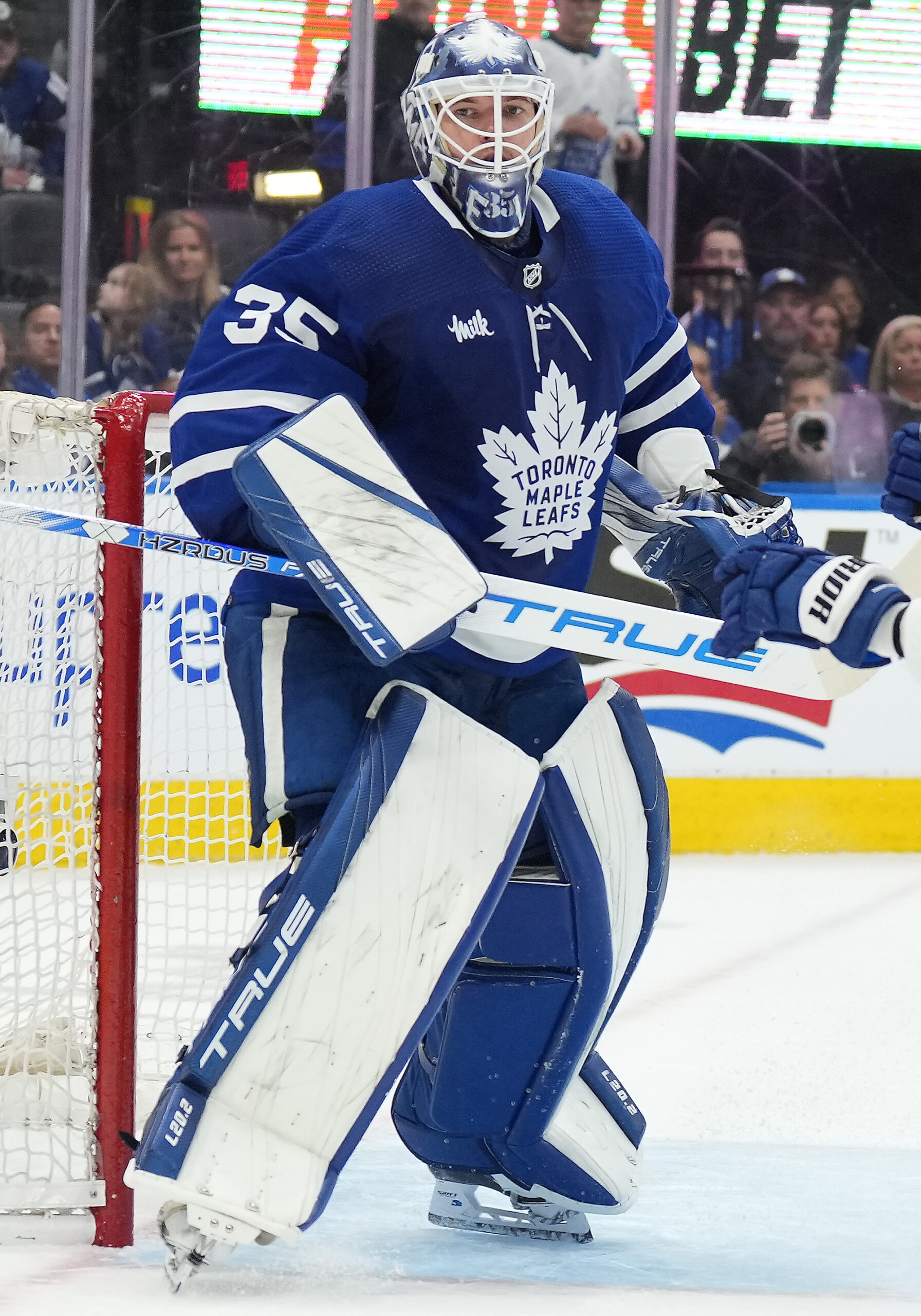
Drafted 22nd overall at the 2015 draft, Samsonov was once believed to be the Capitals’ goalie of the future but his inconsistency and inability to seize the void left in Washington’s crease by Braden Holtby‘s departure led to him being available for Toronto to snag as an unrestricted free agent.
The team signed him to a one-year $1.8MM deal and he ended up rewarding the team’s faith considerably. He led Toronto netminders with 42 games played and posted a strong .919 save percentage and 2.33 goals-against-average.
While his playoff performances as a Washington Capital were cause for significant concern, Samsonov’s play in the Maple Leafs’ first-round playoff series against the Tampa Bay Lightning helped Toronto get the playoff series win they’d been long searching for. While he didn’t quite play up to par against the Florida Panthers (like the rest of his team, to be fair) and had his series end early due to injury, his 2022-23 season could be seen as serving as a major turning point for his career and a moment where he has resurrected his reputation as an up-and-coming netminder.
He’s earned himself a solid pay raise from his $1.8MM deal, but since he has a relatively inconsistent track record he might not be the safest long-term investment.
As for his future in Toronto, there are some questions to answer. The general manager that signed him, Kyle Dubas, is no longer with the organization and the new general manager, Brad Treliving, is coming from a team that has an established veteran netminder in Jacob Markstrom. Might Toronto prefer to add a proven veteran in their crease? And if so, is there going to be enough cap space to re-sign Samsonov to the type of contract his play has merited?
F Nick Abruzzese – With such a sizeable portion of the Maple Leafs’ salary cap space set aside to pay for the team’s core of star players, Toronto will need cheap, energetic, competent players to fill spots lower in their lineup. Abruzzese, 24, fits that profile after a strong first season as a full-time pro.
He scored 16 goals and 48 points in 69 AHL games for the Toronto Marlies and pitched in two assists in his two games of NHL action. With no proven NHL track record to speak of he won’t receive a significant raise from the $850k he earned last season, and as a result, could be in prime position to seize a depth role in Toronto.
Other RFAs: F Semyon Der-Arguchintsev, F Pontus Holmberg, D Victor Mete, D Mac Hollowell, D Filip Kral
Key Unrestricted Free Agents
F Ryan O’Reilly – The centerpiece acquisition of former GM Kyle Dubas’ flurry of trade deadline moves, O’Reilly looks poised to depart Toronto having improved his leaguewide standing to a considerable degree. In the final stretch of his tenure as a St. Louis Blue, the 2018-19 Selke and Conn Smythe Trophy winner’s significantly declined offensive production was the primary story surrounding his play.
By the time of the trade he had managed only 19 points in 40 games, a 39-point 82-game pace.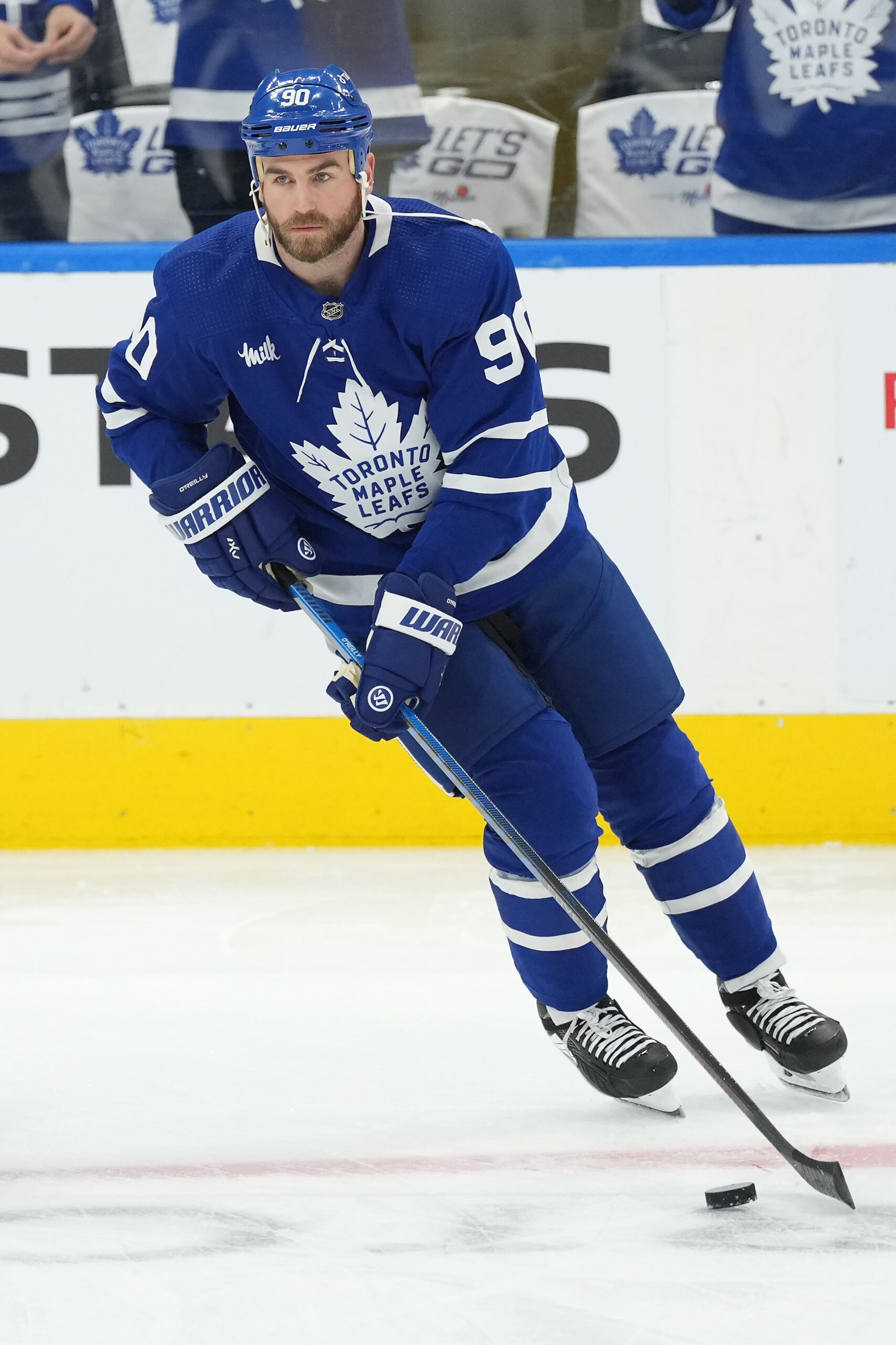
That’s a steep decline from the 58 points in 78 games he posted last year, and there was concern that at 32 years old O’Reilly was exiting his prime and was beginning a career-altering decline in form. Then O’Reilly landed in Toronto and he turned that narrative around, managing 11 points in 13 regular-season games and nine points in 11 playoff games.
His heroics at important moments, including a crucial game-tying goal in Game Three against Tampa Bay and two assists in the team’s stunning Game Four comeback showed everyone that O’Reilly still has gas left in the tank.
But as a result, he likely priced himself out of Toronto with his playoff heroics. He’ll be among the top centers available in what is a relatively thin free agent class down the middle and should receive contract offers that exceed what the Maple Leafs are in a position to offer him.
F Michael Bunting – While O’Reilly’s playoff performance changed the narrative around him for the better, the playoffs were not as kind to Bunting, 27. Bunting only managed to find the scoresheet twice in the playoffs despite scoring 23 goals and 49 points in the regular season.
His suspension due to a vicious hit to the head he laid on Lightning defenseman Erik Cernak earned Bunting some scathing criticism, and it left many wondering if he’d played his way out of Toronto, rather than priced his way out as someone such as Zach Hyman had.
Bunting remains a valuable winger who scored 63 points as a 26-year-old NHL rookie, but those questions that sprung up during the playoffs will linger as he considers offers on the open market. Is it possible that Toronto decides they can’t afford to let him walk?
Absolutely, but it feels like the team is headed in a different direction, especially with Matthew Knies penciled into his spot in the team’s top-six at what is likely to be a significantly cheaper price than the cap hit Bunting has earned.
F Alexander Kerfoot – While Kerfoot’s status as a focal point of Toronto’s return from trading Nazem Kadri to the Colorado Avalanche might leave a sour taste in the mouths of the Maple Leafs faithful, it isn’t exactly fair to judge Kerfoot against Kadri and the things he achieved in Colorado.
Kerfoot never had the breakout season in Toronto like the one Kadri had in Colorado, but Kerfoot nonetheless had his moments as a Maple Leaf. He scored 51 points in 2021-22 and was the second-highest-scoring Maple Leaf during the team’s infamous 2021 playoff series against the Montreal Canadiens, putting together a six-point performance that exceeded the production of stars such as Auston Matthews, Mitch Marner, and Morgan Reilly.
He’s a quality third-line forward with the versatility to either play center or along the wings, and he has also been a consistent presence on one of Toronto’s penalty-killing units. There are far worse players to staff a middle-six with than Kerfoot, but after he only managed two points in eleven playoff games it’s possible Toronto will look in a different direction for that area of their lineup.
F David Kampf – Kampf took a step forward after joining Toronto from the Chicago Blackhawks and has proven himself to be a solid defense-first fourth-line center. He was Toronto’s most heavily-used penalty-killing forward over the past two seasons and in that span of time, Toronto’s penalty kill ranks sixth in the NHL with a kill rate of 82%.
Toronto would surely like to have him back but like many of the other players on expiring deals, he may have earned a pay raise that bumps him to an area of pay Toronto won’t be able to match. He’ll be among the top fourth-line centers available on the market in any case and should earn a bump from the $1.5MM he earned this past season.
D Luke Schenn – Schenn has found himself in a different spot than where he was during his first tour of duty with the Maple Leafs. No longer is he a former top prospect whose NHL play has disappointed relative to the expectations placed upon him by the media, now he’s a widely-respected veteran defenseman who can offer gritty, hard-nosed play and two Stanley Cup rings worth of playoff experience.
Schenn earned $850k this past season but will in all likelihood earn at the very least more than $1MM AAV on his next contract, and possibly far more than that. He’s a quality option for a team looking to add a proven veteran defensive defenseman to their mix but perhaps not what Toronto needs with T.J. Brodie, Timothy Liljegren, and Conor Timmins already in pace along the right-hand side of their defense.
D Justin Holl – Holl’s playoff performances made him a bit of a lightning rod for the Maple Leafs fanbase, but as someone who worked his way up from the ECHL he’s carved out a solid career for himself. He’s been a regular on head coach Sheldon Keefe‘s blueline since Keefe first took over the job in 2019-20 and has averaged over 20 minutes of ice time per night for the past three seasons, including as one of the team’s leading penalty killers.
As a right-shot blueliner, Holl may not have a spot in Toronto given the presence of Timmins, Brodie, and Liljegren, but he’ll find his place on the open market and be a solid option for a team looking to beef up its blueline.
Other UFAs: F Noel Acciari, F Zach Aston-Reese, F Wayne Simmonds, F Radim Zohorna, D Erik Gustafsson, D Jordie Benn, G Erik Kallgren
Projected Cap Space
The presence of Toronto’s highly-paid core of stars makes their cap situation quite complicated, especially as key contract extensions for Matthews, Marner, and William Nylander, among others, will need to be negotiated. As a result, Toronto may not be in a position to make any major, long-term commitments before those deals are finalized. This is likely to impact the players they’ll be able to target on the open market.
CapFriendly projects them to have a little over $9MM in salary cap space, though that number would increase considerably should they manage to find a way to remove Matt Murray and his $4.687MM cap hit from their books. That should be enough to add a few role players, though if they want to make a more sizeable change to their team composition some creativity is likely to be required.
Photos courtesy of USA Today Sports Images. Contract information courtesy of CapFriendly.
Free Agent Focus: Tampa Bay Lightning
Free agency is less than a month away and teams are looking ahead to when it opens. There will be several impact players set to hit the open market in July while many teams have key restricted free agents to re-sign as well. We continue our look around the NHL with an overview of the free agent situation for the Lightning.
Key Restricted Free Agents
F Tanner Jeannot – Jeannot was traded just prior to this year’s deadline for one of the most eyepopping returns we’ve seen in recent memory. Tampa Bay traded five draft picks plus Callan Foote for Jeannot who was held pointless in three playoff games this year. It remains to be seen if Jeannot can recapture the magic he showed in the 2021-22 season where he put up 24 goals and 17 assists in 81 games for the Nashville Predators and looked to be well on his way to being the NHL’s next power forward. This past year was a different story for the 26-year-old as he appeared lost at times and struggled to get to his game. He put up just six goals and 12 assists in 76 games between Nashville and Tampa Bay and looked as though he was searching for answers as the season went on.
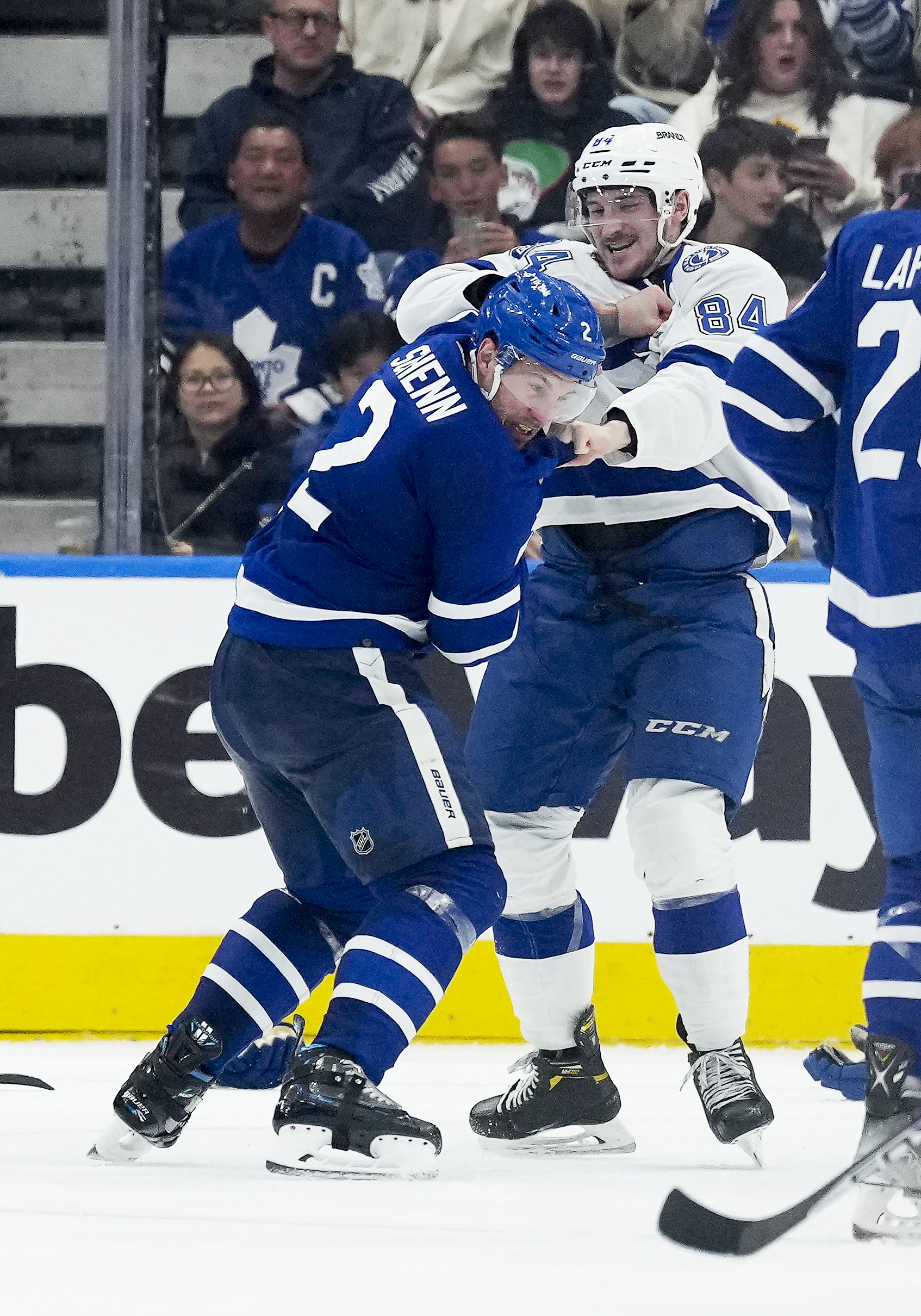
Tampa Bay will be looking for bigger things from the Saskatchewan native next season as their depth will be tested in the absence of some key contributors. Jeannot’s deployment changed after the trade from Nashville, and he was gifted the opportunity to have about 10% more offensive zone starts than he was getting with the Predators. He also saw less time on both the penalty kill and the powerplay which led to an average of three minutes less ice time per game. Jeannot may see more ice time this coming season as a lot of the forwards that were pushing him down the depth chart are likely to be exiting Tampa Bay this summer. This could lead Jeannot to sign a short-term deal to try and rebuild some of his value after coming off what was a bit of a lost season. I would expect a two-year bridge contract, but it is hard to nail down the annual value given how wildly different his past two seasons were. There are few comparables to Jeannot which should make for an interesting negotiation.
F Ross Colton – Colton has become a bit of a Swiss army knife for the Lightning and therein lies his value in the trade market, but also for any contract extension he is to sign. Colton is due for a significant raise on the $1.25MM he made last season. Given that he is a good penalty killer, can play center and the wing as is a good bet to hit 15 goals and 35 points he could triple his salary next season on a long-term deal.
Tampa Bay will have to decide if Colton is the piece to move out to bring in younger and cheaper assets, or if he is a piece that want to extend on a contract not unlike the one they signed Nick Paul to last summer. At 26-years-old Colton has plenty of productive seasons in front of him and could even develop into a perennial 25 goal scorer. He already has a season in which he scored 22 goals and is coming off a year where he put up 16 goals in 81 games while playing just 12 minutes a night.
Other RFAs: F Rūdolfs Balcers, F Gabriel Fortier, F Cole Koepke, F Grant Mismash, F Simon Ryfors, D Dmitri Semykin
Key Unrestricted Free Agents
F Alex Killorn – Killorn is the longest tenured Tampa Bay Lightning player having been drafted back in the third round of the 2007 NHL entry draft. The 33-year-old Halifax native is coming off a season in which he posted a career high 27 goals and 37 assists in 82 games. According to Elliotte Friedman, Tampa Bay has reportedly already made Killorn a long-term contract offer, but given his track record, he will be in demand and could be difficult for Tampa Bay to retain given their salary cap troubles.
Killorn has been consistency available for the Lightning having missed just two games since the 2015-16 season and scoring 40 points or more in nearly every season. While his 64 points this past season appear to be an outlier, he did put up 59 points last season and has shown steady offensive improvement despite being on the older side of 30. Tampa Bay can still make Killorn’s situation interesting, but it does appear that the long-time Lightning veteran will start next season in a different uniform. Killorn should be able to fetch a four-year contract with an average annual value north of $5MM per season.
D Ian Cole – Two-time Stanley Cup winner Ian Cole signed last season in Tampa Bay to provide the Lightning with a depth defenseman who could provide steady minutes on the backend as well as kill penalties. He did exactly that.
While his best years are likely behind him, Cole still played nearly 20 minutes a night and took almost 60% of his starts in the defensive zone. He doesn’t chip in much offensively, but he can still move the puck and get around the ice when he needs to. Cole had three goals and 14 assists in 78 games last season for Tampa Bay and could likely produce something similar again next season. Cole is likely looking for more security on his next deal as he has signed in back-to-back off-season’s for just a single year. However, I can’t see him getting more than two years at around $2.5MM-$3MM per season. It’s hard to say though, given the contracts NHL general managers threw at defensive defenseman last offseason, anything is possible for the 33-year-old.
C Pierre-Édouard Bellemare – Bellemare struggled in the minors before breaking into the NHL in his age 29 season. While it was a nice story at the time, Bellemare used his arrival to springboard himself into nine seasons in the NHL. Now at the age of 38, the native of France is coming off a down year in which his age appeared to catch up with him. Bellemare looked tired near the end of the year and struggled to four goals and nine assists in 73 games. Bellemare appeared to chase the game a lot more this season and had a hard time lining up hits, he also took more penalties as he uncharacteristically found himself out of position and was forced to take obstruction penalties.
Should he choose to keep playing, Bellemare could get a one-year contract, but given his age and lack of production last season, he is likely looking for something that is just above the NHL minimum.
Other UFAs: D Trevor Carrick, G Brian Elliott, F Pierre-Cédric Labrie, G Maxime Lagace, F Corey Perry, F Gemel Smith, F Daniel Walcott
Projected Cap Space
The Tampa Bay Lightning are one of a handful of teams that are right up against the cap with several key free agents to still try and lockup. Tampa has 17 players signed to NHL contracts with just $450K left to try and fill out their lineup. They will be able to put Brent Seabrook onto LTIR which will free up nearly $7MM in additional space. While this gives the Lightning some breathing room, it still won’t be enough to dress a full lineup for next season.
The club will likely have to move out a roster player or two to sign their remaining RFA’s which will create an additional complication. The Lightning have four players with full no movement clauses and an additional four players with full no trade clauses or modified no trade clauses. That effectively takes half of their signed players out of play if they are looking to make a move to free up cap space which will limit general manager Julien BriseBois’ options.
Tampa Bay has done a good job navigating cap challenges in the past but could be facing their toughest task yet as their two-time cup winning core has become increasingly expensive.
Photos courtesy of USA Today Sports Images. Contract information courtesy of CapFriendly.
Offseason Checklist: Colorado Avalanche
The offseason has arrived for all but the two teams that still have a shot at winning the Stanley Cup. It’s time to examine what those eliminated squads will need to accomplish over the coming months. Next up is a look at Colorado.
After winning the Stanley Cup last year, expectations were high for the Avalanche heading into this season. However, lingering injury issues for Gabriel Landeskog left them without a top winger for the entire year and they ultimately came up short in the first round, falling to Seattle. Now, GM Chris MacFarland will be tasked with making some moves to try to get them heading toward what they hope will be a deep playoff run once again.
Add Second Center
With Nathan MacKinnon locked up for the long haul on his record-setting eight-year, $100.8MM contract, Colorado doesn’t have to worry about finding a top-line center anytime soon. However, they will need to address the vacancy at that position on the second line.
It’s a spot that the club largely tried to fill internally this season following the departure of Nazem Kadri to Calgary last summer. The results were mixed as both Alex Newhook and J.T. Compher getting chances with varying degrees of success with newcomer Evan Rodrigues briefly getting a look as well. Compher responded with a career year, notching 52 points. However, he’s set to hit unrestricted free agency this summer for the first time and coming off the year he had and a marketplace where he is one of the top middlemen out there, a return doesn’t seem likely. Newhook still likely isn’t ready for the role and Rodrigues will also hit the open market next month.
That means that MacFarland will need to look outside the organization to fill that spot. On the surface, this feels like a spot where Landeskog’s LTIR could be used; the captain has already been ruled out for the entire 2023-24 campaign, giving the Avs his full $7MM contract to use, boosting their cap space to a little over $20MM, per CapFriendly. (They do, however, have as many as eleven players to sign with that room.)
However, given the uncertainty surrounding Landeskog’s long-term availability, acquiring someone on a multi-year contract with that money would carry some risk, especially knowing that there’s another big-ticket contract coming down the pipeline soon with Mikko Rantanen two years away from unrestricted free agency. As a result, their preference might be to look at someone on an expiring contract (which could have them turning to a certain division rival), allowing them to fill that spot while maintaining some longer-term flexibility. Either way, it’s an area that will need to be addressed as they won’t have the luxury of filling it from within next season.
Re-Sign Key RFAs
Colorado has two prominent restricted free agents this summer and what they do with both of them will go a long way toward determining how aggressive they can be in trying to fill out the roster. Bridge deals for Newhook and defenseman Bowen Byram are certainly defensible with how things have gone so far although, in a salary cap environment that is expected to be higher in the next couple of years, they’d be setting themselves up for less flexibility down the road in exchange for more flexibility now.
 Newhook wasn’t able to grab a full-time top-six spot but it wasn’t all bad as the 22-year-old reached the 30-point mark for the second straight year while setting a new benchmark in goals with 14. On top of that, he showed some improvement at the faceoff circle, beating his rookie season performance by nearly 7% although there is still a lot of work to do on that front. The development might be slower than they hoped for but he should still factor into their future plans. It would be a gamble to give him a pricier long-term agreement unless they were convinced that a big jump in production is on the horizon. The safer bet is a back-loaded two-year bridge contract around the $2.25MM to $2.5MM mark that buys both sides more time.
As for Byram, his case is a little less clear. When he has been healthy, he has been a key part of their top four and has shown considerable improvement. The soon-to-be 22-year-old logged nearly 22 minutes per game in both the regular season and the series against Seattle despite seeing limited time on special teams. It stands to reason there’s another jump or two coming in his development. However, he has a lengthy stretch of concussion concerns to the point where he briefly thought his career might have been over back in 2021.
If they lock him up on a long-term deal now, there’s a chance it become a very team-friendly one down the road but if he doesn’t stay healthy, it could be a problem for them fairly quickly. With just 91 career regular season games under his belt, a bridge contract shouldn’t break the bank too much and should fall somewhere within the $3MM range. Meanwhile, a long-term agreement that buys out multiple UFA years could double that bridge amount. With no arbitration eligibility, this could drag on but getting a contract done sooner than later would certainly help Colorado determine what else they can do in free agency this summer.
Toews Extension Talks
To say that Colorado has done quite well with the acquisition of Devon Toews would be an understatement. When then-GM Joe Sakic acquired him from the Islanders for two second-round picks, it seemed like a low price to pay. He then signed Toews to a four-year contract that carries a $4.1MM AAV. Suffice it to say, it was already a team-friendly agreement heading into this season where all the 29-year-old did was put up 50 points and log over 25 minutes per game for the second straight year. Now, it’s arguably one of the best-value contracts in the league. Toews has one year left on that contract which means that he’s eligible to sign an extension as of July 1st.
How much will that new contract cost? It seems fair to suggest that they won’t want to go past Cale Makar’s $9MM AAV but if Toews has a third year like this one, his price tag could come pretty close to that number.
Can they afford that price point? Potentially, especially depending on which route they go with Byram. If both get long-term contracts, the price of their back end (which also includes Josh Manson for three more years at a $4.5MM cap charge) is going to balloon in a hurry. That’s not ideal for a team that is already top-heavy up front.
To that end, it wouldn’t be surprising to see the Avs try to work out something early with Toews. If they can get an extension in place in early July, it’s possible that they turn around and try to find a trade for Samuel Girard, who has four years left at $5MM. That’s not a bad contract by any stretch – it’s arguable that it’s a below-market one – but they can’t afford to see their back end cost approach the $30MM mark and with the injury trouble Manson had this season, it’s quite unlikely he moves which makes Girard the potential trade casualty. In a free agent market that isn’t the deepest, Colorado could net a strong return for Girard’s services. But they can’t really shop him too aggressively until they know that Toews is signed so in a perfect world, that domino falls rather quickly.
Upgrade Forward Depth
Colorado’s bottom-six group struggled as a unit this season. For a lot of the time, the Avs were rarely playing their fourth line and when they weren’t on the ice, they weren’t able to get much going. The end result was a frequent shuffling of low-cost personnel in the hopes that one or two of them would stick. Eventually, they had to turn to the trade market, picking up Denis Malgin and Matthew Nieto, both of which at least stabilized things a little bit.
The majority of that unit is poised to turn over. Veterans Darren Helm (who was injured most of the year), Andrew Cogliano, Nieto, and deadline acquisition Lars Eller are all unrestricted free agents. Malgin is currently an arbitration-eligible restricted free agent but is a non-tender candidate just to avoid the possibility of going to a hearing. Several of the recalls from the minors that got a chance during the season are also pending UFAs. There is going to be considerable turnover in this group.
This year, finding capable low-cost options wasn’t easy in-season. Now, there’s at least a chance to try to build a more complementary bottom six in the summer, albeit with similar financial restrictions as by the time they find a center and re-sign Newhook and Byram, a big chunk of their cap room will be gone. They will need to find the right mixture of veterans and under-the-radar depth pieces (with perhaps a waiver claim or two in training camp) to give head coach Jared Bednar a shot at running four lines with some regularity in 2023-24. The options will be plentiful but with so many teams needing players at or near the league minimum, demand for some of these players is going to be high as well.
Photo courtesy of USA Today Sports Images.
Free Agent Focus: St. Louis Blues
Free agency is less than a month away and teams are looking ahead to when it opens. There will be several impact players set to hit the open market in July while many teams have key restricted free agents to re-sign as well. We continue our look around the NHL with an overview of the free agent situation for the St. Louis Blues.
Key Restricted Free Agents
D Scott Perunovich – Set to turn 25 in August, Perunovich’s once promising career trajectory was severely impacted by extremely unfortunate injury luck. The left-shot blueliner underwent wrist surgery in March of last year and missed most of this past season after undergoing shoulder surgery in October. He also missed the entirety of the 2020-21 season due to another shoulder surgery.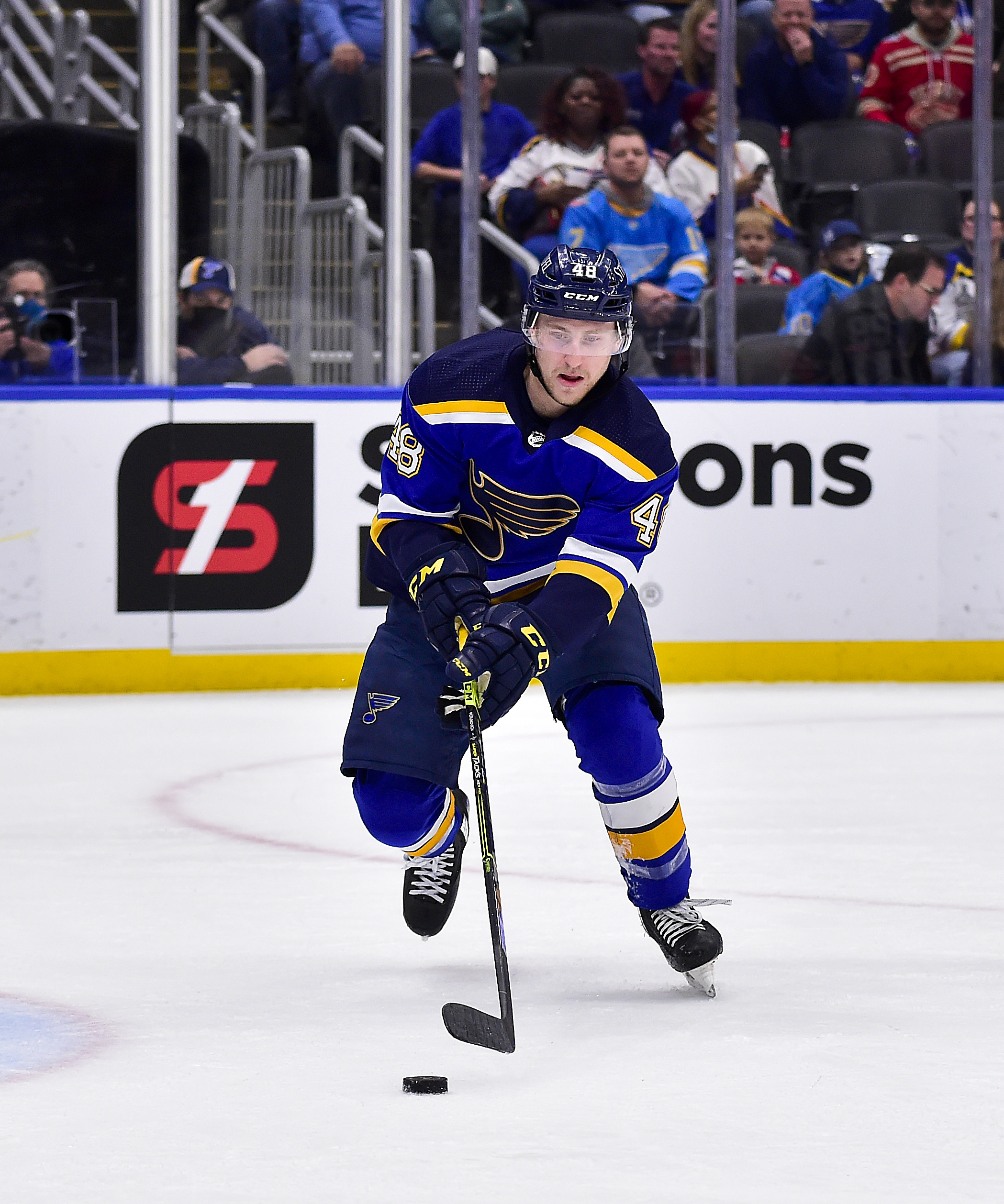
A 2018 second-round pick, Perunovich had been ranked consistently among the Blues’ top prospects throughout his decorated NCAA career, a tenure at the University of Minnesota-Duluth that included back-to-back National Championships and a Hobey Baker award win.
The promise he showed in college has translated to the AHL, where he’s posted a 1.08 career points-per-game mark as a defenseman.
Unfortunately, though, that impressive scoring rate comes in just 42 career games, and that simple lack of playing time is the most serious obstacle he faces to receiving a significant raise from the $750k he earned this past season. He’s an undoubtedly talented player who smartly took the opportunity to get even more games under his belt by representing the United States at the IIHF World Championships last month, but he’ll need to prove he can stay healthy before he makes a dent in the Blues’ financial plans.
F Logan Brown – Another player who has shown promise but also seen injuries do significant damage to his development, Brown did not take the step forward in St. Louis that he likely hoped for when he received his change-of-scenery trade in 2021. The 2016 11th overall pick is a hulking six-foot-six center whose combination of size and skill has long tantalized scouts.
He’s more recently begun to put things together at the AHL level, scoring 19 points in 21 games for the Springfield Thunderbirds across two seasons but his NHL impact has remained marginal. He’s scored just 17 points in 69 games as a Blue and now at 25 years old, it’s possible St. Louis decides to cut bait rather than extend their hopes that he can develop into something more.
It’s also possible that the Blues opt to retain him at a cap hit similar to his $750k number from last season with the idea of him competing for an NHL spot in training camp and potentially taking on a more permanent role as a top-of-the-lineup player in Springfield.
Other RFAs: F Alexey Toropchenko, F Adam Gaudette, F Hugh McGing, D Tyler Tucker, D Dmitri Samorukov, D Brady Lyle
Key Unrestricted Free Agents
F Josh Leivo – 30-year-old Leivo set career highs in games played in the NHL this past season but unlike his fellow high-scoring 2021-22 Chicago Wolf, Stefan Noesen, Leivo didn’t reach a new stratosphere of offensive production in the NHL. Noesen, Leivo’s teammate on last season’s Calder Cup-winning AHL team, became a valuable secondary scorer for the Carolina Hurricanes and potted 13 goals and 36 points, as well as eight points in 15 playoff games.
Leivo, on the other hand, only managed four goals and 16 points in 51 games.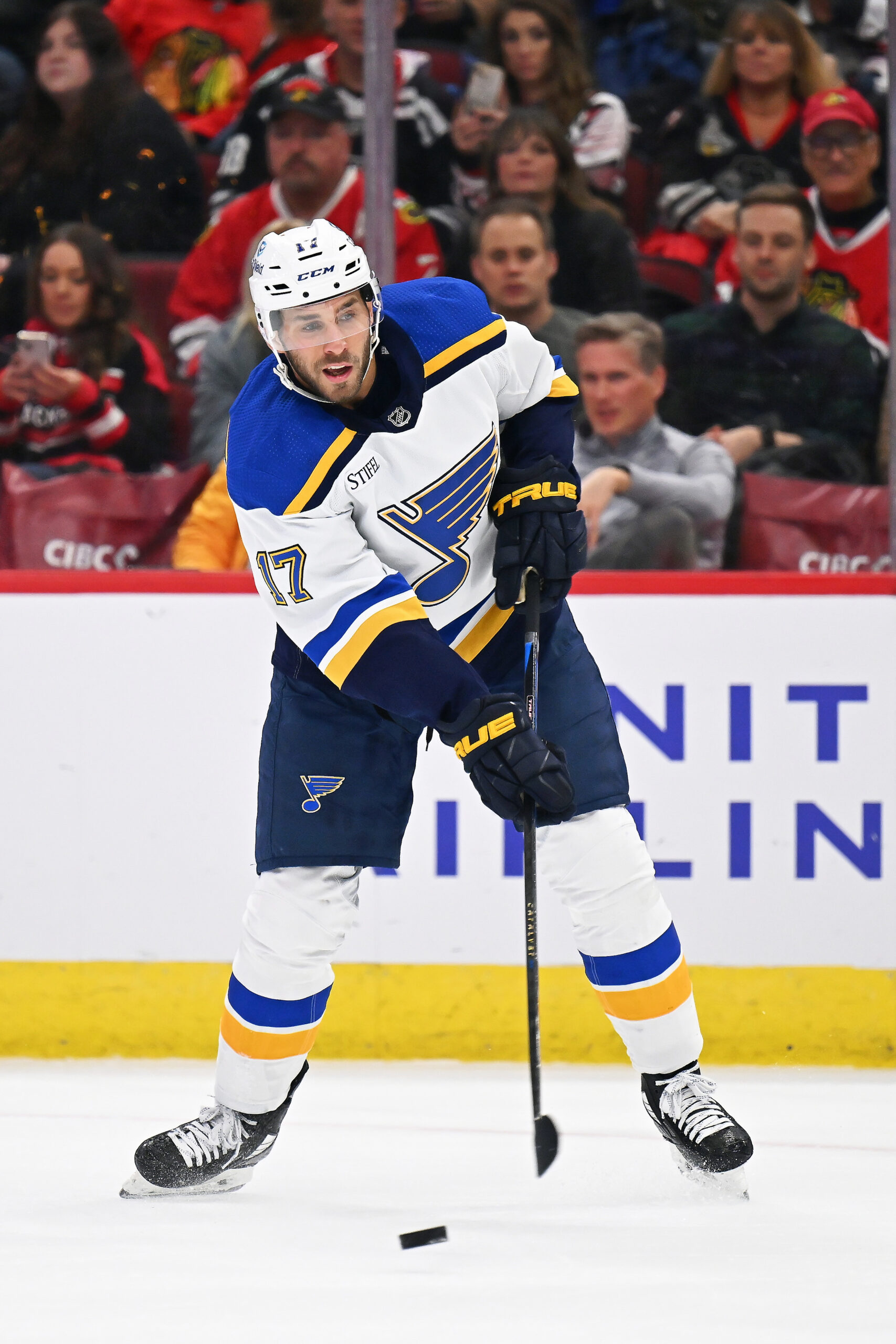
As a result, while Noesen took advantage of the opportunity his extremely productive 2021-22 AHL campaign afforded him at the next level, placing himself in a position to receive a significant pay raise, Leivo’s now in the spot where one has to wonder if he’s at his most valuable as a top-of-the-lineup AHL scorer.
That’s something the Blues will need to wrestle with, as there’s clearly some real talent that Leivo offers only he may not be best suited as an NHL regular.
In any case, Leivo’s season had its ups and downs but is unlikely to result in St. Louis struggling to find a way to afford to extend him so he can remain part of their organization.
G Thomas Greiss – While 22-year-old Joel Hofer struggled in two games with the Thunderbirds in the playoffs, he helped lead them to the 2021-22 Calder Cup Final (against Leivo’s Wolves!) and had a stellar 2022-23 regular season, posting a .921 save percentage across 47 games. He’ll turn 23 before the end of the month and per CapFriendly has one year remaining of waiver-exempt status.
So as he remains waiver-exempt for another year, it’s definitely possible the Blues choose to give Hofer one more year of seasoning in the NHL before he transitions to NHL duty in 2024-25. But with Vadim Zherenko poised to take on a larger role in Springfield and two other minor-league goalies under contract (Will Cranley and Colten Ellis) Hofer is more likely ticketed for NHL duty next fall.
That means that Greiss, now 37, is highly unlikely to return to St. Louis for another year as the backup to starter Jordan Binnington. The 368-game veteran’s .896 save percentage mirrored the .891 mark he posted last season with the Detroit Red Wings and means Greiss is now two full seasons removed from being an above-average backup goalie. There could still be some leaguewide interest in adding Greiss as an experienced and affordable backup option, but if that’s the case that interest is unlikely to come from the Blues.
F Matthew Highmore – Highmore, an undrafted 27-year-old forward took a big step forward at the AHL level this season, scoring 19 goals and 61 points for the Thunderbirds, a mark that placed him second in team scoring behind sniper Martin Frk. In addition to his exceptional AHL scoring numbers Highmore offers 139 games of NHL experience, and he could be one of the more in-demand AHL free agents, and as a result could earn a more lasting NHL opportunity for next season, similar to what Kiefer Sherwood got from the Nashville Predators this past season.
With Frk headed overseas, it’s possible the Blues prioritize re-signing Highmore to maintain some continuity at the top of their AHL lineup. Though it would be a mistake to not also note that other clubs looking to beef up their AHL lineups are likely to be after Highmore as well.
Other UFAs: F Tyler Pitlick, F Nathan Todd, F Luke Witkowski, D Steven Santini
Projected Cap Space
The Blues are projected to have around $7.5MM in available cap space by CapFriendly, a number that’s not exactly huge but also not going to be eaten into by any significant contract extensions for restricted free agents. GM Doug Armstrong could create some more space by moving out a pricey veteran defenseman such as Nick Leddy, Marco Scandella, or even Torey Krug, and such a trade would open up even more avenues for the Blues to add to their team. Regardless of what specifically the team does, they have a decent purse available to them to make additions, but without moving someone out they might not be able to shop at the top of the market.
Photos courtesy of USA Today Sports Images. Contract information courtesy of CapFriendly.
Free Agent Focus: Seattle Kraken
Free agency is less than a month away and teams are looking ahead to when it opens. There will be several impact players set to hit the open market in July while many teams have key restricted free agents to re-sign as well. We continue our look around the NHL with an overview of the free agent situation for the Seattle Kraken.
Key Restricted Free Agents
D Vince Dunn – Dunn, who will be 27 next season, is by a wide margin the most significant pending free agent the Kraken have on their roster.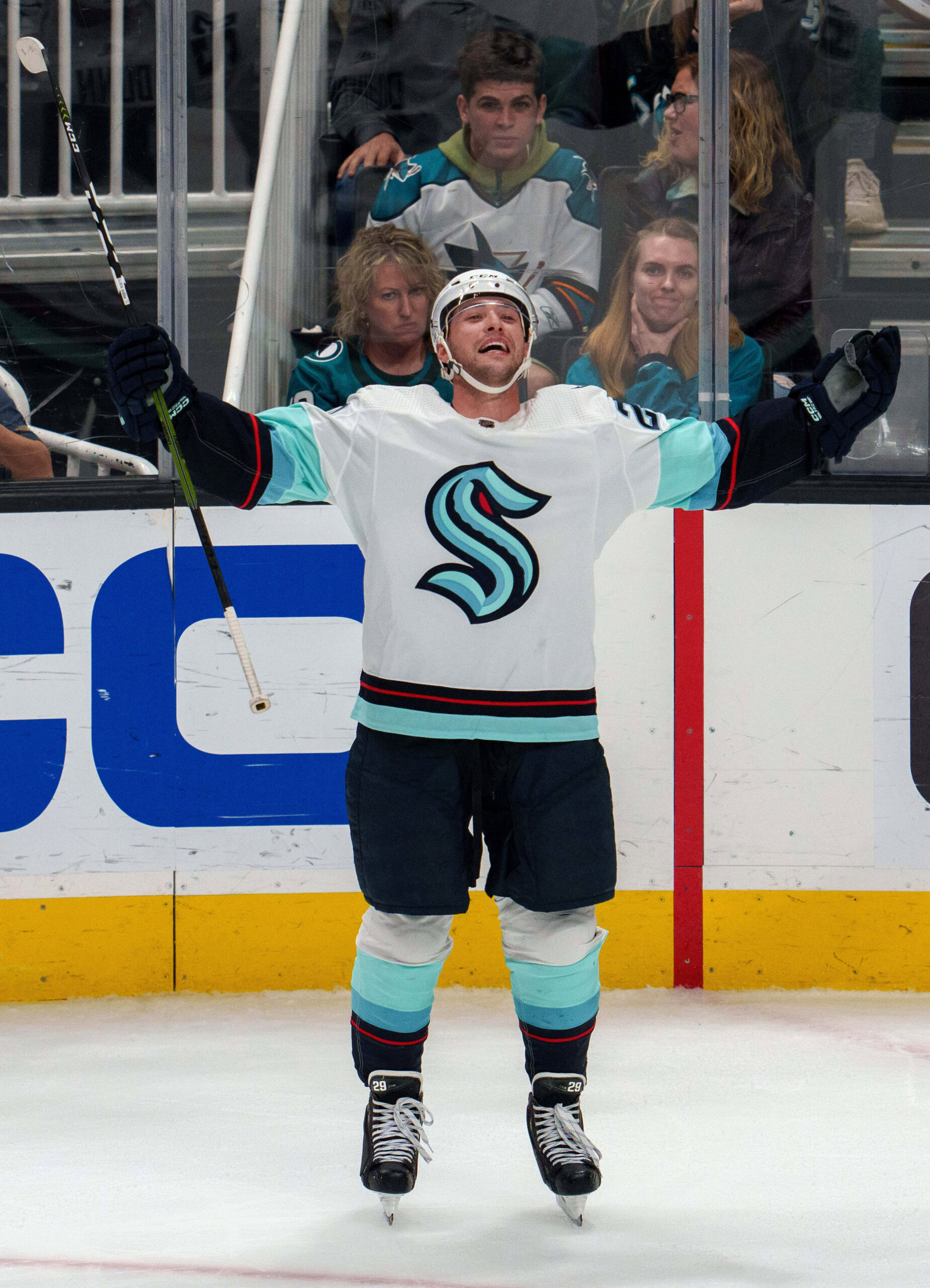
The left-shot blueliner is set to receive a sizeable raise from the $4MM AAV he played this season on after scoring 14 goals and 64 points this past season, a total that tied him for tenth in the NHL in scoring by a defenseman.
Dunn has quickly emerged as a dominant force in transition and the type of blueliner that can make a significant impact in the offensive zone.
He’s not a sheltered, offense-only contributor either as he logged nearly 24 minutes per night for the Kraken, the highest average on his team. It seems as though it’s only a matter of time before Dunn becomes the highest-paid player on Seattle’s books.
F Daniel Sprong – While not quite to the same degree as Dunn, Sprong had an impressive breakout 2022-23 campaign. Despite averaging just 11:25 time on ice per night, Sprong finished his season with 21 goals and 46 points in 66 games, which is a 26-goal, 57-point 82-game pace. There aren’t many players who could manage those types of numbers with such little ice time, yet Sprong, owner of a lethal shot, managed to do exactly that.
A former top prospect of the Pittsburgh Penguins, it had been long believed that Sprong held some untapped offensive upside but until this year he had failed to show more than sporadic flashes of offensive brilliance. The question for the Kraken to answer, then, is whether they believe Sprong’s breakout is sustainable.
If they think he can repeat this performance as a productive bottom-sixer, he’ll easily earn a sizeable raise from his $750k AAV. But if Seattle is more uncertain about his future, perhaps weary to invest too greatly into a player with a track record of inconsistency (who didn’t have a good playoffs despite Seattle making it to the second round) then these negotiations could get dicey, especially since Sprong is arbitration-eligible.
D Will Borgen – Borgen took a major step forward in his career in 2022-23, playing in all 82 games for the Kraken as well as all 14 of their playoff contests. He was a steady presence on the Kraken’s second and third pairings who also pitched in on the team’s second-unit penalty kill, and his play this season likely merits a decent raise from the $900k he cost the team on his last deal.
Other RFAs: F Morgan Geekie, F Kole Lind, D Cale Fleury
Key Unrestricted Free Agents
D Carson Soucy – Operating in a similar role to Borgen, Soucy managed to play nearly all of the Kraken’s games this past season and averaged just over 16 minutes time on ice with nearly two minutes each night spent on the penalty kill.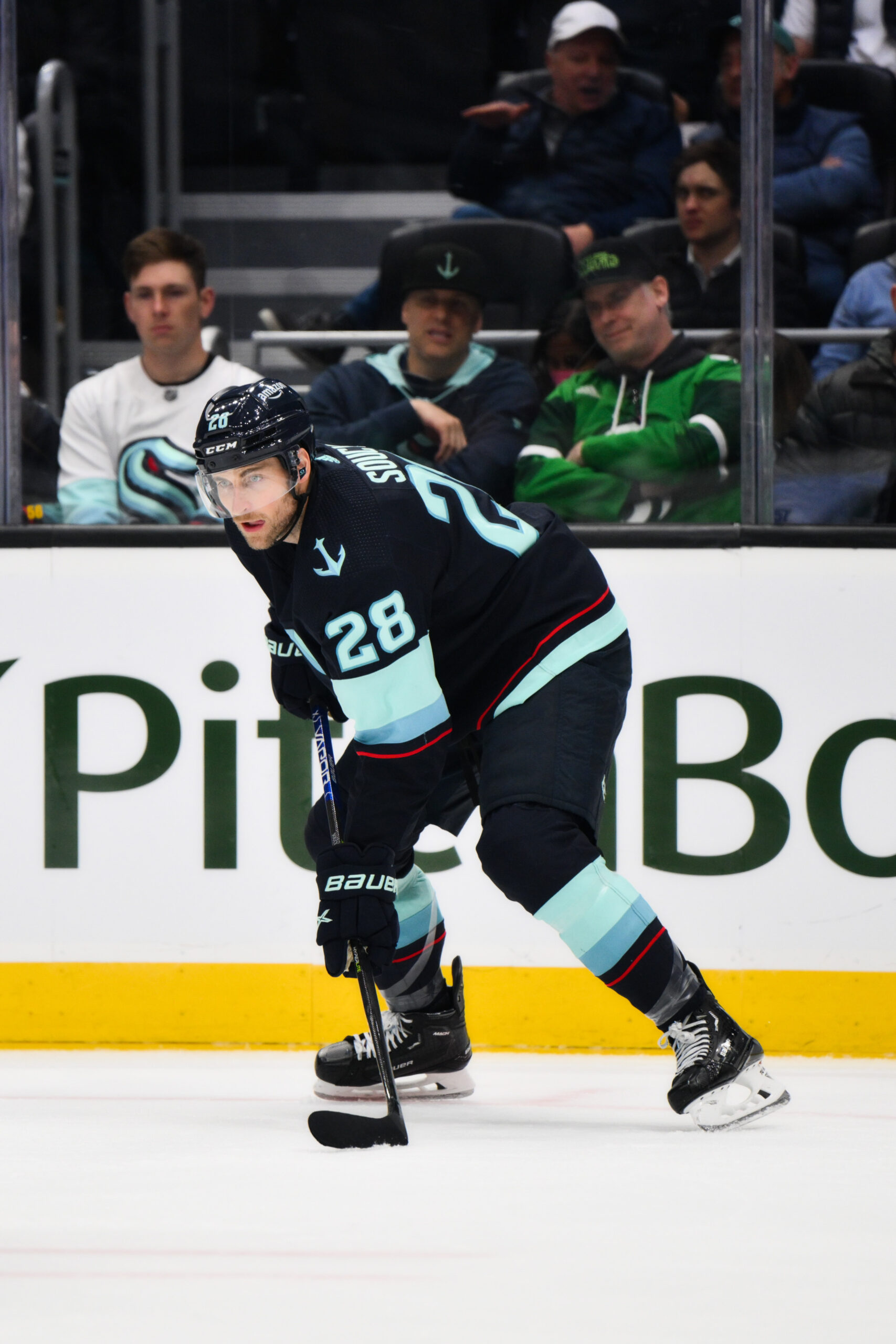
His offensive production declined slightly (from 21 points in 64 games last season to 16 in 78 games this year) but overall his play remained steady. He was a dependable defensive defenseman and offers the type of size and muscle on the blueline that many teams covet.
The Kraken are likely to want to keep Soucy around to maintain the quality of their defense, but given how well he’s done in Seattle the team may have a tough time matching the outside offers that come his way.
With 2021 35th overall pick Ryker Evans a breakout star in his first AHL campaign (he has 19 points in 20 playoff games at the time of writing for the Coachella Valley Firebirds) and likely to be pushing for an NHL spot in training camp, perhaps the Kraken feel comfortable letting Soucy walk and opening the door for Evans to claim his vacated spot on the left side of the team’s defense.
G Martin Jones – 33-year-old netminder Martin Jones’ numbers weren’t much to write home about, with his .887 save percentage in 48 games an especially weak mark, he does have one number really working in his favor: 27. That’s the number of games Jones won for the Kraken, and he posted an overall 27-13-3 record. He gave Seattle enough to take home two points in the vast majority of the games he played, and in a backup role there’s a lot of value in that.
With Chris Driedger and Philipp Grubauer already on their books and Daccord also in the mix, it seems relatively unlikely that Seattle will opt to bring Jones back. But although his save percentage was quite poor, he did win far more often than he lost and therefore put forth a solid argument to receive a new contract similar to the $2MM one he received last summer.
G Joey Daccord – Like the aforementioned Evans, Daccord has played extremely well with AHL Coachella Valley and his current performance likely places him firmly in the NHL conversation heading into next season. He could possibly end this season as a Calder Cup-winning goalie and he has posted a .927 save percentage through 20 games for the Firebirds. He was solid in the regular season as well, and at 26 years old looks ready to take the next step and become an NHL backup.
Whether he takes that step in Seattle is an open question, as Driedger remains on the books at a $3.5MM cap hit next season and Grubauer firmly re-established himself in Seattle by leading the franchise to their first-ever playoff series win.
In any case, he looks to be this year’s Charlie Lindgren, as Lindgren placed himself in a similar circumstance a year ago via strong performances for the AHL’s Springfield Thunderbirds and that summer earned himself a $1.1MM AAV deal to become the backup for the Washington Capitals. Perhaps that’s what’s in store for Daccord should he hit the open market.
Other UFAs: F Ryan Donato, F Joonas Donskoi, F Jesper Froden, F John Hayden, F Austin Poganski, F Alex True, F Carsen Twarynski, D Gustav Olofsson, D Brogan Rafferty, G Christopher Gibson
Projected Cap Space
This is where Seattle are in decent shape. CapFriendly projects them to have over $20MM in cap space, though that figure will be eaten into considerably by an extension for Dunn. With significant dollars set to expire in the near future (Jordan Eberle has one year and $5.5MM left on his deal, and Alexander Wennberg has one year and $4.5MM left on his contract, to give two examples) the Kraken are in a prime position to invest significant dollars in their team this summer. So far they’ve opted to build a team that prioritizes balance and depth, but maybe the significant financial flexibility they have this summer will lead them to chase some stars, similar to what the Vegas Golden Knights did following their first experience of playoff success.
Photos courtesy of USA Today Sports Images. Contract information courtesy of CapFriendly.