
The Stars Are Facing A Cap Crunch
The NHL salary cap is set to rise significantly for the first time since before the pandemic-shortened seasons, which will be welcome news for contending teams that are facing a cap crunch. Despite the increase, several teams will still have significant work to do to be cap-compliant by the time NHL training camps open in September. Most of these teams remain in the Stanley Cup Playoffs, and that is where the Dallas Stars come in.
The Stars are one of the favorites to win the Stanley Cup this year, and no doubt are fine with their upcoming salary cap predicament. Dallas will have just $5.873MM in salary cap space entering this summer and have just 15 players signed in that projection (as per PuckPedia). The Stars will need to make some tough decisions to remain under the salary cap, but the good news is that most of their pending UFAs are in their mid-30s, and they have just a couple of RFAs to sign who won’t break the bank. Positive news aside, a couple of the Stars’ UFAs will be ones they likely want to keep, and they will have to move out significant salary if they hope to do so.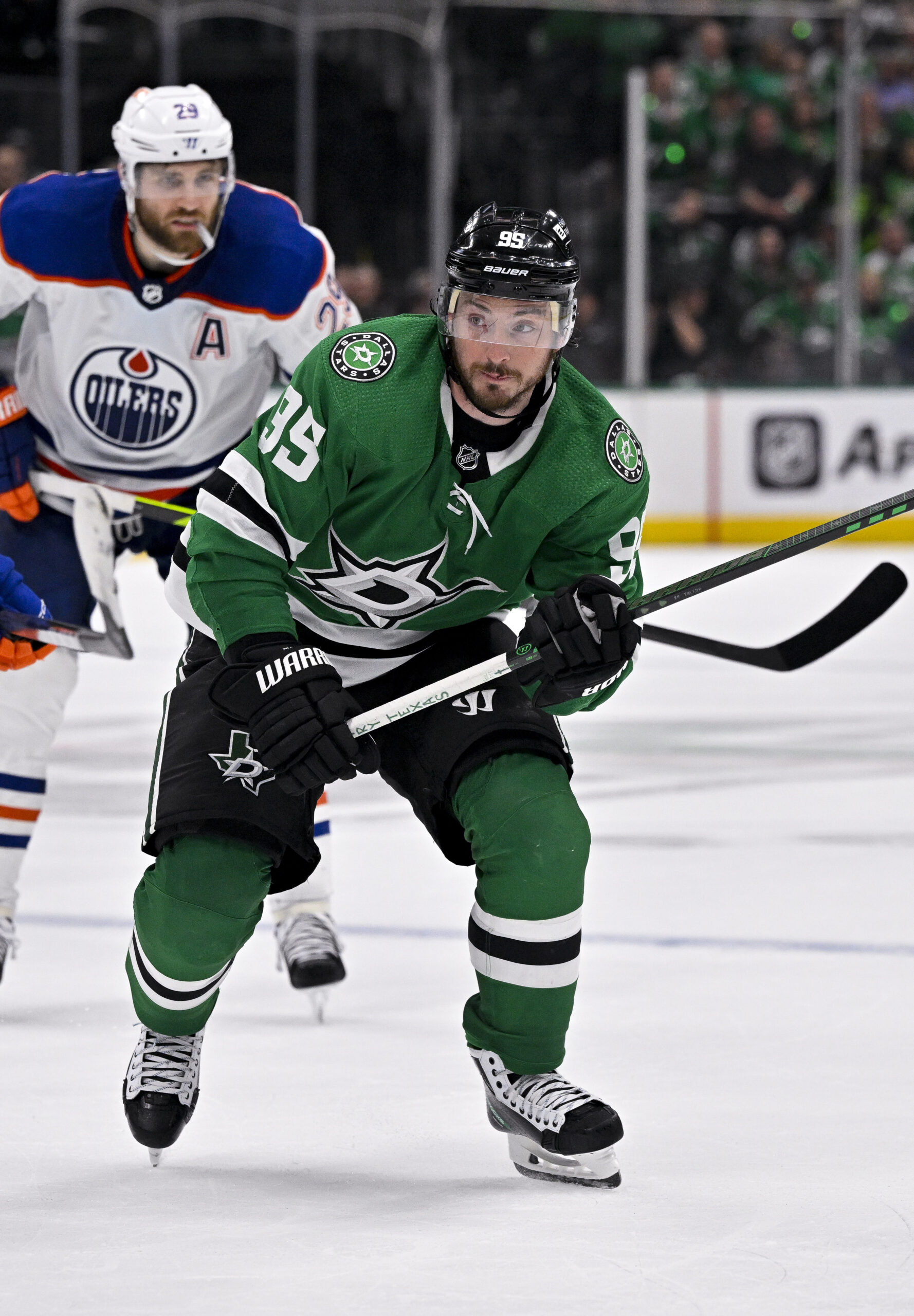
Matt Duchene has been an excellent fit for Dallas after playing under back-to-back one-year $3MM contracts. The likelihood that he does this again is slim, but he might enjoy the fit so much that he offers another discount. There are several caveats regarding Duchene’s pending free agency, the first being that he is still being paid handsomely by the Nashville Predators after he was bought out two seasons ago. Duchene is set to be paid over $6.5MM by the Predators next season as part of his buyout, so he may be inclined to sign a similar deal and take a total $9.5MM package.
The other caveat is that the buyout drops to just $1.5MM in the 2026-27 season and the 2027-28 season, meaning that Duchene will look at a significant drop in total salary. This, coupled with Duchene’s age (34) and his terrific production this season (30 goals and 52 assists in 82 games), could mean that he sees this summer as his final chance to cash in. If he doesn’t, the Stars might not be able to bring him back, even if he offers a discount on his market value.
The Stars will also have to deal with long-time veteran Jamie Benn, a pending UFA. Benn is no longer the power forward he was in his prime, but he can still put up points at even strength and has value in that he rarely misses games and can offer a veteran presence. This past season, the 35-year-old tallied 16 goals and 33 assists in 82 games, and while those numbers are respectable, they are a far cry from how he used to produce back when he won the Art Ross Trophy in 2014-15.
That being said, most players fall off in their 30s. It’s no surprise that this has happened to Benn, but he can still produce at five-on-five, and there is value in him remaining with the Stars if they can find cap space and opt to bring him back. Benn is completing the final season of an eight-year contract that paid him $9.5MM annually, and he said in October that he intended to play out his contract and see where things go (as per TSN), but the Stars have expressed interest in retaining him. AFP Analytics is projecting a two-year deal for Benn at $4.8MM per season, which would take up nearly all of Dallas’ remaining cap space and only allow them to sign one more player at the league minimum. They’ll need to move out salary to retain Benn or let him walk into free agency.
The Stars must also contend with forward Evgenii Dadonov‘s free agency as the 36-year-old is set to hit the market as a UFA. Dadonov had an off year during the 2023-24 season but bounced back this year with 20 goals and 20 assists in 80 games. The veteran will likely seek a two-year deal, and AFP Analytics has him projected to earn a two-year contract in the range of $3.25MM annually, making it challenging for Dallas to slot him into their salary cap ledger.
So, what can the Stars do? Well, if they hope to bring back any of these three men, they will likely need to find a way to move on from a player such as Tyler Seguin and his $9.85MM cap hit or move out a combination of veterans such as Matt Dumba ($3.75MM) and Mason Marchment ($4.5MM).
Seguin would be a difficult player to trade, as only a handful of teams could afford to take on his salary, and those teams are unlikely to be ones for which Seguin would waive his no-movement clause (NMC). Seguin has two years left on his contract and is still productive when he can play. This past year, he was limited to just 20 games, but he still managed to pile up nine goals and 12 assists. In contrast, last year, when he was in better health, he scored 25 goals and added 27 assists in 68 games. Seguin is 33 and no longer an All-Star, but he remains a solid top-six player that Dallas will want to (and have to) hang onto.
The most likely moves involve moving on from several veterans. The aforementioned Dumba is a good candidate to move as he has no trade protection, and right-shot defensemen are always in demand. Dumba had a decent season with the Stars in sheltered minutes and could draw some trade interest even though he’s been a healthy scratch in the playoffs thus far. The Stars could certainly replace what Dumba does by committee, as they have Lian Bichsel ready to make the jump to the NHL full-time, and although he is a left-shot defender, the Stars could shift some bodies around to make it work. They are already using Alex Petrovic over Dumba in these playoffs, so cutting that cost would be a big move to get under the cap and bring a veteran back into the fold on an extension.
Beyond Dumba and Seguin is where the Stars’ options become murky. Sure, they could look at Marchment as he has one year left on his contract, but given that he can play top-six minutes and brings a lot to the table, the Stars might not have an appetite to move him while they are trying to contend.
Whatever happens in Dallas, the Stars will look different next season, but it’s unlikely that they care now. The Stars will remain contenders next season even if they let all their veteran UFAs walk, as they have a young core in their prime that is under contract and set to continue their strong play.
Photo by Jerome Miron-USA TODAY Sports
Offseason Checklist: Seattle Kraken
The offseason has arrived for half of the league’s teams that aren’t taking part in the playoffs plus those eliminated in the first round. Accordingly, it’s time to examine what they will need to accomplish over the coming months. Next up is a look at Seattle.
Expectations were high for the Kraken heading into 2023-24, perhaps a bit too lofty after an impressive second season. The team struggled, resulting in a new coach and some big free agent splashes. That didn’t move the needle, however, as the struggles continued, leading to another coaching search while the front office has been shaken up. Accordingly, new GM Jason Botterill has plenty on his checklist in the weeks and months ahead.
Find A New Coach
After Dave Hakstol was let go last year, the Kraken promoted from within, naming veteran Dan Bylsma as their new head coach. Considering that he had some NHL success in the past with Pittsburgh and had fared quite well with AHL Coachella Valley, it was a reasonable decision. But now, they’re on the lookout for a new bench boss again following the decision to move on from him quite quickly.
It would be a bit surprising to see recent history repeat itself with another promotion from the Firebirds. Derek Laxdal took over from Bylsma this season in the minors and while he has a decent track record as a head coach there (and in the OHL where he was Coach of the Year last season), it feels like this is a situation where they’re going to be looking for someone more experienced that can get them back to the playoffs next season.
Rick Tocchet’s name has surfaced as a strong candidate. He’s more than familiar with the division having been with Vancouver the last couple of years and he also has some familiarity with Botterill dating back to their days in Pittsburgh. Last year’s Jack Adams Award winner, Tocchet is also a strong candidate for several other openings. On the other side of the front office, Ron Francis has worked with Peter Laviolette before from their days in Carolina which could help his cause when it comes to being considered.
One under the radar option that has some ties to Seattle is Jay Leach. He was one of the finalists for the top job last year and was an assistant with them until this season. It would be a little surprising to see a first-time head coach get the job but Leach having worked with a lot of the team before could give him a leg up in discussions. If management wants to go with a younger coach with some experience, Jay Woodcroft could be a fit as well.
With several openings around the league, the potential exists for this to drag out a bit, especially if teams have their eyes on assistants who are currently still working which could slow the market down. But if Botterill and company have their eyes on someone who’s available now, they could move relatively quickly to get this hire done.
Decide Grubauer’s Fate
When Seattle signed Philipp Grubauer to a six-year, $35.4MM contract back in 2021, it looked like they might have their goalie situation settled for a while. While there was some risk in signing someone coming off a career year with Colorado (one that made him a Vezina finalist), his overall track record was still pretty solid with a 2.30 GAA and a .920 SV% in 214 games up to that point.
Let’s just say things have not gone as planned for Grubauer since then. Over the first half of the deal, he failed to post a save percentage above .899 and ultimately lost the starting job to Joey Daccord. This season, it got even worse. His GAA jumped to a career-high 3.49 while his SV% dropped to a career-low .875, numbers that were significantly worse than the league average. By MoneyPuck’s Goals Saved Above Expected mark, he failed to crack the top-100 league-wide which also says a lot. Unsurprisingly, he cleared waivers in late January and played in seven games with Coachella Valley where his numbers were a bit better but still below average.
With Daccord beginning his five-year, $25MM contract next season, Seattle is now primed to be one of the top-spending teams in goal. Given their cap situation (they have over $21MM in space per PuckPedia), they can afford it. On the other hand, that’s a lot of money to pay a goalie they don’t have much faith in, making a buyout a potential option.
Should Seattle buy Grubauer out this summer, they would take on dead cap charges of $1.983MM in 2025-26, $3.083MM in 2026-27, and $1.683MM in 2027-28 and 2028-29. Still, that would free up nearly $4MM in space next season and $3MM the year after that before adding on extra money the following two seasons. Meanwhile, unless he’s being moved as salary ballast to offset a pricey contract coming back the other way, a trade is probably an unrealistic outcome.
Could the Kraken find a better goaltender for the savings from a Grubauer buyout? Even with a thin UFA market, there’s a good chance they could do so and potentially even free up a bit of space to put toward filling another spot on the roster. Is that improvement enough to justify adding dead cap money in 2027-28 and 2028-29? That’s what management will need to decide over the next six-plus weeks.
Re-Sign Key RFAs
A decent chunk of Seattle’s current cap space is going to be required to keep their RFA class intact. Tye Kartye has earned a small raise off his entry-level deal which is pretty straightforward but their other two restricted free agents of note have a bit more complicated cases.
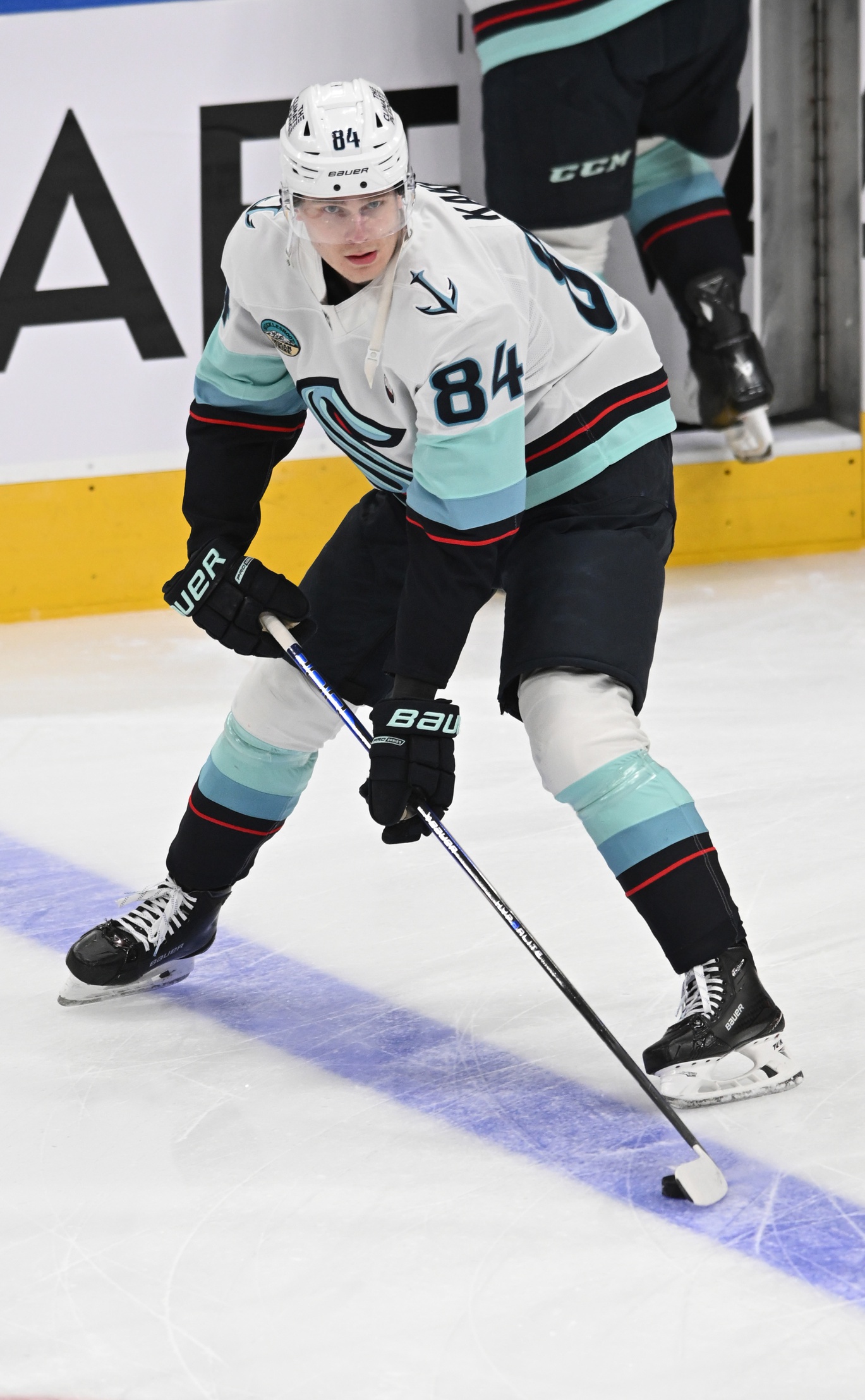 Last offseason, both the Rangers and Kaapo Kakko opted to kick the can down the road, so to speak, with the winger preemptively accepting what would have been his qualifying offer. It was a chance for more evaluation time for both sides. That evaluation eventually led to the 24-year-old getting a fresh start with Seattle, one that did him a lot of good. After notching just 14 points in 30 games to start the season, Kakko was more productive following the swap, tallying 10 goals and 20 assists in 49 outings with the Kraken.
Notably, this is his final RFA-eligible year. Kakko could simply opt to file for arbitration, go to a hearing, and probably get a $1MM or so raise from his $2.4MM qualifying offer while setting himself up to hit the open market next summer at the age of 25, an outcome we rarely see. But if both sides are happy with how things went following the swap, a multi-year agreement could be worked out. With Kakko’s inconsistency, a long-term deal feels unlikely for both sides but effectively another bridge contract that buys up a UFA year or two might make sense for both player and team. In that case, the price tag could jump closer to the $4MM per year range.
Then there’s Ryker Evans. The defenseman played his first full NHL campaign this season and fared quite well, notching 25 points while logging over 19 minutes per game while seeing a bit of action on both special teams units. Already basically a top-four piece, he’s the type of player Seattle would likely want to sign to a long-term agreement. A max-term deal could push the AAV past the $6MM range while a six-year pact that only buys out a couple of UFA seasons could start with a five. Alternatively, if one side wants a bridge agreement, the price tag would probably land in the $3MM territory which would give them a bit more cap flexibility to add pieces this summer although they’d be paying a higher price tag for Evans down the road. They’ll have to decide which is the better option over the coming weeks.
Look Into Moving A Forward
Considering that it appears the goal for next season is to make the playoffs, this might seem a little odd. However, there aren’t many open roster spots (once Kakko and Kartye sign, they’ll have 10 forwards locked up) and it seems likely that management will once again try to add a piece or two on the open market. On top of that, they have some forwards including Jani Nyman and 2024 first-rounder Berkly Catton who are close to being NHL-ready. Integrating them into the lineup will also require some spots to be opened up.
The way to open up a spot or two will likely have to come through a trade. Forward Jaden Schwartz is about to enter the final year of his contract and while he’s extension-eligible, it doesn’t feel like the Kraken would want to do an early extension. He stayed healthy this season and finished third in team scoring with 49 points in 81 games but injuries plagued his first three years with the team. Given that he has dabbled at center a bit in the past and is on a manageable $5.5MM cap charge, there could be some trade interest in him from a team looking just for a short-term addition up front that doesn’t want to commit to a longer-term deal on the open market.
It wouldn’t be surprising to see Botterill look into moving Andre Burakovsky as well. He has two years left at $5.5MM and like Schwartz, injuries have been an issue since signing that deal as he missed 33 games in each of his first two seasons. However, he had a 37-point effort this year and had 39 points in 49 games in 2022-23 with them so there is still some offensive upside to work with. Similar to Schwartz, a team looking for a shorter-term addition might be more interested in flipping something to get Burakovsky on a short-term deal.
Jordan Eberle and Eeli Tolvanen are on expiring deals but Eberle being their captain probably takes him out of consideration at this point while Tolvanen is someone that they may try to keep around.
Moving out a forward isn’t something they necessarily have to do but with two straight disappointing seasons now, it wouldn’t be surprising to see them try to shake up their forward group while simultaneously making room for some new free agents and a prospect or two.
Photo courtesy of Walter Tychnowicz-Imagn Images.
Offseason Checklist: Buffalo Sabres
The offseason has arrived for half of the league’s teams that aren’t taking part in the playoffs plus those eliminated in the first round. Accordingly, it’s time to examine what they will need to accomplish over the coming months. Next up is a look at Buffalo.
The question in Buffalo in recent years has been, ‘Is this the year?’ when it comes to ending their playoff drought? Once again, the answer this season was no and it wasn’t particularly close. At this point, it appears as if it will be the status quo behind the bench and in the front office, though an experienced addition to the front office could be a possibility. Either way, GM Kevyn Adams has a lot to do this summer, both in terms of keeping his young core intact while also trying to add to it. Turning this group into a playoff team might be asking too much but some things can be done to get them closer to that goal.
Add Impact Right-Shot Defenseman
One area that Buffalo is well-stocked in is high-end left-shot defensemen. Rasmus Dahlin turned the corner a few years ago and has emerged as an all-situations number one defender. Owen Power, another first-overall selection, is only 22 and likely has another gear to get to while already being a top-four blueliner. Meanwhile, Bowen Byram, who was acquired at the 2024 trade deadline, had his best NHL season and is a high-quality option himself. That’s a good spot to be in for that side of the back end.
The problem is that their right-shot options have been nowhere near the same quality, a problem that has hindered them for several years now. They’ve been unsuccessful at developing an in-house option to play in the top four (they moved out Henri Jokiharju back in March after several years of trying to get him to that level) and veterans they’ve signed to fill a spot (in recent years, Connor Clifton, Erik Johnson, and Ilya Lyubushkin) have been better suited for more limited roles. They added Jacob Bernard-Docker from Ottawa in the Dylan Cozens trade but again, he’s better off on the third pairing.
The result of this has been having one of their big three playing on their off-side at times while also counting on Mattias Samuelsson to play on the right. While most blueliners can switch sides, their effectiveness wanes when they do so and as a result, a position that should be a strong one for the Sabres continues to be a question.
It’s much easier said than done given the more limited supply of natural right-side rearguards but Adams needs to find a way to add at least one that can play on the second pairing. Free agent options aren’t particularly plentiful behind Aaron Ekblad; Dante Fabbro, Brent Burns, and Cody Ceci represent the next wave of players who can play around 20 minutes a night. Beyond that, for perspective, Jokiharju is in the next tier. Accordingly, this feels like an area that will need to be addressed by a trade, presenting the opportunity for another big roster shakeup after the Cozens-Josh Norris swap at the deadline.
The point of wanting to address this meaningfully has come and gone. If the Sabres truly have an intention of trying to push for a playoff spot in the near future, this is now a need, not a want.
Re-Sign Key RFAs
The Sabres are going to enter the offseason with a fair amount of cap space. That’s the good news. The not-as-good news is that a significant portion of their money is going to go toward keeping the group they have, not necessarily adding to it. Byram, JJ Peterka, Jack Quinn, and Ryan McLeod are among those needing new contracts as restricted free agents this summer and all are heading for raises.
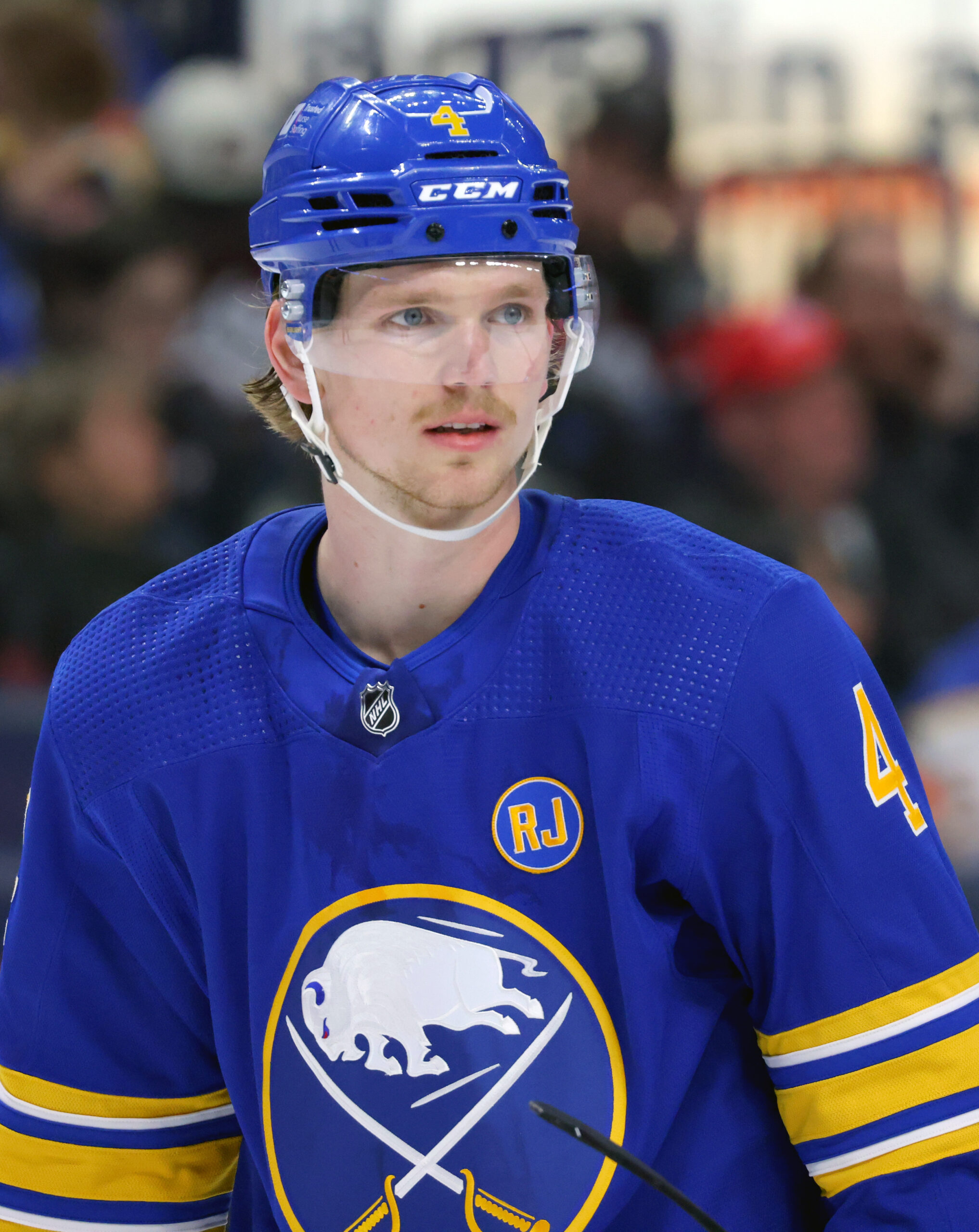 Byram is likely to be the most expensive of the bunch. Exiting the bridge contract he signed with Colorado before being dealt, he’s coming off a career year offensively with 38 points, he played all 82 games for the first time, and he logged a career-best 22:42 per game. These are things that will look quite appealing to an arbitrator as he’s now arbitration-eligible. After playing on a $3.85MM deal the last two years, Byram’s qualifying offer will be $4.62MM and he’s likely to add at least a couple million more on a long-term deal; a price tag starting with a seven is very realistic. He’s two years away from being UFA-eligible so another short-term contract won’t be ideal for the team. That gives Byram a lot of the leverage heading into discussions.
Peterka is coming off his entry-level deal, giving Buffalo some more options. To give themselves more flexibility this summer, they could opt for a bridge agreement, knowing there’s a jump coming in the cap for a couple of years that would allow them to afford the eventual higher payout. Coming off a career-best 68 points, that deal could still cost upward of $5MM per year. On the other hand, Adams could opt to pursue a long-term agreement that buys multiple years of additional club control. That price would get a fair bit more expensive with the recent seven-year, $45.5MM extension Calgary gave Matt Coronato serving as a starting point. With Peterka having more success and more experience, a similar deal for him would likely cost another million or so per season. Long-term agreements for him and Byram would go through the bulk of their remaining cap room.
Another youngster is exiting his entry-level deal, winger Jack Quinn. The good news is that he stayed healthy this year after a tough 2023-24 campaign but the bad news is that he only got to the offensive level of two years ago. With that in mind and knowing their cap situation, a bridge deal makes the most sense for both sides, one that should check in around the $3MM range. Ryan McLeod should come in considerably above that on his deal. The center will have arbitration rights this time around and had a huge second half, tallying 27 points in 31 games from February on. That should push his next deal to at least double his $2.1MM qualifying offer.
Knowing who all needs to be re-signed and the other roster holes that need to be filled, Adams will need to navigate his cap situation carefully. It wouldn’t be surprising to see him try to clear out a bit of money to make sure he can keep these players and leave some wiggle room for elsewhere.
Work On Tuch Extension
While the Jack Eichel trade hasn’t worked out the best for the Sabres, they did get one core piece from it in Alex Tuch. He has posted his three best offensive seasons the last three years, two of which saw him reach 36 goals. He has become a legitimate top-line weapon for them while also being a strong contributor defensively.
Tuch is about to enter the final year of his contract and as of July 1st, he will be eligible for a contract extension. After the season, he indicated a willingness to sign a long-term deal to stick around and it wouldn’t be surprising to see talks on that front get going as soon as possible.
He will be entering his age-30 year in 2026-27 so a max-term agreement of eight years could very well be on the table. Frankly, Buffalo might want the eight years to allow that final season or two to potentially bring down the AAV. Tuch is making $4.75MM and it’s not out of the realm of possibility that he could double that on his next contract in a further elevated cap environment. Today, that number feels a little high but some deals handed out on the open market in July could adjust expectations and reset the pending UFA market fairly quickly.
This isn’t something that Buffalo has to get done right away. But if the two sides can’t work out an extension, there will undoubtedly be trade speculation that follows which could be an unwanted distraction. Getting something done would be the preferred outcome but failing that, at least making some progress on extension talks over the summer should be a reasonable goal for the Sabres here.
Examine Goalie Upgrades
Heading into the season, it looked like Buffalo had a reasonable plan in goal. Ukko-Pekka Luukkonen would be the starter coming off a breakout year, Devon Levi would be the backup, and James Reimer would seemingly be the third-string option waiting in the wings in Rochester, ready to come up if Levi needed a multi-game stint with AHL Rochester. It didn’t quite go as planned.
For starters, Reimer didn’t make it to the minors as Anaheim scooped him up. In the meantime, Levi got off to a slow start, eventually getting demoted to the Amerks as soon as Reimer was reclaimed off waivers. Meanwhile, Luukkonen dropped 23 points off his save percentage and ceded playing time to Reimer down the stretch. Things couldn’t have gone much worse.
On the one hand, there’s room for optimism. Luukkonen should bounce back, at least to a point and frankly, it would be hard for Levi to put up worse numbers. There is a case to be made to go back to the plan from last season while bringing in a veteran third option (or even re-signing Reimer, potentially).
There’s a better case to be made to change things up, at least in the short term. Levi is still waiver-exempt and while he played well with Rochester this season, he hasn’t even played 70 games at that level yet. Another season of big minutes would be good for his development. That would then leave an opening behind Luukkonen.
But instead of looking for a veteran depth option, Adams might be better off looking to bring in someone who can push Luukkonen for playing time. It’s not a great UFA market but there are some pieces that would fit. Daniel Vladar would be a bit of an upside add, banking on there still being some development in him. Jake Allen could work as a platoon partner, a role he has had for a few years now. Ilya Samsonov might welcome a shot at more playing time as well. Putting some pressure on Luukkonen might bring out the better version of him more often while they likely wouldn’t give away quite as many points for backup goalie games.
Knowing Levi is still part of the long-term plan, Buffalo might only want to go short-term with this type of goalie but there shouldn’t be too many long-term deals going to UFA netminders. But with what’s out there, there’s an opportunity here for an under-the-radar improvement that could be worth a few points in the standings and that’s worth putting the longer-term plan on pause for a year.
Photo courtesy of Timothy T. Ludwig-USA TODAY Sports.
The Kings Have Work To Do To Take The Next Step
For the fourth consecutive season, the Los Angeles Kings were bounced from the opening round of the playoffs by the Edmonton Oilers. This year felt like the Kings’ best chance to turn their fortunes finally, and it certainly seemed likely after the Kings took a 2-0 series lead. But they would go on to lose four straight games, and in the end, the result was all too familiar. The Kings will have a lot to evaluate this summer, from management to coaching to the players donning the jerseys; everything will be on the table for a team that hasn’t advanced past the first round of the playoffs since winning the Stanley Cup in 2014.
The Kings were far from a perfectly built team but had a strong season, finishing as the second seed in the Pacific Division with a 48-25-9 record. The team struggled to hold leads, which ultimately proved to be their downfall, particularly the blown opportunities in Games 3 and 4 of the Oilers series. The primary reason for these blown leads was a lack of depth, as the Kings were forced to rely on their top nine forwards and top four defensemen almost exclusively, and the bottom of their lineup lacked effectiveness. This obvious issue falls on management, which couldn’t address a clear concern at the bottom of the lineup.
Speaking of management, the future of the Kings’ general manager, Rob Blake, was very much in question, but many Kings pundits believed that Blake and head coach Jim Hiller would stick around for next season. Yet, Blake and the Kings mutually agreed to part ways this week, marking the end of a run as GM that had both hits and misses. Blake took over from former GM Dean Lombardi a day after the 2016-17 season ended, previously serving as an assistant GM. He did not win a playoff series during his eight-year tenure and had no contract for the upcoming season. He was supposed to build the Kings into a team that could challenge for the Stanley Cup, but some questionable decisions left the Kings as more of a pretender than a contender.
Blake undoubtedly made some terrific trades, notably the Jake Muzzin trade with the Toronto Maple Leafs, which netted Los Angeles Sean Durzi, Carl Grundstrom, and a first-round pick. Another notable piece of work by Blake was the trade with Toronto for Jack Campbell, which included Trevor Moore and two third-round picks. There have been other solid moves, but the trade and extension for Pierre-Luc Dubois and some other poor salary cap management have overshadowed them.
Behind the bench, Kings fans will likely hope that the team moves on from Hiller, whose system has made the Kings look like a team playing not to lose rather than a club playing to win. Los Angeles would do well to hire a coach who can operate a creative offense that prioritizes high-pressure forechecking, such as Mike Sullivan. Unfortunately for the Kings, he has already been plucked out of free agency by the New York Rangers. Other options are available, but Los Angeles should move quickly if they plan to hire a new bench boss.
On the ice, the Kings will have some salary cap space available this summer, with roughly $23.27MM and just four players to sign. UFA defenseman Vladislav Gavrikov is one of those players who will eat close to a quarter of the space if he re-signs. Forward Alex Laferriere will also need a new deal, but shouldn’t break the bank. Should that happen, the Kings would have approximately $15MM available and just a couple of players to sign.
So, what should they do with the cap space? Upgrading their fourth-line and bottom defensive pairing is a must. The Kings bled chances with their fourth line on the ice this season, and it was a revolving door that was not addressed, ultimately costing them when the games mattered most. Fixing that issue is paramount; the fix isn’t necessarily complicated or expensive. The Kings need more forwards who can contribute offensively, which could push some of their third-liners down the lineup, thus creating a better overall forward group.
In the playoffs, the Kings’ fourth line mainly consisted of Alex Turcotte, Jeff Malott, Trevor Lewis, and Samuel Helenius. Of those players, only Turcotte averaged more than five minutes of ice time per game, highlighting an apparent roster construction flaw that put too much pressure on the top nine and ultimately wore the forwards down as the games continued.
On the back end, Brandt Clarke, Jordan Spence and Jacob Moverare played most of the Kings’ bottom pairing minutes, with just Clarke breaking the 10-minute per-game mark by averaging 12:47 of ice time per game. Clarke is part of the Kings’ solution on the bottom pairing and should improve from the experience, but finding a solid defensive partner for him would go a long way to buttoning up the defensive issues that plagued Los Angeles in the playoffs.
The Kings will likely run back the bulk of their core next season while trying to infuse a few younger players into the lineup and elevate them. It won’t be music to the ears of fans who are calling for radical changes. Still, given the salary cap corner the Kings are painted into with some of their long-term deals, it would be difficult to imagine a complete overhaul, especially when the team has been preaching about being “right there” for several years. The Blake move is a start for Los Angeles, and it will be interesting to see what other moves they make as they try to take the next step.
Photo by Kirby Lee-USA TODAY Sports
Offseason Checklist: Boston Bruins
The offseason has arrived for half of the league’s teams that aren’t taking part in the playoffs plus those eliminated already in the opening round. Accordingly, it’s now time to examine what they will need to accomplish over the coming months. Next up is a look at Boston.
Last season, the Bruins relied on expert goaltending to mask their decline in 5-on-5 play and continue an eight-year streak of playoff appearances. But everything that could have gone wrong in 2024-25 did, pushing them out of a playoff spot and into their worst record in 18 years. Still led by general manager Don Sweeney, this front office remains an impatient one and got a head start on their retool by trading captain Brad Marchand, stalwart defenseman Brandon Carlo, and feisty bottom-six winger Trent Frederic out of town before the deadline. Now equipped with spending money and the No. 7 overall pick this summer, it’ll surely be an active summer in Boston with a quick return to playoff contention as the goal.
Wrap Up Coaching Search
Few thought that at the beginning of the season, the Bruins would be the first team to make a midseason coaching change. But after an 8-9-3 start to the campaign and a lack of productive extension talks with 2023 Jack Adams winner Jim Montgomery, that’s exactly what happened. Of course, Boston finished the season with a worse record under interim boss Joe Sacco (25-30-7), while Montgomery was scooped up by the Blues five days later and led them to a wild-card berth.
While Sacco will be interviewed as part of an expansive search, it’s hard to imagine the Bruins removing his interim tag with an unexpectedly strong wealth of candidates to choose from on a busy coaching carousel this offseason. Sweeney has been clear about improving their possession and scoring game as 2025-26’s top priority, so coaches with a propensity for low-event styles likely won’t be considered despite whatever interest they may have (looking at you, Greg Cronin).
There’s another thing to consider: unless a dream candidate emerges, don’t expect Boston to hand out a long-term coaching contract this cycle. They were already hesitant to pay one of the top names in the business in Montgomery, and it makes little sense to make a lengthy commitment to a bench boss with a roster that at least begins the offseason without much direction. That’s likely what quickly took them out of the running for Massachusetts native Mike Sullivan‘s services – he received and accepted a rich five-year offer from the Rangers.
Those two factors will likely remain paramount over the amount of NHL experience when Boston assesses candidates in the coming weeks. With the Rangers as the only team to fill their vacancy so far, they’re not under a ton of pressure to make an immediate move. They’ll certainly want to have a name installed by sometime next month to help re-instill an organizational identity heading into free agency, though.
Find A Partner For Pasta
For years, the Bruins’ offense revolved around their top two centers, Patrice Bergeron and David Krejčí. They had to adjust to making wingers Marchand and David Pastrňák the cornerstone of their attack when Bergeron and Krejčí retired a few years ago, now just Pastrňák with no clear-cut No. 2 forward behind him. While Pastrňák has continued to produce at an MVP level despite the changes around him, the team’s overall production has yet to recover from the seismic identity shift.
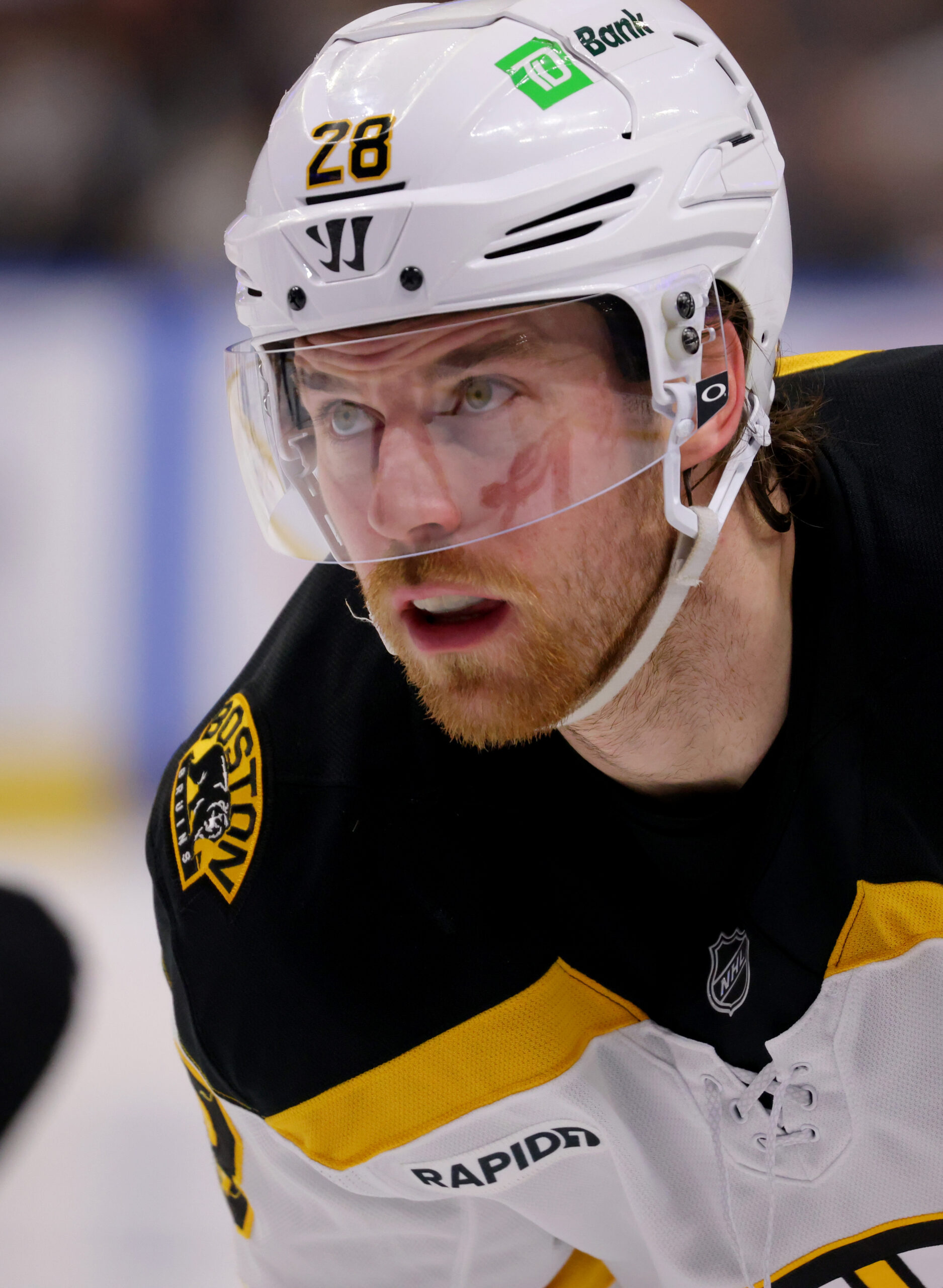 The hope was that free-agent acquisition Elias Lindholm could help bandage that wound. Instead, the 30-year-old already looks like he has an anchor contract after producing just 17 goals and 47 points over a full 82-game schedule in his first season in Boston after inking a seven-year, $54.25MM deal. There’s hope for a rebound after Lindholm told reporters he played through a back injury all season, but he’s also topped the 60-point mark just three times in his career, and his aging curve isn’t conducive to a huge resurgence.
The center market this summer is on the thinner end as well. Aside from striking a trade for a younger, high-upside center, Boston will have to continue building from the wings out.
While someone like top UFA prize Mitch Marner will likely be out of their price range with an average of $2.4MM in cap space per open roster spot (per PuckPedia), the Bruins will presumably position themselves as top suitors for names like Brock Boeser and Nikolaj Ehlers to give Pastrňák some more legitimate secondary scoring and power-play support. If they’re looking to add a layer of depth down the middle, Sam Bennett could be an option as well if he reaches free agency – but, like the names they already have in-house, he’s a good second-line option at best, not a legitimate No. 1 center. Short-term veteran fits to help add depth could come from Dallas, with Jamie Benn, Matt Duchene, and Mikael Granlund all slated for UFA status.
Decide Forward Personnel
Further to that, Boston now has quite the mushy middle with Lindholm, Casey Mittelstadt, and Pavel Zacha as its top three centers. There was talk of Zacha being moved at the deadline, but the only move they made at center was flipping Charlie Coyle for Mittelstadt.
Therein lies the first question for the Bruins to answer: are all three of them back next year, and are all three of them playing center? Lindholm and Zacha both logged significant time on the wing earlier in their careers. Lindholm is likely too valuable now on faceoffs to entertain a move back to the wing, but Zacha could shift over if the Bruins bring in another depth center and reignite some chemistry with Pastrňák on his opposite flank.
Even if the Bruins re-sign all of their pending RFAs (a likely scenario) and have them all on the opening night roster in the fall, that only accounts for nine forwards. There are three to five open spots up front, leaving Boston to decide how to distribute them among internal up-and-comers (Fabian Lysell, Fraser Minten, Matthew Poitras) and external additions. That’s also assuming no trades send a member of the current group out of town again.
Instill Goaltending Confidence
Boston’s biggest disappointment in 2024-25 was undoubtedly the play of goaltender Jeremy Swayman. After some testy contract negotiations throughout the summer, he signed an eight-year, $66MM deal days before the regular season but missed all of training camp in the process. He responded to the financial commitment with a 22-29-7 record, .892 SV%, and 3.11 GAA in 58 appearances. After starring with a gargantuan 55.2 goals saved above expected over his first four NHL seasons, he finished 10th-worst in the NHL with a -9.1 GSAx in 2024-25, per MoneyPuck.
Even during their last playoff contention window, the Bruins’ success relied on above-average goaltending. Regardless of what moves they make this summer, there’s little hope of them competing for a playoff spot next year if Swayman doesn’t rebound to at least league average, if not back into his usual top-10/top-15 performance relative to shot quality faced.
The good news – he’s 26 and the track record is there, so there’s plenty of time for him to rediscover his performance. There was very clearly a mental hurdle for Swayman, who faced hesitancy from his organization to commit to him despite finishing as high as seventh in Vezina Trophy voting in 2024 and grading out as one of the league’s best goalies in the early 2020s. A negotiationless offseason, a new coach, and some more positive messaging from the front office could all go a long way toward vaulting him back into consideration as one of the league’s better starters next year.
Image courtesy of Timothy T. Ludwig-Imagn Images.
Predators’ Barry Trotz Needs To Have A Much Better Summer
Nashville Predators general manager Barry Trotz had an illustrious career behind the bench as a head coach, winning a Stanley Cup in 2018 with the Washington Capitals and accumulating many other accolades. He was also the first and longest-tenured coach in the Predators’ history.
But his short time in Nashville as a GM has been eventful, to say the least. Trotz had orchestrated a significant roster turnover that resulted in one of the worst teams in the NHL this season, despite major free agent signings less than a year ago. Given all that has gone on and the direction of the Predators, it is fair to wonder if he is on the hot seat.
Trotz started his reign in Nashville by moving out considerable salaries in Matt Duchene and Ryan Johansen, who both made $8MM annually on long-term deals signed by the previous management regime led by longtime GM David Poile. Johansen was traded to Colorado, with Nashville retaining half of his cap hit ($4MM) while Duchene was bought out, resulting in a cap charge for the next season of $6.55MM.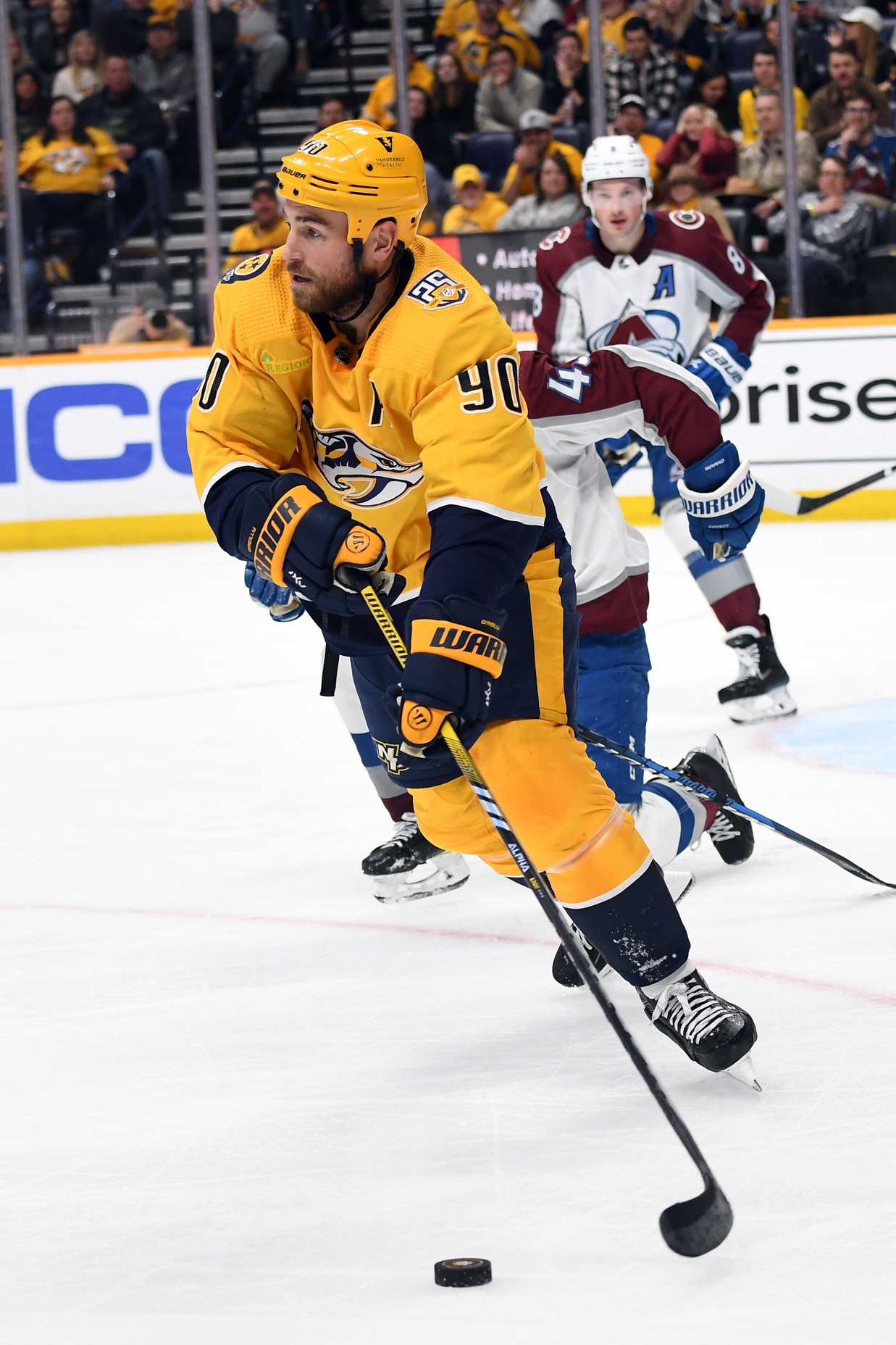
Trotz used the cap space to retool his roster in the summer of 2023, signing Ryan O’Reilly to a four-year deal worth $18MM and inking Gustav Nyquist and Luke Schenn to multi-year deals in free agency. The initial results were solid as the Predators made the playoffs in Trotz’s first year at the helm and were bounced in the first round. Overall, it was a good albeit unspectacular first year of work as a GM for Trotz, but that is where things began to go off the rails.
If you looked strictly at the trades Nashville made with the Pittsburgh Penguins over the past year, it would be enough to question the Predators’ direction. But there were signings and moves outside those that have already aged poorly, which may hurt the team for years. Trotz traded Cody Glass to the Penguins last August, along with a third and sixth-round draft pick, for Jordan Frasca, a prospect who might not even be an AHLer at this point.
The move was a salary dump after the Predators’ shopping spree on July 1 that saw them sign Steven Stamkos, Brady Skjei and Jonathan Marchessault to lucrative long-term deals. Glass was owed one more year on his contract at $2.5MM. The Penguins were happy to take that on and flipped him at the NHL Trade Deadline to New Jersey for another third-round pick and two prospects. The trade tree must make one wonder what exactly Trotz thought last August.
Of course, the Philip Tomasino trade to Pittsburgh for a fourth-round pick looks like a massive win for the Penguins. Tomasino didn’t light up the score sheet, but he seems like a solid top-nine piece for the Penguins’ retool. The 23-year-old was the Predators’ 2019 first-round pick (24th overall) and had a terrific rookie season in Nashville, posting 11 goals and 21 assists in 76 games in 2021-22. However, after two uneven seasons, Trotz opted to move on and sent Tomasino to the Penguins. After arriving in Pittsburgh, the Mississauga, Ontario native tallied 11 goals and 12 assists in 50 games. He doesn’t look like a superstar, but he should be a promising young player for the Pens.
Finally, there is the trade deadline acquisition of Michael Bunting from Pittsburgh. The Predators moved Thomas Novak and Luke Schenn for Bunting and a fourth-round pick. The trade was puzzling at first, but then a day later, Pittsburgh flipped Schenn out for a second and fourth-round pick, and it became clear what their motive was. They added a younger (possibly more effective) player in Novak and a second-round pick, which was icing on the cake.
These trades with Pittsburgh show Trotz’s inexperience as a GM and indicate he should probably block Kyle Dubas’ phone number before this summer. The player evaluation from the Nashville side has got to be troublesome for fans as they struggle to comprehend that series of moves. But that wasn’t all that went wrong in Trotz’s second year on the job.
The aforementioned free agent spending spree on July 1, 2024, made a lot of waves around the NHL. Nashville handed Stamkos a four-year deal for $8MM per season, Skjei got $7MM annually on a seven-year contract, and Marchessault received a $5.5MM AAV for five seasons. None of those moves in a vacuum were terrible signings, although paying three players on the wrong side of 30 a total of $20.5MM annually is hard to digest. The thought process made sense, given that Nashville has a lot of draft pick capital, but the free agent signings failed to gel in Nashville, and the result was one of the worst seasons in franchise history.
Trotz hasn’t been without his solid moves. He hasn’t been afraid to undo prior mistakes or move on from players he’s acquired if they aren’t working in Nashville. That ability to adjust on the fly and course correct will come in handy and could be the tool that helps Trotz pivot if next season goes off the rails like last year did.
Now, much of Trotz’s future will depend on the upcoming season. If Stamkos, Skjei and Marchessault can find their respective games and lead Nashville back to contention, all will be forgotten, and Trotz will continue as Predators GM. Still, if they have a year like the previous one, and Trotz makes moves similar to the transactions over the last 12 months, Nashville may have to pivot and reimagine their roster under new management.
Photo by Christopher Hanewinckel-USA TODAY Sports
These Players Could Benefit From A Change Of Scenery Trade
The classic change of scenery trade has been around in professional sports for decades and pre-dates salary caps. A change of scenery trade usually occurs when two (or more) teams swap underperforming players relative to their salary, or a single player is moved out for a fresh start elsewhere. In the case of the NHL, the team would make this move to avoid buying out a player or burying them in the minors. The hope is that a different role or a new environment can jumpstart a player’s play and rejuvenate their career. The trade doesn’t always have to involve another player on a bad contract; it can also include a sweetener to entice another team to take on a bad contract or a player to be named later. In any event, teams are gambling on a return to form when they make this transaction, and there is always a risk when trading away an underperforming player or acquiring one.
The list of reasons a team might do it can extend beyond someone’s performance, but that is usually the main driver for the move. Some recent changes in scenery trades include the Milan Lucic for James Neal trade of 2019, when the Edmonton Oilers and Calgary Flames linked up for a rare Alberta trade. Another example is the Oliver Ekman-Larsson trade between Vancouver and Arizona that sent Larsson to the Canucks and Loui Eriksson to the Arizona Coyotes (plus many other pieces). Finally, a recent change of scenery was between Buffalo and Ottawa at the NHL Trade Deadline when Buffalo swapped Dylan Cozens for Joshua Norris and Jacob Bernard-Docker. Here are the top NHL players who could benefit from a change-of-scenery trade.
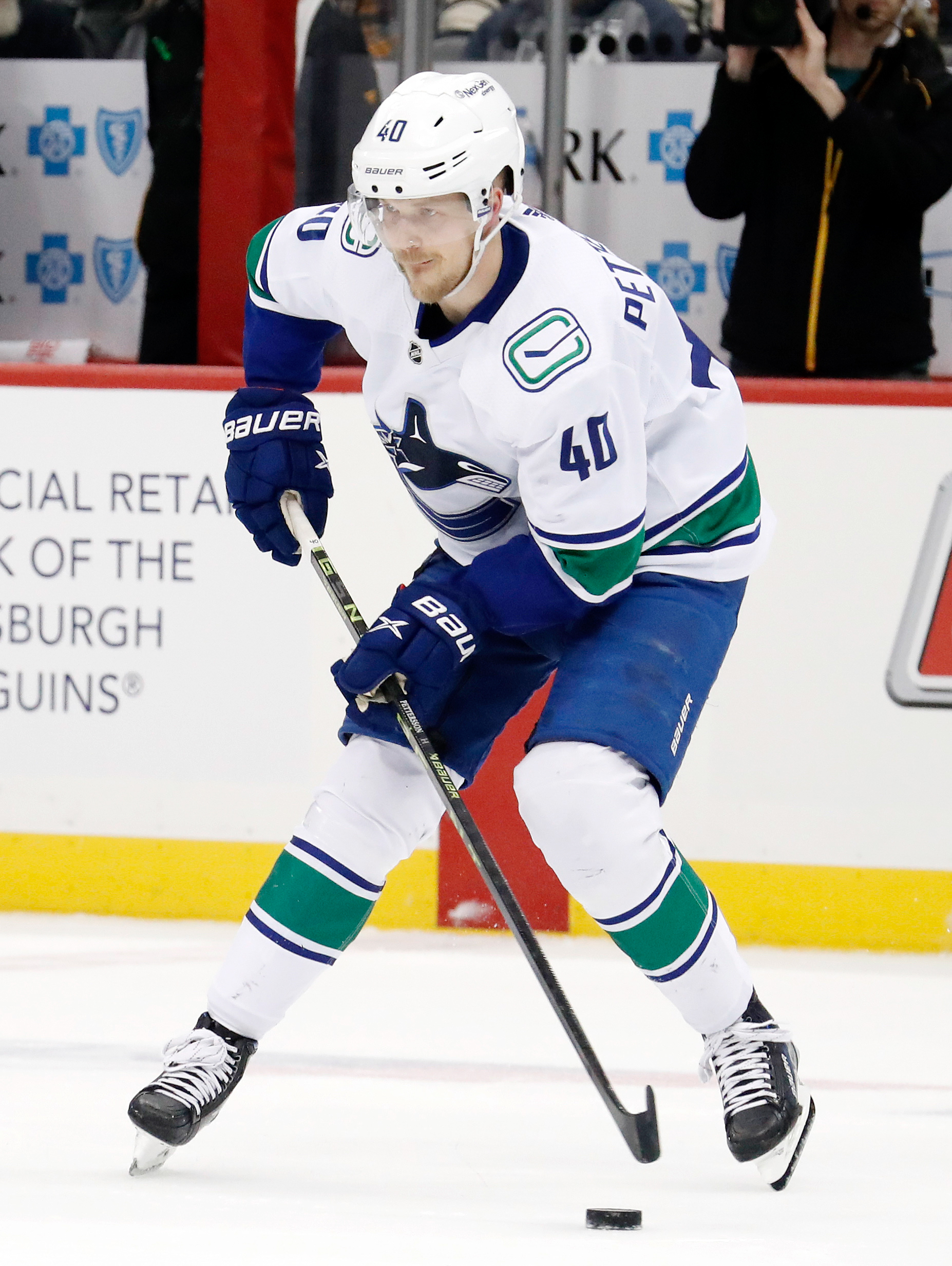 First up is Vancouver Canucks forward Elias Pettersson. There might not be any name on this list that sparks more of a response than Pettersson, who just completed the first year of an eight-year $92.8MM extension. The 26-year-old had just 15 goals and 30 assists in 64 games this season and became a lightning rod of criticism for many reasons. Pettersson’s uneven play added fuel to a firestorm that brewed from Pettersson’s deteriorating relationship with former Canucks teammate J.T. Miller. Eventually, Miller was dealt to the Rangers, but at this stage, it might be best for Pettersson and the Canucks if he was moved as well.
A trade of that magnitude will be tough to pull off and would no doubt require the Canucks to either retain (unlikely) or bring significant salary back in the move. The Norris/Cozens swap showed that moving significant money is possible. Still, the Canucks will have to hunt for another team with a player (or players) who need to kickstart their careers with a fresh start in a new organization.
Now, transitioning to Anaheim and forward Trevor Zegras. A few years ago, people were projecting Zegras to become a franchise cornerstone for the Ducks, but those expectations were likely overstated due to the flair with which Zegras was putting up offense. The 24-year-old is undoubtedly talented, but he does too little away from the puck and doesn’t do enough with it these days to make up for his shortcomings. A former ninth-overall pick, Zegras could still be very productive in a different role on a team where he isn’t a focal point.
A team like Pittsburgh might make sense for Zegras, as the Penguins have been stockpiling young, talented forwards who have underperformed and would likely be interested. The problem for the Penguins is that they also have players underperforming under big contracts and might not want to take on another problematic cap hit if they can’t get Zegras to buy in and make the changes necessary to flourish. There are plenty of markets in which Zegras could be a fit, and there should be interest in him if Anaheim opts to move him. Something that would be beneficial for both sides.
Philadelphia Flyers center Sean Couturier is another player who could use a fresh start in a new city. The 32-year-old has been relatively healthy the last few seasons, and while he hasn’t produced the same level of offense as he did earlier in his career, he has become a productive player once again. The issue with Couturier is that he will not live up to his $7.75MM price tag at this stage in his career and will likely never. Even if Couturier were to get back to his previous level of play, he doesn’t fit Philadelphia’s timeline, and his play may not even be at its current level when the team is ready to contend.
A Couturier trade would benefit both the player and the team. Still, it would be a complicated move requiring Philadelphia to eat a large portion of the AAV, something they may not want to do with five years left on the deal and over $36MM in actual cash left on the tab. A team with a strong forward group could look at Couturier as a potential candidate to bounce back if he can play with better players than he has in Philadelphia. Still, he would be an expensive risk even if Philly were to eat a significant portion of his salary.
Next up is defenseman Damon Severson of the Columbus Blue Jackets, who is just two years into an eight-year $50MM deal and has not been a good fit in Columbus. The 30-year-old was once a solid offensive defenseman for the New Jersey Devils but has fallen on hard times in Columbus and was a healthy scratch at times this past season in favor of 38-year-old Jack Johnson. Whether or not anyone wants to admit it, Severson (and his contract) have become an issue for the Blue Jackets.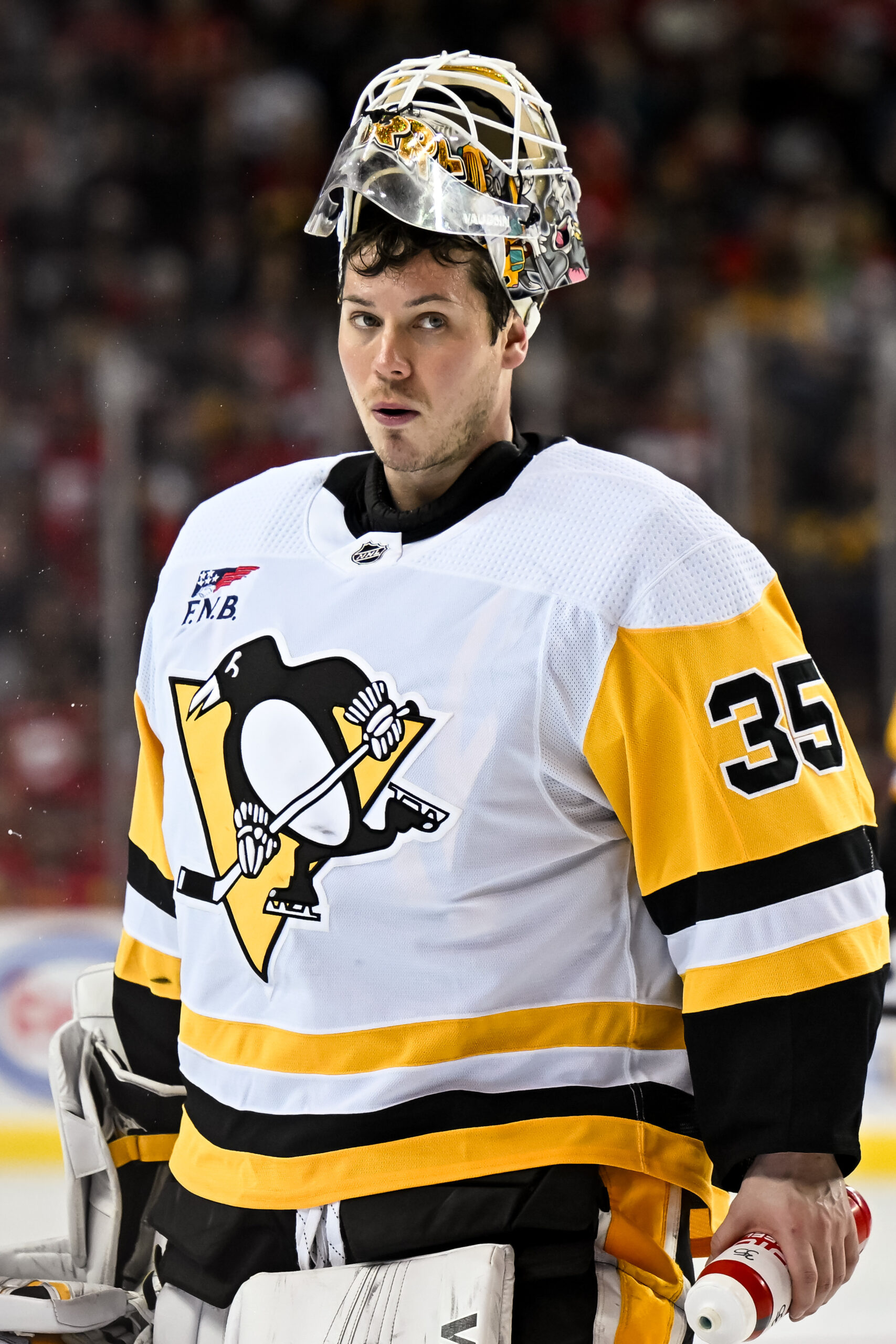
Perhaps Columbus could link up with a division rival to facilitate a genuine change of scenery trade for another former Devils defenseman who has struggled, Ryan Graves of the Pittsburgh Penguins. Graves also just completed the second year of his contract, a six-year deal with an AAV of $4.5MM. Graves has been an unmitigated disaster for the Penguins, playing under a virtually buyout-proof contract. Since signing with Pittsburgh on July 1st, 2023, Graves has dressed in 131 games and has posted just four goals and 14 assists total. Last year was especially tough as the 29-year-old had just four points in 61 games. Perhaps no one needs a change of scenery more than Graves, and it feels unlikely he will get one anytime soon as Pittsburgh enters another retooling season. The Penguins aren’t going to use assets to get rid of his contract (at this time), which leaves a demotion to the AHL or a trade to another team as the likelier option. A swap for a player like Severson makes sense in theory, but Pittsburgh probably doesn’t have an appetite to take on a bigger cap hit for an older player for a more extended period.
Finally, we have goaltender Tristan Jarry of the Pittsburgh Penguins. Jarry is a former two-time NHL All-Star but has not played remotely close to that level since inking a five-year, $26.88MM contract on July 1st, 2023. The 30-year-old was demoted to the AHL twice this past season but returned at the end to go on a solid run to close out the year. Jarry could benefit from a blank slate more than anyone in the NHL and would be ideally suited to operate with another solid netminder. Jarry’s inconsistency makes it nearly impossible to rely on him as your sole starter, but if he has a safety net, he could regain the form he showed early in his career.
As much as a fresh start would do him some good, Josh Yohe of The Athletic believes there is a very good chance that Jarry starts next season in Pittsburgh, which likely indicates there isn’t a trade market for Jarry’s services now. The Penguins aren’t interested in paying to get rid of his contract, and it may be best to hold on and let him either play out of his funk and get some trade value again or have him tank next season and allow them to get a top draft pick in a strong draft. For Jarry, though, a fresh start would give him room to breathe and remove the pressure of a fan base calling for him to be moved for quite some time.
Photo by Brett Holmes-USA TODAY Sports
PHR Mailbag: Red Wings, Sharks, Blues, Rangers, Canadiens, Wild
Topics in this edition of the PHR Mailbag include the possibility of San Jose moving their top pick this year, offseason planning for the Blues, and much more. If your question doesn’t appear here, check back in last weekend’s column.
gowings2008: What are the Red Wings offseason plans? Trade and draft targets? Will they shed some bad contracts? Seems after today that the players expect more from management than what they’ve gotten recently.
I have to think it’s going to be more of the same from Detroit this summer. They’re going to operate as if they’re trying to make the playoffs which will have them looking to add multiple veterans, just as they did last year. With GM Steve Yzerman generally believing in a longer-term development path, I’d be surprised if they’re penciling in a bunch of their top youngsters on the NHL roster next season. More likely is that most of them start in Grand Rapids.
I don’t see them being particularly active on the trade front in terms of trying to trade for impact talent, short of trying to find a change of scenery trade for someone like Vladimir Tarasenko, a move that would likely see them getting a similarly-priced underachiever coming back the other way. I’ve said before that I think there’s a trade option out there for Ben Chiarot in a similar type of swap and if they wanted to retain money, I suspect they could get a better return than expected. The only bad contract I think they’ll shed would be Justin Holl; he’s the only true buyout candidate I think they have.
While you didn’t ask about free agent targets, I expect they’ll be in on pretty much every top-four defenseman that actually gets to the open market but that list is getting pretty small as it is. Up front, I suspect they’ll look at the top center options available but those will probably price themselves out of what Detroit can afford, sending them toward wingers. For some reason, Nikolaj Ehlers stands out as a target, someone who can add some secondary scoring. Like Yzerman said in his presser this week, I expect them to get something done with Patrick Kane to keep him around as well.
Draft-wise, they sit 12th right now heading into next week’s lottery. Assuming they stay there, defenseman Radim Mrtka feels like someone they’d consider. Roger McQueen could be a candidate to slide given his injuries while Carter Bear could go in that range as well.
tucsontoro1: Lots of chatter about San Jose moving their #1 draft pick if they win the lottery. Seems counter-productive to a rebuild??
It feels like we get this type of chatter more regularly now but a lot of it is just that, chatter. It’s fun to dream up scenarios about a team trading for the number one selection but the reality is that it doesn’t happen very often. More recently, the last time it happened was 2003 and that was a trade-down from one to three. In theory, the Sharks could do that, land an asset of some note, and still get a high-quality prospect. While their prospect pool has certainly improved, it’s still not the deepest given how bare the cupboards were when GM Mike Grier took over. In the right scenario, a move like that would be defensible.
I suspect that’s not the context you were asking with though; I imagine you were talking about trading the pick outright. Generally speaking, that would run counter to a rebuild but it depends on who you were getting in return. If San Jose could get a high pick from the last couple of drafts that’s established already that fits in with the age group of their young core that’s willing to sign a max-term deal when their current contract is up, it could make some sense. Having said that, I’m not sure there’s a player like that available which is why a move is unlikely to happen. And in terms of trading that pick for a more established star with only a few years of control remaining, that wouldn’t make sense for a team like the Sharks that’s still a few years away from contention.
vincent k. mcmahon: Looking at the Blues FA’s this year (Faksa, Suter, MacEachern), do you see them potentially bringing any of the three back or moving on from all three?
Also, is there anyone you see the Blues potentially buying out (Faulk, Leddy, Joseph, etc)?
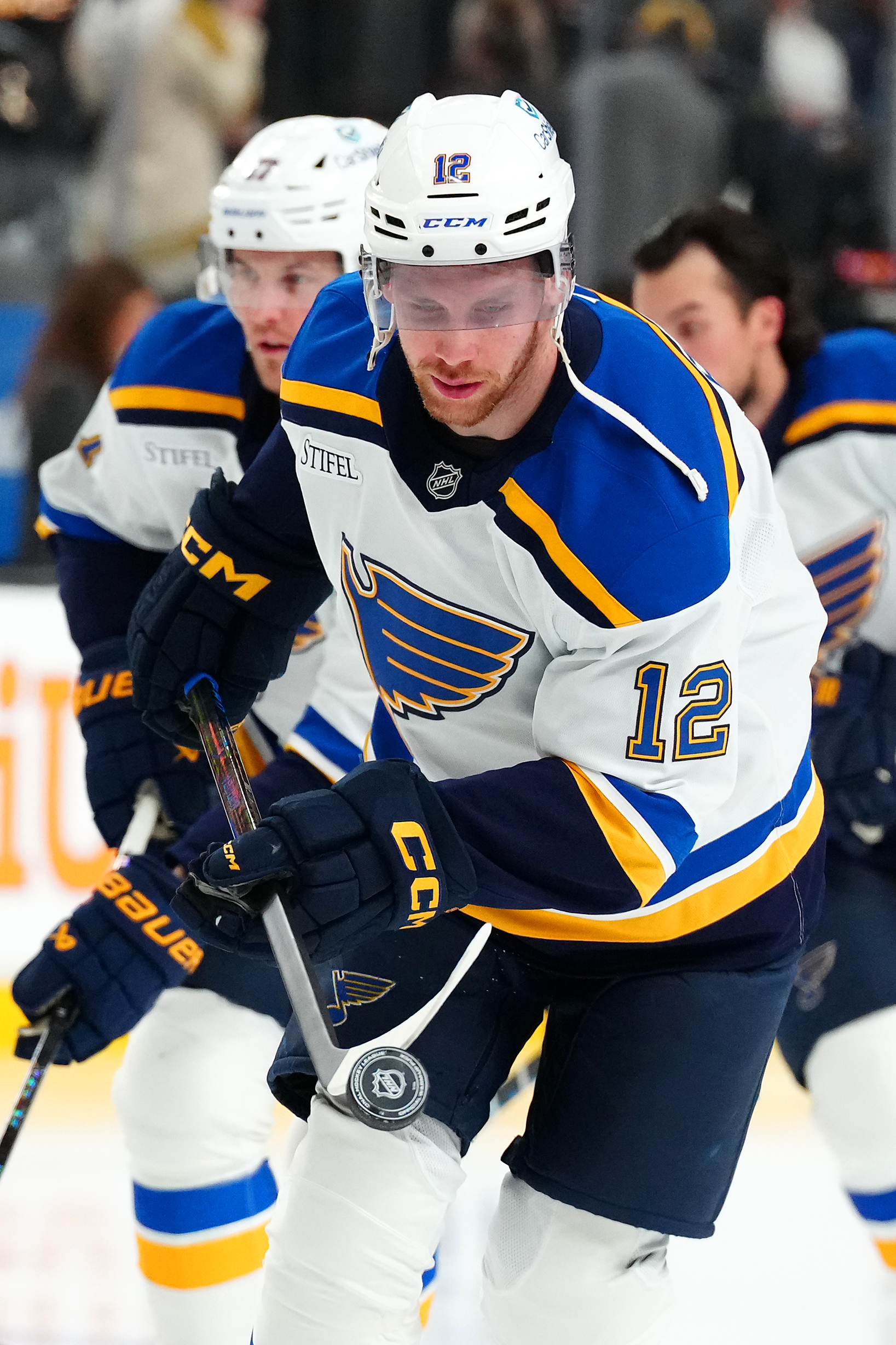 I think at the right price point, they’d be interested in keeping Radek Faksa and Ryan Suter. Faksa has been overpaid these last few years as his offense never came around but he’s consistently above-average on faceoffs, has good size, and can kill penalties. If he took something around half his current price tag of $3.25MM, that might work. As for Suter, he’s still a serviceable depth defender and accepted something with a base salary of the minimum last summer with some bonuses. Something with that structure could be appealing again. Perhaps not on the opening day of free agency but as most of the options come off the board, that’s something they could pivot back to depending on what else happens.
Before looking at the buyout question, let’s look at their cap situation. As things stand, they have around $6MM in cap space, per PuckPedia, with Joel Hofer needing a new contract as an RFA. Beyond that, they already have enough players signed to ice a full team. A two-year bridge deal around the $2.5MM range for Hofer sounds about right so let’s give them $3MM in cap room, assuming Torey Krug is able to return next season. Otherwise, he’d be LTIR-eligible again, opening up some extra wiggle room. With that money, they don’t necessarily have to do anything to create more space.
With two years left on his contract, I think there would be a trade market for Justin Faulk this summer. The UFA crop is weak and considering he’s a right-shot option, there should be teams willing to accept a small premium on the cap hit ($6.5MM) in exchange for a shorter-term agreement. His full no-trade clause goes away in July so I don’t think a buyout is going to be needed if they want to move him.
I’d put Nick Leddy in the maybe column. He only has one year left and they can drop the cap hit from $4MM to $2MM with a buyout next season while adding a $1MM charge in 2026-27. He has struggled since returning from injury so he’s definitely on an above-market rate. On the other hand, if they waived him and sent him down, he’d carry a $2.85MM cap charge next year with no hit the following year. Is it worth taking $1MM in dead cap charges in 2026-27 to save $850K next season? Maybe.
As for Mathieu Joseph, he’s also in the maybe column. He hasn’t exactly provided much value on his contract ($2.95MM through next season) after being acquired from Ottawa. A buyout would save $2.2MM next season and add a $1.1MM dead cap charge in in 2026-27 so the same question with Leddy largely applies here as well. After receiving a third-round pick to take on his contract last summer, I wonder if they could try to make a similar move and clear the full money that way. With more money in the system and a higher spending floor, I think we’ll see a few more of those moves in the coming weeks.
I’ll give you one other buyout option, Alexandre Texier. He’ll be 25 so it’s only a one-third cost, not two-thirds. If management feels it just didn’t work out, they could buy him out and save $1.75MM in space for next season while taking on a $350K dead cap charge in 2026-27. If they want to open up a roster spot and a bit of room, that might be the easiest route to take.
Schwa: Predictions for NYR this offseason…
– Option on 1st round pick?
– Notable UFA/RFA decisions?
– Can the team retool, or do they need to rebuild? If the latter, will they?
Thanks!
There were a few other questions originally but they’ve either been covered recently or have been answered as Chris Drury will remain as GM while they wasted little time deciding their coaching situation, letting go of Peter Laviolette and bringing in Mike Sullivan as their new bench boss.
As a refresher, the Rangers moved their 2025 first-round pick as part of the J.T. Miller trade, a selection that was flipped to Pittsburgh soon after. However, the conditions on that pick say that if it falls within the top 13, New York can keep it and move their 2026 pick instead, albeit unprotected. It currently falls at #11 heading into the lottery so it’s locked into a top-13 position. My inclination is that Drury assesses that this is a playoff-bound team next season and keeps the pick, thinking that next year’s could land somewhere in the 20s. It’s not without its risks given that many felt this was a playoff team this year but the hiring of Sullivan suggests they’re all-in on pushing forward with this core group.
In terms of free agents, there isn’t much of note with their UFAs. The two they have with NHL experience are Nicolas Aube-Kubel and Calvin de Haan and it’s fair to assume neither will return. K’Andre Miller and William Cuylle are the key RFA’s. Miller likely winds up with a short-term deal and with New York’s cap situation, they’ll be pushing for a short-term bridge for Cuylle. Adam Edstrom and Matt Rempe should re-sign for cheap while it wouldn’t shock me if Arthur Kaliyev is non-tendered. I’m leaning toward guessing that Zachary Jones gets a qualifying offer but his arbitration eligibility and desire to play more could have them going in an opposite direction.
The Sullivan hiring means they’re not interested in rebuilding. The good news is that this team can retool. I don’t think they’re as bad as their record was this year. If they brought this team back exactly as it was with a quality coach like Sullivan behind the bench, I’d probably pick them as a playoff team. They’re not going to be able to do much given their cap situation but they might not have to either. Chris Kreider could be a trade option to move to open up some flexibility and change up one top-six piece but I think this roster won’t have too many changes come opening night in October.
Offseason Checklist: Philadelphia Flyers
The offseason has arrived for half of the league’s teams that aren’t taking part in the playoffs plus those eliminated already in the opening round. Accordingly, it’s now time to examine what they will need to accomplish over the coming months. Next up is a look at Philadelphia.
A year ago, the Flyers nearly pulled off an improbable run before falling off to finish the regular season. Unfortunately for them, that slide continued for most of the 2024-25 campaign and they finished tied for last in the Eastern Conference. While GM Daniel Briere likely knew that expectations were a bit inflated based on their finish last year, dropping back this much wasn’t what he had in mind. As a result, there’s a lot that they need to accomplish in the coming months.
Hire A New Coach
Heading into the final couple of months, the belief seemed to be that John Tortorella would last the season and then he and the team would sit down to discuss his future. However, following a sequence that saw them drop 11 of 12 games in the final few weeks of the season, Briere decided to make a decision before the year ended, firing Tortorella in late March while elevating Brad Shaw to the interim head coaching role for the final nine games.
Interestingly, the Flyers turned things around following the change, picking up 11 points under Shaw while averaging four goals per game. While nine games is a very small sample size and it’s hard to put much stock in playing out the stretch, their performance under Shaw should help the 61-year-old gain some legitimate consideration for the full-time nod. What might hurt him is that his only other head coaching experience came nearly 20 years ago when he was promoted to an interim role midseason with the Islanders.
It will be interesting to see what Briere will choose to do here. As a team that’s still rebuilding, a coach focused on development would make some sense. And in that case, keeping Shaw in the role on a short-term deal could make some sense. That would allow both sides more time to assess if he’s the coach that could run the team for the longer haul or if he’d be the one who gets them through this next phase before looking for more of a win-now coach after.
Having said that, Briere has talked about this team trying to take a step forward in the near future which could have him leaning toward a more experienced option. There’s no shortage of veteran coaches on the market now if he wants to go that route. Either way, if they have a preferred option, Briere will need to move quickly as some of these vacancies will likely be filled before too long.
Find A Goalie Upgrade
The Flyers have been trying to find a legitimate starting goalie for the better part of two generations now. The hope was that Ivan Fedotov could be their goalie of the future; they held onto that hope for a long time while they waited for him to come over from Russia. However, after posting a save percentage of just .880 this season, there’s a chance they run him through waivers in 2025-26. He’s not the long-term solution.
Aleksei Kolosov also had some potential but no desire to bide his time in the minors. He spent the bulk of the year in Philadelphia, struggled more than Fedotov did, then went back to Russia over returning to AHL Lehigh Valley. At this point, while he might have some upside, he can’t be counted on as the solution either.
Samuel Ersson has shown some flashes of being a quality goaltender but has also struggled under the weight of being the de facto number one goalie the last two seasons. It’s possible that he’s part of the longer-term solution as the second option but it would be surprising to see Briere and the Flyers think they have their future starter on their roster today.
With a stated goal to be more competitive next season, this is a position that needs to be upgraded. Unfortunately for them, that’s something that will be easier said than done this summer. The UFA market between the pipes doesn’t have a single sure-fire starter available so they can’t go that route. Meanwhile, legitimate number ones aren’t traded a whole lot although they could make sense as a possible landing spot for John Gibson if this proves to be the summer Anaheim decides to move him. That said, he’d carry some question marks as well.
At a time when there aren’t as many true legitimate number one goalies out there, finding one becomes that much harder. But at this point, even an upgrade a tier below that could be enough to give the Flyers a few more wins next season. Even with all of Ersson, Fedotov, and Kolosov signed, they need to find a way to add one more netminder to the group, one that will see big minutes next season.
Re-Sign Key RFAs
 A lot has changed over the last season for Cam York. This time last year, it looked like he had taken that step forward to cement himself as a core piece on the back end. However, things didn’t go so well this season, calling that into question. The 24-year-old is seeing his bridge deal come to an end this summer and while he’s going to land considerably more than $1.6MM either way, Briere is going to need to decide if he’s seen enough to lock York up long-term or push for another short-term contract.
York is three years away from UFA eligibility so they could look for another bridge agreement although they run the risk of him having a breakout and needing a much more expensive contract a couple of years from now. Or worse, he decides he wants to test the open market and simply opts to take an arbitration award at the end. On the other hand, if they’re uncertain about his long-term upside, another bridge makes sense. Meanwhile, if they feel that York for sure is going to be part of the long-term core, then trying to work out a long-term agreement makes some sense although the cost of it will likely seem high relative to his performance this season.
Tyson Foerster is another RFA of note. He only has two full NHL seasons under his belt but has reached the 20-goal mark each time including a 25-goal showing this year. If the team feels the 2020 first-rounder has another level to get to, they could look to try to do a long-term agreement, not unlike the pact that former Flyer Joel Farabee received. Otherwise, a short-term bridge contract will be coming his way, likely somewhere in the $3.5MM range.
Speaking of forwards, Noah Cates also needs a new deal as his bridge agreement will end at the end of June. Notably, he’s only one year away from UFA eligibility and has arbitration rights this time around. After a rough first year on his soon-to-expire deal, he bounced back with 37 points this season. That should be enough to land him a small raise on another short-term contract as it’s unlikely Briere will be comfortable handing out a long-term agreement to someone who has run hot and cold over the last few years.
Flip The Switch
If the plan is to go from asset accumulation to starting to add pieces, the Flyers have a lot of work to do this summer to try to get back into playoff contention. On top of needing a viable starting goaltender, their back end isn’t the strongest nor is their forward group which finished in the bottom ten in scoring despite the hot finish under Shaw. It’s the fourth year in a row they’ve landed in the bottom ten in goals scored so this wasn’t a one-off either.
If they’re going to truly get back into the thick of things, they’ll need at least one top-six forward addition coupled with younger players like Matvei Michkov, Foerster, Owen Tippett, and Bobby Brink all taking steps forward offensively to move their attack closer to the middle of the pack. Defensively, with York struggling a bit last year, Jamie Drysdale being up and down, and Rasmus Ristolainen set to miss the start of next season, there’s a legitimate need for at least one top-four defender if they’re serious about being in the mix in 2025-26.
The good news is that Philadelphia is well-positioned to try to add some core elements. They have nearly $25MM in cap room per PuckPedia, an amount that can be added to if Ryan Ellis needs to be moved to LTIR. Yes, new deals for their RFAs will cut into that but there will still be enough left for one or two additions of note.
Meanwhile, the Flyers have three first-round picks at their disposal next month along with four picks in the second round. Some of those will undoubtedly be kept to add to their prospect pool but some of those selections could be dangled for win-now help, especially if they can add an experienced younger player who fits in age-wise with their current core. Adding through free agency but they have some decent trade chips to dangle over the coming weeks to try to flip the switch from being a rebuilding team to one looking to make a push.
Photo courtesy of Charles LeClaire-Imagn Images.
Has A Retool Become More Effective Than A Rebuild?
The question that often arises when a team begins to fall out of its window of contention is, “Should the team rebuild or retool?” Fifteen years ago, most people would have emphatically said ‘rebuild,’ and the evidence to support this was overwhelming. The Blackhawks and Penguins had rebuilt their organizations into Stanley Cup champions through top-five draft picks, and the Capitals and Lightning were on course to do the same. The consensus at the time was that becoming a top team required a full-scale teardown and bottoming out for top draft picks before you could rise from the ashes and compete for the Stanley Cup.
Then, something happened in the 2010s: the Maple Leafs, Oilers, and Sabres all tried the “tear-it-down-to-the-studs” approach. They were unable to find much success, and even a team like Tampa Bay took a while to consistently find its playoff footing, despite having several lottery picks in its lineup. There are two schools of thought on this, which all begs the question: is it better to rebuild, or to retool on the fly and try to preserve a winning culture? Defining both terms is essential, so it’s crucial to understand that a rebuild is a complete overhaul of the roster, focusing on developing young talent. A retool involves keeping core players and adding younger, complementary pieces to improve the team quickly.
In the cases of the Sabres and Oilers, their teardowns had profound effects that reverberated throughout the organizations. Buffalo is mired in an NHL-record 14-year playoff absence and doesn’t appear any further along, while it took Edmonton a long time (and Connor McDavid) to shake the stink of nearly a decade in the basement. Both of these teams took the complete rebuild approach, which had largely negative results. The Oilers now have a Cup Final and multiple Conference Final appearances under their belt, but Buffalo has been nothing short of a disaster.
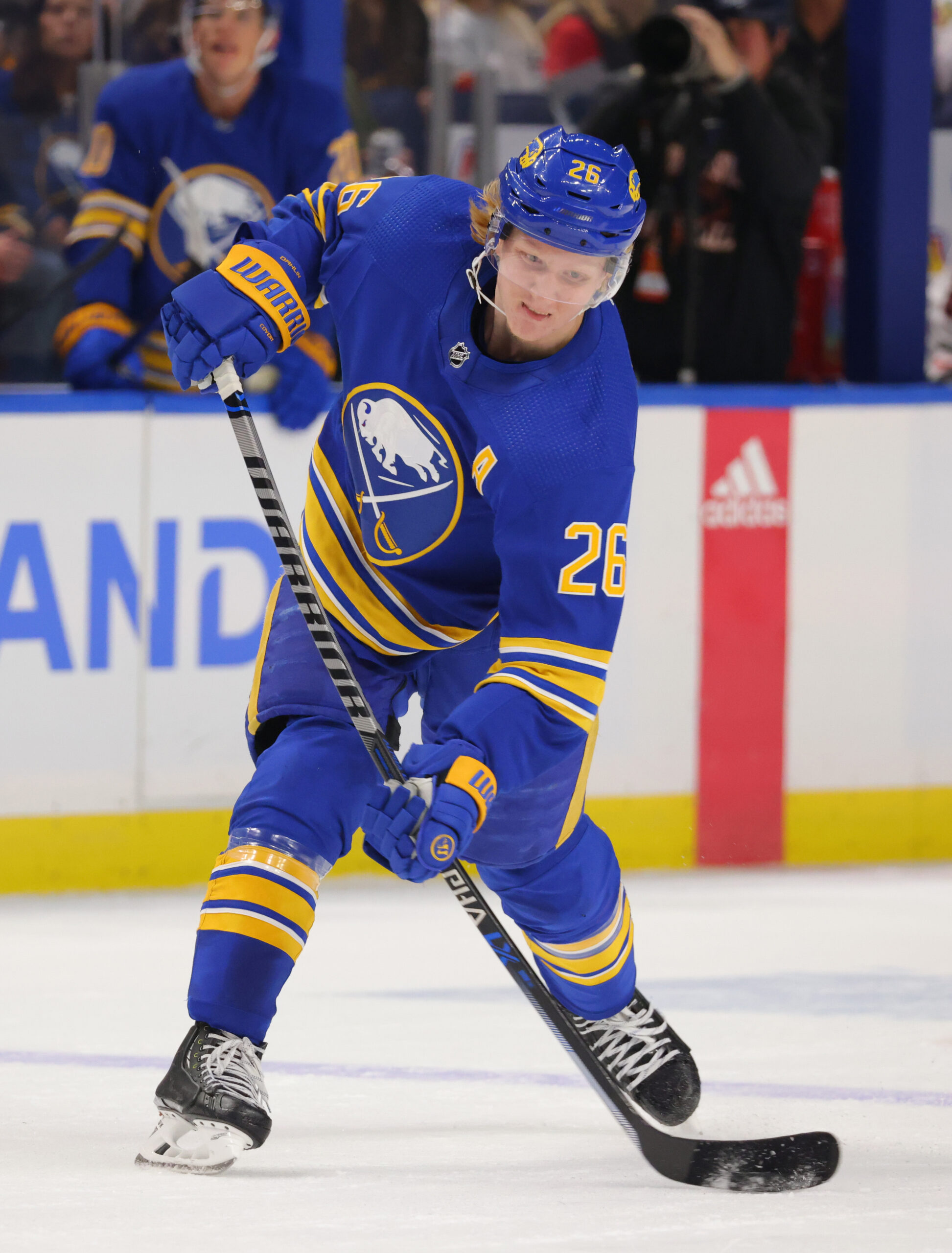 The Sabres have been in a never-ending rebuild since 2012 and haven’t won a playoff series since 2007. The lack of success has created a culture of losing in Buffalo that has undoubtedly impacted the organization from top to bottom. The Sabres have undergone a series of rebuilds and have selected in the top 10 a total of 10 times since 2013, and are poised to do so again this year.
Now, what have they received for those picks? They do have Rasmus Dahlin, who is a terrific building block, and they drafted Jack Eichel and Sam Reinhart with second overall picks in back-to-back seasons. They’ve both gone on to win Stanley Cups in other organizations. However, the problem for the Sabres is that both players became winners in the cities to which they were traded, and Buffalo continued its tradition of losing. Now, you can’t put all the blame on a culture, but you can go back nearly a decade to look at how the Sabres and Oilers were both trying to shake their culture of losing, even then. The Oilers eventually did, reaching the Stanley Cup Final last season. However, it took the best player in the world and another top-five player to do so.
The Oilers took a long time to turn the corner after having incredible draft luck through the 2010s. They drafted in the top four six times between 2010 and 2016, including four first overall picks. All those top picks didn’t lead to immediate success for the Oilers, who took nearly a decade to find any postseason success and did so without many of those above top four picks.
Many recent examples can be cited of teams that have undergone a complete rebuild and struggled to emerge for various reasons. The Senators have only returned to the playoffs this season for the first time since 2017 despite having several top picks, including two top-five picks in one draft. The Utah Hockey Club has also struggled to establish a winning culture, as have the Flyers, who underwent a rebuild in the mid-2010s and are currently experiencing another one.
Losing culture aside, another significant issue for any team looking to undergo a full-scale teardown is that the rules surrounding the NHL Draft Lottery have changed since Edmonton won many top picks, making it more difficult for the NHL’s worst team to retain the first overall draft pick. The rules also stipulated that no team could advance in the draft order by winning a lottery draw more than twice in five years. 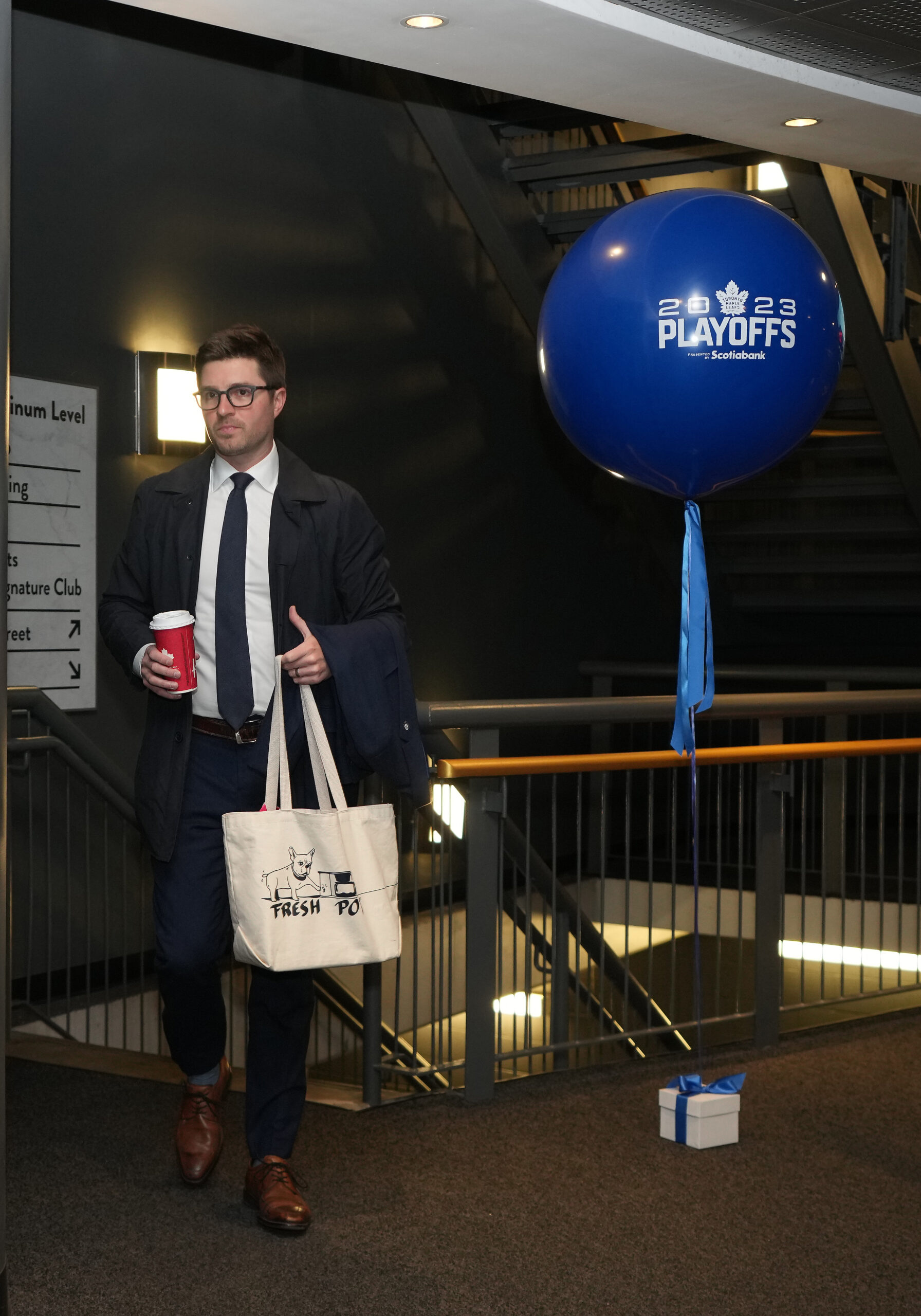
There are many reasons why a team might opt for a retool over a complete rebuild. Indeed, market pressures play into it, as evidenced by the Rangers, who quickly shifted from a rebuild to a retool. Ticket sales, corporate sponsorship, ratings, time, and money will always be factors. However, maintaining a team’s culture can be of the utmost importance if a team hopes to get back to winning as soon as possible. Penguins general manager Kyle Dubas expressed this sentiment earlier this year, and it makes sense, particularly in Pittsburgh, where Sidney Crosby has created an expectation of excellence and remains one of the top 10 players in the world.
Rebuilds take a long time, require strong leadership, and rely heavily on luck. You have to hope that your top picks come at a time when the top prospect is a Crosby or McDavid and not a Nail Yakupov, and you have to hope that the player development that you have in place will maximize your prospects’ ability.
To find recent examples of success with a retool, there are numerous instances where this approach has been practical. A rundown of NHL teams currently in the playoffs reveals that many teams have utilized the retool strategy quite effectively. There are no better examples than the top two teams in the NHL this season, the Jets and the Capitals.
The Jets were at a crossroads a few years ago and opted to move on from Pierre-Luc Dubois and Blake Wheeler while extending the contracts of Mark Scheifele and Connor Hellebuyck and retooling their lineup. The Dubois trade was a massive win as Winnipeg could plug Alex Iafallo and Gabriel Vilardi into their lineup, and eventually, they added Nino Niederreiter via trade. The Andrew Copp trade was another solid piece of business that landed Winnipeg a solid depth piece in Morgan Barron and a few draft picks that turned into good prospects. For the most part, the Jets tinkered around the edges of their roster, identifying the core players they wanted to keep, all of which fit the definition of a retool.
The Capitals entered a retool after losing in the first round of the 2022 playoffs. Washington had an aging Stanley Cup-winning core but couldn’t rebuild with Alex Ovechkin still playing at a high level, so they opted to retool. They missed the playoffs in 2023 and barely snuck in last season. But this year, they were a powerhouse after acquiring Dubois, Dylan Strome, Andrew Mangiapane, Rasmus Sandin, Jakob Chychrun, and Logan Thompson over the last few years. The Capitals were able to add this group to their veteran core and supplement it with young, emerging players such as Connor McMichael, Aliaksei Protas, Ivan Miroshnichenko, Hendrix Lapierre, and Ryan Leonard.
This list could continue with St. Louis, Montreal, Los Angeles, and Minnesota, all teams that have undergone varying degrees of retooling, resulting in differing outcomes. A few teams that missed this year’s playoffs have expressed interest in a retool, including Pittsburgh and the Nashville Predators. Both teams have veteran stars on big-money deals and will be looking to insulate them with a solid supporting cast sooner rather than later. It should be interesting to see if the retool becomes the preferred method of building a winner, especially with San Jose and Chicago preparing to exit very long rebuilds.
Photo by Nick Turchiaro-USA TODAY Sports