
Offseason Checklist: Columbus Blue Jackets
The offseason has arrived for half of the league’s teams that aren’t taking part in the playoffs plus those already eliminated through the first couple of rounds. Accordingly, it’s time to examine what they will need to accomplish over the coming months. Next up is a look at Columbus.
This past season for the Blue Jackets was a whirlwind, to put it lightly. After moving Patrik Laine to Montreal, they then lost Johnny Gaudreau who died after being struck by a car a little before training camp, resulting in them briefly being under the salary floor. Accordingly, expectations for on-ice success were quite low but instead, Columbus was in the mix for a Wild Card spot until the very end of the season. As a result, instead of escalating their rebuild, GM Don Waddell’s to-do list this summer will likely revolve around trying to upgrade his group.
Shore Up The D
Columbus cut down on their goals allowed by 31 this season, a nice improvement but one that still left them near the bottom in that department. Adding to that concern is that two of their better blueliners are eligible to hit the open market in July.
Heading into the season, it felt like a matter of when, not if, Ivan Provorov would be moved. Unable to come to terms on an extension at various times in the year, it seemed like the Blue Jackets would move him closer to the trade deadline. But with the team staying in the playoff mix, Waddell held onto him. Provorov is coming off a deal that paid $6.75MM per season (30% of which was being paid down by Los Angeles) and as one of the better blueliners available in this UFA class, it stands to reason that he’s going to be able to command more than that on the open market. Waddell is either going to have to find a way to bring him back or replace him with a similarly impactful defender and there aren’t going to be many of those available.
Dante Fabbro was an early-season waiver pickup and the fit couldn’t have been better. After struggling to crack Nashville’s lineup, he came in and logged over 21 minutes a night while setting new career highs in goals and points. Basically, he became the reliable top-four defender he was projected to be for years with the Predators. All of a sudden, instead of having his next deal come in close to the $2.5MM he was previously making, it wouldn’t be shocking to see him pass the $4MM mark, especially as a coveted right-shot player. Again, re-signing or replacing him will be necessary.
On top of those moves, Waddell would be wise to look for another upgrade at some spot on the roster. Jordan Harris appears likely to be non-tendered while it’s unlikely Jack Johnson returns. At least one of them could be replaced by an improvement, giving them better depth if nothing else.
There’s also the Damon Severson situation to potentially address. A big addition two years ago, he was a healthy scratch for the final nine games of the season. With six years left at $6.25MM, a buyout isn’t likely but is there a way to move him for another high-priced option to reshape the back end? That will need to be examined as well.
Early Extension Talks
In terms of this year’s restricted free agent class, Waddell only has one headliner to contend with, RFA Dmitri Voronkov. After a solid 23-goal, 47-point effort and having arbitration eligibility, he’s heading for a significant raise on his entry-level salary. But beyond that, there really isn’t much. As a result, the Blue Jackets can also turn their focus toward some extension-eligible players on July 1st.
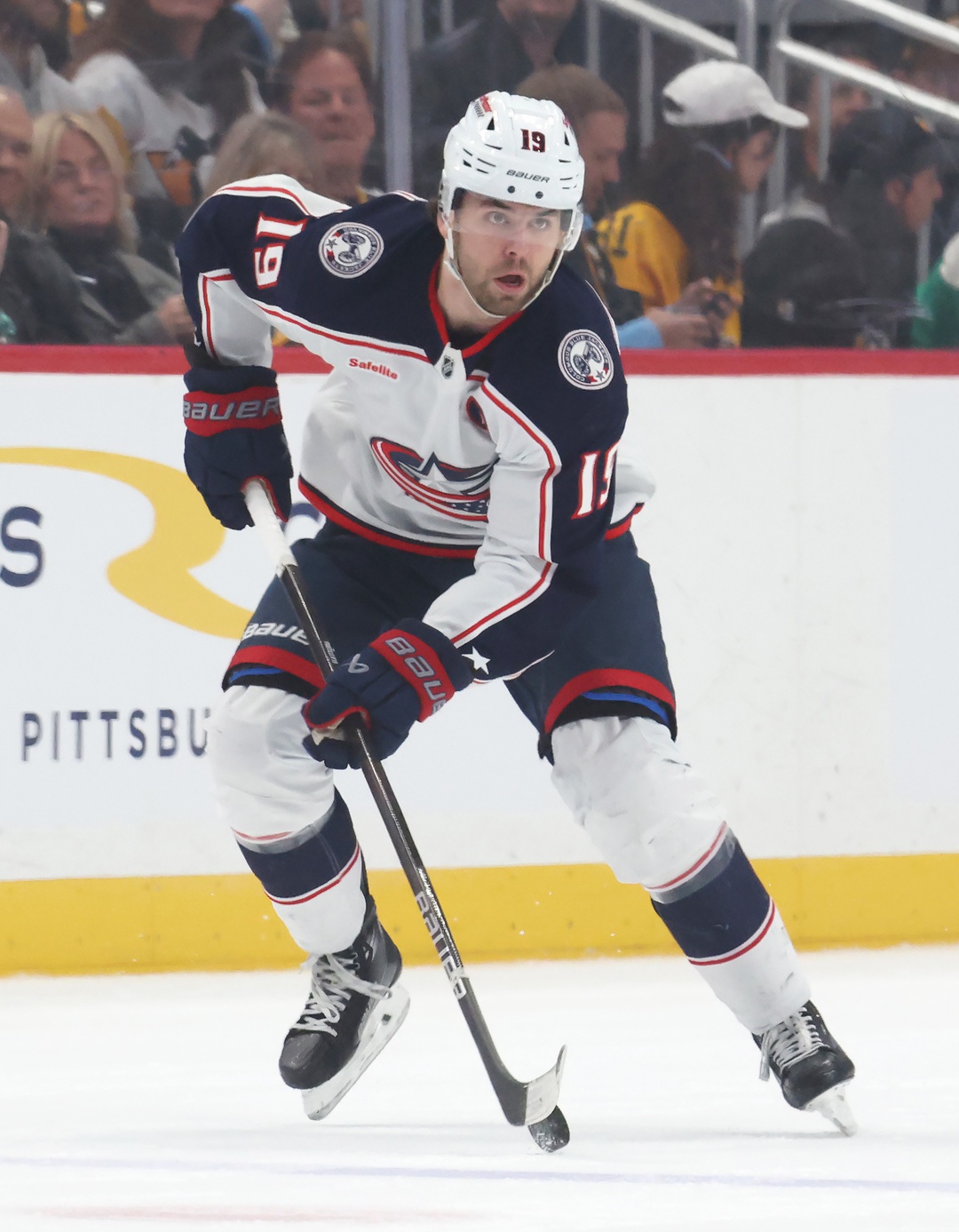 The most prominent of those has to be Adam Fantilli. After an injury-plagued rookie year, his sophomore year was quite solid as he tied Kirill Marchenko for the team lead in goals without being highly used on the power play. The third-overall pick in 2023, Fantilli looks like he is going to become the legitimate high-end center that they envisioned. That means they’re going to be handing him a significant raise within the next year or so.
A lot of the comparables in recent years have ranged from the high $7MM range to the low $8MM range. However, with the salary cap going up by $7.5MM this summer and then a projected $8.5MM for 2026-27, those comparable price tags seem low. Similar players have a cap hit percentage in the 9% to 10% range which, in 2026-27, would put his possible price range on a long-term deal between $9.36MM and $10.4MM per year. If things are trending in that direction, it might make sense to try to do something now over running the risk of the price tag being even higher if Fantilli finds another gear offensively next season.
Another center of note will also be extension-eligible this summer, captain Boone Jenner. He has been playing at a team-friendly $3.75MM cap charge for the last eight years, one that he outperforms when he’s healthy. Of course, staying healthy has been a challenge for the 31-year-old who hasn’t played a full 82-game season since 2016-17. Still, if Jenner posted another season around the 0.6 points-per-game mark with his faceoff prowess, he’d be highly sought after on the open market in 2026. Given the injury history, his earnings ceiling might not be the highest but still could start with a five on a multi-year deal. If Jenner is willing to give Columbus a bit of a discount on that coming off a particularly injury-ravaged season, it wouldn’t be surprising to see the two sides work something out this summer.
Add Veteran Firepower
Columbus ranked seventh in the NHL in goals this season despite having a group on paper that largely went under the radar. All things considered, they still have a very young group up front and a lot went right from a development perspective, there’s far from a guarantee that they’re all going to stay on that same trajectory in 2025-26.
There’s one way Waddell can try to hedge against that concern and that’s by making a big splash to add some proven firepower on the wing. Beyond adding James van Riemsdyk and Kevin Labanc in training camp, they didn’t really replace Laine or Gaudreau. They got better than expected production out of van Riemsdyk with 16 goals while Mathieu Olivier moved up to the third line and scored 18 after having a previous personal best of five. Those were great outcomes but whether they’re repeatable remains to be seen.
The Blue Jackets have pretty much the cleanest books in the league from a cap perspective. The team enters the summer with over $41MM in cap space, per PuckPedia. A good chunk of that will go to the back end re-signings or replacements but there’s more than ample room to work with, even if they are working on a budget closer to the $70.6MM floor than the $95.5MM Upper Limit.
With their center situation in good shape, they can focus strictly on adding wingers. If they want to really aim big, Mitch Marner would certainly add to this roster. If they want more of a first or second-liner, Brock Boeser and Nikolaj Ehlers are out there.
If they want to go with a shorter-term option knowing that Fantilli, Kent Johnson, and Marchenko (possibly Cole Sillinger too) are heading for expensive raises in the next few years, then there are players like Patrick Kane, Reilly Smith, and Kyle Palmieri that could either fit on the second or third lines. They could also take a pricey player on in a trade, the inverse of what they did with Laine last summer.
There are lots of options for the Blue Jackets to take and while they could rest on their laurels with how things turned around offensively under Dean Evason, they can also help their chances of staying at that level by making a key addition on the wing in the coming weeks.
Search For Goalie Upgrades
To say it has been a rocky tenure for Elvis Merzlikins in goal would be an understatement. There have been impressive flashes where he has played like a legitimate starter. Unfortunately for Columbus, there have been plenty more struggles where he has played like an AHL starter at best. He hasn’t been able to put up a save percentage starting with a nine in the last three years; he actually lost five points off his .897 mark from 2023-24 this season which also was a contributing factor to the Blue Jackets being near the top of the league for most goals allowed once again.
With two years at $5.4MM, this is around the time when a buyout could start to look more feasible. Doing so this summer would save them $3.9MM next season and $2.6MM in 2026-27 before adding $1.65MM to the books for two years after that. Cap space isn’t an issue for Columbus but as a team that typically operates with budgetary restrictions, freeing up some money in the short term doesn’t hurt.
Of course, for a buyout (or a trade where he’s included to balance the money) to be feasible, they’d have to secure another starting goalie first in a marketplace that doesn’t feature many starters available either in free agency or in a trade. But if one of those options don’t materialize, there could still be a way to upgrade their situation between the pipes.
Daniil Tarasov was once viewed as the goalie of the future for Columbus but he struggled mightily this season. Owed a $1.26MM qualifying offer, it’s far from a given that he receives one. Meanwhile, Jet Greaves was quite impressive down the stretch but he has just 21 career NHL appearances under his belt. Still waiver-exempt for another year, would they be better giving him one more year with AHL Cleveland and opening a spot for a backup upgrade?
This isn’t something that the Blue Jackets necessarily have to do. If the back end winds up getting reshaped to a more structured unit, that could allow Merzlikins to bounce back somewhat. But this is an avenue Waddell would be wise to explore either way.
Photo courtesy of Charles LeClaire-Imagn Images.
Offseason Checklist: Detroit Red Wings
The offseason has arrived for all but four clubs. Accordingly, it’s time to examine what they will need to accomplish over the coming months. Next up is a look at Detroit.
After losing out on the 2024 Stanley Cup playoffs on a tie-breaker, the Detroit Red Wings finished five points worse in 2024-25. Detroit made a much-needed coaching change partway through the year, and competed for a postseason spot for some time, but their areas of need were too much to overcome. Fortunately, the problem areas are clear after watching even one Red Wings game, and they can all be addressed this offseason.
Concentrate The Defensive Core
The Red Wings entered the 2024-25 offseason with too many defenders. After sending defenseman Jake Walman to the San Jose Sharks before the start of last summer’s free agency in one of the most lopsided trades in recent memory, and moving Olli Määttä to the then-named Utah Hockey Club, Detroit managed to pare their defensive core down to seven regulars, with William Lagesson as a sparsely used option.
They’ll enter the 2025-26 offseason with a similar issue. That’s not to say Detroit doesn’t have good options; they do. Moritz Seider, Simon Edvinsson, Albert Johansson, and prospect Axel Sandin-Pellikka should all have spots locked down on next year’s roster, meaning they’ll only have two full-time roles for the trio of Ben Chiarot, Justin Holl, and Erik Gustafsson, who carry a combined cap hit of $10.15MM.
To make it easy, the Red Wings could buy out one of Chiarot or Holl, leaving a cap hit of $2.83MM or $2.27MM for the next two years, respectively. Despite having a down year offensively compared to his recent production, Detroit shouldn’t have any issues finding a trade partner for Gustafsson and his $2MM salary. By removing two of the three, Detroit would have the flexibility to keep one for the bottom-pairing, and add a top-four option on the free agent or trade market.
Find Even Strength Goals
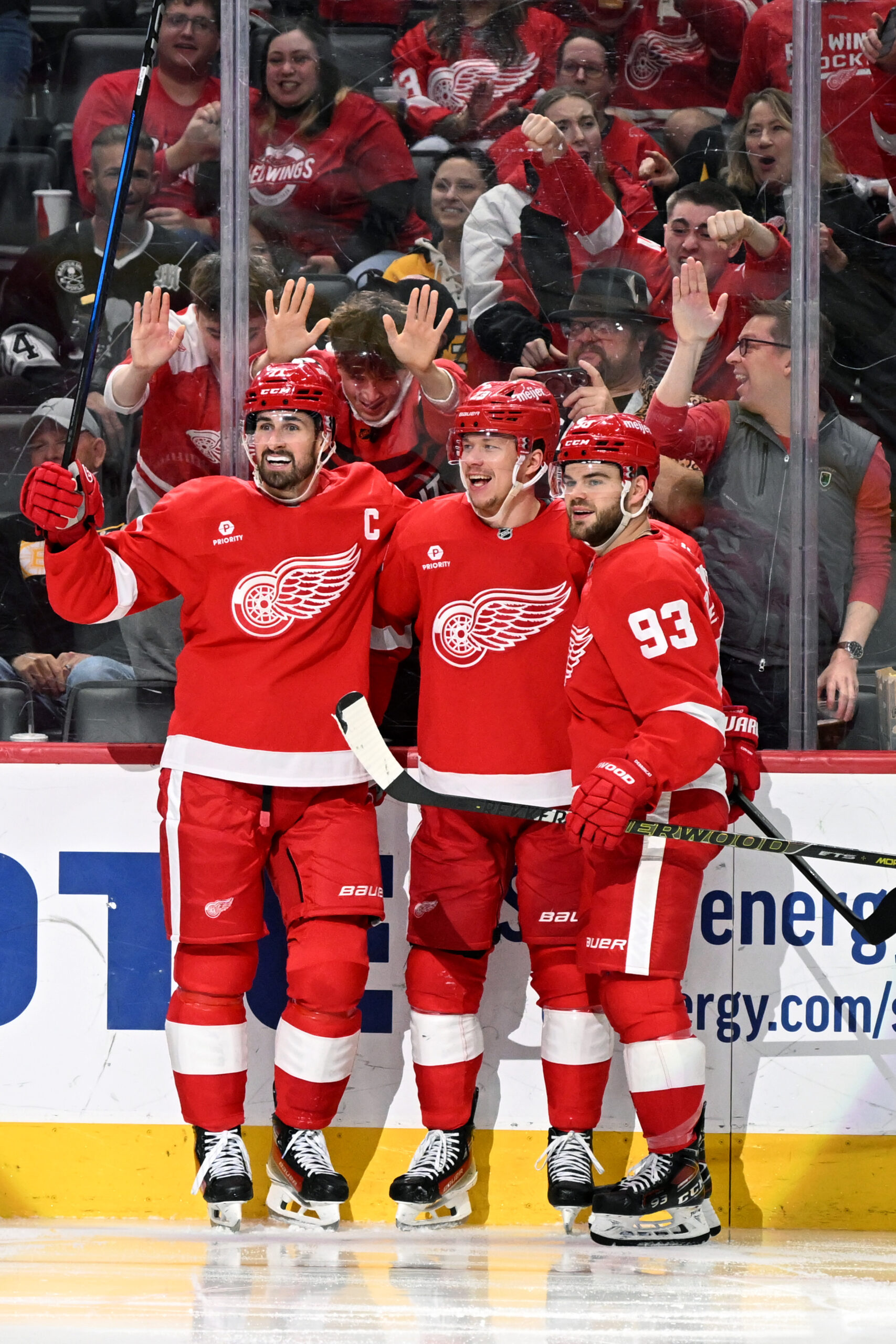 After finishing the 2023-24 season with 179 goals for (8th) at even strength, the Red Wings’ 5-on-5 offense collapsed this year, falling to 28th place with 143. Winger Alex DeBrincat sat tied for 18th in the league with 22 even-strength goals, with their next highest being Lucas Raymond, tied for 57th with 16. The falloff becomes even more dramatic after them.
However, this issue can only be answered if there are options available. Fortunately for Detroit, there are. After hinting at a new contract for months, the Chicago Blackhawks still haven’t extended forward Ryan Donato, who finished 17th in the league with 23 even-strength goals. Donato’s track record may raise some concerns, but the Red Wings could provide a more competitive environment than Chicago.
The importance of even-strength scoring can’t be overlooked. 14 of this year’s 16 playoff contestants finished in the top half of the league in even-strength goals, with the Florida Panthers and Montreal Canadiens being the only exceptions. Donato isn’t the only option either, but there will be more on that later.
Find Competent Penalty Killers
Detroit’s penalty kill was only 1.9 percentage points away from tying a record. No, it’s not a good record, as this year’s penalty kill was close to being the worst in NHL history with a 70.1% success rate.
To be fair, the team performed better with a man down after replacing Bob Boughner with Trent Yawney on December 26th, but not by much. Under Boughner and Derek Lalonde, the team averaged a 68.8% success rate on the kill, and 71.4% under Yawney and Todd McLellan.
Still, a 71.4% would have finished last in the league anyway, meaning the Red Wings will need different on-ice personnel to address the issue. The Carolina Hurricanes and Dallas Stars, which had two of the top five penalty kill units this year, will have some cap constraints entering the offseason. This would provide a perfect avenue for Detroit to pursue left-shot defenseman Dmitry Orlov (after weeding out their defensive core) on the free-agent market, or offer the Stars some cap relief by acquiring freshly extended Sam Steel in a low-cost trade.
Trade For A Second-Line Center
Now it’s time for the area of need that has plagued the Red Wings for a few years. After signing Andrew Copp and J.T. Compher in back-to-back offseasons, and sparingly using top-10 draft selection Marco Kasper as a center this year, it’s apparent that Detroit still needs a legitimate second-line center.
For better or for worse, the Red Wings will use Dylan Larkin as their first-line center. There is a valid argument that his ceiling is that of an above-average second-line center, but with six years left on his extension and the unlikelihood of Detroit finding a better option, his role is likely secured for the foreseeable future.
There won’t be much for them to choose from on the free-agent market. Matt Duchene may become a target, given that he finished 37th in goals at even strength this season with 19, and the Stars are unlikely to re-sign him. The Red Wings may only need a one-to-two-year stopgap, too, assuming Kasper appropriates the role as his game matures.
Still, there appear to be better options on the trade market. Detroit should steer clear of Vancouver Canuck Elias Pettersson and his $11.6MM salary, and New York Ranger Mika Zibanejad and five years remaining on his deal. However, Jared McCann of the Seattle Kraken and Trevor Zegras of the Anaheim Ducks represent quality options the Red Wings could pursue via trade this offseason.
Photo courtesy of Lon Horwedel-Imagn Images.
What The Senators Must Do To Become Stanley Cup Contenders
The Senators lost to the Maple Leafs in the opening round of this year’s Stanley Cup Playoffs. While they performed well in a six-game loss, they showed the team isn’t ready to be a serious contender. Some might argue that this is the first major hurdle in their rebuild, and they have plenty of time to ramp up expectations, but Ottawa has been rebuilding for half a decade and will need to be bold this summer if they hope to jump into the upper echelon of NHL teams.
Ottawa’s rebuild went through severe growing pains, the biggest being that the team hasn’t drafted particularly well outside its first-round picks. They took Drake Batherson in the fourth round in 2017 and Shane Pinto in the second round back in 2019, but their bottom six has been an area of concern for quite some time, and they hadn’t been able to squeeze bottom-six NHLers out of their draft picks. That put increased pressure on Ottawa’s strong top six, an area that Ottawa could look to improve if it wants to contend.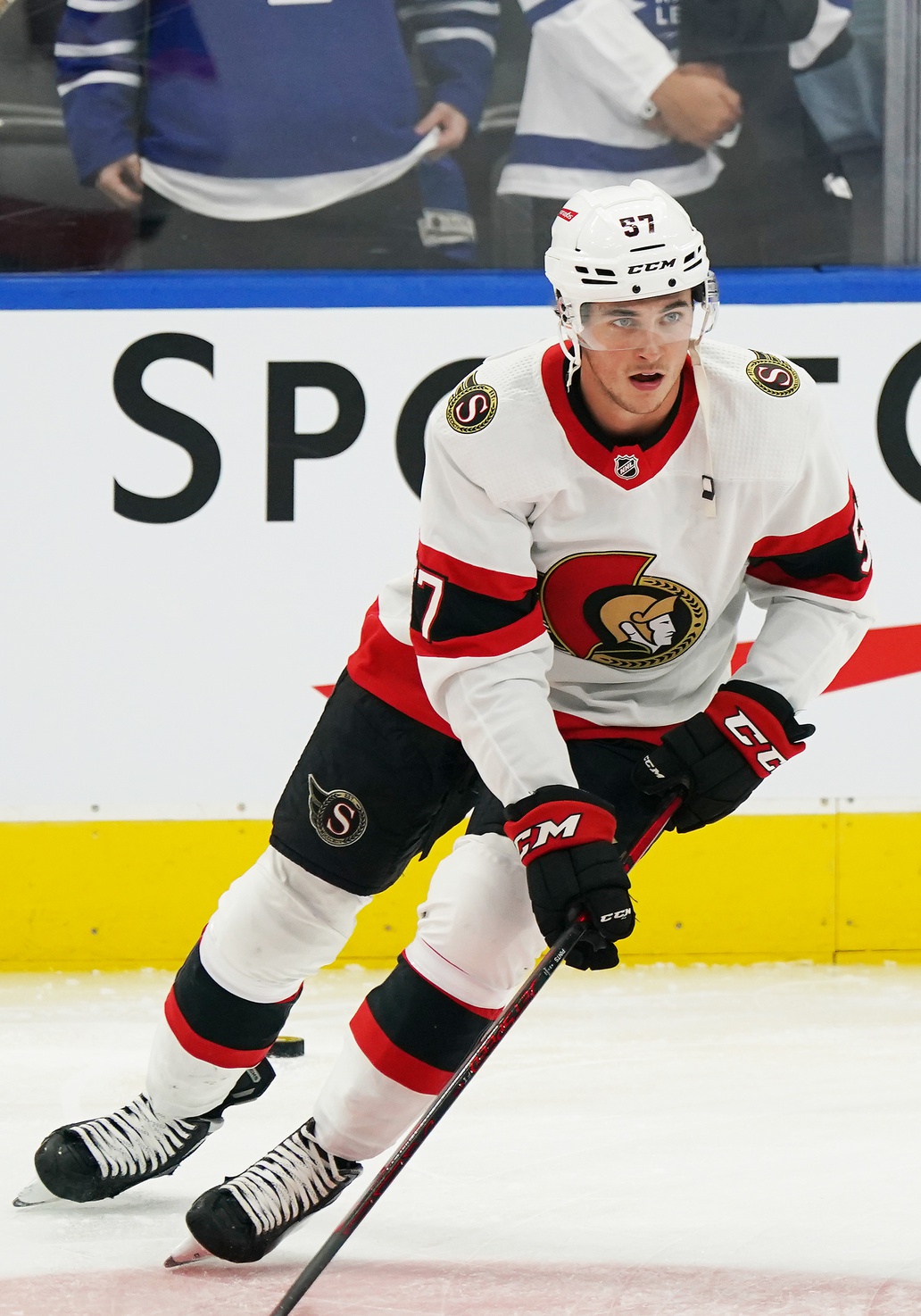
It doesn’t matter how good Ottawa’s top six is; if they don’t receive much help from the bottom two lines, winning games, particularly in the playoffs, becomes increasingly complex. A good comparison for this is the Penguins during the prime years of Sidney Crosby and Evgeni Malkin, when the Penguins couldn’t get out of the first round with a weak bottom six but became a buzzsaw during 2016 and 2017 when GM Jim Rutherford built an above-average third and fourth line.
Ottawa needs to adopt the same approach to take the next step. Last year, Ottawa’s top six was dramatically improved by the end of the season, with Pinto centering the third line, and the acquisition of Fabian Zetterlund offering another solid piece for the bottom two lines. But if they want to be bold, there are two places they should look to improve, both of which would organically improve their overall depth.
The first is up front, where their depth was mentioned as an issue. Ottawa could tinker at the edges of their roster and sign depth players as they did last summer, or they could make a push to acquire a top-six forward who could push a David Perron or Claude Giroux (if he re-signs) into the bottom six and add some scoring. Alex Adams of Sportsnet has speculated about the Senators potentially taking a run at Winnipeg’s Nikolaj Ehlers or Florida’s Sam Bennett, and both would fit what Ottawa needs. However, the Senators have solid center depth in their top nine and limited cap space, making Bennett a longshot target. Brock Boeser could also be a target, but Ottawa might be best served to look elsewhere for cap management reasons, given what he will command on the open market.
The other area that the Senators badly need to address is the right side of their defense. Artem Zub is a good pro and a solid second-pairing defenseman, but he should not be on the first unit for a team with Stanley Cup aspirations. That said, Ottawa currently has a solid defensive core, but it could use some help in the short term.
The Senators probably won’t be in on the likes of free agent Aaron Ekblad, and they don’t have the high-end assets to acquire a top young defenseman on the trade market. But what about a reunion with former Senators captain Erik Karlsson? The three-time Norris Trophy winner had his best years in Ottawa, and although he was traded to San Jose, Karlsson’s wife is from Ottawa, and it’s possible he would welcome a return to Canada’s capital. But would it make sense for Ottawa to do so? The short answer is no, but there could be a match there if the Penguins were willing to retain money.
Karlsson would provide offense, but plopping him into the top four would mean he has to play with Jake Sanderson or Thomas Chabot, both young defensemen tasked with covering for many of Karlsson’s defensive shortcomings. Given his skating and strong positional work, Sanderson could probably do that, but it would be a big ask for Chabot. Acquiring a player like Karlsson would allow Zub to drop to the second or third pairing, depending on the availability of Nick Jensen. The other thing that a Karlsson acquisition would do is serve as a stopgap until defensive prospect Carter Yakemchuk is ready to play in the NHL in a couple of years. Yakemchuk could become the top-pairing right-shooting defenseman that Ottawa is looking for. Still, the timeline for his development is unlikely to meet the urgency with which Ottawa needs to fill that hole.
Ottawa’s real target for a trade should be a defenseman who can help elevate Sanderson or Chabot. Zub has been a good soldier for Ottawa, but whenever he plays away from Sanderson, his underlying numbers take a hit, while Sanderson’s improve. It’s a delicate situation for Ottawa as they probably don’t want to disrupt their top pairings’ chemistry, but it might be worth exploring another defenseman on the trade market. Cost will be an issue for the Sens, but Seattle’s Adam Larsson is a name that could be available, as could Calgary’s Rasmus Andersson. The latter of those two might be tailor-made for Ottawa, but he did struggle last year, having some of the worst numbers of his career, and he will be due a massive extension shortly. Ottawa might be wary of acquiring an expensive veteran via trade if they have to turn around and give a lucrative long-term deal to an aging defenseman.
The options are out there if Ottawa does opt to fill in some of the holes at the top of their roster; however, at the moment, the cap space isn’t there to aggressively pursue any of the top free agent options. Ottawa has 14 players signed for next season and has just $17.5MM (as per PuckPedia) left in cap space. After they find a backup goaltender, re-sign Tyler Kleven and Zetterlund, it doesn’t leave much left over to pursue top-end talent, and this doesn’t even account for Giroux, who could potentially re-sign as well. The Senators don’t have much coming from their prospect pipeline either, so they will need to dip into free agency or the trade market to acquire some depth help, too.
The time has come for the Senators to act like a win-now team, especially given the window they have left to compete. They don’t have much young help coming, so management must be aggressive and creative. Bold calculated moves are required so the Senators don’t squander the prime of their young stars, who are almost all on long-term contracts.
Photo by Nick Turchiaro-USA TODAY Sports
Offseason Checklist: New York Rangers
The offseason has arrived for half of the league’s teams that aren’t taking part in the playoffs plus those already eliminated through the first couple of rounds. Accordingly, it’s time to examine what they will need to accomplish over the coming months. Next up is a look at the Rangers.
What a difference a year makes. In 2023-24, the Rangers won the Presidents’ Trophy with a 114-point effort and made it to the Eastern Conference Final. With the bulk of the core intact heading into this season, expectations were high and they were a popular Stanley Cup pick. Instead, things went off the rails early and they never recovered. GM Chris Drury has already made one big change with Mike Sullivan taking over behind the bench for Peter Laviolette but he has several other things to address in the coming weeks and months.
Make First-Round Pick Decision
As part of the trade to bring center J.T. Miller in for his second stint with the team, the Rangers parted with a first-round pick to get him. While the expectation and hope was that they’d be a playoff team, Drury was able to get some light lottery protection on the selection before making the swap. That turned out to be prudent as, of course, New York wound up missing the playoffs.
The protection on the pick was if it fell in the top 13. While the Rangers weren’t one of the big winners in the draft lottery, their selection wound up 12th, meaning New York still has control of it.
Drury now has two options. He can elect to keep this pick but doing so means that their 2026 pick would be moved instead without any protection on it. Alternatively, even though this year’s pick fell into the protected range, the Rangers can still choose to convey it this year but that means handing a top-12 pick to a division rival as Pittsburgh now holds the selection after acquiring it from Vancouver soon after the Miller swap was made.
It’s not necessarily an easy call to make. If Drury truly believes the Rangers can turn things around under Sullivan with the bulk of the core intact, it’s a question of weighing the 12th pick this year against something in the high-teens or early-20s next year. Using that framework, keeping the pick and dealing next year’s pick would make sense. But if there’s any uncertainty about their status as a playoff team for 2025-26, letting an unprotected pick go to a division rival would be risky. Either way, a call on this will need to be made in the near future.
Create Cap Space
While the Rangers got rid of Barclay Goodrow last summer and former captain Jacob Trouba early in the year to create cap space for next season, that money was spent quite quickly on Miller’s addition and long-term extensions given to Igor Shesterkin and Alexis Lafreniere. As a result, they enter the cap space with less than $9MM in cap space, per PuckPedia, and their RFA class (more on some of them shortly) alone will eat that up. Accordingly, if Drury wants to add to his roster, he’s going to have to open up some cap room first.
Early in the season, the Rangers made it known that veteran winger Chris Kreider was available but in the midst of a down year that saw him miss time with injury, suitors weren’t lining up for his services. He has two years left on a deal that carries a $6.5MM price tag and a 15-team no-trade clause that could limit New York’s options. It’s unlikely he’d yield a high-quality return but it’s possible that there’s a move out there that could bring a player back and open up at least a bit of cap flexibility.
The other veteran who found himself in trade speculation in-season was center Mika Zibanejad. With Miller being signed through 2030 and Vincent Trocheck through 2029, some have wondered if Zibanejad could be expendable. But he’s also coming off a quiet year (though he still managed 20 goals and 62 points) and is signed at $8.5MM per season through 2030. He’s also 32 with a full no-move clause which takes the threat of waivers off the table. It’s possible that there could be some interest from teams not looking to get into the free agent market or from some who struck out on that front. Again, assuming there’s a move he would approve, the Rangers probably wouldn’t clear the full salary but would likely get a player or two back and at least some cap relief.
On a smaller-scale front, defenseman Carson Soucy also feels like a possible candidate. Just acquired before the trade deadline, he’s now on an expiring deal worth $3.25MM and his trade protection drops to just 12 teams in July. If New York wants to do something else on the back end and there’s a team looking for just a short-term addition, a move could be made there as well.
Drury has shown he’s willing to be aggressive in moving players out to open up salary cap flexibility. He’s going to have to be similarly aggressive to do so again in the weeks ahead.
Make A Decision On Miller
Let’s talk about one of those restricted free agents now, defenseman K’Andre Miller. Two years ago, New York’s cap situation forced them to only focus on a bridge contract with the belief that, like Lafreniere, a long-term deal would await him at the end of it.
However, his output dipped last year after his breakout effort in 2022-23 and it dropped again this season to seven goals and 20 assists in 74 games although he did average a career-high-tying 21:57 per night of ice time. He also had more than his fair share of defensive struggles.
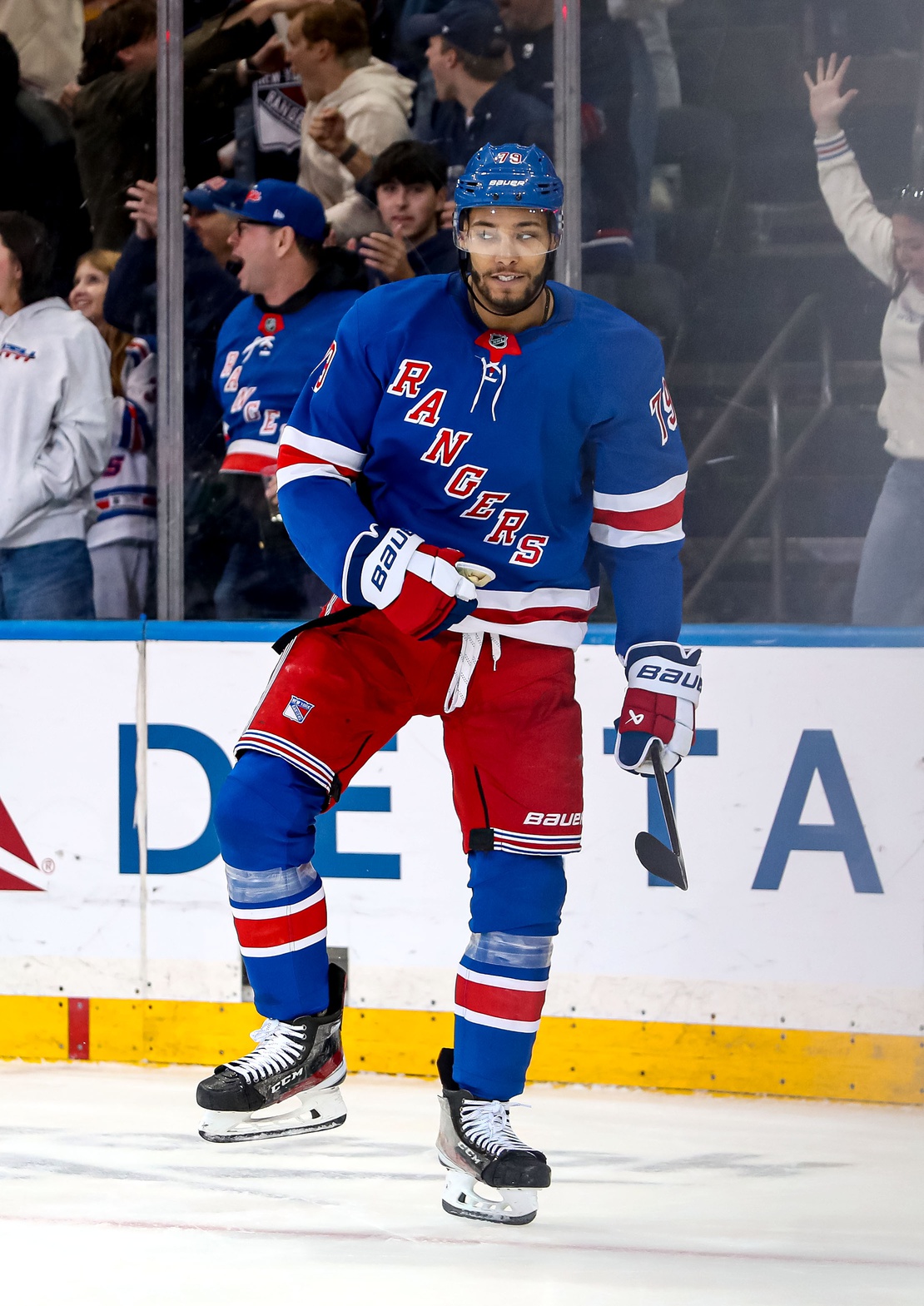 Miller has two years of team control left, both of which are arbitration-eligible. He’s also owed a $4.646MM qualifying offer, one that matches his salary from this season but represents a jump of nearly $800K on his cap hit.
Do they look to do another bridge deal, one that could very well be trying to get him to accept his qualifying offer? That would help the most from a salary cap standpoint this season but would also put him a year away from UFA eligibility where if he wanted to test the market, he could simply file for arbitration next summer, take the award, and hit free agency. Generally speaking, teams try to avoid that scenario. A two-year bridge would cost more and walk him right to UFA eligibility so that’s probably out of the question while a three-year pact would cost even more but could be more palatable from a longer-term perspective.
Or, if Drury wants to be aggressive, he could take Miller to arbitration where he could ask for a 20% drop on the qualifying offer which means they could offer $3.72MM on a one-year deal. That has its risks as well, however, as Miller would then be eligible to ask for a two-year award, taking him right to UFA eligibility. Plus, such a move could sour relations between the two sides. But Drury has been ruthless before so this option should at least be noted.
The other two alternatives would be a long-term deal, one that would probably push past $6MM per season and require a cost-cutting move. The other one would be cutting bait altogether and trading him outright. Given that Miller is a key cog on the back end, that doesn’t feel like a probable outcome but their hand could be forced if they their cap situation necessitates such a move. Suffice it to say, Miller’s contract is a key domino this summer.
Sign Cuylle Quickly
With the big increases coming to the Upper Limit of the salary cap, there has been more speculation about an uptick in offer sheets. There remains some skepticism about that notion but one thing St. Louis showed with their successful offers to Dylan Holloway and Philip Broberg is that teams can be leveraged with their cap situation. Based on the above sections, the Rangers are a team who could be leveraged on the offer sheet front.
They also have a young player exiting his entry-level deal, just like Broberg and Holloway last year. That would be winger Will Cuylle whose sophomore year was a good one. The 23-year-old finished sixth in the team in points after notching 20 goals and 25 assists along with a whopping 301 hits, good for a tie for third overall in the league in that category. While it won’t directly affect negotiations, he’s also off to a solid start at the Worlds for Canada.
Power forwards are always in high demand. A chance to get a still young one who has now shown that he can score at the NHL level is going to be appealing for teams to kick the tires on. Speculatively, it wouldn’t be shocking to see a team go as high as the top of the second-round tier, a $4.68MM offer on a short-term deal. Going higher on a longer-term deal (a $7.02MM offer would cost a first-round pick and a third-rounder) is also a possibility but a short-term route to try to follow what St. Louis did is the likelier outcome.
Drury needs to ensure he has some leftover cap flexibility into mid-July to try to reduce that potential leverage. By then, Miller’s RFA situation could be settled or it could be arbitration-bound and still in flux for a little while longer.
To guard against that, it might be worth Drury prioritizing Cuylle’s RFA case and get him signed before restricted free agency opens up. That might require them to take a leap of faith that they can free things up cap-wise later on but it might be worth that to take any chance of an offer sheet off the table. Oftentimes, restricted free agents without arbitration rights can be delayed with other cases getting the priority. Here, it could very well be the opposite if they have concerns about an offer sheet coming their way.
Photo courtesy of Danny Wild-Imagn Images.
Poll: Who Will Win Maple Leafs/Panthers Game 7?
Any playoff series featuring the defending Stanley Cup champions, especially when matched up against a similarly equipped opponent on paper, is usually bound to be an entertaining one. That’s what we’ve gotten in the second round between the Maple Leafs and Panthers, with a couple of wild momentum shifts resulting in a Game 7 on Sunday night.
The series didn’t start as evenly matched as most would have predicted. Some underwhelming play from Florida netminder Sergei Bobrovsky meant the Leafs, doubling their win total past the first round in the Auston Matthews era, took a 2-0 series lead into Sunrise. But the Panthers, who have controlled the majority of quality chances at 5-on-5 throughout the series, got more support from their All-Star netminder in Games 3 through 5 as they countered with three straight wins of their own to push Toronto to the brink in Game 6. The Leafs, perhaps taking a vital step to erase their underwhelming postseason reputation, put their best performance of the series forward with their backs against the wall with a 2-0 shutout win on the road to send the series home for a do-or-die Game 7.
Bobrovsky and Toronto goaltender Joseph Woll, who entered Game 1 in relief of starter Anthony Stolarz when he exited with apparent concussion symptoms and has started every game since, have had similar showings here in Round 2. The latter’s Game 6 shutout upped his save percentage to .893 with 0.42 goals saved above expected, while Bobrovsky’s posted a .895 SV% and 0.76 GSAx, per Natural Stat Trick.
Regarding the skaters, Florida’s best player hasn’t even played every game in the series. Defenseman Aaron Ekblad has been dominant after missing Game 1 due to suspension, serving as the Cats’ only point-per-game player in the series while averaging 22:34 per game. Depth has been the name of the game for Florida – every player to suit up in at least half of the series has registered a point.
It’s no surprise to see now-established playoff performer William Nylander atop the Leafs’ scoring chart with six points through six games, but the player he’s tied with is quite eye-raising. Depth veteran Max Pacioretty has turned back the clock after scoring the series-clinching goal against the Senators in the first round, rattling off two goals and four assists with a team-high plus-three rating through Game 6 of the Florida series. Averaging just 12:58 per game against the Panthers, he’s among the most efficient scorers in the league this postseason.
As for Toronto’s first-line triumvirate of Matthews, Matthew Knies, and Mitch Marner, they played their best game in Game 6. Matthews’ game-winner was his first of the series, but Knies is the only one with multiple goals in Round 2. On a highly concerning note for Toronto, he’s questionable for Game 7 after sustaining an apparent shoulder injury early in Game 6 and playing through it, head coach Craig Berube said.
While the Panthers are the road team, betting odds and most prediction sites give them the slight edge. Most betting sites have the implied odds of a Florida win around 55%, while MoneyPuck has it at just 50.2%. Of course, Toronto is 2-1 at home against the Panthers in this series and 4-2 at home so far in the playoffs.
One storyline to watch: after the first three games in the series were decided by one goal, including Florida’s come-from-behind overtime win in Game 3, the last three have been decided by two or more. Will we get more of a nail-biter Sunday night?
Let us know which team you think will win Game 7 and advance to the Eastern Conference Final – potentially the Panthers’ third straight ECF appearance or the Leafs’ first since 2002. Vote in our poll, then head to the comment section below to share your thinking!
Who will win Game 7?
-
Florida Panthers 52% (760)
-
Toronto Maple Leafs 48% (707)
Total votes: 1,467
If you can’t see the poll, click here to vote.
Offseason Checklist: New York Islanders
The offseason has arrived for half of the league’s teams that aren’t taking part in the playoffs plus those eliminated in the first round. Accordingly, it’s time to examine what they will need to accomplish over the coming months. Next up is a look at the Islanders.
Things were optimistic for the Isles heading into 2024-25 after adding Anthony Duclair in free agency to bolster the top line and having a full season of Patrick Roy behind the bench as head coach. Things went awry almost instantly out of the gate, though, and injuries and other factors ended the Isles’ brief postseason streak at two years. After flopping around in mushy middle territory since back-to-back Eastern Conference Final appearances several years ago, a front-office shakeup resulted from this year’s disappointments with general manager Lou Lamoriello‘s contract not being renewed. That’s the leadoff subject in this checklist as the Isles attempt to use this summer to rediscover their identity and direction.
Reshape The Front Office
After seven years and a pair of General Manager of the Year awards, the Lamoriello era is over on the Island. While the 82-year-old leaves New York with some solid building blocks, he’s also saddled them with some ill-advised long-term contracts for depth players that quickly appear headed for buyouts or waivers (Pierre Engvall, Scott Mayfield). They’re now looking for a new face – or two – to fill their GM and president of hockey operations roles.
Per multiple reports, they’ve been connected to various candidates but have lost out on their two preferred ones. Hall-of-Fame executive Ken Holland would have been a similarly-minded hire to Lamoriello’s in 2018, but he spurned the Islanders’ interest to take over the Kings’ GM vacancy. Canadiens executive VP of hockey operations Jeff Gorton declined to speak with the Islanders when they called Montreal about interviewing him.
There are more than enough candidates to choose from in their absence. Regarding NHL GM experience, they interviewed former Blue Jackets executive Jarmo Kekäläinen. They are also said to be interested in L.A. senior adviser Marc Bergevin, who ended up being second fiddle to Holland in the Kings’ search for a new GM. Neither has the track record of managing contenders that Holland has nor the expert drafting record Gorton boasts. Still, they’ve navigated similar situations to what the Isles find themselves in now. Bergevin helped some goalie-reliant Habs teams in the mid-2010s make deep playoff runs and even got them to a Stanley Cup Final appearance in 2021. Kekäläinen also built Columbus into a consistent playoff contender in the late 2010s, the only time they’ve qualified for the postseason in consecutive seasons.
More under-the-radar options they’ve interviewed include Lightning assistant GM Mathieu Darche and Devils AGM Kate Madigan. Both would be first-time GMs at the NHL level. It would be a tad surprising to see them go in those directions, considering the NHL experience their first choices for the position had. But the former has been in GM conversations for years and is the most appealing first-time target.
Whatever the choice is, they’ve got to make it before the draft, where they hold the first overall pick for the first time since selecting John Tavares in 2009 after winning the lottery. While 2025 is a weaker draft, the Isles’ next GM is getting a significant jumpstart to a long-lagging prospect pool that also received a lovely parting gift from Lamoriello in the form of Avalanche first-rounder Calum Ritchie in this year’s Brock Nelson deadline deal.
Get Ilya Sorokin More Help
Some eyebrows raised when the Isles signed a then-35-year-old Semyon Varlamov to a four-year, $11MM deal two summers ago to continue as countryman Ilya Sorokin‘s backup. While the veteran has provided the Isles some solid goaltending in his tenure there, concerns about giving him such a lengthy commitment emerged aggressively this season.
Varlamov’s season ended in December after undergoing a knee procedure. While he anticipates being ready for training camp in the fall, he struggled to a .889 SV% and 3-4-3 record in 10 starts before going under the knife. That resulted in Sorokin making 55-plus starts for the third straight year, during which his numbers have steadily declined. It’s clear he needs more rest, and it’s becoming even more clear that Varlamov can no longer help him with that.
Entering this year, Varlamov had logged a SV% above .910 in five consecutive campaigns. With only two years left at a $2.75MM cap hit, he’d draw significant trade interest if the Islanders opted to shop him amid a relatively weak UFA market. That trade could look like a backup-for-backup swap that allows the Isles to get someone more comfortable making 30 starts behind Sorokin, or it could be a cap dump that will enable them to hedge their bets on one of the few UFA options capable of shouldering that workload.
Shoring up their minor-league depth should be a priority, too. AHL Bridgeport has iced some highly underwhelming rosters over the past few years, including between the pipes. A high-end No. 3 option to complement Varlamov and allow Sorokin not to increase his workload if the former gets injured could also be another solution here.
Make Decisions On Defense
The Islanders only have three defensemen signed to one-way deals for next season. One of those is Mayfield, who may not even be in the opening night lineup. That leaves Adam Pelech and Ryan Pulock as the only current certainties for 2025-26.
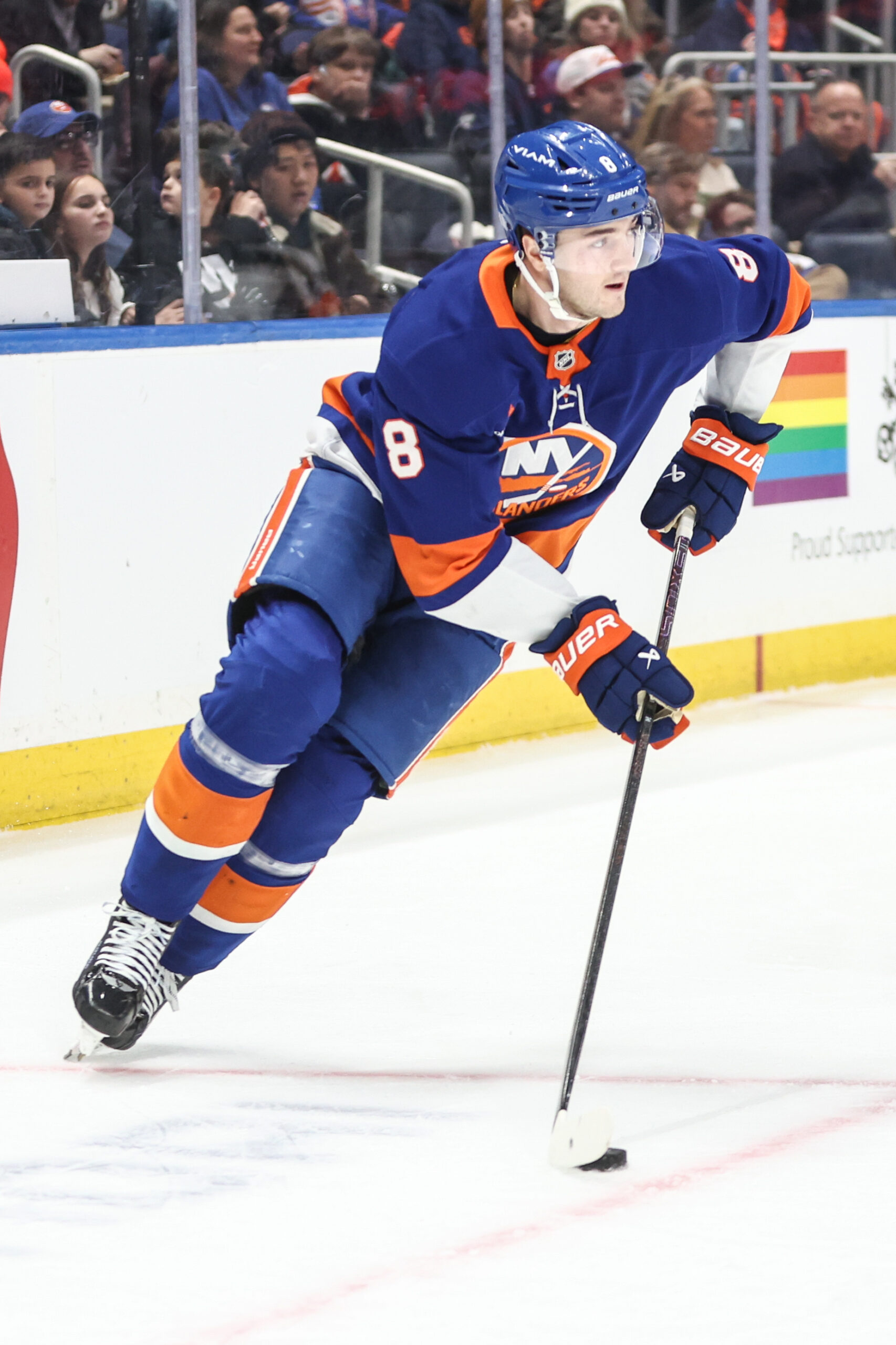 The most pressing decisions are regarding the length of deals to pursue with pending restricted free agents Noah Dobson and Alexander Romanov. The former is still just 25 and erupted for a 70-point campaign last year but took a significant step back in 2024-25. Could that be enough to convince the Isles’ new GM to pursue another bridge agreement and risk losing him in unrestricted free agency in just a few years? It seems likely – his profile likely commands him at least $8.5MM per season on a max-term extension. The Islanders’ appetite to dole that out after a season in which he had 39 points and a -16 rating in 71 games probably isn’t very strong. If they opt to select defenseman Matthew Schaefer first overall, Dobson could become expendable altogether and net them a trade return that allows them to put more work into reshaping their forward group.
They’d be more amenable to a long-term deal at a mid-range cap hit with Romanov, who’s emerged as a solid top-four complementary piece on the Island. Injuries limited him to 64 games this year but he managed 20 points for a career-high 0.31 points per game mark while averaging over 22 minutes per game and leading the club with 165 blocked shots. Now fully proven as a stable partner for Dobson moving forward, he’ll get a definite raise on his current $2.5MM cap hit.
Their other RFAs on the back end are Adam Boqvist and Scott Perunovich, a pair of puck-moving in-season pickups. Qualifying offers for either one are uncertain, but Boqvist is more likely to stick around. The 2018 No. 8 overall pick found more stable footing in New York after they claimed him off waivers from the Panthers, finishing the year with eight points in 17 games in bottom-pairing minutes and fringe power-play usage. He could stick around as a No. 6/7 option to help out the Islanders’ beleaguered goal production. Perunovich, meanwhile, suited up just 11 times after being acquired from the Blues in January. That doesn’t bode well for his chances of sticking around on the NHL roster as the Isles look to reload with more established names.
It could be they decide both Boqvist and Perunovich are expendable if they reach an extension with pending UFA Tony DeAngelo. The much-maligned offensive rearguard came over from Russia midseason to fill the void left by injuries to Dobson and Pulock and provided solid offense from the point, finishing the year with 19 points and a -11 rating in 35 games. He certainly won’t see over 23 minutes per game next year, but he got a larger sample than either Boqvist or Perunovich and is more likely than either to start next year as the No. 3 righty behind Dobson and Pulock.
Restart Kyle Palmieri Extension Talks
The Isles didn’t move Palmieri at the trade deadline, mostly because they had an extension mostly in place. With Lamoriello gone and no deal signed, Palmieri’s next deal plunges into uncertainty. The 34-year-old has played 82 games in back-to-back years and finished third on the team in scoring with 24 goals and 48 points this season. Still a very good middle-six scorer, can the incoming GM bring him back at a slight discount compared to his current $5MM cap hit?
Doing so would give them the flexibility to move on from some less desirable contracts, namely Engvall’s and Jean-Gabriel Pageau‘s, as they look to reload their forward group. That forward corps could include a name like James Hagens or Michael Misa on opening night next year, depending on how they use their top pick, making cap flexibility even more attractive to build around one of them while they’re still on their entry-level deals.
Regardless of all that, Palmieri’s the type of player the Isles should look to retain on a short-term deal if they’re serious about quickly reloading for next season. He’s been remarkably consistent over his four full years on the Island – his 24-24–48 scoring line actually matched his 82-game average during his New York tenure. He’s more of a known commodity to them than UFA replacements that would cost the same (or even more) for similar rates of scoring production.
Image courtesy of Wendell Cruz-Imagn Images.
Offseason Checklist: Pittsburgh Penguins
The offseason has arrived for half of the league’s teams that aren’t taking part in the playoffs plus those eliminated in the first round. Accordingly, it’s time to examine what they will need to accomplish over the coming months. Next up is a look at Pittsburgh.
The Penguins missed the playoffs for the third straight year, and the team has pivoted from being a perennial playoff participant to a below-average squad with an old and expensive roster. The question in Pittsburgh has now become, are they in a rebuild or a retool? General manager Kyle Dubas spoke about wanting to get back into contention quickly earlier in the year, but has spoken more recently about finding sustained success. Still, the Penguins’ recent split with head coach Mike Sullivan suggests that they may not be planning to compete anytime soon. Josh Yohe of The Athletic has speculated that the Penguins will try to make a big splash in the summer of 2026, which means this upcoming season could be rough in the Steel City. The Penguins hired Dubas nearly two years ago. They paid him very handsomely to navigate a complicated situation in Pittsburgh, and this could be the summer when Dubas has to earn his hazard pay. The Penguins are about to enter what can best be described as a transitional summer as they continue to shed older, more expensive players in favor of younger, controllable ones who will be part of the franchise’s future.
Hire A New Head Coach
Sullivan coached the Penguins for nearly a decade and is the most successful coach in franchise history. His presence always gave the Penguins a confident swagger, even when they shouldn’t have had one. While Sullivan didn’t have much success in recent years, they probably overachieved given the poor roster construction and inconsistent goaltending.
Now, with Sullivan in New York, Pittsburgh must pivot and hire a coach for a job that is as undesirable as an NHL coaching job can be. The Penguins aren’t close to competing, and don’t have any truly upper-echelon prospects that will be gracing the ice at PPG Paints Arena anytime soon. However, the Penguins remain a prestigious franchise and still boast one of the game’s greatest players in Sidney Crosby.
Whoever is the Penguins’ next coach will likely be the last head coach of Crosby’s career and will need to be okay with taking on a team that will underwhelm next season. This could force the Penguins to look outside the regular NHL coaching carousel, which might be a positive, given the rate at which NHL coaches are recycled. Pittsburgh will probably be looking for a coach who preaches defense first, which would be a significant pivot for a franchise that has made offensive firepower its calling card. But the Penguins barely have any outside their top line (Crosby, Bryan Rust, and Rickard Rakell), and their top prospects won’t exactly fill the scoresheet.
If the Penguins can find a head coach who can scheme a solid defensive structure and Pittsburgh can get some goaltending, they could surprise people next season. But even then, it’s hard to imagine them being anything more than a middle-of-the-pack team.
Trade Erik Karlsson
The Erik Karlsson experiment has been a trip. It was worth trying, and Dubas did well to acquire the three-time Norris Trophy winner using multiple veterans on bad contracts and several premium draft picks. The first-round pick they traded for Karlsson is a loss that stings, but the move made sense at the time, as the Penguins were hopeful that their veteran group had one more run in them, and the belief was that Karlsson could elevate the older stars. 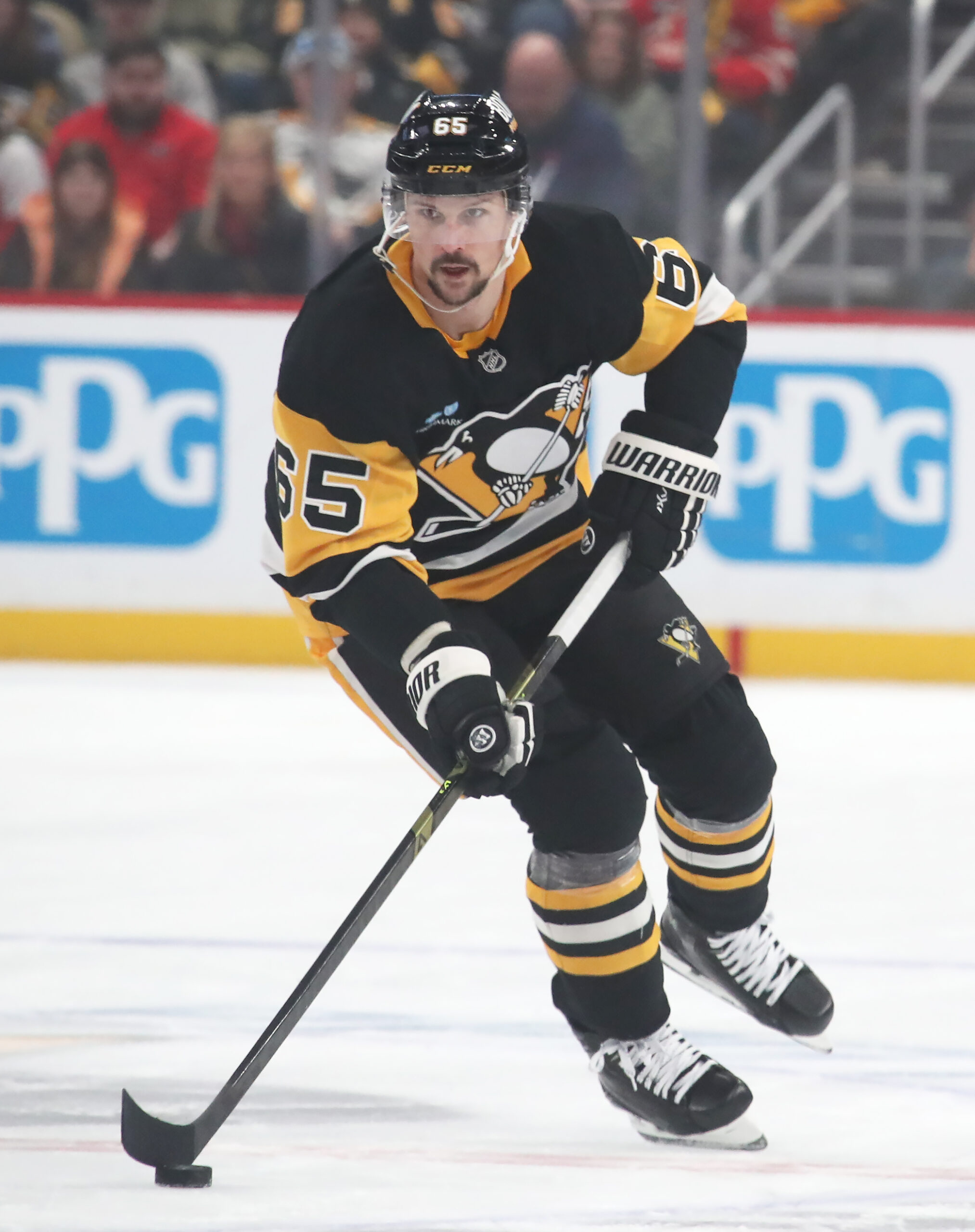 But it didn’t work out that way, and Karlsson has been just okay offensively, and downright dreadful defensively. Karlsson was never a master class in defense, but this past season, his shortcomings were undeniable, so much so that Kyle Dubas had some harsh words about Karlsson’s game at the end of the season (as per Pittsburgh Hockey Now).
Karlsson isn’t impossible to move, but the last time he was available two years ago, he was two years younger and coming off a 100-point Norris Trophy-winning season. He’s older, slower, and has significantly less trade value this time. The Penguins might have to take a bath on this one if they want to move on from the soon-to-be 35-year-old. The other issue they will face is that Karlsson controls his fate through a no-movement clause.
While it will undoubtedly be more challenging to trade Karlsson this year from a performance perspective, it should be easier to facilitate contractually. Karlsson has two years left on his deal with a $10MM cap hit thanks to $1.5MM of retention by the Sharks. Karlsson has $16.5MM left on his contract in hard cash, but after his bonus for next season is paid out on July 1, he will be owed just $11.5MM in absolute dollars for the final two seasons. That could interest a team more concerned with actual dollars than cap space, such as one of Karlsson’s previous teams, the Ottawa Senators.
So, what kind of trade can Penguins fans expect? It’ll be something similar to what he was traded for previously, minus a first-round pick. There won’t be many teams willing or able to take on Karlsson’s full cap hit, so the Penguins will either need to retain a significant portion of Karlsson’s salary for the next two seasons or take back another team’s undesirables to allow the money to match.
Suppose the Penguins opt to retain significant money. In that case, they will allow themselves the best potential return, as teams would probably line up if Karlsson’s cap hit were reduced to something closer to half of the $10MM he is currently costing. It’s hard to speculate what that kind of return would be, but it would probably not be insignificant given that Karlsson can still put up points and play in a team’s top four.
Now, if the Penguins opt for the route where they retain no money or very little, it will require them to take back contracts of underperforming players. There wouldn’t be much of a market for this type of trade, but Detroit would certainly have interest, and they have several players on low-value contracts and would be happy to ship them out to bring in Karlsson.
In any event, Karlsson is among several Penguins players who need fresh starts, and he is the most impactful Pittsburgh player who could be on the trading block.
Acquire Younger Roster Players
Many people panned the Jake Guentzel trade in March of 2024, as Dubas elected to go for quantity over quality regarding the Penguins’ best trade chip. Guentzel was dealt to Carolina for forward prospects Vasily Ponomarev and Ville Koivunen, Cruz Lucius, a conditional first-round pick in the 2024 NHL Draft and a conditional fifth-round pick in the 2024 draft. Now, the first-round pick ended up falling back to a second pick, and Dubas was heavily criticized for not obtaining a first-round pick, but the trade has been a massive win for the Penguins just a year later. Pittsburgh drafted defenseman Harrison Brunicke with the second-round pick, and he appears to be developing into a long-term fixture in the Penguins’ top four. Koivunen looks like he will start next season in the top six for the Penguins, and Ponomarev may be playing on the third line.
Now that Dubas has started building some depth in the Penguins’ pipeline, they must find higher-end young players to lead their newly acquired prospects. Pittsburgh has a handful of nice forward prospects, but they do not have any high-end prospects they can build around. Those players are the most difficult to acquire, but that is the project that Dubas will need to figure out to get the Penguins back into contention.
The Penguins have a couple of solid veterans on value contracts that they could flip out for picks and prospects, but with so many draft picks in the subsequent three drafts, Pittsburgh might be best served to try to move those players out for young NHL roster players. It’s easier said than done, though, as teams are more forward-thinking these days and better understand the importance of young controllable roster players in a salary cap league.
Dubas might not be able to accomplish this goal without some draft lottery luck next year. Still, he he’ll have plenty of draft picks over the coming years to try and catch some value in the Entry Draft, or use those picks to make trades to a team that is up against the salary cap and has to move out an RFA who has priced himself out of a cap strapped organization.
Move Out Rickard Rakell
Rakell had a career year playing alongside Crosby on the Penguins’ top line, posting 35 goals and 35 assists in 81 games. For Rakell, it was the third time he had topped 30 goals and the first time since 2017-18. Rakell can play, there is no doubt about that, but he is just a year removed from arguably the worst season of his career and at 32 years of age, his value isn’t going to be higher. Rakell will likely be 33-35 years old by the time the Penguins are set to contend, and while trading him might upset Crosby, Rakell isn’t helping this team when they are ready to win unless he is traded for future help.
Dubas talked about the need to maintain a winning culture in Pittsburgh, but to be perfectly honest, the Penguins haven’t had a winning culture since Rakell arrived, missing the playoffs in three of the four years he has been there. So, moving on from him isn’t exactly going to wipe the slate clean, as Rakell was never in Pittsburgh when the Penguins were contenders. The best course of action with Rakell is to move him this summer and add to the prospect pool to turn things around quickly.
Rakell has three years left on his contract at $5MM annually and should be able to fetch the Penguins a first-round pick, if not more.
He will not be the easiest player to trade, but with an increasing salary cap and teams always desperate for offence, Rakell could be a solid depth addition for a team that views itself as a Stanley Cup contender. He has a modified eight-team no-trade clause, which shouldn’t be prohibitive but might block the Penguins from trading to some potentially interested parties, depending on how strategic Rakell plans to be with his contractual right.
Some folks might make a case for trading veteran forward Rust, and there is an excellent case for it, given his play last season. But, if the Penguins do genuinely care about maintaining a winning culture, Rust is one of a handful of remaining carryovers from the Penguins’ Stanley Cup Championships in 2016 & 2017 and has a deep connection with Crosby and the Penguins organization. Many people make the case that Rust should be the next captain of the Penguins, but given Crosby’s play in his late 30s, Rust and Crosby may retire simultaneously.
Photo courtesy of Charles LeClaire-Imagn Images
Examining The Penguins’ Options For Ryan Graves
When Penguins general manager Kyle Dubas took over the organization just before the draft in 2023, he had little time to do an organizational assessment. But one glaring hole was on the Penguins’ top defensive pairing next to Kris Letang, where long-time fixture Brian Dumoulin was set to depart after a rocky final season in Pittsburgh. Dubas recognized the gaping hole and swiftly signed defensive defenseman Ryan Graves to a six-year contract in free agency worth $4.5MM per season.
The contract immediately became an albatross for Pittsburgh as Graves struggled on the top pairing, fell down the hierarchy to the bottom pair, and was eventually a healthy scratch on many occasions this season. The deal has been a disaster for the Penguins and will be challenging to navigate going forward.
There’s not much Dubas can realistically do to get out from under the Graves deal. Thanks to the signing bonus structure of the contract, it is essentially buyout-proof (per PuckPedia) and would offer the Penguins very little salary cap relief. The only significant reduction would come next season, a year when the Penguins probably need it the least out of the next few years, and it would tack on additional years in which the Penguins would be paying for the buyout.
The next option is probably the likeliest: to bury Graves in the minors and have him play for the Wilkes-Barre/Scranton Penguins of the AHL. This situation wouldn’t be unprecedented, as plenty of NHLers on big-money deals have gone to the AHL before. There’s even a recent example in Pittsburgh, where netminder Tristan Jarry had two stints in the AHL this past season. Graves is no stranger to the AHL, having played four seasons in the league before beginning his NHL career with the Colorado Avalanche, but has not played there since the 2018-19 season. This option would allow Pittsburgh to save the league minimum salary plus another $375K, equaling $1.15MM in cap savings for the Penguins.
An option that is less likely to happen, but probably the most interesting, is that the Penguins could try to trade Graves and his brutal contract. That option is sure to generate an audible snicker from readers. Still, bigger contracts to lesser players have been traded before, so it is not impossible. What better time to do it than the summer? The NHL is ripe with bad contracts, and it is very possible that the Penguins could find someone to swap another undesirable contract for a player that hasn’t worked out.
After signing a massive eight-year deal, Damon Severson in Columbus has also been a bust. Pittsburgh isn’t likely to take on two extra years on a player whose numbers have fallen off recently, but this is the type of player the Penguins will have to target if they want to do a one-for-one change-of-scenery trade. There are plenty of players on much bigger cap hits that Pittsburgh could target, but those contracts are mostly more extended than the four years Graves has remaining. The risk would probably be greater for the Penguins, especially given that they could be turning the corner on their retool and still owe on massive deals. Given that Severson is a right-shot, it’s only a realistic scenario if Erik Karlsson is also moved this summer.
If the Penguins want to move Graves’ contract using a sweetener, that could get ugly. Pittsburgh received a second-round pick in exchange for taking on two years of Kevin Hayes‘ contract just last summer, and his cap hit was just $3.57MM, nearly a full million dollars less than Graves’ cap hit. Using that as a comparison, there is no doubt that the Penguins would need to use at least a first-round pick to shed Graves’ contract, which is something they simply won’t do at this time.
The Penguins could also keep Graves on their roster and hope he finds his game. It’s not impossible if Pittsburgh hires a more defensive coach who can utilize some of Graves’ strengths, as the Devils did in New Jersey before Graves joined the Penguins. The issue with that is that Graves played on a talented Devils team and was insulated from some of his shortcomings; in Pittsburgh, that is not the case, nor will it be for the foreseeable future. Graves does have a skill set, and although Penguins fans might disagree, he could be sheltered and used in situations that better suit those skills. He can shoot the puck, has good size and reach, and his transition game isn’t horrible. If the Penguins can find the strengths in his game and exploit them, they could build his trade stock up to the point that they could move him without having to retain any of his contract.
The flip side of that coin is that Graves plays poorly next season and is part of a team that falls to the bottom of the standings, something that is very possible. The Penguins could re-evaluate a year from now and look at their options again if they want to get out of under Graves’ contract.
Misses on depth players are what tank roster construction and unfortunately for the Penguins, the Graves deal has been a massive miss. It’s far from the only miss as their roster has been littered with poor depth contracts since Ron Hextall took over GM duties from Jim Rutherford back in the 2020-21 season. The Penguins have missed on almost every mid-range contract since 2021, but they do have options going forward, and while none of them are perfect, there is a choice that exists. The Penguins will have to make the one they feel best serves the organization as they try to turn the corner and compete again.
Offseason Checklist: Anaheim Ducks
The offseason has arrived for half of the league’s teams that aren’t taking part in the playoffs plus those eliminated in the first round. Accordingly, it’s time to examine what they will need to accomplish over the coming months. Next up is a look at Anaheim.
After a rocky showing in 2023-24, the Ducks bounced back relatively well this year with a 21-point jump in the standings. However, that still left them well short of a playoff spot and GM Pat Verbeek acted quickly, firing Greg Cronin and two assistant coaches while Joel Quenneville has taken over behind the bench. Even with that big item checked off, Anaheim has a lot to accomplish this summer.
Make A Decision On Zegras
This was a topic in last year’s checklist and frankly, not a lot has changed since then. Coming off an injury-riddled year that saw him struggle when he was healthy, Trevor Zegras was in all sorts of trade speculation last summer. There were some more intensive talks at the draft but nothing got across the finish line, giving Zegras a chance to make a better second impression on Cronin and his staff.
Unfortunately, this season was largely more of the same. He missed more than 20 games with a knee injury and potted 12 goals and 20 assists in the 57 games he played, only a small uptick in points-per-game compared to the year before. For a player with two 60-plus-point seasons under his belt already, it’s fair to say this was another underwhelming year.
That means the trade speculation is likely to pick up once again in the near future. Zegras now has just one year left on his bridge deal, one that carries a $5.75MM qualifying offer in 2026 when he’ll be a year away from UFA eligibility. An early extension makes no sense for either side so Verbeek has two choices here, hold again and hope things will improve under Quenneville or pull the trigger on a trade over the coming months.
Of course, with the way the last two years have gone, Zegras isn’t exactly at peak trade value. Teams will view him as more of a buy-low candidate and will likely structure their offers accordingly. However, is Anaheim in a spot where a positive-value return that isn’t the best better than running the risk of him having another down year and seeing his value degrade further or even fall into non-tender or club-elected arbitration territory? That’s what Verbeek will be looking to weigh over the next little while.
Bridge Or Long-Term Deals?
The Ducks have two of their intended future core players up for new deals this summer. Armed with more than $38MM in cap space per PuckPedia, Verbeek is in a spot where he can choose which direction to take with them rather than having their cap situation dictate those plans. That cap space largely insulates them from being a target for an offer sheet as well, given their easy ability to match.
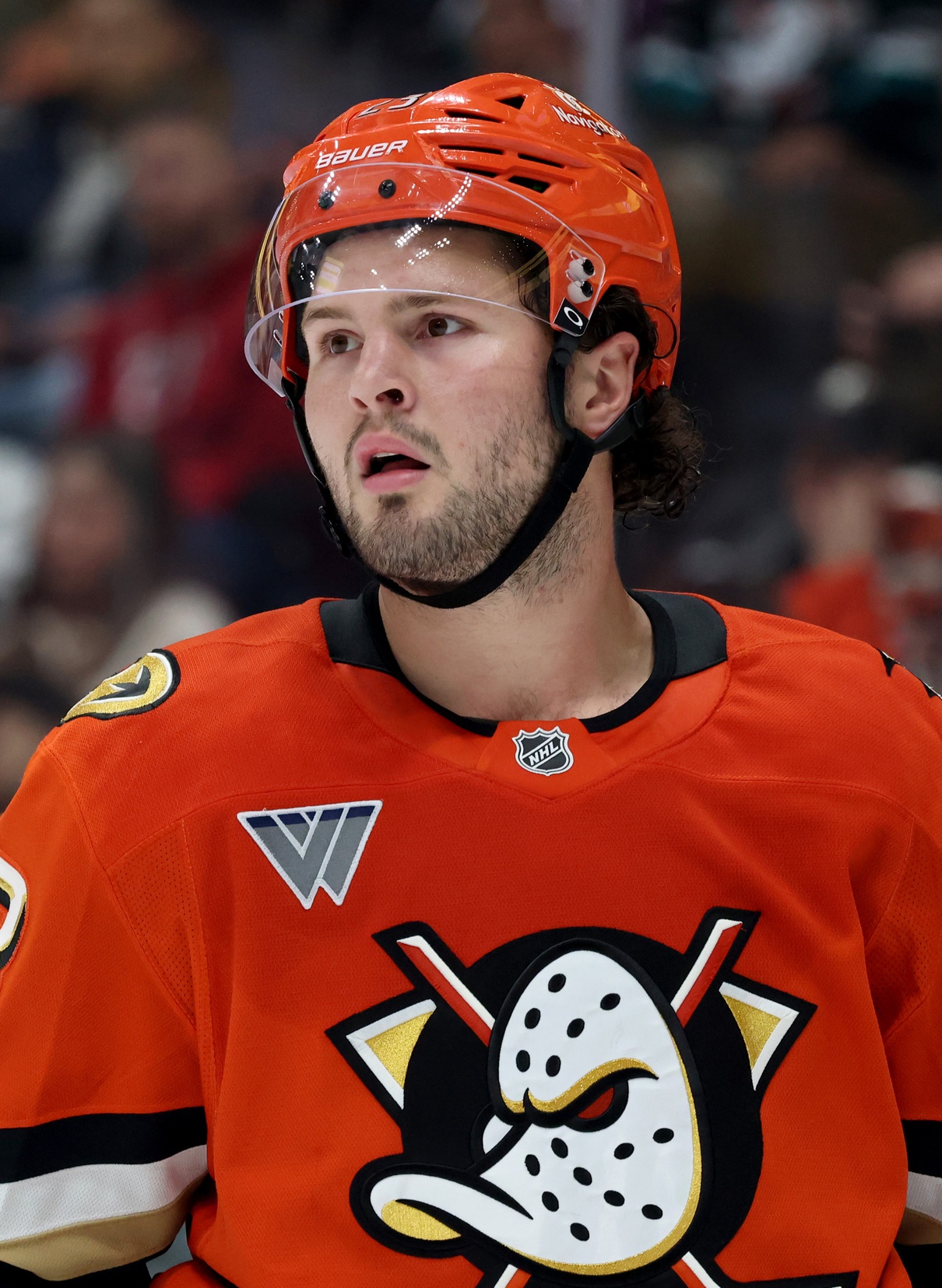 The first is center Mason McTavish. The 22-year-old was the third-overall pick in 2021 with the hopes that he could become their top center of the future. (Leo Carlsson was picked a year later and now holds that particular distinction.) Over his first three seasons, his development has largely been gradual but he did set career highs across the board this year and finished second on the team in scoring with 20 goals and 32 assists on a team that had an awful lot of trouble scoring. Still just 22, McTavish is certainly tracking to be at least a core player even if he doesn’t wind up as the high-end number one center his draft status might have suggested.
Having said that, this could be a bit of a trickier negotiation. With the year McTavish had, he wouldn’t want to sign a long-term deal on the basis of him being a 50-point player; he’s going to expect that there’s still more improvement on that front and will want to be paid accordingly. Meanwhile, Verbeek might not want to pay that type of price tag until he sees more from McTavish. He pushed for the bridge deal for Zegras and that decision looks particularly wise at the moment. If it is a shorter-term agreement, it should check in around the $4MM mark.
Then there’s goaltender Lukas Dostal. This was the year when the label of the goalie of the future changed to goalie of the present as he took over as the primary starter. On the other hand, his overall numbers were still relatively pedestrian (3.10 GAA and a .903 SV%) but he was playing behind a relatively weak defensive group. He’s two years away from UFA eligibility so it’s hard to see a two-year deal being the solution here even if it might be the safer way to go normally.
Verbeek’s options here are probably opt for a one-year contract if he needs to see more from Dostal or to pay him like a secondary-tier starter even though his career numbers might not warrant it just yet. In that instance, deals like ones signed by Karel Vejmelka (five years, $4.75MM AAV), Joey Daccord (five years, $5MM AAV), and Mackenzie Blackwood (five years, $5.25MM AAV) look like the range for Dostal’s next price tag.
Find A Trade For Gibson
Another theme from last year’s column, not a lot has changed here either. For years now, Gibson has been in trade speculation and while there have been times when it looked like one might be possible, it hasn’t happened yet. But the environment might be more favorable for a move this time around.
For starters, Gibson quietly had a solid season. His .911 SV% was his highest mark since 2018-19 while his 2.77 GAA was his best since 2017-18, numbers that were better than Dostal. After putting up numbers that were below the NHL average for several years, this was a big step in the right direction and should help quell some concerns that he isn’t capable of playing at that level anymore. That should open up a couple more potential trade avenues at least.
The contract is also more manageable. Yes, his $6.4MM AAV is still on the high side (ranking 11th as things stand for next season) but there are only two years left on the contract. It should be more palatable for Anaheim to hold back at least some money on that deal. If they retained even 20% ($1.28MM), his revised cap hit would be $5.12MM which would be 21st league-wide. That’s more the range he should be in and the Ducks wouldn’t have to eat a lot of dead money to get him there now.
Then there’s the free agent market. Aside from Jake Allen, it’s a particularly weak class, making Gibson more enticing as a trade candidate. If you’re looking for a short-term goalie upgrade, it might be more palatable to trade something for Gibson than commit to a likely lesser option on the open market.
Is this enough to make a trade likely? Probably not, and it should be noted that there is a 10-team no-trade list to contend with as well. But there’s a path to a suitable trade this offseason which hasn’t been the case too often. And if it doesn’t happen, this could very well make another appearance on next spring’s checklist.
Add Some Firepower
Offense has been hard to come by for Anaheim lately. This season, they were 30th in the league with just 217 goals. That was actually an improvement on the previous year when they were also 30th but with only 203 tallies. In 2022-23, they were 31st with 206 goals. If you want to go back to the last time the Ducks were even in the top 20 league-wide in that department, it was the 2017-18 season. If we change that to the last time they were in the top half of the league in goals, that came back in 2014-15.
Suffice it to say, this has been a long-standing issue for Anaheim and one that hasn’t really been addressed, even in spite of some decent additions in Frank Vatrano and Ryan Strome in recent years.
If you’re in the glass-half-full category, there’s reason for optimism. With so many young players in key roles, there’s hope that there will be some internal improvement from all of them which should give them a boost. Playing for a more proven coach in Quenneville might also give them a bit of a lift. But expecting that alone to be enough to get them closer to even being league average would likely be foolhardy.
Anaheim has had one of the more restrictive budgets in recent years with the team trying to spend much closer to the floor than the cap. But last week, team owner Henry Samueli indicated that Verbeek won’t have to penny pinch as much as he did before. That’s especially noteworthy with their favorable cap situation.
At this point, Verbeek shouldn’t be too picky when it comes to searching for potential offensive upgrades. But after spending big on Alex Killorn as a culture-building pickup two years ago and striking out on his targets last summer, Anaheim needs to be a lot more successful in its recruitment class this time around and add some much-needed scoring help to this group.
Photo courtesy of Jason Parkhurst-Imagn Images.
These Players Could Be Traded Before The Draft
The playoffs are in full swing, but that won’t stop folks from looking at moves that could be made before the NHL Entry Draft next month. Plenty of names will be available this summer, but this list will look exclusively at the ones with a high probability of being moved before or at the Draft.
Let’s start with Anaheim Ducks goaltender John Gibson, who feels like he has been on the trading block since the beginning of the decade. Gibson had a bounce-back season this year, and the Ducks must be eager to move on while his stock is higher than it has been in recent years. Anaheim should be able to extract some value this year for Gibson, especially with many teams looking for help in net, and a free agent market void of adequate goaltending.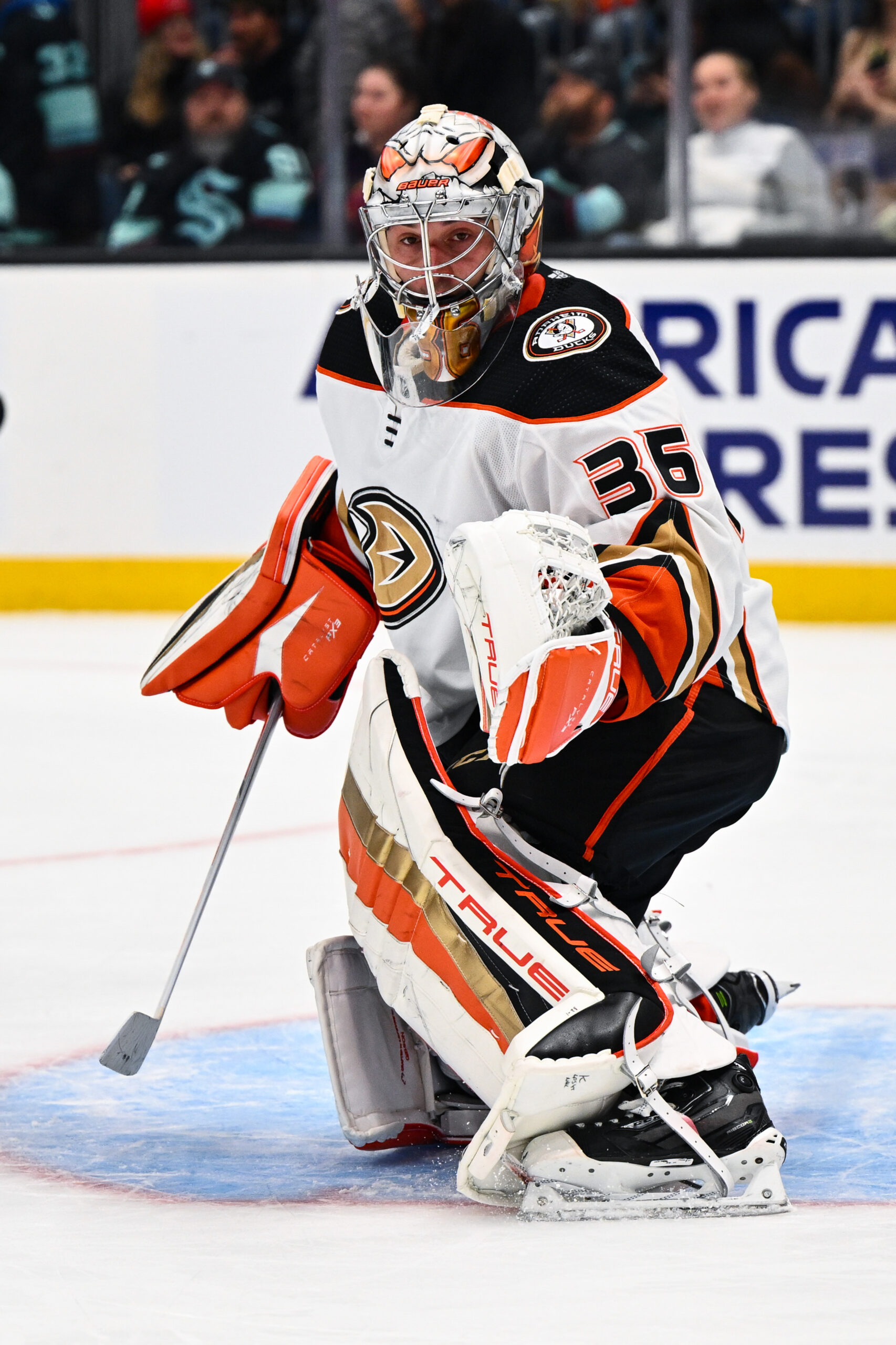
A caveat with Gibson is that his rebound this year happened while he had a significantly reduced workload compared to recent seasons. The 31-year-old made 29 appearances this season, posting an 11-11-2 record with a 2.77 GAA and a .911 SV%. The Pittsburgh, Pennsylvania native has two years left on his contract at $6.4MM per season, and with a modified no-trade clause, he still won’t be the easiest player to move. The writing is on the wall, though, for Gibson, who has been relegated to a backup behind youngster Lukáš Dostál. Teams looking for goaltending will try to get out in front of the market, making Gibson appealing since he shouldn’t cost much for assets, given the money he is owed.
Another name that will almost certainly be moved this summer is Pittsburgh Penguins defenseman Erik Karlsson. The three-time Norris Trophy winner has never fit into the Penguins’ lineup, and it simply feels like a matter of time before he finds himself donning a different jersey. Karlsson has made it known publicly that he wants to win a Stanley Cup, and that simply isn’t going to happen in Pittsburgh during Karlsson’s current contract.
The 34-year-old has two years left on his deal with a $10MM cap hit and the Penguins will be hungry to turn the page on the failed experiment and might be hoping to clear some of his money off the books if they intend to use the same strategy they utilized last summer to take on undesirable contracts along with draft capital as a sweetener. Last summer, GM Kyle Dubas swung deals to take on Kevin Hayes and Cody Glass along with draft picks to help build up the Penguins’ futures and will most certainly look to the well once again as they try and fast-track a retool.
Karlsson does precious little to help the Penguins in the long term and would be better served by being flipped for futures, even if the return is minimal. The Penguins could look to retain Karlsson’s cap hit, increasing the number of interested parties who could get a top-four offensive defenseman at a reduced cap hit.
A team that desperately needs a good summer is the Detroit Red Wings, who again missed the playoffs. Detroit will likely look to shed defenseman Justin Holl and the one year remaining on his deal at $3.4MM. The Red Wings will likely need to add a sweetener to get rid of his contract, and who better to offer that deal to than the Penguins above? Pittsburgh GM Dubas is familiar with Holl, and it almost makes too much sense for both teams to work out an agreement for the 33-year-old that gives the Penguins a warm body to replace Karlsson and a future draft pick, while the Red Wings would have some cap relief to improve their team. Holl has been a disaster in Detroit, but the Penguins would be more enamored with the sweetener and could try to flip him at next year’s Trade Deadline if he plays well, not unlike they did with Glass this past season.
Sticking with the Eastern Conference, the Buffalo Sabres desperately need to make something happen this summer. The team hasn’t made the playoffs in almost 15 years and missed by a considerable margin again this year. The Sabres need some degree of success and have a strong trade chip in defenseman Bowen Byram. If Buffalo makes him available, there will be a ton of inquiries, as evidenced by Josh Yohe of The Athletic, who believes that the Penguins have interest in the 23-year-old, given their sizable hole on the left side of the defence core.
The Sabres don’t have a lot of strengths, but their left-side defence is loaded with Rasmus Dahlin and Owen Power in tow. They could deal Bowen for a haul to address some of the other needs in their lineup and begin to try and break through in the Eastern Conference and get back into the playoff picture. Buffalo desperately needs help at center, and they also need to slot a top-four right-shooting defenseman into their lineup to allow Connor Clifton to drop to the bottom pairing. Byram would go a long way to accomplishing that and making the Sabres a better team overall.
Sticking with the theme of younger players, much has been written about forward Lukas Reichel of the Chicago Blackhawks and his struggles early in his professional career. Reichel could not seize the Blackhawks’ second-line center role last season and was eventually demoted to Rockford of the AHL. This past year, he managed to nail down a spot on the fourth line, but didn’t exactly turn heads.
Chicago once viewed Reichel as a key piece of their future and probably didn’t envision him playing 12 minutes a night on the fourth line some four years into his NHL career. However, not every player develops at the same pace, and Reichel still has plenty of upside. That being said, Frank Seravalli of Daily Faceoff reported back in January that other clubs were calling Chicago about Reichel’s availability and mentioned that other teams might see something that hasn’t been clicking for the 22-year-old former first-round pick.
Many teams would be interested in a younger player with pedigree, such as Reichel, who has not yet figured things out professionally. Reichel has a lot of untapped potential and no doubt plenty of GMs around the league see a player with upside who just hasn’t found his way in the NHL.
Photo by Steven Bisig-USA TODAY Sports