
How Do Qualifying Offers Work?
Players eligible for restricted free agency don’t become restricted free agents by default. To make a player a restricted free agent, a team must extend a qualifying offer to him — a player who doesn’t receive one becomes an unrestricted free agent instead.
The qualifying offer, which is essentially just a one-year contract offer, varies in amount depending on a player’s salary in the most recent season of their expiring contract:
- $775,000 to $999,999: 105% of most recent salary up to $1,000,000.
- $1MM or more: the lesser of their most recent salary or 120% of cap hit.
In the increasingly rare instance where an RFA signed their most recent contract before July 2020 and earned $1MM or more in the last year of their deal, the qualifying offer is simply equal to their most recent salary.
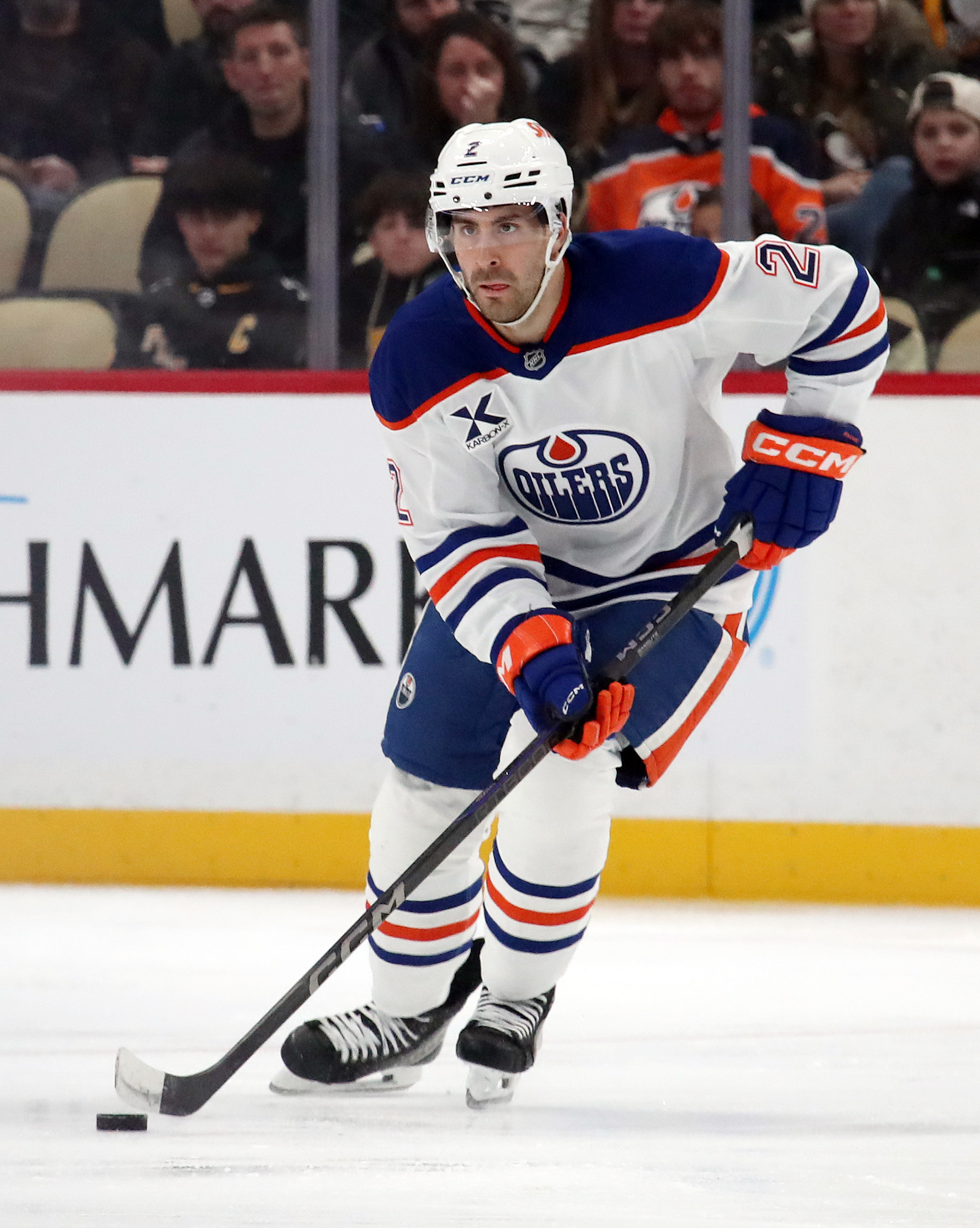 Let’s take the top RFA on the board, Oilers defenseman Evan Bouchard, as an example. While the cap hit of his expiring two-year deal is $3.9MM, he made $4.3MM in actual salary in 2024-25. However, his most recent salary is still less than 120% of his cap hit ($4.68MM), so his qualifying offer will be a one-year deal worth $4.3MM. That stipulation is why players signing an agreement with RFA expiry status will generally negotiate a base salary in the final year of the contract no higher than 120% of the cap hit, to prevent a salary reduction if they accept their qualifying offer. The two highest-salaried pending RFAs this year, defensemen Bowen Byram and K’Andre Miller, both took that route.
For players on expiring entry-level or two-way contracts, their qualifying offer is also a two-way deal. It’s important to note that “salary” as it relates to QOs is tied to a player’s base salary only, not their total guaranteed compensation, which includes salary plus signing bonuses. That’s why you’ll rarely see players opt to receive signing bonuses in the final year of a deal with RFA expiry status – while signing bonuses technically make a buyout less advantageous for the team and benefit the player, they also limit the floor of their earning potential on a qualifying offer.
They’re almost always unavoidable for players on expiring entry-level deals, though. Take Devils star Luke Hughes. He’ll make $2.775MM in total cash this season thanks to signing and performance bonuses, but his qualifying offer is just a two-way deal with a cap hit of $874,125 – 105% of his 2024-25 base salary of $832,500.
So while Noah Dobson has the highest cap hit among pending RFAs at $4MM, Miller, as mentioned earlier, actually has the highest qualifying offer this summer at his 2024-25 base salary of $4.646MM.
Qualifying offers are due by the later of June 25 or the Monday following the draft. Given how the league schedule has trended in recent years, it’s almost always the latter. That holds in 2025, when the qualifying offer deadline is again June 30, one day before free agency opens. They expire by July 15 if not extended in writing by the team; however, it’s not unusual to see players sign identical contracts to their QOs after that date. A team still holds a player’s signing rights even if the qualifying offer expires before an agreement is reached.
A player can also accept his qualifying offer if he chooses to do so. He then plays the following season on a one-year contract worth the amount of the QO, and, depending on their age or accrued NHL seasons, becomes an unrestricted free agent or repeats the process as an RFA. A player can go this route if he feels like the QO is the best offer he’ll receive, or if he’s one year away from being eligible for UFA status and wants to focus on testing that market.
Contract information courtesy of PuckPedia.
Photo courtesy of Charles LeClaire-Imagn Images.
2025 NHL Draft Lottery Odds
Apr. 29th: The ping pong balls will fall in less than a week. The NHL announced that the draft lottery will be held on Monday, May 5th.
Apr. 22nd: With the regular season in the rearview, the NHL’s draft lottery odds are set. As it has been since 2021, only two draws will be held.
Since 2022, teams who win the lottery can only move up a maximum of 10 spots, and teams can only move up in the draft order twice in five years. Every team is eligible to move up this year. The only two lottery-eligible teams who have moved up in the lottery since 2020 are the Kraken (No. 3 to No. 2 in 2021 to select Matty Beniers) and the Blackhawks (No. 3 to No. 1 in 2023 to choose Connor Bedard).
Odds for the league’s worst teams to retain their positions atop the draft increased as a result of the lottery draw for the third overall pick being eliminated four years ago, so there hasn’t been a ton of movement in the last few years. The last team outside the bottom three to win a lottery draw was the Devils, who moved up from No. 5 to No. 2 overall in 2022 to select Simon Nemec.
Perhaps there will be more meaningful changes to the order in this year’s lottery. The league has not yet set a date for the draw, but it typically takes place in the first half of May.
Via Tankathon.com, the draft lottery odds for 2024 are listed in the chart below. The numbers in the chart indicate percentages, so the Sharks’ pick, for instance, has a 25.5% chance of becoming the No. 1 selection and a 55.7% chance of ending up at No. 3. If a team’s odds are listed as >0, that percentage is below 0.1%. Odds are rounded to the nearest decimal place.
Here’s the full chart (if you’re on our mobile site or app and can’t see the whole thing, try turning your phone sideways):
| Team | 1 | 2 | 3 | 4 | 5 | 6 | 7 | 8 | 9 | 10 | 11 | 12 | 13 | 14 | 15 | 16 |
|---|---|---|---|---|---|---|---|---|---|---|---|---|---|---|---|---|
| SJS | 25.5 | 18.8 | 57.7 | – | – | – | – | – | – | – | – | – | – | – | – | – |
| CHI | 13.5 | 14.1 | 30.7 | 41.7 | – | – | – | – | – | – | – | – | – | – | – | – |
| NSH | 11.5 | 11.2 | 7.8 | 39.7 | 29.8 | – | – | – | – | – | – | – | – | – | – | – |
| PHI | 9.5 | 9.5 | 0.3 | 15.4 | 44.6 | 20.8 | – | – | – | – | – | – | – | – | – | – |
| BOS | 8.5 | 8.6 | 0.3 | – | 24.5 | 44.0 | 14.2 | – | – | – | – | – | – | – | – | – |
| SEA | 7.5 | 7.7 | 0.2 | – | – | 34.1 | 41.4 | 9.1 | – | – | – | – | – | – | – | – |
| BUF | 6.5 | 6.7 | 0.2 | – | – | – | 44.4 | 36.5 | 5.6 | – | – | – | – | – | – | – |
| ANA | 6.0 | 6.2 | 0.2 | – | – | – | – | 54.4 | 30.0 | 3.2 | – | – | – | – | – | – |
| PIT | 5.0 | 5.2 | 0.2 | – | – | – | – | – | 64.4 | 23.5 | 1.7 | – | – | – | – | – |
| NYI | 3.5 | 3.7 | 0.1 | – | – | – | – | – | – | 73.3 | 18.4 | 0.9 | – | – | – | – |
| NYR* | 3.0 | 3.2 | 0.1 | – | – | – | – | – | – | – | 79.9 | 13.4 | 0.5 | – | – | – |
| DET | – | 5.1 | 0.1 | 0.1 | – | – | – | – | – | – | – | 85.7 | 8.9 | 0.2 | – | – |
| CBJ | – | – | 4.2 | >0 | >0 | – | – | – | – | – | – | – | 90.7 | 5.1 | >0 | – |
| UTA | – | – | – | 3.2 | >0 | >0 | – | – | – | – | – | – | – | 94.7 | 2.1 | >0 |
| VAN | – | – | – | – | 1.1 | – | >0 | – | – | – | – | – | – | – | 97.9 | 1.1 |
| CGY* | – | – | – | – | – | 1.1 | – | – | – | – | – | – | – | – | – | 98.9 |
Notes:
- The Rangers’ pick is top 13 protected. It is guaranteed to land inside the top 13. They can decide between surrendering this year’s pick to the Penguins or deferring to an unprotected 2026 first-round selection. New York initially sent their pick to the Canucks in the J.T. Miller trade, but Vancouver immediately flipped the pick to Pittsburgh for Marcus Pettersson.
- If the Flames retain No. 16 overall, the pick will be sent to the Canadiens. If Calgary wins a lottery draw to move them to No. 6 overall, they keep the pick and send the Panthers’ 2025 first-round pick, which they own, to Montreal.
What Does Alexandar Georgiev’s Future Look Like?
Pending UFA goaltender Alexandar Georgiev picked a bad time to post career lows last season. After a December trade, Georgiev spent the end of last season with the San Jose Sharks and concluded a three-year, $10.2MM contract he’d signed with the Colorado Avalanche in 2022. The 29-year-old’s timing could not have been worse from a market perspective, as he went from a goaltender who could have inked a lucrative multi-year deal to a netminder whose future NHL prospects are murky. So, what exactly is Georgiev’s future?
This past season, split between Colorado and San Jose, Georgiev posted the worst numbers of his career with a 15-26-4 record, a .875 SV%, and a 3.71 GAA. His -17.9 goals saved above expected was the second-worst number in the entire NHL (as per MoneyPuck) and is nowhere close to the previous two years in Colorado, where Georgiev had much more success.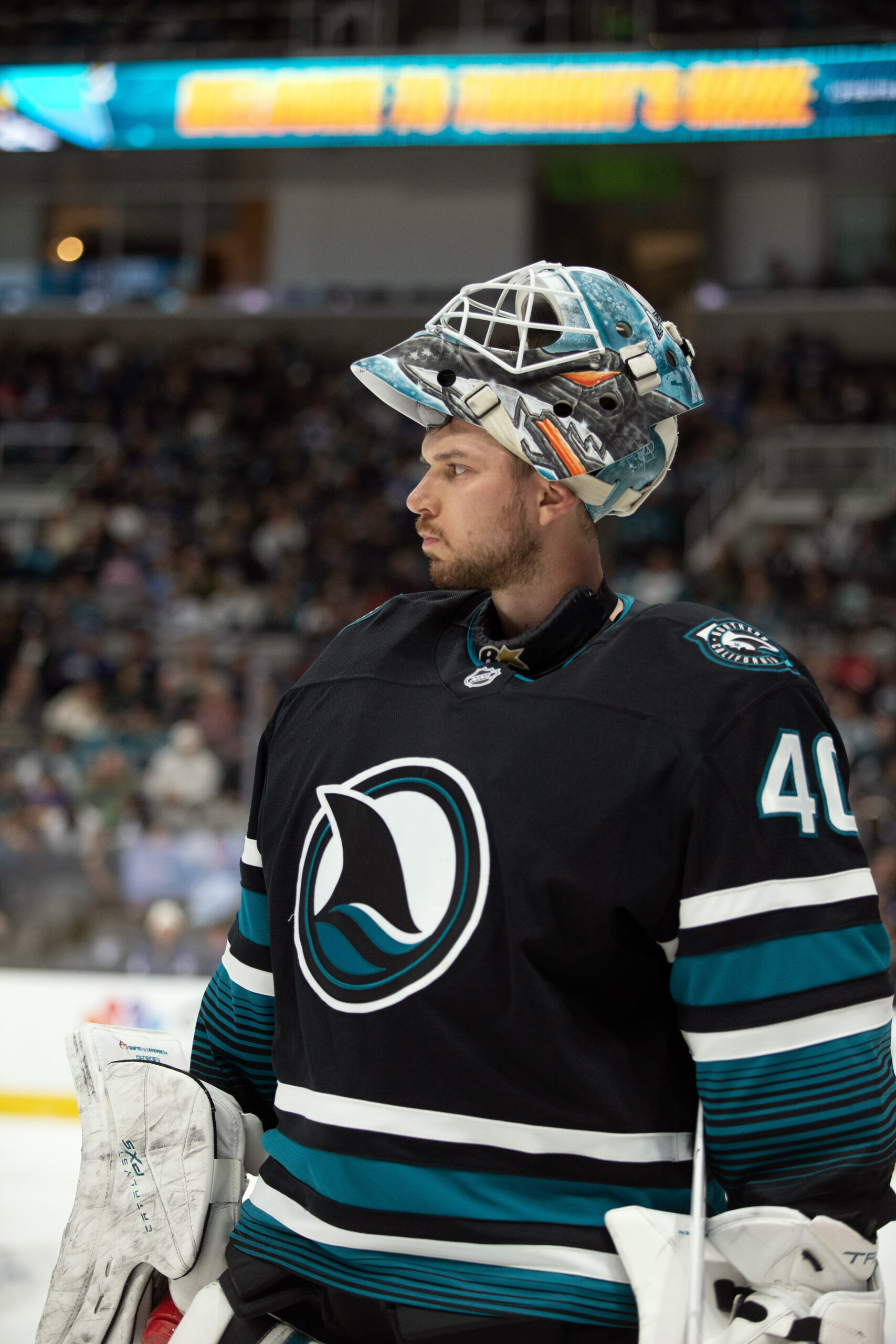
In Georgiev’s first season in Colorado (2022-23), he was a workhorse starter and exceeded expectations, registering 21.9 goals saved above expected and a 40-16-6 record with a 2.53 GAA. He appeared to be everything the Avalanche hoped for when they sent three picks to the New York Rangers to acquire him, and Colorado looked poised for a Stanley Cup repeat. Unfortunately for Colorado, they were knocked out of the first round in seven games by the Kraken, through no fault of Georgiev’s, who was solid in that series.
In year two with Colorado, Georgiev showed signs of a potential downfall as his GAA ballooned to 3.02, and his SV% fell to .897. Georgiev remained a workhorse that season, dressing in 62 games, but the warts in his game began to show, eventually leading to the trade this season and a future that isn’t nearly as bright as it once appeared.
The Sharks have already told Georgiev that they will not be offering him an extension, which means he will find a new home for the third time in three years this summer. Now, where that home is and what that role looks like will be revealed in time, but there will be no shortage of options for Georgiev as the free-agent goaltending market is so weak that he might be the best option available.
The ideal scenario for Georgiev would be to find a team that needs a secondary piece in tandem. In a perfect world, that team would be a playoff contender and not a rebuilding club like he found himself last year in San Jose. Georgiev can put up decent numbers, and if he can prove himself to be competent again, he will open the door for multi-year offers next summer.
Georgiev’s history of starting 40-plus games makes him an option of interest for clubs, alongside Jake Allen and Frederik Andersen. Both those men profile as stronger goaltenders at the moment, but Andersen likely shouldn’t play more than 30 games in a season due to injuries, and Allen has been a backup since 2019, although he is an adequate 1B option for a team seeking a tandem. Teams will be interested in Georgiev’s youth compared to other UFAs and his ability to win behind a good team. Georgiev has shown he can get the job done playing behind a strong team, making him a good fit in a place like Carolina or New Jersey should Andersen or Allen depart their respective teams. Many teams need goaltending, meaning Georgiev will likely have multiple offers and options.
Now, what those offers will look like remains to be seen, but given his recent work, it’s safe to say they will come in the form of one-year deals. AFP Analytics is projecting a one-year contract in the range of $2.5MM for Georgiev, which aligns with what Pittsburgh backup Alex Nedeljkovic will also take home next season. AFP used multiple comparables to arrive at that number, with the most recent comp being Ilya Samsonov‘s one-year, $1.8MM deal with the Vegas Golden Knights that was signed last summer.
Georgiev probably would have scoffed at a contract offer like that last summer, but this is the unpredictability of the goalie position, and he could be in a very different spot a year from now if he can get back to the form he showed just a few years ago. The NHL is starved for goaltending, and GMs are more than happy to give money to career backups if they can show even a hint of being an average starter. The perfect example is Kevin Lankinen of the Vancouver Canucks, who went from accepting a one-year deal last September for just above the league minimum to signing a five-year extension with the Canucks that will pay him $22.5MM. There are opportunities for Georgiev if he can find a situation that suits his needs and gives him the best chance to re-establish himself as a solid NHL netminder. The future might be murky now, but goaltending is incredibly hard to predict, and lesser goaltenders than Georgiev have gotten back on track after seeing a dip in their play.
Photo by D. Ross Cameron-Imagn Images
These NHL Free Agents Will Get Overpaid This Summer
July 1 is often when an NHL general manager makes moves that they will regret later, and frequently, they spend years trying to correct them. This summer is no different, as teams will overpay many unrestricted free agents. There is perhaps no better recent example of this than Pittsburgh Penguins GM Kyle Dubas, who has done tremendous work the past two years but hasn’t been able to undo the series of poor moves he made on July 1, 2023, when he signed Tristan Jarry, Ryan Graves and Noel Acciari to long-term deals. Signings such as these can alter the direction of a franchise and hitch the team to financial commitments that haunt them long-term. Last summer’s big free-agent winner was the Nashville Predators, but they quickly discovered that winning in July doesn’t always translate to winning during the season.
This is the first year in some time that there has been a significant increase in the salary cap, with agents and UFAs salivating at the potential dollars they can rein in this summer. The days of skilled veterans settling for one-year deals just above league minimum may become a thing of the past, leading to more free agents signing contracts they could never live up to. Let’s look at the players who will likely get overpaid this summer using AFP Analytics’ projections for 2025-26 cap hits based on next year’s $95.5MM upper limit.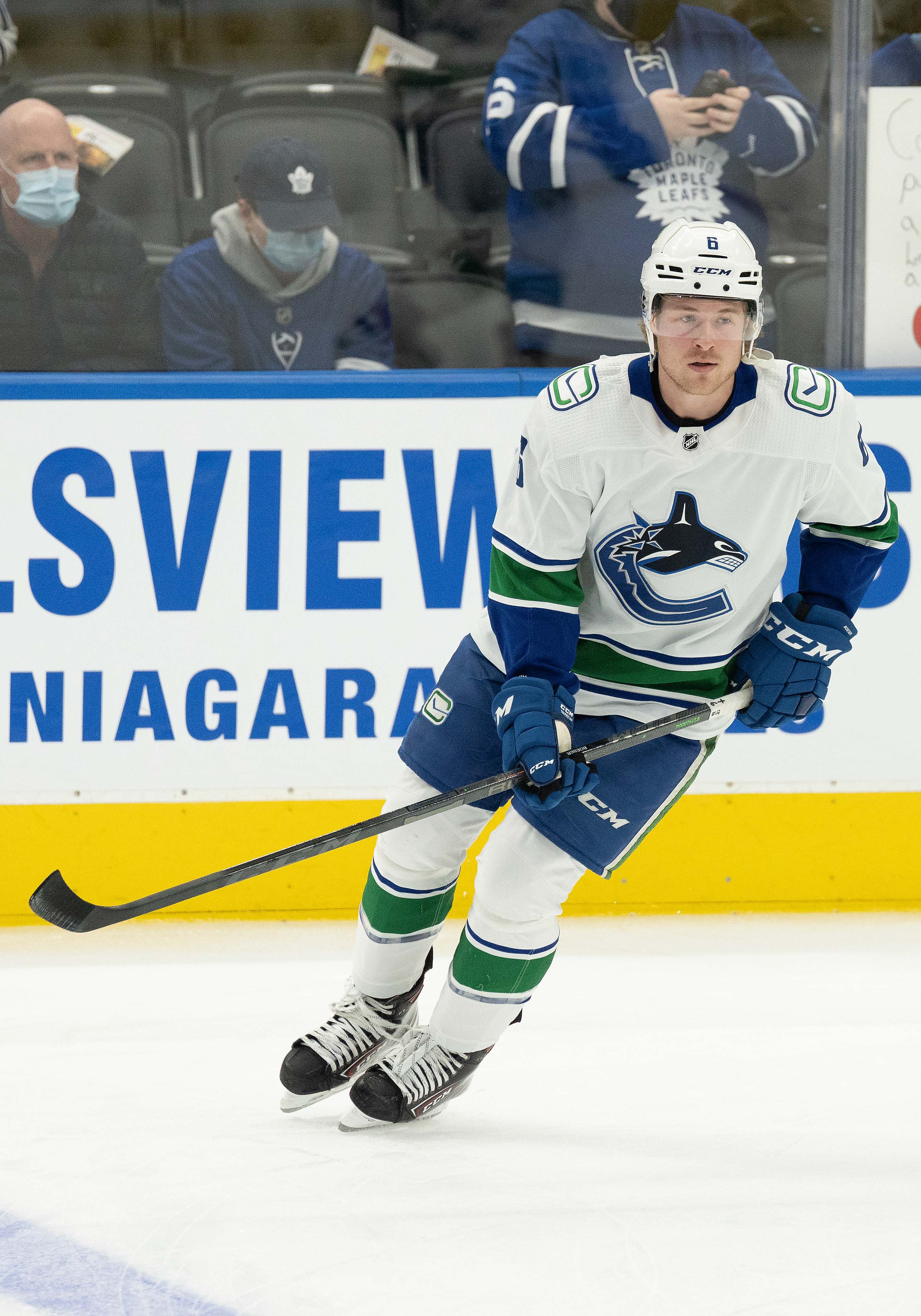
In combing through AFP’s work, a number that jumps out is the projection for Vancouver Canucks forward Brock Boeser. AFP is projecting a seven-year deal worth $9.05MM per year for the 28-year-old, which looks pretty optimistic for a player who has topped 30 goals in a season just once and has only topped the 60-point plateau once. Boeser is not a player who can drive a line by himself; he is a shooter and can also go into slumps at 5-on-5. A cap hit north of $9MM for Boeser would almost certainly become a future buyout like Jeff Skinner’s contract was. Boeser may not get $9MM per, but teams are always in search of scoring, and someone will step up and overpay for his services.
No disrespect to Sam Bennett; he is a terrific player who has become an essential piece of a perennial Stanley Cup contender. But he will likely be overpaid this summer if he decides to leave the Florida Panthers. AFP’s projection is a six-year deal for $6.3MM per season, which seems a little light for Bennett unless he signs in a state with a more favorable income tax structure, such as Florida. Even at that projection, Bennett might live up to his AAV for the first two or three years of the deal. Still, beyond that, his style of play will likely catch up to him, making the final years of his deal difficult to deal with. Bennett will be 29 in June, and a six-year deal will take him until he’s 35, at which point it’s hard to know what his game will look like.
Mikael Granlund’s value is hard to gauge because fit is essential to his production. He was a terrible fit with the Penguins when he was acquired two years ago at the trade deadline and produced just five points in 21 games. That trade for a second-round pick was ultimately the final straw for the Penguins as they fired general manager Ron Hextall shortly after he made the move. Granlund was then dealt to San Jose, where he produced top-six numbers and was one of their top scorers before another trade to Dallas in February. Granlund has been a decent fit with the Stars, scoring 21 points in 31 games. The knock on Granlund is that he doesn’t do much away from the puck and can’t drive a line alone despite good playmaking abilities. He is a terrific passer, but aside from that, his game is limited. He isn’t slow, but he is an average skater at best.
Despite all of this, he puts up numbers, and he will surely find an NHL GM who will look at that and pay up. He won’t get a four-year deal, but he may secure a three-year contract around his current cap hit of $5MM. AFP’s projection for Granlund is a two-year deal at $4.6MM per season, which looks pretty realistic, if not a bit on the lighter side, given the rising salary cap. Whoever signs Granlund needs to play him on the power play and in the top six; otherwise, they will wind up like the Penguins in 2023 and searching for a salary dump.
Blue Jackets forward Luke Kunin is next on our list and is projected by AFP to wind up on a two-year deal for $2.1MM per season. Kunin can hit, and that’s about it. His game impact is minimal, and $2.1MM is a wild number for a player as limited as he is. Kunin doesn’t put up points and has played mainly on the fourth line, getting caved in on the possession front while doing so. He hasn’t been helped by his deployment, starting his shifts in the defensive zone 56.8% of the time this year at even strength, but that has a negligible impact on his overall numbers. Signing Kunin to that deal won’t break a team, but it certainly won’t help a contending team build a competent bottom six.
Jonathan Drouin has had two straight solid seasons with the Colorado Avalanche and should receive a significant raise this summer from the $2.5MM he played for this year. Since joining the Avalanche, the 30-year-old has posted 30 goals and 63 assists in 122 games while playing 15:23 a game. Drouin has been a good fit with Colorado and is projected by AFP to get a contract in the four-year range with a cap hit of $5.87MM.
Drouin had to settle for a one-year deal last summer and should have multi-year offers this year. While he has recaptured his game, he has dressed just 43 times this season and has been inconsistent throughout his career. Any team paying him nearly $6MM a season for four years would take a massive gamble that could be a contract to buy out in a few seasons. Teams were cautious with Drouin last summer, and it’s not hard to imagine teams capping their offers at two or three years, but all it takes is one team that is desperate for scoring to get to Drouin’s projected contract numbers.
Finally, on the back end, one defenseman is primed to be overpaid again on the free agent market: Cody Ceci of the Dallas Stars. Ceci is in the final year of a four-year deal he signed in 2021 with a $3.25MM cap hit. That contract was initially projected to be a problem, and it became an issue for the Oilers last summer when they dealt the 31-year-old to San Jose in a salary cap-fueled move.
Ceci’s next deal could turn out to be even more problematic. The Ottawa, Ontario, native is projected by AFP to earn $11MM on a three-year contract, which is quite the price for a depth defenseman who needs to be sheltered to be effective. Ceci was okay with the Oilers when they moved him away from Nurse, but he should not be counted on for anything more than depth minutes in a No. 5-6 role.
In the net, goaltending will be challenging in the free-agent market as the options include reclamation projects, career backups, and Jake Allen. Allen figures to get a chunk of change in free agency, but will not see starter’s money despite having a great year in New Jersey. Beyond that, it’s hard to imagine any team committing significant dollars to the available netminders.
Photo by Nick Turchiaro-USA TODAY Sports
Offseason Checklist: Nashville Predators
The offseason has arrived for half of the league’s teams that aren’t taking part in the playoffs. Accordingly, it’s now time to examine what they will need to accomplish over the coming months. Next up is a look at Nashville.
After a strong showing in the second half last season to make the playoffs, Predators GM Barry Trotz was a big spender in free agency, handing out long-term deals to forwards Steven Stamkos and Jonathan Marchessault along with blueliner Brady Skjei. Accordingly, expectations were quite high heading into 2024-25. Instead, the team struggled mightily, becoming one of the worst teams in the NHL. As a result, it could be a busy summer for Nashville once again.
Add Scoring Help
For a team that added two quality offensive threats in Stamkos and Marchessault that’s run by a coach whose teams were pretty high scoring in his two years behind a bench, offense was not supposed to be a problem for the Predators this season. Instead, they went from being in the top ten in goals scored in 2023-24 to finishing second-last league-wide in that department with a drop-off in tallies of 44 or more than half a goal per game.
Assuming that Andrew Brunette is back behind the bench next season, he’ll be tasked with trying to turn things around on that front. Objectively, there’s cause for optimism that some of the veterans should be poised to rebound; can they all have down years a second year in a row or will at least some of them bounce back?
But relying on internal improvement probably isn’t going to be enough to turn their fortunes around. They’re going to have to look outside the organization to add someone. More specifically, they need to add an impact center.
Ryan O’Reilly had a decent season overall but he certainly is not a true number one center. They hoped that Thomas Novak would take on a bigger part of the scoring load. Instead, he struggled and was shipped to Pittsburgh with Michael Bunting coming the other way. A full season with Bunting will help offensively but the move further exacerbated how weak the center spot is. Fedor Svechkov has some potential and could help in that regard down the road but counting on him to be a full-time top-six middleman next season would be asking for a lot.
It’s something that’s generally much easier said than done given that many other teams will be looking to add an impact center this summer, either through trade or free agency. But the Predators certainly need to do just that unless they’re convinced that Stamkos can be a full-time middleman moving forward after spending considerable time on the wing the last two seasons.
Bring In An Impact Defenseman
When you think about the rosters the Predators have had over the years, they’ve been fortunate to have a steady supply of high-quality blueliners. They had enough of them that they were able to move some out to fill other holes on the roster. Unfortunately for them, that is no longer the case.
Roman Josi remains the mainstay on the back end and while he’s coming off a down year offensively like many others, he has three years left on his contract and there’s little reason to think he’s going anywhere. Skjei had some ups and downs in his first year with Nashville but he is certainly a legitimate top-four defenseman and will be around for the long haul as he’s signed through 2031. That’s a good start defensively.
The problem is that things go downhill from there. Alexandre Carrier was a top-four regular but was moved to Montreal for Justin Barron, a youngster who has shown flashes of top-four skill but his consistency has been an issue. Jeremy Lauzon was hurt for most of the year and is probably best suited for the third pairing. Adam Wilsby and Nick Blankenburg showed some flashes but neither is a lock to be a top-four guy down the road while Marc Del Gaizo, Spencer Stastney, Jordan Oesterle, and Andreas Englund are more depth pieces.
Is it possible that one player from that group can emerge as a legitimate top-four down the road? Sure. But even if that happens, they’re still missing one impact blueliner at a minimum. Long-term, prospects Tanner Molendyk and Ryan Ufko have shown some upside but they’re probably not NHL-ready yet; Molendyk has yet to play professionally. There is a real need to add at least one top-four piece this summer.
It’s worth noting that Nashville is well-positioned to try to add impact players in the coming months. They have over $17MM in cap room, per PuckPedia, giving them ample space to try to add multiple impact players for the second straight year. They also have three first-round picks at their disposal and while they could use all three to really bolster their future depth, at least one of those could be dangled to add a key blueliner or fill the opening down the middle.
Re-Sign Evangelista
Almost all of Nashville’s roster is already under contract for next season, making their list of free agents about as small as can be. A pair of depth players (Del Gaizo and Jakub Vrana) are pending UFAs while there’s only one full-timer who is slated to become a restricted free agent, winger Luke Evangelista.
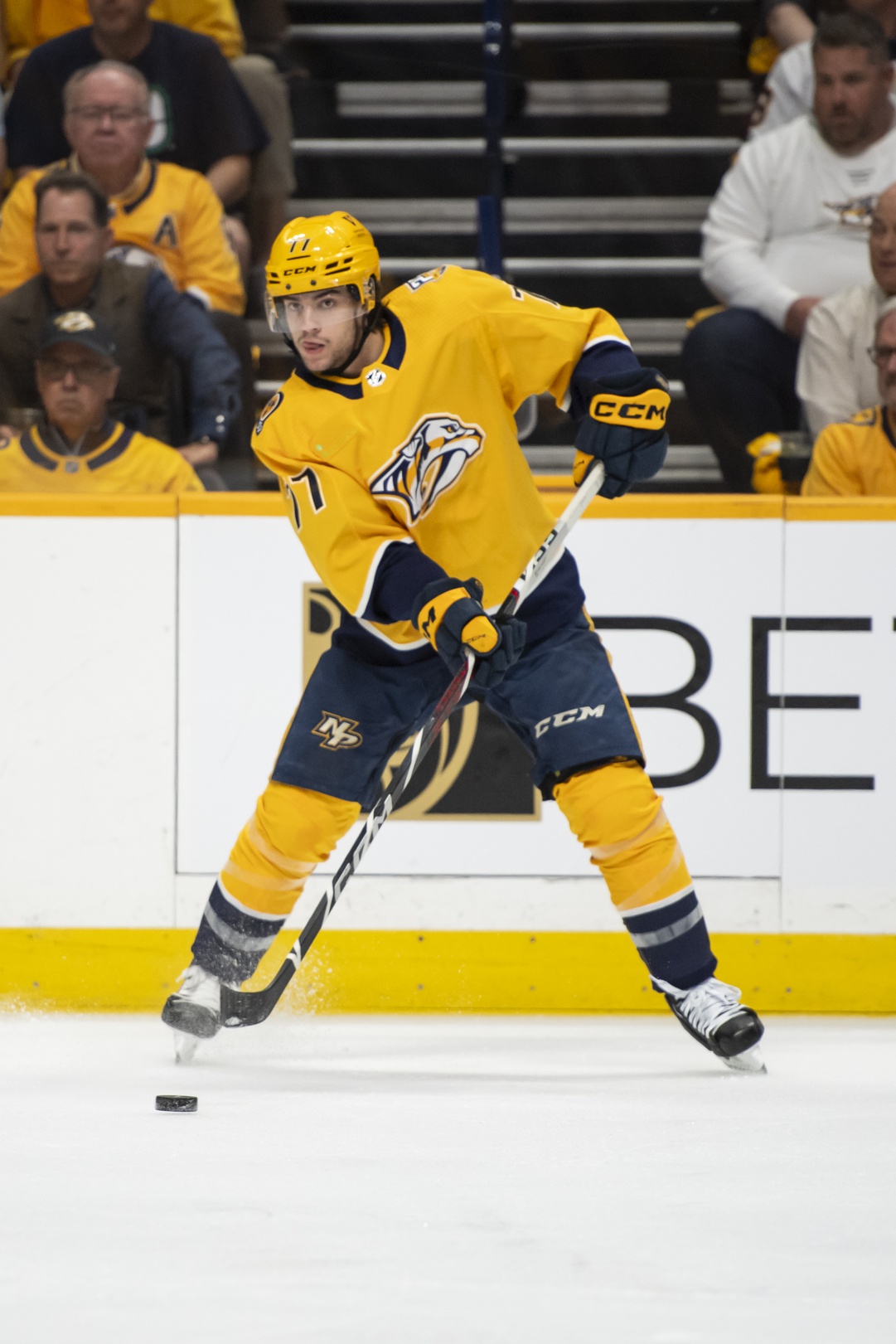 The 23-year-old’s entry-level contract is coming to an end and it’s fair to say that Nashville got strong value on it with a cap hit just below $800K. His first full season was in 2023-24 when he had 16 goals and 23 assists in 80 games and followed that up with 10 tallies and 22 helpers in 68 outings this season while logging a little under 14 minutes per game in both years. In terms of secondary production from the middle six, he did relatively well all things considered.
Evangelista has four RFA-eligible seasons remaining which gives Trotz some options. Given that he’s more of a role player at this point, a long-term contract seems unlikely although considering Nashville gave Colton Sissons a seven-year deal while being a role player, it can’t entirely be ruled out either. More likely is that Trotz opts for a bridge contract between one and three years, ensuring he’ll still be a restricted free agent at its expiry where they could then determine if the time is right to sign him long-term. With how he fared over his first couple of seasons, a two-year deal could land around $2.25MM while a three-year pact could run closer to $2.6MM with the extra year being an arbitration-eligible year.
Make Some Room
This was a stated goal by Trotz as the season went on and we saw the idea of it in the Carrier-for-Barron swap although they also gave up on Juuso Parssinen and Philip Tomasino. It runs counterintuitive to the idea of adding impact veterans but both things can be done this summer.
Up front, Svechkov is ready for full-time duty after spending some time with AHL Milwaukee. Matthew Wood showed some promise in a late-season stint and has the size and physicality to play the gritty game they’re looking for from their bottom six. Ozzy Wiesblatt had a solid year with the Admirals and could be ready to make the jump as well. If they want more offense, Joakim Kemell could get into the mix. To make room, someone like Michael McCarron could be expendable while Sissons will be entering the final year of his deal and should have some trade interest from teams looking to add to their bottom six. One or two moves like that would allow for a youngster or two to stick will still leaving room to add either via the trade market or free agency.
On the back end, there’s some work that needs to be done to open up a spot for an impact addition at a minimum, more if Ufko or Molendyk make a push for a top-six spot. Beyond Josi and Skjei, Wilsby is the only other one signed beyond next season so there is some flexibility on that front. Englund and Oesterle have been on waivers multiple times before and could land there or they could look to flip one for a late-round pick if there’s enough trade interest. They’ve compiled some depth when it comes to depth defenders but some of that needs to be cashed in if they want to make room for upgrades.
Photo courtesy of Steve Roberts-Imagn Images.
PHR Mailbag: Jets, Lottery Teams, Pastrnak, Hughes, Challenges, Kings, Mogilny
Topics in this edition of the PHR Mailbag include Winnipeg’s attractiveness to potential free agents, the Quinn Hughes situation in Vancouver following comments from management, and much more. If your question doesn’t appear here, we’ll have one more mailbag next weekend so watch for it there.
Cla23: With the recent signings by the Jets of Alex Iafallo and Neal Pionk and long-term contracts to their star players, will this year FA‘s think hmmm, maybe Winnipeg has something I don’t know about or will it always be a hard no?
If the extensions to Connor Hellebuyck and Mark Scheifele didn’t materially improve Winnipeg’s perception among free agents, I’m not sure new deals for Iafallo and Pionk (or Vladislav Namestnikov who also re-signed somewhat recently) will move the needle all that much. When a player is an unrestricted free agent with plenty of suitors, they’re generally not going to go to a small-market team with a fairly high tax rate unless there’s a specific opportunity they’re pursuing. That’s not a shot at Winnipeg but rather a reality that some smaller-market teams face. Especially this year with a big jump in the cap putting more money in the market than usual.
But one of those specific opportunities I just mentioned is winning. If the Jets have a long and successful playoff run, that will go a long way toward bolstering their standing among free agents. Lots of players want to win and if there’s an opportunity with a legitimate contender, it will be a more coveted spot even in a smaller market. That’s what’s going to materially improve their standing as a free agent destination.
One thing that these extensions should do is give GM Kevin Cheveldayoff more confidence when it comes to acquiring rental players they want to re-sign. While they haven’t kept them all over the years, it hasn’t exactly been a mass exodus of talent either. While players could be reticent about the market when they’re acquired, enough of them decide to stay which should make Cheveldayoff feel more optimistic about the prospect of keeping them around should the opportunity present itself to acquire someone on an expiring or short-term contract.
frozenaquatic: Of the lottery teams trending up, who has laid the groundwork for future success? Calgary has Wolf, but relying too much on a keeper isn’t a recipe for success (Coronato looks great though), and are in reality a trending-down older team that happens to have a great keeper and a top D-man in Andersson. The Flyers are the opposite, and could build around Michkov, but their D is suspect, and they forever seem a good goalie away from being decent. Utah is pretty well-rounded, but got bit by the injury bug, and may need an upgrade in goal. The Wings have some nice pieces, but seem snakebitten, and who knows if the Sabres will ever make the playoffs again. My vote would be split between the Ducks and the Jackets — both have potential — though for the Jackets going into ’26 with Jet Greaves, hot as he was down the stretch, as the best option net feels a bit scary.
Long term, I’m more bullish on Utah than it appears you are. They’re reasonably well-rounded now with an improved core crop and have one of the deeper prospect pools in the NHL, including Michael Hrabal, one of the better goalie prospects out there if Karel Vejmelka isn’t the long-term starter. They also still have a surplus of future picks to try to trade from to add to their core plus ample cap space (more than $22MM this summer per PuckPedia), a clean long-term cap situation, and an owner that appears to be willing to spend. That’s a team that feels like they’re poised to be on the rise in the near future with a deep enough system to sustain it for a little while. And for how long they’ve struggled, it better be sustainable for a while to justify the years of pain.
If Anaheim’s young core forwards can live up to expectations, they have the chance to be a longer-term contender as well. But whoever takes over as head coach is going to need to find a way to get more offensively out of those players. Otherwise, things might start to stagnate. Columbus is in solid shape as well but I feel like they’re a team that punched a bit higher than expected which might put expectations a bit too high. They need to sort out their goaltending to really take a step forward and while Greaves could be part of the solution, he profiles as more of a backup than a starter.
Since you noted trending up, that takes some of the bottom teams out of the equation and some disappointing underachievers so Utah would be my top pick for this question. Quickly touching on the other teams you listed, I agree that Dustin Wolf masked over some of Calgary’s deficiencies that will need to be addressed still while Philadelphia’s long-standing goalie trouble keeps me from being super bullish on their future. Buffalo has to get it right one day but whether they can sustain it after losing this much is still in question and I’m not sure Detroit is trending up but rather treading water. There’s a nucleus to work with but until that young nucleus gets a lot better or they bring in better veterans to elevate the floor, they look destined to remain in the middle for a while yet.
SoCalADRL: Zegras, Zelly, Pastujov, 2025 1st, 2026 1st for Pasta. Who says no?
With a no-move clause, David Pastrnak probably says no. There’s no reason to think he’d want to leave Boston, especially to go to a team that hasn’t been good for a while. Yes, as noted above, Anaheim is in solid shape from a long-term roster perspective but until they actually start winning, they’re not going to be the most appealing of teams for players to go to, especially ones who completely control their fate in a trade. This is the type of move that Anaheim GM Pat Verbeek might be looking to make, bringing in someone to anchor their attack but Pastrnak would likely nix it, ending the thought quickly.
The Bruins also probably say no as well. CEO Charlie Jacobs spoke this week about getting back to the playoffs next season, throwing any idea of a rebuild (even the short-term one I thought they might do) out the window. So making a declaration like that and then trading your franchise forward for a package comprised primarily of future or still-developing assets wouldn’t make much sense.
I should also note that packages like this rarely actually work in trades. While there is definitely some quality young talent in there (plus a fairly high draft pick this year), the Ducks aren’t going to get an elite or franchise-type of forward for it; quantity rarely yields a high-quality player in a swap. That probably doesn’t change with this package.
SpeakOfTheDevils: I’M NOT SAYING THEY NEED TO GO THIS ROUTE BUT…What does a Quinn Hughes to New Jersey mock trade look like to you?
In case you missed it this week, Canucks president Jim Rutherford indicated that defenseman Quinn Hughes would like to play with his brothers one day. Can I just say that I appreciate Rutherford’s all-too-rare candor? It’s fun to have something meaty like this to ponder without it just being a pie-in-the-sky idea.
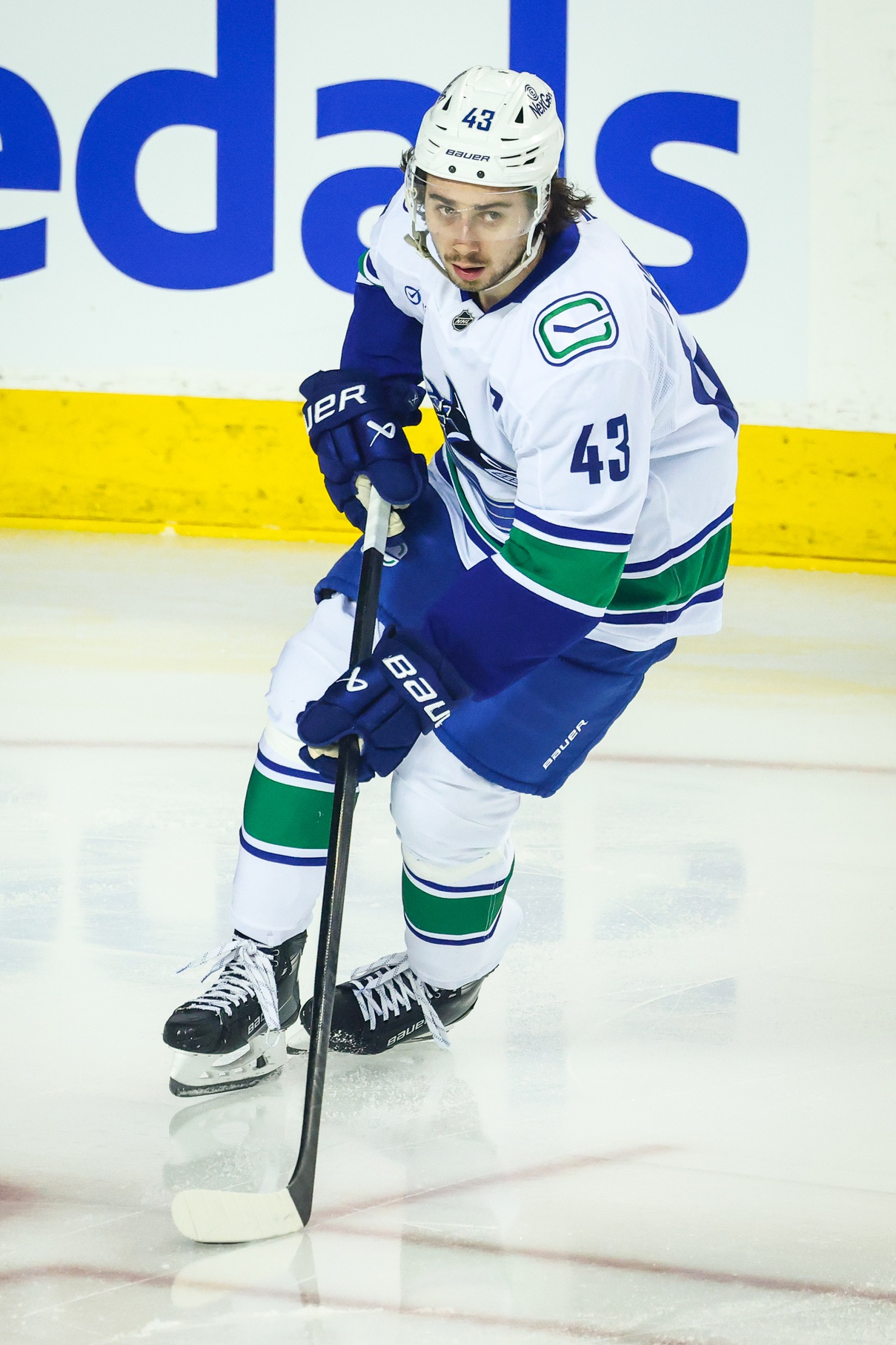 I know he’d love to walk back that comment as it has brought forth all sorts of speculation but I understand what he was trying to say in that they’re going to offer Hughes a bunch of money but lots of brothers desire to play on the same team and with Quinn being the first to reach UFA status, he could try to force his way there if he really wanted to do so. For one, I think it’s largely overblown, especially if the brothers are able to play on the same teams internationally in best-on-best play, scratching that particular itch.
Call me crazy but the trade that makes the most sense to me is one that sends Luke Hughes the other way as the centerpiece. New Jersey will need to offload a lot of money to afford a Quinn extension that will be in the double-digits in AAV. I don’t see the Canucks wanting Dougie Hamilton as a key part of the return and I’m not sure carrying him plus Quinn and Luke is necessarily a good thing from a defensive standpoint or even a cap standpoint. From there, the timing would then dictate the adds. If it was now with Quinn only having two years of control left, it might be close to a one-for-one swap. But if it’s a year later when Quinn can be extended, that probably means more has to come from the Devils.
It’s a fun hypothetical exercise but there’s only one way I see the three brothers playing together as a result of a trade and even it’s iffy at best. That’s if Quinn goes to Vancouver management next summer and says no matter what, he’s signing with New Jersey. But even then, Quinn doesn’t have any trade protection in his contract and the Canucks could look to get a strong return for a one-year rental over what would be more of a salvage trade where they look to get something in return for someone they’d lose for nothing. But would the Devils pay the top value to ensure they got him? Probably not which is why I said even this idea is iffy at best.
FearTheWilson: Since when can you use a Coach’s Challenge for a puck over the glass penalty? And will the NHL ever leave goal reviews strictly up to the War Room? Imo any decisions after the original call on the ice should fall on the War Room.
Challenging puck over glass is a new rule for this season. The relevant section from the NHL Rulebook is 38.2 (d) which reads as follows:
Penalty situations for “Delaying the game – puck over the glass” – When a minor penalty for delaying the game has been assessed under Rule 63.2 (iii) for shooting or batting the puck out of play from the defending zone. This will only apply to delay of game penalties when the shot/batted puck is determined to have subsequently deflected off a player, stick, glass or boards, etc., and not a judgment call. No challenge can be issued for a non-call, in other words, no challenge is to be considered when the On-Ice Officials deem that it was not a violation of Rule 63.2 (iii). A challenge can only be used to rescind a penalty, not to have one assessed. In the event of a failed challenge, an additional minor penalty (or double-minor penalty, as appropriate) will be assessed (in addition to the existing delay of game penalty).
(Rule 63.2 (iii), if you’re wondering, is the one that establishes the minor penalty for the puck-over-glass infraction.)
With it only being challengeable to take a penalty off the board and not put one on, it’s fortunately something we haven’t seen too often. I don’t mind that it’s an option as sometimes, the officials conferring can get it wrong so for something that’s supposed to be black-and-white, the reviews shouldn’t take long so I’m okay with it.
As for goal reviews being made by the War Room, I like the sentiment of the idea in that it takes some responsibility away from the on-ice official and makes it more of an independent decision. But sometimes the on-ice official had the best angle and might be able to contribute something or fill in a blank that helps determine the final call. If they still have that input, it’s not necessarily a War Room decision then. And if you take away that input and have no communication between the War Room and the on-ice officials, you’re not necessarily getting the full picture which brings a fairness question into play. I think this is why we don’t see it that way now and probably won’t any time soon.
Offseason Checklist: Chicago Blackhawks
The offseason has arrived for half of the league’s teams that aren’t taking part in the playoffs. Accordingly, it’s now time to examine what they will need to accomplish over the coming months. Next up is a look at Chicago.
Last summer, Blackhawks GM Kyle Davidson upped his spending, bringing in several veterans with an eye on raising the floor of the current group while allowing some of their prospects to get more time in with AHL Rockford. It accomplished the latter but not the former as they finished second last for the second straight year while being in the bottom three overall for the third consecutive campaign. As a result, there’s another busy to-do list for Chicago this offseason.
Hire A Head Coach
One of the first items that Davidson will need to do is get his coaching situation sorted out. Following a slow start to the season, Luke Richardson was let go after the team played to just an 8-16-2 record. Anders Sorensen was then promoted from AHL Rockford on an interim basis but couldn’t get much more out of the group as Chicago was 17-30-9 the rest of the way while former Blackhawk blueliner Seth Jones bemoaned the lack of progress the team had made just a few days before he was dealt to Florida.
While Sorensen is expected to receive consideration for the full-time head coaching position, it would be a surprise to see him get the role given the lack of improvement following Richardson’s dismissal. More likely is that he remains with the organization either as an assistant or returning to the IceHogs.
There are a couple of options that Davidson can go here. He can opt for another first-time head coach that can focus on player development or look for a more experienced one to try to give them a short-term boost to get them out of the basement in the standings.
On the first-time coach front, Daily Faceoff’s Frank Seravalli reported last week on CHSN (Twitter link) that Denver University head coach David Carle sits atop their wish list of candidates. Carle’s coaching experience is predominantly limited to his time with Denver (spanning more than a decade) aside from a brief assistant coach role with USHL Green Bay previously and running USA Hockey’s World Junior team the last two seasons. While that’s not necessarily the typical route for a coach to take before going to the NHL, Carle is widely considered to be one of the top options available this year. They could also look to some AHL bench bosses if they want to go with more of a development coach.
But after three years of being in the bottom three, there’s an expectation that Chicago should be starting to move to the next phase of its rebuild, one that makes them much more competitive. In that case, they could be inclined to look toward a more experienced coach, one with a track record of getting more out of their team quickly. This wouldn’t necessarily have to be the long-term hire for the rebuild but rather someone to help take them through the next phase of being more competitive. With other teams having openings now, Davidson will have to move fairly quickly if he has a top target or two to try to land.
Bedard Extension Talks
While Connor Bedard’s first two NHL seasons may not have quite lived up to the lofty expectations that were placed upon him, they were still pretty good. After putting up 61 points in 68 games in his rookie year, he picked up 23 goals and 44 assists in 82 games this season, leading the Blackhawks in scoring for the second straight season. Thrown to the wolves in terms of getting top minutes and the toughest defensive assignments, the good more than outweighed the bad even with the 2023 top pick struggling a bit more often than expected.
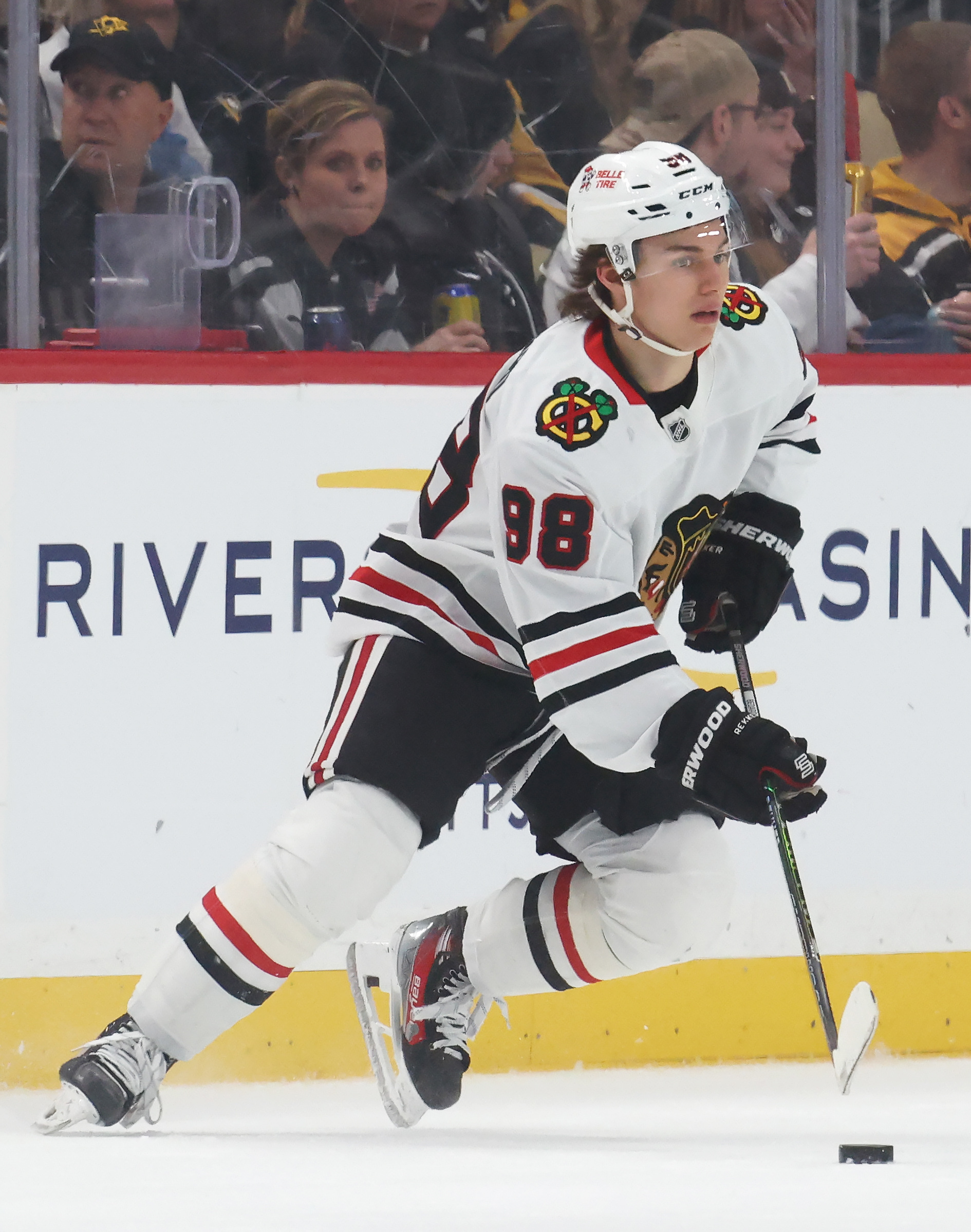 Nonetheless, there’s no reason to think that Bedard isn’t going to be a significant part of their long-term core. Even if he doesn’t become the next elite NHL superstar, he appears well on his way to being an impact top liner. Basically, he’s already there at age 19. Accordingly, there should be no hesitation in trying to lock him up to an extension as soon as possible.
In this case, as soon as possible is July 1st as that’s when Bedard officially begins the final year of his entry-level contract which makes him extension-eligible. He has made it clear that he wants to remain with Chicago long-term so both sides will almost certainly be focusing on trying to get a deal done this summer.
As is often the case in these situations, there’s a lot of projecting that will need to be done on both sides in terms of trying to extrapolate how much more Bedard can do offensively. Based on his output the last two years, his likely AAV would come in around $8.5MM. But it’s unlikely Bedard would sign for that on a long-term deal at this point; it would make more sense for him to wait and see if he has a big boost in production that could up his price tag considerably in the 2026 offseason. With that in mind, it’s going to take a fair bit more than that to get something done now.
The projected cap increases make older comparisons a little less usable now but high-end picks were often coming in between 9.5% and 11% of the cap when they were signed. Bedard should feasibly be in that range. Based off the NHL’s tentative target of a $104MM Upper Limit for 2026-27, that would put Bedard’s range between $9.88MM and $11.44MM. Connor McDavid’s second deal was an outlier but checked in at 15.74% which would be $16.37MM in 2026-27 dollars. That would be the richest deal in league history so Bedard’s unlikely to land there but something toward the top of that 11% range could very well be what’s needed to get something done in the months ahead.
Restart Donato Discussions
Going back to before the trade deadline, one of the discussions going on was with forward Ryan Donato. The pending UFA was in the midst of a career year and the hope was that they could get a deal done and avoid any speculation of moving him by March 7th. That didn’t happen but Davidson elected to set a very high asking price, one that no one was willing to meet so Donato stayed put for the stretch run.
Now that the season is over, it’s time for those talks to get rekindled. Before the deadline, Scott Powers of The Athletic reported (subscription link) that the deal that the team put on the table was a three-year offer worth somewhere around $4MM per season. Considering the 29-year-old made $2MM the last two years, that’s a fairly significant improvement while giving him some medium-term stability which is notable considering he’s played for five teams in his eight-year career.
However, a price tag around there isn’t exactly commensurate with the season Donato just had. He finished second to Bedard in team scoring with 31 goals and 31 assists in 80 games while even spending a bulk of the season at center, a position that’s in high demand on the open market. Other players with a track record of that type of production could command $7MM or more a few months from now.
Of course, Donato doesn’t exactly have that track record of production. Before this season, he had only reached 30 points twice while his personal bests in goals and assists were 16 and 18, respectively. As a result, this season was quite the outlier for Donato and that is certainly factored into Chicago’s offer to retain him. Their offer is a relatively low-risk one given that they have ample cap space and several veterans coming off the books in 2026.
Donato will need to assess if he’s better off staying in a situation that he has clearly had success in or testing the market to see if someone’s willing to make a more lucrative and/or longer-term offer, assuming there isn’t much wiggle room in what the Blackhawks currently have on the table. There’s still lots of time to get something done but after getting their new head coach in place, this should shift to the top of Davidson’s short-term priority list.
Make A Splash
Last summer, the Blackhawks had plenty of cap space, leading some to wonder if they might take a big swing. Instead, they spent on bringing in plenty of veterans, highlighted by Tyler Bertuzzi and Teuvo Teravainen up front and Alec Martinez on the back end. There were varying degrees of success with those signings; Teravainen wasn’t far behind Donato for second on the team in scoring while on the other end, T.J. Brodie struggled so much that he might be a buyout candidate in June.
That approach worked with this being another year where expectations weren’t particularly high. Their prospects got more development time in Rockford, again, to varying degrees of success. But while they got away with this strategy last summer, it feels like they need to something much more substantial to at least drag the rebuild forward.
Chicago needs to find a way to land an impact talent or two. In a perfect world, they outbid teams for one of the top players up front, giving Bedard a running mate to see if that helps him take the next step forward toward living up to his lofty potential. With a little over $30MM in cap space, per PuckPedia, the money is certainly there to spend this summer. Meanwhile, even with Bedard heading for a big-ticket contract in 2026, it should be affordable with the Blackhawks having a deep prospect pool, allowing them to have most cost-controlled players over the coming years. The time feels right for Chicago to take a big swing this summer.
Photo courtesy of Charles LeClaire-Imagn Images.
NHL Arbitration-Eligible Free Agents For 2025
Having already created a space to track this offseason’s pool of notable free agents at large, we’re turning our attention today to the restricted free agent class – more specifically, those who have accrued enough professional experience to be eligible for salary arbitration if they don’t reach extensions before July 1.
A player’s age determines arbitration eligibility as of September 15 of the calendar year in which they sign their entry-level contract. For those who sign between the ages of 18 and 20, they must have completed at least four seasons with at least 10 NHL games played. For players signing their first deal at 21, it’s three seasons with at least 10 games in any professional league (including AHL, ECHL, Europe, etc.). The years of experience requirement drops to two for players who signed at 22 or 23, and it drops to one for anyone who signed their first NHL contract at age 24 or older.
When a player is arbitration-eligible, both the player and the team can elect to have a hearing if they enter the 2025-26 league year without a new agreement. The first step in this process is, of course, extending a qualifying offer to the player before the June 30 deadline. Assuming the player opts not to accept their qualifying offer or sign an offer sheet, they can elect for an arbitration hearing by July 5. Doing so makes them ineligible for an offer sheet for the remainder of the offseason.
There are two windows for team-elected arbitration, and a team can only file for a hearing with two players each year. The first window ends on the later of June 15 or 48 hours after the Stanley Cup Final ends. Players who are bound to arbitration hearings by team elections in this window can still agree to offer sheets before July 5 and negate the team-elected arbitration hearing. Teams have a second window to elect arbitration for 24 hours after the player election window closes. Players can’t receive more than one team-elected arbitration hearing in their career, regardless of whether the case made it to a hearing.
There are plenty more nitty-gritty details to delve into regarding the specifics of arbitration rulings, but that information becomes more pertinent when we know which players will be subject to hearings this summer. It’s worth noting the number of players filing for arbitration has steadily declined over the past few seasons – only 14 opted to do so last summer after 20-plus did so in 2022 and 2023.
The list of arbitration-eligible RFAs for 2025 is listed below. This list, which can be found anytime under the “Pro Hockey Rumors Features” menu on the right sidebar on our desktop site or under the Flame icon on our mobile menu, will be updated later this offseason to note whether the player will be subject to arbitration this summer or not.
Each player’s minimum arbitration award (the lowest a team can file for based on the terms of the player’s previous contract) is noted in parentheses, although the actual cap hit of their next deal will almost certainly be higher if a qualifying offer is tendered.
Anaheim Ducks
- Isac Lundeström ($1.5MM)
- Brett Leason ($1.05MM)
- Drew Helleson ($925K)
- Josh Lopina ($925K)
- Nikita Nesterenko ($874K)
- Lukáš Dostál ($850K)
- Judd Caulfield ($838K)
Boston Bruins
- Morgan Geekie ($2MM)
- Oliver Wahlstrom ($1MM)
- John Farinacci ($950K)
- John Beecher ($925K)
- Marat Khusnutdinov ($925K)
- Mason Lohrei ($925K)
- Georgii Merkulov ($925K)
- Jaxon Nelson ($870K)
- Drew Bavaro ($868K)
- Trevor Kuntar ($868K)
- Daniil Misyul ($868K)
- Jakub Lauko ($800K)
- Ian Mitchell ($775K)
 Buffalo Sabres
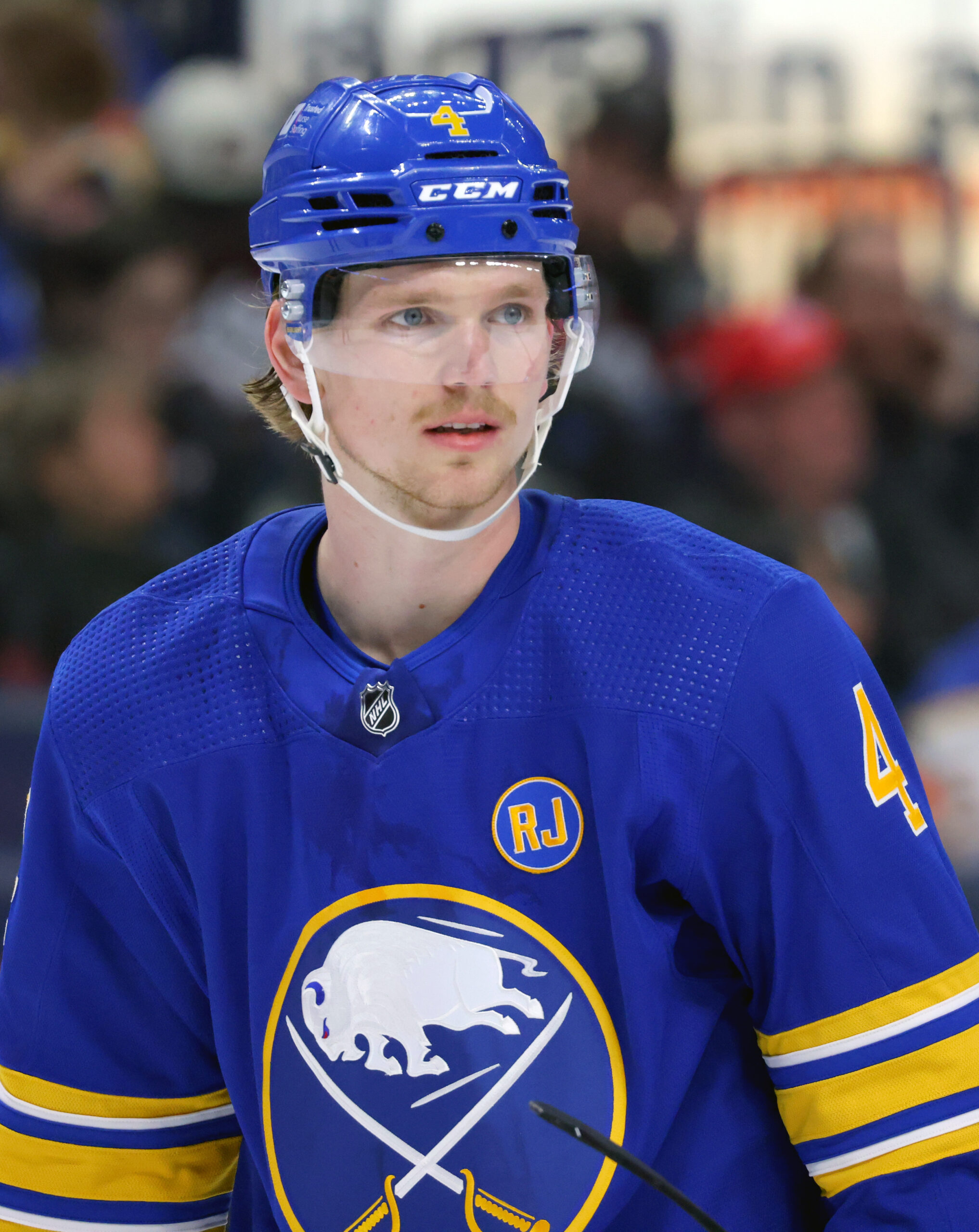
- Bowen Byram ($3.93MM)
- Ryan McLeod ($2.1MM)
- Ryan Johnson ($925K)
- Erik Brännström ($900K)
- Bennett MacArthur ($868K)
- Jacob Bernard-Docker ($825K)
Calgary Flames
- Morgan Frost ($2.04MM)
- Kevin Bahl ($1.2MM)
- Waltteri Ignatjew ($870K)
- Sam Morton ($870K)
- Adam Klapka ($775K)
- Yan Kuznetsov ($775K)
- Connor Murphy ($775K)
Carolina Hurricanes
- Domenick Fensore ($925K)
- Anttoni Honka ($835K)
- Yaniv Perets ($805K)
- Skyler Brind’Amour ($775K)
- Ty Smith ($775K)
- Ryan Suzuki ($775K)
Chicago Blackhawks
- Philipp Kurashev ($2.25MM)
- Arvid Söderblom ($1MM)
- Aku Raty ($925K)
- Antti Saarela ($925K)
- Louis Crevier ($775K)
Colorado Avalanche
- Matthew Stienburg ($928K)
- Sam Malinski ($850K)
- John Ludvig ($775K)
- Kevin Mandolese ($775K)
- Trent Miner ($775K)
- Jason Polin ($775K)
Columbus Blue Jackets
- Jordan Harris ($1.4MM)
- Daniil Tarasov ($1.35MM)
- Hunter McKown ($950K)
- Dmitri Voronkov ($925K)
- Cole Clayton ($810K)
Dallas Stars
- Nils Lundkvist ($1.25MM)
- Benjamin Kraws ($850K)
Detroit Red Wings
- Elmer Söderblom ($925K)
- Antti Tuomisto ($868K)
- Jonatan Berggren ($825K)
- Albert Johansson ($775K)
Edmonton Oilers
- Evan Bouchard ($3.66MM)
- Cameron Wright ($952K)
- Noah Philp ($775K)
- Alec Regula ($775K)
- Olivier Rodrigue ($775K)
Florida Panthers
- Oliver Okuliar ($870K)
- Wilmer Skoog ($870K)
- Nathan Staios ($859K)
- Zachary Uens ($859K)
- Tobias Björnfot ($775K)
- MacKenzie Entwistle ($775K)
Los Angeles Kings
- Cole Krygier ($838K)
- Jack Studnicka ($775K)
Minnesota Wild
- Declan Chisholm ($1MM)
- Luke Toporowski ($870K)
- Graeme Clarke ($800K)
- Adam Raška ($775K)
Montreal Canadiens
- Cayden Primeau ($1.1MM)
- Rafaël Harvey-Pinard ($1MM)
- Jakub Dobes ($925K)
- Jayden Struble ($868K)
- Xavier Simoneau ($855K)
- Noel Hoefenmayer ($775K)
- Gustav Lindström ($775K)
Nashville Predators
- Ondrej Pavel ($870K)
- Jesse Ylönen ($775K)
New Jersey Devils
- Cody Glass ($2.13MM)
- Isaac Poulter ($830K)
- Nolan Foote ($825K)
- Santeri Hatakka ($775K)
- Nathan Legare ($775K)
 New York Islanders
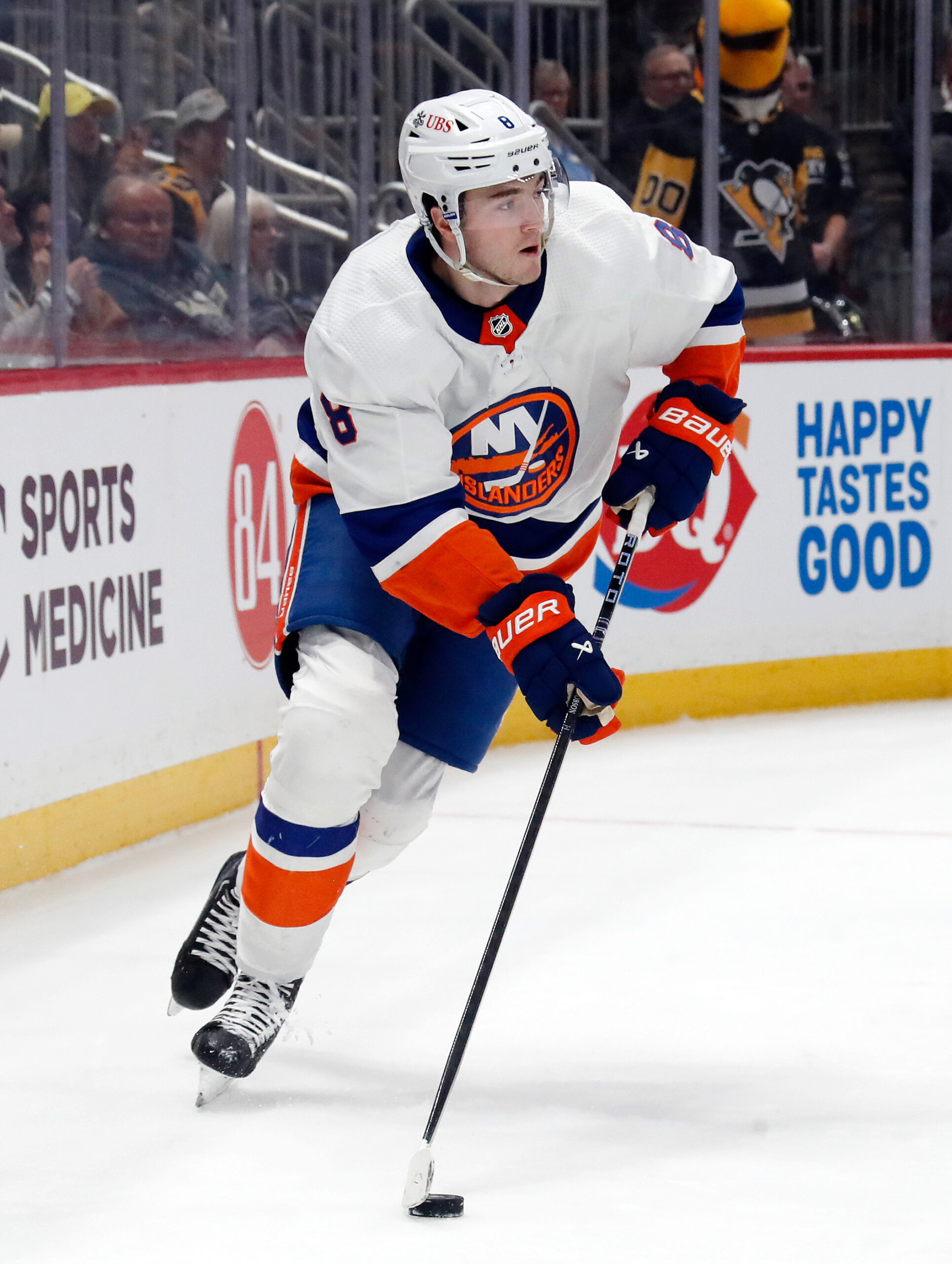
- Noah Dobson ($3.4MM)
- Alexander Romanov ($2.13MM)
- Scott Perunovich ($1.15MM)
- Maxim Tsyplakov ($950K)
- Travis Mitchell ($895K)
- Aidan Fulp ($870K)
- Simon Holmström ($850K)
- Samuel Bolduc ($800K)
- Adam Beckman ($775K)
- Adam Boqvist ($775K)
- Liam Foudy ($775K)
- Marc Gatcomb ($775K)
New York Rangers
- K’Andre Miller ($3.95MM)
- Lucas Edmonds ($870K)
- Adam Edstrom ($855K)
- Zachary Jones ($825K)
- Arthur Kaliyev ($825K)
- Juuso Pärssinen ($775K)
- Matthew Robertson ($775K)
Ottawa Senators
- Fabian Zetterlund ($1.5MM)
- Max Guenette ($775K)
- Jan Jeník ($775K)
- Nikolas Matinpalo ($775K)
- Jamieson Rees ($775K)
Philadelphia Flyers
- Noah Cates ($2.23MM)
- Cameron York ($1.6MM)
- Oscar Eklind ($950K)
- Jakob Pelletier ($800K)
Pittsburgh Penguins
- Connor Dewar ($1.18MM)
- Conor Timmins ($1.1MM)
- Pierre-Olivier Joseph ($950K)
- Taylor Gauthier ($868K)
- Philip Tomasino ($825K)
- Emil Bemström ($775K)
San Jose Sharks
- Klim Kostin ($2.2MM)
- Carl Berglund ($950K)
- Georgi Romanov ($950K)
- Thomas Bordeleau ($874K)
- Nikolai Kovalenko ($868K)
- Noah Gregor ($850K)
- Brandon Coe ($814K)
- Gabriel Carriere ($805K)
Seattle Kraken
- Kaapo Kakko ($2.04MM)
- Tye Kartye ($868K)
- Cale Fleury ($800K)
- Ben Meyers ($775K)
St. Louis Blues
- Anton Malmström ($950K)
- Vadim Zherenko ($855K)
- Nikita Alexandrov ($775K)
- Joel Hofer ($775K)
- Hunter Skinner ($775K)
Tampa Bay Lightning
- Maxwell Crozier ($868K)
- Jaydon Dureau ($850K)
- Gage Goncalves ($775K)
Toronto Maple Leafs
- Nicholas Robertson ($875K)
- Dennis Hildeby ($855K)
- Mikko Kokkonen ($855K)
- Pontus Holmberg ($825K)
- Reese Johnson ($775K)
- Cédric Paré ($775K)
Utah Hockey Club
- Jack McBain ($1.6MM)
- Montana Onyebuchi ($825K)
- Ben McCartney ($775K)
- Kailer Yamamoto ($775K)
Vancouver Canucks
- Nikita Tolopilo ($950K)
- Christian Felton ($870K)
- Tristen Nielsen ($870K)
- Max Sasson ($870K)
- Ty Glover ($868K)
- Arshdeep Bains ($825K)
- Cole McWard ($775K)
- Jett Woo ($775K)
Vegas Golden Knights
- Nicolas Hague ($2.3MM)
- Cole Schwindt ($800K)
- Raphael Lavoie ($775K)
Washington Capitals
- Alexander Alexeyev ($875K)
- Pierrick Dube ($870K)
- Henrik Rybinski ($868K)
- Mitchell Gibson ($775K)
Winnipeg Jets
- Gabriel Vilardi ($3.06MM)
- Dylan Samberg ($1.5MM)
- Morgan Barron ($1.4MM)
- Rasmus Kupari ($1.1MM)
- Parker Ford ($868K)
- Simon Lundmark ($775K)
- Isaak Phillips ($775K)
- Mason Shaw ($775K)
Photo courtesy of Timothy T. Ludwig-Imagn Images (Byram) and Charles LeClaire-Imagn Images (Dobson).
Who Is The Best Player Currently Playing Outside The NHL?
With Ivan Demidov recently joining the Montreal Canadiens, Alexander Nikishin joining the Hurricanes for practice, and Zeev Buium debuting with the Minnesota Wild, the list of top prospects playing outside the NHL has shrunk. This raises the question: Who is the top player in the world not playing in the NHL?
Former Toronto Maple Leafs forward Josh Leivo tore up the KHL this season, setting a single-season goal record with 49. The 31-year-old also led the KHL scoring with 80 points in 62 games on his way to a career season, and at one point had four hat tricks in a month.
Leivo is no stranger to the NHL, having played 265 career games over 10 seasons, tallying 42 goals and 51 assists. The Innisfil, Ontario, native last played in the NHL during the 2022-23 season, scoring four goals and adding 12 assists in 51 games with the St. Louis Blues. Since then, Leivo has posted elite numbers in the KHL, but it would be challenging to anoint him as the top player outside the NHL, especially since this was the first season in which he’s played at that level.
Vladimir Tkachev is another KHL star who could make a case for being the best player in the world currently outside of the NHL. The 29-year-old had a cup of coffee in the NHL with the Los Angeles Kings during the 2021-22 season, chipping in two helpers in four games. At the AHL level, Tkachev had seven goals and 22 assists in 41 games with the Ontario Reign that season, before returning to Russia.
Since linking up with Avangard Omsk of the KHL, Tkachev has been an elite scorer, posting a better-than-a-point-per-game average, including last year, when he registered 20 goals and 55 assists in 58 games. This past year, Tkachev missed seven months after suffering a ruptured Achilles and played in just four games. At 29, Tkachev is what he is in his bid to be the best player outside of the NHL. Still, given that his sample size from last season is so small, and he only has one elite professional season under his belt, it is hard to anoint him as the holder of that title now.
Regarding goaltenders outside the NHL, Sharks prospect Yaroslav Askarov is as good as it gets. The 11th overall pick in the 2020 NHL Draft has had a terrific AHL career thus far and was dominant this season, posting a .923 save percentage with four shutouts in 22 games. Askarov was a highly touted prospect before being drafted, drawing comparisons to Carey Price. He has good size, tracks the puck well, and has terrific athleticism. He is also very calm in the crease, which explains the comparisons to Price.
Askarov has all the makings of a franchise goalie, but at 22, he has yet to break through to the NHL full-time. He did play well in 13 NHL games this season, registering 1.7 goals saved above expected (as per MoneyPuck), and should leap full-time next year. Which begs the question: Is he the best player outside the NHL? The answer is probably no, but he should be included in the conversation. It won’t be long until he plays NHL hockey full-time, and if he establishes his game at the same time as the Sharks’ other top prospects, he could do some pretty remarkable things in San Jose.
 The next name that comes to mind is another former NHLer, Nikita Gusev. The 32-year-old Gusev had a solid rookie season with New Jersey back in 2019-2020, posting 13 goals and 31 assists in 66 games. However, he followed it up with a subpar 2020-21 season, which led him to leave the NHL for the KHL. Since departing for Russia, Gusev has been a point-per-game player, even setting a new KHL single-season scoring record with 89 points in 68 games during the 2023-24 season. Given his consistency in recent seasons, a strong case could be made that Gusev is the top player in the world currently playing outside of the NHL until we discuss the last name on the list.
For many people, the first name that comes to mind is 17-year-old Gavin McKenna, and for good reason. McKenna is the projected first overall pick in 2026 and just finished a phenomenal season with the Medicine Hat Tigers, producing 41 goals and 88 assists in 56 games. McKenna has another season in junior hockey before he is drafted, and he will no doubt draw comparisons not just to recent first-overall selections Connor Bedard and Macklin Celebrini, but also to a decade-defining talent like Connor McDavid, as well.
While he undoubtedly has the highest upside of any player currently playing outside of the NHL, it’s hard to say he is the definitive number one, but it is also hard to dispute it. He isn’t playing against men yet, and all the other players are competing in professional hockey in the world’s second- or third-best leagues. The comparison isn’t exactly apples to apples, but there can’t be one.
The debate likely comes down to Gusev and McKenna for being the best in the world outside the NHL. While the title is unofficial, it was previously held by Gusev before he made the move to the NHL. However, given McKenna’s historic season, he has completed arguably one of the best seasons ever in the CHL for a 17-year-old, and he makes the best case for the best player in the world outside of the NHL.
The Unleashed 2025: Group VI Unrestricted Free Agents
Although most players must wait until after their 27th birthday to become an unrestricted free agent, able to sign with any team in the league without compensation, there are a few other ways to reach the open market. Players who complete seven full seasons in the NHL are eligible for UFA status, as are restricted free agents who do not receive qualifying offers.
There is another option, however, available to players who don’t receive many opportunities in the NHL but have spent several years at the professional level: Group VI unrestricted free agency.
PuckPedia has a complete list of players who will become free agents through this category. To refresh your memory on how a player qualifies for Group VI free agency, they must meet three requirements:
- The player is 25 years or older (as of June 30 of the calendar year the contract expires).
- The player has completed three (3) or more professional seasons, qualified by 11 or more professional games (for an 18/19-year-old player), or one (1) or more professional games (for a player aged 20 or older). This can include NHL, minor league, and European professional league seasons played while under a Standard Player Contract (SPC).
- The player has played fewer than 80 NHL games, or 28 NHL games of 30 minutes or greater for a goaltender.
The entire list of players hitting the open market early can be found below. For more detailed information, please visit PuckPedia.
Anaheim Ducks
(none)
Boston Bruins
Buffalo Sabres
Brett Murray
Jack Rathbone
Lukáš Rousek
Calgary Flames
Carolina Hurricanes
(none)
Chicago Blackhawks
Colorado Avalanche
Columbus Blue Jackets
Dallas Stars
Matěj Blümel
Kole Lind
Mathias Emilio Pettersen
Detroit Red Wings
(none)
Edmonton Oilers
Florida Panthers
(none)
Los Angeles Kings
Minnesota Wild
Cameron Crotty
Dylan Ferguson
Tyler Madden
Montreal Canadiens
(none)
Nashville Predators
Marc Del Gaizo
Grigori Denisenko
Jake Livingstone
New Jersey Devils
New York Islanders
New York Rangers
Benoit-Olivier Groulx
Jake Leschyshyn
Ottawa Senators
Wyatt Bongiovanni
Angus Crookshank
Cole Reinhardt
Filip Roos
Philadelphia Flyers
Pittsburgh Penguins
Mac Hollowell
Jimmy Huntington
Filip Král
Mathias Laferrière
San Jose Sharks
Seattle Kraken
St. Louis Blues
Tampa Bay Lightning
Toronto Maple Leafs
Nicholas Abruzzese
Alex Steeves
Utah Hockey Club
Travis Barron
Egor Sokolov
Jaxson Stauber
Samuel Walker
Vancouver Canucks
Vegas Golden Knights
Washington Capitals
Winnipeg Jets
(none)