
Salary Cap Deep Dive: Tampa Bay Lightning
Navigating the salary cap is one of the more important tasks for any GM. Teams that can avoid total cap chaos by walking the tightrope of inking players to deals that match their value (or compensate for future value without breaking the bank) remain successful. Those that don’t see struggles and front office changes.
PHR will look at every NHL team and give a thorough look at their cap situation heading into the 2021-22 season. This will focus more on players who are regulars on the roster versus those who may find themselves shuttling between the AHL and NHL. All cap figures are courtesy of CapFriendly.
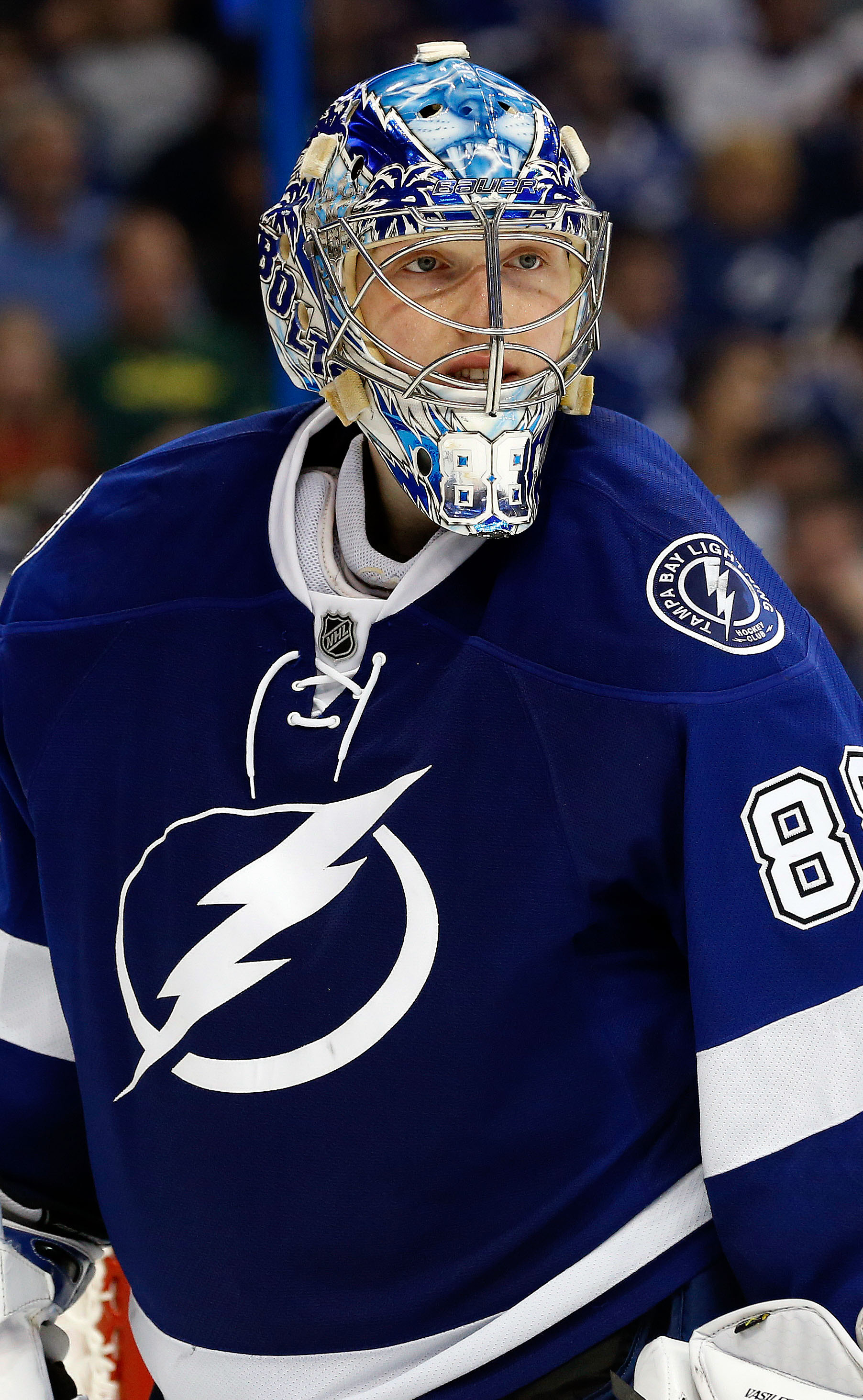
Tampa Bay Lightning
Current Cap Hit: $88,365,955 (over the $81.5MM Upper Limit)
Entry-Level Contracts
None projected to play with some regularity at the NHL level this coming season.
One Year Remaining, Non-Entry-Level
G Brian Elliott ($900K, UFA)
F Mathieu Joseph ($737.5K, RFA)
F Pat Maroon ($900K, UFA)
F Ondrej Palat ($5.3MM, UFA)
D Jan Rutta ($1.3MM, UFA)
After a few quieter years, Palat had a strong bounce-back campaign in 2020-21, finishing second in team scoring and producing at a top-line rate for the first time in a while. That made him a viable candidate for Seattle to pick in expansion although they opted for Yanni Gourde instead. Palat will be 31 when he signs his next deal which means a long-term pact is likely off the table but a medium-term one around this is likely. If he wants to stick around, GM Julien BriseBois may push for something a little lower. Maroon has signed for cheap the last few years and as long as he has a chance to win, he’ll probably keep taking those types of contracts. If not, that spot will be filled by someone else willing to play for close to the minimum. Joseph stands out as a viable offer sheet candidate next summer; assuming he has a good season, it’s unlikely they’ll be able to afford to keep him and re-sign Palat. If a team thinks he’s worthy of a bigger role and wants to pay him for it, that could put the Lightning in a bit of a bind.
Rutta has been a serviceable player on the third pairing since joining them in 2019 and if that continues, he could be in line for a small raise. That said, this feels like a spot for Tampa to try to go a little cheaper to free up some flexibility.
Last year was a tough one for Elliott in Philadelphia which significantly hurt his value heading into free agency. That, combined with Tampa Bay needing a cheap replacement for Curtis McElhinney, made for a good combination here. At this stage of his career, he’ll be going year-to-year on his next contracts so how he fares this season will determine if he has a chance of getting back towards that higher echelon of backups in terms of salary.
Two Years Remaining
F Pierre-Edouard Bellemare ($1MM, UFA)
D Erik Cernak ($2.95MM, RFA)
F Anthony Cirelli ($4.8MM, RFA)
F Ross Colton ($1.125MM, RFA)
D Cal Foote ($850K, RFA)
F Alex Killorn ($4.45MM, UFA)
F Corey Perry ($1MM, UFA)
D Mikhail Sergachev ($4.8MM, RFA)
Things may not have looked too bad after the last group but that starts to change here with several young players expiring after this time. Cirelli is coming off a quiet year but produced at a much better level the previous two seasons. Even if not, his qualifying offer will check in at $5.76MM (120% of his AAV) so a raise is coming. Killorn has been a reliable secondary scorer for several years but with the RFAs on this list, it certainly looks like their raises will squeeze him out; with prices for secondary scoring dropping a bit lately, Killorn may be looking at a small dip if he continues to hover around the 40-point mark. Colton is in line for a bigger role next season following a strong showing in the playoffs which likely has him on a trajectory for a bigger deal as well. Perry and Bellemare are quality veterans who can anchor the fourth line or move up in a pinch; both likely left money on the table to go to the Lightning which is something that can be said for quite a few others on their team.
Sergachev has established himself as a quality piece on the second pairing and at 23, there’s still room for growth. He’s on the same contract as Cirelli so a higher qualifying offer will be coming in the 2023 offseason and likely a bigger deal than that. Cernak doesn’t light up the scoresheet but as a top-four right-shot defender, he’s going to be in line for a significant raise beyond his $3.54MM qualifier as well. If Foote is able to establish himself as a full-time player by the time his deal is up, doubling his AAV or more isn’t out of the question either. Big raises are coming from this group.
Three Years Remaining
F Alex Barre-Boulet ($758K, UFA)
D Zach Bogosian ($850K, UFA)
D Brent Seabrook ($6.875MM, UFA)
F Steven Stamkos ($8.5MM, UFA)
Stamkos is going to be one of the more interesting contracts for Tampa Bay to handle. He’ll be 34 when it starts so he should still have a few good years left in him but with the anticipated higher costs from their RFAs in the last group, it’s quite difficult to see them being able to afford a market-value contract for their captain unless there’s a significant contract moved out by then. Injuries have limited his usefulness lately and if that trend continues, his value will dip considerably. Barre-Boulet isn’t too established at the NHL level yet but he has scored in junior and in the minors and won’t need to do much to live up to a near-minimum contract. Assuming he produces – a reasonable one to make – this could be a nice value contract for them.
Bogosian also should be a value contract but is on the opposite side of his career. He could have gotten more elsewhere or even going year-to-year but opted for some stability with a chance to win.
Seabrook was acquired as part of the Tyler Johnson trade but his playing days are already over. He’ll return to LTIR next season.
Salary Cap Deep Dive: Toronto Maple Leafs
Navigating the salary cap is one of the more important tasks for any GM. Teams that can avoid total cap chaos by walking the tightrope of inking players to deals that match their value (or compensate for future value without breaking the bank) remain successful. Those that don’t see struggles and front office changes.
PHR will look at every NHL team and give a thorough look at their cap situation heading into the 2021-22 season. This will focus more on players who are regulars on the roster versus those who may find themselves shuttling between the AHL and NHL. All cap figures are courtesy of CapFriendly.
Toronto Maple Leafs
Current Cap Hit: $82,894,783 (over the $81.5MM Upper Limit)
Entry-Level Contracts
D Timothy Liljegren ($863K in 2021-22)
D Rasmus Sandin ($894K in 2021-22)
Potential Bonuses
Liljegren: $400K
Sandin saw limited action with Toronto last season but suited up in five of their seven playoff games and with the departure of Zach Bogosian, a top-six spot should be his for the taking in training camp. While he has shown offensive upside at the lower levels, it hasn’t yet materialized in the NHL and barring a big year on that front, he’s someone that will likely need to sign a cheap one-year deal to preserve as much cap flexibility for Toronto as possible. Liljegren also figures to get a look in training camp and should be one of the first recalls otherwise. He’s also a candidate for a one-year deal after the season, likely for the league minimum either on a one-way contract or with a higher AHL salary.
One Year Remaining, Non-Entry-Level
F Adam Brooks ($725K, RFA)
G Jack Campbell ($1.65MM, UFA)
F Pierre Engvall ($1.25MM, RFA)
F Kurtis Gabriel ($750K, UFA)
F Ondrej Kase ($1.25MM, RFA)
F Ilya Mikheyev ($1.645MM, UFA)
D Morgan Rielly ($5MM, UFA)
F Jason Spezza ($750K, UFA)
Mikheyev has shown some flashes of being a quality secondary scorer but consistency has been an issue so far. With the Maple Leafs likely wanting to funnel some money towards a pair of notable UFAs in this list, it’s possible that he becomes a casualty with an eye on someone making less money taking his spot. Engvall, who was in and out of the lineup last season, also falls under that category. Kase was a very interesting signing this summer – he’s talented enough to be a top-six player but concussions have limited him lately. If he stays healthy for the full season, he should provide a strong return on this deal. Spezza should again provide some surplus value from the fourth line and has passed up chances to make more on the open market to play at home. Gabriel will have a limited role when he’s in the lineup and it wouldn’t be surprising to see them try to sneak him through waivers for cap flexibility purposes; the same can be said for Brooks who has done well in limited duty but Toronto can’t afford to carry a 23-player roster. These last three roster spots will need to be filled by minimum-salaried players for the foreseeable future.
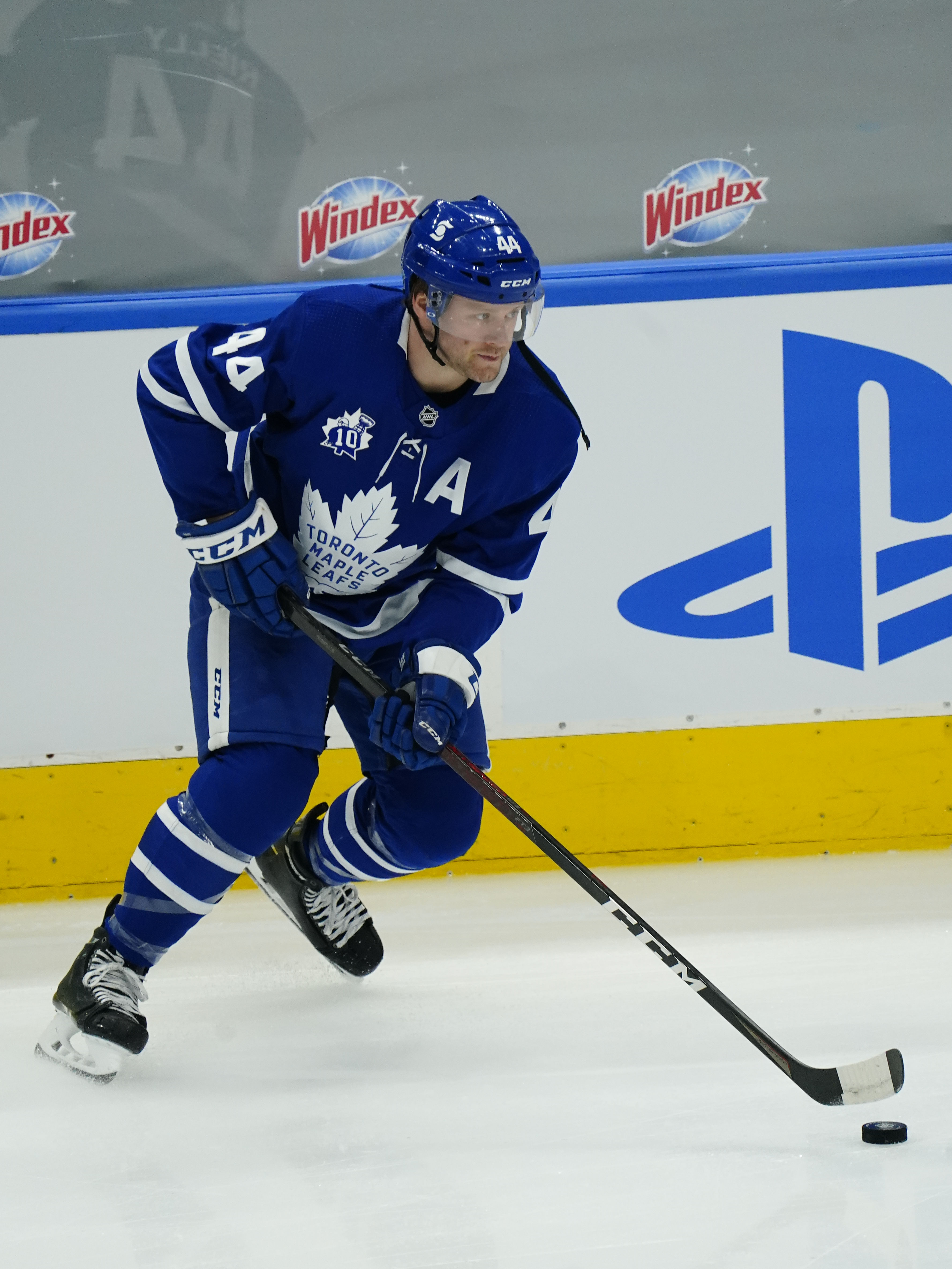 Rielly has been Toronto’s top defenseman over the past several years and his contract has proven to be quite the bargain over that span. That is going to change for 2022-23. Even though he is coming off a quieter year offensively and likely isn’t going to be a 72-point player moving forward like he was in 2018-19, he’s a top-pairing player for the Maple Leafs and would be for many other teams as well. He’ll hit the market at 28 where he can command a max-term contract and will have the offensive numbers to land a sizable raise. Something over $7MM seems likely at this point and a big year could make that price tag even higher.
As for Campbell, he has been everything Toronto could have hoped for. He came in and stabilized the backup position in 2020 and then played quite well down the stretch, earning the number one job for the playoffs where he only allowed 13 goals in their seven-game series loss to Montreal. Even so, he still doesn’t have 100 career NHL appearances. That will limit his earnings ceiling unless he can establish himself as a 50-game goalie or more which is going to be hard to do. He still should be able to double his current price tag based on recent comparables but starter money may be a stretch.
Two Years Remaining
F Joey Anderson ($750K, RFA)
F Michael Bunting ($950K, UFA)
D Travis Dermott ($1.5MM, RFA)
D Justin Holl ($2MM, UFA)
F David Kampf ($1.5MM, UFA)
F Alexander Kerfoot ($3.5MM, UFA)
F Nick Ritchie ($2.5MM, UFA)
F Wayne Simmonds ($900K, UFA)
Kerfoot has been involved in trade speculation for a while now being the highest-paid forward outside of their top-paid pieces. However, his ability to play in all situations has made him valuable enough that they’ve made other moves instead and kept him on the roster. He doesn’t produce enough to line himself up for a big raise two years from now but the fact he can play center will give him a strong market where he could come close to matching his current AAV. Ritchie was non-tendered by Boston and landed quickly with the Maple Leafs. He has shown the ability to play in the top-six, albeit inconsistently. If he can be that type of player more frequently, he’s young enough to command a significant raise the next time he hits the open market. Kampf was another non-tender this summer, this time by Chicago and will be a key checker for Toronto. Scoring has been a challenge for him which limits his earnings upside considerably. Bunting used a strong second half to land a one-way deal and he’ll have a chance to outperform that if he lands a spot in their top nine. Simmonds took a pay cut to stick around and was rewarded with a no-trade clause in return. Anderson hasn’t played much with Toronto but he’s now waiver-eligible and would be at risk at being claimed. That could keep him on the roster as a result.
Holl has been a nice success story for the Maple Leafs. After not really being able to crack the lineup under former coach Mike Babcock, he has since established himself as a quality second pair defender at a price tag that is well below market value for someone in the top four. He’ll be in line for a fairly significant raise two years from now. Dermott has come along a little slower than they may have hoped but he’s a regular on their third pairing and should get an opportunity to play a bit more than the 13 minutes a game from last season. If that happens, they’ll get good value on his deal. Dermott has one more crack at arbitration eligibility and will be owed a $1.75MM qualifying offer.
Three Years Remaining
D T.J. Brodie ($5MM, UFA)
F Auston Matthews ($11.034MM, UFA)
G Petr Mrazek ($3.8MM, UFA)
D Jake Muzzin ($5.625MM, UFA)
F William Nylander ($6.962MM, UFA)
Matthews led the league in goals last season and it’s only a matter of time before he notches 50 in a single season. At first glance, it may seem like someone making that much could be in line for a raise on his next deal but as an elite scorer playing a premium position (center) and the fact he’ll hit the open market at 26, the odds are pretty high that he’ll command a bigger contract next time around. The same can be said for Nylander who has either reached the 60-point mark or played at that pace in four of the last five seasons. By the time he reaches free agency, the cap will have gone up a little bit and he should be well-positioned to be one of the higher-paid wingers in free agency.
Muzzin has been an integral part of their back end since coming over in 2019 from the Kings. He has helped form a stabilizing defensive pairing but is good enough to still contribute offensively. He’s a high-end second pairing piece and with the way the market was for defenders this summer, it’s safe to say he’s now on a bit of a below-market deal. Brodie has seen his production drop off the last couple of years but he’s still strong in his own end and was a good partner for Rielly last season. The contract may be a bit high given the falloff in his offensive numbers but with the top-end offense they have, a jump in scoring can’t be ruled out.
Salary Cap Deep Dive: Vancouver Canucks
Navigating the salary cap is one of the more important tasks for any GM. Teams that can avoid total cap chaos by walking the tightrope of inking players to deals that match their value (or compensate for future value without breaking the bank) remain successful. Those that don’t see struggles and front office changes.
PHR will look at every NHL team and give a thorough look at their cap situation heading into the 2021-22 season. This will focus more on players who are regulars on the roster versus those who may find themselves shuttling between the AHL and NHL. All cap figures are courtesy of CapFriendly.
Vancouver Canucks
Current Cap Hit: $70,835,659 (under the $81.5MM Upper Limit)
Entry-Level Contracts
F Nils Hoglander ($892K through 2022-23)
F Vasili Podkolzin ($925K through 2023-24)
D Jack Rathbone ($925K through 2021-22)
Potential Bonuses
Hoglander: $200K
Podkolzin: $850K
Rathbone: $850K
Total: $1.9MM
Hoglander had a nice rookie season, notching 27 points in 56 games while finishing eighth in Calder Trophy voting. He’s likely to be in a middle-six role for the next couple of years which could have him in bridge contract territory although if he’s able to improve his production a little bit, his camp could look at recent deals for Joel Farabee and Drake Batherson as potential comparables. Podkolzin is coming to North America after spending the last two years in the KHL and should play a regular role fairly quickly. They may ease him based on their current winger situation which makes it tough to project his next contract but he’s someone that should be part of their long-term plans and will get more expensive over time.
Rathbone didn’t look out of place in a late stint last season but with their depth, he will likely have to start in the minors. However, the 22-year-old is probably going to be one of the first recalls and as a result, he will have a few opportunities to produce. That could help him earn a cheap one-way deal for 2022-23 but at this point, it’s unlikely he’ll hit his bonuses.
One Year Remaining, Non-Entry-Level
F Brock Boeser ($5.875MM, RFA)
F Phillip Di Giuseppe ($750K, UFA)
D Jaroslav Halak ($1.5MM, UFA)
D Brad Hunt ($800K, UFA)
D Olli Juolevi ($750K, RFA)
F Zack MacEwen ($825K, RFA)
F Tyler Motte ($1.225MM, UFA)
F Brandon Sutter ($1.125MM, UFA)
Potential Bonuses
Halak: $1.5MM
Boeser’s deal is one of the ones that ultimately played a role in the rule change of the new CBA which creates the second calculation for a qualifying offer at 120% of the AAV instead of just the final-year salary. That rule doesn’t apply to him so he’ll be owed a $7.5MM qualifying offer next summer where he’ll be a year away from UFA eligibility if a long-term extension can’t be reached by then. He’s heading for a big raise either way. Motte has become a very effective energy forward and those players have still commanded good contracts on the open market so his next deal could approach double his current rate. Sutter’s market value was basically just established earlier this offseason and his value probably won’t jump significantly after next season. Di Giuseppe and MacEwen will fill depth roles and those spots will need to be at or near the minimum for the foreseeable future.
Hunt has held down a regular spot on an NHL roster the last few years even though it hasn’t yielded a lot of NHL action. He’s a power play specialist and he has been claimed on waivers before so it will be interesting to see if Vancouver keeps him as their seventh defender or tries to send him down. Juolevi had a limited role last season which made taking a one-year deal the smartest route for both sides. He’ll need to establish himself as a regular on the third pairing to have a shot at getting any sort of notable raise.
Halak comes over from Boston and will be a nice mentor that can push for playing time. At 36, he’ll be going year-to-year moving forward. Worth noting is that his bonuses are quite achievable, $1.25MM for 10 games played and $250K for a .905 SV%. Vancouver is probably going to be in LTIR all season long so those bonuses (plus any others the prospects hit) are going to come off their Upper Limit in 2022-23.
Two Years Remaining
F Justin Dowling ($750K, UFA)
F Micheal Ferland ($3.5MM, UFA)
D Travis Hamonic ($3MM, UFA)
F Bo Horvat ($5.5MM, UFA)
F J.T. Miller ($5.25MM, UFA)
D Luke Schenn ($850K, UFA)
Horvat has been a key player down the middle for his seven-year NHL career, logging tough defensive minutes while still chipping in offensively. His contract has proven to be a nice bargain for the Canucks but the 26-year-old will be in line for a max-term deal and a significant raise two years from now. The same can probably be said for Miller who has established himself as a top-line forward after coming over from Tampa Bay while playing well down the middle when called upon which will only help his value. It will cost a lot more to keep these two around long-term. Dowling provides some extra depth up front but is a candidate to be waived if someone else pushes him out of the lineup.
Ferland has missed most of the last two years with concussion trouble and there are questions about whether or not he’ll be able to return or even if he should try. He’s likely to go on LTIR and that will be important to keep in mind once we get to the Unsigned Players section.
Hamonic earned this deal after playing for considerably less last year but the fact he was willing to go outside Western Canada certainly bolstered his leverage. He won’t produce much but if he can log around 20 minutes a night, they’ll be fine with this contract. Schenn is another low-cost depth option and could be a candidate to be waived as well if someone like Rathbone forces Vancouver’s hand and plays well enough to earn a full-time roster spot.
Three Years Remaining
F Jason Dickinson ($2.65MM, UFA)
D Tyler Myers ($6MM, UFA)
F Tanner Pearson ($3.225MM, UFA)
Pearson re-signed with Vancouver just before the trade deadline with an extension that looked a little high based on the season he was having and where he fits in on their depth chart but unlike some of the similar-priced deals to their now-former role players, this one won’t hurt as much. Vancouver used Dallas’ expansion situation to their advantage to add and sign Dickinson as their new third-line center, bumping Sutter down a line in the process. Dickinson hasn’t put up much in the way of offensive numbers but he should get an opportunity to play a bit of a bigger role which would help justify the contract.
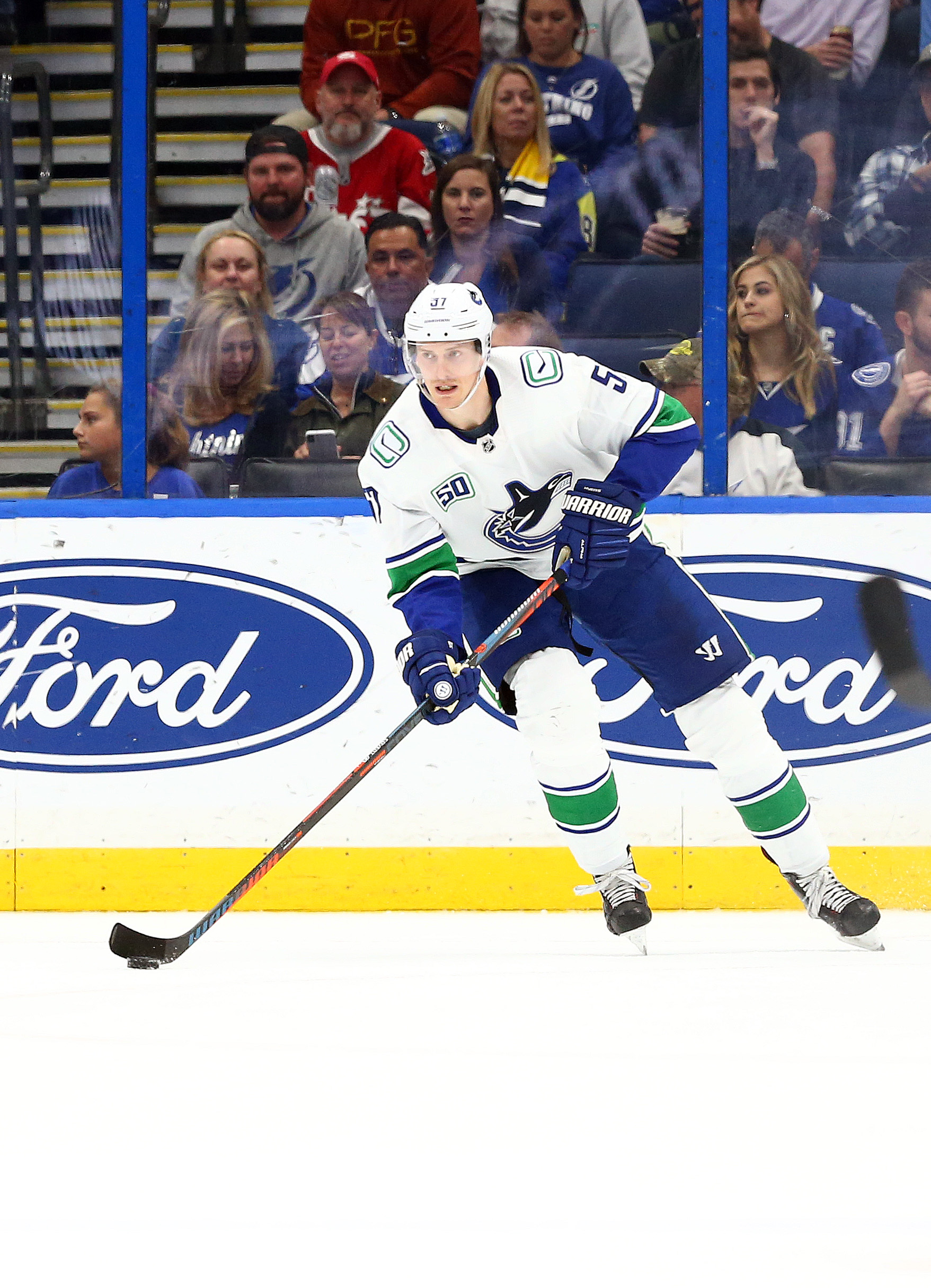 Myers’ contract has not been favorably looked upon from the moment it was signed. He had his limitations in Winnipeg and is better off in a more limited role than a top-pairing one but Vancouver still handed him a significant contract and a big role. Barring an uptick in offensive production, he was going to have a hard time living up to it and that hasn’t happened yet as his point-per-game averages have been close to what they were with the Jets. He’s a capable blueliner in the right spot on the depth chart but they are going to be hard-pressed to get any sort of value out of this deal.
Four Or More Years Remaining
G Thatcher Demko ($5MM through 2025-26)
D Oliver Ekman-Larsson ($7.26MM through 2026-27)*
F Conor Garland ($4.95MM through 2025-26)
D Tucker Poolman ($2.5MM through 2024-25)
*-Arizona is retaining $999K on Ekman-Larsson’s contract each year.
Garland was brought over as part of the Ekman-Larsson trade and while the blueliner was the headliner, Garland is still a significant addition. He was one of Arizona’s top scoring threats the last two seasons and will have the opportunity to play a top-six role in Vancouver. A boost in production with the change of scenery could make his deal a team-friendly one.
The same can’t be said for Ekman-Larsson. He’s coming off a tough season and the final few years of that contract could be a concern given all of the tough minutes he has logged over the years. He’ll certainly be a big addition for now but this contract could cost them the services of one of their other key veterans down the road. Poolman’s contract was one of the more puzzling ones in free agency. He’s a decent third pairing stay-at-home option but those players don’t typically command four years on the open market. Clearly, GM Jim Benning thinks he can bring more to the table than he did with Winnipeg.
Demko has very limited NHL experience – just 72 regular season games – but did well in what was a tough year for Vancouver in 2020-21. He may not be ready to be a 55-plus-game starter – that’s why Halak was brought in – but he’s definitely ready to take on the heavier side of the workload between the pipes. It may take another year or two but he’s capable of establishing himself as a strong number one and if that happens, this will be a big bargain for Vancouver.
Buyouts
G Braden Holtby ($500K in 2021-22, $1.9MM in 2022-23)
F Jake Virtanen ($50K in 2021-22, $500K in 2022-23)
Retained Salary Transactions
None
Salary Cap Recapture
G Roberto Luongo ($3.035MM in 2021-22)
Still To Sign
D Quinn Hughes
F Elias Pettersson
Pettersson looked to be on his way to another season of being near a point per game before missing the final 30 games due to a wrist injury. That shouldn’t affect his next contract too much though. He has established himself as a top liner although he may be better off as a winger than a center moving forward which could cost him a little bit on this next deal since centers tend to get a bit more of a premium than wingers. A bridge deal would be in the high $5MM to low $6MM range while one that buys out UFA eligibility will cost a couple million more.
Hughes has a bit less leverage than Pettersson with the shorter track record and isn’t eligible for an offer sheet. However, he has two years of high-end production and he already looks like a premier point-producer among NHL defensemen. We’ve seen those players get paid considerably this offseason and his camp undoubtedly will be wanting to use those as comparables in negotiations. The potential price tags are likely similar to Pettersson’s thresholds.
Best Value: Horvat
Worst Value: Myers
Looking Ahead
By the time you factor in Ferland’s LTIR situation and Vancouver’s cap space, the Canucks are going to have somewhere between $13MM-$14MM in cap room, slightly more than that if they carry a roster below the maximum size. Even so, that’s probably not enough to sign both Hughes and Pettersson to long-term deals which is why the expectation has been that one would get a bridge and the other a long-term contract. We’ll find out over the next few weeks who gets which one.
The cap is going to be an issue for a while for Vancouver. While they have just $53MM committed for 2022-23 right now, that goes up quickly once the two RFAs sign while Boeser gets his guaranteed big raise plus the expected bonus overage penalty. That won’t leave much short-term wiggle room and a year later, they’ll be contending with bigger deals for Horvat and Miller. There isn’t a lot of long-term money on the books compared to some teams but it’s difficult to see how they’re going to keep this entire core intact over the next few years with a salary cap that isn’t going to rise very much or very quickly.
Photo courtesy of USA Today Sports Images.
PHR Mailbag: Hughes Brothers, Lundqvist, Domi, Caufield, Kings, Predictions
Topics in this edition of the PHR Mailbag include reuniting the Hughes brothers, Henrik Lundqvist, Max Domi, Cole Caufield’s production, the Kings’ offseason, plus playoff and crystal ball predictions. If your question doesn’t appear here, check back in last weekend’s mailbag.
SpeakOfTheDevil: Do you see the Hughes brothers all playing together on the same team someday? What would it take for that to happen via trade?
I don’t see it happening and it comes down to money. Quinn Hughes is going to get very expensive very quickly. If Jack Hughes pans out as expected, he’ll be expensive a year from now. By the time Quinn becomes a free agent, Luke will be on his second contract which, you guessed it, could get expensive quickly if he puts up the points many think he will. Dougie Hamilton might still be on the books at $9MM by then (depending on how long Quinn’s second contract is – is it a bridge or does it walk him to UFA right away?).
That likely takes the easiest scenario off the table. Could Vancouver one day trade Quinn? Sure, anything is possible. But does New Jersey need a third puck-moving defender with Hamilton and Luke and again, can they even afford that on the cap? Probably not and even if they could afford it, would they be willing to pay an extremely high price tag (multiple top picks and players) to make a strong spot (puck-moving defender) even stronger? That’s probably not the best use of organizational resources even if it makes for a nice story.
I don’t see New Jersey moving Jack and Luke to Vancouver, not with the cap challenges the Canucks are heading towards. And all three winding up on an entirely different team is even harder to see happening.
Could it happen later in their careers when they’re not all on big-money contracts? That’s certainly a little more realistic but even then, the safe bet is to say it doesn’t happen outside of them playing some summer scrimmages in the offseason on the same team.
Eaton Harass: Is Lundqvist the best goalie to never win a Cup?
He’s definitely in that mix. He’s a sure-fire Hall of Famer but there are others that are in the Hall of Fame that have to be considered.
Tony Esposito played in a much different era so it’s hard to directly compare the numbers but he played on some very good Chicago teams that just couldn’t get over the hump, much like the Rangers. Roberto Luongo didn’t always have good teams in front of him but was one of the premier goalies of his generation, the same as Lundqvist. I’d put Lundqvist ahead of Curtis Joseph and Ron Hextall who should also get at least some consideration here as well.
I’d say Esposito and his slightly more decorated track record would get the edge here but it’s not really a competition to be the best of that group. Lundqvist was a high-end goalie that never won a Stanley Cup that will one day be in the Hall of Fame. I know lots of people like ‘Best of’ lists but I don’t think being ranked first, second, third, or tenth matters all that much.
@MarkPaleo: Is Max Domi a possible solution for the Bruins’ 2nd line center question?
In the short term, no. He’s going to miss at least the first six weeks or so of the season if not longer after undergoing shoulder surgery in early June. There’s also the $5.3MM AAV which is one they can’t really afford. Yes, he’s eligible for LTIR but there would be a cap crunch as soon as he was able to return.
But at the trade deadline? That could be a really interesting option. At that point, Domi will have come back and shown if he’s capable of still being a top-six piece (particularly at center, after spending time the last two years on the wing) and the money will be easier to fit in with how much time will have passed and Columbus likely being more willing to retain at that time. Boston has looked at reclamation rental projects in the past at the deadline in the hopes that a change of scenery gets them going and Domi would certainly fit that particular strategy. If they haven’t filled that spot by the deadline, he’d make some sense for them.
wu tang killa beez: What do you expect from Cole Caufield in Montreal in a full NHL season? Can he score 30 goals?
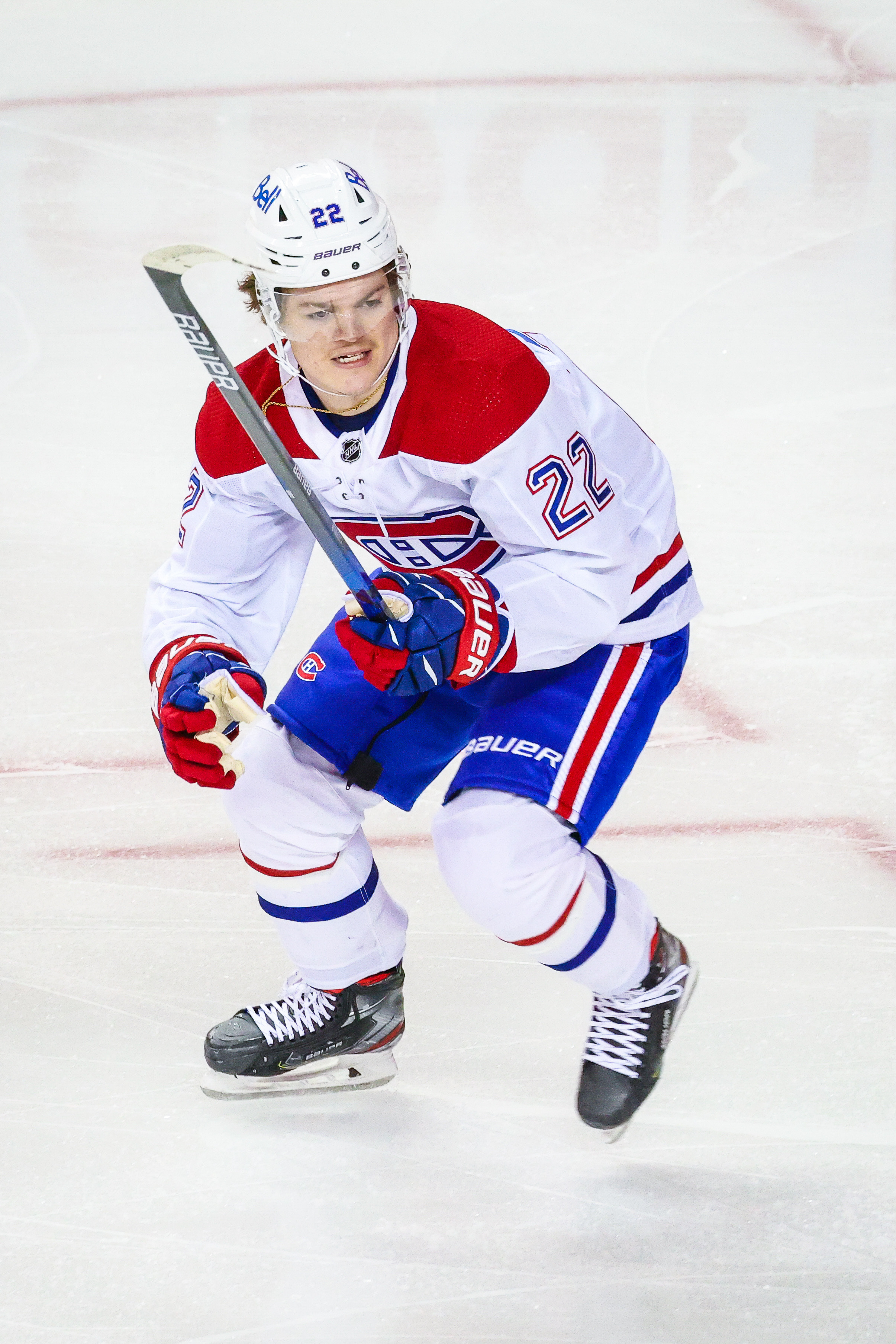 In a single season at some point in his career? 30 is more than doable; it’d be a bit surprising if he didn’t get to that milestone a few times at least. He’s undersized but it’s hard to teach the scoring touch that Caufield has and he certainly didn’t look out of place during Montreal’s playoff run.
Now, if you’re asking about next season, that’s a little less certain. Don’t get me wrong, he could get 30 in 2021-22 but I don’t know if I’d necessarily predict that. The Canadiens are a score-by-committee type of team and outside of a hot start last year, they don’t typically score a lot. They have some decent weapons on the wing with him, Brendan Gallagher, Mike Hoffman, and Tyler Toffoli and that might result in some flatter scoring numbers. All of those players could (and if healthy, probably should) pass the 20-goal mark but because of that depth, none might reach 30 next season.
Winter in Colorado: Do you think the veteran additions and developing prospects will be enough for the LA Kings to make the playoffs this season? Is 3rd in the relatively weak Pacific Division possible?
bigalval: Can the Kings make the playoffs this year the team looks a lot better and the kids are coming up.
There’s no denying that the Kings are much-improved after the additions of Phillip Danault, Viktor Arvidsson, and Alexander Edler. The depth is a lot better and some players who were in spots higher than they should have been will be pushed back down which, from a development standpoint, isn’t a bad thing either. There’s also no denying that the Pacific Division isn’t all that strong and it is definitely possible that these additions plus some internal improvement from their youngsters could be enough to get them over the hump and into that third seed. I wouldn’t be shocked if it happened.
That said, I’m not going to predict it’ll happen. Last month, I made my very quick predictions for the playoffs and the Kings weren’t in that group. I think Edler will help their back end but it’s still not a particularly strong group. I don’t have a lot of confidence that Calvin Petersen and Jonathan Quick can be a playoff-caliber goaltending tandem, especially with that back end not being an impactful one. They’ll score more but after being 27th in that department last season, that’s a low bar to clear. I could see the Kings being fourth or fifth in the division but if five teams from the Central make it (a definite possibility), that would have Los Angeles just on the outside looking in. Bright days are soon coming but I think that jump ahead is another year away.
Salary Cap Deep Dive: Vegas Golden Knights
Navigating the salary cap is one of the more important tasks for any GM. Teams that can avoid total cap chaos by walking the tightrope of inking players to deals that match their value (or compensate for future value without breaking the bank) remain successful. Those that don’t see struggles and front office changes.
PHR will look at every NHL team and give a thorough look at their cap situation heading into the 2021-22 season. This will focus more on players who are regulars on the roster versus those who may find themselves shuttling between the AHL and NHL. All cap figures are courtesy of CapFriendly.
Vegas Golden Knights
Current Cap Hit: $81,537,439 (over the $81.5MM Upper Limit)
Entry-Level Contracts
F Peyton Krebs ($863K through 2023-24)
Potential Bonuses: $412.5K
Krebs, a 2019 first-rounder, got a brief NHL look late last season and held his own. He may have to wait to get a look this coming season – there will be roster limitations again when everyone is healthy – but if their summer acquisitions to bolster their center depth don’t pan out as hoped, Krebs should get a legitimate opportunity soon after.
One Year Remaining, Non-Entry-Level
F Sven Baertschi ($750K, UFA)
D Jake Bischoff ($717K, UFA)
D Nicolas Hague ($792K, RFA)
F Brett Howden ($885K, RFA)
F Mattias Janmark ($2MM, UFA)
F Keegan Kolesar ($725K, RFA)
D Brayden McNabb ($2.5MM, UFA)
F Nicolas Roy ($750K, RFA)
F Reilly Smith ($5MM, UFA)
D Zach Whitecloud ($725K, RFA)
Smith has been a fixture in Vegas’ top six for the past four seasons but saw his production drop off considerably last season. His first three years provided good value for the Golden Knights but a similar showing in 2021-22 could result in his market value taking a dip. As it stands, they may have a hard time being able to retain Smith beyond this contract. Janmark was a surprise re-signing in that he was expected to get more elsewhere but instead, he opted to take a below-market deal to stay with Vegas. If Smith does leave, Janmark could be one of the beneficiaries with some of that money going to him for 2022-23 and beyond. Roy stepped into a bigger role last season and could double his current AAV next summer with a similar showing due to his arbitration rights while Howden, another center in that mix, will need to play closer to his first two seasons if he wants any kind of sizable raise. Kolesar and Baertschi are both low-cost roster pieces and Vegas will need to have a few of those beyond this season whether it’s them or someone else.
McNabb is the only defenseman remaining in Vegas that was directly selected in expansion (not a related side deal). He doesn’t put up the offensive numbers to command top dollar but solid stay-at-home blueliners have checked in over $3.5MM in recent years. That’s certainly achievable if he makes it to the open market. Hague had a nice first full NHL season on the third pairing but with their depth and cap situation, he’s probably in a similar role this coming season and looking at a cheap one-year deal next summer to preserve short-term flexibility. Whitecloud isn’t as established but unlike Hague, will at least have arbitration rights in the offseason to help him in negotiations where he could push to double his AAV. Bischoff is tied for the lowest AAV in the entire league which will have him in the mix at times as well.
Two Years Remaining
G Laurent Brossoit ($2.325MM, UFA)
F Evgenii Dadonov ($5MM, UFA)
F Max Pacioretty ($7MM, UFA)
Pacioretty eclipsed the point per game mark for the first time in his career last season while leading the Golden Knights in goals for the second straight season. As long as that’s happening, they’ll be happy with his contract. Dadonov was one of the more puzzling trades of the summer. Yes, he has helped on the power play in the past which is an area of concern but them using a big chunk of their cap space from the Marc-Andre Fleury trade on a winger who struggled last season is certainly a bit of a risk.
Brossoit has had two strong seasons out of the last three but in the middle was a particularly tough showing. In all three, playing time was limited; his career-high in games played in a single season is only 21. That led to him landing a cheaper deal than more proven backups which was necessary for cap reasons but this is going to put a lot more pressure on their starter in the process. If Brossoit picks up where he left off in Winnipeg and can play a few more games though, he’s still young enough (28) to land a bigger deal two years from now.
Three Years Remaining
F William Carrier ($1.4MM, UFA)
F Jonathan Marchessault ($5MM, UFA)
D Alec Martinez ($5.35MM, UFA)
F Chandler Stephenson ($2.75MM, UFA)
Marchessault has more than proven that his breakout year in Florida was no fluke as he has been a key piece of their attack for all four seasons. That price tag for someone playing at greater than a 50-point pace is a pretty good return. It’s not quite as good of one as having a top-six center making third line money which is what they have in Stephenson. Leaving Washington has allowed him to become a reliable two-way second liner and a core player for them in the process whose absence in the Stanley Cup Semifinal was felt. Carrier doesn’t produce a lot but is an effective role player with plenty of sandpaper and those are the fourth liners that often get paid in free agency. They could fill that spot with someone cheaper if they had to but Carrier brings an element few others up front do for Vegas.
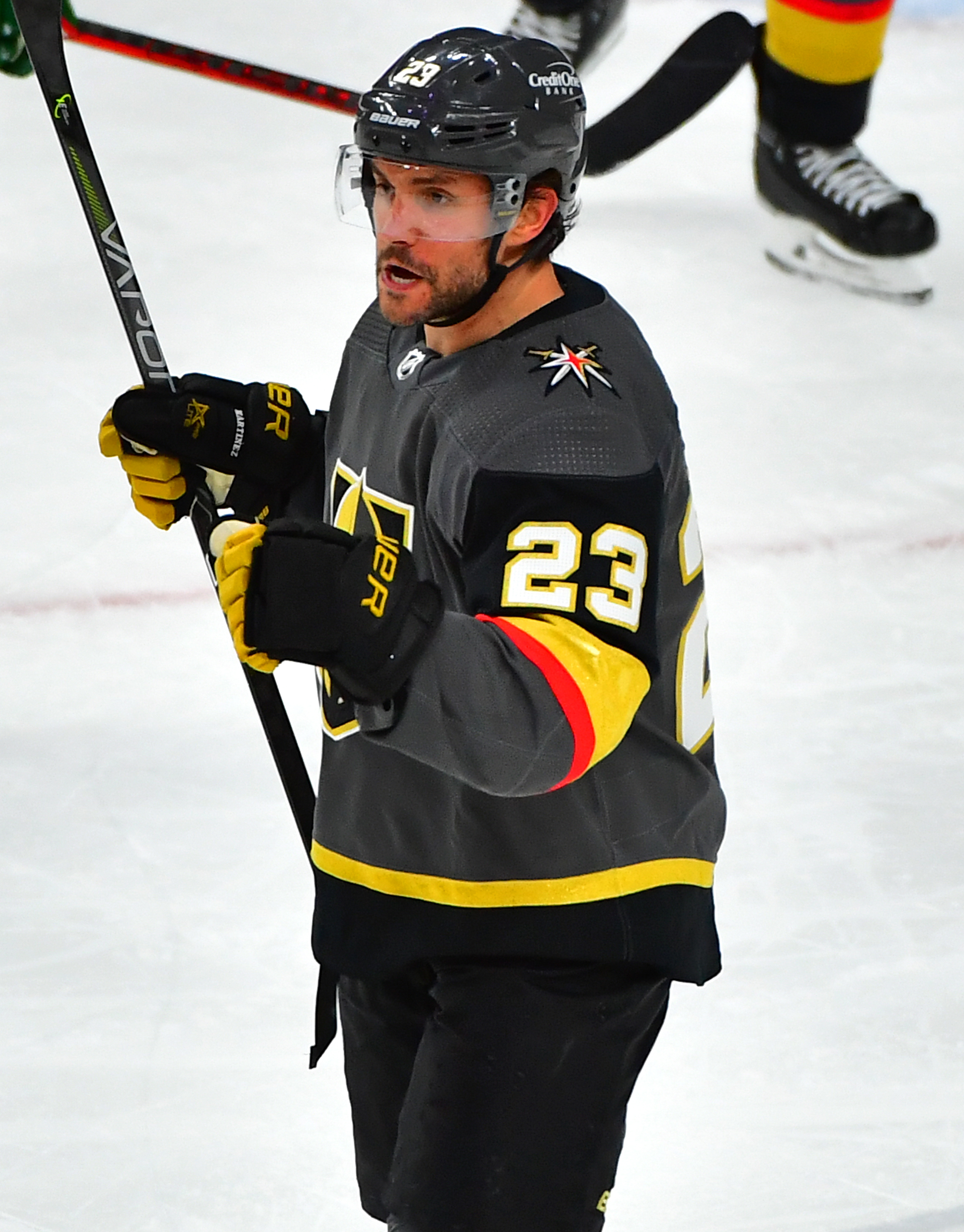 Had he made it to the open market, Martinez would have been arguably the most sought after blueliner (knowing that Dougie Hamilton’s price inherently limited his legitimate suitors) but he opted to pass on the opportunity to command a bigger deal in both price and term to stick around with Vegas. He’s not a number one defender but slides nicely into a second or third role depending on his pairing and in either slot, he’s likely to provide strong value. Considering his next contract will come in his age-37 season, a dip in pay will be coming at that time.
Four Or More Years Remaining
F William Karlsson ($5.9MM through 2026-27)
G Robin Lehner ($5MM through 2024-25)
D Alex Pietrangelo ($8.8MM through 2026-27)
F Mark Stone ($9.5MM through 2026-27)
D Shea Theodore ($5.2MM through 2024-25)
F Alex Tuch ($4.75MM through 2025-26)
Stone has shown more of an offensive touch the last few seasons which, coupled with his elite defensive game, makes him one of the premier two-way forwards in the league. It’s hard to call a $9.5MM contract a bargain but for what he’s able to do, it’s certainly not an overpayment either. Karlsson hasn’t come close to matching his production from his first year with the Golden Knights but has been a quality top-six center since then and as contracts for that position continue to escalate quickly, having him locked in is a good thing. Tuch’s inconsistency has limited him to more of a secondary role throughout his career but the skill and size are there to make him a consistent impact player and if that happens, his deal will quickly become a bargain.
Pietrangelo came as advertised as a legitimate number one blueliner and now finds himself on a cheaper contract than others in that role have signed in recent months. It’s hard to find value in many high-priced deals but if the escalating salaries continue, that could very well happen. There is definitely value in Theodore’s contract as he has continually improved to the point where it could be argued that he is a number one in his own right (though Pietrangelo logs the most minutes). Having him signed for four more years making the type of money that some number three defenders get is a significant bargain.
Lehner was limited due to injury last season plus Fleury’s strong season but now he comes in as the undisputed starter and will be counted on to play a considerably heavier workload than he’s accustomed to. He has shown flashes of being a higher-end starter and if he can provide that for the Golden Knights, he’ll be another high-value contract on their books.
Buyouts
None
Retained Salary Transactions
None
Still To Sign
D Dylan Coghlan
F Nolan Patrick
Patrick was acquired in a swap of young underachieving centers with Cody Glass going the other way. He was able to return last season after missing all of 2019-20 due to the pandemic but struggled. That’s going to limit his earnings upside here and he’s likely only looking at a one-year deal once again. As for Coghlan, he held his own in a reserve role last season while getting into 29 games. That’s not enough for him to command much of a raise and the delay to this point may be more of trying to sort out the two-way portion of his next deal than haggling over NHL money.
Best Value: Theodore
Worst Value: Dadonov
Looking Ahead
Tuch’s LTIR placement to start the season will actually allow Vegas to afford to carry a full roster, meaning that they won’t need to be playing games below the maximum player lineup as they did on multiple occasions last season. But when Tuch comes back (and assuming no one else is on LTIR by then), the cap crunch will return where they will be basically limited to carrying a minimum-sized roster and be susceptible to day-to-day injuries that force them below 18 skaters on game day. GM Kelly McCrimmon is clearly comfortable with this situation as he opted to go this tight to the Upper Limit after seeing what happened last season and while that carries some risk, he has a pretty strong roster once again.
Beyond next season, it’s going to be more of the same for 2022-23. Yes, they have about $14MM coming off the books next summer but have half of a defense corps to re-sign plus a forward or two so that money will be spent quickly. Depending on what happens with Pacioretty and Dadonov, that could be an opportunity for Vegas to reshape their roster a little bit but even if they did that, they’d still be tight to the cap. Get used to that being the case for the Golden Knights as it’s not about to change anytime soon.
Photo courtesy of USA Today Sports Images.
PHR Panel: Offer Sheet Opining
Tomorrow, there is a deadline for the Montreal Canadiens to decide whether or not to match the offer sheet signed by Jesperi Kotkaniemi and the Carolina Hurricanes. The decision they have is a simple one on its face–pay Kotkaniemi $6.1MM for the 2021-22 season, or take Carolina’s first- and third-round picks to let him go.
But it’s much more than just a one-year decision and it has implications that reach much further than just one player. Canadiens GM Marc Bergevin has been completely silent since the agreement was announced just under a week ago, though there has been some reporting that the team is testing the market on replacement options should Kotkaniemi end up in Carolina.
With this uncommon situation, we’ve decided to unearth one of our former features: The PHR Panel. This time we’re welcoming Josh Erickson to the panel after he joined PHR earlier this offseason, but I, Brian La Rose, and Zach Leach will all give our thoughts as normal on what Montreal should do.
Q: Should Montreal match the Jesperi Kotkaniemi offer sheet?
Brian La Rose:
There are two key questions where the answer determines what Montreal should do. Is there a capable second-line center that can be acquired via trade that will be around for more than a year or two? Also, if there is indeed the possibility of an extension below that AAV with Carolina as has been suggested including by Sportsnet’s Elliotte Friedman on the latest 31 Thoughts podcast, is that also available to Montreal?
If they are unable to land an impact center elsewhere, they may have to bite the bullet as their younger internal options aren’t ready to step into that type of role; the Jonathan Drouin experiment didn’t work the last time they tried it and there’s no reason to think it will now. And on the extension front, if there’s an acceptable one that can effectively be worked out – nothing can be made official until January – then matching for this season knowing a better contract is on the horizon becomes more palatable.
If there’s a reasonable trade waiting for Bergevin that lands him a capable second center behind Nick Suzuki, then walking away and taking the two picks makes sense. Otherwise, with how weak their depth down the middle would be (and there aren’t any impact centers in the pipeline either), they may very well have to match despite the overpayment and the potential for a much messier cap situation moving forward. With things dragging out this long, it doesn’t seem like a viable trade is presenting itself so matching starts to look a bit more viable as a result for the Canadiens but it will undoubtedly be a tough pill to swallow.
Zach Leach:
The Canadiens should match the Kotkaniemi offer sheet. Yes, it may not be the more reasonable of the two choices, but then again this was not a reasonable move in the first place. The Hurricanes clearly have interest in Kotkaniemi, but this offer sheet is all about revenge and embarrassment. Carolina made that perfectly clear with the manner in which they announced and subsequently responded to the news of the offer sheet on social media. If Montreal does not match the offer, then they are making the Hurricanes just the second team to successfully offer sheet a player since the turn of the century. They are admitting that Carolina did a better job of poaching a young impact player than they did two years ago. They are surrendering.
Even if Kotkaniemi is not worth $6.1MM, which no one believes that he is right now, the Canadiens are giving up a promising, 21-year-old prospect who they selected with the No. 3 pick just three years ago, and moreover, he is going to what is suddenly a bitter rival. The Hurricanes may already have a handshake agreement on a more accurately-priced extension with Koktaniemi as well. The young center has tremendous possession numbers, has shown flashes of immense scoring ability, and is filling out his frame and becoming a more physical presence. Kotkaniemi could still be a star in the NHL, even if the early results at a very young age have been unspectacular. He is certainly worth more than late first- and third-round picks, especially to a Montreal team that is thin down the middle. Even if the Canadiens flip that draft pick compensation for a replacement for Kotkaniemi, they are doing so with the rest of the league knowing exactly what is going on and will not receive fair value and likely not adequately address the departure.
Sure, there are serious cap implications for the Canadiens. However, in the short term, they can make room for Kotkaniemi to begin the year, even with a full 23-man roster, by placing Shea Weber on LTIR and burying Paul Byron and Cedric Paquette. Montreal could also keep Kotkaniemi, a center they desperately need, and instead trade a superfluous winger such as Artturi Lehkonen. Might things be tight, short-term and long-term, by accommodating Kotkaniemi’s cap hit? Definitely. But if the Hurricanes are willing to make adjustments, then so too should the Canadiens. Allowing Kotkaniemi to walk and replacing him with another high-cost trade acquisition doesn’t make much cap sense either.
Any result in which the Canadiens do not match the offer sheet is a win for the Hurricanes and a loss for the Canadiens, and frankly, Montreal needs a win. This all began with a poorly constructed offer sheet two years ago for Sebastian Aho that ended up being a favor to the Hurricanes. A better offer could have landed the team the franchise center that they have been looking for. Montreal moved on, made different choices with their forwards, and surprised everyone with a run to the Stanley Cup this season. However, they fell short and now are set to return to the lion’s den that is the Atlantic Division with the Tampa Bay Lightning, Boston Bruins, Toronto Maple Leafs, and Florida Panthers. Their off-season has been defined by a controversial draft choice and several free agent contracts whose values were worthy of skepticism. The Canadiens do not need another blemish this season. Maybe Kotkaniemi doesn’t pan out in the long term, but this is about more than just one player. It is about the image of the club and the morale in the locker room. The Canadiens need to assert themselves and demand some respect when the Hurricanes showed little. They can do that by matching the offer.
Josh Erickson:
There are so many reasons why Montreal’s matching of the Kotkaniemi offer sheet would be completely nonsensical.
Cap space is the most obvious and pressing issue. While Montreal could currently accomodate Kotkaniemi’s $6.1MM cap hit with their LTIR situation, they wouldn’t be able to all season. Byron won’t be out the entire year and will come off LTIR at some point, leaving only Weber’s $7.85MM cap hit on LTIR. With Montreal already spending $2.27MM into their LTIR pool, an additional $6.1MM caused by Kotkaniemi wouldn’t make the team cap-compliant. Even as it stands, Montreal’s active roster only has 19 skaters (Chris Wideman being the likely healthy scratch).
It also doesn’t make a lot of sense to drastically change the team’s makeup to retain Kotkaniemi. The team’s demonstrated a commitment to head coach Dominique Ducharme, who hasn’t developed the best relationship with Kotkaniemi at this point in his career. Selling off assets in order to retain a player who’s future with the club remains uncertain past this season, especially one with a $6.1MM qualifying offer, doesn’t seem like the best position to take from an asset management standpoint.
It all stands to say that the first- and third-round picks are far more valuable to the team at this point in time than Kotkaniemi at a $6.1MM cap hit and qualifying offer. There’s no guarantee that Montreal would be able to receive that return for Kotkaniemi in a future trade.
Gavin Lee:
As you can see from my colleagues, this situation has produced drastically different opinions. That’s exactly what a well-constructed offer sheet is supposed to do; make it a difficult decision on the original team, who then will have to take a gamble one way or the other. There’s no clear answer here for the Canadiens like there was with the Aho offer sheet two years ago.
The simple fact is that Montreal is trying to win right now. You don’t go out and sign Mike Hoffman and David Savard if you’re willing to spend a year developing young talent. The Canadiens want to give Carey Price the best chance to win a Stanley Cup right now, and frankly, I don’t see how letting Kotkaneimi walk helps in that pursuit. Unless there is a legitimate difference-maker out there that you think you can land with those additional assets–someone like Jack Eichel–sure, let him walk and flip the picks. But if you’re going to turn around and trade for someone like Christian Dvorak? Just match the offer and take your chances with an extension negotiation down the road.
The idea that Kotkaniemi is a bust is misguided. If anything, it’s just that his development was rushed by the Canadiens in the first place due to how much they believed in his talent. He turned 21 in July and has already played in 200 NHL games, including 29 postseason contests. He may never become the Anze Kopitar that people compared him to in his draft year–which was always a bit ridiculous–but the idea that he’ll never become more than a third-line center is still very premature.
There is also a mechanism that could get the $6.1MM qualifying offer down a bit, though that may provide little comfort to fans that have already made up their mind on Kotkaniemi. If he fails to live up to that kind of a contract, the Canadiens could elect salary arbitration in the usually unused first window in lieu of a qualifying offer and retain his rights with 85%–$5.185MM–of his contract value. Suddenly that becomes a little more palatable, though it can only be done once in a player’s career and it doesn’t guarantee that salary.
It’s not a situation I’d want to be in, but unless Montreal has a replacement–and a good one, not just a middle-six player–waiting in the wings, they should match the offer.
Poll: Should The Canadiens Match The Jesperi Kotkaniemi Offer Sheet?
The biggest news in the hockey world right now is the offer sheet that the Carolina Hurricanes signed with Jesperi Kotkaniemi. The Montreal Canadiens have just a few more days to decide whether or not to match the one-year $6.1MM contract and keep Kotaniemi or let him go to the Hurricanes in exchange for first- and third-round picks.
The decision, some say, is an easy one—it’s the answer that many disagree on.
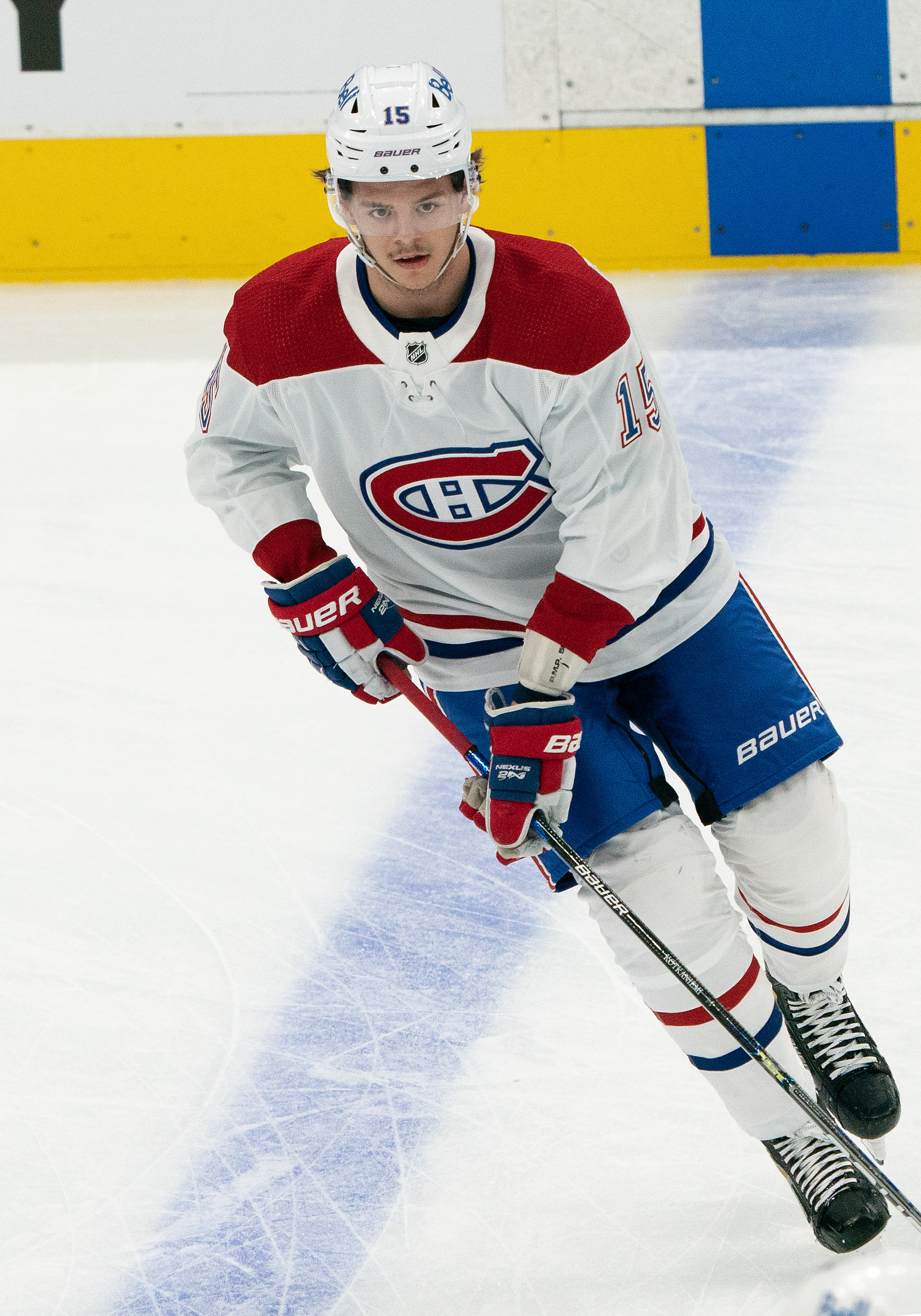 The Canadiens could just wave goodbye, collect their picks and go after another center, knowing that Kotkaniemi is not worth anywhere near that $6.1MM price tag this season. The deal would force either team to extend a qualifying offer of the same amount moving forward, though if the player is willing, an extension could also be worked out at a lower number. Two picks could help Montreal in a search for a different player, with many pointing to Jack Eichel as the name they could pursue with some added draft capital.
Because he has disappointed up until now, it’s easy to forget just how young and talented Kotkaniemi is. He turned 21 just last month and already has 200 NHL games under his belt. He has scored just 84 points in those games, including 12 in 29 postseason appearances, but there is obviously room to grow. Even if he was perhaps a mistake at third-overall in 2018–the existence of Brady Tkachuk and Quinn Hughes would certainly argue so–that doesn’t mean he’s a worthless asset. In fact, it seems likely that the Canadiens could have gotten at least a late-first and a third for him had they decided to trade Kotkaneimi this offseason, probably more.
But now that the Hurricanes have forced their hand, it’s one or the other. Overpay a player who has not lived up to the hype to this point and is obviously not fully trusted by the coaching staff, or take that package (and only that package) as compensation. If they do match it, Montreal can’t trade Kotkaniemi for a year, meaning there’s no sign-and-flip coming.
For whatever you think of the player, it’s not easy to watch a third-overall pick walk out the door just six weeks after his 21st birthday. There’s a very real chance that Kotkaniemi not only lives up to his billing as a top-six center, but he could still be exactly what the Canadiens are looking for as a long-term complement to Nick Suzuki down the middle.
It’s not an easy decision for Montreal GM Marc Bergevin, but perhaps it is for you! Cast your vote below and explain your thoughts in the comment section.
Should Montreal match the Kotkaniemi offer sheet?
-
No 83% (2,749)
-
Yes 17% (561)
Total votes: 3,310
[Mobile users click here to vote!]
Photo courtesy of USA Today Sports Images
Salary Cap Deep Dive: Washington Capitals
Navigating the salary cap is one of the more important tasks for any GM. Teams that can avoid total cap chaos by walking the tightrope of inking players to deals that match their value (or compensate for future value without breaking the bank) remain successful. Those that don’t see struggles and front office changes.
PHR will look at every NHL team and give a thorough look at their cap situation heading into the 2021-22 season. This will focus more on players who are regulars on the roster versus those who may find themselves shuttling between the AHL and NHL. All cap figures are courtesy of CapFriendly.
Washington Capitals
Current Cap Hit: $80,831,260 (under the $81.5MM Upper Limit)
Entry-Level Contracts
F Connor McMichael ($863K through 2023-24)
McMichael was able to get his feet wet in the pros a year early with the OHL not playing and he made the most of it with a strong showing with AHL Hershey. He may have to wait until injuries strike to have a shot at playing but he has enough offensive upside to make an impact when he gets his opportunity next season.
One Year Remaining, Non-Entry-Level
F Nic Dowd ($750K, UFA)
D Matt Irwin ($750K, UFA)
D Michal Kempny ($2.5MM, UFA)
G Ilya Samsonov ($2MM, RFA)
D Justin Schultz ($4MM, UFA)
F Daniel Sprong ($725K, RFA)
G Vitek Vanecek ($717K, RFA)
Sprong has been inconsistent throughout his career but his AAV being below the cap ceiling creates some excess value for Washington to the point where he was protected in expansion. He has reached double digits in goals in two of the last three seasons and a repeat showing next season could push him towards doubling his AAV or more which could ultimately price him out of their plans. Dowd has done a nice job as their fourth line center but while he’s deserving of a raise, the Caps will need to keep that position at that price point to be able to afford their other contracts.
Schultz’s contract with Washington was somewhat of a surprise last fall but he had a nice bounce-back season. A big raise next summer likely isn’t in the cards but if he can pick up the points at a similar level, he could land a similarly-priced deal. Kempny had a year to forget, tearing his Achilles’ tendon and just as he was working his way towards a return in the minors, he was struck by an ice shoveler during a break in play, ending his season in the process. He was providing pretty good value on his contract before that and will need to get back to a similar level and show he’s healthy in order to command interest next summer. Irwin appears to be a candidate to bounce around as the seventh defenseman and the minors (pending him clearing waivers) as a way to bank a bit of extra room as the season progresses.
Samsonov had a tough sophomore year and with their salary cap situation, Washington was forced to go with a one-year bridge contract. He will be eligible for arbitration next summer and a strong season could allow him to double his AAV or more. Vanecek was re-acquired from Seattle and returns as arguably the biggest value contract for goaltenders in the league as he established himself as their starter last season at a price that is the lowest in the league in terms of AAV. Also arbitration-eligible, he’s already heading for a significant raise and it’s quite unlikely that Washington will be able to keep both netminders beyond this coming season.
Two Years Remaining
F Lars Eller ($3.5MM, UFA)
F Carl Hagelin ($2.75MM, UFA)
F Garnet Hathaway ($1.5MM, UFA)
D Nick Jensen ($2.5MM, UFA)
D Dmitry Orlov ($5.1MM, UFA)
F Conor Sheary ($1.5MM, UFA)
D Trevor van Riemsdyk ($950K, UFA)
Eller has been a key part of Washington’s forward group for the past five seasons, splitting time between the second line and third line depending on their injury situation. He’s a bit pricey on the third line but it’s a justifiable premium to pay and with the way the UFA market has been for centers, he can land a similar amount two years from now. Hagelin has underwhelmed a little bit on this deal; he’s still an effective defensive player and a strong skater but his price tag is a bit much for someone in a limited role. Hathaway’s physicality makes him a quality fourth liner and while he’s a bit expensive for that role, he has provided good value so far. Sheary’s first season with Washington went well enough to land this two-year deal as a secondary scorer. If he scores at a 20-goal pace again, this will be a nice bargain for them.
Orlov had a bit of a tough season but is still a fixture in their top four. He’ll be 32 when his next deal kicks in and it wouldn’t be surprising if he is looking for a final contract at that time. With the big commitments they already have on the books (more on them shortly), that may be difficult for Washington to do unless Orlov will take a discount to make that happen. Jensen hasn’t been able to make the type of impact the Capitals hoped when they handed him this four-year deal and he’s someone they’d likely be willing to part with for cap flexibility purposes. As for van Riemsdyk, he spent a lot of last season in the press box but is a capable depth piece at a low price tag which helped him get protected from Seattle.
Three Years Remaining
F Anthony Mantha ($5.7MM, UFA)
F Tom Wilson ($5.166MM, UFA)
Mantha was a bit of a surprising acquisition at the trade deadline with Washington paying a fairly high price to get him from Detroit (and clear out the rest of Richard Panik’s contract). He made a good first impression but has been inconsistent for most of his career. He will need to improve on that front if he wants a shot at a bigger contract in free agency. When it comes to Wilson, his price tag looked excessive early on but with the way the market for power forwards has been (in part because of this deal), it holds up better now, especially since he’s frequently deployed in the top six. But with his frequent near-misses with the Department of Player Safety, there will always be some risk when it comes to him potentially crossing the line and landing a hefty suspension that wouldn’t allow the Capitals to bring up a replacement with how tight they are to the Upper Limit.
PHR Mailbag: Sabres Rebuild, Rangers, Eichel, Sorokin, Predators, Breakout Candidates, Remorseful Moves, Dzingel
Topics in this edition of the PHR Mailbag include Buffalo’s rebuilding process, the pursuit of Jack Eichel from the Rangers and if Detroit should be in the mix, a proposed offer sheet, Nashville’s underwhelming summer, under the radar breakout candidates, moves that general managers may one day wish they had a mulligan on, and where Ryan Dzingel landed in free agency. If your question doesn’t appear here, watch for it in next weekend’s mailbag.
LarryJ4: What Adams has done with the Sabres roster seems to be geared towards clearing out the losing mentality of certain players would you agree? Complete reset so to speak and hear up a rebuild what he feels is the right way. The previous 2 GMs failed to bring in players that their character properly fit the “retool/rebuild” mode of a team. Granted the last one was brought in by Adams, being Taylor Hall, but that seems like a knee jerk reaction by Adams facing pressure from Ownership that appears clueless.
Second question is do you think Adams has the invisible “handcuffs” off of him this go around?
I don’t know if I’d go as far as saying the rebuild is built on trying to clear out anyone with a losing mentality. Everyone on the Sabres for an extended period has been through plenty of losing so it could be suggested they all have had that particular mentality ingrained in them over the years.
This feels like a situation where they finally realized that they’re not just a player or two away from becoming contenders and trying to add that piece each year becomes futile after a while. Their captain isn’t coming back anytime soon, if at all, further pushing them in that direction. In that case, selling off the players who were nearing unrestricted free agency was the logical next step. Rasmus Ristolainen and Sam Reinhart probably weren’t signing new long-term deals with Buffalo so they pretty much had to go.
As for the handcuffs, that’s always difficult to speculate on as owners have differing levels of involvement throughout the league but this is the type of rebuild that requires ownership signing off on. The fact that GM Keyvn Adams has made the moves he has made suggests he has received the commitment and green light to see this process through.
CoachWall: Now that we know Eichel is going to miss the first month or so, have the Rangers pivoted to re-upping Z-dad?
In the context of this question, I’m going to say no. Not having Eichel available for the start of next season shouldn’t drastically affect how much they want him. He has five years left on his deal so missing 15-20 games at the start of that span shouldn’t discourage them from going after him when the potential for four-plus years of a number one center is still there.
At this point, GM Chris Drury should be working both fronts. He can keep inquiring on Eichel to see if the price will eventually change while at the same time doing his due diligence in terms of what it will cost to keep Zibanejad around; Eichel not being ready to start the year shouldn’t push Drury down a path he should already be on. Both aren’t going to be doable but it doesn’t mean discussions can’t be done for both options at the same time so that the Rangers can make one of the two moves when the time is right.
gowings2008: The Red Wings lack a true number one center, is it possible they are secretly in on Eichel? He fits their core group in terms of age and the Wings have the cap space to fit him in. I know the Red Wings have rarely leaked any rumors under Yzerman, but this is an opportunity that rarely presents itself and they have the pieces, I would think, to make it work.
You make a very reasonable case for Detroit to go down this path and I agree that they probably have the assets to make a trade work. But the timing doesn’t feel right to me.
GM Steve Yzerman’s offseason was all about adding bridge pieces. Nick Leddy is someone that could be flipped later in the year, Alex Nedeljkovic only received a two-year deal that walks him to UFA eligibility (and there are questions about whether or not he can be an NHL starter) while up front, Pius Suter was the only addition of note, also receiving a two-year deal that takes him back to UFA status. To drastically shift towards trying to win now runs counterintuitive to what they’ve done the last few months.
I’ll put it this way. If Detroit was in on Eichel, making a move before the draft would have been the right time to do it. Then they’d have been more aggressive in terms of trying to add more proven win-now talent via trade and free agency and really emerge from the rebuild. But if Yzerman still thinks they’re a couple of years away from doing that (and his activity the last two months suggests that’s the case), then the high cost to acquire Eichel would be a little harder to justify since he alone wouldn’t make them a playoff team and there aren’t any notable free agents left that they could try to add after landing Eichel.
I actually quite like the idea of Eichel in Detroit but I think the right time for that was two months ago, not now.
Robert Evans Jr.: Why doesn’t Buffalo just offer sheet Sorokin for $4.11 million a year for five or six years to be the goalie of the future??
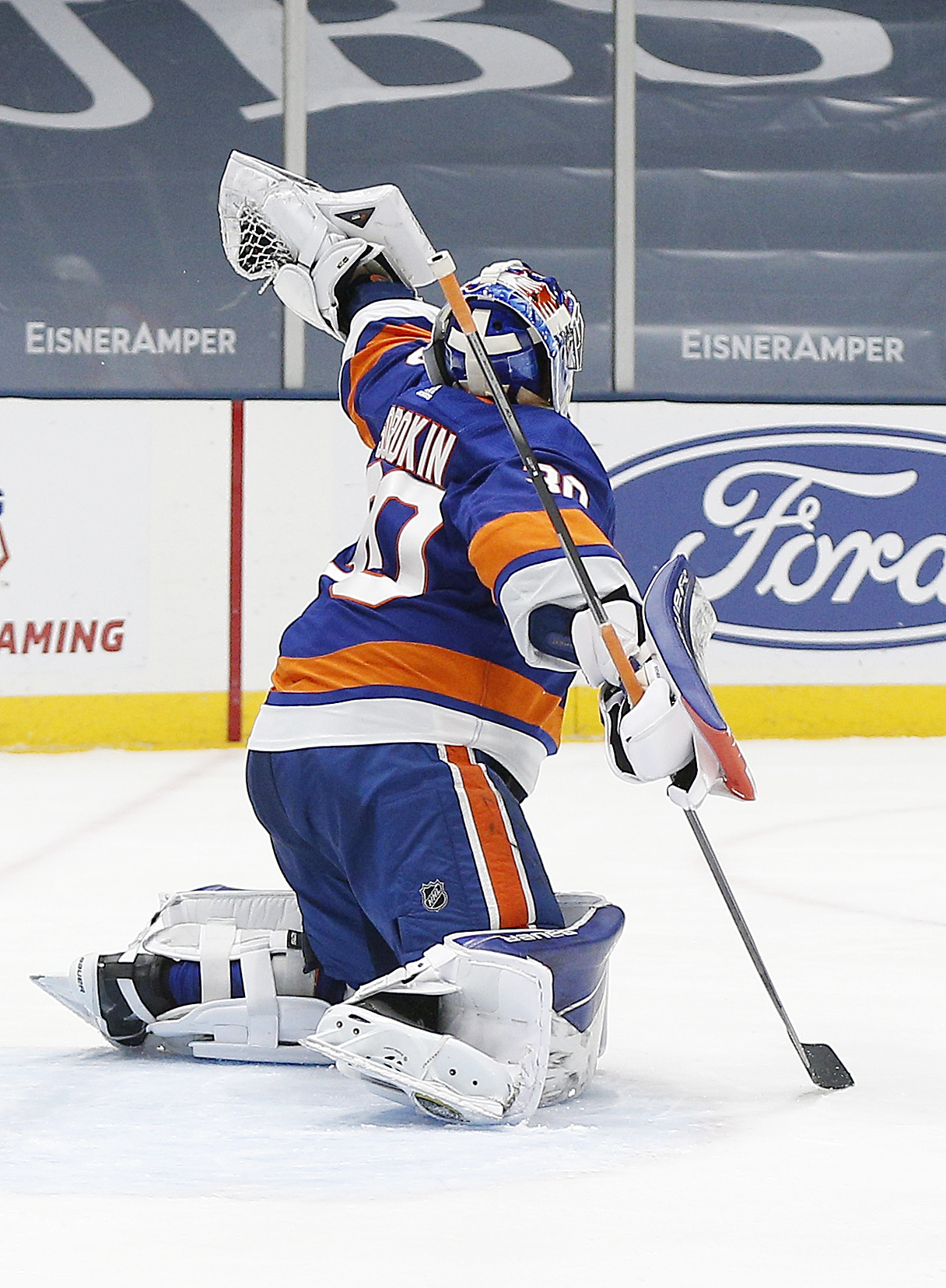 I’m glad you mentioned five or six years in the question as it gives me a chance to highlight a rule that often gets missed. For offer sheet purposes, the maximum divisor is five, even if the term of the contract is longer. Accordingly, while a five-year offer sheet at $4.11MM per year would yield a second-rounder, the six-year term would actually push him up a tier to the first-rounder plus a third-rounder. The total compensation for that offer would be $24.66MM with the maximum divisor at five. That means for offer sheet compensation purposes, his AAV would be $4.93MM (even though the AAV of the contract is still $4.11MM).
With that said, there are a couple of reasons that Ilya Sorokin won’t sign that contract. First, he would actually have to want to sign that deal to go to Buffalo and with the direction the Sabres are going, they’re not exactly going to be a desirable destination for a little bit. The second is that he probably has already agreed to terms with the Islanders as GM Lou Lamoriello has a whole bunch of deals done that haven’t been announced yet. The fact that Sorokin didn’t file for arbitration feels like a strong sign that his contract is among those in place that we’ll officially find out about at some point in the next six weeks.
Gbear: Rhetorical question, but how does subtracting Viktor Arvidsson and Calle Jarnkrok and adding Philip Tomasino and Cody Glass to an already paltry offense in Nashville improve their goal-scoring output?
Rhetorical or not, I’ll answer anyway. It really doesn’t help them although with the way David Poile has built his team this summer, it sure looks like they’re a team that’s looking at some short-term pain (and salary savings) for long-term gain.
If they kept their core intact and still brought Glass in, we’d be talking about him playing in the minors and waiting for a recall. By moving Arvidsson to the Kings and losing Jarnkrok to Seattle, now there’s a defined spot on the third line for Glass for him to get a more consistent chance that he had with Vegas last season. Considering Nashville’s long-standing need for help down the middle, it only made sense to add someone like Glass if they had a chance to play him.
Tomasino looks like he’s ready to contribute based on his play as an underager in the AHL last year. I’m not as bullish on them seemingly keeping a roster spot for him as a 20-year-old but it certainly feels like they want to get his NHL experience started quickly in the hopes of expediting his development.
Are the Predators better now than they were last season? Certainly not. So if they’re going to be rebuilding, they might as well get the youngsters some playing time in a role where they’ll have a chance to succeed right away. If the development of Glass and Tomasino (among other youngsters) next season is bolstered, the long-term improvement should outweigh the short-term drop in production that is certainly coming.
Free Agent Profile: Jason Demers
In his prime, Jason Demers was a capable second pairing defenseman that was reliable in his own end and could contribute a little bit offensively. Those days have come and gone but the veteran can still make a case to be brought in as a serviceable option on the third pairing.
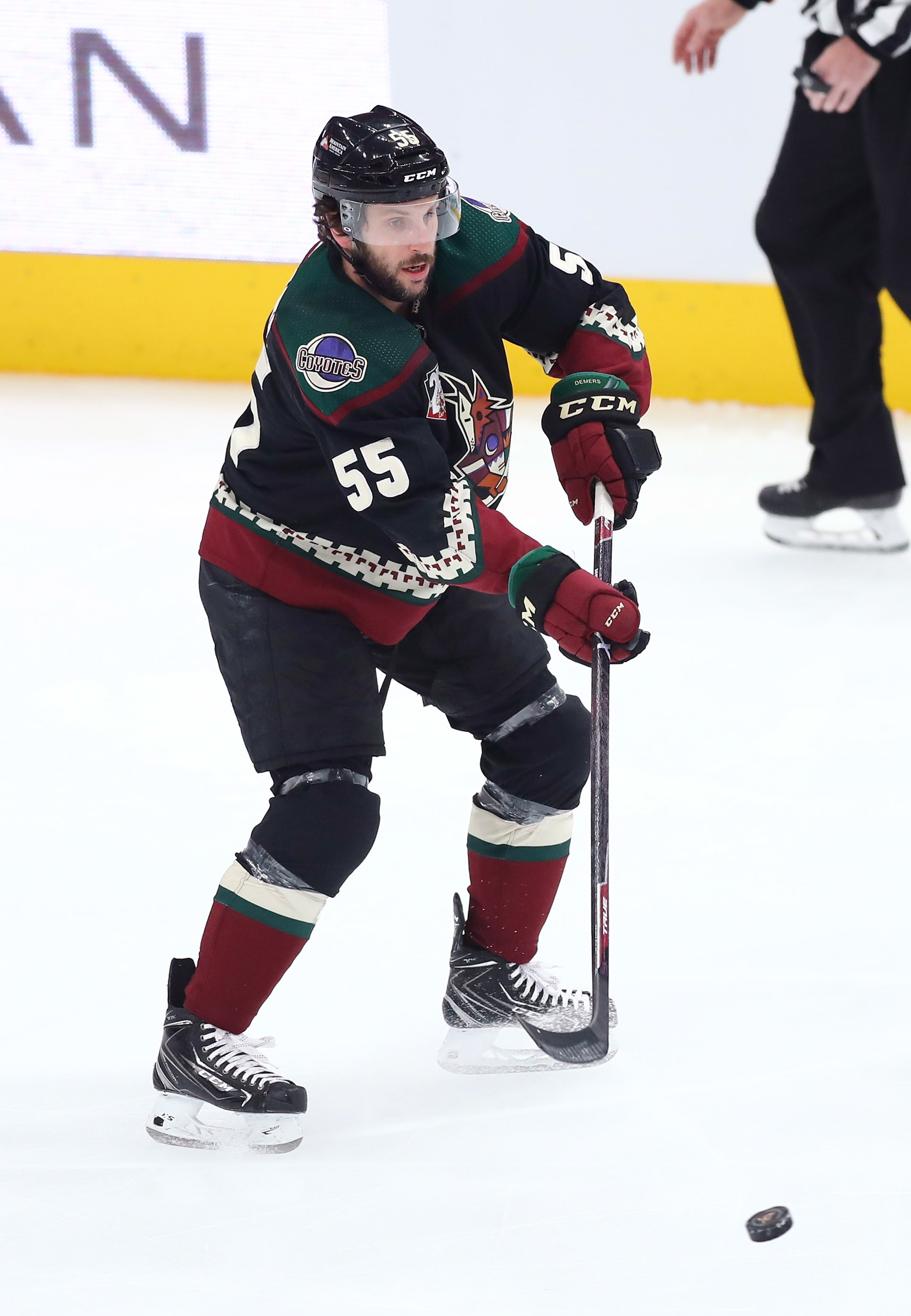 Unfortunately, the 33-year-old will be relying on his track record over his career to make that claim, not his performance last season. There’s no sugar coating it – 2020-21 wasn’t pretty. Demers slipped down the depth chart to the third pairing, averaged his lowest ice time in nearly a decade, and eventually found himself scratched with some frequency down the stretch with Arizona well out of playoff contention.
But while it’s certainly reasonable to consider that this is a sign of things to come, Demers was in a top-four role as recently as 2019-20 where he was a fixture on Arizona’s penalty kill and logging more than 20 minutes per game. It’s unlikely he’ll get back to that form but players don’t often drop from being a top-four blueliner to borderline unplayable quite that quickly. A small bounce-back season is certainly doable.
What also helps Demers is that he’s a right-shot defender which is a position of some scarcity around the league and certainly among the remaining rearguards on the open market. While handedness isn’t as big of a factor for some coaches as it is for others, being a righty should open up some extra opportunities.
Stats
2020-21: 41 GP, 0-4-4, -4 rating, 26 PIMS, 44 shots, 49.6 CF%, 17:14 ATOI
Career: 699 GP, 45-169-214, +31 rating, 407 PIMS, 884 shots, 51.7 CF%, 19:10 ATOI
Potential Suitors
Who needs low-cost roster depth? Plenty of teams will be searching for an extra low-cost defender in the weeks to come to give them some extra insurance heading into training camp while those with weaker depth on the right side could have more interest in someone like Demers.
In the East, Demers would serve as an upgrade in Pittsburgh on Chad Ruhwedel or Mark Friedman, veterans who have primarily been AHL or reserve options in recent years. Montreal’s third right-shot blueliner is Chris Wideman, a veteran who hasn’t seen NHL action the last two seasons so Demers would at least serve as some insurance on that front. Demers would also be an upgrade in Columbus who could view Demers as someone that could play early on to allow a younger player like Andrew Peeke or Gabriel Carlsson to spend a bit more time in the minors before flipping Demers midseason.
Out West, the Blues could stand to add some veteran depth with the departures of Vince Dunn and Carl Gunnarsson while Robert Bortuzzo, a righty like Demers, has typically been used in a platoon role over playing in every game. Calgary’s right side is thin behind Rasmus Andersson and Christopher Tanev while Chicago could use someone like Demers if they feel Ian Mitchell is better served playing top minutes in Rockford over the third pairing with the Blackhawks.
Projected Contract
Demers’ tough season put him on the outside looking in for our Top 50 UFA list and his value has certainly dropped as well. At this point, it wouldn’t be surprising if he had some PTO offers on the table but he still has some time to try to land a guaranteed deal. A one-year deal at or near the league minimum of $750K may be all he can land at this point and if last season was just an aberration and not a sign of a quick decline, whoever gets him could wind up with a bit of a bargain.
Photo courtesy of USA Today Sports Images.