
Free Agent Focus: Philadelphia Flyers
Free agency is under a month away, and teams are looking ahead to when it opens. Even with the UFA crop being thinned out in recent months, there will be some quality veterans set to hit the open market in July, while many teams also have key restricted free agents to re-sign. We continue our look around the NHL with an overview of the free agent situation for the Flyers.
Key Restricted Free Agents
F Trevor Zegras – Often the heartbeat of the Flyers’ offense during the 2025-26 season, the 25-year-old found a resurgence in his game after being traded to the Flyers from the Anaheim Ducks last offseason. After fighting to stay healthy throughout his last two seasons in Anaheim, Zegras came to Philadelphia and quickly made his presence known with 12 points in his first 10 games, a great way to become a fan favorite in the city. Even with the Flyers’ power play struggles, Zegras managed to post career highs in goals (26) and points (67). While a lot will ride on the term of the deal, Zegras will likely command north of $8MM, which would be comparable to the current AAV of the Flyers’ leading scorer, Travis Konecny ($8.75MM).
F Nikita Grebenkin – After coming to the Flyers from the Toronto Maple Leafs during the 2024-25 season as a part of the Scott Laughton trade, Grebenkin finished the year with the Lehigh Valley Phantoms. However, a solid training camp performance saw the 23-year-old Russian make the Flyers for the 2025-26 campaign. While the young winger still has a lot of learning and growing to do before fully hitting his stride, there was a lot to look forward to in Grebenkin’s 55 games played. Grebenkin saw himself almost solely in a bottom-six or fourth-line spot but still managed to put up 14 points during the season. Aside from his production, though, it was his effort and compete level that has Philadelphia fans excited for what lies ahead. Unfortunately, Grebenkin’s season was cut short due to an upper-body injury, and Flyers GM Daniel Briere recently provided an update that Grebenkin’s injury may linger into the start of next season. With lots of unknowns surrounding Grebenkin, he will likely command somewhere around the $1.25MM mark on a shorter-term deal.
D Jamie Drysdale – In his second full season with the Flyers since coming over as part of the Cutter Gauthier trade during the 2023-24 season, Drysdale really started to find his game this past year. While his skating ability was never in question, Drysdale’s defensive play and situational awareness were areas the Flyers were hoping to see development. The former sixth overall pick back in 2020 had a solid season offensively, posting a career high in goals (eight) and tying his career high in points (32). But it was the development on the back end that the Flyers were really hoping for, and this season, they got it. Playing a bigger role under Rick Tocchet, including the third-most power-play minutes of any Flyer: Drysdale cut his giveaways from 73 to 54 despite appearing in more games (78), nearly doubled his shot total, and improved his underlying numbers across the board while pulling his plus-minus well off the prior year’s team-worst minus-32. He carried that momentum into the spring, too, scoring his first career playoff goal in Game 1 against the Penguins and adding four points in 10 games during a hard-fought first-round run. With arbitration rights and the most complete season of his career behind him, Drysdale has earned a real raise on his $2.3MM qualifying number, and re-signing him should be a clear priority for Briere, who confirmed at his end-of-season availability that the team plans to bring him back. He’s finally rounding into the top-four puck-mover the Flyers had hoped for.
G Samuel Ersson – The presumed starter entering the year, Ersson instead watched Dan Vladar seize the crease with a breakout campaign, leaving the 26-year-old Swede in a backup role he never fully climbed out of. Across roughly 32 appearances, he went 13-11-5 with a 3.15 GAA and a save percentage that again finished below .900, the fourth straight NHL season he’s landed under that mark. With that being said, Ersson was stellar in net for the Flyers in the unprecedented post-Olympic run that got them into the postseason. Briere was pointedly noncommittal when asked about Ersson’s future at his end-of-season availability, a notable contrast to the praise he heaped on Vladar, whom he called the team’s MVP. As an RFA coming off a modest number, Ersson would be an inexpensive re-sign and a known commodity behind Vladar, but for the first time, his place in Philadelphia feels genuinely uncertain.
Other RFAs: F Karsen Dorwart, D Hunter McDonald
Key Unrestricted Free Agents
F Luke Glendening – One of the more unlikely sparks of Philadelphia’s playoff push, the veteran center was claimed off waivers on March 6, and almost immediately the Flyers started winning, going 12-5-1 with him in the lineup. In 18 regular-season games, he chipped in two goals and three assists while doing his real damage in the margins, taking the right-handed faceoffs Sean Couturier couldn’t and averaging around two minutes a night on the penalty kill alongside Couturier and Garnet Hathaway on a hard-nosed fourth line. He managed just a single point in 10 playoff games, but his value was never about the scoresheet. Glendening is a UFA and has said he’s open to returning, though with the Flyers’ forward group already crowded when healthy, a reunion feels unlikely.
F Carl Grundstrom – Acquired from San Jose ahead of the 2024-25 season, Grundstrom spent most of this year as a tweener, bouncing between Lehigh Valley and a rotating bottom-six role in Philadelphia. When he was up, he provided exactly what you’d want from a depth wing: physicality, energy, and a few timely goals during a hot stretch, and he found success in the minors when sent down, posting 15 points in 19 AHL games. Coming off an expiring $1.8MM AAV, the 28-year-old is a UFA who provided useful depth, and a cheap re-sign isn’t out of the question, but he’s the kind of piece the Flyers can find elsewhere if they’d rather open a roster spot for a younger option.
D Noah Juulsen – Signed to a one-year, $900K deal in July, Juulsen gave the Flyers steady bottom-pairing depth and a heavy physical presence, settling in as the sixth or seventh defenseman. He quietly set a career high with nine points (one goal, eight assists) in 45 games while leaning on the hits and shot-blocking that define his game, though his season was interrupted by a lower-body procedure that cost him roughly three months. As a UFA, the 29-year-old is a logical cheap re-sign for depth purposes, but Philadelphia’s young, crowded blue line could just as easily push him out.
Other UFAs: F Garrett Wilson, F Anthony Richard, D Adam Ginning (Group-6)
Projected Cap Space
The Flyers head into the summer in a solid spot. According to PuckPedia, they project to have roughly $37.5MM in space, with the salary cap climbing from $95.5MM to $104MM for 2026-27. After exceeding expectations and reaching the playoffs for the first time since 2019-20, powered by a breakout, MVP-caliber season from Vladar, the priority is clear: get new deals done for Zegras and Drysdale, both of whom Briere has publicly committed to bringing back. Once their inevitable raises are factored in, the Flyers should still have plenty of cap leftover to round out the roster. That leaves ample room to qualify their remaining restricted free agents (Andrae and Ersson register as coin flips rather than certainties) while still chasing some complementary pieces Philadelphia prefers, or even taking a swing at some top-end talent.
Contract information courtesy of Puckpedia
2026 NHL Offseason Need To Know Dates
The NHL offseason is officially underway with the Carolina Hurricanes defeating the Vegas Golden Knights in just six games, thus concluding the 2026 Stanley Cup Final. All 32 teams are now in summertime mode, and with that, there is not much rest, even for the Stanley Cup Champions in Raleigh. Throughout the next few weeks, teams have many dates on the calendar that they’ll need to prepare themselves for as the calendar continues to flip into the summer months.
Provided is an overview of some dates to look out for:
- 48 hours after the Stanley Cup Final, the NHL buyout window will open. NHL teams can only complete a buyout on a player’s contract from the start of that window until June 30th, when the timeframe closes at 5 p.m. ET. Of note, there is wiggle room where teams can also receive a second 48-hour buyout window if a player files for arbitration and the case is settled. This window applies only to players with more than a cap hit of $4MM AAV and who had been rostered by their team at the most recent trade deadline. Once a buyout occurs, a player becomes an unrestricted free agent and can sign with any team they choose.
- The 2026 NHL Draft takes place on June 26-27, with the first round taking place on Friday, the 26th at 7 p.m. ET at the KeyBank Center in Buffalo, NY. Rounds 2-7 will begin at 11 a.m. on the 27th, and all coverage will be provided on ESPN, ESPN+, SN, and TVAS. The Toronto Maple Leafs hold the No. 1 overall pick, with Gavin McKenna and Ivar Stenberg highlighted as the top skaters to be taken.
- Restricted Free Agent qualifying offers are due on June 29th. For a team to be able to keep a player’s RFA status, it must make a Qualifying Offer. If a team does not provide a Qualifying Offer, their player can become a UFA. Qualifying Offers must be offered to the player by the later of Monday after the Draft or June 25. Notable names to make decisions on include top 2023 draft picks like Connor Bedard, as well as other Western Conference star scorers like Jason Robertson and Pavel Dorofeyev.

- RFAs can begin discussions regarding offer sheets on June 30th. Offer sheets are contracts that other teams can present to a player whose rights are under an organization. If the player signs the contract, the original team that owns the player’s rights is given seven days, and therefore, the rights to match the terms of the initial offer. If not, they can receive compensation, such as draft capital from the team that offered the contract, based on the terms.
- NHL Free Agency begins on July 1st at noon E.T. Unrestricted free agents are open to sign with any team, and their previous team receives no compensation. UFAs cannot sign contracts with new teams until the window opens, which is when we’ll ultimately see where top names like forward Alex Tuch and defenseman Darren Raddysh cash in, but where?
- Deadline for Arbitration from eligible RFAs is due by July 5th at 5 p.m. ET. Based on the player’s age, years, and pro experience, they can elect to go to arbitration to settle the player’s next contract with the team. Teams can also elect for arbitration, but are limited to two per offseason. Ultimately, an arbitrator can only award up to two years on the next contract. Hearings can take place from July 20th, all the way through August 1st.
Photo Credit: Jerome Miron-Imagn Images
Latest On Flyers’ Off-Season Plans
The Philadelphia Flyers still have ground to gain after breaking into the post-season for the first time in the last six seasons. General manager Daniel Briere sat down with Jackie Spiegel of the Philadelphia Inquirer to build on that achievement next season. He broke down the Flyers’ plans facing multiple in-season additions and pending contracts – but Philadelphia’s top item will be adding a top-six center.
The forward market is slim this season but Philadelphia could find a meaningful addition in a former star. Claude Giroux has yet to re-sign with the Ottawa Senators despite sharing his hopes to play a 20th season. A return to Philadelphia would reasonably be Giroux’s top option if he’s seeking a move. Giroux was the core of the Flyers lineup through the 2010s. He routinely received votes for the Hart and Selke Trophies while leading Philadelphia through their most recent stretch of consistent playoff appearances. Once a century scorer, Giroux potted a career-low scoring pace with 49 points in 82 games with Ottawa this season. Philadelphia will have to take that dip into account, though they could also find a bit of potential by returning the 39 year old to a daily center-role, rather than the rotating role he has filled with Ottawa since 2022.
Philadelphia could also entertain offer sheets – though Briere made sure to point out the relationship consequences that offer sheets bring. Multiple top, young centers are set to become restricted free agents if not signed by July 1st, including Connor Bedard, Leo Carlsson, and Adam Fantilli. The Flyers could find more realistic – and cheaper – options to fill center minutes in Connor McMichael, Mavrik Bourque, or Cole Sillinger. The compensation for a signed offer sheet between $4.68MM and $7MM is one first-round pick and one third-round pick.
Also on the list of pending RFAs is breakout Flyers forward Trevor Zegras. Briere praised the versatility that Zegras brought to Philadelphia en route to a career-high 26 goals and 67 points in 81 games. In fact, the desire to add another center is designed to shoulder the load asked of Zegras and Noah Cates. Briere said that he is not worried about negotiations with Zegras, and that Philadelphia plans to bring both he and defenseman Jamie Drysdale back into the fold. They should have more than enough cap space to fit both back in, with a projected $37.5MM per PuckPedia.
Briere was also confident about Daniel Vladar‘s spot with the team, calling him their MVP and leader through the 2025-26 season. He wasn’t as confident in speaking to negotiations with Samuel Ersson, who posted a save percentage below .900 for the fourth NHL season in a row. The Flyers would be left with prospects Carson Bjarnason and Alexei Kolosov in competition for the NHL backup role if Ersson was left on the wire, unless they sought out veteran experience on the free agent market. While the skater market is thin, there would be plenty of options for goaltending, with Frederik Andersen, Connor Ingram, Kaapo Kahkonen, and Cam Talbot all currently set to hit free agency.
Philadelphia has wind behind their sails thanks to confident steps up from Zegras, Drysdale, Matvei Michkov, and Cam York. Still, the Flyers will need a little more certainty to repeat the 98-point season that landed them in the top-three of the Metropolitan Division. Properly weaponizing their cap space this season could land Philadelphia with that certainty. That challenge will now sit with Briere and his front office, as they look to achieve a checklist of items this summer.
2026-27 Performance Bonus and 35+ Candidates
As NHL front offices gear up for free agency, managing the salary cap demands a delicate balance between risk and reward. While performance bonuses are often linked to elite rookies on entry-level contracts, the Collective Bargaining Agreement (CBA) adds two additional avenues for performance-based incentives: injury comeback deals and contracts for 35-year-old or older veterans. These mechanisms enable teams to secure impactful players with low base salary cap hits, effectively deferring financial obligations until later.
If a team ends the fiscal year with earned bonuses exceeding their remaining cap space, the excess funds are carried over into the next league year as a direct salary cap penalty. This can significantly impact teams near the cap limit or heavily relying on LTIR. PuckPedia has detailed the upcoming free agents who qualify for these specialized incentive structures for the 2026-27 season.
To qualify for a performance-bonus-eligible contract via the injury route, a player must have 400 or more career games and have spent 100 or more days on Injured Reserve during the previous season. This structure allows franchises to take low-risk gambles on proven assets, while the financial incentives toward active roster availability and durability rather than pure scoring production.
Six players fit this criteria heading into free agency, including Derek Forbort (VAN), Alexander Kerfoot (UTA) Patrik Laine (MON), Petr Mrazek (ANA), Matt Murray (SEA), and Tomas Nosek (FLA).
For a team looking for top-six offensive upside, a player like Laine could be highly coveted on a bonus-laden deal, while teams seeking goaltending depth or penalty-killing options could turn to turn to Mrazek, Forbort, or Nosek under this low-risk umbrella.
Contracts signed by players who will be 35 or older by July 1 of the contract year are also eligible for performance bonuses on one-year deals. Front offices frequently use these to protect against sudden age-related decline, tying mid-six-figure bonuses to basic longevity milestones—such as reaching 10, 40, or 60 games played—or team-oriented postseason success.
The upcoming free agent class has an extensive group of veteran forwards eligible for this structure, including Jamie Benn (DAL), Evgenii Dadonov (NJD), Nicolas Deslauriers (CAR), Lars Eller (OTT), Nick Foligno (MIN), Claude Giroux (OTT), Luke Glendening (PHI), Erik Haula (NSH), Adam Henrique (EDM), Marcus Johansson (MIN), Patrick Kane (DET), Anders Lee (NYI), Gustav Nyquist (WPG), Alex Ovechkin (WSH), David Perron (OTT), Corey Perry (TBL), Ryan Reaves (SJ), Reilly Smith (VGS), Jonathan Toews (WPG), Garrett Wilson (PHI), James van Riemsdyk (DET), and Mats Zuccarello (MIN).
The blue line also features a robust market of eligible 35+ defensemen who can weaponize these flexible agreements. This group includes Zach Bogosian (MIN), Brent Burns (COL), John Carlson (ANA), Ian Cole (UTA), Radko Gudas (ANA), Travis Hamonic (DET), Nick Jensen (OTT), Nick Leddy (SJ), Jeff Petry (MIN), Luke Schenn (BUF), and Brendan Smith (CBJ).
Contending teams could use performance bonuses to maximize rosters with high-profile franchise icons like Ovechkin, Benn, Giroux, and Kane eligible for a flexible, low-base-salary structure. However, general managers must be cautious. A player hitting a games-played milestone in late March could trigger a cap overage, restricting cap space at the trade deadline or forcing a painful penalty on the 2027-28 books.
Can The Sabres Afford To Retain Alex Tuch?
The Buffalo Sabres broke a 14-year playoff drought this season in spectacular fashion and were within a shot of reaching the Eastern Conference Finals when Alex Newhook of the Montreal Canadiens broke their hearts in overtime. That one shot has no doubt haunted Sabres fans since the loss, and it was a frustrating defeat for a team whose top players went cold when the team needed them most. One of those players was forward Alex Tuch, who failed to score in the second round, when Montreal’s margin of victory was about as small as it could be. Despite Tuch’s lack of production, the pending UFA isn’t likely to see his stock fall too far as he approaches the open market on July 1, and that is a problem for the Sabres, who are facing a cap crunch and may not have the room to keep Tuch and his potential $10MM-$11MM cap hit.
Tuch is an interesting player, as he was the centerpiece of the return for Jack Eichel when the Sabres shipped him out to the Vegas Golden Knights. He is also a local, hailing from Syracuse, New York, and he has been one of the best deals in the NHL, collecting just $4.75MM annually while putting up 139 goals and 170 assists in 360 games as a member of the Sabres. It’s been a mutually beneficial relationship thus far, but it’s hard to say whether that will continue, especially if Tuch’s play starts to fall off in his 30s while he’s making north of $10MM annually.
According to PuckPedia, the Sabres currently have just shy of $12MM in available cap space with 22 players signed. At first glance, it seems straightforward that they could fit Tuch under the cap, but that’s where the problems start to emerge. Aside from Tuch being unsigned, the other two unsigned forwards are Zach Benson and Peyton Krebs, both of whom are due for large raises. Using AFP Analytics projections, Benson would be looking at a short-term deal around $4.2MM per season, while Krebs should fall in the $3.5MM range. That’s a $7.7MM expenditure if the Sabres go short-term on Benson, but if they go long-term, it might be closer to $7MM annually just for Benson. Couple those numbers with a potential $10MM cap hit for Tuch, and the Sabres would blow past the salary cap pretty quickly. That is without factoring in defenseman Michael Kesselring’s contract, which will also likely top $4MM annually. Nor does it consider the future contracts that will need to be signed with Noah Ostlund, Jiri Kulich and Konsta Helenius.
The Sabres have substantial maneuvering to do if they want to welcome Tuch back into the fold. But do they want to trade away foundational young players just to accommodate a veteran forward on the wrong side of 30 whose best days will soon be behind him? It’s a potential $70MM-$80MM question the Sabres will need to answer, and one that could dictate how the next 5-10 years play out in Buffalo.
The Sabres have to consider Bowen Byram’s future as well, since he is just 13 months away from becoming a UFA and will command a healthy payday on his next deal. But even moving the 24-year-old likely wouldn’t get the Sabres back under the cap if they sign Tuch and the other aforementioned players, meaning moving Byram alone would be the first of multiple moves. The Sabres already have Rasmus Dahlin and Owen Power on the left side of their defense and may not need to keep Byram in the fold. So far, reports say Byram likes Buffalo, and they plan to meet this summer to discuss an extension.
So, what can the Sabres do to retain the talent they want to keep and stay under the salary cap? Probably the easiest move in the short term is to trade forward Jason Zucker and his $4.75MM cap hit. Zucker has been a good pro for a long time, but with one year left on his deal and a limited no-trade clause, he is a straightforward move to stockpile a future asset and clear part of the books. But he can’t be the only move Buffalo makes to shed salary, and the move beyond Zucker will likely need to be a hard one, sending away an important player. That’s not to minimize Zucker’s contributions, as he is one of the few veterans on the Sabres, but at 34 years old, he doesn’t have many years left in the NHL, and Buffalo might have to trade a younger asset to clear space if they want to sign Tuch.
That brings us back to the question at the outset of the article: Can the Sabres afford to keep Tuch? On paper, it’s possible. With cap maneuvering, such as trading Zucker and Byram, it’s very possible. But for the long-term health of the Sabres, they might need to let Tuch walk and be happy that he had a run in Buffalo that ended with them snapping a long playoff drought. Players rarely get better in their 30s, and it’s a guessing game when the decline begins. The NHL is littered with cautionary tales of teams signing players in their 30s to expensive contracts in unrestricted free agency, and the Sabres would be wise to sit out the Tuch negotiations and let another NHL club sign a contract that could one day end in a buyout.
Evening Notes: Frondell, Perfetti, Dorofeyev
The Chicago Blackhawks aren’t concerned about the long-term effects of a scary-looking injury to top prospect Anton Frondell. The top Swedish winger got his hand caught in a bench door during Team Sweden’s Friday matchup against Team Italy at the IIHF Men’s World Championship. He missed Sweden’s Saturday matchup with a subsequent injury that is not believed to be serious, per Scott Powers of The Athletic.
Frondell has kept his hot season rolling at the World Championship with two points in as many games. He has performed at a top level in competition across the world this season – netting 28 points in 43 SHL games, nine points in his first 12 NHL games, and eight points in seven games at the 2026 World Junior Championship. No decision has been made on Frondell’s availability for the remainder of the summer tournament, which could leave a major hole in Sweden’s roster.
Other notes from around the hockey world:
- The Winnipeg Jets face an interesting task in re-signing middle-six winger Cole Perfetti this summer. The former 10th-overall pick scored 18 goals and 50 points in the 2024-25 season but fell back to 12 goals and 32 points in 68 games this season. That places him in an interesting spot next to many of his peers from the 2020 and 2021 NHL Draft class, as pointed out by Murat Ates of The Athletic. While Perfetti’s struggles to frequently pop up on the scoresheet could keep him from matching the long-term contracts of players like Matthew Coronato, Matthew Knies, and Alexis Lafreniere – he could find a starting point in negotiations in the six-year, $7.5MM recently signed by Winnipeg’s Gabriel Vilardi. While that deal serves as a ceiling, Ates points out that Winnipeg’s bidding could begin in the realm of $5.5MM. Splitting the gap between the two numbers, and leaning on the term garnered by peers, would put Perfetti’s next deal in the realm of four-to-six years and $6MM-to-$6.5MM in cap hit. That cap hit would dedicate roughly half of Winnipeg’s projected $13.628MM in cap space this summer to their top restricted free-agent – which should leave just enough room to also re-sign Jonathan Toews, Isak Rosen, and Eric Comrie.
- Another RFA to watch this summer will be Vegas Golden Knights winger Pavel Dorofeyev, who has exploded onto the scene this season with 37 goals and 64 points in the regular season and 10 goals and 14 points in 14 playoff games. That sudden boom – and Dorofeyev’s seamless fill-in for captain Mark Stone over Vegas’ last five games – could quickly be proving Dorofeyev’s ability as a true, top-six scorer. Teams around the league will pay attention to that as Dorofeyev heads towards restricted-free agency per Shayna Goldman of The Athletic. Vegas is only projected to wield $11MM in cap space this summer, per PuckPedia, with Reilly Smith, Brandon Saad, and Rasmus Andersson all set to hit the open market. The 25-year-old Dorofyev would certainly be top priority among that list but could command the majority of their savings after a breakout year. If Vegas gets cold feet, the young sniper could be a great option for teams looking to add an immediate impact. Goldman projects both Dorofeyev and Andersson could command as much as $9MM in cap hit, which would pull Vegas nearly $7MM over budget with multiple lineup holes still to fill. After the St. Louis Blues’ success with their offer sheet of winger Dylan Holloway, could a team see similar potential in the cap-strapped Golden Knights’ handling of Dorofeyev?
Mario Ferraro Likely To Test Unrestricted Free Agency
San Jose Sharks defenseman Mario Ferraro is likely “going to UFA,” Elliotte Friedman of Sportsnet reported on today’s 32 Thoughts Podcast. Friedman said it “doesn’t sound like” there has been much progress on a contract extension between Ferraro and the Sharks, and as a result it appears likely the veteran defenseman will test the open market on July 1.
This confirms what Sharks GM Mike Grier told the media at the end of the season, saying Ferraro would “probably at least test free agency” before finalizing any potential extension with San Jose. (Quote via Josh Frojelin of San Jose Hockey Now)
While there is enough time between now and the start of free agency for things to change, Friedman’s report indicates that Ferraro’s time as a Shark is soon to come to an end. Ferraro was a second-round pick by the team (No. 49 overall) at the 2017 NHL Draft, plucked from the Des Moines Buccaneers of the USHL. After two solid seasons of college hockey at UMass-Amherst, Ferraro broke into the NHL in 2019-20. He earned an NHL spot out of training camp and hasn’t relinquished it since.
Across seven seasons in the Bay Area, Ferraro played in 490 NHL games, scoring 114 points. While his arrival in San Jose coincided with the team’s decline from consistent playoff contender to basement-dwelling rebuilder, Ferraro has been a steady presence on the Sharks blueline throughout those lean years.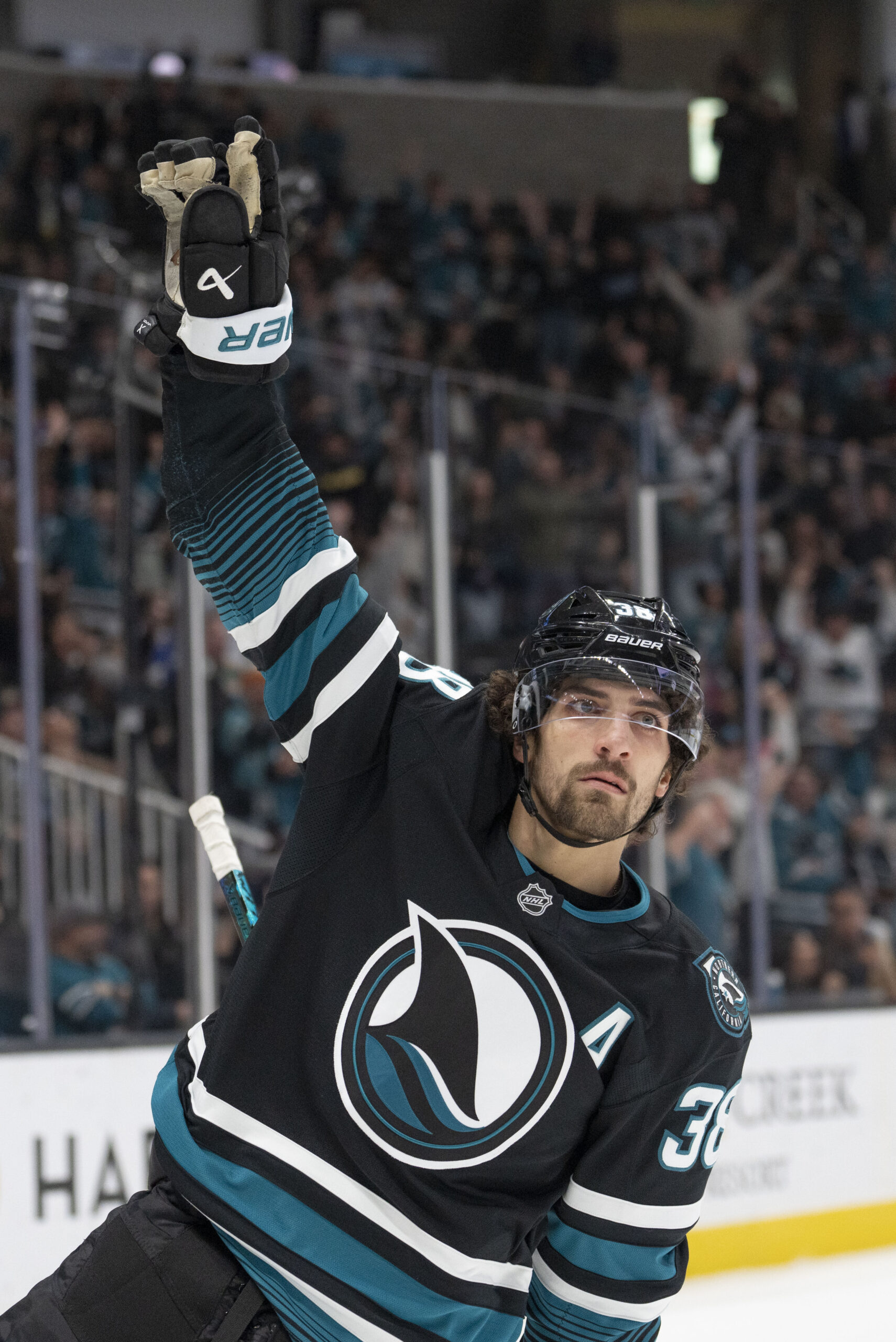
A captain in the NCAA, Ferraro quickly took on more of a leadership role in San Jose. In 2021-22, his age-23 campaign, Ferraro was named an alternate captain and has held onto that status through 2025-26.
Now 27 years old, Ferraro has a chance to earn a life-changing contract this summer.
He’s on the younger side when it comes to unrestricted free agents, meaning interested teams can go into negotiations with Ferraro with less fear of the risks of age-related decline. That factor will help him drum up league-wide interest on the open market.
An additional factor aiding Ferraro’s case in free agency is his experience. While he has not yet played in the playoffs in his career, Ferraro has handled a top-four, if not top-pairing workload for a half-decade. His average time-on-ice per game for his career is 21:14, but that’s weighed down by his rookie season, when he averaged just 15:53 per game. From 2020-21 through this past season, Ferraro has averaged 22:00 time on ice per game.
He has consistently played a heavy workload in San Jose, including in 2023-24, when he was the team’s No. 1 defenseman. He has also been a fixture on the penalty kill, leading the team in time-on-ice per game while short-handed in three of the last four seasons.
While offensive production has never been a major element of Ferraro’s game, his ability to weather significant minutes stands out in what is expected to be a thin free agent class. AFP Analytics projects Ferraro to receive a four-year, $5.1MM AAV deal as a free agent, though that could be a conservative estimate given the way player costs have risen as projected increases in the cap have gotten priced into contracts on a more regular basis.
San Jose has more than enough cap space to afford to match any offer made to Ferraro in free agency. PuckPedia projects the Sharks to have nearly $42MM in cap space this summer. But the Sharks have to plan carefully, as they have extensions for their young stars to consider down the line, and they won’t want to commit too much money too far down the line in order to preserve as much financial flexibility as possible for when Macklin Celebrini and others are eating up significant portions of the cap.
Additionally, taxes are a factor that works against the Sharks whenever they look to bid on free agents. While they have had success in the past on the open market, suggesting they have been able to work around this obstacle, the reality is players take home a greater portion of their salary playing in a low-tax market such as Tampa Bay, or Nashville, than in a market like San Jose.
The tax calculator tool provided by Cardinal Point Athlete Advisors shows that if Ferraro were to receive identical offers at AFP Analytics’ projected salary ($5.13MM) from San Jose and Tampa Bay, respectively, Ferraro would pay an additional $705K per year if he took the Sharks’ offer, compared to Tampa Bay’s. Over the lifetime of a four-year contract, that is nearly $3MM difference between the two offers.
In other words, the Sharks and other markets are at a natural disadvantage when competing for free agents. Of course, the Sharks do have some advantages, such as their climate and up-and-coming roster. It’s difficult to isolate the free agent decision-making process to just one variable. And it has to be said that the true tax situation NHL players navigate is far more complex than a simple side-by-side calculator will be able to reflect.
But given all of the things working in Ferraro’s favor, it’s no surprise that he would want to see what kind of offers he’ll receive from around the league before deciding whether to move on from the only NHL franchise he’s ever known.
Photos courtesy of Stan Szeto-Imagn Images
Free Agency Notes: Jenner, Laughton, Chrona
The Columbus Blue Jackets may need a new captain for next season, as Aaron Portzline of The Athletic reported yesterday that Boone Jenner may be getting “squeezed out of the mix in Columbus” in advance of the expiry of his contract on July 1. Jenner, who was reported to have recently swapped longtime agent Joe Resnick for Pat Morris of Newport Sports Management, has only played for the Blue Jackets in his 808-game NHL career. He’s the franchise’s all-time games played leader. Elliotte Friedman of Sportsnet said on today’s 32 Thoughts podcast that Columbus is hoping to find a way to keep Jenner, but Jenner “feels whatever he’s being offered is not anything he’s willing to accept.”
It’s not immediately clear what the Blue Jackets’ offer to Jenner might look like. Head coach Rick Bowness spent much of his time in Columbus utilizing Jenner in the bottom-six. He averaged 16:04 time on ice per game this season, down from 18:00 per game last year. Jenner also lost his grip on a spot on the Columbus power play, after averaging 1:48 time on ice per game there last season. Another factor that could contribute to Jenner’s exit from Columbus is his health. He’s missed significant time due to injuries over the past three years and despite solid production (13 goals, 38 points) in 2025-26, Columbus simply may not be able to offer Jenner the kind of contract he’s looking for given his availability and the amount of money they just committed to another veteran pivot, Charlie Coyle.
Other notes about pending free agents:
- The Los Angeles Kings are holding talks this week with pending UFA center Scott Laughton on a potential contract extension, reports Dennis Bernstein of The Fourth Period. Laughton, who is also repped by Morris, will see the five-year, $3MM AAV contract he signed in 2021 expire on July 1. The 31-year-old was acquired by the Kings as a deadline deal that returned a third-round pick to his former team, the Toronto Maple Leafs. Just one year before that, Laughton’s league-wide stock was high enough for him to return a first-round pick and prospect Nikita Grebenkin on the trade market. Bernstein noted that Laughton was “solid in [head coach] D.J. Smith’s system” after arriving in Los Angeles, so the decision on who the Kings might hire as their permanent bench boss could impact how far the team is willing to go to extend the center. Laughton scored eight points in 21 games with the Kings but has a career-high of 18 goals and 43 points from 2022-23. AFP Analytics projects him to receive a three-year, $4.1MM AAV deal on the open market.
- The SHL’s Brynäs IF have officially announced the signing of goaltender Magnus Chrona to a two-year contract. We first covered reports indicating Chrona would be headed overseas for 2026-27 in January, and today’s announcement has made it official. Chrona, 25, has been a member of the Nashville Predators organization for the last two seasons, originally arriving to the team as part of the Yaroslav Askarov trade in August 2024. In each of his two seasons with the Predators, Chrona served as the No. 2 goalie for the team’s AHL affiliate, the Milwaukee Admirals. He posted a .903 save percentage in 2024-25, his debut campaign in Wisconsin, and had an .894 save percentage in 25 games this past year. Although this deal will allow Chrona to return to his home country of Sweden, he has not played there since 2018-19, during his junior hockey days. Chrona backstopped the Denver Pioneers to an NCAA National Championship before beginning his pro career with the San Jose Sharks.
Free Agent Stock Watch: Right Wing
With the regular season behind us, player movement between teams is now almost entirely restricted. Teams are in the thick of hotly contested playoff series, and many players with expiring contracts have either concluded their campaigns or are playing crucially important games. The players still in action are playing games that could help determine what magnitude of contract they might receive in the summer.
In a multi-part series, we’ll take a look at each position group of the upcoming free agent class, and do a rundown on how those upcoming unrestricted free agents have performed this year. Which players have increased their odds of scoring a jackpot on the open market? Which players have potentially hurt their earning potential with their play? What are the stakes for these free agents in the playoff games that remain? We’ll break it all down here.
The Marquee Names
Alex Tuch, Buffalo Sabres
As numerous pending free agents have signed extensions to remain with their current team, Tuch has emerged as one of the very best players remaining on the upcoming free agent market. While there is still a chance that the Sabres could come to an agreement with Tuch, who is repped by Brian and Scott Bartlett, the most recent reporting from the regular season indicates there is still a gap in those negotiations.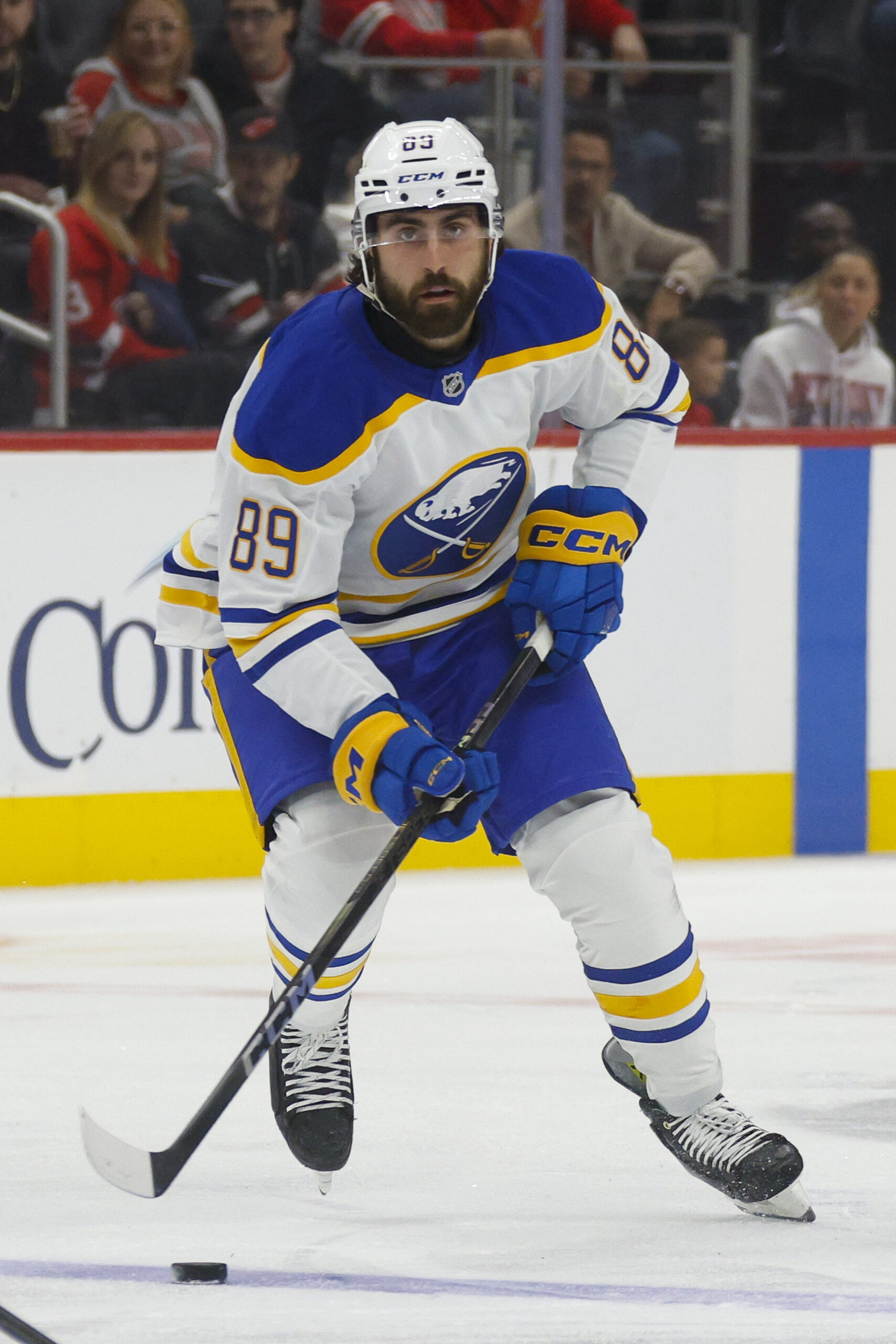
Unless substantive progress is made in those talks, it appears Tuch, a native of the Central New York region, which is just east of Buffalo, could be playing out his final campaign with the Sabres.
If he does hit the open market, he’d be one of the most in-demand players available. Tuch was a focal point of the Sabres’ return from the Vegas Golden Knights in the Jack Eichel trade, and has blossomed into a legitimate first-line winger for the team. He scored a career-high 36 goals last season and has scored at least 20 goals in each full season he’s played in Buffalo.
He concluded 2025-26 with 33 goals and 66 points in the regular season, and has two goals and two assists in the Sabres’ first three playoff contests.
With the Sabres hoping get past the Boston Bruins and make a deep playoff run, Tuch is in a position where he could author some big moments with the entire league watching.
While Tuch has been in form, there are factors beyond just his play that are contributing to his immense earning potential this summer. Firstly, the number of players who have signed extensions and taken themselves off of the free agent market means Tuch will be one of the few borderline star-level players left on the open market. Secondly, the sharp rise in the salary cap upper limit means there are quite a few teams with cash to burn this summer.
That means more teams will have the financial bandwidth to enter a bidding war for Tuch. The more teams that aggressively pursue an unrestricted free agent, the more money that free agent is often able to make. That bodes well for Tuch.
Patrick Kane, Detroit Red Wings
Like many other aging stars who have already made massive amounts of money in their career, Kane has prioritized on-ice fit and stability over maximizing his earnings in his last few trips to free agency. He found a good fit for himself in Detroit, and the Red Wings would not have come close to ending the league’s longest playoff drought without his efforts.
Now 37 years old, Kane likely has a place in Detroit for as long as he wants to continue playing. His contracts are loaded with performance bonuses, and it’s likely his next deal, in whatever form it takes, will be laden with bonuses as well. While he’s not as tied to Detroit as other similar free agents are to their teams, such as Alex Ovechkin with the Capitals or Jamie Benn with the Stars, it’s tough to imagine Kane entertaining a full free agency process at this stage of his career.
The Solid Contributors
Bobby McMann, Seattle Kraken
NHL history is littered with offensive players who have changed teams mid-season and had slow starts in their new NHL homes. So much of creating offense is about chemistry, and the inherent challenge that faces these players is the fact that they’re entering lineups with teammates whose styles and tendencies are entirely unfamiliar to them.
With that said, some players change teams and find themselves able to hit the ground running despite those inherent challenges; Bobby McMann is one of those players. In his 18 games in Seattle, he scored 10 goals and 14 points, bringing his full-season production to 29 goals, 46 points.
The 29-year-old was dealt from the Maple Leafs as the team could not reach an agreement with him on a contract extension. It was reported that McMann’s asking price on his next deal, said to be over $5MM per year, was a little above where Toronto was willing to go.
Having authored a second consecutive season with at least 20 goals, it appears McMann has given himself a real chance to earn the kind of contract offer Toronto reportedly wasn’t willing to extend him. While he’s not a one-to-one comparable, the fact that Kiefer Sherwood was able to earn a $5.75MM AAV on a five-year term has helped McMann’s case for his next deal. He’s an endearing winger, a player whose hard-working style allowed him to grab hold of an NHL role.
As an undrafted product of Colgate University, which is a quality ECAC program but not one with an overwhelming record of producing NHL players, McMann faced somewhat long odds of becoming an impactful NHL player. But with his compete level, work ethic, and knack for finding the back of the net, McMann managed to beat those odds and become a valuable NHL goal scorer. After making just over $1MM on his last deal, McMann has positioned himself to land a massive pay raise as a free agent this summer.
Vladimir Tarasenko, Minnesota Wild
While Tarasenko’s star has certainly faded since his trade from St. Louis in 2023, he remains a capable NHL scorer and one of the better offensive options set to be available on the open market this summer. He was a mid-season trade addition in back-to-back years, first with the Rangers and then with the Panthers the following year. In Florida, he showed he could still be a valuable player on a contending team, scoring 14 points in 19 regular-season games and chipping in nine points on the Panthers’ run to their first ever Stanley Cup championship.
Fresh off of the championship, Tarasenko signed a two-year, $4.75MM AAV deal with the Detroit Red Wings. But after he only managed 11 goals and 33 points in Detroit, his lowest scoring total in a healthy season of his career, Tarasenko was dealt to the Wild for future considerations. The Red Wings, it appeared, were content to be rid of Tarasenko’s $4.75MM cap hit without needing compensation from the Wild.
That deal has paid dividends for Minnesota, as the Russian forward finished the regular season with 23 goals and 47 points in 75 games. At 34 years old, though, getting term on his next deal could prove difficult. Going on another deep playoff run – provided the Wild can get past the Dallas Stars in the first round – would certainly help position him to potentially get one.
Mats Zuccarello, Minnesota Wild
When the Wild originally signed Zuccarello, back in 2019 during the tenure of former GM Paul Fenton, the deal was largely criticized. Although most outside observers acknowledged Zuccarello was still a quality player, and the $6MM per year price tag was seen as fair, the length of the deal (five years) was met with concern.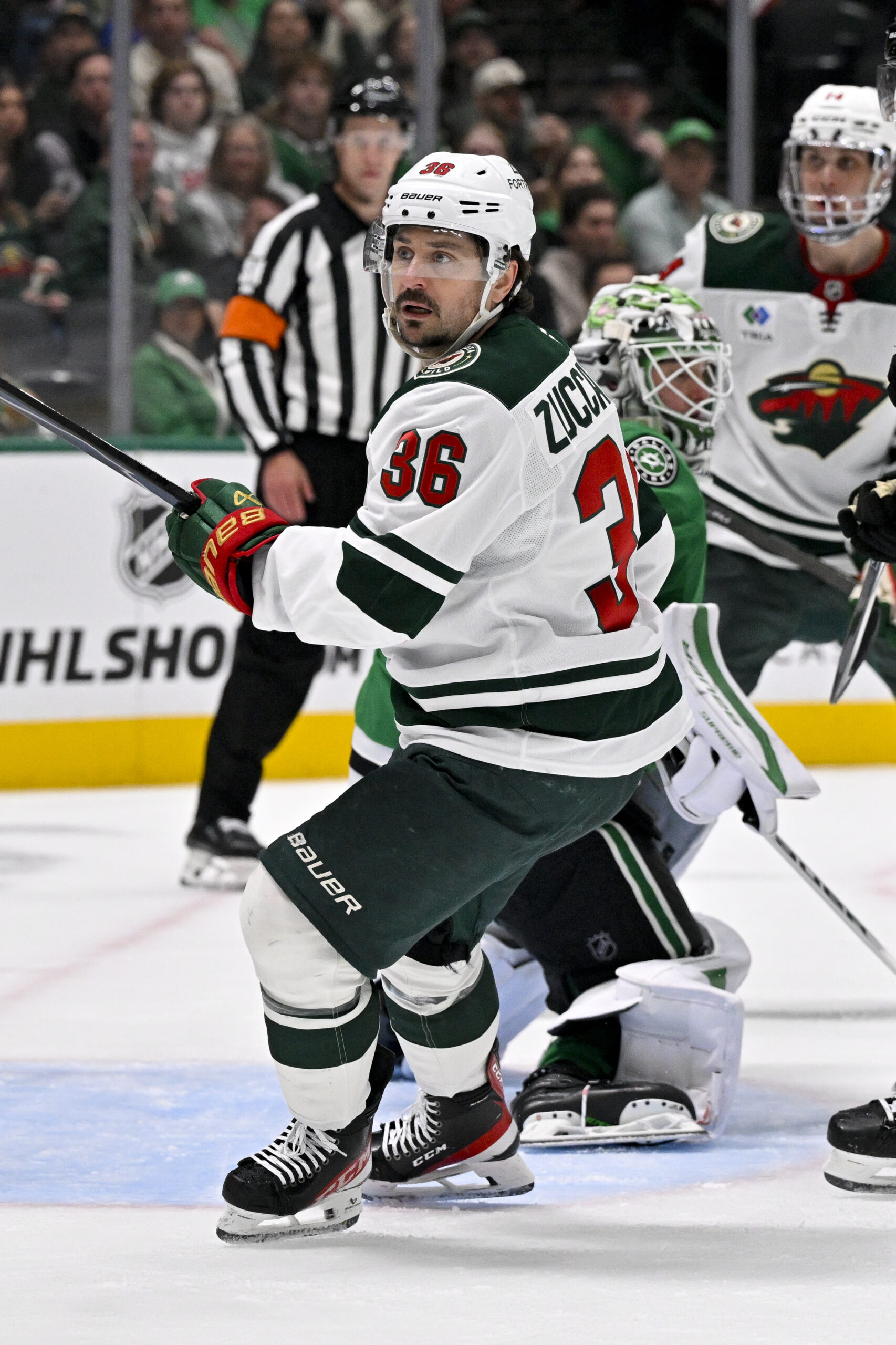
ESPN’s Greg Wyshynski wrote at the time that “there’s simply no defendable reason” why the Wild decided to sign Zuccarello for such a long term. The Hockey News’ Ryan Kennedy echoed the sentiment, adding “Zuccarello will eventually wear down and he will still have term on his contract when that happens.”
That concern from the media was not unreasonable, of course, as Zuccarello was into his thirties at that point. But the deal aged fabulously for Minnesota. Fenton’s successor, Bill Guerin, led the team to a quick turnaround, fueled in large part by the arrival of superstar Kirill Kaprizov from the KHL. Zuccarello found instant chemistry with Kaprizov.
After scoring 37 points in his debut campaign in the Twin Cities, Zuccarello managed 35 points in 42 games in 2021-22, Kaprizov’s rookie year.
Since Kaprizov arrived, Zuccarello has enjoyed the best, most productive years of his career even as he’s aged deeper into his thirties. He scored a career-high 79 points in just 70 games in 2021-22, which is a 92-point 82-game scoring pace. He scored 67 points the following year, and managed 63 points (in 69 games) in 2023-24.
His scoring rate has fallen a bit below where it once was as other Wild forwards have emerged as key focal points of the team’s attack (namely 2019 first-rounder Matt Boldy) but has still hovered at a clear top-six rate. This season, Zuccarello scored 15 goals and 54 points in 59 games, his games played total limited by upper-body injuries.
Over the course of his tenure with the Wild, Guerin has shown a willingness to invest in keeping his team’s core intact. His faith in this Wild core has been rewarded this season, without question. Given how well Zuccarello has played, it’d be tough to imagine Guerin letting him walk.
It’s unclear what Zuccarello’s expectations might be in free agency. Assuming he wants to continue his career and play his age-39 season, the fact that Zuccarello is able to be signed with performance bonuses means Minnesota has some flexibility in the route they decide to take with his extension.
Eeli Tolvanen, Seattle Kraken
There are many former top prospects who, after losing their spot on their original team and landing on waivers, have begun a downward spiral in their career. That spiral typically ultimately ends with the player leaving for the European pro ranks or the minor leagues. At one point, Tolvanen appeared to be at risk of following that path.
He was ranked as one of the top prospects in the game in 2018, and broke into the NHL in 2020-21 scoring 11 goals and 22 points in 40 games. But he wasn’t able to build on his rookie season in Nashville, and by late 2022, found himself on the waiver wire. The Kraken, in just their second season in franchise history, placed a claim on Tolvanen. The natural opportunity that comes with playing on an expansion franchise allowed Tolvanen to revive his career trajectory.
While he still isn’t the star he was once projected to be, he has finally begun to deliver some of the offensive upside that had tantalized scouts in years past. He scored 16 goals and 27 points in his first 48 games with the Kraken, and added eight points in 14 playoff games.
That first campaign with the Kraken showed what was to come for Tolvanen. He has become a reliable middle-six goal scorer, hitting a career-high 23 goals last season. This year, he scored 12 goals and 36 points.
Tolvanen has taken steps to round out his game this season, which bodes well for him entering free agency. He didn’t sniff the penalty kill when he began his tenure in Seattle, but is now playing over a minute per game short-handed. In a free agent class short on ascending options, Tolvanen, at 27 years old, will represent a relatively rare commodity.
Oliver Bjorkstrand, Tampa Bay Lightning
For much of his NHL career, Bjorkstrand has been a model of consistency as a second-line scoring forward. The Danish winger has been close to a lock to score at least 20 goals and between 45 and 55 points when healthy, but his fit in Tampa Bay hasn’t been perfect. Despite averaging over three minutes of power play time on ice per game, Bjorkstrand’s production has been below the standard he’s set earlier in his career. Bjorkstrand finished the regular season with 12 goals and 32 points, well below the 21 goals and 46 points he managed last season.
A contributing factor to Bjorkstrand’s decline in production has been his role outside the power play. While he was a top player for Tampa on the man advantage in the regular season, he’s often occupied a bottom-six role at even strength. His 10:30 time on ice per game at even strength is below career bottom-sixers such as Pontus Holmberg and Zemgus Girgensons.
The playoffs have not helped Bjorkstrand’s case. He’s been unable to secure a spot in head coach Jon Cooper’s lineup, serving as a healthy scratch for all three contests thus far. Cooper has even elected to play journeyman Scott Sabourin, who at 33 has played in just 73 career NHL games, over Bjorkstrand.
That puts Bjorkstrand on somewhat shaky ground entering free agency. At 30 years old, he is in a position where he could reasonably get a medium or even long-term deal. But with the way his role has declined in Tampa, he could face a challenge trying to reach his current cap hit, $5.4MM, in free agency.


Latest On Charlie Coyle Contract Talks
As the 2025-26 season progressed, more and more pending unrestricted free agents signed contract extensions to remain with their current teams. A free agent market that was once slated to feature big names such as Connor McDavid and Kirill Kaprizov has thinned out to a considerable degree, simultaneously hurting teams with big spending plans and helping the players who remain without a contract. One of the players who appears set to benefit most is Columbus Blue Jackets pivot Charlie Coyle.
Coyle, 34, is a pending UFA coming off of an extremely strong platform season. He’s set to be one of the top players available overall, and plays a premium position (center.) While his age might give some teams pause, he’s expected to receive significant interest on July 1 if he makes it until then without a new contract.
Yesterday, The Athletic’s Aaron Portzline reported that the Blue Jackets are determined to not let things reach that point. According to Portzline, a potential Coyle extension “is an immensely important contract for the Blue Jackets, such that Coyle could be seen as having a blank check to set his terms.”
On one hand, it’s not too difficult to see why Columbus would be desperate to extend Coyle. For much of Columbus’ franchise history, the team has battled a talent deficiency at the center position.
The Blue Jackets have been searching for a true No. 1 center for most of their existence in the NHL, and could very well have found one in Adam Fantilli. But Fantilli is still developing into that role, and the team’s No. 2 center, Sean Monahan, played through injury this season and was limited to just 13 goals and 36 points in 78 games. That’s a steep decline from his production last season, when he scored 19 goals and 57 points in 54 games. Monahan’s down season only further underscored Coyle’s importance to Columbus’ lineup.
Keeping Coyle would ensure the center position remains an area of strength in the Blue Jackets’ lineup. Part of why it may be seen as essential to team management is the fact that Columbus is under substantial pressure to reach the playoffs. They have very narrowly missed out on playoff hockey in each of the last two seasons, doing so in dramatic fashion this year.
The Blue Jackets have not made the playoffs since 2019-20, when they defeated the Toronto Maple Leafs in a qualifying-round series. The club cannot afford to take a step backward or hurt their odds of competing next season, and most would argue that losing Coyle on the open market would be doing so.
With that said, on the other hand, it’s also fair to question whether investing in Coyle would be in the team’s best long-term interests. If Columbus do indeed feel backed into a corner with Coyle, as Portzline suggested, that’s not exactly an ideal position to negotiate from.
The team’s immense interest in keeping Coyle, combined with the anticipated heavy interest in his services from across the league, gives him a massive amount of leverage in talks with the Blue Jackets. Coyle spoke highly of his time in Columbus, but it still is likely to cost quite a bit to keep him from testing the open market.
Is paying top dollar for a talented veteran center the best move for the Blue Jackets to make if the goal is building a sustainable contender? That’s the question team management will have to answer over the next few months as it considers whether to extend Coyle.