
Free Agent Focus: New York Rangers
Free agency is now less than a month away and many teams are already looking ahead to when it opens up. There will be several prominent players set to hit the open market in mid-July while many teams have key restricted free agents to re-sign as well. Next up is a look at the Rangers.
Key Restricted Free Agents
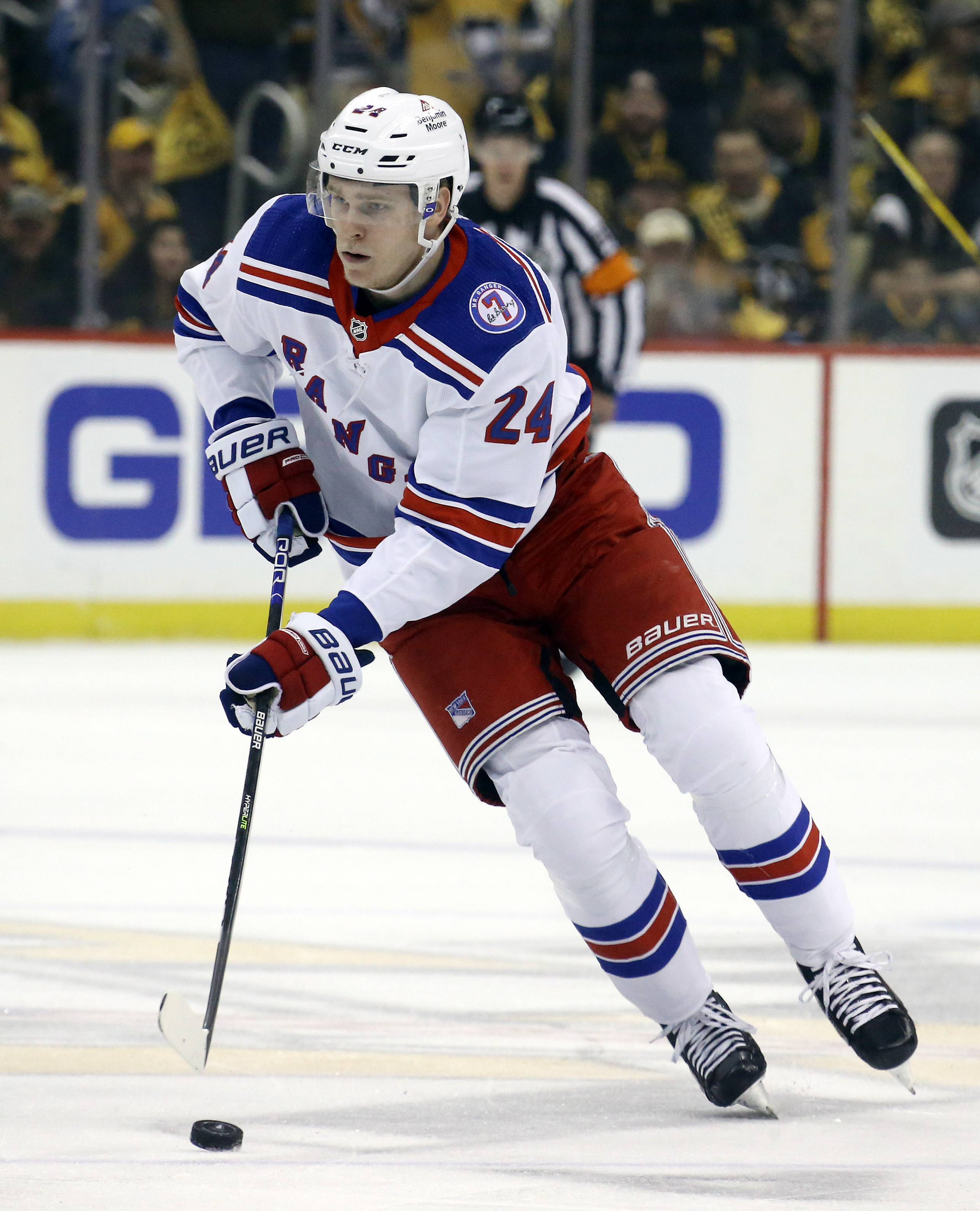
F Kaapo Kakko — The 2019 second-overall pick’s adjustment to the NHL has been a bit slower than expected, and it’s been a struggle for him to translate the scoring talent he showed in Finland to the NHL level. In 157 career games, Kakko has 26 goals and 58 points, including 18 points in his 2021-22 campaign, a season where he missed a solid chunk of the Rangers’ games due to injury. Kakko enters his first free agency on mixed ground. The points aren’t there for him to get a lucrative, long-term deal, but he showed flashes of the upside that got him drafted so high in the first place during the Rangers’ run to the Eastern Conference Final, fitting in on a “kid line” with fellow first-rounders Filip Chytil and Alexis Lafreniere, a line that powered the Rangers past the Carolina Hurricanes before being ultimately broken up against Tampa Bay. Kakko’s puck protection skills and abilities along the boards are strong, and it’s definitely possible that after three years in the NHL he’s just on the cusp of finally producing offense. And with Valeri Nichushkin helping the Colorado Avalanche potentially lift the Stanley Cup in the coming days, he could serve as a cautionary tale in giving up too early on talented, toolsy top picks who don’t have the points to show for their strong play early in their careers. But on the other hand, it’s also very possible that Kakko’s tools never result in him producing significant offense. The Rangers need all the cap space they can get, so expect a one or two-year bridge deal at this point.
G Alexandar Georgiev — Before the arrival of Igor Shesterkin, there was once a time when Georgiev had a chance to be the heir to Henrik Lundqvist on Broadway. Georgiev’s first taste of NHL action went well, with a .918 save percentage in ten games, and his first two full-time seasons were similarly impressive, as Georgiev posted a .914 in 2018-19 and a .910 in 2019-20. 2020-21 was a bit shakier, and as Georgiev ceded more and more starts to Shesterkin his play began to suffer. He finished that year with a .905 in 19 games. This year, Georgiev had his worst season in New York, with a .898 save percentage in 33 games. He simply did not play to the level he’d shown an ability to play at in the past, and the strength of Shesterkin, the Vezina Trophy favorite, emphasized Geoorgiev’s failings even more. Georgiev is due a qualifying offer of $2.65MM, per CapFriendly, so it’s not a guarantee that Georgiev is even tendered an offer for the Rangers to retain his rights. If Georgiev is going to have a cap hit around that number next year, it probably won’t be in New York.
Other RFA’s: F Julien Gauthier, F Jacob Elmer, F Tim Gettinger, F Justin Richards, F Ty Ronning, F Austin Rueschhoff, D Libor Hajek, G Tyler Wall
Key Unrestricted Free Agents
F Ryan Strome — We previously covered the free agent situation of Ryan Strome in-depth, and it’s certainly a difficult situation for the Rangers to navigate. On one hand, Strome has fit extremely well in New York and produced like a strong top-six center. Over the past three seasons, Strome has 162 points in 200 games, which is a 66-point 82-game pace. Centers who can score in the 60-70 point range don’t hit free agency often, and when they do, they get paid. But Strome’s numbers do come with one slight asterisk: he’s been the linemate of Artemi Panarin, a superstar, play-driving offensive force. Panarin being mentioned isn’t meant in any way to downplay Strome’s skill — it’s not like you can just put any center on Panarin’s line and have him produce like Strome — but instead is meant to raise the question that Strome will need to answer this summer. Is he the play-driving, line-anchoring top-six center he’s produced like? Or is he more of a passenger, capable of piling up points when he gets the chance to ride shotgun next to elite scorers? The Rangers will be the first team that will need to ponder those questions as they consider whether to commit to Strome long-term.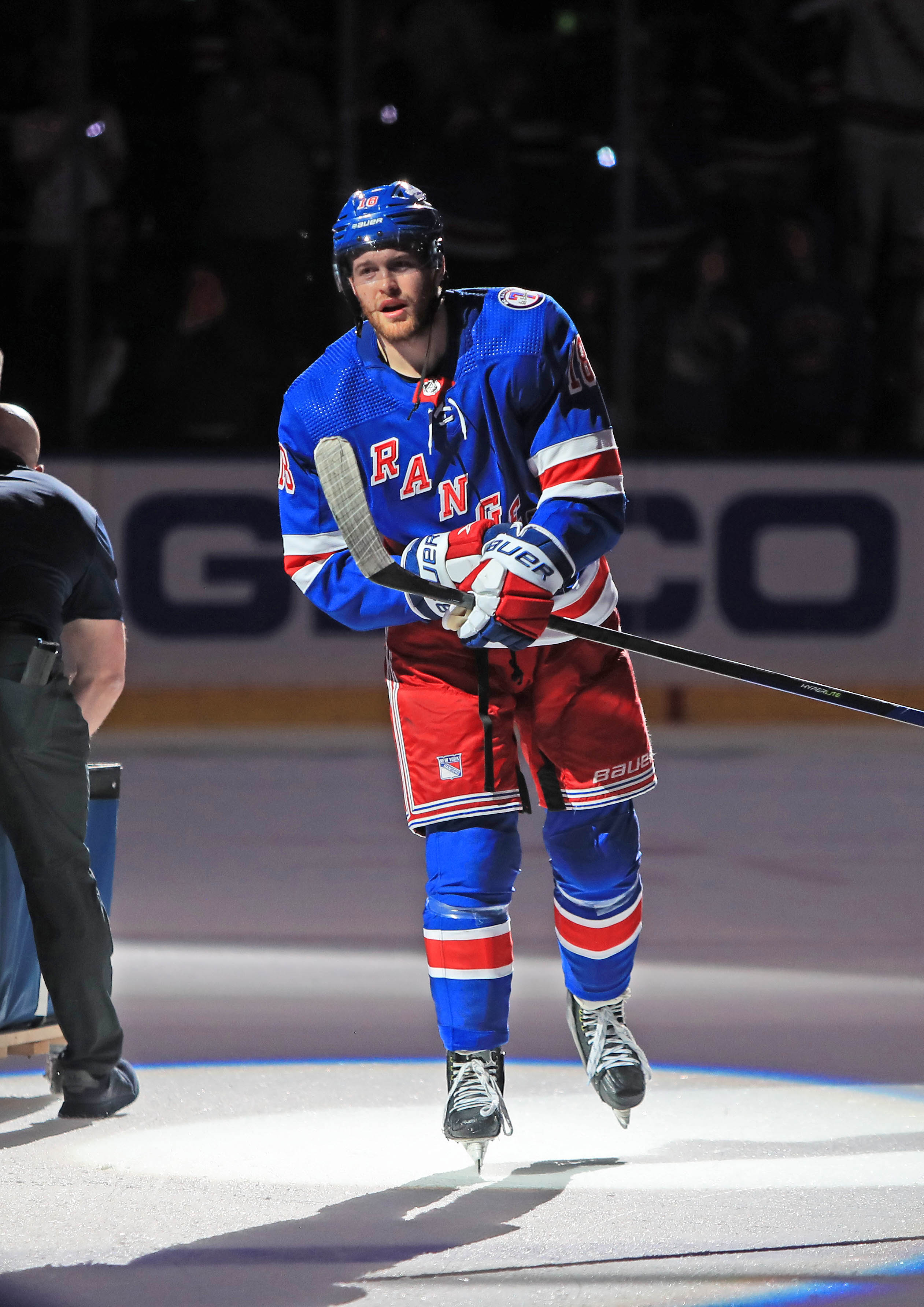
F Andrew Copp — Copp was acquired from the Winnipeg Jets at the trade deadline, and he’s been everything the Rangers could have hoped for and more. Copp had 18 points in 16 games after the trade, and added on 14 points in 20 playoff games, giving him a grand total of 32 points in 36 games in New York. Before 2020-21, Copp was widely viewed as a defense-first, versatile forward who probably wouldn’t end up being an offensive difference-maker. But after putting up 39 points in 55 games during the pandemic-shortened 2020-21 season, his outlook has changed quite a bit. Now, he looks more like a true two-way force who can fit in a top-six. Given how well he played as a Ranger after the trade, it seems like staying in New York could be his best choice. But the Rangers will have a hard time finding enough cap space to keep both Strome and Copp, so they may end up having to choose one.
F Tyler Motte — Another member of the Rangers’ platoon of trade-deadline additions, Motte has endeared himself to both Rangers fans and fans of the team he became an NHL regular with, the Vancouver Canucks. It’s Motte’s hard-nosed, ever-active style of play that makes him so widely appreciated by both fans and coaches alike, but in the absence of offensive production, how much is that style of play worth? Motte had only 15 points in 58 games this season and only two in the Rangers’ playoff run. Offensive production isn’t what he’s in the NHL to provide, but it will put a ceiling on his earning power this summer. On the open market, it’s definitely possible that Motte could earn a deal with a decent term at around $1.5-2.5MM. Motte’s Rangers teammate, Barclay Goodrow, earned a long-term deal carrying a $3.6MM AAV coming off of a season where he had only five more points than Motte did this year, but Goodrow also had two Stanley Cup rings on his resume, an asset GM’s value highly and something Motte currently lacks. Wherever he ends up this summer, New York or elsewhere, look for Motte to quickly become a favorite of his coach and fanbase.
Other UFA’s: F Greg McKegg, F Kevin Rooney, F Frank Vatrano, D Justin Braun, F Anthony Greco, F Maxim Letunov, F Nick Merkley, G Adam Huska, G Keith Kinkaid
Projected Cap Space
This is where things get tricky for GM Chris Drury. The Rangers, on paper, are in decent shape. They have just under $12MM in projected cap space going into next season, a number that could rise even higher if they find a way out from under frequent healthy scratch Patrik Nemeth‘s $2.5MM AAV deal. But just because New York has $12MM now doesn’t mean they can be just as active as they’ve been in the past. Next offseason, the Rangers will have both K’Andre Miller and Lafreniere hitting restricted free agency. The Rangers undoubtedly want to keep both in New York long-term, but spending significant money this offseason could make long-term deals for those two players nearly impossible. It could even be three players the Rangers want to lock up long-term if Chytil spends 2022-23 playing as he did against the Hurricanes. So while the Rangers definitely want to use this offseason to maximize their odds of overcoming the on-ice challenges they’ll face next spring, they can’t lose sight of the off-ice challenges they’ll face next summer. Those two (or three) looming deals could impact every choice the Rangers make in the next few months.
Photos courtesy of USA Today Sports Images. Contract information courtesy of CapFriendly.
Free Agent Focus: Ottawa Senators
Free agency is now less than a month away and many teams are already looking ahead to when it opens up. There will be several prominent players set to hit the open market in mid-July while many teams have key restricted free agents to re-sign as well. Next up is a look at the Senators.
Key Restricted Free Agents
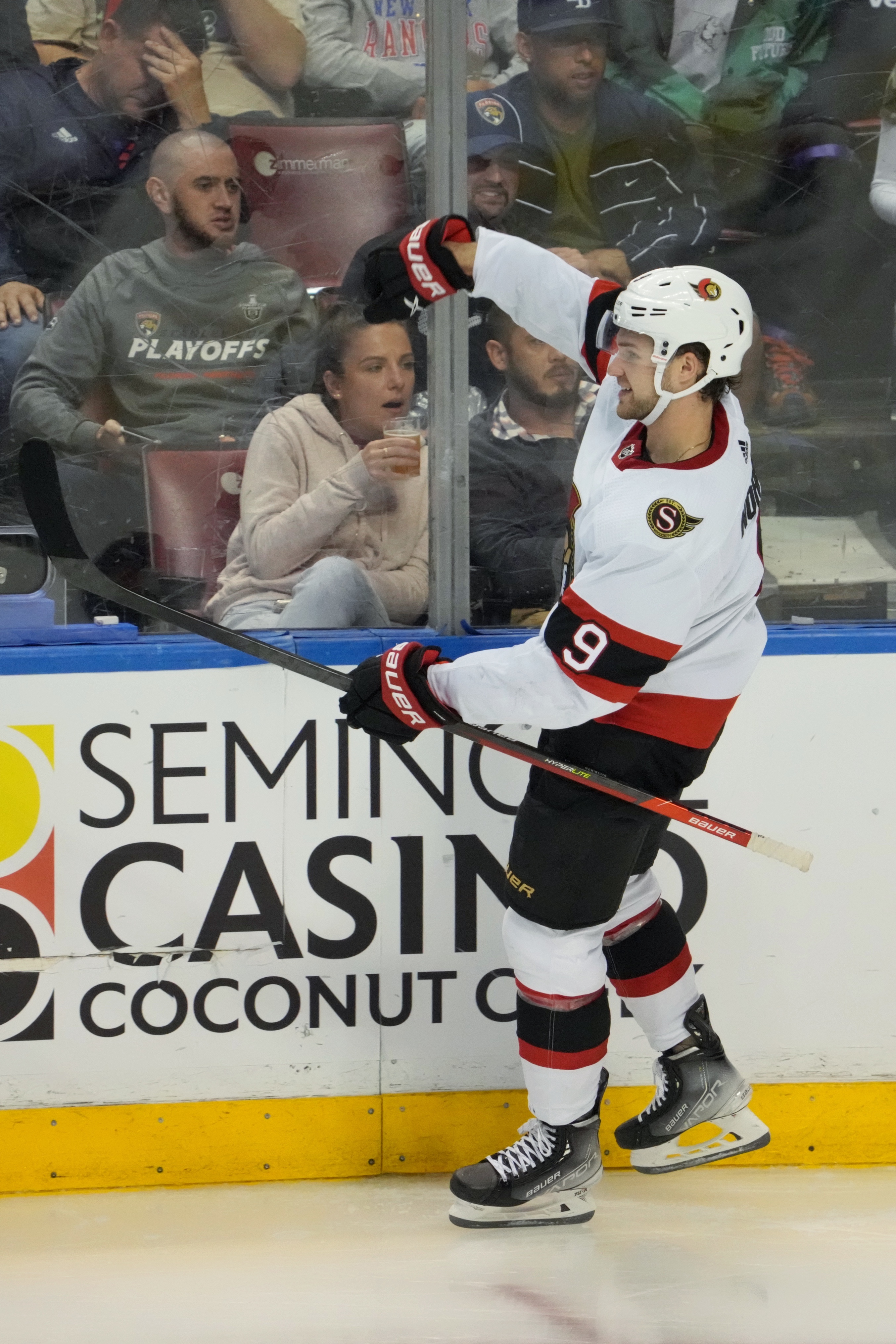
F Joshua Norris — While Senators GM Pierre Dorion previously called the day he traded Mark Stone to the Vegas Golden Knights “one of the proudest” days he’d had in his career as a GM, it’s his trade of Erik Karlsson that was the real stroke of brilliance. Not only did the Senators receive the draft pick used to select budding star Tim Stutzle in exchange for their captain, they also received center Joshua Norris, who was then in his freshman season at the University of Michigan. Norris was drafted 19th overall in 2017 and has blossomed into a lethal goal scorer. With Brady Tkachuk at his side, Norris scored 35 goals this year and finished 2021-22 with 55 points in 66 games, a 68-point pace. Norris also showed some improvements in his defensive game. While Norris’ 20.3% shooting percentage is high enough to raise questions about the sustainability of his goal scoring, Norris did have a 17.7% shooting percentage in 2020-21 and some high-end goal scorers are simply capable of sustaining inflated shooting percentages thanks to their elite shooting talent. Norris could be in that category, and the Senators shouldn’t drag their feet in locking Norris down on a long-term deal. Montreal Canadiens center Nick Suzuki‘s eight-year, $7.875MM extension could be a solid number for a maximum-term deal, and it would come under Tkachuk’s $8.2MM cap hit, meaning Norris wouldn’t be making more than the captain. The Senators may want something a bit cheaper, maybe along the lines of the five-year, $6.1MM AAV extension Dylan Larkin signed, but with comparable young centers like Suzuki and the New Jersey Devils’ Nico Hischier signing long-term deals north of $7MM AAV, expect any long-term deal for Norris to come in at around that number as well.
F Mathieu Joseph — Joseph is an extremely interesting case heading into this offseason. Earlier in the season, his offseason case would have looked pretty simple. As an arbitration-eligible restricted free agent, Joseph would have had the option to take whatever the arbitrator awarded him and inch closer to a trip to unrestricted free agency. But now, there could be more appetite to get an extension done from the team side of the equation, thanks to a mid-season trade to the Senators. Joseph arrived in Ottawa in exchange for Nick Paul and found immediate success there. He fit naturally next to Norris and Tkachuk, and in the first week of April Joseph had 10 points in just four games. It was that four-game stretch that served as an endorsement of Dorion’s belief in Joseph, and also serves as the root of uncertainty with Joseph entering this offseason. Do they pay him for what they think he can be? Or do they opt to let him take a one-year deal in order to see if the talent he flashed is there to stay? It’s a risky situation, because either option could easily end up being a mistake. If he plays as he did in that stretch over the course of a full season in Ottawa, his price skyrockets. But if the Senators commit now, there’s the chance that his scoring outburst was just a mirage, and they’ve overpaid for the idea of a player rather than the reality of the one they have. With all that in mind, Joseph seems like an under-the-radar pick for the most intriguing restricted free agent situation of the offseason.
F Alex Formenton — This past season was the year that winger Alex Formenton finally broke into the NHL full-time, and his impressive rookie year couldn’t have come at a better time, as he’s lined himself up for a nice raise from the $747k cap hit he played on last season. Formenton scored 18 goals and 32 points in 79 games last year, a goal total that ranked fourth on the Senators. Formenton’s speed is his best asset, and he got to show it off on the penalty kill. Formenton averaged just under 2 minutes of short-handed ice time per game, on a penalty kill that impressively ranked 13th in the NHL. Formenton looks like he could be a long-term asset in the Senators’ middle-six, providing valuable goal-scoring, speed, and special-teams ability. While a bridge deal is definitely possible, the Senators could also look to sign Formenton to a long-term deal in order to protect against any improvements to his game driving up his price. Perhaps the best contract to use as a guide would be Buffalo Sabres forward Alex Tuch, who signed a seven-year, $4.75MM deal with the Golden Knights after a rookie season where he scored 15 goals and 37 points in 78 games, similar numbers to Formenton’s this year. $4.75MM is a lot to commit to Formenton for what he is now, but teams should be paying for what players are going to do, rather than what they’ve already done. Tuch quickly made his contract look like a steal and Formenton definitely has the talent to do the same.
Other RFAs: F Adam Gaudette, D Erik Brannstrom, G Michael McNiven
Key Unrestricted Free Agents
F Chris Tierney — Like Norris, Tierney also came to Ottawa as part of the Erik Karlsson trade. Unlike Norris, though, Tierney has played his way out of a long-term stay in Ottawa rather than played his way into one. Tierney’s first season with the Senators was a great follow-up to the promising final season he had with the Sharks. While he only scored nine goals, he finished with 48 points. While some expected the 24-year-old Tierney to build off of that season and have it serve as the baseline for the production that could be expected of him, Tierney regressed. First only a little, with a small decline in 2019-20 to only 37 points in 71 games. But it was 2020-21 where things really went downhill, as Tierney had only 19 points in 55 games, the lowest he’d ever marked in an NHL season. This year was no better, as he had 18 points in 70 games. Dorion stated at his end-of-season press conference that Tierney would not be extended in Ottawa, so he will look to find a role with another club seeking to unlock the potential he showed just a few years ago.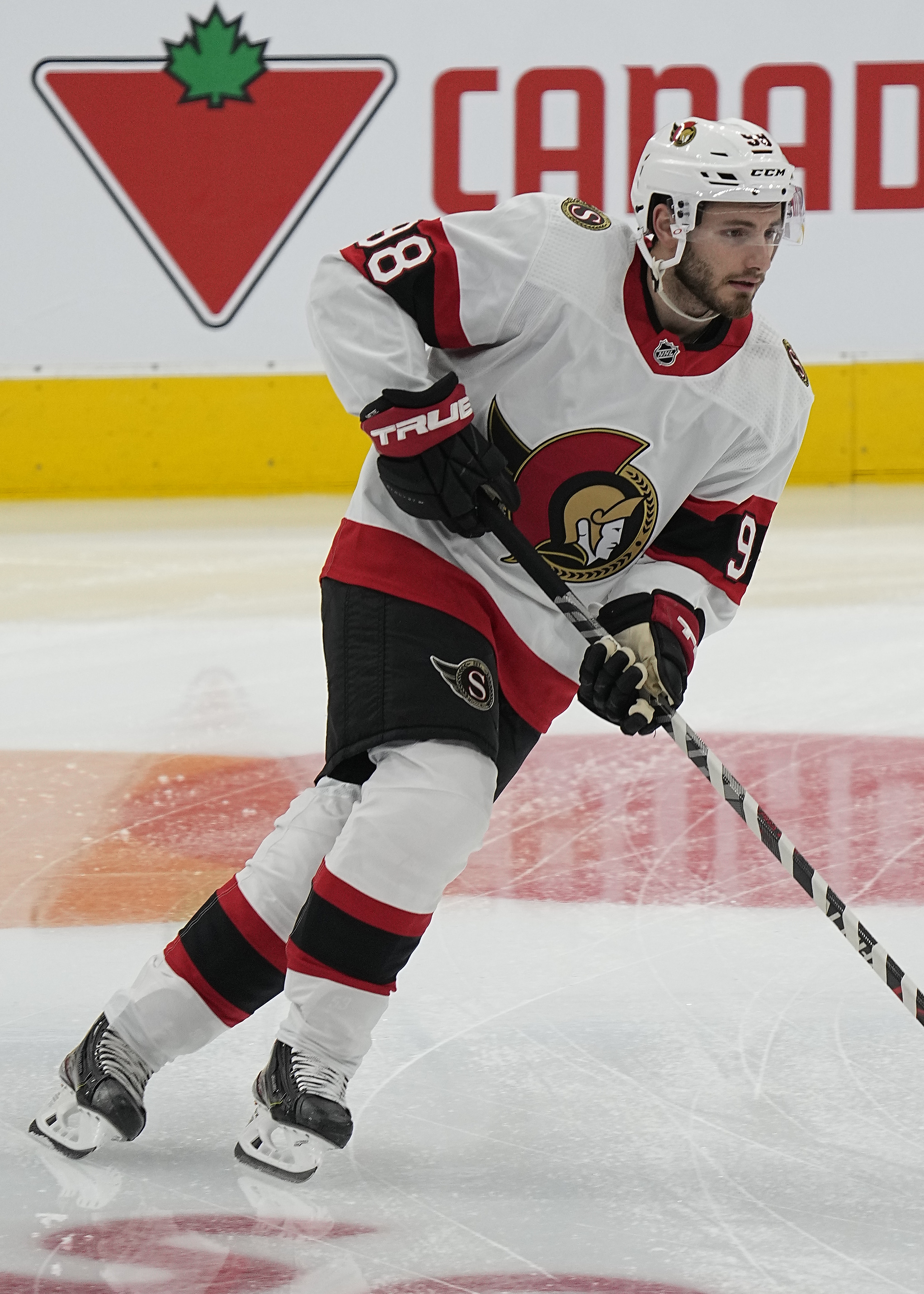
D Victor Mete — While Mete is technically a pending restricted free agent, Dorion has already stated that Mete would not be issued a qualifying offer and would therefore become an unrestricted free agent, hence him being listed here. Mete is an interesting case, as he’s the sort of player that, on paper, a team like Ottawa should be committing to developing. Mete, now 24, was once one of the Montreal Canadiens’ top defensive prospects, and he first made the NHL playing as Shea Weber‘s partner. But while Mete’s abilities in transition as a puck-mover were always his calling card, no other aspect of his game developed as the Canadiens had hoped. Mete famously took 126 games to score his first NHL goal, and the lack of development of the rest of his tools, beyond his abilities in transition, caused the Canadiens to eventually waive him. Many were calling for teams to claim Mete, and the Senators did just that. But unfortunately for the Senators and Mete, it was more of the same in Ottawa, and by 2021-22 he found himself a frequent healthy scratch. Mete enters the offseason with the chance to choose his destination for the first time in his career, and given his history there still is some reasonable hope that he could develop into an NHLer. But the clock’s ticking on him, and the choice of his next destination will go a long way in determining if he’ll eventually turn into the NHL defenseman many once believed he could be.
Other UFA’s: F Tyler Ennis, F Andrew Agozzino, F Clark Bishop, F Scott Sabourin, F Zachary Senyshyn, F Logan Shaw, D Dillon Heatherington, D Zac Leslie
Projected Cap Space
This is where the Senators have an advantage over other teams. In a flat-cap era where having flexibility under the salary cap is at an absolute premium, Ottawa has over $20MM in projected cap space entering this offseason. Sure, a lot of that should be earmarked for potential extensions for Norris, Formenton, or even an early deal for Stutzle, but they’ll still have more room to maneuver than most teams. That’ll be especially true if they find a way to get out from under Matt Murray‘s $6.25MM AAV deal. A buyout seems like the most likely solution, as it would not only save the Senators $5MM in real cash but also give them $4.5MM in cap savings this year and $5.5MM next year, at the cost of $2.5MM in dead money for the next two seasons after that. With the Senators looking to go hunting for a big name this offseason, expect their advantageous cap position to be leveraged to a great degree in order to maximize their ability to compete in the near future.
Photos courtesy of USA Today Sports Images. Contract information courtesy of CapFriendly.
Offseason Notes: Trotz, Canadiens Draft Strategy, Kulak
The biggest name left on the NHL coaching market is former New York Islanders head coach Barry Trotz. Trotz was fired by the Islanders after taking them to within arm’s reach of the Stanley Cup final for two straight seasons before missing the playoffs in 2021-22. The 2018 Stanley Cup champion has met with quite a few teams, with many eyeing Trotz’s hometown Winnipeg Jets as his potential landing spot. According to Pierre LeBrun on TSN’s Insider Trading panel, Trotz is expected to make a decision on his future “around July 1st,” and he is expected to weigh the opportunity of a “potential management role” with the Nashville Predators.
This option may not seem likely to many fans, as Trotz is an in-his-prime coach widely seen as one of the best in hockey. But TSN’s Darren Dreger adds that getting into management is something that Trotz has “been interested in for quite a while,” and a landing spot in Nashville, where he coached from their inaugural season in 1998 through 2014, seems like a perfect fit. There are already seismic changes set to come in Nashville, with new ownership confirmed for the near future, and perhaps Trotz re-joining the organization that started his NHL coaching career could be another step in a summer of major news for the Predators.
Now, for some other notes regarding this NHL offseason:
- At first, it might seem as though the Montreal Canadiens are one of the few teams at the NHL Draft who are best situated to sit tight and make their draft picks at their allotted slots. But that may not be the route the team chooses. The Canadiens, who own the first-overall selection and host the draft itself, have a new President of Hockey Operations in Jeff Gorton. One thing that defined the later years of Gorton’s tenure as GM of the New York Rangers was his aggressiveness in trading up in the draft in order to secure desired players. In a video released by the Rangers as part of their 2020 draft coverage, Gorton can be seen imploring his draft war room to find players worthy of moving up for. Gorton traded up at the 2018 draft to secure defenseman K’Andre Miller, and also did so at the 2020 draft, in order to select defenseman Braden Schneider. Gorton’s Canadiens own 14 picks at the 2022 draft, and with that in mind, combined with the evidence of Gorton’s prior drafts, it seems clear that the Canadiens are a team to watch in terms of trading up. TSN’s Darren Dreger seems to agree, reporting that the Canadiens are “going to try and move up” at the draft. With the draft held in Montreal, the combination of the number-one pick and the home team’s desire to trade up could make this one of the more entertaining drafts in recent memory.
- While the mid-season signing of Evander Kane soaked up all the headlines, the deadline-day acquisition of defenseman Brett Kulak could go down as Edmonton Oilers GM Ken Holland‘s shrewdest move of 2022. While some scoffed at the idea of Holland dealing a second-round pick for a defenseman without an extremely long track record of proven NHL success, Holland’s bet was a solid one, as Kulak helped solidify Edmonton’s defense and provide steady, reliable play next to frequent partner Tyson Barrie. Pierre LeBrun reports on TSN that Holland has met with Kulak’s agent, Gerry Johannson, and that the Oilers “want to re-sign” Kulak. LeBrun does stipulate that the cap hit on any new contract must make sense for the Oilers, but since both Kulak and the Oilers reportedly want to finalize a reunion, it would definitely not be surprising to see Kulak return to his hometown Oilers on a new deal this summer.
Snapshots: Panthers Coaching Search, Kolesar, Condors
While most teams actively seeking a new head coach are ones with clear vacancies in that position, it seems there is one team exploring the top end of the head coaching market without having officially parted ways with their prior head coach. The President’s Trophy-winning Florida Panthers, who have Jack Adams Award finalist Andrew Brunette as their interim head coach, are reportedly “active” in the head coaching market, interviewing the market’s top candidates such as Barry Trotz, Pete DeBoer, Rick Tocchet, and Travis Green, per Frank Seravalli. Seravalli also adds that the team has “possibly” interviewed former Winnipeg Jets head coach Paul Maurice as well.
The Panthers interviewing head coaching candidates without giving a clear word on Brunette’s future is a somewhat puzzling move. While Brunette has faced his fair share of loud criticism following his team’s swift playoff exit at the hands of the Tampa Bay Lightning, pivoting back to Brunette as their permanent coach after interviewing so many other possible candidates would certainly be awkward for the Panthers to do. Lightning series aside, Brunette delivered a President’s Trophy to Florida and their first playoff series victory since 1996. What sort of ground will Brunette be standing on next season if he does ultimately become the Panthers’ full-time head coach? What kind of leash would he be given, knowing that they were “actively,” according to Seravalli, exploring other options? Now, as TSN’s Darren Dreger puts it, Brunette is “in limbo” regarding his future in Florida. It’s a difficult situation and one that likely won’t be solved until we get more clarity from GM Bill Zito and the rest of Panthers management on the direction of the franchise.
Now, for some other notes regarding teams across the NHL:
- Vegas Golden Knights forward Keegan Kolesar has an important summer ahead of him, as the pending restricted free agent has new contract negotiations and a potential arbitration date to focus on in the coming months. Now, you can add injury rehab as well. According to Golden Knights GM Kelly McCrimmon, as relayed by The Athletic’s Jesse Granger, Kolesar underwent surgery recently and is “rehabbing fine.” This injury news comes after a season where Kolesar was one of the few Golden Knights able to stay consistently healthy. Kolesar was one of only seven Golden Knights to cross the 70 games played plateau, and provided physical bottom-six play. The surgery could complicate things a bit, but Kolesar should still earn a decent raise from his $725k cap hit.
- The Edmonton Oilers’ affiliate, the Bakersfield Condors, announced five AHL signings yesterday. They are as follows: F Luke Esposito, D Yanni Kaldis, F Dino Kambeitz, D Alex Peters, and D Darien Kielb. All have signed one-year, one-way (AHL) deals, except for Kambeitz, who signed a two-year deal, and Kielb, who signed a two-way, AHL/ECHL deal. None of the five players have NHL experience, altough Peters, 25, was a third-round pick of the Dallas Stars in 2014. Perhaps the most significant name here is Kaldis, who led Condors defensemen in scoring in just his second AHL season. The 26-year-old Montreal native had seven goals and 31 points in 53 games, skating 18:30 time on ice per game.
Latest On Boston Bruins Coaching Search
The NHL’s head coaching market is now moving quickly. The Philadelphia Flyers introduced their next head coach today, and the Vegas Golden Knights did the same yesterday. Next on the list could be the Boston Bruins. After firing Bruce Cassidy earlier this month, the Bruins have a major decision to make with who will be behind their bench next year. With Brad Marchand out for potentially the first two months of the 2022-23 season and team captain and franchise face Patrice Bergeron‘s status on returning for next year unknown, there is a lot of uncertainty surrounding a team that hasn’t missed the playoffs in over a half-decade.
Because of that reality, it’s likely that the Bruins’ next coach, whoever that person may be, will be expected to maintain the organization’s winning standard and continue the playoff streak. Given the challenges the Bruins look to be facing early next year, one might assume that GM Don Sweeney, who is running the coaching search, would opt to pick from the top of the coaching market and hire a veteran coach with a long, proven record of success at the NHL level.
That assumption seems to be wrong, though. According to The Athletic’s Fluto Shinzawa, former New York Rangers head coach David Quinn has “emerged as a top candidate” in the Bruins’ search, and will be interviewing with the team next week. (subscription link) Shinzawa also names Jay Leach, an assistant coach on Dave Hakstol’s staff in Seattle as another “leading candidate.” Both coaches have deep ties to either the Bruins organization or the Boston area but aren’t the sort of big-name, big-ticket head coaching options that some fans may prefer.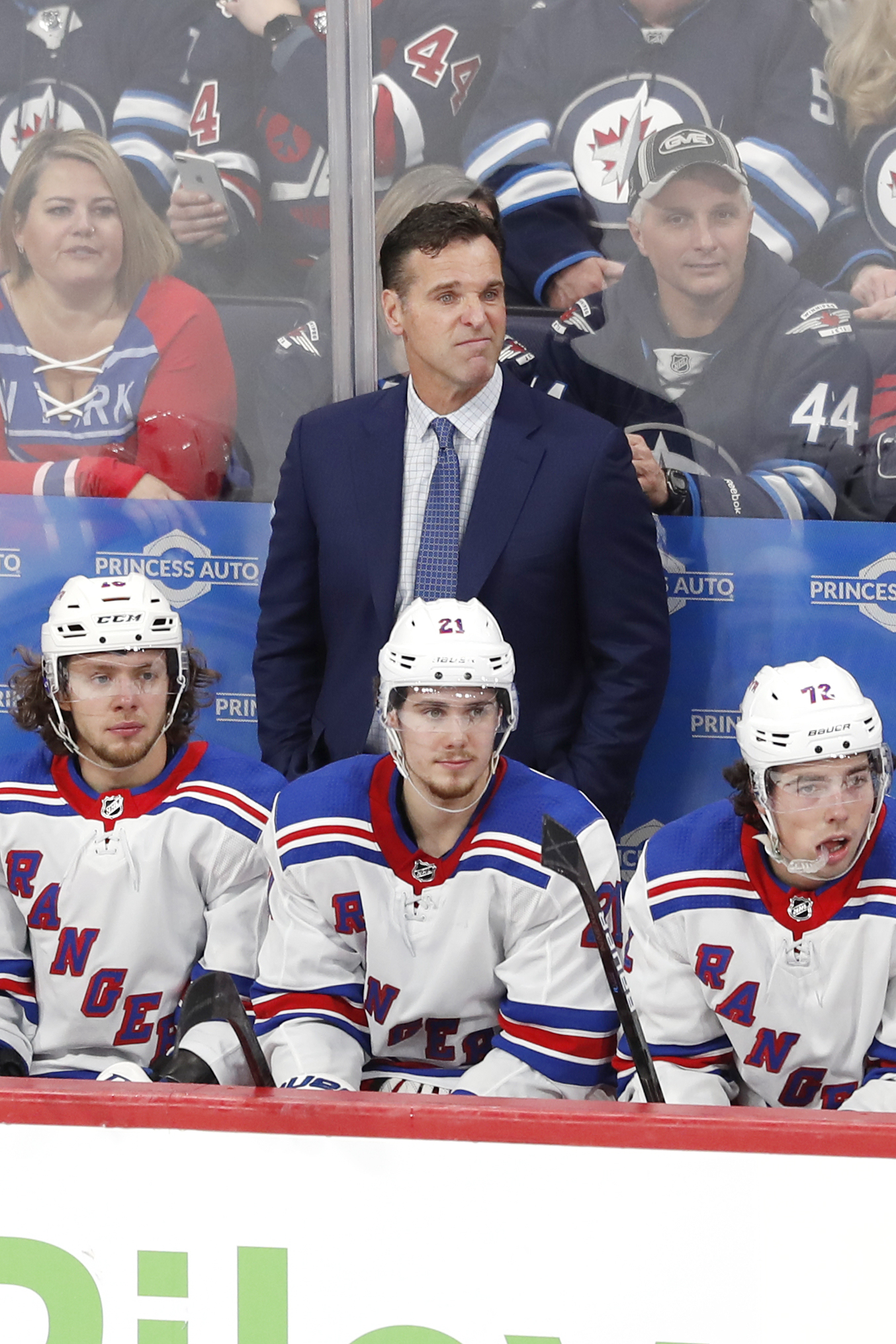
Quinn, 55, was most recently the head coach of the United States’ men’s hockey team at the Beijing Winter Olympics, and his most recent NHL experience came as head coach of the New York Rangers. From 2018-19 to 2020-21, Quinn led a rebuilding Rangers club that was struggling in the aftermath of a near decade-long cup-or-bust competitive window. The furthest Quinn took the Rangers in his three years of coaching there was the qualifying round of the 2020-21 Stanley Cup Playoffs, where the Rangers were swept out of the bubble by the Carolina Hurricanes. Quinn’s record over those three years is 96-87-25. Perhaps best known for his upbeat, encouraging style, the height of Quinn’s coaching career came when he led Matt Grzelcyk and the Boston University Terriers to the NCAA National Championship in 2014-15, before losing to Providence College.
The other candidate to be named as a leader in the Bruins’ search by Shinzawa’s sources is Leach, an assistant coach with the Kraken. Before joining Seattle, Leach was the head coach of the Providence Bruins for four seasons. Leach went a combined 136-77-26 in Providence, helping introduce current Bruins such as Jeremy Swayman and Trent Frederic to professional hockey. Leach is a candidate who the current Bruins front office is undoubtedly highly familiar with, and that familiarity could help him in the hiring process. Like Quinn, Leach is also expected to have an interview with Boston in the near future.
While it’s definitely possible that the Bruins hire someone other than one of these two names as their next coach, these two being named as “leading candidates” in the Bruins’ search does shed some light on the team’s priorities in the process. Through these reports, we’re learning about what the Bruins want to see in their next coach. Both Quinn and Leach have vast experience coaching young players specifically, and their shared experiences indicate that skill in player development is something the Bruins are targeting in their next skipper. Both coaches are also known quantities in the world of New England hockey, meaning familiarity with the overall market the Bruins serve could also be a desired trait in this search. Regardless of who specifically they choose, it would be somewhat surprising if the Bruins’ next head coach does not possess at least one of those two qualities.
Photo courtesy of USA Today Sports Images
Columbus Blue Jackets Extend Liam Foudy
The Columbus Blue Jackets have announced today that they have signed pending restricted free agent forward Liam Foudy to a two-year extension. Per the team’s announcement, the deal is a two-way contract in 2022-23 and a one-way, NHL contract in 2023-24. The contract carries a $750k NHL / $200k AHL salary split in year one, and a $775k, one-way salary in year two.
Foudy, 22, was the 18th overall pick at the 2018 NHL draft. The Blue Jackets fell in love with Foudy’s speed and always-on motor, and bet that, like many other London Knights before him, his production would hit new heights as he grew into a more prominent role on the team. That’s exactly what happened, and Foudy finished his OHL career as the captain of the Knights, scoring 68 points in 45 games in 2019-20. Since that point, Foudy has made the transition to professional hockey, and although he has played well, his overall production has fallen short of what some might have expected of him. His AHL point total has been good so far, with 35 points in 45 games, including 19 in 29 this past year before a shoulder injury ended his season. Foudy has also gotten into 25 career NHL games, but only has five points there, all assists.
As previously mentioned, the core of Foudy’s game is in his skating and his relentlessness. His overall offensive touch is still a work in progress, and whether he can utilize his raw tools to become an offensive difference-maker at the NHL level is still very much in question. With this two-year extension, the Blue Jackets will have two years to come to a more sound conclusion on what Foudy’s long-term NHL projection is. For Foudy, this extension highlights the importance of the next two years of his career in determining what kind of NHL-er he’ll be.
Free Agent Focus: Philadelphia Flyers
Free agency is now less than a month away and many teams are already looking ahead to when it opens up. There will be several prominent players set to hit the open market in mid-July while many teams have key restricted free agents to re-sign as well. Next up is a look at the Flyers.
Key Restricted Free Agents
F Morgan Frost — Frost, 23, has had high expectations placed on him since he was drafted 27th overall at the 2017 draft. Frost was a prolific scorer at the junior level, notching over 100 points in his final two seasons for the Soo Greyhounds of the OHL. In Frost’s first professional season he flashed that scoring talent as well, potting 13 goals and 29 points in 41 games. Frost also got into 20 NHL games, and posted a respectable seven points, although he did at times struggle with the pace and physicality of the NHL game. A dislocated shoulder cost Frost almost all of the 2020-21 season, and this past season was one that wasn’t the clear developmental step forward that many hoped it’d be. Sure, he scored well at the AHL level, with 19 points in 24 games, but he was shuttled between the NHL and AHL level multiple times before settling in and getting into a total of 55 games for the Flyers. He finished with 16 points in 55 games at the NHL level, including four in his last five games, and at times flashed the offensive upside that made him such a tantalizing prospect in the first place. His two-way game is still a work in progress, though, and it remains to be seen if Frost can truly stick down the middle long-term at the NHL level. His overall upside is still very much a mystery, and as a result, his next contract is complicated. If the Flyers remain major believers in his upside, he could always ink a long-term deal, but that seems highly unlikely, especially since he was not a draft pick of GM Chuck Fletcher. A one or two-year bridge contract seems most likely.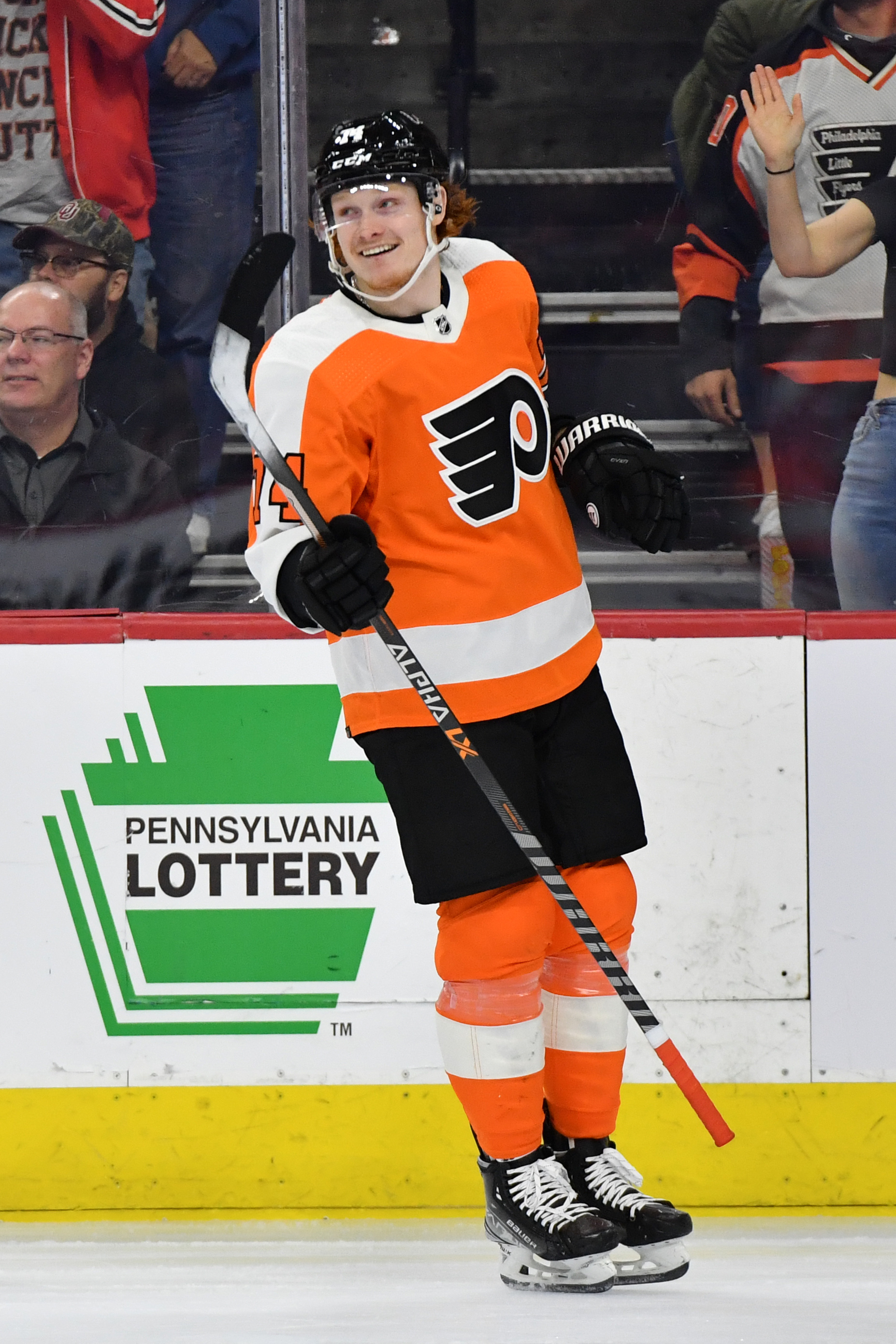
F Owen Tippett — Tippett, in some ways, is a lot like Frost. He’s also a 2017 first-rounder who has yet to establish himself as a full-time NHL-er but has also flashed the potential that got him drafted so high in the first place. Tippett came to Philadelphia as part of the Claude Giroux trade, and in his stretch as a Flyer (often playing on a line with Frost) Tippett had the up-and-down play that one would expect out of a highly skilled but also flawed young player. Tippett finished with seven points in 21 games, and also had 18 points in 14 games at the AHL level, a more clear reminder of the offensive talent he possesses. Like Frost, a short-term bridge makes the most sense for Tippett, who should come in at around a $1MM cap hit, if not lower.
F Zack MacEwen — MacEwen was claimed off of waivers from the Vancouver Canucks at the start of the 2021-22 season, and was one of only seven Flyers to reach the 75 games played mark. MacEwen, 25, is a hard-nosed grinder whose NHL minutes come thanks to his physicality and relentless motor. MacEwen isn’t much of an offensive producer — he had only nine points in 75 games in 2021-22 and has 18 points in his 130 career NHL games — but he plays a role many coaches still want in their lineup and does so at a cheap price. MacEwen played on an $825k cap hit this year and as he’s an arbitration-eligible restricted free agent, expect a small raise from that number to reward his hard work and availability.
Other RFAs: F Wade Allison, F Jackson Cates, F Hayden Hodgson, F Tanner Laczynski, F Isaac Ratcliffe, F Matthew Strome, F Maksim Sushko, D Linus Hogberg, G Kirill Ustimenko
Key Unrestricted Free Agents
F Nate Thompson — It’s been clear what Nate Thompson can bring at the NHL level for many years now. The 37-year-old center has been a bottom-six staple for nine NHL teams since making his debut in 2006-07. Thompson plays around 10-12 minutes per night, helps a second penalty-killing unit, and wins over half his draws. Thompson may not have a ton of gas left in his tank as he gets deeper into his late thirties, but if he still wants to play it’s easy to imagine him finding another suitor for the well-defined package of skills he brings. He clearly has an affinity for Philadelphia as well, as he signed up to return to the organization as a free agent after a year in Winnipeg, having first joined the Flyers as part of a 2020 trade with the Montreal Canadiens. It remains to be seen if the team’s expected next head coach, John Tortorella, will want Fletcher to retain his services, but if he does then Thompson could probably be had for around the $800k cap hit he played on this past season.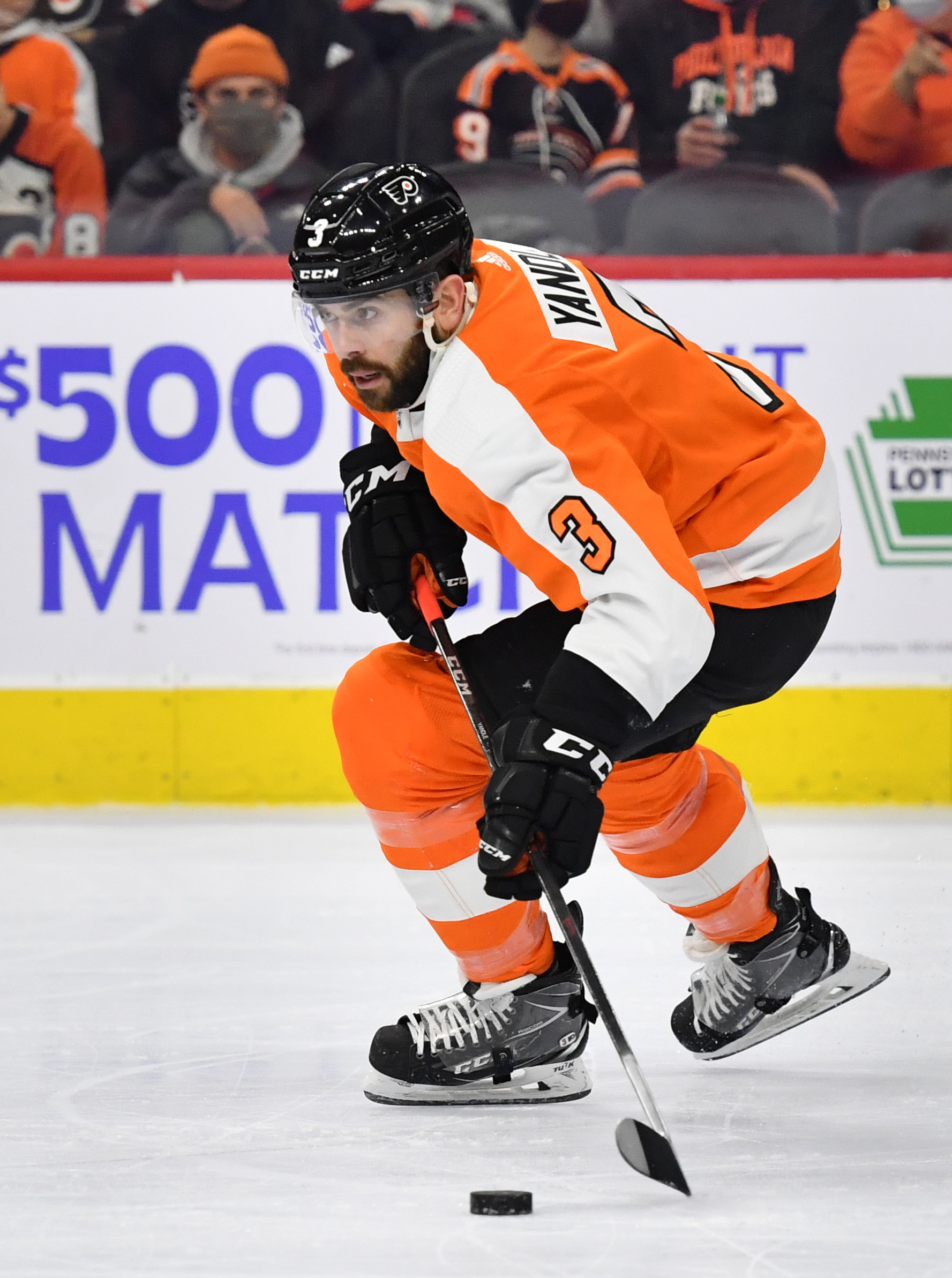
D Keith Yandle — Yandle was the subject of some controversy this season, as the Flyers snapped an “iron man” streak of consecutive games played that had lasted since 2009. Yandle is a well-liked locker room voice and a highly respected veteran, although his play on the ice has slipped considerably. After being bought out of his massive seven-year, $44.45MM deal, Yandle signed a one-year, $900k deal with the Flyers. He provided his trademark offense, albeit to a decreased degree, notching 19 points in 77 games. He also showed the defensive deficiencies that have plagued his game for years, deficiencies that have become even more pronounced as he’s aged. While Yandle is a player deserving of the utmost amount of respect for the career he’s had so far, it’s difficult to imagine a return to Philadelphia is in the cards for him. But given all that he’s put forth to date, he should probably be able to catch on somewhere this summer with a chance to make a team at a training camp next fall.
G Martin Jones – Like Yandle, Jones joined the Flyers after an offseason buyout forced an exit from his previous team. Unlike Yandle, though, Jones’ 2022 season was a quiet one. He got into 35 games and posted a .900 save percentage, a performance that isn’t anything to write home about. That production is made more palatable, though, by the fact that he was playing behind one of the NHL’s worst teams. The Flyers were a mess last season, and Martin Jones was far down on the list of their biggest issues. Jones is a veteran of nearly 400 NHL games and has flashed brilliance in the past, like when he led the San Jose Sharks on a run to the Stanley Cup Final in 2015-16. He’s a backup goalie who has in the past shown an ability to handle starter-level workloads, so another contract around the $2MM he earned this year, if not a touch lower, seems fair.
Other UFAs: D Kevin Connauton, F Ryan Fitzgerald, D Adam Clendening, D Brennan Menell, G Felix Sandstrom
Projected Cap Space
The Flyers enter an offseason where getting the team on track after two hugely disappointing years is a number-one priority. They have just over $5MM in cap space at the moment and their pending restricted free agents figure to occupy a small chunk of that. The real “X-factor” for this Flyers’ offseason, from a cap perspective, comes from whatever they choose to do with some of their highly-paid veterans. Defensemen Ivan Provorov and Travis Sanheim, making $6.75MM and $4.675MM against the cap, respectively, have each been the subject of trade rumors, as has winger James Van Riemsdyk, who is entering the final year of his $7MM-AAV deal. If the Flyers want space to aggressively upgrade their roster next month, they’ll likely have to move one of their major contracts.
Photos courtesy of USA Today Sports Images. Contract information courtesy of CapFriendly.
Tampa Bay Lightning Extend Sean Day
While the Lighting’s main focus has to be on tying their Stanley Cup Final series against the Colorado Avalanche, that hasn’t stopped their front office from getting some offseason work done early. Today the Lightning announced that they have re-signed defenseman Sean Day to a one-year, two-way contract. Per CapFriendly, the deal carries a $750k cap hit, a $750k NHL salary, a $200k AHL salary, and $225k in total guarantees.
Day, 24, is perhaps best known for being one of the few players granted exceptional status by the Ontario Hockey League. As an “exceptional player,” Day joined an elite group of OHL players including John Tavares, Connor McDavid, and Aaron Ekblad. Unfortunately, Day did not live up to his exceptional-status billing. While he wasn’t a bad OHL-er by any means, he struggled to be a true difference-maker until he got older and ended up on three different OHL teams during his five-year major junior career.
Day was drafted with the New York Rangers’ top pick at the 2016 draft, going 81st overall. The Rangers signed Day to his entry-level deal and at the conclusion of his OHL career plugged him into their minor league system. He bounced between the AHL and ECHL levels for his first two professional seasons before his contract was terminated, he became a free agent and signed with the Tampa Bay Lightning. With the Lightning’s affiliate, the Syracuse Crunch, Day become an AHL regular and this past season registered his most successful year as a pro, scoring 40 points in 69 games. Day averaged just under 19 minutes of time on ice per game, and his breakout AHL year led him to his first NHL call-up. Day got into two NHL games this year and averaged 10:43 time on ice per game.
Day’s one-year extension gives him the chance to stay in Syracuse and continue a career trajectory that’s pointed upwards ever since the start of 2021-22. While he may never end up fulfilling the potential he held as a junior, he seems to be on his way toward carving out a role as dependable organizational depth for one of the top franchises in the NHL.
Canadiens Notes: Anderson, Petry, Richardson
After dealing his team’s captain to the Vegas Golden Knights, Montreal Canadiens GM Kent Hughes met with the media to discuss the trade and answer questions. As part of the press conference, Hughes was asked about winger Josh Anderson, who has recently become the subject of trade rumors. Hughes was transparent about the situation, saying that they have had “many” teams call about Anderson, both around the trade deadline and more recently. Hughes said that while he wouldn’t be actively seeking to trade Anderson, he would be listening to any deal that could help the Canadiens.
While Anderson didn’t have a season to remember in 2021-22, it’s not hard to see why he would be of interest to contending clubs. The former 27-goal scorer has the rare combination of speed and power in his game that many GM’s covet, and he’s under contract through 2026-27. While the way Anderson’s contract will age as he accumulates more wear-and-tear on his body and gets deeper into his late twenties is an open question, it’s clear that GM’s are willing to look past those potential issues in order to acquire the unique player that Anderson is today. Whether a trade will actually happen, though, is unknown. But what we did learn from Hughes today is that the possibility of an Anderson trade is very much real.
Now, for some other notes regarding the Montreal Canadiens:
- One of the other Canadiens players often mentioned in trade rumors is defenseman Jeff Petry. Hughes has previously attempted to accommodate Petry’s desire for a trade, but has been unable to find a deal so far. Today, Hughes was asked about Petry’s situation and clarified that it’s unlikely to be a deal that gets consummated at this stage of the offseason. Hughes noted that teams are still “evaluating their needs,” and as a result, it could be harder to move the defenseman, especially given that he is 34 years old and carries a $6.25MM cap hit. While Petry undoubtedly had a down season in 2021-22, he did play better after the Canadiens hired Martin St. Louis. Under St. Louis, Petry had 21 points in 30 games and flashed the high-end form he displayed in 2020-21, when he had 42 points in 55 games. So while he’s certainly not an untradeable asset, Hughes’ comments indicate that the contract situations of fellow right-shot offensive defensemen such as Dallas’ John Klingberg may need to reach their conclusions before Petry’s can be solved.
- It was previously reported that Canadiens assistant coach Luke Richardson had interviewed with the Chicago Blackhawks for their head coaching vacancy, and Hughes confirmed as much in his media availability, stating that Richardson and the Blackhawks had met within the last 48 hours. Hughes also noted that Richardson was “in line” for a second interview with the Blackhawks and that he would not leave the Canadiens for anything other than a head coaching job. While the Canadiens’ coaching staff looks set for next season, the departure of Richardson, the most experienced coach on the staff, would create a hole that would need to be filled. With little NHL experience shared between head coach Martin St. Louis and assistants Alexandre Burrows and Trevor Letowski, the departure of Richardson would likely mean that the Canadiens would enter the market for an experienced assistant to help their young coaches handle the challenges that come with NHL life.
NHL Officially Announces Salary Cap, Salary Floor For 2022-23 Season
Two effectively retired players have been traded so far this offseason, and the reason for those deals has been simple: the salary cap. While the importance of effectively managing the salary cap is ever increasing, the cap itself is not. The NHL and NHLPA officially announced today that the league’s payroll upper limit (salary cap) for next season would be $82.5MM. The league also announced that the lower limit, or salary floor, would be set at $61MM.
The announcement confirms what many believed, that the salary cap would rise only $1MM from this past season’s number, a small increase due to the financial implications of the COVID-19 pandemic on the league. Because the NHL and NHLPA have collectively bargained a 50-50 split in terms of the league’s hockey-related revenue, a portion of player salaries are held in escrow and potentially surrendered to the league in order to ensure the integrity of the 50-50 split. The NHL lost a significant amount of money during the pandemic, in large part due to the fact that they needed to play games in arenas without fans or with significantly reduced capacity crowds. While the NHL’s clubs lost significant sums due to that lost revenue, the players’ salaries were unchanged, meaning the players have a “debt” that they owe to the league in order to ensure a proper 50-50 split, and that “debt” is paid through the escrow system. So, until the players fully “pay off” the “debt” that they owe as a result of the pandemic, the cap will rise only a minimal amount as we see for next season.
For some teams, this “flat-cap” reality has created significant problems. Many teams gave out significant, long-term contracts likely with the idea that those contracts would age better as the salary cap rose. That hasn’t happened yet, though, which is part of why we’ve seen such increased attention to how teams manage the salary cap. For other teams, the salary cap staying flat is largely irrelevant to their own payroll management. Teams like the Buffalo Sabres are actually below the cap floor, meaning their main concern is adding enough salary to stay above the league’s minimum team payroll. The Sabres and other teams now have certainty on the league’s cap floor, and it’s possible that we see more trades like the recent Ben Bishop deal as rebuilding clubs look to reach the cap floor with as much efficiency and as little real cash paid as possible.