
Salary Cap Deep Dive: Washington Capitals
Navigating the salary cap is one of the more important tasks for any GM. Teams that can avoid total cap chaos by walking the tightrope of inking players to deals that match their value (or compensate for future value without breaking the bank) remain successful. Those that don’t see struggles and front office changes.
PHR will look at every NHL team and give a thorough look at their cap situation heading into the 2021-22 season. This will focus more on players who are regulars on the roster versus those who may find themselves shuttling between the AHL and NHL. All cap figures are courtesy of CapFriendly.
Washington Capitals
Current Cap Hit: $80,831,260 (under the $81.5MM Upper Limit)
Entry-Level Contracts
F Connor McMichael ($863K through 2023-24)
McMichael was able to get his feet wet in the pros a year early with the OHL not playing and he made the most of it with a strong showing with AHL Hershey. He may have to wait until injuries strike to have a shot at playing but he has enough offensive upside to make an impact when he gets his opportunity next season.
One Year Remaining, Non-Entry-Level
F Nic Dowd ($750K, UFA)
D Matt Irwin ($750K, UFA)
D Michal Kempny ($2.5MM, UFA)
G Ilya Samsonov ($2MM, RFA)
D Justin Schultz ($4MM, UFA)
F Daniel Sprong ($725K, RFA)
G Vitek Vanecek ($717K, RFA)
Sprong has been inconsistent throughout his career but his AAV being below the cap ceiling creates some excess value for Washington to the point where he was protected in expansion. He has reached double digits in goals in two of the last three seasons and a repeat showing next season could push him towards doubling his AAV or more which could ultimately price him out of their plans. Dowd has done a nice job as their fourth line center but while he’s deserving of a raise, the Caps will need to keep that position at that price point to be able to afford their other contracts.
Schultz’s contract with Washington was somewhat of a surprise last fall but he had a nice bounce-back season. A big raise next summer likely isn’t in the cards but if he can pick up the points at a similar level, he could land a similarly-priced deal. Kempny had a year to forget, tearing his Achilles’ tendon and just as he was working his way towards a return in the minors, he was struck by an ice shoveler during a break in play, ending his season in the process. He was providing pretty good value on his contract before that and will need to get back to a similar level and show he’s healthy in order to command interest next summer. Irwin appears to be a candidate to bounce around as the seventh defenseman and the minors (pending him clearing waivers) as a way to bank a bit of extra room as the season progresses.
Samsonov had a tough sophomore year and with their salary cap situation, Washington was forced to go with a one-year bridge contract. He will be eligible for arbitration next summer and a strong season could allow him to double his AAV or more. Vanecek was re-acquired from Seattle and returns as arguably the biggest value contract for goaltenders in the league as he established himself as their starter last season at a price that is the lowest in the league in terms of AAV. Also arbitration-eligible, he’s already heading for a significant raise and it’s quite unlikely that Washington will be able to keep both netminders beyond this coming season.
Two Years Remaining
F Lars Eller ($3.5MM, UFA)
F Carl Hagelin ($2.75MM, UFA)
F Garnet Hathaway ($1.5MM, UFA)
D Nick Jensen ($2.5MM, UFA)
D Dmitry Orlov ($5.1MM, UFA)
F Conor Sheary ($1.5MM, UFA)
D Trevor van Riemsdyk ($950K, UFA)
Eller has been a key part of Washington’s forward group for the past five seasons, splitting time between the second line and third line depending on their injury situation. He’s a bit pricey on the third line but it’s a justifiable premium to pay and with the way the UFA market has been for centers, he can land a similar amount two years from now. Hagelin has underwhelmed a little bit on this deal; he’s still an effective defensive player and a strong skater but his price tag is a bit much for someone in a limited role. Hathaway’s physicality makes him a quality fourth liner and while he’s a bit expensive for that role, he has provided good value so far. Sheary’s first season with Washington went well enough to land this two-year deal as a secondary scorer. If he scores at a 20-goal pace again, this will be a nice bargain for them.
Orlov had a bit of a tough season but is still a fixture in their top four. He’ll be 32 when his next deal kicks in and it wouldn’t be surprising if he is looking for a final contract at that time. With the big commitments they already have on the books (more on them shortly), that may be difficult for Washington to do unless Orlov will take a discount to make that happen. Jensen hasn’t been able to make the type of impact the Capitals hoped when they handed him this four-year deal and he’s someone they’d likely be willing to part with for cap flexibility purposes. As for van Riemsdyk, he spent a lot of last season in the press box but is a capable depth piece at a low price tag which helped him get protected from Seattle.
Three Years Remaining
F Anthony Mantha ($5.7MM, UFA)
F Tom Wilson ($5.166MM, UFA)
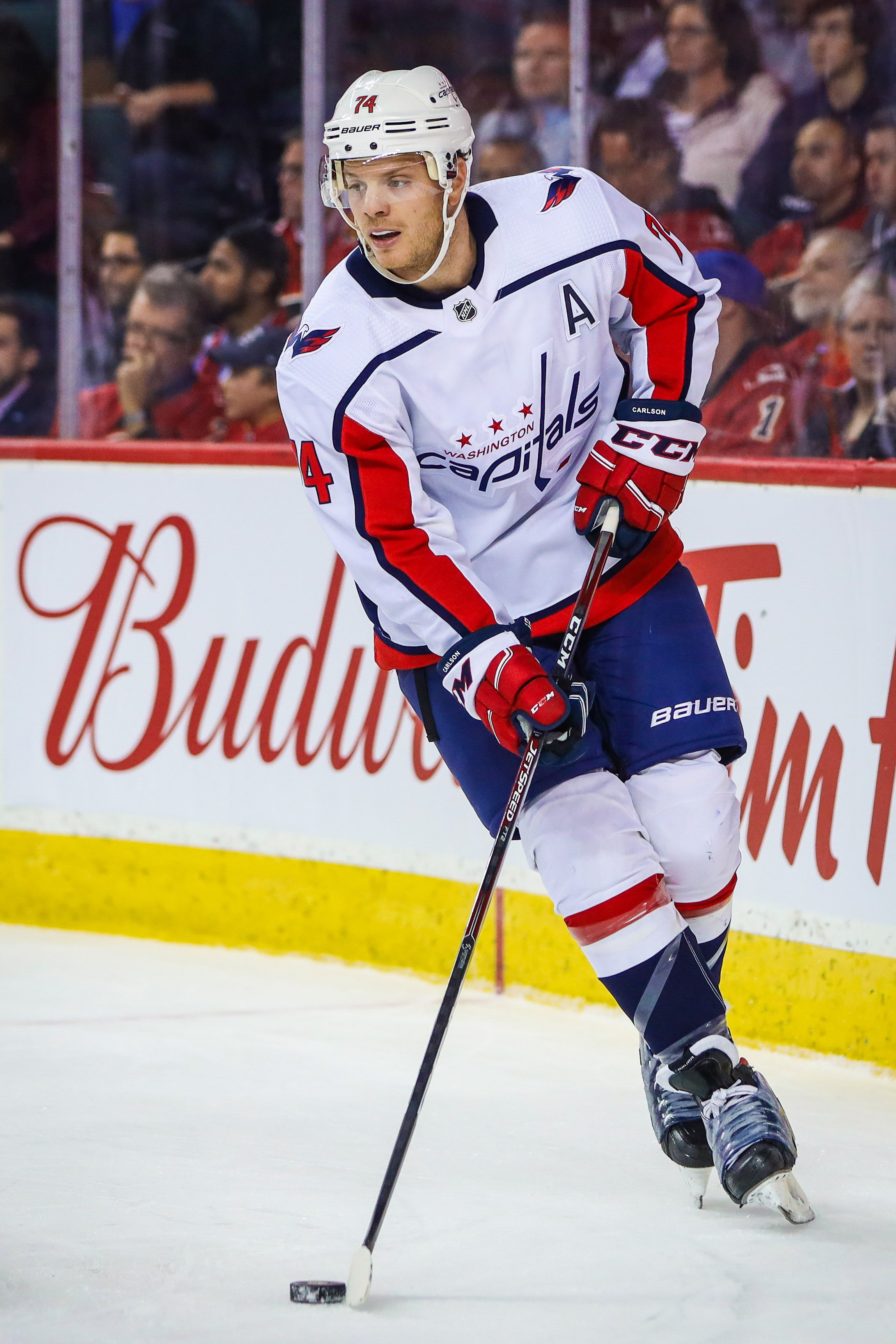
Mantha was a bit of a surprising acquisition at the trade deadline with Washington paying a fairly high price to get him from Detroit (and clear out the rest of Richard Panik’s contract). He made a good first impression but has been inconsistent for most of his career. He will need to improve on that front if he wants a shot at a bigger contract in free agency. When it comes to Wilson, his price tag looked excessive early on but with the way the market for power forwards has been (in part because of this deal), it holds up better now, especially since he’s frequently deployed in the top six. But with his frequent near-misses with the Department of Player Safety, there will always be some risk when it comes to him potentially crossing the line and landing a hefty suspension that wouldn’t allow the Capitals to bring up a replacement with how tight they are to the Upper Limit.
Five Key Stories: 8/23/21 – 8/29/21
Even though arbitration-bound cases have all been settled, there were still some signings of note around the NHL over the past seven days which are highlighted in the key stories of the week.
Hayes Passes Away: Unfortunately, the week got off to a tragic start with former NHL winger Jimmy Hayes passing away at the age of 31. The cause of death is still unknown after an autopsy was performed later in the week. Hayes spent parts of seven years in the NHL, suiting up in 334 games between Chicago, Florida, Boston, and New Jersey; he last suited up in the NHL during the 2017-18 season. PHR extends its condolences to Hayes’ family.
Eichel Changes Agents: It hasn’t been a fun summer for Jack Eichel. It’s more than clear at this point that he wants out of Buffalo and the ability to have the procedure that he wants done to repair his neck injury than the one the team wants. Public pressure from his agents last month didn’t help facilitate a trade so Eichel is trying a new tactic as he has switched agents. Pat Brisson of CAA Sports will now take over from Peter Fish and Peter Donatelli of Global Hockey Consultants. Brisson has the richest portfolio of existing player contracts at over $1 billion, per PuckPedia, and will now be tasked with helping to find a way for Eichel to be moved and get the surgery he’s looking for.
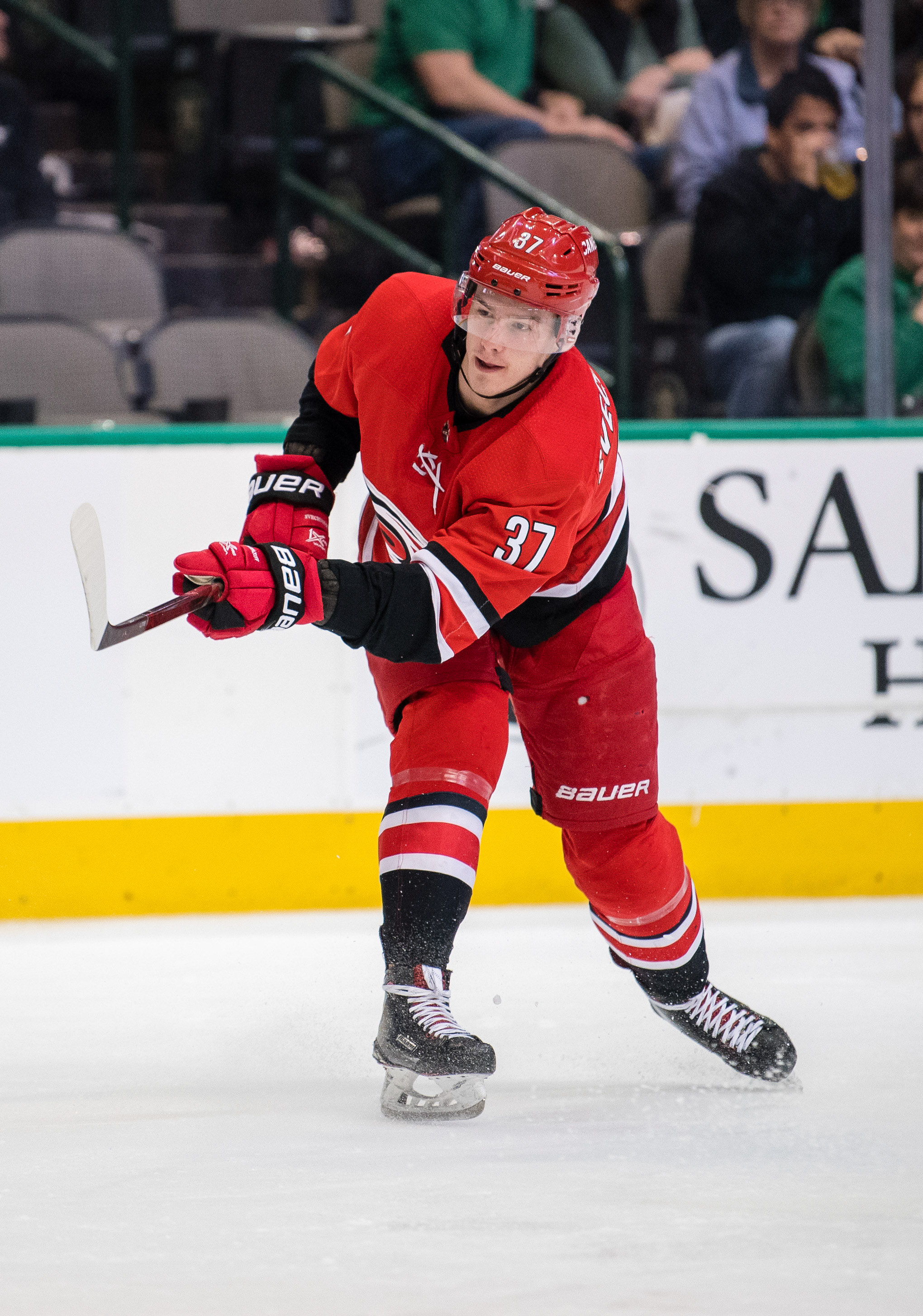 Svechnikov Signs: One of the more prominent restricted free agents is now under contract as the Hurricanes and winger Andrei Svechnikov agreed on an eight-year, $62MM contract. The deal contains a 10-team no-trade clause in the final four years of the deal, the only ones that are allowed to have any form of trade protection. Svechnikov, the second-overall pick in 2018, has quickly become a capable top winger for Carolina and this type of commitment from the team – it’s the largest contract in terms of total money spent in franchise history – certainly demonstrates that they envision him being a long-term cornerstone and that they think he has another level he can still reach.
Offer Sheet For Kotkaniemi: With Svechnikov signed, Carolina had a more concrete idea of how much they had left to spend. They decided to try to either add some extra depth down the middle or to exact some revenge on Montreal for their offer sheet of Sebastian Aho two years ago as they tendered RFA center Jesperi Kotkaniemi to a one-year offer sheet worth just over $6.1MM. The 21-year-old was the third-overall pick in 2018 but hasn’t made as quick of an impact as some others from his draft class have and is coming off a season that saw him notch just 20 points in 56 games. He’s clearly not yet worth that high of a price tag so the Canadiens now need to decide to pay the above-market contract or accept first and third-round picks in 2022 as compensation.
Signing Centers: The Flyers were busy in terms of some activity down the middle. First, they inked veteran Derick Brassard to a one-year, $825K deal, giving them a veteran center on a low-cost deal. The bigger news came just hours after Svechnikov signed his deal as Philadelphia revealed that center Sean Couturier signed for the same money the Carolina winger did, inking an eight-year, $62MM extension that keeps him under contract through 2029-30. The deal also contains a full no-move clause in the first seven seasons. It took a few years for Couturier to find his offensive footing but in recent years, he has been a strong offensive producer while continuing to be one of the stronger defensive pivots in the league. With the deal, the Flyers now have a franchise cornerstone locked up long term.
Photo courtesy of USA Today Sports Images.
Snapshots: Olympics, Outdoor Game, Eichel
Fresh off the field for next year’s Olympic tournament being set, ESPN’s Emily Kaplan reports (Twitter link) that an official decision on NHL participation is expected at some point this week. Octagon Hockey player agent Allan Walsh adds (Twitter link) that the decision will be that the league does allow their players to participate with an announcement being imminent.
While an allowance was made in the CBA for Olympic participation, it wasn’t set in stone that NHL players would be permitted to play but rather that an attempt would be made. Talks have gone well beyond the original window but it appears that barring a last-minute change of direction, the league will indeed shut down for the bulk of February.
Elsewhere around the hockey world:
- The Maple Leafs and Sabres are expected to play in an outdoor game in Hamilton, Ontario in March, reports Mike Harrington of The Buffalo News. The two teams were supposed to be playing an game in Buffalo in mid–March but that contest was absent from the season ticket packages from last week. Instead, the Sabres would be the home team in what technically would be a neutral site game but with Hamilton close to Toronto geographically, the ‘visitors’ for the Heritage Classic event would likely receive the majority of the fan support.
- Sportsnet’s Elliotte Friedman reports in the latest 31 Thoughts podcast (audio link) that representatives from the Sabres, the NHL, the NHLPA, plus Jack Eichel and his now-former agents had a meeting around the middle of this month to try and come to an understanding on Eichel’s pending neck surgery. The team wants a more traditional fusion surgery which carries a longer recovery time and a fairly high chance of another procedure being needed down the road while Eichel prefers artificial disc replacement which hasn’t been done on an NHL player before. There was clearly no resolution on the matter and the wait for a trade continues.
Notes From The Jesperi Kotkaniemi Offer Sheet
Offer sheets in the NHL are few and far between which makes it notable any time one is signed. Rarer still is one that has a player signing for as much above market value as Jesperi Kotkaniemi did when he signed his one-year, $6,100,015 tender from the Hurricanes on Saturday. Here are some notes from around the hockey world on the move.
- Pierre LeBrun of TSN and The Athletic mentions (Twitter link) that Carolina and Montreal did have trade talks regarding Kotkaniemi although clearly, they weren’t able to come to an agreement.
- Sportsnet’s Eric Engels writes that Montreal’s decision is a lot harder than the one the Hurricanes had two years ago when the Canadiens tendered an offer sheet to Sebastian Aho. He suggests Arizona’s Christian Dvorak as someone they’d be wise to have discussions about over the one-week matching period to see if some of the draft capital they’d get by not matching could be flipped for him.
- Renaud Lavoie of TVA Sports relays (Twitter links) that league executives pegged Kotkaniemi’s actual value on a one-year deal no higher than $2.2MM, providing some perspective on how much of a perceived overpayment this contract is. He adds that the idea to tender Kotkaniemi the offer sheet came from Hurricanes owner Tom Dundon, not GM Don Waddell.
- Arpon Basu of The Athletic writes (subscription link) that Montreal’s bigger concern should be that Kotkaniemi, who had spoken about wanting to stay with the Canadiens for the long haul in the past, was willing to go along with the offer sheet. He feels Montreal is in a no-win situation by either needing to pay Kotkaniemi well above market value and potentially messing up their salary structure or losing someone they hoped would be a franchise cornerstone for somewhat of an underwhelming return.
- Sportsnet’s Elliotte Friedman reports in the latest 31 Thoughts podcast (audio link) that Montreal wasn’t close on a contract with Kotkaniemi’s camp and was focused on a bridge contract which is something the 21-year-old wasn’t interested in. He also believes that Carolina had discussions with Kotkaniemi on the framework of a long-term extension that could be signed once eligible that would come with a price tag below this one. Of course, Kotkaniemi wouldn’t have to agree to that knowing that he’ll need to be qualified at $6.1MM next summer.
- While Carolina would technically be over the salary cap if the Canadiens don’t match, Sara Civian of The Athletic suggests (subscription link) that it may not be too difficult for them to get back under by clearing out the remaining two years at $4MM on defenseman Jake Gardiner’s contract. Considering he has cleared waivers before, they’d likely need to provide some retention on that contract to make a trade work.
PHR Mailbag: Sabres Rebuild, Rangers, Eichel, Sorokin, Predators, Breakout Candidates, Remorseful Moves, Dzingel
Topics in this edition of the PHR Mailbag include Buffalo’s rebuilding process, the pursuit of Jack Eichel from the Rangers and if Detroit should be in the mix, a proposed offer sheet, Nashville’s underwhelming summer, under the radar breakout candidates, moves that general managers may one day wish they had a mulligan on, and where Ryan Dzingel landed in free agency. If your question doesn’t appear here, watch for it in next weekend’s mailbag.
LarryJ4: What Adams has done with the Sabres roster seems to be geared towards clearing out the losing mentality of certain players would you agree? Complete reset so to speak and hear up a rebuild what he feels is the right way. The previous 2 GMs failed to bring in players that their character properly fit the “retool/rebuild” mode of a team. Granted the last one was brought in by Adams, being Taylor Hall, but that seems like a knee jerk reaction by Adams facing pressure from Ownership that appears clueless.
Second question is do you think Adams has the invisible “handcuffs” off of him this go around?
I don’t know if I’d go as far as saying the rebuild is built on trying to clear out anyone with a losing mentality. Everyone on the Sabres for an extended period has been through plenty of losing so it could be suggested they all have had that particular mentality ingrained in them over the years.
This feels like a situation where they finally realized that they’re not just a player or two away from becoming contenders and trying to add that piece each year becomes futile after a while. Their captain isn’t coming back anytime soon, if at all, further pushing them in that direction. In that case, selling off the players who were nearing unrestricted free agency was the logical next step. Rasmus Ristolainen and Sam Reinhart probably weren’t signing new long-term deals with Buffalo so they pretty much had to go.
As for the handcuffs, that’s always difficult to speculate on as owners have differing levels of involvement throughout the league but this is the type of rebuild that requires ownership signing off on. The fact that GM Keyvn Adams has made the moves he has made suggests he has received the commitment and green light to see this process through.
CoachWall: Now that we know Eichel is going to miss the first month or so, have the Rangers pivoted to re-upping Z-dad?
In the context of this question, I’m going to say no. Not having Eichel available for the start of next season shouldn’t drastically affect how much they want him. He has five years left on his deal so missing 15-20 games at the start of that span shouldn’t discourage them from going after him when the potential for four-plus years of a number one center is still there.
At this point, GM Chris Drury should be working both fronts. He can keep inquiring on Eichel to see if the price will eventually change while at the same time doing his due diligence in terms of what it will cost to keep Zibanejad around; Eichel not being ready to start the year shouldn’t push Drury down a path he should already be on. Both aren’t going to be doable but it doesn’t mean discussions can’t be done for both options at the same time so that the Rangers can make one of the two moves when the time is right.
gowings2008: The Red Wings lack a true number one center, is it possible they are secretly in on Eichel? He fits their core group in terms of age and the Wings have the cap space to fit him in. I know the Red Wings have rarely leaked any rumors under Yzerman, but this is an opportunity that rarely presents itself and they have the pieces, I would think, to make it work.
You make a very reasonable case for Detroit to go down this path and I agree that they probably have the assets to make a trade work. But the timing doesn’t feel right to me.
GM Steve Yzerman’s offseason was all about adding bridge pieces. Nick Leddy is someone that could be flipped later in the year, Alex Nedeljkovic only received a two-year deal that walks him to UFA eligibility (and there are questions about whether or not he can be an NHL starter) while up front, Pius Suter was the only addition of note, also receiving a two-year deal that takes him back to UFA status. To drastically shift towards trying to win now runs counterintuitive to what they’ve done the last few months.
I’ll put it this way. If Detroit was in on Eichel, making a move before the draft would have been the right time to do it. Then they’d have been more aggressive in terms of trying to add more proven win-now talent via trade and free agency and really emerge from the rebuild. But if Yzerman still thinks they’re a couple of years away from doing that (and his activity the last two months suggests that’s the case), then the high cost to acquire Eichel would be a little harder to justify since he alone wouldn’t make them a playoff team and there aren’t any notable free agents left that they could try to add after landing Eichel.
I actually quite like the idea of Eichel in Detroit but I think the right time for that was two months ago, not now.
Robert Evans Jr.: Why doesn’t Buffalo just offer sheet Sorokin for $4.11 million a year for five or six years to be the goalie of the future??
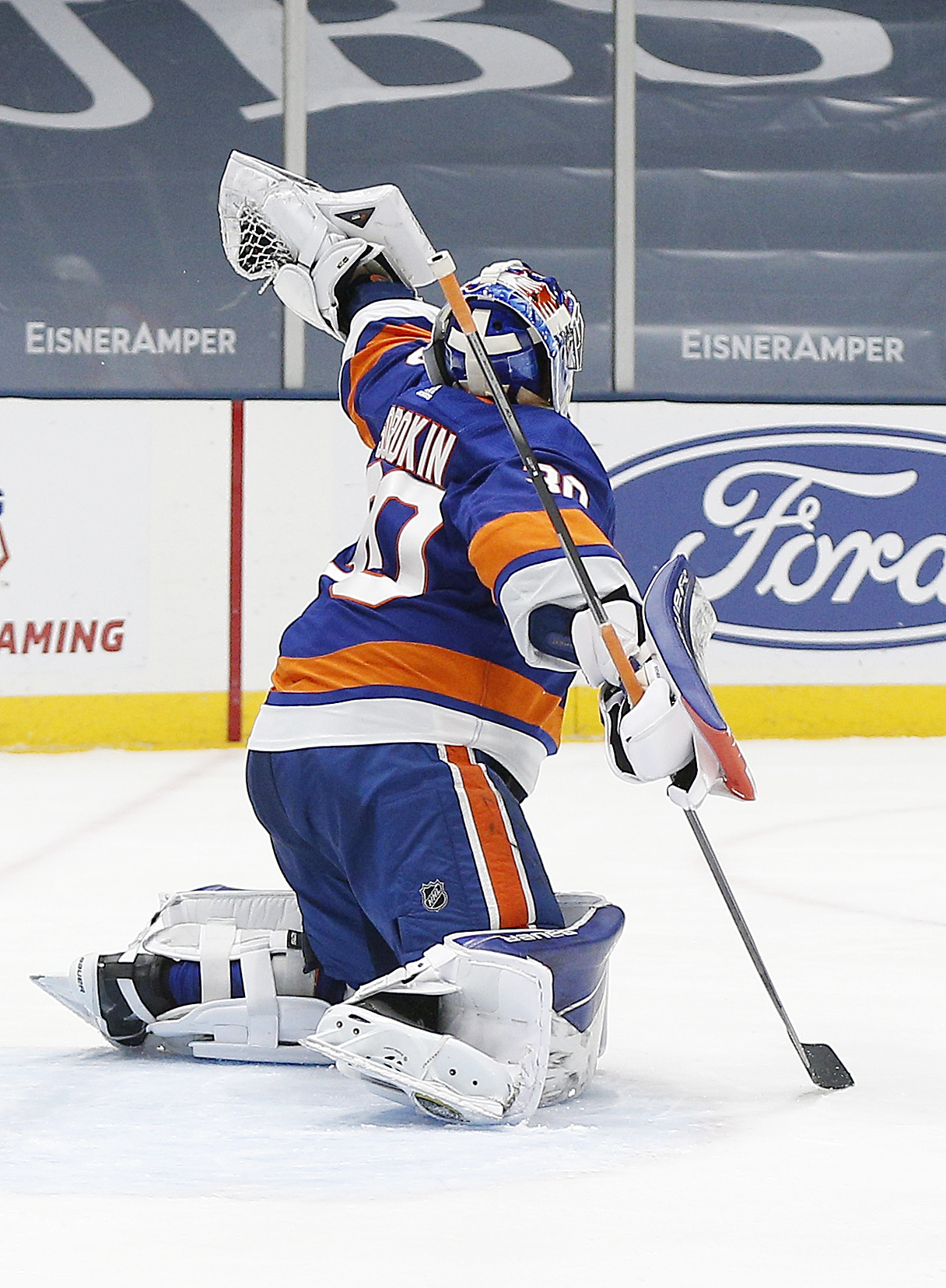 I’m glad you mentioned five or six years in the question as it gives me a chance to highlight a rule that often gets missed. For offer sheet purposes, the maximum divisor is five, even if the term of the contract is longer. Accordingly, while a five-year offer sheet at $4.11MM per year would yield a second-rounder, the six-year term would actually push him up a tier to the first-rounder plus a third-rounder. The total compensation for that offer would be $24.66MM with the maximum divisor at five. That means for offer sheet compensation purposes, his AAV would be $4.93MM (even though the AAV of the contract is still $4.11MM).
With that said, there are a couple of reasons that Ilya Sorokin won’t sign that contract. First, he would actually have to want to sign that deal to go to Buffalo and with the direction the Sabres are going, they’re not exactly going to be a desirable destination for a little bit. The second is that he probably has already agreed to terms with the Islanders as GM Lou Lamoriello has a whole bunch of deals done that haven’t been announced yet. The fact that Sorokin didn’t file for arbitration feels like a strong sign that his contract is among those in place that we’ll officially find out about at some point in the next six weeks.
Gbear: Rhetorical question, but how does subtracting Viktor Arvidsson and Calle Jarnkrok and adding Philip Tomasino and Cody Glass to an already paltry offense in Nashville improve their goal-scoring output?
Rhetorical or not, I’ll answer anyway. It really doesn’t help them although with the way David Poile has built his team this summer, it sure looks like they’re a team that’s looking at some short-term pain (and salary savings) for long-term gain.
If they kept their core intact and still brought Glass in, we’d be talking about him playing in the minors and waiting for a recall. By moving Arvidsson to the Kings and losing Jarnkrok to Seattle, now there’s a defined spot on the third line for Glass for him to get a more consistent chance that he had with Vegas last season. Considering Nashville’s long-standing need for help down the middle, it only made sense to add someone like Glass if they had a chance to play him.
Tomasino looks like he’s ready to contribute based on his play as an underager in the AHL last year. I’m not as bullish on them seemingly keeping a roster spot for him as a 20-year-old but it certainly feels like they want to get his NHL experience started quickly in the hopes of expediting his development.
Are the Predators better now than they were last season? Certainly not. So if they’re going to be rebuilding, they might as well get the youngsters some playing time in a role where they’ll have a chance to succeed right away. If the development of Glass and Tomasino (among other youngsters) next season is bolstered, the long-term improvement should outweigh the short-term drop in production that is certainly coming.
Snapshots: Krejci, Lundqvist, Chabot
When David Krejci announced he was leaving the NHL to play at home in the Czech Republic this season, he left the door open to an NHL return. However, that return won’t come this season after the Extraliga season comes to an end. In an interview with iROZHLAS earlier this week, the veteran indicated that he would not return to the NHL to join Boston for the stretch run but wouldn’t rule out playing back in the NHL in 2022-23. Krejci would have to clear waivers in order to sign that late in the season anyway and it’s unlike that Boston or any other team would have been able to get him through unclaimed.
Elsewhere around the hockey world:
- How close was Henrik Lundqvist to attempting to return to Washington last season? In an interview with Goteborgs-Posten (translated by the NHL’s website) the veteran netminder was only three days away from flying out to rejoin the Caps before being diagnosed with pericarditis, ending those comeback hopes in the process. Lundqvist opted to retire earlier this summer and mentioned that he will need another surgery on his heart at some point in the future.
- After finishing behind only Drew Doughty in average ice time per game, it appears that Senators defenseman Thomas Chabot will have a slightly lighter workload next season. Head coach D.J. Smith told Postmedia’s Bruce Garrioch that his intention is to have the 24-year-old carry a lighter workload; the scribe pegs that target around 23 minutes per game. That would be a sizable drop from the 26:17 he logged last season; in fact, the only time that he has averaged below 23 minutes a game was his rookie season in 2017-18.
Free Agent Profile: Jason Demers
In his prime, Jason Demers was a capable second pairing defenseman that was reliable in his own end and could contribute a little bit offensively. Those days have come and gone but the veteran can still make a case to be brought in as a serviceable option on the third pairing.
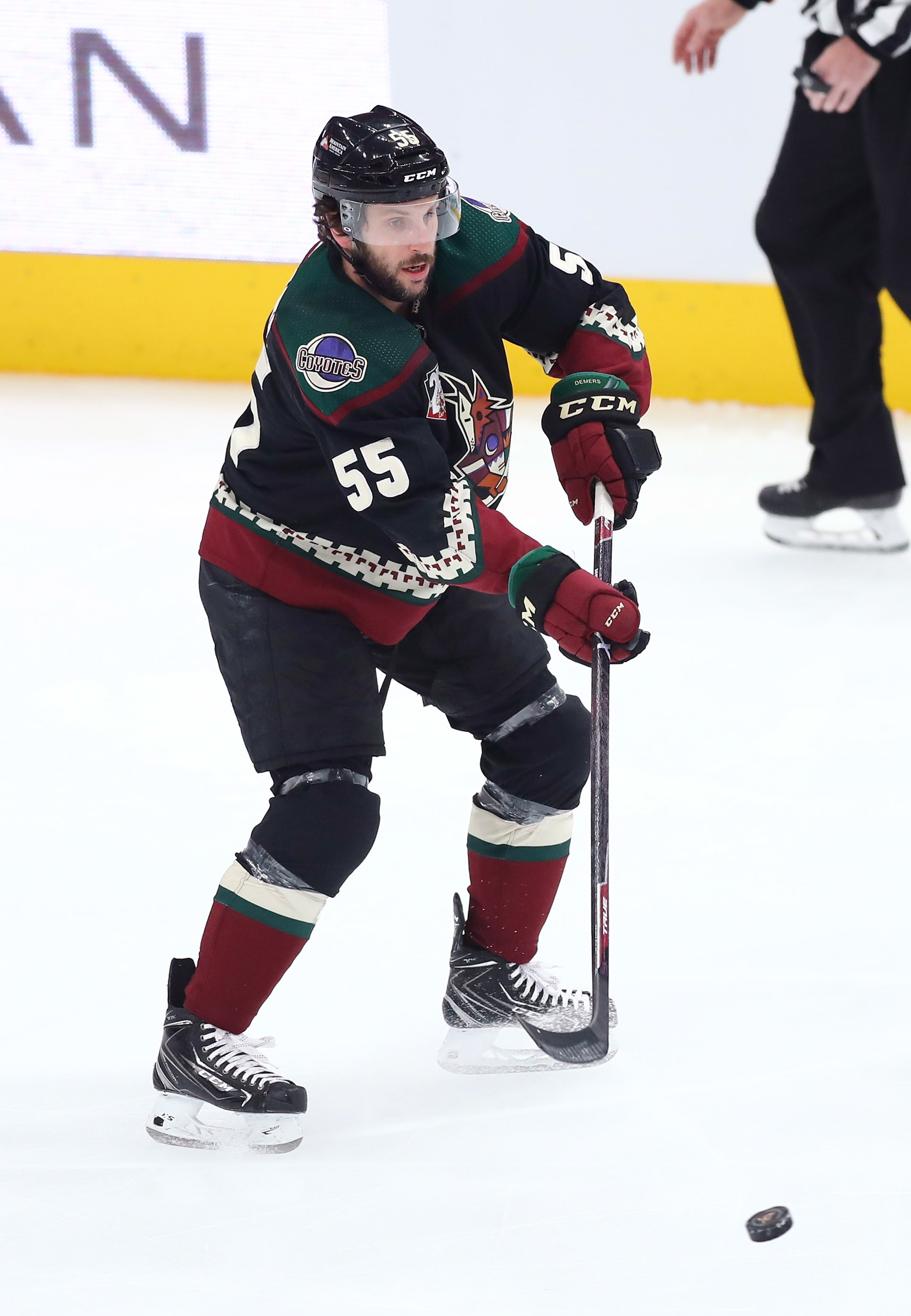 Unfortunately, the 33-year-old will be relying on his track record over his career to make that claim, not his performance last season. There’s no sugar coating it – 2020-21 wasn’t pretty. Demers slipped down the depth chart to the third pairing, averaged his lowest ice time in nearly a decade, and eventually found himself scratched with some frequency down the stretch with Arizona well out of playoff contention.
But while it’s certainly reasonable to consider that this is a sign of things to come, Demers was in a top-four role as recently as 2019-20 where he was a fixture on Arizona’s penalty kill and logging more than 20 minutes per game. It’s unlikely he’ll get back to that form but players don’t often drop from being a top-four blueliner to borderline unplayable quite that quickly. A small bounce-back season is certainly doable.
What also helps Demers is that he’s a right-shot defender which is a position of some scarcity around the league and certainly among the remaining rearguards on the open market. While handedness isn’t as big of a factor for some coaches as it is for others, being a righty should open up some extra opportunities.
Stats
2020-21: 41 GP, 0-4-4, -4 rating, 26 PIMS, 44 shots, 49.6 CF%, 17:14 ATOI
Career: 699 GP, 45-169-214, +31 rating, 407 PIMS, 884 shots, 51.7 CF%, 19:10 ATOI
Potential Suitors
Who needs low-cost roster depth? Plenty of teams will be searching for an extra low-cost defender in the weeks to come to give them some extra insurance heading into training camp while those with weaker depth on the right side could have more interest in someone like Demers.
In the East, Demers would serve as an upgrade in Pittsburgh on Chad Ruhwedel or Mark Friedman, veterans who have primarily been AHL or reserve options in recent years. Montreal’s third right-shot blueliner is Chris Wideman, a veteran who hasn’t seen NHL action the last two seasons so Demers would at least serve as some insurance on that front. Demers would also be an upgrade in Columbus who could view Demers as someone that could play early on to allow a younger player like Andrew Peeke or Gabriel Carlsson to spend a bit more time in the minors before flipping Demers midseason.
Out West, the Blues could stand to add some veteran depth with the departures of Vince Dunn and Carl Gunnarsson while Robert Bortuzzo, a righty like Demers, has typically been used in a platoon role over playing in every game. Calgary’s right side is thin behind Rasmus Andersson and Christopher Tanev while Chicago could use someone like Demers if they feel Ian Mitchell is better served playing top minutes in Rockford over the third pairing with the Blackhawks.
Projected Contract
Demers’ tough season put him on the outside looking in for our Top 50 UFA list and his value has certainly dropped as well. At this point, it wouldn’t be surprising if he had some PTO offers on the table but he still has some time to try to land a guaranteed deal. A one-year deal at or near the league minimum of $750K may be all he can land at this point and if last season was just an aberration and not a sign of a quick decline, whoever gets him could wind up with a bit of a bargain.
Photo courtesy of USA Today Sports Images.
West Notes: Canucks, Thomas, Skinner
There’s an expectation that one of Canucks RFAs Elias Pettersson and Quinn Hughes will have to take a short-term contract this summer in order for Vancouver to be cap-compliant for next season. Speaking with Vancouver Hockey Now’s Rob Simpson, Pat Brisson, the agent for both youngsters, indicated that there’s no indication yet as to which player could wind up with which type of contract. Simpson suggests that Pettersson, who has offer sheet eligibility, could be the likelier player to sign first since Hughes doesn’t have that right although the odds of the center receiving an offer sheet worth signing at this stage is highly unlikely. No discussions are expected over the coming days with GM Jim Benning taking a quick summer break before training camp, something many general managers around the league are likely doing.
More from the Western Conference:
- Blues RFA forward Robert Thomas is believed to be seeking a higher AAV than the $2.8MM that Jordan Kyrou received earlier this season, reports Jeremy Rutherford of The Athletic (subscription link). The 22-year-old is coming off a tough injury-riddled season that saw him post just a dozen points in 33 games but with 75 points in 136 contests over his first two seasons, he has enough of a track record to try to get that on a bridge deal. Louis doesn’t have that much cap space but with Oskar Sundqvist headed for LTIR to start the season, that would give them enough of a buffer to get Thomas under contract although they’d need to get cap-compliant by the time Sundqvist returns.
- Oilers goaltender Stuart Skinner has been Edmonton’s top goalie prospect basically since they drafted him back in the third round in 2017. However, as Postmedia’s David Staples notes, they’ve never really shown much confidence in him, evidenced by the acquisition of veterans in recent years including Alex Stalock who presently sits ahead of him for the third spot on the depth chart. With some of their other prospects now in the minor pros (Ilya Konovalov and Olivier Rodrigue), time is running out for Skinner to establish himself as a viable option for Edmonton. If that doesn’t happen soon, it’s possible that he’ll become a trade candidate if one of those other prospects is ready for a bigger role in Bakersfield.
Salary Cap Deep Dive: Winnipeg Jets
Navigating the salary cap is one of the more important tasks for any GM. Teams that can avoid total cap chaos by walking the tightrope of inking players to deals that match their value (or compensate for future value without breaking the bank) remain successful. Those that don’t see struggles and front office changes.
PHR will look at every NHL team and give a thorough look at their cap situation heading into the 2021-22 season. This will focus more on players who are regulars on the roster versus those who may find themselves shuttling between the AHL and NHL. All cap figures are courtesy of CapFriendly.
Winnipeg Jets
Current Cap Hit: $87,297,979 (over the $81.5MM Upper Limit)
Entry-Level Contracts
F David Gustafsson (one year, $818K)
D Ville Heinola (three years, $863K)
F Kristian Vesalainen (one year, $894K)
Potential Bonuses:
Gustafsson: $57.5K
Vesalainen: $850K
Total: $907.5K
Vesalainen has yet to live up to his first-round draft billing but he spent most of last year up with Winnipeg either on the active roster or the taxi squad while also getting into four playoff contests. Unless they need to fill his roster spot with a minimum-salaried player, he should have an opportunity at a full-time roster spot, albeit on the fourth line which won’t help his odds of reaching any of his incentives. Gustafsson hardly played with Winnipeg last season but with the departure of many of their depth players, they’ll need to fill some of those spots from within which gives him an opportunity for a regular spot in the lineup. Heinola is likely on the outside looking in to start the year but he has impressed in the minors and could push his way into a regular role as the season progresses.
One Year Remaining, Non-Entry-Level
D Nathan Beaulieu ($1.25MM, UFA)
G Eric Comrie ($750K, RFA)
F Andrew Copp ($3.64MM, UFA)
F Pierre-Luc Dubois ($5MM, RFA)
F Jansen Harkins ($725K, RFA)
F Riley Nash ($750K, UFA)
D Sami Niku ($725K, RFA)
F Paul Stastny ($3.75MM, UFA)
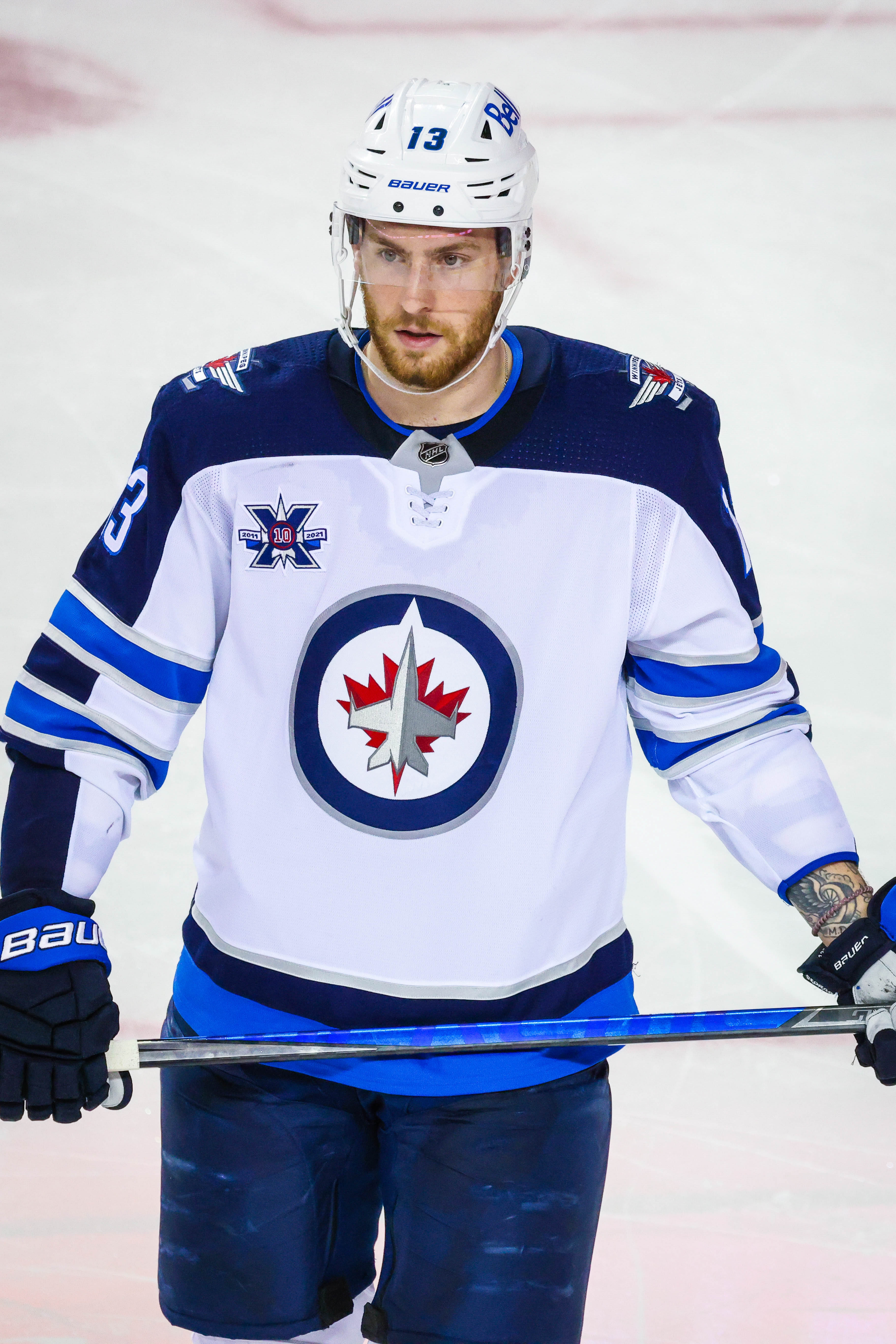 Last season was one to forget for Dubois. After settling for a two-year bridge deal, he very quickly played his way out of Columbus with the Jets parting with both Patrik Laine and Jack Roslovic to bring him in, shoring up their center depth in the process. However, he struggled relative to expectations with Winnipeg, notching just 20 points in 41 games and was quiet in the playoffs with just three assists in seven contests. A year ago, it seemed like his 2022 contract was going to be the big one that pushed him comfortably past the $7MM AAV mark, especially with his qualifying offer being $6.65MM. But if he doesn’t have a much-improved 2021-22 season, that qualifying offer may be his best-case scenario.
Copp is coming off a career year but basically was forced into taking the one-year deal earlier this month to keep Winnipeg as close to cap-compliant as possible. A repeat performance should push his AAV over the $4MM mark. Stastny stayed in the top six for most of last season with Dubois often lining up on the wing and his price tag is a little below market value for a top-six center, especially compared to some of the other deals out there. He’ll be going year to year from here on out and the Jets may need to use his money to re-sign Copp next summer. Nash and Harkins will be role players and with their cap structure, the spots they occupy will need to be filled by minimum-salary players down the road whether it’s those two or other options.
The two defensemen in this category appear to be the possible cap casualties to free up the little bit of extra space to get cap compliant once LTIR is factored in (more on that later). Beaulieu can hold his own on the third pairing but his spot could be filled by someone cheaper. Niku, on the other hand, has been in trade speculation for a couple of years now. They don’t want to lose him on waivers but with such limited recent action (he played just six games last season), they may have to settle for that if something doesn’t materialize over the next couple of months.
Comrie has bounced around on waivers the last couple of years but has hardly seen any NHL action. That will change next season as their cap situation necessitated a minimum-salaried backup and he will get the first shot at being that player. A good showing would certainly bolster his case heading into his final arbitration-eligible year but at the same time, he could potentially price his way out of Winnipeg if he did well enough to earn a sizable jump.
Two Years Remaining
D Logan Stanley ($900K, RFA)
F Dominic Toninato ($750K, UFA)
You could basically put any minimum-salaried forward into Toninato’s slot and perhaps there’s a signing or waiver claim to come that pushes him out. In the meantime, the fact he received a two-year deal last month that includes a one-way second year suggests Winnipeg believes he can lock down a regular spot on the roster.
Stanley really improved his stock last season, going from someone who looked like he’d be on the outside looking in at a spot in the lineup to a player who was in more often than not, albeit in a limited role. The small track record allowed the Jets to get him on a cheap bridge deal, one that won’t be very hard to out-perform.
Three Years Remaining
D Dylan DeMelo ($3MM, UFA)
D Brenden Dillon ($3.9MM, UFA)
G Connor Hellebuyck ($6.166MM, UFA)
F Bryan Little ($5.292MM, UFA)
F Mark Scheifele ($6.125MM, UFA)
F Blake Wheeler ($8.25MM, UFA)
Let’s get Little out of the way first. He hasn’t played since early November 2019 and is still trying to recover from a perforated eardrum. GM Kevin Cheveldayoff has suggested the expectation is that Little won’t be able to return. He’ll head for LTIR, allowing Winnipeg to exceed the cap by up to his full cap hit (the cost of their active roster at the time of placement will determine exactly how much they can go over).
Very quietly, Scheifele has performed at a point-per-game average or better for each of the last five seasons, becoming a legitimate star in the process. Considering centers with similar production have been getting considerably more, this is a contract that is well below market value. The same can’t be said for Wheeler. He still has been productive but his per-game output has declined the last couple of years and as he’s about to turn 35, there probably isn’t another 91-point season in his future.
Dillon was brought in just before free agency to shore up a back end that had yet to really recover from the 2019 exodus. As long as he can log 20 minutes a game on the second pairing and provide his usual physicality and strong defensive presence, he’ll provide good value on his deal. DeMelo is someone that they hoped could play on the second pairing last year when they signed him to that contract but he is better off on the third pairing with more sheltered minutes. That makes the deal an overpayment which is why he was made available to Seattle in expansion.
Hellebuyck has been the NHL’s workhorse goaltender over the last four years. He has faced the most shots in each of the last three seasons and led the league in minutes played four years ago. He makes a bit more than most starters but the small premium is certainly justified and it allowed the Jets to go with a low-cost backup in Comrie knowing that he will once again handle a significantly higher workload than most starters will.
Central Notes: Tarasenko, Klingberg, Predators
There has been an expectation of a trade involving Vladimir Tarasenko for several months now with both sides admitting that a change of scenery would be beneficial. However, between his $7.5MM AAV and his injury history, the interest hasn’t been strong and the veteran remains with the Blues. Benjamin Hochman of the St. Louis Post-Dispatch suggests that at this point, St. Louis may be better off just holding onto the 29-year-old in the hopes that a good start to next season would boost his value around the league and remove some of the question marks surrounding his health. That would be an outcome that is better than moving him with retention and/or taking a minimal return just to grant Tarasenko his wish to play elsewhere even though there could be some awkward moments given how public his trade request is.
More from the Central:
- With Miro Heiskanen’s deal now done, Dallas has shifted their focus towards an extension for fellow blueliner John Klingberg. Mike Heika of the Stars’ team website notes that the negotiations could be tricky with Klingberg’s offensive production (only eight blueliners have more total points than Klingberg over his seven-year career) potentially allowing him to command a sizable raise on his current $4.25MM AAV. He’ll be 30 when his next deal kicks in which makes it difficult to command a max-term contract and the team already has nearly $18MM tied up in their other three top-four defenders for next season and beyond; adding another big-ticket contract could put them among the highest-spending teams on the back end.
- The Predators recently announced an affiliation extension with the ECHL’s Florida Everblades. Nashville has been with them since 2019-20 with Tanner Jeannot and Cole Smith being the players who suited up for the Everblades that have since seen NHL action. The duration of the extension was not announced.