
Free Agent Stock Watch: Right Wing
With the regular season behind us, player movement between teams is now almost entirely restricted. Teams are in the thick of hotly contested playoff series, and many players with expiring contracts have either concluded their campaigns or are playing crucially important games. The players still in action are playing games that could help determine what magnitude of contract they might receive in the summer.
In a multi-part series, we’ll take a look at each position group of the upcoming free agent class, and do a rundown on how those upcoming unrestricted free agents have performed this year. Which players have increased their odds of scoring a jackpot on the open market? Which players have potentially hurt their earning potential with their play? What are the stakes for these free agents in the playoff games that remain? We’ll break it all down here.
The Marquee Names
Alex Tuch, Buffalo Sabres
As numerous pending free agents have signed extensions to remain with their current team, Tuch has emerged as one of the very best players remaining on the upcoming free agent market. While there is still a chance that the Sabres could come to an agreement with Tuch, who is repped by Brian and Scott Bartlett, the most recent reporting from the regular season indicates there is still a gap in those negotiations.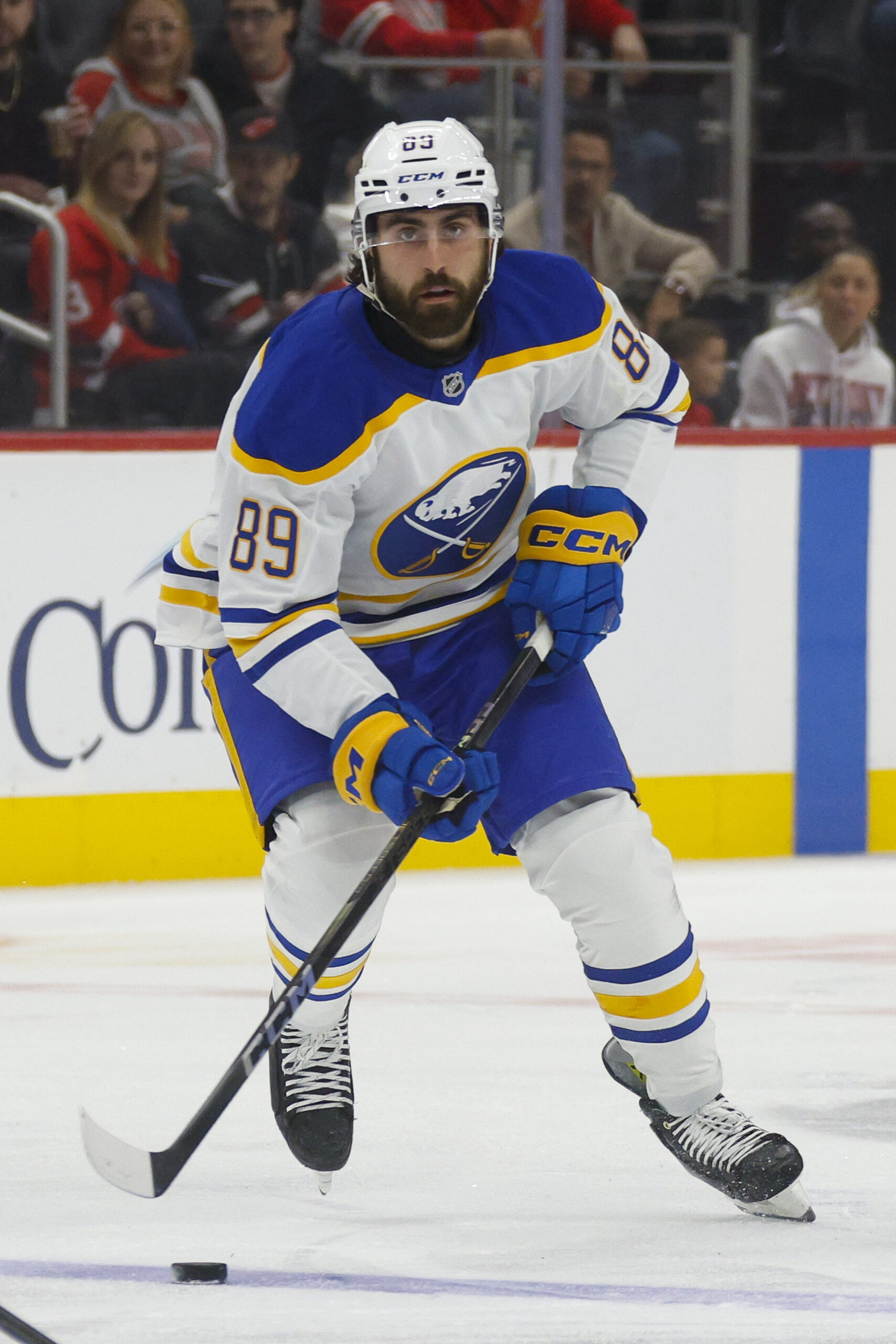
Unless substantive progress is made in those talks, it appears Tuch, a native of the Central New York region, which is just east of Buffalo, could be playing out his final campaign with the Sabres.
If he does hit the open market, he’d be one of the most in-demand players available. Tuch was a focal point of the Sabres’ return from the Vegas Golden Knights in the Jack Eichel trade, and has blossomed into a legitimate first-line winger for the team. He scored a career-high 36 goals last season and has scored at least 20 goals in each full season he’s played in Buffalo.
He concluded 2025-26 with 33 goals and 66 points in the regular season, and has two goals and two assists in the Sabres’ first three playoff contests.
With the Sabres hoping get past the Boston Bruins and make a deep playoff run, Tuch is in a position where he could author some big moments with the entire league watching.
While Tuch has been in form, there are factors beyond just his play that are contributing to his immense earning potential this summer. Firstly, the number of players who have signed extensions and taken themselves off of the free agent market means Tuch will be one of the few borderline star-level players left on the open market. Secondly, the sharp rise in the salary cap upper limit means there are quite a few teams with cash to burn this summer.
That means more teams will have the financial bandwidth to enter a bidding war for Tuch. The more teams that aggressively pursue an unrestricted free agent, the more money that free agent is often able to make. That bodes well for Tuch.
Patrick Kane, Detroit Red Wings
Like many other aging stars who have already made massive amounts of money in their career, Kane has prioritized on-ice fit and stability over maximizing his earnings in his last few trips to free agency. He found a good fit for himself in Detroit, and the Red Wings would not have come close to ending the league’s longest playoff drought without his efforts.
Now 37 years old, Kane likely has a place in Detroit for as long as he wants to continue playing. His contracts are loaded with performance bonuses, and it’s likely his next deal, in whatever form it takes, will be laden with bonuses as well. While he’s not as tied to Detroit as other similar free agents are to their teams, such as Alex Ovechkin with the Capitals or Jamie Benn with the Stars, it’s tough to imagine Kane entertaining a full free agency process at this stage of his career.
The Solid Contributors
Bobby McMann, Seattle Kraken
NHL history is littered with offensive players who have changed teams mid-season and had slow starts in their new NHL homes. So much of creating offense is about chemistry, and the inherent challenge that faces these players is the fact that they’re entering lineups with teammates whose styles and tendencies are entirely unfamiliar to them.
With that said, some players change teams and find themselves able to hit the ground running despite those inherent challenges; Bobby McMann is one of those players. In his 18 games in Seattle, he scored 10 goals and 14 points, bringing his full-season production to 29 goals, 46 points.
The 29-year-old was dealt from the Maple Leafs as the team could not reach an agreement with him on a contract extension. It was reported that McMann’s asking price on his next deal, said to be over $5MM per year, was a little above where Toronto was willing to go.
Having authored a second consecutive season with at least 20 goals, it appears McMann has given himself a real chance to earn the kind of contract offer Toronto reportedly wasn’t willing to extend him. While he’s not a one-to-one comparable, the fact that Kiefer Sherwood was able to earn a $5.75MM AAV on a five-year term has helped McMann’s case for his next deal. He’s an endearing winger, a player whose hard-working style allowed him to grab hold of an NHL role.
As an undrafted product of Colgate University, which is a quality ECAC program but not one with an overwhelming record of producing NHL players, McMann faced somewhat long odds of becoming an impactful NHL player. But with his compete level, work ethic, and knack for finding the back of the net, McMann managed to beat those odds and become a valuable NHL goal scorer. After making just over $1MM on his last deal, McMann has positioned himself to land a massive pay raise as a free agent this summer.
Vladimir Tarasenko, Minnesota Wild
While Tarasenko’s star has certainly faded since his trade from St. Louis in 2023, he remains a capable NHL scorer and one of the better offensive options set to be available on the open market this summer. He was a mid-season trade addition in back-to-back years, first with the Rangers and then with the Panthers the following year. In Florida, he showed he could still be a valuable player on a contending team, scoring 14 points in 19 regular-season games and chipping in nine points on the Panthers’ run to their first ever Stanley Cup championship.
Fresh off of the championship, Tarasenko signed a two-year, $4.75MM AAV deal with the Detroit Red Wings. But after he only managed 11 goals and 33 points in Detroit, his lowest scoring total in a healthy season of his career, Tarasenko was dealt to the Wild for future considerations. The Red Wings, it appeared, were content to be rid of Tarasenko’s $4.75MM cap hit without needing compensation from the Wild.
That deal has paid dividends for Minnesota, as the Russian forward finished the regular season with 23 goals and 47 points in 75 games. At 34 years old, though, getting term on his next deal could prove difficult. Going on another deep playoff run – provided the Wild can get past the Dallas Stars in the first round – would certainly help position him to potentially get one.
Mats Zuccarello, Minnesota Wild
When the Wild originally signed Zuccarello, back in 2019 during the tenure of former GM Paul Fenton, the deal was largely criticized. Although most outside observers acknowledged Zuccarello was still a quality player, and the $6MM per year price tag was seen as fair, the length of the deal (five years) was met with concern.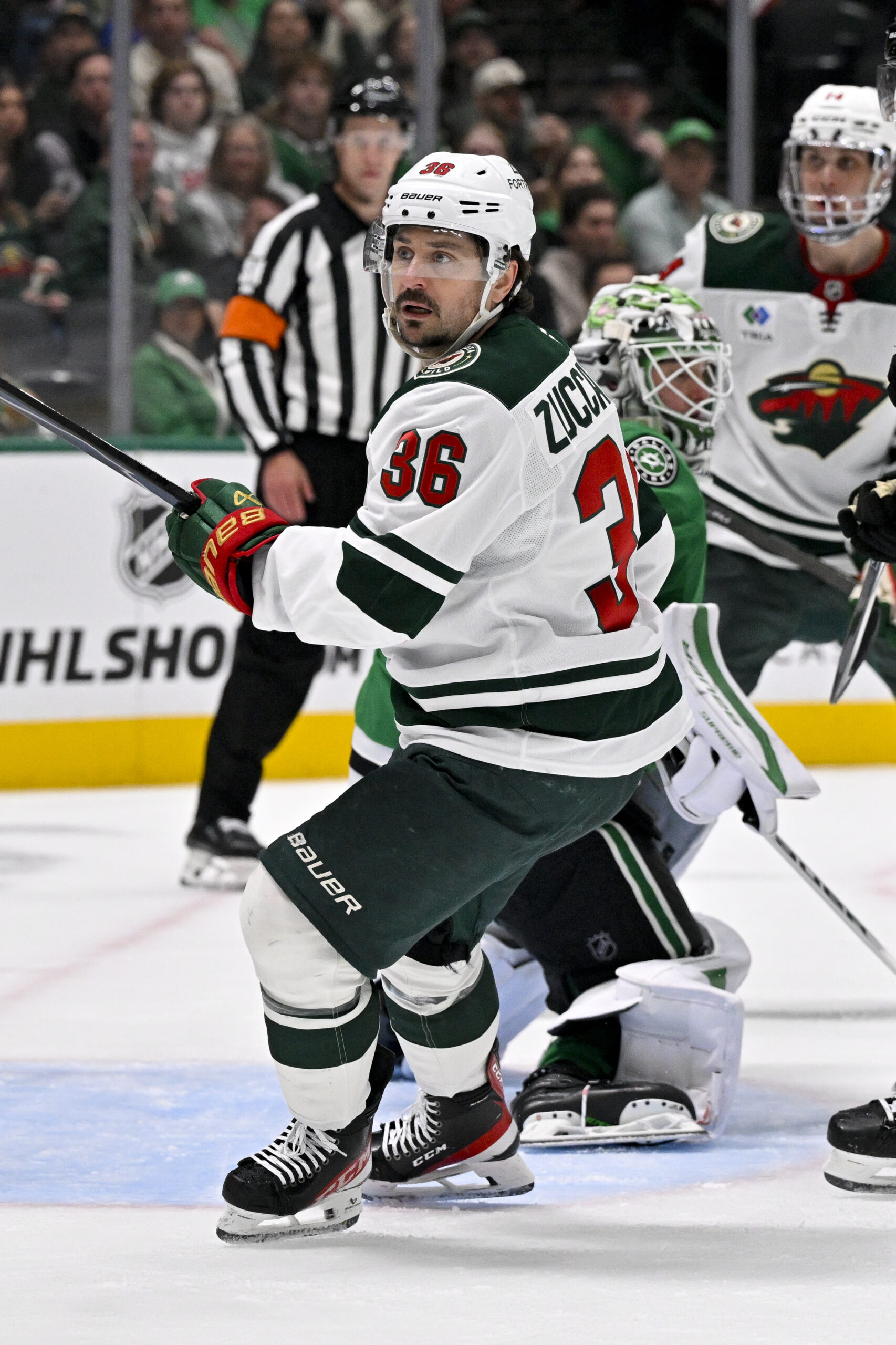
ESPN’s Greg Wyshynski wrote at the time that “there’s simply no defendable reason” why the Wild decided to sign Zuccarello for such a long term. The Hockey News’ Ryan Kennedy echoed the sentiment, adding “Zuccarello will eventually wear down and he will still have term on his contract when that happens.”
That concern from the media was not unreasonable, of course, as Zuccarello was into his thirties at that point. But the deal aged fabulously for Minnesota. Fenton’s successor, Bill Guerin, led the team to a quick turnaround, fueled in large part by the arrival of superstar Kirill Kaprizov from the KHL. Zuccarello found instant chemistry with Kaprizov.
After scoring 37 points in his debut campaign in the Twin Cities, Zuccarello managed 35 points in 42 games in 2021-22, Kaprizov’s rookie year.
Since Kaprizov arrived, Zuccarello has enjoyed the best, most productive years of his career even as he’s aged deeper into his thirties. He scored a career-high 79 points in just 70 games in 2021-22, which is a 92-point 82-game scoring pace. He scored 67 points the following year, and managed 63 points (in 69 games) in 2023-24.
His scoring rate has fallen a bit below where it once was as other Wild forwards have emerged as key focal points of the team’s attack (namely 2019 first-rounder Matt Boldy) but has still hovered at a clear top-six rate. This season, Zuccarello scored 15 goals and 54 points in 59 games, his games played total limited by upper-body injuries.
Over the course of his tenure with the Wild, Guerin has shown a willingness to invest in keeping his team’s core intact. His faith in this Wild core has been rewarded this season, without question. Given how well Zuccarello has played, it’d be tough to imagine Guerin letting him walk.
It’s unclear what Zuccarello’s expectations might be in free agency. Assuming he wants to continue his career and play his age-39 season, the fact that Zuccarello is able to be signed with performance bonuses means Minnesota has some flexibility in the route they decide to take with his extension.
Eeli Tolvanen, Seattle Kraken
There are many former top prospects who, after losing their spot on their original team and landing on waivers, have begun a downward spiral in their career. That spiral typically ultimately ends with the player leaving for the European pro ranks or the minor leagues. At one point, Tolvanen appeared to be at risk of following that path.
He was ranked as one of the top prospects in the game in 2018, and broke into the NHL in 2020-21 scoring 11 goals and 22 points in 40 games. But he wasn’t able to build on his rookie season in Nashville, and by late 2022, found himself on the waiver wire. The Kraken, in just their second season in franchise history, placed a claim on Tolvanen. The natural opportunity that comes with playing on an expansion franchise allowed Tolvanen to revive his career trajectory.
While he still isn’t the star he was once projected to be, he has finally begun to deliver some of the offensive upside that had tantalized scouts in years past. He scored 16 goals and 27 points in his first 48 games with the Kraken, and added eight points in 14 playoff games.
That first campaign with the Kraken showed what was to come for Tolvanen. He has become a reliable middle-six goal scorer, hitting a career-high 23 goals last season. This year, he scored 12 goals and 36 points.
Tolvanen has taken steps to round out his game this season, which bodes well for him entering free agency. He didn’t sniff the penalty kill when he began his tenure in Seattle, but is now playing over a minute per game short-handed. In a free agent class short on ascending options, Tolvanen, at 27 years old, will represent a relatively rare commodity.
Oliver Bjorkstrand, Tampa Bay Lightning
For much of his NHL career, Bjorkstrand has been a model of consistency as a second-line scoring forward. The Danish winger has been close to a lock to score at least 20 goals and between 45 and 55 points when healthy, but his fit in Tampa Bay hasn’t been perfect. Despite averaging over three minutes of power play time on ice per game, Bjorkstrand’s production has been below the standard he’s set earlier in his career. Bjorkstrand finished the regular season with 12 goals and 32 points, well below the 21 goals and 46 points he managed last season.
A contributing factor to Bjorkstrand’s decline in production has been his role outside the power play. While he was a top player for Tampa on the man advantage in the regular season, he’s often occupied a bottom-six role at even strength. His 10:30 time on ice per game at even strength is below career bottom-sixers such as Pontus Holmberg and Zemgus Girgensons.
The playoffs have not helped Bjorkstrand’s case. He’s been unable to secure a spot in head coach Jon Cooper’s lineup, serving as a healthy scratch for all three contests thus far. Cooper has even elected to play journeyman Scott Sabourin, who at 33 has played in just 73 career NHL games, over Bjorkstrand.
That puts Bjorkstrand on somewhat shaky ground entering free agency. At 30 years old, he is in a position where he could reasonably get a medium or even long-term deal. But with the way his role has declined in Tampa, he could face a challenge trying to reach his current cap hit, $5.4MM, in free agency.
PHR Mailbag: Predators, Lottery, Hellebuyck, Rookies, Playoff Pressure Players
Topics in this edition of the PHR Mailbag include Nashville’s open GM position, what players have a lot to gain or lose by their playoff performances, and more. If your question doesn’t appear here, watch for it in one of our next two mailbag columns.
Gbear: Who gets the Preds GM job and does Bruno stay or go?
While Barry Trotz is on the way out, I tend to believe his words from earlier this week when he talked about the thought of keeping a lot of this roster intact. That has me leaning toward a candidate that’s a little more predictable in Tom Fitzgerald. While he took some swings toward the end of his tenure in New Jersey, he’s not going to come in saying that they need to execute a full rebuild. I can’t help but wonder if some of the other first-time candidates might be recommending the other direction which might hurt their chances.
I think what also works in Fitzgerald’s favor is that he has held a dual President/GM role before with the Devils. Throughout this long search, it certainly doesn’t sound like the team is looking to hire two separate people for those roles. If that’s the case, having an experienced candidate who can handle both might appeal a little more.
Fitzgerald, of course, is familiar with head coach Andrew Brunette, as he hired him to join the Devils as an assistant coach. Brunette then left a year later to take this job. With what seems like a good history from their one year together and how this group finished the season, I suspect they’d stay conservative and keep the status quo intact for now if it winds up being Fitzgerald getting the job. If things don’t go well in 2026-27, then it would be easier for them to make a change.
rayk: What is your opinion of the draft lottery which is approaching on 5/5? Is having teams like the Islanders and Mammoth move up so many slots as they did in 2025 really help promote league parity?
For me, the lottery is a partial solution to a problem that doesn’t have a great solution to it. Teams that want to tank are going to try to position themselves as low in the standings no matter what the draft order rule is. If it’s straight reverse standings, we’ve seen how bad that can go. The lottery creates some randomness which is fun but the bottom-feeding teams are still going to want to get as low as possible to increase their odds of picking first and ensure they don’t slide down as much. There’s no getting around that.
One solution that is gaining some popularity is the Gold Plan. Named after its inventor, Adam Gold, the idea is that the first pick goes to the team that gets the most points after being eliminated from playoff contention. The PWHL uses it. However, the workaround there is that a team struggles early, has a bunch of core guys get ‘injured’ midseason, then they all come back in March after the team has been mathematically eliminated. All it does is change when a team decides to sit all its players for tanking purposes.
The lottery isn’t perfect. But I don’t think there is a perfect solution out there as they’re all easily manipulable. So having some randomness that gives teams (and fans) a bit more hope seems like a good enough solution for now, at least.
SkidRowe: Will the league rig the lottery so the Toronto Maple Losers are in the top 2?
I feel like this is an important time to remind you that the lottery is done with ping pong balls. Literal dollar store ping pong balls. They first provided the video of it in 2022 and if you’re not familiar with the mechanics of how it’s done, I recommend you watch it. It’s dry and boring but it does provide a good overview of each step.
It’s 14 equally weighted ping pong balls and a lottery-drawing machine. This isn’t drawing for an envelope that may or may not have been left in a freezer, it’s a 10-cent ball which somehow is harder to rig. The lottery combinations are assigned to teams in advance (and sometimes are even posted online before the actual proceedings) so there’s no room for uh, excess creativity on that front either. Conspiracy theories can be fun but how they do the lotteries is legit.
Toronto has greater than a 17% chance of picking in the top two. After what has happened in recent years, their landing a top-two spot is very much within the realistic range of possibilities.
Cla23: With Hellebuyck’s frustration with the Jets’ season, do you see a trade? If so, where do you think he lands and what do the Jets get in return?
Keep in mind he wants to contend, not rebuild, and NT/NM contracts come into play.
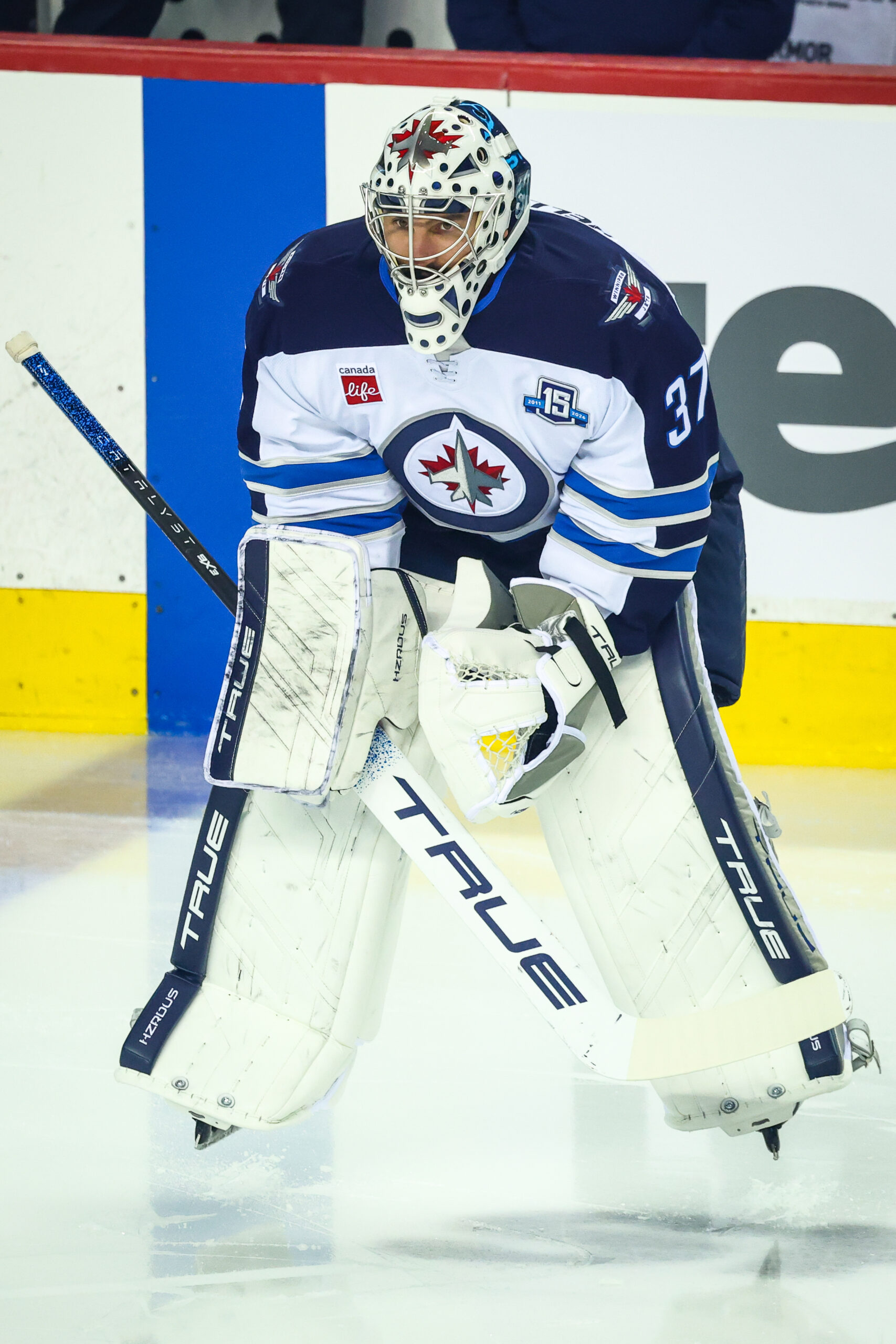 Probably not this summer. His comments about not wanting the team to be too complacent again this summer suggests to me that he still wants to be there; he just wants to see some other changes to the roster. If that doesn’t happen, then yeah, he might want out. The problem is that by the time Hellebuyck will have a chance to assess the state of the roster, most teams will already have their rosters set (or at least wouldn’t be looking to trade for a number one netminder). So even if he looked at their roster in August and said it’s time for a move, there probably isn’t one available until midseason at the earliest or, more likely, next summer.
But, let’s say he does ask out so that I can tackle the second part of the question. Vegas stands out to me as a potential fit. Adin Hill had a rough year while Carter Hart and Akira Schmid have shown good flashes at times but have been inconsistent. Hellebuyck would give them a much more proven starter. I could see both Hill and Schmid in the return, negating the need to bring back Eric Comrie. To make the money work, I think William Karlsson could also be in there, giving Winnipeg at least a short-term center at the same time. Hill and Karlsson both have 10-team no-trade clauses which could scuttle things so let’s get that out of the way.
Given Hill’s struggles and Karlsson’s short-term deal, either Karlsson would need to come with an extension or there would need to be another piece of significance in there. I could see Kevin Cheveldayoff asking for Trevor Connelly but he’s someone Vegas doesn’t want to move. If it landed them a top-end goalie though (and got them out of Hill’s contract), maybe that’d make it worthwhile.
I could also see Florida in there but the potential return is harder to peg down. They don’t have a starter to send the other way which makes it a tough sell right away. With both Aleksander Barkov and Sam Bennett signed long-term, teams will call about Anton Lundell and I imagine Winnipeg would do that, hoping to fill the longstanding 2C issue and then trying to get a goalie from elsewhere. I’m not sure the Panthers would, however. But at any rate, I don’t expect Hellebuyck to be asking out this month.
Offseason Checklist: Chicago Blackhawks
The offseason has arrived for half of the league’s teams that aren’t taking part in the playoffs. Accordingly, it’s now time to examine what they will need to accomplish over the coming months. Next up is a look at Chicago.
It wasn’t supposed to go quite like this again for the Blackhawks in 2025-26. With the team hiring Jeff Blashill as their new head coach last spring, the hope was that he’d be able to raise the floor of the group. Instead, they cratered in the second half of the season to finish 31st overall. GM Kyle Davidson received a vote of confidence in the form of a contract extension but his checklist this offseason looks a lot like last year’s. This time, expectations will be higher that some of these will be achieved.
Determine Consolidation Options
This is going to tie into two of the items later on in the column so let’s get it out of the way first. One thing Davidson has done well in his role is accumulate assets. They’ve gone from a team that had one of the weaker prospect pools in the league to one of the strongest young upcoming cores. For all the losing they’ve had to endure, at least there’s some light at the end of the tunnel. With two extra second-round picks this year and two extra first-round selections next year, they’re going to only further add to that stockpile.
But at some point, they’re heading for a ‘how much is too much’ situation. Let’s look at centers, for example. Connor Bedard is their number one of the present and future. They’re expecting Anton Frondell to be their second. They also have Frank Nazar who spent most of the year down the middle and is locked up on a team-friendly long-term deal. Then there are Oliver Moore, Ryan Greene, and Sacha Boisvert, all quality youngsters in their own right. It’s great to have that depth but would they be better off moving one of those three to fill a weak spot? With the demand for good centers, they’d probably get a significant return.
There are other potential logjams down the road at other positions as well, though those aren’t as pressing on the current roster. But as more of these prospects and future draft picks turn pro, there’s going to be a point when youngster supply vastly outweighs the few roster spots that will be open.
All things considered, this is a great ‘problem’ to have. But while Davidson could play it safe and wait for the logjams to become an issue, he could also be proactive and determine which of those pieces could be expendable. Combining a promising center, a good draft pick, and more would get them in the mix for some of the better players on the trade front this summer. And if they’re going to take that next step forward, they need to find a way to land one of those better players.
Re-Sign Bedard
Last summer, the Blackhawks were eligible to sign Bedard to a long-term extension but didn’t do so. Considering that he was coming off a quieter-than-expected sophomore year, that wasn’t too much of a surprise. Now, Bedard has played out the final season of his entry-level deal and will be a restricted free agent on July 1st.
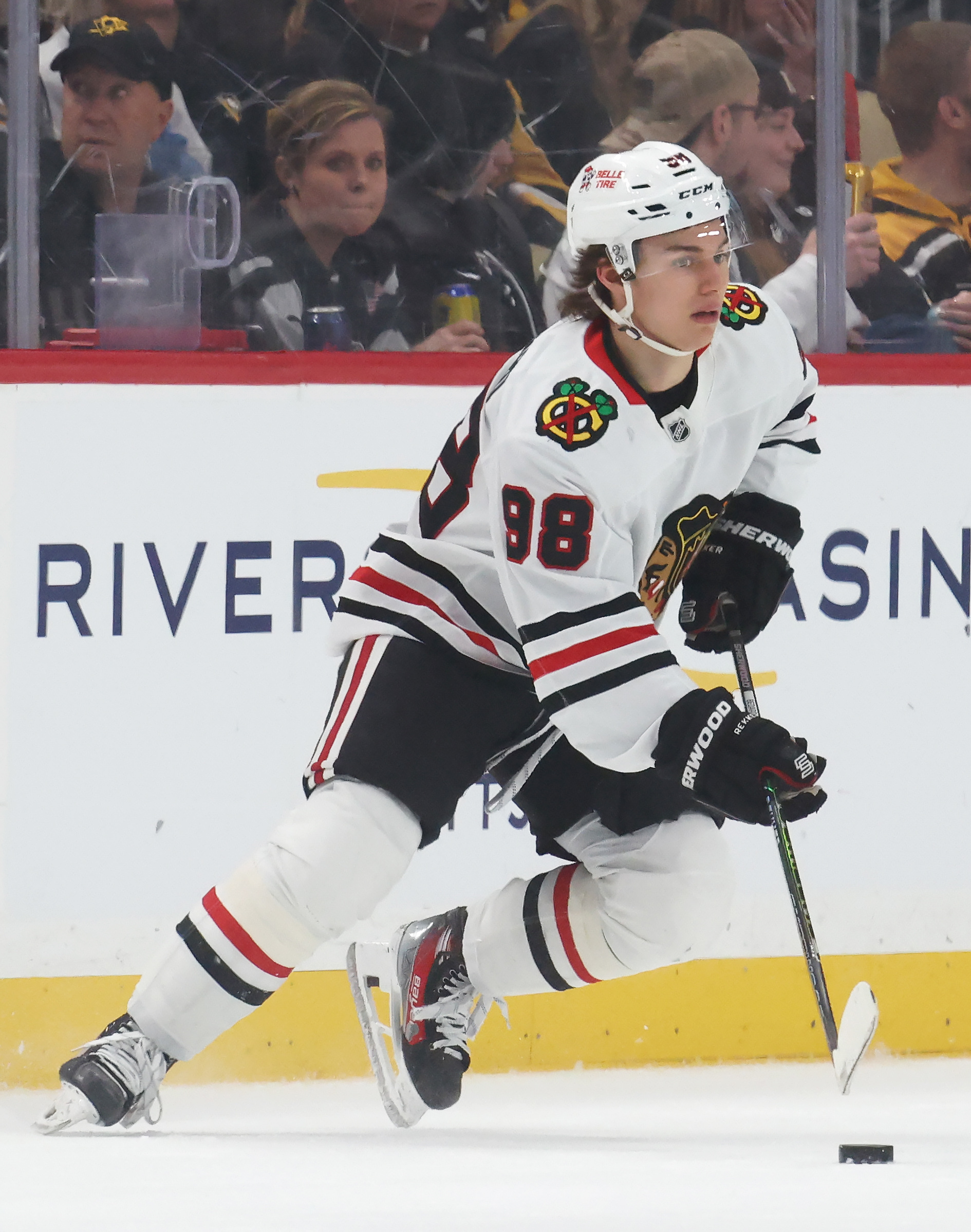 The decision not to sign early proved to be the right one for the 20-year-old. After seeing his point-per-game output drop in his sophomore year (though his point total increased), he bounced back this season, leading the way in scoring with 30 goals and 45 assists despite missing 13 games due to injury. Over a full 82-game season, that’s an 89-point pace. Given the pedigree he had coming into the league, it’s reasonable to expect that Bedard will eventually hit and surpass that mark. That has to be factored into what this next deal is going to cost; it won’t just be about what he has done over his first three seasons.
To that end, AFP Analytics projects a $13.21MM AAV on an eight-year deal. Chicago can still sign Bedard to an eight-year contract through mid-September before the new CBA fully kicks in. That date will stand as a soft deadline for a lot of negotiations this summer as a result. That would be the richest post-entry-level contract handed out, beating Connor McDavid’s $12.5MM price tag for eight years and would make him the fifth-highest-paid player in the league. But with Bedard having extra leverage if Chicago wants to get the eighth year on there, it wouldn’t be entirely shocking to see a deal come in at that price tag.
While Bedard is eligible for an offer sheet, he’s not necessarily a viable candidate for one. The Blackhawks have more than $40MM in cap room for next season, per PuckPedia, so they’d be able to match any offer that were to come his way. Bedard has already spoken about hoping to get something done before too long so it wouldn’t be shocking to see both sides take a real run at this over the next couple of months before other offseason moves start to be made.
Add A Top-Line Winger
Speaking of those other offseason moves, finding Bedard an impactful winger to ride shotgun alongside him needs to be high on Davidson’s to-do list. While it’s possible that an internal option could one day emerge in that role, that hasn’t happened yet and probably won’t for another couple of years, at least. They likely don’t want to wait that long so looking external is the way to go.
This is a spot that Chicago has tried to fill with placeholders. Tyler Bertuzzi and Teuvo Teravainen were brought in on the opening day of free agency in 2024, hoping to give Bedard a bit of a boost. Both have done reasonably well, though they aren’t top-line players. They tried Andre Burakovsky this year in the hopes that a change of scenery would give him a lift and maybe be an option for Bedard. That one didn’t work out so well.
Unfortunately for the Blackhawks, free agency isn’t likely to yield the solution. Alex Tuch is a legitimate top-line option but he’s really the only one out there. While it’s possible that he could pick Chicago, they shouldn’t be banking on that happening. The next-best scoring wingers are Anthony Mantha (who has bounced around but seems likely to stay in Pittsburgh where things worked out this year) and Alex Ovechkin (who may or may not play next season and would only play in Washington). Patrick Kane isn’t a viable long-term option at 37 but could be a short-term one and there would be a nostalgia element as well. But they should be aiming for a better fit than that.
This is where the consolidation trade could come into play. With so few options in free agency, the trade route is going to be the best way to try to fill that void. With the potential package outlined earlier, that should be good enough to get into the bidding war for some of those wingers and give them a good shot at getting one who could fit in at least a top-six role for the next several seasons.
Add Impactful Veteran Defenseman
In recent years, Chicago has drafted some young defensemen in the first round of the draft. Artyom Levshunov, Sam Rinzel, and Kevin Korchinski have all seen time with the big club already with varying degrees of success. All three figure to be part of the long-term plans at a minimum with a chance to be big parts of their core down the road.
Meanwhile, Alex Vlasic and Wyatt Kaiser are a little further along in their development with Vlasic, in particular, now established as a legitimate shutdown defender. They also have Ethan Del Mastro and Louis Crevier in the fold as younger players who have had a bit of success in the NHL already.
With what they have, there is the makings of a good future defense corps. But it’s especially hard to fast-forward the development of young defenders. It’s even harder to do with a largely inexperienced group. Teams can get away with that when they’re rebuilding but when the time comes to flip the switch, an all-young back end probably isn’t going to get the job done.
That makes getting an impactful veteran a necessity this summer if Davidson wants to move his group forward. Not someone like Connor Murphy (who filled a useful role for many years), someone who can play on the top pairing and in all situations. That will take some pressure off the younger players and give them a chance to develop in slots on the depth chart that are a little better suited to their skillsets at this time.
The problem for the Blackhawks here is, again, there aren’t a lot of options available. In terms of big-minute players, Jacob Trouba, John Carlson, and Rasmus Andersson are pending UFAs. Other than maybe Andersson, none of the players ideally fit on a top pairing. Yes, Darren Raddysh is out there but his track record isn’t as big and until this season, his minutes had been managed relatively carefully. That could mean turning to the trade market again where the type of package mentioned earlier – perhaps augmented by a young roster blueliner to make the package more appealing – might be enough to bring in that type of player.
Davidson has swung some big moves as GM but between this need and the one up front, his biggest ones will be needed over the next couple of months.
Photo courtesy of Charles LeClaire-Imagn Images.
The Kraken Need To Choose A Path This Summer
The Kraken missed the playoffs once again this spring, finishing with the sixth-worst point total in the NHL. They had the luxury of playing in the much weaker Western Conference, but still missed the postseason by 11 points, finishing with a 34-37-11 record and a -37 goal differential.
Seattle has made the playoffs just once in its short five-year history, and none of those appearances have come in the past three seasons. Now, with a team largely set to return next season, aside from a couple of veteran unrestricted free agents, it’s become a moment for general manager Jason Botterill to reflect and decide what direction he wants to take a club that looked lost this past season.
A perfect example of the Kraken’s lack of direction is Mason Marchment’s run with the team. Marchment was dealt to Seattle last June in exchange for a 2026 third-round pick and the Stars’ 2025 fourth-round pick.
It was a decent little move for the Kraken and showed they were looking to make additions. Fast-forward six months (plus a day), and the Kraken sent Marchment to the Blue Jackets for a 2027 second-round pick and the New York Rangers’ 2026 fourth-round pick.
It was a decent turn of events for the Kraken, as they upgraded one pick from a third to a second and got a look at Marchment for a few months. It would have been a tidy piece of work had it ended there.
A few months later, at the trade deadline, Seattle acquired Bobby McMann from the Toronto Maple Leafs in exchange for a second-round pick in 2027 and a 2026 fourth-round pick. The deal, in a vacuum, was good.
McMann has been a steady scorer over the past couple of years and added a lot to the Kraken lineup. However, he is a pending UFA and is set to cash in big time this summer. Seattle likely believed he could help with a playoff push, but with the Kraken’s underwhelming lineup on paper, it was a bit of a fool’s errand and could leave the team holding the bag if he jumped ship in July.
What could be a worse outcome for Seattle is if McMann re-signs long-term. The Kraken already have a number of undesirable long-term deals with veteran players, and McMann is sure to be overpaid when he hits free agency. Seattle has to resist the urge to extend McMann, but it’s hard to say whether they will, given the team’s lack of direction in recent years.
That being said, there is a glimmer of hope for Seattle and a fairly obvious direction the team should take. The Kraken have the seventh-ranked prospect system in the NHL (according to Scott Wheeler of The Athletic) and should be able to rebuild their roster sooner rather than later if they can avoid the urge to sign overpriced veterans, or, in the case of McMann, trade for them when they aren’t playoff-bound.
Ultimately, the Marchment/McMann fiasco cost the Kraken only mid-tier draft picks, which is forgivable given that the Kraken thought they had a playoff push, though it ultimately flopped. But the work in free agency needs to be scrutinized and scaled back if Seattle wants to have any hope of building and keeping a core.
In the past two summers, the team has signed UFAs to deals that were panned at the time and look even worse in hindsight. Ryan Lindgren was signed last summer to a four-year deal worth $4.5MM per season and has not been a good fit with the team.
The Kraken were outplayed whenever Lindgren was on the ice this year, and he was a turnover machine, coughing up the puck more than ever before in his NHL career. He also toned down his hitting dramatically, which didn’t really correct some of the other issues with his game.
If the Lindgren deal was bad, the Chandler Stephenson contract from 2024 is atrocious. On the surface, it looks fine, as he put up 49 points (16 goals and 33 assists) last season in 80 games.
But he has five years left on the deal at $6.25MM per season and gets absolutely crushed at even strength, posting a 40.8 CF%, meaning he is a drag on his teammates from a possession perspective. Sure, he takes a lot of the tough defensive assignments, but there is an argument that he could be among the worst 5-on-5 forwards in the entire NHL, and, in turn, one of the worst contracts in the league as well.
There is also the signing of defenseman Brandon Montour in July 2024. That deal hasn’t been a disaster, and Montour has been fairly productive offensively while continuing to struggle defensively.
Heading into year three of a seven-year, $50MM contract, the back half of his deal could be a huge problem for the Kraken as they enter the competitive window with the young group of players they have drafted and developed. At 32, Montour hasn’t shown an obvious decline, but if his skating begins to deteriorate, there will be major issues with his game both offensively and defensively.
With such a weak UFA market and so many teams with a pile of cap space, this could be the best opportunity for Seattle to commit to a short rebuild and start trimming some of the older, more expensive players, such as Lindgren, Stephenson, and Montour, from their roster, in the hopes of not boxing themselves in when they are ready to contend with the elite young players in their system.
Time will tell whether they have the stomach for the short-term pain, but if they do, they could create the kind of flexibility in two to three years that teams dream of when they try to tear down and recalibrate their rosters.
What Will The Canadiens Do With Zachary Bolduc?
The Canadiens are tied at one game apiece in their first-round series against the Lightning. They have a number of healthy scratches at forward thanks to their depth, but one young player is looking to leave an impression and avoid sitting out for any length of time.
Zachary Bolduc is a talented forward and pending restricted free agent who is sure to get a raise this summer as his entry-level contract wraps up. How much he gets will depend on several factors, primarily the term he and the Canadiens agree to, as well as where Montreal sees him in the foreseeable future.
When you read that statement, the first thought is: where does Bolduc slot into Montreal’s lineup? There is also the possibility that Montreal uses Bolduc and other assets to try to land a premier second-line center.
Alternatively, Bolduc remains with Montreal into next year and signs a new deal. But does that come in the form of a short-term bridge deal, or have the Canadiens seen enough to ink him long term?
It’s no secret that Montreal wants to address the second-line center position to ease some of the pressure on first-line pivot Nick Suzuki. This season, the Habs relied heavily on Oliver Kapanen, who filled in admirably but has at times been exposed, prompting Canadiens head coach Martin St. Louis to shelter him.
Kapanen has also benefited from a PDO well over 100, which has masked some of his shortcomings and made it more tolerable to keep him in the top six. Another season with that kind of luck seems unlikely, so Montreal needs to act this summer, especially with Michael Hage returning to the NCAA for another year. Montreal doesn’t exactly have an internal solution to fill the 2C slot at the moment.
Could Bolduc be part of a package to acquire a center? It depends on which player the Canadiens target. If they covet Robert Thomas of the Blues, St. Louis would surely love to reacquire him after he tallied 19 goals and 36 points for them as a rookie in 2024-25 before being dealt to Montreal last summer. If the Habs are looking elsewhere for a Nico Hischier-type player, Bolduc could be part of a package that includes other prospects and one or two draft picks.
What if the Canadiens see Bolduc as a potential top-six fixture? It would be easy to see why, given his offensive abilities and physical presence.
Bolduc has an excellent shot and is a natural goal-scorer who gets into the forecheck and can be difficult to play against. However, as good as he can be, there are questions about consistency and on-ice results.
The 23-year-old had 12 goals and 18 assists in 78 games this year, but much of his scoring came in bunches. There were several five-game (or longer) stretches throughout the year when Bolduc produced no offense, and his physicality was inconsistent as well.
A perfect example is a stretch from Dec. 24 to March 25, during which Bolduc produced exactly zero goals and just nine assists in 31 games. On March 26, he ended his goalless drought at 31 games with a goal and an assist against the Blue Jackets, but then proceeded to be held pointless for another seven games before a two-point game against the Islanders on April 12. It’s that sort of inconsistency and wild variation in production that will give the Canadiens pause about a long-term deal for Bolduc, making a bridge contract far likelier.
What might that look like? Based on AFP Analytics’ projections, something in the range of $3.588MM per year on a two-year deal would make sense.
That wouldn’t be a problem for Montreal, given where they are compared to the salary cap. A short-term deal would give the Canadiens more time to assess what they have in Bolduc and determine whether he’s part of the future or a piece they can leverage to fill other gaps on their roster.
But how does the bridge contract AAV compare to a long-term contract, and would it make more sense to lock Bolduc in for the next seven or eight years before he breaks out and becomes much more expensive? If there’s a team that knows what it’s like to get burned by signing a player, it’s the Canadiens, who once had to pay top dollar to extend P.K. Subban after a contentious bridge contract.
However, in this case, Bolduc is not Subban and doesn’t appear destined to become an award-winning forward. The AAV projection for Bolduc on a long-term contract is also eye-popping to say the least, coming in a shade under $6MM on a six-year deal.
The number on a long-term deal is likely a non-starter for the Canadiens until they see more from the Trois-Rivières, Quebec, native. It’s possible he goes on a tear in the postseason and convinces Montreal to go long term, but at this stage, the inconsistency, offensive droughts, and his inability to drive play are significant question marks that will likely prompt the Habs to opt for a bridge deal to get a longer look before committing to an extended term. That is, if he sticks with the Canadiens beyond this season.
The Maple Leafs Are The League’s Most Troubled Team
The headlines about the Maple Leafs over the past 12 months have been largely negative, and for good reason. The team hasn’t been good since being knocked out of last year’s playoffs in the second round, and they’ve been a circus off the ice as well.
But a team that just a few years ago had quiet, steady confidence has become a tsunami of chaos wrapped in a corporate blanket. The Maple Leafs are in trouble, not the kind that can be “fixed” in a season or two – as we’ve seen in Pittsburgh or Washington – but the kind that can lead to a decade of futility.
Before diving too deep into the rabbit hole, a quick caveat. If the right lottery balls fall and Toronto turns this boondoggle of a season into the first overall pick, Gavin McKenna, then all the points that follow could become moot.
However, if the lottery balls fall the other way and Toronto ends up with a non-top-five pick that will be sent to the Bruins, it would lead to a more disillusioned fanbase and more toxicity around an organization that has watched a once-promising rebuild completely unravel in just a few years.
Some might argue that it all came apart in the last 12 months, and there is a good case for that, given that Toronto saw its biggest year-over-year point decline in 109 years. But the truth is that the seeds of this tree of woe were planted years ago, and they’ve been soaking up water for the last couple of seasons, only to emerge as the Maple Leafs’ first playoff absence in ten years.
The issue for the Maple Leafs isn’t a single item on a checklist. It’s a systemic issue that has filtered down from the top and has culminated in this week’s news from The Athletic that Maple Leafs Sports and Entertainment president Keith Pelley has become deeply involved in roster construction, something he’d never done before.
The Athletic piece (subscription required), written in partnership by Jonas Siegel, Chris Johnston and James Mirtle, delves extensively into the Maple Leafs’ past season and pulls no punches in its depiction of their fall. History is littered with empires that fell, but for the Maple Leafs, the empire they were supposed to become when they emerged from a rebuild ten years ago never materialized.
How they turn things around at this time is incredibly unclear. There is perhaps only one quick fix: the aforementioned McKenna lottery ball going their way.
Outside of that, the road back to relevancy is paved with speed bumps, and at the moment, there isn’t an obvious candidate in the organization who can lead them to the promised land. There isn’t exactly a litany of candidates outside the organization, either, who could undo all the damage that’s been done to their roster.
Lots of names will get tossed around, but there aren’t many free-agent managers available who have built perennial Stanley Cup contenders, with the exception of Stanley Cup winner Peter Chiarelli, who is probably not high on Toronto’s list of candidates due to a litany of other roster construction blemishes on his record
Some have mentioned Mark Hunter of the London Knights as a potential candidate to take over, but Hunter had a somewhat sour experience with the Maple Leafs earlier in his career as an assistant GM, passed over for promotion in favor of Kyle Dubas, and may not want to leave the stability of the OHL Knights for the chaos of the Leafs. However, money can heal a ton of wounds, and if Toronto wanted to, they could probably find enough to mend fences with Hunter.
That is what Toronto will have to try to do if it wants to turn its current luck around in a hurry and flex its financial might. There is no cap on management, scouting, and player development, and it is an area where Toronto could invest heavily again to quickly retool or rebuild its roster. However, based on the story from The Athletic, it appears that Maple Leafs ownership has plans to move in the opposite direction, though they might not have a choice given the state of their roster and prospect pool.
When Toronto’s lineup is fully healthy, it’s not exactly a group that will strike fear into many opponents. There are significant gaps throughout, and not much toughness to speak of.
The biggest hole is on defense, where the team lacks a true number one defenseman who can run the power play, kill penalties, and play a solid two-way game at five-on-five. Many fans hoped Morgan Rielly would fill that role, but his game is all offense at this point, and that offense has been drying up in recent years.
The good news for Toronto is that they have plenty of cap space this summer ($22.2MM, with just three roster players to sign, per PuckPedia). However, the bad news is that there isn’t much available in free agency, and Toronto doesn’t have many draft picks or prospects to trade.
There are a few future pieces they could deal, but would it even make sense at this point to add to a core group of players who have won exactly nothing in ten years and have now gone through several management groups with almost no variation in results? The constant during that time has been Auston Matthews, William Nylander, and Rielly, who have all been on this ship while the deckchairs have shuffled around them year after year.
Is it time to move one of them? Can Toronto even move any of them, given their contracts, no-trade clauses, and last season’s struggles?
The core players have said they want to run things back in Toronto and give it another shot, which seems foolish at this point, given the track record. A new GM who comes in and tries to build around Matthews and company could be in for a fool’s errand, throwing good money after bad as they fall victim to the sunk-cost fallacy.
Make no mistake, every GM falls victim to it, throwing good assets out the window to undo previous errors. It usually doesn’t end well and can ultimately lead to a reduction in the contention window, which is exactly what happened in Toronto and elsewhere.
Many teams have done this before, burning through draft picks and prospects in pursuit of a playoff berth, only to miss and have nothing to show for it. The Penguins notoriously let Ron Hextall burn through assets in an attempt to save his job in 2023.
He traded a second-round pick for Mikael Granlund, who had the worst run of his career in Pittsburgh before the Penguins missed the playoffs. Hextall was fired shortly after the season, and Dubas came in and immediately made the same mistakes as Hextall, trading good assets for aging ones, before realizing his errors and pivoting to a retool.
Dubas then systematically moved out the Penguins’ veterans who didn’t fit the plan and moved on, recouping tons of young assets in the process. He also took on bad contracts along with draft picks to help teams that were strapped against the cap.
Some might look at the Dubas strategy and think it could work for Toronto, and who knows, maybe it could. But the issue is that it took Dubas two years to see results from those moves, and we haven’t fully seen those results yet.
Many of the draft picks Dubas acquired are in upcoming drafts. That strategy takes time, a lot of time, and time is something Toronto doesn’t have, given that Matthews has just two years left on his deal now.
Another issue for Toronto in deploying the Dubas strategy is that there simply aren’t as many teams up against the cap as there were a year or two ago, when Dubas made his moves. This means teams may be more inclined to simply bury bad contracts rather than trade them for an asset to get rid of them.
It was still painful for Pittsburgh, as they missed the playoffs for three straight years before making it this year. Retools take time; even when most of the moves work out well, there is no quick fix, only trade-offs. Toronto’s management has to decide which trade-off they are comfortable making before making management hires and pointing this team in a different direction.
Whatever direction is ultimately chosen, the road will be bumpy, but any team that finds success has to endure adversity, some more than others. And for the Maple Leafs, if they do eventually find success, they will have endured more adversity than any other team.
The Capitals’ Roster Outlook With Or Without Alex Ovechkin
The Capitals were a surprise omission from this year’s playoffs after an impressive regular season and a playoff appearance a year ago. The disappointing result wasn’t the biggest news out of D.C., though. Superstar captain Alex Ovechkin has been non-committal about his future, while also implying he hasn’t played his last game.
Ovechkin’s possible departure from the game poses an interesting conundrum for the Capitals after they successfully navigated a retool to remain competitive during the final years of Ovechkin’s NHL career. Washington might need to prepare to welcome him back next season, but they might also need to prepare for life without the face of their franchise.
Even if Ovechkin were to return for his age-41 season, he’s not a long-term fixture on the team and not someone they should really count on to log massive minutes, regardless of whether he’s there. So, what are their options?
The first thing that could happen is that Ovechkin does, in fact, hang up his skates. This would mark the end of an era, creating a massive void both on the ice and in the dressing room.
There would be a leadership void in the Capitals’ room, an identity shift, and a need to rethink their power-play structure, which runs through Ovechkin. In fact, almost everything in the organization runs through him, or has been done with him in mind. That includes the recent retool Washington went through, rather than attempting a full teardown while he was still on the roster.
For those thinking the Capitals will embark on a rebuild without Ovechkin, that doesn’t appear to be the case, given what Washington has done over the past few years. The team is committed long-term to Pierre-Luc Dubois, Matt Roy, Jakob Chychrun, Logan Thompson, and Tom Wilson, and isn’t likely to blow up the roster anytime soon, especially given that they have the 11th-ranked prospect pool in the NHL (as per Scott Wheeler of The Athletic).
There is simply no need for the Capitals to tear the roster down, but how they proceed with the rest of their roster could depend heavily on whether Ovechkin is in the mix.
In any event, Washington needs to add to their offense next season and appears inclined to do so. Pierre LeBrun of The Athletic spoke with Capitals general manager Chris Patrick last week, and they discussed Patrick’s attempts to sign Nikolaj Ehlers last summer prior to him joining the Hurricanes, as well as the team’s pursuit of Artemi Panarin at the trade deadline.
Neither of those attempts bore fruit, but it does indicate that the Caps know they need more scoring, with or without Ovechkin. One thing that will become clear is that Washington can’t run the offense through Ovechkin anymore, and he will need to fill more of a depth-scoring role than an offensive focal point, even as he comes off a team-leading 32-goal, 64-point season.
Realistically, the best thing for the Capitals would be to have Ovechkin return for one more season, while adding secondary scoring options. That would allow the team to transition slowly away from Ovechkin while onboarding additional players who don’t have to be the guy right away.
Just who those players could be is up in the air, but the Capitals do have significant assets in the draft pick catalog and their farm system who could be moved in a trade, which will likely be the path to acquiring a player unless they want to overpay for an Alex Tuch-type player in free agency.
The Capitals could get aggressive there, as they have $36.5MM in cap space with 17 players signed. Even if they extended Ovechkin for one year at market value ($9.068MM, according to AFP Analytics), Washington would still have $27.5MM available to sign five players.
The scenario where Ovechkin returns for another season could be special if the Capitals make strong moves in the summer. It would allow Ovechkin to control his exit, give the team the aforementioned transition year, and, if the team has better depth, they could use Ovechkin situationally to maximize his contributions.
Some folks might say it delays necessary changes or leaves the team stuck in the middle between eras, but given the state of Washington’s depth, that line of thinking seems silly. Ovechkin can still play and lead the Capitals’ younger players into the next era without being a distraction or dominating their development.
Washington was in a gray area this season, but long-term, with their prospect pool and available cap space, they have a chance to move into contender status with or without Ovechkin. It will just take some foresight and some luck to accomplish it.
One thing Ovechkin’s possible departure will force in Washington is some focus on the future. Whether or not he returns next season, his career is almost done, and Washington knows that now.
They don’t have to reset their timeline entirely, but they do need to be realistic about where they’re going when Ovechkin eventually goes. However things play out, the Capitals are approaching a summer that will define the franchise’s next decade.
It’s much more complicated than it has been in the past, because the mission has been simple for two decades: build around Ovechkin. But now the mission has become one of building after Ovechkin.
Offseason Checklist: Vancouver Canucks
The offseason has arrived for half of the league’s teams that aren’t taking part in the playoffs. Accordingly, it’s now time to examine what they will need to accomplish over the coming months. First up is a look at Vancouver.
After keeping some veterans around and signing others to extensions as soon as possible, there was a clear internal expectation of a rebound season from 2024-25, even with a first-time head coach in Adam Foote. However, those expectations didn’t last long as things went downhill in a hurry, resulting in their best player being moved early in the season. As a result, things are even murkier than before heading into their offseason. Here’s what’s on their to-do list this summer.
Hire A GM
Before they can work on too much this offseason, they need to have their next decision-maker in place. On Friday, GM Patrik Allvin was let go after a little more than four years on the job. The team had a points percentage of .531 over his tenure but the last two years weren’t overly pretty with some questionable decisions made along the way on the trade and contract front.
President of Hockey Operations Jim Rutherford (himself potentially not around for much longer given that he’s 77 and has been with the team longer than originally planned) indicated that whoever takes over will have full autonomy on the roster. That’s particularly noteworthy as more teams start to look at an operation where the POHO role has more authority on that front.
Assistant GM Ryan Johnson has been linked to other teams in their searches. However, there have been also been some suggestions that Vancouver may have him as the perceived frontrunner at this point and is unwilling to let him interview elsewhere although the organization should undoubtedly look at external options as well. There is lots of time to make a hire at this time of year but with other teams on the lookout for a new GM, the Canucks may have to move quickly on this front to ensure that they get the candidate they want as New Jersey did with the hiring of Sunny Mehta earlier this week.
Choose A Path
It seems like a long time ago but just two years ago, the Canucks won the Pacific Division. While some of the key pieces from that roster are gone (highlighted by the Quinn Hughes trade), several are still around. And with an owner that has been suggested to be resistant to an extended rebuild in the past, a decision to try to retool this roster to get back into Wild Card contention next season can’t be ruled out.
Of course, that path seems suboptimal in the long run. But it’s not implausible to think that several of the veterans who underachieved this season bounce back while if Thatcher Demko’s surgery ultimately is as successful as he thinks it was, the floor of this group is going to be a lot higher. With over $21MM in cap space this summer per PuckPedia and no free agents of consequence, they could try to add a few pieces, add that to the potential bounce backs, and try their luck that way.
Alternatively, with the crash landing that this season yielded, a retooling of sorts or a full-fledged rebuild may be the more logical course of action. Determining the extent of the remaining teardown (a retool being shorter term and a rebuild likely lasting several more seasons based on recent comparisons) will be at the top of the priority list. It’ll certainly be a discussion point in interviews for the position.
Once that determination is made, it might influence whether Foote returns behind the bench to get another shot or if the new GM wants to bring in their own handpicked choice. But after a season of spinning their wheels followed by one where things went off the rails relative to expectations almost immediately, identifying and executing a clear direction will be crucial this offseason.
When they decide the route they want to take, that will naturally go a long way toward dictating what comes next and what moves they should be looking to make. Are they trying to add pieces or will a bigger selloff begin? With that not yet certain, the remaining items on their checklist are ones they should be trying to do regardless of the direction the new GM elects to go in.
Explore Boeser Trade Options
A year ago, few thought Vancouver would be in this situation when it comes to long-time winger Brock Boeser. Not because of their struggles either, simply because a year ago, few thought Boeser would still be around. After Allvin publicly lamented a lack of interest in Boeser at the 2025 deadline, it was widely expected that he’d move on in free agency. Instead, he re-signed just as the market opened up, signing a seven-year, $50.25MM deal.
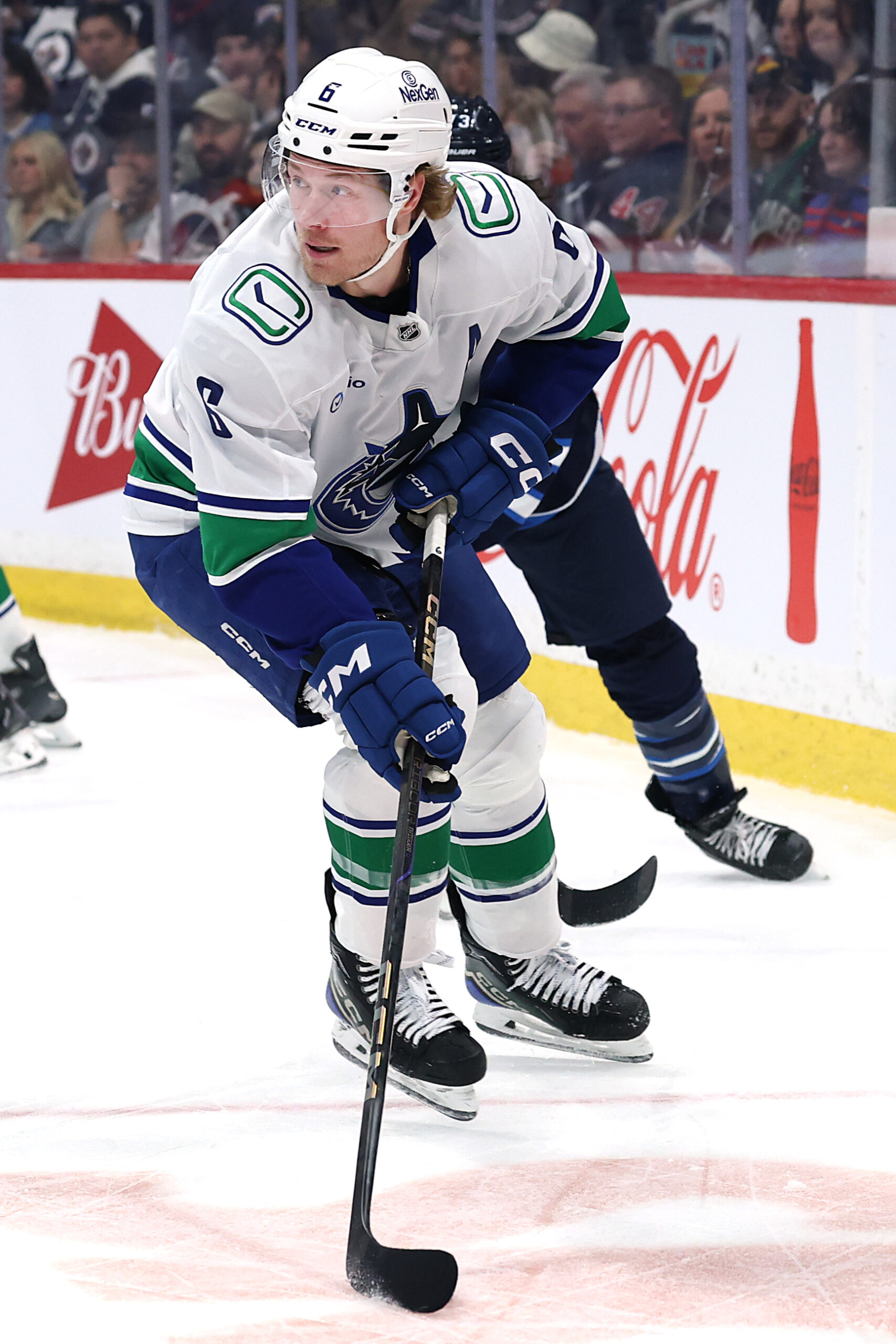 That contract came on the heels of a down year that saw his output go from 40 goals and 73 points in 2023-24 to just 25 and 50 in 2024-25. The contract suggested an expectation that Boeser would rebound. Not necessarily to his career-year levels but perhaps something in between. However, with 22 goals and 48 points this season, his output basically was the same.
As a result, there are certainly some questions about his fit moving forward, whichever direction the Canucks ultimately go. If they look to rebuild or retool, the 29-year-old becomes a logical trade candidate as by the time they emerge from it, his prime years will be over. And if they’re looking to try to compete for a playoff spot next season, his struggles make him a potential change-of-scenery candidate to try to shake up the veteran core.
A $7.25MM cap hit given the year he had is on the higher side but the UFA market has been thinned out considerably in recent months. Meanwhile, the higher salary cap environment should make the deal more palatable as it goes on. If Boeser were to be made available (and he’d be willing to waive his no-move protection), there should be a market for his services. And if the team opts for a rebuild, he becomes a very realistic candidate to move. Whoever takes over as GM should be investigating what the trade options would be with the veteran winger.
Look Into Buium Extension
One of the key pieces of the return for Hughes was defenseman Zeev Buium. A first rounder in 2024 (12th overall), the 20-year-old has shown signs of impressive offensive upside, especially in college when he had 98 points in two seasons at Denver University. He is expected to be a foundational piece for the Canucks before too long, no matter if they look to rebuild or try to get back to the playoffs next season.
Buium burned the first year of his entry-level deal last season when he joined Minnesota for their playoff run. Accordingly, even though this season was his rookie year, he’s already gone through two of his three contract years already. That makes him eligible for a contract extension as of July 1st. Allvin wasn’t believed to be too keen on the idea of an early extension but his replacement may be wise to give the possibility some thought.
Finding the right number for both sides will be a challenge, however. Buium had six goals and 20 assists in 76 games between Minnesota and Vancouver this season. Those are certainly respectable numbers for a first-year pro defenseman but Buium’s camp won’t be willing to sign an extension with 26 points being used as the basis of an offer. No, if a deal were to be done this summer, it would be based on a much higher projected output.
The market for promising young defensemen with offensive upside has certainly gone up lately and it’s reasonable to think that Buium’s camp would be looking at the seven-year, $63MM deal New Jersey gave Luke Hughes heading into this season and be hoping to get something similar. His performance doesn’t warrant that type of money yet but his next contract will start in 2027-28 when the projected salary cap will be $113.5MM which will only drag the AAV higher.
This is also the last stretch where eight-year contracts will be allowable. Once the full new CBA kicks in (September 16th), the maximum term will be seven years. Considering Buium has five years of club control remaining when his entry-level deal expires in 2027, a max-term extension would only add two years. Getting a deal done this summer where they could get an extra year of control may be worthwhile, even if it results in a higher AAV. If the team believes he’s the type of core piece to build around, they’d be wise to get a sense for what type of contract will be needed to make that a reality.
Photo courtesy of James Carey Lauder-Imagn Images.
Why Has The Steve Yzerman Era Been A Failure?
When Steve Yzerman rejoined the Red Wings in 2019 and began a rebuild in the Motor City, many wondered how long it would take the NHL Hall-of-Famer to build a powerhouse like the one he’d built for the Lightning. Some seven years into that tenure, the questions within the organization have shifted, and one narrative has become clear. Yzerman’s plan has been a colossal disaster thus far, raising the question of how much more time he will get to turn around a Red Wings team that hasn’t been in the playoffs in a decade.
It’s not as though Yzerman hasn’t built decent teams. The Red Wings have been competitive in the Eastern Conference over the past handful of seasons but haven’t made the postseason, despite being in a position to secure a playoff spot. This year, the Red Wings spent most of the season in a playoff spot, only to fall apart at the end and miss by just a few points. This pattern repeated in previous years as well. So, what happened, and what needs to happen next?
When Yzerman took over, he did a terrific job pivoting to a rebuild and trading roster players for future assets. The Anthony Mantha trade with Washington in 2021 was a home run, acquiring Jakub Vrána, a first-round pick, and a second-round pick. He also made the 2023 Tyler Bertuzzi trade, which brought in another first-round pick, and the Filip Hronek trade with Vancouver, which brought in an additional first- and second-round pick.
The Hronek trade didn’t work out well for Detroit, but it was an okay move given where the team was. Not long after, Detroit acquired forward Alex DeBrincat from the Ottawa Senators, a move that suggested Yzerman felt the team was ready to move from rebuilding to trying to win now.
He also did well to identify core players to build around through trades and the draft, before locking them into reasonable long-term deals. Dylan Larkin, Moritz Seider, and Lucas Raymond are all signed to solid long-term contracts, with Seider and Raymond being Yzerman draft picks. Overall, it’s hard to find fault with Yzerman’s early work, as he laid a solid foundation to build on.
Where Yzerman has gone wrong is in his pursuit of veteran talent to insulate his younger stars; and to say he’s gone wrong is putting it very kindly. Yzerman has failed at almost every turn in his attempts to acquire veteran players, both in trades and in free agency.
The summer of 2022 was an especially egregious period for the Red Wings’ salary-cap structure, as Yzerman signed defenseman Ben Chiarot and forward Andrew Copp to bloated multi-year deals that have been awful value for Detroit. Chiarot received a four-year deal worth $4.75MM per year, which was a lot of money for a defenseman who generally makes his defense partners worse and is constantly on the wrong end of the possession game. Chiarot had his strengths, too, but given how he’d fared in his career when asked to do too much, it was inevitable that the results wouldn’t be good in Detroit.
Copp, on the other hand, signed a five-year deal worth $5.625MM annually and came to Detroit with a lot of promise and versatility. However, he had only one season with over 20 goals and 50 points, so expecting him to be a consistent offensive contributor was too high a bar for Copp, which is part of why his run has been disappointing for Red Wings fans. The issue was ultimately that Copp was paid to be a top-six forward, but he slots better as a middle-six option.
Yzerman’s poor work in free agency continued in 2023 when he signed UFA defenseman Justin Holl to a three-year deal worth $10.2MM, which proved disastrous for Detroit. Holl recorded two goals and 11 assists in 111 games as a member of the Red Wings and had to be dealt to St. Louis at the deadline as part of the Justin Faulk trade.
The Holl signing, and even the Faulk trade to a lesser degree, highlight a major flaw in Yzerman’s building strategy, as he has consistently tried to patch together his defense core with veteran players who don’t move particularly well and are on the backside of their careers. Chiarot, Faulk, Holl, and especially Jeff Petry all highlight this issue. In fact, Yzerman’s moves on his backend could be the ultimate undoing of his tenure in Detroit, as he has sent Jake Walman and Hronek out the door and essentially replaced them with Chiarot and company.
The Walman sequence was an especially curious error. Walman was dealt to San Jose along with a second-round pick, only to be traded less than a year later by the Sharks to Edmonton for a first-round pick. The move gift-wrapped two premium draft picks for the Sharks, who paid 50 games’ worth of Walman’s $3.4MM contract in exchange for them. Edmonton eventually signed Walman to a regrettable seven-year extension, but the real loser in the sequence of events was Detroit, which traded Walman along with an asset only to see him traded for an asset. The Walman trade tree is a real indictment of Yzerman and company’s pro scouting, which has failed Detroit in free agency too often.
The defensive contraction and the free agency failures have been Yzerman’s downfall thus far in Detroit, and even though he has won many of the trades he’s made, he hasn’t been able to undo some of the damage he’s done in the summertime and now the Red Wings are at a crossroads where many teams who never rebuilt (Washington and Pittsburgh) have lapped them, even though Detroit went through a long painful rebuild.
Darren Raddysh Is Going To Get Paid This Summer
Lightning defenseman Darren Raddysh had been a consistent point producer for a couple of seasons, but what he’s done in Tampa Bay this year is out of this world. Raddysh entered the season with last year’s 37 points (six goals and 31 assists) in 73 games as the high-water mark in his NHL career, but he has obliterated those numbers with 22 goals and 48 assists in 73 games at season’s end. Those kinds of numbers are certain to attract attention in the free-agent market, as Raddysh is a pending unrestricted free agent and couldn’t have picked a better time to have a career year.
At the start of this season, the 30-year-old Raddysh seemed poised to secure something in the range of a three-year, $9MM contract that would give him a solid raise and some stability. However, Raddysh went on to make this the most interesting free agency period of the offseason. It’s not often that a defenseman is the top-scoring free agent available, especially a right-handed one. Raddysh is a special case, and the bidding for his services could get wacky if he hits the open market.
The longer Raddysh remains unsigned, the more likely it becomes that he will test the market. Even though he would probably appreciate the security of a long-term deal with Tampa Bay during the season, the idea of free agency has to be on his mind. Raddysh has earned NHL money for only a few seasons and has never carried a cap hit over $1MM, even though he made $1.114MM in actual salary in the first year of his current two-year, $1.95MM deal.
There is danger in waiting too long to sign, and that danger is that Raddysh’s luck runs out. While Raddysh and his defense partner, J.J. Moser, have had terrific puck luck, with Raddysh carrying a goal share above 80% and a PDO of 101.6, their streak of good fortune won’t last forever. For Raddysh, that could mean a swing of millions of dollars if it runs out in the playoffs. But his success hasn’t been built solely on luck; he’s also been incredibly effective in Tampa Bay, as the team has largely controlled the play when he is on the ice.
So, what kind of contract could Raddysh be looking at this summer? AFP Analytics projects him to receive a four-year deal worth just over $5.3MM per season, which feels a bit light given how thin the free-agent market is, particularly for right-shot defensemen. For Raddysh, the term is also likely shorter than he would like, given how little security he’s had to this point in his career.
There will never be a better time for the 30-year-old to cash in, with the market set up for him to pursue a maximum-term contract. There are many teams with ample cap space to get involved, and right-shot defenders always command a premium. $6MM-$7MM might seem like a wild number for a player with such a small sample size of high-level play, but the rising salary cap has created a new economic climate that NHL teams and players have never encountered before.
Will Tampa Bay step up and give Raddysh an extension? To this point, they’ve been hesitant, and for good reason. There aren’t many players with the career progression Raddysh has shown, so the Lightning are rightfully cautious.
With so many high-ticket, long-term deals already on the books, and another to be signed when Nikita Kucherov becomes a UFA in the summer of 2027, getting a Raddysh deal wrong could be a real issue for the team as it moves toward the end of its contention window. But Tampa Bay might be forced to get it wrong if they want to keep Raddysh, because not only is he the best defenseman available, but he might also be the best free agent available at all.
If Tampa doesn’t sign Raddysh, which teams could be interested? The Maple Leafs will likely be mentioned as a potential suitor. The Ducks will surely be in on him with their entire right side set for UFA status this summer. The list could be 10-15 teams long, given that 23 teams have more than $15MM available this summer and nine have more than $30MM in cap space.
The Sharks and Penguins have the most cap space, but it’s hard to imagine Raddysh getting attention from Pittsburgh, as they already have Kris Letang and Erik Karlsson on the right side, with prospect Harrison Brunicke on the way as well. However, the Sharks could be interested, as they are set to enter their contention window and could look to add offense to their back end.
In any event, Raddyish is going to have a ton of suitors, and he will have full control of his own destiny, provided he reaches free agency on July 1. Tampa Bay remains a premium destination for players thanks to the nice weather, favorable tax situation, and a premier NHL franchise with a long track record of recent success. Raddyish is going to have a difficult decision to make, but one that almost every NHL player would love to have one day.