
Free Agent Stock Watch: Left-Handed Defensemen
With the new year upon us, the NHL season is in full swing. Teams are jockeying for playoff position, and many players with expiring contracts across the NHL are playing games that could ultimately determine what type of payday they might receive in the summer.
In a multi-part series, we’ll take a look at each position group of the upcoming free agent class, and do a rundown on how those upcoming unrestricted free agents have performed this year. Which players have increased their odds of landing a massive contract? Which players have potentially hurt their earning potential with their play? We’ll break it all down here.
The Marquee Names
Shayne Gostisbehere, Arizona Coyotes
While Gostisbehere may not be the traditional free agent “marquee name” whose acquisition can shape the fortunes of an entire franchise, his play as an Arizona Coyote has solidified his status as one of the top left-shot free agent defensemen in his class.
Gostisbehere arrived in Arizona in the summer of 2021, with his former team, the Philadelphia Flyers, paying draft picks to the Coyotes in exchange for Arizona taking on Gostisbhere’s $4.5MM cap hit.
After scoring 65 points in 2017-18, Gostisbehere’s descent from stardom was rapid, and his warts in his own end combined with declining offense forced his way out of favor in the Flyers organization.
While the trade to the Coyotes at one point seemed to be rock bottom for Gostisbehere’s professional career, the deal seems to have actually served as the catalyst for a career rebirth. Gostisbehere scored 14 goals and 51 points last season, which ranked him in the top-15 in defensive scoring.
It was the inconsistency of Gostisbehere’s production that caused him major issues in Philadelphia, but thankfully he has continued his strong play into this year as well. In 37 games so far this year Gostisbehere has 26 points, which is a 58-point full-season pace.
He’ll never be someone coaches trust for his play in his own end or away from the puck. But using the case of Tony DeAngelo as an example, it’s clear defensemen in Gostisbehere’s mold are valued league-wide.
Gostisbehere’s former team parted with multiple draft picks in order to acquire DeAngelo, who like Gostisbehere is a supremely talented and productive offensive defenseman without much off-puck or defensive value. It’s possible that in his trip to unrestricted free agency, Gostisbehere views the $5MM AAV DeAngelo makes to be his target on any new contract.
Given that Gostisbehere, who will be 30 in April, was just two years ago seen as a salary cap deadweight at a $4.5MM AAV, the possibility of him now receiving a new contract above that cap hit on the open market would be the perfect culmination of what has been a stunning career revival.
The Solid Contributors
Ryan Graves, New Jersey Devils
Graves, like Gostisbehere, is another blueliner who has seen his career take a significant upward trajectory in recent years. At one point, Graves was more or less viewed as one of the dime-a-dozen minor league farmhands that patrol the many bluelines of the AHL.
Three seasons into his professional career, Graves had seen his importance in the New York Rangers organization decline, and he was unceremoniously shipped out west in exchange for Chris Bigras in a deal PHR at the time called a swap of minor leaguers.
The Avalanche organization saw something in Graves and believed they could get the most out of his hulking six-foot-five frame. After another year and a half spent in the minors, Graves earned a spot in the NHL with the Avalanche and didn’t let it go.
He played an extremely limited role in 2018-19, but in the very next season, he averaged the second-most ice time on the penalty kill of any Avalanche player.
The year after, Graves led Colorado in short-handed ice time. With his cap hit set to rise as a restricted free agent, the team was forced to trade Graves to the New Jersey Devils.
In New Jersey, Graves has further solidified his status as a quality top-four defenseman. He flashed some more offensive touch last season, setting a career-high with 28 points.
This year he’s remained an important part of the Devils’ defensive plans even as he’s ceded his role as a penalty-killing anchor to John Marino and Jonas Siegenthaler, two other formidable defenders.
Graves will be 28 in the summer, and his age lines him up quite well for a potential payday. He isn’t having as strong of a season this year as he had last year, but he remains a valued defenseman nonetheless.
Dmitry Orlov, Washington Capitals
Orlov may well belong in the “marquee names” tier of free agents, but given that he’ll be 32 when (or if) he hits free agency this summer, it seems more appropriate to put him in a tier below Gostisbehere.
That’s not meant as any slight to Orlov’s play or value, though. Although he’s acted somewhat in the shadow of John Carlson, one of the league’s most prolific offensive defensemen, Orlov has been a rock for Washington for an entire era of Capitals hockey.
The Russian blueliner has played in nearly 700 career games and is typically a slam-dunk bet to score around 30 points. Orlov pairs that valuable secondary scoring with the ability to weather difficult defensive minutes, making him a dream number-two defenseman.
This season, Orlov has put an injury behind him and resumed his high-end play. He’s helping the Capitals’ penalty kill rank inside the league’s top-ten, and is scoring at a 36-point pace.
While his age may mean a massive long-term deal is ruled out for him, his stock is holding steady in advance of the expiration of his $5.1MM AAV deal.
Vladislav Gavrikov, Columbus Blue Jackets
While the Blue Jackets have had a season to forget so far in 2022-23, Gavrikov has continued his strong play from last season and positioned himself at the forefront of the NHL’s trade rumor news cycle.
After scoring 33 points last season, Gavrikov’s offense is down this year. He’s on pace to score just 20 points, but that may not take a major bite out of his overall value.
Ever since it was announced that franchise blueliner Zach Werenski would miss the rest of the season due to injury, Gavrikov has been thrust into a significant role as the Blue Jackets’ number-one defenseman.
Gavrikov averages the third-most short-handed ice time per game, and although the Blue Jackets have been one of the league’s worst teams, their penalty kill actually ranks in the middle of the pack league-wide.
He’s a big, physical defenseman who has been pressed into extremely difficult minutes and has found success in those circumstances.
Defensemen who bring that kind of value to the table are in-demand league-wide, and Gavrikov should be one of the top defensemen in the mix around the trade deadline.
A trade to a contender and a deep playoff run would do wonders for Gavrikov’s stock heading into free agency, just as the Canadiens’ run to the 2021 Stanley Cup Final did wonders for Ben Chiarot‘s league-wide standing.
Even if that extensive playoff run doesn’t materialize, Gavrikov’s play in extremely challenging circumstances has raised his stock heading into free agency. Since he’ll be just 27 when he hits the open market, he could be in line to land a major contract.
Dmitry Kulikov, Anaheim Ducks
There are certain players across the NHL who are established, known commodities. When teams add these players to their roster, they know with a strong degree of certainty what they’ll be receiving, and those players in turn have established track records of providing performances well within what could reasonably be expected of them.
Kulikov is one of those players. The journeyman blueliner is on his fifth team in four seasons, and could add a sixth in that time frame should he get traded before the trade deadline. He arrived in Anaheim as part of an offseason trade, landing in Southern California in exchange for future considerations.
The Wild weren’t able to generate a significant trade market for Kulikov, as his $2.25MM cap hit may have been a major obstacle in a flat-cap environment. Nonetheless, the fact that he was acquired for essentially nothing hasn’t stopped him from providing value to the Ducks, one of the league’s worst teams.
Kulikov’s offense isn’t his calling card, and his performance of nine points in 39 games underscores that notion. But what Kulikov does provide is steady defensive play and minutes a coach doesn’t need to worry about.
He’s been a bit overmatched as an anchor of a penalty kill in Anaheim, as he’s averaging over three minutes per night on the league’s third-worst shorthanded unit. In a less significant role on a contending team, he should be able to thrive.
The fact that he was traded for future considerations on just a $2.25MM cap hit doesn’t bode very well for his odds of earning a raise in the summer, but nonetheless, Kulikov’s stock is holding steady, and he remains a safe investment for any team looking to reinforce their blueline.
The Role Players
Ian Cole, Tampa Bay Lightning
The Lightning signed Cole last summer with a particular reason in mind. They needed an experienced, reliable defenseman to fill in some vacant minutes on their back end, and needed one who wouldn’t require a pricey long-term commitment.
Cole, 33, has done exactly that, scoring 12 points in 34 games and averaging the fourth-most ice time per night of any Tampa Bay blueliner.
A two-time Stanley Cup champion, Cole has helped the Lightning’s penalty kill rank inside the league’s top-ten, and has been a reliable defensive presence overall.
While teams are far wearier of giving pricey contracts with term attached to veteran defensive defensemen than they once were, Cole’s play in Tampa has been strong enough to earn him another decent contract, albeit possibly another one-year deal.
He has major playoff experience under his belt, which is something teams value, and should the Lightning go on yet another deep run in the spring, Cole’s wallet stands to benefit.
Olli Maatta, Detroit Red Wings
It may have been a surprise to some when Maatta, who is now 28 years old, signed a one-year, $2.25MM contract in the offseason.
While Maatta’s lack of foot speed had kept him from being the minutes-eating, top-four force many envisioned him becoming when he was a top prospect, he had still developed into a reliable NHL blueliner.
That one-year deal came at a major pay cut from the $4.08MM AAV he had earned on his last contract, although the flat cap environment likely played a role in that.
As we inch closer to an environment where the salary cap will rise again, Maatta could be in line to benefit. He’s been a solid contributor for the Red Wings, averaging the fourth-most minutes of any Detroit blueliner. He’s chipped in on their penalty kill as well.
Maatta has also added 13 points in 32 games, which is a 33-point pace. After scoring just eight points in 66 games last season, this uptick in offensive production is certainly going to be useful as Maatta readies for a second consecutive trip to the open market.
Brian Dumoulin, Pittsburgh Penguins
On one hand, it looks like this year has been business as usual for Dumoulin, one of the Penguins’ most important defensive contributors for the past seven-plus seasons. He remains a crucial part of the Penguins’ penalty kill, one of the league’s best units, and is still playing nearly twenty minutes per night.
Although some of the public analytics models are split on Dumoulin’s value, some look at his defensive performance positively and indicate that he’s remained the valuable defensive rock that he’s been for much of this era of Penguins hockey.
Look more closely, though, and you’ll see that Dumoulin has had a challenging season in Pittsburgh. His usually rock-solid defensive play has been far more mistake-prone than usual this season, and the team’s unshakeable loyalty to Dumoulin in the midst of this decline in play has garnered criticism from Penguins fans and members of the media alike.
This reality leaves Dumoulin in a complicated position heading into the expiration of his $4.1MM AAV contract. His name still carries value to many, especially to those who remember his exploits during the Penguins’ back-to-back Stanley Cup Championships.
But there are growing signs that the Dumoulin of those years is gone, signs that are becoming harder and harder to ignore. With that in mind, it’s hard to say that Dumoulin’s stock is trending anywhere but down.
Erik Gustafsson, Washington Capitals
One could not be blamed for being a bit confused by Gustafsson’s career trajectory. After a few seasons spent largely in the AHL, Gustafsson had an extremely successful 2018-19 campaign, scoring 17 goals and 60 points. The year after, though, Gustafsson scored just 29 points, a total not high enough for an offense-only blueliner to justify regular minutes.
Gustafsson was traded to the Calgary Flames that next season, and then signed a contract with the Flyers.
He was downright bad in Philadelphia and was shipped to Montreal for a seventh-round pick. After playing a sheltered role during the Canadiens’ run to the Stanley Cup final, it looked as though Gustafsson could be headed back to Europe, having played his way out of favor in the NHL.
That summer, though, Gustafsson managed to earn an NHL deal, returning to Chicago after a PTO with the New York Islanders. He wasn’t great, scoring just 18 points in 59 games, but his performance was good enough to earn him a cheap one-year deal from the Capitals, who were looking to affordably fill the void left by Justin Schultz‘s departure.
This year, Gustafsson has been great for the Capitals, and he’s recently been on a scoring tear. He had a stretch where he scored 13 points in just seven games, and his season total is up to 23 points in 40 games.
That’s a 47-point pace, and if he can manage to hit the 40-point plateau, you can consider his NHL career revived.
The inconsistency that has plagued Gustafsson’s NHL career may hurt his odds at a major contract, as might his age, as he’ll be 31 when he hits the open market.
But at the very least, Gustafsson’s resurgent offensive production places him as a solid backup plan for any team that misses out on signing Gostisbehere.
His stock has shot up in recent weeks, and if he can keep scoring he’ll likely earn a decent raise from his current $800k cap hit.
Carson Soucy, Seattle Kraken
There were some who questioned why the Kraken selected Soucy, 28, in their expansion draft, rather than selecting then-24-year-old goalie Kaapo Kahkonen, who had stellar performances in Liiga and the AHL on his resume.
The Kraken’s choice has largely been justified by Soucy’s play, though, as the blueliner has established himself as a full-time NHLer in Seattle. Soucy scored 10 goals and 21 points last season and saw his role increase after the departures of Mark Giordano and Jeremy Lauzon.
This season, Soucy has been an important contributor to the Kraken’s bottom pairing, adding reliable minutes in that third-pairing capacity as well as solid second-unit penalty-killing duties.
Soucy’s defensive play has been extremely well-liked by public analytics models, and although those strong underlying numbers haven’t materialized into a top-four role in Seattle, it could make him a potentially savvy investment for a team looking to unearth an underrated player on the open market.
While he may not have the box score numbers or the type of minutes that typically earn blueliners major contracts, there are things to like in Soucy’s game. Whether those commendable qualities are rewarded with a significant contract remains to be seen.
Alexander Edler, Los Angeles Kings
A veteran of over 1,000 NHL games, Edler is firmly in the one-year deal phase of his career. He earned $3.5MM last season before taking a one-year, $750k extension (with bonuses attached) to remain in Los Angeles.
Edler isn’t what he once was, but he’s still been able to give the Kings bottom-pairing minutes, some time on the penalty kill, and some leadership value. It’s unlikely that Edler will look for or manage to earn a major raise from the contract he received last season, but his status heading into free agency is notable nonetheless.
At this stage of his career, a major move, one with the potential to uproot his family as he heads to a new market to play, seems unlikely. But he’s still a useful piece, and should have a place in the mix for Los Angeles should he choose to continue his career beyond this season.
Niko Mikkola, St. Louis Blues
Mikkola is on the other end of his career compared to Edler, set to hit free agency for the first time at the age of 27. The Finnish blueliner has been a defensive specialist in St. Louis, playing second-pairing minutes next to Colton Parayko as well as time on the penalty kill.
He’s earning $1.9MM against the cap this season, and at the age of 27 represents a younger investment for teams looking to add a defenseman. There isn’t much offense to his game, but teams can always find a use for a big, physical defensive defenseman, and that reality should help him on the open market.
Others Of Note
Nick Holden, Ottawa Senators
A veteran of over 600 NHL games, the 35-year-old Holden has embraced a veteran leadership role on a young Senators team. The undrafted blueliner has seen quite a bit in his extensive career and is helping the Senators inch closer to a return to contention.
Holden has largely played on the third pairing for the Senators, helping shelter Erik Brannstrom, a young, offensively-focused blueliner who is prone to defensive lapses. There isn’t much offense to speak of in Holden’s game, but he has a major role in the Senators’ penalty kill.
His play this season has kept his stock steady heading into a possible trip to free agency, and he’ll be an attractive option for a team looking to add a veteran defensive defenseman at a lower price point.
Marc Staal, Florida Panthers
The role Holden could end up playing in this summer’s free agent market is the one Staal played on the market last summer. The veteran stay-at-home defenseman signed a one-year, league-minimum deal with the Panthers, acting as a cheap addition of leadership and defensive play to a strong Panthers roster.
Florida’s season hasn’t gone as they’d hoped it would, and part of their struggles have been due to Staal playing a larger role than he’s equipped to handle at this point in his career.
Staal is leading the Panthers in short-handed ice time per game and is currently slotted in on the team’s top pairing as Aaron Ekblad‘s partner. In 2023, it’s difficult to justify using Staal, 35, as a top-pairing defenseman.
He’s an unquestionably accomplished player who has had a heck of an NHL career, but top-pairing deployment isn’t putting Staal in a position to play at his best.
Calvin de Haan, Carolina Hurricanes
At just an $850k cap hit, de Haan has been a valuable addition to the Hurricanes’ blueline. Since coach Rod Brind’Amour has such a deep and talented stable of blueliners, de Haan has been afforded the ability to play in a comfortable, relatively limited role in Carolina.
In those manageable minutes, de Haan has excelled, providing the team with safe, competent defensive play. He’s not asked to play much on special teams, and averages just over 12 minutes per night, so on paper it’s easy to see de Haan’s performance as an indication of his declining NHL value.
But looking at his case more generously, one can look at the 12:30 per night de Haan provides as over 12 minutes Brind’Amour doesn’t need to worry about each game. There’s value in de Haan’s ability to provide that, which puts him in a favorable position heading into the expiration of his one-year contract.
Photos courtesy of USA Today Sports Images
PHR Mailbag: Rangers, Canucks, Devils, Buyers And Sellers, Red Wings Centers, Roster Spots
This edition of the PHR Mailbag largely focuses on the trade deadline which is now just over two months away. If your question doesn’t appear here, check back in last weekend’s mailbag.
met man: Brian, do you think the Rangers should upgrade the backup goalie situation?
When I first saw this question, my immediate thought was yes, they should do something to upgrade the spot. Jaroslav Halak is not having a particularly strong season which shouldn’t come as much of a surprise considering how poorly things went for him last season with Vancouver. It stands to reason that if Igor Shesterkin gets injured, they’re in trouble. In that sense, it does make sense to try to upgrade.
However, my second thought changed my tune somewhat. Yes, they’ll be in trouble if Shesterkin goes down but that will be the case with whatever backup they have whether it’s Halak or one of the second-stringers that might move in the next couple of months. Knowing that, is a second-string upgrade the most efficient use of their cap space? Or should they focus on players that are going to play every night that improve their scoring or defense?
After bouncing those two thoughts around, I’ve come to some sort of hedge answer. If I’m GM Chris Drury, I’d flip a mid-round pick to Columbus for Joonas Korpisalo at the deadline. At that point, there isn’t much more than $300K left on his contract which shouldn’t be too difficult to fit in. If they wanted to bank a little extra space between now and the deadline, they could paper Ben Harpur back and forth to help on that front.
Korpisalo’s numbers aren’t great but they’re better than Halak’s and he’s the type of goalie that might be worth getting an early look at to see if he’d fit as a longer-term backup beyond this season. He does have some playoff experience and did quite well so as long as adding him doesn’t prevent them from making a bigger splash, it’d be worthwhile doing. However, it’s worth noting that Halak can’t be buried in the minors which would offset most of Korpisalo’s cost as he has a full no-move clause so that would need to be factored into their spending plans.
cheftay: Who do you see Vancouver trading Horvat to and what a potential trade might look like? Do you see them possibly trading Miller too before his NTC kicks in this summer? If you were Vancouver’s GM, what might you do with this team going into the trade deadline and in the offseason? Would you buy out OEL?
In a recent mailbag, I had Vancouver finding a way to re-sign Bo Horvat and I don’t want to fully bail on that just yet. I think a factor in their contract offers has been their cap situation but if things improve on that end (such as saving some money on a Brock Boeser trade, for example), they would be able to up their offer and that might be enough to bridge the gap. I’m certainly not as confident in that happening as I was a month ago but I think it could happen.
Between that and hoping for as much certainty on next year’s cap as soon as possible, I think a Horvat trade, if it comes to that, comes close to the trade deadline. It’s easier for other teams to make the money work in late February/early March than it is in January. As for where, I like Colorado. They’re a team that has a long-term need that might be willing to do an extension at the same time as the trade. If Vancouver retains 50% and there’s an extension in place, I could see part of the offer being a first-round pick and young center Alex Newhook.
As for J.T. Miller, I don’t see him moving short of him turning around and asking for a trade. Trading players before a long-term extension kicks in rarely happens and I don’t think the offers now would be better than what they were being offered pre-extension. He should still be part of their long-term plans.
There’s not a whole lot Vancouver can really do to dramatically change up the core beyond moving Horvat if an extension can’t be reached. They’d be selling low on Boeser and Conor Garland while Tyler Myers isn’t going anywhere yet (when his signing bonus is paid though, that’s another story). I’d be selling high on Luke Schenn who may not be the best defenseman to move but at a $900K cap hit, he’s cheap enough to create a good bidding war. If they can’t extend Andrei Kuzmenko, I’d be moving him as well. I’d be trying to move Tanner Pearson as well but I don’t think there’d be much traction there.
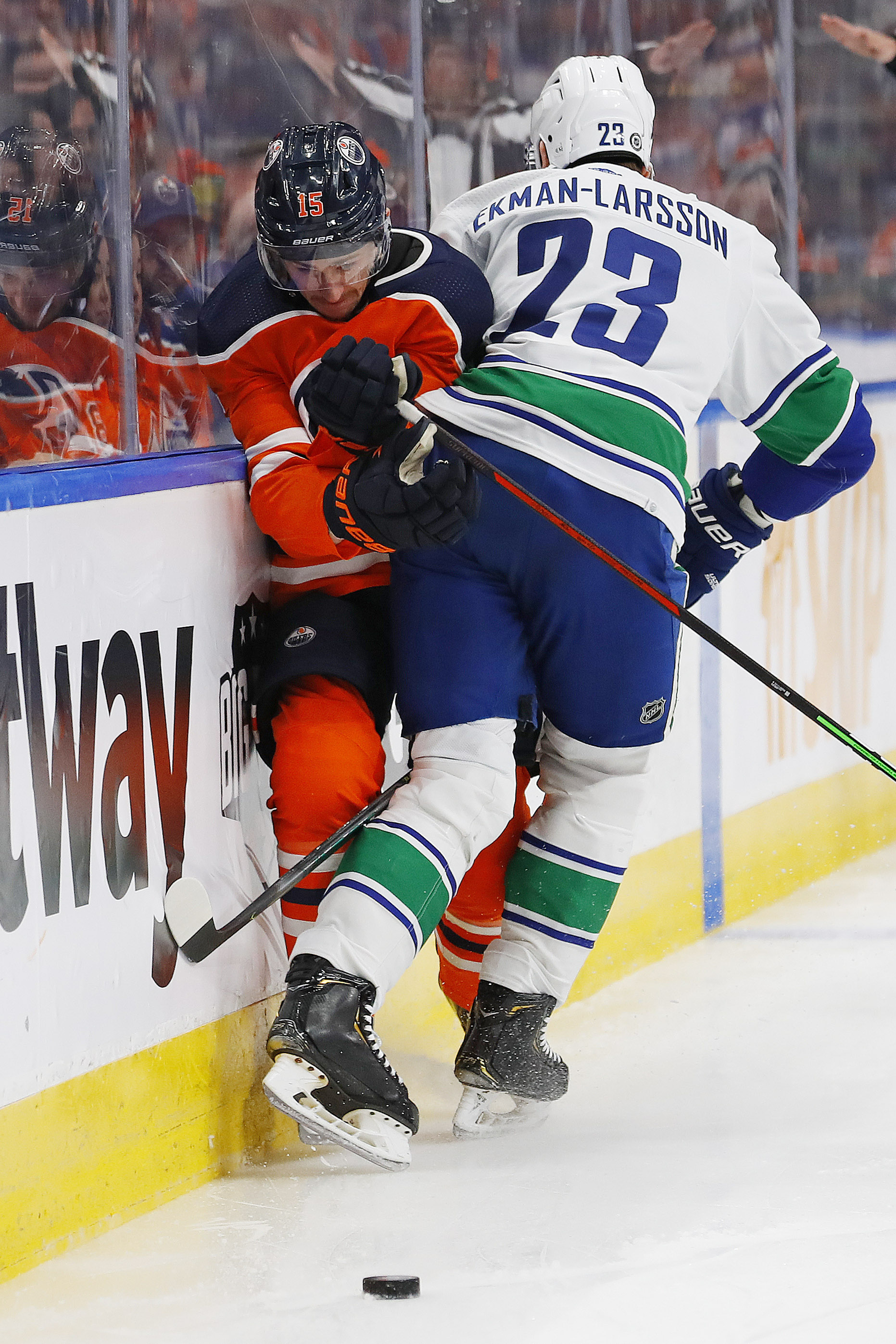 Then there’s Oliver Ekman-Larsson. With four years left at $7.26MM (excluding Arizona’s portion), that contract isn’t getting any better. But with two of those buyout years (25/26 and 26/27) costing $4.767MM each, that’s a bit too much of a single-year cap charge to eat right now. Plus, carrying eight years of dead cap money is hardly ideal. In the short term, I’m not convinced they can get a better defender for less money than the new guy’s cap hit plus Ekman-Larsson’s cap charge and if they can’t do that, why buy him out? Ekman-Larsson isn’t a top defender anymore but he’s still more than serviceable. They don’t have a particularly good or deep back end right now so for now, he stays.
Grocery stick: Right now the Devils seem to be on track for reaching the playoffs. That should make them buyers at the trade deadline. What are they doing with Holtz and Nemec who are their most high-end prospects in my book? Will the Devils flip their top prospects for success this season? They have some valuable depth players on expiring contracts so there won’t be a ‘next season’ for this Devils team. Are they going all in?
Generally speaking, I don’t like the idea of teams going all in after being a non-playoff team. It’s rare for a team to go from being a cellar dweller to a contender in one fell swoop so why push all the chips in so quickly? On the other hand, I’m not convinced that the Devils are a sustainable contender as things stand so with things falling into place this season, is it better to take your shot?
The next six weeks or so will go a long way in determining which route they go. Right now, things are looking good even with their recent struggles but if they continue to slip, the willingness to go all in likely dissipates somewhat. I don’t think Simon Nemec will be in play but I do think Alexander Holtz could be in the right situation. That right situation would be getting a young (25 or under) core piece that has at least four years of team control remaining.
As things stand, I think they’re softer buyers. Andreas Johnsson’s expiring contract won’t carry value but he’s a good enough player that he can be used as a contract matcher which would give them $2.275MM (his cap charge while in the minors) in full-season space to work with. That’s enough to add a depth piece or two (depending on if the other team retains) and send a message that management believes in this group without risking much of anything in terms of longer-term assets and cap flexibility.
aka.nda: What’s going on with the Sens and Blue Jackets? They gonna be buyers or sellers? Who are the targets? Possibly same question in regard to the Rangers and Flames as well.
Ottawa: They’re a bit of a Wild Card for a couple of reasons. Can they get back into the Wild Card race? I think they can. But with an estate basically running the team right now, what do they have for budget space? Playoffs were the expectation after a busy summer of upgrades so it’s hard to see them sell. Besides, other than Cam Talbot, I’m not sure there’s a pending UFA that carries a lot of trade value for them. I think they’re light buyers in terms of shoring up their depth (there are plenty of possible targets on that front) but I’m intrigued to see if they have something bigger going that requires Nikita Zaitsev‘s contract being moved out.
Blue Jackets: The playoffs aren’t an option for them so they’re sellers but this will be a softer sell. In other words, move the pending UFAs but not the core guys. Vladislav Gavrikov will fetch a good return and as long as they’re willing to retain half of Gustav Nyquist’s deal, I think they can get a mid-round pick for him plus whatever they get for Korpisalo. I wouldn’t be surprised if GM Jarmo Kekalainen prefers already-drafted prospects over draft picks as those players better fit the timeline of their young core.
Rangers: We’ve covered the goalie situation already but let’s look at the skaters. They’ll be buyers barring them falling well out of the playoff race. I had Vladimir Tarasenko going there in last weekend’s mailbag and that’s the side of the market I expect them to be on. If there’s a key forward (winger or center), they’ll be inquiring. Defensively, I think they’ll look to upgrade on their sixth defender; Ben Harpur is a capable depth player but do they really want him in the lineup in the playoffs? Who they target there depends on the forward they get.
Flames: Right now, they are narrowly holding onto a Wild Card spot. As long as they stay in that range, I think they’re buyers on the rental front. With over $80MM in commitments for next season already per CapFriendly, they can’t really afford someone on a multi-year deal. Depending on what happens with Oliver Kylington, they might want to add a defensive upgrade but otherwise, a top-six winger will be the target. Having said that, I could see them being a team that sells a bit as well in an effort to try to free up some cap space. At first glance, Andrew Mangiapane might be someone whose contract they might want to try to get out of. Maybe the buying move is a player-player swap, not a player-for-futures one that we typically see.
Free Agent Stock Watch: Right Wingers
With the new year upon us, the NHL season is in full swing. Teams are jockeying for playoff position, and many players with expiring contracts across the NHL are playing games that could ultimately determine what type of payday they might receive in the summer.
In a multi-part series, we’ll take a look at each position group of the upcoming free agent class, and do a rundown on how those upcoming unrestricted free agents have performed this year. Which players have increased their odds of landing a massive contract? Which players have potentially hurt their earning potential with their play? We’ll break it all down here.
The Marquee Names
David Pastrnak, Boston Bruins
With a Rocket Richard in his back pocket and a half-decade of play at or above the point-per-game mark on his resume, Pastrnak is the great jewel of next summer’s free agent class.
He’s one of the best wingers in all of hockey, period. He scored 40 goals and 77 points last season and this year, he’s scoring at a 57-goal, 114-point pace.
Helping Czech countryman David Krejci make an instant impact upon his return to the NHL, Pastrnak is the type of winger who is a playmaking center’s dream. The Bruins have been the best team in the NHL so far this year, and a major reason for that success has been Pastrnak.
While the Bruins have in the past signed their forwards to team-friendly contract extensions arguably below the signing player’s true market value, they should be willing to go to extreme lengths to get Pastrnak signed to a long-term deal.
Patrick Kane, Chicago Blackhawks
Kane is one of the greatest players of this generation of hockey and his exploits during this era of Blackhawks hockey, a golden era for one of the league’s original six franchises, have made him into a Chicago sports icon.
He’s also having his least-productive season in a half-decade as the team around him has been stripped for parts and sent away in order for the team to be able to amass a stockpile of draft picks and prospects.
As a result, it’s easy to say Kane’s stock is down from where it once was. That assessment isn’t without its merit, as Kane normally cruises past the point-per-game threshold, and hasn’t done so this season.
But it’s likely that Kane will remain one of the most sought-after players in free agency, and it’s unlikely that a small downturn in production will reduce the line of motivated suitors he’ll have to sift through next summer.
And if Kane ends up traded to a contending team, where he promptly returns to his prior form and leads them on a long playoff run, his slower-than-usual start to the year will be an afterthought.
We’re not at that point yet, though. Kane’s form on this talent-deficient Blackhawks team may put the faintest thought in some teams’ heads that maybe the 34-year-old star is finally showing some age-related decline.
Vladimir Tarasenko, St. Louis Blues
Just a few short years ago, Tarasenko’s career seemed to be somewhat in peril. The superstar forward had missed major time due to shoulder surgeries and had played in just 34 games over the span of two seasons.
Tarasenko got the chance to be a healthy member of the Blues’ lineup once again in 2021-22, and he went out and had the best campaign of his career.
He scored 34 goals and 82 points in 75 games, the first time in his NHL career that he crossed the point-per-game mark.
This year, it’s been more of the same. While the Blues themselves have struggled mightily to play with any sort of consistency, Tarasenko has been solid, scoring 29 points in 34 games.
Tarasenko just turned 31 years old, and should be a coveted option for teams looking to add a star scorer on the open market, should the Blues allow him to get there.
The Solid Contributors
Alex Killorn, Tampa Bay Lightning
Through his hard work, durability, and consistency, Killorn has been one of the most valuable “glue” players on the Lightning. He’s played a consistent role since he was a rookie in 2012-13, and has been reliable to score at least at a 40-point pace each year.
More recently, Killorn’s offensive production has ticked up, as he has 117 points in his last 173 games, a 55-point pace. Playing on both special teams units, Killorn is the type of consistent all-around presence that coaches adore.
With some significant pay raises set to kick in next year, it doesn’t look like the Lightning will be able to offer Killorn the type of contract extension that could match the offers he’d receive on the open market.
At the age of 33, Killorn doesn’t represent a youthful investment for interested teams. But he has two Stanley Cup rings, significant playoff experience, brings off-ice leadership value, and has seen his scoring numbers increase in recent years.
He may not bring the star power of the three names listed above him, but Killorn still has his valued place in next summer’s free agent class.
Conor Sheary, Washington Capitals
Standing at just five-foot-nine, 180 pounds, Sheary doesn’t bring the sort of physical dimension to his game that Killorn offers. But the undrafted product has some similarities to Killorn that will benefit him on the open market.
First and foremost, he’s a two-time Stanley Cup champion. While that’s a team accomplishment first and foremost, teams have valued free agents with that championship pedigree.
Sheary’s offensive numbers have also ticked up in recent years, going from 22 points in 2020-21 to 43 in 2021-22 and 26 in 39 games so far this year. He also contributes on both the power play and penalty kill, another similarity to Killorn.
Those factors will all help Sheary either land a solid contract extension with the Capitals or garner interest on the open market. While Sheary hasn’t always been the most consistent producer and at 30 years old isn’t young anymore, he’s been a valuable member of the Capitals and his stock is up as a result.
Gustav Nyquist, Columbus Blue Jackets
Nyquist, 33, has been a quality second-line scoring option for many years now. Arriving in Columbus on a $5.5MM AAV deal, Nyquist provided the Blue Jackets with a 42-point season (in 70 games) and a 53-point campaign. That’s healthy, reasonable production that didn’t set the world on fire but also didn’t leave Blue Jackets fans with very much buyer’s remorse.
Blue Jackets GM Jarmo Kekalainen paid for Nyquist knowing exactly what he’d receive, and Nyquist has largely held up his end of the bargain.
Nyquist’s scoring rate has admittedly slowed down from last season, as he’s on pace for 42 points, but that’s still not out of line with what he posted in his first year in Ohio.
Nyquist still plays on both the Blue Jackets’ power play and penalty kill, and while Columbus has struggled mightily, it’s difficult to pin significant blame on Nyquist’s shoulders.
If he enters the open market, the relatively minor but still notable decline in his offensive production could cost him some money on his next deal. He’ll still remain a reasonable option for any team looking to fortify its middle-six, though.
Connor Brown, Washington Capitals
Brown received some horrible news as he was just beginning his free agency platform season, as he tore his ACL in his right knee and had to undergo surgery in order to repair it.
The injury in all likelihood turned this 2021-22 campaign into a lost one for Brown, who could have put forth a convincing platform year in advance of his first trip to unrestricted free agency.
The 28-year-old winger provides all-situations value for his team, able to serve as a valuable defensive contributor as well as a complementary offensive piece.
This significant injury injects some uncertainty into his free agent profile. What Brown offers on the ice is normally quite consistent and clear, but now as he’s recovering from a major injury teams may hold off on making a long-term investment until they can see how well he fares when he comes back.
The Role Players
Corey Perry, Tampa Bay Lightning
Perry, now 37 years old, isn’t what he once was as a player. The 2010-11 Hart Trophy winner won’t be able to lead his team in scoring, but if there’s anything he’s shown in the past few years, it’s that his declining physical talents won’t stop him from being a valuable contributor to his club.
Perry scored 19 goals and 40 points last season, helping the Lightning reach the Stanley Cup final. This year, he has 14 points in 35 games.
While he’s gotten slower and isn’t quite able to match the physical intensity he once played with, Perry’s slick hands and smooth puck skills remain an asset.
He’s helped the Canadiens and Lightning in recent years as a net-front presence on the power play, and even though he’s not scoring at a 40-point pace this year, if he can finish in the mid-thirties in terms of points his stock heading to free agency will likely go unscathed.
Jesper Fast, Carolina Hurricanes
Fast is the sort of winger whose free agency could go one of two ways. On one hand, the veteran Swede scored 14 goals and 34 points last year and is a valued two-way presence who chips in on the penalty kill. He brings a valuable set of skills to the table, and could land a nice contract as a result.
On the other hand, Fast is the sort of middle-class free agent who could be squeezed by the salary cap remaining relatively flat for another season. While his overall profile is certainly valuable, he plays best in the sort of bottom-six role many teams may prefer to fill with a cheap internal option.
All Fast can do himself is continue to play well. If he can reach the 15-goal, 35-point marks he just missed out on last season, he’ll have his fair share of suitors on the open market.
Evan Rodrigues, Colorado Avalanche
Rodrigues lingered on the open market quite a bit longer than many might have anticipated, signing a contract with the Avalanche in September. He was coming off of a season where he scored 19 goals and 43 points, and many believed the $2MM guarantee he received to be not a fair reflection of his overall value.
This year, Rodrigues started off a bit slow and dealt with an injury, but has really started to heat up more recently. He has five points in his last four games, bringing his season-long total up to 16 points in 26 games. That’s a 50-point pace, and he’s done that while also chipping in on the Avalanche’s penalty kill.
If he can continue to score at a reasonable rate and help the Avalanche make a playoff run, he could have a more fruitful trip to the market than he had last year. As of right now, with Rodrigues on a hot streak, it’s hard to say his stock is anything but up.
Phil Kessel, Vegas Golden Knights
Kessel is an interesting case. He’s accomplished just about everything he’d likely want to accomplish in his NHL career, having won two Stanley Cups and becoming the NHL’s reigning “iron man.”
He signed a cheap one-year deal with the Golden Knights in the summer, and it’s clear that he’s reaching the tail end of what has been a fantastic run in the NHL. Kessel is on pace to score just 30 points, and his longstanding defensive issues have forced the Golden Knights to play him in a sheltered offensive role.
If Kessel can go on a second-half tear, it’s possible that performance could keep him in the NHL for another year. But based on how things are looking, it’s going to be a challenge for Kessel to find a deep market of teams interested in adding him next summer for his age-36 season.
Others Of Note
Jimmy Vesey, New York Rangers
Vesey’s second go-around on Broadway has been decent, with the 29-year-old’s true NHL role now far more clear. He’s no longer miscast as a top-scoring prospect, and in a more focused role, he’s excelled.
Vesey is scoring at a 27-point pace and is helping out as a second-unit penalty-killer on the Rangers’ above-average shorthanded unit. He’s providing competent, if decidedly no-frills bottom-six play in New York, and as long as he isn’t asked by coach Gerard Gallant to play higher in the lineup than he’s capable of, he’ll likely continue to impress.
Making just $750K after spending the preseason on a PTO, Vesey is providing competent, cheap bottom-six play, and is the sort of cheap role player any contender in a cap league could use.
If he hits free agency next summer his market is unlikely to be robust, but if he keeps playing the way he’s playing he may not have to settle for a PTO for a second-straight year.
Vladislav Namestnikov, Tampa Bay Lightning
Another veteran winger on his second tour of duty with the first club he ever played with, Namestnikov has provided decent fourth-line play for the Lightning.
He’s scored 11 points in 34 games, although that number could be a decent bit higher if he had any shooting luck. (his 4% shooting percentage this year is a steep decline from the 17.6% mark he posted last year)
Namestnikov has spent time on both of coach Jon Cooper’s special teams units, although his role hasn’t been extensive.
His declined shooting percentage means his offensive production is down, but Namestnikov is nonetheless a trusted veteran forward who should continue to play well enough to earn another NHL deal, even if it’s not quite at the $2.5MM cap hit he costs this year.
Garnet Hathaway, Washington Capitals
A grinder through and through, Hathaway has been a regular face in his team’s NHL lineup since 2017-18. Last year, Hathaway’s offensive production got a bump, and he finished with 14 goals and 26 points in 76 games.
He scored those 14 goals with virtually no power play time, and his 26-point performance was the best of his career. This season, Hathaway hasn’t been as good on offense, and he’s on pace for just eight goals and 21 points.
Hathaway’s game away from the puck remains solid, though. He’s a leading penalty killer for Washington, helping their kill rank inside the league’s top ten.
Even if his offense doesn’t quite reach the heights it did last year, the 31-year-old Hathaway is still playing well enough to garner some interest on the open market.
Pierre Engvall, Toronto Maple Leafs
After scoring 15 goals and 35 points last season, Engvall’s start to this year was a bit underwhelming. More recently, though, Engvall has heated up. He’s got eight points in his last nine games, including a five-game points streak.
That’s brought his overall scoring pace this season up to a 16-goal, 33-point pace, which is right around where he was last year.
Obviously, it’s highly unlikely that Engvall will be able to sustain his current hot streak. But if he can manage to score around the 15-goal, 35-point mark, he’ll be in a great place entering the open market.
At just 27 years old, he’ll be a younger option than many other teams will be considering, and standing six-foot-five, 220 pounds, he brings intriguing size to the table as well.
Trevor Lewis, Calgary Flames
At this point in his career, we know what Lewis, a two-time Stanley Cup champion, brings to the table. A trusted bottom-sixer of head coach Darryl Sutter, Lewis has been a constant presence on the Flames’ penalty kill for the past two seasons.
Lewis helped Sutter’s shorthanded unit to a top-six finish last year, and playing in a fourth-line role he’s been crucial in helping Sutter establish his desired culture in Calgary. He doesn’t score much (he notched just 16 points last year) but he brings many other valued skills to the table.
His points production has actually ticked up this year (he’s on pace to score 26 points) but the Flames have regressed as an overall unit. He’ll turn 36 next week, and will likely remain at Sutter’s side in Calgary beyond this season rather than take a trip to the open market.
Patric Hornqvist, Florida Panthers
While Hornqvist has been a crucial culture-builder and locker-room presence for the Panthers, a club that won the President’s Trophy last season, his on-ice value has eroded considerably.
The 36-year-old scored 11 goals and 28 points in 65 games last year, which rounds out to a 14-goal, 35-point pace. That’s not bad by any means, but it’s not quite the 32 points in 44 games he posted in his first year in South Florida.
This season, the production has totally bottomed out for Hornqvist, and he has just three points in 22 games. Hornqvist has been sidelined since early December with a concussion, an injury that has thus far cost him an opportunity to go on a hot stretch and improve his box score numbers.
While Hornqvist’s leadership and physicality make him a candidate to receive a contract next summer, it’s difficult to ignore the steep decline in his offensive numbers.
Picture courtesy of USA Today Sports Images
What Your Team Is Thankful For: Winnipeg Jets
As we approach the end of the year, PHR continues its look at what teams are thankful for in 2022-23. There also might be a few things your team would like down the road. We’ll examine what’s gone well in the early going and what could improve as the season rolls on for the Winnipeg Jets.
Who are the Jets thankful for?
The emergence of Norriss-err, Morrissey this season has been a huge reason for the Jets’ early success, setting a career-high with 40 points through his first 35 games. There’s nothing like a true No. 1 defenseman to change the fate of a team, and after the disappointing 2021-22 season the Jets are right back in the Central Division playoff picture. Morrissey is playing more than 23 minutes a night, sits second in scoring among defensemen, and has quickly made the eight-year, $50MM contract he signed in 2019 look like a bargain.
At a $6.25MM cap hit through the 2027-28 season, Morrissey’s development has made it possible for the Jets to stay legitimate contenders moving forward. It wasn’t so long ago that things looked like a disaster in Winnipeg. The team was struggling, Mark Scheifele was a rumored trade chip, and Pierre-Luc Dubois wasn’t willing to commit long-term. But things are looking a lot better these days, and a big part of that is because of the outstanding performance of Morrissey every night.
What are the Jets thankful for?
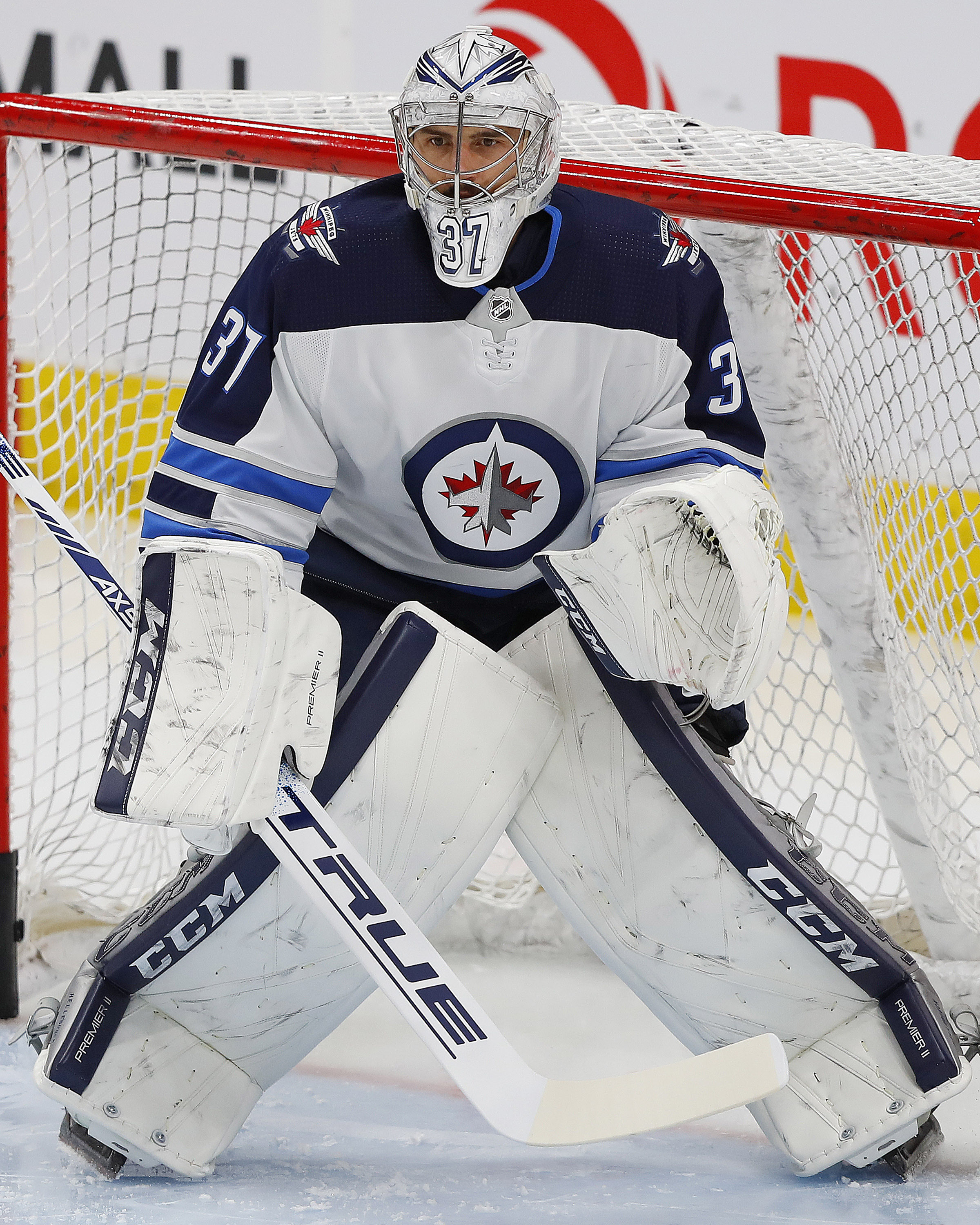 The return of Vezina-caliber Connor Hellebuyck.
If things continue the way they are now, Hellebuyck is going to lead the league in saves for the fifth-straight season. But while he continues to strap on the pads nearly every night, the performance has gone up and down over the last few years. When he won the Vezina Trophy in 2020, he had a .922 save percentage. This season, he’s at .927. The improvement to team defense is part of it, but Hellebuyck has been outstanding so far, keeping the Jets alive every night.
He leads the league in shutouts with three and has already racked up 17.9 goals saved above average. Linus Ullmark‘s .938 save percentage and 20-1-1 record put him as the front-runner right now, but Hellebuyck looks like he’ll be right there when the Vezina voting takes place.
It’s simple. When you have one of the best goalies in the league, you have a chance for the Stanley Cup. Right now, the Jets have one of the best goalies in the league, and with Hellebuyck’s history, it’s hard to believe it will end anytime soon.
What would the Jets be even more thankful for?
Some better injury luck.
Even though they are in the mix and playing well, the Jets’ can’t seem to stay healthy. Mason Appleton, Nikolaj Ehlers, Saku Maenalanen, Nate Schmidt, Logan Stanley, and Blake Wheeler are all currently on injured reserve, while Cole Perfetti is also dealing with a more minor issue. That’s more than $25MM on the sidelines, and a group that could be considered an entire core of some rosters.
When Hellebuyck missed practice earlier this month, the heart of many Jets fans jumped into their throat, expecting the worse. The netminder was only dealing with an illness, but it showed just how delicate their success is right now. A few more injuries and they might fall completely off the table, a couple fewer and they might go on a dominant run. There’s a lot of talent on the Jets roster – if they can keep it on the ice, they have a good chance at contending in the Western Conference.
What should be on the Jets’ holiday wishlist?
Another center.
The thing is, there’s no guarantee that the team ever does get fully healthy. With so many wingers out, they have Adam Lowry playing the wing on the second line, meaning Kevin Stenlund and David Gustafsson are their third and fourth-line centers. You can think all you want that they have done a good job in a tough situation, but Gustafsson hasn’t scored a single goal in 34 games and Stenlund is a minor league veteran with fewer than 80 NHL games under his belt.
When someone comes back they will be able to use Lowry in the middle of the third line again, but if Winnipeg is going to make a real run they should shore up that position with a little more depth. They’ve had players like Andrew Copp, Bryan Little, and Paul Stastny in that role in the past to great success.
That’s not to say it’s the only hole. David Rittich as a backup is a little scary, and the third defense pairing has been a rotating cast of characters all season. But the team only really has three legitimate centers at this point. It needs to be a focus, if the Jets do anything at the deadline.
Photo courtesy of USA Today Sports Images
Poll: Who Will Finish With The Best Chance At First Overall?
Success at the World Junior Championship doesn’t guarantee success in the NHL. It’s a junior tournament, after all, and there are countless examples of players who star there only to find it difficult to translate their game to the professional level. Esa Keskinen, for example, is one of the highest-scoring players of all time with 31 points in two tournaments. The fifth-round pick never came over to North America (likely due to his small stature during a different era of hockey), playing out his career in Finland and Sweden instead.
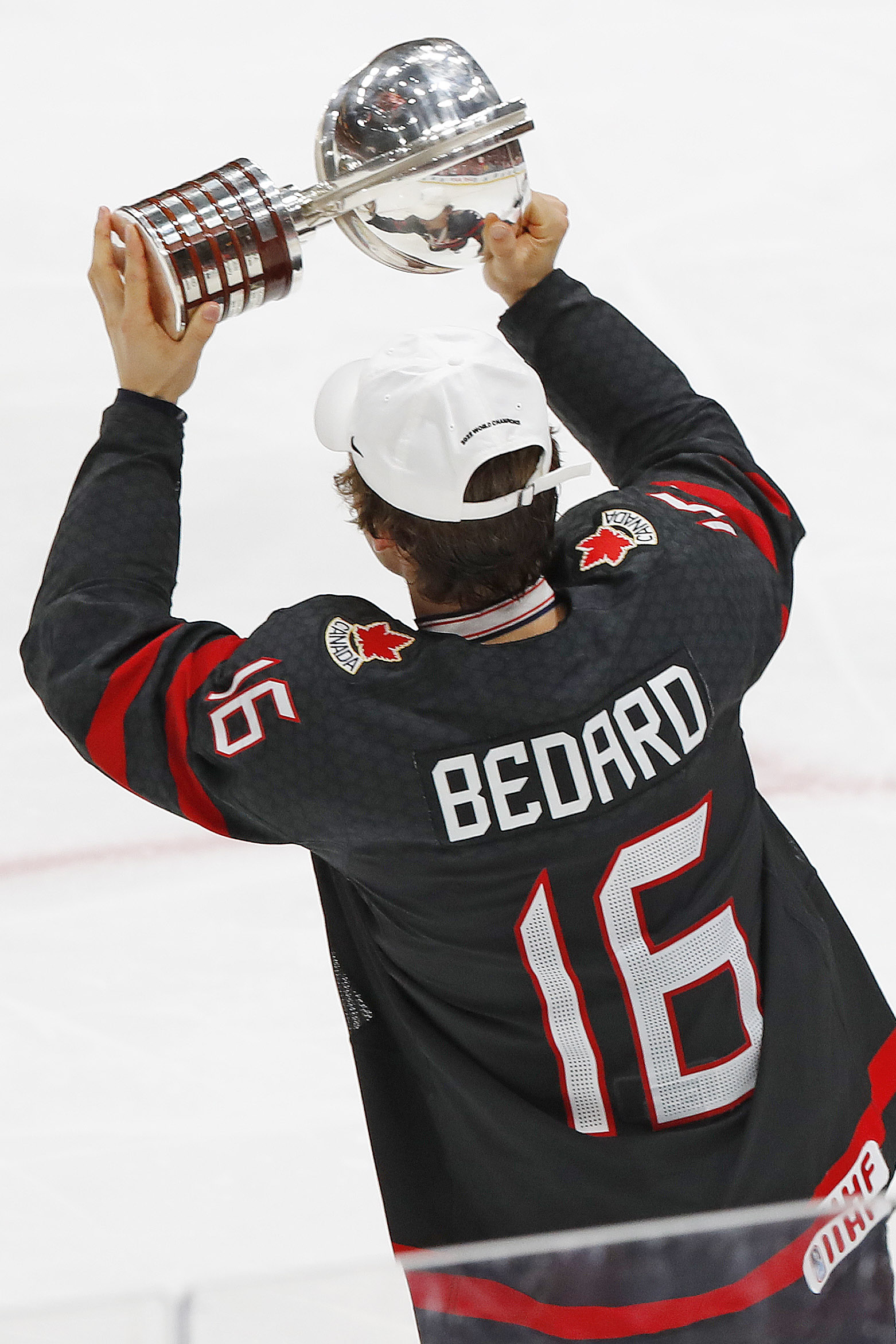 But even as scouts are starting to place less importance on performance there, the World Juniors plays an important role in something else for future stars: an introduction to a wider audience.
In the grand scheme of hockey fans, there aren’t many watching Regina Pats games. They might not get a chance to see future first-overall pick Connor Bedard on a very regular basis, if at all. So when he puts up seven points in one game or comes within one goal of the Canadian record from a ridiculous angle suddenly fans from across the league start dreaming about him pulling on their sweater next season.
Tanking for the first-overall pick doesn’t work all that well in hockey. The draft lottery gives hope to around half the league (depending on trades) and causes anxiety for those clubs at the bottom of the standings. Going into tonight’s games, the Chicago Blackhawks have the best odds of winning the right to select Bedard. Chicago has lost nine of their last ten and 25 of 33 on the year. Their .303 winning percentage would be the third worst in the salary cap era if it continued all year. The two teams ahead (or behind) them though – the 2016-17 Colorado Avalanche and 2019-20 Detroit Red Wings – both failed to win the lottery.
Colorado fell to fourth after three teams jumped them, and got the consolation prize of Cale Makar. The Red Wings fell three spots too and had to settle for Lucas Raymond.
There have been some changes since then, meaning Chicago (or whoever finishes last) won’t drop quite so far. But coming last still by no means guarantees the top pick. In fact, a team like the Montreal Canadiens could theoretically end up with an even greater chance, even without finishing last. The Canadiens have their own pick and Florida’s, who are also currently out of the playoff picture. Should the Panthers drop even further, Montreal would essentially have two cracks to move up.
There is also a lot of hockey left to play. One more win would tie the Blackhawks with the Columbus Blue Jackets. Two would bring them even with the Anaheim Ducks, who have played three more games. There’s a long race to be run by quite a few teams.
So as you watch Bedard (and Adam Fantilli) pile goals onto an overmatched Austrian squad, who do you think will enter the draft lottery with the best chance? Cast your vote below and explain how you see it playing out in the comments.
Who will finish with the best chance at the first-overall pick?
-
Chicago Blackhawks 44% (450)
-
Anaheim Ducks 17% (169)
-
Columbus Blue Jackets 9% (92)
-
Arizona Coyotes 9% (91)
-
Montreal Canadiens 7% (74)
-
Philadelphia Flyers 7% (70)
-
San Jose Sharks 4% (41)
-
Other 4% (37)
Total votes: 1,024
Photo courtesy of USA Today Sports Images
What Your Team Is Thankful For: Washington Capitals
As we approach the end of the year, PHR continues its look at what teams are thankful for in 2022-23. There also might be a few things your team would like down the road. We’ll examine what’s gone well in the early going and what could improve as the season rolls on for the Washington Capitals.
Who are the Capitals thankful for?
Charlie Lindgren, Dylan Strome, and Sonny Milano
Yes, the Washington Capitals are absolutely thankful for Alex Ovechkin, the current team leader in goals and points this season by a wide margin and the greatest player in the history of the franchise. They’ve been thankful for Ovechkin since he debuted back in 2005. We’ll get to the Great Eight further down, but first we’ll take a look at a trio of players who have come somewhat out of nowhere to help keep the team in the playoff race.
Signed to a three-year deal carrying a $1.1MM AAV this summer to backup fellow newcomer Darcy Kuemper, Lindgren had been off to a solid start to the year before Kuemper went down with injury. Kuemper has since come back, but in the nearly three weeks he was out, Lindgren stepped up to the plate, starting every game and carrying the team to a 7-1-0 record with a .930 save-percentage. Lindgren hasn’t been that hot the entire season, but his overall numbers, a .913 save-percentage and 2.60 goals-against average are nearly identical to Kuemper’s .916 and 2.53 on the year.
Sitting third on the team in points with 25 through 36 games, Strome’s success isn’t exactly unprecedented. In fact, the forward had 48 points in 69 games last season and even hit a career-high of 57 over 78 games back in 2018-19. However, after a disappointing 2020-21, followed by struggles early last season under then-head coach Jeremy Colliton with the Chicago Blackhawks before the rebound, Chicago failed to qualify Strome this summer, making him an unrestricted free agent. Washington took a chance on the 25-year-old, signing him to a one-year, $3.5MM deal. Strome hasn’t disappointed, on pace to match his career-high in points while displaying excellent possession metrics.
After the Anaheim Ducks failed to qualify him, Sonny Milano was left an unrestricted free agent much like Strome. Coming off a breakout season, the former first-round pick waited most of the summer for an opportunity before the Calgary Flames offered him a PTO, from which he was later released. The Capitals gave Milano a chance, signing him to a one-year, one-way league minimum deal on October 15th, calling him up November 2nd. In that time, the winger has done more than simply impress, recording 16 points in 23 games for the Capitals. It’s a very good season, on pace to be Milano’s best, but not necessarily groundbreaking. However, in a year that has yet to feature Nicklas Backstrom or Tom Wilson, getting this level of production out of Milano, and Strome for that matter, has been much appreciated in Washington.
What are the Capitals thankful for?
Ovechkin’s Chase for 895
There’s plenty to be thankful for with Ovechkin, not only in what he’s meant to the franchise and his success year after year, but simply in this season. As the team just about hangs on in the playoff race, Ovechkin has done his best to carry the team through. The players mentioned above, among others, have done their part, but of course Ovechkin’s game-breaking ability to score goals has been a difference-maker.
What the Capitals can also be thankful, related to Ovechkin, is the decision not to rebuild until Ovechkin breaks Wayne Gretzky‘s all-time goals record of 894. Though some may say it’s time for the Capitals to shake things up and hit the reset button, Washington has ensured that they will do all in their power to chase the Stanley Cup for at least a couple more seasons. It’s an interesting decision, but given the organization’s ability to remain competitive for the better part of the last 15 years and Ovechkin still performing at or near the top of his ability, it’s an exciting one for those involved.
Not to be forgotten is Ovechkin’s high-level of competitiveness and graceful aging. It’s hard to imagine many elite athletes would continue to play without being competitive, but if the team is going to hold off on a rebuild while Ovechkin continues the chase, at least another 93 goals, Ovechkin will need to continue to be the elite shooter and physical power forward he’s been all these years, and there doesn’t appear to be much getting in the way of any of that.
What would the Capitals be even more thankful for?
Health
The big story this season when it comes to Capitals injuries would be Backstrom and Wilson, neither of whom have played a game this year. That was expected going into this season, and Washington acted accordingly, signing players like Strome, Milano, and Marcus Johansson to fill the void. Although Wilson is expected to return to the lineup at some point this season, and perhaps not far off, Backstrom’s availability for this season and long-term, remains in question.
Beyond that pair, Washington has also had a number of smaller-scale injuries that have impacted them this season, including players like T. J. Oshie, Dmitry Orlov, and Martin Fehervary missing at least 10 games, and Connor Brown playing in only four games thus far. Superstar defenseman John Carlson, who has already missed six games, is expected to miss a considerable amount more after taking a slapshot to his head a few days ago.
Backstrom and Wilson are one thing for the Capitals, but getting the rest of their lineup back to full health and keeping them there has been a challenge this year, and part of the reason the team is in a playoff fight, and not a comfortable playoff position.
What should be on the Capitals holiday wishlist?
A return of Wilson and Backstrom and/or a top-six forward
Besides overall health, Washington has a pretty clear need for at least another top-six forward. As discussed, they should get a boost when Wilson eventually returns to the lineup, but even still, the depth there is lacking. Coming into tonight, Ovechkin was not only the team leader in points, but his 41 points are 13 ahead of Evgeny Kuznetsov‘s 28. Strome and Milano have had fantastic seasons thus far, but both may be better suited for secondary scoring roles if the team does indeed envision playoff success.
Complicating things for Washington would be whether or not Backstrom returns this season. With Backstrom now skating, a return by season’s end appears plausible, though not guaranteed. If the veteran is fully healthy and able to play like himself, that would solve the need for another top-six forward no problem. However, Backstrom’s injury issues, and the surgery that dealt with them, were rather significant and whether he can return to the player he was in the past, regardless of age, is perhaps a bigger question than whether he can return in the first place.
The main issue though is Backstrom’s $9MM cap hit. If and when he returns, that number comes off of LTIR and begins to count against Washington’s cap. The Capitals will, presumably, work that issue out when it comes time, but they might not be able to accommodate another even remotely large cap hit, like a Patrick Kane, Jonathan Toews, or Bo Horvat, even with salary retained. A trade in that situation might not be impossible, but knowing whether or not Backstrom is going to be a factor down the stretch will make a huge impact on if and how a deal would get done.
What Your Team Is Thankful For: Vegas Golden Knights
As we approach the end of the year, PHR continues its look at what teams are thankful for in 2022-23. There also might be a few things your team would like down the road. We’ll examine what’s gone well in the early going and what could improve as the season rolls on for the Vegas Golden Knights.
Who are the Golden Knights thankful for?
Their goaltenders
Chandler Stephenson, Jack Eichel, and Alex Pietrangelo are all averaging a point-per-game, Mark Stone isn’t far behind their pace while playing Selke level hockey, Reilly Smith leads the team with 17 goals, and despite some injury issues, the team is comfortably pacing the NHL’s Pacific Division. There’s plenty to be thankful for in Vegas, but perhaps none more than the goaltending duo of Logan Thompson and Adin Hill.
Neither netminder is finding himself in the Vezina conversation this year, at least not at the moment, but considering where the team stood coming into this season, both have been a revelation. At the outset, the Golden Knights expected to be without Robin Lehner for the entire season, and though they weren’t sure exactly when Laurent Brossoit would return, it wasn’t going to be for opening night. The team opted to roll with Thompson, the rookie and incumbent from last season who had an impressive finish to his 2021-22, carrying Vegas as far as he could go in pivotal games, just missing out on a playoff berth. Knowing he couldn’t go it alone, Vegas also acquired Hill from the San Jose Sharks in late August.
A career backup, Hill has continued in that role, filling it just as Vegas hoped, recording a .903 save-percentage and 2.66 goals-against average over 12 starts. That performance, along with the effort of those in front of him, has lead Hill to an 8-3-1 record in those games, fantastic for the team’s backup.
Seemingly out of nowhere, the undrafted Thompson has become one of the league’s best young netminders and has taken the reins for Vegas. As much as they’d like to have Lehner too, Thompson has made the case for his absence being a non-issue as of right now. Through 24 games, Thompson has compiled a .914 save-percentage and 2.66 goals-against average and his 16 wins are good enough for third in the entire NHL.
What are the Golden Knights thankful for?
An expected bump to the salary cap
When you think of the NHL’s cap crunch and the issues it presents, chances are you think of the Tampa Bay Lightning and Vegas Golden Knights off the bat. The organization has had to make several interesting moves in order to ice the team they wish and remain cap compliant, and just barely so. In recent years, those have consisted of trading away the then-Vezina Trophy winner Marc-Andre Fleury for virtually nothing and this offseason, trading Max Pacioretty and Dylan Coghlan away for quite literally nothing, while acquiring Shea Weber‘s contract for LTIR purposes, sending Evgenii Dadonov the other way.
These moves have allowed Vegas to do what it needs to do in order to remain competitive, and though the Fleury and Pacioretty trades netted little in return, Vegas may argue that the cap space they received was the valuable return. Still, one may also argue that a team is at its best when it can keep all of its players, and that’s what the expected salary cap increase should do for Vegas. It may not let them acquire another Eichel or sign another Pietrangelo, and it can’t bring back Pacioretty or prime Fleury, but it can allow Eichel, Pietrangelo, Mark Stone, Shea Theodore, William Karlsson, and others to stay while eventually giving long-term extensions to others such as Chandler Stephenson and Jonathan Marchessault, who are both due after next season.
It’s still unclear when, how, and how much the cap will increase, but any little bit counts for Vegas and at present, they’ve been able to structure their roster so that issues likely won’t arise until they’re given a significant amount of additional space.
What would the Golden Knights be even more thankful for?
Health
To confuse the Golden Knights’ injury issues this season with the ones faced by the Columbus Blue Jackets or the Philadelphia Flyers, or their own issues from a year ago wouldn’t be fair. In fact, knock on wood, this season has been a vast improvement, and likely a big reason behind the team’s success. Still, Vegas has another 46 games to go plus playoffs, to stay healthy, with a number of somewhat concerning injuries.
For one, the team now has forward Brett Howden and defenseman Zach Whitecloud on LTIR with no clear return set for either of them. While not the team’s foremost stars, both players occupy important roles which are now filled by replacement players. The other primary injury concern is Eichel, who is on IR with a lower-body injury. There is some relief on that front as the injury appears unrelated to the issues that kept himl out for portions of the last two seasons, but every game missed by the superstar does put strain on the team’s offense. No timetable is clear on Eichel either, but remaining on IR as opposed to a transfer to LTIR, is encouraging.
What should be on the Golden Knights’ holiday wishlist?
A couple of depth pieces
Looking up and down the Vegas roster, it’s hard to find many holes. The goaltending is strong, the defense core is incredibly deep and contains players with offensive minds, defensive minds, and some who do both. Up front the team is deep as well and features a two-way star in Stone, a superstar scorer in Eichel, a few puck movers and snipers with names like Stephenson, Smith, and Marchessault, and a number of other secondary scoring options as well as a solid bottom-six.
Where Vegas is lacking in these groups, however, is depth beyond their main group. The team has dealt with injuries, discussed above, however the replacement players they’ve brought up, while talented in their own right, are not perhaps the most experienced and ready to join a group with eyes set on the Cup. Vegas doesn’t need depth as far as another third-line option goes, but instead an affordable player or two with semi-significant NHL experience to step in when players go down. This depth could be found on the trade market, and that may help with budgeting the new player in, but could also simply be a waiver-wire find.
What Your Team Is Thankful For: Vancouver Canucks
As we approach the end of the year, PHR continues its look at what teams are thankful for in 2022-23. There also might be a few things your team would like down the road. We’ll examine what’s gone well in the early going and what could improve as the season rolls on for the Vancouver Canucks.
Who are the Canucks thankful for?
Amid turbulent times in Vancouver, the Canucks do find themselves with one of the brightest pieces in the entire league: Elias Petterssoon. Already a clear star in the NHL, the 24-year-old took the next step this season with a massive breakout, featuring 15 goals and 26 assists for 41 points through just 31 games.
The young Swede is signed through next season at a $7.5MM cap hit, expiring as a RFA, and was recently listed as the one untouchable player in the Canucks organization. Pettersson being “untouchable” might seem obvious, but on a team with a few superstars. but no certain direction in the short or long-term future, that denomination is significant.
Once this summer begins, regardless of the direction the team chooses to go in, the organization will surely need to focus on negotiations with their superstar center to keep him from hitting the UFA market in a couple of years. Extensions with J.T. Miller, Quinn Hughes, and Thatcher Demko are an encouraging sign of things to come, but the issues with captain and pending UFA Bo Horvat do raise concerns.
Regardless of contract concerns or the success of the current build, Pettersson has taken himself from a solid top-six forward and propelled himself into superstar status with this season. Having him, whether that’s to carry the team on his back, to build around, to ultimately deal for assets, or something else, is a blessing for the organization, especially as it goes through these difficult times.
What are the Canucks thankful for?
Assets
Regardless of who is untouchable or not in Vancouver, and independent of how the team chooses to navigate its future, the organization is lucky to have a bevy of assets that hold substantial weight on the trade market for different reasons. The most clear-cut of these is Horvat.
After negotiations appeared to break down between the Canucks and Horvat’s camp, it seemed as though the struggling Canucks would likely deal their captain before this winter’s trade deadline. Normally, a rental of a responsible two-way forward who was also good for 60 points would fetch a massive haul on the market, but that’s not necessarily the story here. This year, Horvat has been much the same player with one significant change: he’s on pace for 60 goals. If Horvat keeps that level of production up, or even remains close, Vancouver could be looking at a package of picks and prospects not seen at the deadline in some time.
Another interesting pending UFA could be first-year winger Andrei Kuzmenko. The former KHL star chose to come to North America this offseason, pursued by a number of NHL teams, ultimately signing a one-year ELC with Vancouver. Expectations were high for the winger, though he’s arguably eclipsed them, registering 29 points, 14 of them goals, through 32 games.
Outside of the “untouchable” Pettersson, perhaps Vancouver’s biggest asset could be Hughes, who Sportsnet’s Elliotte Friedman estimated would require a “mammoth” haul to get Vancouver to trade him. The 23-year-old, signed through 2026-27 at a $7.85MM cap hit, has blossomed into an elite playmaking defenseman for Vancouver. There’s no shortage of teams who might find themselves interested in the defenseman, though presumably the Canucks’ asking price could drive them away. While there’s been no connection between the two teams, it is interesting to consider the team best-equipped to make this kind of trade, the New Jersey Devils, already have both of Quinn’s brothers in the organization.
What would the Canucks be even more thankful for?
A clear direction
After a poor start, losing their first seven games to start the season, the Canucks were able to bounce back, even finding themselves just a couple of points out of a playoff spot at times. The team’s play hasn’t simply been mediocre since the rough start, but instead has been up and down, that start merely representing the first down.
Comments and action from management have lead some to believe the team could be headed for a rebuild, some to believe they need a short-term reset, and some believing the team is still trying to compete. Complicating the situation is the team’s 2021-22 season and the offseason that followed. Last season was rather similar to this one, a rough start, followed by a rebound, just missing the playoffs. The team appeared to need a clear direction last year too, and re-signing new head coach Bruce Boudreau, extending J.T. Miller, and signing Kuzmenko and Ilya Mikheyev seemed to indicate the team was all-in. But, this confusing start, the lack of a Horvat extension, and the previously discussed comments from management still make that unclear.
It would seem what Vancouver needs most in order to ice a team competitive enough to compete for a Stanley Cup, is simply direction. A full-scale rebuild might extend the process, but the assets they have now should bring back plenty of quality pieces. A temporary re-tool would make sense given the players they have signed long-term and what they could get back for players like Horvat and Kuzmenko. Continuing to compete as is wouldn’t be surprising either, given the team’s ability to bounce back and the players they have now, but that could be risky given Horvat’s contract status.
What should be on the Canucks holiday wishlist?
A Horvat extension, or a massive trade package
Already discussed in detail, the Canucks have had issues extending Horvat and at this point, a trade seems more likely than ever. Even with broken negotiations and a struggling team, it’s easy to understand why the Canucks would still prefer to work out a deal with Horvat.
It’s hard to imagine, so long as they get a respectable deal, that anyone would blame the organization either way. The issue comes with Horvat’s ability to simply leave on July 1st. Obvious as it sounds, the Canucks cannot allow Horvat to simply walk like Johnny Gaudreau did with the Calgary Flames last offseason, how Artemi Panarin did with the Columbus Blue Jackets in 2019, or how John Tavares left the New York Islanders in 2018.
None of those departures were a “good” thing for those teams by any stretch, however Calgary and Columbus had been in a position to win a Stanley Cup those years and needed their star wingers to compete for it. Add onto that, Calgary had expected they could re-sign Gaudreau for most of the spring, and Columbus knew what might be happening as Matt Duchene and Sergei Bobrovsky also hit the UFA market. As for the Islanders, they also expected to be able to re-sign Tavares the entire spring, but at the very least, though Tavares was going out, a pair of legends in that of GM Lou Lamoriello and head coach Barry Trotz were coming in, breathing new life.
What was the case for Calgary, Columbus, and New York isn’t necessarily the same for Vancouver. They have plenty of talented players, many of them signed long-term, a legendary executive in Jim Rutherford, and a star coach in Boudreau, but the team has been lacking direction for a few years now with no clear sign of a new one coming. Losing Horvat for nothing wouldn’t necessarily make a decision for them on their direction, but would make whatever option they eventually chose just that much more difficult to be successful with.
PHR Mailbag: Predators, Predictions, Toews, Worst Contracts, Coyotes, Wild
Topics in this edition of the PHR Mailbag include what it might cost Boston to add a key rental center, the worst contracts in the NHL by position, Arizona’s trade deadline situation, and more. If your question doesn’t appear here, check back in next weekend’s mailbag.
Gbear: Easy one here: The Preds offense from their forward group is dreadful. Do you see Poile making any moves to add scoring help or is it the same old story in Nashville?
I think it’s the same old story for the Predators. They have a veteran-laden team that isn’t good enough to truly be a contender nor are they bad enough to have justification for blowing it all up. Quite frankly, even if they wanted to blow it up, I don’t think they could as moving money in this cap environment is very tough. There are some bloated contracts that don’t have a lot of trade value at the moment.
There was some risk in Nashville’s offseason moves in that it suggested they felt last year’s offensive production was repeatable. I doubt many others saw it the same way. I won’t criticize GM David Poile for the moves he did make (getting Ryan McDonagh for next to nothing and signing Nino Niederreiter) because it didn’t really cost them anything in assets. All in all, they were relatively low-risk even with McDonagh’s contract.
But those moves cemented that their goal seemed to be squeaking into the playoffs and see what happens from there. And, let’s face it, you don’t have to look very far to find a team that squeaked into the postseason and made it all the way to the Cup Final. It’s not necessarily a viable strategy but it works enough that some teams want to try it with the odd one going on a run.
So, with that in mind, I don’t see many big changes coming one way or the other. They’re six points out but have games in hand on almost everyone ahead of them. Knowing where they are, any improvements are likely to be low-risk, low-cost incremental ones; if they didn’t commit to big upgrades last summer, they’re not doing it now. On the seller side, they’re not exactly loaded with expiring deals that other teams are going to want in early March. I suspect they’ll wait things out for a while and then take a tiny step whether it’s as a buyer or seller. Nothing too exciting, I know, but I don’t see any big splash on the horizon for them.
The Duke: All-knowing, -seeing and -prognosticating Snow Globe (hey, it’s Christmastime), please soothsay the following: 1. Long-term, UPL, Portillo, or Levi? 2. Where does Tarasenko land – and in this season or next? 3. Brighter scoring future: Ruzicka, Holtz, or Kent Johnson? BONUS Q: What season does Askarov arrive in Smashville? Merry Christmas – and Happy New Year!
I don’t know why but I feel a bit more shaken up than usual following this question…
1) Assuming you mean who the long-term starter in Buffalo is going to be, let’s go with Devon Levi if I have to pick one of those three. I think Ukko-Pekka Luukkonen can be a capable NHL goalie but he might be more of a platoon option than a true starter. Erik Portillo is no guarantee to sign with the Sabres so it’s hard to pick him for this question either. Levi might be more of a platoon option himself (if he and Luukkonen form a serviceable tandem, that could work out great for Buffalo) but at this point, I’d say he has the best long-term upside for the Sabres so he gets the nod by default.
2) The unstated question here is will the Blues want to sell? If they don’t, I don’t think Tarasenko moves this season. That call won’t be made for at least six more weeks but if they keep playing at this level, I’ll say they will sell and thus, he will move this season. I know the Rangers seem to be the expected landing spot for Patrick Kane but if they want to do a move that doesn’t necessarily require double retention, this might be the one. Plus, for some reason, I can hear Sam Rosen calling “Vladimir Tarasenko – It’s a Power Play Goal!” in my head and it sounds fitting. Let’s go with Tarasenko to the Rangers at the deadline.
3) I’ll take Alexander Holtz. This year has been a complete write-off and I’m not at all a fan of how the Devils have handled him. Scorers need to score and sitting a top prospect for numerous games in between playing him on the fourth line isn’t helping anyone. However, he’s the one player on this list who still has top-line upside in my books (Johnson is more of a second liner and Ruzicka is still trying to become a full-fledged regular) so that gives him the nod.
Bonus) 2024-25. That’s Juuse Saros’ final year under contract and the Predators will want to know if Yaroslav Askarov is ready to be a starter so quickly, whether he’s more of a backup at that point, or if he’s an NHL goalie altogether. Right now, he needs as many games as possible so I don’t think they’ll want him up (barring injuries) this season or next.
@dajc: What do you think it’s going to take to get Jonathan Toews into a Bruin jersey?
When I first saw this question, I questioned if strengthening a fairly strong spot would be Boston’s best course of action. However, if Toews was anchoring a two-way checking line in the playoffs, that would give them a huge boost. Making it work, however, will be a bit tricky.
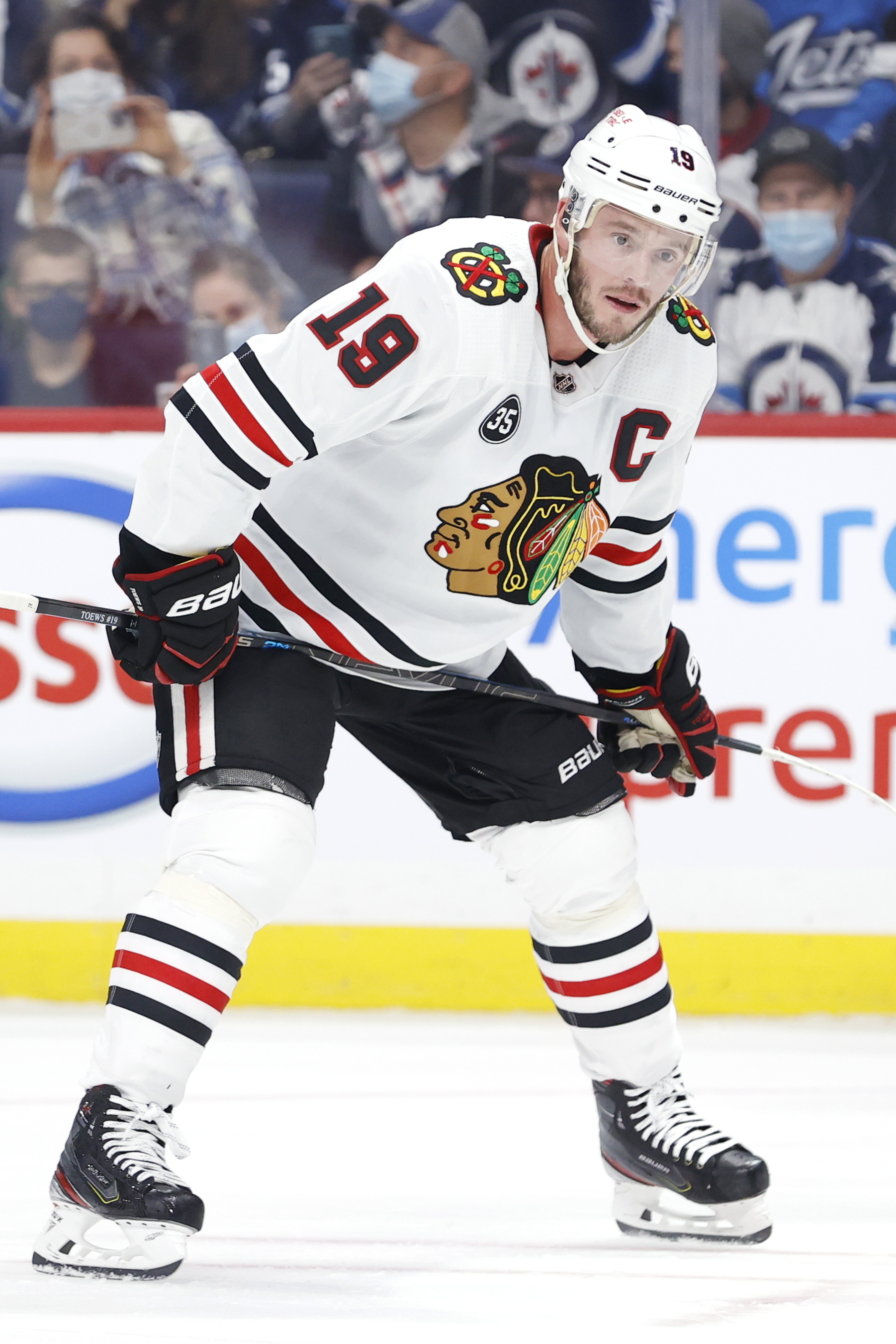 Let’s get the easy part out of the way first. They will need a third team to retain so that they’re only taking on 25% of Toews’ $10.5MM AAV. If we look back at the few examples of those types of deals, you’re probably looking at a third-rounder, maybe a second if there were a few teams with similar offers on the table. What works in Boston’s favor here is that Toews only has a base salary of $2.9MM so the actual cash outlay for the third team that they’re trying to incentivize to retain would be fairly minimal but they will have to part with a decent draft pick to get their cap charge down to $2.625MM.
As for what they’d need to send to Chicago, it’s likely to involve a first-round pick. Toews isn’t the top center he once was but he still has 11 goals this season, is simply elite at the faceoff dot (65.6%), and can play in all situations. Moving someone like Craig Smith solves the cap issue; they’d actually free up some cap space even by throwing him in. I think there’s a secondary element that needs to go in there as well, a decent prospect. Marc McLaughlin comes to mind as a near NHL-ready center that they might want to target. Boston might not want to move him but they’ll need to incentivize Chicago to take Smith’s contract.
The good news for the Bruins here is that the rental center market is deeper than usual so Toews shouldn’t command the top return. That should be Bo Horvat as things stand barring a late change of heart in Vancouver (which could very well happen). But Boston won’t get Toews for cheap either but a package of a first-rounder, Smith, McLaughlin, and a third-rounder (to a third team) might be enough, particularly if that’s where Toews indicates he wants to go. Like Claude Giroux last season with the Flyers, his preferred destination(s) will largely dictate which Chicago can or can’t get for him.
Nha Trang: Okay, I actually do have a question, I fibbed: who would you tab as the worst regular players in the league in terms of value to salary at forward, defense and goal? (Not counting LTIR types — obviously Montreal’s got the short end of the stick with Price there.)
First, thanks for the kind words that preceded your question from the callout for questions.
Forward: Tyler Seguin – Dallas committed franchise player money to Seguin, a player who hasn’t averaged over a point per game since 2015-16. He’s still a capable player but he is more of a second liner at this point of his career and by the time this contract ends, he’ll probably be lower on the depth chart. He has four years left after this one at $9.85MM and as Dallas looks to try to retain and enhance its core, this is the type of contract that will make doing that considerably more difficult.
Defense: Marc-Edouard Vlasic – His deal certainly isn’t the priciest (he’s tied for 24th among AAVs for blueliners) but it has been a few years since he has been the true shutdown defender he was in his prime. Frankly, it has been a few years since he has been much more than a replacement-level rearguard. He turns 36 in March and still has three years left at $7MM per season. That’s not good when his play has gone downhill in a hurry. There are other more expensive veterans on bad deals, sure, but those players are least still providing some on-ice value. I don’t think Vlasic will be anytime soon.
Goalie: Sergei Bobrovsky – He’s the second-highest-paid goalie in NHL history behind Carey Price. For that, the Panthers were expecting to get high-end goaltending, the type that you can rely on to carry you to big things. Well, this season, Bobrovsky is below-average in GAA and SV%. If he was making $2MM, that would be one thing. But he’s not making $2MM. He’s making $10MM this season and for three years after that. Spencer Knight is close to taking away the number one job and when that happens, Florida will have an untradeable backup that makes more money than what the majority of the league is spending on their goalie tandems.
Free Agent Stock Watch: Left Wingers
With the new year fast approaching, the NHL season is in full swing. Teams are jockeying for playoff position, and many players with expiring contracts across the NHL are playing games that could ultimately determine what type of payday they might receive in the summer.
In a multi-part series, we’ll take a look at each position group of the upcoming free agent class, and do a rundown on how those upcoming unrestricted free agents have performed this year. Which players have increased their odds of landing a massive contract? Which players have potentially hurt their earning potential with their play? We’ll break it all down here.
The Marquee Names
Andrei Kuzmenko, Vancouver Canucks
The second-straight Canuck to headline free agency stock watch, Kuzmenko is not your traditional candidate to be a top-of-his-position-group free agent. But he certainly has the numbers to back up his case.
After a lengthy courting process this summer, the Canucks signed Kuzmenko to a one-year, $925K deal out of the KHL’s SKA St. Petersburg. Kuzmenko scored 53 points in 45 games in the KHL, and while the inevitable questions of whether his KHL numbers would translate persisted, he has silenced them so far this year.
Kuzmenko has been a rare bright spot in a Vancouver market that hasn’t had much fun in 2022-23, scoring 14 goals and 29 points in 32 games.
Kuzmenko has helped the Canucks’ power play convert on 26.6% of its opportunities on the man advantage, which ranks inside the league’s top ten.
But complicating the good vibes surrounding Kuzmenko’s success has been the potential contract standoff that looms. After re-signing J.T. Miller to a seven-year, $8MM AAV extension, the Canuckks have seemingly made re-organizing their cap balance sheet a priority.
That raises some questions. Do the Canucks have the financial bandwidth to compete with the many bidders Kuzmenko is likely to attract? If the Canucks want to retain Kuzmenko, does the cost of his extension necessitate trading Brock Boeser, even if his $6.65MM cap hit means the team’s received return in any deal could be a fraction of Boeser’s on-ice value?
The months leading up to the opening of free agency won’t be easy ones for Canucks management. Kuzmenko’s stock is soaring, and while the Canucks are reaping the benefits at the moment, it’s possible that his play is pricing him out of a long-term extension to stay in British Columbia.
Max Pacioretty, Carolina Hurricanes
While Pacioretty has 850 games of NHL experience under his belt, his trip to free agency next summer has the potential to be just as complicated as Kuzmenko’s. Why? because Pacioretty has yet to take the ice this season and make his Hurricanes debut.
Pacioretty underwent surgery to repair a torn Achilles this summer, and that has kept him from meaningfully altering his stock through his on-ice play. What could potentially threaten Pacioretty’s earning potential, beyond just not scoring much upon his return from injury, is what his trade from the Golden Knights said about his leaguewide value.
The extreme constraints some teams were feeling under the salary cap over the Summer was no secret, but the difficulties of the flat cap were made clear when Pacioretty, a six-time 30-goal scorer on an expiring contract, was dealt with a young defenseman in Dylan Coghlan for future considerations.
The Golden Knights seemingly did not value Pacioretty at his $7MM cap hit, and were so eager to clear his hit from their books that they parted with Coghlan in order to facilitate a deal, receiving nothing but cap flexibility in return.
If Pacioretty is seeking to avoid taking a pay cut this summer on a long-term deal, that trade likely didn’t help matters. His injury, by no fault of his own, only added to that declining stock.
A strong performance in Carolina, including maybe even a productive deep playoff run, could do wonders to rehabilitate Pacioretty’s stock before he hits free agency. But at this point, with his capabilities upon his return to the ice still a mystery, Pacioretty may be the biggest question mark of the entire upcoming free agent class.
The Solid Contributors
Tyler Bertuzzi, Detroit Red Wings
Speaking of question marks, Bertuzzi has, like Pacioretty, also dealt with his fair share of availability-related issues recently. Bertuzzi underwent back surgery in 2021 and recently underwent surgery once again.
He’s been limited to just nine games played this season, and has scored four points. Last year, though, Bertuzzi posted excellent production, ranking second on the Red Wings in points with 30 goals and 62 points in 68 games.
That version of Bertuzzi was in line to get paid. The hard-nosed winger plays the sort of agitating, skill-and-sandpaper game that GMs across the league greatly covet, and when adding his near point-per-game production to the mix, he was lining himself up for a massive payday.
His health issues have now complicated that and meant that his stock is trending down. He still has time to return to the ice and play well for a Red Wings team that looks poised to remain in the playoff hunt.
He’ll be 28 when free agency opens, meaning he represents a relatively young investment compared to the glut of in-their-thirties free agents that typically populate the market.
But until his health issues are put behind him and he returns to playing his valuable, unique (if sometimes controversial) style of game, his stock must be considered to be on the decline.
Michael Bunting, Toronto Maple Leafs
When Bunting hit unrestricted free agency two years ago, he wasn’t without teams interested in securing his services. Coming off of an impressive 21-game showing with the Arizona Coyotes, where he scored 10 goals in 21 games, Bunting could maybe have cultivated a small bidding war and simply taken the most lucrative (likely one-year) contract he was offered.
But instead of taking that route, the Scarborough, Ontario native prioritized fit, and with Zach Hyman set to exit Toronto, he chose to sign a two-year, $950k deal. Presumably, that contract offer was selected with the possibility of playing as the third wheel on Auston Matthews and Mitch Marner‘s line in mind.
In 2021-22, Bunting was indeed placed on that line, and he promptly scored 23 goals and 63 points. This year has been more of the same, as Bunting has remained one of the league’s most valuable non-ELC players on a cost-per-point basis, scoring 24 points in 34 games.
Bunting, whose Toronto tenure has established his ability to not only help more skilled players shine, but also produce well without a featured power play role, has lined himself up for a solid free agent payday.
While the ever-so-slight downturn in production (he scored 63 points last year and is scoring at a 58-point pace this year) may seem notable to some, Bunting’s stock is most definitely on the rise as he’s adding another productive season to his resume while remaining a valuable contributor to what looks to be another Maple Leafs regular-season juggernaut.
Jason Zucker, Pittsburgh Penguins
Of all the players already listed and still to come, Zucker’s stock may have shot up the most since the start of 2022-23.
His health issues seemingly behind him, Zucker has scored 21 points in 29 games so far this year.
Zucker’s leaguewide reputation as a capable if relatively unexciting second-line scorer, a reputation he once enjoyed before it was eroded by an injury-plagued Penguins tenure, is seemingly on the path to being restored.
While some might quibble that Zucker’s issues on the defensive side of the ice should diminish his case for a hefty free-agent contract, Zucker will be 31 when free agency opens and has a shot to cross the 50-point plateau for the first time since 2017-18.
Well-liked veterans with those numbers don’t leave the free agent market empty-handed.
James Van Riemsdyk, Philadelphia Flyers
While the Flyers’ season has gone a bit off the rails since a promising start, Van Riemsdyk’s re-integration into their lineup after finger surgery in October has gone swimmingly.
Van Riemsdyk has 13 points in 15 games, meaning just four points separate him from the Flyers’ top-five scorers despite that limited sample size. For years one of the league’s premier net-front specialists, it seems Van Riemsdyk is still a capable scoring-line forward at the age of 33.
He’ll be 34 when free agency opens, and although his scoring rate is likely to slow down a bit he’ll likely be an attractive short-term piece for a contender. Even if his scoring slows down as we get deeper into the season, his stock is definitely up from where it was last season, when he scored a still-solid 24 goals and 38 points in 82 games.
Tomas Tatar, New Jersey Devils
After scoring 30 points in 50 games two years ago in his free agency platform season, the contract Tatar ultimately signed (a two-year, $4.5MM AAV pact with New Jersey) may have been a bit lighter than some expected. The Slovak forward had scored 61 points in 68 games the year before, and was considered a quality top-six piece.
Tatar’s time as a healthy scratch for most of his Canadiens’ run to the 2021 Stanley Cup final may have contributed to his more lukewarm-than-anticipated market, although if the Devils end up qualifying this spring he’ll have an opportunity to put together a productive postseason run.
Tatar has scored nine goals and 19 points in 34 games, which puts him at a 46-point 82-game pace. He scored 15 goals and 30 points in his debut season as a Devil, so his improved production would indicate his stock is up in advance of what could be another free agent trip.
He’s the sort of player who could really solidify a strong position on the market if he can finally have a productive playoff run.
Pavel Zacha, Boston Bruins
Zacha, 25, has long been seen as an underachieving player who has quite a bit more upside left to be unlocked. Ever since he was drafted sixth overall in 2015, high expectations have been placed on Zacha’s shoulders, and he hasn’t yet lived up to them.
This year has been a step in the right direction, though. Since being traded to a Bruins team that currently looks unstoppable, Zacha has scored 20 points in 33 games, a 50-point pace. He’s done so despite a shooting percentage of just 5.5%, a significant decline from his career 10.7 shooting percentage.
If Zacha can add some more goals and see his puck luck improve to something a bit less dire, he could reach a new level of production and value. He’ll have just recently turned 26 if he hits the open market next year, and if he can have a productive playoff run, he could set himself up for a major payday.
While he may remain an underwhelming player given his high draft slot in what has looked like a historic 2015 first round, he has undoubtedly raised his stock this year and set himself up to earn a pretty penny if he can keep up his current play.
Zach Parise, New York Islanders
Parise, who will be 39 this next summer, continues to defy father time as a steady and productive goal scorer for the Islanders. After being bought out by the Minnesota Wild, Parise signed a cheap, league-minimum deal with the New York Islanders, brokered by the GM of his former team, Lou Lamoriello.
Parise, largely playing with franchise face Mathew Barzal, scored 15 goals and 35 points. He may not have been the elite first-line running mate Islanders fans wanted, but he was solid nonetheless. He signed another bargain-bin extension to remain on the Island this summer and has scored at a 26-goal, 40-point pace.
The hefty buyout from the Minnesota Wild attached to him, along with the contracts he’s received for the past two seasons indicates that he’s unlikely to be looking for a major free-agent cash-in. Instead, he seems to have prioritized fit, and as long as he feels a desire to keep playing, his scoring numbers will earn him another deal from the Islanders.
The Role Players
Marcus Johansson, Washington Capitals
The Capitals signed Johansson, a familiar face, to a one-year, $1.1MM deal this summer, coming off of a somewhat unremarkable showing for the team that spring. After being acquired from the Seattle Kraken, Johansson scored six points in 18 games.
He was brought back in the summer in large part due to the organization’s familiarity with him and they valued the versatility, reliability, and stability he could bring to their forward corps.
This year, Johansson has gotten a major power play role and has scored 16 points in 36 games, in large part thanks to the offensive opportunity he’s been afforded by coach Peter Laviolette. That’s a 37-point pace, and if he manages to finish in the 35-40 point range going into his free agency he could attract some interest outside of Washington.
While Johansson isn’t going to be a fit for a team looking for a depth signing that brings defensive fortitude, this year he’s shown that he can still contribute at the NHL level, and his performance should earn him some looks as a 32-year-old free agent.
Nick Foligno, Boston Bruins
After he received a contract worth $3.8MM against the cap with a two-year term, Bruins fans could not be blamed for expecting more from Foligno in his first year in Beantown.
The former Columbus Blue Jackets captain scored just two goals and 13 points in an injury-limited 64-game campaign, and his lone assist in the team’s seven-game playoff series loss to the Carolina Hurricanes only added to the buyer’s remorse.
The Bruins chose to retain Foligno at his cap hit for this season, and he has rewarded them with improved play. He has scored 16 points in 33 games, a 40-point pace, and he has done so despite skating just over 12 minutes per night.
While Foligno’s first season in Boston and failures as a Toronto Maple Leaf may give some teams pause next summer, his stock is firmly trending up from where it was last season.
Alexander Kerfoot, Toronto Maple Leafs
Kerfoot, a Maple Leaf for the past few seasons, is a curious case. He’s got loads of offensive skill and managed to score 51 points last season.
While the bottom fell out of his production in the playoffs, as he scored just two points in the team’s difficult seven-game loss to the Tampa Bay Lightning, he was a mid-twenties 50-point player capable of playing the wing or center in a pinch. Those are players that don’t grow on trees.
And yet this season, the decline that was hinted at in the playoffs has fully set in. Kerfoot’s production has declined, as he is scoring at just a 36-point pace, and even more time on the power play than last year hasn’t caused an uptick in points production.
While points are far from the only metric teams will use to determine the value of a player, it can be valuable to use points to serve as a baseline guiding light when appraising the value of offensive players. While Kerfoot does see time on the Maple Leafs penalty kill, the 51 points he scored last year were undoubtedly the most attractive component of his resume.
With that decline in production and no truly meaningful improvement to his all-around role to make up for it comes a decline in his stock heading into his trip to unrestricted free agency.
Nick Ritchie, Arizona Coyotes
Exiled from the Maple Leafs after their roll of the dice on him failed to pay dividends, Ritchie has carved out a nice role away from the bright lights of one of hockey’s biggest markets.
In Arizona, Ritchie scored 10 goals and 14 points in 24 games after arriving there via trade, and this season he has seven goals and 13 points in 26 games. While the days of Ritchie being a top prospect are long gone, he’s turned himself into a viable shoot-first third-liner who brings some size to his line.
He’ll be a 27-year-old free agent, and while the Coyotes may have some interest in continuing their mutually-beneficial partnership, the scoring winger is likely to receive interest from elsewhere as well.
Sonny Milano, Washington Capitals
One of the more curious cases of this past summer’s free agent class, Milano was non-tendered by the Anaheim Ducks and lingered far longer on the open market than many fans likely had anticipated he would.
After scoring 14 goals and 34 points in 66 games, many were hoping their team would add the 26-year-old 2014 first-round pick as a down-the-lineup scoring forward.
What observers may have perhaps underestimated, though, was just how negatively Milano’s all-around game could have been rated leaguewide. Never a defensive player, the failure of Milano’s PTO agreement with the Flames only made questions about his commitment to defense and the all-around game louder.
He signed a league-minimum one-year deal with the Washington Capitals, and after being called up to the main team he hasn’t looked back. He has scored 16 points in 23 games, often playing with some of the Capitals’ more established offensive talents, like Evgeny Kuznetsov.
While Milano remains the type of player whose defensive warts likely merit some sheltering from his coach, points are points and if Milano can keep up this red-hot start to his Capitals tenure, he should have an easier trip to the open market than he had last season.
Miles Wood, New Jersey Devils
The depth of next summer’s class of potential free agent left wingers has enviable depth. There are players like Milano, who brings offensive flair at a cheap price, and then there are players like Wood, who outside of some bursts of goal-scoring isn’t really valued for his production.
Wood, one of the faster players in hockey, is valued for his leadership ability, physical contributions, and abilities along the boards. Wood is part of a Devils fourth line that, when healthy, plays a fast, chaotic style that can give opposing teams fits on the forecheck.
He’ll be just 27 years old when he hits the market and could draw significant interest from teams looking to re-create that Devils fourth line. If he can play well under the bright lights of a possible Devils playoff run, he could have quite a few suitors if he hits the open market.
Adam Erne, Detroit Red Wings
Erne’s free agency case is relatively straightforward. Erne, who followed GM Steve Yzerman from Tampa Bay to Detroit, is valued by coaches for what he brings away from the puck rather than with the puck on his stick.
The former QMJHL star contributes to the Red Wings’ second penalty-killing unit, scores at a respectable clip (13 points in 32 games), is able to play almost anywhere in the lineup in a pinch, and will be 28 when he hits the open market.
That’s an attractive all-around package of skills, even if it’s not one that’s as rare as what some of his fellow free agents bring to the table.
While his overall talent level hasn’t changed very much, and his free agent stock remains largely steady as a result, the increased role Erne has played in Detroit in response to the team’s rash of injuries has meant his offensive production has ticked up from where it was last year.
He’s on pace to score 33 points, which would be quite a ways past his career-high of 2o. While his ability to play a quality supporting role on a Red Wings team that has been competitive so far this year should be what earns him the most looks on the open market, his increased offensive opportunity (and his shooting percentage going up from 5.6% to 16.1%) will help his stock trend up.
Andrew Cogliano, Colorado Avalanche
Cogliano, a veteran of 1,170 NHL games, has a clearly defined role in Colorado. He’s tasked with being a go-to penalty killer, a defensive specialist, and a valuable locker room voice. Any offensive production on top of that is just an added bonus.
While the 35-year-old is out of the lineup with an injury at the moment, his play so far this year has been solid, keeping his stock in a steady place. He’s earning $1.25MM against the cap, and as he ages that number is far more likely to go down rather than up.
But if Cogliano can continue to play well in his role for the defending Stanley Cup champions, he’ll undoubtedly earn another contract this summer.
Others Of Note
Matt Nieto, San Jose Sharks
The Sharks don’t have a highly competitive forward lineup, meaning Nieto has gotten a larger opportunity than he’d likely receive elsewhere. The 601-game veteran has responded well. On the offensive side of the ice, Nieto has scored 12 points in 31 games, an increase from the 17 points in 70 games he scored last year.
More impressively, Nieto is playing the most minutes of any Sharks forward on the penalty kill. The results of his heavy workload? He has helped lead his team to the top of the NHL’s penalty-kill rankings.
The 30-year-old has been skating in a bigger role than ever before in his NHL career, and while the Sharks have faltered, he’s thrived.
Andreas Athanasiou, Chicago Blackhawks
Athanasiou signed a one-year, $3MM deal with the Blackhawks in the offseason, an identical deal to the one Max Domi signed. Like Domi, Athanasiou likely agreed to the contract with the hope that playing next to Patrick Kane, a play-driving offensive force, would boost his numbers and land him a fatter contract the next summer.
While Domi has thrived to a certain degree, Athanasiou hasn’t been great. He has just 10 points in 31 games, and while seven of those are goals his failure to fully fit with Domi and Kane has seen him move down in the lineup.
A player with blazing speed and tantalizing one-on-one skills, Athanasiou has never quite been able to play consistently with linemates as part of a three-player unit. The best offensive players are able to leverage their position as part of a group of players in order to create scoring changes. That’s something Athanasiou has struggled with immensely this year and has been a challenge for him in the past.
While there’s still room for him to bounce back, his stock is down so far this year, and whether he receives much interest on the trade market later this year will be telling as to how he’s valued leaguewide.
Evgenii Dadonov, Montreal Canadiens
After landing in Montreal as part of a cap-clearing offseason trade, Dadonov likely had the hope that he’d soak up prime offensive opportunities on a rebuilding team, stack some points, and be traded to a contender mid-season. If that were to happen, he’d in all likelihood have placed himself in a solid position to earn a new contract.
Unfortunately, Dadonov’s tenure in Montreal has gone wildly off the rails. The former 70-point scorer had moments of brilliance last season and finished with 20 goals and 43 points. After 28 games this year, Dadonov is on pace to score around 20 points.
Canadiens head coach Martin St. Louis has tried to squeeze some value out of the 33-year-old veteran in lots of different ways, including even giving him penalty-killing looks, but none of his attempts have worked.
After a season where Dadonov played exceptionally well in stretches, his stock has declined sharply in Montreal.
Picture courtesy of USA Today Sports Images