
Players On 2026 World Juniors Rosters By NHL Team
This year’s World Juniors kick off in just over an hour with a Group A clash between Sweden and Slovakia in St. Paul. With all 10 countries’ rosters locked in, it’s time to look at which prospects each NHL team will see representing them on the world’s biggest stage for under-20 players.
Only three teams – the Blue Jackets, Golden Knights, and Hurricanes – do not have a representative on an opening roster. The Mammoth and Predators lead the way with seven prospects each, while the Canadiens, Capitals, Ducks, Flyers, Islanders, Red Wings, and Sharks are other teams with five-plus.
Anaheim Ducks
- D Lasse Boelius (Finland)
- G Elijah Neuenschwander (Switzerland)
- C Eric Nilson (Sweden)
- C Lucas Pettersson (Sweden)
- D Darels Uljanskis (Latvia)
Boston Bruins
- D Vashek Blanár (Czechia) not registered for opener
- C James Hagens (USA)
- LW Will Zellers (USA)
Buffalo Sabres
- D Adam Kleber (USA)
- D Radim Mrtka (Czechia) not registered for opener (injury)
- D Luke Osburn (USA)
- RW Brodie Ziemer (USA)
Calgary Flames
- D Zayne Parekh (Canada)
- C Cole Reschny (Canada)
Carolina Hurricanes
none
Chicago Blackhawks
- C Anton Frondell (Sweden)
- RW Vaclav Nestrasil (Czechia)
- RW A.J. Spellacy (USA)
PHR Mailbag: Kraken, Player Development, Blackhawks, Bad Contracts, Flyers
Topics in this edition of the PHR Mailbag include which of Seattle’s pending UFAs could be on the move, if some Chicago prospects could join the team this season, and more. If your question doesn’t appear here, check back in our last two mailbag columns.
yeasties: The Kraken appear to be positioned well to be a deadline seller. Assuming they sputter out and become sellers, which of their pending UFAs do you think will be dealt and who will be kept and extended?
For those who aren’t too familiar with Seattle’s pending UFA list, it’s quite a big one, even after they moved Mason Marchment to Columbus on Friday before the roster freeze. Up front, they have Jaden Schwartz, Jordan Eberle, and Eeli Tolvanen all set to hit the market in July. They also have Jamie Oleksiak on the back end and since goaltender Matt Murray has been in the NHL all season, I’ll give him a mention here as well although I wouldn’t be shocked if he doesn’t get re-signed or traded by the early-March trade deadline.
Oleksiak is the one I’m most confident in saying will be moved. His role on the depth chart has been reduced and it’s hard to imagine they’ll want to sign him to another multi-year deal around this price point. On the other hand, teams want big defensemen with some snarl at the deadline and Oleksiak provides that. Despite being in the midst of a down year, I expect they’ll get a strong market for his services.
Up front, I’d put Schwartz as the most likely to be dealt. He has had some good moments when healthy (including this season) but he can’t stay healthy. However, with salary retention, some contender will want him as a middle-six upgrade to bolster their offensive depth and maybe play on the power play. On the flip side, I think Eberle stays. Yes, he could go be a middle-six player somewhere but I think they’ll want to keep him around, assuming a reasonable extension could be worked out.
I could see Seattle taking a run at re-signing Tolvanen. He isn’t having a great year so maybe they look to try to get him at a lower-market rate. Failing that, he still has enough of a track record that there should be some teams that like him as more of a depth addition.
frozenaquatic: I hear a lot about prospect development with how bad the team I root for (the Rangers) is at it. I had heard that Tanner Glass and Jed Ortmeyer, two plugs, were in charge of “player development,” but saw some folks talking about how that just meant they were in charge of making sure prospects had proper housing and resources to financial management and things like that, and that they weren’t really coaches. I always hear the refrain that the “NHL isn’t a development league” in the sense that coaches aren’t expected to coddle young players (unless they’re in a full rebuild).
My question is: if a team has “bad player development,” is that more on the Department of Player Development, the scouts, the AHL coaches? Maybe even the skills coach? Let’s say, for instance, the Rangers wanted to get better at “player development” overall. Would that be an overhaul of the scouting department to look for different baseline skills in players? Or something else? I’m thinking of how Laf, Kakko, Kravtsov, Andersson, etc all panned out–is that just horrible scouting, terrible luck, or the mysterious player development?
In recent years, it feels like a lot of teams are adding Player Development coaches. But most of the time, those are recently retired players. It feels like these positions are created to give them a chance to see if a coaching position is something they might be interested in. Meanwhile, they get to relay some pointers to the prospects and help them along. From a starting point, that’s not a bad thing to have and it does allow those former players to slowly improve those coaching skills. Ideally, you might want to have someone (or more) who can work on more specialized training for each player to maximize those efforts but Glass and Ortmeyer can certainly be part of a quality department.
As for where the blame might lie when it comes to a lack of proper player development, there’s plenty to go around. The scouts may have misread the projectability of certain skills although I won’t critique them for the first two on that list as they were largely consensus picks at where they were selected. Did the Player Development department work enough with the players? I’d lump the skills coaches into that area in terms of coming up with the proper training regimens. Then you have the coaching staffs at both the AHL and NHL levels. Yes, the NHL is not a development league in theory but the reality is, a lot of development does happen at the top level. Some of it also has to fall on the players. Some train better than others over the offseason, some are more dedicated to the finer points of development. I’m speaking generally here, not talking specifically about any of the players you listed.
There’s no simple fix or overhaul here. Scouts can be evaluated based on their reports; did those players progress over time? Keep the best ones and if there are some who haven’t been as strong, then you could look to make a change. The same goes in the development department (more teams seem to be drifting toward adding more people rather than changing some) and with the coaching staffs although they have to balance winning and development at the same time. In a perfect world, it’s probably a slow build over making a bunch of changes all at once.
Unclemike1526: Do you know when the KHL and SHL seasons end? Frondell will definitely be here after that and depending on whether the Hawks still have a shot at the Playoffs and could play more than 10 games and burn his 1st year of his ELC. Kantserov is not eligible for an ELC but hopefully comes over here and could help also. I doubt the Hawks will let Frondell play more than 10 games if they’re out of it entirely. They could use his size either on the wing or even at C. What do you think?
The KHL regular season ends on March 20th while the SHL ends on March 14th. Also worth noting, last year, the KHL playoffs ended on May 21st and the SHL ended on May 1st.
Chicago has fallen off a bit since the callout for questions and are now hovering near the bottom of the league and don’t have Connor Bedard. As things stand, I don’t think the playoffs are a realistic possibility. However, there’s an outside shot that Anton Frondell could get in a game or two depending on how Djurgardens fares in the playoffs. There probably won’t be more than ten games left by then so they’re not at risk of burning a year of his entry-level deal.
Roman Kantersov is actually eligible for an entry-level contract as he’s only 21. It will just be a two-year pact instead of three. But it might not matter anyway as Magnitogorsk is the top team in the league and likely heading for a long playoff run. If they went out early enough, it’s possible they’d sign him and burn a year now. They wouldn’t want to do that but that might be needed to convince him to sign, knowing he could exit the entry-level restrictions a year earlier. I wouldn’t expect that to come into play but we’ll see what happens in the playoffs.
tucsontoro: Brian – we’re already hearing lots of chatter on who might be on the move. What do you consider the worst contracts in the league right now?
I don’t think the players on the worst contracts in the league are probably going to be on the move but let’s go over some of the bad ones.
Jonathan Huberdeau’s contract with Calgary has to be here. Don’t get me wrong, I didn’t hate the trade for the Flames at the time it was made. Getting what we thought was still a top-line winger and a strong defenseman wasn’t a bad return for Matthew Tkachuk. Of course, Huberdeau is being paid like his best year with Florida while producing about half of the points, making it a well-above-market deal. There’s a temptation to put Elias Pettersson here on the first year of his new contract but let’s let the season play out and see how he fares as the undisputed top player in Vancouver now.
On the back end, Darnell Nurse is being paid as an elite two-way defender. He hasn’t been that. Offensively, he’s more of a third option with them needing to pay to bring in Jake Walman to pick up some of the secondary slack since Nurse wasn’t producing. Defensively, elite is not the word I would use. He’s a serviceable top-four defender, sure, but not a number one like he’s being paid as. On the lower end of the scale, Ryan Graves started the season in the minors after clearing waivers and is now a sixth or seventh option on most nights. He still has three years left at $4.5MM and even if the Penguins retained the maximum 50%, there still wouldn’t be a trade market for him.
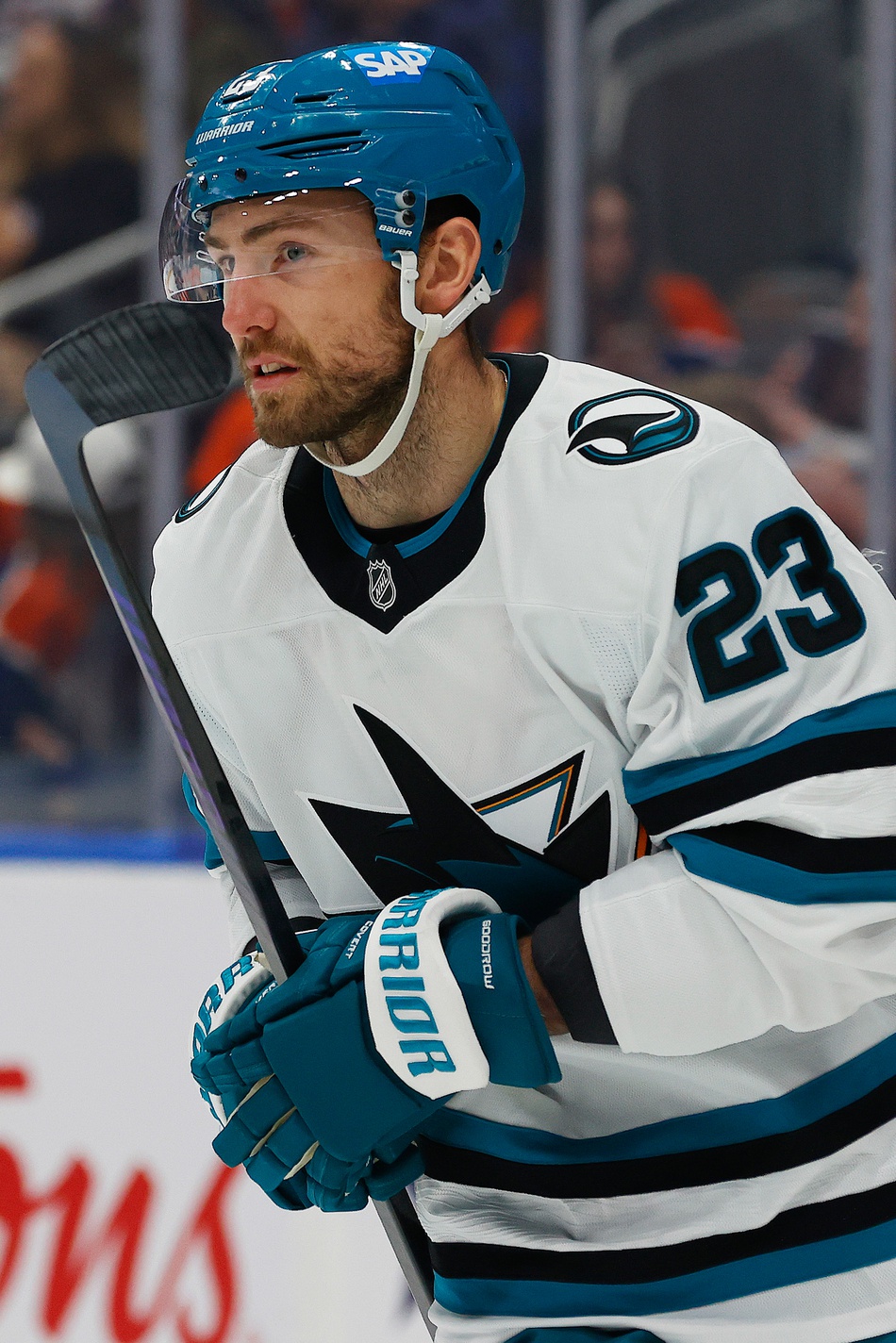 Now, since you referenced this question after mentioning chatter about players who could be on the move, I wanted to think of some bad contracts that could be dealt. One that comes to mind is Barclay Goodrow. He’s on an expiring deal at $3.64MM and is a fourth liner. However, he’s the type of gritty role player some teams will covet and if there’s one with a lot of cap space, I could see him moving. I’m also wondering about Patrik Laine ($8.7MM, pending UFA) in Montreal. Since they’ve gone and added Alexandre Texier and Phillip Danault, is there a spot for him when the team is fully healthy? If not, it wouldn’t shock me to see them try to move him with half retention to give him a chance to play down the stretch and help his case in free agency. The return would be minimal but after blowing through their remaining room to add Danault, clearing half of Laine’s deal would give them some extra flexibility.
Emoney123: What’s the next move for Danny Briere? Seems Martone, Nesbitt, Luchanko, Bump, Barkey, and Bjarnason are a few years away and with only their own #1 pick this year, how does Briere keep the Flyers in the playoff hunt? Seen this before with big crash and burn late in the second half of the season. Rick Tocchet for Coach of the Year if the Flyers make playoffs?
Right now, the next move is likely patience. At the moment, Philadelphia is right in the thick of the playoff race, one that no one seems to be making a push to run away with. It’s great that they’re in it right now but will they still be in the hunt at the Olympic break? I think that’s going to be the decision point for a lot of teams as to whether to buy, sell, or largely stand pat and the Flyers should be one of those.
If I’m being honest, I’m not sold on them being a viable playoff threat. A bunch of overtime games have kept them in the mix which is fine but not necessarily sustainable over the course of a full season. Accordingly, my inclination is that they largely hold or sell a bit, depending on if they can get Christian Dvorak signed to a contract extension or not in the new year.
That said, you asked me about a playoff scenario so there are two buying scenarios I can think of. One I’ve written about in an older mailbag column and that’s one that sees them buying low on someone who could be around beyond the season. In other words, another Trevor Zegras type of move where you’re hoping a change of scenery gets them going while knowing that a futures payment is justifiable given that the player isn’t a rental. That’s still on the table.
The other one is where they’re a soft buyer and basically tell teams that they’ll take a contract off their hands. With double retention off the table now, other buyers will need to move some bodies out to make the money work for other trades. This is a good spot for GM Daniel Briere to tell teams that they can facilitate one of those moves by taking an expiring contract back. Ideally, the player is a forward with a bit of offensive upside. Frankly, the Laine scenario I mentioned above feels like something worthwhile doing in this instance, flipping a minor leaguer or futures in return. It’s something that doesn’t jeopardize the future and sends a message to the players that they’re not giving up. It’s not the route I’d probably go but if they’re buying, I think it’s going to be low-cost acquisitions that don’t jeopardize the future.
NHL Players Who Can Veto Trades In 2025-26
Trade and movement protection is becoming increasingly common in the NHL. There are three forms. A no-movement clause, in addition to giving the player the right to veto any trade, allows them to block waiver placements and subsequent minor-league reassignments as well. No-trade clauses are the simplest, giving the player full veto power over a trade, but also the rarest.
The most common form of trade protection is the modified no-trade clause, which allows a player to submit a list of teams they can or can’t be traded to. An M-NTC can also include kicker dates that change the level of protection the player has. Most every team has at least one of these on their books.
To be eligible for an NMC, NTC, or M-NTC, the player must be at least 27 years old at the beginning of the league year or have accumulated seven years of service – in other words, the same requirements for unrestricted free agency.
With those criteria in mind, here are the players who must give their consent to some degree if their teams want to trade them during the 2025-26 league year. Players with M-NTCs have the amount of teams they can block a trade to in parentheses (with noted exceptions for rare ‘yes’ or approved trade lists).
Anaheim Ducks
No-movement clauses: none
No-trade clauses:
Modified no-trade clauses:
- D Radko Gudas (10)
- RW Alex Killorn (15)
- LW Chris Kreider (15)
- RW Troy Terry (10)
- D Jacob Trouba (15)
- LW Frank Vatrano (7)
Boston Bruins
No-movement clauses:
No-trade clauses:
Modified no-trade clauses:
- D Henri Jokiharju (8)
- C Pavel Zacha (8)
Buffalo Sabres
No-movement clauses:
No-trade clauses: none
Modified no-trade clauses:
- LW Jordan Greenway (5)
- C Tage Thompson (5)
- RW Alex Tuch (5)
- LW Jason Zucker (5)
2027 NHL Free Agents
Pro Hockey Rumors’ up-to-date list of 2027 free agents is below. These are players who are eligible for restricted or unrestricted free agency after the 2026-27 season. The player’s 2027 age is in parentheses.
Players who are currently free agents or on our 2026 free agent list are not shown here. Players who have team or player options for the 2026/27 season aren’t listed below, but will be added to this list eventually if they remain on their current contracts.
This list will be continually updated. You’ll be able to access it anytime under the “Pro Hockey Rumors Features” menu on the right sidebar on our desktop site, or under the Flame icon on our mobile menu. If you have any corrections or omissions, please get in touch with us.
Updated Jan. 15, 2025 (11:12 a.m. CT)
Unrestricted Free Agents
Centers
- Morgan Barron (28)
- Nick Bjugstad (34)
- Jesper Boqvist (28)
- Sam Carrick (35)
- Filip Chytil (27)
- Casey Cizikas (36)
- Andrew Copp (32)
- Sidney Crosby (39)
- Phillip Danault (34)
- Nic Dowd (37)
- Michael Eyssimont (30)
- Morgan Frost (28)
- Adam Gaudette (30)
- Cody Glass (28)
- Barclay Goodrow (34)
- Filip Hallander (27)
- Ryan Hartman (32)
- Nico Hischier (28)
- Pontus Holmberg (28)
- William Karlsson (34)
- Sean Kuraly (34)
- Isac Lundeström (27)
- Kyle MacLean (28)
- Casey Mittelstadt (28)
- Vladislav Namestnikov (34)
- Thomas Novak (30)
- Ryan O’Reilly (36)
- Nicolas Roy (30)
- Tyler Seguin (35)
- Jordan Staal (38)
- Sam Steel (29)
- Ryan Strome (33)
- Nico Sturm (32)
- Pius Suter (31)
- Dominic Toninato (33)
- Pavel Zacha (30)
Left Wingers
- Oskar Back (27)
- Anthony Beauvillier (30)
- André Burakovsky (32)
- Blake Coleman (35)
- Ross Colton (30)
- Angus Crookshank (27)
- Lawson Crouse (30)
- Alex DeBrincat (29)
- Jonathan Drouin (32)
- Warren Foegele (31)
- Zemgus Girgensons (33)
- Jordan Greenway (30)
- Mattias Janmark (34)
- Chris Kreider (36)
- Artturi Lehkonen (31)
- Eetu Luostarinen (28)
- Kurtis MacDermid (33)
- Andrew Mangiapane (31)
- Jordan Martinook (34)
- Jared McCann (31)
- Nino Niederreiter (34)
- Liam O’Brien (32)
- Drew O’Connor (29)
- Ondřej Palát (36)
- Cole Reinhardt (27)
- Teuvo Teräväinen (32)
- Maxim Tsyplakov (28)
- Jason Zucker (35)
Right Wingers
- Michael Amadio (31)
- Josh Anderson (33)
- Mason Appleton (31)
- Joel Armia (34)
- Drake Batherson (29)
- Colin Blackwell (34)
- Justin Brazeau (29)
- Justin Danforth (34)
- Brendan Gallagher (35)
- Garnet Hathaway (35)
- Alex Killorn (37)
- Nikita Kucherov (34)
- Stefan Noesen (34)
- Kyle Palmieri (36)
- Tyler Pitlick (35)
- Taylor Raddysh (29)
- Evan Rodrigues (33)
- Mark Stone (35)
Left-Shot Defensemen
- Simon Benoit (28)
- Bowen Byram (26)
- Declan Chisholm (27)
- Jake Christiansen (27)
- Charle-Edouard D’Astous (29)
- Brenden Dillon (36)
- Vince Dunn (30)
- Haydn Fleury (30)
- Samuel Girard (29)
- Shayne Gostisbehere (34)
- Joel Hanley (36)
- Quinn Hughes (27)
- Caleb Jones (30)
- Matt Kiersted (29)
- Josh Mahura (29)
- Dakota Mermis (33)
- Dmitry Orlov (35)
- Riley Stillman (29)
- Tyler Tucker (27)
- Urho Vaakanainen (28)
- Parker Wotherspoon (29)
Right-Shot Defensemen
- Brandon Carlo (30)
- Alexandre Carrier (30)
- Jalen Chatfield (31)
- Drew Doughty (37)
- Ty Emberson (27)
- Justin Faulk (35)
- Cale Fleury (28)
- Erik Karlsson (37)
- Ilya Lyubushkin (33)
- Cale Makar (28)
- John Marino (30)
- Nikolas Matinpalo (28)
- Dylan McIlrath (35)
- Zach Metsa (28)
- Philippe Myers (30)
- Tyler Myers (37)
- Brayden Pachal (27)
- Nicklaus Perbix (29)
- Rasmus Ristolainen (32)
- Jared Spurgeon (37)
- Jack St. Ivany (27)
- Conor Timmins (28)
- Artem Zub (31)
Goaltenders
- Jordan Binnington (33)
- Casey DeSmith (35)
- Anton Forsberg (34)
- John Gibson (33)
- Philipp Grubauer (35)
- Carter Hart (28)
- Jonas Johansson (31)
- Pyotr Kochetkov (28)
- Darcy Kuemper (37)
- Alex Lyon (34)
- Elvis Merzļikins (33)
- Sam Montembeault (30)
- Arvid Söderblom (27)
- Semyon Varlamov (39)
- Daniel Vladař (29)
- Scott Wedgewood (34)
Restricted Free Agents
Centers
- Owen Beck (23)
- Macklin Celebrini (21)
- Ryan Greene (23)
- Dominic James (24)
- Oliver Kapanen (23)
- Marco Kasper (23)
- Marat Khusnutdinov (24)
- Jiri Kulich (23)
- Noah Laba (23)
- Dawson Mercer (25)
- Fraser Minten (22)
- Oliver Moore (22)
- Nikita Nesterenko (25)
- Alex Newhook (26)
- Noah Ostlund (23)
- Aatu Räty (24)
- Alex Turcotte (26)
- Shane Wright (23)
Left Wingers
- William Cuylle (25)
- Adam Edstrom (26)
- Tyson Foerster (25)
- Gage Goncalves (26)
- Emil Heineman (25)
- Kent Johnson (24)
- Tye Kartye (26)
- Rutger McGroarty (23)
- Matvei Michkov (22)
- Bradly Nadeau (22)
- Jake Neighbours (25)
- Liam Ohgren (23)
- Reid Schaefer (23)
- Elmer Söderblom (25)
- Dmitri Voronkov (26)
- Matthew Wood (22)
Right Wingers
- Braeden Bowman (24)
- Ivan Demidov (21)
- Luke Evangelista (25)
- Simon Holmström (26)
- Alexander Holtz (25)
- Adam Klapka (26)
- Ryan Leonard (22)
- Kirill Marchenko (26)
- Jani Nyman (22)
- Gabriel Perreault (22)
- Jack Quinn (25)
- Matt Rempe (25)
- Matthew Savoie (23)
- Will Smith (22)
- Jimmy Snuggerud (23)
- Justin Sourdif (25)
- Ozzy Wiesblatt (25)
Left-Shot Defensemen
- Lian Bichsel (23)
- Zeev Buium (21)
- Adam Engstrom (23)
- Ryker Evans (25)
- Albert Johansson (26)
- Wyatt Kaiser (24)
- Tyler Kleven (25)
- Yan Kuznetsov (25)
- Emil Martinsen Lilleberg (26)
- Mason Lohrei (26)
- Denton Mateychuk (22)
- Elias N. Pettersson (23)
- Matthew Robertson (26)
- Jayden Struble (25)
- Adam Wilsby (26)
Right-Shot Defensemen
- Hunter Brzustewicz (22)
- Louis Crevier (26)
- Drew Helleson (26)
- Charles-Alexis Legault (23)
- Artyom Levshunov (21)
- Logan Mailloux (24)
- Alec Regula (26)
Goaltenders
- Yaroslav Askarov (25)
- Jakub Dobes (26)
- Colten Ellis (26)
- Joel Hofer (26)
- Jesper Wallstedt (24)
Assessing The Kraken’s Goaltending Situation
The Kraken entered the break on a strong note with three straight wins, but they’ve only won four of their last 14 games. Thanks to many of their tweener companions in the West struggling, they’re only three points out of a playoff spot with four games in hand on the Mammoth.
Seattle isn’t a surefire playoff team by any stretch at a record of 15-14-6, but given the level of goaltending they’ve received thus far from Joey Daccord, Philipp Grubauer and Matt Murray, they should be able to at least stay in the mix until the trade deadline. Seattle’s issue has clearly been its offense this year, which ranks third-last in the league at 2.54 goals per game. On the defensive side, Seattle’s 2.97 goals against per game rank 13th.
Earlier in 2025, two NHL contracts that seemed unmovable were those of Grubauer and Tristan Jarry. Jarry was dealt to the Oilers earlier this month after passing through waivers a year ago. However, his play this year opened the door for the Penguins to move him and his entire $5.375MM cap hit, even though it had another two years after this one.
Something that seemed impossible a year ago happened, and the Penguins netted two roster players and a second-round pick. The trade highlighted the limited goaltending options available across the NHL, which brings us to the Kraken and, specifically, Grubauer.
The 34-year-old has been a disaster since signing with Seattle as a free agent in 2021. The Stanley Cup winner signed a six-year deal worth $5.9MM annually, and he has never been able to give the Kraken anything close to the goaltending he provided to the Avalanche in his few seasons as their starter.
Grubauer was a Vezina Trophy finalist in his platform season, finishing third, and posted a 30-9-1 record with a .922 SV% and a 1.95 GAA. As impressive as those numbers were, his underlying numbers painted a clearer picture, minimizing Grubauer’s overall impact and suggesting a goaltender playing behind an excellent team. Grubauer still had to stop the saveable pucks and avoid the bad goals, and that’s precisely what he did, but he only registered 5.2 goals saved above expected (as per MoneyPuck), 11th in the league.
Fast-forward to that summer, when Seattle thought they were getting a netminder capable of backstopping them on deep playoff runs. Now, his contract has become one of, if not the, least movable agreements in the NHL, until perhaps this season.
Grubauer has started the season well, even though traditional metrics don’t necessarily reflect it. He has played 11 games this season, going 5-3-1 with a .911 SV% and a 2.59 GAA. Those numbers are nothing to write home about, but a deeper dive shows that Grubauer has 7.1 goals saved above expected on the year – the best figure on the Kraken.
That great start to the season could give Seattle the chance to move him, if he agrees. Grubauer has a modified no-trade clause in his contract, which further complicates a trade even if Seattle were able to find a dance partner.
To add to an already complicated dynamic, the third-string Murray is injured. Unfortunately, injuries have derailed a career that once looked incredibly bright. That said, when Murray returns to the lineup, the Kraken will presumably have three capable NHL goaltenders and will need to move one or assign one to the AHL.
This is where it gets really complicated. Losing Grubauer for Murray is a lateral move at this point, but is Seattle really willing to roll the dice with Murray as the backup? Hard to say, but talent-wise, Murray is more than capable, and the risk of moving Grubauer might just be worth it if it means shedding his massive contract, especially if the Kraken remain out of the playoff picture.
It’s not dissimilar to what the Penguins had to do to shed Jarry’s contract. They took back Stuart Skinner and are rolling with him and Arturs Silovs, but the big win is not having Jarry’s money on the books, which opens the door for Pittsburgh to do a lot next summer. Seattle could put itself in a similar spot if it moved all of Grubauer’s deal, which would bring it to $40MM in available cap room for 2026-27 with just six players to sign (as per PuckPedia)
Seattle has already begun selling off free agents, as evidenced by the Mason Marchment trade to the Blue Jackets, and is signalling that it plans to punt on this season. Murray is a pending free agent, but even if Seattle were to trade the two-time Stanley Cup Champion, it wouldn’t get much for him given his play in previous seasons and his long injury history. The Kraken’s best course of action is to try to move Grubauer for something, anything really, to clear the books and make some bigger moves next summer.
Now, teams are obviously desperate for goaltending, but that doesn’t mean Seattle can move all of Grubauer’s contract. They should be able to move half or more, but they have to do it soon, so his play doesn’t fall back to the level it was at in the last few seasons. They also need to be concerned that a team like Pittsburgh tries to move Skinner, which would further diminish Seattle’s trading partners.
2026 NHL Free Agents By Team
Pro Hockey Rumors’ up-to-date list of 2026 free agents by team is below. These are players who are eligible for restricted or unrestricted free agency after the 2025-26 season.
Restricted free agents are marked with (RFA). Potential Group VI unrestricted free agents are marked with the games played total they need to reach to be eligible for RFA status, if attainable. Players not currently on a team’s active roster, injured reserve, non-roster list, or buried list are not listed.
This list will continue to be updated throughout the 2025-26 season, so be sure to use it and our list of 2026 free agents by position/type as points of reference. Players are ordered by expiry status and cap hit.
Both lists can be found anytime under “Pro Hockey Rumors Features” on the right-hand sidebar of our desktop site, or under the Flame icon on our mobile menu. If you have any corrections or omissions, please contact us.
Updated March 6, 2026 (10:09 a.m. CT)
Anaheim Ducks
- D Jacob Trouba
- G Petr Mrázek
- D Radko Gudas
- LW Ross Johnston
- C Jansen Harkins
- LW Jeffrey Viel
- LW Cutter Gauthier (RFA)
- C Leo Carlsson (RFA)
- D Ian Moore (RFA)
- D Pavel Mintyukov (RFA)
- D Olen Zellweger (RFA)
Boston Bruins
- RW Viktor Arvidsson
- D Andrew Peeke
- LW Matěj Blümel (Group VI)
- D Michael Callahan (Group VI)
- D Jordan Harris (RFA)
Buffalo Sabres
- RW Alex Tuch
- LW Beck Malenstyn
- D Jacob Bryson
- C Joshua Dunne
- C Peyton Krebs (RFA)
- D Michael Kesselring (RFA)
- LW Zach Benson (RFA)
- LW Isak Rosen (RFA)
Calgary Flames
- D Rasmus Andersson
- LW Ryan Lomberg
- D Jake Bean
- C Justin Kirkland
- D Daniil Miromanov
- C John Beecher (RFA)
Carolina Hurricanes
- G Frederik Andersen
- D Mike Reilly
- C Mark Jankowski
- D Alexander Nikishin (RFA)
Chicago Blackhawks
- D Shea Weber
- LW Nick Foligno
- D Connor Murphy
- C Jason Dickinson
- RW Ilya Mikheyev
- G Laurent Brossoit
- RW Sam Lafferty
- D Matt Grzelcyk
- C Connor Bedard (RFA)
- D Ethan Del Mastro (RFA)
- LW Colton Dach (RFA)
Colorado Avalanche
- LW Victor Olofsson
- LW Joel Kiviranta
- D Brent Burns
- D Ilya Solovyov (Group VI)
- C Jack Drury (RFA)
- C Zakhar Bardakov (RFA)
Columbus Blue Jackets
- C Charlie Coyle
- LW Mason Marchment
- D Erik Gudbranson
- C Boone Jenner
- G Ivan Fedotov
- D Brendan Smith
- LW Zach Aston-Reese
- C Brendan Gaunce
- C Cole Sillinger (RFA)
- LW Yegor Chinakhov (RFA)
- C Adam Fantilli (RFA)
- G Jet Greaves (RFA)
Dallas Stars
- LW Jamie Benn
- RW Nathan Bastian
- D Kyle Capobianco
- LW Adam Erne
- D Alexander Petrovic
- LW Jason Robertson (RFA)
- D Nils Lundkvist (RFA)
- C Mavrik Bourque (RFA)
- D Vladislav Kolyachonok (RFA)
Detroit Red Wings
- RW Patrick Kane
- G Cam Talbot
- D Justin Holl
- D Travis Hamonic
- LW James van Riemsdyk
- D Erik Gustafsson
- LW John Leonard
- D Simon Edvinsson (RFA)
- D Jacob Bernard-Docker (RFA)
Edmonton Oilers
- C Adam Henrique
- RW Jack Roslovic
- RW Kasperi Kapanen
- C David Tomasek
- G Connor Ingram
- LW Max Jones
- G Calvin Pickard
- C Curtis Lazar
- C Noah Philp
- D Spencer Stastney (RFA)
Florida Panthers
- G Sergei Bobrovsky
- G Daniil Tarasov
- LW A.J. Greer
- D Jeff Petry
- RW Luke Kunin
- C Tomáš Nosek
- LW Noah Gregor
- C Jack Studnicka
- RW Cole Schwindt (Group VI – needs 33 GP this season for RFA)
- RW Mackie Samoskevich (RFA)
- D Donovan Sebrango (RFA)
Los Angeles Kings
- C Anže Kopitar
- LW Andrei Kuzmenko
- RW Corey Perry
- G Pheonix Copley
- D Jacob Moverare
- LW Jeff Malott
- D Brandt Clarke (RFA)
Minnesota Wild
- RW Vladimir Tarasenko
- RW Mats Zuccarello
- D Zach Bogosian
- LW Marcus Johansson
- RW Vinnie Hinostroza
- D David Jiříček (RFA)
- D Daemon Hunt (RFA)
Montreal Canadiens
- LW Patrik Laine
- LW Sammy Blais
- C Kirby Dach (RFA)
- D Arber Xhekaj (RFA)
- C Joe Veleno (RFA)
- RW Zachary Bolduc (RFA)
Nashville Predators
- LW Michael Bunting
- C Erik Haula
- LW Cole Smith
- C Michael McCarron
- D Nick Blankenburg
- LW Tyson Jost
- D Justin Barron (RFA)
- C Fedor Svechkov (RFA)
New Jersey Devils
- RW Evgenii Dadonov
- C Juho Lammikko
- D Dennis Cholowski
- C Luke Glendening
- RW Zack MacEwen
- D Colton White
- LW Arseny Gritsyuk (RFA)
- D Simon Nemec (RFA)
- LW Paul Cotter (RFA)
New York Islanders
- LW Anders Lee
- C Jean-Gabriel Pageau
- D Carson Soucy
- D Tony DeAngelo
- G David Rittich
- RW Max Shabanov (RFA)
- C Marc Gatcomb (RFA)
- D Adam Boqvist (RFA)
- D Marshall Warren (RFA)
New York Rangers
- G Jonathan Quick
- RW Jonny Brodzinski
- LW Conor Sheary
- D Braden Schneider (RFA)
- D Scott Morrow (RFA)
- LW Brett Berard (RFA)
- LW Brennan Othmann (RFA)
- D Vincent Iorio (RFA)
Ottawa Senators
- D Nick Jensen
- LW David Perron
- RW Claude Giroux
- C Lars Eller
- LW Nick Cousins
- G James Reimer
- D Jordan Spence (RFA)
- G Leevi Merilainen (RFA)
- C Stephen Halliday (RFA)
Philadelphia Flyers
- LW Carl Grundström
- LW Nicolas Deslauriers
- D Noah Juulsen
- C Rodrigo Abols
- C Trevor Zegras (RFA)
- D Jamie Drysdale (RFA)
- RW Bobby Brink (RFA)
- G Samuel Ersson (RFA)
- D Emil Andrae (RFA)
- LW Nikita Grebenkin (RFA)
- RW Philip Tomasino (RFA)
Pittsburgh Penguins
- C Evgeni Malkin
- C Kevin Hayes
- D Connor Clifton
- D Brett Kulak
- LW Anthony Mantha
- G Stuart Skinner
- D Mathew Dumba
- LW Danton Heinen
- C Noel Acciari
- C Connor Dewar
- D Ryan Shea
- G Arturs Silovs (RFA)
- LW Ville Koivunen (RFA)
- D Egor Zamula (RFA)
San Jose Sharks
- G Carey Price
- D John Klingberg
- D Nick Leddy
- D Mario Ferraro
- D Timothy Liljegren
- D Vincent Desharnais
- RW Ryan Reaves
- C Ty Dellandrea (RFA)
- RW Philipp Kurashev (RFA)
- D Shakir Mukhamadullin (RFA)
- RW Collin Graf (RFA)
- C Zack Ostapchuk (RFA)
Seattle Kraken
- LW Jaden Schwartz
- RW Jordan Eberle
- D Jamie Oleksiak
- LW Eeli Tolvanen
- G Matt Murray
- C Ben Meyers
- RW Ryan Winterton (RFA)
- RW Jacob Melanson (RFA)
St. Louis Blues
- RW Mathieu Joseph
- C Oskar Sundqvist
- LW Robby Fabbri
- LW Dylan Holloway (RFA)
- RW Jonatan Berggren (RFA)
- D Matthew Kessel (RFA)
Tampa Bay Lightning
- RW Oliver Bjorkstrand
- D Darren Raddysh
- D Declan Carlile (Group VI)
- C Curtis Douglas (Group VI)
Toronto Maple Leafs
- LW Calle Järnkrok
- C Scott Laughton
- LW Bobby McMann
- D Troy Stecher
- D Matt Benning
- LW Matias Maccelli (RFA)
- LW Nicholas Robertson (RFA)
- D Henry Thrun (RFA)
Utah Mammoth
- RW Nick Schmaltz
- LW Alexander Kerfoot
- D Ian Cole
- C Kevin Stenlund
- D Juuso Välimäki
- G Vítek Vaněček
- D Nick DeSimone
- LW Michael Carcone
- RW Kailer Yamamoto
- C Barrett Hayton (RFA)
Vancouver Canucks
- LW Evander Kane
- D Derek Forbort
- C Teddy Blueger
- C David Kämpf
- D Pierre-Olivier Joseph (RFA)
- C Lukas Reichel (RFA)
Vegas Golden Knights
- D Jeremy Lauzon
- LW Brandon Saad
- RW Reilly Smith
- C Colton Sissons
- D Ben Hutton
- LW Pavel Dorofeyev (RFA)
- G Akira Schmid (RFA)
Washington Capitals
- LW Alex Ovechkin
- D John Carlson
- D Trevor van Riemsdyk
- LW Sonny Milano
- LW Brandon Duhaime
- C Connor McMichael (RFA)
- C Hendrix Lapierre (RFA)
Winnipeg Jets
- RW Gustav Nyquist
- D Luke Schenn
- C Jonathan Toews
- D Colin Miller
- D Logan Stanley
- LW Tanner Pearson
- LW Cole Koepke
- G Eric Comrie
- RW Cole Perfetti (RFA)
Salary Cap Deep Dive: Florida Panthers
Navigating the salary cap is one of the most important tasks for a front office. Teams that can avoid total cap chaos by walking the tightrope of inking players to deals that match their value (or compensate for future value without breaking the bank) remain successful. Those who don’t often see struggles and front office changes.
PHR will look at every NHL team and give a thorough look at their cap situation for the 2025-26 season. This will focus more on players who are regulars on the roster versus those who may find themselves shuttling between the AHL and NHL. All cap figures are courtesy of PuckPedia. We’re currently covering the Atlantic Division, next up are the Panthers.
Florida Panthers
Current Cap Hit: $103,050,261 (above the $95.5MM Upper Limit)
Entry-Level Contracts
None who are on the active roster on a full-time basis.
Signed Through 2025-26, Non-Entry-Level
D Uvis Balinskis ($850K, UFA)
G Sergei Bobrovsky ($10MM, UFA)
F A.J. Greer ($850K, UFA)
F Noah Gregor ($775K, UFA)
F Luke Kunin ($775K, UFA)
F Tomas Nosek ($775K, UFA)
D Jeff Petry ($775K, UFA)
F Mackie Samoskevich ($775K, RFA)
D Donovan Sebrango ($775K, RFA)
F Cole Schwindt ($825K, UFA)
G Daniil Tarasov ($1.05MM, UFA)
Potential Bonuses
Petry: $250K
Greer has found a nice role in Florida, setting a career high offensively last season while more than doubling his career high in hits as well. This season, he’s off to an even better start. Given his role and Florida’s top-heavy salary structure though, they may not be able to afford to keep him if his price tag pushes towards the $1.5MM mark. Schwindt was a waiver claim from Vegas last month but played sparingly (before being injured earlier this month) after being in and out of the lineup last season. Unless his role changes considerably, he’s probably going to be capped at the league minimum on his next deal. Realistically, the same can be said for any of Nosek, Kunin, and Gregor.
However, Samoskevich is a much different situation. He accepted a one-way deal this past summer, taking less than his qualifying offer to get the guaranteed salary. In doing so, he’s setting himself up to have salary arbitration rights next summer. If he plays the middle-six role he currently has all season and beats his 31 points from a year ago, he should easily triple this price tag at a minimum; quadrupling it isn’t unrealistic if he has a big second half.
Balinskis performed well last season in his first full year on the third pairing and is being deployed similarly in the early going this year. As is the case with Greer, he’d need to stay around the minimum to stay in Florida while his market value might be more in the $1.5MM range.
Petry had a tough year with Detroit last season which certainly hurt his market. At 37, he’s best served as a third pairing or depth defender and this price tag reflects that. He has four $50K bonuses tied to games played that are achievable if he stays healthy while the other $50K is dependent on a Stanley Cup victory. There’s a good chance he stays near the minimum if he keeps playing beyond this season. Sebrango was claimed off waivers with Florida dealing with injuries. He’s just looking to get established as an NHL regular at this point but his arbitration eligibility could work against him if Florida thinks that filing for a hearing could push him into seven figures, a risk they might not want to take as he should also stay at the minimum.
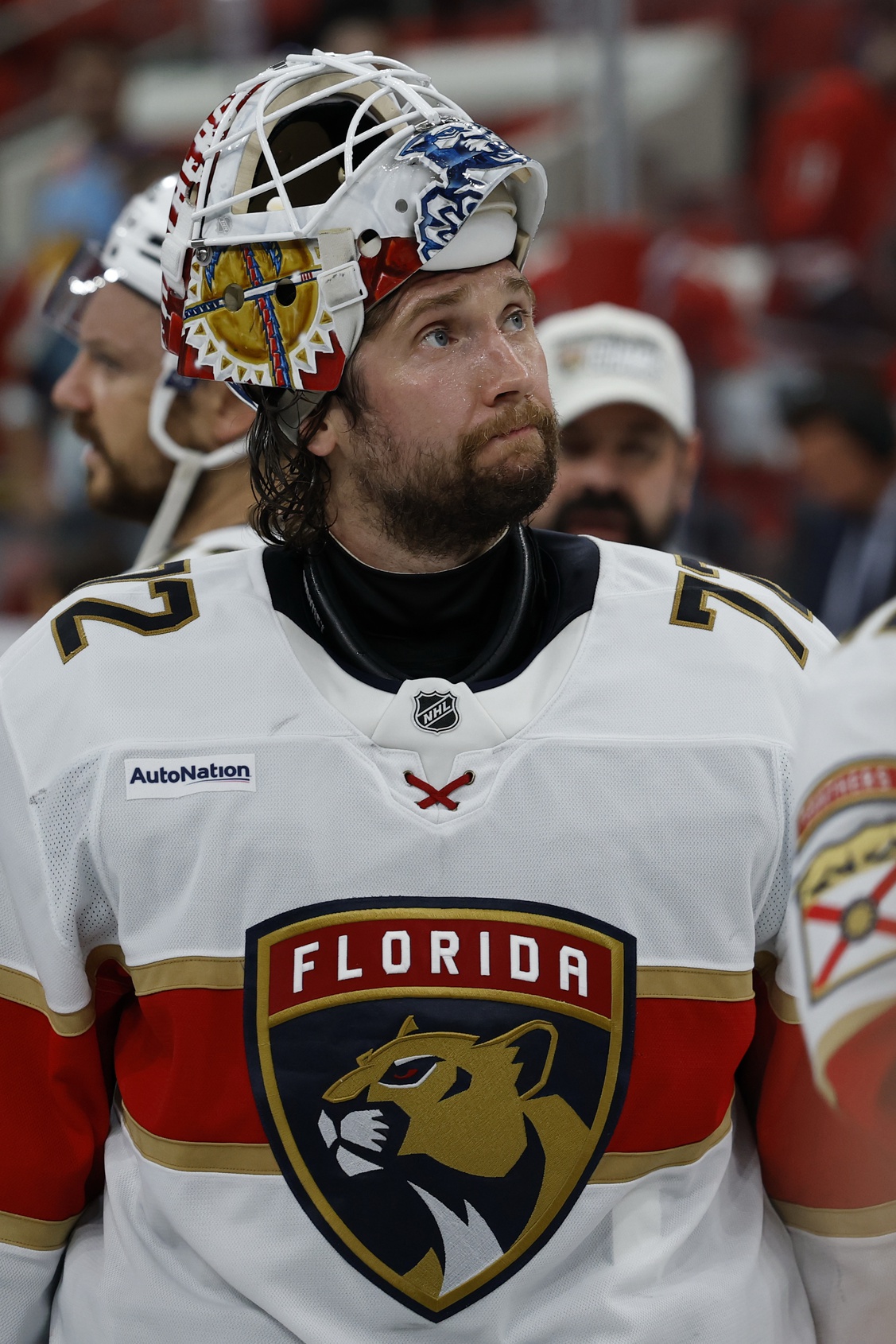 There were times in this contract that Bobrovsky’s contract looked like a complete anchor on the books. However, he has become a bit more consistent in recent years and when Florida traded Spencer Knight at the trade deadline last season, it suggested that their plan is to stick with Bobrovsky beyond this deal as they don’t have anyone else in their system that’s ready. He’ll be entering his age-38 season in 2026-27 so a long-term deal isn’t likely. However, a two-year pact could be doable, one that might land closer to half this amount. Alternatively, if they were to go with a one-year offer, he’d be eligible for performance incentives which could give Florida some shorter-term wiggle room next season.
Tarasov had a rough year in Columbus, ultimately finishing as the third-string goaltender and getting moved for cheap in the summer. If he can re-establish himself to the level he was at in 2023-24, he could make a case to land closer to $1.75MM or so on his next contract although that’s a price tag Florida likely can’t afford.
Signed Through 2026-27
F Jesper Boqvist ($1.5MM, UFA)
F Eetu Luostarinen ($3MM, UFA)
F Evan Rodrigues ($3MM, UFA)
Free agency hasn’t been kind to Rodrigues which helped explain why he signed a four-year deal for this price tag, a contract that had a chance to become team-friendly pretty quickly. So far, so good on that front. As a player who consistently passes 30 points and can play down the middle in a pinch, he should be able to land something in the $4MM range on his next contract.
Luostarinen has been a player who has produced a point total in the 20s in three of the last four seasons. The production he had last playoffs (19 points in 23 games) was the outlier but for the most part, he has been a third liner making third-line money. With his production generally being more limited, he might not be able to land as much as Rodrigues next time out. Boqvist signed this deal near the trade deadline last season and he might have done better than he would have on the open market where he didn’t have a lot of luck in 2024. As a fourth liner with a bit of versatility, his value should hover somewhere around this mark two years from now.
Signed Through 2027-28
F Jonah Gadjovich ($775K in 2025-26, $905K after)
D Dmitry Kulikov ($1.15MM, UFA)
Gadjovich hasn’t played a lot since joining Florida in 2023 but he has been a serviceable fourth liner who fits the physical style they want to play. As a 13th forward in an ideal situation, keeping him at just over the minimum salary starting next season isn’t a bad deal for them.
The fact Kulikov received a four-year deal last summer was a surprise but he also left a fair bit of money on the table had he opted to go with shorter-term contracts. The end result is that he gets a bit of security while the Panthers get a bargain deal for someone who, when healthy (which he currently isn’t), is still a pretty dependable third-pairing defenseman at this point.
PHR Mailbag: Atlantic Division, Rangers, Kadri, Cooper, Binnington
Topics in this edition of the PHR Mailbag include a look around the Atlantic Division, the potential for the Flames to trade Nazem Kadri, and more. If your question doesn’t appear here, check back in last weekend’s column while we’ll have one more mailbag from our last call for questions as well.
PyramidHeadcrab: Let’s do a mini Atlantic lightning round:
- Buffalo is floundering at the bottom of the East again, and bafflingly looking at offloading another top pick. How short of a leash does Kevyn Adams and the rest of the front office have at this point?
- Toronto sans Marner has been a clown show. How much of this is thanks to Stolarz regressing, and how much is due to broader roster management?
- Who’s on the rise and who’s declining in Montreal?
- Does Ottawa find the next gear and lock in a playoff spot?
- What’s the timeline on Barkov and Tkachuk returning in Florida? And if they recover in time, do we see another Cup Final run despite the below-average season thus far?
- Anyone else surprised at how Tampa continues to be competitive so consistently?
- When does Boston “blow up the team”?
- Detroit has fallen off a cliff in recent weeks–do they recover and push for a playoff spot, or extend the drought?
Let’s get right into it with some rapid-fire answers.
1) It looks like a pretty short leash with open speculation that the team is starting to talk about a potential change. Whether that’s just promoting Jarmo Kekalainen when he’s able to return from a personal leave or going external needs to be seen. But if ownership has decided that it’s time to make a change, they’re better off making it instead of dragging this out any longer.
2) It seems pretty clear to me that Anthony Stolarz was trying to play through something and the fact his return timeline keeps getting pushed back tells me it was something pretty significant. But yes, poor goaltending at the start of the season hurt them. But quietly, they’re scoring at a slightly higher rate than last year (3.3 goals per game versus 3.26 last season) and Joseph Woll – when healthy – gave them good enough goaltending to get back into the mix. Some of their moves this summer haven’t panned out which isn’t great but they’re in better shape than it might seem at first glance.
3) I’ve been really impressed by Oliver Kapanen this season. On the bubble to make the roster out of training camp, he has come in and exceeded expectations to the point of being tied for the lead in rookie goals. That hasn’t solved the second-line center problem but it’s bought them time. He and Ivan Demidov have shown some promising chemistry early on. On the decline is their goaltending. A decent tandem last season, Sam Montembeault and Jakub Dobes (despite a 6-0 start) have fallen off the proverbial cliff. It’s impressive that the Canadiens are still right in the thick of it in spite of their goaltending.
4) It’s surprising that Ottawa hasn’t picked it up since Brady Tkachuk’s return although they’re still a good week away from probably being in a Wild Card spot. I had them as a playoff team going into the season and I still think they do get there. Linus Ullmark has been a little better lately but if he can even get close to the form he’s capable of being, they should be fine.
5) Aleksander Barkov is done for the regular season with the team eventually needing to make a call on if he could be ready late in the playoffs or if he lands on season-ending LTIR. Matthew Tkachuk has been skating for a couple of weeks now but there’s no firm timeline for a return beyond that he should be good to go in the Olympics. I don’t want to write them off entirely but with the injuries they have and the fatigue of two long playoff runs, them getting back there again this season would surprise me.
6) The fact that Tampa Bay is consistently strong isn’t too shocking given their core talent and coach (more on him shortly). That they’re this good this year with a long list of injuries is particularly impressive though.
7) Considering the Bruins are exceeding expectations, I don’t think they’d be looking at blowing things up. If anything, it wouldn’t surprise me if GM Don Sweeney sees this as evidence that his approach to the summer was correct and they’re on the right track. That isn’t to say that pending UFAs like Viktor Arvidsson and Andrew Peeke won’t be moved if they’re out of contention in early March but any subtraction would be more limited compared to last season.
8) I think the drought gets extended (and I say this as they’re in a playoff spot). I liked the John Gibson pickup but he hasn’t panned out as planned as goaltending remains a big sore spot. The offense has been improved so far but it wouldn’t shock me to see that regress as the season goes on. I could easily be wrong with how tight the division is but I don’t think this group is quite good enough to really make a run.
Schwa: NYR plans with the Fox injury? How would you play rank the following scenarios in terms of likeliness…
– Let Morrow take the PP1 and hope internal options will get by.
– Drury gets aggressive and mortgages the future to try and save another season stuck in the middle.
– Long-term focused move – maybe something like trading for Mintyukov. Could you see the Ducks being interested in Othmann plus a piece?
Also, a long-term focused idea… could you see Drury trying to move Panarin early – either for someone more long-term focused or for picks and see what Perreault can do?
We know the Rangers are looking to see if there are any affordable options to bolster their firepower on the back end. Of course, with them not having much in the way of non-LTIR cap room available (when everyone is healthy), their options are pretty limited so I’m not sure they’ll have a ton of success there. They’ve tried option one a bit already without a lot of success. I think option three (long-term focused) is the likelier of the remaining two as with the struggles they’ve had at times, it’s hard to see GM Chris Drury think that this is the time to push in some trade chips.
With Pavel Mintyukov’s situation, I think back to a former Ranger in Nils Lundkvist. A youngster with some perceived potential that consistently seems to be on the borderline on the depth chart although Mintyukov has still been in the lineup more regularly than Lundkvist was in New York. The return for Lundkvist was a first-round pick and a fourth-round selection. Yes, Brennan Othmann was a first-round pick but I don’t think he holds that type of value now. He’d be more of the secondary inclusion at this point and that’s a price the Rangers don’t need to be paying.
As for the potential of moving Artemi Panarin early, it depends on the standings. If New York is in the thick of the playoff hunt, it’s harder to see them moving him and punting on the season. But if they slide a little further in the standings and the best-case scenario becomes squeaking into a Wild Card spot, then yes, I do think Drury will at least investigate the options. If Panarin isn’t willing to take a team-friendly extension (which appears to be what the Rangers are offering), then it would make sense to move him earlier with retention and maximize a trade return with a future asset (either a top pick or strong prospect) coming their way. It’s too early to make that call but if they keep underachieving, I do think that will be on the table.
@RobG64: Will Kadri get traded?
I know the question doesn’t say should but I’m going to comment on that first. He should be moved. The worst thing that happened to Calgary last season was Dustin Wolf dragging them so close to a playoff spot that the Flames think they’re close. I know they’ve been a bit better as of late but they’re not close to a playoff spot and further away from contending. Nazem Kadri is 35 years old and isn’t going to be part of the core group (or at least as impactful) by the time they get to that next level. So, from a logic standpoint, he absolutely should be moved.
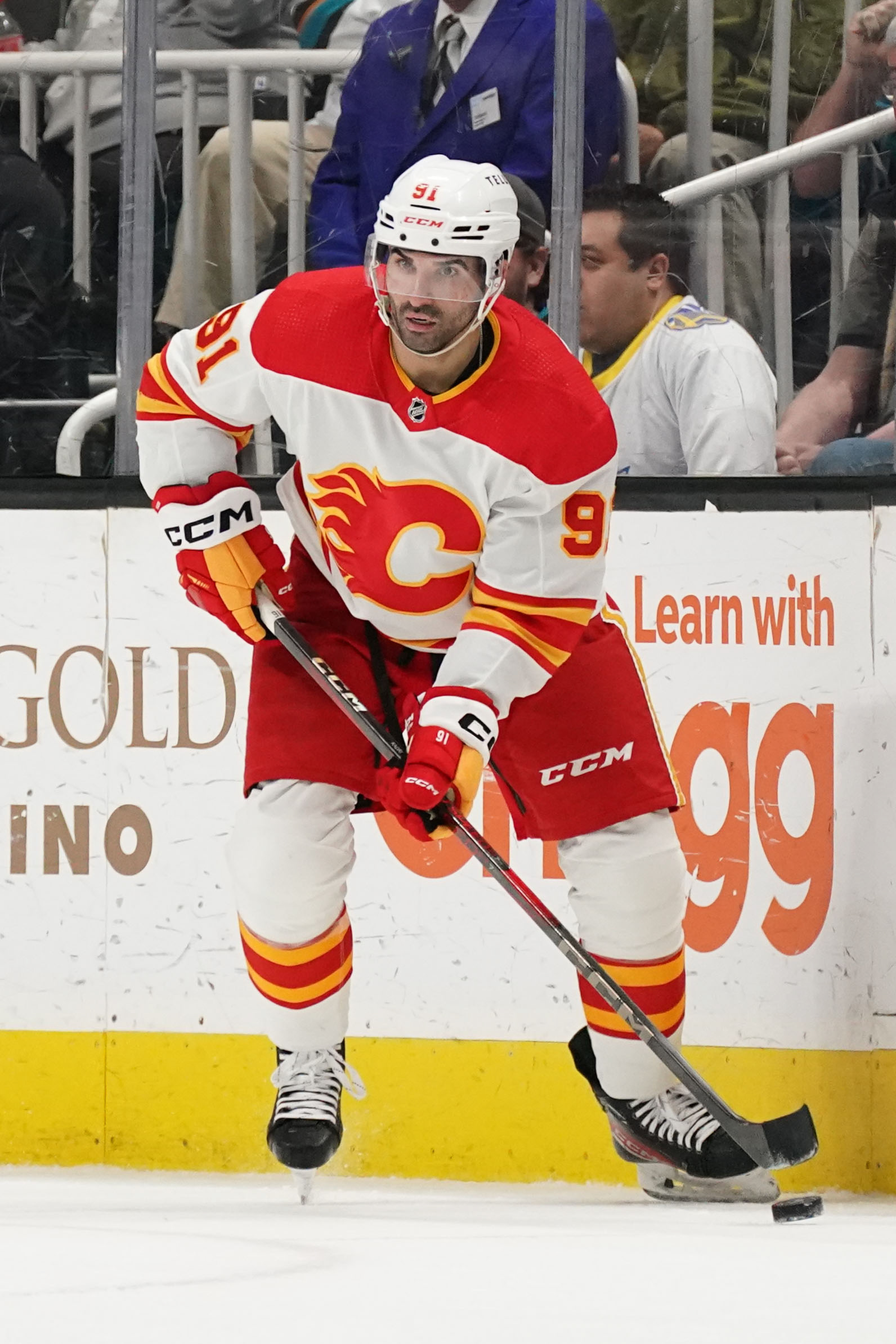 But you asked will he be moved. That, I’m not so sure about. As long as management in Calgary believes that a playoff berth is reasonably within reach, they’re probably going to want to keep him as making the postseason would be easier with him than without. On the other hand, their hand is going to get forced sooner or later with pending UFA defenseman Rasmus Andersson as they won’t want to risk losing him for nothing on the open market. (Or at least they shouldn’t want that.) So maybe when Andersson goes, they reassess on Kadri.
If I’m handicapping it, I wouldn’t go higher than a 60% chance that Kadri gets moved. The Flames should get several substantial offers for his services in a market that doesn’t have many sellers and has a lot of buyers looking for centers. The situation is there for them to get a premium return but I don’t sense their willingness to take it is as it as it probably should be.
FeeltheThunder: Do you think Jon Cooper should be a major contender for the Jack Adams Award this season? Why he hasn’t won it in the past is borderline asinine. He’s taken a Tampa team that surprisingly stumbled out of the gate in early October to start the season and was at the bottom of the Eastern Conference and then by late October changed gears. They go on a win streak and continued it through the majority of November going 11-3 and that is in spite of countless injuries to key players during it. Much more, Tampa’s depth has proven to be significant as this looks like the deepest they’ve been in a few years. What do you think of Cooper’s chances?
While the Lightning have been perhaps a bit streakier than they’d like this season, on the whole, it’s hard not to be impressed. Despite a litany of injuries (many of which have been to their top players), they have been at or near the top of the Atlantic Division. If you’d have said to me that they’d be there despite having six of their top seven scorers missing time along with Andrei Vasilevskiy, I’d have had a hard time believing that. Should he be a contender as things stand? Absolutely.
Will he be one? I’m not as confident in saying that. A lot of years, voters have leaned toward the coach of a team that has taken a big jump in the standings and really exceeded expectations. That’s not Tampa Bay. They’re a steady contender which is a big compliment to Cooper and the job he’s done but doesn’t necessarily earn him much support in a one-year award.
Off-hand, there are a couple of teams that fit the usual criteria of being a big improver and surprising in the standings. One is in the division in Boston’s Marco Sturm. Few had them as a playoff team and they’re right up there with the Lightning. Meanwhile, there was an expectation that Anaheim would be better but they’ve been atop the Pacific a lot early on this season which should push some support to Joel Quenneville. There’s lots of time for the potential contenders to change but as of today, Cooper’s streak likely continues.
vincent k. mcmahon: Does Jordan Binnington eventually get moved to the Oilers (with all the rumors surrounding a potential trade) or barring a huge turnaround he doesn’t get moved?
Assuming he were to be traded, would the return be S. Skinner and picks to St. Louis?
One of the great things with the mailbags is that we get enough questions to break them into multiple columns. The challenge is picking which ones are safe to push back. It often works out well but sometimes, well, this happens and kills the question before I have a chance to really answer it.
Clearly, the answer is now a trade to Edmonton isn’t happening. Honestly, I don’t think it would have anyway, just because of Binnington’s $6MM AAV. Yes, it’s only $625K higher than Tristan Jarry’s but the hoops the Oilers are jumping through money-wise to stay cap-compliant are significant as it is with three players on LTIR. That small difference in cap charge might have been enough for them to need to move another player or two out to create the savings to absorb Binnington’s extra cost.
I don’t get the sense that there’s a great trade market out there for Binnington at the moment. Yes, there are teams looking for goaltending help but right now, how much of a help would he be? With a save percentage of just .869, he’s already near the bottom of the league so teams aren’t looking at him and thinking he’s a sure-fire upgrade. They can hope he could be but fitting that money in plus whatever the acquisition cost is likely going to be too much grief for another team to justify right now.
Photo courtesy of David Gonzales-USA TODAY Sports.
PHR Mailbag: Standings, Hot Seat Coaches, Sleeper Trade Candidate, Blues, Murphy, Lightning, Siegenthaler
Topics in this edition of the PHR Mailbag include why we might have to wait a while for a coaching change, possible trade frameworks for a pair of Blues veterans, and much more. If your question doesn’t appear here, check back in one of our next two mailbag columns.
letsgonats: At the 1/4 point, which NHL playoff teams from last year will not make it? The East, in particular, is so pinched together that it looks like three or four teams will be fighting for a spot on the last game of the season.
Also, how likely are the Capitals to figure out their power play? They are dominating 5×5 but anemic on the power play?
For playoff teams from last season missing this year, I could see Montreal slipping out. Yes, their goaltending should turn around but they’re also scoring at an unsustainable rate. Between that and several key injuries, it wouldn’t shock me if they go from just make to just miss. I’m not ready to write off Toronto just yet but it’s heading in that direction, especially if they can’t get both goalies healthy at the same time which was a huge part of their success a year ago. Florida’s trending that way as well but they’ve earned the benefit of the doubt this early. And with the East being so close, all of this could change depending on what types of injuries we see over the next few months. That’s the biggest wild card of them all.
In the West, I have a hard time seeing St. Louis getting out of its tailspin. This feels like a year where they decide to move a couple of veterans and do a quick reset. Edmonton’s out right now but at some point, they’re going to get going. Winnipeg is out and could be in some trouble if they don’t start treading water soon until Connor Hellebuyck returns but it’s too early to predict they won’t bounce back; they’ve earned a longer leash.
As for Washington’s power play, it’s around 2% below the league average this season. That’s not great by any stretch but with how it was last season (23.5%) with largely the same personnel, I think there’s a good chance it rebounds to at least league-average level. That’s still going to come in a few percent below where they were a year ago but if they’re around the middle of the pack, that’s at least a step up from where they are now.
mister noons: Who do you have finishing bottom two in each conference?
As of this asking the bottom five in the West are WPG, STL, NAS, CGY, VAN. In the East, it is DET, OTT, TOR, FLA, BUF.
For the West, I think Calgary is going to be there. Without Dustin Wolf dragging them to competitiveness, we’re now seeing the roster we thought we’d see a year ago, one that has some pieces but isn’t good enough. And with Rasmus Andersson looking like a safe bet to move, it’s probably going to get weaker. Right now, Nashville would have to be my other pick. I thought they’d be at least a bit better this season but they’re still near the bottom. And if they move out some veterans, it could get a bit worse. If St. Louis winds up selling more than I think they might, they could get into the mix as well.
The East is much harder to predict considering the bottom seems to change every few days. I want the answer to not be Buffalo just because that team needs to get going at some point but they can’t win away from home and seem to be stuck in a perpetual rut. They’re at least a safe pick. As I just noted, I can’t rule out Toronto and Florida from being playoff teams and there aren’t any pushovers in the Metropolitan this season which is rather surprising. There are some red flags with Detroit that make me think they could slip in the second half and given how tight the standings are, that might be enough to drop them to the bottom two. But I’m not very confident in that answer.
Gbear: Which Head Coach gets fired first (my pick is well known)?
If Nashville was going to make a move to try to save the season, I suspect they’d have done it already. Things aren’t going well in Buffalo but at this point, they’ll just let the season run out and let Lindy Ruff’s coaching contract expire as originally planned (and then probably shuffle him into a new role). Vancouver and Seattle aren’t doing much but have new head coaches so they’re not making changes so quickly. It’s rough in Calgary but Ryan Huska was extended not that long ago which buys him more time.
Where am I going with this? I wouldn’t be shocked if the first coaching firing came from a team with playoff expectations that doesn’t want to fall too far out of the race. If Edmonton doesn’t get going soon, Kris Knoblauch could be unfairly let go to try to shake things up without shaking up the roster. It would take some time to get to that point though. The other one that comes to mind is Jim Hiller and I write that as they’re in a playoff spot and a recent denial that they’re considering a change. But it’s a soft grip at best on a postseason position and GM Ken Holland didn’t hire him for the role. If the Kings falter over the next little while, that’s one that wouldn’t surprise me even though he’s done a decent job.
I don’t expect to see a lot of in-season firings. So many teams have changed coaches in the last 24 months which isn’t much of a shelf life for a coach. Owners don’t want to be paying a bunch of coaches not to coach so I expect we’ll see more patience, especially with the standings being tighter than usual.
lgr34561: Are there any players you think will be traded before the deadline that people are sleeping on?
If I could simply say ‘I don’t know’ here, this would be a time for me to use it. There is part of me that expects the trade market to not materialize much as the playoff salary cap is probably going to cut down on in-season swaps. With teams not really getting time to plan their rosters accordingly, this could be a quiet year. On the other hand, the level of parity could increase the number of buyers or teams willing to make ‘hockey trades’ in which case things would open up considerably and we could have a few deals that come out of nowhere.
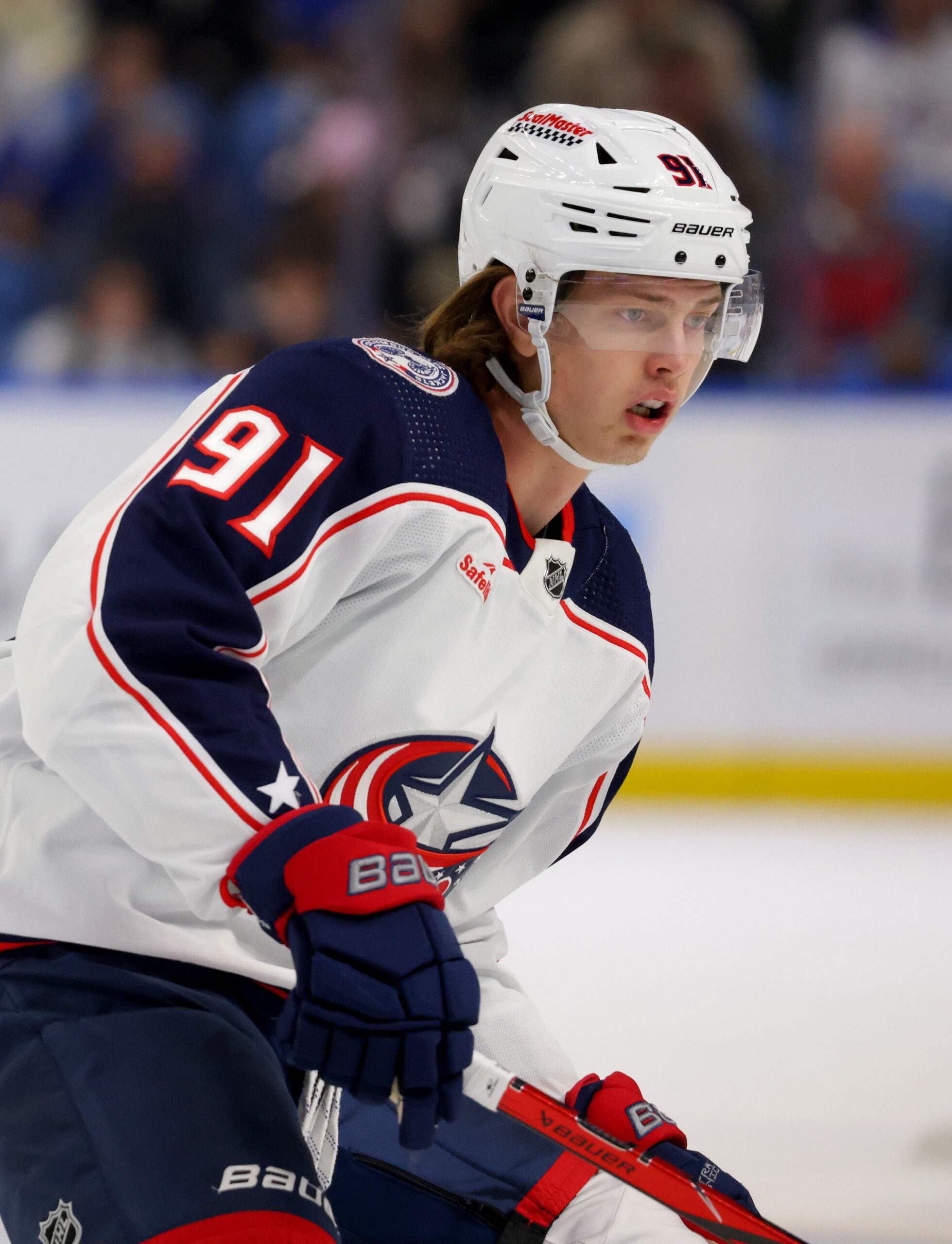 But that’s not a fun answer so I’ll take a stab at a sleeper trade candidate. Two years ago, Kent Johnson struggled, leading some to wonder about his future in Columbus. He signed a bridge deal and then had a breakout 57-point effort last season. However, he has really struggled out of the gate this year and some of those questions are back. But Johnson has shown enough to be appealing to some teams. The fact he has a center background (though he hasn’t played there lately) only helps his value. If there are ‘hockey trades’ coming where it’s an even swap of young core players, I could see Johnson being a viable candidate to be moved.
Gmm8811: If the Blues move on from Schenn or Faulk, what do you think a reasonable return for each would be? I’d prefer draft picks. Do they have to retain any money? Armstrong usually doesn’t like to do that.
Let’s answer these out of order. I don’t think St. Louis has to retain on either player in a trade. Brayden Schenn is a veteran center with enough of a track record to command a significant trade market and if the Blues are willing to take a player or two back to offset money short-term, that would work. Justin Faulk’s market probably won’t be as strong but with one less year left on his contract (he’s only signed through 2026-27), I think there are teams that would take on the full deal, as long as they could send a player or two back again.
However, while GM Doug Armstrong may not like to retain, the trade returns will undoubtedly be better if he did. That will have to be factored into the equation; is the extra value of the return worth the extra dead cap space? It wouldn’t shock me if it was.
As to what a return would look like, I know Schenn’s having a down year but I still think it starts with a first-round pick. The demand for centers is sky-high and that’s great news for the Blues. Last year, the believed ask was that plus two strong prospects including a high-end one. I don’t think that’s necessarily viable now but a first, a key prospect, and a young roster player (or one who is near-ready) could be doable. If St. Louis sells, I don’t see them embarking on a full-scale rebuild so the young roster player could very well be a crucial element of the return. If they have to take a more expensive player back to match money, that could ultimately expand the package a bit with the Blues adding a mid-round pick or equivalent asset.
With Faulk, a lot is dependent on if they retain or not. To stick with the premise of the question, I’ll take the no answer. In that case, the return St. Louis paid for Cam Fowler (a second and a prospect while also getting a fourth back) might be a reasonable equivalent while, again, possibly also taking someone back to balance the money. I’m not sure retaining would land them a first but it would probably give them a big boost in the caliber of the prospect coming back to them.
PHR Mailbag: Wild, Sharks, Third Lines, Goaltending Moves, Draft
Topics in this edition of the PHR Mailbag include San Jose’s rebuild, speculating about teams that could make a goalie move, and more. If your question doesn’t appear here, check back in last weekend’s column.
Zakis: How does the Wild figure out 5-on-5 scoring?
A lot of it is just going to be patience. They’ve been hovering around a shooting percentage of five at full strength this season. That’s bound to improve on its own as even bad teams are closer to seven at the end of a year.
There are a couple of ways to improve scoring at five-on-five and neither of them are easy. The first is upgrading their playmaking, especially down the middle. GM Bill Guerin has been trying to do that for years without much success. (He’s hardly the only one who has struggled in this regard either.) That’s going to be tough to do in-season.
The other is play with more tempo and try to generate more odd-man rush chances. The problem is that Minnesota isn’t particularly young and a lot of their veterans aren’t known as high-end skaters. Beyond Kirill Kaprizov’s line, they’re built to play a little slower. That might work in the playoffs when the checking and whistles are tighter but in the regular season, it’s bit trickier. Ideally, prospects like Danila Yurov and Liam Ohgren playing their way into bigger roles would help but that, again, takes patience. But in terms of short-term fixes, I don’t see a viable way for them to significantly change their fortunes on that front and that’s why they’re going to be viewed as more of a bubble team than a contender.
PyramidHeadcrab: It’s looking like Sharks fans are going to have to strap in for another rough season.
We know the Sharks have been building top-shelf assets (Celebrini, Askarov, Misa, Graf, et al), but how long do complete rebuilds like this typically last?
In watching their first few games, I am seeing a team that is completely disorganized, with players being consistently out of position – Celebrini making a tremendous play with no one in position to receive a pass, for instance. There’s the cliche of “veterans mentioning The Youth™” but experienced players like Klingberg, Kurashev, and Goodrow are consistently playing poorly.
At what point do you know if the plan is working, and when do the stars typically align for a team like this to turn the corner on being successful?
And as a brief addendum – the lack of a net-crashing power forward to kite attention from the opposing D is glaring; is there anyone in the Sharks system that could fill this role eventually? Are there any top prospects for the ’26 draft that could fit this bill?
There aren’t a lot of examples of the ‘burn it to the ground and build back slowly’ rebuild to compare to here. These types of undertakings haven’t gained a lot of popularity until the last decade or so. Sure, there have been rebuilds with an eye on them taking a few years but few have been to quite this extent.
The best option I can think of is the one that’s still ongoing in Utah. I remember reading something a few years ago about how long he envisioned his rebuild being and it was something like eight or ten years for the full process to take place. He mentioned last year in an interview with KSL Sports (video link) that competing for a playoff spot in the fifth season was a realistic target.
So, where are the Sharks in this? While they’ve missed the postseason in six straight years, it was really only the 2023-24 season where they got serious about it. Erik Karlsson went that offseason, Tomas Hertl at the deadline, and some youngsters (William Eklund and Fabian Zetterlund) got big minutes. You could argue 2022-23 was the start when Timo Meier moved but that was done late in the year. Basically, they’re around the halfway mark before that ‘playoffs in five years’ goal. With the pieces they’re collecting, I think they’re on the right track and I could see them getting there at the back end of that timeframe.
As I’ve noted before, scouting is not my forte so I could be wrong on this but from what I have seen with some of their top prospects, I don’t really see someone who can be that type of player, at least consistently. Looking at the top of this year’s class, Ethan Belchetz might fit the bill but as is always the case with power forward prospects, there’s a difference between being that type of player in junior versus being that type of player in the NHL.
At this point of the rebuild, the focus is asset acquisition and getting as many pieces in place as possible. Once that first wave of prospects is established, then they could start to get a little pickier or use some later-round picks on more aggressive boom/bust selections to try to find a certain type of player that they lack in their system. I’d say they’re getting closer to that part and it wouldn’t shock me to see them try to address that.
PyramidHeadcrab: I’m legitimately confused at how Barclay Goodrow hasn’t been bought out yet. The only way that makes sense is a) it’s a verbal promise to be like, “sorry for screwing you over”, or b) they REALLY want to keep those retention slots open.
But in that case, why not bury him in the A and just eat the contract? Like it’s a real head-scratcher for me.
I don’t think it’s the first option. While San Jose is likely operating with some respect befitting a longer-term veteran, if they felt they had to get him off the roster, they’d probably do it. There might be a bit of validity to Option B. They only have one salary retention slot available to them. That’s not just for this season but 2026-27 as well with Karlsson signed until then. The other one doesn’t unlock until after the 2029-30 campaign. Adding Goodrow – who is also signed through 2026-27 – to the mix means they’re out of retention options until July 2027. That’s not ideal. I’d be saving that one for the trade deadline, potentially for Alexander Wennberg to maximize the return for him.
When the Sharks orchestrated the waiver claim situation to ensure they got him around 15 months ago, they knew (or reasonably ought to have known) that his best on-ice days were behind him. I don’t think they brought him in thinking that he’d give the bottom six a big boost (mind you, they were probably hoping he’d be at least a little better than this). I suspect he was viewed as more of a character addition. In essence, that cliched mentoring idea you mentioned in the initial question.
If they think they need a roster spot, he’s someone who would safely clear waivers if it came to that. He’d still probably come back after the trade deadline when there isn’t a roster maximum though. This could be something they look at in the summer though. They wouldn’t save a ton of money on a buyout since a decent chunk of his salary is in a signing bonus but if he’s done all he can do for them, I could see them buying him out to give him a chance to try to catch on elsewhere, likely for the league minimum. But for now, I expect he’ll stay up for the rest of the season.
frozenaquatic: Thanks again for putting these together! The last six Cup winners have had depth in common, running out four lines that grind down opponents. I know bottom sixes are deployed differently (and also are more easily shuffled–though the best bottom sixes have chemistry and identity), but they’re usually a combo of grit and timely tertiary scoring. In your view, who has the most effective 3rd line in the league to start 2025? What’s the worst 3rd line on a supposed contender? Would you say Taylor Hall’s 4th line is the best? Who has the weakest 4th line?
Speaking of how quickly lines can be shuffled, Hall now finds himself in the top six in Carolina so he’s technically out of the equation for now. And best is in the eye of the beholder. If you’re looking squarely at results, the answer could be one way. If you’re looking at overall effectiveness (or maybe trying to quantify it using Expected Goals), it’s going to be a different answer.
Colorado’s third line is a bit of an odd mishmash of players but it seems to be working. Ross Colton has been there for a while now while Jack Drury came in early last season. They both have some defensive skills but their linemate, Victor Olofsson, is more of an offense-only player, making the trio a bit of an odd combination. However, it has worked early on with a 64.5 Expected Goals Percentage, per MoneyPuck despite close to a 50/50 split in zone starts. They’re not scoring much but they’re not getting scored on either. That’s a quietly effective line. On the flip side, Nashville’s third line of Michael Bunting, Erik Haula, and Jonathan Marchessault looks quite good on paper but is struggling considerably defensively with the lowest xGF% of any line with at least 45 minutes of time together so far.
Fourth lines are a lot harder to quantify as they often change from one game to the next between injuries and line shuffling. As a result, there are very few who have played together enough to glean any sort of meaningful information from. For context, if I use that 45 minutes played as a cutoff, it looks like there are only three lines that would even qualify. That’s not enough to really be able to accurately answer that question this early in the season.
ljfranker: What are some goaltending changes you expect to see this season?
History suggests that we won’t see too many changes as goalies don’t move in-season anywhere near the extent that skaters do. I doubt this year will be much of an exception. But that’s not an exciting answer so I’ll give you a few things I could see happening, just that the odds of all of them happening are low.
Oilers: At some point, Connor Ingram works his way onto Edmonton’s roster, likely at the expense of Calvin Pickard. I thought his acquisition from Utah was a great move, especially for the low, low price of absolutely nothing (future considerations) despite there being salary retention. I think he can raise the floor of their goaltending and if all went well, push Stuart Skinner. With the Oilers not having a lot of wiggle room to try to improve their roster, this is one thing I expect them to do.
Sabres: Their claiming of Colten Ellis came as a surprise given the depth that they have and that Devon Levi is still viewed as part of their long-term plans. If they’re pleased with what Ellis is showing in practice, Alex Lyon could become expendable. At $1.5MM per season through 2026-27, he’d be an affordable dart throw for a team to take, especially one that gets hit with a longer-term injury.
Bargain Hunters: While it’s early, the gamble Ottawa made going with Leevi Merilainen isn’t exactly confidence-inspiring and Mads Sogaard may have plateaued. For a team with playoff aspirations, they can’t afford to stick that out if Merilainen keeps struggling while Linus Ullmark doesn’t typically carry a huge workload. I think they’ll be looking around at options soon. We’ve seen speculation of Calgary sniffing around the market and that they might not trust Devin Cooley to be a full-time NHL backup so they’ll probably keep doing that. I also wonder about Florida. If Daniil Tarasov winds up being more of a mediocre option, I could see them exploring what’s out there. With the injuries they have, getting a more proven piece to stabilize the backup games could be crucial.
Breakaway: The 2026 draft is supposed deeper and has more high-end talent. Schaefer and Misa were considered the consensus top picks in 2025. If they were coming out this year, would they be the 2nd and 3rd picks or would they fall farther down? After those two, there was a gap in talent, where would the rest of the top five fall if they were coming out in 2026?
One of the challenges with an exercise like this is that what teams hold those draft picks ultimately does a lot to dictate who goes where. What’s the player type they’re looking for? It’s not always a case of Best Player Available (or teams have had some very different opinions on BPAs from the consensus top of the class). But I’ll give it a shot.
Gavin McKenna goes first and there’s probably not much to explain there. I do think Matthew Schaefer would go second and I’d say that without factoring in his start with the Islanders. A young 18 for his draft class, he’s a high-ceiling all situations number one defender. That will always go high. Keaton Verhoeff could change that with a big year in college (especially as a righty) but failing that, Schaefer lands ahead of him.
For Michael Misa versus Ivar Stenberg, what’s the need? If it’s a pure shooter (or a team really wants a center), it’s Misa. If it’s a setup guy, it’s Stenberg. I’d lean toward Misa myself so he’d be fourth. I’d have Anton Frondell next at five, then Stenberg at six, assuming his development goes as planned this season.
Then we go back to centers with Caleb Desnoyers (fourth to Utah) and Ryan Roobroeck, draft-eligible this year. Today, I’d give the nod to Desnoyers but with this season barely underway, that could easily change.
Brady Martin is the ultimate wild card. Given his power forward style of play, it’s entirely plausible to me that a team could see this combined group and still pick him fifth. I could also see him fall out of the top ten and it wouldn’t surprise me. It all comes down to who has the picks and what their team needs are. Chances are that he’d still sneak into the back of the top ten with that playoff-profile skillset.
Photo courtesy of ……….