
Philadelphia Flyers To Sign Antoine Roussel To PTO
Continuing with their offseason theme of becoming tougher and more difficult to play with, the Philadelphia Flyers will be bringing in veteran forward Antoine Roussel on a PTO. The move hasn’t been confirmed by the Flyers organization yet, however Roussel himself confirmed the news in an interview with Le Quotidie Numerique, a French-speaking paper. Players confirming their own transactions is not necessarily commonplace, but has happened in the past.
Should Roussel latch on with the Flyers, it would mark his fourth NHL team in his ten-year NHL career. One of a few NHLers born in France, Roussel signed as a free agent with the Dallas Stars in the summer of 2012, making his NHL debut later that season. The physical forward spent six years in Dallas, establishing himself as a regular in their lineup, bringing a physical style of play, the willingness to drop the gloves, as well as also a modest offensive game. To that end, Roussel tallied a career-high 29 points twice, including a career-best 14 goals in 2013-14. Roussel moved on to the Vancouver Canucks in the summer of 2018, signing a four-year, $12MM deal, but was sent to the Arizona Coyotes last offseason in the deal that brought Oliver Ekman-Larsson to Vancouver.
The 32-year-old no longer provides the offense he did once upon a time, recording just eight points in 53 games last season, and only four in 35 games the year prior. Still, Roussel does bring a solid defensive game and good penalty killing skills, as well as that toughness he has always been known for. Those skills should come in handy and make him an excellent fit with the Flyers, who are looking to add grit and experience to a lineup that, to some, didn’t seem to have it last year. Newly hired Head Coach John Tortorella has made clear that a slow start in Philadelphia is unacceptable, and adding a player like Roussel may help to that end, or could at least push other players already under contract to be the best versions of themselves.
New York Rangers To Sign Matt Bartkowski To PTO
It appears the New York Rangers, who had been rumored to be looking to add some defensive depth, have found their man, signing defenseman Matt Bartkowski to a PTO for the upcoming preseason, according to CapFriendly. The addition is a smart, cost-effective way for the team to add a veteran into the mix in the preseason, insure themselves in case of any injuries to those above him on the depth chart, and give an added level of competition to the third-pair, left-defense battle that appears to be between Libor Hajek and youngster Zachary Jones. The Rangers have not yet confirmed the transaction.
Bartkowski comes to the Rangers as an experienced journeyman, dressing for four NHL teams and three AHL teams over his 12-year professional career. A seventh-round pick of the Boston Bruins in 2008, the defenseman got his start with the Lincoln Stars of the USHL, where he spent two years prior to joining The Ohio State University for a pair of seasons. Bartkowski turned pro at the start of the 2010-11 season, primarily suiting up for the AHL’s Providence Bruins, but did see a handful of games in the NHL with Boston. His main NHL action came between 2013 and 2016, where he suited up for 191 games between Boston and the Vancouver Canucks.
The veteran received a PTO offer last offseason as well, joining the Pittsburgh Penguins for camp. While it didn’t result in an NHL offer, he was able to play a key role over a full season on the backend for the Scranton/Wilkes-Barre Penguins. Now 34, the defenseman is likely to use this opportunity to prove he still belongs in the NHL and push for time on the Rangers’ third-pairing, which appears to be welcoming competition.
Right now, the Rangers project to already have seven defenseman under contract and bound for the NHL roster, however two of those players, Jones and Braden Schneider, are relatively young and inexperienced. Presumably the team would like to roll with those two, but with the possibility of having them paired together and for the sake of testing their competitiveness with several veterans in camp, players like Bartkowski, Hajek, and Andy Welinski, who the club signed back in July, could prove valuable in the roles they serve.
2008 NHL Draft Take Two: Twelfth Overall Pick
Hindsight is an amazing thing, and allows us to look back and wonder “what could have been.” Though perfection is attempted, scouting and draft selection is far from an exact science, and sometimes, it doesn’t work out the way teams – or players – intended. For every Patrick Kane, there is a Patrik Stefan.
We’re looking back at the 2008 NHL Entry Draft and asking how it would shake out knowing what we do now. Will the first round remain the same, or will some late-round picks jump up to the top of the board?
The results of our redraft so far are as follows with their original draft position in parentheses:
1st Overall: Steven Stamkos, Tampa Bay Lightning (1)
2nd Overall: Drew Doughty, Los Angeles Kings (2)
3rd Overall: Roman Josi, Atlanta Thrashers (38)
4th Overall: Alex Pietrangelo, St. Louis Blues (4)
5th Overall: Erik Karlsson, Toronto Maple Leafs (15)
6th Overall: John Carlson, Columbus Blue Jackets (27)
7th Overall: Jacob Markstrom, Nashville Predators (31)
8th Overall: Braden Holtby, Phoenix Coyotes (93)
9th Overall: Jordan Eberle, New York Islanders (22)
10th Overall: Jared Spurgeon, Vancouver Canucks (156)
11th Overall: Cam Atkinson, Chicago Blackhawks (157)
Beyond Stamkos and Doughty, there really isn’t a better pair of back -to-back selections in this draft than the 156th and 157th overall selections: Spurgeon and Atkinson. In our re-draft, this pair once again goes back-to-back, but now 10th and 11th overall instead. We’ve covered Spurgeon’s story, drafted but unsigned by the Islanders, invited to training camp as a prospect by the Wild, and the rest is history, but now it’s the Blue Jackets turn to find incredible value.
The 2008 draft was a backwards one in Columbus, their first few selections not necessarily panning out as hoped, most notably their selection of Russian winger Nikita Filatov at sixth overall. Filatov was supposed to be an elite point producer Columbus could pair with the likes of Rick Nash and Derick Brassard, but his time in Columbus came to a close after 44 unimpressive games. Towards the later rounds of the draft however, the Blue Jackets found a pair of foundational pieces in Matt Calvert in the fifth round and Atkinson in the sixth. Calvert became a key piece of the team’s bottom-six for eight seasons and Atkinson established himself as the dynamic offensive weapon the organization was looking for with their sixth-overall pick – they just so happened to get him at 157.
Three seasons after Columbus took him, Atkinson made his debut and by the 2013-14 season had become a regular 20 goal and 40 point contributor. In 2016-17, the winger broke out, setting career-highs with goals, 35, and points, 62. Two years later, he eclipsed those marks again with 41 goals and 69 points en route to a playoff appearance and the club’s first playoff series victory. Having played a major role in taking the team to new heights, Atkinson was traded during the 2021 offseason as the team continued its re-tool, landing with the Philadelphia Flyers. Altogether, Atkinson provided incredible value for his spot in the draft, but given his and his team’s success with him at the top of the lineup, going 11th overall in a re-draft makes plenty of sense.
We now turn our attention to the 12th overall selection, which belonged to the Buffalo Sabres. After back-to-back trips to the conference Finals in 2006 and 2007, the 2007-08 Sabres just missed the playoffs, but secured a prime pick. With that pick, they selected hulking defenseman Tyler Myers from the WHL’s Kelowna Rockets. Buffalo sent Myers back to Kelowna for additional development in 2008-09, but the following year Myers made his NHL debut and became an instant regular in the lineup. A 19 and 20-year-old Myers averaged 23:44 of time-on-ice, the second most of his career while contributing 11 goals and 37 assists for 48 points, all career-highs to this day. Those numbers not only made Myers one of the most impactful players on a Buffalo team that made its return to the playoffs, but also lead him to an All Star appearance and the Calder Trophy.
Already, Myers looked to be an absolute steal at 12th overall, cementing himself as a cornerstone player just one season after being drafted. However, Myers was never able to repeat on his rookie success. The 2010-11 campaign saw Myers put up solid numbers once again adding 37 points while averaging 22:27 of time-on-ice. Good numbers for a 6’8″ shutdown defenseman, they still weren’t what he had already shown he was capable of, and they continued to drop over the next few seasons, complimented with injury issues. In February of 2015, Buffalo dealt Myers to the Winnipeg Jets in a multi-player deal that most notably brought Evander Kane back the other way.
Myers would spend parts of five seasons on the Jets blueline, getting somewhat close to the player he had been during his early days in Buffalo, highlighted by a 36-point effort where he played 21:26 per night, now firmly entrenched as a defense-first defenseman. Myers hit the free agent market in the summer of 2019 and opted to sign a five-year, $30MM contract to head west to the Vancouver Canucks. With the Canucks, Myers has remained healthy and been one of the Canucks’ key shutdown defensemen, but hasn’t been able to match the offensive production he debuted with and found once again in Winnipeg.
Given Myers’ lengthy track record as a reliable defensive defenseman who’s shot and size cannot be ignored, his place at 12th overall in this draft is understandable. But, given some of his issues, like his spotty offensive track record and injuries issues in the prime of his career, that slot could be considered a little too high. It’s hard to imagine he’d slide too far in our re-draft, but should he repeat as the 12th overall pick? Or would hindsight give us someone else? Let your voice be heard by voting in the poll below.
2008 Redraft: Twelfth Overall
-
T. J. Brodie 18% (127)
-
Josh Bailey 15% (108)
-
Adam Henrique 14% (98)
-
Tyler Myers 12% (87)
-
Gustav Nyquist 8% (58)
-
Derek Stepan 7% (49)
-
Jake Allen 4% (32)
-
Justin Schultz 4% (27)
-
Travis Hamonic 3% (21)
-
Jake Gardiner 3% (19)
-
Zach Bogosian 3% (18)
-
Matt Martin 1% (10)
-
Michael Del Zotto 1% (10)
-
Luke Schenn 1% (9)
-
Tyler Ennis 1% (9)
-
Mikkel Boedker 1% (9)
-
Marco Scandella 1% (7)
-
Matt Calvert 1% (7)
-
Colin Wilson 1% (5)
-
Zack Smith 0% (2)
-
Jason Demers 0% (1)
Total votes: 713
Trade Rumors App users, click here to vote.
Afternoon Notes: Crosby, Allvin, O’Reilly
When the Pittsburgh Penguins signed Evgeni Malkin and Kris Letang to extensions this summer, they committed themselves to a “win-now” short-term competitive plan, focusing the energy and resources of their franchise into squeezing one last Stanley Cup victory out of their three franchise pillars. The face of the franchise, Sidney Crosby, has three years remaining on his current contract, and as things currently stand he’s not thinking beyond that point.
In an interview with Sportsnet’s Elliotte Friedman and Jeff Marek for their 32 Thoughts Podcast, Crosby was asked about his playing future and whether he’d like to play into his forties as Zdeno Chara has. Crosby responded that he wouldn’t, and added on that he’s “thinking about [the] three more years” remaining on his contract before considering the next step for his career. At 35 years old, Crosby isn’t “Sid the Kid” anymore, but he did score 84 points in 69 games last year and remains an elite player. But based on these comments, the Penguins will need to consider that Crosby may not be playing for the entirety of Malkin or Letang’s new extensions.
Now, for some other notes from across the NHL:
- Vancouver Canucks GM Patrik Allvin has been a busy man this summer, signing major contracts with J.T. Miller, Ilya Mikheyev, and Andrei Kuzmenko. And despite the fact that training camps are close, he may not be done. In a conversation with The Athletic’s Thomas Drance, Allvin stated that the team would still be looking to add to its current group of players, saying that there is enough “cap space, and roster spots, and contract slots” to be able to facilitate an addition. (subscription link) We’re certainly late into the offseason free agent market, but with the preseason waiver wire set to be active and a few free agents still remaining, it’s possible that the Canucks get a new face or two into the mix before they open their 2022-23 campaign.
- The St. Louis Blues have signed some major extensions recently, specifically with their two top young players: Robert Thomas and Jordan Kyrou. While the Blues are undoubtedly better off having signed those deals, they could come with a cost. As Jim Thomas of the St. Louis Post-Dispatch writes, the byproduct of these extensions is that the team could find it difficult to match the sort of offer captain Ryan O’Reilly could receive on the open market. Since both O’Reilly and Vladimir Tarasenko will be unrestricted free agents next summer, the Blues seem to have made retaining their two franchise pillars a more difficult task with their recent moves.
Snapshots: Wild Training Camp, Boychuk, Lodin
The Minnesota Wild may not have had their season end the way they’d hoped it would last spring, but that hasn’t stopped GM Bill Guerin from pushing forward with his plans to bring a Stanley Cup to the Twin Cities. The Wild are returning a very similar roster to the one they ran last season, and as a result, the Wild’s training camp is expected to be a highly competitive affair.
Wild head coach Dean Evason spoke on the upcoming competition in camp as part of an interview with The Athletic’s Michael Russo. (subscription link) Evason said that with the team’s top two lines relatively set in stone (Kirill Kaprizov‘s line and the Joel Eriksson-Ek line), the team has seven forwards (Marco Rossi, Matt Boldy, Brandon Duhaime, Sam Steel, Frederick Gaudreau, Connor Dewar, and Nic Petan) competing for the six remaining available forward slots in the opening night lineup. Additionally, Evason previewed the camp competition for a spot on the defense’s third pairing, a competition expected to feature Alex Goligoski, Calen Addison, Andrej Sustr, and Dakota Mermis. All in all, expect a competitive camp in Minnesota, a camp fit for a team looking to have another strong regular season.
Now, for some other notes from across the NHL:
- Johnny Boychuk played over 400 career games with the New York Islanders, and now he’s back with that organization, albeit not as a player. Per Newsday’s Andrew Gross, Boychuk has been hired by the Islanders in a player development role. The Islanders have long relied on their defense as the foundation of their success, so if this hire can help blueliners such as Noah Dobson, Alexander Romanov, Robin Salo, and Calle Odelius grow their game, it’ll be a major help to the organization.
- After a successful season helping his Swedish club, Timra IK, survive its first season back in the SHL, Viktor Lodin crossed the Atlantic and saw his first North American professional action with the Senators. The 2019 fourth-round pick played well, scoring eight points in 10 AHL games and even got into his first NHL game. That success meant Lodin would be competing for a lineup spot in Senators training camp, but unfortunately he may have to wait. In today’s prospect tournament game vs. the Montreal Canadiens, Lodin went hard into the boards and sustained an upper-body injury that caused him to leave the game. While we don’t have word on the full extent of the injury, it’s surely not an ideal development for Lodin’s NHL odds.
West Notes: Holloway, Oilers Defense, Lindgren
The Edmonton Oilers have had a busy offseason, signing Jack Campbell, Evander Kane, and Brett Kulak in an attempt to shore up their roster after a promising run to the Western Conference Final. One of the natural consequences of that spending has been that the team will rely on placing Oscar Klefbom and Mike Smith on long-term injured reserve in order to remain cap compliant. Today, Thomas Drance of The Athletic released an interview he conducted with Oilers GM Ken Holland, and in it, Holland spoke on the team’s cap situation as well as the state of their blueline. (subscription link)
When asked about the LTIR situation and how it relates to training camp battles, Holland said that top prospect Dylan Holloway is “probably going to have to be on the opening night roster” in order to maximize the benefit the team receives from those LTIR placements. He didn’t commit to keeping Holloway beyond that point, though, and did state that he’d rather Holloway play “20 minutes a night” in the AHL rather than play in a limited role in the NHL.
Now, for some other notes from across the Western Conference:
- One other topic Holland touched on in his interview was the team’s defense. While Holland did state that he didn’t think the team would be able to carry 23 players on its roster, he did touch on the upcoming battle for spots on the Oilers’ blueline. Holland said that he wanted “one of” the group of Vincent Desharnais, Dmitri Samorukov, Markus Niemelainen, Philip Broberg, and Mike Kesselring “to make the team.” Of note here is that all but Samorukov on that list are waivers-exempt per CapFriendly, so that factor alone may give Samorukov the leg up in the battle for a spot on that defense.
- While Karel Vejmelka impressed at times last season, describing the Arizona Coyotes’ goaltending situation as anything but wide-open would be a mistake. The team didn’t make major additions in their crease this summer, adding Jon Gilles on a minimum deal and Christopher Gibson on a PTO, but that wasn’t for a lack of trying. Craig Morgan of PHNX.com cites sources to report that the Coyotes “targeted” goalie Charlie Lindgren on the open market before he ended up signing with the Washington Capitals. Lindgren earned a three-year $1.1MM deal, a contract that surprised some in both its cost and length due to the fact that Lindgren was an AHL goalie last year, albeit a brilliant one. That contract should be less of a surprise now though as its clear there was competition to secure Lindgren’s services.
Looking Ahead At Next Summer’s Restricted Free Agents
The contract standoffs between restricted free agents and their clubs have dominated the headlines this offseason. Matthew Tkachuk‘s RFA status (and desire to reach unrestricted free agency) catalyzed this summer’s biggest blockbuster trade, and the ongoing contract negotiation between Jason Robertson and the Dallas Stars could have a major impact on the future of that franchise.
As new stars emerge across the NHL, the importance of a player’s RFA years has never been higher. More and more teams are locking up their young talent earlier and earlier, and here we’ll take a look at the respective situations of the players currently slated to be next summer’s big-name RFA’s.
The Easy Ones
One of the major reasons the Stars have had difficulty signing Robertson to a long-term deal is that they already have significant contracts on their books for next season, and have precious little cap space to work with. With Jamie Benn, Tyler Seguin, Miro Heiskanen, and more already taking up a significant portion of the team’s salary cap, the Stars just don’t have the room to fit a market-rate long-term deal for Robertson into their balance sheet.
There are other teams, though, who don’t have that sort of problem, and whether they can get their upcoming restricted free agents locked up is more of a matter of finding the right deal for both sides rather than finding a way to fit another big contract onto their payroll.
A few players are in that situation, and their teams are likely to find getting them locked into new contracts a relatively easy process.
Two of the bigger names set to become RFA’s next summer, Trevor Zegras and Troy Terry, fit into that category. The Ducks are one of the few teams in the NHL still with a good amount of cap space on their books, and that figure will only rise next summer when John Klingberg, Kevin Shattenkirk, and Dmitry Kulikov‘s deals expire.
So, while the Stars’ cap situation is likely going to keep them from inking a long-term deal with their star RFA forward, the Ducks won’t have that problem with their own two stars. Assuming Zegras continues his ascension to superstardom and Terry can be a productive top-six forward once again, GM Pat Verbeek and the Ducks should find their RFA negotiation process with those two players to be a relatively straightforward process.
The Buffalo Sabres are in a similar boat, with a significant amount of cap space currently at their disposal and even more set to open next summer. Center Dylan Cozens will be an RFA at that point, and the financial flexibility of the Sabres will come in handy.
Because the Sabres are in a healthy salary cap position, they could have the option to offer a long-term contract to Cozens that might cost more than he’s worth in the short-term, but provide long-term savings. (similar to what the Carolina Hurricanes had in mind when they gave Jesperi Kotkaniemi an eight-year, $4.82MM AAV extension) If the Sabres were a cap-strapped contender, such an option would likely be closed to them.
While the Montreal Canadiens aren’t flush with cap space at the moment like the Ducks and Sabres, they should be in better financial shape next summer after Jonathan Drouin and Evgenii Dadonov‘s deals expire. The Canadiens, like the Sabres and Ducks, have a talented, ascending forward set to become an RFA next summer in Cole Caufield. Without the near-term pressures of Stanley Cup contention or major salary-cap issues, it’s likely that the Canadiens will have more than enough financial bandwidth to keep every possibility open regarding Caufield’s next deal.
The Contending Teams
This is where things get a bit dicey. For the teams mentioned above, the challenge in getting their young players signed long-term won’t be selling them on the team’s long-term vision. By virtue of their recent success, these clubs likely won’t have that issue. Instead, their problem will be the issue the Dallas Stars are facing now: a lack of cap space.
The New York Rangers are one of those teams. The Rangers went on a run to the Eastern Conference Final this spring, and it’s clear that the team is intent on going all-in to win a Stanley Cup over the next three seasons, the final three seasons where Hart Trophy candidate Igor Shesterkin costs just $5.6MM against the cap.
The Rangers’ desire to maximize their odds of winning in the short-term has its benefits, chief among them being that they have built one of the most talented rosters in the NHL for next season. But this win-now chase has its inevitable drawbacks. In building that talented roster, the Rangers have locked away a significant percentage of their cap space for the next several seasons, and have left little room to add more long-term deals onto their books.
Especially with their signing of Vincent Trocheck to an eight-year deal, it doesn’t look as though the Rangers will be able to fit any more long-term, market-rate contracts for top-four defensemen or top-six forwards onto their cap sheet. Which leaves the question: if one of Alexis Lafreniere or Filip Chytil (or both) establishes himself as a top-six forward this season, how will the Rangers be able to sign them to a long-term extension?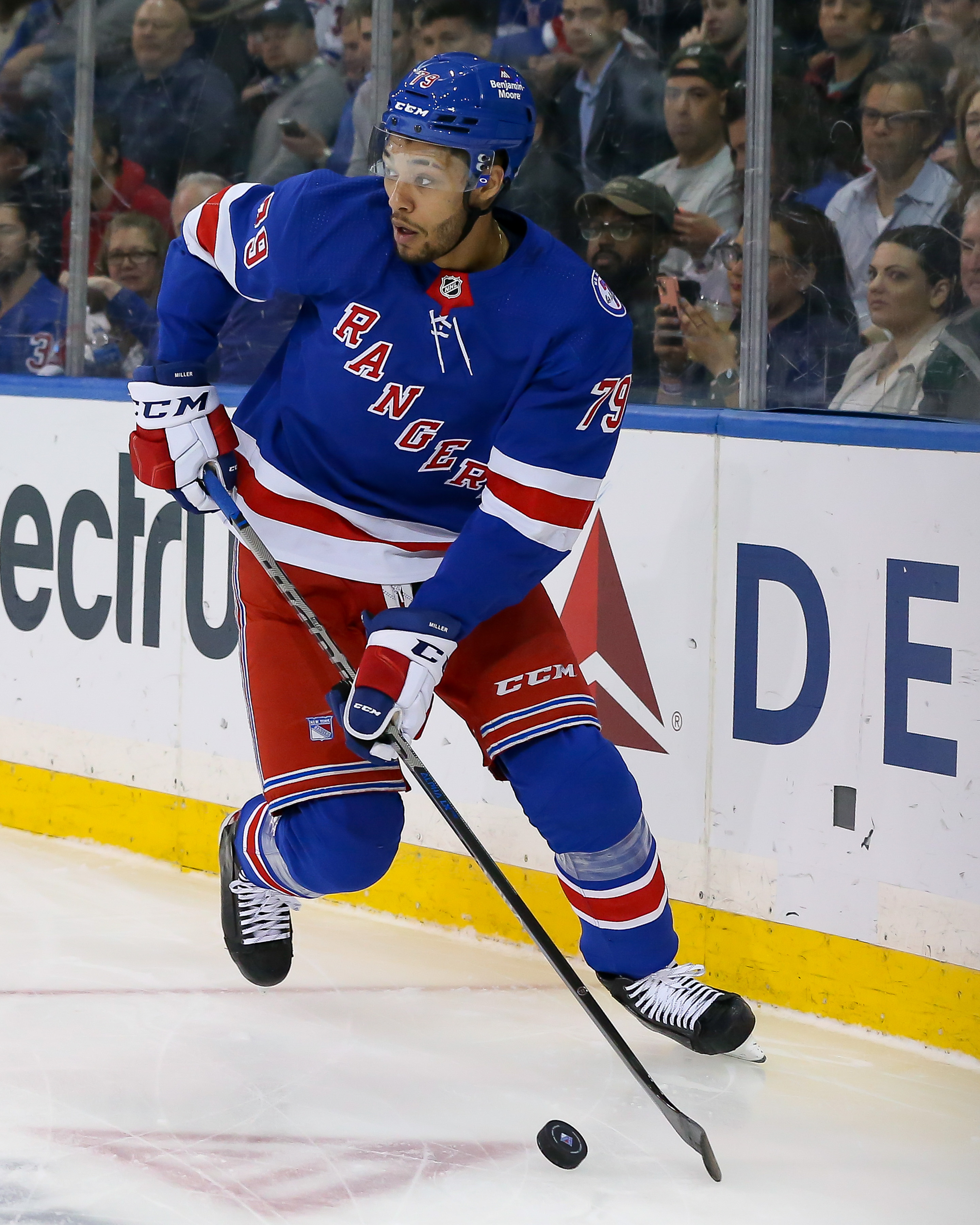
Moreover, since K’Andre Miller has played at a top-four level this past season, how will the Rangers be able to afford his next contract? If he takes another step in his development, do they even have a chance at affording a long-term deal with him?
They could, and likely will, go in the short-term direction with these contracts, looking to keep the costs as low as possible for these years where they’re in Stanley Cup contention.
But the long-term questions persist. Lafreniere, Chytil and Miller are supposed to be the foundational pieces that support the next generation of Rangers contenders. The Rangers sent a famous letter to their fans and embarked on a major rebuild in order to acquire players like that trio. If the Rangers are unable to keep these young players long-term because they’re locked into contracts for veterans such as Trocheck, Barclay Goodrow, and Jacob Trouba, it raises the question of why they even chose to endure such a painful rebuild in the first place.
So while the on-ice implications of an RFA crunch are relatively straightforward, — it’s about whether a team has a certain player on its roster or not — particularly difficult RFA situations such as the one the Rangers will face next summer have the potential to raise more significant questions about the long-term direction and overall team-building identity of a franchise.
It’s worth mentioning too that the Rangers aren’t the only team nearing that RFA crunch next summer, although they are the one in the most extreme position. The Edmonton Oilers, another Stanley Cup hopeful, could find themselves in a similar situation with defenseman Evan Bouchard.
The same can be said about the Minnesota Wild with Matt Boldy, and the Colorado Avalanche with Alex Newhook, with the latter team’s cap sheet set to become especially tight once Nathan MacKinnon‘s upcoming mega-extension kicks in.
The Soon-To-Be-UFA’s
This group of restricted free agents is perhaps the most difficult for teams to manage. GM Brad Treliving and the Calgary Flames saw it this summer when Tkachuk informed them of his decision to not consider signing a long-term extension to remain a Flame. While not every RFA who is arbitration-eligible and close to hitting UFA status will force an exit, the RFA’s in this section have the potential to dominate the headlines next summer.
For example, the Dallas Stars could be in another difficult RFA negotiation next summer, when center Roope Hintz is an RFA. Hintz will have the option to accept a lucrative arbitration award and then hit unrestricted free agency in the summer of 2024. Since Hintz is now the Stars’ first-line center, they’re likely to want to keep him from doing so. But with Seguin and Benn each costing north of $9MM against the cap, the Stars might find it difficult to meet Hintz’s asking price.
They might find it especially difficult to do so if they also want to re-sign Joe Pavelski, who has been integral to Robertson and Hintz’s development and will need a new contract of his own.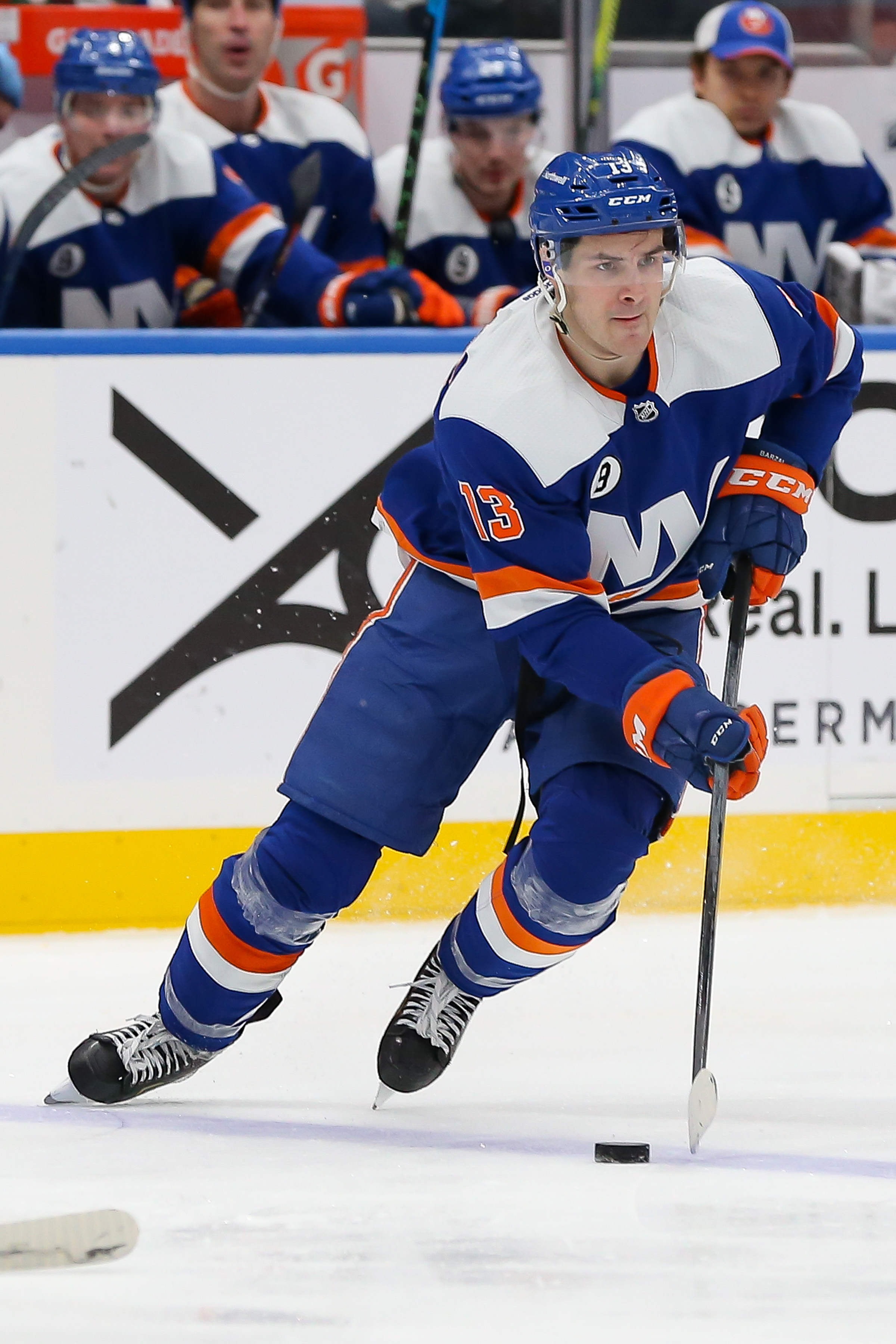
The New York Islanders are in a similar situation with their own first-line pivot, with Mathew Barzal able to accept an arbitration award next summer and become a UFA in 2024. For the Islanders, the expiration of Josh Bailey, Matt Martin, and Cal Clutterbuck‘s contracts in the summer of 2024 might be the key to getting Barzal’s next deal done.
That being said, though, Ilya Sorokin‘s contract is set to expire then as well, meaning Barzal could set the Islanders up for a do-or-die, potentially franchise-altering summer in 2024 if he doesn’t sign a long-term contract as an RFA in 2023.
The Bottom Line
There are quite a few more pending RFA’s than the ones we’ve covered so far, such as Alex DeBrincat, Jesper Bratt, Pierre-Luc Dubois, and Timo Meier, to name a few. It’s very possible that many of these names reach extension agreements during this season, avoiding the need for a drawn-out RFA saga. That’s likely to be the preferred outcome for each of these players’ teams.
But the high-stakes nature of NHL contract negotiations means that the reality typically never quite matches up to what teams would desire. Players are becoming more and more empowered to weaponize the tools available to them in order to get the most lucrative contracts possible, and restricted free agency is one of the most powerful tools a player has available to him.
So, despite each player and team likely desiring to have a quick, simple RFA process that leads to a fair long-term contract, that likely won’t be what we see happen next summer. It’s more than likely that a few of these players hit restricted free agency and dominate the headlines next summer.
Oftentimes, these situations end with both the player in question and his team conceding just a little bit more than they’d like to in order to reach a fair compromise. Other times, though, such a compromise can’t be found or is simply impossible to reach. That’s how we get the types of blockbuster deals we saw a few months ago.
Based on the look of things going into this season, it wouldn’t be a surprise if, thanks to the multitude of impactful restricted free agents, next summer is every bit as exciting as this one was.
Photos courtesy of USA Today Sports Images. Financial information courtesy of CapFriendly.
Latest On Nic Hague
While Jason Robertson takes most of the headlines regarding unsigned restricted free agents at this point, there are a number of other players still waiting to see if they’ll be under contract when training camp opens next week. One of those is Vegas Golden Knights defenseman Nic Hague, who, according to David Pagnotta of The Fourth Period on Thursday, was no closer to a deal. Hague is in Vegas but will likely return home if there is no deal at the start of camp, Pagnotta adds.
This isn’t a surprise, as the news all offseason has been pointing at a significant divide between the Golden Knights and the RFA defenseman. A week ago, reports emerged that the two sides had had “very little dialogue since early July.”
Like any negotiation, things can swing quickly with a single phone call. In this case specifically, it’s hard to see how sitting on the sidelines will benefit the 23-year-old.
Hague has played in 142 games through parts of three seasons, scoring ten goals and 14 points. But given the fact that the Golden Knights already have six defensemen signed to one-way contracts, and young players like Kaedan Korczak (or even junior superstar Lukas Cormier) ready to push for NHL minutes, there is a chance that the team will find ways to fill the lineup without him.
It’s that leverage, along with the fact that Vegas is perpetually in a salary cap crunch, that makes it a difficult situation for Hague. There is no one really doubting his talent but with relatively low offensive totals, a recent injury history, and the team’s financial situation, landing a multi-year deal for a significant raise seems unlikely.
As with any unsigned RFA, Hague will need to have a deal in place by December 1 in order to play this season.
West Notes: Flames, Blues, Pettersson
The Flames have had a busy summer up front with Jonathan Huberdeau and Nazem Kadri coming in to help replace Johnny Gaudreau and Matthew Tkachuk. Even with that type of turnover at the top of their roster, GM Brad Treliving told Thomas Drance of The Athletic (subscription link) that the team is still looking to add to their forward group for next season. Calgary is one of the few teams that still has a bit of salary cap flexibility with a little over $2MM in space, per CapFriendly with RFA center Adam Ruzicka still to re-sign and Cody Eakin already in on a tryout. While Treliving won’t be able to add an impact forward with what space he has left, an upgrade to their bottom six should be on the table.
More from the Western Conference:
- Blues GM Doug Armstrong has acted quickly to extend Robert Thomas and Jordan Kyrou but don’t expect that to be the case for any other of their pending free agents. As NHL.com’s Lou Korac relays (Twitter link), the current plan is to let the season play out and then see what they can do on the extension front. Veterans Ryan O’Reilly and Vladimir Tarasenko highlight their list of pending unrestricted free agents but with the raises for Thomas and Kyrou a year away from coming into effect, they’re going to have a hard team keeping their veteran core intact.
- The Canucks are leaning towards using Elias Pettersson back at center this season instead of keeping him on the left wing, notes Sportsnet’s Iain MacIntyre. Head coach Bruce Boudreau feels that Vancouver’s additions up front – including wingers Ilya Mikheyev and Andrei Kuzmenko – give them the potential for three scoring lines. If Pettersson does indeed shift back down the middle, that will only boost his value heading into extension talks next summer as centers often cost a premium to sign long-term.
Finding A Match For A Nils Lundkvist Trade
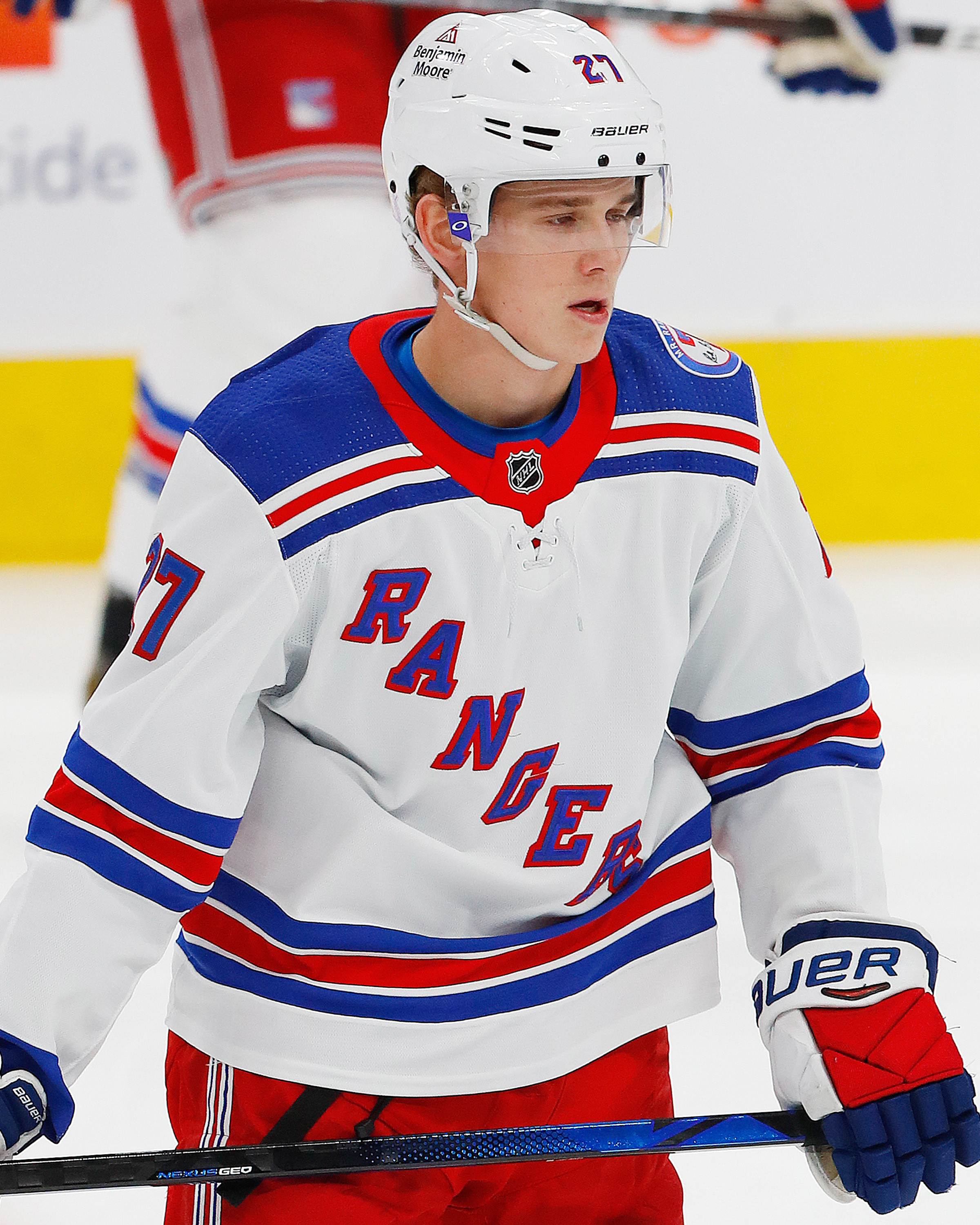 With Rangers prospect Nils Lundkvist’s trade request now well-known, efforts continue to find the youngster a new home for the upcoming season. If the belief that he won’t attend training camp in New York holds true, that could be a trigger point for GM Chris Drury to avoid any distractions heading into camp while getting a chance to integrate whichever player or prospect they get for the rearguard at training camp.
With that in mind, here’s a look at some of the potential suitors for Lundkvist. Since he’s looking for a team that will have a chance to give him an NHL opportunity in the short-term, the focus will be on those squads although there undoubtedly will be others that will kick the tires. Los Angeles is a team that has been speculated as a landing spot with their deep prospect pool but they don’t really have an opening on the right side of their back end for him to slide into so they don’t appear among the teams below.
Detroit: The Red Wings have two right-side rearguards in place in Calder winner Moritz Seider and young veteran Filip Hronek. There are questions behind those two, however. Gustav Lindstrom has yet to establish himself as a full-time player while Mark Pysyk will miss the first half of the season after undergoing surgery in July to repair a torn Achilles tendon. If Lundkvist was to go there and do well, it could free them up to move Hronek who is the type of blueliner that could yield a nice return for the Red Wings.
Detroit has a couple of young centers that the Rangers would likely show some interest in. One is Joe Veleno who is close to being ready for full-time duty while Jonatan Berggren, who was picked just five spots after Lundkvist in 2018, had a very promising first season in North America in 2021-22. They also have an extra second-round pick at their disposal if New York ultimately decides that a draft pick is the right return. Arthur Staple of The Athletic reported a few days ago (subscription link) that at least one team had a second-rounder on the table in an offer for the blueliner.
Montreal: At the moment, the right side of the back end for the Canadiens is David Savard, Justin Barron, and Chris Wideman. The only established full-time player out of that group is Savard. Montreal is likely to use several prospects throughout the season (Jordan Harris and Kaiden Guhle among them) but those are left-shot options, not righties like Lundkvist. It’s plausible that Lundkvist could jump into their lineup right away. Jeff Gorton, who was GM at the time Lundkvist was drafted, now works in Montreal’s front office.
While the Rangers wouldn’t be likely to get a return that could help them right away, Montreal’s prospect pool is one of the deeper ones around the league with recent center picks like Jan Mysak, Owen Beck, and Riley Kidney potentially being of interest. They could also deal from the left side of their defensive pool if New York would prefer a defenseman in return with Harris, Mattias Norlinder, and prospect Jayden Struble being possible options.
San Jose: The only established must-play right-shot defender on their roster is Erik Karlsson. Matthew Benning got a four-year deal but could bounce in and out of the lineup while Ryan Merkley could stand to spend more time in the minors before becoming an everyday regular. With Brent Burns not really being replaced after his trade to Carolina, there’s a definite need for a second defenseman to help shoulder the offensive load. Worth noting, one of New York’s former top scouts, Chris Morehouse, is now heading up San Jose’s amateur scouting ranks. He wasn’t there when Lundkvist was drafted but he’ll have some extra familiarity with the blueliner.
Center Thomas Bordeleau didn’t look out of place in his brief NHL stint late last season and acquitted himself well at the World Championship as well and is the type of young center that might entice the Rangers. Merkley himself could be an option if Drury decides to look for a similar player, one that will be more amenable to being in the minors to start the season. The Sharks don’t have an extra second-round pick but the one that they do have projects to be a good one based on the state of their roster heading into training camp.
Seattle: While the addition of Justin Schultz lessens their need for an extra offensive defenseman, the third RD spot is far from secure with William Borgen spending a lot of time as a healthy scratch last season. That’s a spot that Lundkvist could conceivably battle for or least position himself to be the first one recalled.
The Kraken don’t have the deepest of prospect pools to work with since they’ve only been around for two drafts but they do have three second-rounders for the 2023 draft. Parting with one for a potentially near-ready young defenseman would be a defensible move for the second-year squad.
Vancouver: The Canucks have been busy this summer when it comes to their forward group but nothing has been done with their back end yet and it’s not for a lack of trying. Vancouver already has an offensive weapon in Quinn Hughes but someone like Lundkvist could potentially help run a second power play group and perhaps take some minutes from veteran Oliver Ekman-Larsson who is getting near the point where he will need to be managed more carefully. With Tucker Poolman’s availability uncertain for training camp, there’s a spot on the right side of their back end up for grabs.
As for possible trade options, Linus Karlsson is coming off a strong SHL season and shouldn’t be too far away from being NHL-ready which would give New York another option down the middle. Alternatively, winger Nils Hoglander is someone that, on the surface, might be on the fringes of making Vancouver’s roster with their additions on the wing. Perhaps there’s a trade to be made featuring those two?
Of course, this isn’t an exhaustive list and other teams will inquire but if Lundkvist and agent Claude Lemieux’s intention is to have him start the upcoming season in the NHL, that does limit the number of viable opportunities for a trade if the Rangers decide to move him before training camp.
They don’t have to move Lundkvist, however. He’s still waiver-exempt and even if he doesn’t want to report to the minors, they can send him there and suspend him for not reporting. If it’s going to be more of a drawn-out process, a loan overseas (as they did last year with Vitali Kravtsov) is also on the table. There are certainly non-trade options they’ll want to consider but if they do decide to go ahead with a trade, they’ll have some viable teams to consider.
Photo courtesy of USA Today Sports Images.