
Ducks Sign Drew Helleson To Two-Year Deal
The Ducks have signed restricted free agent defenseman Drew Helleson to a two-year contract, the team announced. The deal is worth $2.2MM with a cap hit of $1.1MM, Elliotte Friedman of Sportsnet reports.
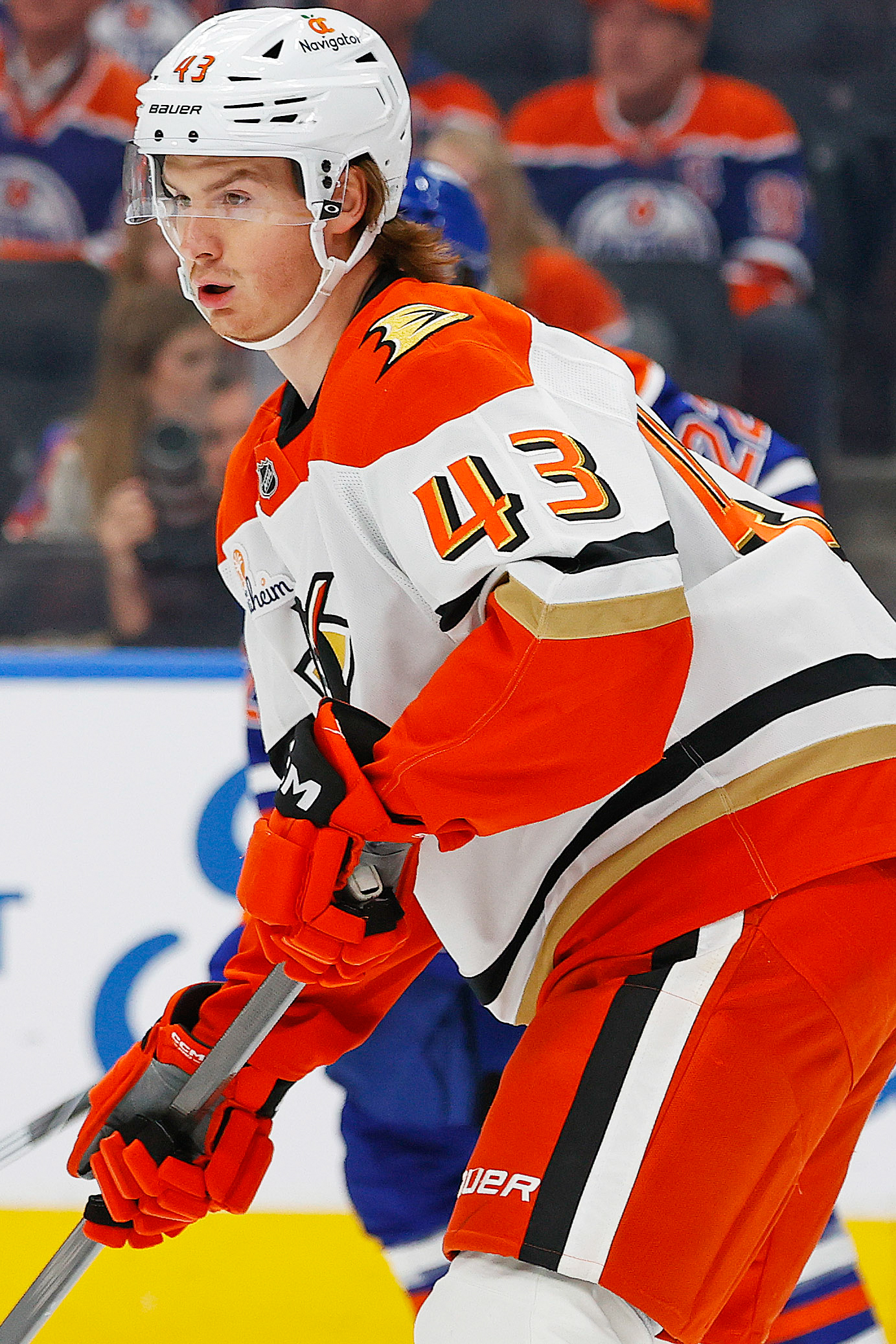 Helleson had previously elected salary arbitration, but he avoided a hearing with today’s settlement. Anaheim’s other arbitration case this offseason, No.1 goaltender Lukas Dostal, settled yesterday with a five-year, $32.5MM contract as a result.
The 24-year-old quietly emerged as a full-time option on the Ducks’ blue line last season, particularly late in the year. He started the year with AHL San Diego but remained on the roster for the rest of the season after a November recall, making 56 appearances and recording a 4-9–13 scoring line with a +6 rating.
That last stat is noteworthy, considering the Ducks had a -8 goal differential at 5-on-5 and a -44 goal differential overall. That number led all rookie defensemen, but advanced metrics don’t back it up. Helleson’s 43.1% shot attempt share was subpar, even on a weak possession team in Anaheim, and he didn’t see challenging deployment.
Nonetheless, the 2019 second-round pick has now established his floor as a No. 6/7 option in the NHL and will continue to serve in that capacity for the Ducks for the next two seasons. While initially drafted by the Avalanche, Anaheim acquired his signing rights in 2022 as part of the Josh Manson trade. He turned pro months later after finishing his junior year at Boston College.
Helleson always projected as a shutdown defenseman at the NHL level. The results were there for him as he averaged 16:21 per game last year with 73 blocks and 99 hits, but his possession play needs to improve for him to flourish as a quality stay-at-home piece with penalty-killing upside. Perhaps a system change under incoming head coach Joel Quenneville can help accomplish that feat.
The Minnesota native will be 26 years old upon expiry, keeping him under Anaheim’s control as an RFA in 2027. Whatever his next contract is, it will allow him to become an unrestricted free agent.
The Ducks still have $21.4MM in cap space for 2025-26 with a projected roster size of 21, according to PuckPedia. They still have two notable unsigned RFAs, forwards Sam Colangelo and Mason McTavish, neither of whom was eligible for arbitration.
Image courtesy of Perry Nelson-Imagn Images.
Ducks Sign Lukas Dostal To Five-Year Deal
Ducks starting goaltender Lukas Dostal has agreed to a five-year, $32.5MM contract, Frank Seravalli of Daily Faceoff reports. Dostal himself confirmed on Anaheim’s X account that he’s signed a new deal.
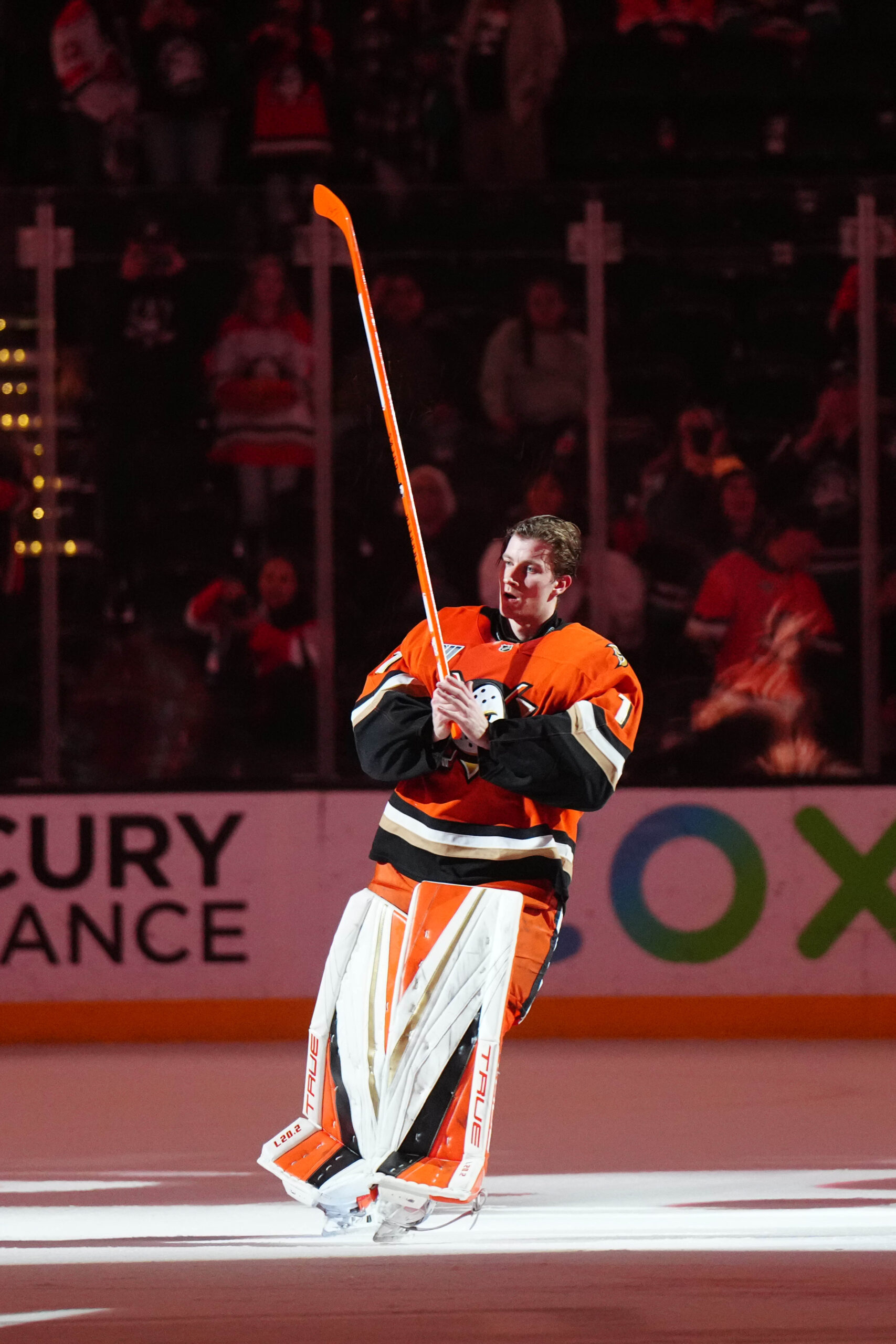 It’s a significant commitment to the Ducks’ new undisputed No. 1, one that will see him count $6.5MM against the cap through the 2029-30 campaign. The 25-year-old was an arbitration-eligible RFA and chose to file for it earlier this month. Instead of going to a hearing, though, he lands a well-compensated deal that eats up the remainder of his RFA years – and then some.
Anaheim now has one of the more expensive goalie rooms in the league this season. They’re one of the few teams expected to carry three netminders, rostering veteran backups Petr Mrazek ($4.25MM) and Ville Husso ($2.2MM) at relatively steep cap hits for their projected workload. Mrazek was acquired when the Ducks sent longtime starter John Gibson to Detroit at the draft, paving the way for Dostal to assume the crease, while Husso finished last year in Anaheim as their third-stringer but landed an unexpectedly large new contract from them a few weeks ago.
The contract comes after Dostal, long touted as one of the league’s brightest young goalies, converted his linear development path into a breakout season in 2024-25. The 2018 third-round pick shouldered the majority of the workload for the first time, making 49 starts and five relief appearances for 54 total showings. He posted a 23-23-7 record, a .903 SV%, and a 3.10 GAA.
Those numbers may look close to average at first, but should be viewed in the context of Anaheim’s porous defense. The young Czech managed to save 14.3 goals above expected, per MoneyPuck, 16th in the league. He finished 12th in year-end All-Star voting among goaltenders as a result.
Dostal now becomes the 11th highest-paid goalie in the league for 2025-26, roughly in line with those ranks. He lands more annually than recent long-term extensions handed out to starters like Joey Daccord, Adin Hill, and Logan Thompson, but Dostal’s age advantage over them and corresponding room for growth likely drove up his market value – particularly on an Anaheim team that will need strong goaltending to make a playoff push next season with one of the league’s younger defenses.
Dostal will be 30 when the contract expires, making him an unrestricted free agent. Anaheim still has some notable RFAs to re-sign, namely 2021 No. 3 overall pick Mason McTavish.
Image courtesy of Kirby Lee-Imagn Images.
Ducks Sign Calle Clang, Jan Mysak To Two-Way Deals
The Ducks have signed restricted free agent goaltender Calle Clang to a two-way deal for the upcoming season, according to a team announcement. The team also announced a two-way agreement for RFA forward Jan Mysak. Financial terms were not disclosed by the team but PuckPedia reports that Clang’s deal is worth $775K in the NHL and $85K in the minors, while Mysak’s is worth $775K and $90K, respectively.
Clang, 23, was a third-round pick of the Penguins in 2020, and Anaheim acquired his signing rights in the deal that sent Rickard Rakell to Pittsburgh in 2022. He looked like quite an intriguing prospect at the time and was amid a run of three strong seasons in professional leagues in his native Sweden. Now, his development has stalled since he arrived in North America at the end of the 2022-23 campaign.
The former Champions Hockey League winner with Rogle BK has made 68 appearances for the AHL’s San Diego Gulls in the last few years, logging a 3.15 GAA and a below-average .896 SV% with a 22-32-8 record. His save percentages have slowly declined, from .904 in a five-game trial in 2022-23 to .897 in 2023-24 to .895 last season.
Clang, who stands at 6’2″ and 194 lbs, won’t be in contention for an NHL roster spot in the fall with Lukas Dostal, Petr Mrazek, and Ville Husso ahead of him on the depth chart. He could be in line for extended playing time in San Diego if Husso ends up as part of a three-goalie rotation in the NHL. Still, even that isn’t a given with three other young goalies under contract competing for minor-league playing time in Vyacheslav Buteyets, Damian Clara, and Tomas Suchanek.
Mysak is newer to the Ducks organization than Clang. Anaheim acquired in a minor prospect swap with the Canadiens last season, sending underperforming first-rounder Jacob Perreault the other way.
While Perreault is no longer with the Habs, Mysak extends his stay in Orange County on the heels of a decent showing for San Diego in 2024-25. A second-round pick in 2020, Mysak put together an 18-24–42 scoring line in 68 games after ending the previous season with just one goal in 18 games for the Gulls.
Now 23, the Czech forward has some call-up potential this season if injuries strike. If so, it would be the NHL debut for the 5’11”, 190-lb Mysak, who’s entering his fourth professional season.
Both players will be restricted free agents again next summer. Anaheim now has 38 out of 50 contract slots filled.
Breaking Down The Direction Of The Ducks
The Ducks are still well under the salary cap ceiling, sitting about $29MM below the limit with four players left to sign to complete a 23-man roster (as per PuckPedia). While that’s certainly a lot of space under the cap, it’s not necessarily a positive sign, given how the Ducks have exhausted their salary cap space by signing and trading for high-priced veterans who are past their prime. A few years ago, the Ducks seemed poised for success, but they have made little progress in their rebuild, and if anything, their recent moves have hindered what could have been something special.
When Pat Verbeek became the general manager of the Ducks in February 2022, he knew the team was in the midst of a rebuild and aimed to make them a contender. He had a plan, and from a broad perspective, his approach to bring in veterans made sense to support younger players and a prospect pool ranked 12th, according to Scott Wheeler of The Athletic. The Ducks had been focusing on youth for a while and had some promising young players starting to get significant NHL minutes. Bringing in experienced players who had been there before would provide emerging stars like Trevor Zegras with a mentor figure to help them develop into skilled professionals.
The Ducks had a poor start to Verbeek’s tenure, falling further down the standings in 2022-23 with a 23-47-12 record to finish last in the Western Conference. On the ice, the Ducks finished 31st in the NHL in goals for and 32nd in goals against, with a -129-goal differential. The team’s performance can’t solely be blamed on Verbeek, who had only been in the role for a few months before summer 2022. However, his influence was evident in certain aspects of the team, particularly in the signings of a few free agents, some of whom were successful, while others were not.
Verbeek signed Frank Vatrano to a three-year deal in July 2022, which proved to be a great bargain. However, he also signed Ryan Strome to a five-year, $25MM contract. Strome has recorded 41 points in each of the last three seasons, but his below-average defensive metrics offset some of his offensive contributions. Defencemen John Klingberg and Nathan Beaulieu were also acquired that offseason and struggled to adjust to Anaheim’s lineup, posting some of the worst numbers of their careers. Klingberg was traded to Minnesota before the NHL Trade Deadline, and Beaulieu finished the season and has not played in the NHL since.
In the summer of 2023, Verbeek continued his trend of overestimating veterans by signing a couple of 33-year-old veterans, defenceman Radko Gudas and Alex Killorn. The Gudas signing was for three years at $4MM per season and was a sensible gamble given his abilities at the time. Gudas doesn’t put up points, but he has been reasonably practical, and rebuilding teams generally need to overpay in free agency. The Killorn signing, however, raised many eyebrows even though he was coming off a 64-point season with Tampa Bay. Killorn was signed to a four-year deal worth $25MM ($6.25MM annually) and has not come close to delivering enough value to justify his contract. That signing started a significant trend in Anaheim that continues today: overvaluing players’ past contributions.
Moving forward, Verbeek arguably made his best move in early 2024 when he acquired forward Cutter Gauthier from the Philadelphia Flyers in exchange for defenseman Jamie Drysdale and a second-round pick. That move was a significant victory for the Ducks, strengthening their pool of young players with star potential.
After the Gauthier trade, Verbeek went back to work adding high-priced veterans to the lineup, trading for defenseman Brian Dumoulin in July 2024, and then eventually making a head-scratching trade for Jacob Trouba in late 2024. The Dumoulin trade turned out to be good business, as he was later flipped to New Jersey at the Trade Deadline for a second-round pick and a prospect, but the Trouba deal never made sense and still looks like a mistake to this day. The New York Rangers not only managed to get out from beneath Trouba’s $8MM cap hit but also received some value from Anaheim, acquiring defenseman Urho Vaakanainen and a 2025 fourth-round pick. Trouba has value due to his physicality, ability to block shots, and willingness to get involved in transition; however, his mobility and turnovers are significant issues that have persisted in Anaheim, not to mention his hefty cap hit. Verbeek then followed up this trade by moving on from Cam Fowler in a deal with St. Louis, where he retained $2.5MM in salary. 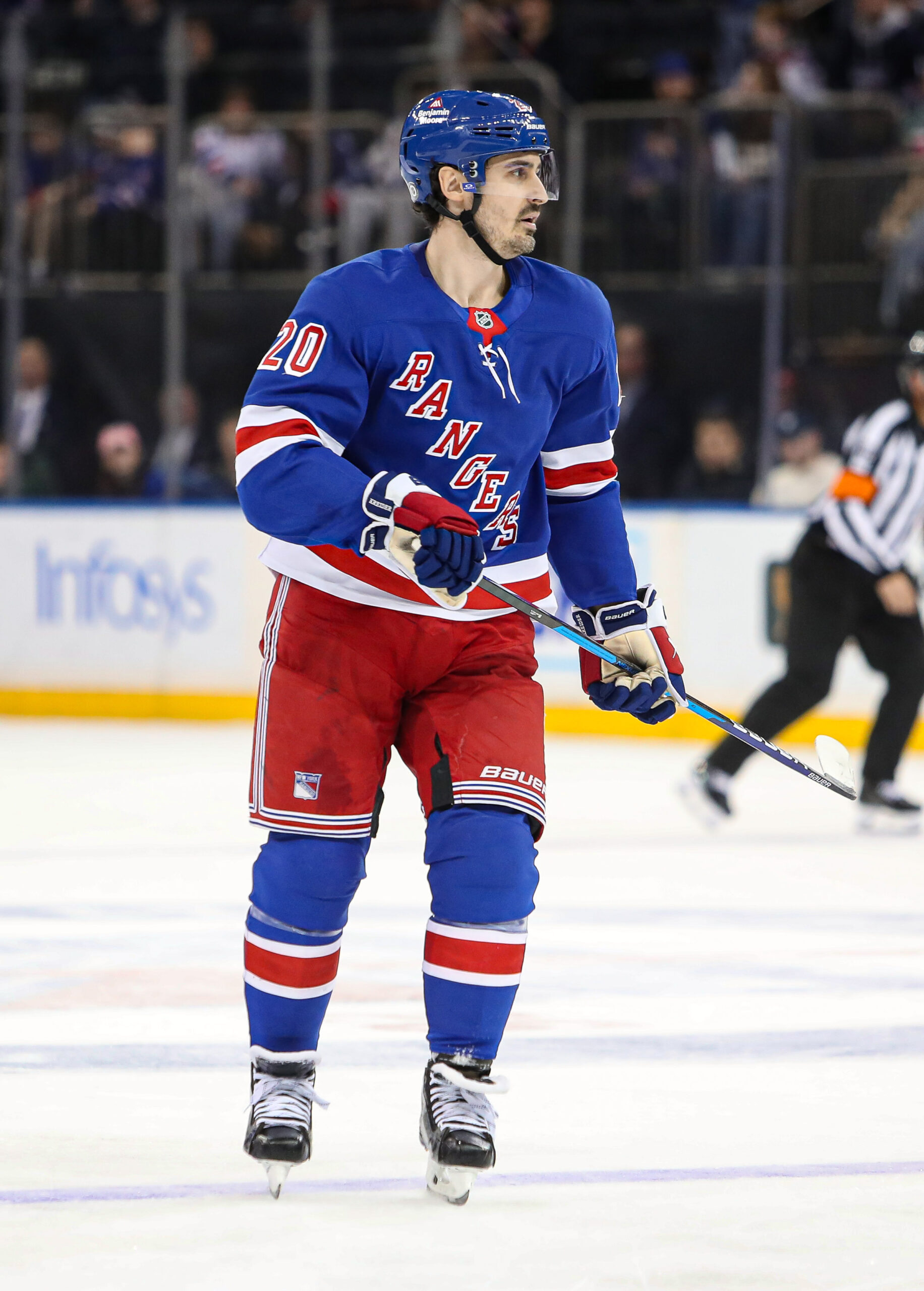
Continuing with his trend, Verbeek then acquired Chris Kreider from the Rangers along with a fourth-round pick, giving them another chance to move on from a bad contract. The Ducks sent back a third-round pick and the 2023 second-round pick (59th overall), Carey Terrance. The jury is still out on the Kreider move, and he remains a net-front presence who can still skate, but his numbers took a significant hit next season, and the Ducks are gambling on a 34-year-old with a lot of hard miles on his body to recapture his game. Kreider did have 22 goals last season, so it’s not impossible to imagine him providing value to the Ducks, but at $6.5MM per season for two more years, the Ducks overpaid for another veteran who may or may not work out.
Verbeek followed up this trade by moving Zegras for a second and fourth-round pick, in exchange for forward Ryan Poehling. While Poehling is quite suitable as a depth forward, the return felt disappointing for an injury-prone player with considerable offensive talent. Zegras has struggled with injuries over the past few seasons and may not work out in Philadelphia. However, for a team like the Ducks, which seems willing to gamble on veterans returning to form, it was unusual to see them sell low on a relatively young forward who could still bounce back.
Finally, you have the Ducks’ last handful of moves, which include trading goaltender John Gibson for Petr Mrazek (and two draft picks) as well as the signings of Mikael Granlund and Ville Husso. The Gibson trade was good business for Anaheim and moved them away from a player who had made headlines for the past couple of seasons, as his timeline didn’t match the one the Ducks were on. Acquiring Mrazek as part of the package was also reasonable, as it provided Anaheim with a temporary backup to play behind Lukas Dostal. What didn’t make sense was giving Husso two more years at $2.2MM per season, as he has been a below-average goaltender for the last three seasons and spent more time in the AHL last season than he did in the NHL. Now, the goaltender market was certainly weak this summer, but handing out that kind of contract to an AHL-level goalie to play in the minors is a major misfire.
Anaheim completed their free agent moves by signing forward Granlund to a three-year, $21MM contract. Granlund is a solid offensive player who can generate points and is a great passer. However, he is only two summers removed from being a salary cap dump in Pittsburgh and is nowhere near worth a $7MM price tag. He doesn’t contribute much defensively, but should boost their 30th-ranked offence.
Now, people will point to the veteran acquisitions and say that Anaheim has plenty of cap space, so it doesn’t matter if they spend money on players like Husso and Granlund. But the fact is that Anaheim was in a prime position to contend by now, yet they have made things worse by acquiring older, slower players who haven’t helped the younger ones so far.
Fans might also argue that Anaheim isn’t going to contend this year or next, so having these veterans on the books doesn’t affect the long-term strategy. However, Anaheim could have better utilized and weaponized its cap space to bring in younger players or acquire other assets by taking on teams’ bad contracts, similar to the strategy Pittsburgh has employed. There is nothing wrong with overpaying players during a rebuild, but eventually, the bill comes due. For Anaheim, it seems they are still paying that bill, and they might continue to do so for a few more seasons.
Photo by Danny Wild-Imagn Images
Pacific Notes: Willander, Raty, Lekkerimaki, Eichel, Uljanskis, Thornton
After the Canucks made another piece of offseason business in trading goaltender Arturs Silovs to the Penguins over the weekend, The Athletic’s Thomas Drance took a deep dive into the roster math that lies ahead and what other moves could be coming.
Among those could be something of a crunch on defense. After signing 2023 first-rounder Tom Willander to his entry-level contract in May, Drance reports the club has him penciled in on Vancouver’s opening night roster, not on assignment to AHL Abbotsford to begin his professional career. He expects that the defenseman named Elias Pettersson, not their highest-paid forward of the same name, has received a similar designation.
As such, Drance relays to expect Vancouver to carry 13 forwards and eight defensemen out of the gate instead of the slightly more commonplace 14/7 breakdown, with prospect Victor Mancini and recent depth signing Pierre-Olivier Joseph likely the only legitimate candidates for the eighth spot. Mancini is still waiver-exempt, so that could work in Joseph’s favor.
For the forwards, Aatu Raty has the best candidacy for a job out of all their young fringe NHLers coming off a Calder Cup championship with AHL Abbotsford because of “the club’s needs down the middle,” Drance writes. One name that likely won’t be in contention for a depth job is top wing prospect Jonathan Lekkerimaki.
“It sounds like the club is open to slow-cooking Lekkerimäki in the AHL to begin next season,” Drance said. “The gifted scoring winger is waiver exempt, and the club wants to be cautious about managing his development and not rushing him.” Older but lower-ceiling names like Arshdeep Bains and Linus Karlsson will be in contention for open fourth-line/press box slots instead.
Here’s more from around the Pacific:
- There isn’t anything new to report on extension talks between the Golden Knights and star center Jack Eichel, writes David Pagnotta of The Fourth Period. An “open line of communication” remains after negotiations reportedly began over the past few months, but the needle hasn’t moved much since.
- Ducks defense prospect Darels Uljanskis is making the jump from Europe to North America to finish out his junior career, via Derek Lee of The Hockey News. Anaheim selected the left-shot Latvian in the seventh round last year. He’ll play out 2025-26 for the OHL’s Flint Firebirds after recording 39 points and a +12 rating in 44 games for AIK’s under-20 squad in Sweden last season.
- The Sharks announced on Tuesday that they’ve formalized a front-office title for Hall-of-Famer Joe Thornton, naming him as a player development coach and hockey operations advisor amid a slew of other minor staff changes. Thornton had remained in the San Jose area and worked frequently with the club in an unofficial capacity since retiring in 2022, but the franchise icon will now be firmly embedded in the process of building the team’s next window of championship contention.
Justin Bailey Signs AHL Contract With San Diego
An NHL veteran has found a place to play next season but he will have some work to do to get an NHL shot. The AHL’s San Diego Gulls, affiliate of the Ducks, announced that they’ve signed winger Justin Bailey to a one-year, one-way contract.
The 30-year-old spent last season in the minors on a one-year, two-way deal but never got an NHL opportunity despite playing in 59 games with the Sharks the year before. Starting off with the Barracuda, Bailey had 14 points in 33 games but he was more productive with the Gulls after being traded to Anaheim back in January. With them, he notched 12 goals and 10 assists in 35 outings.
Over his career, Bailey has played in 141 career NHL contests, picking up 10 goals and 23 assists along the way. He also has recorded 157 hits while averaging a little over ten minutes per game of playing time, primarily on the fourth line. In the minors, however, Bailey has been a much more consistent contributor, picking up 155 goals and 122 assists in 438 games over parts of 10 seasons.
It’s likely that Bailey will officially sign a PTO agreement with Anaheim over the next couple of months, allowing him to suit up for the Ducks in training camp where he’ll count toward their veteran quota for exhibition action.
Tristan Luneau Poised To Make Big Impact For Ducks
The Anaheim Ducks have quietly built an impressive stockpile of talented, young defenders. Players like Jackson LaCombe, Olen Zellweger, and Pavel Mintyukov are beginning to prove as much on the left-hand side, but Anaheim is still searching for that same kind of breakout on the right-side. After a fantastic rookie season in the minor leagues, Tristan Luneau who seems best positioned to bring exactly that jolt as soon as next season.
There’s a steep learning curve for young defenders transitioning to the pro flight – especially for slight-framed, puck-movers who don’t engage physically like Luneau. He showed signs of those struggles in the seven NHL games, and six AHL games, he played through in the 2023-24 season. While Luneau’s three points in the NHL was an impressive jump to production, he struggled to clear out the front of the net or stop opponents from entering the defensive end. Luneau was set to mitigate those early-career learning pains with a trip to the 2024 World Junior Championship – where he surely would’ve dominated his younger peers – before an illness and eventual knee infection effectively ended his season before the tournament even began.
With that, Luneau’s first year of pro hockey – and his first chance to represent Team Canada – came to an abrupt close. It left the Victoriaville-native in a confusing spot. His nifty puck-handling and blue-line playmaking translated seamlessly to the top flight, but he showed through multiple areas of needed growth. With a long-term absence to boot, Anaheim opted for the safe approach for Luneau’s return in the 2024-25 season – defaulting him to the minor-leagues for the entire season after a brief, six-game stint in the NHL in October.
A year removed, that decision has paid dividends. Luneau finished the year with 52 points in 59 games. That scoring pace – 0.88 points-per-game – is the third-highest a U21 defender has managed in the AHL since 2000, and interestingly the highest from a defender outside of the Los Angeles Kings pipeline (Brandt Clarke, 0.92 in 2023-24; Jordan Spence, 0.91 in 2021-22). On top of reaching a tremendous scoring height, Luneau also added a heap of confidence in the gritty areas of the ice. He was diving into puck battles and scrums in the slot with the prowess his 6-foot-1, 195-pound frame should provide. The result was not only an increased ability to win pucks in the corners, and hold his ground in the slot – but truly more opportunities for Luneau to win possession and command movement up the ice.
He, in many ways, returned to the end-to-end commander role he became known for in the QMJHL. Luneau was creating as many plays as he joined, and worked his way onto the AHL’s end-of-season All-Rookie team as a result. He was once an incredibly high-regarded prospect, earning first-round acclaim through points of his juniors career. Anaheim eventually landed Luneau in the middle of the 2022 second-round, and early returns seem to suggest he’s on the way to becoming a day-two steal. Luneau showed his ability to score at a top level through his first seven games in the NHL two seasons ago. Now – after vindicating that ability with a dominant year in the minors – he’s added the additional oomph needed to stretch his offense across a full season.
With a season-ending injury now well in the rearview mirror, Luneau seems poised to jump quickly back into the NHL, where his downhill-drive could pair perfectly with the all-three-zones ability of LaCombe or Mintyukov. He’ll be a favorite to make the Ducks roster directly out of training camp, and could soon be yet another young player to find his way to success on the Anaheim blue-line.
McQueen Won't Move To NCAA If He Doesn't Make Anaheim's Roster
- If Roger McQueen doesn’t make the Ducks’ roster in training camp, he told Global News’ Scott Roblin (Twitter link) that he will return to WHL Brandon instead of pursuing NCAA options. McQueen was the tenth pick last month, sliding in the draft after being limited to just 17 regular season games last season due to back troubles but he was quite productive in those outings, picking up 10 goals and 10 assists. Given that he missed most of the year, it’s not overly surprising that he’d elect to return to junior to get more game action in to try to make up for some lost time.
Ducks Rebuffing Interest In Zellweger And Mintyukov, Suchanek Fully Recovered From ACL Tear
The Ducks received trade interest in young defensemen Olen Zellweger and Pavel Mintyukov, Sportsnet’s Elliotte Friedman reports in his latest 32 Thoughts podcast (audio link). The 21-year-olds are believed to be a big part of Anaheim’s future but were in and out of the lineup at times, something that Friedman notes resulted in both players going to management about their playing time. Zellweger had 20 points in 62 games last season while Mintyukov had 19 in 68, a drop of nine points from his rookie-season performance. Despite the trade interest, Friedman relays that Anaheim doesn’t have any interest in moving either youngster.
- Still with the Ducks, prospect goaltender Tomas Suchanek has fully recovered from the torn ACL sustained last summer just after development camp, relays Derek Lee of The Hockey News. The 22-year-old impressed in his first professional season back in 2023-24 where he put up a 2.92 GAA and a .910 SV% in 29 games with AHL San Diego, earning him an entry-level contract along the way. As things stand, Suchanek seems likely either to be the backup with the Gulls behind Ville Husso or starting at ECHL Tulsa to give him a shot at more playing time.
Eleven Players Elect Salary Arbitration
Eleven players across the NHL have elected for salary arbitration, per the NHLPA.
Those names include:
- F Morgan Barron (Winnipeg Jets)
- G Lukas Dostal (Anaheim Ducks)
- D Drew Helleson (Anaheim Ducks)
- F Kaapo Kakko (Seattle Kraken)
- F Nicholas Robertson (Toronto Maple Leafs)
- D Dylan Samberg (Winnipeg Jets)
- G Arvid Soderblom (Chicago Blackhawks)
- D Jayden Struble (Montreal Canadiens)
- D Conor Timmins (Buffalo Sabres)
- F Maxim Tsyplakov (New York Islanders)
- F Gabriel Vilardi (Winnipeg Jets)
The deadline for second club-elected arbitration is Sunday at 5 p.m., with arbitration hearings scheduled from July 20 to August 4. Two seasons ago, 23 players filed for arbitration, and last summer, that number dropped to 14 — a downward trend that continues this year.
As a reminder, not every player is expected to head to a hearing, as negotiations will continue leading into July 20. However, each player who elects for salary arbitration is now prohibited from negotiating with other teams or signing an offer sheet.