
The offseason has arrived for half of the league’s teams that aren’t taking part in the playoffs. Accordingly, it’s now time to examine what they will need to accomplish over the coming months. Next up is a look at the Maple Leafs.
To say this season didn’t go to plan for Toronto would be an understatement. Coming off just their second series win in the Auston Matthews era in 2025, there were going to be changes after bowing out to the Panthers – Mitch Marner‘s long-understood departure via a sign-and-trade to the Golden Knights was the biggest of them all – but the hope was that a bevy of depth free agent signings could help replace the star playmaker’s production by committee. Instead, the Leafs floundered, finishing with their worst record in 10 years and losing Matthews to a torn MCL in March, which eventually cost general manager Brad Treliving his job. Now, after installing John Chayka as his replacement earlier today, a list of daunting tasks awaits him without the guarantee of a first-round pick, which they’ll only retain if Tuesday’s lottery balls keep them within the top five.
Settle The Coaching Question
Chayka still has nearly two months until the opening of free agency in July, so he’ll have plenty of run-up to make player personnel decisions. The more pressing matter is the future of Craig Berube, who just wrapped up his second season behind Toronto’s bench with a 20-win regression. It would be surprising to see Chayka, who was aggressive with limited resources during his time atop the Coyotes’ front office, not move to bring in a new voice behind the bench. Doing so sooner rather than later is paramount, with a pair of high-profile, late-season fired candidates still available in Bruce Cassidy and Patrick Roy.
Seeing Berube remain behind the bench would be especially shocking, given how analytics-forward Chayka is. Even amid last season’s success, the Maple Leafs were middle of the pack in 5-on-5 expected goals share (49.8%) and were even worse in the playoffs, per MoneyPuck. This season, that number tumbled to a 30th-ranked 45.6% while their actual results followed suit, finishing 16th in goals for per game (3.07) but second-worst in goals against (3.60) and worst in shots against (32.4) by a significant margin.
Berube still has two years left on his contract, which he signed in 2024 to replace Sheldon Keefe. Given Toronto’s virtually unlimited financial resources, that’s not a concern for them, but it is indicative of just how quickly the franchise’s momentum has changed.
Solidify A Long-Term Plan
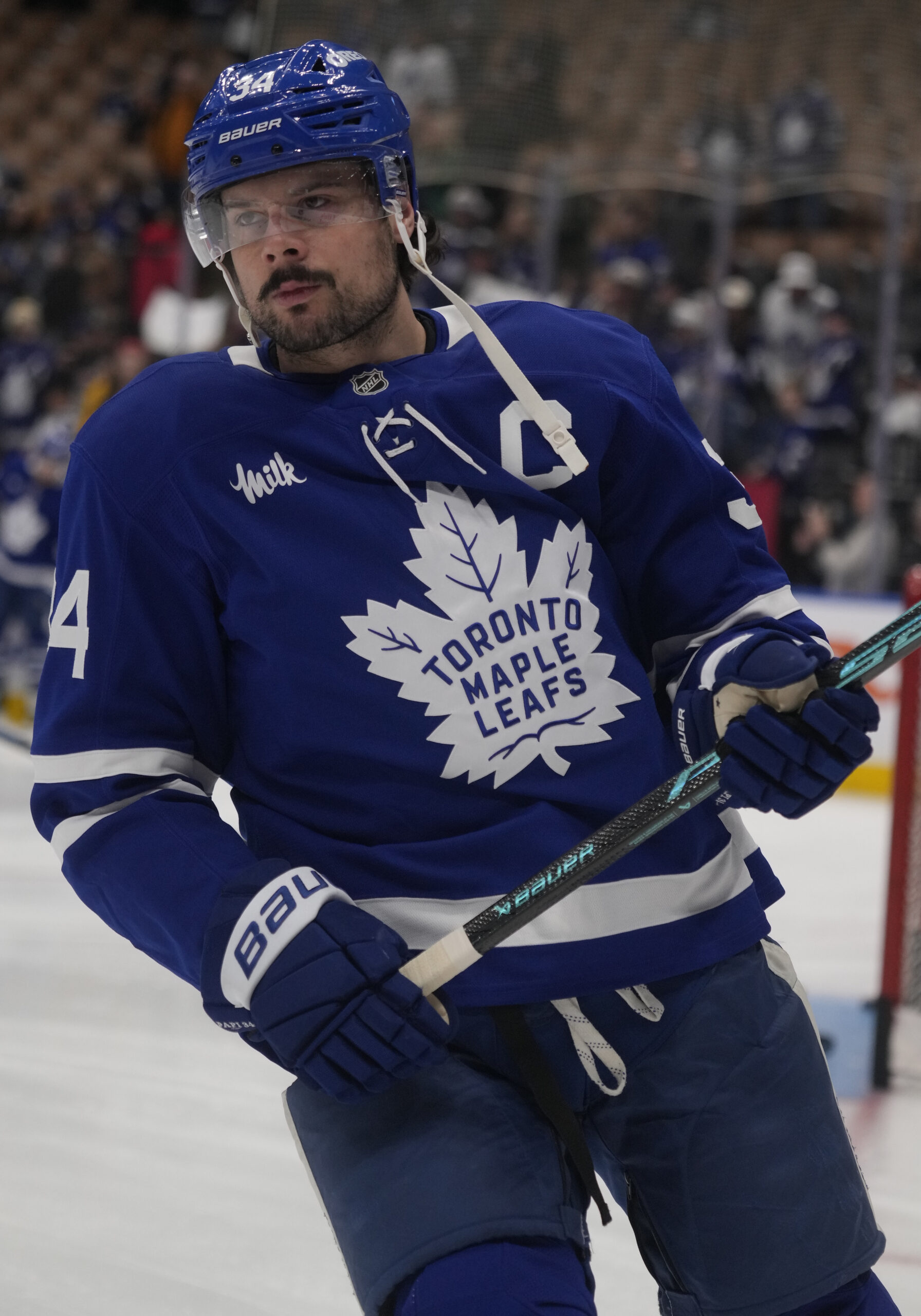 The Leafs’ two remaining “franchise” forwards after Marner’s departure, Matthews and William Nylander, have both expressed uncertainty about their futures if the team’s next GM opts for a full-scale rebuild rather than a short-term reload. Presenting them – particularly Matthews, who’s much closer to unrestricted free agency in 2028 – with a long-term vision needs to be higher on Chayka’s list so he can plan his offseason accordingly.
For a team whose draft pick and prospect cupboards are so bare, opting for a long-term route that Matthews and Nylander aren’t enthused about should immediately trigger trade conversations. Whether a deal of that magnitude could be cobbled together quickly enough to transpire by the draft is a different question entirely, but it’s a possibility all sides need to prepare themselves for (or definitively rule out) depending on Chayka’s vision.
They simply can’t afford a situation like Marner’s, where his signing rights as a pending UFA were sold for pennies on the dollar. They have plenty of cap space for next season, but a thin free agent market to spend it on. Matthews and Nylander could likely be appeased by a clear-cut plan of attack that gets them back to playoff/championship contention by the end of Matthews’ deal two years from now, but if that’s not something Chayka is confident in being able to achieve, he’ll be thrust into making one, if not multiple, of the most franchise-altering trades in recent memory.
Consider Goaltending Options
Toronto’s goals-against regression had more to do with team defense than goaltending, but it’s not as if their netminding was particularly inspiring. A year after serving as arguably the league’s most efficient goaltending tandem, Anthony Stolarz and Joseph Woll were both decidedly below average in 2025-26. Woll was “good” for -6.6 goals saved above expected in 39 outings while Stolarz had a -6.7 mark in 26 games amid another injury-plagued season, per MoneyPuck. This was, of course, after Treliving had locked Stolarz into a seemingly now ill-advised four-year, $15MM extension that begins next season.
That $3.75MM cap hit isn’t much of an eyesore on its own. Stolarz has long been one of the league’s better backups, and it stands he’ll rebound to some degree. But Toronto’s bright spot between the pipes this season was third-stringer Dennis Hildeby, who was excellent when stepping in during Stolarz and Woll’s various absences. Despite a 5-7-4 record, he managed a .912 SV% in 14 starts and six relief appearances to save a raucous 10.5 goals above expected.
Notably, Hildeby loses his waiver exemption next season. He won’t be able to head to the AHL without risking a claim. Still just 24 years old, that’s a fate the Leafs are surely looking to avoid. Chayka’s analytical bent means Hildeby likely won’t be the name on the way out if Chayka decides that carrying three goalies next season isn’t prudent.
However, there’s a strong argument to be made that staying the course is the best path forward. Stolarz’s ever-persistent injury concerns, despite his high ceiling, make a perfectly strong argument for carrying a third netminder, particularly with all three on affordable deals that would only total up to $8.25MM against the cap.
Toronto did briefly explore moving Stolarz prior to the trade deadline, but he stayed put. He’d almost surely be the name on the move if Chayka does move in that direction, but with a 16-team no-trade list, his options will be limited.
Refresh The Blue Line
Treliving leaves behind an overpaid, sluggish defense corps in Toronto. Obvious, easy-to-trade candidates are hard to come by. With seven names already signed to one-way deals for next season, pending UFAs Matt Benning and Troy Stecher are almost sure candidates to walk.
Outside of that, they have three 2027 UFAs in Brandon Carlo, Simon Benoit, and Philippe Myers. Only Carlo will fetch any significant value, and even then, it won’t be close to the potentially top-10 pick they’ll end up sending to the Bruins to acquire him at the 2025 deadline. Moving Morgan Rielly‘s $7.5MM cap hit should be of some intrigue, but with a no-movement clause, it could prove impossible – especially with Toronto no longer being in a severe cap crunch to force a move. There’s also something to be said for the fact that he’s still Toronto’s best goal-scoring D-man, despite his increasingly obvious skating and defensive deficiencies.
It’s here where Chayka’s hiring appears most targeted. He made a few shrewd blue-line acquisitions during his tenure in Arizona, often by taking on undesirable contracts that teams weren’t properly valuing or using. Jason Demers and Alex Goligoski were particularly effective pickups for short bursts. With such limited capital to trade from, though, he’ll need to pull out some “Moneyball”-style pickups to get the most out of Toronto’s defensive depth.
Image courtesy of John E. Sokolowski-Imagn Images.
What’s not on the checklist is a shorter list.