
What Your Team Is Thankful For: Philadelphia Flyers
As the new year approaches, PHR will be taking a look at what teams are thankful for in 2023-24. There also might be a few things your team would like down the road. We’ll examine what’s gone well in the early going and what could improve as the season rolls on for the Philadelphia Flyers.
Who are the Flyers thankful for?
John Tortorella
The dominant storyline of this Flyers season has been the team’s unexpected competitiveness. The team is currently 18-11-4, which places them third place in the Metropolitan Division but only one point behind the New York Islanders with a game in hand.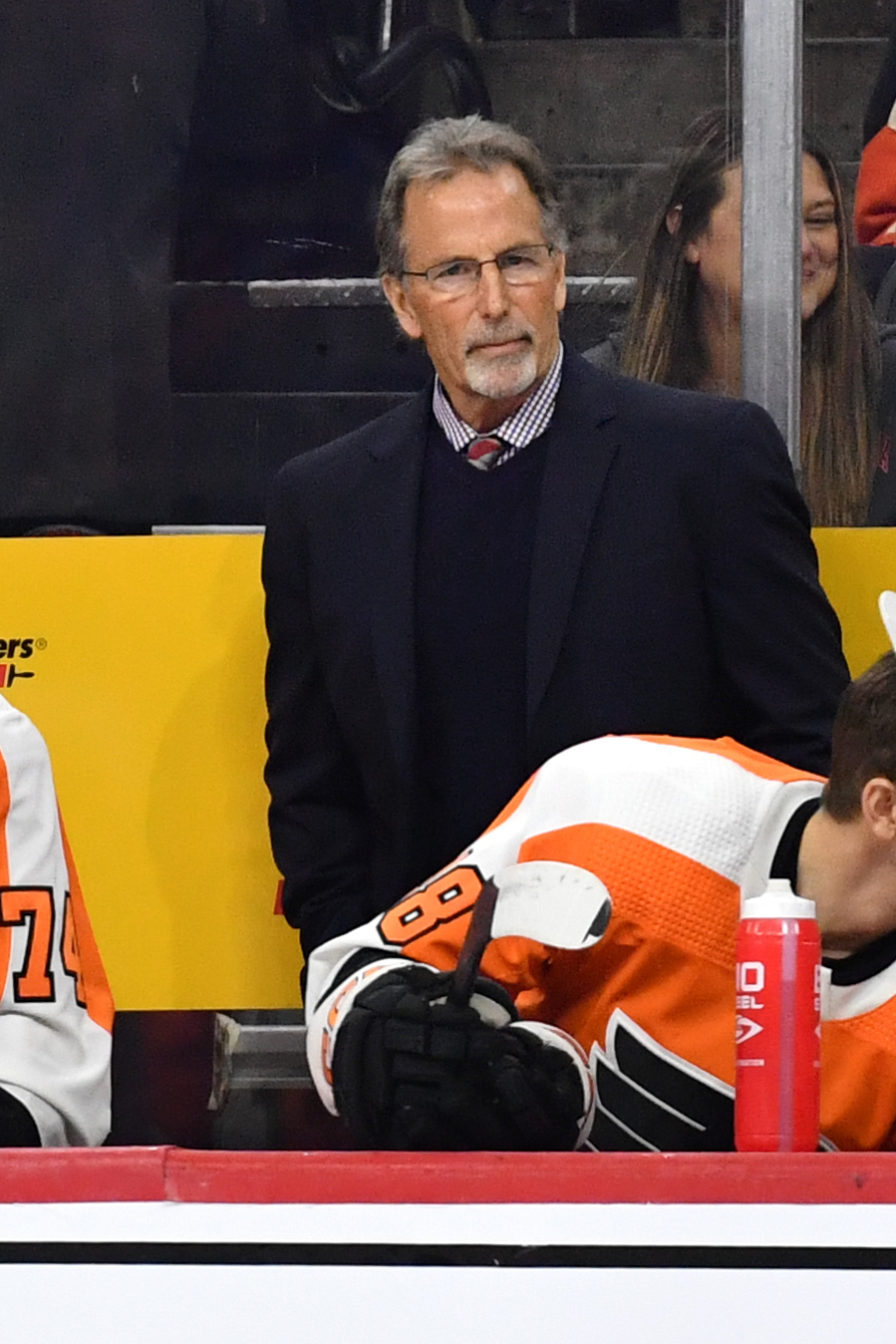
Tortorella’s fingerprints are all over the Flyers’ unexpected strength this season.
Tortorella has long been highly regarded for his ability to get the most out of teams who enter most nights at a talent disadvantage compared to their opponents.
He keeps his teams highly accountable, extremely hard-working, and generally maintains a fierce commitment to a hard-to-break-down defensive structure.
The 2023-24 Flyers have been exactly that sort of team. While they’re among the league’s lower-scoring teams, they rank inside the top 10 in terms of the fewest goals surrendered per game and surrender the fifth-fewest shots against per game. In addition, their penalty kill is a bright spot as it ranks fifth in the NHL, killing penalties at an 87.5% rate.
Tortorella is accomplishing all this with the help of talented defensive players such as Sean Couturier and Scott Laughton, though he has also overseen significant player development for specific Flyers. Owen Tippett and Morgan Frost went from first-round “bust” conversations to scoring 27 goals and 46 points, respectively, while blueliners such as Sean Walker and Rasmus Ristolainen have each notably improved under Tortorella’s watch from where they were before.
The Flyers are attempting a large-scale, long-term rebuild with the hope of building a contending team that can compete for Stanley Cups on a legitimate basis for a long period of time. Part of that strategy has been acquiring high-end players through the draft, and it’s true that Tortorella’s success has made it less likely that the Flyers will have a top pick at the 2024 draft.
That being said, the development of the existing players in the Flyers organization is also of paramount importance to the Flyers’ rebuild, and much of the Flyers’ recent winning under Tortorella has come off the back of the development of numerous players.
What are the Flyers thankful for?
A weaker-than-expected Metropolitan Division.
Remember how the Flyers are within striking distance of second place in the Metropolitan Division? Let’s look at how they got there. While the Flyers’ climb in the standings has been in large part due to their own improved play, the sputtering form of many teams who were expected to be division heavyweights this season has helped them along.
Porous goaltending and an inconsistent offensive attack has cost the Hurricanes this season, and while they are comfortably in a Wild Card spot they do not appear to be the contenders for the division title that they have been in recent years.
The Capitals have recovered from a slow start under new head coach Spencer Carbery, but their offensive attack does not have the juice it has had in recent years, and they do not have a single player currently on pace to score 55 or more points.
The Devils have fought through poor goaltending and poor defensive play all season, and those issues combined with injuries have led to a far slower-than-expected start. And in Pittsburgh, team-wide inconsistency has led to a squad capable of decimating a team 7-0 on one night (as they did yesterday) and then losing by the same margin on another.
While each of those teams could reasonably re-enter the playoff picture over the course of the rest of the season, so far their struggles have paved the way for Flyers fans to have legitimate hope for playoff hockey. Is that something that could be reasonably hoped for just a few months ago? Probably not, which means Flyers fans have quite a bit to be thankful for.
What would the Flyers be even more thankful for?
An improved power play.
The Flyers’ blueprint for success this season has been mixing hard work and a stringent commitment to defensive hockey in order to grind out wins against teams who frequently boast more talented lineups. While that blueprint has brought the Flyers into playoff position in this early portion of the season, there have been some costs attached.
First and foremost, the Flyers’ power play currently ranks as the NHL’s worst, converting on just 10.6% of its chances. Even the St. Louis Blues, who suffered through a historically poor start on the man advantage, have now surpassed the Flyers.
In part due to the Flyers’ inability to put together consistent offense on the power play, several of the team’s offensive players have either failed to take meaningful steps forward or taken steps back in terms of production.
Morgan Frost scored 46 points last season but instead of vaulting into the 50-60 point region, he is now on pace to score 32 points. It’s a similar story for Noah Cates, who scored 38 points as a rookie but scored only four this season before going down with an injury. There was hope Tyson Foerster would make an instant impact after scoring seven points in eight games down the stretch last season, but his adjustment has been slower than anticipated and he is on pace to score 33 points.
The Flyers’ defensemen, goaltenders, and select forwards are enjoying positive campaigns for their development. But unless the power play can get on track, the Flyers won’t be operating to their maximum capabilities from a player development perspective.
What should be on the Flyers’ holiday wish list?
An answer to Sean Walker’s future in Philadelphia.
One of the breakout players for the Flyers this season has been Walker, a 29-year-old defenseman acquired this past summer from the Los Angeles Kings. He has seen his ice time leap up from just 14:50 per game last season to 20:49 in this campaign. He’s helped anchor one of the league’s better penalty kill units and is even seeing some time on the power play.
But although Walker has emerged as one of the Flyers’ top blueliners, the reality is that he’s already 29 years old and his improved play will likely mean he’ll command a pay raise over his $2.65MM cap hit this season. For a Flyers team still building for a contending window a little bit more distant in the future, (for when Matvei Michkov is able to sign from Russia, for example) it’s fair to wonder if Walker fits into that timeline.
Any Walker extension would likely deliver the most return on investment in its first few years, and with Ristolainen and Travis Sanheim already on hefty contract extensions, there may not be room for another veteran addition.
This leaves the Flyers in a difficult spot. Do they dangle Walker on the trade market, where he would potentially be a top right-shot option and net the team valuable future assets? Or do they retain him as their own “rental” player to help them keep hold of the playoff spot they currently sit in, even if that means allowing Walker to leave in free agency?
The Flyers’ play moving forward will likely dictate which route they choose to go down, but more than anything else Flyers fans should be hoping to receive some sort of clarity on the future of one of this season’s bigger breakout players.
Photos courtesy of USA Today Sports Images
What Your Team Is Thankful For: Ottawa Senators
As the holiday season approaches, PHR will be taking a look at what teams are thankful for in 2023-24. There also might be a few things your team would like down the road. We’ll examine what’s gone well in the early going and what could improve as the season rolls on for the Ottawa Senators.
Who are the Senators thankful for?
Much like his brother, Tkachuk has quickly become the emotional, physical, and on-ice leader for the Senators. Leading the team in goals, shots, hits, and even penalty minutes, his willingness to put his body on the line shows that everything goes through Tkachuk in Ottawa.
Unfortunately for him, and what has become a boiling problem with the fan base, Tkachuk is now in his sixth season with the organization and has yet to make a playoff appearance. Yet, even through the emotional turmoil that several unsuccessful seasons can put on the organization, Tkachuk has a lot of hope the Senators can turn things around soon.
In early November, in an article from Bruce Garrioch in the Ottawa Sun, Tkachuk was quoted as saying, “I understand that they’re passionate fan base and I understand that they love it, but when you face adversity you don’t turn your back on the guys out there. We’re playing hard, I know it’s frustrating right now. It’s not like we’re giving up out there, we’re fighting right to the very end“.
Even if the situation in Ottawa continues to become more dire, and the team is unable to produce a consistently successful team in the short term, Tkachuk’s loyalty is long-lasting. His desire to protect his teammates both on and off the ice is a tremendous boon for a struggling franchise.
What are the Senators thankful for?
Their top-six.
Even though the Senators are in last place in the Atlantic Division, there have certainly been some bright spots that the team can be thankful for. The top of their forward core, primarily led by Tkachuk, Joshua Norris, Drake Batherson, Tim Stutzle, Vladimir Tarasenko, and Claude Giroux are still producing at a solid rate.
As the team exits the holiday season, they currently sit at 10th in scoring across the entirety of the NHL, averaging 3.41 goals a game. Producing at a higher clip (albeit with fewer games played) than the likes of the New York Rangers and Vegas Golden Knights shows that Ottawa does have the talent up front to be competitive in the league.
Unfortunately for them, the players behind them have not been holding up their end of the bargain, as the defense and goaltending have both plagued the Senators for much of the season. Even with the team scoring at such a high rate, and GA/G average of 3.55 places them in the bottom five of the NHL, showing where most of the struggles are coming from.
What would the Senators be even more thankful for?
Stability.
In time, stability will come for the Senators and the organization will begin to normalize and stabilize with their current conditions. However, in under the year, the franchise has seen the team being sold, their longtime General Manager showed the door, and what appeared to be a player-friendly coach ousted as well.
The expectation heading into the season is that Ottawa was one of the few teams poised to come out of a lengthy rebuild, with a lot of the finishing touches put in place with the addition of Jakob Chychrun last year, with Tarasenko and Joonas Korpisalo brought in this past summer. Now with a new ownership and management group taking over, the team looks to have halted their rebuilding process entirely.
There is every possibility that the new management group, primarily led by former player, Steve Staios, did not agree with the direction that former General Manager Pierre Dorion was taking the franchise. Now, with what is shaping up to be another dissapointing season in Canada’s capital, it is now time for Staois to redirect the team in the right direction.
What should be on the Senators’ holiday wish list?
A revamped bottom-six and defensive help.
As previously mentioned, the top half of the Senators offense has been quite productive this season, sporting some of the better forwards across the league. Nevertheless, the bottom half of their entire forward unit has been entirely unproductive this season, as well as the bottom of their defensive core.
The team has ultimately been without all-star defenseman Thomas Chabot for much of the year due to injury, but could still benefit from adding a defenseman such as Mario Ferraro from the San Jose Sharks. In the case of the forward core, the Senators still do have prospects they could look to for a jolt of youth into the lineup, but could take a page from the book of their former Ontario rival.
In his first season as President of Hockey Operataions for the Pittsburgh Penguins, Kyle Dubas took an incredibly aggressive approach to fillint out the team’s bottom-six this past summer, signing several veterans to minimum salary two-way contracts. Although it hasn’t entirely worked out for Pittsburgh at this point, with an enhanced scouting department, this could be the kind of aggressive approach the Senators could deploy to fill out the bottom of their roster more appropriately.
Examining Buffalo’s Pending Roster Crunch
It’s fair to say that the Sabres have underachieved relative to expectations this season, leading some to wonder if a big shakeup could be on the way. That might not be the case just yet but it certainly feels like a small one could be coming simply out of necessity.
Buffalo currently has 24 players on its active roster, one over the maximum of 23. They’re allowed to be in that situation during the roster freeze but once that lifts on Thursday, their hand is going to be forced and someone will have to come off the roster. On top of that, Zemgus Girgensons is nearing a return; he skated in practice for a few days leading up to the holiday break. He’s currently on injured reserve so when he’s ready to be activated, that’s another roster spot that will need to be opened up.
While the Sabres have several waiver-exempt players, it seems unlikely that most of them will be sent down. Up front, Zach Benson can’t go to the minors, only to junior and at this point, he’s expected to stay up with Buffalo. John-Jason Peterka is tied for third in team scoring so he’s not going anywhere. Jack Quinn, meanwhile, just returned and was a full-time regular last season so it’s unlikely he’d be sent down for any sort of extended stint.
On the back end, Owen Power clearly isn’t going anywhere either while Ryan Johnson has been a regular most nights lately; on merit, he shouldn’t lose his spot. Dropping him off the roster would also leave them with just six available blueliners which isn’t an ideal situation to be in.
In goal, Devon Levi is waiver-exempt and has been sent down once already this season. However, since returning from his brief stint with AHL Rochester, he has a .916 SV% in six games, a mark that should see him being deployed once again as their starting netminder. That makes him a non-desirable candidate to go down as well.
Faced with a variety of less-than-ideal demotion candidates from their waiver-exempt pieces, the next option might be the waiver wire. They’ve already gone that route recently with Jacob Bryson while Riley Stillman is also receiving a seven-figure salary to play for the Americans as well.
In terms of who could be options on that front, Victor Olofsson’s future with Buffalo has long been in question; had it not been for Quinn’s injury, some had wondered if he’d even be with the team at this point. He’s playing fourth-line minutes at even strength right now and with a $4.75MM price tag, it’s fair to say he won’t be claimed. If they’re looking for a way to keep as much depth as possible around, waiving and demoting him would accomplish that. With his contract, they’d have to take a player back if they traded him which wouldn’t solve the current roster logjam.
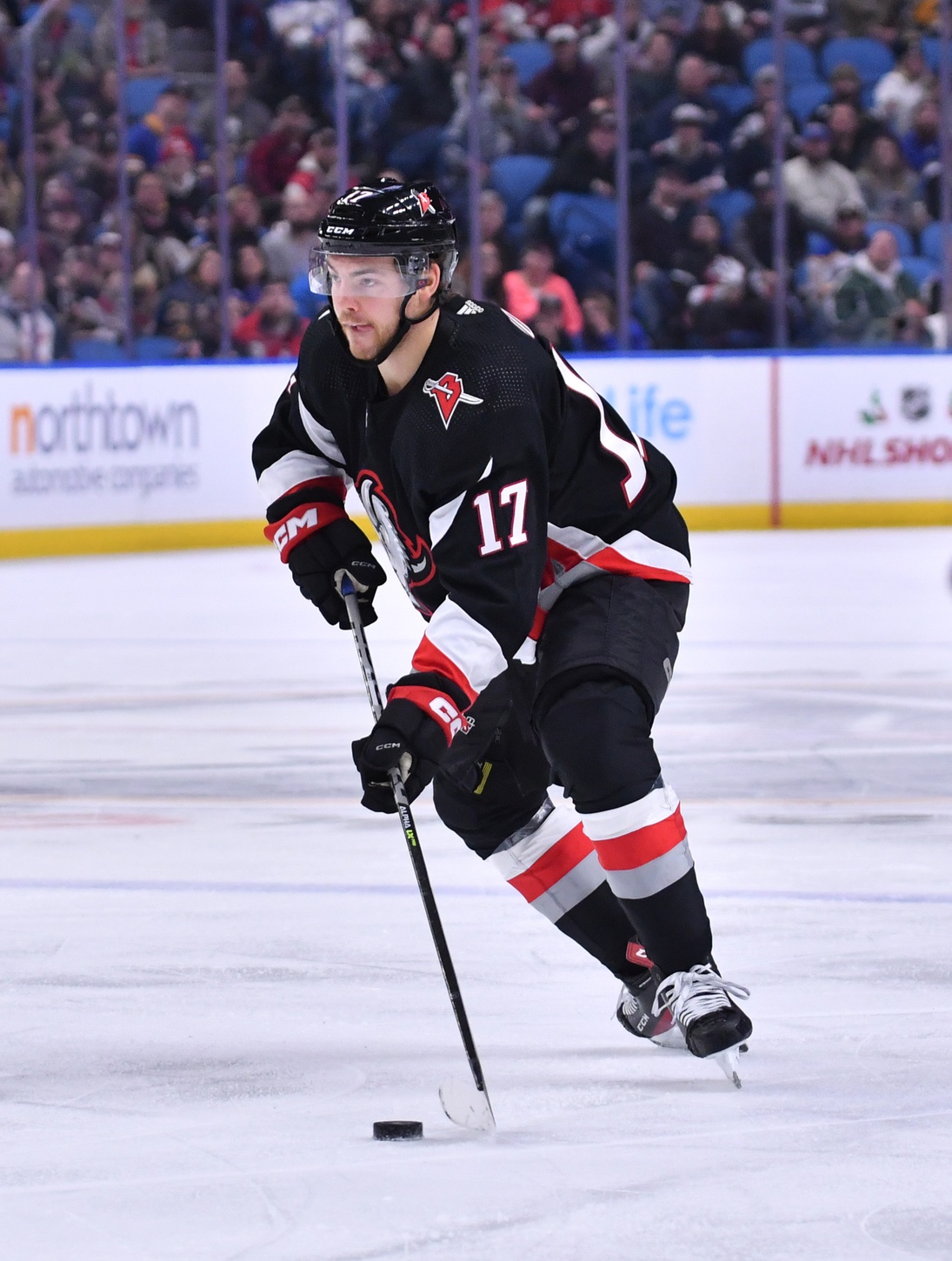 Tyson Jost might be on unstable ground as well from a waiver perspective. He now finds himself out of the top 12 with Quinn and Tage Thompson recently returning from their injuries. He has just four points in 28 games so far this season, a far cry from the 22 he had in 59 contests after being claimed from Minnesota in 2022-23. Speculatively, his $2MM cap charge might be enough to dissuade a team from picking him up on waivers although it’s worth noting that the Sabres didn’t balk at that cap hit a year ago. Meanwhile, a trade that didn’t involve taking a contract back as well also seems unlikely so going that route isn’t likely to clear a roster spot.
Eric Robinson, who was just acquired from Columbus, is another option. He has already cleared waivers once this season and considering the trade that brought him over was for about as close to nothing as possible, it’s unlikely he’d be claimed as well. Waiving and demoting him could ultimately wind up clearing the conditional seventh-round pick they gave up for him since it’s contingent on NHL games played for the rest of the season. While he has played well in limited action so far, Robinson is a viable option to land on waivers.
Then there’s Eric Comrie. The netminder has been in the third-string role a lot this season and his numbers when he has played (4.01 GAA, .863 SV%) haven’t been great. On the other hand, he has been a regular backup for the last couple of years. At $1.8MM, he might pass through waivers but if Buffalo was willing to retain on the contract – they have all three retention slots open – they might be able to get at least a late-round pick in a trade for him. While that would weaken their goalie depth, they do still have veteran Dustin Tokarski in the fold who can play in a pinch if need be.
Teams don’t like to be put in a situation where they’re going to be forced to make a move. But the Sabres are about to be in that spot with at least one spot to open on Thursday when the roster freeze ends and another one soon after when Girgensons returns. GM Kevyn Adams has some decisions to make as a result.
Photo courtesy of USA Today Sports Images.
Salary Cap Deep Dive: Columbus Blue Jackets
Navigating the salary cap is one of the more important tasks for any GM. Teams that can avoid total cap chaos by walking the tightrope of inking players to deals that match their value (or compensate for future value without breaking the bank) remain successful. Those that don’t see struggles and front office changes.
PHR will look at every NHL team and give a thorough look at their cap situation for the 2023-24 season. This will focus more on players who are regulars on the roster versus those who may find themselves shuttling between the AHL and NHL. All cap figures are courtesy of CapFriendly.
Columbus Blue Jackets
Current Cap Hit: $80,952,057 (under the $83.5MM Upper Limit)
Entry-Level Contracts
F Adam Fantilli (three years, $950K)
D David Jiricek (three years, $918K)
F Kent Johnson (one year, $925K)
F Kirill Marchenko (one year, $925K)
F Cole Sillinger (one year, $925K)
F Dmitri Voronkov (two years, $925K)
Potential Bonuses
Fantilli: $3.2MM
Jiricek: $1MM
Johnson: $1.85MM
Marchenko: $850K
Sillinger: $850K
Total: $7.75MM
Fantilli has come as advertised, quickly becoming one of the top players for the Blue Jackets. After briefly starting him on the wing, they’ve moved him down the middle where he has more than held his own. While it’s still quite early to project his next deal, if he can progress as expected, he’s a candidate to bypass the bridge contract. Comparables are around the $8MM mark now but that could be a little higher by 2026. Marchenko didn’t put up many assists last season but after scoring 21 goals, the coaching staff probably didn’t mind. He boasts a more typical scoring line early on this year and has established himself as a top-six piece. However, he feels like more of a bridge candidate; another 20-goal campaign could put him in the $3MM range.
Voronkov’s short-term future was in question not long ago but he has decided to stick it out in North America. He has settled in nicely in the bottom six and can play center and the wing. He’s someone who profiles as a longer-term secondary piece which means he’s likely looking at a bridge deal as well, one that comes in a bit below Marchenko’s. Sillinger had a nice rookie year but a rough sophomore campaign that has him still as a secondary piece. That will have him looking at a short-term second contract, possibly even a one-year deal in the $1.5MM range. Johnson, meanwhile, had a good first full season last year but has spent time in the minors this year, putting him squarely in bridge territory as well. His might come closer to the $2MM mark.
Jiricek has been eased into a full-time role with the Blue Jackets this season, averaging around 14 minutes a night. A decision will need to be made within the next month or so to determine whether they will let him accrue a year of service time toward free agency (triggered at 40 games on the roster). In a perfect world, he progresses to the point where they lock him up long-term but it’s still too early to call at this point.
As for the bonuses, Fantilli has a shot at all four ‘A’ bonuses ($1MM total) while Marchenko could hit a couple of his ($212.5K each). The other three are more long shots to hit any of theirs. GM Jarmo Kekalainen will likely want to try to finish this season enough below the Upper Limit to absorb any of these on this year’s cap rather than rolling some of the costs over to 2024-25.
Signed Through 2023-24, Non-Entry-Level
D Jake Bean ($2.33MM, RFA)
F Emil Bemstrom ($900K, RFA)
D Nick Blankenburg ($825K, RFA)
F Yegor Chinakhov ($800K, RFA)
G Spencer Martin ($762.5K, UFA)
F Jack Roslovic ($4MM, UFA)
F Alexandre Texier ($1.525MM, RFA)
At times, Roslovic has been a productive cog but at others, he has struggled to the point of being dropped down in the lineup or even scratched. That said, he has back-to-back years of at least 44 points and was on pace for that early on this year before an ankle injury took him out last month. Impact centers are hard to come by so there will be teams showing interest even with his inconsistency; a multi-year contract around this price point should be doable for him.
Texier returned this season after spending 2022-23 in Switzerland; his contract was tolled as a result. He has shown flashes of top-six upside but consistency continues to be an issue. He’ll need a $1.75MM qualifying offer with arbitration eligibility. Columbus should give it to him but his next contract shouldn’t cost much more than $2MM barring a big uptick in production in the second half.
Bemstrom has cleared waivers in each of the last two seasons but has worked his way back up to the NHL relatively quickly both times. He’s a serviceable middle-six player but doesn’t have that one part of his game that makes him stand out. A $945K qualifier isn’t too high but with arbitration rights, he will be in non-tender territory. As for Chinakhov, he has voiced his frustration with his role and to his credit, he has been productive since then. Still, he’s likely heading for another short-term deal. This one should push past the $1MM mark with arbitration rights.
Bean had a good first season with the Blue Jackets in 2021-22 and looked like a key part of their top four on the blueline but injuries limited him last year while he has been a fixture on the third pairing this season. He’s still young enough to not give up on but a $2.8MM qualifying offer with arbitration rights might be a bit too rich for what they’re willing to pay. Blankenburg has been a nice college free agent addition to give Columbus more depth on the back end. His waiver exemption has hurt him this season and will likely cap him on a short-term deal once again, one that could land around the $1MM mark.
Martin was claimed off waivers in training camp and while he has played better than he did in Vancouver last season, that’s a pretty low bar to clear; his numbers are well below average this season. At this point, he looks more like a third option than a backup. Even so, the way that market moved over the summer, Martin could still be in line for a small raise in free agency on a one-way agreement.
Signed Through 2024-25
D Adam Boqvist ($2.6MM, RFA)
F Justin Danforth ($975K in 2023-24, $1.1MM in 2024-25, UFA)
F Sean Kuraly ($2.5MM, UFA)
F Mathieu Olivier ($1.1MM, UFA)
D Ivan Provorov ($4.725MM, UFA)*
G Daniil Tarasov ($1.05MM, RFA)
*-Los Angeles is retaining another $2.025MM on Provorov’s contract
Kuraly had a career season in his first year with his hometown team but hasn’t been able to produce at that level since then. Nonetheless, he’s still an effective checker who plays with an edge and can kill penalties. This might be a small premium for someone who might be best served on the fourth line but they rely on him to play a big enough role to justify this cost although it’s hard to see him landing much more than that in 2025.
Olivier is a pugilist who can handle a regular shift. There aren’t many of those still around so it’s possible he could still land a small raise on his next deal. When healthy, Danforth has been a versatile piece who can play up and down the lineup and hold his own. Getting that for close to a million a year is a nice piece of business. If he can stay healthy, a jump to the $1.5MM range could be doable.
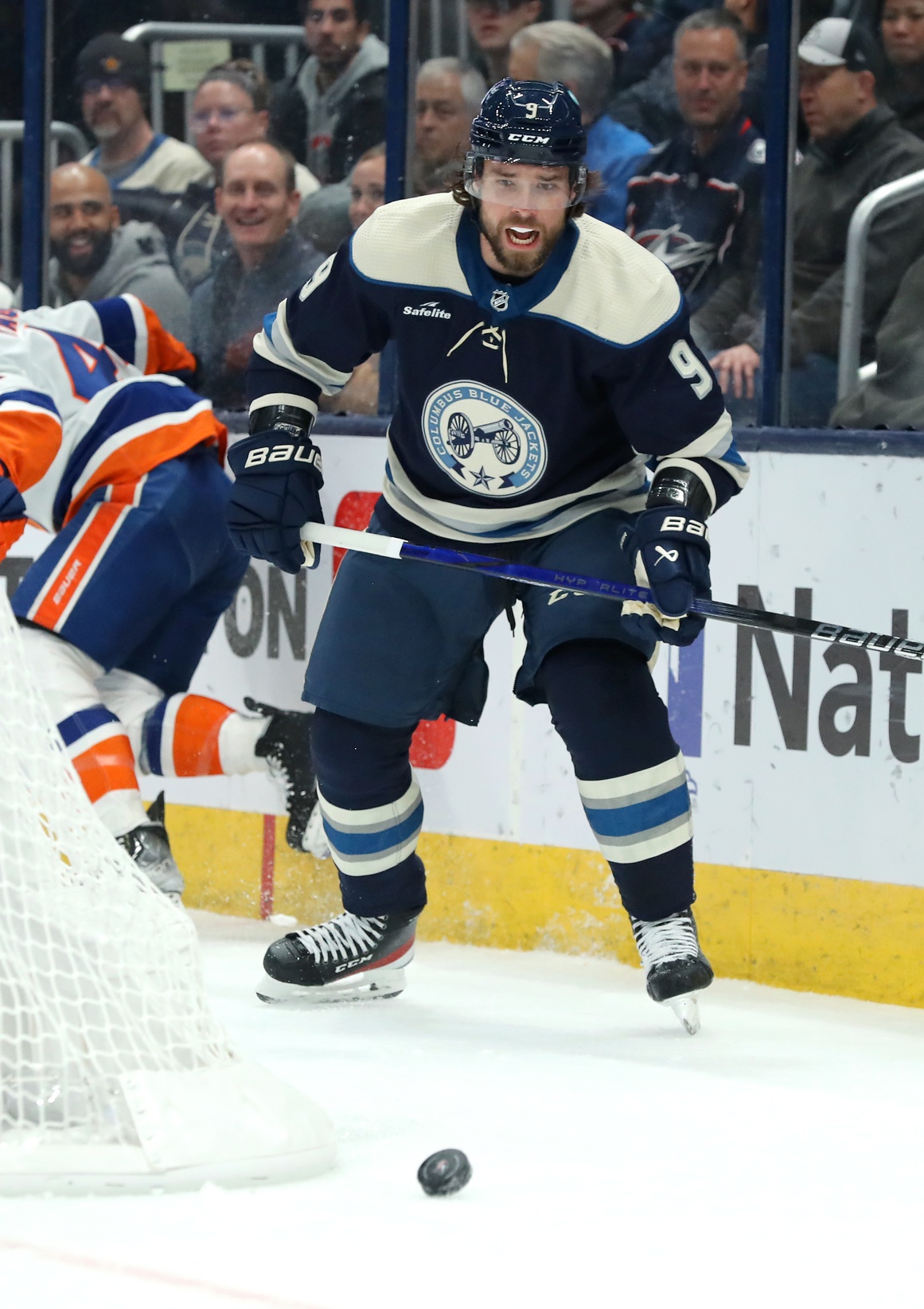 Provorov was one of their big acquisitions to bolster the back end over the summer after coming over in a three-way trade and the results have been mixed so far. Nonetheless, he still is logging heavy minutes in all situations and will only be 28 when he hits unrestricted free agency. Provorov’s offense hasn’t come around like Philadelphia hoped it would when they gave him his current contract but he has settled in nicely as a secondary contributor on that front. Put that package on the open market in a more favorable cap environment and Provorov should be able to land at least a bit more than his current $6.75MM price tag (between what the Kings and Blue Jackets are paying him) while securing a max-term deal or close to it.
Boqvist was a key part of the return for Seth Jones but while he has shown some offensive promise in his time with Columbus, he has struggled to stay healthy (he’s currently out with a shoulder injury) and has spent time this season as a healthy scratch. At this point, his $3.12MM qualifying offer might be a bit too pricey unless he’s able to establish himself as an every-game regular by the end of next season.
Tarasov has shown some promise in limited NHL action although he has struggled at times as well. Ideally, he’s part of the longer-term solution between the pipes for Columbus but at this point, he needs to prove he’s worthy of the full-time backup role. If he can do that, he could push for closer to $2MM as an RFA with arbitration rights.
Signed Through 2025-26
D Erik Gudbranson ($4MM, UFA)
F Boone Jenner ($3.75MM, UFA)
F Patrik Laine ($8.7MM, UFA)
D Andrew Peeke ($2.75MM, UFA)
While the price tag was high, the fact that Laine signed a multi-year deal to stay with Columbus looked good considering the player he was traded for basically forced his way out of Winnipeg. When healthy the last two years, he has been near the point-per-game mark, helping to justify this price tag. This year has been one to forget, however, between his struggles and multiple injuries. He’ll need to get back to top form if he wants another contract anywhere near this price point.
As for Jenner, he has been underpaid for a lot of his tenure with Columbus. He has become more of a scoring threat over the last few years while being a faceoff ace and logging big minutes in all situations. He’ll be 33 when this deal ends but he should be able to land more than $5MM per season on a multi-year agreement if he can keep up this level of performance.
Gudbranson’s contract was widely panned from the moment it was signed as it seemed like an overpayment for someone best served on a third pairing. He has played a bigger role than that with the Blue Jackets, allowing them to get more bang for their buck so far. However, it would still be surprising to see him beat this price tag on his next deal. Peeke, meanwhile, looked to be on the rise after logging more than 21 minutes a night the last two seasons, leading to this contract. But this season, he has struggled to stay in the lineup, making him a potential change of scenery candidate. He’ll need to get back to being a regular to have a shot at getting more than this in 2026.
What Your Team Is Thankful For: New York Rangers
As the holiday season approaches, PHR will be taking a look at what teams are thankful for in 2023-24. There also might be a few things your team would like down the road. We’ll examine what’s gone well in the early going and what could improve as the season rolls on for the New York Rangers.
Who are the Rangers thankful for?
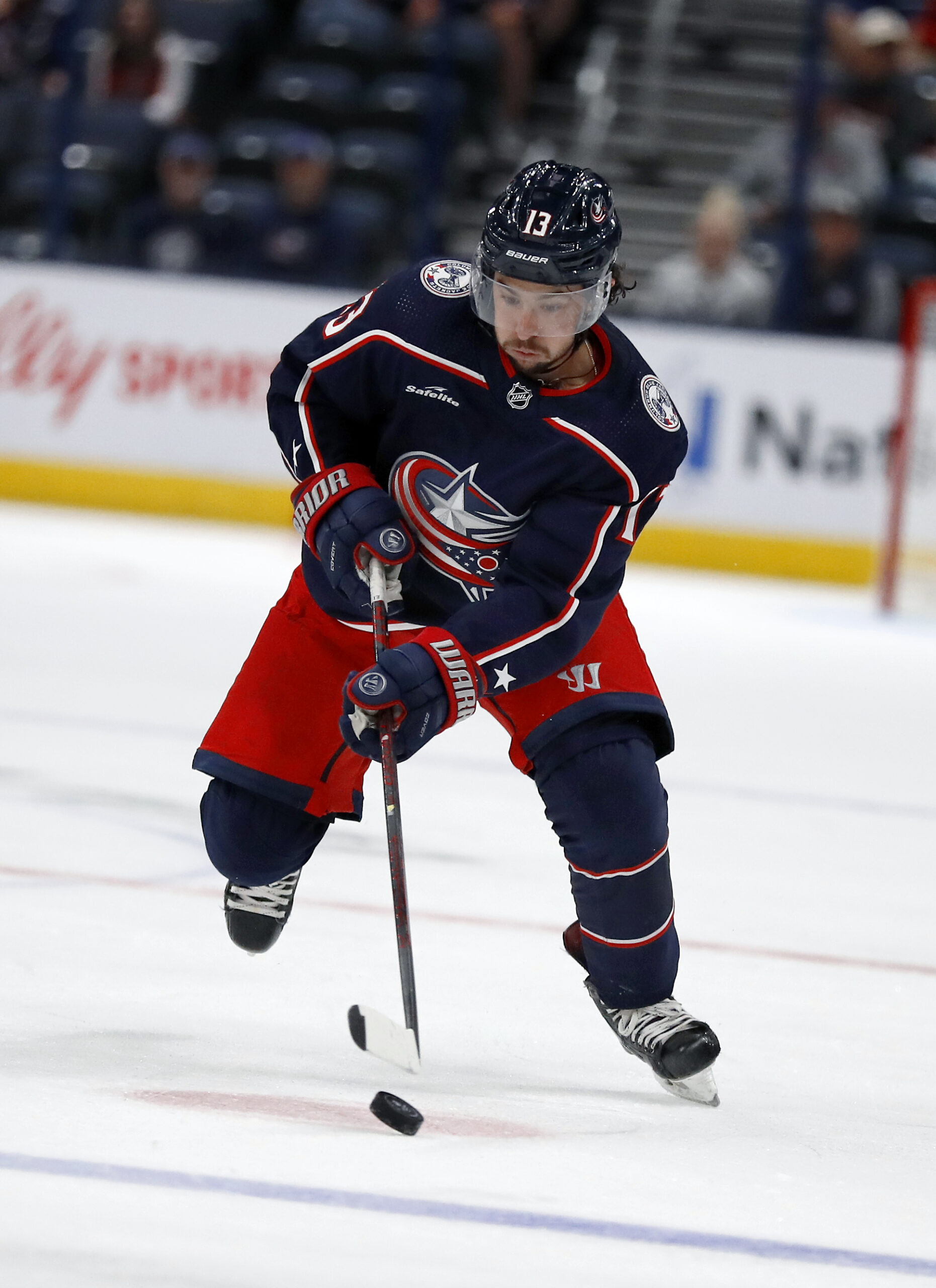
The New York Rangers haven’t had to worry about much this season, championing a 23-8-1 record that places them second in the NHL. But if there’s one player that’s encapsulated their success this season, it’s first-year Ranger Jonathan Quick, who’s satisfying a dream by finally making his way to New York. And Quick has jumped at the chance, revitalizing what seemed like a lost career. After recording a save percentage below .900 in three of his last five seasons before this year, Quick is not boasting an impressive .920 save percentage through 12 games, tallying a 9-1-1 record to boot. The Rangers don’t need to turn to him much, with Vezina-winner Igor Shesterkin still looking worthy of the award, but Quick has done a lot to completely solidify the Rangers’ crease, helping the team stick in the Top 10 of fewest-goals-allowed this season.
The 38-year-old Quick is on a one-year, $825K contract with the Rangers signed on July 1st. The netminder is in his 17th NHL season, playing 16 years with the Los Angeles Kings and winning one of his two Stanley Cups over the New York Rangers in 2014. He’ll now look to serve as a key support for New York’s own run to the Cup this year.
What are the Rangers thankful for?
A hardy offense.
The Rangers are scoring more this year than they have in any season since the turn of the century, averaging 3.34 goals per game through their first 32 games. What’s more, the scoring has been spread throughout the lineup, with the team carrying 11 different players with 10 or more points. Setting up their offensive systems has been the focus of New York’s game this season, carried on the back of Artemi Panarin‘s 44 points in 32 games, a mark that ranks sixth in the NHL. Panarin is flanked on the statsheet by Mika Zibanejad‘s 33 points and Chris Kreider‘s 30 points in as many games. There’s even scoring on New York’s injured reserve, with the hurt Filip Chytil putting up six assists in the 10 games that he managed to appear in.
Having such a wide array of scoring talent has worked incredibly well for the Rangers’ power-play: the most effective power-play in the league with a 31.1 percent success rate. It’s the second-most effective power-play in the NHL since 2000, only behind the 2022-23 Edmonton Oilers who carried an impressive 32.4 percent success rate through 82 games.
It hasn’t been since the 2016-17 season that a Rangers team ranked in the top 10 of goals-for in the league. They haven’t managed that feat this year just yet – ranked 11th in goals-for with 108 – but with games in hand and a healthy roster, New York is entering the second half of the year with one of the best forward groups they’ve had in a long time.
What would the Rangers be even more thankful for?
Draft picks.
With so much going right for the Rangers, it’s unfortunate that they only have four first, second, or third round picks until 2026. This comes after the team has made just two first round picks in the last three drafts, significantly holding back their ability to build out a prospect pool that can support the NHL club for the long-term. With the low quantity of picks, it’s become a game of quality over quantity for New York, who have seen promising years from some of their top prospects. 2023 First Round selection Gabe Perreault is looking dazzling through his first 17 collegiate games, netting 25 points while playing alongside juniors hockey teammates Will Smith and Ryan Leonard. Fellow first-rounder Brennan Othmann is also coming into his own this year, with 22 points in the first 26 AHL games of his career. He’s followed on the statsheet by Ryder Korczak and Adam Sykora, who both have 11 points in 24 and 25 AHL games respectively. The success of so many first-year pros speaks praise to Steve Smith‘s Hartford Wolf Pack, who currently rank second in the AHL’s Atlantic Division.
The Rangers have their First Round pick in each of the next three drafts – all three boasting seriously high-end talent at the top of the class – and even have a Second Round pick in 2024. But with no guarantee that they’ll be able to continue reeling in successful prospects, the team will need to make sure to keep the future in mind.
What should be on the Rangers holiday wish list?
A willing buyer at the Trade Deadline.
There’s very little reason to rock the boat in New York. The team is performing well, boosted by Adam Fox‘s return to play. But even with the current roster clicking so well, the Rangers are still carrying NHL-talents Kaapo Kakko and Chytil on IR. No timeline has been provided for either player’s return but they could create a logjam when they work their way back into the lineup. While not necessarily a bad issue to have, the Rangers could be in a prime position to bring in a few assets if they’re able to deal one of their extra NHL forwards to a team who hasn’t had as much top-to-bottom lineup success. It’d be a shrewd way to make their assets work for them, although having plenty of forward depth can be an ace up the sleeve during the postseason. If the Rangers are open to trades will certainly be one question – but with so much going right for the club, there’s no doubting that they’ll have plenty of interested parties flocking their way come the Trade Deadline.
PHR Mailbag: Ovechkin, Lindholm, Campbell, Flyers, Blues, Calder, Final Four
Topics in this edition of the PHR Mailbag include Alex Ovechkin’s chase to 895 goals, the potential viability of Edmonton moving Jack Campbell, and more. If your question doesn’t appear here, check back in our mailbag from over the weekend. We’ll also run one this weekend from the most recent callout for questions.
rule78.1: Based on what you have seen this year, does Ovechkin ever pass Gretzky?
As we sit here today, Ovechkin is at 828 goals, 66 behind Wayne Gretzky; he obviously needs 67 to pass him. This year has been ugly for Ovechkin and Washington’s offense although they’re holding onto a Wild Card spot, albeit ever so slightly.
I can’t see Ovechkin’s scoring struggles carrying on for the entire season. He’s at six in 31 games, a 16-goal pace. I think he at least hits 20 by the time the year ends. Let’s pick a completely random number and say he winds up at 23 and that the Caps find their scoring touch to an extent. Now the gap is 49 to tie, 50 to beat him.
Ovechkin has two years left on his contract. Could he average 25 goals per year in that stretch? I wouldn’t put it past him even if it looks like he’s slowing down.
But let’s say he comes up a bit short following the 2025-26 campaign. If he’s within, say, 10 goals of Gretzky at that point, I have to think Ovechkin is going to want to give it one more go to try to get the record. I’m sure Washington would be more than happy to bring him back for that attempt, even though he’d be 41; the marketing alone could make it worthwhile if he gets there. If not them, there would be other teams who certainly would be willing to give him that shot.
I know Ovechkin has struggled this season but I still think he’ll get the goal record eventually.
SkidRowe: Could the Bruins acquire Elias Lindholm in exchange for Hampus Lindholm and a Lindholm to be named later?
It’s too bad that Par Lindholm is no longer on Boston’s reserve list, we could have thrown him in there for good measure.
Calgary’s Lindholm is a fantastic fit for the Bruins. There’s no doubt about that. He’d help fill the role that Patrice Bergeron filled for many years which would fill arguably the biggest hole in their lineup right now.
The problem is that this probably isn’t the type of move the Flames should be looking to make. This is a treading water type of trade and would probably need to be made in conjunction with them moving Noah Hanifin for a young center. If they can pull this combo off and ownership provides a directive to not rebuild, maybe a package highlighted by the two Lindholms could work. That’s a couple of big ifs, however.
The idea of Boston adding Lindholm down the middle has been raised a lot going back to the summer but the same problem exists now as it did then. They don’t have many high picks in the near future to deal from and their prospect pool isn’t the deepest. The emergence of Matthew Poitras perhaps makes him more appealing than he might have been a few months ago but if GM Craig Conroy winds up starting a rebuild, I still think he’d be aiming for a higher-ceiling piece.
aka.nda: How can the Oilers trade Campbell? With the cap going up, is a buyout not feasible?
Let’s look at the buyout cost first as that’s going to play a role in any trade possibility as well. The total cost in actual dollars would be $9MM with a $10.5MM cumulative cap charge that would be spread out as follows:
2024-25: $1.1MM
2025-26: $2.3MM
2026-27: $2.6MM
2027-28: $1.5MM
2028-29: $1.5MM
2029-30: $1.5MM
(The variation in the first three seasons of the cap charge is due to the frontloaded structure of the contract.)
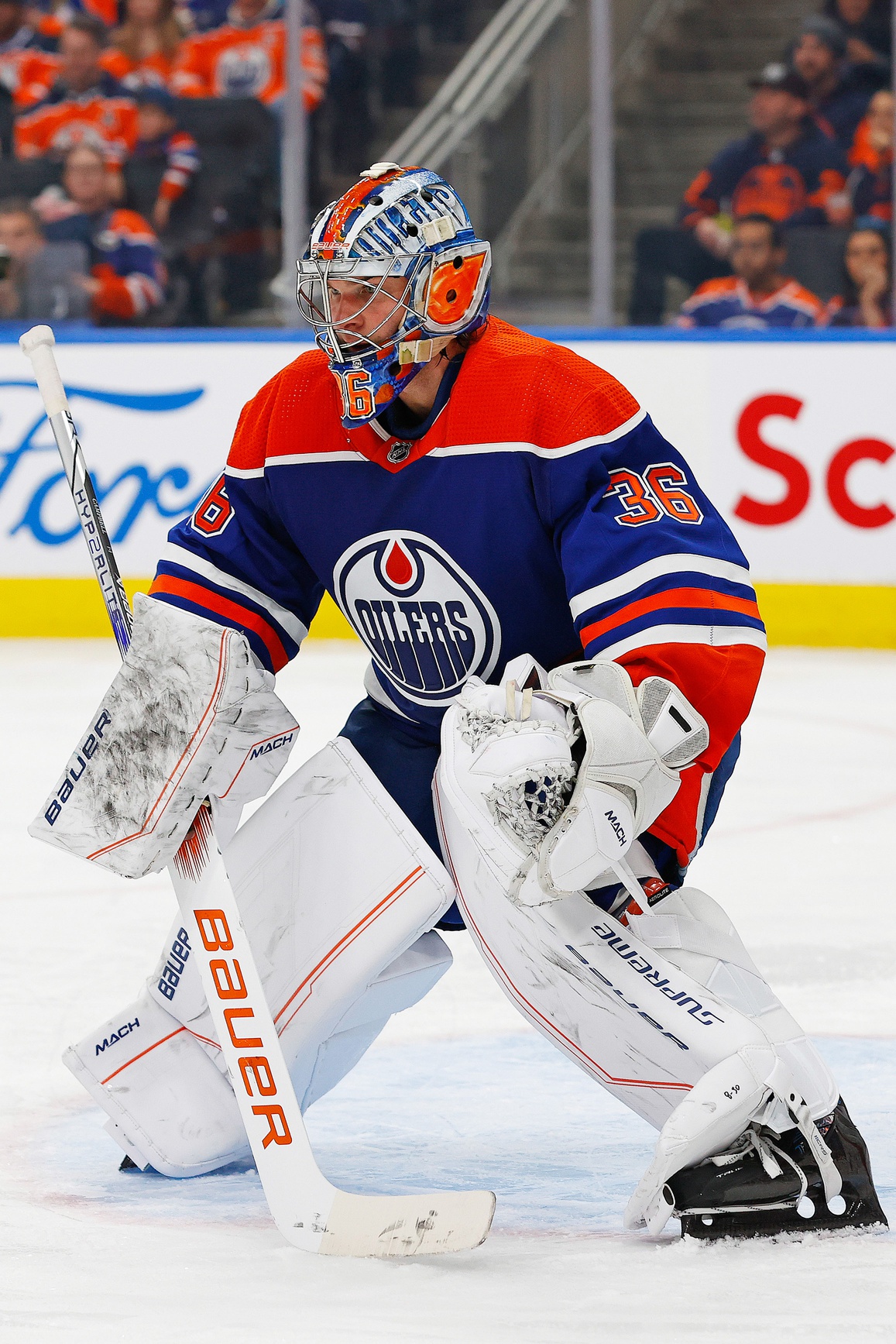 Jack Campbell is having a horrific season, no doubt about that. His trade value is most definitely on the negative side and it’s going to take a significant incentive to offload in its entirety. If you’re the acquiring team, you’re probably not taking on Campbell with the idea of trying to rehab his value and get him going again. That means you’re probably taking on a $9MM cash payout and dead cap money into the next decade. A first-round pick or a good prospect probably isn’t enough to justify taking that on.
Is it possible that Edmonton can move Campbell? Sure, but it doesn’t seem likely. Their best bet might be taking back a similarly high-priced underachieving contract but given their salary cap challenges, that’s a move that’s a lot easier said than done.
Now, is a buyout feasible for Edmonton? Fundamentally, the idea of a six-year dead cap charge is something I’d usually say no to but I think an exception could be made here.
If the Oilers are confident in Stuart Skinner being the starter, could Edmonton get a suitable backup for less than Campbell’s $5MM cap charge minus the buyout cost? Next season, they absolutely could with a bit of money left over which would be crucial given how tight their books are. For 2025-26 and 2026-27, it’s still possible although there probably wouldn’t be any savings left over. But if you can get someone who can play better than Campbell has, it’s still a net gain.
Three additional years at $1.5MM on the books will sting down the road but Edmonton is certainly a win-now team. A Campbell buyout could help them on that front so the short-term gain is arguably worth the longer-term pain.
Emoney123: Tortorella for Coach of the Year! Has this team turned the corner enough to use some draft capital to add in an attempt for some playoff wins or hold the course in the rebuild since they have two first-round picks [their own and Florida’s] and two second-round picks [Columbus and LA Kings] and Michkov, Gauthier, and Bonk in the system?
Right now, John Tortorella has to be right up there for the Jack Adams Award as Coach of the Year. The Flyers have been a lot more competitive than probably just about anyone expected. But with around 50 games left in the season for most teams (give or take a few), there’s still a long way to go. I’m not convinced they’re going to still be in a playoff spot two months from now let alone at the end of the year which probably will be what decides if Tortorella gets the award or not.
This is not a core group that’s a player or two away from doing damage in the playoffs so moving away some of their top draft capital for win-now options doesn’t make a lot of sense to me. I still think the likelier scenario is that they wind up selling by March 8th, not buying. And if they do hang in the mix and want to add, I’d want to see them moving later-round picks for specific role players in the hopes of giving their young core pieces some meaningful games without giving up much of consequence.
The only way I’d advocate for trading one of those draft picks is if they were getting someone in the 19-22-year-old range with high value. That fits their current younger core and if the player is a few years post-draft, it could help speed up the rebuild. But they’re very much still in the rebuild so moving those picks for veteran win-now pieces is not a move GM Daniel Briere should be considering.
Big Hype Prospects: Schaefer, But, Andrae, Dubé, Warren
Welcome to PHR’s Big Hype Prospects series. Like the MLB Trade Rumors series of the same name, we’re taking a look at the performances of top prospects from across the hockey world. We’ll look at drafted prospects who are rising, others who are struggling, and prospects for the upcoming draft who are notable.
Five Big Hype Prospects
Reid Schaefer, LW, Nashville Predators (Milwaukee Admirals, AHL)
25 GP 1G 3A 4pts
For many players, the transition from playing against one’s peers at a junior hockey level to playing against seasoned pros at the professional level presents a steep learning curve. It’s an exceptional challenge, and numerous top prospects have had slow starts in pro leagues only to eventually figure things out.
There are also players who immediately find their groove at the pro level, such as 2021 first-round pick Brennan Othmann for example, who has scored 22 points in 26 games with the AHL’s Hartford Wolf Pack.
One player who fits into the former category is Schaefer, the 32nd pick of the 2022 NHL draft. Originally selected by the Edmonton Oilers, Schaefer was dealt to Nashville as part of the Mattias Ekholm trade.
He was a member of an absolutely stacked Seattle Thunderbirds team in the WHL over the last two seasons, and enjoyed an extremely favorable situation as a result. He got to play top-six minutes next to some exceptionally talented linemates, and by scoring 36 goals and 80 points in 74 combined regular-season and playoff games he looked like a burgeoning power forward prospect.
That rapid rise from last season now looks like a distant memory. Schaefer has been unable to penetrate the top-six in Milwaukee, and has typically played on the third line of an Admirals team that routinely dresses seven defensemen.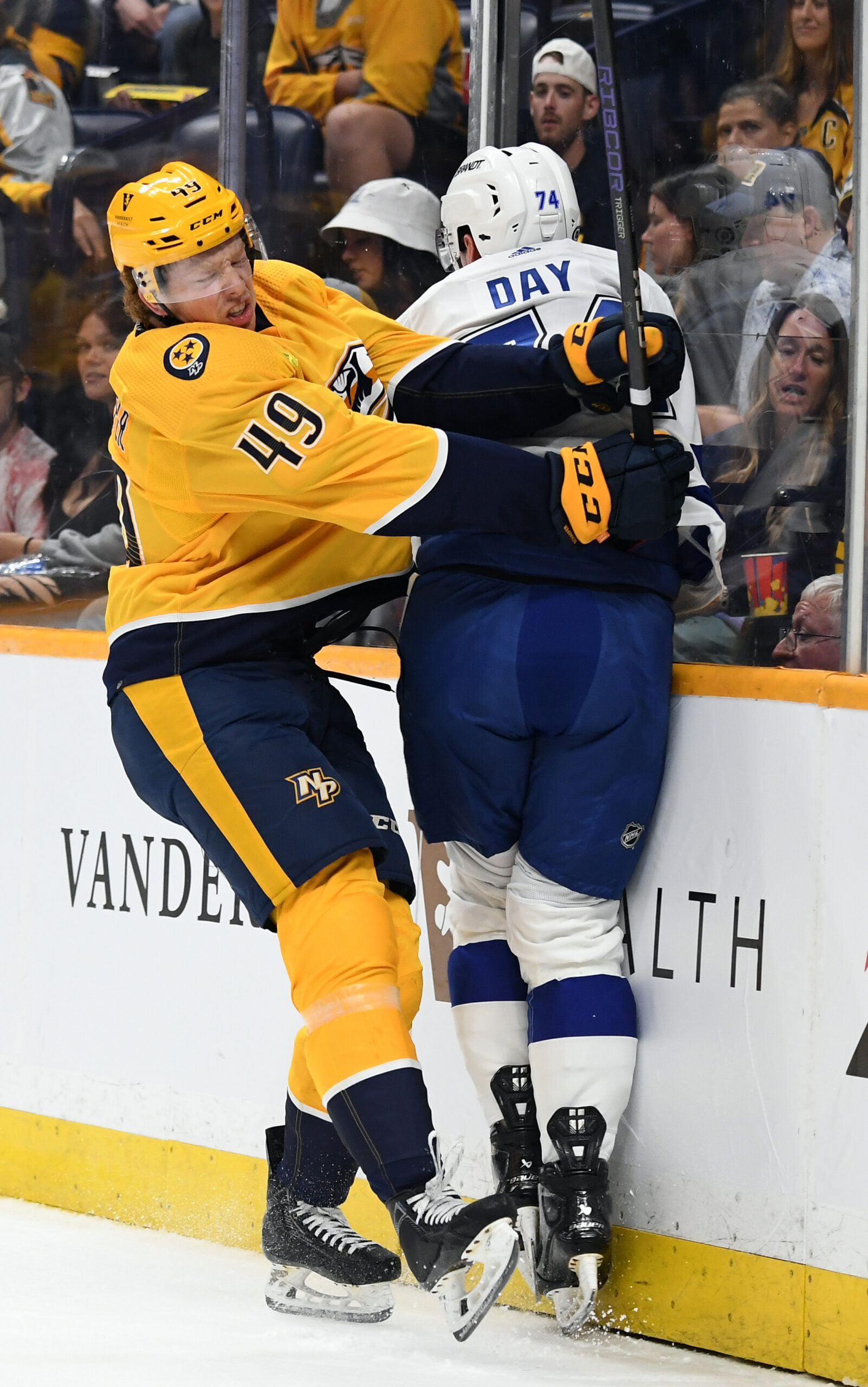
And with top Predators prospects such as Joakim Kemell, Zachary L’Heureux, and Egor Afanasyev excelling on the first two lines (with veteran Denis Gurianov occupying the last top-six winger slot) there does not appear to be much immediate room for Schaefer to slot into a more favorable on-ice situation.
Typically stapled on a line with center Cal O’Reilly, a respected veteran but hardly the dominant AHL scorer he once was, Schaefer simply does not receive the offensive opportunities many other top forward prospects are getting in the AHL.
The result has been poor production, and while he has had his moments it looks like he’s still a ways away from challenging for an NHL job.
Should Schaefer’s offensive struggles continue, his overall offensive upside for the NHL could be placed into question. While at one point he was projected as a top-six NHL power forward, there has long been division in how his NHL projection has been interpreted.
TSN’s Craig Button ranked Schaefer 20th overall in his 2022 draft rankings, but the team at EliteProspects ranked Schafer all the way down at 102. It’s somewhat rare for highly-drafted prospects to have such a massive disparity in terms of third-party ranking, and combining that division with Schaefer’s current predicament raises questions as to his NHL future.
Is Schaefer going to end up an impactful top-six power forward, the kind of player NHL front offices dream of acquiring? Or is he more likely to end up a role player who relies more on physicality than scoring touch in order to carve out an NHL career?
Based on his time in Milwaukee thus far, it’s likely that we’ll need to wait until a few prospects graduate to the NHL before we get a clear answer to that question.
Daniil But, LW, Arizona Coyotes (Lokomotiv Yaroslavl, KHL)
32 GP 8G 7A 15pts
Like Schaefer, But is also a six-foot-three recent first-round pick who was drafted by a team hoping he’ll develop into a goal-scoring NHL power forward.
But unlike Schaefer, But has not struggled in his rookie professional campaign. Instead, the 2023 12th overall pick has excelled for the KHL’s Lokomotiv Yaroslalvl, despite playing in a situation where he receives as little as a minute of ice time in a game.
Still just 18 years old, But is on pace to score 15 goals and 28 points in his first full KHL campaign. While those aren’t Matvei Michkov numbers, that’s exceptional production for a teenage player in a league notoriously difficult for young players to succeed in.
His secondary scoring has helped Yaroslavl climb close to the top of the KHL’s standings, and while the threat of a reassignment to the junior-level MHL hangs over But (he has already been sent there on two occasions this season) he has clearly shown that he can hold his own at the KHL level.
As mentioned, Yaroslavl is a strong team and a potential Gagarin Cup contender. As a result, it’s unlikely that But will receive even close to the level of ice time other 2023 first-rounders will receive this season.
It would be easy to fade into the background in that situation, potentially even relegating himself to the MHL where he’d receive a more significant role. But despite that extremely limited role, But has found ways to excel. That bodes well for his NHL projection, and although he’s still under KHL contract through next season Coyotes fans should be encouraged by how this year is shaping up to be an emphatic step forward in But’s development.
Emil Andrae, LHD, Philadelphia Flyers (Lehigh Valley Phantoms, AHL)
19 GP 3G 11A 14pts
In late October, the Flyers had a decision to make. 2020 second-round pick Emil Andrae had put together an extremely impressive training camp, and his success in the preseason earned him a spot in the Flyers’ lineup for their second game of the season.
He had his NHL debut and got into four more games, but with a sheltered third-pairing role it had become clear that he may not have been as NHL-ready as he had led the team to believe with his strong training camp. The Flyers had to decide whether to let Andrae figure out how to survive in the NHL on limited third-pairing minutes, or if he’d be better off acclimating himself with the North American game playing big minutes in the AHL.
The Flyers took the latter route, electing to send Andrae to Lehigh Valley. Head coach John Tortorella explained the decision at the time, saying: “Instead of playing him eight, 10, 11 minutes, [in the NHL] he’ll play 20-plus down there. So important as far as developing players. Especially at that position, defense”
The early returns on the Flyers’ choice are decidedly positive. Andrae, 21, has excelled at the AHL level scoring 14 points in 19 games. He plays a big role at even strength and on the power play, and he’s getting a far larger dose of puck touches than he would have received in the AHL.
With the Flyers surprising early this season and in the thick of a playoff chase nobody saw coming, there doesn’t appear to be room on the team for Andrae to learn on the job as an NHL player. That’s just fine, though, as Andrae’s work as a top-pairing blueliner in Lehigh Valley has the Phantoms right in the thick of the AHL playoff race.
Andrae is an interesting prospect, as he stands just five-foot-nine but still plays with an imposing physical edge. He racked up 67 penalty minutes with HV71 last season in the SHL and is capable of unleashing some big hits. He also pairs that willingness to engage in the physical side of the game with some tantalizing offensive tools, tools that have thus far translated into points with the Phantoms.
The Flyers know what Andrae can do in front of the net, in the corners, and with the puck on his stick. What they want him to improve in the AHL is his ability to read and react to the speed of the game at a higher level, while also growing his familiarity with the smaller North American ice surface.
It remains to be seen how Andrae will fare in his next NHL shot, to be sure, but his AHL performance has been nothing except encouraging.
Pierrick Dubé, RW, Washington Capitals (Hershey Bears, AHL)
30 GP 16G 5A 21pts
There are many routes a player can take to the NHL, but some routes are more likely to end in success than others. It’s certainly true that what one does after they are drafted is a far stronger determinant of one’s NHL future than where in the draft they were selected, but it’s also true that top prospects are far more likely to receive a clear path to the NHL as well as a more generous leash to make mistakes as they travel that path.
As a result, some players need to scratch and claw their way to the NHL, and a perfect example of a player who appears to be just on the cusp of making it is French international Pierrick Dubé. The 22-year-old scored well in his later years in the QMJHL, but standing five-foot-nine it’s no huge surprise he went undrafted.
Dubé began his pro career in 2021-22 with the ECHL’s Trois-Rivières Lions, and even spent most of the start of 2022-23 in the ECHL as well. But Dubé scored nine goals and 14 points in just nine games with the Lions, quickly showing himself to be worthy of consideration in the AHL.
Dubé started off slow with the AHL’s Laval Rocket, but eventually became one of their more important players and finished with 16 goals and 32 points in 44 games.
As he was playing on a one-year, two-way AHL/ECHL deal, the Montreal Canadiens actually did not have the exclusive right to sign one of the breakout players from their AHL affiliate. This led to Dubé getting snatched up in free agency by the Washington Capitals, who signed him to a two-year, $870k AAV deal containing a $82.5K AHL salary.
That relatively hefty bet on a player with limited pro experience has paid off for the Capitals, as Dubé is currently one of the Bears’ most deadly offensive threats. He’s scored more goals than just about any other player in the AHL so far this season and is on pace to finish with 38 goals in 72 games.
Dubé’s size will always be a factor for his NHL future regardless of how well he scores in the AHL, and that’s especially true in Washington as the team has seen undersized AHL star Matthew Phillips struggle at the NHL level.
But if Dubé can keep scoring at his current rate, the 22-year-old could surely make a push for an NHL call-up which would make him quite the clever, diamond-in-the-rough signing for the Capitals.
Noah Warren, RHD, Anaheim Ducks (Victoriaville Tigres, QMJHL)
20 GP 2G 3A 5pts
When the Anaheim Ducks drafted Montreal native Noah Warren 42nd overall at the 2022 draft, it was somewhat clear what the team was looking to accomplish. Warren already possessed massively impressive athletic tools: he is six-foot-four, 216 pounds, and can skate a lot better than most at his size.
Those tools informed the idea that Warren held quite a bit of upside as a defensive defender, but the hope was that with a few years left of junior hockey still to play, the July birthdate could take advantage of a long developmental runway and put together a more advanced offensive game.
So far, Warren does not appear to have developed significantly in the realm of offense. He scored five goals and 24 points in his draft campaign for the Gatineau Olympiques, and this season with the Victoriaville Tigres Warren is on pace to score six goals and 15 points in 57 games.
It’s not common for a defenseman to see his offensive production decline as he ages in junior hockey, only for that progression to reverse at the professional level. As a result, the Ducks may need to re-consider their hopes for what Warren will become at the pro level. While they may have once hoped that his offensive game would come along and he’d end up an elite, complete defenseman, that does not appear to be a realistic possibility anymore.
Instead, the Ducks may have to re-focus their hopes for Warren on the defensive side of the game, a place where his tools still indicate he can be a difference-maker.
Photos courtesy of USA Today Sports Images
What Your Team Is Thankful For: New York Islanders
As the holiday season approaches, PHR will be taking a look at what teams are thankful for in 2023-24. There also might be a few things your team would like down the road. We’ll examine what’s gone well in the early going and what could improve as the season rolls on for the New York Islanders.
Who are the Islanders thankful for?
The New York Islanders spent big money to acquire Bo Horvat last season, shelling out a first-round pick, a former first-round pick in Anthony Beauvillier, and second-round pick Aatu Raty. It was a high price to pay but Horvat is making it look like a great deal through his first full season with his new team. He’s been one of the team’s most consistent pieces, serving as a safeguard against the up-and-down struggles of some of his teammates. Horvat ranks second on the team in goals, with 14, and third in points, with 33, through 32 appearances this year. The 28-year-old centerman is also leading the Islanders in CF% (Corsi-For percentage) and ranks second in xGF% (expected goals-for percentage), showing that he’s earning his high scoring by making impacts all across the ice. Horvat’s strong play has let New York move Mathew Barzal to the wing, giving the star forward the fewest faceoffs of his career. The change has come to good effect, with Barzal leading the Islanders in scoring with 35 points in 32 games – on pace for 90 points through 82 games. Horvat is signed through the 2030-31 season, carrying a $8.5MM cap hit and some form of trade protection through all nine seasons. The Islanders placed a hefty amount of confidence in Horvat with the pricey trade and long-term extension and he’s returned the favor by quickly becoming a central pillar of their lineup.
What are the Islanders thankful for?
A stout crease.
The Islanders may be receiving the best goaltending in the league, which has come as a life-saver for a team facing injuries to three top defensemen. The effort has been spearheaded by Ilya Sorokin, who’s faced the second-most shots of any goalie in the league behind only Juuse Saros. Sorokin has continued his Vezina Trophy-caliber goaltending despite it, setting a .914 save percentage through 21 starts – good for 11th among NHL goalies with 12 or more starts. Sorokin is flanked by Semyon Varlamov, who has performed even better in his support role. Varlamov ranks sixth among all goalies with a .919 save percentage, continuing his trend of dominating in an Islanders jersey. The 35-year-old goalie is in his fifth season in New York and has recorded a save percentage higher than .910 in each of his four previous seasons, including the .929 he set in 36 games of the 2020-21 season which ranks as the 11th-highest save percentage over the last decade, among goalies with 35-or-more starts.
New York has played in more overtime games than any other team this year, largely thanks to their pair of former Vezina runner-ups standing tall enough to force extra time. They’ve been enough to back-up a fractured blue line and provides a comforting safeguard in a league where many different teams are searching for any sense of reliability in net.
What would the Islanders be even more thankful for?
Healthy defenders.
New York has suffered a string of injuries to their blue line that would be insurmountable for some teams. Three of their top-four defensemen are currently on injured reserve, including Adam Pelech who was placed on long-term injured reserve with an upper-body injury. He’s joined by Ryan Pulock, who was averaging over 22-minutes a night prior to his injury, and Scott Mayfield, who’s grown into a prominent role now in his 10th season with the club. The Islanders have had to get creative to fill in for these injuries, acquiring Robert Bortuzzo via trade and recalling Mike Reilly and Samuel Bolduc to serve in every-day roles. And while the blue line has performed serviceably, there’s no doubting that New York is missing a hardy boost thanks to their injuries – with Noah Dobson‘s 34 points in 33 games representing the only blue-liner with more than 10 points this year. They’re expected to receive support soon enough, with Mayfield only designated as day-to-day, but no timeline has been provided for the return of Pulock or Pelech. The group looks formidable if, and hopefully when, the Islanders blue line is able to get full health, and there’s reason for optimism after the team’s performed so well with three reserves in the lineup.
What should be on the Islanders holiday wish list?
A new top-six winger.
New York seemingly have all of the defense and goaltending that a team could want but they’re still not receiving the depth scoring that could push them into the league’s top tier. Recent trade acquisition Pierre Engvall has done well in the top-six minutes that he’s received, scoring four goals and 13 points in 32 games, but getting a boost of scoring-upside could go a long way towards keeping the Islanders at the top of their division. There are no shortage of options on the open market, including goal-scoring wingers Anthony Duclair and Andrei Kuzmenko – two options on short-term contracts that could fit nicely into Islanders head coach Lane Lambert‘s systems. Bringing in a new winger could give Lambert a newfound spark in the top-end of his lineup, and significantly more flexibility in the bottom-six.
Dissecting The Sabres’ Disappointing Start
At the beginning of the 2023-24 season, most expected at least one of three rebuilding Atlantic Division squads – the Red Wings, Sabres and Senators – to end their years-long playoff droughts. Popular opinion stated the Sabres were the most likely team to do so after finishing just one point out of a playoff spot in 2022-23.
Fast-forward to the holiday roster freeze, and those three teams have the worst point percentages in the division. The Canadiens were widely expected to finish last in the division but are now fifth in the Atlantic with a .530 points percentage, posting a 5-2-3 record in their past ten games. While Detroit is ahead of Montreal by one point heading into the holiday break, the Canadiens have played one less game.
The Sabres and Senators have the most ground to make up if they want to get back in the race. Both teams are multiple games below the .500 mark, and the Sabres are the league’s 27th-ranked team with a .457 points percentage. Inconsistent play has led some to question if head coach Don Granato and GM Kevyn Adams should remain in their posts as Buffalo aims to end their 12-season playoff drought, the longest in the NHL.
Forget taking a step forward – what’s changed between seasons to guide this year’s iteration of the Sabres to a significantly worse record than last year? The Sabres may have put up some of their best work near the end of last season, but they were in a much better spot at the holiday break with a 16-14-2 record. That would have them within a few wins of occupying a Wild Card spot this year.
Their already subpar defense and goaltending haven’t changed much. Unfortunately, their offense, which finished third in the league last season, has dried up. While they haven’t been as effective at even-strength as last season, the most significant drop-off has been on the power play. They clicked at a 23.4 success rate last season, ninth in the league. This year, they’re producing at a dismal 14.1% rate, 26th in the league.
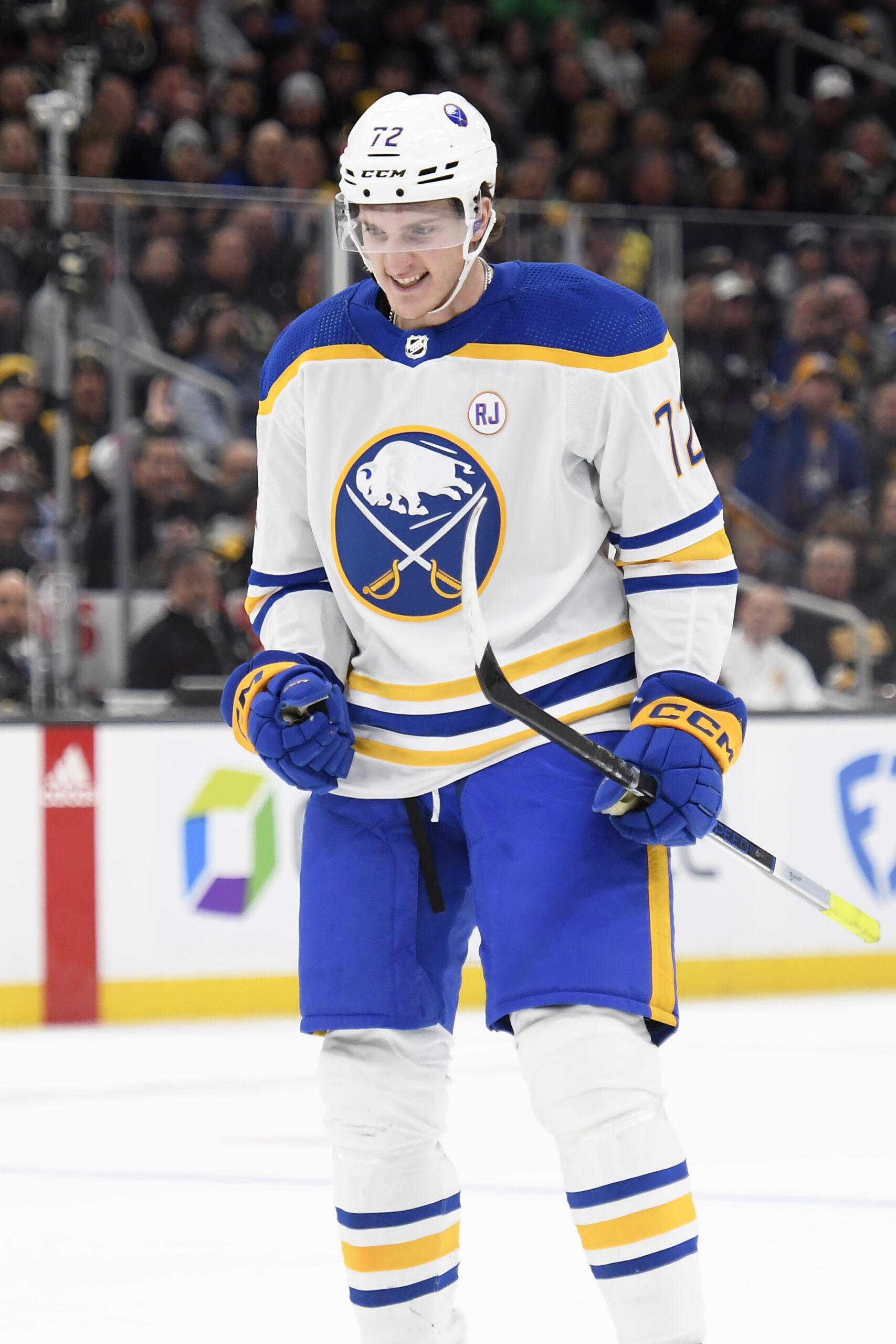 All eyes point to first-line center Tage Thompson to help get their special teams back to last year’s form. His 20 power-play goals in 2022-23 were tied with the Lightning’s Brayden Point and the Rangers’ Mika Zibanejad for third in the NHL. Thompson has struggled with injuries this season, but he’s been much less effective even when in the lineup. He has only nine goals through 26 games, only two of them coming on the power play. After producing 1.21 points per game last year, he’s producing at a much more conservative per-game clip of 0.73 in 2023-24.
Some of Thompson’s struggles are luck-based, as he’s shooting 2.4% below his career average. He isn’t shooting the puck as much as last season, though, and his even-strength Corsi share has also stepped back about two percent from last season’s figure. He may still be playing like a first-line center, but not at the elite form he displayed last season. His subtle steps back have rendered the continued development of players like John-Jason Peterka and Casey Mittelstadt, as well as an unexpectedly strong rookie season from 2023 13th-overall pick Zach Benson, ineffective in helping the Sabres return to postseason play.
On the other side of the puck, Rasmus Dahlin and Owen Power have remained above average in terms of possession control. They’re far from shutdown stalwarts, but they’re also not enough of a liability to be truly to blame for their 29th-ranked defense. In a poor look for Adams, that brunt falls on the team’s two big free-agent additions – Connor Clifton and Erik Johnson. Among full-time Sabres defenders this season, their 47% and 47.4% Corsi shares at even strength are the two worst figures on the team. While Johnson’s $3.25MM cap hit is an easy out, having only signed for one year, the three-year term on Clifton’s $3MM cap hit suddenly looks quite concerning after putting up some great advanced metrics with the Bruins as part of last season’s record-breaking team.
Neither Devon Levi nor Ukko-Pekka Luukkonen have been spectacular in the crease, but Levi’s had some strong showings recently and has been slightly above average on the season, stopping 0.3 goals above expected per MoneyPuck. Luukkonen has conceded 5 goals more than expected over the course of his 17 appearances this year, but neither netminder has been poor enough to truly affect the course of the team.
How much a newly healthy Jack Quinn can aid their goal-scoring woes and mediocre power play remains to be seen. Since returning from offseason Achilles surgery, the 22-year-old winger has two goals in three games and looks right at home in a top-six role.
There is still plenty of time for the season to turn around, especially given the mediocre performances of some other Eastern Conference teams like the Lightning, Hurricanes and Devils. Buffalo’s playoff odds remain slim at 14.4% per MoneyPuck at the time of writing, and that figure is the highest out of Montreal, Detroit and Ottawa, surely influenced by their 9-3 drubbing of the Maple Leafs last week.
The focus will remain on Thompson’s production as the team returns from its holiday break. If he can rattle off a point-per-game run for the next while, that should help the Sabres squeak out some more wins and get back on pace for at least a winning record. They’ll need to count on continued development from their youngsters and better defending from their second- and third-pair players to take them the rest of the way.
Photo courtesy of USA Today Sports Images
What Your Team Is Thankful For: New Jersey Devils
As the holiday season approaches, PHR will be taking a look at what teams are thankful for in 2023-24. There also might be a few things your team would like down the road. We’ll examine what’s gone well in the early going and what could improve as the season rolls on for the New Jersey Devils.
Who are the Devils thankful for?
The New Jersey Devils have plenty of blessings to count this holiday season but they’ll be thanking nobody more than Ellen Weinberg-Hughes, the mother of their new franchise pieces on both offense and defense. Jack Hughes has forced his way into the very top echelon of NHL talent this year with a dazzling 14 goals and 39 points in 27 games. That’s a 118-point pace this season and brings Jack to a combined 112 points over his last 82 regular season games. Meanwhile, brother Luke Hughes has tallied 16 points through 32 games of his own this year, ranking second among rookie defenders behind Pavel Mintyukov, who has two more points in one more outing. Luke has looked dazzling through his official rookie season and is a favorite to challenge Connor Bedard for this year’s Calder Trophy. Luke will pass Dougie Hamilton for the scoring lead among Devils defenders with one more point, something that could come soon as he’s taken control of New Jersey’s top power-play unit in Hamilton’s absence.
Surely thanks to her own successes as a hockey player, Ellen has helped the Devils find the pieces that could carry the franchise for years to come. The sky is the limit for New Jersey if both Jack and Luke can keep up their strong play.
What are the Devils thankful for?
A hot streak.
New Jersey didn’t hide their struggles in November, falling to a 6-7-0 record that was marked by two separate three-game losing streaks. And while they’re still working their way up, the Devils managed a much more impressive December, kicking off the month with a 5-2-0 record before falling to another three-game skid. They currently sit at 6-4-1 through 2023’s final month – a fine enough record that could look much stronger if New Jersey wasn’t being outscored 38-to-33 through the month. The Devils have three more games through the end of December, including a matchup against the Columbus Blue Jackets, who they beat 6-3 in their last meeting. Ending the month on a high note could go a long way in catapulting New Jersey forward in the new year.
What would the Devils be even more thankful for?
Good health.
The Devils’ season has been undermined by injuries since the start of the year, when they were quickly faced by injuries that held both Jack Hughes and Nico Hischier out of the lineup. Hughes returned quicker than Hischier, who has been in-and-out of the lineup and ultimately missed 11 of the team’s 32 games. Timo Meier has also fallen victim to injury, currently trying to play through lingering issues that have held him out of seven games this season. But it’s the blow to Dougie Hamilton that’s hit the Devils the hardest, with the top defender rumored to be out until the start of the playoffs. Hamilton was playing in over 20 minutes a night for New Jersey, and still leads the team’s defensemen in scoring with 16 points despite missing 12 games.
New Jersey has had to fight through the waves of injuries, relying on depth pieces like Erik Haula and Curtis Lazar to step up big when the team needs it. They’ve performed admirably but there’s no doubting that the team’s 17-13-2 record – which currently sits them outside of the Stanley Cup playoffs – wouldn’t look so sour if they were able to get more games out of their star players. There have only been seven games this season where Hughes, Hischier, and Hamilton appeared in the lineup together. New Jersey showed out in those matchups, going 4-2-1 and outscoring their opponents 29-to-27. They also added an impressive 56.8 CF% (Corsi-For percentage), showing the extent they’re able to dominant play when they have three of their most expensive contracts on the ice together.
What should be on the Devils holiday wish list?
An inexpensive goaltender.
The trade market for goaltenders is getting more-and-more crowded, which stinks for the Devils who have been searching for a new netminder since the summer. Vitek Vanecek‘s -8.8 GSAx (Goals saved above expected) stat is the second-worst in the league, per Moneypuck, only behind Edmonton’s struggling Stuart Skinner. Backup Akira Schmid isn’t far behind him, touting the 11th-worst GSAx in the league. That’s all to say that the team’s goaltenders have not been their strong suit, which helps explain why the Devils are allowing the sixth-most goals in the league.
The Devils will gain $9MM in cap space by moving Dougie Hamilton to long-term injured reserve, money that should let them acquire any goaltender they may be able to get their hands on. But which options are available, and how the price will be inflated by a buyer’s market, is yet to be seen. If they can’t find an option on the open market before March’s Trade Deadline, the Devils may need to turn to minor league options like Isaac Poulter, who currently has the second-highest save percentage among AHL rookie goalies with a .920 in 14 games. Either way, something has got to give with the Devils’ weakest link if they want to meet their pre-season expectations.