
What Your Team Is Thankful For: Tampa Bay Lightning
As the holiday season approaches, PHR will be taking a look at what teams are thankful for in 2023-24. There also might be a few things your team would like down the road. We’ll examine what’s gone well in the early going and what could improve as the season rolls on for the Tampa Bay Lightning.
Who are the Lightning thankful for?
The Tampa Bay Lightning are having a modest season by their standards but that hasn’t meant anything for their star winger, who currently leads the NHL with a comical 67 points in 40 games. That includes 28 goals, a mark that’s ranked second in the league. The 30-year-old Kucherov is on pace for a staggering 57 goals and 137 points which would both be career-highs. While the Lightning are working on extending their reign over the playoffs, Kucherov is working on solidifying his spot as a franchise legend, now in his sixth consecutive season of either scoring, or being on pace for, 100-or-more points. He confidently ranks fourth in all-time Lightning scoring but has the highest point-per-game pace (1.16) in the club’s history. Kucherov also leads all Russian players in points-per-game and broke into the Top 10 in career scoring among Russian NHLers this season.
Kucherov is chasing yet another Hart Trophy, four seasons after his 2019 win, and will undeniably be one of the biggest pieces of Tampa’s push for the playoffs in the second half of the year.
What are the Lightning thankful for?
Plenty of offense.
Tampa’s .524 winning percentage is the lowest the team has had since the 2012-13 season but their defining trait remains the same – their undeniable star talent. Every Lightning leader is performing as expected, with Kucherov’s league-leading season being matched by Brayden Point‘s 42 points in 41 games, Victor Hedman‘s 39 points in 39 games, and Steven Stamkos‘ 38 points in 38 games. Even Brandon Hagel has joined in on the fun, recording 32 points in 41 games of his own. The team’s top-six is certainly fueling each other, helping boost up some scoring totals, but the reliability offered by such consistent top-end scoring has willed Tampa through a shaky start to the year.
The quartet has helped Tampa score the seventh-most goals in the NHL this season, keeping the league’s most notorious offense alive despite a year of lesser success. They’re also pulling forward what is a top-heavy forward group, with Tampa boasting four forwards with 30-or-more, and four with 10-or-fewer, points on the season. While depth scoring has been a key piece of many recent Stanley Cup wins, the Lightning’s top brass is showing that scoring will never be too much of a concern.
What would the Lightning be even more thankful for?
Prime Andrei Vasilevskiy.
Andrei Vasilevskiy is the only star with question marks surrounding him. The netminder returned from an early-season injury in late-November. He struggled in his first four games, allowing 14 goals on 99 shots, but bounced back to form with a 25-shot shutout in his fifth game back. He finished December and started January strong, recording a .914 save percentage across his next 13 games, but recently allowed the Boston Bruins six goals on 26 shots, bringing his season totals to a meager 9-9-0 record and .895 save percentage. The 29-year-old has only made 18 appearances this season, and found a strong streak through December, hopefully suggesting that his season struggles are more a result of a contested start to the season than anything else.
Tampa has allowed the fourth-most goals this season, and the sixth-most on a per-game basis, despite facing a league-average 30.5 shots-against per-game. While they certainly didn’t start the year with the ideal goaltending situation, they’ll need to see Vasilevskiy truly snap back to form if they want to continue their reign of dominance.
What should be on the Lightning holiday wish list?
Good health.
In a year where plenty of teams are hoping for a new top-six forward, star defenseman, or starting goalie in their giftbox, Tampa can calmly hope for good health above all else. Injuries have not been the team’s friend this season, with Vasilevskiy, Stamkos, Hedman, and Kucherov missing at least one game earlier in the year and Mikhail Sergachev, Erik Cernak, and Tanner Jeannot all currently out of the lineup. The team is even without one of their few NHL signings this summer, as Logan Brown has been out the whole season with an undisclosed injury. Vasilevskiy’s up-and-down season has underlined just how important being consistently in the lineup is for Tampa’s chemistry.
Tampa is currently well outside of a playoff spot, ranked behind four teams for the Eastern Conference’s second Wild Card. What’s worse – the Bolts have played in the most games of any NHL team. Time is not on their side but Tampa has shown their stars can do enough to will the team forward… when they’re all healthy. They will need to maintain that health for the rest of the season if they want to pull themselves up the standings in the second half of the year.
What Your Team Is Thankful For: St. Louis Blues
As the holiday season approaches, PHR will be taking a look at what teams are thankful for in 2023-24. There also might be a few things your team would like down the road. We’ll examine what’s gone well in the early going and what could improve as the season rolls on for the St. Louis Blues.
Who are the Blues thankful for?
The Blues made the surprising decision to fire Craig Berube after a dismal 1-5 start to December. In his place, the Blues promoted their AHL team’s head coach – Drew Bannister. And while plenty is being made about the merit of Berube’s firing, there’s been no denying how effective Bannister has been in his new role. The Blues have gone 6-3-0 under Bannister, boosted by tremendous performances from Robert Thomas and Jordan Kyrou, who have 14 and 10 points in nine games under the new head coach respectively. The push from Bannister has been enough to begin lifting St. Louis out of the depths of the Central Division, with the team passing the Minnesota Wild for seventh place and only one point shy of the Arizona Coyotes’ for fifth in the division. That’s not exactly inspiring for a Blues fanbase that’s only missed the playoffs seven times since 1980 – but positive momentum is all fans can hope for after last season saw the Blues record their worst winning percentage since 2007-08.
But what’s more impressive is that this is Bannister’s first time coaching in the NHL in any capacity. The role comes after four years as a head coach in the AHL that saw Bannister take the Springfield Thunderbirds to the 2022 Calder Cup Championship. It wasn’t his first time reaching a league’s final either, taking the Sault Ste. Marie Greyhounds to the OHL Championship in 2018. The 49-year-old has proven effective at every level and works his way into head coaching roles quickly. With the early success of his new Blues lineup, there’s reason to think that Bannister could be geared up for a long NHL coaching career.
What are the Blues thankful for?
New and improved goaltending.
The Blues’ goaltending was a sore spot of their 2022-23 season, with both Jordan Binnington and then-backup Thomas Greiss recording save percentages below .900. The season before wasn’t much better either, as the team cycled through five different goalies and only saw true success from Ville Husso. But it seems the Blues are finally finding consistency in the net, with Joel Hofer serving as a tremendous backup to Binnington. Hofer has a .911 save percentage through 14 games this season. He allowed six goals in his first game of the season, though, and carries an even-more impressive .918 save percentage with that game excluded. Either way, he’s confidently shown what he can do at the top level after years of flirting with consistent NHL ice time. And the newfound reliability at backup has gone a long way towards taking the weight off of Binnington’s shoulders. The 30-year-old, former Stanley Cup winner is boasting a .902 save percentage through 27 games played. He’s also only on pace for 54 games this season, a step down from the 61 he played in last year, helping keep him fresher for longer. This also boosts the potency of a St. Louis crease that’s proven they have the ability to turn the tides, with Binnington’s 2018-19 surge carrying the Blues to their first Stanley Cup and Husso’s resurgence in 2021-22 helping force the Blues into the postseason despite a shaky year. With Hofer finally finding his footing in the NHL, it seems the Blues are once again primed with two dangerous goaltending talents.
What would the Blues be even more thankful for?
Patience from their stars.
An off-handed comment from Jordan Kyrou spread around the internet following Berube’s firing, with the top winger refusing to share thoughts on the move and simply saying, “I’ve got no comment, [Berube]’s not my coach anymore.” That remark was enough to earn Kyrou a sea of boos at the team’s next home game – a 4-2 win that saw Kyrou record an assist. The top winger shared a tearful apology after the game, saying, “It’s just tough, right? I love playing here. It’s tough to hear the fans booing me.”
Kyrou’s experience has underlined the amount of patience that the top Blues players have had to provide recently. St. Louis hockey has been defined by very frequent lineup changes over the last two seasons – changes that have required Pavel Buchnevich to step into a rare centerman role, Kevin Hayes to cope with seven different sets of wingers this season, and Thomas and Kyrou bearing through playing apart seemingly every other game. St. Louis is one of only 12 clubs to not feature a line that’s played more than 200 minutes together, with their top line of Thomas, Buchnevich, and Kyrou seeing only 187 minutes of ice time. The Blues’ top brass has held in through a lot, and should be nearing the end of strained days with new head coach Bannister figuring out a winning combination. But they’ll need continued patience and persistence from their stars if they want to complete their push for a playoff spot.
What should be on the Blues holiday wish list?
A top-nine forward.
The Blues have gone out of their way to try and add difference-makers into their top-nine for much of the last year. And while Kevin Hayes, Kasperi Kapanen, and Jakub Vrana have each been strong in their own ways, St. Louis still only has three forwards with 15-or-more points outside of their top line. The Blues could go a lot of different ways if they want to be buyers at the deadline, but a high-scoring winger to compliment Brayden Schenn‘s second line could make a big impact on the Blues’ scoring abilities. There’s no shortage of talent available throughout the league, including San Jose’s Anthony Duclair or Vancouver’s Andrei Kuzmenko. The price on these players is sure to get muddy, especially considering both carry a cap hit north of $3MM, but adding a scoring touch could be the piece that elevates St. Louis back into playoff territory. The Blues rank sixth-to-last in goals-for this season.
What Your Team Is Thankful For: Seattle Kraken
As the holiday season approaches, PHR will be taking a look at what teams are thankful for in 2023-24. There also might be a few things your team would like down the road. We’ll examine what’s gone well in the early going and what could improve as the season rolls on for the Seattle Kraken.
Who are the Kraken thankful for?
It seems a lot of things are clicking at the right time for the Seattle Kraken, but their season has been underlined by Joey Daccord’s surge into the starting role. The 27-year-old goaltender has appeared in 23 games this season, setting a 9-5-8 record and .919 save percentage – the highest save percentage of any goalie with 20-or-more games in Seattle’s short history. Daccord’s eight extra time losses leads the league, with the goaltender facing an average of 28.5 shots in his overtime outings. His season could easily be leaned in a much more impressive light with a few lucky bounces in extra time, though Daccord doesn’t seemed phased by the poor record – kicking off the new year in style by recording the first shutout in Winter Classic history. The netminder saved all 35 shots that the Vegas Golden Knights sent his way on January 1st, en route to his second shutout of the season and the fifth-most saves he’s had this season.
Seattle has been in need of a true starting goalie after Philipp Grubauer and Chris Driedger failed to confidently hold onto the role in the chances they were given. They turned to Daccord this summer, signing him to a two-year, $2.4MM contract despite him playing in just 19 NHL games prior to the 2023-24 season. But he’s going above-and-beyond to prove Seattle right for taking a chance on him, establishing himself as not only a starter, but maybe one of the best options in the league on the back of the NHL’s fifth-highest save percentage.
What are the Kraken thankful for?
Low-event hockey.
Daccord has provided a great back-end for Seattle this season but that hasn’t exactly inspired the team to new heights. They still remain in the bottom-five of goals-for this season, and middle-of-the-pack in goals-allowed. The Kraken aren’t favorites to go out and out-skill any given team but they’re starting to find the secret to winning – low-event hockey. The Kraken have done best in games where they aren’t recording a ton of shots, going 7-1-2 over their last 10 games while averaging just 26.2 shots-for. This is pitted against an average of 31.6 shots-against, speaking to the ability of Daccord to hold Seattle in games. It’s been a quality-over-quantity approach, with the Kraken going 10-7-3 in games where they record 30-or-fewer shots, and 4-7-5 in games where they record more than 30 shots. This is regardless of how the opponent performs, with the Kraken going 7-4-4 in games where they’ve faced more than 30 shots.
It’s clear Seattle is at their best when they’re able to slow down the game and take time in creating their chances. They rank in the bottom five of both high-dancer chances-for and against this season, showing how strong they can be when chances are forced to the outside and strikes to the net are few-and-far between. It’s a style done to good effect by smooth puck-mover Vince Dunn, shoot-first forwards like Oliver Bjorkstrand, Eeli Tolvanen, and Jordan Eberle, and one capped off nicely by strong net-front presences like Matthew Beniers. But the question will inevitably become whether it’s a style that can maintain Seattle through the postseason, or if the team will need to inevitably lean into high-action hockey.
What would the Kraken be even more thankful for?
A top scorer.
The Kraken got off to a bit of a slow start but have since gotten plenty of production from their top end, with 14 different players boasting 10-or-more points. The group is led by Dunn’s 31 points in 38 games, followed by Bjorkstrand and Tolvanen who have 29 points and 23 points in as many games. And while those numbers are certainly admirable, the lack of a true top-scoring forward is holding Seattle back. Jared McCann was able to fill this role last season, netting a 40-goal, 70-point season that deserved more excitement at the time. But he’s lost that spark this year, managing only 14 goals and 22 points in 37 games. That still leads the Kraken lineup in goals, but it hasn’t been enough to revitalize a team that ranked sixth in goals-for last season. The lack of a true top-scorer has also impacted – or maybe it’s the result of – how Seattle is able to roll out their lineup, with head coach Dave Hakstol preferring a roll-four approach with bottom-line players are averaging between 12 and 14 minutes of ice time, while the top line only sees a slight boost to 16 to 18 minutes. That’s certainly different than how a team like the Toronto Maple Leafs have used their bottom line, with their depth averaging closer to seven-to-nine minutes of ice time. The Kraken will need to find a way to either lift up their past top scorers or fold in new ones if they want their offense to start producing enough to start helping Daccord win in extra time.
What should be on the Kraken holiday wish list?
A quiet Pacific Division.
The Kraken enter the new year combatting with the Arizona Coyotes and the Edmonton Oilers for the last Wild Card in the West. Exactly where everyone expected these teams to be at the start of the year, right? And while Seattle is absolutely heating up, they also sit with the most games in the Western Conference, giving them a disadvantage as other teams begin to catch up and paint a clearer picture in the standings. If the Kraken want to keep trained on the postseason, they will need their division to remain quiet for the rest of the season. That means no phenomenal explosion from Connor McDavid as he tries to pull Edmonton back to where they were expected to rank – it means no resurgence from the Calgary Flames as they look to pull themselves up by their bootstraps under a new coach – and it means no more flashy offense from the likes of Vancouver or Los Angeles, two teams performing well above their preseason expectations. Seattle has made their living on calm, low-event hockey this season and, if they want their playoff chances to stay rich, they’ll need to find a way to project that energy onto the rest of their division.
Salary Cap Deep Dive: New Jersey Devils
Navigating the salary cap is one of the more important tasks for any GM. Teams that can avoid total cap chaos by walking the tightrope of inking players to deals that match their value (or compensate for future value without breaking the bank) remain successful. Those that don’t see struggles and front office changes.
PHR will look at every NHL team and give a thorough look at their cap situation for the 2023-24 season. This will focus more on players who are regulars on the roster versus those who may find themselves shuttling between the AHL and NHL. All cap figures are courtesy of CapFriendly.
New Jersey Devils
Current Cap Hit: $82,601,228 (under the $83.5MM Upper Limit)
Entry-Level Contracts
F Alexander Holtz (two years, $894K)
D Luke Hughes (two years, $925K)
F Dawson Mercer (one year, $894K)
D Simon Nemec (three years, $918K)
G Akira Schmid (one year, $851K)
Potential Bonuses
Holtz: $850K
Hughes: $925K
Mercer: $400K
Nemec: $3.25MM
Schmid: $57.5K
Total: $5.4825MM
Holtz has progressed to the point of being a regular player but it has been in somewhat of a limited role so far. Basically halfway through his entry-level deal, it seems unlikely that he’ll dramatically improve to the point where he’ll bypass a long-term contract in 2025. A short-term deal in the $2MM range seems likely while bonus-wise, he’ll need to produce a lot more to have a shot at reaching them. The same can’t be said for Mercer who has a couple of strong seasons under his belt although his 2023-24 numbers are certainly down. Nonetheless, GM Tom Fitzgerald may still want to look into a long-term deal that could approach the $6MM mark while a bridge would be a bit more than half of that. Like Holtz, his bonuses are unlikely to be reached at his current pace.
Hughes did well in limited action down the stretch and in the playoffs last year and has locked down a full-time spot this season, playing top-four minutes. He’s expected to be a core piece for years to come so it wouldn’t be surprising to see Fitzgerald try to push for a long-term agreement after 2025. Such a deal could push past the $7MM mark if he produces as expected. As things stand, he has a chance at hitting a handful of his ‘A’ bonuses, worth $212.5K apiece. Nemec, meanwhile, was recently brought up and is just getting his feet wet at the NHL level. He recently went past the nine-game mark, meaning he’ll burn the first year of his deal this season. It’s too early to forecast his next contract but it’s worth noting that he’s unlikely to reach his bonuses.
As for Schmid, he made a big impact down the stretch last year, taking over as the starter. Things haven’t gone anywhere near as well this season as he has struggled considerably. He could still be a goalie of the future for New Jersey but with the inconsistency, he should be heading for a bridge deal that should check in under $2MM. His bonuses are based on games played so it’s likely he’ll hit some of that amount even though he’s currently in the AHL.
Signed Through 2023-24, Non-Entry-Level
F Tyler Toffoli ($4.25MM, UFA)
F Michael McLeod ($1.4MM, RFA)
D Colin Miller ($1.85MM, UFA)
F Tomas Nosek ($1MM, UFA)
D Brendan Smith ($1.1MM, UFA)
F Chris Tierney ($775K, UFA)
Toffoli wasn’t able to reach an early extension in Calgary and was quickly moved to New Jersey despite coming off of a career year. He is producing at a similar rate this season and if he can hold that up, he should be one of the better free agent wingers. Last time in free agency, his market was a bit quieter than expected but he should be able to push past the $5MM mark on a longer-term agreement. McLeod is on pace for his best offensive season and has been elite at the faceoff dot. With arbitration eligibility, he could push for $2.5MM or more should it get to a hearing if he remains one of the top faceoff specialists in the NHL and keeps up this level of production.
Nosek had to wait a bit to get this contract, one that was a $750K dip from his last deal. With this season being injury-plagued so far, he’s going to be hard-pressed to earn a raise even with his track record of being an effective fourth line middleman. Tierney came over in free agency on a two-way deal and has earned a full-time spot on the roster. Even so, he’s likely to remain around the minimum salary moving forward.
Miller had a quiet year in Dallas last season and the change of scenery hasn’t worked out the greatest; he has dealt with an injury and has been healthy scratched at times as well. While he has a bit of offensive upside and is a right-shot defender, it’s possible he’s heading for a small dip in salary. Smith can still hold his own on a third pairing and has shown previously that he can play up front if need be as well. While he’ll be 35 next month, he could still land a contract close to this price tag.
Signed Through 2024-25
D Kevin Bahl ($1.05MM, RFA)
F Nathan Bastian ($1.35MM, UFA)
F Curtis Lazar ($1MM, UFA)
G Vitek Vanecek ($3.4MM, UFA)
Bastian has been a bit quieter offensively this season compared to his last two years but he is holding down a regular spot on the fourth line. He’ll be hard-pressed to get any sort of significant raise unless he can get back to his production since starting his second go-round with the franchise. Lazar is in his first full year with the Devils after being acquired from Vancouver. He’s a serviceable fourth line center and it’s likely his next deal will come in close to this one.
Bahl is in his first full season and is holding down a regular spot on the third pairing. It’s unlikely he’ll move up in the lineup too often but even if he just stays in that role, he should get at least a small bump beyond his $1.2MM qualifying offer.
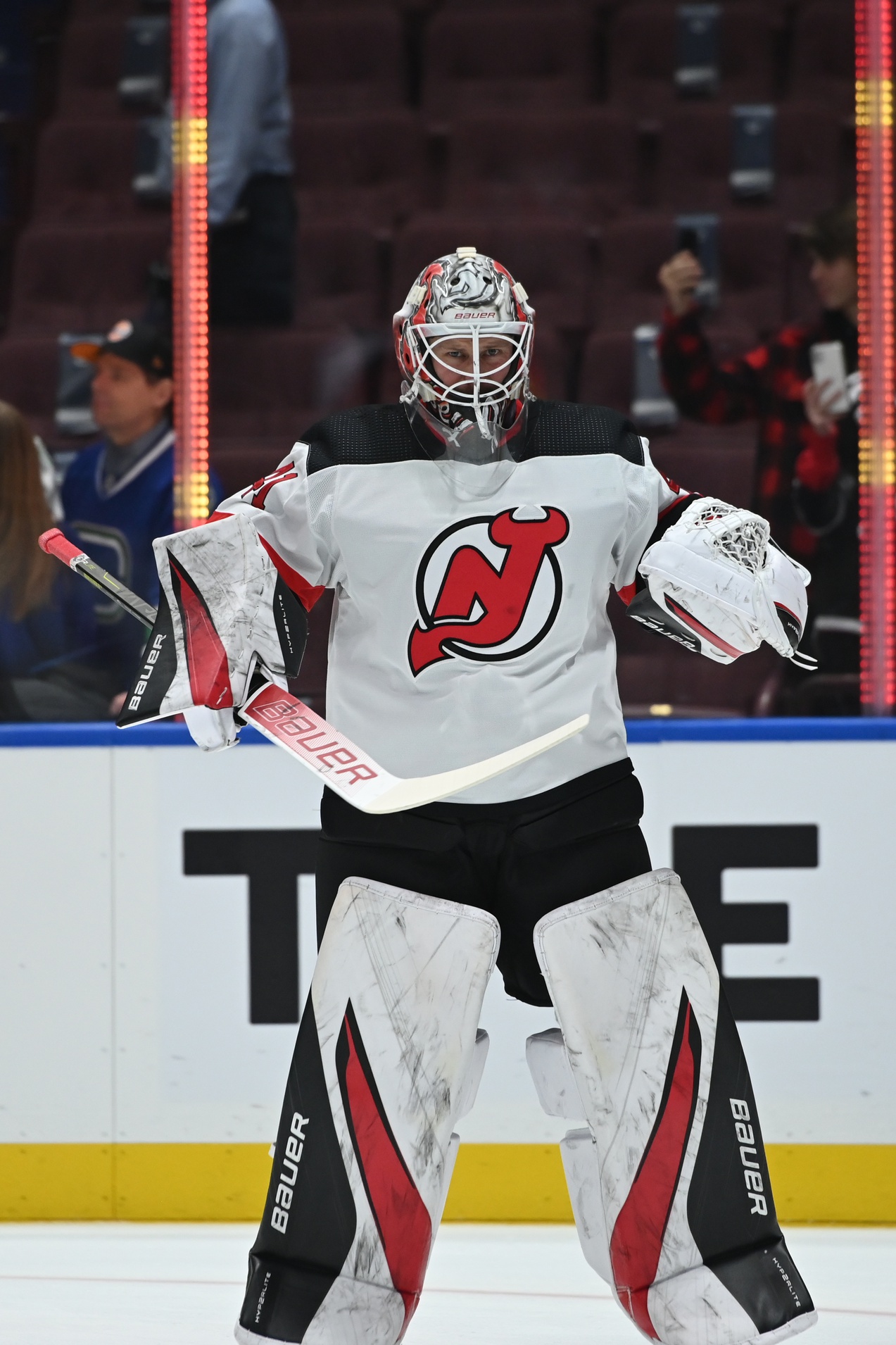 It has been an interesting first half of Vanecek’s contract in New Jersey. Acquired to take over as the starter in the 2022 offseason, he had the best year of his career, getting into 52 games while posting the lowest GAA of his career (2.45) and the highest save percentage (.911). And yet, when the playoffs came around, he wasn’t the starter and when he got his chance, he struggled mightily. That has carried over to his play this season. Value-wise, Vanecek only needs to be at the level of a good backup to provide value on his deal. He has been well above that at times and well below it at others. He’ll need to show some consistently strong performances in the next year and a half to set himself up for a bigger deal in free agency. If he can, he could push past the $5MM mark.
Signed Through 2025-26
F Erik Haula ($3.15MM, UFA)
Haula fit in quite well as an above-average third center last season, resulting in a reasonably-priced extension back in June. He only has three seasons with more than 40 points under his belt which limited his market in his previous trips through free agency. If he can stay around that mark in each of these three years, he’ll have a lot more bargaining power next time out.
PHR Mailbag: Injuries, Flames, Blackhawks, Regression Candidate, Officiating
Let’s start off the new year with a mailbag. Topics in this edition include an assessment of Calgary’s top trade chips, what Chicago could be looking to do over the coming months, and much more.
Cla23: Is it just me or are there more players on or heading to IR than previously; if yes, why?
Devil Shark: Can you do a team comparison of injuries? Most specifically games lost to top six forwards or top two D? Interested to see if anyone had been as unlucky as NJD…
Using NHL Injury Viz’s Injury Frequency chart, it looks like fewer players are injured now than a year ago by about 10-15 per league game. Meanwhile, when comparing this season to the average over the past two decades, it has been pretty close, either slightly above or slightly below. So from a games-missed standpoint, it doesn’t feel like there are more injured players than usual.
But there’s a bit of a difference between what you’re asking and what that link measures. I don’t think there are that many more players landing on IR but some teams are known to get creative with their placements. That can be done for roster or cap management purposes. If a player lands on IR, they only have to miss seven days and it’s from the date of the injury, not the day of the placement. So even if they’ve missed a couple of games, they can backdate a placement to get a replacement up for sometimes even just a single contest. That’s an option that quite a few teams utilize.
Meanwhile, some teams are starting to use LTIR a bit more frequently. That can be used if a player will miss 10 games and 24 days; we’ve seen a few placements this year where the player is back after just missing the minimum number of days. But for teams near the Upper Limit of the salary cap, the LTIR placement gives them some much-needed relief so that is starting to be used a bit more often now with so many teams tight to the cap.
As for a team comparison, NHL Injury Viz has some tools for that as well so let’s use that although it doesn’t break down top-six forwards and top-pairing defensemen. From a cap hit perspective, San Jose has had the biggest impact; Logan Couture skews that one quite a bit. Vegas is right up there thanks to Robin Lehner; Max Pacioretty skews Washington’s number somewhat as well as does Gabriel Landeskog in Colorado. Next are Columbus whose list of injuries is long and quite significant, followed by Anaheim and Montreal, teams who are in varying degrees of a rebuild. Then it’s New Jersey so at a minimum, they’d be right up there for bad luck from an injury standpoint.
wreckage: Realistic returns for the Flames’ big three chips? I listen to Flames radio and follow a couple of their other sites and it seems all their fans are expecting close to, if not a 1st plus for each and all of them. They seem to value Lindholm as a 1C based on his one above-average season two years ago with Gaudreau and Tkachuk on his wings. Every other year is closer to 65 points. Tanev is a great defender who often gets injured and if they hang on, he could be hurt again. And Hanifin is good, but expiring… Are any really worth a 1st+ or is that wishful thinking?
I don’t think Calgary would get a first-rounder for all three but two of them seem quite likely
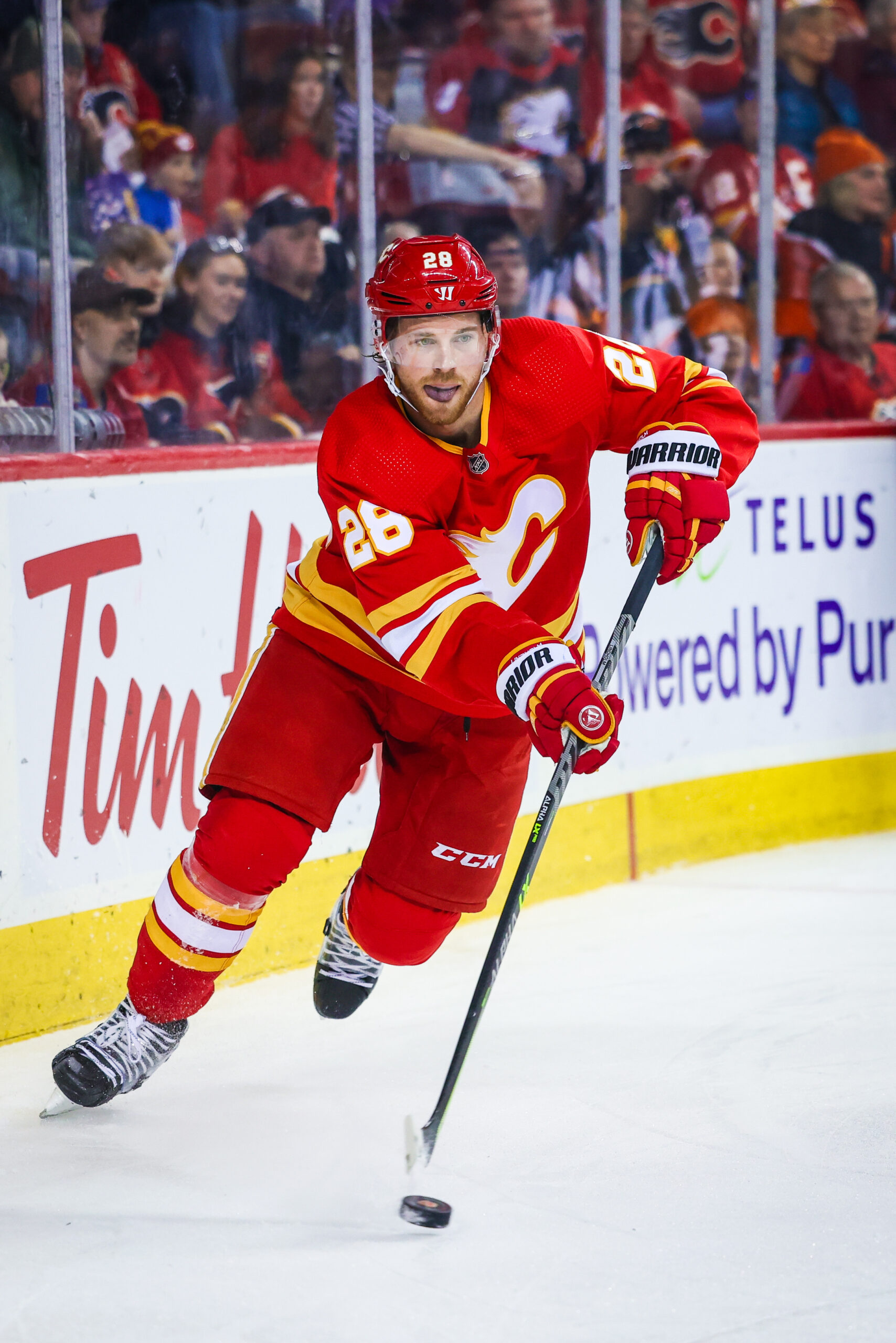 Elias Lindholm doesn’t have to be a true number one center to fetch a first-round pick at the trade deadline. Look at Ryan O’Reilly a year ago, he was under half a point per game with St. Louis and still landed a first-round pick. Lindholm is producing at a better rate than that, is well above average at the faceoff dot, and plays in all situations. If Calgary is willing to retain 50%, they can get that contract to under $2.5MM pro-rated which should be affordable for several contenders without moving much of consequence the other way in terms of matching money. He’s probably going to be the best middleman available if the Flames ultimately turn around and sell. If I’m being honest, I don’t see how he doesn’t bring at least a first-round pick back; it’s how much more comes with it.
As for Chris Tanev, this is the one I agree with you on. With his injury history, I can see teams being hesitant to move a first-rounder, even though he’s an expiring deal that can be paid down to $2.25MM while being a right-shot player, by far the most coveted side. There are even recent comparables (David Savard in 2021, Ben Chiarot in 2022) that suggest a shutdown defender on a paid-down expiring contract could fetch a first-rounder plus something else. But the injury risk drops it to a second-rounder and something else.
Then there’s Noah Hanifin. Here’s a top-pairing player that can fit in with any contender and is also under $2.5MM with 50% retention. He’d probably be the best blueliner that moves, assuming he moves. If you’re the best defenseman available, you’re probably getting moved for a first-rounder. And if you’re like me and think he’ll move in a sign-and-trade, there’s no doubt at least one of those picks will be part of the sizable package going to Calgary. Whoever gets him is likely then out on Tanev, which will hurt Tanev’s market a bit in the end.
YzerPlan19: Does the Flames’ recent success change the course of things? Do they still try to pony up $ to keep this group? Is it the FAs that are contributing factors to the success or the kids? Is the success sustainable or should they continue on in rebuild mode anyway? Do we have to wait until the trade deadline to see where they are in the standings before any moves/signings materialize?
I don’t think we’re at a point where a few weeks should be determining their course of direction. Generally speaking, that’s probably not a wise course of action either way.
I thought Calgary was going to be pretty good this year. Lots went wrong last season but they still have a decent roster on paper. But they can’t score enough to truly contend; adding a piece up front would certainly help but I don’t think they’d be more than a mid-tier team anyway. If I’m GM Craig Conroy, am I ponying up a bunch of money to lock in a core that probably isn’t good enough to contend? If one of Lindholm or Hanifin wants to take a team-friendly deal, sure, I’d make that move. But I don’t think that’s happening.
Adding Connor Zary has certainly helped so he deserves some credit but for the most part, I’d pin their recent improvement on the backs of the veterans (not necessarily just the pending free agents either). Zary has given them a bit more offensive depth but they’re still among the lower-scoring teams.
Can they hang around where they are? Probably. They’re more or less a bubble team and if they play around .500 hockey, they can stay in that area. But again, holding steady probably isn’t the best approach for them to be taking.
Unclemike1526: What additions do you see the Hawks making by the trade deadline? With Hall on LTIR and Tyler Johnson and Mrazek likely out the door that leaves the Hawks with a lot of Cap space money. They need more draft picks like I need hemorrhoids, But I would rather see them add some NHL-ready talent to add to the pool. Nazar should be here one day after Michigan is out of the Frozen Four but most of the Hawks’ top talent is still a couple of years away. Commesso might get some run after Mrazek is gone or if he gets hurt but I think some decent ready talent might be available. Thoughts? And no, Campbell is a hearty No Thanks.
The Blackhawks have plenty of cap space before the possibility of moving out some of their rentals. But why would a team that’s bottoming out in an effort to land another high draft pick acquire players that will make them more competitive in the short term, hindering their efforts to finish at the bottom of the standings? That seems a bit counter-productive in my books.
You may not want to see them add more draft picks but over the next couple of months, that’s what they should be doing. If there’s a market for Tyler Johnson and Petr Mrazek, it’d likely be a draft pick return. If they take on a contract or act as a third-party facilitator to help another team make a deal, it’d be a draft pick coming their way.
If you want them to flip the switch and go for it, that’s an offseason decision. At that time, they have what should be another high draft pick to go with Connor Bedard and then they can use their collection of draft picks and prospects to look for some more win-now pieces, or at least prospects that are a bit closer to being NHL-ready. I think there’s a good chance that will be their strategy but it’s one that has to be executed after the season, not now.
As for signing Frank Nazar after his college season ends, that makes sense. That gets him a taste of the NHL before a potential spot with the US squad at the Worlds; if he signs and burns the first year of his deal this season, he’d be ineligible to go to Rockford. As for getting Drew Commesso some NHL looks, I’d like to see him fare a bit better with the IceHogs first. Throwing him to the wolves on what’s likely to be an even weaker team after the trade deadline comes with some risks and I think their preference would be to let Arvid Soderblom get the bulk of the work down the stretch to help further assess if he’s in their future plans.
Johnny Z: Would the Hawks make a bid for Laine? Seems like CBJ would settle for a bit less to get his salary off the books and the Hawks have ample cap space.
Patrik Laine has been a popular speculative trade candidate although I’m not sure I agree that Columbus would be willing to move him at a discount to get his salary off the books. Yes, things have not gone well this season from both an injury and production standpoint but he’s also a year removed from nearly averaging a point per game after averaging a point per game the year before. Does one bad season mean they should want to sell low on a player who has been one of their top performers before that? I don’t think that’s the right course of action for them to take.
If I’m GM Jarmo Kekalainen and I want to clear salary, I’d be focusing on moving some of the lower-cost overpayments, players like Andrew Peeke and Adam Boqvist, for example. They may not get a great return straight up but if clearing money is the main goal, selling low on one of them makes more sense than selling low on one of their top liners.
Having said that, someone like Laine would make some sense for Chicago, after the season of course. An overpriced contract where they could get in a trade for below market value like they did with Taylor Hall would be a nice bridge addition to allow some of their younger prospects ample time to get established in the pros. I don’t think Laine specifically will be one of those players but you’re on the right track with what type of trade candidate might be viable for the Blackhawks.
PyramidHeadcrab: Looking at advanced stats and yadda yadda, which current “winning” team is most likely to fall off in the New Year? It’s sure been an experience watching Anaheim drop from near the top of the Pacific to the bottom of the league already!
Full disclosure, I don’t know my advanced stats as well as I should but here goes nothing using stats from MoneyPuck heading into Sunday’s action. For me, the answer is Vancouver.
Let’s talk about PDO, the sum of a team’s shooting and save percentages at five-on-five. The league average is 100. Good teams can be in the 101-102 range without it being too concerning. The Canucks, meanwhile, check in at 104.73. For context, there are only three other teams above 102 and none of them are at 103. Vancouver is far and away ahead of the pack. Buoyed by a shooting percentage of 12% (well above the league average), this tells me they’re due for some regression.
Now let’s look at Expected Goals For and Against based on shot quality and location. Vancouver has scored 18.56 goals above their expected rate, the second-best rate in the league. It’s good for them that the shots are going in but this is another one that seems unsustainable. From a Goals Against standpoint, they’ve allowed 15.26 fewer than expected. I think there’s a bit of credence to this one being a bit sustainable as their tandem of Thatcher Demko and Casey DeSmith gives them quality goaltending each night. They should be on the happy side of this ledger although down 15 goals allowed in this category might be tough to sustain.
If we add those two numbers up, Vancouver has a Goal Differential Above Expected at 33.82 (in just 36 games played). For context, the only other NHL team above 16 in this category is Winnipeg (28.77), the next highest team in PDO. (If you’re looking for who’d be next on my list based on advanced stats, it’d be them.) The Canucks are a good team but I don’t think they’re quite this good and I expected some sort of slide back in the second half. They should still be a playoff squad but I doubt they’ll still be atop the Pacific Division at the end of the regular season.
WilfPaiement: When did NHL officials stop calling games by the rulebook and start calling games based on the score/situation? And why does the league think it’s okay that officials can now manipulate the outcome easily, especially with the new revenue stream that is gambling?
Officiating in the heat of the moment can be frustrating at times, especially if you’re a fan of the team who isn’t getting the benefit of the call. We’ve all been there.
I’m going to be a bit picky here with the first part. If officials called everything to the letter of the rulebook, the majority of the games would be played at three-on-three for the overwhelming majority of the time with more players in the penalty box than on the bench. No one wants to see that. There are tons of smaller infractions (a hook here, a late bump on the boards a half-second after the puck went by there) that go uncalled but are technically penalties based on the rulebook and that’s a situational judgment call right there, the score notwithstanding. There is always going to be some level of game management from officials; there’s just no way around it.
Now, as to officiating based on the score? I don’t have any empirical data to show one way or the other that says it’s happening more or less than before. Personally, I haven’t seen it as much this season as I feel like I’ve seen in the past. Sure, there’s the odd questionable call (or non-call) in a late-game situation but again, when you’re already operating on some level of game management for determining what infractions are worth calling (and which of the many smaller ones won’t), that’s going to happen.
I’ve yet to see any evidence that the league thinks score manipulation is okay but there’s not a lot they can do. It’s not as if they can arbitrarily fire every official who they think has done it and I’m pretty sure officials are cautioned about not doing this at multiple times per season. I also don’t think there’s a ton of this happening so maybe I’m not the best one to answer this question. From a gambling standpoint, it’s not like gamblers of other professional sports don’t have the same issue; there’s subjectivity and human error everywhere. The best thing I can say is that if bettors feel this is subjectively happening, factor that belief into what bets are and aren’t made.
Photo courtesy of USA Today Sports Images.
Free Agent Stock Watch: Centers
The new year is here and the NHL season is in full swing. Teams are jockeying for playoff position, and many players with expiring contracts across the NHL are playing games that could ultimately determine what type of payday they might receive in the summer.
In a multi-part series, we’ll take a look at each position group of the upcoming free agent class, and do a rundown on how those upcoming unrestricted free agents have performed this year. Which players have increased their odds of landing a massive contract? Which players have potentially hurt their earning potential with their play? We’ll break it all down here.
The Marquee Names
Elias Lindholm, Calgary Flames
With Steven Stamkos primarily playing the wing for the Tampa Bay Lightning, Elias Lindholm stands alone atop the class of full-time centers in the upcoming free-agent class. The 29-year-old is entering the first trip to the unrestricted free agent market of his career, and ever since his trade from the Carolina Hurricanes to the Flames, he’s lined himself up nicely for a big payday.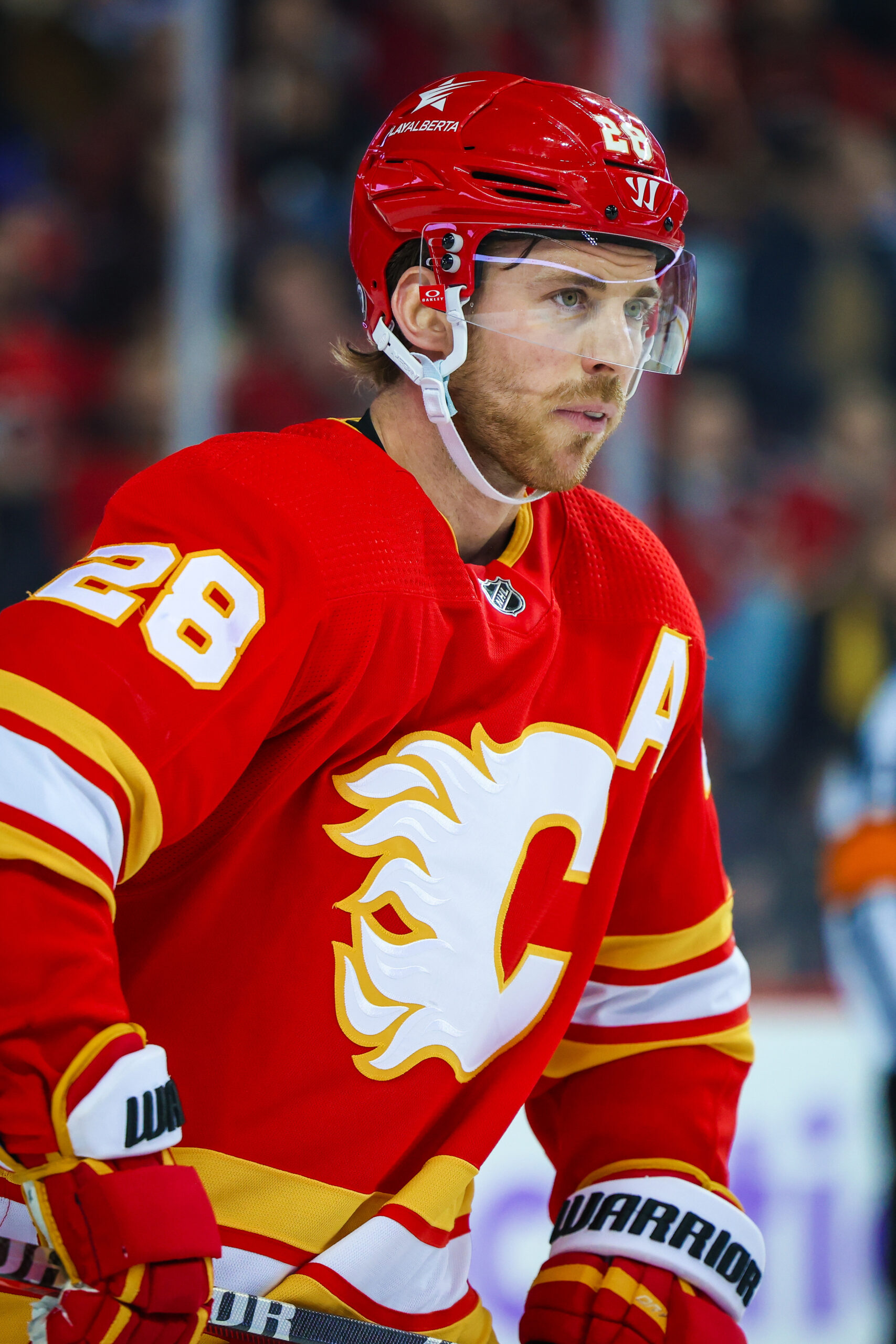
A traditional two-way center who blends offensive ability and defensive responsibility, Lindholm has played a crucial role for the Flames over the last half-decade. This season has been no different. He leads all Flames forwards in time-on-ice per game and ranks just outside the top 10 most heavily utilized forwards across the entire NHL.
He plays a leading role on both sides of the Flames’ special teams, and although Calgary’s power play has struggled, Lindholm’s exemplary work on the penalty kill has contributed to an 84.2% penalty kill rate. That figure ranks sixth in the entire NHL.
Lindholm’s production has fluctuated on a year-to-year basis, leading to some questions as to his true offensive talent level. He scored 42 goals and 82 points in 2021-22, but that was alongside Johnny Gaudreau and Matthew Tkachuk on one of the most talent-rich lines in hockey.
Now without superstar talent on his wings (Jonathan Huberdeau was supposed to be his all-world running mate but the former Panthers’ tenure in Calgary has been nothing short of a disaster), Lindholm has fallen back into more of a 20-plus goal, 60-plus point range. He’s on pace to score 18 goals and 52 points in 82 games, which would make 2023-24 his worst offensive season since his trade from Carolina.
Now nearly 800 games into his NHL career, there’s sufficient evidence to suggest that Lindholm is a player capable of elite production when he has elite linemates, and on his own is capable of scoring at the rate of a quality top-six forward rather than a true headlining play-driver. There’s still quite a bit of value in a standout defensive center who elevates elite linemates, of course, but that also places Lindholm in a different financial conversation on his next contract compared to a high-flying offensive number-one center like John Tavares.
The most significant wild card to Lindholm’s projection for this offseason relates to his team. If the Flames continue down the path toward rebuilding or re-tooling their roster with an eye to the future, Lindholm could very well spend the final few months of the year on another team. He’s scoring at a 52-point pace in Calgary, and finishing the year around that points total would certainly generate some caution among teams considering handing him a massive contract to be their number-one center.
But if he were to get traded to a team with some elite wingers he could center? A team like Boston, for example, where he could center Brad Marchand or David Pastrnak? (or both?) Then the possibility exists for Lindholm to finish his year point-per-game or even above that mark throughout the final twenty or so games of the season, similar to how Andrew Copp finished the year after being traded to the New York Rangers at the 2022 trade deadline.
Moreover, a trade would provide Lindholm with a massive stage to reassure potential free agent suitors that his overall game merits a significant financial investment.
As of right now, though, Lindholm is still in Calgary and it’s hard to say his stock isn’t at least a little bit down given his declined scoring pace. But a trade could change all of that, and could very well earn Lindholm quite a bit of money.
The Solid Contributors
Chandler Stephenson, Vegas Golden Knights
When Lindholm was scoring 78 points in a breakout campaign in 2018-19, Stephenson was struggling in just the second season of his career in the NHL. He had won the Stanley Cup as a rookie with the Washington Capitals the year before, but he found himself in-and-out of the lineup and could only put together 11 points on the season.
Fast forward a little over a half-decade, and Stephenson is slotting in as likely the second-best center on the market for most NHL teams. He got there through a steadfast commitment to defensive hockey as well as an offensive breakout just about nobody saw coming. The Golden Knights reportedly “had a hunch” Stephenson could “excel in a different role” (subscription link) but it’s doubtful they expected a surge past the 60-point plateau.
Stephenson always had offense in his game, but like many former high-flying CHL scorers, the rigors of professional hockey had slowly beaten the offensive flair out of him. By the time he was traded to Vegas at the age of 25, Stephenson’s career-high point total as a professional was 38 in 72 games for the AHL’s Hershey Bears.
That was also just one of two instances where he reached double-digit goals on the season. But now, Stephenson is coming off of a year where he scored 16 goals, 65 points, and an extremely impressive 10 goals and 20 points in 22 playoff games en route to his second Stanley Cup championship.
The right time for Stephenson to hit free agency would undoubtedly have been last summer, as his stock was at a career-high point. While he’s undoubtedly not quite at that high anymore, he’s still in strong shape heading into the free agent market in the summer. His offensive production has declined a touch (he’s on pace for 42 points) but he nonetheless has demonstrated some measure of consistency, posting back-to-back 60-plus point seasons in the prior two campaigns.
Some teams could very well attribute Stephenson’s decline in scoring pace to his change of linemates, as he’s now slotted between Pavel Dorofeyev and Michael Amadio. Those are two quality, ascending players but hardly the big-name talents playing a little higher in Vegas’ lineup. Additionally, teams are likely to be encouraged by the role Stephenson plays and the level of responsibility he takes on. He averages nearly 18:00 time-on-ice per game, skating on both special teams units.
It’s rare for centers who can score 60 or more points as well as play reliable defensive hockey hit the open market. Most of the time, when centers hit the free agent market they come with significant question marks attached or recognized holes in their game. Stephenson doesn’t have the same negative tags, and he’ll likely cash in on the open market as the deals already on Vegas’ books figure to make re-signing him a difficult prospect. That being said, Stephenson’s slight offensive decline is something to monitor moving forward as the sample size of games played this season expands.
Sean Monahan, Montreal Canadiens
If there’s one thing Monahan has proved as a Canadien, it’s that the issue for him has never been about ability. The seven-time 20-goal scorer recently notched his 500th career point and at one point was a headlining star for the Flames, someone who could score around a point-per-game rate. But over the last few seasons, persistent injury issues have absolutely decimated Monahan’s overall value.
A significant aspect of what makes a player valuable to an NHL club is availability. A player can have all the talent in the world, but if he’s not able to actually deliver on that talent in actual games, the talent is ultimately meaningless from a team’s perspective. For Monahan, the battle over the last few seasons has been proving that his injury issues are behind him and that he’s someone an NHL club can once again rely upon to play consistent minutes.
In 2023-24, it’s been so far, so good. He’s currently scoring at a 21-goal, 48-point pace for Montreal, and he plays a regular role around the net/slot area on the Canadiens’ top power-play unit. Once a widely respected defensive player who received Selke Trophy votes, Monahan hasn’t been a force of a defensive stopper in Montreal but nonetheless plays a useful secondary role on their penalty kill.
A versatile forward who can play up and down a lineup, Monahan’s free-agency conversation will be dominated by questions of availability. Given how much time he has missed in recent years, can a team truly afford to commit valuable cap space to Monahan? That’s a question that’ll be asked, and the best thing Monahan can do at this point is just continue to play as he has been playing for the Canadiens. He’s been healthy, productive, and an all-around valuable veteran for the rebuilding side. If he can at the very least continue to do that, he’ll improve his stock heading to free agency.
If he ends up traded and playing a regular role on a playoff contender, he could improve his stock even further.
Jack Roslovic, Columbus Blue Jackets
Each of the centers so far covered on this list has been a player who is generally respected for their defensive play. Lindholm, Stephenson, and Monahan have each earned Selke Trophy votes in their career, but it’s a far different story when it comes to Roslovic. As The Athletic’s Aaron Portzline put it in a November article, “Roslovic always struggled with the two-way responsibilities at center.” (subscription link)
Instead, the reason Roslovic has a $4MM cap hit this season and was once a top prospect is his immense offensive talent. The 26-year-old has shown some of that in the NHL, and has scored 45 and 44 points over the last two years, respectively. But getting that offense on track on a consistent basis has been a challenge.
Still, besides Lindholm and Stephenson, there may not be another player available on the open market in the summer who offers the caliber of offensive game from the center position that Roslovic offers. However, this season has had its fair share of ups and downs for Roslovic, which has likely impacted his stock heading into his free agency.
First and foremost, there’s been something of a position change. Roslovic has traditionally always been a center, but more recently he has seen time along the wings. That time as a winger has brought out defensive improvements, but also comes at the cost of some offense. Additionally, Roslovic missed over a month due to injury, something he didn’t really have to deal with in each of the past two years.
As a result of those two factors, it’s hard to say where Roslovic truly stands heading into potential free agency. He’s an undeniably talented offensive player with two seasons of more than 40 points of production on his resume. He’ll also be just 27 years old in the summer, which places him as one of the younger available players on this list. But alongside those positive attributes come some very real drawbacks, and at the moment the fact that Roslovic is slotted in as a fourth-line winger and on pace to score around 30 points isn’t helping matters.
Tommy Novak, Nashville Predators
Novak has been quite the surprise since the start of 2022-23, as the University of Minnesota product has broken out in a big way for the Predators. The 26-year-old 2015 third-round pick didn’t do a whole lot in his first shot playing NHL games, and scored just seven points in 27 contests.
To that point, Novak looked to be something relatively common: a high-scoring AHLer who can put up points against minor-league competition but would struggle to hold up in a similar role against NHLers.
Then 2022-23 began, and Novak burst through that perception with a stellar season. He scored 17 goals and 43 points in just 51 games after a mid-season call-up, showing that there was more meat to his exemplary AHL form than some might have believed.
So far this season, Novak has dealt with some injuries but remained productive. He’s on pace to score 16 goals and 46 points in 72 games, which isn’t quite the 69-point pace he posted last season but is nonetheless strong production.
Novak is an offensive player who sees time on the Predators power play as his lone special teams usage. His ice time has remained in line with where it was last season, and it will be curious moving forward, now that he is recovered from his injury, to see if Novak’s production bumps up closer to where it was last season.
Financially, Novak’s next contract is hard to project. He doesn’t yet have a full NHL season on his resume, and it’s not entirely clear whether Novak is more of a skilled 50-point player (as he is on pace to be this year) or someone capable of reaching higher echelons of production.
More than for many other, more experienced players on this list, how Novak performs in the rest of 2023-24 will go a long way in determining what sort of contract he signs, whether it be with the Predators or elsewhere.
The Role Players
Alex Wennberg, Seattle Kraken
Wennberg, 29, earned a $4.5MM AAV on a contract in his most recent trip to the unrestricted free agent market, and he has been as advertised for Seattle. He’s provided them with nearly 40 points of production in back-to-back seasons, and he’s also brought the kind of defensive competence the Kraken have needed from a middle-six center.
The 14th overall pick of the 2013 draft has been the Kraken’s leading penalty-killing center over the course of the last two years, and since the start of 2022-23, although in that span Seattle has posted a below-average 77.6% penalty-kill rate. Some of that can be attributed to the Kraken’s consistently below-average goaltending, though.
In any case, Wennberg is a widely respected two-way center who offers a bit of offensive upside, as his career-high in goals is 17 and points is 59. A team could reasonably expect him to adequately hold down a second-line center role in a pinch or excel as a third-line center, and as a result his price tag is likely to be moderately expensive.
Wennberg currently has 15 points in 37 games, which is right around what he typically produces. The best thing for Wennberg’s stock moving forward would be another playoff run for the Kraken. Wennberg scored seven points in the team’s 14-game playoff run last season, and the stage he played on helped enhance his stock league-wide. He weathered difficult defensive minutes in that playoff run, and his work to help shut down a high-flying offensive attack in both Colorado and Dallas nearly brought the Kraken to the Western Conference Final.
If he can do that or something similar in the 2023-24 postseason, Wennberg could help his stock significantly. As of now, though, it’s holding steady.
Jason Dickinson, Chicago Blackhawks
Dickinson, 28, struggled immensely with the Vancouver Canucks in 2021-22, and was exiled to the Chicago Blackhawks, who received a second-round pick just to take on his $2.65MM AAV contract.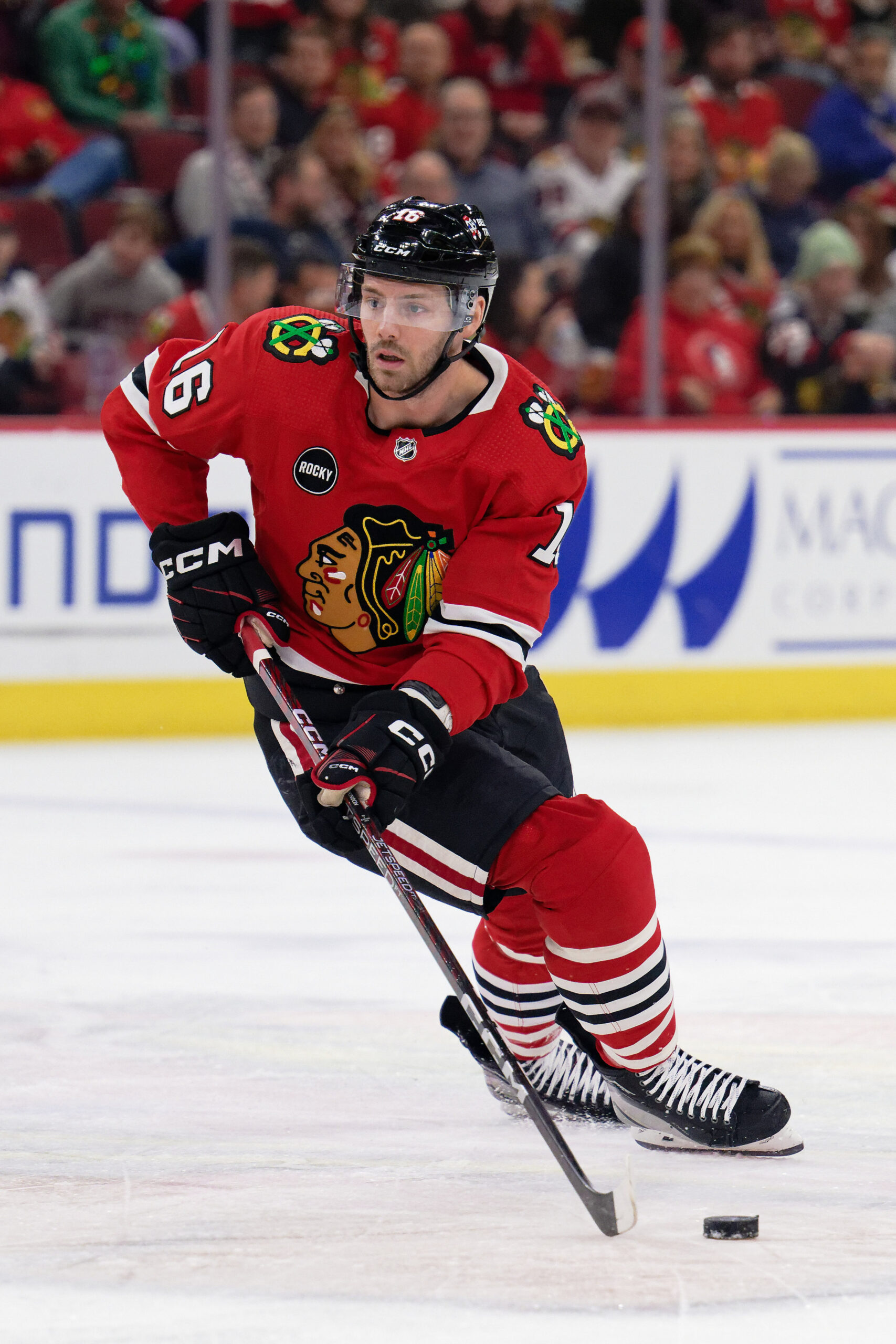
That was undoubtedly the low point in Dickinson’s NHL career. So far in 2023-24, one could call this season the high point in Dickinson’s NHL career.
While the Blackhawks have struggled immensely as a team this season, Dickinson has played some of the best hockey of his life.
He’s already up to 12 goals on the year, which marks the first time he’s scored double-digit NHL goals in his career.
His red-hot start to the year paces him to score 27 in a full 82-game season, and while it’s unlikely he will sustain his 23.1% shooting percentage, a 20 or even 25-goal season is very much in the cards.
In addition to the timely goal scoring and offensive bump, Dickinson is also playing a bigger role than he has before in his NHL career. He’s averaging 15:35 time-on-ice per game and is Chicago’s leading penalty-killer at the forward position.
The Blackhawks’ penalty kill has been quite poor over the last two years, of course, but the trust Luke Richardson places in Dickinson to handle tough defensive assignments is a more appropriate reflection of the player’s merits as a defensive forward.
Dickinson’s issue heading into the open market is twofold: first and foremost, some teams may question the sustainability of Dickinson’s offensive breakout. The history of NHL free agency is littered with cautionary tales of teams investing in breakout goal scorers whose true talent level as an offensive player is masked by a far higher-than-average shooting percentage. Additionally, the significant role Dickinson plays on a rebuilding team in Chicago may not be one other teams will sign him to play.
That being said, it’s hard to say Dickinson’s time in Chicago has done anything but enhance his leaguewide standing. The Blackhawks have given him a platform to remind teams what he can do at the NHL level, and he’s run with it.
Should he get traded to a playoff contender, a big showing on the major stage that is the NHL playoffs would further enhance his free-agent stock. Dickinson has already played in a Stanley Cup Final, and another deep playoff run would be the cherry on top of what has been, so far, the best season in Dickinson’s career.
Teddy Blueger, Vancouver Canucks
Blueger is in a somewhat similar position to Dickinson. The Latvian pivot is in his late twenties, is a respected defensive bottom-six forward, and is on pace for a breakout offensive season.
For Blueger, achieving new offensive heights has been less about personal goal-scoring and more about elevating his linemates. Blueger’s effectiveness in the defensive zone and ability to help recover pucks and transition to attacking play has helped his linemates spend less time pinned in their own end and more time playing offensive hockey.
He’s gotten the chance to play with some talented offensive players such as Conor Garland, and the result is clear: Blueger is on pace to shatter his career-high of 28 points, as he’s scored 13 points in 22 games. That current scoring pace, taking into account the time he’s missed this season puts him on pace to score 15 goals and 40 points in 68 games.
In addition to his improved offensive form, Blueger handles a difficult defensive role for head coach Rick Tocchet. He’s skating the second-most short-handed ice time of any Canucks forward and according to Natural Stat Trick, he’s starting the lowest percentage of shifts in the offensive zone of any Canucks forward.
Blueger has been asked to do a lot this season, and he’s responded with what has been the best start to a season in his career. If he keeps things up, he’ll be in phenomenal shape heading into free agency. If he can put together a deep playoff run on the massive stage that is playoff hockey in a Canadian market, he’ll do even better.
Nick Bonino, New York Rangers
Set to turn 36 in April, it’s likely that Bonino has hit the stage in his NHL career where he’s exclusively signing one-year contracts with clubs. Even with that in mind, Bonino’s 2023-24 has a chance to earn him a raise next summer from the $800k cap hit he’s currently playing on.
The veteran two-way center is currently the third-line center on one of the NHL’s best teams, though he’ll likely slot in as a fourth-line center when Filip Chytil returns from injury. In any case, his work for head coach Peter Laviolette has been strong.
Although he’s not scoring very much, Bonino shoulders more defensive responsibility than just about any other Rangers bottom-sixer. He’s playing the most time on the team’s penalty kill of any forward, and his work there has helped the Rangers have the fifth-best shorthanded unit in the entire NHL this season.
In addition, Bonino is winning 51.3% of his draws, which has contributed to the Rangers’ third-ranked team-wide face-off win percentage. The Rangers appear geared for a long playoff run, something that Bonino is no stranger to.
If he can keep up how he’s playing this season and once again find himself deep in the NHL playoffs, he could be one of the top options on the open market for a team looking to sign a veteran bottom-six center with just a one-year commitment.
Tomáš Nosek, New Jersey Devils
Seeing as Nosek has played in just six NHL games this season due to injuries, and none since November 18th, it’s hard to say his free agent stock is anywhere other than where it was last season.
The 31-year-old bottom-six center is a quality veteran who has appeared in the playoffs in every single season of his professional hockey career, dating back to his time playing in the Czech Extraliga. He brings some size, can kill penalties, and won nearly 60% of his draws last season.
He only received a one-year, $1MM commitment last summer, which was somewhat surprising as he figured to be among the top bottom-six players available on the market. However, teams only want to commit so many dollars to a player who, despite all his merits, has never even hit 20 points in a single NHL season.
It’s hard to imagine Nosek’s market being dramatically different this summer, although the upcoming salary cap increase could help him. It’s just a shame, then, that Nosek’s poor luck with injuries could keep him from entering free agency on the strongest footing.
Kevin Stenlund, Florida Panthers
After spending most of 2021-22 in the AHL, Stenlund finally became a full-time NHLer the following year with the Winnipeg Jets. The Jets were optimistic that the rangy six-foot-five forward would be able to utilize his size and physicality to become an effective bottom-six player in the NHL.
Stenlund ended up playing in 54 games for the Jets and saw time on the second unit of their penalty kill. That was the most extensive NHL role he’d ever received, and the Panthers invested in his career year by signing him to a one-year, $1MM NHL deal.
Stenlund has played a similar role for the Panthers as he did for the Jets, albeit on a more regular basis. Stenlund has entrenched himself as the team’s fourth-line center, playing in between two physical, hard-working players in Ryan Lomberg and Will Lockwood
He doesn’t receive much opportunity to make an offensive impact, but the regular minutes and consistent linemates he’s received in Florida have nonetheless led to an improved scoring pace. He’s currently on pace to score 14 goals and 19 points, which would be a career-high.
Stenlund is currently playing on the Panthers’ penalty kill, a unit that ranks eighth in the NHL. He receives a healthy dose of defensive zone starts, and his work there has helped the Panthers’ overall defensive game.
Florida plays an aggressive style that features a lot of activation from defensemen, which can lead to defensive vulnerabilities. Stenlund has been tasked with playing as a defensive specialist in that environment, and he’s excelled.
Seeing as he won’t turn 28 until next September and offers the size NHL teams covet, it wouldn’t be surprising to see an active market for Stenlund’s services next summer, especially if he can help the Panthers go on another deep postseason run.
Fredrik Olofsson, Colorado Avalanche
Another in our run of fourth-line centers, Olofsson currently occupies that role for the Avalanche. He’s playing secondary penalty-killing minutes as well, though his role as a whole is moderately smaller than that of Stenlund or Bonino.
The six-foot-two 27-year-old was an offseason trade acquisition from the Dallas Stars who played an up-and-down role in Dallas last season, splitting time between the NHL and AHL. This year has been his first as a full-time NHLer, and he’s been able to handle the fourth-line center role for the Avalanche while playing on a league-minimum $775k cap hit.
An import from IK Oskarshamn in the SHL, Olofsson’s lack of offense and limited overall role outside of just defense means that he’s unlikely to offer much surplus value the higher his cap hit rises from the league minimum.
That being said, this season has gone a long way toward helping Olofsson’s free agent standing. He’s slowly establishing himself as a full-time NHLer and if he can hold onto his current job over the course of the full year, he could very well enter free agency as a regular bottom-six staple on a playoff team. That tagline sounds quite a bit different from depth forward who splits time between the NHL and AHL.
Oskar Sundqvist, St. Louis Blues
Sundqvist, 29, arrived in St. Louis this past summer on a one-year, league-minimum contract. He’s been the team’s defensive specialist at the center position, a relatively important role seeing that the Blues other three pivots (Robert Thomas, Brayden Schenn, and Kevin Hayes) are all offensive players.
Like many of the other players listed in this section, Sundqvist checks all the boxes of a bottom-six center. He’s got size, playoff experience, and handles defensive responsibility both at even strength and on the penalty kill. Injuries have slowed him down a bit in recent years, though, which contributed to a lighter market for his services than he otherwise may have had.
He’s already scored 13 points so far this year, so a fully healthy campaign in which he produces around 30 points could see him land a raise from his $775k cap hit this year.
Tyler Johnson, Chicago Blackhawks
The 33-year-old Johnson stands virtually no chance of matching the $5MM cap hit he’s currently playing on when he hits free agency. That doesn’t mean he can’t offer something to other NHL teams, although his form on a poor Blackhawks team has muddied his standing heading into free agency.
Johnson scored 12 goals and 32 points last season, suggesting that he could still play in a middle-six scoring role in the NHL. He’s put up those numbers (he’s on pace to score 30 points this season) while receiving second-unit power-play ice time, though, so it’s not as though he’s breaking through playing just even-strength minutes.
Seeing as he’s undersized, does not contribute meaningfully defensively, and will be 34 by the time the season starts in the fall, it’s difficult to imagine a robust market for Johnson’s services this summer. He does already have nine goals, though, so perhaps if he can keep up his current 15.5% shooting percentage a big goal-scoring year could help him.
Others Of Note
Sam Carrick, Anaheim Ducks
Like some of the other players listed in the section above, Carrick has recently established himself as a full-time NHLer and is currently occupying a fourth-line center role that comes with significant defensive responsibility.
The issue for Carrick, though, is that he has two things working against him that players such as Olofsson or Stenlund do not. Firstly, he’s going to turn 32 in February, meaning he’s at a later stage in his career compared to those players next to him on the market. There’s an argument to be made that he’s exiting his prime, while Stenlund or Olofsson are just beginning their peak years.
In addition, Carrick is shouldering his defensive role on a bad Anaheim Ducks team. While Olofsson and Stenlund’s play has led to strong outcomes for their line and their team, Carrick is a defensive specialist for one of the league’s worst teams.
That likely will lead to questions as to whether Carrick is the caliber of player who can handle that role for a team with legitimate Stanley Cup aspirations. A trade to a contender could help him, though in that case then there is always the risk for Carrick that he doesn’t end up playing as big of a role as he did in Anaheim.
Jonny Brodzinski, New York Rangers
Brodzinski, 30, has helped himself more than most other players on the AHL/NHL bubble this season.
The captain of the AHL’s Hartford Wolf Pack, Brodzinski seized the opportunity created by injuries to other New York Rangers and has already scored a career-high eight points in just 16 games.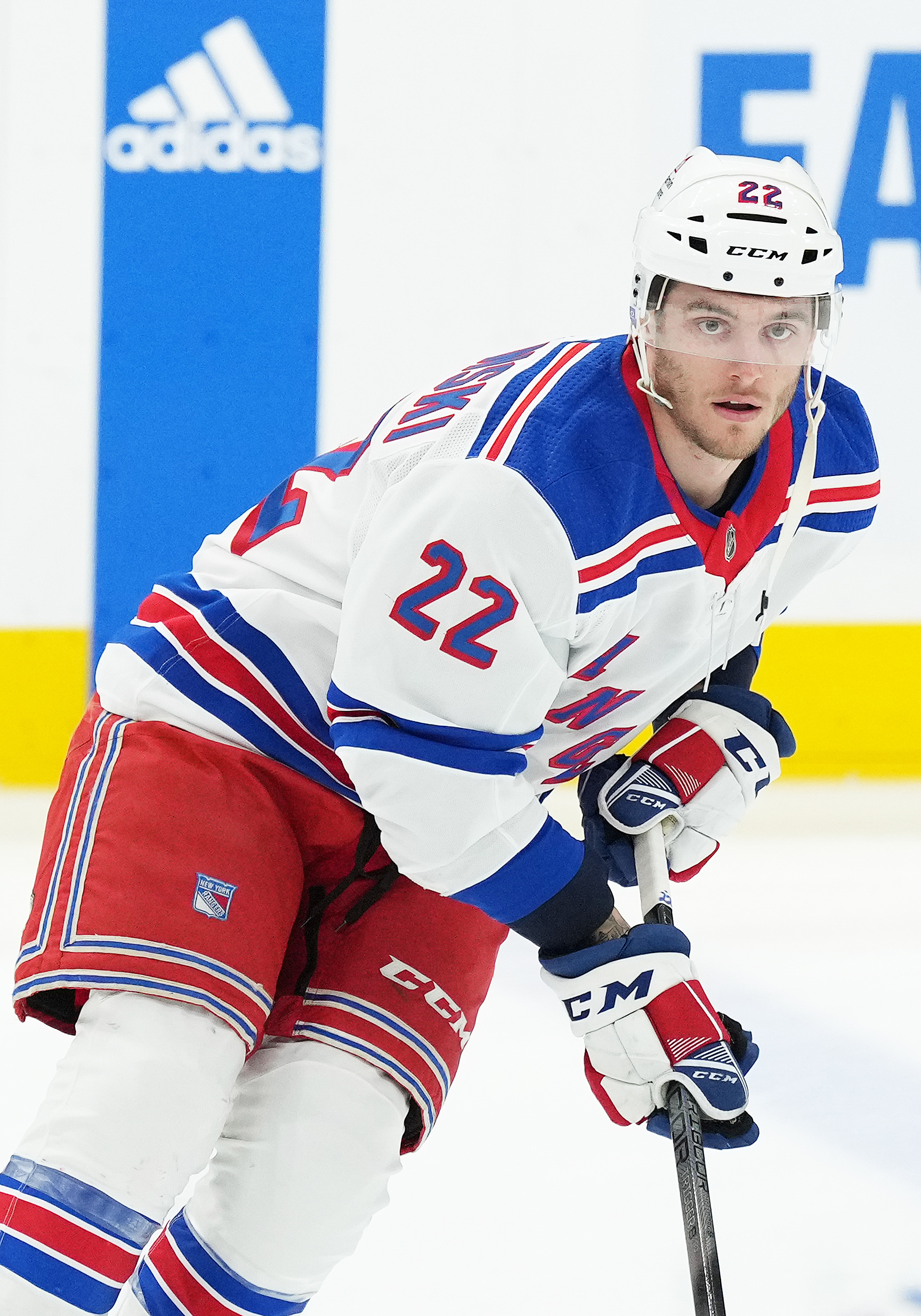
The speedy, hard-working forward plays alongside Bonino and Will Cuylle on the Rangers’ third line, and he has shown the ability to play higher in the lineup in a pinch.
He scored 25 points in 16 AHL games en route to his call-up, showcasing his abilities as an elite AHL scorer as well.
He won’t earn a massive contract in free agency, of course, but he could find himself in a similar position to the one his Wolf Pack teammate Alex Belzile was in last summer.
Belzile seized on the best NHL opportunity of his career and was rewarded for it with a two-year contract featuring a hefty $450k AHL salary this season and a full one-way $775k salary next year.
Brodzinski currently makes the league minimum in the NHL and $325k in the AHL. His play so far this season has lined him up nicely for a significant raise in AHL salary on his next contract if not a full one-way deal.
Travis Boyd, Arizona Coyotes
While 2023-24 has been kind to a player like Brodzinski, it’s been the opposite story for Boyd. After scoring 35 and 34 points in 2021-22 and 2022-23, respectively, Boyd’s 2023-24 campaign is likely a lost one due to an upper-body injury.
That means the versatile 30-year-old will enter free agency without the value of a strong platform season. Even before the injury, there were some warning signs that could worry interested teams. Boyd’s eight points in 16 games are in line with recent years, but his ice time crashed from nearly 17 minutes per game over the last two years to just 9:37 per game this year.
While Boyd was used as a secondary penalty killer last season, his time on that unit evaporated this year. Combine that significantly lowered role with his potentially season-ending injury, and 2023-24 starts to look more and more like a significant setback for Boyd’s free agent stock.
Tyson Jost, Buffalo Sabres
Jost is another player who has had a difficult start to 2023-24, and likely seen that difficult start damage his free agent stock. The former top prospect recently cleared waivers and is on his first AHL assignment since 2018-19.
Jost is still just 25 years old, but his time in Buffalo has suggested he may not be as capable of regular bottom-six duty in the NHL as previously believed. A strong stretch in the AHL is essential, as he’ll need to earn his way back into the NHL and play improved hockey there to enter the market in the best position possible this summer.
Steven Lorentz, Florida Panthers
Lorentz was acquired by the Panthers this past summer in the Anthony Duclair trade, and he was slated to compete with Stenlund for the fourth-line center role that Stenlund eventually won. The six-foot-four grinder established himself as an NHL regular in 2020-21 and has not been in the AHL since 2019-20.
Lorentz has some playoff experience and had a career year offensively in 2022-23 by scoring 10 goals and 19 points in 81 games for the San Jose Sharks. This season, Lorentz began the year on the team’s fourth line, but after producing just three points in 25 games, the Panthers turned to Lockwood. Lockwood does not offer the size Lorentz does, but he plays at a higher pace and his quickness and work ethic are valued by head coach Paul Maurice enough to keep Lorentz out of the lineup.
If Lorentz spends the bulk of this season as a spare forward rather than a regular fourth-liner, his stock will be lower heading into the first unrestricted free agency of Lorentz’s career.
Mitchell Stephens, Montreal Canadiens
Injuries have landed Stephens back in the NHL after a one-year absence, and he’s now slotting in as the Canadiens’ fourth-line center. While he’s not receiving very much time-on-ice, he does sometimes play a cameo on the penalty kill and remains in head coach Martin St. Louis’ regular lineup for the time being.
For a 26-year-old player like Stephens, going a second consecutive season without a single NHL game played would be dangerous for his ability to earn the type of contract he’s currently playing on, which is a two-way NHL deal with a $300K AHL salary.
This stretch as the Canadiens’ fourth-line center has reminded NHL teams that Stephens can capably fill in as an AHL top-six center and premier call-up option, which means this season has already been a useful one for Stephens’ free-agent prospects.
Photos courtesy of USA Today Sports Images
Poll: Favorite Hockey Moment Of 2023?
Now that 2023 is coming to an end in a few hours (depending on which coast you are on), it is time to reflect on some of the big moments of the last 365 days, which there have been plenty of in the NHL.
On April 9th, in their game against the Philadelphia Flyers, the Boston Bruins won their 63rd game of the season, breaking the most wins of the regular seasons previously set by the 2018-19 Tampa Bay Lightning, and 1995-96 Detroit Red Wings. The Bruins would go on to win 65 games last season, cruising to the President’s Trophy, annually awarded to the team with the most points at the end of the regular season. Ultimately, Boston’s winning ways would not continue into the 2022-23 Stanley Cup playoffs, as they were ousted by the eventual Eastern Conference Champion, Florida Panthers, in seven games in the opening round.
Following along with the theme of team accomplishments, the Vegas Golden Knights became the quickest expansion team to win their first Stanley Cup, ousting the Panthers in five games in the 2023 Stanley Cup Finals. Originally founded in 2017, it took the Golden Knights only six seasons to win their first Stanley Cup, beating the previous record of the 1974 Flyers team, which took only seven years from their introduction to the league during the 1967 NHL Expansion.
On an individual level, on the Edmonton Oilers’s last game of the regular season on April 13th, Connor McDavid recorded his 153rd point of the season, by way of an assist against the San Jose Sharks. Because of this, McDavid would pass Bruins’ legend Phil Esposito for the 15th-best scoring season in NHL history, the highest of any player not named Steve Yzerman, Mario Lemieux, or Wayne Gretzky. Winning the Art Ross, Hart Memorial, Ted Lindsay, and Maurice Richard Trophy all in one season, McDavid would go on to have the best individual season in the salary cap era.
Aside from these moments, the NHL has been filled with memorable events in the 2023 calendar year. Now it’s time to pick, is one of these moments one of your favorites, or is there another that stands out?
Favorite Hockey Moment Of 2023?
-
Vegas Winning 2023 Stanley Cup 30% (124)
-
Connor McDavid All-Time Season 26% (109)
-
Bruins Breaking Win Record 25% (107)
-
Other (Comment Below!) 19% (80)
Total votes: 420
What Your Team Is Thankful For: San Jose Sharks
As the holiday season approaches, PHR will be taking a look at what teams are thankful for in 2023-24. There also might be a few things your team would like down the road. We’ll examine what’s gone well in the early going and what could improve as the season rolls on for the San Jose Sharks.
Who are the Sharks thankful for?
There isn’t a lot to be excited about from a San Jose Sharks team that kicked off their season with an 11-game losing streak, is currently on a seven-game losing streak, and has yet to win 10 games. But thankfully, there’s a fantastic consolation prize in the 2024 NHL Draft – San Jose local and star prospect Macklin Celebrini. Celebrini was born in Vancouver but played much of his youth hockey career in the Bay Area, before moving to Shattuck St. Mary’s. He’s since emerged as a superstar prospect, with 25 points through his first 15 games as an NCAA freshman. The fleet-footed centerman is also the leading scorer for Team Canada’s World Juniors roster, boasting six points in three games – double the scoring of anyone else on the roster. His trophy case is already full of accolades, including winning the awards for both USHL Rookie of the Year and USHL Most Valuable Player last season. Celebrini doesn’t project to be a generational prospect like Connor Bedard but he’s confidently in the “1B” tier below him, likely poised for immediate success in the NHL. There’s no better place for Celebrini to start his career than where it all began – or, that will at least be what Sharks fans hope for if their season continues to skid.
What are the Sharks thankful for?
Extra goaltending training.
The San Jose Sharks are averaging 35.7 shots-against this season – the third-most of any team over the last decade. That’s led to a dismal average of 4.08 goals-against this season but it’s also meant extra action for netminders Mackenzie Blackwood and Kaapo Kahkonen, providing a sort-of trial by fire for the Sharks’ starting goalie role. The duo has had very different results this year, with Blackwood recording a .884 save percentage in 23 appearances, while Kahkonen has set an even .900 save percentage in 17 games, catching up in appearances while Blackwood has been out with illness. Moneypuck’s goals-saved-above-expected per-60 stat (GSAx/60) paints a similar story, with Kahkonen’s 0.368 sandwiched between Igor Shesterkin and Jacob Markstrom at 13th in the league while Blackwood’s -0.312 ranks 32nd in the league. Letting up a bombardment of shots every single night is a terrible habit to have but the opportunity to see how a netminder faces such heavy pressure is a nice silver lining. Kahkonen is one of a daunting 17 Sharks set to become a free agent next summer, while Blackwood is signed through the end of the 2024-25 season, and how each player is able to take advantage of their chances through the rest of the season will undoubtedly weigh heavy into how San Jose handles their goalie contracts next off-season.
What would the Sharks be even more thankful for?
A confident win.
The Sharks are not only currently on a seven-game losing streak, but two of their last three wins have come in overtime, while the other win was a grueling 2-1 victory that saw its game-winning goal scored with just a few minutes left. It’s been a tedious stretch for the Sharks, forced to fight to the end of every game they play, unless they’re getting walloped on the scoreboard. There is no saying just how impactful a win could be, especially if the Sharks can find a way to really get over an opponent and win by a few goals. The team only has two wins of three goals or more this year and haven’t managed the feat since December 1st. With the holiday break passed and the All-Star break looming, now is a perfect time for San Jose to set their pace for the rest of the season – and which players are able to step up and assure that could make a tremendous impact on the team’s long-term plans.
What should be on the Sharks holiday wish list?
More draft stock.
The Sharks are unsurprisingly set to be sellers at the trade deadline, with options like Tomas Hertl and Anthony Duclair poised to receive plenty of interest from teams looking for a scoring boost. If they do get interest, draft capital needs to be the Sharks’ top priority. The team already has four picks in the top-two rounds of next year’s draft but a lot has been made about the strength of the 2025 and 2026 draft classes as well, and increasing their stock in each draft could go a long way in helping San Jose build out a team that can lift them out of their rebuild. They’ve had just three picks in the Top 10 since 2010, used to draft Timo Meier (2015), William Eklund (2021), and Will Smith (2023). That’s no way to bring in talent that can lead the top of a lineup, especially considering that one of those selections has already been traded away. After a season of immense struggles, San Jose will hope they can reverse this trend and bring in a few true difference makers over the next three drafts.
What Your Team Is Thankful For: Pittsburgh Penguins
As the new year approaches, PHR will be taking a look at what teams are thankful for in 2023-24. There also might be a few things your team would like down the road. We’ll examine what’s gone well in the early going and what could improve as the season rolls on for the Pittsburgh Penguins.
Who are the Penguins thankful for?
There is very little doubt as to who the Penguins should be thankful for. Sidney Crosby is the face of the franchise, he saved the team, and in his 19th NHL season, he has had to drag the lifeless Penguins to victory on more than one occasion.
Crosby has quietly played at a level this season that few 36-year-olds have ever played at. In 33 games this season, Crosby has 19 goals and 16 assists. While it isn’t one of his best offensive seasons, he has put up those numbers without the benefit of a productive power play. The Penguins’ current power play is tied for the sixth worst in the entire NHL despite having Crosby, Evgeni Malkin, Erik Karlsson, and Jake Guentzel on it.
Crosby’s productivity this season goes well beyond what he does in the offensive zone. He’s been downright dominant in the faceoff circle, stronger defensively, and has been more physical than in recent years. His two-way play is elite, and while it would be surprising to see this happen, it’s not outside the realm of possibility that we could be seeing his name in the Selke Trophy conversation come the end of the season.
Crosby will likely end his career in Pittsburgh, and he should. He is not only the on-ice leader of the Penguins, but he is also the heart and soul of the entire organization, particularly with Mario Lemieux less involved with the team now. Many people have waited for Sid the Kid to see his play tail off but given his work this season it doesn’t appear it will happen anytime soon. And for that the Penguins and their fanbase should be very thankful.
What are the Penguins thankful for?
Their top six forwards.
The Penguins’ power play might be amongst the worst in the league, but their top-six forward group is one of the strongest in the NHL. Crosby, Malkin, Guentzel, Bryan Rust, Reilly Smith, and Rickard Rakell are a very strong group of scorers, and they have to be because they are the only ones who score on most nights for Pittsburgh.
Penguins head coach Mike Sullivan has been very busy this season shuffling the forwards around, and while he has dropped Rakell and Smith to the third line on occasion, he has largely kept the six men as a constant on the top two lines. Many Penguins fans have called for Sullivan to spread the offensive wealth over the top three lines as the Penguins have struggled to generate depth scoring, but anytime the Penguins coach has done so the results have been meek at best. The Penguins lack offensive forwards outside of the ones that play in the top six, and anytime they have sent a top-six forward to the third line, they have been unable to generate any additional offense, and the top two lines have suffered.
It’s been pretty obvious all year that the Penguins’ third and fourth lines lack an offensive component and that will be general manager Kyle Dubas’ biggest obstacle to overcome if he’s going to help Pittsburgh get back to the playoffs. But for now, Pittsburgh will have to continue to heavily rely on their top six forwards, as they have for most of this season.
What would the Penguins be even more thankful for?
The continued undoing of the Ron Hextall era.
Ron Hextall had a very tumultuous run as Penguins general manager and much of the work he did during his two-and-a-half-year run was undone by Dubas when he took control of the Penguins this past summer. Dubas was quick to identify Jeff Petry, Mikael Granlund, and Jan Rutta as players that didn’t fit the mould of how Sullivan wanted the Penguins to play and in two separate trades, Dubas was able to move on from those three players. Dubas was also able to let Ryan Poehling, Josh Archibald and Danton Heinen walk and move on from Mark Friedman in an additional trade. When all was said and done, Dubas was able to turn over nearly half of the Penguins roster from last year to this season, and while the group is improved, there are still many relics from the Hextall era that the Penguins could stand to move on from.
The most obvious is Jeff Carter, who is virtually unmovable thanks to an ill-advised two-year contract that Hextall gave him in January 2022. Fortunately for the Penguins, Carter’s deal finishes up at the end of this season and that $3.125MM should be allocated more effectively going forward.
The Penguins also have Ty Smith and Alex Nylander who are toiling away in the AHL after they were unable to show they belonged on the NHL roster. Smith was acquired in an ill-fated trade with the New Jersey Devils for top-four defenseman John Marino and Nylander was exchanged for speedster Sam Lafferty who has been a very effective depth piece in Vancouver.
The biggest change Hextall made was to the Penguins’ bottom two lines, they were dismantled under his watch as he moved on from Freddy Gaudreau, Jared McCann, Evan Rodrigues, Brandon Tanev, and the aforementioned Lafferty while choosing to hold on to more defensive-minded forwards who provided little in the way of offense.
The Penguins would do well to buck this trend in favor of more offensive-minded bottom-six forwards, which leads us to our next section.
What should be on the Penguins holiday wish list?
Bottom-six help.
It wasn’t until their 11th game that Pittsburgh received a goal from their fourth line, and while two-thirds of that line has been part of a very effective penalty kill, they need to get on the scoresheet a lot more if Pittsburgh is going to make a run at the playoffs.
In the previous section much was made about Hextall and the previous management regime making moves to create a bottom six that couldn’t score, however, current general manager Dubas failed to address the Penguins depth scoring woes in the offseason and doubled down on defensive-minded forwards by signing Matthew Nieto, Noel Acciari, and Lars Eller at a time when Pittsburgh needed to add a scoring forward. The Penguins have responded with strong team defense as they sit sixth in the league in goals against, however, they have struggled to score sitting 25th in the league in goals for.
In a perfect world, the Penguins would acquire a true third-line center with some offensive output who could push Eller into a fourth-line role. This would perhaps allow the Penguins to create a third scoring line and push some of those in the current bottom six into slots that better suit their skillset.
Poll: Who Will Be The Biggest Name Moved At Trade Deadline?
In a little over three months, the NHL calendar will set its sights on one of the most exciting days of the year, with this season’s trade deadline falling on March 8th. With the annual roster freeze lifting this morning, the unofficial start to the trade season is finally underway across the league.
In one of the bigger deadlines in recent memory, the 2022-23 season saw star players such as Timo Meier, Ryan O’Reilly, Patrick Kane, and Mattias Ekholm all change hands, as two arms races sprouted in both of the league’s conferences. This year, once again, there are a handful of high-profile players seeing their names pop up in the rumor mill.
Chris Johnston, writing in The Athletic, has produced a Trade Deadline Big Board for this season, an assortment of players he annually produces around this time each year. Currently, the four best players available appear to be Elias Lindholm and Noah Hanifin of the Calgary Flames, John Gibson of the Anaheim Ducks, and Jake Guentzel of the Pittsburgh Penguins.
The future of both Lindholm and Hanifin has been clouded since the beginning of the summer, with multiple reports indicating they would like to stay with the Flames organization, and other reports saying the complete opposite. As of now, with the Flames currently holding a 14-16-5 record and sitting four points back of the final wild-card spot in the Western Conference, Lindholm and Hanifin’s days in Calgary are likely numbered.
Even outside of this season, Gibson has been the subject of trade rumors dating back several years now, with reports suggesting that Gibson had tried to force his way out of Anaheim this past summer. Even though those reports were soon downplayed, the market for Gibson has likely never been higher, as several competitive teams are in dire need of goaltending help. Unfortunately, with a $6.4MM salary until the end of the 2026-27 season, few teams will have the cap space to acquire Gibson outright.
Lastly, Guentzel is one of the newer names on the board, as recent reporting indicates that the Penguins and Guentzel are not close to a contract extension, leading many to believe Pittsburgh might be interested in moving the winger if the right offer came along. Headed for unrestricted free agency at the end of the season, and with Pittsburgh currently sitting three points back of the final wild-card spot in the Eastern Conference, Guentzel and the Penguins may be headed for a divorce before the end of the season.
Now it’s time for a vote, will one of these four players be one of the biggest names traded at this year’s deadline, or will a surprise player take the headlines? Vote below!
Who Will Be The Biggest Name Moved At Trade Deadline?
-
Elias Lindholm (Calgary Flames) 42% (471)
-
John Gibson (Anaheim Ducks) 17% (191)
-
Noah Hanifin (Calgary Flames) 16% (181)
-
Jake Guentzel (Pittsburgh Penguins) 14% (155)
-
Other (Comment Below) 10% (117)
Total votes: 1,115