
PHR Mailbag: Klefbom, LTIR, Blashill, Top Pick, Miller, Sabres, Predictions, Murray, Cup Final
Topics in this edition of the PHR Mailbag include the creative usage of LTIR in recent years, Buffalo’s goaltending situation, J.T. Miller’s future with Vancouver, and much more. If your question doesn’t appear here and wasn’t about Detroit, watch for it in next weekend’s mailbag. If your question was about the Red Wings, watch for that to be covered in a bonus mailbag between now and then.
WilfPaiement: Is there any updated information on Oscar Klefbom? Playing next season? Retiring?
It’s the status quo for the Edmonton blueliner. Klefbom’s shoulder injury still lingers and at this point, there’s no expectation that he’ll be able to resume his NHL career. He certainly won’t be retiring, however. He’s still owed $5.169MM in salary for next season and there’s no way he’s leaving that on the table to do Edmonton a favor. Since his deal is backloaded as well, he’s not as likely of a candidate to be moved to a team looking to do some LTIR shenanigans. Speaking of which…
rickg: Are there any opinions on how teams are using the LTIR for the purpose of adding to the roster to better the team, instead of what the LTIR was intended to be used for as a way to replace an injured player on your roster if your team was maxed out and LTIR allowed the team to go past the high-end cap threshold?
There are few things as confusing in hockey as the inner machinations of LTIR. It might even give ‘What constitutes goalie interference?’ a run for its money at times. I’d say by now that most understand the basics which was what the rule was intended to be but these trades that now see injured players going for value that involve transaction sequencing and precise timing of roster moves takes it to a whole different level, one that is much more confusing and harder to explain.
But even if they’re harder to explain, are stranger on the surface, and can even flat out baffle people, I have no problem with these types of moves. The NHL is a hard cap system that doesn’t have a lot of potential for wiggle room. If teams can find a loophole to exploit, go for it. Use it until enough general managers complain to make it a sticking point in the next CBA discussions. Right now, there isn’t enough of an appetite for trying to close that Pandora’s box.
Does the recent Shea Weber for Evgenii Dadonov trade go against the spirit of the LTIR rule? Of course it does. But if Montreal and Vegas are both happy at the end of the day and the trade fulfills an objective they wanted to achieve, then good on them for finding a way to make something work. At least it made for a good discussion point for a bit of time during a quiet part of the NHL calendar when it comes to off-ice movement.
I’ll mention that this question came in before that trade happened. Perfect timing on your part.
Johnny Z: So, does Blashill have the inside track on the Florida coaching job?
The former Detroit bench boss was linked to the Panthers earlier this month but at this point, it’s hard to see him being the contender for a position that may or may not be available. With reports coming out on Friday that Florida is conducting a rather thorough coaching search and has interviewed several prominent veterans, it’s hard to see Jeff Blashill coming up as the winner in that particular battle should GM Bill Zito opt to go in a different direction from interim head coach Andrew Brunette.
I think Blashill could be a candidate to be an assistant coach with Florida, however, particularly if Brunette retains the job. There are openings to be filled and if you have effectively a first-time head coach running the bench, it wouldn’t hurt to have someone with recent NHL head coaching experience on the staff. Blashill, who doesn’t seem to be a candidate for any of the other openings at the moment, would be a decent fit in that type of role and unlike the prominent veterans, would likely be willing to accept an associate coach position as well. He could wind up in Florida, just not as their next head coach.
ckw: Do you think Shane Wright is going to go first overall and if not, who do you see the Habs taking?
I know there’s a growing sense that Juraj Slafkovsky could ultimately be the number one pick and I can understand the logic behind it. Wright’s season wasn’t up to the admittedly high level of expectations and while Slafkovsky was quiet himself for long stretches, his performance at the Olympics and the Worlds turned some heads. If he can find a way to play at that level consistently, he’s worthy of being the top pick. But that’s a big if. Even so, this doesn’t feel like the type of typical smokescreen you might see at this time of year from the team holding the top pick.
That said, Wright is my expected choice for the Canadiens. Montreal has been chasing center help for basically the better part of two decades now. Even when their NHL depth was good, they didn’t have that true number one. I don’t think Wright is a true number one either but a combination of him and Nick Suzuki for seven years as their top two options is a lot better than what they’ve trotted out in recent years. I have a hard time thinking they can pass on that, especially knowing that their salary cap situation isn’t exactly ideal; it’s not as if they can go out and sign an impact free agent middleman any time soon.
pawtucket: J.T. Miller gets traded. If yes, to what sort of team and for what sort of package. If no, which of Horvat or Boeser goes and to what sort of team and for what sort of package.
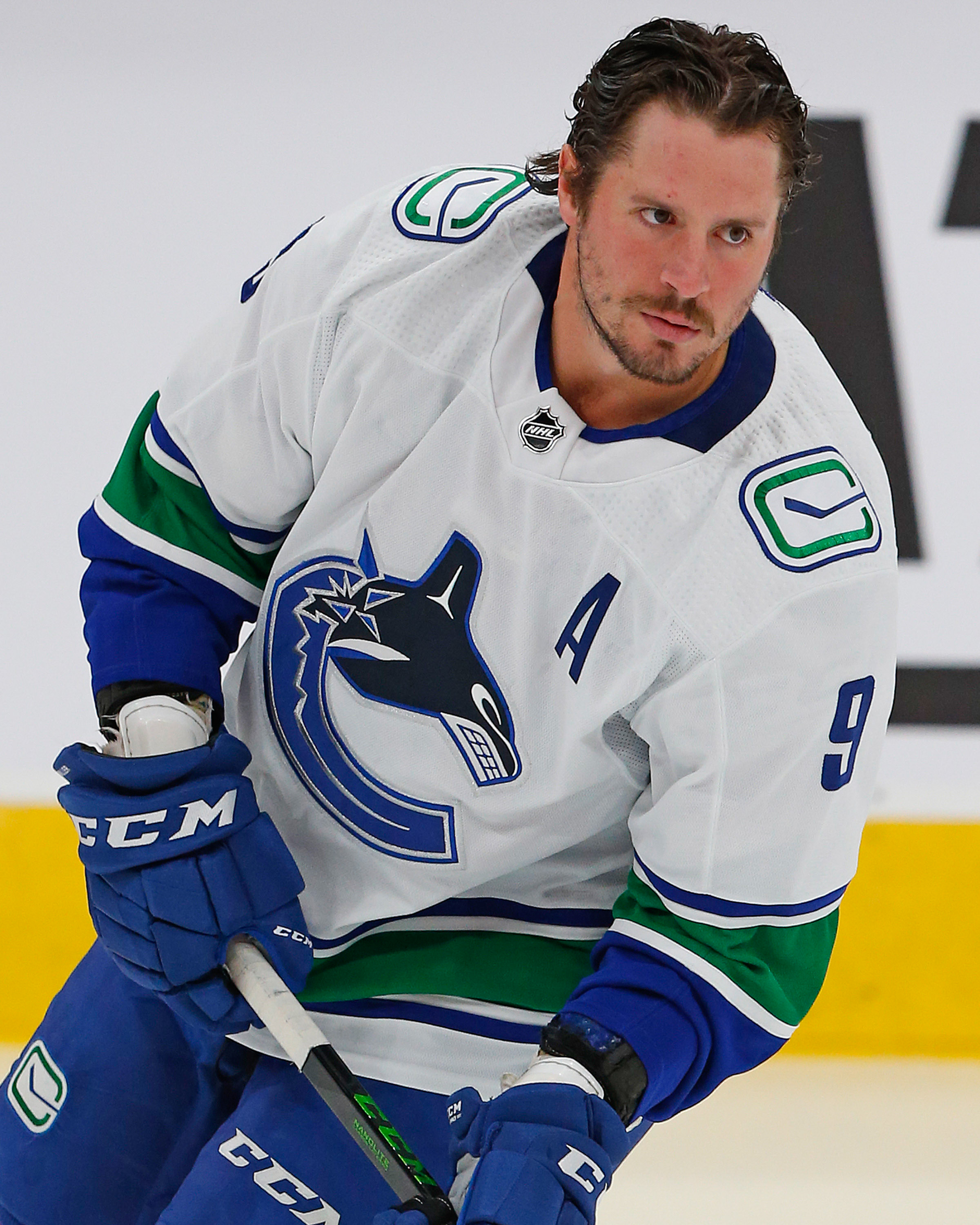 I’m going to say yes, Miller does get traded. Is Vancouver really prepared to pay upwards of $8MM per season on a contract that starts at the age of 30 for a player who has only twice reached the 60-point mark? I know he has been much more productive lately but I still see giant red flags when I try to picture that type of contract. Knowing extending Miller would eventually cost Bo Horvat (they can’t afford Elias Pettersson, Miller, and Horvat down the middle), I’d rather take the short-term hit in talent to add some important future assets and gain some much-needed cap flexibility.
As for where, that’s a tough one but I’ll say Los Angeles. Anze Kopitar has two years left on his deal and Miller’s extension wouldn’t start until 2023-24 so there’s only one year of overlap. Kopitar will be in his age-37 season when he signs his next contract so he’ll likely be starting to decline at that time; a new top pivot will be needed. Miller would be a good insurance policy if the likes of Quinton Byfield and Alex Turcotte don’t pan out as intended (and if they do, affordable short-term surplus center depth is never a bad thing). The Kings have the cap space to bring him in now and have some longer-term flexibility. They also have quality prospects that would make it easier to part with the package it would take.
I’d peg that package as a three-piece deal. The first-round pick (19th overall) next month would be one of them. I’d put Rasmus Kupari in their as a second one, a 22-year-old former first-rounder that could be Vancouver’s cost-controlled 3C of the future; if he pans out, a Pettersson-Horvat (assuming he’d be extended after moving Miller)-Kupari trio would put them in good shape. The other is a prospect and looking at what the Canucks have in their prospect pool, a right-shot defender would be a target. The Kings have a few of those but the one that stands out is Brock Faber, a 2020 second-rounder that’s probably a year away from being pro-ready and plays the type of complementary game that would work well alongside someone like Quinn Hughes.
Offseason Checklist: Minnesota Wild
With the offseason in full swing aside from the two teams in the Stanley Cup Final, it’s time to examine what each squad will need to accomplish over the coming months. Next up is a look at the Wild.
This past season was an interesting one for the Wild. They were one of the top scoring teams in the NHL and knowing the cap adventure that lies ahead (more on that shortly), GM Bill Guerin made some moves to add at the deadline in the hopes of a long playoff run. Instead, despite finishing fifth overall in points during the regular season, they were ousted in the opening round by St. Louis. Now, Guerin has some work to do to be able to keep as much of this core together as possible which is the focal point of Minnesota’s checklist.
Free Up Cap Space
It’s not as if Guerin hasn’t known this was going to be at the top of his list at some point. It would have been the case had they not bought out Ryan Suter and Zach Parise and it still is the case with them being bought out as their dead cap charge went up by $4MM for each player. That’s hard for any team to overcome. And that’s not the total charge, that’s just the increase; the total is over $12MM for next season. (If you want to look ahead a year, it goes up by another $1MM each in the 2023 offseason as well; this isn’t just a one-time situation to navigate through.)
At the moment, Minnesota has a little over $7MM in cap space with which to sign multiple forwards, a defenseman, and a second goaltender. That, on its own, might not sound so bad but once you factor in who some of those players are – that list comprises the rest of their checklist – it’s considerably worse.
It’s not as if there are some contracts that are well above market value on their books but $12MM in dead space is going to be very difficult to overcome. A small move or two to free up some extra wiggle room could be the difference in whether they can keep a key player or not. There’s a lot at stake as a result.
Sign Or Trade Fiala
If you read the above and immediately thought of Kevin Fiala, you certainly won’t be alone. The winger has been in trade speculation going back to last summer with this exact situation in mind.
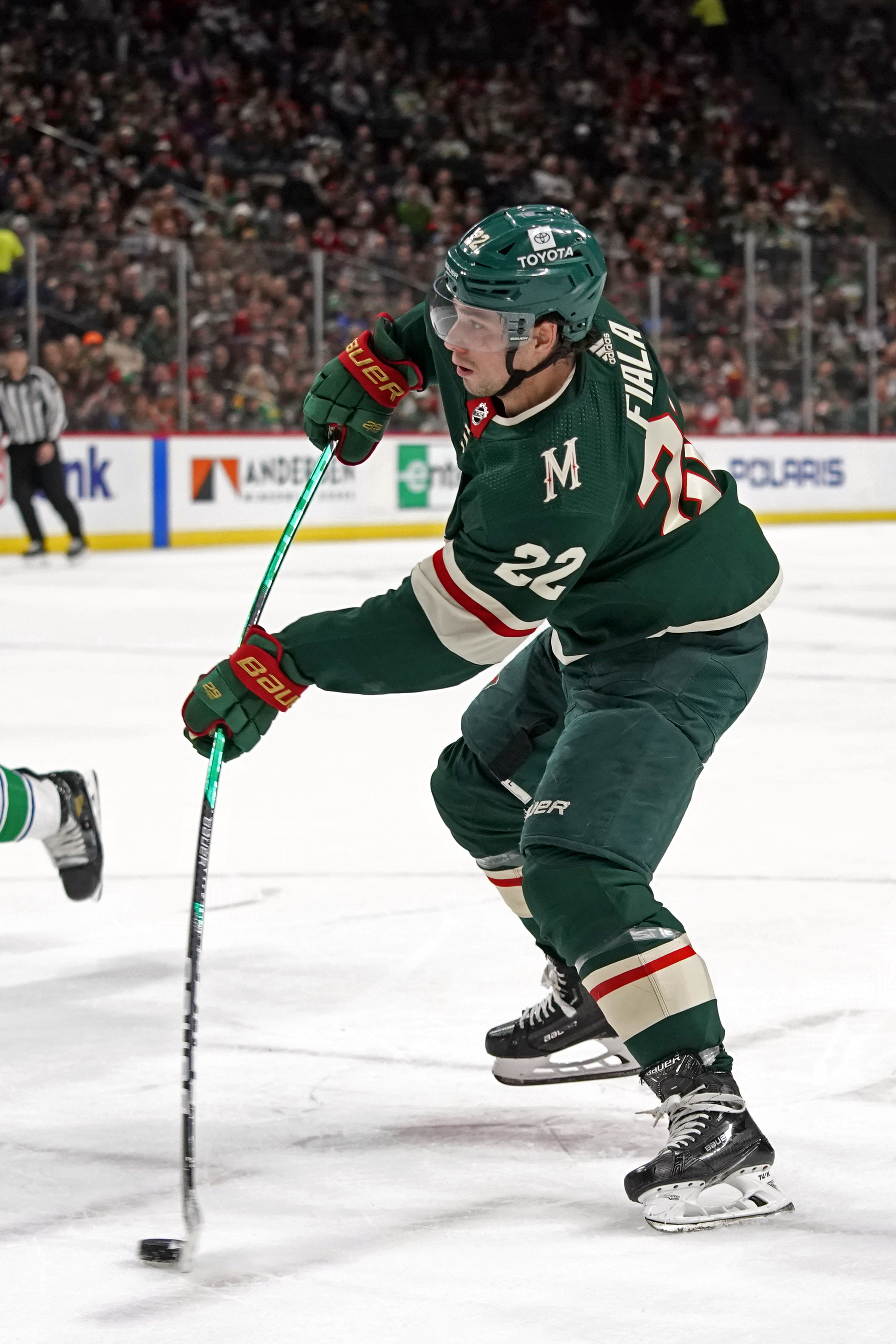 If the two sides would have been able to work out a long-term agreement last summer, that might have been enough to put an end to that speculation. Instead, Minnesota took the rare step of pre-emptively filing for arbitration before eventually settling on a $5.1MM salary for this past season. Fiala then went and had a career year, picking up 33 goals and 52 assists in 82 games, all career highs. Overall, the Wild received really good value on that deal but things are only going to go downhill from here for them.
Fiala is now a year away from unrestricted free agency and while the Wild can’t take him to arbitration again, he can take them to a hearing, get a nice raise from the arbitrator, and hit the open market in 2023 in the prime of his career. A long-term deal could approach the $7.5MM to $8MM range and while Guerin probably wouldn’t mind giving that to him, they’d have to part with another core player to make that happen. At this point, it seems likely that the 25-year-old will be traded.
While Fiala doesn’t have a no-trade clause, he holds the hammer on this front as well. Fiala on a long-term contract has a lot more value than Fiala on a one-year deal. Teams can’t put conditional draft picks in a trade that are dependent on whether or not he signs either. Guerin will need to work hard to get maximum value for Fiala (likely in the form of futures or young roster players) but will also have to work hard with the pending RFA to find a suitor that he’s willing to forego the open market to sign with. There’s a lot of work to do on this front in a short period of time.
Sign Second Goalie
Guerin surprised some with the acquisition of Marc-Andre Fleury at the trade deadline in an effort to give them a second proven veteran goaltender for the playoffs. He was a little better down the stretch than he was with Chicago and that got him most of the playing time against the Blues. While it may have seemed like this was just a short-term pickup, Guerin has expressed a firm desire to keep Fleury around to split time with Cam Talbot next season.
While it’s certainly fair to say that Fleury will get considerably less than the $7MM AAV he had on his expiring contract, he still should have enough interest out there to get half of that price tag. Even if Fiala moves for futures, Minnesota can’t afford Fleury at that price tag. They have two options on that front. One is to try to move a current roster player for someone making less and use those savings to afford Fleury’s new deal. The other is to work out an incentive-laden deal that gives them the ability to roll over the bonuses onto the 2023-24 cap. Of course, with the dead money going up, that’s only pushing the problem over, not fixing it.
If they’re unable to keep Fleury, Guerin will need to be aggressive on the open market for a replacement with Kaapo Kahkonen now in San Jose. Talbot will turn 35 next month and while he’s still a capable NHL goaltender, he’s not someone that can handle 60-plus games next season. They’ll need a fairly strong second option, one that will be able to play 30 or more games. That will put them looking in the high-$2MM/low-$3MM range even if it isn’t Fleury. Jesper Wallstedt is their goalie of the future but he’s a few years away from being NHL-ready. They need to add another NHL option in the meantime over the coming weeks.
Re-Sign Middleton
The player Minnesota received in the Kahkonen trade, defenseman Jacob Middleton, is also in need of a new contract. He’s a restricted free agent with salary arbitration rights and is a year away from UFA eligibility. This is one of those situations where finding fair value is going to be a challenge.
Middleton has just 80 career NHL games under his belt, 66 of which came this season. Heading into the year, he was a candidate for a deal around the $1MM range but after a strong showing with both the Sharks and Wild, he’s going to get more. If it gets to an arbitrator, the award could be tricky to pin down because of the limited experience but that doesn’t give Guerin the hammer by any stretch since a low-ball offer could force Middleton to file for arbitration and see what his value is on the open market next summer.
A long-term contract doesn’t seem likely at this point given his limited track record but a deal that buys out a couple of UFA years could be doable. The AAV would likely jump over $2MM in that situation but it would be a justifiable price. Of course, the longer the contract, the harder it will be to fit the other pieces of the puzzle in from a salary cap perspective. Middleton’s case isn’t as prominent as some of the others but it has to stay in the back of Guerin’s mind as he works his way through Fiala’s eventual trade and finding a second netminder.
Photo courtesy of USA Today Sports Images. Contract information courtesy of CapFriendly.
Free Agent Focus: Ottawa Senators
Free agency is now less than a month away and many teams are already looking ahead to when it opens up. There will be several prominent players set to hit the open market in mid-July while many teams have key restricted free agents to re-sign as well. Next up is a look at the Senators.
Key Restricted Free Agents
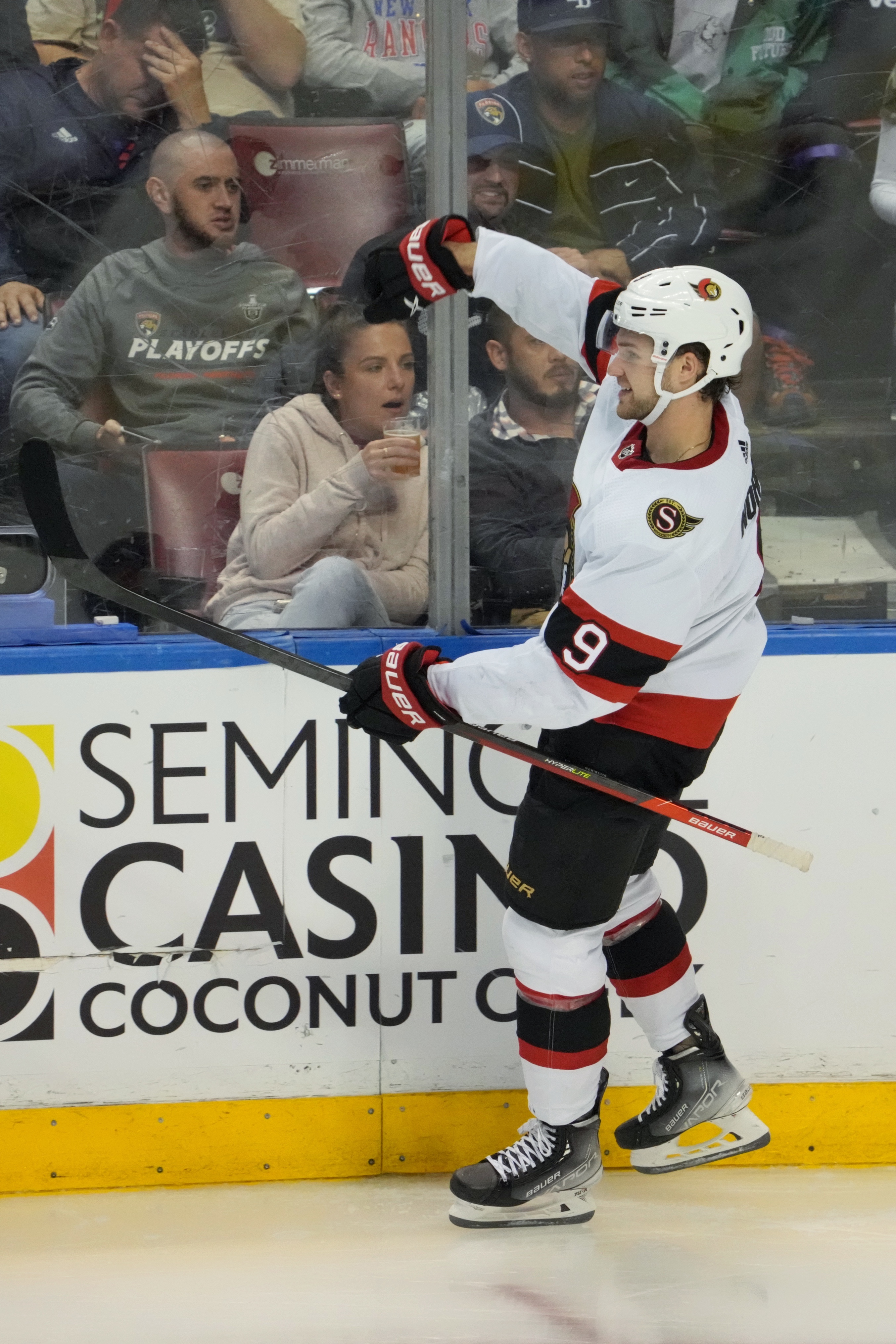
F Joshua Norris — While Senators GM Pierre Dorion previously called the day he traded Mark Stone to the Vegas Golden Knights “one of the proudest” days he’d had in his career as a GM, it’s his trade of Erik Karlsson that was the real stroke of brilliance. Not only did the Senators receive the draft pick used to select budding star Tim Stutzle in exchange for their captain, they also received center Joshua Norris, who was then in his freshman season at the University of Michigan. Norris was drafted 19th overall in 2017 and has blossomed into a lethal goal scorer. With Brady Tkachuk at his side, Norris scored 35 goals this year and finished 2021-22 with 55 points in 66 games, a 68-point pace. Norris also showed some improvements in his defensive game. While Norris’ 20.3% shooting percentage is high enough to raise questions about the sustainability of his goal scoring, Norris did have a 17.7% shooting percentage in 2020-21 and some high-end goal scorers are simply capable of sustaining inflated shooting percentages thanks to their elite shooting talent. Norris could be in that category, and the Senators shouldn’t drag their feet in locking Norris down on a long-term deal. Montreal Canadiens center Nick Suzuki‘s eight-year, $7.875MM extension could be a solid number for a maximum-term deal, and it would come under Tkachuk’s $8.2MM cap hit, meaning Norris wouldn’t be making more than the captain. The Senators may want something a bit cheaper, maybe along the lines of the five-year, $6.1MM AAV extension Dylan Larkin signed, but with comparable young centers like Suzuki and the New Jersey Devils’ Nico Hischier signing long-term deals north of $7MM AAV, expect any long-term deal for Norris to come in at around that number as well.
F Mathieu Joseph — Joseph is an extremely interesting case heading into this offseason. Earlier in the season, his offseason case would have looked pretty simple. As an arbitration-eligible restricted free agent, Joseph would have had the option to take whatever the arbitrator awarded him and inch closer to a trip to unrestricted free agency. But now, there could be more appetite to get an extension done from the team side of the equation, thanks to a mid-season trade to the Senators. Joseph arrived in Ottawa in exchange for Nick Paul and found immediate success there. He fit naturally next to Norris and Tkachuk, and in the first week of April Joseph had 10 points in just four games. It was that four-game stretch that served as an endorsement of Dorion’s belief in Joseph, and also serves as the root of uncertainty with Joseph entering this offseason. Do they pay him for what they think he can be? Or do they opt to let him take a one-year deal in order to see if the talent he flashed is there to stay? It’s a risky situation, because either option could easily end up being a mistake. If he plays as he did in that stretch over the course of a full season in Ottawa, his price skyrockets. But if the Senators commit now, there’s the chance that his scoring outburst was just a mirage, and they’ve overpaid for the idea of a player rather than the reality of the one they have. With all that in mind, Joseph seems like an under-the-radar pick for the most intriguing restricted free agent situation of the offseason.
F Alex Formenton — This past season was the year that winger Alex Formenton finally broke into the NHL full-time, and his impressive rookie year couldn’t have come at a better time, as he’s lined himself up for a nice raise from the $747k cap hit he played on last season. Formenton scored 18 goals and 32 points in 79 games last year, a goal total that ranked fourth on the Senators. Formenton’s speed is his best asset, and he got to show it off on the penalty kill. Formenton averaged just under 2 minutes of short-handed ice time per game, on a penalty kill that impressively ranked 13th in the NHL. Formenton looks like he could be a long-term asset in the Senators’ middle-six, providing valuable goal-scoring, speed, and special-teams ability. While a bridge deal is definitely possible, the Senators could also look to sign Formenton to a long-term deal in order to protect against any improvements to his game driving up his price. Perhaps the best contract to use as a guide would be Buffalo Sabres forward Alex Tuch, who signed a seven-year, $4.75MM deal with the Golden Knights after a rookie season where he scored 15 goals and 37 points in 78 games, similar numbers to Formenton’s this year. $4.75MM is a lot to commit to Formenton for what he is now, but teams should be paying for what players are going to do, rather than what they’ve already done. Tuch quickly made his contract look like a steal and Formenton definitely has the talent to do the same.
Other RFAs: F Adam Gaudette, D Erik Brannstrom, G Michael McNiven
Key Unrestricted Free Agents
F Chris Tierney — Like Norris, Tierney also came to Ottawa as part of the Erik Karlsson trade. Unlike Norris, though, Tierney has played his way out of a long-term stay in Ottawa rather than played his way into one. Tierney’s first season with the Senators was a great follow-up to the promising final season he had with the Sharks. While he only scored nine goals, he finished with 48 points. While some expected the 24-year-old Tierney to build off of that season and have it serve as the baseline for the production that could be expected of him, Tierney regressed. First only a little, with a small decline in 2019-20 to only 37 points in 71 games. But it was 2020-21 where things really went downhill, as Tierney had only 19 points in 55 games, the lowest he’d ever marked in an NHL season. This year was no better, as he had 18 points in 70 games. Dorion stated at his end-of-season press conference that Tierney would not be extended in Ottawa, so he will look to find a role with another club seeking to unlock the potential he showed just a few years ago.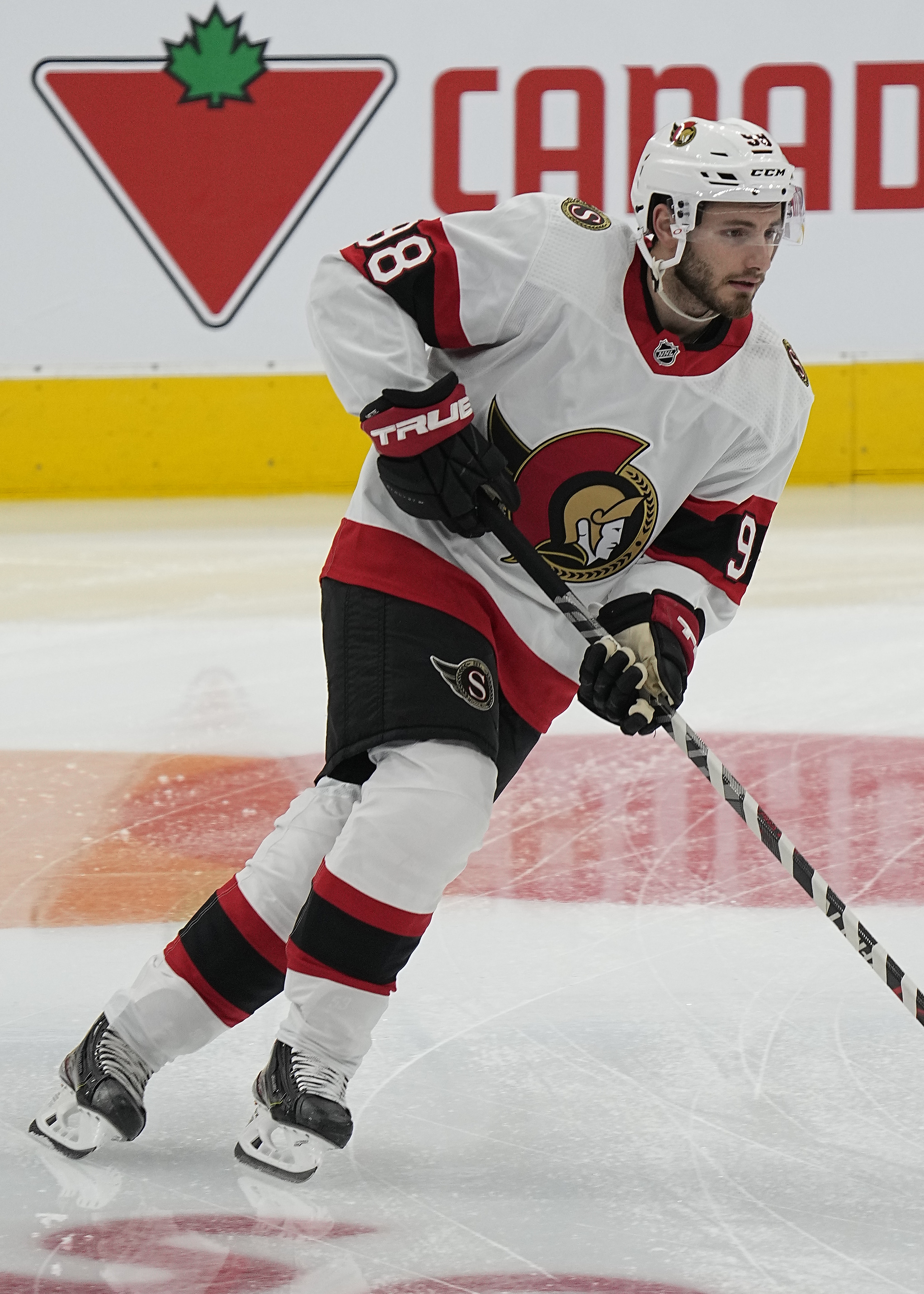
D Victor Mete — While Mete is technically a pending restricted free agent, Dorion has already stated that Mete would not be issued a qualifying offer and would therefore become an unrestricted free agent, hence him being listed here. Mete is an interesting case, as he’s the sort of player that, on paper, a team like Ottawa should be committing to developing. Mete, now 24, was once one of the Montreal Canadiens’ top defensive prospects, and he first made the NHL playing as Shea Weber‘s partner. But while Mete’s abilities in transition as a puck-mover were always his calling card, no other aspect of his game developed as the Canadiens had hoped. Mete famously took 126 games to score his first NHL goal, and the lack of development of the rest of his tools, beyond his abilities in transition, caused the Canadiens to eventually waive him. Many were calling for teams to claim Mete, and the Senators did just that. But unfortunately for the Senators and Mete, it was more of the same in Ottawa, and by 2021-22 he found himself a frequent healthy scratch. Mete enters the offseason with the chance to choose his destination for the first time in his career, and given his history there still is some reasonable hope that he could develop into an NHLer. But the clock’s ticking on him, and the choice of his next destination will go a long way in determining if he’ll eventually turn into the NHL defenseman many once believed he could be.
Other UFA’s: F Tyler Ennis, F Andrew Agozzino, F Clark Bishop, F Scott Sabourin, F Zachary Senyshyn, F Logan Shaw, D Dillon Heatherington, D Zac Leslie
Projected Cap Space
This is where the Senators have an advantage over other teams. In a flat-cap era where having flexibility under the salary cap is at an absolute premium, Ottawa has over $20MM in projected cap space entering this offseason. Sure, a lot of that should be earmarked for potential extensions for Norris, Formenton, or even an early deal for Stutzle, but they’ll still have more room to maneuver than most teams. That’ll be especially true if they find a way to get out from under Matt Murray‘s $6.25MM AAV deal. A buyout seems like the most likely solution, as it would not only save the Senators $5MM in real cash but also give them $4.5MM in cap savings this year and $5.5MM next year, at the cost of $2.5MM in dead money for the next two seasons after that. With the Senators looking to go hunting for a big name this offseason, expect their advantageous cap position to be leveraged to a great degree in order to maximize their ability to compete in the near future.
Photos courtesy of USA Today Sports Images. Contract information courtesy of CapFriendly.
Free Agent Focus: Philadelphia Flyers
Free agency is now less than a month away and many teams are already looking ahead to when it opens up. There will be several prominent players set to hit the open market in mid-July while many teams have key restricted free agents to re-sign as well. Next up is a look at the Flyers.
Key Restricted Free Agents
F Morgan Frost — Frost, 23, has had high expectations placed on him since he was drafted 27th overall at the 2017 draft. Frost was a prolific scorer at the junior level, notching over 100 points in his final two seasons for the Soo Greyhounds of the OHL. In Frost’s first professional season he flashed that scoring talent as well, potting 13 goals and 29 points in 41 games. Frost also got into 20 NHL games, and posted a respectable seven points, although he did at times struggle with the pace and physicality of the NHL game. A dislocated shoulder cost Frost almost all of the 2020-21 season, and this past season was one that wasn’t the clear developmental step forward that many hoped it’d be. Sure, he scored well at the AHL level, with 19 points in 24 games, but he was shuttled between the NHL and AHL level multiple times before settling in and getting into a total of 55 games for the Flyers. He finished with 16 points in 55 games at the NHL level, including four in his last five games, and at times flashed the offensive upside that made him such a tantalizing prospect in the first place. His two-way game is still a work in progress, though, and it remains to be seen if Frost can truly stick down the middle long-term at the NHL level. His overall upside is still very much a mystery, and as a result, his next contract is complicated. If the Flyers remain major believers in his upside, he could always ink a long-term deal, but that seems highly unlikely, especially since he was not a draft pick of GM Chuck Fletcher. A one or two-year bridge contract seems most likely.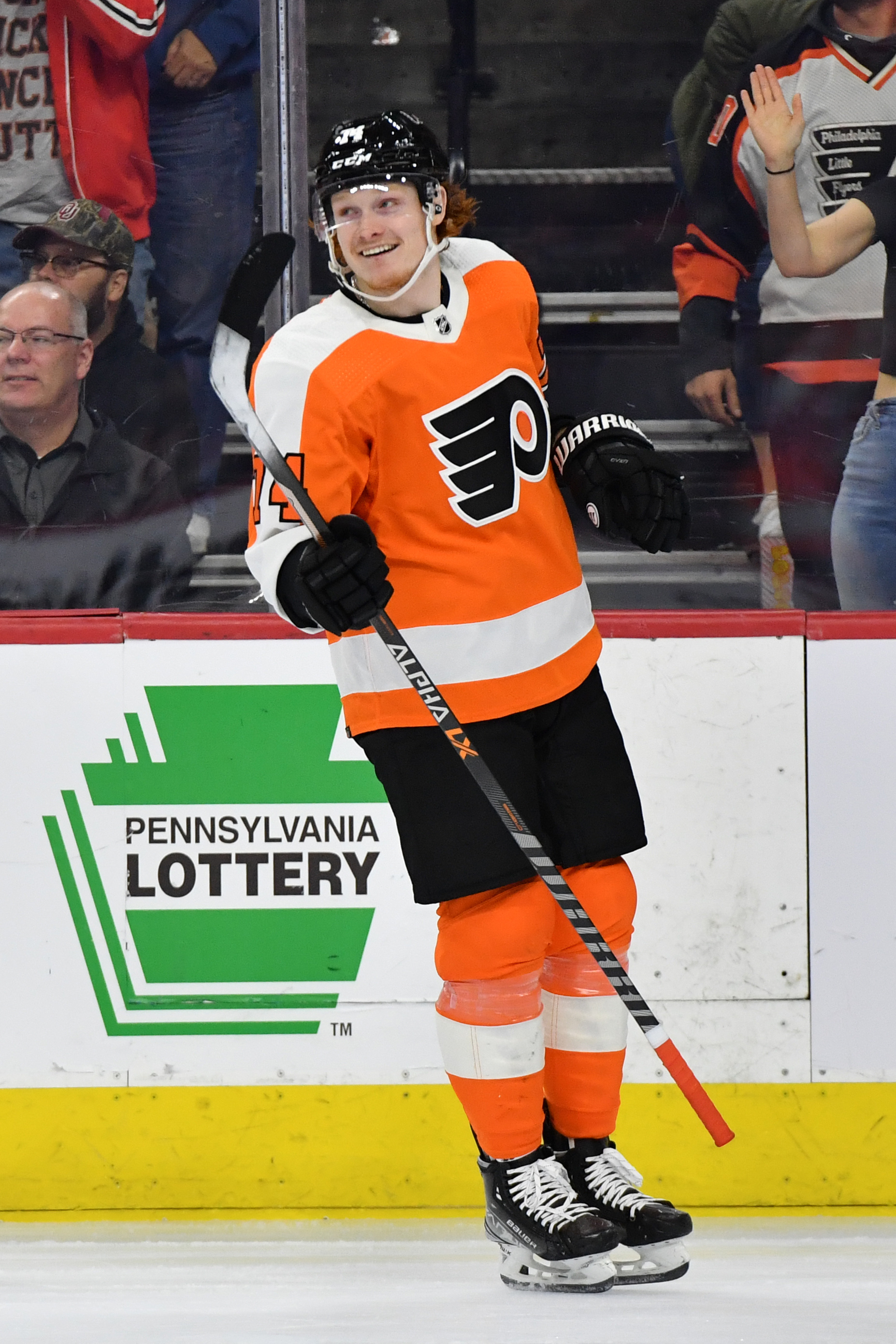
F Owen Tippett — Tippett, in some ways, is a lot like Frost. He’s also a 2017 first-rounder who has yet to establish himself as a full-time NHL-er but has also flashed the potential that got him drafted so high in the first place. Tippett came to Philadelphia as part of the Claude Giroux trade, and in his stretch as a Flyer (often playing on a line with Frost) Tippett had the up-and-down play that one would expect out of a highly skilled but also flawed young player. Tippett finished with seven points in 21 games, and also had 18 points in 14 games at the AHL level, a more clear reminder of the offensive talent he possesses. Like Frost, a short-term bridge makes the most sense for Tippett, who should come in at around a $1MM cap hit, if not lower.
F Zack MacEwen — MacEwen was claimed off of waivers from the Vancouver Canucks at the start of the 2021-22 season, and was one of only seven Flyers to reach the 75 games played mark. MacEwen, 25, is a hard-nosed grinder whose NHL minutes come thanks to his physicality and relentless motor. MacEwen isn’t much of an offensive producer — he had only nine points in 75 games in 2021-22 and has 18 points in his 130 career NHL games — but he plays a role many coaches still want in their lineup and does so at a cheap price. MacEwen played on an $825k cap hit this year and as he’s an arbitration-eligible restricted free agent, expect a small raise from that number to reward his hard work and availability.
Other RFAs: F Wade Allison, F Jackson Cates, F Hayden Hodgson, F Tanner Laczynski, F Isaac Ratcliffe, F Matthew Strome, F Maksim Sushko, D Linus Hogberg, G Kirill Ustimenko
Key Unrestricted Free Agents
F Nate Thompson — It’s been clear what Nate Thompson can bring at the NHL level for many years now. The 37-year-old center has been a bottom-six staple for nine NHL teams since making his debut in 2006-07. Thompson plays around 10-12 minutes per night, helps a second penalty-killing unit, and wins over half his draws. Thompson may not have a ton of gas left in his tank as he gets deeper into his late thirties, but if he still wants to play it’s easy to imagine him finding another suitor for the well-defined package of skills he brings. He clearly has an affinity for Philadelphia as well, as he signed up to return to the organization as a free agent after a year in Winnipeg, having first joined the Flyers as part of a 2020 trade with the Montreal Canadiens. It remains to be seen if the team’s expected next head coach, John Tortorella, will want Fletcher to retain his services, but if he does then Thompson could probably be had for around the $800k cap hit he played on this past season.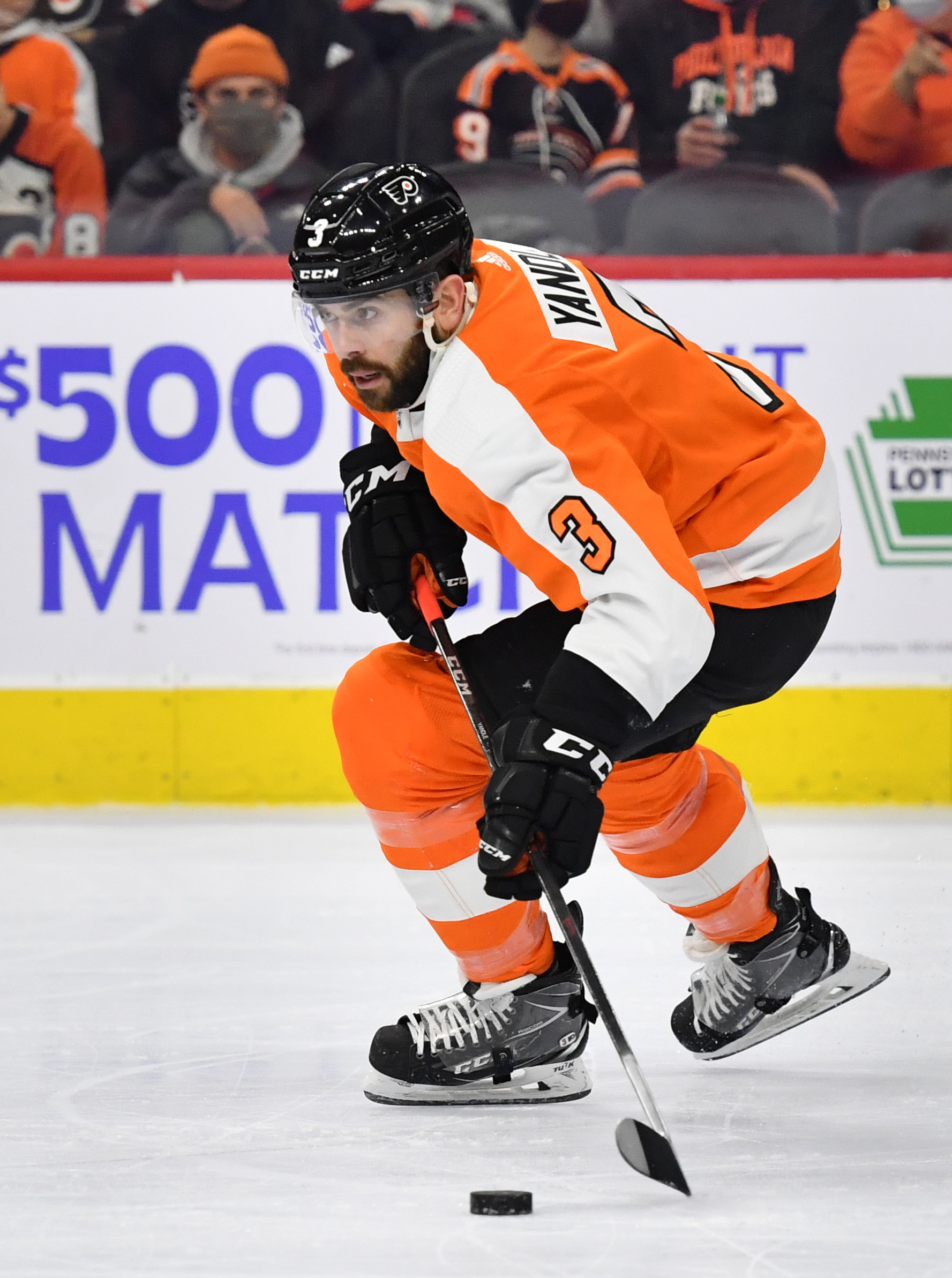
D Keith Yandle — Yandle was the subject of some controversy this season, as the Flyers snapped an “iron man” streak of consecutive games played that had lasted since 2009. Yandle is a well-liked locker room voice and a highly respected veteran, although his play on the ice has slipped considerably. After being bought out of his massive seven-year, $44.45MM deal, Yandle signed a one-year, $900k deal with the Flyers. He provided his trademark offense, albeit to a decreased degree, notching 19 points in 77 games. He also showed the defensive deficiencies that have plagued his game for years, deficiencies that have become even more pronounced as he’s aged. While Yandle is a player deserving of the utmost amount of respect for the career he’s had so far, it’s difficult to imagine a return to Philadelphia is in the cards for him. But given all that he’s put forth to date, he should probably be able to catch on somewhere this summer with a chance to make a team at a training camp next fall.
G Martin Jones – Like Yandle, Jones joined the Flyers after an offseason buyout forced an exit from his previous team. Unlike Yandle, though, Jones’ 2022 season was a quiet one. He got into 35 games and posted a .900 save percentage, a performance that isn’t anything to write home about. That production is made more palatable, though, by the fact that he was playing behind one of the NHL’s worst teams. The Flyers were a mess last season, and Martin Jones was far down on the list of their biggest issues. Jones is a veteran of nearly 400 NHL games and has flashed brilliance in the past, like when he led the San Jose Sharks on a run to the Stanley Cup Final in 2015-16. He’s a backup goalie who has in the past shown an ability to handle starter-level workloads, so another contract around the $2MM he earned this year, if not a touch lower, seems fair.
Other UFAs: D Kevin Connauton, F Ryan Fitzgerald, D Adam Clendening, D Brennan Menell, G Felix Sandstrom
Projected Cap Space
The Flyers enter an offseason where getting the team on track after two hugely disappointing years is a number-one priority. They have just over $5MM in cap space at the moment and their pending restricted free agents figure to occupy a small chunk of that. The real “X-factor” for this Flyers’ offseason, from a cap perspective, comes from whatever they choose to do with some of their highly-paid veterans. Defensemen Ivan Provorov and Travis Sanheim, making $6.75MM and $4.675MM against the cap, respectively, have each been the subject of trade rumors, as has winger James Van Riemsdyk, who is entering the final year of his $7MM-AAV deal. If the Flyers want space to aggressively upgrade their roster next month, they’ll likely have to move one of their major contracts.
Photos courtesy of USA Today Sports Images. Contract information courtesy of CapFriendly.
Free Agent Focus: Pittsburgh Penguins
Free agency is now less than six weeks away and many teams are already looking ahead to when it opens up. There will be several prominent players set to hit the open market in mid-July while many teams have key restricted free agents to re-sign as well. Next up is a look at the Penguins.
Key Restricted Free Agents
 F Danton Heinen — Heinen joined the Penguins last offseason after the Anaheim Ducks chose not to issue him a qualifying offer, and he did everything asked of him in a depth role for Pittsburgh in 2021-22. Playing in 76 games, Heinen notched a career-high 18 goals serving in a middle-six role on the wing. Every aspect of his game took a gigantic step forward in Pittsburgh this season, and the former Bruins fourth-round pick truly showed his ceiling as an NHL player. 26 now, (he’ll turn 27 before free agency opens on July 13), this is undoubtedly the best chance Heinen will have to earn a big contract in his career. With that kind of production, Heinen could likely earn a deal north of $2.5MM per year in free agency, likely even into the $3MM range. As a restricted free agent with arbitration rights, though, it’s not a sure thing Pittsburgh qualifies him. The Penguins have some higher priority players to give money to this offseason, to say the least, and the arbitration risk with Heinen could be too high.
F Kasperi Kapanen — Kapanen’s second season in Pittsburgh was mired in inconsistency. Failing to take a step forward in his development and even healthy scratched at times, Kapanen managed 11 goals and 32 assists after scoring 30 points in just 40 games last season. A strong shooter, Kapanen isn’t the grittiest or most defensively responsible player either. He’s also eligible for arbitration, like Heinen, but with his poorer season and inconsistent track record, the risk for an intolerable offer is likely lower than Heinen’s. Considering Kapanen’s ceiling as he demonstrated in 2020-21, the Penguins would likely want to keep him around with the hope that he finds that level of game again.
Other RFAs: F Justin Almeida, F Jordy Bellerive, F Kasper Bjorkqvist, F Jan Drozg, F Alexander Nylander, D Niclas Almari, D Pierre-Olivier Joseph, D Cameron Lee, D Will Reilly, G Alex D’Orio
Key Unrestricted Free Agents
 F Evgeni Malkin — There’s little left to say about Malkin, who’s cemented his legacy as one of the elite players in the history of the NHL with 1,146 career points and a gigantic trophy shelf as well. More importantly for the Penguins, he had a gigantic bounceback season this year from his eight-goal campaign in 2020-21. Although he was limited to exactly half the season (41 games) with injury, he regained his point-per-game pace and tallied 20 goals and 42 points. With his injury history though, and at age 35 already, anything more than a three-year deal for Malkin would be an ill-advised move. The Penguins will do everything in their power to keep him, no doubt, and he’ll likely take a little bit of a pay cut from his previous $9.5MM cap hit to make it happen.
D Kris Letang — Letang had a monster season, finishing seventh among all NHL defensemen with 68 points in 78 games. He also finished fourth among defensemen with an average time on ice of 25:47. He’s coming off a $7.25MM per season deal and, right now, he’s worth at least that if not more. Also at age 35, though, giving Letang term is a gigantic risk. Letang is reportedly the team’s first priority to re-sign, but it’ll take more than the team’s last offer of just under $7.25MM for four years. Whether or not the team and the player can come to a compromise on term and value remains to be seen.
F Rickard Rakell — Adding Rakell at the trade deadline turned out to be a smart move from general manager Ron Hextall, as the skilled but inconsistent winger scored 13 points in 19 games, reclaiming some of his former glory in Anaheim. Unfortunately, Rakell was injured in the playoffs and registered no points in two games, averaging just 9:26 per night over the two. The 29-year-old is evidently one of the best secondary scoring options the team has, but it’s unlikely Pittsburgh can afford to give him the best offer available on the open market.
Other UFAs: F Brian Boyle, F Evan Rodrigues, F Anthony Angello, F Michael Chaput, D Nathan Beaulieu, G Casey DeSmith, G Louis Domingue
Projected Cap Space
The Penguins are currently over $23MM away from the $82.5MM salary cap Upper Limit, which is top ten in the league in terms of offseason space. Yet signing Malkin and Letang will likely take $15-16MM away from that number, leaving Pittsburgh with only around $7.5MM to work with to fill out the roster. With four forward spots and a backup goalie slot to fill, Pittsburgh will need to make concessions somewhere, either via trade or relying more heavily on their aging stars to carry the workload.
Photos courtesy of USA Today Sports Images. Contract information courtesy of CapFriendly.
Offseason Checklist: Nashville Predators
With the offseason in full swing aside from the two teams in the Stanley Cup Final, it’s time to examine what each squad will need to accomplish over the coming months. Next up is a look at the Predators.
This was supposed to be a season of transition for Nashville. At least, so it seemed. They got weaker on paper over the summer and it looked to be the start of at least a small rebuild. However, several underachieving veterans had bounce-back years and the end result was the Predators making the playoffs and then being swept by Colorado. GM David Poile likes the term “competitive transition” as it relates to the state of his team so their checklist this summer keeps that in mind.
Add Impact Pieces
With the Predators looking to stay in the playoff hunt, they’ll need to put their cap space to good use this year. With over $23MM at their disposal, they have some room to add a key player or two even after re-signing their own free agents.
Up front, their top six is still fairly thin with several question marks. Matt Duchene had a career year with 43 goals and 43 assists. At the age of 31, can he repeat that type of performance or was this just a season where everything went right? Ryan Johansen had his best season since coming to Nashville back in 2016 while Mikael Granlund was only a few points shy of matching his career-best. There is a question of sustainability for all three of those players and even if there wasn’t, another top-six forward to fill the role vacated by Viktor Arvidsson following his trade last summer is needed.
There was a time when Nashville had the best defense corps in the NHL. That isn’t the case anymore. Instead, the average fan would have a hard time naming anyone beyond Norris finalist Roman Josi and steady veteran Mattias Ekholm. It’s not a particularly deep group and a top-four rearguard to push one of Dante Fabbro or Alexandre Carrier onto the third pairing alongside the recently-extended Jeremy Lauzon would go a long way towards shoring up that unit even if it doesn’t bring them back to the days of being the best group in the league.
Do these moves alone vault Nashville into contender status? No, but if they want to stay where they are or give themselves a shot at moving up a bit in the standings, these would certainly help their chances.
Re-Sign Forsberg
Duchene wasn’t the only veteran to have a career year this season as Filip Forsberg did as well, notching 42 goals and 42 assists despite missing 13 games due to a stint in COVID protocol and an upper-body injury. There’s never a bad time to set new benchmarks but the year before hitting unrestricted free agency for the first time is certainly a great time and that’s what Forsberg did. The two sides engaged in talks off and on during the season but couldn’t reach an agreement and Poile held off on trading him at the deadline.
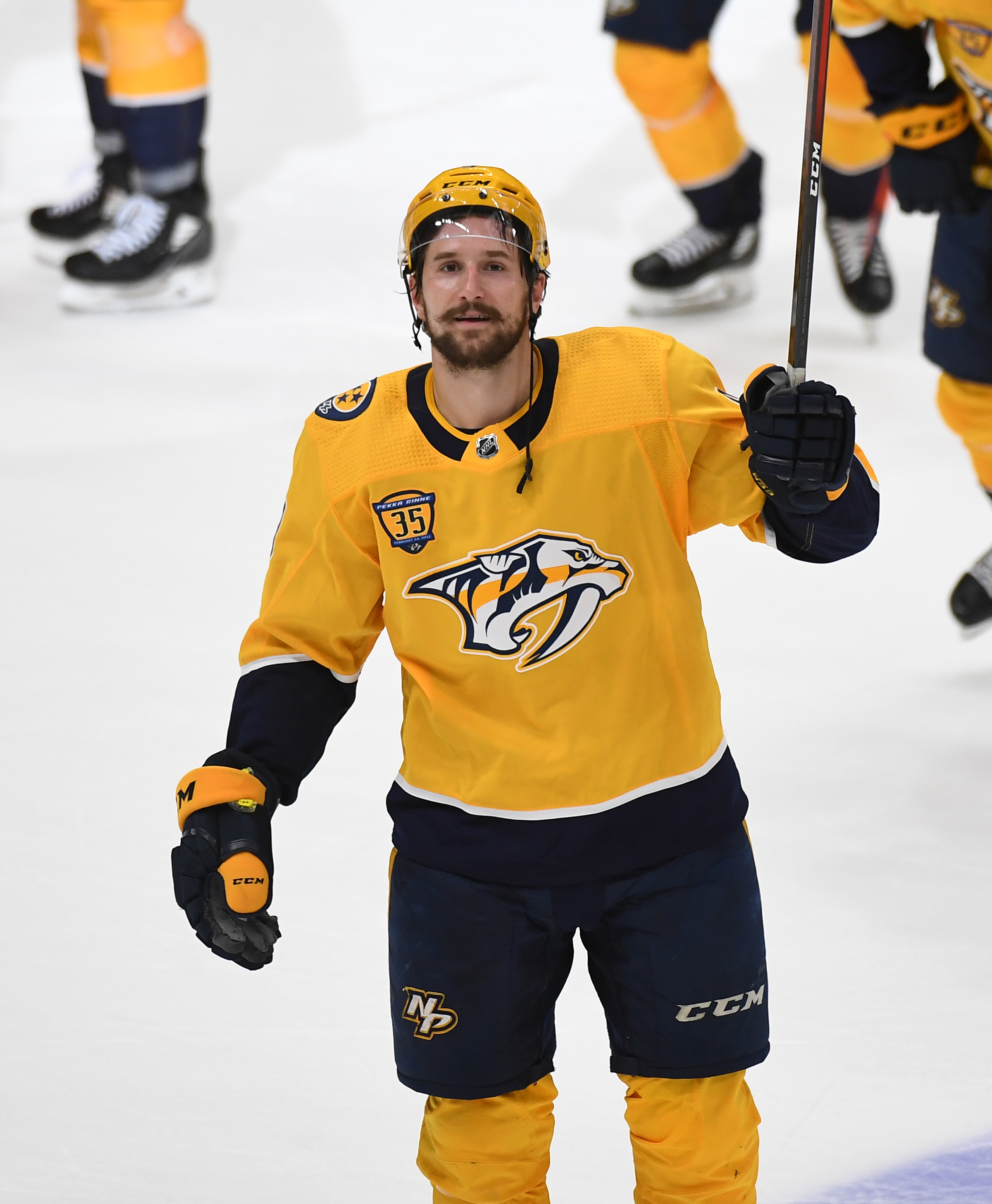 This is one of the most important contract negotiations in franchise history. Forsberg has been a fixture in their lineup for eight years and the possibility of him jumping ship to another team less than a month from now has to be concerning. It would certainly go a long way towards derailing their competitive transition. Forsberg’s camp knows this and will try to wield that in discussions.
As for what the cost of a new deal will be, it won’t be cheap. Forsberg is coming off a six-year, $36MM deal and as a 40-goal scorer, he can command considerably more than that; a contract in the $8MM to $9MM range should be achievable for him. On top of that, a max-term agreement is certainly doable as well. For Nashville, that’s eight years as long as it’s done before the start of free agency and seven years for everyone else. Forsberg turns 28 this summer and a max-term deal for a winger coming off a career year that will make him the highest-paid forward on the team is not an ideal combination for the Predators but it’s one they’ll have to bite the bullet on to keep him in the fold.
Bring In Goalie Depth
With Juuse Saros, Nashville has their starter in place for the next three seasons on a below-market contract. With Yaroslav Askarov, they believe they have their future starter in place. Most teams would love that combination but the Predators still have some work to do between the pipes.
Poile brought in David Rittich to serve as Saros’ backup this season with the hopes he could rediscover his form from a few years ago. That didn’t happen as he had a save percentage of just .889 in 17 appearances. With Saros injured for the playoffs, Rittich faltered quickly, forcing head coach John Hynes to turn to third-stringer Connor Ingram who had all of three career NHL appearances up to that point. Rittich is unlikely to return and while Ingram is on a one-way deal for next season, are the Predators ready to make him their backup?
If not, they’ll need to turn back to the free agent market and instead of looking for a low-cost option, they would be wise to aim a little higher and get a more proven second option to take some of the pressure off Saros and give them some extra injury insurance. On the other hand, if they do want to go with Ingram, then adding a veteran third-string option becomes a must. Askarov will play his first full season in North America next season and adding a veteran that can be called up as the backup when injuries hit to not interrupt Askarov’s development would be a wise move. Either way, Poile will be goalie shopping next month.
Utilize An Unlikely Trade Asset
When Nashville dealt Ryan Ellis to Philadelphia last summer, they hoped that Philippe Myers would be a capable replacement. Let’s just say that didn’t happen. Instead, the 25-year-old struggled mightily when he was in the lineup, was a frequent healthy scratch, and cleared waivers before the trade deadline. From there, they didn’t even bother sending him to their own AHL affiliate as he was loaned to Toronto instead. And yet, despite all of that, he is one of Nashville’s more intriguing trade chips this summer.
Myers has one year left on his current contract at $2.55MM which, for someone that can’t crack an NHL roster, seems like the type of deal teams should be doing their best to stay away from, not acquire. It’s a lock to be bought out. But his contract is heavily backloaded and since he’s only 25, the buyout cost is one-third instead of the usual two-thirds. The end result is that whoever buys him out this summer will receive a cap credit of $617K. Yes, a team could increase their cap space next season by buying Myers out while they’d only have to eat a $633K cap charge in 2023-24. Who could use some extra cap space this summer for a total cash outlay of $633K? The short answer is a lot of teams.
There isn’t much precedent for a trade like this. Toronto picked up Jared Cowen from Ottawa in 2016 who was in that situation but it was part of a nine-player swap which makes it difficult to ascertain his standalone value in that deal. But with a lot of teams looking for cap space, it stands to reason that Myers will actually have some value this summer. Even if it’s only for a mid-round pick in the end, getting an asset for someone that’s clearly on his way out the door would be a good way to start Nashville’s summer roster movement.
Photo courtesy of USA Today Sports Images. Contract information courtesy of CapFriendly.
Free Agent Focus: San Jose Sharks
Free agency is now less than six weeks away and many teams are already looking ahead to when it opens up. There will be several prominent players set to hit the open market in mid-July while many teams have key restricted free agents to re-sign as well. Next up is a look at the Sharks.
Key Restricted Free Agents
- G Kaapo Kahkonen – Kahkonen was acquired from the Minnesota Wild at the trade deadline as part of the Jacob Middleton trade, and Kahkonen performed reasonably well as he began to take on a more prominent role late in the Sharks’ season. Kahkonen finished with ten starts in San Jose and posted a .916 save percentage. When combined with his 23 starts as a member of the Minnesota Wild, Kahkonen’s overall 2021-22 save percentage is .912, an encouraging mark for a goalie not set to turn 26 until the middle of August. The Sharks will have to make a decision this offseason, as once Kahkonen is re-signed they will have three NHL-caliber goalies under contract (Kahkonen, Adin Hill, and James Reimer), and are unlikely to spend a full season with a three-goalie group.
As for Kahkonen’s next contract, he does have arbitration rights as an RFA meaning he has at least some negotiation power in deciding his future. A bridge deal at around $2MM-3MM could make sense, although there is an interesting contract comparable that could prove troublesome if the Sharks want to retain Kahkonen on the cheap. Los Angeles Kings goalie Calvin Petersen, in a similar RFA situation to Kahkonen, at a similar age, inked a three-year deal with the Kings at a $5MM AAV. Petersen’s numbers compared to Kahkonen’s are similar: when he signed his contract, Petersen was coming off of a season where he had a .911 save percentage and 2.89 goals-against average in 32 starts, while Kahkonen enters his time as an RFA with a .912/2.87 in 33 starts. They’re basically identical numbers, the only major difference being that Petersen started 32 games in the shortened 2020-21 season, so his marks represented a larger share of the available games for a goalie to play. Given the similarity in his numbers, Kahkonen could reasonably demand a similar contract to Petersen and therefore likely make negotiations more difficult for the Sharks.
- F Noah Gregor – Gregor has been a solid find for the Sharks as a 2016 fourth-round pick, developing from his time as a star in the WHL into the reliable two-way forward he was this past season. Gregor played sound two-way hockey and became a more and more trusted weapon of coach Bob Boughner, finishing the season with just under 15 minutes of average time on ice. Gregor didn’t overwhelm with his production, but his eight goals and 23 points in 63 games is decent enough, and his strong scoring at the AHL level indicates he may have some more offense to come as he gets more comfortable against NHL competition. While long-term deals for players with limited NHL experience are becoming more commonplace (Vegas Golden Knights defenseman Zach Whitecloud, as an example, got a long-term $2.75MM AAV deal and had less than a full season of NHL experience) a short-term bridge deal is the likeliest outcome for Gregor. Gregor worked on a $750k cap hit this year, so expect a raise but nothing major as Gregor doesn’t yet have arbitration rights, and the Sharks will be hard-pressed for cap space.
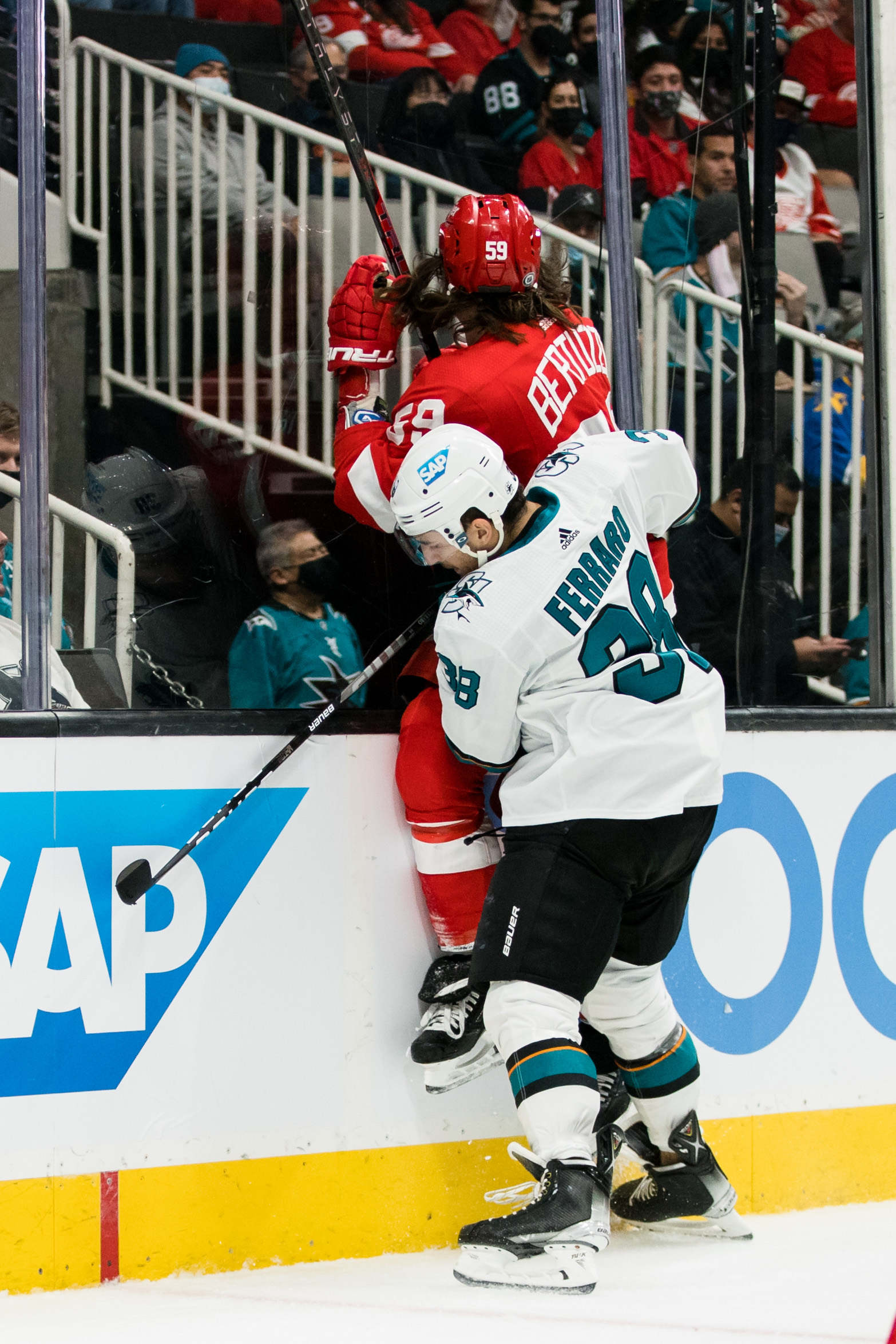
- D Mario Ferraro – Ferraro has become an increasingly important defenseman in San Jose and just finished a season where he averaged 23 minutes of time on ice per game. His offense isn’t anything to write home about – just 14 points in 63 games – but it’s his leadership, physicality, and overall defensive game that makes him such a valued part of the Sharks lineup. There is some debate over Ferraro’s true overall skill level, and if his time-on-ice is truly reflective of his value, but it’s clear the Sharks rate him highly and that’s ultimately all that matters in contract negotiations. The Sharks could opt for a long-term deal with Ferraro, but since they figure to have some cap troubles and are intent on competing in the near future, a bridge deal seems more likely.
Other RFA’s: Jonathan Dahlen, Alexander Chmelevski, Jonah Gadjovich, John Leonard, Nicolas Meloche, Joachim Blichfeld, Zachary Gallant, Jacob McGrew, Antoine Morand, Brinson Pasichnuk, Zach Sawchenko
Key Unrestricted Free Agents
The Sharks’ only unrestricted free agents of any consequence are Anthony Bitetto, Ryan Dzingel, and Alex Stalock, three players who combined to play seven total games for the Sharks this past season. While Bitetto, Dzingel, and Stalock are all NHL veterans, they do not figure to play a major role in San Jose moving forward even if re-signed.
Projected Cap Space
This is where things get dicey for San Jose. The Sharks are currently projected to have just $5.67MM in cap room to start this offseason, and since they have NHL-caliber RFA’s to re-sign in Ferraro, Dahlen, Kahkonen, and Gregor, as well as an intention of improving their roster significantly, that’s just not enough space to make the moves their next GM will likely want to make. Big contracts for players such as Erik Karlsson, Brent Burns, Logan Couture, and Marc-Edouard Vlasic mean that finding the necessary wiggle room will take immense creativity, and their precarious cap position is further complicated by the uncertainty of the Evander Kane situation, as the deliberations over the grievance he filed have not yet been concluded. A buyout for Vlasic, a trade of one of the highly-paid players, or even dealing one of the players on a moderate deal such as Reimer would go a long way to creating room for San Jose to operate. Whatever path they choose, it’s clear they will have to do something in order to create the necessary breathing room under the salary cap they need to return to contention.
Photos courtesy of USA Today Sports Images. Contract information courtesy of CapFriendly.
Offseason Checklist: Vegas Golden Knights
With the offseason in full swing aside from the two teams in the Stanley Cup Final, it’s time to examine what each squad will need to accomplish over the coming months. Next up is a look at the Golden Knights.
There’s never a dull moment in Vegas. That thought often applies to the city in general but it also certainly applies to their hockey team. The Golden Knights made a big change in-season to land Jack Eichel which set off a cascade of frequent LTIR placements to keep compliant down the stretch. With a banged-up roster, they came up just short of the playoffs, resulting in a change behind the bench. Between that and their cap situation, GM Kelly McCrimmon has a lot on his plate over the coming weeks.
Hire A New Head Coach
Let’s start with an obvious task. For the second time in their five years of existence, the Golden Knights made a coaching change when Peter DeBoer was dismissed last month after less than three seasons with the team. Vegas certainly didn’t do poorly with him in charge as the team posted a .650 points percentage during the regular season while making the third round of the playoffs in the two seasons before this one. But after missing the postseason this year, an outcome few would have expected in the fall, the change was made.
There is no shortage of veteran coaches available and with Vegas clearly in win-now mode, few expect them to look at a first-time option. Barry Trotz and Bruce Cassidy stand out as two potential candidates although other former NHL bench bosses will be considered as well.
There is plenty to like about where Vegas sits. They’re a perpetually competitive team with a strong nucleus that’s under contract for a while. Spending is certainly never an issue as well. If you’re a coach that’s looking for a spot to try to win right away, this opening may be the most desirable around the league which is good news for McCrimmon as he looks to find his next head coach over the next few weeks.
Free Up Cap Space
Then there’s the other obvious task this summer. Vegas has been dancing around the Upper Limit of the salary cap for several years now with a continual expectation that it’s going to come back to get them soon enough. The challenge for McCrimmon this summer will be freeing up some space without significantly hurting the core.
Let’s look at where things stand. They have $200K in cap space and need to sign at least three forwards and have a healthy backup goalie with Laurent Brossoit having some uncertainty after having hip surgery this summer. Considering the minimum salary remains $750K, there’s clearly some cutting to be done.
 The obvious candidate is Evgenii Dadonov. The winger was traded to Anaheim back at the trade deadline without Vegas realizing that Dadonov’s no-trade clause was still in effect and the Ducks were on it. Eventually, the deal was rescinded. To his credit, the 33-year-old didn’t let it be a distraction as he had 16 points in 16 games after the deadline. However, he had a fairly quiet season overall with 20 goals and 23 assists in 78 games, production that is relatively low compared to his $5MM AAV. While the Golden Knights don’t have a deep prospect pool to trade away from or many high draft picks, they’ll need to attach something to get a team that’s on Dadonov’s allowable trade list to take on the final year of his contract.
With Eichel in the fold, Vegas now has a top-line center while Chandler Stephenson has established himself as a quality second option. That could put William Karlsson in some jeopardy. At $5.9MM for the next half-decade, that’s a high price to pay to have premium depth down the middle. He’s coming off a quiet season (35 points in 67 games) but with strong centers always in high demand, there should be some interest on the trade front and it’s worth noting that Karlsson can only block a trade to ten teams.
As for a blueliner that could fit the bill, Alec Martinez is coming off an injury-plagued year that saw him suit up just 26 times. With Shea Theodore and Brayden McNabb being proven options on the left side of the back end, Martinez and his $5.25MM for two more years might be a potential cap casualty although he also has trade protection and can block a trade to a dozen teams.
Reilly Smith is set to hit the open market this summer and there is mutual interest in an extension. At a minimum, one significant salary will need to be moved (likely Dadonov) but if they want to keep Smith in the fold, a second one will need to be moved out unless McCrimmon plans to get very creative with his LTIR usage once again.
Re-Sign Roy
Nicolas Roy had a breakout season in 2021-22, further bolstering their depth down the middle. After putting up just 15 points in 2020-21, he had 15 goals this season along with 24 assists. He also upped his faceoff percentage to 48.8%, an increase of 4% from the year before. He took a regular turn on both the power play and penalty kill, helping his ATOI improve to a career-best 16:16 per game. That’s quite a nice platform season as Roy enters restricted free agency this summer with arbitration eligibility for the first time.
Between that and Vegas’ cap situation, Roy could be an offer sheet candidate this summer if a deal isn’t done early. With the new thresholds, a team could offer Roy $4.2MM ($4MM more than the Golden Knights have in cap space) and only owe a second-round pick in compensation. For a 25-year-old with two years of team control remaining, that’s more than a reasonable price to pay. With that in mind, McCrimmon will want to try to get this contract done sooner than later if possible to avoid any risk of an offer sheet and also ensure one of his core youngsters will stick around.
Look Into Adding Goalie Depth
Injuries were an issue for Vegas last season, particularly between the pipes. Robin Lehner missed time with four separate injuries spanning 23 games and underwent successful shoulder surgery following a rather bizarre set of events where reports had him needing surgery with DeBoer insisting his starter was available to play. Brossoit, meanwhile, had hip surgery last month as well. Accordingly, there are some question marks (if Brossoit is still around and not traded as cap relief).
Vegas does have Logan Thompson who did a nice job down the stretch for them and as he’s now waiver-eligible, it’s safe to say he’ll be in the NHL picture.
The Golden Knights have a pair of goalie prospects signed for next season in Jiri Patera and Isaiah Saville but neither have seen NHL action. If they have an injury with the big club – a likely scenario based on recent history – having a veteran option with AHL Henderson that has some NHL experience would be a worthwhile investment. Experienced third-string goalies often bounce around and Vegas should be adding one to give themselves an insurance policy heading into training camp.
Photo courtesy of USA Today Sports Images. Contract information courtesy of CapFriendly.
Free Agent Focus: Seattle Kraken
Free agency is now less than six weeks away and many teams are already looking ahead to when it opens up. There will be several prominent players set to hit the open market in mid-July while many teams have key restricted free agents to re-sign as well. Next up is a look at the Kraken.
Key Restricted Free Agents:
F Ryan Donato – After bouncing around a bit the past few seasons, the once highly-touted prospect settled in for a quality first season with the Kraken, putting up 16 goals and 15 assists for 31 points in 74 games. Donato’s 74 games played were the most in a season for his career, as were his 31 points, which ranked sixth on a struggling Kraken team. As Seattle looks to improve and draw closer to its first-ever playoff berth, they’ll look to bring in new talent, but also retain the pieces that seemed to work for them, which would presumably include the 26-year-old forward. After signing a two-year, $3.8MM contract prior to the 2019-20 season with Minnesota, Donato took a pay cut this season in Seattle at just $750K, but after his strong 2021-22 performance, he could be in line for a contract similar to the one he signed in 2019.
F Morgan Geekie – Geekie was selected from the Carolina hurricanes in the Expansion Draft and settled into his first regular role in the NHL, playing in registering 22 points in 73 games for the Kraken, both career-highs. Not the flashiest player, Geekie makes a living as a hard-working, gritty forward which should serve him well as he he looks to continue his career and play regular minutes on a Kraken team that’s also looking to improve. When his ELC expired last offseason, Geekie signed a one-year, $750K contract with Seattle, a deal which seemed to work out well for both player and team. This offseason, Geekie will likely find a modest raise as well as the opportunity to show that he is part of the long-term plan in Seattle.
F Daniel Sprong – A deadline-day deal saw Sprong come from the Washington Capitals as part of the return for forward Marcus Johansson, Sprong continued his quiet-but-effective play with Seattle, scoring six goals in 16 games. Sprong is an interesting player, having been traded three times already in his young career, he’s never had a true chance to settle in with a team. The forward has never had eye-popping numbers at the NHL level, but he has shown the ability to score goals with relative ease. As Seattle looks to find players to build around without a long-settled foundation, Sprong has shown in his brief tenure with Seattle that he was capable of scoring goals, his six in 16 equivalent to a 30 goal pace in an 82 game stretch. He may not find much of a raise over his previous $725K cap hit, but his age (25) and his ability to put pucks in the net could see him getting a real, consistent NHL look with Seattle in 2022-23.
F Karson Kuhlman, F Kole Lind, F Alexander True, F Carsen Twarynski, D Haydn Fleury, D Dennis Cholowski, D Cale Fleury
Key Unrestricted Free Agents:
F Victor Rask – Rask’s case is interesting, coming off a six-year, $24MM contract he signed with the Carolina Hurricanes prior to the 2016-17 season. The forward would see himself struggle for Carolina and was eventually dealt to the Minnesota Wild in January of 2019, struggling there as well. Rask would actually rebound to an extent in 2021-22, putting up 13 points in 29 games for the Wild, however salary cap issues forced the organization to bury him in the AHL. As a result, the Wild dealt Rask to Seattle in a salary cap trade at the 2022 deadline, Rask continuing his bounce-back with eight points in 18 games for the Kraken. Where Rask winds up is of course unknown, and he surely won’t see another $24MM contract this offseason, however he has used his 2021-22 very nicely, especially in the face of adversity, to re-establish his value as an NHLer.
F Riley Sheahan – After spending his entire career with the Detroit Red Wings organization, an October, 2017 trade set Sheahan off on a stretch of six teams in five seasons, culminating in a 2021-22 season with the NHL’s newest team. Sheahan turned in a typical-for-him 17 points in 69 games this season, playing his usual 200-foot game as a responsible bottom-six center. The 30-year-old should be useful to a number of teams in different situations, including a building Kraken, a playoff-bound team, or somewhere in between. Having had three straight seasons with salaries under $1MM, most recently $850K this season, Sheahan would presumably wind up with something in that neighborhood once again.
D Derrick Pouliot, D Connor Carrick, D Gustav Olofsson, G Antoine Bibeau
Projected Cap Space:
Seattle projects to have $22.885MM in available cap space this offseason from which to work with. This of course will be enough to retain their pending RFAs and UFAs if they want to, the most expensive of these likely being Donato and Rask, who would probably not go much north of $3MM each per season, if that high. The key consideration for Seattle will be getting better, the team finishing 27-49-6 in their inaugural season. Their available cap space will provide plenty of options to improve and work the free agent and trade markets, but as far as their impending free agents are concerned, the decision may be less about affordability as it is with other teams, and more about what kind of talent they can find to play there. Even if they can retain all of their free agents and find a few to bring in from the outside while staying under the salary cap ceiling, it doesn’t change the fact that they cannot have more than 50 contracts in the organization and 18 skaters dressed each night. On that note, Seattle currently sits with 22 out of a maximum 50 contracts allowed, plenty of room to work.
Free Agent Focus: St. Louis Blues
Free agency is now less than six weeks away and many teams are already looking ahead to when it opens up. There will be several prominent players set to hit the open market in mid-July while many teams have key restricted free agents to re-sign as well. Next up is a look at the Blues.
Key Restricted Free Agents
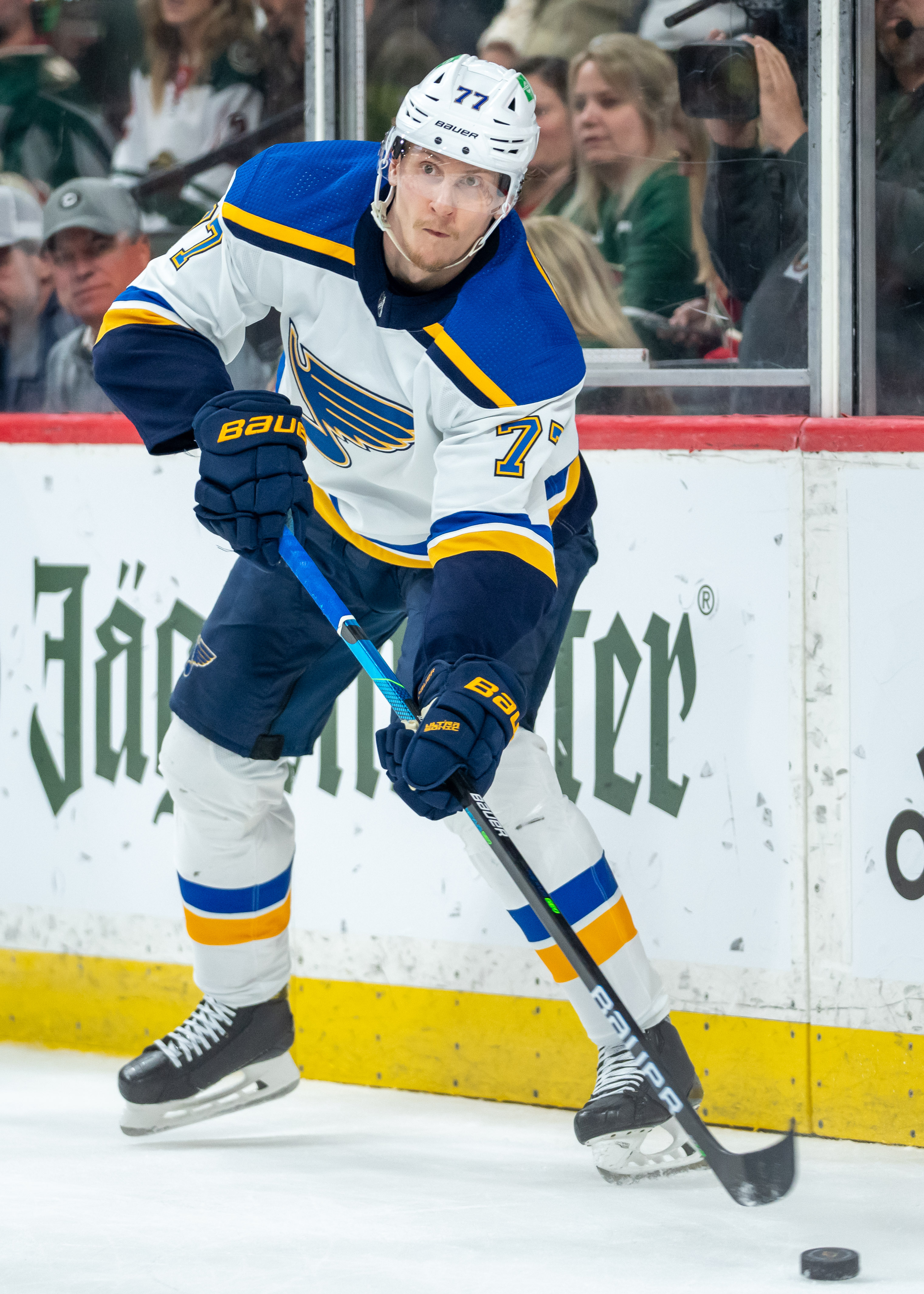 D Niko Mikkola – It has taken a while but Mikkola has worked his way into being a full-fledged member of the back end for the Blues, albeit in still a limited capacity. The 26-year-old played in a career-high 54 games this season but was also scratched rather frequently. When he has played, he has shown some promise as a stay-at-home, physical defender that can do well on the third pairing. But at Mikkola’s age, that’s not a particularly high bar to try to meet. He’s owed a qualifying offer of just over $826K but the most notable element here is that he’s a year away from UFA eligibility. Between that and arbitration rights, Mikkola will be able to beat that qualifier but are the Blues in a spot where they would be willing to pay closer to $1.5MM and get a couple of extra years of team control? Will they be able to afford to do so?
D Scott Perunovich – Perunovich’s time in the pros has been mired with ups and downs. After missing all of last season due to injury, he was limited to just 36 regular season games this season thanks to injuries. When he did play, however, he showed the offensive skill that he had in college that has made him one of their top prospects. But with missing so much time, the 23-year-old certainly isn’t in a spot to command much more than his $874K qualifying offer which is a two-way tender. It’s entirely possible St. Louis opts to try to get Perunovich to take less than that in exchange for a one-year, one-way deal, giving them a tiny bit of extra cap flexibility and the blueliner a guaranteed payday.
F Klim Kostin – The 2017 first-rounder had an opportunity to spend the bulk of the season with St. Louis and held his own on the fourth line, collecting nine points in 40 games while averaging just over nine minutes a night. Those numbers certainly don’t stand out but he should be a strong candidate for a spot at the end of the roster in St. Louis next season. His contractual situation is the same as Perunovich’s – he’s owed the $874K qualifier but it’s possible the Blues try to get him to take less in exchange for a one-way salary.
Other RFAs: F Will Bitten, F Tanner Kaspick, F Hugh McGing, F Nathan Todd
Key Unrestricted Free Agents
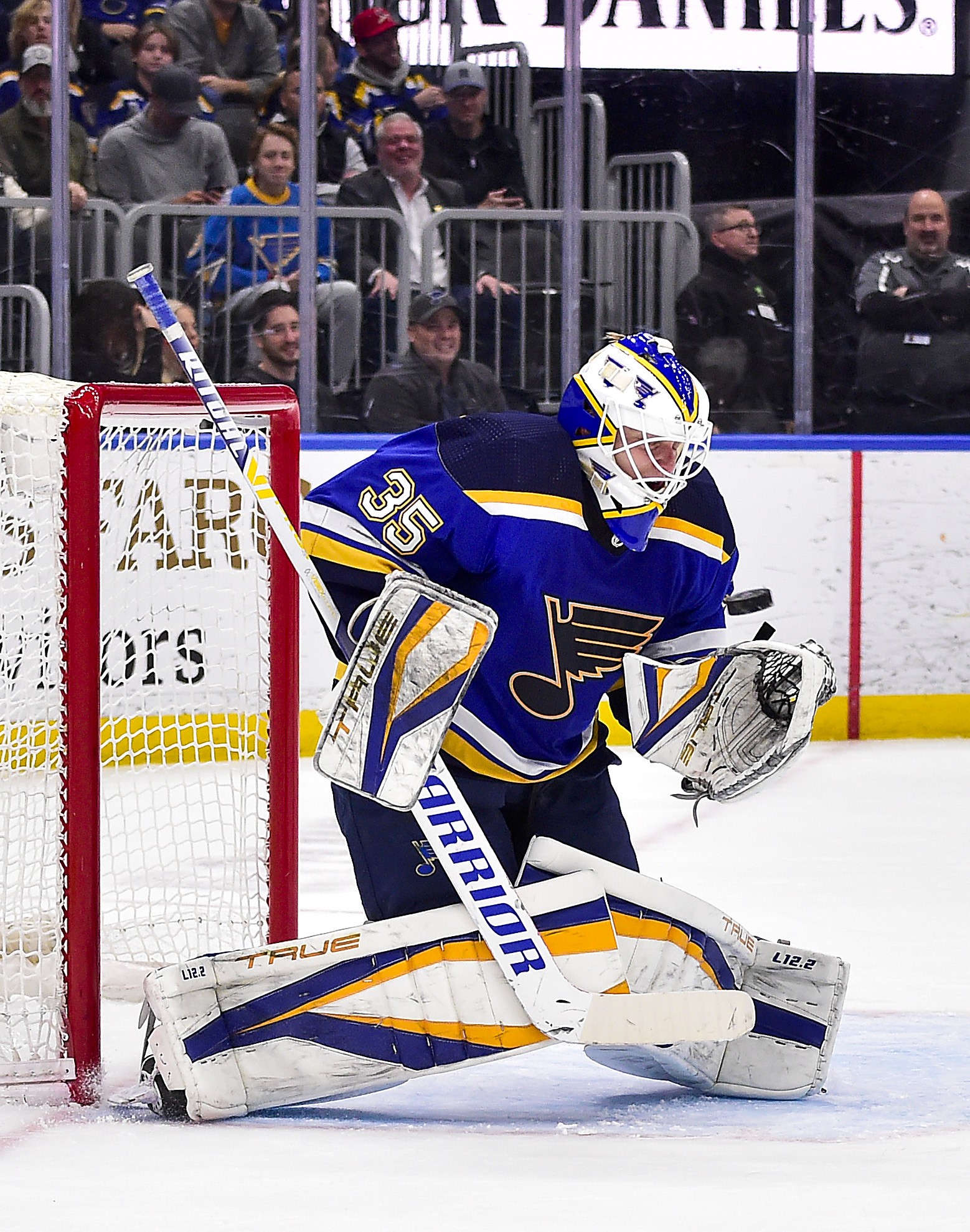 G Ville Husso – For years, Husso was viewed as the goalie of the future for the Blues and while it took him a while to get to the NHL, he showed this season that he can be a strong goalie at the top level, posting a 2.56 GAA along with a .919 SV% (good for a tie for sixth-best in the league). However, he didn’t fare as well in the playoffs, ending his season on a lower note. With just 64 career NHL appearances under his belt (including the playoffs), the 27-year-old doesn’t have enough of a track record to command a long-term, high-dollar contract like the six-year, $36MM deal Jacob Markstrom got in free agency two years ago. But a shorter-term deal in the $4MM range should be achievable as there will be teams out there that will view Husso as a low-end starter or a high-end backup. Either way, he’s heading for a significant raise after making the league minimum the last two years.
F David Perron – Since returning to the Blues in 2018, Perron has averaged a higher point per game rate than his career average which is notable since he turned 34 last month. At a time when many players start slowing down offensively, he’s improving his output. In terms of points among pending UFAs, Perron sits eighth and if he was to get to the open market, he’d likely receive a nice raise from the $4MM AAV he had on his most recent deal. And yet, few expect him to actually get to free agency. While he has played on five different teams in his NHL career, Perron has only signed contracts with St. Louis, opting to come back each time he reached the open market with another organization and there is certainly an expectation that he will do so again. If that’s the case, he might leave some money on the table to do so.
D Nick Leddy – The Blues were able to add Leddy at the trade deadline to shore up their back end and Leddy didn’t disappoint, averaging over 21 minutes a night down the stretch and in the postseason (where he was one of several St. Louis rearguards to miss time due to injury). At this stage of his career, the 31-year-old is not the top defender that he was at times with the Islanders but he could still be a solid second-pairing player or a high-end third-pairing option on a deeper squad. With a UFA crop that isn’t particularly deep, Leddy should generate considerable interest although it would be very surprising to see him beat the $5.5MM he made on his soon-to-expire contract.
Other UFAs: F Sam Anas, F Tyler Bozak, D Dakota Joshua, G Charlie Lindgren, F Mackenzie MacEachern, F James Neal
Projected Cap Space
The Blues have just over $9MM in space below the $82.5MM Upper Limit and while they don’t have many roster spots to fill (likely a couple of forwards, two defensemen, and a goalie), they don’t have enough money to keep all of their pending UFAs around. They also have to be mindful of big contracts on the horizon for Jordan Kyrou and Robert Thomas (both 2023 RFAs) while Ryan O’Reilly will need an extension as well at that time. There’s enough room for GM Doug Armstrong to keep at least one of their UFAs in the fold but if he wants to keep more than one, he’ll need to find a way to free up some cap flexibility first.
Photos courtesy of USA Today Sports Images. Contract information courtesy of CapFriendly.