
Submit Your Questions For The #PHRMailbag
We’re now just over six weeks away from the trade deadline. As the season shifts past its halfway point and is quickly hurtling toward the All-Star Break, trade rumors are picking up on a wider scale after a news cycle that was focused on a select few names for most of the season.
With that in mind, it’s time to gear up for the impending transaction action with the next edition of our PHR Mailbag. Our last edition ran in three parts over the holiday break. Part one discussed the merits of buying for the upstart Red Wings and Flyers, part two discussed Alex Ovechkin‘s chase of the all-time goals record and the potential of a Lindholm-for-Lindholm swap between Boston and Calgary, and part three discussed trade deadline plans for a handful of other squads.
You can submit a question by using #PHRMailbag on Twitter/X or by leaving a comment down below. The mailbag will run on the weekend.
PHR Mailbag: Injuries, Flames, Blackhawks, Regression Candidate, Officiating
Let’s start off the new year with a mailbag. Topics in this edition include an assessment of Calgary’s top trade chips, what Chicago could be looking to do over the coming months, and much more.
Cla23: Is it just me or are there more players on or heading to IR than previously; if yes, why?
Devil Shark: Can you do a team comparison of injuries? Most specifically games lost to top six forwards or top two D? Interested to see if anyone had been as unlucky as NJD…
Using NHL Injury Viz’s Injury Frequency chart, it looks like fewer players are injured now than a year ago by about 10-15 per league game. Meanwhile, when comparing this season to the average over the past two decades, it has been pretty close, either slightly above or slightly below. So from a games-missed standpoint, it doesn’t feel like there are more injured players than usual.
But there’s a bit of a difference between what you’re asking and what that link measures. I don’t think there are that many more players landing on IR but some teams are known to get creative with their placements. That can be done for roster or cap management purposes. If a player lands on IR, they only have to miss seven days and it’s from the date of the injury, not the day of the placement. So even if they’ve missed a couple of games, they can backdate a placement to get a replacement up for sometimes even just a single contest. That’s an option that quite a few teams utilize.
Meanwhile, some teams are starting to use LTIR a bit more frequently. That can be used if a player will miss 10 games and 24 days; we’ve seen a few placements this year where the player is back after just missing the minimum number of days. But for teams near the Upper Limit of the salary cap, the LTIR placement gives them some much-needed relief so that is starting to be used a bit more often now with so many teams tight to the cap.
As for a team comparison, NHL Injury Viz has some tools for that as well so let’s use that although it doesn’t break down top-six forwards and top-pairing defensemen. From a cap hit perspective, San Jose has had the biggest impact; Logan Couture skews that one quite a bit. Vegas is right up there thanks to Robin Lehner; Max Pacioretty skews Washington’s number somewhat as well as does Gabriel Landeskog in Colorado. Next are Columbus whose list of injuries is long and quite significant, followed by Anaheim and Montreal, teams who are in varying degrees of a rebuild. Then it’s New Jersey so at a minimum, they’d be right up there for bad luck from an injury standpoint.
wreckage: Realistic returns for the Flames’ big three chips? I listen to Flames radio and follow a couple of their other sites and it seems all their fans are expecting close to, if not a 1st plus for each and all of them. They seem to value Lindholm as a 1C based on his one above-average season two years ago with Gaudreau and Tkachuk on his wings. Every other year is closer to 65 points. Tanev is a great defender who often gets injured and if they hang on, he could be hurt again. And Hanifin is good, but expiring… Are any really worth a 1st+ or is that wishful thinking?
I don’t think Calgary would get a first-rounder for all three but two of them seem quite likely
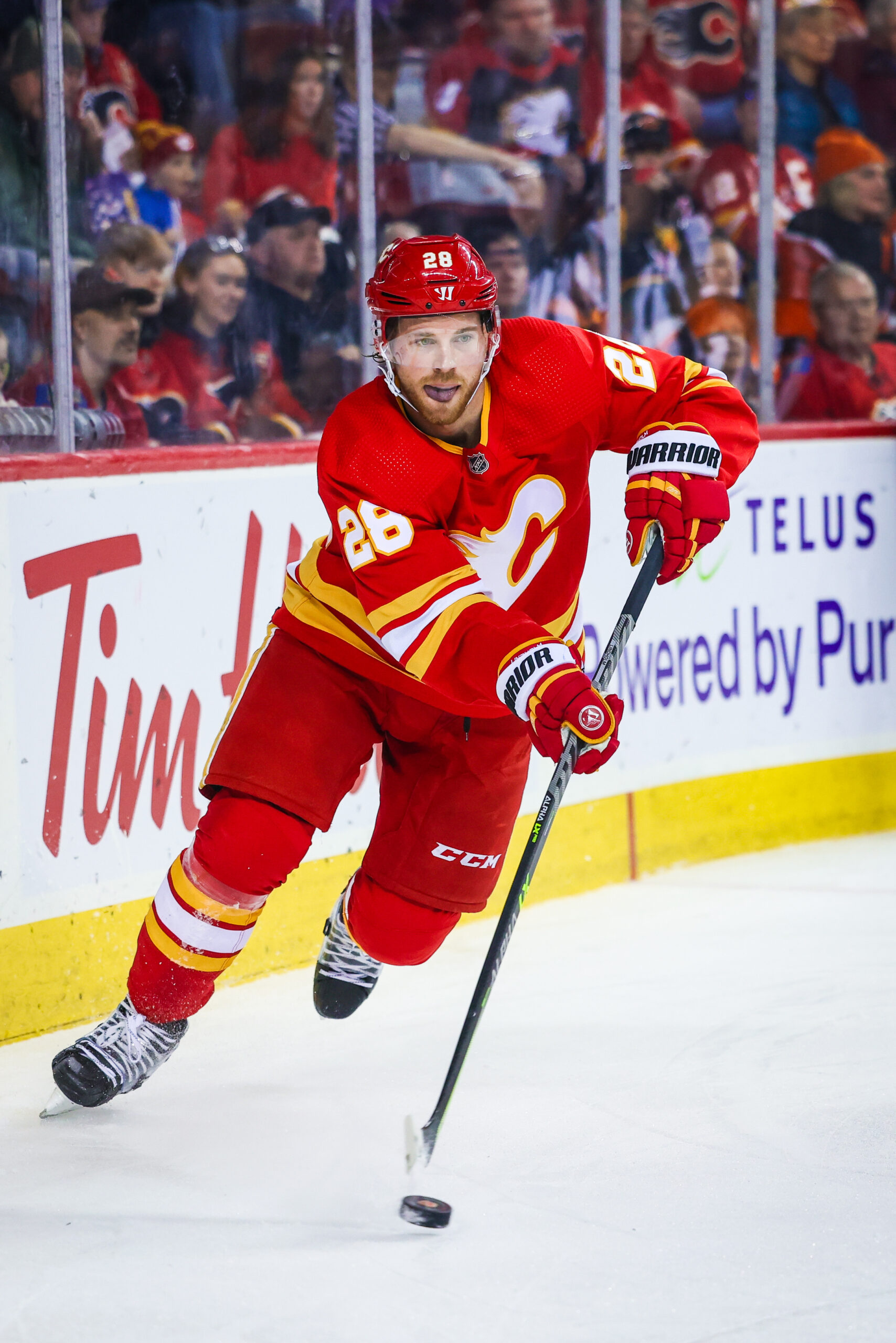 Elias Lindholm doesn’t have to be a true number one center to fetch a first-round pick at the trade deadline. Look at Ryan O’Reilly a year ago, he was under half a point per game with St. Louis and still landed a first-round pick. Lindholm is producing at a better rate than that, is well above average at the faceoff dot, and plays in all situations. If Calgary is willing to retain 50%, they can get that contract to under $2.5MM pro-rated which should be affordable for several contenders without moving much of consequence the other way in terms of matching money. He’s probably going to be the best middleman available if the Flames ultimately turn around and sell. If I’m being honest, I don’t see how he doesn’t bring at least a first-round pick back; it’s how much more comes with it.
As for Chris Tanev, this is the one I agree with you on. With his injury history, I can see teams being hesitant to move a first-rounder, even though he’s an expiring deal that can be paid down to $2.25MM while being a right-shot player, by far the most coveted side. There are even recent comparables (David Savard in 2021, Ben Chiarot in 2022) that suggest a shutdown defender on a paid-down expiring contract could fetch a first-rounder plus something else. But the injury risk drops it to a second-rounder and something else.
Then there’s Noah Hanifin. Here’s a top-pairing player that can fit in with any contender and is also under $2.5MM with 50% retention. He’d probably be the best blueliner that moves, assuming he moves. If you’re the best defenseman available, you’re probably getting moved for a first-rounder. And if you’re like me and think he’ll move in a sign-and-trade, there’s no doubt at least one of those picks will be part of the sizable package going to Calgary. Whoever gets him is likely then out on Tanev, which will hurt Tanev’s market a bit in the end.
YzerPlan19: Does the Flames’ recent success change the course of things? Do they still try to pony up $ to keep this group? Is it the FAs that are contributing factors to the success or the kids? Is the success sustainable or should they continue on in rebuild mode anyway? Do we have to wait until the trade deadline to see where they are in the standings before any moves/signings materialize?
I don’t think we’re at a point where a few weeks should be determining their course of direction. Generally speaking, that’s probably not a wise course of action either way.
I thought Calgary was going to be pretty good this year. Lots went wrong last season but they still have a decent roster on paper. But they can’t score enough to truly contend; adding a piece up front would certainly help but I don’t think they’d be more than a mid-tier team anyway. If I’m GM Craig Conroy, am I ponying up a bunch of money to lock in a core that probably isn’t good enough to contend? If one of Lindholm or Hanifin wants to take a team-friendly deal, sure, I’d make that move. But I don’t think that’s happening.
Adding Connor Zary has certainly helped so he deserves some credit but for the most part, I’d pin their recent improvement on the backs of the veterans (not necessarily just the pending free agents either). Zary has given them a bit more offensive depth but they’re still among the lower-scoring teams.
Can they hang around where they are? Probably. They’re more or less a bubble team and if they play around .500 hockey, they can stay in that area. But again, holding steady probably isn’t the best approach for them to be taking.
Unclemike1526: What additions do you see the Hawks making by the trade deadline? With Hall on LTIR and Tyler Johnson and Mrazek likely out the door that leaves the Hawks with a lot of Cap space money. They need more draft picks like I need hemorrhoids, But I would rather see them add some NHL-ready talent to add to the pool. Nazar should be here one day after Michigan is out of the Frozen Four but most of the Hawks’ top talent is still a couple of years away. Commesso might get some run after Mrazek is gone or if he gets hurt but I think some decent ready talent might be available. Thoughts? And no, Campbell is a hearty No Thanks.
The Blackhawks have plenty of cap space before the possibility of moving out some of their rentals. But why would a team that’s bottoming out in an effort to land another high draft pick acquire players that will make them more competitive in the short term, hindering their efforts to finish at the bottom of the standings? That seems a bit counter-productive in my books.
You may not want to see them add more draft picks but over the next couple of months, that’s what they should be doing. If there’s a market for Tyler Johnson and Petr Mrazek, it’d likely be a draft pick return. If they take on a contract or act as a third-party facilitator to help another team make a deal, it’d be a draft pick coming their way.
If you want them to flip the switch and go for it, that’s an offseason decision. At that time, they have what should be another high draft pick to go with Connor Bedard and then they can use their collection of draft picks and prospects to look for some more win-now pieces, or at least prospects that are a bit closer to being NHL-ready. I think there’s a good chance that will be their strategy but it’s one that has to be executed after the season, not now.
As for signing Frank Nazar after his college season ends, that makes sense. That gets him a taste of the NHL before a potential spot with the US squad at the Worlds; if he signs and burns the first year of his deal this season, he’d be ineligible to go to Rockford. As for getting Drew Commesso some NHL looks, I’d like to see him fare a bit better with the IceHogs first. Throwing him to the wolves on what’s likely to be an even weaker team after the trade deadline comes with some risks and I think their preference would be to let Arvid Soderblom get the bulk of the work down the stretch to help further assess if he’s in their future plans.
Johnny Z: Would the Hawks make a bid for Laine? Seems like CBJ would settle for a bit less to get his salary off the books and the Hawks have ample cap space.
Patrik Laine has been a popular speculative trade candidate although I’m not sure I agree that Columbus would be willing to move him at a discount to get his salary off the books. Yes, things have not gone well this season from both an injury and production standpoint but he’s also a year removed from nearly averaging a point per game after averaging a point per game the year before. Does one bad season mean they should want to sell low on a player who has been one of their top performers before that? I don’t think that’s the right course of action for them to take.
If I’m GM Jarmo Kekalainen and I want to clear salary, I’d be focusing on moving some of the lower-cost overpayments, players like Andrew Peeke and Adam Boqvist, for example. They may not get a great return straight up but if clearing money is the main goal, selling low on one of them makes more sense than selling low on one of their top liners.
Having said that, someone like Laine would make some sense for Chicago, after the season of course. An overpriced contract where they could get in a trade for below market value like they did with Taylor Hall would be a nice bridge addition to allow some of their younger prospects ample time to get established in the pros. I don’t think Laine specifically will be one of those players but you’re on the right track with what type of trade candidate might be viable for the Blackhawks.
PyramidHeadcrab: Looking at advanced stats and yadda yadda, which current “winning” team is most likely to fall off in the New Year? It’s sure been an experience watching Anaheim drop from near the top of the Pacific to the bottom of the league already!
Full disclosure, I don’t know my advanced stats as well as I should but here goes nothing using stats from MoneyPuck heading into Sunday’s action. For me, the answer is Vancouver.
Let’s talk about PDO, the sum of a team’s shooting and save percentages at five-on-five. The league average is 100. Good teams can be in the 101-102 range without it being too concerning. The Canucks, meanwhile, check in at 104.73. For context, there are only three other teams above 102 and none of them are at 103. Vancouver is far and away ahead of the pack. Buoyed by a shooting percentage of 12% (well above the league average), this tells me they’re due for some regression.
Now let’s look at Expected Goals For and Against based on shot quality and location. Vancouver has scored 18.56 goals above their expected rate, the second-best rate in the league. It’s good for them that the shots are going in but this is another one that seems unsustainable. From a Goals Against standpoint, they’ve allowed 15.26 fewer than expected. I think there’s a bit of credence to this one being a bit sustainable as their tandem of Thatcher Demko and Casey DeSmith gives them quality goaltending each night. They should be on the happy side of this ledger although down 15 goals allowed in this category might be tough to sustain.
If we add those two numbers up, Vancouver has a Goal Differential Above Expected at 33.82 (in just 36 games played). For context, the only other NHL team above 16 in this category is Winnipeg (28.77), the next highest team in PDO. (If you’re looking for who’d be next on my list based on advanced stats, it’d be them.) The Canucks are a good team but I don’t think they’re quite this good and I expected some sort of slide back in the second half. They should still be a playoff squad but I doubt they’ll still be atop the Pacific Division at the end of the regular season.
WilfPaiement: When did NHL officials stop calling games by the rulebook and start calling games based on the score/situation? And why does the league think it’s okay that officials can now manipulate the outcome easily, especially with the new revenue stream that is gambling?
Officiating in the heat of the moment can be frustrating at times, especially if you’re a fan of the team who isn’t getting the benefit of the call. We’ve all been there.
I’m going to be a bit picky here with the first part. If officials called everything to the letter of the rulebook, the majority of the games would be played at three-on-three for the overwhelming majority of the time with more players in the penalty box than on the bench. No one wants to see that. There are tons of smaller infractions (a hook here, a late bump on the boards a half-second after the puck went by there) that go uncalled but are technically penalties based on the rulebook and that’s a situational judgment call right there, the score notwithstanding. There is always going to be some level of game management from officials; there’s just no way around it.
Now, as to officiating based on the score? I don’t have any empirical data to show one way or the other that says it’s happening more or less than before. Personally, I haven’t seen it as much this season as I feel like I’ve seen in the past. Sure, there’s the odd questionable call (or non-call) in a late-game situation but again, when you’re already operating on some level of game management for determining what infractions are worth calling (and which of the many smaller ones won’t), that’s going to happen.
I’ve yet to see any evidence that the league thinks score manipulation is okay but there’s not a lot they can do. It’s not as if they can arbitrarily fire every official who they think has done it and I’m pretty sure officials are cautioned about not doing this at multiple times per season. I also don’t think there’s a ton of this happening so maybe I’m not the best one to answer this question. From a gambling standpoint, it’s not like gamblers of other professional sports don’t have the same issue; there’s subjectivity and human error everywhere. The best thing I can say is that if bettors feel this is subjectively happening, factor that belief into what bets are and aren’t made.
Photo courtesy of USA Today Sports Images.
PHR Mailbag: Ovechkin, Lindholm, Campbell, Flyers, Blues, Calder, Final Four
Topics in this edition of the PHR Mailbag include Alex Ovechkin’s chase to 895 goals, the potential viability of Edmonton moving Jack Campbell, and more. If your question doesn’t appear here, check back in our mailbag from over the weekend. We’ll also run one this weekend from the most recent callout for questions.
rule78.1: Based on what you have seen this year, does Ovechkin ever pass Gretzky?
As we sit here today, Ovechkin is at 828 goals, 66 behind Wayne Gretzky; he obviously needs 67 to pass him. This year has been ugly for Ovechkin and Washington’s offense although they’re holding onto a Wild Card spot, albeit ever so slightly.
I can’t see Ovechkin’s scoring struggles carrying on for the entire season. He’s at six in 31 games, a 16-goal pace. I think he at least hits 20 by the time the year ends. Let’s pick a completely random number and say he winds up at 23 and that the Caps find their scoring touch to an extent. Now the gap is 49 to tie, 50 to beat him.
Ovechkin has two years left on his contract. Could he average 25 goals per year in that stretch? I wouldn’t put it past him even if it looks like he’s slowing down.
But let’s say he comes up a bit short following the 2025-26 campaign. If he’s within, say, 10 goals of Gretzky at that point, I have to think Ovechkin is going to want to give it one more go to try to get the record. I’m sure Washington would be more than happy to bring him back for that attempt, even though he’d be 41; the marketing alone could make it worthwhile if he gets there. If not them, there would be other teams who certainly would be willing to give him that shot.
I know Ovechkin has struggled this season but I still think he’ll get the goal record eventually.
SkidRowe: Could the Bruins acquire Elias Lindholm in exchange for Hampus Lindholm and a Lindholm to be named later?
It’s too bad that Par Lindholm is no longer on Boston’s reserve list, we could have thrown him in there for good measure.
Calgary’s Lindholm is a fantastic fit for the Bruins. There’s no doubt about that. He’d help fill the role that Patrice Bergeron filled for many years which would fill arguably the biggest hole in their lineup right now.
The problem is that this probably isn’t the type of move the Flames should be looking to make. This is a treading water type of trade and would probably need to be made in conjunction with them moving Noah Hanifin for a young center. If they can pull this combo off and ownership provides a directive to not rebuild, maybe a package highlighted by the two Lindholms could work. That’s a couple of big ifs, however.
The idea of Boston adding Lindholm down the middle has been raised a lot going back to the summer but the same problem exists now as it did then. They don’t have many high picks in the near future to deal from and their prospect pool isn’t the deepest. The emergence of Matthew Poitras perhaps makes him more appealing than he might have been a few months ago but if GM Craig Conroy winds up starting a rebuild, I still think he’d be aiming for a higher-ceiling piece.
aka.nda: How can the Oilers trade Campbell? With the cap going up, is a buyout not feasible?
Let’s look at the buyout cost first as that’s going to play a role in any trade possibility as well. The total cost in actual dollars would be $9MM with a $10.5MM cumulative cap charge that would be spread out as follows:
2024-25: $1.1MM
2025-26: $2.3MM
2026-27: $2.6MM
2027-28: $1.5MM
2028-29: $1.5MM
2029-30: $1.5MM
(The variation in the first three seasons of the cap charge is due to the frontloaded structure of the contract.)
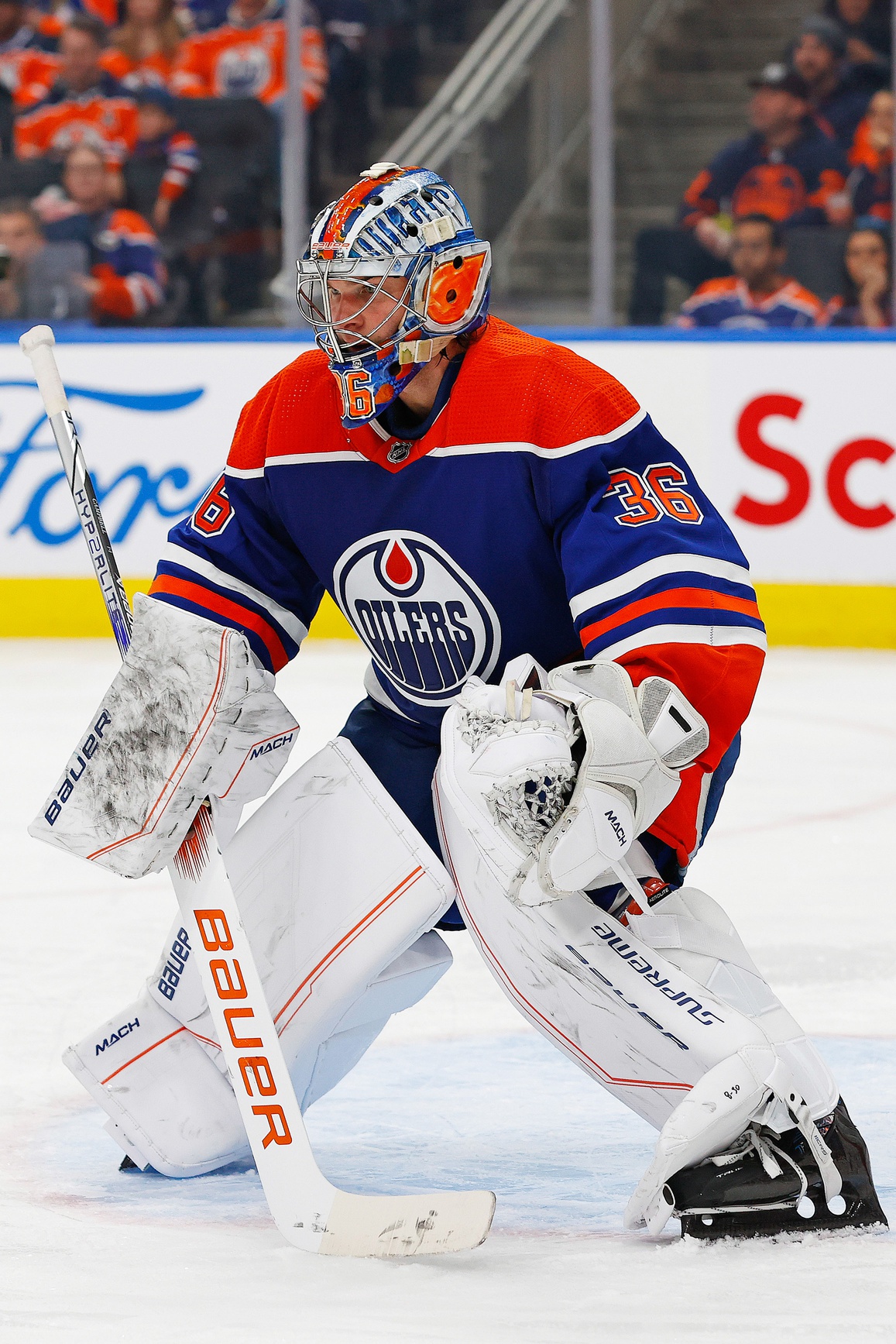 Jack Campbell is having a horrific season, no doubt about that. His trade value is most definitely on the negative side and it’s going to take a significant incentive to offload in its entirety. If you’re the acquiring team, you’re probably not taking on Campbell with the idea of trying to rehab his value and get him going again. That means you’re probably taking on a $9MM cash payout and dead cap money into the next decade. A first-round pick or a good prospect probably isn’t enough to justify taking that on.
Is it possible that Edmonton can move Campbell? Sure, but it doesn’t seem likely. Their best bet might be taking back a similarly high-priced underachieving contract but given their salary cap challenges, that’s a move that’s a lot easier said than done.
Now, is a buyout feasible for Edmonton? Fundamentally, the idea of a six-year dead cap charge is something I’d usually say no to but I think an exception could be made here.
If the Oilers are confident in Stuart Skinner being the starter, could Edmonton get a suitable backup for less than Campbell’s $5MM cap charge minus the buyout cost? Next season, they absolutely could with a bit of money left over which would be crucial given how tight their books are. For 2025-26 and 2026-27, it’s still possible although there probably wouldn’t be any savings left over. But if you can get someone who can play better than Campbell has, it’s still a net gain.
Three additional years at $1.5MM on the books will sting down the road but Edmonton is certainly a win-now team. A Campbell buyout could help them on that front so the short-term gain is arguably worth the longer-term pain.
Emoney123: Tortorella for Coach of the Year! Has this team turned the corner enough to use some draft capital to add in an attempt for some playoff wins or hold the course in the rebuild since they have two first-round picks [their own and Florida’s] and two second-round picks [Columbus and LA Kings] and Michkov, Gauthier, and Bonk in the system?
Right now, John Tortorella has to be right up there for the Jack Adams Award as Coach of the Year. The Flyers have been a lot more competitive than probably just about anyone expected. But with around 50 games left in the season for most teams (give or take a few), there’s still a long way to go. I’m not convinced they’re going to still be in a playoff spot two months from now let alone at the end of the year which probably will be what decides if Tortorella gets the award or not.
This is not a core group that’s a player or two away from doing damage in the playoffs so moving away some of their top draft capital for win-now options doesn’t make a lot of sense to me. I still think the likelier scenario is that they wind up selling by March 8th, not buying. And if they do hang in the mix and want to add, I’d want to see them moving later-round picks for specific role players in the hopes of giving their young core pieces some meaningful games without giving up much of consequence.
The only way I’d advocate for trading one of those draft picks is if they were getting someone in the 19-22-year-old range with high value. That fits their current younger core and if the player is a few years post-draft, it could help speed up the rebuild. But they’re very much still in the rebuild so moving those picks for veteran win-now pieces is not a move GM Daniel Briere should be considering.
PHR Mailbag: Red Wings, Flyers, Devils Goaltending, Canucks, Senators Coaching Staff, Vincent
With plenty of questions submitted, we’re going to split the mailbag into three this time with the bonus edition running during the holiday break in the NHL calendar. Topics in this edition include who New Jersey should try to target for a goalie upgrade, Vancouver’s surprisingly strong first couple of months, and more.
gowings2008: The Red Wings clearly need to address their goaltending and could probably use another solid d-man or two. What are some options that Yzerman could reasonably explore to address those issues? It looks like Jonatan Berggren is available for trade, he could maybe be a key piece heading in the other direction in a trade.
I’m going to answer these out of order. Let’s talk about Berggren first. He’s a decent young player but if he’s the key piece of a trade proposal, they’re probably not getting a needle-moving veteran in return. That’s not to say he doesn’t have value but I’m not sure he’d be more valuable in an offer than a first-round pick. He’d get Detroit a decent veteran but it’d be more of a secondary addition, maybe a fourth or fifth defender using your wish list. Personally, I think they’d be better off playing him in the NHL and seeing if there’s another level he can get to.
As for the goaltending, I agree that it can be upgraded on but I don’t know how many assets they want to spend doing so. I’m going to touch on this in another question in a bit more detail but the goalie market isn’t the strongest right now. Yzerman could make a move for one of the few options out there but there’s no guarantee that player will come in from a different system and be materially better. A few points on a save percentage compared to Ville Husso is definitely doable but is that the big difference-maker in the playoffs if they can get there?
To that end, the idea of making the blueline better makes a lot of sense in theory; a better back end could fix some of Husso’s struggles between the pipes. But here’s the problem. Beyond Shayne Gostisbehere (who they’re probably not moving), the rest of their veteran blueliners are all signed beyond this season. That probably takes the Red Wings out of the rental market for defensemen as a lot of sellers won’t want to take a contract with term back for an expiring; they’d rather have the cap space. Jeff Petry might have a bit of value somewhere being below $2.4MM but Detroit can’t pay down that deal any further. Maybe flip him and then go for a rental? But even then, there’s trade protection that could complicate that idea.
But since you’re asking for some specific players, let’s look at other blueliners with term where Detroit could try to send a veteran back as a salary offset and then a key future asset or two. San Jose’s Mario Ferraro comes to mind as someone who could be an upgrade while his salary is around what some of the veterans they would need to move make. If Pittsburgh wants to shake up their secondary core, Marcus Pettersson could be a target as well. Bigger scale, I could see them sniffing around the idea of a sign-and-trade with Noah Hanifin although the acquisition cost would be a lot higher obviously. With Simon Edvinsson now up, it wouldn’t shock me if he gets a look to see if he can help stabilize things.
Black Ace57: What do the Flyers do? Even with their success this year should they be buyers considering they are still trying to rebuild? Do they stand pat? Even with their winning do they trade off pieces?
For the next month or two, they should stand pat. I don’t think this is a team that’s going to hold onto a playoff spot for too long so spending assets to try to cling to a postseason position doesn’t make much sense. At the same time, you don’t want to sell early either as there’s a lot of value in getting their younger players experience playing in a meaningful (for now, at least) playoff push.
Closer to the trade deadline in March, I’d deal from their defensive depth. We know Sean Walker and Nick Seeler are getting plenty of interest already and Marc Staal played a regular role for Florida through their playoff run last season so there might be a market for him. Clearing them off the roster will open up some more consistent playing time for the likes of Yegor Zamula and Ronnie Attard, among others. If they’re willing to pay down a decent chunk of Cam Atkinson’s deal, I could see there being a bit of interest in him as well. There’s nothing wrong with stockpiling some extra picks at this point in the process.
They’re also going to need to decide what to do with Morgan Frost. Right now, I think he still has some real trade value as young centers are always going to pique the interest of rebuilding teams. A player-for-player swap, getting someone who is a similar age with multiple years of team control, would make sense. But the longer he’s in and out of the lineup, the more his value decreases. I still think he can be a capable secondary contributor so I’m not saying move him now but they would be wise to make a decision on him regarding if he’s expendable or part of the plan sooner rather than later.
SpeakOfTheDevils: Who is the answer in net for the Devils???
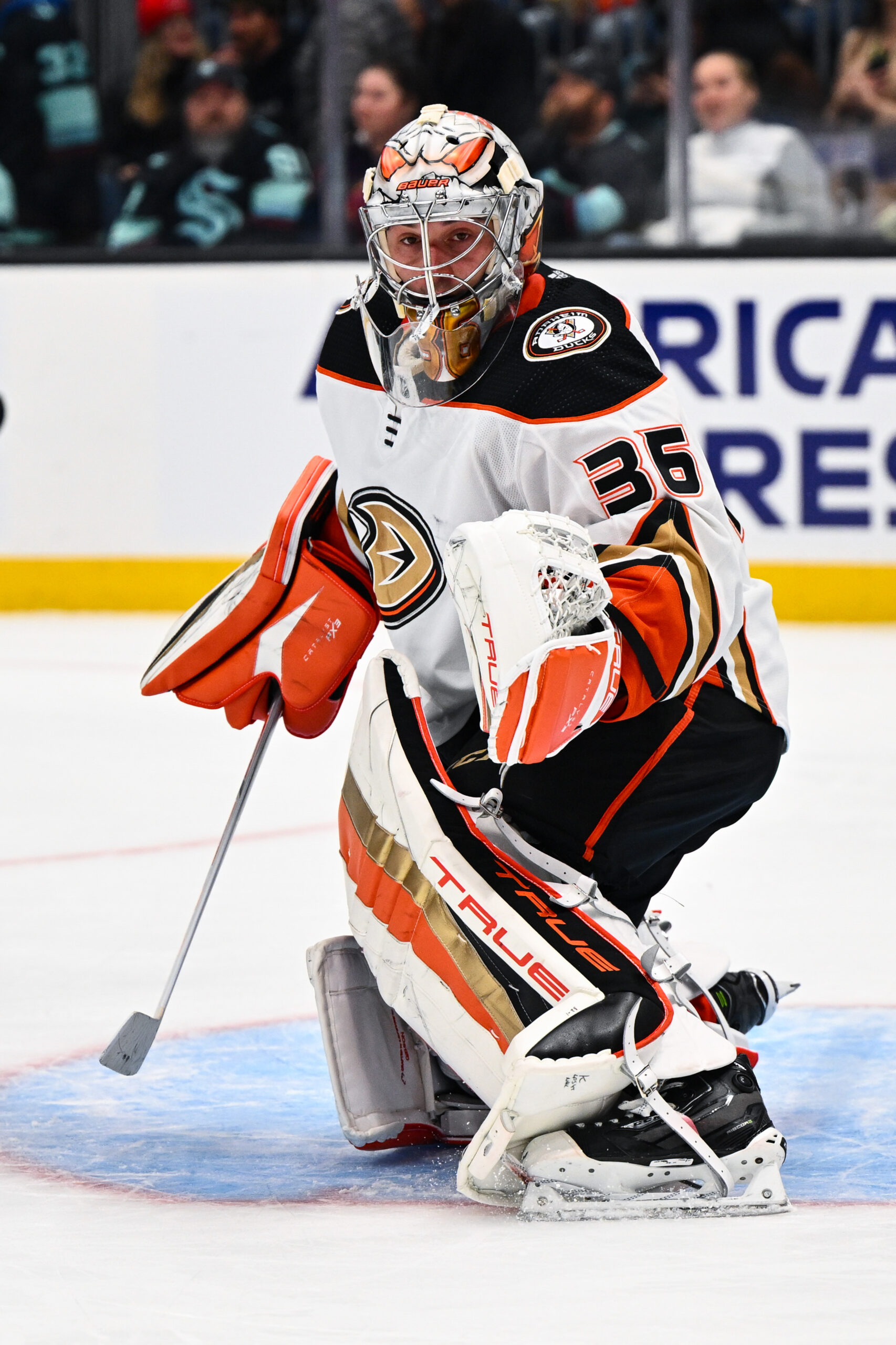 Salary cap aside, I’d say John Gibson. I think playing behind a much better team with win-now expectations will get him back to being at least a little above average for the next couple of seasons. With New Jersey in a win-now window, that fits. Of course, the salary cap does play a big factor here and the fact he’s signed through 2026-27 at $6.4MM per season can’t be overlooked. With over $67MM in commitments for next season already per CapFriendly, adding another big ticket on their books will certainly complicate things. Of course, some of that can be offset in the short term by sending Vitek Vanecek and his $3.4MM AAV through 2024-25 the other way.
The problem here for New Jersey is one I alluded to earlier. In a season where good goaltending is hard to find, those who have it aren’t going to want to move it. Accordingly, the goalie market simply isn’t that deep in terms of who’s available. Jake Allen is a perfectly serviceable veteran. Is a perfectly serviceable veteran what they need right now? Probably not; I think they need more of an impact piece.
But who is that impact piece? Most of the netminders speculated to be available are of the depth variety. Daniel Vladar probably isn’t a difference-maker. If Detroit moved one of their three, James Reimer isn’t the solution. Spencer Martin could be had but he’s no better than what they have now. Maybe Karel Vejmelka moves the needle enough but the asking price is going to be rather high as someone with an above-average save percentage and a pretty good contract, one that carries a $2.725MM through the end of next season. Barring a huge return, the Coyotes have minimal incentive to move him, especially since they’re in a playoff spot at the moment.
Plan A for New Jersey is that Vanecek turns things around and Akira Schmid goes back to his 2022-23 form and that’s the answer in net, one that doesn’t require doing much. But if they want an impact netminder that could make a difference, I think Gibson is who they have to go after. It’ll take a salary offset (Vanecek) going the other way. It might even require compensating Anaheim for three-plus years of some level of retention so it won’t be easy. But if that’s what they need, it’s a move they need to find a way to make.
blues1967: Is Vancouver for real? I’m not a Canucks fan, but I’ve been impressed with their play. They are overdue for some success, as is Buffalo.
I don’t quite know what to make of the Canucks. They weren’t as bad a team as they were from last season so some improvement was reasonable to expect. But to be among the top teams in the league more than two months into the season? I’m not sure that was expected and I’m not sold that it’s entirely sustainable.
Brock Boeser is scoring at a torrid clip, one that’s entirely unsustainable at around 25%. They have two other forwards over 20% in a league where the average is generally around 8%. J.T. Miller is nearly at 20%, well above his career average. This is a good offense but not the best attack in the league. I keep expecting them to slip a bit in that regard and suspect it will happen at some point.
One element that does give me some confidence with regards to staying power is their goaltending. Thatcher Demko is back to being a high-level netminder and he has the ability to stay at that level or at least close to it. I’m not sure Casey DeSmith can maintain a .920 SV% but he’s an above-average backup who gives Vancouver a chance to win pretty much every game.
I’m ready to call them a playoff team but are they a contender? I wouldn’t go that far just yet as I think their offense is due to take a step or two back at some point in the second half of the season.
Submit Your Questions For The #PHRMailbag
The upcoming holiday roster freeze is a built-in demarcation line as we cross into the second trimester of the regular season. Teams have a clearer picture of where they stand, leading some to make significant changes to their coaching staff while others invest more resources in exploring the trade market.
As we prepare to turn the calendar to 2024 and start hearing some pre-deadline trade rumors in earnest, it’s good timing for another edition of the PHR Mailbag. In part one of our last edition, our Brian La Rose examined how the Blue Jackets front office could navigate another disappointing season and potential moves for the Oilers. Part two investigated just what’s been going on with the Wild’s roller-coaster season and how the Flames can shift more responsibility to their incoming wave of young talent.
You can submit a question by using #PHRMailbag on Twitter/X or by leaving a comment down below. The mailbag will run on the weekend.
PHR Mailbag: Robertson, Wild, Flames, Goalies, Kings, Bruins, CBA
Topics in this edition of the PHR Mailbag include Minnesota’s tough start to the season, discussion on if there’s a path for Calgary to retool instead of rebuild, and much more. If your question doesn’t appear here, check back in our mailbag from three weeks ago (apologies for the delay in getting this back half posted).
jacl: What’s happened to Jason Robertson? It seems that you don’t hear his name called during a game at all. You never hear his name called in big situations this year. Am I expecting too much from him this year after his last couple of years?
Expectations should rightfully be quite high for Robertson. You don’t fluke into back-to-back 40-plus-goal seasons which is what he has done the last couple of years. Now, he finished tied for sixth in NHL scoring last year which is a lot harder to repeat, especially on a Dallas team that has a fair bit of balance offensively. If you were expecting 40 goals again from him, I think that would be fair. If you were hoping for another jump in points, then I’d suggest you might have aimed too high.
Robertson has been a bit quiet this year but he’s still hovering around the point-per-game mark. His shooting percentage is still above the NHL average but is a bit below his career average. If you’re looking for a reason for optimism, another percent or two on that front as the season progresses could still give him a shot at a 40-goal pace.
I Wander Off: Dear all-knowing and wise mailbag answer person.
Is it just me or is Murphy’s Law in effect for the Wild this year?
I.e. we all know about the cap struggles but it just seems like every pass, shot, hit, block, blocked shot, or save somehow someway always doesn’t seem to A) connect for a goal or B) goes right into the back of the net.
Sincerely, a diehard Minnesota Wild fan and frustrated State of Hockey resident.
Things certainly look a little better now following the recent coaching change at least. Yes, they’ve had some misfortune but there were some risks heading into the season.
Filip Gustavsson had a great year last season. No question about that. But before that, he was struggling to establish himself at the NHL level. They had no choice but to re-sign him but there was always going to be the risk that he went back to his previous form which is what has happened so far. I think he’ll get better but luck or no luck, they’re not going to have the same level of goaltending as a year ago. Marc-Andre Fleury just turned 39 and had to slow down at some point. Again, I think he can be better but perhaps he’s not a quality platoon piece anymore. There was always going to be some risk between the pipes as a result so it’s not just Murphy’s Law on that front.
They also didn’t do much to upgrade their offense over the summer. (Yes, their cap situation played a big role in that.) But they had a mediocre attack last year so them being near the bottom of the league on that front wasn’t entirely unforeseeable either. Matt Boldy struggling stung and Kirill Kaprizov got off to a slow start which didn’t help things but this is where the lack of depth hurt them.
For me, Minnesota is a bubble team. I don’t think they’re as bad as their record but they’re also probably not a 103-point group either. Is that all Murphy’s Law? Maybe a bit but after getting some best-case results last season, it could also be things normalizing a bit.
Zakis: What was GMBG thinking with the Hartman, Mats, and Foligno extensions?
Also, what are the chances the Wild sign Kirill to another extension, and what would that look like with the cap purportedly going up?
And why won’t the Wild play their highly touted youngsters?
When GM Bill Guerin signed Ryan Hartman, Mats Zuccarello, and Marcus Foligno to new deals, it was a case of GM believing in his core group a little too much. Remove any possibility of in-season uncertainty and just get them done. He thought this was a 103-point squad once again and with that logic, getting some important veterans locked up made a lot of sense. Of course, the mistake was believing that last season was repeatable and possibly even built upon.
Having said that, I’m not going to pile on too much. I have no issue with the Zuccarello signing from a value perspective. Hartman’s, in a vacuum, is defensible if you think he can get back to his form from a couple of years ago. Even if he’s in the 40-45-point range, it’s not bad and he’s a center, a spot they don’t have much depth at. So I can’t criticize those a ton. Foligno’s on the other hand, that one felt like an immediate overpayment.
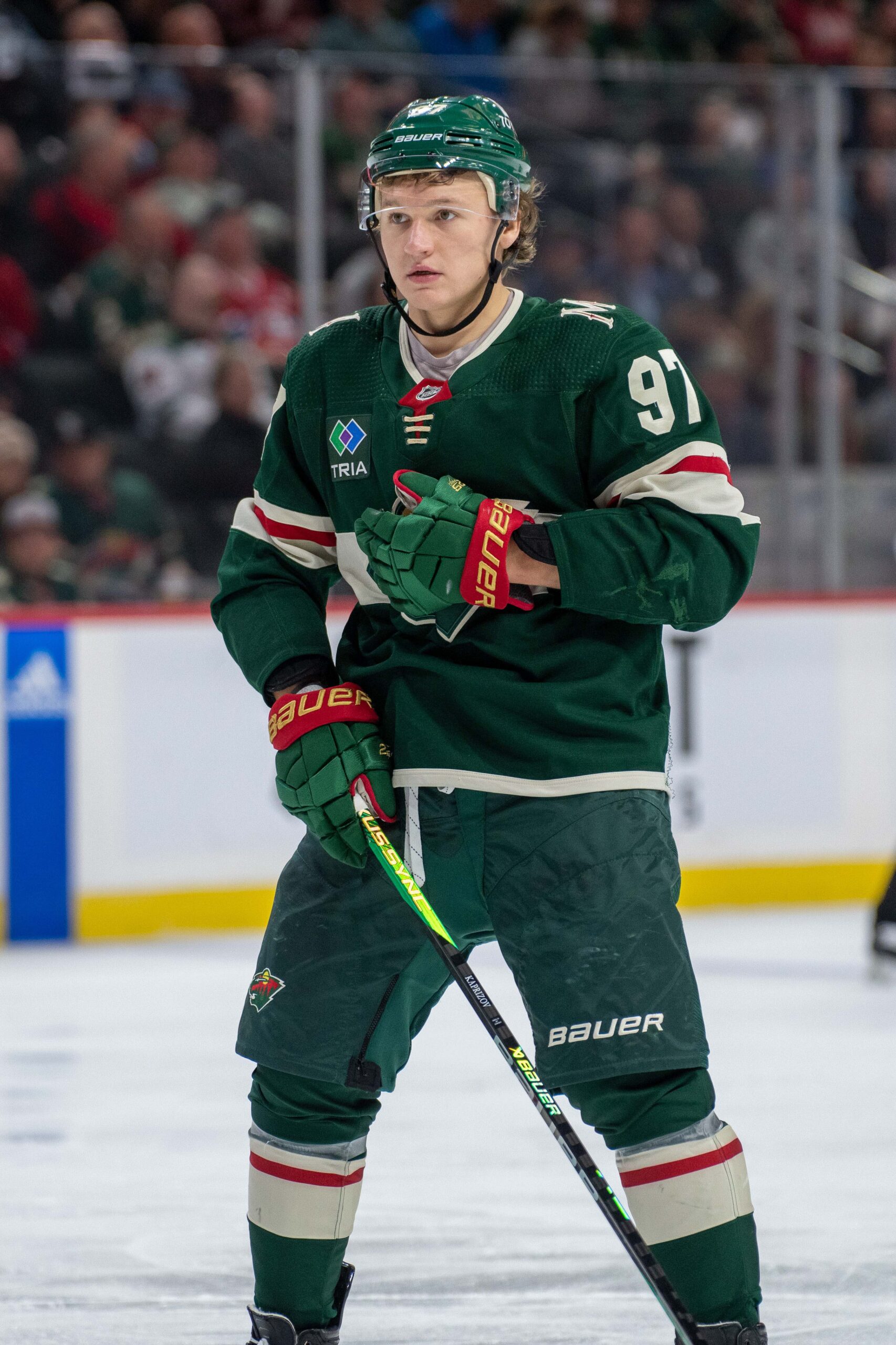 A lot can happen between now and the time that Kaprizov is even eligible to sign an extension which isn’t until July 2025. If they’re in contention and use the cap room created by the high buyout costs going away, I think there’s a reasonable chance he’d consider it. I’ll say 40% for now as testing the market could be tempting. I’m not as bullish on the revenue projections as the NHL is in its public proclamations (attendance is down in quite a few buildings and a lot of teams are facing reduced regional TV rights which will hurt HRR) but maybe the trailing years in the lag formula (which is how the cap will be set moving forward) are stronger than I think. At this point, I think Kaprizov would be targeting something above Artemi Panarin’s $11.643MM AAV, assuming he remains a top-end player. Let’s say $12.25MM for, well, as many years as he’s willing to sign for.
As for not playing the highly-touted youngsters, I don’t see that. Marco Rossi is playing top-six minutes most nights. Brock Faber is over 23 minutes a night on the back end. Boldy is a regular in the top six. Liam Ohgren and Danila Yurov are under contract overseas and aren’t quite NHL-ready. Carson Lambos is just getting his feet wet in the pros and counting on a 21-year-old goalie in Jesper Wallstedt would be highly risky. The ones that aren’t playing are either not available or not quite ready. There are concerns that I have with this roster but not playing the top youngsters isn’t on that list. Their time is coming soon but not yet.
kyzr: How could Calgary avoid a total teardown and retool to be competitive? If Hanifin and/or Tanev are moved, who could the Flames trade for to be the replacement? Thanks!
This is a scenario that doesn’t come up too often anymore as player-for-player shakeup moves don’t happen too often. The fact that both players are pending unrestricted free agents doesn’t help either as these types of swaps typically involve pieces that are either signed or at least under club control for a while. That can be managed by allowing early extension discussions though and, in Hanifin’s case, perhaps a sign-and-trade to allow for the eighth year.
I suppose the other way would be to move the veterans for future assets and then flip those or other future pieces for win-now help. But even that doesn’t happen. Generally, when teams are in the middle, they’re either loading up or selling off, not making moves to try to hang around the middle.
But I’ll play along. The Islanders feel like a team that could do something like this with Noah Hanifin with someone like Alexander Romanov being part of the return. Romanov is hovering around the 22-minute mark for ice time, a career high and could slot into Calgary’s top four. I could see the Blues having interest in something like that with one of their $6.5MM blueliners (likely Torey Krug) being involved but that might not be a good idea for the Flames. Maybe Seattle with Jamie Oleksiak coming back who has another year left?
The problem for Calgary or really any team entertaining a scenario like this is that the teams that want a player like Hanifin or Chris Tanev don’t want to subtract anyone of consequence from their roster. They want to add that extra piece or two, not make more of a lateral swap which is what your idea entails. If the Flames wind up moving those two – and I think they will – I suspect it will be more of a traditional seller type of move, not a half-in, half-out type of approach.
Ripper Magoo: How many goalies would you give a 7 x 7 contract to?
This is a tough one that really made me think. There aren’t many goalies who are safe bets to have seven straight above-average seasons which means there’s a case to be made that none of them should get one. But there are a handful I think I’d take the chance on.
Jake Oettinger (DAL) – He’s already in the top ten at least for goalies and a seven-year deal in July would bring him to 32, more than young enough to still play at a top level. I think the Stars would love to get him at this price but it’s going to cost more than that when his deal is up for real in 2025 when he’ll be an RFA with arbitration rights.
Igor Shesterkin (NYR) – If he was a free agent this summer, seven years takes him to his age-35 season. Lots of goalies are still going strong at that age. He’s a high-end netminder that’s young enough to build around.
Ilya Sorokin (NYI) – There would be a bit more risk here as he’s a year older than Shesterkin but his track record is big enough to show me that he’ll be a high-end starter for at least most of that deal. Plus, that’d be an upgrade on his current contract.
The other one I’ve flip-flopped on is Boston’s Jeremy Swayman. The track record isn’t there yet but at the same time, if the Bruins wanted to sign him to a long-term deal this summer, I think the asking price would be in this range so I have to seriously consider him for this scenario. I know Connor Hellebuyck just got more than that but I’d be leery at seven years at this price point with the workload he has carried over the years.
PHR Mailbag: Blue Jackets, Gaudreau, Kane, Rasmussen, Oilers, Hockey Canada
Topics in this edition of the PHR Mailbag include the rough start to the season for the Blue Jackets, how the Oilers could get out of their slump, and much more. If your question doesn’t appear here, check back in next weekend’s mailbag.
Black Ace57: What does Columbus do going forward if their high-paid stars keep struggling? They looked like a team that could compete this year, but if their top guys keep struggling it looks more like a team in need of a retool or short rebuild.
I wasn’t sold on the Blue Jackets being a playoff team this season but I was expecting them to be more competitive than they have been so far. In theory, I agree with you that a retool would help but the problem is who do they retool with? Selling low on Patrik Laine isn’t wise. Same for Johnny Gaudreau. I don’t think they’re moving Boone Jenner either. So, aside from the currently injured Jack Roslovic, the forwards they’d move don’t have a particularly significant track record; they aren’t players that will bring impact pieces in return.
On defense, Andrew Peeke and Adam Boqvist have some value but they’ve been on the block for most of the season now. Clearly, the offers haven’t been great as otherwise, they’d have been moved already. Erik Gudbranson doesn’t have a trade market and the other veterans are players they probably don’t want to trade.
If they can find a taker for Merzlikins, they can try the lateral goalie swap and hope the change of scenery works for each player. With his contract ($5.4MM through 2026-27), that’s easier said than done.
They’ve changed the coach multiple times now. They’ve changed the goalie coach. Pulling those levers again isn’t going to change much. So my recommendation to them would be to play the youngsters as much as possible and hope that the veterans find their footing. If they don’t, at least the development of their young core players gets advanced. That’s a small win but with their current situation, that might be the best-case scenario aside from moving out some rentals closer to the trade deadline if they’re out of it by then.
Pyramid Headcrab: Any insight on Johnny Gaudreau? His scoring has completely fallen off a cliff, and his play does not inspire confidence. Can you think of any other players who have had such a precipitous drop after signing a new contract?
And more vitally, is this a case of a guy completely phoning it in after getting a big paycheque, or is this a case of a player not fitting in a new system?
The player who replaced Gaudreau in Calgary comes to mind, Jonathan Huberdeau. He gets acquired, signs the long-term extension, and falls off a cliff, notching 60 fewer points compared to 2021-22. This season, he’s on pace for even less. Jeff Skinner also fits the bill. After a 40-goal year in his first season with Buffalo, he followed that up with 23 points followed by 14, making his deal one of the worst in the league. Fortunately for the Sabres, he turned it around and while his contract isn’t a bargain, it looks a lot better now.
Gaudreau will get an opportunity to do like Skinner and play his way out of this. There is no trade market for him at the moment. In a perfect world, Adam Fantilli becomes the top-line center they think he can be, giving Gaudreau a higher-end linemate that he hasn’t had with the Blue Jackets so far. If that happens, I think he can rebound somewhat. Not to the point where $9.5MM is viewed as a bargain but also not among the worst in the league either.
I also don’t think this is a case of Gaudreau cashing in and checking out, so to speak. I suspect this is more just him not fitting into the current system and lacking that impact center to play with. Granted, at $9.5MM, it should be Gaudreau helping elevate a linemate, not him needing a better linemate to bring out the best in him. It hasn’t gone well for him in Columbus so far but I think he can turn it around.
Winter in Colorado: What’s your take on Patrick Kane’s return? Every talking head out there thinks he’ll come back and be fine. No player has ever returned successfully from hip resurfacing surgery. It’s entirely possible Kane will be the next Nicklas Backstrom. Yet, I haven’t heard this from any hockey media. It really doesn’t matter what team or contract Patrick Kane wants if he can’t play.
This is a great point and frankly, it wasn’t even one I was really considering too much but you’re absolutely right, it does have to be factored in. Ed Jovanovski didn’t come back for too long when he had it. Ryan Kesler had it done and never played again. Backstrom wasn’t bad last season after coming back but now, it’s fair to wonder if his playing days are done. If I’m a GM, this should be something to consider.
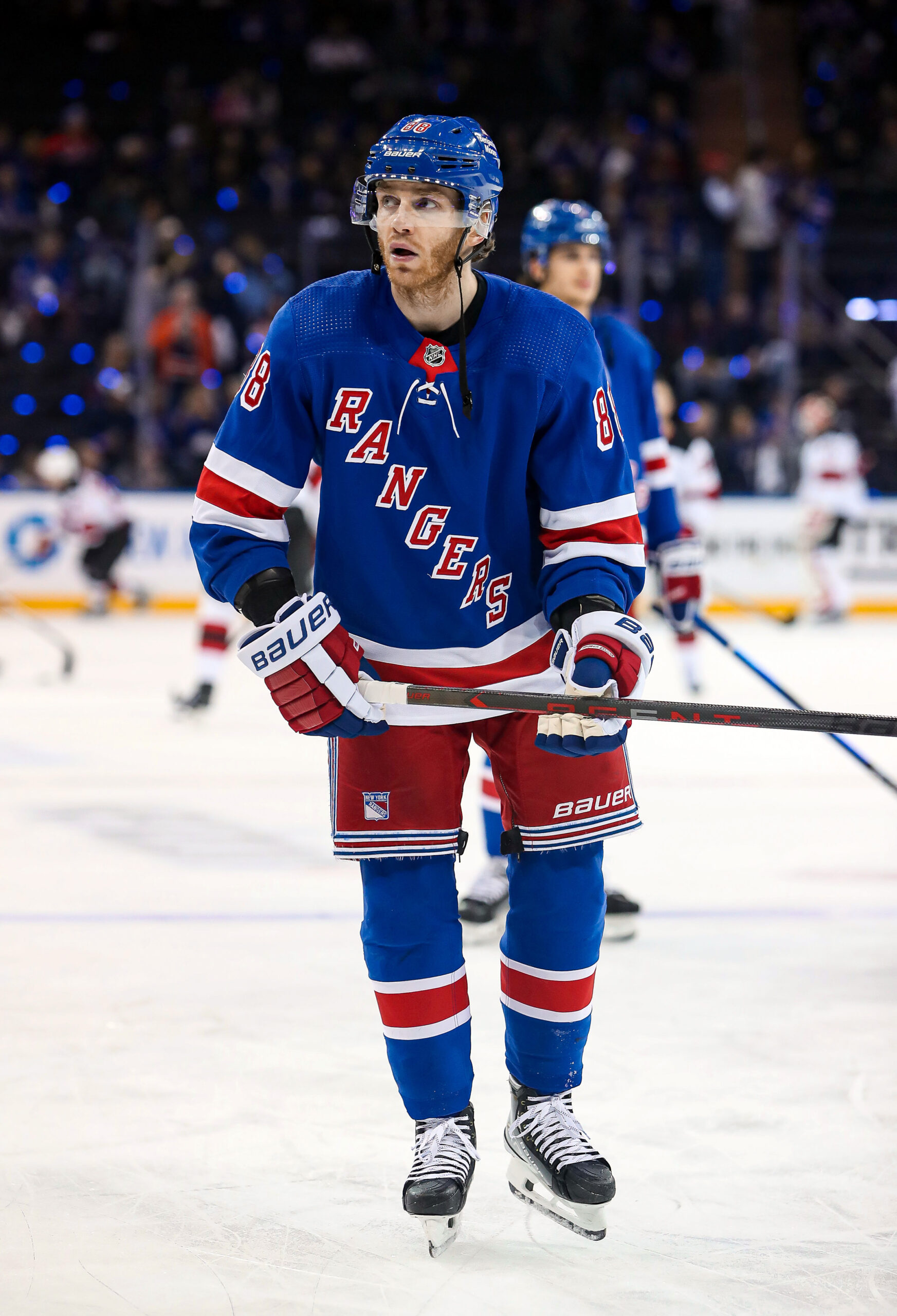 I wonder if Backstrom’s situation could make Kane’s camp lean toward pursuing a multi-year deal. While it’s possible he leaves money on the table if he is able to buck the trend, locking in guaranteed money with injury concerns can rarely be called a good idea.
Here’s what I keep coming back to with Kane. The contending teams that want him are almost all in cap trouble. Their preference is undoubtedly going to be Kane taking a cheap deal that doesn’t require them to turn around and move out another player, possibly with an incentive added with so few teams being able and willing to take on money.
Kane is going to have to pick between trying to ring chase now (and perhaps land in a spot where he can be insulated a bit which helps from a health standpoint) or going for one last big financial score. I lean toward him taking the former (perhaps not by choice; the big-money deals are going to be tough to get at this point of the year) as that’s where his best options for short-term success will be.
Binnie: Two questions to ask. The first one is which team has the best chance of signing Patrick Kane. The second is about Michael Rasmussen contract extension, how long are the terms and average salary per offered if true.
There seems to be some speculation that his preference would be to stay in the East after finishing up last season with the Rangers, a team that it doesn’t look like he’ll be returning to. Florida doesn’t have a lot of cap space but there seems to be considerable mutual interest and frankly, of the Eastern contender teams that could have a realistic shot at trying to afford him, they might be the best fit.
Buffalo is out there both for the fact he’s a local and the sense he’d help give them a boost in a season that they’re supposed to emerge from their rebuild. Detroit is believed to be in the mix as they’re looking to get out of missing the playoffs as well. Both of them can afford pricier long-term deals. If Kane wants one of those, I’d lean to Buffalo. If he’s willing to take the one-year deal, Florida is my pick for where he signs.
As for Rasmussen, I’m sure Detroit GM Steve Yzerman is at least kicking the tires. The center is a pending RFA so a deal will have to get done at some point. It’s safe to say that he’ll get more than his $1.72MM qualifier, especially with arbitration rights. But I don’t think Rasmussen has shown enough to receive a long-term extension, the types that are often done in-season. Barring injury, he’d have gotten there last year but he doesn’t have a 30-point season under his belt and he’s at a lower pace offensively so far this season.
Honestly, I think the best play for both sides here is a one-year pact, another bridge deal if you will. If I’m Detroit, I’d be leery about going higher than a low $3MM offer on a multi-year agreement (three or more seasons). If I’m Rasmussen, why am I locking in long-term for that when I can get $2MM or more on a one-year deal and ideally have a better platform year? Those would be my picks for a new contract for Rasmussen which is why I don’t think the two sides will get one done.
Nha Trang: Alright, how’s this for a deadly hypothetical? Congratulations, Brian! You’ve just been drafted to be the new GM of the Oilers, a team in the dumps, with over half of their cap space tied up in just six players (each and every one of them with NMCs), you’re projected to have only $10MM of cap space NEXT season, and you’ve got a goalie in the minors with a no-trade clause and a nearly $4MM cap hit himself. What’s your turnaround strategy, beyond fleeing screaming for Tahiti? (That, or coming to Massachusetts to clock me upside the head with a goalie stick for making the suggestion.)
My strategy is probably pretty similar to the one they’ve probably been looking into. In net, I’m looking for change-of-scenery players that wouldn’t necessarily require a huge inducement to take on Campbell’s deal. I’m looking at Columbus and Elvis Merzlikins or Seattle and Philipp Grubauer. Both netminders are signed for as long as Campbell and their AAV’s are less than $1MM apart. With Columbus, perhaps add in Cody Ceci and Andrew Peeke to make the money come close to matching and with Seattle, Ceci and William Borgen for the same purpose. That’s probably not the exact trade when all is said and done, that’s the core of the swap.
If those don’t work, I think I might make a bigger offer for Arizona’s Karel Vejmelka. (The problem is they won’t take Campbell back.) The Coyotes don’t seem to be locked in with having him as their long-term starter and if I can get two years at $2.75MM to pair with Stuart Skinner, that’s worth pursuing. Kulak is probably the money matcher and as much as I wouldn’t want to do it, I could be persuaded to put Xavier Bourgault, one of their top prospects, in the offer. This isn’t a viable situation for a rebuild, not with their core. Selling is not an option so the swing is defensible.
Failing that, Montreal’s Sam Montembeault would be my next target since his contract is a lot easier to fit into the current salary structure; he could be added without subtracting anyone of consequence off their current roster. A first-round pick is off the table but if they accepted a package headlined by a second-rounder, that would be worth pursuing. That’s not going to be a big upgrade in terms of getting a new starter but that at least shores up the backup spot, increasing the chances of getting points from those games which will help as they look to get back into a playoff spot.
I’d also look at shaking up the back end. Between Ceci, Brett Kulak, Evan Bouchard, and Philip Broberg, they have a lot of defenders who are mobile but not particularly good in their own end. One or two of those is manageable, four out of seven on the roster is an issue. Moving Kulak and/or Ceci for different-styled players making similar money (Peeke and Borgen are examples from the earlier goalie offers) would be useful. Getting more defensive structure and stability should help solve some of the goaltending struggles and with the remaining puck-movers plus Darnell Nurse and Mattias Ekholm, their offensive game shouldn’t take much of a hit.
Up front, I don’t think I’d change a whole lot. What I would do is waive one of Adam Erne or Sam Gagner to make them waiver-exempt and shuffle one of them back and forth (down on off days) along with James Hamblin. (Not at the same time as they need 12 forwards though.) The idea would be to dip out of LTIR on those days and bank a tiny bit of cap space which might come in handy at the deadline. Ideally, it’d be nice to get a penalty kill specialist into Gagner’s spot and a more skilled fourth line grit player into Erne’s but given their weaker prospect pool, I wouldn’t be trading much for those. Rather, I’d watch the waiver wire for more optimal fits.
Otherwise, this is a good forward group and I expect they’ll turn it around on their own. That coupled with better defense and possibly better goaltending should get them into the playoffs at least.
Submit Your Questions For The #PHRMailbag
American Thanksgiving is generally viewed as a good point for teams to assess where they are and what they might be looking to do on the trade front. One team – Edmonton – didn’t even wait that long before deciding to make a coaching change while another – Calgary – has flipped from looking to extend its key pending UFAs to putting a hold on those discussions; one has already requested a trade.
With that in mind, it’s a good time for our next mailbag segment. In our last one, topics included the Shane Pinto situation in Ottawa, possible teams that could be looking to make an early trade, Mike Sullivan’s future in Pittsburgh, and much more.
You can submit a question by using #PHRMailbag on Twitter/X or by leaving a comment down below. The mailbag will run on the weekend.
PHR Mailbag: Pinto, Trades, Connor, Kane, Sullivan, Value Contracts, Brochu, Uniforms
Topics in this edition of the PHR Mailbag include the Shane Pinto situation in Ottawa, how Patrick Kane could return to the Rangers, Mike Sullivan’s future in Pittsburgh, and much more.
Black Ace57: When do the Senators finally solve this Pinto contract issue? How much further into the season is it reasonable to drag this out?
Well, this certainly took an unexpected turn after this question was posted, didn’t it? With Pinto now out for the first 41 games of the season due to his suspension, he’s not eligible to return until January 21st and it appears as if the usual December 1st signing deadline won’t apply here. With Ottawa not wanting to carry dead cap money by having a suspended player on its roster, it stands to reason now that they won’t want to register the contract until as close to January 21st as possible. At that point, it could very well be a minimum-salary deal as they’re no longer required to pay the value of his $874K qualifying offer; that requirement ended when the offer lapsed in July.
Honestly, I’m bewildered by this whole situation. The suspension was out of nowhere but I’m also quite surprised that things got to this point with him being unsigned. GM Pierre Dorion knew the cap bind he was putting himself in when he signed Vladimir Tarasenko; how was there not a plan to deal with that? In the end, he’s going to get bailed out since Pinto’s midseason deal will be low enough that the cap implications should be minimal as it shouldn’t cost more (or much more) than the player whose spot he’d be taking on the roster. But this was not well handled on their end.
For me, the big takeaway here is that the strategy of ‘deal with the cap later’ when trying to add a player, one that is seemingly popular with the fans, has gotten a whole lot more difficult to execute. Accordingly, teams will need to keep that in the back of their mind next summer, even with the expected increase to the salary cap.
Bradley B: Based on the first few games, do you see any teams making an early trade?
I’d love to say Edmonton based on how poorly they’ve started but their cap situation makes that next to impossible. They could swap out a minimum-salaried player for another one but that’s not going to move the needle very much. But there are a few others that I think could be looking to do something.
Calgary has underwhelmed thus far. Yes, they were a non-playoff team last season but expectations were that they’d be better after the offseason coaching change. They’re also capped out but with some higher-salaried expiring deals, especially on the back end, they might have the chips to make a player-for-player swap to shake things up. Daniel Vladar has been a speculative trade candidate but he hasn’t started the year well which can’t help his value.
Washington is another one to keep an eye on. They’re in LTIR and Max Pacioretty and Joel Edmundson should be back at some point next month. At that point, their cap situation will force their hand, barring further injury. Anthony Mantha, on a big expiring deal himself, seems to be the speculative option to move and frankly, he’s someone that could benefit from a change of scenery.
Seattle is a wild card. They’ve had some bad luck on the offensive end with a pretty low shooting percentage that is bound to improve but they’re now without Andre Burakovsky for a while. They have a bit of money to play with (not a ton, mind you) so I could see them trying to add a piece and could use Chris Driedger’s expiring contract as an offset.
There’s a reason I’ve been talking about teams that should be looking to make a move sooner than later which isn’t exactly what you asked. But because so many teams are capped out, I don’t see there being a whole lot of trade action in the near future. That’s not a fun answer though so these are the teams I think would like to do something that I’ll be keeping an eye on.
gowings2008: This hasn’t been talked about much, but do you think it’s possible that Kyle Connor gets traded to Detroit? He’s from there (also lives there over the summer) and has multiple friends and former teammates on the team. Plus, there’s definitely a hole next to his buddies Andrew Copp and J.T. Compher on the second line. Seems like this makes too much sense not to happen at some point.
It makes a lot of sense for the Red Wings. I’m not sold on the why for Winnipeg, however.
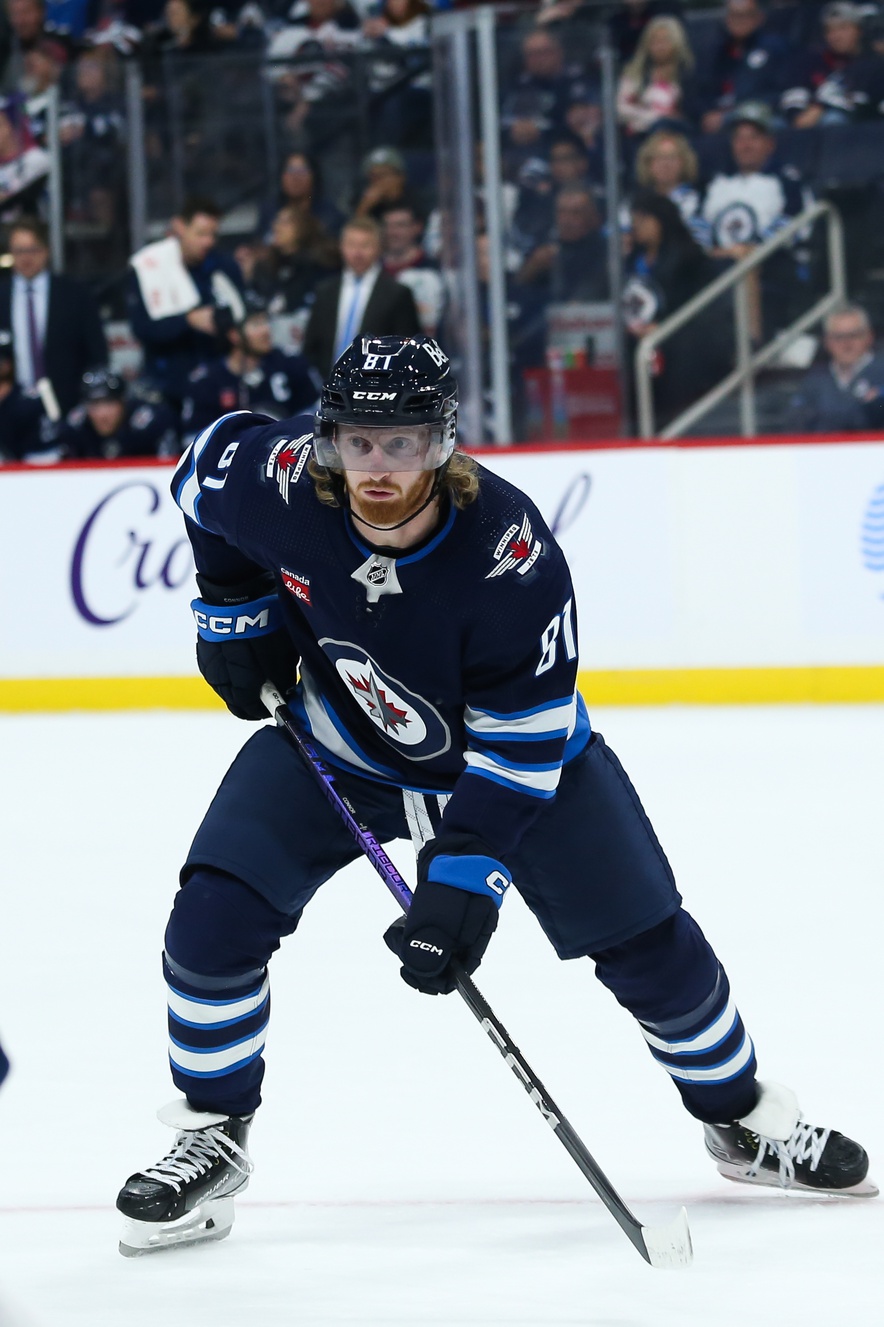 This is a team that just paid big bucks on long-term extensions for Mark Scheifele and Connor Hellebuyck. They have an owner who told TSN’s Darren Dreger just this week that a rebuild is something he wants no part of. With that in mind, why would they then turn around and move their top winger? They’d have to get a significant long-term core piece in return that can also help them now and frankly, there isn’t a fit that makes a lot of sense. Futures aren’t the currency the Jets will want to deal in at the moment.
Connor has two years left on his contract after this one. If, in the final season of the deal (2025-26), Winnipeg finds themselves out of the mix near the trade deadline, then things might be a bit different. If Connor was to express a willingness to sign an early extension if he was traded to Detroit, then that’s a scenario where this idea could be plausible and at that time, perhaps a futures-based return is more viable. But even with that, Connor to Detroit is nowhere near the point of making too much sense not to happen eventually. Very few players (if any) are in that type of situation where a move to a specific team is a lock at some point.
jchancel: “If” the New York Rangers were interested in re-signing Patrick Kane, who would they move out in order for that to happen?
There are two different scenarios for any hypothetical return for Kane with the Rangers (and I think the interest is legitimate). The first is that he decides to ring-chase and decides to sign a team-friendly one-year deal around the $1MM range pro-rated. That gives him the most options as most contending teams can fit that contract in. In that scenario, they can basically just waive one of Jimmy Vesey or Tyler Pitlick and call it a day. Kane, meanwhile, has a bounce-back year and turns that into a multi-year agreement next summer. That’s the best-case scenario.
The other, obviously, is that Kane has enough of a market to command a multi-year deal at market rate. I’m skeptical that the Rangers could free up enough money in that situation. Barclay Goodrow and his $3.671MM cap hit is the obvious pick but with four years left, is there a viable market for him? Even the teams that are open to taking on a contract might balk at the term. Anything below that doesn’t move the needle in terms of making the money work and anyone making more almost certainly isn’t getting moved.
If the Rangers have any chance of bringing Kane back, they need him to be more focused on maximizing his 2024 offseason earning potential than his 2023 season possible money. If that’s the case, I think they’ll have a real chance at re-signing him.
One More JAGR: When is Sullivan finally going to get the axe? Different season, same issues plague this Penguins team. Window is closing every year, now it’s cracked almost closed IMO. Most of the players who have played under his watch and since been released have done better on other teams. That tells me it’s a coaching issue. I realize there’s not many coaches available right now, but two years ago when they should’ve pulled the trigger there were. He’s lost the locker room, his system is ineffective. Midseason or end of season, does he get axed?
You don’t need me to tell you how highly Mike Sullivan is viewed at the ownership level. There is certainly some symmetry between how he sees things and how ownership does. That buys him a long leash to work with.
That said, if you’re looking for something to hang your hat on, Kyle Dubas just got handed the keys to the castle, so to speak. A seven-year commitment for a GM is practically unheard of; that’s how much confidence and trust they have in him. If Dubas goes to FSG and says that he wants to make a change, would they really say no to the executive who has six-plus seasons left on his contract? That’d make for a tough situation for all parties involved.
I’m always leery of openly discussing the possibility of someone losing their job. It’s part of the business but it’s not the most fun to speculate about. But there is no long-term connection between Dubas and Sullivan. If Dubas decides that Sullivan isn’t the right fit for this team, midseason or offseason, I think he will have the green light to pull the trigger. It’s too early to predict if Pittsburgh’s season will be a struggle to the point where this move could be considered so I can’t sit here and state with any sort of confidence if I think it’ll actually happen.
Submit Your Questions For The #PHRMailbag
The regular season is now in full swing, and all 32 teams are at least a few games into their schedule. There have been many recent storylines of impact, such as Oilers captain Connor McDavid‘s injury, a hefty suspension to Flames defenseman Rasmus Andersson, and the ever-closer return of free agent winger Patrick Kane from offseason hip surgery.
With a fair idea of where teams stand after a handful of contests, it’s time for another edition of the #PHRMailbag. Our last callout for questions resulted in a pair of articles that ran the last two weekends of September. The first one looked at the future of Sharks captain Logan Couture in San Jose and the brief and controversial tenure of Mike Babcock as head coach of the Blue Jackets. The second one examined some likely Calder Trophy candidates, the sometimes-frustrating NHL-CHL transfer agreement, and some key contract details often found in ELCs.
You can submit a question by using #PHRMailbag on Twitter/X or by leaving a comment down below. The mailbag will run on the weekend.