
Submit Your Questions For The #PHRMailbag
The Stanley Cup Finals are right around the corner and the offseason will follow quickly. With finances devastated over the last few months and teams looking at either the flat league-mandated salary cap or an even lower internal one, there should be plenty of player movement over the next few months. With that in mind, it’s time to run another edition of the PHR mailbag.
If you missed our last one, it was split into two parts which you can read here and here. The first was focused solely on the New York Rangers given they had just won the first-overall pick and answered questions regarding the future of Henrik Lundqvist and potential second-line center targets. The second part was more wide-reaching, with topics including Ottawa’s potential cap space, Alex Pietrangelo‘s future and the Detroit Red Wings offseason plans.
You can submit a question by using #PHRMailbag on Twitter or by leaving a comment down below. We’ll try to get to everything when the mailbag runs this weekend.
PHR Mailbag: Cup Contenders, Hurricanes, Overtime, Cap Space, Blues, Key NHL Events, Free Agency
After last week’s mailbag focused on the Rangers, topics in this edition include postseason contenders, the Hurricanes, playoff overtime, Ottawa’s cap space, the captaincy in St. Louis, Detroit’s willingness to leverage their cap room, the short-term future of the NHL’s signature in-season events, and free agency.
DarkSide830: Cup favorite as things now stand?
Whoever comes out of the West. I have concerns about each team in the East – Boston for their goaltending with Tuukka Rask gone, Philadelphia for their struggles against Montreal, the Islanders for their lack of firepower, and Tampa Bay for how things went last year. Don’t get me wrong, they’re all strong teams but I don’t think they match up as well against the top two teams in the West in Vegas and Colorado.
The Golden Knights don’t have many weaknesses. Robin Lehner and Marc-Andre Fleury are a solid goaltending tandem, their back end was very quietly bolstered at the trade deadline with Alec Martinez. They still don’t have that elite scorer but they have multiple lines that are strong offensive threats at all times. That was a recipe for success just two years ago and they’re better now than they were then so they should get by Vancouver this round.
As for the Avalanche, their goalies (Philipp Grubauer and Pavel Francouz) aren’t as well-known but are solid while they also have a strong back end. They have the top-end firepower while Nazem Kadri has been quite sharp so far to deepen their attack. Dallas might be able to slow them down for a bit like Arizona did but as they did against the Coyotes, their offense will come around and take over.
That would set up a very interesting Western Conference Final with the winner being my pick for the Stanley Cup favorite. Right now, I’d give a slim edge to Vegas but both would be justifiable contenders.
mikedickinson: The Canes now pick 13th thanks to the Patrick Marleau trade. Do they trade that for an established guy? Gotta figure Justin Williams will retire and will need to be replaced.
I don’t see them trading that pick. They’ve already moved their own first-round pick this season to pick up Brady Skjei at the trade deadline and he’s an established player. If they still had both picks, I’d think that one would be in play but I suspect the Skjei trade was done knowing that they’d have another first-rounder at their disposal to use at the draft table. (They probably didn’t think it’d be as early as 13th though.)
If Williams retires (a reasonable expectation), they don’t have to get a top forward to replace him. Instead, they can look to the open market and go bargain shopping. The 30-35-point players that bounce between the second and third lines could be squeezed out as teams look to sign/keep their top players and fill out of the rest of their roster with cheaper options. That could push the price tag of those depth wingers down and present a chance for Carolina to nab one at a reasonable rate and get a replacement for Williams at a reasonable price. Failing that, Ryan Dzingel would get a chance to earn back his full-time spot in the lineup.
crosseyedlemon: Could anything be more idiotic than having teams play 3 or more OT periods in early playoff rounds? One OT period followed by a shootout should be the format for every round with the exception of the championship finals.
I understand where this is coming from given how crazy the Tampa Bay-Columbus game was and how it postponed Carolina-Boston. If there was ever a year to do such a proposal, it was this one given the constraints of only using one arena per conference. It wouldn’t have been a popular choice but it would have been understandable.
Personally speaking, I don’t ever want to see a shootout in the playoffs. I could do without them in the regular season, to be honest. A quick skills competition should not be dictating the outcome of a game, especially when the stakes are higher in the playoffs. If teams have to drag it out for multiple overtimes, it’s their own fault for not scoring earlier. From a fairness perspective, it’s the same teams that are punished; it’s not like it hurts one more than the other.
I should mention that I enjoy the games that drag on and on. As a baseball game gets deeper and deeper into extra innings, I’m hooked. If a basketball game gets to multiple OT’s, sign me up. They occur rarely enough that they’re special when they happen. That’s to be celebrated, not legislated out of the game by bringing the shootout into the playoffs.
JDGoat: Does Ottawa use their cap space to bring in other teams RFA’s or do they just look to bring in bad contracts with assets attached? What could some targets be for these scenarios?
I don’t see them targeting restricted free agents via offer sheet or trade unless they’re getting someone that they think can be a part of their long-term core. They know their crop of young players and prospects are going to get expensive fairly quickly so adding another potentially expensive player to the mix for the long haul may not be the best move. They need to see how the likes of Erik Brannstrom, Josh Norris, and company pan out and they’re a couple of years away from getting a legitimate read on those players.
I think the better target for the Sens is transition players. Adding a veteran or two that can work with their young core in the short term and can be eventually flipped is probably the better way to go. The prospects that are on the cusp get some more time with AHL Belleville (assuming the AHL gets up and running) and the veterans, while likely overpaid, can still contribute.
Loui Eriksson in Vancouver is a logical target. His salary is lower than his cap hit (which is notable given their payroll parameters) and the Canucks will be motivated sellers. He’s not worth his $6MM AAV but he can still kill penalties and chip in a bit offensively, especially if he gets a bit more playing time. If Anaheim needs to part with David Backes ($4.5MM with Boston retaining $1.5MM) to free up money, he’d give them some extra grit and would only be a one-year commitment.
Of course, the intention here is that the assets to take on those contracts is the key to the trade, not the veterans themselves. If Ottawa can pick up a key pick or prospect for doing so and then potentially flip the veteran down the road for a small something, that would be a good use of their cap room.
vincent k. mcmahon: If Petro doesn’t resign with the Blues who do see being the next captain? Or do you think they would roll with 3 assistant captains?
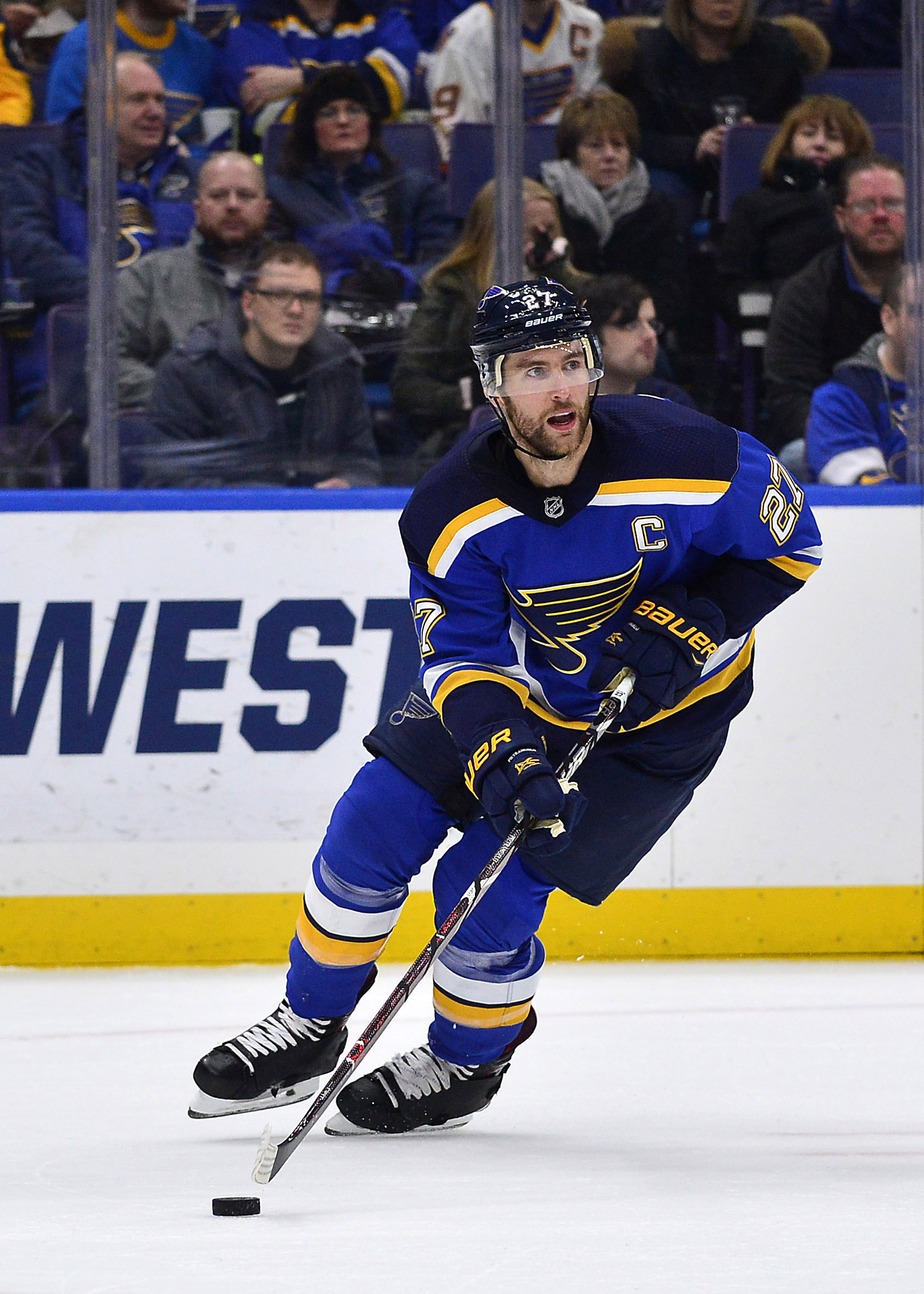 It’s certainly going to be difficult for St. Louis to re-sign Alex Pietrangelo. Yes, the flattening of the salary cap may ultimately limit the number of suitors that can go after him in free agency but it’s also going to make it even harder for the Blues to free up the cap space to sign him. I expect there will be mutual interest in getting something done but they will have to part with a couple of regulars to do so. With a lot of teams looking to shed salary, it may be tough to get value for whoever they part with. While it doesn’t seem possible on the surface, I have a hunch they’ll find a way to get something done which would make the question moot.
However, if Pietrangelo does move on, Ryan O’Reilly makes sense as a logical replacement. Looking at their other two alternates, Vladimir Tarasenko’s future seems to be in question with his recurring shoulder issues while Alex Steen is a candidate to be one of the veterans getting moved out to free up cap space. Meanwhile, O’Reilly still has three years left on his deal and has fit in seamlessly over his two years with St. Louis. I think they’d be comfortable bestowing the ‘C’ on him if they wind up having to make a captaincy change.
PHR Mailbag: New York Rangers Edition
Our latest call for questions for the PHR Mailbag featured plenty of questions about the New York Rangers. They were quickly eliminated by Carolina in the Qualifying Round although they wound up with quite the consolation prize. With that in mind, the Rangers get the focus of this edition of the mailbag with any non-New York questions being tackled next weekend.
pitmanrich: With the number one pick, the Rangers look set at left wing for the next few years. Do they look to accelerate the rebuild next season by trading for a 1st line d-man to play with Trouba and a quality center to play on the 2nd line if Strome leaves or wait 12 months until Hank’s contract is up and the salary cap is looking better for them and then go for it?
The Rangers seem to be falling over themselves to say that getting the top selection isn’t going to do anything in terms of changing their rebuilding timeline. It’s the right call to make too as with as many youngsters as they have, throwing them to the wolves with a win-now expectation is risky.
They also simply don’t have the cap space to attempt those moves right now. As things stand, New York is going to be hard-pressed to simply retain their roster that finished up the season with Ryan Strome and Anthony DeAngelo headlining a notable group of restricted free agents.
On top of that, Alexis Lafreniere (assuming he’s the top pick as expected) is also going to complicate their cap situation. Yes, he’ll have his base salary capped at $925K but he’s a lock to get a max bonus contract which features up to $850K in ‘A’ bonuses that are certainly achievable plus another $2MM in ‘B’ bonuses. Yes, the bonus overages can be rolled over to the following year but that would only delay the cap challenges. GM Jeff Gorton may want to leave himself some financial wiggle room to at least keep some of those bonuses in 2020-21 which means even if he wanted to splurge and spend to fill their vacancies, he couldn’t. Their roster upgrades in the short term will have to come from internal improvement.
acarneglia: With the Rangers winning the Draft Lottery, what does the near- and long-term future look like for the team?
As I noted above, this shouldn’t have much of an impact in the short term as they don’t have the cap space to fill their bigger roles while keeping the rest of the roster intact. Yes, adding Lafreniere will help while a full season from Igor Shesterkin should certainly improve their record as well so New York will be better but they’re not going to go from a bubble team to a contender right away.
Their long-term prospects are certainly promising though. Lafreniere and Kaapo Kakko give them two players that should be high-end snipers and both will be around for a while. Artemi Panarin will be around for a while yet he’s certainly no slouch offensively either. They should be able to have the firepower to contend for a while although they will need to shore up their back end over the next few years which should represent their window with their young stars still under team control.
MZ311: Now that the Rangers have locked up the #1 pick, do they take Lafreniere, trade the pick, or take the top center on the board?
If Lafreniere wasn’t in a tier of his own in this draft class, I could at least entertain the idea of going with Quinton Byfield. But there is a sizable gap between the two and when you’re dealing with top-end talent, passing up on one for a better positional fit is the type of decision that could come back to haunt them down the road. Get the best player and then work out the fit afterwards.
As for the idea of trading the pick, I wouldn’t say no outright to that. Lafreniere isn’t a generational talent by any stretch, he just projects to be a high-scoring winger (which is still quite good). He’s someone that every team would want in the right fit and if there’s a team willing to part with a young center with a front line ceiling to get him, then it’s something that would need to be considered. Otherwise, they should make the safe and obvious play and select Lafreniere.
met man: What are the chances that Lundqvist hangs up his skates? Love the guy, but can’t see him happy being the #3 goalie on the Rangers.
I can think of $5.5MM reasons why Henrik Lundqvist won’t retire. I’m sure he’s not thrilled about his role down the stretch and where he likely sits on the depth chart but that’s a lot of money (a $1MM signing bonus and $4.5MM of salary) to leave on the table willingly.
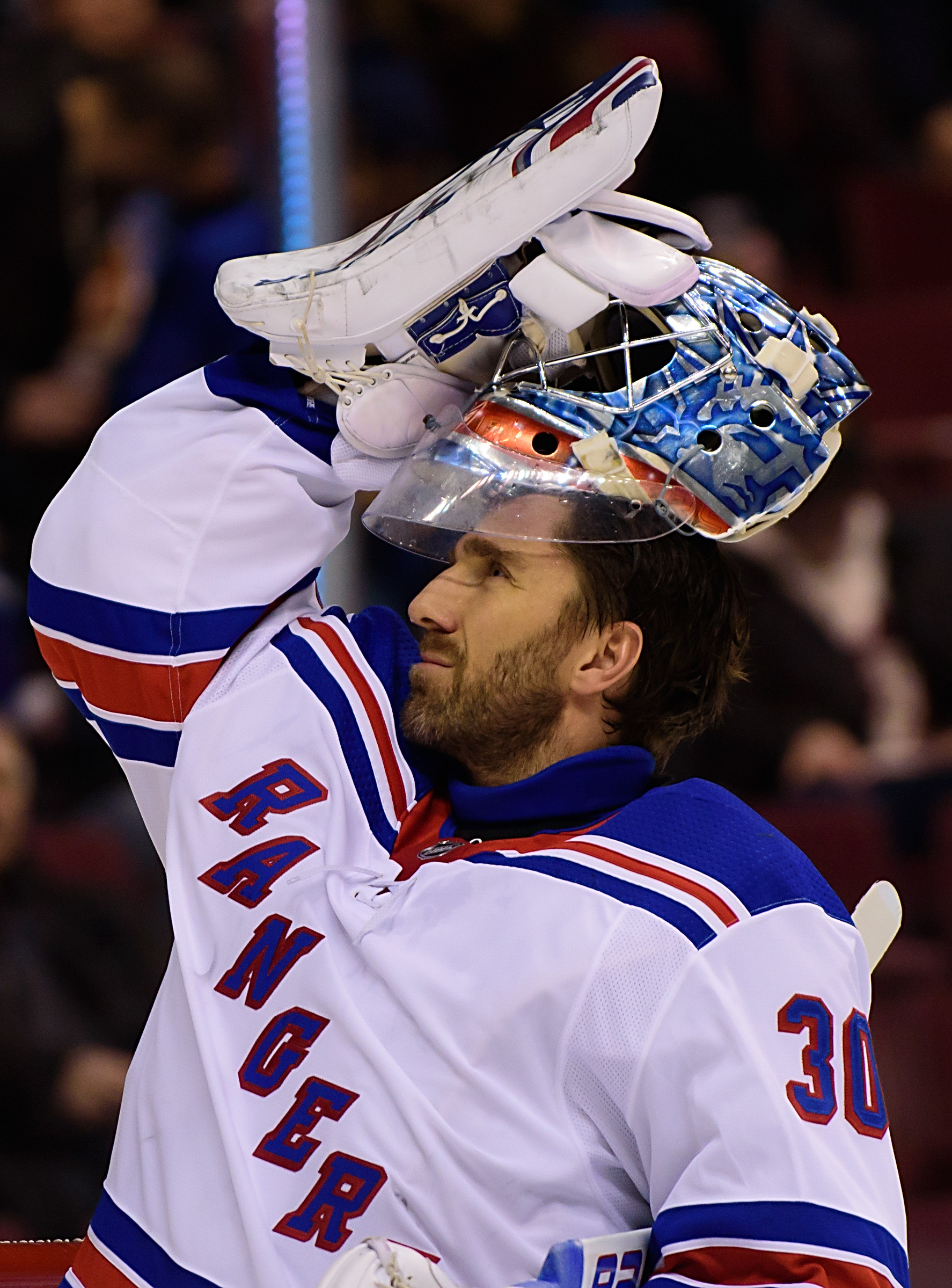 If he’s thinking that he only wants to play for the Rangers in his NHL career, there are two more realistic options at play. One is that he’s bought out, resulting in a $5.5MM cap hit for 2020-21 ($3MM in savings) and $1.5MM in 2021-22. He gets most of the money that’s owed to him and then he retires or opts to go play overseas if the itch to play is still there. The other is that they find some sort of lingering issue that makes him eligible for LTIR. He stays on the books but New York could spend over the cap by up to his $8.5MM AAV, alleviating their cap concerns. There is a significant downside to that approach though as any achieved bonuses from Lafreniere, Kakko, or Shesterkin, would roll over to 2021-22. Shesterkin’s on a max-bonus deal (Lafreniere will be too) and Kakko is just below that so that’s a big risk to take, especially with other youngsters such as Adam Fox likely to hit some of their lower ones as well.
I wouldn’t be surprised if Lundqvist’s time with the Rangers has come to an end but I would be surprised if he’s the one that initiates the separation by calling it a career and leaving that much money on the table.
CoachWall: If Henrik decides to stay, what might Georgie bring back in a trade?
The goalie trade market is always tough to predict. For starters, it often seems to be underwhelming although this offseason presents a whole new set of salary cap challenges which may make more cap-strapped teams desperate. While Alexandar Georgiev is a restricted free agent with arbitration eligibility, he’s not going to be getting number one money. A one-year or two-year bridge deal is the likely outcome and that’s going to be affordable for most teams.
Georgiev’s trade value is ultimately going to be decided by whether or not there are teams that think he’s a future starter in this league. There are games where he looks like he will be but others where he has struggled considerably.
I see some parallels to another Ranger goalie who was in that situation a while ago and that’s Cam Talbot. He was stuck behind a long-term starter (Lundqvist) and had some flashes of dominance and others where he didn’t look so good. He ultimately went for second and third-round picks and I’d peg a baseline return around there unless there are several teams that view him as a starter of the future. If they stick with Lundqvist as Shesterkin’s backup, I think they’d prefer the picks or a prospect to avoid adding any more salary to the books. It may not be an overwhelming return but let’s face it, goalies rarely bring back a big package in a trade.
Eaton Harass: Who should the Rangers be targeting for a 2nd line center?
That’s certainly a void they’d like to have filled by a more proven option but I don’t think their best-case scenario sees them making a move to get one. It seems fair to infer that Strome is not the long-term solution at that position but spending big on an upgrade may not be the best idea considering their cap situation and the fact that Mika Zibanejad is only a couple of years away from UFA eligibility where he’ll be in line for a huge raise on his $5.35MM price tag if continues to play like he did this year. They’ll have to spend big on him and their wingers so a more cost-effective second center will be needed.
They may have that already in Filip Chytil. His performance the last couple of seasons has been a bit underwhelming but he has produced in the minors. The 20-year-old also hasn’t had a lot of ice time in the top six either. Strome’s career year had a lot to do with that but from a development perspective, they’d be wise to try to give Chytil a bigger role next season to better assess if he can hold his own as a capable second option or if they’ll eventually have to go outside the organization to fill that role and so much can change between now and next offseason to speculate on who could be feasible targets.
Impact top-six centers are hard to get and when you have limited money to spend on that spot, they’re even harder to acquire. In a perfect world, they’re targeting Chytil to be the guy behind Zibanejad and skipping the trade route and free agent market altogether.
Photo courtesy of USA Today Sports Images.
Submit Your Questions For The #PHRMailbag
The round-robin and qualification round is over and the real playoffs begin tomorrow in the NHL. Things got spicy over the last week, with upsets and comebacks galore. The draft lottery is tonight, where one of the eliminated teams will get the chance to grab the first-overall pick as a consolation prize. With 15 teams now watching from the (perhaps virtual) golf course, it’s time to run another PHR mailbag.
Our last mailbag was split into two parts, which you can read here and here. In the first, Brian tackled questions such as Jack Eichel‘s future in Buffalo and Lindy Ruff‘s new coaching gig. The second focused on team finances and the top NHL draft prospects.
You can submit a question by using #PHRMailbag on Twitter or by leaving a comment down below with the mailbag running on the weekend.
PHR Mailbag: Team Finances, Senators, Playoff Upsets, Draft
Topics in this edition of the PHR Mailbag include financial sustainability during the pandemic, what Ottawa might do with their multitude of draft picks, potential upsets in during the NHL’s return, and the top offensive threat beyond the potential top two picks in the draft. If your question doesn’t appear here, look back at last weekend’s mailbag.
Gbear: How long can the NHL realistically stay financially viable in all of its markets if fans cannot attend games in person even heading into the 20/21 season and thus not able to provide NHL teams with gate revenues?
I think we’re a while away from teams starting to show significant financial cracks. While the NHL has shown a willingness to get back to playing now without fans, there’s a big difference between biting the bullet to finish the season and award the Stanley Cup and starting up 2020-21 without fans. I don’t sense there’s a willingness from a lot of owners to try to get next season going in front of empty buildings. That’s not viable for even the teams with the best financial backing.
If there aren’t any games for a while, the payroll costs are naturally going to be significantly reduced. As part of the new CBA Memorandum of Understanding, teams will be required to pay 8.1% (15/186ths) of a players’ salary by the end of October if there aren’t any games scheduled before November 15th and it appears we’re heading in that direction. But until there are games to play, that’s it for player payroll which is by far the steepest cost.
This situation is far from sustainable and is hardly ideal which is why this postseason is going to be a one-off, not a sign of things to come. Once it finishes, I wouldn’t expect NHL play to resume until at least some fans are allowed in the building. With that will come some revenues to offset the payroll expenses and teams should be able to scrape by until then. They have early access to this season’s escrow to help bridge the two gaps in the meantime. It won’t be pretty for a while but the viability of franchises shouldn’t be in jeopardy for a little while yet.
MoneyBallJustWorks: Do you see the Sens making any draft day trades with their draft capital? I know many are hoping for 3&5 to be packaged for #1 which I don’t see but could they move the Islanders pick (assuming it ends up being this year’s) for a roster player? With the cap crunch, that or one of their many 2nd’s could land them a decent roster piece.
When it comes to their top couple of picks, I don’t see Ottawa doing anything with those. They didn’t get the lucky draw in the lottery but two top-five picks is still quite good. They’re going to land two core pieces to their promising crop of youngsters and with them focusing on the long-term picture, doing anything to try to shortcut that isn’t a great idea.
The Sens are in a position where they can leverage their cap room to add other assets but with 13 picks in the draft, they can also part with some to add younger players that fit better with their core. I wouldn’t entirely rule out the Islanders pick being moved in the right trade like I would their other two firsts but I suspect GM Pierre Dorion would like to hold onto that as well.
However, they have four second-round picks and it’s hard to see them using them all. Perhaps they package two to move up to the back of the first round and land someone that’s high on their list but sliding. It’s possible that they trade out with one although it’s worth noting they already have three second-rounders next year which lessens that likelihood a bit.
But even more likely would be using one of those as part of a deal to land a player. While the speculative focus of cap casualties is on the higher-priced players now, there are likely to be others moved for what seems like below-market value because of a potential cap crunch down the road, because they can’t move out a high-priced player, or even expansion planning a year from now. Second-round picks seem like a good currency for those moving in that situation and four of them gives the Sens plenty of ammunition if they want to try to make that type of move.
acarneglia: What teams should be on upset watch?
In terms of the Qualifying Round matchups, there aren’t many that would be truly considered as upsets if the underdog won. Nonetheless, I think Nashville is vulnerable in the West in their matchup against Arizona. The Coyotes are a strong team defensively and the Predators’ offense has been hit or miss this season. Arizona also has the edge in goal and with the benefit of rest and the abbreviated training camp, Taylor Hall may be able to produce closer to expectations; with him, Phil Kessel, and Clayton Keller, they have enough firepower to do some damage.
Out East, I’ve talked about the Rangers being a threat before which would make Carolina vulnerable. Having covered that a few times recently, let’s look at the 7-10 matchup between the Islanders and Panthers. On paper, Florida should have been a lot better than they were this season and Sergei Bobrovsky showed a year ago that he’s capable of stepping up and playing well in a series. If he can do that here, New York could be in some trouble, even if their defensive structure can keep Florida’s attack largely at bay.
In terms of top-four seeds that will be playing round-robin games to determine their positioning for the postseason, Dallas could be a team that is ripe for an upset depending on the matchup. Their offense is talented on paper but struggled mightily during the regular season. Their goaltending was good enough to keep the Stars at the top end of the conference during the year but in a short series, continued sluggish performances from their top scorers could be problematic in a hurry.
Pieters: For our dynasty league I have the misfortune of having the 4th pick. One through three are expected to be Lafreniere, Askarov (goalies are gold) and Byfield. Scoring cats for skaters are Goals (G), Assists (A), Points (P), Plus/Minus (+/-), Penalty Minutes (PIM), Powerplay Points (PPP), Shots on Goal (SOG), Hits (HIT). Trying to figure out which of the following would be best at 4th, Marco Rossi, Lucas Raymond, Tim Stutzle, or Alexander Holtz? All of the top prospects from previous drafts were picked up. The only one that might be worth considering is Victor Soderstrom.
First, let’s rule Soderstrom out of consideration. While he showed a bit more offensive upside with Brynas this season, he’s not going to be a big point producer in the NHL and hits alone won’t be enough to offset that.
Rossi may very well wind up with the most points out of the four draft-eligibles you listed but there are some drawbacks to consider. He’s not the most physical of players and he’s a pure playmaker which will keep his shot total a little lower. Raymond may not have quite the upside in terms of overall points that Rossi might but he’s a more gifted shooter although again, he’s on the smaller size which limits the hit potential. Holtz is a little bigger but the overall upside isn’t as high as those two so I’d take him out of the mix.
That leaves Stutzle. Like Rossi, he’s more of a playmaker for now but he has the frame to put on enough extra strength to make his shot more of a weapon and he has shown no hesitance shooting in the DEL. I also think he’s more likely to be deployed in all top offensive situations unlike someone like Byfield who may be most valuable as an all-around player which isn’t as important in most fantasy leagues. I’d go with Stutzle in this situation as he is going to get to the NHL quickly and should pad plenty of stat categories when he gets there.
PHR Mailbag: Blackhawks-Oilers, Eichel, TV, Ruff
Topics in this edition of the PHR Mailbag include the Chicago-Edmonton series, Jack Eichel’s future in Buffalo, forecasting the television picture for the NHL’s Return to Play, and Lindy Ruff’s hiring in New Jersey. If your question doesn’t appear here, watch for it in next week’s mailbag.
Mark L: When play stopped, the Oilers offense was looking very strong while the Blackhawks defense was a mess. Because of the long suspension of play, Chicago will have Calvin de Haan back for sure and could have Brent Seabrook back as well.
They also have some younger, talented players who won’t have played a gruelling campaign before jumping into a playoff. If Corey Crawford can stay healthy and in net, what are the chances this is a more competitive series, perhaps one Chicago can steal, than it looks to be at first glance?
With teams being off for as long as they have been, every series has a chance to be more competitive than it may seem on paper. Good teams can come out of the gate slow in the regular season and this is a longer layoff than a typical summer so there are bound to be some surprises along the way.
It’s interesting that you mention Crawford as I think goaltending will be a huge part of this series but it’s Edmonton’s goaltending that could very well dictate the outcome. When he’s on his game, Mikko Koskinen can be a real difference-maker. On the flip side, when he’s off, he’s really off. If he’s not sharp out of the gate, that’s one area that Chicago can exploit. Mike Smith is a capable backup that can steady things in that instance but he’s probably not going to steal games at this point of his career.
Crawford’s top level isn’t as good as Koskinen’s but the inconsistency isn’t as sharp either (which is good as turning to Malcolm Subban wouldn’t be ideal given the year he had). If Chicago can get the better goaltending, they’ll have a decent chance in this series unless Connor McDavid and Leon Draisaitl steal the show and with how they performed during the regular season, they can win games on their own even if Crawford outperforms Koskinen.
Getting de Haan back will certainly help defensively and on the penalty kill but I don’t know if they’d want to risk putting Seabrook back in. He’s just starting to skate now after being off since mid-December and he was struggling before being taken out. Even if Seabrook does play, it’s hard to see him getting more than a spot on the third pairing which will limit his chances of making any sort of tangible impact in this series.
Baji Kimran: Do you think Buffalo is considering moving Jack Eichel? If so, what would they want in return, High-end talent that is already in the NHL or a slew of draft picks (#1’s, #2’s)? Finally, if they were open to moving Eichel, don’t you think the team that wins the Alexis Lafreniere sweepstakes would be smart to try to acquire Eichel?
Eichel’s comments back in May where he indicated that he is “fed up with losing” certainly raised some eyebrows around the league and evidently caught the attention of Sabres ownership as they decided to change course with the firing of Jason Botterill as GM with Kevyn Adams taking over as his replacement. I think Adams’ mandate is now to change things up while still building around Eichel, not moving him out though.
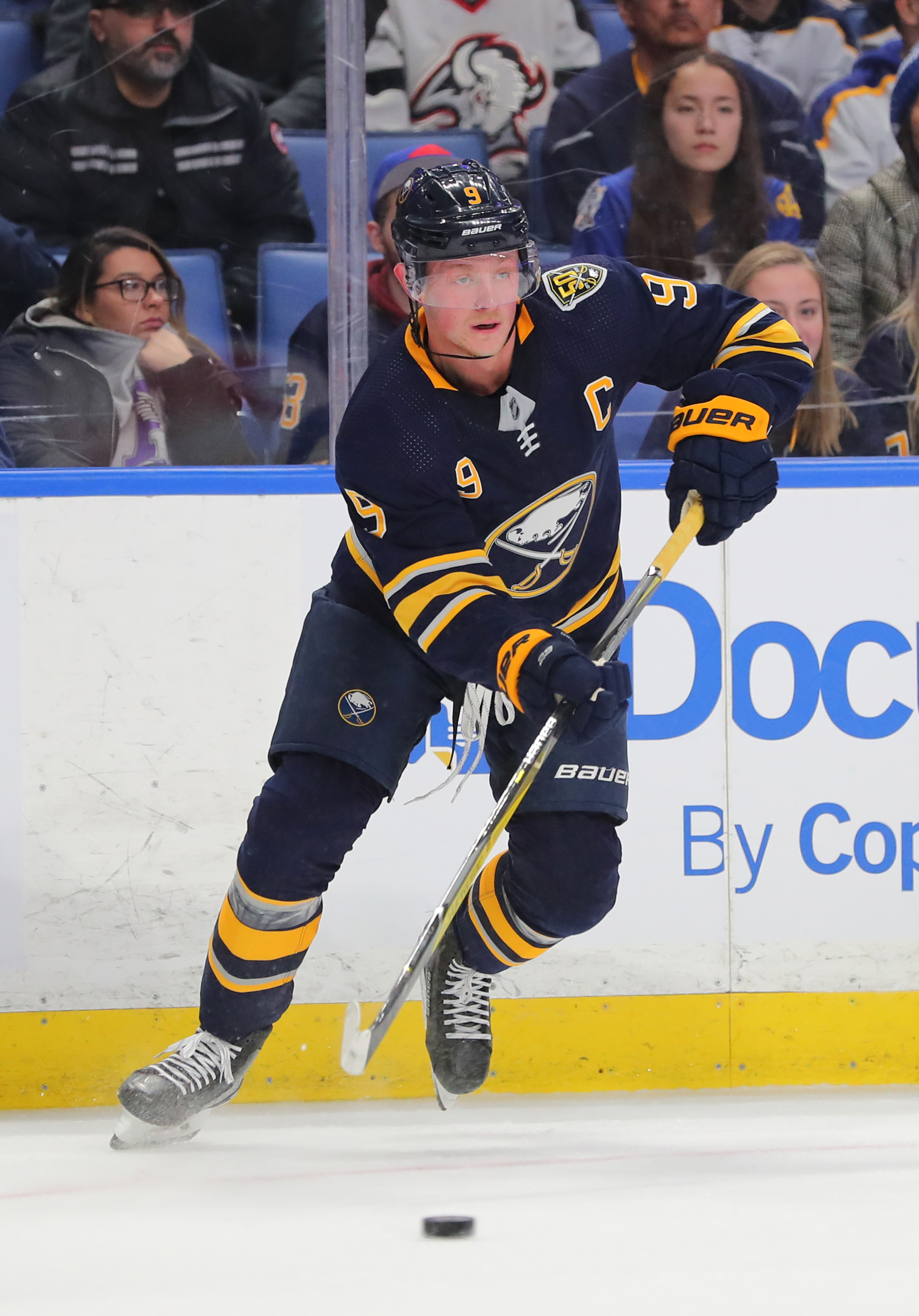 With all due respect to Adams who has clearly done enough to impress ownership to give him the nod, this will be his first crack at being a part of management. Having a raw rookie in the GM role is risky enough let alone asking him to try to find the right trade for your franchise player, disgruntled as he may be at the moment. It’s not a good time to move him, especially with his AAV of $10MM being near the top of the league at a time where teams are going to be in tough for cap space.
But for the sake of discussion, let’s say Adams was considering it. Moving him for another established top talent doesn’t really move the needle much – now you’d have a different top player with a supporting cast that still needs some work. So about the only way moving Eichel would make some sense is if Buffalo decided to do yet another rebuild with the target return being two or three core assets (top draft pick, top prospects, or young NHL players with top-half potential) plus some veteran salary ballast similar to what Patrik Berglund and Vladimir Sobotka were in the Ryan O’Reilly trade with St. Louis. That doesn’t seem like a particularly appealing route for the Sabres to take at the moment so I’d be very surprised if Eichel is on the move.
M34: Are all the remaining games going to be nationally televised?
This is something that is being discussed now that the ratification is done with a schedule being set and an answer is expected in the very near future. So with the risk of this being proven incorrect in a hurry, here is my prediction.
Exhibition games, the play-in round, and the round-robin games for the top four teams in each conference will be shown regionally with national networks being allowed to convert a handful to the wider coverage level. The league has gone out of its way to call these games non-playoff contests and I suspect part of the reason is that they want to use this for inventory for regional sports networks to make up for some of the lost games as a result of the effective cancellation of the rest of the regular season. (Of course, the stats are counting as playoff stats which goes against their long-stated assertion that these aren’t playoff games but let’s play along with the league here anyway.)
I also wouldn’t be shocked if some RSNs will get the ability to show games in the first round to also help make up the lost game inventory. I could also see those games getting national coverage and while that seems somewhat redundant, it wouldn’t be that hard to do. A world feed will be produced with individual networks doing their own graphics. Accordingly, it would be easy enough for NBC (in the United States) or Sportsnet (in Canada) to have their own commentators doing the game nationally while the RSN has the same video feed but with the local broadcast team. It’s a bit of a compromise and there has been plenty of that lately with the CBA MOU and Return to Play protocols getting finalized.
MoneyBallJustWorks: Thoughts on the Lindy Ruff signing by NJ and where do you think some of the more prominent names could end up going?
I was a bit surprised by the hire as I figured he’d be behind some of the more prominent names but I don’t mind it. Ruff is not the long-term coach that’s going to steer New Jersey out of their rebuild, into contention, and onto a Stanley Cup championship. Instead, he’s what I call a ‘transitional coach’.
Ruff’s reputation is that he gets the best offensively out of teams although the defensive play leaves something to be desired. But right now, that’s okay. I’d rather have that than the opposite even though that would normally be the smarter route for a team in their situation.
The strong point of this roster is their offense. They have a pair of top picks in Nico Hischier and Jack Hughes who have plenty of skill but have been hit or miss at times in their early NHL careers. Their top priority in a coaching search should have been finding someone who is best equipped to help these two develop. Ruff should be able to help do that.
Are they going to struggle defensively? Sure. But that was going to be the case no matter who they installed as head coach unless they went to a pure trapping system and tried to win games 2-1. That wouldn’t have been ideal for their two hopeful franchise cornerstones though. The Devils have some talent on their back end but some of those defenders are more offensive-minded than defensive-minded so a change to a more up-tempo style may benefit them as well.
A few years from now, Hughes and Hischier have established themselves as offensive stars in an ideal world and the focus can then shift towards really shoring up the back end. (By then, they’ll also hope to have their goaltending situation figured out as either Mackenzie Blackwood has established himself as a starter or someone else will be in that role.) By then, they should be back in the mix for a playoff spot and will probably have made it once or twice. That will be the time to look for the longer-term coaching option but by then, Ruff should have helped steer the franchise in the right direction.
It’s difficult to forecast where some of the other prominent names will end up as right now, there aren’t any vacancies. With cash flows being much more limited in the short term, it’s quite possible that there aren’t any openings for coaches like Gerard Gallant, Mike Babcock, and Peter Laviolette to pursue until sometime in 2021.
Photo courtesy of USA Today Sports Images.
Submit Your Questions For The #PHRMailbag
While there hasn’t been any activity on the ice lately, there has been plenty of news recently off of it as the NHL continues its preparations for games resuming in August, the bizarre Draft Lottery results, a new CBA agreement in place, and much more. With that in mind, it’s time for another edition of the PHR Mailbag.
Our last mailbag was split into two parts – among the topics in the first one was free agency and the impact the salary cap freeze may have on the open market while the second discussed Seattle and the draft, among other topics.
You can submit a question by using #PHRMailbag on Twitter or by leaving a comment down below with the mailbag running on Saturday.
PHR Mailbag: Seattle, Draft, Rangers, Playoff Surprises, Buyouts
It’s time for another edition of the PHR Mailbag. Topics in this one include Seattle, draft risers and fallers, the Rangers, playoff surprises, and compliance buyouts. If your question doesn’t appear here, look for it in last weekend’s mailbag.
BOSSports21: Future question – so 20-21 will be delayed, most likely resulting in a mid-summer 2021 end, thereby pushing the draft/FA back again, and presumably the expansion draft. How do you think this will impact Seattle if the expansion draft isn’t until July or Aug, 2021 and you’re starting that October?
M34: Does Seattle benefit or suffer from the recent world events impact on the NHL?
I don’t think a potentially shortened turnaround from the end of 2020-21 to the start of 2021-22 really affects much in the scheme of things for Seattle. They first have to pick their team and they’ll have data and scouting from that season (plus this one too) to use to make their information. That’s not really affected by the timeline.
They might, however, be positively affected by the salary cap crunch. Vegas was used to offload some bad contracts but it seemed like teams would learn their lesson for this one. However, the expected flattening of the cap due to the pandemic is simply going to force some teams to have to go through that procedure again and that should be to Seattle’s benefit.
A shorter offseason might ultimately expedite some of those moves (or at least squeeze them into a narrower window) but a lot of these could still be pre-arranged while the playoffs were going on. They’ll have ample time to prepare so even if their team ultimately gets built in a rather short period of time, they’ll be well-positioned to do so.
Winter in Colorado: Detroit shocked most when they drafted Moritz Seider 6th overall, a possible reach. Opposite of that, Arthur Kaliyev was drafted at 33 overall. He went lower than most mocks had him going, a definite slide. Which two players do you see filing these roles in the upcoming draft?
The first thought I had when I read this question was that Russian goalie Yaroslav Askarov could actually fit in both categories. Not everyone believes that a goalie should go in the top-10 and if he’s taken there, some would call it a reach. But if enough teams believe in not ‘reaching’ for a goalie early, he could fall deep enough to qualify as a slide as well.
Jake Sanderson is one that might qualify for the possible reach category. He seems to be somewhat of a late bloomer (which is hard to do considering there haven’t been any games for basically three months) but there are rankings that have the defenseman outside the top-20 and others as high as third overall. He looks like someone that’s in the 10-13 range but if there’s a team that sees him as the number two blueliner on the board behind Jamie Drysdale (or number one even), they’ll do like Detroit did with Seider a year ago and grab him early.
In terms of a possible slider, I’ll take Mavrik Bourque. He was top ten in the QMJHL in points per game this season, second behind only Alexis Lafreniere in terms of 18-year-olds in their first year of NHL draft eligibility. He’s ranked from the mid-teens to mid-twenties by most publications but concerns about his size, skating, and injuries make him a candidate to slide back. A team that gets him in the late first round or early second (like Kaliyev) should be quite happy to see him there.
acarneglia: Who starts for the Rangers in goal? Are the Rangers the biggest sleeper in the whole postseason?
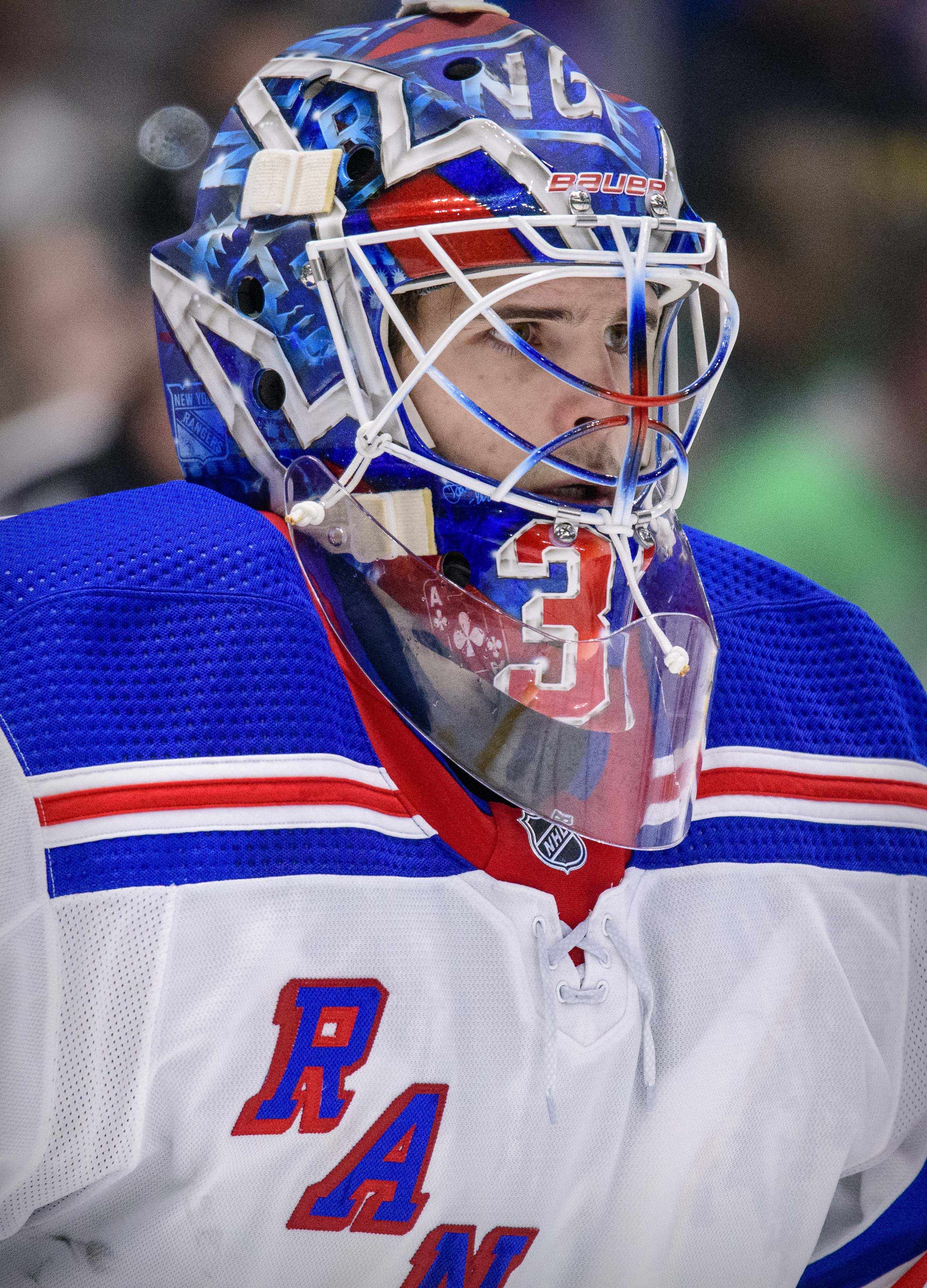 The debate over who starts is almost certain to be covered in our storylines for them which will run in the coming days so I won’t bother getting into the complete discussion here. I do think it’s Igor Shesterkin’s spot to lose though. His strong play is a large factor in them simply getting to this spot as they weren’t really going anywhere before they brought him up partway through the season. I also think he’s the one that has the best chance at getting on a bit of a run. The lack of experience is concerning but for me, Shesterkin is the one with the most short-term upside (as well as having the best long-term upside). In a short series, I’m going for that over giving one last nod to Henrik Lundqvist or potentially trying to aid Alexandar Georgiev’s trade value.
As for part two of your question, I’ll get to that momentarily.
wu tang killa beez: Who would you see as the biggest surprise in these playoffs? After all, there is no momentum for anyone, all the teams are a little rusty and are starting a new season.
Two playing styles come to mind as ones that can really stand out and make a run. One is that a bunch of players get hot offensively for a few weeks and the other is a team that can get a hot goalie and/or gets their defensive system down quicker than everyone else. Even better are the teams that can get all of the above and those are the ones that have the potential to surprise.
In the East, that pick would be the Rangers. They had a top-five offense in the regular season and while career years from Artemi Panarin and Mika Zibanejad played a big part of that, the supporting cast is still relatively strong. They get good production from the back end as well. And if Shesterkin plays like he did after being recalled (and that’s a big if given the inexperience), they can win a few rounds. Of the teams that weren’t in a true playoff spot when the pandemic hit, they’re the biggest sleeper.
I also want to talk about Arizona a little bit as a potential surprise team in the West. The goaltending was there all year and if Darcy Kuemper falters, Antti Raanta has shown that he can carry the load for a while without the team skipping a beat. They have the defensive structure in place that they should be able to pick up again without much difficulty despite the layoff as they aren’t really integrating any newcomers from the trade deadline into the fold. And with Taylor Hall, Phil Kessel, and Clayton Keller, they have a group of players that are capable of carrying the load offensively. They didn’t do it much during the season but if they play to their potential, the Coyotes go from a decent team to a dangerous one.
aias: Do you think compliance buyouts will happen?
As you noted in a follow-up comment, I did touch on this in a mailbag last month but that wasn’t really a prediction on whether they’d happen and instead answered some more specific questions about it including my proposal on how they could make it a little different.
I think these will be tied to the ongoing CBA talks which are tied to the ongoing Return to Play talks. If the NHL and the NHLPA can reach an agreement on an extension, a revised financial framework is likely going to come to fruition as well. It will probably involve some sort of combination of increased escrow, a multi-year negotiation of the Upper Limit without the NHLPA having the ability to use the inflator, salary deferrals, and some revisions as to what is and isn’t classified as HRR.
A fixed salary cap at or around the current $81.5MM next season would be a problem for quite a few teams. It wouldn’t be pretty but it would be manageable. Keeping that rate for two years (or longer) is going to cause a lot of problems for a lot of teams and cause significant damage to the UFA market. There probably isn’t much of an appetite for them if the cap problem is a one-year thing but if it goes longer, then a lot of general managers are going to want it and a lot of pending free agents will want it too to preserve their chances of getting a good contract on the open market.
I think they ultimately do reach a multi-year agreement about running a fixed salary cap so yes, I do think there will be some form of compliance buyout when all is said and done.
Photo courtesy of USA Today Sports Images.
PHR Mailbag: Hub Cities, Roster Size, Free Agency, Cup Finalists, Vegas
It’s time for another edition of the PHR Mailbag. Topics include hub cities for when play resumes, roster sizes, the upcoming UFA market, Stanley Cup Final marketability, and Vegas. If your question doesn’t appear here, watch for it in our next edition.
GBear: Two questions in one here. Do you think the degree in which individual states have reopened their economies and allowed for social gatherings might be the determining factor as to where the games are played, and linked to that, could a limited number of fans in attendance be a possibility?
BOSSports21: What do you think the 2 hub cities will be? In an ideal world, I think they’d like to have them in Vegas and Toronto. But with Canadian COVID regulations, it might need to be shifted to a US Eastern city. In that case, thinking either Columbus or Tampa.
My first thought when I saw this was yes, the potential for fans could certainly impact where the NHL chooses to go. Even at partial capacity, that’s still more money than no capacity. And with escrow and the salary cap being huge considerations at this point, it’s hard to turn away the possibility of some extra money than expected.
But there’s also the safety element at play. Allowing fans (and subsequently, more arena staff) brings more people into the proverbial bubble. More people creates a higher risk of transmission if a fan transfers the virus to others. Perhaps it’s a limited risk to the players and NHL staff but it wouldn’t look good on anyone if there was a rash of positive COVID-19 cases that come from people attending hockey games.
There’s also the fact that multiple games are going to be played each day at the start. The enhanced sanitization protocols would need to be done in between each game which may not be possible. Perhaps it’s done in a way where a certain section is open for each game with the rest of the facility cordoned off. Game two is in a different level using only certain entrances, and so on with full sanitization being done at the end of the final game to get ready for the next day. But capacity would still have to be limited. Will it be a factor? I think so. But will it be the determining factor? Probably not.
It looks like Vegas will be one of the hub cities with an announcement to be made official over the next week and a half. The league is believed to want a Canadian team as the second option and it’s reasonable to think they’ll want one in the Eastern Time zone. That would mean Toronto is their other likely target at this time. If Canada’s current quarantining rules aren’t changed though, I could see them looking to Columbus ahead of Tampa Bay with there being a recent spike of COVID-19 cases in Florida.
Eric Lord: The proposed NHL roster size of 28 players seems low to me. There could be a rash of injuries due to the long layoff. If a team carries 16 forwards on their 28-man roster and gets 5 forward injuries, they will be shorthanded. Will teams be allowed to keep a black aces squad practicing in another location in case they get overrun by injuries?
pitmanrich: Do you think an increased roster size could be made permanent and not just for this playoff tournament? The salary cap might not go up by much but rosters could be filled up with young players or veterans on cheap contracts allowing players to heal properly from injury.
To clarify, the speculated roster limit at the moment is 28 skaters, not 28 players total and the expectation is that the number of goalies teams can carry is unlimited. As a result, teams won’t be carrying 16 forwards. It’ll be closer to 18 forwards and 10 defensemen which should allow for some injury protection.
I’d like to see a taxi squad be available and the last mailbag I did back in May, I thought there would be one. Nothing has come out on that front yet which surprises me. Having a few more players doing some sort of conditioning camp to stay in shape would be beneficial and I’d like to see a scenario where if a player is ruled out for the rest of the playoffs, they can recall someone from that Black Ace squad if they want. It doesn’t look like it’s happening yet at least but here’s hoping there is one.
It’s hard to envision roster sizes increasing permanently. Knowing that the salary cap is going to likely be flattened out for a little while until revenues rebound and escrow drops, adding more players to the active roster is only going to create a tighter squeeze for teams to work around. The current minimum salary is $700K and jumps to $750K for 2021-22. More than half the league finished this season with less than $1MM in cap room. Adding one player would be a huge challenge let alone more. With CBA talks ongoing, part of me wonders if the NHL will push for roster sizes to be dropped by one to ease cap issues, knowing the overall drop in players would largely be offset by Seattle’s entry in 2021-22. I doubt the NHLPA would consider it but it wouldn’t surprise me if the concept was brought up at least.
MoneyBallJustWorks: What do you see this year’s crop of FAs doing (especially the mid to high tier guys) with a presumed cap freeze or decline? Do you think we see more 1-2 year deals as a result? Also, as a result of the playoffs not finishing till likely September/October, when do you think we see the start of Free Agency?
It all depends on those CBA talks I just mentioned. If an agreement is hammered out that sets a fixed cap (or even gradual increases) for several years, there will be enough certainty for teams and players to hammer out some longer-term deals like usual. If that doesn’t happen though, I expect a large segment of players are going to sign one-year deals with the hopes that things will rebound on the financial side a year from now. Of that group, I suspect quite a few more will just stay with their current teams and opt for short-term stability as well which is something we don’t see a lot of.
That won’t be the case for everyone though. The top players are still going to get the long-term, big money deals if they want although the top-end salary may come down a little bit as a result. Some of the mid-tier players may decide to take a three or four-year deal at a lower rate for long-term stability so it’s not as if the market is going to completely dry up. It will almost certainly look a lot different though.
As for when free agency might happen, let’s look at the NBA’s latest set of timelines for a clue as their camp and desired start dates are quite close to the NHL’s. They’re targeting an early-to-mid-October finish for the NBA Finals so let’s use that as a rough timeline for the Stanley Cup Final as well. The draft would probably be a week or so after that and then there has to be a few days for the UFA and RFA interview window as well. That’d take things close to the last week of October. With all that in mind, I could see Monday, October 26 making sense as a free agent start date but if series end quicker than anticipated, that could be moved up as I think they’d ideally like to be into that part of the offseason closer to the middle of the month.
coachdit: What two teams do you believe will make for the most competitive and entertaining finals this year, as that’s exactly what the NHL needs now more than ever?
This is tough to answer as the definition of entertaining is going to vary. Some may want high-scoring games that are played at a run-and-gun pace. Others like the tight 2-1 games with lots of chances but high-end goaltending. Some enjoy the higher level of physicality that the postseason brings and would find a series with more of that entertaining.
I can’t even pin it down as to what the NHL might want. Would they rather see the top skill teams or would they rather two big-market teams get in to boost TV ratings and advertising revenues?
Personally, I think Colorado could be a compelling team to come out of the West. They have plenty of high-end skill and relatively unproven goaltending that can be hit or miss which adds to the intrigue. Washington’s in a similar situation, especially with the untested Ilya Samsonov and the struggling Braden Holtby between the pipes while they have lots of firepower up front. I think a series with them has the potential to provide a bit of everything and some unpredictability along the way while going close to the distance. That would be an entertaining Stanley Cup Final in my book.
jrlp: Isn’t it time Vegas got its LAS back?
It seemed strange that the time that the team name wasn’t ‘Las Vegas’ and to this day, it still is a little odd. But the reality is that a lot of people use the shortened form of ‘Vegas’ when referring to the city. That’s largely unique as places like Los Angeles and New York aren’t like that and New Jersey isn’t abbreviated anywhere near as frequently as Las Vegas is. That made the decision to call them ‘Vegas’ more understandable, especially with a two-word team name as well.
Given the success that the team has had on the ice and off of it in terms of merchandise and marketing, I don’t think there’s much of an appetite to change anything. As a result, expect that the team will remain the Vegas Golden Knights for the foreseeable future.
Submit Your Questions For The #PHRMailbag
The NHL finally has some idea of how hockey will look if it returns this summer, and players are back on the ice today as facilities start to open for Phase 2. Front offices are preparing for the draft–whenever that will be–and a playoff that may include 24 of 31 teams.
With that in mind and the hockey world buzzing once again, it’s time to run another mailbag. You can submit a question by using #PHRMailbag on Twitter or by leaving a comment down below. Make sure to get your questions in early and we’ll try to get through as many of them as possible when the mailbag runs on the weekend.
If you missed our last mailbag, it was split into two parts that you can read here and here. In the first, Brian gives his thoughts on which of the extra playoff teams will be the biggest threat to go deep in the postseason tournament, while the second gives some insight into the financial situation of the league going forward.