
Mason McTavish Named 2022 World Juniors MVP
After his Team Canada won gold last night at the much-delayed 2022 World Junior Championships in Edmonton, Anaheim Ducks prospect Mason McTavish was named the tournament’s MVP by the IIHF. He also took home the IIHF Directorate Award for Best Forward, while Florida Panthers prospect Kasper Puutio won Best Defender and Minnesota Wild prospect Jesper Wallstedt won Best Goalkeeper.
This World Juniors team was the seventh different team McTavish played on in the 2021-22 season if you count the canceled WJC in January as a separate team. He saved his best performance of the year for last, leading the tournament with an astounding 17 points in just seven games. As captain of the squad, McTavish led the team in goals with eight and tied his future Ducks teammate, Olen Zellweger, for the team lead in assists with nine.
McTavish’s next stop will be Ducks training camp next month. While not a guarantee, it would be a shocking development at this point if McTavish was not a full-time member of the Ducks next season.
In the WJC playoffs, McTavish played at least 20 minutes of every game Canada played, including a whopping 26:50 in their gold medal game overtime win — not to mention his game-saving save just seconds before the eventual winner.
Free Agent Profile: Evgeny Svechnikov
Once one of the more exciting prospects in hockey, Evgeny Svechnikov hasn’t fully developed into the talent the Detroit Red Wings were hoping for when they selected him 19th overall in the 2015 NHL Entry Draft. Taken just after Mathew Barzal, Kyle Connor and Thomas Chabot, Svechnikov was expected to be a dynamic threat just like those three, using his size and natural offensive talent to create, and capitalize on, offensive chances. Unfortunately, the enticing skillset he brought didn’t translate to the NHL and now, at age 25, the winger finds himself, for the second time in as many years, a UFA after failing to secure a qualifying offer.
Growing up in Russia, Svechnikov made his way through the Russian youth hockey scene, eventually securing a spot in the AK Bars organization. He would play parts of two seasons with their MHL team and even made his KHL debut during his age-17 season. The following year, 2014-15, Svechnikov made the jump to North America, joining the Cape Breton Screaming Eagles of the QMJHL, where he immediately impressed, scoring 32 goals along with 46 assists in 55 games. After the Red Wings selected him that June, Svechnikov returned to Cape Breton, dominating again with almost identical numbers: 32 goals and 47 assists in 50 games. The forward made his professional debut that season, skating in two playoff contests for the AHL’s Grand Rapids Griffins.
Svechnikov didn’t look back, playing a full season for the Griffins in 2016-17, tallying 20 goals with 31 assists in 74 games, showing he was ready for pro hockey in North America. Frustratingly for both player and organization, that would be Svechnikov’s last true step as a prospect. The next season, he would record just 23 points in 57 AHL games along with four points in 14 NHL games, following that up with 25 points in 51 AHL games and zero points in four NHL games. The 2020-21 season wasn’t much better and that summer, the Red Wings would fail to qualify him, making Svechnikov a free agent for the first time in his career.
Now 24, Svechnikov received strong interest from the Winnipeg Jets organization, signing an AHL contract and a PTO that eventually became an NHL contract. The Jets gave Svechnikov his first taste of full-time NHL action in 2021-22, but the winger still couldn’t put together a season that reflected the promise he once had. Over 72 games in Winnipeg, Svechnikov had just seven goals and 12 assists. That campaign did show he could play a full-time role for an NHL team, but perhaps also served to prove he was not set to become the player he was projected to be.
Stats:
2021-22: 72 GP, 7-12-19, -4 rating, 38 PIMs, 78 shots, 48.8 CF%, 10:45 ATOI
Career: 113 GP, 12-19-31, -10 rating, 58 PIMs, 125 shots, 49.3 CF%, 10:40 ATOI
Potential Suitors:
Finding a good fit for Svechnikov seems tricky. One aspect to consider is what does he bring to the table, and what is its value? At 25, he’s still relatively young and fresher than some of the veteran options that remain. Despite being fairly young relative to the other options, he still comes with experience, skating in 113 NHL games, as well as 186 in the AHL. Unlike many other players with his age and experience, Svechnikov brings his former prospect status. In other words, not too long ago, he had a ceiling higher than this. Almost 26, it’s rather unlikely he manages to hit or approach that ceiling, but he could still have a chance to bounce back to some extent and produce more than he has. Still, after his 51 points in 74 AHL games in 2016-17, he hasn’t been able to come close to replicating the production in the NHL or AHL.
Something worth considering is how little opportunity it seems Svehnikov has had when he does get on the ice in the NHL. Looking more closely at his career, Svechnikov has just 125 shots on goal. Granted, he’s only skated in 113 games, but it would be difficult to score at a high-rate when not shooting at a high-rate. It would also be difficult to shoot at such a rate, when averaging just 10:40 of time-on-ice, like Svechnikov has in his career. His 10:45 of time-on-ice and 78 shots in 2021-22, his only full season in the league, are fairly consistent with that of the rest of his career. Difficult, but fair: if Svechnikov can’t prove he can produce, he also won’t see those opportunities either.
Returning to the issue of where Svechnikov fits best, the answer might be a team looking for a diamond-in-the-rough talent, but also willing to give him the time and opportunity to succeed. Most teams won’t be able to justify giving a player with 31 points in 113 games those sorts of minutes, and those that may have them available could choose to give them to younger players who still hold their prospect status, leaving Svechnikov in a difficult state of limbo. One fit could be the Chicago Blackhawks, who appear committed to let their young players to develop in other leagues and have veterans hold the line for now. With the organization committed to the rebuild, they could be in a place to give Svechnikov some extra opportunities to prove his value.
Projected Contract:
Last offseason, Svechnikov signed a PTO with the Winnipeg Jets, earning a league minimum contract that he signed just prior to the start of the regular season. Over a month into free agency, it would appear Svechnikov is headed down that road once again. If he is offered a contract, whether that be in lieu of a PTO or afterwards, chance are it will not only be at the league minimum of $750K, but will be a two-way deal, much the same as it was this season.
Latest On The IIHF
Earlier today, IIHF executives, President Luc Tardif, and Regional Vice President and Chairman of the 2022 IIHF World Junior Championship Directorate Henrik Bach Nielsen, had the chance to sit down with the media prior to the World Junior medal games in Edmonton, discussing the status of the organization and it’s plans going forward. Topics varied from the status of tournaments cancelled due to COVID-19, the current status of Hockey Canada, their financial position, and the future outlook of the organization and future tournaments. As mentioned in an earlier piece, Tardif also discussed the suspension of the Russian Belarusian teams for the 2022-23 season, adding that future suspensions would be determined on a year-by-year basis going forward.
Firstly, the pair discussed the choice to schedule the makeup men’s World Juniors to August, acknowledging that the timing might have been less than ideal, but that it was the only time it would have made sense to hold it. Bach Nielsen added that where it mattered most, it was a success, considering the tournament happened in full without any COVID cases. They also discussed looking forward to the upcoming 2023 men’s World Juniors in Halifax and Moncton, confident the tournament should return to what it has been, evidenced by the nearly 50,000 fans who entered the priority draw to purchase tickets for the games. In regards to other cancelled events, only three tournaments from the previous year’s IIHF calendar remain, including next week’s Women’s World Championships, with all expected to be completed by the end of September.
When asked about the financial burden the IIHF is experiencing in light of COVID-19 and all pof the changes that were made, Bach Nielsen stated that the organization is in good financial shape, citing their ability to spend less during these times as a reason for their healthy financial status. Bach Nielsen did add that the more concerning loss from the COVID years is a lack of development on the ice. When asked about the allegations against Hockey Canada, the pair indicated the IIHF had submitted an inquiry to Hockey Canada and was hopeful the investigation would continue, but made clear the IIHF has not yet initiated its own investigation.
Lastly, Tardif touched on the number of teams in different tournaments, including the men’s World Juniors. Tardif didn’t explicitly say whether or not an increase from the current ten-team slate is or isn’t in the plans, but attributed the tournament’s recent success to having only ten teams. On the other hand, he expressed interest in another increase to the number of teams in the Women’s World Championships, which had increased already from eight teams to ten back in 2019.
Today’s meeting with the media was far from ground breaking, however that may be the best thing possible for the organization. Given the financial hardship that the pandemic has put on just about every industry, and the forced cancellations the IIHF has endured, to see that the organization is doing well financially, understands just why the summer World Juniors weren’t perfect, but has a confident outlook on the future is perhaps the best news that could have come from today’s availability.
Snapshots: Colton, IIHF, 2026 WJC, Rutherford
The Tampa Bay Lightning’s incredible 2021 Stanley Cup run gave Ross Colton his first Stanley Cup in just his first try, however it wasn’t the rookie’s first time at a Stanley Cup Final. The New Jersey native grew up a huge fan of the New Jersey Devils, and in speaking with NJ.com’s Ryan Novozinsky, discussed his fandom, which included attending every home game of the Devils’ 2012 run to the Stanley Cup Finals. When approached with the idea of playing for his hometown team one day, Colton said “[t]hat would obviously be so cool.”
As much as the prospect of a New Jersey native and Devils fan playing for the team would be, Colton did pump the brakes on the narrative a bit when speaking to NHL.com’s Adam Kimelman, saying he would like to spend his entire career with Tampa Bay, but acknowledged the business-end of the sport, with players needing to be paid and teams having to conform to the salary cap. Colton is entering the second year of a two-year, $1.125MM AAV contract that will leave him a RFA for one more year ahead of his 2024 UFA status. Considering Tampa’s cap issues over the past few seasons, the gritty Colton could be a luxury they can’t afford, however the organization has shown a willingness to get creative in order to keep as much of their core as they are financially able to.
- Speaking on TSN, and relayed by The Athletic’s Corey Pronman, IIHF President Luc Tardif said Belarus and Russia will be suspended for the next year, and that decisions on whether to permit the countries to participate in IIHF events will be made year-by-year going forward. Pronman adds that this “next year” would likely refer more specifically to the 2022-23 hockey season. Being suspended for at least that length will cost the countries the ability to participate in IIHF-sanctioned events, including most notably the World Junior Championships and the World Championships. The two countries were suspended by the IIHF in the wake of Russia’s invasion of Ukraine earlier this year.
- Sticking with the topic of IIHF tournaments, TSN’s Gord Miller reports that the 2026 World Juniors will be held in the United States. Miller adds that a likely destination would be Las Vegas, Nevada, a location he notes was a dream of the late Director of USA Hockey, Jim Johansson. Putting the tournament in Las Vegas would be a feat not only for USA Hockey, but the NHL, whose expansion into the area, as well as other warm climates, was met with skepticism. A successful 2026 tournament in Las Vegas, should it happen, would no doubt be a testament to the growth and success of ice hockey throughout North America and could lead to continued growth and exploration in other non-traditional markets.
- Since abruptly stepping away from his duties as General Manager of the Pittsburgh Penguins just a few games into the 2020-21 season, fans and media alike have been trying to figure out what exactly made Jim Rutherford leave the organization so suddenly. Many speculated that his departure had to do with disagreements over the direction of the team, but as the now-Canucks executive told Jason Mackey of the Pittsburgh Post-Gazette, that was not the case. Carefully wording his response, Rutherford explained that when the COVID-19 pandemic hit, being largely confined to his home took a toll on him, which left him without the necessary mental toughness to handle his duties. He added that he didn’t believe he necessarily had any mental health issues, but that things he could generally shake off as typical of the job, began to stick with him. It’s an interesting response, and not as dramatic as a feud with upper management like many had thought, but is surely relatable to the experience of many during the height of the pandemic. As much as owners, executives, coaches, and players may feel super-human or not-so-tangible to fans, Rutherford’s experience shows their experiences are just as human as that of their fans.
PHR Mailbag: Bruins, Kings, Center Market, Wild, Red Wings, Islanders Transactions
Topics in this edition of the mailbag include fixing Boston’s cap situation, the future center market, when the Islanders might announce a move this summer, and more. If your question doesn’t appear here, watch for it in next weekend’s mailbag.
case7187: What do you think the Bruins will do to get cap space?
Right now, probably nothing of consequence. They have time to work with as they can get through the first two months of the season simply using LTIR. A lot can change from a roster perspective in that time; does someone else get injured that could extend that LTIR safety net?
The reality is that moving out a contract is quite difficult right now and while it wouldn’t cost a first-round pick to offload the final year of Craig Smith’s deal or Nick Foligno’s, parting with future assets at a time when they might not be far from a rebuild of some degree is going to sting. They might be able to take a smaller contract back and save a bit of money that way but there’s a better approach than that and it’s the one that I think Boston (and a whole lot of teams) are going to use.
Rather than part with an asset to move Smith and take a smaller contract back, why not just waive Smith? Or Foligno? Or, when healthy, Mike Reilly, who’s another potential casualty? If you lose one of them for nothing, it’s still a better outcome than trading a future asset away to accomplish the same thing. If they clear, they’d free up $1.125MM in cap space each time. Do that two or three times and voila, problem solved. If they get to the playoffs, those players return to the roster when there’s no salary cap so there’s no need to go for a rental depth piece or two at the deadline.
To be clear, I’m not singling those players out as not being worthy of being claimed. Instead, I think there are going to be plenty of players in that price range ($3MM or so) that are dumped on waivers because teams know there’s little chance they’ll be claimed. Think back to a couple of years ago when we saw some veterans waived to bounce back and forth from the taxi squads in an effort to bank any sort of cap room. I expect that will be much more prevalent this coming season.
If there’s a reasonable opportunity to move a player out that doesn’t cost an asset of some significance, that’s obviously Plan A. But if it doesn’t happen, I think they play things out, see how far they can get with LTIR, and then waive their way into cap compliance with two or three players being waived, clearing, and getting sent down to Providence.
rpoabr: Do the Kings get both Anderson and Durzi signed or do they make a trade to alleviate the logjam?
I think there’s enough money for both to sign without a trade needing to be made. Let’s break down the current projection from CapFriendly that has the Kings only have around $1.5MM to spend on both players.
There are 15 forwards on that roster. At most, they’re carrying 14 and in all likelihood, probably 13. At a minimum, that frees up $750K with the likelier outcome being closer to $1.6MM in extra space. Now they’re at $3MM or so to spend which is a lot better.
Defensively, there are seven signed players on there once you factor in the ones showing as injured. Again, at least one has to go and the easiest solution is probably Jordan Spence even though it’s not the fairest solution. It could be Jacob Moverare but Spence is waiver-exempt and Moverare isn’t. Those things matter at the beginning of the season. At a minimum, that’s another $762.5K off the roster, bringing the actual cap space closer to $3.8MM.
That should be more than enough to get both players signed on short-term bridge deals. It’s doubtful either one gets more than two years so it’s not a long-term fix but it’s enough to get contracts done without compromising any of their depth. Players in these situations don’t have any leverage outside of holding out and hoping for a better offer so even with that cap space in mind, it might take a few more weeks at least for one or both of them to sign.
baji kimran: Do you seen any real good (maybe even elite) centers coming available in the next year or two?
On the trade front, the first one that comes to mind is Winnipeg’s Pierre-Luc Dubois. It sure seems like he has no intention of signing with the Jets on a long-term basis which will either have him traded in the next year or so to a team where he will sign or take another one-year deal next summer to hit the open market in 2024. He’s not elite but as a fairly young player that can play on the second line, I’d say that would qualify.
Looking ahead to next summer’s free agent class, it’s actually pretty good as things stand. Nathan MacKinnon would command a king’s ransom if he was to somehow make it there and definitely is in the elite category. Dylan Larkin and Bo Horvat are also up at that time and are very good fits for plenty of teams. Ryan O’Reilly is a capable veteran and Jonathan Toews will be up as well. In 2024, the list currently consists of Auston Matthews, Sam Reinhart, Sebastian Aho, Elias Lindholm, Mark Scheifele, and Anze Kopitar, among others. That’s a pretty good group as well.
Obviously, not all of those players are going to actually become available. Most probably won’t. But with a flat salary cap, some of them are probably going to make it there or at least become available in a sign-and-trade proposition. For teams hoping to add an impact middleman over the next couple of years, there’s a bit of cause for optimism as a result.
Zakis: What free agent forward will the Wild sign? Or will they try and trade from the D depth to acquire a more impactful F?
I’m going to tackle these out of order. I don’t see Minnesota moving their defensive depth to acquire a more impactful forward simply because there isn’t one that they’d be willing to move that would bring in a forward of significance. I think they’d move Dmitry Kulikov but there aren’t teams lining up to trade a good forward for him. Jon Merrill’s value has been limited in the past as well so he wouldn’t bring back a big return either.
When I first saw this question, Phil Kessel was the player that came to mind in free agency. He’s someone that would probably play on the third line at five-on-five but he’d help the power play and in a more offensive environment, he’d probably give them a good return on a $2MM or so investment, which would ensure that they have ample cap space for midseason activity as well. I think Paul Stastny would be a good fit as well with their center depth not being the strongest and Sonny Milano in that system would be intriguing from an upside standpoint. If they sign a free agent, I could see it being one of those three.
There’s another option in between these and that’s taking on a contract with another asset for future considerations. There are several teams that need to make a cost-cutting move and several more that might not have to but want to. That might be a more desirable approach for them to take to add a middle-six forward plus a draft pick or prospect. GM Bill Guerin would have plenty of options to ponder if he was open to going that route and it wouldn’t surprise me if that’s the path he ultimately takes.
Johnny Z: When does Stevie pull the trigger on that blockbuster trade? He has two big guns in Larkin and Bert that have not been extended as of yet, an under-performing Zadina, and some depth D to bargain with.
I’ve had similar questions in recent mailbags so I won’t go through the whole answer again but I keep coming back to the fact that teams rarely go from also-rans to contenders right away. How will their core perform under the pressure of important games night after night in the playoff hunt and the playoffs themselves? The problem with answering that is another question in itself; when was the last time Detroit’s core played in a bunch of meaningful games? It has been so long that GM Steve Yzerman simply doesn’t know how that’s going to go.
When you bring up that blockbuster trade, I think of that move being the one that will vault them into contention. They know what that missing piece is and they go and get it. But I’d argue that they don’t know what that missing piece is yet. They can hope that everyone will perform to expectations but that’s all it is, hope. They need to see this group go through some legitimate pressure points which will tell them when the time is right to make that move. It’s not this coming season and I’m not convinced it’s the year after either as what happens with Dylan Larkin and Tyler Bertuzzi (both 2023 UFAs) could impact their contention timeline.
Teams should be making that blockbuster move to bring in that missing piece of the puzzle. Detroit isn’t particularly close to that point and making it too early could present more problems down the road.
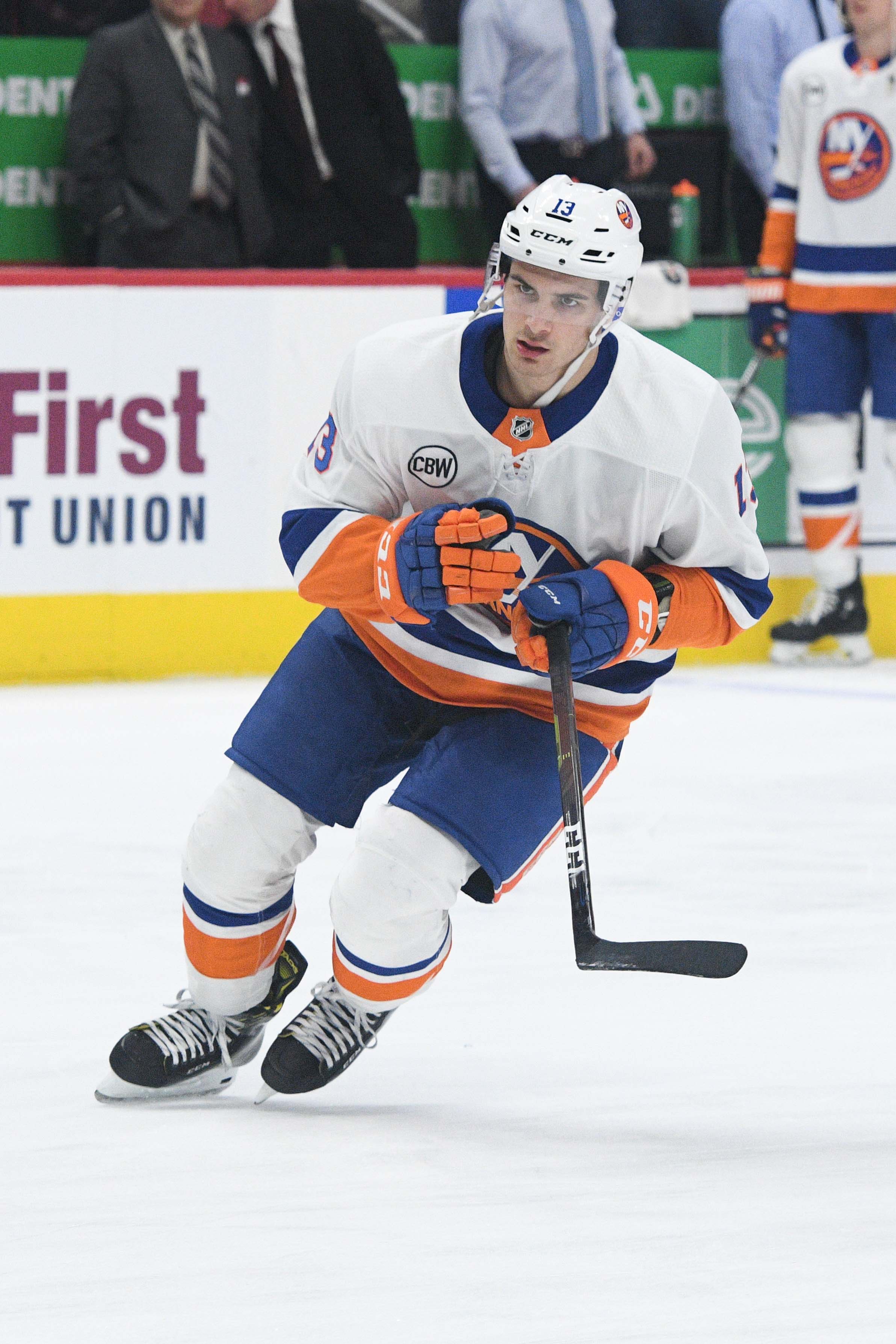
Minor Transactions: 08/20/22
Weekends in August don’t typically yield too much activity on the transaction front, at least in the NHL. However, with international seasons starting up soon, there continues to be regular player movement overseas. Here’s a rundown of some recent moves there.
- Canadiens prospect Dmitri Kostenko has been loaned out for the upcoming season as Spartak of Russia’s MHL announced that they’ve loaned the 19-year-old to Kunlun of the KHL. Kostenko was a third-round pick of Montreal in 2021 (87th overall) and spent most of last season in Russia’s second-tier league, the VHL, picking up 14 points in 40 games. Kostenko also suited up in seven games with Spartak at the junior level, recording nine assists.
- Josh Dickinson, the younger brother of Canucks forward Jason Dickinson, has decided to try his hand at playing overseas as MoDo of the Swedish Allsvenskan announced they’ve signed the 24-year-old to a one-year deal. Dickinson spent three years in Colorado’s system on an entry-level deal before joining Detroit on a minor league pact last season where he had 13 points in 48 AHL games plus 28 more in 21 games at the ECHL level.
This post will be updated throughout the day.
Central Notes: Stastny, Lambert, Khudobin
With Nazem Kadri now off the market, Paul Stastny is the top center of note that’s still available. Sportsnet’s Ken Wiebe reports that while a reunion with the Jets hasn’t been ruled out yet, it’s unlikely he returns to Winnipeg next season. The 36-year-old is coming off a bit of a bounce-back year in 2021-22 where he scored 21 goals along with recording 24 assists in 71 games while winning over 56% of his faceoffs. The Jets certainly have the cap space to bring him back but Wiebe believes he’ll ultimately take less than his market value with an eye on going to a contender in the hopes of competing for a Stanley Cup title. Speculatively, he fits as a short-term replacement for Kadri in Colorado, a team where Stastny spent the first eight years of his career so it wouldn’t be surprising to see him linked to them over the coming days.
More from the Central:
- Still with the Jets, prospect Brad Lambert’s absence from Friday’s World Junior semifinal against Sweden raised some eyebrows. Head coach Antti Pennanen confirmed to reporters including Scott Wheeler of The Athletic (Twitter link) postgame that the 18-year-old first-rounder isn’t injured but was rather a healthy scratch. Lambert, the 31st pick last month, has been a bit of a polarizing prospect over the last year and has somewhat surprisingly had a limited role in this tournament so far, averaging only 12:24 per game.
- After undergoing hip surgery back in March, goaltender Anton Khudobin is expected to be ready to participate in training camp, Mike Heika notes on the Stars’ team website. Last year was a tough one for the 36-year-old as he posted a 3.63 GAA and a .879 SV% in nine appearances with Dallas, eventually resulting in him clearing waivers. He has one year left on his contract at $3.33MM and while they would prefer to move that deal out, he’ll also serve as insurance with the team still needing to re-sign RFA goaltender Jake Oettinger.
Penguins Sign Jack St. Ivany
After being linked to him earlier this week, the Penguins have indeed added to their prospect pool, announcing the signing of defenseman Jack St. Ivany to a two-year, entry-level contract. The deal will carry a cap hit of $950K in the NHL.
The 23-year-old was a fourth-round pick of the Flyers back in 2018 (112th overall) but didn’t sign with Philadelphia by Monday’s deadline, paving the way for him to become an unrestricted free agent. Pittsburgh GM Ron Hextall was in charge of the Flyers back in 2018 so he certainly had some familiarity with his newest prospect which undoubtedly played a role in their decision to pursue St. Ivany.
St. Ivany split his college career between two schools. He spent the first two years with Yale before transferring to Boston College during the pandemic where he struggled in his junior year. However, last season, he fared much better, recording four goals and 20 assists with the Eagles, setting new career-bests in both goals and points.
With Pittsburgh already having a fair bit of defensive depth, it’s safe to say that St. Ivany will be heading to AHL Wilkes-Barre/Scranton next season where he’ll hope to work his way up their depth chart and perhaps into an injury recall situation at some point over the next two seasons.
Salary Cap Deep Dive: Anaheim Ducks
Navigating the salary cap is one of the more important tasks for any GM. Teams that can avoid total cap chaos by walking the tightrope of inking players to deals that match their value (or compensate for future value without breaking the bank) remain successful. Those that don’t see struggles and front office changes.
PHR will look at every NHL team and give a thorough look at their cap situation heading into the 2022-23 season. This will focus more on players who are regulars on the roster versus those who may find themselves shuttling between the AHL and NHL. All cap figures are courtesy of CapFriendly.
Anaheim Ducks
Current Cap Hit: $63,657,667 (under the $82.5MM Upper Limit)
Entry-Level Contracts
D Jamie Drysdale (one year, $925K)
F Mason McTavish (three years, $894K)
F Trevor Zegras (one year, $925K)
Potential Bonuses:
Drysdale: $850K
McTavish: $2.5MM
Zegras: $850K
Total: $4.2MM
Simply put, these three are the centerpieces of Anaheim’s rebuild. Zegras played his first full NHL season in 2021-22 and finished second on the team in scoring, establishing himself as their top center in the process. An early extension is always possible but with only 99 career games under his belt, GM Pat Verbeek might want to wait on that. His next contract seems likely to check in around the $8MM range on a long-term deal, similar to the ones that Nick Suzuki and Josh Norris have signed recently. Worth noting, he will still have five years of team control after next season. As for McTavish, he didn’t look out of place in his limited NHL stint last year and his showing at the World Juniors shows that he’s ready for a full-time role in 2022-23. It’s obviously too early to forecast his next deal but they’re hoping he does well enough to be in that $8MM range as well.
Drysdale had some struggles in his own end last season but that’s hardly uncommon for a 19-year-old and overall, he had a solid first full NHL campaign. While it might seem that he should get a bigger role this season, that’s far from a guarantee with the veterans that will be ahead of him. That makes his next contract a bit tricky. Anaheim will certainly want to extend him on a max-term deal but it might be in Drysdale’s best interest to look for a two or three-year bridge deal; he also will have five years of team control remaining. He’d get more of a chance to play top minutes in 2023-24 so locking in long-term before getting that opportunity would carry some risk from an earnings standpoint.
Signed Through 2022-23, Non-Entry-Level
D Simon Benoit ($750K, RFA)
F Max Comtois ($2.037MM, RFA)
F Derek Grant ($1.5MM, UFA)
D John Klingberg ($7MM, UFA)
D Josh Mahura ($750K, RFA)
D John Moore ($2.75MM, UFA)
D Kevin Shattenkirk ($3.9MM, UFA)
G Anthony Stolarz ($950K, UFA)
F Troy Terry ($1.45MM, RFA)
 Bridge contracts are often overlooked as they’re often by-products of a salary cap situation. That isn’t the case in Anaheim as the ones they signed were simply decisions to see how a player continues to perform before needing a big commitment. They’ll certainly be needing that big commitment for Terry as he had a breakout showing in 2021-22, scoring 37 goals and 67 points. For context, he had 15 goals in 128 contests heading into the season. A repeat performance would push Terry well past the $6MM mark on a long-term deal which is basically four times what his qualifying offer would be next summer. Anaheim will enjoy another season at a bargain price tag and will be paying up soon after.
At the opposite end of the spectrum is Comtois. He received a bridge deal even after leading the Ducks in scoring in 2020-21 and the first year of it didn’t go well. He struggled with his production and consistency which resulted in him dropping down the depth chart and even being scratched at times. Still just 23, they’re certainly not giving up on him but his contract is back-loaded which results in a $2.55MM qualifier next summer. A repeat showing next season will make the decision regarding his future a little trickier. As for Grant, he’s coming off a career year with 29 points and played like a capable third center. That’s a good return for that price point and if Anaheim is out of the playoff picture in February, he’ll be a strong candidate to move as a rental at the trade deadline.
The addition of Klingberg this summer certainly raised some eyebrows. His presence on the roster will make it a little harder for Drysdale to play an elevated role in the lineup but at the same time, the veteran is in a good spot to be productive and show that he’s worthy of the long-term commitment he was seeking this summer. Even so, that long-term contract will likely check in at a lower price tag than this one unless he really has a standout performance. It certainly wouldn’t be surprising to see him move at the trade deadline either. The same can be said for Shattenkirk who has re-established himself as a top-three defender with the Ducks but might be in tough to put up the type of offensive numbers that he’s accustomed to with Klingberg now in the fold which could hurt his market in free agency next summer. Moore was a cap casualty they had to take on in the Hampus Lindholm trade last season and he’ll be looking at a deal at or near the minimum next season while Benoit and Mahura will need to become full-time regulars if they want to make more than the minimum in 2023-24 as well.
Stolarz did well in his first full NHL season as a backup, posting an impressive .917 SV% in 28 appearances. With the way that backups have seen their price tags go up in recent years, if he’s able to play at a similar level next season, he could push for upwards of three times his current deal. Even if he takes a step back, double his current price could still be doable.
Signed Through 2023-24
F Sam Carrick ($850K, UFA)
F Adam Henrique ($5.825MM, UFA)
F Max Jones ($1.295MM, RFA)
F Isac Lundestrom ($1.8MM, RFA)
F Jakob Silfverberg ($5.25MM, UFA)
D Urho Vaakanainen ($850K, RFA)
Henrique had a rough 2020-21 season to the point where he cleared waivers but he was much better last season with 42 points in 58 games while winning over 55% of his faceoffs. That’s not a great return on his price tag but those are second-line numbers which is a better outcome than seemed possible just a season ago. He won’t be able to command that type of money two years from now though. The same can be said for Silfverberg, who’s coming off an injury-riddled year that saw him score just five times in 53 games. While he was a top-six winger at the time his deal was signed, he isn’t now. Carrick very quietly put up decent numbers in a depth role last season with 11 goals in 69 games after having just four in parts of five seasons before that. His contract is cheap enough to give Anaheim good value if he’s on the fourth line while if young players push their way into his spot, it can be buried in the minors.
As for the younger forwards in this group, Lundestrom did well in his first full NHL season, picking up 29 points and playing a big role shorthanded. Still just 22, he’s more of an unheralded part of their future plans and should be more of a bottom-six player moving forward but this was still a promising season. The bridge deal makes sense and if he can produce at a similar rate these next two years, his AAV could jump into the $3MM range. It’s safe to call the first year of Jones’ bridge contract a write-off as a pectoral injury limited him to just two appearances last season. If he can return as a capable bottom-six winger, there’s room for his price tag to go up a couple of years from now.
Vaakanainen was part of the Lindholm trade as well and while he hasn’t played up to the level of a first-round pick as he was in 2017, he showed some signs of progressing into a regular NHL defender. This contract has a chance to be a bit of a bargain as a result but with limited offensive upside, he’s not going to be someone to command big money down the road. Doubling his current AAV could be achievable if he can hold down a regular spot.
Signed Through 2024-25
F Frank Vatrano ($3.65MM, UFA)
Vatrano has largely gone under the radar but he very quietly has scored at least 16 goals in each of the last four seasons and is coming off his second straight 18-goal campaign which wasn’t bad considering he played just over 13 minutes a night. That type of money for someone whose role is that limited is a bit on the high side but he has been able to produce with some consistency with less ice time than players that hover around 20 goals typically get. That made for a pretty strong market for him last month which yielded this contract.
Canucks Have Shown Interest In Evan Rodrigues
With training camps now less than a month away, teams will be calling around to the remaining unrestricted free agents to see if their asking price has dropped. It appears that the Canucks are doing that with Evan Rodrigues as Rick Dhaliwal of CHEK and The Athletic reported in an appearance on Sekeres and Price (audio link) that Vancouver is “poking around” on the forward.
The 29-year-old is coming off a career season with Pittsburgh that saw him put up 19 goals and 24 assists while playing in all 82 games for the first time. His ice time jumped up to nearly 16 minutes per game and he played down the middle and on the wing. That type of versatility is always appealing to teams.
So, why hasn’t his market materialized this summer? Rodrigues’ splits from last season are likely playing a role in that. Of the 43 points he had, 30 came in the first half of the year and only 13 in the second half. The latter is more in line with his career numbers where he has been more of a depth forward so it’s not surprising that teams aren’t coming in overly high with offers, especially with flexibility at a premium.
Rodrigues ranked 24th on our Top 50 UFA list earlier this summer with a projected contract of three years at $3MM per season. At this point, it’s quite unlikely he’ll command that type of money or term so a one-year deal in an optimal situation with the hopes of generating a stronger market next summer might be the next best thing.
However, is Vancouver the most optimal spot for Rodrigues? They’ve added some depth on the wings this summer with Ilya Mikheyev and Andrei Kuzmenko and while Rodrigues could plausibly slide in down the middle when injuries strike, it’s not a position he has played full-time since the 2018-19 campaign. He could fit on the third line if they were comfortable deploying him as a center; otherwise, Rodrigues would likely be in a depth role with Vancouver which is what he should be trying to avoid. There’s still time for Rodrigues to be selective as he looks to find a home for next season but if nothing else, Vancouver would represent a fallback plan if the more desirable situations don’t present themselves.