
Canadiens Grant Brendan Gallagher Permission To Seek Trade
The Montreal Canadiens held their exit interviews on Monday. Through a wave of insightful interviews, it was winger Brendan Gallagher who caught attention as he discussed his future with the club. Gallagher told reporters that his desire would be to re-sign in Montreal for the rest of his career, per Sportsnet’s Eric Engels. But, given the team’s growing forward pool and Gallagher’s diminishing results, the winger said “it’s pretty clear” that he will be on the move, per Engels.
On June 6, Gallagher’s agent received permission to seek a trade per Steve Ewen of The Province.
Gallagher was emotional throughout the presser, even having to step away from reporters for a brief moment after thinking about how Montreal rallied around him in the wake of losing his mother. All 911 games, and 14 seasons, that the 34 year old has spent in the NHL have come with a Canadiens’ logo on his chest. He has seen rises and falls through his time in Montreal, ultimately overcoming a 5-foot-9 frame and fifth-round draft selection to become a true pillar of the Canadiens’ rosters through the late-2010s and early-2020s.
Gallagher routinely rivaled 40 points each season between 2013 and 2020 – with a dip to 29 points for the 2016-17 season but a rise to 54 and 52 points respectively in 2017-18 and 2018-19. Much of that scoring, including back-to-back 30-goal seasons, was driven by Gallagher’s relentless battling in the low slot. He stood out as a feisty and aggressive winger capable of winning corner battles or sniffing-out rebounds – and earned as high as second-line deployment because of it.
Those seasons continue to stand as Gallagher’s career-highs – but he reached 21 goals and 38 points as recently as the 2024-25 season. Those numbers dwindled to just seven goals and 23 points this season, a dip that coincided with Gallagher averaging just 6:25 in ice time through three postseason appearances. The end of the 2025-26 season made it clear that Gallagher’s bottom-six role had been upended by the likes of Zachary Bolduc and Joe Veleno.
Gallagher mentioned his hometown Vancouver Canucks when discussing a potential next landing spot with reporters per TVA’s Renaud Lavoie. The Canucks could use a boost of veteran experience as they attempt to rebuild their lineup around top prospects. Gallagher played four seasons with the WHL’s Vancouver Giants, and even captained the team for one season, before turning pro in 2012. He was a star producer for the Giants, racking up 280 points and 359 penalty minutes in 244 games with the club. That jolt of scoring and grit would be welcome on the Canucks roster, even if it comes on the other side of a long pro career for Gallagher.
Even if Vancouver isn’t his next landing spot, Gallagher will certainly have a say in where he heads next. He told reporters, including Canadiens insider Priyanta Emrith, that he will discuss a next step with his wife and agency. His Canadiens teammates heaped praise on Gallagher in their own exit interviews. Star scorer Cole Caufield called Gallagher “one of the most special humans I’ve ever got to play with” while former top pick Juraj Slafkovsky praised Gallagher’s leadership in his move to the NHL. The veteran’s departure will be one that weighs on the Canadiens through next season. At the same time, it will represent a true turnover for the NHL roster – sparking the change that will lead Montreal into an era in-part led by young stars Hutson, Caufield, and Slafkovsky.
Gallagher has one season remaining on his current contract, which carries a $6.5MM cap hit. He is set to enter unrestricted free agency, targeting an age-35 contract, on July 1, 2027.
Gerry Meehan Passes Away At 79
Former Buffalo Sabres captain and general manager Gerry Meehan passed away at the age of 79 on Friday. Meehan played through 10 seasons in the NHL between 1968 and 1979. He then kicked off a decade-long managerial career that spanned some of the Sabres’ brightest days as a franchise.
Meehan’s hockey career began in Toronto-area junior hockey. That presence led to a fourth-round selection by the Toronto Maple Leafs in 1963 and a quick ramp to the Toronto Marlboros lineup in 1964. He spent four years with the junior club and emerged as a key part of their run to the 1967 Memorial Cup. His point-per-game scoring carried over to his first season at the pro flight. He scored 72 points in 70 games of the 1967-68 Central Professional Hockey League season, then one of many minor-pro leagues in North America.
The Maple Leafs promoted Meehan to the NHL roster in 1968. He only recorded two assists in the first 25 games of his NHL career, leading to a trade to the Philadelphia Flyers just a few months after his NHL debut – as part of a deal that also sent a young Bill Sutherland to the Flyers. Meehan didn’t figure much more out in his move to Pennsylvania and earned a reassignment to the WHL Senior League – another minor-pro league – after just 12 games and three points with the Flyers.
Meehan stuck in the WHL through the 1969-70 season. He was then selected by the Buffalo Sabres in the 1970 NHL Expansion Draft, sparking a sudden move to the East coast before he could earn another chance in Philadelphia. The move proved incredibly fruitful for the Sabres, who were able to quickly elevate Meehan into an important lineup role. While sharing a lineup with the likes of Gilbert Perreault and Eddie Shack, Meehan managed to breakout with 55 points in 77 games of Buffalo’s inaugural season. That level quickly became his norm, as he twice reached 46 points and once reached 60 points over the next three seasons. At the same time, Meehan was named the second captain in Sabres history, after Floyd Smith filled the role in the final, full season of his NHL career in Buffalo’s first year.
Where Perreault, Rene Robert, and Rick Martin brought the offense – Meehan brought the reliability. He continued in an important role with the Sabres until being traded to the Vancouver Canucks in 1974. Meehan scored a modest 25 points in 57 games for the Canucks but was still flipped to the Atlanta Flames five months later. That move again proved successful, as Meehan reached 41 points in 52 games with Atlanta. He was flipped again in 1976, this time headed to the Washington Capitals in a package deal for two-time Stanley Cup winner Bill Clement.
Meehan spent the final three years of his career with the Capitals. On the other side of multiple moves, he clawed back to productive hockey – and a captaincy – in Washington. He totaled 144 points in 208 games – including a career-high 64 points in the 1976-77 season – through his time with the Capitals. He was impactful until the very end – and earned a waiver designation, and brief stint with the WHA’s Cincinnati Stingers, once his role became obsolete. Meehan retired from his playing career in 1979.
After a brief period away from the NHL, Meehan rejoined the Sabres as an assistant general manager in 1984. He was promoted to the GM role partway through the 1986-87 season, after Buffalo relieved both their GM and head coach. Meehan quickly began an aggressive managerial career. He acquired veterans near the end of their career in Mark Napier and Jan Ludvig, then countered the moves with strong drafting. Meehan brought in Pierre Turgeon with the 1987 first-overall pick – the only player to reach 100 games (he reached 1,294) out of Buffalo’s 13 draft picks that year. After Turgeon turned into an instant impact, Meehan entered the 1988 draft with confidence and selected Keith Carney, Alexander Mogilny, and Rob Ray.
Meehan continued to shake up the lineup with trades through the 1990 NHL Draft. He represented the Sabres in the blockbuster deal that sent Phil Housley, Scott Arniel, and the draft pick utilized on Keith Tkachuk to the Winnipeg Jets in 1990 – returning Dale Hawerchuk and the draft pick used on Brad May to Buffalo. Their presence continued a true cycle of the Sabres lineup under Meehan’s guide – something that continued in force when Turgeon was traded to the New York Islanders in a package for Pat LaFontaine in 1991.
Meehan also brought in Philippe Boucher, Sean O’Donnell, and Matthew Barnaby to New York through the draft. On the heels of the 1992 NHL Draft, he again made the move to acquire a historic Sabre with the August acquisition of eventual superstar-goaltender Dominik Hasek from the Chicago Blackhawks. Hasek only played 28 games in his first season with the Sabres, which kept Meehan from bearing the fruits of one of the NHL’s greatest trades. His GM tenure came to an end just weeks after the 1993 NHL Draft, where Meehan landed Scott Nichol in the 11th-round. He stayed with Buffalo as the Vice President of Hockey Operations through the 1995-96 season.
While his time in hockey was marked by up-and-down action as both a player and manager, there is no doubt about the value that Meehan brought to the teams he supported. He was a core piece of Buffalo’s early lineups, then dedicated a decade towards bringing in all-time-greats to support the Sabres into the 2000s. He will be remembered as a true builder who carried a torch handed off by head coach and GM Scotty Bowman. Pro Hockey Rumors sends condolences to Meehan’s family, friends, and many Sabres fans.
Andrei Vasilevskiy Wins 2026 Vezina Trophy
While the playoffs didn’t end the way that Andrei Vasilevskiy would have liked, there was no questioning his strong regular season performance. He was recognized for those efforts on Saturday as the league announced that Vasilevskiy is this year’s Vezina Trophy winner. The award is given to “the goaltender adjudged to be the best at his position,” as voted on by NHL General Managers.
It’s the second time that the 31-year-old has won the award but it has been a while since his victory, one that came back in the 2018-19 season. Since then, he had been a top-three finalist three other times (finishing in the top six in two other years) but had been unable to pick up this second win until now.
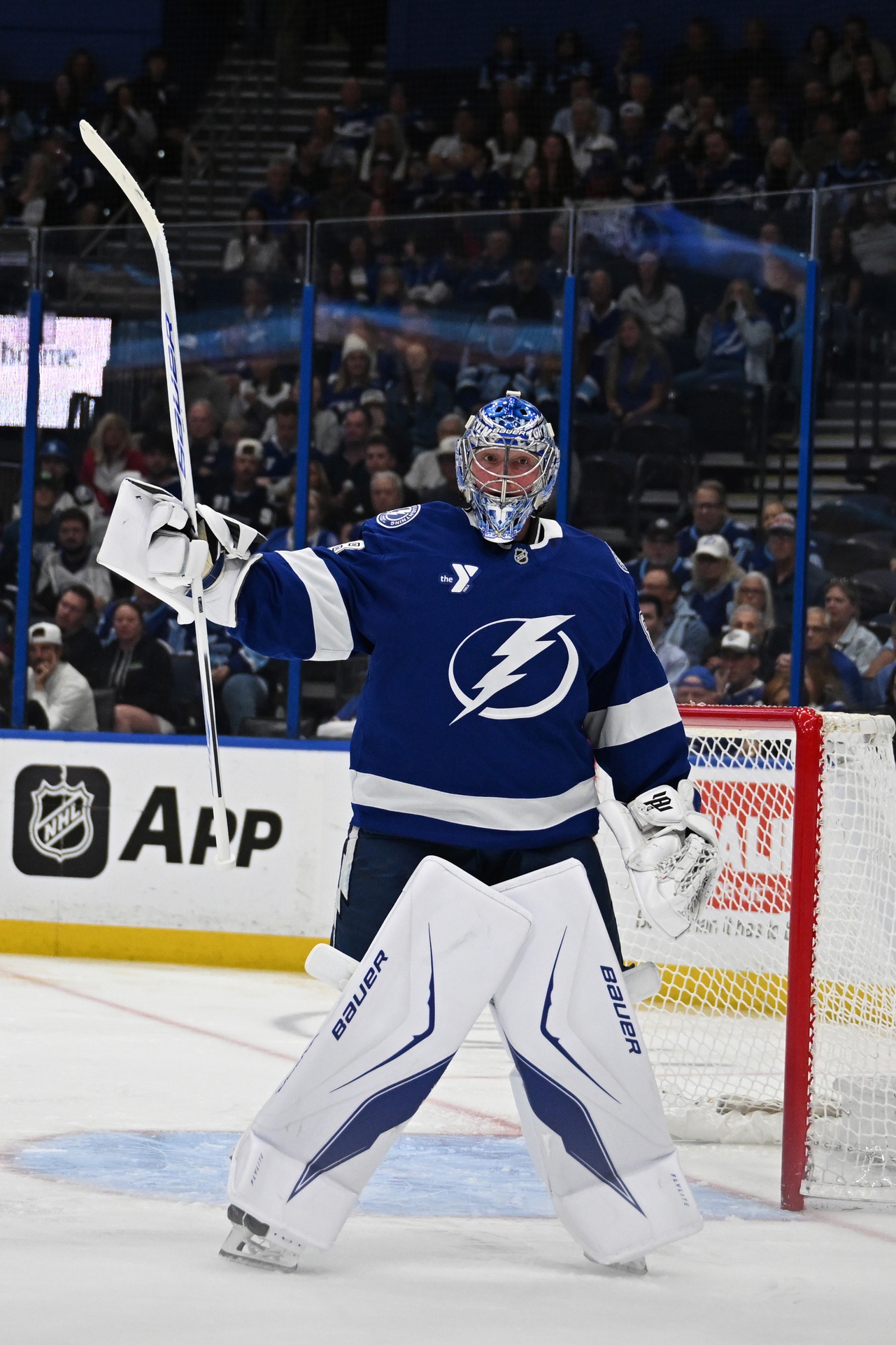 Vasilevskiy posted a 2.31 GAA along with a .911 SV% and two shutouts in 58 games during the regular season while finishing fourth in Goals Saved Above Expected with a mark of 24.7, per MoneyPuck. He also led the league with 39 victories, leading in that department for the sixth time in his career. A big chunk of those wins came from a very impressive 17-0-1 run that spanned more than two months, beginning in late December and ending shortly after the Olympic break, one that helped vault the Lightning back into contention for the Atlantic Division title.
Vasilevskiy took home 17 of 31 first-place ballots to give him a comfortable margin of victory over Ilya Sorokin of the Islanders and Jeremy Swayman of the Bruins, who were the other finalists for the award. Their combined vote point totals (97) came in below Vasilevskiy’s (114). Capitals netminder Logan Thompson and Avalanche goalie Scott Wedgewood also received first-place votes while three other netminders had down-ballot consideration as well.
With the award, Vasilevskiy is now the third active goaltender with multiple Vezina Trophy wins, joining Sergei Bobrovsky and Connor Hellebuyck. He is also now the fifth netminder in NHL history to have multiple Vezina Trophies and multiple Stanley Cup championships. Bobrovsky is still playing while the other three, Martin Brodeur, Dominik Hasek, and Patrick Roy, are all in the Hall of Fame.
Photo courtesy of Jonathan Dyer-Imagn Images.
Hall Of Fame NHL Executive Cliff Fletcher Passes Away
The Toronto Maple Leafs announced that legendary former NHL general manager Cliff Fletcher passed away at age 90.
A member of the Hockey Hall of Fame, Fletcher brought the Calgary Flames a Stanley Cup in 1989. Moving on to Toronto two years later, he was also known as the architect of the Maple Leafs 1990s revival. Starting out as a scout with the Canadiens in 1956, the Quebec native went on to work seven decades in the NHL, most recently serving as a Senior Advisor in Toronto until 2024. The legend was a beloved figure in the game, known for his tremendous class and passion.
Promoted to Assistant General Manager of the expansion Blues in 1966, departing his hometown Habs after one decade, Fletcher held that role in St. Louis for six seasons. During that period, the Blues impressively made the Stanley Cup Final three times in a row, although they came up short each time. Clearly making an immediate impact there, he caught the attention of another new franchise, the Atlanta Flames, who named him their inaugural general manager in 1972. Fletcher was a staple of the organization for the next 19 seasons, working the team through its relocation to Calgary, Alberta for the 1980-81 season. Fletcher selected Hall of Fame defenseman Al MacInnis 15th overall a year later, an icon of the team for the next decade-plus.
Once in Calgary, and with an immediate star on the back end with MacInnis, Fletcher’s team hit their stride. The Flames hung banners for multiple divisional titles and two Presidents’ Trophies, going on to make their first Stanley Cup Finals appearance in 1986 although coming up short to the Canadiens. Just three seasons later, the Flames returned, taking home the Stanley Cup and avenging their prior defeat by taking down Montreal in six games, sending legendary captain Lanny McDonald out on an unforgettable high note. Still to this day their only title, Fletcher’s Flames offered six eventual Hall of Famers, with Joe Nieuwendyk, Mike Vernon, Joe Mullen, and Doug Gilmour also in the fold.
Another notable name connected to Fletcher, Russian forward Sergei Priakin, chosen by him in the 1988 draft, has the distinction of being the first player permitted to skate in the NHL by the Soviet Hockey Federation.
Moving on to Toronto two seasons later, Fletcher quickly turned things around for the Leafs as well. Jumping aboard in what was one of their darkest times in franchise history, Fletcher brought along Gilmour from his former squad in a 1992 blockbuster trade. Fletcher later named Pat Burns head coach for the next campaign as well. The impact was immediate, as Gilmour broke out with 127 points as a superstar, as the Leafs set all-time bests in wins and points. Toronto made the Conference Finals the next two seasons, coming up short, but it was territory they hadn’t reached since the late 1970s.
Seeking a splash, Fletcher made another bold move in 1994, trading Wendel Clark to the Nordiques for Mats Sundin in what was a highly publicized, shocking trade, as Gilmour was named captain. Never quite getting over the hump, he would step down from his role with Toronto three seasons later, but not before dealing Gilmour to the New Jersey Devils as the Maple Leafs ushered in a new era led by his acquisition of Sundin.
Fletcher then caught on as Senior Advisor of the Tampa Bay Lightning from 1998-2000, as well as a seven year stint with the Phoenix Coyotes as Senior Vice President of Hockey Operations up to 2007.
His time with Toronto wasn’t over by any means, returning as interim general manager, taking over for John Ferguson Jr. and holding things down until Brian Burke assumed the role in November 2008. With his days as general manager behind him at age 73, Fletcher stayed on with the organization for another 15 years as Senior Advisor.
A member of the 2004 Hockey Hall of Fame class, Fletcher’s son, Chuck, has also made his mark as an executive in the NHL, working with the Panthers, Ducks, Penguins, Wild, Flyers, and Devils. Just last May it was announced that he’d be departing New Jersey after serving as Senior Advisor.
Both MacInnis and Burke went on to share their sympathies of Fletcher’s passing on social media, along with an official statement from the Calgary Flames. Finally, NHL Commissioner Gary Bettman also released a statement.
We at Pro Hockey Rumors offer our condolences to Cliff’s friends, family, and loved ones.
Predators Hire Rob Blake As Executive Vice President Of Hockey Operations
This afternoon the Nashville Predators shared that Rob Blake has been brought aboard as Executive Vice President of Hockey Operations.
The Hall of Fame defenseman last served as Vice President of Hockey Operations and General Manager of the Los Angeles Kings from 2017-2025 before mutually agreeing to part ways in May 2025. He’ll now join the newly appointed Chris McFarland (General Manager and President of Hockey Operations) in the Music City. According to TSN’s Pierre Lebrun, McFarland had discussed with Blake the idea of joining forces with the Avalanche next season, a team where he played from 2000-2006. Yet now, based on recent developments, they’ll do so with the Predators instead.
As outlined in the team’s press release, Blake will support McFarland across all areas of hockey operations, including team and staff strategies, free agency and player management, drafting, and more.
In a fall 2025 interview, Blake discussed what he’d learned from his time with Los Angeles with Pierre Lebrun of The Athletic, describing his accountability in walking away and letting the Kings start fresh after their fourth straight first round playoff defeat. A longtime star of the franchise as a player, it was a tough ending to pass things on to Ken Holland, but fully intent then on another NHL front office role, the door has opened again this summer in Nashville.
The 56-year-old got started as Director of Player Personnel with Los Angeles in 2011, soon promoted to Assistant General Manager where things were rolling as the Kings won two Stanley Cups. Advancing to General Manager in 2017, replacing Dean Lombardi, Blake had Los Angeles in a great spot four years ago. Starting with an aging core from the previous era, Blake moved on from the likes of Jeff Carter, Tyler Toffoli, and Jake Muzzin. Returning to the playoffs in 2022 and putting up a great fight against the Oilers, the former defenseman had simultaneously assembled one of the best prospect pools in the entire league, led by Quinton Byfield and Brandt Clarke. There was much reason for optimism, as Blake opened another window for icons Anže Kopitar and Drew Doughty.
Unfortunately, Los Angeles never quite took another step despite notable additions of Kevin Fiala and Pierre Luc-Dubois. In the case of the latter, things soured quickly, as Dubois was traded away just one year into his eight year pact. Never getting past the first round of the playoffs, Blake was prompted to step away, ending his time with a respectable 309 – 238 – 71 record.
Now finding himself back into another role, Blake won’t quite be calling all the shots, working alongside the former Avalanche general manager in McFarland. Still, one can’t help but notice the parallels between the Kings standing back in 2017, compared to where the Predators are today.
The duo of McFarland and Blake must work through a roster mainly built for “win now” mode, despite missing the playoffs the last two seasons. Former general manager Barry Trotz‘s additions, the likes of Jonathan Marchessault and Steven Stamkos stand out as clear contenders to find a fresh start for eventually. It will be fascinating to see how they also approach the future for longtime stars such as Roman Josi and Filip Forsberg. Trotz was able to assemble one of the deepest prospect pools Nashville has had in their history, but they still lack the high-end talent which has alluded the franchise for practically their entire history. Inaugural GM David Poile along with Trotz avoided a dreaded bottoming out of sorts, but the idea could be more alluring to the new regime.
For Predators fans, today’s news is exciting in that two figures with Stanley Cups as executives will work in tandem to navigate the crossroads with an entirely fresh mindset. Just last week their general manager search was dragging on, full of uncertainty, and now two highly qualified executives are into the fold. Set to take the stage at 10th overall in just three weeks, there are major decisions for McFarland and Blake to make immediately on what the objective is for the 2026-27 season.
Marcus Johansson Signs In Sweden
Longtime NHL forward Marcus Johansson has signed with Färjestad BK of the SHL, the team announced today, departing the Minnesota Wild. The news was confirmed by Michael Russo of The Athletic.
One decade since his breakout 24 goal campaign, the 35-year-old has bounced around several teams since then as a moderate contributor. Still, he had become a valuable piece for Minnesota over the past four seasons, somewhat quietly putting together a strong 2025-26 where he notched 49 points in 75 games. That output is good for his second best in 16 seasons.
By no means walking away from North America due to his ability at the NHL level, the development is a bit surprising. Although speculation, it suggests that the Wild’s offseason priorities align elsewhere, with the veteran opting to return to his native country on a high note, rather than start over on what could have become his seventh NHL club.
Chosen 24th overall by the Capitals in the 2009 draft, Johansson’s 1,058 regular season NHL appearances stand as ninth best of the class, also ranking tenth among such peers in points (566).
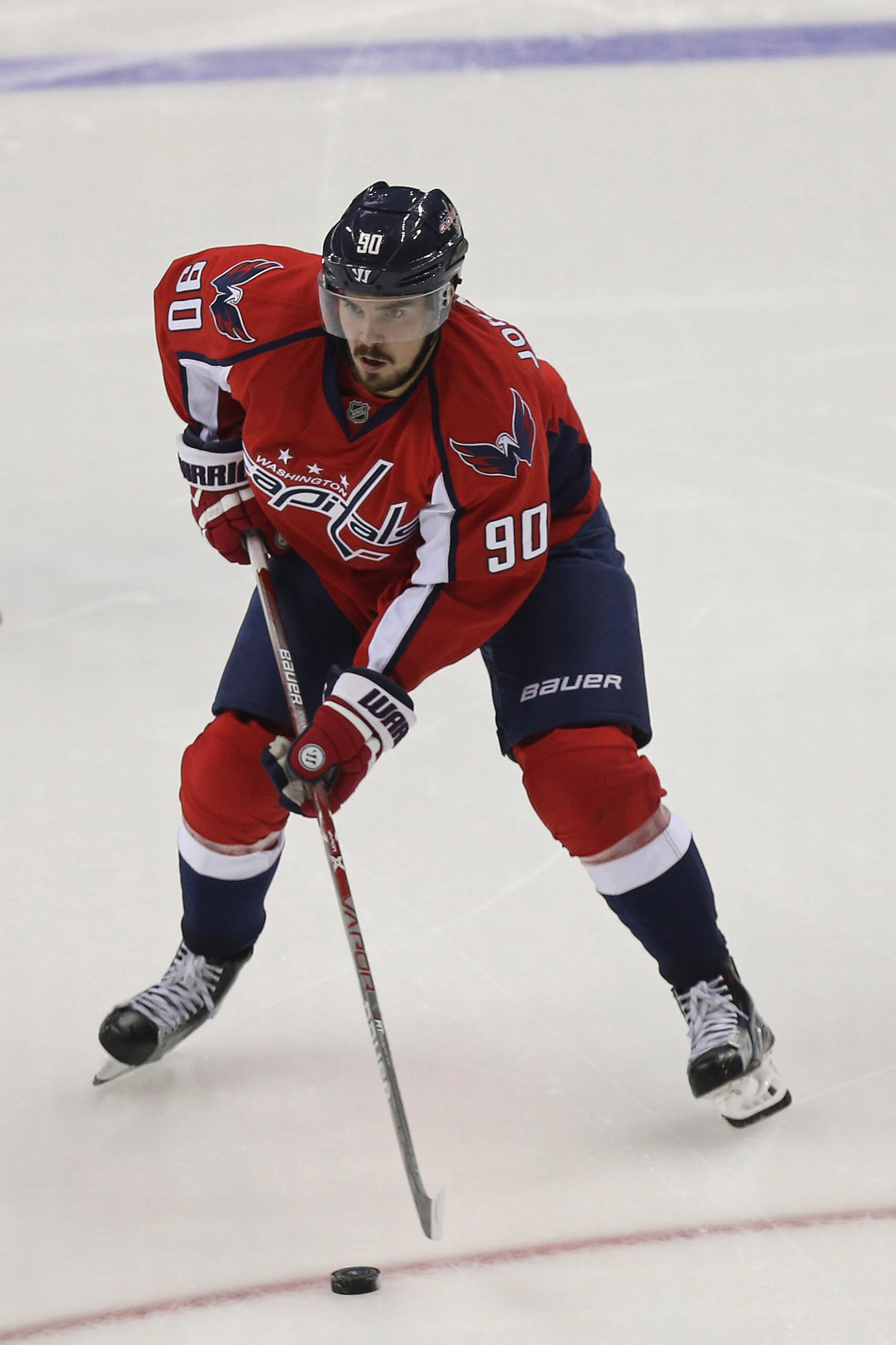
A name synonymous with Washington throughout recent memory, he was dealt to New Jersey during the 2017 offseason, unfortunately missing out on their Stanley Cup the following spring. One of those selections became Martin Fehérváry, a minute-eating shutdown defender who remains a key piece of the Capitals today.
Unable to replicate his breakout 58 point campaign in Newark, the forward was on the move again at the trade deadline, off to Boston where he found his stride as a key third liner. The winger posted 11 points on the Bruins’ playoff run, highlighted by his game-winning goal in the deciding first round series versus Toronto, as they went all the way to Game 7 of the Finals before falling to St. Louis.
Cashing in from his playoff efforts, Johansson inked a two-year contract with Buffalo worth $4.5MM per season. Only making it through one year with the Sabres, where he put up 30 points in 60 games, the next fall he was on the move again. Traded to the Wild for Eric Staal, it was a deal with salary in mind, and finding a fresh start for each veteran. He didn’t make much of an impact with Minnesota, moving on after 14 points in 36 games and signing a one year contract with the expansion Seattle Kraken for $1.5 million. Nobody then would have guessed that he’d ever have more to offer in the state of hockey years later.
Becoming a journeyman, he was traded by Seattle back to Washington at the 2022 trade deadline, but his Caps were sent packing by Florida in six games. The Capitals weren’t the only team intent on a reunion, as that summer he signed back with the Wild, where he’s been ever since. Johansson excelled on a line with Matt Boldy, keeping up his strong regular season play with three tallies against Colorado in the second round.
Affectionately known by fans as “MoJo”, Johansson was traded in-season three times during his career, a player always having value as a middle-six forward. At the same time, all the changes likely played a part in his decision to seek stability back home. It serves as a return to his original club, as a member of Färjestad from 2008-10, winning a league championship in 2009 before embarking on his long NHL career.
Johansson also represented his nation on the highest international stage, a member of Team Sweden in the Olympic Games both in 2014 and this past February. He took home silver 12 years ago, while skating in two games for the Swedes in Milan, coming away scoreless.
Coming back to his original Swedish club, Johansson will mentor Flyers prospect Jack Berglund, joining former NHLers such as Radim Zohorna and Victor Ejdsell. It’s rare that a player of his caliber enters the league at this point, and Johansson should immediately be a top SHL scorer, challenging the likes of Skelleftea forward Oscar Lindberg, another player with NHL experience who took the honors this year with 67 points in 52 games. Färjestad finished fifth in the league this season, sent packing by Rogle in the quarterfinals, and the addition of a forward who was getting second line minutes in the Stanley Cup Playoffs just last month will have huge implications for their club.
Meanwhile, assuming this is it for Johansson in the NHL, the Swede put together one of the best careers out of 2009 draftees, and opened the scoring of Game 5 against the Avalanche, in what was likely his last NHL contest.
Image Credit: Geoff Burke-Imagn Images
Canadiens’ Cole Caufield Wins Lady Byng Memorial Trophy
A second member of the Montreal Canadiens’ first line has won an NHL award today. The league announced that Cole Caufield has been voted the winner of the Lady Byng Memorial Trophy, which is presented annually to the player who exhibits a high standard of sportsmanship, gentlemanly conduct, and playing ability.
In April, Caufield was named a finalist for the award alongside Los Angeles Kings center Anže Kopitar and Ottawa Senators defenseman Jake Sanderson. He collected 45 first-place votes from the Professional Hockey Writers Association, and 776 points. Kopitar, who finished second, collected 38 first-place votes and 602 points. Kopitar, who is now retired, is a three-time winner of the Trophy, while Sanderson has not won it but has received votes twice before in his career.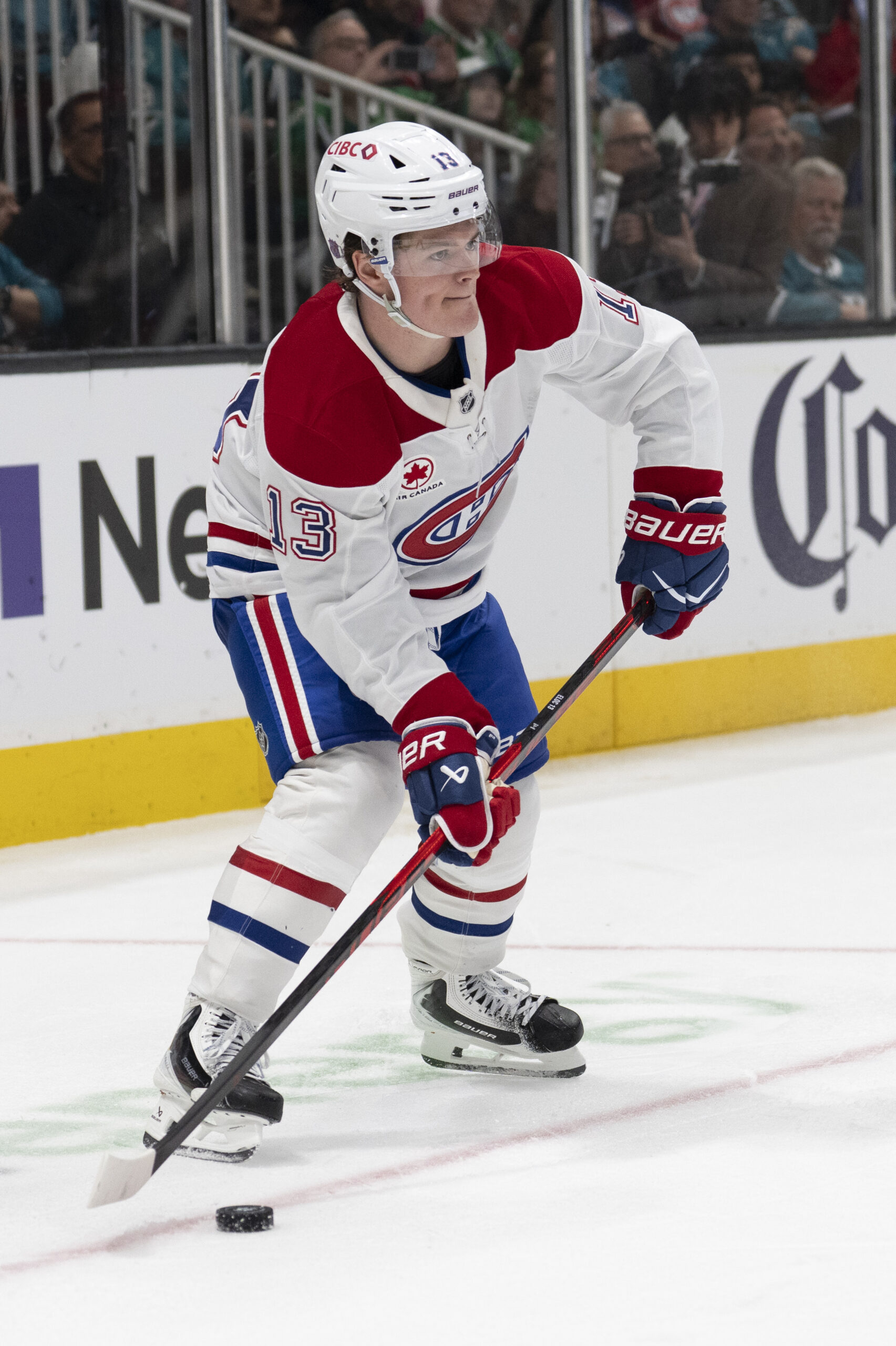
Caufield is the first Canadien to win the Lady Byng since Swedish forward Mats Naslund took home the award in 1988. The only other Canadien to win the Trophy is Hockey Hall of Fame inductee Toe Blake.
The 2019 first-round pick does have some other connections to past winners of the award, both of whom were immensely skilled and productive scoring wingers despite lacking prototypical NHL size.
Caufield’s coach Martin St. Louis won the Lady Byng in 2014, and has overseen Caufield’s development into one of the league’s premier goal scorers.
Caufield was also a former international teammate and close friend of the late Johnny Gaudreau, who won the award in 2017. Caufield called Gaudreau his “hero” and changed his jersey number from 22 to 13 in September 2024 to honor Gaudreau’s memory. Now, he joins Gaudreau as a winner of the Lady Byng.
Although the Lady Byng is an award with criteria for winning that is inherently subjective, it’s difficult to argue that Caufield is not an eminently deserving winner. The 25-year-old has always been a lethal goal scorer, dating back to his days at the U.S. National Team Development Program, and never was that more apparent than his second and final season playing college hockey, when he scored 30 goals in 31 games and won the Hobey Baker Award.
But after he underwent season-ending shoulder surgery during the 2022-23 campaign, there was some worry that the shoulder issues might keep him from ever reaching such heights as a goal scorer at the NHL level. In the season following his injury, Caufield scored just 28 goals – a respectable total, but far from fulfilling the lofty expectations placed on him. The following season, though, Caufield began reminding the league why he was such a highly-rated goal-scoring prospect. He potted a career-high 37 goals in 2024-25, setting up his career year in 2025-26.
Caufield finished the 2025-26 season with 51 goals, falling short of the Maurice “Rocket” Richard Trophy by just two tallies. But Caufield did score more goals against a goalie than MacKinnon, who led the league with eight empty-net goals. So while he did not finish the season with a Rocket Richard Trophy, he has not left 2025-26 empty-handed. He became the first Canadiens forward to score 50 goals since 1990, joining an illustrious group of players including Hall of Fame inductees Guy Lafleur, Bernie “Boom Boom” Geoffrion, Steve Shutt, and Richard.
He was able to reach those heights as a goal scorer (and playmaker, finishing with 37 assists and 88 total points) while maintaining a play style that falls in line with the spirit of the award. Caufield finished the season with just 14 penalty minutes, and has not reached even 18 penalty minutes in a single regular season for the entirety of his career. He finished 2025-26 with the most goals, and second-most points (behind Winnipeg Jets winger Kyle Connor) of any player registering fewer than 20 penalty minutes.
Photos courtesy of Stan Szeto-Imagn Images
Canadiens’ Nick Suzuki Wins Frank J. Selke Trophy
Montreal Canadiens captain Nick Suzuki has won the 2025-26 Frank J. Selke Trophy as the NHL forward who “best excels in the defensive aspects of the game,” the league announced today.
Suzuki beat out fellow finalists Brock Nelson of the Colorado Avalanche, and Anthony Cirelli of the Tampa Bay Lightning. Suzuki earned the trophy in a landslide, per the voting conducted by the Professional Hockey Writers Association. He earned 151 first-place votes and 1,726 total points. Cirelli, who placed second, received 10 first-place votes and 467 points.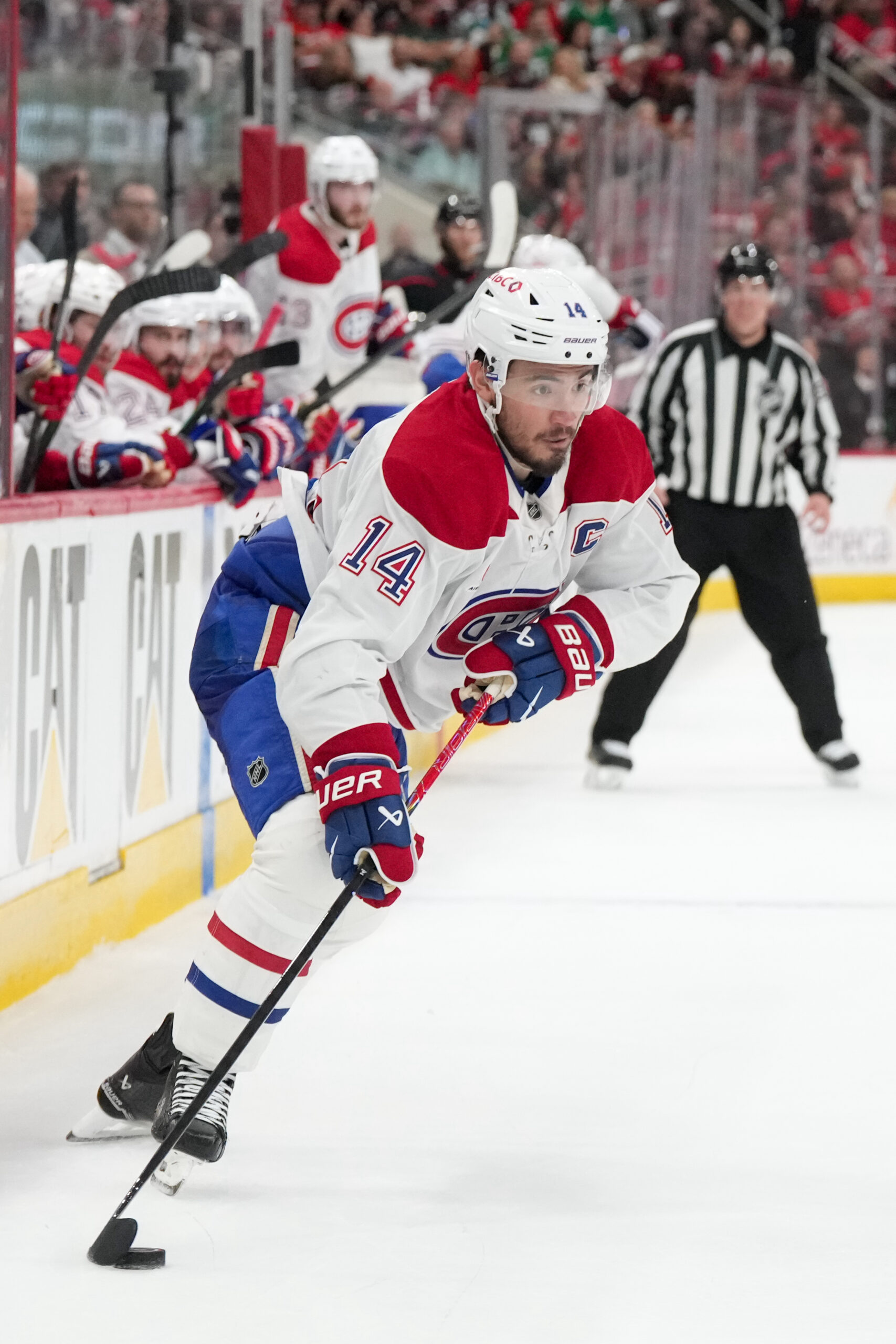
The Canadiens captain is a first-time finalist for the Selke Trophy, but finished 13th in voting in each of the prior two campaigns.
The trophy was won by Florida Panthers captain Aleksander Barkov in both 2023-24 and 2024-25, though Barkov missed the 2025-26 season with an injury.
With today’s news, Suzuki has become just the third Canadiens player to take home the Selke Trophy. The other two Canadiens forwards to win the award – Bob Gainey and Guy Carbonneau – are both enshrined in the Hockey Hall of Fame.
Suzuki, 26, is one of the game’s most valuable all-around centers. For years, he has drawn comparisons to legendary Boston Bruins center Patrice Bergeron, who is himself a six-time Selke Trophy winner. This past season, Suzuki lived up to those comparisons.
He set a career-high in terms of offensive production, leading a young, ascendant Canadiens team in scoring with 29 goals, 72 assists, and 101 points. He became the first Canadiens forward to reach 100 points in a season since Mats Naslund had 110 points in 1985-86.
Suzuki was able to reach those new heights offensively while redoubling his commitment to the defensive side of the game. Centering the Canadiens’ first line alongside sniper Cole Caufield and blossoming star Juraj Slafkovsky, Suzuki often had to endure being matched up against the top lines of opposing teams. But despite that challenging environment, Suzuki was able to consistently win his minutes on the ice and lead the Canadiens to a stellar regular-season finish.
While it is somewhat unconventional for a player to win the Selke Trophy playing more of a reserve role on the penalty kill (Suzuki is not a leader in the Canadiens’ short-handed rotation), his lack of a leading role is more a credit to the number of specialist defensive centers the Canadiens have (Phillip Danault, Jake Evans) than any kind of statement on his defensive quality.
In fact, Suzuki’s defensive quality has not been a matter of intense debate. Dating back to the start of the season, Suzuki consistently polled as the favorite to win the Selke. He led in the polling for the award conducted by ESPN’s Greg Wyshynski for five straight months, suggesting that voters took to the spirit of the award, which is to recognize the whole of a player’s two-way contributions.
Canadiens Nearly Acquired Matthew Knies At Deadline
Around the trade deadline, it was reported that the Montreal Canadiens had completed a significant trade with an unidentified team; however, the other team was unable to file the trade by the 3 pm ET deadline. According to David Pagnotta of The Fourth Period, the trade partner is now known, with the outlet reporting the Canadiens and Maple Leafs had agreed to a trade for Matthew Knies back in March.
Pagnotta had the details on the proposed return package, too. The Canadiens were prepared to send Alexander Zharovsky, who recently won Rookie of the Year in the KHL, another top prospect, and two first-round selections to the Maple Leafs. It has been confirmed that neither Michael Hage nor David Reinbacher was the other prospect in the deal.
Had the trade been completed, it would have sent ripples around the league. For one, although he had been involved in trade rumors leading up to the deadline, it’s relatively shocking that the Maple Leafs would actually entertain trading Knies, and not building around him. He’s only 23 years old, is signed long-term, and has had two consecutive productive years with Toronto.
Furthermore, given Montreal’s lack of scoring depth became their Achilles heel in the Eastern Conference Final, Knies certainly would have changed their outlook. The Canadiens boast one of the best first lines in the league; however, their lack of a strong second line turned them into a one-dimensional team, and the Hurricanes dispatched them easily.
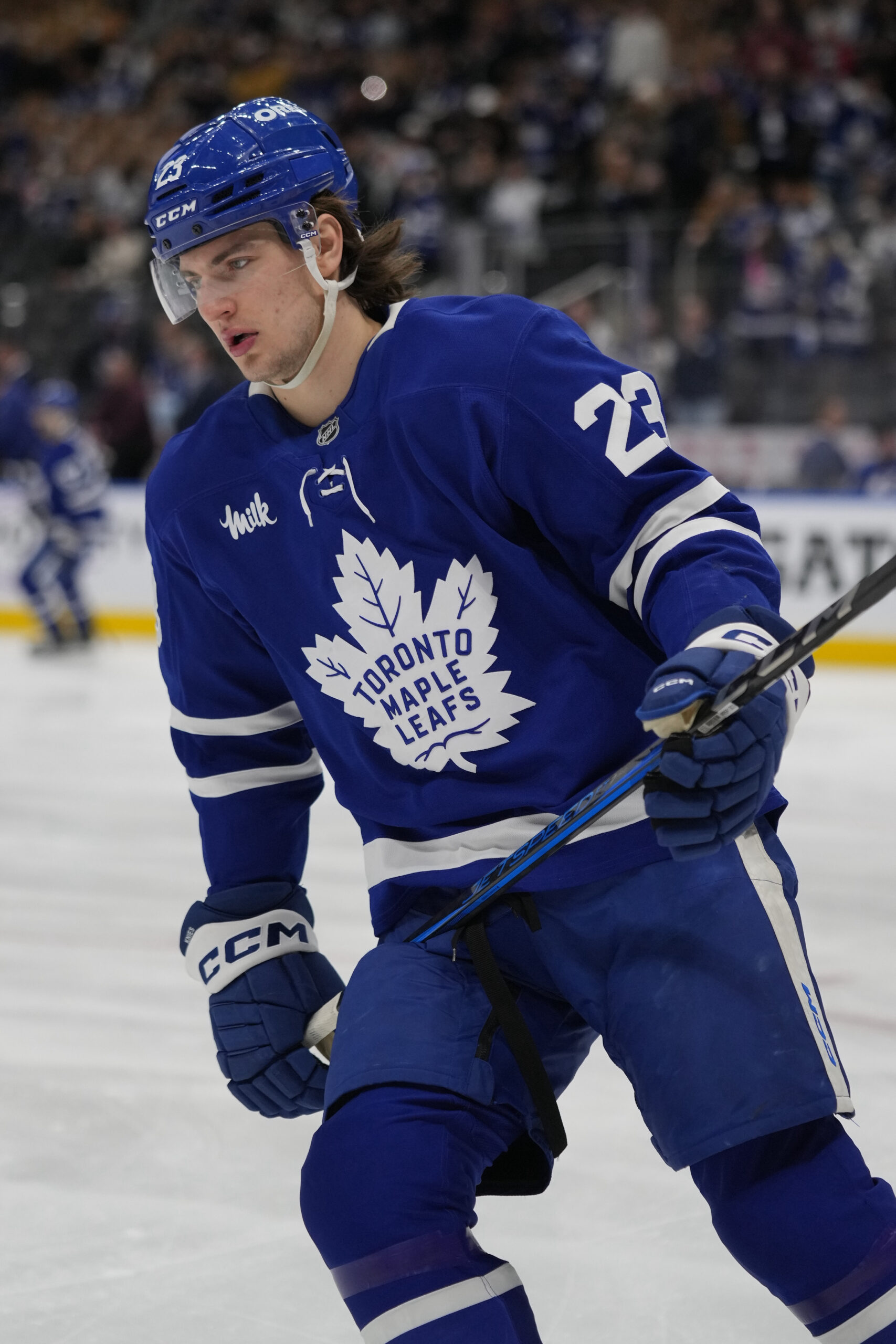 Having Knies, a young winger who has scored 52 goals and recorded 124 points in 157 games for the Maple Leafs over the past two years, would have provided Montreal with a significant asset to place alongside Ivan Demidov. Additionally, Knies was relatively productive in Toronto’s playoff run last year, scoring five goals and seven points in 13 games, while also delivering 31 hits.
While trade talks may potentially resume this summer, it is unlikely that they will do so. Brad Treliving, the Maple Leafs’ General Manager at the time, agreed to that trade. The Maple Leafs have since transitioned to a different regime under John Chayka.
Chayka has a mandate to keep captain Auston Matthews happy, or risk him asking for a trade out of town if Chayka can’t turn the team around. Trading Knies away for futures wouldn’t be conducive to that goal.
While it’s unlikely that the Canadiens will be able to pursue Knies this summer, it is clear that the team intends to be aggressive in reaching their next competitive stage. Given that they’re willing to trade with divisional opponents, Montreal may already be in touch with the Detroit Red Wings about their captain, Dylan Larkin, who requested a trade from the team earlier today.
Photo courtesy of John E. Sokolowski of Imagn Images.
Dylan Larkin Requests Trade From Red Wings
Detroit Red Wings captain and No. 1 center Dylan Larkin has requested to be traded from the team, reports Elliotte Friedman of Sportsnet. Darren Dreger added that “this move has been in the works for a while.”
According to Friedman, that neither Red Wings GM Steve Yzerman nor Larkin’s agent Pat Brisson would comment on the report, but cited a “frosty relationship” between Larkin and Yzerman as potential factor that have contributed to Larkin’s decision, alongside the team’s inability to reach the postseason at any point beyond the center’s rookie campaign. 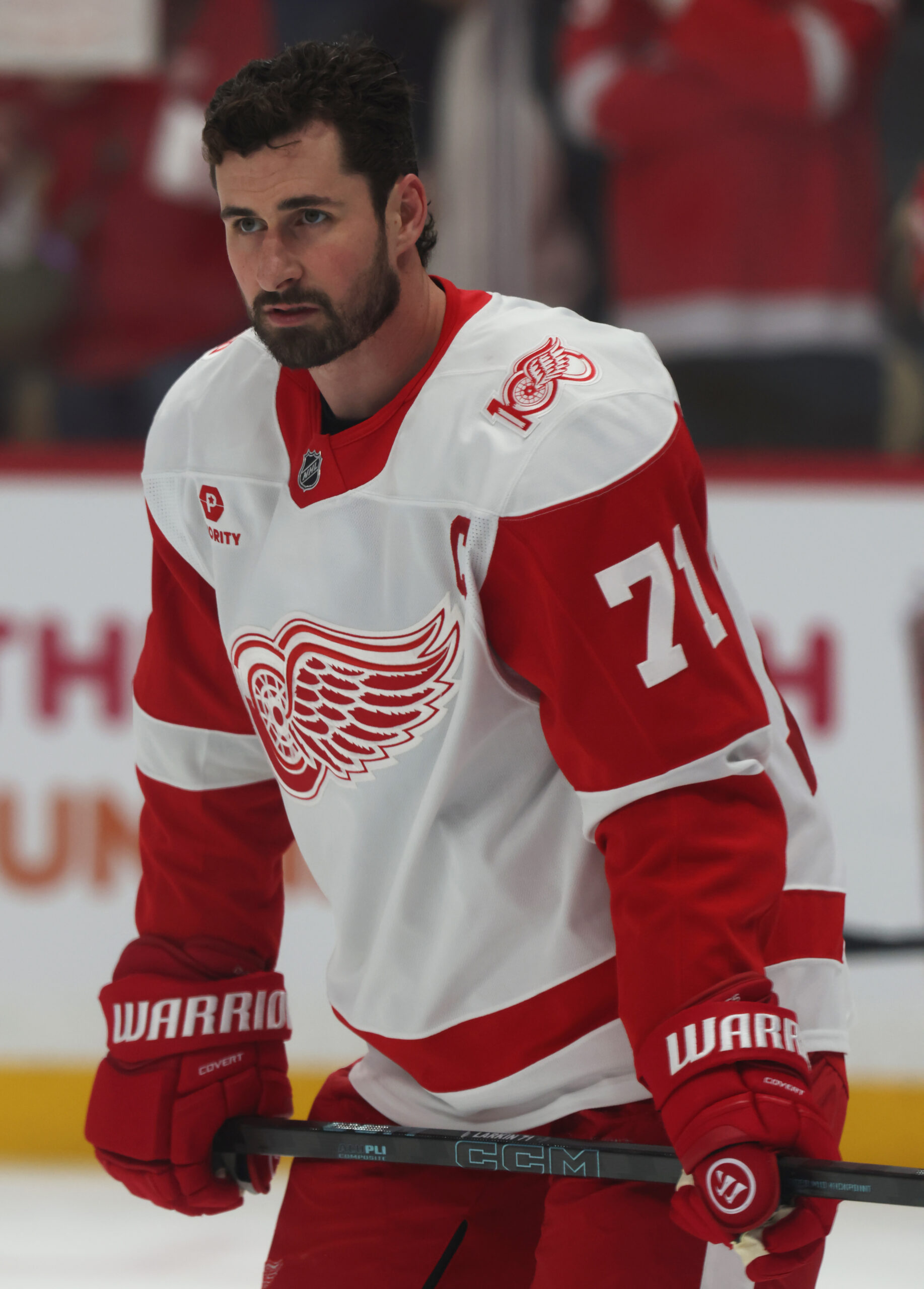
Larkin made headlines at the end of the Red Wings’ season when he criticized Yzerman and the team’s hockey operations department for not adding enough talent at the trade deadline.
In his end-of-season media availability, Larkin told reporters “it was hard that we didn’t do anything,” and “we didn’t gain any momentum from the trade deadline. Guys were kind of down about it. So it would have been nice to add something and bring a little bit of a spark on the ice.”
The Red Wings traded first and second-round picks to the St. Louis Blues to acquire veteran Justin Faulk at the trade deadline. The club also traded a fourth-rounder to the Ottawa Senators for veteran forward David Perron. Those additions were not enough to halt the Red Wings’ second-half slide out of playoff position.
Per Emily Kaplan of ESPN, the issues between Larkin and the Red Wings’ front office “[date] back at least to testy contract negotiations in 2023,” meaning beyond just Larkin’s unhappiness with the team’s work at the trade deadline.
If his request is fulfilled, a Larkin trade would mark the end of the player’s decade-long tenure in Detroit. The Waterford, Michigan native has spent his entire hockey career in the state. He spent his amateur career at the U.S. National Team Development Program in Plymouth, Michigan, his collegiate career at the University of Michigan in Ann Arbor, his very brief minor-league career in Grand Rapids, and his NHL career in Detroit. That Larkin is not only willing to move on from the Red Wings, but is actively pursuing the move, suggests something in his relationship with the team has become fractured – though it is important to stress that is just speculation.
What’s clear is that this will not be an easy trade to complete. That is not because there will not be league-wide interest in Larkin, of course. Roster building in the NHL is defined by scarcity at the center position, and in-their-prime No. 1 centers are very rarely ever available on the trade market. Those factors alone will mean there is likely to be a massive amount of interest in Larkin from across the league. Rather, the path to an eventual Larkin trade will be a difficult one because of the two key parties involved at its outset, and the varying degrees of control and leverage each party has.
Larkin, 29, signed an eight-year contract extension with the Red Wings in March 2023. The deal carries an $8.7MM AAV (which may be below market-value for No. 1 centers at this point) and crucially carries a full no-trade clause through next season. That will allow Larkin to hand-pick what teams he is willing to be traded to.
In the past, players empowered by no-trade protections have been able to severely constrict how many teams their clubs are able to negotiate with, often dramatically reducing what the acquiring team needs to surrender in order to acquire the player. Notable examples of this include this past season’s Artemi Panarin deal, or the trade that brought Taylor Hall to the Boston Bruins from the Buffalo Sabres.
Although the no-trade clause gives Larkin the ability to exert a significant amount of control over the trade process, there are limits to his leverage. Larkin is under contract through the 2030-31 season, a factor that gives Yzerman and the Red Wings a considerable amount of their own leverage. Larkin has requested to be traded, but the Red Wings have zero obligation to acquiesce to his request. He is contracted to the team, and will remain so until his age-34 season. They are fully capable of retaining Larkin through what could be the end of his prime playing years.
That could limit the extent to which Larkin is able to wield his no-trade clause. If he wants to hand-pick his destination, leaving Detroit in a position where they would need to accept a sub-optimal return package for their No. 1 center, it’s likely the Red Wings would simply elect to keep Larkin. But if Larkin does want to be traded as his No. 1 priority, he may need to allow the Red Wings to open up the trade process and allow for as many bidders as possible. His best chance of securing a trade from Detroit could very well be Yzerman simply receiving an offer he can’t refuse – something that is unlikely to happen if he exercises his contractual right to severely restrict what teams he can be traded to.
There is also the chance that Detroit very simply will not entertain a Larkin trade, regardless of the player’s wishes. Teams typically only want to roster players who actually want to play there, but Larkin would not be the first player to make a trade request that goes unfulfilled. While Friedman called the relationship between Larkin and team management “frosty,” it may not be an irreparable fracture. For both Larkin and the Red Wings, the best course of action could very well be staying the course.
For the Red Wings, it’s difficult to imagine them winning a Larkin trade. As previously mentioned, finding a No. 1 center is extremely difficult in the NHL, let alone one who is under team control and within the prime years of his career. Larkin fits the bill there, having scored at just below a point-per-game rate over the last half-decade. The Red Wings are the owners of the league’s longest playoff drought, and are desperate to return to the playoffs after an extended rebuild.
For as much talent as the team has right now – like young stars Moritz Seider and Lucas Raymond – they lack a center at Larkin’s level. J.T. Compher and Andrew Copp are both middle-six types, and top prospects Marco Kasper and Nate Danielson are both considered by most public-facing scouts to have a No. 2 center ceiling. Unless the Red Wings can find a pivot with true No. 1 center upside as part of a return package for Larkin (and the odds of doing that seem long), a Larkin trade could set their franchise back at an extremely important time.
But without question, there will be a lot of interest from around the league to navigate. The Minnesota Wild stick out as a team likely to be proactive in pursuing Larkin. Wild GM Bill Guerin got to see Larkin up close in his position as GM of the U.S. Men’s National Team, and Larkin’s efforts helped the nation secure a gold medal at the 2026 Winter Olympics in Milano-Cortina. The Wild believe they have a championship-level roster, just missing a top-line center to pair with No. 2 pivot Joel Eriksson Ek. Larkin immediately surpasses Vincent Trocheck as the top veteran center potentially available via trade, meaning he will be a key target for Guerin.
Other teams, such as the Montreal Canadiens (who need a No. 2 center behind Nick Suzuki) and Los Angeles Kings (who need help at the position in the wake of Anze Kopitar‘s retirement) stick out as potential bidders. But in the former’s case, the Red Wings may be loath to deal Larkin to a division rival. And in the latter’s, the Kings may not be willing to part with the high-end assets necessary to put together a winning offer for Larkin.
In any case, this is an absolutely seismic development, one that has franchise-altering potential for the Red Wings. If the Red Wings do end up seriously considering trading Larkin, his presence on the trade market will likely shape the course of the offseason.
Photos courtesy of Charles LeClaire-Imagn Images