
Nashville Predators Extend Kevin Lankinen
The Nashville Predators have found their backup goaltender. Kevin Lankinen has signed a one-year, $2MM contract extension for the 2023-24 season, keeping him from unrestricted free agency this summer.
After the disappointing performance of David Rittich as Juuse Saros‘ backup last year, the team signed Lankinen to a one-year, $1.5MM deal last summer after he left Chicago. It turned out to be quite the investment, as the 27-year-old netminder has been outstanding in his limited role, posting a .922 save percentage in 14 appearances. With Saros taking the vast majority of starts, the Predators just need someone reliable behind him, that can keep them in games on back-to-back nights.
Maybe more importantly, they need someone they will feel comfortable with if Saros ever goes down to injury. That’s what happened just before the 2022 playoffs, forcing the team to go with Rittich, who lasted all of 15 minutes against the dominant Colorado Avalanche attack, before ceding the net to third-string Connor Ingram. While Ingram did his best, the Avalanche walked to a first-round sweep over the Predators, and showed them the importance of a strong backup goaltender.
Enter Lankinen, who burst onto the NHL scene as a rookie in 2020, posting a .909 save percentage behind a bad Blackhawks roster. He got some down-ballot Calder Trophy love that year, and while he couldn’t replicate it in 2021-22, is showing this year that he’s a capable NHL netminder.
The one-year deal doesn’t secure his services long-term but takes one more thing off the to-do list for incoming general manager Barry Trotz. The Predators are in a period of uncertainty going into the summer as potential sellers, after moving Mattias Ekholm and Tanner Jeannot over the last few days. With a ton of draft capital to play with, but still several high-priced veterans on the roster, it’s not clear how exactly Trotz will go about reshaping the roster. One thing he doesn’t have to worry about is goaltending, with Saros and Lankinen in place for 2023-24.
Buffalo Sabres Extend Dylan Cozens
The Buffalo Sabres have locked up another key piece of their future, signing Dylan Cozens to a seven-year extension. The $49.7MM deal keeps him from reaching restricted free agency and will keep him under contract through the 2029-30 season. He will carry a $7.1MM cap hit, and PuckPedia reports that the deal also includes a five-team no-trade clause in the last three seasons.
Cozens, 21, joins Tage Thompson and Mattias Samuelsson with recent seven-year extensions as the Sabres try to ensure that this core sticks around and grows into a contender together.
The seventh-overall pick from 2019 has already become a star if sometimes an overlooked one. Cozens has 17 goals and 43 points in 49 games this season, tying him with players like Anze Kopitar, Trevor Zegras, Dylan Larkin, Tomas Hertl, and Evgeny Kuznetsov. His performance has flown a little under the radar because of the attention that Thompson and Rasmus Dahlin receive in Buffalo, but make no mistake – Cozens will be a critical part of their future success.
 While this extension certainly isn’t cheap, it also is pretty reasonable for a player who has shown such strides in the early part of his career. If the salary cap does increase like it is expected to over the next few years, the league may look back at this deal as a relative bargin, as it has with some other young players who were locked up early.
The fact that he plays center is a huge factor here. The Sabres now have their top two pivots locked up, meaning they can build around them with whatever complementary talents they can find. Any line led by Thompson and Cozens should be rather successful, especially with defense pairings anchored by Dahlin, Samuelsson, and Owen Power.
It’s quite a group they are building in Buffalo, with plenty of financial flexibility to keep adding. While they will need to keep some room open for Dahlin’s impending mega-deal (he is signed through next season), there is plenty of room to add some more talent in free agency or through trade, with Kyle Okposo‘s $6MM hit coming off the books at the end of this season.
A move like this will also affect other RFA negotiations around the league. Zegras, for instance, was picked just two spots after Cozens in 2019 and will finish his entry-level deal this summer. His 117 points in 150 games do trump the Sabres’ center, but that has also been on an Anaheim Ducks team with virtually no competition for powerplay touches and offensive deployment.
There is also Cole Caufield, who is also from the 2019 draft and is in a negotiation with the Montreal Canadiens. His goal total is much higher than Cozens, but he has played fewer games and scored fewer points at a less demanding position. In both cases, this contract will be held up as a comparable.
It will be quite a happy birthday for Cozens on Thursday, when he turns 22. With nothing to focus on except hockey, the Sabres will hope he can reach new heights down the stretch and help them push for a playoff berth.
Photo courtesy of USA Today Sports Images
Latest On Nikita Tryamkin
Former Vancouver Canuck Nikita Tryamkin hasn’t played in North America since the 2016-17 season, but he could be nearing a return. CHEK TV’s Rick Dhaliwal quoted Tryamkin’s agent, Todd Diamond, as making the following statement regarding his client.
There will be tremendous demand for Nikita. Nikita has turned down a contract extension from his KHL Club. He is currently focused on the KHL season, then we will turn our focus to the NHL.
Tryamkin is in his sixth KHL season since signing there from Vancouver, and is a former Canucks third-round pick who ended up playing a total of 79 games for the club.
It’s not difficult to understand why Diamond is so optimistic about the interest his client will have in the offseason. While Tryamkin’s time in the NHL was hardly a smooth ride, there is some precedent for a talented Russian player to have an uneven first go-around in the NHL, move to the KHL, and then return as a more experienced, mature, capable difference-maker.
The Montreal Canadiens took a chance on a player of that mold, Alexander Radulov, in the summer of 2016 and the choice paid off for them in spades, with Radulov moving on to Dallas where he would score 72 points in back-to-back seasons.
In Tryamkin’s case, much of the intrigue surrounding his return to the NHL centers around one number: 202.
That’s how many centimeters tall Tryamkin is, and as his six-foot-eight, 258-pound defenseman he would be among the biggest in the entire NHL.
While teams are more and more willing to take chances on smaller defensemen, there is still a prevailing attitude among NHL decision-makers that size is a valuable component of a defenseman’s overall value.
If a team wants to add some muscle to their blueline, Tryamkin will be an intriguing option. The tallest defenseman set to be on the open market this summer is Chicago Blackhawks blueliner Jarred Tinordi, who stands at six-foot-six. Carson Soucy, Ryan Graves, and Scott Mayfield all stand six-foot-five, meaning the market does have some options for teams who want to beef up their back end. None of those options are quite as big as Tryamkin, and that could be what sets him apart on the market as he attempts his return to the NHL.
Being big is not the only thing that a defenseman has to do to be successful in the NHL, though, otherwise Tinordi wouldn’t have been available to the Blackhawks on waivers earlier this season. A major element of being successful defensively is an ability to exit the defensive zone, and that can be something slower-footed physical defensemen can struggle with.
Something that will certainly help Tryamkin, then, is the fact that he is a surprisingly good skater for someone his size. His skating doesn’t translate to a high offensive impact, and his points production in the KHL is rather meager. But characterizing Tryamkin as simply a big, slow, throwback stay-at-home blueliner would be shortsighted.
Diamond noted, Tryamkin has rejected a contract offer from his KHL team and has his sights firmly fixed on a return to the NHL for next fall. Whereas Vancouver once held the exclusive rights to sign Tryamkin, he is now free from that restriction and able to sign with any NHL team he chooses.
It’s possible that Tryamkin has the sort of lengthy courting process Andrei Kuzmenko had last year. But important to note is the fact that Kuzmenko was restricted to signing an entry-level deal, while Tryamkin’s NHL experience allows him more options for what contract to sign. Since the financial restrictions placed on Kuzmenko’s contract made his choice more about fit and location than cost, the lengthy process including visits to multiple markets made sense.
Since Tryamkin doesn’t have those restrictions, he may not view such a process as necessary and could end up entering the market and operating as any other conventional free agent would.
Since it’s still relatively unknown how Tryamkin will fare in his return to the NHL, it seems likely that he’d prefer to sign the sort of contract Radulov received from the Canadiens, which is a short-term deal that maximizes his opportunity to land a lucrative deal the following summer, while also minimizing the risk of the investment for the team he signs with.
The upcoming free agent market seems at the moment filled with some talented blueliners for NHL teams to choose from. While Tryamkin, a three-time KHL All-Star, is far from the safest investment of the bunch, he could be one of the more intriguing options available.
Pictures Courtesy of USA Today Sports Images
Andrei Kuzmenko Prefers Short-Term Deal With Vancouver
The Vancouver Canucks have a decision to make before the deadline. Andrei Kuzmenko, the KHL free agent that has been such an impressive addition, is scheduled for unrestricted free agency. The team could trade him over the next few weeks, and recoup whatever assets are available, or sign him to an extension in the hopes they can turn things around quickly. They appear to be pursuing the latter, with president Jim Rutherford announcing publicly last week that the team would try to sign Kuzmenko.
Today, agent Dan Milstein spoke with Rick Dhaliwal of CHEK TV and confirmed as much. Milstein explained that the negotiations have started, but that his preference is for a short-term extension. He even referred to it as a “bridge deal,” a term normally reserved for restricted free agents that are exiting their entry-level contract.
That is what Kuzmenko’s doing – leaving his ELC – but because of his age (27 in less than two weeks), he’ll be a UFA instead. A bridge deal in this case would suggest a one or two-year deal to further establish his talent in the NHL before looking to cash in on a long-term, big-money contract. A lot of the leverage here is on the side of the player, though, given Vancouver’s lack of control. Kuzmenko could simply walk in the offseason if he doesn’t get the offer he’s looking for, and would likely have 31 other general managers reaching out to see what it would take to bring him in.
With 43 points in his first 46 NHL games, it’s Kuzmenko’s play that has given him this leverage. After developing into a star in the KHL, he has made the transition to North America rather flawlessly. His 21 goals are second on the Canucks to Bo Horvat, and his 43 points tie him with Quinn Hughes for third – Elias Petterson’s 56 lead the way.
The fact is, you could argue that Kuzmenko has been more effective for the Canucks this season than players like J.T. Miller, Brock Boeser, Conor Garland, and Ilya Mikheyev. Those players are carrying cap hits of $5.25MM, $6.65MM, $4.95MM, and $4.75MM respectively, with a massive seven-year, $56MM contract coming down the pipe for Miller. Kuzmenko’s inexperience will be held up in talks, but it’s hard to argue against the production from this season.
For Vancouver, though, as much as a long-term deal might provide some value down the road, a short-term deal might be best. They can’t afford to make another contract mistake, and a “bridge” contract would allow them to reassess the situation in a year or two and trade Kuzmenko at that point if necessary.
Toronto Maple Leafs Hoping To Extend Conor Timmins
When the Toronto Maple Leafs traded for Conor Timmins, he was barely an NHL player. The Arizona Coyotes were going to waive the oft-injured defenseman, to try and get him to the minor leagues so that he could ramp up his game. After all, the 24-year-old had played just 105 total games since the end of the 2017-18 season.
Since joining the Maple Leafs, though, Timmins has been excellent. While there has still been the odd moment of rust (including a couple of egregious giveaways), the young defenseman has racked up 12 points in 17 games, including his first NHL goal. Playing just over 16 minutes a night, he has fit in exceedingly well in Toronto.
So well, in fact, that the Maple Leafs are now looking to extend him before he reaches restricted free agency this summer according to Chris Johnston on TSN’s Insider Trading. Timmins is currently on a two-year deal that carries a cap hit of $850K, and would need a qualifying offer of $997,500 for the Maple Leafs to retain his rights.
Critically, because he has played so few games because of injury, Timmins won’t be eligible for arbitration this summer. That takes away a lot of his leverage, and makes an extension more likely. The Maple Leafs can reward him with some multi-year security, and lock him into a reasonable cap hit through his remaining RFA years. They could even go longer, into his UFA seasons, though Timmins would be essentially betting against his own health at that point. With the kind of production he has shown so far, there would be a big payday down the road if he can stay on the ice regularly.
Injury Notes: Bennett, Jarry, Golden Knights, Backstrom, Klingberg
Unfortunately, there’s a lot of minor injury news to report from tonight’s games. We start in Florida, where head coach Paul Maurice said pregame that Sam Bennett wouldn’t be in the lineup when they take on the Penguins tonight.
Bennett took an awkward fall in yesterday night’s loss to the Rangers, immediately leaving the game and staying in the room through the first intermission. It didn’t hold him out of the rest of the game, however, as he would later return. While he won’t suit up tonight, it does seem to be a short-term absence for Bennett, who’s been in and out of the lineup over the past month with some minor injury concerns. Eetu Luostarinen, who’s impressed with 10 goals and 22 points in 49 games this year, slides into the top six with Bennett out.
- After leaving injured reserve a few days ago, Pittsburgh Penguins goalie Tristan Jarry is back out of the lineup with an injury. His absence leaves both Pittsburgh and Florida without backup goalies on the bench for tonight’s game, as Spencer Knight was unexpectedly still unable to play and was a late absence from the Florida lineup. It’s hopefully a short-term absence for Jarry, who’s been spectacular with a .921 save percentage in 27 appearances for the Penguins this year.
- There’s some positive news on Vegas Golden Knights captain Mark Stone, says ESPN’s Emily Kaplan. While he’ll be out through the All-Star break as expected, his back issue is different than the one that plagued him throughout last season, greatly reducing the likelihood of his long-term career being affected. Kaplan also says defenseman Shea Theodore, who’s been out since early December with an undisclosed injury, is an option for Friday’s game against the Rangers.
- Days after returning from significant hip surgery recovery, Nicklas Backstrom is back out of the Washington Capitals lineup with a non-COVID illness and is day-to-day. The 35-year-old has three assists in seven games since returning to the lineup.
- The Anaheim Ducks will also be down a player due to illness: defenseman John Klingberg. 25-year-old call-up Colton White moves into Anaheim’s top-four in Klingberg’s absence, playing on his off-side. Klingberg has just 15 points in 40 games this season, a career-low as he’s destined for free agency once again this offseason.
Arizona Coyotes Extend Juuso Valimaki
The Arizona Coyotes have signed Juuso Valimaki to a one-year contract extension, avoiding restricted free agency this summer. Elliotte Friedman of Sportsnet reports that the deal will be worth $1MM. Coyotes general manager Bill Armstrong released a statement:
We are very pleased to sign Juuso to a one-year extension. He is a big, strong, two-way defenseman who has been a great addition to our defensive corps. We look forward to having him on our roster next season.
Valimaki, 24, was claimed off waivers from the Calgary Flames in October and has found a home in Arizona. Playing a depth role, he has 12 points in 43 games and looks to have put his injury troubles behind him. This extension is a nice piece of work by Armstrong and the Coyotes front office, given that Valimaki would have been due a qualifying offer substantially higher in the offseason, or else hit the open market as an unrestricted free agent.
Signed to a two-year deal by Calgary in 2021, he currently carries a $1.55MM cap hit. The qualifying offer would have been $1.86MM, and Valimaki has arbitration rights. With a $1MM deal in place, he’ll not only come in below that but remain under team control and on schedule to become an RFA in the summer of 2024 once again.
The 16th overall pick of 2017, Valimaki suffered a torn ACL in 2019 that cost him an entire season of development. The young defenseman has struggled to live up to the early hype since, and now looks more like he’ll settle into a bottom-pairing or seventh-defenseman role in the NHL. While that is still relatively valuable, the $1MM contract points to the lack of real upside that is present in his game today.
Valimaki becomes the fifth defenseman in Arizona signed to a one-way deal for 2023-24, joining Jakob Chychrun, Patrik Nemeth, Josh Brown, and Dysin Mayo (currently in the AHL). The team is likely going fill its ranks with youngsters in the years to come, as they start to turn from rebuilding to more competitive status. It remains to be seen whether Valimaki can continue to hold down a regular role once that transition takes place, but his age certainly fits into the timeline.
Minnesota Wild Extend Matt Boldy
The Minnesota Wild have some good news for fans on a Monday morning. Matt Boldy has signed a seven-year extension, keeping him locked up through the 2029-30 season. The $49MM deal will carry an average annual value of $7MM and avoids any restricted free agency with the young forward. It does not include any signing bonuses. PuckPedia has the full breakdown:
- 2023-24: $8.0MM
- 2024-25: $9.7MM
- 2025-26: $7.7MM
- 2026-27: $6.0MM
- 2027-28: $5.96MM
- 2028-29: $5.82MM + 10-team NTC
- 2029-30: $5.82MM + 10-team NTC
It’s hard to find a more worthwhile young player to extend around the league, as Boldy has been excellent for Minnesota since the moment he entered the lineup. Last season as a rookie, skating mostly beside Kevin Fiala, Boldy managed 39 points in 47 games. He was credited as a huge reason why his linemate finally reached a consistent performance, and it helped Fiala land a massive contract of his own.
This time around, he hasn’t had quite the same level of offensive teammates, most often hitting the ice with 29-year-old undrafted center Frederick Gaudreau. Still, Boldy has 12 goals and 29 points in 42 games, good enough for fourth on the Wild.
While those numbers are down a bit from last year, there’s no one that doubts Boldy anymore. The 12th overall pick from 2019 is a good bet to be a core piece of Minnesota’s attack for the next decade, and they got an early jump on extending him in order to save some money down the line.
Of course, given his youth, it will seem like quite a hefty expenditure. Boldy, 21, becomes the fourth-highest-paid 23-and-under player in the league, only trailing Tim Stutzle, Jack Hughes, and Andrei Svechnikov. Those are big names to follow, but there’s plenty of optimism that he’ll quickly outpace a $7MM price tag.
Notably, despite the excitement, the Wild are going to have some tough decisions to make now. The team now has more than $74MM committed to just 14 players for next season, with several RFAs still to go. Calen Addison, for instance, will be in line for a hefty raise after his breakout season, while Filip Gustavsson, Sam Steel, Brandon Duhaime, and Mason Shaw also need new deals.
With the buyout penalties for Zach Parise and Ryan Suter actually increasing for the next two years, the team is going to need to cut money elsewhere.
Still, Boldy represents a big part of the future of the Wild, and is now locked in at a reasonable rate. If the salary cap does take a substantial jump in a few years, and he continues to develop, it could even look like a bargain.
Free Agent Stock Watch: Goalies
With the new year upon us, the NHL season is in full swing. Teams are jockeying for playoff position, and many players with expiring contracts across the NHL are playing games that could ultimately determine what type of payday they might receive in the summer.
In a multi-part series, we’ll take a look at each position group of the upcoming free agent class, and do a rundown on how those upcoming unrestricted free agents have performed this year. Which players have increased their odds of landing a massive contract? Which players have potentially hurt their earning potential with their play? We’ll break it all down here.
The Marquee Names
Frederik Andersen, Carolina Hurricanes
Andersen didn’t have the best platform year heading into his last trip to unrestricted free agency two years ago. The Danish netminder lost the starting role on the Toronto Maple Leafs to Jack Campbell, relinquishing a number-one slot he’d held tightly to for four straight seasons.
Andersen had posted a .909 save percentage in 2019-20, and had an .895 in his final year in Toronto, the first time in his professional career that his save percentage dropped below .900. Past the age of 30, he wasn’t nearly the type of sure-fire investment he had once seemed to be, and he settled for a relatively modest two-year $4.5MM AAV guarantee from the Carolina Hurricanes.
In his first year in Carolina, Andersen completely flipped the narrative surrounding his career trend. He was no longer a declining asset, he was now a two-time Jennings trophy winner who may have been a contender for the Vezina trophy had Igor Shesterkin not authored the most impressive season by a goaltender since Carey Price‘s Hart Trophy-winning campaign.
In 52 games played Andersen went 35-14-3 with a 2.17 goals-against-average and a .922 save percentage. Although some might attribute such impressive success to the fact that the Hurricanes have one of the NHL’s best defenses, Andersen still ranked near the top of the league in goals saved above expected, meaning he was making more than just the saves any goalie would be expected to make.
This season, Andersen hasn’t had as much success thanks to an injury that’s knocked him out for quite a while. He has just a .903 save percentage in 10 games played, but that sample size isn’t large enough to make any larger claims about a decline from last season’s impressive form.
If Andersen hits the open market, he’ll do so in far better standing than he was two years ago, and his next contract is likely to reflect that.
Tristan Jarry, Pittsburgh Penguins
Like Andersen, Jarry was in a shaky place after the 2020-21 season. That year was his first as the unquestioned starter in Pittsburgh, and although he was impressive at times in the regular season, he lacked consistency.
In addition to that up-and-down regular season, Jarry made several significant mistakes in the Penguins’ playoff series against the New York Islanders, mistakes that were a major reason why the Islanders were able to eliminate Pittsburgh. As a result, there were serious questions as to whether the Penguins could afford to trust Jarry as the goaltender to carry them through the twilight years Sidney Crosby, Evgeni Malkin, and Kris Letang‘s careers.
Jarry has answered those questions resoundingly with his performance in these past two seasons, though. Last year he played 58 games and posted a .919 save percentage, a performance that earned him one Vezina Trophy vote.
An unfortunate late injury kept him from playing a major role in the Penguins’ brief playoff run, although one could certainly make the case that with a healthy Jarry, the Penguins would have likely prevailed over the Rangers. The Rangers took seven games to eliminate Pittsburgh, despite the Penguins being backstopped by third-stringer Louis Domingue for a significant portion of the series.
Had he not lost time due to injury, it’s possible Jarry would have shown the Penguins organization that his ability to play on hockey’s biggest stage wouldn’t be defined by the mistakes he made in the series against the Islanders. But the injury cost him that chance, although he will get another opportunity if the Penguins make the playoffs.
Jarry, who will turn 28 in April, is in a strong position heading into the expiry of his contract. A deep playoff run could potentially vault him above Andersen to the top of this free agent class.
The Solid Contributors
Cam Talbot, Ottawa Senators
Just a year ago, Talbot looked to have found a nice landing spot as a starter with the Minnesota Wild. Then the team acquired Vezina Trophy winner Marc-Andre Fleury, and, after an offseason saga not lacking in drama, Talbot was off to Ottawa.
With the Senators, Talbot has performed solidly, although perhaps not quite to the standard he set in Minnesota (or all the way back in 2016-17, when he was a workhorse starter for the Edmonton Oilers.) Talbot has posted a .906 save percentage in 24 games played, and has had some hot stretches and some games he’d likely want to have back.
For example, from December 10th to December 27th, Talbot went 5-1-1 with a .927 save percentage. Since that point, in his last four games, Talbot has gone 1-3 with an .854 save percentage. While judging a goalie by his hot and cold stretches is always going to yield a semblance of inconsistency, the reality is Talbot has not provided the Senators with the type of goaltending they’d need to emerge as a playoff contender.
Over the course of his full tenure so far in Ottawa, Talbot has been adequate, but nothing more. At 35 years old, the market for solid-if-unimpressive goaltenders isn’t known to be robust, so Talbot may not receive the type of deal he was lined up for just a year ago. But for a team looking to stabilize their situation in the crease and add an experienced veteran, Talbot is a highly respectable option.
Martin Jones, Seattle Kraken
Jones’ season isn’t the easiest to explain. His career path has been a bit of a rollercoaster, as he’s gone from promising young Sharks starter to underperforming salary cap anchor, to unexciting backup with the Philadelphia Flyers. Last summer, Jones signed a one-year deal with the Seattle Kraken after the team’s presumptive backup goalie, Chris Driedger, went down with a major injury.
Jones has taken the opportunity afforded to him in Seattle and run with it, seizing the role of number-one goalie from Philipp Grubauer. He’s played in 31 games to Grubauer’s 14, and has posted an extremely impressive 21-5-3 record, bolstered by back-to-back shutouts against Montreal and Boston.
But despite all that good news, Jones’ save percentage remains below .900. Whether that says more about Jones’ performance or the value of using save percentage as a be-all-end-all metric to evaluate goalie performance is for others to decide, but the fact remains that goalies posting below .900 save percentages aren’t typically hot commodities in free agency, especially when those goalies haven’t been above .900 in a half-decade.
That’s the battle Jones could be fighting if his numbers remain where they currently are, although given his current performance there’s strong reason to believe they’ll improve. Given his age and inconsistent track record, it’s difficult to imagine any team investing in Jones on a long-term basis with an expensive average annual value.
But if a team is hoping Jones’ breakout performance can continue on their roster, it’s possible Jones could net a nice raise from the $2MM he’s making this season.
James Reimer, San Jose Sharks
Jones’ replacement in San Jose, James Reimer, has long been a respected veteran option for NHL teams looking to add a tandem netminder.
Last season, Reimer set a career-high in games played, appearing in 48 contests and posting a .911 save percentage and a 2.90 goals-against-average.
Reimer’s performance is made all the more impressive by the fact that the Sharks defense he was playing behind was among the NHL’s weaker units.
Reimer has been particularly good on the penalty kill in San Jose, but this season he’s seen his overall numbers decline sharply.
He’s at an .895 save percentage now and has an .879 since returning from injury on December 13th. If his numbers remain around this range, let alone get worse, Reimer will likely go from being one of the better tandem options on the open market to more of a bounce-back candidate.
Semyon Varlamov, New York Islanders
As Ilya Sorokin has taken the reins on Long Island and become one of the NHL’s top netminders, Varlamov has faded somewhat from where he once was. The Russian earned a first-place Vezina Trophy vote in 2020-21, posting a highly impressive .929 save percentage in 36 games.
Since that point, Varlamov has ceded his role as the Islanders’ number-one goalie to Sorokin, and his save percentage has declined from .920 and above to the low teens. Since he’ll be 35 years old when the market opens, it’s possible that teams now view Varlamov as more of a tandem or backup option than the slam-dunk starter he was just a short time ago.
Even so, it’s undeniable that Varlamov was seen as one of the NHL’s best goalies quite recently. If he’s able to be had at a more affordable price than some of the big-name goalies on the open market, signing Varlamov could pay major dividends. There’s risk to investing in any player getting into their mid-thirties, but there also is a precedent for goaltenders being able to play well even to the age of 40, as we saw with Mike Smith.
He may have to take a pay cut from the $5MM he’s making now, but Varlamov should have a solid market to consider should be be available on the open market in the summer.
Jonathan Quick, Los Angeles Kings
One of the more legendary playoff performers in modern NHL history, Quick’s performance in recent years has been highly uneven. In 2020-21, it looked as though Quick’s days as a number-one goalie were over, as Cal Petersen played in far more games than Quick and posted a far better save percentage.
Then last season, Petersen struggled and Quick re-took the starter’s crease, leading the Kings back to the playoffs with a 23-13-9 record, 2.59 goals-against-average, and .910 save percentage. It seemed Quick was back.
Now, this season, as the Kings have struggled as a whole in their own end, Quick’s numbers have taken a major hit. He’s rocking an .883 save percentage and ranks near the bottom of the NHL in MoneyPuck’s goals saved above expected metric.
Quick will turn 37 later this month, and with players his age it’s more likely that sharp declines in performance end up permanent, rather than temporary setbacks.
If there’s anything Quick has shown over the course of his storied career, it’s that people who bet against him will end up paying a high price. So knowing how well he’s played in the past, it’s impossible to write him off after a difficult 23-game start to this season. But if he keeps letting in goals at this rate everything is on the table.
Joonas Korpisalo, Columbus Blue Jackets
There are few netminders in the NHL who have been dealt a worse hand this season than Korpisalo. The Blue Jackets have been besieged by injuries, particularly on the blueline where they quickly lost franchise defenseman Zach Werenski to a long-term injury.
The severe struggles of Elvis Merzlikins have put even more pressure on Korpisalo to play well, and all things considered, he has done an admirable job tending the crease for one of the NHL’s worst teams.
Through 18 games Korpisalo has a .908 save percentage, one that is significantly higher than the .865 mark Merzlikins has posted in just about the same number of games. That .908 mark also represents a massive improvement from the save percentages he’s had in the last two years, including the nightmarish .877 he posted last season.
All things considered, there’s a lot for Korpisalo to be proud of in his performance this season. MoneyPuck’s work marks him as having a higher goals saved above expected than netminders such as Jarry, Vitek Vanecek, and Stuart Skinner, starters for teams that are likely to be in the playoffs.
Whether his impressive performance through 18 games will earn him a solid next contract is still a mystery, though. Korpisalo’s inconsistency looms large over any strong runs he has this year, and it could be difficult for interested clubs to justify a sizeable investment in a player with such a shaky track record.
But the struggles Korpisalo faced in the past are not something he can change now. All he can do is attempt to weather the storm the Blue Jackets have faced this season and play well in these adverse conditions. So far, he’s done exactly that, and his efforts won’t go unnoticed by other clubs.
Antti Raanta, Carolina Hurricanes
Raanta, now 33 years old, has settled into a comfortable role as a backup netminder in Carolina. Due to injuries to Andersen, the team’s starter, Raanta has been able to showcase his talent on a bigger stage than he’d likely anticipated, and under that microscope he’s impressed.
He posted a .922 save percentage in 13 playoff starts last season, a hugely impressive performance in a league that places major value on playoff goaltending. In the regular season, he went 15-5-4 with a .912 save percentage. This year, Raanta’s save percentage is down, but he’s still winning the Hurricanes hockey games and his 2.63 goals-against-average is only a minor decline from last year.
This decline in save percentage likely won’t be the largest factor working against Raanta on the open market, it’ll be his struggles to stay healthy. Raanta hasn’t started more than 32 games since 2017-18, and hasn’t been able to stay consistently healthy throughout his NHL career.
When he does manage to get on the ice, he’s shown he can be one of the better backups in the NHL, capable of even providing impressive performances on hockey’s biggest stages. But one of the best things a backup goaltender can provide, beyond quality performances, is reliability and consistent availability.
That’s been Raanta’s biggest weakness in his NHL career, and despite solid performances in Carolina it’ll likely be what costs him in his return to unrestricted free agency.
The Role Players
Adin Hill, Vegas Golden Knights
In the summer of 2021, the Sharks surrendered a second-round draft choice in order to acquire Hill from the Arizona Coyotes. Yet just a year later, they traded him to Vegas for a fourth-rounder. Hill never quite found his footing in San Jose, posting a .906 save percentage in 22 starts.
He had some strong performances, but injuries took their toll and by the end of the year the Sharks made the choice to look elsewhere to fill out their crease. In Vegas, Hill’s numbers are remarkably similar to what he posted in San Jose, only he’s already at 15 starts this season, just seven away from his total from the entirety of 2021-22.
By staying healthy, Hill has enhanced his value. He’ll be 27 if he hits the open market in the summer, and if he can keep up his sound run of health he’ll be a quality option for a team looking to add a younger option to their crease.
Kevin Lankinen, Nashville Predators
After an impressive rookie season that resulted in him picking up some down-ballot Calder Trophy votes, Lankinen had a nightmarish 2021-22, his save percentage crashing from .909 to .891 and his goals-against-average ballooning from 3.01 to 3.50.
That decline led to his departure from Chicago, which paved the way for him to sign in Nashville to be Juuse Saros‘ backup. In a more minor role than the one he shouldered with the Blackhawks, Lankinen has thrived.
He’s posted a .918 save percentage in 10 games, and his performances have been a moderate help toward the Predators’ efforts to remain in the hunt for a Wild Card spot. That ten-game sample size is, of course, not enough to make any long-term decisions about Lankinen’s future.
But what it does indicate is that Lankinen is perhaps better suited to perform well in a role as a true backup, rather than as the number-one goalie he was in his rookie year or the tandem netminder he was last season. Lankinen is earning $1.5MM against the cap this season, and if he can keep up his performances for a full year, he’ll get a pay raise as one of the better backups on the market in the summer.
Alex Nedeljkovic, Detroit Red Wings
The Hurricanes made a somewhat controversial decision in the 2021 offseason, trading Nedeljkovic, a Calder Trophy finalist and goalie they had spent several years developing, rather than give him the contract he felt he’d earned as a restricted free agent.
The Red Wings were happy to pounce on a still-young goalie who had posted a .932 save percentage that year, but it’s fair to say at this point that the Hurricanes’ choice to go with Andersen over Nedeljkovic was the right one.
While Andersen became a Vezina Trophy contender in Carolina, Nedeljkovic struggled in Detroit. On a team far weaker than what he’d played behind in Carolina, Nedeljkovic’s numbers declined, and he finished 2021-22 with a .901 save percentage through 52 starts.
Nedeljkovic’s lack of size means he relies more on his athleticism than other goalies, and on a team less capable of playing quality defense in front of him Nedeljkovic suffered. With an .880 save percentage this season in nine games played, Nedeljkovic finds himself battling with Magnus Hellberg for the right to back up Ville Husso.
Heading into free agency, it’s likely Nedeljkovic will be viewed as a bounce-back candidate rather than someone to invest in for a role where a team requires reliability and consistency.
Pheonix Copley, Los Angeles Kings
With only 45 NHL games to his name, Copley’s resume is far thinner than most of the goalies he’ll hit the open market with in the summer. Yet unlike many of the goalies with more extensive track records, Copley has performed well this season, posting a hugely impressive 12-2 record in 14 starts.
His actual performance hasn’t been all that flashy, but he’s given the Kings a chance to win in each night he’s played, which is something any team can appreciate.
Without a major track record, it’s difficult to imagine Copley having a massive market when his contract expires. But if he keeps winning like this, anything’s possible.
Others Of Note
Anthony Stolarz, Anaheim Ducks
After posting a rock-solid .917 save percentage in 28 games on a bad Duck’s team last year, Stolarz has declined to an .895 this season. Stolarz has proven all he can prove at the AHL level, meaning his floor in terms of role is as a team’s number-three goalie.
Whether he is signed to be a backup or as a competitive third-stringer could depend on how well he performs over the course of the rest of the season.
Alex Stalock, Chicago Blackhawks
Stalock has seemingly overcome the major health issues he faced in recent years and re-established himself as a legitimate NHL goaltender. That alone is worthy of celebrating. But Stalock’s actual performance this year makes his return to the ice all that more impressive.
On a team stripped for parts and built for the future, Stalock has posted a .918 save percentage in 14 games. MoneyPuck’s goals saved above expected stat ranks him in the upper portion of the NHL, ahead of some big-name players.
At 35 years old, it’s not particularly likely that Stalock has suddenly become an elite goaltender, despite his elite numbers. But what he’s done this year has definitely raised his stock leaguewide, and could earn him a raise on his next contract from the $750K he’s making this season.
Pictures courtesy of USA Today Sports Images
Free Agent Stock Watch: Right-Handed Defensemen
With the new year upon us, the NHL season is in full swing. Teams are jockeying for playoff position, and many players with expiring contracts across the NHL are playing games that could ultimately determine what type of payday they might receive in the summer.
In a multi-part series, we’ll take a look at each position group of the upcoming free agent class, and do a rundown on how those upcoming unrestricted free agents have performed this year. Which players have increased their odds of landing a massive contract? Which players have potentially hurt their earning potential with their play? We’ll break it all down here.
The Marquee Names
John Klingberg, Anaheim Ducks
If we travel back in time to just a year ago, there’d be no doubt that Klingberg would qualify as a “marquee name” for any free agent class. The Swedish blueliner had been an offensive force all season, and he finished the 2021-22 campaign with 47 points in 74 games.
Klingberg had a long record of success as a pace-pushing, offensive defenseman with tons of power play value. He was just the second defenseman in Dallas Stars franchise history to cross the 60-point plateau when he did so in 2017-18, and his 67 points that season ranks just behind the legendary Sergei Zubov‘s 2005-06 campaign as the best offensive season by a Stars defenseman in history.
But unfortunately for Klingberg, that sterling reputation as an offensive defenseman didn’t materialize into a major contract. With a slower-than-expected market for his services, Klingberg took a one-year, $7MM deal with the Anaheim Ducks.
He took that contract presumably in order to put forth a productive season and re-enter the market next summer, as many had projected 2023 to be the year where the salary cap would finally meaningfully rise once again.
Things haven’t gone according to that plan, to say the least. Not only is the salary cap potentially slated to stay flat for another summer, but Klingberg is also mired in the least productive offensive season of his NHL career. He has scored just 13 points in 35 games, and the Ducks power play he was acquired to rehabilitate currently ranks as the second-worst in the NHL.
As a result, Klingberg’s stock heading into another trip to unrestricted free agency has taken a nosedive. There is potential for redemption, though, as Klingberg remains a likely candidate to be traded to a contending team in the coming months.
If Klingberg gets traded to a contender and plays well for his new team (including hopefully a productive playoff run) that could go a long way toward rehabilitating his stock and landing him a lucrative new contract.
The Solid Contributors
Nick Jensen, Washington Capitals
Stylistically, Jensen is about as far away from Klingberg as one can get, and he is firmly in the running to be the top defensive defenseman available on the open market next summer.
Acquired by the Capitals at the 2019 trade deadline, Jensen has been a high-quality blueliner for Washington, providing stabilizing defensive play at their back end. The Minnesota native is now 32 years old and took a while to reach the NHL. He was a 2009 fifth-round pick and made his NHL debut more than a half-decade after being drafted.
Since breaking into the NHL in 2016-17, Jensen has developed himself into a valuable top-four piece. He’s currently slotted on the Capitals’ top pairing next to fellow pending free agent Dmitry Orlov and is averaging nearly 21 minutes of ice time per night.
Jensen’s defensive play is his calling card, and he leads the Capitals in short-handed ice time, helping Washington’s penalty kill to a top-ten ranking leaguewide this season.
While offense isn’t what he’s getting his minutes to provide, the 19 points in 44 games he’s produced this season is certainly appreciated by coach Peter Laviolette.
The total package Jensen offers is one that is likely to garner extensive interest should he hit the open market. While his age may keep him from earning as long of a deal as he might like, blueliners who are as good in their own end and can weather as difficult minutes as Jensen does don’t grow on trees.
He’ll be a coveted option on the market should he be allowed to walk by the Capitals, and his play so far this season has certainly helped.
Damon Severson, New Jersey Devils
On paper, Severson is having a disappointing season so far this year. He scored 46 points last season and played a whopping 23:36 per night. This year, he’s averaging under 20 minutes a night and is only on pace to score 21 points.
But before dismissing Severson’s stock as on a major decline, additional context must be added to his profile. The Devils have added significant defensive talent in recent offseasons, and the additions of Ryan Graves, Jonas Siegenthaler, and John Marino have meant that the team doesn’t need to rely on Severson as extensively as they once did.
Additionally, the addition of Dougie Hamilton (who is now healthy after suffering an injury-plagued debut season for the Devils) has meant Severson’s impact on the team’s power play has waned.
But despite the fact that Severson is no longer the Devils’ unquestioned top defenseman, he’s still managed to play well. His offensive points production is down, but he’s still managing to generate his fair share of chances from the back end, and is still moving the puck well.
Defensively, Severson has played a supporting role on a penalty kill that is one of the better units in the NHL. He’s not a stalwart defensive force like Siegenthaler is, but he’s definitely a capable defender in his own right.
The balanced two-way value Severson provides the Devils is something any team in the NHL could use, and his ability to play higher up in the lineup if needed will help him on the open market.
While he likely won’t receive the type of contract next summer that he would have gotten had he repeated his 46-point, 23-plus minutes per night performance, he’s still lined up to receive a nice contract from a defense-needy team.
Matt Dumba, Minnesota Wild
The subject of intense trade rumors for the past several seasons, Dumba is on an expiring contract and set to potentially hit unrestricted free agency for the first time in his career.
He’ll be 29 when he hits free agency, and he’s in a bit of an odd place. On one hand, leaguewide reputation is rock-solid.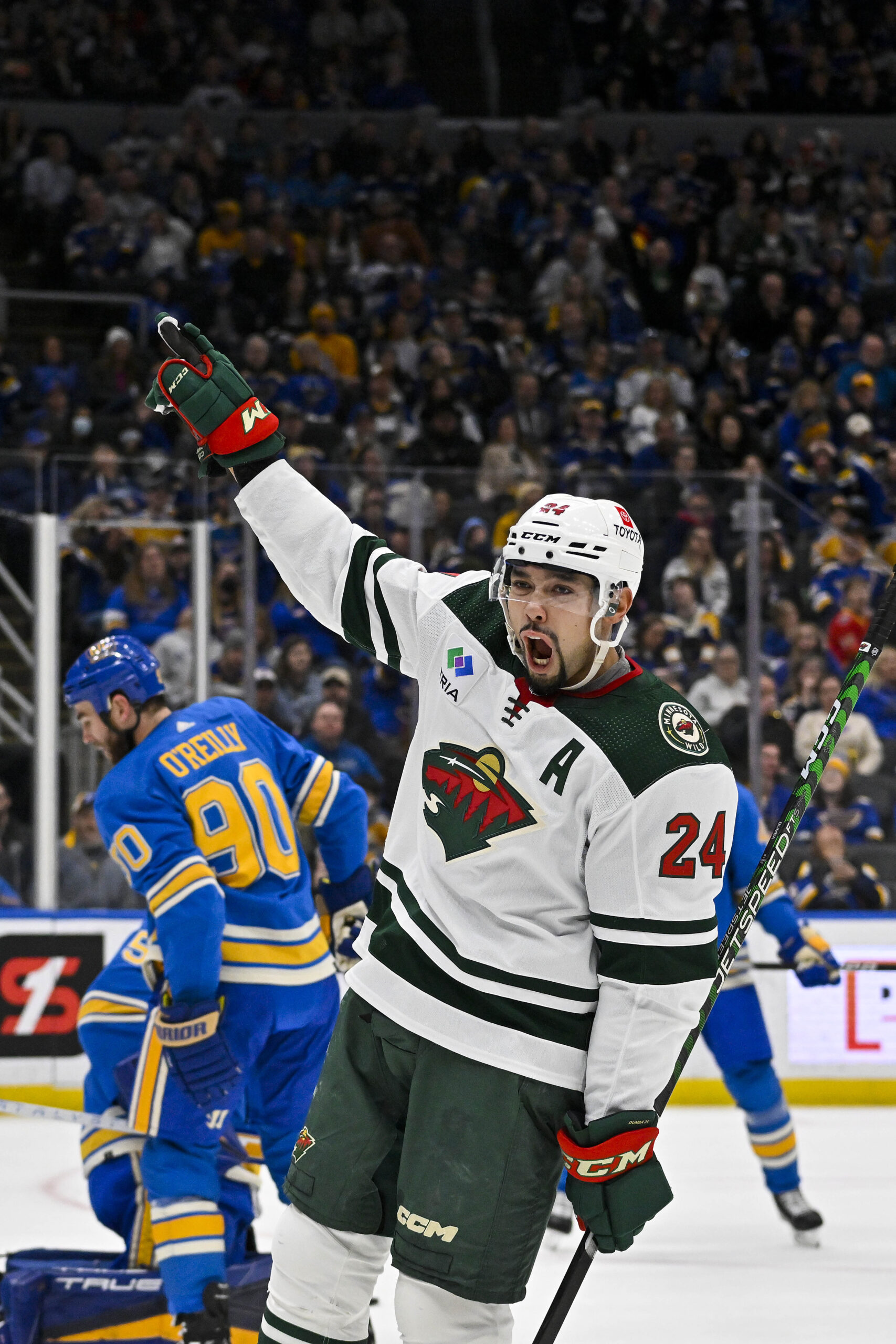
The 2020 King Clancy Memorial Trophy winner has averaged over 21 minutes of ice time per night every season since he was 22 years old and has been a consistent top-four presence on Wild teams that have missed the playoffs just twice since he made his NHL debut.
On the other hand, it’s difficult to ignore signs that Dumba’s reputation isn’t totally aligned with the on-ice value he provides.
While the energy he brings to defense is undoubtedly valuable and the minutes he consistently handles are undoubtedly difficult, his on-ice results have been uneven.
Dumba’s role has declined since last season, and his offensive production isn’t where it once was. He’s scored just 11 points in 40 games this season, and he hasn’t reached 30 points in quite a few seasons.
He’s not the 50-point defenseman he once appeared to be in 2017-18, and in the absence of major point production, his transitional ability and defensive play need to be at a high level to justify his $6MM price tag. It’s an open question as to whether the other areas of Dumba’s game are at that level.
But despite those question marks, Dumba is still a beloved professional who has made a major, positive impact on the Wild over the course of his career there.
The evaluation of defensemen across the league can vary significantly between teams, meaning there are likely to be a few teams very bullish on what Dumba can offer. But even so, it’s not difficult to see what Dumba has put forth this season and be left wanting a little more.
The Role Players
Scott Mayfield, New York Islanders
Mayfield is in his fifth season earning $1.45MM against the cap, a number that isn’t exactly an adequate reflection of the value he’s provided to the Islanders.
The former Denver Pioneer, now 30, has averaged around 20 minutes per night for the past few seasons and has been a key stay-at-home contributor for Islanders teams that made some deep playoff runs.
His offensive production won’t count for more than 20 points per year, although he has chipped in at some very important moments.
The defensive game is where Mayfield truly shines, though, and it’s where he’ll make his money on the open market. He leads all Islanders averaging over 3 minutes of short-handed time per night, and that puts him tied for 13th in the NHL in most average penalty-killing ice time.
Mayfield will be 31 at the start of next season, meaning he’s reaching the tail-end of his prime years. But teams have in the past shown they’re willing to pay for quality players into their thirties, and there’s no reason Mayfield should be any different. He’s been a legitimately valuable defensive difference-maker on Long Island.
Connor Clifton, Boston Bruins
The Bruins have been an absolute juggernaut so far this season, and their success as a team has been fueled by the individual successes of their players. Clifton, who will be 28 when the market opens next summer, is part of that equation.
The 2013 fifth-round pick has grown from part-timer to everyday piece in Boston, and is on the final year of a $1MM AAV dea that severely underpays him relative to the value he brings on the ice. Clifton has been a steady contributor on the Bruins’ third pairing, giving coach Jim Montgomery over 18 safe minutes each night, as well as nearly two minutes a night on the penalty kill.
The track record isn’t huge with Clifton, who has under 200 NHL games on his resume. Clifton’s record of offensive production is also thin, although his 12 points in 40 games this season are a career-high.
Helping the Bruins to a long playoff run would do great things for his potential to earn a nice deal on the open market, but even in the absence of postseason play Clifton has helped himself well in what has been a nice platform season.
Luke Schenn, Vancouver Canucks
Schenn, 33, hasn’t had the smoothest career track. The former Kelowna Rocket was the fifth-overall pick at the 2008 NHL draft, and never quite managed to live up to the lofty expectations placed on his shoulders as a top prospect in a hockey-mad market.
Even though he has largely been viewed as a disappointment relative to his draft position, Schenn is now just 97 games away from reaching the 1,000-game plateau. He’s also now a two-time Stanley Cup champion, and his play for the Canucks has done wonders to enhance his reputation league-wide.
In Vancouver, Schenn has gone from a number-six or seven defenseman to a true everyday contributor. He’s currently playing over 17 minutes a night for coach Bruce Boudreau, including nearly two minutes per night on the penalty kill.
Schenn’s agent, Ben Hankinson, took to Twitter last month to sing Schenn’s praises, perhaps giving us a look at what his pitch will be to teams in order to get the most lucrative possible contract for his client.
As he’s a 33-year-old physical defenseman with major tread on his tires, it’s fair to wonder if paying a sizeable chunk of change to Schenn is a wise investment for any team. But Schenn’s improvement in Vancouver is undeniable, and if he’s traded to a contending team and manages to put forth quality play on the major stage that is the Stanley Cup playoffs, anything’s possible.
Justin Holl, Toronto Maple Leafs
While Holl has been the subject of some significant criticism from the Toronto market in past seasons, he’s quietly played some quality hockey this year. He’s currently partnered with Maple Leafs number-one blueliner Morgan Rielly on the team’s top pairing, and is averaging over 21 minutes played per night.
Holl is on pace to set a career-high in minutes played, and he’s also averaging the most short-handed ice time on the Maple Leafs’ roster, playing in over three minutes on the penalty kill per game. The former Minnesota Gopher will turn 31 later this month and could leave the Maple Leafs, the only NHL team he’s ever played for, next summer.
He won’t be mistaken for a top-end defensive defenseman, but it’s difficult to say Holl has done anything but present improved play this season. If the Maple Leafs can finally vanquish the first-round demons that have plagued them for a half-decade, Holl’s standing going into unrestricted free agency could improve even more.
Radko Gudas, Florida Panthers
The days of Gudas being viewed as just a bruising enforcer defenseman are no more. While Gudas has retained his signature no-holds-barred physical style in Florida, he’s grown into a much more well-rounded blueliner during his time in South Florida.
Gudas’ average ice time has leaped up more than a full minute in Florida compared to how he was played in Washington and his later years in Philadelphia, and his play helped the Panthers go on an incredible run last season that was capped off by winning the President’s Trophy.
With just six points in 32 games and just 16 last season on the highest-scoring team of the cap era, it’s clear Gudas’ offense isn’t what keeps him in the lineup each night. But if a team is looking for a defensive defenseman who brings an intimidating edge, Gudas could be the most ferocious option on the market.
Trevor van Riemsdyk, Washington Capitals
Although he’s perhaps been a bit hidden in the shadow of his high-scoring, former top prospect older brother James van Riemsdyk, Trevor has become a quality NHLer in his own right.
He’s an undrafted player with 500 NHL games on his resume, and this season he’s been a rock on coach Laviolette’s back end. Paired with Jensen on the Capitals’ top penalty-killing unit, van Riemsdyk has helped the Capitals rank as one of the better shorthanded units in the NHL.
Public analytics models are quite bullish on van Riemsdyk’s work in his own end, and although reputation can sometimes drive a defenseman’s market value more than it likely should, van Riemsdyk’s name value is steadily increasing as the Capitals rise in the standings.
Frequent partner Erik Gustafsson has run wild thanks to the freedom afforded by van Riemsdyk’s sound defensive play, the Swedish blueliner’s 25 points in 43 games are not only a testament to his own on-ice improvement but also how well he’s played in tandem with his partner.
With his play this season, van Riemsdyk has put together a strong resume for any team seeking a quality stay-at-home defenseman to pair with a more offensively-inclined puck mover to consider.
Kevin Shattenkirk, Anaheim Ducks
Once a marquee name sitting atop an offseason free agent class, Shattenkirk has settled into a more low-key role since being bought out of his major contract by the New York Rangers.
After winning the Stanley Cup with Tampa Bay, Shattenkirk signed in Anaheim and has had an up-and-down tenure in Southern California.
A strong run on the power play led Shattenkirk to score a respectable 35 points last season, but other than that two of his three seasons as a Duck have been major disappointments. He’ll be 34 years old when the market opens, and he’s on pace to score just 20 points.
Although a trade to a contender could spark a return to form, it’s likely that Shattenkirk will hit the open market next summer in a significantly diminished position to where he was last summer.
Erik Johnson, Colorado Avalanche
A longtime leader on the Avalanche’s back end, Johnson finally won the first Stanley Cup of his career last summer. Once the Avalanche’s clear top defenseman, the emergence of Cale Makar, Devon Toews, and Samuel Girard has allowed Johnson to settle into a more suitable role as the team’s fourth or fifth defenseman, depending on the health of Bowen Byram.
In that role, Johnson has been solid. He’s given the Avalanche nearly 18 minutes per night and provided sound defensive play, some penalty killing, and some physicality in those minutes.
At this stage of his career, it doesn’t seem particularly likely that Johnson would choose to uproot his family and sign with another club after over a decade in Colorado. But given the challenge the Avalanche face under the salary cap, it’s likely that another team could be in a position to offer Johnson a more lucrative deal than what Colorado is poised to afford.
As a result, Johnson could have a difficult choice to make next summer. He’s made it clear he still belongs in the NHL despite the fact that he’ll turn 35 later this season, and his play has earned him another contract.
But if he wants to maximize his earnings on his new deal and minimize the decline in pay he’ll likely face after making $6MM against the cap for the past seven years, he may be forced to sign elsewhere.
Others Of Note
Travis Hamonic, Ottawa Senators
It was somewhat curious when the still-rebuilding Senators traded a third-round pick to the Canucks for Hamonic last season, but what that deal came to signify was an end to rebuilding and a return to attempting to contend for the playoffs in Ottawa.
Unfortunately for Ottawa, Hamonic’s addition hasn’t brought the Senators all that much closer to the playoffs, and now as a pending unrestricted free agent, his future seems cloudy. Playing largely with rookie defenseman/top prospect Jake Sanderson, Hamonic has had an uneven year.
There are some positive aspects to the season he’s had. Hamonic has the second-most average short-handed time on ice among Senators skaters, and the penalty kill he helps anchor currently ranks as the fifth-best in the NHL. He’s respected for the sacrifices he makes in his own end, and has registered 66 blocked shots.
But public analytics models are quite bearish on his work in his own end, with the work of The Athletic’s Shayna Goldman and Dom Luszczyszyn, for example, holding Hamonic in the fourth percentile leaguewide in 5v5 on-ice defensive impact. (subscription link)
So opinions on Hamonic are definitely split. But like with many of the defensemen on this list, a trade to a contending team and a role on a squad making a deep playoff run could earn him some money.
While some of the more analytically-inclined front offices might shy away from investing in Hamonic next summer, he should have some suitors among some more traditional teams who place more value on the particular set brand of play Hamonic provides.
Justin Braun, Philadelphia Flyers
Braun will turn 36 in February and is currently playing out a one-year, $1MM deal with the Philadelphia Flyers. Braun’s actually been pretty good in his own end, helping out on the Flyers’ penalty kill and generally just playing sound hockey for coach John Tortorella.
But more recently, he’s found himself in the press box as his offensive production of zero points in 33 games is becoming harder and harder to ignore. With a cheap expiring contract and a long track record of safe stay-at-home play, Braun is a candidate to be traded at the deadline, just as he was last season.
Given the lack of any sort of offensive element to his game, Braun’s market next summer will be somewhat restricted. But since his defensive game is still NHL-caliber, he should be able to catch on with a team as a veteran depth addition capable of giving safe, low-event minutes.
Michael Stone, Calgary Flames
A staple in Calgary for over a half-decade, Stone has provided the Flames with defensive depth at a cheap price. This year has been no different, as he’s played 32 games for coach Darryl Sutter’s squad at just a $750k cap hit.
Since he doesn’t play on either special teams unit, his value in a specialist role is limited. But coach Sutter still clearly trusts him enough to dress him regularly, and the two-time Stanley Cup champion’s endorsement carries weight.
He’ll be 33 by the time the market opens next summer, and expecting him to sign another deal with Calgary near the league minimum would be a safe bet.
Pictures courtesy of USA Today Sports Images