
Kovalchuk Flirting With Return?
Per Elliotte Friedman, Ilya Kovalchuk is considering his possible return to the NHL. The star Russian winger left New Jersey following the shortened 2012-13 season, officially retiring from the NHL. His contract had 12 years and $77 MM remaining, ending a contract which had caused a massive headache for both the league and the Devils franchise. The initial Kovalchuk contract was determined to be cap-circumventing, one of many deals prior to the new CBA that placed extended years onto a player’s contract in order to bring the average annual cap hit down for the team. The re-organized deal was largely guilty of the same machinations, although it was accepted by league – but not before the Devils franchise was punished by losing a first and third (the former being eventually re-awarded) round draft pick. When Kovalchuk decided to “retire” merely a year after New Jersey had made the Stanley Cup Final, the contract was essentially cancelled. This was beneficial to both Kovalchuk (who looked to earn more in the KHL) and the Devils ownership (who were struggling financially), although the move was unorthodox and generally maligned. In the post-Kovalchuk era, New Jersey’s team identity was essentially lost, accompanied by the previous loss of Zach Parise and subsequent departure of GM Lou Lamoriello.
If Kovalchuk were to return, the stigma of his faux retirement will likely linger in the minds of NHL owners. If you sign the forward to an extended contract, what guarantee is there that he will honor it? The KHL will always be looming over financial negotiations, an extra competing factor general managers would be happy to do without. Then there is the matter of Kovalchuk’s age – he is now 34, and not quite in the prime years he was when he left North America. In his last (nearly) full season, the winger amassed a ridiculous 37 goals and 43 assists – but that was 5 seasons ago.
Nonetheless, Kovalchuk has proven overseas that he is still a very effective, dynamic star. This past season with SKA St. Petersburg, he collected 32 goals and 46 assists in only 60 games, helping to lead the squad to a Gagarin Cup title. His speed has not significantly decreased, and he looks just as deadly leading a forecheck or driving the net as he did in the States. Kovalchuk, a former Atlanta Thrasher star, had been criticized early in his career for his one-dimensional offensive play. But his greater focus on the defensive aspects of his game helped carry his underdog Devils to the Finals shortly before his departure. Although the KHL admittedly plays a game tailored more to goal-scoring and creativity, Kovalchuk has seemingly maintained some of those good two-way habits.
Regardless of your feelings on Kovalchuk as a player, he would instantaneously be in the conversation for top-5 winger in the league were he to return at anywhere near the same level. Long-term contracts may prove to be a sticking point for owners, but this is the sort of player that could inspire a sweepstakes of bidding and negotiations. He is still a game-changer with incredible offensive flair and consistent production – nearly every general manager would be wise to consider making an inquiry.
Morning Notes: Ritchie, Bjork, Lockout
The Anaheim Ducks may lose a young forward for the start of their playoff series, as Nick Ritchie has a hearing with the Department of Player Safety this afternoon to determine his fate. Ritchie attacked Michal Rozsival in their game last night after the Blackhawks’ defender sent Corey Perry to the ice. Whether the league gives him just the one remaining game in the regular season, or a match in the playoffs is yet to be seen.
Recently, Micheal Haley received just a one-game ban for a similar incident though he actually struck Calle Jarnkrok when the Predators forward wasn’t even looking. In this instance, Rozsival is looking straight at Ritchie, despite not protecting himself. The Ducks forward does not have a history of supplemental discipline with the league, though was suspended multiple times during his stint in junior hockey with the Peterborough Petes. Hopefully for Ducks fans, the league hands out the same punishment it gave Haley.
- Fluto Shinzawa of the Boston Globe opines that the NHL’s Olympic decision could have an effect on whether or not the team can get Anders Bjork to leave school early now that Notre Dame’s dream season has come to an end. The team’s leading scorer could go back to school for one year, likely play for Team USA in the Olympics—he was born in Wisconsin—and then become an unrestricted free agent next August and decide on his NHL future. For what it’s worth, Bjork told Shinzawa’s colleague at the Globe John Connolly yesterday that he hadn’t really thought about what to do after this season yet, as he was still focused on the NCAA tournament. Notre Dame was eliminated last night at the hands of the powerhouse University of Denver 6-1.
- Jonathan Toews spoke with Stephen Whyno of the Associated Press for an excellent piece surrounding the possibility of another lockout looming after the tension of the Olympic decision. The NHL and NHLPA are clearly not on the same page at this point, and Toews wouldn’t be surprised to see another work stoppage. September 15th of 2019 is the month that should be circled on all of our calandars, as that is when the players could opt out of the current agreement and terminate the current CBA. The league has an opt out two weeks earlier, but with them offering the Olympics for an extension, it would be unlikely to see them use the clause.
Mitch Marner Likely To Hit All Schedule A Bonuses
Toronto Maple Leafs forward Mitch Marner hit 60 points tonight against the Buffalo Sabres, and as Sportsnet’s Chris Johnston points out, all but guarantees that Marner hits all his Schedule A bonuses to collect an additional $850K.
The CBA allows for two types of ELC bonuses, creatively called Individual “A” and “B” bonuses. “A” Bonuses are capped at an aggregate total of $850K, and “B” bonuses are capped at an aggregate total of $2MM. Thus, a player could theoretically earn up to $3.77MM in base salary and bonuses. Marner was given no Schedule B bonuses, but is eligible to obtain the max Schedule A bonuses.
Schedule A bonus thresholds are defined in the CBA as:
- Ice Time: Top 6 Forward / Top 4 Defenseman
- Goals: 20 FW / 10 D
- Assists: 35 FW / 25 D
- Points: 60 FW/ 40 D
- PPG: .73 FW / .49 D
- Plus/Minus: Top 3
- Blocked Shots: Top 2 (D only)
- Making All-Star game
- Voted ASG MVP
- Voted to NHL All-Rookie team
After tonight’s game against the Sabres, Marner has achieved four categories: Ice Time (4th), Assists (41), Points (60), and PPG (.83). Given that most teams award $212,500 per category, it’s almost assured that Marner has earned the max money available for Schedule A Bonuses.
Alexander Radulov And The Eight-Year Ask
After it broke last month on Hockey Night In Canada that Alexander Radulov was looking for a deal up to six-years long, many fans rolled their eyes. Sure, Radulov has had an outstanding season for the Montreal Canadiens in his return from the KHL, but it is never a good idea to give term of that length to a player on the wrong side of 30. Radulov will turn 31 in July, and will likely command upwards of $6MM per season on the open market this summer. It seemed like a bad idea, but many others wanted the team to ignore their hesitation and pay up, hoping that the current incarnation of the Canadiens could compete for a Stanley Cup over the next few years and make it worth it.
Then, when Elliotte Friedman of Sportsnet relayed that the six years might actually be the low end of Radulov’s ask, people started to laugh. Eight years? Surely Marc Bergevin wouldn’t give him something like that, not at his age. Today there was a report out of TSN that Radulov’s agent has indeed put forth an eight-year demand to the Montreal front office. While clearly that still just a starting point, and as Friedman puts it “common negotiation strategy is not to undercut yourself, so the first ask is always big,” that does seem like an absurd starting point for a player who would turn 39 a few days after they stop paying him. 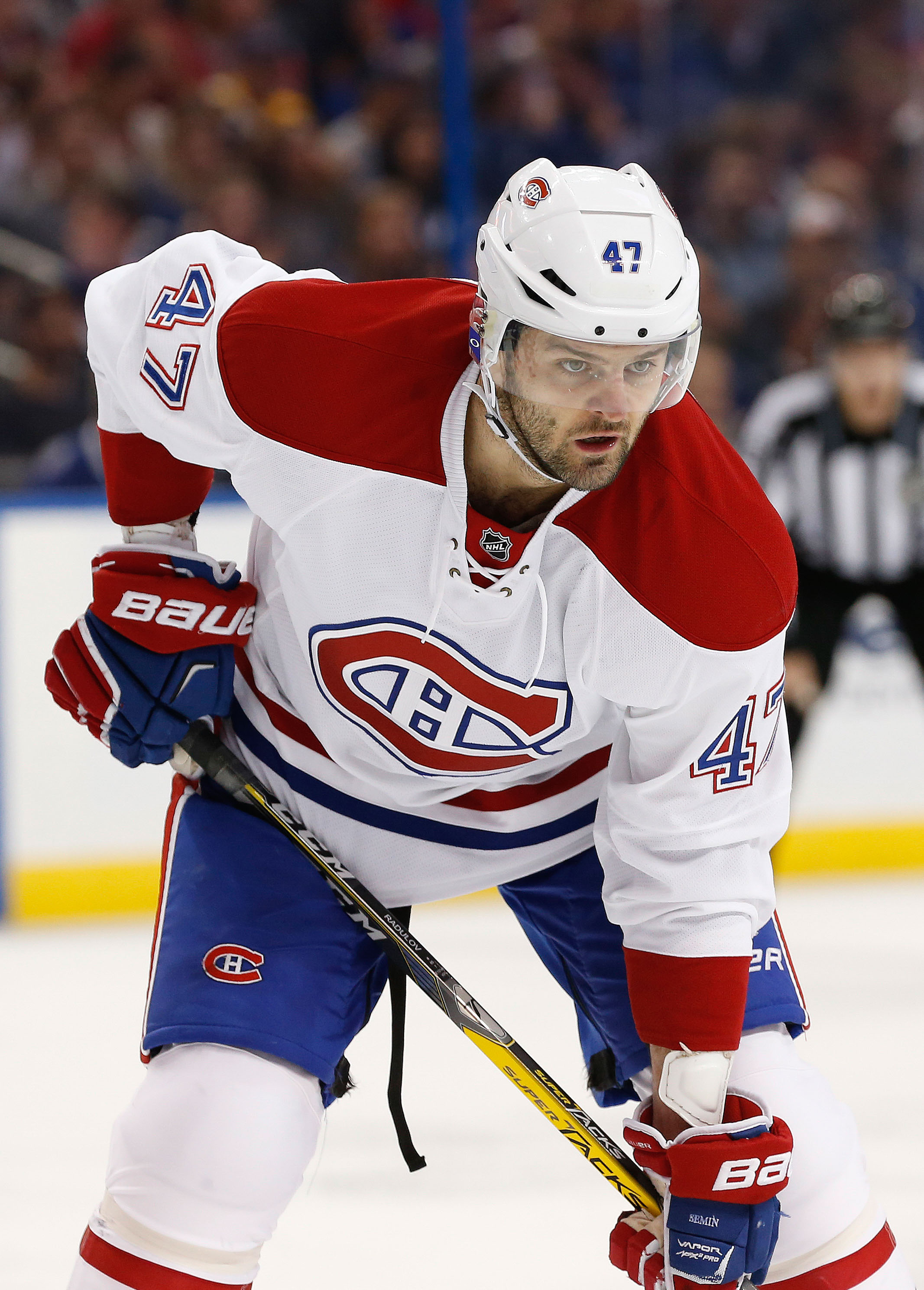
So even if the eight-year ask is a starting point that Radulov is willing to come down from, let’s look at the six year bottom end as the eventual deal he’ll receive. The Canadiens currently have only two players under contract for more than the next four seasons, Andrew Shaw—who will be paid $3.9MM until 2022—and Shea Weber. Weber’s deal, signed under the old CBA, will see him cause a cap-hit of just over $7.85MM each season until 2026. That contract is often pointed to as one of the worst in the league, and it doesn’t look great, but remember that after next year the actual salary paid out drops to $6MM per season from 2018-22, and then down to just $1MM per year for the last three seasons. If Weber declines but the Canadiens need the cap space, they’ll be able to trade him to a team that needs help getting to the cap floor, without costing them much in return.
It’s something to think about with Radulov’s new deal. If structured similarly (though not exactly the same due to harsher restrictions on salary discrepancy), the Canadiens could take on relatively little risk over the final years of the deal, while paying Radulov most of the deal up front. Fans are likely much less worried about the actual salary paid to the player, than the cap-hit down the road. The Canadiens are clearly wealthy enough to do it if they so decide.
Radulov wants certainty, sure, and no-movement clauses are included in almost all the free agent deals around the league. But as we’ve seen time and time again, they are often waived near the end of a player’s career so he can go to a better situation. Radulov would likely be no different, and the Canadiens could move him at the right price. In today’s NHL where the gap between cap-floor teams and cap-ceiling teams continues to grow through salary manipulation, big market teams like Montreal can afford to give out deals that pay a little more upfront to keep their talent around. The smaller markets benefit by acquiring draft and prospect assets when the time comes, and both find parity in different ways.
So when you hear about Radulov’s huge ask, don’t fret. As long as they play their cards right in the negotiating room, they won’t be left with a 36-year old Radulov destroying their cap situation. They’ll just be able to remember a 31-year old playmaker who made their top-line more dangerous than it has been in years.
2016-17 Retained Salaries By Team
One of the new elements from the most recent CBA was the ability to retain salary and cap hits as part of a trade. We’ve seen it used a lot in recent days and it will undoubtedly occur several more times before the trade deadline passes.
However, there are some restrictions to using this tool. They are as follows:
- No more than 50% of a player’s salary, cap hit, and bonuses (if applicable) can be retained in a single transaction. A player can only have their salary retained twice on the same contract.
- The same percentage must be retained for salary, cap hit, and bonuses.
- Teams can only retain up to a maximum of three contracts per season. Additionally, the sum of the amount retained can be no higher than 15% of the Upper Limit ($73MM this season).
Below are how many remaining retention spots are available for each team for 2016-17 and, where applicable, which players have had their cap hits retained as part of a trade already.
Anaheim: (2) Patrick Maroon ($500K per year through 2017-18)
Arizona: (1) Martin Hanzal ($1.55MM through 2016-17), Michael Stone ($2MM through 2016-17)
Boston: (3)
Buffalo: (3)
Calgary: (3)
Carolina: (2) Ron Hainsey ($1.42MM through 2016-17)
Chicago: (2) Rob Scuderi ($1.13MM through 2016-17)^
Colorado: (2) Cody McLeod ($533K through 2017-18)
Columbus: (3)
Dallas: (1) Ryan Garbutt ($900K through 2016-17), Johnny Oduya ($1.875MM through 2016-17)
Detroit: (1) Jakub Kindl ($360,000 through 2016-17), Thomas Vanek ($1.3MM through 2016-17)
Edmonton: (3)
Florida: (3)
Los Angeles: (2) Tom Gilbert ($280K through 2016-17)
Minnesota: (3)
Montreal: (2) David Desharnais ($700K through 2016-17)
Nashville: (3)
New Jersey: (3)
New York I: (3)
New York R: (3)
Ottawa: (3)
Philadelphia: (3)
Pittsburgh: (2) Rob Scuderi ($1.13MM through 2016-17)^
St. Louis: (2) Kevin Shattenkirk ($1.66MM through 2016-17)
San Jose: (2) Tommy Wingels ($743K through 2016-17)
Tampa Bay: (2) Ben Bishop ($1.19MM through 2016-17)
Toronto: (2) Phil Kessel ($1.2MM per year through 2021-22)
Vancouver: (1) Jannik Hansen ($500K through 2017-18), Roberto Luongo ($800,000 per year through 2021-22)
Washington: (3)
Winnipeg: (3)
^ – Both Chicago and Pittsburgh are retaining identical amounts on Rob Scuderi’s contract.
NHL Stars Support Going To Olympics In 2018
Alexander Ovechkin, Connor McDavid, Jonathan Toews, and Sidney Crosby all agree. The NHL should go to the Pyeongchang Olympics in 2018.
Now it’s just up to NHL Commissioner Gary Bettman and IOC President Rene Fasel to hammer out a deal.
Toews told TSN’s Frank Seravalli “quite frankly, to turn on the Olympics next year and watch the hockey teams and the players representing their country — if it’s not the best in the world, I don’t know, I feel like we’re misrepresenting our sport on a pretty huge scale, on a pretty huge level.”
Toews is part of select group, including Crosby, Shea Weber, and coach Mike Babcock, who could win their third-straight Olympic gold medal in Pyeongchang. Toews believes the Olympics are on a “whole other level” than the World Cup and World Championships.
Pyeongchang would be the first chance for McDavid to represent Canada at the professional level. He told Seravalli that, after playing for Team North America at the World Cup, having a chance to represent his country “would be everything.”
“Just to get a chance to chase down a spot on the team and have that opportunity, it would be very special. But we’re very fortunate in Canada to have a long list of great Canadian players. It’d be a tough team to make.”
While the players appear to be a united front, as evidenced by the chatter at the All-Star Game, the NHL’s board of governors and owners are not in agreement. Many owners are not interested in taking a two-week break in the schedule with the potential for their superstars to come back hurt, like John Tavares did in 2014. Despite this, some owners are clearly supportive, like Ted Leonsis. The Capitals’ owner has be vocal about the players going, even saying he would allow Ovechkin to go regardless of official NHL participation.
Negotiations have not gone smoothly so far. The IOC initially said it wouldn’t cover insurance and travel costs for NHL players, but then found funds to do so. That didn’t go over well with Bettman, who said the IOC “opened a can of worms” with the NHL board of governors by appearing to not value the NHL’s participation, according to Sportsnet’s Chris Johnston.
Earlier this season, the NHL offered the Olympics to the PA as part of a deal that would see the current CBA extended by three years, but that was shot down without much consideration. The subject reportedly came up again at the board of governors’ meeting over the weekend, but talk lasted “just ten seconds.”
The NHL, it seems, would prefer to skip 2018 but return for 2022 in China. The league is already looking at hosting games in China as it looks to expand its presence in Asia.
Time is becoming an issue, as the Games are already just a year away. However, this wasn’t a problem in Turino or Sochi, writes CBC’s Tim Wharnsby, as the NHL didn’t officially agree to go until the summer before.
Despite the negativity surrounding negotiations, Crosby remains optimistic, telling ESPN’s Craig Custance that “you have to trust at the end of the day, everyone is going to work hard to make sure it can happen.”
It’s hard to imagine the NHL not going, especially with its biggest stars being so passionate about attending. Either way, the decision is approaching.
Atlantic Division Snapshots: Marchand, Julien, Toronto
Brad Marchand has avoided a suspension for his “dangerous trip” of Detroit Red Wings defenseman Niklas Kronwall in a recent game between the two clubs, the NHL Department of Player Safety has announced. Instead the pesky forward was assessed a $10,000 fine, the maximum allowed under terms of the CBA.
Given his history with the DoPS – he’s been suspended four times overall in his career and on three separate occasions since the start of the 2014-15 campaign – it seemed likely Marchand would be suspended. However, the fact Kronwall showed no apparent ill-effects from the incident may have saved the Bruins leading scorer from that outcome. Ultimately, not losing Marchand for any length is certainly great news for a Boston club fighting desperately for a postseason berth.
Elsewhere in the Atlantic Division:
- In an ESPN Insider piece (subscription required), Rob Vollman makes an argument utilizing analytics for the Boston Bruins to refrain from terminating embattled head coach Claude Julien. Vollman compares the season-to-date performance of Boston to that of the New York Islanders, who dismissed head coach Jack Capuano recently. On the surface, the two are quite similar but an analysis of shot-based metrics reveal a different outcome. The Bruins have the league’s best shot attempt differential with a plus-488 while the Islanders were a minus-293 at the time of Capuano’s firing. He also compares the career accomplishments of the two coaches, and again Julien holds a decided advantage. Ultimately Vollman concludes it would be foolish to let Julien go. While the scribe makes a compelling case, it is known every coach has a shelf life and Julien is in his 10th season as the head man in Boston. If Bruins management concludes the bench boss has lost his team, or that his message simply isn’t getting through anymore, it may be best to move on.
- Craig Custance, also of ESPN, believes the time is now for the Toronto Maple Leafs and the team’s management to add experienced talent to take advantage of the young guns currently on ELC’s. Custance compares the current Leafs roster with that of the 2007-08 Chicago Blackhawks. That happened to be the year both Jonathan Toews and Patrick Kane debuted in the NHL. As Custance points out, even with the two talented young superstars leading the way, it wasn’t until Chicago added Brian Campbell (2008) and Marian Hossa (2009) did the team ultimately develop into a Stanley Cup contender. He maintains that the addition of Campbell helped turn the team’s defense corps into a quicker, more efficient puck-moving unit. Hossa, Custance adds, showed the team’s young stars how important it is to play smart, two-way hockey. The scribe suggests the Leafs should pursue a similar strategy and while there may be no player available comparable to Hossa, Kevin Shattenkirk could certainly fill the role for Toronto that Campbell did for Chicago. Shattenkirk might well be available via trade, though unless Toronto was able to ink the mobile defender to a contract extension, it would qualify as a risk to sacrifice the assets necessary to convince St. Louis to strike a deal.
Holiday Roster Freeze Explained
The annual NHL holiday roster freeze starts Monday at midnight, effectively shutting down any player movement until after the holidays. The NHL Collective Bargaining Agreement (Article 16.5(d)) outlines that NHL rosters are frozen from December 19th at 11:59pm through to December 28th at 12:01am. That means no trades, no loans, and no waivers. As with almost every CBA section, however, there are certain exceptions to the no-movement period:
- Players recalled from the minors. A player can be recalled from a team’s AHL or ECHL team during the roster freeze. This allows teams to replace injured NHL players with those in the AHL.
- Players claimed from waivers if placed before the roster freeze. If a player was placed on Regular Waivers before the freeze, and was claimed during the freeze, that player will still have to report to his new club immediately.
- Players reassigned after emergency recall. Any player in the NHL on an emergency recall may be loaned back to his minor league team during the freeze.
- Waiver-exempt players recalled after December 11th. Any waiver-exempt player recalled after December 11th may be loaned back to his minor league team until 11:59pm on December 23rd.
- Any movement necessary to make room for a player returning from LTIR. Teams are permitted to waive or reassign players if the team needs to make roster space for a player returning from Long-Term Injury Reserve. The clause states any transactions necessary, but it is unclear whether that would allow trades between NHL teams (assuming the moving team received non-frozen assets in return).
Aside from these exceptions, NHL rosters remain static until the 28th to provide stability for players and their families during the holiday period.
Department Of Player Safety Hands Down Suspensions
It’s been a busy day for the NHL’s Department of Player Safety. Ottawa’s Mike Hoffman and Dallas’ Cody Eakin both had scheduled meetings with the DoPS today—Hoffman for a cross-check to the back of Logan Couture‘s head and Eakin for running heavily into Henrik Lundqvist – and the two have each received their penalties.
According to John Shannon of Sportsnet, Hoffman received a two-game ban for his infraction and will forfeit $57.6K in salary. Meanwhile, Eakin has been suspended for the next four contests, according to Mark Stepneski, who covers the Stars for NHL.com. Eakin’s suspension will cost the six-year veteran more than $85K in forfeited salary.
Additionally, Marc-Edouard Vlasic was fined $5K, the maximum allowed under terms of the CBA, for spearing Ottawa defenseman Erik Karlsson. Vlasic speared Karlsson in the second period of the same game where Hoffman crosschecked Logan Couture.
Bettman Clarifies NHL Position On Olympics
NHL Commissioner Gary Bettman spoke to media today following a Board of Governor’s meeting in Palm Beach, Florida. The Commissioner touched on Olympic participation, escrow payments, and the salary cap, but emphasized that no vote on Olympic participation was taken.
Concerning NHL participation at the 2018 Winter Olympics in South Korea, Bettman stated that the sentiment was increasing negative. Ever the lawyer, Bettman does not indicate whether the increasingly negative feelings towards participating represents a majority of owners, or only a (growing) minority. Olympic participation is a complex issue for NHL owners as they have to weigh increasing exposure to the sport at the expense of potentially losing one of their star players for the year.
Bettman also indicated that it is “ambiguous” whether skipping 2018 forecloses NHL participation in 2022. The 2022 Winter Games are in China, and the NHL would love to gain a foothold in the Chinese sports market. Participation in 2022 may tip the scales and give NHL owners a reason to send players to the 2018 Olympics if owners are sufficiently worried that they would not otherwise be able to do so.
Turning to the CBA and the salary cap, Bettman clarified that the NHL did not offer to send players to the 2018 Winter Olympics in exchange for the NHLPA to agree to a three-year CBA extension. Rather, CBA extension talk was tethered to a larger conversation about international play and included a potential 2020 World Cup. Bettman did address the NHLPA’s concern over high escrow payments, stating simply that lowering the cap would lower escrow payments. Relatedly, he also announced that while there is no official decision on any salary cap movement, he expects that it may rise by “a couple of million.“