
Canucks Reassign Braeden Cootes, To Recall Max Sasson
According to head coach Adam Foote (per Sportsnet’s Brendan Batchelor), the Vancouver Canucks will reassign forward Braeden Cootes to the WHL’s Seattle Thunderbirds. Vancouver will recall forward Max Sasson from the AHL’s Abbotsford Canucks in a corresponding roster move. The Canucks confirmed Cootes’s reassignment, but didn’t do the same with Sasson’s recall.
So ends Cootes’s improbable run to the Canucks roster to start the 2025-26 campaign. Vancouver selected Cootes with the 15th overall pick of this past summer’s draft, and he cracked the team’s opening night roster after an impressive training camp and preseason. On October 9th, Cootes became the first 18-year-old to play for the Canucks since fellow first-round selection, Petr Nedvěd in 1990.
His debut will end after three games. The Sherwood Park, Alberta native went scoreless, earning a -2 rating while averaging 10:47 of ice time in a largely sheltered role. Further, his 28.1% CorsiFor% at even strength and -1.8 Expected +/- indicates that Cootes may not have been as ready for the show as previously believed. Ahead of an upcoming five-game road trip, it has become the right time to move Cootes into a more comfortable environment.
He won’t have to travel very far to rejoin his old team. Located approximately 140 miles south of Vancouver, Cootes will continue his season with the Thunderbirds, where he scored 26 goals and 63 points in 60 games as the team’s captain. He was even more impressive on Team Canada for the U18 World Junior Championships, scoring six goals and 12 points in seven games, and capturing the gold medal against Team Sweden.
Replacing Cootes in the lineup will be a familiar face from last season. Sasson played in 29 games for the Canucks last year, scoring three goals and seven points while averaging 10:20 of ice time per game. Although he didn’t offer much on offense, he was an exceptional defensive forward, managing a 92.1% on-ice save percentage at even strength. Still, he may have another offensive gear to his game, considering he finished last year with 13 goals and 32 points in 41 games with AHL Abbotsford.
Afternoon Notes: Kleven, Player Fines, Devils
This afternoon TSN’s Bruce Garrioch updated that Tyler Kleven expects to play tomorrow, as the Sens host Nashville in an afternoon tilt. Garrioch also mentioned Drake Batherson, who remains sidelined, but is still expected to return sometime this week, as noted yesterday. Having both been injured in training camp, last week it was speculated that the pair of Senators could possibly have appeared for the team’s season opener. While that was not the case, it appears Batherson and Kleven are on the cusp of a return, joining the one-win, one-loss club with high expectations this season.
Elsewhere across the league:
- This afternoon, the NHL Department of Player Safety announced a pair of $2,500 fines from infractions during Saturday’s games; the recipients being Ian Cole and Tyler Myers. Cole caught discipline for what was noted as a “dangerous trip” on Steven Stamkos. Next, fellow veteran Myers was fined for slashing Connor McDavid. Cole was caught up in a bizarre play with Stamkos, where both players ended up in the box as the Nashville forward’s stick struck Cole as he came down from the trip. Meanwhile, Myers was looking to box out attackers around Thatcher Demko, business as usual for the 6’8” defenseman, when he swung his stick upward, catching McDavid in the groin area, leading to a minor penalty.
- With newcomer Evgenii Dadonov likely to miss multiple weeks with a fractured hand, James Nichols of New Jersey Hockey Now speculated earlier today on how the lineup should adjust. Nichols pointed out prospect Shane Lachance as deserving of an opportunity to be called up for his NHL debut. Acquired from Edmonton by New Jersey in the three-team deal headlined by Trent Frederic last season, Lachance, a former 6th-round pick has become a standout prospect for the Devils. After two respectable seasons with Boston University, the 6’5” forward turned pro last season, appearing in two games with AHL Utica, netting a goal and an assist. Although he has yet to find the scoresheet early on this season with the Comets, Lachance has the frame to slot into any lineup. Nichols also mentioned exciting rookie Arseny Gritsyuk as a candidate to move up to a top-line role, perhaps holding down the fort for his mentor, Dadonov. Regardless, it is a tough blow for a Devils’ club which is all too familiar with injuries to key players.
Plan Is For Boeser To Kill Penalties This Season
Brock Boeser played more shorthanded in Vancouver’s season opener than he did all of last season combined. That might not just be an outlier either as head coach Adam Foote told reporters including Sportsnet’s Iain MacIntyre that he hopes that the winger can become a regular on the penalty kill, a role he hasn’t held since his college days. The Canucks lost arguably their top player shorthanded this summer when Pius Suter signed with St. Louis while Teddy Blueger, another regular in that department, is banged up. Armed with the security of a seven-year deal signed at the beginning of free agency this summer, it appears that Boeser is welcoming the chance to play a bigger role this season.
Evening Notes: Chinakhov, Douglas, Canucks
The Columbus Blue Jackets won’t begin their season until Thursday, but Yegor Chinakhov is already officially out of the lineup, as Aaron Portzline of The Athletic confirmed from Head Coach Dean Evason.
It has been a tumultuous last few months for the once-heralded Columbus prospect. After requesting a trade back in July, the Russian apparently changed his mind in September, saying he was open to staying with the Jackets, having seemingly worked through his differences with Evason.
Then, recently, Chinakhov voiced his displeasure with his role in camp, and finally, he fired his agent last Sunday. With all of those affairs out of the way, the latest development is that the 24-year-old will not appear on Thursday in the team’s opener vs. Nashville. Portzline noted that Evason apparently met with his player to make sure they were in agreement on the role, but given all the back and forth, it is not a good sign for Chinakhov’s future in Columbus.
Elsewhere across the league:
- Benjamin Pierce, Tampa Bay’s beat writer, shared the unlikely story of Curtis Douglas as he finds himself, somewhat surprisingly, on the Bolts’ roster to start 2025-26. Originally drafted by Dallas 106th overall in 2018, Douglas has spent the past 5 seasons grinding away in the AHL, not exactly filling the nets, but standing out at 6’9”, 242 lbs. As the game has evolved into the 2020s, gone are the days of pure enforcers running around, however, many teams feature such hulk-sized forwards in their bottom six to drive to the net and mix it up when needed. Tampa figures to have their own version in Douglas, who was claimed on waivers two days ago. The 25-year-old Ontario native will hope to make his long-awaited NHL debut tomorrow against Ottawa.
- As the Vancouver Canucks open their season tomorrow against Calgary, Ben Kuzma of The Province wrote today of the team’s optimism as a playoff team in 2025-26. The Canucks are one of several promising teams who underachieved last season, and are now looking to turn the page. Given the issues behind the scenes seemingly behind with the departure of star J.T. Miller, and a fresh voice with Adam Foote moving up to Head Coach, the table is set for the Canucks to reach their potential. As outlined by Kuzma, they returned a largely similar roster, bringing in standout Evander Kane to boot, as well as youngster Jonathan Lekkerimaki facing pressure to make a larger impact. The Canucks’ disappointment last year was rewarded with the freshly-drafted Braeden Cootes, who has made a strong impression to make the team. Somewhat surprisingly given their roster, Vancouver struggled offensively last season, but Foote will look to revitalize the group as they set their sights on a return to the playoffs next spring.
Canucks Recall Victor Mancini
12:01 p.m.: Joseph’s landing on IR is indeed the corresponding transaction, the Canucks announced. The placement is backdated to Sep. 30, so he’s eligible to return at any time.
9:48 a.m.: The Canucks are set to recall defenseman Victor Mancini from AHL Abbotsford, Rick Dhaliwal of CHEK reports. The team has since confirmed the move. While he wasn’t on the opening night roster the Canucks submitted yesterday, he will be eligible to play in Vancouver’s home opener on Thursday against the Flames.
Vancouver’s initial roster submission was at the 23-player limit, however. They’ll need to free up a roster spot before officially recalling Mancini. In all likelihood, that will be moving defenseman Pierre-Olivier Joseph to injured reserve. He missed the Canucks’ preseason finale while dealing with what head coach Adam Foote called a minor issue, Jeff Paterson of CanucksArmy relayed at the time. He hasn’t practiced since, though, leaving his status for Vancouver’s first regular-season game in doubt. The Canucks can backdate Joseph’s IR placement to when he first sustained the injury, meaning he’ll have already missed the required seven days and could return as soon as this weekend.
Mancini, 23, was one of Vancouver’s final cuts from training camp. His waiver-exempt status meant he faced an uphill battle for a depth job over non-exempt veterans like Joseph. A 2022 fifth-round pick by the Rangers, he’s coming off his first professional season – one that saw him unexpectedly break camp with the Rangers last fall. He ended up making 31 NHL appearances as he bounced between the majors and the minors throughout the year, splitting them nearly evenly across New York and Vancouver after he was included in January’s blockbuster J.T. Miller trade.
The 6’3″ righty showed definite room for improvement in his two-way game. His 2-6–8 scoring line worked out to 0.26 points per game, more than passable for a rookie rearguard whose primary upside is as a defensive specialist. He failed to succeed at his calling card, though, posting some rather troublesome possession numbers despite being given a relatively advantageous deployment. Despite starting 53.9% of his even-strength shifts in the offensive zone, Mancini only controlled 40.3% of shot attempts – a nearly 12% relative downgrade compared to his teammates in both New York and Vancouver.
In 30 AHL appearances last year, Mancini netted four goals and nine assists for 13 points and a -4 rating. He added a 3-5–8 scoring line with a -6 rating in 24 playoff games as he helped Abbotsford to a Calder Cup championship.
Mancini carries an $870K cap hit and is kicking off the final season of his entry-level contract, making him a restricted free agent without arbitration rights next summer. The Canucks opened the year with $1.34MM in cap space, according to PuckPedia, leaving them enough room to call him up with Joseph (and Nils Höglander) still counting against the cap on IR.
Blueger 'Dinged Up', Uncertain For Season Opener
- Canucks center Teddy Blueger is ‘dinged up’, according to Ben Kuzma of the Vancouver Province. Assistant coach Scott Young noted that the next few days will determine if he’s ultimately able to suit up in Thursday’s season opener. The 31-year-old had 26 points and a career-high 104 hits in 82 games with Vancouver last season.
Braeden Cootes Makes Canucks’ Opening Night Roster
Oct. 6th: According to commentator John Shannon, Cootes has indeed cracked Vancouver’s opening night roster. In a somewhat wacky comparison, Cootes will become the first 18-year-old to play for the Canucks since Petr Nedvěd in 1990, who was also selected in the first round and played in the WHL for the Seattle Thunderbirds.
Sep. 30th: 2025 15th-overall pick Braeden Cootes is “in the driver’s seat” to make the Vancouver Canucks’ season-opening roster, reports The Athletic’s Thomas Drance. Per Drance, Cootes’ performance this preseason and training camp has been so impressive that internally, the “conversation around him is beginning to shift materially” amongst Canucks decision-makers.
According to Drance, the team’s “internal discussion” around Cootes has shifted from whether Cootes should get early-season NHL games (a prospect Drance called “increasingly likely”) to whether he can sustain this high level all year or is best served returning to the WHL.
For those not paying close attention to Canucks training camp, this is likely to be a surprising development, as most 18-year-olds who make it onto NHL rosters are players who were one of the draft’s top handful of picks.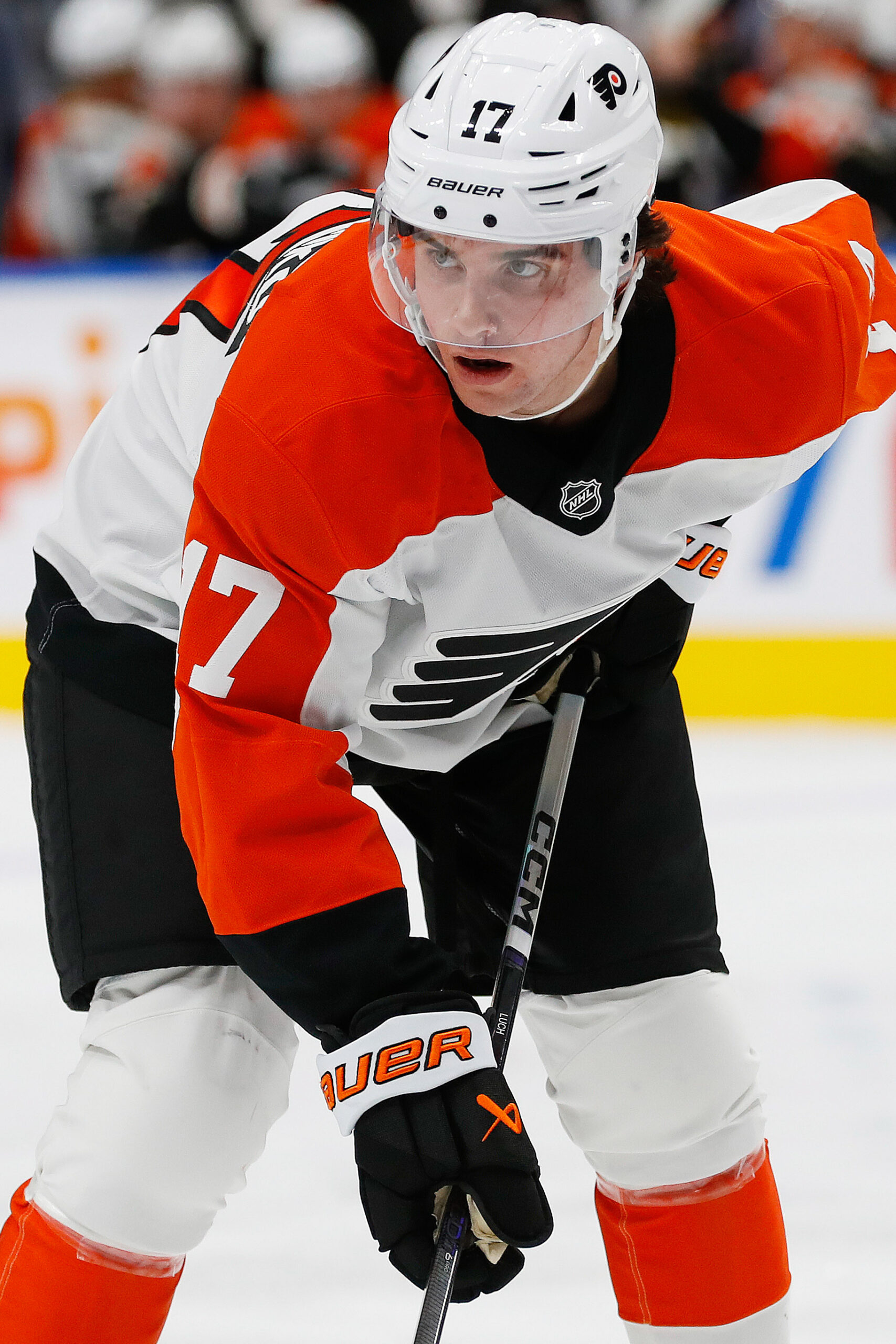
But keeping Cootes on their opening-night roster would not be a move without precedent. The Philadelphia Flyers played 2024 13th overall pick Jett Luchanko in four NHL games to start their 2024-25 season, and 2023 13th pick Zach Benson ended up making the Buffalo Sabres roster on a full-time basis.
There are actually quite a few parallels between Luchanko’s situation and Cootes’.
Similar to Cootes, Luchanko entered his first professional training camp as a long-shot possibility to make it onto the NHL roster, but his complete play and pro-ready qualities left the Philadelphia Flyers coaching staff extremely impressed. Rocky Thompson, then a member of the Flyers’ coaching staff, said at the time that Luchanko’s performance “opened [the] eyes” of the organization.
Cootes has generated similar sentiments in Vancouver. Although the Canucks have not been as public with their praise for Cootes as the Flyers were with Luchanko, Drance reports that the Canucks have been pleasantly surprised by just how “complete” and “mature” Cootes is – “down to his positioning and work in the faceoff circle.”
Beyond receiving similar-sounding praise at the same stage of camp one year apart, Luchanko is also a player who had a similar overall profile to Cootes. They both stand around six feet tall and 180 pounds, both registered just above point-per-game scoring rates in their draft-year CHL campaigns, and both are widely credited with having clear pro-ready qualities that are at the center of each player’s game.
As a result, it appears that Cootes is following Luchanko’s path and is likely to see NHL action despite being just 18 years old and not one of the draft’s top picks. The Canucks recently learned that forward Nils Hoglander will miss significant time due to injury, a development that only makes it likelier that the Canucks have room on their season-opening roster to keep Cootes.
Despite all of this, it remains the likeliest possibility that in a few months’ time, Cootes is back playing with his junior team. Playing in the NHL at 18 is such a difficult task, it’s only the best of the best who typically manage to hold onto a lineup spot for a full season.
While Cootes is undoubtedly an impressive, promising young player, his résumé is not at the level of the recent players who have been full-time NHL players at 18. Benson was one of the WHL’s most complete players with a lethal offensive arsenal, and Connor Bedard, Macklin Celebrini, Leo Carlsson, and Adam Fantilli were each top picks who had overwhelmingly proven themselves to be beyond their previous levels of competition. For as impressive as Cootes has been this preseason, most evaluators don’t place him at that level.
Even so, forcing his way into the roster conversation at 18 is a significant positive for both Cootes and Vancouver, and it reinforces projections of him developing into the kind of do-it-all middle-six center NHL teams routinely covet.
Photo courtesy of Perry Nelson-Imagn Images
Evening Notes: Markstrom, Willander, Mancini, NHL Top 10
The New Jersey Devils could be the next team to extend their starting goaltender. On the heels of a five-year, $34MM contract extension for Minnesota Wild goaltender Filip Gustavsson, the Devils are now working out a new deal for Jacob Markstrom, per The Fourth Period. Markstrom is entering the final year of a six-year, $36MM contract originally signed with the Calgary Flames in 2020.
Markstrom earned a second-place finish in Vezina Trophy voting on the second year of his last contract, after posting 37 wins and a .922 save percentage in 63 games of the Flames’ 2021-22 season. He fell drastically in 2022, landing at a .895 save percentage in 59 games with Calgary, and only rebounded to a .905 in 48 games of 2023-24. That prompted a summer trade to greener pastures, landing Markstrom with a playoff contender in the New Jersey Devils. He posted a middling .900 save percentage in 49 games of his first season with the Devils. That’s far from the .910 mark that Markstrom routinely challenged at his peak, but on a well-rounded Devils squad, average numbers from the aging veteran have proven supportive enough. He is sure to take a big hit on both term and salary in his next contract, which could take him through the rest of his career.
Other notes from across the league:
- The Vancouver Canucks made a pair of important decisions earlier today. They have assigned top defense prospects Tom Willander and Victor Mancini to the minor-leagues, after both clung to the camp roster to nearly the final day. Mancini played his first full season in the pros last year. It was certainly eventful, spread between NHL and AHL ice time with the New York Rangers and Canucks, and ending with a Calder Cup win with the Abbotsford Canucks. In total, he recorded eight points in 31 NHL games and 21 points in 54 AHL games on the season. Meanwhile, Tom Willander was a core piece of the National Championship runner-up, the Boston University Terriers. He posted 24 points in 39 games with the club – one point fewer, in one game more, than he managed in his freshman season. Willander is nonetheless a pillar of consistency on both ends of the ice, and will look to prove that soon with his pro debut in Abbotsford.
- The NHL has announced their top-10 players, wrapping up their Top 50 Players series just two days before Opening Night. The list is, of course, headlined by Edmonton Oilers superstar Connor McDavid. His teammate, Leon Draisaitl, holds the third spot, while Colorado Avalanche superstars Nathan MacKinnon and Cale Makar hold #2 and #4 respectively. The rest of the list includes, in turn: Lightning winger Nikita Kucherov, Panthers center Aleksander Barkov, Penguins center Sidney Crosby, Jets goalie and reigning MVP Connor Hellebuyck, Lightning goalie Andrei Vasilevskiy, and Canucks defender Quinn Hughes. It’s hard to argue any other names should be featured on the list, though Panthers fans may feel salt in the wound seeing their captain, and perennial Selke Trophy candidate, landing in the top-10 on the heels of a season-ending injury.
Training Camp Cuts: 10/4/25
Less than 72 hours remain until opening night rosters are due on Monday evening. Teams are down to their final few rounds of cuts as a result, but some have more work to do than others. We’re keeping tabs on all of today’s demotions here as clubs near their final 23-man form to open the season:
Buffalo Sabres (per team announcement)
D Radim Mrtka (to AHL Rochester)
F Noah Ostlund (to AHL Rochester)
New Jersey Devils (per team announcement)
F Thomas Bordeleau (to AHL Utica pending waiver clearance)
F Angus Crookshank (to AHL Utica pending waiver clearance)
F Brian Halonen (to AHL Utica pending waiver clearance)
F Zack MacEwen (to AHL Utica pending waiver clearance)
D Dmitry Osipov (to AHL Utica)
D Colton White (to AHL Utica pending waiver clearance)
Pittsburgh Penguins (per team announcement)
D Alexander Alexeyev (to AHL Wilkes-Barre/Scranton pending waiver clearance)
F Tristan Broz (to AHL Wilkes-Barre/Scranton)
F Robby Fabbri (released from PTO)
D Ryan Graves (to AHL Wilkes-Barre/Scranton pending waiver clearance)
F Rafael Harvey-Pinard (to AHL Wilkes-Barre/Scranton pending waiver clearance)
F Avery Hayes (to AHL Wilkes-Barre/Scranton)
F Bokondji Imama (to AHL Wilkes-Barre/Scranton pending waiver clearance)
G Sergei Murashov (to AHL Wilkes-Barre/Scranton)
D Owen Pickering (to AHL Wilkes-Barre/Scranton)
F Samuel Poulin (to AHL Wilkes-Barre/Scranton pending waiver clearance)
Utah Mammoth (per team announcement)
F Cameron Hebig (to AHL Tucson pending waiver clearance)
G Matt Villalta (to AHL Tucson after clearing waivers)
Tampa Bay Lightning (per team announcement)
G Brandon Halverson (to AHL Syracuse after clearing waivers)
Vancouver Canucks (per team announcement)
F Nils Aman (to AHL Abbotsford after clearing waivers)
F Max Sasson (to AHL Abbotsford)
G Nikita Tolopilo (to AHL Abbotsford)
Winnipeg Jets (per team announcement)
G Dom DiVincentiis (to AHL Manitoba)
Training Camp Cuts: 10/3/25
We’re getting into the final few days of training camp. There are only three days until opening night rosters are due, meaning only a handful of teams have significant cuts to make. Otherwise, it’s down to the final few roster battles. We’re keeping track of today’s demotions here:
Boston Bruins (per team announcement)
F Patrick Brown (to AHL Providence, pending waivers)
D Frederic Brunet (to AHL Providence)
D Michael Callahan (to AHL Providence, pending waivers)
F Riley Duran (to AHL Providence)
F Brett Harrison (to AHL Providence)
F Fabian Lysell (to AHL Providence)
F Georgii Merkulov (to AHL Providence, pending waivers)
D Victor Söderström (to AHL Providence, pending waivers)
F Riley Tufte (to AHL Providence, pending waivers)
Detroit Red Wings (per team announcement)
F Carter Mazur (to AHL Grand Rapids)
G Michal Postava (to AHL Grand Rapids)
D William Wallinder (to AHL Grand Rapids)
Nashville Predators (per team announcement)
F Zachary L’Heureux (to AHL Milwaukee)
D Tanner Molendyk (to AHL Milwaukee)
New York Rangers (per team announcement)
D Scott Morrow (to AHL Hartford)
F Gabriel Perreault (to AHL Hartford)
Pittsburgh Penguins (per team announcement)
D Sebastian Aho (to AHL Wilkes-Barre/Scranton, cleared waivers)
F Danton Heinen (to AHL Wilkes-Barre/Scranton, cleared waivers)
D Philip Kemp (to AHL Wilkes-Barre/Scranton, cleared waivers)
F Joona Koppanen (to AHL Wilkes-Barre/Scranton, cleared waivers)
G Filip Larsson (to AHL Wilkes-Barre/Scranton, cleared waivers)
F Valtteri Puustinen (to AHL Wilkes-Barre/Scranton, cleared waivers)
Utah Mammoth (per team announcement)
F Ben McCartney (to AHL Tucson, cleared waivers)
D Scott Perunovich (to AHL Tucson, cleared waivers)
F Gabe Smith (to QMJHL Moncton)
G Matt Villalta (to AHL Tucson, pending waivers)
Vancouver Canucks (per team announcement)
F Nils Åman (to AHL Abbotsford, pending waivers)
Washington Capitals (per team announcement)
D Ryan Chesley (to AHL Hershey)
F Andrew Cristall (to AHL Hershey)
F Eriks Mateiko (to AHL Hershey)
D Leon Muggli (to AHL Hershey)
F Ilya Protas (to AHL Hershey)
F Sheldon Rempal (to AHL Hershey, pending waivers)