
Summer Synopsis: Edmonton Oilers
With the regular season now upon us, the bulk of the heavy lifting has been done from a roster perspective. Most unrestricted free agents have found new homes, the arbitration period has come and gone, and the trade market has cooled. Accordingly, it’s a good time to take a look at what each team accomplished over the offseason. Next up is a look at the Oilers.
The Oilers have experienced heartbreak in each of the past two seasons and are optimistic that this year they can finally secure the last few wins needed to reach 16. Goaltending has been the team’s Achilles’ heel in recent years, and whether it’s popular or not, general manager Stan Bowman and his team are committed to that approach in hopes of a different result this time. On paper, the Oilers lost significant depth this summer by trading away high-paid underperforming players to redirect funds towards their star players. It’s not ideal, but that’s how the NHL salary cap functions, and Edmonton has managed it well enough to keep its stars under contract for the foreseeable future.
Draft
3-83 – RW Tommy Lafrenière, Kamloops (WHL)
4-117 – F David Lewandowski, Saskatoon (WHL)
5-131 – D Asher Barnett, U.S. NTDP (USHL)
6-191 – G Daniel Salonen, Lukko U20 (Liiga)
7-223 – C Aidan Park, Green Bay (USHL)
The Oilers didn’t have much in the way of draft capital for the 2025 NHL Entry Draft, but they did come away with five players. Lafrenière projects as a potential middle-six forward with versatility across various roles. He could provide the Oilers with some depth scoring at the bottom of their lineup and fill a penalty-killing role if he develops into the player Edmonton is hoping he will become. Lafrenière can play either center or wing, but given his size, he might be better suited to the wing. He sees the ice well and has a good ability to anticipate how a play will develop, which allows him to beat the puck to various areas of the ice. He’ll be a competitor for the Oilers, but he can get pushed around and will need to fill out more if he hopes to stay in the NHL.
Lewandowski projects as a potential middle-six forward, but that would likely be his ceiling given that his skating is a limiting factor. His stride is a bit awkward, and he lacks the explosiveness you’d expect from a forward playing at or near the top of the lineup. Despite that, there is plenty to like in Lewandowski’s game: he protects the puck well and doesn’t hesitate to take a hit to make a play. He possesses good hockey sense, versatility, and is responsible defensively, which could be his ticket to becoming an everyday NHL player.
Trade Acquisitions
LW Isaac Howard (from Tampa Bay)
G Connor Ingram (from Utah)
The expectations for Howard are high in Edmonton after he won the Hobey Baker Award last year as the top NCAA men’s hockey player. The 21-year-old isn’t a finished product at all, which means the Oilers will have their work cut out for them if they decide to use him in the NHL. Howard is an excellent skater and puck handler who can play in tight spaces, making plays to set up teammates. He can also put the puck in the net, having scored 26 goals in 37 games last season.
There is no guarantee that Howard will make the NHL, and his game does have some shortcomings. The first is his size. Howard tends to shy away from board play, and this flaw could very well be exposed this season. His puck handling is good; however, he sometimes struggles under pressure and may need to improve his ice vision or wait that extra second to absorb a hit and make a play.
The Oilers’ goaltending struggles have been well-documented, and they have been unable to address them in any meaningful way. It was reasonable to assume Edmonton would look for a third-string goaltender, and they made that move when Ingram became available. The 28-year-old has had a couple of decent seasons in Arizona and could serve as a good backup for the Oilers if their top two netminders falter. Ingram probably isn’t going to dominate, but he’s a capable NHL goalie who could get hot, and that’s about the best the Oilers can hope for, given their salary cap constraints.
UFA Signings
F Curtis Lazar (one year, $775K)
F Andrew Mangiapane (two years, $7.2MM)
F Jack Roslovic (one year, $1.5MM)
D Riley Stillman (two years, $1.55MM)*
G Matt Tomkins (two years, $1.55MM)*
*-denotes two-way contract
^-denotes re-signing
There is a lot to like about the Mangiapane signing in Edmonton. The 29-year-old forward can play on either side of the ice, which should give the Oilers some flexibility in their winger deployment. Mangiapane can also provide top-six minutes or slot into the bottom two lines, depending on what the team requires. He should give the Oilers speed, a strong forecheck, and tenacity, making things challenging for opponents and offering Edmonton an offensive forward who can also kill penalties and play some defense. The contract for Mangiapane is relatively modest at $3.6MM per year, and if he can return to his offensive numbers from a few seasons ago, it will be a real bargain.
Beyond Mangiapane, the Roslovic signing could also work out well for Edmonton. The 28-year-old can skate and score, which should fit in well with the rest of Edmonton’s forwards. Off the puck, Roslovic won’t do much as his defensive play is often a concern. But if he can produce offense the way he’s capable of, it will help offset some of his game’s weaknesses.
Many folks will criticize signing players like Roslovic and Mangiapane instead of focusing on goaltending. Still, the truth is that impact goalies weren’t available in free agency, and many trade market options had as many, if not more, flaws than Stuart Skinner and Calvin Pickard.
RFA Re-Signings
F Vasily Podkolzin (three years, $8.85MM)
D Evan Bouchard (four years, $42MM)
F Noah Philp (one year, $775K)*
LW Roby Jarventie (one year, $775K)*
*-denotes two-way contract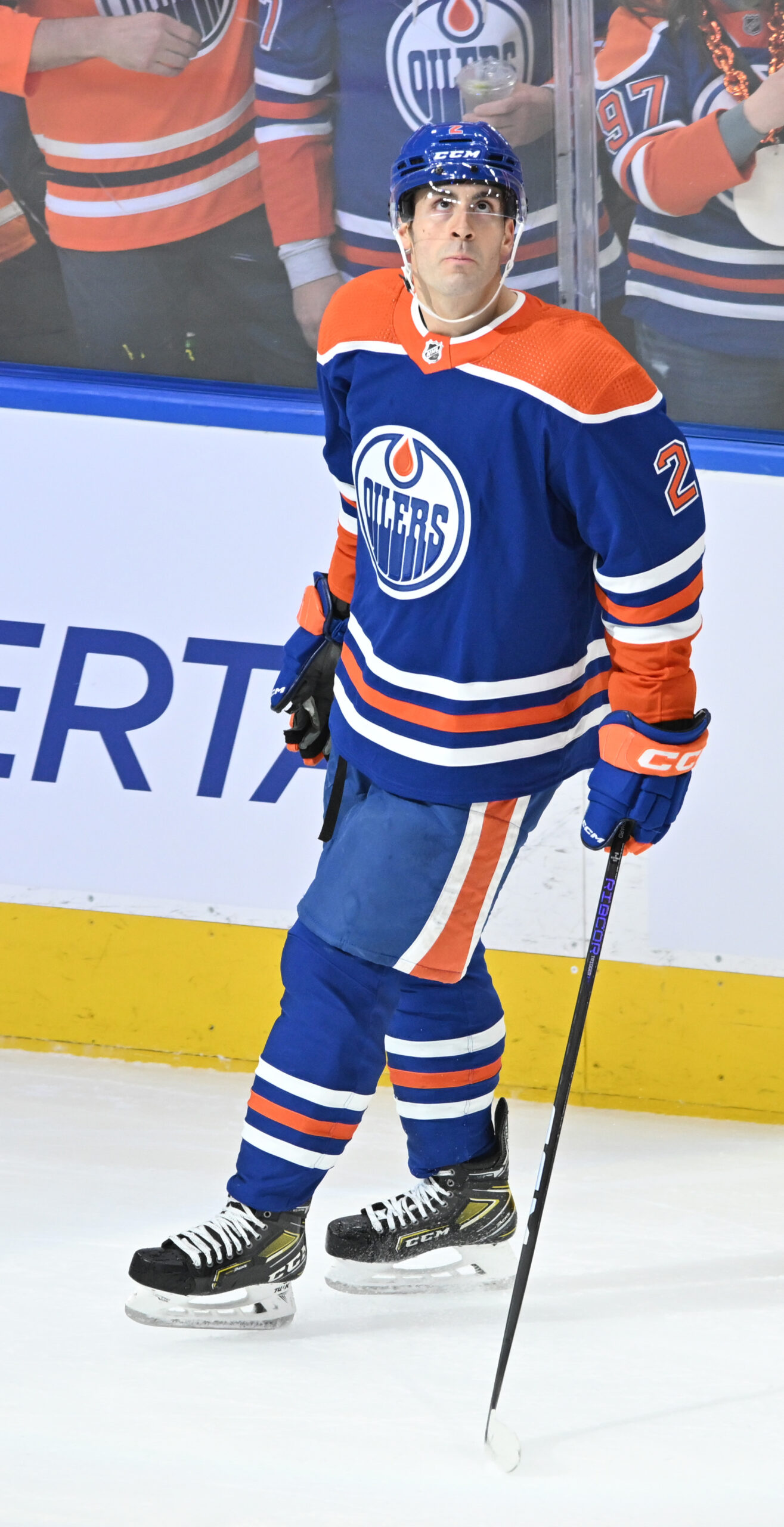
The Oilers prioritized signing Bouchard before free agency opened, and it was clear they feared an offer sheet, even though one was unlikely to happen given the high compensation needed to secure a deal with the talented defenseman. Simply put, Edmonton couldn’t afford to have Bouchard’s contract fall outside their comfort zone, nor could they afford to lose him. The 25-year-old has been a key player for the Oilers, tilting the ice in their favor and posting excellent offensive numbers. His defensive play isn’t perfect, and he does have the occasional blunder, but he more than compensates with his overall performance, which remains unmatched mainly in today’s NHL.
The Oilers chose to extend Podkolzin a year early, which was a decisive vote of confidence for the 24-year-old. Podkolzin scored eight goals and 16 assists in 82 games last season but demonstrated considerable versatility and provided Edmonton with glimpses of the upside that made him their tenth overall pick in 2019. He led the team with 211 hits and was very effective in plays, registering 10 points in 22 games. If Podkolzin has a breakout season this year, the Oilers could have saved a lot of money in the future, but even if his numbers stay similar to last season, his value remains high given all the intangibles he offers.
Departures
F Viktor Arvidsson (traded to Boston)
D Ronnie Attard (signed with Colorado, one year $775K)*
F Connor Brown (signed with New Jersey, four years $12MM)
F Drake Caggiula (signed in Switzerland)
D Connor Carrick (signed in Switzerland)
G Collin Delia (signed in Sweden)
LW Evander Kane (traded to Vancouver)
D Philip Kemp (signed with Pittsburgh, two years $1.55MM)*
D John Klingberg (signed with San Jose, one year $4MM)
C Lane Pederson (signed with Philadelphia, one year $775K)*
F Jacob Perreault (signed in AHL)
F Corey Perry (signed with Los Angeles, one year $2MM)
C Sam O’Reilly (traded to Tampa Bay)
G Olivier Rodrigue (signed in KHL, contract terminated)
F Derek Ryan (retired)
F Jeff Skinner (signed with San Jose, one year $3MM)
RW Cameron Wright (signed in Finland)
*-denotes two-way contract
The Oilers saw a parade of veterans leave this summer due to salary cap constraints and individual success, which priced many of their forwards out of the lineup. Perry moved to Los Angeles, and while he is now a depth forward in his career, he has been very effective. Perry doesn’t score many goals, but he is a disruptive agitator who has unsettled opposing teams in the past two playoff runs. The Oilers will miss his tenacity come playoff time, as the Perry the Oilers brought to the lineup is not easily replaceable.
Brown is another depth forward the Oilers might miss. He also didn’t score much, but he was a good skater for a bottom-six role, providing the Oilers with a defensively responsible forward who could also kill penalties. Brown was also a good transition player, which is something the Oilers might miss given their style of play.
Skinner signed with the Oilers in San Jose after an uneven season. The 33-year-old scored 16 goals and 13 assists in 72 games and didn’t seem like a good fit. Skinner’s skill set, while valuable, didn’t align well with the speedy Oilers, and while he can still shoot and pass effectively, he looked lost at times and wasn’t a significant factor in the playoffs, appearing in just five games and posting 2 points. Losing Skinner probably won’t have too much impact on the Oilers, given the poor fit, but there was a chance for him to be an effective player in Edmonton, and for some reason, it just didn’t work out.
Kane was traded to Vancouver in exchange for a fourth-round pick. Salary cap concerns clearly drove the move, as Kane remains a productive, albeit imperfect, forward. Kane performed decently in the playoffs last year after missing the entire regular season, but had an abysmal showing in the Stanley Cup Final, as did most of his teammates. Kane had one year left on his contract and will be a motivated player in Vancouver as he searches for what could be his final NHL contract. For the Oilers, they lose a top-six player who probably wasn’t part of the team’s future after this year and likely believed they could replace his production with Mangiapane, for two-thirds of the price.
Salary Cap Outlook
The Oilers have very little cap space entering this season, as PuckPedia projects they will have only $325K available, making injury call-ups challenging and complicating management’s ability to address Edmonton’s apparent goaltending issues. The Oilers have Zach Hyman on LTIR, but even with that, their cap room remains nearly exhausted.
For next summer, the Oilers have approximately $17.67MM in cap space with 16 players already signed. Given the challenges they’ve faced in net, that would be a good opportunity for Edmonton to address the goaltending issue that has long plagued them.
Key Questions
Can the Oilers finally go all the way?
The Oilers have lost in two straight finals and are likely a weaker team than they were in previous seasons. Now, that doesn’t necessarily mean they won’t make it back to the Stanley Cup Finals, but it does mean they’ll have their work cut out for them. Despite losing a chunk of their depth this summer, the Oilers remain a skilled, battle-tested team eager to claim a championship that has eluded them over the past two years. The window hasn’t slammed shut for the Oilers, but they only have so many runs left and will be hungry to secure a title.
Will the goaltending hold up?
It’s no secret that the Oilers’ goaltending has been mediocre to below average for several seasons now. While they’ve largely been able to outscore their issues in the crease, goaltending has still been their weakness, and it might well be the same case this season. It’s not fair to assume that Skinner and Pickard will falter this year, but considering their recent performances, it would be irresponsible to expect anything better than average. That raises the question: if the Oilers make a deep playoff run, can their goaltending hold up, or will it let them down once again?
How will they replace the depth scoring they lost?
The Oilers had many veterans in their lineup last season who left this past summer for more money than they could get in Edmonton. While it didn’t create significant gaps, it definitely weakened a strong forward group and reduced the Oilers’ overall depth. With limited cap space, few promising prospects, and little draft capital, the question is: How will they replace the depth they lost this summer?
Photo by Walter Tychnowicz-USA TODAY Sports
Summer Synopsis: Florida Panthers
With the regular season now upon us, the bulk of the heavy lifting has been done from a roster perspective. Most unrestricted free agents have found new homes, the arbitration period has come and gone, and the trade market has cooled. Accordingly, it’s a good time to take a look at what each team accomplished over the offseason. Next up is a look at the Florida Panthers.
The Panthers are poised to make history as they aim for their third consecutive Stanley Cup title this season. They are only the third team during the salary cap era to repeat as champions and hope to become the first to three-peat. It’s within the realm of possibility for the Panthers to make history, as they are bringing back almost all the key components of last year’s roster after Bill Zito orchestrated a masterclass by locking up key free agents below market value. While some might say it’s easier to attract players to a city with advantageous tax benefits, players hadn’t been eager to sign with the Panthers in the 25 years before 2022, which reflects the culture of winning that the team has fostered in Florida.
Draft
4-112 – LW Mads Kongsbak Klyvø, Frölunda HC (J20 Sweden)
4-128 – LW Shea Busch, Everett (WHL)
5-129 – RW Shamar Moses, North Bay (OHL)
6-192 – RW Arvid Drott, Djurgårdens IF (J20 Sweden)
7-197 – D Brendan Dunphy, Wenatchee (WHL)
7-224 – G Yegor Midlak, Spartak Moscow Jr. (MHL)
The Panthers didn’t get to pick until the fourth round of the draft, and with their first pick, they selected what they hope will be a power forward in Klyvø. The native of Frederikshavn, Denmark, is an above-average skater and is difficult to move off the puck thanks to a stride that relies on a low center of gravity. He doesn’t have high-end skill, but he could develop into a net front presence as well as a relentless forechecker.
Also in the fourth round, the Panthers selected another potential power forward in Busch. The North Vancouver, British Columbia native is strong on his skates and tough to knock off the puck. He has all the tools to become a net-front presence and has an underrated touch around the net.
In the fifth round, the Panthers chose to pick another forward in Moses. Moses is a savvy late-draft choice because he is the type of high-reward player who could develop into a skilled NHL player if his growth continues to progress nicely. Moses has good hands, solid vision, and a terrific shot, but whether he can carry these talents beyond the OHL remains uncertain. If he can, the Panthers might have found a steal.
In the sixth round, the Panthers selected another power forward in Drott, who may not stand out in any one area but has a well-rounded game. Drott willingly takes the puck to the net to create scoring opportunities and uses his solid frame to set picks, giving his teammates chances to score. He battles along the boards and in the defensive zone to gain puck possession and is likely to be popular with his teammates because of his selfless style of play.
Trade Acquisitions
G Daniil Tarasov (from Columbus)
The Panthers acquired Tarasov from the Blue Jackets in exchange for a 2025 fifth-round pick. It was a worthwhile gamble for Florida as they aimed to add depth behind Sergei Bobrovsky. Not long ago, many believed Tarasov was a future starter for the Blue Jackets, but after moving to North America, he was used sparingly, which slowed his development. Tarasov dressed in 21 games over his first two NHL seasons and never managed a prolonged, solid stretch of play. In the 2023-24 season, Tarasov found some consistency, posting an 8-11-3 record with a .908 SV% and 3.18 GAA. While his traditional stats weren’t remarkable, his underlying numbers told a different story—he posted a goals saved above expected of 0.0 in 24 games. Tarasov was likely a non-tender candidate in Columbus and is essentially playing for his NHL career this season. He will look to prove himself in Florida behind a much stronger team, which he hasn’t experienced during his brief NHL career.
UFA Signings
G Brandon Bussi (one year, $775K)*
F Nolan Foote (one year, $775K)*
F Noah Gregor (one year, $775K)*
F Luke Kunin (one year, $775K)
F Tomas Nosek (one year, $775K)^
D Jeff Petry (one year, $775K)
F Jack Studnicka (one year, $775K)*
*-denotes two-way contract
^-denotes re-signing
The Panthers faced the formidable challenge of starting the offseason with three key players from their championship roster about to become unrestricted free agents. General manager Bill Zito worked hard to secure long-term contracts for Brad Marchand, Aaron Ekblad, and Sam Bennett, leaving him with little to worry about on July 1st. Nonetheless, he still pursued inexpensive depth options, aiming to strengthen the lower end of his roster with the remaining cap space.
Petry was signed to play bottom-pairing minutes for league minimum, and he represents a worthwhile gamble given his resume. At 37, he is no longer a top-four defenseman, but given his role with Florida, he doesn’t need to be. In Detroit, Petry was averaging nearly 19 minutes per game, which was excessive considering his age and skill set. However, with the Panthers, it appears Petry will settle into roughly 14-15 minutes per game, which is more reasonable. He isn’t going to control play like he once did, but he should be a steady presence on the bottom pair, and if he isn’t, the Panthers can easily move on and look for another option.
Bringing back Nosek was an obvious choice for the Panthers, given the low cost and minimal maintenance required. Nosek is a straightforward forward who won’t score much but is steady and dependable on the fourth line. He is expected to play around 10 minutes a night once he recovers, but it seems likely that he will miss the first few months of the season. Versatile, Nosek can also fill in on the wing, but he shouldn’t be moved up the lineup and, unless injuries occur, he probably won’t be.
Kunin’s signing offers another affordable option who can play in the bottom six. The 27-year-old, surprisingly in his ninth NHL season, continues to find opportunities in the league but did take a significant pay cut for the upcoming season after earning over $2.75MM in each of the previous three years. Kunin hits hard and has no trouble reaching the front of the net, which will be valuable in Florida, where he will play alongside skilled depth players who can pass the puck to that area. While Kunin won’t produce much offense, he can contribute on the forecheck and serve as a leader in the Panthers’ dressing room. They could certainly improve by finding a more skilled option than Kunin, but given where the team stands, his signing aligns with their current needs.
RFA Re-Signings
D Mike Benning (one year, $775K)*
D Toby Bjornfot (one year, $775K)*
F Mackie Samoskevich (one year, $775K)
F Wilmer Skoog (one year, $775K)*
G Daniil Tarasov (one year, $1.05MM)
*-denotes two-way contract
The Panthers didn’t have much work to do this summer on the RFA front since most of the deals they signed were two-way contracts with cap hits at the NHL minimum. The exceptions were Samoskevich and Tarasov, who both signed one-way contract extensions.
After finishing 11th in Calder Trophy voting for rookie of the year, Samoskevich was probably hoping to secure a contract above the NHL minimum. However, with his 10.2(c) status, he lacked significant leverage in negotiations. He chose a guaranteed one-way salary instead of a two-way qualifying offer, which would have provided a higher NHL salary but only a fraction of the league minimum if demoted to the AHL. While this is a bit of a setback for a player who had a strong rookie season, it opens the door for the 22-year-old to earn significantly more next summer when he has more rights as a restricted free agent. Hopefully, the Panthers will also have more room under the salary cap by then. Samoskevich scored 15 goals and 16 assists in 72 games last season and has already had a strong start this year. If he can improve on last year’s production, he might be looking at a multi-year deal with a salary five times (or more) his current $775K rate.
Departures
G Brandon Bussi (claimed off waivers by Carolina)
F Rasmus Asplund (signed in Switzerland)
G Evan Cormier (signed with AHL Charlotte)
G Kaapo Kahkonen (signed with Montreal, one year $1.15MM)
D Matt Kiersted (signed with Minnesota, two years $1.55MM)*
F William Lockwood (unsigned free agent)
D Jaycob Megna (signed with Vegas, two years $1.6MM)
F Jesse Puljujärvi (signed in Switzerland)
D Nate Schmidt (signed with Utah, three years $10.5MM)
F Justin Sourdif (traded to Washington)
F Nico Sturm (signed with Minnesota, two years $4MM)
G Vitek Vanecek (signed with Utah, one year $1.5MM)
*-denotes two-way contract
The most significant loss for the Panthers came in the form of defenseman Schmidt, who turned a solid season in Florida into a multi-year deal at $3.5MM per year. The Panthers couldn’t have asked for more from Schmidt, who arrived after a buyout and was excellent in a third-pairing role. The 34-year-old remains a decent playmaker, responsible with the puck, and capable of defending the zone, especially against entries and plays on the rush. As long as he isn’t asked to play too much in Utah, his signing should be a win for them. It did create a hole for Florida, but that’s what happens when depth players outplay their contracts and need to go elsewhere to get paid.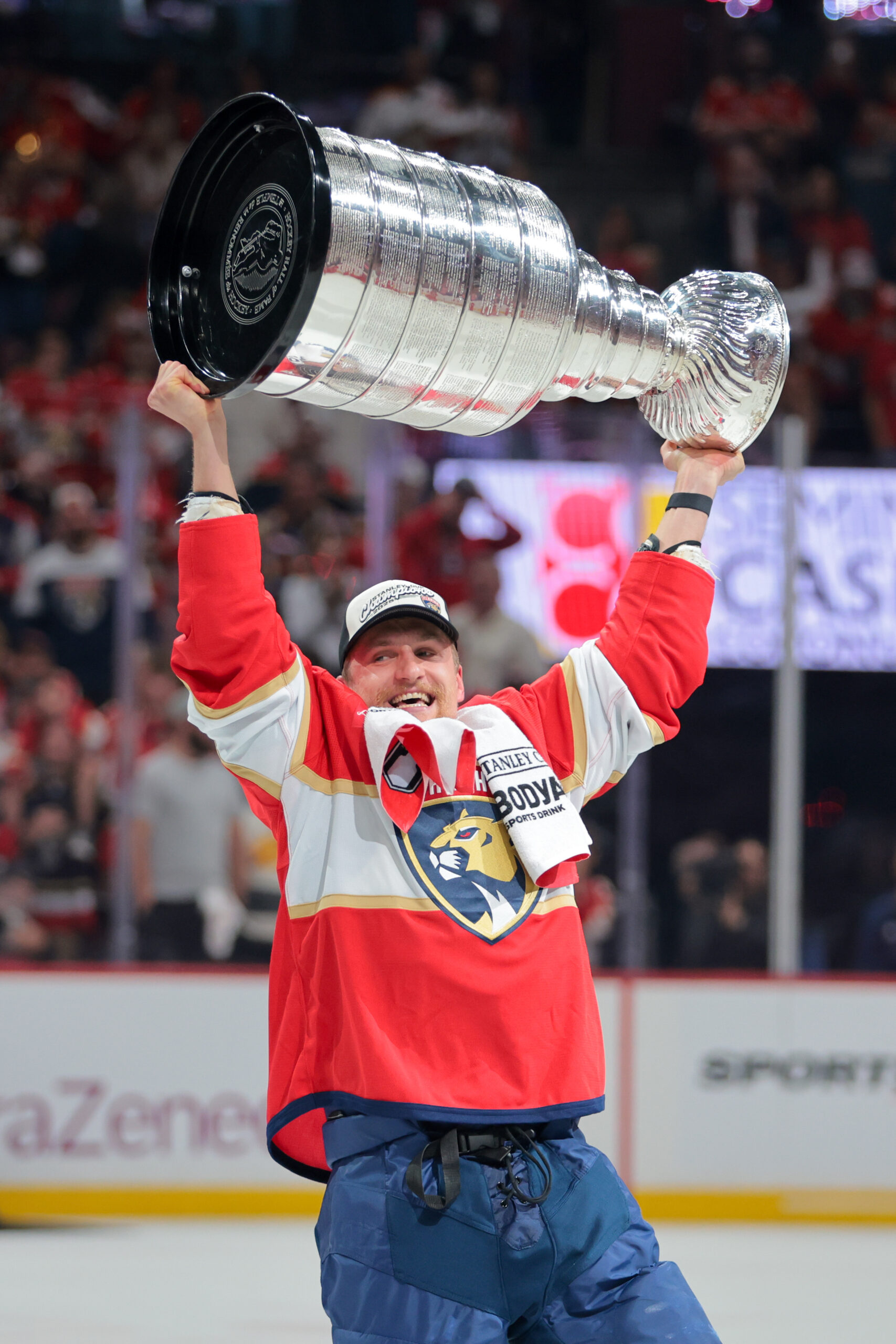
Sturm was another depth loss for the Panthers, but he likely wasn’t part of their long-term plans after he was acquired at last year’s Trade Deadline. Sturm remains a solid faceoff man who can still skate and get in on the forecheck. He will never produce much offense, topping 20 points just twice in his seven-year NHL career, but he battles hard for the Wild and lays the body fairly often. The Panthers shouldn’t have trouble replacing his production, and if they can’t find a suitable replacement, they should be able to acquire a depth player midseason to fill the gap.
Finally, the Panthers decided to let goaltender Vanecek go in favour of Tarasov, who will serve as the backup for now. It’s uncertain if Tarasov can handle the role, but Vanecek wasn’t exactly a reliable option either, posting modest numbers over the last two seasons with three different teams. Vanecek’s underlying numbers last year were probably worse than his traditional stats, as he recorded a -8.5 goals saved above expected in 25 games, indicating he was a below-average choice in limited duty. Suppose the Panthers need to find a goaltender later in the season. In that case, they should have no shortage of backup options, as players like Alex Nedeljkovic and possibly Vanecek will be available at a low cost.
Salary Cap Outlook
The Panthers are technically over the salary cap this season by about $6.1MM, but have Tkachuk and Barkov on LTIR for now. Tkachuk will return at some point this season, while Barkov could be out for at least seven months or more, which means he might return for the playoffs. The LTIR placements give the Panthers roughly $2.267MM in cap space (all figures via PuckPedia), allowing them to navigate injuries and call-ups and possibly make a midseason addition to their lineup. It’s not a ton of room for Florida, but their roster is pretty set as it is.
Next summer, the Panthers will have over $18MM available in cap space with 15 players signed, which means they will need to do some work. Goaltender Sergei Bobrovsky is a UFA and should demand a significant deal, which could use up half of the available cap space.
Key Questions
Can they win a third straight Stanley Cup?
It would be silly to dismiss the Panthers this season, considering they’ve won back-to-back titles and reached three consecutive Stanley Cup Finals. However, the odds are against them in several ways this year. The injuries to their top players are difficult to overlook (we’ll address them later), and at some point, fatigue will likely catch up with them. Many forwards will need to play beyond their usual roles, which will be hard on their bodies, especially against more formidable opponents than they’re used to. Add to that the fact that many Panthers players have played a lot of hockey over the past three years, creating numerous challenges they must overcome to win another championship.
How will they navigate Barkov’s injury?
How do you navigate losing one of the best players in the world for an entire season? The Tampa Bay Lightning achieved this in 2021 for two-thirds of a season (a pandemic-shortened season) and made it work. But just because it worked elsewhere doesn’t mean it will work here. Florida will need the likes of Sam Reinhart, Carter Verhaeghe, Anton Lundell, and Eetu Luostarinen to elevate their games to the next level and take on a heavier workload, as the team may need to adjust lines to address holes created.
When will Matthew Tkachuk return?
Tkachuk is expected to be out until December, although GM Bill Zito’s timeline seems more like his best guess. Tkachuk is sidelined with a torn adductor muscle and a sports hernia on the same side he injured during the 4 Nations Face-Off. His absence isn’t definite, but it seems unlikely to extend past January, given that the 2026 Olympics are approaching. Tkachuk is expected to return in the latter half of the season. Although the Panthers will face challenges with him and Barkov out for an extended period, they should have sufficient depth to remain competitive in the standings.
Photo by Sam Navarro-Imagn Images
Summer Synopsis: Los Angeles Kings
With training camps now almost upon us, the bulk of the heavy lifting has been done from a roster perspective. Most unrestricted free agents have found new homes, the arbitration period has come and gone, and the trade market has cooled. Accordingly, it’s a good time to take a look at what each team has accomplished this offseason. Next up is a look at the Los Angeles Kings.
The Kings made a major shuffle in this front office, opting to part ways with general manager Rob Blake mutually in favor of former Detroit GM Ken Holland. It was an interesting direction for the Kings to take, but they were clearly drawn to Holland’s championship pedigree and the decades of experience he brings to the position. The Kings are hoping that Holland can provide more innovative roster construction to a team that has been bounced from the playoffs in the first round by the Edmonton Oilers in four consecutive seasons. Whether or not Holland can do that remains to be seen, but some of his roster decisions this summer raised eyebrows.
Draft
1-31 – D Henry Brzustewicz, London (OHL)
2-59 – F Vojtěch Čihař, HC Energie Karlovy Vary (Czechia Extraliga)
3-88 – F Kristian Epperson, Saginaw (OHL)
4-120 – D Caeden Herrington, Lincoln (USHL)
4-125 – F Jimmy Lombardi, Flint (OHL)
5-152- G Petteri Rimpinen, Kiekko-Espoo (Liiga)
6-184 – F Jan Chovan, Tappara U20 (U20 SM-sarja)
7-196 – F Brendan McMorrow, Waterloo (USHL)
7-216 – D Will Sharpe, Kelowna (WHL)
The Kings used a first-round pick on a right-shot defenseman, which is probably what they should be doing with their top picks. Brzustewicz is a mobile, two-way defender who plays a cautious, risk-averse game. He avoids unnecessary chances but jumps into the rush when it’s right. The downside of being so careful is that it can cause poor decisions under pressure, something Brzustewicz needs to improve—especially when opposing forwards apply pressure on the forecheck. He can work on this back in London this season, and if he adds size, it should boost his confidence when taking hits to make plays.
Čihař does a lot of good things away from the puck, using his speed and footwork to pivot quickly and engage in the forecheck. He won’t shy away from the front of the opposition’s net and is a tough player to play against along the wall. His offense is a bit raw right now, but he does display good hockey sense, and if his playmaking and passing improve, he could become a middle-six forward in the NHL.
Epperson could become a valuable pick after recording 27 goals and 53 assists in 58 OHL games last season. He works hard and is tenacious on the forecheck, as well as in transition. Epperson is the perfect complement to high-end skill players, as he can force turnovers and create trouble in the offensive zone. This worked well last season with the 2025 second overall pick, Michael Misa. If he keeps up the same work ethic, he could become a regular on the Kings’ bottom six.
Fourth-round pick Herrington is another right-shot defenseman with offensive upside. He is aggressive on the rush and eager to contribute to the attack. Although there are concerns about his defensive game, with good coaching and guidance, Herrington could develop into an offensive NHL defenseman. This type of player is worth taking a chance on late in the draft because his natural offensive skills can be improved through coaching, and his weaknesses can hopefully be addressed.
UFA Signings
F Joel Armia (two years, $5MM)
D Cody Ceci (four years, $18MM)
F Martin Chromiak (one year, $775K)*
G Pheonix Copley (one year, $775K)
D Brian Dumoulin (three years, $12MM)
G Anton Forsberg (two years, $4.5MM)
F Corey Perry (one year, $2MM)
Ken Holland was busy during the first few days of free agency, signing several depth veterans and using up cap space in the process. The decisions to sign Dumoulin and Ceci drew significant criticism, with many pointing out the length and cost of contracts for two veterans who are likely to be the Kings’ bottom pairing this season. The issue for Los Angeles, and probably the reason for signing players like Dumoulin and Ceci, is that they had gaps to fill in their defense, and their depth problems (especially on the left side) could force Dumoulin to log top-four minutes. However, Ceci should be on the third pairing if everyone stays healthy, playing behind Drew Doughty and Brandt Clarke.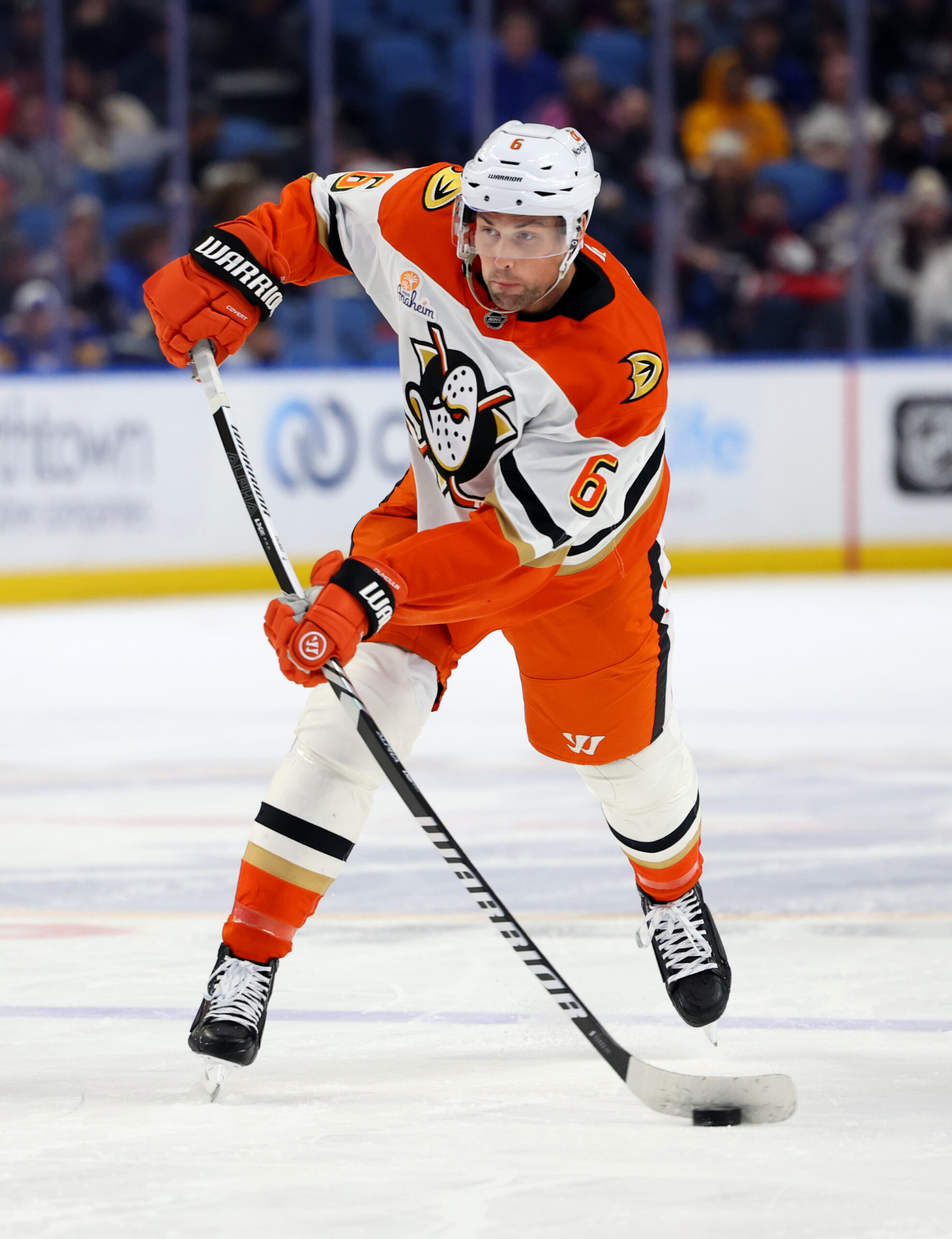
Dumoulin remains a capable player, but at 34 years old, he’s not suited for top four minutes. He has two Stanley Cups to his name and played significant minutes on those Pittsburgh teams, but that was nearly a decade ago, and Dumoulin hasn’t been that defenseman since 2020. Over the past five years, Dumoulin has struggled with possession metrics as his even-strength play has fluctuated. Once, he had the skating ability to consistently maintain reasonable gap control and break away from forecheckers to make strong first passes. Still, as he’s slowed down, both skills have become less impactful. Dumoulin can still disrupt plays and keep the puck out of dangerous areas, but he often takes penalties trying to do so, which wasn’t an issue when he was quicker on his feet.
The Ceci signing remains confusing and might be a move Holland regrets quickly. Ceci has many tools that make him an interesting player and has always managed to earn his coaches’ trust, despite inconsistent results. He isn’t as bad as he’s often accused of being, but he’s not a top-four NHL defenseman either, and he’ll be paid like one until he’s 35. Ceci’s performance varies significantly from year to year; in many seasons, his results indicate he’s a below-replacement player. In other seasons, when he’s sheltered, he posts good results (for example, 2020-21 with Pittsburgh), but at $4.5MM a season, you expect some consistency. Ceci isn’t that far removed from one of the best seasons of his career, but his last three playoff runs (two with Edmonton and one with Dallas) have been horrendous and have led to him being a healthy scratch at times. Not ideal for a player being paid the way he is.
Moving on to the forwards, the Kings made two depth signings for Armia and Perry. Perry guarantees a trip to the Stanley Cup Finals; at least, that’s what recent history suggests. Perry has appeared in five finals over the past six years with four different teams, consistently proving himself as a warrior come playoff time. The 40-year-old recorded 19 goals and 11 assists in 81 regular-season games last year, then exploded for 10 goals and four assists in 22 playoff games. Perry should continue to be a reliable agitator come playoff time, which could be interesting if the Kings face the Oilers for a fifth straight playoff.
Armia won’t score much in Los Angeles, having topped 30 points only once in his NHL career. The 32-year-old should reach around 25 points and will contribute on the penalty kill. He isn’t afraid to engage physically and should boost the Kings’ forecheck while remaining defensively aware. Armia is a reliable signing for the Los Angeles team. It should handle some of the Kings’ more challenging defensive duties, which could be beneficial against a potent offensive team like the Oilers.
RFA Re-Signings
F Alex Laferriere (three years, $12.3MM)
There might not be a player in the NHL who enjoys skating the puck more in transition than Laferriere. He made significant progress last year, both physically and mentally, shaking off scouts’ concerns about his skating and establishing himself as a talented playmaker with good speed. Although there were doubts about his skating style being awkward, after recording 19 goals and 23 assists in 77 games last season, Laferriere is proving his critics wrong. The Chatham, New Jersey native is a strong forechecker and has become more responsible defensively over the past year. This should help him start the season in the top six and likely also on the Kings’ second power play unit.
Departures
D Vladislav Gavrikov (signed with New York, seven years $49MM)
F Tanner Jeannot (signed with Boston, five years $17MM)
D Caleb Jones (signed with Pittsburgh, two years $1.8MM)
G David Rittich (signed with New York Islanders, one year $1MM)
D Jordan Spence (traded to Ottawa)
F Jack Studnicka (signed with Florida, one year $775K)*
F Samuel Fagemo (signed with Winnipeg, one year $775K)*
*-denotes two-way contract
The Kings’ signing of Ceci and Dumoulin was essential after Spence was traded and Gavrikov left via free agency. The loss of Gavrikov will significantly affect the Kings, as it forces Mikey Anderson into the top pairing and disrupts the depth on the left side, likely pushing Dumoulin into the top four. Gavrikov’s departure and Dumoulin’s signing effectively amount to a swap from the Kings’ perspective—and it’s not a particularly good one. While both play a straightforward stay-at-home game, Gavrikov can handle shutdown minutes at the top pairing, whereas Dumoulin is better suited for third-pairing roles. The 29-year-old Gavrikov doesn’t hit much or do much with the puck, but he can produce around 30 points and is very disruptive defensively, especially at the blue line, where he can disrupt transition plays and zone entries. The Kings will feel Gavrikov’s absence deeply.
The Spence trade to Ottawa is one that Holland might want to revisit someday. While it was hard to see him playing third-pairing minutes again next year, it was probably the best move for Spence, who was going to earn just $1.5MM this year—significantly less than new third-pairing defender Ceci. The Kings protected Spence last year, and his defensive metrics were excellent during those minutes, as he led all Los Angeles defensemen in goal share and xGoal share. However, he was behind Brandt Clarke on the depth chart and thus seen as expendable, even though the trade return was underwhelming.
Salary Cap Outlook
The Kings currently have just under $1.9MM available in cap space with one roster spot open (according to PuckPedia). If they add an entry-level contract (ELC) or a league minimum deal to reach 23 players, it will leave them with approximately $1MM in cap space. This should be enough of a buffer to handle injuries, but it won’t leave much room if they want to make a mid-season acquisition.
In the long run, the Kings have $33.725MM available in cap space for next summer (assuming no trades or signings before then), with 15 players already signed. That might seem like a sizable amount, but it doesn’t include a potential replacement for Anze Kopitar or an extension for Adrian Kempe, which AFP Analytics estimates to be around $9.2MM mark per season. The Kings will also need to decide on Clarke’s future, who is projected for a long-term deal around $7MM or a bridge deal around $3.5MM.
Key Questions
Is the older defense actually better?
Moving on from Gavrikov and Spence to Dumoulin and Ceci makes the Kings’ defense older and slower, which isn’t ideal when many teams in the Western Conference prioritize speed. It remains to be seen if the Kings are a better team than they were last season, but on paper, it’s hard to say they are. Their defense definitely isn’t better, and while they didn’t make wholesale changes on the backend, the moves they did make could reveal some flaws in their lineup.
Have the Kings already passed their window of contention?
A few years ago, the Kings were a team on the rise, seeming poised to become a force in the Western Conference for years to come. However, some poor trades and unfortunate player development have caused them to fall behind Edmonton, Dallas, Las Vegas, and Colorado. It’s possible the Kings could still have some deep playoff runs, but given the strength of their competition and the flaws in the roster, they might never make a significant playoff push with this group.
How hot is Jim Hiller’s seat?
Hiller’s seat was likely warm when the Kings and general manager Rob Blake mutually agreed to part ways. As this season kicks off, the pressure is expected to intensify. Hiller is only in his second full season as the Kings’ bench boss, but traditionally, general managers prefer to hire their own coaches, and Ken Holland has inherited Hiller. If the Kings start slowly, it wouldn’t be surprising to see them make a change for a new head coach.
Photo by Timothy T. Ludwig-Imagn Images
Summer Synopsis: Minnesota Wild
With the regular season now upon us, the bulk of the heavy lifting has been done from a roster perspective. Most unrestricted free agents have found new homes, the arbitration period has come and gone, and the trade market has cooled. Accordingly, it’s a good time to take a look at what each team has accomplished this offseason. Next up is a look at Minnesota.
The Wild recovered nicely after missing the playoffs in 2023-24, making it back to the postseason in 2024-25 despite again being ravaged by injuries. The forward progress was met with a quick elimination by the Golden Knights in the first round, but increased cap space and the continued progression of their recent high-end draft picks mean more opportunities for growth in Minnesota in 2025-26.
Draft
2-52: D Theodor Hallquisth, Orebro U20 (Sweden U20)
4-102: F Adam Benak, Youngstown (USHL)
4-121: F Lirim Amidovski, North Bay (OHL)
4-123: F Carter Klippenstein, Brandon (WHL)
5-141: D Justin Kipkie, Victoria (WHL)
Minnesota made the most out of perhaps the lowest draft stock in the league this season. They were missing capital at the top and bottom of the class, but still landed a haul that should offer up unique upside. Second-round defender Hallquisth is an exciting leader of the bunch, offering up a mean and gritty style that makes him a fantastic shutdown option. But it will be hard not to get excited over 5-foot-7 playmaker Benak, who has long stood as the face of Czechia’s international youth teams. Benak is a cool, calm, and collected play-driver who slid in the draft because of his frame, but showed he can play well above it at training camp.
The trio behind Minnesota’s top picks will each offer solid depth. Amidovski was a fundamental piece in North Bay’s offense last season, offering quick reactions and minimal mistakes in all three zones. Klippenstein was a main play-driver for Brandon all year long, though his lanky frame and awkward skating didn’t result in as many goals as one may expect. Perhaps the most interesting of the bunch is defender Kipkie, whom the Arizona Coyotes previously drafted in the fifth round of the 2023 NHL Draft. He didn’t sign with Arizona (or Utah) despite staying on a steady course of improvement with the Victoria Royals. Minnesota could prove a beneficiary of Kipkie’s decision to re-enter the draft. He was a core piece of the Royals’ last season and is set for a top-four role at Arizona State University this season.
Trade Acquisitions
F Vladimir Tarasenko (from Red Wings)
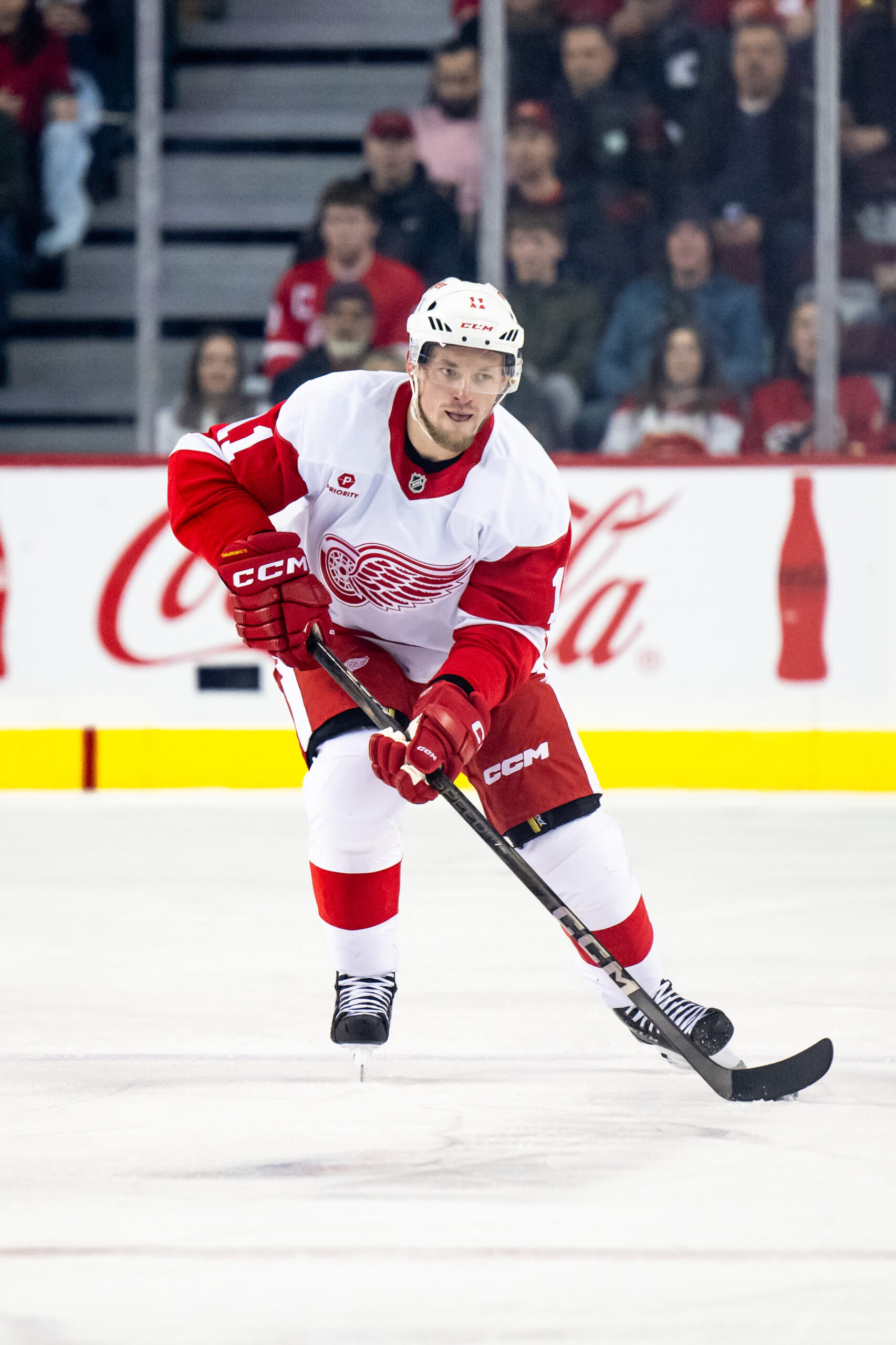 The Wild shifted around draft capital ahead of draft weekend, but otherwise stayed relatively quiet on the trade market. Their only splash was the acquisition of Russian scorer Tarasenko, with nothing more than future considerations headed back to the Detroit Red Wings. It could prove a lucrative swap for Minnesota right out of the gates. Tarasenko – once a routine 30-goal scorer – managed 11 goals and 33 points in 80 games with the Red Wings last season. He’s three seasons removed from his last 30-goal campaign, but has quickly clicked with Minnesota’s other top Russians, like Kirill Kaprizov and Danila Yurov. That bond has earned Tarasenko a top-six role throughout training camp. Whether he offers a surge back to scoring or merely Cup-winning precedent, reeling in a high-usage, veteran winger for no cost will be a nice plus on Minnesota’s summer.
UFA Signings
F Nico Sturm (two-years, $4MM)
G Cal Petersen (one-year, $775K)*
D Matt Kiersted (two-years, $1.6MM)*
F Nicolas Aube-Kubel (one-year, $775K)*
D Ben Gleason (one-year, $800K)*
F Tyler Pitlick (two-years, $1.5MM)*
* denotes two-way contract
Quieter than their presence on the trade market was Minnesota’s presence on the free agent market. Their early-summer transactions did very little to make a significant impact. Their only one-way contract was awarded to former Wild centerman Sturm, who won a Stanley Cup with the Florida Panthers after a Trade Deadline move from the San Jose Sharks last season. His season was relatively quiet overall, though, marked by just 14 points in 70 games, including the postseason. It was Sturm’s second Cup win, after also supporting the Colorado Avalanche in their 2022 championship. Sturm has been a career bottom-six center. He has 92 points and 86 penalty minutes in 331 career games – and 36 points and 25 penalty minutes in 111 prior games with the Minnesota Wild.
RFA Re-Signings
F Michael Milne (one-year, $775K)*
F Marco Rossi (three-year, $15MM)
G Chase Wutzke (three-year, $2.9MM)*
Minnesota’s summer was headlined by its contract negotiations with top young center Marco Rossi. After what seemed like an endless stream of rumors – which included trade rumors and speculation around his playoff usage – the two sides compromised on a well-paying, bridge contract. The $5MM yearly price tag could quickly look like a bargain for Rossi, who had a career year with 24 goals and 60 points last season. He has played in every single Wild game dating back to the start of 2023-24, and looked well capable of supporting top-line minutes in the absence of Joel Eriksson Ek last season. Rossi is a young, former top-10 pick who appears on the cusp of a breakout. He’ll have three years to vindicate that standing, and could earn a major payday and lineup role on the other side.
Departures
F Devin Shore (signed with Sparta, Czechia)
F Frederick Gaudreau (traded to Seattle)
F Brendan Gaunce (traded to Columbus)
D Declan Chisholm (traded to Washington)
F Adam Raska (signed with Sparta, Czechia)
D Ryan O’Rourke (signed with Laval, AHL)
F Graeme Clarke (signed with Capitals)
F Luke Toporowski (signed with Hershey, AHL)
D Cameron Crotty (signed with Senators)
D Chase Priskie (signed with Sibir, KHL)
F Gustav Nyquist (signed with Jets)
D Jon Merrill (unsigned)
F Justin Brazeau (signed with Penguins)
G Marc-Andre Fleury (retired)
F Travis Boyd (signed with Maple Leafs)
G Troy Grosenick (unsigned)
F Tyler Madden (unsigned)
There’s no question the Wild lost some depth this summer. Still, despite the quantity, they didn’t lose much quality. Nyquist and Brazeau, who were acquired at the 2024-25 trade deadline, combined for three goals and nine points in 41 games down the stretch, providing little value.
Chisholm, who was traded to the Capitals before the start of free agency, is coming off a two-goal, 12-point campaign and proved to be a solid contributor, albeit in limited action. Despite the solid campaign, Minnesota boasts one of the best defensive cores in the league, supplemented by a full year of David Jiricek and Zeev Buium for the 2025-26 season. Furthermore, the team is expecting Jonas Brodin to return in the relatively near future.
Lastly, the most notable departure this past offseason was Gaudreau. Finishing fifth on the team in scoring with 19 goals and 37 points in 82 games, Gaudreau was a key middle-six center for the Wild last year. Regardless, like their other departures, the Wild have the internal depth to sustain such a loss, and a few up-and-coming prospects that could fill in.
Key Extensions
F Kirill Kaprizov (eight-year, $136MM)
G Filip Gustavsson (five-year, $34MM)
The Wild tidied up two important pieces of business on the eve of the 2025-26 season. They started with a record-breaking extension for superstar winger Kaprizov. The deal will carry a $17MM cap hit each season – an incredible burden, but a seemingly fitting one for a player as do-it-all as Kaprizov is. He’s the true motor of Minnesota’s offense when he’s at full health. He pops up in seemingly every play and creates waves of top-tier scoring chances all on his own. Kaprizov has only crossed the 100-point mark once – but he managed three-straight 40-goal seasons from 2021 to 2024, and was on pace for 50 goals and 112 points before injury cut last season in half. He’ll have one more year to prove he can be a top-tier superstar before he embarks on a long-term contract that seems sure to end with Kaprizov enshrined by the Wild.
Backstopping Kaprizov’s flashy offense for the last three seasons has been steady play from Gustavsson. He has been impressive since arriving in Minnesota, kicking off his tenure with the team with a .931 save percentage in 39 games of the 2022-23 season, good for second-best in the league. That momentum helped him win over the starter’s crease in 2023-24, and after a shaky first year, he made good on the role with a .914 Sv% in 58 games last season. Both his games played and save percentage ranked sixth in the league. Minnesota acknowledges those performances with a nicely-paying extension, though the five-year term brings up tough questions about how the team plans to deploy top goalie prospect Jesper Wallstedt.
Salary Cap Outlook
According to PuckPedia, the Wild open the 2025-26 campaign with approximately $3.545MM in cap space. This provides ample space for them to strengthen their fourth line during the trade deadline season, for a roster that has minimal gaps when healthy. Furthermore, General Manager Bill Guerin has done an excellent job locking in Minnesota’s core, with Tarasenko and Zuccarello being the only two pending unrestricted free agents of significance. Impressively, assuming no new contracts are signed, and the upper ceiling of the salary cap hits $104MM, the Wild will enter next offseason with approximately $17.156 in salary cap space even after factoring in Kaprizov’s mammoth extension.
Key Questions
How Far Will This Team Get In The Postseason? Since the 2012-13 season, Minnesota has only missed the postseason twice. Still, despite being a consistent playoff team, they haven’t reached a Western Conference Final since the 2003 Stanley Cup playoffs and have yet to see a Stanley Cup Final in their 26-year history. Their top player, Kaprizov, typically does his part in the postseason when healthy, though a few bad performances from other key contributors usually prove costly. As mentioned, Guerin has done a stellar job locking in the team’s core. Regardless, that will only mean something if the Wild can be more competitive when the hockey matters most.
Is It Time To Trade For A Top-Line Center? Outside of Kaprizov’s extension, Rossi’s contract situation played a large role in Minnesota’s offseason. He performed well last season, scoring 24 goals and 60 points in 80 games, though his disappearance in the postseason had many clamoring for his ouster. The Wild signed Rossi to a three-year, $15MM contract, walking him into his last year of restricted free agency after the 2027-28 season. If Rossi falters again, the team has an in-house candidate to take over as the center of the first line in Eriksson Ek, although his playstyle is better suited for the second forward unit. Given their projected cap space for next season, the Wild may be better served using Rossi and one of their first-round selections from the three upcoming NHL Drafts to pursue a notable center addition on the trade market to put next to Kaprizov and Matt Boldy.
Photo courtesy of Brett Holmes-Imagn Images.
2025-26 NHL Active Roster Tracker
PHR’s Active Roster Tracker is back for the 2025-26 season! Each team’s current list of game-available players, plus injured reserve, non-roster, and suspended players, will be updated here daily throughout the campaign.
You can find this article at any time by using the Flame menu on our mobile website or under Pro Hockey Rumors Features on the right sidebar of our desktop page.
Anaheim Ducks
Roster size: 25
Last updated April 6, 10:00 p.m.
Forwards (14): Leo Carlsson, Cutter Gauthier, Mikael Granlund, Jansen Harkins, Ross Johnston, Alex Killorn, Chris Kreider, Mason McTavish, Ryan Poehling, Beckett Sennecke, Troy Terry, Frank Vatrano, Jeffrey Viel, Tim Washe
Defensemen (9): John Carlson, Radko Gudas, Drew Helleson, Tyson Hinds, Jackson LaCombe, Pavel Mintyukov, Ian Moore, Jacob Trouba, Olen Zellweger
Goaltenders (2): Lukáš Dostál, Ville Husso
IR: G Petr Mrázek (undisclosed, out for season)
Boston Bruins
Roster size: 23
Last updated April 1, 6:30 p.m.
Forwards (14): Viktor Arvidsson, Michael Eyssimont, Morgan Geekie, Tanner Jeannot, Mark Kastelic, Marat Khusnutdinov, Sean Kuraly, Elias Lindholm, Fraser Minten, Casey Mittelstadt, David Pastrňák, Lukas Reichel, Alex Steeves, Pavel Zacha
Defensemen (8): Jonathan Aspirot, Jordan Harris, Henri Jokiharju, Hampus Lindholm, Mason Lohrei, Charlie McAvoy, Andrew Peeke, Nikita Zadorov
Goaltenders (2): Joonas Korpisalo, Jeremy Swayman
Buffalo Sabres
Roster size: 28
Last updated April 1, 6:30 p.m.
Forwards (16): Zach Benson, Sam Carrick, Josh Doan, Joshua Dunne, Jordan Greenway, Tyson Kozak, Peyton Krebs, Beck Malenstyn, Ryan McLeod, Joshua Norris, Noah Ostlund, Tanner Pearson, Jack Quinn, Tage Thompson, Alex Tuch, Jason Zucker
Defensemen (9): Bowen Byram, Rasmus Dahlin, Michael Kesselring, Zach Metsa, Owen Power, Mattias Samuelsson, Luke Schenn, Logan Stanley, Conor Timmins
Goaltenders (3): Colten Ellis, Ukko-Pekka Luukkonen, Alex Lyon
IR: F Justin Danforth (lower body, month-to-month), F F Jiri Kulich (blood clot, indefinite)
Calgary Flames
Roster size: 26
Last updated March 28, 2:07 p.m.
Forwards (16): Mikael Backlund, John Beecher, Blake Coleman, Matthew Coronato, Joel Farabee, Morgan Frost, Matvei Gridin, Tyson Gross, Adam Klapka, Ryan Lomberg, Victor Olofsson, Brennan Othmann, Martin Pospisil, Yegor Sharangovich, Ryan Strome, Connor Zary
Defensemen (8): Kevin Bahl, Hunter Brzustewicz, Joel Hanley, Yan Kuznetsov, Olli Määttä, Brayden Pachal, Zayne Parekh, Zach Whitecloud
Goaltenders (2): Devin Cooley, Dustin Wolf
IR: D Jake Bean (undisclosed, indefinite), F Samuel Honzek (upper body, out for season), F Jonathan Huberdeau (hip surgery, out for season)
Carolina Hurricanes
Roster size: 27
Last updated April 14, 6:45 p.m.
Forwards (16): Sebastian Aho, Jackson Blake, Skyler Brind’Amour, William Carrier, Nicolas Deslauriers, Nikolaj Ehlers, Taylor Hall, Mark Jankowski, Seth Jarvis, Jesperi Kotkaniemi, Jordan Martinook, Bradly Nadeau, Eric Robinson, Jordan Staal, Logan Stankoven, Andrei Svechnikov
Defensemen (8): Jalen Chatfield, Shayne Gostisbehere, Charles-Alexis Legault, K’Andre Miller, Alexander Nikishin, Mike Reilly, Jaccob Slavin, Sean Walker
Goaltenders (3): Frederik Andersen, Brandon Bussi, Pyotr Kochetkov
Chicago Blackhawks
Roster size: 26
Last updated April 1, 6:30 p.m.
Forwards (16): Connor Bedard, Tyler Bertuzzi, Sacha Boisvert, André Burakovsky, Ryan Donato, Anton Frondell, Ryan Greene, Sam Lafferty, Nick Lardis, Andrew Mangiapane, Ilya Mikheyev, Oliver Moore, Frank Nazar, Landon Slaggert, Teuvo Teräväinen, Dominic Toninato
Defensemen (8): Louis Crevier, Ethan Del Mastro, Matt Grzelcyk, Wyatt Kaiser, Kevin Korchinski, Artyom Levshunov, Sam Rinzel, Alex Vlasic
Goaltenders (2): Spencer Knight, Arvid Söderblom
IR: D Ryan Ellis (pelvic tear, retired), D Shea Weber (ankle, retired)
Colorado Avalanche
Roster size: 23
Last updated April 1, 6:30 p.m.
Forwards (14): Zakhar Bardakov, Ross Colton, Jack Drury, Nazem Kadri, Parker Kelly, Joel Kiviranta, Gabriel Landeskog, Artturi Lehkonen, Nathan MacKinnon, Martin Necas, Brock Nelson, Valeri Nichushkin, Logan O’Connor, Nicolas Roy
Defensemen (7): Nick Blankenburg, Brent Burns, Brett Kulak, Cale Makar, Sam Malinski, Josh Manson, Devon Toews
Goaltenders (2): Mackenzie Blackwood, Scott Wedgewood
Columbus Blue Jackets
Roster size: 26
Last updated April 1, 6:30 p.m.
Forwards (16): Zach Aston-Reese, Charlie Coyle, Luca Del Bel Belluz, Adam Fantilli, Conor Garland, Danton Heinen, Boone Jenner, Kent Johnson, Isac Lundeström, Kirill Marchenko, Mason Marchment, Sean Monahan, Mathieu Olivier, Cole Sillinger, Dmitri Voronkov, Miles Wood
Defensemen (8): Jake Christiansen, Dante Fabbro, Erik Gudbranson, Denton Mateychuk, Ivan Provorov, Damon Severson, Zach Werenski, Egor Zamula
Goaltenders (2): Jet Greaves, Elvis Merzļikins
IR: D Brendan Smith (lower leg, week-to-week)
Dallas Stars
Roster size: 28
Last updated April 18, 6:00 p.m.
Forwards (16): Oskar Bäck, Nathan Bastian, Jamie Benn, Colin Blackwell, Mavrik Bourque, Michael Bunting, Matt Duchene, Adam Erne, Radek Faksa, Roope Hintz, Justin Hryckowian, Arttu Hyry, Wyatt Johnston, Mikko Rantanen, Jason Robertson, Sam Steel
Defensemen (9): Lian Bichsel, Kyle Capobianco, Thomas Harley, Miro Heiskanen, Esa Lindell, Nils Lundkvist, Ilya Lyubushkin, Tyler Myers, Alexander Petrovic
Goaltenders (3): Casey DeSmith, Ben Kraws, Jake Oettinger
Season-ending LTIR: F Tyler Seguin (ACL, indefinite)
Detroit Red Wings
Roster size: 25
Last updated April 10, 9:00 a.m.
Forwards (14): Mason Appleton, J.T. Compher, Andrew Copp, Alex DeBrincat, Emmitt Finnie, Patrick Kane, Marco Kasper, Dylan Larkin, Carter Mazur, David Perron, Michael Rasmussen, Lucas Raymond, Dominik Shine, James van Riemsdyk
Defensemen (8): Jacob Bernard-Docker, Ben Chiarot, Simon Edvinsson, Justin Faulk, Travis Hamonic, Albert Johansson, Axel Sandin-Pellikka, Moritz Seider
Goaltenders (3): John Gibson, Michal Postava (emergency), Cam Talbot
Edmonton Oilers
Roster size: 22
Last updated April 1, 6:30 p.m.
Forwards (13): Jason Dickinson, Trent Frederic, Adam Henrique, Zach Hyman, Max Jones, Kasperi Kapanen, Curtis Lazar, Connor McDavid, Ryan Nugent-Hopkins, Vasily Podkolzin, Jack Roslovic, Josh Samanski, Matthew Savoie
Defensemen (7): Evan Bouchard, Mattias Ekholm, Ty Emberson, Connor Murphy, Darnell Nurse, Spencer Stastney, Jake Walman
Goaltenders (2): Connor Ingram, Tristan Jarry
LTIR: F Colton Dach (undisclosed), F Leon Draisaitl (lower body, out for regular season), F Mattias Janmark (undisclosed, week-to-week)
Florida Panthers
Roster size: 31
Last updated April 14, 7:15 p.m.
Forwards (17): Sam Bennett, Jesper Boqvist, Nolan Foote, A.J. Greer, Noah Gregor, Vinnie Hinostroza, Luke Kunin, Anton Lundell, Eetu Luostarinen, Tomáš Nosek, Cole Reinhardt, Sam Reinhart, Mackie Samoskevich, Cole Schwindt, Wilmer Skoog, Matthew Tkachuk, Carter Verhaeghe
Defensemen (11): Marek Alscher, Uvis Balinskis, Michael Benning, Tobias Björnfot, Aaron Ekblad, Gustav Forsling, Mikulas Hovorka, Ludvig Jansson, Seth Jones, Dmitry Kulikov, Donovan Sebrango
Goaltenders (2): Sergei Bobrovsky, Daniil Tarasov
LTIR: F Aleksander Barkov (right ACL/MCL, proj. return April 26 – June 26), F Jonah Gadjovich (upper body, proj. return Feb. 8), F Brad Marchand (lower body, indefinite), D Niko Mikkola (knee, season), F Evan Rodrigues (broken finger, indefinite)
Los Angeles Kings
Roster size: 24
Last updated April 18, 6:00 p.m.
Forwards (14): Joel Armia, Quinton Byfield, Samuel Helenius, Mathieu Joseph, Adrian Kempe, Anže Kopitar, Alex Laferriere, Scott Laughton, Jeff Malott, Trevor Moore, Artemi Panarin, Alex Turcotte, Taylor Ward, Jared Wright
Defensemen (7): Mikey Anderson, Cody Ceci, Brandt Clarke, Drew Doughty, Brian Dumoulin, Joel Edmundson, Jacob Moverare
Goaltenders (3): Pheonix Copley, Anton Forsberg, Darcy Kuemper
IR: F Kevin Fiala (leg fractures, out for season), F Andrei Kuzmenko (meniscus, week-to-week)
Minnesota Wild
Roster size: 30
Last updated April 13, 10:00 a.m.
Forwards (18): Nicolas Aube-Kubel, Matt Boldy, Bobby Brink, Joel Eriksson Ek, Robby Fabbri, Marcus Foligno, Nick Foligno, Hunter Haight, Ryan Hartman, Marcus Johansson, Ben Jones, Kirill Kaprizov, Michael McCarron, Nico Sturm, Vladimir Tarasenko, Yakov Trenin, Danila Yurov, Mats Zuccarello
Defensemen (10): Zach Bogosian, Jonas Brodin, Brock Faber, Viking Gustafsson Nyberg, Quinn Hughes, Daemon Hunt, Matt Kiersted, Jacob Middleton, Jeff Petry, Jared Spurgeon
Goaltenders (2): Filip Gustavsson, Jesper Wallstedt
Montreal Canadiens
Roster size: 25
Last updated March 30, 5:15 p.m.
Forwards (14): Josh Anderson, Zachary Bolduc, Cole Caufield, Kirby Dach, Phillip Danault, Ivan Demidov, Jake Evans, Brendan Gallagher, Oliver Kapanen, Alex Newhook, Juraj Slafkovsky, Nick Suzuki, Alexandre Texier, Joe Veleno
Defensemen (8): Alexandre Carrier, Noah Dobson, Adam Engstrom, Kaiden Guhle, Lane Hutson, Mike Matheson, Jayden Struble, Arber Xhekaj
Goaltenders (3): Jakub Dobes, Jacob Fowler, Sam Montembeault
IR: F Patrik Laine (abdomen, indefinite)
Nashville Predators
Roster size: 22
Last updated April 1, 6:30 p.m.
Forwards (13): Luke Evangelista, Filip Forsberg, Erik Haula, Tyson Jost, Joakim Kemell, Zachary L’Heureux, Jonathan Marchessault, Ryan O’Reilly, Reid Schaefer, Steven Stamkos, Fedor Svechkov, Ozzy Wiesblatt, Matthew Wood
Defensemen (7): Justin Barron, Nicolas Hague, Roman Josi, Nick Perbix, Brady Skjei, Ryan Ufko, Adam Wilsby
Goaltenders (2): Justus Annunen, Juuse Saros
New Jersey Devils
Roster size: 23
Last updated April 13, 1:15 p.m.
Forwards (13): Nick Bjugstad, Jesper Bratt, Connor Brown, Paul Cotter, Evgenii Dadonov, Cody Glass, Arseny Gritsyuk, Nico Hischier, Jack Hughes, Marc McLaughlin, Timo Meier, Dawson Mercer, Maxim Tsyplakov
Defensemen (8): Dennis Cholowski, Brenden Dillon, Dougie Hamilton, Luke Hughes, Johnathan Kovacevic, Simon Nemec, Brett Pesce, Jonas Siegenthaler
Goaltenders (2): Jake Allen, Jacob Markstrom
LTIR: F Zack MacEwen (lower body, season), F Stefan Noesen (knee, indefinite)
Non-roster: F Brian Halonen (waivers)
New York Islanders
Roster size: 24
Last updated Mar. 26, 10:00 a.m.
Forwards (14): Mathew Barzal, Casey Cizikas, Anthony Duclair, Marc Gatcomb, Emil Heineman, Simon Holmström, Bo Horvat, Anders Lee, Kyle MacLean, Jean-Gabriel Pageau, Ondřej Palát, Calum Ritchie, Brayden Schenn, Maxim Shabanov
Defensemen (8): Adam Boqvist, Tony DeAngelo, Isaiah George, Scott Mayfield, Adam Pelech, Ryan Pulock, Matthew Schaefer, Carson Soucy
Goaltenders (2): David Rittich, Ilya Sorokin
LTIR: F Pierre Engvall (ankle, out for season), F Kyle Palmieri (ACL, out for season), D Alexander Romanov (upper body, indefinite), G Semyon Varlamov (knee, indefinite)
New York Rangers
Roster size: 25
Last updated April 1, 6:30 p.m.
Forwards (14): Jonny Brodzinski, Jaroslav Chmelar, William Cuylle, Adam Edstrom, Tye Kartye, Noah Laba, Alexis Lafrenière, J.T. Miller, Gabriel Perreault, Taylor Raddysh, Conor Sheary, Adam Sykora, Vincent Trocheck, Mika Zibanejad
Defensemen (8): William Borgen, Drew Fortescue, Adam Fox, Vladislav Gavrikov, Vincent Iorio, Matthew Robertson, Braden Schneider, Urho Vaakanainen
Goaltenders (3): Dylan Garand, Jonathan Quick, Igor Shesterkin
IR: F Matt Rempe (thumb surgery, week-to-week)
Ottawa Senators
Roster size: 27
Last updated April 4, 10:15 a.m.
Forwards (14): Michael Amadio, Drake Batherson, Nick Cousins, Dylan Cozens, Lars Eller, Warren Foegele, Claude Giroux, Ridly Greig, Stephen Halliday, Kurtis MacDermid, Shane Pinto, Tim Stützle, Brady Tkachuk, Fabian Zetterlund
Defensemen (11): Thomas Chabot, Cameron Crotty, Jorian Donovan, Dennis Gilbert, Tyler Kleven, Nikolas Matinpalo, Jake Sanderson, Jordan Spence, Lassi Thomson, Carter Yakemchuk, Artem Zub
Goaltenders (2): James Reimer, Linus Ullmark
IR: D Nick Jensen (knee surgery, six weeks)
Philadelphia Flyers
Roster size: 24
Last updated April 1, 6:30 p.m.
Forwards (15): Denver Barkey, Alex Bump, Noah Cates, Sean Couturier, Christian Dvorak, Luke Glendening, Nikita Grebenkin, Carl Grundström, Garnet Hathaway, Travis Konecny, Porter Martone, Matvei Michkov, Owen Tippett, Garrett Wilson, Trevor Zegras
Defensemen (7): Emil Andrae, Jamie Drysdale, Noah Juulsen, Rasmus Ristolainen, Travis Sanheim, Nick Seeler, Cam York
Goaltenders (2): Samuel Ersson, Daniel Vladař
IR: F Rodrigo Abols (upper body, indefinite), F Tyson Foerster (arm surgery, proj. return May 17)
Pittsburgh Penguins
Roster size: 29
Last updated April 11, 11:50 a.m.
Forwards (17): Noel Acciari, Justin Brazeau, Yegor Chinakhov, Sidney Crosby, Connor Dewar, Kevin Hayes, Benjamin Kindel, Ville Koivunen, Joona Koppanen, Blake Lizotte, Evgeni Malkin, Anthony Mantha, Rutger McGroarty, Thomas Novak, Rickard Rakell, Bryan Rust, Elmer Söderblom
Defensemen (10): Connor Clifton, Samuel Girard, Ryan Graves, Caleb Jones, Erik Karlsson, Kris Letang, Ryan Shea, Ilya Solovyov, Jack St. Ivany, Parker Wotherspoon
Goaltenders (2): Arturs Silovs, Stuart Skinner
IR: F Filip Hallander (blood clots, proj. return early-mid Feb.)
SOIR: F Tanner Howe (ACL, proj. return Jan. 24)
San Jose Sharks
Roster size: 25
Last updated April 1, 7:00 p.m.
Forwards (16): Macklin Celebrini, Igor Chernyshov, Ty Dellandrea, William Eklund, Adam Gaudette, Barclay Goodrow, Collin Graf, Philipp Kurashev, Michael Misa, Zack Ostapchuk, Ryan Reaves, Pavol Regenda, Kiefer Sherwood, Will Smith, Tyler Toffoli, Alexander Wennberg
Defensemen (7): Vincent Desharnais, Sam Dickinson, Mario Ferraro, John Klingberg, Nick Leddy, Shakir Mukhamadullin, Dmitry Orlov
Goaltenders (2): Yaroslav Askarov, Alex Nedeljkovic
IR: F Logan Couture (osteitis pubis, retired)
Season-ending LTIR: G Carey Price (knee)
Seattle Kraken
Roster size: 27
Last updated April 14, 5:15 p.m.
Forwards (14): Matty Beniers, Berkly Catton, Jordan Eberle, Frédérick Gaudreau, Kaapo Kakko, Jared McCann, Bobby McMann, Ben Meyers, Jani Nyman, Jaden Schwartz, Chandler Stephenson, Eeli Tolvanen, Ryan Winterton, Shane Wright
Defensemen (8): Vince Dunn, Ryker Evans, Cale Fleury, Adam Larsson, Ryan Lindgren, Josh Mahura, Brandon Montour, Jamie Oleksiak
Goaltenders (5): Joey Daccord, Philipp Grubauer, Niklas Kokko, Matt Murray, Victor Ostman
SOIR: F Max McCormick (hip, out for season)
St. Louis Blues
Roster size: 25
Last updated March 9, 2:14 p.m.
Forwards (15): Jonatan Berggren, Pavel Buchnevich, Jonathan Drouin, Dalibor Dvorsky, Jack Finley, Dylan Holloway, Jordan Kyrou, Jake Neighbours, Jimmy Snuggerud, Otto Stenberg, Oskar Sundqvist, Pius Suter, Robert Thomas, Alexey Toropchenko, Nathan Walker
Defensemen (8): Philip Broberg, Cam Fowler, Justin Holl, Matthew Kessel, Theo Lindstein, Logan Mailloux, Colton Parayko, Tyler Tucker
Goaltenders (2): Jordan Binnington, Joel Hofer
Season-ending LTIR: D Torey Krug (ankle, out for season)
Tampa Bay Lightning
Roster size: 24
Last updated April 11, 10:38 a.m.
Forwards (14): Oliver Bjorkstrand, Mitchell Chaffee, Anthony Cirelli, Zemgus Girgensons, Gage Goncalves, Yanni Gourde, Jake Guentzel, Brandon Hagel, Pontus Holmberg, Nikita Kucherov, Nick Paul, Corey Perry, Brayden Point, Scott Sabourin
Defensemen (8): Declan Carlile, Erik Černák, Charle-Édouard D’Astous, Emil Martinsen Lilleberg, Ryan McDonagh, J.J. Moser, Darren Raddysh, Steven Santini
Goaltenders (2): Jonas Johansson, Andrei Vasilevskiy
LTIR: D Maxwell Crozier (core surgery, done for regular season), D Victor Hedman (undisclosed, indefinite), F Dominic James (leg, indefinite)
Toronto Maple Leafs
Roster size: 26
Last updated April 14, 3:45 p.m.
Forwards (15): Easton Cowan, Max Domi, Luke Haymes, Calle Järnkrok, Dakota Joshua, Matthew Knies, Steven Lorentz, Matias Maccelli, Auston Matthews, William Nylander, Michael Pezzetta, Jacob Quillan, Nicholas Robertson, John Tavares, Ryan Tverberg
Defensemen (8): Simon Benoit, Brandon Carlo, Oliver Ekman-Larsson, Jake McCabe, Philippe Myers, Morgan Rielly, Troy Stecher, William Villeneuve
Goaltenders (3): Dennis Hildeby, Anthony Stolarz, Joseph Woll
LTIR: D Chris Tanev (core muscle surgery, out for season)
Utah Mammoth
Roster size: 26
Last updated April 13, 9:00 a.m.
Forwards (15): Michael Carcone, Logan Cooley, Lawson Crouse, Dylan Guenther, Barrett Hayton, Clayton Keller, Alexander Kerfoot, Jack McBain, Liam O’Brien, JJ Peterka, Kevin Rooney, Nick Schmaltz, Kevin Stenlund, Brandon Tanev, Kailer Yamamoto
Defensemen (8): Ian Cole, Nick DeSimone, Sean Durzi, John Marino, Nate Schmidt, Mikhail Sergachev, Dmitri Simashev, MacKenzie Weegar
Goaltenders (3): Vítek Vaněček, Karel Vejmelka, Matt Villalta
Vancouver Canucks
Roster size: 25
Last updated April 11, 3:15 p.m.
Forwards (14): Teddy Blueger, Brock Boeser, Jake DeBrusk, Curtis Douglas, Nils Höglander, Evander Kane, Linus Karlsson, Ty Mueller Drew O’Connor, Liam Ohgren, Elias Pettersson, Aatu Räty, Marco Rossi, Max Sasson
Defensemen (8): Zeev Buium, Filip Hronek, Pierre-Olivier Joseph, Kirill Kudryavtsev, Victor Mancini, Elias N. Pettersson, Marcus Pettersson, Tom Willander
Goaltenders (3): Kevin Lankinen, Jiri Patera, Nikita Tolopilo
IR: F Filip Chytil (facial fracture, indefinite)
LTIR: G Thatcher Demko (hip, out for season), D Derek Forbort (undisclosed, indefinite)
Vegas Golden Knights
Roster size: 22
Last updated April 1, 6:35 p.m.
Forwards (13): Ivan Barbashev, Pavel Dorofeyev, Nic Dowd, Jack Eichel, Tomáš Hertl, Brett Howden, Keegan Kolesar, Mitch Marner, Brandon Saad, Colton Sissons, Cole Smith, Reilly Smith, Mark Stone
Defensemen (7): Rasmus Andersson, Noah Hanifin, Ben Hutton, Kaedan Korczak, Jeremy Lauzon, Brayden McNabb, Shea Theodore
Goaltenders (2): Adin Hill, Akira Schmid
IR: F Jonas Rondbjerg (undisclosed, week-to-week)
LTIR: G Carter Hart (lower body, indefinite), F William Karlsson (lower body, indefinite)
Season-ending LTIR: D Alex Pietrangelo (various)
Washington Capitals
Roster size: 25
Last updated April 1, 6:36 p.m.
Forwards (14): Anthony Beauvillier, Pierre-Luc Dubois, Brandon Duhaime, Ethen Frank, David Kämpf, Hendrix Lapierre, Ryan Leonard, Connor McMichael, Ivan Miroshnichenko, Alex Ovechkin, Aliaksei Protas, Justin Sourdif, Dylan Strome, Tom Wilson
Defensemen (9): Declan Chisholm, Jakob Chychrun, Martin Fehérváry, Cole Hutson, Timothy Liljegren, Dylan McIlrath, Matt Roy, Rasmus Sandin, Trevor van Riemsdyk
Goaltenders (2): Charlie Lindgren, Logan Thompson
Winnipeg Jets
Roster size: 24
Last updated April 18, 6:00 p.m.
Forwards (14): Morgan Barron, Kyle Connor, Alex Iafallo, Cole Koepke, Adam Lowry, Vladislav Namestnikov, Nino Niederreiter, Gustav Nyquist, Cole Perfetti, Isak Rosen, Mark Scheifele, Jonathan Toews, Gabriel Vilardi, Danil Zhilkin
Defensemen (8): Jacob Bryson, Dylan DeMelo, Haydn Fleury, Ville Heinola, Josh Morrissey, Neal Pionk, Elias Salomonsson, Dylan Samberg
Goaltenders (2): Eric Comrie, Connor Hellebuyck
IR: D Colin Miller (lower body, week-to-week)
2025 NHL Training Camp Rosters
Originally published Sep. 4
The NHL’s 32 clubs are beginning their full training camps ahead of the 2025-26 regular season. They’ve all announced their full camp rosters – a list that most will need to chop in half in order to get to the 23-player roster limit by the time opening night rolls around on Oct. 7.
Players who are attending via PTOs and those who aren’t participating due to injury are listed in the total counts. This page will be updated as cuts are made – a new feature here at PHR for the 2025-26 season. This article will be continually updated as more announcements come in.
Anaheim Ducks
Roster size: 25/23
Last updated Oct. 5, 7:34 p.m.
Forwards (15): Leo Carlsson, Sam Colangelo, Cutter Gauthier, Mikael Granlund, Ross Johnston, Alex Killorn, Chris Kreider, Mason McTavish, Nikita Nesterenko, Ryan Poehling, Beckett Sennecke, Ryan Strome, Troy Terry, Frank Vatrano, Tim Washe
Defenseman (7): Radko Gudas, Drew Helleson, Jackson LaCombe, Pavel Mintyukov, Ian Moore, Jacob Trouba, Olen Zellweger
Goaltenders (3): Lukáš Dostál, Ville Husso, Petr Mrázek
IR: F Jansen Harkins (upper body, proj. return Nov. 22)
SOIR: F Coulson Pitre (upper body, indefinite)
Boston Bruins
Roster size: 23/23
Last updated Oct. 5, 7:37 p.m.
Forwards (14): Viktor Arvidsson, John Beecher, Michael Eyssimont, Morgan Geekie, Tanner Jeannot, Mark Kastelic, Marat Khusnutdinov, Sean Kuraly, Elias Lindholm, Fraser Minten, Casey Mittelstadt, David Pastrňák, Jeffrey Viel, Pavel Zacha
Defensemen (7): Jordan Harris, Henri Jokiharju, Hampus Lindholm, Mason Lohrei, Charlie McAvoy, Andrew Peeke, Nikita Zadorov
Goaltenders (2): Joonas Korpisalo, Jeremy Swayman
Buffalo Sabres
Roster size: 23/23
Last updated Oct. 5, 7:39 p.m.
Forwards (15): Zach Benson, Justin Danforth, Josh Doan, Mason Geertsen, Jordan Greenway, Tyson Kozak, Peyton Krebs, Jiri Kulich, Beck Malenstyn, Ryan McLeod, Joshua Norris, Jack Quinn, Tage Thompson, Alex Tuch, Jason Zucker
Defensemen (6): Jacob Bryson, Bowen Byram, Rasmus Dahlin, Ryan Johnson, Owen Power, Conor Timmins
Goaltenders (2): Alexandar Georgiev, Alex Lyon
IR: D Michael Kesselring (undisclosed, week-to-week), G Ukko-Pekka Luukkonen (lower body, week-to-week), D Mattias Samuelsson (upper body, week-to-week)
Calgary Flames
Roster size: 24/23
Last updated: Oct. 2, 1:46 p.m.
Forwards (14): Mikael Backlund, Blake Coleman, Matthew Coronato, Joel Farabee, Morgan Frost, Matvei Gridin, Jonathan Huberdeau, Nazem Kadri, Justin Kirkland, Adam Klapka, Ryan Lomberg, Martin Pospisil, Yegor Sharangovich, Connor Zary
Defensemen (8): Rasmus Andersson, Kevin Bahl, Jake Bean, Joel Hanley, Daniil Miromanov, Brayden Pachal, Zayne Parekh, MacKenzie Weegar
Goaltenders (2): Devin Cooley, Dustin Wolf
Carolina Hurricanes
Roster size: 23/23
Last update: Oct. 5, 7:41 p.m.
Forwards (13): Sebastian Aho, Jackson Blake, William Carrier, Nikolaj Ehlers, Taylor Hall, Mark Jankowski, Seth Jarvis, Jesperi Kotkaniemi, Jordan Martinook, Eric Robinson, Jordan Staal, Logan Stankoven, Andrei Svechnikov
Defensemen (7): Jalen Chatfield, Shayne Gostisbehere, K’Andre Miller, Alexander Nikishin, Mike Reilly, Jaccob Slavin, Sean Walker
Goaltenders (3): Frederik Andersen, Pyotr Kochetkov, Brandon Bussi
SOIR: F Juha Jaaska (undisclosed, indefinite)
Summer Synopsis: Nashville Predators
With training camps now upon us, the bulk of the heavy lifting has been done from a roster perspective. Most unrestricted free agents have found new homes, the arbitration period has come and gone, and the trade market has cooled. Accordingly, it’s a good time to take a look at what each team has accomplished this offseason. Next up is a look at the Nashville Predators.
The Predators are a team that many felt would compete for a Stanley Cup last season after they made a massive splurge in free agency the previous summer, acquiring Steven Stamkos, Jonathan Marchessault, and Brady Skjei. However, the high-priced spending spree had the opposite effect on Nashville, as the team became slow and disjointed, and was never able to put together a solid stretch of play to gain any traction. This summer, general manager Barry Trotz was much more conservative, opting to tweak a few things and run it back next season in the hopes that last year was an anomaly.
Draft
1-5 – F Brady Martin, Sault-Ste Marie (OHL)
1-21 – D Cameron Reid, Kitchener (OHL)
1-26 – F Ryker Lee, Barrie (OHL)
2-35 – D Jacob Romback, Lincoln (USHL)
2-58 – G Jack Ivankovic, Brampton (OHL)
4-122- D Alex Huang, Chicoutimi (QMJHL)
6-163 – D Daniel Nieminen, Lahti Pelicans (Liiga)
Nashville will be hoping that Martin develops into a top-line player sooner rather than later, especially given their lack of depth at center. Martin is offensively capable, but what is more valuable than his scoring ability is his overall game and his capacity to play in various roles and assignments. Some scouts consider him a Swiss-Army knife who can adapt to many different roles. He has a high compete level and isn’t afraid to get physical, which should help him if his offensive game doesn’t immediately translate to the NHL or develops more slowly as he turns pro. Martin isn’t a pure scorer, but his floor in the NHL is likely as a top-nine forward, either at center or on the wing. Some believe he might be better suited to the wing, but given Nashville’s needs, he will be given every opportunity to become their center of the future.
With their second of three first-round picks, the Predators moved up in the draft to select OHL defenseman Reid. The Kitchener Rangers defender isn’t the most consistent defensively and can feel pressure with the puck in the defensive zone. Still, his offensive instincts are strong, and he is seen as a potential power-play quarterback.
With their third and final pick of the first round, the Predators picked Lee, a scoring forward who may take some time adjusting to the NHL before he settles in. Lee can struggle with consistency, which could be problematic as he attempts to become a full-time NHL player. Lee isn’t projected to be a topline forward, but he should be an excellent NHLer who surpasses 50 points per season.
With their second-round pick, the Predators drafted a very large defenseman in Rombach. Standing 6’6”, Rombach will intimidate opponents with his size and his mean streak, while playing a reliable defensive game. His offensive skills are limited and may require improvement if he hopes to make it to the NHL, as well as adjusting to the league’s speed. He is a project in many ways, but the Predators have a knack for developing their defenseman, so he should be in a good position for his growth.
Trade Acquisitions
D Nicolas Hague (from Vegas)
F Erik Haula (from New Jersey)
The Predators acquired Hague and a conditional third-round pick in exchange for forward Colton Sissons and defenseman Jeremy Lauzon. The Predators were quick to then sign Hague to a four-year extension worth a total of $22MM. The deal, in theory, made sense for Nashville as they needed help on the backend; however, the execution left a lot to be desired as the trade and subsequent contract extension received heavy criticism.
Nashville needed help on the right side, and Hague effectively slides into Nashville’s third pairing, which is probably where he belongs, given his skill set. The problem is that Hague slides into the left side, and this makes the trade and the $5.5MM AAV more puzzling. The idea might be to flip Roman Josi to the right side, but then it pushes Hague into the top four, which isn’t ideal. The main issue with giving Hague that money is that he isn’t suited for that role and will likely be forced to play above his perfect slot.
Haula was acquired from the Devils on June 18th in exchange for defenseman Jeremy Hanzel and a 2025 fourth-round pick. It’s reasonable to question why Nashville believed this move was necessary and to wonder what Nashville will gain from Haula at this stage of his career. Last year was a lacklustre season for the 34-year-old in nearly every statistical category, as his offense declined significantly along with his underlying numbers. At a $3.15MM cap hit, Haula isn’t a bargain, but he isn’t a drain on the salary cap either, or he’s signed for just this season. There’s a chance he bounces back into the 40-point range, and if he does, this trade is a win for Nashville. However, if he has a season similar to last year, it won’t be viewed positively in hindsight.
The trade was probably a result of Nashville desperately needing help in their bottom six, and although Haula isn’t exactly a game-changer, he provided a modest upgrade. The worst-case scenario for Nashville is that Haula and/or the team struggle, and he gets traded at the deadline for a package similar to what Nashville sent to the Devils.
UFA Signings
D Nicklaus Perbix (two years, $5.5MM)
GM Barry Trotz focused on strengthening his defensive core by signing Perbix to a two-year deal. The 27-year-old is a three-year NHL veteran who does a solid job of carrying and moving the puck and can add some offense. Despite his skills, he did turn the puck over quite a bit last year, which he will need to work on since he won’t be as protected in Nashville as he was in Tampa Bay.
Perbix has a good size at 6’4”, 209 lbs, but he doesn’t hit a lot, recording just 50 hits last season in 74 games. He had six goals and 13 assists last season, marking a decline from the previous year, when he scored two goals and had 22 assists in 77 games.
Nashville needed to strengthen the right side of its defensive core, and while there is nothing inherently wrong with Perbix, he isn’t likely to crack the top four, and if he does, it wouldn’t reflect well on the state of the Predators’ defensive core.
RFA Re-Signings
D Nicolas Hague (four years, $22MM) 
As mentioned earlier, the Hague extension presents issues because AFP Analytics projected him for a two-year deal at just over $2.6MM per season. That $5.2MM total package was exceeded by the $5.5MM AAV Hague actually received, which could be problematic if he performs as he has in the past. Hague’s contract aligns with extensions given to other defensemen, like Marcus Pettersson of the Vancouver Canucks; however, Pettersson was a pending UFA and is a much better all-around defenseman and a proven top-four option.
Departures
F Kieffer Bellows (signed in Sweden)
D Marc Del Gaizo (signed with Montreal, one year, $775K)*
F Grigori Denisenko (signed in KHL)
D Mark Friedman (signed in Sweden)
D Jeremy Lauzon (traded to Vegas)
D Jake Livingstone (unsigned UFA)
F Ondřej Pavel (signed in Finland)
D Luke Prokop (signed with AHL Bakersfield)
F Colton Sissons (traded to Vegas)
F Jakub Vrana (signed in Sweden)
F Jesse Ylonen (signed in Sweden)
*-denotes two-way contract
The good news for Nashville is that not much talent left the organization this summer. However, there is an argument that as much or more talent departed as returned, at least at the NHL level. The Hague trade with Vegas effectively sent away Sissons, who is a defensive bottom-six forward that can contribute a bit offensively and handles tough minutes, as well as Lauzon, a very physical defenseman who doesn’t contribute offensively but isn’t much of a downgrade from Hague.
It’s fair to wonder if Hague and Haula are significant upgrades over Sissons and Lauzon, especially considering Hague and Haula make $9MM a season combined. At the same time, Lauzon and Sissons earn less than $3.5MM together. Adding the extra costs to acquire Hague and Haula results in a confusing set of transactions from Nashville’s point of view.
The remaining departures are mainly tweeners and AHL players who never really figured into Nashville’s future and won’t have much impact. Vrana was a good gamble at the end of last season when Nashville claimed him off waivers; however, he wasn’t a fit, recording two goals and an assist in 13 games. Vrana signed in Sweden this summer, and at 29, it’s unlikely he’ll return to the NHL. The same could probably be said for Friedman, who had a few stints in the NHL but couldn’t stick with Philadelphia, Pittsburgh, Vancouver, or Nashville.
Aside from Sissons and Lauzon, none of the other players who left Nashville received one-way NHL money, which shows just how weak the group was.
Salary Cap Outlook
The Predators have plenty of cap space for the upcoming season, with just over $9.34MM available (according to PuckPedia), and they could add key players to their lineup midseason if they decide. Next summer, they will have around $40MM in cap space and need to address a few RFAs, but they might also make a splash in free agency if they choose to, although this may not be the best move considering general manager Barry Trotz’s recent free agent signings. The Predators aren’t in a bad spot with the cap, but if their pricey veterans perform the way they did this past season, Nashville could be in for a world of cap hurt, as their high-priced veterans have term remaining and would become very difficult to move.
Key Questions
What is Josi’s future?
Josi experienced headaches and fatigue last season and was eventually diagnosed with postural tachycardia syndrome, also known as POTS. Josi is now back at full strength and participating in the Predators’ training camp, optimistic about his future. The 35-year-old is only a year away from being a Norris Trophy finalist and played well last season when healthy. If he can regain his form and stay healthy, it will significantly help the Predators in regaining relevance.
Who will be the top centers?
The Predators’ center depth currently leaves much to be desired, as they lack a true 1C, and will have to rely on Ryan O’Reilly in the top spot by default. Some might suggest Stamkos could fill that role as well, but at this stage of his career, he’s better suited to the wing. O’Reilly would be a better fit as the 2C, but the Predators aren’t in a position to deploy him in a role that matches his skillset. The second-line center spot is still open, but the most likely candidate is Fedor Svechkov, who had a mediocre rookie season last year and is aiming to improve.
Can the offense bounce back?
The Predators’ top offensive players underperformed last season, except for Filip Forsberg. It was a significant decline for Stamkos and Marchessault, and the Predators will count on both players to bounce back and regain some of the scoring they displayed during their free agent walk years two seasons ago. Stamkos, in particular, experienced a sharp drop, going from a point-per-game player with the Lightning to a modest 53 points in 82 games, which is below his usual level. Marchessault’s offensive stats weren’t far off his career averages, but his turnovers were terrible, and he’ll need to improve that if he hopes to re-establish himself.
Photo by Brett Holmes-Imagn Images
Summer Synopsis: New Jersey Devils
With training camps upon us, the bulk of the heavy lifting has been done from a roster perspective. Most unrestricted free agents have found new homes, the arbitration period has come and gone, and the trade market has cooled. Accordingly, it’s a good time to take a look at what each team has accomplished this offseason. Next up is a look at the New Jersey Devils.
The Devils crashed and burned last season under the weight of expectations, injuries and instability. The club went from being a Stanley Cup contender to dropping out of the first round of the playoffs pretty quietly. Now, with a group that is a year older and has some battle scars, the expectation is that they should bounce back and compete in the Eastern Conference once again. There are still some salary cap concerns to address, but the Devils have one of the top rosters in the East and should be a playoff team at the very least, and potentially a contender to win the Metropolitan Division.
Draft
2-50 – F Conrad Fondrk, U.S. National Team Development Program (USNTDP)
2-63 – RW Benjamin Kevan, Des Moines (USHL)
3-90 – F Mason Moe, Madison (USHL)
4-99 – G Trenten Bennett, Kempville (CCHL)
4-114 – F Gustav Hillstrom, Brynäs IF (SHL)
6-161 – RW David Rozsíval, Bílí Tygři Liberec (Czechia U20)
6-178 – D Sigge Holmgren, Brynäs IF (J20 Nationell)
The Devils didn’t have a first-round pick this year and only selected midway through the second round, taking Fondrk with the 50th overall pick. He’s the kind of high-risk, high-reward choice that the Devils should target with their limited draft options. Fondrk has excellent playmaking skills and can create space for himself using his hockey IQ. His style is very similar to Tampa Bay forward Jake Guentzel. Fondrk can play on the wing or at center, and his versatility will be a valuable asset, complemented by his good shooting and passing skills.
Now, for the downside, Fondrk has a notable injury history, having suffered a leg injury last year that prematurely ended his season. His defensive game isn’t strong either, but he may be able to improve it with NHL-level coaching. Additionally, his play along the boards isn’t anything to write home about, which could hinder his chances of becoming a regular NHLer if his other offensive skills don’t adapt well to the NHL game.
Kevan was a late second-round pick and projects as a top-nine forward who can contribute secondary offense and be a nuisance for opposing teams. He has good hockey instincts in tight and should be a challenge for opposing goalies to play against if he can fill out. His speed isn’t top-end, but it’s adequate to assist him on the forecheck. There are some issues with his consistency, especially his goal-scoring, which can dry up at times in the USHL. Clearly, that problem will only become more challenging as he moves up the ranks in professional hockey.
In the third round, the Devils picked Moe, who adds a two-way presence to their pipeline. Moe isn’t likely to be a high scorer, but his playmaking is solid, and he plays a safe, steady game. To make the NHL, he’ll need to bulk up since he probably isn’t destined for a top-six spot, and if he wants a checking role, he’ll need to become tougher to play against.
Bennett was a fourth-round pick, and he’s the type of goaltender teams should consider taking a chance on in later rounds. You can’t teach or develop what Bennett possesses, and that is size. Standing at 6’8”, Bennett is evident in the net. However, he’s still raw and will be a project for the Devils, which is acceptable when drafting in the later rounds. His positioning is solid, which isn’t too surprising given his size, but his rebound control and tracking are significant concerns, and there are potential issues with his composure. Bennett isn’t likely to make an NHL lineup anytime soon, and his career will largely depend on how well he can be coached and adapt to the adjustments his coaches will try to make to his game.
Trade Acquisitions
C Thomas Bordeleau (from San Jose)
D Jeremy Hanzel (from Nashville)
The trade involving Bordeleau was a solid deal for the Devils, as they swapped an older AHL player, Shane Bowers, for the younger Bordeleau, who is still a prospect but is nearing the end of his development at 23 years old. Bordeleau has good speed and decent puck skills, but is slightly undersized and has yet to establish himself as a regular NHL player. His AHL offensive numbers are solid, giving the San Jose Barracuda a secondary scoring option.
In the NHL, Bordeleau has six goals and 12 assists in 44 games, averaging 15:04 of ice time per game. Last season, the Houston, Texas native played in just one game with the Sharks and was largely blocked by a logjam of forwards in San Jose. Being traded to a much deeper team in New Jersey might not immediately open a clear path for Bordeleau to reach the NHL. Still, if the Devils face numerous injuries again, there could be an opportunity for him to be called up and try to establish himself as a regular NHL player.
Hanzel arrived in New Jersey with a fourth-round pick in the Erik Haula trade. He was probably more of an afterthought in the deal, but he could have an impact in the AHL this season. At 22 years old, he’s worth considering for the Devils, as his puck skills and vision could translate well to the AHL if he improves some other aspects of his game. The chances of him playing in the NHL are almost zero, but if he finds some consistency, it could help him stay in the AHL.
UFA Signings
D Calen Addison (one year, $775K)*
G Jake Allen (five years, $9MM)^
F Connor Brown (four years, $12MM)
F Dennis Cholowski (one year, $775K)
F Angus Crookshank (two years, $1.55MM)*
F Evgenii Dadonov (one year, $1MM)
*-denotes two-way contract
^-denotes re-signing
The Devils began free agency by re-signing Allen to a surprising five-year contract extension. The length of the deal caught many off guard, as did the AAV of $1.8MM, which was significantly lower than projections. AFP Analytics had forecasted a two-year, $7MM contract for Allen, but he took roughly half that AAV and secured an additional three years. Last season, Allen was outstanding and was considered the top goaltender on the free agent market, making his contract even more unexpected. He had the ninth-highest goals saved above expected in the NHL last season at 18.4, and surpassed all the expectations set for him.
Adding Brown came with a steep cost in terms of the deal’s length, but it slightly exceeded projections. AFP Analytics forecasted Brown to have a three-year contract at $2.92MM per season, so he modestly surpassed those figures on both duration and salary. Brown has struggled with scoring over the past three seasons, but regained his form last year with 13 goals and 17 assists in 82 games, which aligns more closely with his career averages. The deal for Brown involves significant risk due to his ongoing scoring struggles and injury history in previous seasons. There is considerable upside to the contract, but if Brown regresses to his 2022-24 numbers, it could become problematic.
Dadonov is a strong buy-low candidate for the Devils and could be a depth scoring option after tallying 20 goals and 20 assists in 80 games last season. It was surprising to see the 36-year-old accept such a low cap hit and term. AFP Analytics estimated that Dadonov would sign a two-year deal at $3.25MM per season, meaning New Jersey might have a steal if Dadonov can match his production from last year. While he doesn’t skate and play as aggressively as he used to, he still skates well, passes effectively, and currently has a good offensive touch.
RFA Re-Signings
F Thomas Bordeleau (one year, $775K)*
G Nico Daws (two years, $1.625MM)*
F Cody Glass (two years, $5MM)
D Luke Hughes (seven years, $63MM)
F Nathan Legare (one year, $775K)*
F Marc McLaughlin (one year, $775K)*
*-denotes two-way contract
There was some debate about whether the Devils would non-tender Glass, but in the end, they decided to retain his rights and offered him a two-year contract at the same pay he was earning on his previous deal. It was an excellent outcome for Glass, who was a salary cap casualty last summer in a trade to the Penguins and was eventually moved to the Devils at the NHL Trade Deadline. Glass hasn’t been able to reproduce all the talent that made him a top-six draft pick. Still, he has a clear skill set that makes him an NHL player. His game is straightforward; he’s strong defensively, but he hasn’t been able to find much offensive production at the NHL level and probably never will live up to his draft position. That said, he’s an NHL fourth-line center, and a pretty solid one at that.
Finally, the Devils were able to lock in Hughes long-term, and although it took some time, they are surely happy with the result. Hughes’ absence could have become problematic if it leaked into the regular season, but fortunately, both sides agreed to an extension. Hughes carries the puck a ton and might be the fastest defensive skater in the league. His passing and playmaking are terrific and continue to develop, and he will likely keep getting better over the next few years, which should make his $9MM AAV a bargain very soon.
Departures
F Nathan Bastian (signed with Dallas, one year, $775K)
F Shane Bowers (traded to San Jose)
F Justin Dowling (signed with New York Rangers, two years, $1.55MM)*
D Brian Dumoulin (signed with Los Angeles, three years, $12MM)
F Nolan Foote (signed with Florida, one year, $775K)*
D Santeri Hatakka (signed in SHL)
F Erik Haula (traded to Nashville)
F Curtis Lazar (signed with Edmonton, one year, $775K)
G Isaac Poulter (signed with Winnipeg, one year, $775K)*
F Daniel Sprong (signed in KHL)
F Tomáš Tatar (signed in Switzerland)
*-denotes two-way contract
The Devils didn’t experience many significant losses this offseason, apart from a few depth forwards and Dumoulin. The Dumoulin contract was one of the most surprising of the offseason and was mainly overshadowed by his teammate Cody Ceci’s deal, which raised even more eyebrows.
Dumoulin remains a solid professional, able to keep the puck out of dangerous areas in the defensive zone and to move the puck effectively, thanks to decent passing skills. He still maintains reasonable gap control. Although he’s lost his quick first step in recent years, he has adapted to it. However, this has started to lead to more penalties when he loses a step or his man gets past him.
The loss of Haula, Lazar, and Tatar affects the bottom six somewhat, but general manager Tom Fitzgerald did a good job offsetting those moves by adding Brown and Dadonov and keeping Glass. The Devils gave up some defensive depth in reshuffling their bottom six, but they should gain more scoring depth from their third and fourth lines, which could ease some pressure on their top six.
Salary Cap Outlook
The Devils had just over $5MM available in cap space for the upcoming season with a 22-man roster, which did not include the salary of RFA defenseman Luke Hughes, who appears to have signed a long-term extension worth $9MM annually. This will put New Jersey over the salary cap by approximately $4MM. The Devils will likely place Johnathan Kovacevic on the LTIR to start the season. Still, due to the new CBA rules, they will only save $3.8MM of his $4MM salary, meaning they will need to do some additional maneuvering to become cap compliant at the start of the year.
Key Questions
Can the team stay healthy?
The Devils actually finished near the bottom of the league in man games lost, ranking ninth with 169 total games lost. The issue for New Jersey was the timing of the injuries and who they lost to injury. The Devils lost superstar forward Jack Hughes in early March and missed defensemen Jonas Siegenthaler and Dougie Hamilton for extended periods at the end of the year. With key players missing, the Devils stumbled down the stretch and were easily eliminated in the first round of the playoffs. If they hope to make an impact in the playoffs, it will be crucial for the team to stay healthy when the games matter most, from April to June.
Can they become a better even-strength team?
Last year, the Devils boasted one of the best power plays in the NHL and had an above-average penalty kill. That was encouraging because their even-strength scoring wasn’t robust, with only 172 goals in 82 games. The team mainly struggled to produce offense last season, and they will be counting on some of their summer additions to make a significant impact. It will also be the coaching staff’s job to optimize the lineups and deployment to maximize each player’s potential.
What does Hamilton’s future look like?
With the impending cap crunch, speculation has arisen that the Devils might consider trading Hamilton and his $9MM cap hit to another team. The 32-year-old has three years remaining on his contract and is still a productive player for New Jersey, but they need to move out money, and Hamilton makes a lot of it. There is a 10-team trade list that would make a move difficult, but there would still be a market for him, as he is a right-shot defenseman who can contribute offensively.
Photo by Ed Mulholland-Imagn Images
Summer Synopsis: New York Islanders
With training camps now upon us, the bulk of the heavy lifting has been done from a roster perspective. Most unrestricted free agents have found new homes, the arbitration period has come and gone, and the trade market has cooled. Accordingly, it’s a good time to take a look at what each team has accomplished this offseason. Next up is a look at the New York Islanders.
The Islanders are a team in transition at the moment, having missed the playoffs last season and winning the NHL Draft Lottery. The team dealt with numerous injury issues last season, as well as some uneven play from the top players when they were healthy. They didn’t make significant changes this summer on the ice, but off the ice, Mathieu Darche took over general manager duties from Lou Lamoriello. Darche didn’t make any significant additions to the roster, opting for a conservative approach to retooling a veteran team that’s in the midst of a transition. The Islanders enter this season as a major unknown, which could work in their favor as they try to return to the postseason.
Draft
1-1 – D Matthew Schaefer, Erie (OHL)
1-16 – F Victor Eklund, Djurgårdens IF (HockeyAllsvenskan)
1-17 – D Kashawn Aitcheson, Barrie (OHL)
2-42 – F Daniil Prokhorov, HC Dinamo Saint Petersburg (MHL)
3-74 – F Luca Romano, Kitchener (OHL)
4-104 – F Tomas Poletin, Lahti Pelicans (Liiga)
5-138 – D Sam Laurila, Fargo Force (USHL)
6-170 – G Burke Hood, Vancouver (WHL)
7-202 – RW Jacob Kvasnicka, U.S. NTDP (USHL)
The Islanders weren’t expected to make much impact in the first round after drafting Schaefer; however, the Noah Dobson trade with the Montreal Canadiens generated a lot of buzz and earned New York two extra first-round picks, which they used to select Eklund and Aitcheson. This move could effectively reset the Islanders’ core for years to come.
Schaefer is expected to join the NHL roster this season and is seen as a potential franchise defenseman. He is intelligent with the puck, agile, and performs well both defensively and during transitions. He dealt with some injuries last season and might need to have his playing time limited in his first NHL year.
Eklund was a draft steal and could be a valuable pick for the Islanders at 16. Some scouts ranked Eklund in their top five a month before the draft, or at least in the top 10, but he fell to the middle of the first round and will likely have a chip on his shoulder as he tries to prove his critics wrong. Eklund’s size is a concern, but he plays bigger than he is and has no issues initiating contact, as he’s a relentless forechecker who plays well below the goal line, making good use of his puck-handling skills.
Aitcheson is another prospect who isn’t afraid of physical play and enjoys mixing it up. He’s not overly tall at 6’1”, but he can fight, battle in the corners, and clear the front of the net. He’s also capable offensively, as he likes to jump into the rush and is a solid puck carrier who can lead the play in transition.
In the second round, the Islanders picked Prokhorov, whose size stands out every time he’s on the ice. He’s tough to compete against at 6’6” and 209 lbs, but he has some defensive weaknesses, as he occasionally drifts out of position and lacks strong anticipation skills when not in possession of the puck. Offensively, his shot is decent but could use more accuracy. He also shows a bit of a lack of vision when handling the puck, which limits his options. All the necessary tools are there for Prokhorov, but he’ll be a project for the Islanders.
Outside of the first two rounds, it’s hard to gauge what the Islanders have. Romano probably has the most upside among the players picked in later rounds, but he will need to add size and strength if he hopes to be an everyday NHLer. Romano is mobile and a great puck-handler, which should create opportunities to play with skilled teammates. He’s also defensively responsible and could potentially be a penalty killer since he’s unafraid to battle in the corners and do the dirty work if needed. If he adds size, the Islanders will have found a steal in the third round.
Trade Acquisitions
LW Emil Heineman (from Montreal)
The Islanders acquire Heineman from the Canadiens along with two first-round picks for defenseman Dobson. In the short term, it’s clearly a big boost for the Habs, but the Islanders did well to get everything they did in the trade. Heineman isn’t a throw-in and should develop into a solid middle-six NHLer. He has a fantastic shot and can use it from various angles. His skating is also an asset, as he has a quick first step and can create separation from opponents to open up passing lanes for his teammates. His skating also helps him bother opponents while he’s on the forecheck, and he isn’t afraid to lay a hit on opposing defensemen.
While he has some strong offensive tools, Heineman isn’t going to carry the play on his own, and his passing leaves something to be desired. He isn’t likely to rack up many primary assists, which could limit his point production. He also experienced some inconsistency in his rookie season, but the Islanders are hopeful he can find stability with them and become a reliable contributor.
Heineman works hard and is quite strong on the opposite side of the puck. However, he sometimes overworks himself in the D zone, which leads to overcommitting and losing his position. With proper coaching, this can be fixed, but for now, his enthusiasm may work against him if he gets too eager when defending the zone.
UFA Signings
D Ethan Bear (one year, $775K)*
D Tony DeAngelo (one year, $1.75MM)^
F Jonathan Drouin (two years, $8MM)
F Matthew Highmore (one year, $775K)*
D Cole McWard (one year, $775K)*
G David Rittich (one year, $1MM)
*-denotes two-way contract
^-denotes re-signing
The Islanders didn’t make any big moves this offseason, but they did strengthen their forward group by adding Drouin, who is a good buy-low candidate. Drouin’s defensive game wasn’t strong for most of his career until 2023-24, when he simplified his offensive approach while playing with Colorado and became much more disciplined defensively. His numbers reflected that change, but his defensive play regressed to his norm last season, possibly due to injuries. Drouin has excellent vision and playmaking skills and should continue to rack up points as long as he stays healthy.

The risk in signing Drouin is that his simplified game was mainly due to his playing alongside top players in Colorado. There’s a chance his weaknesses could be exposed with the Islanders if he can’t perform with their top forwards. At the very least, he should produce .5 points per game, and if he can improve his defensive game to match his 2023-24 performance, he’ll be a valuable signing at $4MM a year.
Bear signifies a strong value signing after putting up excellent offensive numbers in the AHL last season. He will likely serve as a depth option for the Islanders this season but could be called upon to join the NHL lineup if injuries arise, similar to last year. Bear hasn’t played in the NHL since the 2023-24 season, but he was a reliable puck-moving defenseman during his time with the Edmonton Oilers.
DeAngelo returned to the Islanders after signing mid-season last year. He did what he usually does on the ice and posted good offensive numbers (four goals, 15 assists in 35 games), but performed poorly in the defensive zone. He received plenty of ice time in limited games, averaging over 23 minutes a night, which the Islanders will likely try to reduce if they have a healthy defensive core. If DeAngelo can stay disciplined and on the ice, his contract should be beneficial and offer good value to New York. However, if he reverts to some of his old habits, the Islanders are only on the hook for the season and can easily waive him without any long-term consequences. It’s a worthwhile gamble for the Islanders at this stage of their retool.
Rittich wasn’t very good last season, but he managed to secure an NHL contract with a $1MM guarantee. He posted a -11.4 goals saved above expected over 34 games with Los Angeles, but the Islanders probably won’t play him that much. Chances are, he will see limited NHL action since the Islanders have a reliable backup in Semyon Varlamov, who had injury issues last season. This is an insurance signing for New York, and it’s okay, even if Rittich’s game has some flaws; he’s suitable as a third-string option.
RFA Re-Signings
F Liam Foudy (one year, $775K)*
F Marc Gatcomb (one year, $900K)
RW Julien Gauthier (one year, $775K)*
F Emil Heineman (two years, $2.2MM)
RW Simon Holmström (two year, $7.25MM)
D Travis Mitchell (one year, $775K)*
D Alexander Romanov (eight years, $50MM)
F Maxim Tsyplakov (two years, $4.5MM)
*-denotes two-way contract
The extension to Romanov will be interesting to watch as he ages. The 24-year-old hits hard and blocks a lot of shots, but he was also responsible for many turnovers last season. Some might argue that he’s a good puck mover, but it’s worth questioning how much of that was him simply finding Dobson in a good spot and letting his partner do the work. Romanov will face a more challenging situation moving forward, and if he continues on his current path, this contract could prove to be a steal. However, if turnovers persist and he regresses without Dobson, the contract could ultimately prove to be a bad deal.
Holmstrom’s re-signing was a smart move, as he is the type of forward coaches appreciate. Holmstrom plays a cautious, consistent game and doesn’t take many risks or create numerous opportunities for his teammates. That said, he’s a reliable finisher when chances arise and is a strong enough forechecker to be disruptive.
Tsyplakov had a strong first season in the NHL and should have every chance to be the Islanders’ third-line center this year. His two-way game suits the role, and his ability to drive play could eventually help him move into the top six if he continues to adapt to the North American style of play. There’s a lot to like about the 27-year-old’s game, especially if he can improve his finishing and tidy up his penalty habits, as he took far too many penalties. His two-year deal offers plenty of value, and he could be a key contributor for the Islanders throughout the contract.
Departures
D Samuel Bolduc (signed with Los Angeles, one year, $775K)*
F Cal Clutterbuck (retired)
D Noah Dobson (traded to Montreal)
F Hudson Fasching (signed with Columbus, one year $775K)*
D Grant Hutton (unsigned UFA)
F Fredrik Karlström (signed in SHL)
F Matt Martin (retired)
D Mike Reilly (signed with Carolina, one year, $1.1MM)
G Jakub Skarek (signed with San Jose, one year $775)
*-denotes two-way contract
The Islanders created a significant gap in their lineup when they traded Dobson to the Canadiens. Still, they were in a position to do so after winning the draft lottery and selecting Schaefer first overall. Obviously, his development and play this season will determine how much they’ll miss Dobson, but the Islanders seem confident that he can help fill some of the void the trade left.
Outside of Dobson, the Islanders didn’t lose much from their lineup this summer. Clutterbuck and Martin’s retirements open up some roster spots on the fourth line for some of New York’s prospects to compete for, while Reilly had become an afterthought on the Islanders’ backend and didn’t play much last season, dressing in just 18 games.
Some leadership will be lost with Clutterbuck and Martin leaving, but Martin stayed with the franchise in other roles, and the Islanders have plenty of other veterans who can step up and serve as voices in the dressing room.
Salary Cap Outlook
The Islanders are unexpectedly close to the NHL salary cap, with only $1.625MM remaining and one spot open on the 23-man roster, which will likely go to Schaefer. This leaves them little room to manoeuvre if they face injuries like last season or want to make significant changes during the season. It seems the Islanders are taking a wait-and-see approach before deciding on their retooling strategy, and with limited flexibility, that probably makes the most sense.
Key Questions
Will Schaefer be ready to make an impact in the NHL this season?
This will be an interesting question to see answers to eventually. Not every first overall pick is ready to play in the NHL right away. Many are, but defensemen tend to take longer to develop, and the Islanders might not want to push Schaefer too hard, too quickly. That said, the Islanders didn’t make any active moves to shield him in the lineup, which suggests they believe he’s ready to make an impact this year. The difference between him being prepared or being sent back down could make or break the Islanders’ season, which will put some severe pressure on the rookie.
Can they improve their special teams?
Last year, the Islanders ranked second-worst in the NHL for both power play and penalty kill. If they had improved even slightly in either area, their season could have been very different. Moving to this year, all eyes are on the team to see if they can boost their special teams. New York made significant changes behind the bench by bringing in Ray Bennett, who was the Colorado Avalanche’s power-play coach, along with former NHL defenseman Bob Boughner, who was the Detroit Red Wings’ penalty kill coach. The personnel on the ice will also shift, with Dobson gone, but newcomers Schaefer and Drouin could both see time on the man advantage and provide a boost. Drouin has consistently scored double-digit points with the man advantage in his career, and his passing and playmaking should be a welcome addition to the Islanders’ power play unit.
What’s the goalie situation & depth behind Ilya Sorokin?
When Sorokin is playing at his best, he ranks among the top five goaltenders in the NHL. Last season, he wasn’t at his best but was far from being the main reason the Islanders struggled. Sorokin remained consistent even as the team around him faced significant injuries, including his backup Varlamov, who played only ten games last year and wasn’t near his usual level. The 37-year-old Varlamov has dealt with hip issues before, but is now recovering from knee surgery and reportedly isn’t close to returning to practice with the team. This makes signing Rittich a necessary insurance policy, as he could take over as the regular-season backup if Varlamov stays out for an extended period.
Photo by Charles LeClaire-USA TODAY Sports
Summer Synopsis: New York Rangers
With training camps underway, the bulk of the heavy lifting has been done from a roster perspective. Most unrestricted free agents have found new homes, the arbitration period has come and gone, and the trade market has cooled. Accordingly, it’s a good time to take a look at what each team has accomplished this offseason. Next up is a look at the Rangers.
A triumphant President’s Trophy-winning campaign in 2023-24 preceded a jarring nosedive in Manhattan last year. It was the second time in franchise history the team missed the playoffs entirely after having the best regular-season record in the trophy’s existence and just the fourth time it’s happened altogether. That resulted in some drastic in-season trades and some notable offseason movement as well as the Rangers aim to return to playoff contention in 2025-26.
Draft
2-43 – F Malcolm Spence, Erie (OHL)
3-70 – D Sean Barnhill, Dubuque (USHL)
3-89 – D Artyom Gonchar, Magnitogorsk (MHL)
4-111 – F Mikkel Eriksen, Färjestad (Sweden U20)
5-139 – D Zeb Lindgren, Skellefteå (Sweden U20)
6-166 – F Samuel Jung, Kärpät (Finland U20)
6-171 – D Evan Passmore, Barrie (OHL)
7-203 – D Felix Färhammar, Örebro (Sweden U20)
The Rangers held the No. 12 pick in the draft but needed to pick between sending this year’s or next year’s first-round pick to the Penguins to complete the conditions they attached when they sent the pick to the Canucks for J.T. Miller (Vancouver flipped the pick to Pittsburgh in the Marcus Pettersson deal). They opted to retain the unprotected 2026 selection and part ways with a lottery pick in what was viewed as a weaker 2025 class.
Nonetheless, they managed to snag a player in Spence that many prognosticators believe has first-round talent anyway. The physical winger was once viewed as a potential top-10 selection and saw his stock tumble somewhat, but most still had him as a top-25 choice – or at least a late first – heading into the draft. He was among the Otters’ top scorers last year with a 32-41–73 line in 65 appearances and is now heading to the University of Michigan. He already slots in as the No. 4 prospect in their system, according to NHL.com.
The Rangers’ depth picks had a European slant to them aside from a pair of big North American defenders. Barnhill was a combine standout and fits New York’s ethos of drafting for size – the righty clocks in at 6’6″ and 214 lbs. The Arizona native only had 12 points in 54 USHL games last year, but projects solely as a shutdown threat at the NHL level anyway. Like Spence, he’s making the jump to a Big 10 school and will suit up for Michigan State this fall. Passmore has nearly the exact same frame and is also a righty.
Gonchar, the nephew of longtime NHL star Sergei Gonchar, headlines the European contingent. He’s comparatively undersized at 6’0″ and just 157 lbs but was the first left-shot rearguard the Blueshirts took. He had a 7-18–25 scoring line in 50 Russian junior games last year, his first real showing at the country’s top U20 flight, and has already made the jump to North America with the OHL’s Sudbury Wolves for 2025-26.
Eriksen was one of two Norwegians taken in the draft and was the country’s top player at the Division 1A World Juniors last year, also posting 43 points in 40 Swedish junior league games. Lindgren is a mobile 6’1″ lefty who’s already off to a great start back in juniors with Skellefteå this year, recording five assists through his first five games. Jung is a Polish-born Czech national who checks in at 6’3″ and 172 lbs and went undrafted in 2024. He transitioned from Finland’s U18 league to its U20 one last year and will remain with Kärpät’s junior program for 2025-26, already notching a 4-4–8 line through seven games. Färhamar, a 6’1″ lefty, also looks like a promising depth puck-mover and has four assists through his first four games this year.
None outside of Spence are legitimate needle-movers in the Blueshirts’ pool, but it was among the better classes they’ve roped in over the past few years among its depth contingent.
Trade Acquisitions
D Scott Morrow (from Hurricanes)
F Carey Terrance (from Ducks)
The Rangers didn’t pick up any bona fide NHLers via trade this summer but did land Morrow, who’s trending toward a spot on the opening night roster, as the principal piece of the return from Carolina for K’Andre Miller. The 2021 second-rounder was offensively dominant during his time in college with UMass and looked mostly comfortable in the pro environment last year, his first after three years in school.
He has just 16 NHL games to his name, 14 coming in multiple call-ups with Carolina last year. He already looked like a capable third-pairing piece and power-play option with six points while averaging 15:48 per game. Whether his defensive game develops enough for him to be a top-four piece remains to be seen, but the Rangers don’t really need him to be one with Adam Fox, William Borgen, and Braden Schneider all chewing up time on the right side for the near future.
Terrance was the only other player who changed hands in the Chris Kreider deal, which also included a pick swap. His two-way game down the middle made him the No. 7 prospect in the organization after his pickup, per Steven Ellis of Daily Faceoff. He’s already under contract and will jump to the pro level with AHL Hartford this year. The New York native captained the OHL’s Erie Otters last year, skating with Spence, and had a 20-19–39 line in 45 games.
UFA Signings
F Justin Dowling (two years, $1.55MM)*
F Trey Fix-Wolansky (one year, $775K)*
D Vladislav Gavrikov (seven years, $49MM)
D Derrick Pouliot (two years, $1.55MM)*
F Taylor Raddysh (two years, $3MM)
*-denotes two-way contract
 The Rangers were already close to the contract limit with existing deals entering 2025-26, so their number of signings was understandably limited. They did have one of the largest-magnitude deals of the UFA period by landing Gavrikov, who was the top defenseman to actually reach the market on July 1, to a max-term deal. The 29-year-old has been a quality two-way piece since entering the league six years ago but broke out in a big way with the Kings last year, averaging north of 23 minutes per game while Drew Doughty missed significant time. Those were high-quality minutes too, with Gavrikov churning out 30 points and a +26 rating with a 53.7% Corsi share at even strength in heavy defensive deployment.
Gavrikov will serve as the best partner Fox has ever had on his left flank, a significantly more stable and offensively capable option than his longtime partner Ryan Lindgren. He’s the clear No. 1 ahead of a rather thin left side behind him and will see a similar workload in 2025-26, with greater potential for point production playing with one of the league’s best offensive threats from the blue line in Fox.
Raddysh was the only other pickup with a seven-figure cap hit. The 27-year-old was a 20-goal threat with the Blackhawks a couple of years ago but has fallen on harder times since. He skated in 80 games with the Capitals last year, averaging 12:22 per game and contributing 27 points. He’s brought in as a higher-ceiling bottom-six piece than some of the other names they already had and could challenge for a consistent top-nine role depending on how many minutes New York’s younger wingers push for.
Dowling, Fix-Wolansky, and Pouliot are all AHL depth, although the former could work his way onto the roster as a veteran fourth-liner or press box fodder.
RFA Re-Signings
G Talyn Boyko (one year, $775K)*
F Brendan Brisson (one year, $775K)*
F William Cuylle (two years, $7.8MM)
F Adam Edstrom (two years, $1.95MM)
G Dylan Garand (one year, $775K)*
F Juuso Pärssinen (two years, $2.5MM)
F Matt Rempe (two years, $1.95MM)
D Matthew Robertson (two years, $1.55MM)*
*-denotes two-way contract
While the Rangers had a few NHL-caliber RFAs to re-up, none of them reached the magnitude of Cuylle, who many feared might have been at risk for an offer sheet. While it wasn’t a long-term marriage, they did get that all-important bit of business done right on July 1 to keep that from looming over either side’s heads over the summer, understandable as they looked for a drama-free offseason to lead into a calmer regular season.
A 2020 second-round pick, Cuylle emerged as a true top-nine piece and potential long-term top-six fixture in 2024-25. In his second full NHL season, he managed 20 goals and 45 points in 82 games to tie for fifth on the team in scoring while racking up 301 hits, fourth in the league and the most by a Rangers player since the stat started being tracked in 2005. He’s back for two more years at an extremely team-friendly $3.9MM cap hit and could be in line to at least double that in 2027 if his current trajectory continues.
Edstrom, Pärssinen, and Rempe were the other notable RFA skaters in need of new deals. They all received cap hits in the $900K-$1.25MM range but all project to play bottom-six roles for the club on opening night. Edstrom and Rempe are towering fourth-line wingers who averaged under 10 minutes per night last year but combined for 17 points, 211 hits, and 94 PIMs. Pärssinen was a late-season trade pickup from the Avalanche and closed out the year with five points in 11 games. He’ll look for more consistent time in the lineup this year, potentially starting the season as the club’s third-line center.
Boyko and Garand will comprise the Blueshirts’ primary AHL tandem in Hartford this year. Brisson and Robertson slot in as organizational depth as well, although the former was a first-round pick by the Golden Knights in 2020 and requires waivers to head to the minors.
Departures
F Nicolas Aubé-Kubel (signed with Wild, one year, $775K)*
D Calvin de Haan (signed with Rögle, SHL)
D Zachary Jones (signed with Sabres, one year, $900K)*
F Arthur Kaliyev (signed with Senators, one year, $775K)*
F Chris Kreider (traded to Ducks)
D K’Andre Miller (sign-and-trade with Hurricanes)
D Chad Ruhwedel (retired)
*-denotes two-way contract
The Rangers spent much of the season trading away big-name talent in hopes of a locker room refresh. That continued into the summer with Kreider, who spent 13 years and nearly 900 games in New York. A nightmarish 2024-25 campaign saw the three-time 30-goal scorer manage only 22 tallies and eight assists for 30 points in 68 appearances, though, and the Rangers weren’t keen on keeping him at $6.5MM per season for two more years after that. He’ll look for a resurgence in Anaheim while the Rangers opened up flexibility to retain younger names like Cuylle, sign Gavrikov, and graduate younger forwards to meaningful minutes.
Miller is also a considerable departure. He’d been their second-pairing lefty for quite some time, essentially stepping into the role out of the gate in 2020 after being a first-round pick two years prior. He was coming off an underwhelming 7-20–27 scoring line in 74 games, though and, with questions around his individual defensive skills looming over what might have been a considerable payday as an RFA this summer, the Blueshirts opted for a sign-and-trade with Carolina. The Canes get Miller locked in long-term on an eight-year deal with a $7.5MM cap hit as a result.
All the other names were fringe pieces who wouldn’t have had an impact on their 2025-26 opening night lineup had they stayed in the organization. Jones was once a promising puck-mover but never advanced beyond a No. 7 role in parts of five NHL seasons. Ruhwedel, de Haan, and Kaliyev spent most of their time in the press box last year while Aubé-Kubel was in the AHL after getting picked up from the Sabres at the trade deadline.
Salary Cap Outlook
The Rangers are very nearly in forced emergency recall range, with their projected 23-man opening night roster projected to leave them with $778K in cap space, per PuckPedia. That’s enough for a league-minimum recall in the event of an IR placement, but nothing else, at least to start the campaign while their cap space slowly accrues.
Key Questions
Can Igor Shesterkin Return To Form?
Shesterkin signed an eight-year, $92MM extension midway through last season, the largest deal ever handed out to a goalie. That was given to him during the worst campaign of his six-year NHL career by a considerable margin. His numbers were only slightly above average at a .905 SV% and 2.86 GAA, leading to him not receiving any Vezina consideration despite starting a career-high 61 games. Advanced numbers were much kinder to him, attributing a good portion of his decline to woeful team defense in front of him. His 21.6 goals saved above expected, per MoneyPuck, still ranked seventh in the league but didn’t quite reach the heights of his two-year window of utter dominance from 2021-23. With question marks still around the Rangers’ depth on the blue line behind Gavrikov and Fox, he might need to build on that GSAx figure again to get New York back in the playoff picture.
What Will A Full Season Of J.T. Miller Bring?
Only Artemi Panarin had more points per game for the Rangers last year than Miller, whose second stint in Manhattan began with a blockbuster trade in January. His 35 points in 32 games to close the season worked out to 1.09 per game, much closer to the level of offensive production he’s set as his expectation over the last few years in Vancouver. Now newly minted as the club’s captain, a full season of that production ahead of the aging Vincent Trocheck and Mika Zibanejad could get the Rangers’ offense back into top-10 range and help along names like Cuylle and Alexis Lafrenière to resurgences.
Is Gavrikov A One-Hit Wonder?
The Rangers committed a lot of resources to Gavrikov, and the pressure is on him to perform like a true top-pair talent for a second straight season. But aside from last year in L.A., Gavrikov’s untested with that kind of responsibility and always played a more sheltered second-pairing role. He also played in a much more adept defensive system with the Kings, although a new head coach in Mike Sullivan might address a good portion of those woes for the Rangers. Nonetheless, there could be a significant swing in the team’s results depending on if Gavrikov repeats his standout, first-pair play from last year or is simply an average-to-above-average complementary piece for Fox.
Photo courtesy of Kim Klement Neitzel-Imagn Images.