
Will The Penguins Trade One Of Sidney Crosby’s Wingers?
The Penguins have faced numerous challenges over the past few years – some regrettable trades and dwindling attendance. They’re on the verge of missing the playoffs for the third consecutive season, following a remarkable streak of 16 straight postseason appearances from 2007 to 2022. This year will mark only the fourth time in captain Sidney Crosby‘s illustrious 20-year career that he missed the playoffs. While many media pundits speculate about his desire to join a contender, Crosby has consistently expressed his commitment to finishing his career with the Penguins and being part of their future success. The organization seems eager to accommodate him, which raises an important question: Would the Penguins trade one of Crosby’s favorite wingers for a second time in the last 18 months?
Trading Rickard Rakell has been a consideration for the Penguins; reports indicate they sought a substantial return at the NHL Trade Deadline but ultimately decided to keep the 31-year-old winger for the remainder of the season. However, not trading him this year doesn’t preclude a potential deal during the summer. Rakell has three years left on his contract with a reasonable $5MM cap hit, and his value may never be higher than it is now. The Penguins could capitalize on this opportunity and accelerate their retooling efforts, but at what cost? Crosby would lose a preferred winger again, and the Penguins lack players in their system who could effectively replace Rakell.
General manager Kyle Dubas has indicated that the franchise does not want to bottom out. They fear the emergence of a losing culture affecting their players, a concern supported by the 2010 Edmonton Oilers’ repeated struggle to escape the bottom of the NHL standings despite multiple top-five picks.
For their part, the Penguins have said they are comfortable keeping Rakell. While that won’t please the fans hoping for a tank next season, it could ultimately help the Penguins’ youth movement, who will get to study the game under the tutelage of Crosby and Rakell.
If the Pens opt to go a different direction, Rakell could be traded for a haul and possibly even lead to an impact prospect, which is missing from the Penguins’ retool and is on Dubas’ radar (as per Josh Yohe of The Athletic). The Penguins GM has done well building the prospect pipeline, but Pittsburgh doesn’t have anyone in their system who screams franchise cornerstone. The other factor when considering a Rakell move is that he wasn’t good last season, tallying just 15 goals and 22 assists in 70 games. Should he fall back to that production level, his $5MM AAV looks less appealing, which would hurt his trade value and the Penguins’ potential return.
The other Crosby winger that the Penguins could consider moving is Bryan Rust. The 32-year-old has hovered around the point-per-game mark since 2019 and has three more years on his deal at a very economical $5.13MM per season. The Pontiac, Michigan native is a two-time Stanley Cup champion with the Penguins and remains one of the last holdovers from the 2016 and 2017 teams that won back-to-back championships. Rust remains a heart and soul player for Pittsburgh, and like Rakell, his value might never be higher. Rust would likely be a more challenging trade for Pens fans to swallow, given that he was drafted and developed by the team and is viewed by many as a man who should be wearing a letter in Pittsburgh.
 On the flip side, Rust would also bring a strong return to Pittsburgh and could help move the Penguins’ retool along. It’s not unreasonable to think they would get a first-round pick and a prospect or two for Rust, which makes holding onto him even more complicated, even though the Penguins are keeping their superstar captain happy in doing so.
The Penguins owe a lot to Crosby; some might say he saved the franchise in 2005. Some might also say Crosby is loyal to a fault, and given the evidence, it’s easy to see why. The 37-year-old has never taken market value on a contract, playing under an $8.7MM cap hit since the 2008-09 season, and has almost always kept himself out of team business except for the Evgeni Malkin and Kris Letang contract negotiations in the summer of 2022. Crosby also watched his preferred winger, Jake Guentzel, get traded away last March without a complaint. He’s perhaps the most loyal athlete in professional sports history.
But, as mentioned earlier, the talk leading into the NHL Trade Deadline was once again about trading one of Crosby’s preferred wingers, Rakell. Rust has also been mentioned in trade rumors, and given that his entire no-move clause ends this summer, he could be a name that is moved. But what kind of a message would it send to the superstar center who has given his all to the Penguins?
Many hockey pundits have speculated on whether or not Crosby will finish his career in Pittsburgh. Still, Crosby has done everything he can to dispel those rumors, including signing a two-year extension last September. It is easy to question Crosby’s decision, given the direction of the Penguins during the previous three seasons and the roster’s current state. However, looking at what Dubas has done in the last 12 months, it’s not impossible to imagine the team returning to relevance before the end of Crosby’s aforementioned two-year extension that is set to start next season. With all of that being said, Pittsburgh is still in a retool that they refuse to call a rebuild, and Crosby still very much wants to win, which has made it difficult to embrace a rebuild fully and has put Dubas in a position where he can’t fully commit to a youth movement. Penguins’ ownership and management appear committed to the retooling strategy, and Crosby is also on board based on how he spoke to Elliotte Friedman on the 32 Thoughts podcast.
Regardless of who Dubas moves out, this offseason will be a franchise-defining one. They could push in and make aggressive moves over the next 12 months to try and get Crosby and the Penguins back into the playoff picture in what could be teammate Evgeni Malkin’s last season in the NHL.
The team could also continue gradually adding to their pipeline and draft picks. Either way, the Penguins are at a strange fork in the road as they try to navigate the past, the present, and the future of an organization that has had megastars and championships on the regular since the beginning of the 1990s.
Dubas must decide whether to retool around Sidney Crosby, which likely means keeping Rakell and Rust for one last run or leaning into a deeper rebuild that could see one or both of them sent away via trade. Whatever the case, it’s safe to assume spring and summer will bring a lot of trade winds for the Penguins, as they also have star defenseman Erik Karlsson, who will likely be traded.
Photo by Charles LeClaire-Imagn Images
PHR Mailbag: Blackhawks, Bedard, Hofer, Brunette, Breakout Players, Laviolette
Topics in this edition of the PHR Mailbag include an assessment of Kyle Davidson as GM of the Blackhawks, the backup goalie situation in St. Louis, and more. If your question doesn’t appear here, check back in our last mailbag while we have one more coming from our most recent call for questions as well.
Unclemike1526: What is your evaluation of Kyle Davidson? I think he’s done a fine job of acquiring talent while taking some shots at veterans to try and catch lightning in a bottle to maybe make the playoffs. None of those contracts are bad enough to block anybody important. Moving off Jones and Mrazek was a stroke of genius IMO. This seems to be the year where some serious talent arrives at the end and they move up. Moore, Rinzel, Thompson should be here soon. However, where he has been lacking is picking the right coach to blend the young and the old. If his next coach pick fails, is he in trouble? I feel this is a crucial decision for him AND the team. Your thoughts? Thanks as always.
I’m not sure about their veteran additions being geared toward trying to catch lightning in a bottle for a playoff push. I think it was more culture additions – especially in the 2023 summer – and then last summer, trying to add pieces to raise the floor of their forward group and push some younger players into bigger roles in Rockford. I don’t have a problem with that strategy either, although some of the short-term contracts are pretty steep overpays. Granted, with their cap space, they can easily afford it.
Circling back to the first part of the question, I think the macro-level view is positive. Davidson has brought in several quality prospects and landed what they hope is a franchise player in Connor Bedard. Their cap situation is about as clean as anyone’s and they have plenty of draft picks to fill the cupboards moving forward. That’s all great.
Looking at the micro-level view, it’s not as great. Some good deadline dealing aside, some of the veterans brought in haven’t had the desired impact in terms of raising the floor and insulating the young talent. This year has been ugly from a win-loss perspective and in some cases, a development perspective which is the last thing you want in a rebuilding year. It hasn’t mattered who’s coaching this group, neither Luke Richardson nor Anders Sorensen could get enough out of them. While the longer-term objectives are getting hit (a high draft pick this June, development at lower levels for the younger prospects), how this season has gone takes a bit of the shine off the longer-term positives.
The general belief is that GMs get three coaches and then things start to get shaky. And in this case, whoever is hired to coach next season would be number three. But with Sorensen being an interim in-season promotion, I don’t think that will count against Davidson. Most coaching targets aren’t available midseason so you do what you can with who you have and go from there. So, in my mind, whoever is coaching next season will be the second hire. As long as Chicago starts to show some more progress under that bench boss next season, I think Davidson will be fine for a little while yet.
Zakis: Read that some Hawks fans want Bedard run out of town due to regression and some silly penalties recently. First, what are they thinking? And two, in the nonzero chance they think about moving him (0%), what would the return look like?
I was baffled seeing some trying to correlate a couple of misconduct penalties to a desire to leave when it comes to Connor Bedard. And it’s more baffling to think some would want him run out of town already; I can’t come up with a logical reason for someone to have that mindset. He’s still a junior-aged player, anchoring a team that frankly isn’t very good. If you look back at some of the teenagers who had strong second seasons, their supporting cast was a lot better than Bedard has had.
Saying that doesn’t absolve him from any blame by any stretch either. I expected he’d take a step forward development-wise this season and he hasn’t. But I still think he’s going to be a legitimate star center in this league and those are players you don’t give up on early when things aren’t going well. And that’s why he’s obviously not getting dealt.
But since you’re asking about the hypothetical scenario that he is, a lot would depend on if the reset button is being pushed. If so, then the return is more futures or prospect-based. (Think a recent top-five center, one or two other first-rounders, and a quality prospect or two for good measure.) But if the intention is to accelerate things, then you’re looking at maybe an established top-line center with plenty of team control remaining, plus some other younger NHL-level upgrades. I’m being purposefully vague here as I can’t think of a single established young center who would fit that part of the return that another team would want to move so it doesn’t really matter what the other pieces would be if the core one isn’t there. Either way, it’s clearly not happening.
Gmm8811: In your mind, has Joel Hofer done enough to warrant a two-year extension or has Colten Ellis overtaken him? If Hofer gets offer sheeted, does Armstrong take the draft pick?
Hofer has absolutely done enough to warrant another contract. He has certainly established himself as a legitimate second-string option and there’s a case to be made he should be playing more than he has. It’s worth noting that he’s three years away from unrestricted free agency so a two-year deal would still make him a restricted free agent at the end, albeit one that puts him a year away from hitting the open market. If they’re not ready to commit a long-term deal to him, that term makes sense with an AAV approaching the $3MM range.
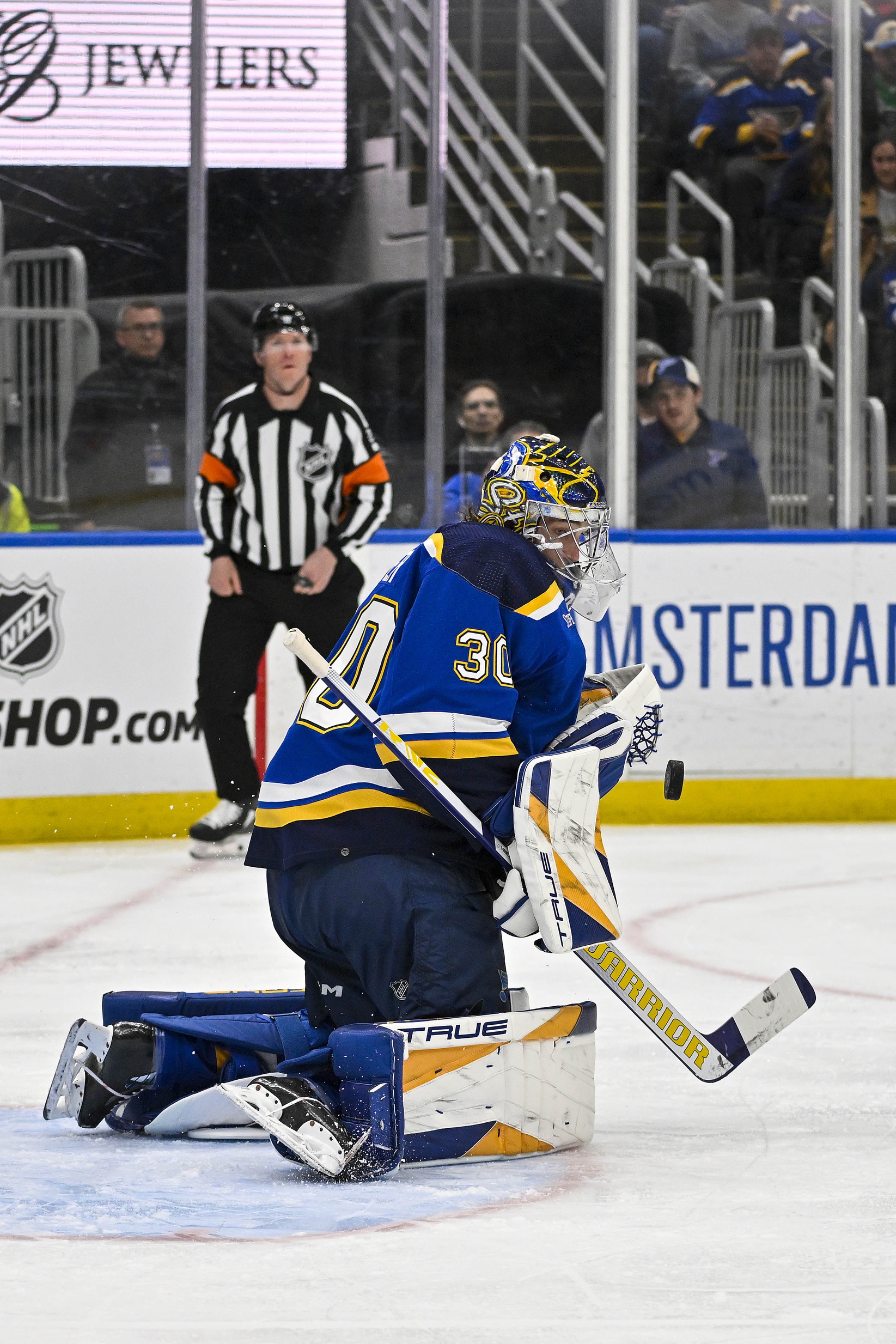 The offer sheet is interesting in theory. It’s not a great UFA market for goaltenders so if there’s a team that thinks Husso could be a better long-term option, then an offer sheet would make sense. Again, that’s really only in theory. Let’s look at last year’s offer sheet thresholds, numbers that will only be higher this summer. I can’t see the Blues letting him walk for a second-round pick so that means the offer would need to be higher than at least $4.58MM (which is probably closer to $4.8MM or so this summer) to get them to balk. Is there a team that would him that much on a five-year deal or less? (Anything more than that and the compensation cranks up further with the maximum divisor being five.) I like Hofer but I don’t think there’s a team willing to pay that much money plus a first-round pick and a third-rounder to get his services.
As for Ellis, this is his fourth professional season and the only one in which he hasn’t spent extended time in the ECHL. He’s having a nice year with AHL Springfield for sure but I doubt he’s done enough to make St. Louis management think he’s ready for full-time second-string duty with them. I suspect their plan is to have him as the starter for the Thunderbirds next season pending waivers.
Jakeattack: In your opinion, how much job security does Brunette have with Nashville? Last season, multiple players hit new career highs. This season? Well, everyone knows how this season has gone for multiple reasons.
GBear: Apart from GM Trotz being buddies with Andrew Brunette, can you see any way that Bruno doesn’t get fired at the end of this season?
It certainly has been an ugly year in Nashville, hasn’t it? Even if you expected that the team wouldn’t be as good as the group that went on a massive point streak to go from dead in the water to playoff spot, the thought was that some of their key additions over the summer – Steven Stamkos, Jonathan Marchessault, and Brady Skjei – would at least be enough to offset that, keeping them squarely in the playoff mix. Instead, they’ve already been mathematically eliminated (only one of three teams with that fate) and finishing 30th overall is the probable outcome at this point.
Here’s the question that I’m pondering. Last year was a year where everything went right in the second half and this season has been one where pretty much nothing has gone right. Can that happen two years in a row or are we likely to see a bounce-back from several players? I’m inclined to think it’s the latter which could work in Brunette’s favor.
Brunette is only in his third season as an NHL head coach but even with how things have gone this season, his teams have played to a .587 points percentage which is among the higher numbers among NHL coaches. Looking at it from afar, if Trotz believes in Brunette’s limited track record and thinks that things can’t go so poorly again next year, I could see a scenario where he stays.
There’s also the matter of his contract, which has two years plus an option remaining on it. If Trotz thinks that next season could be another transition type of year where they might not be a playoff contender, the inclination may be to give him another year to see how things go and avoid having two pay two head coaches for two years. And if things don’t go well early next season, they could easily pivot and make the move at that time.
Do I think that Brunette should feel quite secure in his job for next season? No; any time that things go that badly, a coach can’t feel too secure in his future. But honestly, I wouldn’t be shocked if he is back behind the bench next season.
PyramidHeadcrab: What are some notable examples of players that have gone from so-so to nearly elite after being traded to the right team?
I feel like we’ve seen a few examples in recent years, but it’s always fun to think a 3rd liner from Pittsburgh could become a playoff-defining top-liner on, say, Calgary.
I can think of a couple via the trade route but more from other routes. On the trade side, Chandler Stephenson went from a fourth-line depth piece in Washington to a two-time 60-plus-point player in Vegas and while he probably won’t get there this season with Seattle, he’s on pace to surpass 50 at least. The other is Sam Bennett. With Calgary, he showed some flashes of being an impactful power forward but by the end of his time there, he was a third-line winger with a point total in the 20s. Meanwhile, in Florida, Bennett is now a full-time top-six center, notching at least 40 points a season, and is about to become one of the most sought-after players on the open market in July should a pricey extension not be reached by then.
Florida also comes to mind about some of the other routes as well. Carter Verhaeghe was a fourth liner in Tampa Bay, went to the Panthers in free agency, and has a pair of 70-point seasons under his belt since then while becoming a top-six fixture as well. Going back a few years, Marchessault followed a similar path, going from a fourth liner with the Lightning to a 30-goal guy in Florida before being moved to Vegas where he produced even more. If we look at waivers, Gustav Forsling couldn’t crack Carolina’s roster, was claimed off waivers (by Florida, yet again), and has become an all-situations top-pairing player. (If you’re looking for a reason why the Panthers are a consistent contender, finding these under-the-radar gems is a huge part of that.) It looks like Dylan Holloway (offer sheet) should be part of this category as well after going from being a depth piece with Edmonton to a top-50 scorer in St. Louis.
frozenaquatic: Can a coach be fired in the middle of a game? Asking for Laviolette.
I don’t think there’s anything in the rules that says it can’t happen. If a player can be traded mid-game (as Jakob Pelletier was not long ago, for example), a team could make an in-game coaching change. But I wouldn’t expect to see that happen. As for Peter Laviolette’s future with the Rangers, that’ll probably be decided on at the end of the season; it’d be surprising (though not unprecedented) for a team still in the playoff mix to make a coaching change this late in the year.
Photo courtesy of Jeff Curry-Imagn Images.
Will Mitch Marner Reach Free Agency This Summer?
Toronto Maple Leafs forward Mitch Marner is just three months away from becoming an unrestricted free agent, and with each passing day, the likelihood that he will test the market increases. But will he choose to leave the only NHL team he has ever played for? Only Marner knows the answer, but many factors are involved in this complicated situation. Many people will point to earning potential as the main factor in why Marner might test free agency, but there are personal and professional reasons why he might feel the time is right to look elsewhere.
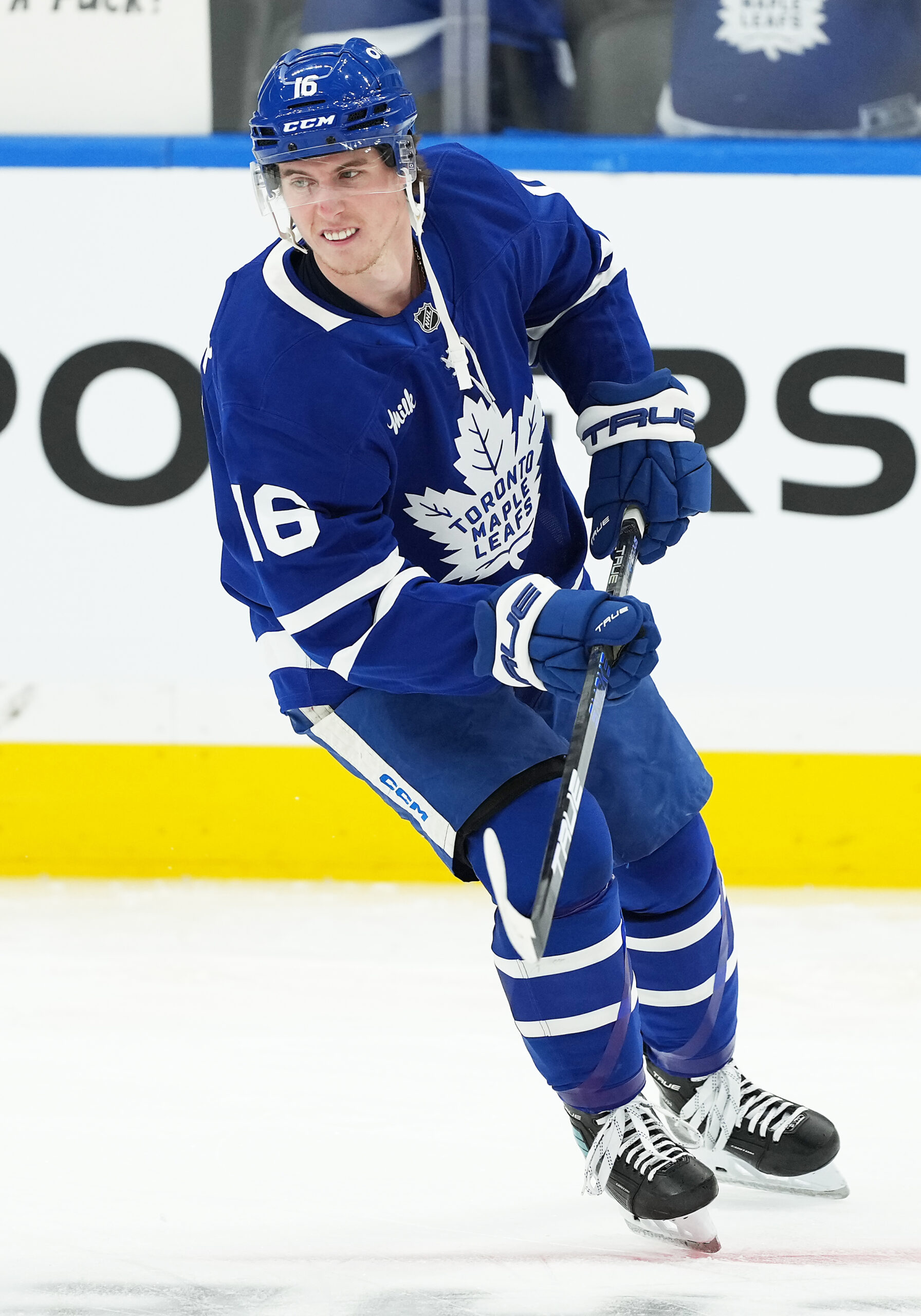
As Marner showed during his last contract negotiations in 2019, he and his agent were willing to be patient in getting their number. Those negotiations spilled well into September before the 27-year-old signed a six-year, $65.358MM contract extension. An interesting note from those discussions was that Marner received several offer sheets from other teams at the time but did not entertain those offers as he prioritized staying with Toronto. This time around, Marner can get any NHL team involved in negotiations if he waits until July 1, which should lead to loftier contract demands on a longer term. It’s worth noting that Marner’s agent, Darren Ferris, has a history of bringing clients right to the deadline when negotiating (see William Nylander).
Marner’s current AAV of just under $11MM represented 13.37% of the NHL salary cap at the time, and with the rising cap, it would not be unreasonable for him to ask for the same number as a UFA. If he did, he would be looking at a contract with a cap hit of $12.77MM, a tick lower than teammate Auston Matthews‘ cap hit of $13.25MM. For context, Matthews’ contract represented 15.07% of the salary cap when he signed it. Marner would be taking a smaller slice of the pie.
Matthews and Nylander have both signed pricey extensions. While Marner is undoubtedly a game-changer, it would be tough to commit to those three once again, given that they haven’t advanced past the second round of the playoffs, which hinders salary cap flexibility. There is a fair argument that you pay your stars and figure out the depth as you go, but eventually, those depth players also need to get paid, as Toronto has found out over the last few years. The Maple Leafs don’t have a lot of help coming from their farm system, evidenced by their recent ranking as the 28th-best prospect pool in the NHL (per Scott Wheeler of The Athletic), which means they will need to make trades or sign players in free agency to fill out their depth. If they have tied up 40% of their cap space in three players, adding free agents or taking chances on players who underperform but have upside will become increasingly challenging – not to mention re-signing pending RFA Matthew Knies or former captain John Tavares.
Marner is from and knows the fishbowl that is the Greater Toronto Area. When the team wins, the players are treated as heroes; however, the opposite can be true when the team drops games. The last sentence is especially relevant in the playoffs, where the Maple Leafs have suffered through years of postseason disappointments. If Toronto endures another early playoff exit, Marner could be tempted to leave Toronto and try to win elsewhere. In the past, Marner has dealt with heavy criticism from fans and media in Toronto, which could push him to seek a less intense market or one where he could enjoy some anonymity away from the rink. The pressure of playing in a Canadian market is well documented, and it can create fatigue, particularly for a player who has spent his entire career in that environment.
Former Maple Leafs general manager Kyle Dubas was close to Marner in Toronto. Now Brad Treliving has taken over with Dubas in Pittsburgh, and it’s hard to say whether Marner will have the same loyalty during negotiations. Some folks in Pittsburgh have speculated that Dubas and the Penguins will make a run at signing Marner this summer, but given where Pittsburgh is in their retooling, it’s hard to see them adding a player of Marner’s caliber just yet. The Penguins are still a few years from being ready to contend for a playoff spot and likely don’t look desirable to Marner outside of his relationships with Dubas and Penguins captain Sidney Crosby.
Yet Marner has spent his entire professional career with the Leafs and his whole playing career in Canada. Marner played junior hockey in nearby London and has not lived more than a few hours from the GTA. Although athletes often move away from their hometowns, they typically don’t begin this process when nearing 30. This is not to say it doesn’t happen; it’s just unusual.
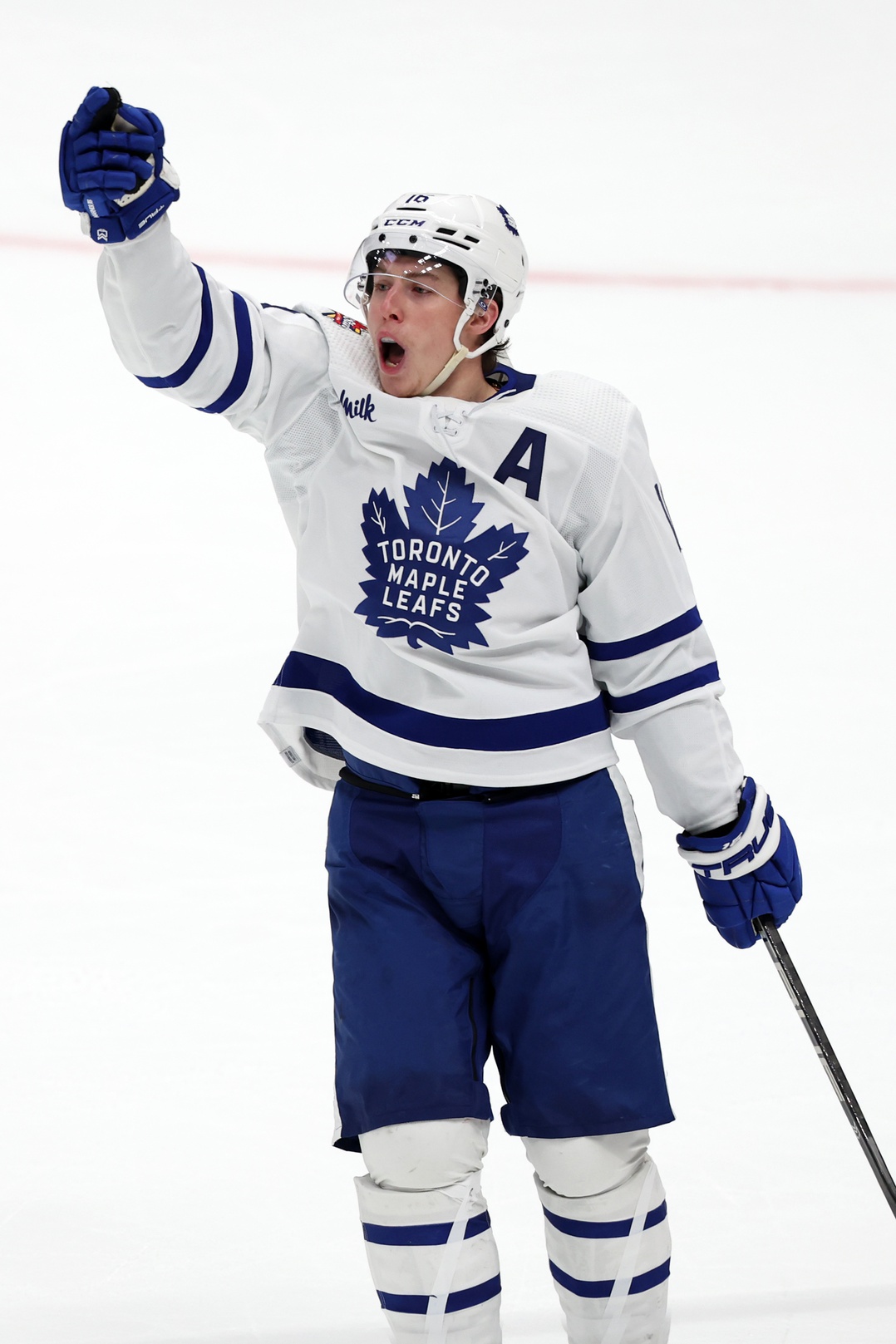 With a rising cap, plenty of teams can afford Marner, but how many can offer a better situation than Marner currently has in Toronto? Sure, Buffalo and Pittsburgh could afford him, but the Sabres haven’t made the playoffs in nearly a decade and a half, and Pittsburgh is retooling and likely won’t field a winner for another few years.
San Jose could make a compelling pitch, as Marner would have a chance to play with Macklin Celebrini and Will Smith. But Marner already has talented former top picks to play with and has the added comforts of home and familiarity. Carolina will be another interested party, but it seems like an unlikely destination, given that Marner reportedly turned down a trade to the Hurricanes a few weeks ago.
Toronto remains very much inside its competitive window with a core that still includes Matthews, Nylander, Morgan Rielly and company. And while the core has not had much playoff success, winning just one series ever, they have been a terrific regular season team for nearly a decade. The great teams almost always suffer heartbreak in the postseason before they figure out how to win when it matters, and the Maple Leafs could be a team that does that if Marner remains along for the ride. Toronto has most of their squad already locked in to return next season and could get a couple of runs at the Stanley Cup with this group.
Toronto has arguably overpaid all its stars over the past decade and has struggled to get players to take a discount to remain with the Maple Leafs. In fairness to Toronto’s management, if the Maple Leafs didn’t step up and pay their stars, someone else would have. The case is the same with Marner; if he reaches the market, another team will meet his asking price. It is the inevitability of unrestricted free agency, and the Maple Leafs will have to get close to Marner’s price if they want to keep him.
Plenty of NHL players have found out the hard way that the grass isn’t always greener with a new team, and those free-agent dollars can sometimes become an anchor that brings a player down. The familiarity of playing in your hometown for tens of millions of dollars and not having to start over in a new city feels as though it should be enough to keep Marner in Toronto. So, too, does the personal side of things, as players prefer playing closer to home as they age and begin having families.
Still, each passing day ultimately narrows the possibility of a return just a little bit more. However, the Maple Leafs remain the favorite to sign Marner long-term, as the allure of chasing a Stanley Cup with his hometown team will be too much to pass up.
Photo courtesy of Nick Turchiaro-Imagn Images.
PHR Mailbag: Playoffs, Levi, Rangers, Flames, Kantserov
Topics in this edition of the PHR Mailbag include a look at what has been a busy season for the Rangers on the trade front and what’s potentially to come, assessing Calgary’s notable trade from earlier in the year, and more. If your question doesn’t appear here, check back in one of our next two columns.
Cla23: If the playoffs started today which teams are Paper Tigers?
Assuming we’re not talking about the Wild Card teams, let’s look at the ones whose spots are more secure. In the East, I don’t trust the Metropolitan Division outside of Washington (and even then, with it being their first real playoff run in a while, an upset wouldn’t shock me). Carolina’s underlying numbers are always strong but they typically struggle to score in the postseason and are a weaker team on that front compared to the past. I think they’ll get by New Jersey whose injuries are probably going to be too much to overcome but as a perceived contender in past years, the Hurricanes won’t get over the hump. I could see any of the top three teams in the Atlantic coming out of that division so I can’t nitpick on them too much.
Out West, I still have some doubts about Winnipeg. Connor Hellebuyck is a great goalie but teams have figured him out in the playoffs the last couple of times. They still don’t have a true second center which is probably going to hurt as well. On paper, I think they’re a weaker team than Dallas and Colorado and the Jets will have to go through one of them. A long run for Winnipeg would be great for that market and core group but I’d be surprised if it happened. In the Pacific, I’m leery about Edmonton’s chances of making it out of the division let alone the conference again. I think they’ll get past Los Angeles assuming that matchup holds but their goaltending remains a big question mark, as does the secondary scoring. Can their top group carry them again? Sure. Will they? I’m not so sure about that.
The Duke: Is Devon Levi an AHL lifer?
Things certainly haven’t gone great for Levi this season. Originally expected to see a lot of time with Buffalo and maybe a bit of time with AHL Rochester to get a few more games in, it instead has been the exact opposite. Levi has a 4.12 GAA with a .872 SV% in nine appearances with the Sabres this season which played a big role in them going and reclaiming James Reimer from Anaheim early in the year. That brings his overall NHL numbers to a 3.29 GAA and a .894 SV% in 39 games. It’s certainly fair to say that things haven’t gone as planned for him so far.
But there is some reason for optimism with Levi still. His numbers with AHL Rochester last year were stellar. His numbers this season are reasonably close (a little lower of a GAA and SV%) and are still well above league average. Yes, he’s playing behind a more veteran-laden team down there that’s good defensively but that tells me he can still bring something to the table. People have been saying this for year but one day, Buffalo is going to be good again. A lot will come from their core young blueliners getting better which just takes time and reps. In a year or two when they’re better, it wouldn’t shock me if Levi performs a lot better for the Sabres.
Levi is still 23 and when you consider his first pro season was only a handful of games, it’s really only his second full professional campaign. Goalies generally have a longer and more gradual development curve; Levi only has 59 AHL games under his belt so far when lots of good prospects get double that. There’s still up to two years of waiver exemption left (though that will end once he gets into 21 more NHL games) so there’s still a fair bit of time for him to improve.
If it was me in charge, I’d be looking for another one-year stopgap option between the pipes to back up Ukko-Pekka Luukkonen. Levi needs plenty of playing time and giving him that behind a defense that’s still going through some growing pains might do more damage development-wise. A year or two from now, both he and Buffalo’s back end will be more ready and I expect he’ll fare better at that time. Levi might not be their long-term starter of the future but I still think he’s going to be at least a capable NHL netminder down the road.
Schwa: Curious to hear your thoughts on Chris Drury’s attempts to ‘retool’ the NYR roster. I think he certainly blew up the locker room chemistry, but obviously cleared some bad contracts that he inherited.
– Do you see Kreider and maybe Mika (if he waives trade protection) moving out this summer? Seems to further prioritize cap at risk of further damage to the room? What kind of trade value do you see here – or is this an attach an asset to rid the contract?
– Also, thoughts on the D extensions, I feel Borgen has been better than expected, while Urho and Soucy seem to maybe block some AHL prospects/Zac Jones. Is K’Andre going to see an extension as well? Perhaps price dependent?
The ruthlessness that Drury showed unloading those bad contracts (Barclay Goodrow and Jacob Trouba) was something we rarely see. It accomplished the objective of getting them off the books without any lingering effects which was good but it’s also ruffled some feathers, so to speak. It wouldn’t shock me if that has played a role in some of their struggles, especially in the first half of the season but that’s obviously impossible to quantify.
The return for Trouba was pretty light but with freeing up the cap space being the key objective, it looks better in that lens. The Kaapo Kakko trade was pretty underwhelming but getting someone that’s going to turn into a long-term piece makes that look a little better. I didn’t mind the J.T. Miller trade from a value perspective although being a buyer with where they were in the standings is a bit odd. But when the opportunity presents itself to get an impact player, you can’t turn it down thinking it’s just not the right time. The return for Ryan Lindgren felt a tad light but if Juuso Parssinen turns into a decent piece, that can still be turned around. I liked the Reilly Smith return a lot while the Carson Soucy trade was a bit of a head-scratcher. All in all, it’s kind of a mixed bag. Lots of change, a definite turn in the types of players they added, and in the end, they’re still largely mediocre.
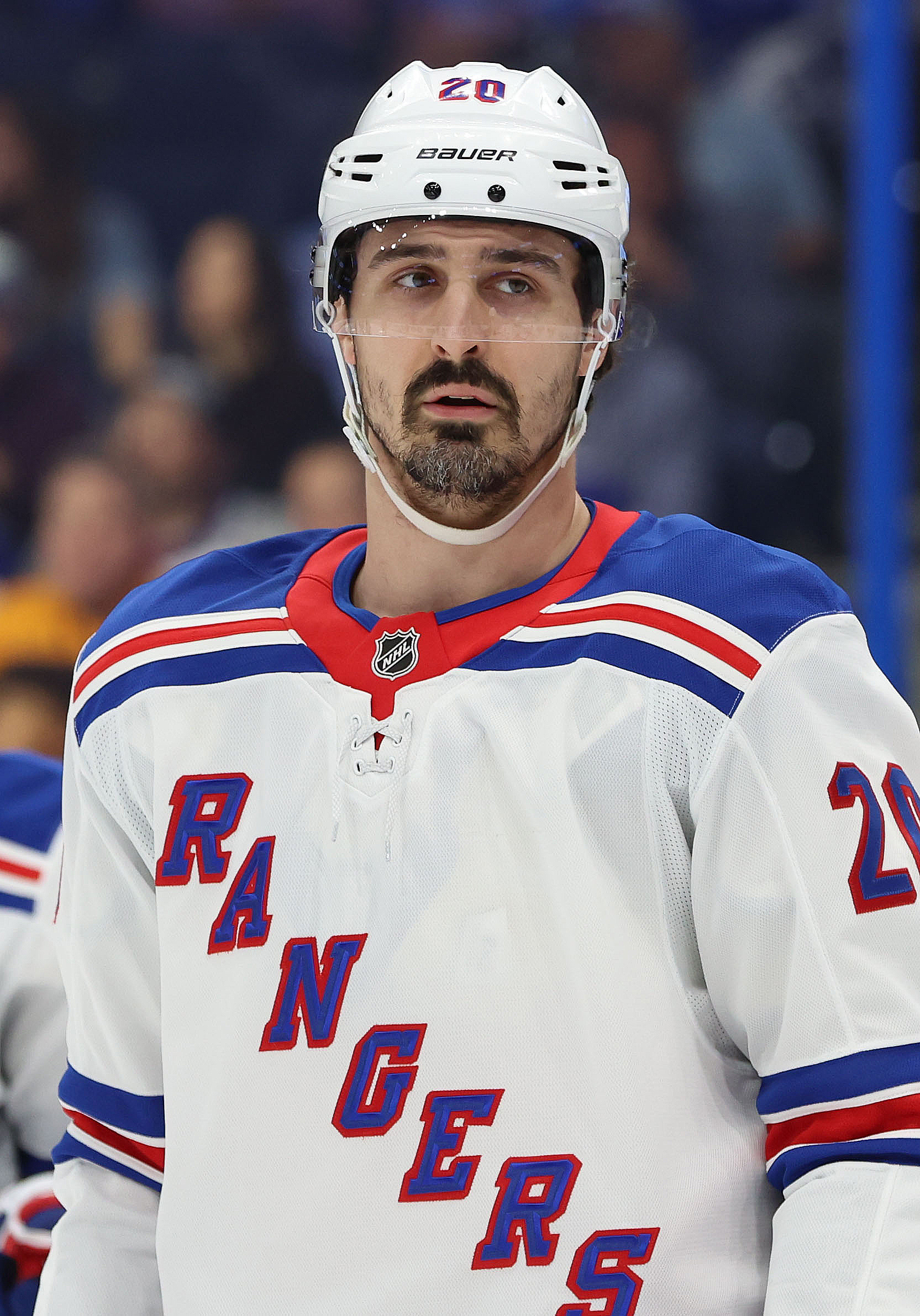 Chris Kreider has two years left on his contract after this one with a $6.5MM AAV. He’s not having a particularly good year but barring injury, he’ll pot 20 goals once again and we all know his scoring prowess from the previous few seasons. Someone’s going to think a change of scenery can spark him. Considering that he can play with a bit of an edge still, I think there’s a Trouba-like market for him. Someone will take the contract on and New York could get a small something in return while getting out of the entirety of the deal. But if they wanted to pay that down for a couple of years, I think they could get a decent prospect for Kreider’s services. They won’t need to attach an asset to move him.
As for Mika Zibanejad, that one’s a tougher call. He has three years at $8.5MM per season left which is a bit of a bigger ticket to take on, especially with his production dipping considerably as well. That third year is the hard part as we saw with Trouba that teams will take on two for cheap. But it’s not a deep center market in free agency and there will be teams who miss out. Would one take themselves out of the mix early to take on Zibanejad for next to nothing? I think a few might. But Zibanejad has the hammer here with a no-move clause that takes doing what they did with Goodrow off the table. If he limits his market to only a handful of teams that aren’t the best of fits, New York might have to retain some money, attach an asset, or take a multi-year deal in return to balance the money. The path to move him will be trickier.
As for the defense extensions and acquisitions, that’s a mixed bag. I like Will Borgen but I don’t like five years at $4.5MM per season for him. With the year he’s having, I can’t see him beating that if he went to free agency. He’s a useful player in the right role and good righties are hard to get but that extension seemed like too much, too soon. Urho Vaakanainen for two years at $1.55MM also feels a little high for someone who is more of a reserve or depth player but it’s not terrible. And adding Soucy gives them a pricey third-pairing option that cuts into money they will need to re-sign K’Andre Miller this summer. I do expect him to get a one-year deal around his $4.646MM qualifying offer as his trade market will be weakened after a rough year. He’s two years away from UFA eligibility so a bounce-back showing in 2025-26 could net him the long-term agreement it looked like he’d be landing not that long ago.
uvmfiji: Frost/Farabee trade. Woof.
So, let’s check in on the two newest Flames, shall we? The results, well, haven’t been pretty. Frost has two goals and four assists in 18 games while Farabee has three goals and two helpers in that same stretch. For players who have shown themselves to have some offensive upside in the past (Farabee is only a year removed from tallying 50 points while Frost had over 40 points the last two years before this), it’s fair to say that Calgary was hoping they’d be able to contribute more than they have so far.
The fit with how Ryan Huska has the Flames playing is a bit of a question mark. Calgary is a team that plays low-event hockey with lots of attention to detail on defense and positioning. With a roster that isn’t the most talented on paper, that makes sense too. But those two players weren’t exactly known for that with the Flyers so now they’re trying to learn a new system and play a little differently than they were before. Accordingly, some early struggles may be disappointing but they’re also understandable.
I’d still do that trade from Calgary’s standpoint without hesitation today. Yes, there’s risk in three more years at $5MM for Farabee but they have plenty of cap space with the Upper Limit rising quickly and if he can get back to his 2023-24 form, they’ll make out quite well. Frost has another RFA year left and probably gets a short-term deal that buys a season or two of eligibility at a price tag that isn’t going to be a drag on anything the Flames want to do in the short term. To get that for a pricey rental whose standalone value was quite limited (Andrei Kuzmenko), a player who cleared waivers at the beginning of the year (Jakob Pelletier), and a second-round pick, that’s still solid work from an asset accumulation perspective. Meanwhile, we’ll see what the Flyers have planned for that extra cap space this summer.
Unclemike1526: What are the realistic odds that the Blackhawks can get Kantserov to come over from Russia next year? Asking for whoever the Hawks hire for a coach next year.
The realistic odds here would be slim to nil. Roman Kantserov is signed through next season with Metallurg Magnitogorsk of the KHL. Unlike most international federations, there isn’t a transfer agreement between the NHL and Russia so it’s not as if Chicago can sign Kantserov to an entry-level deal that supersedes the KHL one and pay a prescribed fee.
Now, if Metallurg was to release Kantserov early, then he could go and sign with the Blackhawks. But he’s their second-leading scorer despite missing 21 games due to injury; he has 13 goals and 25 assists through 47 outings. Knowing that, what would be their motivation to release him early?
Players can buy their way out of a contract but NHL teams aren’t able to contribute to that while Kantserov is obviously capped at what he can earn on an entry-level pact with Chicago so it’s not like the Blackhawks could up his offer high enough to cover the buyout that way. So this doesn’t seem like a viable option either. Maybe they work out something that says if he doesn’t make the NHL roster, he has to go back to the KHL (a European Assignment Clause); that’s about the only semi-realistic option there is. But again, what incentive does Metallurg have to agree to that?
Realistically speaking, the earliest the Blackhawks will probably see Kantserov is the 2026-27 season. KHL contracts now expire at the end of May and with all due respect to Chicago’s fans, I don’t think there’s much of a chance they’ll be playing into June in 2026. More patience will be needed before he can come to North America.
Photo courtesy of Kim Klement Neitzel-Imagn Images.
Submit Your Questions For The #PHRMailbag
It has been a busy last month or so around the hockey world. The 4 Nations Face-Off came and went with plenty of success while the trade deadline featured several swaps of note with some teams willing to significantly shake up their rosters. Now, the stretch run is upon us with several close battles shaping up for a playoff spot.
With all that in mind, it’s a good time to open up the mailbag once again. Our last call for questions yielded enough for three separate columns. The first focused primarily on the 4 Nations tournament as well as Kevyn Adams’ future as the GM in Buffalo. Among the topics in the second were offer sheets and plenty of trade deadline talk. Meanwhile, the third included a discussion on Chicago’s goaltending situation (which has since been simplified a bit), the old Tagging Rule, and more.
You can submit a question by using #PHRMailbag on Twitter/X or by leaving a comment down below. The mailbag will run on the weekend.
PHR Live Chat: 3/19/25
PHR’s Josh Erickson will host his weekly live chat today at 3:00 p.m. Central. Use this link to join the session and start getting your questions in.
Penguins Prospect Ville Koivunen Breaking Out In Second Half
The NHL season has not gone according to plan for the Pittsburgh Penguins. They have the third-oldest lineup in the league, but land in the bottom-10 of the standings with just 13 games left on the schedule. Staff and fans alike have started to turn their attention towards the future, evidenced by the team’s sale of Anthony Beauvillier, Luke Schenn, and Cody Glass for future assets at this year’s Trade Deadline. The moves have trained a bright spotlight on the Penguins’ deep prospect pool – and lucky for hopeful fans, wing prospect Ville Koivunen has shined.
Koivunen has been one of the hockey world’s hottest players in 2025. Playing for the AHL’s Wilkes-Barre/Scranton Penguins, he has amassed 31 points in 31 games since the calendar turned over. That hot streak gives Koivunen 53 points in 58 games this season – most among any AHL rookie and fifth in the league as a whole. No other rookie ranks in the top 15 of scoring. Koviunen has blossomed into a star producer, on the back of a confidence that seems to grow every single game.
The Penguins certainly knew to have high hopes for Koivunen. He was the primary future asset in the 2024 Trade Deadline move that sent star scorer Jake Guentzel to the Carolina Hurricanes. Pittsburgh also acquired NHL winger Michael Bunting, fellow prospects Vasiliy Ponomarev and Cruz Lucius, and a second-round draft pick in the trade. But with Bunting traded to the Predators one year later and Lucius missing the season to injury – it has been up to Koivunen and Ponomarev to prove general manager Kyle Dubas didn’t blunder in dealing away his 40-goal scorer.
That’s certainly a lofty bill to place on a 21-year-old forward. But Koivunen has answered the bell and then some. He’s found his AHL spark after spending the last three seasons dominating ice time with the Liiga’s Karpat, part of Finland’s top pro league. Koivunen scored 29 points in 53 games of his rookie Liiga season in 2021-22. That mark set him as the 20th-highest scoring U19 player in Liiga history behind a list full of NHL talent – including Joel Armia, Sami Vatanen, and Artturi Lehkonen directly ahead of him. Koivunen nearly matched that total again in the next year, netting 28 points in 52 games. But his struggle to cross the 30-point threshold was matched by just one goal in 12 AHL games at the end of the season.
Koivunen returned to the Liiga at the start of last season, with many holding their breath around his long-term scoring upside. Even as he started to find his footing at a pro level – netting 14 points in 20 games to start the season – fans still held back. But Koivunen’s wheels only got faster. He went on a spree of multi-point games through February and March of the 2023-24 season, ultimately ending the year with 56 points in 59 games – the most of any U22 Liiga player since 2000.
A breakout in Finland wasn’t going to be convincing on it’s own – but Koivunen is now nearly lapping his totals in the AHL. His ability as a spot shooter and fast-break scorer defined his draft-year excitement. He earned attention as a first-round candidate in the 2021 class, and ultimately fell to the Carolina Hurricanes with the 51st overall selection. Those defining traits have continued to grow in the years since – Koivunen has become a great sniper, with the ability to pick corners while flat-footed or moving at full speed. But, more excitingly, Koivunen has gone to lengths to round out his style. He’s become far more physical and confident when driving into space. And he’s found his poise as a playmaker – taking the time to slow down when entering the zone, and using strong stickhandling and skating to get the puck into a passing lane.
There are certainly long strides between Koivunen and the NHL. But he’s become a lethal asset in the offensive zone. His shot can’t be left alone, but his ability to connect with his teammates is what has sparked a near point-per-game season. That ability held strong in the difficult move from Liiga to AHL, and should it hold through to the NHL – it’d be hard to think Koivunen couldn’t continue to dominate the scoresheet next on a top-six NHL line. After years of finding his footing, growing his role, and adapting his skills to a pro scene – Koivunen has fully broken out. He’s scoring at a point-per-game pace since the start of 2025, with no signs of slowing down as Wilkes-Barre/Scranton approaches a confident playoff bid. Koivunen hasn’t yet received the first in-season NHL call-up of his career – and at this rate, it appears he’ll be in the minors through the end of the season. But with a strong playoff performance, he could enter Pittsburgh’s 2025-26 training camp with his sails at full mast.
Salary Cap Deep Dive: Toronto Maple Leafs
Navigating the salary cap is one of the most important tasks for a front office. Teams that can avoid total cap chaos by walking the tightrope of inking players to deals that match their value (or compensate for future value without breaking the bank) remain successful. Those that don’t often see struggles and front office changes.
PHR is looking at every NHL team and giving a thorough look at their cap situation for the 2024-25 season. This will focus more on players who are regulars on the roster versus those who may find themselves shuttling between the AHL and NHL. All cap figures are courtesy of PuckPedia. We’re currently covering the Atlantic Division, next up is the Maple Leafs.
Toronto Maple Leafs
Current Cap Hit: $90,148,437 (over the $88MM Upper Limit)
Entry-Level Contracts
F Matthew Knies (one year, $925K)
Knies is quickly looking like one of the better-value picks of the 2021 draft. He debuted for the Leafs late in the 2022-23 season after his sophomore campaign at the University of Minnesota and has since skated almost exclusively in top-six roles. He has 76 career points in 139 games, second in the draft among non-first rounders behind the Lightning’s J.J. Moser. Luckily for Toronto, his strong performance won’t activate any performance bonuses in his contract – all of his ELC compensation is through base salary and signing bonuses. However, that will incentivize Knies to push for more money in contract negotiations this summer after agreeing to limit his earning potential through his first few NHL seasons.
Signed Through 2024-25, Non-Entry-Level
D Jani Hakanpää ($1.47MM, UFA)
F Pontus Holmberg ($800K, RFA)
F Steven Lorentz ($775K, UFA)
F Mitch Marner ($10.903MM, UFA)
F Max Pacioretty ($874K, UFA)
F Nicholas Robertson ($875K, RFA)
F John Tavares ($11MM, UFA)
After his 2023-24 campaign with the Stars ended prematurely due to a knee injury, the Leafs picked up Hakanpää as a cheap shutdown option on the right side (but not without some lengthy drama). Lingering knee issues limited him to just a pair of appearances back in November, though, and it’s all but certain he won’t return this season. Holmberg likely doesn’t have a ton of room left to grow at age 26, but the versatile Swede has been a nice fit in Toronto’s bottom six this season and has even been elevated to the second line with John Tavares on brief occasions. He’s averaging north of 13 minutes per game and is encroaching on his career high in points, so he’ll likely be brought back on a low-cost deal in the $1MM range.
Lorentz has been a nice pickup after a successful training camp tryout, appearing in nearly every game for the Leafs after serving as a frequent healthy scratch for the Panthers last year. He’s scored 14 points in 63 games while leading the team’s forwards with 156 hits, so it stands to reason they’ll try to bring him back on a sub-$1MM deal. Pacioretty, also a PTO pickup, seems like he’ll be one-and-done in Toronto after continued injury troubles have limited him to 13 points in 37 games, failing to hold onto a top-six job (and posting subpar defensive metrics when doing so). Robertson requested a trade last summer and, after it didn’t come to fruition, has seen his offensive production drop slightly from last year. He could be a non-tender option if the Leafs can’t find a taker for his signing rights.
The big fish are unquestionably the duo of Marner and Tavares. The former has had a spectacular campaign and still has a chance to finally crack the 100-point mark for the first time in his career, leading the Leafs in scoring with 80 points through 64 games. He’s also been Toronto’s most-deployed forward on the penalty kill this season at 2:16 per game. Easily the Leafs’ most valuable skater this season, no extension is imminent – especially after his name was thrown out in trade talks for Mikko Rantanen at the deadline. Pending his playoff performance, Toronto will likely need to step into the $13MM range annually on a max-term deal to keep him from looking elsewhere on the open market. Tavares is still chugging along with 56 points in 58 games in his age-34 season but is in line for a multi-million dollar pay cut next season, wherever he ends up. The former captain is open to continuing negotiations down the stretch and shouldn’t exceed the $8MM threshold on what’s likely to be a three-to-four-year pact.
Signed Through 2025-26
D Matt Benning ($1.25MM, UFA)
F Calle Järnkrok ($2.1MM, UFA)
F Scott Laughton ($1.5MM, UFA)
F Bobby McMann ($1.35MM, UFA)
F Ryan Reaves ($1.35MM, UFA)
G Anthony Stolarz ($2.5MM, UFA)
Benning and Reaves won’t be brought back at the end of their deals – if they’re even still in Toronto at that point. The former hasn’t suited up for the Leafs after they acquired him from the Sharks early this season in the Timothy Liljegren trade. Toronto waived him shortly after the deal, and after there were no takers on the wire, they sent him to their AHL affiliate. The 30-year-old righty has played just 21 NHL games since the beginning of last year and has just eight points in 33 AHL games. Reaves, a last-of-his-kind enforcer, hasn’t captured an everyday role and even landed on waivers last week to open up some pre-deadline financial flexibility.
Järnkrok was a solid depth pickup for the Leafs in free agency in 2022, although injuries have significantly hampered his availability over the past two years. He just got back into the lineup this month after missing most of the year following groin surgery. He’ll be 34 next summer and could likely replicate his current AAV, likely even with a slight raise amid a rising cap, on a short-term deal. Toronto just picked up Laughton at the deadline from the Flyers, who are retaining half of his full $3MM cap hit. The consistent 30-to-40-point center likely won’t be in line for a pay cut barring a disastrous 2025-26 outing.
McMann and Stolarz are the two names likely to see considerable increases on their next deals. The former is a late bloomer, but now at age 28 has emerged as a legitimate top-nine piece. He’s scored at a 23-goal pace per 82 games over the last two seasons and could conceivably sniff the $4MM mark on his next deal. Stolarz, who will set a new career-high in starts this year and is tied for second in the league with a .920 SV%, stands to double his cap hit on a short-term deal considering how quickly salaries for 1A tandem netminders are rising.
Signed Through 2026-27
D Simon Benoit ($1.35MM, UFA)
D Brandon Carlo ($3.485MM, UFA)
F David Kämpf ($2.4MM, UFA)
D Philippe Myers ($850K in 2025-26 and 2026-27, UFA)
None of the players in this group are true impact pieces outside of potentially Carlo, who the Leafs managed to snag from the rival Bruins at the deadline with a decent chunk of salary retention despite there being two years left on his deal. A longtime bona fide top-four shutdown righty in Boston, he’s the Hakanpää upgrade they were looking for and will remain under contract for Toronto at an under-market-value price. Whether his level of play holds up enough for a pay rise at age 30 in 2027 remains to be seen.
Benoit and Myers’ term means the Leafs don’t have to worry about building out their depth defense. Both will likely alternate between bottom-pairing usage and nights in the press box for the remainder of their deals. Kämpf gives Toronto security at the fourth-line center slot, but that’s a steep price tag for his meager offensive production (10 points in 52 games), even considering the pending salary cap rise and his shorthanded deployment. It’s not expensive enough to truly be classified as an anchor deal, but his deal sticks out as an inefficiency on the Leafs’ books.

List Of Prospects With Signing Rights Expiring June 1
Every year, most NHL teams will see at least one prospect vanish from their reserve list on June 1. That’s the date stipulated by the league’s transfer agreements with the Canadian Hockey League and European leagues, not including the Kontinental Hockey League or the Swiss National League, that prospects drafted from those leagues will become free agents if not signed. For CHL players, that date is two years after they’re drafted, at which point they can re-enter the draft or declare free agency. For European players, it’s four years after their draft date.
A few teams have been busy removing players from this list over the past two weeks. As of March 1, players are now eligible to sign entry-level contracts that don’t begin until the 2025-26 campaign. As such, most players listed here are likelier than not to lose their affiliation with their draft team.
That means this year, CHL players selected in the 2023 draft will hit free agency and can declare for the 2025 draft if not signed by July 1. Meanwhile, unsigned players still in European professional leagues who were initially eligible for the 2021 draft will see their exclusive signing rights expire. Here’s the full list of those affected players, with some help from PuckPedia:
Anaheim Ducks
D Vojtech Port (2023, 6-161)
D Konnor Smith (2023, 4-97)
F Carey Terrance (2023, 2-59)
Boston Bruins
D Jonathan Myrenberg (2021, 5-140)
Buffalo Sabres
F Viljami Marjala (2021, 5-159)
F Ethan Miedema (2023, 4-109)
F William von Barnekow (2021, 6-161)
Calgary Flames
F Jaden Lipinski (2023, 4-112)
Carolina Hurricanes
G Patrik Hamrla (2021, 3-83)
G Nikita Quapp (2021, 6-187)
Chicago Blackhawks
F Marcel Marcel (2023, 5-131)
F Milton Oscarson (2023, 6-167)
F Alex Pharand (2023, 4-99)
F Victor Stjernborg (2021, 4-108)
Colorado Avalanche
F Maros Jedlicka (2023, 7-219)
Columbus Blue Jackets
F Tyler Peddle (2023, 7-224)
F Martin Rysavy (2021, 7-197)
Dallas Stars
F Brad Gardiner (2023, 3-79)
F Albert Sjöberg (2021, 7-207)
G Arno Tiefensee (2023, 5-157)
Detroit Red Wings
F Liam Dower-Nilsson (2021, 5-134)
Edmonton Oilers
G Nathaniel Day (2023, 6-184)
Florida Panthers
D Luke Coughlin (2023, 6-191)
F Jakub Kos (2021, 6-184)
Los Angeles Kings
D Matthew Mania (2023, 5-150)
Minnesota Wild
D Kalem Parker (2023, 6-181)
Montreal Canadiens
G Quentin Miller (2023, 4-128)
G Joe Vrbetic (2021, 7-214)
Nashville Predators
G Juha Jatkola (2023, 4-121)
D Dylan MacKinnon (2023, 3-83)
D Anton Olsson (2021, 3-72)
New Jersey Devils
F Cole Brown (2023, 6-164)
New York Islanders
F Justin Gill (2023, 5-145)
F Aleksi Malinen (2021, 6-189)
New York Rangers
none
Ottawa Senators
F Oliver Johansson (2021, 3-74)
Philadelphia Flyers
D Matteo Mann (2023, 7-199)
D Carter Sotheran (2023, 5-135)
D Brian Zanetti (2021, 4-110)
Pittsburgh Penguins
F Cooper Foster (2023, 6-174)
San Jose Sharks
F Theo Jacobsson (2021, 6-177)
Seattle Kraken
D Kaden Hammell (2023, 5-148)
F Andrei Loshko (2023, 4-116)
St. Louis Blues
D Matthew Mayich (2023, 6-170)
Tampa Bay Lightning
F Ethan Hay (2023, 7-211)
Toronto Maple Leafs
none
Utah Hockey Club
D Justin Kipkie (2023, 5-160)
G Rasmus Korhonen (2021, 4-122)
Vancouver Canucks
F Lucas Forsell (2021, 7-201)
D Hugo Gabrielson (2021, 6-169)
Vegas Golden Knights
D Artur Cholach (2021, 6-190)
Washington Capitals
F Håkon Hänelt (2021, 5-151)
F Brett Hyland (2023, 7-200)
F Patrick Thomas (2023, 4-104)
Winnipeg Jets
F Connor Levis (2023, 7-210)
Flames’ Dustin Wolf Should Be Separating From Calder Trophy Pack
The 2025 Calder Trophy race is living up to every bit of the excitement it’s built up over the last few years. There are star options at every single position, with San Jose Sharks center Macklin Celebrini, Philadelphia Flyers winger Matvei Michkov, and Montreal Canadiens defender Lane Hutson receiving the most acclaim. But the focus on high-scoring skaters has left behind the focus that should be going to star Calgary Flames goaltender Dustin Wolf, as he nearly single-handedly blazes a rebuilding Flames to the postseason.
Wolf has been dazzling since the start of the season. He opened the year with a three-game win streak and .936 save percentage. By the end of December, Wolf had full claim over Calgary’s starter’s crease, and a fantastic 12-5-2 record and .914 save percentage to show for it. Even better, he’s managed to find a second gear since the calendar turned over. Wolf ranks ninth in the NHL with 10 wins, and sixth in save percentage with a .916, since January 1st. His statline has placed him in the company of potential Vezina Trophy candidates like Connor Hellebuyck, Logan Thompson, and Darcy Kuemper.
The performance is almost hard to believe. Wolf’s season-long .915 save percentage ranks sixth in the NHL this season – and marks the highest from a U24 starting goaltender since Jeremy Swayman managed the same total in 2021-22. At an age where the top echelon of goaltender begin to separate from the pack, Wolf has shown his ability to perform on a nightly basis.
Even better, he’s managed it behind a Flames roster that entered the season seemingly in the midst of a rebuild. Calgary is on the tail end of one of the biggest fire-sales in recent memory, shipping off each of Chris Tanev, Noah Hanifin, Jacob Markstrom, Andrew Mangiapane, Elias Lindholm, and Nikita Zadorov in and around the the 2023-24 season. That’s massive turnover – and forced big roles onto veterans that stuck around, like Rasmus Andersson and Nazem Kadri, and top youngsters, like Matthew Coronato, Connor Zary, and Kevin Bahl. The ensuing instability has shown in Calgary’s on-ice results. They’ve allowed the eighth-most shots-against per-game this season (29.2), and the highest expected goals-against per-60 (xGA/60) of any Western Conference team in the race for the playoffs (2.43) per MoneyPuck.
Despite the bombardment they face, Calgary has also allowed the 12th-fewest goals of any team in the league (181). Wolf’s consistency has willed the Flames to the Western Conference’s second Wild Card slot, even as they sit with a -20 goal differential (161-to-181). They’ve allowed the 12th-fewest goals in the league, with Wolf on track to record 50 starts in his rookie season.
It’s far harder to measure a goaltender’s value at a glance than it is to measure a skater’s. Hutson, Celebrini, and Michkov leading NHL rookies in scoring with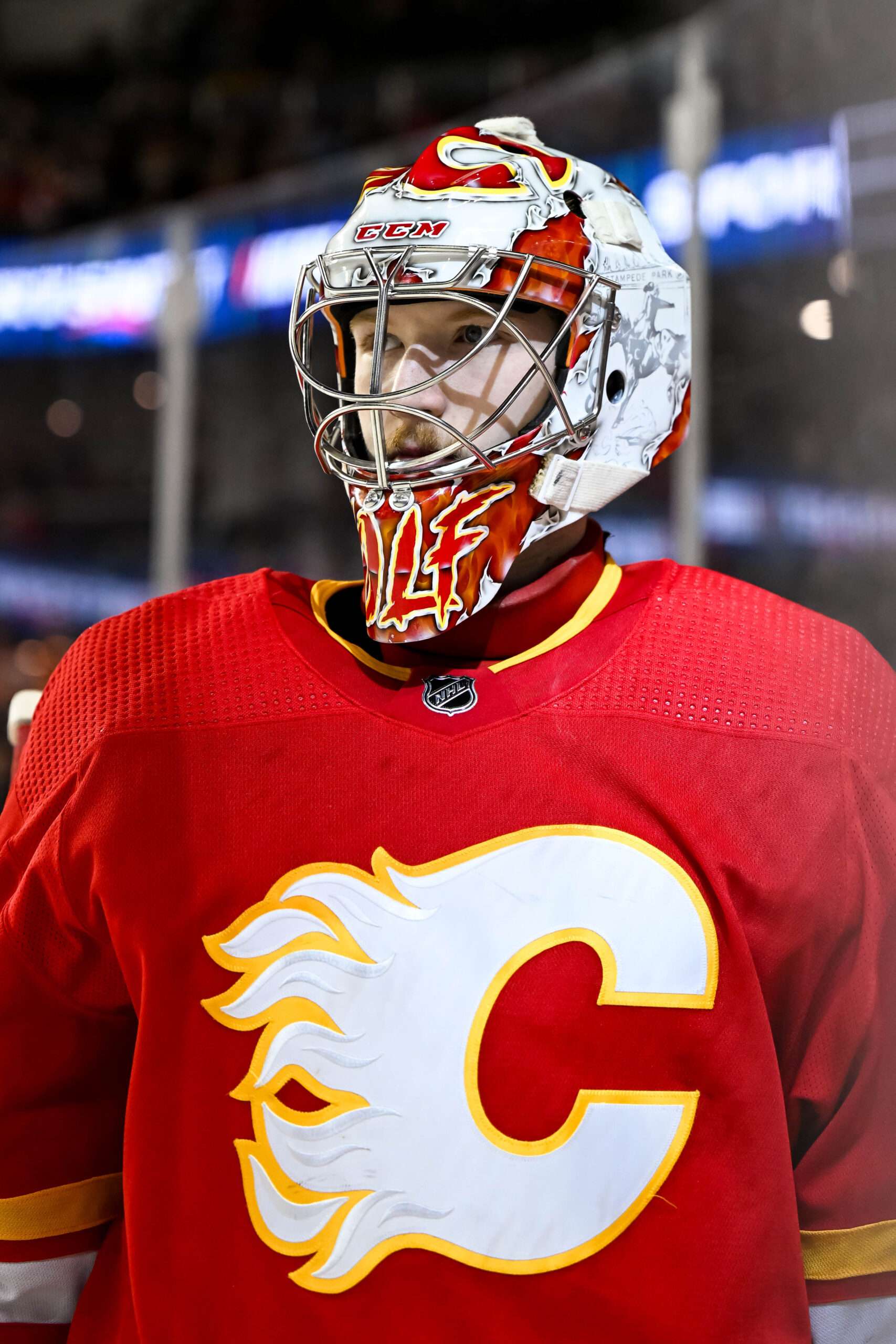 49, 48, and 47 points respectively puts them into a clear top-notch group. Hutson leading the pack as a defenseman is an even deeper sentiment. But none of the trio have quite broken away from the rest of their position group. Celebrini and Michkov remain buried in forward scoring. Hutson ranks eighth in points from a defenseman, though he’s the only one in the top 10 with a negative plus-minus. Meanwhile, Wolf ranks sixth in save percentage (.915), 11th in total wins (22), and 13th in goals-against average (2.52). He’s quickly jumped into company with the NHL’s best netminders in his first real opportunity, all while operating with the precedent of a former seventh-round pick standing at just six-foot tall.
The Calder Trophy hasn’t gone to a netminder since Steve Mason won it with the 2008-09 Columbus Blue Jackets. Mason tied for the 11th-highest save percentage (.916) and 10th-most wins (33), and outright earned the second-highest goals-against average (2.29) that season. The Calder win was marked by Mason quickly earning Columbus’ starting role and near single-handedly willing the team to their first postseason berth in franchise history, after seven years without one. His performance may stand a slide head taller than Wolf’s, but the two seasons are eerily similar. Mason beat out (second in voting), Drew Doughty (fifth), and Steven Stamkos (ninth) – among others – for the 2009 Calder Trophy. Wolf’s competition may be a bit more direct this year – but past precedent could, and should, be enough to bestow the new face of Calgary’s crease with the Rookie of the Year title.