
Poll: What Was The Most Impactful Trade Of Deadline Day?
What a change a year can make. The 2025 NHL trade deadline was among the most exciting in recent memory, with several big names being moved. Last season, arguably the day’s biggest trade was the Vegas Golden Knights’ surprising acquisition of Tomáš Hertl from the San Jose Sharks for a high-end prospect and a first-round pick.
Yesterday put last year’s deadline day to shame. There were 23 total trades made on deadline day, with four first-round picks, eight top-six forwards, and one top-four defenseman changing hands. The excitement extended beyond March 7th, but we’ll isolate this list to yesterday’s events.
Earlier in the day, the Buffalo Sabres and Ottawa Senators engaged in a rare intra-divisional trade of magnitude. The Senators dealt Joshua Norris and Jacob Bernard-Docker to the Sabres for Dylan Cozens, Dennis Gilbert, and Buffalo’s 2026 second-round pick. Norris and Cozens are quality top-six scorers when they’re playing to their fullest potential, but both represented change-of-scenery candidates. Norris is signed through the next five years with a $7.95MM cap hit, while Cozens is making $850K less with one fewer year remaining. They both play a similar style, with Norris having the edge defensively, but Cozens has been far more available than Norris over the last several years.
Then came the big one. Mikko Rantanen quickly became one of the day’s highest-valued trade candidates after failing to reach an extension with the Carolina Hurricanes. It had been less than two months since Carolina traded for Rantanen themselves, sending a package of Martin Nečas, Jack Drury, a 2025 second-round pick, and a 2026 fourth-round pick to the Colorado Avalanche. The Hurricanes were reportedly willing to sign Rantanen to a rich extension, but nothing materialized in the following weeks.
Rather than lose him for nothing like they did with Jake Guentzel last season, Carolina began scouting the market for potential trades. The Dallas Stars eventually won the bidding war, trading top prospect Logan Stankoven, a 2026 first-round pick, a 2028 first-round pick, a 2026 third-round pick, and a 2027 third-round pick to Carolina. Dallas wasn’t done capturing headlines yet, as they quickly signed Rantanen to an eight-year, $96MM extension.
Much like they attempt to nearly every year, the Toronto Maple Leafs made some notable additions. The first one of the day was a long time coming. Toronto sent prospect Nikita Grebenkin and a 2027 first-round pick to the Philadelphia Flyers for Scott Laughton and a pair of late-round draft picks. Making the deal even better for the Maple Leafs, the Flyers are retaining 50% of Laughton’s salary this season and next, bringing his cap hit down to $1.5MM. Laughton immediately gives Toronto an effective third-line center while having the flexibility to play anywhere in the team’s lineup.
Shifting over to Toronto’s most fearsome playoff rival over the last several years, the Boston Bruins became an entirely different group. In three separate trades, the Bruins shipped Charlie Coyle to Colorado, Brandon Carlo to Toronto, and captain Brad Marchand to the Florida Panthers. In total, Boston acquired Casey Mittelstadt, Fraser Minten, Will Zellers, Toronto’s 2026 first-round pick, a conditional 2027 second-round pick from Florida, and Carolina’s 2025 second-round pick.
It’s not an exhaustive list by any means, but it puts the magnitude of yesterday’s events into perspective. However, only one team can win the Stanley Cup every year, and it may not even be a team mentioned.
Now it’s time for you to choose — which trade from deadline day helps their new teams the most with that goal?
What Was The Most Impactful Trade Of Deadline Day?
-
Mikko Rantanen To Dallas 61% (809)
-
Brad Marchand To Florida 27% (353)
-
Brandon Carlo To Toronto 6% (74)
-
Senators, Sabres Swapping Joshua Norris, Dylan Cozens 5% (69)
-
Scott Laughton To Toronto 2% (24)
Total votes: 1,329
Mobile users, click here to vote!
PHR Mailbag: AHL Players, Wild, Blackhawks, Ducks, Extensions, CBA
Topics in this edition of the PHR Mailbag include what, if anything, is next for the Wild on the trade front, Chicago’s tough season, and much more. If your question doesn’t appear here, check back in our last two columns.
nolesfan75: Do players like Matthew Phillips and Kailer Yamamoto have any realistic chance of getting another opportunity in the NHL? They both are having strong years at their respective AHL clubs.
It’s unfortunate but it’s hard for smaller offensive players to get any sort of significant opportunity in the NHL once they get labeled as more of a minor leaguer. You’re definitely correct in stating that Phillips and Yamamoto are having strong seasons in the minors but the problem they run into is this. They’re good enough to be impactful players in the AHL but not good enough to be a top-six piece consistently in the NHL. Meanwhile, they’re often viewed as too small to play regular minutes in the bottom six for an NHL team. So, where does that leave them? Basically, they have to hope for a short-term injury to an offensive forward to have an opportunity for a short-term recall and if things go well from there, maybe stick around for a bit.
To make things even harder for them, there might be an NHL team or two who would be willing to give someone like that a chance after the trade deadline to avoid needing to recall someone from their farm team (helping in a playoff push down there). But because Phillips and Yamamoto are big producers in the minors, their respective NHL teams are unlikely to just give them away and weaken their farm team to do right by the player. It’s a tough cycle to get out of which is why these players often move around in free agency each summer, trying to find a new opportunity that gives them a better chance at an NHL look at some point.
letsgonats: Related, do teams target AHL players? Folks like Phillips or Ethan Bear that are all stars at AHL but they are not 21-year-olds but 25–28-year-olds with some NHL experience and can serve as depth. Ethen Frank is “old” at 28 but obviously was buried and stuck in AHL. Do teams try to grab AHL folks and give them the job over existing NHL folks?
There is an annual shuffle of top AHL players that I think at least partially qualifies as a yes to this question. But it’s not necessarily with the idea of having that player displace an NHL regular although they typically promise that the player will get that opportunity at least in training camp. That’s the biggest driver of top AHL players in free agency, just trying to upgrade the AHL teams.
The next level of targets for teams looking at AHL players are young players coming off an AHL contract that a team wants to sign to an NHL deal. Since you’re a Washington fan, I’ll give you a Capitals-specific example, Pierrick Dube. He had a strong first pro year on a minor league deal and that was enough for Washington to have to give him an entry-level contract to secure his NHL rights. There are usually a handful of those moves each summer league-wide.
There aren’t many comparisons to Frank out there. Waivers allow players in his situation to be snapped up if there’s an NHL team that thinks an AHL regular is worthy of a look at the top level and usually, if they’re that confident about that player’s ability to be an NHL regular, they’ll typically try to acquire the player in a small trade beforehand. So while there are some AHL players who are targeted for various reasons, it’s not too often that they’re being looked at as pieces to join an NHL roster full time.
Zakis: What, if anything, will the Wild do? Or be able to do?
I was really hoping that I could get away with pushing this question into this column as I figured that Minnesota would wait until closer to the trade deadline when they might have more clarity on the status of injured forwards Kirill Kaprizov and Joel Eriksson Ek. Oh well.
Realistically, my logic still holds true today though. If one of them can’t return before the end of the regular season, the Wild will have the ability to spend several million to try to add another upgrade or two before Friday’s trade deadline. But if not, they’ll be in a spot where they need to cut down to close to the minimum-size roster to get back to cap compliance. At that point, they’re in a money-in, money-out situation which greatly affects what they’ll be able to do.
I don’t think they’re quite done yet up front beyond the Gustav Nyquist acquisition but that will probably be their biggest move of this stretch. With the struggles of their penalty kill, I suspect they’ll have their eye out for a fourth liner who can kill penalties. In a perfect world, that player would be a center but any shorthanded upgrade would be a welcome one.
It’s worth noting that Minnesota doesn’t have a first-round pick or a third-round selection this year, nor do they have second-rounders in 2026 and 2027 so their trade chips are somewhat limited here, assuming their top youngsters are off the table. But a mid-round pick for a checker making $1MM or less is something I still expect them to do regardless of what happens with Kaprizov and Eriksson Ek. Anything else will be dependent on one of them being out for the rest of the regular season.
Unclemike1526: When Brossoit makes it back to the Hawks, Soderblom will have played too many games to be sent down without passing through waivers. IMO, no player is more improved in the NHL this year than Soderblom. Last year whenever the other team crossed the red line, Soderblom would drop on his knees and wait for the other team to just shoot it over his shoulders. Now that he actually stays on his feet the change has been remarkable.
So, faced with having to keep three Goalies, is there any chance they can move Mrazek when he has next year remaining at $4 million bucks? Would a team need a G bad enough to take that on? Brossoit has no value having been hurt all year and Soderblom might be a keeper. One has to go IMO or we’ll have the same problem again next year as they’ll all have contracts. Thanks again.
I’m glad I got the Seth Jones question out of the way last week and as it turns out, that trade makes this question that much more important. With Spencer Knight now in the fold, Chicago has four netminders under contract for this season. Three are signed already for next year and Arvid Soderblom has done more than well enough to earn a contract for 2025-26 as well. For this year, I’m skeptical that Laurent Brossoit is going to return and they can just run with three goalies for the final seven weeks of this season so it’s not necessarily a problem just yet.
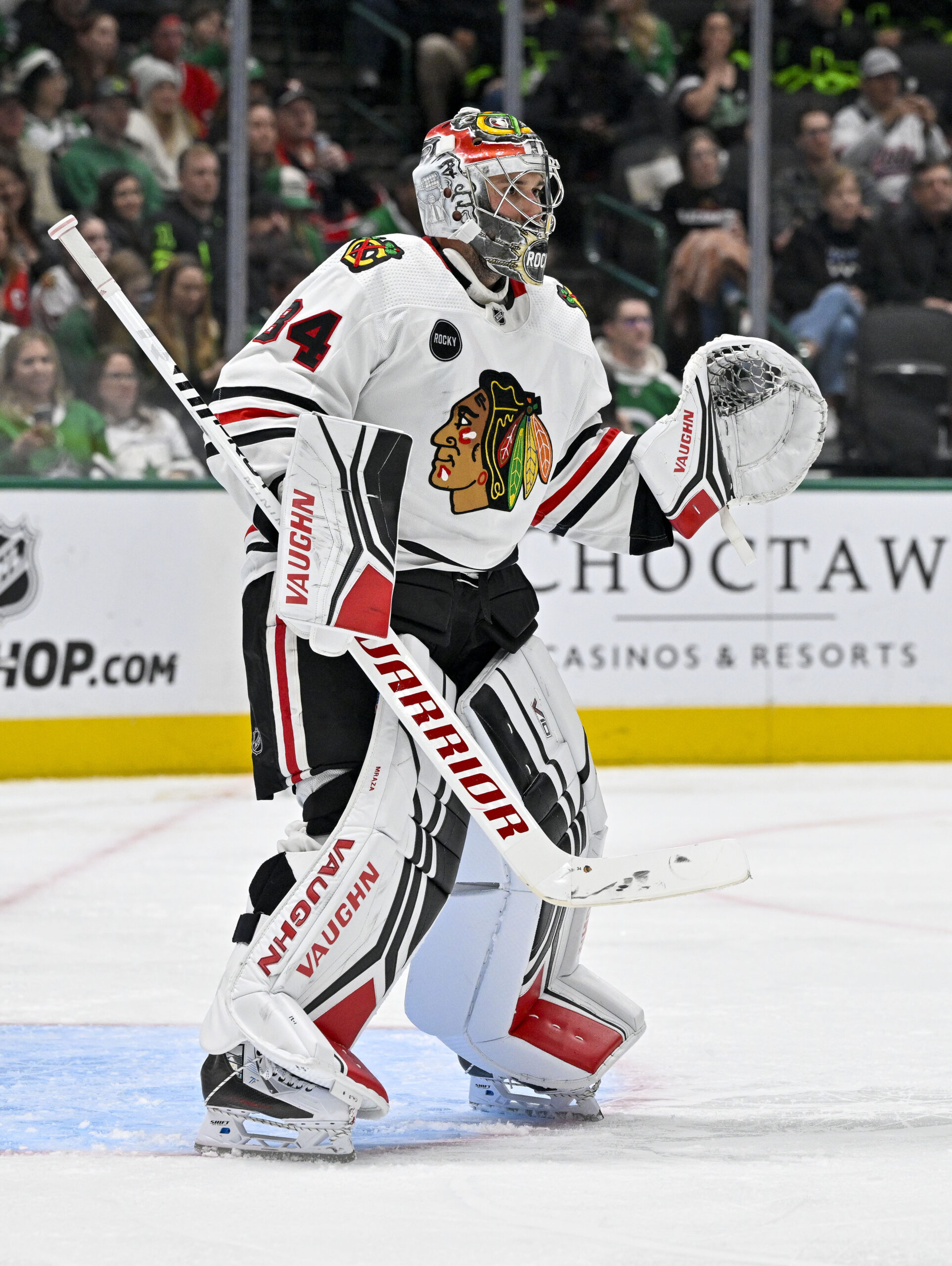 Petr Mrazek has a $4.25MM cap charge for next year which is on the high side but he’s also going to be on an expiring contract. I think it’s possible that there will be a team or two who doesn’t like the idea of signing a UFA to a multi-year deal but could afford an overpay on a short-term contract. If those are out there, then yes, I think Chicago can move him. And with two retention slots opening up on July 1st, the Blackhawks could use one to pay down part of that contract and actually get a bit of value in return (likely a mid-round draft pick). If it doesn’t happen, he’s probably on waivers and in the minors in October.
Assuming that Chicago intends to give Knight a long look, I suspect their ideal tandem for next year is him and Soderblom. Brossoit coming off an injury-riddled year has minimal value so he’d either be the third-string option or on waivers and in the minors himself assuming he’s healthy by training camp. If he and Mrazek were both in the AHL, I expect one would then be loaned to another team with the other partnering with Drew Commesso in Rockford. There’s a way to get through this with the four but if they can find a taker for Mrazek or Brossoit (which seems less likely given the injury trouble), that would certainly help things.
samwise1313: Are the Blackhawks going in the right direction?
From a longer-term standpoint, I think so. They already have one of the stronger prospect pools in the league and with nine picks in the first two rounds between the next two drafts (four first-rounders and five second-rounders), they’re set to make it even stronger pretty quickly. I think they’d be a bit disappointed with how things have gone in Rockford but they’re at least in a play-in spot so there’s a chance that young group gets a bit of a postseason taste. So as far as the long-term future goes, they’re doing alright.
But this season hasn’t been a great one. The results have been ugly under both coaches and even Connor Bedard’s sophomore year hasn’t seen him take a big step forward as expected. I didn’t have an issue with them getting some veterans to avoid having a bunch of young guys in spots they’re not necessarily ready for but they haven’t done well at moving the needle, so to speak. In terms of progression, there hasn’t been much which is not what you want to see from a rebuilding squad. In that sense, it feels like a bit of a wasted year but in the long run, they’re still on the right track when it comes to asset accumulation.
Salary Cap Deep Dive: Tampa Bay Lightning
Navigating the salary cap is one of the most important tasks for a front office. Teams that can avoid total cap chaos by walking the tightrope of inking players to deals that match their value (or compensate for future value without breaking the bank) remain successful. Those that don’t often see struggles and front office changes.
PHR is looking at every NHL team and giving a thorough look at their cap situation for the 2024-25 season. This will focus more on players who are regulars on the roster versus those who may find themselves shuttling between the AHL and NHL. All cap figures are courtesy of PuckPedia. We’re currently covering the Atlantic Division, next up is the Lightning.
Tampa Bay Lightning
Current Cap Hit: $86,676,870 (under the $88MM Upper Limit)
Entry-Level Contracts
F Conor Geekie (three years, $886.7K)
D Emil Lilleberg (one year, $870K)
Potential Bonuses
Geekie: $525K
Lilleberg: $80K
Total: $605K
Geekie was a key pickup in the Mikhail Sergachev trade back at the draft. He spent the first half of the season with the big club but was sent down after struggling. That makes it unlikely that he reaches his ‘A’ bonuses while at this point, a low-cost second contract seems likely unless he can establish himself as a core piece over the next two years.
Lilleberg has already signed an extension so we’ll cover that later on. For here, it’s worth noting that his bonuses are tied to games played so he’ll hit most if not all of his number.
Signed Through 2024-25, Non-Entry-Level
F Cam Atkinson ($900K, UFA)
F Michael Eyssimont ($800K, UFA)
F Luke Glendening ($800K, UFA)
F Gage Goncalves ($775K, RFA)
G Jonas Johansson ($775K, UFA)
D Nicklaus Perbix ($1.125MM, UFA)
After being bought out by Philadelphia, Atkinson was a low-cost flyer to see if he could provide Tampa Bay with some depth scoring. That hasn’t happened and at this point, it’d be surprising to see him land a guaranteed contract this summer. If so – or if he earns one off a PTO – it’s likely to be for the minimum. Glendening has been as advertised – a reliable faceoff player who can kill penalties but brings little offense to the table. There’s still a role for him beyond this year but it’s likely to be at or near the minimum of $775K once again.
Eyssimont had a breakout effort last season, notching 25 points despite playing primarily in their bottom six (often the fourth line). He hasn’t been able to produce at a similar rate this year which will hurt him a bit on the open market. Even so, as a fourth liner who can play with some jam and bring potentially a little offensive upside, he could jump closer to the $1.3MM range on his next contract. Goncalves has cleared waivers twice already but has spent more time with the Lightning than the Crunch so far. He has arbitration rights which could give the Lightning pause if they think a hearing could push him past the $1MM mark or so but he’s a candidate to take less than his qualifying offer of around $813K for a higher AHL salary or even a one-way NHL salary.
Perbix is the most notable of Tampa Bay’s pending free agents. While he has largely had a limited role this season, he had 24 points last year while logging a little over 17 minutes a night. Considering he’s still young (he’ll be 27 in June), big (6’4), and a right-shot player, his market could grow quickly from teams looking for a depth addition with a little upside, meaning that more than doubling this price could be doable.
Johansson remains a below-average NHL netminder but that’s something the Lightning knew when they signed him in 2023. The goal for them was getting someone at the minimum salary. Johansson’s staying power could give him a shot at a few more dollars but he’ll remain in the six-figure range.
Signed Through 2025-26
F Mitchell Chaffee ($800K, UFA)
D Ryan McDonagh ($6.75MM, UFA)
D J.J. Moser ($3.375MM, RFA)
D Darren Raddysh ($975K, UFA)
F Conor Sheary ($2MM, UFA)
Sheary received this deal coming off two strong years with Washington but things haven’t gone anywhere near as well with the Lightning. He scored just four goals last season and has spent most of this year in the minors, carrying a pro-rated $850K charge while down there. He’s a buyout candidate this summer although they could elect to hold onto him and take the $850K charge again next year instead of putting some money onto the 2026-27 books. Chaffee has established himself as a regular on the fourth line and is in a similar situation as Eyssimont was a year ago. Assuming that keeps up, he could push to land a $500K raise or so in 2026.
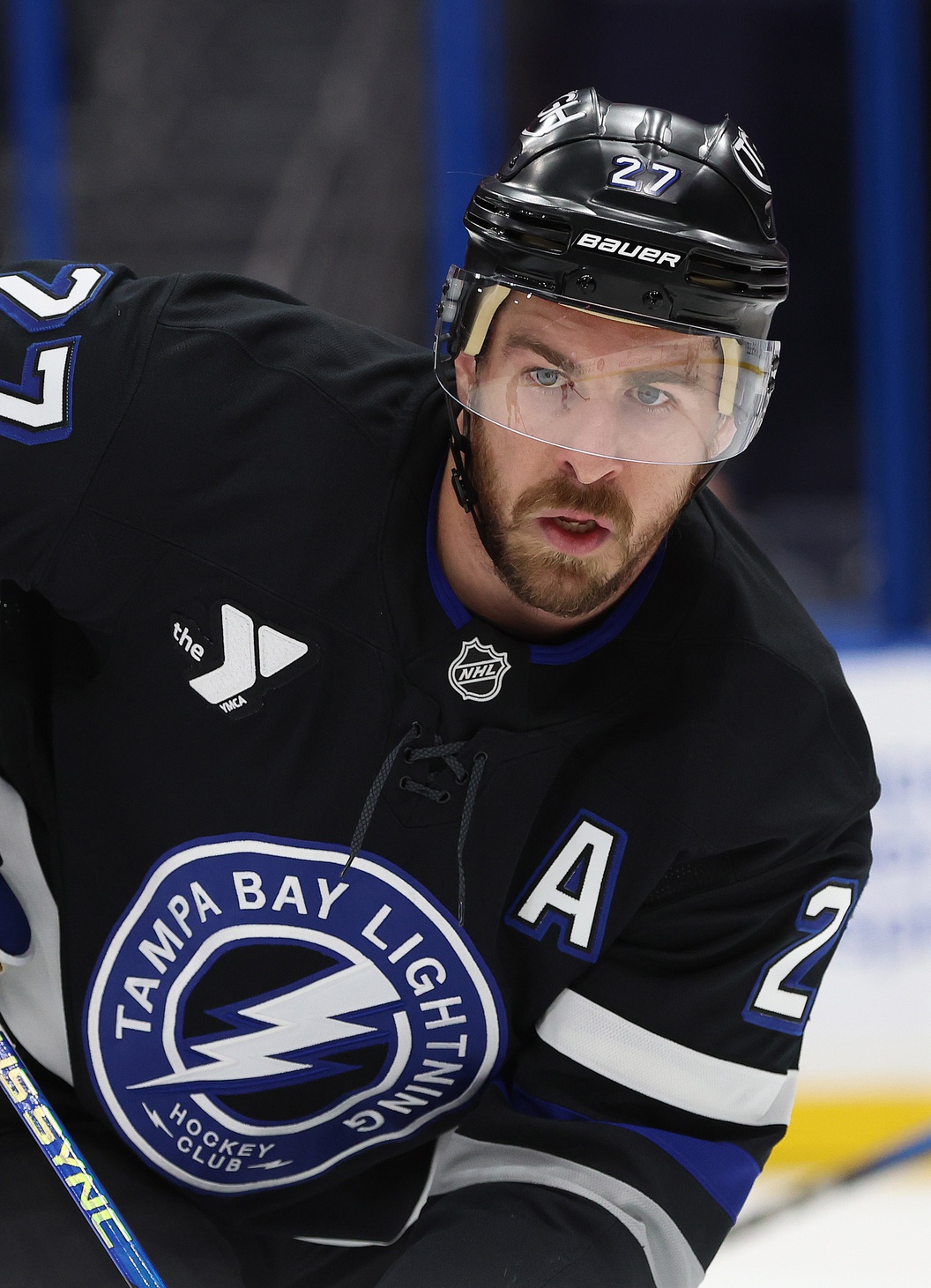 McDonagh’s contract was once deemed too expensive for Tampa Bay which resulted in them moving him to Nashville in 2022 for a very minimal return. Two years later, they gave up more value to reacquire the final two seasons of the agreement which is something you don’t see too often. But it reflects the need they had to bring in a veteran dependable defender which is what McDonagh is at this point of his career. He’s not a true top-pairing piece at this stage of his career nor is he enough of an offensive threat to provide value relative to his price tag. But if he can still hold down at least a top-four spot by the end of next season, he could still land a contract in the $4MM to $5MM range, perhaps a one-year deal which would allow for some incentives.
Moser was another piece of note in the Sergachev trade after being one of the more underrated blueliners with Arizona. The structure of the bridge deal gives him a $4.075MM qualifying offer with arbitration rights and assuming he’s still a full-timer in Tampa’s top four, he seems like a strong candidate to push past the $5MM mark on his next contract. Raddysh has become a capable producer of secondary scoring from the back end although he gives some of that back with his defensive play. Those players don’t always have the best markets year-to-year but barring a big drop in performance or playing time, he should be able to double this at a minimum in 2026.
Signed Through 2026-27
F Zemgus Girgensons ($850K, UFA)
F Nikita Kucherov ($9.5MM, UFA)
D Emil Lilleberg ($800K in 2025-26 and 2026-27, RFA)
Kucherov continues to be one of the top point-producing forwards in the NHL. He’s around $2MM below the highest-paid winger (Artemi Panarin) but that’s about to change with this upcoming UFA crop which will only widen that gap and give Tampa Bay even better value in the short term. Assuming he doesn’t slow down over the next three years, he could be someone conceivably pushing for a deal in the $14MM range himself even at 34. Girgensons saw his production drop in the last couple of years with Buffalo but it has cratered even more this year. Still, he’s a capable penalty killer and can play with some grit. That for $100K above the minimum isn’t bad value.
Lilleberg’s new deal is actually a dip in pay off his entry-level pact but gives him guaranteed money via a one-way salary no matter what. Assuming he remains a regular with the Lightning during that time, his arbitration eligibility could put him in line to double (or even triple) that price tag on his next contract.
Trade Deadline Primer: Winnipeg Jets
With the 4 Nations Face-Off now complete, the trade deadline looms large and is less than two weeks away. Where does each team stand, and what moves should they be looking to make? We continue our look around the league with the Winnipeg Jets.
Our Trade Deadline Primer series has saved the best for last. The Winnipeg Jets are at the top of the league entering March, after spending much of the season fighting for the best record in the league. Winnipeg’s success has been driven by first-year head coach Scott Arniel pulling the best out of the team’s tenured veterans. The Jets also carry plenty of cap space and draft capital, giving them the rare mix of roster stability and trade assets needed to go in any direction this deadline. How experienced general manager Kevin Cheveldayoff can use that ammunition to bolster the Jets lineup could define the team’s postseason aspirations.
Record
42-14-3, 1st in the Central Division
Deadline Status
Buyers
Deadline Cap Space
$11.52MM on deadline day, 0/3 retention spots used, 41/50 contract spots used, per PuckPedia.
Upcoming Draft Picks
2025: WPG 1st, WPG 3rd, WPG 5th, WPG 6th, WPG 7th
2026: WPG 1st, WPG 2nd, WPG 3rd, WPG 5th, WPG 6th, WPG 7th
Trade Chips
Winger Nikolaj Ehlers has been among the most acknowledged trade chips as the deadline nears. The 28-year-old winger is having one of his best seasons yet, with 18 goals and 51 points in 50 games this season making him one of three Jets scoring above a point-per-game pace. But while Cheveldayoff understands that he’ll need to separate feelings from business this deadline, it’s hard to envision Winnipeg parting with such a core piece of the offense.
Alex Iafallo seems much more expendable, on the back of a measly 19 points in 59 games this season. Iafallo hasn’t had the same stride since joining the Jets in 2023. His scoring fell from 36 points in his final year with the Los Angeles Kings, to just 27 last year – a mark he’s on pace to fall short of this year. With little scoring and an expiring contract, the 28-year-old Iafallo isn’t likely to make much of a splash on the open market. But the hope for better days outside of Winnipeg could be enough to base a strong offer around.
Winnipeg also has 24-year-old Rasmus Kupari and 26-year-old Morgan Barron on expiring restricted free agent contracts. Neither has performed to expectations this year, with just seven and eight points respectively. That lack of production won’t draw much attention, but young depth options could quickly become a commodity in this year’s shallow market.
Defenders Logan Stanley, Colin Miller, and Haydn Fleury find themselves in a similarly expendable role. None of the three have found their groove on Winnipeg’s third-pair this year. Miller and Stanley boast a plus-11 and plus-10 respectively – serviceable enough behind a red-hot Jets offense. Fleury also has a plus-four, though a seventh-man role has only awarded him 29 games. Even with sparce stat lines, the trio of veteran defenders could each be lucrative buys for teams struggling with blue-line depth.
The Jets won’t be deterred despite a lack of trade assets. They’ve made multiple lucrative acquisitions over the last few deadlines using only draft capital. Winnipeg acquired Sean Monahan for a first and third round draft pick and Tyler Toffoli for a second-and-third round pick at last year’s deadline. They also landed Vladislav Namestnikov for a fourth-round pick and Nino Niederreiter for a second-round pick at 2023’s deadline. All four players went on to make a mark in their minutes with the Jets – emphasizing that the Winnipeg’s biggest chips at this year’s deadline will be their five selections in the top-three rounds of the 2025 and 2026 drafts.
Team Needs
1) A Fourth-Line Upgrade – The Winnipeg Jets rank second in total goals and third in goals-per-game this season – but their fourth line has struggled to post consistent scoring. Top prospect Nikita Chibrikov has shown strong flashes, with three points in his first four NHL games – but the Jets may want a more confident upgrade as they prepare for an extended post-season. The Montreal Canadiens seem set to part with power forward Jake Evans, who’s in the midst of a career year with 11 goals and 27 points in 58 games. A buying team will need to be wary of Evans’ sudden spike in scoring this year, but his physical presence and finishing ability in front would both be upgrades over Kupari or Iafallo on the bottom line. Winnipeg could also find a niche role player like Seattle’s Brandon Tanev or Boston’s Trent Frederic to boost their physical presence, with scoring upside no worse than the Jets’ current options. Winnipeg could likely acquire any of the three options with the right package of draft capital.
2) Reliable Bottom Pair Defense – With a President’s Trophy chase and long post-season run ahead of them, depth will be the focal point of Winnipeg’s deadline. Superstar goaltender Connor Hellebuyck helps the team put offense at front of mind, but their blue-line could use a boost with Miller and Stanley posting less-than-desirable results. Sharks defensive-defenseman Mario Ferraro could be the lucrative buy Winnipeg is after. He’s on the trade block once again as San Jose looks to sell high on an impactful player entering his prime well before their next peak. Winnipeg could find a slightly pricier, and more experienced, option in Montreal’s David Savard; or swing for closer fences with Vancouver’s Carson Soucy. All three players bring low scoring and a defensive focus, but could find a strong groove in moving from a struggling offense to Winnipeg’s world-class group. Like their potential forward buys – Winnipeg could likely buy many of the market’s defenders with only a few draft picks.
Trade Deadline Primer: Washington Capitals
With the 4 Nations Face-Off now complete, the trade deadline looms large and is less than two weeks away. Where does each team stand, and what moves should they be looking to make? We continue our look around the league with the Washington Capitals.
Hopes are as high as they could be in Washington as the Trade Deadline nears. The Capitals have been on top of the Metropolitan Division since mid-December with no signs of slowing down. Washington posted a 4-1-2 record and plus-11 goal-differential in February, with one game left in the month. Their success is spearheaded by captain Alex Ovechkin‘s pursuit of Wayne Gretzky‘s career goals record and backed by fantastic summer additions. After an incredibly fruitful off-season, this Deadline will be rookie general manager Chris Patrick‘s first chance to carry the hot-hand into the season.
Record
38-12-8, 1st in the Metropolitan Division.
Deadline Status
Budget Buyer
Deadline Cap Space
$3.65MM on deadline day, 0/3 retention spots used, 47/50 contract slots used, per PuckPedia.
Upcoming Draft Picks
2025: WAS 1st, BOS 2nd, WAS 2nd, CAR 3rd, WAS 4th, WAS 5th
2026: WAS 1st, WAS 2nd, VGK 4th, WAS 4th, WAS 5th, WAS 6th, WAS 7th
Trade Chips
The Capitals have found fantastic chemistry at the top of their lineup, and will base their deadline around not stirring the pot too much because of it. Most of the Capitals trade assets sit down their depth chart. The group is headlined by former first-round draft pick Hendrix Lapierre, who landed in the minor-leagues at the start of the new year after recording just eight assists in 27 NHL games. He’s in the midst of a slumping season after posting 22 points in 51 games as an NHL rookie last year. But Lapierre has been routinely effective in the minor-leagues, with 17 points in 21 games last season and 13 points in 15 games this year. He was a top young prospect, and earned a first-round selection despite multiple injuries in his age-17 and age-18 seasons. Lapierre has untapped upside that could make him enticing enough to base a larger buy around.
Young defenseman Alexander Alexeyev finds himself in a similar spot to Lapierre. He’s spent the year as Washington’s seventh-man, stepping into just five games and recording no scoring and a minus-four. Also a former first-round pick, Alexeyev punched into 71 games over the last two seasons – but hasn’t scored more than five points in a single year. He’s a six-foot-four, 213-pound defender with a long reach and stout control of the defensive end that, like Lapierre, could be just enough to garner the interest of a deadline seller.
Aside from the pair of youngsters on the lineup fringe, the Capitals may lack the assets to make a big move. Veteran centerman Lars Eller seems to be in the right rut for a move, with just 12 points in 39 games in Washington – but the Capitals aren’t likely to garner more than the third and fifth round draft picks they traded for him in November. Both third-line forward Andrew Mangiapane and third-pair defender Trevor van Riemsdyk have played strong enough to earn interest of their own, but the Capitals would likely be hard-pressed to move functioning cogs in the midst of another hot streak. Their deadline will be a balancing act between preparing for the playoffs, and not rocking the boat – as they try to maintain momentum that could very well land them the President’s Trophy.
Team Needs
1) Impactful Bottom-Six Center – Eller has averaged 12:28 in ice time this season, while holding a firm grip on third-line center and second-unit penalty killing duties. He’s performed well enough to stay put, but the lack of a driver on the third-line could be Washington’s downfall in the postseason. Finding a difference maker to couple with Eller and Nic Dowd in the bottom-six is an achievable and potentially defining move for Washington to pursue. They’ll have plenty of options on the open market. The New York Islanders finally seem poised to bank on Brock Nelson‘s late-career performances. Nelson has 15 goals and 32 points in 52 games this season, and made Team USA’s starting lineup at the recent 4-Nations tournament. Should he prove too old or two slow, Washington could find a performer in the midst of his prime in Chicago Blackhawks center Ryan Donato. Donato is having a career year, with 19 goals and 39 points in 56 games on one of the league’s lowest-scoring offenses. He’s a reasonable upside bet that shouldn’t come at a rich price – an ideal match for the asset-strapped Capitals. Other options could include Montreal power-forward Jake Evans, Boston enforcer Trent Frederic, or Colorado upside-bet Casey Mittelstadt.
2) Depth Wingers – The Capitals are receiving fantastic efforts from their depth wingers. Mangiapane, Taylor Raddysh, and Brandon Duhaime have performed well enough to hold onto their roles, and Jakub Vrana and Ethen Frank have shown flashes of scoring in their limited minutes. But the Capitals lack a truly binding piece down their flanks. Bruins winger Justin Brazeau could give the Capitals a bit more grit and well-rounded offense at a minimal acquisition cost. The Capitals could also find a reasonably priced upside bet in Toronto shooter Nicholas Robertson. Brazeau has 20 points, split evenly, in 54 games; while Robertson has 11 goals and 16 points in 50 games. Neither players would be particularly thrilling additions, but could give Washington helpful variety as they hope for an extended run to their season.
Trade Deadline Primer: Vegas Golden Knights
With the 4 Nations Face-Off now complete, the trade deadline looms large and is less than two weeks away. Where does each team stand, and what moves should they be looking to make? We continue our look around the league with the Vegas Golden Knights
The Vegas Golden Knights are sitting in a position that has become all too familiar as they approach the NHL Trade Deadline. They are once again atop the Pacific Division and will be one of the favorites to come out of the Western Conference as they try to get back to the Stanley Cup Final. Vegas is always in the mix to make a big move and has never shied away from doing everything possible to make a splash. The Golden Knights have stumbled as of late (4-4-2 in their last 10) but will no doubt push to find reinforcements for another deep playoff run. It will not be easy for them to make changes as they don’t have a first-round pick in the next two drafts and have very little room under the NHL salary cap.
Record
34-18-6, 1st in the Pacific Division
Deadline Status
Buyers
Deadline Cap Space
$2.422MM on deadline day, 0/3 retention spots used, 47/50 contract spots used, per PuckPedia.
Upcoming Draft Picks
2025: VGK 2nd, SJ 3rd, WASH 3rd, VGK 4th, VGK 5th, VGK 6th, WASH 6th,
2026: VGK 2nd, VGK 3rd, VGK 5th, VGK 6th, VGK 7th,
Trade Chips
This is going to be a struggle for Vegas, years of making massive trades have left them with a prospects pool that is quite thin and ranked 22nd in the NHL (according to Scott Wheeler’s rankings in The Athletic). That isn’t to say the Golden Knights don’t have some good prospects, they do have a few that could be used as trade pieces, but not many that are on the level that they could land a Mikko Rantanen-type player.
Trevor Connelly is their top prospect and was drafted 19th overall last year. The playmaking winger has a ton of skill and could be a central piece of a big trade if Vegas entertains that idea. Connelly possesses quick skating, a terrific shot, and a great set of hands. He is on the smaller side, but as he adds muscle and strength, it’s easy to imagine his all-around game rounding into form. Vegas may not be keen on trading their top prospect, but if they want to go all in, it might start with Connelly.
Outside of Connelly, Vegas does have a few other noteworthy prospects. Mathieu Cataford is the reigning QMJHL MVP and just played for the Canadian World Junior team. Cataford can play all three forward spots and has a good hockey IQ as he reads the game well and can play off of his teammates and their decisions in real time.
Goaltender Carl Lindbom looks like he will be an NHL netminder. The 21-year-old is having a solid first season in the AHL with Henderson, posting a 12-9-1 record with a .913 save percentage. Lindbom has thrived at every level thus far in his short career, winning HockeyAllsvenskan goalie of the year and rookie of the year a couple of seasons ago and eventually posting good numbers in the Swedish Hockey League last season. This year, as a rookie, Lindbom has outplayed the more experienced Akira Schmid, which has been a pleasant surprise for Vegas.
Outside of a handful of prospects, Vegas doesn’t have much on their current roster they could move out. The players with value they will want to keep, and the players who have struggled would be difficult to move until the summer. Vegas general manager Kelly McCrimmon could get creative with his draft picks, but he doesn’t exactly have a full slate of them. As mentioned earlier, Vegas doesn’t have a first-round pick until 2027, but they do have eight second and third-round picks combined between now and 2028.
Despite the limited assets, Vegas will still have options to improve its team. They still have a decent prospect pipeline for a team that has traded away so much of its future and they have a handful of draft picks that they can put in play.
Team Needs
1) Depth Goaltender – Vegas doesn’t have any glaring holes in their lineup, but one cause for concern could be their goaltending. Both Adin Hill and Ilya Samsonov had a tough stretch in January which led the Golden Knights to flip-flop back and forth on their starts. Both men have played better as of late, but outside of Hill and Samsonov, Vegas doesn’t have another option, which could be problematic if either man suffers an injury or goes into another slump. Schmid has posted brutal numbers in the AHL and doesn’t appear to be an option should an emergency arise in net. There are plenty of goaltenders who could be had, but many of them carry cap hits far too rich (and too long) for Vegas’ tastes. John Gibson and Tristan Jarry come to mind, but both players carry too much term and are too expensive. Anton Forsberg out of Ottawa might be an option, as could Alexandar Georgiev of the San Jose Sharks, with Forsberg likely being the better fit due to cap hit and play as of late. Vegas may take a look at the market and take their chances with what they have, but it wouldn’t be surprising to see them make a move.
2) A Top 9 Forward – It’s tough to envision Vegas making a splash here, but that’s likely what people said last year before McCrimmon swung a last-minute deal for Tomas Hertl. Vegas needs some help at forward, not a ton, but using Raphael Lavoie in the top nine as of late is less than ideal. If economics didn’t come into play, the Golden Knights would have interest in Brock Nelson or Brayden Schenn. But with price tags north of $6MM, it’s tough to imagine Vegas getting involved unless they move salary out. A more affordable option for Vegas could be a player like Anthony Beauvillier out of Pittsburgh or Ryan Donato of Chicago. Both players are on inexpensive cap hits and could slide into different places within Vegas’ current forward group. While the trade for a depth option is more likely, you almost have to expect the unexpected when it comes to Vegas.
Trade Deadline Primer: Vancouver Canucks
With the 4 Nations Face-Off now complete, the trade deadline looms large and is less than two weeks away. Where does each team stand, and what moves should they be looking to make? We continue our look around the league with the Vancouver Canucks.
The Vancouver Canucks have had a tumultuous season, to say the least, as the J.T. Miller and Elias Pettersson issue derailed a team that had Stanley Cup aspirations coming into the season. Despite everything that has gone on, the Canucks still find themselves in a playoff spot at the moment and appear likely to do everything they can to get into the postseason. The Canucks have re-signed several pending unrestricted free agents in recent weeks, which signals that they do intend to make a go of it and are likely to be buying as they approach the deadline. The team has played better as of late (6-3-1 in their last ten), and if their new additions can settle in, they should be able to perform better than they have to this point in the season.
Record
26-20-11, 4th in the Pacific Division
Deadline Status
Cautious Buyer
Deadline Cap Space
$10.41MM on deadline day, 2/3 retention spots used, 46/50 contract spots used, per PuckPedia.
Upcoming Draft Picks
2025: VAN 1st, VAN 2nd, OTT 4th, VAN 5th, VAN 6th, VAN 7th,
2026: VAN 1st, VAN 2nd, VAN 4th, VAN 5th, VAN 6th
Trade Chips
Whether Canucks fans like it or not, the talk on an Elias Pettersson trade is probably not going away anytime soon. Vancouver would be hard-pressed to move their star forward at this time, given his poor play this season and the remaining seven years on his contract at $11.6MM per. Pettersson’s play has fallen off a cliff this season with just 11 goals and 24 assists in 51 games. Some folks believed that Pettersson’s play might pick up when he escaped the Vancouver bubble and played for Sweden in the 4 Nations Face-Off, but the 26-year-old was largely unimpressive tallying no points in three games. Now, it does appear he was dealing with an injury during the tournament, but his play did not help his trade value. TSN Hockey removed Pettersson from their trade bait board, but they did leave the door open to him being traded in the summer.
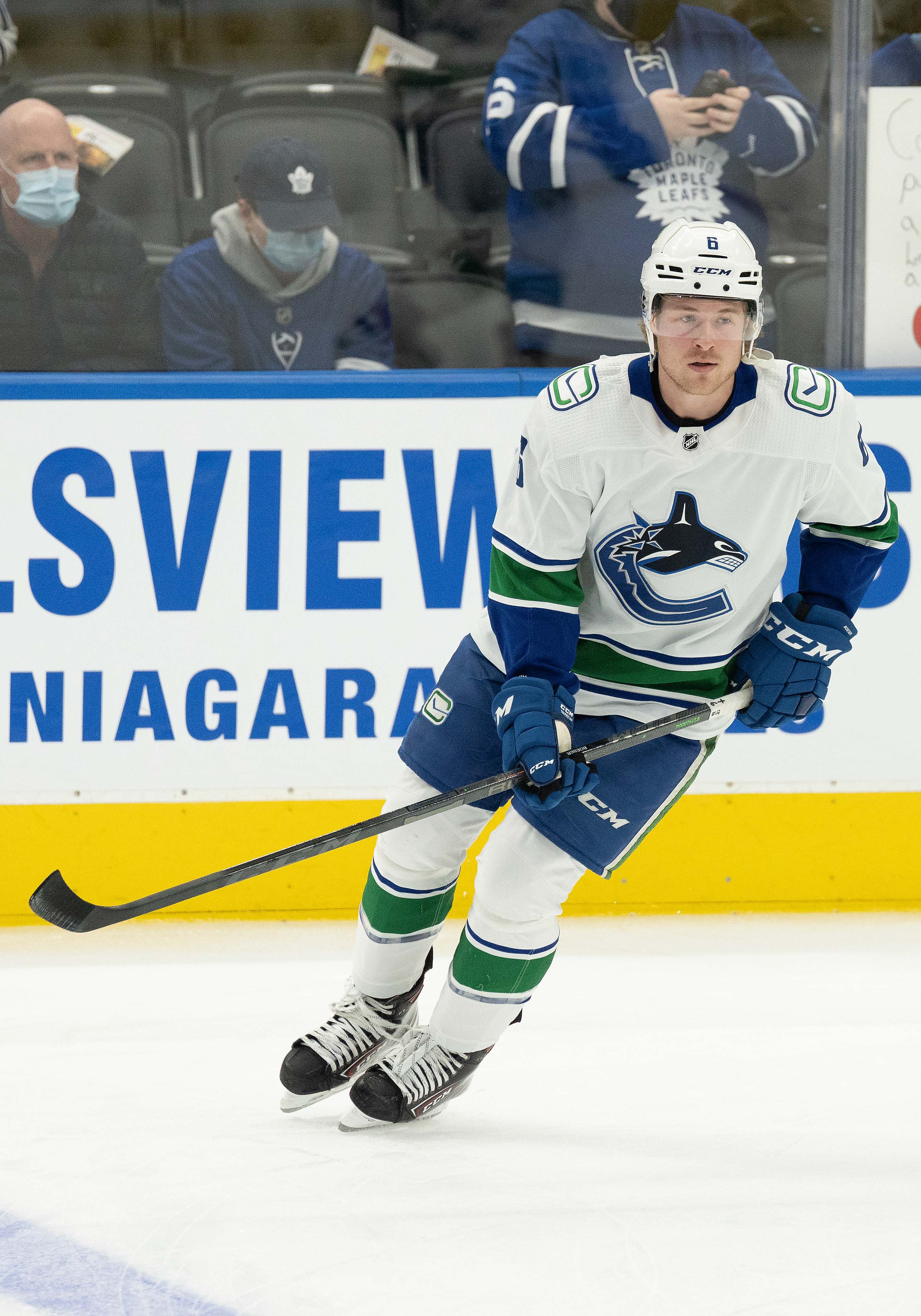
The Canucks have already moved on from their biggest trade chip in Miller but could have another big name to move out if they elect to trade forward Brock Boeser. Now, it’s not commonplace for teams to move on from top players when they are in the thick of the playoff race, but nothing about Vancouver has been common this season. It’s also worth noting that the Canucks can’t score (25th in the NHL) with Boeser in the lineup, and they would be unlikely to replace his offense in a 1 for 1 trade. The one move that Vancouver could make is not unlike what they did with Miller and flip Boeser to one team, then use those assets in another deal for an impact player with term remaining on their contract. Boeser’s time in Vancouver has been a rollercoaster, and with him being just four months away from free agency, it wouldn’t be shocking to see him moved. Another note on Boeser is that he has a ten-team modified no-trade clause, but there will be interest from other teams not on his list.
If Vancouver wanted to push into the trade market, they do have some future assets to move despite having a below-average prospects pool (21st in the NHL, as per Scott Wheeler of The Athletic). Vancouver has their first two picks in each of the next two NHL Entry Drafts, which could always be made available, or if they wanted to move out prospects, Jonathan Lekkerimäki would be an intriguing player for most teams who are looking towards the future. The 15th overall pick in the 2022 NHL Entry Draft hasn’t found NHL success yet but is nearly a point-a-game player in the AHL (26 points in 30 games) this season and is just 20 years old. His skill level is extremely high and could be of interest to a team that is looking for prospects who are close to NHL-ready.
Team Needs
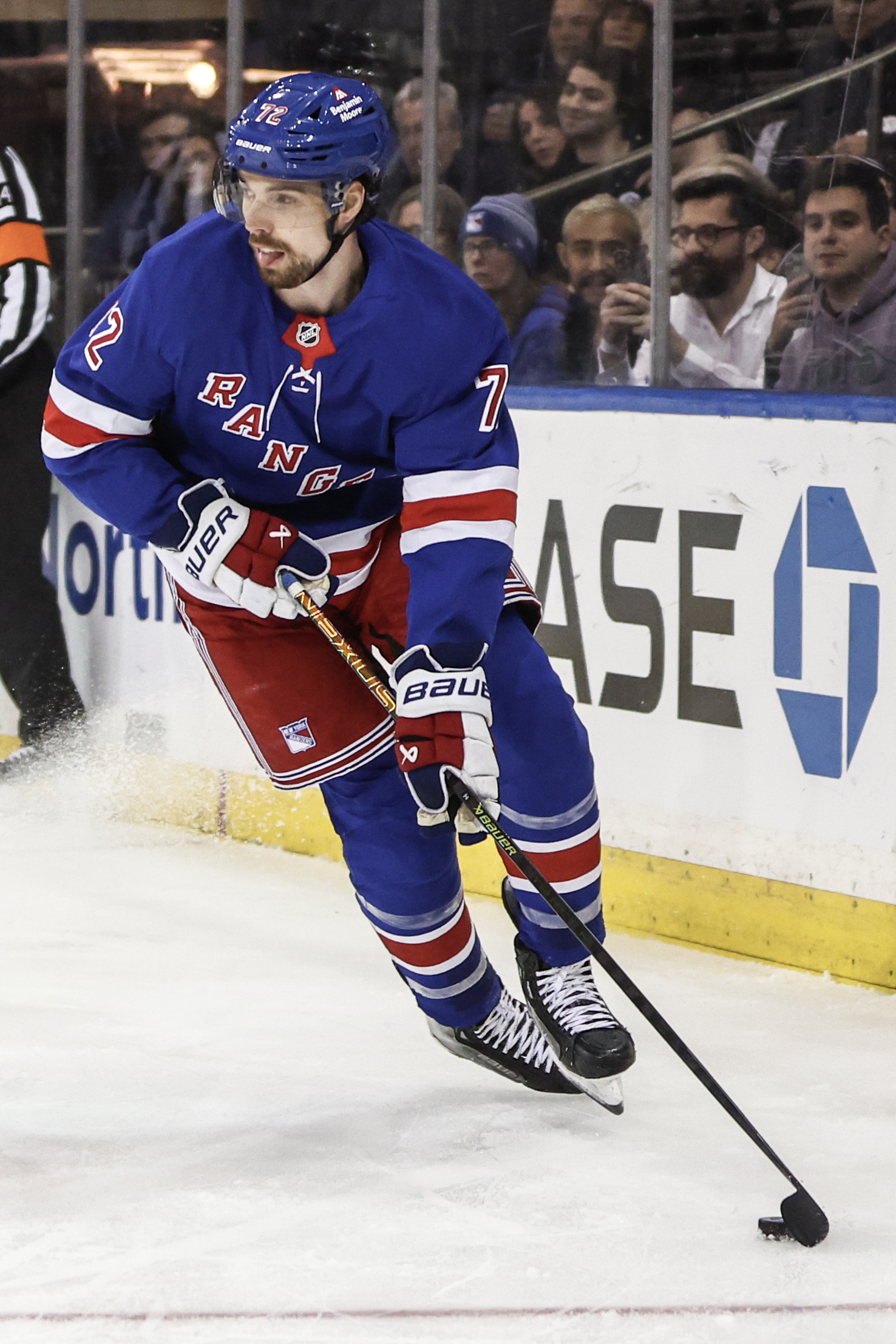
1) Top Six Center – The Canucks were a win away from the Western Conference Finals last year and their top two centers from that club are no longer in Vancouver (Elias Lindholm and Miller). Now, Vancouver is rolling out Filip Chytil and Pettersson as their top two centers, and no disrespect to either player but that isn’t good enough to compete with the likes of Edmonton or Vegas in the Western Conference. Vancouver needs a top-six center who can push everyone down the depth chart, including Pius Suter who is pivoting the third line at the moment and is better suited for fourth-line duties. The idea of a center is easier said than done as there aren’t many names available who would be capable of taking on top six minutes. Brock Nelson of the Islanders is an option, but he would be expensive and a rental at this point. Brayden Schenn is another option, but with three years left at $6.5MM and declining production, he probably isn’t the best candidate either. If the Canucks wanted to gamble, Dylan Cozens out of Buffalo is a name that would be of interest, Cozens has struggled this season with just 11 goals and 16 assists in 55 games, but he is just two years removed from a 68-point season and at 24 years of age, could be a bounce back candidate that the Canucks buy low on.
2) Scoring – Vancouver can’t score and desperately need help on the wings and down the middle. The Canucks have been trying out recently acquired Drew O’Connor on the top line, but with two goals in six games, he isn’t a long-term fit and is better suited for a third-line role. If Vancouver wanted to make a bigger splash, they could take a run at Rickard Rakell out of Pittsburgh, who is having a terrific season with 25 goals and 24 assists in 58 games. Rakell can play on both wings and even center in a pinch, but it would be costly as he does have term left on his deal (three years at $5MM per season), and the Penguins are in no rush to move him. If Vancouver wanted to jump into the rental market, Kyle Palmieri of the Islanders or Montreal’s Joel Armia might be cheaper options who can provide depth offense. None of the available options are particularly great for Vancouver, who are tasked with looking for scoring in a seller’s market. The Canucks do have significant cap space available to them and might be able to land a higher-priced pending unrestricted free agent (like Palmieri) who isn’t performing up to their cap hit. This happened last season with Jason Zucker, who was dealt from Arizona to Nashville for a sixth-round pick last deadline because Arizona couldn’t retain his $5.3MM cap hit, which drove down the price as Nashville was willing to take on the entire cap hit.
Salary Cap Deep Dive: Ottawa Senators
Navigating the salary cap is one of the most important tasks for a front office. Teams that can avoid total cap chaos by walking the tightrope of inking players to deals that match their value (or compensate for future value without breaking the bank) remain successful. Those that don’t often see struggles and front office changes.
PHR is looking at every NHL team and giving a thorough look at their cap situation for the 2024-25 season. This will focus more on players who are regulars on the roster versus those who may find themselves shuttling between the AHL and NHL. All cap figures are courtesy of PuckPedia. We’re currently covering the Atlantic Division, next up is the Senators.
Ottawa Senators
Current Cap Hit: $88,257,127 (over the $88MM Upper Limit)
Entry-Level Contracts
F Ridly Greig (one year, $863K)
D Tyler Kleven (one year, $917K)
F Zack Ostapchuk (two years, $825K)
Potential Bonuses
Kleven: $600K
Ostapchuk: $82.5K
Total: $682.5K
Greig has already signed an extension so we’ll cover him later on. Ostapchuk has had his first extended NHL look this season but has primarily been limited to duty on the fourth line with very limited output. He should be able to reach some of his games played bonuses but he’s likely heading toward a low-cost second contract barring a big uptick in his output and role next season.
Kleven is holding down a regular spot on Ottawa’s third pairing but his deployment has been limited thus far. As a result, he’s not on track to reach his ‘A’ bonuses while his next contract should be a low-cost bridge deal although passing the $1MM mark isn’t out of the question.
Signed Through 2024-25, Non-Entry-Level
D Jacob Bernard-Docker ($805K, RFA)
F Nick Cousins ($800K, UFA)
G Anton Forsberg ($2.75MM, UFA)
F Adam Gaudette ($775K, UFA)
F Claude Giroux ($6.5MM, UFA)
F Noah Gregor ($850K, RFA)
D Travis Hamonic ($1.1MM, UFA)
F Matthew Highmore ($775K, UFA)
D Nikolas Matinpalo ($775K, RFA)
F Cole Reinhardt ($775K, UFA)
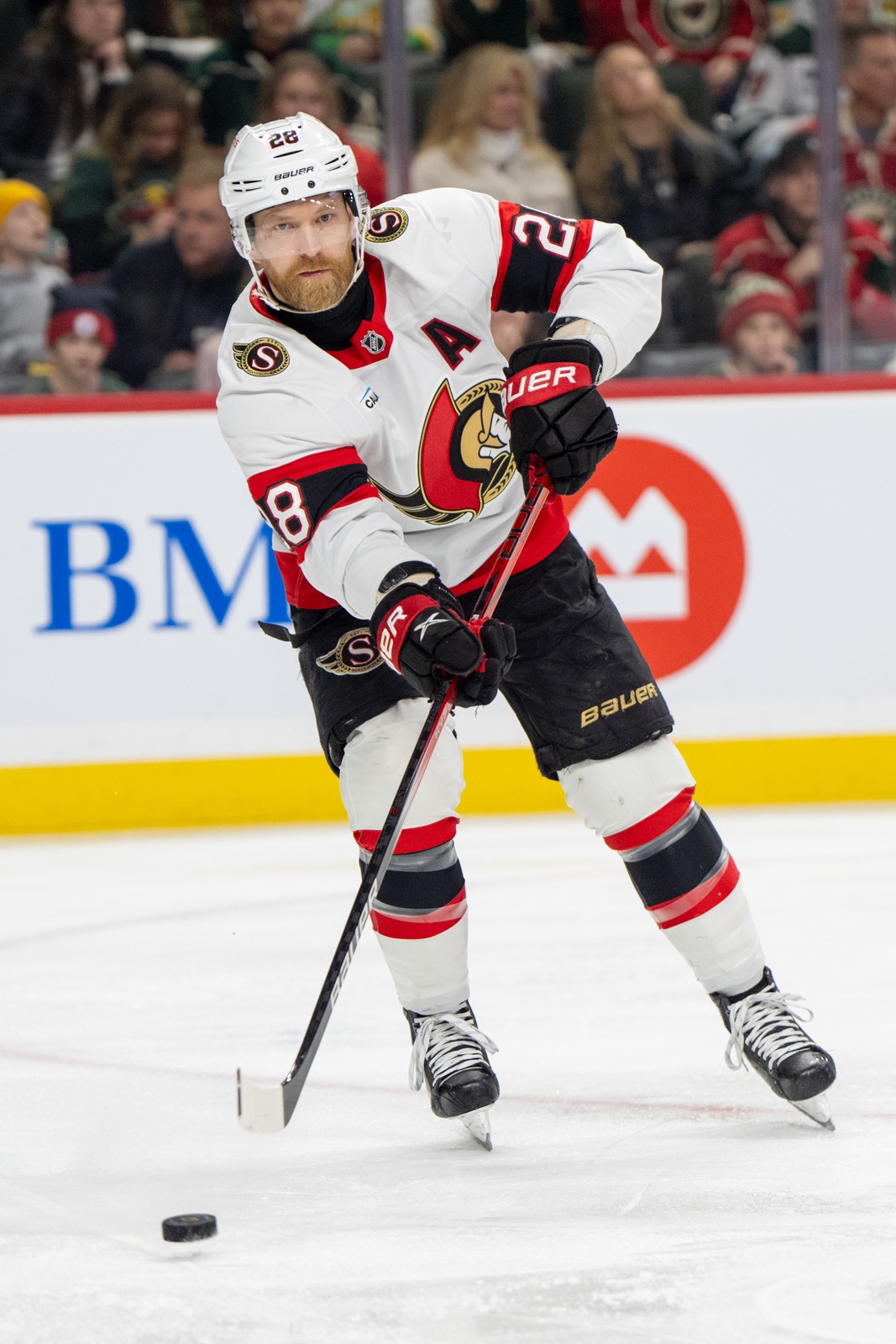 Giroux was brought in to be not only a veteran mentor to what was (and still is) a relatively young core group but also to be a key contributor in their top six. Mission accomplished on both fronts. He was third in team scoring in his first season and fourth in scoring last year. At 37, he’s starting to slow down offensively but he’s still a top-six player, at least for now. One of the big questions for next season as he heads into his next contract is how much longer he can play at that level. A two-year offer probably isn’t off the table but it’d likely reflect the expectation of a diminished role in the second year which could result in a small dip in pay. But if Giroux is open to a one-year deal, something around this price point is doable while he’d also be eligible for performance incentives.
Gregor has been non-tendered for two straight years with his former teams wanting to avoid giving him salary arbitration eligibility where his more productive years (23 points in 2021-22, 10 goals the following year) will come into play. That seems like the probable outcome here as well but without those rights, he could still check in a bit closer to $1MM. Cousins had to wait until late August to get this contract and not much has changed in terms of his role and production. He’s effective enough to stay above the minimum salary but he’s probably only a tier above PTO territory so another low-cost one-year deal is likely.
Gaudette only got into two NHL games last season but he has been one of Ottawa’s better success stories this year, sitting inside the top five on the team in goals. Nonetheless, he historically has had a hard time hanging onto a full-time spot which should keep his cost lower than someone with a shot at 20 goals. A one-year deal in the $1.25MM range, one that can largely be buried in the minors if things don’t go well, would represent a nice raise for him while lessening the risk on the signing team. Highmore and Reinhardt have been back and forth to and from the minors this season and are likely to remain at the minimum salary moving forward.
Hamonic has had a bigger role this year but his playing time is still rather limited compared to even just a few years ago. He’s struggling to keep up and will be entering his age-35-year next season. A one-year, minimum-salary deal with some low-cost performance incentives could still be doable but he could also be a PTO candidate.
Bernard-Docker became a full-timer last season but has been scratched a bit more often this year while injuries haven’t helped either. He’s also arbitration-eligible which could work against him if Ottawa needs to keep this salary slot a little lower. With a hearing, he could plausibly double this price tag but it wouldn’t be shocking to see him non-tendered if they can’t agree on a lower number before then. Matinpalo is also arbitration-eligible but doesn’t have enough NHL experience to really command any sort of big raise. A jump closer to $1MM is doable but probably not much more than that.
Forsberg hasn’t been able to come close to the level of performance from 2021-22, the one that earned him this contract. He has been a bit better this year but his save percentage is still below the league average. He might not get back to the level of third-string money but it’s quite possible his next AAV is half of this or less barring a big turnaround down the stretch.
Signed Through 2025-26
D Nick Jensen ($4.05MM, UFA)
F David Perron ($4MM, UFA)
F Shane Pinto ($3.75MM, RFA)
Perron was brought in over the summer with the hope he could be a reliable veteran secondary scorer. That hasn’t really happened as when he has been in the lineup (which hasn’t been often between an injury and a family-related absence), his production has been quite limited thus far. He’ll be 38 when this contract ends so he’ll need to rebound considerably to have a shot at matching this price tag a year and a half from now. Pinto was at one point believed to be hoping for an offer sheet as early contract talks didn’t go well. But, instead, they settled on a second bridge contract on a back-loaded deal that cranks the qualifying offer up to $4.5MM with arbitration rights. If he can establish himself as a legitimate top-six forward by then, he’ll be able to get a fair-sized raise on that and the long-term deal he’s been seeking.
Jensen has been a nice fit in Ottawa after being acquired from Washington back in July. He has settled in nicely as a second-pairing blueliner in recent years although he doesn’t produce a lot which will keep the price tag down. A jump into the $5MM range on a long-term deal should be achievable if he plays like this over the rest of this season and next.
Signed Through 2026-27
F Michael Amadio ($2.6MM, UFA)
F Drake Batherson ($4.875MM, UFA)
D Artem Zub ($4.6MM, UFA)
Batherson has produced at or close to a top-line rate in the past three seasons heading into this one and is putting up points at a similar clip this year. That makes him a nice bargain and if this keeps up, he could find himself closer to the $8MM range in 2027. Amadio came over from Vegas after putting up back-to-back 27-point seasons. He hasn’t fit in quite as well despite an uptick in playing time but as a bottom-six forward, it’s not a steep overpayment.
Zub has had some challenges staying healthy but when he is in the lineup, he’s a legitimate top-four blueliner, one that flies under the radar a little bit. With his limited production, he’s not on a bargain contract but it’s not a bad one by any stretch. Like Jensen, his next deal likely starts with a five.
PHR Mailbag: Devils, Restricted Free Agency, Jones, Tuch, Young Defensemen, Canadiens
Topics in this edition of the PHR Mailbag include some thoughts on how an increased salary cap could affect restricted free agency, Seth Jones’ situation in Chicago, and much more. If your question doesn’t appear here, check back in last weekend’s mailbag while we still have one more to come.
JF Devs Fan: Would Anaheim accept Kovacevic for Zegras and let Z be the 3C for the Devils? Who else is a 3C the Devils can target at the trade deadline? Hopefully someone with speed, some defensive acumen, and enough offense.
Unless the Ducks just want to open up cap space and get out of Trevor Zegras’ contract, there’s no reason for them to accept the trade. Johnathan Kovacevic is a pending unrestricted free agent and would be far from a guarantee to re-sign so that would be a pretty low return for a player who they’ve had a high asking price on in the past. New Jersey, meanwhile, can’t afford to take on the $5.75MM price tag on their books for this season and Anaheim would have no interest in paying down the money. If the Ducks were to move Zegras, I suspect they’d want a similarly-established top-six piece.
New Jersey has been linked to Montreal’s Jake Evans for a while and the fit is logical. He is the league leader in playing time shorthanded among forwards so the defensive acumen is there. He’s not the fastest but he’s not a bad skater. And offensively, he’s on pace for around 35 points which is reasonable for a third liner. He also has a $1.7MM price tag this season which is something they should be able to fit in without too much issue. If Boston sells, Trent Frederic could be of some interest. He’s only a year removed from an 18-goal season and third-line minutes and would add some sandpaper.
It wouldn’t shock me if they were among the teams interested in Seattle’s Yanni Gourde. A lower-body injury will probably keep him out until the deadline but he’s due back soon after and he would certainly give the third line a boost. The Kraken would need to retain half of his $5.167MM to make a deal palatable, however. I’m sure they’d kick the tires on Brock Nelson but it’d surprise me if he was moved inside the division. Another cheaper option would be Chicago’s Ryan Donato who is having a career year offensively and has spent some time at center. The defensive acumen isn’t necessarily there but he’d be an intriguing pickup as well. GM Tom Fitzgerald should have some options if they try to make a move down the middle.
Emoney123: Is restricted free agency going to be more active/change since the cap is increasing and should Briere consider offer-sheeting someone like Wyatt Johnston?
I should start this by saying I think restricted free agency is already more active than we realize. We only find out if a player signs an offer sheet but I think there are some that are discussed every year that just don’t put pen to paper. In that sense, I don’t think it will be necessarily much more active although the success St. Louis had with their additions of Philip Broberg and Dylan Holloway might make players in that price range more palatable. The Blues didn’t have to part with a first-round pick for either player which is notable. I doubt we’ll see much more activity, however, or least activity that gets made public because of a signed offer sheet.
In theory, Philadelphia targeting a young center like Johnston makes perfect sense. In practicality, however, it makes little sense. In order to get him, they’d have to overpay to the point where it makes no sense for Dallas to match. What’s that number going to be?
Let’s look at last year’s thresholds for an example. (Keep in mind these numbers will go up this summer, too.) Anything below $6.87MM is easily matched because they’re not going to give up Johnston without getting a first-round pick in return. I think they match in the tier above that which caps at $9.16MM. So now, to have a plausible shot at getting him, do the Flyers have to offer $10MM or more a season for Dallas to really have to think about it? It’d probably have to be closer to the higher end of that tier, so now we might even be closer to $11MM. And on top of that, the deal can’t be any longer than five years which is the maximum divisor. They could offer seven years at that price point but with the divisor being five, the draft pick compensation would be pushed into the four first-round pick tier. They’re not paying four first-round picks for Johnston.
So, to recap, the Flyers would have to offer a contract that would walk Johnston to UFA eligibility at 28, paying well above market value and coughing up two first-round picks, a second, and a third for the privilege to do so if Dallas didn’t match. There’s a reason proven impactful players rarely sign offer sheets and this is it. There just isn’t a price point that scares the receiving team away while still being affordable enough for the signing team. I don’t know about you but a move like this doesn’t feel like a great move for a still-rebuilding team to make.
Unclemike1526: I’ve been watching the Seth Jones trade speculation with some interest. There is absolutely no doubt that Jones is overpaid. However, if the Hawks have to pay half his salary to move him that makes no sense to me either. Look he’s not horrible, a team cancer or negative value. IMO there is absolutely nothing to be gained by paying him to play somewhere else.
So, I guess my question is, what would be the minimum in your opinion that the Hawks could get away with to move him and make it worth their while? I’m thinking if they only had to pay $2 million a year to see him off and save $7 million a year would be worth it. Any more than that and with the Cap going up I’d keep him until they can get the years down enough to make that work would be the way I would go. What’s your opinion? Thanks.
You make an important point that I think sometimes gets lost in the speculation about trading Jones, especially now with the news that he is welcome to being moved (but hasn’t asked for a trade). It is still pretty rare for teams to retain money for more than a couple of years and he has five years left after this one. That’s a lot of money to pay a player not to play for you. On the other hand, it’s a necessary decision to make if they’re going to move him as there isn’t going to be much of a market for him at $9.5MM, especially from the standpoint of trading him for value.
The first question I asked myself when I saw this question is what is today’s market value for Jones if he was a free agent? With the cap set to rise (which partially offsets the age concern), he’s probably still in the $8.5MM range. If that’s a rough estimate of what a team would sign him for, getting it down to that price tag is necessary to deal him basically for free or for a nominal return.
With that in mind, is paying the deal down to $7.5MM that much of a needle-mover? I suppose it depends on what the end goal is here, simply clearing money or trying to get something resembling acceptable value for a pretty good player who Chicago paid a lot for not long ago. (Or, with it being a different GM in charge and not Stan Bowman, will the sunk cost fallacy not come into play?)
If the end goal is simply clearing the contract, retaining $2MM should get it done. But if they want to get any sort of impactful asset in return, that might have to go to $3MM per season. That said, spending $15+ million on a player not to play for you to get a good asset in return isn’t a great idea either. I think the better play is that they hold him for now but if it’s a case where he really wants out, then they might have to bite the bullet.
FeelTheThunder: There seems to be a lot of rumblings about Buffalo Sabres’ Alex Tuch and the Tampa Bay Lightning being linked. Granted, you always have to take things with a grain of salt per se but if there is smoke, there is fire. It’s widely reported that GM BriseBois is quite active searching for a middle six forward so the question becomes what does this potential deal look like?
Obviously, Tampa’s 2026 1st round pick would be a part of it. I assume a middle-round pick (3rd or 4th) would be added in the mix and maybe a player like Darren Raddysh as Buffalo is going to need depth on the defensive right side next season.
Now, if they ask for someone like Ethan Gauthier then we’ll be talking about a bigger trade here if Tampa is even open to moving him (I’m 50/50 on that possibility). I won’t bring up the potential Hobey Baker nominee Isaac Howard nor Conor Geekie as I feel both are off-limits. But in terms of other NHL-ready prospects Gage Goncalves could be someone to watch in the matter.
I wouldn’t necessarily say where there’s smoke, there’s fire. There’s a lot of smoke at this time of year and most of it usually doesn’t amount to anything. Most of the players a buying team will be connected to ultimately won’t be acquired.
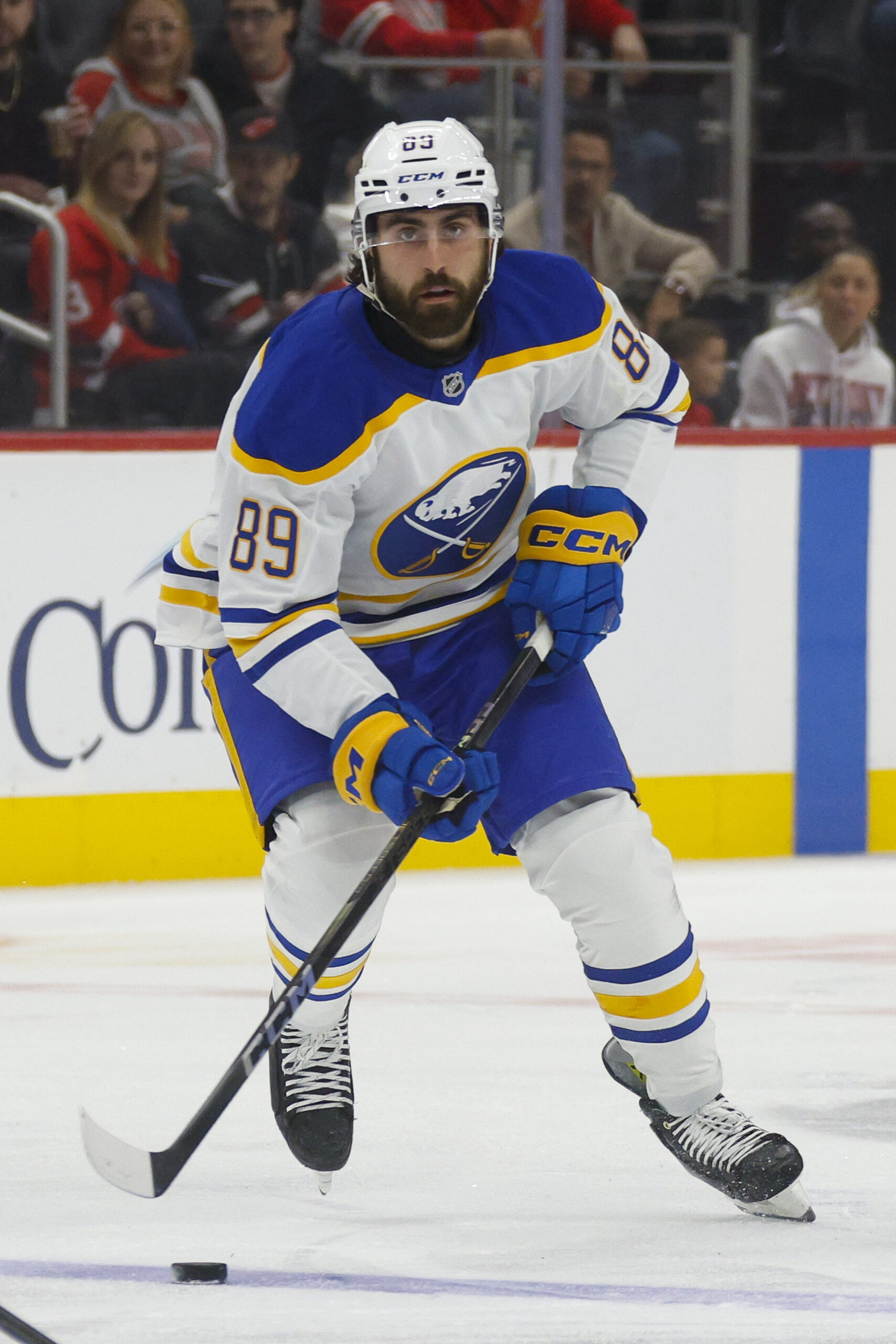 If the goal is a middle-six forward (as I think it is) for Tampa Bay, that’s not Tuch. He’s a first-liner and almost more importantly, he’s on a team-friendly contract at $4.75MM through next season. Accordingly, there’s going to be some sticker shock on the price that’s going to be paid to get him if Buffalo actually moves him. I agree that a first-round pick is a starting point but I don’t think the other two pieces are going to move the needle much. I think they’d have a use for Raddysh but he’d be viewed as a secondary addition and those usually don’t go for top-liners.
You mentioned how Gauthier’s inclusion would make it a bigger deal. I’m not so sure. Frankly, I don’t know if the Sabres would jump at him plus the first-round pick; I think someone would beat that because if Tuch was actually made available, about half the league would make a serious offer. Honestly, I doubt the Lightning have the trade chips to beat that many teams out so it’s hard to come up with a specific package. I agree that Howard is someone they probably don’t intend to move but never say never. If there’s a player with team control available that they think is a difference-maker, I don’t think any of their youngsters are truly off the table. As for Goncalves, he cleared waivers barely a month ago so that should tell you that his trade value is minimal at best.
I know there’s a lot of speculation out there about Tuch but the bulk of the reporting all says the same thing – teams are calling about him but the Sabres are giving no indication that they have any interest in moving him. Knowing that, if a team wants him, the price is going to be extremely high. And in Tampa Bay’s case, adding a top-line scorer isn’t necessarily the most realistic priority for them.
letsgonats: Is there a playoff team that would NOT want Alex Tuch?
I kind of touched on this above but I’d imagine all 16 playoff teams would at least try to make a compelling offer with some knowing their chances of landing him would be quite slim. I also think several non-playoff teams would at least kick the tires on his services in the hopes that they might be able to convince him to sign a contract extension, something that can be done as early as July 1st. With Tuch growing up relatively close to Buffalo, I think the Sabres will also be planning on taking a run at signing him to a long-term extension as well. If he was actually made available, he might be the most sought-after player in these next couple of weeks.
Trade Deadline Primer: Utah Hockey Club
With the 4 Nations Face-Off now complete, the trade deadline looms large and is just a few weeks away. Where does each team stand, and what moves should they be looking to make? We continue our look around the league with the Utah Hockey Club.
The Utah Hockey Club find themselves in an awkward spot with the Trade Deadline approaching. They’ve posted a perfectly .500 season – just good enough to stay within grasp of the Western Conference Wild Cards but not good enough to be planning for travel come May. Adding to the confusion is the return of Sean Durzi from an October injury. Durzi played in four games as a top-pair defenseman before falling to injury, and his return stands as a substantial, free addition to the Utah lineup at the perfect time. With the deadline just around the corner, Utah will need to quickly gauge where their lineup sits – with Durzi’s return, Clayton Keller‘s top scoring, and Logan Cooley‘s injury all complicating the matter.
Record
24-24-9, 5th in the Central Division
Deadline Status
Tepid Buyers
Deadline Cap Space
$27.07MM on deadline day, 1/3 retention spots used, 47/50 contract spots used, per PuckPedia.
Upcoming Draft Picks
2025: UTA 1st, UTA 2nd, UTA 3rd, UTA 4th, UTA 5th, UTA 6th
2026: UTA 1st, UTA 2nd, OTT 2nd, NYR 2nd, UTA 3rd, CAR 3rd, UTA 4th, UTA 5th, UTA 6th, UTA 7th
Trade Chips
On the heels of an up-and-down year, the Trade Deadline will be Utah’s chance to stake their claim. Are they a hopeful on the fringe of the playoffs, led by a clear top-scorer and strong goaltending? Or are they an up-and-comer, driven by succeeding top prospects and emerging structure? Their fate certainly seems in the latter camp, but Utah seems too close to the Western Conference wild cards – six points out, with one game lost – to take a full stride towards the future. The 26-year-old Clayton Keller – who leads the team with 61 points – or the 28-year-old Nick Schmaltz – right behind him with 48 – may be at their peak sale value this year. But much of the Utah success has been built around those veterans, and would leave major lineup holes by shipping them out.
That likely leaves Utah’s biggest bargaining chips in their lineup depth.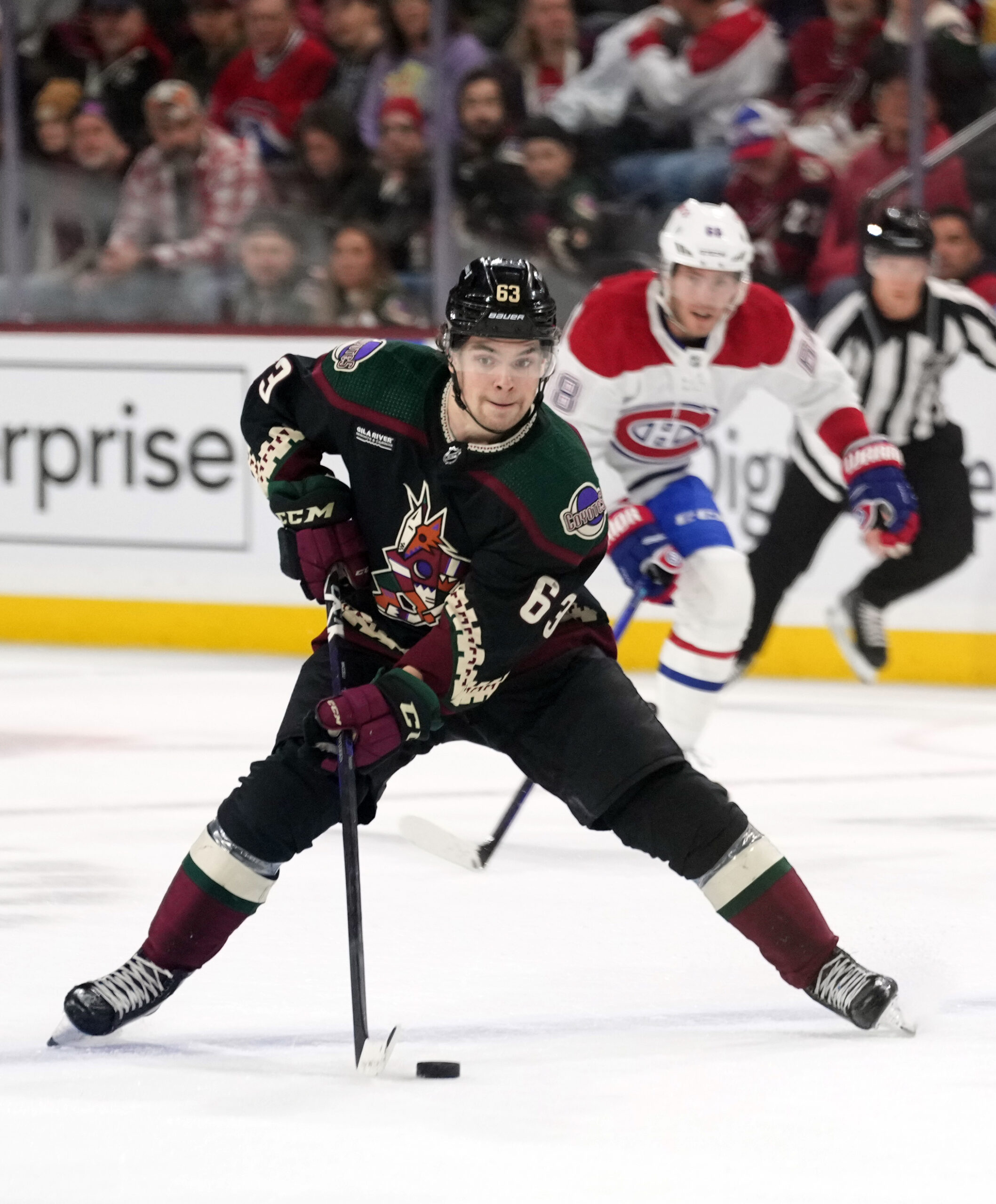 Undersized winger Matias Maccelli has fallen to just 18 points in 52 games this season, after posting a career-high 40 assists and 57 points last year. He has been healthy scratched at multiple points this season, including in Utah’s first game back from the 4-Nations Face-Off break. That’s a dismal fall from grace for a player that averaged north of 16 minutes of ice time last season – and could be the signs of a looming separation. Maccelli is still only 24 years old, and proved the extent of his playmaking upside with 78 assists in 146 games between 2022 and 2024 – his first two full seasons in the NHL. This down year seems to be more a fluke, or clash of minds, than it is indicative of any decline – and a young scorer will always be a hot commodity on the open market. Even better, Maccelli carries a comfortable $3.43MM cap hit through the end of next season. Utah could be in store for plenty of attention by gauging Maccelli’s price on the open market.
Utah has also built up a small surplus in net. Connor Ingram started the year in the starter’s net, but lost it to Karel Vejmelka during a two-month absence to injury. Vejmelka now sits with a .909 save percentage, 2.57 goals-against-average, and a 13-15-4 record on the year. That’s a clear step up over Ingram’s .882 Sv%, 3.27 GAA, and 9-8-4 record. Utah also received a strong four games from Jaxson Stauber, who posted a 2-1-1 record and .925 Sv% during Ingram’s absence. Stauber also has an 8-5-1 record and .901 Sv% in 14 AHL games, where he backs up Matthew Villalta’s 12-17-3 record and .904 Sv%. That heap of well-performing netminders could land Ingram on the outside looking in.
Ingram posted a .907 in each of the last two seasons, playing in 27 and 50 games respectively. He’s a long-tenured pro who has worked his way into a cushy platoon role with Utah. Even better, Ingram carries an affordable $1.95MM cap hit through the end of next season. Those facts will keep Ingram an affordable depth option an open market with very few goalies.
If not Maccelli or Ingram, the sight of Utah’s trades will quickly turn towards their veterans. Each of Lawson Crouse, Alexander Kerfoot, and Nick Bjugstad have found reasonable footing in the Utah lineup, and could be cheap bets for deadline buyers looking for a specific style. Juuso Valimaki and Nick DeSimone offer similar low-upside but reliable styles on the back-end, though they likely couldn’t command the same asking price as other positions. That short list of bargaining pieces may set Utah up for a quiet spring, but strategic use of their 2026 draft picks could still make for notable additions.
Team Needs
1) Spark Plugs – Utah is coming into their own this season through the success of their young stars. Dylan Guenther and Logan Cooley are both rivaling point-per-game scoring, while Josh Doan and Artyom Duda are rising through the minor ranks. It’s clear to see the core pieces that Utah’s future will be built around – meaning they can turn their attention towards finding exciting complementary pieces. A winger that can bring added finesse and finishing ability to Cooley’s side, or a heavy passer to set up Guenther, could go far towards solidifying Utah’s next steps. Anaheim Ducks winger Trevor Zegras stands as the beacon of high-skill upside bets at this year’s deadline, but his asking price could quickly run Utah’s wallet dry. A more realistic bet may be aging Vancouver Canucks winger Brock Boeser, who has long been rumored to move and could carry a cheap asking price in the midst of a down year. Boeser has just 35 points this season, less than half of the 73 points he posted last year – helped along by his first 40-goal season. At 27, he may be a bit old for Utah’s young core – but for the right acquisition cost, Boeser could also be the big splash this year that ripples out through the next few seasons. Boeser carries a $6.65MM cap hit and a modified no-trade clause through the end of this season.
2) Younger Depth – For a team built around up-and-coming youngsters, finding the middle ground between youth and impact in the depths is incredibly important. Utah won’t be able to sustain their reliance on Bjugstad or Crouse to play the hard minutes. They need to cycle out their aged vets for a core that can better support the likes of Cooley and Guenther in the years to come. The open market could offer plenty of players that fit that mold, including shoot-first winger Nicholas Robertson in Toronto and heavy-hitter Trent Frederic in Boston. Even acquiring a player closer to their prime, like Boston’s Justin Brazeau or Columbus’ Mathieu Olivier, could stabilize a Utah bottom-six comprised largely of 30-year-olds. There will be a lot of options Utah can push in to build up their bottom pieces – but doing so without paying lavishly will have to be the priority.